1. Introduction
Lunar exploration constitutes a vital component of humanity’s exploration of outer space. As lunar rovers are the carriers for mobile operations on the lunar surface, their driving stability and reliability directly determine the success or failure of exploration missions. Distributed electric-drive lunar rovers boast advantages such as adaptability to complex terrain and flexible steering maneuverability, making them the core equipment for future lunar surface transportation. The wheel is the only component of the lunar rover that makes direct contact with the lunar surface, and its wear condition directly determines the driving endurance, terrain trafficability, and operational safety of the rover. Excessive tire wear will degrade the wheel–ground adhesion performance, leading to issues such as wheel slippage and vehicle attitude instability. Meanwhile, it will shorten the in-orbit service life of the lunar rover and increase the failure risk and implementation cost of the exploration mission. The lunar surface is characterized by low gravity, rugged terrain features, and sharp lunar soil particles and gravel [
1,
2]. These unique environmental characteristics easily lead to wheel bounce during the travel of the lunar rover, while the increased unsprung mass of the distributed electric-drive lunar rover tends to cause a delayed response in tire pose adjustment. Under these environmental conditions, poorly matched wheel alignment parameters are more likely to induce tire wear. Optimization of wheel alignment parameters is conducive to reducing the frictional wear of the wheel [
3], prolonging the service life and improving the operational reliability of the tire. Therefore, it is of great theoretical and practical significance to carry out relevant research on the design and optimization of wheel alignment parameters under the lunar surface environment to mitigate tire wear.
At present, the research on optimal wheel alignment parameters conducted by scholars at home and abroad has mostly focused on terrestrial ground vehicles, and a relatively mature system for characteristic analysis, sensitivity evaluation, and optimization has been developed [
4,
5,
6]. Relevant research achievements have been widely applied to improve the driving performance of passenger cars and commercial vehicles. Ren et al. [
3] established a double-wishbone suspension model using SolidWorks and ADAMS/Car, performed Design of Experiments (DOE) analysis on the hardpoint parameters of the front suspension, and conducted multi-objective optimization using the Neighborhood Cultivation Genetic Algorithm (NCGA) in Isight. The optimized suspension structure can reduce tire wear while maintaining excellent ride comfort. Xu et al. [
7] carried out sensitivity analysis on the hardpoints of the double-wishbone front suspension using ISIGHT and ADAMS/Car, established an approximate model via the response surface method, and performed multi-objective optimization with the Non-dominated Sorting Genetic Algorithm II (NSGA-II), which reduces tire wear while improving suspension performance. Gao et al. [
8] developed a MacPherson suspension model using ADAMS/Car software, performed co-simulation optimization analysis by combining ADAMS/Car and MATLAB through Isight software, and optimized the wheel alignment parameters using the NSGA-II algorithm, thus improving the kinematic characteristics of the front suspension and mitigating tire wear. Rong et al. [
9] focused on the tire wear problem of MacPherson suspension and verified the effectiveness of the hardpoint optimization scheme in solving the tire wear problem through full-vehicle simulation comparison and validation. Numerous scholars have adopted various methods to analyze the optimization of wheel alignment parameters for ground vehicles to reduce tire wear, while research on the correlation between wheel alignment parameters and tire wear under the low-gravity environment of the lunar surface is still very limited.
In terms of the research work related to the chassis suspension and wheel design of lunar rovers, as well as the optimization of their corresponding parameters, Zhang et al. [
10] proposed double-wishbone independent suspension specifically designed for lunar applications. Through detailed dynamic analysis to adapt it to the unique surface characteristics of the Moon, this structure can withstand the irregularities of the lunar surface while maintaining operational stability. Wang et al. [
11] developed an integrated suspension system that combines variable damping and wheel buffering to accommodate landing impacts and lateral surface movements. Gao et al. [
12] designed a Parallel Wheel Set (PWS) suspension system for heavy-duty lunar vehicles that can adapt to rugged terrain and passively absorb vertical vibrations. Rodríguez-Martínez et al. [
13] combined a large-stroke passive rocker arm with a hub elastic spiral shock absorber; they verified and compared the performance of three passive suspension configurations against steep slopes and sudden obstacles in a lunar gravity simulation environment, then completed prototype manufacturing and field tests. Zhao et al. [
14] conducted an in-depth investigation on the optimization mechanism of unsprung mass integrated with in-wheel motors from the perspective of dynamic coupling and established an electromechanical coupling dynamic model, which effectively mitigated the dynamic impact caused by excessive unsprung mass. Cosenza et al. [
15] improved the rocker-bogie suspension by introducing a torsion spring energy storage mechanism with adjustable preload, which effectively enhanced the step-crossing and obstacle-surmounting capability. Guan et al. [
16] proposed a PID control strategy for semi-active suspension suitable for manned lunar rovers and established a quarter-suspension model in the 1/6 g lunar surface environment through co-simulation of ADAMS and Simulink. This strategy effectively alleviated the problem of poor ground contact caused by wheel bounce on the lunar surface and significantly improved the ride comfort, stability and driving safety of the suspension. Zhao et al. [
17] developed a non-pneumatic bionic wheel integrated with tire/foot structures, with high load-bearing capacity and effective shock absorption, to address the limitations of existing flexible metal wheels in meeting heavy-load requirements. Zhu et al. [
18] established a wheel–soil coupling model to simulate the interaction between the flexible metal wheel of a manned lunar rover and deformable terrain during steering and characterized the discontinuous properties of lunar soil simulants and the deformation characteristics of the flexible wheel. Yuan et al. [
19] obtained the variation law of wheel–ground interaction indexes with vertical load through experimental methods and proposed a wheel sinkage index model reflecting the influence of load combined with test data and sensitivity analysis results. Zhou et al. [
20] adopted the smoothed particle hydrodynamics (SPH) method to solve partial differential equations, established a continuum representation model, and analyzed the effects of lunar soil particle size, slip control strategy and soil parameters on wheel performance. Shi et al. [
21] designed a passive deformable wheel–leg mechanism with spring-assisted reset and energy storage, which improved the geometric trafficability and obstacle-surmounting height in unstructured environments. Numerous scholars have conducted in-depth analysis and optimization on the configuration design and related characteristics of lunar rover suspensions and wheels, yet no multi-parameter optimization design of the suspension structure has been carried out targeting the tire wear problem of lunar rovers.
The main contributions of this paper are as follows: this study completes research on the optimization of wheel alignment parameters under the lunar surface environment to mitigate tire wear. Taking the double-wishbone suspension of the lunar rover as the research object, firstly, the main factors affecting the wheel wear of the lunar rover and the variation law of tire wear work are identified through the tire brush model for lunar rover wheels. Secondly, a multi-body dynamic model of the suspension in the low-gravity environment of the lunar surface is constructed to analyze the variation law of alignment parameters with wheel jounce. Then, the key optimization variables that have the most significant influence on the camber angle and toe angle are screened out through the sensitivity analysis method, and the multi-objective function and corresponding constraint conditions are established. Finally, the NSGA-II algorithm is adopted to solve and obtain the optimal solution set of alignment parameters for improving tire wear, thus forming a complete closed-loop optimization method for reducing wheel wear by optimizing wheel alignment parameters.
This paper is organized as follows:
Section 2 presents the configuration of double-wishbone independent suspension for a lunar rover.
Section 3 established a tire brush model to analyze the main factors influencing the tire wear work.
Section 4 presents multi-body dynamic modeling and analysis of the double-wishbone independent suspension.
Section 5 proposes an optimization method for wheel alignment parameters to mitigate tire wear.
Section 6 analyzes the simulation results of the optimization. Finally,
Section 7 summarizes the key findings of this study and presents the optimization results.
2. Configuration of Double-Wishbone Suspension for Lunar Rover
Against this background, focusing on a lunar rover equipped with a double-wishbone independent suspension system, this study optimizes the design of suspension hardpoints and wheel alignment parameters, in combination with the stability control requirements for these parameters, with the primary objective of reducing the rover’s tire wear.
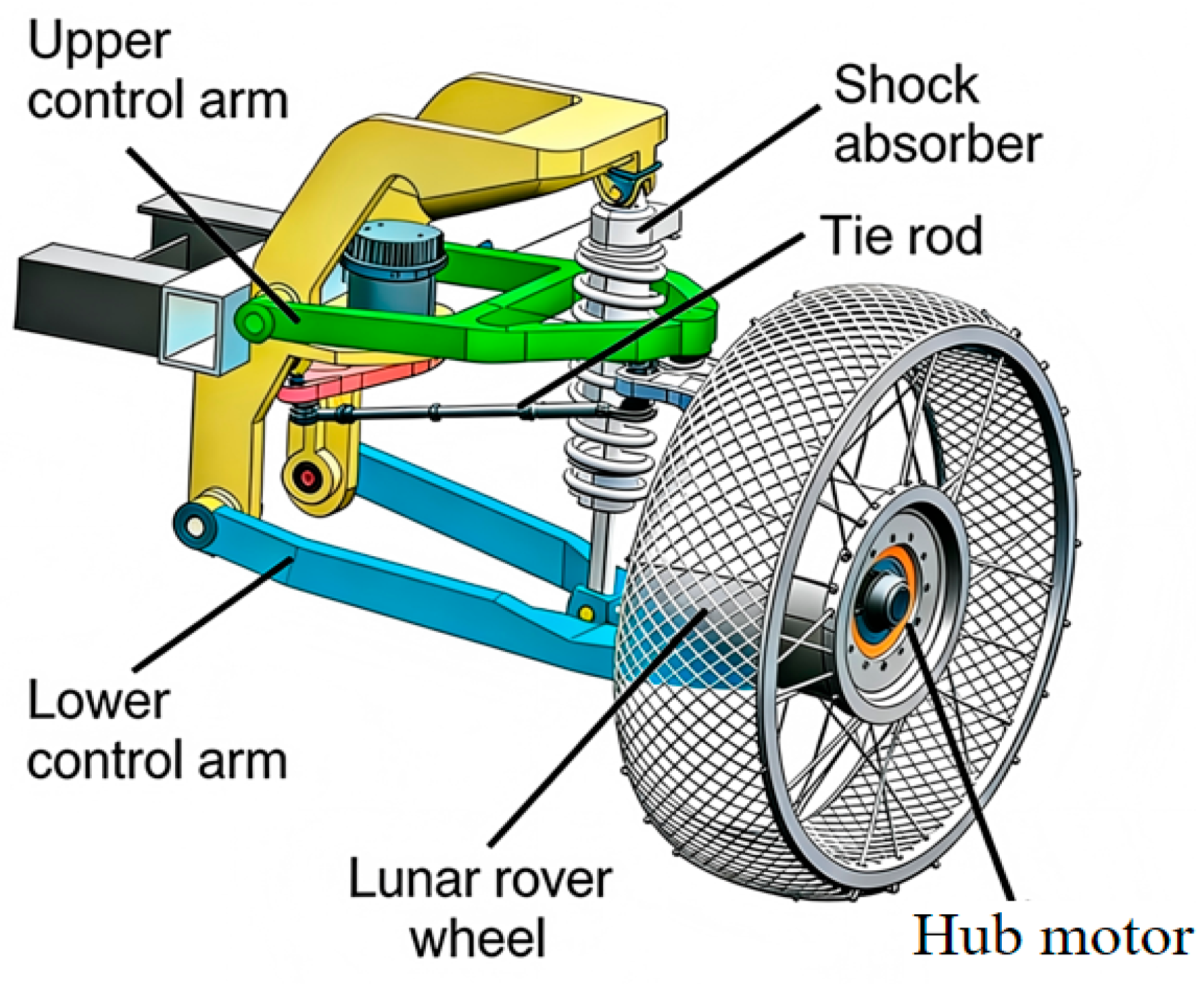
Figure 1 shows the constructed three-dimensional integrated model of drive, braking, steering, and suspension, integrating the in-wheel motor, drive-by-wire braking system, drive-by-wire steering system, and double-wishbone independent suspension into a modular unit. This single modular unit achieves coordinated matching of the power output, braking control, steering adjustment, and wheel posture buffering. This integrated scheme features a simple structure, modularization, and reconfigurability, and it can meet the application requirements of lunar transportation equipment such as that for manned lunar surface transportation and material delivery.
Table 1 shows the design parameters of distributed electric-drive lunar rover.
As the core attitude adjustment component of the vehicle chassis, the double-wishbone suspension is composed of key components including the upper wishbone, lower wishbone, ball joint assembly, passive shock absorption and buffering device, guiding mechanism, and wheel hub mounting base. The design of all components is centered on the core objectives of reducing tire wear and stabilizing alignment parameters, and the suspension collaborates with other subsystems of the corner module to achieve precise control over the wheel attitude and motion state. For this double-wishbone suspension, the upper and lower wishbones and auxiliary structures are all designed with titanium alloy materials. While meeting the strength requirements of the suspension structure, lightweight design is achieved. The shock absorption and buffering device adopts a combined structure of “coil spring + tubular shock absorber”, which has a simple structure, high reliability, and is suitable for long-term stable operation under the harsh working conditions on the lunar surface. The guiding mechanism cooperates with the upper and lower wishbones to constrain the motion trajectory of the wheels, ensuring the stability of wheel alignment parameters under all working conditions, providing attitude support for the uniform contact of the tires with the ground, and reducing wear.
The double-wishbone suspension configuration design of the lunar rover must balance low tire wear, steering ease, and control stability, with inherent tradeoffs under lunar conditions. Excessively prioritizing wear reduction restricts camber and toe angle variations, increasing steering resistance and reducing maneuverability. Conversely, overemphasizing unobstructed steering and control causes excessive alignment parameter fluctuations during wheel jounce, intensifying mesh tire wear. Thus, this study takes minimal tire wear as the primary objective while rationally constraining suspension hardpoint kinematics to retain sufficient steering responsiveness and control stability, achieving a synergistic balance between extended tire life and rover mobility.
3. Mapping Relationship Between Wheel Alignment Parameters and Tire Wear
As the lunar rover travels, suspension bounce induces changes in wheel alignment parameters (wheel camber angle, toe angle, caster angle, kingpin inclination angle, etc.), which vary in their impacts on tire tread wear. Since the kingpin inclination angle and caster angle do not directly reflect the spatial attitude of the tire, this analysis primarily focuses on the influence of the wheel camber angle and toe angle on wheel wear [
22]. The tire brush model [
23,
24] is applied in this study to analyze the relationships between the camber angle, toe angle, and wheel slip angle and to quantify the degree of tire wear they induce.
Based on the characteristics of the tire brush model, the following assumptions are made:
- (1)
The wheel is divided into two parts: the wheel hub and the tread. It is assumed that the wheel hub part is a rigid body. The tread is assumed to be an elastomer (such as the tread of a mesh tire), with lateral stiffness and longitudinal stiffness.
- (2)
The wheel tread in contact with the ground is divided into two parts: the adhesion area and the slip area. In the adhesion area, only elastic deformation occurs in the wheel tread, and there is no sliding friction with the ground; in the slip area, sliding friction occurs between the wheel tread and the ground, and wheel wear mainly occurs in this part.
- (3)
The tread is divided into countless tiny units, which are independent of each other. The whole tread is a combination of these units.
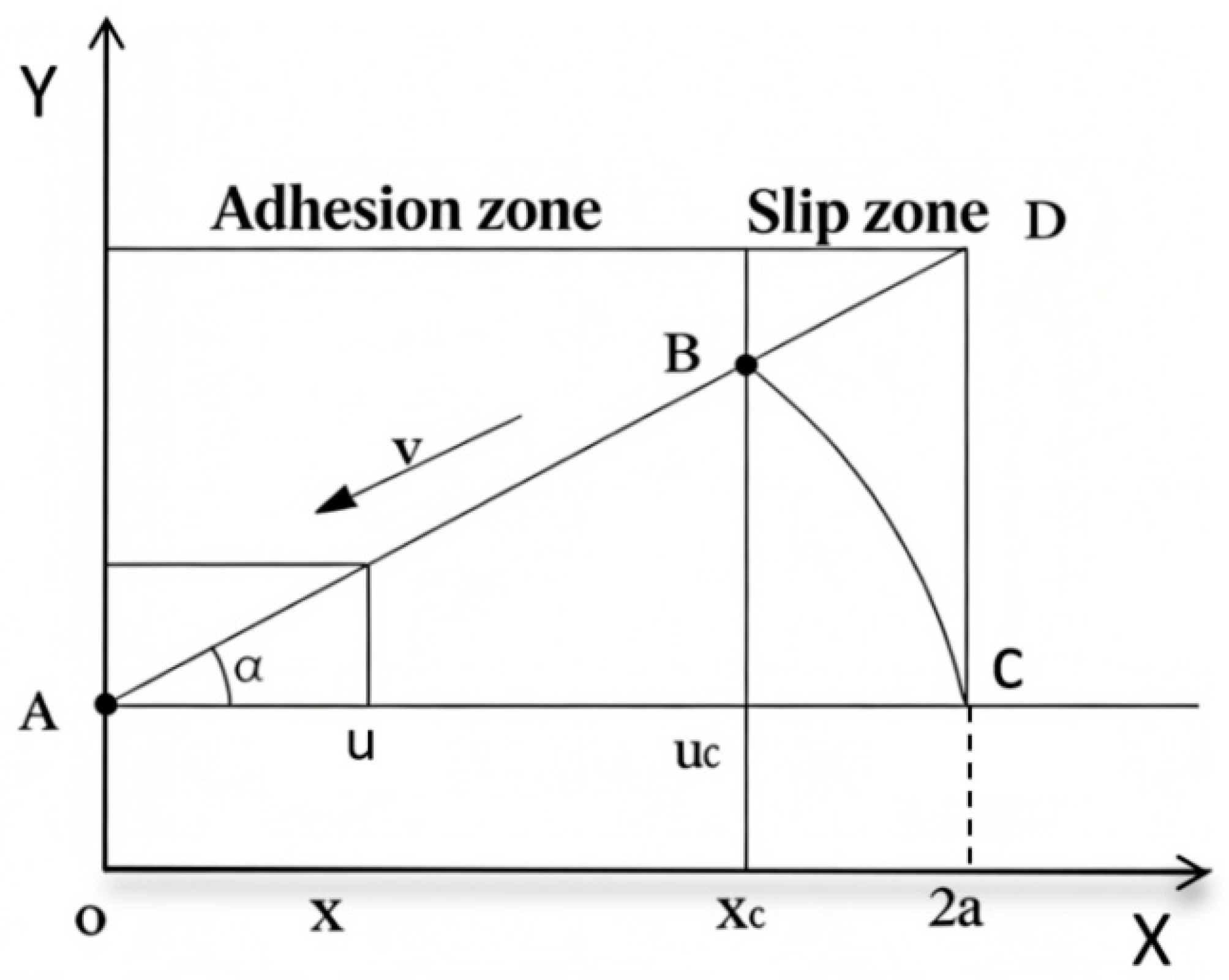
Figure 2 shows a schematic diagram of tire cornering based on the brush model. A coordinate system is established with its origin at the front endpoint of the tire–ground contact patch. In this coordinate system, the X-axis represents the longitudinal distance of the tire, and the Y-axis denotes the axial deformation of the tire. The total length of the tire–ground contact patch is defined as 2a, and the tire slip angle is denoted by α. For computational convenience, the absolute coordinate of the contact patch is denoted by X, and the relative coordinate of the contact patch is defined as u.
The tire rolling process is analyzed with reference to
Figure 2. During tire rolling, a tire tread element contacts the ground at Point A and moves to Point B after time t. Point B is critical because the lateral force induced by the element’s deformation equals the lateral friction force at this location. It also serves as the boundary between the adhesion zone and the sliding zone. After passing through Point B, the element rolls from the adhesion zone into the sliding zone and starts to slip, continuing until it leaves the ground at Point C. With the continuous rolling of the tire, this element periodically repeats the above deformation and sliding process.
The position of Point B varies within the range 0 ≤ B ≤ 2a depending on the tire operating conditions, and under extreme working conditions, either the sliding zone or the adhesion zone may be absent. The tire wear stage mainly occurs within the sliding zone after Point B—that is, the region where relative slip exists between the tire and the ground. Accordingly, the main content of this section is an analysis of the method for calculating friction loss work in the sliding zone.
The wheel camber angle affects both tire wear and the driving stability of lunar rovers. During straight-line travel, a non-zero camber angle induces a conical pendulum motion, leading to tire wear. Additionally, it generates camber thrust equivalent to the induced slip angle ∆ɑ of the wheel. To counteract these adverse effects, a proper wheel toe angle is typically applied. According to the definition of the toe angle, it can be regarded as the slip angle of the wheel at a small angle. The essence of lunar rover tire wear is that the rugged lunar surface performs work on the tire; when the work exceeds the load-bearing capacity of the tire, tire wear occurs. The influence law of the camber and toe angles on tire wear can be calculated using Formula (1).
The relationship between the wheel slip angle and tire wear is characterized by the magnitude of work done on the tire [
25], and the wear work is expressed as follows:
where
is the friction work done by the lateral force;
is the friction work done by the longitudinal force; a is half the length of the tire contact patch;
is the coordinate variable at the tire contact position;
is the tire slip initiation point;
denotes the tire load distribution;
and
are the lateral and longitudinal wheel adhesion coefficients, respectively;
represents the tire lateral deformation curve; and
is the longitudinal slip ratio.
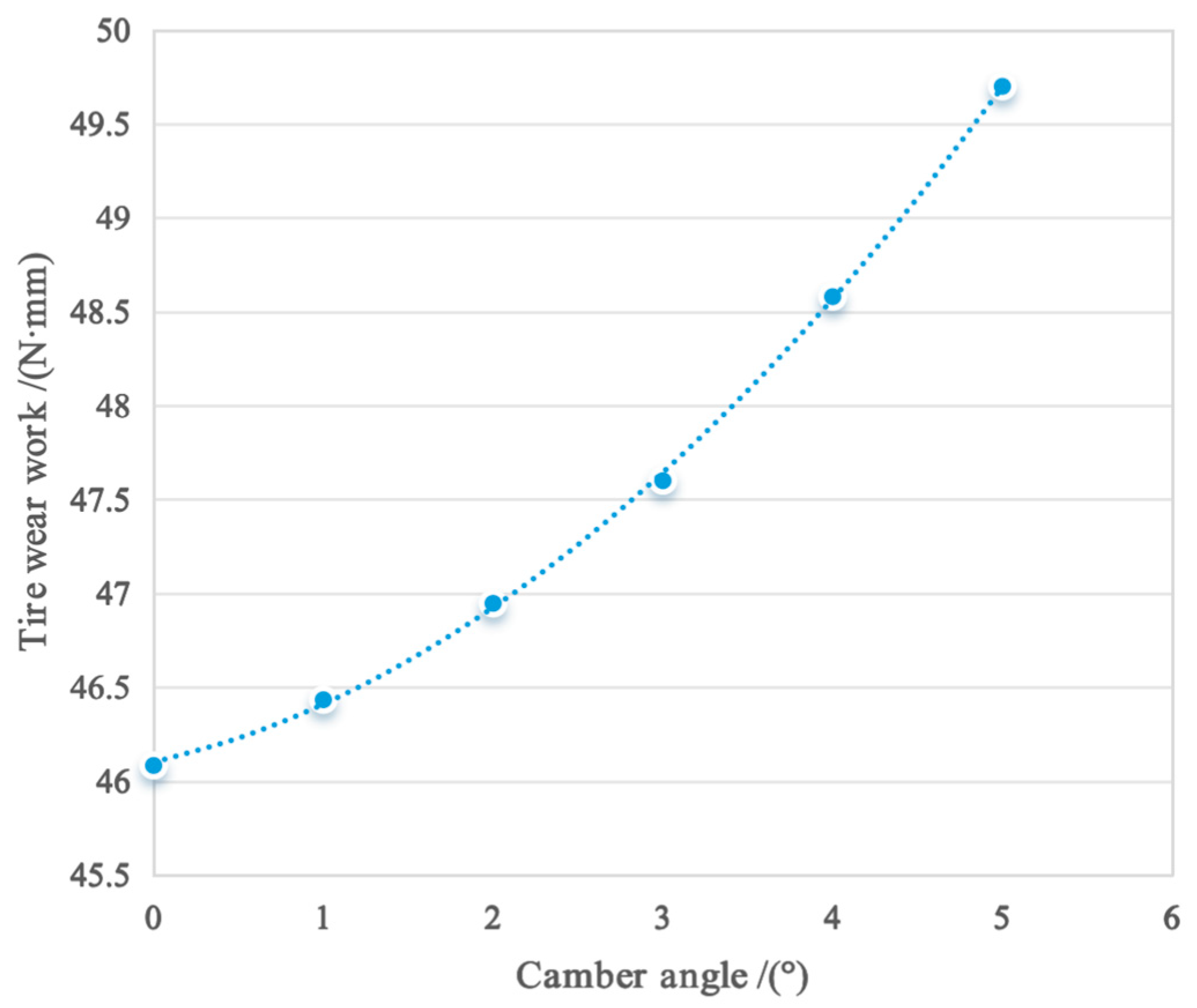
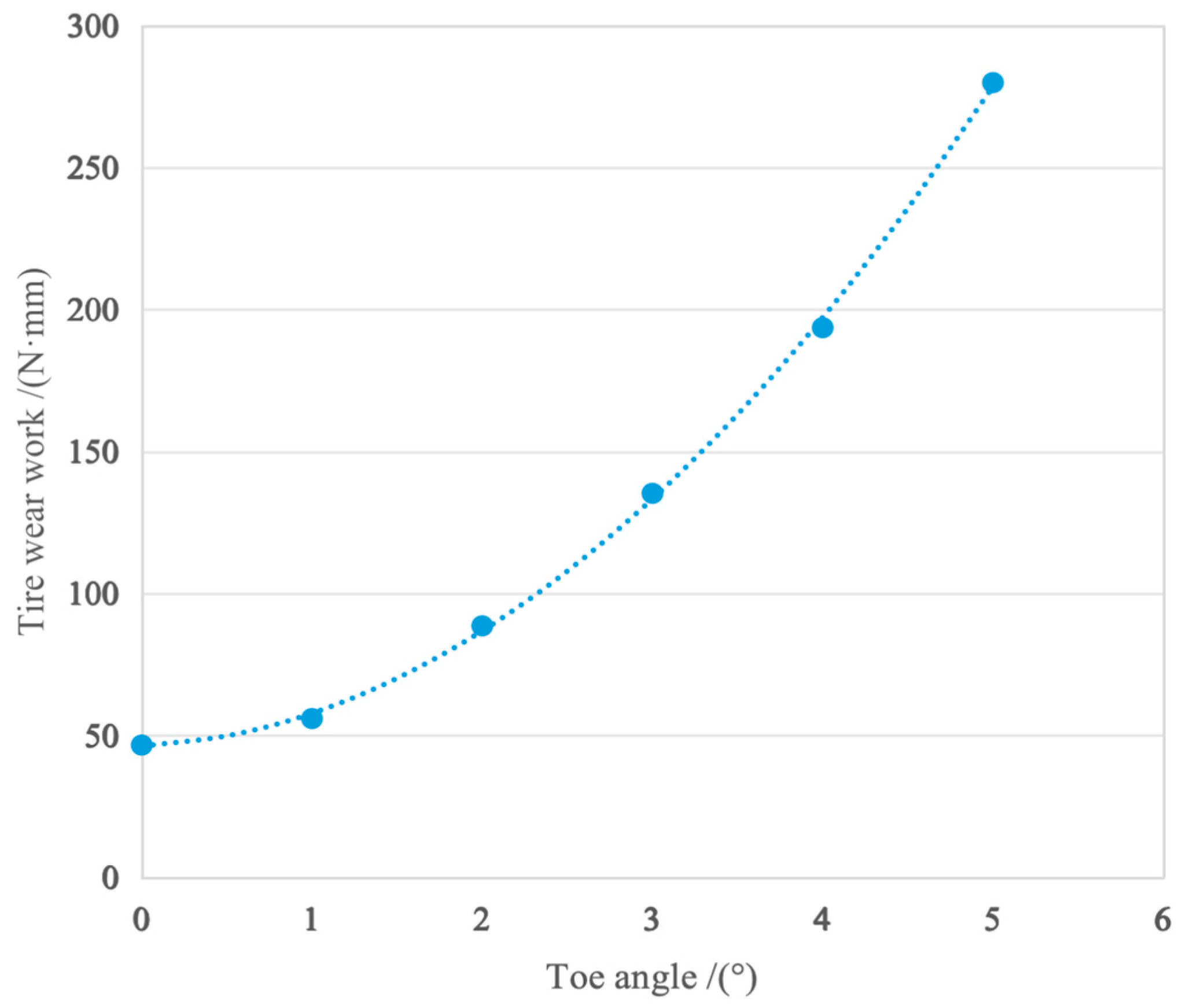
It can be concluded from
Figure 3 and
Figure 4 that under the steady-state cornering and longitudinal slip condition, the tire wear work of the lunar rover increases with a rise in the camber and toe angles during straight-line travel. It is noteworthy that variation in the toe angle causes more severe tire wear of the lunar rover than variation in the camber angle.
4. Multi-Body Dynamic Modeling and Analysis of Double-Wishbone Suspension
4.1. Multi-Body Dynamic Model of Double-Wishbone Suspension
The kinematic characteristics of a vehicle’s suspension reflect the variation law of alignment parameters during vertical wheel jounce. In general, the initially designed suspension parameters (unoptimized parameters) hardly meet the vehicle chassis design requirements. To obtain the ideal kinematic characteristics for the double-wishbone independent suspension, professional ADAMS/Car software was adopted to optimize the hardpoint coordinates so that the wheel alignment parameters would be maintained within a reasonable range with wheel jounce [
7].
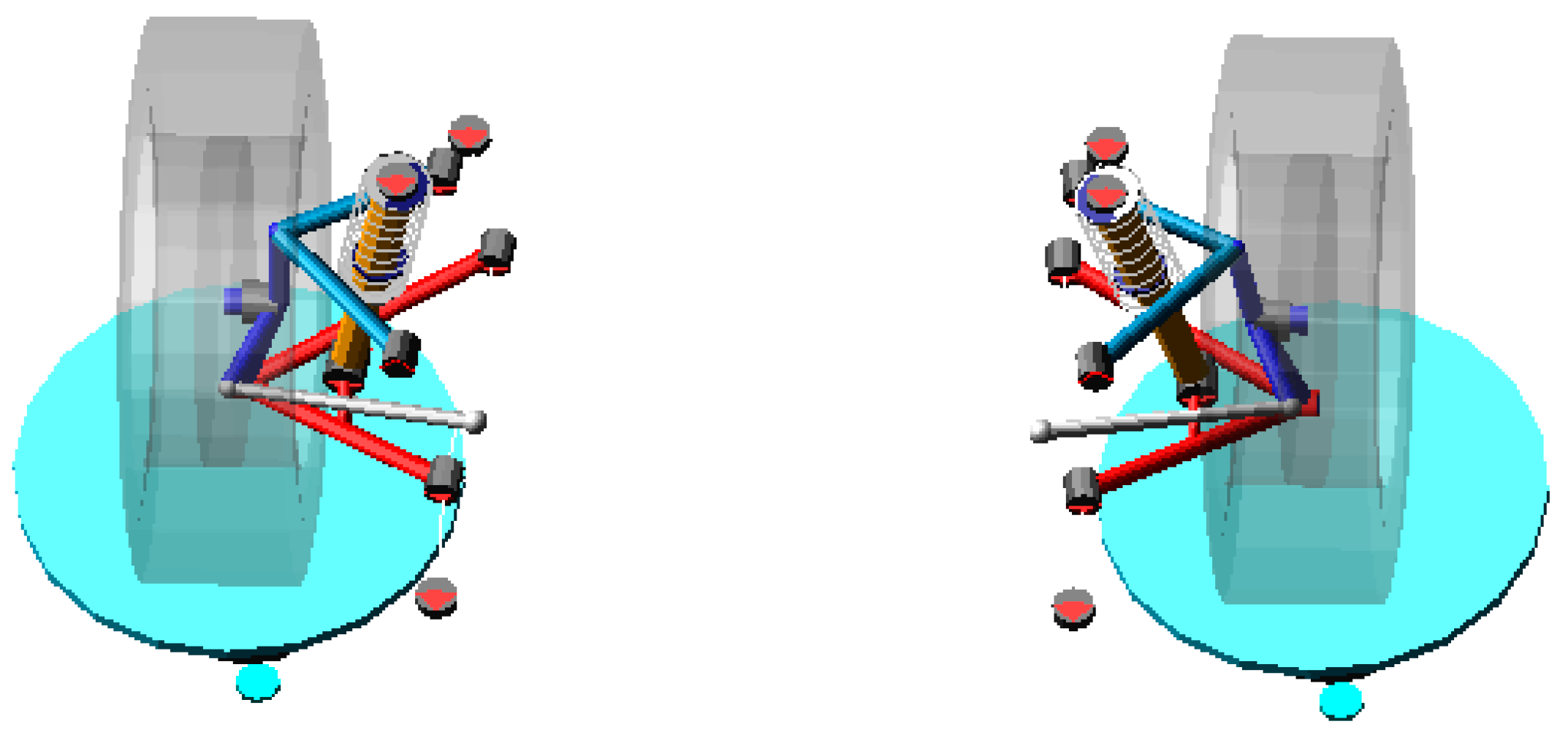
Figure 5 shows the virtual multi-body dynamic prototype model of the double-wishbone independent suspension system for lunar rovers established in this study. In the model, the suspension system was assumed to be bilaterally symmetric, all components were rigid bodies connected by rigid hinges, and the gravity was set to 1/6 g for design and modeling. According to the existing design methods for suspension hardpoints, the coordinates of each hardpoint of the double-wishbone suspension system are optimized in the lateral y-z plane, longitudinal x-z plane, and horizontal x-y plane of the suspension.
Table 2 presents the initial hardpoint coordinates of the double-wishbone suspension system for the lunar rover.
4.2. Dynamic Variation Analysis of Wheel Alignment Parameters
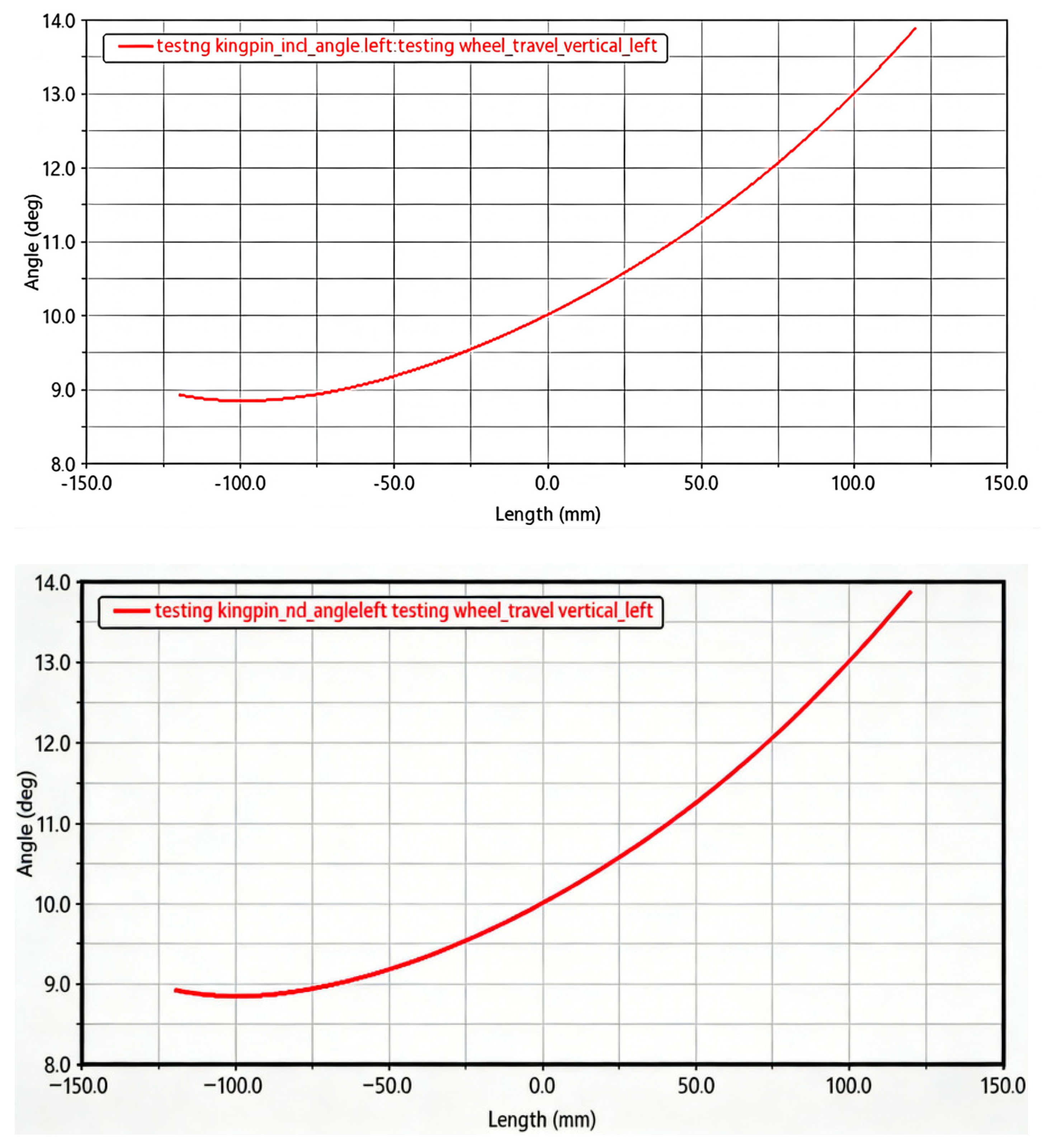
When a lunar rover travels on the rugged lunar surface, its wheels encounter obstacles, uneven terrain, and vehicle body roll, which induce vertical jounce of the wheels. Such wheel jounce leads to changes in suspension alignment parameters, thereby directly affecting tire wear and driving stability. To investigate the variation law of wheel alignment parameters (camber angle, toe angle, caster angle, and kingpin inclination angle) with wheel jounce, a simulation analysis of parallel jounce of the left and right wheels was carried out. Based on the parameters of the distributed electric-drive lunar rover in
Table 1, the model was further set with a synchronous wheel jounce stroke range of ±120 mm, an end time of 3 s, and a simulation step number of 1000. The characteristic curves of wheel alignment parameters for the double-wishbone suspension were obtained via ADAMS/postprocessing, as shown in
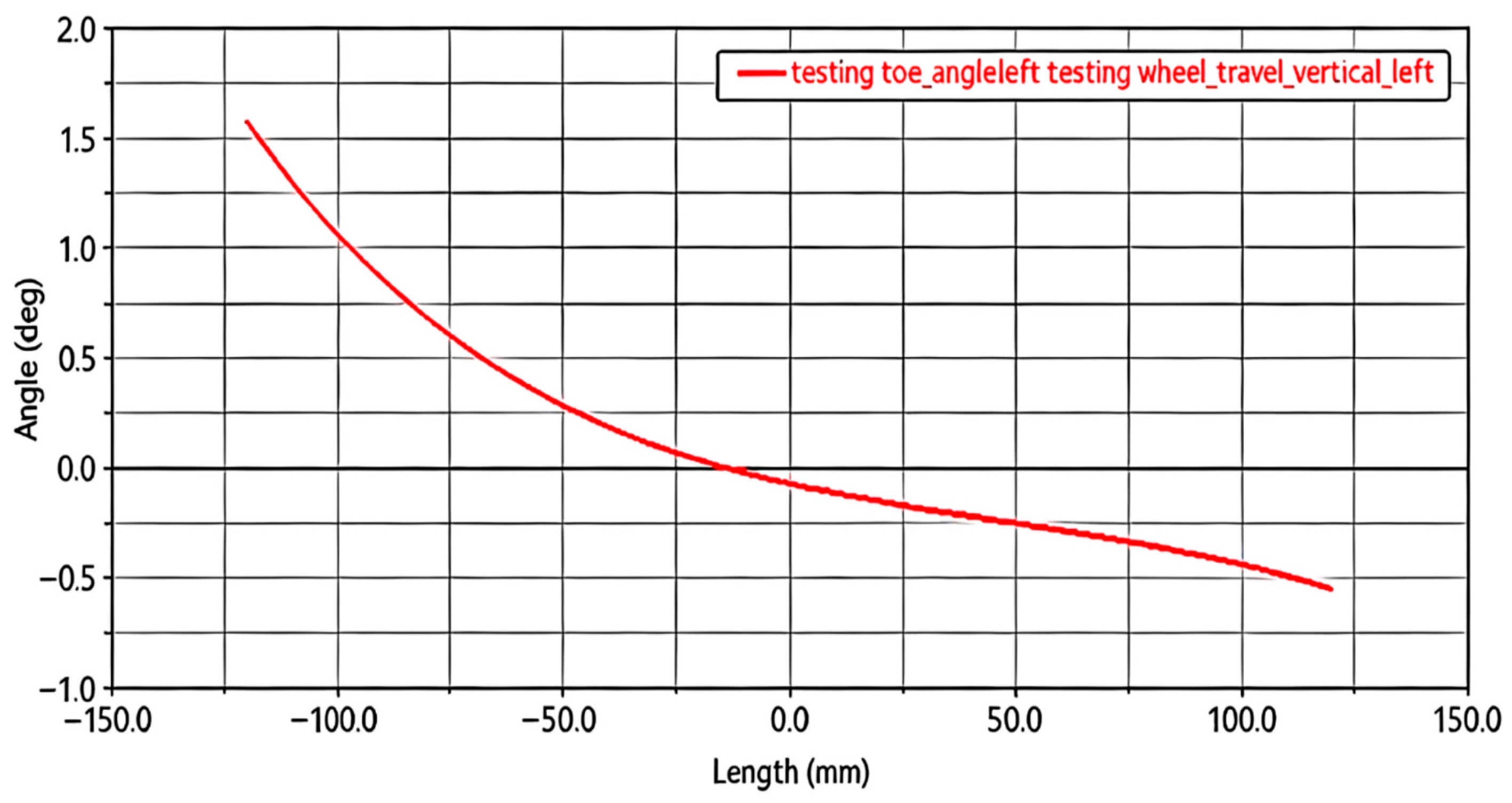
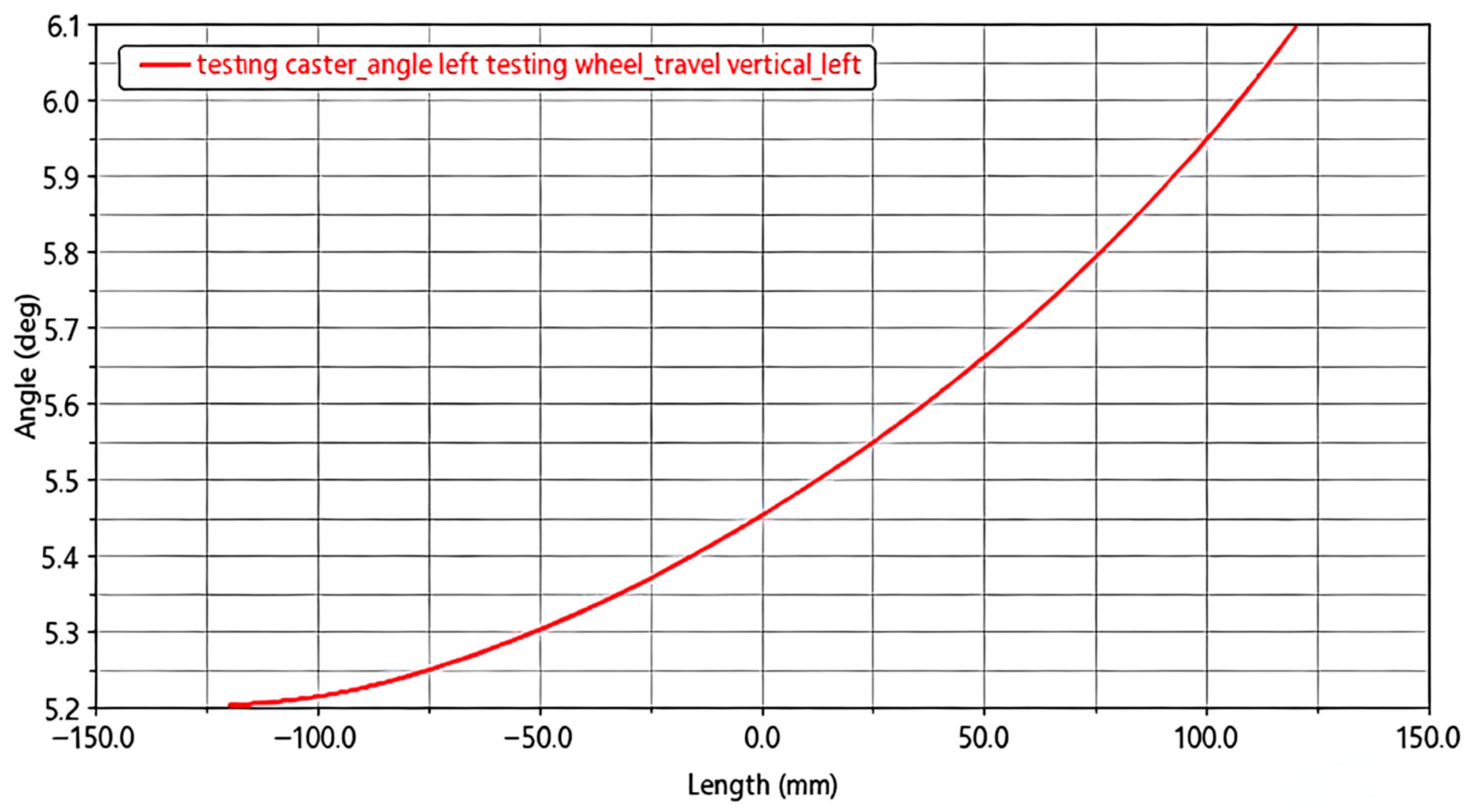
Figure 6,
Figure 7,
Figure 8 and
Figure 9.
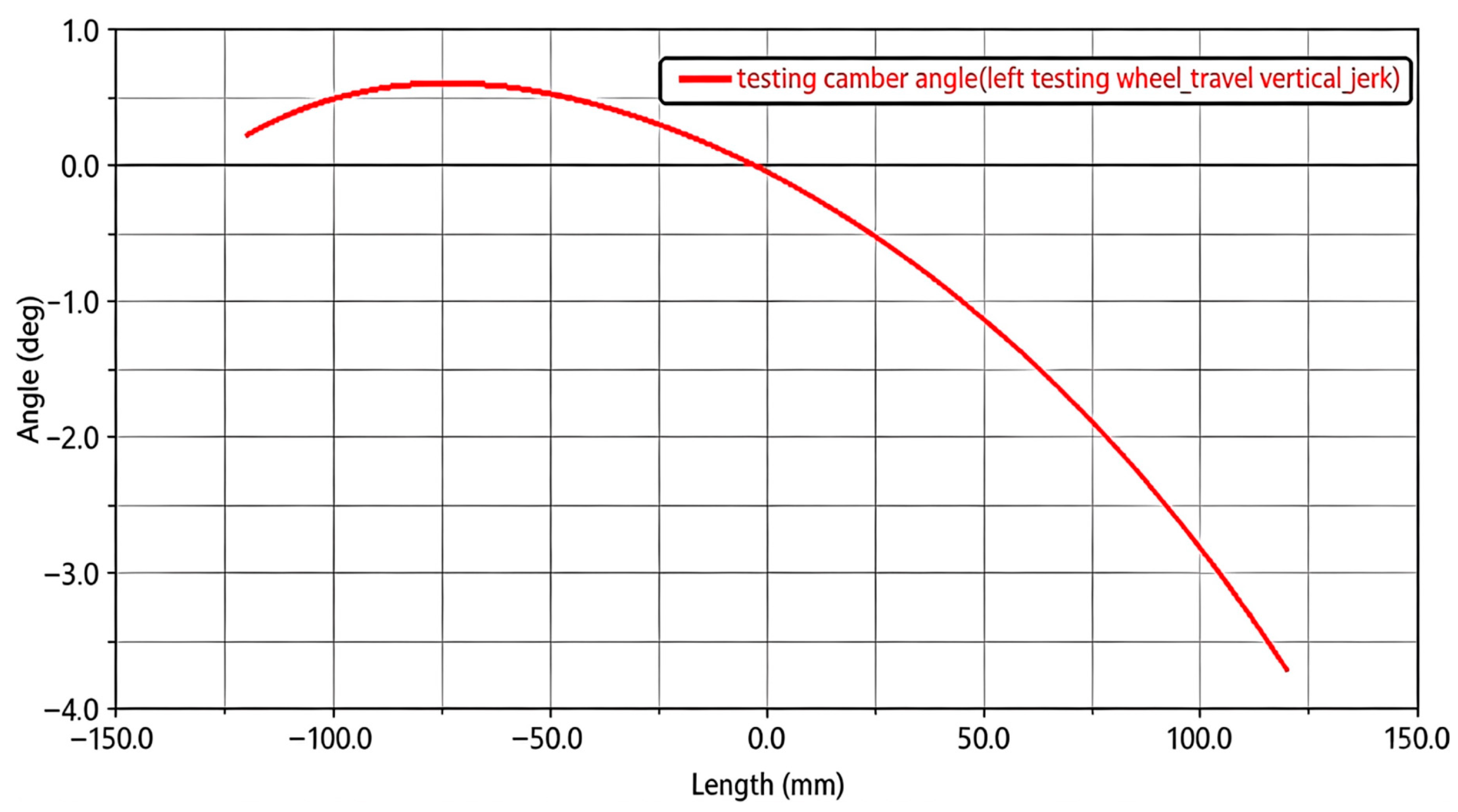
Figure 6 shows the variation curve of the camber angle with a ±120 mm vertical wheel jounce. In the initial tire rising phase (stroke from −120 mm to approximately −100 mm), the camber angle increases rapidly from nearly 0° to a peak of about 0.8° as the wheel compresses upward (negative stroke, corresponding to vehicle lifting or suspension compression). This indicates that a small compression stroke of the tire is conducive to reducing tire wear. In the continuous decline phase after the peak (stroke from −100 to 120 mm), the camber angle decreases continuously, gradually transitioning from positive to negative. As the wheel stretches downward, the degree of negative camber increases continuously, reaching about −3.5° at a stroke of 120 mm. This process leads to an increase in tire wear when the vehicle is unloaded or lightly loaded, and it simultaneously causes a slight oversteer of the vehicle, which reduces the vehicle’s handling stability to a certain extent.
Figure 7 illustrates the variation curve of the toe angle with a ±120 mm vertical wheel jounce. In the initial tire rising phase, when the wheel is in an upward compression state, the toe angle drops rapidly from a positive value of approximately 1.7° and approaches 0° at a stroke of 0 mm. A relatively large positive toe angle will cause the wheel to have a tendency to toe-in during rolling, which generates additional sliding friction on the tire tread and accelerates abnormal wear on the inner side of the tire with long-term use. When the wheel enters a downward stretching state with the stroke ranging from 0 to 120 mm, the toe angle continues to decrease and becomes negative, reaching approximately −0.5° at a stroke of 120 mm. A negative toe angle will cause the wheel to toe-out, subjecting the outer side of the tire tread to more sliding friction and thus accelerating abnormal wear on the outer side of the tire.
Figure 8 presents the variation curve of the caster angle with a ±120 mm vertical wheel jounce. This curve exhibits a monotonically increasing trend. During the compression stroke (from −120 to 0 mm), the caster angle increases slowly from approximately 5.2° as the wheel compresses upward, reaching about 5.6° at the suspension neutral position (0 mm stroke). During the extension stroke (from 0 to 120 mm), the growth rate of the caster angle accelerates as the wheel stretches downward, peaking at around 6.1° at a stroke of 120 mm, with a notable increase in the amplitude of the caster angle. The caster angle mainly affects steering returnability and straight-line stability, while its direct impact on tire wear is relatively minor.
Figure 9 demonstrates the variation curve of the kingpin inclination angle with a 120 mm vertical wheel jounce. In the initial phase (stroke from −120 to −100 mm), the kingpin inclination angle decreases slightly from approximately 9.0° as the wheel compresses upward, reaching a minimum value of about 8.9° at a stroke of −100 mm. In the subsequent phase (stroke from −100 to 120 mm), as the wheel transitions from the compression state to the extension state, the kingpin inclination angle begins to rise continuously with a gradually accelerating growth rate. It reaches approximately 10.5° at the suspension’s neutral position (0 mm stroke) and rises to about 14.0° at a stroke of 120 mm (maximum extension). The core function of the kingpin inclination angle is to optimize steering portability and returnability, with a relatively minor direct impact on tire wear.
5. Optimization Method of Wheel Alignment Parameters for Lunar Rover
5.1. Optimization Framework of Positioning Parameters for Minimizing Wheel Wear
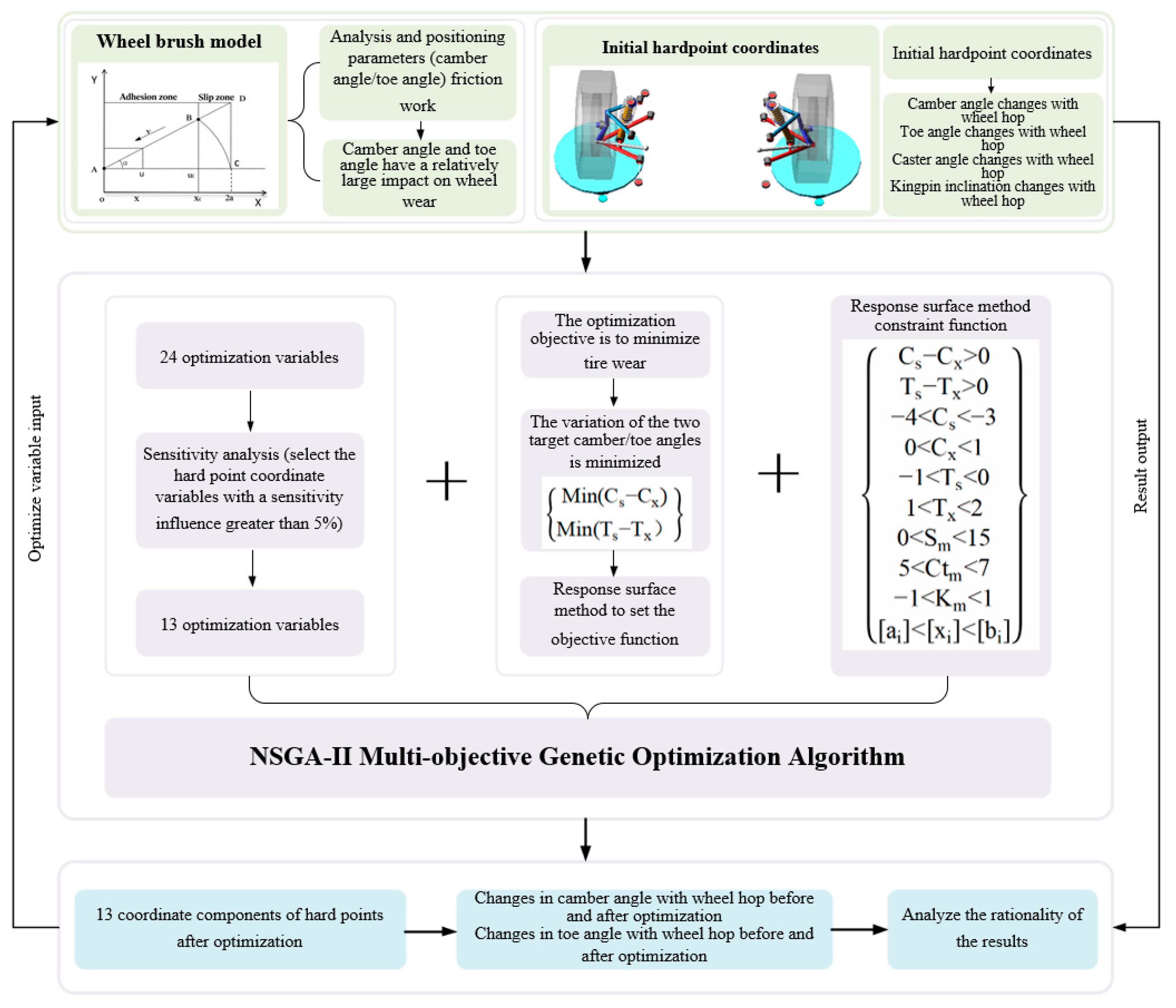
Figure 10 shows the block diagram of the wheel alignment parameter optimization method for tire wear mitigation, and the entire research process is divided into three core stages: construction of the tire brush model and multi-body dynamic model, establishment of the genetic algorithm optimization framework for alignment parameters, and acquisition of the optimal solution set.
In the first stage, a tire brush model is established to clarify the influence law of wheel alignment parameters on wheel wear, and the camber angle and toe angle are determined as the core factors affecting the tire wear of the lunar rover. Meanwhile, a multi-body dynamic model of the double-wishbone suspension in the lunar low-gravity environment is constructed using ADAMS/Car software, and the variation characteristics of alignment parameters including the camber angle and toe angle with wheel jounce are obtained through parallel wheel jounce simulation, which lays a theoretical and model foundation for the subsequent optimization.
In the second stage, for the 24 initial hardpoint coordinate variables of the suspension, the sensitivity analysis method is adopted to screen out 13 hardpoint coordinate variables with a sensitivity impact greater than 5% as the final optimization variables. Taking the minimum tire wear as the core objective, a dual-objective function for minimizing the variation in the camber angle and toe angle during wheel jounce is established based on the response surface method. Meanwhile, the constraint function of the optimization process is constructed with the reasonable variation range of alignment parameters and the boundary of hardpoint coordinates as the core constraints, which serve as the solution basis for the NSGA-II multi-objective genetic optimization algorithm.
In the third stage, solution and optimization are performed based on the multi-objective genetic optimization algorithm, and the optimal solution set of hardpoint coordinates is obtained. On this basis, the variation characteristics of the camber angle and toe angle with wheel jounce before and after optimization are compared and analyzed to verify the rationality of the optimization results and the optimization effect on tire wear, thus forming a complete closed-loop optimization research method for wheel alignment parameters.
5.2. Selection of Optimization Variables for Hard Point Coordinates
From the simulation results regarding suspension motion characteristics in ref. [
8], it can be concluded that the above are the initial simulation results for tire alignment parameters. To determine the degree of influence of hardpoint coordinate positions on various alignment parameters and produce an optimal design for the main influential parameters, the coordinate values of the fixed spherical hinge points of the subframe, the inner/outer points of the upper and lower double wishbones, and the tie rod were selected as hardpoint optimization parameters in combination with the suspension simulation model shown in
Figure 5. The specific corresponding relationships are presented in
Table 3, where DV_1, DV_2, …, DV_24 represent the coordinate variables of the corresponding hardpoints.
Sensitivity analysis of the 24 hardpoint coordinate variables in
Table 3 was conducted via Adams/Insight software. The results showed that DV_8, DV_9, DV_2, DV_18, DV_7, DV_16, DV_6, DV_15, and DV_5 significantly influence the lunar rover wheel’s toe angle, while DV_8, DV_9, DV_3, DV_22, DV_20, DV_24, DV_2, and DV_7 notably impact its camber angle. Among these, DV_8 (the spherical hinge center of the upper wishbone) exhibits the highest sensitivity for both parameters. Considering the coupling effect of hardpoint variables on the two target parameters (camber angle and 0toe angle), a total of 13 hardpoint coordinate variables with a sensitivity impact greater than 5% were selected to optimize the wheel alignment parameters for minimizing tire wear. The matrix form of these selected variables is as follows:
where X is the matrix of key optimization variables:
—DV_2,
—DV_3,
—DV_5,
—DV_6,
—DV_7,
—DV_8,
—DV_9,
—DV_15,
—
,
—
,
—
,
—
, and
—
.
Table 4 shows the sensitivity of the optimization variables to the camber/toe angle.
5.3. Construct the Objective Function and Constraints for Multi-Objective Optimization
5.3.1. Response Surface Function of Wheel Alignment Parameters
The 13 variables selected above were used to fit the response surface output functions for the wheel camber angle, toe angle, caster angle, and kingpin inclination angle under simulated working conditions. Subsequently, the response surface functions for the wheel camber angle and caster angle were taken as the objective functions, while those for the knuckle angle and knuckle pivot inclination angle served as the constraint conditions [
26].
The response surface method (RSM) is a technique that employs a polynomial hypersurface to describe the complex relationship between a response and multiple variables. It involves a series of continuous experiments conducted within a specified set of design points through experimental design to fit the response relationship. The second-order response surface model function adopted in ADAMS/Insight is expressed as follows:
where
y is the response value corresponding to the alignment parameters, including the camber angle C, toe angle T, caster angle C
t, and kingpin inclination angle K in this paper;
n is the number of key optimization variables, with
n = 13;
xi (
i = 1,2,…,13) denotes the key optimization variables;
α0 is a constant term;
αi represents the linear term coefficients; and
αij is the interaction term coefficients (
i ≠
j). All coefficients are solved using the least square method, and the goodness of fit is verified by examining the R
2 (coefficient of determination) and adjusted R
2adj values. The R
2 and R
2adj values of all fitting formulas in this study were greater than 0.95, indicating a good fitting effect.
Taking the response surfaces of the camber angle and toe angle at the maximum jounce position as an example, the fitting formulas obtained were as follows:
The same method was adopted in ADAMS/Insight to fit the toe angle response surface function at the maximum rebound position and the camber angle response surface function at the maximum jounce position, as well as the track width variation response surface function , kingpin caster angle response surface function , and kingpin inclination angle response surface function at the suspension midpoint.
5.3.2. Formulas of Objective Function and Constraint Function
The variation range of tire alignment parameters is optimized primarily by defining their constraint boundaries, thereby minimizing the impact of tire wear. Based on the tire wear mechanism, the tire wear can be effectively reduced by optimizing the variation ranges of the toe angle and camber angle among the tire alignment parameters. The optimization objectives were set as follows:
(1) Due to the existence of constraint conditions, the wheel camber angle decreases with the jounce of the wheel. Therefore, minimization of the wheel camber angle under jounce conditions can be expressed as minimization of the difference in the wheel camber angle between the wheel’s maximum rebound and maximum jounce extreme conditions.
(2) Similarly, due to the existence of constraint conditions, the wheel toe angle decreases with the wheel jounce. Therefore, minimization of the wheel toe angle under jounce conditions can be expressed as minimization of the difference in the wheel toe angle between the wheel’s maximum rebound and maximum jounce extreme conditions.
The established objective function is as follows:
During the simulation process, it was found that the variation range of the wheel camber angle was larger than that of the toe angle, ranging from −4° to 1°. Quantitative analysis of the influence of wheel alignment parameters on tire wear showed that the toe angle has the most significant impact on tire wear, while variation in the camber angle exerts a relatively minor influence. After comprehensive consideration, the weight values of the optimization objectives were set to [1, 1.5].
The wheel camber and toe angles are expected to decrease with wheel jounce, which can effectively improve the tire adhesion performance and enhance understeering. To further improve the tire adhesion characteristics and strengthen the tendency toward understeering, it is imperative to ensure that the camber angle and toe angle decrease accordingly with upward movement of the wheel. In the process of optimizing the camber angle and toe angle, it is necessary to constrain the variation ranges and trends of other alignment parameters within the wheel jounce range of ±120 mm; meanwhile, the upper and lower limits of the variable coordinate values should also be constrained.
The specific constraint functions are as follows:
where
(i = 1,2,…n) denotes the hardpoint coordinate variables, and
and
represent the upper and lower limits of the hardpoint coordinate variables, respectively.
6. Analysis of Optimization Results
Based on the block diagram of the multi-objective optimization technical route for double-wishbone suspension considering tire wear, using ADAMS/Insight software and the NSGA-II multi-objective genetic optimization algorithm, the optimal solution set of wheel alignment parameters that minimizes the target variations in the tire camber and toe angles was obtained, and the optimal hardpoint positions were determined as shown in
Table 5. These hardpoint positions effectively reduce tire wear and appropriately improve the handling and stability of the entire vehicle.
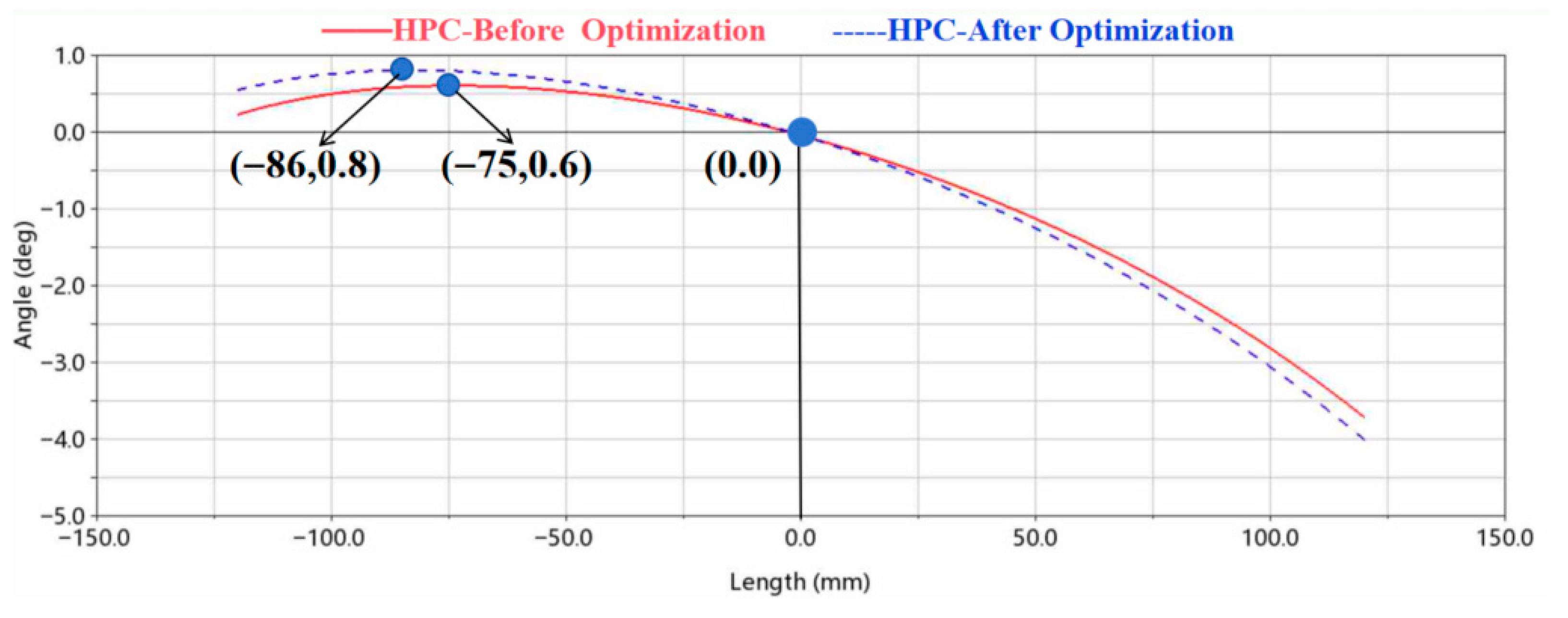
Figure 11 presents the variation curves for the camber angle with a 120 mm vertical wheel jounce before and after optimization. Regarding the overall trend, both curves follow the pattern of “rising to a peak first and then decreasing continuously”, yet the absolute variation in the optimized curve is slightly greater than that in the pre-optimization curve over the entire stroke. During the compression stroke (−120 to 0 mm), the optimized camber angle achieves a higher peak (close to 1.0°), and the peak occurs at a more rearward position, indicating a larger amplitude and longer duration of positive camber in the suspension compression phase. In the extension stroke (0 to 120 mm), the optimized camber angle decreases at a gentler rate; at the maximum extension stroke (120 mm), the angle is approximately −3.2°, which is closer to 0° than the pre-optimization value (approximately −3.8°).
In the compression stroke (the positive camber phase), the increased positive camber after optimization leads to a slight rise in the ground contact pressure on the outer side of the tire, which would theoretically marginally accelerate the wear of the outer tread. However, since positive camber can expand the tire’s ground contact area during cornering, the actual increase in wear is extremely limited. Additionally, in the compression stroke (cornering/bumpy working conditions), a larger positive camber can improve the lateral stiffness of the tire’s contact patch, enhance the grip during cornering, reduce the risk of sideslip, and boost handling stability.
In the extension stroke (the negative camber phase), the reduced amplitude of negative camber after optimization lessens the sliding friction on the inner side of the tire, which can effectively alleviate abnormal wear of the inner tire and lower the overall wear rate. In the extension stroke (the single-side sinking condition), a smaller negative camber can simultaneously mitigate the tendency of the wheel to “toe-in”, decrease the risk of shimmy during high-speed driving, improve straight-line driving stability, and optimize the linearity of steering returnability.
From the perspective of the comprehensive effect, the optimized curve brings the camber angle closer to the ideal ground contact state over the entire stroke, resulting in more uniform overall tire wear and an extended tire service life. The optimized camber angle characteristics are more conducive to balancing grip and stability under different working conditions, thereby raising the vehicle’s handling limit and driving safety.
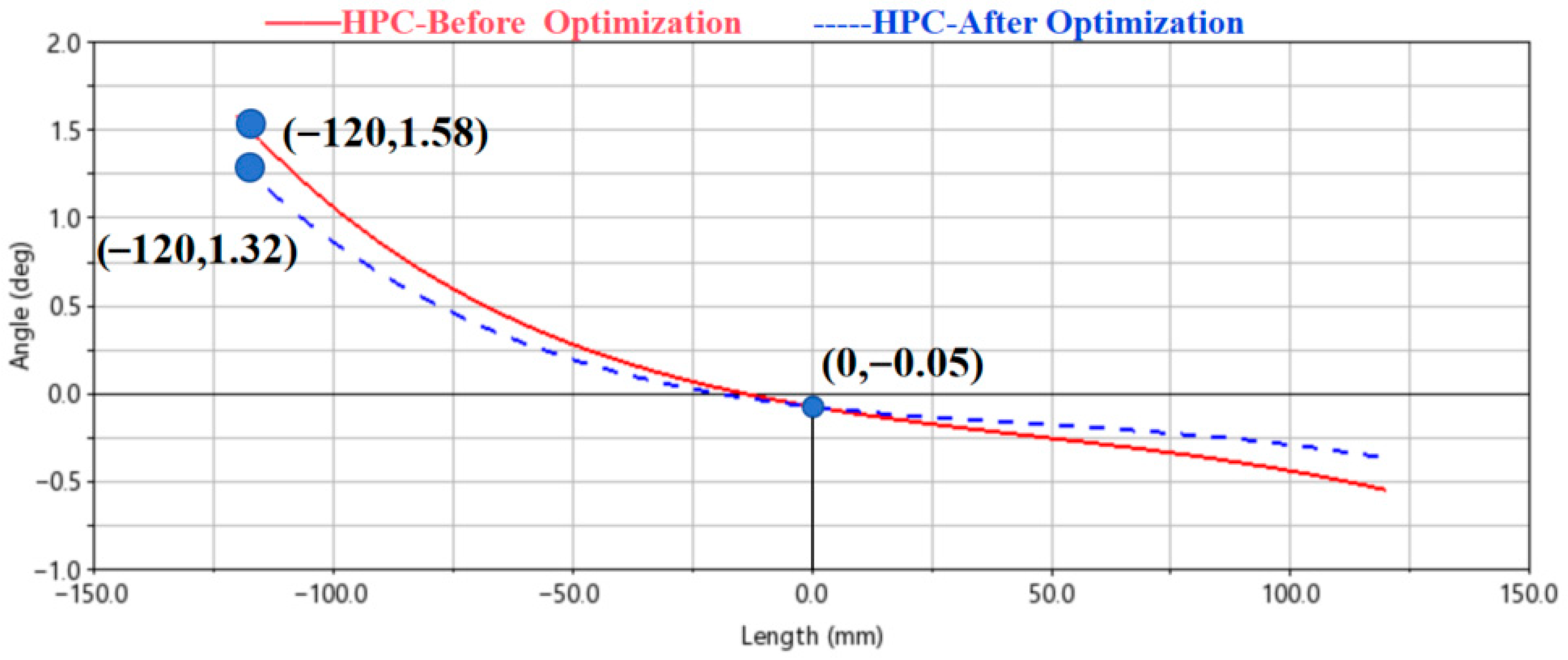
Figure 12 shows the variation curves for the toe angle with a 120 mm vertical wheel jounce before and after optimization. Regarding the overall trend, both curves exhibit a continuous decreasing trend, transitioning from positive toe to negative toe, yet the absolute variation in the optimized curve remains consistently lower than that in the pre-optimization curve over the entire stroke. During the compression stroke (−120 to 0 mm), the initial value of the optimized toe angle (approximately 1.5°) is smaller than that before optimization (approximately 1.7°) and decreases more gently, being closer to 0° at the suspension midpoint (0 mm). In the extension stroke (0 mm to 120 mm), the optimized toe angle reaches approximately −0.2° at the maximum extension stroke (120 mm), with a much lower negative amplitude than the pre-optimization value of approximately −0.5°. As can be seen from
Figure 12, the variation range of the toe angle changes from the original [−0.5474°, 1.5768°] to [−0.3674°, 1.3234°], with the entire range reduced by 20.4% after optimization.
In the compression stroke (the positive toe phase), the smaller positive toe angle after optimization reduces the sliding friction caused by the tire’s toe-in tendency, which can effectively alleviate abnormal wear on the inner side of the tire. In the compression stroke (cornering/bumpy working conditions), the moderate positive toe angle after optimization not only preserves the straight-line driving stability and steering returnability but also avoids the problem of heavy steering caused by an excessively large positive toe angle.
In the extension stroke (the negative toe phase), the smaller negative toe angle after optimization reduces the sliding friction resulting from the tire’s toe-out tendency, which can mitigate abnormal wear on the outer side of the tire. In the extension stroke (the single-side sinking condition), the smaller negative toe angle after optimization simultaneously decreases the risk of shimmy during high-speed driving, improves straight-line driving stability, and optimizes the linearity of the steering response.
From the perspective of the comprehensive effect, the optimized toe angle is closer to 0° over the entire stroke, which reduces the sliding friction on the tire tread, makes tire wear more uniform, significantly lowers the overall wear rate, and extends the tire service life. The optimized toe angle characteristics better balance straight-line stability and steering flexibility under different working conditions, thereby enhancing the vehicle’s handling limit and driving safety.
Based on the tire brush model in
Section 3 of this article and the influence laws of the toe and camber angles on tire wear work, the tire wear work before and after optimization was converted. The results show that since the slope of the toe angle is much larger than that of the camber angle, the toe angle becomes the dominant factor in the tire wear work.
Table 6 shows comparison table of tire wear work before and after optimization. After optimization, the wear work of the toe angle was reduced by 20.28%, which is consistent with the statement that “the variation range of the toe angle is reduced by 20.4%”. After optimization, the wear work of the camber angle was slightly reduced by 3.46%. There was a limited reduction in the absolute value of the angle, but the change curve was smoother, which effectively reduced the fluctuation amplitude of dynamic wear and improved the uniformity of tire wear. The comprehensive wear work of the camber and toe angles was reduced from 294.8 to 243.3 N·mm, with an overall reduction of 17.47%, which indicates a significant reduction in wear work and verifies the effectiveness of this optimization of wheel alignment parameters.
7. Conclusions
To address the tire wear problem for distributed electric-drive lunar rovers operating in the low-gravity environment on the lunar surface, taking the double-wishbone suspension system as the research object, a multi-objective optimization study of wheel alignment parameters was carried out. The main conclusions are as follows:
A tire brush model was established, and it was determined that the toe and camber angles are the main factors affecting tire wear work. A simulation analysis showed that as the camber and toe angles increase, the tire wear work becomes greater. However, it was also found that compared with that caused by camber angle change, the lunar rover tire wear caused by toe angle change is more serious.
A multi-body dynamics model of the lunar rover’s double-wishbone suspension was established. In the context of a parallel wheel jump of ±120 mm, the sensitivity of 24 hardpoint coordinate variables to the wheel alignment parameters was analyzed, and 13 hardpoint coordinate variables with greater influence were determined. Then, a multi-objective optimization method for wheel alignment parameters was proposed with the goal of minimizing the changes in the wheel camber and toe angles, and the optimal hardpoint coordinate positions were obtained. The optimized results show that the variation range of the toe angle was optimized from [−0.55°, 1.58°] to [−0.37°, 1.32°], and the variation in the toe angle was reduced by 20.4%; the camber angle change curve became smoother, effectively reducing tire wear; and the comprehensive tire wear work was reduced by 17.47%.
The method described in this paper provides a theoretical reference for future research on the kinematics of lunar rover suspension systems and the handling stability of the whole vehicle in the rugged environment on the lunar surface.