Unraveling Uveal Melanoma: Advances in Three-Dimensional Models



 and
and 
Abstract
1. Introduction
2. Uveal Melanoma Classification
2.1. Anatomical Classification
2.2. Histopathological Classification
2.3. Clinico-Pathological Classification (AJCC TNM)
2.4. Genetic–Molecular Classification
3. Uveal Melanoma Microenvironment
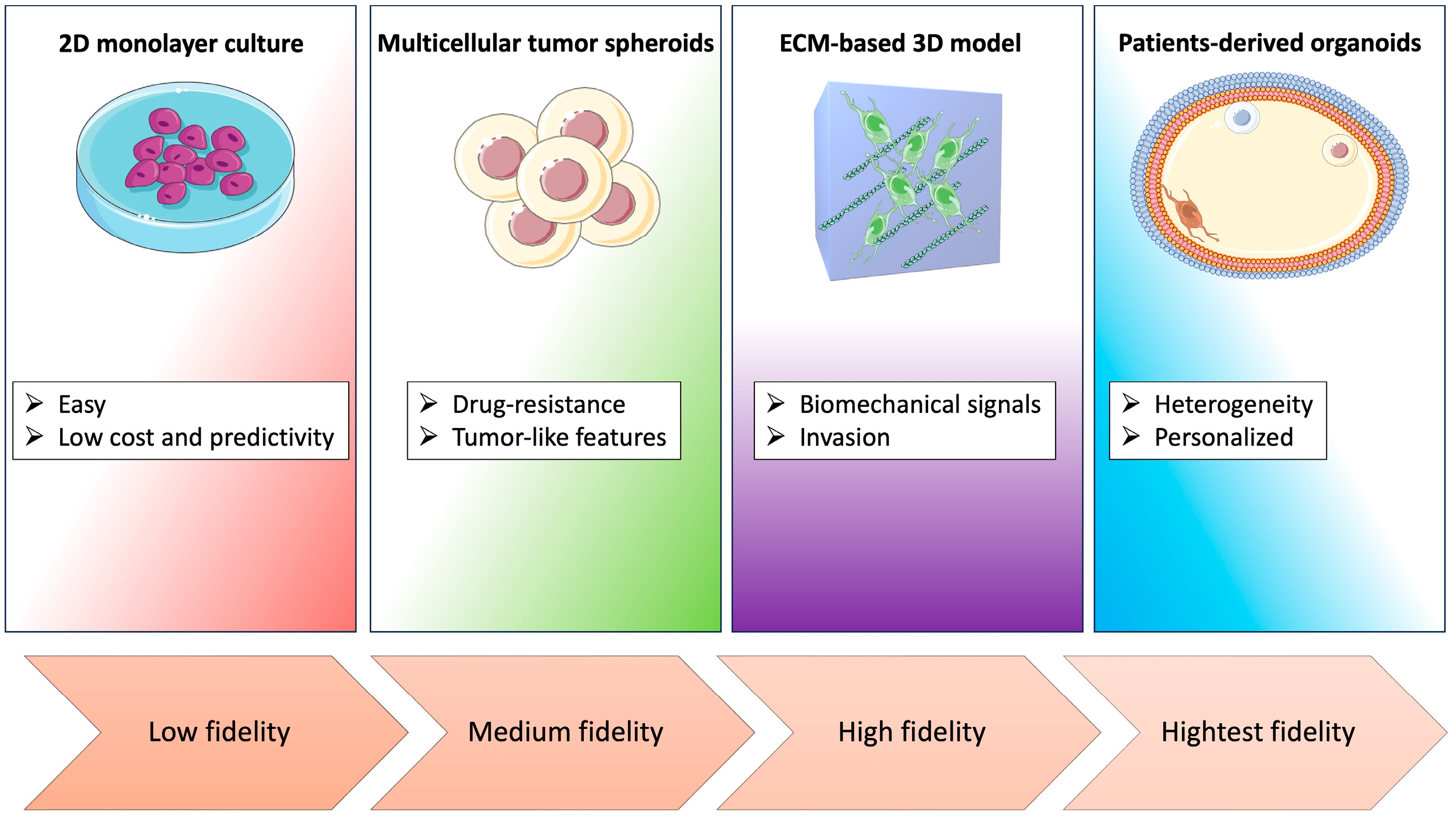
4. Uveal Melanoma Cells from 2D to 3D Models
5. Multicellular 3D Tumor Models: Spheroids and Scaffolds
5.1. Scaffold-Free Systems: Self-Aggregation and Hanging Drop
5.2. Scaffold-Based Systems: Mimicking the Extracellular Matrix (ECM)
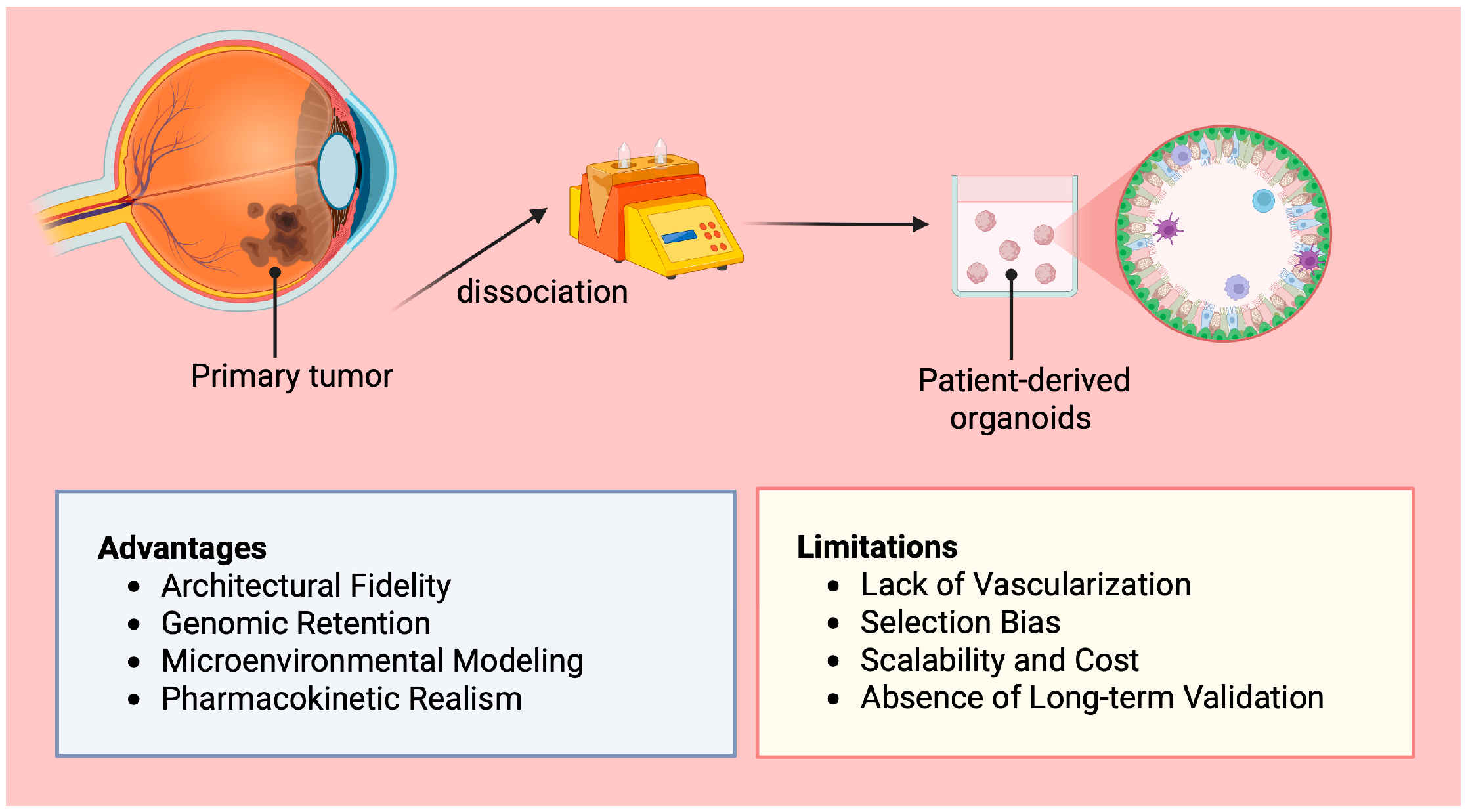
6. Organoids

| Model Type | Advantages | Limitations | Typical Applications | Reference |
|---|---|---|---|---|
| 2D cell lines | Easy, cheap, and reproducible | Poorly mimic tumor | Screening and basic biology | [48,59,60] |
| Short-term primary cultures | High fidelity | Hard to obtain and limited lifespan | Phenotypic studies | [26] |
| 3D spheroids | Mimic gradients e structure | Setup required | Drug response and reproduce different types of cancer | [66,67,75,76,77,78,79] |
| PDO | Patient-specific and highly predictive | Resource intensive | Personalized oncology | [72,74] |
7. In Vivo Model of UM
| Models | Type | Core Features | Advantages | Limits | References |
|---|---|---|---|---|---|
| UM multicellular tumor spheroids (MCTS) | In vitro 3D | Anchor-free spheroids: hypoxic core and proliferative ring | mimic vascularized so-lid tumors; greater biological relevance | Lack of immune system and real vascularization | [56] |
| Multicomponent human melanoma spheroids | In vitro 3D (scaffold-free) | Co-culture of tumor cells + fibroblasts + endothelial cells and/or immune cells | They reproduce tumor architecture and TME | Use of commercial lines → reduced heterogeneity | [99] |
| Primary UM (PUM) spheroids | In vitro 3D (patient-derived) | Derived from primary UM; compact and stable spheroids using ULA plates | They maintain the genetic and protein profile of the patient’s tumor | Limited availability of samples | [100] |
| C918 spheroids | In vitro 3D cell-line based | They develop ischemic/hypoxic gradients; they express Ki67, MelanA, HMB45, S100 | They reproduce tumor architecture observed in vivo | [77] | |
| Xenograft murine UM | In vivo | Implantation of human UM cells/lines | Good reproducibility; liver metastasis study | Immunosuppressed hosts; non-native environment | [38,49,91,92] |
| Patient-derived xenografts (PDX) | In vivo | Implantation of fresh human tumor tissue | High similarity to human UM | High costs; low scalability; variable engraftment rates | [94,95] |
| Syngeneic murine models | In vivo | Murine lines in immunocompetent mice | Immune system intact | Molecular differences from human UM | [89,101] |
| GEMM (genetically engineered mouse models) | In vivo | Oncogene/tumor suppressor activation/inactivation | Functional immune system; gene-specific study | High cost; technical complexity | [95,99,102] |
UM Hepatic Metastasis Models
8. Integrating 2D, 3D, and In Vivo Models for Drug Validation
| Drug | In Vitro Model | Cellular/Molecular Effect In Vitro | In Vivo Model | In Vivo Results | Reference |
|---|---|---|---|---|---|
| Navitoclax, everolimus, and flavopiridol | UM spheroids primary | ↓ metastasis and growth in spheroids | zebrafish PDX | ↓ metastasis, ↑ ferroptosis | [116,118] |
| Paclitaxel, panobinostat, and everolimus | UM cells B16-BL6 | ↓ proliferation | zebrafish orthotopic | ↓ proliferation in vivo | [119] |
| Quisinostat and dasatinib | UM primary and metastasis cells | ↓ proliferation/migration | zebrafish xenograft | ↓ proliferation | [84] |
| FotemustinA, dacarbazina, bendamustina, and | — | — | PDX murine | ↓ tumor variable volume | [120] |
| darovasertib | UM cell lines | ↓ PKC signaling | — | — | [121] |
9. Perspective
Author Contributions
Funding
Institutional Review Board Statement
Informed Consent Statement
Data Availability Statement
Acknowledgments
Conflicts of Interest
Abbreviations
| α-SMA | Alpha-smooth muscle actin |
| AJCC | American Joint Committee on Cancer |
| AD | Anchor-dependent |
| αPD-1 | Anti-programmed cell death protein 1 |
| BAP-1 TPDS | BAP1 Tumor Predisposition Syndrome |
| BFGF | Basic fibroblast growth factor |
| CAM | Chicken Embryos |
| 8q | Chromosome 8 |
| CBI | Ciliary Body Involvement |
| CD4+T lymphocytes | Cluster of Differentiation 4-positive T lymphocytes |
| CD68-positive macrophages | Cluster of Differentiation 68–positive macrophage |
| CD8+ T lymphocytes | Cluster of Differentiation 8-positive T lymphocytes |
| CTLA-4 | Cytotoxic T-lymphocyte-associated protein 4 |
| DEX | Dextran |
| DNMTi | DNA methyltransferase inhibitor |
| ECT | Electrochemotherapy |
| ECM | Extracellular Matrix |
| EOE | Extraocular Extension |
| GEMMs | Genetically modified models |
| GM-CSF | Granulocyte-macrophage colony-stimulating factor |
| IHC | Immunohistochemistry |
| ICAM-1 | Intercellular adhesion molecule-1 |
| IP-10 | Interferon gamma-induced protein 10 |
| IL-2 | Interleukin-2 |
| IL-6 | Interleukin-6 |
| LBD | Largest Basal Diameter |
| LUMPO | Liverpool Uveal Melanoma Prognosticator Online |
| LAG-3 | Lymphocyte activation gene-3 |
| MEKi | MEK inhibitor |
| MPDOs | Melanoma patient-derived organoids |
| MCP-1 | Monocyte chemoattractant protein-1 |
| MCTS | Multicellular Tumor Spheroids |
| MCTs | Multicellular Tumor Structures |
| AF | Non-Anchor |
| NCM | Normal Choroidal Melanocytes |
| Ki67 | nuclear proliferation marker |
| PDOs | Patient-Derived Organoids |
| PDXs | Patient-derived Xenografts |
| poly-HEMA | Poly(2-hydroxyethyl methacrylate) |
| PEG | Poly(ethylene glycol) |
| PRiMeUM | Predicting Risk of Metastasis in Uveal Melanoma |
| PUM | Primary Uveal Melanoma |
| PD-1 | Programmed cell death protein 1 |
| PD-L1 | Programmed death-ligand 1 |
| RANTES | Regulated upon activation, Normal T cell expressed and secreted |
| RWVs | Rotational wall systems |
| TCGA | The Cancer Genome Atlas |
| 3D | Three-dimensional |
| TH | Tumor height |
| TME | Tumor microenvironment |
| TNM | Tumor, node, and metastasis |
| TAMs | Tumor-associated lymphocytes and macrophages |
| 2D | Two-dimensional |
| ULA | Ultra-low attachment |
| UM | Uveal melanoma |
| VCAM | Vascular cell adhesion molecule |
| VEGF | Vascular endothelial growth factor |
References
- Kaliki, S.; Shields, C.L. Uveal melanoma: Relatively rare but deadly cancer. Eye 2017, 31, 241–257. [Google Scholar] [CrossRef]
- Jager, M.J.; Shields, C.L.; Cebulla, C.M.; Abdel-Rahman, M.H.; Grossniklaus, H.E.; Stern, M.H.; Carvajal, R.D.; Belfort, R.N.; Jia, R.; Shields, J.A.; et al. Uveal melanoma. Nat. Rev. Dis. Primers 2020, 6, 24. [Google Scholar] [CrossRef]
- Shields, C.L.; Materin, M.A.; Shields, J.A.; Gershenbaum, E.; Singh, A.D.; Smith, A. Factors associated with elevated intraocular pressure in eyes with iris melanoma. Br. J. Ophthalmol. 2001, 85, 666–669. [Google Scholar] [CrossRef]
- Shields, C.L.; Kaliki, S.; Shah, S.U.; Luo, W.; Furuta, M.; Shields, J.A. Iris melanoma: Features and prognosis in 317 children and adults. J. Am. Assoc. Pediatr. Ophthalmol. Strabismus 2012, 16, 10–16. [Google Scholar] [CrossRef] [PubMed]
- Singh, A.D.; Shields, C.L.; Shields, J.A. Prognostic factors in uveal melanoma. Melanoma Res. 2001, 11, 255–263. [Google Scholar] [CrossRef] [PubMed]
- Abdel-Rahman, M.H.; Pilarski, R.; Cebulla, C.M.; Massengill, J.B.; Christopher, B.N.; Boru, G.; Hovland, P.; Davidorf, F.H. Germline BAP1 mutation predisposes to uveal melanoma, lung adenocarcinoma, meningioma, and other cancers. J. Med. Genet. 2011, 48, 856–859. [Google Scholar] [CrossRef]
- Cebulla, C.M.; Binkley, E.M.; Pilarski, R.; Massengill, J.B.; Rai, K.; Liebner, D.A.; Marino, M.J.; Singh, A.D.; Abdel-Rahman, M.H. Analysis of BAP1 Germline Gene Mutation in Young Uveal Melanoma Patients. Ophthalmic. Genet. 2015, 36, 126–131. [Google Scholar] [CrossRef]
- Aoude, L.G.; Vajdic, C.M.; Kricker, A.; Armstrong, B.; Hayward, N.K. Prevalence of germline BAP1 mutation in a population-based sample of uveal melanoma cases. Pigment Cell Melanoma Res. 2013, 26, 278–279. [Google Scholar] [CrossRef]
- Rai, K.; Pilarski, R.; Cebulla, C.M.; Abdel-Rahman, M.H. Comprehensive review of BAP1 tumor predisposition syndrome with report of two new cases. Clin. Genet. 2016, 89, 285–294. [Google Scholar] [CrossRef] [PubMed]
- Saint-Ghislain, M.; Derrien, A.C.; Geoffrois, L.; Gastaud, L.; Lesimple, T.; Negrier, S.; Penel, N.; Kurtz, J.E.; Le Corre, Y.; Dutriaux, C.; et al. MBD4 deficiency is predictive of response to immune checkpoint inhibitors in metastatic uveal melanoma patients. Eur. J. Cancer 2022, 173, 105–112. [Google Scholar] [CrossRef]
- Godiveau, M.; Ginzac, A.; Bidet, Y.; Ponelle-Chachuat, F.; Privat, M.; Durando, X.; Cavaillé, M.; Lepage, M. Identification of new candidate genes for the hereditary predisposition to uveal melanoma: IGCMU trial. Front. Oncol. 2025, 15, 1538924. [Google Scholar] [CrossRef]
- Repo, P.; Jäntti, J.E.; Järvinen, R.S.; Rantala, E.S.; Täll, M.; Raivio, V.; Kivelä, T.T.; Turunen, J.A. Germline loss-of-function variants in MBD4 are rare in Finnish patients with uveal melanoma. Pigment Cell Melanoma Res. 2020, 33, 756–762. [Google Scholar] [CrossRef] [PubMed]
- Abdel-Rahman, M.H.; Sample, K.M.; Pilarski, R.; Walsh, T.; Grosel, T.; Kinnamon, D.; Boru, G.; Massengill, J.B.; Schoenfield, L.; Kelly, B.; et al. Whole Exome Sequencing Identifies Candidate Genes Associated with Hereditary Predisposition to Uveal Melanoma. Ophthalmology 2020, 127, 668–678. [Google Scholar] [CrossRef] [PubMed]
- Virgili, G.; Gatta, G.; Ciccolallo, L.; Capocaccia, R.; Biggeri, A.; Crocetti, E.; Lutz, J.M.; Paci, E. Incidence of uveal melanoma in Europe. Ophthalmology 2007, 114, 2309–2315. [Google Scholar] [CrossRef] [PubMed]
- Singh, A.D.; Turell, M.E.; Topham, A.K. Uveal melanoma: Trends in incidence, treatment, and survival. Ophthalmology 2011, 118, 1881–1885. [Google Scholar] [CrossRef]
- Lee, M.; Nichols, E.; Reddy, V.N.; Ganti, L. Visualizing the landscape of ocular melanoma research: A bibliometric analysis. Int. J. Emerg. Med. 2025, 18, 195. [Google Scholar] [CrossRef]
- Rantala, E.S.; Hernberg, M.; Kivelä, T.T. Overall survival after treatment for metastatic uveal melanoma: A systematic review and meta-analysis. Melanoma Res. 2019, 29, 561–568. [Google Scholar] [CrossRef]
- Singh, A.D.; Borden, E.C. Metastatic uveal melanoma. Ophthalmol. Clin. N. Am. 2005, 18, 143–150. [Google Scholar] [CrossRef]
- Kujala, E.; Mäkitie, T.; Kivelä, T. Very long-term prognosis of patients with malignant uveal melanoma. Invest. Ophthalmol. Vis. Sci. 2003, 44, 4651–4659. [Google Scholar] [CrossRef]
- Damato, B. Progress in the management of patients with uveal melanoma. The 2012 Ashton Lecture. Eye 2012, 26, 1157–1172. [Google Scholar] [CrossRef]
- Aronow, M.E.; Topham, A.K.; Singh, A.D. Uveal Melanoma: 5-Year Update on Incidence, Treatment, and Survival (SEER 1973–2013). Ocul. Oncol. Pathol. 2018, 4, 145–151. [Google Scholar] [CrossRef]
- Nisanova, A.; Park, S.S.; Amin, A.; Zako, C.; Wilson, M.D.; Scholey, J.; Afshar, A.R.; Tsai, T.; Char, D.H.; Mishra, K.K. Novel Risk Factors for Uveal Melanoma in Adolescent and Young Adult Patients: A Comprehensive Case-Control Analysis. Ophthalmol. Sci. 2025, 5, 100687. [Google Scholar] [CrossRef] [PubMed]
- Sun, J.; Ding, J.; Yue, H.; Xu, B.; Sodhi, A.; Xue, K.; Ren, H.; Qian, J. Hypoxia-induced BNIP3 facilitates the progression and metastasis of uveal melanoma by driving metabolic reprogramming. Autophagy 2025, 21, 191–209. [Google Scholar] [CrossRef]
- Maugeri, G.; D’Amico, A.G.; Saccone, S.; Federico, C.; Rasà, D.M.; Caltabiano, R.; Broggi, G.; Giunta, S.; Musumeci, G.; D’Agata, V. Effect of PACAP on Hypoxia-Induced Angiogenesis and Epithelial-Mesenchymal Transition in Glioblastoma. Biomedicines 2021, 9, 965. [Google Scholar] [CrossRef]
- Finger, P.T. Radiation therapy for choroidal melanoma. Surv. Ophthalmol. 1997, 42, 215–232. [Google Scholar] [CrossRef] [PubMed]
- Angi, M.; Versluis, M.; Kalirai, H. Culturing Uveal Melanoma Cells. Ocul. Oncol. Pathol. 2015, 1, 126–132. [Google Scholar] [CrossRef]
- Nissen, K.; Hindso, T.G.; Faber, C.; Wallentin Wadt, K.A.; Andersen, M.K.; Heegaard, S.; Bagger, M.; Kiilgaard, J.F. A Novel Staging Model for Uveal Melanoma: Combining Tumor Volume, Clinical Factors, and Genetic Alterations in a Danish Cohort. Ophthalmology 2026, 133, 233–247. [Google Scholar] [CrossRef] [PubMed]
- McLean, I.W.; Foster, W.D.; Zimmerman, L.E.; Gamel, J.W. Modifications of Callender’s classification of uveal melanoma at the Armed Forces Institute of Pathology. Am. J. Ophthalmol. 1983, 96, 502–509. [Google Scholar] [CrossRef]
- McLean, I.W.; Foster, W.D.; Zimmerman, L.E. Uveal melanoma: Location, size, cell type, and enucleation as risk factors in metastasis. Hum. Pathol. 1982, 13, 123–132. [Google Scholar] [CrossRef]
- Amin, M.B.; Greene, F.L.; Edge, S.B.; Compton, C.C.; Gershenwald, J.E.; Brookland, R.K.; Meyer, L.; Gress, D.M.; Byrd, D.R.; Winchester, D.P. The Eighth Edition AJCC Cancer Staging Manual: Continuing to build a bridge from a population-based to a more “personalized” approach to cancer staging. CA Cancer J. Clin. 2017, 67, 93–99. [Google Scholar] [CrossRef]
- Stålhammar, G.; Coupland, S.E.; Ewens, K.G.; Ganguly, A.; Heimann, H.; Shields, C.L.; Damato, B. Improved Staging of Ciliary Body and Choroidal Melanomas Based on Estimation of Tumor Volume and Competing Risk Analyses. Ophthalmology 2024, 131, 478–491. [Google Scholar] [CrossRef]
- Vaquero-Garcia, J.; Lalonde, E.; Ewens, K.G.; Ebrahimzadeh, J.; Richard-Yutz, J.; Shields, C.L.; Barrera, A.; Green, C.J.; Barash, Y.; Ganguly, A. PRiMeUM: A Model for Predicting Risk of Metastasis in Uveal Melanoma. Invest. Ophthalmol. Vis. Sci. 2017, 58, 4096–4105. [Google Scholar] [CrossRef]
- Jager, M.J.; Brouwer, N.J.; Esmaeli, B. The Cancer Genome Atlas Project: An Integrated Molecular View of Uveal Melanoma. Ophthalmology 2018, 125, 1139–1142. [Google Scholar] [CrossRef] [PubMed]
- Goesmann, L.; Refaian, N.; Bosch, J.J.; Heindl, L.M. Characterization and Quantitation of the Tumor Microenvironment of Uveal Melanoma. Biology 2023, 12, 738. [Google Scholar] [CrossRef]
- Gelmi, M.C.; Bas, Z.; Malkani, K.; Ganguly, A.; Shields, C.L.; Jager, M.J. Adding the Cancer Genome Atlas Chromosome Classes to American Joint Committee on Cancer System Offers More Precise Prognostication in Uveal Melanoma. Ophthalmology 2022, 129, 431–437. [Google Scholar] [CrossRef]
- LeBleu, V.S. Imaging the Tumor Microenvironment. Cancer J. 2015, 21, 174–178. [Google Scholar] [CrossRef] [PubMed]
- Bronkhorst, I.H.; Jager, M.J. Uveal melanoma: The inflammatory microenvironment. J. Innate Immun. 2012, 4, 454–462. [Google Scholar] [CrossRef]
- Jager, M.J.; Magner, J.A.; Ksander, B.R.; Dubovy, S.R. Uveal Melanoma Cell Lines: Where do they come from? (An American Ophthalmological Society Thesis). Trans. Am. Ophthalmol. Soc. 2016, 114, T5. [Google Scholar] [PubMed]
- Burgess, B.L.; Rao, N.P.; Eskin, A.; Nelson, S.F.; McCannel, T.A. Characterization of three cell lines derived from fine needle biopsy of choroidal melanoma with metastatic outcome. Mol. Vis. 2011, 17, 607–615. [Google Scholar]
- Wan, G.Y.; Liu, Y.; Chen, B.W.; Liu, Y.Y.; Wang, Y.S.; Zhang, N. Recent advances of sonodynamic therapy in cancer treatment. Cancer Biol. Med. 2016, 13, 325–338. [Google Scholar] [CrossRef]
- Hanahan, D.; Weinberg, R.A. The hallmarks of cancer. Cell 2000, 100, 57–70. [Google Scholar] [CrossRef]
- Antoni, D.; Burckel, H.; Josset, E.; Noel, G. Three-dimensional cell culture: A breakthrough in vivo. Int. J. Mol. Sci. 2015, 16, 5517–5527. [Google Scholar] [CrossRef] [PubMed]
- Achilli, T.M.; Meyer, J.; Morgan, J.R. Advances in the formation, use and understanding of multi-cellular spheroids. Expert Opin. Biol. Ther. 2012, 12, 1347–1360. [Google Scholar] [CrossRef]
- Fang, Y.; Eglen, R.M. Three-Dimensional Cell Cultures in Drug Discovery and Development. SLAS Discov. 2017, 22, 456–472. [Google Scholar] [CrossRef] [PubMed]
- Ma, H.L.; Jiang, Q.; Han, S.; Wu, Y.; Cui Tomshine, J.; Wang, D.; Gan, Y.; Zou, G.; Liang, X.J. Multicellular tumor spheroids as an in vivo-like tumor model for three-dimensional imaging of chemotherapeutic and nano material cellular penetration. Mol. Imaging 2012, 11, 487–498. [Google Scholar] [CrossRef] [PubMed]
- Xu, X.; Sabanayagam, C.R.; Harrington, D.A.; Farach-Carson, M.C.; Jia, X. A hydrogel-based tumor model for the evaluation of nanoparticle-based cancer therapeutics. Biomaterials 2014, 35, 3319–3330. [Google Scholar] [CrossRef] [PubMed]
- Vinci, M.; Gowan, S.; Boxall, F.; Patterson, L.; Zimmermann, M.; Court, W.; Lomas, C.; Mendiola, M.; Hardisson, D.; Eccles, S.A. Advances in establishment and analysis of three-dimensional tumor spheroid-based functional assays for target validation and drug evaluation. BMC Biol. 2012, 10, 29. [Google Scholar] [CrossRef]
- Jensen, C.; Teng, Y. Is It Time to Start Transitioning From 2D to 3D Cell Culture? Front. Mol. Biosci. 2020, 7, 33. [Google Scholar] [CrossRef]
- Amirouchene-Angelozzi, N.; Nemati, F.; Gentien, D.; Nicolas, A.; Dumont, A.; Carita, G.; Camonis, J.; Desjardins, L.; Cassoux, N.; Piperno-Neumann, S.; et al. Establishment of novel cell lines recapitulating the genetic landscape of uveal melanoma and preclinical validation of mTOR as a therapeutic target. Mol. Oncol. 2014, 8, 1508–1520. [Google Scholar] [CrossRef]
- Luyten, G.P.; Naus, N.C.; Mooy, C.M.; Hagemeijer, A.; Kan-Mitchell, J.; Van Drunen, E.; Vuzevski, V.; De Jong, P.T.; Luider, T.M. Establishment and characterization of primary and metastatic uveal melanoma cell lines. Int. J. Cancer 1996, 66, 380–387. [Google Scholar] [CrossRef]
- Pardo, M.; Piñeiro, A.; de la Fuente, M.; García, A.; Prabhakar, S.; Zitzmann, N.; Dwek, R.A.; Sánchez-Salorio, M.; Domínguez, F.; Capeans, C. Abnormal cell cycle regulation in primary human uveal melanoma cultures. J. Cell. Biochem. 2004, 93, 708–720. [Google Scholar] [CrossRef]
- Suesskind, D.; Gauss, S.; Faust, U.E.; Bauer, P.; Schrader, M.; Bartz-Schmidt, K.U.; Henke-Fahle, S. Characterisation of novel uveal melanoma cell lines under serum-free conditions. Graefes Arch. Clin. Exp. Ophthalmol. 2013, 251, 2063–2070. [Google Scholar] [CrossRef] [PubMed]
- Aughton, K.; Shahidipour, H.; Djirackor, L.; Coupland, S.E.; Kalirai, H. Characterization of Uveal Melanoma Cell Lines and Primary Tumor Samples in 3D Culture. Transl. Vis. Sci. Technol. 2020, 9, 39. [Google Scholar] [CrossRef] [PubMed]
- Goyeneche, A.A.; Lasiste, J.M.E.; Abdouh, M.; Bustamante, P.; Burnier, J.V.; Burnier, M.N., Jr. Delineating three-dimensional behavior of uveal melanoma cells under anchorage independent or dependent conditions. Cancer Cell. Int. 2024, 24, 180. [Google Scholar] [CrossRef] [PubMed]
- Kunz-Schughart, L.A.; Freyer, J.P.; Hofstaedter, F.; Ebner, R. The use of 3-D cultures for high-throughput screening: The multicellular spheroid model. J. Biomol. Screen. 2004, 9, 273–285. [Google Scholar] [CrossRef]
- Sant, S.; Johnston, P.A. The production of 3D tumor spheroids for cancer drug discovery. Drug Discov. Today Technol. 2017, 23, 27–36. [Google Scholar] [CrossRef] [PubMed]
- Courau, T.; Bonnereau, J.; Chicoteau, J.; Bottois, H.; Remark, R.; Assante Miranda, L.; Toubert, A.; Blery, M.; Aparicio, T.; Allez, M.; et al. Cocultures of human colorectal tumor spheroids with immune cells reveal the therapeutic potential of MICA/B and NKG2A targeting for cancer treatment. J. Immunother. Cancer 2019, 7, 74. [Google Scholar] [CrossRef]
- Khaitan, D.; Dwarakanath, B.S. Multicellular spheroids as an in vitro model in experimental oncology: Applications in translational medicine. Expert Opin. Drug Discov. 2006, 1, 663–675. [Google Scholar] [CrossRef]
- Mitrakas, A.G.; Tsolou, A.; Didaskalou, S.; Karkaletsou, L.; Efstathiou, C.; Eftalitsidis, E.; Marmanis, K.; Koffa, M. Applications and Advances of Multicellular Tumor Spheroids: Challenges in Their Development and Analysis. Int. J. Mol. Sci. 2023, 24, 6949. [Google Scholar] [CrossRef]
- Costa, E.C.; Moreira, A.F.; de Melo-Diogo, D.; Gaspar, V.M.; Carvalho, M.P.; Correia, I.J. 3D tumor spheroids: An overview on the tools and techniques used for their analysis. Biotechnol. Adv. 2016, 34, 1427–1441. [Google Scholar] [CrossRef]
- Ivascu, A.; Kubbies, M. Rapid generation of single-tumor spheroids for high-throughput cell function and toxicity analysis. SLAS Discov. 2006, 11, 922–932. [Google Scholar] [CrossRef]
- Friedrich, J.; Seidel, C.; Ebner, R.; Kunz-Schughart, L.A. Spheroid-based drug screen: Considerations and practical approach. Nat. Protoc. 2009, 4, 309–324. [Google Scholar] [CrossRef]
- Zanoni, M.; Pignatta, S.; Arienti, C.; Bonafè, M.; Tesei, A. Anticancer drug discovery using multicellular tumor spheroid models. Expert Opin. Drug Discov. 2019, 14, 289–301. [Google Scholar] [CrossRef] [PubMed]
- Zanoni, M.; Piccinini, F.; Arienti, C.; Zamagni, A.; Santi, S.; Polico, R.; Bevilacqua, A.; Tesei, A. 3D tumor spheroid models for in vitro therapeutic screening: A systematic approach to enhance the biological relevance of data obtained. Sci. Rep. 2016, 6, 19103. [Google Scholar] [CrossRef]
- Metzger, W.; Sossong, D.; Bächle, A.; Pütz, N.; Wennemuth, G.; Pohlemann, T.; Oberringer, M. The liquid overlay technique is the key to formation of co-culture spheroids consisting of primary osteoblasts, fibroblasts and endothelial cells. Cytotherapy 2011, 13, 1000–1012. [Google Scholar] [CrossRef]
- Angeli, C.; Wroblewska, J.P.; Klein, E.; Margue, C.; Kreis, S. Protocol to generate scaffold-free, multicomponent 3D melanoma spheroid models for preclinical drug testing. STAR Protoc. 2024, 5, 103058. [Google Scholar] [CrossRef]
- Djirackor, L.; Shahidipour, H.; Coupland, S.E.; Kalirai, H. A 3D spheroid model of Uveal Melanoma (UM). Investig. Ophthalmol. Vis. Sci. 2019, 60, 730. [Google Scholar]
- Anderson, N.M.; Simon, M.C. The tumor microenvironment. Curr. Biol. 2020, 30, R921–R925. [Google Scholar] [CrossRef] [PubMed]
- Caliari, S.R.; Burdick, J.A. A practical guide to hydrogels for cell culture. Nat. Methods 2016, 13, 405–414. [Google Scholar] [CrossRef]
- Kojima, N.; Takeuchi, S.; Sakai, Y. Rapid aggregation of heterogeneous cells and multiple-sized microspheres in methylcellulose medium. Biomaterials 2012, 33, 4508–4514. [Google Scholar] [CrossRef]
- Han, C.; Takayama, S.; Park, J. Formation and manipulation of cell spheroids using a density adjusted PEG/DEX aqueous two phase system. Sci. Rep. 2015, 5, 11891. [Google Scholar] [CrossRef]
- Dalvin, L.A.; Andrews-Pfannkoch, C.M.; Miley, D.R.; Hogenson, T.L.; Erickson, S.A.; Malpotra, S.; Anderson, K.J.; Omer, M.E.; Almada, L.L.; Zhang, C.; et al. Novel Uveal Melanoma Patient-Derived Organoid Models Recapitulate Human Disease to Support Translational Research. Invest. Ophthalmol. Vis. Sci. 2024, 65, 60. [Google Scholar] [CrossRef]
- Robertson, A.G.; Shih, J.; Yau, C.; Gibb, E.A.; Oba, J.; Mungall, K.L.; Hess, J.M.; Uzunangelov, V.; Walter, V.; Danilova, L.; et al. Integrative Analysis Identifies Four Molecular and Clinical Subsets in Uveal Melanoma. Cancer Cell 2017, 32, 204–220. [Google Scholar] [CrossRef] [PubMed]
- Vega-Rubin-de-Celis, S.; Kristani, A.; Kudla, M.; Mergener, S.; Corrochano-Ruiz, A.; Larafa, S.; Montero-Vergara, J.; Ahle, L.M.; Will, R.; Lever, M.; et al. Autophagy suppression via SRC induction represents a therapeutic vulnerability for BAP1-mutant cancers. Autophagy 2025, 21, 3324–3343. [Google Scholar] [CrossRef]
- Fiorentzis, M.; Viestenz, A.; Siebolts, U.; Seitz, B.; Coupland, S.E.; Heinzelmann, J. The Potential Use of Electrochemotherapy in the Treatment of Uveal Melanoma: In Vitro Results in 3D Tumor Cultures and In Vivo Results in a Chick Embryo Model. Cancers 2019, 11, 1344. [Google Scholar] [CrossRef] [PubMed]
- Fiorentzis, M.; Viestenz, A.; Seitz, B.; Coupland, S.E.; Heinzelmann, J. Electrochemotherapy in 3D Ocular Melanoma Spheroids using a Customized Electrode. J. Vis. Exp. 2020, 158, e60611. [Google Scholar] [CrossRef]
- Fiorentzis, M.; Sokolenko, E.A.; Bechrakis, N.E.; Ting, S.; Schmid, K.W.; Sak, A.; Stuschke, M.; Seitz, B.; Berchner-Pfannschmidt, U. Electrochemotherapy with Bleomycin Enhances Radiosensitivity of Uveal Melanomas: First In Vitro Results in 3D Cultures of Primary Uveal Melanoma Cell Lines. Cancers 2021, 13, 3086. [Google Scholar] [CrossRef] [PubMed]
- Jinhai, Y.; Yunxiu, C.; Qi, J.; Jiancheng, G.; Zhida, P.; Sha, W.; Hongfei, L.; Qihua, X. Three-dimensional cell spheroid culture and cell viability study of uveal melanoma cell line C918 with luteolin treatment. Int. Ophthalmol. 2024, 44, 385. [Google Scholar] [CrossRef]
- Farhoumand, L.S.; Liu, H.; Tsimpaki, T.; Hendgen-Cotta, U.B.; Rassaf, T.; Bechrakis, N.E.; Fiorentzis, M.; Berchner-Pfannschmidt, U. Blockade of ß-Adrenergic Receptors by Nebivolol Enables Tumor Control Potential for Uveal Melanoma in 3D Tumor Spheroids and 2D Cultures. Int. J. Mol. Sci. 2023, 24, 5894. [Google Scholar] [CrossRef]
- Richards, J.R.; Yoo, J.H.; Shin, D.; Odelberg, S.J. Mouse models of uveal melanoma: Strengths, weaknesses, and future directions. Pigment Cell Melanoma Res. 2020, 33, 264–278. [Google Scholar] [CrossRef]
- Bontzos, G.; Detorakis, E.T. Animal Models of Uveal Melanoma for Localized Interventions. Crit. Rev. Oncog. 2017, 22, 187–194. [Google Scholar] [CrossRef] [PubMed]
- Gao, M.; Tang, J.; Liu, K.; Yang, M.; Liu, H. Quantitative Evaluation of Vascular Microcirculation Using Contrast-Enhanced Ultrasound Imaging in Rabbit Models of Choroidal Melanoma. Invest. Ophthalmol. Vis. Sci. 2018, 59, 1251–1262. [Google Scholar] [CrossRef]
- Fornabaio, G.; Barnhill, R.L.; Lugassy, C.; Bentolila, L.A.; Cassoux, N.; Roman-Roman, S.; Alsafadi, S.; Del Bene, F. Angiotropism and extravascular migratory metastasis in cutaneous and uveal melanoma progression in a zebrafish model. Sci. Rep. 2018, 8, 10448. [Google Scholar] [CrossRef]
- van der Ent, W.; Burrello, C.; Teunisse, A.F.; Ksander, B.R.; van der Velden, P.A.; Jager, M.J.; Jochemsen, A.G.; Snaar-Jagalska, B.E. Modeling of human uveal melanoma in zebrafish xenograft embryos. Investig. Ophthalmol. Vis. Sci. 2014, 55, 6612–6622. [Google Scholar] [CrossRef]
- Mouti, M.A.; Dee, C.; Coupland, S.E.; Hurlstone, A.F. Minimal contribution of ERK1/2-MAPK signalling towards the maintenance of oncogenic GNAQQ209P-driven uveal melanomas in zebrafish. Oncotarget 2016, 7, 39654–39670. [Google Scholar] [CrossRef]
- Perez, D.E.; Henle, A.M.; Amsterdam, A.; Hagen, H.R.; Lees, J.A. Uveal melanoma driver mutations in GNAQ/11 yield numerous changes in melanocyte biology. Pigment Cell Melanoma Res. 2018, 31, 604–613. [Google Scholar] [CrossRef]
- Cao, J.; Jager, M.J. Animal Eye Models for Uveal Melanoma. Ocul. Oncol. Pathol. 2015, 1, 141–150. [Google Scholar] [CrossRef] [PubMed]
- Zuberi, A.; Lutz, C. Mouse Models for Drug Discovery. Can New Tools and Technology Improve Translational Power? ILAR J. 2016, 57, 178–185. [Google Scholar] [CrossRef] [PubMed]
- Stei, M.M.; Loeffler, K.U.; Holz, F.G.; Herwig, M.C. Animal Models of Uveal Melanoma: Methods, Applicability, and Limitations. Biomed. Res. Int. 2016, 2016, 4521807. [Google Scholar] [CrossRef]
- Kelland, L.R. Of mice and men: Values and liabilities of the athymic nude mouse model in anticancer drug development. Eur. J. Cancer 2004, 40, 827–836. [Google Scholar] [CrossRef]
- Griewank, K.G.; Yu, X.; Khalili, J.; Sozen, M.M.; Stempke-Hale, K.; Bernatchez, C.; Wardell, S.; Bastian, B.C.; Woodman, S.E. Genetic and molecular characterization of uveal melanoma cell lines. Pigment Cell Melanoma Res. 2012, 25, 182–187. [Google Scholar] [CrossRef]
- Gould, S.E.; Junttila, M.R.; de Sauvage, F.J. Translational value of mouse models in oncology drug development. Nat. Med. 2015, 21, 431–439. [Google Scholar] [CrossRef]
- Sutmuller, R.P.; Schurmans, L.R.; van Duivenvoorde, L.M.; Tine, J.A.; van Der Voort, E.I.; Toes, R.E.; Melief, C.J.; Jager, M.J.; Offringa, R. Adoptive T cell immunotherapy of human uveal melanoma targeting gp100. J. Immunol. 2000, 165, 7308–7315. [Google Scholar] [CrossRef] [PubMed]
- Siolas, D.; Hannon, G.J. Patient-derived tumor xenografts: Transforming clinical samples into mouse models. Cancer Res. 2013, 73, 5315–5319. [Google Scholar] [CrossRef]
- Uner, O.E.; Gandrakota, N.; Azarcon, C.P.; Grossniklaus, H.E. Animal Models of Uveal Melanoma. Ann. Eye Sci. 2022, 7, 7. [Google Scholar] [CrossRef] [PubMed]
- Beaumont, K.A.; Mohana-Kumaran, N.; Haass, N.K. Modeling Melanoma In Vitro and In Vivo. Healthcare 2013, 2, 27–46. [Google Scholar] [CrossRef]
- Huang, J.L.; Urtatiz, O.; Van Raamsdonk, C.D. Oncogenic G Protein GNAQ Induces Uveal Melanoma and Intravasation in Mice. Cancer Res. 2015, 75, 3384–3397. [Google Scholar] [CrossRef] [PubMed]
- Moore, A.R.; Ran, L.; Guan, Y.; Sher, J.J.; Hitchman, T.D.; Zhang, J.Q.; Hwang, C.; Walzak, E.G.; Shoushtari, A.N.; Monette, S.; et al. GNA11 Q209L Mouse Model Reveals RasGRP3 as an Essential Signaling Node in Uveal Melanoma. Cell Rep. 2018, 22, 2455–2468. [Google Scholar] [CrossRef] [PubMed]
- Walker, G.J.; Soyer, H.P.; Terzian, T.; Box, N.F. Modelling melanoma in mice. Pigment Cell Melanoma Res. 2011, 24, 1158–1176. [Google Scholar] [CrossRef]
- Bustamante, P.; Piquet, L.; Landreville, S.; Burnier, J.V. Uveal melanoma pathobiology: Metastasis to the liver. Semin. Cancer Biol. 2021, 71, 65–85. [Google Scholar] [CrossRef]
- Fidler, I.J.; Nicolson, G.L. Organ selectivity for implantation survival and growth of B16 melanoma variant tumor lines. J. Natl. Cancer Inst. 1976, 57, 1199–1202. [Google Scholar] [CrossRef]
- Larue, L.; Beermann, F. Cutaneous melanoma in genetically modified animals. Pigment Cell Res. 2007, 20, 485–497. [Google Scholar] [CrossRef]
- Ramos, R.; Cabré, E.; Vinyals, A.; Lorenzo, D.; Ferreres, J.R.; Varela, M.; Gomá, M.; Paules, M.J.; Gutierrez, C.; Piulats, J.M.; et al. Orthotopic murine xenograft model of uveal melanoma with spontaneous liver metastasis. Melanoma Res. 2023, 33, 1–11. [Google Scholar] [CrossRef] [PubMed]
- Yang, H.; Cao, J.; Grossniklaus, H.E. Uveal Melanoma Metastasis Models. Ocul. Oncol. Pathol. 2015, 1, 151–160. [Google Scholar] [CrossRef]
- Yang, H.; Fang, G.; Huang, X.; Yu, J.; Hsieh, C.L.; Grossniklaus, H.E. In-vivo xenograft murine human uveal melanoma model develops hepatic micrometastases. Melanoma Res. 2008, 18, 95–103. [Google Scholar] [CrossRef]
- Repp, A.C.; Mayhew, E.S.; Howard, K.; Alizadeh, H.; Niederkorn, J.Y. Role of fas ligand in uveal melanoma-induced liver damage. Graefes Arch. Clin. Exp. Ophthalmol. 2001, 239, 752–758. [Google Scholar] [CrossRef]
- Ma, D.; Niederkorn, J.Y. Role of epidermal growth factor receptor in the metastasis of intraocular melanomas. Invest. Ophthalmol. Vis. Sci. 1998, 39, 1067–1075. [Google Scholar]
- Fidler, I.J. Critical factors in the biology of human cancer metastasis: Twenty-eighth G.H.A. Clowes memorial award lecture. Cancer Res. 1990, 50, 6130–6138. [Google Scholar] [PubMed]
- Kuruppu, D.; Christophi, C.; Bertram, J.F.; O’Brien, P.E. Characterization of an animal model of hepatic metastasis. J. Gastroenterol. Hepatol. 1996, 11, 26–32. [Google Scholar] [CrossRef]
- Notting, I.C.; Buijs, J.T.; Que, I.; Mintardjo, R.E.; van der Horst, G.; Karperien, M.; Missotten, G.S.; Jager, M.J.; Schalij-Delfos, N.E.; Keunen, J.E.; et al. Whole-body bioluminescent imaging of human uveal melanoma in a new mouse model of local tumor growth and metastasis. Invest. Ophthalmol. Vis. Sci. 2005, 46, 1581–1587. [Google Scholar] [CrossRef] [PubMed]
- Li, H.; Alizadeh, H.; Niederkorn, J.Y. Differential expression of chemokine receptors on uveal melanoma cells and their metastases. Invest. Ophthalmol. Vis. Sci. 2008, 49, 636–643. [Google Scholar] [CrossRef] [PubMed]
- Gangemi, R.; Mirisola, V.; Barisione, G.; Fabbi, M.; Brizzolara, A.; Lanza, F.; Mosci, C.; Salvi, S.; Gualco, M.; Truini, M.; et al. Mda-9/syntenin is expressed in uveal melanoma and correlates with metastatic progression. PLoS ONE 2012, 7, e29989. [Google Scholar] [CrossRef]
- Folberg, R.; Leach, L.; Valyi-Nagy, K.; Lin, A.Y.; Apushkin, M.A.; Ai, Z.; Barak, V.; Majumdar, D.; Pe’er, J.; Maniotis, A.J. Modeling the behavior of uveal melanoma in the liver. Invest. Ophthalmol. Vis. Sci. 2007, 48, 2967–2974. [Google Scholar] [CrossRef]
- Barak, V.; Frenkel, S.; Valyi-Nagy, K.; Leach, L.; Apushkin, M.A.; Lin, A.Y.; Kalickman, I.; Baumann, N.A.; Pe’er, J.; Maniotis, A.J.; et al. Using the direct-injection model of early uveal melanoma hepatic metastasis to identify TPS as a potentially useful serum biomarker. Invest. Ophthalmol. Vis. Sci. 2007, 48, 4399–4402. [Google Scholar] [CrossRef]
- Vázquez-Aristizabal, P.; Henriksen-Lacey, M.; García-Astrain, C.; Jimenez de Aberasturi, D.; Langer, J.; Epelde, C.; Litti, L.; Liz-Marzán, L.M.; Izeta, A. Biofabrication and Monitoring of a 3D Printed Skin Model for Melanoma. Adv. Healthcare Mater. 2024, 13, e2401136. [Google Scholar] [CrossRef]
- Groenewoud, A.; Yin, J.; Gelmi, M.C.; Alsafadi, S.; Nemati, F.; Decaudin, D.; Roman-Roman, S.; Kalirai, H.; Coupland, S.E.; Jochemsen, A.G.; et al. Patient-derived zebrafish xenografts of uveal melanoma reveal ferroptosis as a drug target. Cell. Death Discov. 2023, 9, 183. [Google Scholar] [CrossRef] [PubMed]
- Gonçalves, J.; Emmons, M.F.; Faião-Flores, F.; Aplin, A.E.; Harbour, J.W.; Licht, J.D.; Wink, M.R.; Smalley, K.S.M. Decitabine limits escape from MEK inhibition in uveal melanoma. Pigment Cell Melanoma Res. 2020, 33, 507–514. [Google Scholar] [CrossRef] [PubMed]
- Yin, J.; Zhao, G.; Kalirai, H.; Coupland, S.E.; Jochemsen, A.G.; Forn-Cuní, G.; Wierenga, A.P.A.; Jager, M.J.; Snaar-Jagalska, B.E.; Groenewoud, A. Zebrafish Patient-Derived Xenograft Model as a Preclinical Platform for Uveal Melanoma Drug Discovery. Pharmaceuticals 2023, 16, 598. [Google Scholar] [CrossRef]
- Tobia, C.; Coltrini, D.; Ronca, R.; Loda, A.; Guerra, J.; Scalvini, E.; Semeraro, F.; Rezzola, S. An Orthotopic Model of Uveal Melanoma in Zebrafish Embryo: A Novel Platform for Drug Evaluation. Biomedicines 2021, 9, 1873. [Google Scholar] [CrossRef]
- Carita, G.; Némati, F.; Decaudin, D. Uveal Melanoma Patient-Derived Xenografts. Ocul. Oncol. Pathol. 2015, 1, 161–169. [Google Scholar] [CrossRef]
- Cao, L.; Chen, S.; Sun, R.; Ashby, C.R., Jr.; Wei, L.; Huang, Z.; Chen, Z.S. Darovasertib, a novel treatment for metastatic uveal melanoma. Front. Pharmacol. 2023, 14, 1232787. [Google Scholar] [CrossRef]
- Nhàn, N.T.T.; Ganesh, S.; Maidana, D.E.; Heiferman, M.J.; Yamada, K.H. Uveal melanoma with a GNA11/GNAQ mutation secretes VEGF for systemic spread. Signal Transduct. Target Ther. 2025, 10, 51. [Google Scholar] [CrossRef]


| Cell Morphology | Cell–Cell Interactions | Cell–ECM Interaction | Response to Anchorage | Drug Resistance | Ease of Culture | Limit | Reference | |
|---|---|---|---|---|---|---|---|---|
| 2D models | Flattened monolayer | Limited | Minimal or absent | Grow adherent | Overestimates drug efficacy | Easy and low cost | Do not mimic tumor architecture | [48,50,52] |
| 3D models: Spheroids\Scaffolds | Spherical aggregates | Extensive multilayered | Present | Anchor-free (AF): uniform spheroids Anchor-dependent (AD): heterogeneous shapes | Higher resistance | More complex | Imitating tumor biology and predictive preclinical data | [42,53,54,55] |
Disclaimer/Publisher’s Note: The statements, opinions and data contained in all publications are solely those of the individual author(s) and contributor(s) and not of MDPI and/or the editor(s). MDPI and/or the editor(s) disclaim responsibility for any injury to people or property resulting from any ideas, methods, instructions or products referred to in the content. |
© 2026 by the authors. Licensee MDPI, Basel, Switzerland. This article is an open access article distributed under the terms and conditions of the Creative Commons Attribution (CC BY) license.
Share and Cite
Palmeri, N.; D’Amico, A.G.; Matera, S.; Cavallaro, C.; Evola, G.; D’Agata, V.; Maugeri, G. Unraveling Uveal Melanoma: Advances in Three-Dimensional Models. Appl. Sci. 2026, 16, 2797. https://doi.org/10.3390/app16062797
Palmeri N, D’Amico AG, Matera S, Cavallaro C, Evola G, D’Agata V, Maugeri G. Unraveling Uveal Melanoma: Advances in Three-Dimensional Models. Applied Sciences. 2026; 16(6):2797. https://doi.org/10.3390/app16062797
Chicago/Turabian StylePalmeri, Nicoletta, Agata Grazia D’Amico, Serena Matera, Carla Cavallaro, Giuseppe Evola, Velia D’Agata, and Grazia Maugeri. 2026. "Unraveling Uveal Melanoma: Advances in Three-Dimensional Models" Applied Sciences 16, no. 6: 2797. https://doi.org/10.3390/app16062797
APA StylePalmeri, N., D’Amico, A. G., Matera, S., Cavallaro, C., Evola, G., D’Agata, V., & Maugeri, G. (2026). Unraveling Uveal Melanoma: Advances in Three-Dimensional Models. Applied Sciences, 16(6), 2797. https://doi.org/10.3390/app16062797