Article

Phytosynthesis of Silver Nanoparticles: Size-Dependent Antimicrobial Activity and Application Potential


by
Oleksandr Tashyrev
1,2,
Vira Hovorukha
1,2,*,
Janka Porubska
3,4,
Adriana Eliašová
3,
Romana Smolková
5,
Volodymyr Chegel
6,
Illia Kostiuk
2,
Joanna Makuchowska-Fryc
1,
Hanna Maikova
1,
Ewa Moliszewska
1,
Małgorzata Nabrdalik
1 and
Ruslan Mariychuk
3
1
Institute of Environmental Engineering and Biotechnology, University of Opole, 45-040 Opole, Poland
2
Department of Extremophilic Microorganisms Biology, D.K. Zabolotny Institute of Microbiology and Virology of the National Academy of Sciences of Ukraine, 03143 Kyiv, Ukraine
3
Department of Ecology, Faculty of Humanities and Natural Sciences, University of Prešov, 081 16 Prešov, Slovakia
4
Department of Food Science, National Agricultural and Food Centre, Priemyselna 4, 821 08 Bratislava, Slovakia
5
Center for Applied Biomedicine, Technology and Innovation Park, Pavol Jozef Šafárik University in Košice, 041 80 Košice, Slovakia
6
V. Lashkaryov Institute of Semiconductor Physics, NAS of Ukraine, 02000 Kyiv, Ukraine
*
Author to whom correspondence should be addressed.
Appl. Sci. 2026, 16(6), 2763; https://doi.org/10.3390/app16062763
Submission received: 12 February 2026 / Revised: 6 March 2026 / Accepted: 11 March 2026 / Published: 13 March 2026

Abstract

Silver nanoparticles (AgNPs) are among the most widely used type of nanoparticles due to their antimicrobial properties. While their application in disease treatment is well established, less is known about their ecological effects after they are released into ecosystems, where they may affect microorganisms and disrupt ecological balance. A green synthesis using Sambucus nigra fruit extract was applied to prepare AgNPs of two sizes, and their interactions with Brevundimonas vesicularis USM1, Pseudarthrobacter oxydans USM2, Pseudomonas putida USM4, Escherichia coli ATCC 10536, Staphylococcus aureus ATCC 25923, and Pseudomonas aeruginosa ATCC 27853 were examined. The nanoparticles were characterized by UV–Vis, TEM, and DLS, and microbial growth was assessed using microplate assays and colony enumeration. No significant inhibition of E. coli ATCC 10536, S. aureus ATCC 25923, or P. aeruginosa ATCC 27853 was observed in the presence of small (22 nm) or large (66 nm) AgNPs. Growth inhibition occurred in P. oxydans USM2 and P. putida USM4 exposed to small AgNPs, and in B. vesicularis USM1, P. oxydans USM2, and P. putida USM4 exposed to large AgNPs. The strain-specific responses indicate a size-dependent impact on bacteria, suggesting potential effects on microbiome structure and function. This study provides insights supporting environmental risk evaluation and safer-by-design development of AgNP-based materials.

1. Introduction

Over the past decades, nanomaterials have undergone rapid advancement, both in the technologies used for their production and in the breadth of their applications [1]. Metal nanoparticles (NPs) are widely employed across various industries, including industrial manufacturing, medicine, pharmaceuticals, and cosmetics [2]. NPs are utilized to modify material properties, develop sensors and drug delivery systems, serve as components in agricultural fertilizers, and function as antimicrobial agents [3].
The growing interest in NPs leads to the need for new highly efficient, reproducible, and trustworthy protocols for their synthesis. Generally, methods of NPs’ synthesis use different kinds of energy, for example, mechanical, thermal, or electrical, to condense the vapors or break the bulk materials into nanosized particles. The main advantage of methods such as ball milling, vapor deposition, laser ablation, or pyrolysis is the minimal use of chemicals and solvents [4,5]. However, these methods cannot provide size and shape control and require complicated and expensive equipment. On the other hand, chemical methods, like chemical reduction, co-precipitation, hydrothermal synthesis, etc., utilize the precursor chemicals as reducing and capping agents, sometimes toxic, for the production of NPs. It is important to note that to control NPs’ size, synthesis must be done in quite diluted solutions. This means that production of several grams of NPs is followed by production of dozens of liters of waste solutions.
Special attention is paid to the development of green chemistry methods that exclude or minimize the use of harmful and toxic chemicals [6]. An excellent example of green chemistry methods are biological methods that use the chemical compounds produced by living organisms. These methods consider the use of either whole organisms or chemicals isolated from them. Biological or green synthesis approaches include microbial synthesis (bacteria, yeast, or fungi) or phytosynthesis (live plants or plant extracts) [7,8,9]. Green methods are generally accepted as fast, cost- and energy-effective, and friendly to the environment. Another benefit is the biocompatibility of capping agents, which often limit the application of NPs in medicine. On the one hand, biochemicals can provide biocompatibility compared to toxic chemicals; on the other hand, they may provide the so-called “Trojan horse” strategy [10], using natural compounds from plant extracts to cloak NPs, enabling them to evade cellular defenses and be internalized to deliver their payload.
Silver has long been recognized for its antimicrobial properties. Equally noteworthy are silver nanoparticles (AgNPs), which have emerged as promising antimicrobial agents capable of combating bacteria resistant to antibiotics and other pharmaceuticals [11,12]. The activity of AgNPs depends on several factors that determine their efficacy, including the physicochemical environment, structure, size, shape, and size distribution. The antimicrobial activity of NPs is closely associated with their size, with smaller NPs generally exhibiting higher activity and, consequently, more pronounced antimicrobial properties [1]. Their activity has been investigated against numerous pathogenic microorganisms. For instance, minimum inhibitory concentrations (MICs) ranging from 3.9 to 7.8 μg/mL were reported for Klebsiella pneumoniae, E. coli, and Salmonella typhimurium using NPs approximately 4 nm in size. For Mycobacterium tuberculosis and Mycobacterium bovis, MICs ranged from 1 to 32 μg/mL with NPs of 50 nm [11]. AgNPs approximately 8 nm in size demonstrated inhibitory effects on the growth of E. coli, P. aeruginosa, and Serratia proteamaculans at concentrations of 5–20 μg/mL [13]. For S. aureus MIC of 20 nm AgNPs was reported to be 1.9–3.4 μg/mL, for Candida albicans it was 4–12 μg/mL for 24–70 nm AgNPs [14]. The high efficiency of ultrasmall size (1.59 nm) AgNPs, mediated by a thermo-sensitive (5-(2-Methacryloylethoxymethyl)-8-hydroxyquinoline) copolymer against both E. coli (ATCC25922, Gram-negative bacteria) and S. aureus (ATCC25923, Gram-positive bacteria), was observed by Ji et al. [15]. The antifungal assessment revealed a pronounced size-related effect, as AgNPs measuring 9 nm and 21 nm achieved complete (100%) growth suppression of all evaluated fungal and bacterial strains [16]. The size dependence of antimicrobial properties of AgNPs against Vibrio natriegens have shown highest efficiency for small (10 nm) NPs [17].
In studies of AgNPs, considerable attention is given to their antimicrobial properties, with a view toward their potential use in treating infections caused by drug-resistant microorganisms, protecting materials from microbial degradation, and related applications [1,18,19]. However, the increasing use of such compounds results in their growing release into the environment, where the antimicrobial properties valued in medicine may become harmful to aquatic and soil microorganisms exposed to AgNPs. This, in turn, may negatively affect the functioning of natural ecosystems as a whole. One of the most likely pathways by which NPs enter the environment is their use in agricultural technologies, where NPs reach the soil together with the agrochemical formulations applied in farming. Thus, soil microorganisms are among the first to encounter and respond to the toxic effects of AgNPs [20]. Research demonstrates that AgNPs can markedly disrupt key microbial processes in soils. Even low concentrations on the order of 0.1–0.5 mg/kg of soil lead to a sharp decline in dehydrogenase activity. Denitrifying microorganisms were similarly sensitive, showing inhibition across a broad range of silver additions, from as little as 0.003 up to 100 mg/kg of dry soil [21]. Another study demonstrated that 50 mg/kg AgNPs markedly boosted denitrification and N2O emissions in paddy soil, driven by Firmicutes and β-proteobacteria, while lower doses (0.1–10 mg/kg) had little effect [22]. A measure of 1 mg/L AgNPs was reported to inhibit nitrogen cycling in sludge treatment [22,23], and 2 mg/L AgNPs significantly affected denitrification and increased N2O emissions in aquatic systems [22,24]. The addition of 50 mg/kg AgNPs was shown to alter bacterial community structures in Arctic soils [22,25]. AgNP concentrations above 20 mg/kg strongly suppressed microbial growth in suburban vegetable soils [22,26]. The application of AgNPs (0.15 g/kg) has been reported to have minimal impact on soil and rhizosphere bacterial diversity and community structure during the cultivation of bean plants [27]. Although there are studies in the literature on the environmental effects of NPs, particularly on microorganisms, the results are inconsistent, showing both the stimulation and inhibition of microbial communities depending on the conditions. Moreover, most research focuses on entire microbial communities, while the effects of AgNPs on individual species and strains have been poorly investigated [28,29,30].
The antimicrobial properties of AgNPs are strongly size-dependent. Smaller NPs generally exhibit enhanced bactericidal activity compared to larger ones. Recent studies demonstrate that decreasing particle diameter increases antibacterial effectiveness against both Gram-positive and Gram-negative bacteria. Such enhancement is primarily attributed to increased surface area-to-volume ratio, higher Ag+ ion dissolution rates, stronger interaction with bacterial membranes, and enhanced reactive oxygen species generation [31,32,33,34,35]. Experimental comparisons indicate that AgNPs with size below 50 nm range frequently exhibit the lowest MICs, while particles of ~10–20 nm retain strong antimicrobial activity and are often considered optimal for biomedical and coating applications due to improved colloidal stability and more favorable cytocompatibility profiles [31,32,35,36]. In contrast, larger NPs exceeding 50 nm often show reduced antibacterial effectiveness under comparable conditions [32,33,37]. Overall, the current literature supports the idea that the practical optimal size range for maximizing antimicrobial efficiency while balancing stability and safety is approximately 5–20 nm, depending on the synthesis method, surface functionalization, and target microorganism.
There is a knowledge gap where research has focused more on microbial communities rather than individual bacterial species; the present work contributes to filling this gap. Environmental strains (B. vesicularis USM1 (GenBank: JABTYI000000000), P. oxydans USM2 (GenBank: JABTYH000000000) as well as P. putida USM4 (GenBank: JABTYF000000000)) were selected; preliminary studies of their characteristics were conducted, genomes were sequenced, and heavy metal resistance traits were established [38,39]. These strains are promising for applications in environmental biotechnology, and studying their responses to the presence of AgNPs is particularly relevant and interesting. AgNPs are widely investigated for their strong antimicrobial activity, primarily in the context of medical and clinical applications targeting pathogenic microorganisms. In contrast, far less attention has been devoted to understanding their impact on soil microbial communities, despite the fact that these microorganisms underpin the stability and functioning of natural ecosystems. Consequently, assessing how soil microbes respond to AgNPs is essential. In the present study, we examined microbial resistance as a function of NP size, based on the premise that smaller particles possess higher chemical reactivity and therefore are likely to exhibit stronger antimicrobial effects than their larger counterparts. Accordingly, the aim of this work was to investigate the effect of metal-resistant soil microorganisms, as well as representative laboratory strains, to small (22 nm) and large (66 nm) AgNPs.

2. Materials and Methods

2.1. Chemicals and Plant Material

Silver nitrate (AgNO3) and ethanol (96%), both pure for analysis, were purchased from Centralchem s.r.o, Bratislava, Slovakia; the sodium hydroxide (NaOH, 0.1 mol/L) standard solution was obtained from Normanal, Lach-Ner, s.r.o., Neratovice, Czech Republic; the reverse-phase silica gel 100 C18 was obtained from Fluka-Sigma Aldrich (Merck, Darmstadt, Germany). All chemicals were used as received without additional purification. Double-distilled water (DDW) was used in all experiments.
Microbiological experiments were conducted using peptone broth (PB; BioMaxima S.A., Lublin, Poland), peptone agar (PA; BioMaxima S.A., Lublin, Poland) prepared in accordance with the manufacturer instructions as well as analytical grade sodium chloride (NaCl) (Stanlab, Lublin, Poland).
Ripe elderberry fruits were collected in September 2024 from randomly selected wild-growing shrubs near Prešov, Slovakia, at the location previously described, and were stored at −18 °C until further experiments [40]. Species identification was performed by the authors using the botanical key provided in [41]. Voucher specimens (dried leaves and frozen fruits) were deposited in the authors’ collection at the Department of Ecology, Faculty of Humanities and Natural Sciences, University of Prešov.

2.2. Phytosynthesis and Characterization of AgNPs

AgNPs were prepared by direct interaction of the polyphenolic fraction from elderberry fruits and silver nitrate solution according to earlier published protocol [40]. Namely, for the preparation of the extract, 50 g of the fruits were ground and macerated in 500 mL of 70% aqueous ethanol solution for 30 min, then vacuum-filtered through a paper filter (Papírna Pernštejn s.r.o., Perštejn, Czech Republic). The ethanol was subsequently removed from the extract on rotary vacuum evaporator (Heidolph Hei-VAP Precision, Schwabach, Germany). The polyphenolic fraction from the elderberry extract was isolated by solid-phase extraction using reverse-phase silica gel 100 C18.
With the aim of preparing AgNPs of different sizes, two AgNPs nanocolloid solutions were synthesized by reacting the plant extract with different concentrations of AgNO3—0.125 mM (AgNPs22) and 0.500 mM (AgNPs66)—followed by continuous mixing for 24 h at 55 °C in dark place [40]. Concentrations of AgNPs are defined as the initial concentrations of Ag+ (AgNO3) in reaction mixture.
UV–Vis spectroscopy (UV 1800 Shimadzu, Kyoto, Japan) was applied for an initial characterization of the formed NPs. The spectra were recorded after 24 h period of the synthesis, at laboratory temperature (23 °C), against double distilled water in the wavelength range of 300–1100 nm at resolution 1 nm. The samples with high intensity were diluted with DDW to obtain spectra with absorbance lower than one.
The transmission electron microscopy (TEM) images of obtained NPs were obtained by use of the transmission electron microscope JEM 1230 (JEOL, Tokyo, Japan) at an accelerating voltage of 50–120 kV. A drop of NPs solution was positioned on Cu-grid with holey carbon film. After drying on air, the sample was examined with TEM. The selected-area electron diffraction (SAED) patterns were acquired using a post-column Gatan Imaging Filter TRIDIEM energy filter (Gatan Inc., Pleasanton, CA, USA) (energy resolution: 0.7 eV; 2k × 2k CCD detector) attached to the transmission electron microscope.
The particle size intensity distribution and zeta potential were determined by dynamic light scattering (DLS) method on a Zetasizer Nano ZS (Malvern Instrument, Malvern, Worcs, UK).

2.3. Bacterial Strains

To examine how AgNPs influence microbial growth, two bacterial groups were selected. The first group comprised strains with the established record of resistance to toxic metal ions. Their ability to withstand high concentrations of ionic metals made them suitable model organisms for assessing microbial responses to metals presented in nanoparticulate form. This group included three strains capable of tolerating various metal ions such as Cr(VI), Cu(II), Fe(III), etc. at concentrations reaching up to 2500 ppm [39]. They were B. vesicularis USM1 (GenBank: JABTYI000000000), P. oxydans USM2 (GenBank: JABTYH000000000) as well as P. putida USM4 (GenBank: JABTYF000000000) [38].
A second group comprised well-studied strains that are widely employed in laboratory investigations: E. coli ATCC 10536, S. aureus ATCC 25923, and P. aeruginosa ATCC 27853. These strains were employed as reference controls to enable comparison with the resistance profiles of the isolated soil microorganisms, which remain only partially characterized.

2.4. Monitoring Bacterial Proliferation in AgNP-Amended Media

Bacterial responses to small and large AgNPs s were assessed by tracking culture turbidity in PB. The assay compared untreated controls with cultures supplemented with AgNPs. Owing to limitations in the synthesis of small AgNPs specifically, the difficulty in generating high-concentration stock preparations, the experimental design included only a single working concentration (0.125 mM) of the small-sized NPs (AgNPs22). The influence of large-sized NPs (AgNPs66) was evaluated using three concentrations: 0.125, 0.25, and 0.5 mM. To achieve the desired NP concentrations, AgNP stock suspensions were added directly to the growth medium. Higher NP levels required larger volumes of the stock, which would otherwise dilute the medium and reduce its nutrient content. To avoid this artifact, a ten-fold concentrated peptone broth was prepared and subsequently diluted to ensure that all experimental cultures contained the manufacturer-recommended nutrient strength, regardless of the amount of AgNP stock added.
Overnight-grown bacterial precultures were standardized to OD600 ≈ 1.0 using sterile 0.85% NaCl and dispensed into the assay plates at 10 µL per well. Each well of the 96-well microtiter plates (TPP—Techno Plastic Products AG, Trasadingen, Switzerland) was filled with 100 µL of culture medium and incubated at 25 °C for 25 h. The plates were vigorously agitated once every hour for 10 s at 300 rpm, and optical density readings were recorded with a SPECTROstar Nano microplate reader (BMG LABTECH, Ortenberg, Germany); the resulting growth curves were evaluated using the MARS Data Analysis Software package (version 4.01 R2; BMG LABTECH, Ortenberg, Germany) [39,42].

2.5. Assessment of Viable Cell Counts Before and After NP Exposure

To determine how AgNP exposure influenced bacterial survival, viable cells were quantified by plating serial tenfold dilutions on PA. Aliquots of 50 µL from each dilution were spread onto PA plates, and colony-forming units (CFUs) were recorded both prior to inoculation into microtiter plates and after the 24 h incubation period. Microorganisms were incubated for 7 days at 25 °C. Each viability experiment was performed in three independent replicates [42].

2.6. Spot Assay for the Evaluation of Bacterial Growth in the Presence of AgNPs

A modified method of inhibition zones study was used [43]. To investigate the effect of AgNPs on growth of microorganisms, overnight-grown bacterial strains were prepared and adjusted to an OD600 ≈ 1.0 using sterile 0.85% NaCl. Petri plates with PA were uniformly inoculated with the bacterial suspension (0.1 mL). AgNPs at concentrations of 0.125 mM (AgNPs22) and 0.125, 0.25, and 0.5 mM (AgNPs66) were applied onto the agar surface in the form of 100 µL droplets without making wells in the medium or instead application of soaked disks. The plates were subsequently incubated at 25 °C for a period of three days. After incubation, the plates were examined for zones of inhibition or the absence of growth at the sites where AgNPs droplets were applied, indicating the antimicrobial effect of the NPs.

2.7. Statistical Treatment of Experimental Data

Triplicate measurements were obtained for all assays. Statistical evaluation was carried out with MARS Data Analysis Software (version 4.01 R2; BMG LABTECH, Ortenberg, Germany). Variations between experimental groups—categorized by NP treatment and corresponding controls—were examined using one-way ANOVA, followed by Tukey–Kramer post hoc comparisons. Differences were considered statistically significant at p < 0.05.

3. Results

3.1. Characterization of Green-Synthesized AgNPs

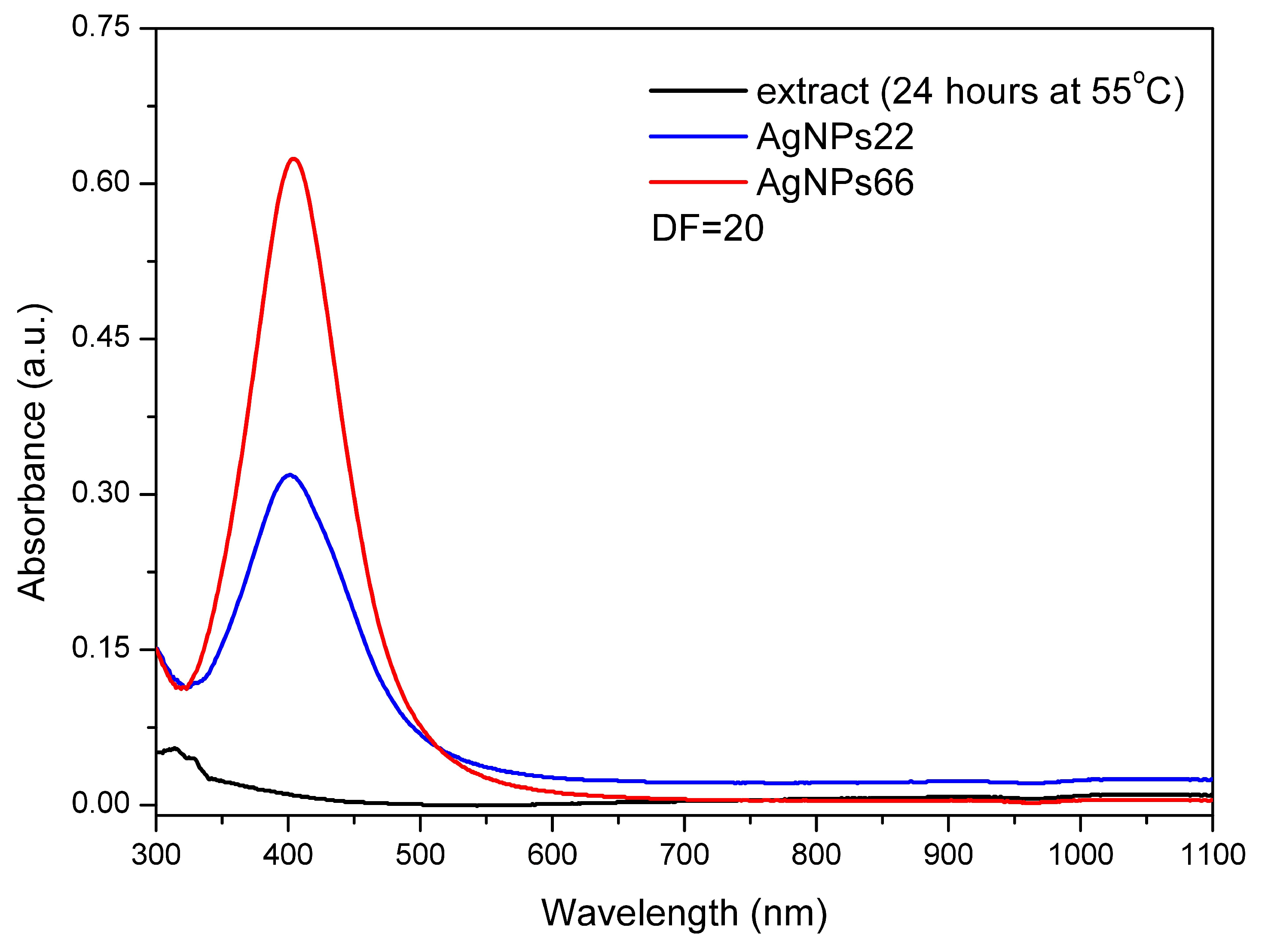
The obtained nanocolloid solutions of AgNPs exhibited a dark-brown color that correlates with strong surface plasmon resonance (SPR) absorption at 399 and 404 nm for AgNPs22 and AgNPs66, respectively (Figure 1). Since some polyphenols, such as anthocyanins, undergo discoloration at the NP synthesis temperature, the UV–Vis spectra of the AgNPs in Figure 1 are presented alongside the spectrum of the plant extract heated at 55 °C for 24 h. During the collection of UV–Vis spectra, nanocolloid solutions were 20-times diluted with double distilled water due to the strong absorbance. The SPR absorbance of AgNPs nanocolloid solutions correlates with initial concentrations of Ag+ of 0.125 and 0.5 mM, which is evidence of near-quantitate transformation of Ag+ into AgNPs. The shape of the SPR absorption maxima suggests the presence of monodispersed pseudospherical AgNPs.
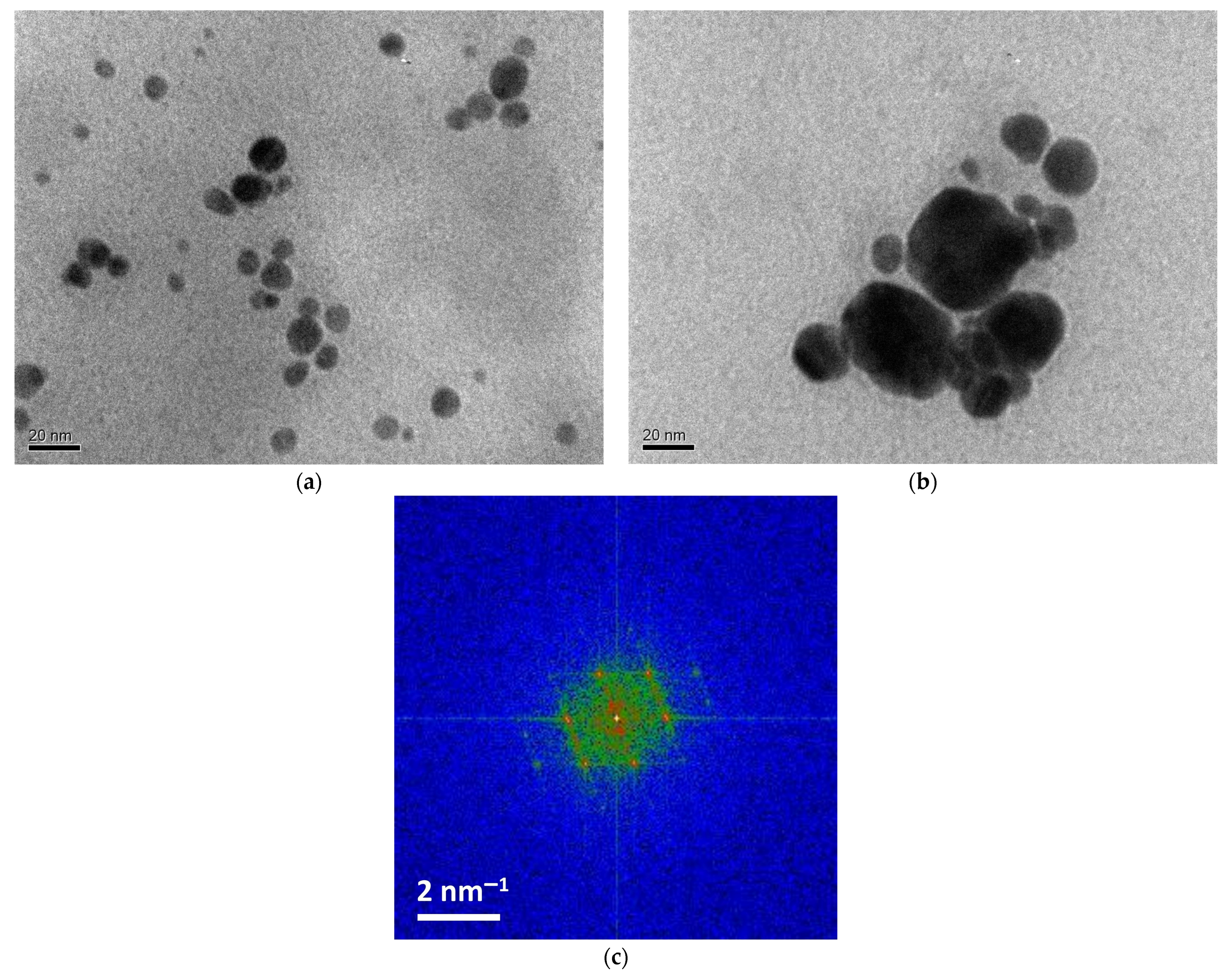
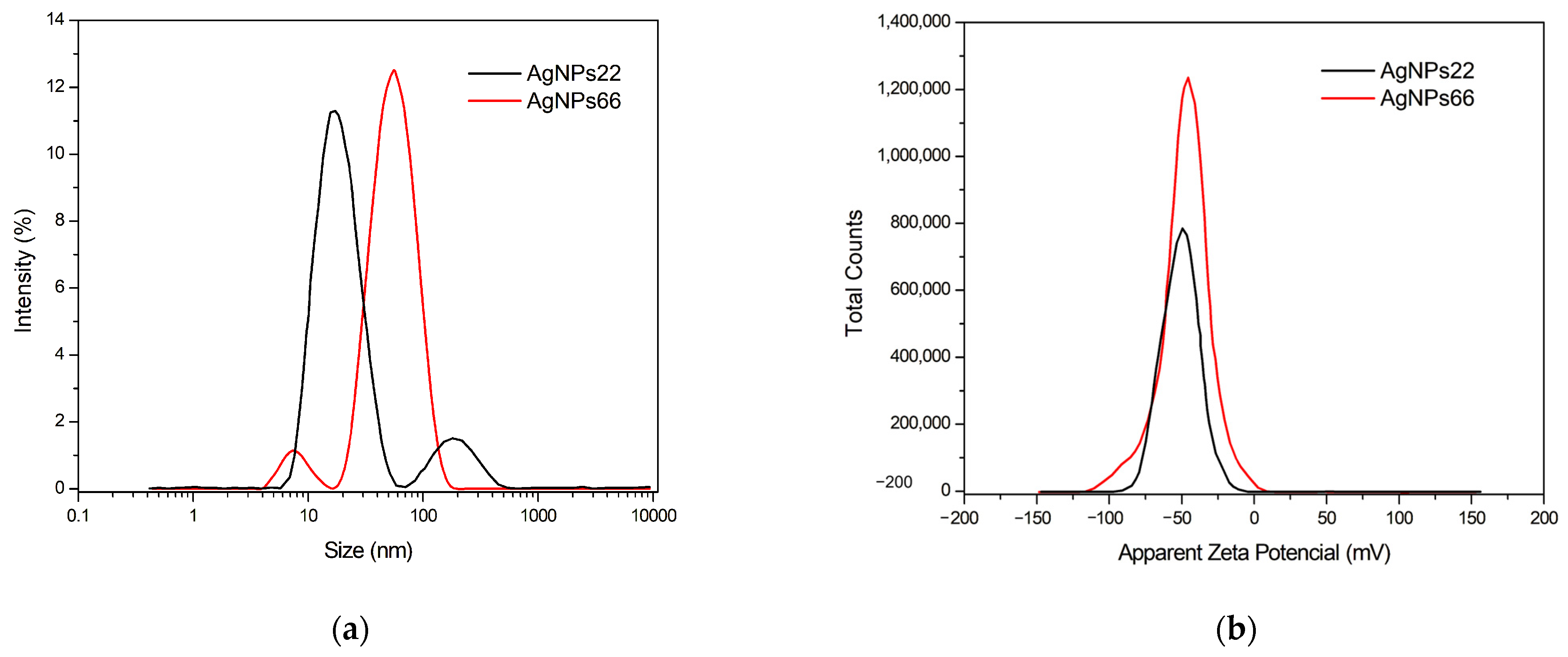
TEM measurements (Figure 2a,b) confirm the pseudospherical shape of the AgNPs. The average size of NPs depended on the initial concentration of Ag+ cations in the reaction mixture, as expected. SAED measurements (Figure 2c) confirmed that the obtained NPs were indexed as face-centered cubic Ag with lattice parameter of a = 4.086 Å, consistent with the standard reference data (JCPDS No. 04-0783 for Ag). DLS measurements (Figure 3a) show that most of the NPs in the AgNPs22 and AgNPs66 samples exhibit characteristic sizes of approximately 22 nm and 66 nm, respectively. Sample AgNPs22 also contains small fraction (3%) of larger particles around 130 nm and sample AgNPs66 contain minor fraction (2%) with size of 6–8 nm.
Zeta potential data (Figure 3b) shows the sharp peaks centered around −46 and −50 mV for AgNPs22 and AgNPs66, respectively, indicating that most NPs exhibit this surface charge and are electrostatically stabilized to prevent aggregating. The narrow distribution around the peaks implies zeta potential monodispersity, meaning the NPs are near similar in size and charge, which is necessary for consistent behavior in nanocolloid solutions.

3.2. Impact of Small AgNPs on Microbial Growth

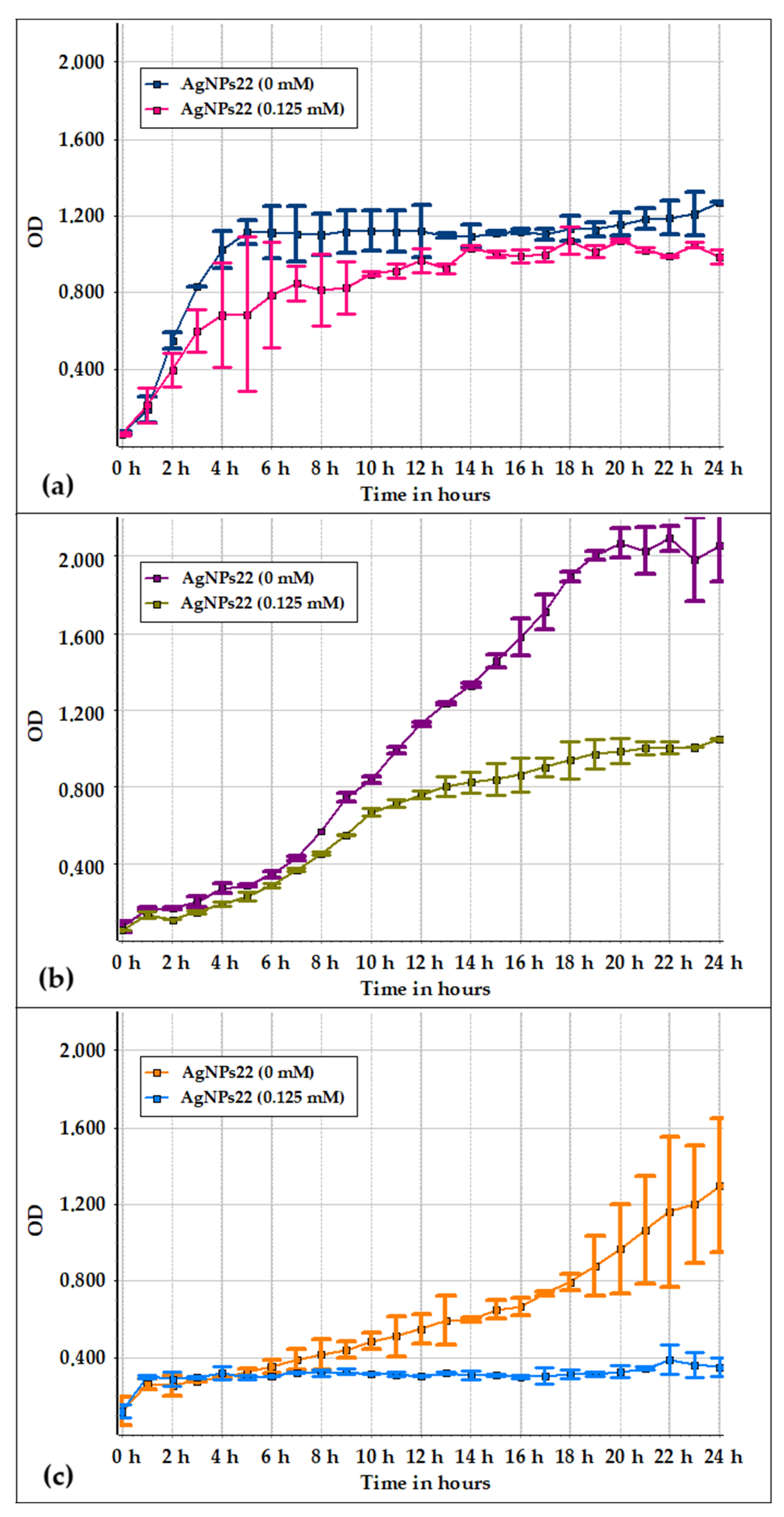
Analysis of the growth curves revealed that AgNPs22 at 0.125 mM did not inhibit the growth of B. vesicularis USM1, yet they suppressed the proliferation of P. oxydans USM2 and P. putida USM4 (Figure 4).
The inhibition patterns, however, differed between the two strains. In P. oxydans USM2, the presence of AgNPs resulted in a pronounced reduction in biomass accumulation, suggesting a partial tolerance and the possible involvement of mechanisms that mitigate NP-induced stress. In contrast, P. putida USM4 showed very low detectable growth under the same conditions, indicating a lack of resistance to AgNPs22.
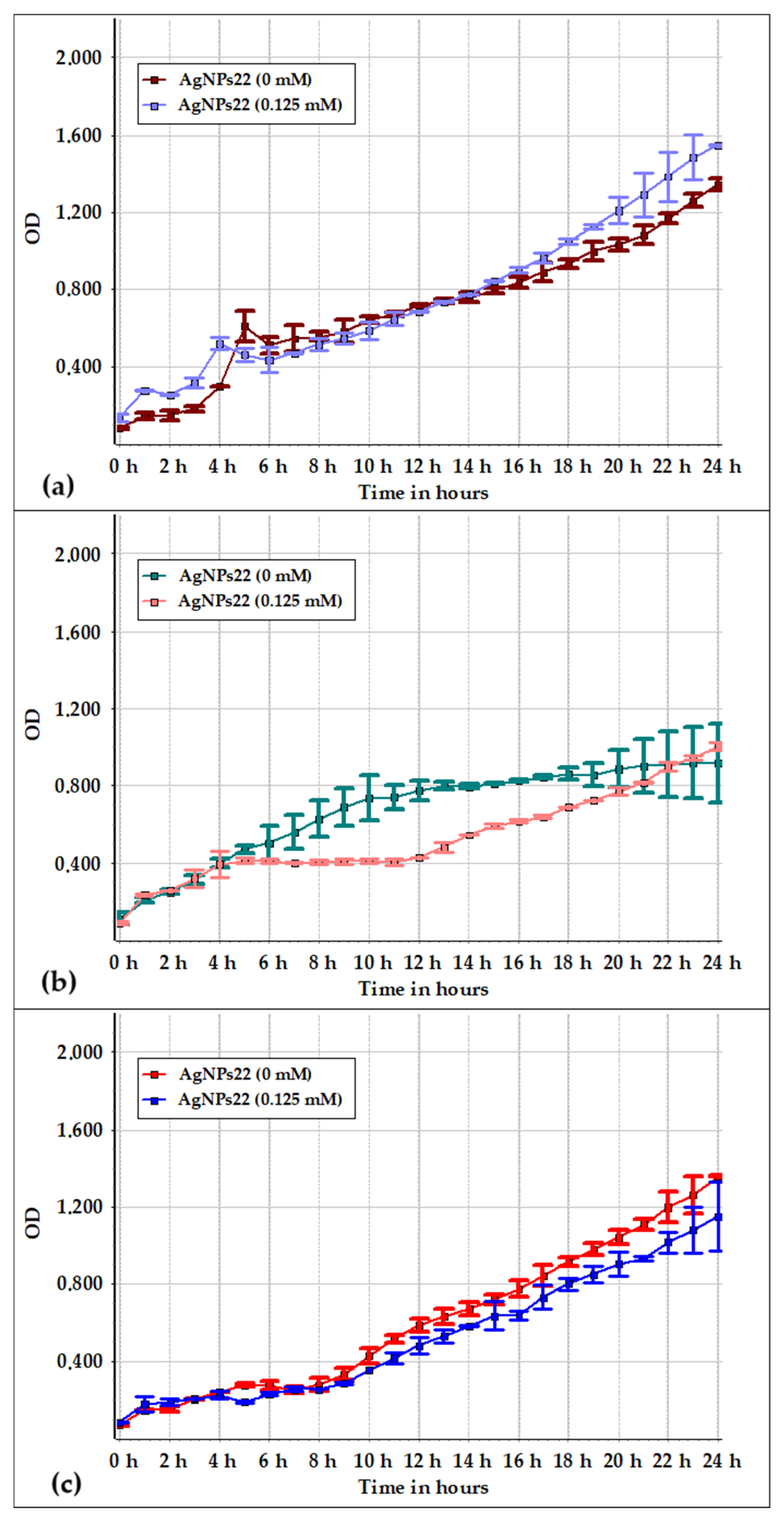
On the other hand, the study demonstrated that the growth of the reference laboratory strains was not inhibited by AgNPs22 at a concentration of 0.125 mM (Figure 5).
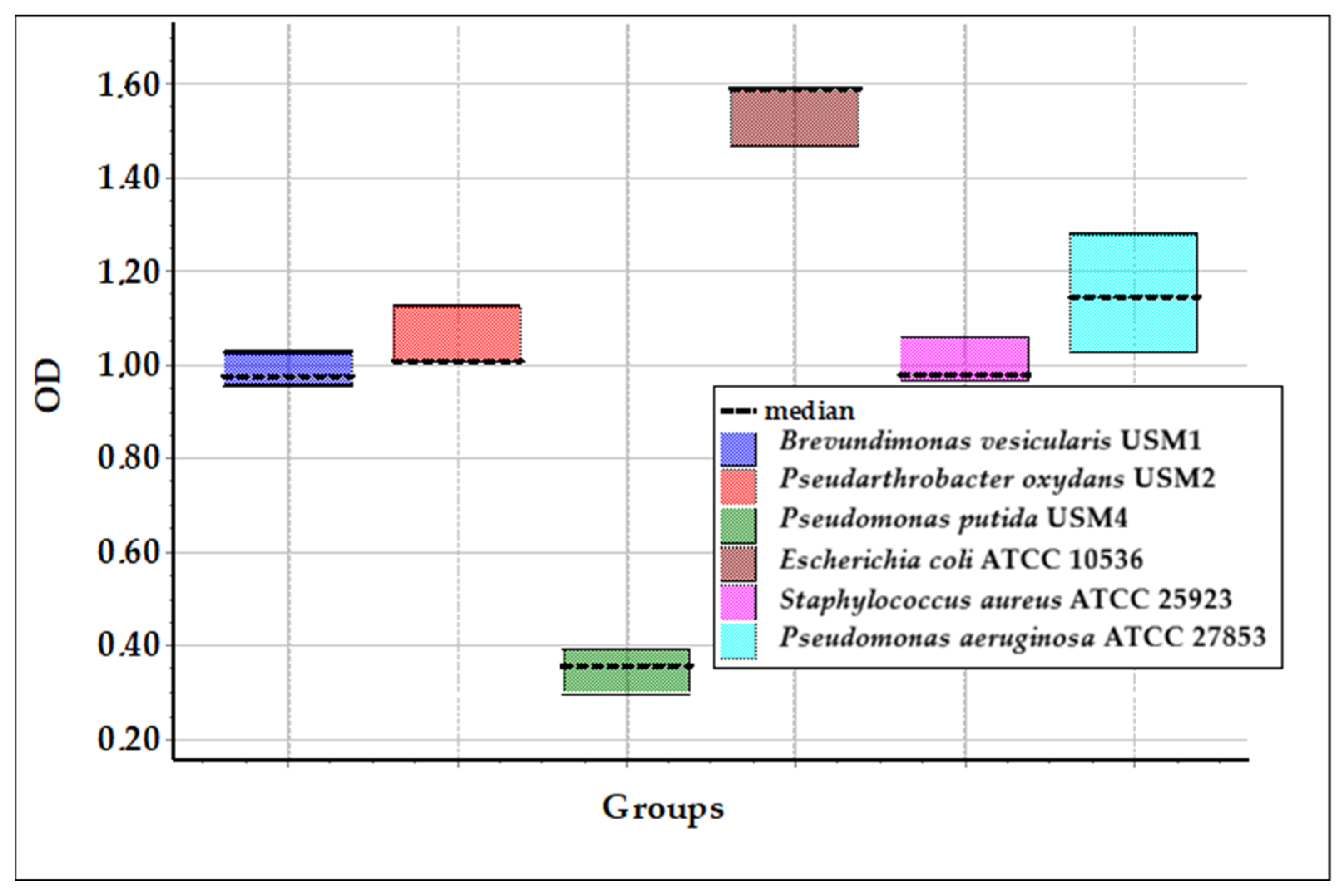
Statistical analysis of microbial growth data in the presence of 0.125 mM AgNPs22 revealed no statistically significant difference between the growth of B. vesicularis USM1 and P. oxydans USM2. However, a significant difference was observed for P. putida USM4 compared to both B. vesicularis USM1 and P. oxydans USM2, confirming the inhibition of P. putida USM4.
A statistically significant difference was also detected when comparing the growth data of the laboratory strains. Specifically, significant differences were found between E. coli ATCC 10536 and S. aureus ATCC 25923, as well as between E. coli ATCC 10536 and P. aeruginosa ATCC 27853. In contrast, no significant difference was observed between S. aureus ATCC 25923 and P. aeruginosa ATCC 27853. Collectively, the obtained results confirm the absence of growth inhibition of these strains in the presence of 0.125 mM AgNPs22 (Figure 6).
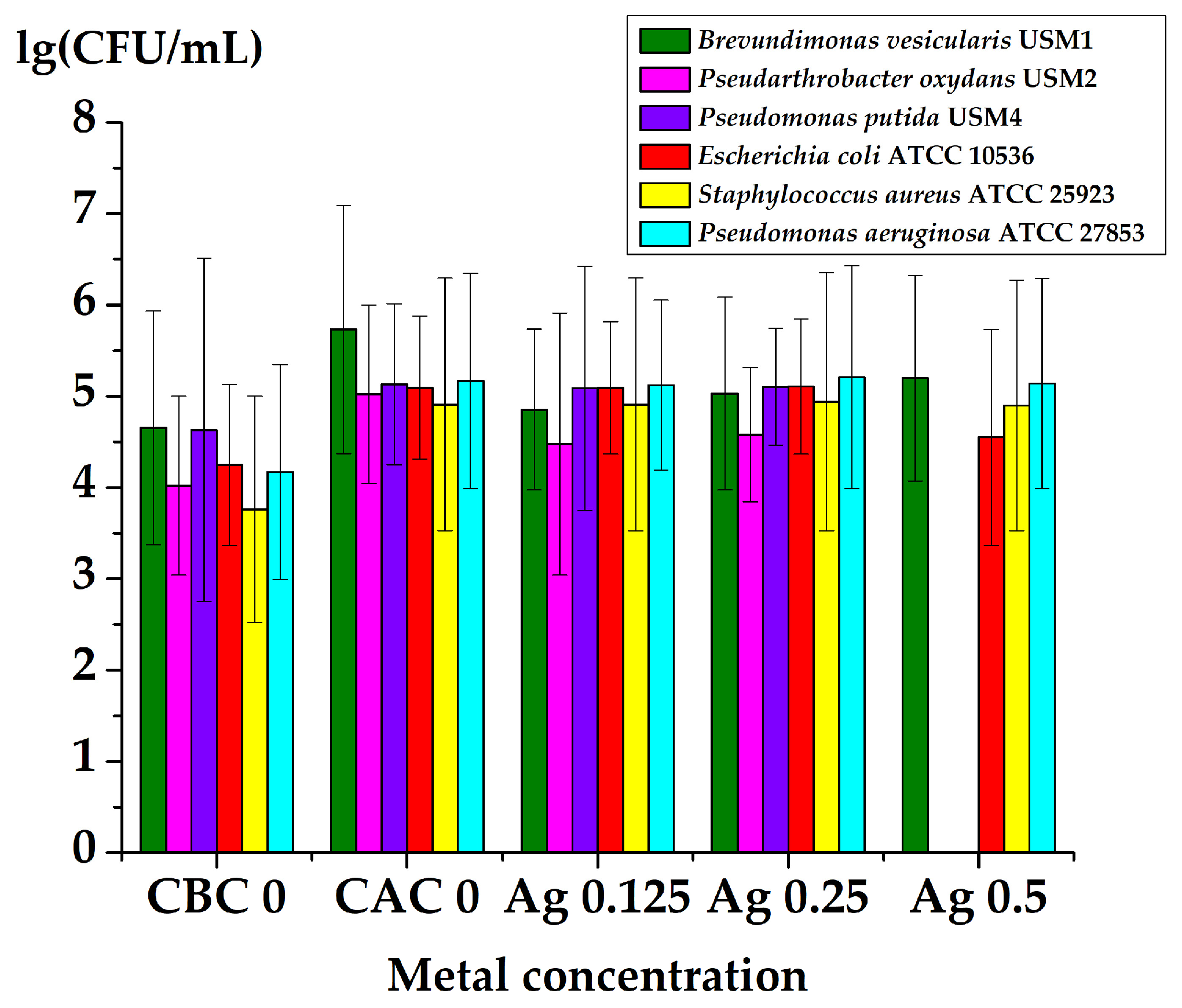
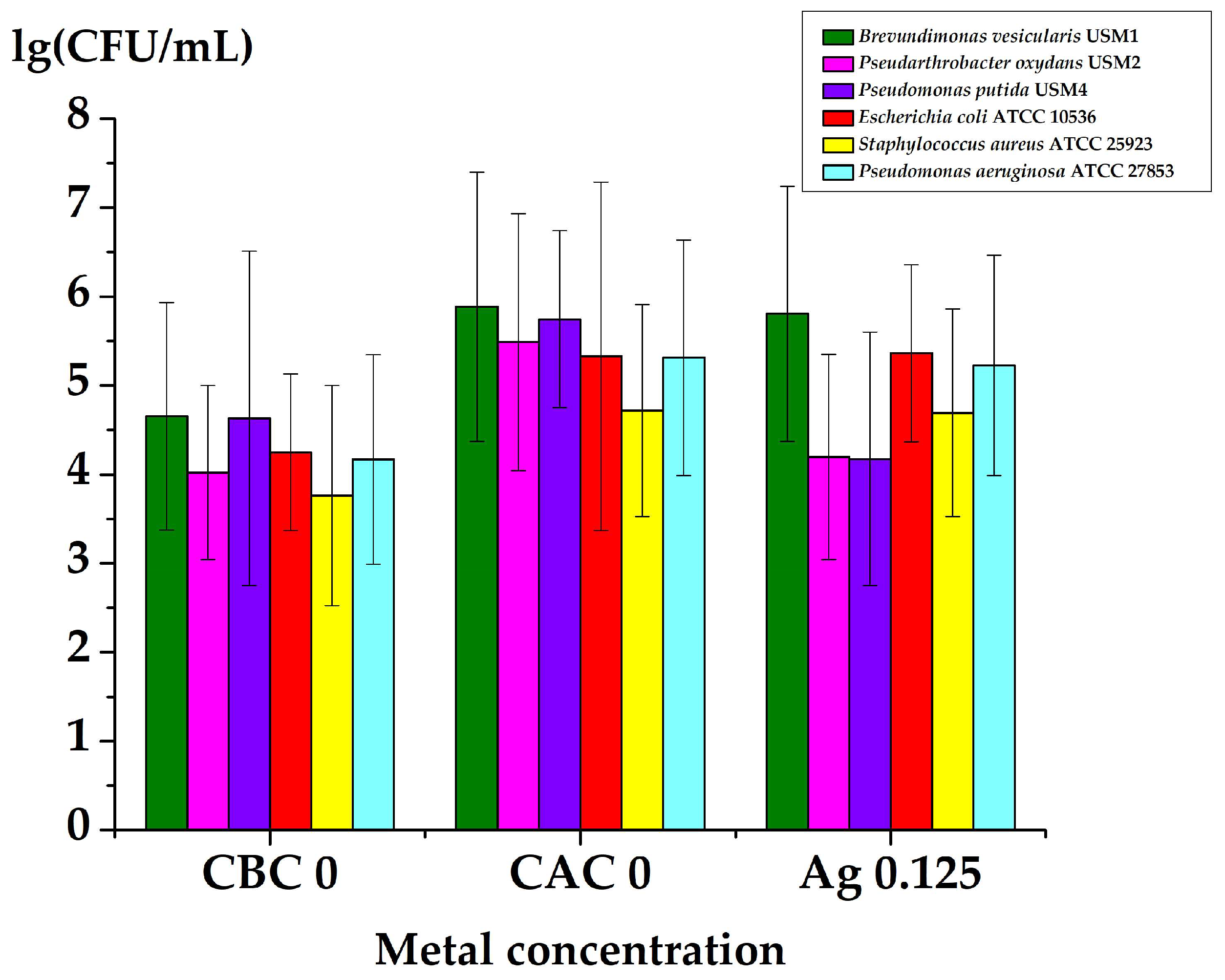
Viability assays supplemented the growth dynamics data, confirming that growth inhibition was observed only in P. oxydans USM2 and P. putida USM4 (Figure 7).
The data suggest that resistance to AgNPs22 can vary between microbial species, as evidenced by the growth inhibition of P. putida USM4 and the lack of any adverse effect on P. aeruginosa ATCC 27853.

3.3. Impact of Large AgNPs on Microbial Growth

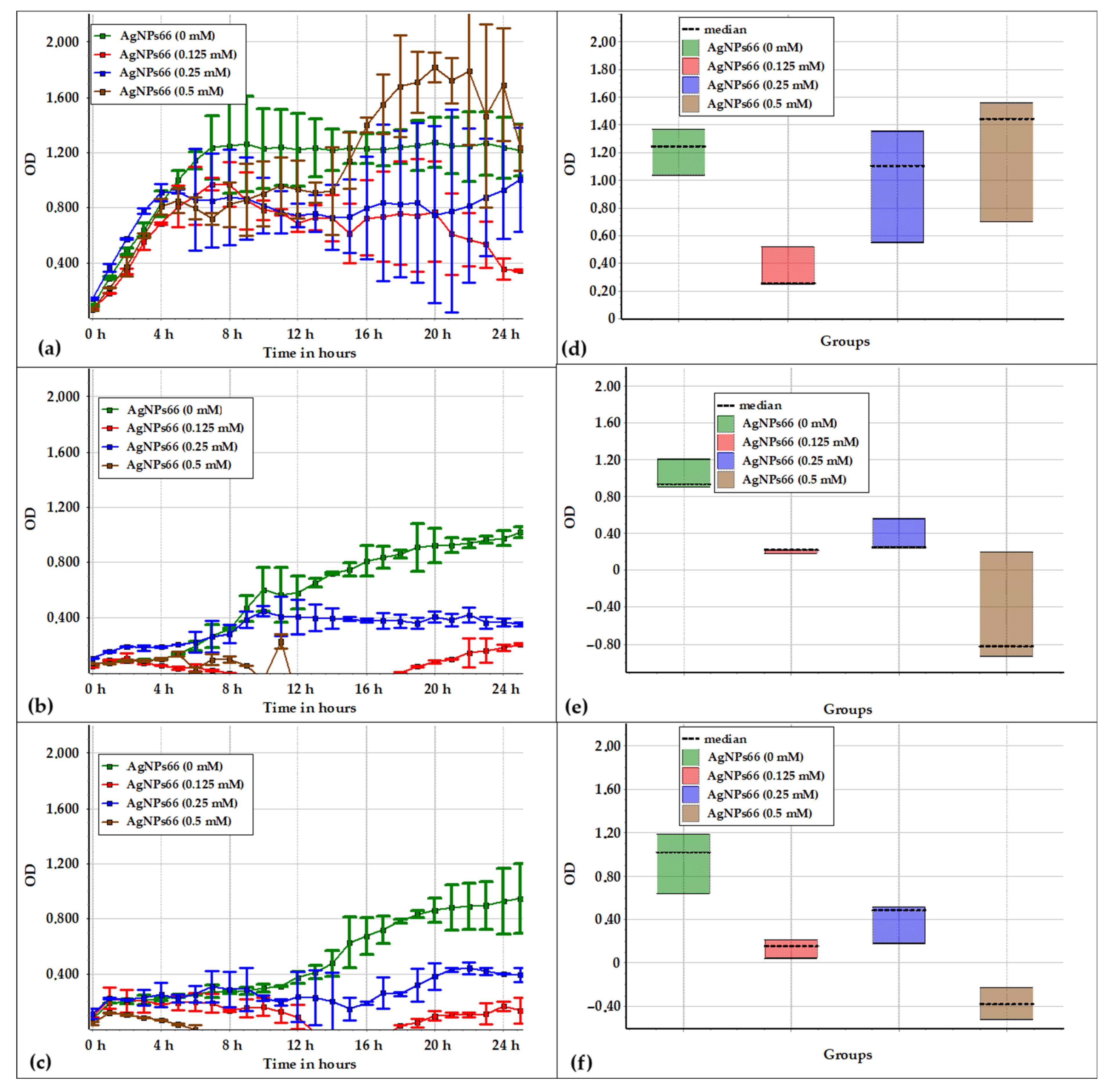
Examination of microbial growth behavior in the presence of larger (60 nm) AgNPs yielded the following observations. In B. vesicularis USM1, a decrease in biomass accumulation efficiency was observed, which is also supported by viability tests. However, during cultivation in the liquid nutrient medium, silver precipitates out of suspension; this is a phenomenon that is particularly evident at higher NP concentrations. Consequently, the analysis of B. vesicularis USM1 growth dynamics shows a wide variation in optical density measurements. Moreover, especially at the 0.5 mM NP concentration, the optical density of the medium increases substantially due to factors unrelated to biomass accumulation (Figure 8a).
For the strains P. oxydans USM2 and P. putida USM4, AgNPs concentrations starting from 0.125 mM exhibited inhibitory effects. A minor rise in the medium’s optical density was detected at 0.25 mM AgNPs, potentially reflecting the initial stages of microbial growth and the breakdown of organic ligands, which could have caused partial silver precipitation (Figure 8b,c).
Statistical analysis of the growth dynamics of B. vesicularis USM1 revealed significant differences between the NP-free control and the 0.125 mM AgNP treatment. No substantial differences were observed at 0.25 and 0.5 mM, which can be attributed to increased optical density resulting from the accumulation of silver precipitate (Figure 8d).
Statistical analysis of P. oxydans USM2 growth showed that, although growth inhibition was evident, a statistically significant difference was detected only at 0.5 mM. In contrast, for P. putida USM4, growth inhibition at 0.125 mM was supported by statistical data (Figure 8e,f).
Viability assays demonstrated growth of B. vesicularis USM1 in the presence of AgNPs66. However, a reduced number of viable cells was observed, especially at a concentration of 0.125 mM. For P. oxydans USM2 and P. putida USM4, cell proliferation was inhibited, although viability was maintained at 0.125 and 0.25 mM. In contrast, no microbial growth was observed at 0.5 mM (Figure 9).
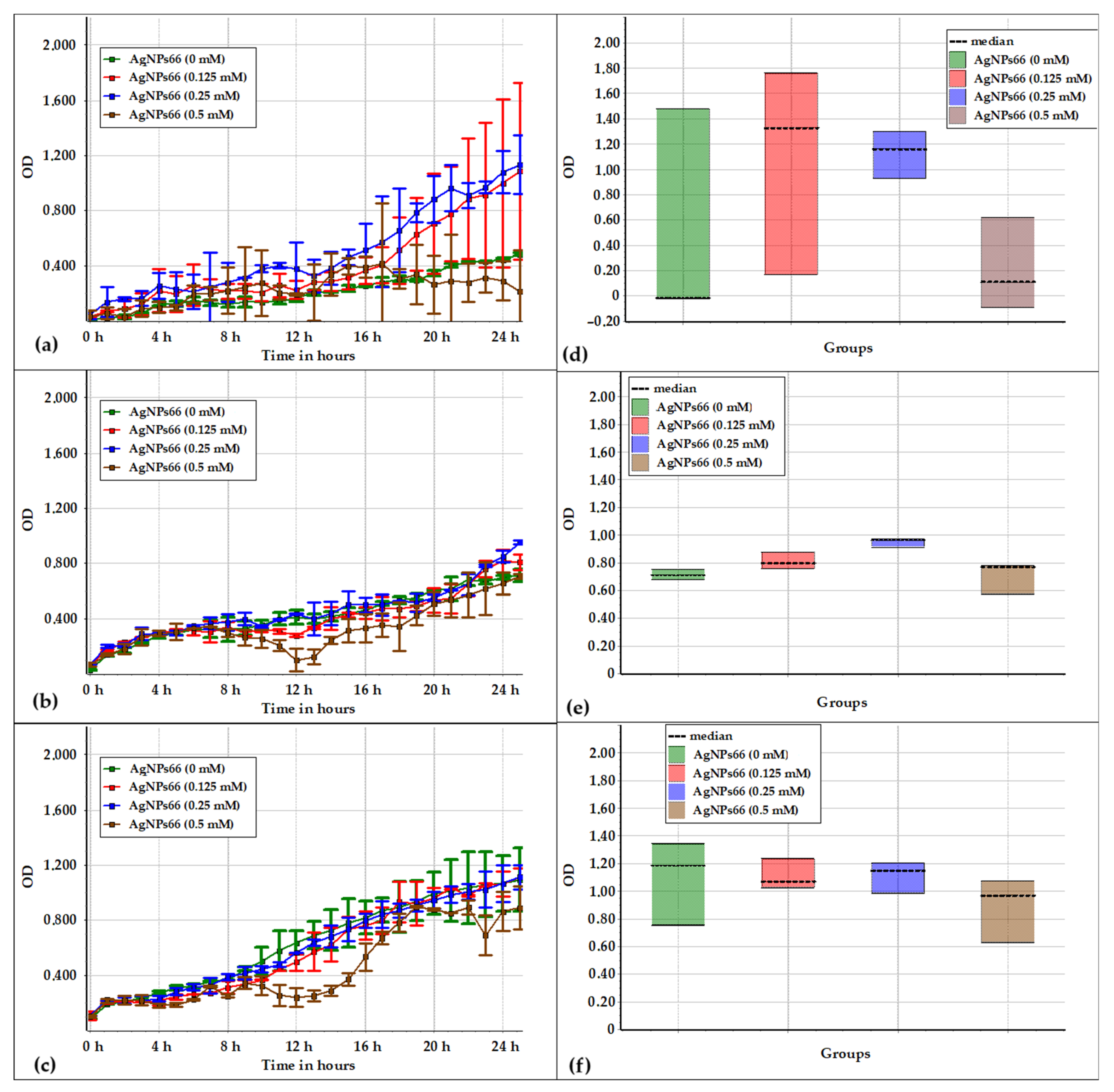
Analysis of the growth dynamics of the laboratory strains revealed the following. E. coli ATCC 10536 exhibited particularly distinctive growth behavior (Figure 10a).
During cultivation, an intensive formation of NP precipitates was observed, which was especially evident from the increased optical density of the medium at 0.125 and 0.25 mM NP concentrations. Although precipitation was also observed at 0.5 mM AgNPs, the overall growth rate of the microorganisms was lower, indicating the inhibition of E. coli ATCC 10536 growth.
No measurable effect of the tested concentrations of large AgNPs on the growth of S. aureus ATCC 25923 or P. aeruginosa ATCC 27853 was observed (Figure 10b,c).
Statistical analysis of the growth data for E. coli ATCC 10536, S. aureus ATCC 25923, and P. aeruginosa ATCC 27853 in the presence of large AgNPs at concentrations of 0, 0.125, 0.25, and 0.5 mM confirmed the absence of growth inhibition in these microorganisms (Figure 10d–f).
The viability assays additionally confirmed that large AgNPs did not cause substantial growth inhibition in these microorganisms. Only E. coli ATCC 10536 exhibited a reduction in biomass accumulation at 0.5 mM AgNPs66 (Figure 9).
Overall, the results demonstrate that large AgNPs inhibited the growth of B. vesicularis USM1, P. oxydans USM2, and P. putida USM4 at concentrations as low as 0.125 mM. In contrast, the laboratory strains E. coli ATCC 10536, S. aureus ATCC 25923, and P. aeruginosa ATCC 27853 exhibited a high resistance level against the tested concentration range. Among these, only E. coli ATCC 10536 showed growth inhibition at 0.5 mM.

3.4. Evaluation of Bacterial Growth on Agar Plates Using Spot Application of AgNPs

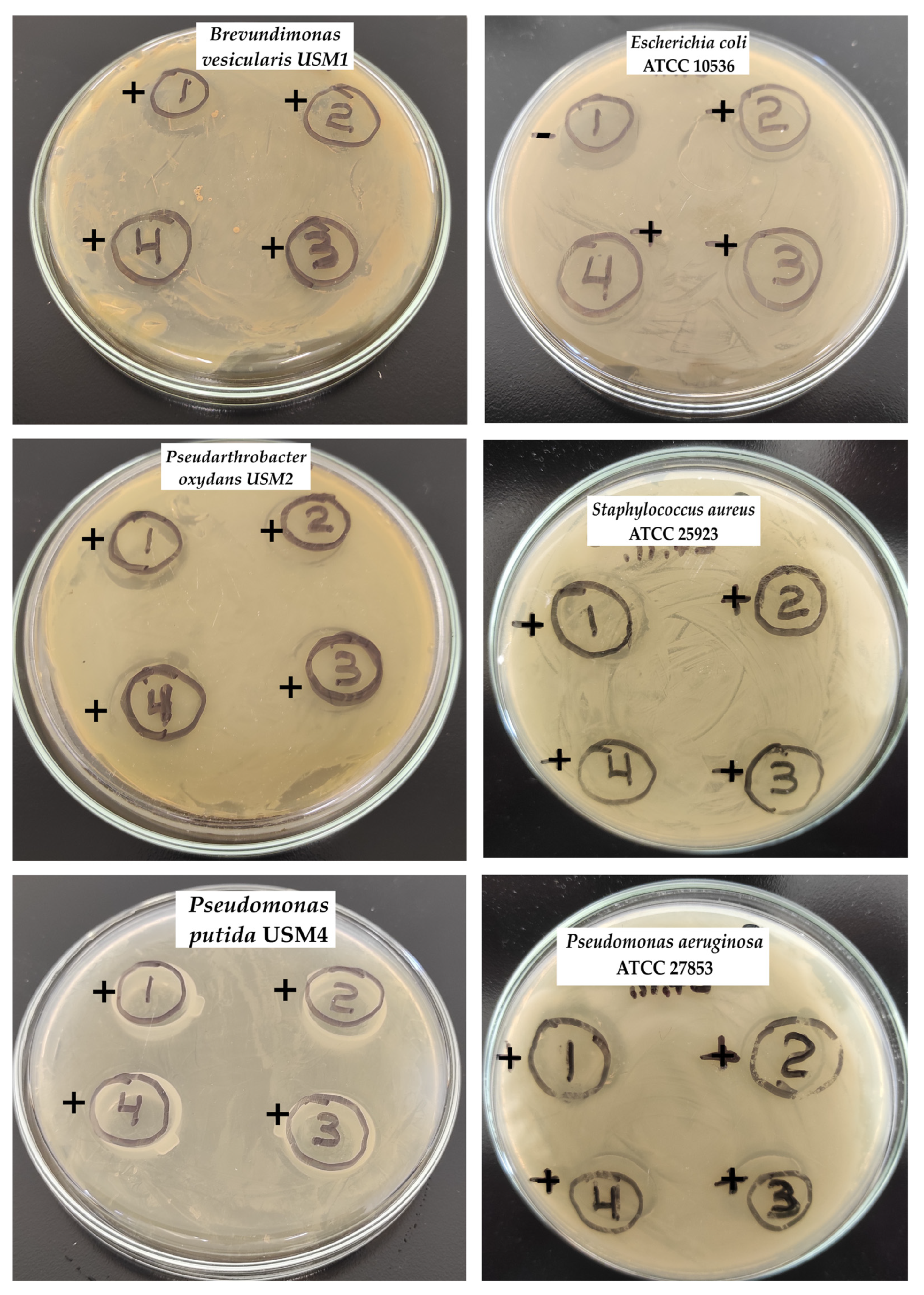
The antimicrobial activity of AgNPs was evaluated using the spot assay. AgNPs22 at a concentration of 0.125 mM and AgNPs66 at concentrations of 0.125, 0.25, and 0.5 mM were tested against B. vesicularis USM1, P. oxydans USM2, P. putida USM4, E. coli ATCC 10536, S. aureus ATCC 25923, and P. aeruginosa ATCC 27853 (Figure 11).
All tested strains were able to grow on agar plates at the lower concentrations of NPs. However, at 0.5 mM of AgNPs66, the growth of E. coli ATCC 10536 was completely inhibited, while all other strains continued to grow, indicating a high resistance of the investigated microorganisms against AgNPs under the tested conditions. These results suggest that microbial resistance is strongly influenced, not only by the properties of the NPs themselves, but also by the growth conditions of the microorganisms.

4. Discussion

The preparation of monodisperse metal NPs using plant extracts is a challenging task due to the high variability and complex composition of chemical compounds present in plant extracts. Different compounds simultaneously reduce the metal cations with different power and rate and even influence the shape of NPs in different ways, leading to multidispersity among the resulting nanoparticles [9]. Ripe elderberry fruits contain high amounts of sugars, organic acids, and other compounds with reducing potential that may interfere with the formation of NPs. The broad size distribution of AgNPs were obtained using crude elderberry extracts [44,45]. Therefore, in this study, AgNPs were prepared using isolated fractions of polyphenols extracted from elderberry ripe fruits according to the previously published protocol [40].
The growing demand for NPs in medicine, industry, and the agricultural sector is reflected in the steady increase in their production volumes. According to forecasts, global consumption of NPs by 2030 may exceed 800 tons per year. Various approaches are employed for the synthesis of NPs, including chemical, physical, and photochemical methods. Among these methods, biological approaches, particularly green synthesis, are of special interest, as they are considered more attractive due to their simplicity, cost-effectiveness, ease of operation, and time efficiency. AgNPs are of particular importance and attract increased scientific and practical interest, not only because of their unique physicochemical properties, but also due to their pronounced antibacterial activity. Consequently, they are considered highly promising for applications in medicine, the food industry, the agricultural sector, and related fields [46].
The toxicity of AgNPs is suggested to be size-dependent, as smaller AgNPs facilitate cellular uptake and transport, thereby potentially increasing biological effects [47]. Particles around 22 nm can penetrate microbial membranes, while their high surface area promotes stronger contact and reactivity with bacterial structures [48]. Smaller AgNPs generally exhibit stronger antimicrobial activity, for example, NPs under 10 nm exhibited stronger antibacterial effects against E. coli than their larger counterparts [49]. Smaller AgNPs are also observed to penetrate biofilm matrices and cell walls more effectively, contributing to enhanced antimicrobial performance [50]. AgNP antimicrobial action can involve membrane disruption, inhibition of respiratory enzymes, ROS generation, and interference with DNA and protein synthesis, processes that are often more pronounced for smaller particles due to closer and more extensive cellular contact [51]. Numerous studies indicate that NP size is governed by synthesis parameters, including the choice and concentration of reducing and stabilizing agents, the chemical nature of amines, and the reaction temperature [46].
The presented studies were conducted to evaluate the effects of small (22 nm) and large (66 nm) AgNPs on microorganisms isolated from soil, as well as on laboratory strains. The results showed that there was no significant inhibition of E. coli ATCC 10536, S. aureus ATCC 25923, or P. aeruginosa ATCC 27853 growth in the presence of either small (22 nm) or large (66 nm) AgNPs, with growth inhibition detected only for E. coli ATCC 10536 at the highest tested concentration (0.5 mM) of AgNPs66. Growth inhibition was observed for P. oxydans USM2 and P. putida USM4 when exposed to AgNPs22, and for B. vesicularis USM1, P. oxydans USM2, and P. putida USM4 when exposed to AgNPs66 at concentrations of 0.125 mM. In most cases, the NPs reduced biomass accumulation but did not lead to complete cell death. Complete growth inhibition was observed only at 0.5 mM AgNPs66 for P. oxydans USM2 and P. putida USM4. The results indicate a high level of resistance of the tested microorganisms to AgNP66s. Even at 0.5 mM AgNPs66, in some cases, the microorganisms did not die but they did exhibit a reduced rate of biomass accumulation. This suggests the presence of bacterial mechanisms capable of counteracting the toxic effects of the NPs.
The toxicity of AgNPs involves multiple antimicrobial mechanisms. AgNPs can disrupt bacterial cell membranes by interacting with membrane lipids and proteins, increasing permeability which leads to leakage of cellular contents and loss of viability [52]. Upon contact with bacteria, AgNPs release Ag+ that interfere with the respiratory electron transport chain and metabolic enzymes, impairing energy production and enhancing toxicity. Also, AgNPs can bind directly to DNA and proteins, inhibiting replication and transcription processes essential for cell division [53]. Ag+ and AgNPs also generate reactive oxygen species (ROS), such as hydrogen peroxide and superoxide anions, which cause oxidative stress and damage biomolecules such as lipids, proteins, and DNA [54]. These combined actions contribute to the broad antimicrobial effect typical of AgNPs.
Bacterial resistance and adaptation to AgNPs also involve distinct mechanisms. Some bacteria can induce aggregation of NPs through extracellular proteins or biofilm production, reducing the effective surface area of AgNPs and diminishing their antibacterial activity [55]. Biofilm formation itself can act as a physical barrier, limiting NP penetration and protecting bacterial cells from direct contact with AgNPs [56]. Additional resistance strategies include efflux of silver ions via specialized pump systems, preventing intracellular accumulation of toxic Ag+ [57], as well as phenotypic adaptations such as altered membrane permeability and upregulation of oxidative stress responses, which help bacteria mitigate NP-induced damage [58]. These diverse mechanisms underscore why resistance to ionic forms of metals does not uniformly predict susceptibility to or resistance against nanoparticulate silver forms, highlighting the complexity of AgNP–bacteria interactions.
However, comparing these results with similar studies is challenging, as different approaches can be used to assess microbial resistance. These include determining the MIC or minimum bactericidal concentration (MBC), culturing microorganisms directly with NPs (as in this study), incubating with NPs followed by plating on solid media, or measuring growth inhibition zones [14].
It was shown that the MIC for E. coli BL-21 was 10 μg/mL (0.09 mM) with NPs sized 30–40 nm, whereas for E. coli ATCC 25922, the MIC was 2 μg/mL (0.02 mM) when using NP sized 2–11 nm [14]. Another study showed the MIC for two E. coli strains ranged from 20 μg/mL (0.2 mM) to 110 μg/mL (1 mM) and for S. aureus from 70 μg/mL (0.65 mM) to 200 μg/mL (1.85 mM), for small and large NPs, respectively, with smaller AgNPs (5 nm) showing higher antibacterial activity than larger ones (100 nm), highlighting the size-dependent effect [18]. Also, 10 nm AgNPs were shown to be effective against multi-drug-resistant hospital strains of P. aeruginosa, which were inhibited at a concentration of 5 µg/mL (0.05 mM) [59]. The findings of another work indicated that 5–10 nm AgNPs exhibited strong bactericidal activity against P. aeruginosa, with MIC values between 1.4 µg/mL (0.01 mM) and 5.6 µg/mL (0.052 mM) and MBC values ranging from 2.8 (0.03 mM) µg/mL to 5.6 µg/mL (0.052 mM) [60].
In the case of antimicrobial activity, different results have been reported even for a single bacterial species, suggesting that resistance may be a strain-specific phenomenon and may also be influenced by the different approaches used to assess it. Standardization of methods could help achieve more accurate characterization and microbiological evaluation of AgNPs [14].
In summary, it is worth noting that a large number of studies on the effects of AgNPs on various microorganisms have been published. A common finding across these studies is the confirmed bactericidal activity of AgNPs [61,62]. However, effective concentrations vary widely; this can be attributed both to the lack of standardized protocols for such studies and to the investigation of a broad range of NPs differing in shape, size, ligands, and synthesis conditions, all of which complicates assessment. The data obtained in this study demonstrate a general trend of microbial growth inhibition by AgNPs, yet a high level of resistance was observed in the tested microorganisms. This resistance may be influenced not only by particle size but also by the ligands used in their synthesis, as well as by metabolic characteristics and the presence of mechanisms that counteract NP toxicity. These results indicate that microorganisms are capable of withstanding the toxic effects of AgNPs, which may contribute to the overall resilience of microbiomes in natural ecosystems when NPs enter the environment. Moreover, resistant strains could be promising candidates for the development of eco-friendly biotechnologies aimed at removing toxic metals from the environment.
Based on the presented findings, several directions for future research can be proposed. First and foremost, it is essential to elucidate the mechanisms underlying both the toxic effects of AgNPs on microorganisms and the protective mechanisms that confer microbial resistance to them. Among the major damaging mechanisms are membrane disruption, induction of oxidative stress, and intracellular release of silver ions, which together impair cellular homeostasis and viability [63,64,65]. To better understand microbial resistance mechanisms, emphasis should be placed on transcriptomic and proteomic analyses to identify stress-response pathways activated in tolerant and resistant strains, as well as potential adaptive trajectories [66,67,68]. Such approaches enable the identification of regulatory networks involved in metal homeostasis, oxidative stress mitigation, efflux systems, and biofilm-associated protection. In addition, a comprehensive characterization of microbial responses should consider not only NP size but also the role of surface ligands and capping agents in modulating NP–cell interactions, bioavailability, and toxicity [69]. Surface chemistry critically influences aggregation behavior, dissolution kinetics, and cellular uptake of AgNPs. It is also important to determine whether resistance to metal ions correlates with increased tolerance to their nanoparticulate forms, and whether such resistance mechanisms confer cross-protection against other stressors, including antibiotics. The potential co-selection of metal and antibiotic resistance has significant ecological and clinical implications [70,71,72]. To assess the impact of AgNPs on natural ecosystems and to predict long-term adaptive responses of environmental microbiota, systematic investigations of soil and aquatic microbiomes under AgNP exposure should be continued, with particular attention to functional shifts among different physiological groups of microorganisms [73,74]. Establishing patterns of microbial community restructuring and functional resilience is crucial for environmental risk assessment. The acquisition of such integrated knowledge may form a basis for the development of environmentally oriented biotechnologies aimed at the remediation of ecosystems contaminated with toxic metals, including strategies that harness microbial adaptation and metal transformation pathways.

5. Conclusions

The results demonstrate that NP size is the decisive factor governing the antimicrobial activity of AgNPs, with the magnitude and pattern of inhibition additionally depending on the microbial strain. Small AgNPs (22 nm) at a concentration of 0.125 mM selectively inhibited the growth of P. oxydans USM2 and P. putida USM4, while no inhibitory effect was observed for B. vesicularis USM1 or the reference laboratory strains. Notably, the response to AgNPs22 differed between the sensitive strains: P. oxydans USM2 exhibited a marked reduction in biomass accumulation, suggesting partial tolerance and the activation of stress-mitigation mechanisms, whereas P. putida USM4 displayed almost complete growth suppression, indicating a lack of effective resistance to AgNPs22.
Large AgNPs66 suppressed the growth of B. vesicularis USM1, P. oxydans USM2, and P. putida USM4 at concentrations 0.125 mM. The laboratory strains E. coli ATCC 10536, S. aureus ATCC 25923, and P. aeruginosa ATCC 27853 remained largely unaffected by AgNPs66, with growth inhibition detected only for E. coli ATCC 10536 at the highest tested concentration (0.5 mM).
These findings confirm that variation in AgNP size alone is sufficient to produce distinct and strain-specific antimicrobial outcomes. Although environmental strains are generally considered resistant, they remained susceptible to AgNP exposure, demonstrating that nanoparticle size modulates their growth response.
The use of plant extracts for the phytosynthesis of AgNPs presents several limitations despite its eco-friendly advantages. A major challenge is the variability in phytochemical composition caused by differences in plant species, geographic origin, seasonal factors, and extraction methods; these lead to poor reproducibility and inconsistent NPs size and morphology. These challenges were partially addressed by using an isolated polyphenol fraction from elderberry fruit extract instead of the crude extract. However, the resulting NPs were still not completely uniform in size.
Overall, this study establishes NP size as the primary experimental variable determining antibacterial efficacy under the tested conditions. While the study clearly identifies NP size as a key determinant of antibacterial activity, it was conducted using a limited range of AgNP sizes, concentrations, and bacterial strains, which may constrain the generalizability of the findings across more complex microbial systems. In addition, the work focused primarily on phenotypic growth responses, without detailed investigation of the underlying molecular mechanisms or long-term ecological effects. These aspects represent important directions for future research and further expansion of the present findings. Further investigations should be focused on clarifying the mechanisms underlying AgNP toxicity and bacterial resistance. Such studies are essential for optimizing the safe and targeted application of AgNPs in environmental and biomedical contexts.

Author Contributions

Conceptualization, O.T. and R.M.; methodology, O.T., V.H. and R.M.; software, V.H., I.K. and R.M.; validation, I.K., M.N., E.M., H.M. and J.M.-F.; formal analysis, R.M.; investigation, V.H., J.P., A.E., R.S., V.C., I.K., R.M., M.N., H.M., J.M.-F., E.M. and O.T.; resources, E.M. and R.M.; data curation, R.M.; writing—original draft preparation, V.H. and R.M.; writing—review and editing, O.T., V.H., J.P., A.E., R.S., V.C., I.K., J.M.-F., H.M., E.M., M.N. and R.M.; visualization, V.H. and R.M.; supervision, R.M., O.T. and E.M.; project administration, O.T. and R.M.; funding acquisition, O.T. and R.M. All authors have read and agreed to the published version of the manuscript.

Funding

This research was funded by Polish National Agency for Academic Exchange (NAWA) under the NAWA Joint Research Projects between the Republic of Poland and Slovakia, grant number BPN/BSK/2023/1/00027/U/00001 and the Slovak Research and Development Agency, grant number APVV SK-PL-23-0032.

Institutional Review Board Statement

Not applicable.

Informed Consent Statement

Not applicable.

Data Availability Statement

The original contributions presented in this study are included in the article. Further inquiries can be directed to the corresponding author.

Acknowledgments

This work was partially carried out at MCBR UO (International Research and Development Center of the University of Opole), which was established as part of a project co-financed by the European Union under the European Regional Development Fund, RPO WO 2014-2020, Action 1.2 Infrastructure for R&D. Agreement No. RPOP.01.02.00-16-0001/17-00 dated 31 January 2018.

Conflicts of Interest

The authors declare no conflicts of interest.

Abbreviations

The following abbreviations are used in this manuscript:
NPnanoparticle
AgNPsilver nanoparticle
ODoptical density
PBpeptone broth
PApeptone agar
CFUcolony-forming units
MBCminimum bactericidal concentration
MICminimum inhibitory concentration
SAEDselected-area electron diffraction

References

  1. Abou El-Nour, K.M.M.; Eftaiha, A.; Al-Warthan, A.; Ammar, R.A.A. Synthesis and Applications of Silver Nanoparticles. Arab. J. Chem. 2010, 3, 135–140. [Google Scholar] [CrossRef]
  2. Jamkhande, P.G.; Ghule, N.W.; Bamer, A.H.; Kalaskar, M.G. Metal Nanoparticles Synthesis: An Overview on Methods of Preparation, Advantages and Disadvantages, and Applications. J. Drug Deliv. Sci. Technol. 2019, 53, 101174. [Google Scholar] [CrossRef]
  3. Dikshit, P.K.; Kumar, J.; Das, A.K.; Sadhu, S.; Sharma, S.; Singh, S.; Gupta, P.K.; Kim, B.S. Green Synthesis of Metallic Nanoparticles: Applications and Limitations. Catalysts 2021, 11, 902. [Google Scholar] [CrossRef]
  4. Khalid, T.; Irfan, A.; Nasim, I.; Rubab, L.; Al-Hussain, S.A.; Samad, N.; Aslam, S.; Zaki, M.E.A. Recent Insights into Biogenic Silver, Gold, Iron, and Copper Nanoparticles for Antimicrobial, Cytotoxic, and Drug Delivery Applications. Inorg. Chem. Commun. 2025, 182, 115615. [Google Scholar] [CrossRef]
  5. Joudeh, N.; Linke, D. Nanoparticle classification, physicochemical properties, characterization, and applications: A comprehensive review for biologists. J. Nanobiotechnol. 2022, 20, 262. [Google Scholar] [CrossRef]
  6. Asam Raza, M.; Farwa, U.; Waseem Mumtaz, M.; Kainat, J.; Sabir, A.; Al-Sehemi, A.G. Green Synthesis of Gold and Silver Nanoparticles as Antidiabetic and Anticancerous Agents. Green Chem. Lett. Rev. 2023, 16, 2275666. [Google Scholar] [CrossRef]
  7. Jannathul Firdhouse, M.; Lalitha, P. Biogenic Green Synthesis of Gold Nanoparticles and Their Applications—A Review of Promising Properties. Inorg. Chem. Commun. 2022, 143, 109800. [Google Scholar] [CrossRef]
  8. Nadaf, S.J.; Jadhav, N.R.; Naikwadi, H.S.; Savekar, P.L.; Sapkal, I.D.; Kambli, M.M.; Desai, I.A. Green Synthesis of Gold and Silver Nanoparticles: Updates on Research, Patents, and Future Prospects. OpenNano 2022, 8, 100076. [Google Scholar] [CrossRef]
  9. Mariychuk, R.; Grulova, D.; Grishchenko, L.M.; Linnik, R.P.; Lisnyak, V.V. Green Synthesis of Non-Spherical Gold Nanoparticles Using Solidago canadensis L. Extract. Appl. Nanosci. 2020, 10, 4817–4826. [Google Scholar] [CrossRef]
  10. Górska, A.; Sloderbach, A.; Marszałł, M.P. Siderophore–Drug Complexes: Potential Medicinal Applications of the ‘Trojan Horse’ Strategy. Trends Pharmacol. Sci. 2014, 35, 442–449. [Google Scholar] [CrossRef]
  11. Chopra, H.; Bibi, S.; Singh, I.; Hasan, M.M.; Khan, M.S.; Yousafi, Q.; Baig, A.A.; Rahman, M.M.; Islam, F.; Emran, T.B.; et al. Green Metallic Nanoparticles: Biosynthesis to Applications. Front. Bioeng. Biotechnol. 2022, 10, 874742. [Google Scholar] [CrossRef]
  12. Beyene, H.D.; Werkneh, A.A.; Bezabh, H.K.; Ambaye, T.G. Synthesis Paradigm and Applications of Silver Nanoparticles (AgNPs), a Review. Sustain. Mater. Technol. 2017, 13, 18–23. [Google Scholar] [CrossRef]
  13. Durán, N.; Durán, M.; de Jesus, M.B.; Seabra, A.B.; Fávaro, W.J.; Nakazato, G. Silver Nanoparticles: A New View on Mechanistic Aspects on Antimicrobial Activity. Nanomed. Nanotechnol. Biol. Med. 2016, 12, 789–799. [Google Scholar] [CrossRef]
  14. Durán, N.; Nakazato, G.; Seabra, A.B. Antimicrobial Activity of Biogenic Silver Nanoparticles, and Silver Chloride Nanoparticles: An Overview and Comments. Appl. Microbiol. Biotechnol. 2016, 100, 6555–6570. [Google Scholar] [CrossRef] [PubMed]
  15. Ji, H.; Zhou, S.; Fu, Y.; Wang, Y.; Mi, J.; Lu, T.; Wang, X.; Lü, C. Size-Controllable Preparation and Antibacterial Mechanism of Thermo-Responsive Copolymer-Stabilized Silver Nanoparticles with High Antimicrobial Activity. Mater. Sci. Eng. C 2020, 110, 110735. [Google Scholar] [CrossRef]
  16. Osonga, F.J.; Akgul, A.; Yazgan, I.; Akgul, A.; Eshun, G.B.; Sakhaee, L.; Sadik, O.A.; Osonga, F.J.; Akgul, A.; Yazgan, I.; et al. Size and Shape-Dependent Antimicrobial Activities of Silver and Gold Nanoparticles: A Model Study as Potential Fungicides. Molecules 2020, 25, 2682. [Google Scholar] [CrossRef] [PubMed]
  17. Dong, Y.; Zhu, H.; Shen, Y.; Zhang, W.; Zhang, L. Antibacterial Activity of Silver Nanoparticles of Different Particle Size against Vibrio Natriegens. PLoS ONE 2019, 14, e0222322. [Google Scholar] [CrossRef]
  18. Bruna, T.; Maldonado-Bravo, F.; Jara, P.; Caro, N. Silver Nanoparticles and Their Antibacterial Applications. Int. J. Mol. Sci. 2021, 22, 7202. [Google Scholar] [CrossRef]
  19. Singh, R.; Shedbalkar, U.U.; Wadhwani, S.A.; Chopade, B.A. Bacteriagenic Silver Nanoparticles: Synthesis, Mechanism, and Applications. Appl. Microbiol. Biotechnol. 2015, 99, 4579–4593. [Google Scholar] [CrossRef] [PubMed]
  20. Samarajeewa, A.D.; Velicogna, J.R.; Princz, J.I.; Subasinghe, R.M.; Scroggins, R.P.; Beaudette, L.A. Effect of Silver Nano-Particles on Soil Microbial Growth, Activity and Community Diversity in a Sandy Loam Soil. Environ. Pollut. 2017, 220, 504–513. [Google Scholar] [CrossRef]
  21. Dinesh, R.; Anandaraj, M.; Srinivasan, V.; Hamza, S. Engineered Nanoparticles in the Soil and Their Potential Implications to Microbial Activity. Geoderma 2012, 173–174, 19–27. [Google Scholar] [CrossRef]
  22. Zhang, X.; Dang, D.; Zheng, L.; Wu, L.; Wu, Y.; Li, H.; Yu, Y. Effect of Ag Nanoparticles on Denitrification and Microbial Community in a Paddy Soil. Front. Microbiol. 2021, 12, 785439. [Google Scholar] [CrossRef] [PubMed]
  23. Liang, Z.; Das, A.; Hu, Z. Bacterial Response to a Shock Load of Nanosilver in an Activated Sludge Treatment System. Water Res. 2010, 44, 5432–5438. [Google Scholar] [CrossRef] [PubMed]
  24. Zheng, Y.; Hou, L.; Liu, M.; Newell, S.E.; Yin, G.; Yu, C.; Zhang, H.; Li, X.; Gao, D.; Gao, J.; et al. Effects of Silver Nanoparticles on Nitrification and Associated Nitrous Oxide Production in Aquatic Environments. Sci. Adv. 2017, 3, e1603229. [Google Scholar] [CrossRef]
  25. Kumar, N.; Shah, V.; Walker, V.K. Perturbation of an Arctic Soil Microbial Community by Metal Nanoparticles. J. Hazard. Mater. 2011, 190, 816–822. [Google Scholar] [CrossRef]
  26. Wang, J.; Shu, K.; Zhang, L.; Si, Y. Effects of Silver Nanoparticles on Soil Microbial Communities and Bacterial Nitrification in Suburban Vegetable Soils. Pedosphere 2017, 27, 482–490. [Google Scholar] [CrossRef]
  27. Zarco-González, K.E.; Valle-García, J.D.; Navarro-Noya, Y.E.; Fernández-Luqueño, F.; Dendooven, L. Silver and Hematite Nanoparticles Had a Limited Effect on the Bacterial Community Structure in Soil Cultivated with Phaseolus vulgaris L. Agronomy 2023, 13, 2341. [Google Scholar] [CrossRef]
  28. Yonathan, K.; Mann, R.; Mahbub, K.R.; Gunawan, C. The Impact of Silver Nanoparticles on Microbial Communities and Antibiotic Resistance Determinants in the Environment. Environ. Pollut. 2022, 293, 118506. [Google Scholar] [CrossRef]
  29. Zapałowska, A.; Malewski, T.; Skwiercz, A.T.; Kaniszewski, S.; Muszyńska, M.; Hyk, W.; Masłoń, A. Impact of Silver Nanoparticles on the Gut Microbiota of the Earthworm Eisenia Fetida. Int. J. Mol. Sci. 2026, 27, 864. [Google Scholar] [CrossRef]
  30. Schacht, V.J.; Neumann, L.V.; Sandhi, S.K.; Chen, L.; Henning, T.; Klar, P.J.; Theophel, K.; Schnell, S.; Bunge, M. Effects of Silver Nanoparticles on Microbial Growth Dynamics. J. Appl. Microbiol. 2013, 114, 25–35. [Google Scholar] [CrossRef]
  31. Rodrigues, A.S.; Batista, J.G.S.; Rodrigues, M.Á.V.; Thipe, V.C.; Minarini, L.A.R.; Lopes, P.S.; Lugão, A.B. Advances in Silver Nanoparticles: A Comprehensive Review on Their Potential as Antimicrobial Agents and Their Mechanisms of Action Elucidated by Proteomics. Front. Microbiol. 2024, 15, 1440065. [Google Scholar] [CrossRef]
  32. Ali, A.Y.; Alani, A.-A.K.; Ahmed, B.O.; Hamid, L.L. Effect of Biosynthesized Silver Nanoparticle Size on Antibacterial and Anti-Biofilm Activity against Pathogenic Multi-Drug Resistant Bacteria. OpenNano 2024, 20, 100213. [Google Scholar] [CrossRef]
  33. Kaiser, K.G.; Delattre, V.; Frost, V.J.; Buck, G.W.; Phu, J.V.; Fernandez, T.G.; Pavel, I.E. Nanosilver: An Old Antibacterial Agent with Great Promise in the Fight against Antibiotic Resistance. Antibiotics 2023, 12, 1264. [Google Scholar] [CrossRef]
  34. Iwuji, C.; Saha, H.; Ghann, W.; Dotson, D.; Bhuiya, M.A.K.; Parvez, M.S.; Jahangir, Z.S.; Rahman, M.M.; Chowdhury, F.I.; Uddin, J. Synthesis and Characterization of Silver Nanoparticles and Their Promising Antimicrobial Effects. Chem. Phys. Impact 2024, 9, 100758. [Google Scholar] [CrossRef]
  35. Liaqat, N.; Jahan, N.; Khalil-ur-Rahman; Anwar, T.; Qureshi, H. Green Synthesized Silver Nanoparticles: Optimization, Characterization, Antimicrobial Activity, and Cytotoxicity Study by Hemolysis Assay. Front. Chem. 2022, 10, 952006. [Google Scholar] [CrossRef]
  36. Ni, Q.; Zhu, T.; Wang, W.; Guo, D.; Li, Y.; Chen, T.; Zhang, X. Green Synthesis of Narrow-Size Silver Nanoparticles Using Ginkgo Biloba Leaves: Condition Optimization, Characterization, and Antibacterial and Cytotoxic Activities. Int. J. Mol. Sci. 2024, 25, 1913. [Google Scholar] [CrossRef]
  37. Tyavambiza, C.; Elbagory, A.M.; Madiehe, A.M.; Meyer, M.; Meyer, S. The Antimicrobial and Anti-Inflammatory Effects of Silver Nanoparticles Synthesised from Cotyledon Orbiculata Aqueous Extract. Nanomaterials 2021, 11, 1343. [Google Scholar] [CrossRef] [PubMed]
  38. Hovorukha, V.; Bhattacharyya, A.; Iungin, O.; Tashyreva, H.; Romanovska, V.; Havryliuk, O.; Bielikova, O.; Blackwell, C.; Burks, B.; Cothern, C.; et al. Draft Genome Sequences of Six Strains Isolated from the Rhizosphere of Wheat Grown in Cadmium-Contaminated Soil. Microbiol. Resour. Announc. 2020, 9, e00676-20. [Google Scholar] [CrossRef] [PubMed]
  39. Hovorukha, V.; Moliszewska, E.; Havryliuk, O.; Bida, I.; Tashyrev, O. Metal Resistance of Microorganisms as a Crucial Factor for Their Homeostasis and Sustainable Environment. Sustainability 2024, 16, 9655. [Google Scholar] [CrossRef]
  40. Mariychuk, R.; Porubská, J.; Ostafin, M.; Čaplovičová, M.; Eliašová, A. Green Synthesis of Stable Nanocolloids of Monodisperse Silver and Gold Nanoparticles Using Natural Polyphenols from Fruits of Sambucus nigra L. Appl. Nanosci. 2020, 10, 4545–4558. [Google Scholar] [CrossRef]
  41. Bertová, L. Sambucus L. In Flóra Slovenska. IV/2 [Flora of Slovakia IV/2]; Bertová, L., Ed.; VEDA, Vydavateľstvo Slovenskej Akadémie Vied: Bratislava, Slovakia, 1985; pp. 70–76. (In Slovak) [Google Scholar]
  42. Hovorukha, V.; Bida, I.; Mariychuk, R.; Smolkova, R.; Eliašová, A.; Lisnyak, V.V.; Grishchenko, L.M.; Maikova, H.; Makuchowska-Fryc, J.; Moliszewska, E.; et al. The Sustainable Synthesis of Silver and Gold Nanoparticles and Their Effect on the Growth of Metal Resistant Microorganisms. Sustainability 2025, 17, 10232. [Google Scholar] [CrossRef]
  43. Skóra, B.; Krajewska, U.; Nowak, A.; Dziedzic, A.; Barylyak, A.; Kus-Liśkiewicz, M. Noncytotoxic Silver Nanoparticles as a New Antimicrobial Strategy. Sci. Rep. 2021, 11, 13451. [Google Scholar] [CrossRef]
  44. David, L.; Moldovan, B.; Vulcu, A.; Olenic, L.; Perde-Schrepler, M.; Fischer-Fodor, E.; Florea, A.; Crisan, M.; Chiorean, I.; Clichici, S.; et al. Green Synthesis, Characterization and Anti-Inflammatory Activity of Silver Nanoparticles Using European Black Elderberry Fruits Extract. Colloids Surf. B Biointerfaces 2014, 122, 767–777. [Google Scholar] [CrossRef]
  45. Moldovan, B.; David, L.; Achim, M.; Clichici, S.; Filip, G.A. A Green Approach to Phytomediated Synthesis of Silver Nanoparticles Using Sambucus nigra L. Fruits Extract and Their Antioxidant Activity. J. Mol. Liq. 2016, 221, 271–278. [Google Scholar] [CrossRef]
  46. Yaqoob, A.A.; Umar, K.; Ibrahim, M.N.M. Silver Nanoparticles: Various Methods of Synthesis, Size Affecting Factors and Their Potential Applications—A Review. Appl. Nanosci. 2020, 10, 1369–1378. [Google Scholar] [CrossRef]
  47. Jeong, Y.; Lim, D.W.; Choi, J. Assessment of Size-Dependent Antimicrobial and Cytotoxic Properties of Silver Nanoparticles. Adv. Mater. Sci. Eng. 2014, 2014, 763807. [Google Scholar] [CrossRef]
  48. Kalwar, K.; Shan, D. Antimicrobial Effect of Silver Nanoparticles (AgNPs) and Their Mechanism—A Mini Review. Micro Nano Lett. 2018, 13, 277–280. [Google Scholar] [CrossRef]
  49. Sati, A.; Ranade, T.N.; Mali, S.N.; Ahmad Yasin, H.K.; Pratap, A. Silver Nanoparticles (AgNPs): Comprehensive Insights into Bio/Synthesis, Key Influencing Factors, Multifaceted Applications, and Toxicity─A 2024 Update. ACS Omega 2025, 10, 7549–7582. [Google Scholar] [CrossRef] [PubMed]
  50. Fernandes, M.; González-Ballesteros, N.; da Costa, A.; Machado, R.; Gomes, A.C.; Rodríguez-Argüelles, M.C. Antimicrobial and Anti-Biofilm Activity of Silver Nanoparticles Biosynthesized with Cystoseira Algae Extracts. JBIC J. Biol. Inorg. Chem. 2023, 28, 439–450. [Google Scholar] [CrossRef]
  51. Ali, S.; Bahadur, A.; Hassan, A.; Ahmad, S.; Shah, W.; Iqbal, S. Optimized Silver Nanostructures for Enhanced Antibacterial Potential: Recent Trends and Challenges in the Development of Metallo-Antimicrobials. Chem. Eng. J. 2025, 507, 160470. [Google Scholar] [CrossRef]
  52. Karataş, H.; Eker, F.; Akdaşçi, E.; Bechelany, M.; Karav, S. Silver Nanoparticles in Antibacterial Research: Mechanisms, Applications, and Emerging Perspectives. Int. J. Mol. Sci. 2026, 27, 927. [Google Scholar] [CrossRef]
  53. Li, H.; Xu, H. Mechanisms of Bacterial Resistance to Environmental Silver and Antimicrobial Strategies for Silver: A Review. Environ. Res. 2024, 248, 118313. [Google Scholar] [CrossRef]
  54. Quinteros, M.A.; Cano Aristizábal, V.; Dalmasso, P.R.; Paraje, M.G.; Páez, P.L. Oxidative Stress Generation of Silver Nanoparticles in Three Bacterial Genera and Its Relationship with the Antimicrobial Activity. Toxicol. Vitr. 2016, 36, 216–223. [Google Scholar] [CrossRef] [PubMed]
  55. Panáček, A.; Kvítek, L.; Smékalová, M.; Večeřová, R.; Kolář, M.; Röderová, M.; Dyčka, F.; Šebela, M.; Prucek, R.; Tomanec, O.; et al. Bacterial Resistance to Silver Nanoparticles and How to Overcome It. Nat. Nanotechnol. 2018, 13, 65–71. [Google Scholar] [CrossRef] [PubMed]
  56. Hosnedlova, B.; Kabanov, D.; Kepinska, M.; Narayanan, V.H.; Parikesit, A.A.; Fernandez, C.; Bjørklund, G.; Nguyen, H.V.; Farid, A.; Sochor, J.; et al. Effect of Biosynthesized Silver Nanoparticles on Bacterial Biofilm Changes in S. aureus and E. coli. Nanomaterials 2022, 12, 2183. [Google Scholar] [CrossRef] [PubMed]
  57. Li, X.Z.; Nikaido, H.; Williams, K.E. Silver-Resistant Mutants of Escherichia Coli Display Active Efflux of Ag+ and Are Deficient in Porins. J. Bacteriol. 1997, 179, 6127–6132. [Google Scholar] [CrossRef]
  58. Adeyemi, O.S.; Shittu, E.O.; Akpor, O.B.; Rotimi, D.E.; Batiha, G.E. Silver Nanoparticles Restrict Microbial Growth by Promoting Oxidative Stress and DNA Damage. EXCLI J. 2020, 19, 492–500. [Google Scholar] [CrossRef]
  59. Salomoni, R.; Léo, P.; Montemor, A.; Rinaldi, B.; Rodrigues, M. Antibacterial Effect of Silver Nanoparticles in Pseudomonas Aeruginosa. Nanotechnol. Sci. Appl. 2017, 10, 115–121. [Google Scholar] [CrossRef]
  60. Liao, S.; Zhang, Y.; Pan, X.; Zhu, F.; Jiang, C.; Liu, Q.; Cheng, Z.; Dai, G.; Wu, G.; Wang, L.; et al. Antibacterial Activity and Mechanism of Silver Nanoparticles against Multidrug-Resistant Pseudomonas Aeruginosa. Int. J. Nanomed. 2019, 14, 1469–1487. [Google Scholar] [CrossRef]
  61. Deshmukh, S.P.; Patil, S.M.; Mullani, S.B.; Delekar, S.D. Silver Nanoparticles as an Effective Disinfectant: A Review. Mater. Sci. Eng. C 2019, 97, 954–965. [Google Scholar] [CrossRef]
  62. Crisan, C.M.; Mocan, T.; Manolea, M.; Lasca, L.I.; Tăbăran, F.-A.; Mocan, L. Review on Silver Nanoparticles as a Novel Class of Antibacterial Solutions. Appl. Sci. 2021, 11, 1120. [Google Scholar] [CrossRef]
  63. Morones, J.R.; Elechiguerra, J.L.; Camacho, A.; Holt, K.; Kouri, J.B.; Ramírez, J.T.; Yacaman, M.J. The Bactericidal Effect of Silver Nanoparticles. Nanotechnology 2005, 16, 2346. [Google Scholar] [CrossRef]
  64. Siddiqi, K.S.; Husen, A.; Rao, R.A.K. A Review on Biosynthesis of Silver Nanoparticles and Their Biocidal Properties. J. Nanobiotechnol. 2018, 16, 14. [Google Scholar] [CrossRef] [PubMed]
  65. More, P.R.; Pandit, S.; Filippis, A.D.; Franci, G.; Mijakovic, I.; Galdiero, M. Silver Nanoparticles: Bactericidal and Mechanistic Approach against Drug Resistant Pathogens. Microorganisms 2023, 11, 369. [Google Scholar] [CrossRef] [PubMed]
  66. Ganesh Babu, M.M.; Sridhar, J.; Gunasekaran, P. Global Transcriptome Analysis of Bacillus cereus ATCC 14579 in Response to Silver Nitrate Stress. J. Nanobiotechnol. 2011, 9, 49. [Google Scholar] [CrossRef]
  67. Ma, T.-F.; Ma, H.-X.; Xing, C.-Y.; Fu, H.-M.; Shen, Y.; Chen, Y.-P.; Wei, X.-Y. Physiological and Proteomic Insights into Silver Nanoparticle-Induced Stress Responses and Resistance Mechanisms in Aerobic Denitrifying Enterobacter Cloacae HNR. J. Environ. Chem. Eng. 2025, 13, 115934. [Google Scholar] [CrossRef]
  68. Liu, B.; Liu, D.; Chen, T.; Wang, X.; Xiang, H.; Wang, G.; Cai, R. iTRAQ-Based Quantitative Proteomic Analysis of the Antibacterial Mechanism of Silver Nanoparticles against Multidrug-Resistant Streptococcus Suis. Front. Microbiol. 2023, 14, 1293363. [Google Scholar] [CrossRef]
  69. Javed, R.; Zia, M.; Naz, S.; Aisida, S.O.; Ain, N.U.; Ao, Q. Role of Capping Agents in the Application of Nanoparticles in Biomedicine and Environmental Remediation: Recent Trends and Future Prospects. J. Nanobiotechnol. 2020, 18, 172. [Google Scholar] [CrossRef] [PubMed]
  70. Baker-Austin, C.; Wright, M.S.; Stepanauskas, R.; McArthur, J.V. Co-Selection of Antibiotic and Metal Resistance. Trends Microbiol. 2006, 14, 176–182. [Google Scholar] [CrossRef]
  71. Engin, A.B.; Engin, E.D.; Engin, A. Effects of Co-Selection of Antibiotic-Resistance and Metal-Resistance Genes on Antibiotic-Resistance Potency of Environmental Bacteria and Related Ecological Risk Factors. Environ. Toxicol. Pharmacol. 2023, 98, 104081. [Google Scholar] [CrossRef]
  72. Fang, Q.; Pan, X. A Systematic Review of Antibiotic Resistance Driven by Metal-Based Nanoparticles: Mechanisms and a Call for Risk Mitigation. Sci. Total Environ. 2024, 916, 170080. [Google Scholar] [CrossRef] [PubMed]
  73. Grün, A.-L.; Manz, W.; Kohl, Y.L.; Meier, F.; Straskraba, S.; Jost, C.; Drexel, R.; Emmerling, C. Impact of Silver Nanoparticles (AgNP) on Soil Microbial Community Depending on Functionalization, Concentration, Exposure Time, and Soil Texture. Environ. Sci. Eur. 2019, 31, 15. [Google Scholar] [CrossRef]
  74. Zhai, Y.; Hunting, E.R.; Wouters, M.; Peijnenburg, W.J.G.M.; Vijver, M.G. Silver Nanoparticles, Ions, and Shape Governing Soil Microbial Functional Diversity: Nano Shapes Micro. Front. Microbiol. 2016, 7, 1123. [Google Scholar] [CrossRef] [PubMed]
Figure 1. UV–Vis spectra of heated to 55 °C for 24 h elderberry polyphenols extract and extract-mediated silver nanoparticles (AgNPs) (solutions were diluted 20× times due to high absorbance).
Applsci 16 02763 g001
Figure 2. Transmission electron microscopy images of AgNPs of samples AgNPs22 (a), AgNPs66 (b), and selected area electron diffraction pattern of typical AgNPs (c).
Applsci 16 02763 g002
Figure 3. DLS size distribution (a) and zeta potential (b) measurements of studied AgNPs.
Applsci 16 02763 g003
Figure 4. Comparative growth dynamics of B. vesicularis USM1 (a), P. oxydans USM2 (b), and P. putida USM4 (c) cultivated in PB in the absence and presence of 0.125 mM AgNPs22.
Applsci 16 02763 g004
Figure 5. Comparative growth dynamics of E. coli ATCC 10536 (a), S. aureus ATCC 25923 (b), and P. aeruginosa ATCC 27853 (c) cultivated in PB in the absence and presence of 0.125 mM AgNPs22.
Applsci 16 02763 g005
Figure 6. Growth response of bacterial strains to 0.125 mM AgNPs22.
Applsci 16 02763 g006
Figure 7. Microbial cell counts measured prior to inoculation in 96-well microtiter plates and following 24 h of incubation: CBC 0—control sample without AgNPs22 before cultivation; CAC 0—control sample without AgNPs22 after cultivation; Ag 0.125 represents samples containing AgNPs22 at concentration of 0.125 mM, respectively.
Applsci 16 02763 g007
Figure 8. Growth profiles of B. vesicularis USM1 (a), P. oxydans USM2 (b), and P. putida USM4 (c), along with the differences between measurements for B. vesicularis USM1 (d), P. oxydans USM2 (e), and P. putida USM4 (f), cultivated in PB at AgNPs66 concentrations of 0, 0.125, 0.25, and 0.5 mM.
Applsci 16 02763 g008
Figure 9. Microbial cell counts measured prior to inoculation in 96-well microtiter plates and following 24 h of incubation: CBC 0—control sample without AgNPs66 before cultivation; CAC 0—control sample without AgNPs66 after cultivation; Ag 0.125, Ag 0.25, and Ag 0.5 represent samples containing AgNPs66 at concentrations ranging from 0.125 mM to 0.5 mM, respectively.
Applsci 16 02763 g009
Figure 10. Growth profiles of E. coli ATCC 10536 (a), S. aureus ATCC 25923 (b), and P. aeruginosa ATCC 27853 (c), along with the differences between measurements for E. coli ATCC 10536 (d), S. aureus ATCC 25923 (e), and P. aeruginosa ATCC 27853 (f), cultivated in PB at AgNPs66 concentrations of 0, 0.125, 0.25, and 0.5 mM.
Applsci 16 02763 g010
Figure 11. Effect of AgNPs on the growth of different bacterial strains in spot assay: 1—0.5 mM; 2—0.25 mM; 3—0.125 mM (AgNPs66); 4—0.125 mM (AgNPs22); “+”—presence of growth; “−”—absence of growth.
Applsci 16 02763 g011
Disclaimer/Publisher’s Note: The statements, opinions and data contained in all publications are solely those of the individual author(s) and contributor(s) and not of MDPI and/or the editor(s). MDPI and/or the editor(s) disclaim responsibility for any injury to people or property resulting from any ideas, methods, instructions or products referred to in the content.