1. Introduction
The maritime transport sector is currently undergoing a profound transformation driven by increasingly stringent international regulations aimed at reducing greenhouse gas emissions and improving energy efficiency. In this context, the International Maritime Organization (IMO) has promoted the adoption of low-carbon and alternative fuels as part of global decarbonization strategies, with hydrogen being identified as a key energy vector due to its potential for near-zero emissions when produced from renewable sources. However, the integration of hydrogen into maritime propulsion and fuel systems introduces significant technical challenges related to material compatibility, safety, and long-term structural integrity [
1,
2,
3].
One of the most critical challenges associated with the deployment of hydrogen in maritime applications is its interaction with metallic materials commonly used in naval infrastructure. Carbon steels employed in pipelines, storage systems, and fuel distribution networks are particularly vulnerable to hydrogen embrittlement (HE), a degradation phenomenon characterized by a marked reduction in ductility, fracture toughness, and load-bearing capacity [
4,
5,
6,
7]. Hydrogen atoms diffuse into the steel microstructure and interact with defects such as dislocations, grain boundaries, and inclusions, promoting microcrack initiation and accelerating fracture processes, effects that become especially critical under the combined mechanical stresses and corrosive environments typical of maritime service conditions [
8,
9,
10,
11]. Hydrogen embrittlement has therefore been extensively investigated through experimental and numerical approaches, primarily using tensile, fatigue, and fracture toughness tests, which have demonstrated its influence on crack initiation, intergranular decohesion, and transgranular fracture in structural steels [
12]. However, most existing studies focus on uniaxial loading conditions, which do not adequately represent the complex stress experienced by shipboard pipelines and structural components, where combined loading scenarios such as bending, vibration, internal pressure, and localized stress concentrations due to geometric discontinuities are prevalent [
13].
Seminal theoretical and experimental studies have established the fundamental mechanisms governing hydrogen embrittlement in structural steels. Early theoretical work by Oriani identified hydrogen diffusion and trapping at microstructural defects as key factors controlling embrittlement susceptibility [
14], while experimental investigations by Lynch demonstrated that hydrogen-assisted cracking strongly depends on stress state and strain localization, promoting both transgranular and intergranular fracture modes [
6,
15]. More recent contributions by Nagumo further highlighted the interaction between hydrogen and microstructural transformations in carbon steels, emphasizing the formation of hydrogen-induced defects and brittle fracture features in the vicinity of stress concentrators [
16]. Despite these advances, most experimental methodologies remain focused on tensile or fracture toughness tests, leaving bending-dominated loading conditions comparatively underexplored [
17]. In this context, bending-based techniques such as three-point and four-point bending tests have been proposed as more representative approaches for evaluating hydrogen embrittlement in pipeline-like geometries, as four-point bending in particular provides a well-defined stress distribution and has been successfully applied to assess delayed fracture strength and hydrogen-assisted cracking under sustained loading conditions [
18,
19,
20,
21]. Nevertheless, the application of these methodologies to low-carbon structural steels widely used in maritime infrastructure remains limited.
In recent years, advanced mechanical diagnostic frameworks such as digital twin-based modeling and cross-working-condition predictive algorithms have gained increasing attention for structural health monitoring and failure prognosis under uncertain operating states. Data-driven approaches integrating dynamically constrained digital twins and machine-learning-based health indicators have demonstrated significant potential in predicting mechanical degradation in complex systems under limited fault data conditions [
22,
23]. However, for hydrogen-assisted damage in structural steels, physics-based modeling approaches grounded in continuum damage mechanics remain essential to capture the coupled interaction between stress state, hydrogen diffusion, and microvoid evolution. In particular, recent advances in multiscale mechanics and numerically robust integration schemes for nonlinear problems have enhanced the predictive capability and stability of continuum damage formulations under complex stress states [
24,
25]. Recent developments in advanced functional composites, such as multilayer Fe
3O
4-coated FeSiCr systems designed for ultra-wide microwave absorption, further illustrate the importance of microstructural engineering and multiphysics interactions in determining material performance [
26]. In this context, the present work adopts a finite element strategy incorporating a GTN-based damage model [
27] to provide a physically consistent and numerically stable representation of hydrogen embrittlement under bending-dominated loading conditions, thereby complementing emerging data-driven diagnostic paradigms.
Despite the extensive use of ASTM A36 steel in maritime structures and fuel systems, experimental data regarding its behavior under hydrogen exposure combined with bending loads are scarce. This lack of information represents a critical knowledge gap, especially considering the potential reuse of existing fossil-fuel infrastructure for hydrogen service [
28,
29]. In response to this challenge, the present study investigates the effects of hydrogen embrittlement on ASTM A36 steel specimens through controlled cathodic hydrogen charging in hydrochloric acid solutions, followed by four-point bending tests. Specimens with and without pre-existing notches are analyzed to evaluate the combined influence of hydrogen exposure time and stress concentration on mechanical response. Complementary scanning electron microscopy (SEM) observations are conducted to identify microstructural damage mechanisms associated with hydrogen-assisted degradation [
30,
31,
32]. The results aim to provide experimentally grounded insights to support safer material selection, design, and maintenance strategies for hydrogen-based fuel systems in the maritime sector.
2. Materials and Methods
This section presents the experimental and numerical methodology adopted to evaluate hydrogen embrittlement in ASTM A36 steel, integrating mechanical testing, electrochemical hydrogen charging, microstructural characterization, and numerical simulation. The experimental program was based on four-point bending tests performed on specimens with and without pre-existing notches, which were subjected to controlled cathodic hydrogen charging for different exposure times. The mechanical behavior of the material was characterized through force–displacement responses, allowing the quantitative assessment of the effects of hydrogen uptake and geometric stress concentrators under bending-dominated loading conditions. In addition, microstructural analyses were carried out using SEM to identify hydrogen-induced damage mechanisms, including microcracking, morphological characterization of phases, interfacial decohesion, and surface degradation. Finally, the experimental results were employed to validate the developed numerical models, which were used to reproduce the mechanical response of the material up to the ultimate flexural capacity. The combined experimental and numerical approach provides a coherent framework for assessing the susceptibility of ASTM A36 steel to hydrogen embrittlement in applications related to hydrogen-based maritime infrastructure.
2.1. Experimental Method
2.1.1. Specimen Construction
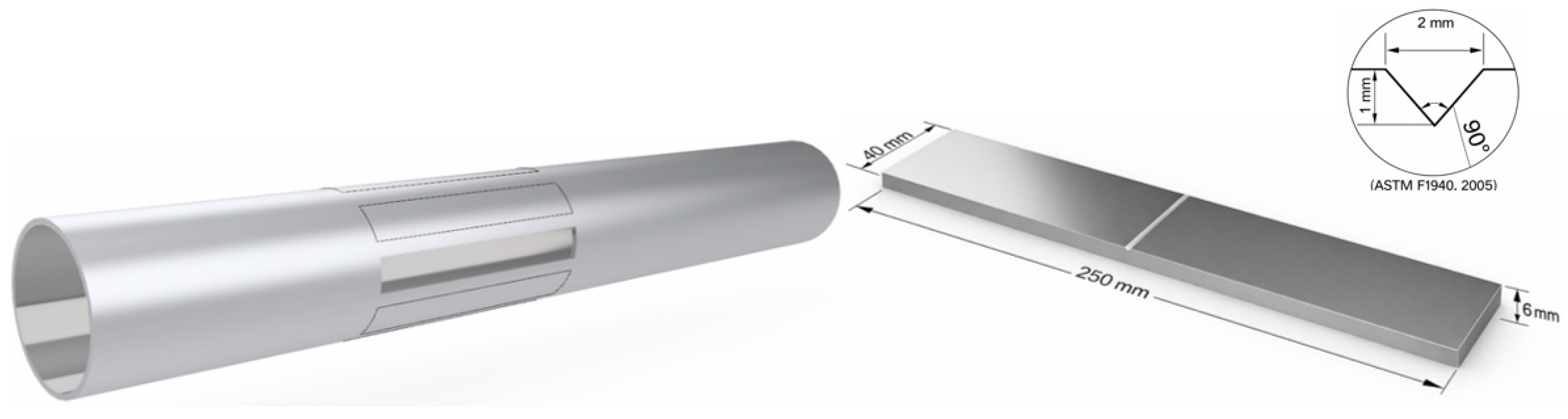
The specimen geometry was defined considering dimensional proportions representative of ship fuel system piping; however, no in-service pipe section was directly extracted or tested in this study. All specimens were manufactured from commercially available ASTM A36 hot-rolled flat bar stock supplied in the as-received condition, without additional forming processes or post-fabrication heat treatment. This material is representative of structural steels commonly used in maritime fuel systems and related components, as shown in
Figure 1. The mechanical properties of ASTM A36 steel were evaluated under bending conditions, and the samples were designed in accordance with the guidelines established in ASTM E290-22 [
33], which regulates flexural testing of metallic materials, adopting dimensions of 251.92 ± 0.24 mm in total length, 37.8 ± 0.00 mm in width, 5.80 ± 0.00 mm in thickness, and a weight of 420.20 ± 0.89 g. To analyze the influence of hydrogen inside a pipe, 12 specimens with machined notch and 12 specimens without notch were manufactured; in particular, the notched specimens were designed in accordance with ASTM F1940 [
34], which establishes the dimensions and geometry of a V-shaped notch. To simulate the internal and external surfaces of a pipe, it was necessary to protect one of the surfaces of the samples. Therefore, a high-solids epoxy paint was applied to one of the faces to represent the external surface of the pipe. This paint is a coating formulated with amine-cured phenolic resin, whose main characteristics are its high resistance to corrosion and high temperatures. Finally, these dimensional and surface preparation specifications were selected based on the capabilities of the testing equipment and the recommended proportions, with the aim of ensuring a uniform distribution of the load applied during the bending test.
According to the manufacturer’s quality certificate, the ASTM A36 steel used in this study presents the following maximum chemical composition: sulfur 0.05%, carbon 0.23%, phosphorus 0.04%, and silicon 0.40%. The certified mechanical properties include a minimum yield strength of 250 MPa, an ultimate tensile strength up to 550 MPa, and a total elongation at fracture of 21%, the latter representing the ductility measured under standard tensile testing conditions. In the present work, tensile tests were not performed; instead, four-point bending experiments were conducted to determine the flexural stiffness, yielding force, and ultimate load under bending conditions, which were subsequently used for comparison with the numerical simulations.
The high-solids epoxy coating applied to the specimens is commonly used in pipelines and storage tanks for the transportation and containment of crude oil, fuels, saline water, and other industrial fluids. This coating provides enhanced corrosion resistance, high surface hardness, good impact resistance, and durability under exposure to chemically aggressive environments. The coating was prepared strictly following the manufacturer’s recommendations, using a 3:1 mixing ratio (three parts resin to one part catalyst). The initial curing time to touch was approximately 2 h, while full curing was achieved after 7 days to ensure proper mechanical performance and environmental resistance prior to hydrogen exposure testing.
2.1.2. Hydrogen Embrittlement Test
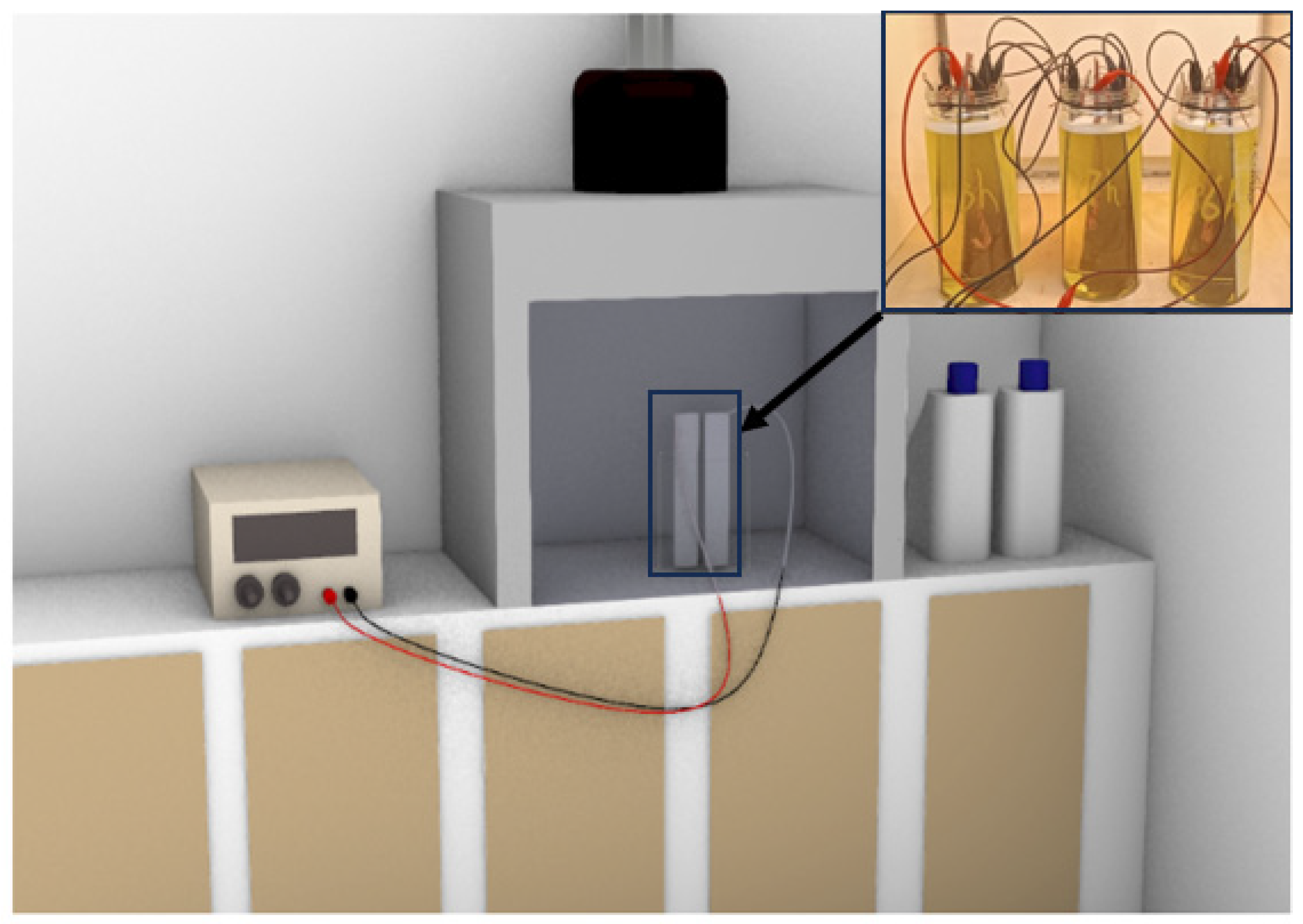
Hydrogen embrittlement of ASTM A36 steel was induced through a cathodic charging process by chemical electrolysis. The specimens were partially immersed in a 38% hydrochloric acid (HCl) solution, ensuring that one surface of each sample remained in direct contact with the electrolyte, while the opposite surface was electrically insulated by a previously applied epoxy coating. The electrochemical setup consisted of a variable power supply (maximum capacity: 110 V, 5 A). The specimens were connected to the cathodic terminal, while a copper rod acting as a sacrificial anode was connected to the positive terminal. The system was operated under current-controlled conditions, and a constant current of 4.57 A was applied throughout the hydrogen charging procedure. The exposed surface area of each specimen was approximately 116.8 cm2, and the corresponding operating voltage stabilized at approximately 1.6 V during the process.
It should be noted that the selected electrolyte concentration and applied current correspond to an accelerated electrochemical hydrogenation methodology commonly adopted in laboratory investigations of hydrogen embrittlement in carbon steels [
11,
29]. The objective of this approach is to promote measurable hydrogen uptake within practical experimental time scales. The present study does not aim to directly replicate specific in-service maritime hydrogen environments, but rather to establish a controlled and reproducible degradation scenario that enables comparative mechanical evaluation under increasing hydrogen exposure levels.
The correct configuration of the electrochemical system and the parallel electrical connection of the specimens were verified by the observation of hydrogen bubble formation on the exposed surfaces, confirming the proper development of the electrolysis process. The exposure time to the acidic medium was controlled at intervals of 0, 18, 27, and 36 h, as shown in
Figure 2, using three specimens for each exposure condition to ensure the repeatability and reliability of the results. Due to the generation of hydrogen gas during the cathodic charging process, all experiments were conducted in a controlled environment using a fume hood, and appropriate personal protective equipment was employed to ensure safe handling conditions.
Equation (1) defines the theoretical mass of hydrogen generated electrochemically during cathodic charging, denoted as
. This value is calculated as a function of the exposure time
and the applied current
. In the expression,
represents the number of electrons involved in the hydrogen evolution reaction (
),
corresponds to the molar mass of hydrogen (
, 2.01 g/mol), and
denotes Faraday’s constant (96,485 C/mol) [
11]. In this study, four exposure times (0, 18, 27, and 36 h) were considered, resulting in mass of hydrogen generated of 0, 3.08, 4.63, and 6.17 g respectively.
The calculated values are used solely as a comparative indicator of electrochemical charging severity and represent the theoretical hydrogen evolved at the cathode–electrolyte interface under constant current conditions. They do not correspond to the hydrogen absorbed within the steel matrix. In this study, no direct quantification of diffusible or total hydrogen content was performed; instead, hydrogen exposure was controlled through charging time, and its effects were assessed indirectly through mechanical degradation behavior and SEM fractographic analysis. This methodology enables a comparative evaluation of embrittlement severity as a function of exposure duration, although it does not provide absolute hydrogen concentration values in the material.
2.1.3. Four-Points Bending Test
After the hydrogen embrittlement process, the specimens were prepared for the four-point bending test, which was carried out in accordance with the standards established in ASTM E290 and ASTM G39 [
33,
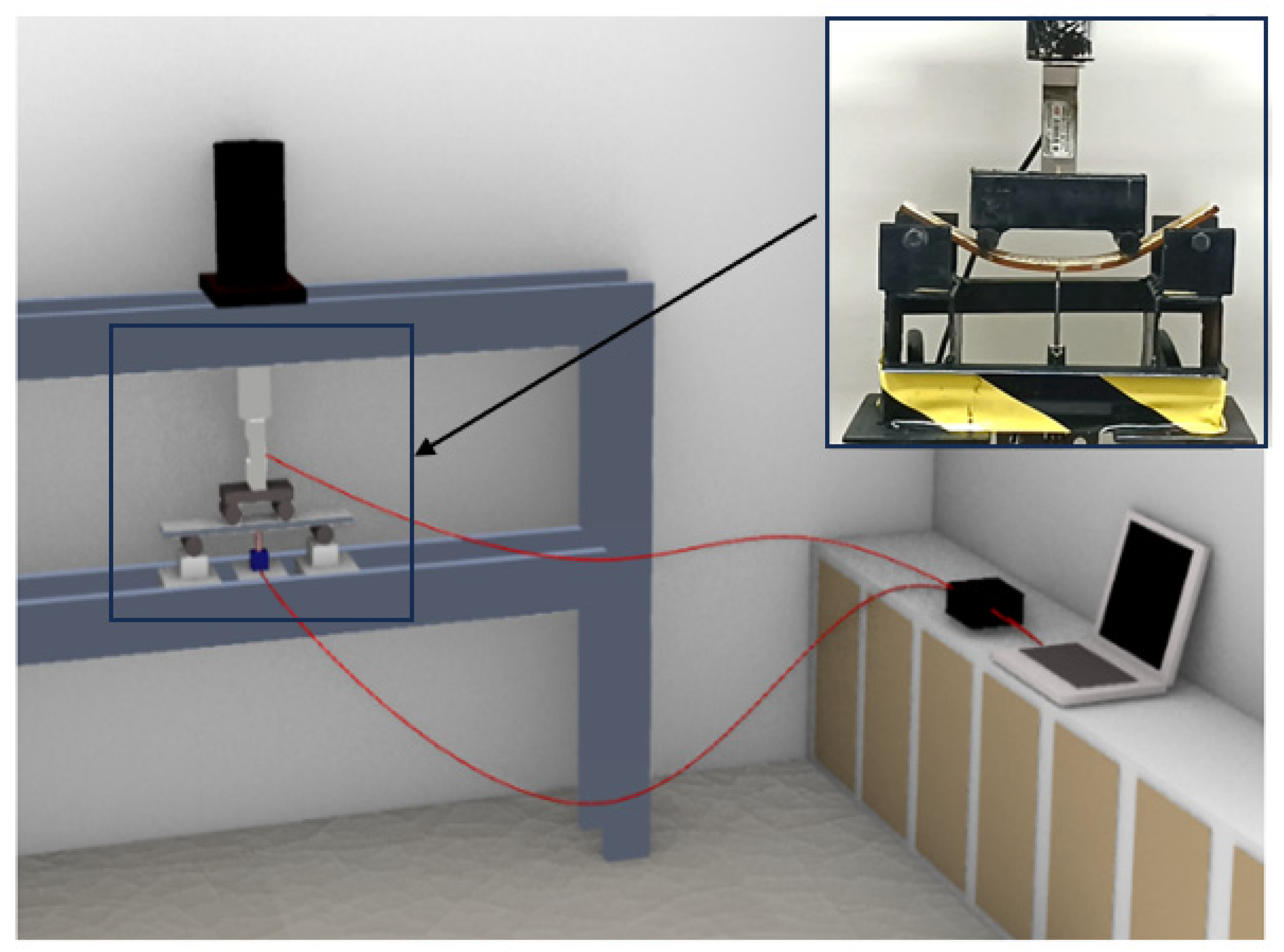
35]. These standards establish that the four-point bending test must be performed using two simple supports and two load application points, as shown in
Figure 3, whose relative distances must be strictly respected to ensure the validity of the results in the 24 specimens tested. To perform the test, a structure with two simple supports was used, with an effective length of 200 mm between supports, as well as a loading system designed to transform a concentrated force into two forces applied simultaneously, with a separation of 150 mm between the load points; the applied force was generated by a hydraulic piston exerting pressure on these points with a velocity 3.97 mm/s. The applied force was quantified using a load cell
, while the vertical displacement of the specimen in the middle section was measured using a displacement sensor
. Finally, the data from both devices was recorded using a data acquisition card national instrument with a 100 Hz sampling rate, which captured the signals in the form of voltage; subsequently, through a calibration process, these values were converted into units of kilograms of force and millimeters of vertical displacement.
The mechanical behavior of the beam was analyzed based on classical Euler–Bernoulli beam theory [
36], corresponding to a statically determinate fourth-order differential system. For the four-point bending configuration, the transverse load distribution was represented using Dirac delta functions to model the two symmetric point loads applied along the span. Considering a total applied load
P equally distributed between the two loading points, the governing differential equation is expressed in Equation (2) as
where
E is Young’s modulus,
I is the second moment of area of the cross-section,
P is the total applied load,
L is the span between supports, and
is the vertical deflection. Solving Equation (2) under simply supported boundary conditions yields the analytical expression for the midspan displacement given in Equation (3),
which highlights the cubic dependence of deflection on span length and its inverse proportionality to the flexural rigidity
EI, reflecting the dominant influence of geometry and material stiffness on the bending response.
2.1.4. Metallography Method
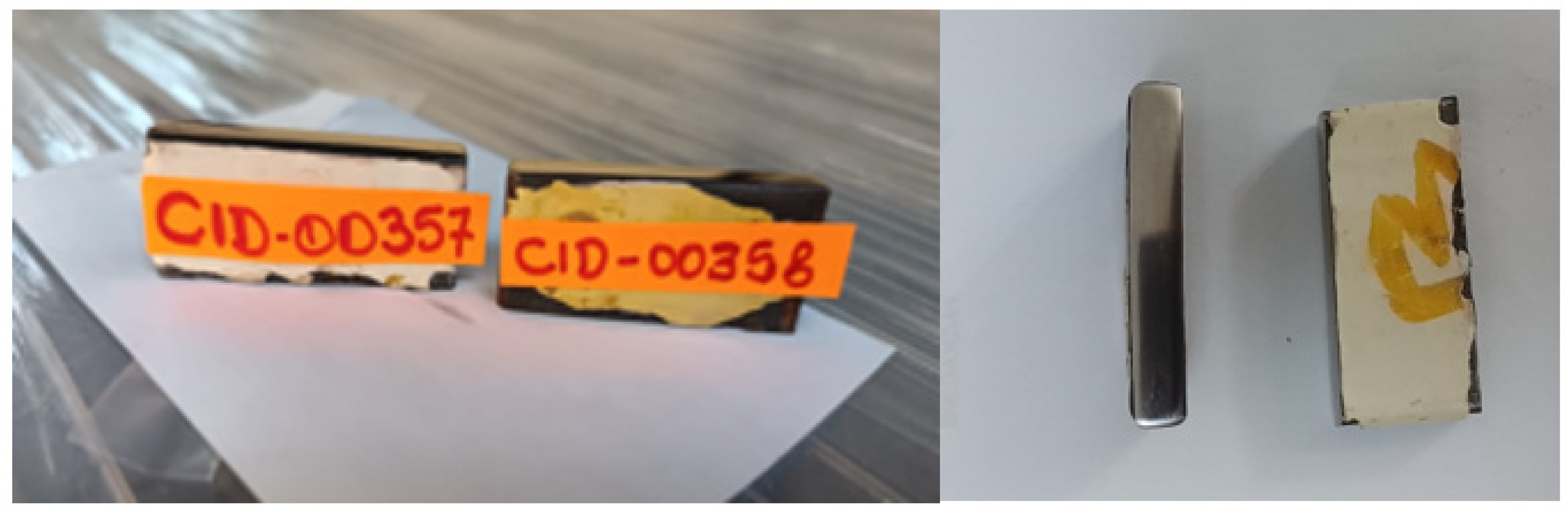
To characterize the microstructural effects associated with hydrogen embrittlement, metallographic analyses were performed on selected ASTM A36 steel specimens following cathodic hydrogen charging and four-point bending tests. The analyzed specimens corresponded to the unexposed condition (CID-00357, 0 h) and the maximum hydrogen exposure condition (CID-00358, 36 h), as shown in
Figure 4, enabling a direct comparison of hydrogen-induced microstructural alterations. Each specimen was sectioned from the region of maximum stress concentration and subsequently prepared using standard metallographic procedures. Mechanical polishing was carried out using aluminum oxide paste to obtain a smooth, deformation-free surface while preserving the underlying microstructure. The prepared surfaces were then examined by SEM. The identification and interpretation of microstructural features, morphological characterization of phases, including phases, inclusions, and hydrogen-related damage mechanisms, were conducted in accordance with established metallographic guidelines reported in [
30]. This methodology allowed the identification of microcracks, interfacial decohesion, and phase-related damage, providing microstructural evidence to support the mechanical degradation observed in the bending tests.
2.2. Numerical Method
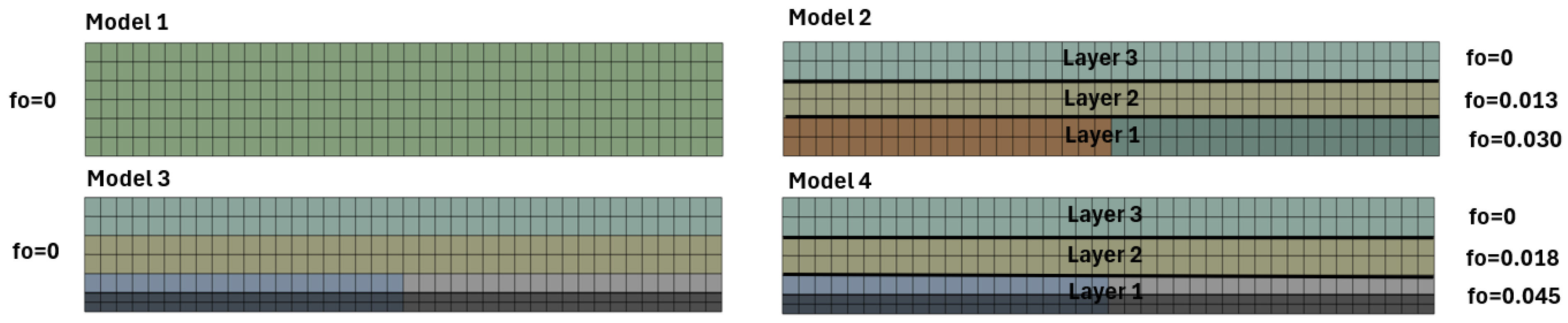
Four finite element models were developed in ANSYS Workbench 2024R2 to reproduce the experimental four-point bending tests and to evaluate the effects of hydrogen exposure and machined notch on the flexural behavior of the steel specimens. Models 1 and 2 represent unnotched specimens exposed to hydrogen for 0 h and 36 h, respectively, whereas Models 3 and 4 correspond to notched specimens under the same exposure conditions. This modeling strategy enabled the independent and combined assessment of hydrogen embrittlement and crack-induced damage on the structural response.
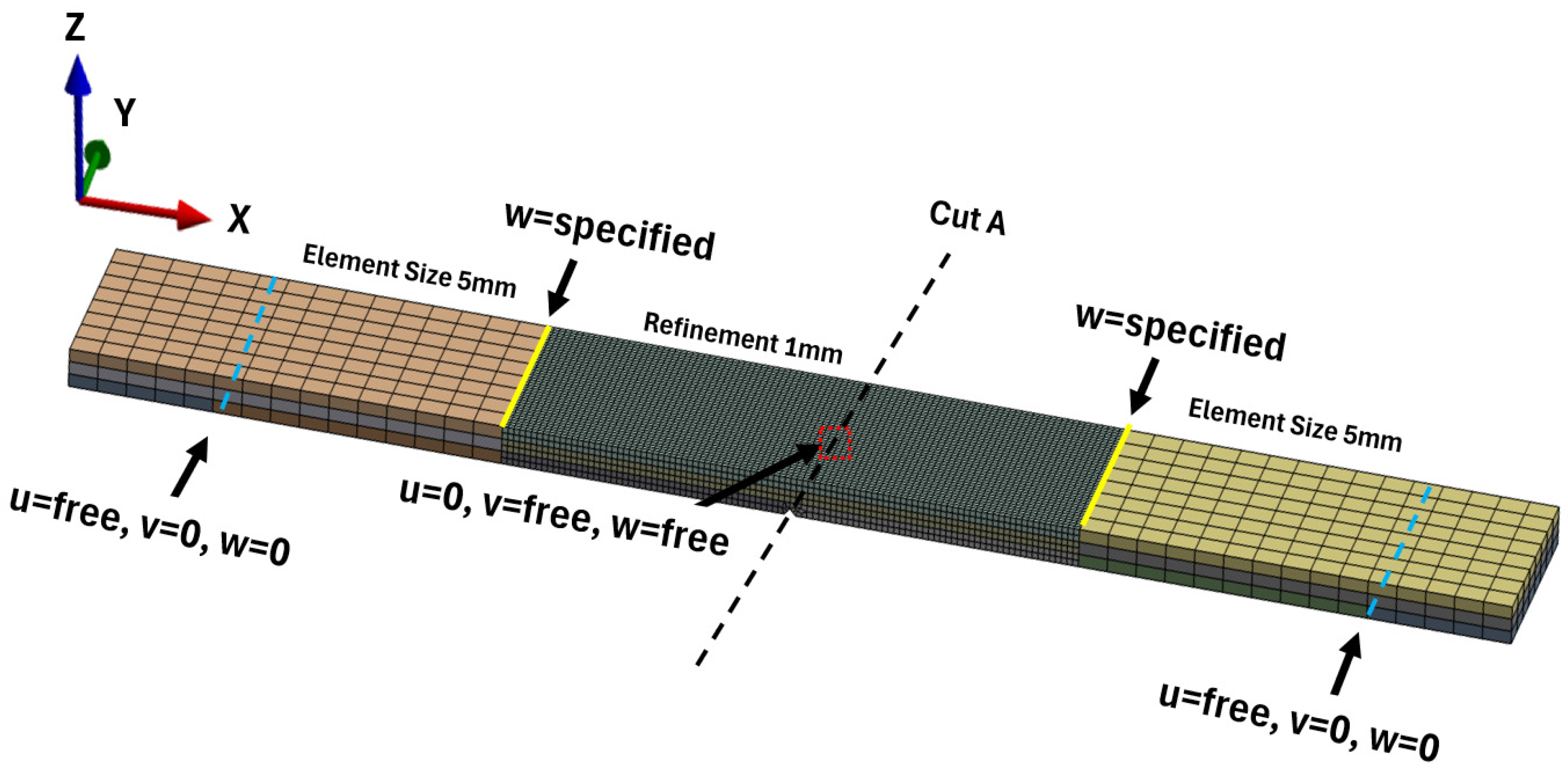
The four-point bending configuration was modeled by applying the boundary conditions and loading scheme shown in
Figure 5. Two simple supports were defined at the bottom surface along the effective span, allowing axial sliding and rotation while constraining vertical and lateral displacements. To eliminate rigid body motion without introducing artificial constraints, the longitudinal displacement was fixed at a single node located at midspan. The applied load was modeled using a displacement-controlled downward motion, representing the piston movement of the experimental testing machine.
A mesh convergence study was conducted to ensure numerical accuracy. Three mesh configurations were evaluated using 20-node hexahedral elements (SOLID186), suitable for large deformations and nonlinear material behavior. The final mesh consisted of a global element size of 5 mm with a local refinement of 1 mm in the central region of constant bending moment and negligible shear force. The selected mesh resulted in fewer than 1% variation in midspan vertical displacement between successive refinements, confirming mesh independence. Element quality metrics exceeded 0.98, ensuring the reliability of the numerical results [
37,
38].
Hydrogen-induced degradation was incorporated through a spatially varying initial porosity, representing microvoids generated by hydrogen diffusion. For specimens without hydrogen exposure (Models 1 and 3), an initial porosity of
f0 = 0 was assumed. For hydrogen-exposed specimens (Models 2 and 4), the thickness was divided into three layers of 2 mm, accounting for the hydrogen concentration gradient. The highest porosity was assigned to the surface layer directly exposed to hydrogen, decreasing toward the protected layer, which was assumed to remain unaffected due to the applied coating. Higher porosity values were assigned to notched specimens, reflecting enhanced hydrogen diffusion promoted by the notch, as illustrated in
Figure 6.
It should be emphasized that the adopted representation of hydrogen embrittlement through a spatially varying initial porosity constitutes a phenomenological modeling assumption. The present framework does not explicitly simulate hydrogen transport, trapping kinetics, or stress-assisted diffusion mechanisms, which are addressed in fully coupled diffusion–mechanical formulations available in the literature [
39,
40]. Instead, the initial porosity values were determined through an inverse calibration procedure, whereby parameters were iteratively adjusted to reproduce the experimentally observed reductions in yield force, ultimate load, and flexural stiffness for each hydrogen exposure condition. The selected values therefore represent an effective macroscopic damage parameterization rather than a direct quantification of hydrogen concentration.
The increased porosity assigned to notched specimens reflects the combined mechanical and diffusion-driven effects associated with stress concentrators. Elevated stress triaxiality near the notch root promotes void nucleation and growth within the GTN formulation, while cracks may also facilitate localized hydrogen ingress and trapping, as widely discussed in hydrogen embrittlement studies [
29]. A limited sensitivity evaluation further indicated that moderate variations in the initial porosity parameter primarily affect the onset of nonlinear softening, while preserving the overall degradation trends with increasing hydrogen exposure. This confirms the robustness of the adopted approach for comparative structural assessment purposes.
The material behavior was described using a Power Law Nonlinear Isotropic Hardening (PLNIH) model coupled with the Gurson–Tvergaard–Needleman (GTN) damage model presented in Equations (4) and (5) [
27,
39,
41]. This formulation enables the simulation of plastic deformation and hydrogen-assisted damage through the evolution of porosity. The GTN yield function is expressed as:
where
is the von Mises equivalent stress,
is the yield stress, and
is the hydrostatic pressure. The Tvergaard–Needleman parameters were set to
,
, and
, following recommendations for ductile steels reported in the literature.
The plastic hardening of the matrix material was governed by the PLNIH model:
where
and
represent the initial yield stress and strain hardening exponent, respectively, identified from experimental bending tests. The evolution of porosity was modeled by considering both void growth and strain-controlled nucleation mechanisms, as commonly adopted in GTN-based formulations. Detailed expressions and parameter definitions were taken from established studies [
40,
42,
43], ensuring consistency with experimentally observed hydrogen-assisted damage mechanisms.
3. Results and Discussion
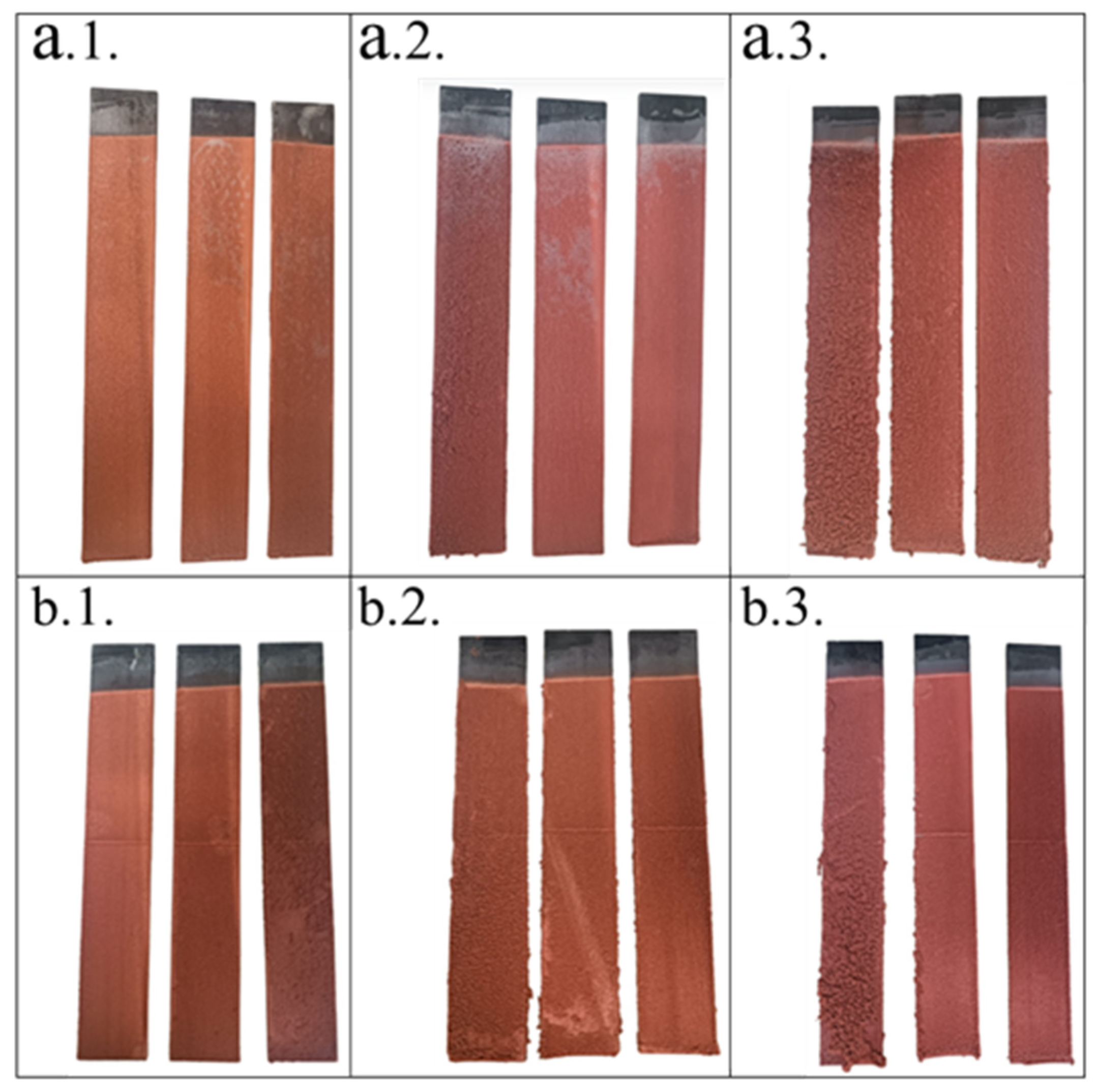
Figure 7 shows the specimens removed after being subjected to different exposure times. Unnotched specimens are identified with the abbreviation a, while notched specimens are designated with the abbreviation b. Likewise, the numbers 1, 2, and 3 correspond to exposure times of 18, 27, and 36 h, respectively. The specimens show brown adhered material on their surface, which is associated with corrosion processes induced by the applied electrolysis. This material shows a progressive increase as the exposure time increases.
After exposure to hydrogen, the specimens were cleaned to remove the oxidation coating. To perform the bending test, marks were made on the test tubes to precisely locate the simple supports, the middle section, and the points of applied force. This force was applied up to the limit of the displacement gauge, which has a maximum compression of 50 mm. The results of the bending tests were recorded using NI DAQExpress 4.0 (2019) software, which enabled data acquisition at a sampling rate of 100 points per second for each signal, corresponding to the load cell and the displacement gauge. This configuration ensured adequate temporal resolution and improved precision in capturing the mechanical response during the tests. However, a data filtering process was required to eliminate spurious signals and non-representative fluctuations in the measured responses.
Approximately 2500 data points were recorded during each flexural test. Due to inherent instrumentation noise, the raw load–displacement curves exhibited minor fluctuations. To mitigate this effect, a sliding window smoothing procedure corresponding to a discrete moving average filter of order 5 was applied. Using a fixed window size of five consecutive data points, the arithmetic mean of each set was calculated, and this averaged value replaced the first point of the corresponding window. The window was then shifted sequentially along the dataset until the entire signal was processed. This filtering approach effectively reduced high-frequency noise while preserving the overall mechanical response trend without altering the structural behavior characteristics of the specimens [
44].
For data analysis, specimens corresponding to each hydrogen exposure condition were compared to achieve convergence between the applied force and vertical displacement curves. The yield force (). was determined from the filtered load–displacement curve as the point where a clear deviation from the initial linear elastic slope was observed, corresponding to the onset of plastic bending. The maximum force () was identified as the peak value reached in the smoothed curve prior to failure. The flexural rigidity () was calculated from the slope of the initial linear elastic region of the experimental load–displacement curve and subsequently determined using the theoretical deflection equation corresponding to the four-point bending configuration employed in this study. These parameters enabled a comprehensive assessment of the mechanical behavior of the 24 tested specimens.
3.1. Experimental Analysis
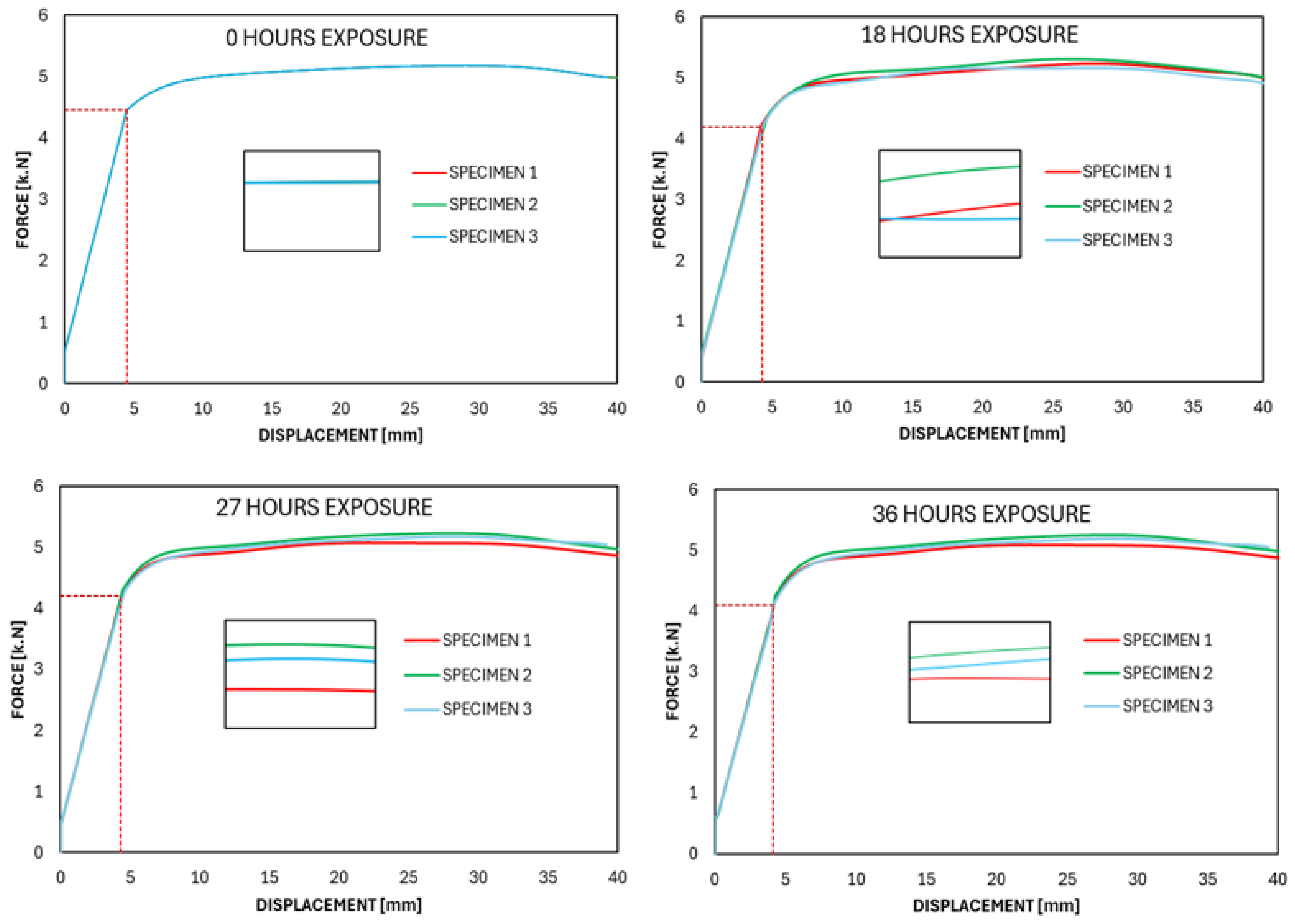
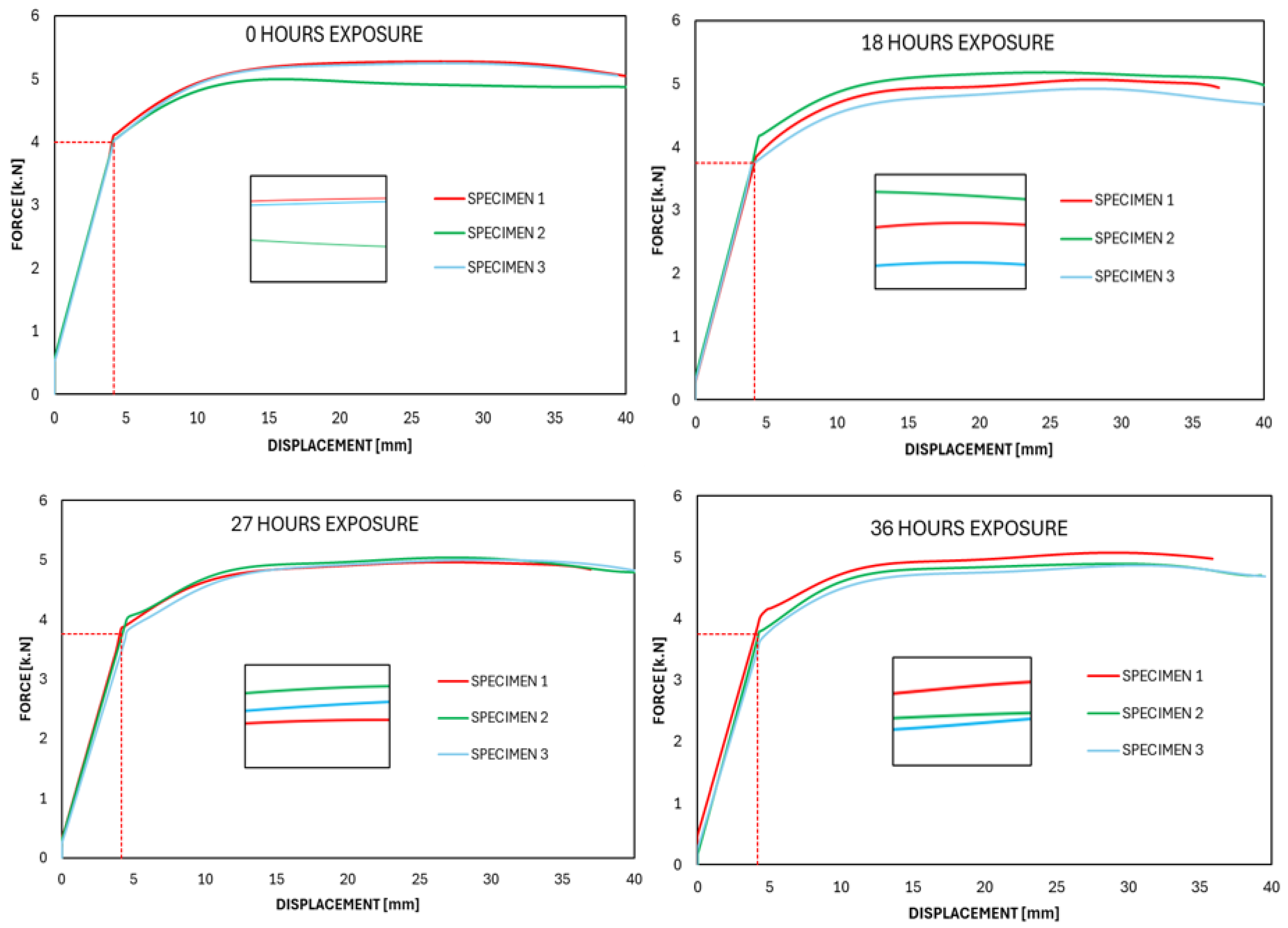
Figure 8 and
Figure 9 present the force–displacement curves obtained from four-point bending tests performed on ASTM A36 steel specimens without and with notches, respectively, and subjected to different hydrogen exposure times. In both configurations, the mechanical response can be divided into three characteristic stages. The first stage corresponds to a linear elastic region, which reflects the initial stiffness of the material. This is followed by a gradual transition from elastic to plastic behavior, characterized by a smooth nonlinear response, until the maximum applied force is reached at the maximum displacement recorded by the displacement gauge. While specimens exposed to different hydrogen charging times show similar overall deformation patterns and good repeatability between independent tests, a systematic shift in the force–displacement curves toward lower force levels is observed as exposure time increases. This shift indicates a progressive degradation of the mechanical properties due to hydrogen ingress, an effect that is considerably more pronounced in notched specimens. In notched specimens, the elastic region is reduced, the transition to plastic deformation occurs at lower displacement levels, and the maximum force is reached earlier, reflecting the combined influence of stress concentration and hydrogen-assisted damage at the notch root.
Based on the force–displacement responses shown in
Figure 8 and
Figure 9, average values of the yield force [Fy], ultimate force [Fu], and flexural rigidity [EIc] were calculated to quantitatively assess the influence of hydrogen exposure on the mechanical performance of the steel.
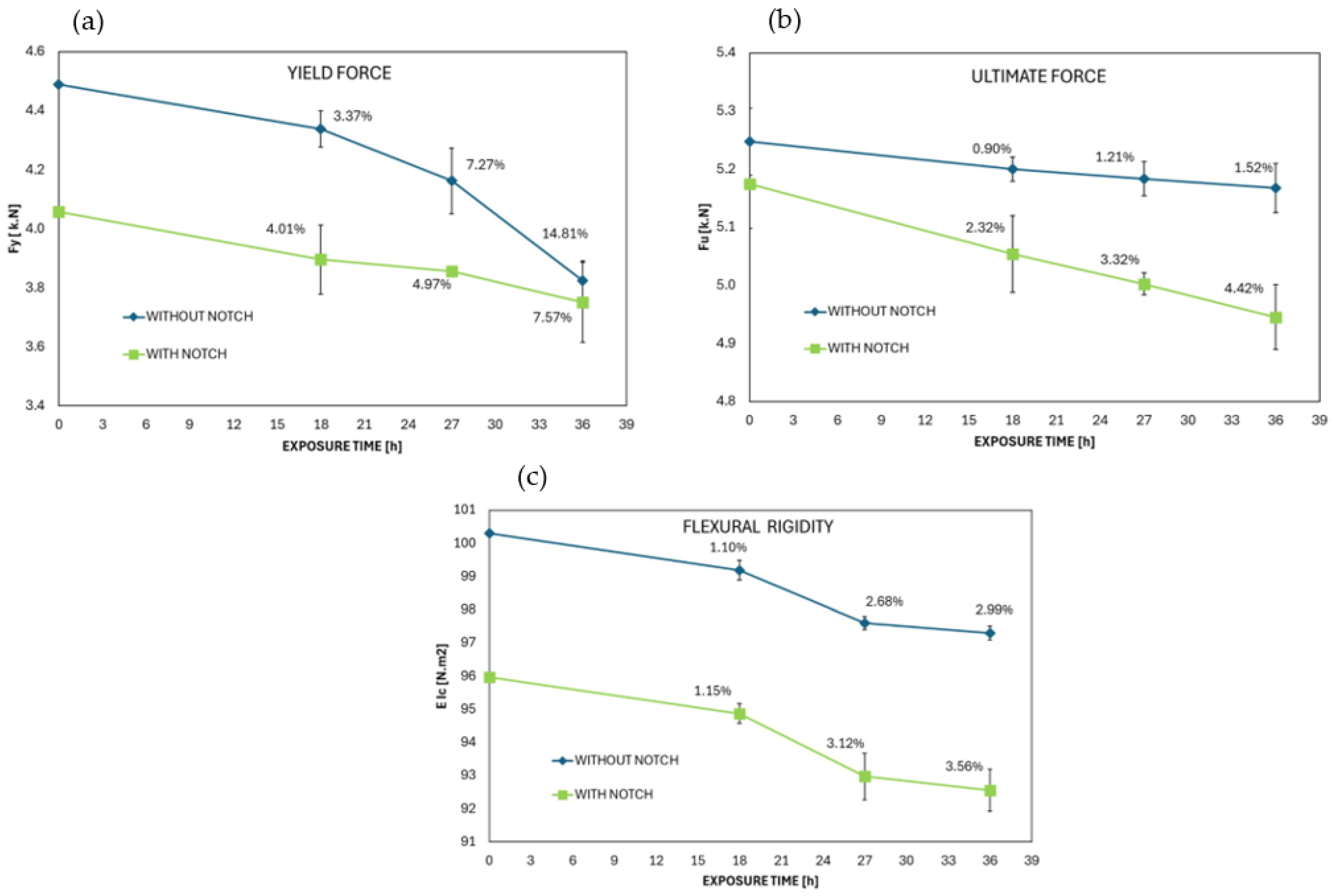
Figure 10 summarizes the evolution of these mechanical parameters as a function of hydrogen exposure time for both unnotched and notched specimens.
Figure 10a shows the variation in the yield force with hydrogen exposure time. For unnotched specimens, increasing the exposure time from 0 to 36 h resulted in a reduction of Fy from 4.49 ± 1.23 × 10
−3 to 3.82 ± 1.34 × 10
−1 kN, corresponding to a decrease of approximately 14.81%. Similarly, notched specimens exhibited lower yield force values due to sensitivity to hydrogen charging, with Fy decreasing from 4.06 ± 3.25 × 10
−2 to 3.75 ± 2.7 × 10
−1 kN (≈7.57%). These results confirm that hydrogen exposure accelerates the onset of plastic deformation, particularly in the presence of geometric discontinuities.
Figure 10b presents the evolution of the ultimate force as a function of hydrogen exposure time. For unnotched specimens, Fu decreased slightly from 5.25 ± 1.15 × 10
−1 to 5.17± 8.39 × 10
−2 kN (≈1.52%) as exposure time increased from 0 to 36 h, indicating a limited but measurable reduction in maximum load-bearing capacity. Conversely, notched specimens exhibited a larger decrease in Fu, from 5.17 ± 1.53 × 10
−1 to 4.95 ± 1.12 × 10
−1 kN (≈4.42%), reflecting a greater susceptibility to hydrogen-induced damage. The consistently lower ultimate force values observed in notched specimens highlight the synergistic effect of hydrogen embrittlement and localized stress amplification at the crack tip.
Figure 10c illustrates the evolution of flexural rigidity with hydrogen exposure time. In unnotched specimens, the flexural rigidity decreased moderately from 100.29 ± 1.36 × 10
−3 to 97.30 ± 1.04 × 10
−2 kN·m
2 (≈2.99%), indicating a gradual loss of stiffness. In contrast, notched specimens exhibited a slightly greater reduction, with EIc decreasing from 95.98 ± 5.72 × 10
−3 to 92.56 ± 3.17 × 10
−2 kN·m
2 (≈3.56%). This behavior emphasizes the sensitivity of the elastic response to hydrogen-assisted damage, particularly in the presence of stress concentrators.
Overall, the results demonstrate that hydrogen embrittlement degrades the mechanical performance of ASTM A36 steel under four-point bending, with a comparatively greater impact on notched specimens. While unnotched specimens mainly exhibit a progressive reduction in stiffness and yield strength, notched specimens show enhanced degradation due to the combined effects of hydrogen diffusion and stress concentration. These findings indicate that geometric defects substantially reduce the hydrogen tolerance of structural steels, increasing the risk of premature mechanical instability under service conditions. Consequently, the structural assessment of components operating in hydrogen-rich environments must consider not only reductions in ultimate strength but also the degradation of stiffness and yield capacity, especially in elements containing pre-existing discontinuities.
From a mechanical standpoint, it is important to emphasize that four-point bending induces a non-uniform and inherently multiaxial stress state through the specimen thickness. The outer tensile surface experiences maximum normal stress, while the opposite face is subjected to compression, resulting in a linear stress gradient and spatial variation in stress triaxiality. In notched specimens, localized constraint effects near the notch root further increase stress triaxiality, which promotes void nucleation and growth within the GTN damage framework. Moreover, due to the one-sided cathodic charging configuration adopted in this study, hydrogen diffusion is expected to generate a through-thickness concentration gradient, with higher hydrogen content near the exposed surface. The coupling between multiaxial stress conditions and hydrogen concentration gradients therefore plays a significant role in the observed mechanical degradation under bending-dominated loading.
3.2. Metallographic Analysis
Microstructural analysis was carried out by SEM on two notched ASTM A36 steel specimens corresponding to 0 h and 36 h of cathodic hydrogen exposure, with the objective of identifying microstructural features associated with hydrogen-assisted damage.
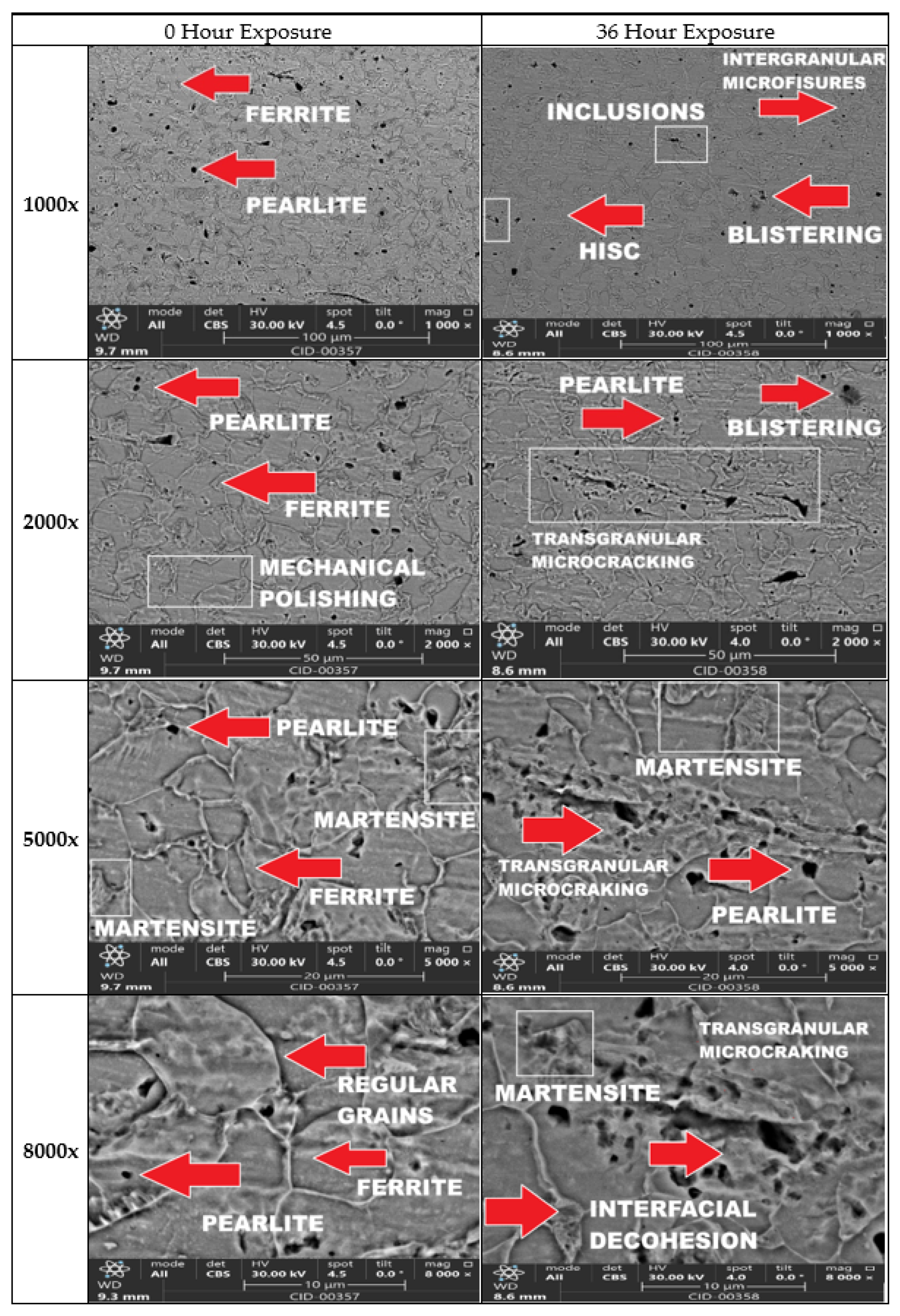
Figure 11 presents representative SEM micrographs acquired at magnifications ranging from 1000× to 8000×.
The specimen without hydrogen exposure (0 h) exhibited the characteristic ferrite–pearlite microstructure typical of hot-rolled ASTM A36 steel. Ferrite appeared as light regions with regular equiaxed grain morphology, while pearlite was observed as darker lamellar colonies distributed throughout the matrix. In some localized areas, microstructural regions with refined or acicular morphology were identified, consistent with harder transformation products that may originate from the steel manufacturing and cooling history. These features were already present in the uncharged condition and are therefore attributed to the inherent heterogeneity of the base material. No evidence of microcracking, intergranular decohesion, or surface blistering was observed in the 0 h condition, confirming an undamaged baseline microstructure.
In contrast, the specimen subjected to 36 h of hydrogen exposure displayed marked microstructural damage, particularly in regions adjacent to the notch root, where stress concentration is highest. SEM observations revealed intergranular microfissures, localized defect accumulation, and surface blistering, indicating hydrogen diffusion and trapping in highly stressed zones. Non-metallic inclusions were identified as preferential trapping sites, promoting crack initiation at inclusion–matrix interfaces.
At higher magnifications, transgranular microcracking was observed across both ferritic and pearlitic regions. Crack propagation frequently follows phase boundaries and heterogeneous microstructural interfaces, where local stress concentration and hydrogen accumulation are more likely to occur. Regions exhibiting harder microstructural morphology—attributed to manufacturing-related transformation products—may contribute to localized hydrogen trapping and stress concentration due to their higher dislocation density and reduced ductility compared to the surrounding ferritic matrix. However, no phase identification techniques (e.g., XRD or EBSD) were performed; therefore, microstructural constituents were identified solely on morphological grounds [
30].
The combined effect of hydrogen exposure and geometric stress concentration promotes hydrogen-assisted cracking mechanisms, facilitating crack initiation and propagation at comparatively lower stress levels. The SEM observations shown in
Figure 11 correlate with the mechanical degradation measured in the four-point bending tests and demonstrate the susceptibility of ASTM A36 steel to hydrogen-assisted embrittlement under hydrogen-rich service conditions.
3.3. Numerical Analysis
The numerical analysis presented in this section is primarily intended to reproduce and interpret the macroscopic mechanical response observed experimentally under four-point bending. The validation of the model is therefore conducted at the structural level through comparison of global force–displacement behavior, stiffness degradation, and load-carrying capacity. The adopted GTN-based formulation does not explicitly simulate crack initiation, discrete damage to localization paths, or microstructural evolution. Instead, it provides a continuum-level representation of hydrogen-assisted degradation, in which damage to localization emerges implicitly through stress triaxiality and void evolution. The SEM observations presented in
Section 3.2 are used as qualitative physical support for the modeled damage mechanisms, rather than as direct validation targets for the numerical simulations.
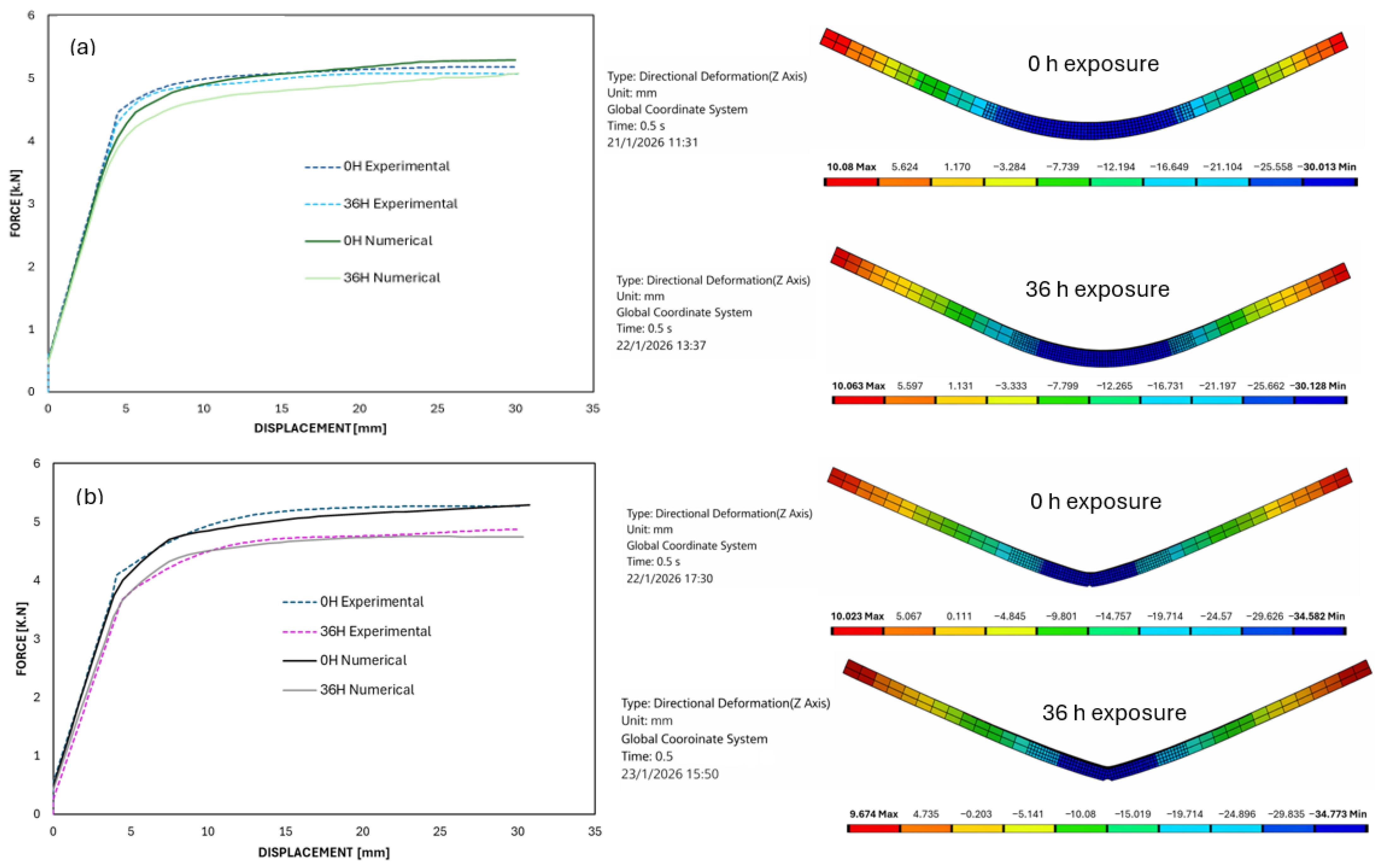
Figure 12a presents the experimental and numerical force–displacement responses for unnotched specimens subjected to four-point bending after 0 h and 36 h of hydrogen exposure, together with the corresponding numerical contours of vertical deformation. A strong agreement between experimental and numerical results is observed in the elastic regime, confirming that the boundary conditions, loading configuration, and elastic properties were accurately represented in the finite element model. As loading progresses into the nonlinear regime, both experimental and numerical curves exhibit a gradual stiffness reduction associated with plastic deformation, although the numerical response slightly underestimates the force level at larger displacements. Specimens exposed to 36 h of hydrogen consistently show lower force levels and larger midspan displacements than the 0 h condition, reflecting hydrogen-induced degradation of mechanical properties. The deformation contours confirm that the maximum vertical displacement occurs at the beam center, where the bending moment is constant and shear effects are negligible. For the same simulation time of 0.5 s, the hydrogen-exposed specimen exhibits greater vertical deformation due to increased material compliance associated with hydrogen-assisted microvoid formation and accelerated damage evolution within the GTN-based framework.
Figure 12b shows the force–displacement curves and vertical deformation contours for notched specimens, highlighting the combined influence of notch presence and hydrogen exposure on the flexural response. Compared to unnotched specimens, notched samples exhibit a reduced load-carrying capacity and an earlier onset of nonlinear behavior, both experimentally and numerically. The presence of the notch acts as a preferential site for stress concentration and localized hydrogen accumulation, intensifying microvoid nucleation in the surrounding material. As a result, specimens exposed to 36 h of hydrogen display a more pronounced reduction in force and increased midspan displacement compared to the 0 h condition. The numerical deformation contours reveal higher localized deflections in the notched region, particularly for the hydrogen-exposed model, indicating enhanced damage evolution. For the same simulation time of 0.5 s, the 36 h notched specimen exhibits larger vertical deformation due to the combined effects of stress concentration at the notch root and enhanced hydrogen-assisted degradation, which reduces the effective stiffness and load-carrying capacity of the material.
4. Conclusions
This study evaluated the effects of hydrogen embrittlement on ASTM A36 steel under bending-dominated loading conditions representative of maritime fuel system components, combining experimental testing, microstructural analysis, and numerical simulation. The main findings and contributions are summarized as follows:
Four-point bending tests showed that hydrogen exposure produces a progressive degradation of the mechanical performance of ASTM A36 steel, affecting both elastic and plastic responses. The deterioration increased with exposure time, indicating the sensitivity of bending-dominated behavior to hydrogen uptake.
The largest mechanical reductions were observed in specimens containing pre-existing notches. For unnotched specimens, hydrogen exposure up to 36 h resulted in maximum reductions of approximately 14.8% in yield force (Fy), 1.5% in ultimate force (Fu), and 3.0% in flexural stiffness (EI). Notched specimens exhibited a comparable or moderately greater susceptibility depending on the mechanical parameter, with maximum reductions of approximately 7.6% in Fy, 4.4% in Fu, and 3.6% in EI, reflecting the combined influence of hydrogen diffusion and stress concentration effects.
Finite element simulations reproduced the experimental force–vertical displacement curves for both notched and unnotched configurations, showing good agreement in the elastic and early plastic regimes. The numerical results captured the trends of increased displacement and reduced structural stiffness with hydrogen exposure, consistent with the experimentally observed mechanical response.
Microstructural analysis by scanning electron microscopy revealed hydrogen-assisted damage features, including intergranular and transgranular microcracking, interfacial decohesion, hydrogen trapping at inclusions, and localized surface blistering, predominantly near notch roots. These observations support the mechanical and numerical findings from a microstructural perspective.
Overall, the results indicate that hydrogen embrittlement in ASTM A36 steel under bending loading is influenced by the interaction between hydrogen diffusion and localized stress amplification. From an engineering standpoint, structural integrity assessments in hydrogen-rich environments should consider not only reductions in ultimate strength but also stiffness degradation and earlier yielding behavior, particularly in components containing geometric discontinuities.



 ,
,