Geologically Constrained Optimization of Horizontal Well and Fracture Design in Tight Sandstone Reservoirs: Insights from the Chang 7 Member, Ordos Basin

 , ,
, , 
Abstract
1. Introduction
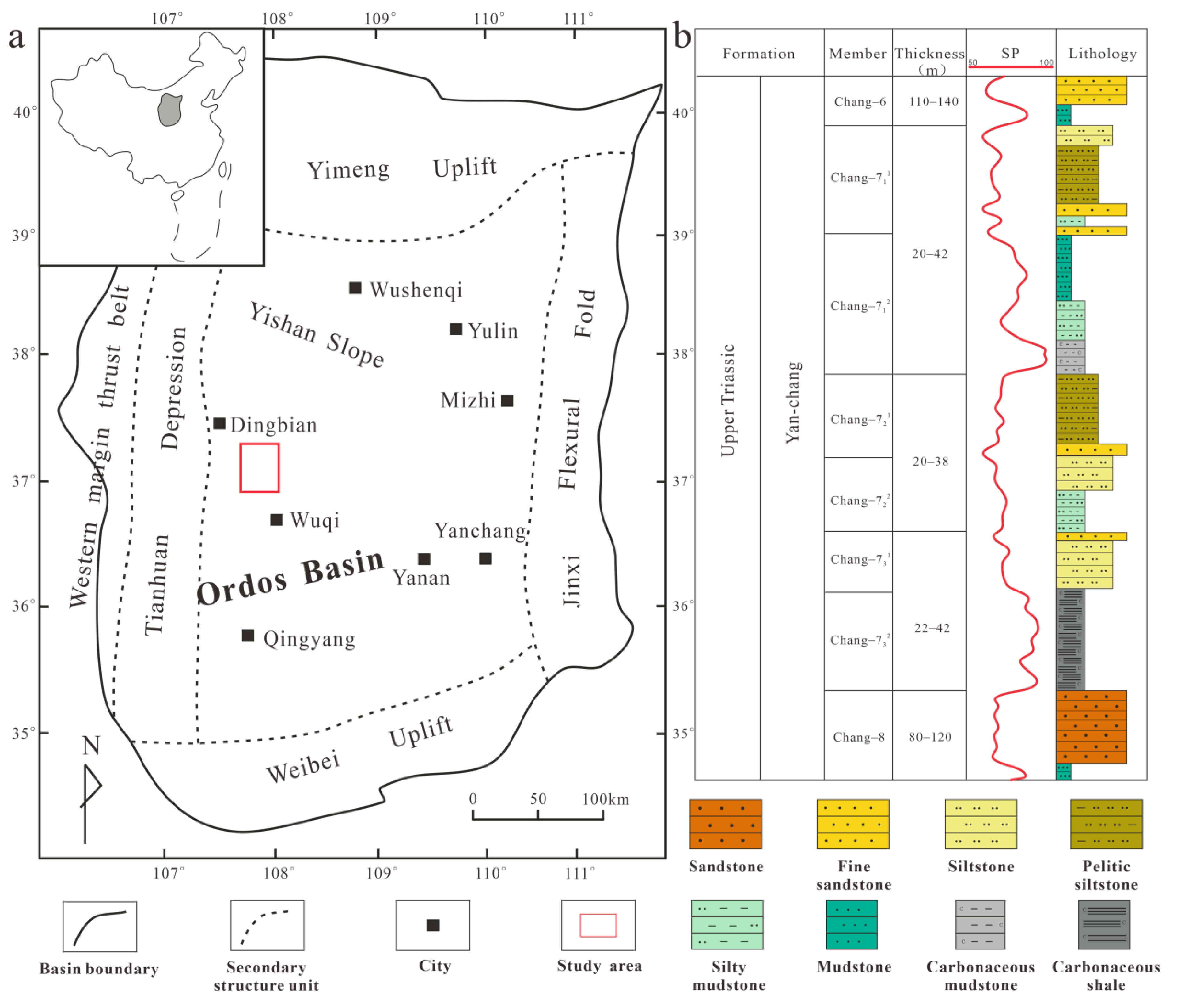
2. Geological Settings
3. Methodology
3.1. Sandbody Architectural Classification
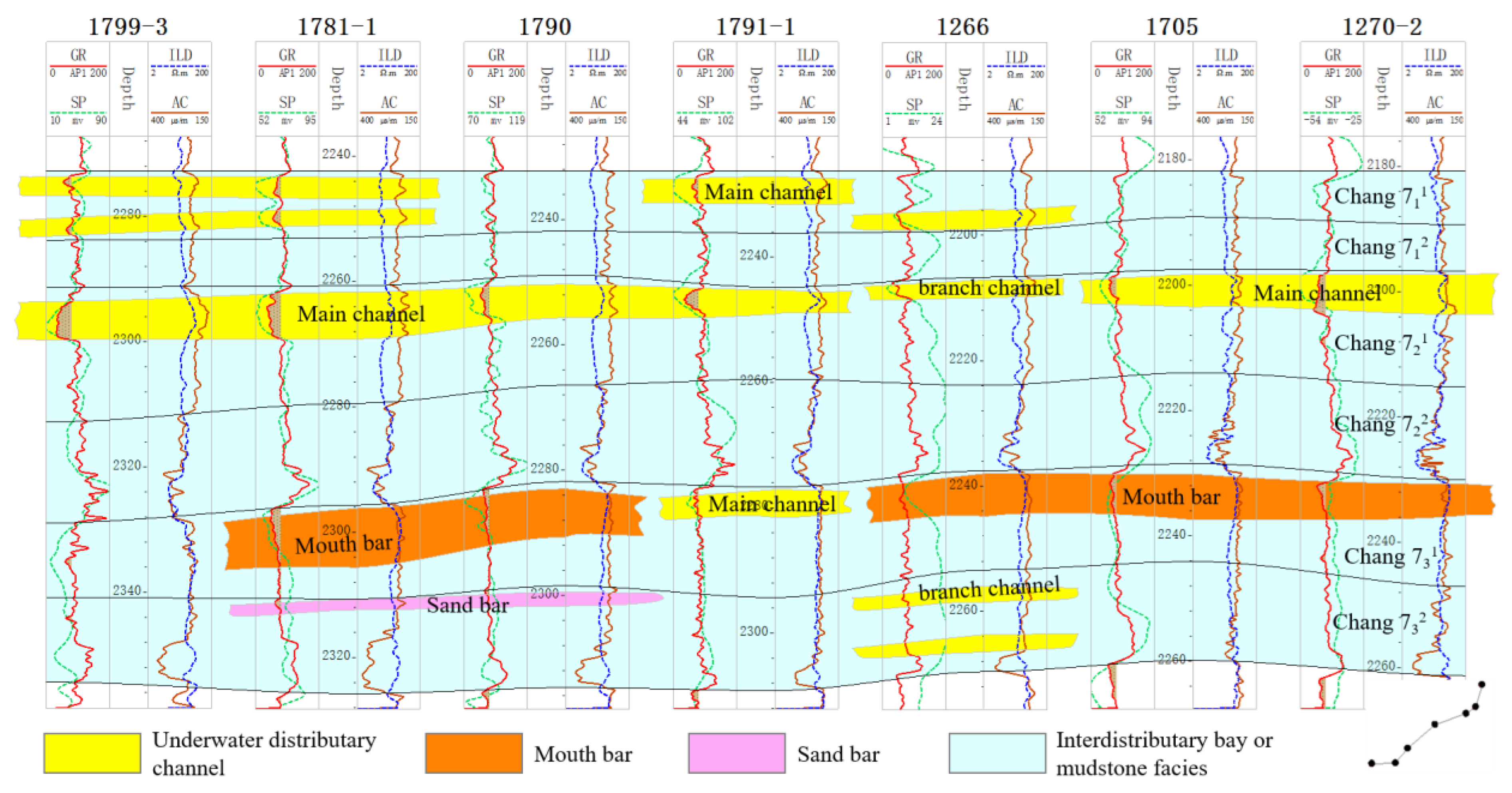
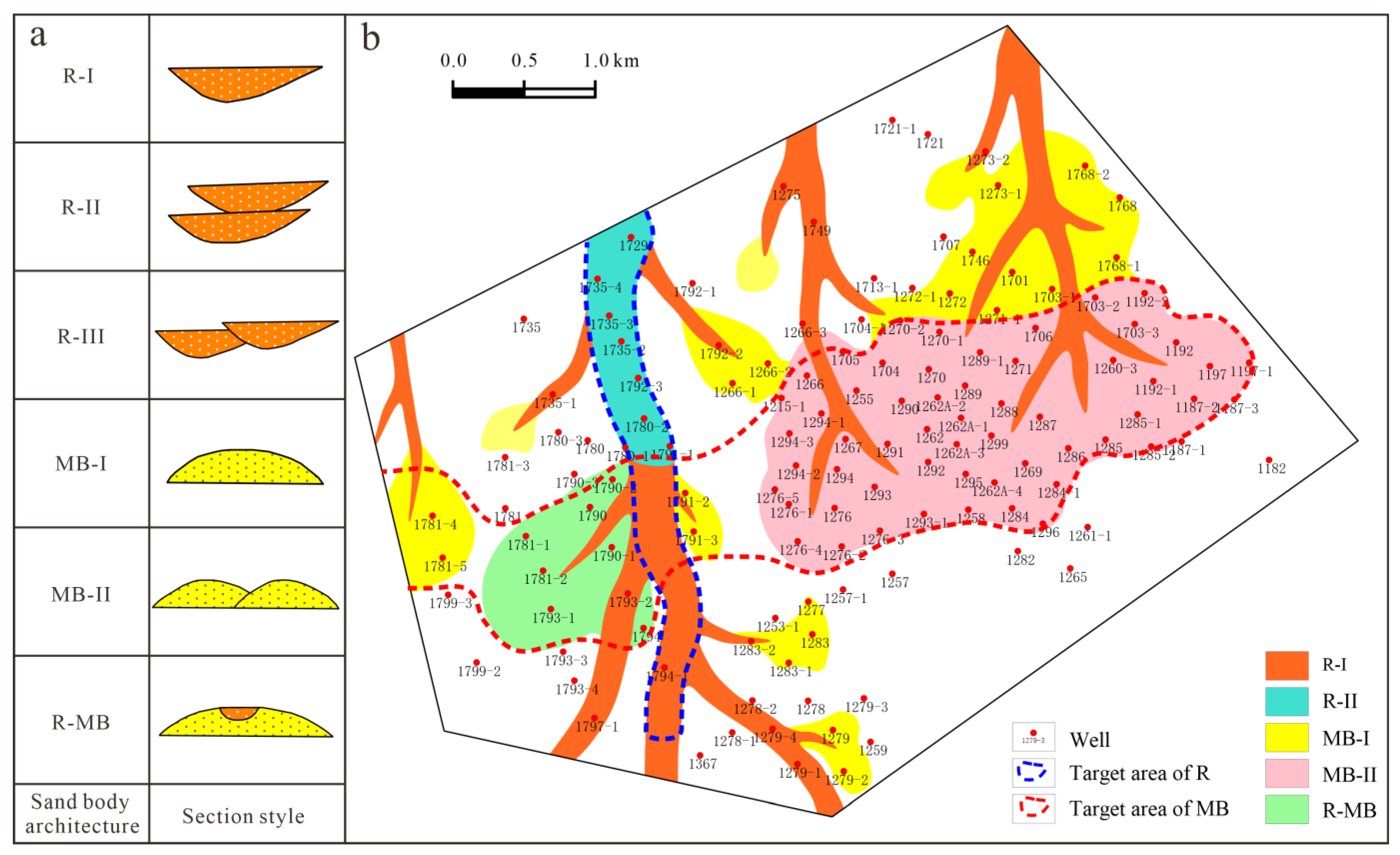
3.1.1. Types and Stacking Relationships of Sandbody
3.1.2. Target Area Selection for Horizontal Wells
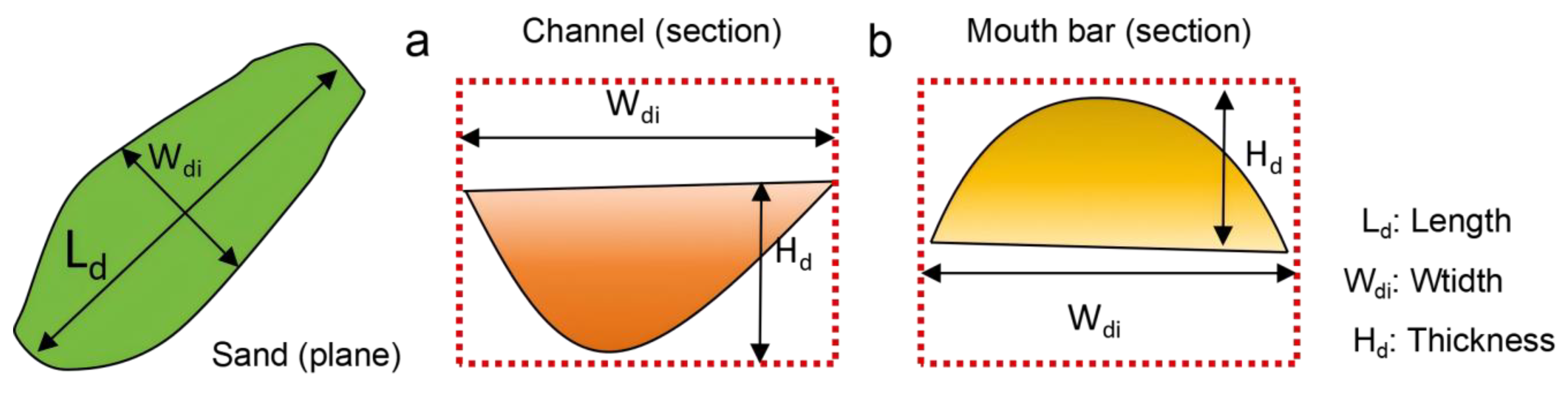
3.1.3. Quantitative Architectural Parameters
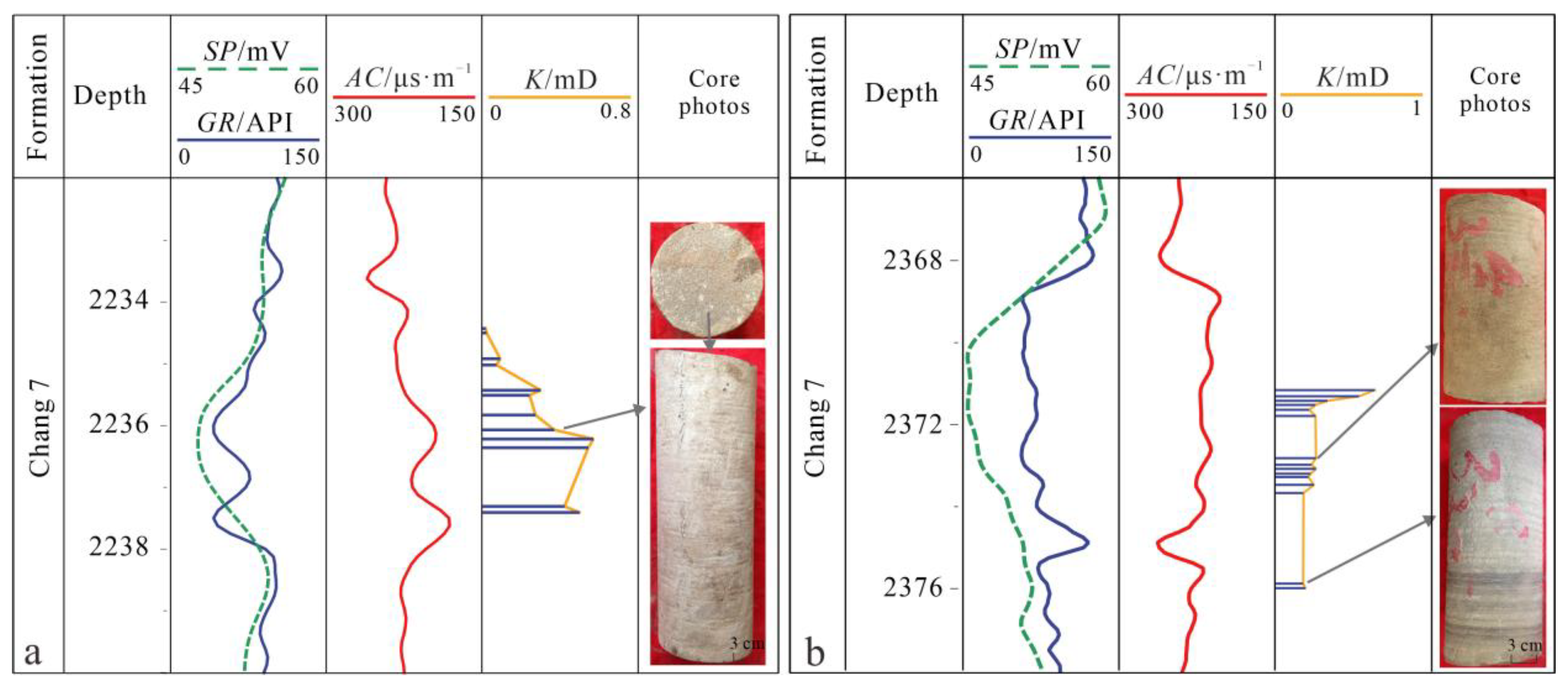
3.2. Physical Properties of Sandbody
3.2.1. Experimental Methods
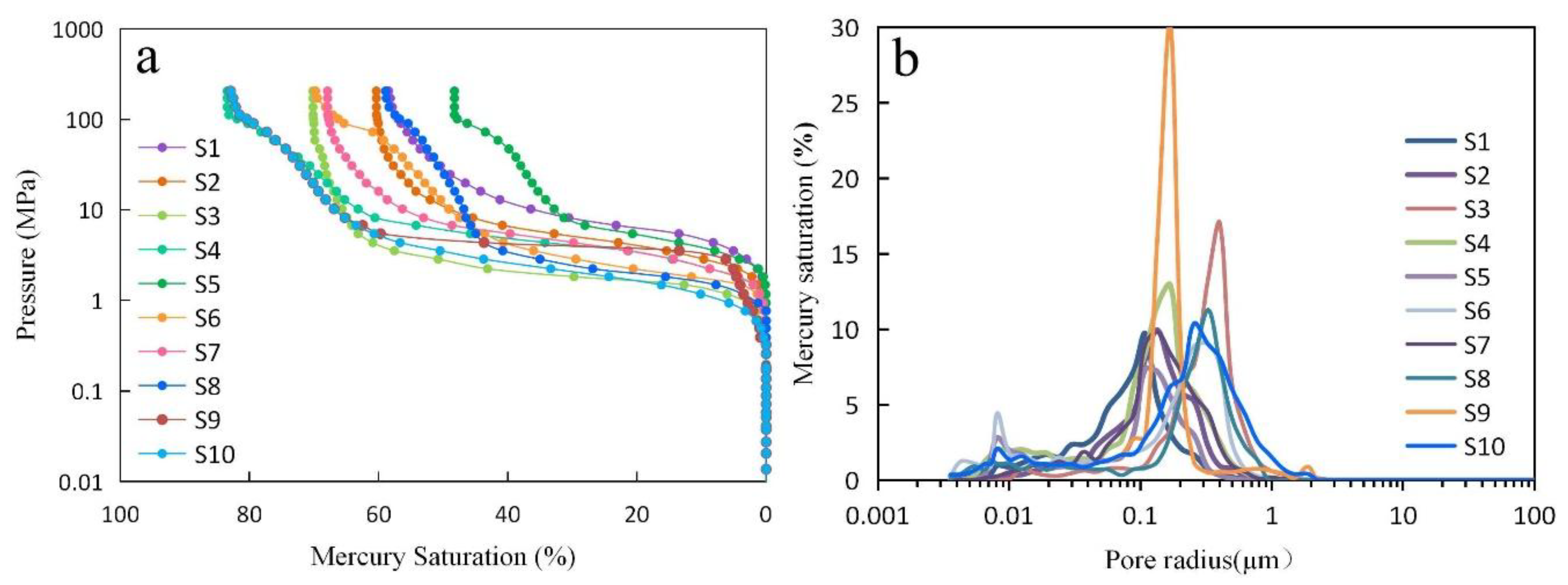
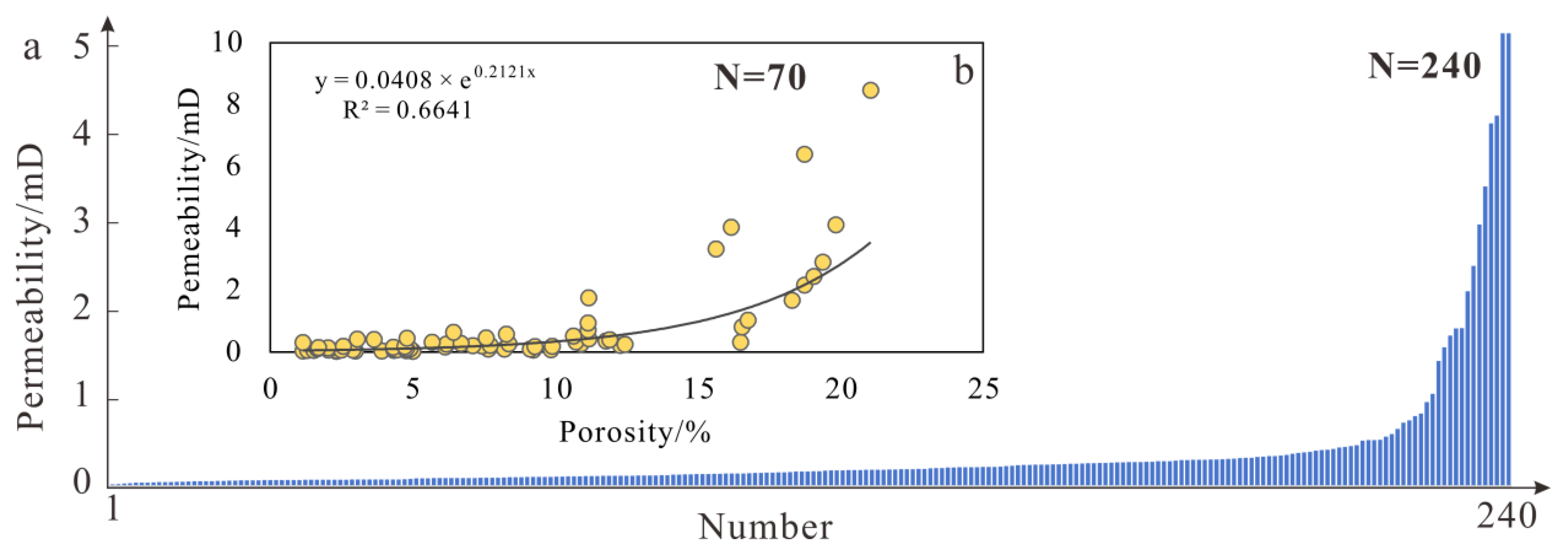
3.2.2. Pore-Throat Size Distribution and Permeability
3.3. Geological Model Development
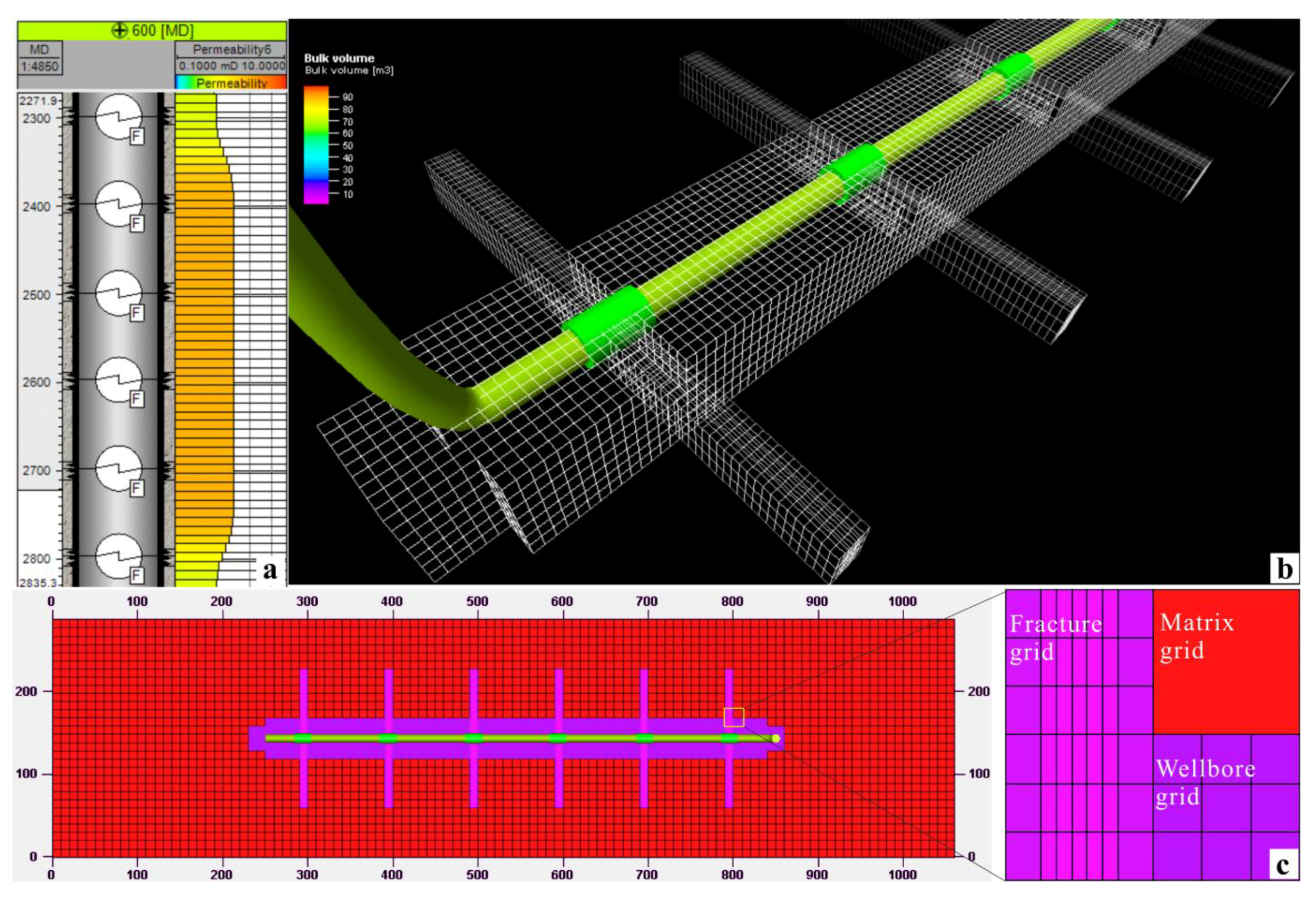
3.3.1. Sandbody Geometry and Model Setup
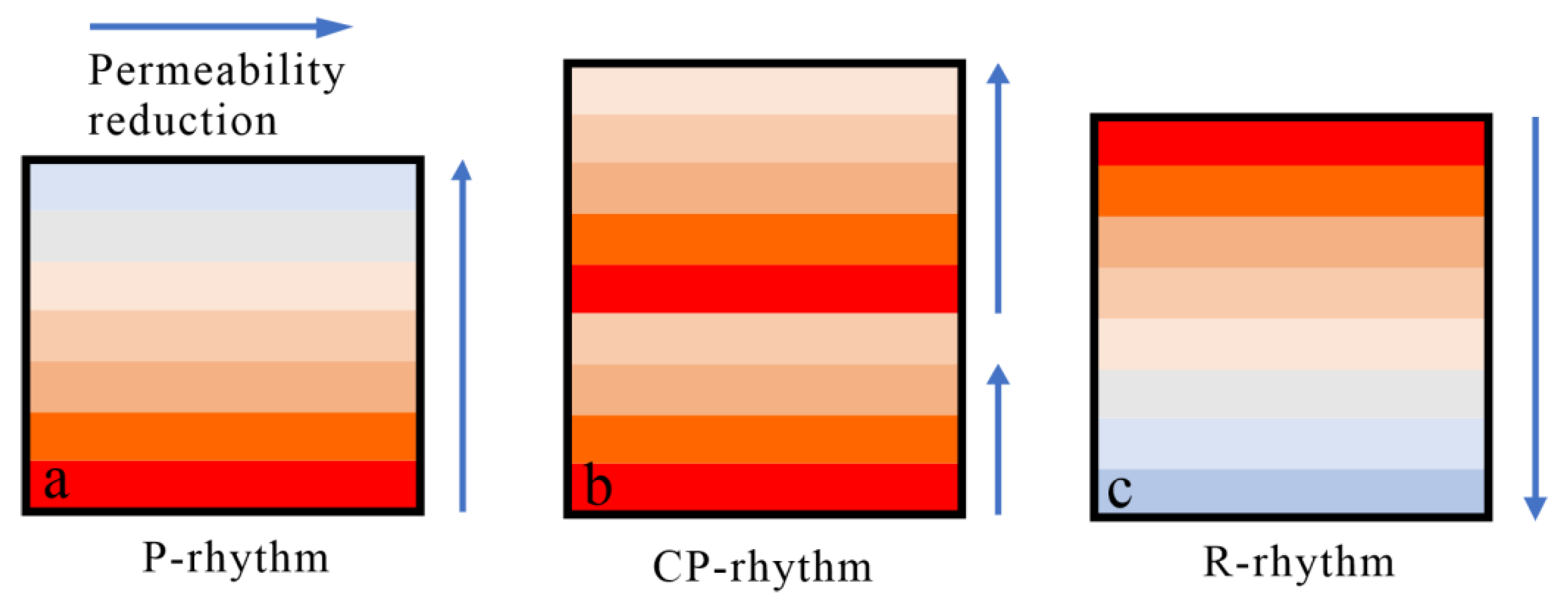
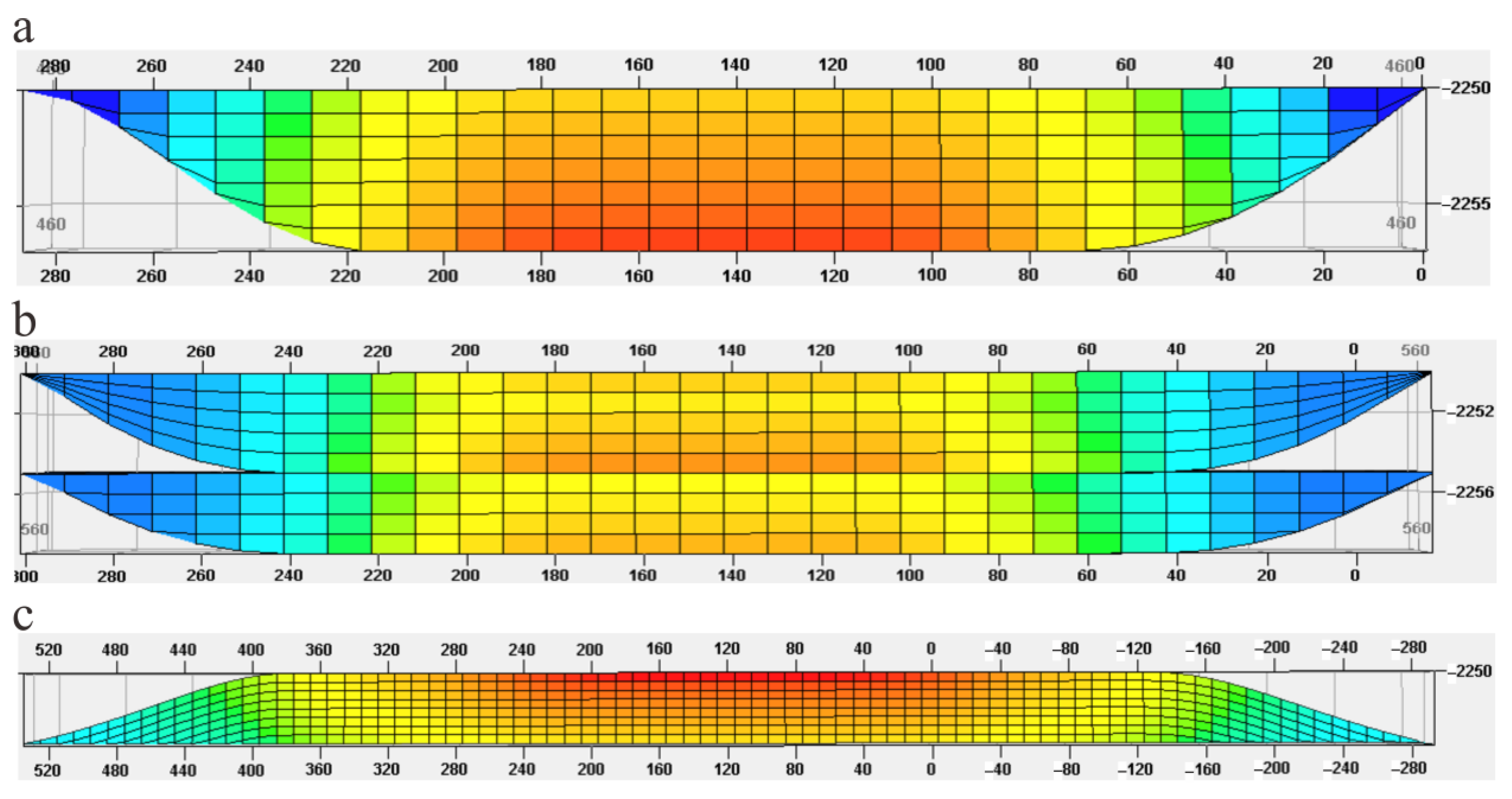
3.3.2. Model Heterogeneity
- Type A (R-I): Positive rhythm (P-rhythm), with permeability decreasing from base to top;
- Type B (R-II): Composite positive rhythm (CP-rhythm), represented by two vertically stacked P-rhythm sequences;
- Type C (MB-I): Reverse rhythm (R-rhythm), with permeability decreasing from top to bottom.
3.3.3. Local Grid Refinement
3.4. Engineering Design of Horizontal Well Parameters
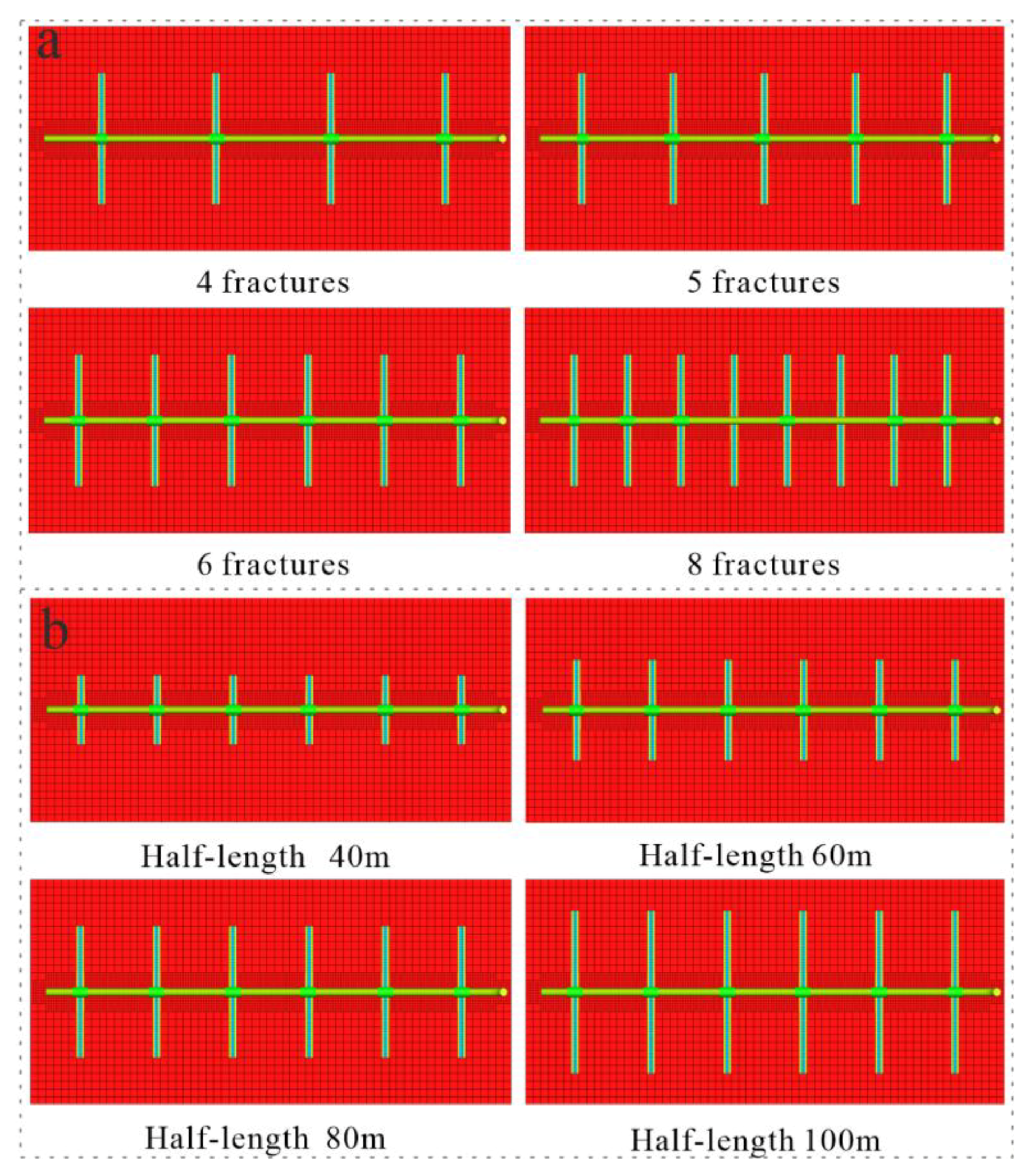
3.4.1. Horizontal Section Length Scenarios
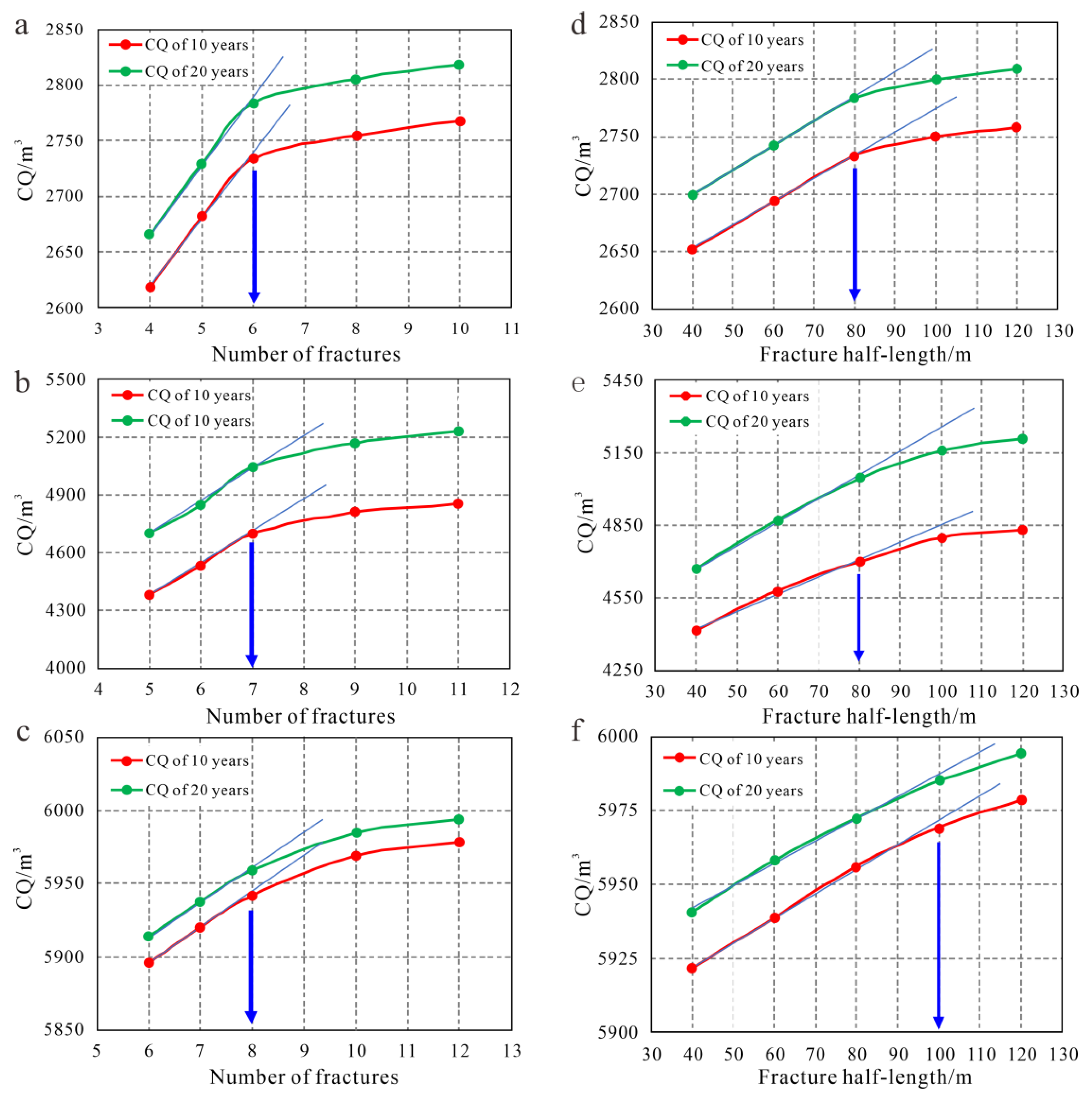
3.4.2. Fracturing Stage Count Scenarios
- Type A: 4, 5, 6, 8, and 10 stages;
- Type B: 5, 6, 7, 9, and 11 stages;
- Type C: 6, 7, 8, 10, and 12 stages.
3.4.3. Fracture Half-Length Sensitivity Scenarios
- Type A: <140 m;
- Type B: <150 m;
- Type C: <400 m.
4. Simulation Results and Analysis
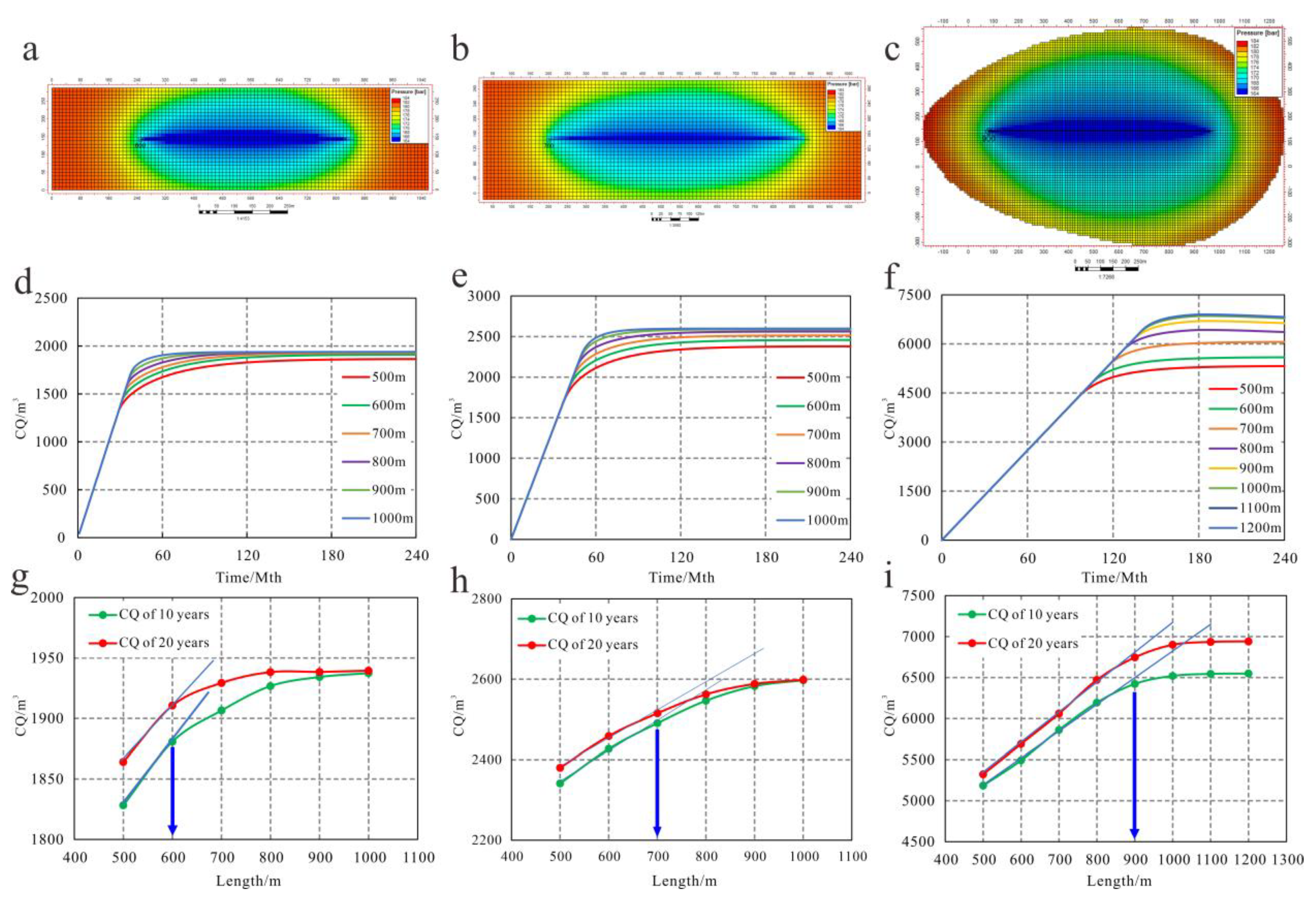
4.1. Influence of Horizontal Section Length on Production
- Type A: ~600 m;
- Type B: ~700 m;
- Type C: ~900 m.
4.2. Effects of Fracture Spacing and Half-Length
- Type A: 6 stages (~100 m spacing);
- Type B: 7 stages (~100 m spacing);
- Type C: 8 stages (~110 m spacing);
- Type A and B: ~80 m;
- Type C: ~100 m.
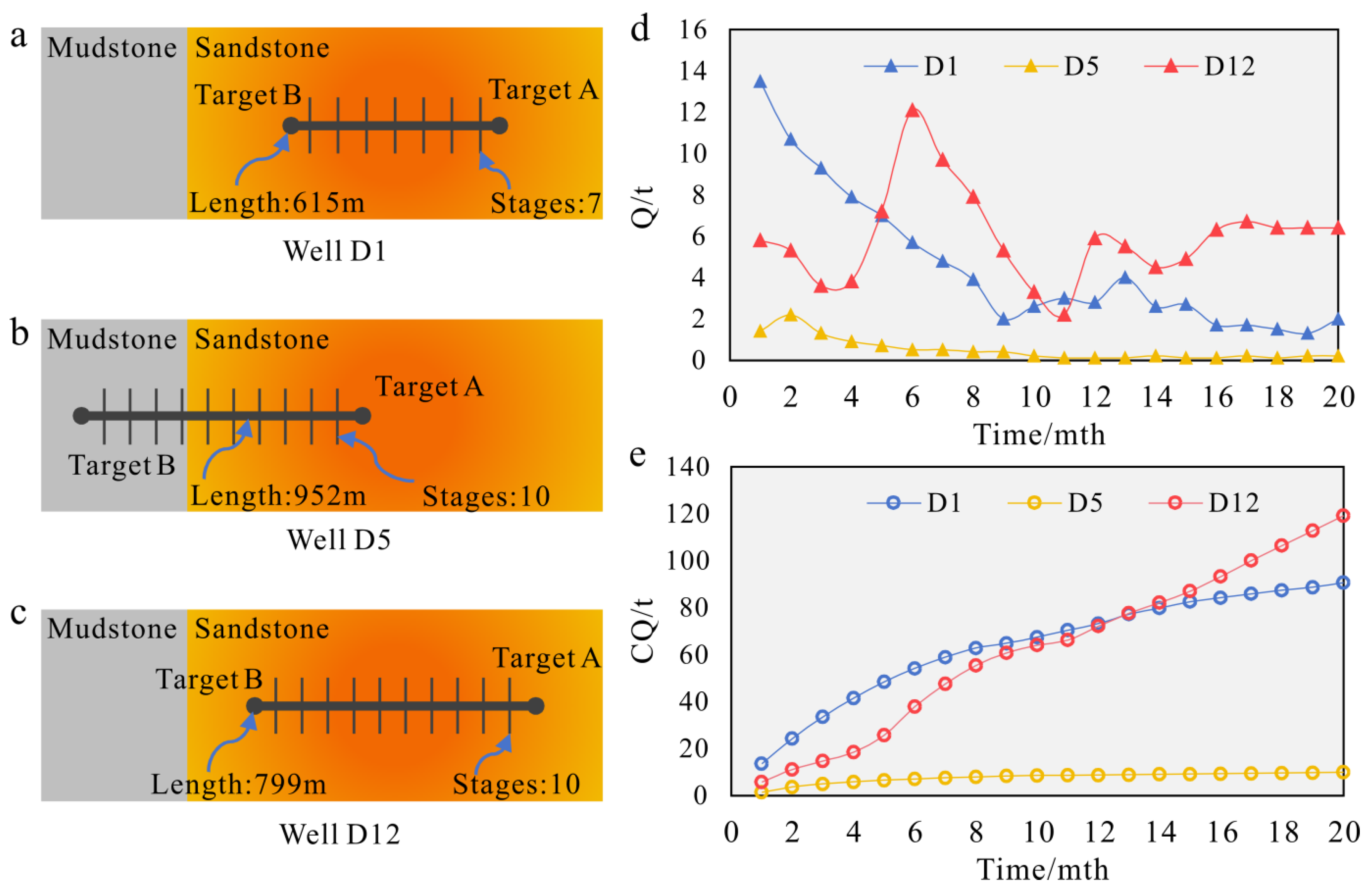
4.3. Field Engineering Validation
- Well D1 intercepted the intended sandbody but employed a horizontal section significantly shorter than the recommended length. This limitation restricted the stimulated reservoir volume, resulting in average daily oil production of 4.5 tons (Figure 14a).
- Well D5 deviated out of zone during drilling, leading to poor sandbody contact and a reduced stimulation volume. Its productivity was markedly lower, averaging only 0.5 tons per day (Figure 14b).
- Well D12, in contrast, maintained lateral continuity within the effective sandbody and followed optimized design parameters. It achieved the highest and most stable performance, producing 5.2 tons per day on average (Figure 14c).
5. Discussion
5.1. Coupled Architecture–Flow Modeling Approach
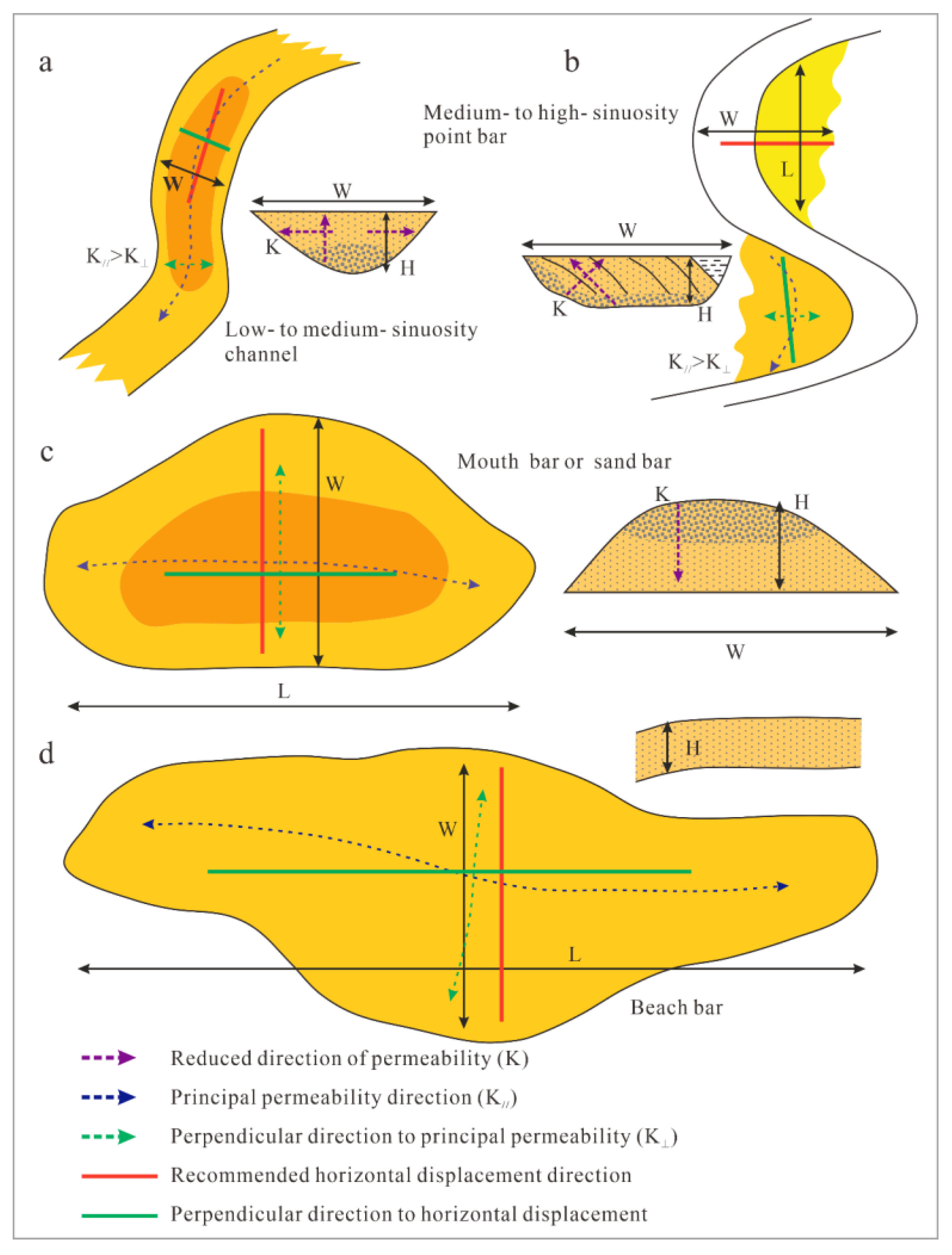
5.2. Flow Behavior Regulated by Sandbody Architecture
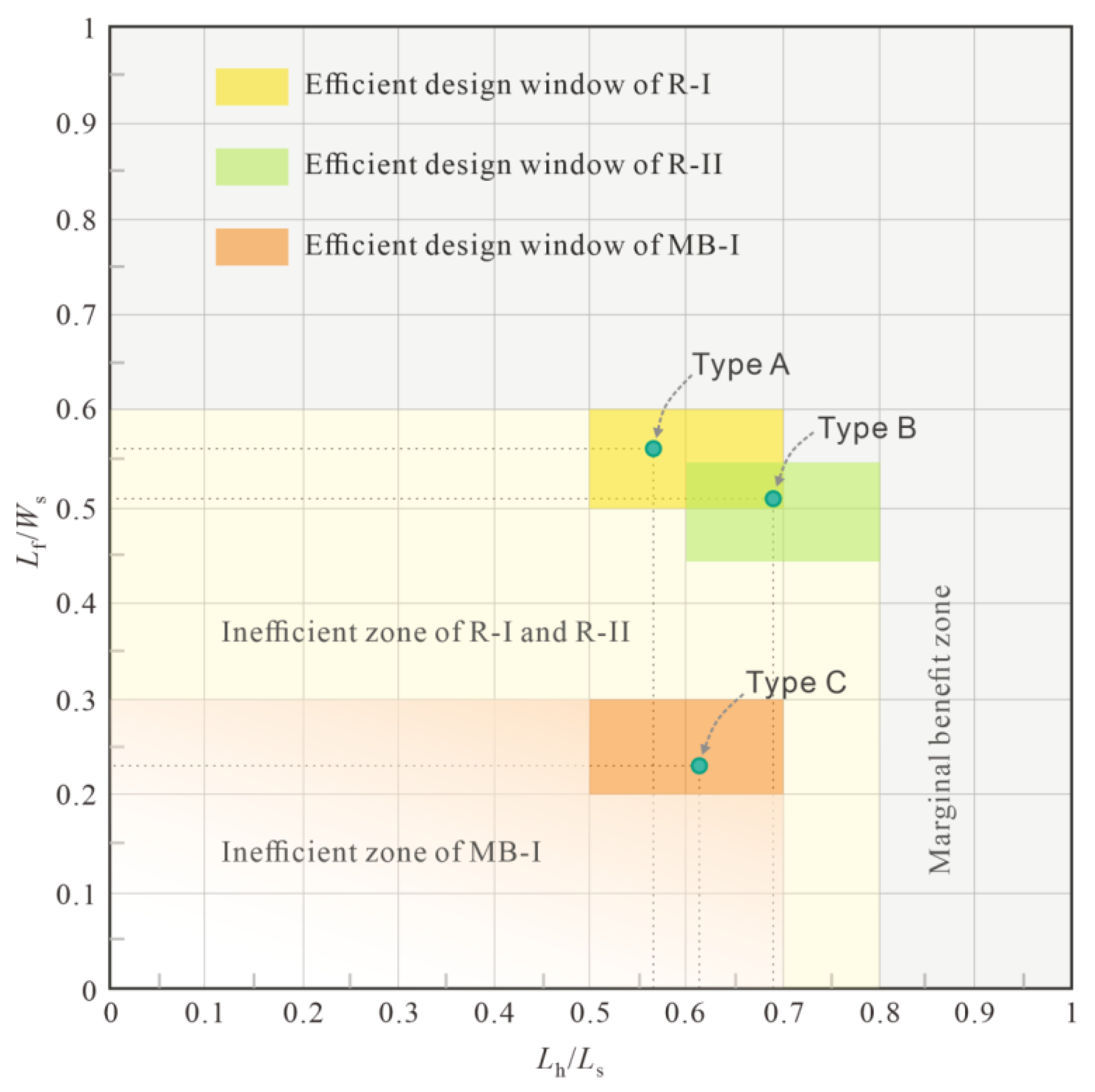
5.3. Principles for Engineering—Architecture Matching
- Type A: 0.5–0.7;
- Type B: 0.6–0.8;
- Type C: 0.5–0.7.
- Type A: 0.5–0.6;
- Type B: 0.45–0.55;
- Type C: 0.2–0.3.
6. Conclusions
- A coupling methodology between geological architecture and engineering design was established, integrating quantitative sandbody characterization, core-calibrated petrophysical data, and high-resolution 3D modeling. This framework improves design precision by aligning horizontal well parameters with subsurface heterogeneity.
- Distinct architectural types impose different flow behaviors and optimal stimulation strategies. Channelized systems (Types A and B) favor shorter horizontal sections and controlled fracture spacing, while broader mouth bar architectures (Type C) benefit from extended well lengths and multi-stage fracturing. These differences reflect sedimentary controls on permeability architecture, drainage geometry, and fracture efficiency.
- A dimensionless design chart was developed using sandbody-scale ratios (Lh/Ls and Lf/Ws) to guide preliminary parameter selection. This tool enables scalable application of the optimization strategy across geologically similar tight reservoirs.
- Field validation confirmed the effectiveness of the architecture-constrained design approach, with wells adhering to optimized parameters (e.g., Well D12) demonstrating superior and more stable production.
Author Contributions
Funding
Institutional Review Board Statement
Informed Consent Statement
Data Availability Statement
Conflicts of Interest
References
- Liu, S. Review of the development status and technology of tight oil: Advances and outlook. Energy Fuels 2023, 37, 14645–14665. [Google Scholar] [CrossRef]
- Wang, Z.; Fan, Z.; Chen, X.; Li, Y.; Fan, Z.; Wei, Q.; Peng, Y.; Liu, B.; Yue, W.; Wang, X.; et al. Global oil and gas development situation, trends and enlightenment in 2023. Pet. Explor. Dev. 2024, 51, 1536–1555. [Google Scholar] [CrossRef]
- Jia, C.; Jiang, L.; Zhao, W. Tight oil and gas in Whole Petroleum System: Accumulation mechanism, enrichment regularity, and resource prospect. Acta Petrolei Sinica 2025, 46, 1–16. [Google Scholar]
- Panja, P.; Sorkhabi, R.; Bajracharya, V.M.; Deo, M. Comparative Analysis and Ranking of 10 US Onshore Tight Oil Plays Based on Estimated Ultimate Recovery (EUR). In Proceedings of the SPE/AAPG/SEG Unconventional Resources Technology Conference, Houston, TX, USA, 9–11 June 2025; p. D031S070R001. [Google Scholar]
- Li, G.; Zhang, B.; Zhang, J.; Zhao, Q. Major basic scientific issues and research directions for exploration and development of deep coal-rock gas in China. Acta Petrolei Sinica 2025, 46, 1025. [Google Scholar]
- Al Ghabshi, M.; Peralta, J.; Farag, S.; Alshaqsi, A.; Alnadabi, E.; Sampson, E.; Krott, D. Challenges on Well Placement in Thin Layers Targets in Central Oman, Rub Al Khali Basin. In Proceedings of the SPE Gas & Oil Technology Showcase and Conference, Muscat, Oman, 12–14 May 2025; SPE: Richardson, TX, USA, 2025; p. D011S002R002. [Google Scholar]
- Lirong, D.; Zhixin, W.; Jianjun, W.; Zhaoming, W.; Zhengjun, H.; Xiaobing, L. Analysis of the world oil and gas exploration situation in 2021. Pet. Explor. Dev. 2022, 49, 1195–1209. [Google Scholar] [CrossRef]
- Zhang, X.; Sun, C.; Sun, H.; Yang, L. Current Development of China’s Natural Gas Industry. In Annual Report on China’s Petroleum, Gas and New Energy Industry (2024); Springer: Berlin/Heidelberg, Germany, 2025; pp. 135–146. [Google Scholar]
- Pokalai, K.; Fei, Y.; Ahmad, M.; Haghighi, M.; Gonzalez, M. Design and optimisation of multi-stage hydraulic fracturing in a horizontal well in a shale gas reservoir in the Cooper Basin, South Australia. APPEA J. 2015, 55, 1–14. [Google Scholar] [CrossRef]
- Qun, L.; Yun, X.; Bo, C.; Baoshan, G.; Xin, W.; Guoqiang, B.; Hui, L.; Shuai, L.; Bin, D.; Haifeng, F. Progress and prospects of horizontal well fracturing technology for shale oil and gas reservoirs. Pet. Explor. Dev. 2022, 49, 191–199. [Google Scholar] [CrossRef]
- Gao, C.; Cheng, S.; Wang, M.; Wu, W.; Gao, Z.; Li, S.; Meng, X. Optimization of volume fracturing technology for shallow bow horizontal well in a tight sandstone oil reservoir. Front. Energy Res. 2023, 10, 976240. [Google Scholar] [CrossRef]
- Ren, L.; Wang, J.; Zhao, C.; Jing, C.; Sun, J.; Zhou, D.; Xiang, F.; Gong, D.; Li, H. Optimization of fine-fracture distribution patterns for multi-stage and multi-cluster fractured horizontal wells in tight gas reservoirs. Processes 2024, 12, 1392. [Google Scholar] [CrossRef]
- Li, Y.; Xu, Y. Recent advances in tight oil reservoir development: Integrated technology of horizontal drilling and hydraulic fracturing. Adv. Resour. Res. 2024, 4, 300–317. [Google Scholar]
- Landar, S.; Velychkovych, A.; Ropyak, L.; Andrusyak, A. A method for applying the use of a smart 4 controller for the assessment of drill string bottom-part vibrations and shock loads. Vibration 2024, 7, 802–828. [Google Scholar] [CrossRef]
- Landar, S.; Velychkovych, A.; Vytvytskyi, V.; Ropyak, L. Threshold vibration metrics of drilling tools as indicators of bit wear and rate of penetration decline: Field trials and data interpretation. Miner. Depos. 2025, 19, 147–157. [Google Scholar] [CrossRef]
- Saputra, W.; Kirati, W.; Patzek, T. Physical scaling of oil production rates and ultimate recovery from all horizontal wells in the Bakken shale. Energies 2020, 13, 2052. [Google Scholar] [CrossRef]
- Wang, L.; Yao, Y.; Wang, W.; Adenutsi, C.D.; Zhao, G.; Lai, F. Integrated optimization design for horizontal well spacing and fracture stage placement in shale gas reservoir. J. Nat. Gas Sci. Eng. 2022, 105, 104706. [Google Scholar] [CrossRef]
- Ma, C.; Xing, Y.; Qu, Y.; Cheng, X.; Wu, H.; Luo, P.; Xu, P. A new fracture parameter optimization method for the horizontal well section of shale oil. Front. Earth Sci. 2022, 10, 895382. [Google Scholar] [CrossRef]
- Guan, Y.; Cheng, X.; Chen, X. Key Technologies for Horizontal Well Development in Deep Tight Sandstone Reservoirs. Energy Sci. Eng. 2025, 13, 1323–1336. [Google Scholar] [CrossRef]
- Helmy, A.G.; Salem, S.K.; Elnoby, M. Sensitivity analysis of hydraulic fracturing parameters for optimum horizontal well spacing in tight oil reservoirs. Arab. J. Sci. Eng. 2025, 50, 4813–4832. [Google Scholar] [CrossRef]
- Guo, C.; Xu, J.; Wei, M.; Jiang, R. Experimental study and numerical simulation of hydraulic fracturing tight sandstone reservoirs. Fuel 2015, 159, 334–344. [Google Scholar] [CrossRef]
- Ren, L.; Su, Y.; Zhan, S.; Meng, F. Progress of the research on productivity prediction methods for stimulated reservoir volume (SRV)-fractured horizontal wells in unconventional hydrocarbon reservoirs. Arab. J. Geosci. 2019, 12, 184. [Google Scholar] [CrossRef]
- Nassan, T.; Amro, M. Finite element simulation of multiphase flow in oil reservoirs-comsol multiphysics as fast prototyping tool in reservoir simulation. Min. Sci. Technol. 2020, 4, 220–226. [Google Scholar] [CrossRef]
- Al-Fatlawi, O.; Hossain, M.; Essa, A. Optimization of fracture parameters for hydraulic fractured horizontal well in a heterogeneous tight reservoir: An equivalent homogeneous modelling approach. In Proceedings of the SPE Kuwait Oil and Gas Show and Conference, Kuwait City, Kuwait, 13–16 October 2019; SPE: Richardson, TX, USA, 2019; p. D023S004R008. [Google Scholar]
- Li, Z.; Lei, Z.; Shen, W.; Martyushev, D.A.; Hu, X. A comprehensive review of the oil flow mechanism and numerical simulations in shale oil reservoirs. Energies 2023, 16, 3516. [Google Scholar] [CrossRef]
- Zhou, R.; Guo, P.; Tian, Z.; Wang, Z.; Du, C. Review of seepage physical models in oil and gas reservoirs. Phys. Fluids 2025, 37, 091301. [Google Scholar] [CrossRef]
- Ming, L.; Huaimin, X.; Yujie, N.; Zhaohui, X.; Yukun, C. Performance evaluation for littoral-facies clastic reservoir architecture. Pet. Explor. Dev. 2012, 39, 802–812. [Google Scholar] [CrossRef]
- Zhi-xin, M.; Bin, F.; Wen-sheng, W.; Chuan-you, L.; Ji, Z.; Chun-yang, Z.; Qian-sheng, W. Horizontal well geosteering strategies in braided river reservoir based on hierarchical analysis. Nat. Gas Geosci. 2019, 27, 1380–1387. [Google Scholar]
- Luo, C.; Jia, A.; Guo, J.; He, D.; Wei, Y.; Luo, S. Analysis on effective reservoirs and length optimization of horizontal wells in the Sulige Gasfield. Nat. Gas Ind. B 2016, 3, 245–252. [Google Scholar] [CrossRef][Green Version]
- Yuan, H.; Li, W.; Yuan, Y.; Luo, J.; Yan, W. Productivity evaluation of horizontal well in heterogeneous reservoir with composite water aquifer. J. Pet. Explor. Prod. 2021, 11, 1363–1373. [Google Scholar] [CrossRef]
- Liu, R.; Sun, Y.; Wang, X.; Yan, B.; Yu, L.; Li, Z. Production capacity variations of horizontal wells in tight reservoirs controlled by the structural characteristics of composite sand bodies: Fuyu Formation in the Qian’an area of the Songliao Basin as an example. Processes 2023, 11, 1824. [Google Scholar] [CrossRef]
- Bo, W.; Yu, Q.; Le, S.; Wenlan, L. The detailed description of superposed patterns and productivity difference analysis of tight gas distributary channel sandbody of Linxing area in Ordos Basin. Nat. Gas Geosci. 2022, 33, 1421–1432. [Google Scholar]
- Liu, Y.; Ma, X.; Zhang, X.; Guo, W.; Kang, L.; Yu, R.; Sun, Y. 3D geological model-based hydraulic fracturing parameters optimization using geology–engineering integration of a shale gas reservoir: A case study. Energy Rep. 2022, 8, 10048–10060. [Google Scholar] [CrossRef]
- Jinhua, F.; Huitao, Z.; Guodong, D.; Tianyou, H.; Junfeng, R.; Zixing, L.; Baoding, Z.; Jing, Z.; Liangliang, Y.; Shixiang, L. Discovery and prospect of oil and gas exploration in new areas of Ordos Basin. Nat. Gas Geosci. 2023, 34, 1289–1304. [Google Scholar]
- Wang, Y.; Jiao, Z.; Surdam, R.; Zhou, L.; Gao, R.; Chen, Y.; Luo, T.; Wang, H. A feasibility study of the integration of enhanced oil recovery (CO2 flooding) with CO2 storage in the mature oil fields of the Ordos Basin, China. Energy Procedia 2013, 37, 6846–6853. [Google Scholar] [CrossRef]
- Anees, A.; Zhang, H.; Ashraf, U.; Wang, R.; Liu, K.; Mangi, H.N.; Jiang, R.; Zhang, X.; Liu, Q.; Tan, S. Identification of favorable zones of gas accumulation via fault distribution and sedimentary facies: Insights from Hangjinqi area, northern Ordos Basin. Front. Earth Sci. 2022, 9, 822670. [Google Scholar] [CrossRef]
- He, T.; Zhou, Y.; Li, Y.; Zhang, Z.; Zhang, Y.; Cui, G. The tectonic-sedimentary evolution of the Yan’an formation in the Ordos Basin and its petroleum geological significance. Appl. Sci. 2024, 14, 9278. [Google Scholar] [CrossRef]
- Wang, F.; Chen, R.; Yu, W.; Tian, J.; Liang, X.; Tan, X.; Gong, L. Characteristics of lacustrine deepwater fine-grained lithofacies and source-reservoir combination of tight oil in the triassic chang 7 member in Ordos Basin, China. J. Pet. Sci. Eng. 2021, 202, 108429. [Google Scholar] [CrossRef]
- Wang, B.; Zhao, X.; Zhou, W.; Chang, B.; Xu, H. Quantitative characterization of pore connectivity and movable fluid distribution of tight sandstones: A case study of the upper Triassic Chang 7 Member, Yanchang formation in Ordos Basin, China. Geofluids 2020, 2020, 5295490. [Google Scholar] [CrossRef]
- Lin, M.; Xi, K.; Cao, Y.; Niu, X.; Otharán, G.; Wang, X.; Hui, X.; Liu, J.; Liu, K.; Zavala, C. Recognition of muddy hyperpycnites in deep-lacustrine settings: Depositional model for muddy hyperpycnal flows in lacustrine basins. Geol. Soc. Am. Bull. 2025, 137, 2315–2334. [Google Scholar] [CrossRef]
- Liu, X.; Liu, J.; Wang, X.; Guo, Q.; Lv, Q.; Yang, Z.; Zhang, Y.; Zhang, Z.; Zhang, W. Mechanisms of fine-grained sedimentation and reservoir characteristics of shale oil in continental freshwater lacustrine basin: A case study from Chang 73 sub-member of Triassic Yanchang Formation in southwestern Ordos Basin, NW China. Pet. Explor. Dev. 2025, 52, 95–111. [Google Scholar] [CrossRef]
- Li, X.; Su, Y.; Guanglei, R. Research on architecture of multi-type sand bodies inside distributary channel of delta plain: A case study in the Daniudi Gas Field, Ordos Basin. Arab. J. Geosci. 2022, 15, 1753. [Google Scholar] [CrossRef]
- Li, X.; Yang, Z.; Li, S.; Huang, W.; Zhan, J.; Lin, W. Reservoir characteristics and effective development technology in typical low-permeability to ultralow-permeability reservoirs of China National Petroleum Corporation. Energy Explor. Exploit. 2021, 39, 1713–1726. [Google Scholar] [CrossRef]
- SY/T 5346-2005; Rock Capillary Pressure Measurement. National Development and Reform Commission of the People’s Republic of China: Beijing, China, 2005.
- Elgaddafi, R.M.; Soriano, V.; Ahmed, R.; Osisanya, S. The essence of horizontal drilling challenges in depleted reservoirs. In Proceedings of the SPE Western Regional Meeting, Online, 20–22 April 2021; SPE: Richardson, TX, USA, 2019; p. D031S013R003. [Google Scholar]
- Qun, L.; Zhanwei, Y.; Dingwei, W.; Hongtao, L.; Baoshan, G.; Bo, C.; Haifeng, F.; Zhaolong, L.; Yaoyao, D.; Zeyuan, M. Techniques for improving fracture-controlled stimulated reservoir volume in ultra-deep fractured tight reservoirs: A case study of Kuqa piedmont clastic reservoirs, Tarim Basin, NW China. Pet. Explor. Dev. 2022, 49, 1169–1184. [Google Scholar]
- Ke, X.; Wang, Q.; Yu, H.; Chen, X.; Zhong, Y.; Li, Y.; Wu, H. Multiwell Fracturing Characteristic in Layered Heterogeneous Formation and the Optimization of Stimulated Reservoir Volume. Energy Fuels 2024, 38, 12754–12776. [Google Scholar] [CrossRef]
- Lu, C.; Ma, L.; Guo, J.; Zhao, L.; Xu, S.; Chen, B.; Zhou, Y.; Yuan, H.; Tang, Z. Fracture parameters optimization and field application in low-permeability sandstone reservoirs under fracturing flooding conditions. Processes 2023, 11, 285. [Google Scholar] [CrossRef]
- Xu, S.; Guo, J.; Feng, Q.; Ren, G.; Li, Y.; Wang, S. Optimization of hydraulic fracturing treatment parameters to maximize economic benefit in tight oil. Fuel 2022, 329, 125329. [Google Scholar] [CrossRef]



| Type | Sandbody Architecture | L (m) | W (m) | H (m) | Frequency (%) | ||||||
|---|---|---|---|---|---|---|---|---|---|---|---|
| Min | Max | Average | Min | Max | Average | Min | Max | Average | |||
| A | R-I | 820 | 1400 | 1060 | 200 | 350 | 286 | 6.0 | 8.8 | 7.0 | 22.9 |
| B | R-II | 900 | 1100 | 1010 | 270 | 350 | 317 | 6.8 | 11.0 | 8.9 | 10.4 |
| C | MB-I | 1400 | 1500 | 1467 | 600 | 1100 | 866 | 6.5 | 9.5 | 8.6 | 18.8 |
| D | MB-II | / | / | 3500 | / | / | 1400 | / | / | 7.8 | 47.9 |
| Type | Sandbody Architecture | La (m) | Wa (m) | Ha (m) | Planar Resolution (m) | Vertical Resolution (m) | Porosity (%) | Permeability (mD) | Total Number |
|---|---|---|---|---|---|---|---|---|---|
| A | R-I | 1060 | 286 | 7 | X = Y = 10 | Z = 1 | 8.9 | 0.001~1.6 | 18,548 |
| B | R-II | 1010 | 317 | 5 | 0.001~1.6 | 19,696 | |||
| 4 | 0.001~1.3 | ||||||||
| C | MB-I | 1467 | 866 | 8 | 0.001~2.2 | 558,312 |
| Type | Sandbody Architecture | Sandbody | Horizontal Well | |||||
|---|---|---|---|---|---|---|---|---|
| La (m) | Wa (m) | Ha (m) | Horizontal Section Length (m) | Number of Fracturing Stages | Fracture Spacing (m) | Fracture Half-Length (m) | ||
| A | R-I | 1060 | 286 | 7 | 600 | 6 | 100 | 80 |
| B | R-II | 1010 | 317 | 9 | 700 | 7 | 100 | 80 |
| C | MB-I | 1467 | 866 | 8 | 900 | 8 | 110 | 100 |
Disclaimer/Publisher’s Note: The statements, opinions and data contained in all publications are solely those of the individual author(s) and contributor(s) and not of MDPI and/or the editor(s). MDPI and/or the editor(s) disclaim responsibility for any injury to people or property resulting from any ideas, methods, instructions or products referred to in the content. |
© 2026 by the authors. Licensee MDPI, Basel, Switzerland. This article is an open access article distributed under the terms and conditions of the Creative Commons Attribution (CC BY) license.
Share and Cite
Deng, N.; Wang, B.; Ren, F.; Zhou, W.; Deng, H.; Zhang, X.; Shi, X. Geologically Constrained Optimization of Horizontal Well and Fracture Design in Tight Sandstone Reservoirs: Insights from the Chang 7 Member, Ordos Basin. Appl. Sci. 2026, 16, 2687. https://doi.org/10.3390/app16062687
Deng N, Wang B, Ren F, Zhou W, Deng H, Zhang X, Shi X. Geologically Constrained Optimization of Horizontal Well and Fracture Design in Tight Sandstone Reservoirs: Insights from the Chang 7 Member, Ordos Basin. Applied Sciences. 2026; 16(6):2687. https://doi.org/10.3390/app16062687
Chicago/Turabian StyleDeng, Na, Boli Wang, Fei Ren, Wen Zhou, Hucheng Deng, Xiaoju Zhang, and Xuquan Shi. 2026. "Geologically Constrained Optimization of Horizontal Well and Fracture Design in Tight Sandstone Reservoirs: Insights from the Chang 7 Member, Ordos Basin" Applied Sciences 16, no. 6: 2687. https://doi.org/10.3390/app16062687
APA StyleDeng, N., Wang, B., Ren, F., Zhou, W., Deng, H., Zhang, X., & Shi, X. (2026). Geologically Constrained Optimization of Horizontal Well and Fracture Design in Tight Sandstone Reservoirs: Insights from the Chang 7 Member, Ordos Basin. Applied Sciences, 16(6), 2687. https://doi.org/10.3390/app16062687