1. Introduction
Increasing concern regarding the contributions of construction materials to the carbon footprint of buildings is reshaping environmental impact evaluations during the early stages of design. This shift is driven by the substantial environmental burden of the building sector, which accounts for approximately 37% of global energy and process-related carbon dioxide emissions [
1]. Consequently, the mitigation of greenhouse gas emissions has become a central policy objective, embedded in international agreements, regulatory frameworks, and coordinated government initiatives [
2].
In recent decades, life-cycle assessment (LCA) has become a fundamental methodology for quantifying the environmental impacts of buildings across their life cycle, from raw material extraction to end-of-life processes [
3]. Within the European context, the regulatory framework has evolved significantly to support the systematic application of LCA, as reflected in the revision of the Construction Products Regulation (EU) No 305/2011 [
4], the European Commission’s Level(s) initiative [
5], and the adoption of harmonized standards such as EN 15978 and ISO 21930 [
6,
7]. In parallel, the increasing use of Environmental Product Declarations (EPDs) and the EU taxonomy criteria further support the transition toward more sustainable building practices.
Globally, although the degree of regulatory enforcement varies, a clear trend toward integrating LCA into public policies and environmental certification schemes is evident. Countries such as Norway, Germany, and Australia have introduced mandatory LCA requirements for specific building typologies, whereas others, including China and the United States, rely primarily on voluntary certification systems such as LEED and Green Star [
8,
9]. Despite this progress, persistent challenges remain, particularly regarding methodological harmonization, the availability of region-specific datasets, and the effective integration of LCA into regulatory frameworks and early-stage design workflows [
10].
In this context, building information modeling (BIM) has emerged as a key enabler for implementing LCA within the Architecture, Engineering, Construction, and Operation (AECO) industry. BIM provides a centralized digital environment that facilitates material specification, quantity take-off, and data exchange among stakeholders, thereby improving the consistency and efficiency of LCA workflows [
11]. Furthermore, BIM-based platforms enable the coupling of embodied carbon assessment with energy simulation, supporting the integrated evaluation of life-cycle environmental performance and informed decision-making during the early design stages [
12]. However, the recent evolution of European regulations introduces new methodological requirements that significantly expand the scope of carbon assessment in buildings, particularly with respect to life-cycle global warming potential (LC-GWP).
1.1. Whole-Life Carbon Assessment of Buildings
Although the implementation of life-cycle assessment (LCA) within building regulations has progressed slowly across several countries, its current level of adoption remains insufficient to achieve the desired environmental outcomes. The European Union has set ambitious targets to reduce greenhouse gas (GHG) emissions by 55% by 2030 and to achieve climate neutrality by 2050 [
13,
14]. However, in the building sector, practical LCA applications and reporting have traditionally emphasized use-stage operational energy and, when addressing materials, have often relied on cradle-to-gate GWP (A1–A3) as a proxy rather than adopting a full building life-cycle scope. This limitation is critical, given that more than 50% of total building-related emissions can be attributed to embodied carbon when considered from production to demolition [
15].
Recognizing the strategic and structural need to align the construction sector with sustainability objectives, to harmonize environmental assessment methodologies across European Union Member States, and to strengthen transparency and accountability in LCA-based certification for investors and regulators, the European Union has revised the Energy Performance of Buildings Directive (EPBD) [
16]. The recast Directive (EU) 2024/1275 on the Energy Performance of Buildings, published in April 2024, introduces a new mandatory compliance requirement: the calculation and reporting of buildings’ life-cycle global warming potential (LC-GWP) emissions [
17].
Life-cycle global warming potential (LC-GWP), also referred to as Whole Life Carbon, is a quantitative metric used to assess a building’s contribution to global warming by accounting for carbon emissions across its life-cycle, including embodied emissions from material production, construction, and end-of-life processes, as well as operational emissions arising from energy use during its service life [
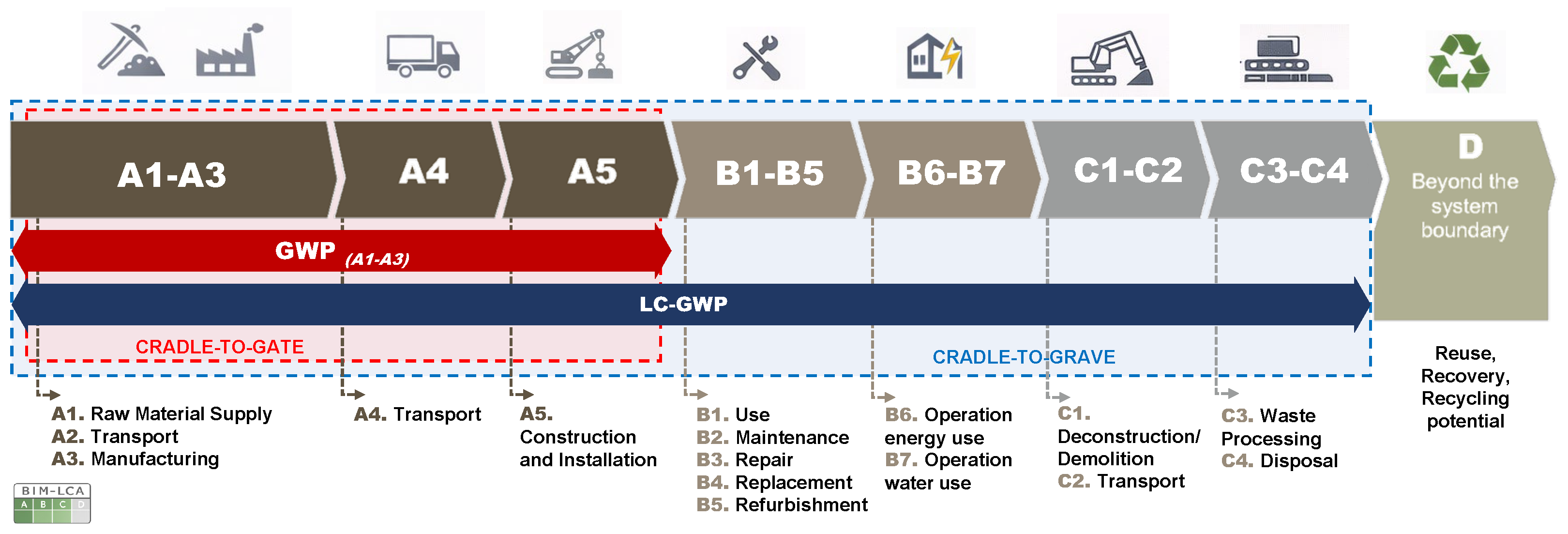
18]. In light of recent European regulatory developments, it is essential to clearly define the system boundaries applied in life-cycle assessment (LCA). As shown in
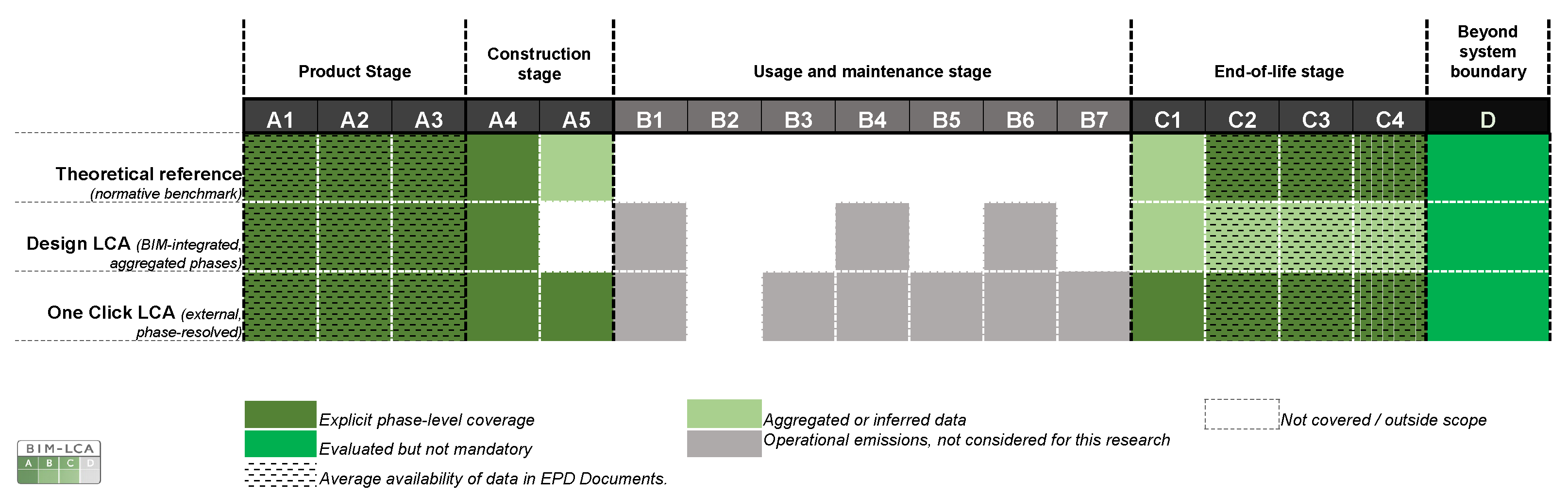
Figure 1, prior to the recast of the Energy Performance of Buildings Directive (EPBD), building carbon reporting practices that used LCA frequently adopted a “cradle-to-gate” boundary for materials—typically covering phases A1–A3 (and, in some cases, A4 and A5)—as defined in EN 15978 [
19]. With the introduction of mandatory LC-GWP reporting under the revised EPBD, the intended scope extends beyond the production stage to include use and maintenance, as well as end-of-life and demolition processes. Accordingly, LC-GWP reporting under the revised EPBD requires a “cradle-to-grave” boundary; i.e., the assessment of emissions across the full building life cycle consistent with the life-cycle stages defined in EN 15978 [
20,
21].
Although Module D is generally not included within the mandatory system boundaries used for LC-GWP reporting, its consideration is increasingly encouraged in the context of the European Union’s long-term decarbonization objectives and the evolving practices of the sustainable construction market. Module D accounts for potential benefits and loads beyond the system boundary associated with reuse, recycling, and recovery processes, and can provide valuable insights for circularity-oriented design strategies [
23]. Consequently, while typically reported separately from the LC-GWP boundary, the inclusion of Module D (where data availability allows) supports a more comprehensive perspective consistent with cradle-to-cradle thinking. To facilitate harmonized reporting, the European Commission developed the Level(s) framework, which provides a standardized methodology for building life-cycle assessment (LCA) intended to improve comparability and consistency across evaluations [
24]. Within the Level(s) assessment logic, robust LC-GWP reporting benefits from reliable information on building systems and material properties and, where operational stages are addressed, from coherent energy-performance assumptions.
In this context, building information modeling (BIM) provides a structured and reliable digital representation of buildings, serving as a consistent source of verified geometric and material data for environmental assessment [
25]. BIM-based workflows enable automated quantity take-off, material tracking, and data exchange, which are essential for reducing uncertainty and manual effort in whole-building GWP calculations [
26]. As a result, the AECO industry is increasingly adopting BIM-integrated sustainability assessment tools to support predictive performance analysis and early-stage validation [
27]. However, while these approaches significantly improve efficiency and usability, their accuracy and consistency relative to professional, detailed LCA tools remain an open methodological question, particularly when extended to cradle-to-grave life-cycle assessment [
28]. To address this challenge, a preliminary BIM–LCA workflow was previously developed and applied to residential case studies, providing an initial comparison between BIM-integrated and external LCA approaches.
1.2. Previous Conference Work and Motivation for Extension
A preliminary BIM–LCA framework was presented at the IBPSA Building Simulation Conference (BS 2025) [
29], where results from a BIM-integrated LCA tool were compared with those obtained from a professional external LCA platform. The study explored the capacity of the BIM-based tool to perform rapid carbon assessments across multiple design alternatives within a single model.
An integrated methodological strategy was conceptually proposed, positioning the BIM-based tool as a rapid screening instrument and the external LCA software (specified in
Section 2.6) as a platform for detailed environmental assessment of the selected option. However, this integration was not fully implemented or validated.
To ensure comparability, independent reference results were derived from fully manual analytical calculations based on mathematical formulations and literature data. These were contrasted with automated workflows: the BIM plugin relied on model-derived quantities, whereas the external LCA tool used analyst-defined inputs supported by internal databases.
Although the conference paper demonstrated the feasibility of BIM-integrated whole-building carbon assessment, it was limited to a single reference configuration and did not address material-level attribution, scenario-based optimization, or expanded functional units. Consequently, its applicability for comparative decision-making and methodological validation remained constrained.
The present study advances that initial work by incorporating multiple optimization scenarios, additional functional units, and structured cross-tool validation at both whole-building and material scales. In doing so, it moves from proof-of-concept implementation toward a systematically validated decision-support methodology. Accordingly, this article demonstrates and validates a BIM–LCA screening workflow based on a transparently aligned module scope to ensure methodological comparability, while clarifying how the same framework can support comprehensive whole-life reporting as additional life-cycle stages and building systems are progressively integrated.
1.3. Research Gap and Objectives
Beyond the specific findings of the preliminary study, the results highlight a set of broader methodological gaps in current BIM–LCA practices, particularly regarding their ability to support consistent life-cycle carbon assessment across different tools and design stages.
The first identified gap concerns the lack of methodological harmonization across scenarios evaluated using different BIM–LCA tools. Existing BIM-integrated LCA solutions often consider different life-cycle phases, apply varying system boundaries, and report indicators that are not directly comparable across platforms. These technical inconsistencies substantially hinder the robust comparison of design scenarios and reduce the reliability of cross-tool assessments [
30]. This challenge reflects broader findings in the interoperability literature, where cross-platform comparability is impeded by inconsistent boundaries, divergent representations, and workflow transformations [
31].
The second gap relates to the inconsistent use of LCA functional units. This issue arises from variations in data availability and from insufficiently defined comparison scenarios. While some studies report results as total greenhouse gas emissions (kg CO2-eq), others normalize impacts by floor area (kg CO2-eq/m2) or report material-specific emissions. However, clear methodological justifications for the selection of a given functional unit, as well as an assessment of the implications of each normalization approach, are often lacking. Consequently, there is a need for structured calculation exercises that explicitly define and test alternative functional units within comparable assessment frameworks.
The third and most critical research gap lies in the predominant focus of BIM–LCA tool development on automation and data export rather than on integrating complementary analytical workflows. Current approaches rarely combine BIM-integrated tools for the rapid screening of design alternatives with professional external LCA software for detailed assessment, validation, and certification [
32]. This limitation reflects broader methodological challenges in coupling sustainability modeling tools across heterogeneous platforms, including mismatches in spatial and temporal resolution, syntactic versus semantic interoperability gaps, limited model and data provenance, and reduced comparability when exchanging results across distinct representations [
33]. Similar constraints have been observed in domains assessing multiple ecosystem services and climate-resilience objectives through coupled toolchains [
34].
In the BIM–LCA context, these interoperability challenges hinder the development of functional workflows that integrate automated quantity extraction for early-stage decision-making with in-depth assessment of selected scenarios [
35]. This gap is particularly relevant because material-related environmental impacts are largely determined during the early design phases. Moreover, most BIM–LCA studies evaluate material optimization through isolated substitutions or single reference configurations rather than structured, progressive scenario frameworks. Such approaches limit the assessment of performance gradients, the comparison of alternative design pathways, and the robustness of decision support. Consequently, the effectiveness of BIM-based workflows as systematic screening tools for material optimization has not yet been convincingly demonstrated [
36].
To address these research gaps, this study pursues the following objectives. First, it proposes an extended BIM–LCA assessment framework that integrates a BIM-based screening tool with a professional external LCA platform, enabling the rapid evaluation of multiple design alternatives while supporting LC-GWP assessment through a structured screening-to-detailed analysis workflow. Second, it defines and applies a consistent set of functional units to ensure a coherent comparison of GWP and LC-GWP results obtained from both BIM-integrated and professional LCA tools, accounting for differences in life-cycle phase coverage across assessment approaches and scenarios. Third, it evaluates the applicability and decision-support potential of BIM-integrated LCA tools as early-stage screening instruments for material optimization within a life-cycle carbon assessment context. These objectives are addressed through a structured methodological framework, which is described in the following section.
2. Materials and Methods
2.1. Overview of the Extended BIM-LCA Framework
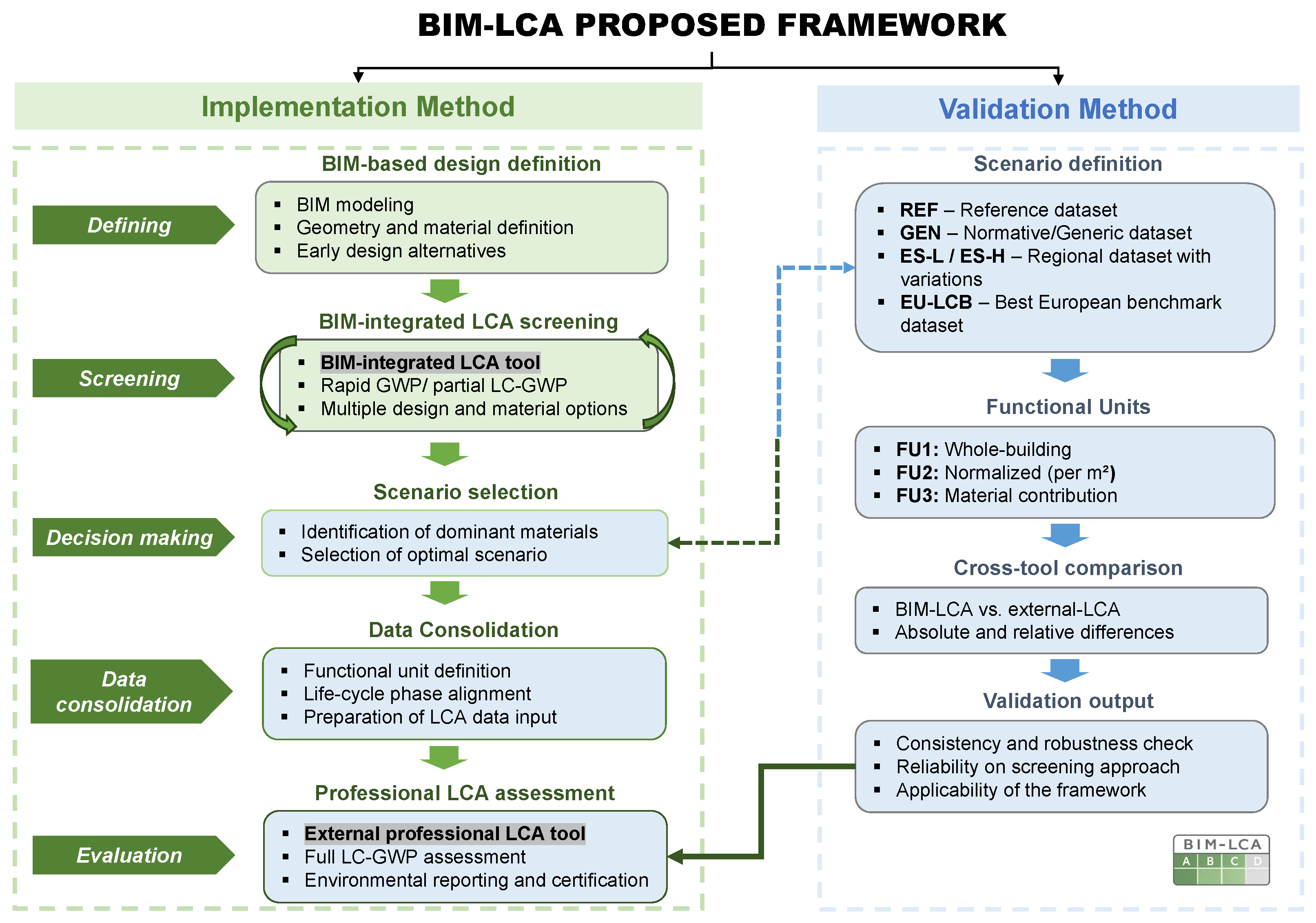
This section presents the extended BIM–LCA framework proposed in this study and clarifies its internal structure for reproducibility. The framework integrates two complementary components: an
implementation workflow supporting early-stage BIM-integrated screening followed by detailed assessment, and a
validation procedure designed to test cross-tool consistency, functional unit robustness, and scenario sensitivity. For completeness, the methodological development that motivated this structure is briefly summarized before presenting the final operational workflow (
Figure 2 and
Figure 3).
The framework development phase consisted of an analytical comparison between a BIM-integrated LCA tool and a professional external LCA platform, focusing on input requirements, data handling logic, and output structure. Although automated quantity export to the external tool is technically available, limited disclosure of the underlying data-transfer rules constrained traceability. Therefore, the cross-tool comparison was designed around harmonized inputs and a controlled scope alignment to ensure interpretability and reproducibility.
Table 1 summarizes the key methodological components of the extended BIM–LCA framework, highlighting their definitions, roles, and the tools employed in each step.
This analysis indicated that the BIM-integrated LCA tool enables the rapid extraction of model-based quantities and fast calculation of impact indicators, while accounting for a reduced and tool-specific set of life-cycle phases and offering limited flexibility for the customization of input parameters. In contrast, the professional external LCA tool allows a higher level of data customization, broader control over modeling assumptions, and coverage of a wider range of life-cycle phases, despite the increased modeling effort. Based on these complementary characteristics, the BIM-integrated tool was identified as suitable for the early-stage screening of multiple design and material alternatives, whereas the external LCA tool was identified as appropriate for detailed assessment and final reporting.
To support methodological comparison and provide a consistent reference baseline, a third calculation pathway was introduced during the framework development phase. This reference assessment was based on manually extracted BIM quantities, including areas and volumes of construction elements, combined with global warming potential emission factors and calculation equations derived from the literature and normative sources. Within this reference pathway, only life-cycle phases available across all assessment approaches were considered, and phase alignment was performed through interpolation where necessary.
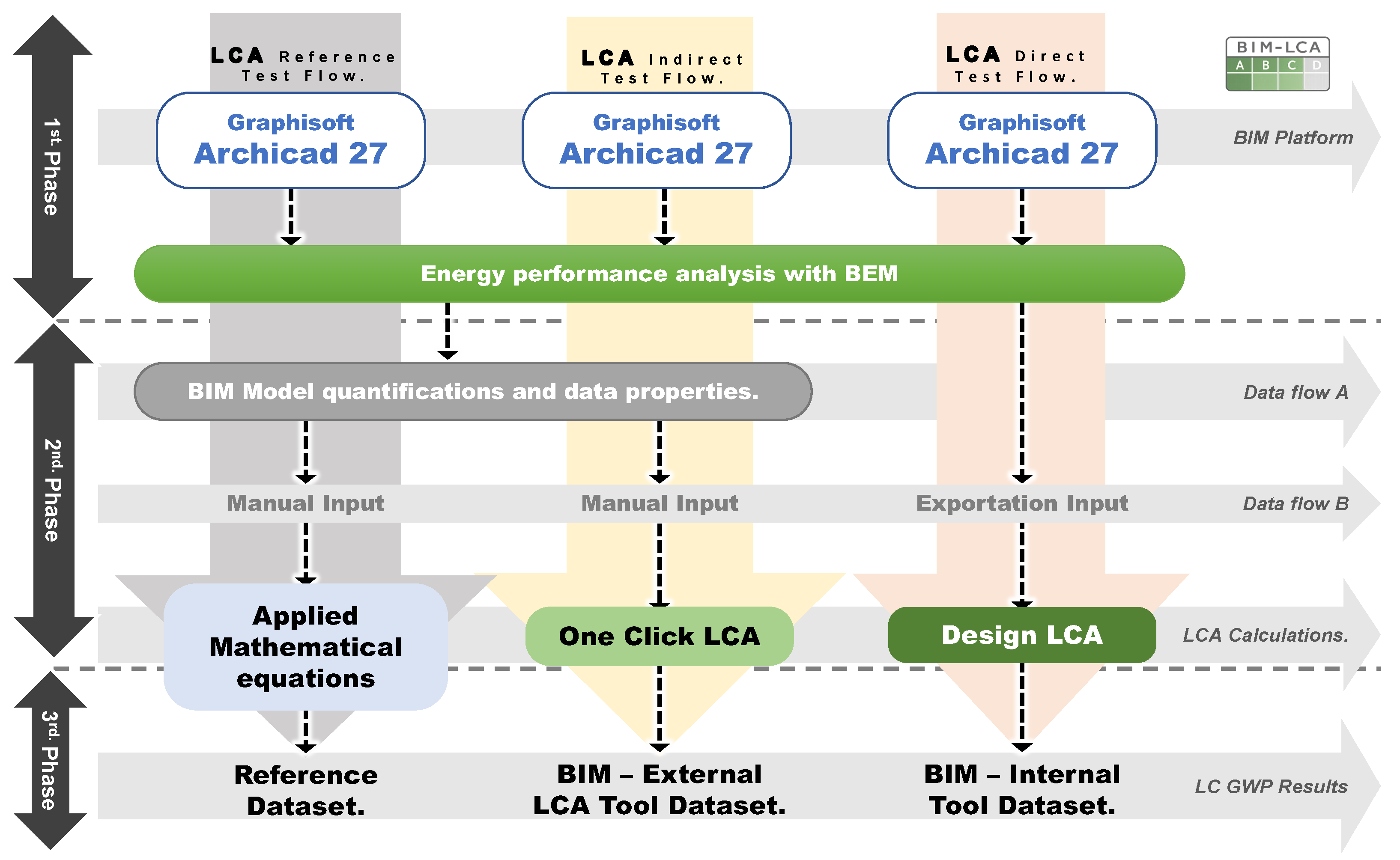
Based on the outcomes of the framework development phase, three assessment pathways and corresponding datasets were defined for the research analysis (
Figure 2): a reference calculation based on explicit equations, an indirect BIM-to-external workflow using One Click LCA (OCL), and a direct BIM-integrated workflow using DesignLCA (DLCA). The methodological conclusions derived from this phase were previously presented in a preliminary form at an international conference.
Building upon these conclusions, an integrated BIM–LCA workflow was defined to operationalize the proposed methodology, formalizing the use of BIM-integrated tools for early-stage screening followed by detailed life-cycle global warming potential assessment using a professional external LCA platform. The implementation of this proposed workflow is illustrated in
Figure 3.
The implementation workflow is operationalized through five sequential steps, which are summarized below. First, the building project is defined within the BIM environment, including geometric modeling, material specification, and the definition of alternative construction systems based on available LCA data. Second, global warming potential calculations are performed using the BIM-integrated LCA tool to rapidly screen multiple design and material configurations and generate comparative scenarios. Third, a decision-making step is introduced to select the most promising scenarios based on the screening results, enabling focused data collection and scenario refinement prior to detailed assessment. This step represents the main decision gate of the framework (screening-to-detailed transition). Fourth, data consolidation is carried out through the definition of appropriate functional units, the alignment of life-cycle phases, and the comprehensive selection and compilation of environmental emission factors. This step represents the scope alignment gate (functional units and module alignment). Finally, the consolidated data are transferred to the professional external LCA tool to perform an in-depth environmental assessment of the selected scenario, supporting detailed analysis and certification purposes.
Within the proposed framework, the screening stage is primarily intended to support the rapid evaluation of design and material alternatives based on the original Global Warming Potential indicator, which relies on life-cycle phases for which Environmental Product Declaration data are most consistently available. Although both the BIM-integrated and professional external LCA tools are technically capable of calculating Life Cycle Global Warming Potential, the use of the original GWP indicator during screening is recommended for reasons of practicality, computational efficiency, and data completeness, enabling fast iteration and robust relative comparison at early design stages.
To assess the applicability and reliability of the proposed framework, a dedicated validation method was developed. The objective of this validation is to evaluate the consistency of results obtained across both LCA tools and multiple scenarios while accounting for differences in life-cycle phase coverage and data sources. For this purpose, the present study extends the calculations to LC-GWP in both assessment tools, despite its recommended use at later stages of the workflow. The validation process comprises the definition of multiple LCA database scenarios to assess sensitivity to variations in emission factors, the application of multiple functional units to test result stability across aggregation levels, and the analysis of cross-tool consistency.
As an additional robustness check, a one-at-a-time (OAT) sensitivity test was performed by perturbing the dominant positive hotspot contribution by ±20% within each block (system–scenario) and re-computing the Top 5 hotspot ranking independently for each tool, providing further evidence of the stability and reliability of the framework (
Appendix B). The resulting validation outputs focus on assessing the robustness and decision-support reliability of the proposed framework rather than on deriving additional environmental impact results. Further details on dataset selection, module coverage, and material mapping for each scenario are provided in
Appendix A.6, ensuring full reproducibility of the LCA workflows across the two software platforms.
2.2. Case Studies and Baseline Models
Two case studies representing different construction systems were developed to implement and validate the proposed framework. A single residential building project was selected based on the availability of detailed building information and material technical data-sheets, as well as its geometric simplicity and limited morphological complexity. The simplified geometry was selected to ensure a high level of control and traceability of areas, volumes, and material quantities, thereby minimizing geometric uncertainty during input definition and during the calculations required for both the theoretical reference GWP assessment and the BIM-based LCA tools under evaluation.
The case study corresponds to a 161 m
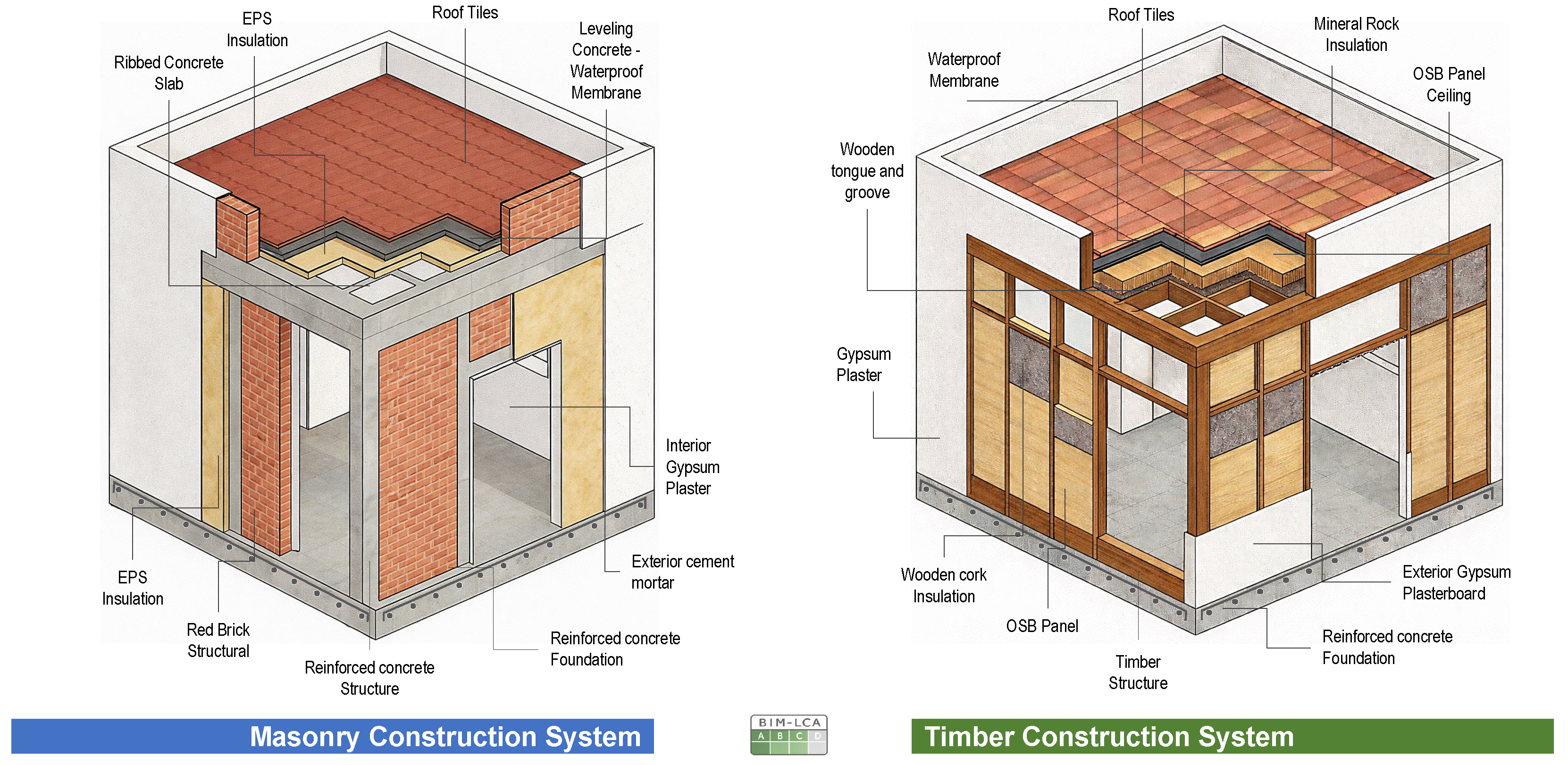
2 single-family, two-story dwelling located in Pamplona, Navarra (Spain). The building was designed and analyzed under two alternative material configurations while maintaining an identical architectural layout and functional program. The two construction systems considered in this study are shown in
Figure 4, which illustrates the material assemblies and structural solutions adopted for each configuration.
The first configuration adopts a conventional concrete and masonry construction system, in which reinforced concrete, clay brick masonry, and ceramic roof tiles constitute the primary structural and envelope components. This solution represents one of the most commonly applied construction systems for single-family dwellings of a comparable scale in the regional construction context [
37,
38]. The second configuration applies a timber-based construction system, consisting of a timber structural frame combined with oriented strand board (OSB) panels, gypsum plasterboard, and wooden flooring as the main building elements. This system was selected to provide a clear contrast in material composition and environmental performance, as timber-based solutions are frequently proposed as an effective strategy for reducing embodied carbon impacts, owing to their capacity for biogenic carbon storage and temporary carbon sequestration within the building fabric [
39,
40].
The reference scenario (REF) represents the as-designed baseline configuration of each case study and serves as the common point of comparison for all subsequent analyses. The REF dataset was compiled from EPDs retrieved from the International EPD System (Environdec) [
41], combining product-specific declarations with discrete and average impact values representative of conventional construction practices. Several EPDs correspond to sectoral declarations developed by industry associations in the concrete and precast concrete sectors (e.g., ANDECE, IECA) [
42,
43], providing aggregated and representative emission factors for regionally manufactured materials. This baseline configuration was used for the preliminary analyses previously presented at the conference level.
The functional scope of the BIM model is defined at the whole-building level and includes structural and envelope elements required for material-based assessment (foundations, load-bearing systems, external walls, floors, and roofs), while building services and operational energy systems are excluded. The BIM model provides consistent geometric and material data for quantity extraction, ensuring that differences across scenarios and assessment approaches arise from variations in emission factors, life-cycle phase coverage, and methodological assumptions rather than from changes in geometry or quantities.
The use of simplified building geometries was a deliberate methodological choice aimed at ensuring full control over quantity take-offs and eliminating geometric uncertainty during cross-tool comparison. Accordingly, the objective of the case studies is to support the methodological validation and transferability of the proposed framework, rather than numerical generalization of the obtained impact values.
2.3. Functional Units and Indicators
To enable coherent comparison across assessment tools, material scenarios, and life-cycle scopes, multiple functional units were defined. In this study, three functional units (FUs) were established to support comparison at different levels of aggregation and to facilitate both screening and validation of the proposed BIM–LCA framework.
The first functional unit (FU1) represents the total GWP and LC-GWP of the building at the whole-building level. For this functional unit, calculations were limited to life-cycle phases consistently available in both the BIM-integrated LCA tool and the professional external LCA platform. Phases exclusive to a single tool were excluded to ensure methodological consistency and cross-tool comparability. FU1 results are expressed in kilograms of CO2-equivalent (kg CO2-eq). The second functional unit (FU2) normalizes GWP and LC-GWP results per unit of gross floor area, enabling consistent comparison between scenarios and building configurations by accounting for differences in scale. FU2 results are expressed in kilograms of CO2-equivalent per square meter (kg CO2-eq/m2).
The third functional unit (FU3) focuses on the material-level contribution by analyzing the relative share of individual construction materials in the total GWP of the building. This functional unit supports the identification of dominant materials and allows verification of whether screening-based results obtained with the BIM-integrated tool are consistent with the detailed assessments performed using the professional external LCA tool. FU3 results are reported as relative material contributions to total GWP.
For all functional units, the assessment scope was limited to embodied greenhouse gas emissions associated with construction materials forming the building envelope and structural systems. Emissions related to building operation, energy performance, and building services (such as HVAC systems and operational energy use) were excluded, as the focus of the present study is on material-related impacts relevant to early-stage design decision making.
2.4. Life-Cycle Scope and Phase Alignment
To ensure methodological consistency between assessment approaches, a structured alignment of life-cycle phase coverage was performed prior to result comparison. Although the study is positioned within the broader whole-life carbon discourse introduced by recent European regulations, the implemented assessment does not constitute a full cradle-to-grave LC-GWP evaluation. Instead, it focuses on a restricted embodied-carbon scope aligned with the availability of Environmental Product Declarations (EPDs) and early-stage material decision-making.
The BIM-integrated LCA tool is primarily designed to support rapid assessments for design and management purposes and therefore provides a reduced and tool-specific set of evaluable life-cycle phases [
44]. In contrast, the professional external LCA tool offers extended life-cycle coverage, including most use and end-of-life stages, enabling comprehensive LC-GWP assessment [
45].
In
Figure 5, the three assessment approaches differ in their nominal life-cycle coverage. However, a common reference boundary was defined by retaining only those modules consistently available across all workflows. These primarily include product-stage modules (A1–A3) and selected end-of-life modules (C2–C4), reflecting the structure of most EPD datasets [
46]. Modules exclusive to a single tool were excluded to avoid methodological bias.
All B-stage modules related to building operation, maintenance, replacement, and energy use were deliberately excluded. The focus of the present study is therefore limited to embodied greenhouse gas emissions associated with construction materials forming the building envelope and structural systems. Building services and operational energy modeling were not considered, as the objective is to evaluate a material-oriented BIM-integrated screening workflow rather than to deliver a complete regulatory LC-GWP report.
Throughout this manuscript, the term GWP refers to results calculated within the aligned embodied-carbon scope, while LC-GWP denotes comprehensive whole-life assessments encompassing all relevant life-cycle modules. For cross-tool comparability, all results presented in this study are computed using the aligned embodied-carbon modules A1–A3 and C2–C4. This aligned scope provides a consistent and reproducible basis for cross-tool comparisons and the calculation of all functional units.
2.5. Scenario Definition and Data Sources
To evaluate the applicability and robustness of the proposed BIM–LCA framework under different data conditions, a structured set of material scenarios was defined by varying environmental data sources and emission factors while maintaining constant building geometry, material quantities, and construction specifications. Five scenarios were selected to provide a traceable, consistent, and sufficiently diverse basis for assessing the influence of data origin on GWP and LC-GWP results. All scenarios are derived from the same baseline BIM model and differ exclusively in the environmental datasets used to characterize construction materials. This controlled experimental design ensures that observed differences in results are attributable to variations in data sources and emission factors rather than to changes in geometry or quantities. An overview of the defined scenarios, including their scope, data source type, and optimization level, is provided in
Table 2.
The reference scenario (REF) represents the baseline configuration and relies on the product-specific Environmental Product Declaration (EPD) datasets previously described in
Section 2.2; these data sources are therefore not repeated here for brevity. The generic normative reference (GEN) is a documentation-based benchmark compiled from conservative, broadly applicable factors reported in recognized LCA guidelines and international databases (i.e., non-EPD, generic values). GEN is included to provide a regulatory-oriented baseline against which third-party EPD-based results can be contextualized (i.e., an expected reference magnitude under generic assumptions). Because GEN cannot be instantiated as an EPD-based database scenario in the external professional LCA platform used in this study (One Click LCA), it is not treated as a replicable comparative scenario for future tool-based applications of the framework. Accordingly, GEN is reported only in the reference/manual pathway and is excluded from the cross-tool whole-building result tables, which include only scenarios available in both tools. In the reported results, GEN is therefore limited to material-level GWP benchmarking (FU3), while FU1 and FU2 are presented only for tool-implemented EPD-based scenarios.
The national scenarios ES-L and ES-H are based on product-specific EPDs from manufacturers and regional industries located in Spain, reflecting moderate (ES-L) and high (ES-H) levels of emission-factor optimization, respectively, while preserving identical material quantities and specifications. The European low-carbon benchmark scenario (EU-LCB) is based on product-specific EPDs reporting the lowest emission factors available within the European context and is included to provide an upper-bound reference for comparison under optimized data conditions, rather than to represent typical market availability.
The environmental datasets used across the defined scenarios were compiled from established international and national sources. Product-specific EPD declarations were primarily retrieved from the International EPD System (Environdec), while generic normative datasets were obtained from recognized LCA databases and guidelines, including Ökobaudat and DAP (IBU) references [
47,
48]. These sources are widely used for regulatory benchmarking and early-stage environmental assessment [
49] and were selected to ensure consistency with the aligned life-cycle scope described in
Section 2.4.
2.6. LCA Tools and Calculations
This section describes the LCA assessment tools applied in the study and the main calculation settings adopted to ensure methodological consistency across scenarios and functional units. In accordance with the proposed framework, the analysis combines a BIM-integrated LCA tool with a professional external LCA platform, enabling automated quantity extraction while supporting a detailed and standard-compliant life-cycle impact assessment.
Graphisoft Archicad 27.0.0 (Budapest, Hungary) was selected as the primary BIM authoring platform [
50]. The DesignLCA plug-in version 6.0 (London, UK) was adopted as the BIM-integrated LCA solution [
51]. In parallel, the online platform One Click LCA (Helsinki, Finland; accessed in 2024) was used as the standalone LCA reference tool for comparison. All environmental impact results were calculated following the Level(s) life-cycle assessment framework, aligned with the EN 15978 [
52] and EN 15804+A1 standards. Detailed information regarding databases, system boundaries (modules included), calculation settings, and material mapping procedures is provided in
Appendix A to ensure methodological transparency and reproducibility. All software tools were used under educational licenses.
DesignLCA operates fully within the Archicad 27 environment and enables the automatic extraction of geometric and material quantities directly from the BIM model. This integration ensures internal consistency between model definition, material specification, and environmental calculations, while avoiding intermediate data exports that may introduce inconsistencies due to format conversion or manual data handling. The tool supports the explicit definition of life-cycle stages and impact categories aligned with EN 15978-based building LCA logic, enabling structured scenario-based assessments within the BIM environment.
For detailed life-cycle impact assessment and result validation, One Click LCA was selected as the external professional LCA software due to its specific focus on whole-building life-cycle assessment [
53]. Unlike general-purpose LCA platforms designed for a wide range of industrial applications, One Click LCA is tailored to building-scale analysis and supports scenario modeling for comparative LC-GWP assessment. Its extensive collection of verified EPD-based and region-specific datasets facilitates the consistent and robust evaluation of dominant materials across different design scenarios.
The LCA datasets applied varied according to the scenario under assessment. The GEN scenario relied on generic and normative datasets sourced from established European databases, including Ökobaudat, DAP (IBU), and the International EPD System. The REF scenario combined datasets available within the One Click LCA database with additional product specific EPDs retrieved from Environdec, as described in
Section 2.2. For the ES-L, ES-H, and EU-LCB scenarios, product-specific EPDs representative of European construction were selected from national and sectoral EPD programs integrated within One Click LCA, including datasets from Hispalyt (Madrid, Spain) [
54], EPD Norge (Oslo, Norway) [
55], and the UK BRE Environmental Profiles database (Garston, Watford, England, UK) [
56]. Dataset selection prioritized geographical relevance to the case study, valid and non-expired declarations, and comprehensive reporting of life-cycle stages in accordance with EN 15804.
To ensure consistency with the aligned life-cycle scope defined in
Section 2.4, all calculations excluded operational carbon emissions related to building use, energy consumption, and building services.
2.7. Calculation Equations and Comparison Metrics
This subsection provides the quantitative backbone of the proposed BIM–LCA framework by defining the indicators that operationalize the screening-to-validation workflow. The equations specify how BIM-derived quantities and EPD-based emission factors are aggregated and normalized to compute the three functional units (FU1–FU3), and how cross-tool and scenario comparisons are quantified through deviation and performance metrics. To ensure methodological transparency and reproducibility, all reported indicators are calculated under the same aligned life-cycle scope, restricted in this study to modules A1–A3 and C2–C4 (product stage and end-of-life processing), which are consistently available across the datasets and tools considered.
Functional units (FU1–FU3). The three functional units used in the proposed framework (defined in
Section 2.3) are operationalized through Equations (
1)–(
3).
FU1: whole-building GWP. The total building-level impact is obtained by aggregating the contribution of individual construction materials:
where
is the whole-building impact for FU1 (kgCO
2e),
i indexes the
n quantified materials/assemblies,
is the quantity of material
i extracted from BIM quantity take-off (in the declared unit of the selected dataset, e.g., kg, m
3, or m
2), and
is the aggregated emission factor for material
i (kgCO
2e per declared unit) computed over the aligned module set (A1–A3 + C2–C4).
FU2: area-normalized GWP. For the area-normalized functional unit, the building-level impact is divided by the gross floor area:
where
is the area-normalized impact for FU2 (kgCO
2e/m
2) and
is the gross floor area (m
2), consistently computed from the BIM model for all scenarios.
FU3: material contribution (hotspots). Material-level contribution is expressed as the relative share of each material in the total building impact:
where
is the percentage contribution of material
i to FU1 (%), used to identify dominant positive hotspots and to compare hotspot rankings across tools and scenarios.
Cross-tool deviation metrics. To quantify dispersion between tools under identical modeling conditions (same BIM quantities, aligned module set, and harmonized dataset selection), absolute and relative deviations are computed for FU1 and FU2. The absolute deviation is calculated as follows:
and the relative deviation is expressed as follows:
where
and
denote the results obtained from two assessment tools (DLCA and OCL) for the same scenario and functional unit;
is expressed in the unit of
X (kgCO
2e or kgCO
2e/m
2); and
is reported as a percentage using
as the reference denominator, consistently with
Appendix A (
Table A1).
In addition to magnitude-based deviations, rank agreement between tools is evaluated using Spearman’s
for scenario and hotspot rankings (
Appendix A).
Scenario-to-reference metrics. To evaluate the scenario performance relative to the reference configuration (REF), three complementary indicators are used. RC and PR quantify the relative change and relative performance, while II is reported in an optimization-oriented form. The relative change (RC) is defined as follows:
where
is the value obtained for the analyzed scenario and
is the corresponding REF value, computed under the same functional unit and aligned module set.
The improvement index (II) is defined as follows:
where
indicates a reduction relative to REF. For completeness, note that
under the above definitions.
Finally, the performance ratio (PR) is defined as follows:
where
indicates improved performance relative to REF.
Hotspot sensitivity test (OAT). To complement cross-tool deviation metrics, we performed a one-at-a-time (OAT) sensitivity test on the dominant positive hotspot material within each block (system–scenario). The hotspot index
is selected as the material maximizing the common positive contribution across tools, and its contribution is perturbed by
while keeping all other materials and tool settings unchanged. Ranking and share stability are then re-evaluated across the full material set within each block; detailed results and block codes are reported in
Appendix B.
2.8. Cross-Tool Comparison and Validation Procedure
A dedicated comparison and validation procedure was defined to ensure that the interpretation of the results is based on consistent and transparent criteria. The purpose of this procedure is to evaluate the reliability of the proposed workflow when applied across different assessment tools and data scenarios, rather than to assess the absolute accuracy of individual calculation engines. Cross-tool comparisons were performed exclusively between results obtained under identical modeling conditions. Only outputs corresponding to the same building configuration, material quantities, and aligned life-cycle phase coverage were considered. This approach ensures that differences observed between tools are attributable to variations in data handling and calculation logic, rather than to inconsistencies in system boundaries or input definitions.
Differences between assessment outputs were quantified using absolute and relative metrics, as defined in Equations (
4) and (
5). Absolute differences were used to capture the magnitude of deviation between results, while relative differences provided a normalized measure suitable for comparison across scenarios with different impact levels. These metrics were applied uniformly across all scenarios and case studies.
Validation of the proposed framework focuses on the consistency of relative trends rather than on numerical equivalence between tools. In particular, the procedure examines whether alternative assessment approaches lead to comparable rankings of scenarios and materials and whether screening-based results are coherent with outcomes obtained through detailed life-cycle assessment. Deviations between tools are therefore interpreted as indicators of sensitivity to data sources and modeling scope, rather than as methodological shortcomings. Together, the defined methodology establishes a consistent and reproducible basis for analyzing and interpreting the comparative results presented in the following section.
3. Results
This section presents the results obtained from the application of the proposed BIM–LCA framework, including both the baseline outcomes previously reported at the conference level and the extended scenario-based analysis conducted in this study.
3.1. Whole-Building Results (FU1)
Whole-building global warming potential (GWP) and life-cycle global warming potential (LC-GWP) results are first presented to enable a direct comparison between assessment tools and material scenarios. The reference scenario (REF) corresponds to the baseline configuration previously reported at the conference level and is used here as the starting point for the extended analysis.
As reported in
Table 3 and
Table 4, both case studies exhibit consistent improvement trends across all optimized scenarios. Relative change values are negative in every case, indicating a systematic reduction in whole-building impacts with respect to the baseline configuration for both the masonry system and the timber system. The improvement index shows a progressive increase across scenarios, with moderate improvement levels observed for the masonry system and more pronounced improvements for the timber system. Performance ratio values remain close to unity throughout, reflecting incremental but consistent performance gains, with systematically lower ratios associated with the timber system configuration.
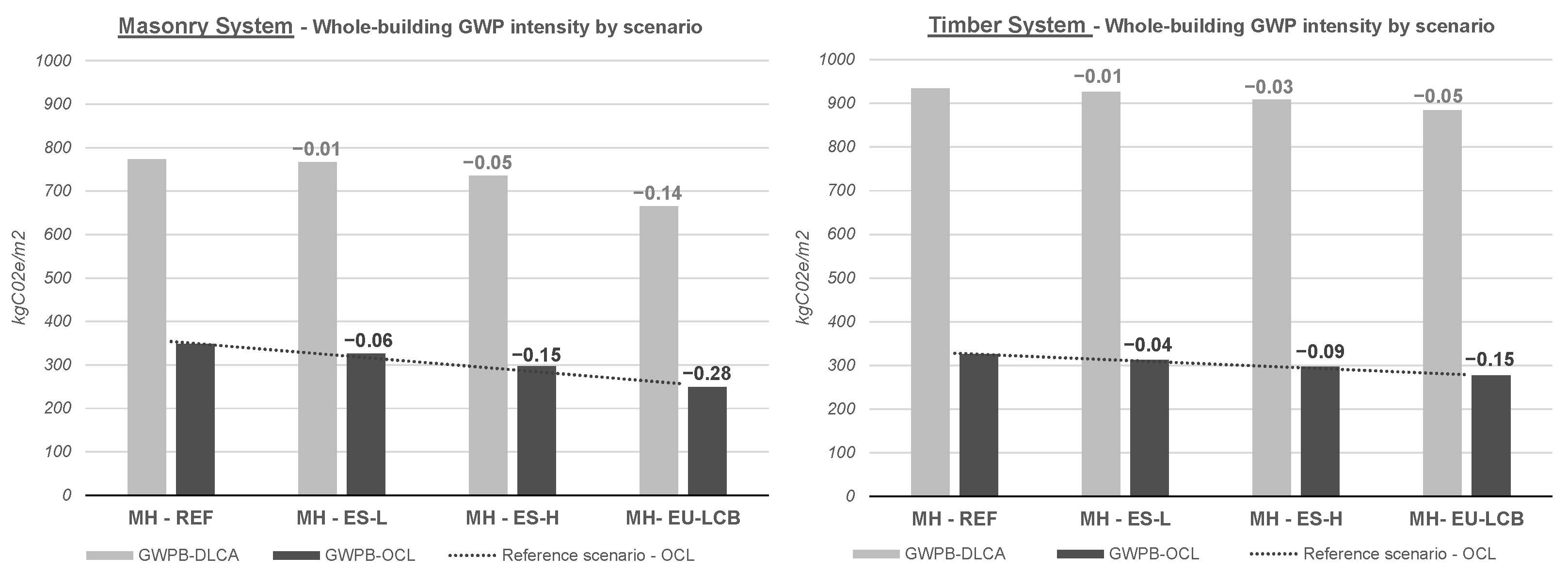
In
Figure 6, whole-building GWP intensity decreases progressively across scenarios for both construction systems. The largest reductions are observed for the EU-LCB configuration, while the timber system consistently exhibits greater relative improvements than the masonry system. Across all scenarios, the external professional LCA tool reports larger relative reductions in whole-building GWP intensity than the BIM-integrated approach, while preserving identical scenario rankings and relative performance trends.
3.2. Normalized Results per Floor Area (FU2)
To enable consistent comparison across scenarios and construction systems, whole-building results are subsequently normalized by floor area. Area-normalized results obtained using FU2 closely follow the same performance trends observed for whole-building results (FU1), confirming the consistency of the assessment across aggregation levels.
Relative change, improvement index, and performance ratio values remain aligned with those reported at the building level, and no inversion of scenario rankings is observed after normalization. In
Figure 6, area-normalized GWP intensities reproduce the same scenario ordering and relative improvement patterns identified for whole-building results, indicating that the observed trends are not driven by building size or scale effects.
Across all scenarios, the external professional LCA tool continues to report steeper reduction trends than the BIM-integrated approach, while maintaining coherent relative differences between scenarios. The stability of these trends after normalization provides a robust basis for the cross-tool deviation and material-level analyses presented in the following section.
3.3. Cross-Tool Comparison and Deviations
Based on whole-building results, cross-tool deviations between the BIM-integrated and external LCA approaches are quantified to assess the level of agreement between the screening-based and detailed assessment outputs. This analysis extends the preliminary single-case comparison reported at the conference level to multiple material scenarios and functional units, enabling a more robust cross-tool validation.
In
Table 5, the absolute differences between tools exhibit a consistent magnitude between scenarios. For the masonry system, absolute deviations range between approximately 68 and 71 × 10
3 kg CO
2-eq, while for the timber system, they range between approximately 97.5 and 98.7 × 10
3 kg CO
2-eq. These values indicate substantial differences in absolute impact estimates between assessment approaches under identical modeling conditions. Relative differences further highlight the sensitivity of the results to the assessment approach. For FU1, relative deviations range between approximately 120 and 160% for the masonry system and 180 and 200% for the timber system. Although absolute deviations differ when the results are normalized by floor area (FU2), the relative deviation values remain consistent with those observed at the whole-building level, indicating that the magnitude of cross-tool deviation is not driven by scale effects.
Importantly, despite these quantitative differences, the relative ranking of scenarios remains unchanged across tools and functional units. This consistency supports the interpretation of cross-tool deviations as indicators of methodological sensitivity rather than as contradictions in scenario performance and provides a robust basis for the material-level contribution analysis presented in the following section.
The absolute offsets in
Table 5 require clear attribution to avoid misinterpreting cross-tool differences as BIM inventory inconsistencies. We complement the whole-building comparison with a material-level check using effective emission factors (EFeff), defined as each tool’s reported material contribution divided by the BIM quantity take-off in the EPD declared unit (
Appendix A.7,
Table A11). With identical BIM quantities and EPD references, divergences in EFeff isolate tool-layer implementation effects (e.g., aggregation rules, default conversions, metadata handling, biogenic conventions) independently of geometry, QTO, or dataset-selection differences.
Table 6 summarizes the dominant deviation drivers, while the bullets below quantify deviation concentration and peak EFeff divergences.
Deviation concentration. The deviation structure is strongly concentrated—in the masonry system, the two dominant drivers listed in
Table 6 account for approximately
58.9% of the total absolute deviation within the dominant-material set reported in
Appendix A.7,
Table A11 while, in the timber system, the two listed drivers account for approximately
79.3%.
Peak effective-factor divergence. The maximum inter-tool divergence among the listed drivers occurs for ceramic tile adhesive (masonry), where OCL EFeff is 8.58× DLCA EFeff and 15.1× the EPD-integrated factor EFi, indicating systematic tool-layer amplification beyond declared module aggregation.
Systematic (not random) offsets. Across the listed drivers, inter-tool differences are consistent in direction and magnitude (e.g., OCL/DLCA ratios of 2.96 and 8.58 in masonry; 5.40 and 1.38 in timber), supporting the interpretation of large whole-building offsets as reproducible implementation effects rather than as scenario-dependent noise.
These driver-level results explain why large absolute offsets can coexist with stable cross-scenario trends; therefore,
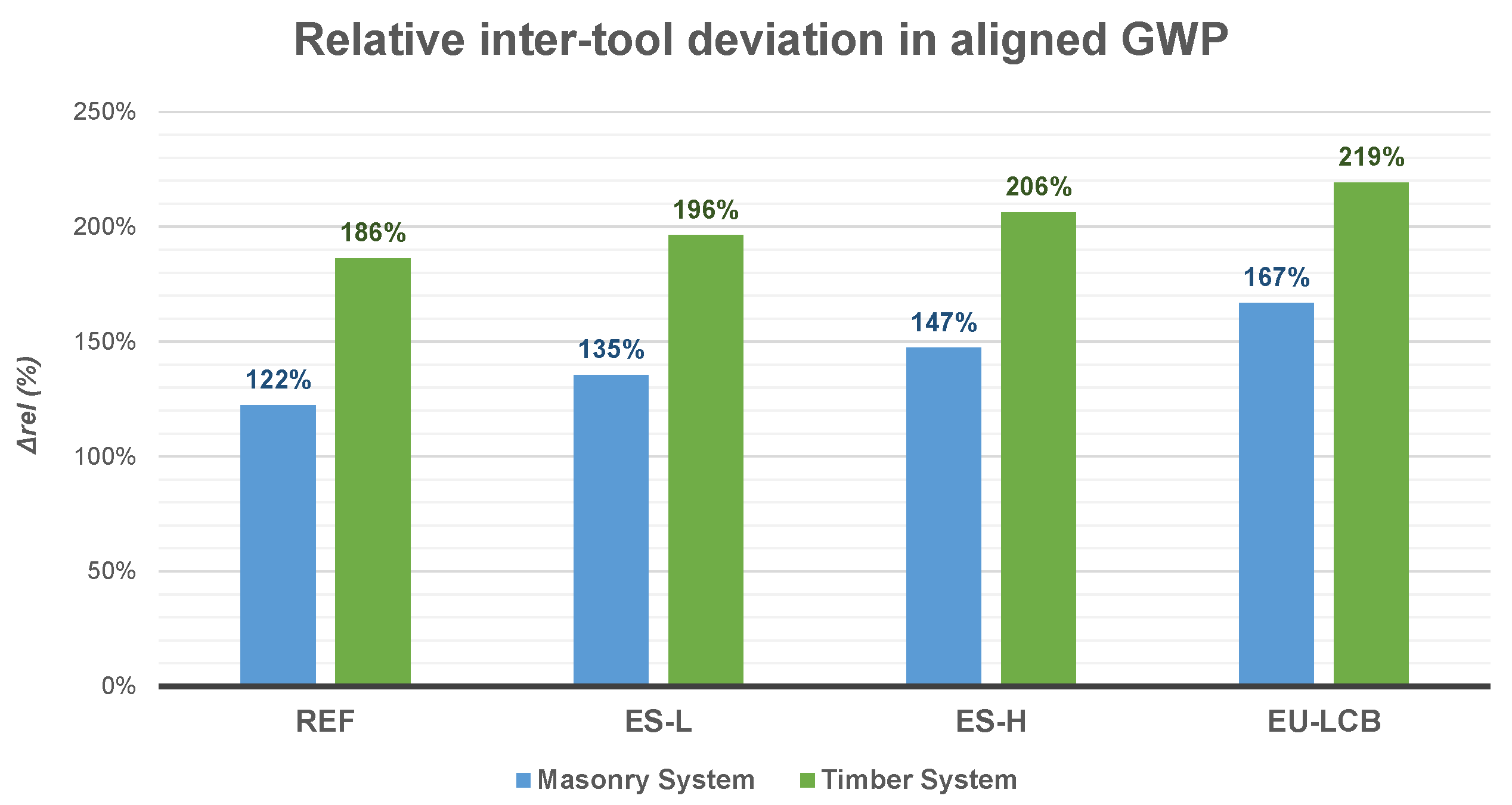
Figure 7 is interpreted as a systematic inter-tool response that remains coherent across optimization scenarios rather than as a scaling artifact.
In
Figure 7, relative inter-tool deviations increase progressively across optimization scenarios for both construction systems. The magnitude of deviation is systematically higher for the timber system than for the masonry system while preserving a consistent monotonic trend across scenarios. This visual pattern confirms that, although the absolute and relative differences between tools are substantial, their evolution remains stable across material optimizations and functional units, reinforcing the internal consistency of the comparative assessment.
3.4. Material Contribution Analysis (FU3)
The contribution of individual materials to total building-level emissions is analyzed to assess the consistency of material dominance patterns identified by the different assessment tools across scenarios. By focusing on relative material contributions (FU3), this analysis supports the validation of the screening capability of BIM-integrated LCA workflows for early-stage material optimization and enables direct cross-tool comparison at the material level.
For clarity and analytical relevance, the material-level analysis focuses on the four materials with the highest contribution to whole-building global warming potential, which collectively account for the dominant share of embodied carbon emissions. Depending on the construction system and scenario, these materials represent approximately 30% to 70% of total whole-building GWP, while all remaining materials exhibit marginal individual contributions. This selection follows a Pareto-based logic commonly applied in building LCA studies to identify primary impact drivers without obscuring trends through low-impact components.
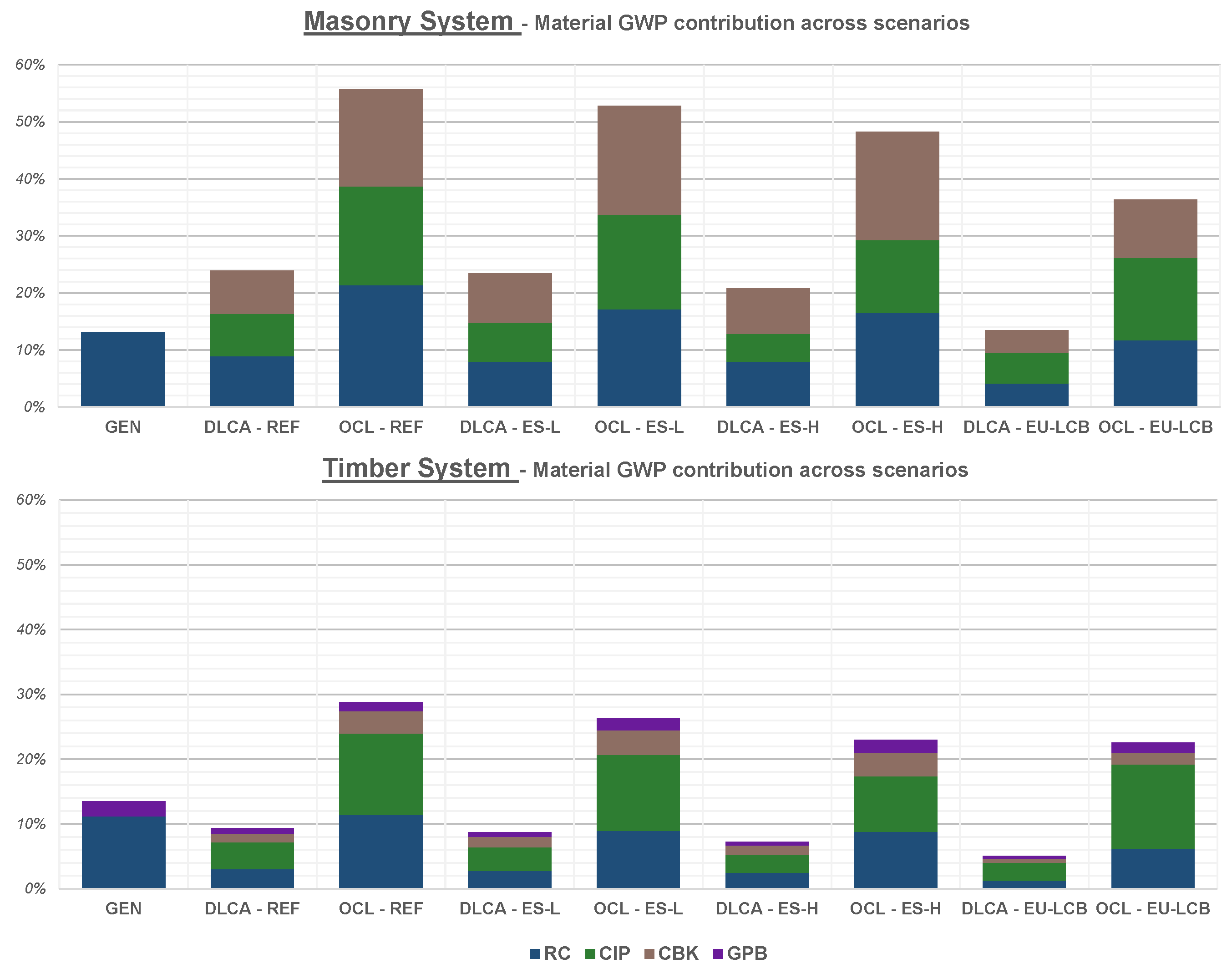
In
Figure 8, clear and consistent material dominance patterns are observed for both construction systems across all evaluated scenarios. In the masonry system configuration, reinforced concrete (RC), cast-in situ concrete (CIP), and bricks (CBK) consistently represent the largest contributors to whole-building emissions for both assessment tools. Although the relative share of each material varies depending on the scenario and the tool, the ranking of dominant materials remains stable, indicating that mineral-based structural and envelope components govern the majority of embodied carbon impacts in masonry construction systems.
In the timber system configuration, material contributions are more distributed, yet a limited set of materials continues to dominate the overall impact profile. Timber-based structural elements and cast-in situ concrete components remain the primary contributors, followed by secondary layers such as gypsum plasterboard (GPB). As shown in
Figure 8, optimized scenarios reduce the relative contribution of auxiliary materials while preserving the dominance of load-bearing components. Despite quantitative differences in contribution shares between the BIM-integrated and external LCA tools, the identification and ranking of dominant materials are consistent across scenarios.
Across both construction systems, material contribution profiles exhibit a pronounced Pareto-type behavior, with a small subset of materials accounting for a substantial fraction of total building-level emissions. The consistency of these dominance patterns across assessment approaches confirms that BIM-integrated LCA tools are capable of reliably identifying high-impact materials during the early design stages, thereby supporting their use as effective screening instruments prior to detailed life-cycle assessment.
3.5. Validation of the Proposed BIM–LCA Framework
Finally, the consistency of the results across tools, material scenarios, and functional units is evaluated to validate the applicability of the proposed BIM–LCA framework. This validation extends the conceptual feasibility previously demonstrated at the conference level and assesses the robustness of the framework when applied to an expanded set of material scenarios and comparison metrics.
Across both construction systems, the scenario rankings remain consistent between the BIM-integrated and external LCA tools, despite systematic differences in the absolute and relative impact values. This stability is preserved across the whole-building (FU1), area-normalized (FU2), and material-level (FU3) functional units, indicating that the framework delivers coherent decision-support signals across aggregation levels. The persistence of relative performance trends confirms that the screening stage reliably identifies preferable material configurations prior to detailed life-cycle assessment.
Furthermore, the alignment between the extended results presented in this study and the preliminary findings previously reported at the conference level demonstrates the reproducibility and scalability of the proposed approach. Although the extended analysis reveals larger deviations in magnitude due to broader scenario coverage and life-cycle scope, the qualitative consistency of outcomes remains unchanged. Overall, these results confirm that the proposed BIM–LCA framework provides a robust and transferable methodology for combining BIM-based screening workflows with detailed life-cycle assessment, supporting informed material selection and carbon reduction strategies in building design.
4. Discussion
This section discusses the implications of the results obtained for the proposed BIM–LCA framework, with particular emphasis on cross-tool consistency, functional unit robustness, and the role of BIM-integrated screening approaches in supporting whole-life carbon assessment during the early design stages. The deviations observed between the BIM-integrated DesignLCA tool and the external professional software One Click LCA should be interpreted not as calculation errors but as the outcome of systematic and reproducible methodological differences inherent to each tool. At the early design stages, the uncertainty associated with operational energy modeling often exceeds the magnitude of material-related differences, thereby justifying the use of embodied carbon as a primary screening indicator.
Both tools were supplied with equivalent geometric and material inputs derived from the same BIM model, thereby ensuring consistency in quantity take-off and functional unit definition, and minimizing the likelihood of discrepancies arising from user input or data handling. Notably, both the magnitude and direction of the observed deviations remain stable across all assessed scenarios, indicating a coherent pattern rather than random variability.
4.1. Cross-Tool Divergence and Directional Robustness
The cross-tool comparison reveals substantial absolute deviations between DesignLCA and One Click LCA, with relative differences exceeding 200% in several timber-based scenarios (
Appendix A,
Table A1). Despite harmonized emission factors derived from identical EPD sources and aligned life-cycle module boundaries (A1–A3 + C2–C4), total GWP magnitudes differ significantly between tools. Accordingly, cross-tool deviations are interpreted within the aligned embodied scope, whereas full whole-life LC-GWP is positioned as a later-stage reporting target and a priority direction for future work.
These deviations are unlikely to originate from user-defined emission-factor selection or declared system boundaries, which were controlled and reported explicitly; instead, they are consistent with differences in computational architecture, including internal aggregation logic, unit conversion procedures, density assumptions embedded in the dataset metadata, and reporting conventions related to biogenic carbon and end-of-life balancing. A structured friction map summarizing these sources of divergence is provided in
Appendix A (
Table A6) to enhance transparency and traceability.
Such differences reflect the contrasting design philosophies of the assessed platforms. BIM-integrated LCA tools prioritize simplified and rapid workflows to support iterative early-stage design decisions, whereas professional LCA platforms operate within predefined calculation structures aligned with standardized assessment procedures. The resulting discrepancies therefore arise from methodological implementation differences rather than from inconsistencies in the underlying environmental datasets.
Timber-based scenarios—particularly under FU3—exhibit sign inversions in DLCA results due to negative GWP total values at the production stage (A1–A3) associated with biogenic carbon storage in wood-based EPDs. While OCL reports positive aggregated totals under its internal reporting framework, DLCA directly reflects the signed values declared in the EPDs. This behavior illustrates the sensitivity of absolute magnitudes to the tool-specific treatment of biogenic components and underscores the importance of explicit indicator alignment in whole-life carbon assessment.
Importantly, despite these magnitude discrepancies, scenario-level ranking remains perfectly consistent across tools for all functional units and construction systems. Spearman rank correlation coefficients (
;
Appendix A,
Table A4) confirm complete directional agreement. The scenarios identified as highest-impact (REF) and lowest-impact (EU-LCB) remain unchanged irrespective of the tool employed.
At the material level (FU3), positive hotspot ranking agreement is also perfect under baseline conditions (REF) for both systems (). Under the EU-LCB configuration, the masonry system exhibits a weak negative association within the Top 5 positive hotspots (), indicating that the ordering of dominant contributors changes once low-carbon datasets substantially reduce cement-based emission factors. This behavior does not reflect a computational inconsistency between tools but rather a scenario-driven redistribution of contribution magnitudes that shifts material dominance under optimization. In contrast, the timber system retains strong directional agreement under EU-LCB within the Top 5 positive hotspots (selected by contribution magnitude) (), suggesting that positive hotspot identification remains largely stable despite optimization-induced redistribution and sensitivities related to biogenic carbon accounting.
To avoid ambiguity, ranking-based checks in this study address two different questions. Spearman’s
quantifies
cross-tool rank agreement (DLCA vs. OCL) within the Top 5 positive hotspots for each block and scenario (
Appendix A.3,
Table A4), whereas the OAT
test evaluates
within-tool rank robustness (baseline vs. perturbed) by perturbing the dominant positive hotspot contribution and re-computing the Top 5 ordering (
Appendix B). Accordingly, a low or negative
indicates a reshuffling
between tools under that scenario, while the OAT results describe the stability of each tool’s hotspot ordering under moderate contribution uncertainty. Together with the discrete multi-dataset scenarios (REF/ES-L/ES-H/EU-LCB), these checks indicate that dataset choice is a primary driver of variability, while directional trends and hotspot identification are generally stable under moderate perturbations.
These findings support a critical distinction: BIM-integrated LCA tools demonstrate strong reliability as early-stage screening instruments for comparative decision-making and scenario prioritization. However, absolute GWP magnitudes are highly sensitive to computational architecture and reporting conventions and should therefore be interpreted with caution when used for regulatory reporting under emerging whole-life carbon frameworks such as EPBD.
4.2. Functional Unit Robustness and Screening Implications
Regarding the robustness of functional units, the results show that whole-building impacts (FU1) and area-normalized impacts (FU2) exhibit identical trends across all tools and scenarios, indicating that the relative performance of the assessed configurations is independent of scale. The absence of ranking inversion after result normalization confirms that the observed scenario improvements are not driven by building size, thereby strengthening the applicability of the proposed framework across different building typologies.
With respect to material-level insights and screening effectiveness, both LCA tools consistently identified the same dominant materials across the two case studies, which together account for approximately 30–70% of the total embodied impacts. This pronounced Pareto-type behavior is particularly relevant for framework validation, as it demonstrates convergence in the identification of material hotspots despite methodological differences. Consequently, the FU3 results support the interpretation of the BIM–LCA integrated tool as an effective screening instrument, enabling the early identification of high-impact materials to inform design decision making.
4.3. Complementarity of GWP and LC-GWP Within the Framework
The results clarify and validate the complementary roles of conventional GWP and life-cycle GWP (LC-GWP) within the proposed framework. Conventional GWP relies primarily on consistently available EPD data, enabling rapid iteration and comparison and making it particularly suitable for screening early design alternatives. By contrast, LC-GWP is essential for final-stage assessment, as it provides explicit whole-life coverage, captures trade-offs across the production, use, and end-of-life stages, and aligns with regulatory and certification frameworks.
However, LC-GWP is inherently more sensitive to modeling assumptions, database completeness, and end-of-life conventions, which limits its effectiveness for practical comparison during the early design stages. The proposed framework therefore leverages the complementary strengths of both indicators, applying them at different stages to support early decision-making as well as consolidated environmental validation. Accordingly, the numerical results reported in this study should be interpreted as method-dependent outcomes rather than as universally generalizable impact values.
4.4. Limitations of the Study
The findings of this study should be interpreted in light of several methodological and practical limitations related to system boundaries, dataset availability, tool implementation, and case study configuration.
First, the operational energy impacts associated with B-stages, including building services and HVAC systems, were excluded. The implemented scope therefore corresponds primarily to embodied-carbon assessment under aligned A1–A3 + C2–C4 modules, rather than a complete whole-life (LC-GWP) evaluation. While this restriction enhances modeling control and cross-tool comparability, it limits the representation of operational trade-offs that may be relevant in energy-intensive building typologies.
Second, the simplified case study geometry and construction systems were intentionally adopted to ensure quantity traceability, material mapping transparency, and controlled cross-tool alignment. Although this improves the methodological robustness, it reduces the configurational complexity and may influence optimization thresholds compared to real-world projects with heterogeneous assembly and service integration.
Third, the availability of regionally and locally representative EPD datasets remains constrained, particularly in relation to the Spanish context of the case study. Although the framework aligns with European regulatory standards (e.g., EN 15804 and EPBD), a substantial share of the accessible datasets originates from non-Spanish or non-European manufacturers. Variations in the electricity mix, production technologies, and transport assumptions may therefore influence absolute impact magnitudes.
In addition, many EPD datasets provide partial life-cycle coverage, frequently limited to the A1–A4 stages. This restricts the consistent inclusion of end-of-life processes (C4) and benefits beyond the system boundary (module D), which are increasingly emphasized under whole-life carbon reporting frameworks. Consequently, absolute LC-GWP values should be interpreted with caution, particularly when extrapolated beyond the assessed module scope.
A further limitation relates to tool-specific implementation characteristics. Despite harmonized emission factors and aligned module boundaries, internal aggregation logic, biogenic carbon treatment conventions, and dataset metadata structures may introduce magnitude variability between platforms. While these factors do not compromise ranking robustness, they reinforce the need for transparency when comparing results derived from different computational architectures.
Finally, the results should not be interpreted as universally generalizable numerical benchmarks but rather as methodologically transferable outcomes demonstrating the internal consistency of the proposed BIM–LCA framework under controlled modeling conditions. The case study corresponds to a simplified residential building within a European regulatory context; therefore, direct extrapolation to other building typologies (e.g., commercial or institutional buildings), climatic zones, or non-European assessment frameworks should be undertaken with caution. The primary contribution of this study lies in validating cross-tool screening robustness and structured workflow integration, rather than in prescribing definitive carbon values for specific construction solutions.
4.5. Future Work
The proposed framework supports early-stage design decision-making through a workflow aligned with the EPBD and Level(s) frameworks, contributing to lowering the entry barrier to LCA application for designers and non-expert users through the use of interactive and BIM-integrated tools. Future research should extend the framework to incorporate operational carbon via dynamic energy simulation, further automate the data export and interoperability processes, and validate the workflow across more complex and large-scale building typologies. Additional investigation into harmonized biogenic carbon reporting conventions and improved dataset transparency within proprietary LCA platforms would further enhance cross-tool comparability and methodological robustness.
Although the present study focuses on embodied carbon impacts under aligned production and end-of-life modules, broader mitigation strategies also highlight the role of urban microclimate regulation in reducing operational energy demand. Ecosystem-based interventions such as urban tree deployment can contribute not only to carbon storage but also to ambient temperature reduction, thereby lowering cooling loads and associated B-stage emissions [
57]. The exclusion of operational energy modeling in this study therefore limits the assessment of integrated mitigation pathways that combine material optimization with passive or microclimate-based cooling strategies.
5. Conclusions
This study developed and validated an integrated BIM–LCA framework that combines rapid BIM-based screening with professional life-cycle assessment, enabling the consistent evaluation of material-level and whole-building carbon impacts. The key contribution lies in demonstrating that a BIM-integrated screening approach, applied under a transparently aligned embodied-carbon scope, can reliably support early-stage carbon optimization and comparative decision-making. Extending the workflow to full life-cycle GWP remains an important objective for future integration, highlighting the framework’s potential to bridge early design screening and comprehensive regulatory reporting.
Methodological contributions. The proposed framework establishes a structured integration between BIM-integrated screening tools and external professional LCA platforms through explicit functional unit definitions (FU1–FU3), harmonized life-cycle module boundaries, and scenario-based dataset mapping. This workflow facilitates a transparent cross-tool comparison while maintaining applicability during the early design stages.
Key findings. Progressive improvement scenarios (REF, ES-L, ES-H, and EU-LCB) demonstrated consistent carbon reduction trends across both masonry and timber systems. Although absolute GWP magnitudes differed substantially between tools, exceeding 200% in certain timber configurations, the scenario-level ranking remained perfectly consistent across all functional units (). Dominant impact-driving materials, particularly cement-based and high-mass envelope components, were consistently identified under baseline conditions. Ranking inversions observed in optimized scenarios were attributable to redistribution effects driven by alternative low-carbon EPD datasets rather than computational inconsistency, indicating that cross-tool deviations primarily influence magnitude rather than comparative interpretation.
Validated role of BIM-integrated screening. The results confirm that BIM-based LCA tools function reliably as early-stage screening instruments for comparative decision-making and scenario prioritization. While absolute carbon values remain sensitive to aggregation logic, dataset availability, and biogenic carbon reporting conventions, directional robustness supports their application in guiding material selection during the conceptual design.
Implications for practice and future research. The framework supports the integration of embodied carbon assessment into BIM-based workflows and contributes to alignment with emerging European regulatory requirements, including EPBD-driven LC-GWP evaluation. Beyond methodological validation, the proposed workflow introduces a tiered assessment structure in which preliminary carbon screening can be performed directly within the BIM environment by architects or modelers, enabling the rapid comparison of alternative material configurations during the early design phases. This redistribution of analytical tasks reduces iterative delays and procedural bottlenecks, while reserving detailed modeling, full life-cycle validation, and regulatory reporting for specialized LCA practitioners. In this sense, the framework enhances efficiency without replacing expert evaluation, instead structuring it more strategically within the design process.
At the same time, the study highlights the structural influence of dataset completeness, regional representativeness, and life-cycle coverage on building-level LCA outcomes. Strengthening Environmental Product Declaration databases through systematic material characterization, standardized reporting protocols, and coordinated data governance are essential to enhance the reliability and comparability of whole-life carbon assessments. In this context, collaborative initiatives involving manufacturers, research institutions, and publicly supported innovation programs can play a decisive role in scaling low-carbon material development and improving the transparency and quality of environmental datasets. Future research should incorporate dynamic operational energy modeling, refine cross-tool transparency (particularly regarding biogenic and end-of-life treatment), and extend validation to additional building typologies and climatic contexts to reinforce comprehensive life-cycle evaluation.