Article

Macrogenomics-Based Analysis of the Effects of Artificially Compounded Diets on Spotted Seals (Phoca largha)


1
College of Environmental Sciences and Engineering, Dalian Maritime University, Dalian 116026, China
2
Dalian Sunasia Marine Biology Institute, Dalian 116023, China
*
Author to whom correspondence should be addressed.
Appl. Sci. 2026, 16(5), 2595; https://doi.org/10.3390/app16052595
Submission received: 5 December 2025 / Revised: 2 March 2026 / Accepted: 5 March 2026 / Published: 9 March 2026
(This article belongs to the Section Applied Microbiology)

Featured Application

Six healthy spotted seals were selected from SunAsia Ocean World in Dalian, Liaoning Province, for this study. The seals were first fed herring for one month (Group A), followed by a formulated diet for one month further (Group B). After the feeding period, fecal samples were collected for 16S rRNA and metagenomic analysis in order to observe the effects of the two diets on the intestinal homeostasis of the spotted seals. The results showed that feeding the seals an artificial compound feed increased the relative abundance of Firmicutes and Bacteroidetes in their intestines, while decreasing the proportion of harmful Proteobacteria. GO analysis revealed that the gut microbiota received the most annotation information in terms of biological processes and molecular functions, and the least in terms of cellular composition, showing significant functional differences before and after feeding. According to KEGG Functional Notes, the utilization of artificial formulated feeds has the potential to influence the functional structure of the microbial community by modifying nutrient input. This, in turn, can affect host digestion, health, and adaptability.

Abstract

This study aimed to evaluate the effects of formulated diets on the composition and function of the gut microbiota in captive spotted seals. Six healthy spotted seals were selected and a self-controlled pre- and post-controlled design was adopted. They were initially fed chilled herring for one month (Group A), followed by one month of formulated diets (Group B). Fecal samples were collected, and 16S rRNA sequencing and metagenomics were used to analyze the microbiota structure, diversity, and functional potential. The results showed that after feeding with formulated diets, the relative abundance of Firmicutes and Bacteroidetes in the spotted seal gut significantly increased, while the proportion of Proteobacteria decreased. Principal coordinate analysis showed significant separation of the two groups in terms of microbiota structure. GO functional annotation showed that the formulated diet group had the most annotations in biological processes and molecular functions, but the fewest in cellular composition. KEGG pathway analysis indicated that formulated diets altered the nutrient metabolism and quorum-sensing pathways of the microbiota. In conclusion, formulated diets can regulate the gut microbiota structure of spotted seals and enhance some beneficial bacteria in the short term, but may also cause metabolic burden. Therefore, they are more suitable for short-term feeding, and long-term feeding requires further optimization of the formula to simulate natural nutrient composition.

1. Introduction

Metagenomics, also referred to as microbial environmental genomics, involves the extraction of DNA from all microorganisms present in a sample to create a metagenomic library. This process elucidates the composition, function, and interaction of the microbial community within the sample environment [1]. This approach has evolved beyond the confines of studying a single microorganism or culturable microorganism. Instead, it encompasses the comprehensive analysis of the entire genome of the microbial population present in the environment. This approach facilitates a more comprehensive understanding of the diversity, population structure, evolutionary relationships, and interactions between microorganisms and the environment [2]. Metagenomics has proven to be an effective method for studying a series of issues related to uncultured environmental microorganisms. Over the past decade, it has contributed to the exploration of new species, new functional genes (clusters), and novel metabolic pathways. The continuous improvement and wide application of its methodology have greatly deepened our understanding of microbial diversity in various ecosystems and enhanced our ability to explore and utilize the functions of these microorganisms. Concurrently, metagenomic research has yielded the construction of an evolutionary tree of life and the proposal of novel standards for species classification. These advancements not only augment the evolutionary map of microorganisms but also unveil new avenues and reference frameworks for the study of environmental microbial diversity. Furthermore, metagenomics research on environmental microbiomes, conducted on a large scale in time and space, has been extensively utilized to analyze the interactions between microorganisms and the environment. This analysis has revealed the mechanism of community construction and has significantly enriched the theoretical system of microbial community ecology [3,4,5,6,7].
The intestinal flora consists of bacteria, archaea, unicellular eukaryotes, and other microorganisms. This complex symbiotic bacterial ecosystem is related to the host’s health status, metabolic phenotype, nutrient absorption and production, and immune regulation. The intestinal microbiome includes both beneficial and harmful bacteria. Under normal circumstances, these two types of bacteria exist in a dynamic and stable equilibrium that ensures the host’s health and positively impacts the host’s body by protecting it from disease and infection [8]. The composition and relative abundance of intestinal microorganisms indicate the host’s health status. An imbalanced microbiome causes changes in the diversity of intestinal microbial species, breaking the dynamic balance and inducing inflammatory responses in the host [9]. Environmental conditions, dietary structures, and internal and external factors, such as disease and pollution, can affect an organism’s intestinal microbiome composition. Studying an organism’s intestinal microbiome from a metagenomic perspective can analyze its composition and relative abundance, as well as provide a deeper understanding of microbial functions, thereby revealing the organism’s state.
Spotted seals (Phoca largha), also known as Western Pacific spotted seals, taxonomically belong to the monophyletic group of Pinnipedia and fit in the phylum Chordata, subphylum Vertebrata, class Mammalia, order Carnivora, family Sealidae, and genus Phoca [10]. Spotted seals are usually found along the coastline and offshore of temperate and boreal regions, mainly in the western and northern North Pacific, such as the Bohai Sea, the Sea of Japan and the Sea of Okhotsk in China [11]. The distribution of spotted seals in China is concentrated, primarily in the Bohai Sea and the Yellow Sea, with smaller populations in the East China Sea and the South China Sea. The Bohai Sea is the main area of concentration for spotted seals in China [12]. Spotted seals naturally inhabit the Arctic Ocean and the northern part of the Pacific Ocean, and migrate to the Bohai and Yellow Sea areas of China every spring and winter. Wild spotted seals feed mainly on fish such as herring (Clupea spp.), smelt (Osmerus mordax), Pacific yucca (Ammodytes personatus), Arctic cod (Arctogadus glacialis) and hairy sculpin (Mallotus villosus), etc. [13]. The spotted seal is of great significance as the only pinniped that can reproduce in China’s waters. Most studies on spotted seals currently focus on breeding, domestication, and migratory characteristics. Spotted seals in the wild consume a variety of fish, while those in captivity primarily consume fresh or frozen fish. However, fish as a food source poses significant safety risks, including potential contamination by heavy metals and microplastics. As apex predators in the oceanic ecosystem, the accumulated pollutants from fish can be amplified in the bodies of spotted seals. While they are protected from predators and other threats in captivity, the food source remains relatively risky. Moreover, there are pragmatic concerns, including the scarcity of fish resources and the necessity for large-scale freezing. The formulation of feed in an artificial manner has been demonstrated to circumvent the aforementioned contamination issues. This method of feed production is characterized by its ability to be rapidly scaled up, ensuring large-scale manufacturing capabilities. The present experiment analyzed the effects of artificially formulated feed on the gut microbiota of spotted seals before and after feeding. This study, with the core hypothesis of “whether artificial compound feed affects the gut microbiota homeostasis of spotted seals”, aims to provide a reference from a microecological perspective for the health assessment of captive spotted seals by comparing differences in microbiota structure and function under two feed conditions.

2. Methods and Material

2.1. Study Area and Sample Collection

Six healthy spotted seals were selected from the SunAsia Ocean World in Dalian, Liaoning Province. On average, the seals weighed 90 kg. The sample size in this study (n = 6/group) was mainly constrained by species conservation limitations. They were housed in a 60 m2 pool and fed once in the morning and once in the evening every day. The spotted seals were kept in an area with the same environment, and the water temperature was controlled within the range of 5 ± 1 °C. The water was changed and cleaned daily to ensure water quality. During the experiment, they were fed twice a day, at 9:00 and 15:00. They were given 5–8% of their body weight in chilled bait and 1% in artificial compound feed per day. The experimental period was from July to August. In July, the seals were fed chilled bait, mainly imported Pacific herring. The nutritional components are shown in Table 1. Their feces were recorded as Group A (A1, A2, A3, A4, A5, A6) in July. In August, they were fed artificial compound feed. The nutritional components of the feed are shown in Table 2. The feces of the seals were recorded as Group B (B1, B2, B3, B4, B5, B6). The composition of artificial feed for spotted seals is detailed in Table 3.
To facilitate the successful acclimatization of spotted seals to an artificial diet, a 7-day transition period was meticulously designed and implemented prior to the formal introduction of the artificial diet. During this period, the seals’ diet was transitioned in a gradual manner from 100% chilled herring to a 100% artificial compound diet, with a daily replacement rate of approximately 15%. The feeding behavior, appetite, and fecal condition of the subjects were observed on a daily basis during the transition. All subjects successfully completed the transition without exhibiting anorexia or digestive abnormalities. This adaptation phase was designed to mitigate stress or digestive discomfort that might ensue from a sudden change in diet. The objective was to ensure that subsequent experiments primarily reflected differences in feed composition, rather than feeding behavior or digestive adaptation issues.
After the feeding period of chilled bait and artificial compound feed was over, the feces of six spotted seals were collected before the pool was cleaned. The samples were frozen in a refrigerator at −80 °C for subsequent testing.

2.2. Analytical Method

2.2.1. DNA Extraction

The CTAB method was employed to extract total DNA from fecal microbiome samples of spotted seals. The quality of the extracted DNA was evaluated through 1% agarose gel electrophoresis. The qualified DNA samples were then utilized for the construction of libraries and subsequent testing. The qualified samples were then subjected to Illumina PE150 sequencing, and the resulting raw data will subsequently be analyzed for further information. The raw reads obtained from sequencing were quality controlled and filtered to obtain clean reads for subsequent bioinformatics analysis. The clean reads were then assembled, coding genes were predicted, and functional annotations were performed on the coding genes using both general and specialized databases. Simultaneously, taxonomic analysis was conducted on the clean reads to statistically analyze the species composition and abundance information of the samples.

2.2.2. Diversity Analysis

Principal component analysis (PCA) was performed at the species abundance level. The distribution of samples from different groups may exhibit both dispersed and clustered patterns. PCoA is an acronym for principal coordinates analysis. The analysis is grounded in the Bray–Curtis distance metric, and it identifies the principal coordinate combination that provides the most substantial contribution for the purpose of graphical representation. Samples exhibiting analogous community structures tend to cluster together, while samples displaying substantial community differences are dispersed over a greater distance. The principal coordinate analysis (PCoA) was executed in accordance with species abundance tables at varying classification levels.

2.2.3. Species Annotation Analysis

A series of microbial sequences was proposed from the NR database as the NR sub-database. The Unigenes gene set was then compared with the NR sub-database using DIAMOND software 2.1.11 (blastp, e-value ≤ 1 × 10⁻⁵). The results were then compared using the LCA algorithm, with MEGAN software facilitating species classification and annotation. The species abundance was subsequently calculated by summing the gene abundances corresponding to each species. The species abundance of each sample was then statistically analyzed at each taxonomic level to construct the abundance spectrum at the corresponding taxonomic level.

2.2.4. Metagenomics Experiment Process

The raw image data files obtained by high-throughput sequencing were converted into raw sequencing sequences (sequenced reads) by base recognition analysis, and the results were stored in FASTQ file format. The raw data were filtered using the software pfastp to obtain high-quality data (clean data). Subsequently, FASTQ was employed to assess the quality of the data for subsequent bioinformatics analysis. The metagenomic data was subjected to rigorous quality control measures, and the software MEGAHIT was employed for metagenomic assembly to identify and remove contig sequences that were less than 500 base pairs in length. The assembly results were evaluated using QUAST software, and ORF (Open Reading Frame) prediction was performed using Prodigal to screen out ORF sequences less than 100 bp in length. The predicted gene sequences of all samples were clustered using CD-HIT software, and the longest sequence was selected as the representative sequence to obtain a non-redundant initial gene catalog. The clean data of each sample were then aligned to the gene catalog, and the number of reads aligned to each gene in each sample was calculated. Genes with a number of reads ≤ 2 in each sample were filtered out to obtain the final gene catalog (unigenes) for subsequent analysis. Utilizing Salmon software, the clean data were aligned to non-redundant genes. The number of reads aligned to genes in each sample was calculated. Genes with a supporting read number ≤ 2 in each sample were screened out. The final gene abundance results for subsequent analysis were obtained, and the TPM value (Transcripts Per Million reads) of the gene was calculated.

2.2.5. Gene Function Annotation

Gene function annotation is the process of describing the function of gene products through the utilization of BLAST and the GO database. GO provides three types of systematic definition methods for describing the function of gene products. GO’s structural composition encompasses three distinct components: Cellular Component: This term refers to the various components that comprise a cell, as well as the molecules present in the extracellular environment. Molecular Function: This term refers to the primary activities of gene products at the molecular level, such as binding and catalysis. Biological Process: This term refers to the events or actions that occur within cells and can define the beginning and end of a specific process. KEGG (Kyoto encyclopedia of genes and genomes, https://www.kegg.jp/, accessed on 12 January 2025) is a database containing biochemical reactions, signaling pathways, metabolic pathways, and biological processes. The KEGG GENES database provides gene and protein sequence information.

2.2.6. Association Analysis of Feed Nutrient Variables and Microbial Communities

In order to quantify the direct association between feed nutrient composition and changes in gut microbiota, the following statistical methods were used in this study: (1) PERMANOVA (Adonis): In order to determine whether feed type is the primary driving factor of microbiota variation, the explanatory power (R2) and significance (p-value) of the feed type on the overall microbiota structure difference were tested. This was based on the Bray–Curtis distance matrix with feed type (Group A/Group B) as a fixed factor. (2) Mantel test: The feed nutrient composition matrix and the microbiota sample distance matrix were constructed to test the correlation between the two and assess whether the difference in nutrient composition is significantly associated with the difference in microbiota structure. (3) Spearman rank correlation analysis: At the genus level, the top 30 genera in relative abundance were screened, and their correlation with key nutrient indicators, such as protein content and fat content in the feed, was analyzed. The FDR method was employed to correct for multiple tests, with a significance level of q < 0.05 being considered as indicative of a significant correlation. All statistical analyses were performed in R software (version 4.2.1).

3. Results and Discussion

3.1. Structure of the Intestinal Flora of Spotted Seals at the Phylum and Genus Levels

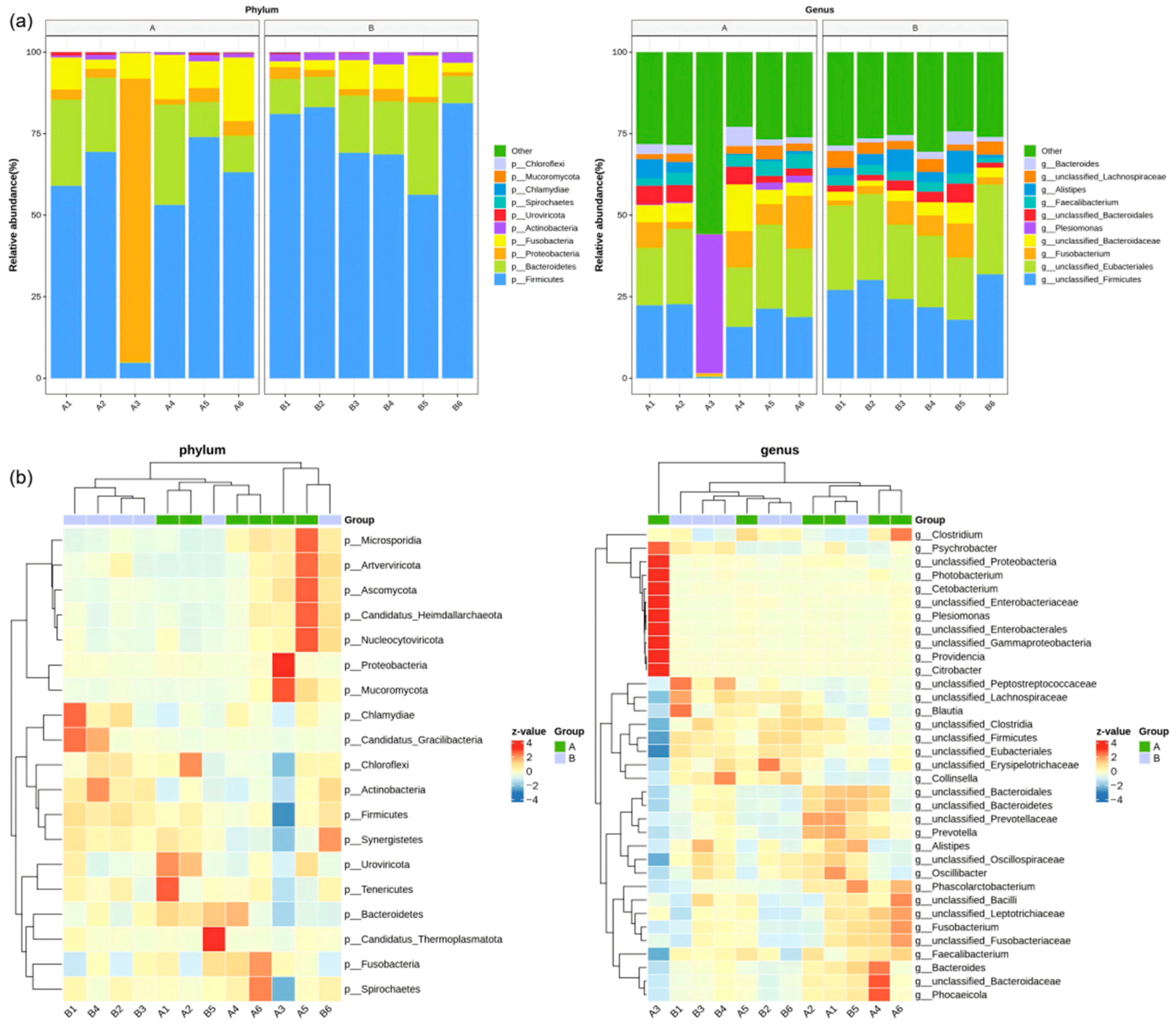
As demonstrated in Figure 1, the intestinal microbial composition of spotted seals exhibited slight variations at the phylum level before and after feeding artificial compound feed. The predominant phylum was identified as Firmicutes, while Bacteroidota emerged as the subdominant phylum. A comparative analysis was conducted between Group A and Group B before and after feeding seals an artificial compound feed. The results indicated that the relative abundance of Firmicutes and Bacteroidetes in the intestines of spotted seals increased, while the proportion of Proteobacteria decreased, after feeding the artificial compound feed. It is noteworthy that A3 is a spotted seal fed with chilled bait, and the abundance of Proteobacteria in its intestinal flora was significantly higher than that of other groups. This resulted in the destruction of the dynamic balance of the flora. However, following the administration of artificial compound feed, the intestinal flora of B3 returned to normal, and the abundance of Proteobacteria decreased. Prior to the provision of artificial compound feed, the intestinal flora of spotted seals at the genus level was predominantly comprised of Firmicutes, bacteria belonging to the order Eubacteriales, and Fusobacteriales. Following the administration of artificial formula feed, the dominant and subdominant bacterial phyla were identified as belonging to the phylum Firmicutes and the order Eubacteria. A notable change in relative abundance was observed, with a concomitant increase in the relative abundance of Firmicutes and a decrease in the relative abundance of Fusobacteria.
Heatmaps at the phylum and genus levels revealed significant variations in microbiota abundance across multiple taxa within groups A and B. These findings suggest that the consumption of fresh and artificially formulated diets by the seals resulted in selective alterations to their gut microbiota composition. Specifically, the ingestion of fresh diets has been hypothesized to promote the proliferation of bacteria associated with protein and lipid metabolism.

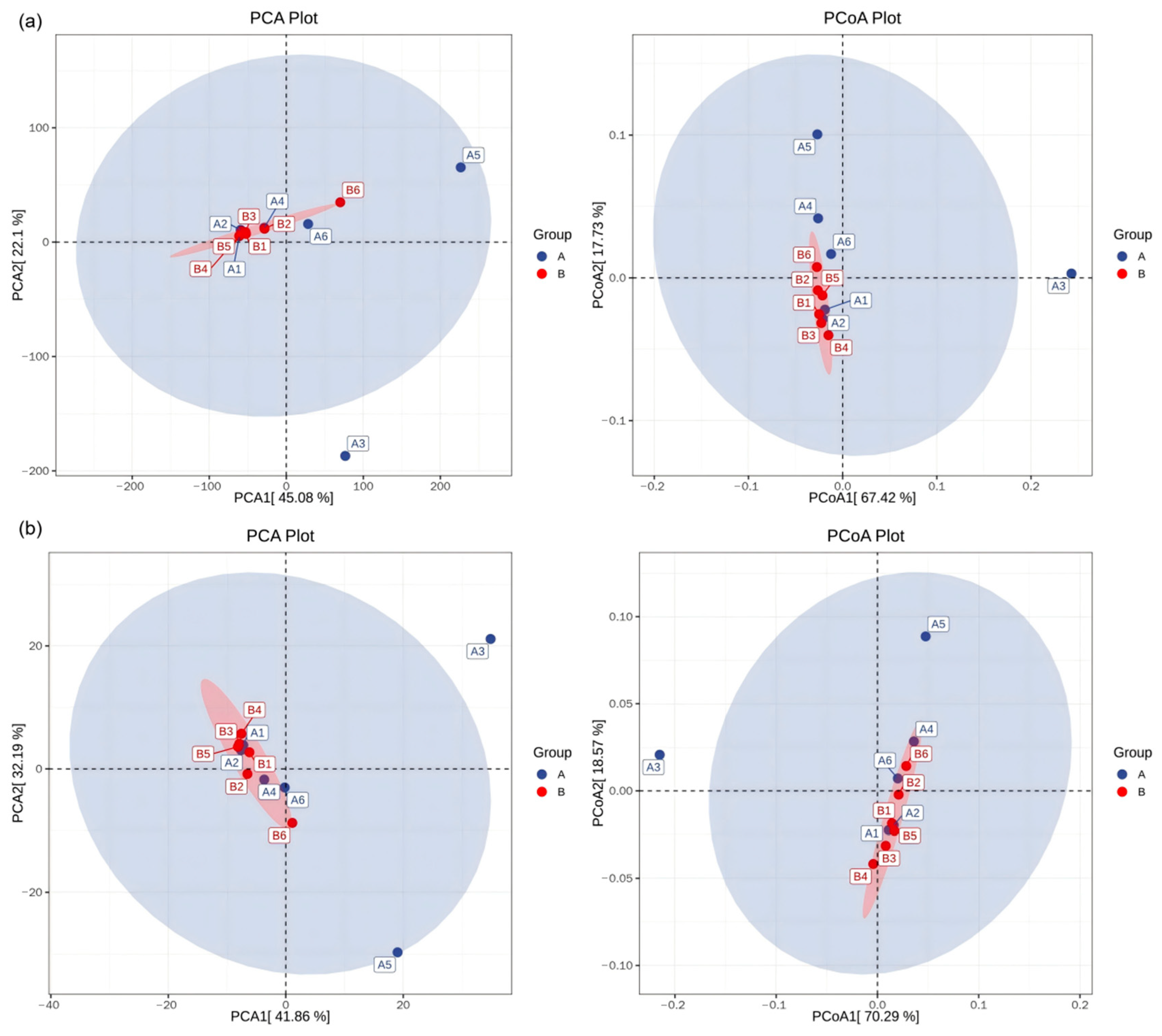
3.2. PCA and PCoA Analysis of Intestinal Flora of Spotted Seals

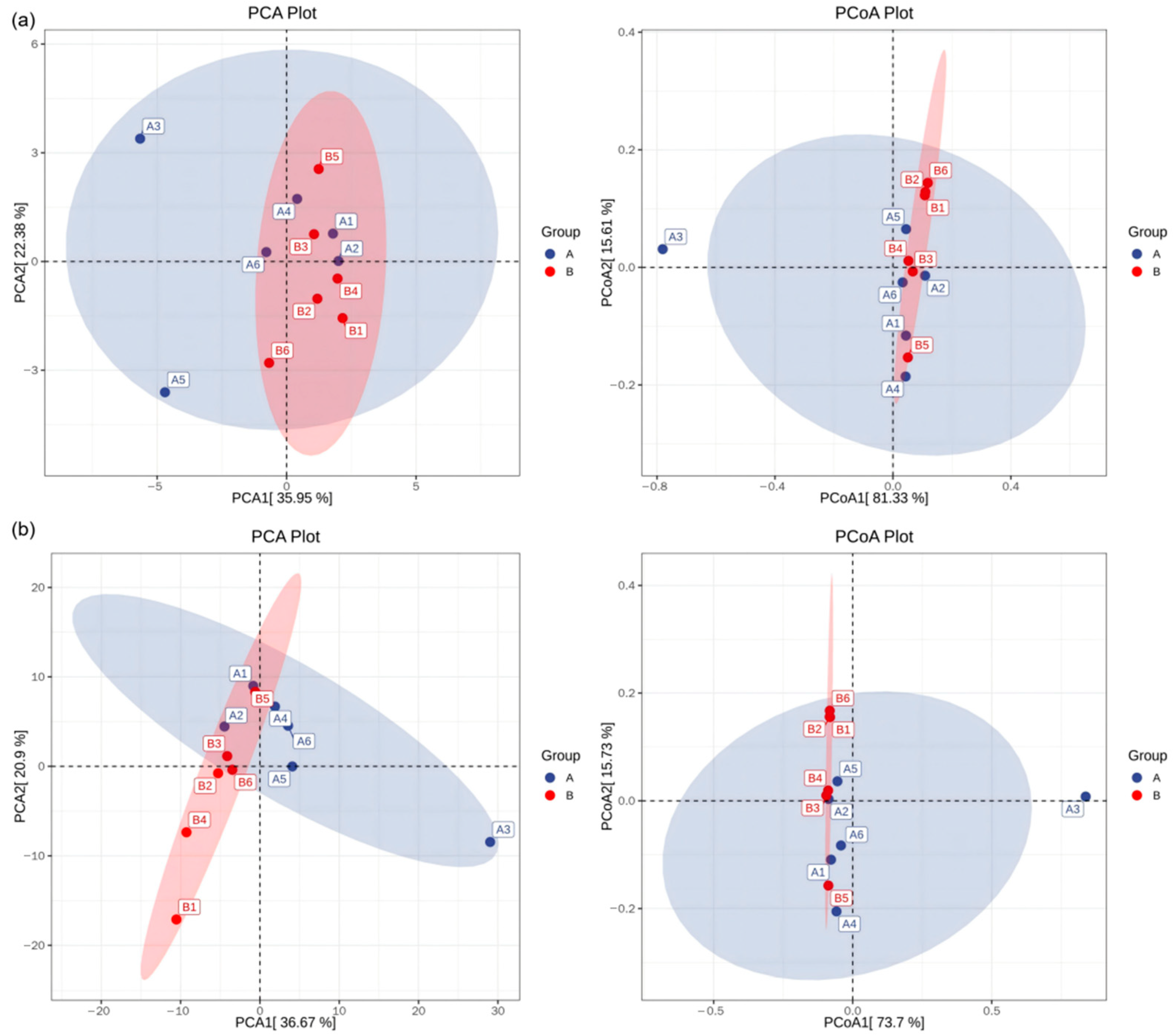
PCA is an acronym for principal component analysis. The methodology employed involves the utilization of multivariate statistical techniques to condense the dimensionality of the observed data, thereby illustrating the disparities among multiple data sets through the medium of a two-dimensional coordinate graph. The distribution patterns of samples of different categories in low-dimensional space can manifest as either a clustering or a discrete trend, thereby intuitively revealing the heterogeneous characteristics between groups. The degree of similarity in the composition of the samples is directly correlated with the proximity of those samples in the PCA graph. The similarity of sample composition is directly related to the proximity of samples in the PCA plot. Figure 2a shows the left PCA plot, where group A is mainly located on the right side of the PCA1 axis (e.g., A2, A4, and A1), while group B is mainly concentrated on the left side (e.g., B1, B2, and B3). This observation indicates that there are substantial disparities in the microbial structure of the two groups, with these disparities being predominantly driven by the PCA1 axis, accounting for 35.95% of the variation. Principal coordinates analysis (PCoA) is a dimensionality reduction sorting method analogous to principal component analysis (PCA) based on distance matrix analysis. Figure 2a right shows that groups A and B are clearly separated on the PCoA1 axis (contribution rate of 81.33%), and some samples (e.g., B4 and B5) are close to group A, indicating that the individual microbial communities of group B are similar to those of group A. It was also determined that the microbiota similarity between individuals in group A was greater, while group B exhibited higher dispersion in both figures, indicating that the microbiota differences between individuals in the artificial feed group were substantial, which may be influenced by feed adaptability or individual response differences.
In the genus-level PCA plot, the sample points of group A (freshly chilled feed) were primarily concentrated in the upper left quadrant, while the sample points of group B (artificial feed) were predominantly located in the lower right. Figure 2b a clear separation (36.67%) between the two groups on the first principal component axis (PC1), indicating that different diets are the main driving factor for the differences in the gut microbiota structure at the genus level in spotted seals. The sample points of group B (B1–B6) exhibited higher aggregation and a denser spatial distribution. This finding indicates that the provision of standardized artificial feed to individual spotted seals results in the establishment of a more consistent and stable gut microbiota structure. In contrast, the distribution of sample points of group A (A1–A6) exhibited relatively dispersed characteristics, suggesting that even when fed the same freshly chilled feed (Pacific herring), there is still significant natural variation in the microbiota structure among individuals. This variation may be related to individual differences in fish, feed intake, or the physiological state of the host.

3.3. Results of LEfSe Analysis of Gut Microbiota Species

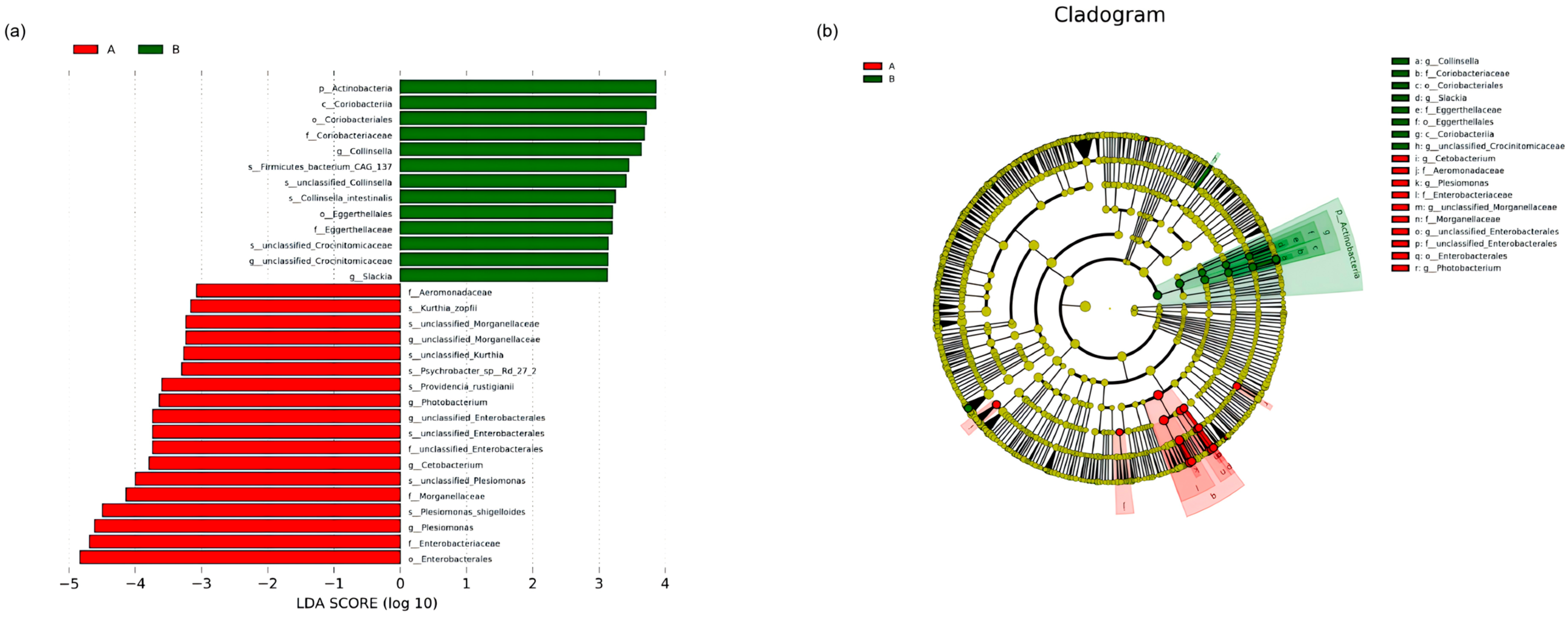
The analysis in Figure 3 showed that the gut microbiota of the two groups of spotted seals differed significantly at multiple taxonomic levels (from phylum to species). These differentially expressed microbiota constituted the characteristic microbial communities under their respective feeding conditions. LEfSe analysis revealed that the characteristic biomarkers for group A were Actinobacteria, particularly Collinus. The characteristic biomarkers for group B were Proteobacteria, particularly Luminobacter and Cetacea. The red clusters were predominantly concentrated on a major branch of the phylum tree, corresponding to Actinobacteria and its subclass Coriobacteriia. This finding suggests that the proliferation of a phylogenetically concentrated group of microorganisms (related to Actinobacteria) is selectively promoted by freshly chilled food. The green clusters were distributed on another major branch of the phylum tree, which contained a large number of Proteobacteria, particularly Enterobacteriaceae and Aeromonaceae within the class Gamma-Proteobacteria. This finding suggests that the microbiota enriched by artificial feeds exhibit increased phylogenetic diversity while belonging to the same large phylum, indicating the potential for broader, environmentally responsive functions. The figure indicates that the distinct microbiota resulting from the two feeds are classified into different bacterial phyla at the evolutionary origin. This finding provides a quantitative illustration of the substantial structural influence of feed type on the gut microbiota ecosystem.

3.4. Gut Microbiota Functional Annotation Analysis

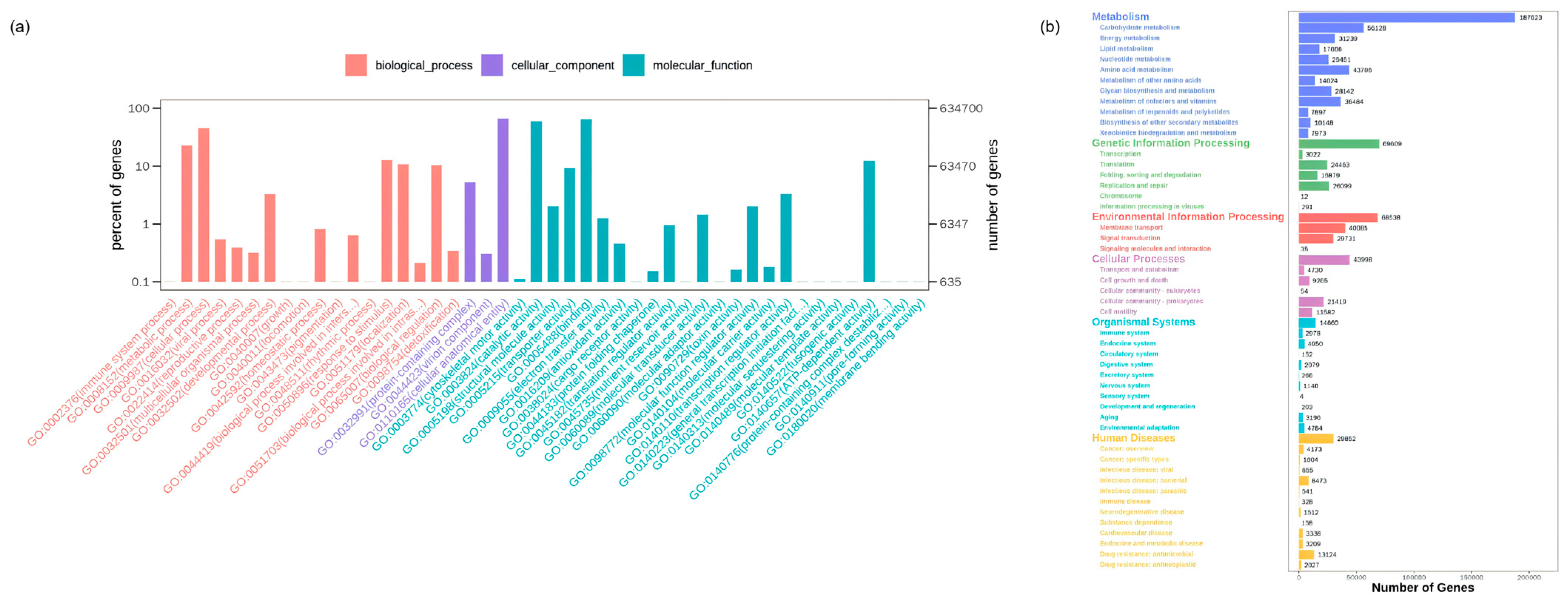
Based on GO level 2, the three parts of molecular function, biological process, and cellular component were statistically plotted. For spotted seals fed artificial formula, the results are as follows. As shown in Figure 4, the most annotation information was obtained in the biological process and molecular function categories, while the cellular composition category had the least annotation information. Multiple medium peaks appeared in the biological process category (20–40% range), indicating more information on metabolic processes, immune regulation processes, and stress responses. This suggests that group A may maintain a more stable body state. Regarding molecular function, 49.1% of the peaks appeared in molecular function. The largest amount of information was related to enzyme activity, catalytic activity, and nutrient transport carrier binding. This indicates that group B may require stronger nutritional metabolic adaptability. There was little difference in the annotation of cellular components, with the main peak at <30%. Artificial feed may affect the structural integrity of intestinal cells.
Figure 4b shows the distribution of KEGG annotations, indicating that metabolic pathways are dominant, with the highest number of genes associated with carbohydrate metabolism (56,128 genes), amino acid metabolism (43,706 genes), and energy metabolism (31,239 genes). This finding suggests that the gut microbiota of spotted seals plays a pivotal role in nutrient breakdown, energy acquisition, and anabolism. Furthermore, the analysis revealed that lipid metabolism (17,666 genes) and nucleotide metabolism (25,451 genes) exhibited elevated activity, suggesting the capacity of gut microbiota to influence host lipid and nucleic acid metabolism. The carbohydrate metabolism pathway exhibits the most extensive array of genes, a feature that may be associated with the presence of plant polysaccharides or dietary fiber, which are frequently incorporated into artificial feed.

3.5. Functional Difference Principal Component Analysis

The utilization of both GO and KEGG annotations has led to the discernment of substantial disparities in the functional characteristics of the gut microbiome among spotted seals that have been fed distinct diets. This observation has been achieved through the implementation of PCA and PCoA analyses. Against the backdrop of the GO annotation in Figure 5a, PCA and PCoA analyses showed that the two groups of spotted seals formed significantly different clusters in the functional space, indicating systematic differences in the gut microbiota of spotted seals fed refrigerated and artificial diets in terms of biological processes, molecular functions, and cellular components. The chilled diet group may have experienced an enrichment of enzyme systems related to the efficient breakdown of animal proteins and lipids. In contrast, the artificial diet group may have undergone an upregulation of functional genes associated with complex polysaccharide degradation and heterologous substance metabolism.
In the context of KEGG annotation, the two groups exhibited significant segregation in metabolic pathway space, suggesting that disparate diets resulted in a shift in the overall metabolic strategy of the gut microbiota. Figure 5b shows that the high similarity of the composition of the intestinal flora metabolic pathways among different spotted seal individuals (Group B) indicates that the artificial feed formulation was successful, resulting in a high similarity of the composition of the intestinal flora metabolic pathways among different individuals.
The findings from these two annotation results demonstrate that disparate nutrient intakes can influence the host’s physiological state by selecting specific microbiota to express specific functions. While artificial compound feeds do allow for precise control over nutrient ratios, they also lead to the homogenization and uniformity of gut microbiota functions, which may weaken the functional resilience of the gut microbiota in response to environmental changes.

3.6. Comparative Analysis Results of GO Functionality

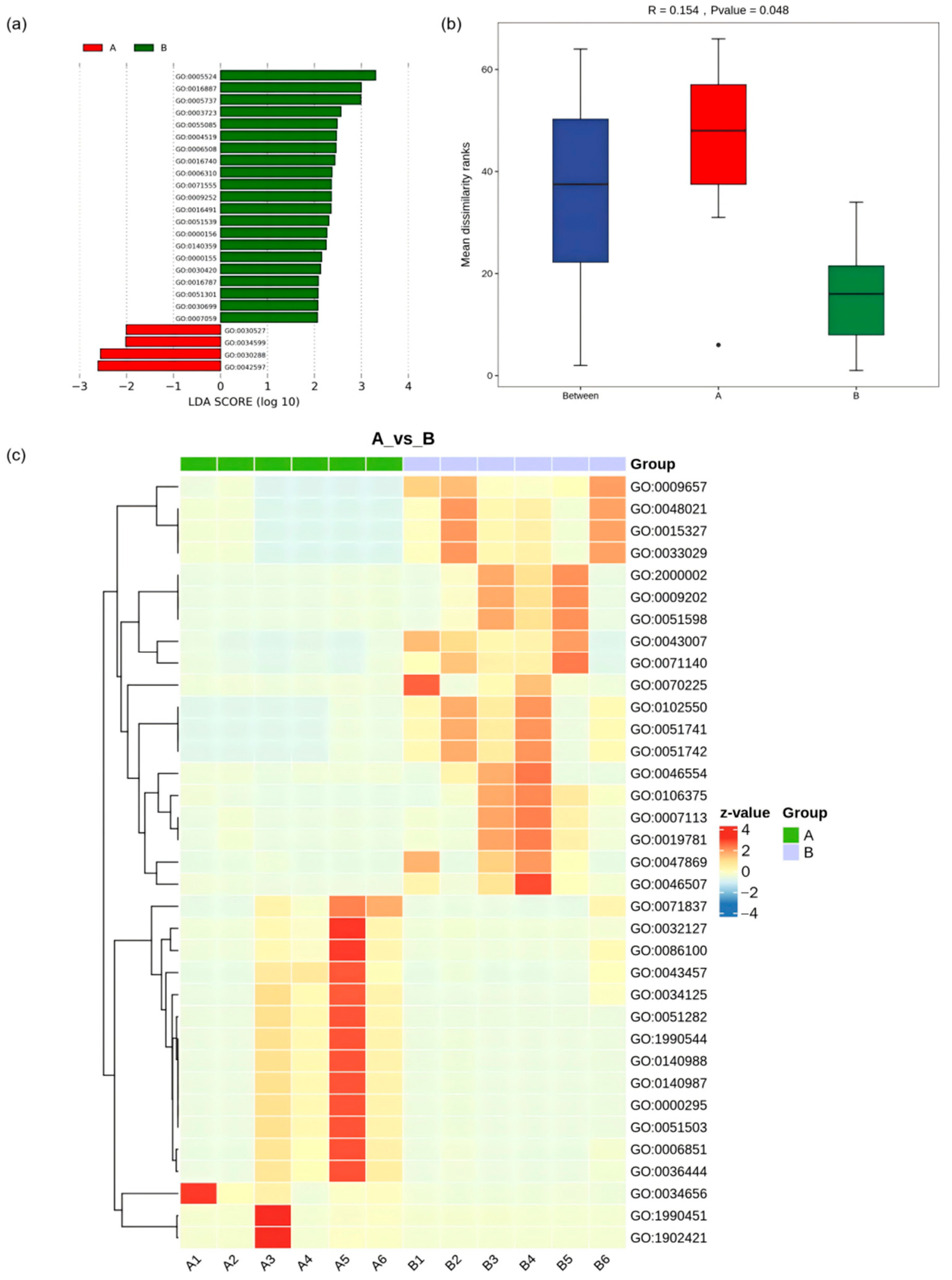
Figure 6 presents the functional biomarkers that exhibited significant disparities between the groups, as determined by LefSe analysis. The functions of group A are enriched in the following ways: (1) energy metabolism (e.g., ATP binding, ATPase activity, mitochondrial-related functions) and (2) nucleotide metabolism (e.g., GO:0042597 periplasmic space function, GO:0030288 periplasmic space function at the outer membrane boundary, etc.). The functions of group B are enriched in oxidative stress response, gene expression regulation (e.g., RNA polymerase II transcription), and detoxification pathways (e.g., GO:0005524 ATP synthesis). The following genes were found to be associated with the term “ATP hydrolysis activity”: GO:0005737 cytoplasmic functional genes, GO:0003723 RNA synthesis, GO:0055085 transmembrane transport, GO:0004519 endonuclease activity, GO:0006508 protein hydrolysis, and GO:0016740 transferase activity.
ANOSIM is a nonparametric test that is used to assess whether the differences between groups are significantly greater than the differences within groups. The findings indicate a statistically significant disparity in GO function between Group A and Group B (p < 0.05). This discrepancy between groups is found to be more pronounced than the variation observed among individuals within each group (R value significantly >0).
The heatmap offers a refined and visual representation of the differences in GO function categories. An analysis of the clustering tree and sample grouping color bars, located at the upper or lateral portion of the heatmap, reveals that samples from groups A and B are distributed across distinct primary branches. This observation serves to further substantiate the operational segregation between these groups. Group A is predominantly implicated in functions associated with protein and lipid metabolism, while Group B is predominantly implicated in functions associated with carbohydrate metabolism and stress response.

3.7. Comparative Analysis Results of KEGG Functionality

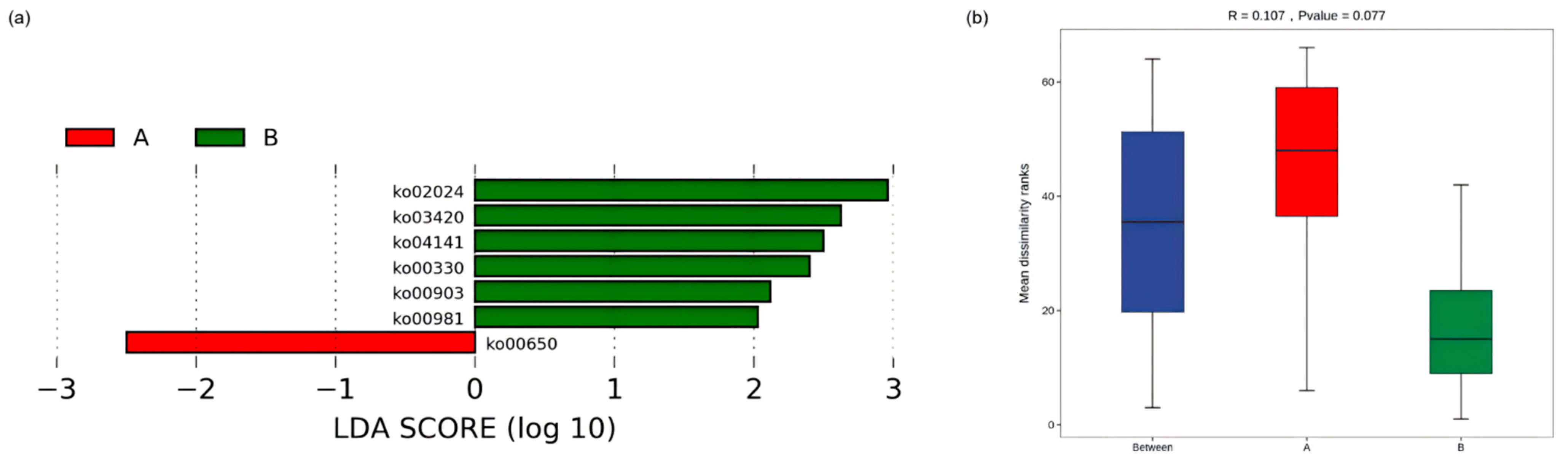
Figure 7, employing LEfSe analysis (a) and ANOSIM analysis (b), elucidates the differential effects of feeding chilled fish feed (Group A) and formulated feed (Group B) on the gut microbiota function of spotted seals at the metabolic pathway level. LEfSe analysis identified several specific KEGG metabolic pathways that were significantly enriched between the two groups. However, ANOSIM analysis revealed that, despite the observed differences in these specific pathways, the overall KEGG pathway profiles of the two groups did not reach statistical significance (p = 0.077). This finding indicates that the effects of feed are more concentrated on the adjustment of specific functional modules rather than the reconstruction of the global metabolic network.
The pathway enriched in Group A primarily included ko04141, which involves the endoplasmic reticulum, a membrane-bound organelle that plays a pivotal role in protein processing. This process encompasses a series of complex reactions, including protein folding, modification, quality control, and transport. The substantial enrichment of Group A is directly associated with the elevated animal protein content of the chilled fish feed. ko00330: Arginine and proline metabolism is responsible for the synthesis, degradation, and interconversion of two important amino acids (arginine and proline). These findings indicate that group A’s gut microbiota actively participated in the metabolism of these two specific amino acids from fish proteins. ko00903: The degradation of limonene and pinene indicates specific adaptations in the lipid/heterogeneous metabolism of group A microbiota.
The pathways enriched in group B primarily comprise ko02024, which relates to quorum sensing, a communication system by which bacteria sense population density and coordinate group behavior through the secretion and detection of signaling molecules. This finding is particularly noteworthy as it aligns with the established characteristics of group B, further underscoring its significance. The observed enrichment patterns suggest a potential for enhanced communication among bacteria within the gut environment, facilitated by the artificial feed, which is characterized by specific nutrient ratios and physicochemical properties. This suggests that the group B microbial community may be in a highly sensitive state and requires coordinated adaptation. ko00065: Fatty acid biosynthesis, which encompasses the synthesis of saturated and unsaturated fatty acids, is another such pathway. The enrichment of this pathway reflects the difference between the group B microbiota and group A in lipid metabolism strategies. The fatty acid composition and ratio of fat sources in artificial feed (e.g., fish oil) may differ from those of natural chilled fish. Consequently, gut microbes may need to adjust their fatty acid synthesis capabilities to maintain the optimal function of their cell membrane lipid composition or to cope with specific fatty acid substrates.

3.8. Association Analysis of Feed Nutrient Variables and Microbial Communities

The PERMANOVA analysis in Table 4 showed that diet type had a significant impact on gut microbiota structure (R2 = 0.142, p = 0.04), indicating that artificial compound feed and refrigerated herring feed lead to changes in the overall composition of gut microbiota. However, the influence of diet was found to account for only a portion of the observed variation, indicating the possibility of additional factors, such as individual differences or environmental influences, contributing to the observed outcomes. In this study, we did not perform a power analysis beforehand, but post hoc tests showed that the statistical power was approximately 0.63 (based on R2 = 0.142, α = 0.05) when testing for differences in gut microbiota between groups, indicating a certain risk of Type II error.
The Mantel test results in Table 5 showed that there was no statistically significant correlation between changes in feed nutrient composition and changes in gut microbiota structure (r = 0.126, p = 0.111). This outcome may be attributable to the restricted sample size and the absence of diversity in nutrient variables across groups. Alternatively, it may imply that gut microbiota alterations are influenced not only by nutrient composition but also by additional feed characteristics, such as physical structure and additives.
In the Spearman results in Table 6, after FDR correction, only g_Plesiomonas retained statistical significance (q < 0.05), which was significantly negatively correlated with protein (ρ = −0.82) and significantly positively correlated with fat and water (ρ = +0.82). The levels of the aforementioned amino acid exhibited a decline in the artificial diet (high protein) group and an increase in the refrigerated herring (low protein) group. This finding aligns with the observed trend of fluctuations in the dietary fat and moisture content of the samples. Specifically, the refrigerated herring samples exhibited higher levels of fat and moisture, while the artificial diet samples demonstrated lower levels of these nutrients. Refrigerated herring has been demonstrated to provide more suitable substrates for Plesiomonas growth (such as specific fatty acids). Conversely, certain components in artificial diets (such as high protein and low moisture) have been shown to inhibit its growth.

4. Discussion

Sample analysis showed that spotted seals had a rich intestinal microflora. The frozen food (Group A) exhibited a significant enrichment of the Actinobacteria community, with Collinsella as the core. In contrast, the artificial feed (Group B) selected the Proteobacteria community, which was represented by Photobacterium and Cetobacterium. This finding aligns with the conclusion of human and animal studies that diet rapidly changes the gut microbiota [14]. Actinobacteria, notably Collinsella, have been observed to exhibit a high degree of anatomical and metabolic affinity with bile acid metabolism and sterol conversion in the mammalian gastrointestinal tract [15]. The enrichment of these microorganisms may be attributed to the presence of cholesterol and bile acid precursors in frozen herring, which establishes a distinctive ecological niche for these microorganisms. Conversely, the prevalence of marine-derived Proteobacteria markers (e.g., Photobacterium) in the artificial feed Group B indicates that the incorporation of environmental microorganisms into feed ingredients (fishmeal) or during the processing and feeding process is a pivotal mechanism that influences microbiota composition [16]. This finding suggests that artificial feed has not successfully “replicated” the core of the functional microbiota shaped by natural feed. Instead, it has introduced a different, more environmentally relevant microbial system. Groups A and B were primarily composed of Firmicutes, Bacteroidetes, and Fusobacteria, with Firmicutes accounting for the largest proportion. At the genus level, the dominant flora in the intestines of spotted seals fed the two diets were Firmicutes and Fusobacteria. These microorganisms play an important role in the growth, development, and reproduction of spotted seals and are closely related to immunity, digestion, and biological barriers. Changes in intestinal microorganisms are affected by various external factors, including changes in the environment, dietary changes, and the animal’s health. Spotted seals are listed as first-class nationally protected animals due to their rare quantity, and few studies have examined their dietary structure and intestinal flora under artificial breeding conditions. Tian’s study found that the dominant intestinal flora of spotted seals were Firmicutes, Fusobacteria, and Actinobacteria, consistent with the results of this experiment [17]. Spotted seals are mammals, and there have been many studies on the relationship between changes in the intestinal flora of other mammals and dietary structure. In golden snub-nosed monkeys, studies have shown that changes in dietary structure and living conditions can lead to changes in the intestinal flora of golden snub-nosed monkeys. The microbial structure and relative abundance in the intestines of artificially fed golden snub-nosed monkeys are different from those of wild golden snub-nosed monkeys. Wild golden snub-nosed monkeys are prone to digestive tract diseases such as diarrhea. The proportion of Bifidobacterium of the Actinobacteria phylum and Lactobacillus of the Firmicutes phylum in the intestines of golden snub-nosed monkeys with diarrhea decreases significantly [18,19]. Similarly, in a study on weaned piglets, it was found that the Bacteroidetes genus in piglets with diarrhea was lower than that in healthy piglets, proving that the intestinal flora is closely related to the health of the animal’s body. The composition and proportion of the intestinal flora can reflect the health status, immune ability and growth of an organism [20]. The results of feeding different diets to sika deer showed that the diversity of rumen in sika deer fed with corn stalks was higher than that in sika deer fed with oak leaves, and the dominant bacterial phyla were Bacteroidetes and Firmicutes [21]. Adding Bacillus coagulans to the diet of rats can inhibit inflammatory responses and oxidative stress in cecal tissue [22]. Many studies on different animals have shown that changes in diet can change the structure of intestinal flora, and changes in intestinal microbial homeostasis are associated with changes in the health of the animal body. It is also noteworthy that the dispersion differed between the two groups. The greater dispersion evident in Group B may be ascribed to variations in the palatability of artificial diets and individualized adaptive responses to novel diets. In contrast, the reduced dispersion observed in Group A is indicative of the convergence of gut microbiota resulting from long-term, natural feed. This phenomenon suggests that short-term feed conversion is inadequate to restore gut microbiota homeostasis in all individuals.
Firmicutes, as an important functional group of intestinal microorganisms, can significantly improve the host’s absorption and metabolic efficiency of fatty acids by promoting the expression of lipid transport proteins and activating the β-oxidation pathway [23,24,25]. Studies have shown that Bacteroidetes and Firmicutes have a synergistic effect in carbohydrate metabolism. The increase in their abundance can synergistically promote the decomposition and metabolic efficiency of dietary fiber and polysaccharides, and then enhance the host’s nutrient absorption capacity through metabolites such as short-chain fatty acids [26,27]. The main difference in nutritional composition between artificial feed and chilled bait is the protein content. The protein content of artificial feed is about 42%, while the protein content of chilled bait is about 16%, which may be the reason for the change in the relative abundance of the flora. The results of the Permanova analysis indicate a correlation between shifts in the composition of the gut microbiota and the nutritional content of the feed. To illustrate this point, consider the ecological functions of Plesiomonas in the gut of aquatic animals, including chitin degradation and potential pathogenicity. In addition, the nutritional characteristics of refrigerated herring are high in fat and moisture, while those of artificial feed are high in protein, low in fat, and low in moisture. The hypothesis that the observed changes in abundance are associated with the availability of fatty acid substrates and alterations in the pH of the gut environment is a subject of speculation. It is worth noting that if the dietary structure of animals changes, it will cause an imbalance in the structure of the intestinal flora, which is mainly manifested by an abnormal increase in the abundance of Proteobacteria. The imbalance in the ratio of Bacteroidetes to Firmicutes may interfere with the host’s energy homeostasis regulation network by changing the metabolite spectrum (such as the butyrate/propionate ratio). In this study, artificial compound feed had a significant effect on improving the richness of the intestinal flora of spotted seals, and both Firmicutes and Bacteroidetes showed an increase in abundance. The relative abundance of Proteobacteria in the intestine of a spotted seal fed with chilled bait was extremely high. As one of the bacterial phyla with the richest microbial diversity, Proteobacteria is widely distributed in marine ecosystems due to its strong environmental adaptability, especially on the surface of marine organisms and in aquaculture waters. It occupies a dominant position [28]. This phylum not only dominates the biogeochemical cycle of carbon, nitrogen and other biogenic elements in the marine environment, but also affects the host’s energy acquisition through the intestinal carbohydrate fermentation metabolic pathway [29]. When the abundance of Proteobacteria in the intestinal flora of animals is within an appropriate range, their metabolic activity can significantly improve the decomposition efficiency of polysaccharides, thereby improving the host’s growth performance by optimizing the nutrient conversion mechanism. However, Proteobacteria also include a variety of intestinal pathogenic bacteria (such as Escherichia coli and Salmonella), and their abnormal proliferation is often regarded as a biomarker of intestinal microecological imbalance [30].
This study analyzed the effects of refrigerated herring and formulated diets on the composition and function of the gut microbiota in spotted seals. The analysis employed 16S rRNA sequencing and metagenomics methods. PERMANOVA analysis showed that diet type significantly affected the overall structure of the gut microbiota. However, its explanatory power was low (R2 = 0.142), suggesting that individual differences or other uncontrolled factors may also play an important role. The Mantel test showed no statistically significant linear correlation between changes in dietary nutrient composition and gut microbiota structure (r = 0.126, p = 0.111). This result indicates that changes in the gut microbiota are influenced not only by nutrient composition but also by factors such as feed physical properties and feeding behavior. Spearman correlation analysis showed a significant correlation between the relative abundance of the genus Plesiomonas and nutrient parameters (FDR q < 0.05). Although other genera also showed correlations, these correlations did not reach statistical significance after multiple-test correction, possibly due to the small sample size and limited statistical power. In order to further analyze the effects of artificial formula feed on the intestinal flora of spotted seals from the perspective of gene function, metagenomic sequencing was used to conduct experiments. Understanding the gene functions of the intestinal flora of spotted seals is crucial to further assess the health status of marine mammals and improve conservation strategies. Compared with traditional chemical methods, metagenomic analysis can simultaneously provide high-throughput information on nutrition and innate immunity and provide an overview of genetic capacity [31]. In addition, metagenomic methods can also reveal a more comprehensive picture of the classification and functional diversity of these key biosynthetic processes. The metabolic pathways analyzed in this study were based on genomic DNA analysis, focusing on the functional capabilities of these microbial groups rather than actual activities. The results of this study showed that the main functions of microorganisms in the intestines of spotted seals fed artificial formula feed are concentrated in biological processes and molecular functions, focusing on catalytic functions, immune processes and metabolic processes. There is increasing evidence that the nature of a diet determines the composition of the gut microbiota of different animals [32]. For pinnipeds, differences in the gut microbiota of spotted seals have been shown to be caused by different foods in their living environment [33]. As the nutritional composition (carbohydrate, protein, and fat type) of artificial formula feeds differs from that of the freshly frozen food (e.g., herring) of spotted seals, the upregulation of catalytic function may indicate that their digestive system requires more enzymes (e.g., proteases, lipases, carbohydrases) to break down and absorb specific nutrients in artificial feeds. The active expression of catalytic-related genes may be the result of epigenetic regulation of short-term changes in diet rather than changes in the genome itself [34]. In this study, the nutritional composition of artificial formula feeds showed that the protein content was much higher than that of freshly frozen food, while the fat content was lower, which may be related to the fact that the molecular functions of spotted seals in the artificial formula feed group were concentrated on amino acid metabolism. As part of the main nutrients in seal diets, amino acids should be given special consideration because they not only support the growth and survival of bacteria in the gastrointestinal tract, but also regulate energy and protein homeostasis in the organism [35,36,37]. Intestinal bacteria may play an important role in host amino acid homeostasis and health, as shown in a study in which the free amino acid profile along the gastrointestinal tract of germ-free mice was altered compared with that of conventional mice [38]. Along the gastrointestinal tract, digestive and endogenous proteins are hydrolyzed by proteases and peptidases of both host and bacterial origin into peptides and amino acids, which are then further utilized by intestinal bacteria and the host [39,40]. By changing feed as a nutritional intervention strategy, the intestinal microecology of animals can be improved through nutrient composition optimization.
Further analysis of the results by annotating microbial functions with GO revealed that in this study, the spotted seals that ate fresh-frozen herring had advantages in energy supply, cell homeostasis, neural function, and anti-inflammatory ability, while the spotted seals that ate artificial formula bait had certain deficiencies in some key metabolisms. Fish is generally regarded as the most cost-effective source of high-quality animal protein, which is essential for improving nutritional status, food safety, health, and related diseases [41]. In addition to providing essential nutrients, it also contains a large amount of fatty acids, amino acids, and some of the most important vitamins and minerals, which are energy sources for a healthy life [42]. Nowadays, fish and their products are considered an important part of the human diet due to their high nutritional content, especially in terms of protein and omega-3 fatty acids, which are believed to contribute to the maintenance of good health, such as the prevention and treatment of cardiovascular, inflammatory and neurological diseases [43,44]. Herring belong to the category of fatty fish, with a fat content greater than 8% [45]. Fish fat/fish oil is mainly composed of n-polyunsaturated fatty acids (PUFA), including EPA and DHA, which are mainly present in liquid form and flow freely in blood vessels. The intake of PUFA is considered to play a vital role in health, nutrition and disease prevention [46]. In the intestines of spotted seals that were fed herring, GO:0005737 mitochondrial synthesis function, GO:0036444 mitochondrial calcium ion uptake, and GO:1990544 mitochondrial membrane potential maintenance increased significantly. Mitochondria are the core of energy metabolism and participate in oxidative phosphorylation and fatty acid oxidation. The ω-3 fatty acids (DHA/EPA) in herring support mitochondrial membrane fluidity, enhance the efficiency of the electron transport chain, and improve the diving endurance of spotted seals. At the same time, calcium and vitamin D in herring may synergistically maintain calcium homeostasis and support mitochondrial metabolic adaptability. Functions related to ATP energy metabolism also showed significant changes in group A, including GO:0043457 purine nucleotide metabolism regulation, GO:0005524 ATP binding, and GO:0016887 ATPase activity, which are closely related to the rich digestible high-quality protein and lipids in herring [41,47]. Protein is composed of amino acids bound together by peptide bonds. Fish contain a balanced amount of all essential amino acids with a digestibility value of over 90% [48]. This study shows that chilled feed is more in line with the natural needs of spotted seals by supporting efficient energy metabolism, antioxidant defense and neurological function. Although artificial feed for spotted seals can activate compensatory pathways (such as detoxification and oxidative stress response), it may cause metabolic burden and long-term health risks. In the future, the optimization of artificial feed formula should give priority to simulating natural nutritional composition, reducing oxidative stressors, and strengthening key metabolic pathways such as mitochondrial function and transmembrane transport, so as to achieve the long-term practical application of artificial feed for spotted seals.
Notwithstanding the comprehensive preservation of the metabolic network, LEfSe analysis identified a series of characteristic enriched pathways at KEGG Level 3. These “fine-tuning” phenomena precisely reflect the precise adaptation of microorganisms to specific feed components (Figure 7a). The enrichment of pathways related to protein processing (ko04141) and arginine/proline metabolism (ko00330) in group A (frozen feed) directly corresponds to its high animal protein dietary characteristics, indicating that the microorganisms upregulated the energy production and conversion pathways for processing large amounts of exogenous proteins and specific amino acids [49]. Conversely, the substantial enrichment of the quorum-sensing (ko02024) pathway in group B (artificial compound feed) is particularly salient. Quorum sensing is a communication system by which bacteria regulate behaviors such as biofilm formation and virulence factor expression [50]. The potential significance of the enrichment of the quorum-sensing pathway in group B may reflect enhanced interspecies communication by microorganisms to adapt to artificial feed or adjustments in group behavior under stress. It is also noted that activation of this pathway may be associated with the risk of opportunistic pathogens, requiring further investigation. The results of this study suggest that the intestinal environment created by artificial feed (e.g., nutrient ratios and possible additives) promotes chemical communication between bacteria. This phenomenon may represent a strategy employed by the microbial community to orchestrate its adaptation to the novel environment. Alternatively, it could be a factor contributing to the modulation of the virulence of conditionally pathogenic bacteria [51]. Concurrently, the enrichment of insect hormone biosynthesis (ko00981) and fatty acid biosynthesis (ko00065) pathways in group B further suggests that the microorganisms have adapted their metabolic capacity for complex heterologous substances and their own membrane lipid composition to accommodate potential phytosterols and diverse fat sources in artificial feed [52].
The present study is not without its limitations. First, the sample size is relatively small, and all spotted seals were kept in captivity. Therefore, it is necessary to exercise caution when extrapolating the results to wild populations. Secondly, metagenomic sequencing revealed functional potential; however, transcriptomic or proteomic data can more realistically reflect the actual expression of function. This study established the association between feed and microbial structure and function. However, further research is necessary to verify how changes in the microbial community directly affect the physiological health of spotted seals, such as their nutritional status and immune indicators. In order to achieve this, it is necessary to integrate host metabolomics and immunological data. Future research should concentrate on the following: First, the sample size should be expanded, and long-term feeding experiments should be conducted to assess the stability of changes in gut microbiota and function and their long-term health effects. Second, targeted metabolomics should be used to quantitatively detect downstream metabolites of key differential pathways (such as quorum sensing and arginine metabolism) and directly verify them at the functional level [53]. Third, based on the results of this study, customized prebiotics or feed additives should be developed to promote the colonization of beneficial functional microbiota (such as butyrate-producing bacteria) and inhibit the activation of potentially harmful pathways (such as excessive quorum sensing). This would achieve synergistic optimization of nutritional supply and microecological health in the artificial breeding of spotted seals.
The present study employed a sequential self-controlled design. While this approach did not entirely eliminate the potential influence of time variations, the reliability of the conclusions was enhanced through the following measures: all subjects were housed in the same environment, and environmental variables were controlled; the animals maintained stable health conditions during the experiment, with no disease or abnormal behavior; a clear adaptation phase was established before diet conversion; and the samples within each group showed significant clustering in PCA/PCoA, indicating that diet type was the main driver of changes in gut microbiota structure. Subsequent research endeavors may involve the exploration of crossover designs, with the objective of providing additional validation for these findings, provided that the necessary conditions are met.

5. Conclusions

In conclusion, this study confirms that formulated diets can induce short-term changes in the gut microbiota structure of spotted seals. The results of this study are preliminary and exploratory and can provide a reference for the future optimization of formulated feeds. Further validation with larger sample sizes and more rigorous experimental designs (such as crossover designs) is needed to confirm these results. Furthermore, the potential health risks of long-term feeding with formulated feeds (such as metabolic burden and changes in immune function) still need to be assessed through multi-omics integration and longitudinal studies.

Author Contributions

Conceptualization, J.L. and Z.L.; methodology, J.L.; software, J.L.; validation, J.L., Z.L. and D.X.; formal analysis, J.L.; investigation, J.L. and Z.L.; resources, J.L.; data curation, J.L.; writing—original draft preparation, J.L.; writing—review and editing, D.X.; visualization, J.L.; supervision, J.L.; project administration, D.X.; funding acquisition, D.X. All authors have read and agreed to the published version of the manuscript.

Funding

This research received no external funding.

Institutional Review Board Statement

The wild spotted seals involved in this experiment were rescued from the wild. Dalian SunAsia is a member of the Dalian Endangered Marine Animal Industry-University-Research Conservation Alliance. The artificially fed spotted seals came from Dalian SunAsia, which is a Chinese company that has been issued the “People’s Republic of China Aquatic Wildlife Operation and Utilization License” and “People’s Republic of China Aquatic Wildlife Artificial Breeding License”. This experiment was conducted in accordance with the “Measures of Dalian Maritime University on Strengthening the Governance of Science and Technology Ethics” and relevant laws and regulations and was approved by the Science and Technology Ethics Committee of Dalian Maritime University (DLMU-KJLL-2025-002, 12 January 2025).

Informed Consent Statement

Not applicable.

Data Availability Statement

The original contributions presented in this study are included in the article. Further inquiries can be directed to the corresponding author.

Conflicts of Interest

The authors declare no conflicts of interest.

References

  1. Wang, Z.S.; Li, Q. Study on the effect of subchronic chloroform exposure on the intestinal microbiota of mice based on metagenomic technology. Asian J. Ecotoxicol. 2025, 20, 419–431. [Google Scholar]
  2. Tyson, G.W.; Chapman, J. Community structure and metabolism through reconstruction of microbial genomes from the environment. Nature 2004, 428, 37–43. [Google Scholar] [CrossRef] [PubMed]
  3. Ju, F.; Zhang, T. Research advances in meta-omics of microbial communities in activated sludge. Microbiol. China 2019, 46, 2038–2052. [Google Scholar] [CrossRef]
  4. Ju, F.; Zhang, T. Bacterial assembly and temporal dynamics in activated sludge of a full-scale municipal wastewater treatment plant. Isme J. 2015, 9, 683. [Google Scholar] [CrossRef]
  5. Ju, F.; Xia, Y.; Guo, F.; Wang, Z.; Zhang, T. Taxonomic relatedness shapes bacterial assembly in activated sludge of globally distributed wastewater treatment plants. Environ. Microbiol. 2014, 16, 2421–2432. [Google Scholar] [CrossRef]
  6. Hu, A.; Ju, F.; Hou, L.; Li, J.; Yang, X.; Wang, H. Strong impact of anthropogenic contamination on the co-occurrence patterns of a riverine microbial community. Environ. Microbiol. 2017, 19, 4993–5009. [Google Scholar] [CrossRef] [PubMed]
  7. Liu, Y.X.; Qin, Y.; Guo, X.X. Methods and applications in microbiome data analysis. J. Genet. Genom. 2019, 41, 845–862. [Google Scholar] [CrossRef]
  8. Lin, L.; Zhang, J. Role of intestinal microbiota and metabolites on gut homeostasis and human diseases. BMC Immunol. 2017, 18, 2. [Google Scholar] [CrossRef]
  9. Yu, D.; Meng, X.; De Vos, W.M.; Wu, H.; Fang, X.; Maiti, A.K. Implications of gut microbiota in complex human diseases. Int. J. Mol. Sci. 2021, 22, 12661. [Google Scholar] [CrossRef]
  10. Zhou, K.Y. Zoologica Sinica:Cetacea, Carnivora, Seals, Sealidae, Manatees; Science Press: Beijing, China, 2004. [Google Scholar]
  11. Han, J.B.; Yu, C.Z.; Yang, Y. Primary Studies of Captive Breeding of Spotted Seals (Phoca largha). Chin. J. Wildl. 2011, 32, 4. [Google Scholar]
  12. Wang, P.L. Distribution survey of spotted seals in Bohai Sea. Fish. Sci. 1988, 7, 5. [Google Scholar]
  13. Chen, Y.; Gong, Q.; Song, M. Identification and characterization of three novel antimicrobial peptides from Acipenser dabryanus. Fish Shellfish Immunol. 2019, 88, 207–216. [Google Scholar] [CrossRef] [PubMed]
  14. David, L.; Maurice, C.; Carmody, R. Diet rapidly and reproducibly alters the human gut microbiome. Nature 2014, 505, 559–563. [Google Scholar] [CrossRef] [PubMed]
  15. Ruiz-Limon, P.; Mena-Vazquez, N.; Moreno-Indias, I. Collinsella is associated with cumulative inflammatory burden in an established rheumatoid arthritis cohort. Biomed. Pharmacother. 2022, 153, 113518. [Google Scholar] [CrossRef]
  16. Givens, C.E.; Ransom, B.; Bano, N. Comparison of the gut microbiomes of 12 bony fish and 3 shark species. Mar. Ecol. Prog. Ser. 2015, 518, 209–223. [Google Scholar] [CrossRef]
  17. Tian, J.; Du, J.; Han, J.; Song, X.; Lu, Z. Age-related differences in gut microbial community composition of captive spotted seals (Phoca largha). Mar. Mammal Sci. 2020, 36, 1231–1240. [Google Scholar] [CrossRef]
  18. Shi, Y.D.; Sun, H.; Huang, C. Research advances in gut microbiota structure and characteristics of golden snub-nosed monkeys. Feed Res. 2024, 3, 13–18. [Google Scholar] [CrossRef]
  19. Wang, J.; Wang, Q.; Zeng, D. Comparative analysis of fecal microbiota between healthy and diarrheal golden snub-nosed monkeys (Rhinopithecus roxellanae). Chin. J. Vet. Sci. 2015, 35, 1232–1238. [Google Scholar] [CrossRef]
  20. Yang, Q.; Huang, X.; Wang, P.; Yan, Z.; Sun, W.; Zhao, S. Longitudinal development of the gut microbiota in healthy and diarrheic piglets induced by age-related dietary changes. MicrobiologyOpen 2019, 8, 923. [Google Scholar] [CrossRef]
  21. Shi, C.M.; Li, W.; Zhang, W. Comparison of gut microbiota structure in red deer (Cervus elaphus) under different captive habitats. J. Tianjin Norm. Univ. (Nat. Sci. Ed.) 2024, 44, 20–28. [Google Scholar] [CrossRef]
  22. Wang, Y.; Lin, J.; Cheng, Z.; Wang, T.; Chen, J.; Long, M. Bacillus coagulans tl3 inhibits lps-induced caecum damage in rat by regulating the tlr4/myd88/nf- κ b and nrf2 signal pathways and modulating intestinal microflora. Oxidative Med. Cell. Longev. 2022, 2022, 5463290. [Google Scholar] [CrossRef]
  23. Cottrell, M.T.; Kirchman, D.L. Natural assemblages of marine proteobacteria and members of the cytophaga-flavobacter cluster consuming low- and high-molecular-weight dissolved organic matter. Appl. Environ. Microbiol. 2020, 66, 1692–1697. [Google Scholar] [CrossRef] [PubMed]
  24. Ma, S.; Sun, Y.; Wang, F.; Mi, R.; Wen, Z.; Li, X. Effects of tussah immunoreactive substances on growth, immunity, disease resistance against vibrio splendidus and gut microbiota profile of apostichopus japonicus. Fish Shellfish Immunol. 2017, 63, 471. [Google Scholar] [CrossRef] [PubMed]
  25. Yang, Y.; Zhu, X.; Huang, Y.; Zhang, H.; Liu, Y.; Xu, N.; Ai, X. RNA-seq and 16S rRNA analysis revealed the effect of deltamethrin on channel catfish in the early stage of acute exposure. Front. Immunol. 2022, 13, 916100. [Google Scholar] [CrossRef] [PubMed]
  26. Tang, S.S.; Han, F.L.; Zhou, L. Effects of mannan oligosaccharides on growth, health and gut microbiota of Pacific white shrimp (Litopenaeus vannamei) under low-salinity stress. J. Fish. Sci. China 2021, 45, 2044–2060. [Google Scholar]
  27. Knutie, S.A.; Wilkinson, C.L.; Kohl, K.D.; Rohr, J.R. Early-life disruption of amphibian microbiota decreases later-life resistance to parasites. Nat. Commun. 2017, 8, 86. [Google Scholar] [CrossRef]
  28. Li, J.P.; Wu, Q.F.; Ma, S.C.; Wang, J.M.; Wei, B.; Xi, Y. Effect of feed restriction on the intestinal microbial community structure of growing ducks. Arch. Microbiol. 2022, 204, 85. [Google Scholar] [CrossRef]
  29. Li, C.X.; Wang, Y.Y.; Li, J.P. Therapeutic strategy analysis targeting gut bacterial respiration and energy metabolism in regulating inflammatory bowel disease progression. Acta Pharm. Sin. B 2020, 10, 2117–2127. [Google Scholar] [CrossRef]
  30. Guo, S.H.; Yu, Y.T.; Wan, J.H. Research advances in the correlation between Proteobacteria and gut microbiota dysbiosis in mammalian colon. Chin. J. Microecol. 2022, 34, 477–482. [Google Scholar] [CrossRef]
  31. Yoon, S.S.; Kim, E.K.; Lee, W.J. Functional genomic and metagenomic approaches to understanding gut microbiota–animal mutualism. Curr. Opin. Microbiol. 2015, 24, 38–46. [Google Scholar] [CrossRef]
  32. Patel, D.D.; Patel, A.K.; Parmar, N.R.; Shah, T.M.; Patel, J.B.; Pandya, P.R. Microbial and carbohydrate active enzyme profile of buffalo rumen metagenome and their alteration in response to variation in the diet. Gene 2014, 545, 88–94. [Google Scholar] [CrossRef]
  33. Nelson, T.M.; Rogers, T.L.; Carlini, A.R.; Brown, M.V. Diet and phylogeny shape the gut microbiota of antarctic seals: A comparison of wild and captive animals. Environ. Microbiol. 2013, 15, 1132–1145. [Google Scholar] [CrossRef] [PubMed]
  34. Zhang, H.; Zhao, J.; Fu, Z.; Wang, Y.; Guan, D.; Xie, J. Metagenomic approach reveals the mechanism of calcium oxide improving kitchen waste dry anaerobic digestion. Bioresour. Technol. 2023, 387, 11. [Google Scholar] [CrossRef]
  35. Morowitz, M.J.; Carlisle, E.M.; Alverdy, J.C. Contributions of intestinal bacteria to nutrition and metabolism in the critically ill. Surg. Clin. N. Am. 2011, 91, 771–785. [Google Scholar] [CrossRef]
  36. Metges, C.C. Contribution of microbial amino acids to amino acid homeostasis of the host. J. Nutr. 2000, 130, 1857S. [Google Scholar] [CrossRef]
  37. Bergen, W.G.; Wu, G. Intestinal nitrogen recycling and utilization in health and disease. J. Nutr. 2009, 139, 821–825. [Google Scholar] [CrossRef] [PubMed]
  38. Whitt, D.D.; Demoss, R.D. Effect of microflora on the free amino acid distribution in various regions of the mouse gastrointestinal tract. Appl. Environ. Microbiol. 1975, 30, 609–615. [Google Scholar] [CrossRef]
  39. Macfarlane, G.T.; Allison, C.; Gibson, S.A.W.; Cummings, J.H. Contribution of the microflora to proteolysis in the human large intestine. J. Appl. Microbiol. 2010, 64, 37–46. [Google Scholar] [CrossRef] [PubMed]
  40. Macfarlane, G.T.; Cummings, J.H.; Macfarlane, S.; Gibson, G.R. Influence of retention time on degradation of pancreatic enzymes by human colonic bacteria grown in a 3-stage continuous culture system. J. Appl. Microbiol. 2010, 67, 521–527. [Google Scholar] [CrossRef]
  41. Bezbaruah, G.; Deka, D.D. Variation of moisture and protein content in the muscle of three catfishes: A comparative study. Int. J. Fish. Aquat. Stud. 2021, 9, 223–226. [Google Scholar] [CrossRef]
  42. Balami, S.; Sharma, A.; Karn, R. Significance of nutritional value of fish for human health. Malays. J. Halal Res. 2019, 2, 32–34. [Google Scholar] [CrossRef]
  43. Li, X.; Bi, X.; Wang, S.; Zhang, Z.; Li, F.; Zhao, A.Z. Therapeutic potential of ω-3 polyunsaturated fatty acids in human autoimmune diseases. Front. Immunol. 2019, 10, 2241. [Google Scholar] [CrossRef]
  44. Jan, K.; Ahmed, I.; Dar, N.A. Haematological and serum biochemical reference values of snow trout, schizothorax labiatus habiting in river sindh of indian himalayan region. J. Fish Biol. 2021, 98, 1289–1302. [Google Scholar] [CrossRef]
  45. Ackman, R.G. Seafood lipids. In Seafoods: Chemistry, Processing Technology and Quality; Springer: Boston, MA, USA, 1994; pp. 34–48. [Google Scholar]
  46. Sujatha, K.; Joice, A.A.; Senthilkumaar, P. Total protein and lipid content in edible tissues of fishes from kasimodu fish landing centre, chennai, tamilnadu. Eur. J. Exp. Biol. 2013, 3, 252–257. [Google Scholar]
  47. Pal, J.; Shukla, B.N.; Maurya, A.K.; Verma, H.O.; Pandey, G.; Amitha, A. A review on role of fish in human nutrition with special emphasis to essential fatty acid. Int. J. Fish. Aquat. Stud. 2018, 6, 427–430. [Google Scholar]
  48. Pigott, G.M.; Tucker, B. Seafood: Effects of Technology on Nutrition; CRC press: Boca Raton, FL, USA, 2017. [Google Scholar]
  49. Dai, Z.L.; Li, X.L.; Xi, P.B. L-Glutamine regulates amino acid utilization by intestinal bacteria. Amino Acids 2013, 45, 501–512. [Google Scholar] [CrossRef]
  50. Miller, M.B.; Bassler, B.L. Quorum sensing in bacteria. Annu. Rev. Microbiol. 2001, 55, 165–199. [Google Scholar] [CrossRef]
  51. Rutherford, S.T.; Bassler, B.L. Bacterial quorum sensing: Its role in virulence and possibilities for its control. Cold Spring Harb. Perspect. Med. 2012, 2, a012427. [Google Scholar] [CrossRef]
  52. Janssen, A.W.F.; Kersten, S. The role of the gut microbiota in metabolic health. FASEB J. 2015, 29, 3111–3123. [Google Scholar] [CrossRef]
  53. Zheng, T.; Li, J.; Ni, Y. Mining, analyzing, and integrating viral signals from metagenomic data. Microbiome 2019, 7, 42. [Google Scholar] [CrossRef]
Figure 1. (a) Effects of different diets on the gut microbiota at the phylum and genus levels in spotted seals. (b) Heatmap of the abundance of the top 35 species at the phylum and genus levels.
Applsci 16 02595 g001
Figure 2. (a) Principal component analysis of gut microbiota at the phylum level in spotted seals after feeding with different diets. (b) Principal component analysis of gut microbiota at the genus level in spotted seals after feeding with different diets.
Applsci 16 02595 g002
Figure 3. (a) Bar chart of LDA value distribution of species composition. (b) Evolutionary branching diagram.
Applsci 16 02595 g003
Figure 4. (a) GO gene function annotation results. (b) KEGG functional annotation analysis results.
Applsci 16 02595 g004
Figure 5. (a) Principal component analysis of functional differences in GO annotations. (b) Principal component analysis of functional differences in KEGG annotations.
Applsci 16 02595 g005
Figure 6. (a) LEfSe analysis of functional differences. (b) Functional Anosim analysis. (c) Analysis of differences between functional groups.
Applsci 16 02595 g006
Figure 7. (a) LEfSe analysis of functional differences. (b) Functional Anosim analysis.
Applsci 16 02595 g007
Table 1. Nutrient content of pacific herring.
Itemg/100 g
Protein16.9
Lipids17.85
Ash4
Moisture55
Table 2. Nutrient content in artificial formula feed.
Itemg/100 g
Protein42.5
Lipids7.5
Fiber0.5
Ash5.0
Moisture6.25
Calcium0.2
Table 3. Artificial feed formulation for spotted seals.
Itemg/100 g
Peruvian Imported Fishmeal65
Dried Shrimp5.0
Kelp2.5
Carrot3.0
Fish Oil8.0
Water15.0
Total100
Table 4. PERMANOVA results.
DfSumOfSqsR2FPr (>F)
Results10.172738454126130.1423933840402121.660357807301350.04
Table 5. Mantel results.
MethodCorrelationp_Value
Mantel test (Spearman)0.126186169431460.111
Table 6. Spearman results.
GenusNutrientSpearman_Rhop_ValueFDR_q
g_PlesiomonasProtein−0.8207677340.001069027991249970.032070839737499
g_PlesiomonasLipid0.8207677342949550.001069027991249970.032070839737499
g_PlesiomonasMoisture0.8207677342949550.001069027991249970.032070839737499
Disclaimer/Publisher’s Note: The statements, opinions and data contained in all publications are solely those of the individual author(s) and contributor(s) and not of MDPI and/or the editor(s). MDPI and/or the editor(s) disclaim responsibility for any injury to people or property resulting from any ideas, methods, instructions or products referred to in the content.