1. Introduction
In the current industrial context characterized by digitalization, increased process complexity, and strict quality requirements, Failure Mode and Effects Analysis (FMEA) represents one of the most widely used methods for defect prevention and risk reduction in manufacturing processes [
1]. The FMEA method enables the systematic identification of potential failure causes, the assessment of their impact on the product, and the prioritization of actions aimed at eliminating or mitigating negative effects on quality and safety [
2].
Since 2019, the methodology has been internationally standardized through the publication of the joint AIAG & VDA FMEA Handbook—1st Edition (2019) [
1], resulting from the collaboration between the Automotive Industry Action Group (AIAG) and the Verband der Automobilindustrie (VDA) [
3]. The new handbook introduced an updated framework structured around seven clearly defined steps: Planning, Structure Analysis, Function Analysis, Failure Analysis, Risk Analysis, Optimization, and Documentation. At the same time, it replaced the traditional Risk Priority Number (RPN) with the Action Priority (AP) system, aiming to support more consistent and meaningful risk evaluation [
4,
5,
6,
7].
When applied in industrial settings—particularly in 3D laser cutting processes—this methodology enables a thorough assessment of risks related to cutting parameters, optical system stability, and operator-related factors. By systematically identifying and classifying potential failure modes, such as incomplete cuts, dimensional deviations, or loss of beam focus, the FMEA process helps improve manufacturing reliability and enhance the overall quality of finished parts [
8].
Implementing FMEA in line with the AIAG & VDA (2019) guidelines and aligning it with the requirements of ISO 9001 [
9] and IATF 16949 [
2] strengthens risk traceability and ensures clearer prioritization of corrective actions. More importantly, it supports the development of an organizational culture centered on prevention and continuous improvement [
2]. At the same time, automation of the AP evaluation process and the digitalization of FMEA worksheets in integrated environments (such as VBA or Excel applications) contribute to reducing analysis time, eliminating subjectivity, and increasing the accuracy of decisions regarding risk management [
10].
Therefore, application of the FMEA method in the 3D laser cutting process—in accordance with the AIAG & VDA 2019 methodology—represents an essential step in ensuring quality and process stability, directly contributing to variation reduction, increased equipment reliability, and the optimization of manufacturing performance.
The objective of this paper is to present an AI-based solution (leveraging a Large Language Model) for managing risks in a real manufacturing process—3D LASER cutting—with the aim of generating FMEA reports in accordance with modern standards. The purpose of this solution is to ensure full traceability of all required operations carried out by the relevant departments (management, quality assurance, and engineers) involved in risk management within the production process. At the same time, it seeks to reduce response time when nonconformities occur during production and to facilitate FMEA report generation through full automation and digitalization of the solution.
The solution is demonstrated through a practical case study—3D LASER cutting—but it can be extended to other processes as well. The framework can be adapted to additional manufacturing processes by expanding the underlying knowledge base.
The study resulted in a fully operational pilot system that is currently used in a real production environment. The key innovative elements introduced by this research are as follows:
The use of a preprocessing stage before involving the AI component. In this approach, a group of experts (engineers, management, and quality specialists) defined the risk classifications and the corresponding indicators for each failure mode, as is typically done in a traditional risk analysis. Based on this classification, a platform was implemented that allows users to input the number and type of defects. Depending on their classification, the system provides an appropriate response and, when possible, resolves the issue without engaging the higher-level AI analysis component.
The involvement of the AI component for Medium and High risks. Special attention was given to the reliability of the AI-generated responses, considering that the system operates in a real production environment. Hallucinations were mitigated by restricting the AI to a knowledge base developed and validated by experts; responses outside this knowledge base are not accepted. This approach makes the solution practical and applicable in real industrial settings not just theoretically.
The implementation of a complete framework covering the entire workflow, from defining the production process and recording defects at batch level to the automatic generation of the FMEA report. To the best of our knowledge and based on the literature review presented below, there is currently no equally comprehensive solution covering the entire process end-to-end.
It is important to emphasize that this solution does not aim to replace FMEA or introduce a new risk assessment methodology. In the industry, FMEA must be performed in accordance with established quality methodologies and standards (AIAG & VDA 2019) and must be approved by the customer. Instead, the proposed solution aims to improve the efficiency of the FMEA generation process by enhancing traceability, automation, and response time—from the initial identification of risks, through the occurrence of batch-level defects, to the submission of FMEA documentation to the customer for validation.
The solution consists of a centralized platform connecting all stakeholders involved—engineers, quality specialists, and management—thus ensuring significantly improved communication and coordination. In addition, the system supports continuous data collection, contributing to the expansion of the knowledge base for future defects or even future production processes.
The paper is structured as follows: The next section presents a literature review of relevant work in the field.
Section 3 is dedicated to the presentation of FMEA and the methods applied within it.
Section 4 describes the case study and the solution we implemented, while
Section 5 presents the results.
2. Literature Review
The FMEA methodology represents one of the oldest and most robust risk analysis tools used in the industry, with a history dating back to the 1950s in the military sector, later expanding into the aerospace, automotive, and general industrial fields [
11,
12,
13]. Among FMEA-related qualitative risk analysis tools, those developed in the early 1960s were designed to enhance system safety performance and include methods such as the risk matrix, risk probability and impact assessment, the Ishikawa (fishbone) diagram, and the Fault Tree Analysis (FTA) [
14,
15,
16].
The fundamental purpose of FMEA is to identify, evaluate, and prevent the occurrence of defects or variations that may affect the performance, safety, or quality of a product or process [
11]. The publication of the joint AIAG & VDA FMEA Handbook in 2019 marked a significant milestone in the international standardization of the methodology by unifying the differing approaches of the North American and German schools and introducing new concepts such as the structured seven-step process and the replacement of the numerical Risk Priority Number (RPN) with the Action Priority (AP) prioritization matrix [
5].
The AIAG & VDA FMEA Handbook was designed to provide a common methodological framework across the automotive industry and related sectors. The seven stages—Planning and Preparation, Structure Analysis, Function Analysis, Failure Analysis, Risk Analysis, Optimization, and Results Documentation (
Table 1)—do not merely represent a logical sequence but rather an integrated approach to preventive thinking [
5].
The specialized literature indicates that this structure promotes improved interdisciplinary collaboration, clarifies team responsibilities, and facilitates full traceability of the analytical process. In addition, the handbook emphasizes the importance of applying the “5T” concept (Team, InTent, Time, Tasks, and Tools) already in the planning phase, in order to ensure an accurate definition of the objective, resources, and boundaries of the analysis [
5,
6,
7].
The adoption of the Action Priority (AP) concept represents one of the most significant innovations of the modern FMEA methodology. In the classical system, the risk score was calculated by multiplying the values of severity (S), occurrence (O), and detectability (D), resulting in a numerical RPN. However, many researchers have pointed out important limitations of the traditional RPN approach. One of the main concerns is that different combinations of severity, occurrence, and detection ratings can produce the same RPN value, even when the actual risk levels are not equivalent [
17,
18]. This can lead to inconsistencies and potentially misleading prioritization decisions.
The revised methodology addresses these shortcomings by introducing a three-dimensional assessment matrix that correlates severity, occurrence probability, and detection capability. Instead of generating a single numerical score, the system assigns an Action Priority (AP) level—High, Medium, or Low—offering clearer guidance for decision-making. As a result, organizations can allocate resources more effectively to the most critical risks, while analysis teams benefit from improved consistency and transparency in the evaluation process [
6,
7].
In addition, recent studies suggest that integrating advanced statistical methods can further enhance the robustness of AP-based assessments. For instance, Sun et al. show that incorporating Monte Carlo simulation into the FMEA framework makes it possible to quantify the uncertainty associated with S–O–D ratings and compare the outcomes with the AP matrix [
19]. By introducing a probabilistic dimension to the analysis, this approach allows project teams to better validate and justify their action prioritization decisions. In this way, FMEA evolves from a purely qualitative instrument into a semi-quantitative tool capable of supporting more complex risk evaluations. The paper proposes its own approach to risk evaluation, starting from simulations based on different failure probabilities. This approach can serve as a tool that may be integrated into the data flow proposed in our study, and it also illustrates the possibility of introducing additional analytical layers in the FMEA generation process.
Our approach is somewhat different and is more closely aligned with the practical applicability of FMEA. The FMEA data—including the risk assessment component—are collected during the initial stage of the workflow (generated by experts and, where applicable, by secondary analytical tools such as the one presented in the previously mentioned paper). These data form a structured knowledge base that is directly applicable to the conditions under which defects occur during the production process.
On the other hand, Fabiś-Domagała et al. highlight that applying the AIAG & VDA (2019) methodology in pneumatic and hydraulic systems requires redefining the criteria for severity, occurrence, and detectability, with reference to the specific functions of each subsystem [
20]. The author proposes a weighted reassessment of risk factors, leading to a more realistic hierarchy of corrective actions. This adaptability demonstrates the versatile nature of the FMEA methodology, which can be applied not only in the automotive industry but also in complex manufacturing processes, including laser processing, where physical phenomena (beam absorption, focusing, and alignment deviations) can be modeled as potential failure causes. The paper proposes a method through which two of the indicators involved in risk assessment—namely severity and occurrence frequency—can be inferred or updated by integrating additional blocks into the data flow. These blocks collect real-time data directly from the production process and act as predictors of the defect rate. In this sense, the paper is closely aligned with the approach we present in this article.
In our case, however, we focus on designing a solution in which we do not intervene in the risk evaluation itself. The risk-related data are considered fixed and are provided by a team of experts, just as in the traditional FMEA approach. Instead, our contribution targets the way the FMEA is generated, emphasizing key stages within the data flow: identifying the risk level based on issues occurring during production (such as complaints and nonconformities), intelligently extracting root causes and optimization actions, and automatically generating the final report.
The solution we propose addresses the practical need to bring together all stakeholders involved in FMEA generation within a single platform, supervised by an AI module that ensures efficient management and use of the available data.
Mihálcz and Kosztyán extends the FMEA concept to the field of supply chains, proposing an evaluation framework referred to as the REFS—Risk Evaluation Framework on Supply Chain [
21]. The study confirms the relevance of the AIAG & VDA (2019) principles in non-technical risk management as well through the use of AP grids to evaluate the reliability of logistics processes and response times. The results show that applying a common prioritization model reduces subjectivity and enables a more efficient integration of FMEA into operational governance strategies. The paper presents a study with clear practical implications regarding how FMEA can also be applied in a non-manufacturing environment—specifically, in the process of configuring logistics for an electronic manufacturing services provider. The approach responds to emerging “on-demand” industry trends, where flexibility and rapid configuration are essential. In this context, FMEA generation represents one stage within the broader logistics infrastructure configuration chain.
As in our approach, the classical FMEA components (risk indicators, causes, and effects) are included, along with newer elements related to risk control and mitigation. However, unlike our solution, this study places greater emphasis on improving the risk evaluation itself and reducing subjectivity in the assessment process.
In our case, as previously mentioned, the focus is on optimizing the FMEA generation workflow. The improvement of both the analysis and the generation flow is achieved primarily by introducing tools that facilitate the identification, classification, and extraction of relevant data, rather than by modifying the fundamental rules of risk evaluation.
In a broader context, Čička et al. present an integrated method called PFDA-FMEA (Product Function Dependency Analysis–FMEA), aimed at increasing consistency between functional analysis and risk identification [
22]. According to the authors, combining these tools enables a more faithful representation of cause–effect relationships and strengthens the correlation between design requirements and process parameters. In practical applications, the integration of PFDA-FMEA reduced the development time of the analysis by 15–20% and increased accuracy in the identification of systemic defects. The method delivers two concrete outcomes: a reduction in analysis time through the integration of an evaluation and FMEA generation tool—precisely the objective we pursue in our own paper—and an increase in accuracy by introducing a new risk evaluation approach (based on fuzzy logic). It is important to note that our proposed solution introduces specific indicators to measure how quickly the FMEA report is generated. The framework we present represents a concrete and comprehensive example of a data flow for FMEA without neglecting any stage of the process, from the acquisition of input data—such as the number of defects, their impact, and their evolution—to the final generation and publication of the FMEA document.
Another fuzzy-based risk assessment solution is presented in paper [
23], which proposes a method for reducing subjectivity in FMEA through the use of fuzzy logic. This further illustrates how integrating analytical tools into the data flow can optimize the process. That study includes a case application in the production of an RFID system for the automotive industry.
The FMEA approach may be completed by using the Decision-Making Trial and Evaluation Laboratory (DEMATEL) method. Interdependencies among key factors influencing data-driven decision-making can utilize the DEMATEL method [
24]. Gao and Zhou introduce a novel fuzzy decision-making approach, combining the Decision-Making Trial and Evaluation Laboratory (DEMATEL) method with Failure Mode and Effects Analysis (FMEA) to assess risks under uncertainty [
25].
Therefore, there are existing studies that address the improvement of FMEA by intervening at the data flow level—an approach that is consistent with our own work. The key contribution of our study lies in the complete presentation and implementation of the entire data flow, as described in detail below.
The workflow we propose integrates “classic” data acquisition components via a web-based form, non-AI analysis and classification modules designed to reduce response time, and advanced analytical components leveraging LLM technology. As previously emphasized, the objective is not to modify the risk evaluation methodology itself—which remains grounded in traditional approaches—although future developments may include the integration of methods such as fuzzy logic to enhance risk evaluation. Rather, our primary goal is to improve the data flow leading to the rapid and efficient generation of the FMEA report.
The literature also underlines the strong link between FMEA and international quality management standards. ISO 9001:2015 promotes a process-based approach and explicitly integrates risk-based thinking into system planning [
9]. In this context, FMEA serves as a practical and structured tool for identifying, evaluating, and controlling operational risks. Likewise, IATF 16949:2016—the automotive industry standard—reinforces the role of FMEA as a mandatory methodology for preventive process control, requiring its alignment with the Control Plan and internal audit processes [
5]. From the standpoint of these standards, risk analysis is no longer viewed as a purely operational activity but as a strategic component that directly supports continuous improvement and customer satisfaction.
Recent research also emphasizes the ongoing digital transformation of the FMEA process. The automation of data collection and the use of specialized software solutions—such as APIS IQ, Plato SCIO, or FMEA modules integrated into industrial ERP systems—allow for faster updates of FMEA documentation, improved traceability, and reduced manual workload [
26]. This digital approach aligns well with the AIAG & VDA concept of “living” documentation, ensuring that FMEA remains dynamic and closely connected to real process data, sensors, and real-time monitoring systems.
The benefits of the AIAG & VDA 2019 methodology become particularly visible in advanced manufacturing environments, such as 3D laser cutting. In these processes, significant risks may arise from variations in optical or mechanical parameters, programming deviations, or human error. Applying PFMEA in accordance with the 2019 handbook enables the systematic identification of failure modes such as missing initial piercing, excessive burr formation, or incomplete cuts. It also facilitates the analysis of root causes related to focusing accuracy, optics maintenance, material characteristics, or equipment calibration [
27]. By assigning S–O–D ratings and using the AP matrix, organizations can clearly prioritize improvement actions—for example, implementing poka-yoke mechanisms, installing automatic contour detection sensors, or restricting access to critical software parameters. Studies show that such measures can substantially improve detectability, reducing D ratings from High levels (7–10) to lower ranges (2–4), and consequently shifting the Action Priority from High to Low, which significantly enhances process stability [
22].
Barsalou offers a critical perspective on the transition to the new FMEA model, highlighting the importance of multidisciplinary collaboration and strong quality leadership in achieving meaningful implementation [
28]. According to the author, insufficient planning—particularly in the initial scoping phase—can result in formally correct but practically ineffective documentation. In contrast, a well-coordinated cross-functional team can transform FMEA into a strategic knowledge management instrument within the organization. This view is supported by empirical findings from the automotive sector, where companies that fully implemented the AIAG & VDA methodology reported measurable reductions in process defects and nonconformity costs.
Another area of interest is the evolution of the Optimization concept (Step 6). Fabiś-Domagała et al. and Čička et al. show that optimization is not limited to eliminating identified causes but also involves a comprehensive reassessment of the control system and verification of the effectiveness of the implemented measures [
20,
22]. This iterative process ensures that risks remain at an acceptable level and supports a culture of continuous improvement (Kaizen). In the same direction, Ramard et al. proposes a generic and complete method adapted from the FMEA, allowing for the evaluation of the criticality of all cutting defects in a part [
29].
The final stage, Documentation and Monitoring, aims to maintain the relevance of the analysis and facilitate its auditability. According to AIAG & VDA, the FMEA should be regarded as a dynamic document, updated with every change in design, process, or customer requirements [
5,
7]. The implementation of this requirement is supported by ISO 9001 and IATF 16949, which explicitly define the need for traceable documentation and periodic reviews [
2]. In addition, recent studies on the integration of machine vision systems in quality control confirm the benefits of automated monitoring for continuous FMEA data updates. Silva et al. (2025) show that the use of intelligent visual sensors enables the immediate identification of deviations, reducing the reaction time and increasing the accuracy of detectability assessments [
30].
In conclusion, the post-2019 literature suggests that the AIAG & VDA FMEA methodology represents more than a simple procedural update; it reflects a fundamental shift in how industrial risks are understood and managed. Rather than focusing only on documentation requirements, the new framework promotes interdisciplinary collaboration, encourages the use of digital tools, and supports closer integration with quality management systems. Most importantly, it reinforces a preventive mindset, moving organizations away from reactive problem solving toward proactive risk control.
When applied consistently, this approach can lead not only to measurable reductions in risks and defects but also to greater operational flexibility and more effective transfer of technical knowledge between projects and teams [
31,
32]. In technologically advanced environments such as 3D laser cutting, the AIAG & VDA methodology provides a clear and structured basis for root-cause analysis, process parameter optimization, and equipment reliability management. In this way, FMEA becomes a practical driver of operational excellence and long-term industrial sustainability rather than merely a compliance exercise.
3. Materials and Methods
3.1. Analysis of the Process and Equipment
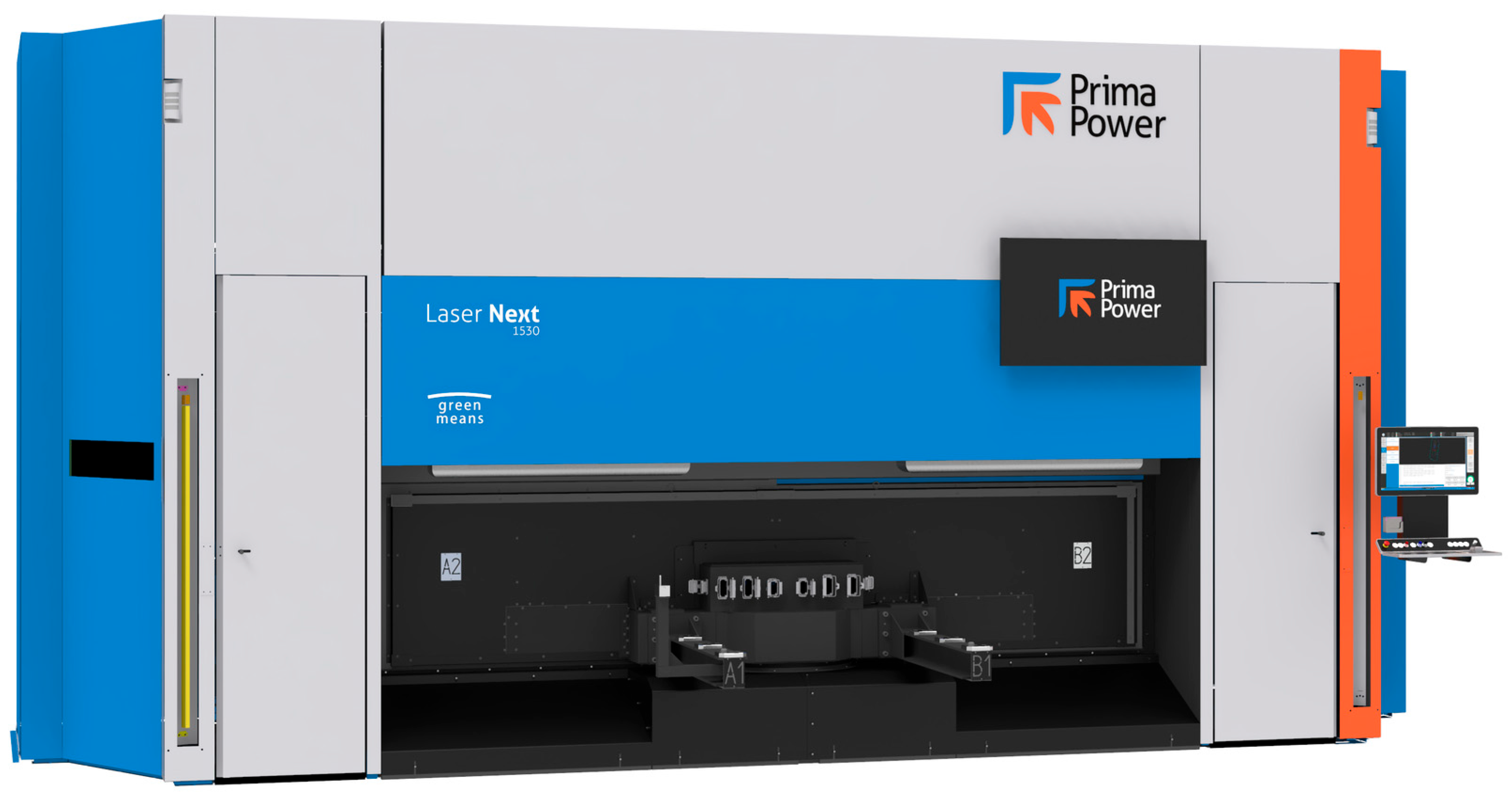
The present analysis focuses on the 3D laser cutting process carried out using the Prima Power Laser Next LN1530 system, manufactured by Prima Power S.p.A. (Collegno–Turin, Italy), a company within the Prima Industrie Group.
The Laser Next LN1530 is a fiber laser cutting machine developed for demanding industrial applications that require both high precision and elevated processing speeds. It is widely implemented in sectors such as automotive manufacturing, metal fabrication, and the production of complex three-dimensional components. The equipment used in this study is illustrated in
Figure 1.
From a technical standpoint, the machine operates on a fully CNC-controlled architecture with five axes (X, Y, Z, B, and C), which allows for the accurate three-dimensional cutting of parts with intricate geometries. The system is engineered to combine productivity with consistent dimensional accuracy and reliable long-term operation.
The main technical characteristics of the equipment are summarized below:
Laser source: Fiber laser supplied by IPG Photonics (Burbach, Germany);
Rated laser power: Configurable between 3 and 6 kW (4 kW was used in the present study);
Beam wavelength: 1070 nm;
Cutting head: Precitec ProCutter (Precitec GmbH & Co. KG, Gaggenau, Germany) with automatic focus adjustment and active height control;
CNC system: Prima Electro controller (Prima Electro S.p.A., Turin, Italy), featuring a dedicated graphical interface and advanced toolpath optimization capabilities;
Working envelope: Approximately 3060 × 1530 × 612 mm;
Assist gases: Nitrogen, oxygen, or compressed air, selected according to material type and required surface finish;
CAD/CAM software: Prima Power Next3D version 7, used for 3D programming, simulation, and CNC code generation.
Through the integration of these subsystems, the Prima Power Laser Next LN1530 ensures clean, burr-free cuts, high dimensional precision (±0.05 mm), and stable productivity rates, making it well suited for industrial applications involving metal component fabrication.
The material investigated in this study is a rectangular hollow structural steel tube made of S235JRH steel, in accordance with EN 10219-1, with dimensions of 60 × 40 × 4 mm. This material is used in the production of a support component for a refrigeration unit. It was selected due to its predictable behavior during laser cutting and its mechanical properties, which meet the functional requirements of the final application.
From a structural perspective, the machine operates on a fully CNC-controlled architecture with five axes (X, Y, Z, B, and C), allowing for the precise three-dimensional cutting of components with complex geometries. The system is designed to ensure high productivity, consistent accuracy, and operational reliability.
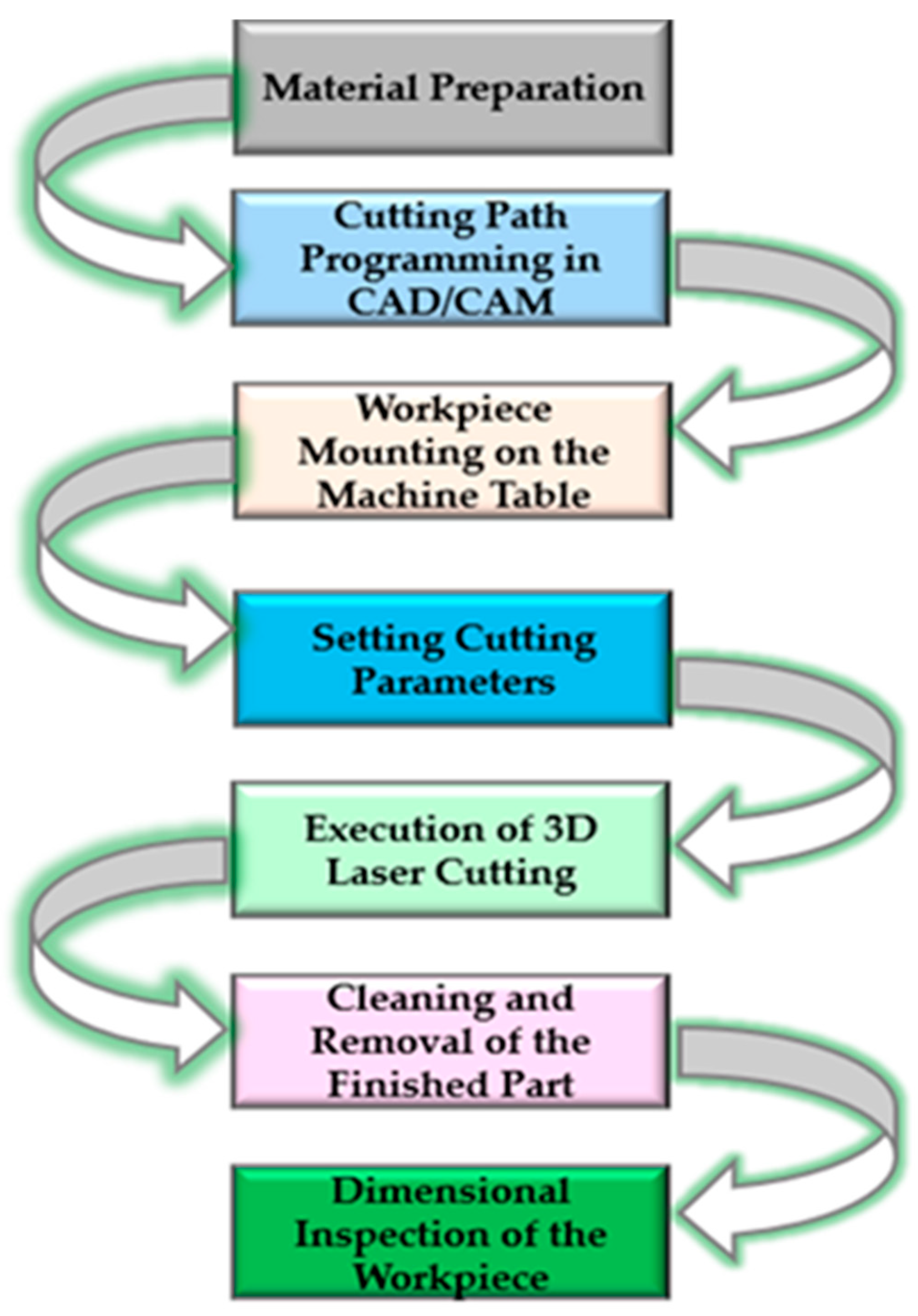
The 3D laser cutting process was analyzed based on the logical sequence of technological stages, starting from material preparation and ending with the final inspection of the part. The overall process structure is shown in
Figure 2 in the form of a flowchart.
3.2. Structure of the Case Study
The purpose of this case study is to examine the 3D laser cutting process performed on Prima Power Laser Next LN1530 equipment and to identify potential failure modes through the application of the FMEA method, in accordance with the AIAG & VDA (2019) standard.
The primary objective is to reduce process-related risks and enhance the quality of the final products by implementing preventive measures and optimizing key technological parameters. The study was conducted following the standardized steps defined in the AIAG & VDA FMEA (2019) methodology, specifically applied to the 3D laser cutting operation.
Applying the FMEA method to this process enables the systematic identification and classification of risks that may impact product quality and process performance.
Based on the assessment of severity (S), occurrence (O), and detection (D) ratings, the Action Priority (AP) is determined. This index serves to rank identified risks and to establish clear priorities for intervention.
To improve evaluation efficiency and minimize the possibility of human error, an automated system was developed for calculating and interpreting the AP index in line with the AIAG & VDA methodology.
This digital tool processes the input values provided by the team, automatically determines the corresponding priority level (High–Medium–Low), and generates appropriate action recommendations for each identified failure mode.
The automation of AP evaluation contributes to the following:
Reducing the risk analysis time;
Eliminating subjectivity in the interpretation of S–O–D values;
Increasing the accuracy and traceability of results;
Enabling rapid updating of the FMEA worksheet according to process changes.
By integrating this digital solution, the analysis process becomes faster, more accurate, and easier to update, contributing to improved risk management decision-making efficiency and continuous optimization of the 3D cutting process.
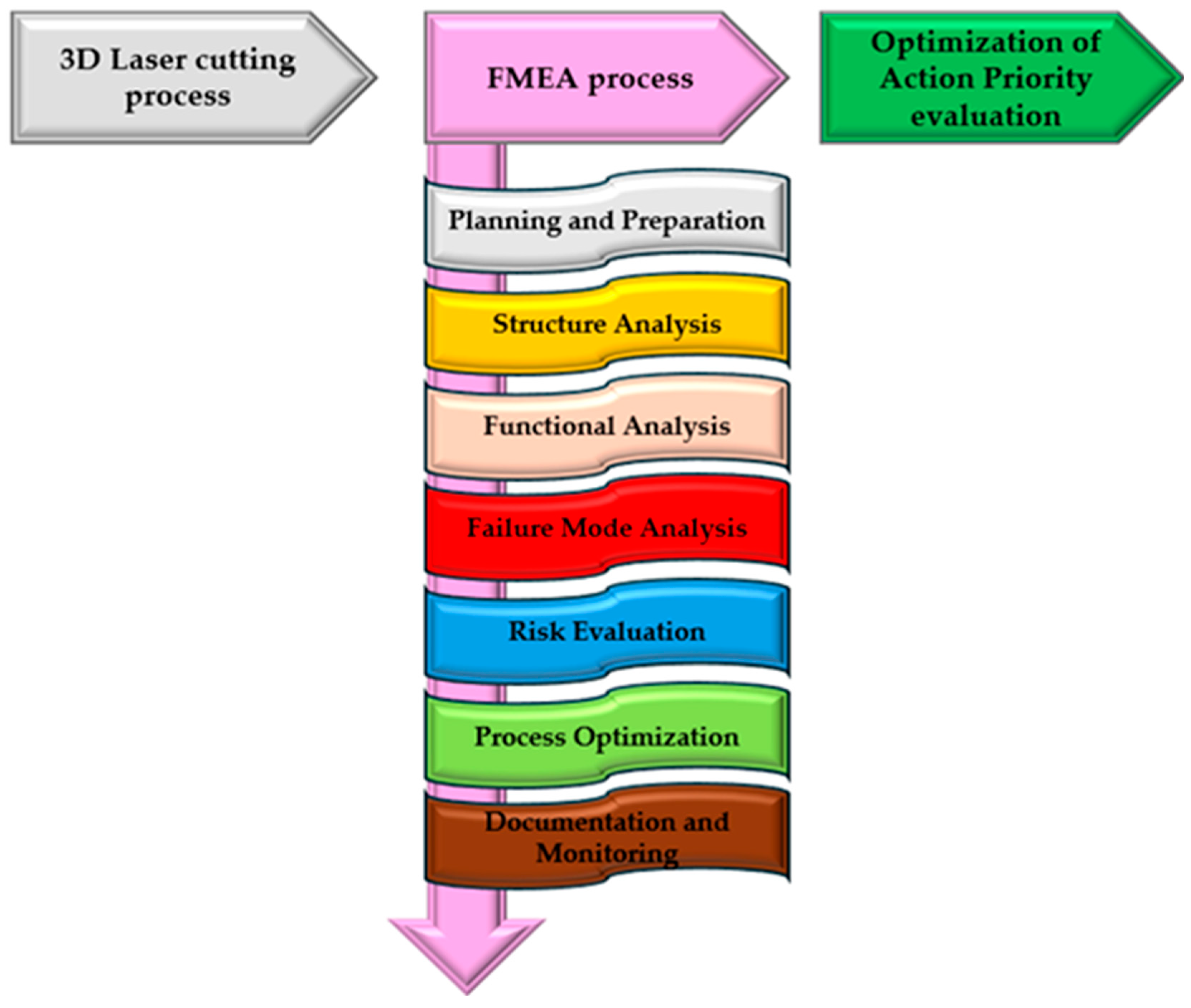
The structure of the case study was developed in accordance with the FMEA implementation steps, following the AIAG & VDA (2019) model, and is shown in
Figure 3.
Thus, the analysis of the 3D laser cutting process was conducted following the logical sequence below: Planning and Preparation, Structure Analysis of the Process, Function Analysis, Failure Mode Analysis, Risk Assessment (S–O–D → AP), Process Optimization, and Documentation and Monitoring.
Any production process must be accompanied by the development of an FMEA, following the steps outlined above (see
Figure 3). Naturally, each production process has a strong technical component when preparing the FMEA. This requires the involvement of specialists directly engaged in the respective manufacturing processes (engineers), members of the quality team, as well as representatives from management—all stakeholders actively involved in the production flow.
The solution proposed in this paper is designed to optimize the FMEA generation workflow. It does not replace specialists; rather, it supports and enhances communication among them, ensures information traceability, and automates the report generation process. As a result, the FMEA can be produced faster and in a more structured and complete manner compared to the traditional approach.
Therefore, our study did not focus on performing the risk evaluation itself for a specific production process. Instead, we concentrated on managing information, facilitating communication among the involved parties, and analyzing data—including the use of AI to support FMEA generation. From this perspective, we examined the entire FMEA workflow described above: from the initial risk assessment stage, through the occurrence of batch-level defects, to the final structure that the FMEA document must follow in order to be validated by the end customer.
Based on this analysis, we designed and implemented a comprehensive workflow that necessarily integrates the AI component. This framework will be presented in detail in the next section.
4. The Case Study
4.1. FMEA Implementation: The Seven Stages of Risk Analysis
Based on the FMEA methodology described above, a detailed analysis of the 3D laser cutting process performed on the Prima Power Laser Next LN1530 equipment was conducted, following the implementation steps defined in the AIAG & VDA FMEA (2019) standard for risk assessment and process optimization.
From the planning stage, the objective of the FMEA was clearly established: to prevent defects and reduce risks associated with the 3D laser cutting process. In this context, the multidisciplinary team aimed to do the following:
Identify all potential failure modes that could affect part quality and conformity;
Determine the main causes and evaluate their effects on both the product and the process;
Define corrective and preventive actions to eliminate or reduce critical risks;
Ensure a high level of process reliability and safety, in line with internal quality standards and customer requirements.
The scope of the analysis was clearly defined to maintain focus on the targeted process. The FMEA was applied exclusively to the 3D laser cutting operation carried out on the Prima Power Laser Next machine, covering material preparation, cutting path programming, execution of the cutting operation, and dimensional inspection of the finished part. Downstream processes such as welding, painting, or final assembly were intentionally excluded from the analysis.
Through this structured approach, the team was able to systematically document all identified failure modes, define clear Action Priorities, and create a solid foundation for continuous improvement within the 3D laser cutting process.
The FMEA followed the seven-step framework to ensure a thorough identification and evaluation of risks. It began with clearly defining the objective and scope of the study, followed by identifying the relevant components, their functions, and the associated potential failure modes. The next step involved assessing the possible effects of these failures on both the process and the end user. This was followed by analyzing the underlying causes and failure mechanisms.
In the next phase, appropriate preventive controls were established, and the detectability of potential failure modes was carefully assessed. Finally, the identified risks were prioritized according to the defined criteria, and targeted corrective actions were proposed to bring them within acceptable limits.
During the Documentation and Monitoring stage, the finalized FMEA worksheet for the 3D laser cutting process is maintained and regularly updated, and a structured approach for tracking results over time is established (
Table 2). This documentation is aligned with the requirements of the quality management system (ISO 9001 and IATF 16949), ensuring consistent process control and full traceability of the implemented actions.
By completing all of these stages, the process becomes more stable and predictable, significantly reducing the risk of nonconformities impacting subsequent assembly operations or final product delivery.
The FMEA highlighted the main failure modes associated with the 3D laser cutting process, the most significant being missing holes and an unsatisfactory cutting edge surface appearance. By implementing the proposed corrective and preventive actions—such as standardization of cutting parameters, automated checks, and the introduction of periodic visual inspections—the risk level (AP) was reduced from Medium or High levels to a Low level, demonstrating the effectiveness of the applied optimization measures (
Table 3).
The application of the FMEA method, in accordance with the AIAG & VDA (2019) standard, enabled the identification, assessment, and optimization of risks associated with the 3D laser cutting process performed on the Prima Power Laser Next equipment. The analysis was carried out by evaluating the indicators severity (S), occurrence (O), and detection (D), followed by determining the Action Priority (AP) for each identified failure mode.
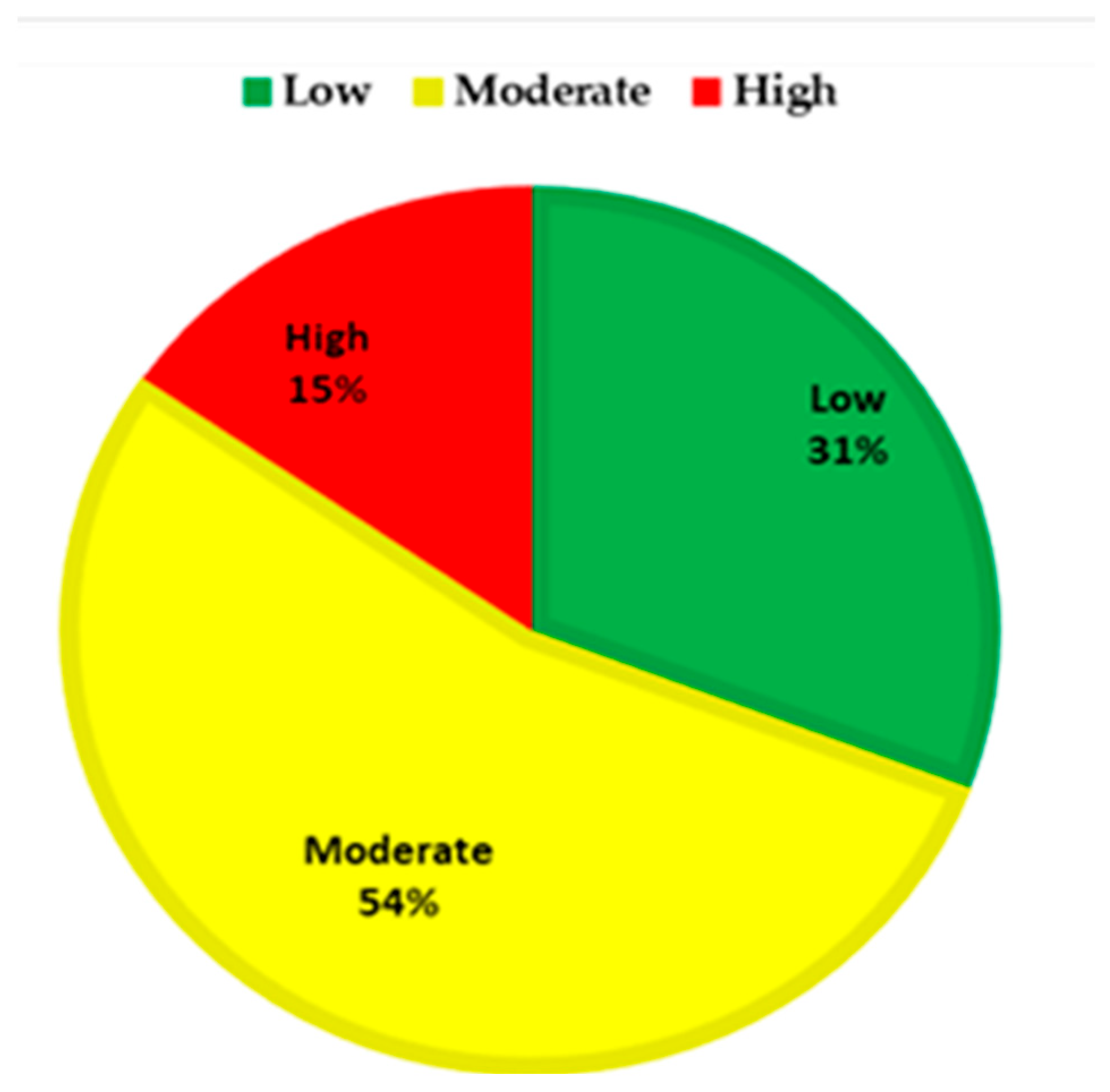
Before implementing the optimization measures, the distribution of risk levels (
Figure 4) showed a predominance of Low risks (L—67%), a significant proportion of Medium risks (M—29%), and a small but critical percentage of High risks (H—4%).
These values highlighted the need to adopt additional control measures, especially for causes related to cutting parameters, loss of focus, clamping/fixture errors, or variations in the base material.
During the optimization stage (FMEA Step 6), the multidisciplinary team defined and implemented a comprehensive plan of corrective and preventive actions, differentiated according to the Action Priority (AP) level.
After the implementation of the optimization actions, the FMEA reassessment demonstrated a significant reduction in the overall risk level, with all failure modes being classified as Low risk (L—100%), confirming the effectiveness of the implemented control system.
This evolution indicates that the 3D laser cutting process has reached a High level of maturity and stability, and that the implementation of prevention and detection measures ensured the complete elimination of High-risk issues. Consequently, the risk management system is fully aligned with the VDA 2019 requirements, demonstrating its effectiveness [
33].
It is important to clarify that the reduction in the overall risk level observed after the optimization stage is a direct result of the effective implementation of the corrective and preventive measures defined by the multidisciplinary team. In line with the AIAG & VDA (2019) methodology, the reassessment of the S–O–D ratings reflects the tangible improvements in process controls, stabilization of technological parameters, reinforcement of detection mechanisms, and the formalization of operational procedures.
Therefore, the reclassification of all failure modes into the Low Action Priority category (L—100%) does not represent a purely theoretical adjustment of ratings but rather the outcome of concrete technical and organizational interventions applied in the real production environment. The decrease in occurrence (O) and detection (D) values is directly associated with the introduction of standardized cutting parameters, updated maintenance routines, improved inspection practices, and clearly defined reaction plans in cases of deviations.
These results indicate that the maturity and stability of the 3D laser cutting process were achieved through structured risk management and disciplined implementation of control measures, in full alignment with the AIAG & VDA 2019 requirements.
4.2. Development of an Automated Solution for the Assessment of the AP Index in FMEA
The solution presented in this article provides automation of the AP index evaluation within the FMEA, depending on the failure mode, the causes leading to the failure mode, or the evolution of the number of nonconforming parts over a two-month time interval. The solution consists of the complete hardware infrastructure required for implementation, as well as the developed web-based software component.
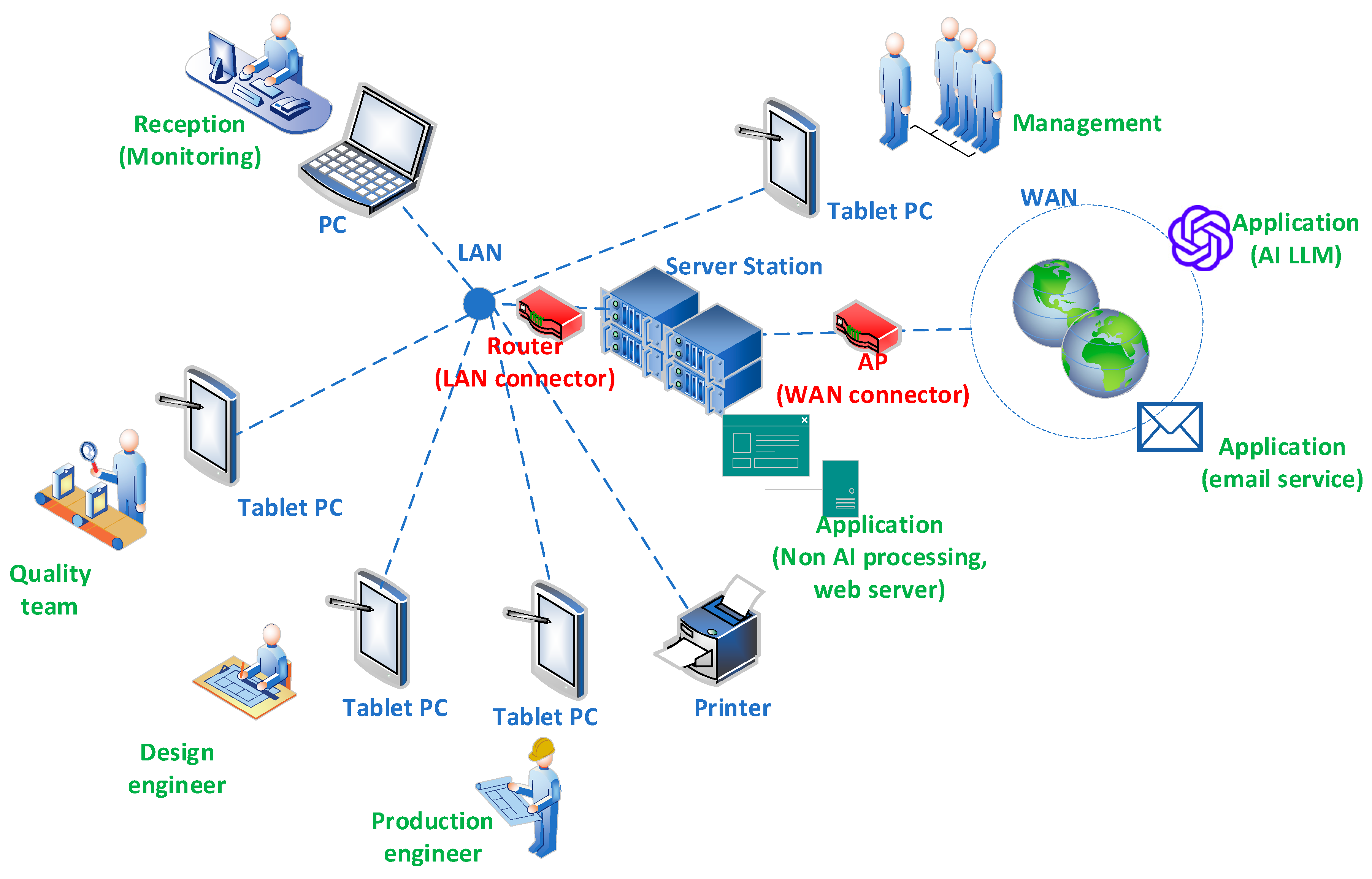
A block diagram of the hardware infrastructure and network services is shown in
Figure 5.
As can be observed, the solution is based on a web server that can be accessed through the existing communication infrastructure—the local network—by the quality department, management, and production engineers. They access the main page of the application, which consists of a form. The form allows for the input of the failure mode and its causes, as well as the number of nonconformities and their impact.
Access to the application is provided through mobile interfaces (PC tablets) connected to the local network. In this way, the mobility of the participants involved in performing the automated FMEA can be ensured.
Users also have access to peripheral devices such as printers, which may be used to print the automatically generated FMEA report when required. In addition, the application interfaces with an email connector that enables the reception of complaints and, upon request, the transmission of the FMEA report to customers.
The pilot presented in this article is used in an automotive component manufacturing company, and the number involved users is six: two members of the quality assurance team, two production engineers, and one member of the management team. In addition, a receptionist responsible for complaint emails is involved in monitoring this input channel.
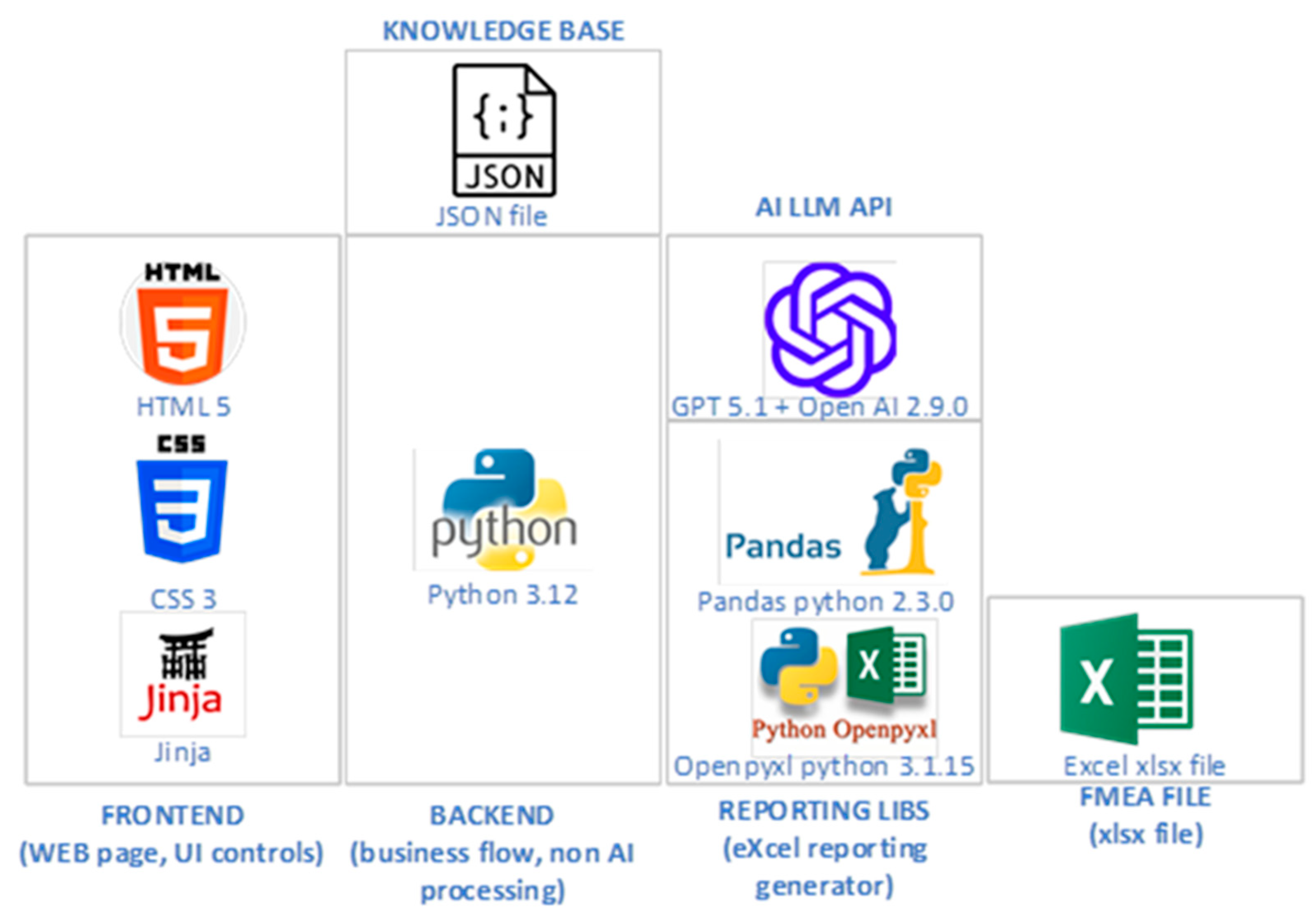
A diagram showing the software components involved in the application is shown in
Figure 6.
As can be observed, complaint emails as well as input data are entered through a web form (HTML 5, JavaScript v. ES2025, CSS, and Jinja v. 3.1 software technologies). The data are then processed by a backend hosted on the server (developed in Python v. 3.12), which also runs the prompter module (responsible for generating queries to the AI LLM engine) and the LLM (Large Language Model) component. The application “database” is in fact a knowledge base previously created and introduced by specialists, containing failure modes, causes, current prevention methods, current detection methods, and optimization actions. This knowledge base was converted into a JSON format compatible with the LLM engine. Furthermore, this knowledge base is transmitted to the LLM (ChatGPT 5.1) together with the adapted query formulation.
As also shown in the figure, the system includes “non-AI” analysis components represented by the prompting stage (question formulation), threshold analysis of the number of internal and/or external nonconformities, as well as their evolution over a two-month time interval. This is implemented to improve response efficiency—determining failure modes with a Low level can be achieved through non-AI threshold analysis and does not require the involvement of the LLM component.
However, when the nonconformity analysis indicates Medium or High failure modes, the LLM component is engaged to determine optimization actions or to generate the entire FMEA for the respective failure mode. From our perspective, this non-AI “pre-analysis” represents a key component of the proposed solution and a method that significantly increases the response efficiency of the system.
Intelligent analysis using the LLM is performed through the API accessible via the OpenAI library. For this pilot, in order to reduce hallucinations (responses generated by the AI module based on non-professional data sources from the global Internet), the responses are strictly limited to the knowledge base created by professionals within the company where the pilot is deployed. The use of the AI LLM tool to generate responses is also a valuable contribution to the system presented in this article. Thus, unlike a standard database where typical searches such as MATCH (exact data strings existing in the database) or LIKE (data strings similar to those in the database) can be performed, the following capabilities are enabled:
Keyword searches using approximate phrasing or wording completely different from that used in the knowledge base—even in a professional engineering environment, certain keywords may be expressed in different ways with the same meaning (e.g., template—mold; hole—orifice; geometry—structure, etc.). In particular, in industrial environments distributed across departments/services—as in the modern approach adopted within the company where the pilot solution was implemented—it is very difficult to standardize certain naming conventions, and based on repeated experience, such standardization attempts often fail. Numerous issues related to inconsistent terminology have been encountered, generating further misunderstandings. The use of an LLM solves the problem of different naming conventions, as the LLM infers the intended keywords based on the knowledge base provided.
Internationalization represents an ongoing challenge for companies both currently and in the future. For example, the company where the pilot was implemented has subsidiaries in France and Romania. The personnel working in these subsidiaries, including engineering teams, access and share technical documentation in French, Romanian, and English. Naturally, in the FMEA/AMDEC (Analyse des Modes de Défaillance, de leurs Effets et de leur Criticité) analysis, the entered information may also be in any of these three languages. Translating all content into a single “universal” language (e.g., French) would only partially solve the problem—especially considering that inputs may originate from customer complaints, which can be written in other languages, or that engineering teams may access documentation in different languages when completing the analysis. An LLM provides an elegant solution to the translation challenge without additional issues related to this aspect.
All these aspects make the LLM tool highly useful for generating records for the FMEA based on the knowledge base.
For each request sent to the AI (LLM) component, the necessary knowledge base is also transmitted to ensure that responses are generated strictly based on validated information. This knowledge base was developed through the direct involvement of specialists—engineers, quality representatives, and management. When the production process was initiated, the initial risks were defined as part of the “classic” FMEA stage.
These risks were then structured in JSON format so they could be systematically transmitted to the LLM. It is essential to clearly emphasize this aspect: such information cannot be randomly generated or independently produced by the AI tool. The data must be precise, process-specific, and formally defined by domain experts. Only specialists can provide this validated input. The knowledge base is updated to each failure mode at the beginning of the production process. So, it is populated statically with information for the experts, and data from a failure mode can be used for different production processes.
In the workflow presented below, the exact stage at which the knowledge base is transmitted to the LLM is explicitly indicated.
Data Flow
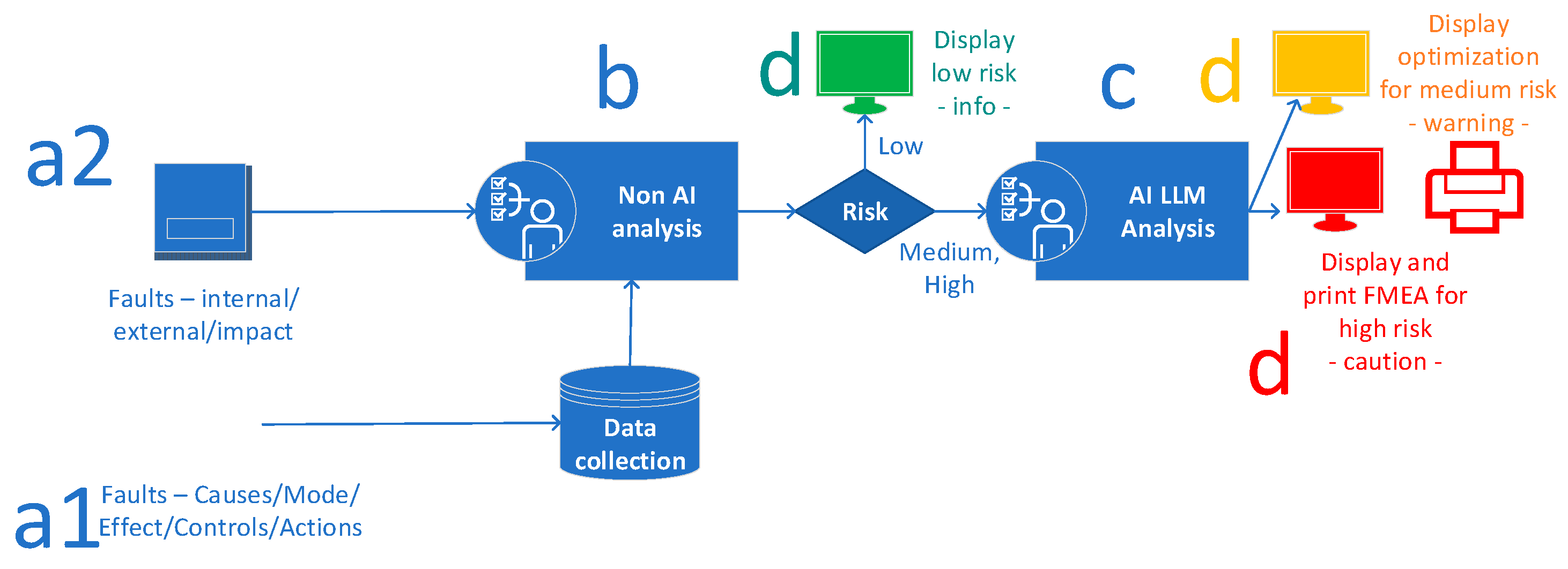
In this section, we present the data flow used in our automated FMEA solution. In
Figure 7, a block diagram of data flow is presented.
The flow begins with the introduction of data (faults cases, modes, effects, controls, and actions) in the initial stage of the production process or with the introduction of a number of nonconformities and their impact, taking in account the complaints from the customer. The first analysis is non-AI analysis—here, it is established if the risk is Low, Medium, or High based on the number of nonconformities, the evolution of the number for the last two months, the type, and the impact. If the risk is Low, then we just publish (display) the result—info—or else we perform an AI LLM analysis. The results in that case can be the publication of the optimizations to the screen (actions to decrease the risk factor) or even printing the updated FMEA report.
Below, the stages are presented in detail.
- a.
Data collection.
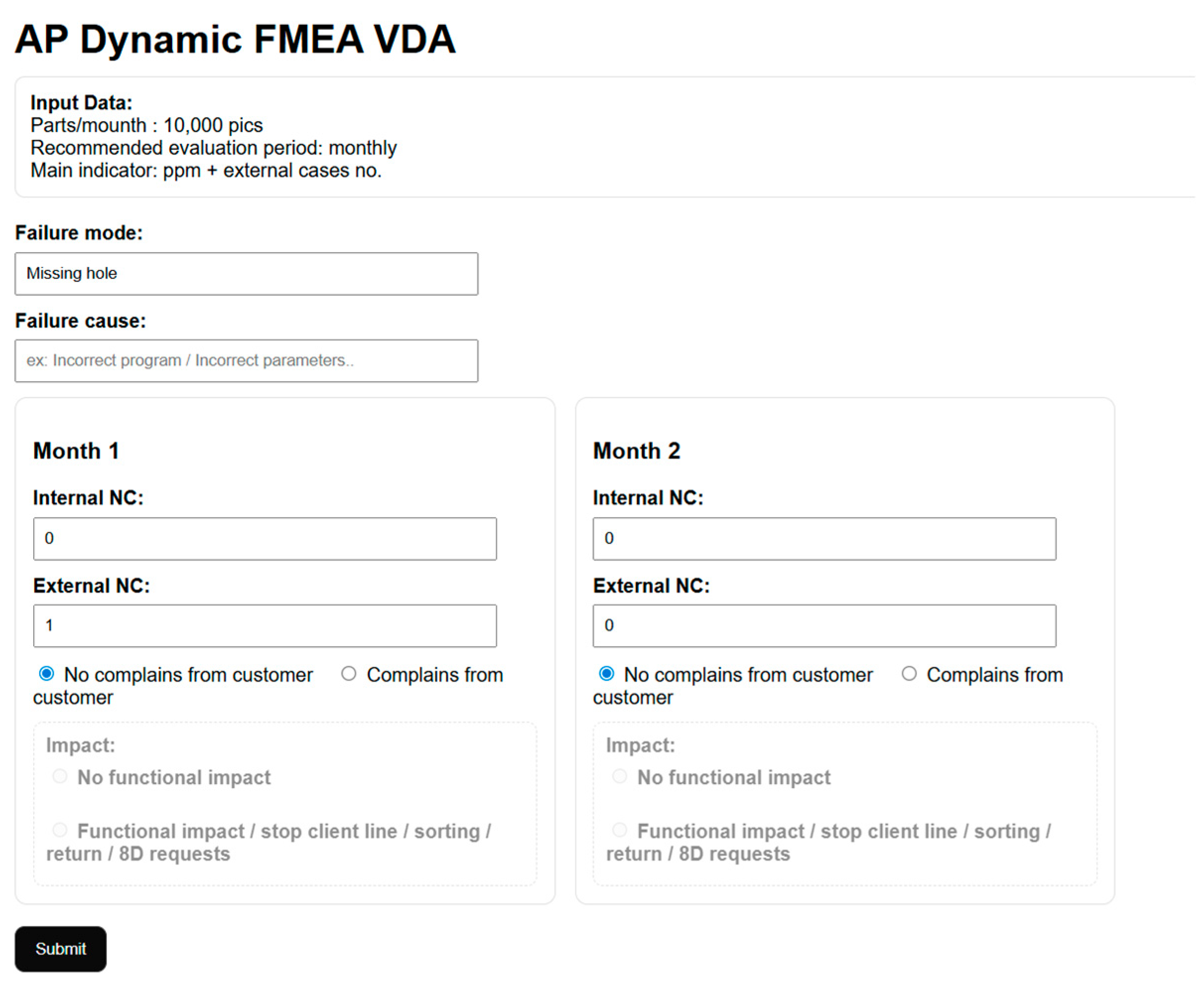
Data collection is performed through the form shown in
Figure 8, with the possibility of collecting the failure mode and its causes from the complaint emails received by reception by automatically extracting this information.
As can be observed in the figure, failure modes and/or failure causes can be entered—at least one of the two fields must be completed.
For the selected failure mode/cause, the evolution of internal or external nonconformities over a two-month time interval is also provided. In addition, their impact is recorded—as shown, only two radio buttons are used to indicate whether the impact of external nonconformities is functional or non-functional.
- b.
Non-AI analysis.
Table 4 presents the non-AI analysis used to perform risk classification.
As can be observed, for Low risks, no additional operations are required (monitoring activities or FMEA re-analysis); therefore, the process is reduced to an immediate notification to the analysis participants (displayed in green).
However, if a Medium or High risk is identified (displayed in orange or red), the workflow proceeds to the AI LLM analysis stage.
The Action Priority (AP) thresholds presented in
Table 4 were not defined arbitrarily; they were established based on operational performance indicators used in the ongoing monitoring of the production process.
The AP classification was correlated with specific quantitative indicators, including:
The monthly number of internal nonconformities;
The defect rate expressed in ppm (nonconforming parts per million produced);
The number of external nonconformities;
The existence of customer complaints;
The defect trend evolution (stable, decreasing, or increasing).
The Low (L) level corresponds to a stable and capable process, characterized by 0–5 internal nonconformities per month (≤500 ppm), no external nonconformities, no customer complaints, and a stable or decreasing defect trend.
The Medium (M) level is assigned to situations involving controlled deviations, such as 6–20 internal nonconformities per month (600–2000 ppm), the occurrence of one external case without functional impact, or an upward trend observed over two consecutive months. In such cases, mandatory optimization actions are required.
The High (H) level is reserved for situations with confirmed impact on the customer or on operational performance. This includes more than 20 internal nonconformities per month (>2000 ppm), at least two external nonconformities, or any external nonconformity involving functional impact, customer line stoppage, sorting, return, or an 8D request.
Through this approach, the AP thresholds are grounded in measurable criteria commonly used in industrial quality management and reflect the actual technical and operational risk exposure of the analyzed process.
The severity (S), occurrence (O), and detection (D) ratings were assigned in accordance with the evaluation grids defined in the AIAG & VDA 2019 methodology, as presented in
Section 1 of this paper.
The scoring was not performed intuitively but based on the following structured criteria:
Severity (S) was determined according to the impact of the failure effect on the following:
The next assembly stage;
The functional performance of the final product;
Safety and compliance with customer requirements;
The risk of production flow interruption.
Failure modes leading to assembly impossibility, functional misalignment, or external complaints were assigned higher severity ratings in alignment with the standard matrix.
Occurrence (O) was estimated based on the following:
Historical internal nonconformity data;
Defect rates expressed in ppm;
The stability of critical process parameters (laser power, focal positioning, and clamping stability);
The effectiveness of existing preventive controls.
The assigned scores were correlated with the actual defect frequency observed during production and with the robustness of the implemented controls.
Detection (D) was established according to the following:
The type of control method applied (visual inspection, 100% dimensional verification, and automated systems);
The stage at which detection occurs within the production flow;
The actual probability of identifying the defect before delivery.
Automated systems and 100% inspection methods resulted in lower detection ratings, whereas visual inspections or sampling-based controls led to higher ratings.
Therefore, the S–O–D values used in the analysis reflect both the AIAG & VDA 2019 requirements and the real operating conditions of the 3D laser cutting process.
- c.
AI LLM analysis.
In the case of Medium or High risks, the following two modules are involved in the workflow: the prompter module, which formulates the problem for the AI LLM based on the failure mode and/or causes, and the AI LLM module itself.
The prompt is constructed using a method in which the input data from the two fields are extracted and inserted into a sentence, with the structure presented in the listing shown in
Figure 9.
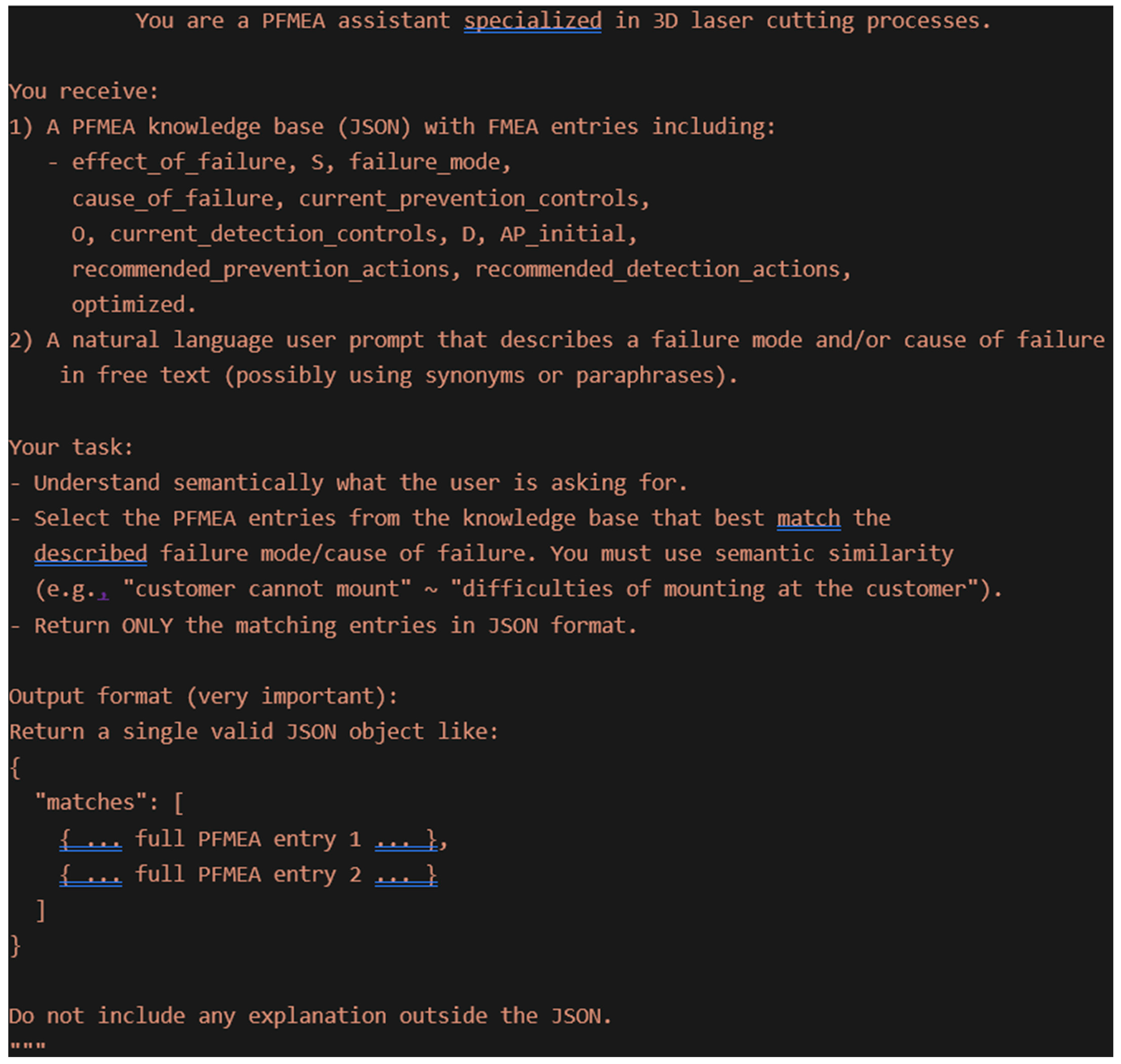
The prompt, together with the knowledge base and the instructions, is transmitted to the AI LLM module. The instructions follow the structure presented in the listing shown in
Figure 10.
Next, the system waits for the response from the AI LLM and prepares the final publication of the output.
- d.
Response publication.
The final stage consists of publishing the response. As previously shown, for a Low risk identified during the non-AI pre-analysis stage (point b), the response is immediately published on the webpage by displaying the risk evaluation in green.
For Medium risks, the complete response consists of the risk evaluation (displayed in orange) and the presentation of the required optimization actions retrieved from the knowledge base. Therefore, in this case, all information is displayed directly on the webpage.
In contrast, for major (High) risks, displayed in red on the webpage, in addition to the on-page results, a file containing the updated FMEA is generated, presenting all fi-elds specific to the respective failure mode/cause. This file is added to the analysis package and can be sent to the customer for validation or can be printed.
5. Results
This section provides a concise presentation of the main results obtained from applying the FMEA methodology to the 3D laser cutting process.
The use of the FMEA method, in accordance with the AIAG & VDA 2019 Handbook, enabled a structured identification of the critical failure modes and their underlying causes. The initial analysis showed that missing holes and unsatisfactory cutting edge surface quality were the most significant failure modes, with both having a direct impact on assembly capability and customer product acceptance.
The initial risk assessment indicated that most of the identified risks were classified as Low (67%), followed by Medium (29%), while only 4% were categorized as High. The High-priority cases were primarily associated with improper cutting parameter settings and inadequate base material conditions.
After implementing the proposed corrective and preventive measures—such as the standardization of cutting parameters, the introduction of automated controls (poka-yoke), updates to maintenance plans, and the reinforcement of visual and dimensional inspections—a substantial reduction in the overall risk level was observed. The subsequent FMEA reassessment showed that all identified failure modes were classified in the Low-risk category (L—100%).
It is important to clarify that the classification of all failure modes as Low does not represent a simple recalculation of risk indicators. Instead, it reflects the actual implementation of the defined corrective and preventive actions within the production environment. The improvement in the risk profile corresponds to concrete changes in process control, parameter stabilization, maintenance planning, and inspection practices carried out by the operational and quality teams.
The decrease in occurrence (O) and detection (D) values is directly associated with the stabilization of the technological process and with the disciplined application of the measures defined during the optimization stage. From this perspective, the FMEA reassessment confirms the effectiveness of the implemented control system and the increased maturity of the 3D laser cutting process.
Within the AIAG & VDA 2019 framework, achieving a “100% Low risk” classification after optimization represents the intended objective of the FMEA process. The purpose of the optimization phase is to reduce all identified failure modes to an acceptable level of risk through appropriate corrective and preventive measures. This does not imply that failures can no longer occur; rather, it indicates that all technically and organizationally reasonable actions have been taken to prevent, detect, and control the identified causes. In industrial practice, an FMEA is considered complete and acceptable—also from the customer’s perspective—only when High and Medium risks have been properly addressed and reduced to an acceptable level. Therefore, the reported outcome reflects process stabilization and the maturity of the risk control system rather than the complete absence of potential deviations.
The recommendations generated for High-risk failure modes (full FMEA revision, Control Plan update, and immediate corrective actions) and for Medium-risk cases (mandatory optimization measures) were not developed independently of industrial practice. They are grounded in the structured FMEA and in the validated process knowledge defined by the multidisciplinary team, including process engineers, quality specialists, and maintenance experts.
The proposed corrective and preventive actions reflect the actual technological constraints of the process, historical nonconformity data, and existing quality management procedures. During the pilot implementation phase, the recommendations were reviewed and validated by the responsible process and quality engineers, confirming their technical relevance and practical applicability within the real production environment.
This qualitative validation demonstrates that the generated recommendations are consistent with expert judgment and aligned with the real operating conditions of the 3D laser cutting process.
In addition to the FMEA, a pilot digitalization solution was implemented to support the risk analysis process.
The pilot solution was deployed on a non-productive server station and on PC tablets for application access, with the following characteristics shown in
Table 5.
The cost of the pilot solution was below EUR 2000. An overview of the software technologies used is provided in
Table 6.
The solution presented in this article is used for a laser cutting process in the automotive industry.
Table 7 shows the level of usage of the solution over the operating period.
The previously existing solution relied on a conventional approach to FMEA generation. At the start of the production process, or whenever nonconformities occurred, the involved parties (engineers, quality representatives, and management) communicated via email groups and held meetings to establish an action plan.
The proposal of optimization measures, as well as the preparation of the FMEA document, was only partially automated, mainly through the use of predefined templates that were manually completed by members of the quality team.
Compared to the previously used digitalized method based on a database, the pilot solution demonstrated superior performance, shown in
Table 8.
The last element in
Table 8 shows that, for a relatively similar defect rate (of course, for two different processes) and identical results (Low after optimization), the publication time of the results is clearly superior—i.e., shorter—for the solution proposed in this work compared to the existing digital method previously used for data collection and the publication of FMEA results.
The non-AI pre-analysis—introduced as a component of our solution—leads to a better performance compared to an approach relying on full AI-based analysis. This improvement is explained by the response time of the AI LLM tool, which averages over 20 s per query. By applying the non-AI pre-analysis, waiting times are eliminated for Low-risk cases, thereby improving the overall response time, as shown in
Table 9:
In the table below (
Table 10), we provide a comparison with other studies cited in the
Section 2. In addition to the quantitative evaluations presented in
Table 7,
Table 8 and
Table 9—regarding response time, number of users involved, improvement in risk levels, and the number of resolved defects—we also include a qualitative comparison focused on the components of the data flow. We believe that, from a practical perspective, this data flow has been comprehensively addressed in our proposed solution.
Accordingly, the table highlights how input data are collected and identifies their sources. As can be observed, in all of the analyzed articles, the data originate from real industrial environments. The comparison also includes how the data are processed and how the results are ultimately generated and published.
As previously mentioned, the existing solutions presented in other studies primarily focus on modifying the way risk evaluation is performed. Such a feature has not been implemented in our solution, although it may represent a future direction for further development. Instead, our solution implements the entire data flow required for FMEA generation—from data input and collection to the preparation of the FMEA report and its publication in a printable format. As can be observed, the stages of the process are addressed at the research results level in all of the solutions discussed in other articles. In our case, however, each individual stage is implemented as a functional component within a continuous, automated workflow, with direct practical applicability. The AI component is used for the extraction and classification of the data necessary for generating the FMEA report. In essence, we present a solution in which the AI LLM tool is an integral part of a broader application framework, with multiple practical usage perspectives.




 ,
, 

.jpg)