1. Introduction
Rotor bucket excavators SRs1200, manufactured by TAKRAF GmbH, Leipzig, Germany, were developed in the 1960s and have been widely used in lignite open-pit mines across Central and Eastern Europe. Although these excavators are today more than 40 years old, a significant number of them are still in operation at surface coal mines in Serbia, primarily in overburden removal operations, which imposes the need for systematic condition monitoring and modernization [
1].
From the standpoint of dynamic loading, the most highly stressed components of a rotor bucket excavator are the bucket-wheel boom and the bucket wheel drive group together with the bucket wheel itself. The theoretical foundations of vibrational behavior in mechanical systems are well-established within classical vibration theory and engineering dynamics [
2,
3]. Every rotating component, as well as every moving part of the excavator, generates its own low-frequency vibrations, which are extremely complex in nature due to the large number of vibration sources [
4]. When the excavator is in the excavation process, these inherent low-frequency vibrations are additionally superimposed by vibrations induced by external dynamic loads, which also have numerous sources and are stochastic in nature, as they depend on operating conditions and cutting resistance.
It is necessary to analyze and superimpose the inherent natural frequencies and external dynamic loads, since the most unfavorable condition for any structure is the resonant state, i.e., the condition in which natural frequencies coincide with vibrations generated by external dynamic excitations [
2,
3,
5]. Classical vibration theory and modal analysis provide the theoretical basis for identifying such critical conditions in rotating machinery and large mechanical systems.
The dynamic system represented by the bucket-wheel drive becomes even more complex when analyzing the manner in which the bucket-wheel boom is connected to the central mast of the excavator [
6]. Since the bucket-wheel drive is located at the end of the boom, which functions as a cantilever, in addition to its inherent vibrations, boom vibrations are also present. These vibrations depend on the boom’s stiffness, support conditions, and geometry [
7,
8,
9].
Diagnostics of the behavior of drive groups on rotor bucket excavators gained particular importance during the 1990s. In that period, only a small number of new rotor bucket excavators were manufactured, while most of those in operation were already several decades old [
1]. Classical vibration theory and modal analysis provide the theoretical basis for identifying such critical conditions in rotating machinery and large mechanical systems [
10]. This prompted both manufacturers and users to undertake revitalization procedures aimed at extending service life and improving existing performance. The bucket-wheel drives on most excavators are of older design configurations with a large number of operating hours, making the application of modern diagnostic methods based on vibration measurements and numerical models essential [
11].
In large-scale mining machines, diagnostic results are strongly influenced by random external excitations and time-varying loads; therefore, adaptive monitoring methods are required to reduce false alarms and improve fault detection [
12].
The theoretical framework for vibration and dynamic analysis of rotating machinery has been extensively developed and complemented by digital signal processing methods. Fast Fourier Transform (FFT)-based spectral analysis provides the fundamental tool for vibration characterization in the frequency domain [
13], while advanced techniques—including spectral kurtosis for detection of impulsive fault signatures and wavelet transforms for time–frequency decomposition of non-stationary signals—enable extraction of characteristic diagnostic parameters under variable operating conditions [
14,
15,
16,
17]. Recent reviews confirm that modern vibration-based monitoring increasingly relies on adaptive and data-driven methods to address the non-stationary behavior of heavy industrial drivetrains [
9,
16,
17].
A critical aspect of the methodological approach adopted in the present study is the integration of numerical (FEM-based) and experimental modal analyses for condition assessment of complex mechanical assemblies. The combined use of finite element models and experimental measurements to validate and update structural dynamic models has been demonstrated as an effective strategy for characterizing modal behavior across subsystems and complete assemblies. Bonisoli et al. [
18] introduced a component-to-assembly mode shape tracing methodology based on the Modal Assurance Criterion (MAC), demonstrating that individual component mode shapes can be systematically tracked through increasing levels of structural complexity up to the complete assembly. In a subsequent study, the same authors extended this framework to flexible multibody system dynamics, showing that critical mode shapes governing the dynamic response of complex mechanical structures can be detected and used to guide structural optimization under operating conditions [
19]. Such integrated numerical–experimental approaches are particularly relevant in the context of gearbox and drivetrain diagnostics, where the coupling between structural modes and gear mesh excitation frequencies can lead to resonance conditions that are difficult to identify without a validated dynamic model. The methodology pursued in the present work follows this paradigm, combining FEM-based modal analysis with experimental vibration measurements to characterize the dynamic behavior of the SRs1200 bucket-wheel gearbox before and after reconstruction.
Diagnostics of rolling element bearings and gear transmissions has been systematically addressed in the literature, starting from early analytical models of bearing fault-induced vibrations [
20] to comprehensive tutorials and reviews on bearing diagnostics [
21,
22], while international standards define procedures for vibration measurement and evaluation [
23,
24]. Bearing fault frequencies are well established, and the interaction between gears and bearings is known to affect vibration signals [
25,
26].
Gearbox vibration diagnostics become more challenging when machines operate under changing speed and load, which is common in mining applications. To address this, different modeling and feature extraction approaches have been developed to improve fault detection reliability. Using informative frequency bands and adaptive methods facilitates the detection [
27]. These issues are especially important for gear transmissions operating under variable load and speed, where early-stage damage may be obscured in the vibration signal. Changes in rotational speed strongly influence gearbox vibration signals, and vibration-based methods are widely used for fault detection under variable speed and load conditions [
28]. Vibration-based approaches have also been extensively applied to monitor gear wear and track damage development in gearbox systems [
29,
30,
31,
32,
33,
34].
Several studies have also investigated the relationship between vibration levels and operational efficiency. Chinchusak and Pannawan [
35] demonstrated that an increase in vibration amplitude leads to a corresponding increase in electrical energy consumption. Atmaca A. and Atmaca N. [
36] monitored vibration behavior on mill motors in the cement industry, finding that corrective actions yielded a 12% decrease in vibration levels and a 2.16% reduction in energy consumption. Elkhatib [
37] developed a methodology for calculating energy losses due to vibrations and proposed a rational approach for predicting such losses in vibrating machinery.
The development of information technologies has created opportunities for remote condition monitoring of equipment [
38]. Czmochowski et al. [
39] conducted FEM-based and experimental vibration analysis of an industrial exhaust fan. Więckowski et al. [
40,
41] presented procedures for vibration measurement and semi-active damping control using magnetorheological dampers and an Iterative Learning Control (ILC) algorithm in the cabin of a bucket-wheel excavator. Ghazali and Rahiman [
42] confirmed that vibration analysis is an effective method for machine condition monitoring. Zahid et al. [
43] provided a comprehensive overview of vibration feature extraction methods for rotating machinery diagnostics.
Graja et al. [
44] presented a novel time-domain approach for characterizing the dynamic behavior of an industrial planetary gearbox using piezoelectric sensors. Dziedziech et al. [
45] proposed a hybrid vibration analysis approach combining operational and experimental modal analyses, validated on a 215 MW turbogenerator. Gottvald [
46] compared measured natural frequencies of a bucket-wheel excavator with numerical simulations developed in Ansys [
47], highlighting discrepancies between design-phase models and actual structural behavior. Gursky et al. [
48] synthesized design parameters for a dual-frequency inertial vibration system. Milovančević et al. [
49] demonstrated the feasibility of soft computing methods for vibration analysis of a pump unit without a formal vibration model.
Despite the significant body of literature on vibration-based diagnostics of gearboxes and rotating machinery, several research gaps relevant to the present study can be identified. First, the application of integrated numerical–experimental methodologies to the specific class of multi-stage parallel-shaft gearboxes used in bucket-wheel excavators—where operating conditions combine low rotational speeds, high torques, and pronounced stochastic shock loading—has received limited attention. Second, while FEM-based modal analysis and experimental vibration diagnostics are individually well-established, their combined use for condition assessment and maintenance decision-making in heavy mining machinery is not yet systematically documented. Third, the reconstruction of large cast output gears by means of shrink-fitted forged rims—a technically and economically significant procedure for extending gearbox service life—has not been previously analyzed from the perspective of its quantifiable effect on drivetrain vibration levels.
The subject of this paper is a comparative analysis of the vibration behavior and condition of the bucket-wheel gearbox of the SRs1200 excavator, combining finite element modal analysis and experimental vibration diagnostics according to ISO 20816-3:2022 [
24]. Similar integrated numerical–experimental methodologies have been applied for the analysis and modernization of heavy mining machinery and large-scale gearbox systems [
50,
51,
52,
53]. The present study advances beyond existing work in three respects: (i) it provides a validated FEM modal model of a complete multi-stage gearbox under real support boundary conditions; (ii) it documents a full diagnostic cycle encompassing pre-delivery testing, in-service inspection after 4500 operating hours, gear reconstruction, and post-reconstruction verification; and (iii) it quantifies the reduction in drivetrain vibration levels achieved through the described reconstruction procedure, thereby establishing a replicable maintenance methodology applicable to analogous drive systems in heavy industry.
This study is based on the following formulated hypothesis: by the comparative application of theoretical and experimental methods, it is possible to determine the actual condition of the geared elements in the gearbox and to define the most optimal reconstruction procedure for the toothed components. The reconstruction of the geared elements (output gear) results in a reduction in gearbox vibrations and an increase in gear reliability, and consequently, in the reliability of the entire gearbox. The reconstruction can be performed without significant disassembly of the gearbox subassemblies.
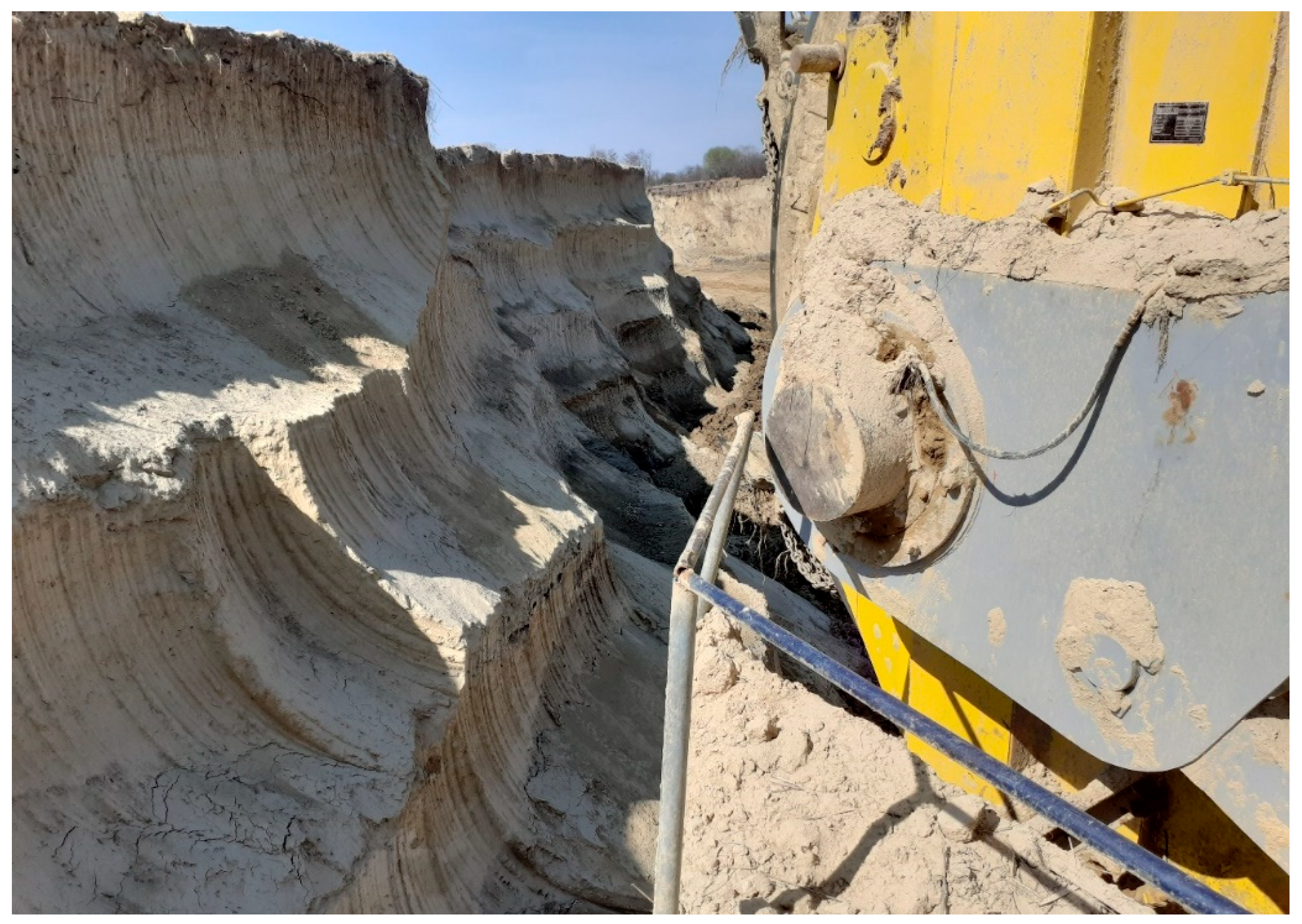
The gearbox investigated was manufactured through the engagement of domestic industry for the needs of the “Kolubara” mining basin. Trial operation of the gearbox was carried out in two stages: first by the equipment manufacturer at the factory, and subsequently by the equipment user at the “Kolubara–Metal” facility. In both cases, the trial operation met the prescribed criteria, the gearbox passed technical acceptance, and immediately after delivery it was installed on one of the SRs1200 excavators engaged in overburden removal at Field “E” of the “Baroševac” open-pit mine,
Figure 1.
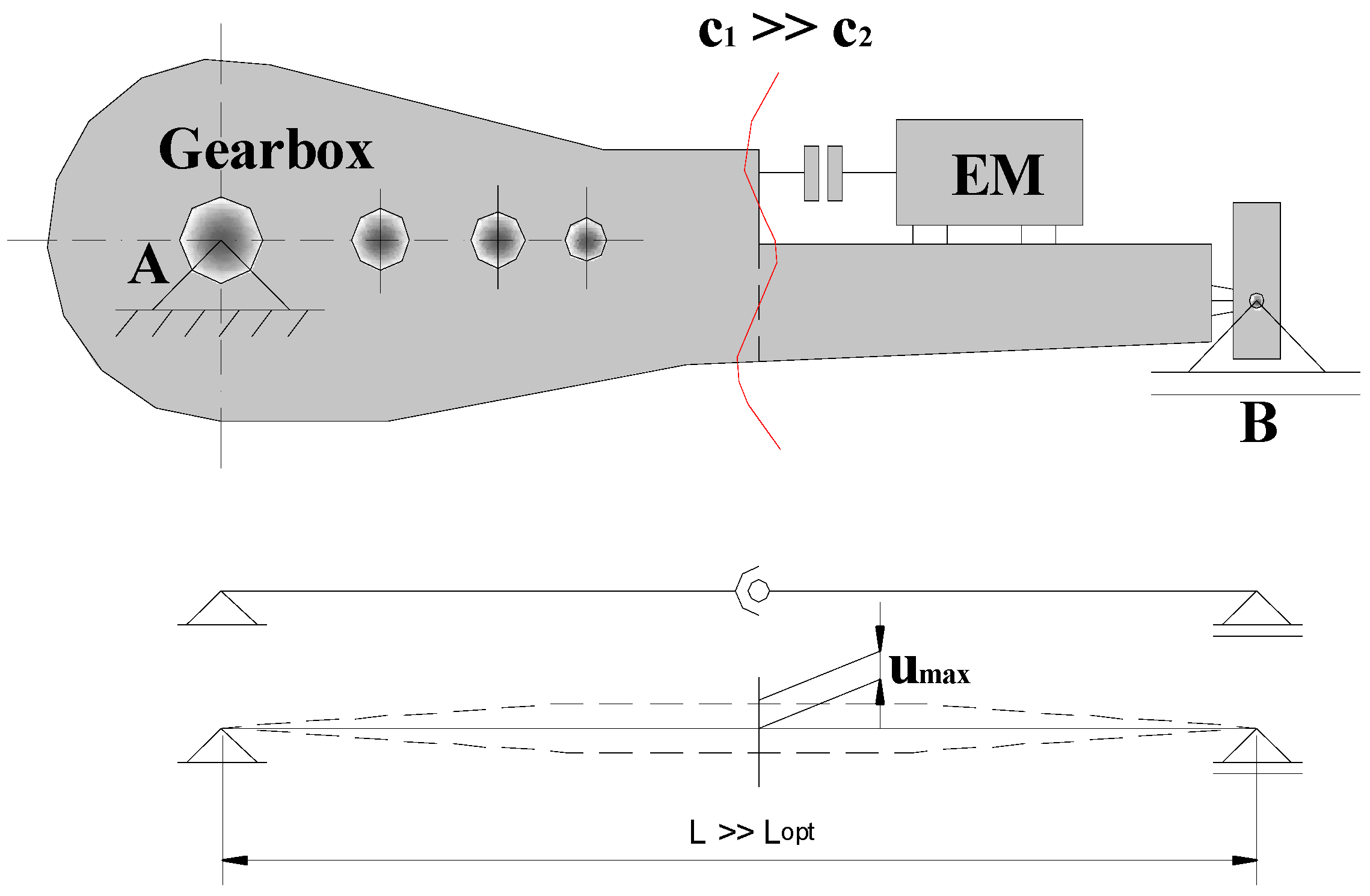
Figure 2 shows the conceptual dynamic model of this type of drive group, in which a large distance between the supports of the drive group can be observed. Due to differences in stiffness levels, this configuration can be represented as a Gerber beam with a hinge at mid-span.
In this case study, an integrated numerical–experimental approach was applied, combining the finite element method and advanced vibro-diagnostics in order to obtain a reliable assessment of the gearbox condition and to support decision-making regarding its further operation, maintenance, and potential modernization.
2. Numerical Methods for Modeling the SRs1200 Excavator Bucket-Wheel Drive
Due to the large number of vibration sources, the identification of natural frequencies and characteristic excitation frequencies is of great importance for elements, subassemblies, and assemblies of any drive groups on a rotor bucket excavator, and especially for the bucket-wheel drive.
In dynamic analysis, all quantities are functions of time. Since static analysis is a special case of dynamic analysis (time t = 0), the stiffness matrix remains unchanged, i.e., it is formed in the same manner. In dynamic analysis, in addition to static forces, dynamic forces also act on the finite element.
In the general case, the dynamic equation of motion of a structure can be derived using Lagrange’s equations or Hamilton’s principle. Lagrange’s dynamic equation is given as
where
L is the difference between the kinetic and potential energy:
By differentiating the derived quantities, the fundamental dynamic equation of forced damped vibrations in matrix form is obtained:
where
, —mass matrix, damping matrix, and stiffness matrix
, and —acceleration vector, velocity vector, and displacement vector
—external force (excitation) vector.
One of the fundamental prerequisites for performing modal analysis is system linearity; therefore, the equation of motion is reduced to a linear form, in which the mass and stiffness matrices are constant.
Linear equation of motion for free undamped vibrations:
For linear systems, free vibrations have a harmonic form (cyclic behavior), therefore the displacement and acceleration vectors are
Dynamic equation of modal analysis for undamped free vibration:
The quantities in the previous expression are
—Eigenvalue—the square of the natural circular frequency
—Eigenvector—the corresponding mode shape (modal shape).
This equation can be satisfied in the following ways:
—a trivial solution in the case where no oscillations occur
det—in this case, an eigenvalue problem arises that can be solved for each value of the root of the natural circular frequency. The determinant solution represents the poles, i.e., the resonant frequencies of the system. For each obtained system frequency, there exists a corresponding mode shape vector that defines the displacement at that frequency.
Since mode shape vectors represent amplitude ratios rather than absolute amplitude values, their normalization is required. There are several normalization techniques (with respect to mass, stiffness, etc.); however, in finite element-based software systems, mass normalization is most commonly applied.
Due to this normalization, only solutions corresponding to real degrees of freedom have physical significance. Determining the natural frequencies for all degrees of freedom of the system has no practical engineering relevance and requires an excessive amount of computational time. Therefore, only the first few frequencies are typically determined, as they are the most significant.
The most unfavorable structural behavior is expressed by the first mode shape, followed successively by higher modes. A structure exhibits good dynamic behavior if
the first natural frequency is high, and
the spacing between successive natural frequencies is large.
This can be achieved if the structure is designed with maximum stiffness and minimum mass.
The natural circular frequency in non-matrix form, as a solution of the second case of the equation, is
The relationship between the natural frequency and the natural circular frequency is
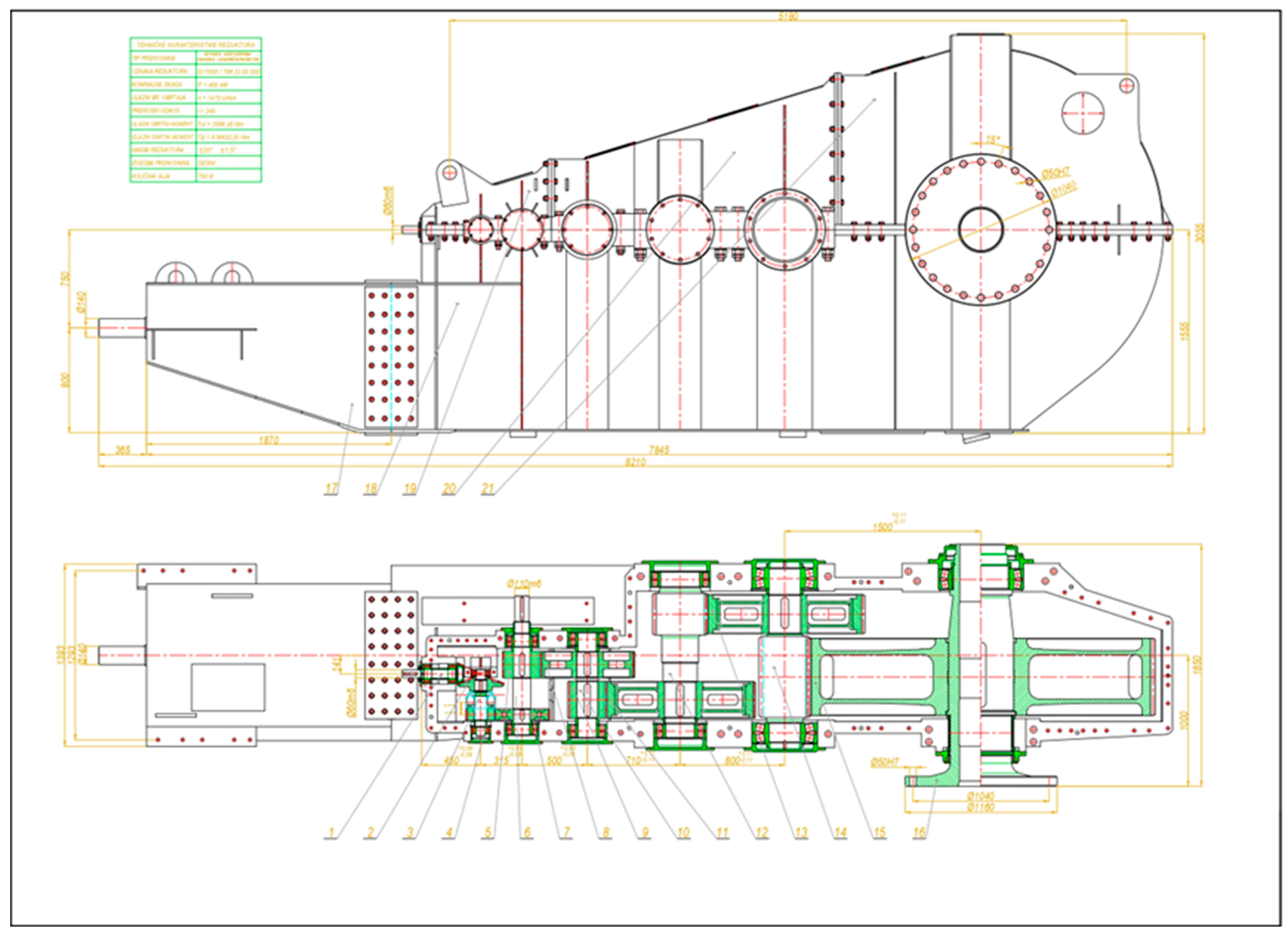
In the classical approach, modal analysis is performed using experimental methods (such as vibration testing on physical models) or analytical methods based on mathematical models and differential equations. A more contemporary approach involves the use of specialized software tools. Autodesk Inventor Professional 2025 Inventor is a package for parametric 3D modeling, stress analysis, and modal analysis of mechanical systems. As one of many engineering tools, this software enables the creation of accurate three-dimensional models on which various simulations of mechanical behavior can be performed, including dynamic vibration analyses, thereby significantly accelerating the processes of design, research, optimization, and verification of mechanical systems. Prior to forming the 3D model, it is necessary to fully define the geometry of the structure and all types of connections, as shown in
Figure 3.
The main gearbox components indicated in the assembly drawing are
Input shaft with auxiliary drive bevel gear
Auxiliary drive ring gear
Splined auxiliary drive shaft
Sliding engagement–disengagement gear of the auxiliary drive
Driven gear of the auxiliary drive
Shaft III—input shaft
Gear 5—input gear
Gear 6—driven gear of the first stage
Gear 7—driving gear of the second stage
Shaft IV
Gear 8—driven gear of the second stage
Shaft with gear—driving gear of the third stage
Gear 10—driven gear of the third stage
Shaft with gear—driving gear of the fourth stage
Gear 12—driven gear of the fourth stage (output gear)
Shaft VII—output shaft
Housing extension—connection to the third gearbox support on the excavator boom
Lower housing
Upper housing part 1
Upper housing part 2
Upper housing part
Other gearbox components, such as keys for shaft–gear connections, spacer sleeves and rings, bearing covers, bearings, and sealing elements, are not numbered in the drawing for clarity.
Since this study focuses on vibration measurements of the complete gearbox and on gear reconstruction, only the most significant gearbox components—gears, shafts, and the housing—have been numbered and listed.
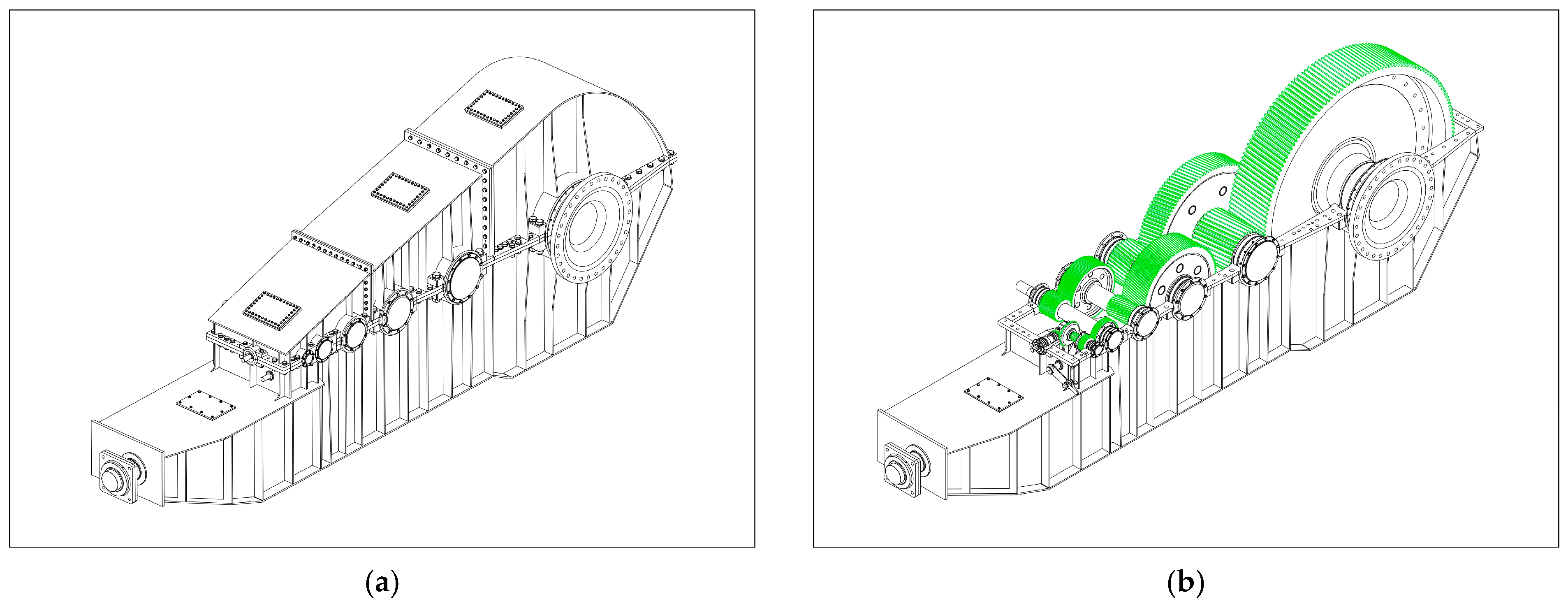
Figure 4 show the 3D model of the gearbox (a) the closed gearbox housing, and (b) the interior of the gearbox with the gears, which serves as the input for the modal analysis.
After modeling, the finite element mesh of the dynamic model is defined. A larger number of elements results in a greater number of nodes and, consequently, higher accu-racy of the obtained data. However, generating a model with a larger number of finite elements requires more computational time, so at this stage it is necessary to find an optimal solution. The element mesh settings are presented in
Table 1. During the definition of the modal analysis parameters, the boundary conditions related to the gearbox support configuration were also specified. In this case, the gearbox is supported via the output shaft, which is connected to the bucket-wheel shaft; this shaft is supported through bearings on the excavator boom structure. At the rear side, the gearbox is mounted to the excavator boom structure by means of a movable support with damping.
Natural frequencies of the bucket-wheel gearbox elements of the excavator
Based on the known design parameters of the components, the following characteristic frequencies of the gearbox elements were determined:
Excitation frequencies of the gearbox shafts,
Excitation frequencies of the gear mesh,
Natural frequencies of the bearings,
Excitation frequencies of the electric motor, and
Natural frequencies of the gearbox and the shafts with gears.
Table 2 presents the values of the natural and excitation frequencies of the gearbox elements.
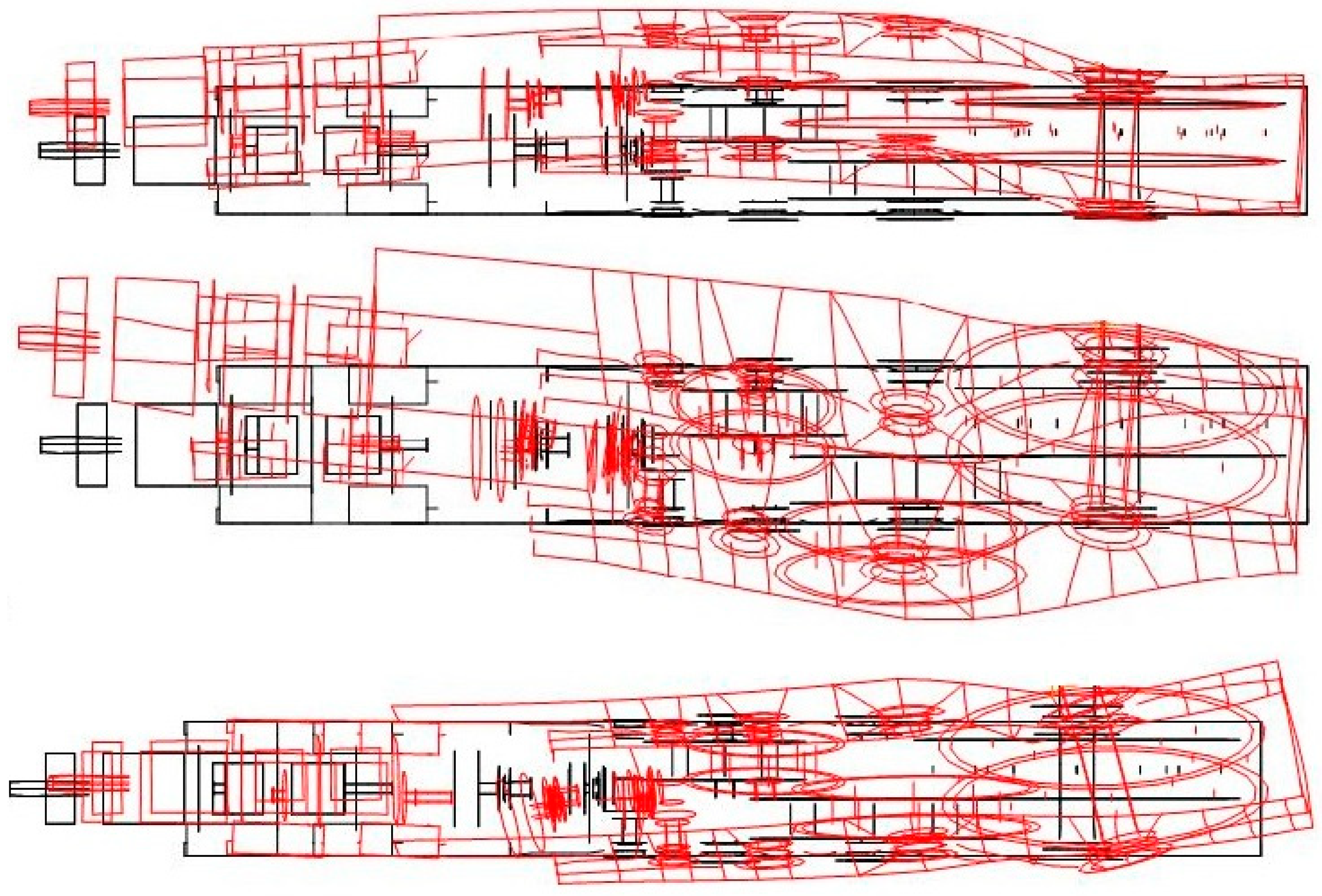
Figure 5 shows a graphical representation of the deformed mode shapes (modes 1–3).
Each mode is defined by a characteristic natural frequency and the corresponding mode shape occurring at that frequency. The most pronounced frequency characteristics appear in the first three modes; therefore, the modal analysis is presented for these three modes. The natural frequencies obtained for modes 1–3 are
By comparing the natural frequencies obtained from the numerical model with the calculated characteristic frequencies of the gearbox elements, the following correlations can be identified: The natural frequency of the model in the first mode (f1 = 10.81 Hz) is close to the rotational frequency of the shaft at the second transmission stage (f = 9.716 Hz). The natural frequency of the model in the second mode (f2 = 16.72 Hz) is close to the gear meshing frequency at the final transmission stage (f = 17.053 Hz). The driven gear at this transmission stage (the gear mounted on the gearbox output shaft) is the subject of reconstruction, which will be discussed in the subsequent sections of the paper.
3. Vibration Diagnostics and Inspection of the Bucket-Wheel Gearbox
The vibration diagnostics procedure was carried out in several phases, which were conditioned by the installation of a new gearbox on the excavator and by subsequent problems that occurred during gearbox operation. The entire gearbox diagnostics methodology can be presented as follows:
Measurement of vibrations in three directions on the new gearbox on the test bench prior to delivery, at the following locations:
- ▪
bearing housings of all gearbox bearings,
- ▪
gearbox housing.
Removal of the gearbox from the excavator after irregularities in operation were observed following 4500 h of service, and its placement on the test bench.
Measurement of vibrations of the mounted gearbox in three directions (V, A, H) on the test bench at the following locations:
- ▪
bearing housings of all gearbox bearings,
- ▪
gearbox housing.
Diagnosis of the gearbox condition, including inspection of the gear elements, backlash measurement, and definition of the reconstruction procedure.
Execution of the defined reconstruction, with inspection of each newly established position.
Assembly (installation) of the gearbox.
Measurement of vibrations of the assembled gearbox in three directions (V, A, H) on the test bench at the following locations:
- ▪
bearing housings of all gearbox bearings,
- ▪
gearbox housing.
Comparison of the measurement results before and after gearbox assembly.
Decision-making regarding the installation of the gearbox on the excavator, followed by installation of the gearbox on the excavator.
Vibration measurements on the gearbox were carried out by different testing institutions. The pre-delivery measurement was performed by the SKF representative at the gearbox manufacturer’s facility. The vibration measurement prior to reconstruction was conducted by the testing service of the gearbox user. This test was performed in the user’s maintenance facility. The vibration measurement after reconstruction was also carried out by the user’s testing service; however, the test was performed at the gearbox manufacturer’s facility, where the disassembly and reconstruction had been conducted.
All tests were performed using the same type of equipment. The second and third tests (before and after reconstruction) were conducted using equipment of the next generation compared to that used for the initial pre-delivery test. Detailed characteristics of the equipment are provided in the following sections describing the procedure and results of each individual test. The method of presenting the results was identical for all measurements and consisted of displaying vibration velocities at the measuring points in three orthogonal directions.
The test conditions differed between the measurement on the new gearbox and the measurement on the gearbox that had been in operation. The testing of the new gearbox was performed under minimal load in order to ensure proper contact pattern formation of the gear tooth flanks, in accordance with the requirements defined in the procurement procedure. The primary objective of the first test was to verify the operation of the geared elements prior to quantitative acceptance by the user. All subsequent tests were performed under load. Load simulation was achieved by installing a brake disk on the output shaft flange and a mechanical disk brake mounted on the test bench. By tightening the brake disks, the required braking force was generated, thereby simulating load on the output shaft. The specified test condition required the test load to be approximately 30% of the nominal load. All tests were conducted after one hour of gearbox operation. The direction of rotation in all tests corresponded to the rotation direction during operation of the bucket-wheel excavator. It is important to acknowledge that, for the purposes of the reconstruction procedure, the most significant tests are those conducted immediately before and after gear reconstruction, as both were performed under identical operating conditions. However, the conditions under which the initial test of the new gearbox was carried out—namely, reduced rotational speed and minimal load—represent a limiting factor in the comparative analysis of results across all three testing phases. Vibration measurements of the bucket-wheel drive gearbox were carried out using equipment consisting of a three-axis acceleration sensor, an analog-to-digital (A/D) signal converter, and USB communication to a computer. The software package supports both time-domain and frequency-domain analysis of the acceleration signal. The frequency-domain signal was obtained using FFT analysis (Fast Fourier Transform).
The test procedure are presented in
Table 3.
3.1. Vibration Measurement of the Gearbox Prior to Delivery
The first gearbox test was performed at the manufacturer’s facility immediately prior to delivery. The test conditions differed between the measurement on the new gearbox and the measurement on the gearbox that had been in operation. On the test bench, the gearbox was coupled to a 90 kW electric motor drive. Input shaft speed n = 630 rpm. Measurements were performed after 60 min of continuous operation.
The following equipment was used during the testing:
Frequency analyzer: SKF Microlog Analyzer GX-S (CMXA 70-S) S/N: 060921
Accelerometer: SKF CMSS 2200 S/N: S22440
Software: SKF @ptitude Analyst.
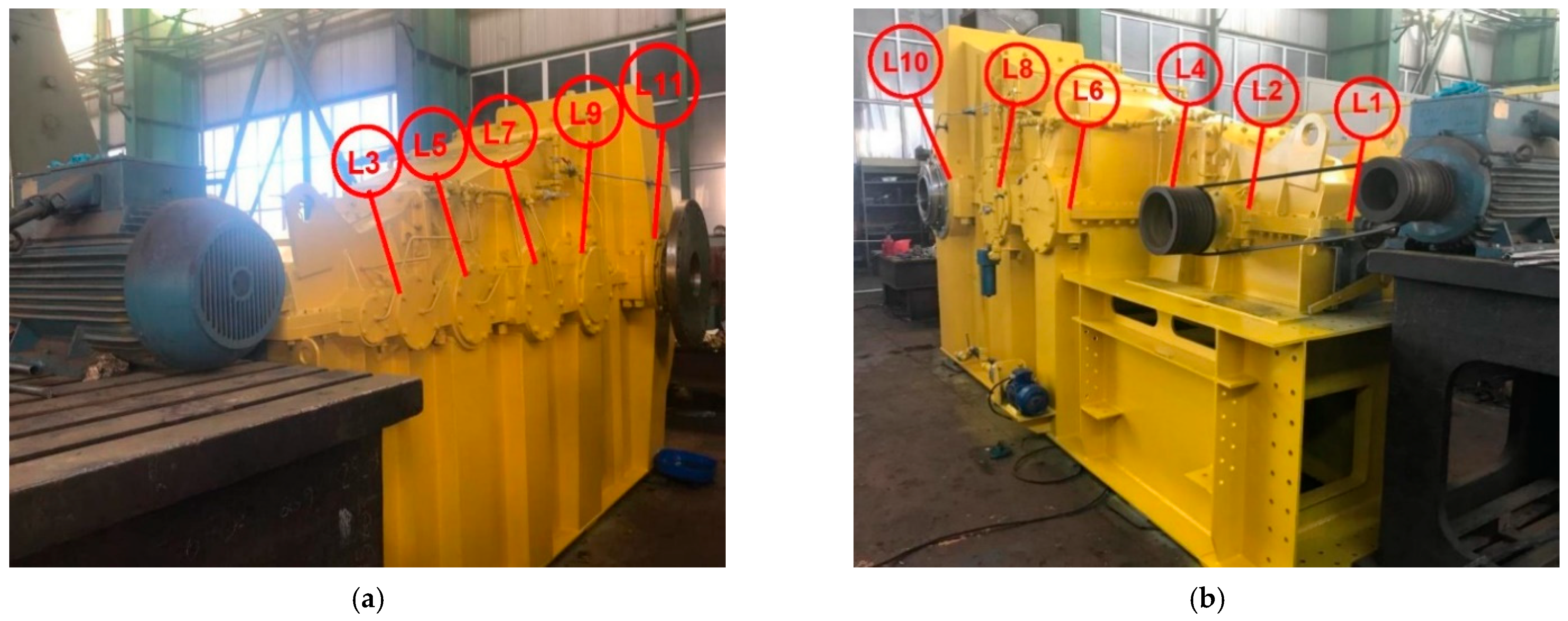
Figure 6 shows (a) and (b) Gearbox testing prior to delivery and measurement locations.
The test results are presented in
Table 4.
The overall vibration level was measured in accordance with ISO 20816-3:2022 for rotational speeds below 800 rpm, i.e., based on the RMS vibration velocity values in the frequency range from 2 to 1000 Hz.
According to ISO 20816-3:2022, pursuant to Section 4.1, the gearbox is classified into Group 1, and pursuant to Section 4.2, into the category of rigid mounting.
The zone limits are classified into three basic categories:
A/B 2.3 mm/s
B/C 4.5 mm/s
C/D 7.1 mm/s.
Based on this, it was concluded that all measured vibration values fall within Zone A and that the highest measured values are within the green zone.
3.2. Inspection of the Gearbox Gear Elements, Vibration Measurements, and Definition of the Reconstruction Procedure
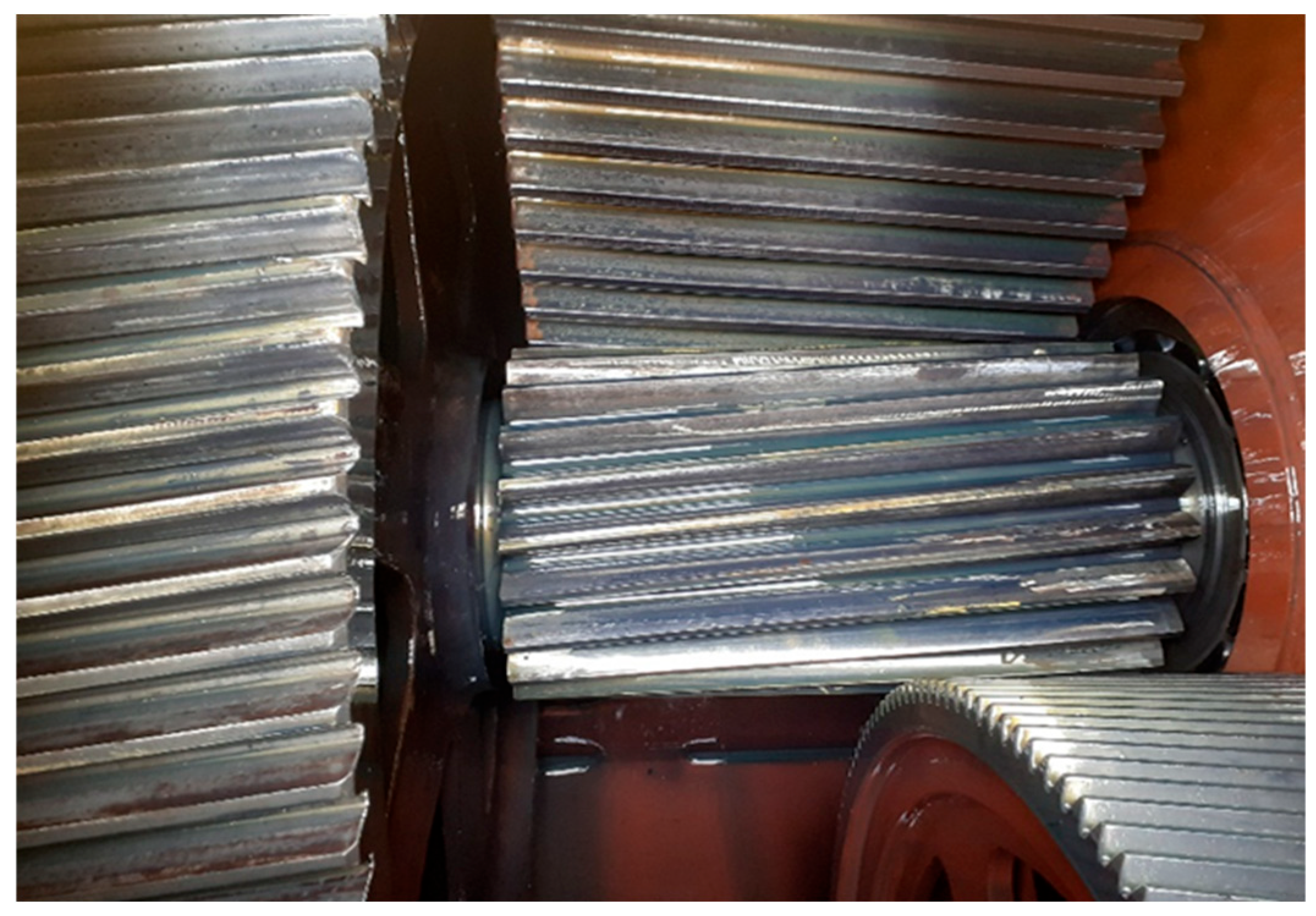
The gearbox operated for approximately 4500 h, and after inspection of its interior it was found that the output gear exhibited intensive wear of the tooth flanks (pitting).
Figure 7 shows a view through the inspection opening into the gearbox housing.
Surface damage on the flanks of the output gear teeth occurred due to the poor quality of the casting from which the gear was manufactured. Any inhomogeneity in the casting caused significantly accelerated formation of surface damage at locations where it had not previously existed, as well as the propagation of existing micro-damage that had developed during the gear tooth manufacturing process. As a result of the poor surface-quality of the output gear tooth flanks and their intensive wear, increased backlash between the meshing gears at the final transmission stage developed. A direct consequence of this was an increase in gearbox vibrations, which was observed during the second gearbox test.
The second gearbox test was performed in the user’s maintenance facility immediately after the gearbox had been removed from the excavator. The gearbox was tested on a test bench under load. On the test bench, the gearbox was coupled to a 90 kW electric motor drive. Input shaft speed n = 1230 rpm. Measurements were performed after 60 min of continuous operation.
The following equipment was used during the testing:
Frequency analyzer: SKF Microlog Analyzer Ax (CMXA 80)
Accelerometer: SKF CMSS 2200
Softver: SKF @ptitude Analyst.
The test results are presented in
Table 5.
A detailed inspection of the gearbox gear elements led to the definitive conclusion that the gearbox was not reliable for further operation and that the problem on the output gear had to be resolved. Several solution variants were considered, of which three were identified as the most optimal for further analysis and selection of the most suitable option:
Removal of the existing gear from the hollow shaft, its rotation, and reinstallation on the shaft.
Manufacture of a new blank for the output gear according to the existing documentation, machining and gear cutting, removal of the old gear, and installation of the new gear on the shaft.
Reconstruction of the existing gear without removing it from the shaft.
The first variant represents the solution with the fastest implementation and does not depend on external factors, since no material procurement is required. By rotating the gear, a change in the mating axial face that rests on the shaft seat is implied. In this way, gear meshing in the operating direction would be achieved on the tooth flanks that had not previously been in service and therefore did not exhibit surface damage, unlike the flanks that had been in operation during the first 4500 h. Although this is the fastest solution, it has several disadvantages. Rotating the existing gear requires heating it to a temperature at which the tolerances in the hub bore would allow a loose fit with the shaft, followed by removal of the gear from the shaft and, under ideal conditions, rotation and reinstallation onto the shaft while still in the heated state. Due to the interference fit achieved during the initial installation of the gear, the disassembly procedure would have to be performed using a hydraulic press with sufficient stroke (greater than 550 mm) and adequate working table dimensions to accommodate an assembly of the size of the gearbox output shaft. The process of pressing the shaft out on a hydraulic press would almost certainly lead to damage to the shaft journal at the location of the interference fit, particularly in the keyway zone. Repair of the damaged areas on the shaft journal and in the gear hub bore would require a certain amount of time, during which it would be impossible to take advantage of the heated state for reinstalling the gear onto the hollow shaft. After the repairs, the gear would need to be reheated and mounted onto the shaft again. Considering that the heating process for such a gear is very time-consuming, that frequent thermal cycles on a toothed gear are unfavorable from the strength standpoint, and that this procedure would effectively continue operation with the same gear on which damage already exists, this variant was rejected.
The second variant involves replacing the existing gear with a new one manufactured in the same manner as the original. This option may cause the same problems as those observed with the existing gear. Namely, a high-quality casting for critical gearbox machine parts can only be produced by a foundry with adequate technological and human-resource capabilities. The current situation across Europe is such that the number of such foundries is very limited, and the delivery time for a casting would be excessively long relative to the available timeframe. Manufacturing the casting in other foundries would represent only a postponement rather than a solution to the problem, due to the poor casting quality, which—as in the case of the existing gear—would likely become evident after several thousand hours of operation. Considering that the expected service life of the gearbox on these excavators is approximately 50,000 h, the occurrence of problems on one of the gears every 5000 h is unacceptable.
The third variant involves reconstruction of the existing gear by machining off the existing teeth and reducing the diameter of the gear body to a value smaller than the gear root diameter. A forged ring would then be machined on its inner diameter to the same dimension within the appropriate tolerance ranges. The ring would be heated and shrink-fitted onto the gear body. Machining of the outer diameter and cutting of the gear teeth would subsequently be performed on the assembled unit. Through joint analysis of this variant by the gearbox manufacturer and the end user, it was concluded that this option offers numerous advantages over the previous two for several reasons. First and foremost, the forged ring to be installed on the existing gear exhibits significantly superior mechanical properties compared to a casting, even if the casting were of the highest quality. The delivery time for the forged ring is considerably shorter than that for a casting (four to five weeks compared to five to six months). An additional advantage lies in the fact that, once reconstructed, the gear can always be overhauled by replacing the ring. The gear body remains unchanged, as it does not suffer any damage. The connection between the gear and the shaft achieved during the initial installation is not intended to be disassembled during reconstruction or during any subsequent gear repair.
Based on the analyses described above, reconstruction of the output gear was adopted as the most reliable and cost-effective solution.
3.3. Gear Reconstruction
Gear reconstruction was carried out based on a previously defined technological procedure, as follows:
Opening of the gearbox and removal of the complete Shaft VII assembly from the gearbox housing.
Without removing the gear from the hollow shaft, Shaft VII (output shaft) was mounted on a vertical lathe (carousel type), and centering was performed with respect to the axis and journals of the hollow shaft.
After centering, machining of the existing gear was performed at the addendum diameter. The machining was carried out to a diameter of 2520 mm. A shoulder was left on one side to provide a seating surface. All teeth of the existing gear were removed, and machining was performed below the original root diameter by the recommended allowance below the root diameter of approximately 2.5 mn.
Internal machining of the forged ring to a diameter of 2520 mm. Tolerances between the machined diameter on the gear body and the forged ring were specified to achieve an interference fit (2520 H7/s8). A recess for seating was left on one side.
Heating of the forged ring and shrink-fitting it onto the gear body in the heated state. Heating was carried out to a temperature of 370 °C. After cooling, the specified interference fit was achieved.
The new Shaft VII assembly was mounted on the gear-cutting machine, where rough and finish milling of the gear teeth was performed according to the specified gear parameters. A detailed inspection of the gear teeth was carried out on the same machine.
Reinstallation of Shaft VII into the gearbox housing, closing of the gearbox, and load test operation.
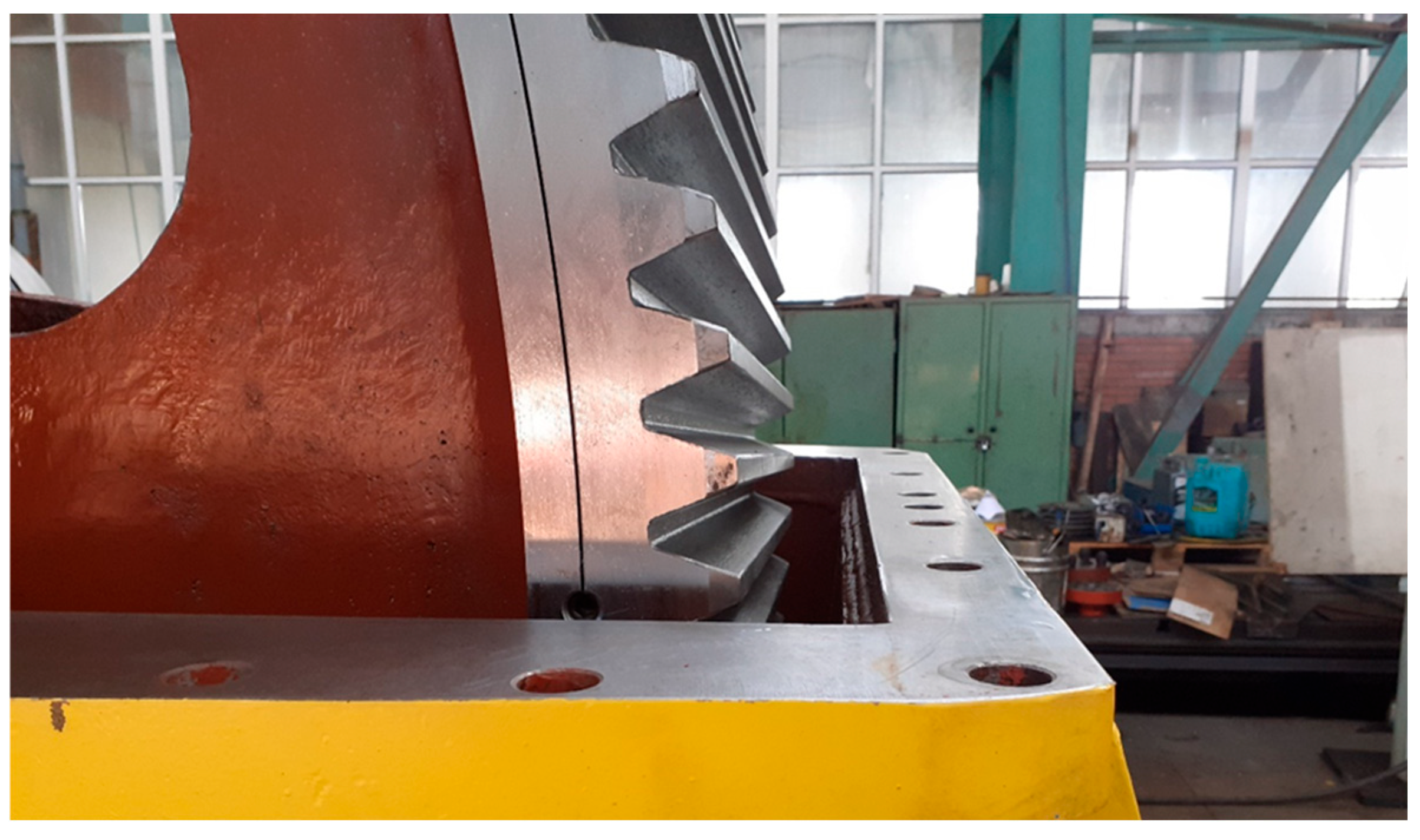
Figure 8 shows the reconstructed output shaft gear inside the gearbox housing prior to assembly.
3.4. Vibration Measurement of the Gearbox After Reconstruction
The third gearbox test was carried out at the gearbox manufacturer’s facility after reconstruction and reassembly. The gearbox was tested on a test bench under load. On the test bench, the gearbox was coupled to a 90 kW electric motor drive. Input shaft speed n = 1230 rpm. Measurements were performed after 60 min of continuous operation.
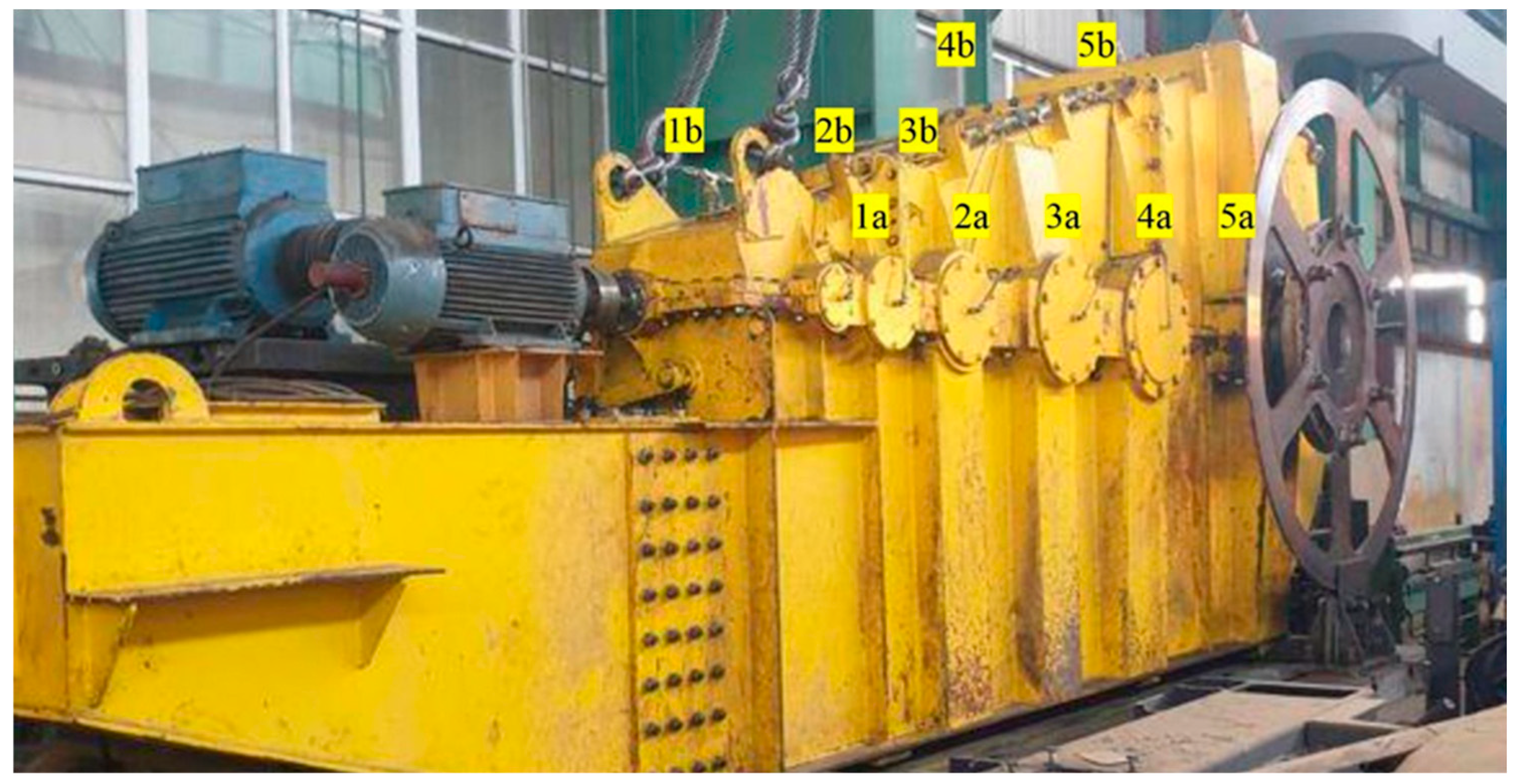
Figure 9 shows the designation of measurement points for vibration testing on the SRs1200 gearbox.
The following equipment was used during the testing:
Frequency analyzer: SKF Microlog Analyzer Ax (CMXA 80)
Accelerometer: SKF CMSS 2200
Softver: SKF @ptitude Analyst.
The test results are presented in
Table 6.
4. Analysis of the Reconstruction and Test Results
Based on the analysis of the obtained parameters and the results of the gearbox testing, the following conclusions were drawn:
The forging exhibits superior mechanical properties (toughness and tensile strength) compared to a casting.
Any form of porosity resulting from poor-quality casting is eliminated, thereby excluding the possibility of surface damage on the gear tooth flanks.
During load test operation, the gearbox demonstrated smoother operation compared to operation with the cast output gear.
The contact strength capacity of the gear on the output shaft was increased by approximately 40%. Considering that the gearbox consists of elements connected in series, failure of a single element results in failure of the entire gearbox assembly.
The percentage increase in the contact strength of the output gear after reconstruction can be determined by evaluating the ratio of the safety factor against flank failure for the original cast gear and for the reconstructed gear with a forged rim.
The ratio of the safety factors against flank failure is defined as
where
—critical contact stress on the tooth flanks of the gear with a forged ring
—operating contact stress on the tooth flanks of the gear with a forged ring
—critical contact stress on the tooth flanks of the cast gear
—operating contact stress on the tooth flanks of the cast gear
The operating contact stresses on the tooth flanks of the output gear are identical in the case of both the cast and forged gears, since the operating conditions are the same for any gear installed in the gearbox. Therefore, the expression for the safety factor ratio reduces to
In the general case, the critical contact stress for helical gears is defined as
where
—contact fatigue limit of the forged gear tooth flanks
—contact fatigue limit of the cast gear tooth flanks
—life factor (number of load cycles), equal for both gear types
—load variation factor, equal for both
—lubrication factor
—sliding velocity factor
—flank roughness factor
—hardness ratio factor of the meshing gears
—size factor
All correction factors have identical or negligible differences for the forged-rim gear and the cast gear. Differences primarily arise in factors related to the contact fatigue limit. Since this section considers only the percentage increase in contact strength of the output gear tooth flanks, the correction factors may be neglected, as they do not significantly influence the ratio of safety factors.
Accordingly, the safety factor ratio becomes
This provides analytical confirmation that the reliability of the reconstructed output gear has increased by approximately 40%.
The characteristic natural frequencies identified during testing and their respective sources within the gearbox are presented in
Table 7. The frequency sources were defined based on the rotational speed of the input shaft used during testing.
The measured gearbox frequencies indicate that the gear pair at the third transmission stage (between shafts V and VI) exhibits increased backlash. This gear pair was not replaced during the reconstruction but should be scheduled for replacement during the next gearbox overhaul, when the bearings are to be replaced. The reconstructed gear, in mesh with its driving element, demonstrates satisfactory diagnostic behavior, without pronounced vibration peaks. The frequency f = 442 Hz is present as a consequence of potential vibrations of the large gear bodies. The driven gears in the final two transmission stages possess high stiffness, which explains the observed frequency value.
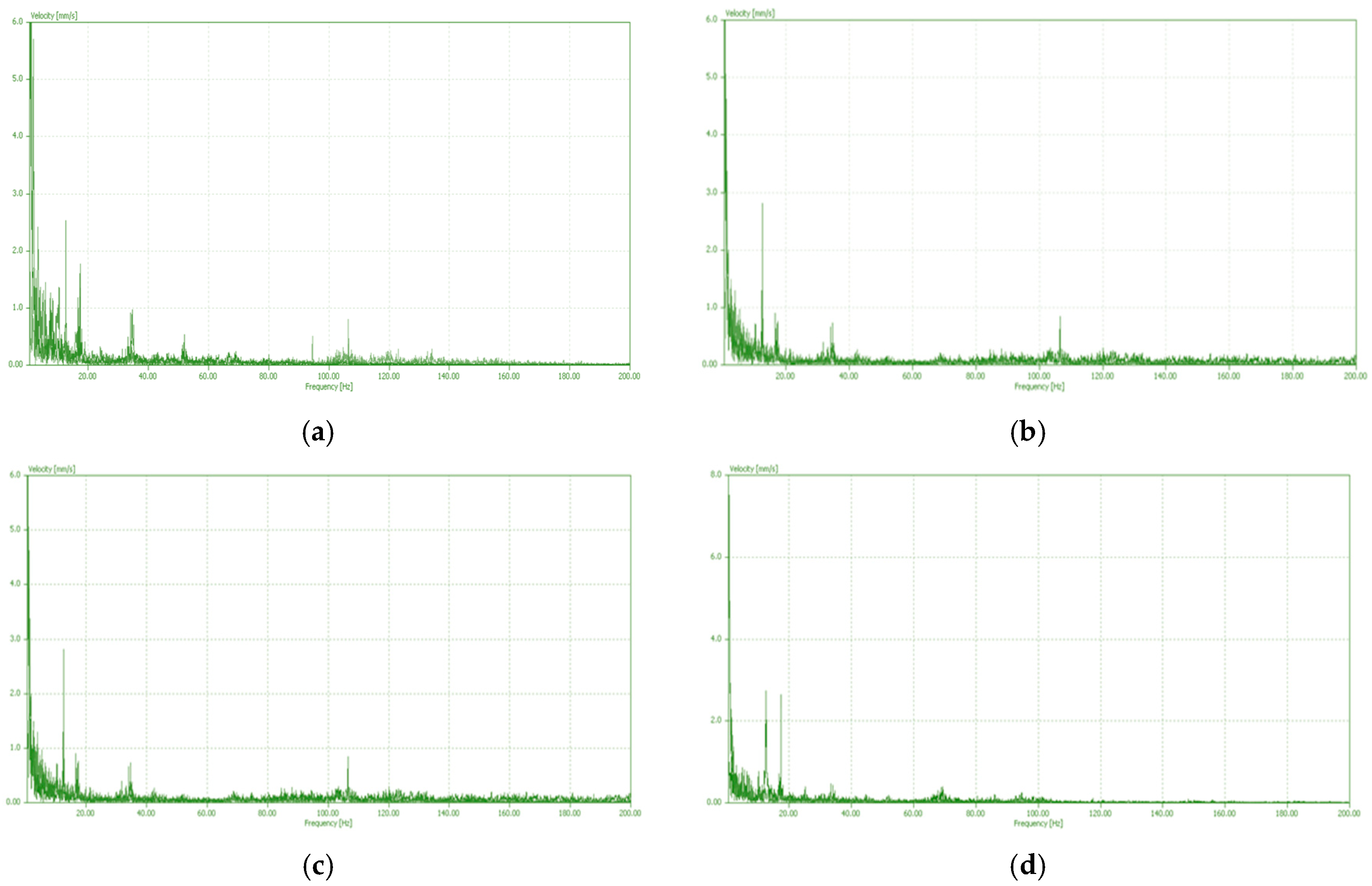
Figure 10 shows characteristic vibration diagrams at individual measurement points: (a) Shaft III, bearings 22324; (b) Shaft IV, bearings 22328; (c) Shaft V, right bearing 22244; (d) Shaft VI, bearings 22348.
The overall vibrations, according to ISO 20816-3:2022 for Class C and quality level VR8, are acceptable.
Table 8 presents the gearbox test results validation.
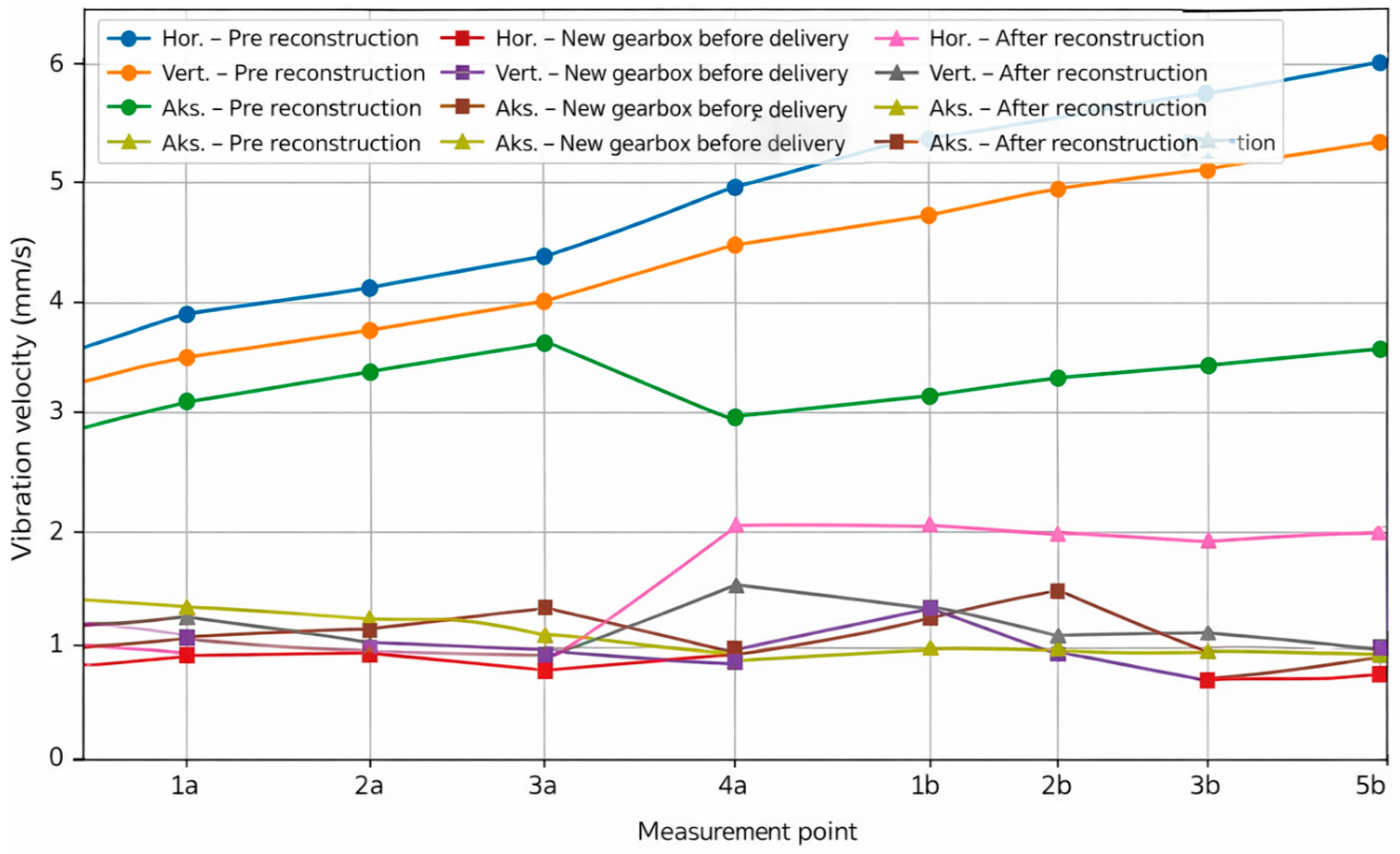
Figure 11 shows a comparative diagram of the measured vibrations in the horizontal, vertical, and axial directions on the new gearbox: before delivery, prior to reconstruction, and after reconstruction.
All vibration tests on the gearbox were performed at the facilities of the gearbox manufacturer and the user. A comparison of the measurement results before and after re-construction indicates a significant reduction in vibrations following the installation of the reconstructed gear, when considering the gearbox as a standalone system.
In actual operating conditions, the gearbox functions on the boom of a bucket-wheel excavator together with the bucket wheel and the drive unit. During operation, the boom is subjected to vibrations caused by excavation processes, vibrations of the drive unit, vibrations of the gearbox itself due to gear meshing, and its own structural vibrations resulting from the presence of a concentrated mass at its end.
The reduction in gearbox vibrations achieved through the analysis, testing, and re-construction described in this study contributes to a reduction in boom vibrations in the gearbox support regions. This effect is most pronounced at the rear gearbox support (third support), where the housing extension is mounted via a set of rubber inserts on a sliding support. The reduction in vibrations at this location was achieved and, according to operational criteria, amounts to approximately 30%.
This opens the possibility for further research, including the integration of the excavator boom and the bucket wheel with its shaft into the analysis, as well as vibration measurements on the boom during operation.
5. Conclusions
This paper presents the procedure for post-pack vibration measurements and the method for reconstructing the output gear of the SRs1200 excavator’s final drive. The procedure has been successfully implemented, and such a reducer with a reconstructed gear is currently in operation. The procedure can be adopted and applied for the reconstruction of all output gears on these reducers, as it nearly completely eliminates the need to dismantle the gear from the hollow shaft—a process that has proven risky in practice, often causing damage to the bearing surfaces. Complete gear disassembly would be required only in cases of gear body fracture, which is very rare in practice and occurs due to major excavator failures. This method would reduce excavator downtime, lower maintenance costs, and, most importantly, extend the service life of the reducer.
Based on the comparison of vibration measurements before and after the reducer reconstruction, it can be concluded that the dynamic behavior of the reducer is significantly improved after reconstruction. Increases in vibration at certain measurement points of the new and reconstructed reducer are a result of increased backlash in the gear elements due to operating the reducer under harsh conditions with pronounced stochastic shock loads.
The presented procedure can be applied not only to the final drive reducer of continuous coal mining excavators but also to any power transmission system where the disassembly of large gears from shafts is difficult. A particular application could be for drive gears of mills in mineral processing plants. These gears are manufactured as a single piece with the shaft, and this method would allow repair of only the gear portion without the need to produce a complete shaft with gear. Research on this topic is currently ongoing.