Evaluation of Fracture Effectiveness in Ultra-Deep Marine Carbonate Reservoirs of Fuman Oilfield, Tarim Basin

Abstract
1. Introduction
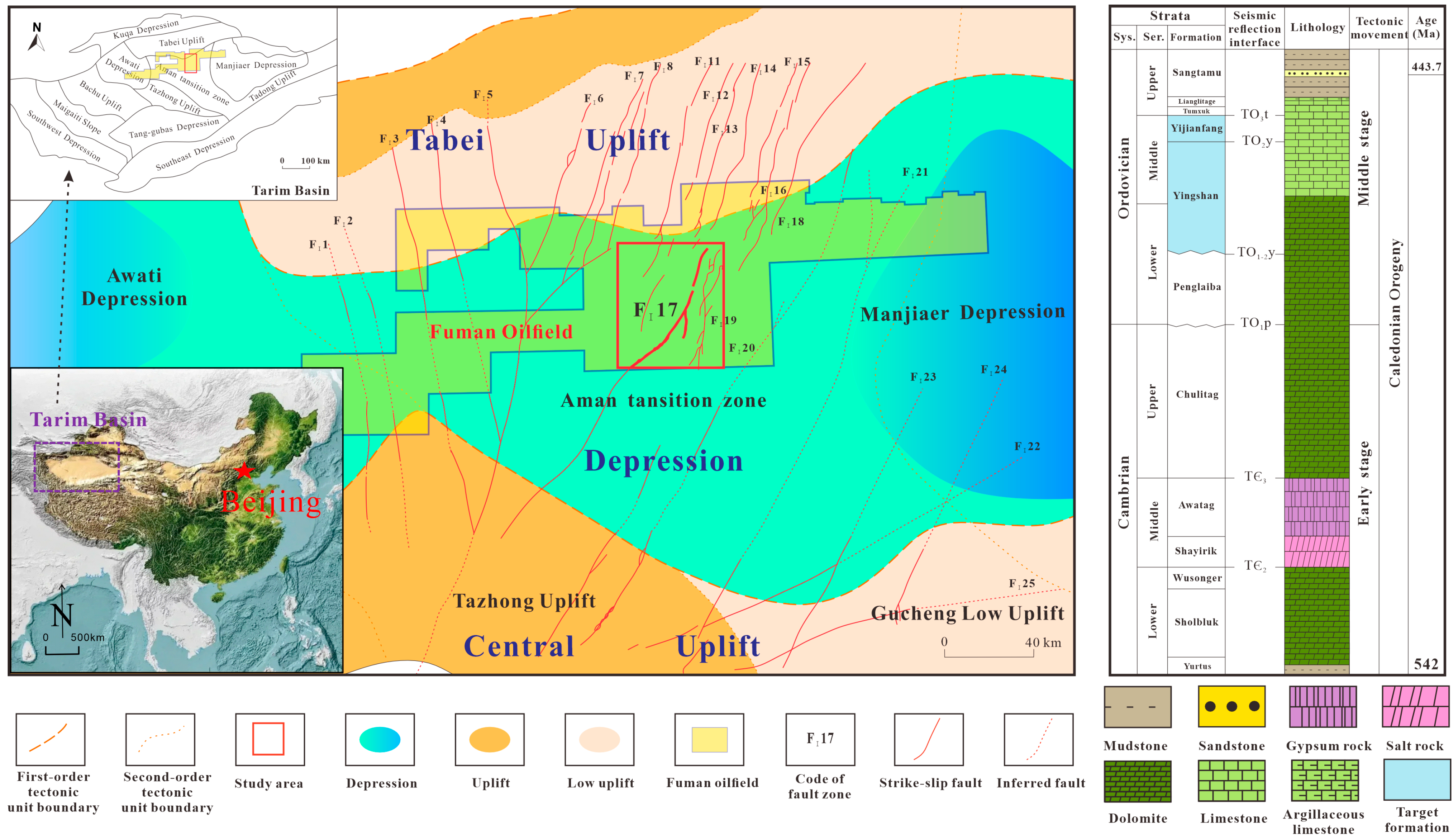
2. Geological Setting
3. Methods and Parameters
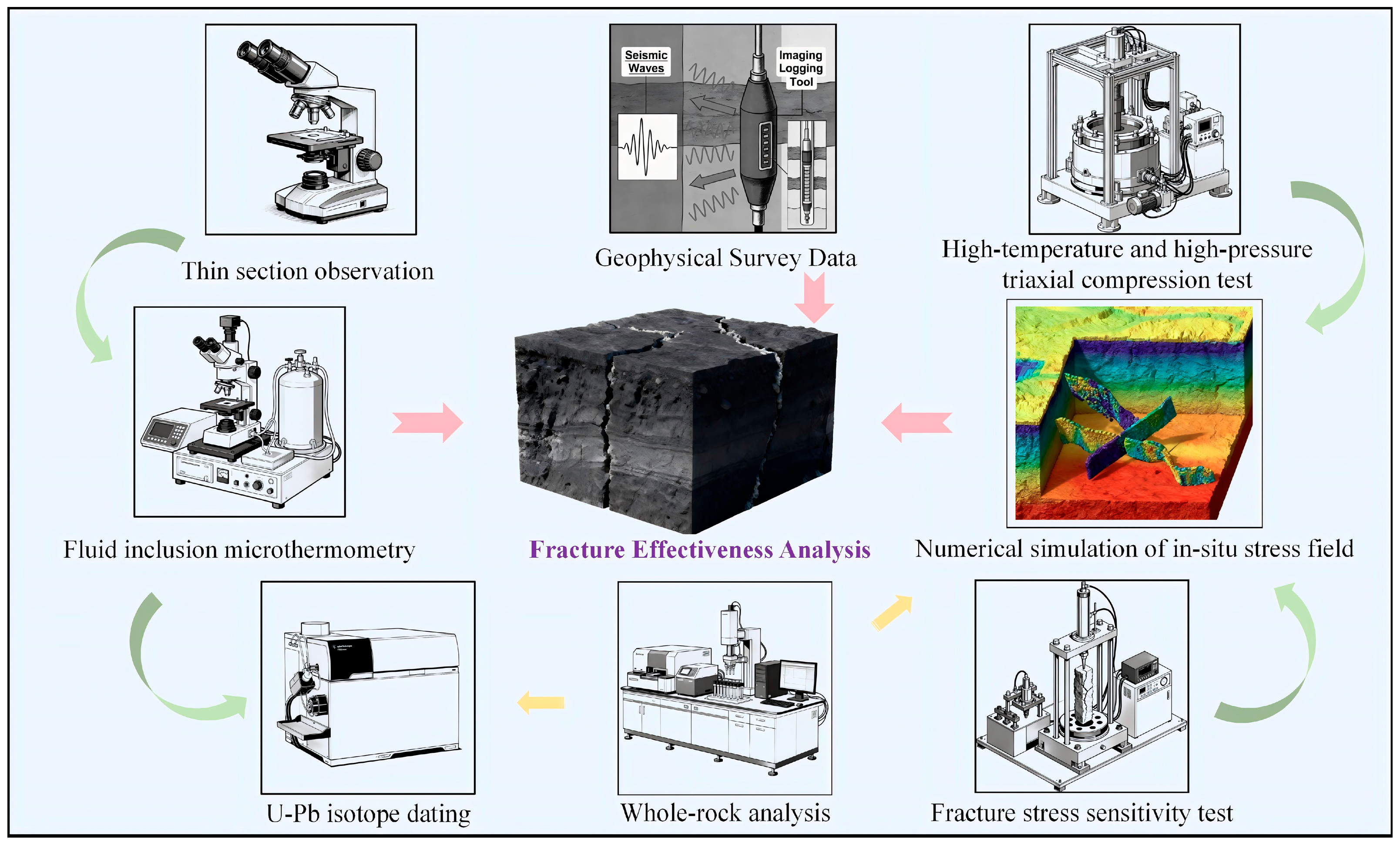
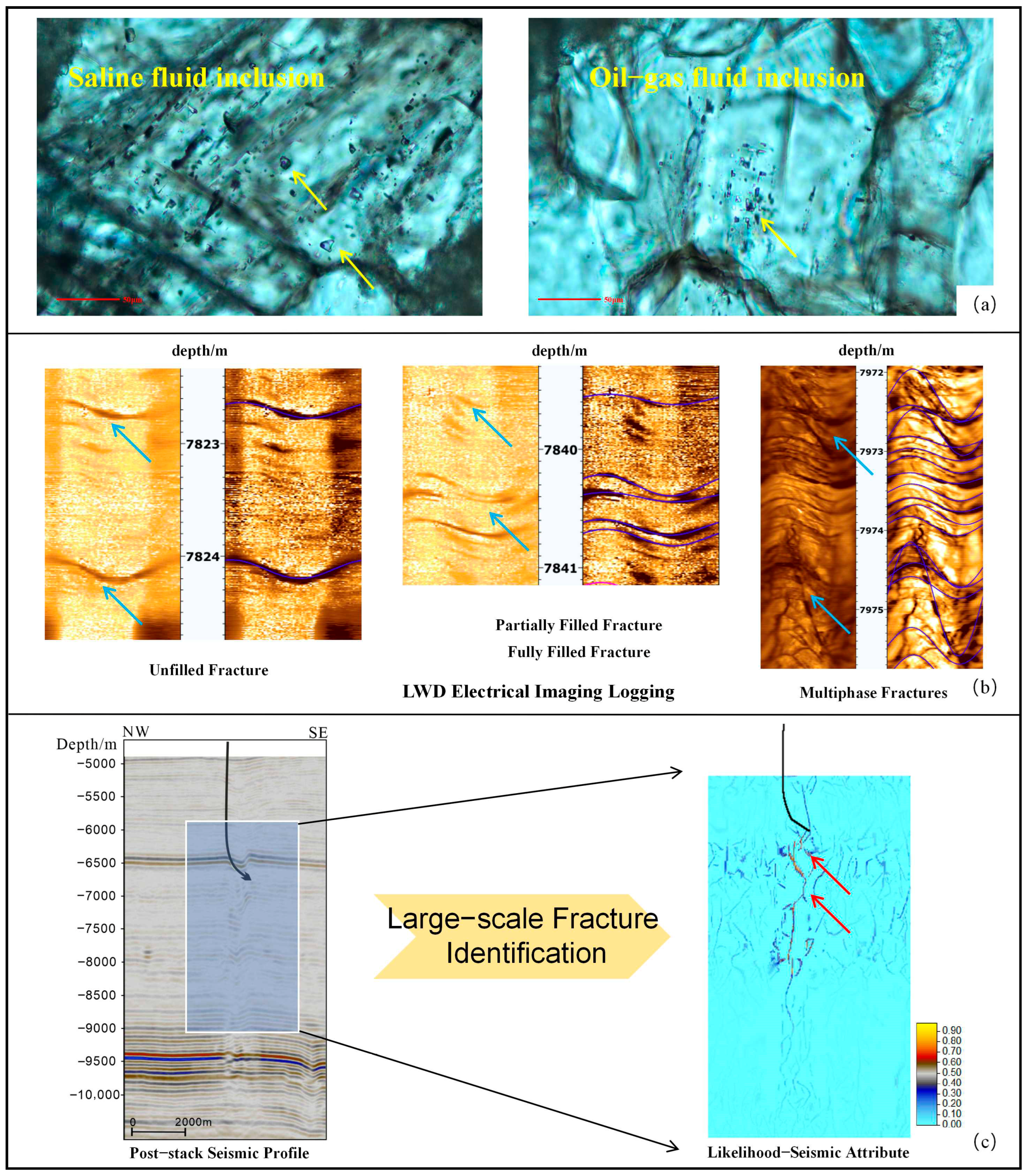
3.1. Geological Observation, Geochemical and Geophysical Methods
3.2. Geomechanical Method
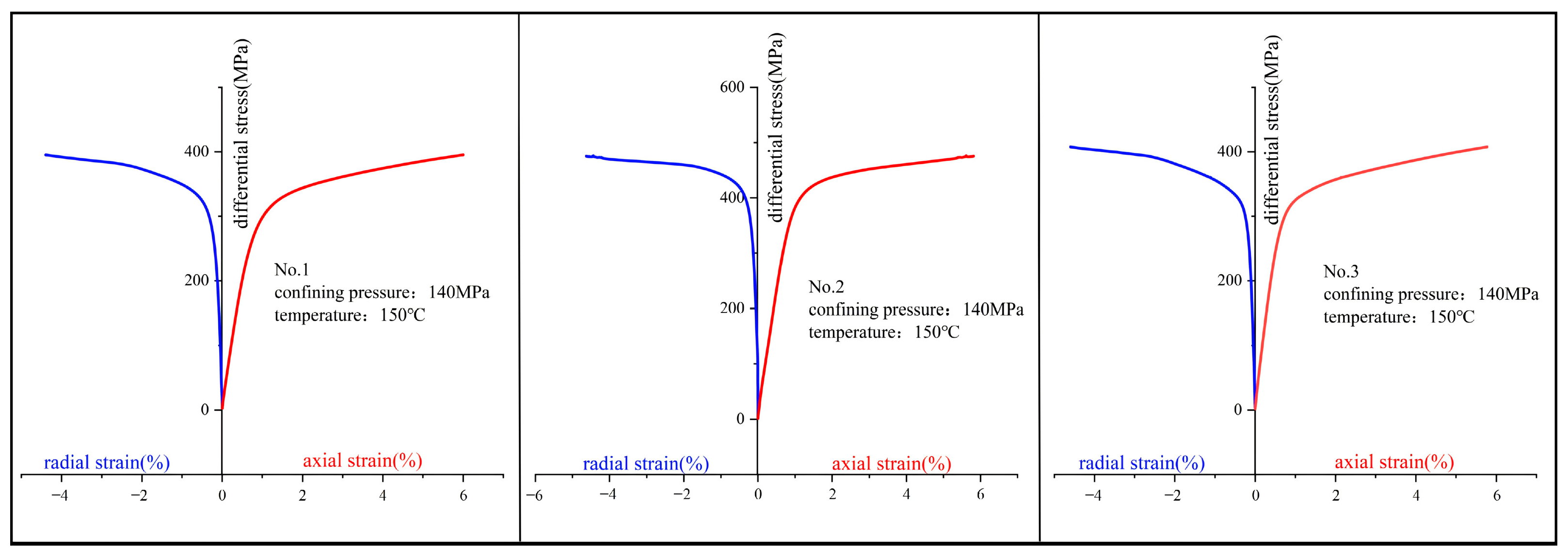
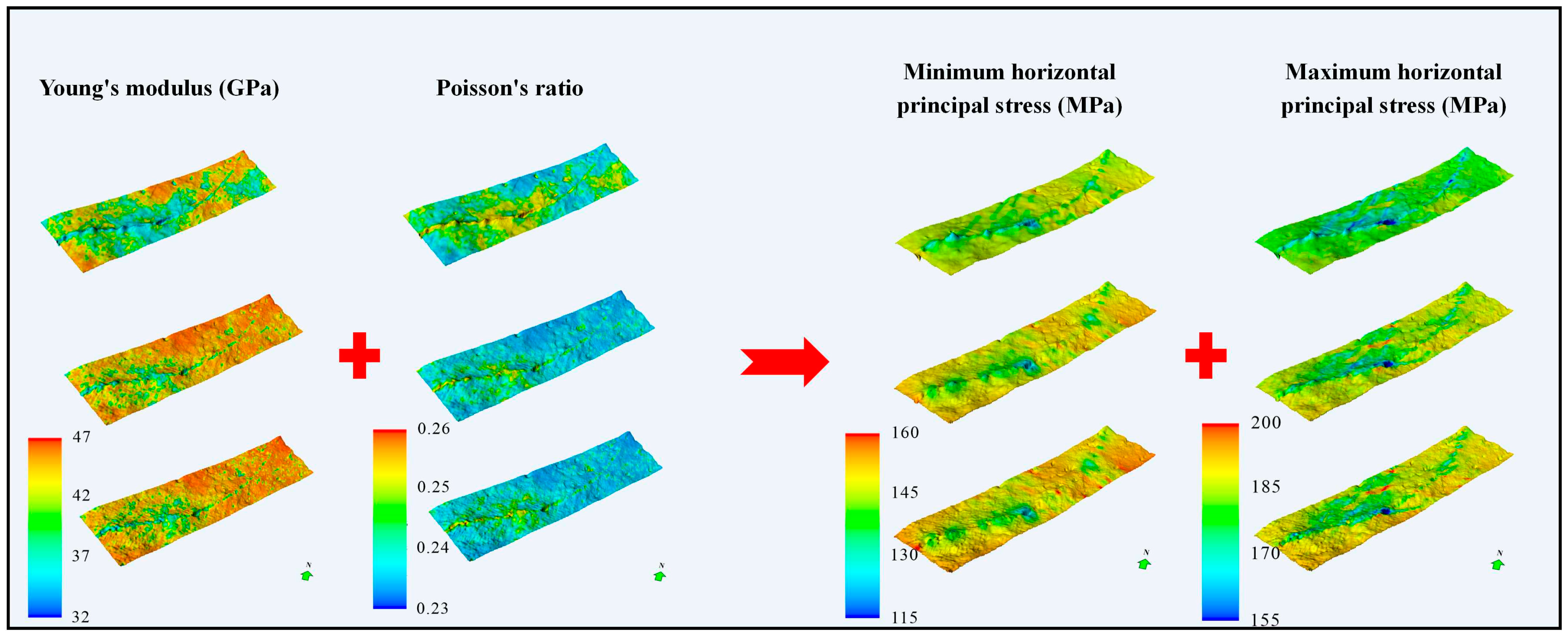
3.2.1. Rock Mechanics Parameters
3.2.2. Formation Pore Pressure
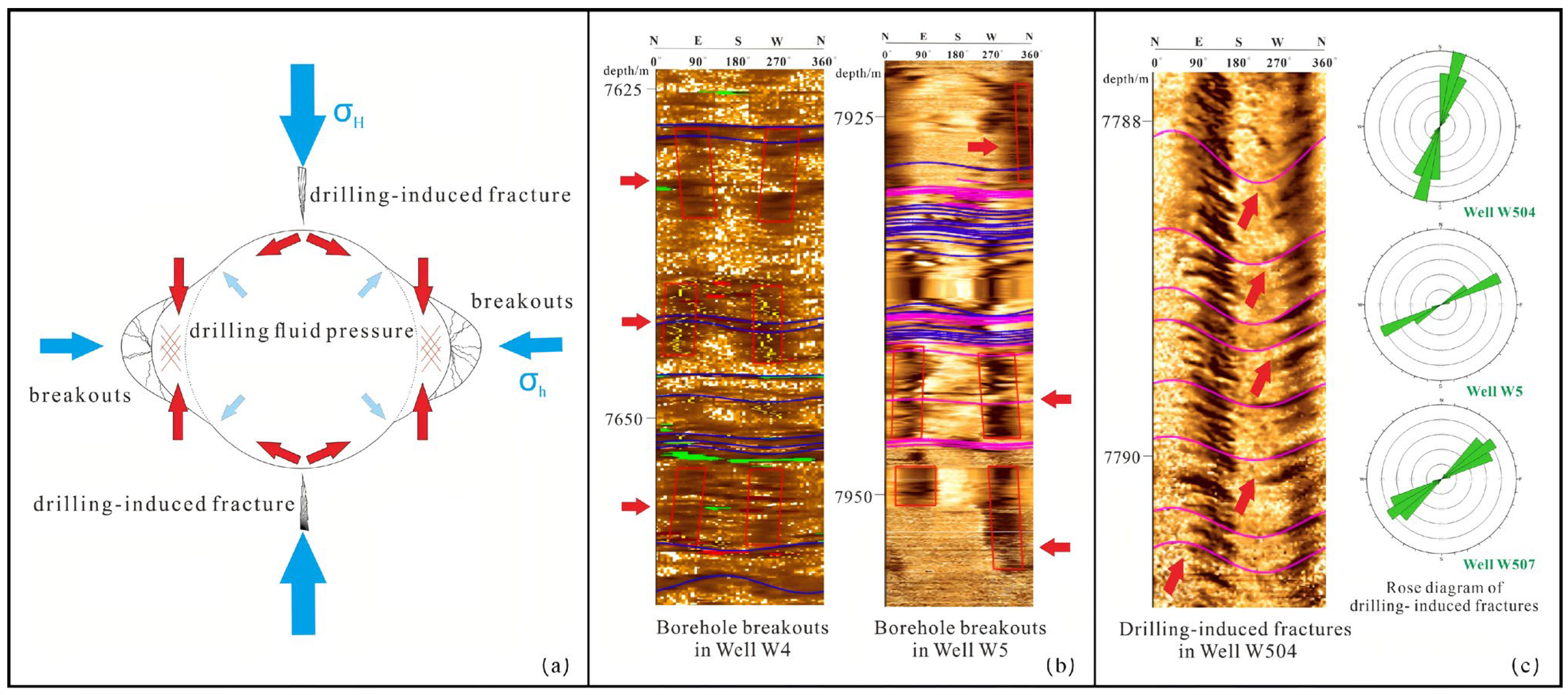
3.2.3. Direction of Horizontal Principal Stress
3.2.4. In Situ Stress Calculation Model
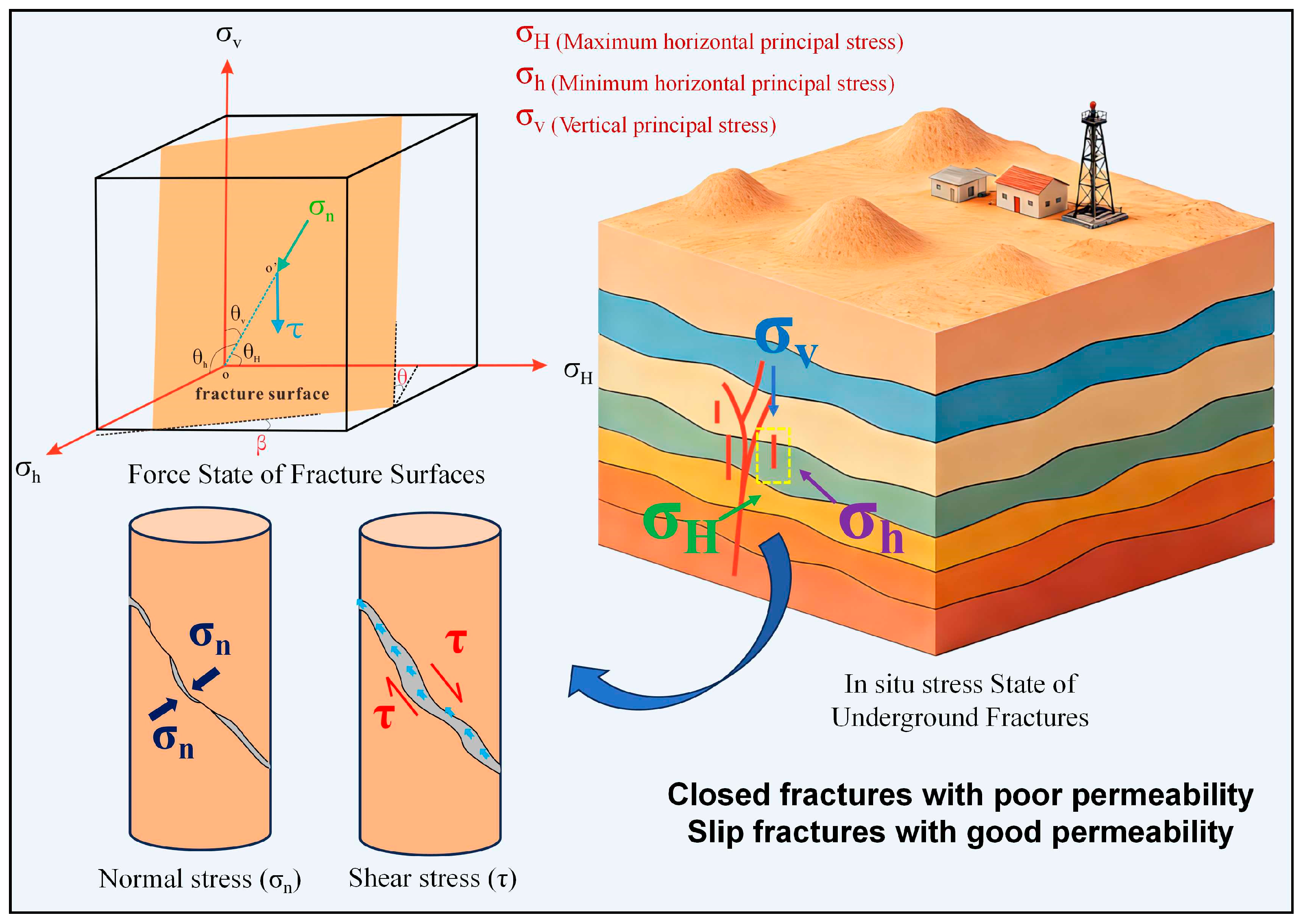
3.2.5. Stress State of Fracture Surfaces
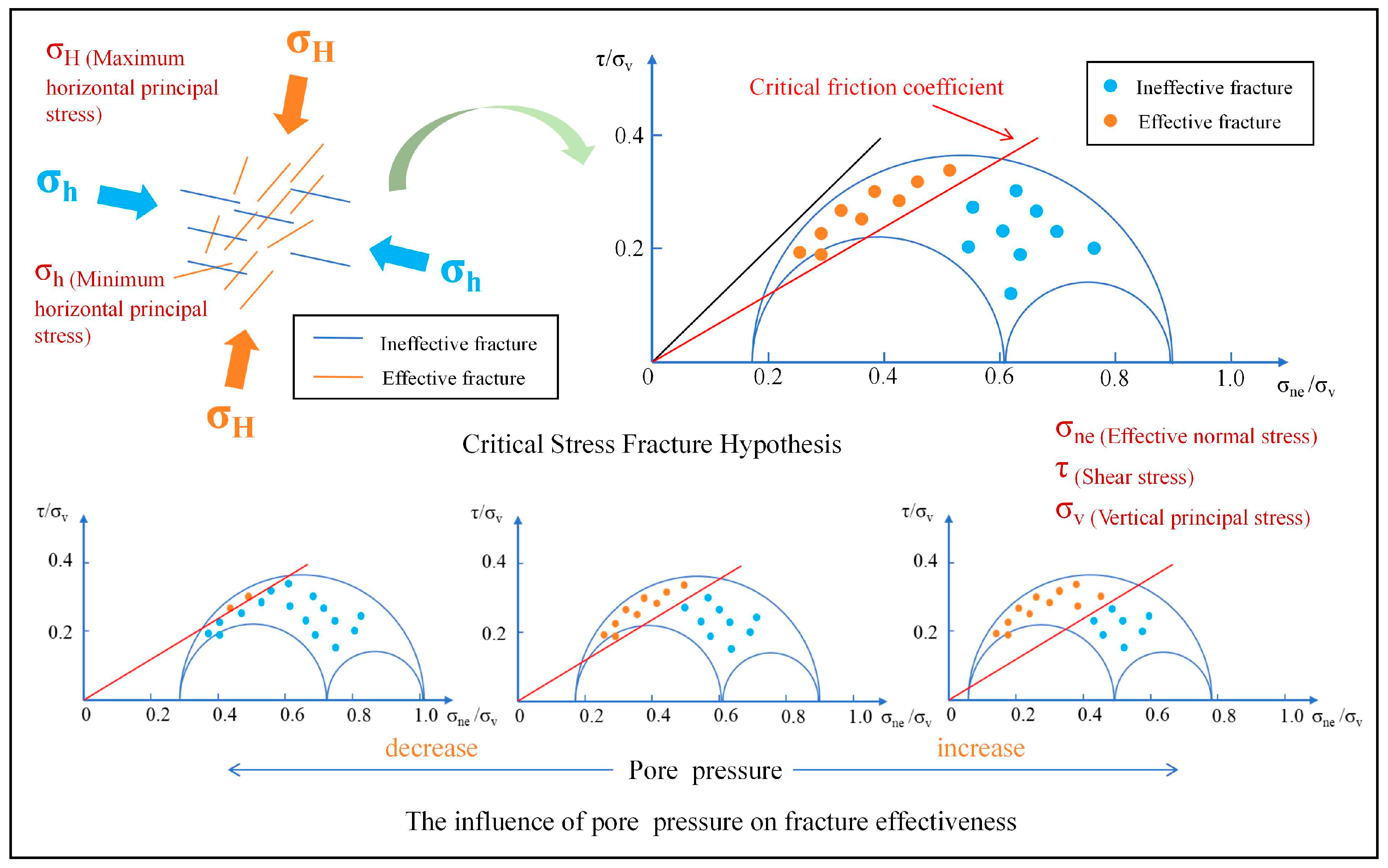
3.3. Mechanical Evaluation Parameters for Fracture Effectiveness
4. Results
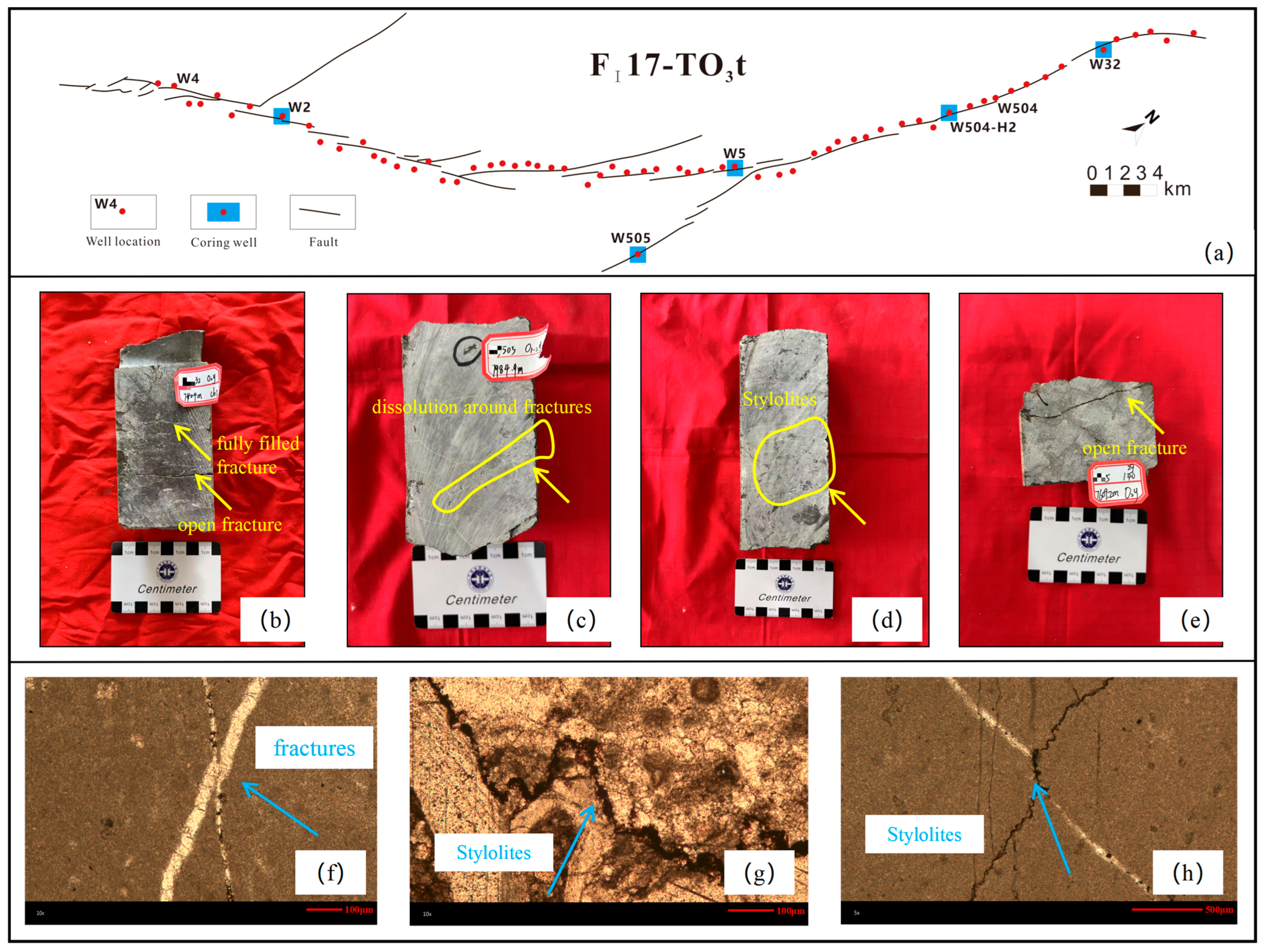
4.1. Static Evaluation of Fracture Effectiveness Characteristics
4.2. Current Stress State of Fractures
4.3. Mechanical Effectiveness Evaluation of Fractures
5. Discussion
5.1. The Influence of Fluid Activity
5.2. The Influence of Stylolites
5.3. Influencing Factors of Fracture Stress State
5.4. Relationship Between Fracture Mechanical Effectiveness and Productivity
5.5. Application of Fracture Mechanical Effectiveness in Development
5.6. Limitations and Future Prospects
6. Conclusions
- (1)
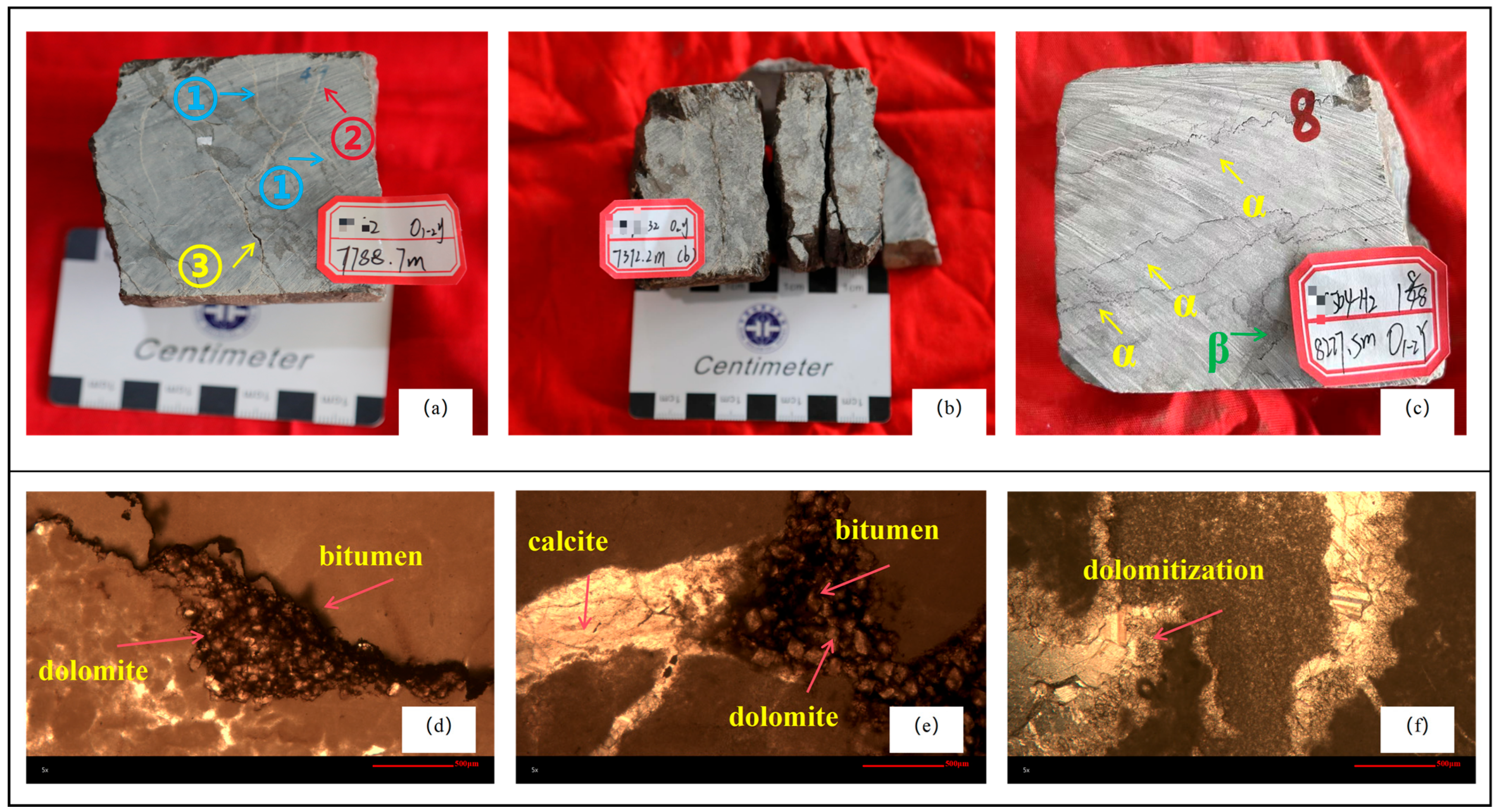
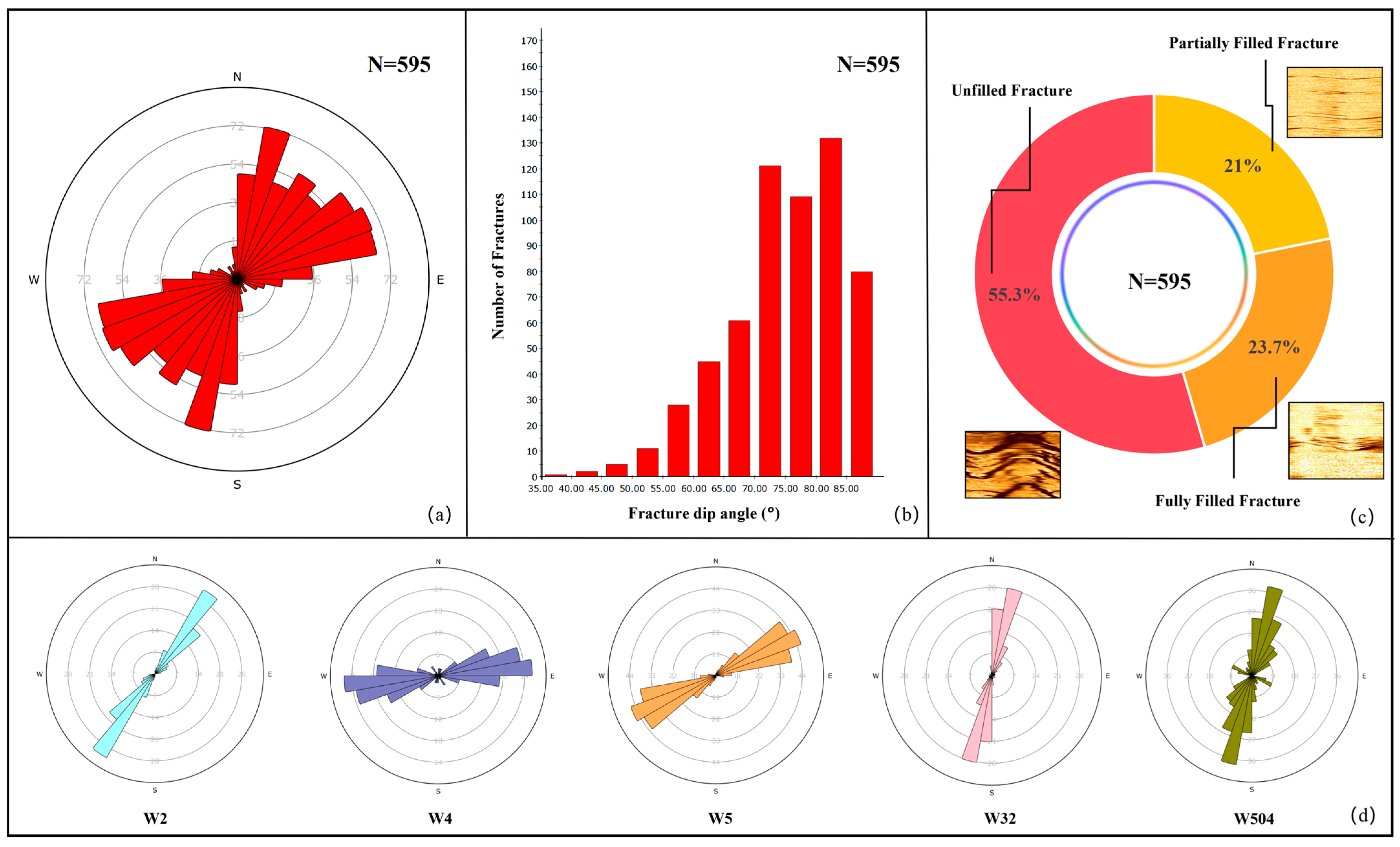
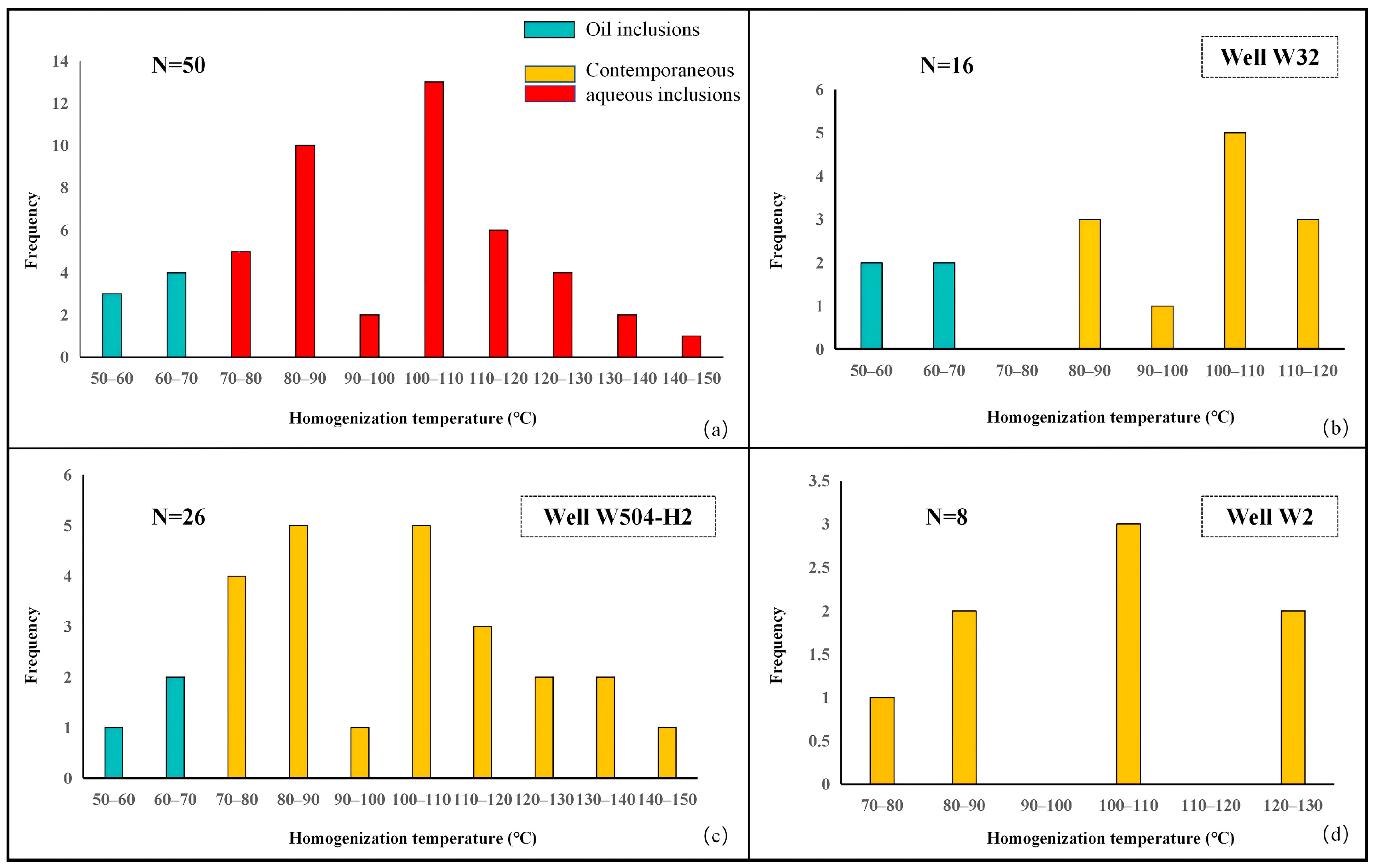
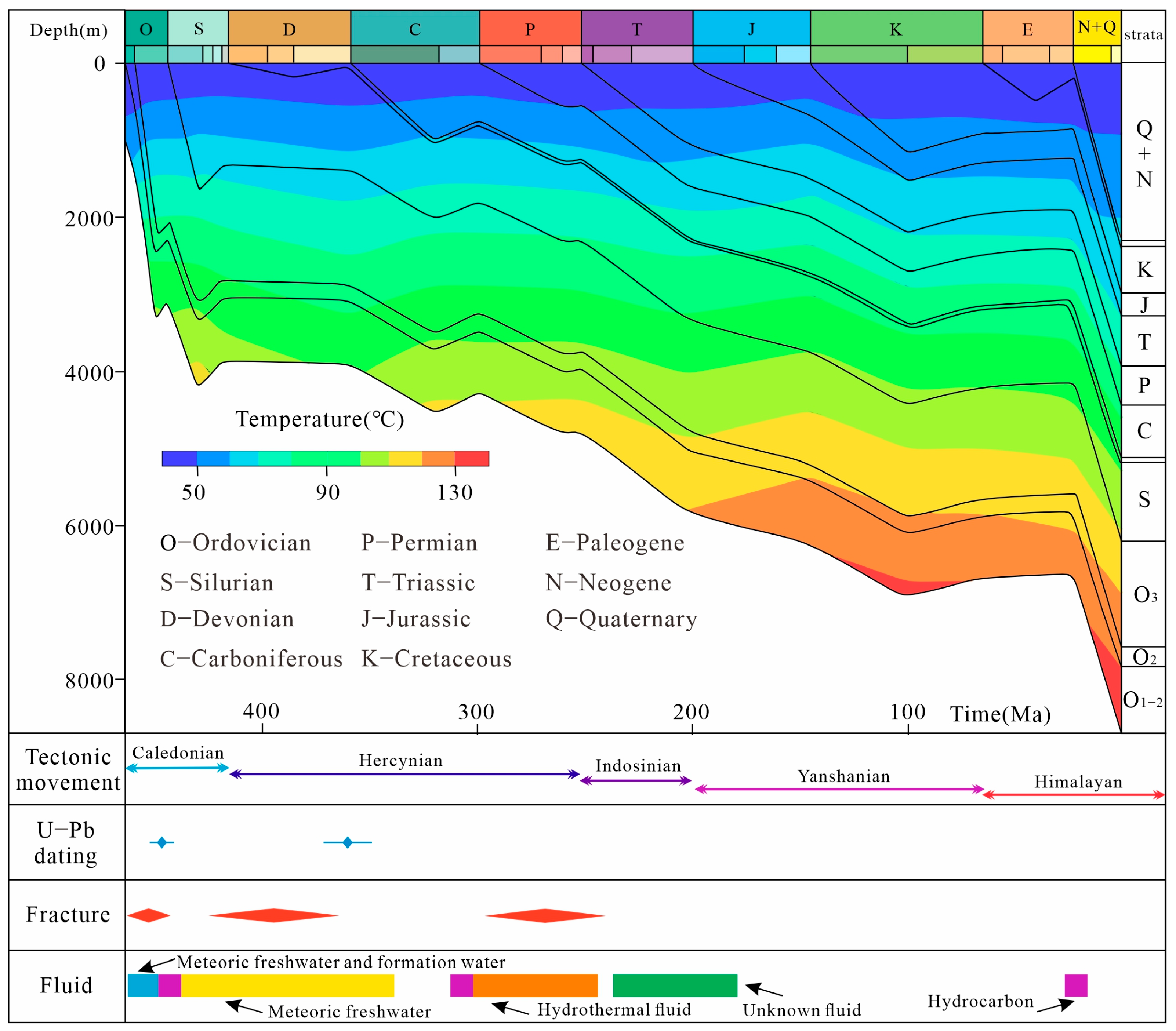
- Fractures can serve as crucial seepage channels in the carbonate reservoirs of the FI17 strike-slip fault zone in the Fuman Oilfield. Through core analysis, thin-section observation, and imaging logging, at least three phases of structural fractures have been identified, among which high-angle to near-vertical fractures are the most well-developed, striking obliquely at a small angle to the main fault. Fluid inclusion thermometry indicates that the fractures have undergone at least three phases of calcite cementation, where early fractures were severely filled, while late-stage fractures exhibited good effectiveness.
- (2)
- A large number of stylolites were developed in ultra-deep carbonate rocks and were currently completely filled with asphaltenes. Dense horizontal zigzag stylolites can cut through early fractures, thereby reducing the overall effectiveness of the fractures.
- (3)
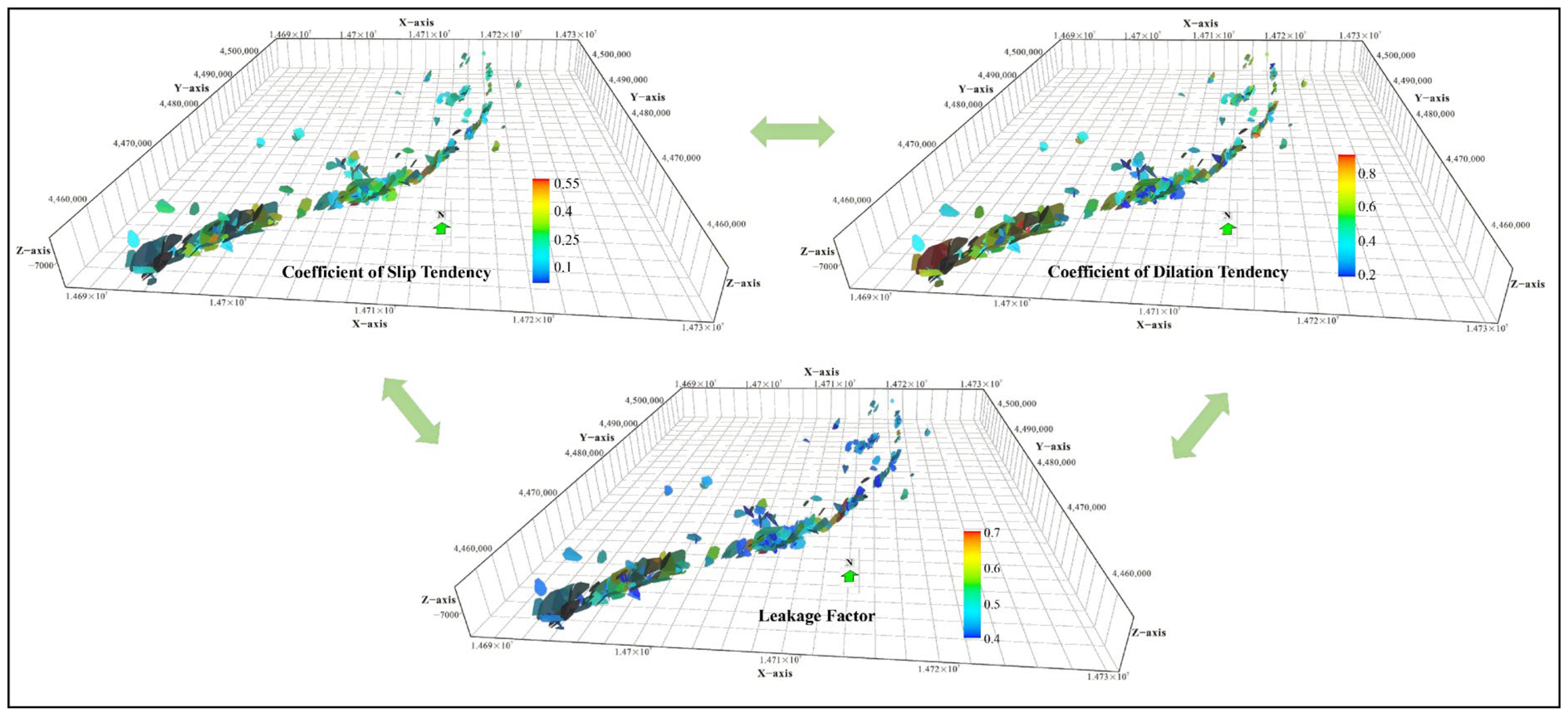
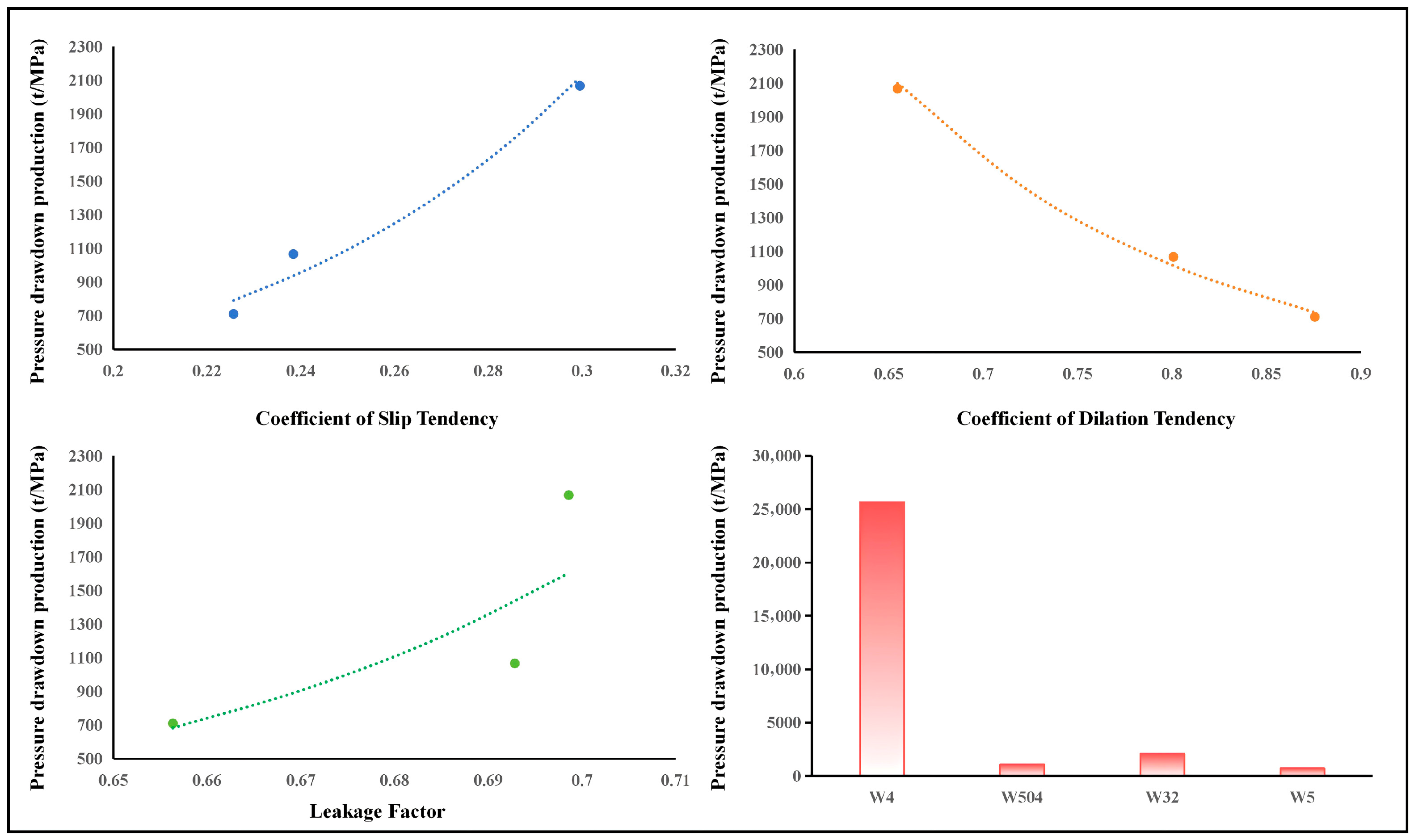
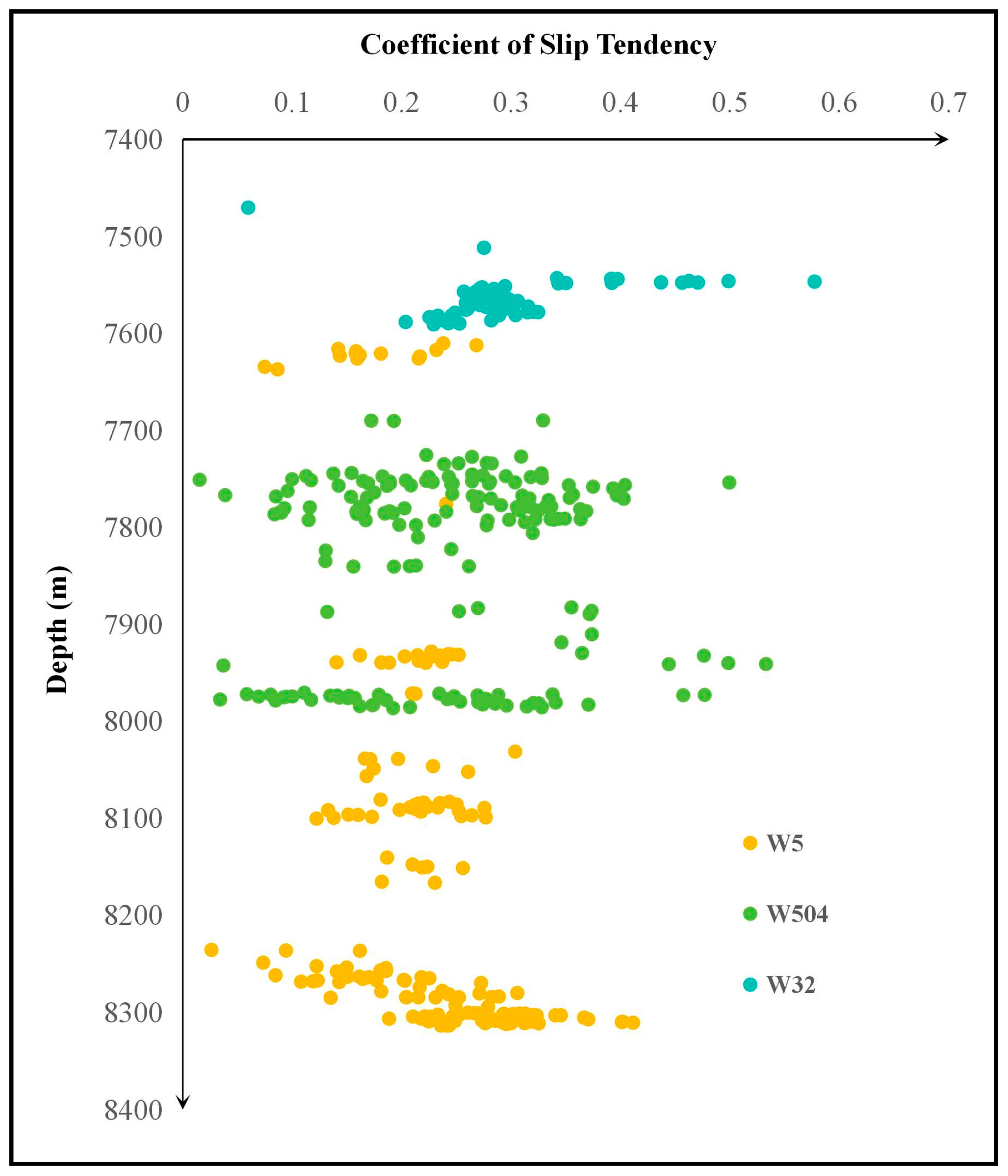
- Mechanical effectiveness evaluation of multi-scale fractures in the FI17 strike-slip fault zone was conducted using slip tendency as the primary criterion, supplemented by dilation tendency and leakage factor. Fractures characterized by high slip tendency, high leakage factor, and moderate dilation tendency were considered to possibly have better effectiveness in the study area. It provided a useful exploration for the correlation between mechanical effectiveness and productivity.
- (4)
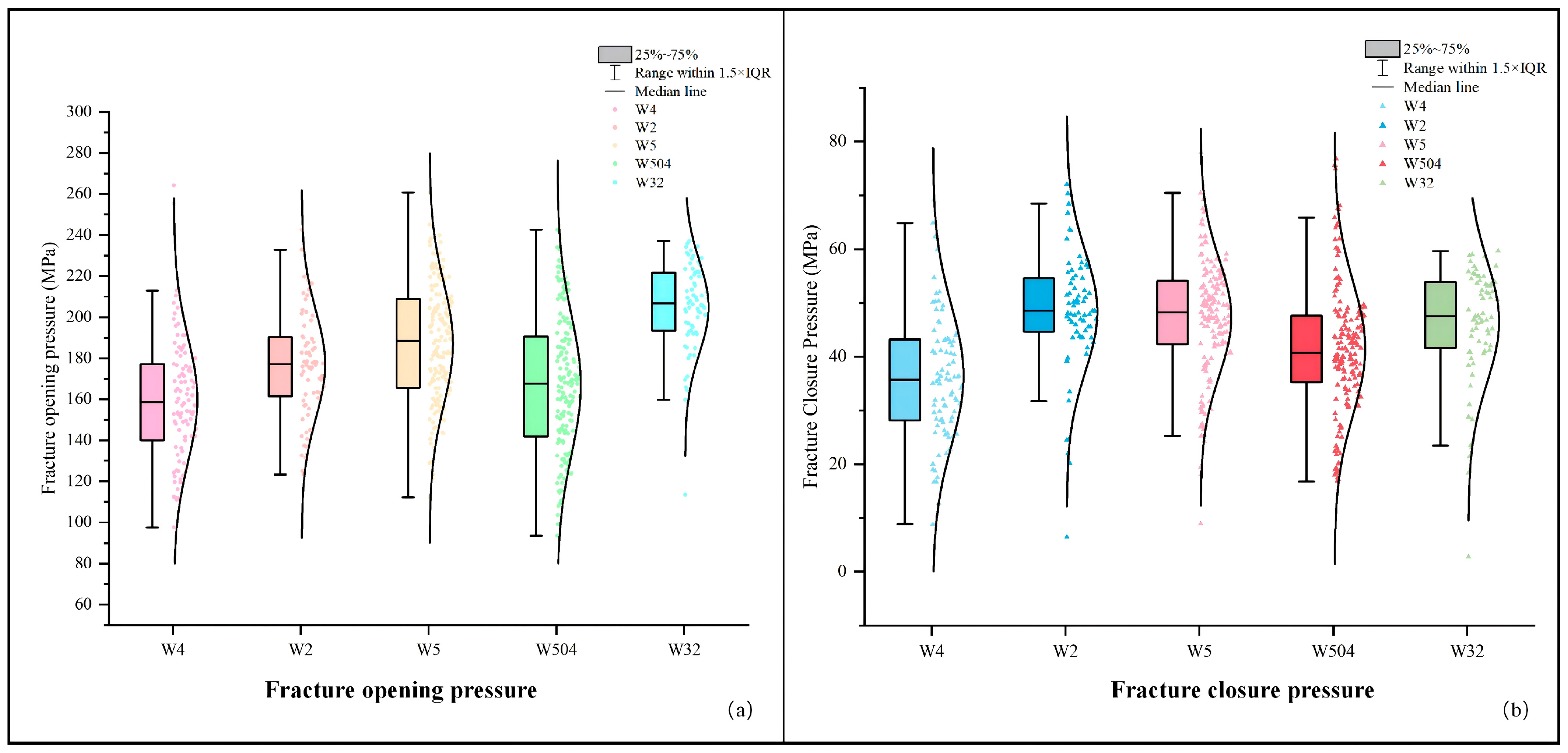
- The calculation of fracture opening pressure and closure pressure was used to define a reasonable formation pressure interval for secondary development. It is recommended to narrow the fluctuation range of formation pressure and adopt cyclic injection–production.
- (5)
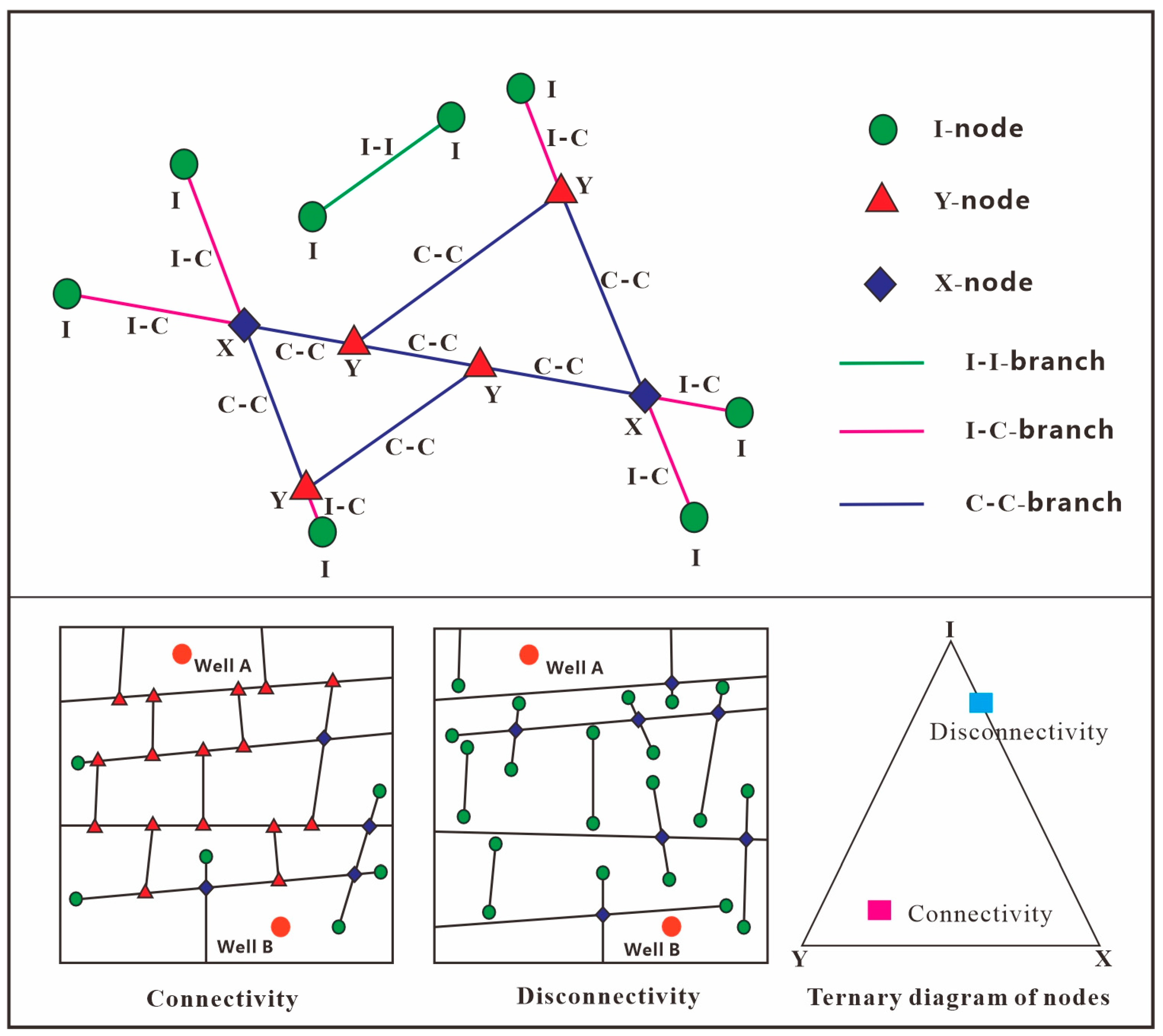
- In addition to data limitations in current fracture effectiveness evaluations, there was insufficient understanding of the fracture network connectivity in terms of methodology. In the future, topological methods and other approaches should be adopted to quantitatively evaluate fracture network connectivity, so as to improve the research on fracture effectiveness in ultra-deep carbonate reservoirs.
Author Contributions
Funding
Institutional Review Board Statement
Informed Consent Statement
Data Availability Statement
Acknowledgments
Conflicts of Interest
References
- Laubach, S.; Zeng, L.; Hooker, J.; Wang, Q.; Zhang, R.; Wang, J.; Ren, B. Deep and ultra-deep basin brittle deformation with focus on China. J. Struct. Geol. 2023, 175, 104938. [Google Scholar] [CrossRef]
- Shi, J.; Zhao, X.; Pan, R.; Zeng, L.; Luo, W. Natural fractures in the deep Sinian marine carbonates of the central Sichuan Basin, China: Implications for reservoir quality. J. Pet. Sci. Eng. 2022, 216, 110829. [Google Scholar] [CrossRef]
- Lu, Z.; Ping, H.; Chen, H.; Zhang, Y.; Xie, Z.; Zhang, Y.; Chen, Z.; Yang, X.; Zhang, X.; Yang, K.; et al. Geochemical Characteristics of Ordovician Crude Oils in the FI17 Strike-Slip Fault Zone of the Fuman Oilfield, Tarim Basin: Implications for Ultra-Deep Hydrocarbon Accumulation in the Tarim Basin. Mar. Pet. Geol. 2024, 163, 106800. [Google Scholar] [CrossRef]
- Guo, Y.; Liang, Y.; Li, J.; Gong, B. A novel connectivity-based hierarchical model for multi-scale fracture system in marine carbonate reservoir simulation. Fuel 2019, 250, 327–338. [Google Scholar] [CrossRef]
- Caine, J.; Evans, J.; Forster, C. Fault zone architecture and permeability structure. Geology 1996, 24, 1025–1028. [Google Scholar] [CrossRef]
- Savage, H.; Brodsky, E. Collateral damage: Evolution with displacement of fracture distribution and secondary fault strands in fault damage zones. J. Geophys. Res. 2011, 116, B03405. [Google Scholar] [CrossRef]
- Zeng, L.; Song, Y.; Liu, G.; Tan, X.; Xu, X.; Yao, Y.; Mao, Z. Natural fractures in ultra-deep reservoirs of China: A review. J. Struct. Geol. 2023, 175, 104954. [Google Scholar] [CrossRef]
- Liu, J.; Ding, W.; Dai, J.; Gu, Y.; Yang, H.; Sun, B. Quantitative multiparameter prediction of fault-related fractures: A case study of the second member of the Funing Formation in the Jinhu Sag, Subei Basin. Pet. Sci. 2018, 15, 468–483. [Google Scholar] [CrossRef]
- Xu, K.; Yang, H.; Zhang, H.; Ju, W.; Li, C.; Fang, L.; Wang, Z.; Wang, H.; Yuan, F.; Zhao, B.; et al. Fracture effectiveness evaluation in ultra-deep reservoirs based on geomechanical method, Kuqa Depression, Tarim Basin, NW China. J. Pet. Sci. Eng. 2022, 215, 110604. [Google Scholar] [CrossRef]
- Li, H.; Wang, Q.; Qin, Q.; Ge, X. Characteristics of natural fractures in an ultradeep marine carbonate gas reservoir and their impact on the reservoir: A case study of the Maokou Formation of the JLS Structure in the Sichuan Basin, China. Energy Fuels 2021, 35, 16933. [Google Scholar] [CrossRef]
- Pan, B.; Yuan, M.; Fang, C.; Liu, W.; Guo, Y.; Zhang, L. Experiments on acoustic measurement of fractured rocks and application of acoustic logging data to evaluation of fractures. Pet. Sci. 2017, 14, 520–528. [Google Scholar] [CrossRef]
- Forstner, S.; Laubach, S. Scale-dependent fracture networks. J. Struct. Geol. 2022, 165, 104748. [Google Scholar] [CrossRef]
- Gong, L.; Wang, J.; Gao, S.; Fu, X.; Liu, B.; Miao, F.; Zhou, X.; Meng, Q. Characterization, controlling factors and evolution of fracture effectiveness in shale oil reservoirs. J. Pet. Sci. Eng. 2021, 203, 108655. [Google Scholar] [CrossRef]
- Zhang, R.; Wang, K.; Zeng, Q.; Yu, C.; Wang, J. Effectiveness and petroleum geological significance of tectonic fractures in the ultra-deep zone of the Kuqa foreland thrust belt: A case study of the Cretaceous Bashijiqike Formation in the Keshen gas field. Pet. Sci. 2021, 18, 728–741. [Google Scholar] [CrossRef]
- Wang, Z.; Xu, K.; Zhang, H.; Wang, H.; Yin, G.; Wang, Z.; Zhao, W. Fracture effectiveness evaluation of ultra-deep tight sandstone reservoirs: A case study of the Keshen gas field, Tarim Basin, West China. Front. Earth Sci. 2022, 10, 883479. [Google Scholar] [CrossRef]
- Xu, X.; Zeng, L.; Dong, S.; Diwu, P.; Li, H.; Liu, J.; Han, G.; Xu, H.; Ji, C. Fracture Effectiveness and Its Influence on Gas Productivity in Ultra-Deep Tight Sandstone Reservoirs of the Keshen Gas Field, Tarim Basin. Acta Geol. Sin. 2024, 98, 1557–1573. [Google Scholar] [CrossRef]
- Xu, K.; Cai, Z.; Zhang, H.; Yin, G.; Wang, Z.; Fang, L.; Wang, H.; Qian, Z.; Zhang, W.; Lai, S.; et al. Geomechanical Modeling of Ultradeep Fault-Controlled Carbonate Reservoirs and Its Application: A Case of the Fuman Oilfield in Tarim Basin. Energy Sci. Eng. 2023, 11, 3332–3343. [Google Scholar] [CrossRef]
- Yu, J.; Shi, K.; Wang, Q.; Liu, B.; Han, J.; Song, Y.; Kong, Y.; Jiang, W. Structural Diagenesis of Deep Carbonate Rocks Controlled by Intra-Cratonic Strike-Slip Faulting: An Example in the Shunbei Area of the Tarim Basin, NW China. Basin Res. 2022, 34, 1601–1631. [Google Scholar] [CrossRef]
- Toussaint, R.; Aharonov, E.; Koehn, D.; Gratier, J.P.; Ebner, M.; Baud, P.; Rolland, A.; Renard, F. Stylolites: A Review. J. Struct. Geol. 2018, 114, 163–195. [Google Scholar] [CrossRef]
- Yin, G.; Wu, K.; Ju, W.; Qin, Y.; Qian, Z.; Xu, K.; Lu, Z.; Wang, P.; Liang, X.; Liang, Y. In-situ stress prediction in ultra-deep marine carbonate reservoirs of Fuman Oilfield, Tarim Basin of China. Front. Energy Res. 2023, 11, 1271377. [Google Scholar] [CrossRef]
- Tan, X.; Zhang, Y.; Lyu, W.; Xie, Z.; Zeng, L.; Yuan, J.; Xiong, T.; Song, Y.; Li, H.; Zhang, K. A study on the variability in the distribution of fracture networks in typical segments of ultra-deep strike-slip faults-A case study of the FI17 fault in the Fuman area, Tarim Basin. Geol. Rev. 2025, 71, 1403–1413. (In Chinese) [Google Scholar] [CrossRef]
- Wang, Q.; Yang, H.; Li, Y.; Lv, X.; Zhang, Y.; Zhang, Y.; Sun, C.; Ouyang, S. Control of strike-slip fault on the large marine carbonate reservoir in Fuman, Tarim Basin-a reservoir model. Earth Sci. Front. 2022, 29, 239–251. (In Chinese) [Google Scholar] [CrossRef]
- Qiao, J.; Chang, S.; Zeng, J.; Cao, P.; Dong, K.; Wang, M.; Yang, J.; Liu, Y.; Long, H.; An, T.; et al. Origin of differential hydrocarbon accumulation in ultra-deep marine carbonate reservoirs along strike-slip fault zones in the Fuman area, northern Tarim Basin. Oil Gas Geol. 2024, 45, 226–1246. (In Chinese) [Google Scholar] [CrossRef]
- Deng, X.; Chang, S.; Chen, F.; Chen, G.; Wang, P.; Cao, P.; Wang, M.; Yao, Q.; Zhao, L.; Ye, T. Geological characteristics and implications of ultra-deep fractured breccia reservoirs in the Fuman Oilfield, Tarim Basin. Mar. Orig. Pet. Geol. 2025, 30, 228–238. (In Chinese) [Google Scholar] [CrossRef]
- Wang, Q.; Yang, H.; Wang, R.; Li, S.; Deng, X.; Li, Y.; Chang, L.; Wan, X.; Zhang, Y. Discovery and exploration technology of fault-controlled large oil and gas fields of ultra-deep formation in strike slip fault zone in Tarim Basin. China Pet. Explor. 2021, 26, 58–71. (In Chinese) [Google Scholar] [CrossRef]
- Deng, X.; Chang, S.; Liu, Z.; Wang, M.; Chen, J.; Du, Y. Concept, geological model and seismic characterization of ultra-deep fault-fracture bodies. Oil Geophys. Prospect. 2024, 59, 1099–1110. (In Chinese) [Google Scholar] [CrossRef]
- Cao, F.; He, J.; Deng, H.; Li, K.; Xie, X.; Wang, W.; Mao, J.; Sun, J. Evaluation of the effectiveness of tectonic fractures in shale reservoirs of Fengcheng Formation in Mabei area and its geological significance for oil and gas. J. China Univ. Min. Technol. 2024, 53, 1198–1217. (In Chinese) [Google Scholar] [CrossRef]
- Bowers, G. Pore Pressure Estimation From Velocity Data: Accounting for Overpressure Mechanisms Besides Undercompaction. SPE Drill. Comp. 1995, 10, 89–95. [Google Scholar] [CrossRef]
- Liu, J.; Huang, C.; Zhou, L.; Chen, Q.; Zhang, S. Estimation of the rock mechanics and in-situ stress parameters of carbonate reservoirs using array soniclogging: A case study of Shunbei No.4 block. J. Geomech. 2024, 30, 394–407. (In Chinese) [Google Scholar] [CrossRef]
- Wang, K.; Dai, J. A Quantitative Relationship Between the Crustal Stress and Fault Sealing Ability. Acta Pet. Sin. 2012, 33, 74–81. (In Chinese) [Google Scholar] [CrossRef]
- Barton, C.; Zoback, M.; Moos, D. Fluid flow along potentially active faults in crystalline rock. Geology 1995, 23, 683–686. [Google Scholar] [CrossRef]
- Zoback, M.; Peska, P. In-situ stress and rock strength in the GBRN/DOE Pathfinder Well, South Eugene Island, Gulf of Mexico. J. Pet. Technol. 1995, 47, 582–585. [Google Scholar] [CrossRef]
- Morris, A.; Ferrill, D.; Henderson, D. Slip-tendency analysis and fault reactivation. Geology 1996, 24, 275–278. [Google Scholar] [CrossRef]
- Byerlee, J.; Mjachkin, V.; Summers, R.; Voevoda, O. Structures Developed in Fault Gouge during Stable Sliding and Stick-Slip. Tectonophysics 1978, 44, 161–171. [Google Scholar] [CrossRef]
- Zoback, M.D. Reservoir Geomechanics; Cambridge University Press: Cambridge, UK, 2007. [Google Scholar]
- Kulikowski, D.; Amrouch, K.; Cooke, D.; Gray, M. Basement Structural Architecture and Hydrocarbon Conduit Potential of Polygonal Faults in the Cooper-Eromanga Basin, Australia. Geophys. Prospect. 2018, 66, 366–396. [Google Scholar] [CrossRef]
- Liu, J.; Ding, W.; Gu, Y.; Xiao, Z.; Dai, J.; Dai, P.; Chen, X.; Zhao, G. Methodology for predicting reservoir breakdown pressure and fracture opening pressure in low-permeability reservoirs based on an in situ stress simulation. Eng. Geol. 2018, 246, 222–232. [Google Scholar] [CrossRef]
- Tian, Y.; Chen, Q.; Wu, J.; Li, K.; Yan, C.; He, Y. Determination of the fracture closure pressure in fractural-cavity marine carbonate reservoirs using a failure criterion based on asperity behavior. Front. Earth Sci. 2024, 12, 1518370. [Google Scholar] [CrossRef]
- Li, Y.; Ru, Z.; Deng, S.; Lin, H.; Han, J.; Zhang, J.; Huang, C. Experimental Evaluation and Hydrocarbon Significance of Natural Fractures in Shunbei Ultra-Deep Carbonate Reservoir, Tarim Basin. Pet. Geol. Exp. 2023, 45, 422–433. [Google Scholar] [CrossRef]
- Zeng, L.; Song, Y.; Han, J.; Han, J.; Yao, Y.; Huang, C.; Zhang, Y.; Tan, X.; Li, H. Control of structure and fluid on ultra-deep fault-controlled marine carbonate fracture-vug reservoirs in Tarim Basin, NW China. Pet. Explor. Dev. 2018, 52, 128–139. (In Chinese) [Google Scholar] [CrossRef]
- Ni, C.; Hu, A.; Jin, T.; Duan, J.; Qiao, Z.; Chang, S.; Huang, Y.; Shen, A.; Chen, H. Application of new dating and temperature-measuring technologies in study of strike-slip fault-controlled reservoirs and hydrocarbon accumulation: A case study of Ordovician strata in non-foreland area of Tarim Basin, NW China. Pet. Explor. Dev. 2025, 52, 1328–1340. (In Chinese) [Google Scholar] [CrossRef]
- Yao, C.; Qiao, Z.; Luo, X.; Zhang, T.; Li, B.; Chang, S.; Zhang, Z.; Chen, J. Stages and Evolution of Strike-Slip Faults of the Ultra-Deep-Burial Ordovician Strata in Fuman Oilfield, Tarim Basin: Evidence from U-Pb Geochronology of Siliceous Minerals. Minerals 2025, 15, 270. [Google Scholar] [CrossRef]
- Ferrill, D.; Morris, A.; McGinnis, R.; Smart, K.; Wigginton, S.; Hill, N. Mechanical stratigraphy and normal faulting. J. Struct. Geol. 2017, 94, 275–302. [Google Scholar] [CrossRef]
- Sanderson, D.; Nixon, C. The use of topology in fracture network characterization. J. Struct. Geol. 2015, 72, 55–66. [Google Scholar] [CrossRef]





| Sample | Well | Strata | Temperature (°C) | Confining Pressure (MPa) | Young’s Modulus (GPa) | Poisson’s Ratio |
|---|---|---|---|---|---|---|
| 1 | W32 | O2y | 150 | 140 | 36.4 | 0.27 |
| 2 | W504-H2 | O1–2y | 150 | 140 | 44.1 | 0.25 |
| 3 | F302-H6 | O1–2y | 150 | 140 | 46.9 | 0.28 |
| Sample | Well | Age (Ma) |
|---|---|---|
| 1 | W5 | 457 ± 13 |
| 2 | W32 | 372.6 ± 4.6 |
| 3 | W2 | 368 ± 3.3 |
| 4 | W2 | 359 ± 5.6 |
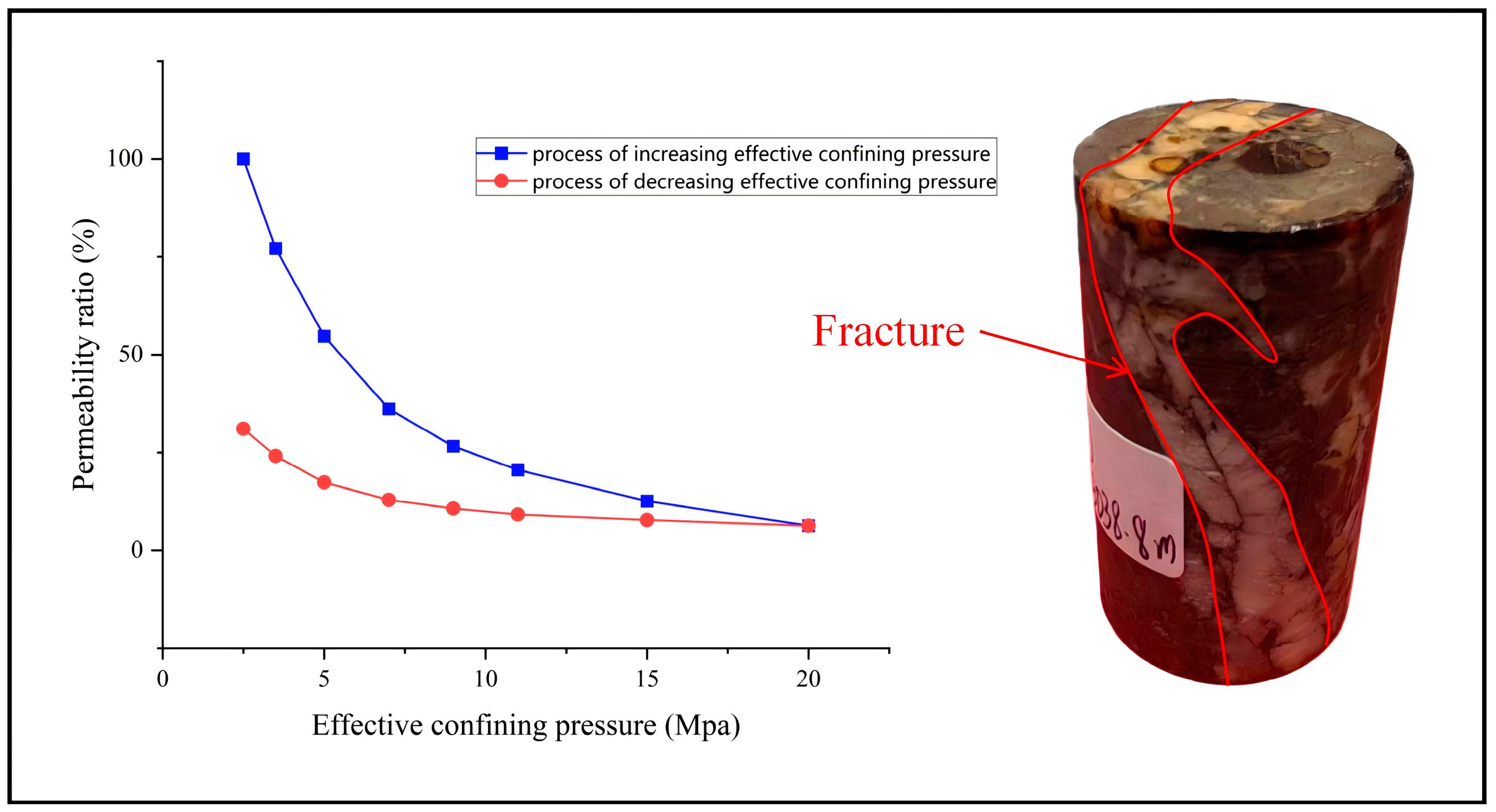
| Effective Confining Pressure (MPa) | Permeability (mD) | Permeability Damage Rate (%) | Permeability Ratio (%) | |
|---|---|---|---|---|
| process of increasing effective confining pressure | 2.5 | 0.006497 | 0 | 100 |
| 3.5 | 0.005011 | 22.88 | 77.12 | |
| 5 | 0.003556 | 45.27 | 54.73 | |
| 7 | 0.002349 | 63.85 | 36.15 | |
| 9 | 0.00173 | 73.37 | 26.63 | |
| 11 | 0.001338 | 79.4 | 20.6 | |
| 15 | 0.00082 | 87.38 | 12.62 | |
| 20 | 0.000411 | 93.68 | 6.32 | |
| process of decreasing effective confining pressure | 20 | 0.000411 | 93.68 | 6.32 |
| 15 | 0.000504 | 92.24 | 7.76 | |
| 11 | 0.000595 | 90.85 | 9.15 | |
| 9 | 0.000695 | 89.31 | 10.69 | |
| 7 | 0.00084 | 87.08 | 12.92 | |
| 5 | 0.00113 | 82.61 | 17.39 | |
| 3.5 | 0.001567 | 75.88 | 24.12 | |
| 2.5 | 0.00202 | 68.91 | 31.09 | |
Disclaimer/Publisher’s Note: The statements, opinions and data contained in all publications are solely those of the individual author(s) and contributor(s) and not of MDPI and/or the editor(s). MDPI and/or the editor(s) disclaim responsibility for any injury to people or property resulting from any ideas, methods, instructions or products referred to in the content. |
© 2026 by the authors. Licensee MDPI, Basel, Switzerland. This article is an open access article distributed under the terms and conditions of the Creative Commons Attribution (CC BY) license.
Share and Cite
Liu, Z.; Wu, K.; Wang, B.; Zhang, H.; Xu, K.; Wang, K. Evaluation of Fracture Effectiveness in Ultra-Deep Marine Carbonate Reservoirs of Fuman Oilfield, Tarim Basin. Appl. Sci. 2026, 16, 2511. https://doi.org/10.3390/app16052511
Liu Z, Wu K, Wang B, Zhang H, Xu K, Wang K. Evaluation of Fracture Effectiveness in Ultra-Deep Marine Carbonate Reservoirs of Fuman Oilfield, Tarim Basin. Applied Sciences. 2026; 16(5):2511. https://doi.org/10.3390/app16052511
Chicago/Turabian StyleLiu, Zedong, Kongyou Wu, Bifeng Wang, Hui Zhang, Ke Xu, and Kehao Wang. 2026. "Evaluation of Fracture Effectiveness in Ultra-Deep Marine Carbonate Reservoirs of Fuman Oilfield, Tarim Basin" Applied Sciences 16, no. 5: 2511. https://doi.org/10.3390/app16052511
APA StyleLiu, Z., Wu, K., Wang, B., Zhang, H., Xu, K., & Wang, K. (2026). Evaluation of Fracture Effectiveness in Ultra-Deep Marine Carbonate Reservoirs of Fuman Oilfield, Tarim Basin. Applied Sciences, 16(5), 2511. https://doi.org/10.3390/app16052511