
Stability Assessment of an Underground Powerhouse Cavern Under Pseudo-Static and Dynamic Earthquake Loading

Abstract
1. Introduction

2. Description of the Case Project
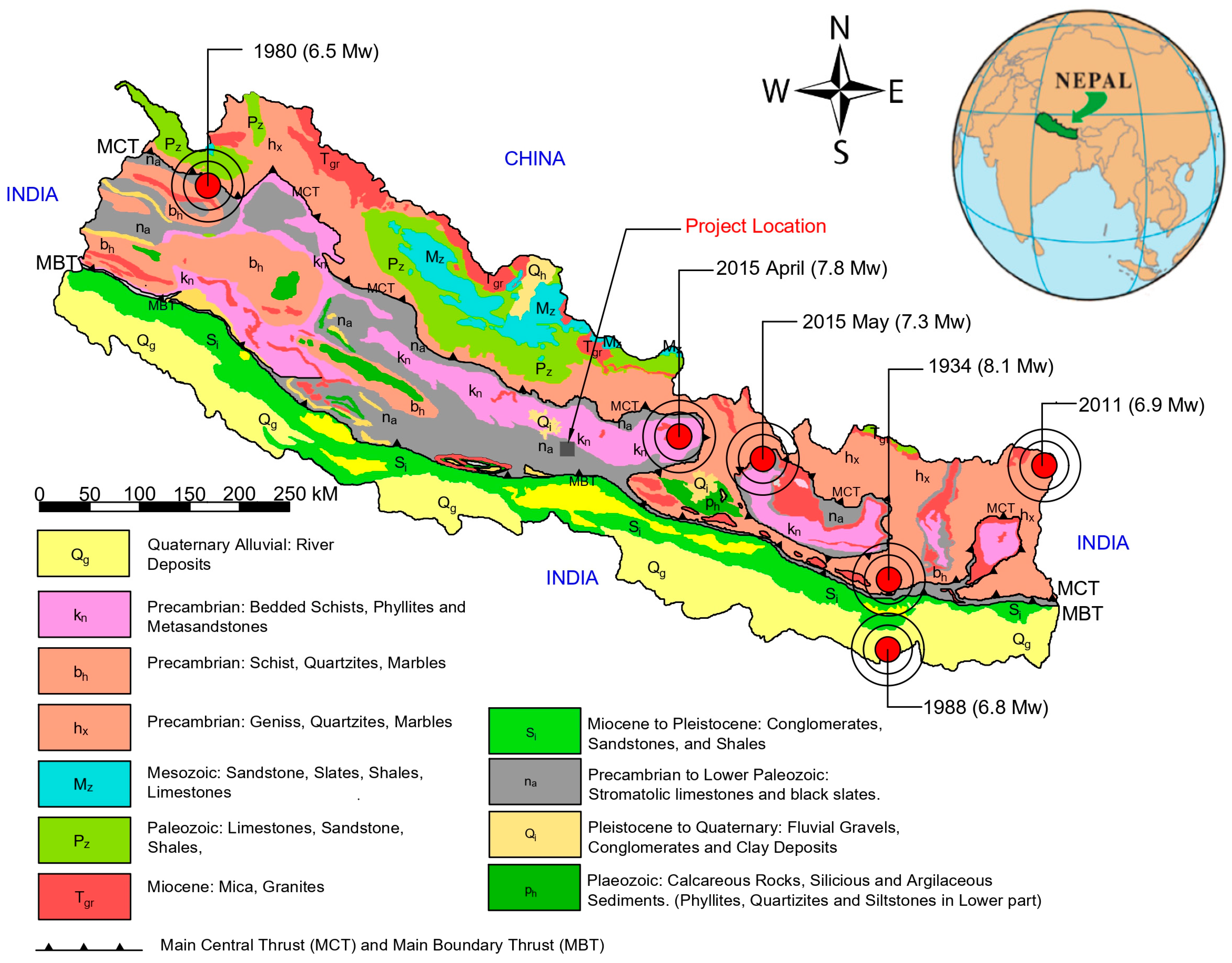
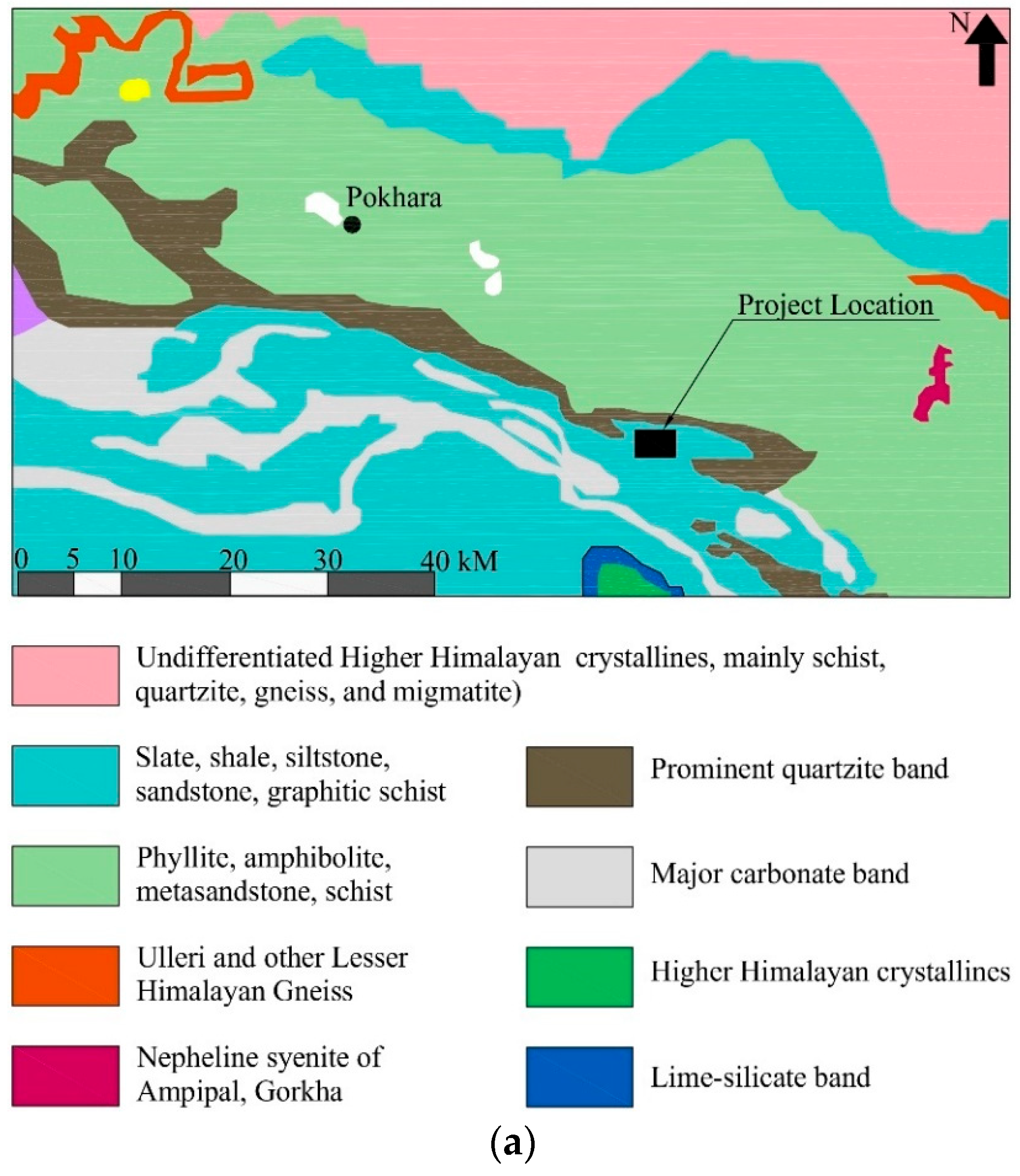
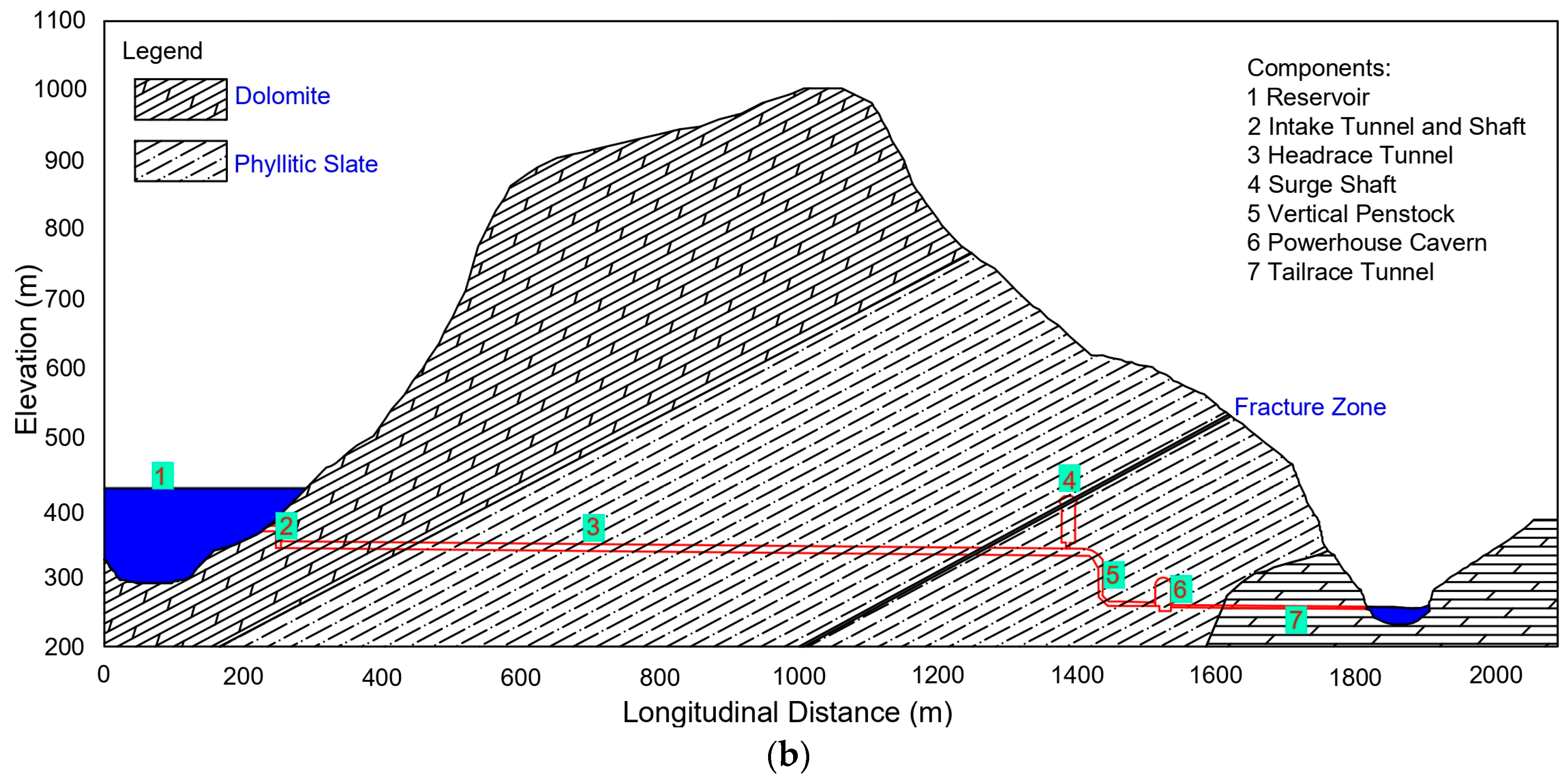
2.1. Geological Conditions
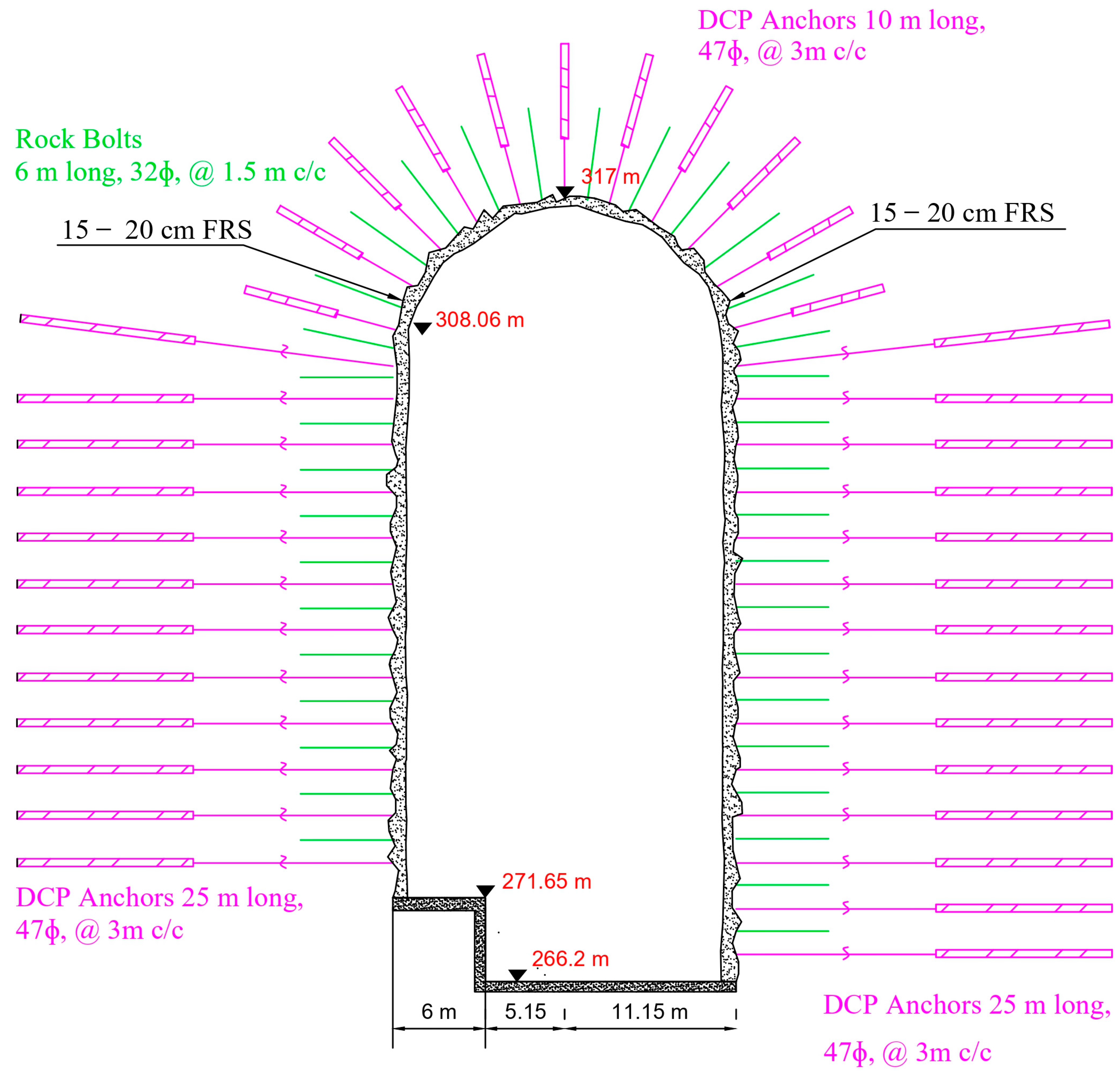
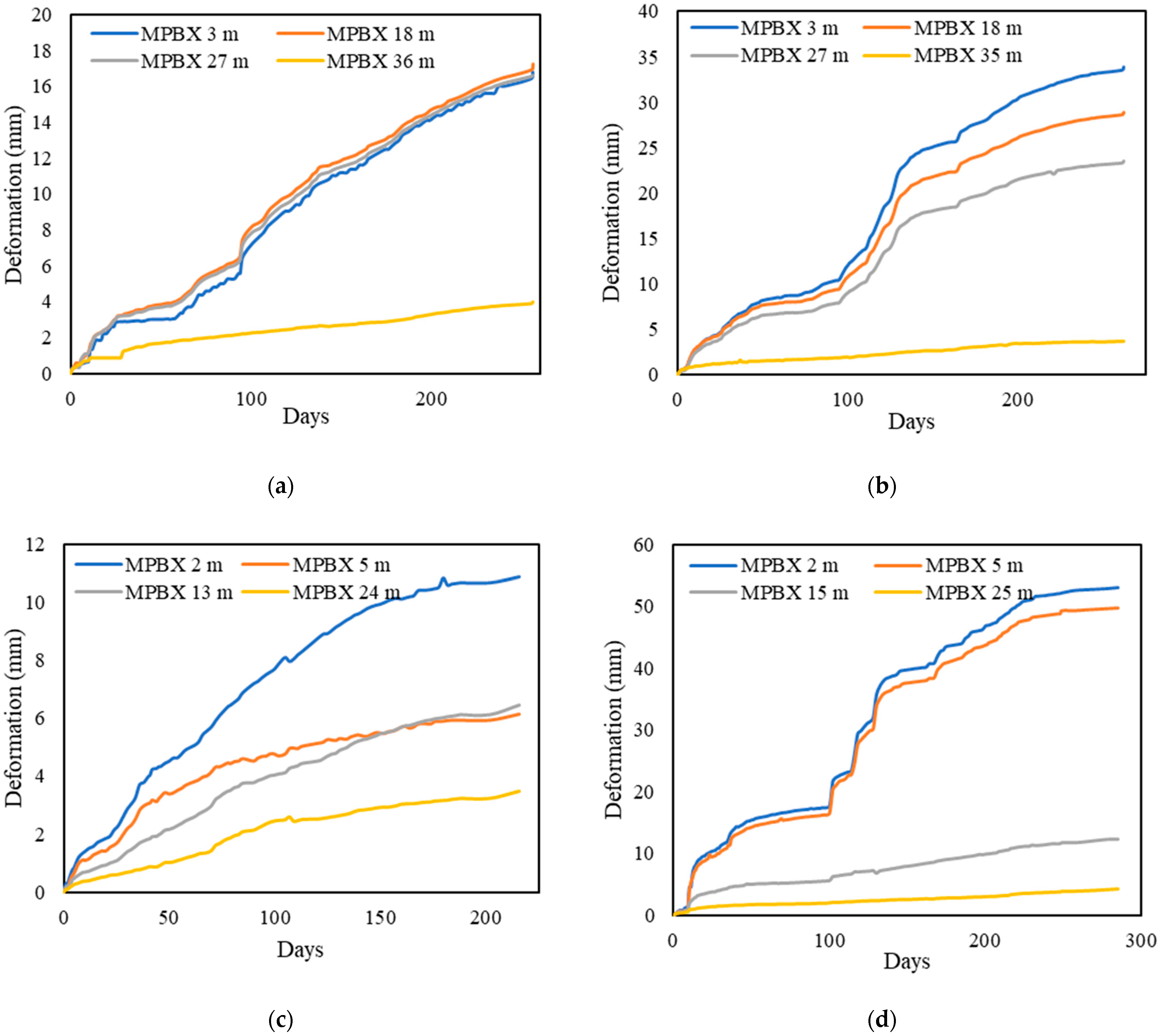
2.2. Rock Mass Quality and Support System
2.3. Intact Rock and Rock Mass Properties
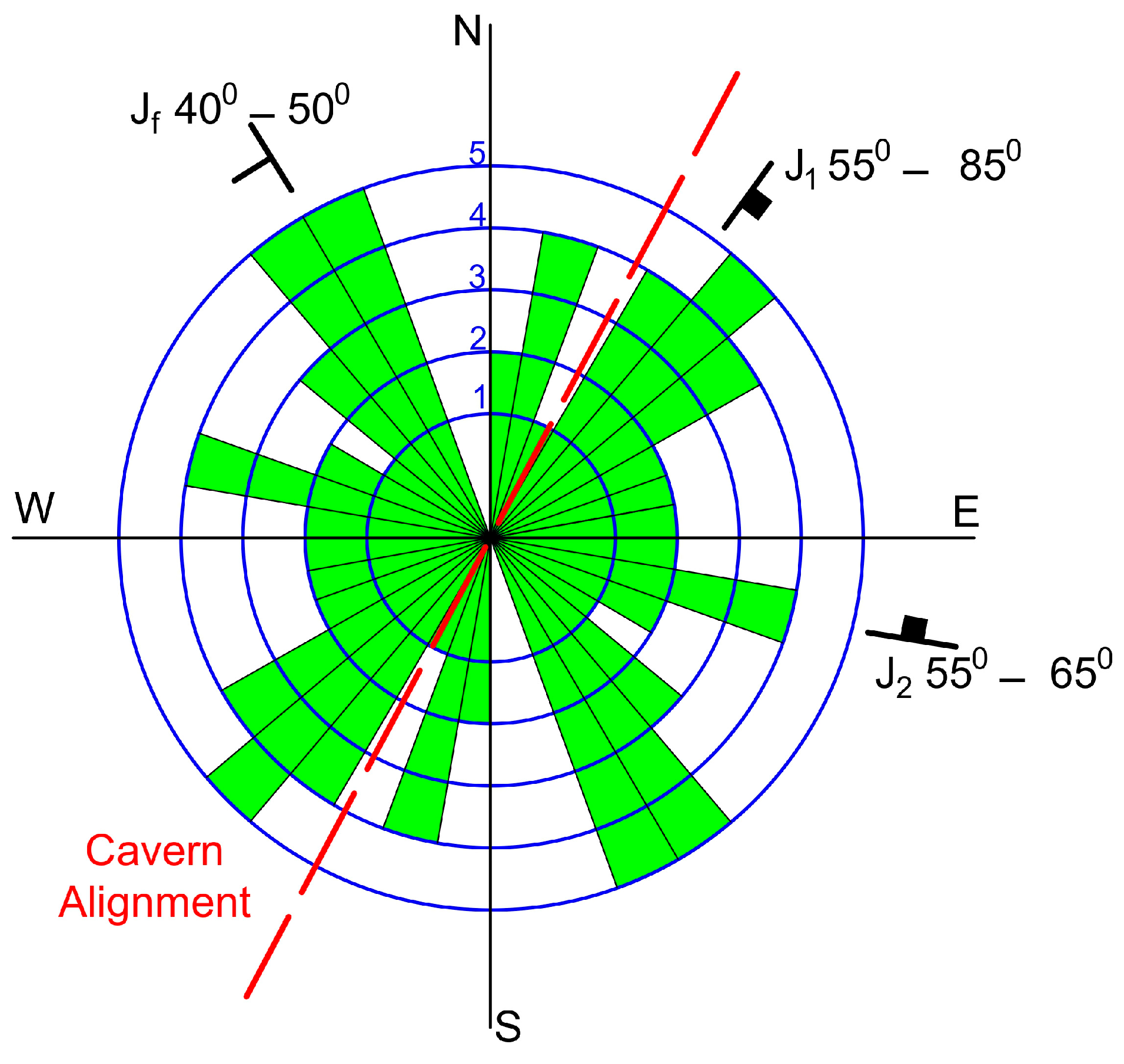
2.4. Joint Parameters
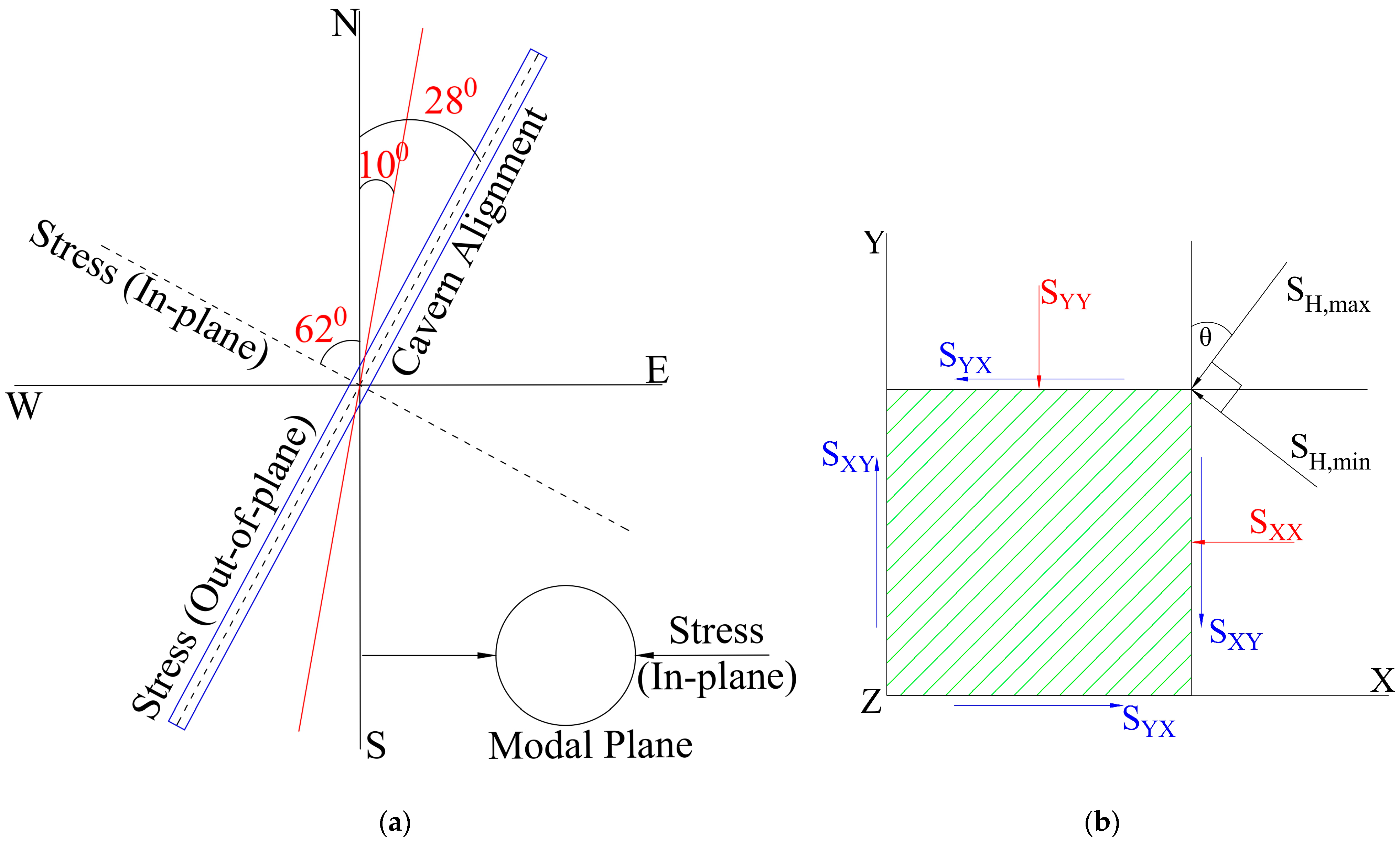
2.5. In-Situ Stress
3. Seismic Assessment for Underground Powerhouse Cavern
3.1. Pseudo-Static Approach
3.2. Fragility Curves
3.3. Dynamic Modeling
4. Numerical Modeling
4.1. Pseudo-Static Model
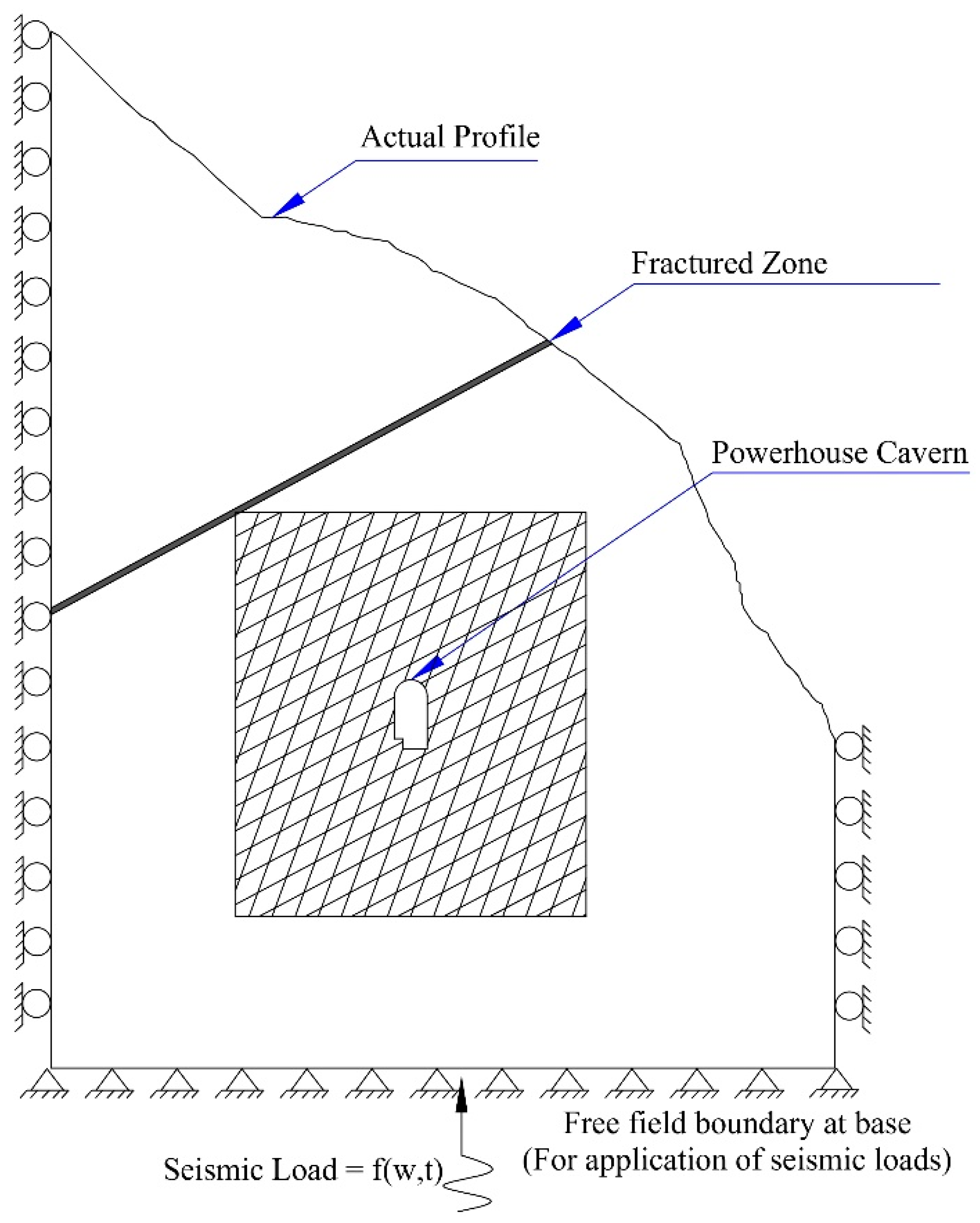
4.2. Dynamic Model
5. Results and Discussions
5.1. Vulnerability Assessment from Fragility Curves
5.2. Stress Redistributions Due to Earthquake
5.3. Significance and Engineering Implications
5.4. Limitations and Recommendations for Future Work
6. Conclusions
- Seismic deformation assessment using pseudo-static FEM
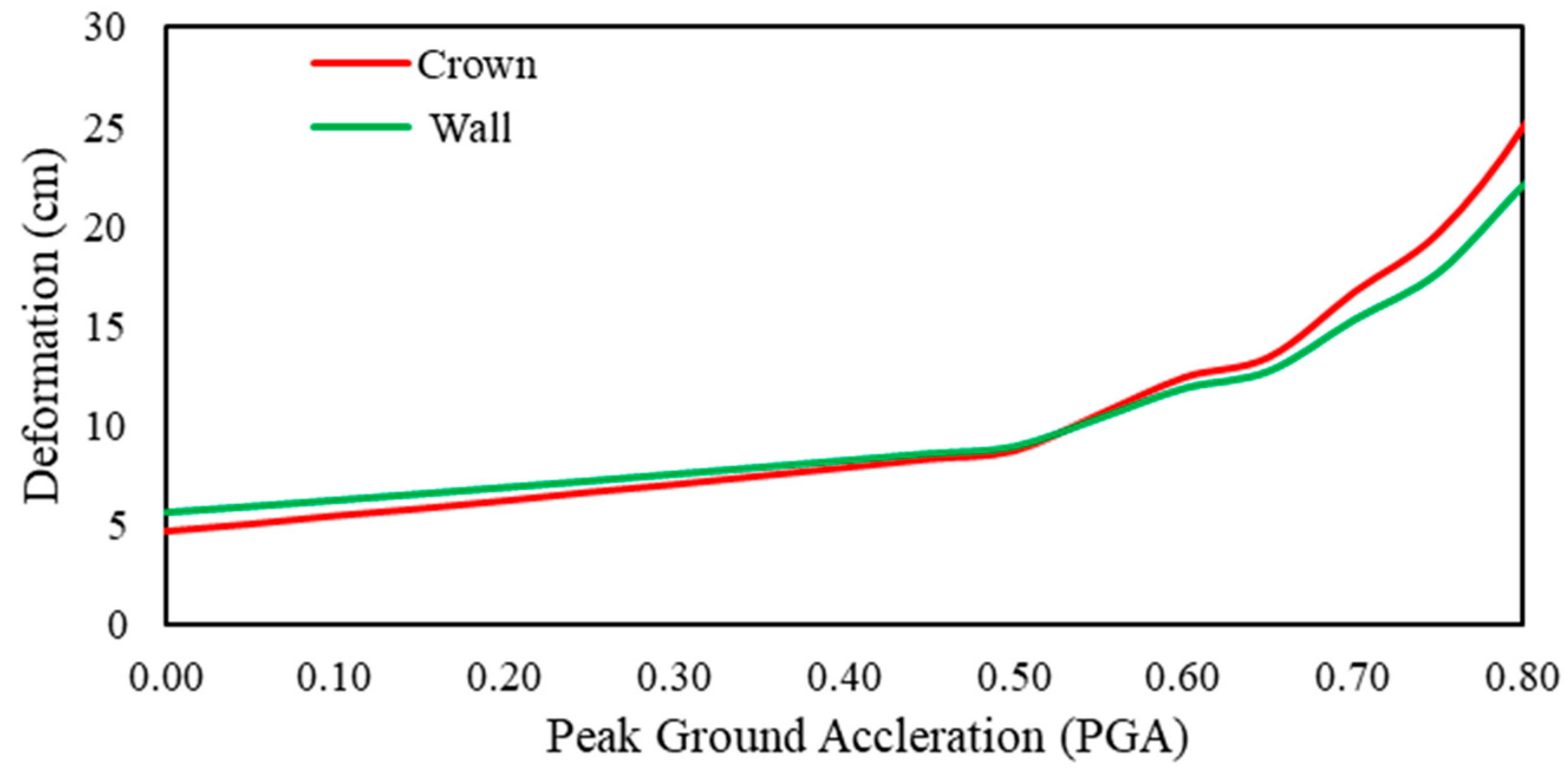
- Cavern wall deformations increased from 5.6 cm (static) to 7.2 cm (PGA = 0.25 g), and crown deformations increased from 4.7 cm to 6.7 cm, indicating that seismic loading moderately amplifies deformation.
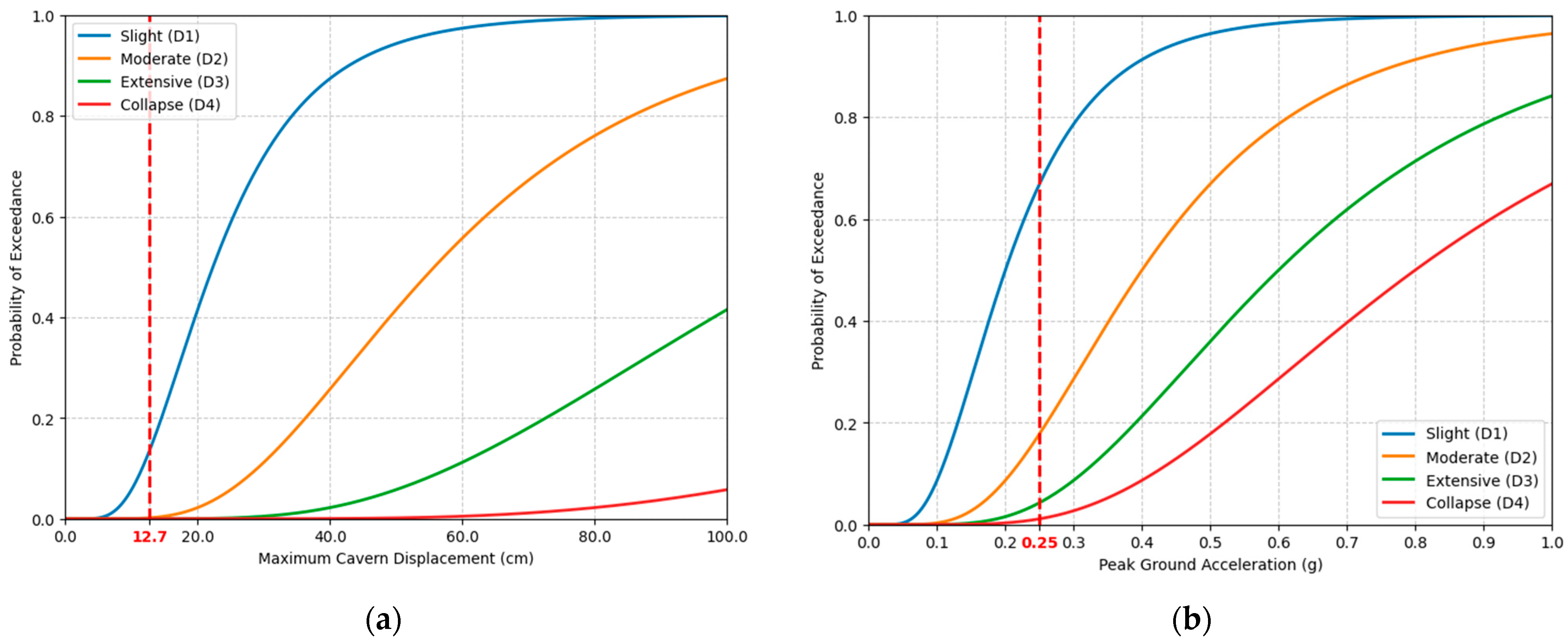
- The deformation data were successfully used to develop fragility curves, providing a probabilistic framework to quantify seismic vulnerability.
- Fragility-based vulnerability insights
- Fragility analysis revealed a 68% probability of slight damage and only a 1.7% probability of collapse at the site-specific PGA of 0.25 g.
- The approach demonstrates that strain-based damage indicators, originally developed for weak rock squeezing, can be effectively adapted to foliated and brittle rock masses under deformation-controlled seismic loading.
- Stress redistribution under dynamic seismic loading
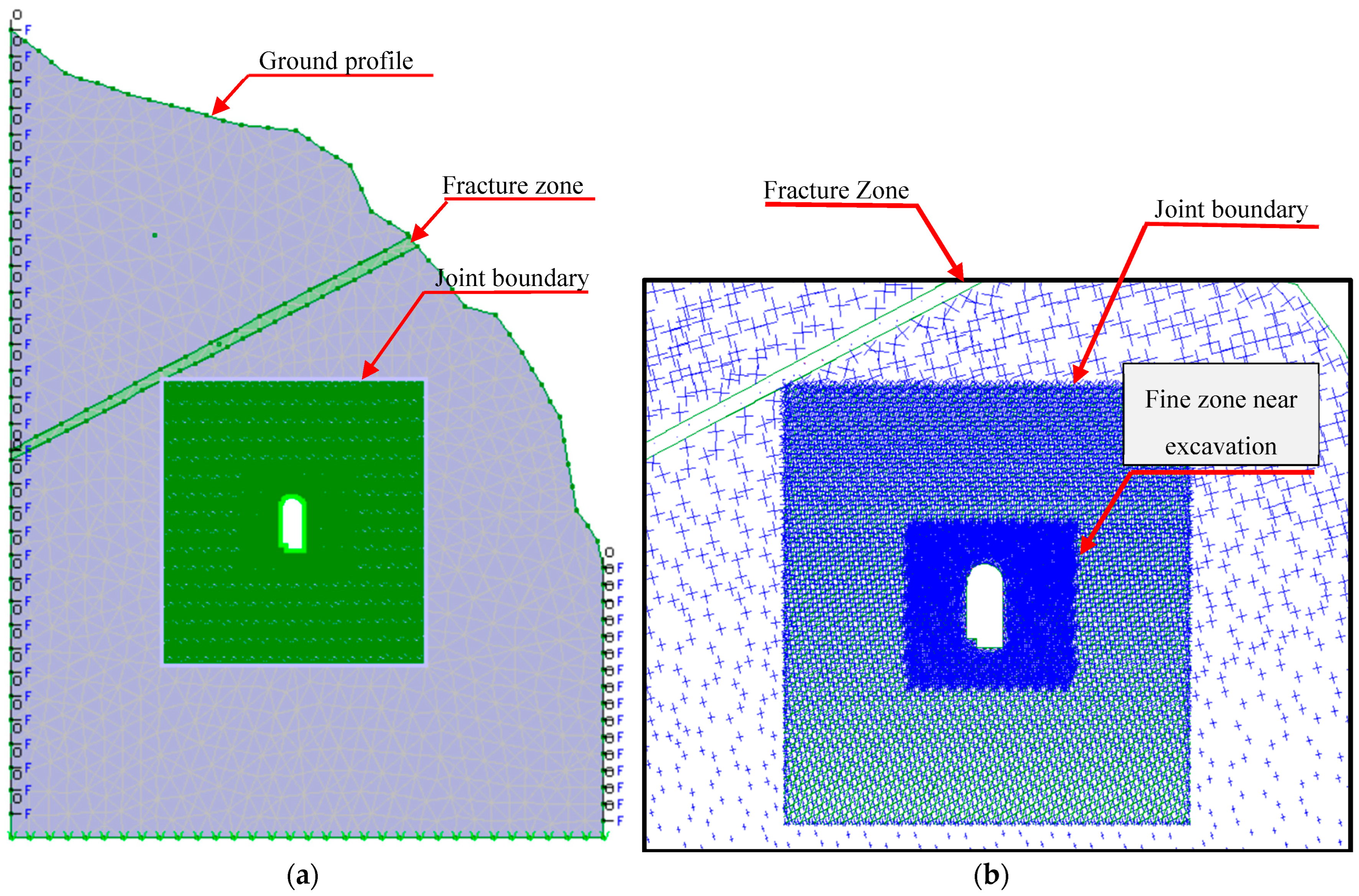
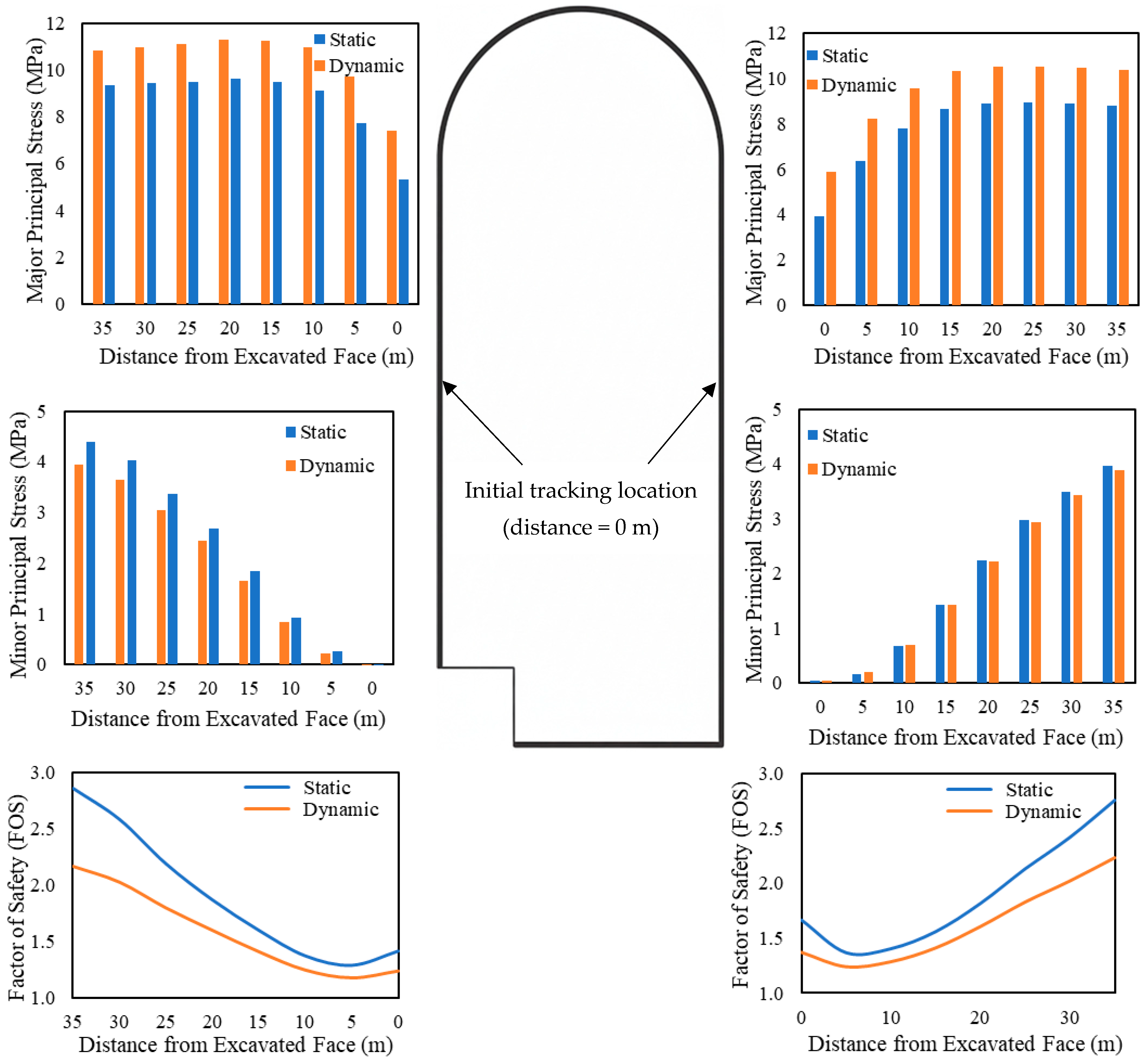
- UDEC modeling highlighted that major principal stresses increase while minor principal stresses decrease near the cavern boundary during earthquakes, leading to localized stress anisotropy.
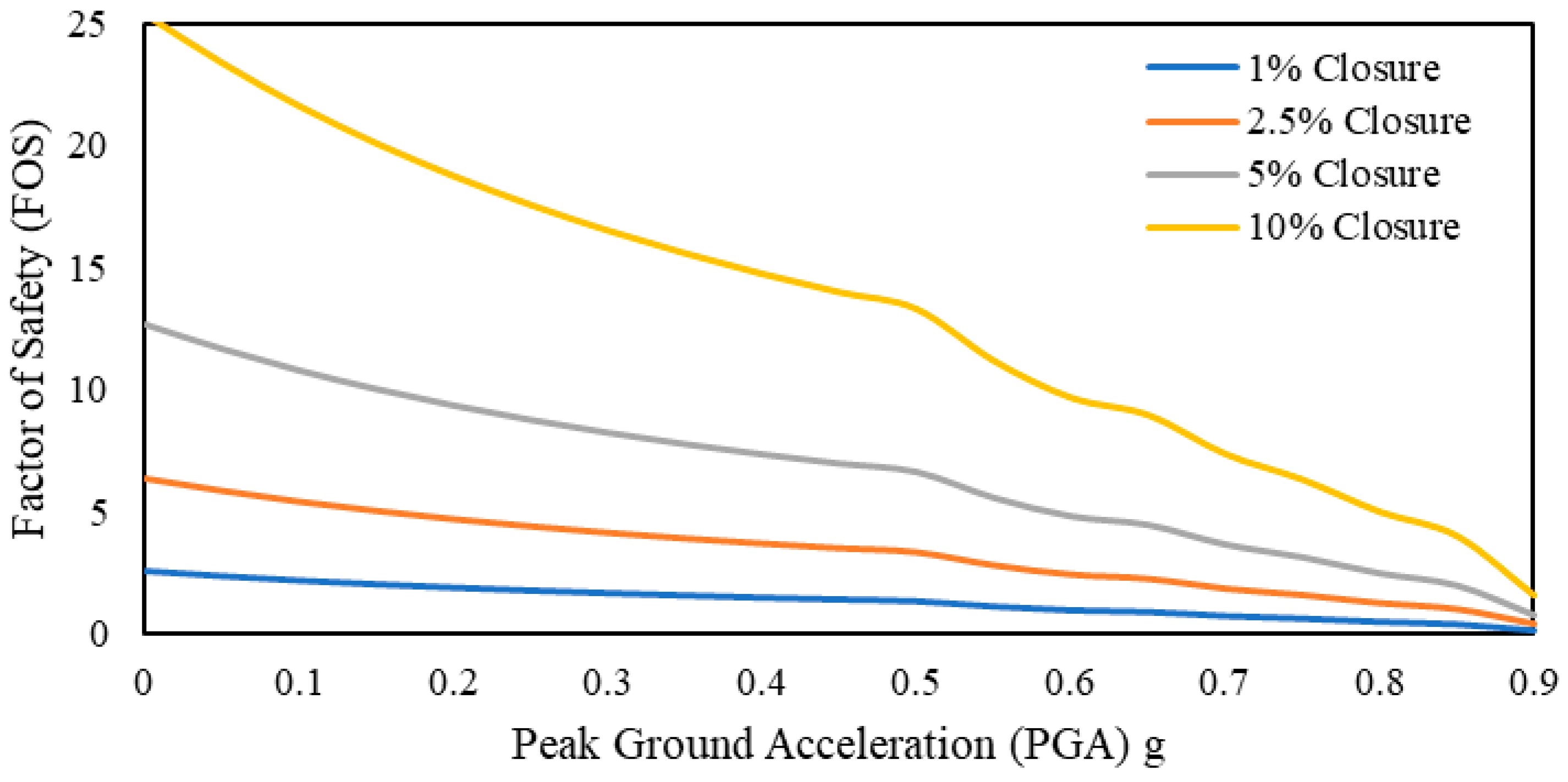
- Factor of Safety (FOS) profiles showed reductions of 8–24% under dynamic loading, emphasizing the need to account for stress redistribution and confinement loss in the design of underground supports.
- Engineering significance
- This study provides a practical methodology for combining probabilistic fragility analysis with numerical modeling of stress redistribution in deep underground caverns.
- The findings offer site-specific guidance for the design and monitoring of underground hydropower structures in seismically active Himalayan regions.
- The integrated FEM–DEM approach demonstrates a computationally efficient yet physically representative framework, which can be adapted for similar underground projects in complex geological conditions.
Author Contributions
Funding
Data Availability Statement
Acknowledgments
Conflicts of Interest
References
- Tapponnier, P.; Zhiqin, X.; Roger, F.; Meyer, B.; Arnaud, N.; Wittlinger, G.; Jingsui, Y. Oblique Stepwise Rise and Growth of the Tibet Plateau. Science 2001, 294, 1671–1677. [Google Scholar] [CrossRef]
- Fort, M. The Himalayas: From Mountain Building to Landform Evolution in a Changing World. Geogr. Pol. 2011, 84, 15–37. [Google Scholar] [CrossRef]
- Panthi, K.K.; Nilsen, B. Uncertainty Analysis of Tunnel Squeezing for two Tunnel Cases from Nepal Himalaya. Int. J. Rock Mech. Min. Sci. 2007, 44, 67–76. [Google Scholar] [CrossRef]
- Basnet, C.B.; Panthi, K.K. Detailed Engineering Geological Assessment of a Shotcrete Lined Pressure Tunnel in the Himalayan Rock Mass Conditions: A Case Study from Nepal. Bull. Eng. Geol. Environ. 2020, 79, 153–184. [Google Scholar] [CrossRef]
- Panthi, K.K. Analysis of Engineering Geological Uncertainties Related to Tunnelling in Himalayan Rock Mass Conditions. Doctoral Dissertation, Norwegian University of Science and Technology, Trondheim, Norway, 2006. [Google Scholar]
- Dowding, C.H.; Rozan, A. Damage to Rock Tunnels from Earthquake Shaking. J. Geotech. Eng. Div. 1978, 104, 175–191. [Google Scholar] [CrossRef]
- Wang, W.L.; Wang, T.T.; Su, J.J.; Lin, C.H.; Seng, C.R.; Huang, T.H. Assessment of Damage in Mountain Tunnels due to the Taiwan Chi-Chi earthquake. Tunn. Undergr. Space Technol. 2001, 16, 133–150. [Google Scholar] [CrossRef]
- Kontogianni, V.A.; Stiros, S.C. Earthquakes and Seismic Faulting: Effects on Tunnels. Turk. J. Earth Sci. 2003, 12, 153–156. [Google Scholar]
- Yashiro, K.; Kojima, Y.; Shimizu, M. Historical Earthquake Damage to Tunnels in Japan and Case Studies of Railway Tunnels in the 2004 Niigataken-Chuetsu Earthquake. Q. Rep. RTRI 2007, 48, 136–141. [Google Scholar] [CrossRef]
- Li, T. Damage to Mountain Tunnels Related to the Wenchuan Earthquake and Some Suggestions for Aseismic Tunnel Construction. Bull. Eng. Geol. Environ. 2012, 71, 297–308. [Google Scholar] [CrossRef]
- Jaramillo, C.A. Impact of Seismic Design on Tunnels in Rock—Case histories. Undergr. Space 2017, 2, 106–114. [Google Scholar] [CrossRef]
- Zhang, X.; Jiang, Y.; Maegawa, K. Mountain Tunnel Under Earthquake Force: A review of possible Causes of Damages and Restoration Methods. J. Rock Mech. Geotech. Eng. 2020, 12, 414–426. [Google Scholar] [CrossRef]
- Reddy, A.D.; Singh, A. A Simplistic Method for Assessing Seismic Damage in Rock Tunnels Before Earthquake: Part 1—Damage Prediction and Validation Using Seismic Damage Classification of Tunnels. Rock Mech. Rock Eng. 2024, 57, 11001–11032. [Google Scholar] [CrossRef]
- Department of Mines and Geology. Geological Map of Nepal; Government of Nepal: Kathmandu, Nepal, 2023.
- Chaulagain, H.; Gautam, D.; Rodrigues, H. Chapter 1—Revisiting Major Historical Earthquakes in Nepal: Overview of 1833, 1934, 1980, 1988, 2011, and 2015 Seismic Events. In Impacts and Insights of the Gorkha Earthquake; Elsevier: Amsterdam, The Netherlands, 2018; pp. 1–17. [Google Scholar] [CrossRef]
- Adhikari, S.; Basnet, C.B.; Panthi, K.K.; Katuwal, T.B. Planning and Support Estimation of Underground Powerhouse in the Himalayas. In Tunnelling for a Better Life, Proceedings of the ITA-AITES World Tunnel Congress, WTC 2024, Shenzhen, China, 19–25 April 2024; CRC Press: Boca Raton, FL, USA, 2024; pp. 3149–3156. [Google Scholar]
- Yu, H.; Chen, G. Pseudo-static Simplified Analytical Solution for Seismic Response of Deep Tunnels with Arbitrary Cross-Section Shapes. Comput. Geotech. 2021, 137, 104306. [Google Scholar] [CrossRef]
- Roy, N.; Sarkar, R. A Review of Seismic Damage of Mountain Tunnels and Probable Failure Mechanisms. Geotech. Geol. Eng. 2017, 35, 1–28. [Google Scholar] [CrossRef]
- Dhital, M.R. Geology of the Nepal Himalaya: Regional Perspective of the Classic Collided Orogen; Earth and Environmental Science; Springer: Cham, Switzerland, 2015; pp. 1–498. [Google Scholar] [CrossRef]
- Engineering Geological Condition Review & Surrounding Rock Stability Analysis of Underground Powerhouse; THP Project Report; Sinohydro Corporation Limited: Beijing, China, 2022; pp. 1–56.
- Barton, N.; Line, R.; Lunde, J. Engineering Classification of Rock Masses for the Design of Tunnel Support. Rock Mech. 1974, 6, 189–236. [Google Scholar] [CrossRef]
- ISRM. Suggested Methods for Determining Tensile Strength of Rock Materials. Int. J. Rock Mech. Min. Sci. Geomech. Abstr. 1978, 15, 99–103. [Google Scholar] [CrossRef]
- ISRM. Suggested Method for Determining Sound Velocity. Int. J. Rock Mech. Min. Sci. Geomech. Abstr. 1978, 15, 53–58. [Google Scholar] [CrossRef]
- Barton, N. Some New Q-value Correlation to Assist in Site Characterization and Tunnel Design. Int. J. Rock Mech. Min. Sci. 2002, 39, 185–216. [Google Scholar] [CrossRef]
- Hoek, E.; Diederichs, M.S. Empirical estimation of rock mass modulus. Int. J. Rock Mech. Min. Sci. 2006, 43, 203–215. [Google Scholar] [CrossRef]
- Adhikari, S.; Panthi, K.K.; Basnet, C.B. Subjectivity Associated to the use of Rock Mass Classification in Stability Analysis of Caverns. Sci. Rep. 2025, 15, 26256. [Google Scholar] [CrossRef]
- Panthi, K.K. Rockburst Prediction Methods and Their Applicability. In Rockburst Mechanism, Monitoring, Warning, and Mitigation; Butterworth-Heinemann: Oxford, UK, 2018; pp. 381–385. [Google Scholar]
- Zhao, J. Applicability of Mohr–Coulomb and Hoek–Brown Strength Criteria to the Dynamic Strength of Brittle Rock. Int. J. Rock Mech. Min. Sci. 2000, 37, 1115–1121. [Google Scholar] [CrossRef]
- Barton, N. A Model study of Rock-Joint Deformation. Int. J. Rock Mech. Min. Sci. Geomech. Abstr. 1972, 9, 579–602. [Google Scholar] [CrossRef]
- Singh, B. Continuum characterization of jointed rock masses: Part I—The constitutive equations. Int. J. Rock Mech. Min. Sci. Geomech. Abstr. 1973, 10, 311–335. [Google Scholar] [CrossRef]
- Rocscience. 2025. Available online: www.rocscience.com (accessed on 10 July 2025).
- Pitilakis, K.; Tsinidis, G. Performance and Seismic Design of Underground Structures. Earthq. Geotech. Eng. Des. 2014, 25, 279–340. [Google Scholar] [CrossRef]
- Wang, J.N.; Munfakh, G.A. Seismic Design of Tunnels. WIT Trans. Built Environ. 2001, 57, 1–10. [Google Scholar]
- Qiu, W.; Li, B.; Gong, L.; Qi, X.; Deng, Z.; Huang, G.; Hu, H. Seismic Capacity Assessment of Cracked Lining Tunnel Based on the Pseudo-Static Method. Tunn. Undergr. Space Technol. 2020, 97, 103281. [Google Scholar] [CrossRef]
- Liu, G.; Geng, P.; Wang, T.; He, D.; Chen, Z.; Yao, C. Seismic Fragility Curves of Circular Tunnels in Saturated Sand. Eng. Fail. Anal. 2024, 157, 107938. [Google Scholar] [CrossRef]
- Argyroudis, S.A.; Pitilakis, P.D. Seismic Fragility Curves of Shallow Tunnels in Alluvial Deposits. Soil Dyn. Earthq. Eng. 2012, 35, 1–12. [Google Scholar] [CrossRef]
- HAZUS Technical Manual; Technical Report; Federal Emergency Management Agency (FEMA), National Institute of Building Science: Washington, DC, USA, 2004.
- Huang, Z.K.; Pitilakis, K.; Tsinidis, G.; Argyroudis, S.; Zhang, D.M. Seismic Vulnerability of Circular Tunnels in Soft Soil Deposits: The Case of Shanghai Metropolitan System. Tunn. Undergr. Space Technol. 2020, 98, 103341. [Google Scholar] [CrossRef]
- Hoek, E.; Marinos, P. Predicting Squeezing. Tunn. Tunn. Int. 2000, 33–36. [Google Scholar]
- Ansari, A.; Rao, K.S.; Jain, A.K. Damage Assessment of Tunnels in Seismic Prone Zone During Earthquakes: A Part of Hazard Evaluation. In Earthquakes and Structures; Lecture Notes in Civil Engineering; Springer: Berlin/Heidelberg, Germany, 2021; pp. 161–170. [Google Scholar] [CrossRef]
- Lin, H.; Zhang, W.; Guo, S.; Zhang, X.; Wang, L.; Zhang, J. Study on the Energy Evolution Mechanism and Fractal Characteristics of Coal Failure under Dynamic Loading. ACS Omega 2025, 10, 54710–54719. [Google Scholar] [CrossRef]
- Wang, L.; Xue, Y.; Zhu, L.; Cao, X.; Li, X.; Ranjith, P.G. Fracture evolution of granite under cyclic thermal shocks: Effects of liquid nitrogen cooling on strength, toughness, and acoustic emission characteristics. Therm. Sci. Eng. Prog. 2026, 70, 104507. [Google Scholar] [CrossRef]
- Fialko, Y. Estimation of Absolute Stress in the Hypocentral Region of the 2019 Ridgecrest, California, Earthquakes. J. Geophys. Res. Solid Earth 2021, 126, e2021JB022000. [Google Scholar] [CrossRef]
- Xia, Y.; Liu, B.; Zhao, D.; Tang, C.; Yang, H.; Chen, J. Dynamic Failure Modes of Large-Scale Underground Caverns with Complex Geological Structures. J. Rock Mech. Geotech. Eng. 2024, 16, 3479–3501. [Google Scholar] [CrossRef]
- Savigamin, C.; Bobet, A.; Vitali, O.P.M. Seismic Response of Deep Circular Tunnels Subjected to S-Waves: Axial bending. Undergr. Space 2024, 17, 267–279. [Google Scholar] [CrossRef]
- Chen, C.H.; Wang, T.T.; Jeng, F.S.; Huang, T.H. Mechanisms causing seismic damage of tunnels at different depths. Tunn. Undergr. Space Technol. 2012, 28, 31–40. [Google Scholar] [CrossRef]
- Nepal National Building Code, Seismic Design of Buildings in Nepal; NBC 105; Ministry of Urban Development Nepal: New Delhi, India, 2020; pp. 1–98.
- Power, M.S.; Rosidi, D.; Kaneshiro, J. Strawman: Screening, Evaluation, and Retrofit Design of Tunnels; Report Draft; National Center for Earthquake Engineering Research: Buffalo, NY, USA, 1996; Volume III. [Google Scholar]
- Hynes-Griffin, M.E.; Franklin, A.G. Rationalizing the Seismic Coefficient Method; Miscellaneous Paper GL-84-13; US Army Corps of Engineers Waterways Experiment Station: Vicksburg, MS, USA, 1984; pp. 1–21. [Google Scholar]
- Jeldes, I.; Drumm, E. Preliminary Static and Seismic Stability of Steep Slopes in Reclaimed Mine Lands Constructed with Low Compaction in Appalachia, USA. In Proceedings of the 5th International Conference on Earthquake Geotechnical Engineering, Santiago, Chile, 10–13 January 2011; pp. 1–13. [Google Scholar]
- Itasca Consulting Group, Inc. UDEC—Universal Distinct Element Code, Ver. 5.0; Itasca: Minneapolis, MN, USA, 2011. [Google Scholar]
- Rajaure, S.; Asimaki, D.; Thompson, E.M.; Hough, S.; Martin, S.; Ampuero, J.P.; Dhital, M.R.; Inbal, A.; Takai, N.; Shigefuji, M.; et al. Characterizing the Kathmandu Valley Sediment Response Through Strong Motion Recordings of the 2015 Gorkha Earthquake Sequence. Tectonophysics 2017, 714–715, 146–157. [Google Scholar] [CrossRef]
- Thapa, N.; Pandey, K.; Ghimire, S.; Acharya, K.K. Frequency Dependent Damage Pattern in Kathmandu Valley due to Mw 7.8 Gorkha Earthquake. J. Geol. Geophys. 2020, 9, 10-35248. [Google Scholar]





| Parameters | Symbol | Range | Typical Mean |
|---|---|---|---|
| Rock Quality Designation | RQD | 60–40 | 50 |
| Joint Set Number | Jn | 6–9 | 8 |
| Joint Roughness Number | Jr | 1.5–2 | 2 |
| Joint Alteration Number | Ja | 1–4 | 2 |
| Joint Water Reduction Factor | Jw | 0.66–1 | 0.75 |
| Stress Reduction Factor | SRF | 1–2.5 | 2.5 |
| 0.44–20 | 1.875 |
| σci MPa | Eci GPa | σt MPa | Poisson’s Ratio (ν) | γ kN/m3 | Vp m/s | a σcm MPa | b Erm GPa | c Grm GPa | ϕpeak Degrees | cpeak MPa | ϕresidual Degrees | cresidual MPa |
|---|---|---|---|---|---|---|---|---|---|---|---|---|
| 38 | 14.25 | 6.15 | 0.25 | 27.18 | 4165 | 5.62 | 2.11 | 0.843 | 38 | 1.70 | 30.40 | 0.85 |
| Parameters | Symbol | Values | Unit |
|---|---|---|---|
| Overburden | h | 360.5 | meters |
| Poisson’s ratio | ν | 0.2 | - |
| Density of rock | γ | 27.18 | kN/m3 |
| Trend of tectonic stress | θtec | N10°E | - |
| Cavern trend | θc | N28°E | - |
| Angle between tectonic stress trend and cavern (in-plane) axes | θt | 72 | Degrees |
| Vertical stress due to gravity only | SZZ | 9.80 | MPa |
| Horizontal stress due to gravity only | SH,grv | 2.45 | MPa |
| Maximum total horizontal stress | SHmax | 10.40 | MPa |
| Minimum total horizontal stress | SHmin | 4.80 | MPa |
| In-plane horizontal stress | Syy | 3.21 | MPa |
| Out-of-plane horizontal stress | Sxx | 9.64 | MPa |
| Horizontal shear stress | Sxy = Syx | 1.65 | MPa |
| Damage State ID | Damage Condition | Strain Limits |
|---|---|---|
| DS0 | No damage | <1% |
| DS1 | Slight | 1–2.5% |
| DS2 | Moderate | 2.5–5% |
| DS3 | Extensive | 5–10% |
| DS4 | Collapse | >10% |
| Damage State ID | Condition | Condition | PGA Range |
|---|---|---|---|
| DS0 | No Damage | Small cracks are developed with no rockfall. | <1% |
| DS1 | Minor (Slight) | Linings start showing cracks with rockfall. | 1–2.5% |
| DS2 | Moderate | Lots of destructive cracks have developed. | 2.5–5% |
| DS3 | Extensive | Large cracks developed in the tunnel lining, falling of big rocks, and sinking of road surfaces. Tunnels are heavily damaged and remain useless without repair. | 5–10% |
| DS4 | Collapse | Serious cracks and clear deformation can be observed in the tunnel lining. Tunnels collapsed, and there is a need for reconstruction. | >10% |
| FEM Model | DEM Model | |
|---|---|---|
| TOOL | RS2 | UDEC |
| OBJECTIVE | Develop parameters required for the fragility curve. | Find the change in stress magnitude during an earthquake. |
| INPUT | Rock mass properties, in-situ stress, boundary conditions, cavern geometry, and support parameters. | Rock mass properties, in-situ stress, boundary conditions, cavern geometry, and joint properties. |
| SEISMIC LOADING | Pseudo-static conditions. | Dynamic analysis. |
| OUTPUT | Deformation with respect to PGA. | Variation of principal stress during an earthquake. |
| INTERPRETATION | Vulnerability of the cavern by developing fragility curves. | Discussion on the effect of stress redistribution in the cavern during the earthquake event. |
| Loading Condition | a Max. Tangential Stress (σθ,max) MPa | b Min. Tangential Stress (σθ,min) MPa | ||
|---|---|---|---|---|
| Left Wall | Right Wall | Left Wall | Right Wall | |
| Static | 15.97 | 11.76 | −5.34 | −3.83 |
| Dynamic | 22.27 | 17.63 | −7.45 | −5.78 |
Disclaimer/Publisher’s Note: The statements, opinions and data contained in all publications are solely those of the individual author(s) and contributor(s) and not of MDPI and/or the editor(s). MDPI and/or the editor(s) disclaim responsibility for any injury to people or property resulting from any ideas, methods, instructions or products referred to in the content. |
© 2026 by the authors. Licensee MDPI, Basel, Switzerland. This article is an open access article distributed under the terms and conditions of the Creative Commons Attribution (CC BY) license.
Share and Cite
Adhikari, S.; Panthi, K.K. Stability Assessment of an Underground Powerhouse Cavern Under Pseudo-Static and Dynamic Earthquake Loading. Appl. Sci. 2026, 16, 2506. https://doi.org/10.3390/app16052506
Adhikari S, Panthi KK. Stability Assessment of an Underground Powerhouse Cavern Under Pseudo-Static and Dynamic Earthquake Loading. Applied Sciences. 2026; 16(5):2506. https://doi.org/10.3390/app16052506
Chicago/Turabian StyleAdhikari, Sailesh, and Krishna Kanta Panthi. 2026. "Stability Assessment of an Underground Powerhouse Cavern Under Pseudo-Static and Dynamic Earthquake Loading" Applied Sciences 16, no. 5: 2506. https://doi.org/10.3390/app16052506
APA StyleAdhikari, S., & Panthi, K. K. (2026). Stability Assessment of an Underground Powerhouse Cavern Under Pseudo-Static and Dynamic Earthquake Loading. Applied Sciences, 16(5), 2506. https://doi.org/10.3390/app16052506