1. Introduction
Autonomous freight trucks (AFTs) are expected to bring new challenges to the current transport infrastructure system. The impacts range from transportation logistics patterns to the physical infrastructure system. Although autonomous trucks are expected to reshape freight transportation by improving safety, fuel efficiency and supply chain reliability, their impacts on the flexible pavement structure may vary based on the lateral wander pattern used [
1]. Furthermore, the combination of platoon coordination and arrangement of axle/loading configurations for the autonomous trucks also brings a significant impact on the pavement structure in terms of rest period and elastic response [
2].
Major manufacturers now produce Level 4 autonomous trucks capable of prolonged highway operation, often relying on consistent lane tracking and optimized fuel efficiency. However, autonomous operational patterns, tight platooning, minimal lateral wander, and precise wheel path tracking may unintentionally accelerate pavement damage by concentrating repetitive loads [
3]. The level 4 autonomous trucks combine artificial intelligence, sensor fusion and connectivity to improve the performance in terms of safety and fuel efficiency [
4].
Usually, two of the most fundamental distress mechanisms are evaluated in order to evaluate the damage from moving truck traffic in terms of fatigue cracking and rutting. Fatigue cracking initiates at the bottom of the asphalt concrete layer due to repeated tensile strain under traffic loading, eventually propagating to the surface [
5]. Rutting is the accumulation of permanent vertical deformation in the AC layer and underlying unbound granular materials caused by compressive strain at the top of the subgrade [
6]. Moreover, the relationship between axle load and pavement damage is nonlinear and often described by the fourth power law, where a small increase in load can lead to a disproportionate increase in damage [
7].
Therefore, the axle configuration and tire pavement interaction are fundamental determinants of these critical pavement responses [
8]. AFTs may employ non-traditional configurations consisting of additional axles or tridem groups, to accommodate higher Gross Vehicle Weights (GVWs) while complying with bridge formula laws [
9]. Multi-axle arrangements can mitigate peak subgrade strain and reduce rutting rates compared to single axle or concentrated tandem arrangements. Furthermore, recent electrification trend for long-haul autonomous trucks often increases vehicle mass or redistributes it across more axles for battery packs and multiple drive motors, which will alter these effects relative to present-day human-driven fleets [
10]. Concurrently, the trucking industry’s drive for fuel efficiency has popularized Wide Base Single Tires (WBSTs), which have been shown to increase contact pressure and near-surface stresses compared to conventional dual tire assemblies, reducing rutting and top-down cracking [
11,
12]. Furthermore, the use of WBSTs with AFTs hasn’t been previously studied in more detail.
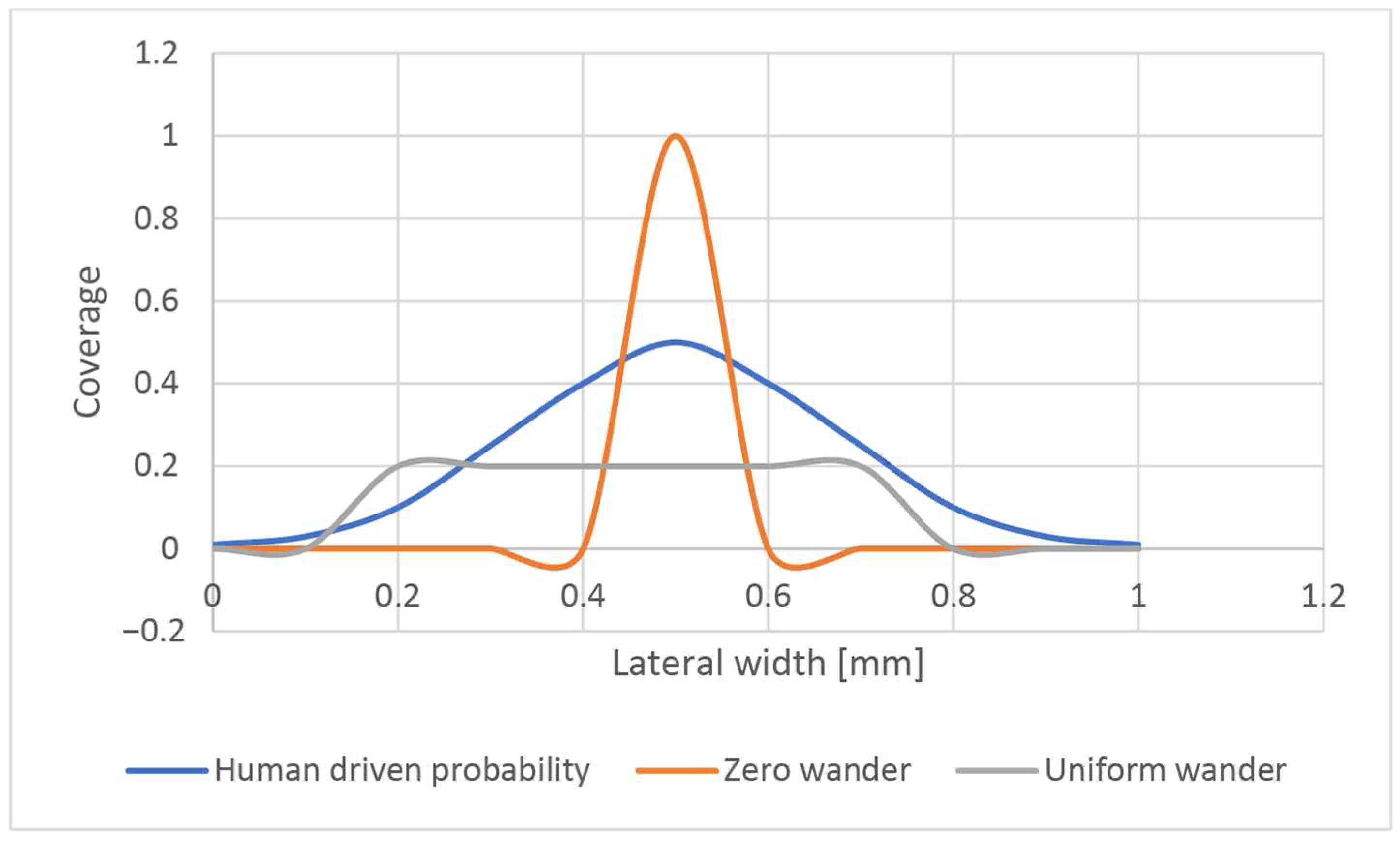
Furthermore, the use of lateral wander mode in human-driven and autonomous trucks is another governing factor for inducing channelized or unevenly distributed loading patterns on the pavement. Human drivers naturally exhibit a lateral wander, which is a probabilistic distribution of wheel paths across a traffic lane and usually considered to follow a normal distribution pattern [
13]. This wandering distributes wear, allowing the pavement structure to undergo periodic recovery between load applications at any given point. However, AFTs operating with precise lane keeping will channelize traffic, applying every load repetition to an identical path, leading to significantly accelerated accumulation of fatigue and rutting damage [
14].
In terms of application of lateral wander modes and tire pavement interaction, Wenlu et al. [
15] have developed a flexible evaluation method specifically for assessing lateral control impacts of truck platoons on asphalt pavement performance, proposing a truck platoon axle load lateral distribution function to characterize cumulative damage effects. Zhenlong et al. [
16] have addressed load-sensitive tire to road friction modeling and dynamic stability analysis of multi-axle trucks, integrating load-sensitive friction models with friction ellipse concepts and static rollover thresholds. Results stated that ignoring load sensitivity systematically overestimates safe speeds and underestimates lateral deviations. Cardenas et al. [
17] have used a decoupled tire pavement interaction approach using 3D finite element modeling techniques, using a full truck model to evaluate the impact of road surface roughness on vehicle dynamics. Results showed that roughness induced dynamic loading has a significant impact on bottom-up cracking, near-surface cracking and rutting. Wang et al. [
18] have developed a 3D model of a tire to evaluate the tire pavement contact stresses. The influence of shear stresses and the superimposition of contact stress values were evaluated. Results showed that the distribution of vertical stress values is the same for both the dynamic rolling tire and the static tire.
A further critical distinction exists between analytical models and finite element models, each with inherent limitations. Analytical approaches employing layered elastic theory in traditional pavement design guides offer computational efficiency for parametric studies; however, they are constrained by assumptions of material linearity, layer homogeneity, and simplified loading representations [
19]. These models cannot capture the nonlinear stress-dependent behavior of unbound materials, the viscoelastic response of asphalt concrete, or the complex three-dimensional stress fields arising from non-uniform tire contact pressures [
20]. However, FE studies have focused on specific aspects in isolation, with Liang et al. [
21] having developed a 3D finite element pavement model incorporating a nonlinear Burger model for asphalt concrete permanent deformation, calibrated through flow number and dynamic modulus tests. This study showed that higher wander and increased platoon penetration distributed loading evenly, thereby reducing localized rutting.
Recent modeling and experimental studies have quantified these effects. Finite element and mechanistic studies show that reduced lateral wander, which includes the zero wander concentrates stress and strain within a narrow wheel path, increasing predicted rutting and reducing predicted fatigue life relative to human-driven wander distributions. Therefore, distributing wheel positions laterally using uniform wander can spread load repetitions and slow deterioration at any single longitudinal location [
22].
An AFT could be programmed to execute a uniform wander pattern, which leads to systematically distributing its load across the lane width to actively mitigate pavement damage. Several studies have used Finite Element modeling to analyze tire pavement interaction [
23,
24], theoretically explored the impact of autonomous truck platooning on bridges and pavements [
25,
26]. However, a detailed analysis that integrates specific AFT axle configurations, modern tire types, and a comparative analysis of different lateral wander patterns within a single advanced computational framework has not been mentioned in the current literature [
27]. Furthermore, previous studies do not include the use of different tire type footprints based on tire size and the coupled use of tire pressure concentration path that directly affects the pavement response under loading at varying speeds. Previously, only one type of 5-axle truck-trailer combination has been taken into consideration. Therefore, critically, no existing study has simultaneously integrated: (1) realistic autonomous truck axle configurations with varying gross vehicle weights, (2) multiple tire footprint designs including next-generation wide-base singles, (3) comparative analysis of lateral wander patterns encompassing both the risks of channelization and the opportunities of programmable uniform distribution.
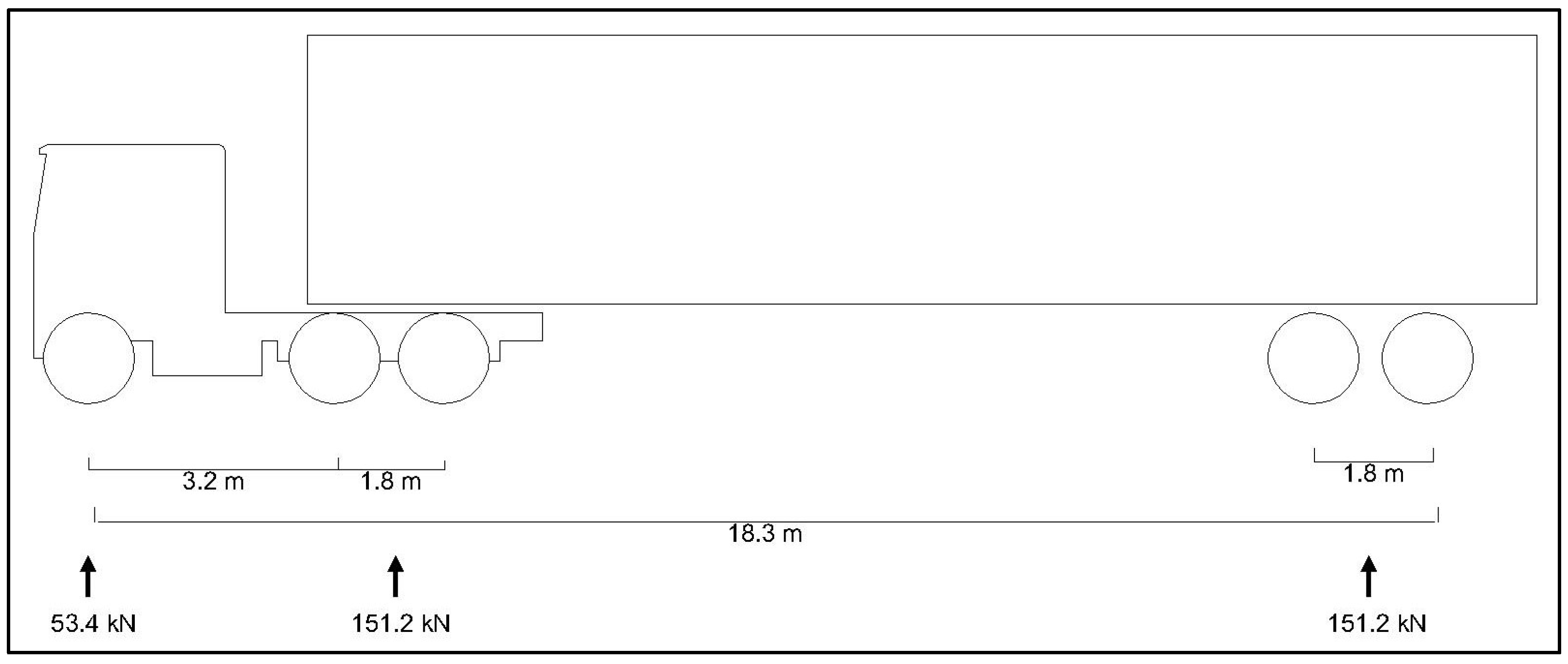
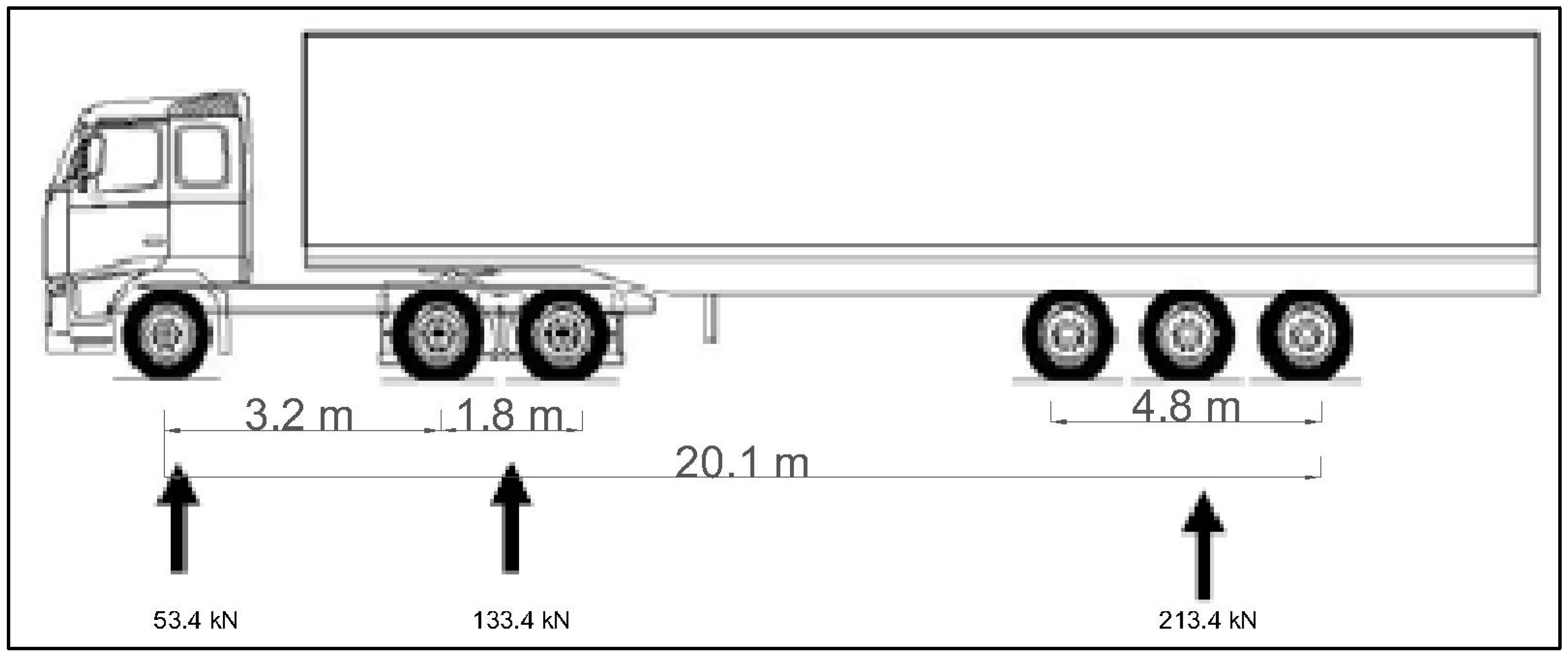
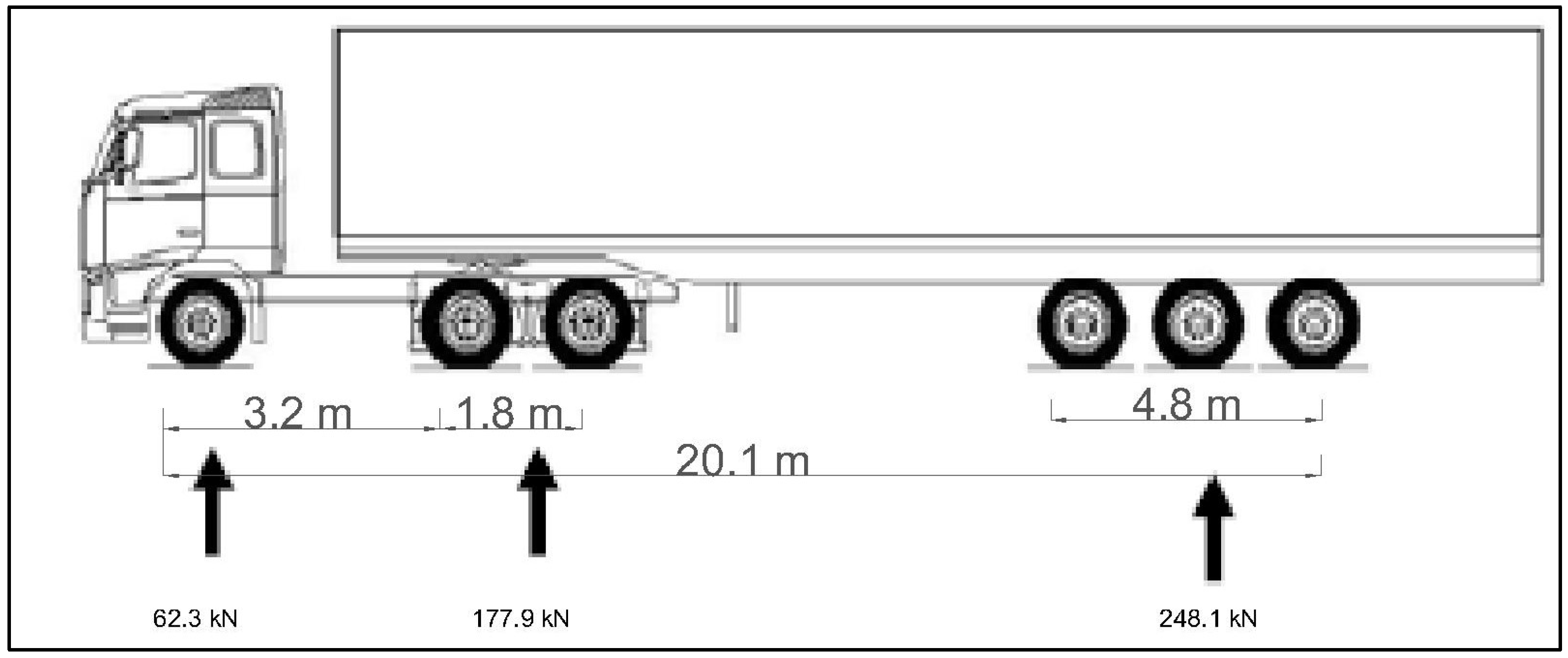
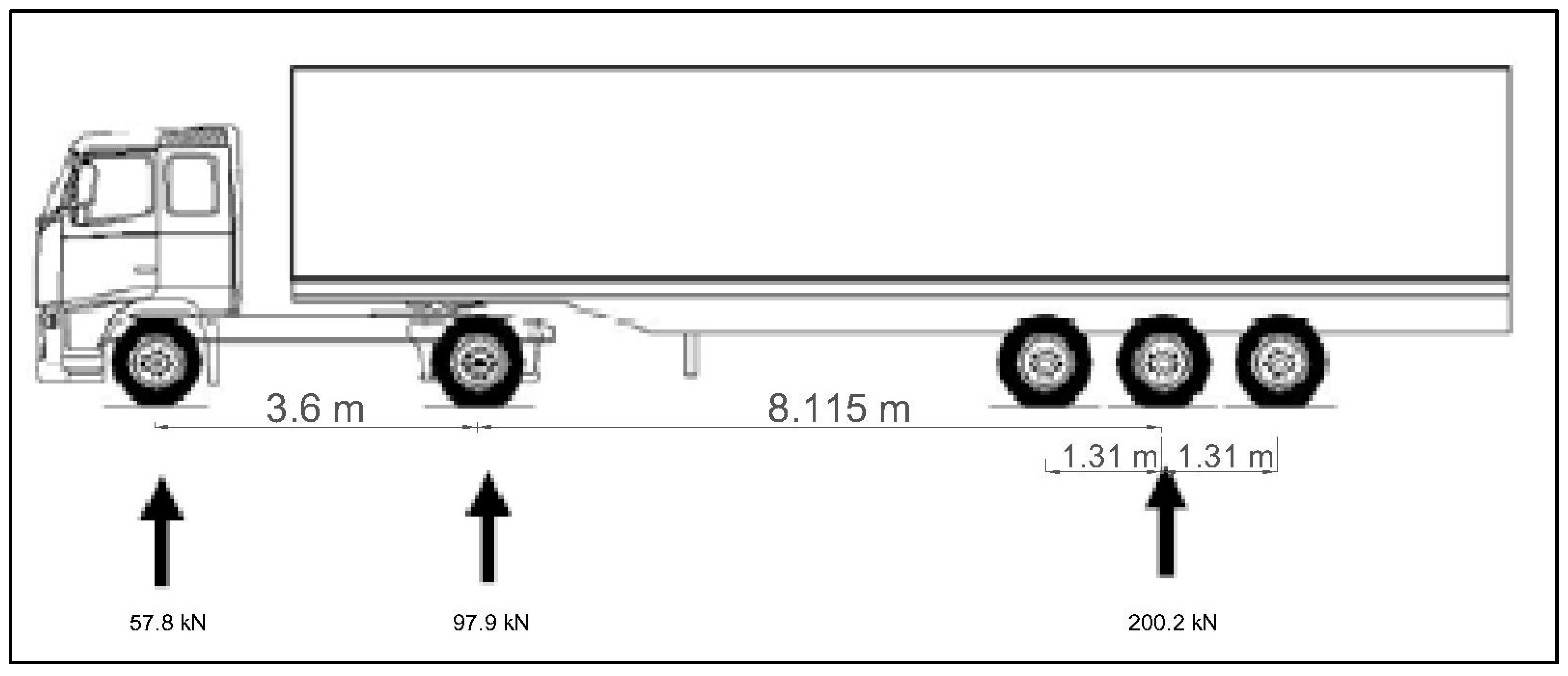
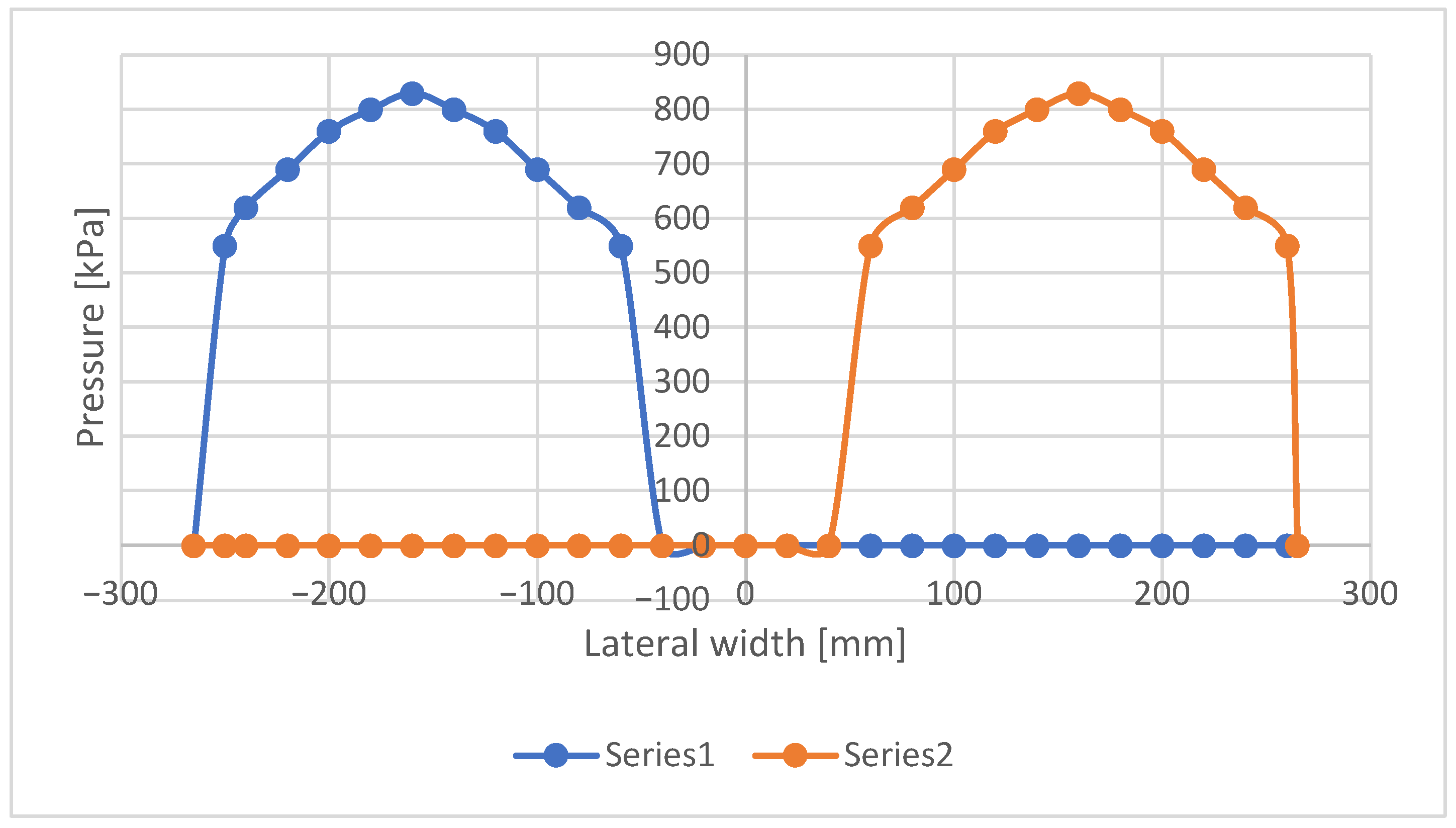
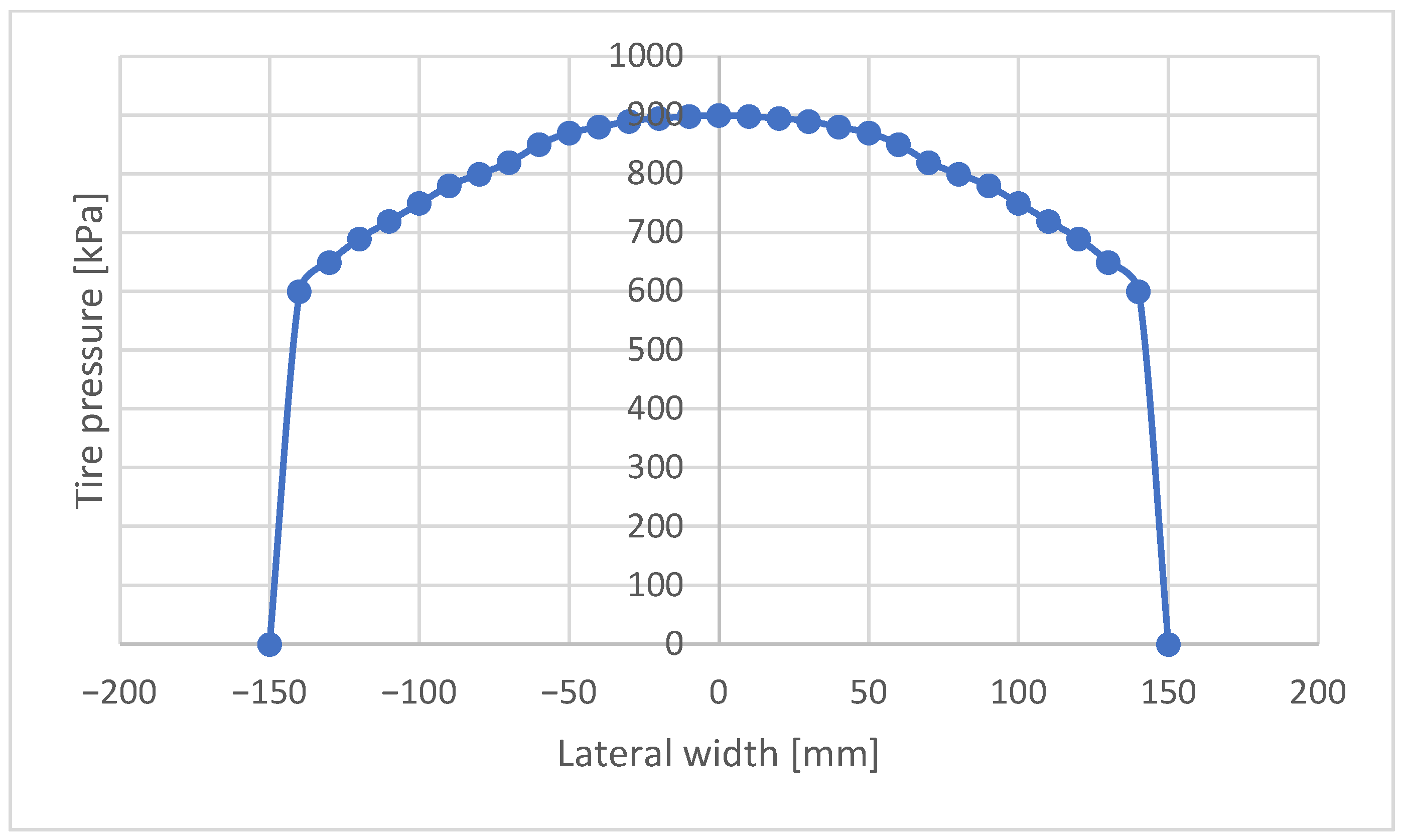
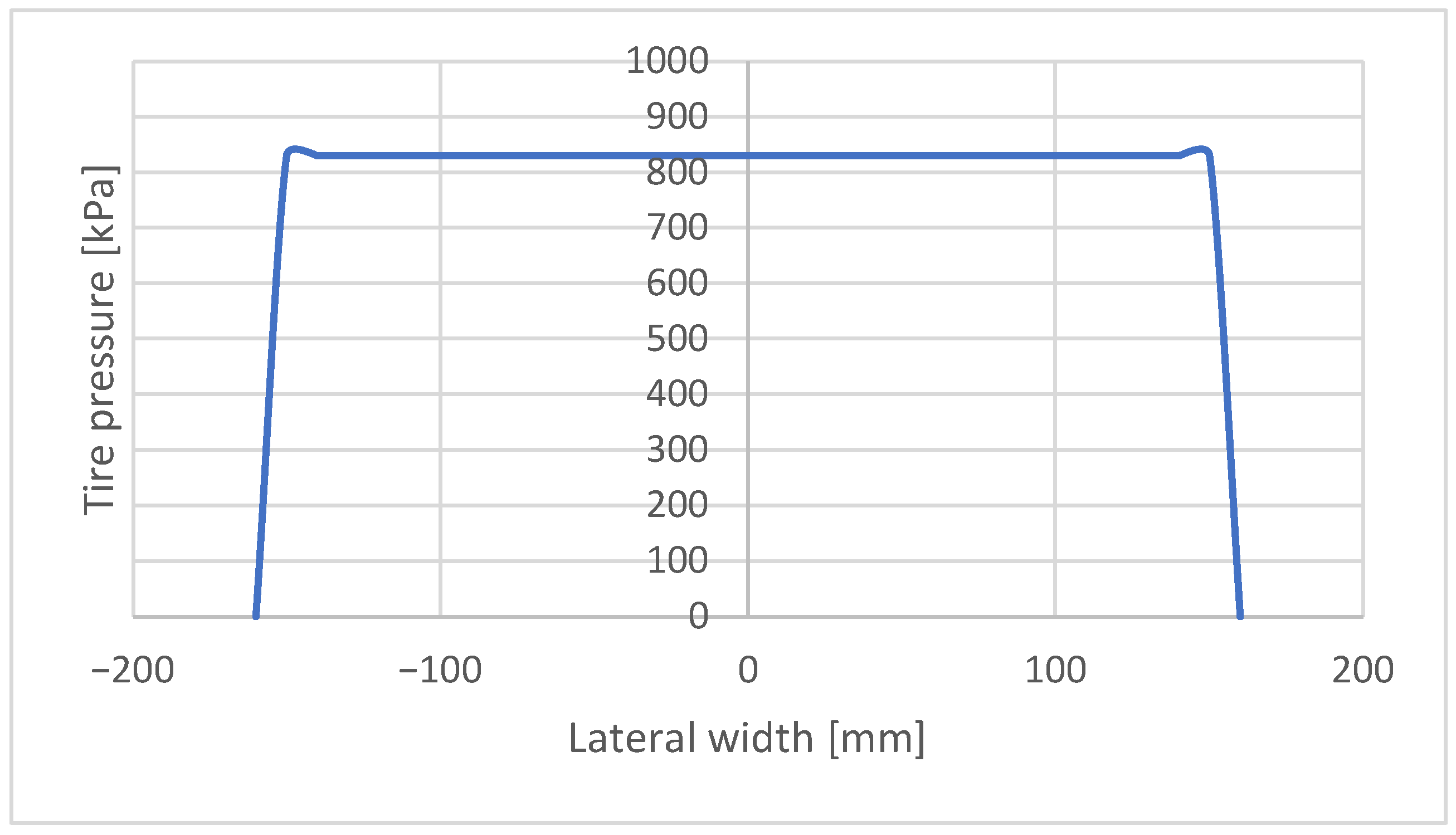
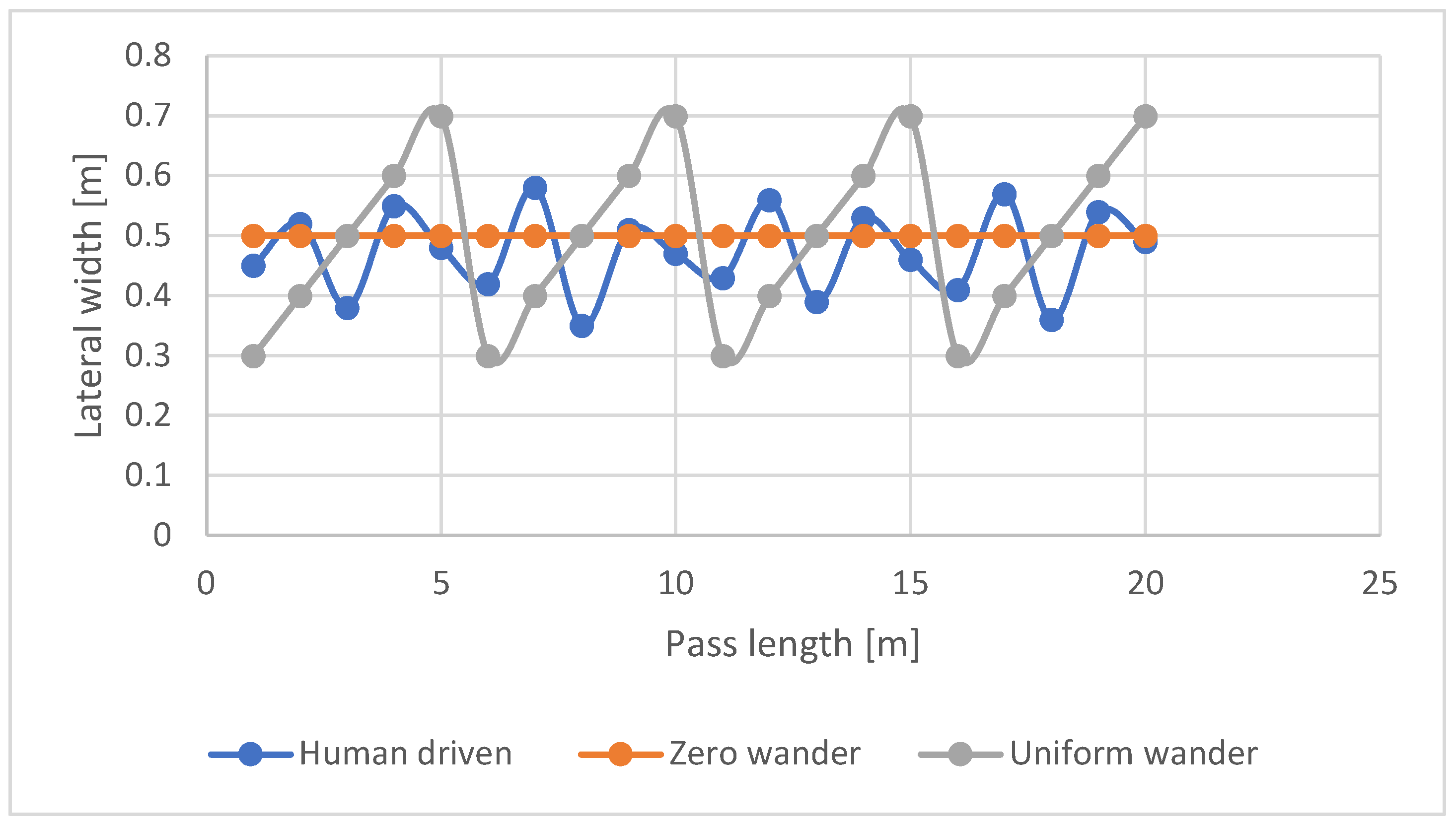
Therefore, in this research, the gap is addressed by performing a comprehensive, multi-scenario 3D finite element investigation of asphalt pavement response to four representative truck types consisting of conventional long haul, urban rigid and emerging autonomous electric axle layouts along with three representative tire footprint/tread pressure patterns, under three lateral wander modes: (1) human like stochastic wander, (2) autonomous precise lane centering and (3) autonomous uniform controlled wander designed to uniformly distribute wheel loads laterally. The analysis employs viscoelastic material models for HMA, viscoplastic permanent deformation and mechanistic empirical accumulation rules to estimate rutting and fatigue life differences across scenarios. Therefore, different tire footprint options, axle configuration variability and alternative lateral wander options have been used to evaluate the pavement deterioration.
This research introduces a novel comparative methodology that simultaneously evaluates the interacting effects of autonomous truck axle configurations, tire footprint designs, and lateral wander patterns. Furthermore, it provides the first quantitative assessment of a programmable uniform wander operational strategy specifically designed for autonomous vehicles and establishes a mechanistic framework for quantifying the relative damage factors of emerging autonomous truck technologies against conventional human-driven baselines regarding weight regulations, tire standards and operational requirements for future freight corridors.
4. Fatigue and Rutting Damage Analysis
The fatigue damage is normalized to the zero wander mode at a magnitude of 1.00 for all scenarios, as shown in
Table 16. Furthermore, the percentage change in the damage factor when compared to the dual tire is shown for all truck types along with the lateral wander mode combinations. Highest fatigue damage occurs for the T3-F1 scenario with the combination of dual tire and zero wander at 4.850, which is significantly higher than the baseline T1-F1 scenario. Truck T4 also exhibits the second-highest fatigue damage on pavement; however, with the combination of NG-WBST with uniform wander mode, the fatigue damage ratio is reduced to 0.280 using Equation (8).
where
is fatigue damage with lateral wander distribution,
is the total number of load repetitions,
is the probability function of lateral position and
is tensile strain as a function of lateral position.
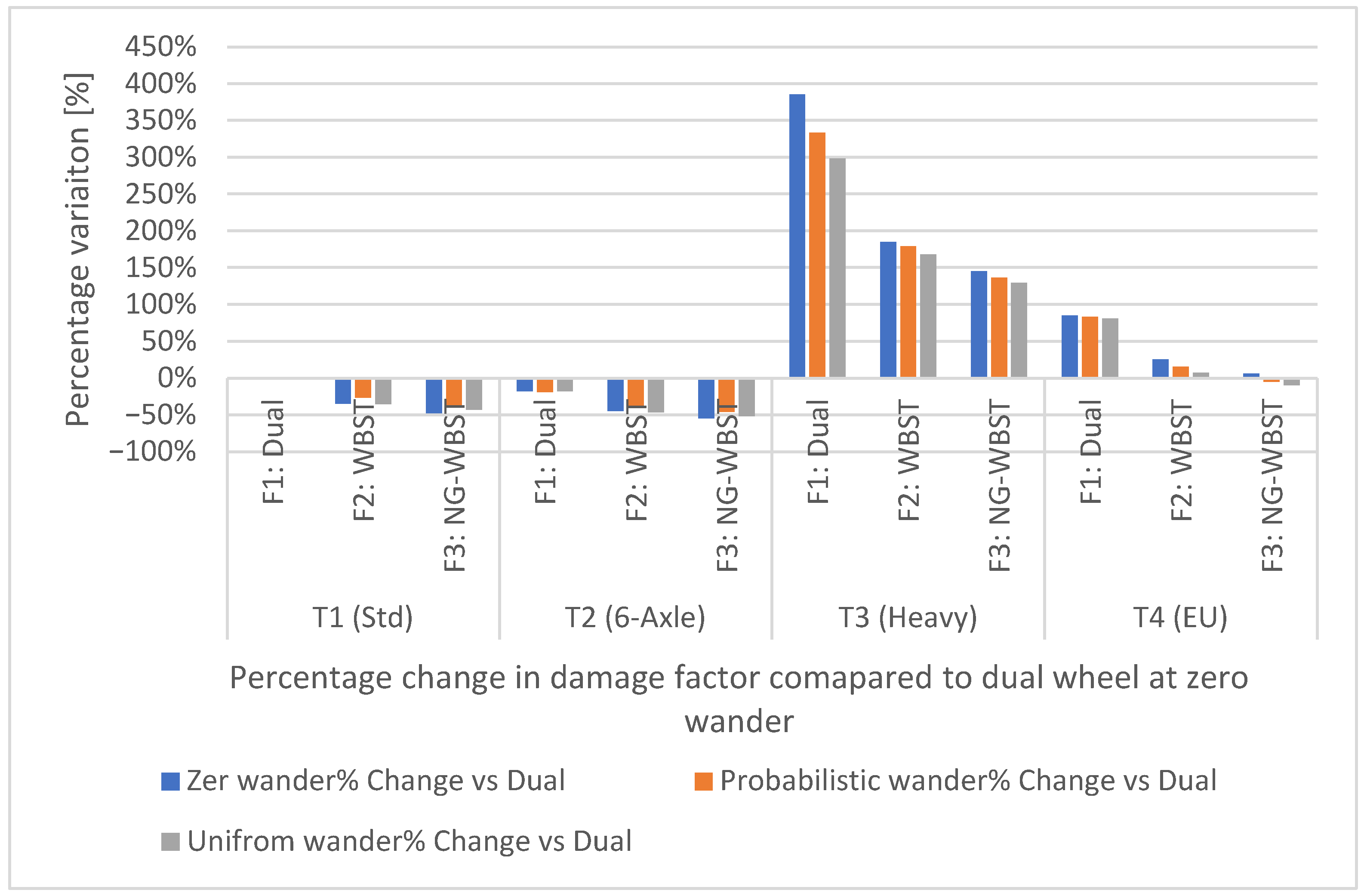
Graphical representation of the percentage change in fatigue damage compared to the dual wheel at zero wander mode is shown in
Figure 15. As observed, both trucks, T1 and T2, exhibit decreases in the damage factor, with permanent decreases in the damage factor exhibited under uniform wander mode for both scenarios. However, T3 and T4 truck types show increased damage accumulation in terms of fatigue damage. T3 with F1 dual configuration exhibits the highest fatigue damage magnitude under zero wander mode; however, even with the use of uniform wander mode, the damage still remains prominent when compared to T1 and T2 trucks.
The rutting damage ratio for each scenario, normalized to the zero wander mode scenario at 1.00, is shown in
Table 17. As observed, the rutting damage ratio follows the same patterns as the fatigue damage ratio. The use of WBST reduces the rutting damage by half when compared to the dual tire. Furthermore, the use of NG-WBST reduces the damage further by a quarter when compared to the dual tire assembly. Moreover, the uniform wander mode significantly reduces the rutting damage by 56% in the case of the T1 truck scenario. Therefore, the even distribution of loading by each truck pass reduces the rutting damage factor significantly, using Equation (9).
where
is total rutting damage over pavement life,
is total number of loading repositions,
is probability density function of lateral position and
is compressive strains as a function of lateral position.
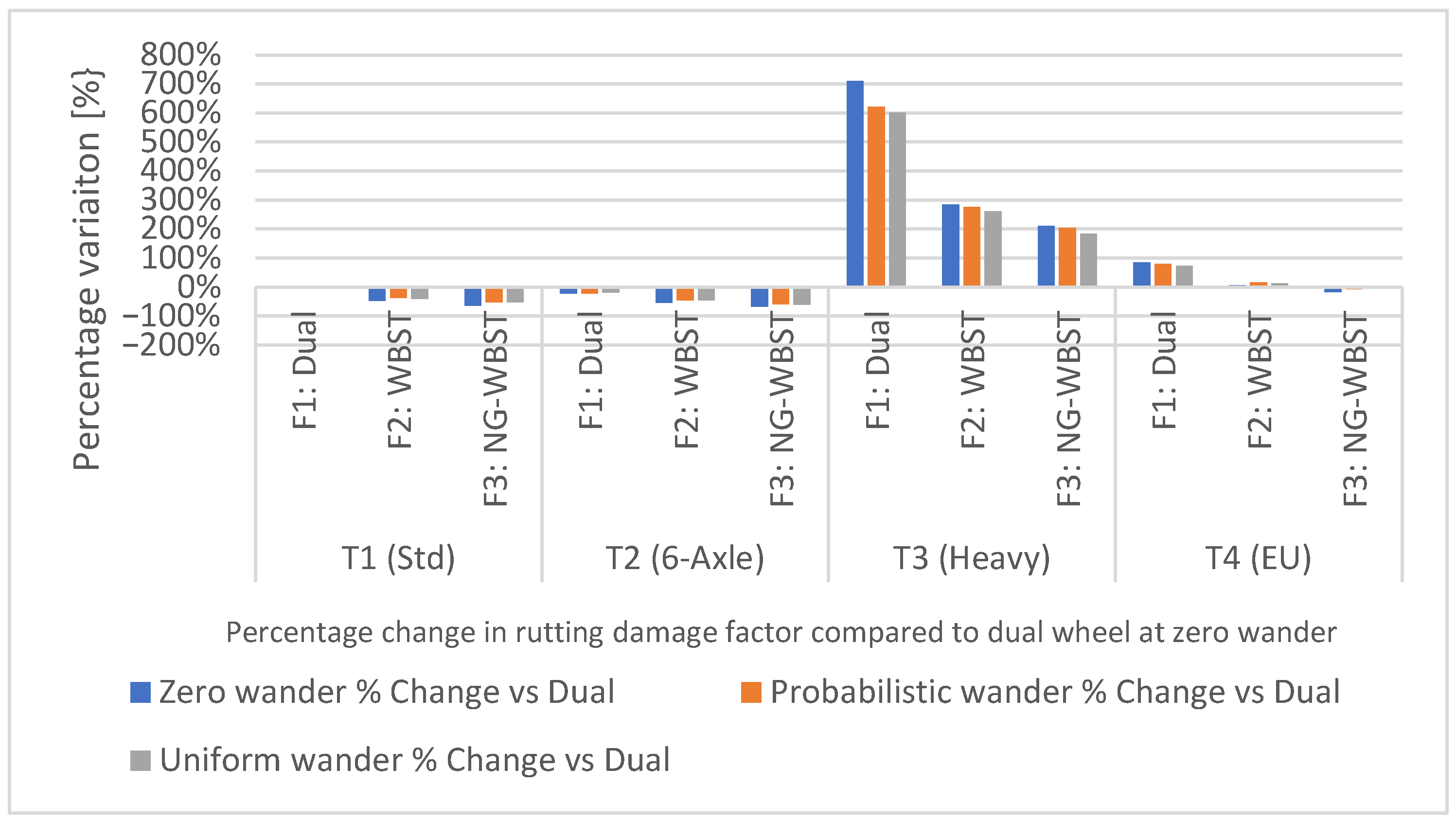
Graphical representation of percentage variation in rutting damage factor for all other scenarios, compared to F1 dual tire under uniform wander mode, is shown in
Figure 16. As observed, both F2 WBST and F3 NG-WBST configurations for truck T1 show reduced rutting damage, with performance further improved for truck type T2. Truck T3, however, exhibits the most serious rutting damage when compared to both T1 and T2 trucks. Truck T4 exhibits increased rutting damage by 13% in the case of the F1 dual tire scenario; however, the rutting damage decreases under the F2 WBST and F3 NG-WBST scenarios.
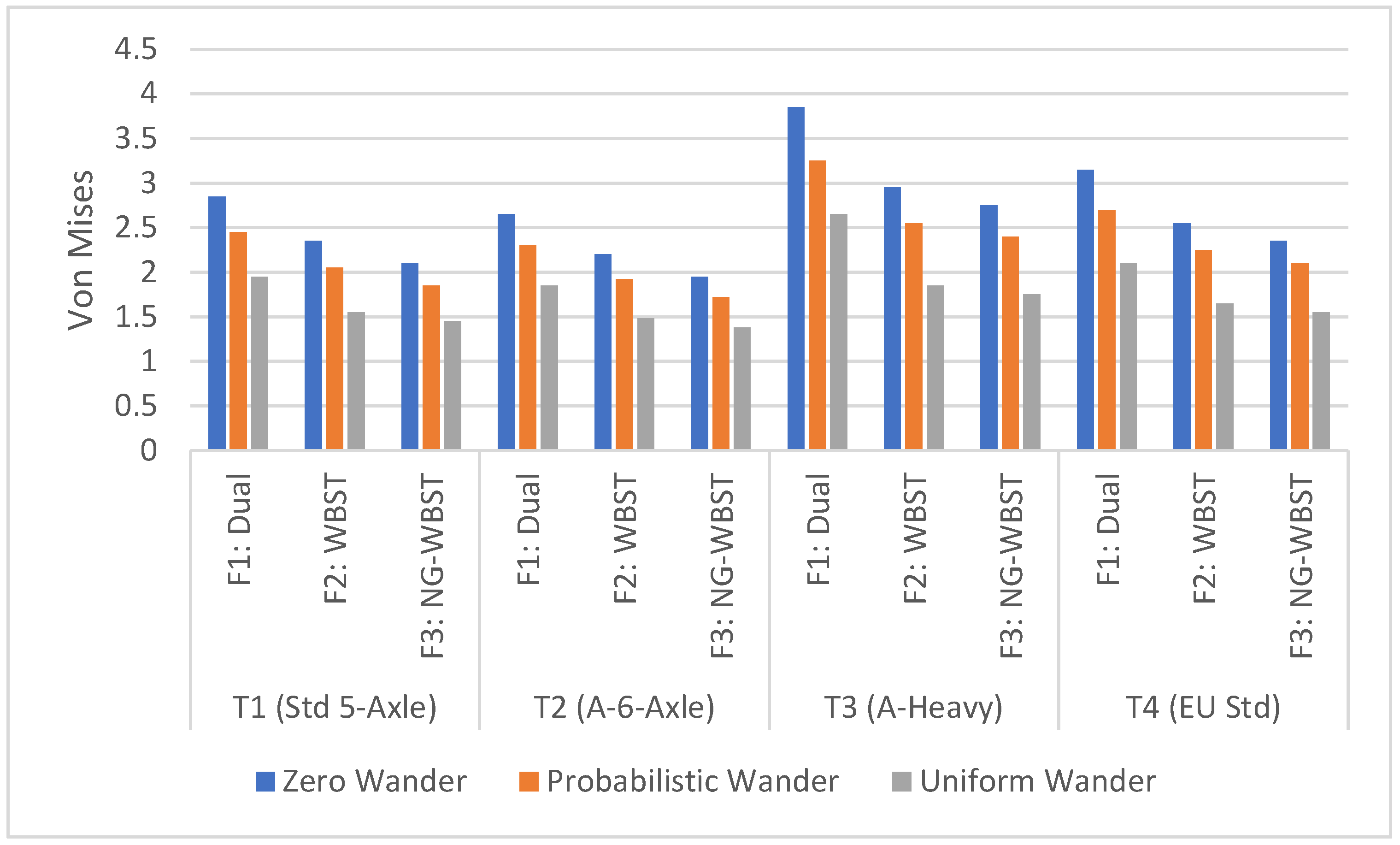
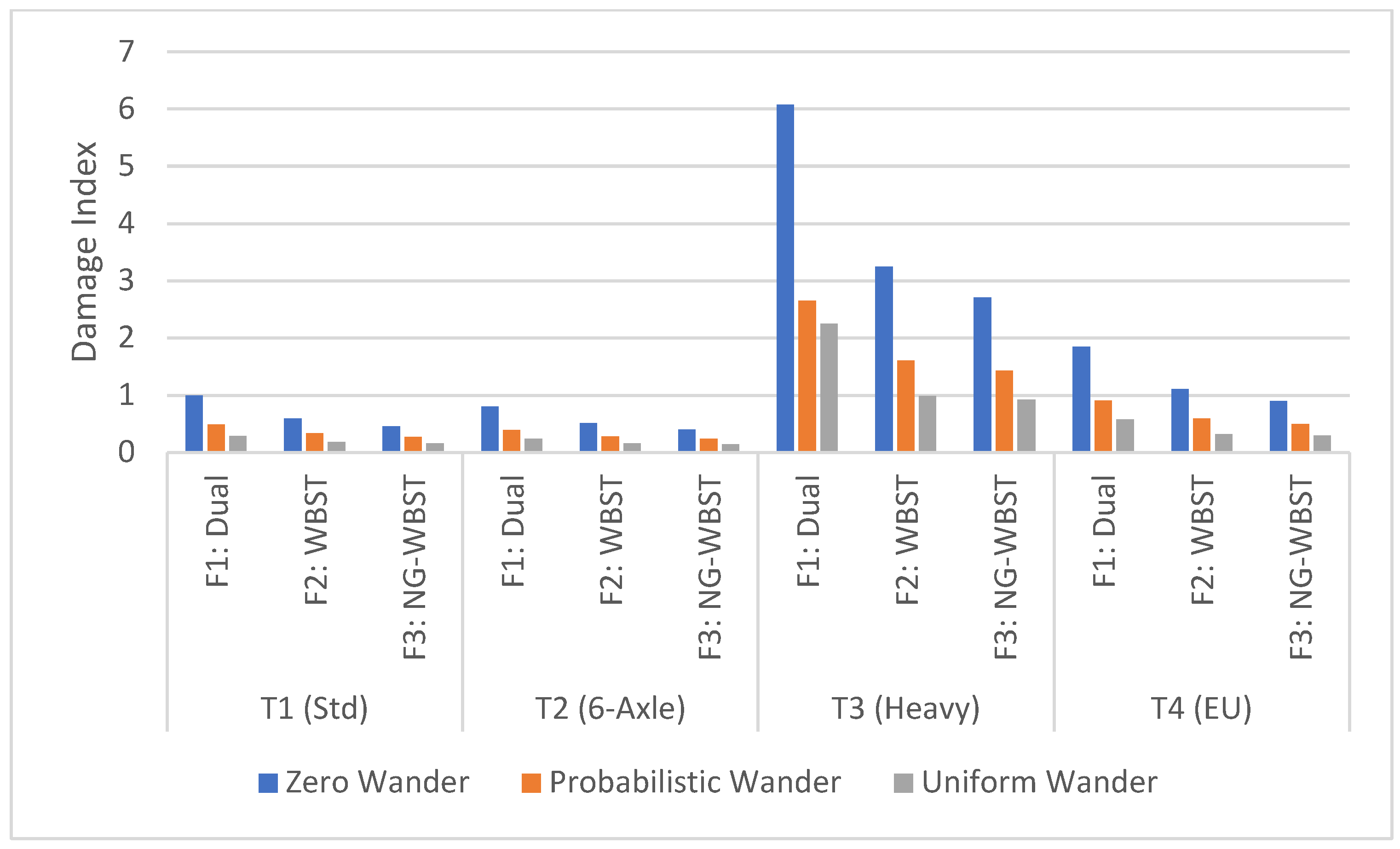
The combined damage index comprising of 60% fatigue and 40% rutting is shown in
Figure 17, where the most serious damage is accumulated by truck T3 with F1 dual tire assembly at 6.070. The dual tires in all truck types exhibit the highest damage factor; however, the accumulation of damage factor can be reduced by incorporating a uniform wander mode.
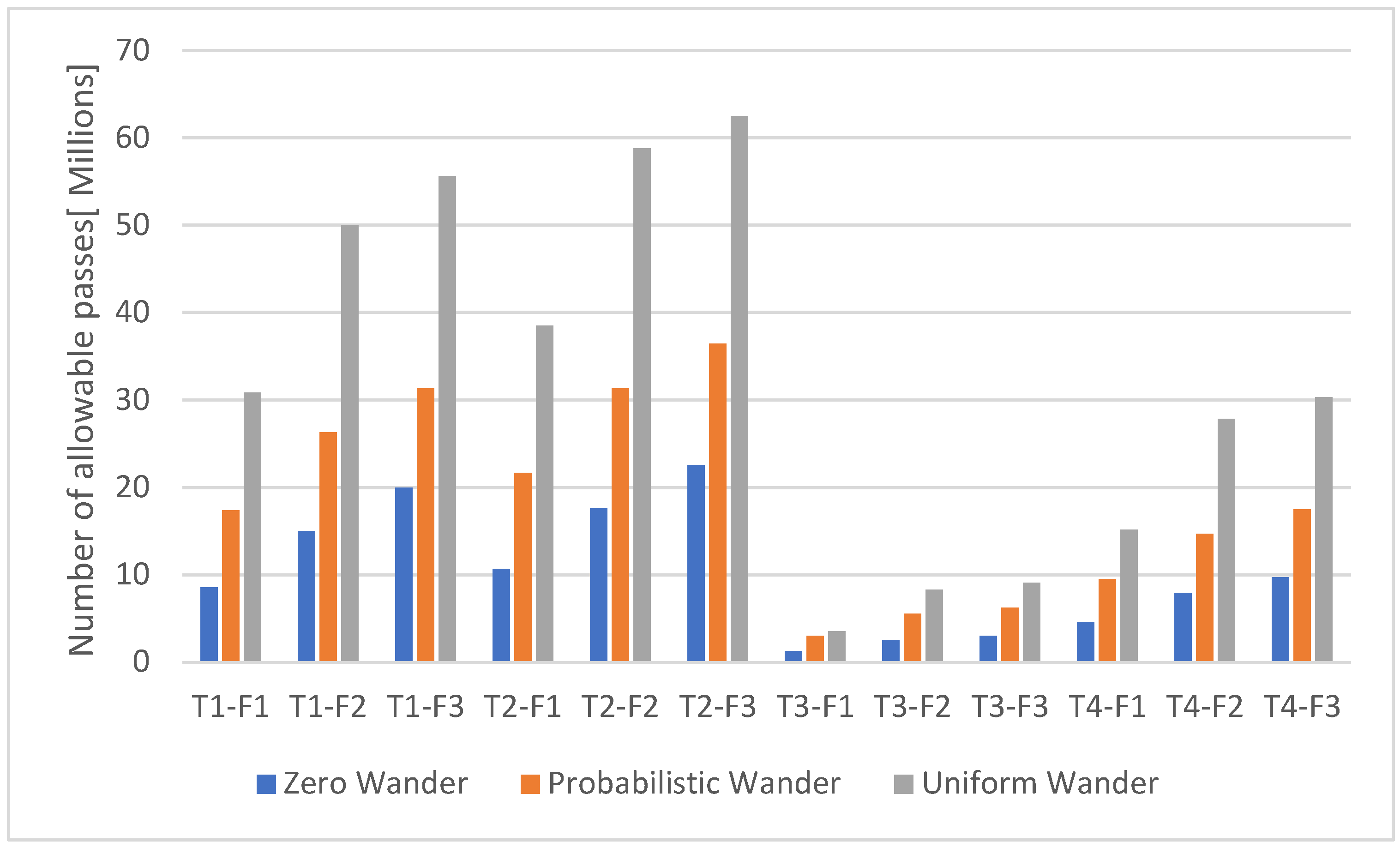
Pavement life in terms of the number of truck tire passes in millions for each scenario is shown in
Table 18. As observed, the highest accumulation in allowable passes is shown by the uniform wander mode with the T2-F3 scenario. Therefore, the use of uniform wander mode for all truck scenarios further increases the allowable number of passes. Since the zero wander mode exhibits the least pavement life in terms of the combination of 60% fatigue and 40% rutting damage, the combination T3-F1 exhibits the least number of allowable passes at only 1.28 million, which is 56% less than the optimum T2-F3 scenario with uniform wander mode at 62.5 million tire passes. Pavement life has been computed from the combined damage indices as shown in Equation (10).
where
is fatigue induced damage and
is rutting induced damage.
The graphical representation for the pavement life in terms of allowable tire passes before rutting and fatigue damage is shown in
Figure 18. As observed, the highest number of allowable passes is exhibited for truck T2 in all wheel type configurations; however, T2-F3 with the NG-WBST tire takes the lead with the highest number of allowable passes. Performance of truck T2 is closely followed by truck T1, where the total number of allowable passes under T1-F3 surpasses the passes for T2-F1. The least number of passes is exhibited by truck T3, where the best scenario, T3-F3, only exhibits 3.03 million passes. The performance of truck T3 is followed by truck T4, where the best scenario, T4-F3, has 30.03 million passes.
Heat Maps for Stress Concentration and Optimum Scenarios
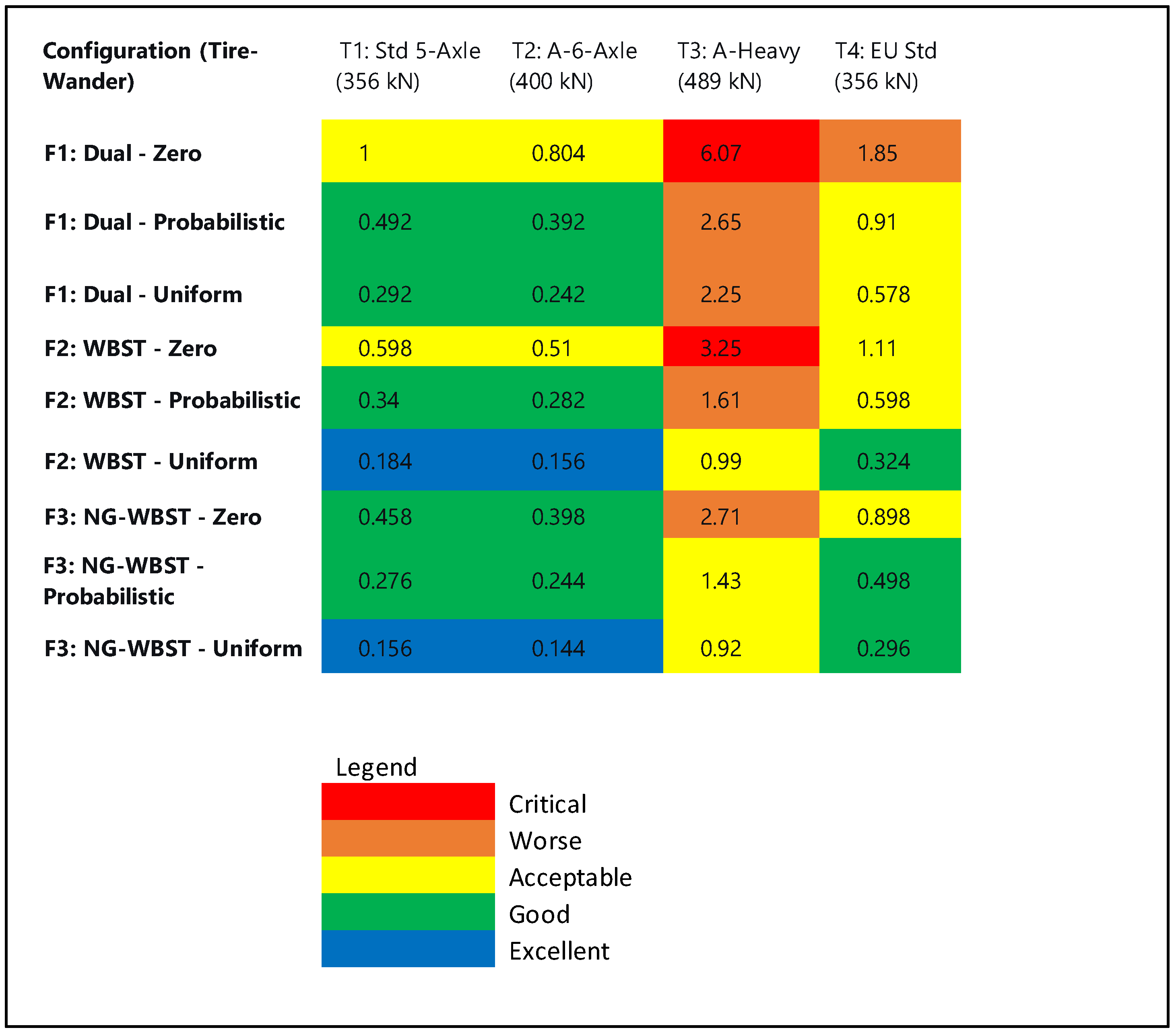
A combination of all optimum scenarios in the form of a matrix, showing the truck type, lateral wander mode, and tire type, is shown in
Figure 19. These values are normalized combined damage indices calculated using a weighted formula that incorporates both fatigue and rutting damage mechanisms. The damage values in the matrix represent normalized pavement deterioration rates, where 1.00 equals zero wander mode. Tire type change to new-generation wide-base tires reduces damage by 35–65% compared to dual tires through better pressure distribution, and wander patterns where uniform wander reduces damage by 48% when compared to channelized traffic. Based on the exponential damage law, small strain reductions yield large damage decreases; therefore, truck T2 with new-generation tires and uniform wander achieves a low value of 0.144, representing an 86% reduction in pavement damage. The highest accumulation of damage exists for truck T3 under dual tire and zero wander mode, highlighted in the matrix with red colour.
5. Conclusions and Findings
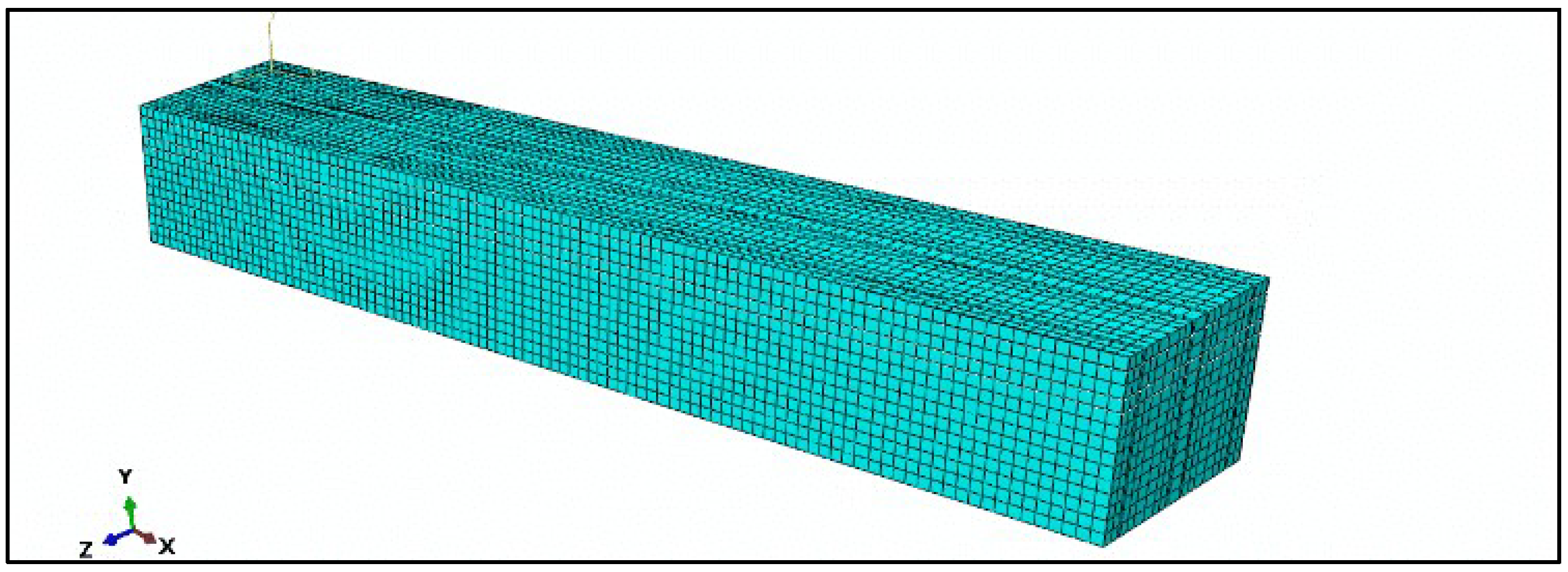
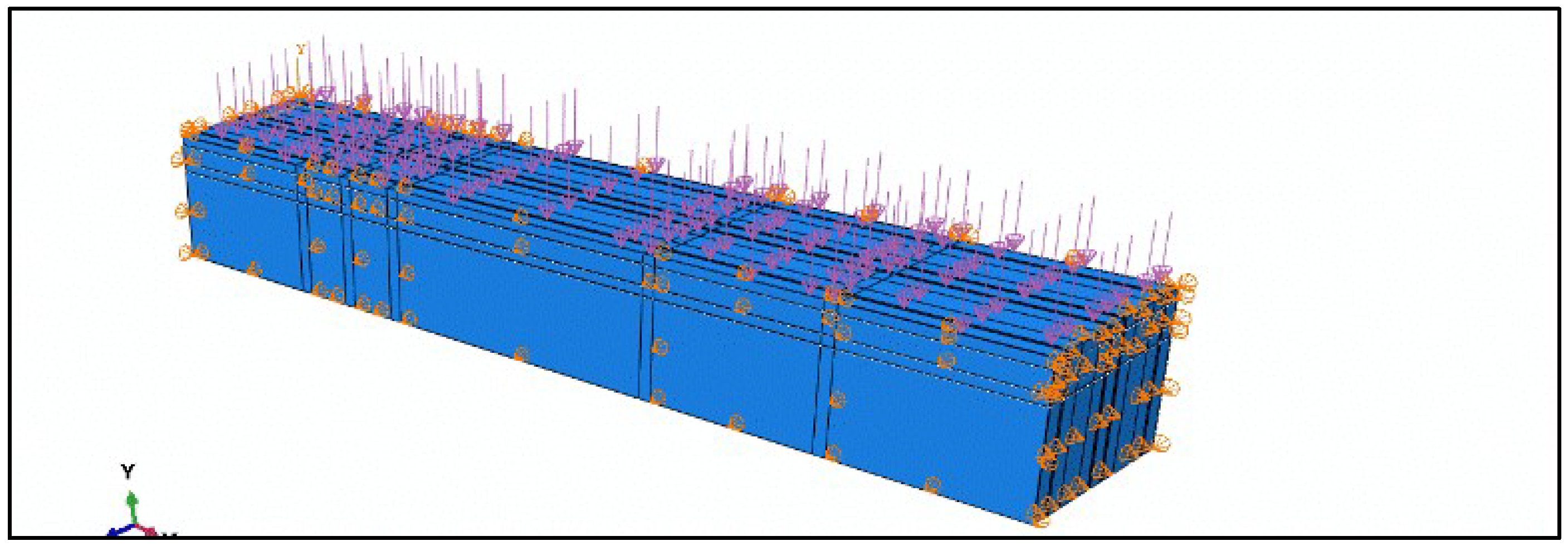
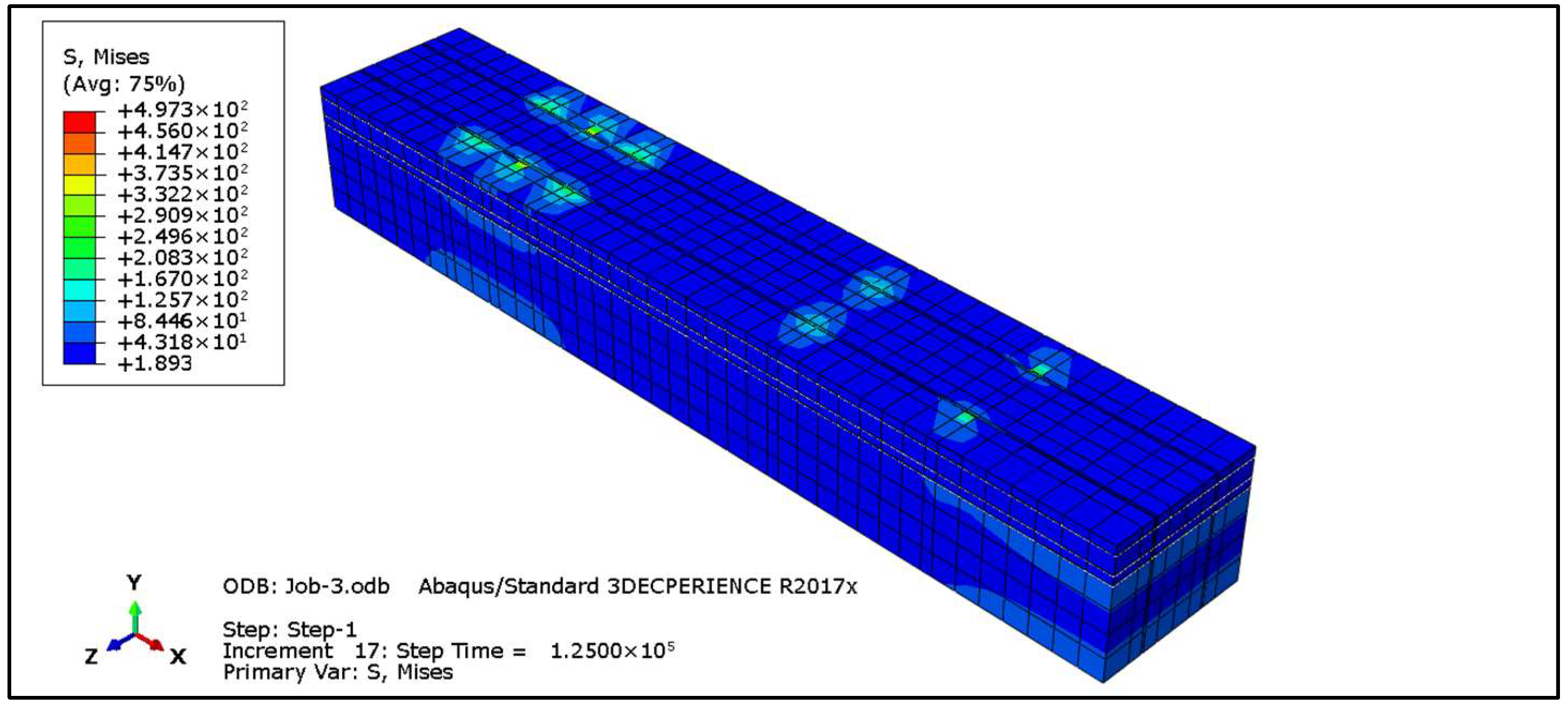
In this research, four different types of trucks with varying maximum gross weight and axle combinations have been selected to assess their impacts on pavement response based on three different lateral wander modes, consisting of uniform wander mode, zero wander mode, and the probabilistic human-driven mode. Furthermore, three different truck tire footprints have been evaluated: the dual tire assembly, the conventional wide base tire, and the new generation wide base tire. The 3D finite element modeling practice has been developed to perform the microstrain analysis and predict performance in terms of rutting and fatigue damage. The material model has been prepared using the generalized Maxwell model with Prony series parameters for a conventional four-layered pavement section.
Based on the analysis, the T2 autonomous truck is the least damaging to the pavement structure when used with the NG-WBST under uniform wander mode. The use of dual tires in all trucks significantly impacts the damage potential, both in terms of rutting and fatigue damage. Furthermore, the use of zero wander is the most damaging among all lateral wander scenarios due to the occurrence of channelized loading and very little recovery time, followed by the human-driven probabilistic wander. The uniform wander mode performs with reduced damage on the pavement structure, where the loading for each pass is distributed evenly by each truck. Among the truck types used, the T3 truck, although the best candidate to haul higher magnitudes of loads, has significant damage to pavement due to increased axle loads. Therefore, among the trucks analyzed, the T2 truck with an axle load of 356 kN exerts the least magnitude of damage on pavement in terms of rutting and fatigue occurrence.
Therefore, channelized loading creates stress concentration at a single pavement location, preventing the viscoelastic recovery essential for asphalt concrete durability. The viscoelastic constitutive model shows that the pavement requires approximately 2–5 s for 95% stress recovery; however, zero wander eliminates this recovery period, leading to cumulative damage accumulation rather than distributed damage dissipation. Therefore, probabilistic wander with its natural variation reduces damage by 48–55%, and uniform wander achieves a greater reduction through systematic load distribution.
Moreover, the nonlinear damage amplification observed with exponents of 3.949 for fatigue and 4.477 for rutting is due to the fact that small strain differences yield large damage variations. This non-linearity originates from microstructural damage mechanisms where fatigue cracking initiates at binder aggregate interfaces, where stress concentrations exceed adhesion strength, and, on the other hand, rutting involves permanent rearrangement of aggregates under compression.
Furthermore, dual tires create two overlapping stress bulbs that interact at shallow depths of 20–50 mm, generating stress concentration factors of 1.42–1.45 due to their proximity at 310 mm spacing. The NG-WBST’s larger diameter and elliptical contact patch create a shallower stress gradient of 0.18 MPa/mm compared to 0.28 MPa/mm for dual tires, thereby reducing near-surface shear stresses that develop top-down cracking.
The findings of this study both align with and extend previous research on autonomous truck pavement impacts. Channelized traffic from autonomous vehicles significantly accelerates pavement deterioration, though the present study’s quantification of 6.07× damage for heavy autonomous trucks exceeds earlier estimates because previous work examined wander or load effects in isolation rather than their combined interaction. Regarding tire technology, the demonstration that NG-WBST outperforms dual tires under optimized wander patterns, with dual tires performing, shows relevance with previous research. The exponential damage scaling observed at 4.477 power for rutting validates classical fourth power law approximations while refining them for autonomous contexts, confirming the previous observation that traditional models may underestimate channelized loading effects by 30–50%. Furthermore, the proposed uniform wander strategy provides the first quantitative validation, showing that programmable autonomous vehicles can achieve 48–72% damage reduction compared to channelized operation.
In terms of limitations, the variation in temperature patterns during hot and cold climatic conditions has not been taken into account. Furthermore, the variation in traffic mix consisting of human-driven and autonomous trucks has not been included. The un-forwarded wander mode can be further optimized for realistic implications for autonomous trucks. Future research work deals with the inclusion of environmental variables for simulations in both cold and hot climatic conditions. Furthermore, future work will include different variants of traffic mix scenarios for autonomous and human-driven trucks, comprising different axle-loading configurations with the uniform wander mode. In terms of limitations, the variation in temperature patterns during hot and cold climatic conditions has not been taken into account. Furthermore, the variation in traffic mix consisting of human-driven and autonomous trucks has not been included. The un-forwarded wander mode can be further optimized for realistic implications for autonomous trucks. Future research work deals with the inclusion of environmental variables for simulations in both cold and hot climatic conditions. Furthermore, future work includes different variants of traffic mix scenarios for autonomous and human-driven trucks, comprising different axle-loading configurations with the uniform wander mode. The findings are as follows.
The highest compressive and tensile strain accumulation is exhibited by the dual tire assembly, which is 15% more than the wide base tire and 215% more than the new generation wide base tire. Uniform wandering reduces the strain accumulation by 16% in the case of the T2 electric autonomous truck.
The highest strain accumulation based on the type of trucks is exhibited by T3 trucks due to their maximum gross weight of 400 kN. However, when used in a uniform wander mode, it exerts the same amount of strain as the dual tire assembly in a human-driven T1 scenario.
The least strain accumulation is exhibited by the T2 electric autonomous trucks, where, due to the battery packs in the tractor head, the load is distributed evenly on both drive and trailer axles. Therefore, the T2 truck with a gross weight of 365 kN is the least damaging truck type when combined with the new generation wide base tire and uniform wander mode.
The highest pavement life is exhibited by truck T2-F3 under uniform wander mode at 62.5 million passes.
Truck T3 with F1 tire and moving under zero wander mode exhibits the highest rut depth at 20 mm.
Rutting damage factor for truck T1 decreases by an average of 36% across all tire type scenarios when moving from zero wander mode to uniform wander mode.
Fatigue damage decreases by 28% while moving from dual tire to the NG-WBST tire type for trucks T1 and T2.
Truck T3 exhibited the most serious damage on pavement, with a reduced number of allowable passes for fatigue and rutting damage by 46% when compared to truck T1 under the NG-WBST configuration and uniform wander mode.
Truck T4 exhibits almost similar performance to trucks T1 and T2 when rutting damage is compared; however, in terms of fatigue damage, the damage magnitude increases by 13% and 18% when compared to trucks T2 and T1, respectively.