Development and Quality Parameters of Alcoholic Beverages Produced by Mixing Tsipouro and Rose Water



Abstract
1. Introduction
2. Materials and Methods
2.1. Materials
2.1.1. Samples
2.1.2. Reagents
2.2. Methodology
2.2.1. Procedure for Preparation of Tsipouro–Rose Water Products
2.2.2. Methods of Analysis
Gross Composition of Tsipouro, Rose Water and Tsipouro–Rose Water Products
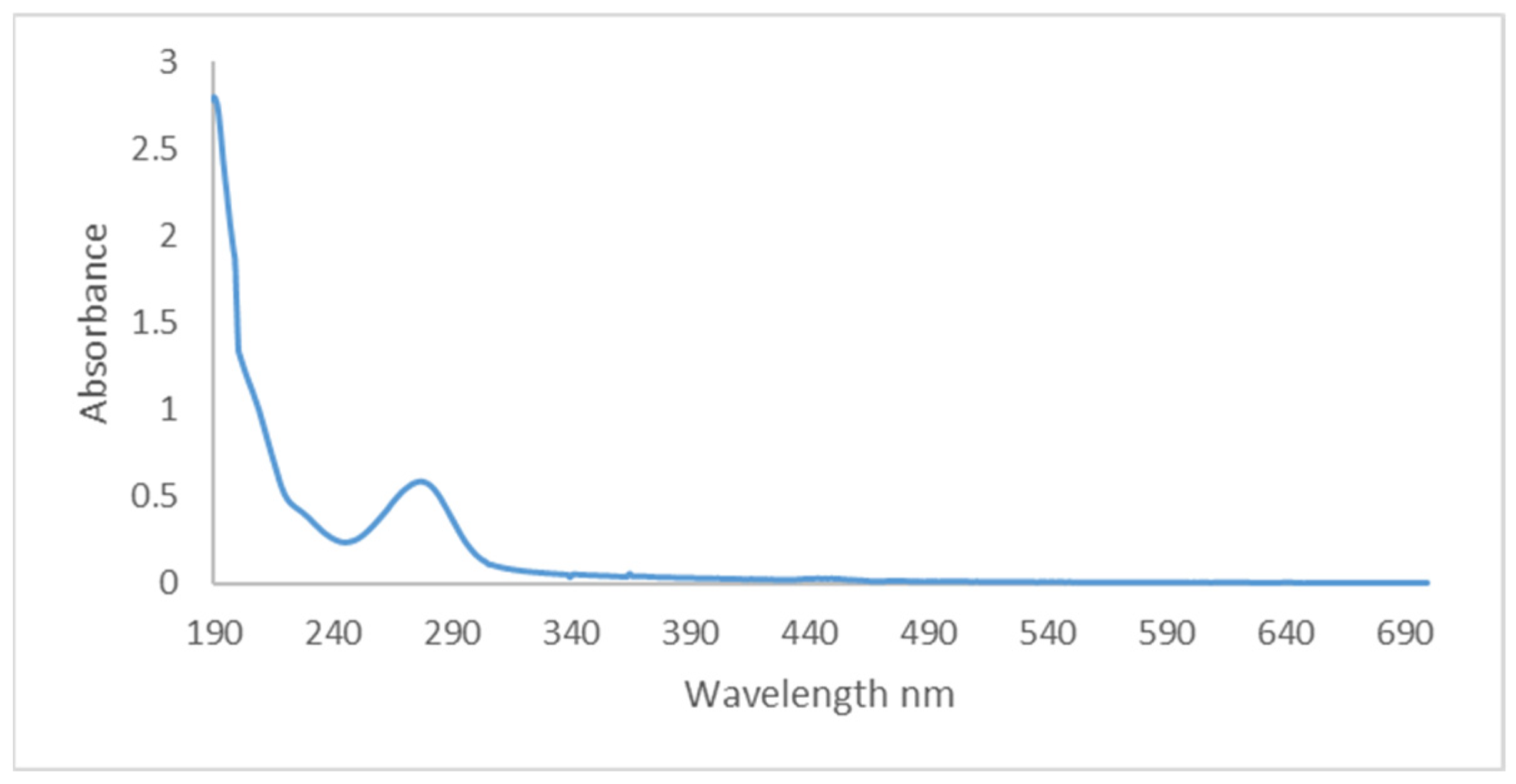
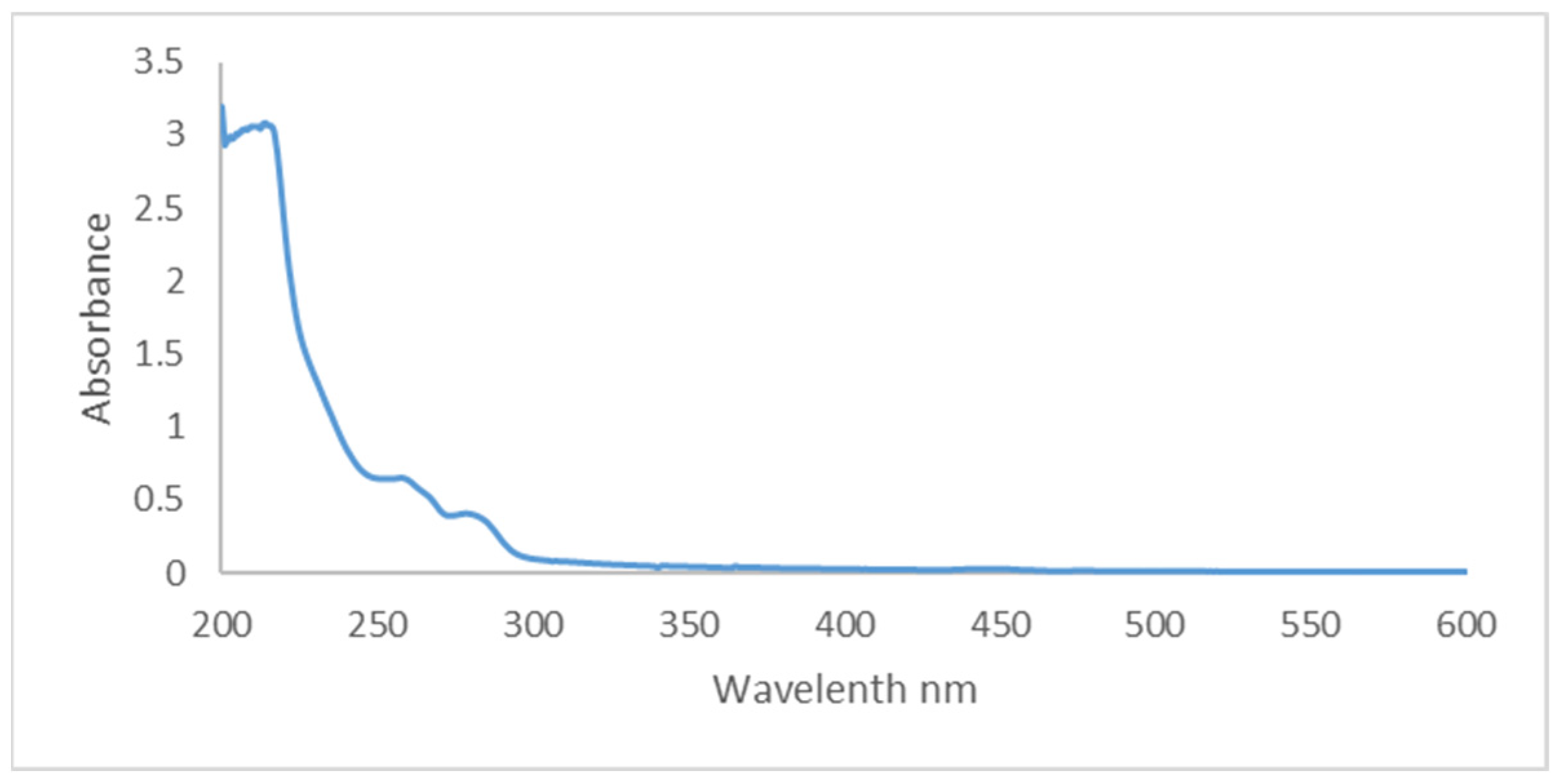
UV Spectrum Acquisition of Tsipouro and Rose Water
Volatiles of Rose Water and Tsipouro–Rose Water Products
Antioxidant Activity of Tsipouro, Rose Water and Tsipouro–Rose Water Products
2.2.3. Organoleptic Evaluation of Tsipouro–Rose Water Products
2.2.4. Statistical Analysis
3. Results and Discussion
3.1. Basic Chemical Composition of Tsipouro, Rose Water and Tsipouro–Rose Water Products
3.2. Volatiles of Rose Water and Tsipouro–Rose Water Products
3.3. Determination of the Antioxidant Activity
3.4. Organoleptic Evaluation
4. Conclusions
Supplementary Materials
Author Contributions
Funding
Institutional Review Board Statement
Informed Consent Statement
Data Availability Statement
Acknowledgments
Conflicts of Interest
References
- Christoph, N.; Bauer-Christoph, C. Flavour of spirit drinks: Raw materials, fermentation, distillation and ageing. In Flavour and Fragrances: Chemistry, Bioprocessing and Sustainability; Berger, R.G., Ed.; Springer: Berlin/Heidelberg, Germany, 2007; pp. 219–240. [Google Scholar]
- Tsapou, E.A.; Dourtoglou, V.; Dourtoglou, T.; Sinanoglou, V.; Koussissi, E. Volatile Profile in Greek Grape Marc Spirits with HS-SPME-GC-MS and Chemometrics: Evaluation of Terroir Impact. ACS Omega 2023, 8, 42803–42814. [Google Scholar] [CrossRef]
- Andreou, V.; Stratia, I.F.; Fotakis, C.; Liouni, M.; Zoumpoulakis, P.; Sinanoglou, V.J. Herbal distillates: A new era of grape marc distillates with enriched antioxidant profile. Food Chem. 2018, 253, 171–178. [Google Scholar] [CrossRef]
- Giannakourou, Μ.; Stratati, Ι.F.; Manika, E.M.; Resiti, V.; Tataridis, P.; Zoumpoulakis, P.; Sinagoglou, V.J. Assessment of phenolic content, antioxidant activity, colour and sensory attributes of wood aged “Tsipouro”. Curr. Res. Nutr. Food Sci. 2018, 6, 318–328. [Google Scholar] [CrossRef]
- Apostolopoulou, A.A.; Flouros, A.I.; Demertzis, P.G.; Akrida-Demertzi, K. Differences in concentration of principal volatile constituents in traditional Greek distillates. Food Control 2005, 16, 157–164. [Google Scholar] [CrossRef]
- Marinaki, M.; Sampsonidis, I.; Nakas, A.; Arapitsas, P.; Assimopoulou, A.N.; Theodoridis, G. Analysis of the Volatile Organic Compound Fingerprint of Greek Grape Marc Spirits of Various Origins and Traditional Production Styles. Beverages 2023, 9, 65. [Google Scholar] [CrossRef]
- Moein, Μ.; Zarshenas, Μ.Μ.; Delnavaz, S. Chemical composition analysis of rose water samples from Iran. Pharm. Biol. 2014, 52, 1358–1361. [Google Scholar] [CrossRef]
- Agarwal, S.G.; Gupta, A.; Kapahi, B.K.; Baleshwar; Thappa, R.K.; Suri, O.P. Chemical composition of rose water volatiles. J. Essent. Oil Res. 2005, 17, 265–267. [Google Scholar] [CrossRef]
- Mahboubi, M.; Lu, S.H. Rose water, quality control, and its application. J. Med. Plants 2024, 23, 1–15. [Google Scholar] [CrossRef]
- Kumar, N.; Bhandari, P.; Shamsher, S.; Bari, B. Antioxidant activity and ultra-performance LC-electrospray ionization-quadrupole time-of-flight mass spectrometry for phenolics-based fingerprinting of Rose species: Rosa damascena, Rosa bourboniana and Rosa brunonii. Food Chem. Toxicol. 2009, 47, 361–367. [Google Scholar] [CrossRef] [PubMed]
- Boskabady, M.H.; Shafei, M.N.; Saberi, Z.; Amini, S. Pharmacological effects of Rosa damascena. Iran. J. Basic Med. Sci. 2011, 14, 295–307. [Google Scholar]
- Liguori, L.; Russo, P.; Albanese, D.; Di Mateo, M. Chapter 12. Production of low-alcohol beverages: Current status and perspectives. In Food Processing for Increased Quality and Consumption; Grumezescu, A.M., Holban, A.M., Eds.; Part of series Handbook of Food Bioengineering; Academic Press: Cambridge, MA, USA, 2018. [Google Scholar]
- International Organisation of Vine and Wine (OIV). Alcoholic strength by volume—Type I methods (OIV-MA-AS312-01B:R2019). In Compendium of International Methods of Analysis of Wine and Musts; OIV: Paris, France, 2021. [Google Scholar]
- International Organisation of Vine and Wine (OIV). Sulfur dioxide (OIV-MA-AS323-04B). In Compendium of International Methods of Analysis of Wine and Musts; OIV: Paris, France, 2009. [Google Scholar]
- International Organisation of Vine and Wine (OIV). Determination of the principal volatile substances and acidity of spirit drinks of vitivinicultural origin—Type II method (OIV-MA-BS-12). In Compendium of International Methods of Analysis of Spirituous Beverages of Vitivinicultural Origin; OIV: Paris, France, 2000. [Google Scholar]
- Folin, O.; Ciocalteu, V. Tyrosine and tryptophane in proteins. J. Biol. Chem. 1927, 73, 627–648. [Google Scholar] [CrossRef]
- Singleton, V.L.; Rossi, J.A. Colorimetry of total phenolics with phosphomolybdic-phosphotungstic acid reagents. Am. J. Enol. Vitic. 1965, 16, 144–158. [Google Scholar] [CrossRef]
- Singleton, V.L.; Orthofer, R.; Lamuela-Raventos, R.M. Analysis of Total Phenols and Other Oxidation Substrates and Antioxidants by Means of Folin-Ciocalteu Reagent. Methods Enzymol. 1999, 299, 152–178. [Google Scholar]
- Benzie, I.F.F.; Strain, J.J. The ferric reducing ability of plasma (FRAP) as a measure of “Antioxidant power”: The FRAP assay. Anal. Biochem. 1996, 239, 70–76. [Google Scholar] [CrossRef]
- Prior, R.L.; Wu, X.; Schaich, K. Standardized methods for the determination of antioxidant capacity and phenolics in foods and dietary supplements. J. Agric. Food Chem. 2005, 53, 4290–4302. [Google Scholar] [CrossRef]
- Munteanu, I.G.; Apetrei, C. Analytical Methods Used in Determining Antioxidant Activity: A Review. Int. J. Mol. Sci. 2021, 22, 3380. [Google Scholar] [CrossRef] [PubMed]
- Blois, M.S. Antioxidant determinations by the use of a stable free radical. Nature 1958, 181, 1199–1200. [Google Scholar] [CrossRef]
- Aleixandre-Tudo, L.J.; du Toit, W. The Role of UV-Visible Spectroscopy for Phenolic Compounds Quantification in Winemaking. In Frontiers and New Trends in the Science of Fermented Food and Beverages; IntechOpen: London, UK, 2019. [Google Scholar] [CrossRef]
- Roussis, I.G.; Lambropoulos, I.; Tzimas, P.; Gkoulioti, A.; Marinos, V.; Tsoupeis, D.; Boutaris, I. Antioxidant activities of some Greek wines and wine phenolic extracts. J. Food Compos. Anal. 2008, 21, 614–621. [Google Scholar] [CrossRef]
- Schulz, H. Fragrance and pigments: Odoriferous substances and pigments. In Encyclopedia of Rose Science; Roberts, A.V., Debener, T., Gudin, S., Eds.; Elsevier: Amsterdam, The Netherlands, 2003. [Google Scholar]
- Huang, D.; Ou, B.; Prior, R.L. The chemistry behind antioxidant capacity assays. J. Agric. Food Chem. 2005, 53, 1841–1856. [Google Scholar] [CrossRef] [PubMed]
- Goldberg, D.M.; Hoffman, B.; Yang, J.; Soleas, G. Phenolic Constituents, Furans, and Total Antioxidant Status of Distilled Spirits. J. Agric. Food Chem. 1999, 47, 3978–3985. [Google Scholar] [CrossRef]
- Abidi, S.; Shaheen, N.; Azher, I.; Mahmood, Z.A. Photoprotective and antioxidant activities along with phytochemical investigation of rose water. Int. J. Pharm. Sci. Res. 2018, 9, 5320–5326. [Google Scholar] [CrossRef]
- Amorati, R.; Valgimigli, L. Modulation of the antioxidant activity of phenols by non-covalent interactions. Org. Biomol. Chem. 2012, 10, 4147–4158. [Google Scholar] [CrossRef] [PubMed]
- Nekvapil, T.; Kopriva, V.; Boudny, V.; Hostovsky, M.; Dvorak, P.; Malota, L. Decrease in the Antioxidant Capacity in Beverages Containing Tea Extracts during Storage. Sci. World J. 2012, 2012, 361698. [Google Scholar] [CrossRef]
- Patrianakou, M.; Roussis, I.G. Decrease of wine volatile aroma esters by oxidation. S. Afr. J. Enol. Vitic. 2013, 34, 241–245. [Google Scholar] [CrossRef]



| ΤW | ΤR1 | ΤR2 | |
|---|---|---|---|
| Total acidity (mg L−1 acetic acid) | 124 a ± 7 | 140 b ± 7 | 136 ab ± 7 |
| Fixed acidity (mg L−1 acetic acid) | 24 a ± 0 | 28 a ± 7 | 24 a ± 0 |
| Volatile acidity (mg L−1 acetic acid) | 100 a ± 7 | 116 b ± 7 | 112 ab ± 7 |
| Volatile | RW | TW | TR1 | TR2 |
|---|---|---|---|---|
| Acetaldehyde | 0.504 ± 0.078 | 1.1 a ± 0.5 | 1.4 a ± 0.17 | 1.6 a ± 0.18 |
| Ethyl Acetate | 0.139 ± 0.016 | 75 a ± 5 | 70 a ± 13 | 79 a ± 2 |
| alpha-Pinene | n.d. | 1.6 a ± 1.5 | 0.65 a ± 1.13 | 1.1 a ± 0.9 |
| Isobutanol | n.d. | 24.6 a ± 2.1 | 24.4 a ± 0.6 | 22.9 a ± 1.4 |
| Isoamyl acetate | n.d. | 10.5 a ± 1.3 | 10.4 a ± 1.2 | 13.0 a ± 4.9 |
| beta.-Myrcene | 10.552 ± 0.797 | n.d. | n.d. | n.d. |
| Eucalyptol | 45.238 ± 5.114 | n.d. | 6.2 b ± 1.6 | 11.6 c ± 1.8 |
| Isoamyl alcohol | n.d. | 386 a ± 4 | 378 a ± 19 | 372 a ± 6 |
| Hexanoic acid, ethyl ester | n.d. | 23 a ± 3 | 29 a ± 3 | 27 a ± 4 |
| β-cis-ocimene | 5.272 ± 0.712 | n.d. | n.d. | n.d. |
| cis Rose oxide | 12.283 ± 2.554 | n.d. | n.d. | 2.7 b ± 0.2 |
| 1-Hexanol | 2.675 ± 0.577 | 18.9 a ± 0.5 | 20.4 a ± 1.8 | 18.7 a ± 2.0 |
| Octanoic acid, ethyl ester | n.d. | 98.2 a ± 1.7 | 105.4 a ± 10.2 | 92.6 a ± 2.2 |
| Furfural | n.d. | 9.2 a ± 1.1 | 10.3 a ± 0.8 | 8.8 a ± 2.4 |
| Nerol oxide | 1.712 ± 0.687 | n.d. | n.d. | n.d. |
| Benzaldehyde | 3.443 ± 0.297 | n.d. | n.d. | n.d. |
| Linalool | 433.287 ± 2.627 | 1.14 a ± 0.26 | 40.4 b ± 2.1 | 75 c ± 16 |
| Terpinen-4-ol | 18.437 ± 6.318 | n.d. | 1.8 b ± 0.7 | 3.5 c ± 1.0 |
| Decanoic acid, ethyl ester | n.d. | 32.5 a ± 2.1 | 33.7 a ± 2.7 | 29.0 a ± 1.1 |
| Diethyl succinate | n.d. | 2.8 a ± 0.3 | 2.8 a ± 1.0 | 2.5 a ± 0.4 |
| alpha-terpineol | 62.302 ± 6.703 | n.d. | 6.3 b ± 0.7 | 12.0 c ± 2.7 |
| Citral | 8.602 ± 2.557 | n.d. | n.d. | n.d. |
| 1, 1, 5-Trimethyl-1, 2-dihydronaphthalene | n.d. | 1.6 a ± 1.7 | 2.11 a ± 0.27 | 1.0 a ± 1.8 |
| α-citronellol | 2.063 ± 1.412 | n.d. | 17.5 b ± 2.2 | 35 c ± 5 |
| Nerol | 2.554 ± 0.571 | 0.3 a ± 0.5 | 3.1 b ± 0.5 | 6.7 c ± 0.9 |
| Dodecanoic acid, ethyl ester | 0.784 ± 0.075 | 1.8 a ± 0.8 | 3.1 ab ± 1.1 | 3.9 b ± 1.0 |
| Geraniol | 140.686 ± 14.213 | n.d. | 6.6 b ± 0.9 | 14.2 c ± 2.3 |
| Phenylethyl alcohol | 80.997 ± 8.436 | 2.1 a ± 0.7 | 12.4 b ± 1.3 | 25.2 c ± 2.8 |
| Methyleugenol | 20.416 ± 3.026 | n.d. | n.d. | 0.9 b ± 0.1 |
| Nerolidol | 4.487 ± 1.152 | n.d. | n.d. | n.d. |
| Eugenol | 2.285 ± 0.249 | n.d. | 0.4 a ± 0.4 | 1.1 a ± 1.0 |
| Hexadecanoic acid, ethyl ester | 1.052 ± 0.216 | 2.4 a ± 0.5 | 3.2 a ± 1.1 | 3.86 a ± 0.25 |
| Storage Time, Days | ΤW | ΤR1 | TR2 |
|---|---|---|---|
| 0 days | 9.9 aC ± 0.3 | 12.2 bC ± 0.2 | 15.7 cC ± 0.3 |
| 30 days | 8.5 aB ± 0.4 | 11.2 bB ± 0.5 | 14.8 cB ± 0.3 |
| 60 days | 7.3 aA ± 0.3 | 9.2 bA ± 0.3 | 12.7 cA ± 0.2 |
| Storage Time, Days | ΤW | ΤR1 | TR2 |
|---|---|---|---|
| 0 days | 5.3 aC ± 0.2 | 6.3 bC ± 0.2 | 7.1 cB ± 0.1 |
| 30 days | 4.8 aB ± 0.1 | 5.5 bB ± 0.0 | 6.9 cB ± 0.0 |
| 60 days | 3.9 aA ± 0.3 | 4.7 bA ± 0.1 | 5.5 cA ± 0.0 |
| Storage Time, Days | ΤW | ΤR1 | TR2 | |
|---|---|---|---|---|
| % Initial rate of DPPH scavenging (1 min) | 0 days | 13.0 aC ± 0.6 | 24.0 bC ± 1.0 | 26.9 cC ± 0.9 |
| 30 days | 8.6 aB ± 1.0 | 20.7 bB ± 1.1 | 24.6 cB ± 1.3 | |
| 60 days | 6.1 aA ± 0.6 | 16.2 bA ± 0.6 | 21.4 cA ± 0.7 | |
| % Total DPPH scavenging (18 min) | 0 days | 14.7 aB ± 0.4 | 34.6 bB ± 1.8 | 43.2 cA ± 1.8 |
| 30 days | 12.3 aA ± 1.3 | 31.6 bA ± 1.7 | 42.8 cA ± 2.1 | |
| 60 days | 11.3 aA ± 1.5 | 28.7 bA ± 0.4 | 41.4 cA ± 0.4 |
Disclaimer/Publisher’s Note: The statements, opinions and data contained in all publications are solely those of the individual author(s) and contributor(s) and not of MDPI and/or the editor(s). MDPI and/or the editor(s) disclaim responsibility for any injury to people or property resulting from any ideas, methods, instructions or products referred to in the content. |
© 2026 by the authors. Licensee MDPI, Basel, Switzerland. This article is an open access article distributed under the terms and conditions of the Creative Commons Attribution (CC BY) license.
Share and Cite
Koukoulaki, I.K.; Tsakmaki, G.P.; Demertzis, P.G.; Roussis, I.G. Development and Quality Parameters of Alcoholic Beverages Produced by Mixing Tsipouro and Rose Water. Appl. Sci. 2026, 16, 2367. https://doi.org/10.3390/app16052367
Koukoulaki IK, Tsakmaki GP, Demertzis PG, Roussis IG. Development and Quality Parameters of Alcoholic Beverages Produced by Mixing Tsipouro and Rose Water. Applied Sciences. 2026; 16(5):2367. https://doi.org/10.3390/app16052367
Chicago/Turabian StyleKoukoulaki, Ioanna K., Georgia P. Tsakmaki, Panagiotis G. Demertzis, and Ioannis G. Roussis. 2026. "Development and Quality Parameters of Alcoholic Beverages Produced by Mixing Tsipouro and Rose Water" Applied Sciences 16, no. 5: 2367. https://doi.org/10.3390/app16052367
APA StyleKoukoulaki, I. K., Tsakmaki, G. P., Demertzis, P. G., & Roussis, I. G. (2026). Development and Quality Parameters of Alcoholic Beverages Produced by Mixing Tsipouro and Rose Water. Applied Sciences, 16(5), 2367. https://doi.org/10.3390/app16052367