Intelligent Measurement of Concrete Crack Width Based on U-Net Deep Learning and Binocular Vision 3D Reconstruction

 ,
,  ,
,
Abstract
1. Introduction
2. Automatic Identification and Segmentation of Concrete Cracks Based on U-Net Deep Learning
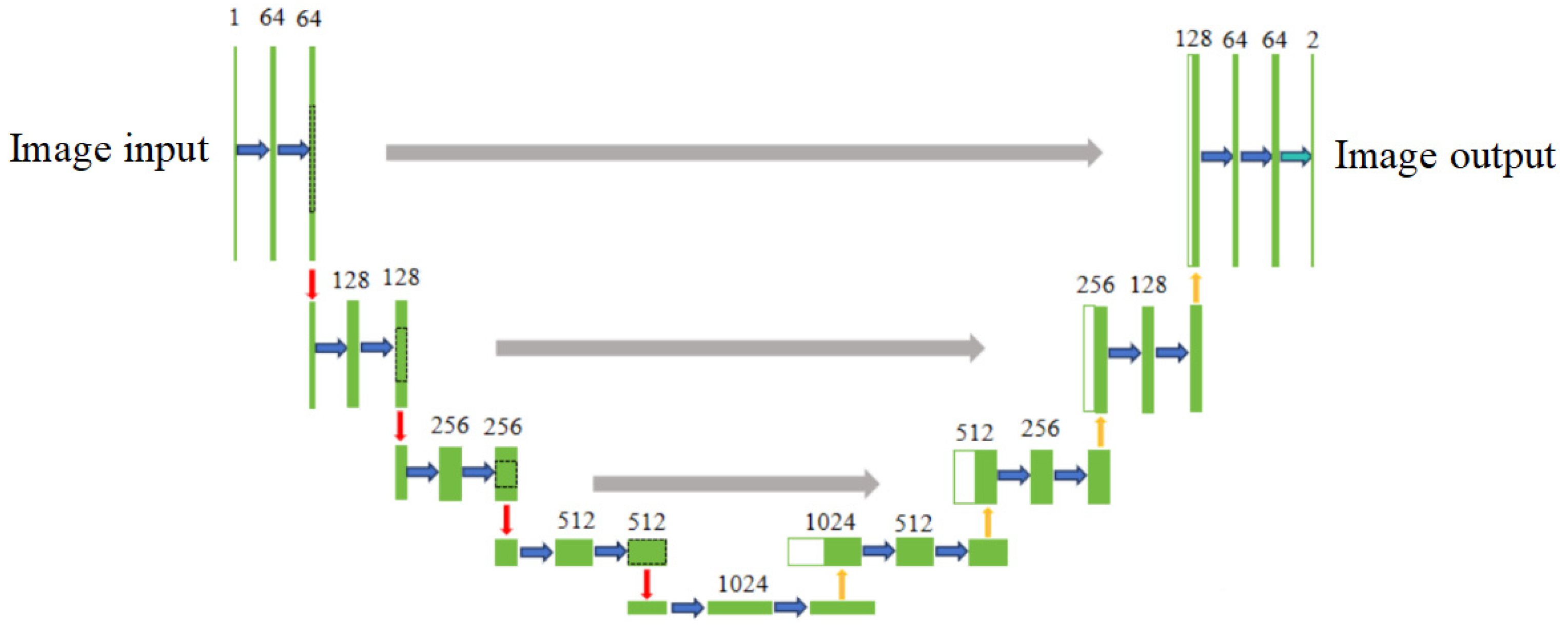
2.1. U-Net-Based Automatic Identification and Segmentation Algorithm
2.2. Dataset and Training Protocol
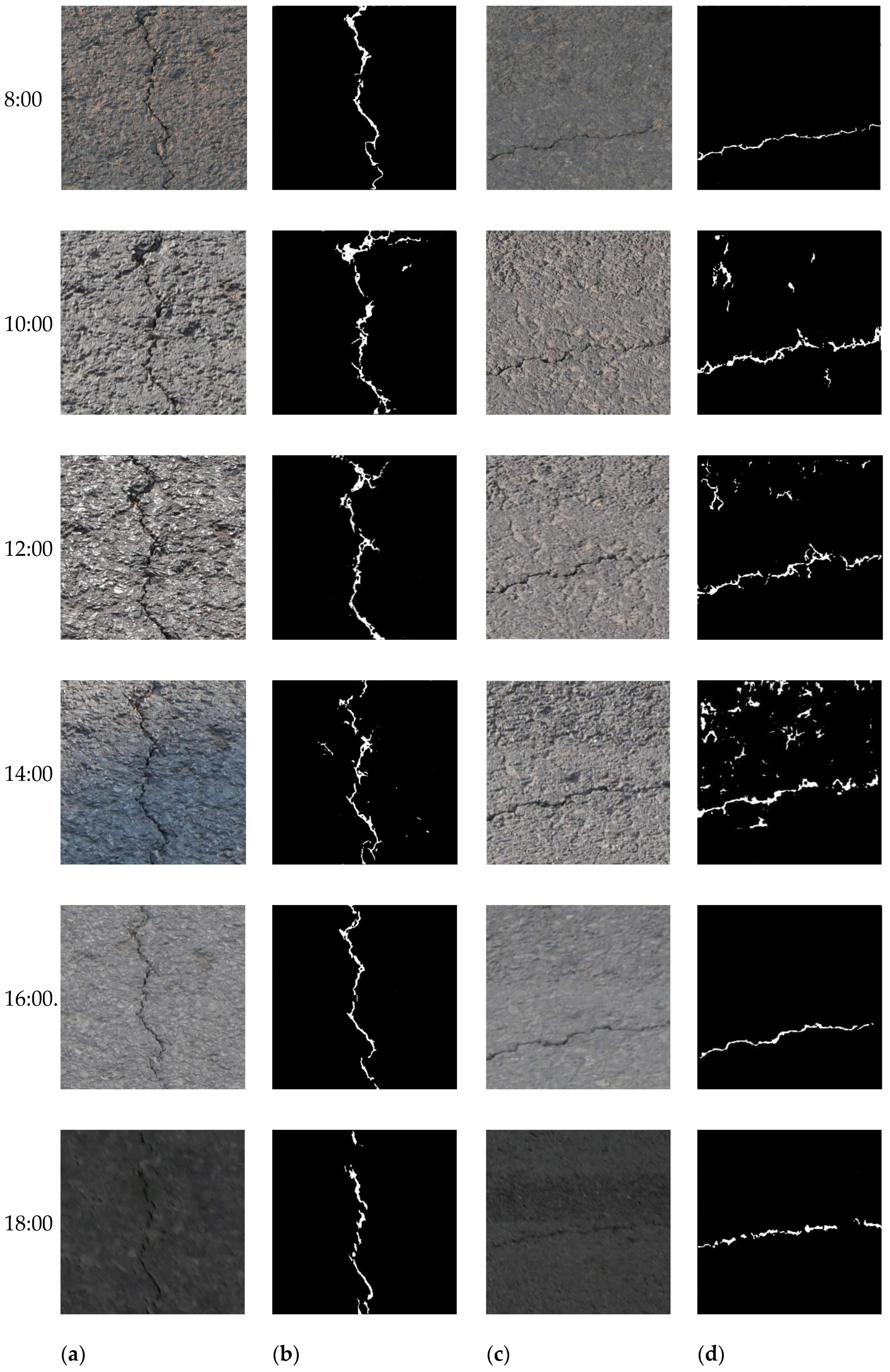
2.3. Automatic Identification and Segmentation Effect Verification
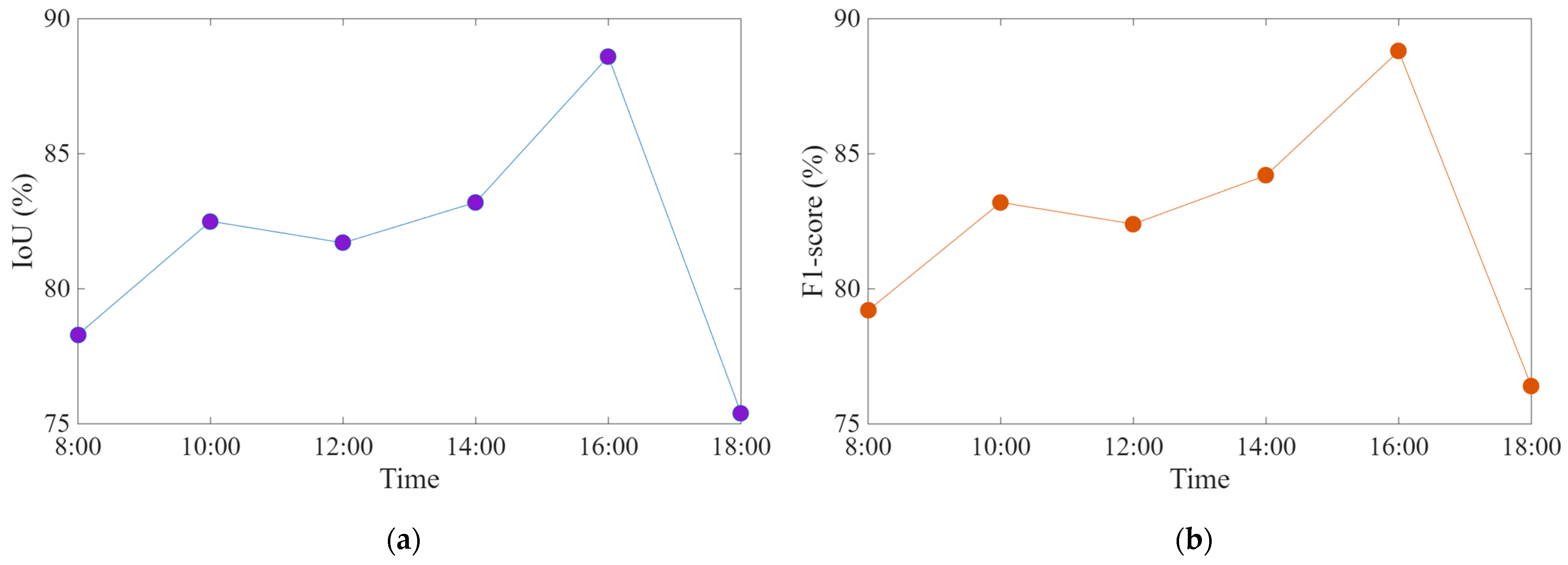
2.4. Quantitative Evaluation of Segmentation Performance
3. 3D Reconstruction of Concrete Cracks Based on Binocular Vision
3.1. Basic Theory of Stereo Matching
3.2. Impact of Different Parameters
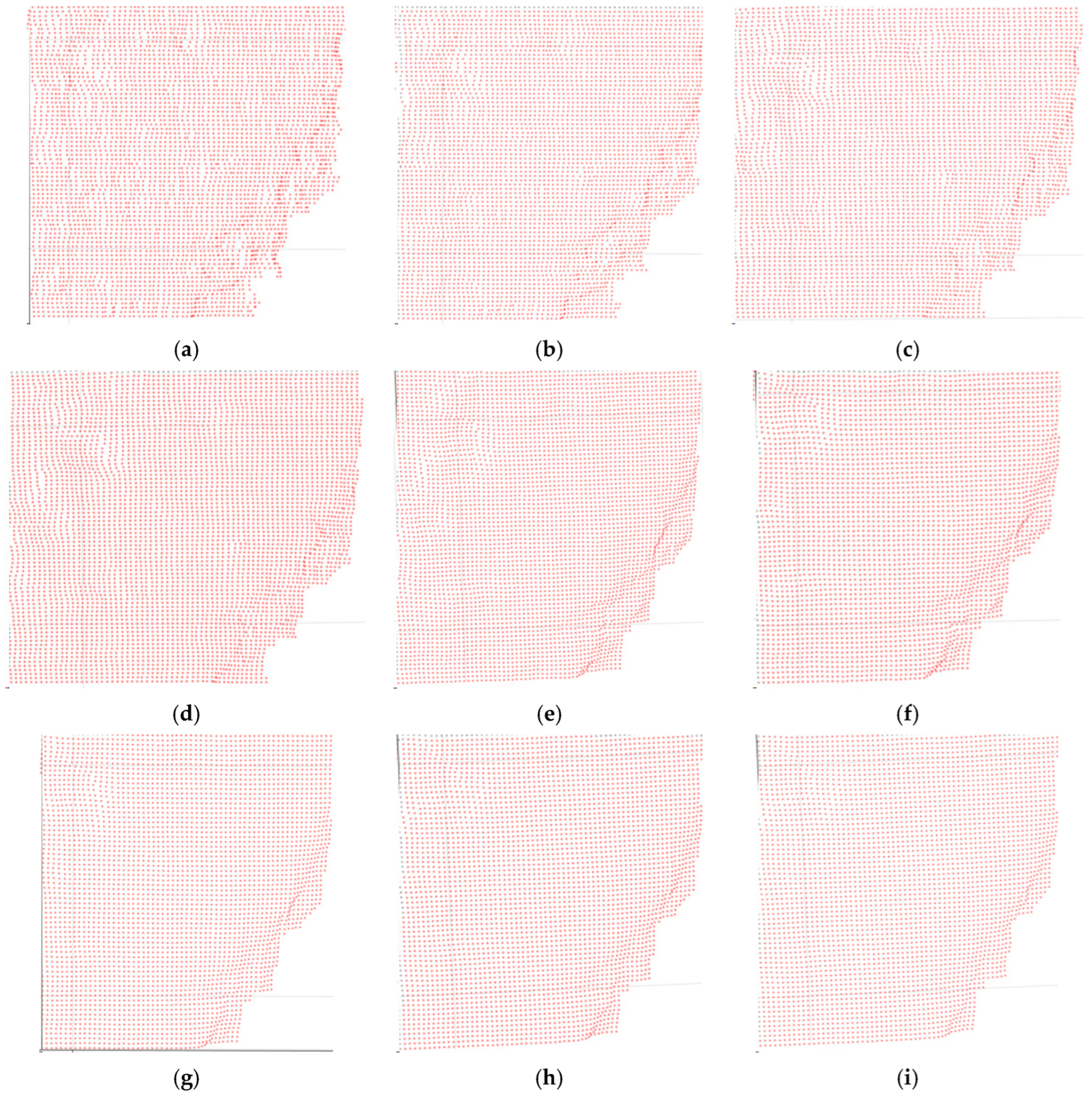
3.2.1. Impact of the Small Connected Regions
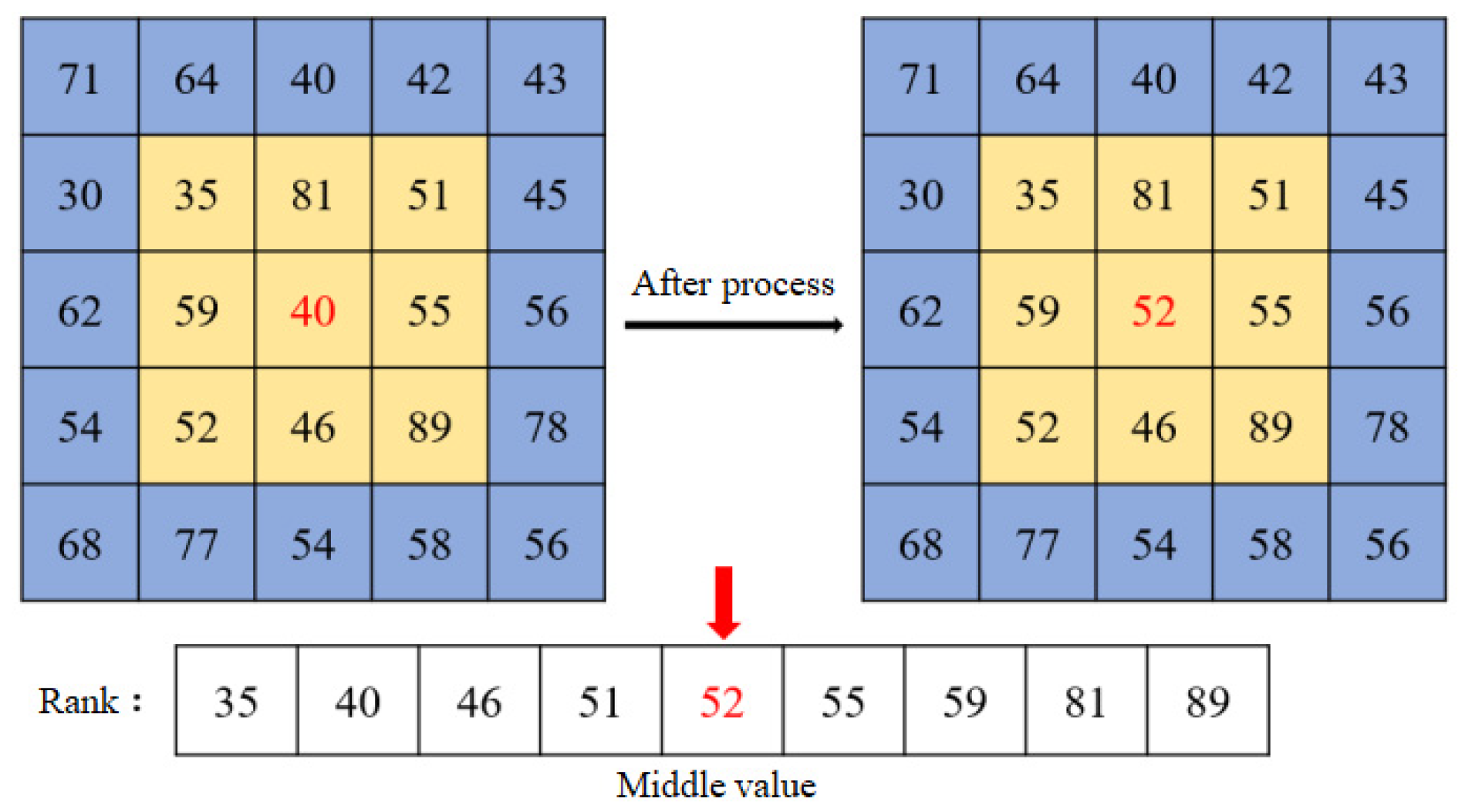
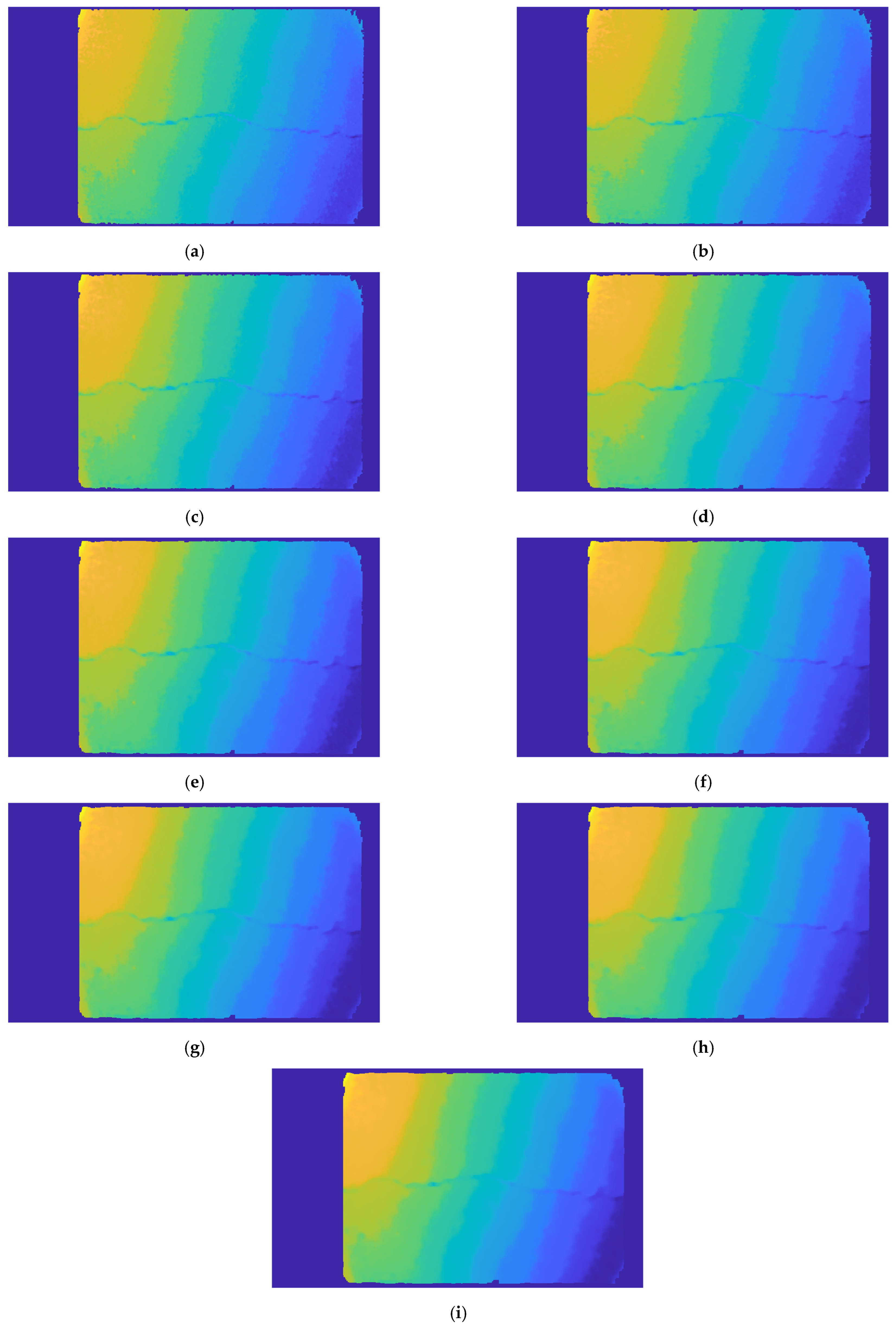
3.2.2. Impact of Filter Window Size
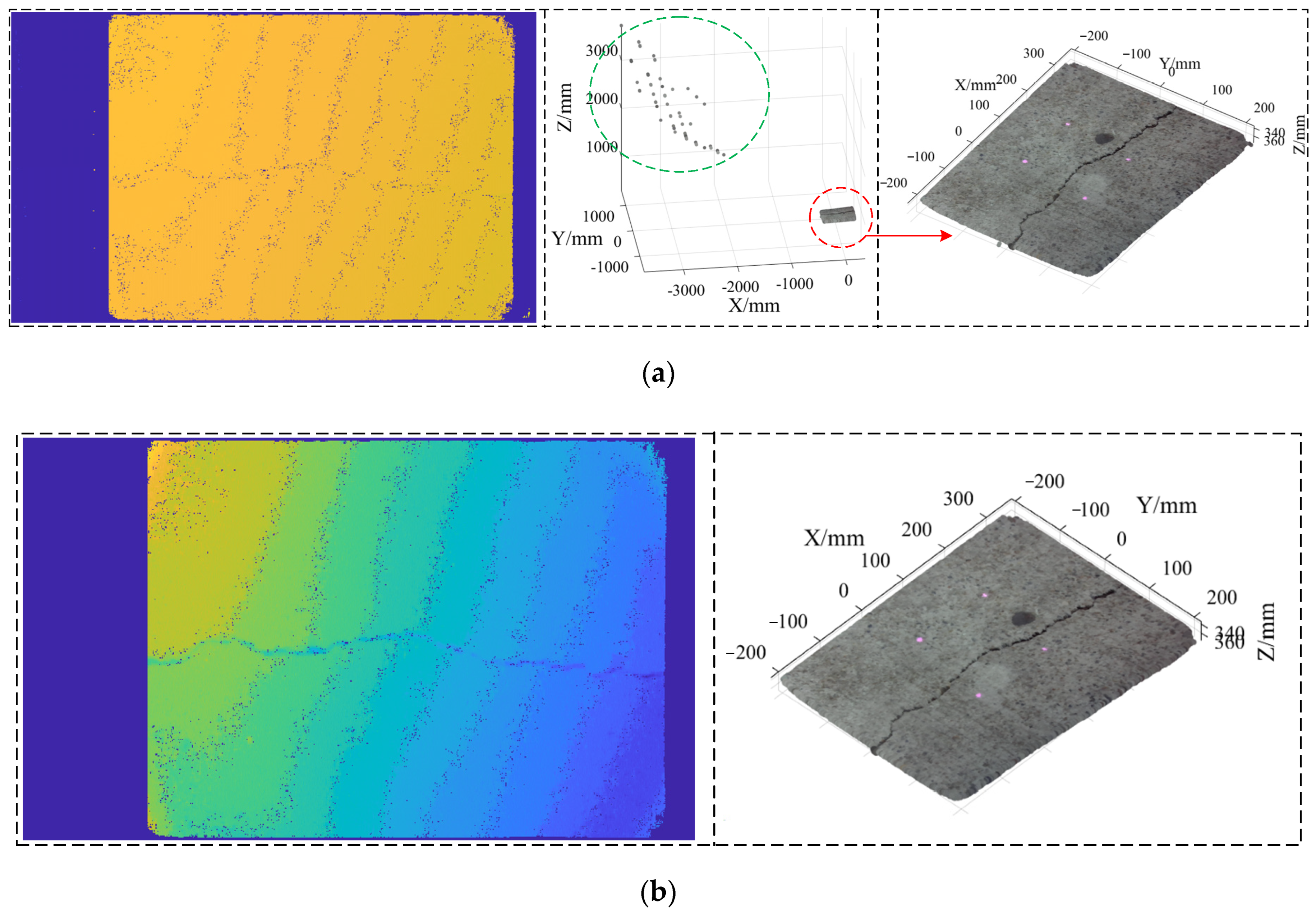
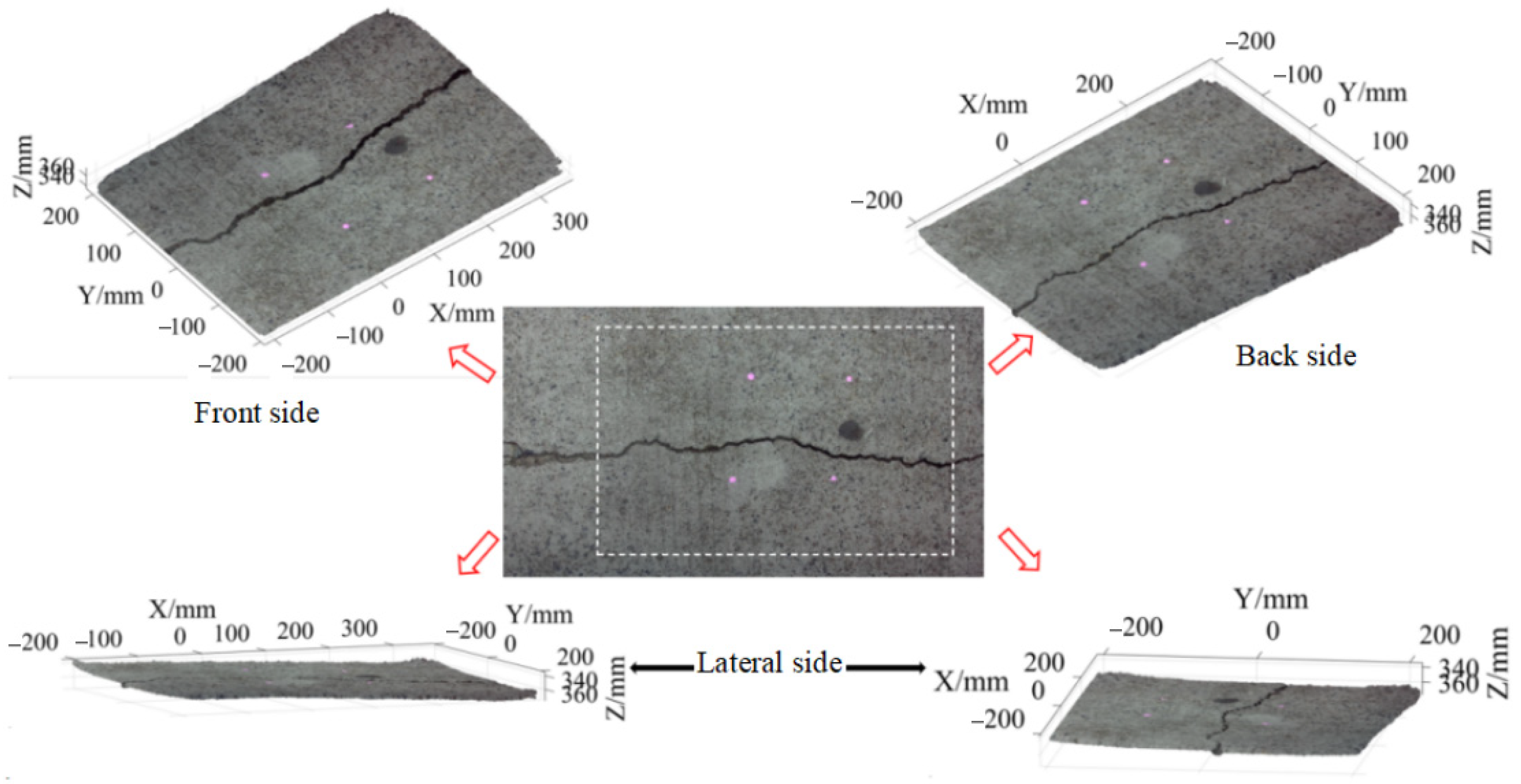
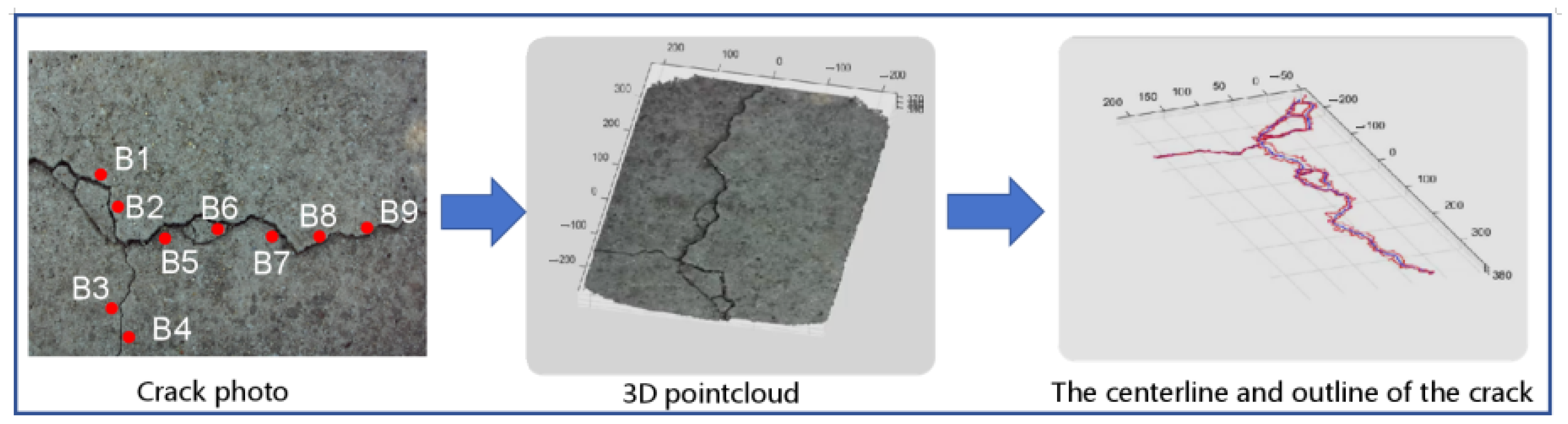
3.3. Results of 3D Reconstruction of Apparent Concrete Cracks
4. Intelligent Measurement of Concrete Cracks Based on 3D Reconstruction Models
4.1. Intelligent Measurement Methods
4.2. Intelligent Measurement Results of Concrete Cracks
4.3. Statistical Analysis Across Crack Types and Lighting Conditions
5. Conclusions
6. Limitations and Future Work
Author Contributions
Funding
Institutional Review Board Statement
Informed Consent Statement
Data Availability Statement
Conflicts of Interest
Abbreviations
| u,v | Pixel coordinates in image |
| I(⋅) | Image intensity value |
| C(p,d) | Matching cost at pixel p with disparity d |
| d | Disparity value |
| Lr(p,d) | Aggregated cost at pixel p along direction r |
| m,n | Dimensions of matching window |
| h,w | Height and width of filter window |
| ξ(⋅) | Census transform bit string |
| ⊗ | Bitwise concatenation operation |
| θ1,θ2 | Double thresholds for parallax rejection |
| S | Connected region area in disparity map |
| k | Number of points used for centre line fitting |
| X,Y | Fitted curve coordinates |
| Parallax map | |
| New projection matrix | |
| Centre line matrix of a crack | |
| Width of a crack at a certain place | |
| Current point slope |
References
- Liu, Z.; Cao, Y.; Wang, Y.; Wang, W. Computer vision-based concrete crack detection using U-net fully convolutional networks. Autom. Constr. 2019, 104, 129–139. [Google Scholar] [CrossRef]
- Wei, S.; Zhang, H.; Wang, C.; Wang, Y.; Xu, L. Multi-temporal SAR data large-scale crop mapping based on U-Net model. Remote Sens. 2019, 11, 68. [Google Scholar] [CrossRef]
- Zhang, J.; Yao, Y.; Deng, B. Fast and robust iterative closest point. IEEE Trans. Pattern Anal. Mach. Intell. 2021, 44, 3450–3466. [Google Scholar] [CrossRef]
- Xiong, C.; Zayed, T.; Abdelkader, E.M. A novel YOLOv8-GAM-Wise-IoU model for automated detection of bridge surface cracks. Constr. Build. Mater. 2024, 414, 135025. [Google Scholar] [CrossRef]
- Sun, W.; Wang, R. Fully Convolutional Networks for Semantic Segmentation of Very High Resolution Remotely Sensed Images Combined With DSM. IEEE Geosci. Remote Sens. Lett. 2018, 15, 474–478. [Google Scholar] [CrossRef]
- Zhang, J.; Lu, C.; Wang, J.; Wang, L.; Yue, X.G. Concrete cracks detection based on FCN with dilated convolution. Appl. Sci. 2019, 9, 2686. [Google Scholar] [CrossRef]
- Li, S.; Gu, X.; Xu, X.; Xu, D.; Zhang, T.; Liu, Z.; Dong, Q. Detection of concealed cracks from ground penetrating radar images based on deep learning algorithm. Constr. Build. Mater. 2021, 273, 121949. [Google Scholar] [CrossRef]
- Buchinger, D.; Rosso, R.S.U., Jr. A divide-and-conquer algorithm for curve fitting. Comput.-Aided Des. 2022, 151, 103362. [Google Scholar] [CrossRef]
- Deng, J.; Lu, Y.; Lee, V.C.-S. Imaging-based crack detection on concrete surfaces using You Only Look Once network. Struct. Health Monit. 2021, 20, 484–499. [Google Scholar] [CrossRef]
- Ren, S.; He, K.; Girshick, R.; Sun, J. Faster R-CNN: Towards Real-Time Object Detection with Region Proposal Networks. IEEE Trans. Pattern Anal. Mach. Intell. 2017, 39, 1137–1149. [Google Scholar] [CrossRef]
- Qi, J.; Liu, L. The stereo matching algorithm based on an improved adaptive support window. IET Image Process. 2022, 16, 2803–2816. [Google Scholar] [CrossRef]
- Lin, Y.; Gao, Y.; Wang, Y. An improved sum of squared difference algorithm for automated distance measurement. Front. Phys. 2021, 9, 737336. [Google Scholar] [CrossRef]
- Lin, T.Y.; Dollár, P.; Girshick, R.; He, K.; Hariharan, B.; Belongie, S. Feature Pyramid Networks for Object Detection. In Proceedings of the 2017 IEEE Conference on Computer Vision and Pattern Recognition (CVPR), Honolulu, HI, USA, 21–26 July 2017; IEEE Computer Society: Los Alamitos, CA, USA, 2017; pp. 1–10. [Google Scholar]
- Redmon, J.; Farhadi, A. YOLOv3: An incremental improvement. In Proceedings of the 2018 IEEE Conference on Computer Vision and Pattern Recognition (CVPR), Salt Lake City, UT, USA, 18–23 June 2018; pp. 2767–2773. [Google Scholar]
- Yoon, J.; Shin, H.; Song, M.; Gil, H.; Lee, S. A crack width measurement method of UAV Images using high-resolution algorithms. Sustainability 2022, 15, 478. [Google Scholar] [CrossRef]
- Zhang, X.; Chen, Y.; Hong, H. Pavement Crack Detection Based on Texture Feature. In Proceedings of the MIPPR 2011: Automatic Target Recognition and Image Analysis, Guilin, China, 4–6 November 2011; SPIE: Washington, DC, USA, 2011; Volume 8003, p. 6. [Google Scholar]
- Kim, H.; Sim, S.H.; Spencer, B.F. Automated concrete crack evaluation using stereo vision with two different focal lengths. Autom. Constr. 2022, 135, 104136. [Google Scholar] [CrossRef]
- Ying, L.; Salari, E. Beamlet Transform-Based Technique for Pavement Crack Detection and Classification. Comput.-Aided Civ. Infrastruct. Eng. 2010, 25, 572–580. [Google Scholar] [CrossRef]
- Rababaah, H.; Vrajitoru, D.; Wolfer, J. Asphalt Pavement Crack Classification: A Comparison of GA, MLP, and SOM. In Proceedings of the Genetic and Evolutionary Computation Conference, Washington, DC, USA, 25–29 June 2005; Late-Breaking Paper: Seattle, WA, USA, 2005. [Google Scholar]
- Li, J.H. Pavement crack diseases detecting by image processing algorithm. J. Chang. Univ. (Nat. Sci. Ed.) 2004, 24, 24–29. (In Chinese) [Google Scholar]
- Jian, Z.; Huang, P.S.; Chiang, F.P. Wavelet-Based Pavement Distress Detection and Evaluation. Opt. Eng. 2006, 45, 409–411. [Google Scholar] [CrossRef]
- Wang, H.; Zhu, N.; Wang, Q. Segmentation of pavement cracks using differential box-counting approach. J. Harbin Inst. Technol. 2007, 39, 142–144. (In Chinese) [Google Scholar]
- Zhang, J.; Sha, A.M.; Sun, Z.Y.; Gao, H.G. Pavement Crack Automatic Recognition Based on Phase-grouping Method. China J. Highw. Transp. 2008, 2, 39–42. (In Chinese) [Google Scholar]
- Payab, M.; Abbasina, R.; Khanzadi, M. A brief review and a new graph-based image analysis for concrete crack quantification. Arch. Comput. Methods Eng. 2018, 26, 347–365. [Google Scholar] [CrossRef]
- Zhong, A.E. Research on Pavement Crack Recognition Based on Image Processing. Master’s Thesis, Wuhan University of Science and Technology, Wuhan, China, 2020. (In Chinese) [Google Scholar]
- Liu, X.Y. Research on Bridge Crack Detection Algorithm Based on Image Measure. Master’s Thesis, Inner Mongolia University of Science and Technology, Hohhot, China, 2022. (In Chinese) [Google Scholar]
- Scharstein, D.; Szeliski, R. A taxonomy and evaluation of dense two-frame stereo correspondence algorithms. Int. J. Comput. Vis. 2002, 47, 7–42. [Google Scholar] [CrossRef]
- Ministry of Transport of the People’s Republic of China. Technical Specifications of Maintenance for Highway Tunnel: JTG H12—2015; Communications Press: Beijing, China, 2015. [Google Scholar]
- Sarfarazi, S.; Modano, M.; Fulgione, M. Artificial Intelligence for Dynamic Characterization of Composite Panel Structures: A Structured Review. Mech. Res. Commun. 2026, 151, 104607. [Google Scholar] [CrossRef]



| Time | Estimated Illumination (lux) | IoU (%) | Precision (%) | Recall (%) | F1-Score (%) |
|---|---|---|---|---|---|
| 8:00 | 320 | 78.3 | 82.1 | 76.5 | 79.2 |
| 10:00 | 1250 | 82.5 | 85.3 | 81.2 | 83.2 |
| 12:00 | 2100 | 81.7 | 84.6 | 80.4 | 82.4 |
| 14:00 | 1850 | 83.2 | 86.1 | 82.3 | 84.2 |
| 16:00 | 950 | 88.6 | 90.2 | 87.5 | 88.8 |
| 18:00 | 180 | 75.4 | 79.3 | 73.8 | 76.4 |
| Stereo Matching Steps | Method and Parameter Selection |
|---|---|
| Cost Calculation | Census |
| Consideration Aggregation | Four-path cost aggregation |
| Parallax Calculation | Winner-takes-all algorithm |
| Parallax Optimisation | Sub-pixel fitting |
| Uniqueness detection | |
| Left–right consistency detection | |
| Removal of small connected regions (x = 1, x = 16) | |
| Region filling (x = 20) | |
| Median filtering (filter window size 9 × 9) |
| Points | Calculated Width/mm | Measured Width/mm | Error/mm | Average Error/mm |
|---|---|---|---|---|
| B1 | 4.16 | 4.29 | 0.13 | 0.15 |
| B2 | 2.66 | 2.73 | 0.07 | |
| B3 | 1.12 | 0.98 | 0.14 | |
| B4 | 1.06 | 0.95 | 0.11 | |
| B5 | 4.61 | 4.30 | 0.31 | |
| B6 | 3.05 | 3.26 | 0.21 | |
| B7 | 3.47 | 3.61 | 0.14 | |
| B8 | 2.92 | 3.02 | 0.10 | |
| B9 | 2.94 | 2.83 | 0.11 |
| Metric | Proposed 3D Method | 2D Skeleton-Based Method | Improvement |
|---|---|---|---|
| Mean Absolute Error (mm) | 0.15 | 0.28 | 46% reduction |
| Max Error (mm) | 0.31 | 0.52 | 40% reduction |
| Min Error (mm) | 0.07 | 0.14 | 50% reduction |
| Average relative Error (%) | 6.2% | 8.3% | 2.1% improvement |
| Standard Deviation (mm) | 0.07 | 0.12 | 42% reduction |
| Category | Subcategory | Points | Number of Points | Mean Error (mm) | Std Dev (mm) |
|---|---|---|---|---|---|
| Crack Type | Transverse | B3, B4 | 2 | 0.13 | 0.02 |
| Longitudinal | B7, B8, B9 | 3 | 0.12 | 0.02 | |
| Networked | B1, B2, B5, B6 | 4 | 0.18 | 0.10 | |
| Lighting Condition | Low light (8:00) | All 9 points | 9 | 0.21 | 0.11 |
| Strong light (12:00) | All 9 points | 9 | 0.19 | 0.10 | |
| Optimal light (16:00) | All 9 points | 9 | 0.15 | 0.07 | |
| Dim light (18:00) | All 9 points | 9 | 0.26 | 0.15 |
Disclaimer/Publisher’s Note: The statements, opinions and data contained in all publications are solely those of the individual author(s) and contributor(s) and not of MDPI and/or the editor(s). MDPI and/or the editor(s) disclaim responsibility for any injury to people or property resulting from any ideas, methods, instructions or products referred to in the content. |
© 2026 by the authors. Licensee MDPI, Basel, Switzerland. This article is an open access article distributed under the terms and conditions of the Creative Commons Attribution (CC BY) license.
Share and Cite
Xiao, D.; Wang, G.; Wang, K.; Liu, S.; Shang, G.; Wang, Q.-A.; Fan, X.; Hu, M.; Liu, R.; Chen, G.; et al. Intelligent Measurement of Concrete Crack Width Based on U-Net Deep Learning and Binocular Vision 3D Reconstruction. Appl. Sci. 2026, 16, 2355. https://doi.org/10.3390/app16052355
Xiao D, Wang G, Wang K, Liu S, Shang G, Wang Q-A, Fan X, Hu M, Liu R, Chen G, et al. Intelligent Measurement of Concrete Crack Width Based on U-Net Deep Learning and Binocular Vision 3D Reconstruction. Applied Sciences. 2026; 16(5):2355. https://doi.org/10.3390/app16052355
Chicago/Turabian StyleXiao, Dedong, Gaoxin Wang, Kai Wang, Shukui Liu, Guangbin Shang, Qi-Ang Wang, Xiaohua Fan, Minghui Hu, Richeng Liu, Guozhao Chen, and et al. 2026. "Intelligent Measurement of Concrete Crack Width Based on U-Net Deep Learning and Binocular Vision 3D Reconstruction" Applied Sciences 16, no. 5: 2355. https://doi.org/10.3390/app16052355
APA StyleXiao, D., Wang, G., Wang, K., Liu, S., Shang, G., Wang, Q.-A., Fan, X., Hu, M., Liu, R., Chen, G., & Chen, Z. (2026). Intelligent Measurement of Concrete Crack Width Based on U-Net Deep Learning and Binocular Vision 3D Reconstruction. Applied Sciences, 16(5), 2355. https://doi.org/10.3390/app16052355