Research on Capacity Cost Compensation Mechanism for Coal-Fired Power in the Electricity Market Environment

 and
and
Abstract
1. Introduction
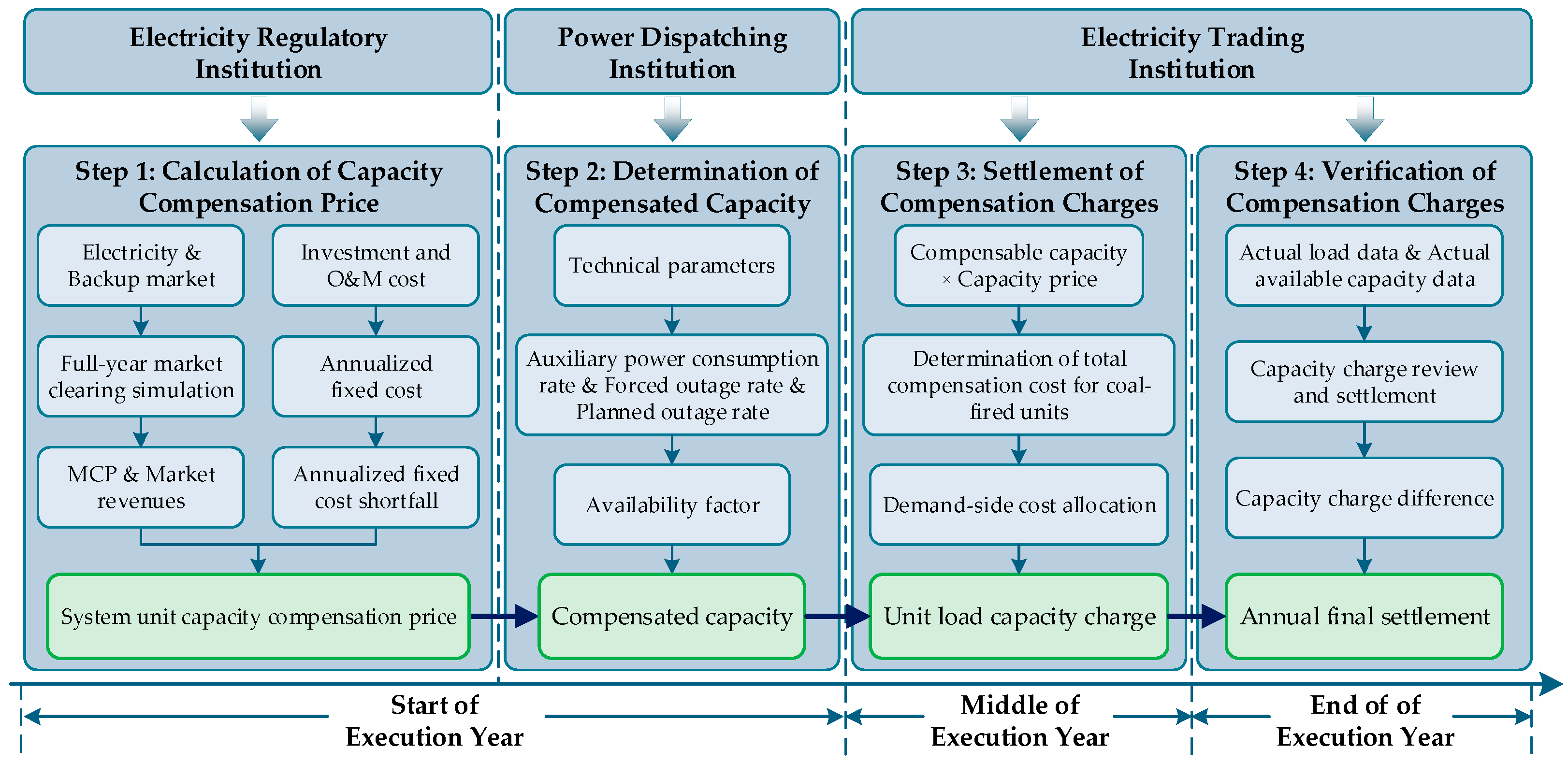
2. Coal-Fired Power Capacity Compensation Mechanism Framework
3. Modeling of the Coal-Fired Power Units Participating in the Electricity Market Clearing
3.1. Overview of the Electricity Market Clearing Model
3.2. Construction of the Joint Clearing Model for the Electricity Spot Market
3.2.1. Objective Function
3.2.2. Constraints
- System Operating Constraints
- 2.
- Unit Operating Constraints
- 3.
- System Reserve Service Constraints
- 4.
- System Network Constraints
3.2.3. Revenue Calculation
4. The Coal-Fired Power Capacity Cost Compensation Mechanism Under the Electricity Market Environment
4.1. Calculation of Capacity Compensation Price
4.2. Determination of Compensated Capacity
4.3. Settlement of Capacity Compensation Charge
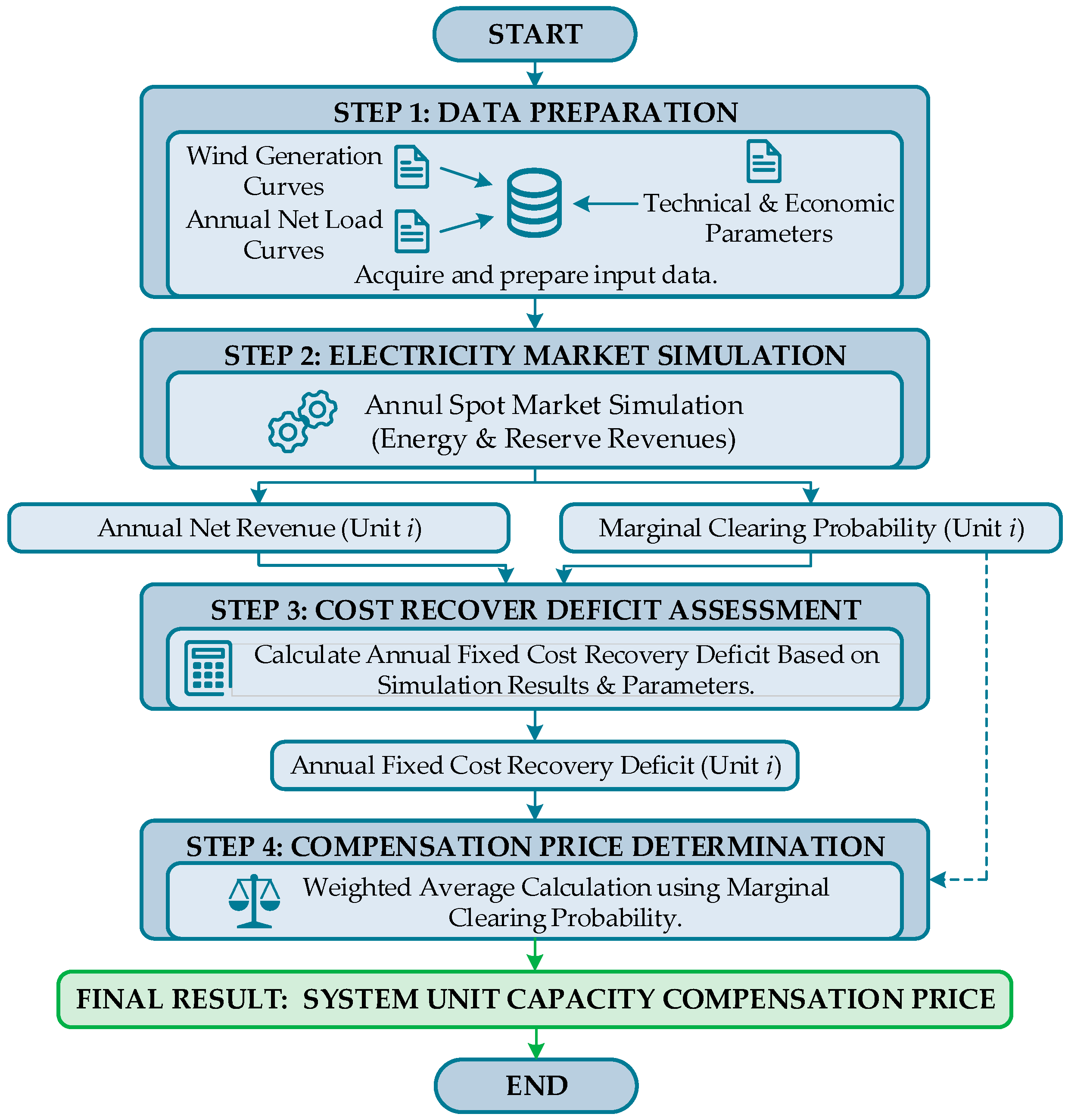
4.4. Solving of System Unit Capacity Compensation Price
5. Case Study Analysis
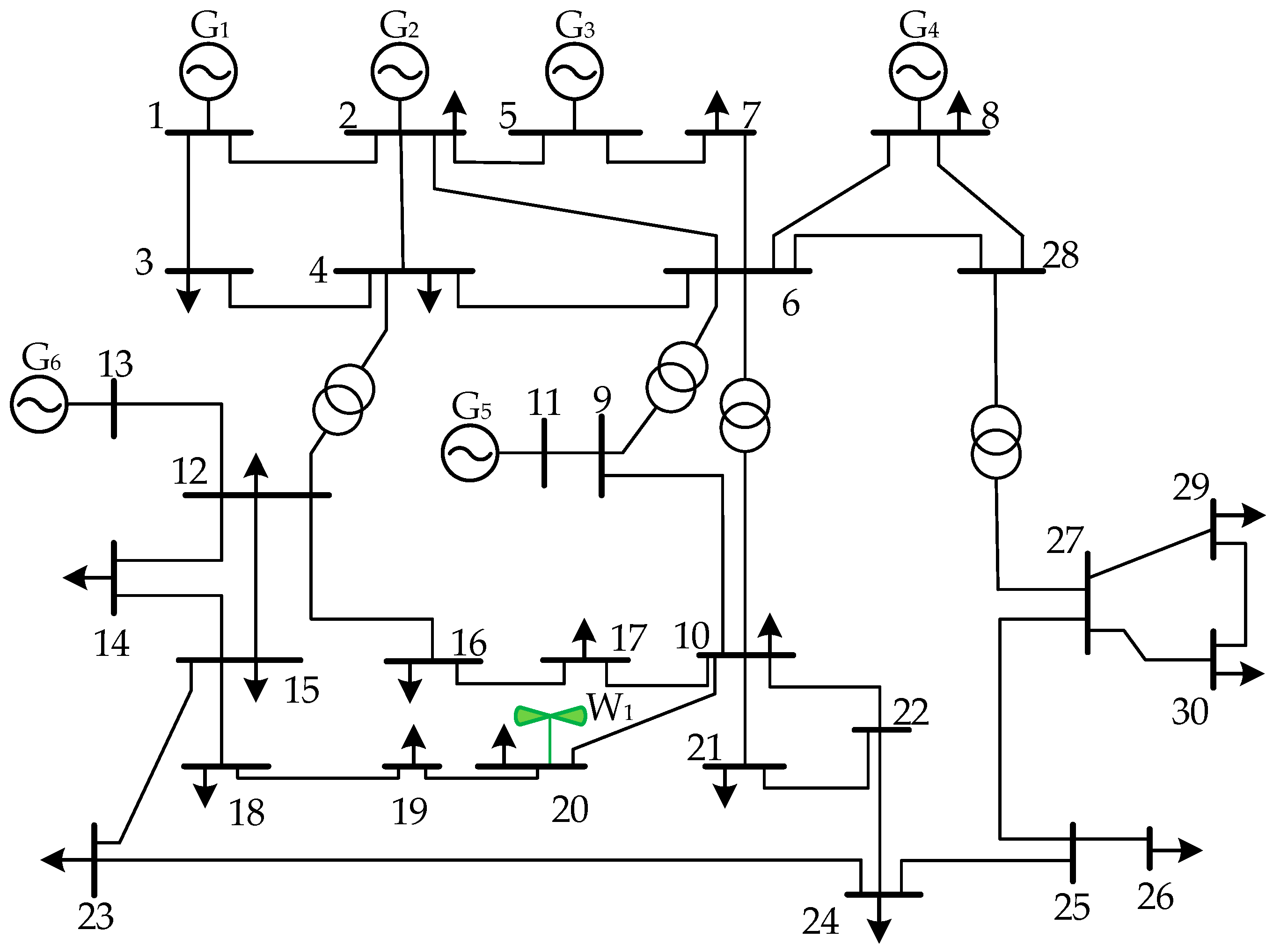
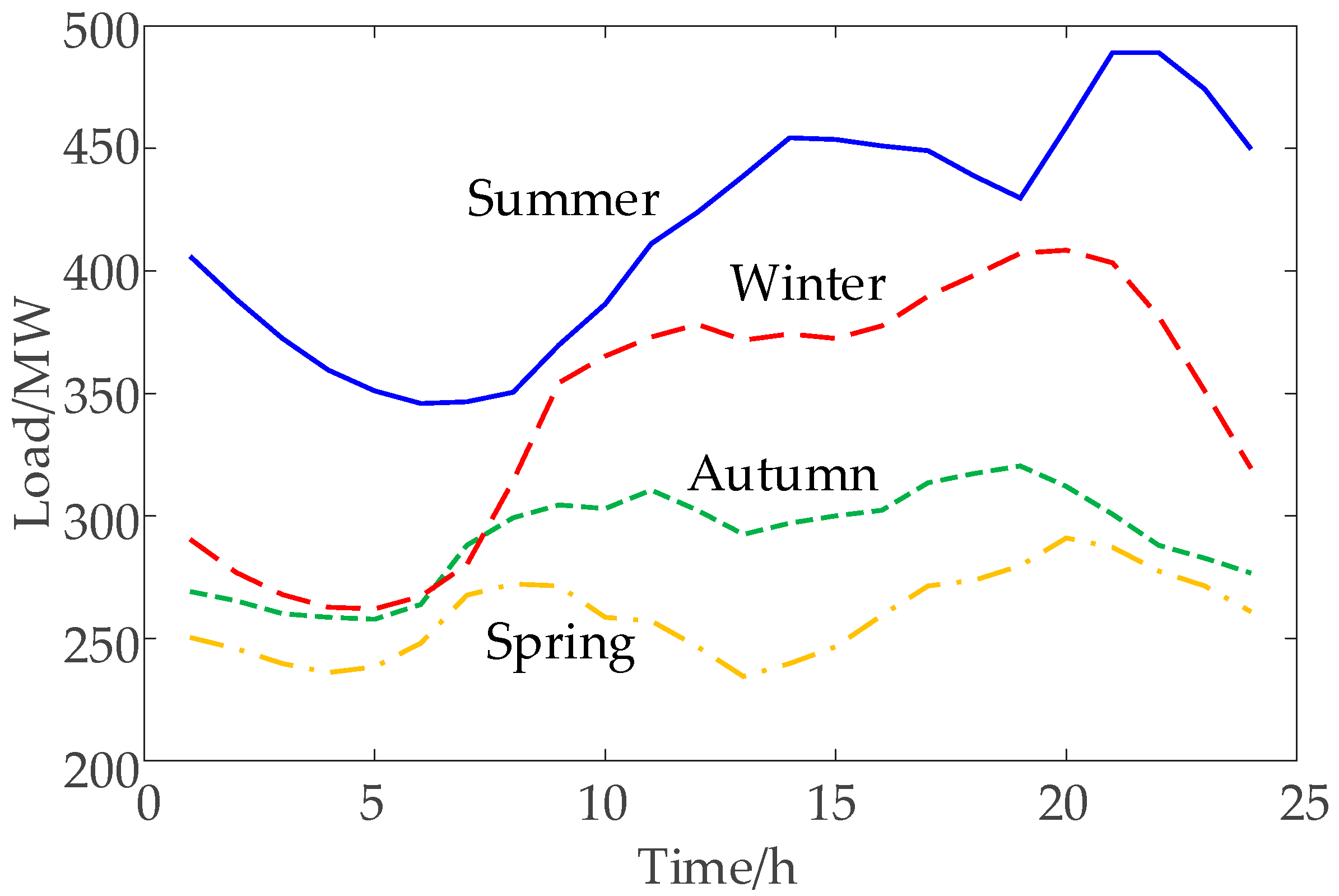
5.1. Case Study Base Data
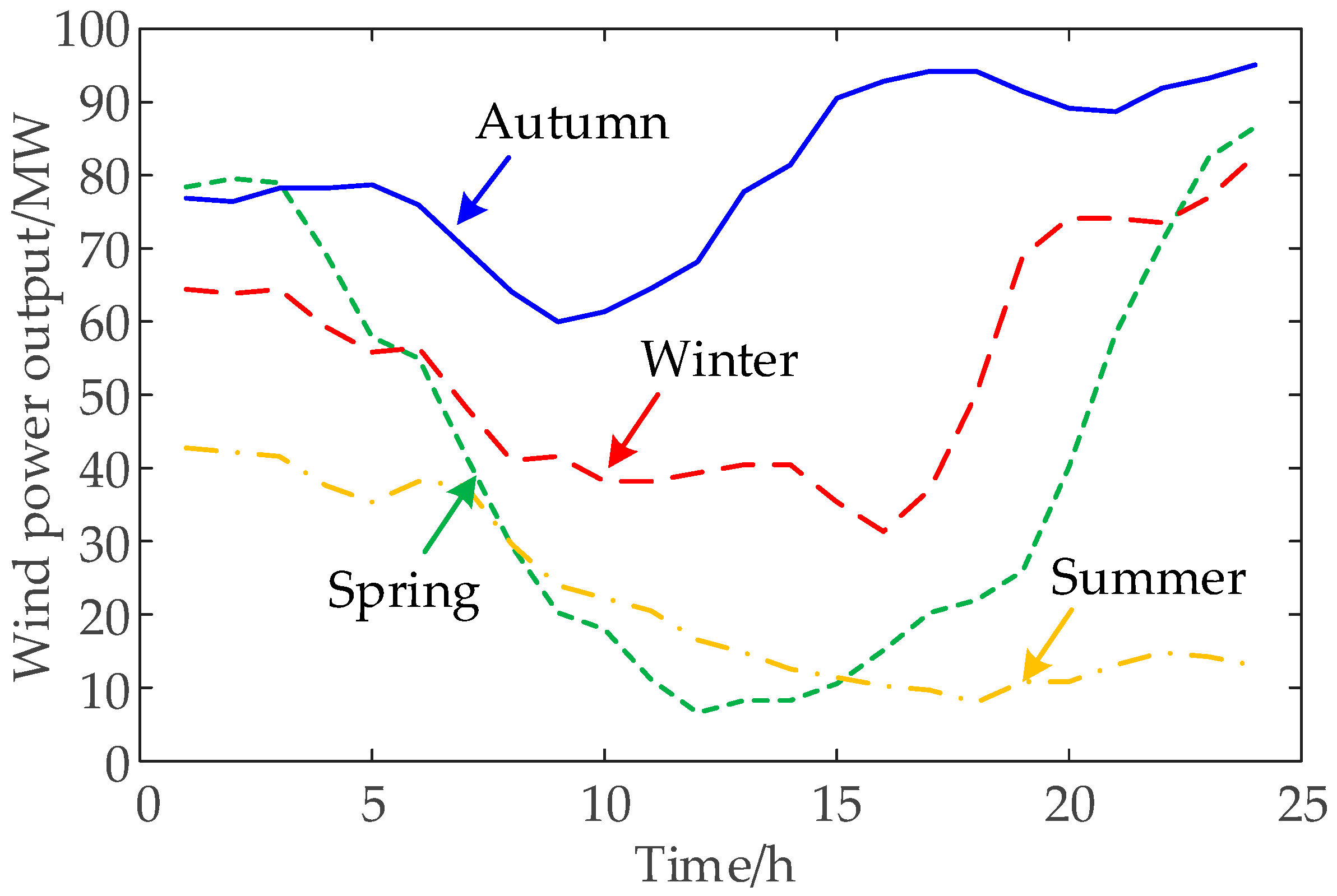
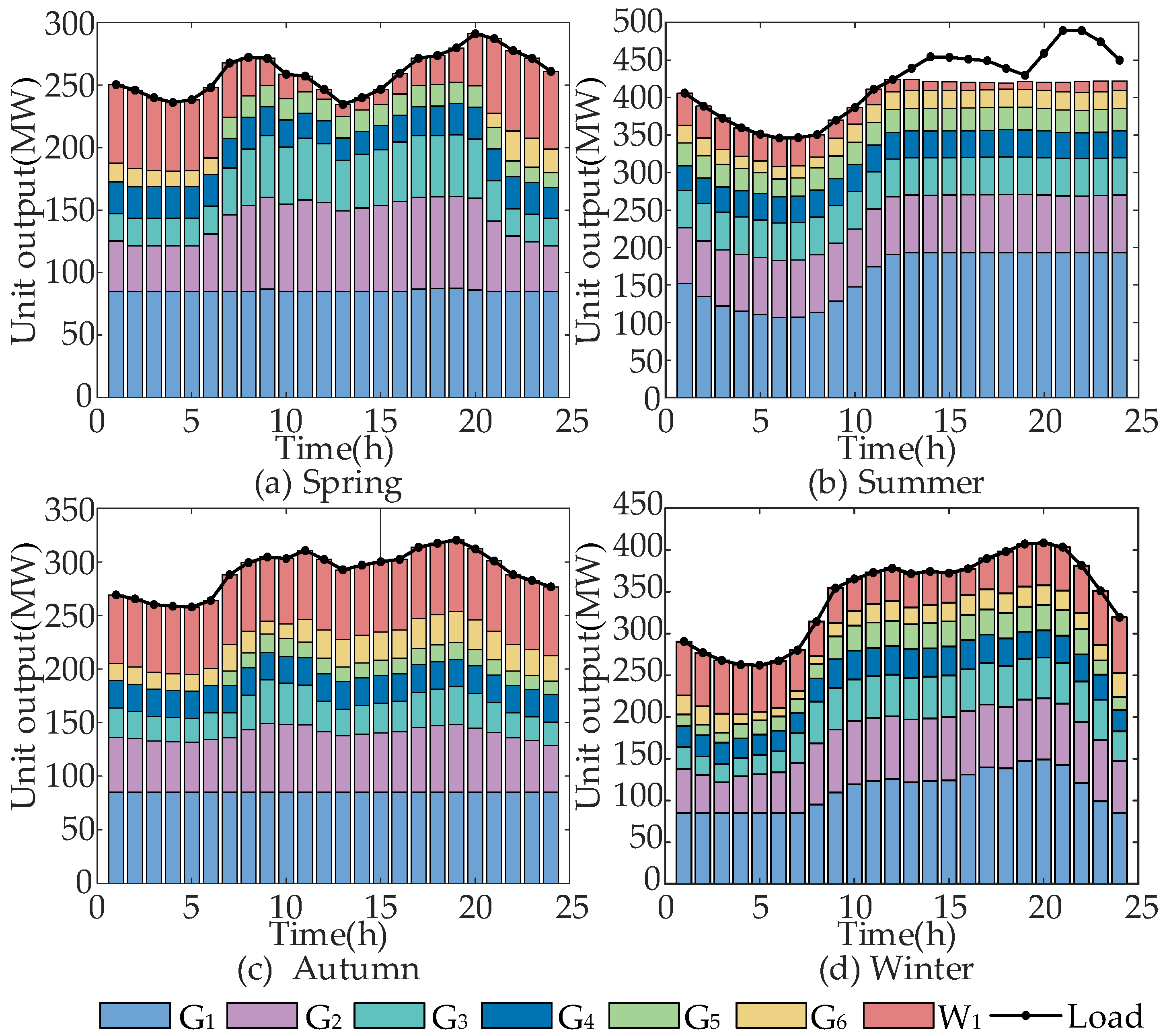
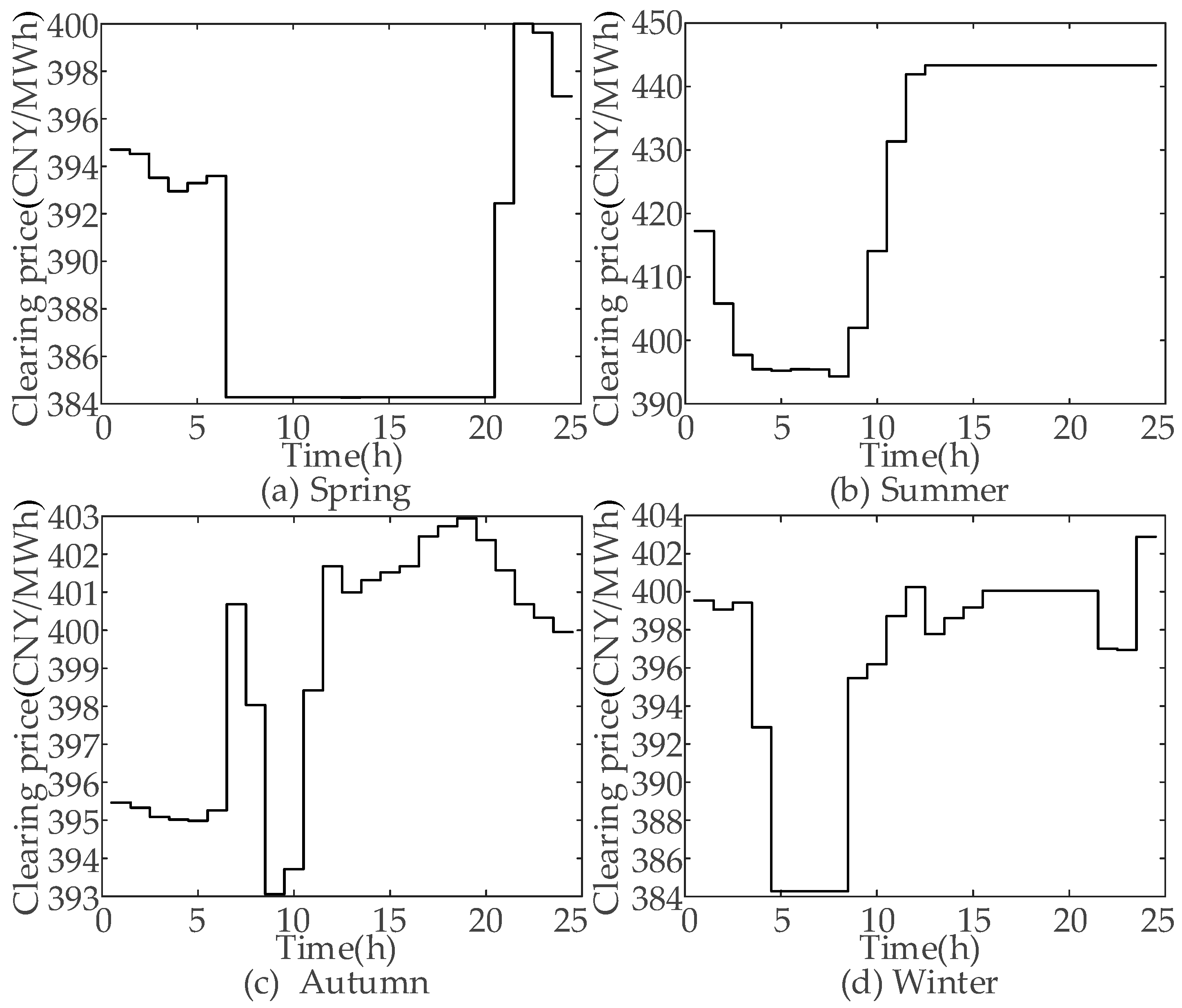
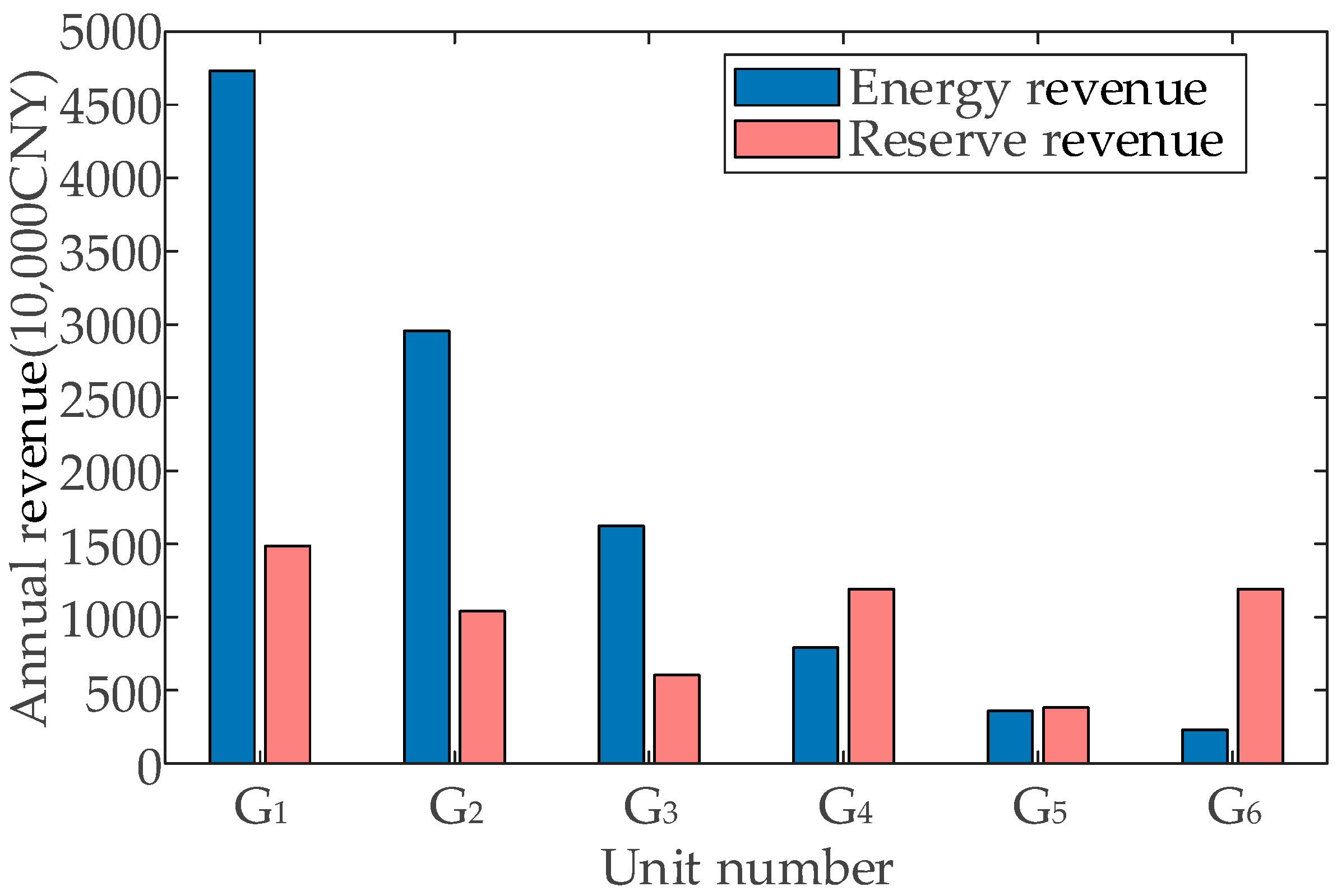
5.2. Case Study Analysis Results
6. Conclusions
- (1)
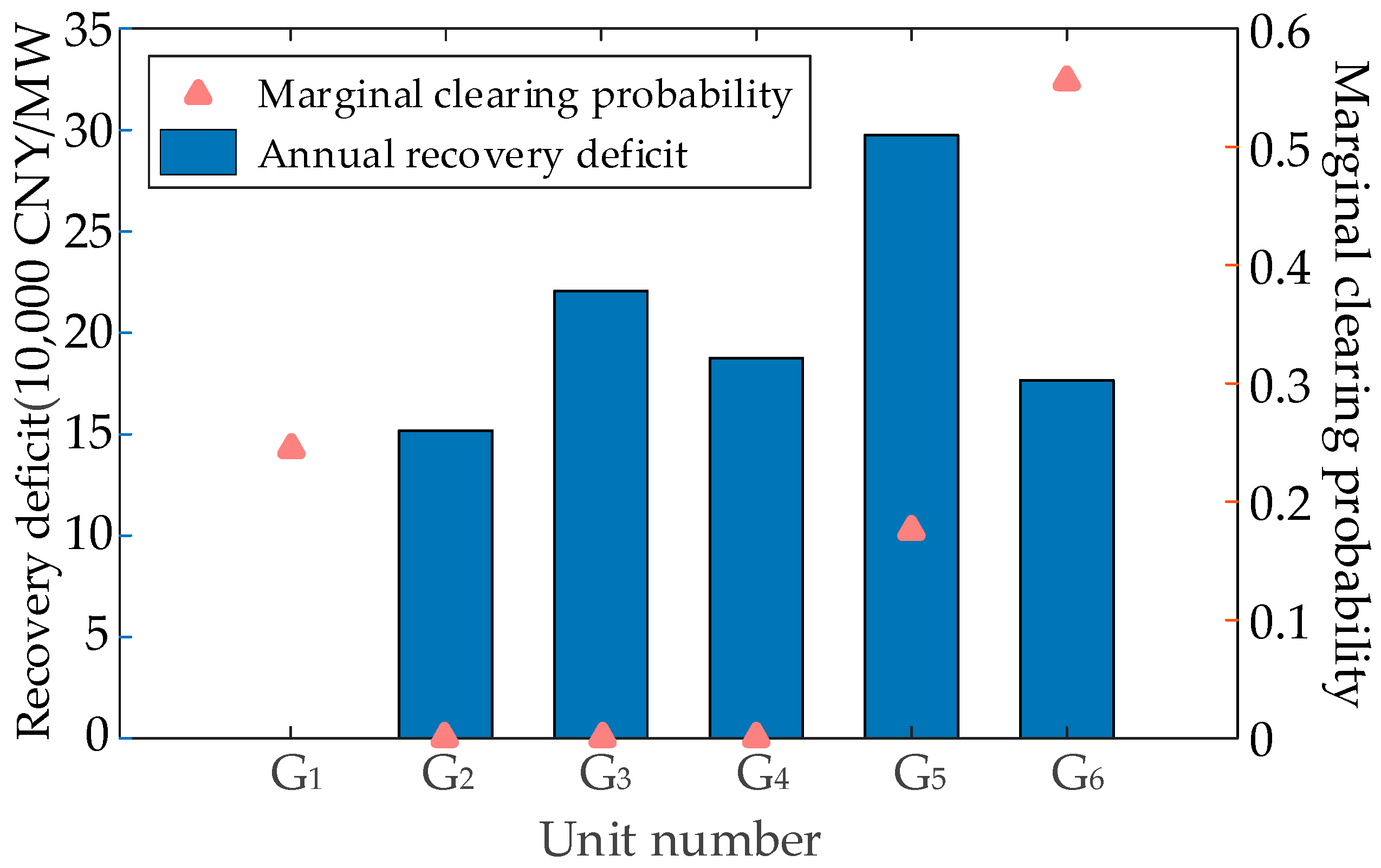
- A power market clearing model for coal-fired power units considering wind curtailment and load shedding penalties has been established. This model takes into account the two most common sources of revenue for coal-fired units and simulates the market operation throughout the year. The results indicate that, under scenarios with high penetration of wind power, coal-fired units are unable to recover their fixed investment costs solely through power market revenues.
- (2)
- A capacity compensation pricing method based on marginal clearing probability weighting has been proposed. This method fully considers the marginal contribution of each unit and the fixed cost recovery gap, reflecting the actual value of each unit’s contribution to system reliability through the marginal clearing probability.
- (3)
- A compensated capacity determination method based on the availability factor method has been designed. It comprehensively considers the rated capacity, availability, and actual operating conditions of coal-fired units, thereby reflecting the actual contribution of each unit to system capacity adequacy.
- (4)
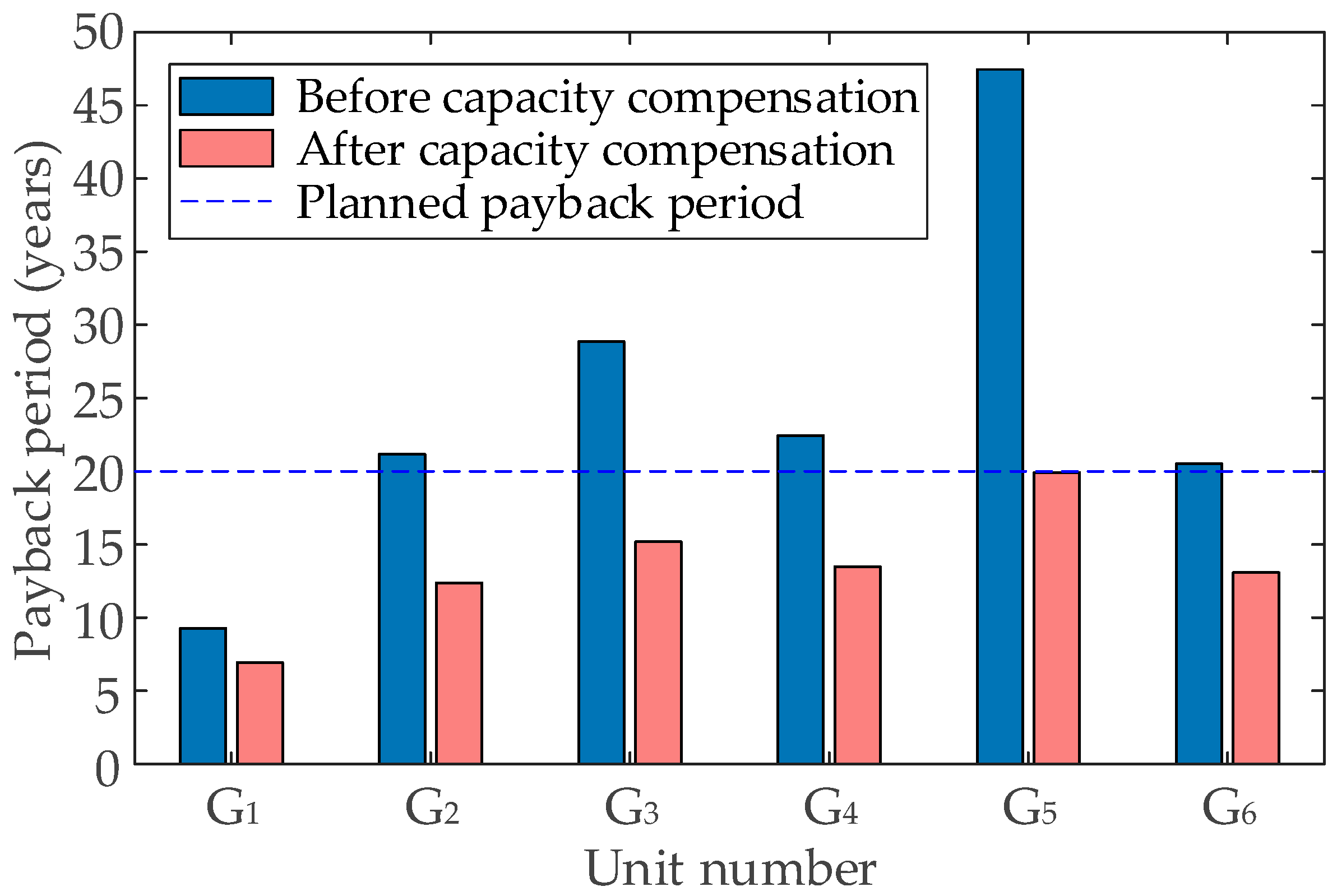
- A complete capacity cost compensation mechanism tailored for coal-fired power units under the modern electricity market environment is proposed. Following the implementation of this mechanism, the investment payback periods of all coal-fired units are significantly shortened and strictly controlled within the planned 20-year horizon, thereby ensuring the full recovery of fixed costs.
Author Contributions
Funding
Data Availability Statement
Acknowledgments
Conflicts of Interest
References
- Zhang, T.; Hu, Y.; Zhang, J.; Han, L.; Wang, P.; Chen, Y. Analysis of Power Market Capacity Remuneration Mechanisms Adapted to High Penetration of Renewable Energy Development. Electr. Power Constr. 2021, 42, 117–125. [Google Scholar]
- International Energy Agency Photovoltaic Power Systems Programme (IEA-PVPS). Snapshot of Global PV Markets 2025; IEA-PVPS: Paris, France, 2025; Available online: https://iea-pvps.org/snapshot-reports/snapshot-2025/ (accessed on 16 February 2026).
- Global Wind Energy Council (GWEC). Global Wind Report 2025; GWEC: Lisbon, Portugal, 2025; Available online: https://www.gwec.net/reports/globalwindreport/2025 (accessed on 16 February 2026).
- Kirschen, D.S.; Strbac, G. Fundamentals of Power System Economics, 2nd ed.; Wiley: Hoboken, NJ, USA, 2018. [Google Scholar]
- Billimoria, F.; Poudineh, R. Electricity Sector Transition in the National Electricity Market of Australia: Managing Reliability and Security in an Energy-Only Market; Oxford Institute for Energy Studies: Oxford, UK, 2018. [Google Scholar]
- Petitet, M.; Finon, D.; Janssen, T. Capacity adequacy in power markets facing energy transition: A comparison of scarcity pricing and capacity mechanism. Energy Policy 2017, 103, 30–46. [Google Scholar] [CrossRef]
- Liu, S.; Xie, M.; Chen, Q.; Yang, Q.; Zhang, M. Stranded Cost Subsidy Mechanism for Thermal Power Adapting to Yunnan Electricity Market. South. Power Syst. Technol. 2020, 14, 40–46. [Google Scholar]
- Kwon, J.; Zhou, Z.; Levin, T.; Botterud, A. Resource Adequacy in Electricity Markets with Renewable Energy. IEEE Trans. Power Syst. 2020, 35, 773–781. [Google Scholar] [CrossRef]
- Liu, R.; Jing, Z.; Liu, Y. Coupling Clearing Model of Energy and Reserve Considering Dynamic Operation Reserve Demand Curves. Autom. Electr. Power Syst. 2021, 45, 34–42. [Google Scholar]
- Qu, H.; Chen, S.; Li, R.; Xu, C.; Yan, Z. Equivalence of Three Capacity Adequacy Mechanisms in Inducing Optimal Capacity and Differences in Affecting Supplier Revenues. Proc. CSEE 2022, 42, 2910–2919. [Google Scholar]
- Yu, Y.; Jing, Z.; Chen, Y.; Ji, T.; Zhang, L. Typical Generation Resource Adequacy Mechanism in Electricity Market and Enlightenment to China. Power Syst. Technol. 2019, 43, 2734–2742. [Google Scholar]
- Wang, Y.; Zhu, T.; Zhang, Y.X.; Lu, E.; Chen, X.Y. Preliminary Study on Capacity Compensation Mechanism Adapted to Development of Electricity Spot Market in China. Autom. Electr. Power Syst. 2021, 45, 52–61. [Google Scholar]
- Zhao, F.; Zheng, T.; Litvinov, E. Constructing Demand Curves in Forward Capacity Market. IEEE Trans. Power Syst. 2018, 33, 525–535. [Google Scholar] [CrossRef]
- Liu, Z.; Jing, Z.; Sun, Q.; Tan, Y.; Zeng, H. Analysis of Generation Capacity Adequacy Mechanism Based on System Dynamics. Autom. Electr. Power Syst. 2022, 46, 109–118. [Google Scholar]
- Liu, S.; Yu, S.; Sun, T.; Zou, P.; Chen, Q. Study on Capacity Sufficiency Mechanism Based on China’s Power Market Environment. Power Syst. Technol. 2022, 46, 1780–1789. [Google Scholar]
- Yu, S.; Liu, S.; Li, G.; Sun, T.; Chen, Q. Research on Capacity Adequacy Mechanism Adapting to the Development of China’s Electricity Market. Price Theory Pract. 2023, 9, 130–136. [Google Scholar]
- Zhang, Y.; Zhao, H.; Li, B. Research on the Design and Influence of Unit Generation Capacity Adequacy Guarantee Mechanism in the Power Market. Energy 2022, 248, 123658. [Google Scholar] [CrossRef]
- Liu, X.; Liu, S.; Yu, S.; Sun, T.; Guo, H. Peak Load Regulation Capacity Compensation Mechanism for New Power System Flexibility Enhancement. Power Syst. Technol. 2023, 47, 155–163. [Google Scholar]
- Liu, S.; Yang, J. The Economic Principles of Electricity Wholesale Market Design. Electr. Power 2017, 50, 1–10. [Google Scholar]
- Sun, G.; Zhang, H.; Cai, H. MPPT Control of SRG for Wind Power Based on Power Converter and Excitation Voltage Disturbance Method. Autom. Electr. Power Syst. 2017, 41, 101–107. [Google Scholar]
- Ding, H.J.; Pinson, P.; Hu, Z.C.; Wang, J.; Song, Y. Optimal Offering and Operating Strategy for a Large Wind-Storage System as a Price Maker. IEEE Trans. Power Syst. 2017, 32, 4904–4913. [Google Scholar] [CrossRef]
- Zhang, L.; Xu, T.; Song, S.; Lu, C.; Li, X. Evaluation Method and Guarantee Mechanism of Power Generation Capacity Adequacy in Electricity Market. Autom. Electr. Power Syst. 2020, 44, 55–63. [Google Scholar]
- Jiang, Y.; Chen, M. Joint Optimization of Electricity Purchase in the Day-Ahead Market Based on Robust Regret. Trans. China Electrotech. Soc. 2019, 34, 1971–1983. [Google Scholar]
- Gao, Z.; Hao, L.; Zheng, C.; Xu, C.; Lv, M. Capacity Compensation Mechanism for Thermal Power Unit Considering Income of Medium and Long-Term and Spot Markets. Electr. Power Autom. Equip. 2025, 45, 217–224. [Google Scholar]
- National Energy Administration Reliability Management and Engineering Quality Supervision Center. Briefing on National Power Reliability in the First Half of 2020. Available online: http://prpq.nea.gov.cn/gzdt/4638.html (accessed on 6 December 2023).



| Unit Number | G1 | G2 | G3 | G4 | G5 | G6 |
|---|---|---|---|---|---|---|
| Maximum technical output of unit (p.u.) | 2.00 | 0.80 | 0.50 | 0.40 | 0.35 | 0.30 |
| Minimum technical output of unit (p.u.) | 0.80 | 0.30 | 0.15 | 0.18 | 0.12 | 0.10 |
| Fuel cost quadratic coefficient a (CNY/MW2) | 0.3197 | 0.2595 | 0.2642 | 0.2894 | 0.2771 | 0.3013 |
| Fuel cost linear coefficient b (CNY/MW) | 319.8 | 333.8 | 345.8 | 364.6 | 374.8 | 385.7 |
| Fuel cost constant coefficient c (CNY) | 0 | 0 | 0 | 0 | 0 | 0 |
| Up/down ramp rate (p.u./h) | 0.80 | 0.40 | 0.35 | 0.35 | 0.40 | 0.22 |
| Minimum shutdown/startup duration (h) | 6.00 | 4.00 | 3.00 | 2.00 | 1.00 | 1.00 |
| Startup cost (CNY/instance) | 80,000 | 50,000 | 20,000 | 8600 | 2000 | 500 |
| Shutdown cost (CNY/instance) | 80,000 | 50,000 | 20,000 | 8600 | 2000 | 500 |
| Upward spinning reserve cost (CNY/MW) | 111.80 | 129.80 | 137.30 | 141.30 | 114.30 | 117.80 |
| Downward spinning reserve cost (CNY/MW) | 96.60 | 124.40 | 143.60 | 130.90 | 116.00 | 134.30 |
| Maximum upward spinning reserve capacity (p.u.) | 0.068 | 0.066 | 0.061 | 0.074 | 0.049 | 0.062 |
| Maximum downward spinning reserve capacity (p.u.) | 0.050 | 0.064 | 0.069 | 0.076 | 0.051 | 0.062 |
| Unit Number | Investment Cost (10,000 CNY/MW)) | O&M Cost (10,000 CNY/MW/Year) | Annualized Investment Cost (10,000 CNY/MW/Year) |
|---|---|---|---|
| G1 | 350 | 40 | 30.51 |
| G2 | 380 | 32 | 33.13 |
| G3 | 420 | 30 | 36.62 |
| G4 | 440 | 30 | 38.36 |
| G5 | 450 | 26 | 39.23 |
| G6 | 460 | 25 | 40.10 |
| Unit Number | Fuel Availability Rate | Auxiliary Power Rate | Planned Outage Rate | Forced Outage Rate | Annual Availability Factor |
|---|---|---|---|---|---|
| G1 | 99.92% | 7.62% | 11.23% | 0.60% | 0.8145 |
| G2 | 99.98% | 6.21% | 12.56% | 0.51% | 0.8158 |
| G3 | 99.25% | 5.16% | 10.41% | 0.45% | 0.8395 |
| G4 | 99.98% | 4.92% | 12.02% | 0.14% | 0.8352 |
| G5 | 99.46% | 4.87% | 11.02% | 0.23% | 0.8400 |
| G6 | 99.11% | 4.75% | 13.02% | 0.76% | 0.8149 |
| Unit Number | Compensation Capacity (MW) | Compensation Revenue (10,000 CNY) |
|---|---|---|
| G1 | 162.90 | 2543.68 |
| G2 | 65.26 | 1019.06 |
| G3 | 41.98 | 655.46 |
| G4 | 33.41 | 521.66 |
| G5 | 29.40 | 459.07 |
| G6 | 24.45 | 381.73 |
Disclaimer/Publisher’s Note: The statements, opinions and data contained in all publications are solely those of the individual author(s) and contributor(s) and not of MDPI and/or the editor(s). MDPI and/or the editor(s) disclaim responsibility for any injury to people or property resulting from any ideas, methods, instructions or products referred to in the content. |
© 2026 by the authors. Licensee MDPI, Basel, Switzerland. This article is an open access article distributed under the terms and conditions of the Creative Commons Attribution (CC BY) license.
Share and Cite
Cheng, X.; Zeng, S.; Chang, X.; Zheng, H.; Fan, J.; Le, J.; Fang, Z. Research on Capacity Cost Compensation Mechanism for Coal-Fired Power in the Electricity Market Environment. Appl. Sci. 2026, 16, 2342. https://doi.org/10.3390/app16052342
Cheng X, Zeng S, Chang X, Zheng H, Fan J, Le J, Fang Z. Research on Capacity Cost Compensation Mechanism for Coal-Fired Power in the Electricity Market Environment. Applied Sciences. 2026; 16(5):2342. https://doi.org/10.3390/app16052342
Chicago/Turabian StyleCheng, Xueting, Shuyan Zeng, Xiao Chang, Huiping Zheng, Jianbin Fan, Jian Le, and Zheng Fang. 2026. "Research on Capacity Cost Compensation Mechanism for Coal-Fired Power in the Electricity Market Environment" Applied Sciences 16, no. 5: 2342. https://doi.org/10.3390/app16052342
APA StyleCheng, X., Zeng, S., Chang, X., Zheng, H., Fan, J., Le, J., & Fang, Z. (2026). Research on Capacity Cost Compensation Mechanism for Coal-Fired Power in the Electricity Market Environment. Applied Sciences, 16(5), 2342. https://doi.org/10.3390/app16052342