Article

Morphological Variation in the Mandibular Ramus in Different Skeletal Characteristics: A Dual Radiographic Analysis

by
Wafa Omar Ali Dabwan
1,*,
K. Müfide Dinçer
1 and
R. Lale Taner
2,3
1
Department of Orthodontics, Faculty of Dentistry, Cyprus Health and Social Sciences University, Kutlu Adali Blv, KKTC via Mersin 10, 99750 Morphou, Turkey
2
Department of Orthodontics, Faculty of Dentistry, Cyprus International University, 99258 KKTC Mersin, Turkey
3
Department of Orthodontics, Faculty of Dentistry, Gazi University, 06490 Ankara, Turkey
*
Author to whom correspondence should be addressed.
Appl. Sci. 2026, 16(5), 2331; https://doi.org/10.3390/app16052331
Submission received: 22 January 2026 / Revised: 16 February 2026 / Accepted: 24 February 2026 / Published: 27 February 2026
(This article belongs to the Special Issue Advanced Studies in Orthodontics)

Abstract

Background: Lateral cephalometry is the reference standard for two-dimensional dentoskeletal analysis; however, superimposition limits bilateral mandibular assessment in asymmetric conditions. Panoramic radiography provides bilateral visualization with lower radiation exposure, but its reliability remains debated. This study evaluated the agreement between panoramic and cephalometric angular measurements and assessed mandibular variations according to skeletal class, vertical pattern, and sex. Methods: Standardized panoramic and lateral cephalometric radiographs of 304 adults (18–30 years) were analyzed. Corresponding angular measurements were compared using correlation and regression analyses, and subgroup differences were evaluated across skeletal classifications and sex. Results: Significant correlations were found between selected parameters, particularly Ar-Go-Me and OMAND (r = 0.52) and FH/U6-U1 and FH/UOP (r = 0.66). However, regression analyses showed moderate explanatory power. Mandibular dimensions were significantly greater in males, and Class III hyperdivergent individuals exhibited steeper angular patterns. Conclusions: Panoramic radiography can approximate certain cephalometric angles and may serve as an adjunctive diagnostic tool. However, due to limited predictive accuracy, it cannot replace cephalometric analysis for definitive orthodontic treatment planning. Mandibular morphology is strongly influenced by vertical skeletal pattern and sex.

1. Introduction

Orthodontic diagnosis and treatment planning require a comprehensive evaluation of dental occlusion and dentoskeletal relationships. Radiographic imaging plays a central role in assessing craniofacial morphology, skeletal discrepancies, and growth patterns. Among two-dimensional imaging modalities, lateral cephalometry has remained the reference standard for dentoskeletal analysis since its introduction by Broadbent in the United States and Hofrath in Germany in 1931 [1]. Cephalometric analysis enables standardized angular and linear measurements for evaluating sagittal and vertical skeletal relationships and remains widely used in routine orthodontic assessment.
However, lateral cephalograms present inherent limitations. Due to the superimposition of bilateral anatomical structures, accurate evaluation of right and left mandibular components is restricted [2]. This limitation becomes clinically relevant in conditions characterized by asymmetry, such as hemifacial microsomia or unilateral condylar hyperplasia, where separate assessment of each side is necessary for accurate diagnosis and treatment planning [3].
Panoramic radiography, introduced by Yrjö Paatero in 1961, provides a broad bilateral view of the maxillofacial structures in a single image [4]. It is widely utilized in orthodontic practice because it is non-invasive, cost-effective, and associated with relatively low radiation exposure. Importantly, orthopantomography allows visualization of right and left mandibular structures with reduced superimposition compared with lateral cephalometry. This characteristic suggests potential usefulness in evaluating ramal morphology, gonial angle, condylar inclination, and mandibular asymmetry.
The morphology of the mandibular ramus and condylar region plays a significant role in craniofacial growth and skeletal discrepancies. Parameters such as ramus height, gonial angle, and body–ramus proportions are clinically relevant for orthodontic treatment planning and for managing traumatic or developmental mandibular alterations [5]. While cephalometric radiographs remain the standard for two-dimensional angular and linear measurements, panoramic radiographs have increasingly been proposed as supplementary tools for assessing mandibular morphology [6,7]
Previous investigations, including those by Akçam et al. [8], reported significant associations between selected panoramic and cephalometric measurements. Nevertheless, these studies were limited by relatively small sample sizes and restricted skeletal classifications. Moreover, a comprehensive evaluation of panoramic reliability across different sagittal skeletal classes, vertical growth patterns, and sex within a single cohort remains insufficiently explored. In particular, the extent to which panoramic angular parameters of the ramus and condyle correspond to their cephalometric counterparts requires further clarification.
Therefore, the aim of this study was to evaluate the agreement between panoramic and cephalometric angular measurements and to investigate the influence of sagittal skeletal classification, vertical growth pattern, and sex on mandibular morphology.
Based on the existing literature, we hypothesized that (1) selected panoramic angular measurements would show statistically significant associations with their cephalometric counterparts; (2) the magnitude of these associations would differ according to sagittal skeletal classification and vertical growth pattern; and (3) mandibular morphology would demonstrate sex-related variations. These hypotheses were formulated to evaluate whether panoramic radiography can serve as a reliable adjunct to cephalometric analysis in orthodontic diagnosis.

2. Materials and Methods

2.1. Ethical Considerations

This study was conducted on patients enrolled in the orthodontic clinic in Cyprus Health and Social Sciences University in Güzelyurt, Cyprus. Written ethical approval was granted by the Scientific Research Ethics Committee of the Cyprus Health and Social Sciences University (KSTU/2024/319).

2.2. Study Design and Participants

This study was conducted on patients who sought orthodontic treatment at the university clinic. Lateral cephalometric and panoramic radiographs were obtained from 304 subjects. with the Inclusion Criteria: Age group of 18–30 years. Patients with permanent dentition. Patients with no previous orthodontic treatment. Fair-to-good quality lateral cephalometric and panoramic radiographs were taken, and all soft and hard tissue landmarks were identified.
Exclusion Criteria: Patients in the mixed dentition phase; individuals with cleft lip and/or cleft palate; patients with a history of trauma or surgical intervention in the midface; patients who had previously undergone orthodontic treatment; and patients presenting with clinically evident facial asymmetry.

2.3. Procedure Methodology

2.3.1. Protocol and Measurements for Lateral Cephalometry and Orthopantomography

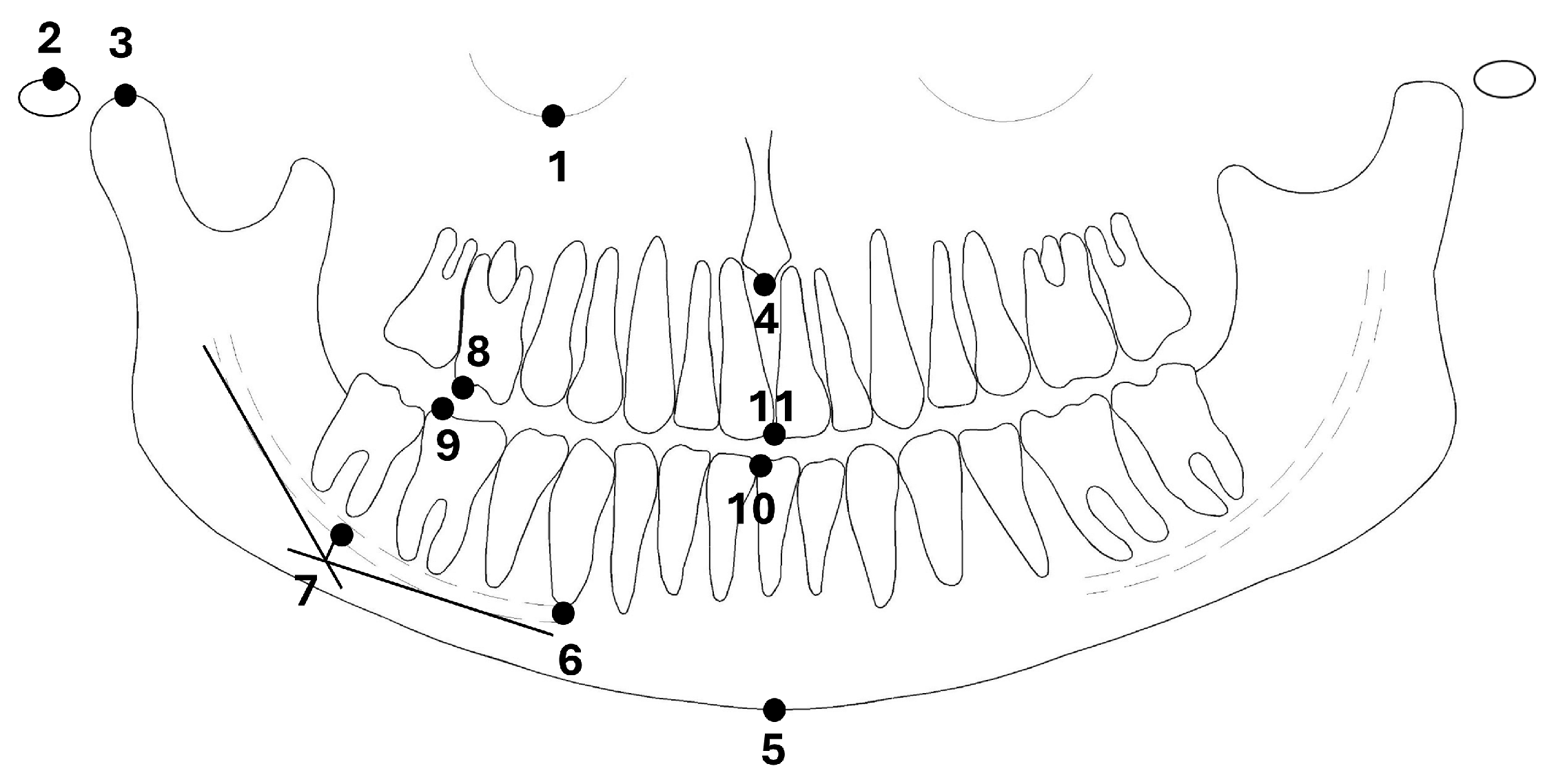
All patients’ lateral cephalograms were obtained with their heads in a natural position as a reference [9]. Panoramic radiographs were obtained under standardized conditions with a cephalostat, ensuring the clinical Frankfort horizontal plane (FHP) remained parallel to the floor, while the midfacial plane was oriented vertically. To prevent any potential overlap of the cervical vertebrae’s image with the teeth, the individuals were instructed to advance a step forward while positioned in the cephalostat. Due to the bite plate’s alteration of occlusion in the panoramic radiographs, independent reference planes were established in the maxilla and mandible on the panoramic images. The FHP was established between the external acoustic meatus (Mae) and orbital points, with a reference plane delineated between the intersection of the ascending and descending tangents on the mandibular canal (MC) and the mental foramen (FMe).
Using kavo opd3 device (Palodex Group OY, Tuusula, Finland) (Tube: 60–95 kV/2–165 mA), qualified radiography technicians took panoramic radiographs (orthopantomography) and lateral cephalograms. Vista Dent OC version 4.2.61 (177) was used for tracing cephalometric landmarks, and Radiant DICOM Viewer version 2021.2 for panoramic tracing. All panoramic and lateral cephalometric radiographs were acquired using the same radiographic unit and standardized imaging protocol.

2.3.2. Statistical Analysis Framework

The participants’ data were analyzed using SPSS software version 27. Demographic characteristics were summarized using descriptive statistics, including frequencies and percentages. The normality of the data distribution was assessed using the Kolmogorov–Smirnov test, in addition to evaluating skewness and kurtosis values. According to Tabachnick et al. [10], skewness and kurtosis values between −1.5 and +1.5 indicate an acceptable normal distribution. As all variables met these criteria, the data were considered normally distributed, and appropriate parametric statistical tests were subsequently applied for analysis.

2.3.3. Reliability Analysis

Tracings and measurements were performed by a single calibrated examiner. To reduce measurement bias, the examiner was blinded to skeletal classification and sex during data collection. Intra-examiner: 61 radiographs (20% of the sample) were re-analyzed after a two-week interval. Intra-examiner reliability was assessed using intraclass correlation coefficients (ICC > 0.90).

2.4. Cephalometric Parameters Assessed

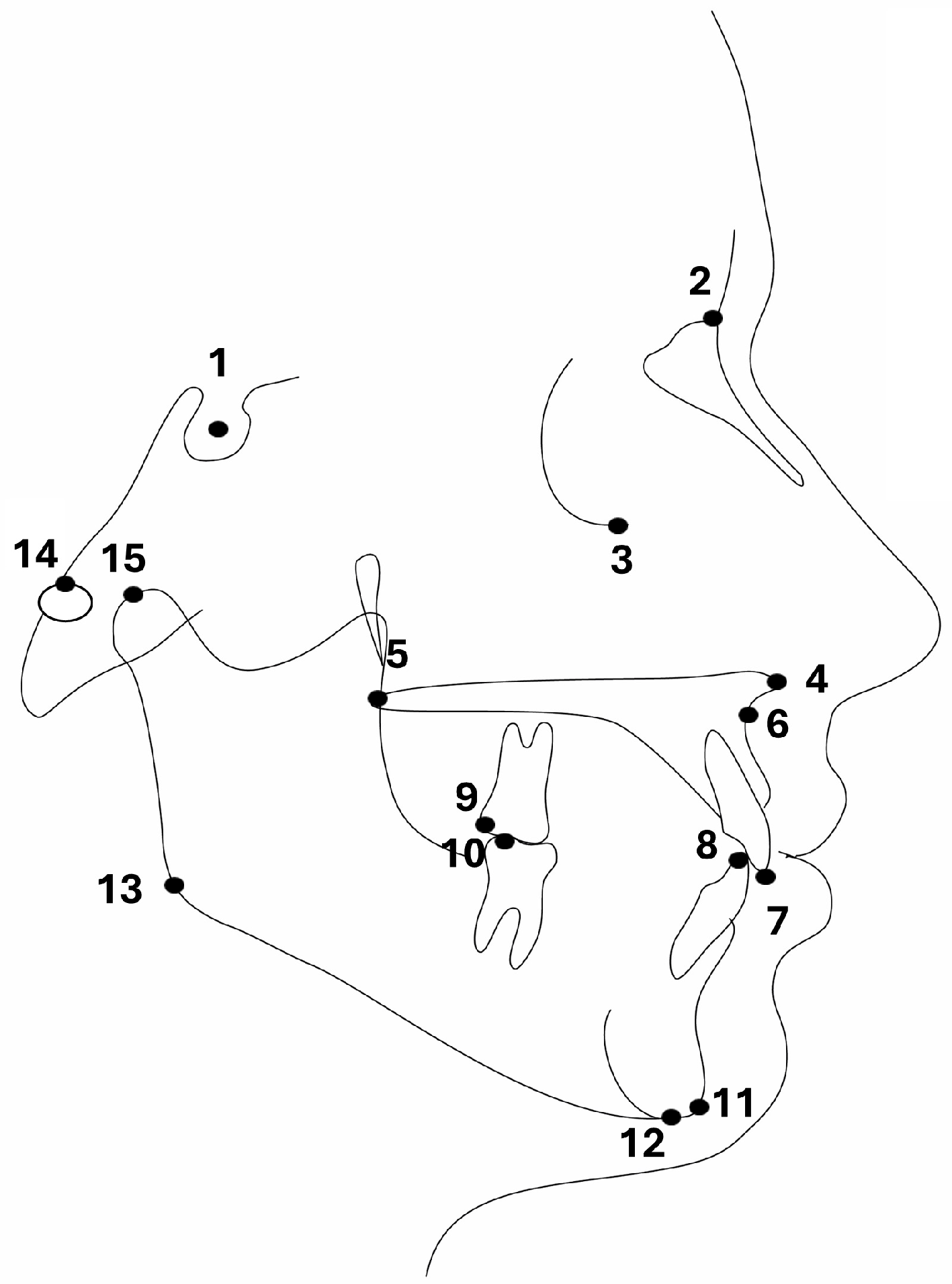
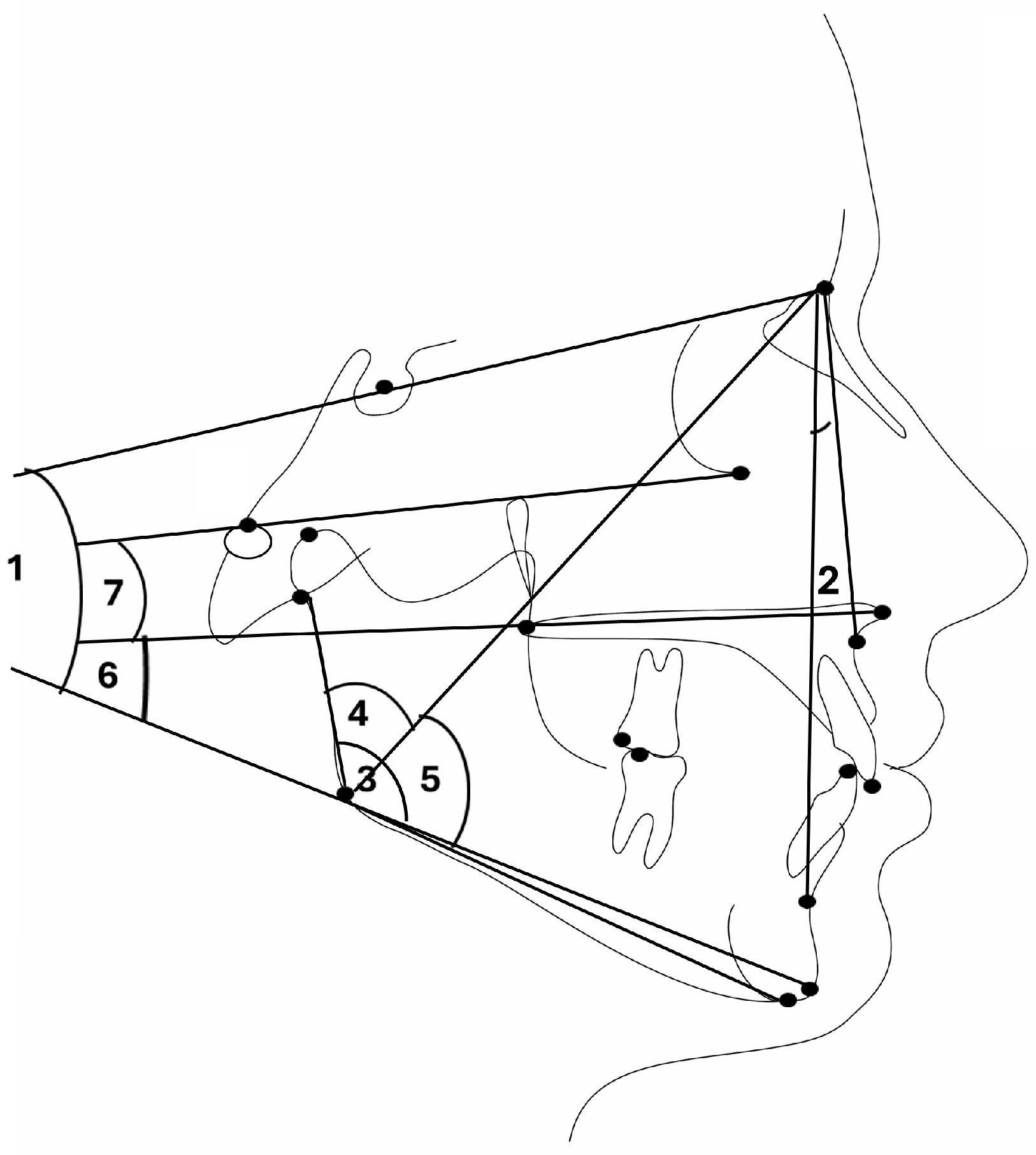
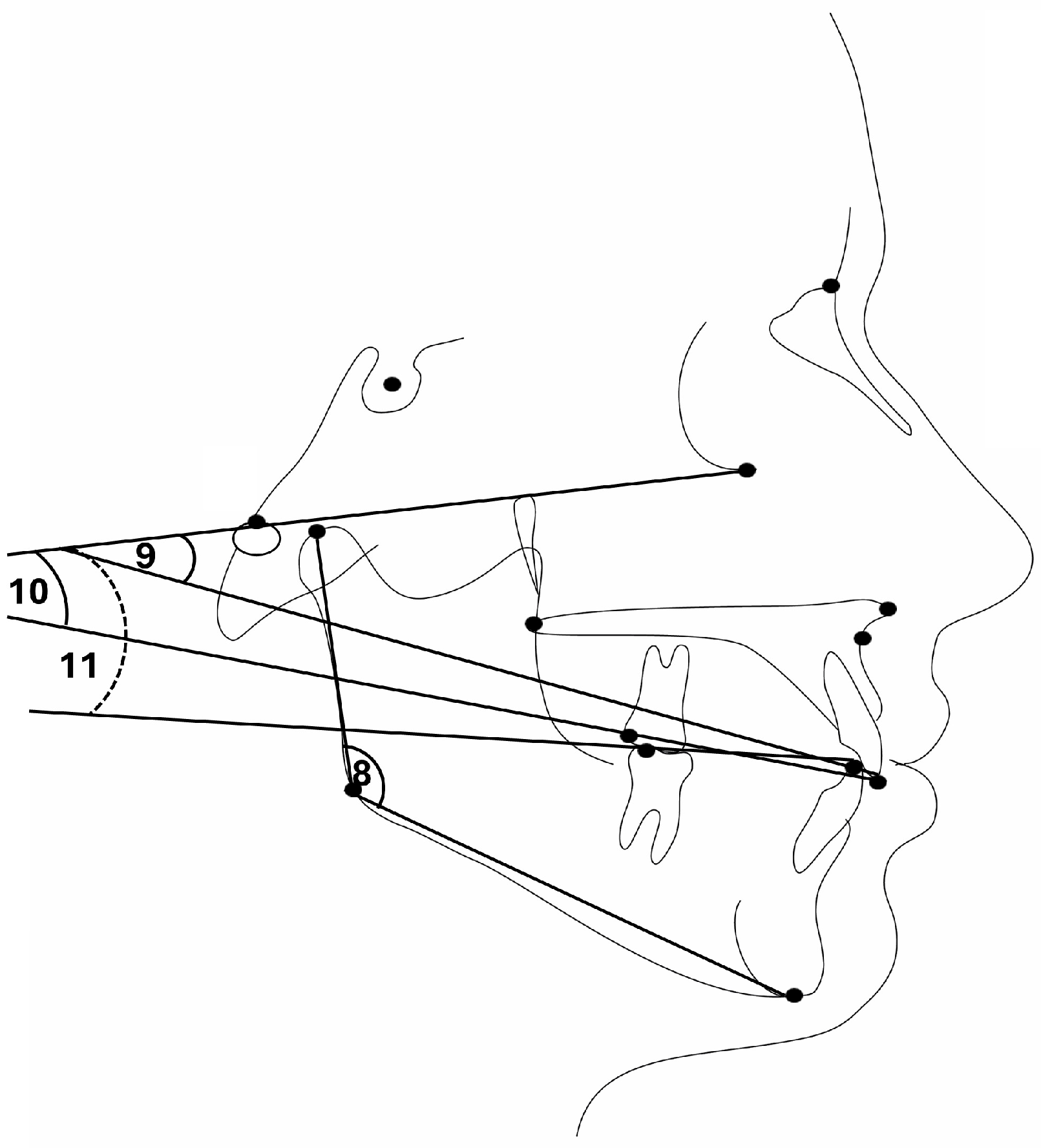
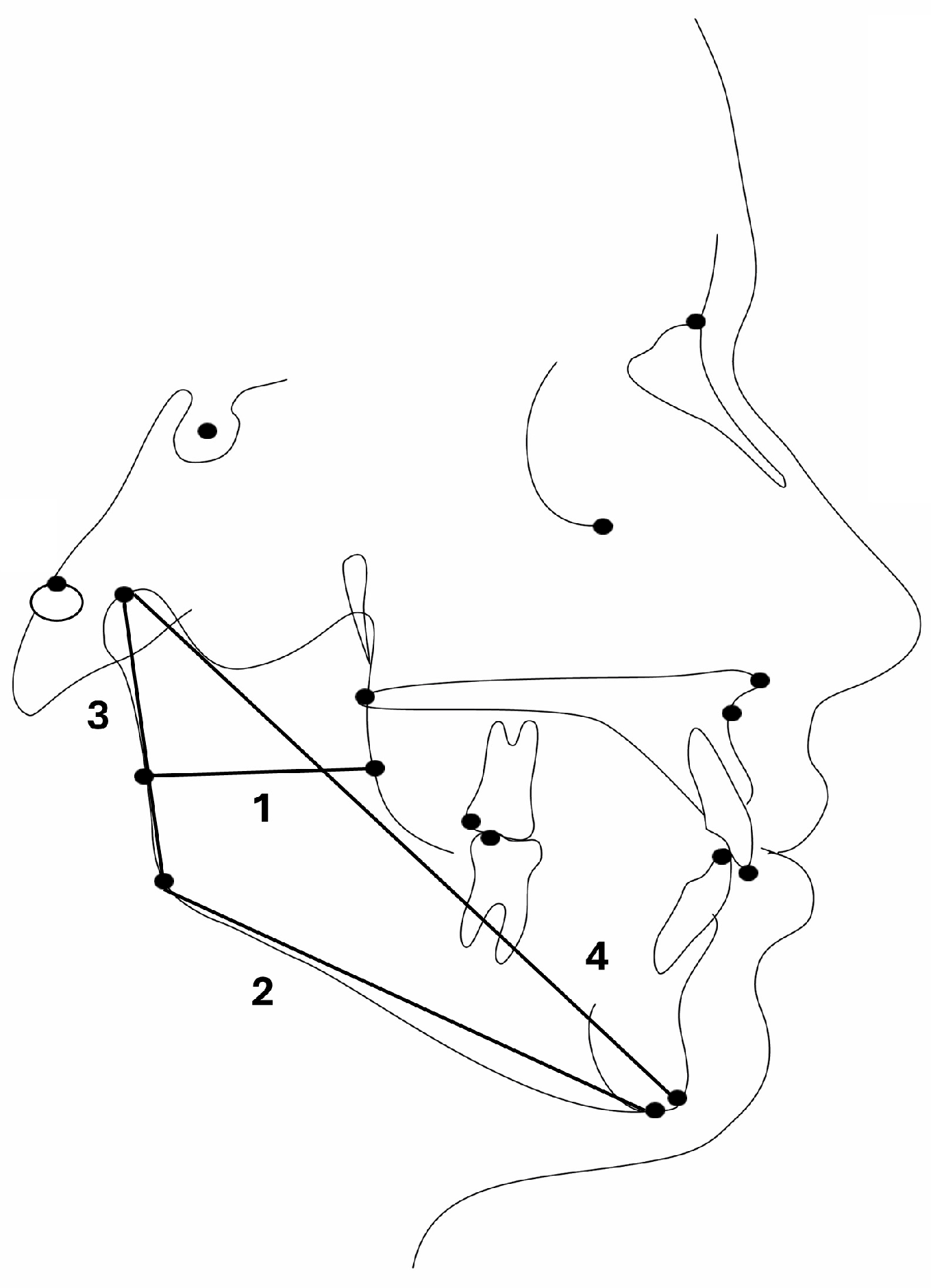
A total of 15 standard cephalometric landmarks, 11 angular measurements, and 4 linear measurements. (Figure 1, Figure 2, Figure 3 and Figure 4).
Cephalometric landmarks:
Cephalometric Angular Measurements:
(1) SN-GoGn: Angle formed by the Go-Gn plane and the SN plane. (2) ANB: Angle formed by the lines N-A and N-B. (3) Ar Go Me (Gonial Angle): Angle formed between tangents to the posterior border of the ramus and the inferior border of the mandible. (4) Go1 Upper gonial angle: formed by the points Ar, Go, N at Go (5) Go2 lower Gonial Angle: formed by the points N, Go, Me at Go (6) ANS-PNS/Go-Me: Angle formed by the palatal plane and the mandibular plane. (7) FH/ANS-PNS: Angle formed by the palatal plane and the Frankfort Horizontal Plane. (8) Co-Go/Go-Me (condylar inclination angle): Angle formed by the mandibular plane and Co-Go plane. (9) FH/U1: Angle formed between the Frankfort Horizontal Plane and a line joining points U1. (10) FH/U6-U1: Angle formed by the Frankfort Horizontal Plane and a line joining the points U6 and U1. (11) FH/L6-L1: Angle formed by the Frankfort Horizontal Plane and a line joining points L6 and L1.

2.5. Panoramic Parameters Assessed

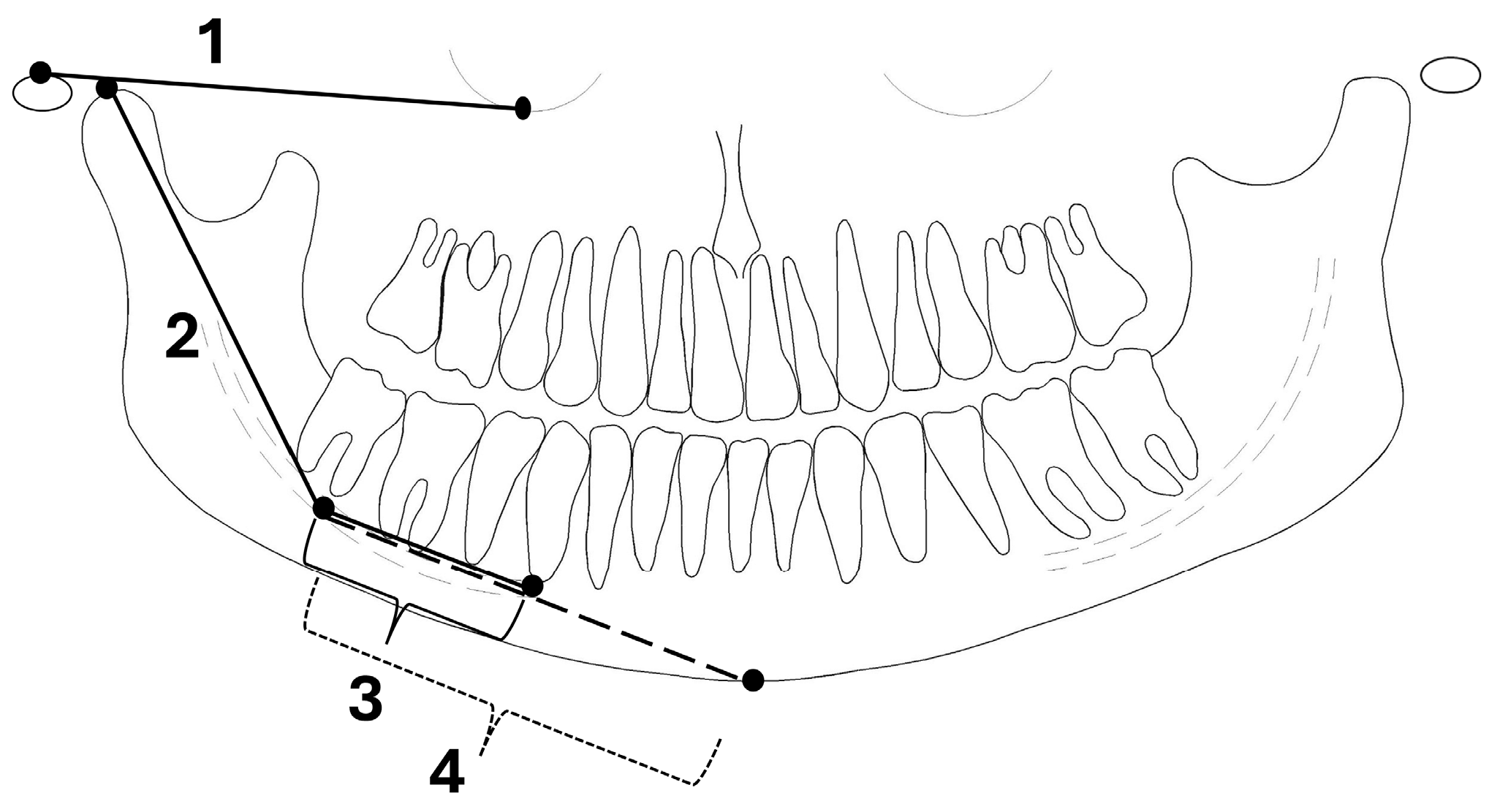
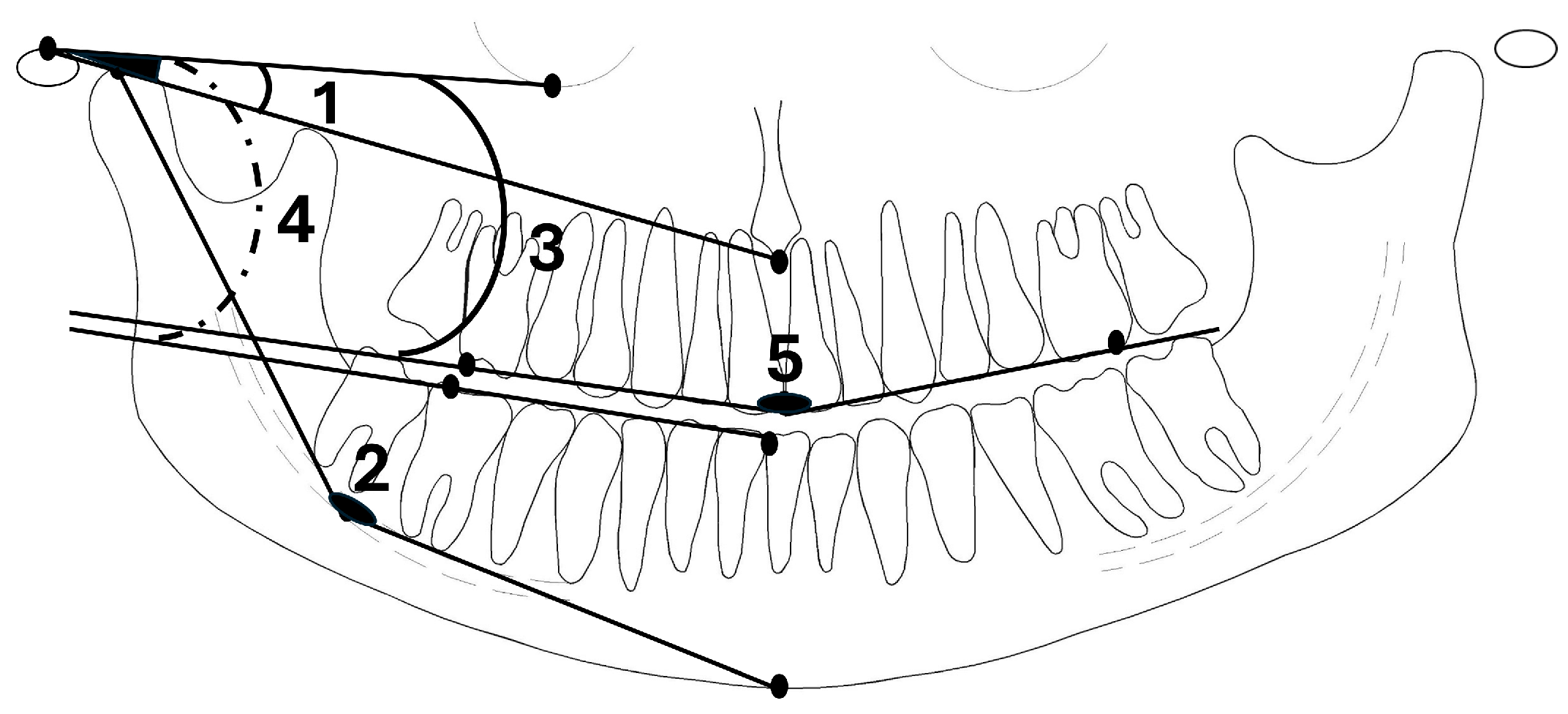
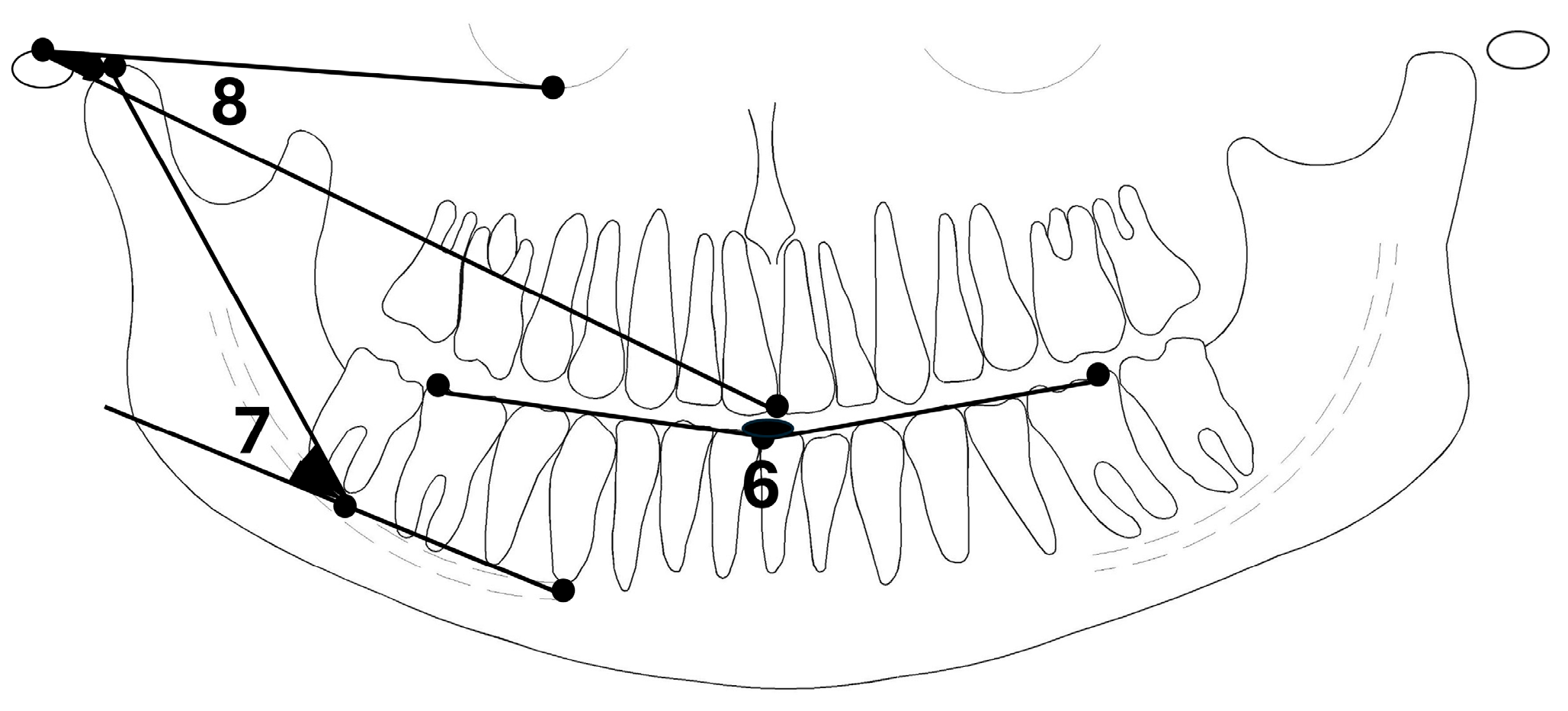
A total of 11 standard cephalometric landmarks, 8 angular measurements, and 4 reference planes (Figure 5, Figure 6, Figure 7 and Figure 8).
Three panoramic parameters, OMAND, OCOND, and OMID, were defined using stable infrabony landmarks to enable valid comparison with cephalometric measurements. OMAND (Co-MC-Me) serves as the panoramic analog of the cephalometric gonial angle (Ar-Go-Me), while OCOND (Co-MC-FMe) corresponds to condylar inclination (Co-Go/Go-Me), and OMID (FH-U1) corresponds to maxillary incisor inclination (FH/U1). The mandibular canal (MC) and mental foramen (FMe) that are presented in Table 1 were selected as reference points because they are infrabony, stable structures unaffected by external remodeling, consistently visible on panoramic radiographs, and resistant to projection distortions that affect superficial landmarks [11]. In contrast to cephalometric techniques that utilize superficial points such as condylion (Co) and gonion (Go), panoramic radiography employed sites on the MC and FMe. We propose that differences in measurements between modalities may arise from external forces impacting the condyles, while the infrabony structures remain unaffected. A possible explanation could be the inconsistent assessment of FMe, given that both parameters employ Co-MC as the condylar plane. The cephalometric techniques utilize the Frankfort Horizontal Plane (FHP) as the primary reference plane, as indicated in the McNamara analysis [12], can be considered reliable.

3. Result

Our sample, comprising 304 individuals, provides an analysis of several mandibular and craniofacial parameters with a balanced skeletal and gender distribution.
Skeletal Class I relationship: ANB from 0 to 4 degrees. Dental Class I relationship with Class I molar relation. Skeletal Class II relationship: with ANB > 4 degrees. Dental Class II relationship with full cusp Class II or half cusp Class II molar relation. Skeletal Class III relationship: with ANB < 0. Dental Class III relation with Class III molar relation. Vertical group: Average to horizontal and vertical growth pattern SN-GoGn angle as follows: hypodivergent (SN-GoGn < 27°), normodivergent (27° ≤ SN-GoGn ≤ 37°), and hyperdivergent (SN-GoGn > 37°). Frequency and Percentage Distribution by Gender. Male (n = 123, 40.4% with mean age 21.83 ± 4.80 years), Female (n = 181, 59.6% with mean age 20.85 ± 3.74 years). Frequency and percentage distribution by skeletal group was Class I (n = 136, 44.7%), Class II (n = 126, 41.4%), and Class III (n = 42, 13.9%). Frequency and percentage distribution by vertical group: hypodivergent (n = 111, 36.5%), normodivergent (n = 154, 50.6%), and hyperdivergent (n = 39, 12.9%) cases.
No statistically significant differences were found between male and female subjects in the evaluated cephalometric and panoramic measurements, which are shown in Table 2.
The paired samples t-test is shown in Table S1 (see Supplementary Materials). Most dentoskeletal measurements, including FH/ANS, FH/UOP, and FH/LOP …, did not show statistically significant right–left differences. Statistically significant right–left differences were observed for OMAND and OCOND. Correlation analysis revealed statistically significant correlations between the right and left sides for all evaluated variables.
Correlation in (Table 3) Between cephalometric and panoramic measurements, all correlations are statistically significant (p ≤ 0.001), indicating strong evidence of relationships between these measurements. The correlation analysis revealed several important relationships between cephalometric and panoramic measurements. A moderate negative correlation was found between the mandibular angle (SN-GoGn) and condylar inclination (OCOND) on panoramic radiographs (r = −0.42) with a regression equation R2 = 18.0%. Similarly, the (ANS-PNS/Go-Me) angle also showed a moderate negative correlation with panoramic condylar inclination (OCOND) (r = −0.40, R2 = 16.2%). The correlation between cephalometric OCOND (Co-Go/Go-Me) and panoramic gonial angle (OMAND) was strong (r = 0.52, p ≤ 0.001). Therefore, predicting the cephalometric condylar inclination by using OMAND had a 27.50% probability with a significance level of p ≤ 0.001. The cephalometric FHP/maxillary occlusal plane angles (FH/U6-U1) and panoramically (FH/UOP) demonstrated a strong positive correlation (r = 0.66, p ≤ 0.001), and the regression equation was significant between the measurements (p ≤ 0.001); this explains the 44.7% predictability of cephalometric FH/U6-U1 from panoramic radiographs. On the other hand, the panoramic FHP/lower occlusal plane (FH/LOP) showed moderate correlation (r = 0.42, p ≤ 0.001) with FH/U6-U1, and the regression analysis showed a significant (p ≤ 0.001) relationship with limited predictability (29.2%). These results suggest that both FH/LOP and FH/UOP can be used to predict cephalometric FH/U6-U1. There were statistically significant correlations between FH/L6-L1 with FH/UOP and FH/LOP (r = 0.39, r = 0.64, p ≤ 0.001), even though the predictability levels were remarkably low in FH/UOP (R2 15.8% and R2 41%). Moderate to weak positive correlations were determined between FH/U1 with FH/UOP and FH/LOP (r = 0.39, r = 0.23, p ≤ 0.001), and the regression equations coincided with these correlations because, when using FH/LOP, the predictability of cephalometric FH/U1 was as low as 5.40%, but it was 15.30% when using FH/UOP.
The most noticeable differences have been observed in measurements of the length and height of the mandible between males and females that are shown in Table 4. The Cond-Gn (condylion to gnathion) distance, which shows the total length of the mandible, was much longer in men (114.49 mm) than in women (105.79 mm). The Go-Me (gonion to menton), which shows the mandible body length, was also very different between men (71.88 mm) and women (68.23 mm). Men displayed a much longer body length (p ≤ 0.001). The ramus height measurements were significantly greater in males (59.95 mm) compared to females (53.18 mm). There were additionally big differences in transverse males, who exhibited a greater mandibular width (27.09 mm compared to 26.03 mm).
The panoramic OMID in Table 5 was likewise substantially greater in Class II than in Class III (26.05 vs. 24.25, p < 0.002). Also, Class II had a far higher overjet than Class I and Class III. This was shown by FH/U6-U1 (10.59°). The occlusal plane measures also varied significantly: UOCCL was lowest in Class II (159.25°) and greatest in Class III (166.40°, p < 0.001). LOCCL displayed minimal differences, with Class I versus Class II nearing significance (p = 0.056). The FH/UOP was considerably elevated in Class II (8.48°) compared to Class III (4.58°, p < 0.001), demonstrating variations in the occlusal plane between the two groups. Certain measurements pertaining to the mandibular ramus or condylar areas, such as the gonial angles (“Go1,” “Go2,” and “Ar Go Me”) and the mandibular condyle measurements (CO-GO/GO-ME and OCOND, OMAND), failed to exhibit statistically significant differences across groups.
Gonial angles (lower gonial angles Go2 and Ar Go M) were significantly larger in the high-angle group compared to the normal and low-angle groups Table 6, while the upper gonial angle (Go1) showed no significant difference. The orientation of the occlusal planes was dramatically affected by vertical facial type. Both the maxillary (FH/UOP) and mandibular (FH/LOP) occlusal planes were significantly steeper in the high-angle group (10.80° and 8.69°) and flattest in the low-angle group (4.77° and 4.28°). Panoramic measurements reinforced these findings, showing a flatter occlusal curvature (larger UOCCL and LOCCL angles) in low-angle subjects and a more curved one in high-angle subjects. Additionally, the condyle inclination in panorama (OCOND) was smallest in high-angle and largest in low-angle subjects. The CO-GO/GO-ME angle in cephalometric radiograph is highest in the High Angle group and lowest in the Low Angle group, with significant differences across all groups.
The morphology of the mandible underwent significant alteration, as shown in Table S2 (see Supplementary Materials). Individuals in Class III exhibited the greatest mandible length (Cond-Gn, 115.13 mm) and mandible body length (Go-Me, 72.47 mm), all significantly surpassing measurements in Class I and II. The ramus height (Cond-Go) exhibited a comparable trend, with Class III patients demonstrating the greatest height (59.87 mm). This illustrates how this skeletal configuration promotes increased vertical and horizontal development of the mandible.
One-way ANOVA showed in Table S3 (see Supplementary Materials) significant differences among the high, normal, and low angle groups for all mandibular measurements (p ≤ 0.01). The low-angle group exhibited the highest mean values for Cond-Gn, mandibular width, Go-Me, and ramus height. Post hoc analysis indicated that the most significant differences were between the low-angle group and the other groups, while the high- and normal-angle groups showed no significant differences.

4. Discussion

Cephalometric analysis has long been a cornerstone of orthodontic diagnosis and treatment planning due to its standardized, reproducible landmarks. Nevertheless, panoramic radiography (orthopantomogram) is widely employed owing to its user-friendliness, diminished radiation exposure, and enhanced accessibility. Unlike previous investigations that primarily focused on simple correlations between panoramic and cephalometric measurements within restricted or homogeneous samples, the present study provides a more comprehensive and clinically relevant evaluation. By simultaneously examining sagittal skeletal classifications, vertical growth patterns, and sex within a single, well-characterized cohort, this research offers an integrated analysis of mandibular morphological variation. Importantly, beyond reporting statistically significant associations, the study quantified the predictive strength of panoramic measurements using regression analysis, thereby distinguishing statistical correlation from true diagnostic reliability. This approach clarifies the clinical applicability and limitations of panoramic radiography and provides more precise guidance regarding its adjunctive rather than substitutive role in orthodontic diagnosis.
Turp et al. [13] indicated that vertical linear measurements on the condyle and the ramus are not reliable for patients featuring macerated skulls in panoramic radiographs. Similarly, Larheim and Svanaes and Stăncioiu et al. stressed that horizontal measurements were untrustworthy [14,15]. Consequently, solely angular measurements were conducted on the panoramic radiographs.
The most remarkable point in the descriptive analysis was the overwhelming difference between left and right condylar measurements on panoramic radiographs. The right and left measurement parameters on panoramic radiography were statistically insignificant (p < 0.001), and there was a high correlation coefficient between them in the range of r = 0.63 to 0.74, which differs from the results obtained by Ackam et al. [8] who showed that there was a weak correlation between OCOND (R) and OCOND (L) (r = 0.50). This necessitates an evaluation of the application of point Co in both cephalometric and panoramic assessments of the gonial angle.
In contrast, sites on the MC and the FMe were employed in panoramic radiography. We propose that the differences in measurements may arise from external forces impacting the condyles, while the infrabony structures remain unaffected. A possible explanation could be the inconsistent assessment of FMe, given that both parameters employ Co-MC as the condylar plane. The cephalometric techniques utilizing the FHP as the primary reference plane, as indicated in the McNamara analysis [12], can be considered reliable. Our findings support this discussion. The predictability of angular measurements between the stable cephalometric Frankfort Horizontal Plane and the variable occlusal plane, as observed in panoramic radiographs.
Nonetheless, an examination of the regression equations reveals that the levels of predictability are not elevated. Consequently, clinicians must use caution when predicting cephalometric dentoskeletal parameters from panoramic radiographs. FH/UOP emerged as the most reliable panoramic parameter for approximating cephalometric occlusal plane angle, whereas anterior dental parameters such as FH/U1 demonstrated weaker correlations and lower predictability. These results suggest that panoramic radiographs can supplement cephalometric analysis for initial orthodontic assessment but should not replace cephalograms for precise evaluation of occlusal or skeletal relationships.
The present findings demonstrate statistically significant associations between selected panoramic and cephalometric parameters, particularly between OMAND and the cephalometric gonial angle (Ar–Go–Me) (r = 0.52, p < 0.001). However, the corresponding coefficient of determination (R2 = 25.8%) indicates limited predictive capacity, with nearly three-quarters of the variance in cephalometric measurements remaining unexplained. Similarly, moderate correlations were observed between panoramic condylar inclination (OCOND) and vertical skeletal parameters such as SN–GoGn (r = −0.42; R2 = 18.0%) and ANS–PNS/Go–Me (r = −0.40; R2 = 16.2%). Although these relationships support a theoretical association between panoramic measurements and vertical growth patterns, particularly given the dependence of the mandibular canal plane on mandibular development, the overall explanatory power of the regression models (15–45%) remains modest.
This moderate predictability reflects fundamental differences between the two imaging modalities. Panoramic radiography is inherently subject to rotational distortion, variable magnification, and head positioning errors [16,17], whereas cephalometry employs standardized projection geometry, resulting in greater measurement consistency. Furthermore, the use of different landmark systems, internal infrabony references in panoramic imaging versus surface-based anatomical landmarks in cephalometry, introduces anatomical discrepancies. Biological variability in condylar morphology, bilateral asymmetry, and unavoidable measurement error further attenuate predictive accuracy.
Panoramic radiography may be appropriate as a preliminary screening tool for evaluating general mandibular morphology, assessing eruption patterns [18], detecting gross asymmetries [19], and observing overall growth tendencies, particularly in routine orthodontic cases. It may also assist in monitoring general angular trends, such as gonial angle configuration, when high precision is not critical. However, cephalometric analysis remains essential when accurate sagittal and vertical skeletal assessment is required for definitive diagnosis and treatment planning [20]. In cases involving significant facial asymmetry, complex skeletal discrepancies, orthognathic surgical planning, airway evaluation, or growth modification protocols, three-dimensional imaging modalities such as CBCT may be necessary to obtain precise anatomical information [21]. Finally, while this study provides robust 2D correlations, future research should validate these findings using three-dimensional imaging modalities such as cone-beam computed tomography (CBCT) to confirm the actual anatomical relationships and minimize the distortion, magnification, and superimposition errors inherent in 2D radiographic techniques.
The present study demonstrates statistically significant sexual dimorphism in mandibular cephalometric linear measurements. All assessed linear parameters were significantly greater in males compared with females, whereas angular measurements did not show significant sex-related differences [22]. These findings are consistent with established craniofacial growth patterns, in which males typically undergo a longer and more pronounced period of mandibular growth, resulting in increased skeletal dimensions.
This sexual dimorphism may be explained by differences in growth timing and duration, as skeletal maturation generally occurs earlier in females, while males experience a prolonged growth phase. Supporting this interpretation, Johannsdottir et al. [23] reported consistently larger linear craniofacial dimensions in males, including anterior and posterior facial heights, mandibular length, cranial base measurements, and nasal bone length.
Individuals with Class III skeletal patterns exhibited significantly greater mandibular dimensions compared with Class I and Class II subjects, whereas Class II individuals demonstrated significantly shorter ramus length. This finding suggests that ramus height may represent an important morphological characteristic of the Class II skeletal pattern, potentially reflecting earlier completion of ramal growth. These results are consistent with Chen et al. [24], who reported that sagittal skeletal configuration influences both vertical and horizontal mandibular development.
In contrast, angular parameters showed limited variation among sagittal groups. Previous studies have reported no significant differences in upper (Go1), lower (Go2), or mean gonial angles across skeletal classes [25], indicating that gonial angle measurements alone may not reliably distinguish sagittal discrepancies. Similarly, cephalometric condylar inclination (Co–Go/Go–Me) did not differ significantly among skeletal classes, consistent with the findings of Anto et al. [26]. Panoramic parameters (OCOND and OMAND) also failed to demonstrate significant intergroup differences.
Collectively, these findings suggest that linear mandibular dimensions, particularly ramus length, are more sensitive indicators of sagittal skeletal variation than angular measurements, while several angular parameters appear less influenced by sagittal jaw discrepancies.
Ramus width and height were significantly greater in hypodivergent individuals compared with normodivergent and hyperdivergent groups, consistent with previous reports by Sassouni [27,28], Müller [29], Schudy [30], and Mangla [31], who described reduced mandibular dimensions in hyperdivergent subjects. Mandibular body length (Go–Me) was also greater in low-angle individuals, supporting the concept that hypodivergent patients possess elongated mandibular corpora and increased posterior facial height, often associated with deep bite tendencies [32,33]. In contrast, hyperdivergent individuals demonstrated significantly larger gonial angles (Ar–Go–Me) and Go2, reflecting downward and backward mandibular rotation, whereas smaller gonial angles in hypodivergent subjects indicate forward mandibular rotation [34].
These morphological variations can be interpreted within established biomechanical and developmental frameworks. Biomechanical models have shown that hypodivergent individuals exhibit more horizontally oriented masticatory muscles, generating higher bite forces and oblique condylar loading, whereas hyperdivergent individuals demonstrate reduced bite force and predominantly vertical condylar loading patterns [35]. These functional differences influence mandibular growth direction and gonial configuration. The findings also align with Moss’s Functional Matrix Hypothesis, which proposes that skeletal structures adapt secondarily to functional demands imposed by surrounding soft tissues rather than acting as primary growth determinants [36]. Furthermore, hyperdivergent subjects have been reported to exhibit thinner masseter muscles and lower muscle volume, supporting the concept of reduced elevator muscle loading in long-face patterns [37,38].
Collectively, these biomechanical and developmental mechanisms provide a coherent theoretical explanation for the mandibular variations observed in this study.

5. Conclusions

The present study identified statistically significant associations between panoramic and cephalometric measurements, supporting the use of panoramic radiographs as a complementary tool in orthodontic assessment rather than a standalone diagnostic method.
Cephalometric radiographs are still the best way to measure the angles of skeletal and dental structures, but the results show that certain panoramic parameters, especially the gonial angle (OMAND), can give useful information about the shape and growth direction of the mandible; however, these associations demonstrated moderate predictive strength and should be interpreted with caution. The FHP may be used as a reference for selected dentoskeletal measurements on panoramic radiographs, although its predictive accuracy is limited. The findings indicated notable sexual dimorphism in mandibular linear measurements, with males and Class III individuals showing larger mandibular dimensions compared to females. Additionally, distinct morphological variations were observed among vertical growth types, where high-angle subjects presented larger gonial angles and shorter rami, while low-angle subjects demonstrated smaller gonial angles and more robust mandibular structures.

6. Limitations

This study has several limitations that should be considered when interpreting the findings. Both panoramic and cephalometric radiographs are two-dimensional imaging modalities; therefore, measurements, particularly in the condylar region, may be influenced by image distortion, magnification, and anatomical superimposition. Variations in head positioning and reference plane identification may introduce measurement error, potentially affecting the strength of observed correlations. Additionally, panoramic imaging may present unequal left–right magnification or projection differences, which could contribute to the significant asymmetries observed in certain condylar parameters.
The absence of three-dimensional imaging modalities, such as CBCT, limited the ability to verify true anatomical relationships and assess spatial discrepancies accurately. Some of the moderate predictive capacity observed between panoramic and cephalometric measurements may therefore reflect projection-related distortion rather than true morphological variation.
Furthermore, the study did not include ethnic or demographic stratification. Since craniofacial morphology varies across populations, this may limit the generalizability of the findings to other ethnic groups.
Despite these limitations, the present two-dimensional findings provide a structured baseline for future research incorporating three-dimensional imaging and more diverse populations to validate and expand upon the anatomical correlations identified.

Supplementary Materials

The following supporting information can be downloaded at: https://www.mdpi.com/article/10.3390/app16052331/s1, Table S1: Paired Samples t-Test Results for Panoramic Measurements of Right and Left Correlation Coefficients. Table S2: Descriptive Statistics and ANOVA Test of Cephalometric Linear Measurements for Skeletal Classification Group. Table S3: Descriptive Statistics and ANOVA Test of Cephalometric Linear Measurements for Vertical Classification Group.

Author Contributions

Conceptualization, W.O.A.D. and R.L.T.; methodology, W.O.A.D.; software, W.O.A.D.; validation, K.M.D. and W.O.A.D.; formal analysis, W.O.A.D.; investigation, W.O.A.D.; resources, K.M.D.; data curation, W.O.A.D.; writing—original draft preparation, W.O.A.D.; writing—review and editing, K.M.D.; visualization, W.O.A.D.; supervision, K.M.D. and R.L.T.; project administration, W.O.A.D. All authors have read and agreed to the published version of the manuscript.

Funding

This research received no external funding.

Institutional Review Board Statement

Written ethical approval was granted by the Scientific Research Ethics Committee of the Cyprus Health and Social Sciences University (KSTU/2024/319).

Data Availability Statement

The original contributions presented in this study are included in the article. Further inquiries can be directed to the corresponding author.

Acknowledgments

The authors would like to thank the Radiology Department for their valuable support and assistance throughout the research process.

Conflicts of Interest

The authors declare no conflicts of interest.

References

  1. Nielsen, I.L. Cephalometric analysis: History and clinical application. Taiwan. J. Orthod. 2022, 34, 1. [Google Scholar] [CrossRef]
  2. Kumar, S.S.; Thailavathy, V.; Srinivasan, D.; Loganathan, D.; Yamini, J. Comparison of orthopantomogram and lateral cephalogram for mandibular measurements. J. Pharm. Bioallied Sci. 2017, 9, S92. [Google Scholar] [CrossRef] [PubMed]
  3. Radhakrishnan, P.D.; Varma, N.K.S.; Ajith, V.V. Dilemma of gonial angle measurement: Panoramic radiograph or lateral cephalogram. Imaging Sci. Dent. 2017, 47, 93. [Google Scholar] [CrossRef]
  4. Shahabi, M.; Ramazanzadeh, B.-A.; Mokhber, N. Comparison between the external gonial angle in panoramic radiographs and lateral cephalograms of adult patients with Class I malocclusion. J. Oral Sci. 2009, 51, 425–429. [Google Scholar] [CrossRef] [PubMed][Green Version]
  5. Yanagita, T.; Adachi, R.; Kamioka, H.; Yamashiro, T. Severe open bite due to traumatic condylar fractures treated nonsurgically with implanted miniscrew anchorage. Am. J. Orthod. Dentofac. Orthop. 2013, 143, S137–S147. [Google Scholar] [CrossRef]
  6. Tashkandi, N.E.; Alnaqa, N.H.; Al-Saif, N.M.; Allam, E. Accuracy of gonial angle measurements using panoramic imaging versus Lateral Cephalograms in adults with different mandibular divergence patterns. J. Multidiscip. Healthc. 2024, 17, 1923–1929. [Google Scholar] [CrossRef] [PubMed]
  7. Zulfiqar, M.F.; Zulfiqar, K.; Bashir, U.; Luqman, U.; Rizwan, Z. Comparison Of Orthopantomogram and Lateral Cephalogram for Gonial Angle, Mandibular Ramus Height And Body Length. J. Rawalpindi Med. Coll. 2024, 28. [Google Scholar] [CrossRef]
  8. Akcam, M.O.; Altiok, T.; Ozdiler, E. Panoramic radiographs: A tool for investigating skeletal pattern. Am. J. Orthod. Dentofac. Orthop. 2003, 123, 175–181. [Google Scholar] [CrossRef]
  9. Ahn, J.-H.; Bae, K.-H.; Park, Y.-J.; Hong, R.-K.; Nam, J.-H.; Kim, M.-J. Assessment of antero-posterior skeletal relationships in adult Korean patients in the natural head position and centric relation. Korean J. Orthod. 2010, 40, 421–431. [Google Scholar] [CrossRef][Green Version]
  10. Tabachnick, W. Culicoides and the global epidemiology of bluetongue virus infection. Vet. Ital. 2004, 40, 144–150. [Google Scholar]
  11. Chen, G.; Al Awadi, M.; Chambers, D.W.; Lagravère-Vich, M.O.; Xu, T.; Oh, H. The three-dimensional stable mandibular landmarks in patients between the ages of 12.5 and 17.1 years. BMC Oral Health 2020, 20, 153. [Google Scholar] [CrossRef] [PubMed]
  12. McNamara, J.A., Jr. A method of cephalometric evaluation. Am. J. Orthod. 1984, 86, 449–469. [Google Scholar] [CrossRef]
  13. Türp, J.; Vach, W.; Harbich, K.; Alt, K.; Strub, J. Determining mandibular condyle and ramus height with the help of an Orthopantomogram®–a valid method? J. Oral Rehabil. 1996, 23, 395–400. [Google Scholar] [CrossRef]
  14. Stăncioiu, A.-A.; Motofelea, A.C.; Hușanu, A.A.; Vasica, L.; Nagib, R.; Popa, A.; Szuhanek, C. Associations of Digital Measurements: Analysis of Orthopantomography Versus Lateral Cephalograms for Evaluation of Facial Asymmetry. J. Clin. Med. 2025, 14, 1296. [Google Scholar] [CrossRef]
  15. Larheim, T.; Svanaes, D. Reproducibility of rotational panoramic radiography: Mandibular linear dimensions and angles. Am. J. Orthod. Dentofac. Orthop. 1986, 90, 45–51. [Google Scholar] [CrossRef]
  16. Singh, S.; Singh, I.; Ahmed, F.; Baba, A. Retrospective study: Evaluating the positioning errors in digital panoramic radiographs. Indian J. Contemp. Dent. 2022, 10, 5–8. [Google Scholar] [CrossRef]
  17. Izzetti, R.; Nisi, M.; Aringhieri, G.; Crocetti, L.; Graziani, F.; Nardi, C. Basic knowledge and new advances in panoramic radiography imaging techniques: A narrative review on what dentists and radiologists should know. Appl. Sci. 2021, 11, 7858. [Google Scholar] [CrossRef]
  18. İbIşoğlu, G.N.; Uslu-Akcam, O. Is there a relationship between mandibular third molar impaction and mandibular morphology? BMC Oral Health 2025, 25, 739. [Google Scholar] [CrossRef] [PubMed]
  19. Moorthy, K.S.; Sofyanti, E.; Boel, T.; Govanny, J.O.; Rachmawati, A. Adjunctive radiograph diagnostic in vertical mandibular asymmetry. Dent. J. 2021, 54, 21–24. [Google Scholar] [CrossRef]
  20. Kotuła, J.; Kuc, A.E.; Lis, J.; Kawala, B.; Sarul, M. New sagittal and vertical cephalometric analysis methods: A systematic review. Diagnostics 2022, 12, 1723. [Google Scholar] [CrossRef]
  21. Kim, D.-H.; Li, Y.; Lee, K.C. Three-dimensional cephalometric evaluation of the craniofacial morphology in Korean population utilizing cone-beam computed tomography. Korean J. Orthod. 2025, 55, 254–265. [Google Scholar] [CrossRef] [PubMed]
  22. Yassir, Y.A. Ramus Height and its relationship with skeletal and dental measurements. J. Oral Dent. Res. 2013, 1, 4–8. [Google Scholar] [CrossRef]
  23. Johannsdottir, B.; Thordarson, A.; Magnusson, T.E. Craniofacial skeletal and soft tissue morphology in Icelandic adults. Eur. J. Orthod. 2004, 26, 245–250. [Google Scholar] [CrossRef]
  24. Chen, H.-S.; Hsiao, S.-Y.; Lee, K.-T. Analysis of facial skeletal morphology: Nasal bone, maxilla, and mandible. BioMed Res. Int. 2021, 2021, 5599949. [Google Scholar] [CrossRef]
  25. Budipramana, M.; Budhy, T.I.; Ardani, I.G.A.W. Gonial angle characteristics of class iii malocclusion in javanese ethnic. Pesqui. Bras. Odontopediatria Clínica Integr. 2021, 21, e0153. [Google Scholar] [CrossRef]
  26. D’Antò, V.; Madariaga, A.C.P.; Rongo, R.; Bucci, R.; Simeon, V.; Franchi, L.; Valletta, R. Distribution of the condylion-gonion-menton (cogome^) angle in a population of patients from southern Italy. Dent. J. 2019, 7, 104. [Google Scholar] [CrossRef] [PubMed]
  27. Sassouni, V. Diagnosis and treatment planning via roentgenographic cephalometry. Am. J. Orthod. 1958, 44, 433–463. [Google Scholar] [CrossRef]
  28. Sassouni, V.; Nanda, S. Analysis of dentofacial vertical proportions. Am. J. Orthod. 1964, 50, 801–823. [Google Scholar] [CrossRef]
  29. Muller, G. Growth and development of the middle face. J. Dent. Res. 1963, 42, 385–399. [Google Scholar] [CrossRef]
  30. Schudy, F.F. Vertical growth versus anteroposterior growth as related to function and treatment. Angle Orthod. 1964, 34, 75–93. [Google Scholar] [CrossRef]
  31. Mangla, R.; Singh, N.; Dua, V.; Padmanabhan, P.; Khanna, M. Evaluation of mandibular morphology in different facial types. Contemp. Clin. Dent. 2011, 2, 200–206. [Google Scholar] [CrossRef] [PubMed]
  32. Rajesh, R.; Gupta, S.; Chakraborty, S.; Patil, S.S.; Chauhan, A.; Mukherjee, A.; Gupta, S. Three-Dimensional Assessment of Mandibular Morphology Across Vertical Facial Growth Patterns Using Cone-Beam Computed Tomography: A Cross-Sectional Study. Cureus 2025, 17, e84895. [Google Scholar] [CrossRef]
  33. Reis, A.d.S.; Copello, F.d.M.; de Castro, A.C.R.; Cevidanes, L.H.S.; Rego, M.V.D.; Visconti, M.A.; Ruellas, A.C.d.O. 3D analysis of maxillomandibular morphology in hyperdivergent and hypodivergent individuals: A cross-sectional study. Orthod. Craniofacial Res. 2023, 26, 687–694. [Google Scholar] [CrossRef]
  34. Bajracharya, M.; Rajbhandari, A.; Pradhan, R.; Manandhar, P.; Maharjan, S.; Pant, B.D. Gonial angle by lateral cephalogram in orthodontic patients of a tertiary care hospital: A descriptive cross-sectional study. JNMA J. Nepal Med. Assoc. 2021, 59, 482. [Google Scholar] [CrossRef]
  35. Haskell, B.; Day, M.; Tetz, J. Computer-aided modeling in the assessment of the biomechanical determinants of diverse skeletal patterns. Am. J. Orthod. 1986, 89, 363–382. [Google Scholar] [CrossRef] [PubMed]
  36. Moss, M.L.; Salentijn, L. The primary role of functional matrices in facial growth. Am. J. Orthod. 1969, 55, 566–577. [Google Scholar] [CrossRef]
  37. Togninalli, D.; Antonarakis, G.S.; Papadopoulou, A.K. Relationship between craniofacial skeletal patterns and anatomic characteristics of masticatory muscles: A systematic review and meta-analysis. Prog. Orthod. 2024, 25, 36. [Google Scholar] [CrossRef]
  38. Yoon, Y.J.; Kang, J.-Y.; Kim, K.-H.; Cha, J.-Y.; Ahn, H.J.; Choi, Y.J. Correlation of masticatory muscle activity and occlusal function with craniofacial morphology: A prospective cohort study. Clin. Oral Investig. 2023, 27, 5367–5376. [Google Scholar] [CrossRef] [PubMed]
Figure 1. Cephalometric landmarks: 1, sella (S); 2, nasion (N); 3, orbitale (OR); 4, anterior nasal spine (ANS); 5, posterior nasal spine (PNS); 6, A-point; 7, incisal edge of maxillary incisor (U1); 8, incisal edge of mandibular incisor (L1); 9, distobuccal tubercule of maxillary first molar (U6); 10, distobuccal tubercle of mandibular first molar (L6); 11, gnathion (Gn); 12, menton (Me); 13, gonion (Go); 14, meatus acusticus externus (Mae); 15, condylion (Co).
Applsci 16 02331 g001
Figure 2. (1) SN-GoGn; (2) ANB; (3) Ar Go Me; (4) Go1; (5) Go2; (6) ANS-PNS/Go-Me; (7) FH/ANS-PNS.
Applsci 16 02331 g002
Figure 3. (8) Co Go/Go-Me; (9) FH/U1; (10) FH/U6-U1; (11) FH/L6-L1.
Applsci 16 02331 g003
Figure 4. Linear measurements in cephalometrics: (1) mandibular width: The distance from anterior to posterior ramal walls at the level of the midpoint. (2) Go-Me Mandible Body Length: Measured from the gonion point to the mandibular midpoint. (3) Ramus Hight: The distance between the condylion and gonion. (4) Cond-Gn: Measured from the condylion point to gnathion.
Applsci 16 02331 g004
Figure 5. Landmarks: 1; Or. 2; Mae. 3; Co. 4; ANS. 5; Me. 6; foramen mentale (FMe). 7; mandibular canal (MC) perpendicular to the lower border of MC from the intersection of the lower and upper canal tangents) is considered a stable infrabony structure. 8; U6. 9; L6. 10; contact point of mandibular incisors (L1). 11; contact point of maxillary incisors (U1).
Applsci 16 02331 g005
Figure 6. The following reference plans were drawn: 1. Mae-Or: A line joining the meatus acusticus externus and the orbitale. 2. Condylar plane (Co-MC): A line joining Co and MC points. 3. MC plane (MC-FMe): A line joining FMe and MC points. 4. Corpus line (MC-Me): A line joining the MC point and Me point.
Applsci 16 02331 g006
Figure 7. The following angular measurements were determined in panoramic: Angular measurements: 1, FH/ANS angle between the Frankfort Horizontal Plane and anterior nasal spine; 2, OMAND (Co-MC/MC-Me), panoramic alternative of cephalometric gonial angle. 3, FH/UOP (FH/U6-U1), angle between FH and maxillary occlusal planes; 4, FH/LOP (FH/L6-L1), angle between FH and mandibular occlusal planes; 5, UOCCL (U6-U1-U6), maxillary occlusal angle.
Applsci 16 02331 g007
Figure 8. 6, LOCCL (L6-L1-L6), mandibular occlusal angle; 7, OCOND (Co-MC/FMe-MC), panoramic radiograph alternative of condylar inclination angle; 8, OMID (FH/UI), angle between FHP and maxillary incisors.
Applsci 16 02331 g008
Table 1. The following panoramic landmarks were identified:.
LandmarksSignificance
OrThe lowest point on the inferior rim of the orbit.
MaeMeatus Acusticus Externus: location of the external auditory meatus.
CoCondylion
ANSAnterior nasal spine: anterior tip of the sharp bony process of the maxilla at the lower margin of the anterior nasal opening.
MeThe lowest point on the symphysis shadow of the mandible.
FMeForamen mentale.
MCMandibular canal: perpendicular to the lower border of the mandibular canal from the upper and lower canal tangents is considered to be a stable infrabony structure.
U6Distobuccal cusp of upper first molar.
L6Distobuccal cusp of lower first molar.
L1Contact point of mandibular incisors.
U1Contact point of maxillary incisors.
Table 2. Student t-test for panoramic radiograph and cephalometric measurements in male (n = 123) and female (n = 181) subjects.
Cephalometric
MeanStd. Deviationtp-Value
MaleFemaleMaleFemale
SN-GoGn29.60 31.086.666.73−1.880.062
ANB2.823.523.442.63−1.880.061
Ar Go Me (Gonial Angle)122.02122.116.877.32−0.110.915
“Go1”48.7249.664.094.42−1.860.064
“Go2”73.2572.435.885.811.190.235
ANS-PNS/Go-Me24.0424.746.506.11−0.940.346
FH/ANS-PNS−0.04−0.253.803.530.480.633
CO-GO/GO-ME118.51118.545.956.28−0.030.973
FH/U128.7127.992.972.952.070.050
FH/U6-U19.098.944.564.430.270.786
FH/L6-L14.134.822.953.44−1.790.075
Panoramic
MeanStd. Deviationtp-Value
MaleFemaleMaleFemale
UOCCL163.28162.509.5010.200.780.505
LOCCL169.26168.009.009.504.190.252
FH/ANS (mean R+L) 11.7911.292.972.761.480.139
OMAND (mean R+L) 140.07139.165.024.881.570.118
FH/UOP (mean R+L) 6.467.413.734.36−2.010.056
FH/LOP (mean R+L) 5.225.713.223.91−1.190.233
OCOND (mean R+L) 43.7243.124.995.231.010.315
OMID (mean R+L) 25.7225.212.872.951.460.144
Table 3. Correlation coefficients between cephalometric and panoramic radiograph parameters.
OMANDFH/UOPFH/LOPOCAND
SN-GoGn r0.42 **0.49 **0.36 **−0.42 **
ANS-PNS/Go-Me r0.43 **0.36 **0.32 **−0.40 **
CO-GO/GO-ME r0.52 **0.22 **0.20 **−0.481 **
Ar Go Mer0.52 **0.20 **0.19 **−0.47 **
FH/U1 r0.15 **0.39 **0.23 **−0.103 **
FH/U6-U1 r0.15 **0.66 **0.42 **−0.218 **
FH/L6-L1 r0.18 **0.39 **0.64 **−0.22 **
** p ≤ 001.
Table 4. Descriptive statistics and an independent t-test of cephalometric linear measurements for the gender group.
MeanStd. Deviationtp-Value
MaleFemaleMaleFemale
Cond-Gn114.49105.797.046.0311.440.000
Mandibular width27.0926.033.312.892.930.004
Go-Me71.8868.236.015.075.490.000
Ramus Hight CO-GO59.9553.185.915.1510.520.000
Table 5. Descriptive statistics and ANOVA test of cephalometric and panoramic measurements for the skeletal classification group.
DescriptivesANOVABonferroni
MeanStd. Deviation
IIIIIIIIIIIIFSig.I vs. III vs. IIIII vs. III
SN-GoGn30.3031.8027.046.546.646.547.990.0000.2040.0190.000
ANB2.216.00−1.861.151.461.68575.430.0000.0000.0000.000
“Go1”49.4848.7150.384.334.144.592.550.080
“Go2”72.7172.7772.905.766.015.680.020.983
Ar Go M (Gonial Angle)122.20121.52123.336.597.497.741.010.367
ANS-PNS/Go-Me24.0325.3623.106.026.356.622.570.078
FH to ANS-PNS0.15−0.10−1.403.593.713.392.860.059
CO-GO/GO-ME118.59118.23119.225.716.436.730.400.670
FH/U128.0928.8727.142.803.052.975.820.0030.0970.2220.004
FH/U6-U18.3410.596.304.204.353.9718.540.0000.0000.0230.000
FH/L6-L14.225.004.222.923.553.332.140.120
Panoramic
UOCCL162.54159.25166.407.968.166.1514.050.0000.0020.0200.000
LOCCL167.86165.51168.847.678.836.164.000.0190.0561.0000.068
FH/ANS R+L11.2712.0010.642.732.942.724.260.0150.1130.6490.025
OMAND R+L139.62138.97140.934.764.706.052.440.089
FH/UOP R+L6.438.484.583.844.163.3417.860.0000.0000.0280.000
FH/LOP R+L5.356.034.473.314.093.103.050.0490.4040.5280.056
OCOND R+L43.7343.1142.895.055.175.330.670.510
OMID R+L25.1826.0524.252.972.742.906.730.0010.0490.2130.002
Table 6. Descriptive statistics and ANOVA test of cephalometric and panoramic measurements for the vertical classification group.
DescriptivesANOVABonferroni
MeanStd. Deviation
High
Angle
Normal AngleLow
Angle
High
Angle
Normal AngleLow
Angle
FSig.N vs. HN vs. LH vs. L
SN-GoGn41.5632.6223.543.572.793.27566.220.0000.0000.0000.000
ANB4.233.562.432.982.833.067.260.0010.6050.0070.003
“Go1”48.2149.1249.894.074.324.332.430.089
“Go2”81.2874.2267.674.583.493.82211.100.0000.0000.0000.000
Ar Go Me (Gonial Angle)129.51123.40117.556.495.636.2065.600.0000.0000.0000.000
ANS-PNS to Me-Go32.9525.9019.404.354.404.52150.150.0000.0000.0000.000
FH to ANS-PNS−0.130.22−0.713.323.723.582.070.128
CO-GO/GO-ME125.31119.76114.385.284.705.2578.590.0000.0000.0000.000
Panoramic
UOCCL158.17160.71164.328.767.977.4911.050.0000.2240.0010.000
LOCCL162.99165.66170.369.127.966.5718.180.0000.1590.0000.000
FH/ANS R+L13.3711.8410.333.332.592.5321.060.0000.0050.0000.000
OMAND R+L142.92140.35137.174.764.394.7127.910.0000.0050.0000.000
FH/UOP R+L10.807.684.774.633.822.9144.300.0000.0000.0000.000
FH/LOP R+L8.695.584.284.853.522.4724.340.0000.0000.0070.000
OCOND R+L40.0642.3445.964.614.644.8129.970.0000.0210.0000.000
OMID R+L28.1425.9023.772.682.492.6047.750.0000.0000.0000.000
Disclaimer/Publisher’s Note: The statements, opinions and data contained in all publications are solely those of the individual author(s) and contributor(s) and not of MDPI and/or the editor(s). MDPI and/or the editor(s) disclaim responsibility for any injury to people or property resulting from any ideas, methods, instructions or products referred to in the content.