Article

One-Step Preparation of N-Doped Coal-Based Carbon for H2S Desulfurization

1
Taiyuan Ecological Environment Monitoring Center of Shanxi Province, Taiyuan 030024, China
2
College of Chemistry and Chemical Engineering, Taiyuan University of Technology, Taiyuan 030024, China
3
Shanxi Engineering Center of Civil Clean Fuel, Taiyuan University of Technology, Taiyuan 030024, China
*
Author to whom correspondence should be addressed.
Appl. Sci. 2026, 16(5), 2320; https://doi.org/10.3390/app16052320
Submission received: 25 December 2025 / Revised: 19 January 2026 / Accepted: 26 January 2026 / Published: 27 February 2026
(This article belongs to the Section Environmental Sciences)

Abstract

Hydrogen sulfide (H2S) commonly exists in natural gas, syngas, and coal-derived gas, and the elimination of H2S from industrial gases is essential before application. In this study, we utilized low-cost lignite as a raw material. After acid-washing pretreatment, nitrogen-containing substances (urea or dicyandiamide) were incorporated into the coal, and two types of N-modified activated carbon desulfurizers for ambient-temperature H2S removal were prepared via an in situ loading method, integrating the synthesis of activated carbon with the loading of active components. When the dicyandiamide content was 9 wt.%, and the oxygen concentration for desulfurization was 5%, the breakthrough time reached 550 min with a corresponding breakthrough sulfur capacity of 79.6 mg/g. Characterization revealed that the dicyandiamide-N-modified desulfurizer possessed elevated oxygen and nitrogen contents, which may partially augment the density of surface alkaline active sites. This enhancement is likely to induce alkalization of the interfacial water layer, thereby potentially accelerating H2S dissociation into HS and subsequently facilitating its oxidative conversion to elemental sulfur via reaction with oxygen.

1. Introduction

Hydrogen sulfide (H2S) is a toxic gas commonly found in natural gas, synthetic gas and coal-based gas [1,2]. H2S not only corrodes process equipment and pollutes the environment, but also poisons downstream catalysts, causing huge safety hazards and economic losses to industrial production [3,4]. Therefore, the removal of H2S is one of the most critical processes in many industrial processes involving the use of gasification products. However, a large number of current desulfurization methods and technologies have many limitations and shortcomings, such as high operating temperature, low desulfurization accuracy, low sulfur capacity, poor selectivity, etc. [5,6,7]. The development of a new type of desulfurization material synthesis method with excellent performance and a low-temperature and high-efficiency H2S removal technology has very important significance and broad application prospects [8,9,10]. Considering both the environment and cost, by using a selective catalytic oxidant, reacting with H2S at a low temperature to generate elemental sulfur or metal sulfide is the preferred method for the removal of low-content H2S gas [1,11].
Among them, the new catalytic oxidation process of porous carbon material adsorbing a low concentration of H2S has gradually become a research hotspot. Research has found that under low-temperature aerobic conditions, the use of porous carbon material catalysts to catalytically oxidize H2S can finely remove H2S to below 10 ppm, and, at the same time, obtain elemental sulfur products and realize the recovery and utilization of sulfur resources, which is a kind of new green economical desulfurization technology [12,13,14]. However, traditional activated carbon materials have a large number of microporous structures, the mass transfer resistance of gas is large, and the total pore volume is small [15,16]. The deposition of elemental sulfur can easily lead to clogging of the pores, and the capacity of elemental sulfur generated in the desulfurization process is very limited [17,18,19]. Although traditional activated carbon is chemically modified on its surface and loaded with active components for desulfurization, its sulfur capacity will be significantly increased, but the method of loading active components through post-impregnation will cause blockage of its pores, resulting in low desulfurization performance, which greatly limits its industrial application [20,21]. Therefore, the preparation of mesoporous carbon materials with a large pore volume and a three-dimensional multi-channel structure, and the improvement of the loading problem of active components on porous support are the focus of this research [22,23,24,25].
Based on the above considerations, this paper is devoted to the preparation of a new efficient modified activated carbon desulfurizer. Lignite is used as raw material, the impurities in the coal are removed after nitric acid pretreatment, zinc nitrate, urea or dicyandiamide is loaded by wet impregnation method, and the modified activated carbon room-temperature desulfurizer is prepared by a one-step method. This process combines the preparation and modification of activated carbon, which may allow for relatively independent control of the loading of active components, and facilitates the synthesis of a carbon material desulfurizer with relatively high loading and rich mesopores, resulting in a multi-stage pore structure mainly composed of mesoporous channels [26,27].
Here, the dicyandiamide-N-modified desulfurizer exhibits a relatively higher breakthrough sulfur capacity, which may be largely associated with its larger specific surface area and relatively higher pore volume, both of which are conducive to the adsorption and storage of more sulfide products. Additionally, the dicyandiamide-N-modified desulfurizer has higher oxygen and nitrogen contents, which may expose more alkaline active sites on its surface, potentially enhancing the alkalinity of the catalyst surface water film, facilitating H2S dissociation, and promoting the reaction of HS with oxygen to generate more elemental sulfur.

2. Materials and Methods

2.1. In Situ Preparation Process of Low-Rank Coal N Modification

Lignite (WM, Jingyuan Coal Sales Company, Lanzhou, China) was selected as the raw material and pretreated with concentrated HNO3 (Nitric acid, Sinopharm Chemical Reagent Co., Ltd., Shanghai, China, Analytical Reagent) for 4 h to remove metal impurities, such as Ca, Fe, Mg, and Al. The coal sample was then washed with deionized water until the filtrate reached a neutral pH and dried at 105 °C. Afterward, urea (CO(NH2)2) and dicyandiamide (H2N-C(=N)-N-H were dissolved in 10.0 mL of distilled water, and 5.0 g of dried coal was immersed in each solution.
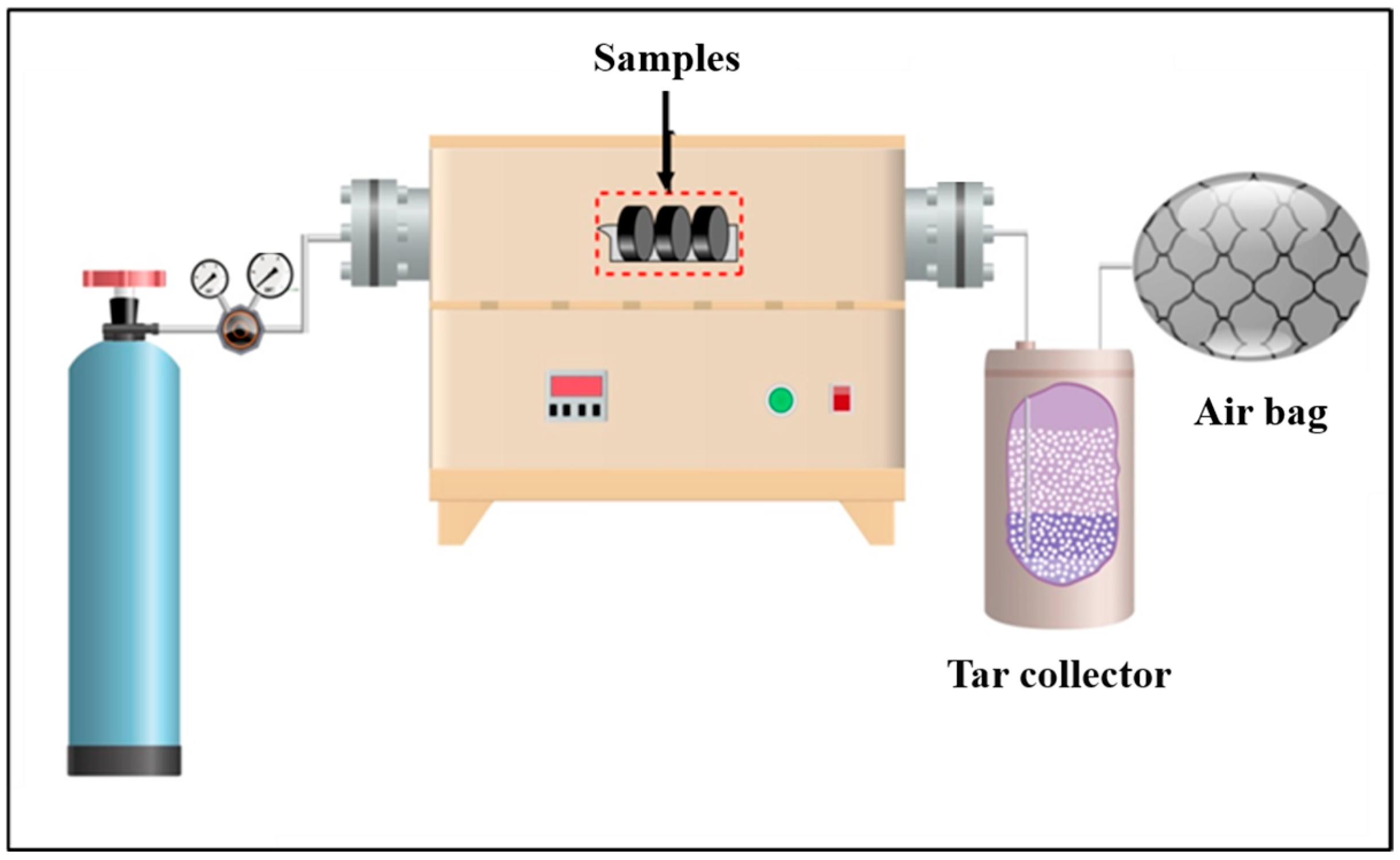
The dried mixture was carbonized in a tube furnace (Figure 1). The N2 (Nitrogen, Taiyuan Steel Group, BOC Gas Company, Taiyuan, China, >99.99%) flow rate was maintained at 100 mL/min, and the setting temperature was raised from room temperature to 450 °C at a rate of 5 °C/min. The temperature was further increased at the same rate to the activation temperature (700–900 °C). Upon reaching the activation temperature, N2 was replaced with CO2 (Carbon Dioxide, Taiyuan Steel Group, BOC Gas Company, >99.99%) at 50 mL/min for 1 h. After activation, CO2 was switched back to nitrogen during cooling to ambient temperature, and the N-doped AC desulfurizer was obtained. The desulfurizers prepared with urea (CO(NH2)2, Tianjin Tianli Chemical Reagent Co., Ltd., Tianjin, China, Analytical Reagent) impregnation were labeled as NWM-x-y-z, where NWM denotes urea-impregnated lignite, x is the activation temperature (°C), y is the O2 concentration during desulfurization (%), and z is the urea impregnation content (wt.%). After sulfurization, these desulfurizers were labeled as NWME-x-y-z. Similarly, desulfurizers prepared with dicyandiamide (C2H4N4, Sinopharm Chemical Reagent Co., Ltd., Beijing, China, Analytical Reagent) were labeled SWM-x-y-z and sulfurized samples as SWME-x-y-z.

2.2. Desulfurization Experiment of N-Modified Desulfurizer

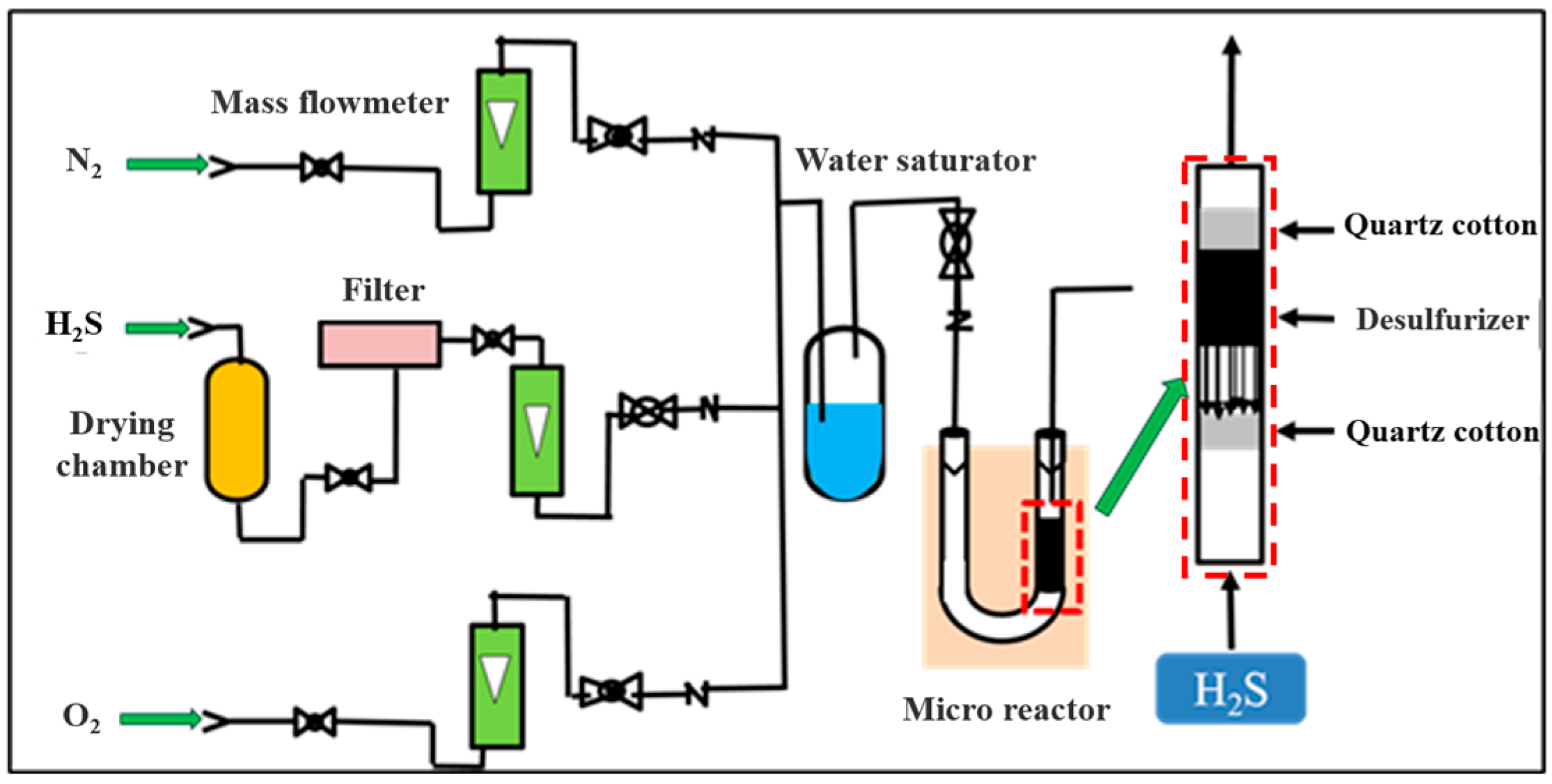
Desulfurization performance was evaluated using a fixed-bed reactor (Figure 2). The desulfurizer was loaded into a U-shaped tube reactor (inner diameter: 6 mm) with a packing height of 2 cm. Before desulfurization, the desulfurizer was pre-moistened with wet N2 (about 3% water) for 1.5 h. Subsequently, a mixed gas containing H2S, O2, and wet N2 was introduced (80 mL/min). The effects of different O2 concentrations on desulfurizer performance were explored at a reaction temperature of 30 °C. Each experiment was repeated at least twice to ensure the reproducibility of the data. The H2S concentrations were measured using a gas chromatograph with a flame photometric detector (FPD). The experiment was stopped when the H2S outlet concentration reached 0.15 mg/m3, and the breakthrough time was recorded. The breakthrough sulfur capacity q (mg/g) of the desulfurizer was calculated using the following formula:
q = N × 0 t C 0 C t d t / m × 10 6
where N is the gas flow rate, mL/min; C 0 is the inlet concentration, mg/m3; C t is the outlet concentration in mg/m3; t is the breakthrough time in minutes; and m is the desulfurizer mass in grams.

2.3. Characterizations

X-ray diffraction (XRD) analysis was conducted by a DX-2700x XRD analyzer within the scanning range between 5° and 85° at a scanning rate of 8°/min (Haoyuan Instrument, Dandong, China). The Brunauer–Emmett–Teller (BET) surface area and pore distributions of samples were determined by a Micromeritics ASAP 20200 PLUS HD88 analyzer and pore distributions were calculated from the desorption isotherms of nitrogen (Micromeritics, Norcross, GA, USA). The particle surface morphology of the samples was observed by a scanning electron microscope (Zeiss Gemini 300, Zeiss, Germany). X-ray photoelectron spectroscopy (XPS) was used by a Thermo Scientific ESCALAB 250Xi spectrometer (Thermo Fisher Scientific, Waltham, MA, USA).

3. Results

3.1. Characteristics of Prepared Samples

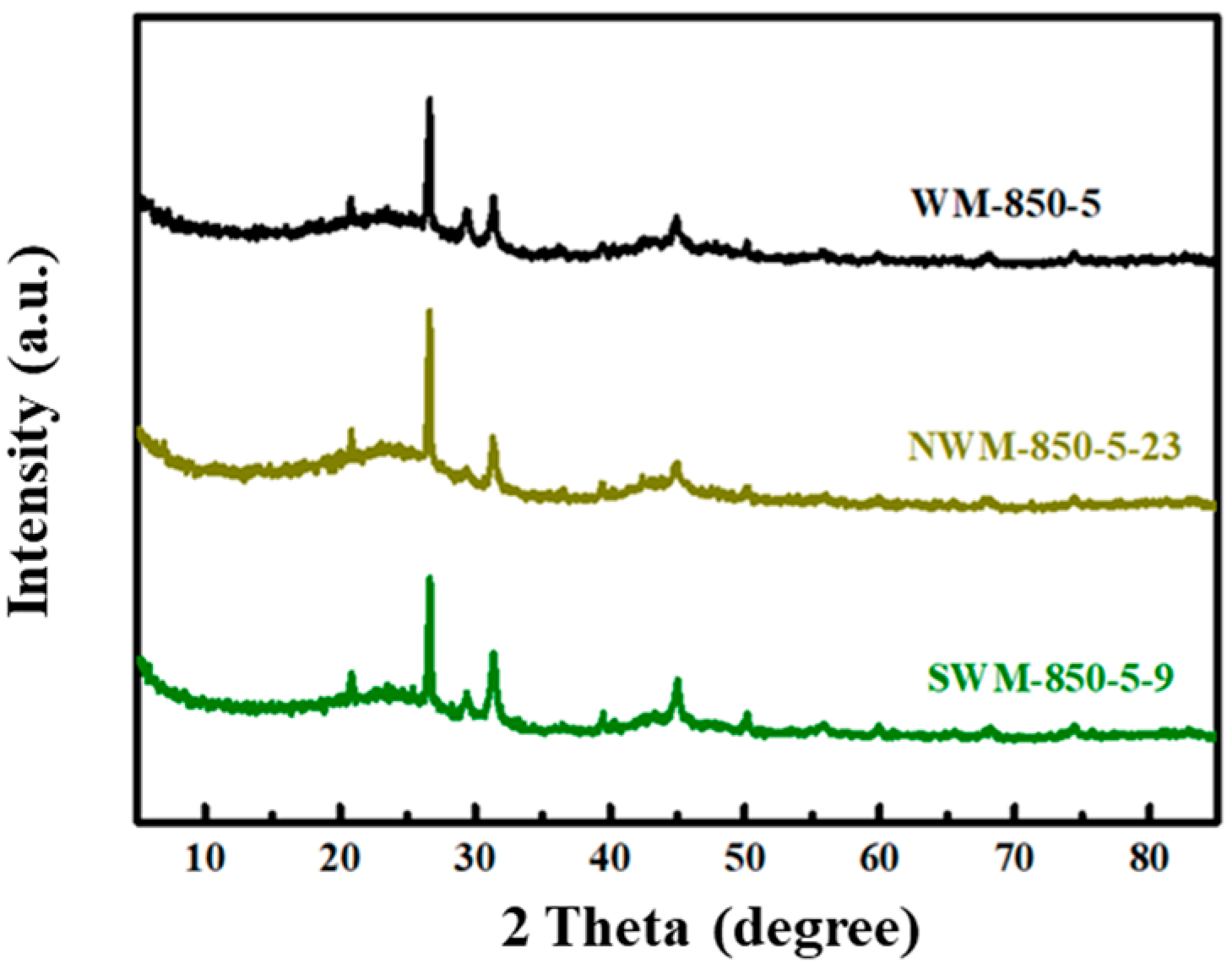
Figure 3 presents the wide-angle XRD spectra of desulfurizers WM-850-5, NWM-850-5-23, and SWM-850-5-9. All three desulfurizers exhibited a strong diffraction peak at 26°, corresponding to the graphite (002) plane, and the weaker diffraction peak at 44°, corresponding to the (100) plane. A comparison of peak intensities in Figure 3 reveals that the (002) peak of NWM-850-5-23 is sharper than those of SWM-850-5-9 and WM-850-5, indicating a higher degree of graphitization in the urea-N-modified desulfurizer. These results suggest that samples with a lower degree of graphitization contain more structural defects, which are beneficial for catalytic reactions. Although WM-850-5 and SWM-850-5-9 exhibit comparable graphitization levels, the SWM-850-5-9 sample has abundant nitrogen functional groups on its surface due to dicyandiamide doping, facilitating electron transfer within the AC. This enables HS ions to interact directly with the carbon matrix, enhancing catalytic reactions between sulfur and oxygen radicals on the nitrogen-doped AC surface, resulting in a better desulfurization performance over WM-850-5.
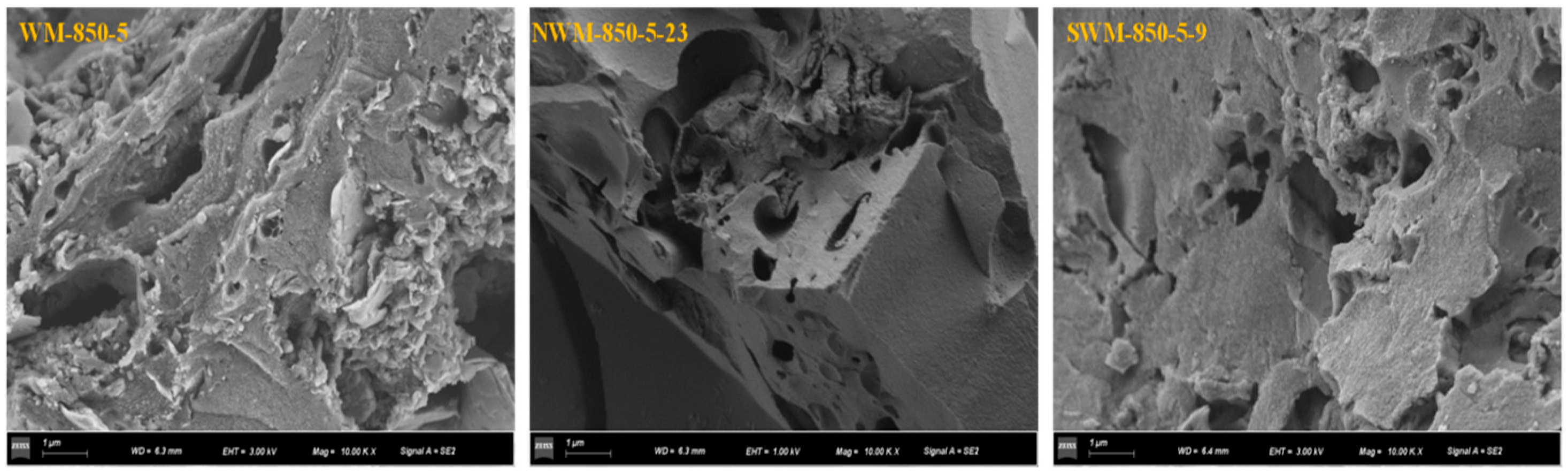
As shown in Figure 4, SEM characterization reveals the surface morphology of the desulfurizer samples WM-850-5, NWM-850-5-23, and SWM-850-5-9. All three samples display irregular surface morphologies. The WM-850-5 sample has a dense structure with varied pore sizes, while NWM-850-5-23 shows a more complex surface with uneven pore distribution. In contrast, SWM-850-5-9, modified with dicyandiamide, has a relatively smooth surface with more concentrated pore sizes.
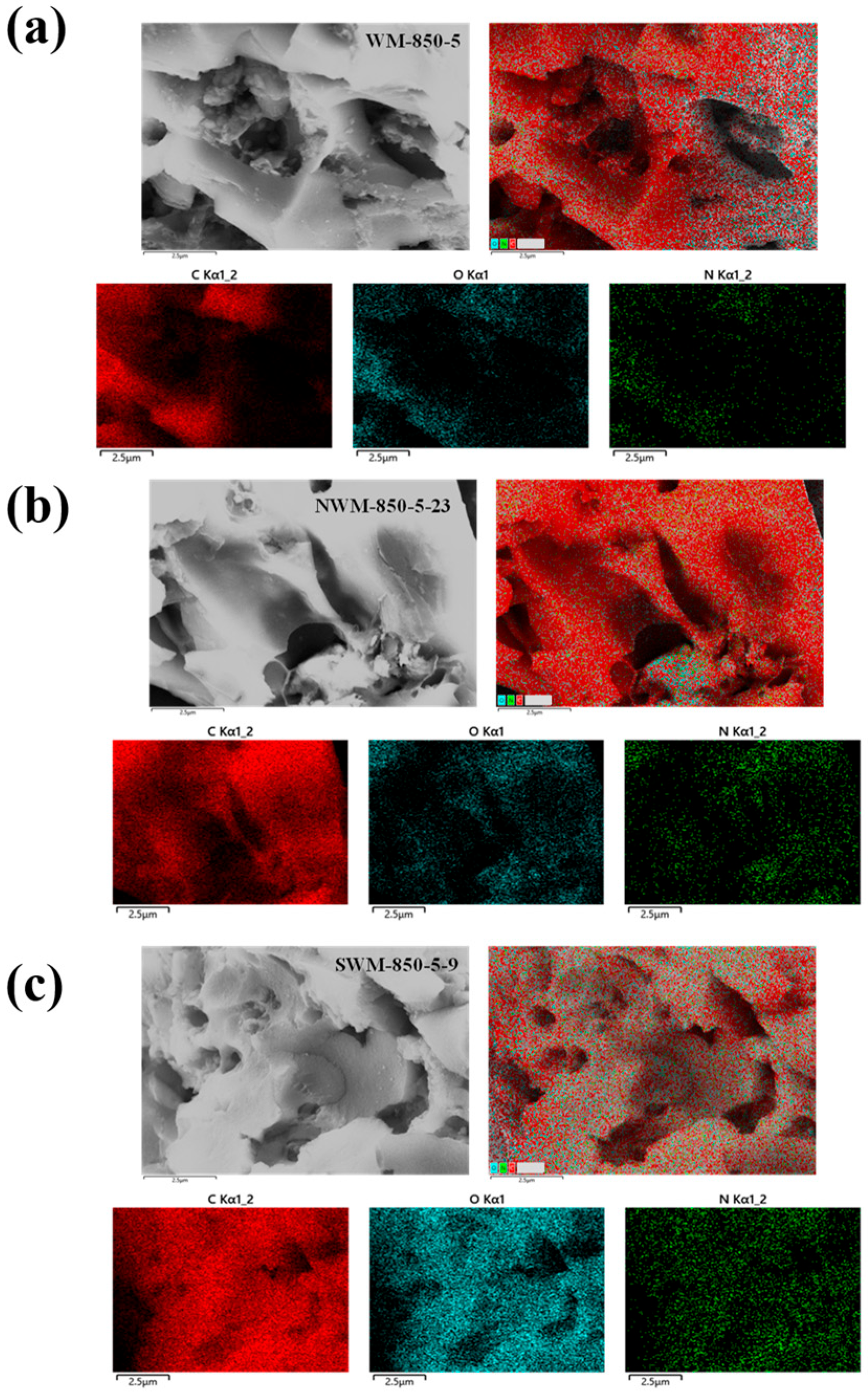
The SEM mapping images indicate that the N elements are evenly distributed on the surfaces of NWM-850-5-23 and SWM-850-5-9, with SWM-850-5-9 showing a more pronounced N distribution (Figure 5). The elemental analysis results in Table 1 show that the C content in WM-850-5 is 92.3 wt.%, that of O is 7.7 wt.%, and that of N is 0 wt.%. For NWM-850-5-23, the C content is 94.0 wt.%, that of O is 5.4 wt.%, and that of N is 0.6 wt.%. SWM-850-5-9 has a C content of 82.1 wt.%, one of O of 16.9 wt.%, and one of N of 1.0 wt.%, consistent with the SEM mapping results. The higher oxygen and nitrogen content in SWM-850-5-9 contributes to its superior desulfurization performance.

3.2. Effect of Urea Content on the Desulfurization Performance of Urea-Modified Desulfurizer

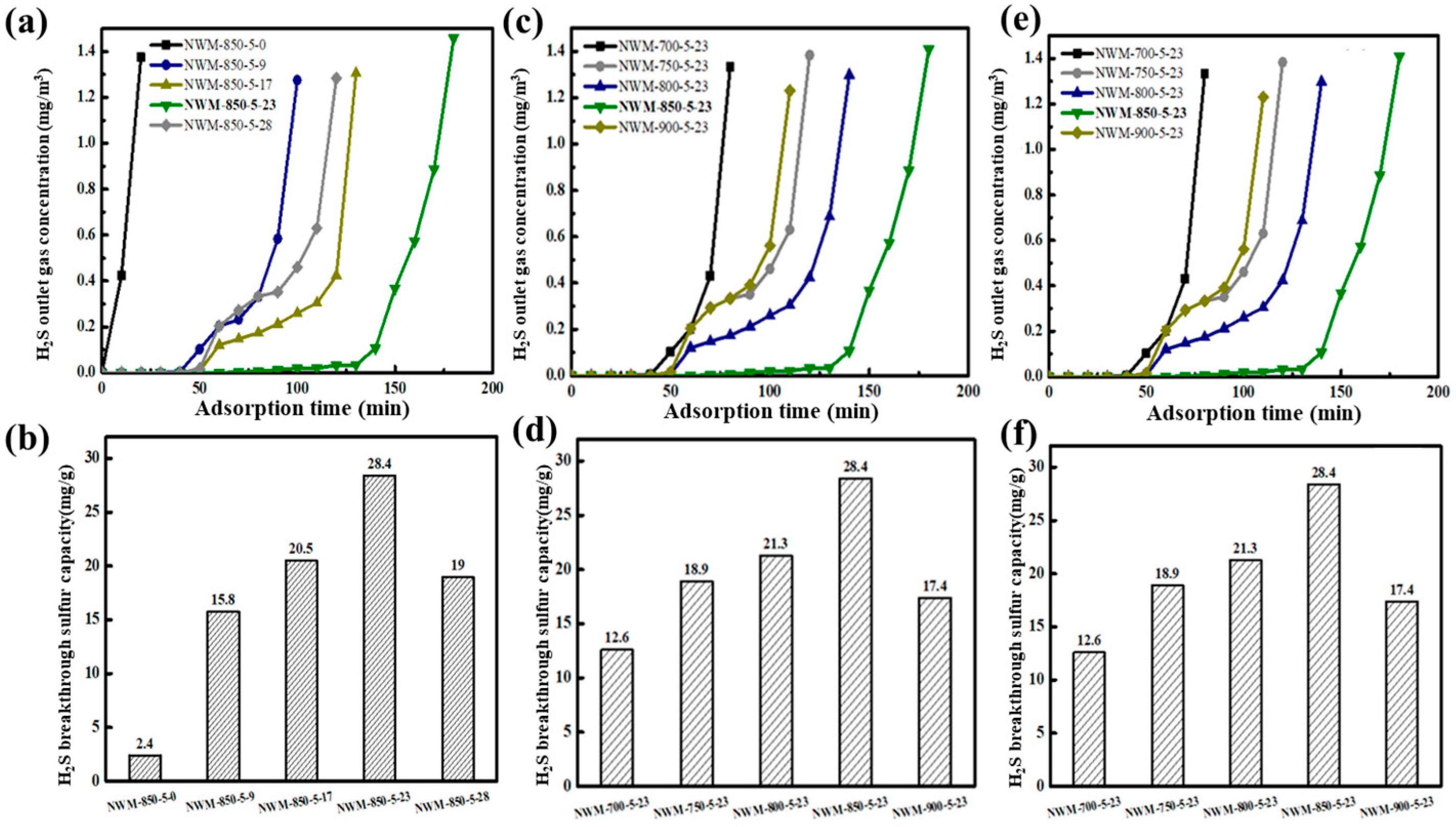
Urea was added to the pretreated WM coal sample at different weight ratio, followed by activation at a constant temperature of 850 °C for 1 h. The O2 concentration in the fixed bed was set to 5% to evaluate desulfurization performance. Figure 6a presents the breakthrough curves, and Figure 6b shows the corresponding breakthrough sulfur capacities. When the activation temperature was 850 °C and the O2 concentration was 5%, the breakthrough time of the sample without urea (NWM-850-5-0) was only 15 min, with a breakthrough sulfur capacity of 2.4 mg/g. As the urea content increased, the desulfurization performance of the desulfurizer initially improved and then declined. When the urea content reached 23 wt.%, the desulfurization performance was optimal, with a breakthrough time of 180 min and a sulfur capacity of 28.4 mg/g. The variation in desulfurization performance with urea content may be due to the increase in nitrogen-containing functional groups on the AC surface, which enhances desulfurization performance. However, excessive urea can block the pores of the desulfurizer, reducing its effectiveness.
With a urea content of 23 wt.% and an activation time of 1 h, a series of desulfurizers were prepared by varying the activation temperature. Figure 6c shows the breakthrough curves, and Figure 6d displays the corresponding breakthrough sulfur capacities. When the activation temperature was 700 °C, the sample NWM-700-5-23 had a breakthrough time of 80 min and a sulfur capacity of 12.6 mg/g. As the activation temperature increased, the desulfurization performance initially improved and then declined. The optimal performance was observed at an activation temperature of 850 °C, with a breakthrough time of 180 min and a sulfur capacity of 28.4 mg/g. The variation in desulfurization performance with activation temperature may be related to the pore structure of the desulfurizer. At lower activation temperatures, the carbon in the coal does not fully react with the activating gas, resulting in an underdeveloped pore structure and low specific surface area. Excessively high activation temperatures can lead to overreaction between carbon and the activating gas, causing an uneven pore distribution and potential pore wall collapse, which negatively affects the performance [4,28].
The desulfurization performance was also evaluated by adjusting the O2 concentration. As shown in Figure 6e,f, when the concentration of O2 in the fixed bed was 0%, the sample NWM-850-0-23 had a breakthrough time of 65 min and a sulfur capacity of 10.3 mg/g, and desulfurization efficiency was not so obvious. This may be due to the inherent oxygen-containing functional groups in the AC providing a source of oxygen for H2S catalytic oxidation. As the O2 concentration increased, the desulfurization performance initially improved and then declined. The optimal performance was achieved with an O2 concentration of 5%, with a breakthrough time of 180 min and a sulfur capacity of 28.4 mg/g. The changes in desulfurization performance with O2 concentration are primarily related to the catalytic oxidation reaction of H2S during desulfurization, where an appropriate O2 concentration promotes H2S adsorption on the desulfurizer.

3.3. Process Optimization for In Situ Preparation of Dicyandiamide-N-Modified Coal-Based Activated Carbon Desulfurizer

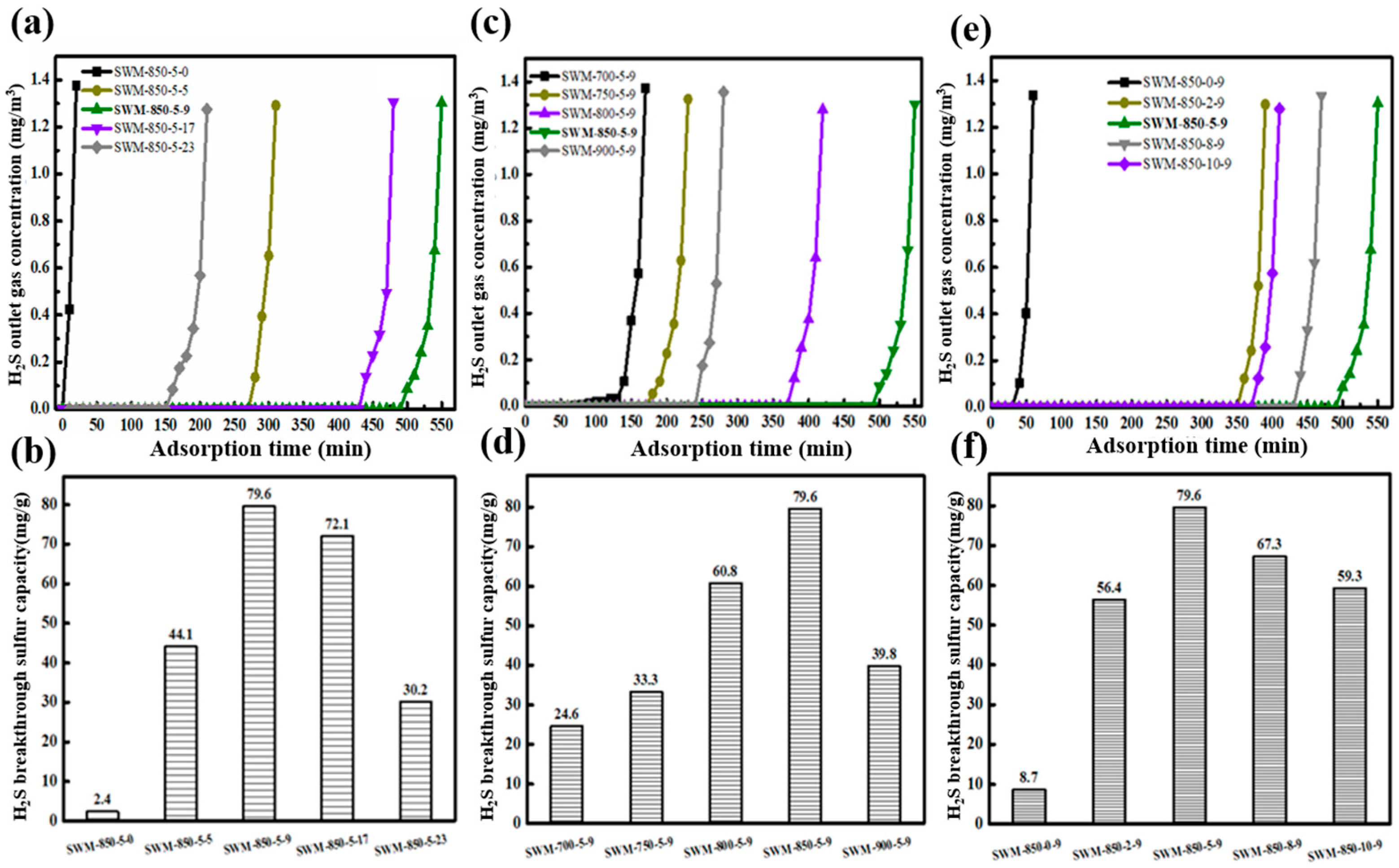
Dicyandiamide was added to the pretreated WM coal sample at various weight percentages, and desulfurizers were prepared under identical conditions, with an activation temperature of 850 °C and an activation time of 1 h. According to Figure 7a,b, under an activation temperature of 850 °C and an O2 concentration of 5%, the breakthrough time of the sample without dicyandiamide (SWM-850-5-0) was only 15 min, with a sulfur capacity of 2.4 mg/g, indicating almost no desulfurization effect occurred. As the dicyandiamide content increased, the desulfurization performance initially improved and then declined. When the dicyandiamide content was 9 wt.%, the desulfurization performance was optimal with a breakthrough time of 550 min and a sulfur capacity of 79.6 mg/g. The variation in desulfurization performance with dicyandiamide content may be due to the increase in nitrogen-containing functional groups, enhancing catalytic oxidation reactions for H2S during desulfurization. However, excessive dicyandiamide content leads to pore blockage, reducing the desulfurization efficiency.
With a dicyandiamide content of 9 wt.% and an activation time of 1 h, a series of desulfurizers were prepared by adjusting the activation temperature. According to Figure 7c,d, at an activation temperature of 700 °C, the sample SWM-700-5-9 had a breakthrough time of 170 min and a sulfur capacity of 24.6 mg/g. As the activation temperature increased, the desulfurization performance initially improved and then declined. The optimal performance was achieved at an activation temperature of 850 °C, with a breakthrough time of 550 min and a sulfur capacity of 79.6 mg/g. The variation in desulfurization performance with activation temperature may be due to the pore structure of the desulfurizer. At low activation temperatures, the carbon in the coal does not fully react with the activating gas, resulting in a low specific surface area. Excessive activation temperatures lead to uneven pore distribution and potential pore wall collapse, negatively impacting desulfurization performance [29,30].
Desulfurization performance was evaluated by adjusting the O2 concentration in the fixed bed. As shown in Figure 7e,f, when the O2 concentration in the fixed bed was 0%, the sample SWM-850-0-9 showed a breakthrough time of 60 min and a sulfur capacity of 8.7 mg/g, demonstrating limited desulfurization efficiency. This slight adsorption effect may result from a small number of oxygen-containing functional groups in the prepared AC, which provide a source of oxygen for H2S catalytic oxidation. When the O2 concentration increased, the desulfurization performance initially improved and then declined. The optimal desulfurization performance was achieved at an O2 concentration of 5%, where sample SWM-850-5-9 had a breakthrough time of 550 min and a sulfur capacity of 79.6 mg/g. The variation in desulfurization performance with O2 concentration is mainly associated with the catalytic oxidation reaction of H2S. A moderate increase in O2 concentration promotes H2S catalytic oxidation, enhancing desulfurization performance.

4. Mechanism Analysis

To understand the reason for the differences in H2S adsorption performance between urea-N-modified and dicyandiamide-N-modified AC desulfurizers, a series of characterizations were conducted on N-modified AC samples (NWM-850-5-23 and SWM-850-5-9) prepared under their optimal conditions. For comparison, unmodified AC desulfurizers were also prepared without urea or dicyandiamide and were named WM-850-5.

4.1. BET Characterization Analysis

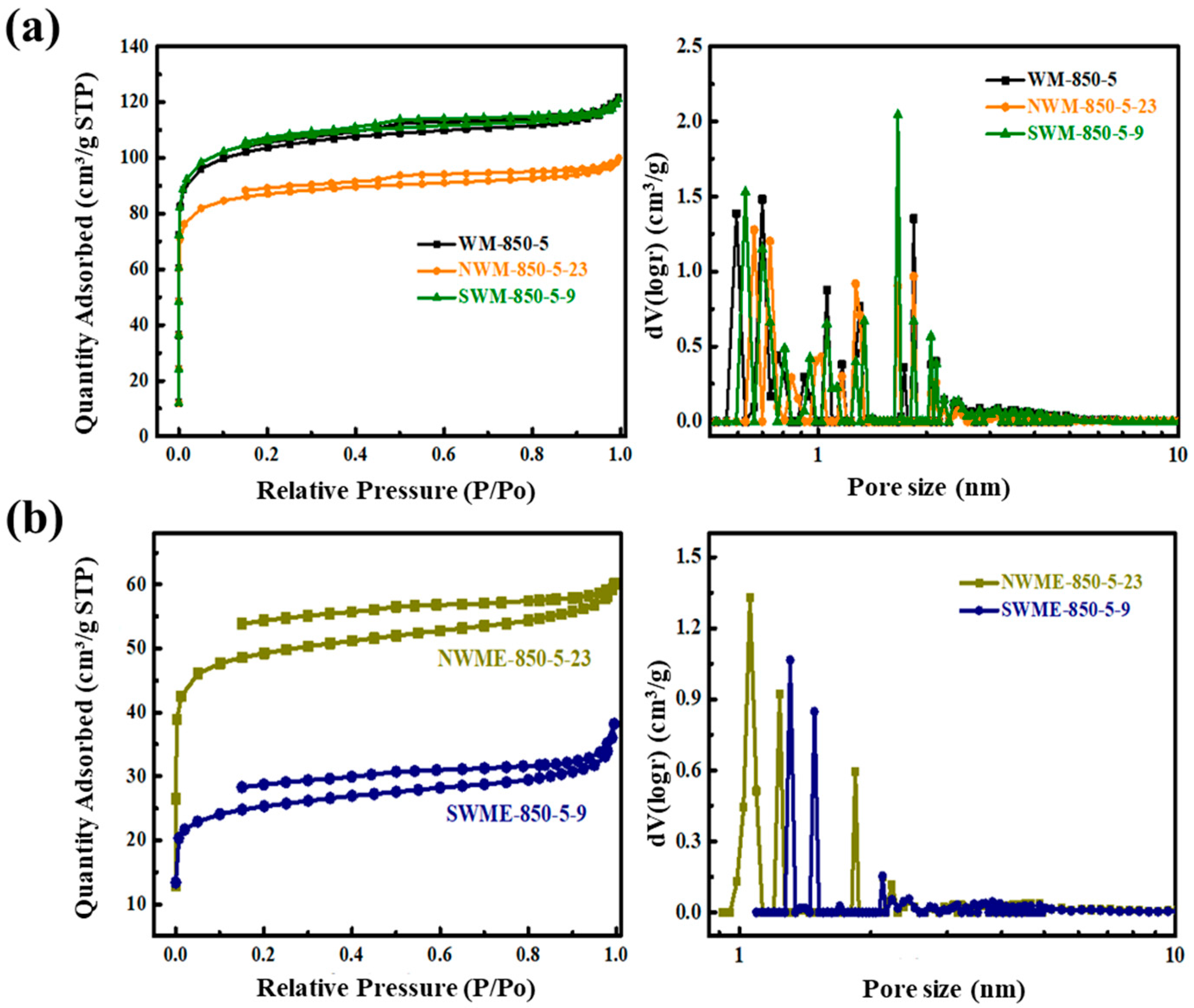
All three desulfurizers exhibit Type I adsorption isotherms, with a noticeable knee at low relative pressures (P/P0 < 0.1), indicating the presence of micropores. Urea- and dicyandiamide-modified samples display H4 hysteresis loops, suggesting the presence of mesopores [31]. Pore size distribution analysis also reveals that all three samples have multi-pore structures. Table 2 presents the specific textural parameters for each sample. The specific surface area, total pore volume, and mesopore ratio of WM-850-5 are 322 m2/g, 0.18 cm3/g, and 0.28, respectively; NWM-850-5-23 has values of 269 m2/g, 0.15 cm3/g, and 0.27, respectively; and SWM-850-5-9 has values of 343 m2/g, 0.19 cm3/g, and 0.32, respectively. After sulfurization, the N2 adsorption–desorption isotherms and pore size distributions of sulfurized samples NWME-850-5-23 and SWME-850-5-9 are shown in Figure 8b. Both sulfurized samples retain Type I adsorption isotherms and H4 hysteresis loops, but the amount of adsorbed N2 decreases, indicating that while the desulfurization reaction did not damage the framework structure of the desulfurizer, the sulfurized products partially blocked the pores in the AC [32].
The specific surface area and total pore volume of NWME-850-5-23 decreased from 269 m2/g and 0.15 cm3/g pre-sulfurization to 159 m2/g and 0.09 cm3/g, respectively (Table 2). Similarly, the specific surface area and total pore volume of SWME-850-5-9 decreased from 343 m2/g and 0.19 cm3/g pre-sulfurization to 80 m2/g and 0.06 cm3/g, respectively. The significant decline in specific surface area for SWME-850-5-9 indicates that elemental sulfur deposition within the pores led to pore blockage, gradually deactivating the desulfurizer during the desulfurization process [33,34].

4.2. XPS Characterization Analysis

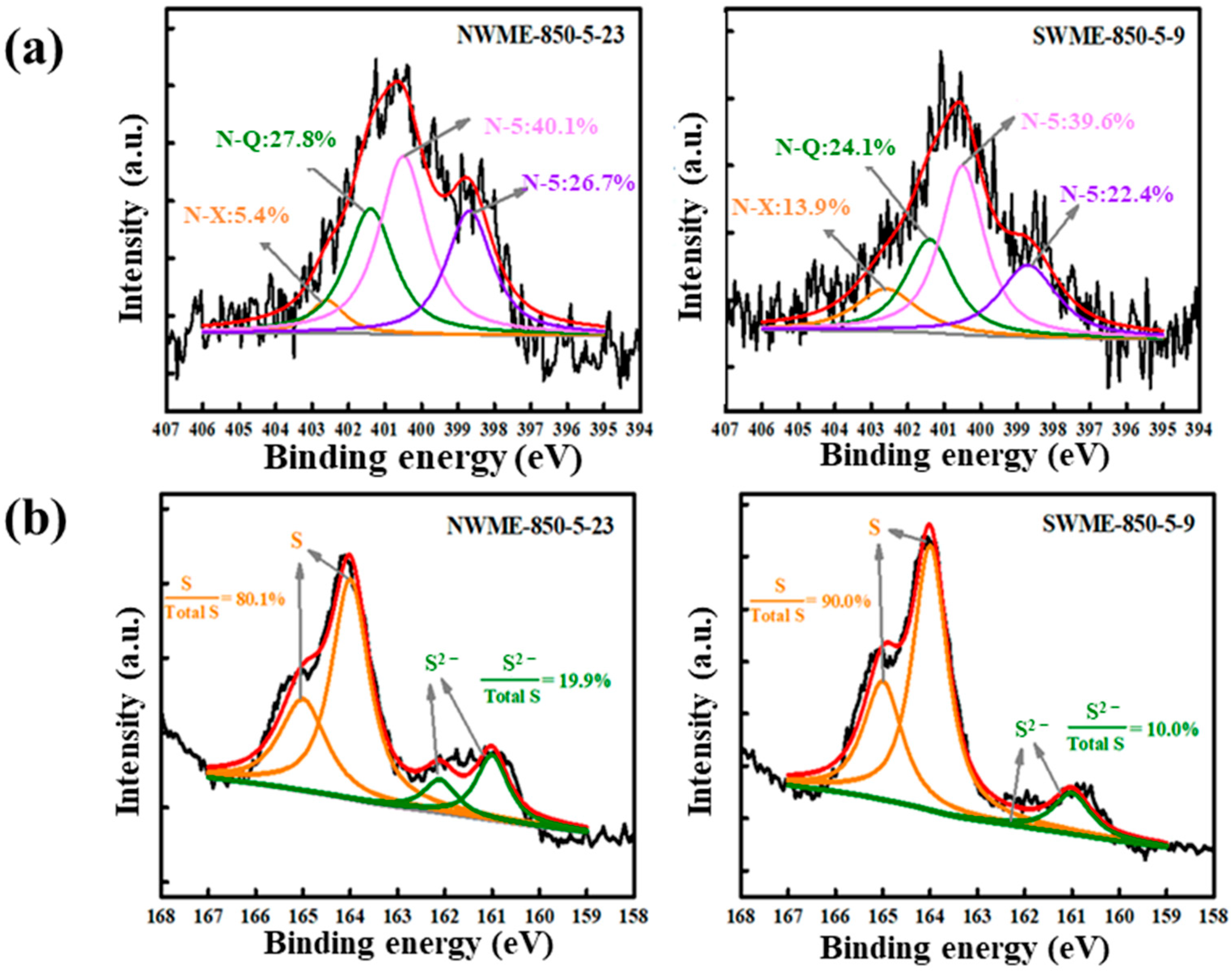
XPS characterization was used to analyze the nitrogen species in the sulfurized samples NWME-850-5-23 and SWME-850-5-9, as shown in Figure 9a. Peak fitting of the high-resolution N 1s spectra revealed that nitrogen species with binding energies around 398.8 ± 0.4 eV correspond to pyridinic nitrogen (N-6), those around 400.2 ± 0.3 eV correspond to pyrrolic nitrogen (N-5), those around 401.4 ± 0.3 eV correspond to quaternary nitrogen (N-Q), and those around 402.9 ± 0.5 eV correspond to nitrogen oxide (N-X). Pyridinic and pyrrolic nitrogen represent nitrogen on the edges of coal molecular structures, where pyridinic nitrogen in six-membered rings is more stable than pyrrolic nitrogen in five-membered rings. Quaternary nitrogen is embedded within the molecular structure and is more stable than the edge nitrogen types, while nitrogen oxide forms when nitrogen atoms directly link with oxygen. The nitrogen species in low-rank coal primarily consist of pyrrolic nitrogen, followed by pyridinic and quaternary nitrogen. After nitrogen modification, the internal nitrogen species in AC desulfurizers remained unchanged. According to Table 3, the nitrogen content of SWM-850-5-9 is higher than that of NMW-850-5-23, which indicates that higher nitrogen doping exposes more basic active sites on the desulfurizer surface, creating an alkaline environment that promotes H2S dissociation into HS, thus accelerating the reaction of HS with O2 to form elemental sulfur and improving the desulfurizer’s catalytic oxidation performance at low temperatures [35,36].
XPS analysis was also conducted on sulfur species in the sulfurized samples NWME-850-5-23 and SWME-850-5-9, with the results shown in Figure 9b. Peak fitting of the high-resolution S 2p spectra revealed that sulfur species with binding energies around 161.0 ± 0.2 eV and 162.3 ± 0.2 eV correspond to sulfide ions (S2−), while those around 163.7 ± 0.2 eV and 164.8 ± 0.2 eV correspond to elemental sulfur (S0) [37]. Figure 9b shows that the primary sulfurization products in both desulfurizers are elemental sulfur, with small amounts of S2−. Table 3 shows that the total sulfur content in NWME-850-5-23 is 1.34%, while in SWME-850-5-9, it is 2.61%. Based on peak area calculations, elemental sulfur accounts for 80.1% of the total sulfur in NWME-850-5-23 and 90.0% in SWME-850-5-9.
The XPS results suggest that the main desulfurization mechanism for the two nitrogen-modified desulfurizers likely involves catalytic oxidation of H2S on the AC surface. In the desulfurization tests, conducted with an O2 concentration of 5%, the oxygen content of the dicyandiamide-modified desulfurizer decreased from 16.9 wt.% to 11.65 wt.% after sulfurization, indicating that both the supplied O2 and the surface oxygen-containing functional groups contributed to H2S catalytic oxidation. For the urea-modified desulfurizer, the oxygen content increased from 5.4 wt.% to 9.9 wt.% after sulfurization, indicating that oxidation depended primarily on the supplied O2, which resulted in a lower catalytic oxidation efficiency than SWME-850-5-9. Both the XPS results and sulfur capacity support this conclusion.

4.3. Mechanism Analysis of N-Modified Desulfurizer’s Desulfurization Performance

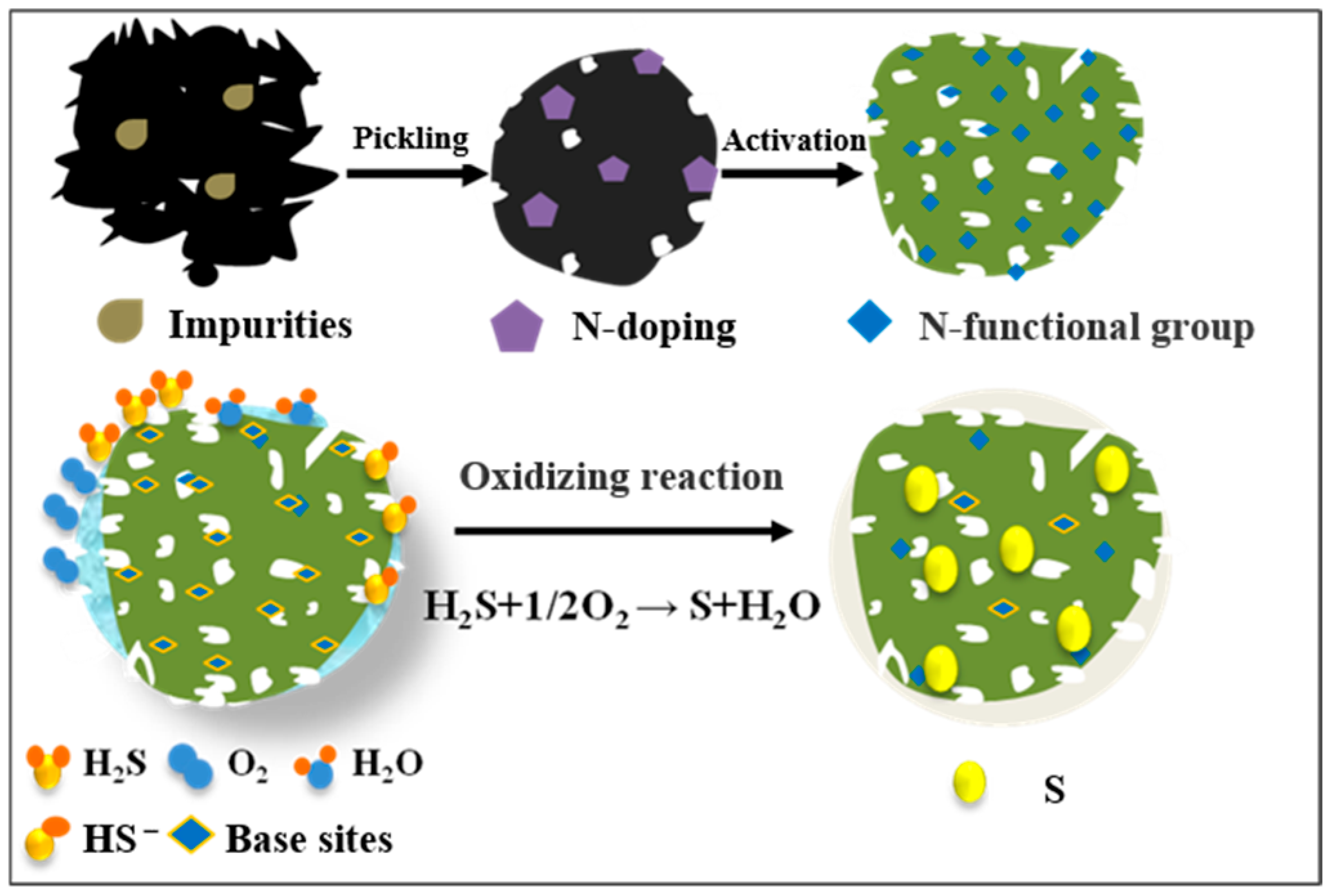
Nitrogen doping enhances the low-temperature H2S removal performance through two main mechanisms. First, the introduced nitrogen species increase the surface basicity of the desulfurizer. In a moist environment, this creates an alkaline water film that promotes the dissociation of H2S into HS. Second, nitrogen doping facilitates electron transfer within the carbon matrix, enabling the catalytic oxidation of HS by oxygen to form elemental sulfur, which is subsequently stored within the porous structure of the adsorbent. The high sulfur capacity results from this efficient initial catalytic oxidation followed by physical storage of sulfur within the pores (Figure 10). The drastic decrease in BET surface area (from 343 to 80 m2 g−1) confirms severe pore blockage by sulfur, which is the main cause of deactivation. While a detailed kinetic deactivation model was not established, the shape of the breakthrough curve and the correlation between pore volume loss and sulfur deposition suggest that deactivation is governed by progressive pore blockage, which limits reactant diffusion and active site accessibility.

5. Conclusions

In this study, a novel and highly efficient functional activated carbon desulfurizer was developed through in situ co-processing of coal with an activator, integrating material synthesis and functionalization in one pot. The breakthrough sulfur capacity of the dicyandiamide-N-modified desulfurizer is attributed to its larger specific surface area and higher pore volume, which facilitate the adsorption and storage of sulfide products. Meanwhile, the dicyandiamide-N-modified desulfurizer exhibited higher oxygen and nitrogen content, which enhanced the exposure of alkaline active sites on its surface. The alkaline active sites promoted the formation of an alkaline water film on the catalyst surface, accelerated H2S dissociation into HS, and facilitated the reaction of HS with oxygen to generate more elemental sulfur.

Author Contributions

X.B.: Conceptualization, Investigation, Methodology, Writing—Original Draft, Resources. L.Z.: Conceptualization, Formal Analysis, Writing—Original Draft, Resources. Z.L., J.L., K.Y. and S.L.: Investigation, Methodology, Formal Analysis. S.Y.: Formal Analysis, Resources. All authors have read and agreed to the published version of the manuscript.

Funding

This research was supported by the Fundamental Research Program of Shanxi Province of China (202203021212245), Shanxi Province patent promotion grant program (202306013), 2024 Shanxi Province University Students Innovation and Entrepreneurship Cultivation and Incubation Program, Shanxi Provincial Bureau of Geological Exploration Provincial-level Geological Exploration Construction and Development Special Fund Project (2024-014) and the Shanxi Provincial Teaching Reform and Innovation Project (J20240357).

Institutional Review Board Statement

Not applicable.

Informed Consent Statement

Not applicable.

Data Availability Statement

The original contributions presented in this study are included in this article. Further inquiries can be directed to the corresponding author.

Conflicts of Interest

The authors declare no conflicts of interest.

References

  1. Zheng, X.; Lei, G.; Wang, S.; Shen, L.; Zhan, Y.; Jiang, L. Advances in Resources Recovery of H2S: A Review of Desulfurization Processes and Catalysts. ACS Catal. 2023, 13, 11723–11752. [Google Scholar] [CrossRef] [Scilit]
  2. Ning, H.; Tang, R.; Li, C.; Gu, X.; Gong, Z.; Zhu, C.; Li, J.; Wang, K.; Yu, J. Recent advances in process and materials for dry desulfurization of industrial flue gas: An overview. Sep. Purif. Technol. 2025, 353, 128425. [Google Scholar] [CrossRef] [Scilit]
  3. Liu, B.S.; Wei, X.N.; Zhan, Y.P.; Chang, R.Z.; Subhan, F.; Au, C.T. Preparation and desulfurization performance of LaMeOx/SBA-15 for hot coal gas. Appl. Catal. B Environ. 2011, 102, 27–36. [Google Scholar] [CrossRef] [Scilit]
  4. Pan, Y.; Chen, M.; Su, Z.; Wu, K.; Zhang, Y.; Long, D. Two-dimensional CaO/carbon heterostructures with unprecedented catalytic performance in room-temperature H2S oxidization. Appl. Catal. B Environ. 2021, 280, 119444. [Google Scholar] [CrossRef] [Scilit]
  5. Bagreev, A.; Katikaneni, S.; Parab, S.; Bandosz, T.J. Desulfurization of digester gas: Prediction of activated carbon bed performance at low concentrations of hydrogen sulfide. Catal. Today 2005, 99, 329–337. [Google Scholar] [CrossRef] [Scilit]
  6. Tian, H.; Wu, J.; Zhang, W.; Yang, S.; Li, F.; Qi, Y.; Zhou, R.; Qi, X.; Zhao, L.; Wang, X. High performance of Fe nanoparticles/carbon aerogel sorbents for H2S Removal. Chem. Eng. J. 2017, 313, 1051–1060. [Google Scholar] [CrossRef] [Scilit]
  7. Chung, J.B.; Chung, J.S. Desulfurization of H2S using cobalt-containing sorbents at low temperatures. Chem. Eng. Sci. 2005, 60, 1515–1523. [Google Scholar] [CrossRef] [Scilit]
  8. Frilund, C.; Simell, P.; Kaisalo, N.; Kurkela, E.; Koskinen-Soivi, M.L. Desulfurization of Biomass Syngas Using ZnO-Based Adsorbents: Long-Term Hydrogen Sulfide Breakthrough Experiments. Energy Fuels 2020, 34, 3316–3325. [Google Scholar] [CrossRef] [Scilit]
  9. Hong, Y.-S.; Sin, K.-R.; Pak, J.-S.; Kim, C.-J.; Liu, B.-S. Kinetic Analysis of H2S Removal over Mesoporous Cu–Mn Mixed Oxide/SBA-15 and La–Mn Mixed Oxide/KIT-6 Sorbents during Hot Coal Gas Desulfurization Using the Deactivation Kinetics Model. Energy Fuels 2017, 31, 9874–9880. [Google Scholar] [CrossRef] [Scilit]
  10. Hong, Y.S.; Zhang, Z.F.; Cai, Z.P.; Zhao, X.H.; Liu, B.S. Deactivation Kinetics Model of H2S Removal over Mesoporous LaFeO3/MCM-41 Sorbent during Hot Coal Gas Desulfurization. Energy Fuels 2014, 28, 6012–6018. [Google Scholar] [CrossRef] [Scilit]
  11. Shi, L.; Yang, K.; Zhao, Q.; Wang, H.; Cui, Q. Characterization and Mechanisms of H2S and SO2 Adsorption by Activated Carbon. Energy Fuels 2015, 29, 6678–6685. [Google Scholar] [CrossRef] [Scilit]
  12. de Rink, R.; Klok, J.B.M.; van Heeringen, G.J.; Sorokin, D.Y.; ter Heijne, A.; Zeijlmaker, R.; Mos, Y.M.; de Wilde, V.; Keesman, K.J.; Buisman, C.J.N. Increasing the Selectivity for Sulfur Formation in Biological Gas Desulfurization. Environ. Sci. Technol. 2019, 53, 4519–4527. [Google Scholar] [CrossRef] [Scilit] [PubMed]
  13. Johnston, K.A.K.Y.; van Lankveld, M.; de Rink, R.; Roman, P.; Klok, J.B.M.; Mol, A.R.; Keesman, K.J.; Buisman, C.J.N. Polysulfide Concentration and Chain Length in the Biological Desulfurization Process: Effect of Biomass Concentration and the Sulfide Loading Rate. Environ. Sci. Technol. 2023, 57, 13530–13540. [Google Scholar] [CrossRef] [Scilit] [PubMed]
  14. Li, H.; Su, S.; Hu, S.; Xu, K.; Jiang, L.; Wang, Y.; Xu, J.; Xiang, J. Effect of preparation conditions on MnxOy/Al2O3 sorbent for H2S removal from high-temperature synthesis gas. Fuel 2018, 223, 115–124. [Google Scholar] [CrossRef] [Scilit]
  15. San-Valero, P.; Penya-roja, J.M.; Javier Álvarez-Hornos, F.; Buitrón, G.; Gabaldón, C.; Quijano, G. Fully aerobic bioscrubber for the desulfurization of H2S-rich biogas. Fuel 2019, 241, 884–891. [Google Scholar] [CrossRef] [Scilit]
  16. Wang, X.; Zhang, R.; Li, Q.; Mi, J.; Wu, M. Insights into H2S-absorption and oxidation-regeneration behavior of Ni-doped ZnO-based sorbents supported on SBA-15 for desulfurization of hot coal gas. Fuel 2023, 332, 126052. [Google Scholar] [CrossRef] [Scilit]
  17. Yang, C.; Wang, J.; Fan, H.-L.; Shangguan, J.; Mi, J.; Huo, C. Contributions of tailored oxygen vacancies in ZnO/Al2O3 composites to the enhanced ability for H2S removal at room temperature. Fuel 2018, 215, 695–703. [Google Scholar] [CrossRef] [Scilit]
  18. Yuan, Y.; Huang, L.; Yılmaz, M.; Zhang, T.C.; Wang, Y.; Yuan, S. MgFe2O4-loaded N-doped biochar derived from waste cooked rice for efficient low-temperature desulfurization of H2S. Fuel 2023, 339, 127385. [Google Scholar] [CrossRef] [Scilit]
  19. Ling, L.; Zhang, R.; Han, P.; Wang, B. DFT study on the sulfurization mechanism during the desulfurization of H2S on the ZnO desulfurizer. Fuel Process. Technol. 2013, 106, 222–230. [Google Scholar] [CrossRef] [Scilit]
  20. Gao, P.; Song, X.; Sun, L.; Cui, R.; Tang, Z. Engineering Cu-Ce@Al2O3 core-shell catalyst for the efficient simultaneous catalytic removal of COS and H2S. Nano Mater. Sci. 2025; in press. [CrossRef] [Scilit]
  21. Xue, X.; Li, Z.; Yue, Y.; Zhang, M.; Sun, Y.; Mi, J.; Wang, J.; Mishra, A.; Shodmanov, J.; Feng, Y. Rational construction and reaction mechanism of bimetal oxides/carbon nanofibers sorbent for H2S removal at high temperature. J. Environ. Chem. Eng. 2025, 13, 117544. [Google Scholar] [CrossRef] [Scilit]
  22. Cao, Y.; Zheng, X.; Du, Z.; Shen, L.; Zheng, Y.; Au, C.; Jiang, L. Low-Temperature H2S Removal from Gas Streams over γ-FeOOH, γ-Fe2O3, and α-Fe2O3: Effects of the Hydroxyl Group, Defect, and Specific Surface Area. Ind. Eng. Chem. Res. 2019, 58, 19353–19360. [Google Scholar] [CrossRef] [Scilit]
  23. Qian, Z.; Li, Z.-H.; Guo, K. Industrial Applied and Modeling Research on Selective H2S Removal Using a Rotating Packed Bed. Ind. Eng. Chem. Res. 2012, 51, 8108–8116. [Google Scholar] [CrossRef] [Scilit]
  24. Zhang, G.; Zhu, Q.; Zhang, W.; Zheng, Y.; Cao, Y.; Liang, S.; Xiao, Y.; Liu, F.; Jiang, L. Efficiently Integrated Desulfurization from Natural Gas over Zn-ZIF-Derived Hierarchical Lamellar Carbon Frameworks. Inorg. Chem. 2022, 61, 6083–6093. [Google Scholar] [CrossRef] [Scilit]
  25. Zheng, X.-X.; Fang, Z.-P.; Dai, Z.-J.; Cai, J.-M.; Shen, L.-J.; Zhang, Y.-F.; Au, C.-T.; Jiang, L.-L. Iron-Based Metal–Organic Frameworks as Platform for H2S Selective Conversion: Structure-Dependent Desulfurization Activity. Inorg. Chem. 2020, 59, 4483–4492. [Google Scholar] [CrossRef] [Scilit]
  26. Meng, B.; Cao, E.; Jia, L.; Zheng, Y.; Cui, Y. Cu-Fe oxide supported on Na2CO3-modified activated carbon boost H2S removal at low temperature. Sep. Purif. Technol. 2025, 361, 131415. [Google Scholar] [CrossRef] [Scilit]
  27. Huang, Y.; Yuan, Y.; Song, L.; He, G.; Yuan, S. Magnesium-organic framework-derived MgO-supported nitrogen-doped biochar for ultrahigh-performance low-temperature H2S desulfurization. Sep. Purif. Technol. 2025, 368, 133027. [Google Scholar] [CrossRef] [Scilit]
  28. Yan, Y.; Yang, X.; Ning, P.; Wang, C.; Sun, X.; Wang, F.; Gao, P.; Li, K. Cu/TiO2 adsorbents modified by air plasma for adsorption–oxidation of H2S. J. Environ. Sci. 2025, 148, 476–488. [Google Scholar] [CrossRef] [Scilit]
  29. Huang, Y.; Wang, Y.; Song, L.; Yuan, Y.; Yuan, S. One-step synthesis of MgO-MnO loaded N-doped carbon aerogel for ultrahigh low-temperature H2S desulfurization. Fuel 2025, 400, 135751. [Google Scholar] [CrossRef] [Scilit]
  30. Duan, D.; Xu, S.; Zhou, Y.; Mo, H.; Yang, W.; Zhang, Y.; Ruan, R. Preparation and characterization of black garlic peels-derived activated carbon to improve H2S adsorption at room-temperature. J. Anal. Appl. Pyrolysis 2025, 191, 107229. [Google Scholar] [CrossRef] [Scilit]
  31. Quijano, G.; Figueroa-González, I.; Buitrón, G. Fully aerobic two-step desulfurization process for purification of highly H2S-laden biogas. J. Chem. Technol. Biotechnol. 2018, 93, 3553–3561. [Google Scholar] [CrossRef] [Scilit]
  32. Do Vale Borges, A.; Zamariolli Damianovic, M.H.R.; Torre, R.M. Assessment of aerobic-anoxic biotrickling filtration for the desulfurization of high-strength H2S streams from sugarcane vinasse fermentation. J. Hazard. Mater. 2025, 489, 137696. [Google Scholar] [CrossRef] [Scilit] [PubMed]
  33. Garces, H.F.; Galindo, H.M.; Garces, L.J.; Hunt, J.; Morey, A.; Suib, S.L. Low temperature H2S dry-desulfurization with zinc oxide. Microporous Mesoporous Mater. 2010, 127, 190–197. [Google Scholar] [CrossRef] [Scilit]
  34. Wang, C.; Fang, X.; Zhao, F.; Deng, Y.; Zhu, X.; Deng, Y.; Chai, X. Effective removal of hydrogen sulfide from landfill gases using a modified iron pentacarbonyl desulfurization agent and the desulfurization mechanism. Sci. Total Environ. 2022, 839, 156160. [Google Scholar] [CrossRef] [Scilit]
  35. Gupta, N.K.; Kim, E.J.; Bae, J.; Kim, K.S. Probing the origin and stability of bivalency in copper based porous coordination network and its application for H2S gas capture. Sci. Rep. 2022, 12, 15388. [Google Scholar] [CrossRef] [Scilit]
  36. Fortuny, M.; Gamisans, X.; Deshusses, M.A.; Lafuente, J.; Casas, C.; Gabriel, D. Operational aspects of the desulfurization process of energy gases mimics in biotrickling filters. Water Res. 2011, 45, 5665–5674. [Google Scholar] [CrossRef] [Scilit]
  37. Hoang, T.L.G.; Doan, D.T.; Nanda, S.; Lavoie, R.; Nguyen-Tri, P. Development of metal-organic framework-based systems for H2S removal: A comprehensive review. Coord. Chem. Rev. 2025, 529, 216466. [Google Scholar] [CrossRef] [Scilit]
Figure 1. Schematic diagram of sample preparation.
Applsci 16 02320 g001
Figure 2. Flowchart of desulfurization experiment of N-modified base desulfurizer.
Applsci 16 02320 g002
Figure 3. XRD patterns of samples WM-850-5, NWM-850-5-23, and SWM-850-5-9.
Applsci 16 02320 g003
Figure 4. SEM images of WM-850-5, NWM-850-5-23, and SWM-850-5-9.
Applsci 16 02320 g004
Figure 5. SEM images and C/O/N element mapping profiles of prepared samples: (a) WM-850-5, (b) NWM-850-5-23, (c) SWM-850-5-9.
Applsci 16 02320 g005
Figure 6. The breakthrough curves and the breakthrough sulfur capacity of the adsorbents prepared under different conditions: (a,b) different urea concentration, (c,d) activation temperature, and (e,f) oxygen concentrations.
Applsci 16 02320 g006
Figure 7. The breakthrough curves and the breakthrough sulfur capacity of the adsorbents prepared under different conditions: (a,b) dicyandiamide impregnation content, (c,d) activation temperature, and (e,f) oxygen concentrations.
Applsci 16 02320 g007
Figure 8. The adsorption and desorption isotherms and the pore size distribution of fresh and used samples: (a) WM-850-5, NWM-850-5-23, and SWM-850-5-9; (b) NWME-850-5-23 and SWME-850-5-9.
Applsci 16 02320 g008
Figure 9. XPS patterns of fresh and used N-modified desulfurizer: (a) N1s, and (b) S 2p. Black line: raw data; red line: fitted data.
Applsci 16 02320 g009
Figure 10. Preparation and adsorption mechanism of in situ N-modified activated carbon desulfurizer.
Applsci 16 02320 g010
Table 1. Percentage of elements of WM-850-5, NWM-850-5-23, and SWM-850-5-9.
SampleElement Content, wt/%
CON
WM-850-592.37.70.0
NWM-850-5-2394.05.40.6
SWM-850-5-982.116.91.0
Table 2. Textural properties of WM-850-5, NWM-850-5-23, and SWM-850-5-9.
SampleSBET (m2/g)Total Pore (cm3/g)Micropore (cm3/g)Mesoporous (cm3/g)Mesoporous/Total Pore
WM-850-53220.180.130.050.28
NWM-850-5-232690.150.110.040.27
SWM-850-5-93430.190.130.060.32
NWME-850-5-231590.090.0620.0280.32
SWME-850-5-9800.060.0280.0320.53
Table 3. Percentage of elements of NWME-850-5-23 and SWME-850-5-9.
SamplesElement Content, wt/%
CONS
NWME-850-5-2387.359.91.41.34
SWME-850-5-984.3811.651.362.61
Disclaimer/Publisher’s Note: The statements, opinions and data contained in all publications are solely those of the individual author(s) and contributor(s) and not of MDPI and/or the editor(s). MDPI and/or the editor(s) disclaim responsibility for any injury to people or property resulting from any ideas, methods, instructions or products referred to in the content.