Article

Environmental Risks of Talc Mining

by
Henrieta Pavolová
1,
Mária Kaňuchová
1,*,
Tomáš Bakalár
1,
Ľubica Kozáková
1 and
Edyta Nartowska
2
1
Faculty of Mining, Ecology, Process Control and Geotechnologies, Technical University of Košice, Letná 9, 042 00 Košice, Slovakia
2
Faculty of Environmental Engineering, Geodesy and Renewable Energy, Kielce University of Technology, al. Tysiąclecia Państwa Polskiego 7, 25-314 Kielce, Poland
*
Author to whom correspondence should be addressed.
Appl. Sci. 2026, 16(5), 2317; https://doi.org/10.3390/app16052317
Submission received: 11 December 2025 / Revised: 27 January 2026 / Accepted: 25 February 2026 / Published: 27 February 2026
(This article belongs to the Special Issue Environmental Pollution and Wastewater Treatment Strategies)

Abstract

This study examines the environmental risks associated with talc mining in Slovakia, focusing on various aspects. It applies a structured risk assessment methodology to evaluate the probability and severity of environmental impacts stemming from talc extraction, flotation, and tailings pond operations. Key stressors include chemical pollutants such as oils, diesel, and flotation reagents, as well as physical disruptions like georelief alteration and vegetation loss. The findings highlight high environmental risks from technical infrastructure leaks and tailings pond operations, particularly regarding groundwater contamination and landscape modification. Moderate risks were identified in diesel and oil substance leakage, while flotation processes posed minimal risk. The research underscores the need for improved risk mitigation strategies, such as enhanced monitoring and containment systems, to protect local ecosystems and water resources. The study contributes to a better understanding of the long-term environmental impacts of mineral resource exploitation and provides a foundation for more sustainable mining practices.

1. Introduction

Talc (hydrated magnesium silicate, Mg3Si4O10(OH)2) is a critical industrial mineral essential to numerous applications worldwide, including cosmetics, pharmaceuticals, ceramics, paints, and coatings industries [1,2]. Global talc production continues to expand, driven by increasing demand in developing economies, particularly in the Asia-Pacific region [3,4]. However, the extraction and processing of talc pose substantial environmental challenges that extend beyond immediate mining sites, affecting local ecosystems, water resources, and human communities for decades [5,6].
Mineral resource exploitation, while economically vital for regional development, introduces significant environmental stressors that compromise ecosystem integrity and alter biogeochemical cycles. In Slovakia, talc mining has been a traditional extractive industry, contributing to regional economic development [7] while simultaneously generating cumulative environmental impacts that have not been comprehensively evaluated.
Environmental risk can be defined as a potential danger that threatens ecosystems or the uncertainty of environmental damage manifested by an event [8,9,10]. The environmental risk analysis of the exploitation of mineral resources can be understood as a hazard identification and risk assessment process for individuals, population groups, objects in the surrounding environment, and environmental components [11,12,13]. Environmental risk analysis essentially identifies the probability and extent of the consequences of a negative event resulting from exploiting mineral resources. From a structural perspective, environmental risk can be defined as the combination of the probability of a given event occurring and its environmental consequences [13,14].
Regarding Slovak legislation, risk can be characterized as the probability of a risk event and the extent (severity) of its possible consequences, which may occur during a certain period or under certain circumstances [15]. A stressor, or stress factor, represents the cause of environmental risks [16,17]. Environmental risk assessment is a systemic process that assesses the potentially harmful impact of stressors on biotic and abiotic factors of the environment [18,19,20]. Considering the above, environmental risk can be defined as the probability that, under predefined conditions of exposure, an adverse effect on human health or individual components of the environment will manifest itself, while the stressors forming the causes of the emergence of a specific environmental risk can be divided into the following [21,22]:
  • Chemical stressors—chemical substances emitted into the environment;
  • Physical stressors—activities directly eliminating or changing the natural environment (land cultivation, logging, road construction, windstorms, erosion, fires);
  • Biological stressors—organisms, or microorganisms, that enter or are released into natural environments where they did not naturally develop.
Talc mining operations in Slovakia typically encompass three integrated phases, each presenting distinct environmental risks: the mining and extraction phase, the processing and flotation phase, and the tailings management and long-term storage.
Open-pit or underground extraction of talc ore initiates the environmental impact chain [6,23]. This phase introduces physical stressors, including overburden removal, vegetation elimination, georelief alteration, and soil disturbance [24,25]. Chemical stressors arise from equipment operations that consume diesel and petroleum products, with accidental spills posing acute contamination risks [26,27]. Mining infrastructure, including access roads and material-handling systems, fragments habitats and alters hydrological regimes. The extraction phase fundamentally alters the physical structure of landscapes, often creating persistent visual impacts and modifying water infiltration patterns [28,29].
Talc processing generates tailings encompassing fine-grained mineral waste, residual flotation chemicals, and mobilized heavy metals from ore processing [30,31]. Tailings pond operations present multiple environmental risk pathways: seepage of contaminated water into groundwater systems; atmospheric dust generation from tailings surfaces; potential catastrophic failures of containment structures; and long-term leaching of contaminants from tailings deposits [32,33]. Tailings pond failures represent one of the most severe environmental and human health disasters in the mining industry. Since 1915, 257 tailings pond failures have occurred globally, releasing a total of 250 million m3 of tailings, destroying areas up to 5000 km2, killing an estimated 2650 people and impacting 317,000 people through displacement, property damage, and risks to livelihoods and health. These disasters underscore the critical importance of understanding the mechanisms, causes, and consequences of tailings pond failures [32,34].
Despite extensive research on individual aspects of mining environmental impacts, significant knowledge gaps persist in the comprehensive, integrated assessment of environmental risks explicitly associated with talc processing operations [35,36,37]. Previous research has examined individual stressor categories, e.g., petroleum contamination, flotation reagent toxicity, and tailings seepage, in isolation, or has focused on specific operational phases, such as mine water generation. Furthermore, systematic risk assessments of talc mining in Central European geological and regulatory contexts, which feature naturally occurring radioactive materials and require compliance with stringent EU standards, are absent. This study addresses these gaps by developing an integrated, quantitative environmental risk assessment methodology that simultaneously evaluates all chemical, physical, and biological stressors across the extraction, processing, and tailings management phases specific to Slovak operating conditions.
Understanding the cumulative and integrated environmental risks from talc mining requires a structured, quantitative methodology capable of evaluating multiple stressor categories, their probability of occurrence, and consequence severity across operational timescales and beyond. This integrated approach enables the identification of operational vulnerabilities, the prioritization of mitigation interventions, and evidence-based regulatory guidance.
This study aims to develop and apply a comprehensive, quantitative environmental risk assessment methodology tailored explicitly to talc mining operations, based on the systematic identification and evaluation of all primary stressor categories across the mining, processing, and tailings management phases. Partial aims include ranking of environmental risks by severity to prioritize mitigation interventions to provide evidence-based recommendations for enhanced risk mitigation strategies, including monitoring protocols and technical improvements. The study also aims to contribute to the understanding of long-term environmental impacts of mineral resource exploitation in Central European contexts.
The research addresses a critical gap in understanding integrated environmental risks from talc mining, with findings applicable to similar operations across Central and Eastern Europe and providing a methodological foundation for mineral extraction environmental risk assessment in comparable geological and regulatory contexts.

2. Materials and Methods

Assessment of the environmental risks of the exploitation of mineral deposits is a process designed to identify the degree of risk of the analyzed environmental impact. On a global level, environmental impact risk management can be described by the five partial steps below [38,39]:
  • Identification of the risk of the environmental impact of the exploitation of a mineral deposit;
  • Determining which component of the environment and in what way it can be damaged—identification, or environmental risk assessment R = f(P,D), P—expresses the probability of the occurrence of a negative phenomenon because of the exploitation of mineral deposits, D—degree of severity of its consequence in the environment;
  • Quantification of the risks of environmental impacts of the exploitation of mineral resources—risk assessment;
  • Documenting the assessment process and implementing measures;
  • Regular inspection and reassessment if necessary or changed.
Environmental risk sources were identified through a systematic multi-method approach:
  • The enumeration of hazardous processes and equipment across the operational phases:
    Site visits;
    Facility documentation;
    Interviews with operational staff.
  • Identification of environmental impacts documented in comparable talc mining operations, and to ensure alignment with best practices in mining risk assessment:
    Literature review;
    Regulatory analysis;
    Incident record review.
Risk sources were organized across environmental stressor categories to cover hazard mechanisms systematically:
  • Chemical—petroleum products, flotation reagents, etc.
  • Physical—georelief alteration, vegetation removal, etc.
  • Biological—ecosystem disruption, etc.
This process yielded a comprehensive inventory of risks for mine water contamination and for tailings pond operations. Each risk source represents a plausible pathway through which mining operations could cause adverse environmental impacts and was subsequently scored using the probability–severity matrix described below.
When assessing the risks of the environmental impacts of talc exploitation, obtaining a complete risk estimate is necessary, which can be achieved by combining risk probability and severity using a risk assessment matrix. At the same time, their combined analysis can estimate the probability and severity of the risk [40]. The likelihood of risk occurrence is assessed numerically on a cardinal scale <1,5> (Table 1) [41]. A detailed analysis of the occurrence of environmental impacts of mining on individual components of the environment, in synergy with expert evaluation informed by environmental monitoring data, site-specific geotechnical and hydrogeological information, and documented incidents in comparable mining operations, which together guide the assignment of scores in the probability–severity matrix, informs numerical risk assessment. Therefore, the risk’s final level results from combining time-based probability categories defined in Table 1 and severity categories in Table 2, with scores assigned by a panel of experts using documented data and operational experience, consistent with established semi-quantitative risk assessment methods, and is precisely expressed by a specific cardinal value [42].
Analogously, the severity of the risk is assessed by evaluation from the cardinal measure <A–E> (Table 2) [43].
By simply quantifying the risk probability and severity, it is possible to identify the nature of the risk based on its allocation in the risk matrix (Table 3) [41,43].
-
Green color—low (L).
-
Yellow color—moderate (M).
-
Orange color—high (H).
-
Red color—very high (VH).
A detailed analysis was conducted examining the occurrence and distribution of environmental impacts across multiple environmental components, including but not limited to the following:
  • Geological and geotechnical stability of the mining site and surrounding areas.
  • Groundwater quality and aquifer vulnerability.
  • Surface water resources and hydrological systems.
  • Soil quality, contamination potential, and erosion susceptibility.
  • Air quality and atmospheric emissions.
  • Biological communities and ecosystem integrity.
  • Human health and occupational safety.
The assessment integrated expert predictions of potential extraordinary events and exceptional circumstances that could amplify or trigger environmental impacts. The temporal dimension of risk assessment was explicitly incorporated, recognizing that certain risks may manifest immediately upon mine initiation. In contrast, others develop over extended periods during active mining operations or post-closure phases. This temporal variability was reflected in the cardinal probability scale, with distinct probability categories corresponding to distinct time horizons and recurrence frequencies [34].
The risk assessment methodology combined quantitative data analysis with qualitative expert evaluation. Environmental monitoring data, historical records of mining-related incidents, geochemical and hydrogeological surveys, and stakeholder input were integrated to inform probability and severity classifications. This mixed-methods approach provided a comprehensive understanding of both the magnitude and likelihood of potential environmental impacts [34,42].

3. Results

The extraction of talc is accompanied by several potential risks that can threaten the quality of the environment, including environmental health, and the key determinant is the method of extraction and treatment of talc, in which mine water is also used in the analyzed mining and processing operations. It is possible to define mine waters as all underground, surface, and precipitation waters that have entered deep or surface mine spaces, regardless of whether this has happened by seepage or gravity from the overburden, subsoil or flank or by simple inflow of precipitation water, up to their connections with other permanent surface or groundwater [15].
During talc extraction, mine waters are generated and used for flotation treatment and concrete production. Monitoring of mine water quality against permitted limits revealed that most parameters, including dissolved oxygen, sulfane, COD, Fe, Mn, major ions, and trace metals, remained within acceptable ranges with only minor fluctuations. pH remained stable and within regulatory limits. However, N-NO2 content slightly exceeded limits in two years, and non-polar extractable substances exceeded limits in one year. The persistent exceedance of total volume activity of α (0.8–2.1 Bq/L) in the studied area reflects geological influence from granitic formations in talc mining operations, where naturally occurring radioactive materials present ongoing water quality challenges and represent a broader industry challenge for managing radioactive elements during mineral processing. Despite these occasional exceedances in specific parameters, the monitoring data indicate that mine waters do not significantly adversely affect recipient water quality [44].
Although current monitoring of mine water quality demonstrates substantial regulatory compliance, this assessment reflects the present operational state. It does not preclude prospective risks from failure scenarios anticipated over the extended mining and post-closure timeline. Risk assessment methodology evaluates the probability and consequence of adverse events not yet realized, specifically, petroleum product leakage from aging technical infrastructure and long-term or catastrophic seepage from tailings facilities, whose occurrence probability and consequences are classified as high risk. This distinction is fundamental to environmental risk management: the current absence of detected contamination does not eliminate the prospective risk posed by identified hazard sources over decadal timescales and under aging conditions. Accordingly, the classification of groundwater contamination as high risk reflects concern about future infrastructure failures and containment issues, not a contradiction of current compliance data.
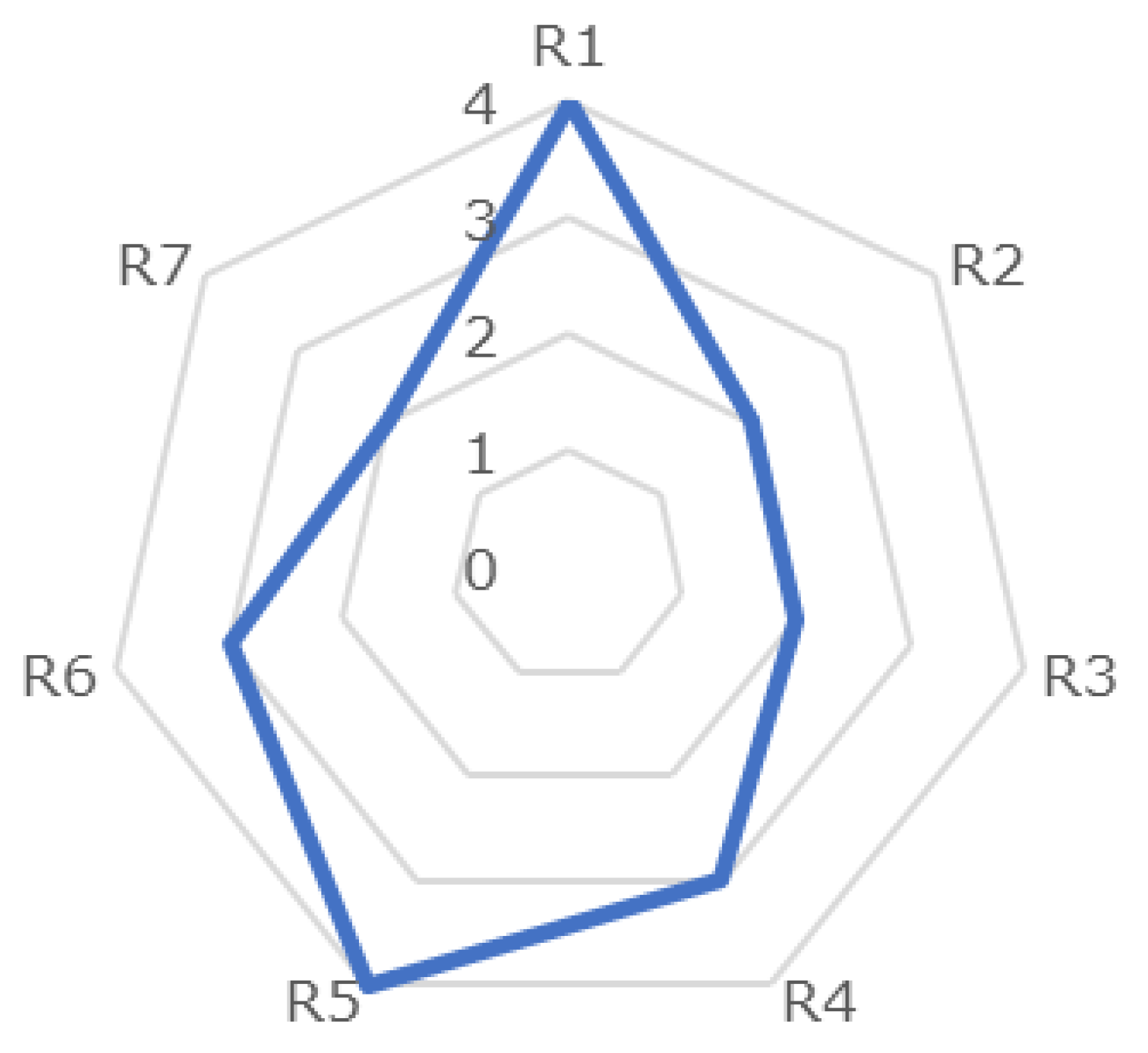
It is for these reasons that it is necessary to assess the probability and severity of pollutant leakage, which primarily, secondarily, or tertiarily determines environmental quality at the local level. Based on a detailed assessment of the environmental impact of talc processing flotation, the risks of leakage of polluting substances into mine waters include the following (Figure 1):
-
Risk of engine, gear, and hydraulic oils leakage (R1);
-
Risk of diesel leakage (R2);
-
Risk of gasoline leakage (R3);
-
Risk of oil substances leakage (R4);
-
Risk of leakage of pollutants from the technical infrastructure (R5);
-
The risk of pollutant leakage from the mine tailings dump (R6);
-
Risk of cement leakage (R7).
Accidental risks of pollutant leaks into mine waters include engine, transmission, or hydraulic oil leaks, as well as leaks from technical infrastructure. Minor risks include oil and pollutant leaks from the mine tailings dump, while improbable risks include diesel leaks, gasoline, and cement (Figure 1).
Based on the above-identified risks of pollutant leaks into mine waters causing their contamination, it is possible, in terms of the clearly described methodology of the risk assessment matrix, to quantify the nature of individual risks, from which the following facts emerged (Table 4):
-
Low risks of pollutant leakage into mine waters include the risk of cement leakage;
-
The moderate risks of pollutant leakage into mine waters include the risk of diesel, gasoline, petroleum substances, and pollutants leaking from the mine tailings dump;
-
High risks of pollutant leakage into mine waters include the risk of engine, transmission, and hydraulic oils leaking pollutants from the technical infrastructure.
An integral part of talc exploitation is its flotation treatment, which takes place in an insulated, sheathed hall with a steel structure, where the input raw material is fed to wet grinding, followed by wet sorting. The under-sieve material enters the flotation as a direct feed, the medium/int-sieve material is forwarded to the gravity separation spirals, and the above-sieve material is sent to the rod mill for grinding. Gravity sorting (gravity spirals) separates light and heavy products (grains) based on differences in bulk weight. Grain sorting occurs during the floated vertical spiral route and under the action of centrifugal force. In this way, accompanying minerals in the form of a heavy product (inert material) are excluded from the process, which, due to their weight and greater frictional force and abrasiveness, are concentrated near the central axis of the spirals. These grains represent barren material; they are excluded from the process and placed outside the hall by a conveyor belt and end up as an admixture in the base material. The light product (talc) is returned to the rod mill for grinding. The ground fine portion with water (flotation mash) enters the battery of flotation cells and passes through the predefined connections of the basic, control, and individual purification flotation stages by pumping and by gravity. With the addition of a flotation reagent and aeration of the flotation cells, a layer of the final concentrated component forms on their surface, which is subsequently purified in the individual purification stages and wiped into the collecting canal. The concentrated product from the third purification stage is led to the flotation concentrate thickening cell by a canal. In the thickening cell, sedimentation of the solid portion—the useful component—occurs by gravity. After the thickening process, the concentrate is pumped and filtered on drainage devices. Dewatered flotation concentrate with a residual moisture of approx. 15% is transported to the intermediate dewatered concentrate dump/box located inside the flotation hall. From there, it is continuously transported by a wheel loader and stored in a roofed warehouse of wet flotation concentrate. The filtered water is pumped into the technological water tank.
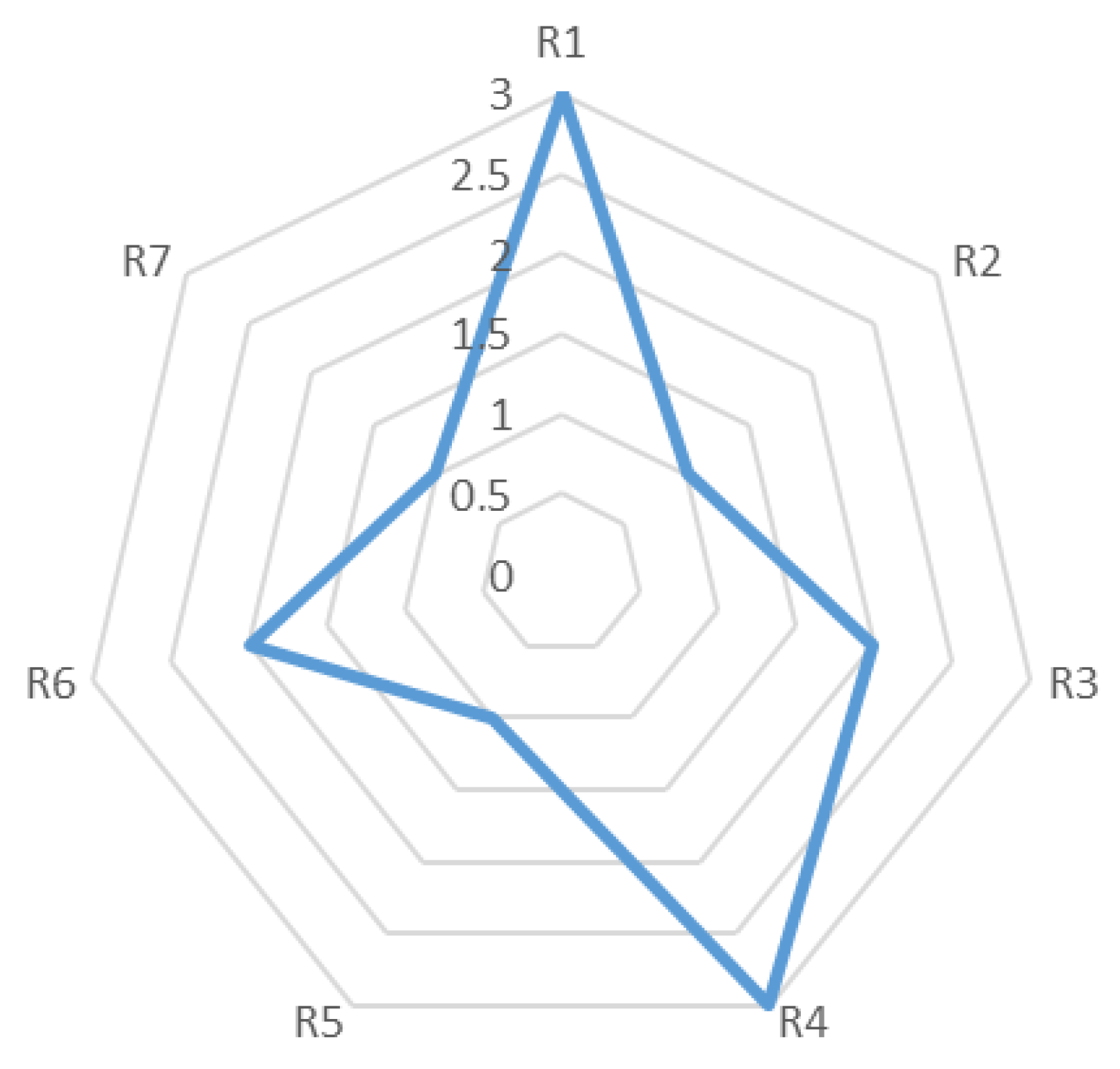
Considering the above, it is possible to identify the basal risks of flotation, which can directly or indirectly determine local environmental quality. The mentioned risks include the following:
-
Risk of leakage of barren material (R1);
-
Risk of leakage of flotation reagent (R2);
-
Risk of seepage from flotation cells (R3);
-
Risk of leaking lubricating oils (R4);
-
Risk of alkali leakage (R5);
-
Risk of fuel leakage (R6);
-
Risk of fine particle release (R7).
Minor flotation risks include barren material and lubricating oil leaks, improbable risks include flotation reagent seepage and fuel leaks, and extremely improbable risks include flotation reagent leaks, alkali leakage, and fine particulate release (Figure 2).
After the exact quantification of the probability of the occurrence of the above-defined risks of the effects of talc flotation on the environment, it is possible, in terms of the clearly described methodology of the risk assessment matrix, to quantify the nature of individual risks, from which the following facts emerged (Table 5):
-
The low risks include flotation reagent leakage, risk of seepage from flotation cells, risk of alkali leakage, risk of fuel leakage, risk of fine particles release;
-
The medium risks include barren material leakage and the risk of lubricating oil leakage.
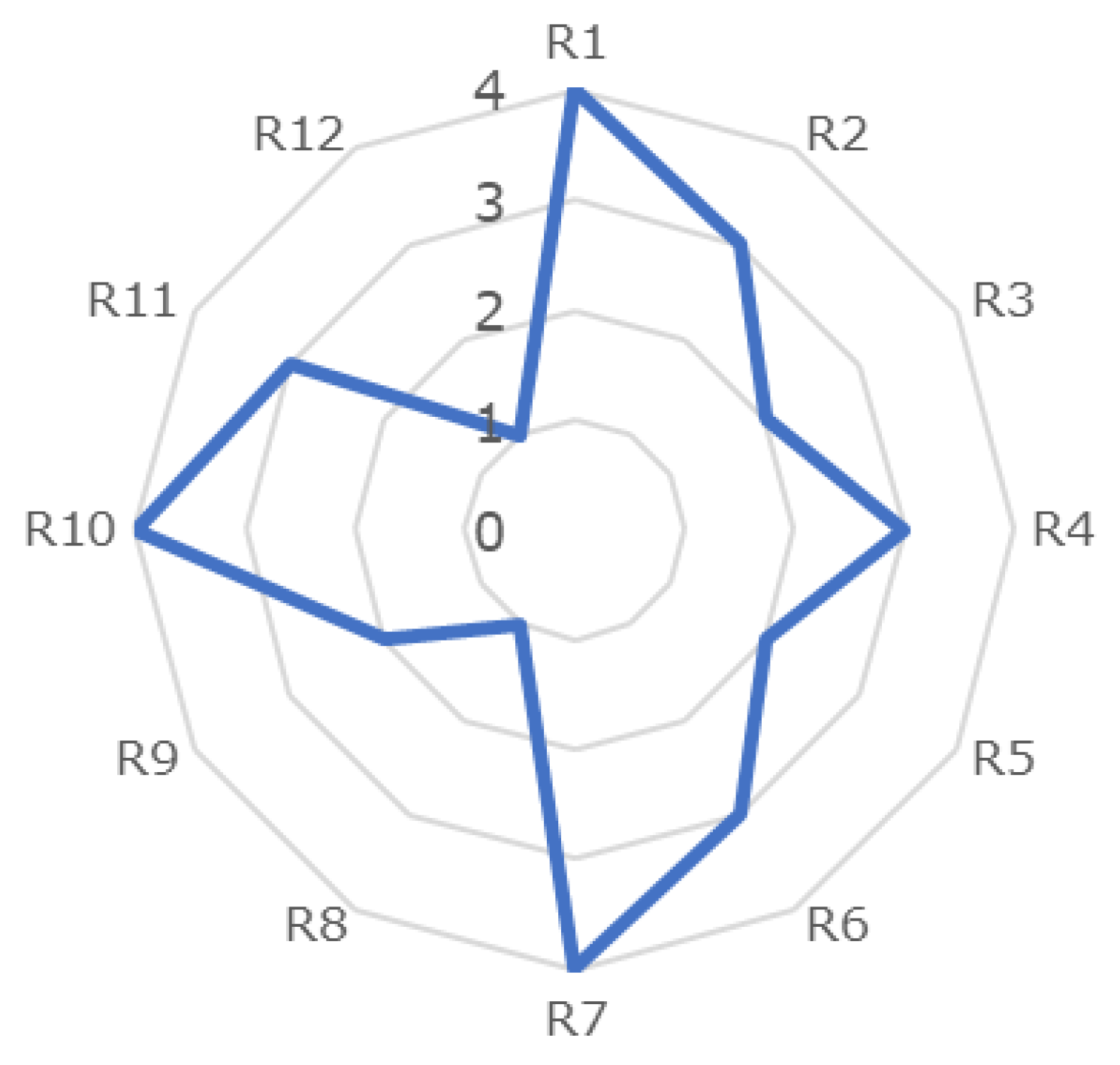
An integral part of the exploitation of talc is also the tailings pond, which is, following the valid legislation on the management of waste from the mining industry, defined as “a natural or artificially constructed facility for the disposal of fine-grained mining waste, usually tailings mixed with various amounts of water from mineral processing and the cleaning or recycling of water from operations” [45]. Considering this fact and the mining and processing methods of talc, it is possible to identify the following risks:
-
Risk of changing and disrupting the georelief and rock environment (R1);
-
Risk of changing microclimatic conditions (R2);
-
Risk of air contamination (R3);
-
Risk of contamination of groundwater resources (R4);
-
Risk of contamination of surface water resources (R5);
-
Risk of soil contamination (R6);
-
Risk of land acquisition (R7);
-
Risk of soil erosion (R8);
-
Risk of reducing biodiversity (R9);
-
Risk of vegetation elimination (R10);
-
Risk of the disturbance of the perception of the landscape (R11);
-
Risk of threatening the health of the population (R12).
Among the accidental risks of operating a tailings pond for talc exploitation are changes and disruptions of the georelief and rock environment, land acquisition, and elimination of vegetation; minor risks include changes in microclimatic conditions, contamination of groundwater sources and soil, and the influence on the perception of the landscape; improbable risks include contamination of the air, resources of surface waters, reduction in biodiversity; and the extremely unlikely risks include soil erosion and threats to the health of the population (Figure 3).
Based on the quantification of the probability of the above-defined risks of operating a tailings pond after talc exploitation in interaction with the determined severity of risks, it is possible to classify the category of individual risks, from which the following facts emerged (Table 6):
-
The low risks include contaminating the air and surface water resources, as well as the risk of soil erosion, reduction in biodiversity, and threats to the health of the population;
-
The moderate risks include changing microclimatic conditions, soil contamination, and disturbance of the perception of the landscape;
-
The high risks include changing and disrupting the georelief and rock environment, contaminating groundwater resources, and eliminating vegetation.

4. Discussion

The assessment of environmental risks in talc mining operations presents a tension between current operational compliance and prospective infrastructure failure scenarios. While present-day mine water monitoring demonstrates substantial regulatory adherence, the quantified risk assessment identifies high-consequence pathways whose manifestation depends on extended temporal horizons and aging equipment conditions. This distinction between current-state compliance and future failure probability underpins both the results of this assessment and the urgency of preventive mitigation strategies. The environmental risk assessment was primarily based on expert judgment, risk probability and severity matrices, and secondary data sources, which, although methodologically sound, introduce a degree of subjectivity and potential bias.

4.1. High-Risk Stressors: Technical Infrastructure Failures and Catastrophic Containment Scenarios

The risk assessment identified technical infrastructure leakage (R5) and tailings pond operations (R4, R6, R11) as the highest-priority environmental concerns, jointly rated as high risk (4C and 4D severity ratings). This classification reflects not current observed contamination but the convergence of two factors: the frequency-to-occasional probability of occurrence and the major-to-hazardous severity of consequences. Understanding the basis for these high-risk designations requires explicit examination of probability mechanisms and documented real-world precedents as they may determine long-term environmental outcomes and remedial costs.
Technical Infrastructure Failures: Petroleum Product Contamination.
Petroleum product contamination represents an immediate and persistent threat to groundwater and surface water quality [46,47]. The assessed probability of 0.8 reflects the inevitability of infrastructure aging: hydraulic system wear, storage tank corrosion, and seal degradation occur continuously in mining operations. Engine, gear, and hydraulic oil leakage (Table 4, Risk R1) scored probability level 4 (occasional occurrence) and severity level D (minor impact), yielding a high-risk classification. This reflects the inevitability of equipment aging in mining operations: hydraulic systems develop micro-fractures under cyclic loading; storage tanks corrode progressively in moist, acidic environments common to mining sites; elastomer seals degrade chemically and physically over 10–15-year service lifespans. The probability level 4 designation is based on the demonstrated frequency of such failures across comparable operations. Hydraulic fracturing operations in the United States have resulted in thousands of documented spills annually, with median spill volumes of 1.5 m3 and cumulative incidents affecting groundwater quality across multiple states, particularly in California [48,49]. While individual spill volumes may be modest, the contamination pathway is severe: petroleum hydrocarbons migrate downward through vadose zones and persist in anaerobic groundwater environments for decades. Surface tank leaks can contaminate extensive subsoil areas and represent a significant pathway for both organic and inorganic pollutants to contaminate aquifers through leaching processes. Pollutants migrate downward through soil layers and the unsaturated zone, ultimately reaching groundwater and posing risks to environmental and human health due to their physical and chemical properties [50].
As to the severity rating (D: minor), while individual minor spills pose reversible impacts, the cumulative contamination trajectory from multiple small leaks can degrade groundwater quality irreversibly over operational timescales. Furthermore, the cost of remediation for aquifer flushing or soil vapor extraction ranges to several million euros for contaminated aquifers, supporting human consumption. The concentration of hydraulic infrastructure in processing facilities (flotation cells, pumping systems, material conveyor networks) increases the probability of simultaneous failures or multi-source contamination. Thus, the high-risk classification captures both the established frequency of equipment failures and the costly, long-lasting consequences of groundwater contamination. This finding aligns with records of groundwater contamination around the world. A bark dump, operated as an unlined industrial dumping ground for pulp and paper waste with approximately 1,440,000 m3 of waste, continues to contaminate groundwater despite closure measures, e.g., clay cap, leachate collection system, etc. [51]. Spillages of diesel and other refined petroleum products, such as gasoline and their byproducts, pollute both seawater and freshwater significantly. When diesel contaminates groundwater, it introduces petroleum hydrocarbons into aquifers, with the contamination pathway involving total petroleum hydrocarbons entering the subsurface soil and eventually reaching groundwater aquifers. Additionally, diesel contamination of groundwater in oil-producing regions has been linked to elevated concentrations of barium and heavy metals (such as cadmium, chromium, copper, iron, nickel, and lead) that exceed WHO permitted limits, compounding the health and environmental risks associated with diesel spillage in areas like Nigeria’s Niger Delta region [34].
Leakage from mining infrastructure (R5) was classified identically (probability 4, severity D, high risk). The facility description details multiple petroleum product storage systems—fuel storage for mobile equipment, hydraulic fluid reservoirs for excavation machinery, and lubricating oil supply tanks for grinding mills. Within the aging facility infrastructure typical of traditional mining operations in Central Europe, corrosion and seal failure represent not exceptional events but expected equipment behavior. This assessment aligns with precedent documented pipeline failures in Egypt. A major oil pipeline in Egypt burst close to the neighborhoods of Cairo in July 2008, causing massive amounts of mazut to spill into the Nile River. The spill severely contaminated the water and forced three water refineries to halt operations [52]. In September 2010, a barge sank in the Nile River in southern Egypt near Aswan, causing an oil leak that jeopardized the city’s water supply. Approximately 100 tons of petroleum leaked into the river as a result of the accident, creating an oil slick that extended up to two kilometers. This incident directly threatened the water supply infrastructure for Aswan’s residents [52]. A breach from the plant waste pipe caused a significant oil spill in Upper Egypt in October 2012. This spill resulted in the closure of 18 water stations, as an oil slick floated on the water’s surface and moved downstream with the flow of the river, causing widespread disruption to water supplies across multiple regions [52]. These incidents demonstrate how infrastructure failures, whether from pipeline breaches, vessel accidents, or industrial waste systems, rapidly contaminate surface water bodies over large geographic areas, forcing the closure of critical water supply infrastructure and endangering public access to clean drinking water [53].
The high-consequence assessment reflects multiple factors extending beyond immediate contamination:
  • Petroleum hydrocarbons persist in subsurface environments for decades, with slow degradation rates in anaerobic conditions [54,55].
  • Aquifer flushing or soil vapor extraction remediation costs are high [56,57].
  • Potential drinking water source contamination for consumptive uses exists downstream.
The tailings pond operation presents an equivalent risk magnitude, but through different mechanisms: continuous seepage contaminating groundwater; leaching of stored contaminants over decades; and catastrophic failure scenarios releasing the entire pond contents.
Contamination of groundwater resources through tailings pond seepage (Table 6, Risk R4) scored probability 3 (remote/rare occurrence) and severity B (hazardous), yielding the same high-risk classification. This risk mechanism differs fundamentally from infrastructure leaks: rather than acute point-source contamination, tailings ponds generate chronic seepage contamination from stored solid and dissolved contaminants. The probability level 3 reflects the expected frequency of seepage incidents in properly constructed and maintained facilities, which are rare under normal operations but inevitable over decadal timescales and under extraordinary conditions (heavy precipitation, structural settlement, hydraulic erosion).
Severity classification as B (hazardous, requiring remedial measures and ecological restoration) reflects multiple pathways. Tailings contain residual flotation chemicals (collectors, frothers, depressants), fine-grained mineral particles enriched in trace metals, and, occasionally, sulfide minerals capable of generating acid mine drainage. Seepage mobilizes these contaminants through the dissolution of water-soluble species and physical transport of fine particles, contaminating aquifers over large spatial domains. Remediation of contaminated aquifers requires decades of pump-and-treat operations, constructed wetlands, or monitored natural attenuation, all of which entail high treatment costs.
The identified risk reflects the inherent vulnerability of storage facilities: all tailings ponds leak, with leak rates determined by embankment construction quality, geotechnical foundation properties, and operational water management practices.
Beyond routine seepage, catastrophic tailings dam failures represent the defining low-probability, catastrophic-consequence event. While such failures occur rarely (probability level 2–1 in most years), the consequences are severe (A: catastrophic, irreversible environmental impacts), yielding a very high risk when evaluated over multi-decadal operational periods. The study cites historical precedents appropriate to the Central European geological and mining context. One of the most catastrophic examples is the Val di Stava disaster in Italy (1985), which involved fluorite tailings from the Prealpi Mineral Mine in the Dolomite Mountains. Two tailings ponds failed, and approximately 185,000 m3 of tailings flowed at around 90 km/h along 4.2 km of Stava Creek, inundating the villages of Stava and Tesero. The cost of the damage was estimated at approximately €133 million, with recovery operations continuing for 15 years. The underlying causes were complex and multifaceted: the dams were built without geotechnical site investigations into marshy glaciofluvial soils on a slope with an average inclination of 25°, had inadequate drainage systems, lacked water-control measures, and lacked monitoring systems. Rainwater, groundwater, and slope runoff were not diverted from the tailings pond, and these factors, combined with high rainfall preceding the failure, led to high water levels and excessive piezometric heads. Additionally, the dams were excessively tall, with the upper dam reaching 34 m, and leaks, along with requests from local communities for dam investigations, were ignored [58,59].
Three of the most serious tailing ponds failures since 2015 include the Mount Polley failure in Canada (2014), the Fundão failure in Brazil (2015), and the Brumadinho failure in Brazil (2019). The Fundo and Mount Polley failures caused widespread environmental damage by releasing the largest volumes of tailings recorded to date of 32 million m3 and 25 million m3, respectively; a smaller volume of tailings was released at Brumadinho (12 million m3), but the damage to mining infrastructure and ecosystems was as severe as at Fundão and Mount Polley [32,60,61,62].
The environmental consequences of these failures have been particularly severe. The Fundão failure in Brazil in 2015 resulted in the loss of 460 hectares of Atlantic Forest, a biodiversity hotspot, extending up to 74 km from the dam. It resulted in severe damage to at least 1500 hectares of natural reserves. Similarly, the 1998 Aznalcóllar tailings pond failure in Spain resulted in contamination of 2600 hectares of agricultural land and the destruction of its agricultural products, with all fish and shellfish in the Guadiamar basin killed by tailings deposition. The 2000 Baia Mare and Novaţ-Roşu tailings pond failure in Romania released cyanide and metals, resulting in the death of 1240 tonnes of fish. More recently, the 2018 collapse of a tailings dam at Huancapatí, Peru, released 80,000 m3 of tailings, severely contaminating crops [32,63,64].
At the talc mining facility, a catastrophic failure would release tailings into the river drainage system, potentially affecting water supplies for downstream municipalities and agricultural operations across Slovakia. The low probability (level 1–2) assigned to catastrophic failure reflects modern facility management, but the severity of the consequences warrants a high-risk classification when the failure probability is considered over the facility’s full 50–100 year lifetime.

4.2. Moderate-Risk Stressors: Physical Landscape Impacts and Ongoing Contamination Pathways

The assessment identified three moderate-risk stressors reflecting the operational realities of mining and the inherent environmental costs of mineral extraction. These risks warrant strategic management through engineered solutions and restoration initiatives. Changes to georelief and rock environments (Table 6, Risk R1) were scored with a probability of 4 (frequent/occasional) and a severity of C (major impact requiring remediation). This reflects the fundamental physical reality of open-pit mining, i.e., the extraction of ore removes overburden, creating topographic depressions and surrounding waste rock piles. Unlike contamination-based risks potentially addressed through chemical or hydrological remediation, landscape alteration represents an essentially irreversible modification persisting across centennial timescales.
The scale of these alterations warrants emphasis. Open-pit mining for copper, diamonds, gold, and other precious metals has created landscapes, with some of the world’s largest pits resulting in unique above- and below-ground features. The scale of excavation is extraordinary: the Bingham Canyon copper mine in the Oquirrh Mountains, Utah, USA, is the most extensive man-made excavation and the deepest open-pit mine in the world, at 1210 m deep, 4 km wide, and covering 7.7 km2. Additionally, the Udachny diamond mine in the Sakha Republic region, Russia, is currently mined to a depth of more than 630 m, which makes it one of the 10 deepest open-pit mines in the world [65,66,67]. Thus, the moderate-risk classification reflects the certainty of landscape change, combined with the practical impossibility of reversing it with available remediation technologies.
The consequence is a loss of ecosystem services operating at the landscape scale: watershed function, habitat connectivity, and visual amenity for regional populations. The georelief alterations created by open-pit mining are fundamentally different from natural landscape features. Deep open-pit mines typically use multilevel horizon mining with stair-step spiraling benches designed to prevent landslides and serve as roadways, creating unique landforms unlike depressions formed by natural processes [68]. The resulting landscape features can be classified into three categories: excavated negative forms, accumulated positive forms, and destroyed forms (planed surfaces). These can be further subdivided into scales [65]:
  • Macroforms, describing the gross morphology.
  • Mesoforms, including walls, floors, debris aprons and cones, plateaus, and slopes.
  • Microforms, including erosional, depositional, or remnant features on or within mesoforms.
The permanence of these alterations cannot be overstated. Mining landscapes covered more than 57,277 km2 worldwide in 2020 [69], and these landscapes are typically transformed rapidly, with some exhibiting decadal and longer-term landform persistence [65]. The overall geomorphic effect is massive as mining is responsible for more sediment production than paved road construction, house construction, and agriculture, which, in combination, produce more sediment than natural processes [70,71].
The removal of materials creates distinctive topographic patterns. Mining usually strips off the vegetation and converts surfaces to bare earth. Furthermore, activities associated with extracting substances from near the surface of the Earth and dealing with the resulting overburden and waste rock create unique excavated landscapes with negative landforms, accumulated or positive landforms including overburden removal and stockpiles, and planed landforms and landscapes designed to facilitate extraction with machinery [67,72,73,74].
Thus, the classification of moderate risk reflects the permanent and substantive (though not irreversible in the sense of ecological function) alteration of environmental systems. Ecological consequences include the following [75,76,77,78]:
  • Vegetation removal impacting ecosystems.
  • Habitat fragmentation affecting wildlife corridors.
  • Disruption of soil development processes requiring centuries for restoration.
  • Reduction in ecosystem services, including carbon sequestration, water infiltration, and biodiversity support.
Unlike contaminant-based stressors potentially addressed through remediation technologies, landscape restoration remains limited to the following [28,79]:
  • Progressive reclamation of inactive mining areas.
  • Replacement vegetation establishment on backfilled materials.
  • Creation of alternative habitats partially compensating for lost ecosystem functions.
Multiple risk pathways converge on groundwater contamination: infrastructure leakage (R5), tailings seepage (R4), and diesel/petroleum spills (R2, R3). Individual assessments yield scattered moderate- and high-risk classifications, but the cumulative effect warrants consideration. Talc mining facilities typically occupy sites with shallow water tables and vulnerable aquifer systems—conditions that make Central European karst and fractured crystalline bedrock particularly susceptible to rapid contaminant migration. Once groundwater contamination occurs, remediation typically requires 20–30 years of continuous treatment, and drinking water quality may recover only partially or incompletely in many scenarios.
The moderate-risk classification for groundwater contamination reflects both probability (level 3: rare but possible) and the reversibility potential through aggressive remediation (severity C). However, the convergence of multiple contamination pathways over facility lifetime increases the actual probability significantly.

4.2.1. Naturally Occurring Radioactive Materials: Context-Specific Central European Challenge

The documented exceedance of alpha radionuclide limits in mine water (Section 3) introduces a uniquely important risk not present in all talc mining regions. Slovakia’s granitic and metamorphic geology contributes uranium, radium, and decay products to talc deposits and processing byproducts. Unlike petroleum contamination or flotation chemical residues, radioactive contaminants persist indefinitely, with disposal or immobilization required at facility closure. Slovakia’s granitic and metamorphic geology contributes uranium, radium, and their decay products to talc deposits, creating naturally occurring radioactive material management obligations absent in mining regions with different geological settings [80,81].
EU regulatory frameworks for naturally occurring radioactive material in mining are still evolving and vary substantially among member states. Slovak regulations impose increasingly stringent dose limits and remediation standards. The identified exceedance of alpha radionuclide limits, currently managed through tailings storage, represents a long-term liability that requires either permanent immobilization or indefinite institutional controls. This risk pathway is specific to Central European geology and regulatory environments, distinguishing talc mining in Slovakia from operations in many global contexts. Slovak regulations impose increasingly stringent requirements for managing naturally occurring radioactive material, necessitating proactive operational changes to ensure long-term compliance and minimize remedial liabilities [82,83,84].

4.2.2. Limitations and Uncertainty in Risk Assessment

This assessment, while methodologically sound, operates within inherent constraints requiring transparency. The probability and severity ratings reflect panel expert judgment informed by secondary data, site documentation, and comparable operations. Individual assessments may be influenced by implicit conservatism or underestimation due to differences in professional experience among the evaluation panel. A sensitivity analysis, varying probability or severity scores by ±1 level, would quantify the robustness of the high/moderate/low classifications.
The probability scale (Table 1) assumes implicit time horizons spanning mining operations plus 20- to 30-year post-closure periods. Risk probability would shift substantially with different facility lifetimes (e.g., 10 vs. 50 years) or with anticipated intensification of rainfall and groundwater recharge due to climate change. Risk probability assignments for events not yet observed at the specific facility (e.g., tailings dam failure) rely on global incident frequency translated to the assessed facility.
This assessment focuses on environmental risk, narrowly defined as ecological and water resource impacts. Human health risks from dust inhalation, radionuclide exposure, and occupational contamination are substantive concerns that are not comprehensively evaluated in the quantitative risk matrix.

5. Conclusions

Talc mining poses environmental challenges, particularly in mine water contamination. Although regulatory compliance is largely maintained, occasional exceedances necessitate improved mitigation strategies. The analysis identified two categories of high environmental risk, both of which determine long-term environmental outcomes and remedial costs. Technical infrastructure failures represent a frequent to occasional probability of petroleum product contamination of mine waters, driven by the inevitability of infrastructure aging (hydraulic system wear, storage tank corrosion, and seal degradation that occur continuously in mining operations). The consequences are severe, ranging from persistent groundwater contamination to high-cost aquifer remediation that can take decades to centuries to recover. Tailings pond operations pose a similar risk magnitude through different mechanisms: continuous seepage contaminating groundwater, leaching of stored contaminants over decadal timescales, and catastrophic failure scenarios releasing the entire pond contents. This pathway produces irreversible or severely damaging environmental consequences, including georelief alteration, vegetation elimination, and groundwater contamination spanning extensive geographic areas and multiple jurisdictional boundaries.
Three categories of moderate-risk stressors were identified as characteristic of mining operations generally: diesel and oil substance leakage (distinct from infrastructure-sourced petroleum contamination), soil contamination from tailings pond seepage and deposition, and microclimatic and landscape perception changes. These risks warrant strategic management through engineered solutions, but do not have the same regulatory focus or research urgency as high-risk environmental pathways.
Based on the quantification of the risk probability, it can be concluded that:
  • Among the high risks of pollutant leakage into mine waters is the risk of leakage of the engine, gear, and hydraulic oils from the technical infrastructure.
  • There are no high risks of the impact of talc flotation on the environment.
  • The high risks of operating a tailings pond during talc exploitation include changing and disrupting the georelief and rock environment, contaminating groundwater sources, and eliminating vegetation.
Future research should focus on integrating empirical data through systematic field studies that monitor changes in biodiversity over time. Incorporating geospatial and remote sensing tools could enhance the precision of environmental impact assessments and support more effective mitigation planning. In addition, expanding the research to include socioeconomic impacts and community health assessments would provide a more holistic perspective. Comparative analyses of talc mining operations in different regions could also help identify universal versus site-specific environmental risks, contributing to the development of standardized international guidelines for sustainable mining practices.

Author Contributions

Conceptualization, H.P., M.K., T.B. and Ľ.K.; Methodology, H.P., M.K., T.B., Ľ.K. and E.N.; Validation, H.P., M.K., T.B., Ľ.K. and E.N.; Formal analysis, H.P., M.K., Ľ.K. and E.N.; Investigation, H.P., M.K. and Ľ.K.; Resources, M.K. and Ľ.K.; Data curation, H.P., T.B. and E.N.; Writing—original draft, H.P., M.K. and T.B.; Writing—review & editing, H.P. and M.K.; Visualization, E.N.; Supervision, H.P., M.K. and T.B.; Project administration, T.B. and Ľ.K.; Funding acquisition, M.K. All authors have read and agreed to the published version of the manuscript.

Funding

This research was funded by Scientific Grant Agency of the Ministry of Education, Science, Research, and Sport of the Slovak Republic and the Slovak Academy of Sciences as part of the research project VEGA 1/0247/23.

Institutional Review Board Statement

Not applicable.

Informed Consent Statement

Not applicable.

Data Availability Statement

The original contributions presented in this study are included in the article. Further inquiries can be directed to the corresponding author.

Conflicts of Interest

The authors declare no conflict of interest.

References

  1. Kalendova, A.; Kupkova, J.; Urbaskova, M.; Merinska, D. Applications of Clays in Nanocomposites and Ceramics. Minerals 2024, 14, 93. [Google Scholar] [CrossRef]
  2. Ali, M.A.; Ahmed, H.A.M.; Ahmed, H.M.; Hefni, M. Pyrophyllite: An Economic Mineral for Different Industrial Applications. Appl. Sci. 2021, 11, 11357. [Google Scholar] [CrossRef]
  3. Song, L.; Xue, Y.; Tufail, M. Tourism Development and Sustainable Green Growth: Evidence from the Top 10 International Tourist-Receiving Economies. Sustain. Dev. 2025, 33, 7992–8007. [Google Scholar] [CrossRef]
  4. Guo, Z.; Xu, S.; Chen, H.; Law, R.; Zhang, M. Rural Tourism Elites’ Impact on Tourism Evolution in Ethnic Regions. Tour. Int. Interdiscip. J. 2025, 73, 655–667. [Google Scholar] [CrossRef]
  5. Kicińska, A.; Pomykała, R. Incongruent dissolution of silicates and its impact on the environment: An example of a talc mine. Sci. Rep. 2023, 13, 22519. [Google Scholar] [CrossRef]
  6. Mancini, S.; Casale, M.; Tazzini, A.; Dino, G.A. Use and Recovery of Extractive Waste and Tailings for Sustainable Raw Materials Supply. Mining 2024, 4, 149–167. [Google Scholar] [CrossRef]
  7. Pavolová, H.; Čulková, K.; Šimková, Z.; Seňová, A.; Kudelas, D. Contribution of Mining Industry in Chosen EU Countries to the Sustainability Issues. Sustainability 2022, 14, 4177. [Google Scholar] [CrossRef]
  8. Andrejiová, M.; Knežo, D.; Piňosová, M.; Limnitzer, E. Analysis and assessment of environmental risks. In Global Existential Risks, Proceedings of the International Conference; Rusko, M., Ed.; STRIX: Žilina, Slovakia, 2012; pp. 35–41. [Google Scholar]
  9. Overchenko, T.A.; Ivanenko, O.I.; Vember, V.V.; Benatov, D.E. Environmental Protection Strategies; Igor Sikorsky Kyiv Polytechnic Institute: Kyiv, Ukraine, 2023. [Google Scholar]
  10. Simion, A.F.; Găman, A.N.; Kovacs, M.E.; Simion, S.V. Ocena stopnia wrażliwości warstw wodonośnych w przypadku przypadkowego zanieczyszczenia produktami ropopochodnymi. Inżynieria Miner. 2024, 1, 551–557. [Google Scholar] [CrossRef]
  11. Hrubec, J.; Virčíková, E. Integrovaný Manažérsky System, 1st ed.; Slovenská Poľnohospodárska Univerzita v Nitre: Nitra, Slovakia, 2009. [Google Scholar]
  12. Plura, J. Plánování a Neustále Zlepšování Jakosti, 1st ed.; Computer Press: Prague, Czech Republic, 2001. [Google Scholar]
  13. Tubis, A.; Werbińska-Wojciechowska, S.; Wroblewski, A. Risk Assessment Methods in Mining Industry—A Systematic Review. Appl. Sci. 2020, 10, 5172. [Google Scholar] [CrossRef]
  14. Paulillo, A.; Amoroso, O.; Salzano, E.; Capuano, P. An Integrated Approach to Risk and Impacts of Geo-Resources Exploration and Exploitation. Energies 2021, 14, 4178. [Google Scholar] [CrossRef]
  15. National Council of the Slovak Republic. Act No. 128/2015 Coll. on the Prevention of Serious Industrial Accidents, as Amended; National Council of Slovakia Republic: Bratislava, Slovakia, 2015. [Google Scholar]
  16. Ondrášik, R.; Gajdoš, V.; Bánska, H. Environmental risk assessment and environmental impact assessment. Geogr. J. 1999, 51, 313–326. [Google Scholar]
  17. Ondrasek, G.; Rengel, Z. Environmental salinization processes: Detection, implications & solutions. Sci. Total Environ. 2021, 754, 142432. [Google Scholar] [CrossRef]
  18. Ondrášik, R.; Gajdoš, V. Geologické riziká a ich hodnotenie pri projektovej príprave a využívaní krajiny. Acta Environ. Univ. Comen. 2006, 14, 83–99. [Google Scholar]
  19. Rattner, B.A.; Bean, T.G.; Beasley, V.R.; Berny, P.; Eisenreich, K.M.; Elliott, J.E.; Eng, M.L.; Fuchsman, P.C.; King, M.D.; Mateo, R.; et al. Wildlife ecological risk assessment in the 21st century: Promising technologies to assess toxicological effects. Integr. Environ. Assess. Manag. 2024, 20, 725–748. [Google Scholar] [CrossRef]
  20. Martínez, M.L.; Vázquez, G.; Pérez-Maqueo, O.; Silva, R.; Moreno-Casasola, P.; Mendoza-González, G.; López-Portillo, J.; MacGregor-Fors, I.; Heckel, G.; Hernández-Santana, J.R.; et al. A systemic view of potential environmental impacts of ocean energy production. Renew. Sustain. Energy Rev. 2021, 149, 111332. [Google Scholar] [CrossRef]
  21. Zeleňáková, M. Zhoršená kvalita vody ako stresor povodí. Zivotn. Prostr. 2008, 42, 207–211. [Google Scholar]
  22. Orr, J.A.; Macaulay, S.J.; Mordente, A.; Burgess, B.; Albini, D.; Hunn, J.G.; Restrepo-Sulez, K.; Wilson, R.; Schechner, A.; Robertson, A.M.; et al. Studying interactions among anthropogenic stressors in freshwater ecosystems: A systematic review of 2396 multiple-stressor experiments. Ecol. Lett. 2024, 27, e14463. [Google Scholar] [CrossRef]
  23. Cacciuttolo, C.; Atencio, E. In-Pit Disposal of Mine Tailings for a Sustainable Mine Closure: A Responsible Alternative to Develop Long-Term Green Mining Solutions. Sustainability 2023, 15, 6481. [Google Scholar] [CrossRef]
  24. Rana, K.K.; Pachu, A.V.; Jeeva, V.; Rao, N.R.; Sekhar, A.; Singh, A.N.; Kumar, S. Enhancing Sustainability: Reclamation and Rehabilitation Strategies for Restoring Mined-Out Lands in India to Mitigate Climate Change Impacts. In Forests and Climate Change; Singh, H., Ed.; Springer: Singapore, 2024. [Google Scholar] [CrossRef]
  25. So, H.B.; da Silva, I.R.; Gomes, L.C.; de Oliveira, T.S. Subsoil and Surface Soil Constraints of Mined Land and Tailings. In Subsoil Constraints for Crop Production; Oliveira, T.S.d., Bell, R.W., Eds.; Springer: Cham, Switzerland, 2022. [Google Scholar] [CrossRef]
  26. Zhan, R.-T.; Zhang, H.-B.; Pei, J.-N.; Yang, H.; Lu, W.; Ye, P.-Y.; He, B.; Luo, S.-L.; Lu, Z.-G.; Jiang, F.; et al. Recent Advances in Recycling of Copper-Based Waste Materials: A Critical Review. cMat 2025, 2, e70005. [Google Scholar] [CrossRef]
  27. Upadhyay, R.K. Mining, Mineral Beneficiation, and Environment. In Geology and Mineral Resources; Springer Geology; Springer: Singapore, 2025. [Google Scholar] [CrossRef]
  28. Tibbett, M. Post-mining ecosystem reconstruction. Curr. Biol. 2024, 34, R387–R393. [Google Scholar] [CrossRef] [PubMed]
  29. James, P.; Douglas, I. Urban Ecology: An Introduction, 2nd ed.; Routledge: Oxfordshire, UK, 2023. [Google Scholar] [CrossRef]
  30. Hamraoui, L.; Bergani, A.; Ettoumi, M.; Aboulaich, A.; Taha, Y.; Khalil, A.; Neculita, C.M.; Benzaazoua, M. Towards a Circular Economy in the Mining Industry: Possible Solutions for Water Recovery Through Advanced Mineral Tailings Dewatering. Minerals 2024, 14, 319. [Google Scholar] [CrossRef]
  31. Kursunoglu, S. A Review on the Recovery of Critical Metals from Mine and Mineral Processing Tailings: Recent Advances. J. Sustain. Metall. 2025, 11, 2023–2050. [Google Scholar] [CrossRef]
  32. Hudson-Edwards, K.A.; Kemp, D.; Torres-Cruz, L.A.; Macklin, M.G.; Brewer, P.A.; Owen, J.R.; Franks, D.M.; Marquis, E.; Thomas, C.J. Tailings storage facilities, failures and disaster risk. Nat. Rev. Earth Environ. 2024, 5, 612–630. [Google Scholar] [CrossRef]
  33. Garcia, F.F.; Camilo Cotrim, C.F.; Caramori, S.S.; Bailão, E.F.L.C.; Nabout, J.C.; de Farias Neves Gitirana Junior, G.; Almeida, L.M. Mine tailings dams’ failures: Serious environmental impacts, remote solutions. Environ. Dev. Sustain. 2025, 27, 18179–18201. [Google Scholar] [CrossRef]
  34. Ikhumetse, A.A.; Abioye, O.P.; Ijah, U.J.J.; Bankole, M.T. A critical review of oil spills in the Niger Delta aquatic environment: Causes, impacts, and bioremediation assessment. Environ. Monit. Assess. 2022, 194, 816. [Google Scholar] [CrossRef]
  35. Garcés, D.; Jiménez-Oyola, S.; Sánchez-Palencia, Y.; Guzmán-Martínez, F.; Villavicencio-Espinoza, R.; Jaramillo-Zambrano, S.; Rosado, V.; Salgado-Almeida, B.; Marcillo-Guillén, J. Assessment of Tailings Contamination Potential in One of the Most Important Gold Mining Districts of Ecuador. Minerals 2025, 15, 767. [Google Scholar] [CrossRef]
  36. Gaber, W.; Shehata, N.; El-Sherbeeny, A.M.; Al Zoubi, W.; Mehaney, A.; Abukhadra, M.R. Facile exfoliation of natural talc into separated mesoporous magnesium silicate nano-sheets for effective sequestration of phosphate and nitrate ions: Characterization and advanced modeling. Front. Chem. 2025, 13, 1571723. [Google Scholar] [CrossRef] [PubMed]
  37. Leiva, W.; Toro, N.; Robles, P.; Quezada, G.R.; Salazar, I.; Flores-Badillo, J.; Jeldres, R.I. Rheology Modifying Reagents for Clay-Rich Mineral Suspensions: A Review. Polymers 2025, 17, 2427. [Google Scholar] [CrossRef]
  38. Kumar, S. Social and Environmental Imperatives for Risk Management: Lessons from the Rohingya Refugee Crisis. In Earth Systems Protection and Sustainability; Furze, J.N., Eslamian, S., Raafat, S.M., Swing, K., Eds.; Springer: Cham, Switzerland, 2022. [Google Scholar] [CrossRef]
  39. Pačaiová, H.; Kotianová, Z.; Glatz, J. Metódy Posudzovania Rizík v Rozhodovacích Procesoch; Beki: Košice, Slovakia, 2016. [Google Scholar]
  40. Pačaiová, H.; Glatz, J. Bezpečnosť a Riziká Technických Systémov; Technická Univerzita v Košiciach, Strojnícka Fakulta: Košice, Slovakia, 2009. [Google Scholar]
  41. Pavolová, H.; Bakalár, T.; Tokarčík, A. Riziková analýza environmentálnych dopadov exploatácie ložísk nerastných surovín v SR. In Aplikovaná Ekológia v Praxi: Seminár Konaný v Rámci, 1st International Conference Science Cannot Wait: New Horizons in Water, Raw Materials, Geology, Ecology, Energy and Environmental and Veterinary Sciences: Zborník Príspevkov Zo Seminára; Bakalár, T., Pavolová, H., Eds.; Technická univerzita v Košiciach: Košice, Slovakia, 2021; pp. 72–84. [Google Scholar]
  42. Baruah, N.P.; Goswami, M.; Sarma, N.; Chowdhury, D.; Devi, A. Pioneering technologies over time to rehabilitate crude oil–contaminated ecosystems: A review. Environ. Sci. Pollut. Res. 2024, 31, 63576–63602. [Google Scholar] [CrossRef]
  43. Seňová, A.; Antošová, M. Hodnotenie rizík možného ohrozenia bezpečnosti a zdravia zamestnancov ako súčasť kvality pracovného života v podniku. Manažment Teórii Praxi 2007, 3, 30–37. [Google Scholar]
  44. Kaňuchová, M.; Kozáková, Ľ.; Bakalár, T.; Pavolová, H.; Nartowska, E. An assessment of environmental impact of talc processing: Flotation and mine water quality. In Proceedings of the International Conference on Environment, Biotechnology and Bioengineering Applications-2025 (ICEBBA-25), Singapore, 11–12 September 2025. [Google Scholar]
  45. National Council of the Slovak Republic. Act No. 514/2008 Coll. on the Management of Waste from the Mining Industry, as Amended; National Council of Slovakia Republic: Bratislava, Slovakia, 2008. [Google Scholar]
  46. Ovuoraye, P.E.; Ogbu, A.I.; Igwegbe, C.A.; Enebeli, E.B. Treatment of Water Contaminated by Petroleum Products Through Coagulation and Flocculation. In Management of Petroleum Wastewater and Oil Field Discharges: Diagnosis, Impacts and Treatment; Environmental Science and Engineering; Anouzla, A., Souabi, S., Eds.; Springer: Cham, Switzerland, 2025. [Google Scholar] [CrossRef]
  47. Wojtowicz, K.; Steliga, T.; Kapusta, P. Evaluation of the Effectiveness of Bioaugmentation-Assisted Phytoremediation of Soils Contaminated with Petroleum Hydrocarbons Using Echinacea purpurea. Appl. Sci. 2023, 13, 13077. [Google Scholar] [CrossRef]
  48. USEPA. U.S. Environmental Protection Agency: Hydraulic Fracturing for Oil and Gas: Impacts from the Hydraulic Fracturing Water Cycle on Drinking Water Resources in the United States. Executive Summary; EPA/600/R-16/236ES; Office of Research and Development: Washington, DC, USA, 2016. Available online: https://www.epa.gov/sites/production/files/2016-12/documents/hfdwa_executive_summary.pdf (accessed on 2 February 2025).
  49. CalOES. Spill Release Reporting. 2025. Available online: https://www.caloes.ca.gov/office-of-the-director/operations/response-operations/fire-rescue/hazardous-materials/spill-release-reporting/ (accessed on 2 February 2025).
  50. Almaliki, A.J.D.; Bashir, M.J.K.; Borrajo, J.F.L. Appraisal of groundwater contamination from surface spills of fluids associated with hydraulic fracturing operations. Sci. Total Environ. 2022, 815, 152949. [Google Scholar] [CrossRef]
  51. Sfalsini, H.; Jacome, M.; Costanzo-Alvarez, V.; Jeffrey, M.; Rivas-Pozo, E.; Lovell, B.; Galatro, D.; Bazylak, J.; Amon, C.H. Coupling cross-validated geoscientific evidence and indigenous knowledge to understand contaminant dynamics affecting a land-based community in Northern Ontario. Environ. Geochem. Health 2025, 47, 353. [Google Scholar] [CrossRef]
  52. Ewida, A.Y.I. Oil Spills: Impact on Water Quality and Microbial Community on the Nile River, Egypt. Int. J. Environ. 2014, 3, 192–198. [Google Scholar]
  53. Mahlakeng, M.K.; Makhabane, M. Dearth of development: Oil exploration in East Africa threatening the Nile water resources. Wilberforce J. Soc. Sci. 2025, 10, 1–16. [Google Scholar] [CrossRef]
  54. Bhattacharya, A.; Fathima, J.; Varghese, S.; Chatterjee, P.; Gadhamshetty, V. Advances in bioremediation strategies for PFAS-contaminated water and soil. Soil Environ. Health 2025, 3, 100126. [Google Scholar] [CrossRef]
  55. Hatzinger, P.B.; Lippincott, D.; Lavorgna, G.; Fuller, M.E. Aerobic cometabolism revisited for in situ groundwater treatment: Organisms, enzymes and remediation design considerations. Bioremediat. J. 2025, 1–22. [Google Scholar] [CrossRef]
  56. Barbati, B.; Lorini, L.; Bellagamba, M.; Petrangeli Papini, M. Alkylpolyglycosides—Based Formulations for Sustainable Remediation of Contaminated Aquifers: Lab-Scale Process Study for NAPL Solubilization Assessment. Sustainability 2025, 17, 1939. [Google Scholar] [CrossRef]
  57. Oh, M.; Annable, M.D.; Kim, H. Temporary hydraulic barriers using organic gel for enhanced aquifer remediation during groundwater flushing: Bench-scale experiments. J. Contam. Hydrol. 2023, 255, 104143. [Google Scholar] [CrossRef] [PubMed]
  58. Chandler, R.J.; Tasatti, G. The Stava tailings dams failure, Italy, July 1985. Proc. Inst. Civ. Eng. 1995, 113, 67–79. [Google Scholar] [CrossRef]
  59. Pirulli, M.; Barbero, M.; Marchelli, M.; Scavia, C. The failure of the Stava Valley tailings dams (Northern Italy): Numerical analysis of the flow dynamics and rheological properties. Geoenviron. Disasters 2017, 4, 3. [Google Scholar] [CrossRef]
  60. Byrne, P.; Hudson-Edwards, K.A.; Bird, G.; Macklin, M.G.; Brewer, P.A.; Williams, R.D.; Jamieson, H.E. Water quality impacts and river system recovery following the 2014, Mount Polley mine tailings dam spill, British Columbia, Canada. Appl. Geochem. 2018, 91, 64–74. [Google Scholar] [CrossRef]
  61. Guimarāes, R.N.; Moreira, V.R.; Cruz, J.R.A.; Saliba, A.P.M.; Amaral, M.C.S. History of tailings dam failure: Impacts on access to safe water and influence on the legislative framework. Sci. Total Environ. 2022, 852, 158536. [Google Scholar] [CrossRef]
  62. Moreira Araújo, R.; Vieira Lemos, Y.; Dias do Nascimento, E.; Silva Paraizo, A.H.; Wainstein, A.J.A.; Drummond-Lage, A.P. Identification of victims of the collapse of a mine tailing dam in Brumadinho. Forensic Sci. Res. 2022, 7, 580–589. [Google Scholar] [CrossRef] [PubMed]
  63. Grimalt, J.O.; Ferrer, M.; Macpherson, E. The mine tailing accident in Aznalcollar. Sci. Total Environ. 1999, 242, 3–11. [Google Scholar] [CrossRef]
  64. László, F. Lessons Learned from the Cyanide and Heavy Metal Accidental Water Pollution in the Tisa River Basin in the Year 2000. In Management of Intentional and Accidental Water Pollution; Dura, G., Kambourova, V., Simeonova, F., Eds.; NATO Security through Science Series; Springer: Dordrecht, The Netherlands, 2006. [Google Scholar] [CrossRef]
  65. Dávid, L. Quarrying and Other Minerals. In Anthropogenic Geomorphology; Szabó, J., Dávid, L., Lóczy, D., Eds.; Springer: Dordrecht, The Netherlands, 2010. [Google Scholar] [CrossRef]
  66. Everdear. Udachny Diamond Mine in Russia. 2025. Available online: https://www.everdear.se/blog/negative-effects-diamond-mining#udachny (accessed on 20 November 2025).
  67. Mossa, J.; James, L.A. 9.06—Geomorphic Perspectives on Mining Landscapes, Hazards, and Sustainability. In Treatise on Geomorphology, 2nd ed.; Shroder, J.F., Ed.; Academic Press: Cambridge, MA, USA, 2022; pp. 106–143. [Google Scholar] [CrossRef]
  68. Haigh, M.J. The Evolution of Slopes on Artificial Landforms, Blaenavon, UK; University of Chicago Press: Chicago, IL, USA, 1978; 307p. [Google Scholar]
  69. Maus, V.; Giljum, S.; Gutschlhofer, J.; da Silva, D.M.; Probst, M.; Gass, S.L.B.; Luckeneder, S.; Lieber, M.; McCallum, I. A global-scale data set of mining areas. Sci. Data 2020, 7, 289. [Google Scholar] [CrossRef]
  70. Hooke, R.L. On the efficacy of humans as geomorphic agents. GSA Today 1994, 4, 224–225. [Google Scholar]
  71. Hooke, R.L. Spatial distribution of human geomorphic activity in the United States: Comparison with rivers. Earth Surf. Process. Landf. 1999, 24, 687–692. [Google Scholar] [CrossRef]
  72. Toy, T.J.; Chuse, W.R. Topographic reconstruction: A geomorphic approach. Ecol. Eng. 2005, 24, 29–35. [Google Scholar] [CrossRef]
  73. Kuzevic, S.; Bobikova, D.; Kuzevicova, Z. Land Cover and Vegetation Coverage Changes in the Mining Area—A Case Study from Slovakia. Sustainability 2022, 14, 1180. [Google Scholar] [CrossRef]
  74. Lawrence, S.; Davies, P.; Hil, G.; Rutherfurd, I.; Grove, J.; Turnbull, J.; Silvester, E.; Colombi, F.; Macklin, M. Characterising mine wastes as archaeological landscapes. Geoarcheology 2023, 38, 389–405. [Google Scholar] [CrossRef]
  75. Singh, R.; Singh, P.K.; Vishwakarma, R.C. Habitat Destruction and Deforestation. In Vanishing Biodiversity: Global Threats to Flora and Fauna, 1st ed.; Khalid, M.A., Kumar, S., Yadav, E., Pankaj, P.P., Kharwar, R.K., Eds.; Zenodo: Geneva, Switzerland, 2025; pp. 23–58. [Google Scholar] [CrossRef]
  76. Gatti, R.C. Ecological Peace Corridors: A new conservation strategy to protect human and biological diversity. Biol. Conserv. 2025, 302, 110947. [Google Scholar] [CrossRef]
  77. Di Sacco, A.; Hardwick, K.A.; Blakesley, D.; Brancalion, P.H.S.; Breman, E.; Cecilio Rebola, L.; Chomba, S.; Dixon, K.; Elliott, S.; Ruyonga, G.; et al. Ten golden rules for reforestation to optimize carbon sequestration, biodiversity recovery and livelihood benefits. Glob. Change Biol. 2021, 27, 1328–1348. [Google Scholar] [CrossRef]
  78. Mishra, R.K.; Agarwal, R. Sustainable Forest Land Management to Restore Degraded Lands. In Sustainable Forest Management—Surpassing Climate Change and Land Degradation: Surpassing Climate Change and Land Degradation; Kulshreshtha, S.N., Ed.; IntechOpen: London, UK, 2024. [Google Scholar] [CrossRef]
  79. Islam, M.; Pranto, A.; Shabab, R.; Rone, R.I.; Al Miraj, A.; Hossen, M.; Shoumi, S. Revitalizing the Land: Ecosystem Restoration in Post Mining Areas. N. Am. Acad. Res. 2024, 7, 11–19. [Google Scholar] [CrossRef]
  80. Gajendra, N.; Yilmaz, D.; Vila, M.C.; de Lurdes Dinis, M.; Levei, E.A.; Török, A.I.; Avsar, D.; Kladis, A.; Preveniou, A.; Hansen, A.M.; et al. Towards a European sustainable beneficiation of rare earth elements bearing minerals: A review. Sci. Total Environ. 2025, 980, 179386. [Google Scholar] [CrossRef]
  81. Majzlan, J.; Dianiška, I.; Kiefer, S.; Ackerman, L.; Renčiuková, V. Talc metasomatism of a magnesite body in response to a granite intrusion: Application of Sm-Nd dating of metasomatic dolomite. Lithos 2024, 470–471, 107521. [Google Scholar] [CrossRef]
  82. Pagouni, C.; Pavloudakis, F.; Kapageridis, I.; Yiannakou, A. Transitional and Post-Mining Land Uses: A Global Review of Regulatory Frameworks, Decision-Making Criteria, and Methods. Land 2024, 13, 1051. [Google Scholar] [CrossRef]
  83. Kulshrestha, S.; Acharya, N.; Mathur, K.; Pandey, T. Legal Framework and Regulatory Compliance in Metal Mining—An Analysis of Environmental and Operational Standards. J. Mines Met. Fuels 2024, 72, 1035–1047. [Google Scholar] [CrossRef]
  84. Alexandru, D.-G.; Balan, E.; Berceanu, I.B.; Iftene, C.; Varia, G. Green Initiative and Mineral Governance: The Interplay of EU Policies and Romania’s Regulatory Framework. Sustainability 2025, 17, 4512. [Google Scholar] [CrossRef]
Figure 1. Identification of the probability of risk of mine water contamination.
Applsci 16 02317 g001
Figure 2. Identification of the probability of flotation risks of talc treatment.
Applsci 16 02317 g002
Figure 3. Identification of the probability of risk of operating a tailings pond.
Applsci 16 02317 g003
Table 1. Assessment of the probability of risk occurrence.
LevelRisk Probability
5Frequent, probability of frequent occurrence (occurs regularly)
4Occasional, probability of occasional occurrence (occurs irregularly)
3Remote, unlikely but possible occurrence (occurs rarely)
2Improbable, very unlikely occurrence (occurrence is not known)
1Extremely improbable, almost unthinkable to occur
Table 2. Assessment of the severity of the risk.
LevelRisk Probability
ACatastrophic (CAT), the environmental impact is irreversible
BHazardous (HAZ), the environmental impact is reversible, ecological stability is significantly damaged, and the necessity of applying reclamation measures
CMajor (MAJ), the environmental impact is reversible, but with demanding revitalizing measures
DMinor (MIN), the environmental impact is not significant, with only a minor impact on the environment, with the preservation of ecological stability
ENegligible (NEG), the environmental impact is minimal
Table 3. Matrix of risk assessment of environmental impacts of talc exploitation.
Risk ProbabilityRisk Severity
CATHAZMAJMINNEG
Frequent5A5B5C5D5E
Occasional4A4B4C4D4E
Remote3A3B3C3D3E
Improbable2A2B2C2D2E
Extremely improbable1A1B1C1D1E
Key: CAT—catastrophic, HAZ—hazardous, MAJ—major, MIN—minor, NEG—negligible.
Table 4. Evaluation of flotation risks of mine water contamination.
RiskRP *RS *RC *
Risk of engine, gear, hydraulic oils leakage4DH
Risk of diesel leakage2CM
Risk of gasoline leakage2CM
Risk of oil substances leakage3CM
Risk of leakage of pollutants from the technical infrastructure4DH
The risk of pollutant leakage from the mine tailings dump3CM
Risk of cement leakage2EL
* RP—risk probability; RS—risk severity; RC—risk classification.
Table 5. Evaluation of flotation risks of talc treatment.
RiskRP *RS *RC *
Leakage of barren material3DM
Leakage of flotation reagent1EL
Seepage from flotation cells2DL
Leaking lubricating oils3DM
Alkali leakage1EL
Fuel leakage2DL
Fine particle release1DN
* RP—risk probability; RS—risk severity; RC—risk classification.
Table 6. Evaluation of flotation risks of the tailings pond of talc exploitation.
RiskRP *RS *RC *
Risk of changing and disrupting the georelief and rock environment4CH
Risk of changing microclimatic conditions3DM
Risk of air contamination2DL
Risk of contamination of groundwater resources3BH
Risk of contamination of surface water resources2DL
Risk of soil contamination3DM
Risk of land acquisition4CH
Risk of soil erosion1AL
Risk of reducing biodiversity2DL
Risk of vegetation elimination4CH
Risk of the disturbance of the perception of the landscape3DM
Risk of threatening the health of the population1AL
* RP—risk probability; RS—risk severity; RC—risk classification.
Disclaimer/Publisher’s Note: The statements, opinions and data contained in all publications are solely those of the individual author(s) and contributor(s) and not of MDPI and/or the editor(s). MDPI and/or the editor(s) disclaim responsibility for any injury to people or property resulting from any ideas, methods, instructions or products referred to in the content.