Review

Are Polymeric Microparticles Dangerous for Red Blood Cells?
by
Alexander Gural
1 and
Gregory Barshtein
2,*
1
Blood Bank, Hadassah-Hebrew University Medical Center, Jerusalem 91120, Israel
2
Department of Biochemistry, The Faculty of Medicine, Hebrew University, Jerusalem 91120, Israel
*
Author to whom correspondence should be addressed.
Appl. Sci. 2026, 16(5), 2302; https://doi.org/10.3390/app16052302
Submission received: 30 January 2026 / Revised: 22 February 2026 / Accepted: 25 February 2026 / Published: 27 February 2026

Abstract

Polymeric micro- and nanoplastic particles (MPs/NPs) have recently been recognized as potential biomedical pollutants that can enter the human bloodstream. Advances in analytical techniques have detected various polymers in human blood, raising concerns about their possible interactions with circulating cells, especially red blood cells (RBCs). RBCs are abundant, highly flexible, and lack internal repair mechanisms. This review summarizes current knowledge of how MPs and NPs interact with RBCs, emphasizing how physicochemical factors, including particle size, surface chemistry, environmental aging, and protein corona formation, influence hemocompatibility. Studies indicate that MPs can bind to RBC membranes, change the ζ-potential, reduce deformability, induce vesiculation and eryptosis, and, in some cases, cause hemolysis. These sublethal and lethal effects could have clinical significance, as even minor impairments in RBC mechanics may affect microvascular blood flow, oxygen delivery, and splenic clearance. Vulnerable populations—such as neonates and transfusion recipients—may be particularly susceptible to microparticle-induced RBC stress. While experimental data suggest MPs can harm RBCs, significant uncertainties remain regarding actual exposure levels, in vivo toxicity, and long-term health consequences. Addressing these gaps will require a multidisciplinary approach that combines environmental science, membrane biophysics, analytical chemistry, and clinical hematology to evaluate the health risks associated with increased microplastic exposure.

1. Introduction

Brief Analytical Overview of the Development of the Microplastic–Human Health Problems (2018–2025)

Microplastics (MPs) are now a common part of modern life, found throughout land, water, and air environments. They come from various polymers like nylon [1], polyvinyl chloride [2,3], and polyethylene terephthalate [4] etc. These particles result from the breakdown of larger plastics and also originate directly from industrial and consumer sources.
Over the past seven years, our scientific understanding of microplastic and nanoplastic contamination has shifted from viewing it as an environmental issue to recognizing it as a significant biomedical concern [5]. Early research mainly focused on marine ecosystems and ingestion pathways, with only indirect estimates of human exposure [6]. However, recent advances in ultra-sensitive spectroscopy, micro-FTIR, and pyrolysis-GC/MS have confirmed the presence of microplastics in human tissues—moving from mere speculation to solid evidence [7]. This shift represents a major breakthrough: polymer microparticles (MPs) are now seen not just as environmental pollutants but also as emerging contaminants circulating within human tissues [8].
The first significant breakthrough was the discovery of microplastics in human stool samples, confirming that they are ingested and can partially survive the journey through the gastrointestinal system [9]. This discovery prompted inquiries into whether these particles can cross epithelial barriers. Over subsequent years, research produced evidence that both micro- and nanoscale plastics can move across the gut, likely via M-cells, paracellular gaps, or endocytic mechanisms [10]. At the same time, inhalation [11,12]—the second main route of exposure—was identified as a significant source, especially in urban areas where synthetic fibers, tire-wear particles, and airborne polymer dust are common. Studies indicate that inhaled particles may pass through the alveolar–capillary interface [13], providing an alternative entry pathway into the systemic circulation [14,15].
Between 2021 and 2024, several key studies confirmed the presence of polymer MPs in human blood [16,17]. Using strict analytical controls, these studies found that various polymers, including polyethylene (PE), polystyrene (PS), polyethylene terephthalate (PET), and polymethyl methacrylate (PMMA), are present in the blood of most donors examined [16]. Although concentrations were low, they were consistent, suggesting continuous, long-term exposure. This finding shows that microplastics are not limited to the gut or lungs; they also circulate in the bloodstream, interact with cells, and may gather in organs.
After microplastics were detected in blood, research focused on their potential effects on blood components, including erythrocytes, leukocytes, platelets, and endothelial cells [18,19]. Most evidence stems from in vitro experiments, which indicate that microplastics can cause oxidative stress (OS) in red blood cells (RBCs), increase membrane rigidity, decrease deformability, promote hemolysis, and alter cell shape, especially at higher concentrations [18,19,20]. Certain particle types, notably weathered plastics with oxidized surfaces, exhibit a stronger affinity for RBC membranes, leading to increased levels of reactive oxygen species (ROS) and ionic imbalance [21,22]. While these lab findings may not always directly mimic real-world exposure scenarios, the overall trend suggests that polymer nanoparticles (NPs) and MPs can compromise RBC integrity [23,24,25].
Parallel research has documented a range of hematological effects of microplastics, such as pro-inflammatory signaling, complement activation, endothelial dysfunction, and potential activation of blood clotting [18,19,26,27,28,29]. Notably, whole-blood studies indicate that weathered microplastics elicit stronger biological responses than fresh materials, stressing the importance of “environmental aging” in inducing toxicity [29,30]. Despite these insights, major gaps remain. Human clinical data are scarce, with most mechanistic understanding based on animal or in vitro studies [31].
There is no consensus on safe exposure levels, long-term retention, or the mechanisms by which the body eliminates these particles [7,32,33,34]. Over the past seven years, microplastic research has shifted from environmental monitoring to an ever-growing biomedical concern [35,36]. There is accumulating evidence that microplastics can enter human blood [23,37], interact with RBCs [18,27], and potentially affect cellular mechanics.
All these data firmly place the topic within hematology, opening avenues for more detailed mechanistic studies—particularly on how polymer MPs influence RBC deformability, splenic filtration, oxidative aging, and hemolytic risk. The intersection of environmental exposure and red cell biology is emerging as a promising research area for the next decade. In the following brief literature review, we summarize current knowledge on how MPs interact with RBCs and the consequences of these interactions.

2. Definitions

2.1. Microplastic Particles

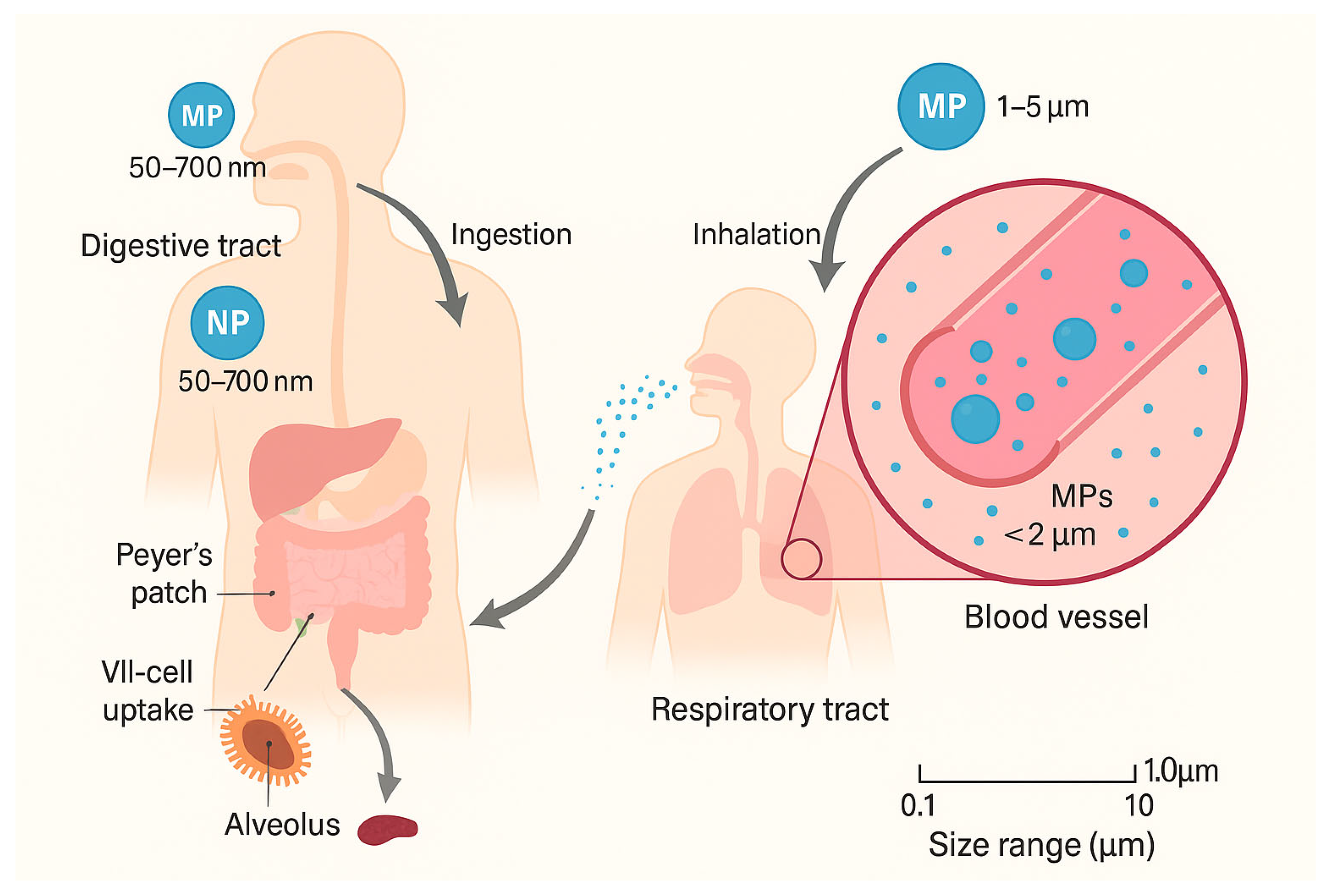
Polymer MPs can access the human bloodstream over a surprisingly wide size range, depending on their exposure route and the physiological barriers they encounter (Figure 1) [19,23,38,39]. Most existing data emerge from research on MPs and NPs in humans and animal models.
Particles within the nanometer range (≈50–700 nm) are the most effective at penetrating biological barriers [40,41,42]. NPs of this size can cross the intestinal epithelium via endocytosis, transcytosis, or paracellular leakage [43,44]. They can also enter the bloodstream through the respiratory system, especially via the alveolar epithelium, which is permeable to NPs smaller than ~300 nm [45]. Such smaller particles have been detected in human blood and are believed to circulate systemically. Larger particles in the low micrometer range (1–10 μm) can also reach the bloodstream, but less efficiently [16,46]. Their entry is aided by Peyer’s patches in the gut, where M-cells transport particles into lymphatic tissues, from which they can then migrate into the systemic circulation [32,47,48]. Human biomonitoring has detected polymer particles ranging from ~2 to ~7 μm in blood samples [16,23,49]. Inhaled particles in the 1–5 μm range may also pass into circulation through damaged or inflamed lung epithelium. Particles larger than ~10 μm are unlikely to cross intact barriers but can accumulate in lungs or gut and, under pathological conditions that increase permeability, may enter the bloodstream. Although particles smaller than 1 µm are the most likely to enter human blood [16,20,23,49], microplastics up to several micrometers have also been found in the circulation, indicating that biological barriers are permeable to a broader size range than previously believed [14,50]. In this review, nanoparticles (NPs) are defined as particles smaller than 0.2 µm, while MPs are larger than 0.2 µm.
The quantitative levels of MPs in blood are reported in various units, reflecting different analytical methods. The most common index is particle count per volume, typically expressed as particles per milliliter (particles/mL); it is used when particles are observed or detected by microscopy or flow-based techniques. Chemical analysis methods such as pyrolysis-GC/MS or FTIR-MS determine polymer mass and report concentrations in nanograms per milliliter (ng/mL) or micrograms per liter (µg/L). Some studies also quantify polymer presence by type-specific mass, such as PS, PE, and PP. Additionally, more specialized assessments examine the surface area per volume (µm2/mL), particularly for irregularly shaped particles. Together, these unit indices provide complementary insights into microplastic concentrations and their potential biological impacts.

2.2. Red Blood Cells

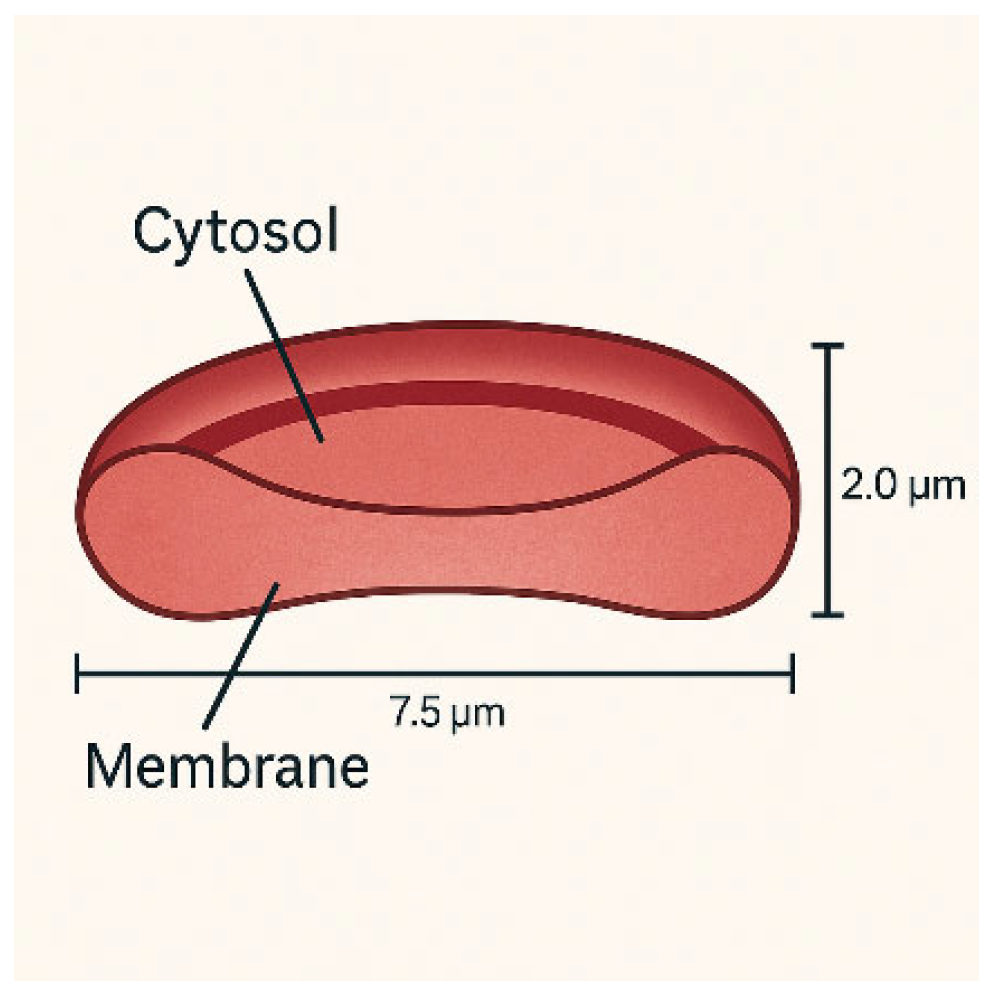
RBCs are the most abundant cells in the blood, which play a vital role in transporting oxygen and carbon dioxide. Usually, they take on a disk-shaped (discocyte) form (Figure 2), which enhances their ability to flow smoothly through vessels and capillaries.
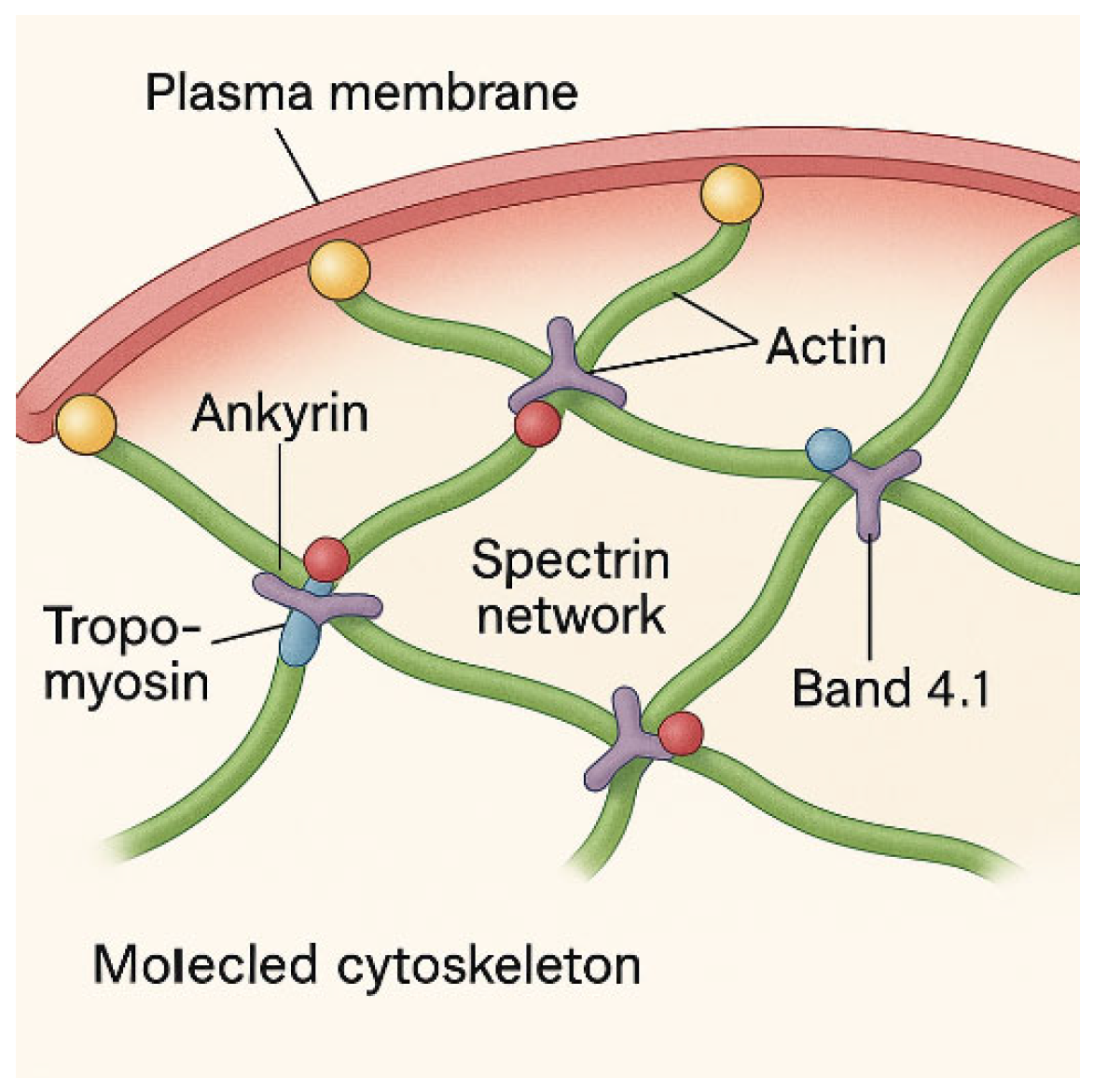
The RBC membrane is a delicate, flexible phospholipid bilayer, integrated with key membrane proteins such as band 3 and glycophorins [51]. Underneath is a deformable cytoskeleton, mainly composed of spectrin–actin networks (Figure 3) [52]. The membrane and the cytoskeleton interact to preserve the cell’s shape and flexibility, enabling it to survive and function in the circulation [53,54]. Inside, the cytosol is a fluid-filled compartment mainly composed of hemoglobin (at a concentration of 27–32 pg/cell) [55]. Because RBCs lack a nucleus and organelles, their metabolic activities are limited, and they cannot perform standard repair functions. Thus, maintaining RBC membrane integrity is vital for ensuring its flexibility and proper flow through blood vessels.
Although RBCs are generally considered to have a typical lifespan of 110–120 days, the actual survival duration of individual cells varies considerably [56,57,58]. Studies tracking single cells show that RBC lifespans in healthy adults can range from about 70 to 140 days [59], highlighting the inherent heterogeneity in erythrocyte aging. Additionally, Cohen et al. [60] found mean RBC lifespans of 38 to 60 days in some individuals, indicating that population averages mask significant variability both between and within individuals. External factors such as OS, inflammation, metabolic imbalance, and mechanical stress affect membrane integrity and accelerate RBC aging [61].
This review focuses on RBCs because they are the primary cellular targets of circulating MPs and NPs [18,19,23,27]. Their membranes are highly reactive to physicochemical interactions: the negatively charged lipid bilayer easily binds reactive or charged particles [62,63], and as mature RBCs lack internal repair mechanisms, they are especially prone to sustaining structural damage [64,65]. Consequently, even minor interactions with MPs can cause detectable effects—such as hemolysis, reduced deformability, membrane protein reorganization, or oxidative changes [25,66,67,68]—highlighting their role as sensitive indicators of particle biocompatibility and systemic toxicity. Notably, damage to RBC integrity can disrupt microvascular perfusion and oxygen transport, making microparticle-driven changes in erythrocytes physiologically significant. For these reasons, RBCs are a valuable and standardized model for evaluating the biological effects of MPs [25].

3. Do Microplastics Have Hemolytic Activity?

Hemolysis is one of the earliest and most quantifiable signs of RBC injury [25]. While NPs (<200 nm) have well-established hemolytic effects, growing evidence shows that MPs—which come from industrial processes and the breakdown of larger debris or personal care products- also induce measurable membrane damage [69,70]. Understanding the determinants of this damage is essential for evaluating human exposure risks and for guiding the design of biocompatible materials [71].

3.1. Size-Dependent Hemolysis: Physical Interactions at the Cell Surface

3.1.1. Nanometer-Scale Microparticles (<200 nm)

Particles ranging from lower nanometers to submicrometers show the highest hemolytic activity [25,72]. Their small size allows them to get inserted between membrane lipids, disrupting bilayer packing and forming pores [73]. This effect is well documented for polystyrene, silica, and metal-oxide NPs [25,74,75,76]. Particles under 200 nm often induce hemolysis even at low concentrations because they can penetrate membrane defects and generate curvature strain [72]. Additionally, the large surface area of NPs facilitates extensive protein adsorption [66,77,78] and radical formation, which increases oxidative stress [24]. Zajac et al. [79] showed that 100 and 200 nm PS particles modify the zeta potential and electrokinetic characteristics of RBC membranes. Additionally, 200 nm amino-functionalized PS particles are more likely to attach to the membrane surface than to be internalized, demonstrating a distinct dependence on particle size and surface chemistry.

3.1.2. Submicron Microparticles (200–1000 nm)

Particles in this size range show diverse hemolytic activity. They are usually unable to penetrate the lipid bilayer but attach to the RBC surface, changing membrane rigidity and tension [79]. Their presence can cause temporary pore formation or disrupt the anchoring of cytoskeletal proteins. In laboratory settings, 200–500 nm PS spheres are known to induce significant hemolysis, especially when surface-charged or oxidized [80]. Remigante et al. [27] showed that at non-hemolytic concentrations, polystyrene NPs (100 nm) and MPs (average diameter 1.0 µm) bind to RBC surfaces and can be taken into the cells, causing OS, changes in cell shape, and shifts in band-3 distribution and function, with disturbances in cytoskeletal anchoring.

3.1.3. Larger Microparticles (>1 µm)

MPs in the 1–5 µm range interact with RBCs primarily through mechanical contact [27]. Their inability to penetrate the RBC membrane results in minimal direct hemolysis in static conditions. However, under shear flow, agitation, or centrifugation, larger particles may physically deform the membrane. Particles >5 µm generally show very low hemolytic activity, though they may contribute to sublethal damage, including decreased deformability and increased microparticle shedding [18].

3.2. Material Composition: Chemical Determinants of Hemolytic Activity

3.2.1. Hydrophobic Polymers

While many studies of NP and MP behavior utilize polystyrene (PS) as a model plastic, evidence shows that RBC responses differ across polymer types due to variations in hydrophobicity, surface oxidation, aging behavior, and leachable additives. Hydrophobic materials such as PS, PE, PP, and PVC tend to adhere more effectively to lipid membranes than more hydrophilic surfaces [79,81,82]. Notably, PS particles are often reported to be hemolytic, likely due to their strong membrane affinity [11,72,81] and, in some cases, surface-oxidative impurities [83]. Both pristine and environmentally aged PS microparticles can destabilize membranes and cause oxidative damage [84,85]. Conversely, more polar or oxygen-rich polymers such as PET and PMMA generally cause less direct hemolysis under similar conditions, although their reactivity may increase with environmental aging or surface oxidation [86,87]. Similarly, polyamide (nylon) and PP microplastics usually produce low hemolysis unless their surfaces are oxidatively modified [19]. PET and PVC particles of comparable size typically induce low to moderate hemolysis compared with PS, but aging can increase their biological reactivity [86,87]. Importantly, “biodegradability” alone does not guarantee hemocompatibility in blood-contact scenarios [88,89,90]. Across polymers, RBC compatibility mainly relies on surface chemistry—especially cationic functionalization, particle size, and protein corona formation—factors that can surpass the baseline polymer type. To better understand these trends and the reported variability, a systematic comparative summary is provided in Table S1 (See Supplemented Materials).

3.2.2. Metal and Metal-Oxide Microparticles

Metal-based MPs frequently cause hemolysis through catalytic ROS production [91]. Iron oxide, copper oxide, and manganese oxide particles induce lipid peroxidation, which weakens membrane integrity [92]. Certain metal particles can also bind to membrane proteins, disturbing their structural organization [93]. Hemolytic activity increases markedly when particles exhibit high surface redox activity [94].

3.2.3. Silica, Hydrogel, and Inert Materials

Silica nanoparticles exhibit relatively low hemolytic activity unless they are nanoscale or possess a highly porous surface structure [95,96]. Crosslinked hydrogels and PLGA microspheres typically exhibit excellent hemocompatibility (the tolerance of materials to blood) [97], although positively charged formulations can exhibit increased RBC toxicity [98].

3.3. Surface Chemistry: Charge, Oxidation, and Functional Groups

Surface charge is a crucial factor affecting hemolytic potential [25]. Positively charged MPs exhibit a strong electrostatic attraction to the negatively charged RBC membrane, increasing the likelihood of membrane fusion, pore formation, and cytoskeleton disruption [18,26,99]. Hemolytic particles such as cationic PS particles, amine-functionalized microplastics, and polycation-coated beads are consistently harmful [26]. Additionally, surface oxidation enhances hemolysis by introducing polar groups, increasing hydrophilicity, and generating ROS [84,85]. Environmental aging induced by UV exposure, mechanical abrasion, and chemical oxidation often turns harmless microplastics into reactive surfaces [100,101] that can damage RBCs [27,102]. This effect is particularly significant for plastic fragments, many of which originate from polymeric products degraded in the environment or food-contact polymeric materials.

3.4. Protein Corona Effects

When micro- and nanoplastics enter blood or plasma-rich environments, they are rapidly coated by adsorbed biomolecules—predominantly proteins—forming a protein corona [103,104]. This corona is not a passive “film”: it redefines the particle’s biological identity, changing how the plastic is recognized by cells and which molecular interactions dominate [25,105]. Reviews of micro- and nanoplastic–blood interactions highlight that plasma proteins readily adsorb to plastic surfaces, undergo conformational changes, and thereby reshape downstream hemocompatibility outcomes [19].
For RBCs, the corona can be protective or harmful depending on its composition and stability [25]. In nanoparticle hemocompatibility literature, formation of a plasma protein corona often reduces direct membrane disruption and hemolysis [25,66] by masking highly hydrophobic/charged surfaces and lowering their effective adhesiveness to the RBC membrane [106]. Applied to plastic particles, experimental work and assessments report similar trends: coronation can attenuate RBC aggregation/agglutination compared with “bare” particles, consistent with surface shielding and altered electrostatic interactions [107].
At the same time, corona formation can enable new injury mechanisms. Plastics may perturb key plasma proteins (e.g., albumin) during adsorption, and corona remodeling can expose RBCs to oxidized/denatured protein layers that promote oxidative stress pathways [108]. Moreover, micro-/nanoplastics have been shown to adhere to and be internalized by human erythrocytes, with associated oxidative responses, suggesting that the corona may also mediate binding/uptake and the balance between surface shielding and cellular triggering [27].
When micro- and nanoplastics enter blood or plasma-rich environments, they are rapidly coated by adsorbed biomolecules—predominantly proteins—forming a protein corona [103,104]. This corona is not a passive layer; it redefines the particle’s biological identity, altering cellular recognition and downstream interactions [25,105]. Plasma proteins readily adsorb to plastic surfaces and may undergo conformational changes, thereby reshaping hemocompatibility outcomes [19]. Consequently, RBCs interact not with bare polymers but with a dynamic, protein-coated interface whose composition depends on polymer chemistry, surface charge, hydrophobicity, particle size, and environmental aging.
For RBCs, the corona can be protective or harmful depending on its composition and stability [25]. In nanoparticle hemocompatibility literature, plasma protein coronas often reduce membrane disruption and hemolysis [25,66] by masking hydrophobic or positively charged surfaces and decreasing effective adhesion to the negatively charged RBC membrane [106]. Albumin, the most abundant plasma protein, commonly dominates early corona formation. Albumin-rich coronas typically provide electrostatic shielding and steric stabilization, attenuating ζ-potential reduction, aggregation, and acute hemolytic effects. Experimental assessments of plastic particles report similar attenuation of RBC aggregation or agglutination after coronation compared with “bare” particles [107].
However, corona formation can also introduce new injury pathways. The corona is dynamic and subject to competitive exchange (Vroman effect), in which initially adsorbed, abundant proteins, such as albumin, may be replaced by higher-affinity proteins, including fibrinogen, immunoglobulins, complement factors, and apolipoproteins. Fibrinogen adsorption is particularly relevant for RBC interactions. Owing to its multivalent structure, fibrinogen can act as a molecular bridge between particles and RBC membrane components (e.g., band-3– or glycophorin-rich domains), increasing adhesion and promoting localized membrane curvature stress. Such bridging may enhance aggregation tendencies and reduce deformability, especially under flow.
In addition, protein adsorption may induce conformational alterations, exposing cryptic or oxidized domains that amplify oxidative stress pathways [108]. Micro- and nanoplastics have been shown to adhere to and, in some cases, be internalized by erythrocytes, accompanied by oxidative responses [27], indicating that the corona may mediate both protective shielding and delayed membrane remodeling or stress signaling.
Overall, MP/NP hemocompatibility cannot be predicted solely from polymer properties; it reflects the dynamic interplay between surface chemistry and corona composition. The balance between albumin-dominated shielding and fibrinogen- or complement-enriched bridging appears central in determining whether RBC responses remain reversible or progress toward aggregation, oxidative stress, and mechanical impairment.

3.5. Flow Conditions and Mechanical Stress

Most hemolysis studies are conducted under static conditions. However, in vivo, RBCs are constantly exposed to shear forces. In flow environments, PS nanoparticles with low intrinsic hemolytic potential can increase cell osmotic fragility [109], aggregation and adhesion to endothelium [67], and minor membrane damage [109]. Blood flow increases particle–cell collisions [18,88,110], and MPs may gather at the cell surface, especially during rouleaux formation. This is since: (i) blood flow increases particle–cell collisions (driving margination/near-surface accumulation) and (ii) RBC rouleaux/aggregation provides conditions where particles can concentrate at/around cell surfaces and enhance cell–particle (and cell–cell) interactions. Therefore, flow conditions are a crucial yet often overlooked factor in assessing particle hemocompatibility.

3.6. Conclusion and Future Directions

MPs exhibit a broad range of hemolytic activities influenced by their size, material type, and surface chemistry. Nanometer-sized, positively charged MPs pose the most significant risk of damaging RBCs, while larger, neutral, hydrophilic particles tend to cause less hemolysis. Environmental aging significantly increases the hemolytic potential of microplastics, raising concerns about real-world exposure. Future studies should explore the effects of dynamic flow, physiological protein coronas, and long-term exposure. Incorporating advanced membrane biophysics techniques—such as RBC deformability assays, micropipette aspiration, and single-cell imaging—will help detect subtle sublethal damage beyond standard hemolysis tests. Gaining a better understanding of these interactions is crucial for evaluating the health risks posed by environmental MPs and for developing hemocompatible biomaterials.

4. In What Ways Do Polymer Microparticles Influence the Characteristics of Red Blood Cells?

So far, we have addressed the various physical, chemical, and biochemical mechanisms by which MPs can influence RBC properties (Table 1). The following sections outline the main RBC characteristics affected by MPs/RBC interaction.

4.1. Membrane Adsorption and Physical Interactions

The RBC membrane features a fluid phospholipid bilayer supported by a spectrin-based cytoskeleton [111]. MPs—particularly those in the nanometer and submicron ranges—can adhere to the membrane surface through hydrophobic interactions, van der Waals forces, or electrostatic attraction [25,34]. Particles with cationic or amine groups tend to bind more strongly to the negatively charged RBC surface [25,88]. This adsorption can alter local membrane tension, disrupt lipid packing [81], and potentially alter the orientation of integral proteins such as Band 3 and glycophorin [112,113,114]. Fleury and Baulin [81] outlined a mechanical pathway by which microplastics destabilize lipid membranes: particle adsorption reduces the effective membrane surface area and increases bilayer tension. Using microfluidic and electrophysiological tests, they observed increased tension and faster rupture times, indicating that even small amounts of particles can significantly affect the membrane’s energy barrier to failure. They also confirmed this mechanism in human RBCs, where microplastics accelerated pressure-induced lysis. Their findings indicate that membrane stretching induced by microplastics could affect mechanosensitive cellular functions and may provide a route for microplastics to enter cells [81].
In some cases, especially with particles smaller than 200 nm, membrane insertion or pore formation may occur, leading to hemoglobin leakage and hemolysis [25,72,115].
Pan et al. [80] showed that loading RBCs with 200 μm NPs at a 1:50 ratio did not affect them. However, increasing the NP concentration by 10- to 50-fold caused greater cell damage from mechanical, osmotic, and oxidative stress. The authors also noted that mouse RBCs are more vulnerable to NP-related damage than human RBCs.

4.2. Disruption of Deformability and Mechanical Stability

RBC deformability is essential for effective microcirculatory flow since erythrocytes must pass through capillaries as narrow as 3–5 µm and splenic interendothelial slits that can be nearly 1–2 µm wide. Even small increases in membrane shear modulus or cytoplasmic viscosity can significantly hinder this process. Many studies have shown that exposure to polymeric MPs decreases RBC deformability [18,24,72,81,109]; however, the thresholds and magnitudes of effect vary widely depending on particle size, surface chemistry, and especially the experimental concentration. Reduced deformability compromises RBC transit through capillaries, increases splenic clearance, and may provoke microvascular dysfunction [116,117]. Even in the absence of overt hemolysis, sublethal mechanical impairment can significantly affect circulation and oxygen delivery [118].
A detailed comparison reveals that many in vitro studies use MP concentrations ranging from 10 to 500 µg/mL, and some exceed 1 mg/mL [18,102,119]. These levels often surpass current estimates of environmental or physiological exposure in human blood, raising concerns about their practical relevance [16,29]. Several studies found statistically significant reductions in the elongation index only at the highest tested concentrations (>100 µg/mL), while lower concentrations had little to no effect. In contrast, research involving NPs, especially <100 nm PS particles, reports changes in deformability at lower mass concentrations but at significantly higher particle number densities, making direct comparisons between MPs and NPs difficult [27,72,109].
Mechanistically, the reduced deformability is associated with: (i) membrane stiffening from particle–lipid interactions, particularly with hydrophobic polystyrene surfaces [120,121,122,123]; (ii) alterations in the cytoskeleton caused by OS, including spectrin oxidation or band-3 clustering [27,124,125,126]; and (iii) asymmetric membrane loading due to particle adhesion, which increases bending resistance mechanically [80,81,127].
Inconsistencies exist among studies. Some reports have documented significant impairment of deformability without lipid peroxidation or increased ROS, suggesting that mechanical surface loading alone may be sufficient in some cases [109]. Others display higher oxidative markers with minimal changes in rheology, which may be due to differences in exposure duration (acute versus 24–48 h of incubation) [128,129], plasma protein interactions, such as protein corona formation [107,130,131], or measurement techniques (ektacytometry versus micropipette aspiration or microfluidic constriction tests). Importantly, microfluidic systems that mimic capillary transit often reveal greater functional impairment than bulk rheometry, underscoring the role of assay sensitivity in the results observed [132].
Deformability loss does not always align with hemolysis thresholds [133,134]. Sublethal mechanical damage can occur before visible hemoglobin release. This is significant because even minor reductions in RBC deformability—like a 5–10% decrease in elongation index at 3–5 Pa shear stress—may impair capillary passage [132,134], increase spleen retention [24,135,136], and hinder oxygen delivery without causing membrane rupture. These subhemolytic alterations could be more physiologically relevant than hemolysis itself. Although evidence suggests polymer particles negatively impact RBC mechanical properties, interpretation must carefully consider factors such as experimental dose, particle concentration, surface functionalization, incubation conditions, and rheological testing methods. Establishing standardized exposure metrics (mass versus particle count), using physiologically relevant concentrations, and employing flow-based deformability assessments will be essential for resolving current discrepancies and identifying clinically relevant thresholds [137].

4.3. Oxidative Stress and Biochemical Alterations

Numerous polymer particles, especially those that have aged in the environment, contain ROS, metal contaminants, and oxidized surface groups that can trigger oxidative reactions [84,85]. When these polymer particles attach to RBCs, they can induce lipid peroxidation, cross-link membrane proteins, or oxidize hemoglobin [21,22]. Such oxidative modifications decrease membrane fluidity, impair cytoskeletal anchoring, and raise the risk of vesiculation or eryptosis (the programmed death of RBCs). Additionally, oxidized forms of hemoglobin (such as methemoglobin) may develop, diminishing the blood’s oxygen-carrying capacity [138,139]. Since RBCs depend heavily on antioxidants like glutathione but cannot replace active proteins, oxidative damage accumulates and becomes irreversible [65,129,140].

4.4. Altered Membrane Charge and Surface Potential

Polymer MPs can modify the ζ-potential of RBCs, the electrokinetic potential at the membrane–fluid boundary that reflects the overall surface charge that impacts cellular repulsion [79,141]. Under normal physiological conditions, RBCs carry a strongly negative surface charge, mainly due to sialic acid residues on glycophorin A, which generates electrostatic repulsion that prevents spontaneous aggregation. When charged polymer particles bind to the membrane or their ions interact with the glycocalyx, this negative charge can be partially neutralized. Even a small reduction in ζ-potential (approximately 5–15%) can significantly decrease electrostatic repulsion and promote rouleaux formation, especially under low shear conditions [63,142].
The extent and direction of ζ-potential changes are highly dependent on concentration [79]. Zając et al. examined how submicron polystyrene particles (100–200 nm; both neutral and aminated) influence the electrokinetic properties of human RBCs and platelets [79]. Their study, using concentrations ranging from 2 to 500 µg/mL, found that reductions in RBC ζ-potential varied with concentration and surface chemistry, with more pronounced effects from positively charged particles, suggesting adsorption-driven alterations of membrane surface charge. Several in vitro studies indicate significant reductions in RBC ζ-potential at MP concentrations of 10–100 µg/mL, whereas lower doses (<1–5 µg/mL) often lead to minimal or no change [79]. Caution is necessary when interpreting these results: mass concentration alone can be deceptive, as smaller particles (under 100 nm) have a higher particle count and greater overall surface area at the same mass, which enhances the likelihood of surface adsorption [143,144]. Consequently, nanoplastics can induce measurable variations in ζ-potential at lower mass levels because they have a higher particle count than larger MPs.
Surface functionalization plays a vital role. PS particles with positive charges or amination cause a larger decrease in ζ-potential than neutral or carboxylated particles, owing to stronger electrostatic interactions with the negatively charged RBC membrane [79,119]. In systems with plasma, protein corona formation can partly shield the particle surface charge [131,145,146], leading to smaller changes in ζ-potential compared to protein-free buffers. Incubation time also influences the outcomes: brief exposures (minutes to 1 h) mainly involve reversible surface adsorption, whereas longer periods (24–48 h) may induce membrane remodeling or modifications to the glycocalyx [147,148].
Changes in ζ-potential often precede observable hemolysis or decreased deformability, suggesting that electrokinetic shifts could function as early, sensitive indicators of particle–RBC interactions [79,141]. Since RBC aggregation influences blood viscosity at low shear rates, even slight subhemolytic ζ-potential changes that are mechanically subtle might substantially affect microcirculatory flow. Therefore, future studies should consistently report both mass and particle-number concentrations, consider plasma protein effects, and investigate aggregation under physiologically relevant shear conditions to determine thresholds with clinical importance.

4.5. Microvesicle Shedding and Eryptosis

Stressed RBCs often release microvesicles as a response to membrane destabilization [149]. When exposed to MPs, vesiculation can be accelerated by disrupting membrane curvature or inducing calcium influx [27,81,119,150]. This vesicle release decreases cell volume, increases cell density, and induces morphological changes such as echinocytosis [117,151]. Under prolonged stress, RBCs may undergo eryptosis, which involves membrane scrambling, exposure of phosphatidylserine on the cell surface, and early cell removal by macrophages [152,153,154]. Additionally, increased vesicle production has systemic effects, as RBC-derived vesicles have been consistently shown to promote inflammation and thrombosis [155,156].

4.6. Hemolysis

As has been detailed above, at higher concentrations or with highly reactive particle types, polymer MPs can cause hemolysis—the rupture of RBC membranes, releasing hemoglobin. This process may occur through pore formation, membrane thinning, oxidative rupture, or excessive stress on the membrane–cytoskeleton. The extent of hemolysis is heavily influenced by particle size (with particles smaller than 200 nm being the most hemolytic), charge (positive particles > neutral > negative), and the degree of surface oxidation.
Table 1. Ways in which polymer microparticles influence red blood cell properties.
Mechanism/ReferencesDescription of InteractionConsequences for RBCsNotes/Key Determinants
1. Membrane adsorption & physical contact [81,157]MPs adhere to the lipid bilayer via hydrophobic interactions, van der Waals forces, or electrostatic interactions.Alters lipid packing, increases membrane tension, and disrupts protein function orientation.Most effective for cationic or aminated particles; additional strength gained through hydrophobicity.
2. Membrane insertion & pore formation (<200 nm) [72,157]NPs can insert into or embed within the membrane, creating local defects.Hemoglobin leakage, increased permeability, hemolysis.Most pronounced for particles <200 nm; spherical smooth particles insert more readily.
3. Mechanical stiffening & reduced deformability [18,157]Surface-bound particles mechanically load the membrane or damage the cytoskeleton.Lower deformability, impaired microcirculation, and increased splenic clearance.Submicron particles (100–500 nm) primarily affect deformability.
4. Oxidative stress & biochemical damage [61,158]Aged or contaminated particles promote ROS generation and lipid/protein oxidation.Lipid peroxidation, protein cross-linking, cytoskeletal damage, and methemoglobin formation.Environmental aging increases ROS-related injury; metal contaminants amplify effects.
5. Alteration of ζ-potential [27,67,148]Adsorption of charged particles modifies the electrostatic potential at the RBC surface.Enhanced aggregation (rouleaux), altered rheology, increased adhesiveness.Positive particles reduce the ζ-potential most strongly; neutral particles have minimal effect.
6. Vesiculation & membrane shedding [27,157]Curvature stress or oxidative injury induces the release of microvesicles.Decreased cell volume, higher density, formation of echinocytes, and inflammation.Indicates sublethal membrane damage; linked to Ca2+ influx.
7. Eryptosis (programmed RBC death) [159,160]Severe or sustained stress triggers membrane scrambling and ATP depletion.Phosphatidylserine exposure, premature macrophage clearance.A typical result of oxidative and mechanical stress occurring together.
8. Direct hemolysis [25,27,66,72,110,157]Membrane rupture due to mechanical overload, oxidative weakening, or pore formation.Release of hemoglobin into the plasma may cause acute toxicity.The behavior varies significantly with size and charge, with particles under 200 nm being the most hemolytic.
9. Cytoskeletal disruption [126,157]Oxidative or mechanical stress destabilizes the complexes that anchor spectrin, actin, or Band 3.Loss of elasticity and morphological abnormalities such as echinocytes and spherocytes.It often occurs alongside oxidative damage or NP insertion.

5. Clinical Significance of Polymer Microparticle Effects on Red Blood Cells

RBCs continuously deform to pass through microcirculation. Even minor decreases in membrane integrity or flexibility can raise vascular resistance, hinder oxygen transport, cause hemolysis, and initiate inflammation and thrombosis. Over time, these microscopic mechanical flaws can lead to significant cardiovascular and metabolic health issues. Understanding how polymer MPs impact RBC structure and function is crucial for clinical insights, as subtle changes in membrane integrity and deformability can affect overall health. RBCs, which live up to 120 days in circulation, travel roughly 200–300 km through tiny blood vessels during their lifespan. Their ability to deform and maintain membrane stability is essential for proper capillary flow and oxygen delivery [57,124,135]. Environmental or medical factors that weaken RBC resilience can disrupt systemic balance, especially in vulnerable groups.
A significant clinical consequence of microparticle exposure is reduced RBC deformability. When RBCs stiffen due to membrane adsorption or oxidative damage, they become unable to traverse small capillaries of 3–5 µm diameter. This decreased flexibility can impair tissue oxygen supply, particularly in the presence of microcirculatory pathology, such as that seen in diabetes, cardiovascular disease, chronic kidney disease, or anemia. Even a slight decline in RBC deformability is associated with higher fatigue levels, decreased exercise capacity, and increased microvascular complications.
Another concern is microparticle-induced vesiculation and eryptosis. Microvesicles from stressed RBCs can trigger inflammation, activate endothelium, and promote pro-thrombotic signals. Elevated levels of circulating RBC-derived vesicles are common in conditions like sepsis, preeclampsia, pulmonary hypertension, and sickle cell disease. If polymer MPs accelerate vesiculation, they could exacerbate these conditions or increase the risk of blood clots, even in healthy people.
Hemolysis associated with high microparticle levels or highly reactive surfaces poses significant clinical risks. Free hemoglobin binds to nitric oxide, reducing vasodilation and causing blood vessel constriction. Even minor, ongoing hemolysis can damage the endothelium, promote clot formation, and induce OS—potentially worsening cardiovascular function. In neonates, with fragile RBCs and limited antioxidant reserves, even slight increases in hemolysis can be critical.
Polymer MPs can notably influence laboratory results and transfusion outcomes. For example, older RBCs stored for extended times are more mechanically fragile; additional exposure to MPs could reduce post-transfusion recovery or increase inflammatory processes in blood recipients. This raises significant concerns for hemovigilance and blood product quality monitoring.
Overall, the interaction of polymeric microplastics with red blood cells has far-reaching clinical implications, as it disrupts microvascular blood flow, induces inflammation, and leads to hemolysis-associated vascular dysfunction, potentially contributing to both acute and chronic health problems. As human exposure to microplastics increases, understanding these RBC-related pathological mechanisms becomes increasingly vital for accurately assessing health risks and shaping regulations.

In Vivo and Clinical Integration: Translational Evidence and Emerging Implications

Most mechanistic insights into how polymer MP/NP interacts with RBCs come from in vitro studies. However, an increasing number of in vivo and clinical observations suggest these interactions may have physiological importance. Although causality has not yet been confirmed, these findings provide a valuable translational framework linking laboratory-based erythrocyte injury to human exposure in real-world settings.
Detection of Microplastics in Human Circulation and Thrombi: Confirming that polymer particles can circulate in human blood marked a significant milestone in microplastic research [16,49]. Several analytical studies have identified various polymers, including PE, PS, and PET, in blood samples from healthy individuals. More recently, microplastics have been found directly inside human thrombi retrieved from coronary, cerebral, and peripheral arteries. Using combined microscopy and spectroscopic methods, embedded polymer particles were linked to changes in fibrin structure and platelet activation [28,161,162].
These findings are especially important in RBC biology. The physical properties of RBCs—like their deformability, surface charge, and phosphatidylserine exposure—play crucial roles in thrombus stability, fibrin network formation, and clot contraction [162,163,164]. As reviewed, experimental evidence shows MPs can decrease RBC deformability, alter ζ-potential, cause vesiculation, and trigger eryptosis. Therefore, the detection of microplastics in human thrombi [28,161,162] provides a mechanistic link between RBC changes observed in laboratory settings and potential vascular effects in living organisms. Instead of being inert, MPs may influence local blood flow and promote environments conducive to clot formation. Meanwhile, cohort studies have identified links between circulating levels of microplastics and alterations in coagulation markers [23]. Although these results are preliminary and require further confirmation, they suggest that MPs may affect overall blood clotting. Even small changes in RBC aggregation or surface charge—well-documented in controlled experiments—can increase platelet activation and endothelial adhesion, especially under low-shear conditions [63].
Evidence from Animal Models: Animal studies further support that microplastics can cause blood and microvascular damage [24,46]. In rodents, exposure to polyethylene and polystyrene microplastics has been associated with oxidative stress in RBCs, increased lipid peroxidation, changes in blood parameters, and elevated hemolysis markers. Some studies also show structural changes in RBCs, suggesting membrane instability and cytoskeletal disruption. Importantly, these effects have been observed at exposure levels similar to environmental intake, not at highly toxic doses. Recent in vivo studies [24,46] show that circulating microplastics can cause microvascular blockages and cerebral thrombosis in mice. While focusing on vascular impacts, impaired RBC deformability and cell clumping likely contribute to microcirculatory problems. Since RBCs are the most common blood cells, even minor mechanical damage can significantly decrease capillary blood flow and tissue oxygenation. It is also important to recognize that in vivo conditions involve complexities not present in laboratory tests, such as protein corona formation [19,165], complement activation [29,88], endothelial responses [166,167], and shear-dependent particle margination [168,169]. Therefore, animal studies support the biological plausibility, but they likely reflect a complex interaction among RBC damage, platelet activation, and vascular inflammation, rather than hemolysis alone.
Clinical Context: Transfusion and Iatrogenic Exposure: An often-overlooked yet important route of exposure is intravenous infusion. Recent studies show that microplastic particles can enter the bloodstream through medical infusion systems, parenteral nutrition lines, and other plastic medical devices [46,170]. This pathway bypasses epithelial barriers, allowing particles to be injected directly into the circulation. In hematology, this is especially relevant for transfusion medicine [171,172]. Stored RBC units gradually lose flexibility, gather microvesicles, and become more fragile—a process called the storage lesion. Additional exposure to polymer MP during transfusion might worsen oxidative stress, encourage vesiculation, or lower post-transfusion recovery. Although direct clinical outcome data are not yet available, the combination of RBC mechanical vulnerability and potential particle exposure needs a thorough study, particularly in neonates and critically ill patients.
Integrative Perspective: The collective evidence—including detection of microplastics in human blood [16,23] and thrombi [28,173], links to coagulation markers [23,37,173], animal studies on erythrocyte oxidative stress [174,175,176,177], and recognition of infusion-related exposure [37,170,171]—supports an increasingly cohesive translational narrative [116,158]. The in vitro results outlined in this review—such as membrane adsorption, decreased deformability, ζ-potential shifts, vesiculation, and hemolysis—correspond mechanistically with observed vascular changes in vivo. Currently, the existing data suggest biological plausibility rather than definitive clinical causation. Nonetheless, the convergence of experimental and emerging human findings indicates that RBC–microplastic interactions are unlikely to be mere laboratory artifacts [23,28]. Instead, they may represent early steps in a broader spectrum of microvascular and thrombotic diseases [18,27,29]. Future long-term studies combining quantitative particle assessments, hemorheological analysis, and clinical outcomes will be crucial to truly understand the extent of this risk.

6. Standardization of Methodologies and Dose–Response Frameworks

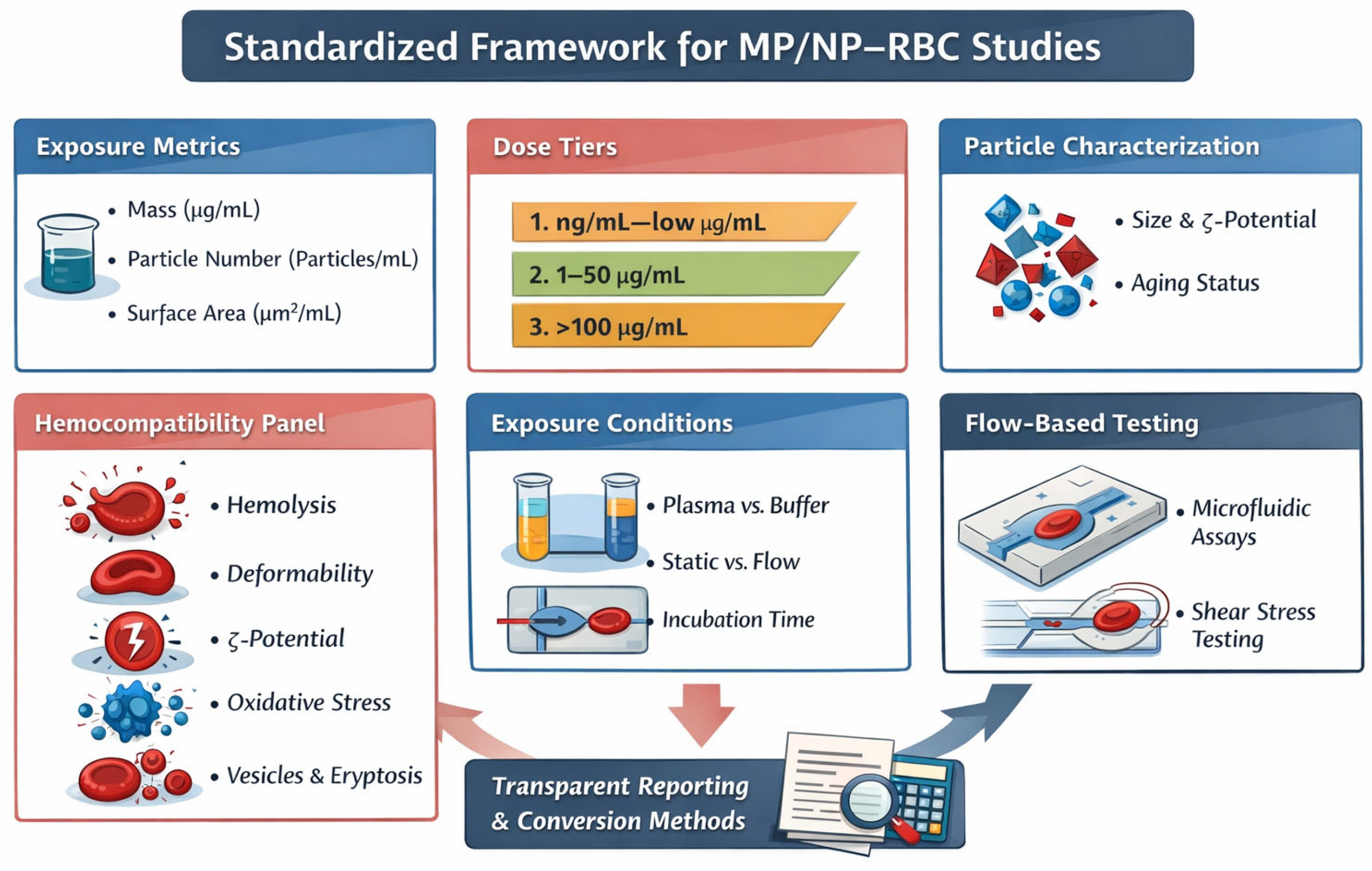
A major limitation in the current literature on MP/NP–RBC interactions is the lack of methodological harmonization [178,179,180]. Studies differ substantially in particle preparation, concentration metrics, exposure media, incubation times, and hemocompatibility endpoints [25,144,181,182]. This variability complicates cross-study comparisons and hinders the establishment of biologically meaningful dose–response relationships. A structured harmonization strategy is summarized in Table 2, and a graphical overview is provided in Figure 4.
First, exposure metrics are inconsistently reported. Most studies use mass concentration (µg/mL), whereas others report particle counts or provide only nominal concentrations [38,144,181]. Mass alone is insufficient for comparing nano- and microparticles [144,181], as nanoplastics exhibit orders-of-magnitude higher particle number density and surface area at the same mass [143,183]. Since membrane interactions scale more closely with surface contact than with total mass, future studies should report mass concentration, particle number concentration, and the estimated total particle surface area per volume (see Table 2; Exposure Metrics, illustrated in Figure 4, upper left panel). This tri-metric approach would enable normalization across particle sizes and improve reproducibility.
Second, many in vitro studies employ concentrations (10–500 µg/mL or higher) [72,102,119,184] that exceed currently estimated human blood levels (typically ng/mL–low µg/L) [14,16,18]. While high-dose exposures are useful for identifying mechanistic thresholds [185], inclusion of environmentally relevant ranges is essential for translational relevance [178,186,187]. A tiered exposure framework—environmentally relevant, moderate-stress, and mechanistic high-dose—facilitates clearer biological interpretation [188,189] (see Table 2; Dose Ranges and Figure 4; Dose Tiers panel).
Third, hemolysis remains the most common endpoint [25,88] but reflects late-stage membrane failure [134,190]. Subhemolytic parameters—such as deformability under controlled shear, ζ-potential shifts, vesiculation, oxidative markers, and eryptosis—are more sensitive indicators of early RBC stress [134,191]. We therefore recommend adoption of a minimal standardized hemocompatibility panel (see Table 2; Hemocompatibility Panel, and Figure 4; lower left panel). Experimental conditions must also be clearly defined, including plasma vs. buffer exposure, presence of protein corona, static vs. flow systems, and incubation time (see Table 2; Exposure Conditions, and Figure 4; central panel).
Finally, flow-based systems more closely replicate physiological conditions than static incubation. Incorporating microfluidic assays and controlled shear testing is strongly recommended (see Table 2; Flow-Based Testing, and Figure 4; right panel). Particle characterization—including size distribution, ζ-potential in exposure medium, and aging status—should also be systematically reported (see Table 2; Particle Characterization).
Establishing harmonized reporting standards and reference dose frameworks, as summarized in Table 2 and visualized in Figure 4, will be essential for advancing from descriptive in vitro findings toward quantitative risk assessment and clinically meaningful interpretation.
Table 2. Recommended Standardization Framework for MP/NP–RBC Studies.
Category/ReferencesRecommendationRationale
Exposure Metrics
[186,187]
Report mass (µg/mL), particle number (particles/mL), and surface area (µm2/mL)Enables normalization across particle sizes and improves cross-study comparability
Dose Ranges
[178,187,192]
Use tiered exposure: (1) environmentally relevant (ng/mL–low µg/mL); (2) moderate stress (1–50 µg/mL); (3) mechanistic/high-dose (>100 µg/mL)Distinguishes physiological relevance from supraphysiological stress conditions
Particle Characterization
[178,187,193]
Report polymer type, size distribution (DLS/microscopy), ζ-potential in exposure medium, and aging statusEnsures reproducibility and an interpretable physicochemical context
Exposure Conditions
[88]
Specify plasma vs. buffer, protein corona presence, static vs. flow, and incubation timeThese variables strongly influence hemocompatibility outcomes
Hemocompatibility Panel
[25,194]
Include hemolysis, deformability (shear-dependent), ζ-potential, oxidative markers, vesiculation/eryptosisCaptures both lethal and sublethal RBC injury
Flow-Based Testing
[25,80]
Incorporate microfluidic or shear systems when possibleReflects physiological microcirculatory conditions
Reporting Transparency
[195,196]
Provide raw concentration calculations and conversion methodsFacilitates reproducibility and meta-analysis

7. Conclusions

Current evidence demonstrates that polymer MPs and NPs are no longer confined to environmental reservoirs but have entered the human body and interact directly with circulating blood cells. Among all blood components, RBCs emerge as the most sensitive and clinically relevant targets for microparticle exposure. Their unique membrane architecture, high surface-area-to-volume ratio, and limited repair capacity make them exceptionally vulnerable to physicochemical interactions. As shown in this review, polymer MPs can alter RBC deformability, modify membrane charge, promote vesiculation, disrupt cytoskeletal organization, and, in more severe cases, cause hemolysis. These alterations can impair microvascular flow, reduce tissue oxygenation, and trigger pro-inflammatory or pro-thrombotic pathways.
Despite significant progress made between 2018 and 2025, major gaps remain. Most experimental data come from in vitro studies using fresh or engineered particles, which may not fully replicate the complex, heterogeneous nature of environmentally aged microplastics. Human in vivo data remain sparse, and the concentrations, polymer types, and surface chemistries of circulating particles remain poorly quantified. Furthermore, clinical outcomes linked specifically to circulating microplastics have not yet been established, and the long-term fate of these particles—including splenic filtration, organ accumulation, and clearance mechanisms—remains essentially unknown.
As global microplastic exposure continues to increase, it is becoming more crucial to understand their effects on blood health. Future studies should combine environmental science, membrane biophysics, and clinical hematology to assess actual exposure levels, clarify how microplastics cause harm, and identify vulnerable groups, such as neonates, people with chronic illnesses, and transfusion patients. Employing advanced techniques—like single-cell mechanical testing, high-resolution spectroscopic methods, and realistic flow models—will be vital for detecting subtle sublethal injuries that standard hemolysis tests might miss.
Given the extensive evidence that polymer MPs can damage RBC structure and function, understanding how microplastic exposure might lead to measurable clinical effects is increasingly urgent. Therefore, advancing interdisciplinary research in this field is essential for assessing risks, guiding regulation, and safeguarding human health.

8. Limitations

This review highlights how polymer micro- and nanoplastics can interact with red blood cells, causing mechanical, oxidative, and biochemical changes. However, several key limitations are worth noting. Most data come from in vitro studies using engineered particles with specific sizes, shapes, and chemistries. These do not fully replicate environmental particles, which undergo complex aging processes—oxidative, mechanical, and microbial—that change their surface charge, hydrophobicity, and redox properties. As a result, the hemolytic and sub-hemolytic effects observed in controlled settings may either underestimate or exaggerate the actual toxicity in real-world scenarios.
Second, laboratory-experiment particle concentrations often exceed those in human blood due to limitations in detection methods and the need for measurable effects. Currently, quantifying human exposure levels is challenging, and long-term in vivo processes such as biodistribution, sequestration, and clearance are largely unknown. Third, detection issues remain, especially for nanoplastics (<100–200 nm), which require specialized spectroscopic and mass spectrometry techniques that can lead to contamination or false positives. This makes comparing studies difficult and hinders the development of clear dose–response relationships.
Fourth, there is currently no clinical evidence connecting circulating microplastics to adverse hematological or systemic health outcomes. While RBCs seem mechanistically vulnerable and are biologically plausible targets, clinical endpoints—such as impaired oxygen delivery, splenic sequestration, inflammation, or thrombotic events—have not been observed in humans. Additionally, regulatory considerations are still hypothetical; without standardized exposure measurements, toxicological thresholds, or hemocompatibility assays, translating experimental findings into risk assessments or policies remains challenging. Overcoming these issues will require the development of harmonized analytical methods, environmentally relevant particle libraries, physiologically accurate flow models, and long-term clinical studies.

9. Future Perspectives

The growing awareness that polymer micro- and nanoplastics can enter the bloodstream and interact with circulating RBCs [16,27,49] raises several biological and clinical questions that remain largely unresolved. So far, most experimental research has used engineered particles with specific sizes, shapes, and surface chemistries, while environmentally sourced particles are diverse and subject to oxidative, mechanical, and microbial aging [14,100]. These changes can alter surface charge, hydrophobicity, and redox properties—factors that directly affect hemocompatibility [27]—but replicating these transformations in experiments remains challenging. Creating standardized methods for preparing and characterizing environmentally aged particle libraries would help connect laboratory models to real-world exposure conditions and enable more robust cross-study comparisons. Currently, differences in particle preparation, exposure media, and assay conditions [197,198] hinder such comparisons.
A second concern involves understanding what happens to microplastics after they enter the bloodstream. Although microplastics have now been detected in human blood [16,27,49], their long-term persistence, transport routes, and removal processes remain poorly understood. It is also unclear whether the spleen—known for removing rigid or damaged red blood cells through biomechanical quality control [135,199]—might also act as a reservoir for polymer particles. Additionally, the possibility of microplastic accumulation in microvascular beds or organs with high blood flow, such as the lungs, kidneys, or placenta, has not been thoroughly studied [200]. Investigating these issues will involve combining analytical chemistry, tissue imaging, mass spectrometry, and long-term sampling techniques, as well as using biofluidic models that mimic microcirculatory conditions.
The clinical relevance of this subject is especially significant for groups with lower RBC resilience or diminished antioxidant defenses. Neonates, for instance, have RBCs with unique mechanical traits, increased membrane fragility, and reduced glutathione stores compared to adults, which heighten their vulnerability to oxidative and mechanical damage [201,202,203,204]. Preterm infants, often needing transfusions and intensive care [205], may experience additional stress if MPs are present in infused fluids, blood products, or parenteral nutrition lines. While direct evidence is currently unavailable, these issues underscore the importance of investigating exposure routes in neonatal ICU settings, where plastic–blood contact points are common.
Transfusion medicine is another area where MP–RBC interactions might have practical implications. Stored RBCs gradually lose flexibility, accumulate microvesicles, and become more vulnerable to mechanical and oxidative damage—collectively known as the “storage lesion” [206,207,208]. If polymer particles are found in donor blood or infusion systems, they could potentially worsen these effects or impact post-transfusion recovery, splenic sequestration, or inflammatory reactions [47,87,209]. Hemovigilance databases and post-transfusion survival studies could be useful tools to explore these possibilities.
Unlike other particulate matter, microplastics currently lack established toxicological thresholds, exposure limits, or standardized hemocompatibility tests. As growing evidence shows that polymer MPs interact with blood components, especially RBCs, it becomes clear that collaboration among environmental scientists, hematologists, toxicologists, clinicians, and regulators is needed. While it is uncertain whether polymer microplastics will be regulated through environmental standards [210,211], medical device specifications, or consumer restrictions, ongoing scientific research resembles early debates over ultrafine particles [212], endocrine disruptors [213,214], and nanomaterials [215].
In summary, the primary research emphasis shifts from investigating whether polymer MPs reach the bloodstream to exploring their biological impacts once they are present. Recognizing these effects, particularly in at-risk populations such as neonates and transfusion recipients, will be vital for risk evaluation, regulatory decisions, and protecting human health in the context of rising worldwide microplastic exposure.

Supplementary Materials

The following supporting information can be downloaded at: https://www.mdpi.com/article/10.3390/app16052302/s1, Table S1: Comparative summary of polymer-specific properties and reported RBC effects of micro-/nanoplastics.

Author Contributions

Conceptualization, A.G. and G.B.; writing—review and editing. All authors have read and agreed to the published version of the manuscript.

Funding

This research received no external funding.

Institutional Review Board Statement

Not applicable.

Informed Consent Statement

Not applicable.

Data Availability Statement

No new data were created or analyzed in this study. Data sharing is not applicable to this article.

Acknowledgments

During the preparation of this manuscript, the author(s) used [ChatGPT, version 5.2] for the purposes of creating figures. The authors have reviewed and edited the output and take full responsibility for the content of this publication.

Conflicts of Interest

The authors declare no conflicts of interest.

Abbreviations

The following abbreviations are used in this manuscript:
RBCRed blood cells
OSOxidative stress
ROSReactive oxygen species
MPPlastic microparticles
NPPlastic nanoparticles
PEPolyethylene
PSPolystyrene
PETPolyethylene terephthalate
PMMAPolymethyl methacrylate
PPPolypropylene
PVCPolyvinylchloride

References

  1. Emon, F.J.; Hasan, J.; Shahriar, S.I.M.; Islam, N.; Islam, M.S.; Shahjahan, M. Increased ingestion and toxicity of polyamide microplastics in Nile tilapia with increase of salinity. Ecotoxicol. Environ. Saf. 2024, 282, 116730. [Google Scholar] [CrossRef] [PubMed]
  2. Bhardwaj, B.; Abdulkadhim, M.; Joshi, K.; Wankhede, L.; Kumar Das, R.; Brar, S.K. Exposure Pathways, Systemic Distribution, and Health Implications of Micro- and Nanoplastics in Humans. Appl. Sci. 2025, 15, 8813. [Google Scholar] [CrossRef]
  3. Han, S.; Bang, J.; Choi, D.; Hwang, J.; Kim, T.; Oh, Y.; Hwang, Y.; Choi, J.; Hong, J. Surface Pattern Analysis of Microplastics and Their Impact on Human-Derived Cells. ACS Appl. Polym. Mater. 2020, 2, 4541–4550. [Google Scholar] [CrossRef]
  4. Kasuske, Z.A.; Roy, P.; Clouse, D.E.; Pas, S.; Arole, K.; Green, M.; Canas-Carrell, J.E.; Singh, K.P. Engineered and Weathered Polyethylene Terephthalate (PET) Microplastics and Nanoplastics Induce Form and Size-Dependent Oxidative Stress, Oxidative DNA Damage, and Cytotoxicity in MCF-7 Cells. Environ. Toxicol. 2026. [Google Scholar] [CrossRef] [PubMed]
  5. Yee, M.S.; Hii, L.W.; Looi, C.K.; Lim, W.M.; Wong, S.F.; Kok, Y.Y.; Tan, B.K.; Wong, C.Y.; Leong, C.O. Impact of Microplastics and Nanoplastics on Human Health. Nanomaterials 2021, 11, 496. [Google Scholar] [CrossRef]
  6. Jolaosho, T.L.; Rasaq, M.F.; Omotoye, E.V.; Araomo, O.V.; Adekoya, O.S.; Abolaji, O.Y.; Hungbo, J.J. Microplastics in freshwater and marine ecosystems: Occurrence, characterization, sources, distribution dynamics, fate, transport processes, potential mitigation strategies, and policy interventions. Ecotoxicol. Environ. Saf. 2025, 294, 118036. [Google Scholar] [CrossRef]
  7. Roslan, N.S.; Lee, Y.Y.; Ibrahim, Y.S.; Tuan Anuar, S.; Yusof, K.; Lai, L.A.; Brentnall, T. Detection of microplastics in human tissues and organs: A scoping review. J. Glob. Health 2024, 14, 04179. [Google Scholar] [CrossRef]
  8. Khanna, R.; Chandra, A.; Sen, S.; Konyukhov, Y.; Fuentes, E.; Burmistrov, I.; Kravchenko, M. Microplastics and Nanoplastics as Environmental Contaminants of Emerging Concern: Potential Hazards for Human Health. Sustainability 2024, 16, 8704. [Google Scholar] [CrossRef]
  9. Schwabl, P.; Koppel, S.; Konigshofer, P.; Bucsics, T.; Trauner, M.; Reiberger, T.; Liebmann, B. Detection of Various Microplastics in Human Stool: A Prospective Case Series. Ann. Intern. Med. 2019, 171, 453–457. [Google Scholar] [CrossRef]
  10. Xu, J.L.; Lin, X.; Wang, J.J.; Gowen, A.A. A review of potential human health impacts of micro- and nanoplastics exposure. Sci. Total Environ. 2022, 851, 158111. [Google Scholar] [CrossRef]
  11. Rindelaub, J.D.; Miskelly, G.M. Inhalable microplastics and plastic additives in the indoor air of chemical laboratories. J. Expo. Sci. Environ. Epidemiol. 2025, 35, 785–791. [Google Scholar] [CrossRef] [PubMed]
  12. Yakovenko, N.; Perez-Serrano, L.; Segur, T.; Hagelskjaer, O.; Margenat, H.; Le Roux, G.; Sonke, J.E. Human exposure to PM10 microplastics in indoor air. PLoS ONE 2025, 20, e0328011. [Google Scholar] [CrossRef] [PubMed]
  13. Gou, Z.; Wu, H.; Li, S.; Liu, Z.; Zhang, Y. Airborne micro- and nanoplastics: Emerging causes of respiratory diseases. Part. Fibre Toxicol. 2024, 21, 50. [Google Scholar] [CrossRef] [PubMed]
  14. Sun, A.; Wang, W.X. Human Exposure to Microplastics and Its Associated Health Risks. Environ. Health 2023, 1, 139–149. [Google Scholar] [CrossRef]
  15. Lu, K.; Que, Y.; Wang, L.; Wang, Y.; Qiu, J.; Jia, Y.; Ding, C.; Wang, D.; Cheng, W.; Zhang, Y. Environmental exposure pathways of microplastics and their toxic effects on ecosystems and the nervous system. Front. Toxicol. 2025, 7, 1649282. [Google Scholar] [CrossRef]
  16. Leslie, H.A.; van Velzen, M.J.M.; Brandsma, S.H.; Vethaak, A.D.; Garcia-Vallejo, J.J.; Lamoree, M.H. Discovery and quantification of plastic particle pollution in human blood. Environ. Int. 2022, 163, 107199. [Google Scholar] [CrossRef]
  17. Kuhlman, R.L. Letter to the editor, discovery and quantification of plastic particle pollution in human blood. Environ. Int. 2022, 167, 107400. [Google Scholar] [CrossRef]
  18. Geppner, L.; Hellner, J.; Henjakovic, M. Effects of micro- and nanoplastics on blood cells in vitro and cardiovascular parameters in vivo, considering their presence in the human bloodstream and potential impact on blood pressure. Environ. Res. 2025, 273, 121254. [Google Scholar] [CrossRef]
  19. Rajendran, D.; Chandrasekaran, N. Journey of micronanoplastics with blood components. RSC Adv. 2023, 13, 31435–31459. [Google Scholar] [CrossRef]
  20. Choi, D.; Hwang, J.; Bang, J.; Han, S.; Kim, T.; Oh, Y.; Hwang, Y.; Choi, J.; Hong, J. In vitro toxicity from a physical perspective of polyethylene microplastics based on statistical curvature change analysis. Sci. Total Environ. 2021, 752, 142242. [Google Scholar] [CrossRef]
  21. Hernandez, A.F.; Lacasana, M.; Tsatsakis, A.M.; Docea, A.O. Cellular and Molecular Mechanisms of Micro- and Nanoplastics Driving Adverse Human Health Effects. Toxics 2025, 13, 921. [Google Scholar] [CrossRef] [PubMed]
  22. Visalli, G.; Lagana, A.; Facciola, A.; Iaconis, A.; Curcio, J.; Pollino, S.; Celesti, C.; Scalese, S.; Libertino, S.; Iannazzo, D.; et al. Enhancement of biological effects of oxidised nano- and microplastics in human professional phagocytes. Environ. Toxicol. Pharmacol. 2023, 99, 104086. [Google Scholar] [CrossRef] [PubMed]
  23. Lee, D.W.; Jung, J.; Park, S.A.; Lee, Y.; Kim, J.; Han, C.; Kim, H.C.; Lee, J.H.; Hong, Y.C. Microplastic particles in human blood and their association with coagulation markers. Sci. Rep. 2024, 14, 30419. [Google Scholar] [CrossRef] [PubMed]
  24. Abdel-Zaher, S.; Mohamed, M.S.; Sayed, A.E.H. Hemotoxic effects of polyethylene microplastics on mice. Front. Physiol. 2023, 14, 1072797. [Google Scholar] [CrossRef]
  25. Yedgar, S.; Barshtein, G.; Gural, A. Hemolytic Activity of Nanoparticles as a Marker of Their Hemocompatibility. Micromachines 2022, 13, 2091. [Google Scholar] [CrossRef]
  26. Liu, L.; Tu, P.; Niu, H.; Li, X.; Gong, X.; Chen, Z.; Xing, M.; Wu, L.; Lou, X. Cellular Impact of Micro(nano)plastics on Human Health: A Review. Toxics 2025, 13, 913. [Google Scholar] [CrossRef]
  27. Remigante, A.; Spinelli, S.; Gambardella, L.; Bozzuto, G.; Vona, R.; Caruso, D.; Villari, V.; Cappello, T.; Maisano, M.; Dossena, S.; et al. Internalization of nano- and micro-plastics in human erythrocytes leads to oxidative stress and estrogen receptor-mediated cellular responses. Free Radic. Biol. Med. 2024, 223, 1–17. [Google Scholar] [CrossRef]
  28. Wang, T.; Yi, Z.; Liu, X.; Cai, Y.; Huang, X.; Fang, J.; Shen, R.; Lu, W.; Xiao, Y.; Zhuang, W.; et al. Multimodal detection and analysis of microplastics in human thrombi from multiple anatomically distinct sites. eBioMedicine 2024, 103, 105118. [Google Scholar] [CrossRef]
  29. Maitz, M.F.; Lenz, L.; Winkler, S.; Abschke, M.F.; Werner, C.; Fischer, D. Weathered microplastics in human blood: Unraveling the effect of structural changes at the particle surface on coagulation and platelet activation. Microplast. Nanoplast. 2025, 5, 33. [Google Scholar] [CrossRef]
  30. Simon, M.; Hartmann, N.B.; Vollertsen, J. Accelerated Weathering Increases the Release of Toxic Leachates from Microplastic Particles as Demonstrated through Altered Toxicity to the Green Algae Raphidocelis subcapitata. Toxics 2021, 9, 185. [Google Scholar] [CrossRef]
  31. Rehman, M.F.U.; Khan, M.M.; Khan, M.M. Impact of microplastics and nanoplastics on human health: Mechanistic insights and exposure pathways. Toxicol. Lett. 2025, 414, 111769. [Google Scholar] [CrossRef] [PubMed]
  32. Popa, R.P.; Tabaran, A.F. A Systematic Review of the Toxicokinetics of Micro- and Nanoplastics in Mammals Following Digestive Exposure. Appl. Sci. 2025, 15, 6135. [Google Scholar] [CrossRef]
  33. Ramsperger, A.; Bergamaschi, E.; Panizzolo, M.; Fenoglio, I.; Barbero, F.; Peters, R.; Undas, A.; Purker, S.; Giese, B.; Lalyer, C.R.; et al. Nano- and microplastics: A comprehensive review on their exposure routes, translocation, and fate in humans. NanoImpact 2023, 29, 100441. [Google Scholar] [CrossRef] [PubMed]
  34. Zhang, L.; Deng, X.; Qin, Z.; Guo, X.; Wanga, C.; Tang, J. Aging amplifies the combined toxic effects of polystyrene nanoplastics and norfloxacin on human intestinal cells. Environ. Sci. Nano 2025, 12, 5358–5372. [Google Scholar] [CrossRef]
  35. Lalrinfela, P.; Vanlalsangi, R.; Lalrinzuali, K.; Babu, P.J. Microplastics: Their effects on the environment, human health, and plant ecosystems. Environ. Pollut. Manag. 2024, 1, 248–259. [Google Scholar] [CrossRef]
  36. Li, Y.; Chen, L.; Zhou, N.; Chen, Y.; Ling, Z.; Xiang, P. Microplastics in the human body: A comprehensive review of exposure, distribution, migration mechanisms, and toxicity. Sci. Total Environ. 2024, 946, 174215. [Google Scholar] [CrossRef]
  37. Huang, H.; Hou, J.; Li, M.; Wei, F.; Liao, Y.; Xi, B. Microplastics in the bloodstream can induce cerebral thrombosis by causing cell obstruction and lead to neurobehavioral abnormalities. Sci. Adv. 2025, 11, eadr8243. [Google Scholar] [CrossRef]
  38. Li, B.; Li, M.; Du, D.; Tang, B.; Yi, W.; He, M.; Liu, R.; Yu, H.; Yu, Y.; Zheng, J. Characteristics and influencing factors of microplastics entering human blood through intravenous injection. Environ. Int. 2025, 198, 10937. [Google Scholar] [CrossRef]
  39. Paul, M.B.; Stock, V.; Cara-Carmona, J.; Lisicki, E.; Shopova, S.; Fessard, V.; Braeuning, A.; Sieg, H.; Bohmert, L. Micro- and nanoplastics-current state of knowledge with the focus on oral uptake and toxicity. Nanoscale Adv. 2020, 2, 4350–4367. [Google Scholar] [CrossRef]
  40. Liang, B.; Zhong, Y.; Huang, Y.; Lin, X.; Liu, J.; Lin, L.; Hu, M.; Jiang, J.; Dai, M.; Wang, B.; et al. Underestimated health risks: Polystyrene micro- and nanoplastics jointly induce intestinal barrier dysfunction by ROS-mediated epithelial cell apoptosis. Part. Fibre Toxicol. 2021, 18, 20. [Google Scholar] [CrossRef]
  41. Thakur, R.; Joshi, V.; Sahoo, G.C.; Jindal, N.; Tiwari, R.R.; Rana, S. Review of mechanisms and impacts of nanoplastic toxicity in aquatic organisms and potential impacts on human health. Toxicol. Rep. 2025, 14, 102013. [Google Scholar] [CrossRef] [PubMed]
  42. Marcellus, K.A.; Prescott, D.; Scur, M.; Ross, N.; Gill, S.S. Exposure of Polystyrene Nano- and Microplastics in Increasingly Complex In Vitro Intestinal Cell Models. Nanomaterials 2025, 15, 267. [Google Scholar] [CrossRef] [PubMed]
  43. Ejazi, S.A.; Louisthelmy, R.; Maisel, K. Mechanisms of Nanoparticle Transport across Intestinal Tissue: An Oral Delivery Perspective. ACS Nano 2023, 17, 13044–13061. [Google Scholar] [CrossRef] [PubMed]
  44. Ritarossi, C.; Prota, V.; De Battistis, F.; Battistelli, C.L.; De Angelis, I.; Andreoli, C.; Vincentini, O. Nanoparticle Uptake and Crossing by Human In Vitro Models of Intestinal Barriers: A Scoping Review. Nanomaterials 2025, 15, 1195. [Google Scholar] [CrossRef] [PubMed]
  45. Winiarska, E.; Jutel, M.; Zemelka-Wiacek, M. The potential impact of nano- and microplastics on human health: Understanding human health risks. Environ. Res. 2024, 251, 118535. [Google Scholar] [CrossRef]
  46. Huang, T.; Liu, Y.; Wang, L.; Ruan, X.; Ge, Q.; Ma, M.; Wang, W.; You, W.; Zhang, L.; Valev, V.K.; et al. MPs Entering Human Circulation through Infusions: A Significant Pathway and Health Concern. Environ. Health 2025, 3, 551–559. [Google Scholar] [CrossRef]
  47. DeLoid, G.M.; Yang, Z.; Bazina, L.; Kharaghani, D.; Sadrieh, F.; Demokritou, P. Mechanisms of ingested polystyrene micro-nanoplastics (MNPs) uptake and translocation in an in vitro tri-culture small intestinal epithelium. J. Hazard. Mater. 2024, 473, 134706. [Google Scholar] [CrossRef]
  48. Hirt, N.; Body-Malapel, M. Immunotoxicity and intestinal effects of nano- and microplastics: A review of the literature. Part. Fibre Toxicol. 2020, 17, 57. [Google Scholar] [CrossRef]
  49. Leonard, V.L.S.; Liddle, C.R.; Atherall, C.A.; Chapman, E.; Watkins, M.; Calaminus, S.D.J.; Rotchell, J.M. Microplastics in human blood: Polymer types, concentrations and characterisation using muFTIR. Environ. Int. 2024, 188, 108751. [Google Scholar] [CrossRef]
  50. Kaidashev, I.; Rybalchenko, Y. The micronanoplastics-immune axis across organ systems: Towards a research agenda. Discov. Med. 2025, 2, 306. [Google Scholar] [CrossRef]
  51. Mesarec, L.; Gozdz, W.; Iglic, A.; Kralj-Iglic, V.; Virga, E.G.; Kralj, S. Normal red blood cells’ shape stabilized by membrane’s in-plane ordering. Sci. Rep. 2019, 9, 19742. [Google Scholar] [CrossRef]
  52. Longeville, S.; Stingaciu, L.R. Hemoglobin diffusion and the dynamics of oxygen capture by red blood cells. Sci. Rep. 2017, 7, 10448. [Google Scholar] [CrossRef] [PubMed]
  53. Fai, T.G.; Leo-Macias, A.; Stokes, D.L.; Peskin, C.S. Image-based model of the spectrin cytoskeleton for red blood cell simulation. PLoS Comput. Biol. 2017, 13, e1005790. [Google Scholar] [CrossRef] [PubMed]
  54. Kabaso, D.; Shlomovitz, R.; Auth, T.; Lew, V.L.; Gov, N.S. Curling and local shape changes of red blood cell membranes driven by cytoskeletal reorganization. Biophys. J. 2010, 99, 808–816. [Google Scholar] [CrossRef] [PubMed]
  55. El Brihi, J.; Pathak, S. Normal and Abnormal Complete Blood Count with Differential. In StatPearls; StatPearls Publishing: Treasure Island, FL, USA, 2025. [Google Scholar]
  56. Ji, D.; Peng, Y.; Zhang, Y.; Tang, X.; Zhao, M.; Ran, L.; Wu, X.; Luo, X.; Chen, S.; Jiang, T.; et al. Recent advances and clinical applications of red blood cell lifespan measurement. Heliyon 2024, 10, e36507. [Google Scholar] [CrossRef] [PubMed]
  57. Thiagarajan, P.; Parker, C.J.; Prchal, J.T. How Do Red Blood Cells Die? Front. Physiol. 2021, 12, 655393. [Google Scholar] [CrossRef] [PubMed]
  58. Khandelwal, S.; van Rooijen, N.; Saxena, R.K. Reduced expression of CD47 during murine red blood cell (RBC) senescence and its role in RBC clearance from the circulation. Transfusion 2007, 47, 1725–1732. [Google Scholar] [CrossRef]
  59. Franco, R.S. Measurement of red cell lifespan and aging. Transfus. Med. Hemother. 2012, 39, 302–307. [Google Scholar] [CrossRef]
  60. Cohen, R.M.; Franco, R.S.; Khera, P.K.; Smith, E.P.; Lindsell, C.J.; Ciraolo, P.J.; Palascak, M.B.; Joiner, C.H. Red cell life span heterogeneity in hematologically normal people is sufficient to alter HbA1c. Blood 2008, 112, 4284–4291. [Google Scholar] [CrossRef]
  61. Obeagu, E.I.; Igwe, M.C.; Obeagu, G.U. Oxidative stress’s impact on red blood cells: Unveiling implications for health and disease. Medicine 2024, 103, e37360. [Google Scholar] [CrossRef]
  62. Gural, A.; Pajic-Lijakovic, I.; Barshtein, G. Mechanical Stimulation of Red Blood Cells Aging: Focusing on the Microfluidics Application. Micromashines 2025, 16, 259. [Google Scholar] [CrossRef] [PubMed]
  63. Silva, D.C.; Jovino, C.N.; Silva, C.A.; Fernandes, H.P.; Filho, M.M.; Lucena, S.C.; Costa, A.M.; Cesar, C.L.; Barjas-Castro, M.L.; Santos, B.S.; et al. Optical tweezers as a new biomedical tool to measure zeta potential of stored red blood cells. PLoS ONE 2012, 7, e31778. [Google Scholar] [CrossRef] [PubMed]
  64. D’Alessandro, A.; Anastasiadi, A.T.; Tzounakas, V.L.; Nemkov, T.; Reisz, J.A.; Kriebardis, A.G.; Zimring, J.C.; Spitalnik, S.L.; Busch, M.P. Red Blood Cell Metabolism In Vivo and In Vitro. Metabolites 2023, 13, 793. [Google Scholar] [CrossRef] [PubMed]
  65. Spinelli, S.; Marino, A.; Morabito, R.; Remigante, A. Interplay Between Metabolic Pathways and Increased Oxidative Stress in Human Red Blood Cells. Cells 2024, 13, 2026. [Google Scholar] [CrossRef]
  66. Barshtein, G.; Arbell, D.; Yedgar, S. Hemolytic effect of polymeric nanoparticles: Role of albumin. IEEE Trans. Nanobiosci. 2011, 10, 259–261. [Google Scholar] [CrossRef]
  67. Barshtein, G.; Livshits, L.; Shvartsman, L.D.; Shlomai, N.O.; Yedgar, S.; Arbell, D. Polystyrene Nanoparticles Activate Erythrocyte Aggregation and Adhesion to Endothelial Cells. Cell Biochem. Biophys. 2016, 74, 19–27. [Google Scholar] [CrossRef]
  68. Beach, M.A.; Nayanathara, U.; Gao, Y.; Zhang, C.; Xiong, Y.; Wang, Y.; Such, G.K. Polymeric Nanoparticles for Drug Delivery. Chem. Rev. 2024, 124, 5505–5616. [Google Scholar] [CrossRef]
  69. Olatunya, O.S.; Lanaro, C.; Longhini, A.L.; Penteado, C.F.F.; Fertrin, K.Y.; Adekile, A.; Saad, S.T.O.; Costa, F.F. Red blood cells microparticles are associated with hemolysis markers and may contribute to clinical events among sickle cell disease patients. Ann. Hematol. 2019, 98, 2507–2521. [Google Scholar] [CrossRef]
  70. Buerck, J.P.; Burke, D.K.; Schmidtke, D.W.; Snyder, T.A.; Papavassiliou, D.V.; O’Rear, E.A. Production of erythrocyte microparticles in a sub-hemolytic environment. J. Artif. Organs 2021, 24, 135–145. [Google Scholar] [CrossRef]
  71. Rosa, V.; Silikas, N.; Yu, B.; Dubey, N.; Sriram, G.; Zinelis, S.; Lima, A.F.; Bottino, M.C.; Ferreira, J.N.; Schmalz, G.; et al. Guidance on the assessment of biocompatibility of biomaterials: Fundamentals and testing considerations. Dent. Mater. 2024, 40, 1773–1785. [Google Scholar] [CrossRef]
  72. Pluciennik, K.; Sicinska, P.; Duchnowicz, P.; Bonarska-Kujawa, D.; Meczarska, K.; Solarska-Sciuk, K.; Milowska, K.; Bukowska, B. The effects of non-functionalized polystyrene nanoparticles with different diameters on human erythrocyte membrane and morphology. Toxicol. In Vitro 2023, 91, 105634. [Google Scholar] [CrossRef]
  73. Peetla, C.; Stine, A.; Labhasetwar, V. Biophysical interactions with model lipid membranes: Applications in drug discovery and drug delivery. Mol. Pharm. 2009, 6, 1264–1276. [Google Scholar] [CrossRef] [PubMed]
  74. Pavan, C.; Rabolli, V.; Tomatis, M.; Fubini, B.; Lison, D. Why does the hemolytic activity of silica predict its pro-inflammatory activity? Part. Fibre Toxicol. 2014, 11, 76. [Google Scholar] [CrossRef] [PubMed]
  75. Preedia Babu, E.; Subastri, A.; Suyavaran, A.; Premkumar, K.; Sujatha, V.; Aristatile, B.; Alshammari, G.M.; Dharuman, V.; Thirunavukkarasu, C. Size Dependent Uptake and Hemolytic Effect of Zinc Oxide Nanoparticles on Erythrocytes and Biomedical Potential of ZnO-Ferulic acid Conjugates. Sci. Rep. 2017, 7, 4203. [Google Scholar] [CrossRef] [PubMed]
  76. Chen, L.Q.; Fang, L.; Ling, J.; Ding, C.Z.; Kang, B.; Huang, C.Z. Nanotoxicity of silver nanoparticles to red blood cells: Size dependent adsorption, uptake, and hemolytic activity. Chem. Res. Toxicol. 2015, 28, 501–509. [Google Scholar] [CrossRef]
  77. Lynn, A.Y.; Shin, K.; Eaton, D.A.; Rose, M.; Zhang, X.; Ene, M.; Grundler, J.; Deschenes, E.; Rivero, R.; Bracaglia, L.G.; et al. Investigation of the protein corona and biodistribution profile of polymeric nanoparticles for intra-amniotic delivery. Biomaterials 2025, 320, 123238. [Google Scholar] [CrossRef]
  78. Capolla, S.; Colombo, F.; De Maso, L.; Mauro, P.; Bertoncin, P.; Kahne, T.; Engler, A.; Nunez, L.; Spretz, R.; Larsen, G.; et al. Surface antibody changes protein corona both in human and mouse serum but not final opsonization and elimination of targeted polymeric nanoparticles. J. Nanobiotechnol. 2023, 21, 376. [Google Scholar] [CrossRef]
  79. Zajac, M.; Kotynska, J.; Worobiczuk, M.; Breczko, J.; Naumowicz, M. The Effect of Submicron Polystyrene on the Electrokinetic Potential of Cell Membranes of Red Blood Cells and Platelets. Membranes 2022, 12, 366. [Google Scholar] [CrossRef]
  80. Pan, D.; Vargas-Morales, O.; Zern, B.; Anselmo, A.C.; Gupta, V.; Zakrewsky, M.; Mitragotri, S.; Muzykantov, V. The Effect of Polymeric Nanoparticles on Biocompatibility of Carrier Red Blood Cells. PLoS ONE 2016, 11, e0152074. [Google Scholar] [CrossRef]
  81. Fleury, J.B.; Baulin, V.A. Microplastics destabilize lipid membranes by mechanical stretching. Proc. Natl. Acad. Sci. USA 2021, 118, e2104610118. [Google Scholar] [CrossRef]
  82. Bochicchio, D.; Panizon, E.; Monticelli, L.; Rossi, G. Interaction of hydrophobic polymers with model lipid bilayers. Sci. Rep. 2017, 7, 6357. [Google Scholar] [CrossRef] [PubMed]
  83. Schmidt, A.; da Silva Brito, W.A.; Singer, D.; Muhl, M.; Berner, J.; Saadati, F.; Wolff, C.; Miebach, L.; Wende, K.; Bekeschus, S. Short- and long-term polystyrene nano- and microplastic exposure promotes oxidative stress and divergently affects skin cell architecture and Wnt/beta-catenin signaling. Part. Fibre Toxicol. 2023, 20, 3. [Google Scholar] [CrossRef] [PubMed]
  84. La Maestra, S.; Benvenuti, M.; Alberti, S.; Ferrea, L.; D’Agostini, F. UVB-Aged Microplastics and Cellular Damage: An in Vitro Study. Arch. Environ. Contam. Toxicol. 2024, 87, 48–57. [Google Scholar] [CrossRef] [PubMed]
  85. El Hayek, E.; Castillo, E.; In, J.G.; Garcia, M.; Cerrato, J.; Brearley, A.; Gonzalez-Estrella, J.; Herbert, G.; Bleske, B.; Benavidez, A.; et al. Photoaging of polystyrene microspheres causes oxidative alterations to surface physicochemistry and enhances airway epithelial toxicity. Toxicol. Sci. 2023, 193, 90–102. [Google Scholar] [CrossRef] [PubMed]
  86. Djapovic, M.; Apostolovic, D.; Postic, V.; Lujic, T.; Jovanovic, V.; Stanic-Vucinic, D.; van Hage, M.; Maslak, V.; Cirkovic Velickovic, T. Characterization of Nanoprecipitated PET Nanoplastics by (1)H NMR and Impact of Residual Ionic Surfactant on Viability of Human Primary Mononuclear Cells and Hemolysis of Erythrocytes. Polymers 2023, 15, 4703. [Google Scholar] [CrossRef] [PubMed]
  87. Kim, T.; Park, K.; Hong, J. Understanding the hazards induced by microplastics in different environmental conditions. J. Hazard. Mater. 2022, 424, 127630. [Google Scholar] [CrossRef]
  88. de la Harpe, K.M.; Kondiah, P.P.D.; Choonara, Y.E.; Marimuthu, T.; du Toit, L.C.; Pillay, V. The Hemocompatibility of Nanoparticles: A Review of Cell-Nanoparticle Interactions and Hemostasis. Cells 2019, 8, 1209. [Google Scholar] [CrossRef]
  89. Kim, D.; El-Shall, H.; Dennis, D.; Morey, T. Interaction of PLGA nanoparticles with human blood constituents. Colloids Surf. B Biointerfaces 2005, 40, 83–91. [Google Scholar] [CrossRef]
  90. Nalezinkova, M. In vitro hemocompatibility testing of medical devices. Thromb. Res. 2020, 195, 146–150. [Google Scholar] [CrossRef]
  91. Kessler, A.; Hedberg, J.; Blomberg, E.; Odnevall, I. Reactive Oxygen Species Formed by Metal and Metal Oxide Nanoparticles in Physiological Media—A Review of Reactions of Importance to Nanotoxicity and Proposal for Categorization. Nanomaterials 2022, 12, 1922. [Google Scholar] [CrossRef]
  92. Wu, W.T.; Jung, W.T.; Lee, H.L. Lipid peroxidation metabolites associated with biomarkers of inflammation and oxidation stress in workers handling carbon nanotubes and metal oxide nanoparticles. Nanotoxicology 2021, 15, 577–587. [Google Scholar] [CrossRef] [PubMed]
  93. Drozd, M.; Duszczyk, A.; Ivanova, P.; Pietrzak, M. Interactions of proteins with metal-based nanoparticles from a point of view of analytical chemistry—Challenges and opportunities. Adv. Colloid Interface Sci. 2022, 304, 102656. [Google Scholar] [CrossRef] [PubMed]
  94. Kim, E.H.; Park, S.; Bae, O.N. Cardiovascular Toxicity of Metal-Based Nanoparticles. Int. J. Mol. Sci. 2025, 26, 5816. [Google Scholar] [CrossRef] [PubMed]
  95. Slowing, I.I.; Wu, C.W.; Vivero-Escoto, J.L.; Lin, V.S. Mesoporous silica nanoparticles for reducing hemolytic activity towards mammalian red blood cells. Small 2009, 5, 57–62. [Google Scholar] [CrossRef]
  96. Zhao, Y.; Sun, X.; Zhang, G.; Trewyn, B.G.; Slowing, I.I.; Lin, V.S. Interaction of mesoporous silica nanoparticles with human red blood cell membranes: Size and surface effects. ACS Nano 2011, 5, 1366–1375. [Google Scholar] [CrossRef]
  97. Yang, M.; Shi, Y.; Wang, F.; Zhang, X.; Shao, J.; Yang, F.; Sun, H.; Zhang, C.; Zhou, Z.; Huang, J.; et al. Hydrogel Microspheres as Versatile Platforms for Biomedical Research: Design, Properties, and Applications. MedComm 2025, 6, e70423. [Google Scholar] [CrossRef]
  98. Banerjee, R.; Drummond, C.J.; Conn, C.E. Permanently Charged Cationic Lipids-Evolution from Excipients to Therapeutic Lipids. Small Sci. 2024, 4, 2300270. [Google Scholar] [CrossRef]
  99. Wang, Y.; Xiang, L.; Wang, F.; Wang, Z.; Bian, Y.; Gu, C.; Wen, X.; Kengara, F.O.; Schaffer, A.; Jiang, X.; et al. Positively Charged Microplastics Induce Strong Lettuce Stress Responses from Physiological, Transcriptomic, and Metabolomic Perspectives. Environ. Sci. Technol. 2022, 56, 16907–16918. [Google Scholar] [CrossRef]
  100. Song, Y.K.; Hong, S.H.; Jang, M.; Han, G.M.; Jung, S.W.; Shim, W.J. Combined Effects of UV Exposure Duration and Mechanical Abrasion on Microplastic Fragmentation by Polymer Type. Environ. Sci. Technol. 2017, 51, 4368–4376, Correction in Environ. Sci. Technol. 2018, 52, 3831–3832. https://doi.org/10.1021/acs.est.8b00172. [Google Scholar] [CrossRef]
  101. Binda, G.; Zanetti, G.; Bellasi, A.; Spanu, D.; Boldrocchi, G.; Bettinetti, R.; Pozzi, A.; Nizzetto, L. Physicochemical and biological ageing processes of (micro)plastics in the environment: A multi-tiered study on polyethylene. Environ. Sci. Pollut. Res. Int. 2023, 30, 6298–6312. [Google Scholar] [CrossRef]
  102. Hwang, J.; Choi, D.; Han, S.; Jung, S.Y.; Choi, J.; Hong, J. Potential toxicity of polystyrene microplastic particles. Sci. Rep. 2020, 10, 7391. [Google Scholar] [CrossRef] [PubMed]
  103. Schvartz, M.; Saudrais, F.; Devineau, S.; Chedin, S.; Jamme, F.; Leroy, J.; Rakotozandriny, K.; Tache, O.; Brotons, G.; Pin, S.; et al. Role of the Protein Corona in the Colloidal Behavior of Microplastics. Langmuir 2023, 39, 4291–4303. [Google Scholar] [CrossRef] [PubMed]
  104. Lujic, T.; Mutic, T.; Simovic, A.; Vasovic, T.; Ivanovic, S.; Krstic Ristivojevic, M.; Jovanovic, V.; Cirkovic Velickovic, T. Protein Corona Stability and Removal from PET Microplastics: Analytical and Spectroscopic Evaluation in Simulated Intestinal Conditions. Foods 2025, 14, 3454. [Google Scholar] [CrossRef] [PubMed]
  105. Ritz, S.; Schottler, S.; Kotman, N.; Baier, G.; Musyanovych, A.; Kuharev, J.; Landfester, K.; Schild, H.; Jahn, O.; Tenzer, S.; et al. Protein corona of nanoparticles: Distinct proteins regulate the cellular uptake. Biomacromolecules 2015, 16, 1311–1321. [Google Scholar] [CrossRef] [PubMed]
  106. Saha, K.; Moyano, D.F.; Rotello, V.M. Protein coronas suppress the hemolytic activity of hydrophilic and hydrophobic nanoparticles. Mater. Horiz. 2014, 1, 102–105. [Google Scholar] [CrossRef]
  107. Gopinath, P.M.; Saranya, V.; Vijayakumar, S.; Mythili Meera, M.; Ruprekha, S.; Kunal, R.; Pranay, A.; Thomas, J.; Mukherjee, A.; Chandrasekaran, N. Assessment on interactive prospectives of nanoplastics with plasma proteins and the toxicological impacts of virgin, coronated and environmentally released-nanoplastics. Sci. Rep. 2019, 9, 8860. [Google Scholar] [CrossRef]
  108. Pluciennik, K.; Szabelski, M.; Milowska, K.; Ciepluch, K.; Duchnowicz, P.; Krokosz, A.; Sicinska, P.; Bukowska, B. The interactions of non-functionalized polystyrene nanoparticles with human albumin and erythrocyte proteins: Implications and potential consequences. Sci. Rep. 2025, 15, 30076. [Google Scholar] [CrossRef]
  109. Pan, D.C.; Myerson, J.W.; Brenner, J.S.; Patel, P.N.; Anselmo, A.C.; Mitragotri, S.; Muzykantov, V. Nanoparticle Properties Modulate Their Attachment and Effect on Carrier Red Blood Cells. Sci. Rep. 2018, 8, 1615. [Google Scholar] [CrossRef]
  110. Tan, J.; Thomas, A.; Liu, Y. Influence of Red Blood Cells on Nanoparticle Targeted Delivery in Microcirculation. Soft Matter 2011, 8, 1934–1946. [Google Scholar] [CrossRef]
  111. Peng, Z.; Li, X.; Pivkin, I.V.; Dao, M.; Karniadakis, G.E.; Suresh, S. Lipid bilayer and cytoskeletal interactions in a red blood cell. Proc. Natl. Acad. Sci. USA 2013, 110, 13356–13361. [Google Scholar] [CrossRef]
  112. Nazemidashtarjandi, S.; Vahedi, A.; Farnoud, A.M. Lipid Chemical Structure Modulates the Disruptive Effects of Nanomaterials on Membrane Models. Langmuir 2020, 36, 4923–4932. [Google Scholar] [CrossRef] [PubMed]
  113. Real Hernandez, L.M.; Levental, I. Lipid packing is disrupted in copolymeric nanodiscs compared with intact membranes. Biophys. J. 2023, 122, 2256–2266. [Google Scholar] [CrossRef] [PubMed]
  114. Liu, Y.; Mark Worden, R. Size dependent disruption of tethered lipid bilayers by functionalized polystyrene nanoparticles. Biochim. Biophys. Acta 2015, 1848, 67–75. [Google Scholar] [CrossRef] [PubMed][Green Version]
  115. Li, H.; Jin, K.; Luo, M.; Wang, X.; Zhu, X.; Liu, X.; Jiang, T.; Zhang, Q.; Wang, S.; Pang, Z. Size Dependency of Circulation and Biodistribution of Biomimetic Nanoparticles: Red Blood Cell Membrane-Coated Nanoparticles. Cells 2019, 8, 881. [Google Scholar] [CrossRef] [PubMed]
  116. Moorthy, S.; Kesavan, S.; Bhaskaran, S.; Balasubramanian, G.; Ambala, M.; Gogineni, K.K.; Palaparthi, E.C.; Rapeti, L.S.K.; Vivekanandan, V.; Periasamy, P. Evidence, Mechanisms, and Clinical Implications of Microplastics and Nanoplastics As Emerging Cardiovascular Risk Factors: A Narrative Review. Cureus 2025, 17, e85696. [Google Scholar] [CrossRef]
  117. Yazdanbakhsh, M.; Phan, C.; William, N.; Acker, J.P. RBC subpopulations in RCCs affected by donor factors. Transfus. Apher. Sci. 2024, 63, 104010. [Google Scholar] [CrossRef]
  118. Ebrahimi, S.; Bagchi, P. A computational study of red blood cell deformability effect on hemodynamic alteration in capillary vessel networks. Sci. Rep. 2022, 12, 4304. [Google Scholar] [CrossRef]
  119. Kim, E.H.; Choi, S.; Kim, D.; Park, H.J.; Bian, Y.; Choi, S.H.; Chung, H.Y.; Bae, O.N. Amine-modified nanoplastics promote the procoagulant activation of isolated human red blood cells and thrombus formation in rats. Part. Fibre Toxicol. 2022, 19, 60. [Google Scholar] [CrossRef]
  120. Agudo-Canalejo, J.; Lipowsky, R. Adhesive Nanoparticles as Local Probes of Membrane Curvature. Nano Lett. 2015, 15, 7168–7173. [Google Scholar] [CrossRef]
  121. Lazarski, G.; Rajtar, N.; Romek, M.; Jamroz, D.; Rawski, M.; Kepczynski, M. Interaction of Polystyrene Nanoplastic with Lipid Membranes. J. Phys. Chem. B 2025, 129, 4110–4122. [Google Scholar] [CrossRef]
  122. Liu, X.; Auth, T.; Hazra, N.; Ebbesen, M.F.; Brewer, J.; Gompper, G.; Crassous, J.J.; Sparr, E. Wrapping anisotropic microgel particles in lipid membranes: Effects of particle shape and membrane rigidity. Proc. Natl. Acad. Sci. USA 2023, 120, e2217534120. [Google Scholar] [CrossRef] [PubMed]
  123. Pincus, I.; Qi, Q.M. Nanoparticle-induced lipid membrane deformation influences the design of biomedicine. Biophys. J. 2025, 125, 1–12. [Google Scholar] [CrossRef] [PubMed]
  124. Barshtein, G.; Pajic-Lijakovic, I.; Gural, A. Deformability of Stored Red Blood Cells. Front. Physiol. 2021, 12, 722896. [Google Scholar] [CrossRef] [PubMed]
  125. Cluitmans, J.C.; Hardeman, M.R.; Dinkla, S.; Brock, R.; Bosman, G.J. Red blood cell deformability during storage: Towards functional proteomics and metabolomics in the Blood Bank. Blood Transfus. 2012, 10, s12–s18. [Google Scholar] [CrossRef] [PubMed]
  126. Remigante, A.; Morabito, R.; Marino, A. Band 3 protein function and oxidative stress in erythrocytes. J. Cell Physiol. 2021, 236, 6225–6234. [Google Scholar] [CrossRef]
  127. Himbert, S.; D’Alessandro, A.; Qadri, S.M.; Majcher, M.J.; Hoare, T.; Sheffield, W.P.; Nagao, M.; Nagle, J.F.; Rheinstadter, M.C. The bending rigidity of the red blood cell cytoplasmic membrane. PLoS ONE 2022, 17, e0269619. [Google Scholar] [CrossRef]
  128. Diederich, L.; Suvorava, T.; Sansone, R.; Keller, T.C.S.t.; Barbarino, F.; Sutton, T.R.; Kramer, C.M.; Luckstadt, W.; Isakson, B.E.; Gohlke, H.; et al. On the Effects of Reactive Oxygen Species and Nitric Oxide on Red Blood Cell Deformability. Front. Physiol. 2018, 9, 332. [Google Scholar] [CrossRef]
  129. Moller, M.N.; Orrico, F.; Villar, S.F.; Lopez, A.C.; Silva, N.; Donze, M.; Thomson, L.; Denicola, A. Oxidants and Antioxidants in the Redox Biochemistry of Human Red Blood Cells. ACS Omega 2023, 8, 147–168. [Google Scholar] [CrossRef]
  130. Barz, M.; Parak, W.J.; Zentel, R. Concepts and Approaches to Reduce or Avoid Protein Corona Formation on Nanoparticles: Challenges and Opportunities. Adv. Sci. 2024, 11, e2402935. [Google Scholar] [CrossRef]
  131. Lundqvist, M.; Augustsson, C.; Lilja, M.; Lundkvist, K.; Dahlback, B.; Linse, S.; Cedervall, T. The nanoparticle protein corona formed in human blood or human blood fractions. PLoS ONE 2017, 12, e0175871. [Google Scholar] [CrossRef]
  132. Piety, N.Z.; Stutz, J.; Yilmaz, N.; Xia, H.; Yoshida, T.; Shevkoplyas, S.S. Microfluidic capillary networks are more sensitive than ektacytometry to the decline of red blood cell deformability induced by storage. Sci. Rep. 2021, 11, 604. [Google Scholar] [CrossRef]
  133. Horobin, J.T.; Sabapathy, S.; Simmonds, M.J. Red blood cell tolerance to shear stress above and below the subhemolytic threshold. Biomech. Model. Mechanobiol. 2020, 19, 851–860. [Google Scholar] [CrossRef] [PubMed]
  134. McNamee, A.P.; Fitzpatrick, T.; Tansley, G.D.; Simmonds, M.J. Sublethal Supraphysiological Shear Stress Alters Erythrocyte Dynamics in Subsequent Low-Shear Flows. Biophys. J. 2020, 119, 2179–2189. [Google Scholar] [CrossRef] [PubMed]
  135. Deplaine, G.; Safeukui, I.; Jeddi, F.; Lacoste, F.; Brousse, V.; Perrot, S.; Biligui, S.; Guillotte, M.; Guitton, C.; Dokmak, S.; et al. The sensing of poorly deformable red blood cells by the human spleen can be mimicked in vitro. Blood 2011, 117, e88–e95. [Google Scholar] [CrossRef] [PubMed]
  136. Safeukui, I.; Buffet, P.A.; Deplaine, G.; Perrot, S.; Brousse, V.; Sauvanet, A.; Aussilhou, B.; Dokmak, S.; Couvelard, A.; Cazals-Hatem, D.; et al. Sensing of red blood cells with decreased membrane deformability by the human spleen. Blood Adv. 2018, 2, 2581–2587. [Google Scholar] [CrossRef] [PubMed]
  137. Farkas, N.; Kramar, J.A.; Montoro Bustos, A.R.; Caceres, G.; Johnson, M.; Roesslein, M.; Petersen, E.J. Derivation of Particle Number Concentration from the Size Distribution: Theory and Applications. Anal. Chem. 2025, 97, 10999–11006. [Google Scholar] [CrossRef]
  138. Cho, S.S.; Park, Y.D.; Noh, J.H.; Kang, K.O.; Jun, H.J.; Yoon, J.S. Anesthetic experience of methemoglobinemia detected during general anesthesia for gastrectomy of advanced gastric cancer—A case report. Korean J. Anesthesiol. 2010, 59, 340–343. [Google Scholar] [CrossRef]
  139. Chen, R.J.; Nappe, T.M. Methemoglobinemia. In StatPearls; StatPearls Publishing: Treasure Island, FL, USA, 2025. [Google Scholar]
  140. Daraghmeh, D.N.; Karaman, R. The Redox Process in Red Blood Cells: Balancing Oxidants and Antioxidants. Antioxidants 2024, 14, 36. [Google Scholar] [CrossRef]
  141. Bondar, O.V.; Saifullina, D.V.; Shakhmaeva, I.I.; Mavlyutova, I.I.; Abdullin, T.I. Monitoring of the Zeta Potential of Human Cells upon Reduction in Their Viability and Interaction with Polymers. Acta Naturae 2012, 4, 78–81. [Google Scholar] [CrossRef]
  142. Jan, K.M.; Chien, S. Role of surface electric charge in red blood cell interactions. J. Gen. Physiol. 1973, 61, 638–654. [Google Scholar] [CrossRef]
  143. Oberdorster, G.; Oberdorster, E.; Oberdorster, J. Concepts of nanoparticle dose metric and response metric. Environ. Health Perspect. 2007, 115, A290. [Google Scholar] [CrossRef] [PubMed][Green Version]
  144. Teeguarden, J.G.; Hinderliter, P.M.; Orr, G.; Thrall, B.D.; Pounds, J.G. Particokinetics in vitro: Dosimetry considerations for in vitro nanoparticle toxicity assessments. Toxicol. Sci. 2007, 95, 300–312. [Google Scholar] [CrossRef]
  145. Lima, T.; Bernfur, K.; Vilanova, M.; Cedervall, T. Understanding the Lipid and Protein Corona Formation on Different Sized Polymeric Nanoparticles. Sci. Rep. 2020, 10, 1129. [Google Scholar] [CrossRef] [PubMed]
  146. Lundqvist, M.; Stigler, J.; Elia, G.; Lynch, I.; Cedervall, T.; Dawson, K.A. Nanoparticle size and surface properties determine the protein corona with possible implications for biological impacts. Proc. Natl. Acad. Sci. USA 2008, 105, 14265–14270. [Google Scholar] [CrossRef] [PubMed]
  147. Atukorale, P.U.; Yang, Y.S.; Bekdemir, A.; Carney, R.P.; Silva, P.J.; Watson, N.; Stellacci, F.; Irvine, D.J. Influence of the glycocalyx and plasma membrane composition on amphiphilic gold nanoparticle association with erythrocytes. Nanoscale 2015, 7, 11420–11432. [Google Scholar] [CrossRef] [PubMed]
  148. Binns, T.C.; Eaton, D.A.; Akiki, D.V.; Deschenes, E.; Piotrowski-Daspit, A.S.; Bracaglia, L.G.; Hendrickson, J.E.; Saltzman, W.M. Cellular determinants influence the red blood cell adsorption efficiency of poly(amine-co-ester) nanoparticles. Sci. Adv. 2025, 11, eadt8637. [Google Scholar] [CrossRef]
  149. Leal, J.K.F.; Adjobo-Hermans, M.J.W.; Bosman, G. Red Blood Cell Homeostasis: Mechanisms and Effects of Microvesicle Generation in Health and Disease. Front. Physiol. 2018, 9, 703. [Google Scholar] [CrossRef]
  150. Risinger, M.; Kalfa, T.A. Red cell membrane disorders: Structure meets function. Blood 2020, 136, 1250–1261. [Google Scholar] [CrossRef]
  151. Malka, R.; Delgado, F.F.; Manalis, S.R.; Higgins, J.M. In vivo volume and hemoglobin dynamics of human red blood cells. PLoS Comput. Biol. 2014, 10, e1003839. [Google Scholar] [CrossRef]
  152. Lang, F.; Lang, E.; Foller, M. Physiology and pathophysiology of eryptosis. Transfus. Med. Hemother. 2012, 39, 308–314. [Google Scholar] [CrossRef]
  153. Repsold, L.; Joubert, A.M. Eryptosis: An Erythrocyte’s Suicidal Type of Cell Death. Biomed. Res. Int. 2018, 2018, 9405617. [Google Scholar] [CrossRef] [PubMed]
  154. Hamed, M.; Osman, A.G.M.; Badrey, A.E.A.; Soliman, H.A.M.; Sayed, A.E.H. Microplastics-Induced Eryptosis and Poikilocytosis in Early-Juvenile Nile Tilapia (Oreochromis niloticus). Front. Physiol. 2021, 12, 742922. [Google Scholar] [CrossRef] [PubMed]
  155. Joshi, U.; George, L.B.; Highland, H. Red blood cell extracellular vesicles: New frontiers in hematological biomarker discovery. Front. Med. 2025, 12, 1644077. [Google Scholar] [CrossRef] [PubMed]
  156. Ma, S.R.; Xia, H.F.; Gong, P.; Yu, Z.L. Red Blood Cell-Derived Extracellular Vesicles: An Overview of Current Research Progress, Challenges, and Opportunities. Biomedicines 2023, 11, 2798. [Google Scholar] [CrossRef] [PubMed]
  157. Tian, Y.; Tian, Z.; Dong, Y.; Wang, X.; Zhan, L. Current advances in nanomaterials affecting morphology, structure, and function of erythrocytes. RSC Adv. 2021, 11, 6958–6971. [Google Scholar] [CrossRef]
  158. Kadac-Czapska, K.; Osko, J.; Knez, E.; Grembecka, M. Microplastics and Oxidative Stress-Current Problems and Prospects. Antioxidants 2024, 13, 579. [Google Scholar] [CrossRef]
  159. Pretorius, E.; du Plooy, J.N.; Bester, J. A Comprehensive Review on Eryptosis. Cell Physiol. Biochem. 2016, 39, 1977–2000. [Google Scholar] [CrossRef]
  160. Ran, Q.; Xiang, Y.; Liu, Y.; Xiang, L.; Li, F.; Deng, X.; Xiao, Y.; Chen, L.; Chen, L.; Li, Z. Eryptosis Indices as a Novel Predictive Parameter for Biocompatibility of Fe3O4 Magnetic Nanoparticles on Erythrocytes. Sci. Rep. 2015, 5, 16209. [Google Scholar] [CrossRef]
  161. Gillespie, A.H.; Doctor, A. Red Blood Cell Contribution to Hemostasis. Front. Pediatr. 2021, 9, 629824. [Google Scholar] [CrossRef]
  162. Litvinov, R.I.; Weisel, J.W. Role of red blood cells in haemostasis and thrombosis. ISBT Sci. Ser. 2017, 12, 176–183. [Google Scholar] [CrossRef]
  163. Lassila, R.; Weisel, J.W. Role of red blood cells in clinically relevant bleeding tendencies and complications. J. Thromb. Haemost. 2023, 21, 3024–3032. [Google Scholar] [CrossRef] [PubMed]
  164. Weisel, J.W.; Litvinov, R.I. Red blood cells: The forgotten player in hemostasis and thrombosis. J. Thromb. Haemost. 2019, 17, 271–282. [Google Scholar] [CrossRef] [PubMed]
  165. Soliman, M.G.; Martinez-Serra, A.; Antonello, G.; Dobricic, M.; Wilkins, T.; Serchi, T.; Fenoglio, I.; Monopoli, M.P. Understanding the role of biomolecular coronas in human exposure to nanomaterials. Environ. Sci. Nano 2024, 11, 4421–4448. [Google Scholar] [CrossRef] [PubMed]
  166. Shiwakoti, S.; Ko, J.Y.; Gong, D.; Dhakal, B.; Lee, J.H.; Adhikari, R.; Gwak, Y.; Park, S.H.; Jun Choi, I.; Schini-Kerth, V.B.; et al. Effects of polystyrene nanoplastics on endothelium senescence and its underlying mechanism. Environ. Int. 2022, 164, 107248. [Google Scholar] [CrossRef]
  167. Vlacil, A.K.; Banfer, S.; Jacob, R.; Trippel, N.; Kuzu, I.; Schieffer, B.; Grote, K. Polystyrene microplastic particles induce endothelial activation. PLoS ONE 2021, 16, e0260181. [Google Scholar] [CrossRef]
  168. D’Apolito, R.; Tomaiuolo, G.; Taraballi, F.; Minardi, S.; Kirui, D.; Liu, X.; Cevenini, A.; Palomba, R.; Ferrari, M.; Salvatore, F.; et al. Red blood cells affect the margination of microparticles in synthetic microcapillaries and intravital microcirculation as a function of their size and shape. J. Control. Release 2015, 217, 263–272. [Google Scholar] [CrossRef]
  169. Muller, K.; Fedosov, D.A.; Gompper, G. Margination of micro- and nano-particles in blood flow and its effect on drug delivery. Sci. Rep. 2014, 4, 4871. [Google Scholar] [CrossRef]
  170. Casella, C.; Cornelli, U.; Zanoni, G.; Moncayo, P.; Ramos-Guerrero, L. Health Risks from Microplastics in Intravenous Infusions: Evidence from Italy, Spain, and Ecuador. Toxics 2025, 13, 597. [Google Scholar] [CrossRef]
  171. Li, P.; Li, Q.; Lai, Y.; Yang, S.; Yu, S.; Liu, R.; Jiang, G.; Liu, J. Direct entry of micro(nano)plastics into human blood circulatory system by intravenous infusion. iScience 2023, 26, 108454. [Google Scholar] [CrossRef]
  172. von Pawlowski, M.; Saur, L.; Röthele, J.; Pylatiuk, C. Microplastic particles and infusion therapy—Evidence, implications, and unanswered questions. J. Hazard. Mater. Adv. 2026, 21, 101068. [Google Scholar] [CrossRef]
  173. Marfella, R.; Prattichizzo, F.; Sardu, C.; Fulgenzi, G.; Graciotti, L.; Spadoni, T.; D’Onofrio, N.; Scisciola, L.; La Grotta, R.; Frige, C.; et al. Microplastics and Nanoplastics in Atheromas and Cardiovascular Events. N. Engl. J. Med. 2024, 390, 900–910. [Google Scholar] [CrossRef] [PubMed]
  174. Farag, A.A.; Youssef, H.S.; Sliem, R.E.; El Gazzar, W.B.; Nabil, N.; Mokhtar, M.M.; Marei, Y.M.; Ismail, N.S.; Radwaan, S.E.; Badr, A.M.; et al. Hematological consequences of polyethylene microplastics toxicity in male rats: Oxidative stress, genetic, and epigenetic links. Toxicology 2023, 492, 153545. [Google Scholar] [CrossRef] [PubMed]
  175. Harikrishnan, T.; Paramasivam, P.; Sankar, A.; Sakthivel, M.; Sanniyasi, E.; Raman, T.; Thangavelu, M.; Singaram, G.; Muthusamy, G. Weathered polyethylene microplastics induced immunomodulation in zebrafish. Environ. Toxicol. Pharmacol. 2024, 109, 104478. [Google Scholar] [CrossRef] [PubMed]
  176. Song, Z.; Wu, H.; Fang, X.; Feng, X.; Zhou, L. The cardiovascular toxicity of polystyrene microplastics in rats: Based on untargeted metabolomics analysis. Front. Pharmacol. 2024, 15, 1336369. [Google Scholar] [CrossRef] [PubMed]
  177. Yang, L.P.; Wang, W.X. Novel Near-Infrared Imaging Unveils Higher Risk of Biodegradable Microplastics on Fish Red Blood Cells at Environmentally Relevant Concentrations. Environ. Sci. Technol. Lett. 2025, 12, 1495–1500. [Google Scholar] [CrossRef]
  178. de Ruijter, V.N.; Redondo-Hasselerharm, P.E.; Koelmans, A.A. A brief history of microplastics effect testing: Guidance and prospect. Environ. Pollut. 2025, 368, 125711. [Google Scholar] [CrossRef]
  179. Cowger, W.; Booth, A.M.; Hamilton, B.M.; Thaysen, C.; Primpke, S.; Munno, K.; Lusher, A.L.; Dehaut, A.; Vaz, V.P.; Liboiron, M.; et al. Reporting Guidelines to Increase the Reproducibility and Comparability of Research on Microplastics. Appl. Spectrosc. 2020, 74, 1066–1077. [Google Scholar] [CrossRef]
  180. Hartmann, N.B.; Hüffer, T.; Thompson, R.C.; Hassellöv, M.; Verschoor, A.; Daugaard, A.E.; Rist, S.; Karlsson, T.; Brennholt, N.; Cole, M.; et al. Are We Speaking the Same Language? Recommendations for a Definition and Categorization Framework for Plastic Debris. Environ. Sci. Technol. 2019, 53, 1039–1047. [Google Scholar] [CrossRef]
  181. Hull, M.; Kennedy, A.J.; Detzel, C.; Vikesland, P.; Chappell, M.A. Moving beyond mass: The unmet need to consider dose metrics in environmental nanotoxicology studies. Environ. Sci. Technol. 2012, 46, 10881–10882. [Google Scholar] [CrossRef]
  182. Pal, A.K.; Bello, D.; Cohen, J.; Demokritou, P. Implications of in vitro dosimetry on toxicological ranking of low aspect ratio engineered nanomaterials. Nanotoxicology 2015, 9, 871–885. [Google Scholar] [CrossRef]
  183. Schmid, O.; Stoeger, T. Surface area is the biologically most effective dose metric for acute nanoparticle toxicity in the lung. J. Aerosol Sci. 2016, 99, 133–143. [Google Scholar] [CrossRef]
  184. Milillo, C.; Aruffo, E.; Di Carlo, P.; Patruno, A.; Gatta, M.; Bruno, A.; Dovizio, M.; Marinelli, L.; Dimmito, M.P.; Di Giacomo, V.; et al. Polystyrene nanoplastics mediate oxidative stress, senescence, and apoptosis in a human alveolar epithelial cell line. Front. Public Health 2024, 12, 1385387. [Google Scholar] [CrossRef] [PubMed]
  185. Vogel, A.; Tentschert, J.; Pieters, R.; Bennet, F.; Dirven, H.; van den Berg, A.; Lenssen, E.; Rietdijk, M.; Brossell, D.; Haase, A. Towards a risk assessment framework for micro- and nanoplastic particles for human health. Part. Fibre Toxicol. 2024, 21, 48. [Google Scholar] [CrossRef] [PubMed]
  186. de Ruijter, V.N.; Redondo-Hasselerharm, P.E.; Gouin, T.; Koelmans, A.A. Quality Criteria for Microplastic Effect Studies in the Context of Risk Assessment: A Critical Review. Environ. Sci. Technol. 2020, 54, 11692–11705. [Google Scholar] [CrossRef] [PubMed]
  187. Gouin, T.; Becker, R.A.; Collot, A.G.; Davis, J.W.; Howard, B.; Inawaka, K.; Lampi, M.; Ramon, B.S.; Shi, J.; Hopp, P.W. Toward the Development and Application of an Environmental Risk Assessment Framework for Microplastic. Environ. Toxicol. Chem. 2019, 38, 2087–2100. [Google Scholar] [CrossRef]
  188. Forest, V. Experimental and Computational Nanotoxicology-Complementary Approaches for Nanomaterial Hazard Assessment. Nanomaterials 2022, 12, 1346. [Google Scholar] [CrossRef]
  189. Fortino, V.; Kinaret, P.A.S.; Fratello, M.; Serra, A.; Saarimaki, L.A.; Gallud, A.; Gupta, G.; Vales, G.; Correia, M.; Rasool, O.; et al. Biomarkers of nanomaterials hazard from multi-layer data. Nat. Commun. 2022, 13, 3798. [Google Scholar] [CrossRef]
  190. Shohet, S.B.; Ness, P.M. Hemolytic anemias. Failure of the red cell membrane. Med. Clin. N. Am. 1976, 60, 913–932. [Google Scholar] [CrossRef]
  191. Olia, S.E.; Maul, T.M.; Antaki, J.F.; Kameneva, M.V. Mechanical blood trauma in assisted circulation: Sublethal RBC damage preceding hemolysis. Int. J. Artif. Organs 2016, 39, 150–159. [Google Scholar] [CrossRef]
  192. Koelmans, A.A.; Gebreyohanes Belay, B.M.; Mintenig, S.M.; Mohamed Nor, N.H.; Redondo-Hasselerharm, P.E.; de Ruijter, V.N. Towards a Rational and Efficient RiskAssessment for Microplastics. TrAC Trends Anal. Chem. 2023, 165, 117142. [Google Scholar] [CrossRef]
  193. Ahmed, W.; Siraj, S.; Al-Marzouqi, A.H. Comprehensive Characterization of Polymeric Composites Reinforced with Silica Microparticles Using Leftover Materials of Fused Filament Fabrication 3D Printing. Polymers 2021, 13, 2423. [Google Scholar] [CrossRef] [PubMed]
  194. Neun, B.W.; Dobrovolskaia, M.A. Method for analysis of nanoparticle hemolytic properties in vitro. Methods Mol. Biol. 2011, 697, 215–224. [Google Scholar] [CrossRef] [PubMed]
  195. Rasmussen, K.; Rauscher, H.; Kearns, P.; Gonzalez, M.; Riego Sintes, J. Developing OECD test guidelines for regulatory testing of nanomaterials to ensure mutual acceptance of test data. Regul. Toxicol. Pharmacol. 2019, 104, 74–83. [Google Scholar] [CrossRef] [PubMed]
  196. Rasmussen, K.; Sayre, P.; Kobe, A.; Gonzalez, M.; Rauscher, H. 25 years of research and regulation: Is nanotechnology safe to commercialize? Front. Toxicol. 2025, 7, 1629813. [Google Scholar] [CrossRef] [PubMed]
  197. Ivleva, N.P. Chemical Analysis of Microplastics and Nanoplastics: Challenges, Advanced Methods, and Perspectives. Chem. Rev. 2021, 121, 11886–11936. [Google Scholar] [CrossRef]
  198. Petersen, E.J.; Barrios, A.C.; Henry, T.B.; Johnson, M.E.; Koelmans, A.A.; Montoro Bustos, A.R.; Matheson, J.; Roesslein, M.; Zhao, J.; Xing, B. Potential Artifacts and Control Experiments in Toxicity Tests of Nanoplastic and Microplastic Particles. Environ. Sci. Technol. 2022, 56, 15192–15206. [Google Scholar] [CrossRef]
  199. Pivkin, I.V.; Peng, Z.; Karniadakis, G.E.; Buffet, P.A.; Dao, M.; Suresh, S. Biomechanics of red blood cells in human spleen and consequences for physiology and disease. Proc. Natl. Acad. Sci. USA 2016, 113, 7804–7809. [Google Scholar] [CrossRef]
  200. Obeng, E.M.; Hodge, C.; You, J. Microplastic pollution: A review of specific blood-tissue barrier breaches and health effects. Environ. Pollut. 2025, 376, 126416. [Google Scholar] [CrossRef]
  201. Shahal, Y.; Bauminger, E.R.; Zmora, E.; Katz, M.; Mazor, D.; Horn, S.; Meyerstein, N. Oxidative stress in newborn erythrocytes. Pediatr. Res. 1991, 29, 119–122. [Google Scholar] [CrossRef]
  202. Clahsen, P.C.; Moison, R.M.; Holtzer, C.A.; Berger, H.M. Recycling of glutathione during oxidative stress in erythrocytes of the newborn. Pediatr. Res. 1992, 32, 399–402. [Google Scholar] [CrossRef]
  203. Pellegrino, C.; Stone, E.F.; Valentini, C.G.; Teofili, L. Fetal Red Blood Cells: A Comprehensive Review of Biological Properties and Implications for Neonatal Transfusion. Cells 2024, 13, 1843. [Google Scholar] [CrossRef] [PubMed]
  204. Kuster, A.; Tea, I.; Ferchaud-Roucher, V.; Le Borgne, S.; Plouzennec, C.; Winer, N.; Roze, J.C.; Robins, R.J.; Darmaun, D. Cord blood glutathione depletion in preterm infants: Correlation with maternal cysteine depletion. PLoS ONE 2011, 6, e27626. [Google Scholar] [CrossRef] [PubMed]
  205. Strauss, R.G. Anaemia of prematurity: Pathophysiology and treatment. Blood Rev. 2010, 24, 221–225. [Google Scholar] [CrossRef] [PubMed]
  206. Barshtein, G.; Arbell, D.; Livshits, L.; Gural, A. Is It Possible to Reverse the Storage-Induced Lesion of Red Blood Cells? Front. Physiol. 2018, 9, 914. [Google Scholar] [CrossRef]
  207. Hess, J.R. Red cell storage. J. Proteom. 2010, 73, 368–373. [Google Scholar] [CrossRef] [PubMed]
  208. Tzounakas, V.L.; Karadimas, D.G.; Anastasiadi, A.T.; Georgatzakou, H.T.; Kazepidou, E.; Moschovas, D.; Velentzas, A.D.; Kriebardis, A.G.; Zafeiropoulos, N.E.; Avgeropoulos, A.; et al. Donor-specific individuality of red blood cell performance during storage is partly a function of serum uric acid levels. Transfusion 2018, 58, 34–40. [Google Scholar] [CrossRef]
  209. Cognasse, F.; Hamzeh-Cognasse, H.; Laradi, S.; Chou, M.L.; Seghatchian, J.; Burnouf, T.; Boulanger, C.; Garraud, O.; Amabile, N. The role of microparticles in inflammation and transfusion: A concise review. Transfus. Apher. Sci. 2015, 53, 159–167. [Google Scholar] [CrossRef]
  210. Bel Hassen, M.; Zouari, A.B.; Abdennadher, M.; Assaf, J.-C.; Nakad, M.; Abboud, R.; Khammeri, Y.; Banni, M.; Panzeri, A.; Gomes, A.; et al. Plastics pollution: Pathways, impacts, and regulatory challenges in marine environments. Front. Environ. Sci. 2025, 13, 1635230. [Google Scholar] [CrossRef]
  211. Mitrano, D.M.; Wohlleben, W. Microplastic regulation should be more precise to incentivize both innovation and environmental safety. Nat. Commun. 2020, 11, 5324. [Google Scholar] [CrossRef]
  212. Schraufnagel, D.E. The health effects of ultrafine particles. Exp. Mol. Med. 2020, 52, 311–317. [Google Scholar] [CrossRef]
  213. Kassotis, C.D.; Vandenberg, L.N.; Demeneix, B.A.; Porta, M.; Slama, R.; Trasande, L. Endocrine-disrupting chemicals: Economic, regulatory, and policy implications. Lancet Diabetes Endocrinol. 2020, 8, 719–730. [Google Scholar] [CrossRef]
  214. Futran Fuhrman, V.; Tal, A.; Arnon, S. Why endocrine disrupting chemicals (EDCs) challenge traditional risk assessment and how to respond. J. Hazard. Mater. 2015, 286, 589–611. [Google Scholar] [CrossRef]
  215. Allan, J.; Belz, S.; Hoeveler, A.; Hugas, M.; Okuda, H.; Patri, A.; Rauscher, H.; Silva, P.; Slikker, W.; Sokull-Kluettgen, B.; et al. Regulatory landscape of nanotechnology and nanoplastics from a global perspective. Regul. Toxicol. Pharmacol. 2021, 122, 104885. [Google Scholar] [CrossRef]
Figure 1. Pathways for the entry of microplastic and nanoplastic particles into the human bloodstream. Particles at the nanometer scale (about 50–700 nm) can cross the intestinal epithelium via endocytosis, transcytosis, or paracellular leakage. They can also penetrate the alveolar barrier in the lungs. Larger particles (about 1–10 μm) may enter the bloodstream via Peyer’s patches in the gut through M-cell uptake or, if inhaled, through inflamed or damaged respiratory epithelium. Particles smaller than 2 μm are the most likely to reach circulation and are thus the most relevant for interactions with RBCs.
Applsci 16 02302 g001
Figure 2. Cross-sectional side view of a human red blood cell. A schematic of an RBC is shown in cross-section, highlighting its characteristic biconcave discoid shape. The cell has a central thickness of approximately 1.0–1.5 µm, a peripheral thickness of about 2.0–2.5 µm, and a diameter of around 7.5–8.0 µm. The illustration focuses on the thin plasma membrane enclosing a hemoglobin-rich cytosol and the distinctive curvature that allows flexible deformation during microvascular flow. This structure is essential for the cell’s ability to pass through narrow capillaries and sustain efficient gas exchange.
Applsci 16 02302 g002
Figure 3. The membrane–cytoskeleton complex of a red blood cell. It depicts the erythrocyte cortical cytoskeleton, featuring a lattice-like spectrin network beneath the plasma membrane. Long αβ-spectrin tetramers (green) connect at junctional complexes made of short actin filaments (purple), which are capped and stabilized by tropomyosin. Band 4.1 (blue) supports the junctional complex and modulates spectrin–actin interactions. Ankyrin (red) links spectrin to integral membrane proteins, creating a vertical tethering pathway that secures the cytoskeleton to the lipid bilayer. Collectively, these components ensure the RBC’s shape, mechanical robustness, and flexibility during microcirculatory flow.
Applsci 16 02302 g003
Figure 4. Standardized methodological framework for evaluating micro-/nanoplastic (MP/NP) interactions with red blood cells (RBCs). Schematic overview summarizing recommended reporting standards and experimental design elements to harmonize MP/NP–RBC hemocompatibility studies. The framework includes: (1) Exposure metrics, recommending simultaneous reporting of mass concentration (µg/mL), particle number (particles/mL), and estimated surface area per volume (µm2/mL) to enable normalization across particle sizes; (2) Dose tiers, distinguishing environmentally relevant concentrations (ng/mL–low µg/mL), moderate stress ranges (1–50 µg/mL), and mechanistic/high-dose exposures (>100 µg/mL); (3) Particle characterization, including polymer type, size distribution, ζ-potential in the exposure medium, and aging status; (4) Hemocompatibility panel, incorporating both lethal and sublethal endpoints such as hemolysis, deformability under controlled shear, ζ-potential shifts, oxidative stress markers, and vesiculation/eryptosis; (5) Exposure conditions, specifying plasma versus buffer systems, protein corona formation, static versus flow incubation, and exposure duration; and (6) Flow-based testing, encouraging use of microfluidic and shear-stress assays to better replicate physiological microcirculatory conditions. Transparent reporting and standardized conversion methods are emphasized as essential for reproducibility, cross-study comparability, and development of meaningful dose–response relationships.
Applsci 16 02302 g004
Disclaimer/Publisher’s Note: The statements, opinions and data contained in all publications are solely those of the individual author(s) and contributor(s) and not of MDPI and/or the editor(s). MDPI and/or the editor(s) disclaim responsibility for any injury to people or property resulting from any ideas, methods, instructions or products referred to in the content.