1. Introduction
The silo structure is commonly used to store bulk and granular material resources in practice. It is also one of the most widely used large upright containers in the fields of electric power, agriculture, mining, the chemical industry, and logistics [
1,
2,
3,
4,
5]. Compared with other large storage facilities, silos offer several advantages, including higher storage capacity, a smaller footprint, and faster construction. The storage of materials is convenient, and internal operations can be highly mechanized due to the large interior volume. The cost of operation and maintenance of a silo is relatively low compared to other large storage buildings [
6].
In recent years, with the rapid growth of China’s economy since the reform and opening up, demand for materials has continued to rise, leading to higher requirements for the production scale and efficiency of large factories. During this period of sustained economic development, the demand for both the number and capacity of silos has increased rapidly. To meet these needs, modern silos are required to have larger diameters, lighter structural systems, higher levels of automation, and more diversified functions [
7].
Through a review of related data on formwork support systems for warehouse roof construction, it is found that the current research mainly focuses on the finite element analysis of the existing warehouse roof support system and on improving structural performance and on-site construction methods [
8,
9], whereas relatively little attention has been paid to design-related theoretical studies. The lack of systematic research on the internal forces in the members of the support system, including insufficient member strength and overall member instability, may lead to potential construction accidents. In addition, material efficiency is often overlooked in structural design, as safety is maximized without considering waste. Moreover, the existing research mostly focuses on construction platforms with small diameters, and there is limited research on construction platforms with larger diameters. Considering the development direction of silos in the future, large capacity also brings technical challenges in construction. Larger-diameter silos have larger spans and higher load demands, which pose significant challenges to construction safety.
Through a comprehensive investigation of existing conical shell silo roof construction methods [
10], and based on improvements to the support structure, this study proposes a new conical shell silo roof construction combined support system.
2. Design of Construction Support Structure
2.1. Project Overview
The model built in this study takes the top of a shallow silo conical shell silo at the production base of Suiping Keming Flour Co., Ltd. as an example. The project is composed of eight silos, divided into two rows, and each silo has a capacity of 10,000 tons. Each silo has a diameter of 25 m, the total height of the warehouse is 33.3 m, and the height of the grain is 27.75 m. The foundation is a CFG pile composite foundation, and the foundation is made of C30 concrete. The foundation is set with a 100 mm thick C15 plain concrete cushion, and the composite foundation treatment scheme is adopted. The main silo construction adopts rigid-platform slip-form construction, the thickness of the silo wall is 250 mm, the top cover of the silo is a cast-in-place reinforced concrete conical roof, the cone shell and the silo wall are at a 25° angle, and the vertical height of the cone shell is 4800 mm. The concrete strength grade of the beam, column, wall and roof of the shallow silo is C30. The elevation of the bottom of the lower ring beam is 27.75 m, and the section size of the ring beam is 500 × 750 (mm2). The wall thickness of the upper conical shell is 400 mm, the cross-section size of the upper conical shell ring beam is 600 × 800 (mm2), and the top elevation of the upper conical shell ring beam is 33.3 m.
2.2. Internal Design
In this study, the umbrella conical shell composite support structure combines the respective advantages of arches and trusses. It leverages the geometric characteristics of an arch to transform bending moments into axial forces, and the lattice configuration further transfers the bending moment into the axial force of the chord, so that the whole support structure has improved load-bearing efficiency [
11].
The support structure offers the advantages of light weight, good tensile performance, high load-bearing efficiency, high material strength utilization rate, aesthetic appearance, and convenient construction and installation [
12]. Therefore, it is suitable for addressing the construction difficulties of conical shell silo roof structures.
The radial steel truss in this study is derived from the arch truss [
13]. Based on the theory of structural mechanics and elastic mechanics, an umbrella conical shell composite support structure is proposed. The core tube plays a critical role in providing vertical support for the proposed combined support system of the new-type conical shell silo roof and serves as the key compression-resisting component within the entire steel–truss supporting system. Based on previous experience, this study adopts steel pipes as the main components of the core tube, using Q235 steel. The core tube is assembled in a spliced manner: each segment consists of a prefabricated 3 m steel pipe, and adjacent segments are connected by flanges using high-strength bolts. To facilitate the connection between the steel trusses of the combined support system and the core tube, steel corbels are installed at the top of the core tube. Bolted connection plates are arranged at the ends of the trusses and the corbels to achieve a butt–joint connection during installation. To match one end of each radial steel truss in the combined support system, two corresponding steel corbels are arranged at the top of the core tube at intervals of 14.4°, resulting in a total of 50 corbel brackets. The corbels are fabricated from rectangular steel sections. High-strength bolts are used to connect the corbels to the core tube, and the corbels are bolted to the steel trusses of the support system. The support structure designed in this study has efficient force transmission and strong vertical bearing capacity for gravity loads. It can distribute the bearing pressure of each supporting rod, so as to make full use of the bearing performance of the rod [
14].
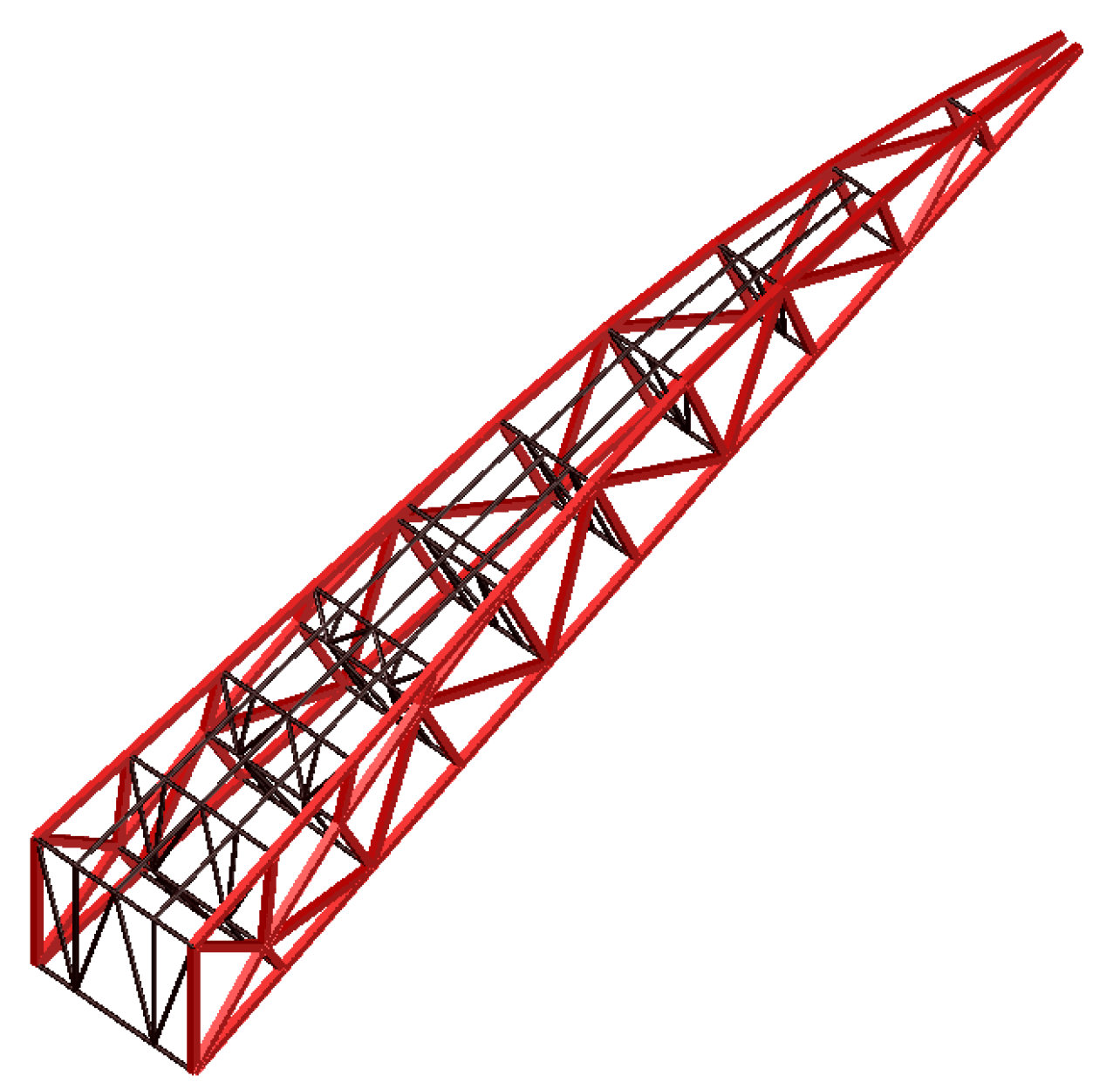
In view of the actual engineering conditions of the shallow silo, the radial steel truss of the umbrella conical shell composite support structure is designed with a size of 80 × 80 (mm
2), and the thickness of the section is 5 mm (the radial truss of the umbrella conical shell composite support structure is shown in
Figure 1). In order to be suitable for the actual shallow silo conical shell construction, the radial truss is arranged diagonally with the horizontal position with an angle of 25°.
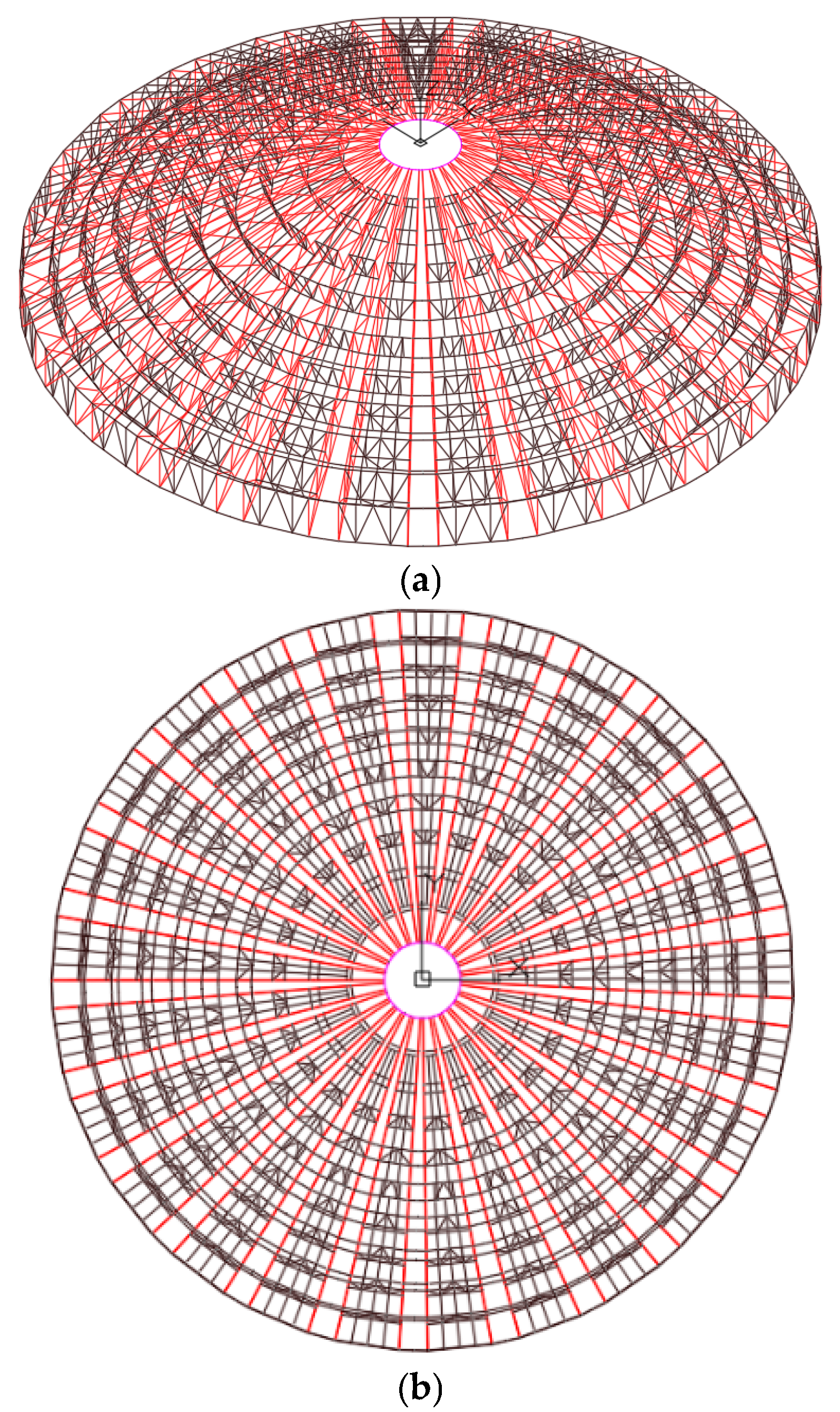
The components of the umbrella conical shell composite support structure are manufactured in the factory, transported to the silo construction site, and then assembled and hoisted on site. A total of 25 trusses will be hoisted, with one end bolted to the central core tube and the other end bolted to embedded anchors on the silo wall. Special steel tubes are used to provide bolted connections between adjacent radial trusses to form a complete umbrella-type conical shell composite support structure, as shown in
Figure 2.
2.3. Differences Between Existing Support Structures
At present, there are different forms of formwork support systems in silo roof construction projects [
15]. In order to highlight the advantages of the umbrella conical shell composite support structure designed in this study, it is compared with existing truss support structures under the same silo roof construction conditions.
In terms of construction, conventional steel–frame support systems, fastener-type steel–tube truss systems, steel–tube truss + central derrick combined support systems, and central-ring radial support systems were compared with the umbrella conical shell combined support structure. The umbrella conical shell system does not require scaffolding, and high-altitude construction operations are simpler. Thus, the construction cost and schedule are reduced for the project [
16].
From the point of view of structure, parts of the existing umbrella-type non-arched inclined-beam support structure cannot work together, so the mechanical performance of the structure is far from the optimal state [
17]. Based on the characteristics of arch action and shell geometry, the composite support structure of the umbrella conical shell is designed in this study. The load transfer mechanism and properties of the support structure have been greatly improved [
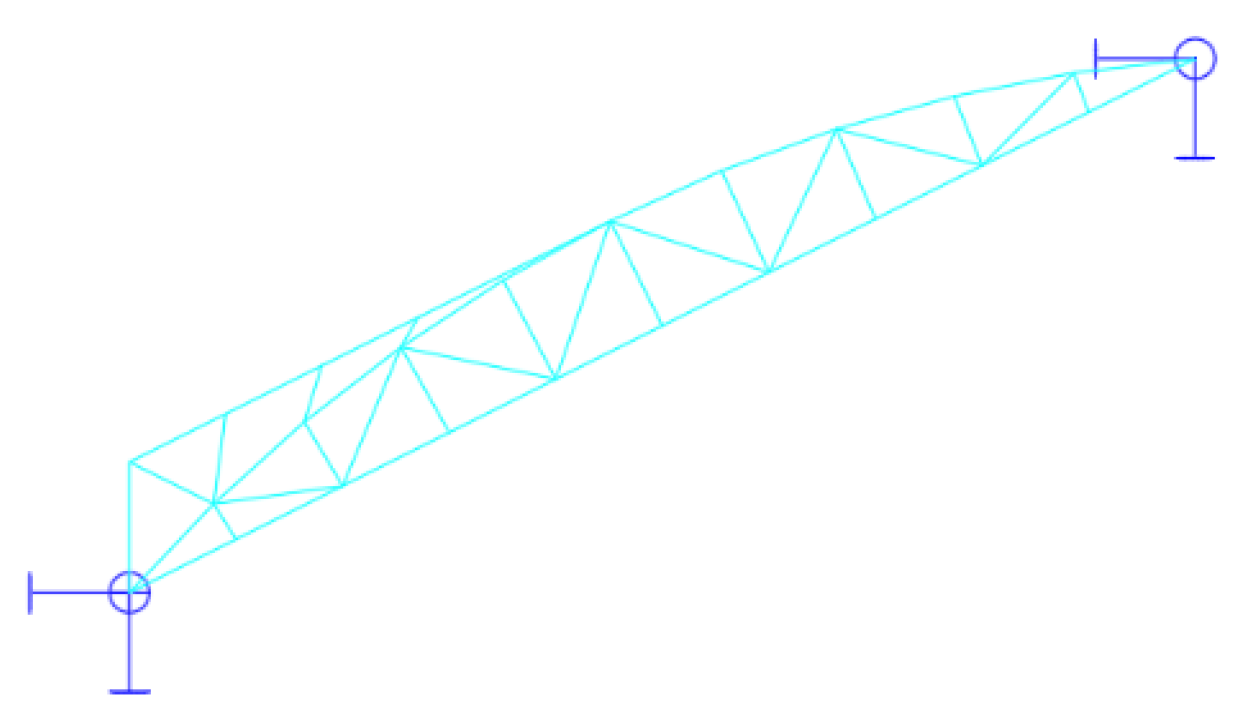
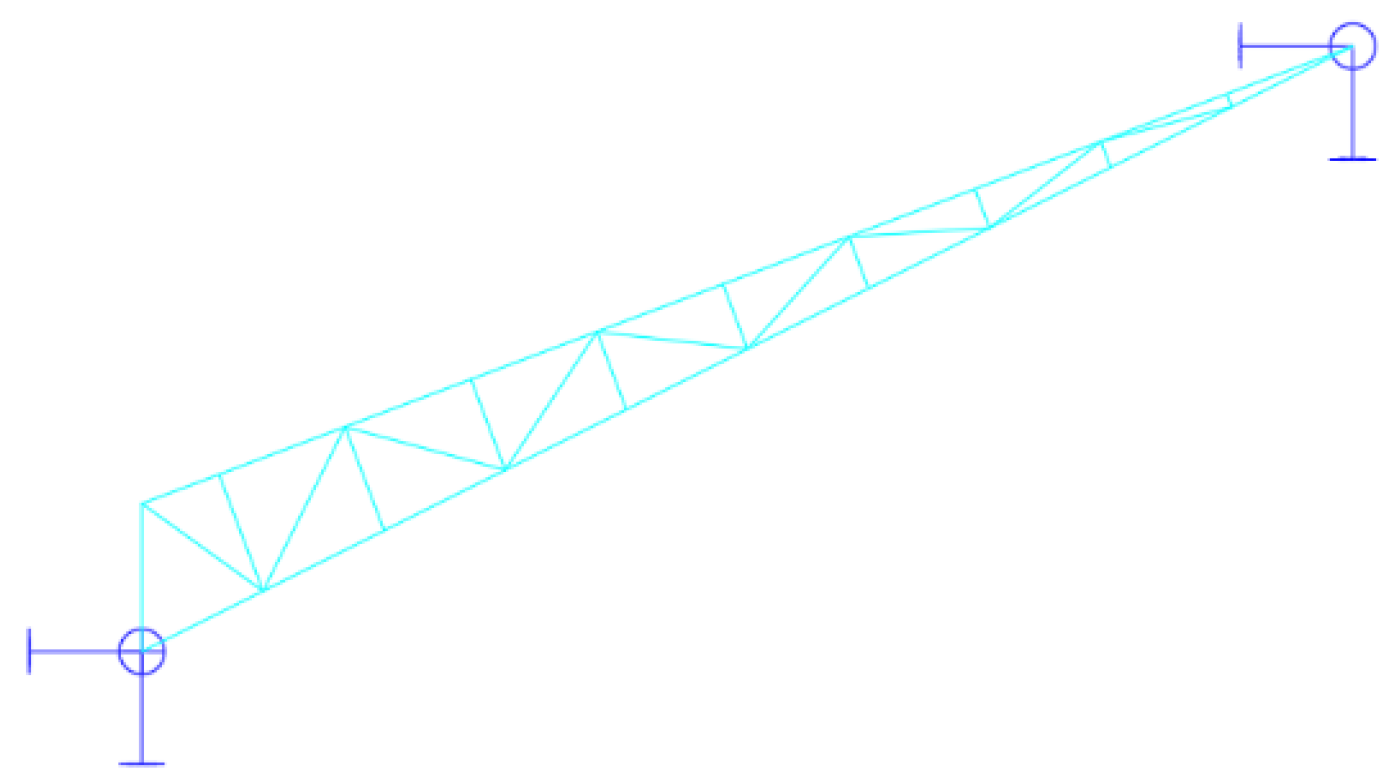
18]. To clarify the contribution of arch action, we compared the internal arched support configuration with an otherwise identical non-arched support system.Two cross-sections of the support structure are shown in
Figure 3. As shown in
Figure 4, the uniformly distributed load was imposed identically on the upper parts of both configurations, and the vertical uniformly distributed load was imposed on the umbrella conical shell combined support structure. It will produce the corresponding horizontal thrust at the supports; by exploiting geometric characteristics, the effect of vertical load can be transformed into axial compression, thereby significantly reducing the parts of the bending moment and shear force, but in the non-arched inclined-beam support structure, the upper parts will carry the full uniformly distributed load, mainly through bending and shear [
19]. Two advantages of the umbrella conical shell composite support structure can be considered:
- (1)
Under the same working conditions, the two structures can make full use of material strength under the premise of ensuring the safe completion of construction. Therefore, the umbrella conical shell composite support structure can further reduce the construction cost by virtue of the advantages of its own structure, thereby achieving favorable economic benefits.
- (2)
Under the same working conditions, through the analysis of mechanical theory, it can be seen that the maximum deflection of the umbrella conical shell composite support structure is smaller after the two structures bear the construction load. In the construction of the silo top, a cast-in-place concrete formwork needs to be set up on the upper part of the support structure. The small deflection changes of the umbrella conical shell composite support structure in the construction process can better ensure the pouring of the conical shell silo top and avoid the overall deformation of the whole conical shell silo top due to the large deflection of the support structure.
3. Finite Element Analysis
3.1. Unit Selection
The radial chord at the upper part of the structure is connected to the annular truss of the overall structure via right-angle fastening. Therefore, the LINK8 element is adopted between the upper radial chord and the members of each radial truss, and all nodes between them are modeled as hinged joints in accordance with the finite element assumptions. LINK8 is widely used in engineering as a bar (truss) element to simulate steel–truss structures, such as steel roof trusses, trusses, reticulated shell structures, suspension-bridge hangers, and arch-bridge tie rods, among other components [
20]. Each node has three degrees of freedom: translation along the X, Y, and Z directions of the node coordinate system. The element behavior is equivalent to an articulated connection; it does not carry bending moments and can account for plasticity, thermal expansion, creep, stress stiffening, and deformation/strain effects [
21]. In this model, each LINK8 tie member is modeled as a single element, and constraints and loads are applied based on the actual project conditions.
3.2. Material Properties
The radial truss and circumferential truss of this project are both made of Q235 steel, which meets the requirements of national standards and the elastic property test indices for structural steel. The elastic modulus of the material is set as E = 2.06 × 10⁵ N/mm2, the strength design value is 215 MPa, Poisson’s ratio is set as 0.3, and the mass density is set as 7850 kg/m3.
3.3. Model Establishment
In order to ensure the accuracy of calculation results, the shape, type and size of the model mesh division in the pre-processing stage need to be properly handled [
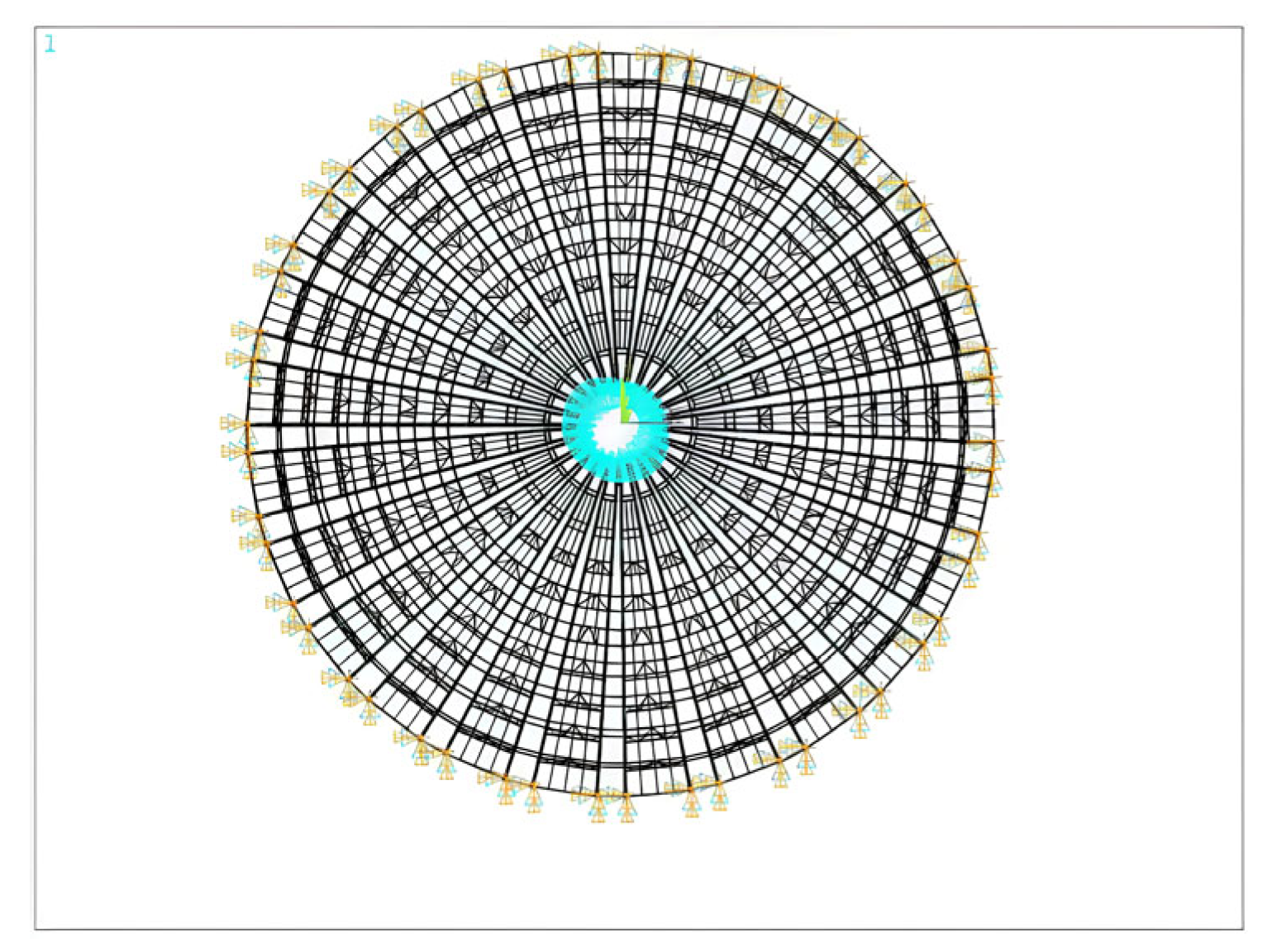
22]. When ANSYS 2020 R1 is used for solid finite element analysis, the model is established, relevant loads are applied to the corresponding nodes, and the finite element solution is then performed. Through the reasonable and effective treatment above, the reliability of the analysis results is ensured. In the finite element analysis model, each radial chord on the upper part of the structure is divided into one element, and the beam elements of the radial truss and the annular truss are meshed freely. According to the actual load and support conditions, the corresponding constraint or load is applied at the corresponding position. The lower position around the silo wall of the radial truss is a fixed support, and the upper position around the central core tube is a hinge support [
23], as shown in
Figure 5.
3.4. Load Combination
When carrying out load combination, the coefficient of constant load is 1.3 and that of live load is 1.5 [
24]. For load combinations, four working conditions are considered: before concrete pouring, halfway pouring, full pouring, and construction of the roof beams and slab. The loads borne in each case are as follows:
Working condition one: when concrete is not poured, it includes the dead weight of the combined supporting structure and supporting formwork;
Working condition two: when concrete is poured to mid-height, it includes the self-weight of the combined supporting structure, the self-weight of the supporting formwork, the self-weight of the partially poured conical shell roof concrete, and the live load acting on the combined supporting structure.
Working condition three: when concrete is fully poured, it includes the self-weight of the combined supporting structure, the self-weight of the supporting formwork, the self-weight of the fully poured conical shell roof concrete, and the live load acting on the combined supporting structure.
Working condition four: during construction of the roof beams and slab, it includes the self-weight of the combined supporting structure, the self-weight of the supporting formwork, the self-weight of the fully poured conical shell roof concrete, the self-weight of the poured beam-and-slab concrete, and the live load acting on the combined supporting structure.
3.5. Analysis of Simulation Results
3.5.1. Displacement Analysis of Supporting Structure
The maximum displacement of a structure is one of the most important factors for judging the mechanical performance of the structure [
25]. When the maximum displacement is small, the bending stiffness is large, and the mechanical performance is satisfactory. Conversely, a large maximum displacement of structural members during service indicates low bending stiffness and difficulty in meeting structural requirements under normal loads.
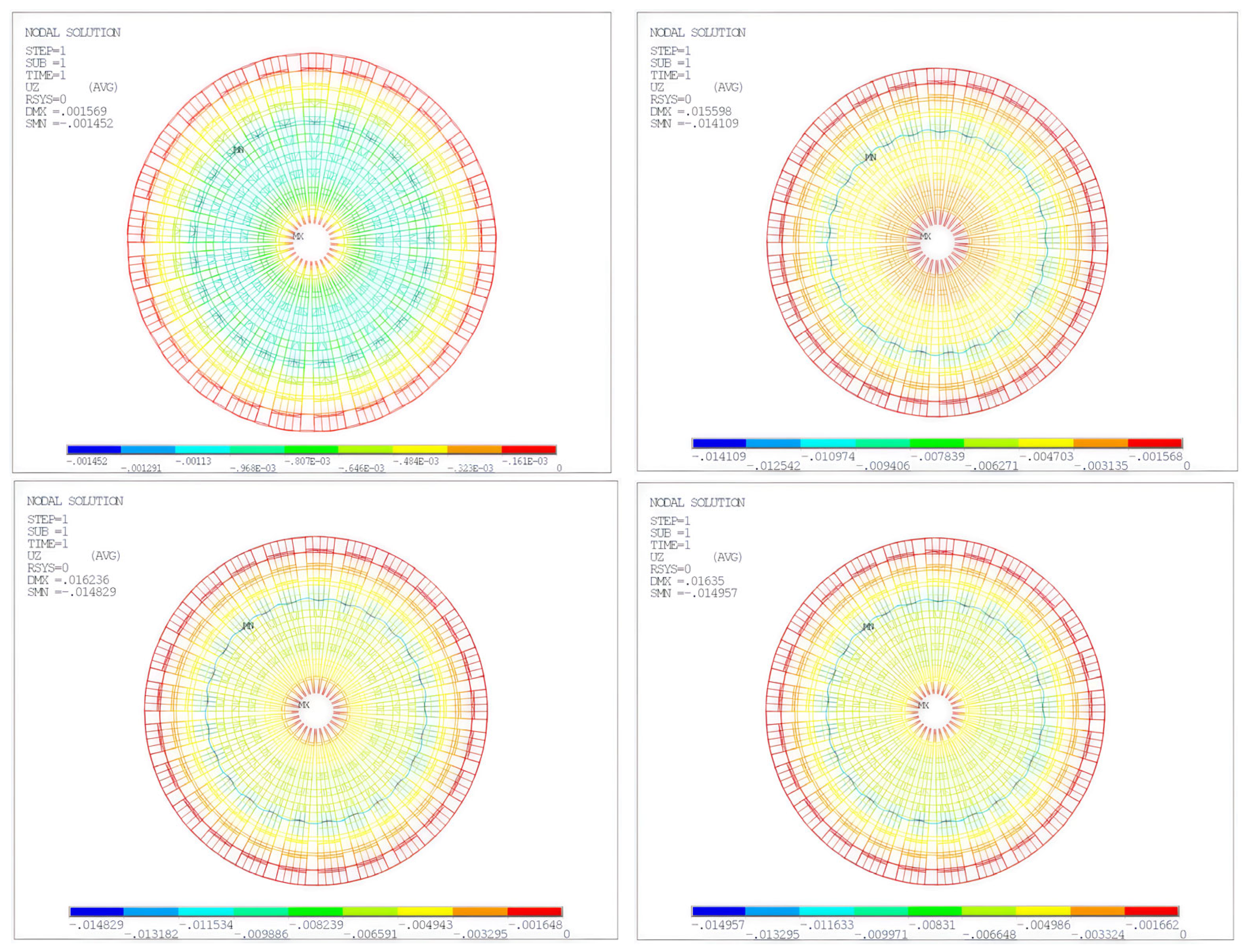
Table 1 lists the maximum vertical displacement values of the rods of the umbrella conical shell composite support structure calculated using ANSYS finite element software under four different loading conditions.
Based on the displacement contour plots obtained from ANSYS (
Figure 6), the following conclusions are drawn. Under the loading of four different working conditions, the displacement variation trend of the umbrella conical shell composite support structure is roughly the same, and the deflection is the largest at the center of each radial truss; due to the bearing constraints on both sides, the vertical displacement is almost zero. The vertical deformation of the supporting structure members becomes smaller from the center of each truss to both sides, and the displacement of the rod near the center of the silo is relatively large. In addition, the deformation pattern is approximately symmetric about the center.
3.5.2. Stress Analysis of Supporting Structure
The internal force of the supporting structure in each rod directly affects whether the strength design of the structure meets the requirements, which an important factor in determining whether the structure is reasonable [
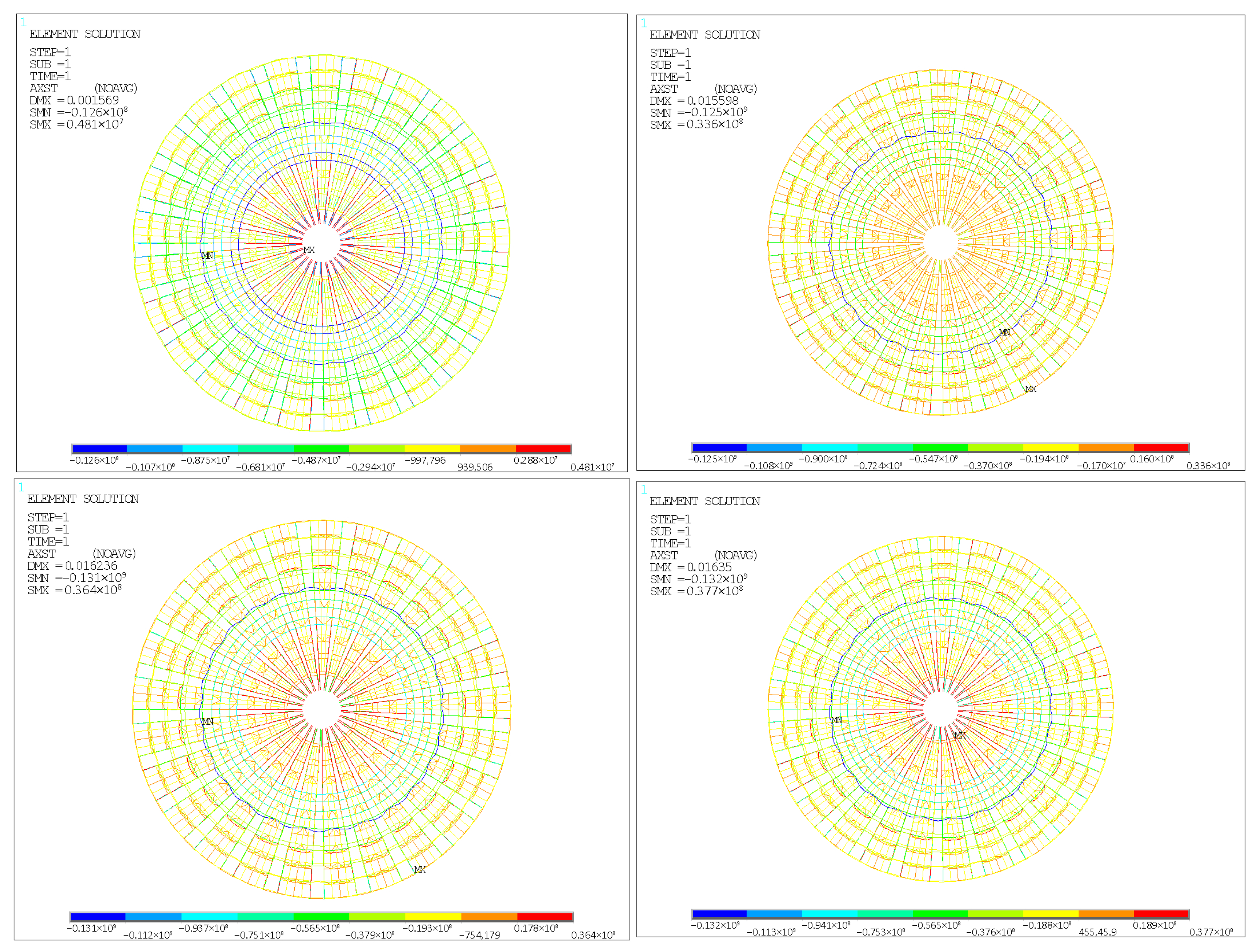
26]. During the design process, the internal forces of structural members should not exceed the tensile or compressive strength of the material itself. Using ANSYS post-processing, stress contour plots for all members under four load cases were obtained, as shown in
Figure 7.
By analyzing the stress distribution of the umbrella conical shell composite braced structure under different loading conditions, it is found that the member stresses exhibit centrosymmetric characteristics for all four load cases. Under working condition 1, the maximum tensile stress and compressive stress of the members in the support structure are 4.81 MPa and 12.6 MPa, respectively. Under working condition 2 (after half of the concrete is poured), the maximum tensile stress and maximum compressive stress of the members in the supporting structure are 33.6 MPa and 125 MPa, respectively. Under working condition 3 (after the concrete on the conical shell roof is fully poured), the maximum tensile stress and compressive stress of the members in the supporting structure are 36.4 MPa and 131 MPa, respectively. Under working condition 4 (during the final pouring of the upper ring beam), the maximum tensile stress and compressive stress of the members in the supporting structure are 37.7 MPa and 132 MPa, respectively. The stress values of all the rods are less than the strength design value of the steel (215 MPa) [
27], which demonstrates that the strength of the support structure meets the requirements of the specification.
3.6. Practical Recommendations
Based on the above numerical analysis results, practical recommendations are summarized in this section to facilitate the engineering application of the proposed support system in similar projects.
- (1)
Layout and load transfer path: The umbrella conical shell combined support system should be arranged along the conical shell slope to develop an axial-force-dominated load transfer path, thereby improving load-carrying efficiency and reducing construction-stage deflection.
- (2)
Deformation control focus: The finite element displacement contours show that the deformation pattern of the support system is generally consistent across the construction stages. The maximum vertical deflection mainly occurs at the midspan of the radial trusses and in the region near the silo center, while the vertical displacement at the constrained ends is close to zero. Therefore, this region is recommended as the key area for deformation control and on-site monitoring during construction.
- (3)
Control of critical construction stages: The design verification and construction control of the support system should cover four stages: before concrete casting, half casting, full casting, and roof beam-and-slab construction. The displacement results indicate that the maximum vertical displacement increases from 1.452 mm (before casting) to 14.109–14.957 mm (half casting, full casting, and beam-and-slab construction), demonstrating that the casting and beam-and-slab construction stages govern deformation control. Accordingly, load combinations and construction planning should be focused on these stages.
4. Conclusions
The silo structure is a common structure used to store bulk and granular materials in above-ground facilities. This study focuses on the production needs and safety requirements for silos at the production base of Suiping Keming Flour Co., Ltd. The main research findings are as follows:
- (1)
As part of the engineering case in Suiping, a temporary support system for cast-in-place conical shell silo roofs was developed. This system consists of (i) an umbrella-type conical shell combined support structure and (ii) a cross-type vertical core-tube support.
- (2)
A shell–truss framework is established based on the geometry of cylindrical–conical shell roofs, and special structural members together with prestressed reinforcement measures are introduced in accordance with the principles of structural and elastic mechanics.
- (3)
To ensure the structural safety of the silo roof during construction, four combined load conditions are taken into account: before concrete is poured, when concrete is poured to mid-height, when concrete is fully poured, and during roof beam-and-slab construction. The results indicate that the proposed combined support system satisfies strength and stiffness requirements during roof construction.
- (4)
Compared with the non-arched inclined-beam support structure and the non-arched umbrella conical shell inclined-beam support structure, the results show that the umbrella conical shell composite support structure offers clear advantages in structural configuration and improves the safety and cost-effectiveness of conical shell roof construction.
In addition, although the proposed umbrella-type conical shell combined support system is mainly intended for the construction of large-span cast-in-place reinforced concrete conical shell silo roofs, the underlying concept of “shell–truss collaborative load transfer, replacing bending effects with axial force transmission” can also be extended to other structural forms with similar load-resisting mechanisms, including cylindrical–conical or truncated-cone roofs, large-span thin-shell roofs, and cast-in-place shell or dome structures with strict deformation control requirements during construction. It should be noted that the system is more suitable for circular plans and axisymmetric load transfer patterns; for non-axisymmetric, eccentric, or geometrically irregular shells, the collaborative action and overall efficiency may be reduced. When the span or construction loads increase significantly, or when prefabricated or segmental erection methods are adopted, additional detailing and strengthening measures, or modifications to the support scheme, may be required. Moreover, implementation is constrained by on-site assembly space and lifting conditions, and targeted re-evaluation and stability checks are necessary when material properties, construction sequences, or environmental loading conditions change. Therefore, future studies may further optimize the system and investigate its broader applicability to more complex shell structures and wider construction scenarios.
Author Contributions
Conceptualization, G.X.; methodology, J.Y.; software, J.Y.; validation, J.Y.; resources, G.X.; data curation, J.Z. and Y.L.; formal analysis, B.G.; writing—original draft preparation, G.X.; writing—review and editing, G.X.; visualization, J.Z.; supervision, B.G.; project administration, Y.L.; funding acquisition, G.X. All authors have read and agreed to the published version of the manuscript.
Funding
This research was funded by the National Natural Science Foundation of China, grant number [42572355].
Institutional Review Board Statement
Not applicable.
Informed Consent Statement
Not applicable.
Data Availability Statement
The dataset in this study is available upon request from the authors.
Conflicts of Interest
Author (Jianhua Yu) was employed by the (Spic Jingxi Electric Power CO., LTD). The remaining authors declare that the research was conducted in the absence of any commercial or financial relationships that could be construed as a potential conflict of interest.
References
- Qinshan, L.; Tiecheng, W. Design and Construction of Large Diameter Silo Roof Support System. In Proceedings of the 21st National Conference on Structural Engineering, Shenyang, China, 13–14 October 2012; Volume ii, pp. 416–419. [Google Scholar]
- Yuzbasi, J. Experimental verification of full-scale silo structure demolition: Investigating successive column removal with finite element method and progressive collapse simulation through blast load. Struct. Concr. 2024, 25, 4408–4427. [Google Scholar] [CrossRef]
- Yang, J.P.; Zhang, F.F.; Li, P.Z.; Jing, H. Seismic performance of column-bearing silo structure with granular materials considering SSI effect. Structures 2023, 47, 595–606. [Google Scholar] [CrossRef]
- Ma, Y.; Bai, R.; Yang, L.-P.; Yang, H.-X.; Guo, S.-D. Coupling effects of the different temperature patterns and storage pressures on the buckling of a steel silo. Structures 2022, 36, 168–188. [Google Scholar] [CrossRef]
- Guan, L.H.; Zhao, F.K.; Lu, Q.; Zhang, D.Z.; Zhu, B.; Wang, Y.B. Centrifuge modeling of dynamic response of underground concrete silo against adjacent buried explosion loads. Int. J. Impact Eng. 2025, 200, 105256. [Google Scholar] [CrossRef]
- Kumar, C.K.C.; Ram, C.L.; Jha, S.N.; Vishwakarma, R.K. Warehouse Storage Management of Wheat and Their Role in Food Security. Front. Sustain. Food Syst. 2021, 5, 675626. [Google Scholar] [CrossRef]
- Yang, Q.; Sui, H.; Sun, C.; Meng, L. Design and application of Support System for cone shell Construction of silo Roof. Build. Constr. 2017, 39, 91–93. [Google Scholar]
- Chen, J.; Ding, Y.G.; Xu, Q.K.; Cheng, X.S. Research on seismic response of elevated silo by coupling discrete-finite element method. Soil Dyn. Earthq. Eng. 2025, 192, 109287. [Google Scholar] [CrossRef]
- Yang, J.P.; Feng, G.J.; Jing, H.; Zhang, F.F. Seismic response and theoretical analysis of grain bulk material-steel silo structure under earthquake action. J. Constr. Steel Res. 2023, 211, 108207. [Google Scholar] [CrossRef]
- Cheng, Y. Seismic Analysis of Reinforced Concrete Silo Structure. Master’s Thesis, Henan University of Technology, Zhengzhou, China, 2010. [Google Scholar]
- Guo, Y.; Dou, C. Research status and expectation of design theory of steel arch structure in China. J. Build. Struct. 2012, 33, 1–17. (In Chinese) [Google Scholar]
- Ma, R.; Xia, J.; Chen, X.; Chen, T. Optimization design of mechanical parameters of prefabricated steel TRUSS silo construction support platform. Ind. Constr. 2018, 48, 166–172. [Google Scholar]
- Lu, Z.; Sui, X.; Chen, Z. Bearing capacity of fastener steel tube full hall formwork support base on stability of pressed pole with Multiple Point restraint against rotation. Appl. Mech. Mater. 2012, 166–169, 1404–1415. [Google Scholar] [CrossRef]
- Yuan, G.; Jiang, Y.; Wu, X. Key Construction Technology of Closed Coal Yard with Long-span Arch Cable Truss Structure. Steel Struct. 2019, 34, 108–113. [Google Scholar]
- Su, Y.H.; Dong, J.W.; Yang, F. Technology application of lifting slipform-belt steel truss for formwork support of conical roof slab in large-diameter silo. Build. Technol. Dev. 2020, 47, 55–57. (In Chinese) [Google Scholar]
- Meng, W.; Zhao, P.; Zhang, Y.; Ni, S.H.; Yang, X.R. Research on modular design of New Silo Rigid sliding Form Platform. Coal Eng. 2020, 52, 72–76. [Google Scholar]
- Li, Y.; Feng, J. Construction Technology of bevel Steel Structure Support System on inclined roof of shallow silo. Build. Constr. 2017, 39, 313–315. [Google Scholar]
- Jin, Z.; Xu, F.; Wu, Y. Design and Construction of Steel Truss Support System on the roof of shallow circular warehouse. Build. Constr. 2020, 42, 1200–1203. [Google Scholar]
- Zhang, Z.; Xu, D.; Liu, T.; Zou, X.; Yan, W. Design and Safety Analysis of Composite truss arch Structure of Chongqing West Railway Station. High Speed Railw. Technol. 2016, 7, 80–83+94. [Google Scholar]
- Zhao, S. Design Principle of Steel Structure; Zhengzhou University Press: Zhengzhou, China, 2010; pp. 28–85. [Google Scholar]
- Wang, X. ANSYS Numerical Analysis of Engineering Structure; People’s Communications Press: Beijing, China, 2007. [Google Scholar]
- Li, Q.; Wang, T.; Zhao, H.; Wang, W.X. Analysis and Comparison of Mechanical properties of Two Silo horizontal support structures. Ind. Constr. 2015, 45, 143–146+167. [Google Scholar]
- Cao, M.; Ma, H.; Wei, P. A modified stiffness spreading method for layout optimization of truss structures. Acta Mech. Sin. 2018, 34, 1072–1083. [Google Scholar] [CrossRef]
- GB 50153-2008; Unified Standard for Reliability Design of Engineering Structures. China Architecture & Building Press: Beijing, China, 2008. (In Chinese)
- Yuan, X.; Jin, W.; Lu, Z.; Liu, X.; Chen, T.M. Study on stability Bearing Capacity of Steel pipe formwork of Fastener. China Civ. Eng. J. 2006, 39, 43–50. [Google Scholar]
- Guo, Y.; Hu, C.M.; Ren, W.J.; Cai, S.P. Analysis of high-altitude formwork support frame and erection platform for silo structures. J. Xi’an Univ. Archit. Technol. 2015, 47, 549–554. (In Chinese) [Google Scholar]
- GB 50017-2017; Ministry of Housing and Urban-Rural Development of the People’s Republic of China. Standard for Design of Steel Structures. China Architecture & Building Press: Beijing, China, 2017. (In Chinese)
| Disclaimer/Publisher’s Note: The statements, opinions and data contained in all publications are solely those of the individual author(s) and contributor(s) and not of MDPI and/or the editor(s). MDPI and/or the editor(s) disclaim responsibility for any injury to people or property resulting from any ideas, methods, instructions or products referred to in the content. |