Abstract
An industry 5.0 revolution is characterized by advanced automation and human-centric design resulting in an unprecedented growth in the electronics sector. This advancement comes at the cost of a surge in electronic waste (E-waste) generation. In the past, many researchers have reported on E-waste recycling and management; however, the efficient collection of domestic E-waste still remains a critical challenge. This research paper presents a novel approach to domestic E-waste management by developing a smart E-Bin equipped with an Electronic Waste Detection and Bin-Level Control System (EDBLCS), IoT setup, and a YOLOv11-powered (EW YOLO) computer vision system. This innovative solution selectively collects only E-waste, ensuring accurate identification and preventing contamination with other waste streams, with the mAP@0.50 score increased to 0.90074 by Epoch 50, while mAP@0.50–0.95 reached 0.73899 using YOLOv11. The primary contribution of this work is the integration of YOLOv11-based real-time detection with an IoT-enabled smart E-Bin framework to enable selective, edge-oriented domestic E-waste segregation.
1. Introduction
With the advent of the Industry 5.0 revolution, the rise in technical innovation has led to the proliferation of electronic devices. This has further catalyzed a rapid increase in electronic waste (E-waste), posing substantial health and environmental challenges. However, with urbanization and Industry 5.0 revolution, we cannot bypass electronic device usage as it has taken on a key role in our everyday working environments. These devices can include everything from mobile phones and computers to household appliances, entertainment systems, and industrial machinery [1,2,3]. As per the survey from Global E-waste Monitor 2024, E-waste generation reached a record high of 62 billion kilograms (equal to an annual average of 7.8 kg per capita) globally [4]. Approximately 22.3% of this E-waste mass was systematically collected and processed through certified recycling channels in compliance with environmental sustainability standards [4,5]. Through urban mining, valuable materials from discarded electronics can be recovered efficiently [6]. This further supports the circular use of resources, minimizing dependence on mining and the environmental harm linked to the extraction of raw materials from the Earth’s crust.
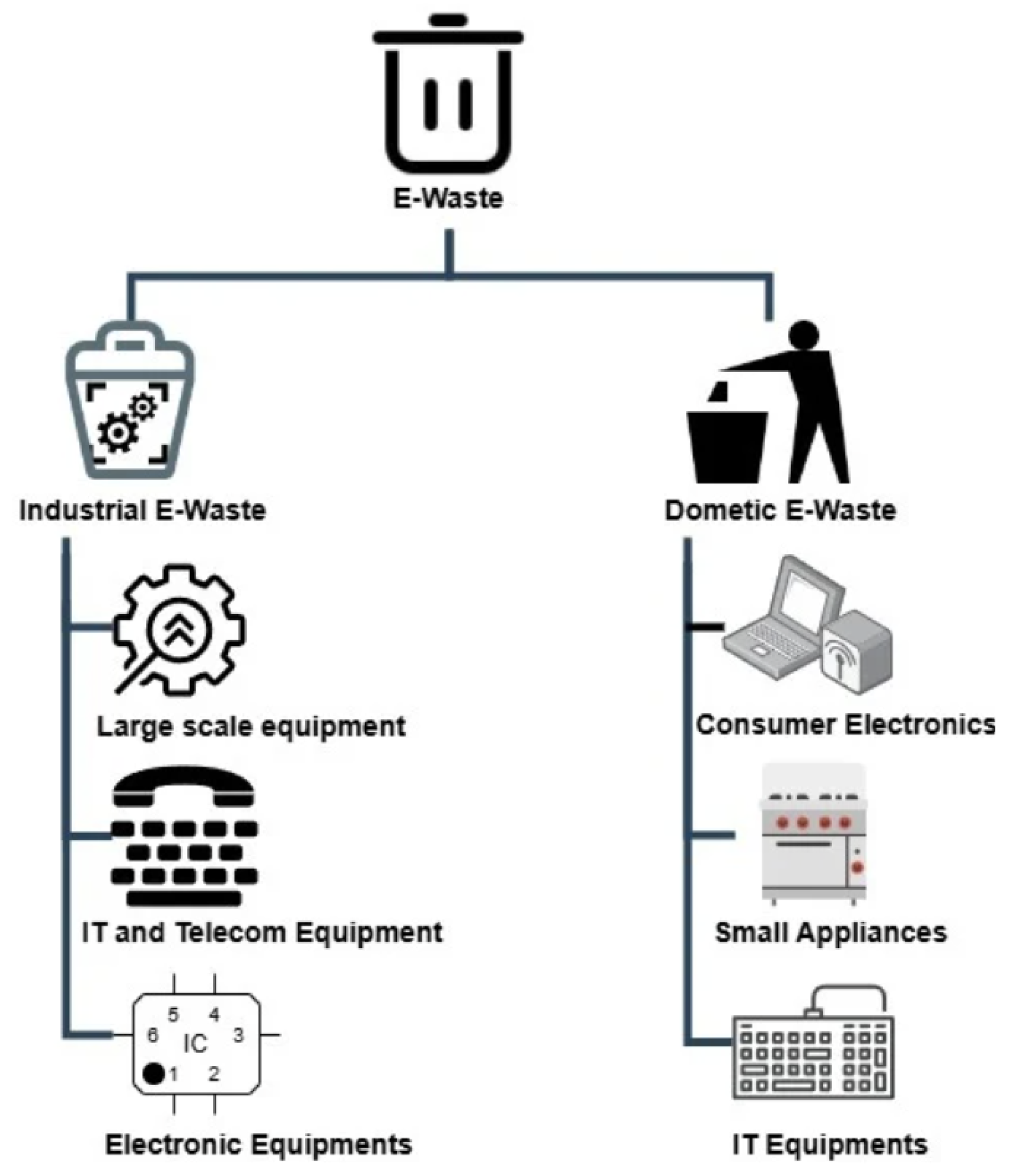
E-waste, from a broader perspective, can be categorized into (i) industrial E-waste: sometimes referred to as commercial E-waste generated from industry viz. machinery; and (ii) domestic E-waste (DEW): discarded electrical or electronic devices generated from domestic householsd or office-scale industries, as shown in Figure 1. The second category of DEW is the subject in this research work.
Figure 1.
General categorization of E-waste with respect to utility.
The worldwide E-waste monitor report indicates that the annual amount of DEW generation () is 12 million tons (approx.) in China alone in 2022. The value of from DEW in China is projected to reach 27.22 million tons by 2030, with an average annual growth rate of 10.4%, making it the country’s fastest-growing waste stream [7]. The increasing volume of DEW, its improper management, and the lack of scientific disposal methods has led to negative effects on human health and the environment due to hazardous substances [8,9]. A specialized DEW collection system, incorporating object detection technology for only E-waste, can optimize waste sorting and enable real-time monitoring of storage levels, facilitating efficient and sustainable E-waste management is needed.
This research proposes an integrated Electronic Waste Detection and Bin-Level Control System (EDBLCS) that combines optimized controller design, IoT-enabled monitoring, and YOLOv11-based real-time object detection for selective domestic E-waste segregation. In addition, a structured multi-class E-waste dataset comprising 19,613 annotated images across 77 categories aligned with UNU-KEY classifications is developed to support robust model training. The primary contributions of this work are as follows: First, the integration of a computer vision based E-waste detection framework within a decentralized IoT smart bin architecture. Second, a comprehensive quantitative evaluation using precision, recall, mAP@0.50, and mAP@0.50–0.95 metrics, supplemented by diagnostic curve analysis. Third, the design of a computationally efficient detection framework leveraging YOLOv11, which achieves improved accuracy with reduced parameter complexity compared to prior YOLO variants. Although newer versions of YOLO are available, YOLOv11 was selected due to its balanced trade-off between detection accuracy and computational efficiency, making it suitable for real-time, resource-constrained deployment.
2. Literature Review
In the recent past, the Internet of Things (IoT) emerged as a powerful paradigm, offering a multitude of strategic solutions to research challenges across diverse domains [10,11]. In order to manage E-waste efficiently, many applications with various electronic waste management systems deployed for commercial E-waste products have been reported [12,13,14]. These systems incorporate cameras and a geographic information system integrated with waste collection trucks to assess bin fill levels. However, these systems suffer from drawbacks such as unread Radio Frequency Identification (RFID) tags, “ghost’’ tags, and dependence on image processing algorithms for precise bin-level assessment. In contrast, wireless sensor network (WSN)-powered bin-level monitoring systems offer a more robust solution, mitigating the limitations of RFID technology [15]. A WSN-based system for trash bin-level monitoring is described in [16]. This research utilizes an ArgosD sensor node equipped with a CC2420 RF transceiver coupled with an MSP430F1611 microcontroller. GUI was developed to display the fullness of individual bins, but it lacked the ability to provide a regional or cluster-based overview of bin levels. Moreover, the study lacked concrete measurable outcomes.
Mamun et al. [17] propose an intelligent garbage can employing a suite of sensors to monitor lid position, trash level, and bin weight. However, this advanced smart bin lacks wireless connectivity capabilities. Furthermore, the deployment cost of this smart bin system is substantial, reaching USD 560 per unit. To overcome the limitations of these existing systems, real-time WSN-based bin-level monitoring systems have been proposed in past studies [18,19,20]. These systems incorporate sensor nodes within garbage cans to measure the volume of waste and transmit the collected data to a central access point. The access point collects data from the sensor nodes and transmits it to a central monitoring station using a Universal Asynchronous Receiver/Transmitter (UART). Wireless communication in these systems leverages the low-power SimpliciTI network protocol. Notably, the visual interface displays a spatial map of all bins, facilitating the easy identification of bin capacity and location. However, these systems necessitate the utilization of a personal computer or personal digital assistant for data transfer to remote locations. The identified limitations can be effectively addressed by integrating the IoT paradigm into the advancement of smart bin-level monitoring systems.
The IoT enables the development of interconnected infrastructures, allowing the provision of new services with increased flexibility and efficiency. These benefits are highly sought after for both consumer and industrial applications. Domestic waste management presents a significant application area for IoT technology. However, only a limited number of studies have explored the integration of IoT in the development of trash bin-level monitoring systems, as highlighted in [21,22,23,24,25,26,27,28]. Recent studies [29,30,31,32] on smart trash bins show that IoT-based bin-level monitoring systems provide enhanced robustness and cost-effectiveness compared to traditional approaches. While these systems exhibit significant advancements, challenges remain in achieving optimal power efficiency and ensuring comprehensive network coverage. Wireless sensor networks (WSNs) and IoT-based trash bin-level monitoring systems utilize multiple sensors that inevitably lead to increased power consumption, necessitating frequent battery replacements.
Table 1 illustrates a brief literature review on concepts that can be employed for DEW.
Table 1.
Brief literature review of work done on DEW in past [33,34,35,36,37,38,39,40].
Although prior studies have demonstrated advancements in IoT-based bin monitoring and waste classification, significant technical gaps remain. Most existing smart bin systems focus exclusively on fill-level detection without validating whether the deposited material is electronic waste, resulting in contamination of mixed waste streams. Additionally, several computer vision-based approaches operate in controlled conveyor environments and are not integrated into decentralized domestic collection systems. Furthermore, earlier detection frameworks often rely on previous-generation YOLO or CNN architectures with higher computational overhead, limiting their suitability for edge deployment. These limitations motivate the need for an integrated framework that combines real-time object-level validation with IoT-enabled monitoring in a decentralized E-Bin architecture [41,42,43,44].
3. Proposed DEW Control and Detection System
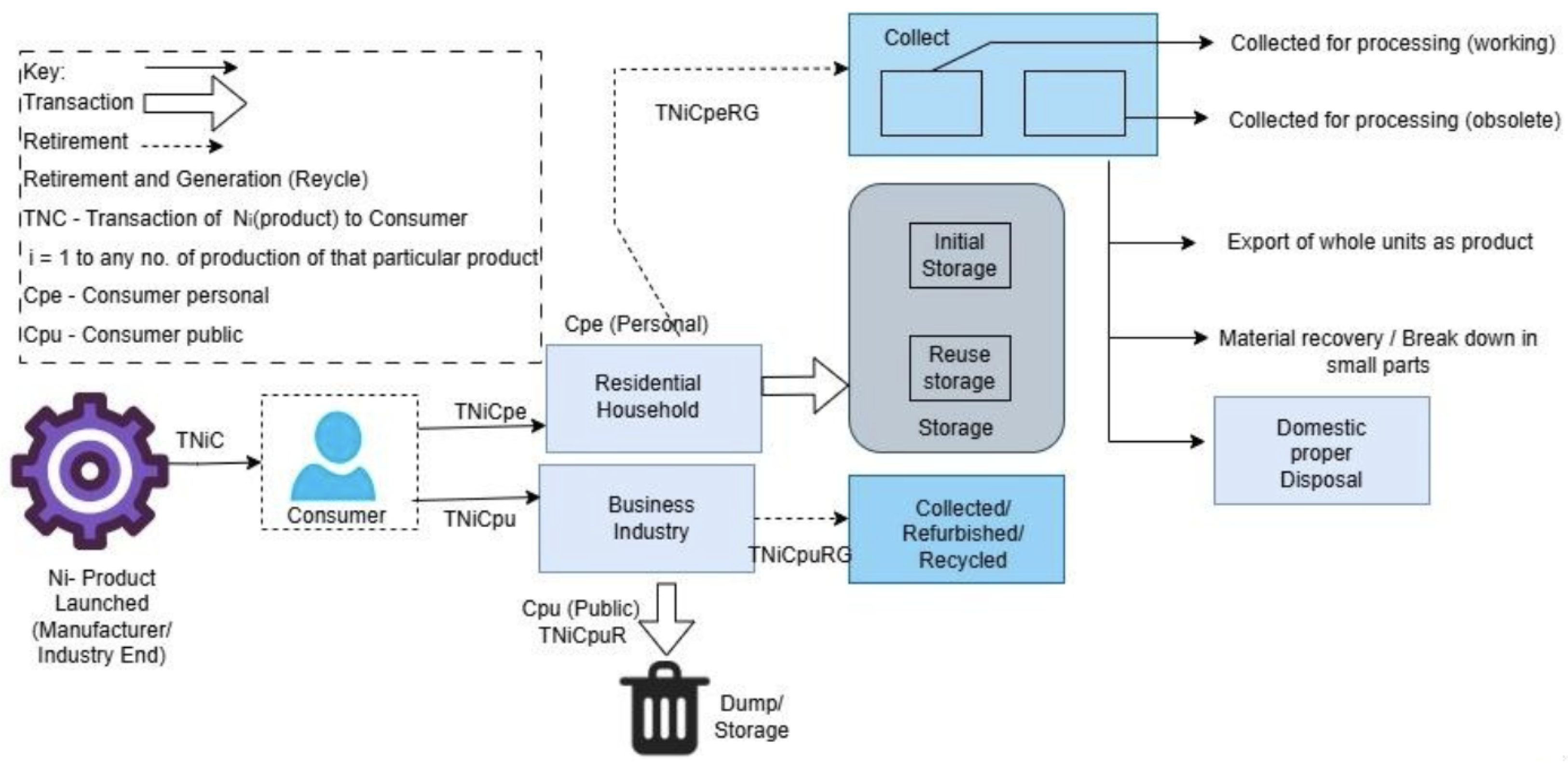
In the basic day-to-day scenario, once electronic devices are disposed of by their owner (electronic waste generated), the management process initiates. This process generally entails several steps: collection, pre-treatment (such as cleaning, sorting, dismantling, shredding, or repairing), and final treatment (including preparation for recycling, recovery, or reuse). Collection, the initial step, is critical for ensuring effective E-waste management. As shown in Figure 2, the management of E-waste can follow various pathways:
Figure 2.
Domestic flow of used electronic devices.
- TNC: Transaction of Ni (product) to consumer to any number of production of that particular product.
- Cpe: Consumer personal.
- Cpu: Consumer public.
- TNiCpe: Transaction of Ni consumer personal.
- TNiCpu: Transaction of Ni consumer public.
Considering a single mean length ℓ (considering TNiCpe and TNiCpu) for all transaction paths and the overall weight of lifespan for E-waste, we can correlate ℓ and as Equation (1).
The function represents the dependency between device lifespan and cumulative waste accumulation. A reduction in the average lifespan ℓ increases device turnover frequency, thereby accelerating the generation of domestic electronic waste. In high-consumption categories such as smartphones, where ℓ is typically 2–3 years, overlapping replacement cycles lead to non-linear growth in . Thus, shorter product lifespans directly amplify downstream waste management pressure.
Further year-wise generation can be calculated as in Equation (2).
where denotes the annual E-waste generated and represents total device sales (Cpe + Cpu). This simplified proportional relationship highlights that rising consumer sales directly translate into increasing domestic E-waste streams, particularly when device lifespan shortens. Consequently, predictive estimation of enables better planning of collection infrastructure and smart bin capacity.
As evident from Figure 2, the role of an efficient trash bin for electronic waste (E-Bin) is of the utmost importance for DEW collection. The IoT-based monitoring system E-Bin is an intelligent and technologically advanced electronic waste disposal system designed to enhance efficiency, sustainability, and user convenience. However, only an IoT-monitored E-Bin will be deficient in providing solutions for E-waste segregation.
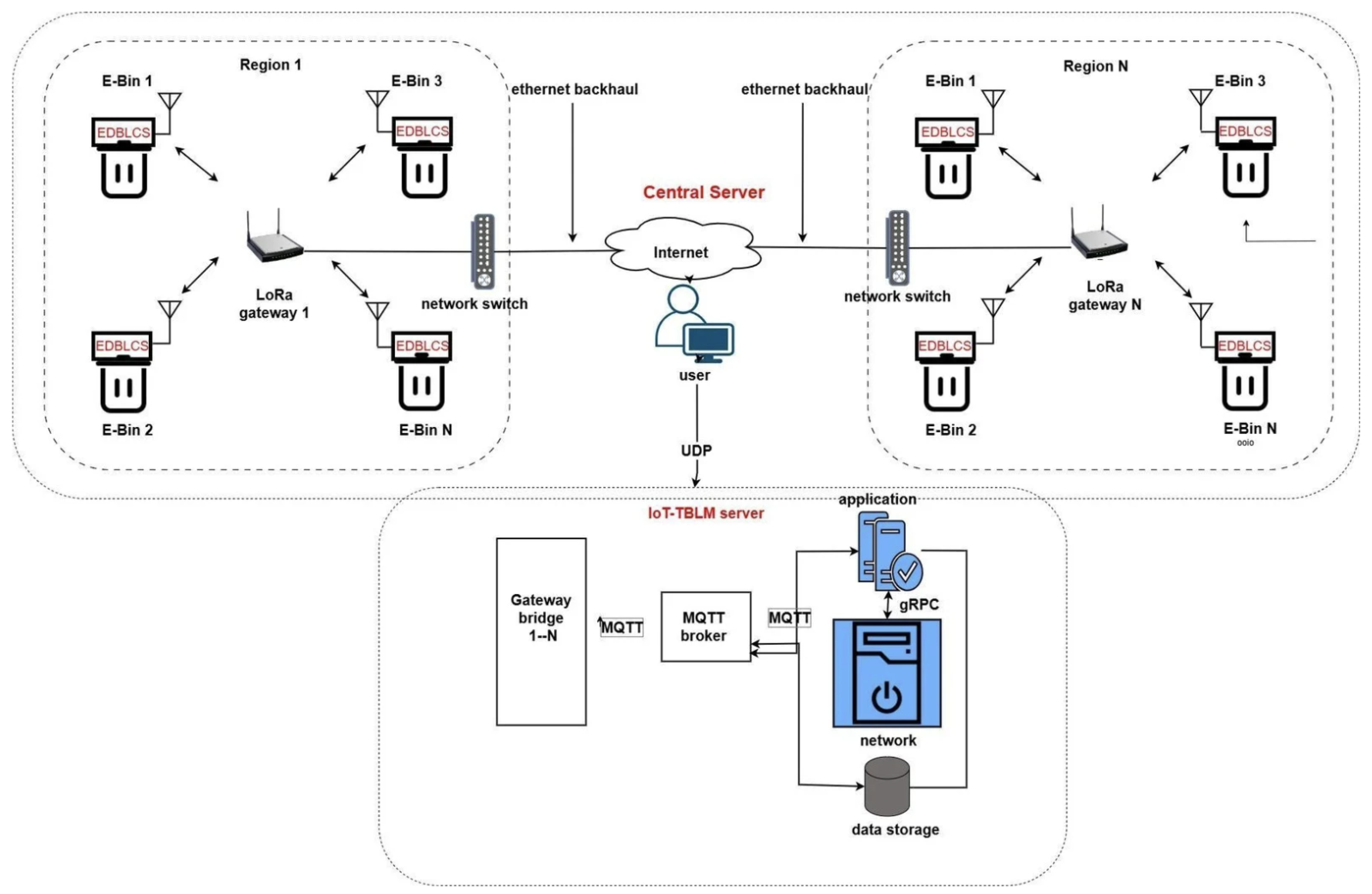
The proposed E-Bin Electronic Waste Detection and Bin-Level Control System (EDBLCS), illustrated in Figure 3, incorporates various cutting-edge IoT technologies to address the challenges associated with traditional waste management [41,42,43]. The latest Ultralytics iteration of real-time object detection is employed. EDBLCS involves the integration of sensors, communication devices, and data analytics to optimize the disposal, recycling, and collection of E-waste.
Figure 3.
Network architecture of the proposed IoT-based EDBLCS E-Bin system.
From a system perspective, the EDBLCS framework operates as an intelligent segregation and monitoring architecture composed of three functional layers. First, the perception layer employs the YOLOv11-based computer vision model to detect and classify deposited objects in real time, validating whether the item belongs to predefined domestic E-waste categories. Second, the sensing and control layer integrates ultrasonic, moisture, and metal detection sensors to monitor the bin fill level, safety conditions, and material characteristics. This layer ensures secure storage and prevents hazardous accumulation. Third, the communication layer transmits aggregated disposal and bin status data to a centralized IoT platform, enabling remote supervision and optimized collection scheduling. This layered architecture extends the role of the E-Bin from passive monitoring to active, selective E-waste segregation at the point of disposal.
The ultrasonic sensor plays a crucial role in detecting the E-waste level within the bin, ensuring accurate real-time monitoring. A moisture sensor is positioned to gauge the acid solution level in the separate battery compartment, enhancing safety measures. A metal detector in the E-Bin not only detects metallic objects but also plays a key role in ensuring the security and safety of the bin.
The speaker setup in the E-Bin serves a dual purpose, providing audio feedback and acting as an intelligent assistant, guiding users through the waste disposal process. A standout feature of the system is the inclusion of separate compartments dedicated to batteries. This precautionary measure addresses the potential risks associated with battery disposal by introducing a separate acid compartment designed to neutralize any threat of battery explosion. This aligns with environmental and health standards.
An essential feature of the system is the dedicated application, offering users detailed statistics on their waste disposal habits, data for optimizing waste collection routes, and information on the technical status of the devices. The smart E-Bin’s fill-level control and alert system are integral components of its operational efficiency. The fill-level sensors constantly monitor the bin, prompting timely alerts via phone or email when capacity is nearing full.
Many countries have proposed the use of an E-Bin for waste collection. The drawbacks in existing devices are compared with the proposed device “EDBLCS E-Bin” in Table 2.
Table 2.
Systematic comparison of the proposed EDBLCS E-Bin with existing state-of-the-art solutions based on defined evaluation criteria.
The EDBLCS E-Bin incorporates a main controller board, the central processing unit that orchestrates all functions. This board communicates with all sensors and actuators, ensuring seamless operation and efficient waste management. To enhance user engagement, a mini audio player connected to a power amplifier and speaker provides audio feedback and alerts. This system can deliver informative messages, reminders, or even music, making waste disposal an interactive experience. An ultrasonic sensor measures the distance to the waste’s surface, providing real-time data on bin fullness. This information optimizes waste collection schedules, minimizing unnecessary pickups and environmental impact. A door sensor monitors the bin’s lid opening and closing, enabling accurate waste accumulation tracking and triggering alerts when the bin is full. This prevents overflow and promotes timely disposal. An electronic magnetic switch, in conjunction with a relay, enables remote control of the bin’s lid. To promote recycling, a metal garbage detection sensor identifies metallic items within the waste stream, guiding users to separate recyclables. This contributes to reducing landfill waste and conserving valuable resources.
The overall deployment workflow involves real-time object validation at disposal, sensor-based bin monitoring, and periodic IoT-based transmission of aggregated disposal data for centralized supervision.
The next section discusses in detail the E-waste detection system using YOLOv11.
4. Dataset Description and Simulation Results
4.1. E-Waste Dataset and Class Description
The dataset consists of annotated images of E-waste belonging to all UNU-KEY categories, which total 54 according to The Global E-Waste Monitor 2024; UNITAR [45]. As of April 2024, the dataset contains 19,613 annotated images across 77 classes, with both bounding-box and polygon-based annotations.
Each class corresponds to a specific type of electronic device, where different models of the same device type are grouped into a single category. For example, all smartphone brands are categorized under the class Smartphone, irrespective of make or model. Multiple device classes may belong to the same UNU-KEY group and share a common tag. For instance, both Smartphone and Bar-Phone fall under the UNU-KEY category “0306–Mobile Phones.”
CRT monitors, due to their distinct shape, are classified separately from flat panel monitors, although both belong to the same monitor category. LED and LCD monitors have very similar visual appearances and are therefore grouped under the class Flat-Panel-Monitors. Each image is assigned an appropriate UNU-KEY tag corresponding to its device type.
To maintain privacy, all images containing visible faces or identifiable individuals were removed. Data augmentation techniques including geometric transformations, brightness variation, and scaling were employed to enhance class balance and robustness. Augmentation was applied carefully to preserve annotation integrity and avoid synthetic bias. Additional images were sourced from Wikimedia Commons under unrestricted public-domain licenses, manually annotated, and added to the dataset.
4.2. Model and Simulation Results
Building upon the architectural refinements of earlier YOLO versions, YOLOv11 introduces significant improvements in training efficiency and detection accuracy, making it suitable for complex computer vision tasks such as E-waste detection.
4.2.1. Training Performance
Transfer learning was employed to accelerate model convergence and improve object detection accuracy. The loss components consistently decreased across epochs, indicating effective optimization. The evolution of the main metrics between Epoch 1 and Epoch 50 is summarized in Table 3.
Table 3.
Model performance improvement over epochs.
The substantial increase in mAP@0.50–0.95 from early training stages to Epoch 50 indicates progressive refinement of localization accuracy and consistent convergence behavior. The close alignment between precision (0.88497) and recall (0.86945) indicates balanced detection behavior without significant skew toward false positives or false negatives.
The box loss reduced from 0.86549 in Epoch 1 to 0.45524 in Epoch 50, indicating improved bounding-box prediction. The classification loss decreased from 4.3423 to 0.42639, reflecting enhanced class discrimination, while the distribution-focal loss (DFL) decreased from 1.34109 to 1.02954, confirming better alignment between predicted and true distributions. Precision improved from 0.42521 to 0.88497, and recall increased from 0.14478 to 0.86945. The mean average precision (mAP) at IoU thresholds 0.50–0.95 improved from 0.13471 to 0.73899.
The learning rate was progressively reduced as training progressed, starting at in the first epoch and declining to by the final epoch. This gradual reduction helped the model converge effectively, minimizing loss and improving accuracy without overfitting.
4.2.2. Validation Performance
On the validation set, the box loss dropped from 0.89418 in the initial epoch to 0.69094, confirming the model’s ability to generalize bounding-box predictions to unseen data. The classification loss reduced from 3.14243 to 0.61450, indicating improved accuracy in identifying E-waste categories. The DFL for validation decreased slightly and remained stable, emphasizing consistent predictive alignment with the ground truth.
The mAP@0.50 score increased to 0.90074 by Epoch 50, while mAP@0.50–0.95 reached 0.73899, confirming the model’s high accuracy in detecting objects of varying sizes and complexities in the validation dataset. Substantial improvements were observed in the first 15 epochs, with mAP@0.50 increasing from 0.17822 to 0.84401 and recall rising to 0.79127. In later epochs, the rate of improvement slowed but remained positive, indicating the model’s focus on refining predictions and minimizing errors.
The essential metrics for assessing network applicability in real-world defect detection include precision (P), recall (R), speed (measured in frames per second, FPS), and network complexity (evaluated by the total number of parameters). These metrics reflect the model’s efficiency and accuracy in practical deployment scenarios. The validation precision and recall metrics closely followed the trends of the training metrics, indicating minimal overfitting.
The difference between mAP@0.50 (0.90074) and mAP@0.50–0.95 (0.73899) indicates stable localization performance under stricter IoU thresholds, suggesting that bounding-box predictions are not only accurate but also spatially well-aligned with ground truth annotations. The limited divergence between training and validation precision and recall further confirms strong generalization capability without significant overfitting.
From a deployment perspective, achieving a validation recall of 0.86945 ensures high detection completeness, while precision of 0.88497 minimizes false positive contamination in selective E-waste segregation scenarios.
4.2.3. Computational Efficiency and Deployment Feasibility
To understand the deployment feasibility under edge-oriented constraints, computational efficiency metrics were measured for our model in Table 4. All measurements were obtained at an input resolution of 640 × 640 under identical runtime conditions.
Table 4.
Computational efficiency summary of the proposed YOLOv11 model.
4.2.4. Recall-Confidence Curve
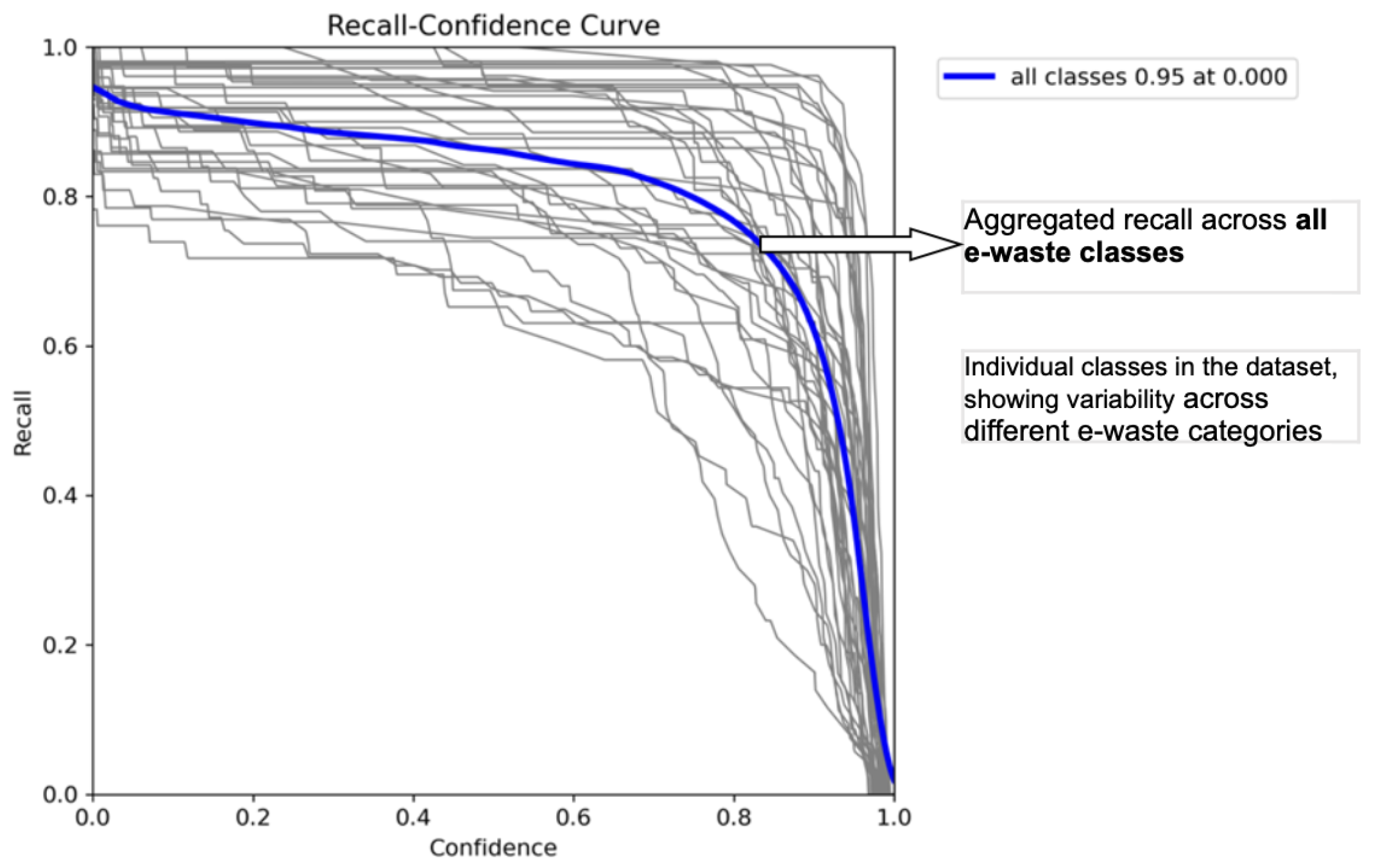
The recall-confidence curve evaluates the ability of the YOLOv11 model to correctly detect and classify E-waste objects at varying confidence levels. Since E-waste comprises various categories of discarded electrical and electronic devices, high recall is particularly important to ensure that all relevant objects are detected without missing critical classes.
Figure 4 illustrates the recall-confidence curve, where the x-axis denotes the confidence threshold (0 to 1) and the y-axis represents recall (true positive rate), which measures the proportion of correctly identified E-waste objects compared to the total relevant objects. The model achieves a recall of 0.95 at a very low confidence threshold (close to 0). This indicates that the model is highly sensitive to detecting objects even when it is uncertain, thereby minimizing the risk of missing critical components. As the confidence threshold increases towards 1, recall drops sharply, indicating that while high-confidence predictions are reliable, the model becomes overly selective and eliminates some valid detections. The thin gray lines highlight that certain E-waste categories (e.g., small devices such as USB flash drives) may maintain high recall, whereas visually complex or overlapping objects (e.g., remote controls or keyboards) may experience recall loss at higher confidence levels.
Figure 4.
Recall-confidence curve of the YOLOv11 model on the E-waste dataset.
4.2.5. F1-Confidence Curve
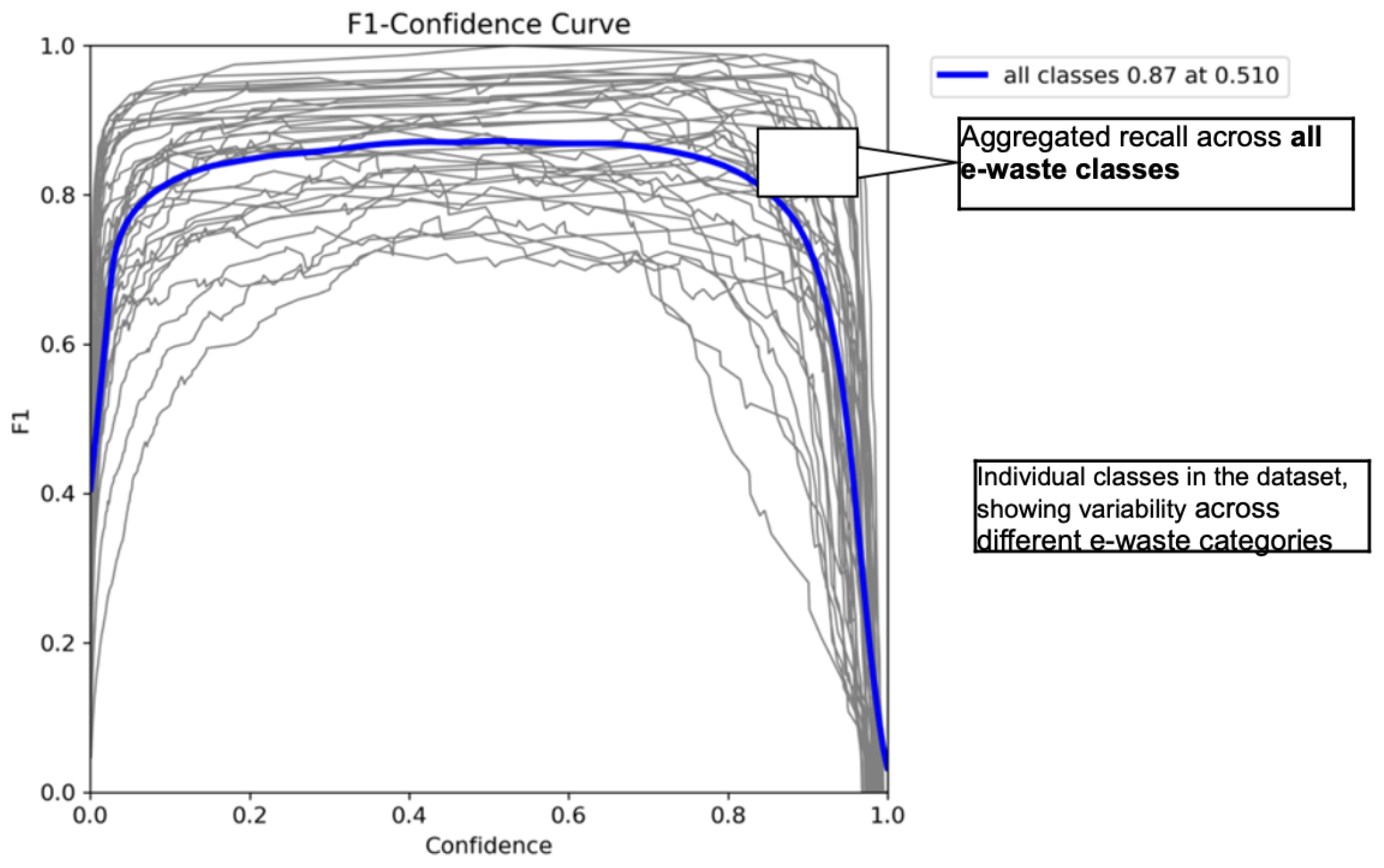
The F1-confidence curve offers a comprehensive evaluation of the model’s performance by balancing precision and recall. In E-waste classification, a high F1 score indicates that the model effectively detects and correctly classifies objects without generating too many false positives.
As shown in Figure 5, the x-axis illustrates the confidence threshold for predictions (0 to 1), and the y-axis denotes the F1 score, which is the harmonic mean of precision and recall. The model achieves a peak F1 score of 0.87 at a confidence threshold of 0.51. This threshold represents the optimal trade-off between precision and recall for the current study, ensuring the reliable detection and classification of E-waste items.
Figure 5.
F1-confidence curve of the YOLOv11 model on the E-waste dataset.
4.2.6. Confusion Matrix
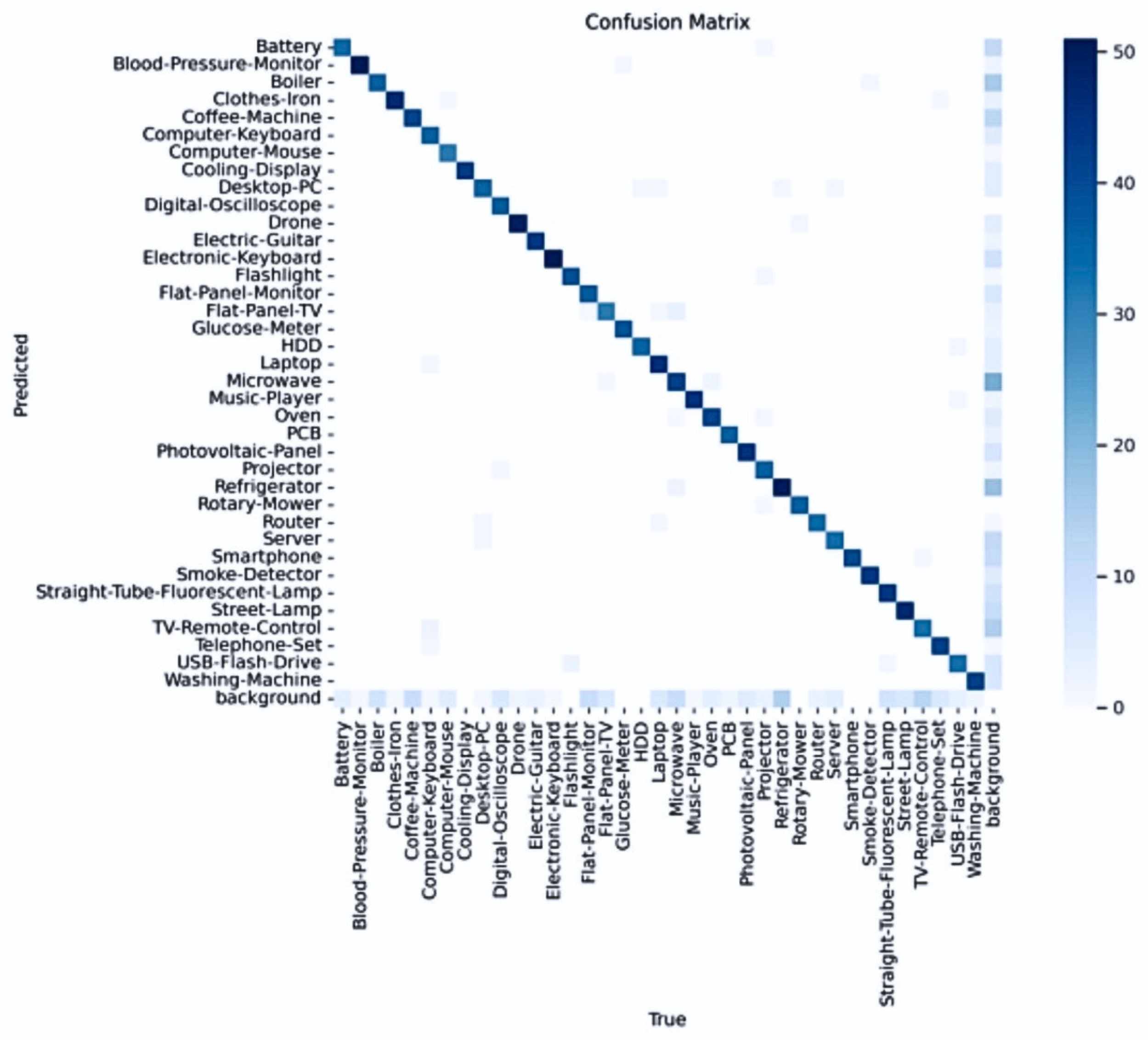
The confusion matrix provides a detailed breakdown of the YOLOv11 model’s performance across all E-waste categories. Since the project involves classifying numerous electronic objects, the confusion matrix (Figure 6) enables the identification of classes that are well recognized and those where the model struggles.
Figure 6.
Confusion matrix for E-waste classification using YOLOv11.
In Figure 6, the x-axis (true labels) represents the ground truth categories of the E-waste items, while the y-axis (predicted labels) corresponds to the predicted categories assigned by the YOLOv11 model. The prominent diagonal cells indicate that the model performs well across most categories, with a dark diagonal line showing that many classes, such as batteries, keyboards, and television sets, are correctly classified. Misclassifications appear as lighter off-diagonal cells. For example, small items like USB flash drives may occasionally be confused with visually similar objects such as remote controls, and overlapping objects or items with similar textures (e.g., printed circuit boards and laptop components) may introduce errors.
The confusion matrix reveals that misclassifications are concentrated among visually similar small devices, while larger appliance categories exhibit near-diagonal dominance. This distribution suggests that scale variance and feature similarity are primary contributors to classification ambiguity rather than generalized model instability.
4.2.7. Precision-Confidence and Precision-Recall Curves
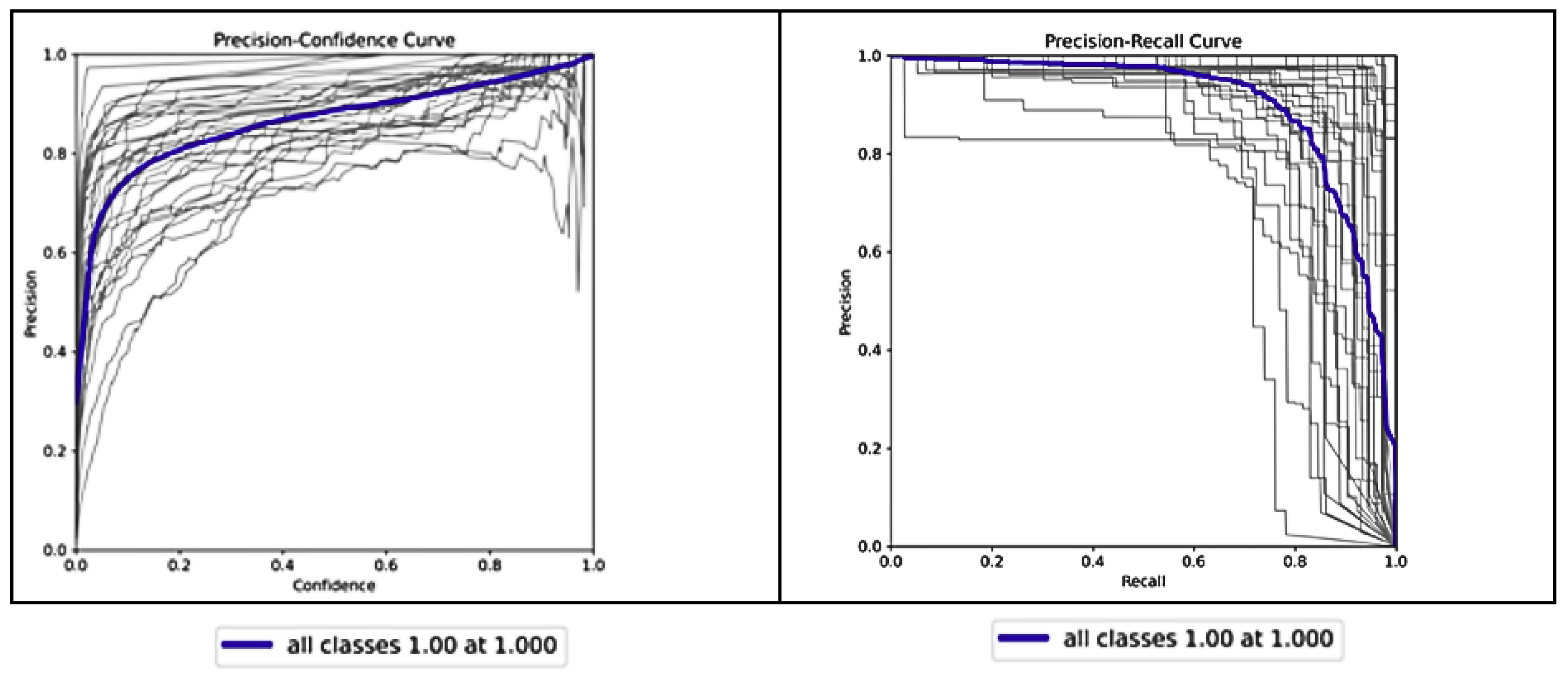
Figure 7 summarizes the precision-confidence and precision-recall characteristics of the model. The blue curve represents the model’s overall performance across all classes, while thin gray curves indicate the performance of individual classes.
Figure 7.
Precision-confidence and precision-recall characteristics of YOLOv11 on the E-waste dataset. Blue curves represent aggregate performance across all classes, and gray curves correspond to individual classes.
The precision-confidence curve depicts the relationship between prediction confidence (x-axis) and precision (y-axis), where precision refers to the ratio of correct predictions to total predictions at a given confidence threshold. Precision starts relatively low at very low confidence levels but quickly increases as confidence improves. As confidence values approach 1.0, precision reaches its peak, signifying that predictions made with high confidence are highly reliable. The precision drops significantly when recall approaches 1.0, indicating challenges in maintaining precision for a very high number of correct detections.
The precision-recall curve is crucial for evaluating model performance when class imbalance is present, as is often the case in E-waste datasets. The model attains a mean average precision (mAP) of 0.901 at an Intersection over Union (IoU) threshold of 0.5, as indicated in the legend. This demonstrates a strong balance between precision and recall overall. High precision in the early stages of recall shows that the model can confidently identify the majority of E-waste categories while maintaining accuracy. The steep decline in precision at high recall suggests that further fine-tuning or class-specific improvements may be necessary to address edge cases or rare E-waste categories.
4.2.8. Error Analysis and Model Limitations
Although the proposed model demonstrates strong overall performance, certain error patterns are observed. The confusion matrix indicates occasional misclassification between visually similar small devices such as USB flash drives and remote controls, primarily due to overlapping geometric features and scale similarities. These cases represent false positives arising from feature ambiguity rather than systematic classification bias.
Performance sensitivity is also evident at higher confidence thresholds in the recall–confidence curve, where recall decreases as the model becomes more selective. This suggests that strict confidence filtering may lead to missed detections, particularly for small or partially occluded objects.
Lighting variability and cluttered backgrounds present additional challenges in real-world domestic environments. While data augmentation was applied to improve robustness, extreme illumination changes and overlapping objects may reduce detection stability. These limitations highlight opportunities for future enhancement through adaptive thresholding or multimodal sensor fusion.
4.2.9. Ablation Study
To evaluate the independent contributions of data augmentation and architectural selection, an ablation study was conducted under controlled training conditions as shown in Table 5. All experiments were performed using identical hyperparameters, input resolution, training epochs, and optimization settings to ensure fair comparison.
Table 5.
Ablation study comparing architecture and data augmentation impact.
The ablation results indicate that data augmentation contributes significantly to performance improvement, as reflected by the increase in mAP@0.50, mAP@0.50–0.95, and recall when augmentation is enabled. Furthermore, YOLOv11 demonstrates improved localization robustness compared to YOLOv8 under identical training conditions, confirming the impact of architectural refinements. Performance degradation under a reduced dataset size highlights the importance of the dataset scale in maintaining detection stability.
5. Conclusions
This study addresses the growing challenge of domestic electronic waste management by proposing an integrated Electronic Waste Detection and Bin-Level Control System (EDBLCS) that combines intelligent object-level validation with IoT-enabled monitoring. By incorporating a YOLOv11-based detection framework within a smart E-Bin architecture, the system enables selective E-waste segregation at the point of disposal rather than relying solely on post-collection sorting. Experimental evaluation demonstrates strong detection performance, with high precision and recall values and consistent localization robustness across stricter IoU thresholds. The convergence behavior and validation metrics confirm effective feature learning and generalization capability, indicating suitability for decentralized deployment scenarios. Unlike conventional smart bins that primarily monitor fill levels, the proposed framework operates as an active segregation gateway by validating deposited objects prior to acceptance. This design reduces contamination in mixed waste streams and enhances downstream recycling efficiency. While the system demonstrates promising results, limitations remain under extreme lighting conditions, partial occlusion, and visually similar small-device categories. Future work will focus on robustness enhancement through adaptive thresholding, expanded dataset diversity, and real-time embedded deployment evaluation. Overall, the proposed approach provides a scalable and intelligent solution for domestic E-waste management aligned with Industry 5.0 sustainability objectives.
Author Contributions
Conceptualization, S.R. and R.C.; methodology, S.R. and R.C.; software, S.R.; validation, G.F. and M.V.; formal analysis, S.R.; investigation, R.C.; resources, M.V. and G.F.; data curation, S.R.; writing—original draft preparation, S.R.; writing—review and editing, R.C., M.V. and G.F.; visualization, S.R.; supervision, M.V. and G.F.; project administration, M.V. All authors have read and agreed to the published version of the manuscript.
Funding
This research received no external funding.
Institutional Review Board Statement
Not applicable.
Informed Consent Statement
Not applicable.
Data Availability Statement
The data used in this study are available from the corresponding author upon reasonable request.
Conflicts of Interest
The authors declare no conflicts of interest.
References
- Pont, A.; Robles, J.; Gil, J.A. E-WASTE: Everything an ICT Scientist and Developer Should Know. IEEE Access 2019, 7, 169614–169635. [Google Scholar] [CrossRef]
- Manegdeg, R.F.; Rollon, A.; Ballesteros, F., Jr.; Magdaluyo, E., Jr.; De Sales-Papa, L.; Clemente, E.; Macapinlac, E.; Ibañez, R.; Cervera, R.B. Multi-Attribute Assessment of Waste-to-Energy Technologies for Medical, Industrial, and Electronic Residual Wastes. ASME J. Energy Resour. Technol. 2022, 144, 070908. [Google Scholar] [CrossRef]
- Mohsin, M.; Zeng, X.; Rovetta, S.; Masulli, F. Measuring the Recyclability of Electronic Components to Assist Automatic Disassembly and Sorting Waste Printed Circuit Boards. arXiv 2024, arXiv:2406.16593. [Google Scholar] [CrossRef]
- United Nations Institute for Training and Research. Global E-Waste Monitor 2024. Available online: https://api.globalewaste.org/publications/file/297/Global-E-waste-Monitor-2024.pdf (accessed on 8 April 2024).
- Greenpeace East Asia. China’s E-Waste Worth $23.8 Billion by 2030. Available online: https://www.greenpeace.org (accessed on 8 April 2022).
- Maldonado-Romo, J.; Méndez, J.I.; Rojas, M.; Montesinos, L.; Ponce, P.; Molina, A. Circular Economy Strategy Based on Digital Technologies and the S4 Framework: A Case Study on Smartphones. Int. J. Sustain. Eng. 2024, 17, 295–305. [Google Scholar] [CrossRef]
- Lu, C.; Zhang, L.; Zhong, Y.; Ren, W.; Tobias, M.; Mu, Z.; Ma, Z.; Geng, Y.; Xue, B. An Overview of E-Waste Management in China. J. Mater. Cycles Waste Manag. 2015, 17, 1–12. [Google Scholar] [CrossRef]
- Mundada, M.N.; Kumar, S.; Shekdar, A.V. E-Waste: A New Challenge for Waste Management in India. Int. J. Environ. Stud. 2004, 61, 265–279. [Google Scholar] [CrossRef]
- Priya, A.; Hait, S. Comparative Assessment of Metallurgical Recovery of Metals from Electronic Waste with Special Emphasis on Bioleaching. Environ. Sci. Pollut. Res. 2017, 24, 6989–7008. [Google Scholar] [CrossRef] [PubMed]
- Chawla, R.; Singhal, P.; Garg, A.K. Internet of Things Driven Framework for Smart Solar Energy System. ASME J. Energy Resour. Technol. 2019, 142, 011201. [Google Scholar] [CrossRef]
- Sharma, M.; Chawla, R. Efficient Power Management Unit for IIoT Edge Computing Applications. Int. J. Syst. Assur. Eng. Manag. 2025, 16, 927–938. [Google Scholar] [CrossRef]
- Hannan, M.; Arebey, M.; Begum, R.A.; Basri, H. Radio Frequency Identification (RFID) and Communication Technologies for Solid Waste Bin and Truck Monitoring System. Waste Manag. 2011, 31, 2406–2413. [Google Scholar] [CrossRef] [PubMed]
- Hannan, M.; Arebey, M.; Begum, R.A.; Basri, H. An Automated Solid Waste Bin Level Detection System Using a Gray Level Aura Matrix. Waste Manag. 2012, 32, 2229–2238. [Google Scholar] [CrossRef]
- Islam, M.S.; Hannan, M.; Basri, H.; Hussain, A.; Arebey, M. Solid Waste Bin Detection and Classification Using Dynamic Time Warping and MLP Classifier. Waste Manag. 2014, 34, 281–290. [Google Scholar] [CrossRef]
- Ramson, S.R.J.; Bhavanam, D.; Draksharam, S.; Kumar, R.; Moni, D.J.; Kirubaraj, A.A. Radio Frequency Identification and Sensor Networks Based Bin Level Monitoring Systems—A Review. In Proceedings of the International Conference on Devices, Circuits and Systems, Coimbatore, India, 16–17 March 2018; pp. 17–20. [Google Scholar]
- Longhi, S.; Marzioni, D.; Alidori, E.; Di Buo, G.; Prist, M.; Grisostomi, M.; Pirro, M. Solid Waste Management Architecture Using Wireless Sensor Network Technology. In Proceedings of the International Conference on New Technologies, Mobility and Security, Istanbul, Turkey, 7–10 May 2012; pp. 1–5. [Google Scholar]
- Al Mamun, M.A.; Hannan, M.A.; Hussain, A.; Basri, H. Integrated Sensing Systems and Algorithms for Solid Waste Bin State Management Automation. IEEE Sens. J. 2015, 15, 561–567. [Google Scholar] [CrossRef]
- Ramson, S.J.; Moni, D.J. Wireless Sensor Networks Based Smart Bin. Comput. Electr. Eng. 2017, 64, 337–353. [Google Scholar] [CrossRef]
- Ramson, S.R.J.; Moni, D.J.; Kirubaraj, A.A.; Senith, S. Self-Powered Wireless Sensor Network Framework to Monitor Bin Level. J. Solid Waste Technol. Manag. 2017, 43, 295–304. [Google Scholar] [CrossRef]
- Sisinni, E.; Saifullah, A.; Han, S.; Jennehag, U.; Gidlund, M. Industrial Internet of Things: Challenges, Opportunities, and Directions. IEEE Trans. Ind. Inform. 2018, 14, 4724–4734. [Google Scholar] [CrossRef]
- Fang, S.; Xu, L.; Zhu, Y.; Ahati, J.; Pei, H.; Yan, J.; Liu, Z. An Integrated System for Regional Environmental Monitoring and Management Based on Internet of Things. IEEE Trans. Ind. Inform. 2014, 10, 1596–1605. [Google Scholar] [CrossRef]
- Usamentiaga, R.; Fernandez, M.A.; Villan, A.F.; Carus, J.L. Temperature Monitoring for Electrical Substations Using Infrared Thermography: Architecture for Industrial Internet of Things. IEEE Trans. Ind. Inform. 2018, 14, 5667–5677. [Google Scholar] [CrossRef]
- Yang, G.; Jiang, M.; Ouyang, W.; Ji, G.; Xie, H.; Rahmani, A.M.; Liljeberg, P.; Tenhunen, H. IoT-Based Remote Pain Monitoring System: From Device to Cloud Platform. IEEE J. Biomed. Health Inform. 2018, 22, 1711–1719. [Google Scholar] [CrossRef] [PubMed]
- Municio, E.; Daneels, G.; De Brouwer, M.; Ongenae, F.; De Turck, F.; Braem, B.; Famaey, J.; Latré, S. Continuous Athlete Monitoring in Challenging Cycling Environments Using IoT Technologies. IEEE Internet Things J. 2019, 6, 10875–10887. [Google Scholar] [CrossRef]
- Lv, Z.; Hu, B.; Lv, H. Infrastructure Monitoring and Operation for Smart Cities Based on IoT System. IEEE Trans. Ind. Inform. 2020, 16, 1957–1962. [Google Scholar] [CrossRef]
- Nibali, A.; Ross, R.; Parsons, L. Remote Monitoring of Rodenticide Depletion. IEEE Internet Things J. 2019, 6, 7116–7121. [Google Scholar] [CrossRef]
- Marques, P.; Manfroi, D.; Deitos, E.; Cegoni, J.; Castilhos, R.; Rochol, J.; Pignaton, E.; Kunst, R. An IoT-Based Smart Cities Infrastructure Architecture Applied to a Waste Management Scenario. Ad Hoc Netw. 2019, 87, 200–208. [Google Scholar] [CrossRef]
- Memon, S.K.; Shaikh, F.K.; Mahoto, N.A.; Memon, A.A. IoT based smart garbage monitoring & collection system using WeMos & Ultrasonic sensors. In Proceedings of the International Conference on Computing, Mathematics and Engineering Technologies (iCoMET), Sukkur, Pakistan, 30–31 January 2019. [Google Scholar] [CrossRef]
- Andrade, R.O.; Yoo, S.G. A Comprehensive Study of the Use of LoRa in the Development of Smart Cities. Appl. Sci. 2019, 9, 4753. [Google Scholar] [CrossRef]
- Khutsoane, O.; Isong, B.; Abu-Mahfouz, A.M. IoT devices and applications based on LoRa/LoRaWAN. In Proceedings of the IECON Annual Conference of the IEEE Industrial Electronics Society, Beijing, China, 29 October–1 November 2017. [Google Scholar] [CrossRef]
- Rutqvist, D.; Kleyko, D.; Blomstedt, F. Automated Machine Learning Approach for Smart Waste Management Systems. IEEE Trans. Ind. Inform. 2020, 16, 384–392. [Google Scholar] [CrossRef]
- Hossain, M.A.; Ahmedy, I.; Zaid Harith, M.Z.; Idris, M.; Tey, K.S.; Md. Noor, R.; Yusoff, S. Route Optimization by using Dijkstra’s Algorithm for the Waste Management System. In Proceedings of the 2020 the 3rd International Conference on Information Science and System, Cambridge, UK, 19–22 March 2020. [Google Scholar] [CrossRef]
- Shevchenko, T.; Saidani, M.; Danko, Y.; Golysheva, I.; Chovancová, J.; Vavrek, R. Towards a Smart E-Waste System Utilizing Supply Chain Participants and Interactive Online Maps. Recycling 2021, 6, 8. [Google Scholar] [CrossRef]
- Farjana, M.; Fahad, A.B.; Alam, S.E.; Islam, M.M. An IoT- and Cloud-Based E-Waste Management System for Resource Reclamation with a Data-Driven Decision-Making Process. IoT 2023, 4, 202–220. [Google Scholar] [CrossRef]
- Bansod, P. IoT-Based Smart E-Waste Management System. Int. J. Res. Appl. Sci. Eng. Technol. 2022, 10, 881–890. [Google Scholar] [CrossRef]
- Bošnjaković, M.; Galović, M.; Lacković, I. Biofuel from plastic waste. In Proceedings of the 10th International Scientific and Expert Conference TEAM 2022, Slavonski Brod, Croatia, 21–22 September 2022. [Google Scholar]
- Krikke, J. Recycling E-Waste: The Sky Is the Limit. IT Prof. 2008, 10, 50–55. [Google Scholar] [CrossRef]
- Torres García, A.; Rodea-Aragón, O.; Longoria-Gándara, O.; Sánchez-García, F.; González-Jiménez, L. Intelligent Waste Separator. Comput. Sist. 2015, 19, 487–500. [Google Scholar] [CrossRef]
- Acharekar, K.; Khedekar, P.; Dsouza, J.; Vaidya, S. Machine-Learning-Based RecyClick: Recycle at a Click. In Proceedings of the International Conference on Trends in Electronics and Informatics (ICOEI), Tirunelveli, India, 15–17 June 2020; pp. 927–933. [Google Scholar] [CrossRef]
- Khan, A.U.R.; Ahmad, R.W. A Blockchain-Based IoT-Enabled E-Waste Tracking and Tracing System for Smart Cities. IEEE Access 2022, 10, 86256–86269. [Google Scholar] [CrossRef]
- Pant, B.; Sharma, H.; Chawla, R.; Kumar, C. An IoT-Based Intelligent Traffic Engagement System with Emergency Vehicles Pre-Emption. Int. J. Sens. Netw. 2022, 40, 10–19. [Google Scholar] [CrossRef]
- Makkar, A.; Raheja, A.; Chawla, R.; Gupta, S. IoT-Based Framework: Mathematical Modelling and Analysis of Dust Impact on Solar Panels. 3D Res. 2019, 10, 3. [Google Scholar] [CrossRef]
- Murari, A.; Raj, G.; Gupta, S. Real-Time Electronic-Waste Classification Algorithms Using Computer Vision Based on Convolutional Neural Networks (CNN): Enhanced Environmental Incentives. J. Ind. Inf. Integr. 2024, 28, 100512. [Google Scholar]
- Arishi, A. Real-Time Household Waste Detection and Classification for Sustainable Recycling: A Deep Learning Approach. Sustainability 2025, 17, 1902. [Google Scholar] [CrossRef]
- Forti, V.; Baldé, C.P.; Kuehr, R.; Bel, G. The Global E-Waste Monitor 2024: Electronic Waste Rising; United Nations Institute for Training and Research (UNITAR): Geneva, Switzerland, 2024. [Google Scholar]
Disclaimer/Publisher’s Note: The statements, opinions and data contained in all publications are solely those of the individual author(s) and contributor(s) and not of MDPI and/or the editor(s). MDPI and/or the editor(s) disclaim responsibility for any injury to people or property resulting from any ideas, methods, instructions or products referred to in the content. |
© 2026 by the authors. Licensee MDPI, Basel, Switzerland. This article is an open access article distributed under the terms and conditions of the Creative Commons Attribution (CC BY) license.