Biofiltration as a Method for Reducing Odour Emissions Generated During Chicken Manure Composting




Abstract
1. Introduction Manure Ammonia Emissions
2. Methodology
2.1. Test Substrate
2.2. Test Stand
3. Selected Analyses
- Vbed—volume of the filter bed (biofilter medium) [m3 or dm3];
- Q—volume of gas flowing per unit time (air flow) [m3/s, m3/h, dm3/h].
- Granulation: 0.6–2.36 mm.
- Adsorption: 1050 m2/g.
- Bulk density: 475 kg/m3 ± 5.
4. Results
5. Discussion
6. Conclusions
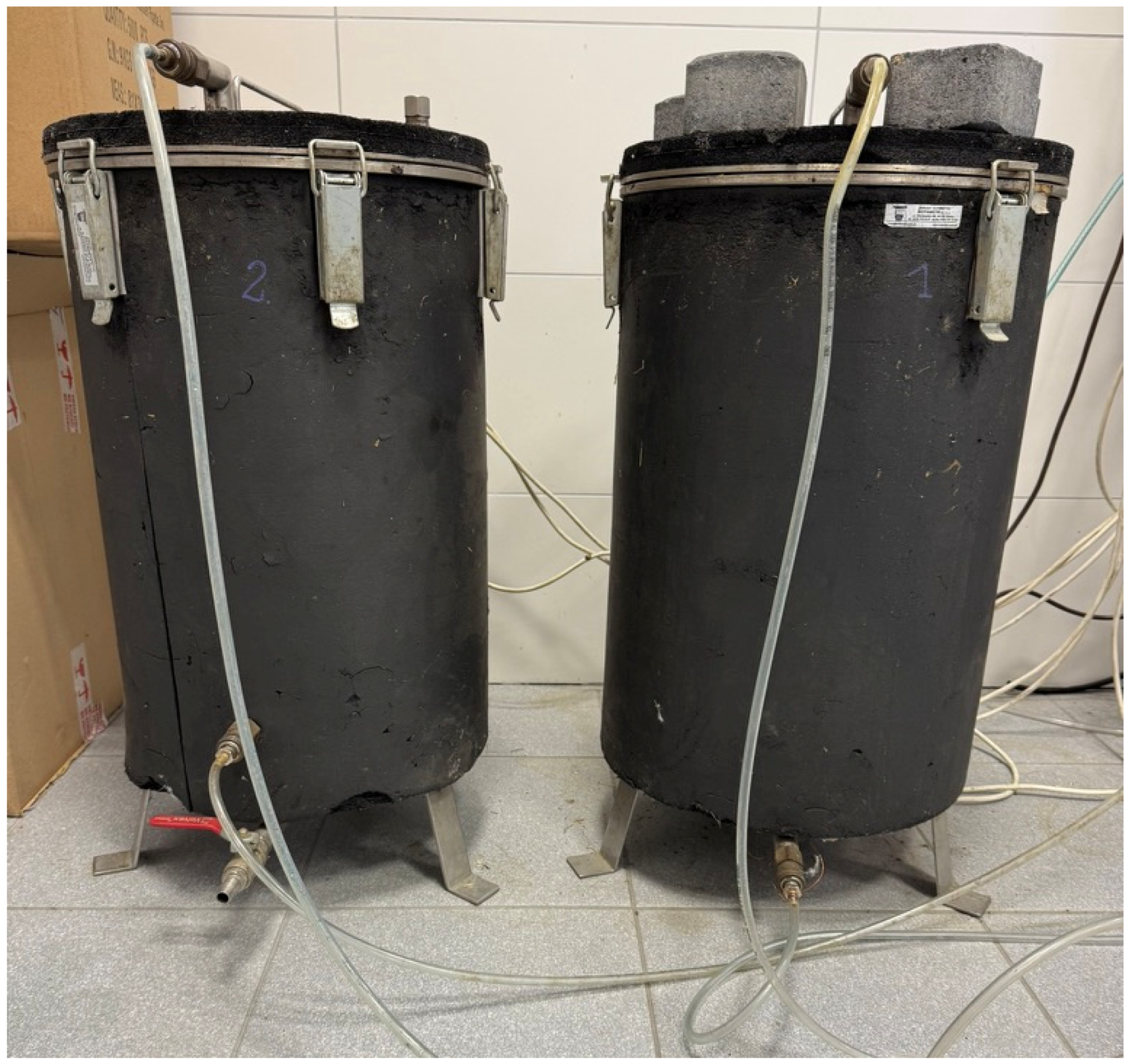
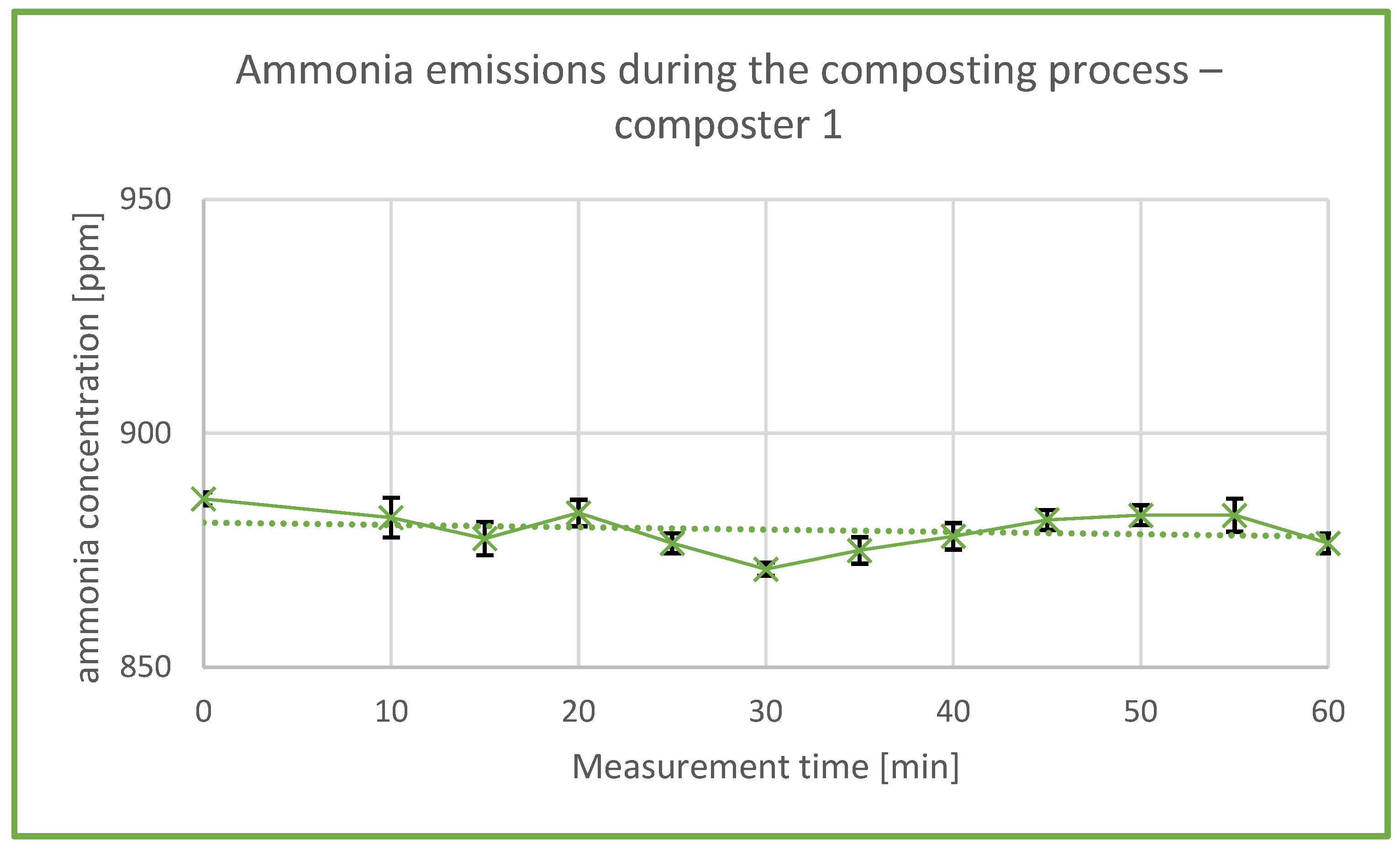
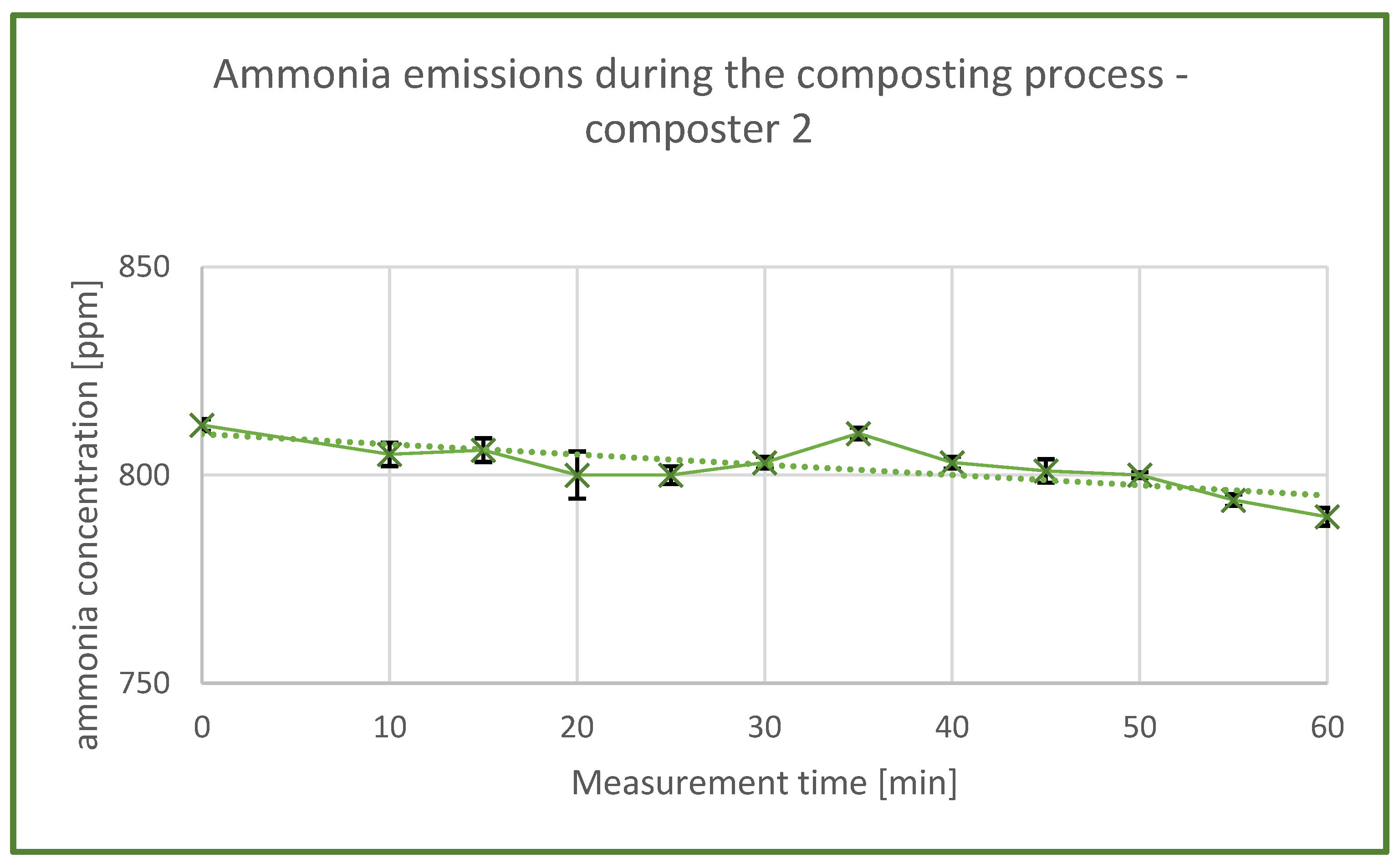
- Ammonia emissions in composters 1 and 2 were 886 ppm and 811 ppm, respectively, constituting the gas output level during the composting process and the benchmark for assessing the effectiveness of the biofilters.
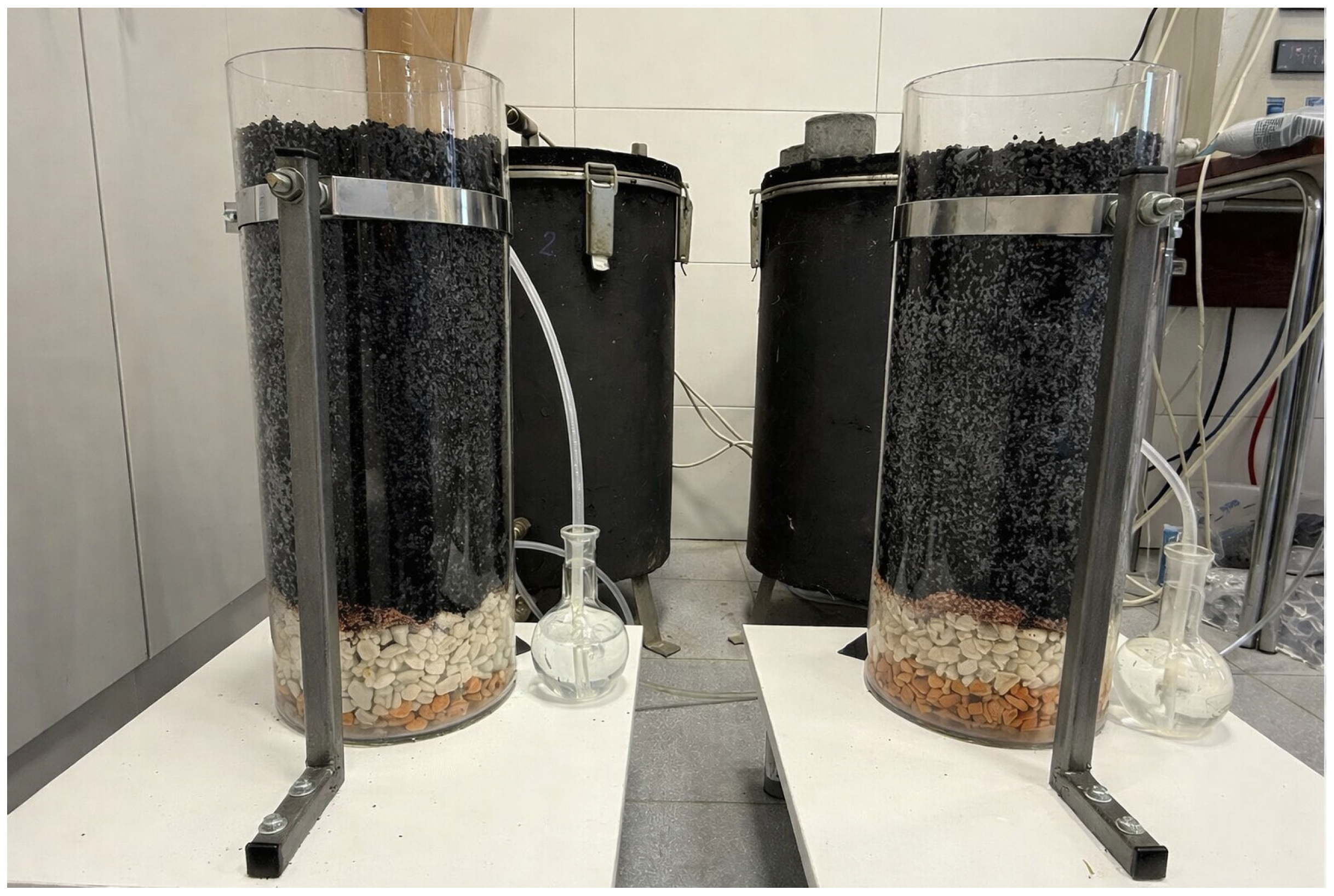
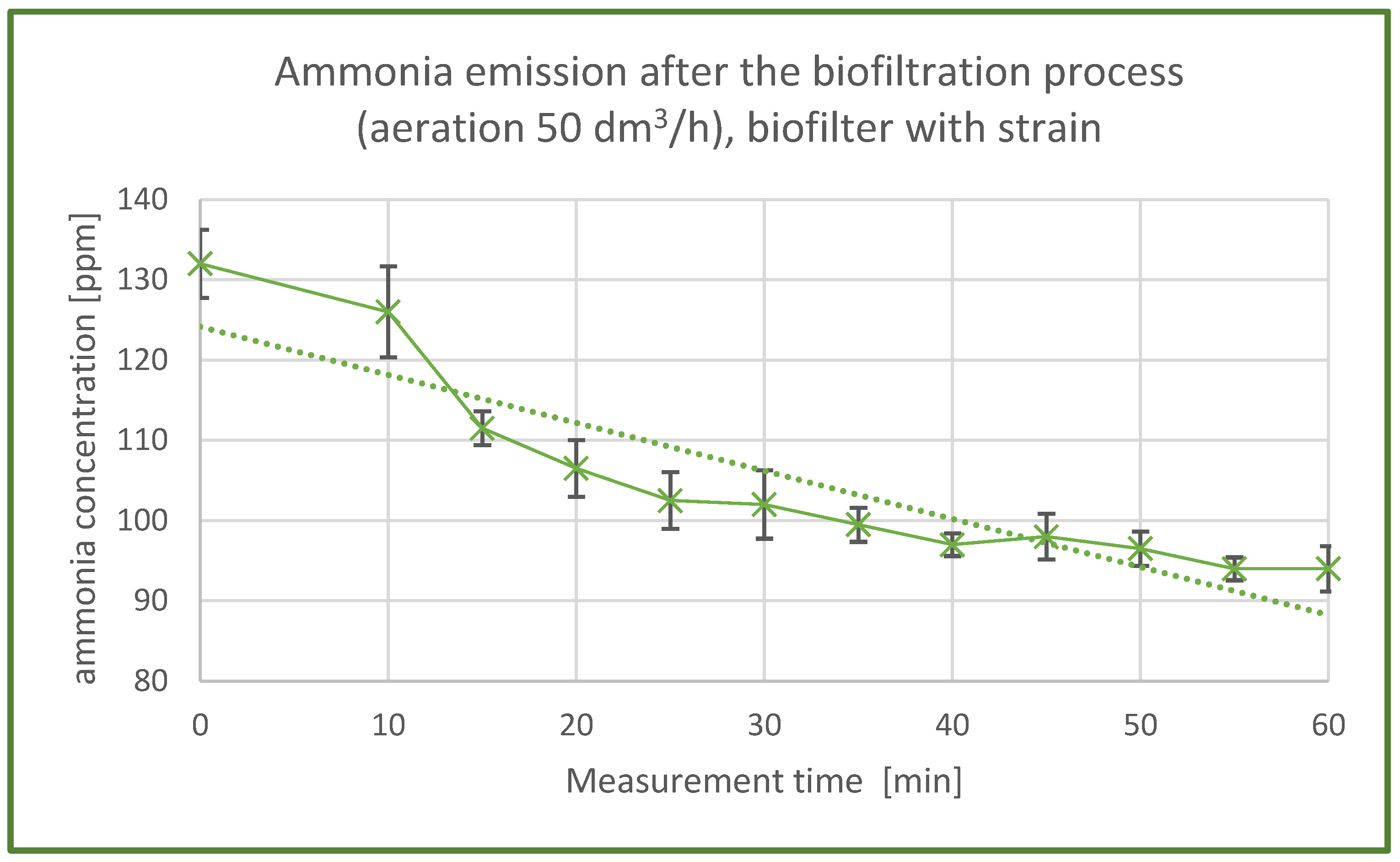
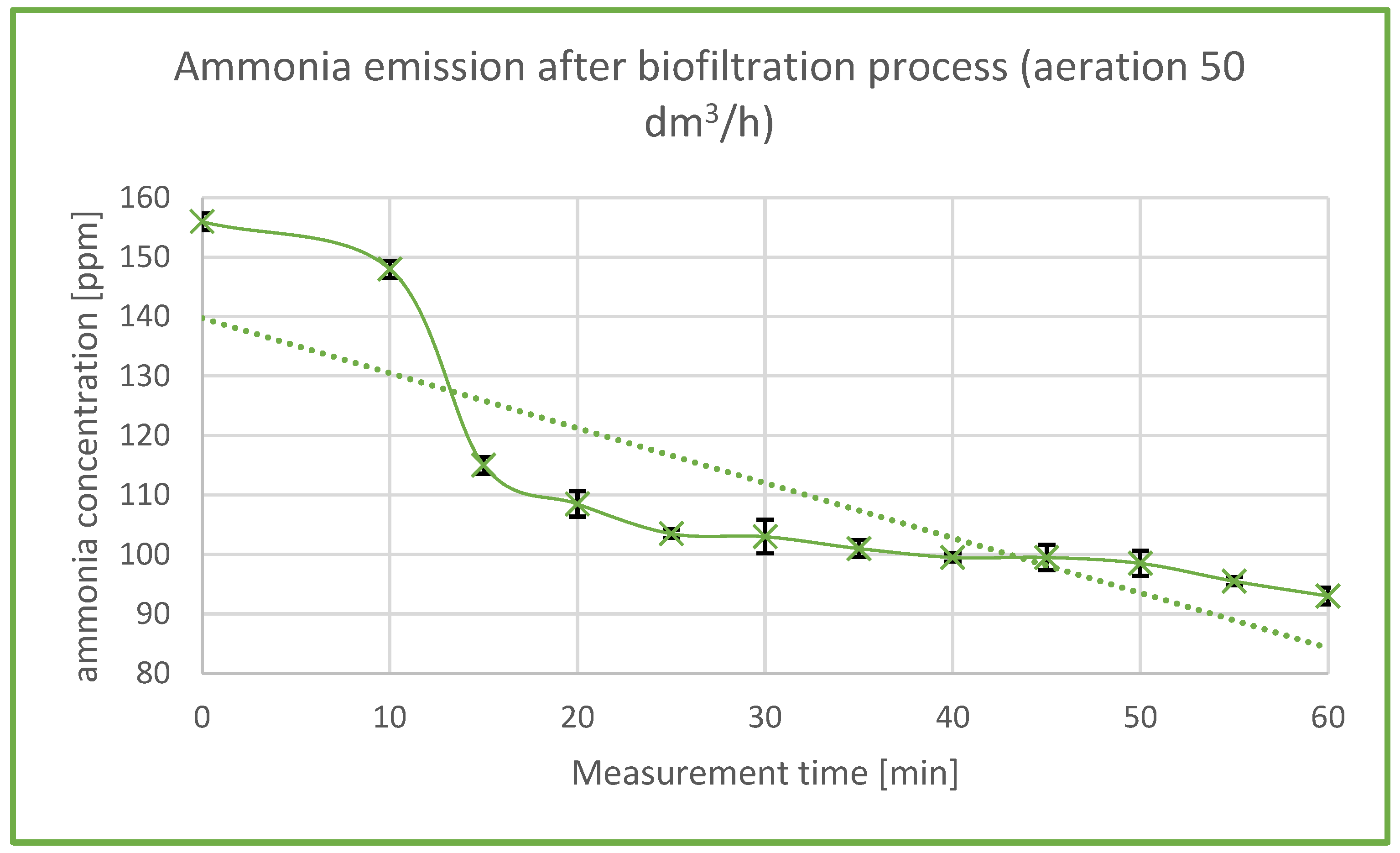
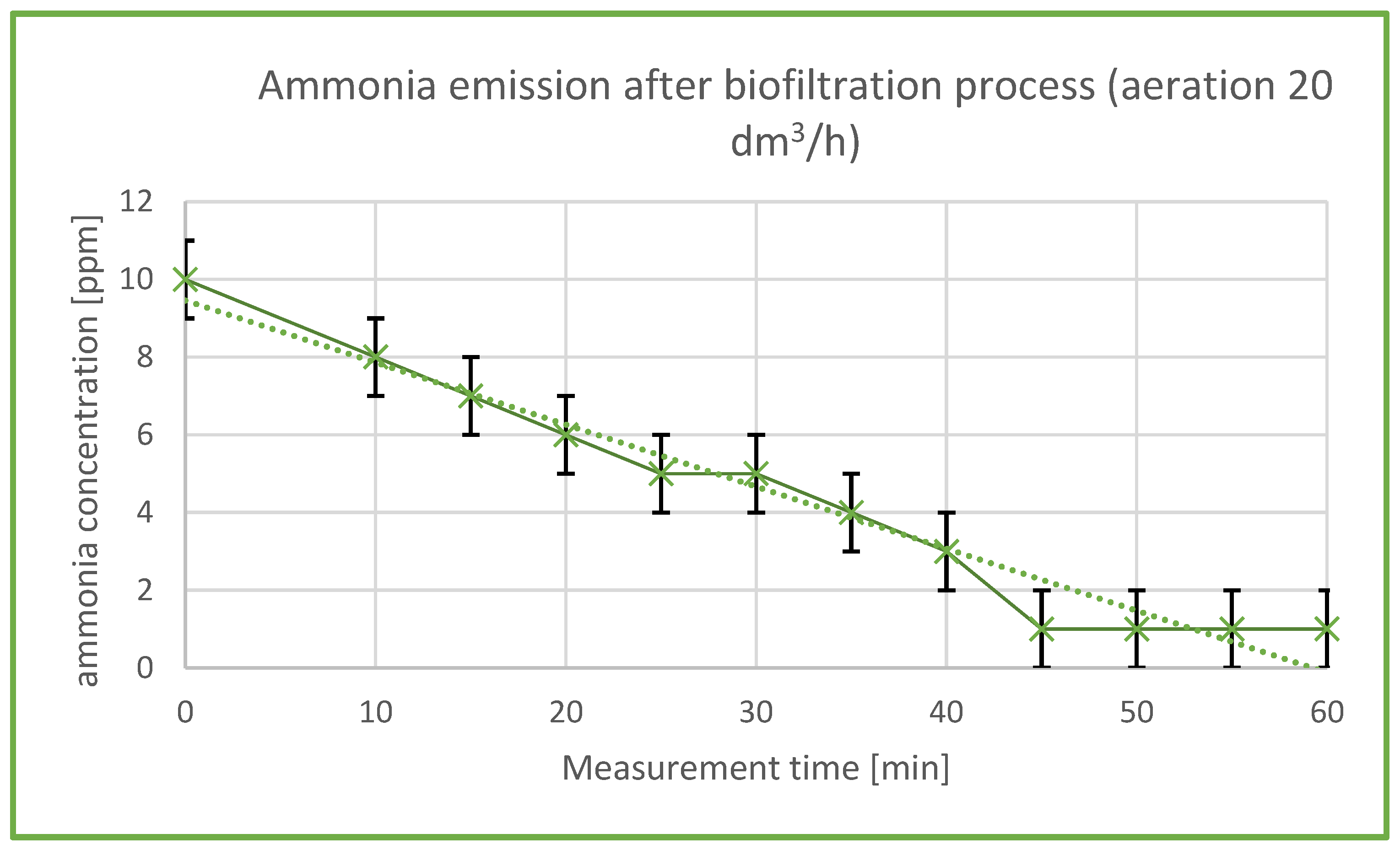
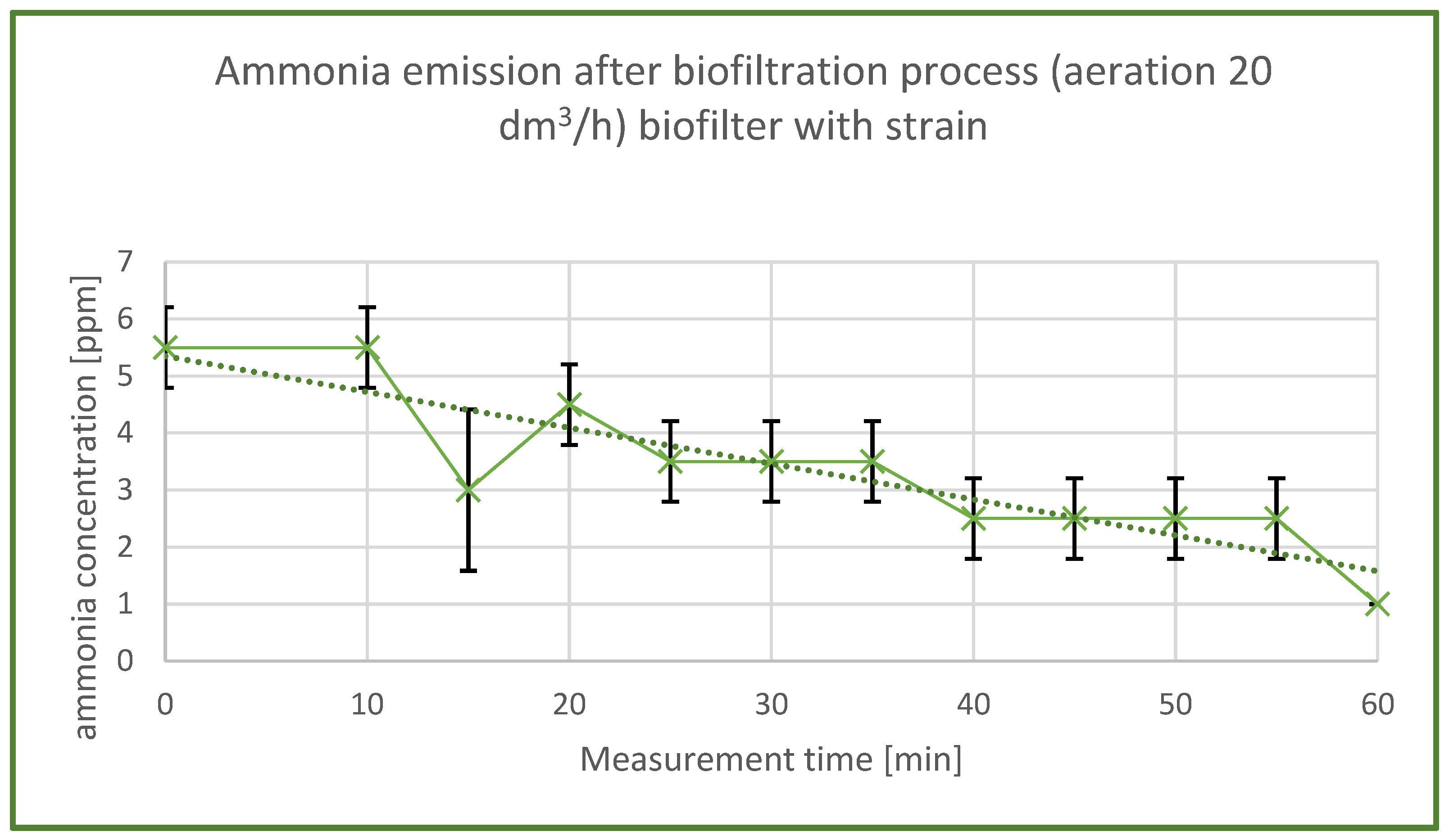
- The higher airflow (50 dm3/h) resulted in a shorter contact time between the gas and the bed (EBCT = 10.8 min), which limited the total absorption of ammonia. The lower flow rate (20 dm3/h) extended the EBCT to 27 min and allowed the ammonia to be almost completely retained in the pores of the filter medium.
- With a higher airflow, some of the ammonia did not have time to fully adsorb in the pores of the medium, so the concentrations were higher. At a lower flow, the gas was retained in the pores of the material, which enabled almost complete absorption.
- Process analysis indicates that the full effectiveness of biofilters requires time for microorganisms to break down ammonia after saturating the pores of the filter material.
- The effectiveness of ammonia absorption depends on both the airflow rate, the time of contact of the gas with the bed (EBCT), and the presence of the bacterial strain. Adjusting the airflow and properly inoculating the medium increases the efficiency of biofiltration.
- In the perspective of further research, an assessment of the impact of selected strains of microorganisms inhabiting the biofiltration bed on its efficiency is considered, in terms of reducing odour emissions.
Author Contributions
Funding
Institutional Review Board Statement
Informed Consent Statement
Data Availability Statement
Conflicts of Interest
References
- Wang, B.; Zhang, P.; Guo, X.; Bao, X.; Tian, J.; Li, G.; Zhang, J. Contribution of Zeolite to Nitrogen Retention in Chicken Manure and Straw Compost: Reduction of NH3 and N2O Emissions and Increase of Nitrate. Bioresour. Technol. 2024, 391, 129981. [Google Scholar] [CrossRef] [PubMed]
- Han, B.; Butterly, C.; Zhang, W.; He, J.; Chen, D. Adsorbent Materials for Ammonium and Ammonia Removal: A Review. J. Clean. Prod. 2021, 283, 124611. [Google Scholar] [CrossRef]
- Guo, H.; Otjes, R.; Schlag, P.; Kiendler-Scharr, A.; Nenes, A.; Weber, R.J. Effectiveness of Ammonia Reduction on Control of Fine Particle Nitrate. Atmos. Chem. Phys. 2018, 18, 12241–12256. [Google Scholar] [CrossRef]
- Sanchis, E.; Calvet, S.; del Prado, A.; Estellés, F. A Meta-Analysis of Environmental Factor Effects on Ammonia Emissions from Dairy Cattle Houses. Biosyst. Eng. 2019, 178, 176–183. [Google Scholar] [CrossRef]
- Guo, H.; Weber, R.J.; Nenes, A. High Levels of Ammonia Do Not Raise Fine Particle Ph Sufficiently to Yield Nitrogen Oxide-Dominated Sulfate Production. Sci. Rep. 2017, 7, 12109. [Google Scholar] [CrossRef] [PubMed]
- Makles, Z.; Domański, W. Odory W Środowisku Pracy Rolnika-Hodowcy. Źródła, Zagrożenia, Usuwanie. Bezp. Pr. Nauka I Prakt. 2008, 2, 10–13. [Google Scholar]
- Marcinkowski, T. Emisja Gazowych Związków Azotu Z Rolnictwa. Woda-Sr.-Obsz. Wiej. 2010, 10, 175–189. [Google Scholar]
- Sobczak, J.; Marek, P.; Chmielowski, A.; Rakowski, A. Wstępna Ocena Proekologicznej Metody Ograniczenia Emisji NH3 Z Powietrza Usuwanego Z Kurnika. Rocz. Nauk. Pol. Tow. Zootech. 2011, 7, 75–83. [Google Scholar]
- Gu, B.; Zhang, L.; Van Dingenen, R.; Vieno, M.; Van Grinsven, H.J.; Zhang, X.; Zhang, S.; Chen, Y.; Wang, S.; Ren, C.; et al. Abating Ammonia Is More Cost-Effective Than Nitrogen Oxides for Mitigating PM2.5 Air Pollution. Science 2021, 374, 758–762. [Google Scholar] [CrossRef]
- Xu, P.; Li, G.; Zheng, Y.; Fung, J.C.H.; Chen, A.; Zeng, Z.; Shen, H.; Hu, M.; Mao, J.; Zheng, Y.; et al. Fertilizer Management for Global Ammonia Emission Reduction. Nature 2024, 626, 792–798. [Google Scholar] [CrossRef]
- Gutarowska, B.; Matusiak, K.; Borowski, S.; Rajkowska, A.; Brycki, B. Removal of Odorous Compounds from Poultry Manure by Microorganisms on Perlite–Bentonite Carrier. J. Environ. Manag. 2014, 141, 70–76. [Google Scholar] [CrossRef] [PubMed]
- Yang, C.; Chen, H.; Zeng, G.; Yu, G.; Luo, S. Biomass Accumulation and Control Strategies in Gas Biofiltration. Biotechnol. Adv. 2010, 28, 531–540. [Google Scholar] [CrossRef] [PubMed]
- Grzelka, A.; Pawnuk, M.; Sówka, I.; Miller, U. Analiza Wybranych Materiałów Złóż Biofiltracyjnych. In Aktualne Problemy w Inżynierii i Ochronie Atmosfery; Oficyna Wydawnicza Politechniki Wrocławskiej: Wrocław, Poland, 2018; pp. 82–89. [Google Scholar]
- Chmiel, K.; Palica, M. Modelowanie Procesu Biofiltracji. Rocz. Ochr. Sr. 2005, 7, 143–171. [Google Scholar]
- Miller, U.; Pawnuk, M.; Alicja, N.; Sówka, I. Wstępna ocena wpływu zapachu własnego wybranych materiałów stosowanych w biofiltracji na efekty dezodoryzacji. In Aktualne Problemy w Inżynierii i Ochronie Atmosfery; Kuropka, J., Gaj, K., Sówka, I., Eds.; Oficyna Wydawnicza Politechniki Wrocławskiej: Wrocław, Poland, 2018; pp. 136–143. [Google Scholar]
- La, H.; Hettiaratchi, J.P.A.; Achari, G.; Dunfield, P.F. Biofiltration of Methane. Bioresour. Technol. 2018, 268, 759–772. [Google Scholar] [CrossRef] [PubMed]
- Konkol, D.; Popiela, E.; Skrzypczak, D.; Izydorczyk, G.; Mikula, K.; Moustakas, K.; Opaliński, S.; Korczyński, M.; Witek-Krowiak, A.; Chojnacka, K. Recent Innovations in Various Methods of Harmful Gases Conversion And its Mechanism in Poultry Farms. Environ. Res. 2022, 214, 113825. [Google Scholar] [CrossRef] [PubMed]
- Ministerstwo Środowiska. Kodeks Przeciwdziałania Uciążliwości Zapachowej. Warszawa, Polska, 2016. Available online: https://www.gov.pl/web/klimat/uciazliwosc-zapachowa (accessed on 20 December 2025).
- Zhao, L.; Manuzon, R.; Darr, M.; Keener, H.; Heber, A.J.; Ni, J.-Q. Ammonia emissions from a commercial poultry manure composting facility. In Proceedings of the Livestock Environment VIII, Iguassu Falls, Brazil, 31 August–4 September 2008; American Society of Agricultural and Biological Engineers: St. Joseph, MI, USA, 2009; p. 6. [Google Scholar] [CrossRef]
- Soto-Herranz, M.; Sánchez-Báscones, M.; Antolín-Rodríguez, J.M.; Martín-Ramos, P. Reduction of Ammonia Emissions from Laying Hen Manure in a Closed Composting Process Using Gas-Permeable Membrane Technology. Agronomy 2021, 11, 2384. [Google Scholar] [CrossRef]
- Vela-Aparicio, D.; Bautista, C.J.; Forero, D.; Acevedo, P.; Brandao, P.; Cabeza, I. Inoculation of Compost Biofilter for the Simultaneous Removal of H2S And NH3 Under Transient Conditions of Gas Concentration. Chem. Eng. Trans. 2022, 93, 157–162. [Google Scholar] [CrossRef]
- Pagans, E.; Font, X.; Sánchez, A. Biofiltration for Ammonia Removal from Composting Exhaust Gases. Chem. Eng. J. 2005, 113, 105–110. [Google Scholar] [CrossRef]
- Liang, Y.; Quan, X.; Chen, J.; Chung, J.S.; Sung, J.Y.; Chen, S.; Xue, D.; Zhao, Y. Long-Term Results of Ammonia Removal and Transformation by Biofiltration. J. Hazard. Mater. 2000, 80, 259–269. [Google Scholar] [CrossRef]
- Kim, H.; Xie, Q.; Kim, Y.J.; Chung, J.S. Biofiltration of Ammonia Gas with Sponge Cubes Coated with Mixtures of Activated Carbon and Zeolite. Environ. Technol. 2002, 23, 839–847. [Google Scholar] [CrossRef]
- Maia, G.D.N.; Sales, G.T.; Gates, R.S.; Taraba, J.L. Characterizing physical properties of gas-phase biofilter media. Trans. ASABE 2012, 55, 1939–1950. [Google Scholar] [CrossRef]
- Lu, R.; Hong, B.; Wang, Y.; Cui, X.; Liu, C.; Liu, Y.; Wu, X.; Ruan, R.; Zhang, Q. Microalgal biofilm cultivation on lignocellulosic based bio-carriers: Effects of material physical characteristics on microalgal biomass production and composition. Chem. Eng. J. 2025, 510, 161656. [Google Scholar] [CrossRef]
- Yang, C.; Wu, J.; Xie, W.; Yang, J.; Feng, Y.; Wang, X.; Zhang, X.; Yu, X.; Yao, R. A closed-loop strategy for composting: Using biochar and fulvic acid derived from manure or straw to mitigate ammonia emission and enhance humification. RSC Adv. 2026, 16, 7149–7162. [Google Scholar] [CrossRef]
- Sun, L.; Guan, W.; Tai, X.; Qi, W.; Zhang, Y.; Ma, Y.; Sun, X.; Lu, Y.; Lin, D. Research Progress on Microbial Nitrogen Conservation Technology and Mechanism of Microorganisms in Aerobic Composting. Microb. Ecol. 2025, 88, 19. [Google Scholar] [CrossRef]





| DM (%) | MC (%) | OM (%DM) | N_Kj (g/kg DM) | C_org (% DM) | C:N | pH |
|---|---|---|---|---|---|---|
| 29.62 | 70.38 | 55.28 | 50.82 | 48.04 | ~10:1 | 7 |
| Air Flow (dm3/h) | Bed Volume (L) | EBCT (min) |
|---|---|---|
| 50 | 9 | 10.8 |
| 20 | 9 | 27.0 |
Disclaimer/Publisher’s Note: The statements, opinions and data contained in all publications are solely those of the individual author(s) and contributor(s) and not of MDPI and/or the editor(s). MDPI and/or the editor(s) disclaim responsibility for any injury to people or property resulting from any ideas, methods, instructions or products referred to in the content. |
© 2026 by the authors. Licensee MDPI, Basel, Switzerland. This article is an open access article distributed under the terms and conditions of the Creative Commons Attribution (CC BY) license.
Share and Cite
Żesławska, P.; Zawieja, I.; Worwąg, M. Biofiltration as a Method for Reducing Odour Emissions Generated During Chicken Manure Composting. Appl. Sci. 2026, 16, 2116. https://doi.org/10.3390/app16042116
Żesławska P, Zawieja I, Worwąg M. Biofiltration as a Method for Reducing Odour Emissions Generated During Chicken Manure Composting. Applied Sciences. 2026; 16(4):2116. https://doi.org/10.3390/app16042116
Chicago/Turabian StyleŻesławska, Patrycja, Iwona Zawieja, and Małgorzata Worwąg. 2026. "Biofiltration as a Method for Reducing Odour Emissions Generated During Chicken Manure Composting" Applied Sciences 16, no. 4: 2116. https://doi.org/10.3390/app16042116
APA StyleŻesławska, P., Zawieja, I., & Worwąg, M. (2026). Biofiltration as a Method for Reducing Odour Emissions Generated During Chicken Manure Composting. Applied Sciences, 16(4), 2116. https://doi.org/10.3390/app16042116