Limits of Transferring User-Defined Quantity Takeoff Rules in 2D CAD and 3D BIM Using Semantic Vertices


Featured Application
Abstract
1. Introduction
- How geometric identity and similarity can be defined;
- How user-defined quantity rules may differ;
- Why the transfer of such rules cannot be fully guaranteed.
1.1. Research Objective
1.2. IFC Location in This Study
1.3. General Definition of Geometric Identity
1.4. Acceptable Tolerance Ranges
2. Related Work
2.1. Dimensioning and Quantity Takeoff in 2D CAD
2.2. Quantity Takeoff and Dimensioning in 3D BIM Environments
2.3. Comparative Studies Between 2D CAD and 3D BIM
2.4. Research Perspective: User-Friendly Dimensioning Under Reliable Quantity Totals
3. Foundations of User-Defined Dimensions and Quantity Transferability
3.1. Basic Terminology
3.2. Fundamental Concepts and Experiment
Terminology Definition
- Similar objects: Objects that share the same structural dimensioning pattern (extreme-point search pattern) but may require different geometric interpretations for volume calculation.
- Geometrically identical objects: Objects whose vertices, edges, and faces are identical, allowing the same formula to be applied.
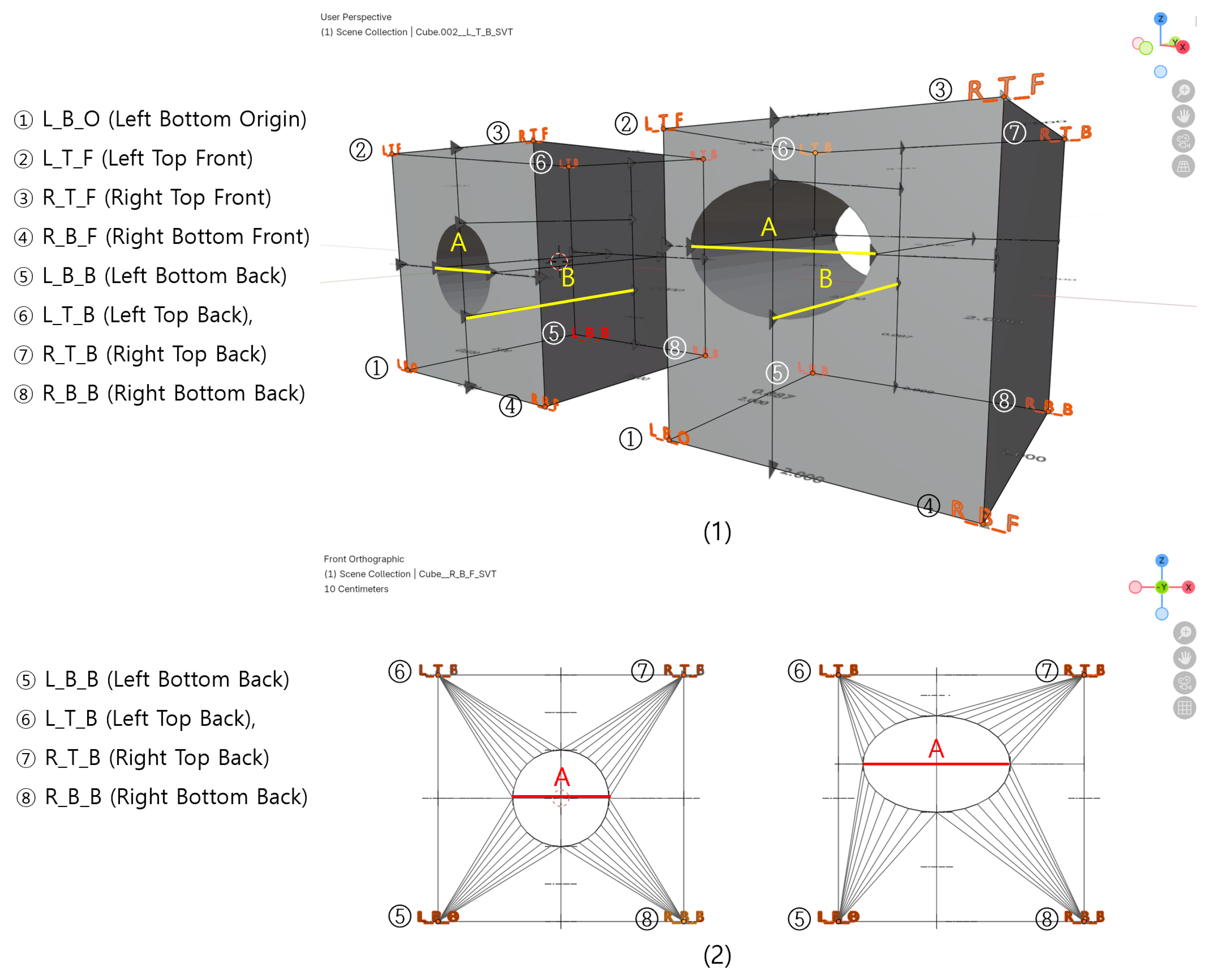
- Experimental Object 1: Cube with a circular cylindrical penetration.
- Experimental Object 2: Cube with an elliptical cylindrical penetration.
- Question 1: How diversely can user-defined quantity formulas be defined?
- Question 2: What problems arise when a formula defined for one object is transferred to a geometrically non-identical similar object?
- Circular case: 4 diameter candidates × 4 length candidates → 16 possible formulas.
- Elliptical case: 2 candidates for a × 2 candidates for b × 4 length candidates → 16 possible formulas.
3.3. Result Interpretation
- Semantic-vertex-based automatic dimensioning succeeds for both circular and elliptical cubes using the same algorithm. Thus, automatic dimensioning is reproducible across similar objects.
- Even with successful automatic dimensions, input variables for quantity formulas remain diverse and user-dependent.
- Although the two objects are geometrically similar, different formulas must be applied because their penetration volumes differ.
- Quantity formulas inherently depend on shape interpretation. While limited rule-based classification may distinguish circular from elliptical cases, it is insufficient for general automation across arbitrary objects.
Overall Conclusion
- User-defined formulas are inherently based on subjective convention and experience.
- The lack of a robust criterion for geometric identity fundamentally limits automation.
4. Dimensioning Comparison
4.1. Quantity Takeoff and Dimensioning in 2D CAD and 3D BIM Environments
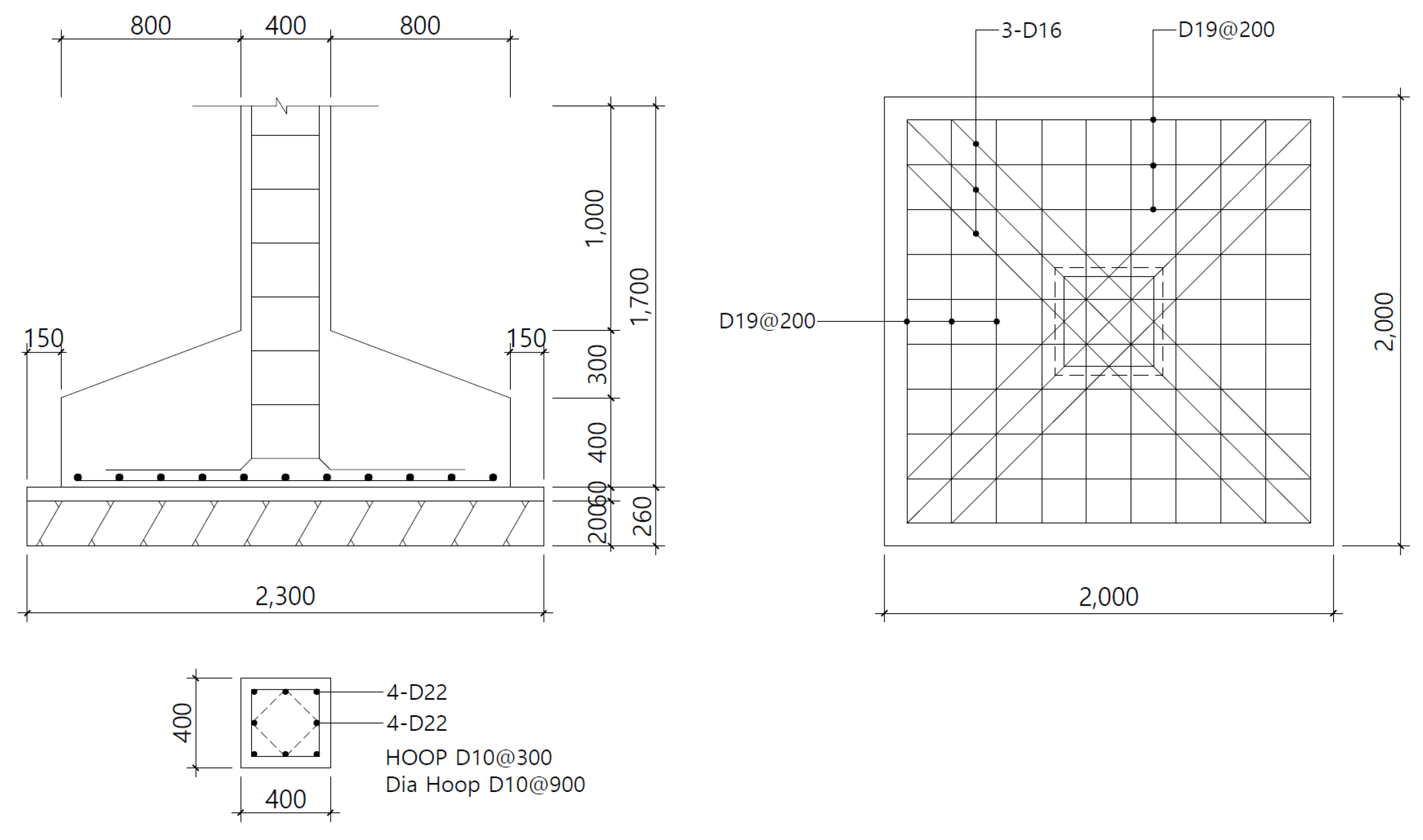
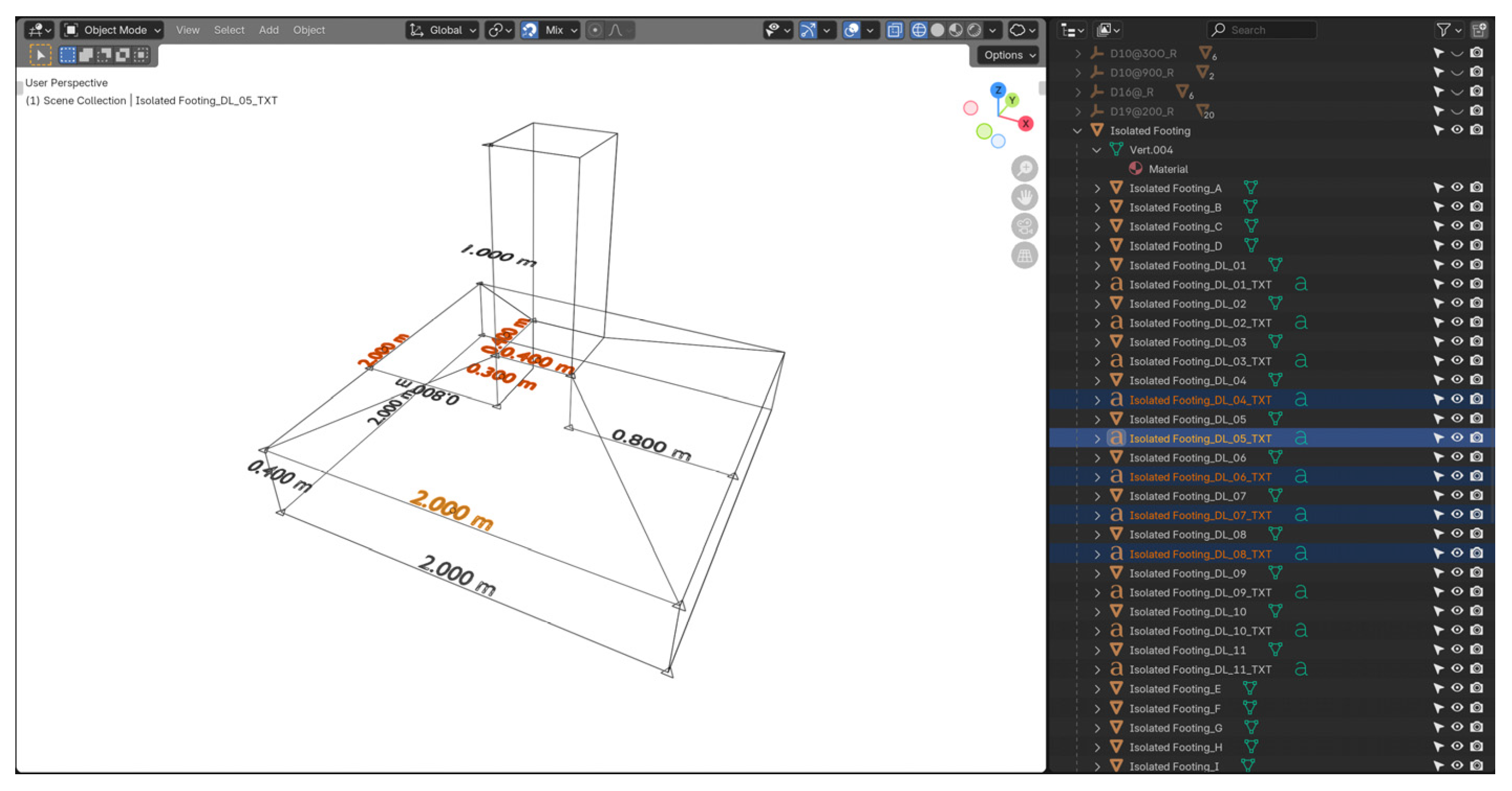
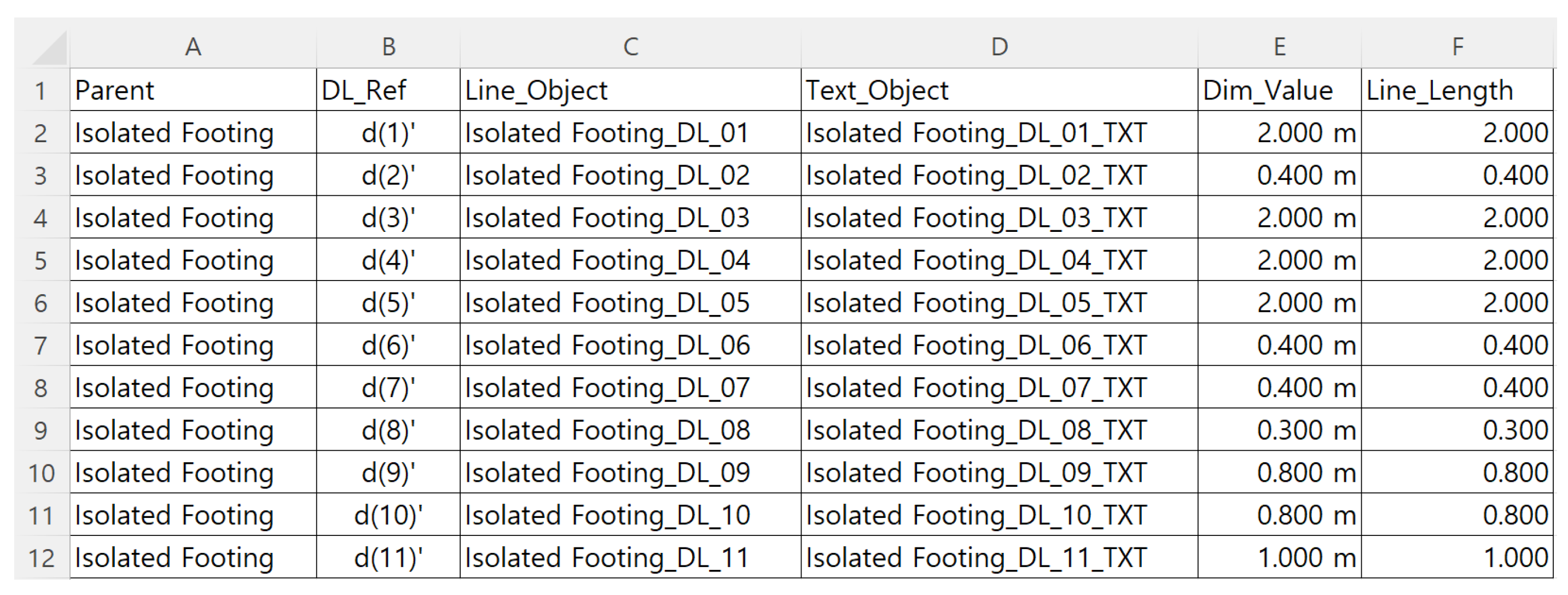
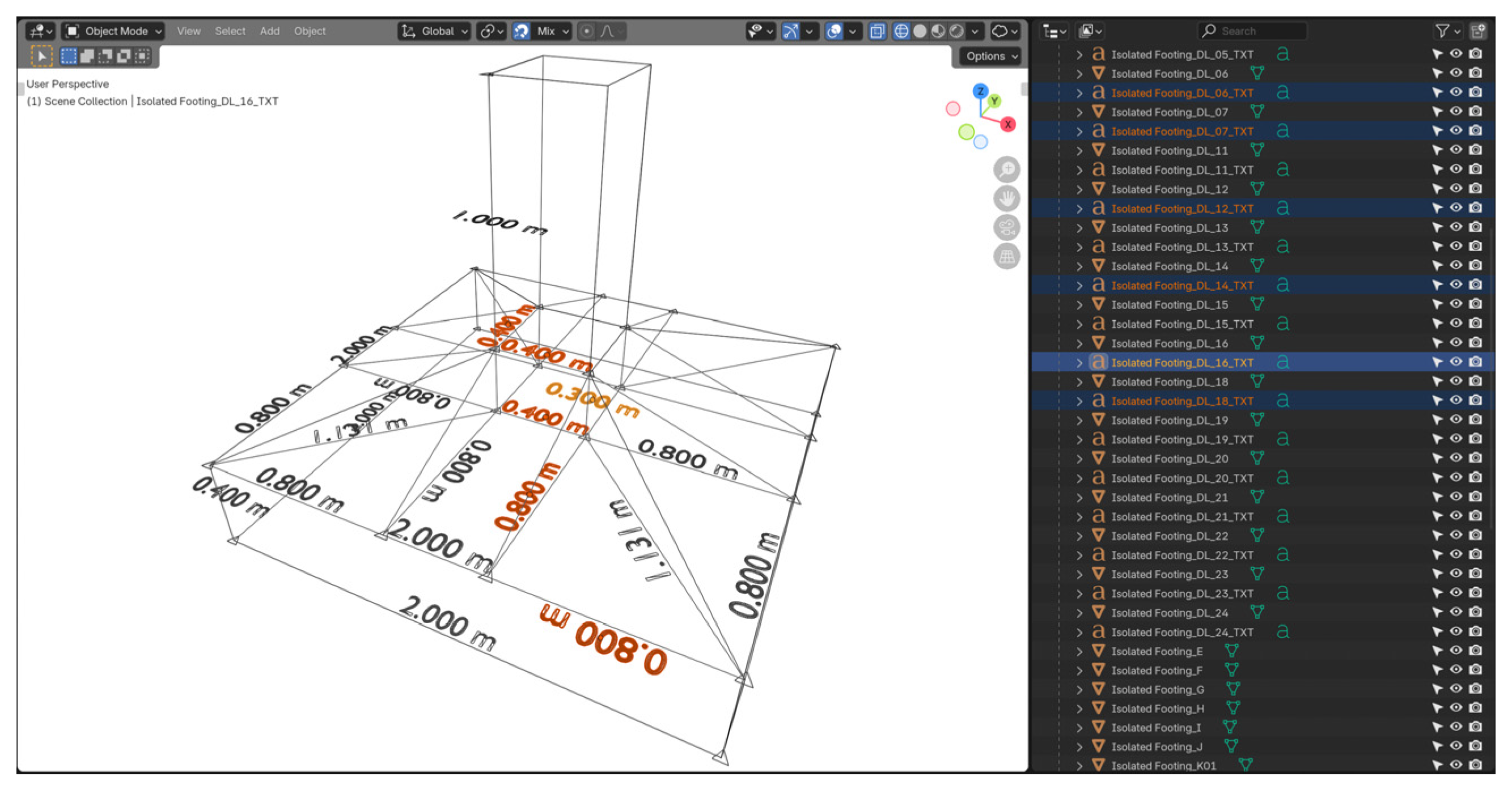
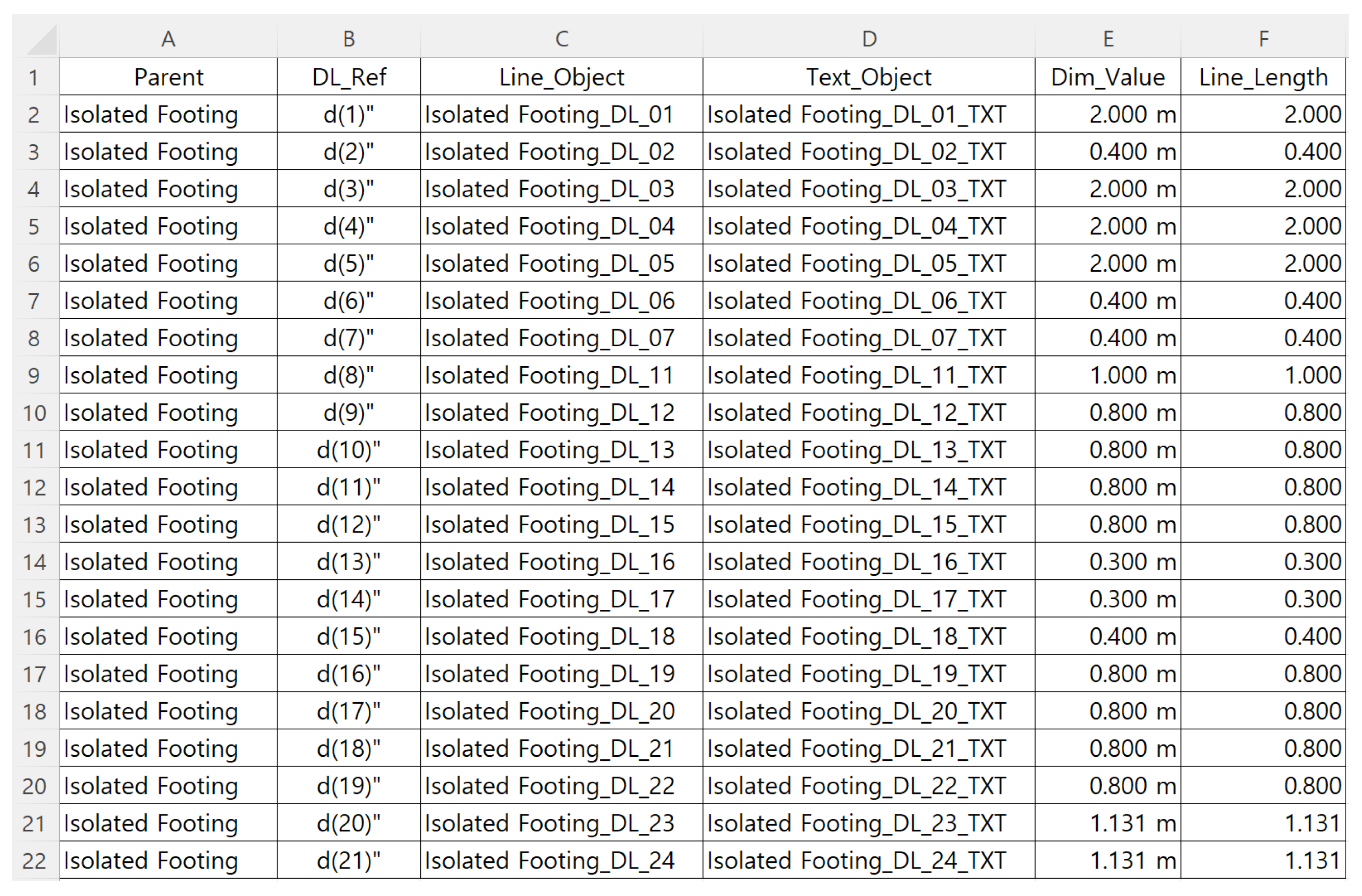
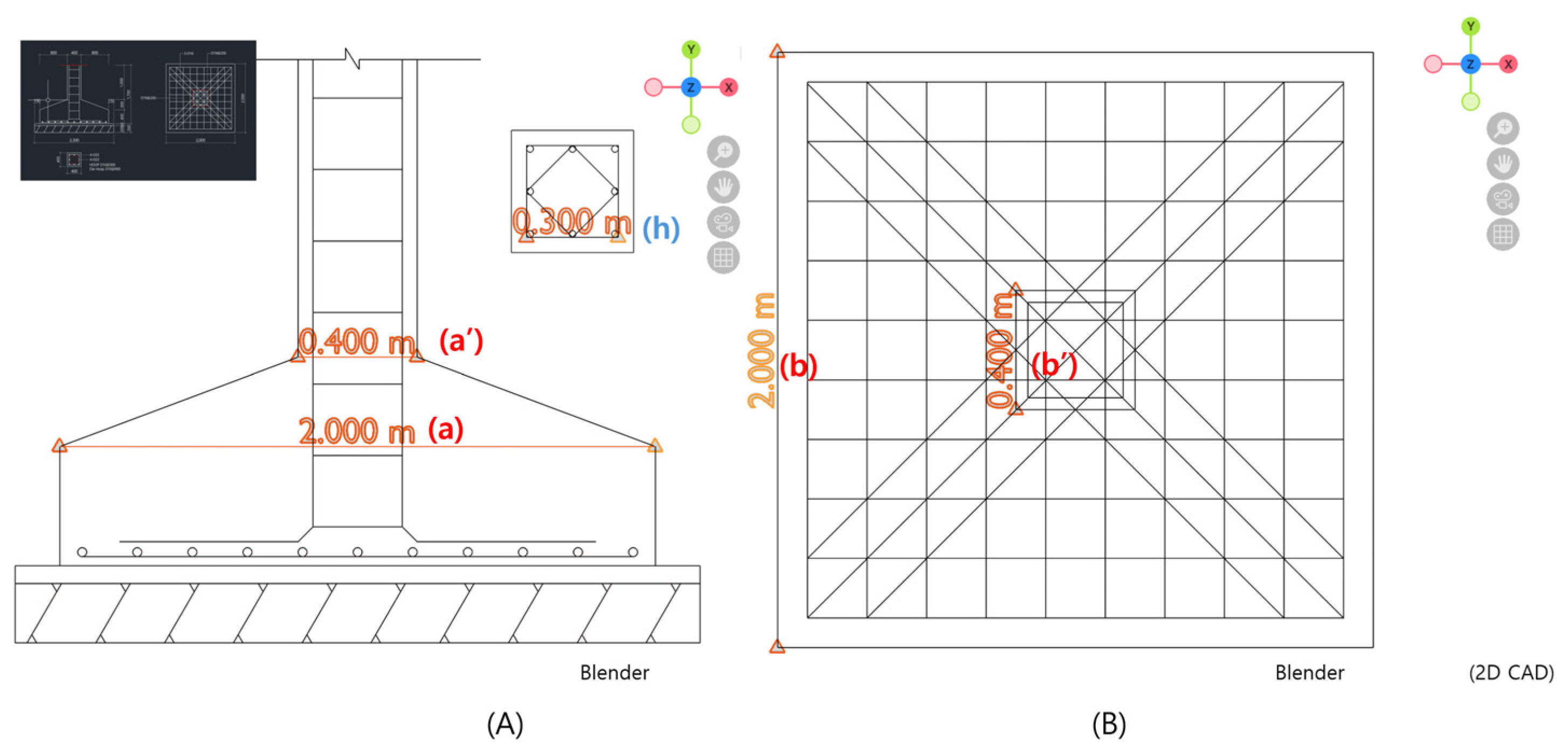
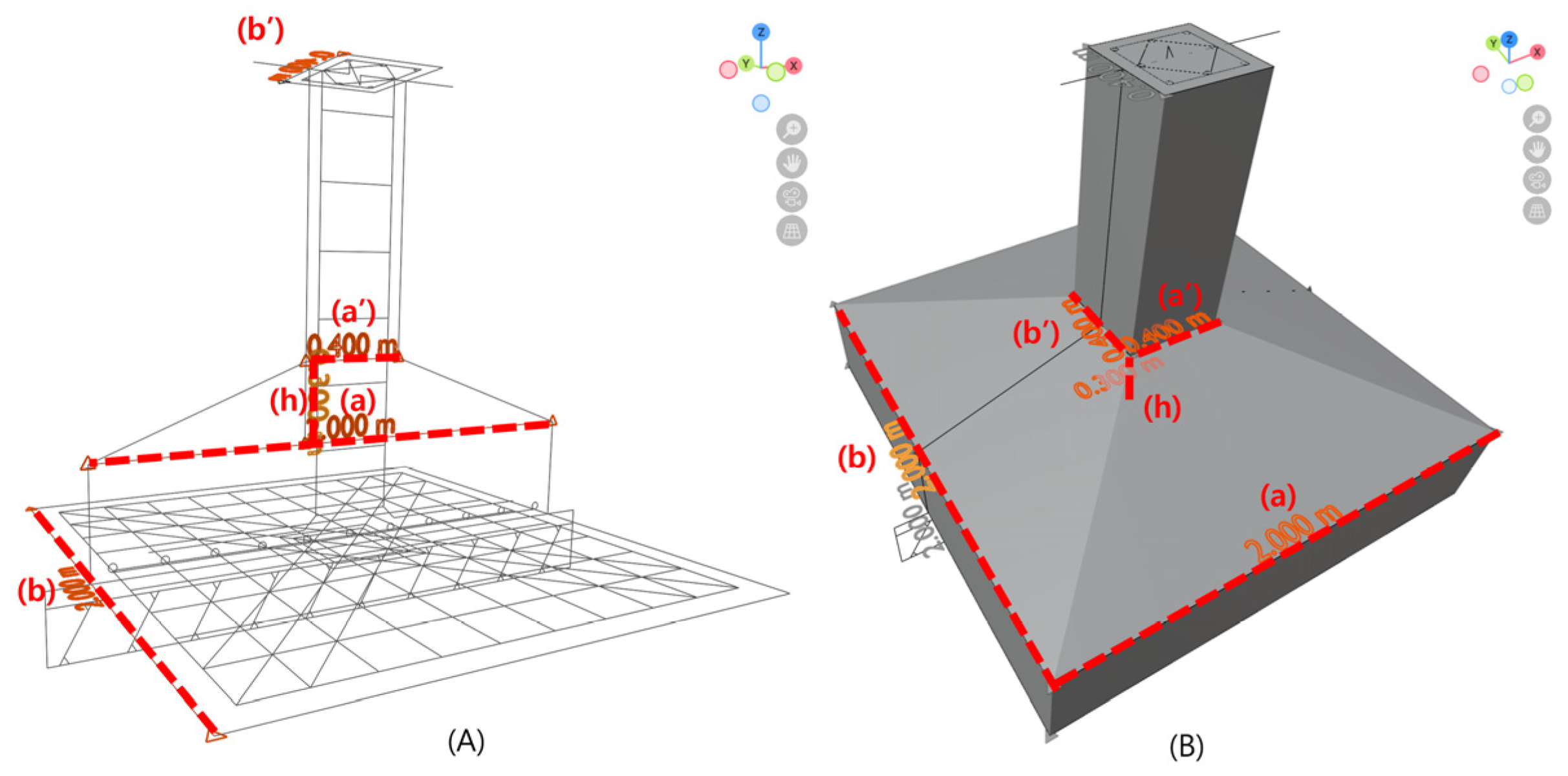
- Dimension-Based Quantity Takeoff Formulations in a 2D CAD Environment.
- 2.
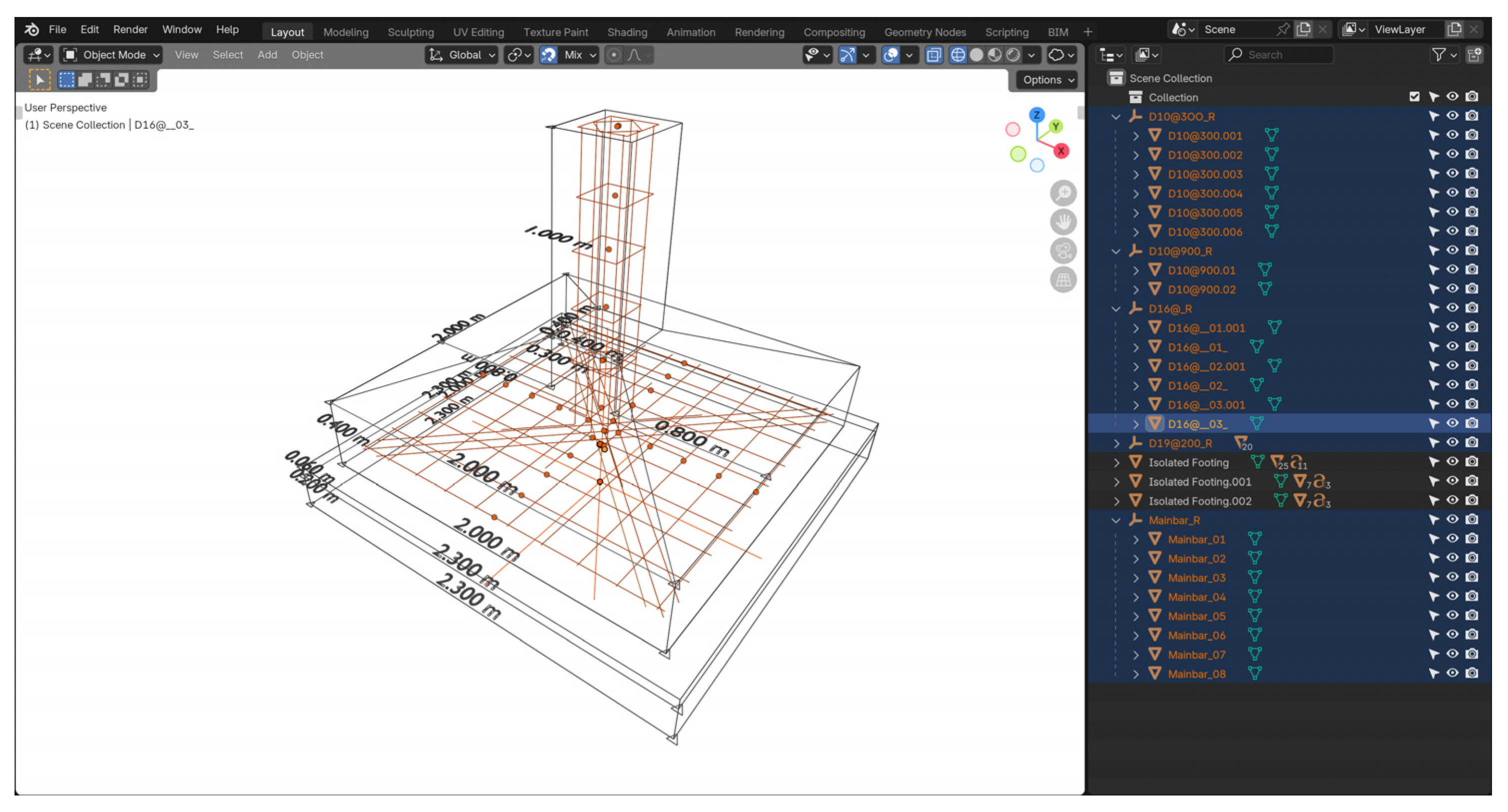
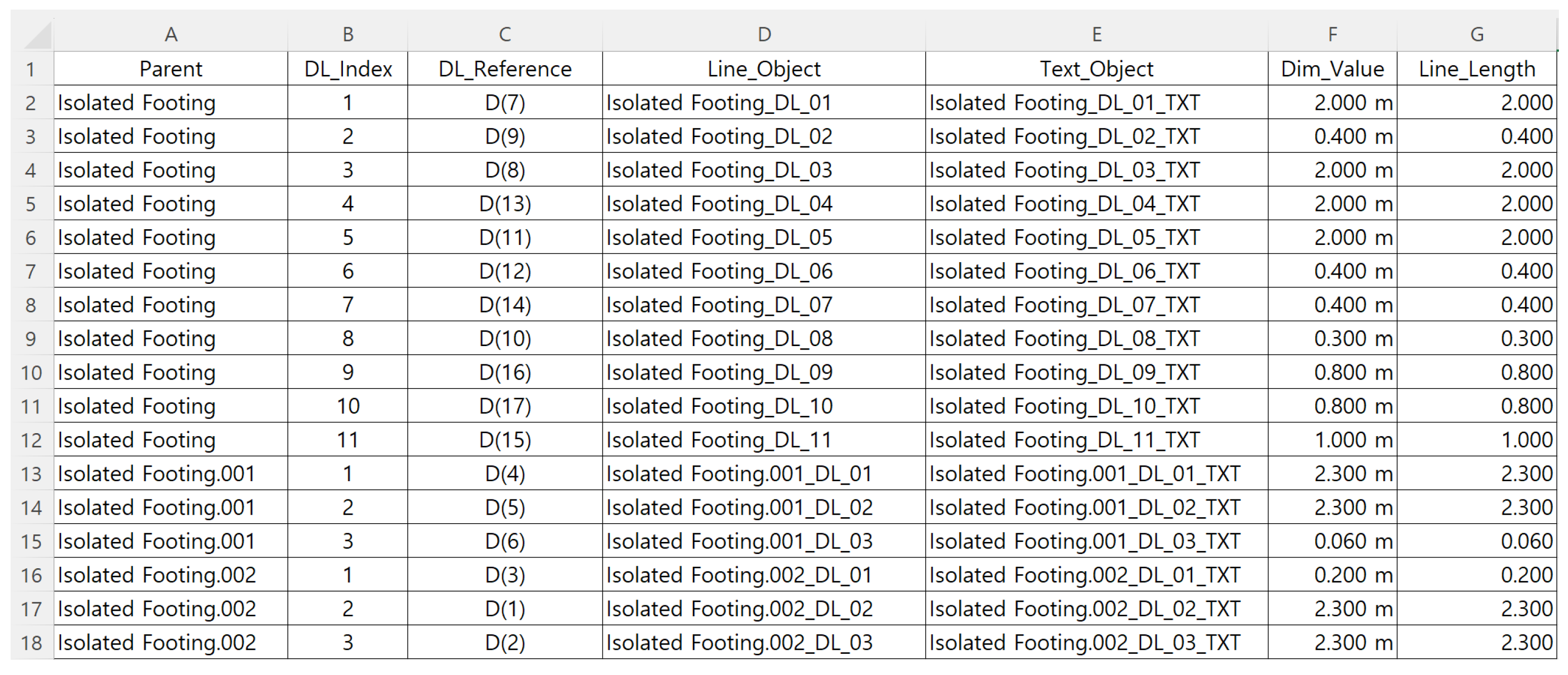
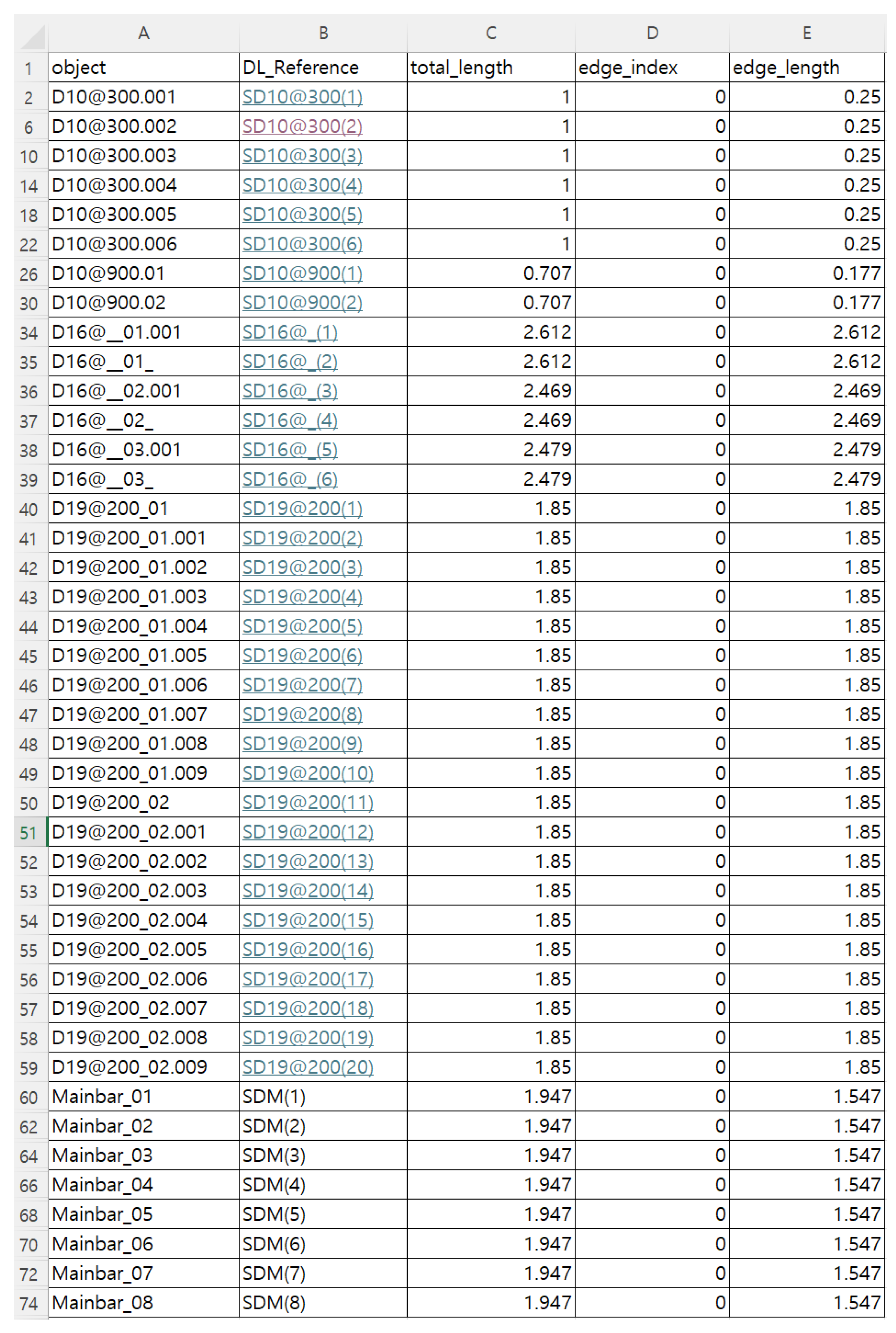
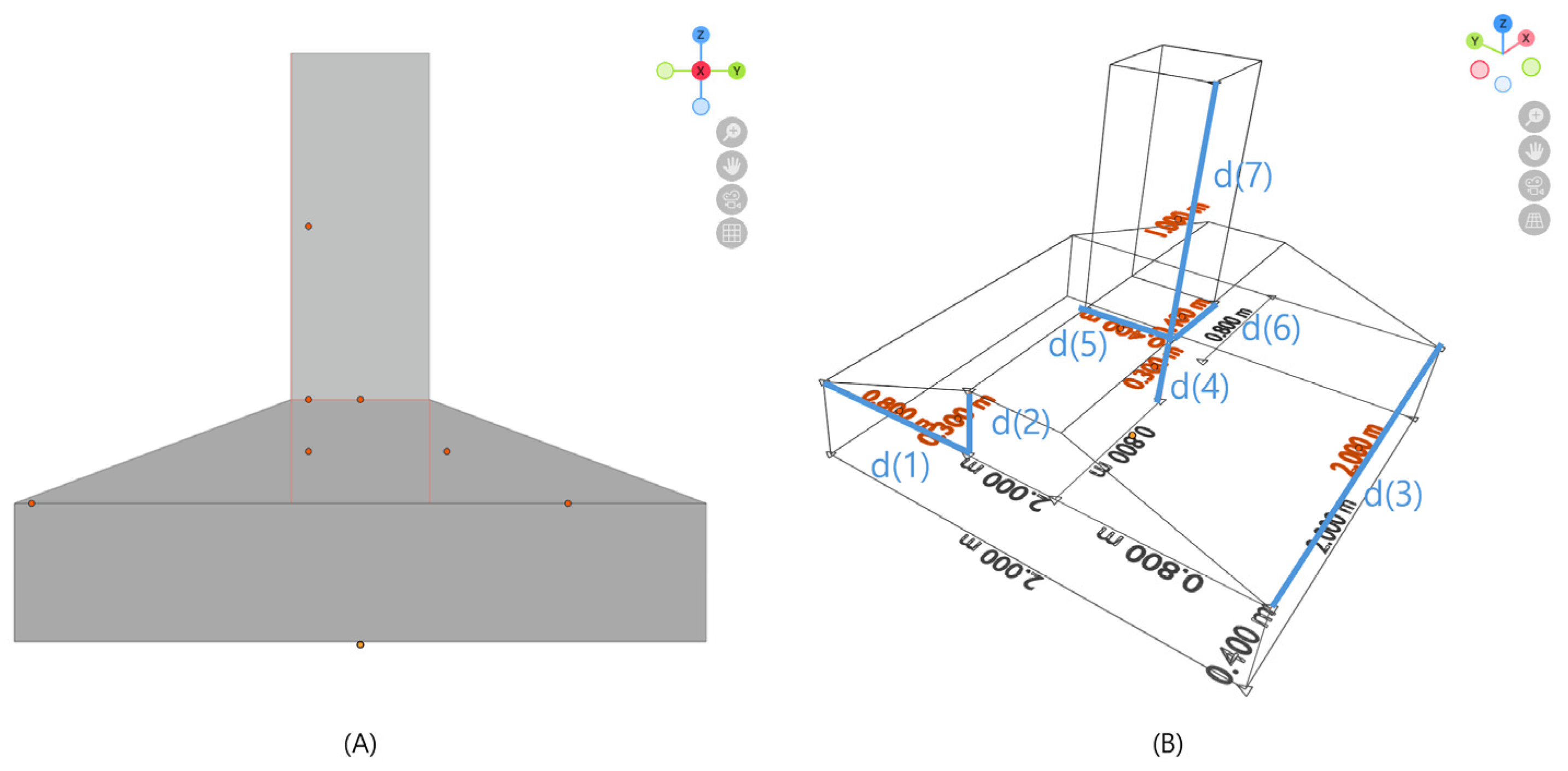
- Dimension-Based Quantity Takeoff Formulations in a Semantic-Vertex-Based 3D BIM Environment
Summary of Key Findings
4.2. User-Dependent Quantity Takeoff in 3D Semantic-Vertex-Based Modeling
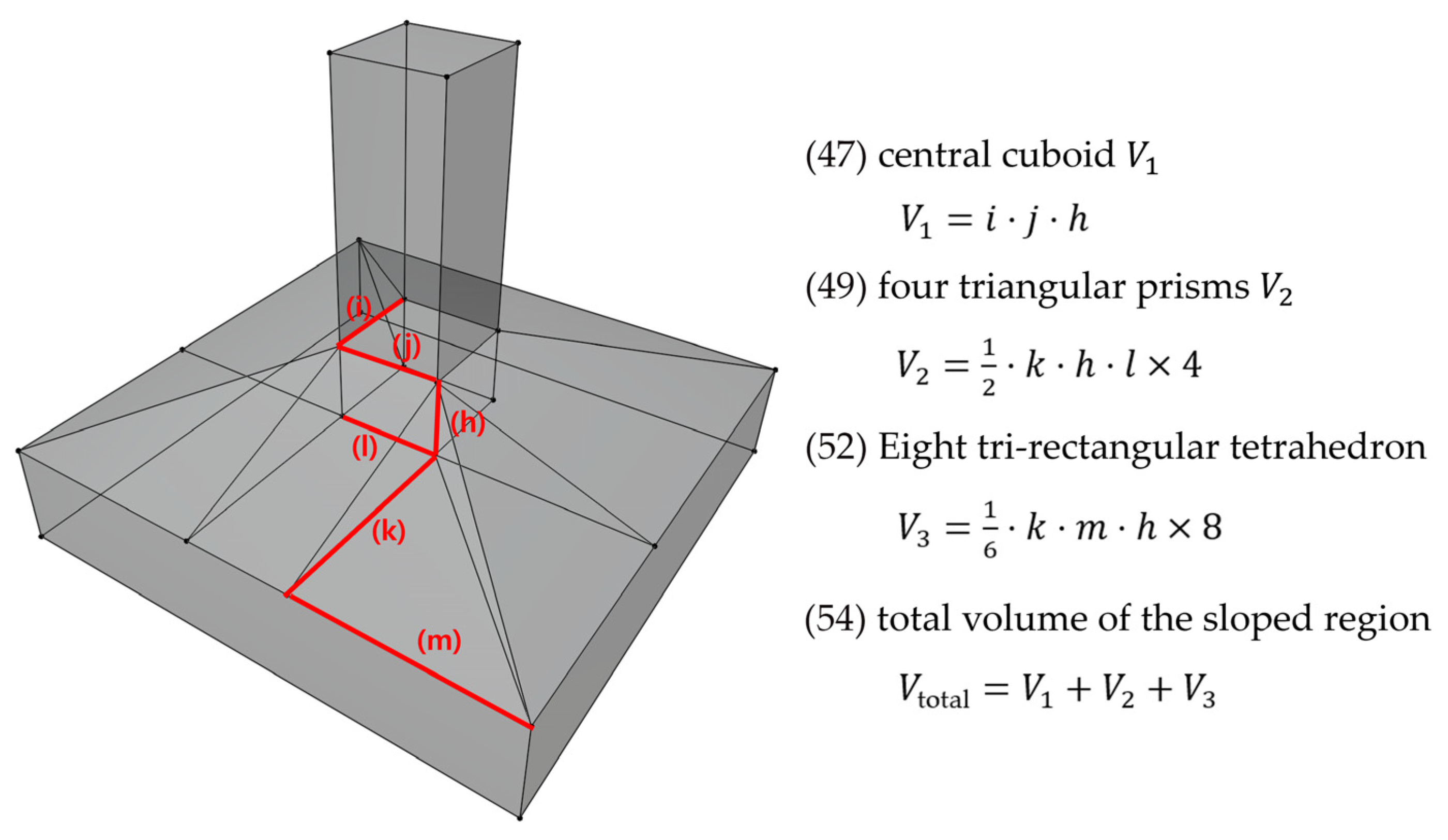
- User-Defined Quantity Takeoff Case 1 (Conventional Standard Formulation)
- 2.
- User-Defined Quantity Takeoff Case 2 (Segmentation-Based Summation Method)
4.3. Structural Limitations in the Transferability of User-Defined Quantity Takeoff Formula
- Purpose of the Comparison
- Identical objects: Objects that are geometrically completely identical in shape, topology, and spatial configuration.
- Quasi-identical objects: Objects that share the same geometric structure but differ in modeling history or platform (Figure 12A,B).
- Modified similar objects: Objects whose shapes are partially modified or reconstructed, resulting in altered geometric structure (Figure 13).
- How the required dimensional input variables are derived in 2D CAD-based and 3D BIM-based modeling frameworks;
- How these variables may differ between the two environments despite geometric similarity;
- What structural limitations and constraints emerge when the established procedural framework is applied to similar shape-modified objects.
- 2.
- Comparison Environment and Method
- 3.
- Transfer Results
4.4. Descriptive Interpretation of Transferability
5. Comprehensive Discussion of Experimental Results
5.1. Discussion on Dimension Generation and Quantity Takeoff in 2D CAD and 3D BIM Environments (Based on Section 4.1)
5.2. Structural Meaning of User Dependency and Semantic-Vertex-Based Dimension Automation (Based on Section 4.2)
5.3. Structural Limitations of Transferability Among Similar Objects (Based on Section 4.3)
5.4. Significance, Limitations, and Future Research Directions
6. Conclusions
7. Patents
Funding
Data Availability Statement
Conflicts of Interest
Abbreviations
| BIM | Building Information Modeling |
| CAD | Computer-Aided Design |
References
- Eastman, C.; Teicholz, P.; Sacks, R.; Liston, K. BIM Handbook: A Guide to Building Information Modeling for Owners, Managers, Designers, Engineers and Contractors, 2nd ed.; Wiley: Hoboken, NJ, USA, 2011. [Google Scholar]
- Monteiro, A.; Martins, J.P. A survey on modeling guidelines for quantity takeoff-oriented BIM-based design. Autom. Constr. 2013, 35, 238–253. [Google Scholar] [CrossRef]
- Wahab, A.; Wang, J. Factors-driven comparison between BIM-based and traditional 2D quantity takeoff in construction cost estimation. Eng. Constr. Archit. Manag. 2022, 29, 702–715. [Google Scholar] [CrossRef]
- Valinejadshoubi, M.; Moselhi, O.; Iordanova, I.; Valdivieso, F.; Bagchi, A.; Corneau-Gauvin, C.; Kaptué, A. A cloud-driven framework for automated BIM quantity takeoff and quality control: Case study insights. Buildings 2025, 15, 3942. [Google Scholar] [CrossRef]
- Asim, M. Creation and Implementation of BIM Model Measurement Rules. Master’s Thesis, Universidade do Minho, Braga, Portugal, 2024. Available online: https://bimaplus.org/wp-content/uploads/2024/10/9-2024-MohammadAsim.pdf (accessed on 11 January 2026).
- Cho, J. Semantic-vertex-based topological detection for automatic dimension generation in building information modeling (BIM) with Industry Foundation Classes (IFC). Appl. Sci. 2026, 16, 139. [Google Scholar] [CrossRef]
- Alathamneh, S.; Collins, W.; Azhar, S. BIM-based quantity takeoff: Current state and future opportunities. Autom. Constr. 2024, 165, 105549. [Google Scholar] [CrossRef]
- Valinejadshoubi, M.; Moselhi, O.; Iordanova, I.; Valdivieso, F.; Bagchi, A. Automated system for high-accuracy quantity takeoff using BIM. Autom. Constr. 2024, 157, 105155. [Google Scholar] [CrossRef]
- Pham, V.-H.; Chen, P.-H.; Nguyen, Q.; Duong, D.-T. BIM-based automatic extraction of daily concrete and formwork requirements for site work planning. Buildings 2024, 14, 4021. [Google Scholar] [CrossRef]
- Rashidi, A.; Chan, D.W.M.; Ravanshadnia, M.; Sarvari, H.; Tajaddini, A. Applying Building Information Modelling (BIM) technology in pre-tender cost estimation of construction projects: A case study in Iran. Buildings 2024, 14, 1260. [Google Scholar] [CrossRef]
- Khosakitchalert, C.; Yabuki, N.; Fukuda, T. Improving the accuracy of BIM-based quantity takeoff for compound elements. Autom. Constr. 2019, 106, 102891. [Google Scholar] [CrossRef]
- Alder, M.A. Comparing Time and Accuracy of Building Information Modeling to on-Screen Takeoff for a Quantity Takeoff of a Conceptual Estimate. Master’s Thesis, Brigham Young University, Provo, UT, USA, 2006. Available online: https://scholarsarchive.byu.edu/cgi/viewcontent.cgi?article=1508&context=etd (accessed on 11 January 2026).
- Seghier, T.E.; Khosakitchalert, C.; Liu, Z.; Ohueri, C.C.; Lim, Y.-W.; Bin Zainazlan, A.F. From BIM to computational BIM: A systematic review of visual programming applications in building research. Ain Shams Eng. J. 2025, 16, 103173. [Google Scholar] [CrossRef]
- Shi, A.; Shirowzhan, S.M.E.; Kaboli, A.; Sepasgozar, S.M.E. 5D BIM applications in quantity surveying: Dynamo and 3D printing technologies. In Building Information Modeling Applications; IntechOpen: London, UK, 2020. [Google Scholar]
- Abdulhasan Taher, A. BIM Software Capability and Interoperability Analysis: An Analytical Approach Toward Structural Usage of BIM Software (S-BIM). Master’s Thesis, KTH Royal Institute of Technology, Stockholm, Sweden, 2016; 127p. Available online: https://urn.kb.se/resolve?urn=urn:nbn:se:kth:diva-184856 (accessed on 11 January 2026).



| Criterion | Automatic Dimensioning | Dimension Export Automation | Automatic Quantity Calculation Formula |
|---|---|---|---|
| Repeatability across similar objects | Repeatable when the structural dimension pattern (extreme-point search pattern) is identical | Repeatable as long as the same dimension format is exported | High risk of failure (formulas themselves may differ) |
| Direct source of automation constraints | Success depends on geometric vertex/edge detection | Limited by standard format conversion and data transfer | Requires user selection + shape interpretation |
| Required level of shape identity | Operates at the level of geometric similarity | Operates at the level of geometric similarity | Requires conditions close to geometric identity |
| Dependence on user judgment | Relatively low | Not explicitly involved | Very high (core determinant of formula selection) |
| Dependence on shape interpretation | Depends on vertex and boundary detection | Not explicitly represented | Essential (circle vs. ellipse distinction must be reflected) |
| Conditions under which transfer fails | Fails when vertex topology changes significantly | Fails when exported formats are inconsistent | Fails when the same formula is applied to non-identical similar objects |
| Underlying cause of failure (summary) | Sensitive to mesh-level geometric differences | Limited by format standardization | Lack of a clear geometric identity criterion + non-uniqueness of user formulas |
| Category | Item | 2D CAD | 3D | Difference (3D–2D) | Difference (%) |
|---|---|---|---|---|---|
| Volume | Rubble layer (m3) | 1.058 | 1.058 | 0 | 0 |
| Volume | Lean concrete layer (m3) | 0.317 | 0.317 | 0 | 0 |
| Volume | Structural concrete—footing slab (m3) | 2.1 | 2.096 | −0.004 | −0.19 |
| Volume | Structural concrete—column (m3) | 0.16 | 0.16 | 0 | 0 |
| Volume | Total structural concrete (m3) | 2.26 | 2.256 | −0.004 | −0.18 |
| Area | Formwork—footing slab (m2) | 3.2 | 3.2 | 0 | 0 |
| Area | Formwork—column (m2) | 1.6 | 1.6 | 0 | 0 |
| Area | Total formwork area (m2) | 4.8 | 4.8 | 0 | 0 |
| Reinforcement | Footing main & secondary bars (D19), length (m) | 40 | 37 | −3.00 | −7.50 |
| Reinforcement | Footing diagonal bars (D16), length (m) | 16.98 | 15.12 | −1.86 | −10.95 |
| Reinforcement | Column main bars (D22), length (m) | 16.8 | 15.57 | −1.23 | −7.32 |
| Reinforcement | Column hoops (D10), length (m) | 11.2 | 6 | −5.20 | −46.43 |
| Reinforcement | Column diagonal hoops (D10), length (m) | 4.8 | 1.41 | −3.39 | −70.63 |
| Attribute (Row-Based Comparison) | Figure 12A 2D → 3D Reconstructed | Figure 12B Native 3D BIM | Figure 13 Shape-Modified Similar Object |
|---|---|---|---|
| Modeling environment | 2D-to-3D reconstructed modeling environment | Native 3D BIM modeling environment | Same platform as Figure 12 with modified geometry |
| Overall volume structure | A + B | A + B | A + C |
| Upper part (A) | Rectangular prism | Rectangular prism | Rectangular prism (identical) |
| Formula for A | (A = d(5),d(6),d(7)) | (A = d(5),d(6),d(7)) | (A = d(5),d(6),d(7)) |
| Lower part type | Continuously sloped | Continuously sloped | Reconstructed composite geometry |
| Formula for lower part | Integral form (B) | Integral form (B) | Decomposed form (C) |
| Lower part equation | (B=\frac{d(4)}{6}[(2a+a′)b+(2a′+a)b′]) | Same as Figure 12A | (C=\frac{1}{2}d(1)d(2)d(3)\times2+d(5)d(4)d(3)) |
| Semantic-vertex set | Internally consistent within the reconstructed environment | Internally consistent within native BIM | Changed from Figure 12 |
| Required input dimensions | (d(4), a, a′, b, b′) | (d(4), a, a′, b, b′) | (d(1), d(2), d(3), d(4), d(5)) |
| Transfer criterion | Transfer evaluated within the reconstructed environment | Transfer evaluated within native BIM | Transfer across shape change |
| Transferability (A) | Strong | Strong | Strong |
| Transferability (lower part) | Strong | Strong | Not transferable (B→C required) |
| Overall transferability | Strong | Strong | Partial |
| Structural reason | Stable semantic-vertex mapping within the same environment | Stable native semantic system | Semantic set changed; formula must change |
Disclaimer/Publisher’s Note: The statements, opinions and data contained in all publications are solely those of the individual author(s) and contributor(s) and not of MDPI and/or the editor(s). MDPI and/or the editor(s) disclaim responsibility for any injury to people or property resulting from any ideas, methods, instructions or products referred to in the content. |
© 2026 by the author. Licensee MDPI, Basel, Switzerland. This article is an open access article distributed under the terms and conditions of the Creative Commons Attribution (CC BY) license.
Share and Cite
Cho, J. Limits of Transferring User-Defined Quantity Takeoff Rules in 2D CAD and 3D BIM Using Semantic Vertices. Appl. Sci. 2026, 16, 2019. https://doi.org/10.3390/app16042019
Cho J. Limits of Transferring User-Defined Quantity Takeoff Rules in 2D CAD and 3D BIM Using Semantic Vertices. Applied Sciences. 2026; 16(4):2019. https://doi.org/10.3390/app16042019
Chicago/Turabian StyleCho, Jaeho. 2026. "Limits of Transferring User-Defined Quantity Takeoff Rules in 2D CAD and 3D BIM Using Semantic Vertices" Applied Sciences 16, no. 4: 2019. https://doi.org/10.3390/app16042019
APA StyleCho, J. (2026). Limits of Transferring User-Defined Quantity Takeoff Rules in 2D CAD and 3D BIM Using Semantic Vertices. Applied Sciences, 16(4), 2019. https://doi.org/10.3390/app16042019