Article

Antibacterial Activities of Selenium-Modified Zn/Al Layered Double Hydroxide and Its Polycarbazole Hybrid


1
Department of Pharmaceutical Sciences, Biomanufacturing Research Institute and Technology Enterprise (BRITE), North Carolina Central University, Durham, NC 27707, USA
2
Department of Chemistry and Biochemistry, North Carolina Central University, Durham, NC 27707, USA
*
Author to whom correspondence should be addressed.
Kevin Tang is a student at Panther Creek High School (Cary, NC) and participated in the Science & Research Summer Program (SRSP) at North Carolina Central University (NCCU) during the summer of 2025.
Appl. Sci. 2026, 16(4), 1989; https://doi.org/10.3390/app16041989
Submission received: 3 January 2026 / Revised: 9 February 2026 / Accepted: 11 February 2026 / Published: 17 February 2026

Abstract

This study investigated the antibacterial activities of Se-Al/Zn layered double hydroxide (LDH) and its polycarbazole (PCz) hybrid against Gram-positive Bacillus subtilis and Gram-negative E. coli cells. Antibacterial performances were evaluated using zone of inhibition assays, viable cell counting, and measurement of metabolic activity based on intracellular ATP levels. The collective results showed that both materials exhibited significant antibacterial activity, with PCz–Se–Al/Zn LDH demonstrating enhanced antibacterial activity compared to Se–Al/Zn LDH. Fluorescent live/dead staining and scanning electron microscopy revealed that treatment with either material resulted in loss of metabolic activity and induction of a non-culturable state in bacterial cells, without observable membrane damage or pronounced morphological changes. Possible antibacterial mechanisms of action associated with LDH and PCz–LDH systems are briefly discussed.

1. Introduction

Layered double hydroxides (LDHs) are a class of two-dimensional nanostructured materials with a unique layered structure similar to brucite-like sheets. The general formula of LDHs is [M2+1−x M3+x (OH)2]x+ [An−]x/n·yH2O, where divalent (M2+) and trivalent (M3+) metal cations occupy octahedral sites within brucite-like layers, while charge-balancing anions (An−) and water molecules are intercalated between layers [1,2]. For the constituent ions, M2+ can be Mg2+, Zn2+, Cu2+, Ni2+, Co2+, Fe2+, Mn2+, or Ca2+, and M3+ can be Al3+, Fe3+, Co3+, Mn3+, Cr3+, Ga3+, Gd3+, or In3+, etc. An− represents the interlayer anions, such as CO32−, NO3, Cl, etc. (n represents the charge of the interlayer anion), y represents the number of water molecules, and x is determined by the molar ratio of M3+/(M2+ + M3+). Such a structure affords remarkable structural flexibility to LDHs, which comes from their tunable metal composition, interlayer anion exchangeability, and variable layer spacing. The structural flexibility enables them to exhibit highly controllable physical and chemical properties, desirable for various scientific and practical applications [3]. Indeed, with a wide range of desirable properties, LDHs have been widely utilized for many applications, including energy storage, catalysis [4], environmental technologies [5], and various biomedical applications [6,7,8].
In recent years, LDHs have gained significant attention for their promising antibacterial properties and applications in biomedicine, water purification, and food packaging [6,7,8,9]. Starting from pristine LDHs, the antimicrobial research quickly expanded to LDH nanocomposites and hybrids, such as antibacterial-molecule-loaded- or nanoparticle-loaded LDHs and surface-modified LDHs. Several studies have demonstrated the efficient antibacterial activity of LDHs and their composite materials against various bacterial species [10,11,12,13,14,15]. The proposed mechanisms of action for their antibacterial activity primarily include the following modes: (1) direct surface contact between the materials and bacterial cells driven by electrostatic interactions between positively charged layers and negatively charged cell membranes; (2) dissolution and gradual release over time of metallic ions or antibacterial molecules; (3) generation of reactive oxygen species (ROS) [16]. In many cases, the combination of these mechanisms is commonly involved.
Regarding the antibacterial properties of LDHs, most studied LDHs are binary-metallic samples that contain one divalent and one trivalent cation in the layered structure [16,17,18,19]. Latterly, to explore strategies to enhance the antibacterial properties of LDHs, studies have expanded to ternary LDH systems where an additional divalent or trivalent cation is added to the binary root [20] and even to multi-metallic LDHs, in which more metal ions are added to the layered structures [21]. Meanwhile, some studies have revealed that multiple factors directly affect LDHs’ antibacterial properties, such as the nature of constituent metallic cations, crystallinity, the type of intercalated anions within the layers [22], the molar ratio of M2+/M3+ [18,23], and the layer size [20], while other studies have explored the antibacterial activities of different derivatives of LDHs, such as surface-modified LDH nanostructures [23,24], antimicrobial-agent-encapsulated LDH nanocomposites [25], and other LDH hybrids [14].
Our recent study successfully synthesized and characterized the structural properties of a series of Se and polycarbazole (PCz) dual-modified Zn/Al LDHs [26] and briefly demonstrated their antibacterial activity in solid disc diffusion inhibition tests. Typically, the addition of Se to LDHs improved textural and functional features [27] and demonstrated higher sorption performance compared to the original material [28]. The integration of the conductive polymer PCz could enhance their electronic characteristics, mechanical durability, and chemical stability [29,30]. PCz alone may not possess strong inherent antimicrobial activity, but its nanocomposites or derivatives, particularly those incorporating metal nanoparticles such as titanium dioxide (TiO2) [31], copper oxide (CuO) [32], and zinc oxide (ZnO) [33], have demonstrated enhanced antimicrobial properties, advocating for the potential of PCz nanocomposites for improved antibacterial functions.
In this follow-up study, we further investigated more details of the antibacterial activities of Se-Al/Zn LDH and its hybrids with polycarbazole (PCz) (PCz-Se-Al/Zn LDH) in aqueous dispersions, focusing more on quantitative characteristics of their bacterial inhibitory and bactericidal effects and the consequences of treatments by LDH and PCz-LDH to bacterial cells. Using two laboratory model bacteria, Gram-positive Bacillus subtilis and Gram-negative E. coli K12 cells, the antibacterial activities of Se-Al/Zn LDH and PCz-Se-Al/Zn LDH hybrids were examined using zone of inhibition, viable cell counting, and metabolic activity (ATP level) measurement. Fluorescent microscopy and scanning electron microscopy imaging were used to examine possible membrane damage and morphological changes in bacterial cells.

2. Materials and Methods

2.1. LDH and PCz-LDH

The LDH and PCz-LDH samples were Se-Al/Zn LDH (with 0.2% Se) and polycarbazole (PCz)-Se-Al/Zn LDH (with 0.2% Se and 0.2% PCz), denoted as LDH and PCz-LDH in this paper.
Briefly, Se-Al/Zn LDH was prepared by milling a 2 g mixture of Zn4CO3(OH)6⋅H2O, Al(OH)3 and metallic Se. The molar ratio of Zn to Al was fixed at 2:1, and the Se dosage was 0.2%, wt%, to fabricate the precursor. Next, 1 g of the precursor was dispersed in 100 mL of deionized water in a capped Erlenmeyer flask and sonicated in an ultrasonic bath for 4 h. The solution was then filtered, and the solid was dried in a vacuum oven at 80 °C to ensure complete removal of moisture and water. The resulting 0.2-Se-Al/Zn LDH sample was characterized to confirm its composite and structural properties in a previous study [26] using XRD, XPS, and SEM elemental mapping.
The modifications of Se-Al/Zn LDH with PCz were carried out using a weight ratio of the carbazole monomer equal to the weight ratio of Se (0.2%, wt%). The carbazole monomer was ground in a mortar pestle and then dispersed in 100 mL deionized water containing 2 g of Se-Al/Zn LDH. Ferric chloride was added as an initiator (initiator: monomer ratio 1:1 molar) for polymerization of carbazole to the 0.2-Se-Al/Zn LDH dispersion to carry out in situ polymerization of carbazole. The polymerization of carbazole to PCz was complete when the solution turned green. The dispersion was then centrifuged and washed several times with distilled water to ensure the removal of excess of ferric chloride. The samples were then dried in a vacuum oven at 80 °C to ensure complete removal of moisture and water. Again, the resulting 0.2-PCz-Se-Al/Zn LDH sample was characterized by XRD, XPS, and SEM elemental mapping to confirm its composite and structural properties in a previous study [26].
The LDH and Pcz-LDH samples were dispersed in deionized water, or PBS with 10% Luria–Bertani broth (LB), or LB broth, as needed, with vigorous vortexing, at least two days before use in experiments, and they were thoroughly vortexed again every time before use.

2.2. Bacterial Cultures and Surface-Plating Method

The Bacillus subtilis (Gram-positive) culture was purchased from Carlina Biology Supply Co. (Burlington, NC, USA). The Escherichia coli K12 (Gram-negative) culture was obtained from Dr. Jiahua Xie’s laboratory in our department. B. subtilis and E. coli cultures were grown in 10 mL of nutrient broth (Fisher Scientific, Pittsburgh, PA, USA) by inoculating the broth with a single colony from a plated culture on a Luria–Bertani (LB) agar plate and incubated overnight at 37 °C. The overnight cultures were diluted and allowed to grow to log phase, and the freshly grown B. subtilis or E. coli cells were washed with phosphate-buffered solution (PBS) and re-suspended in PBS or otherwise stated for daily experimental use.
The actual cell concentration in the suspension was determined using the traditional surface-plating method. Briefly, bacterial suspensions were serially diluted (1:10) in PBS. Aliquots of 10 μL from the appropriate dilutions were surface-plated on LB agar plates (Fisher Scientific, Pittsburgh, PA, USA). After incubation at 37 °C for 24 h, colony counts from the appropriate dilutions were used to calculate the cell concentrations in colony-forming units per milliliter (CFU/mL) for all the treated samples and controls.

2.3. Disc Diffusion Test

The antibacterial activities of LDHs and PCz-LDH in solution were evaluated against B. subtilis and E. coli cells using the agar disc diffusion assay. To prepare the agar plates with bacterial lawn, B. subtilis and E. coli cell suspensions were diluted with PBS to an OD595 (optical density at 595 nm wavelength) of approximately 0.02 for B. subtilis and 0.05 for E. coli. Aliquots of 150 μL of the diluted cells were spread on LB agar plates and allowed to sit for 5–10 min. Four blank antimicrobial susceptibility test discs (6 mm in diameter) (Oxoid, purchased from Thermo Fisher Scientific, Waltham, MA, USA) were placed on each plate, and aliquots of 20 μL of LDH and PCz-LDH dispersions in LB broth (10 mg/mL) were loaded on the respective discs, with 20 μL of PCz (0.1 mg/mL, equivalent concentration as in the PCz-LDH) and 20 μL of LB broth on each of the other two discs as controls for comparison. The plates were then incubated at 37 °C for 24 h. Afterwards, inhibition zones around the discs were examined. The diameters of the circular zones were measured using a centimeter ruler, and the mean values of at least three replicates for each microorganism were used to assess and compare their inhibitory effects.

2.4. Minimal Inhibition Concentration (MIC) and Inhibition of Kinetic Bacterial Growth

The minimal inhibition concentration (MIC) assay is commonly used to evaluate the effectiveness of an antimicrobial material in terms of the concentration at which it inhibits the growth of ~1 × 10⁶ challenge microorganisms during an 18–20 h incubation period at approximately 37 °C. In this study, the MIC assay was performed using the standard microdilution method [34] with slightly modified concentrations. Briefly, B. subtilis and E. coli were prepared as above and diluted to ~2 × 10⁶ CFU/ mL in LB. Aliquots of 50 μL of cell suspension were added to the wells of a 96-well plate, and 50 μL of LDH or PCz-LDH solution (in LB broth) at different concentrations was added to the wells, resulting in final concentrations of 0.1, 0.2, 0.5, and 1 mg/mL. The plate was placed on an Orbital shaker (BT Lab Systems, St. Louis, MO, USA) at 330 rpm for 1 h. The plate was then incubated at 37 °C for ~20 h. The OD595 of the samples was measured before and after 20 h of incubation using a SpectraMax M5 spectrophotometer (Molecular Devices, LLC, Sunnyvale, CA, USA). Changes in the OD595 values were used to indicate cell growth. The MIC of LDH and PCz-LDH was the minimum concentration that showed no bacterial growth; that is, no change in the OD595 after 20 h of incubation.
The effects of LDH and PCz-LDH on the kinetic growth of B. subtilis and E. coli cells were assessed using a similar protocol as MIC test, except that the OD595 was measured periodically at 4 h and 20 h growth. The OD change at t = 4 h or t = 20 h was calculated by subtracting the OD at t = 0 from the average of OD readings in replicated wells for each sample at a given time and plotted against time to assess the inhibitory effects of the LDH or PCz-LDH samples at various concentrations on the kinetics of B. subtilis and E. coli growth.

2.5. Minimal Bactericidal Concentration (MBC) and Concentration- and Time-Dependent Inactivation Curves

The minimal bactericidal concentration (MBC) is used to evaluate the effectiveness of an antimicrobial material in terms of the concentration at which it completely kills the challenged microorganisms. In this study, the MBC assay was performed using B. subtilis and E. coli cells suspended in PBS with 10% LB. In a 96-well plate, aliquots of 20 μL of cells (approximately ~107 CFU/mL) and 80 μL of LDH or PCz-LDH solution in PBS with 10% LB broth at 2-fold concentrations of 0.5, 1, 2, 4, and 8 mg/mL were added to each well. After 1 h of treatment on a shaker at 330 rpm, aliquots of 10 μL of the treated samples and controls were drop-plated on an LB agar plate in triplicate, and the plate was incubated at 37 °C for 24 h. The MBC value was the lowest LDH or PCz-LDH concentration used in the treatment at which no bacterial colonies were formed on the LB agar plate after 24 h of incubation.
The time-dependent inactivation of B. subtilis by LDH and PCz-LDH was assessed by mixing the cells (~107 CFU/mL) with LDH or PCz-LDH at a 1:1 ratio (v/v) to reach a final concentration of 1 mg/mL LDH or PCz-LDH in the wells of a 96-well plate. The plate was placed on the shaker at 330 rpm, and the viable cell number in each sample was examined periodically at 0.5, 1, 2, and 4 h using 10 μL drop plating of serial dilutions as stated above. The samples were prepared in triplicate. The logarithmic values of the resulting viable numbers were plotted against the treatment time to obtain the time-dependent inactivation curve.
The concentration-dependent inactivation of B. subtilis by LDH and PCz-LDH was assessed using a system similar to that used in the time-dependent inactivation, except that the treatment time was fixed at 1 h, and the final concentrations of LDH or PCz-LDH were varied from 0.05, 0.1, 0.5, 1, to 5 mg/mL. After the 1 h treatment, the viable cell numbers of the samples were determined using the 10 μL surface-plating method as above. The logarithmic values of the resulting viable numbers were plotted against the concentrations of LDH or PCz-LDH to obtain the concentration-dependent inactivation curve.

2.6. Live/Dead Staining

To visualize live and dead bacterial cells after treatment with LDH and PCz-LDH, the treated bacterial samples were stained with a Live/ Dead BaclightTM Bacterial Viability Kit (Invitrogen, Eugene, OR, USA). The kit employs two fluorescent nucleic acid dyes—green SYTO 9 and red propidium iodide. SYTO 9 stains all bacteria in a population, whereas propidium iodide penetrates only bacteria with damaged membranes, causing a reduction in SYTO 9 fluorescence when both dyes are present. The kit stains live cells with intact membranes green and dead cells with damaged membranes red, enabling the visualization of live and dead cells separately under a fluorescent microscope. Fluorescence images were captured using a Keyence BZ-X710 fluorescent microscope (Keyence, Itasca, IL, USA) with BZ-X700 software version 1.31. The filters were GFP filter Ex/Em 470/495 nm and Texas Red filter Ex/Em 560/585 nm. The percentages of green and red cells in the captured images were analyzed by quantifying fluorescence intensity.

2.7. Adenosine Triphosphate (ATP) Bioluminescence Assay

A fresh B. subtilis suspension in 10% LB in PBS at a concentration of ~108 cells/mL (OD595 nm of ~0.45) was prepared. Duplicate 300 μL cell treatment reactions were prepared by 1:1 mixing of the cell suspension with the pre-dispersed LDH or PCz-LDH at a final concentration of 1 mg/mL. The controls consisted of a cell suspension mixed with 10%LB in PBS without LDH or PCz-LDH. Aliquots (200 μL) of each reaction were transferred to the wells of a clear 96-well plate. The plate was then placed on a plate shaker at room temperature and shaken at 330 rpm. The remaining 100 μL was used for ATP measurements, with t = 0.
After 1 and 4 h of treatment, the ATP levels of the control and treated bacterial samples were quantified using the BacTiter-Glo™ Microbial Cell Viability Assay kit (Promega, Madison, WI, USA), according to the manufacturer’s manual. This is a homogeneous assay that relies on the properties of a proprietary thermostable luciferase and a proprietary formulation for extracting ATP from bacteria. In the presence of ATP, D-luciferin is converted to oxyluciferin by luciferase, which generates light. The quantity of emitted light is measured as relative light units (RLU), which are proportional to the amount of ATP present and directly proportional to the number of metabolically active cells in the sample.
To quantify ATP in the samples, duplicate 25 μL aliquots of cell samples were transferred to a white 384-well plate, and an equal volume (25 μL) of Glo solution was added to each well. The plate was wrapped in foil and placed on a plate shaker for 5 min. The RLU luminescence signal in each well was measured using a Promega GloMax plate reader and used to analyze the ATP levels in the sample.

2.8. Scanning Electron Microscopic (SEM) Imaging

B. subtilis cells (~107 cells/mL) were treated with 1 mg/mL LDH or PCz-LDH using the same procedure as above. The treated and untreated bacterial samples were fixed in 2.5% glutaraldehyde in 0.1 M sodium cacodylate. The fixed cells were plated on 12 mm round glass coverslips and allowed to adhere at 4 °C overnight. Coverslips were washed three times with 0.15 M sodium phosphate buffer then incubated with 1% buffered osmium tetroxide for 30 min at room temperature. Coverslips were then washed three times in deionized water and dehydrated through an ascending series of ethanol (30%, 50%, 75%, 100%, 100%, and 100%). Coverslips were transferred in 100% ethanol to a Samdri-795 critical-point dryer and dried using liquid carbon dioxide as the transitional solvent (Tousimis Research Corporation, Rockville, MD, USA). Once dry, coverslips were mounted on 13 mm diameter aluminum stubs using carbon adhesive tabs and sputter coated with 5 nm of a 60:40 gold–palladium alloy using a Cressington 208HR Sputter Coater (Ted Pella Inc., Redding, CA, USA). Images were obtained using a Zeiss Supra 25 FESEM (Carl Zeiss Microscopy, LLC, Peabody, MA, USA) operating at 5 kV with an SE2 detector, 20 µm aperture, and an approximate working distance of 5 to 8 mm.

3. Results and Discussion

3.1. LDH and PCz-LDH Samples

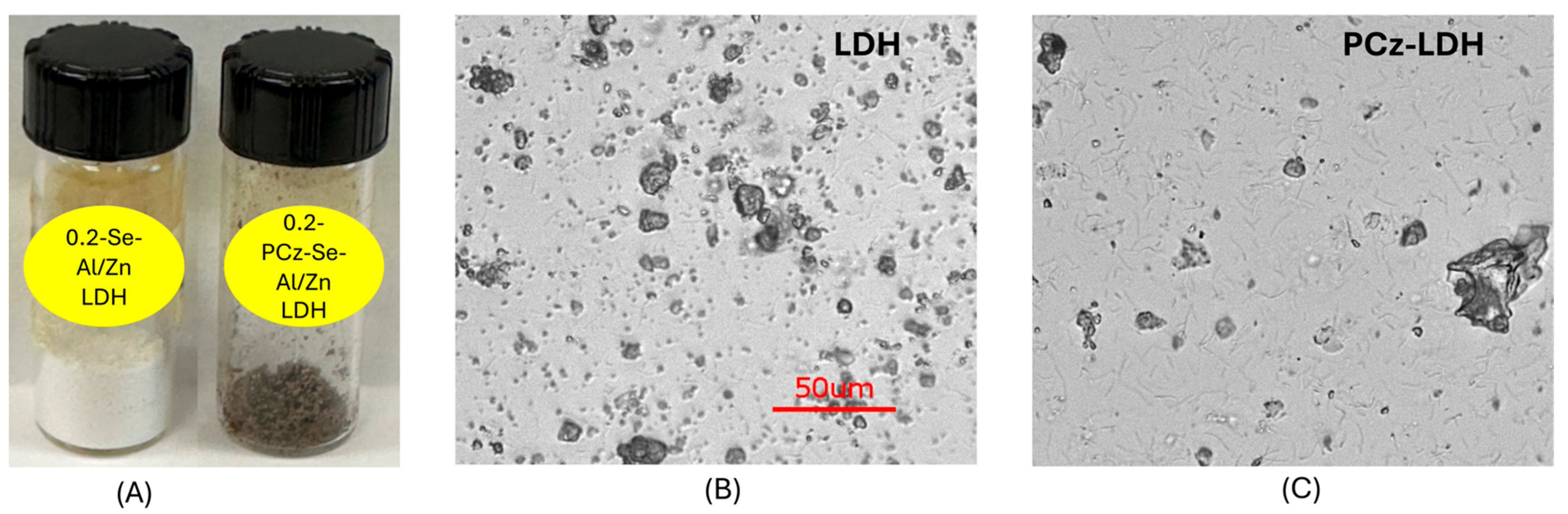
Figure 1A shows the images of the 0.2-Se-Al/Zn LDH and 0.2-PCz-Se-Al/Zn LDH samples as received. Figure 1B,C show the optical microscopic images of Se-Al/Zn LDH and 0.2-PCz-Se-Al/Zn LDH in the dispersed solutions. The samples were characterized for their structural properties using various techniques in a previous study [26]. To summarize, XRD and XPS data confirmed the encapsulation of LDH by the PCz polymer. The field emission scanning electron microscopy (FESEM) elemental mapping study of the 0.2-Se-Al/Zn LDH sample indicated the formation of a crusty surface richly composed of Zn, Al and O with scattered Se particles, whereas the data of 0.2-PCz-Se-Al/Zn LDH revealed a highly crystalline and crusty surface, with a fair concentration of C from PCz on the surface, in addition to Al, Zn, O and Se. The electrochemical study of the oxygen reduction performance of the synthesized LDH-based catalyst in the alkaline medium revealed that the LDH catalyst facilitates a predominantly 4e reduction of oxygen with minimal peroxide generation, while the PCz-LDH samples in general showed much higher peroxide yields, with low electron transfer numbers and high peroxide selectivity. Differences in structural and electrochemical properties related to hydrogen peroxide generation and peroxide selectivity may be relevant to their antibacterial activities.

3.2. Zone Inhibition Effects of LDH and Pcz-LDH on B. subtilis and E. coli

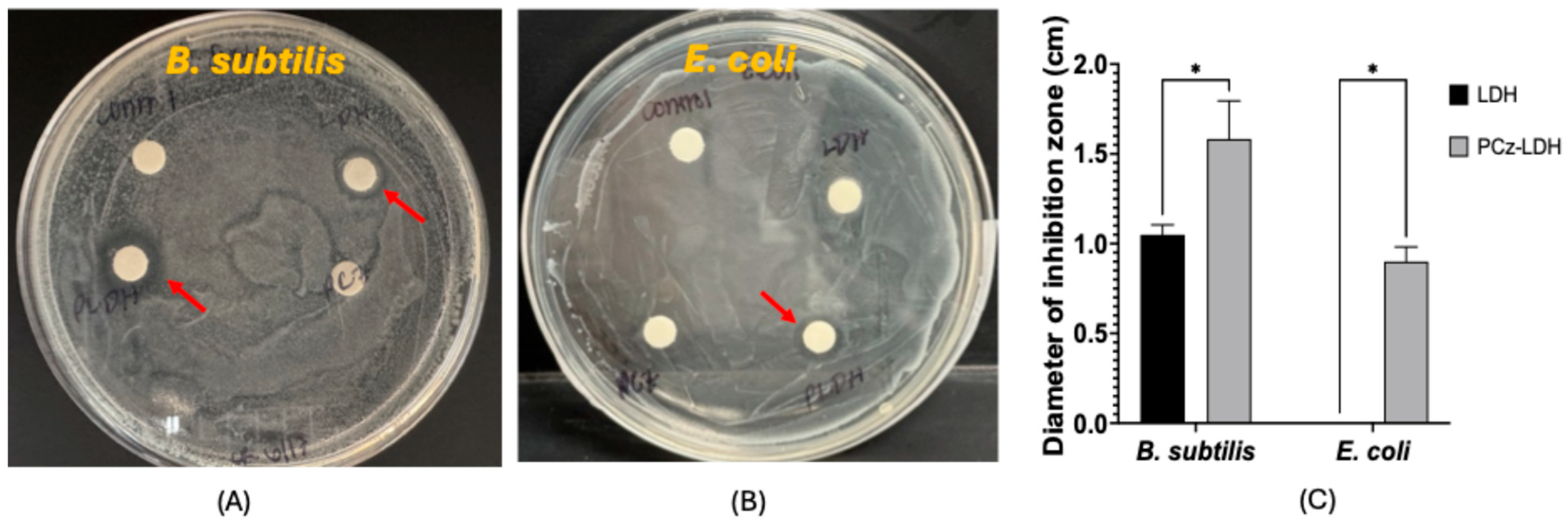
Figure 2A,B show the representative images of zone inhibition test results of LDH, PCz-LDH, and PCz, along with LB broth as control, on B. subtilis and E. coli plates, respectively. In the test, 20 μL of a 10 mg/mL LDH and PCz-LDH suspension was loaded on the filter paper discs, and 20 μL of 0.1 mg/mL PCz and 20 μL of LB broth were pipetted on the other two discs as controls. After a 24 h incubation, on the B. subtilis plate, clear inhibition zones around the discs of LDH and PCz-LDH were observed, with a larger inhibition zone formed by PCz-LDH. On the E. coli plate, an inhibition zone was formed by PCz-LDH but not by LDH, and there was no inhibition zone formed by 0.1 mg/mL PCz alone, which was the concentration 5 times of its composite concentration in PCz-LDH. To minimize the potential influence of the observed uneven bacterial distribution on inhibition zone formation, all tests were conducted in multiple independent replicates. Figure 2C shows the summarized results of the diameters of inhibition zones formed by LDH and PCz-LDH on B. subtilis and E. coli in replicate tests, with the larger inhibition zone indicating a stronger inhibitory effect. The average diameter of the inhibition zone formed by 20 μL of 10 mg/mL LDH and PCz LDH on B. subtilis was approximately 1.05 cm and 1.60 cm, respectively, and was 0 cm and 0.9 cm on E. coli, respectively. Between LDH and PCz-LDH, the results indicated that PCz-LDH had a significantly stronger inhibitory effect than LDH in inhibiting both B. subtilis and E. coli cell growth. Between B. subtilis and E. coli cells, both LDH and PCz-LDH showed more effective inhibitory effects against Gram-positive B. subtilis than Gram-negative E. coli cells, which is likely due to the intrinsically higher resistance of Gram-negative bacteria.
It was reported that PCz itself may not possess strong antimicrobial activity, but when it was incorporated with metal nanoparticles such as TiO2 and ZnO, the nanocomposites exhibited notable antimicrobial properties. For example, Iram et al. [31] reported that a PCz/TiO2-8 nanocomposite showed inhibitory efficacy against both Gram-negative and Gram-positive bacteria at micromolar concentrations. War and Chisti [33] found that PCz/ZnO nanocomposites possessed significant antibacterial activity. War et al. [32] reported that PCz-CuO nanocomposites possessed superior antibacterial activity. The enhanced antibacterial activities in these PCz–metal oxide nanoparticles were likely due to the interfacial synergistic interaction between the PCz polymer matrix and TiO2, ZnO, and CuO nanoparticles. For example, such synergistic interaction resulted in reduced agglomeration of CuO nanoparticles in the composites due to the surrounding of PCz around metal nanoparticles, thus enhancing surface activity [32]. The same study also highlighted the complex electronic environment within the PCz polymer (as a conductive polymer) and its interaction with the CuO surface, suggesting possible electronic interactions or charge transfer between PCz and CuO [32]. Presumably, in the case of PCz-LDH hybrids in this study, there likely exist similar kinds of interactions between PCz and LDH, which may afford the PCz-LDH hybrids desirable properties that are different from those of PCz or LDH alone and result in the observed enhanced inhibitory effect of PCz-LDH. For example, a desirable surface property would influence the interactions between PCz-LDH and bacterial cells, which may improve the antibacterial performance. However, at this stage, such extrapolation remains tentative, and further comprehensive and experimental studies are necessary to understand the detailed underlying mechanisms.

3.3. MIC and Kinetic Inhibition on Bacterial Growth by PCz-LDH

Since PCz-LDH showed more effective inhibitory effects on bacterial growth than LDH in the above zone inhibition tests, further experiments were carried out to evaluate the MIC and the kinetic inhibition effects of PCz-LDH on B. subtilis and E. coli growth in LB broth. Using the standard microdilution method [34] with slight modifications, the MIC of PCz-LDH to B. subtilis cells obtained in this study was 0.2 mg/mL. However, the MIC of PCz-LDH to E. coli cells was not obtained in the tested concentration range from 0.1 to 4 mg/mL, so it must be greater than 4 mg/mL.
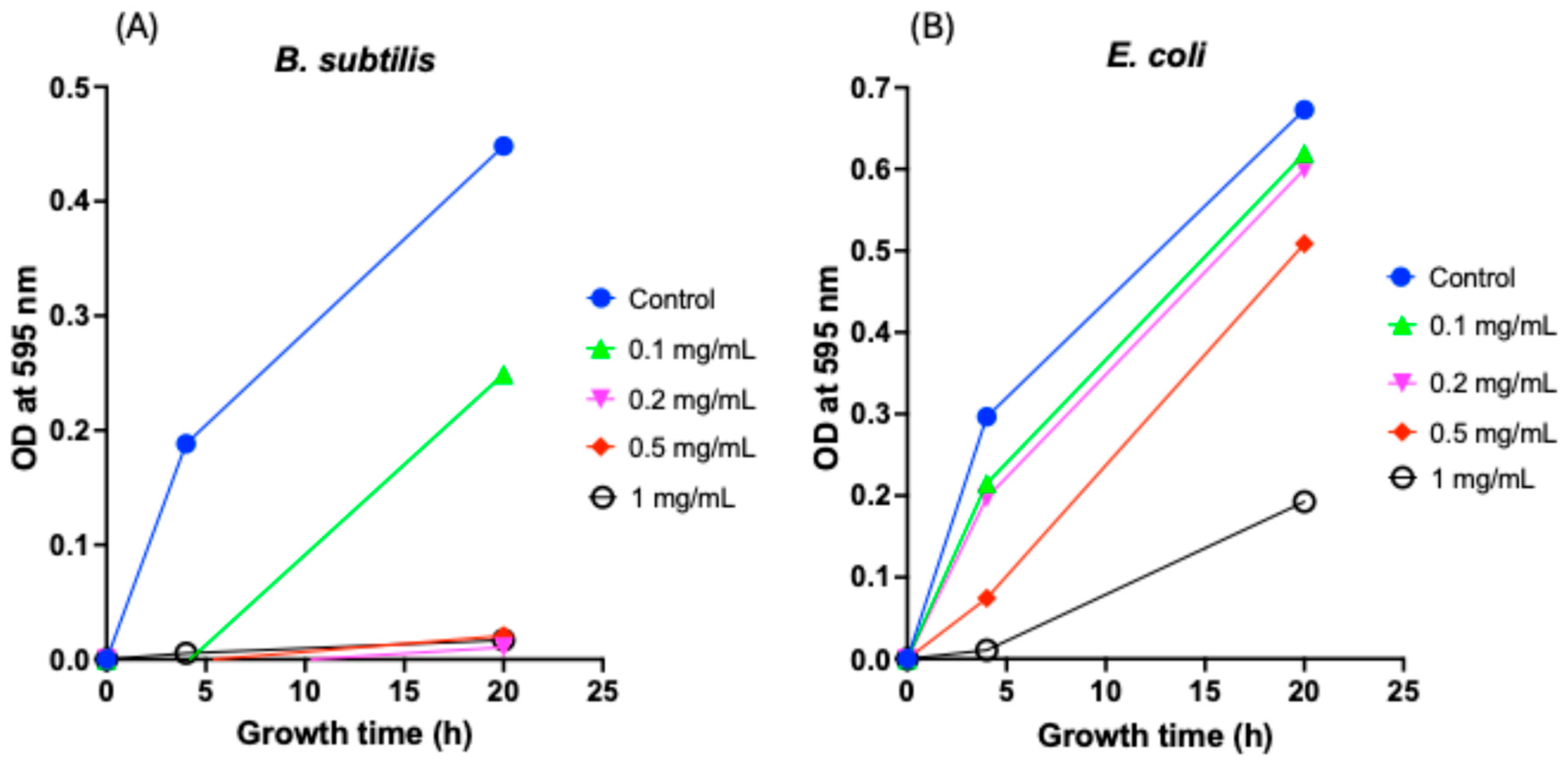
In the kinetic inhibition test, bacterial cells were grown in LB broth in a 96-well plate in the presence of PCz-LDH at final concentrations of 0.1, 0.2, 0.5, and 1 mg/mL. The OD at a 595 nm wavelength was measured periodically at 4 h and overnight (20 h). The average of the OD reading from triplicate wells was plotted against growth time to generate the growth curve and evaluate the impact of the PCz-LDH samples on B. subtilis and E. coli growth kinetics. Figure 3 shows the effect of PCz-LDH at various concentrations on the growth kinetics of B. subtilis (A) and E. coli (B). In Figure 3A, the untreated B. subtilis control displayed normal growth, reaching an OD595 of approximately 0.19 at 4 h and 0.45 at 20 h. In the presence of PCz-LDH at ≤1 mg/mL, the growth of B. subtilis was 100% inhibited at 4 h; at 20 h, the presence of PCz-LDH at 0.2 to 1 mg/mL completely inhibited the growth of B. subtilis, while the presence of 0.1 mg/mL PCz-LDH decreased the OD595 to 0.25, showing about 45% inhibition in B. subtilis growth at 20 h. In Figure 3B, the untreated E. coli control displayed normal growth, reaching an OD595 of approximately 0.3 at 4 h and 0.67 at 20 h. In the presence of PCz-LDH, at 4 h, the growth of E. coli was significantly inhibited by PCz-LDH at concentrations ranging from 0.1 to 0.5 mg/mL, reflected by the decreased OD595, achieving ~27% to ~77% inhibition, while 1 mg/mL PCz-LDH exhibited 100% inhibition. At 20 h, the presence of 0.1 to 1 mg/mL PCz-LDH reduced the OD595 to ~0.62 to ~0.51, inhibiting E. coli growth by about ~7.5% to ~24%. Both the MIC and kinetic inhibition results indicated that PCz-LDH showed a more effective inhibition effect on B. subtilis than on E. coli growth, and the inhibition effect was more profound at the early stage of bacterial growth.
In an additional test, the inhibition kinetics of 1 mg/mL LDH was tested; it only inhibited ~16% of B. subtilis and ~30% of E. coli growth at 4 h and ~33–35% inhibition at 20 h to both species of bacteria, indicating that LDH had much lower inhibitory effects on the growth of both types of cells than PCz-LDH, which was consistent with the observations in the zone inhibition test.

3.4. MBC and Time-Dependent and Concentration-Dependent Inactivation of B. subtilis

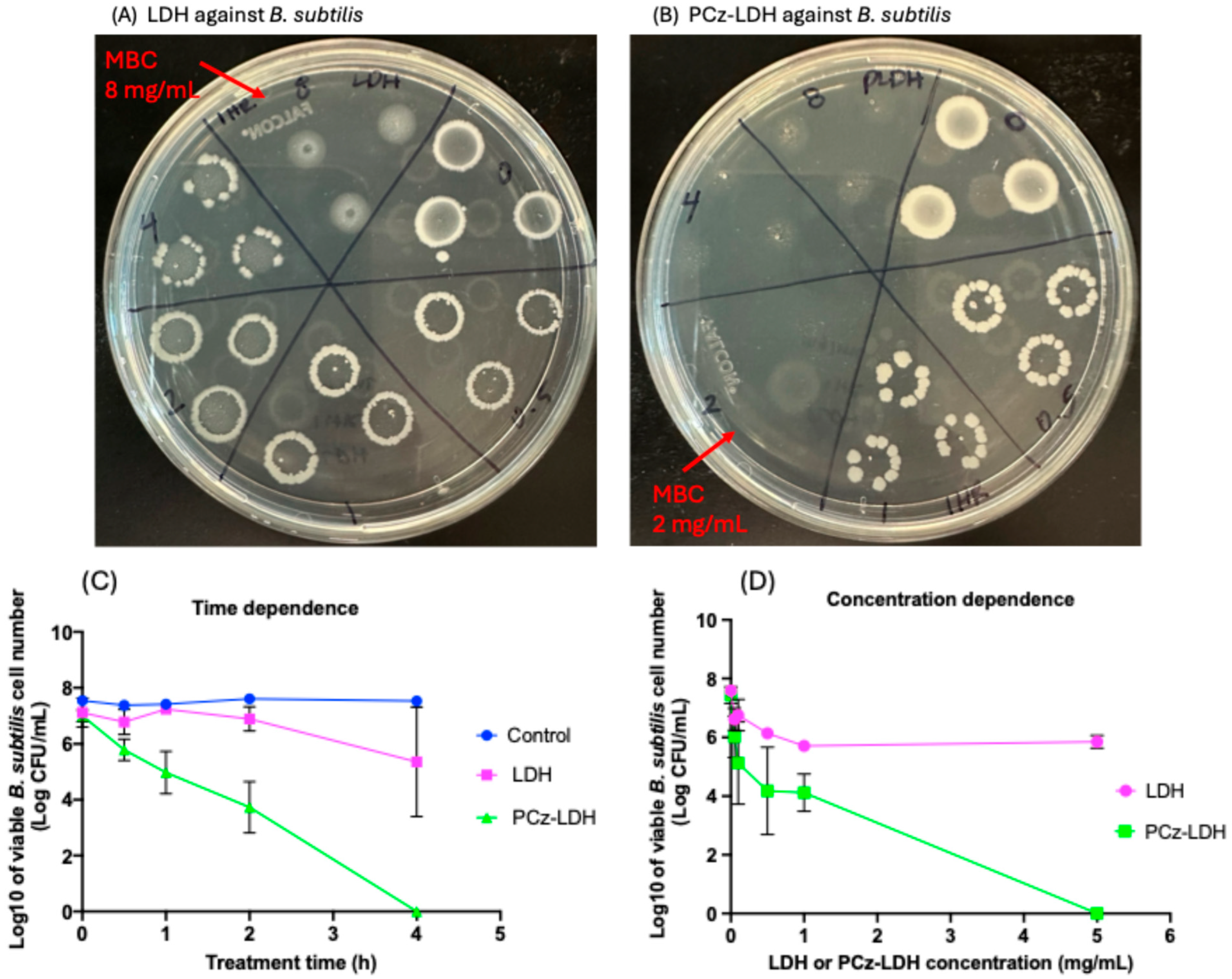
The MBCs of LDH and PCz-LDH are used to evaluate their antimicrobial effectiveness in terms of the lowest concentrations at which they completely kill the challenge microorganisms. Figure 4A,B show the plate of B. subtilis cells treated with two-fold serial dilutions of LDH and PCz-LDH. Based on the absence of bacterial colonies on the drop-plated spots after 24 h of incubation, the MBCs of LDH and PCz-LDH against B. subtilis cells (in PBS with 10% LB at a concentration of ~107 CFU/mL) were determined to be 8 mg/mL and 2 mg/mL, respectively. Obviously, PCz-LDH exhibited a much lower MBC than that of LDH, confirming its stronger bactericidal activity under these conditions.
Most published studies on LDHs and LDH-based composites/hybrids report only qualitative zone of inhibition results to demonstrate antibacterial activity rather than quantitative MIC or MBC values. Additionally, wide variations in LDH composition (metal ions, anions, molar ratios, etc.), preparation methods, hybrid species, and the bacterial species tested make comparisons of antibacterial activity across studies very difficult. We identified one study [14] that reported MIC and MBC values for ZnAl-LDHs with varying Zn/Al molar ratios and eucalyptus-oil-impregnated ZnAl-LDHs (Eu/ZnAl-LDHs). For Staphylococcus aureus, MICs of 6–10 mg/mL and MBCs of 4–10 mg/mL were reported for ZnAl-LDHs and MICs of 4 mg/mL and MBCs of 6–14 mg/mL for Eu/ZnAl-LDHs. For Staphylococcus epidermidis, MICs of 8–10 mg/mL and MBCs of 6–10 mg/mL were reported for ZnAl-LDHs and MICs of 4 mg/mL and MBCs of 6–14 mg/mL for Eu/ZnAl-LDHs. These data provide a reference point, demonstrating that the Se-Al/Zn LDH and PCz-Se-Al/Zn LDH materials investigated in this study exhibited antibacterial activity comparable to that of reported ZnAl-LDH-based materials.
Next, we examined the time-dependent and concentration-dependent inactivation of B. subtilis cells by LDH and PCz-LDH. In the time-dependent inactivation test, B. subtilis cells suspended in PBS with 10% LB were mixed with PCz-LDH and LDH (also dispersed in PBS with 10% LB) at a 1:1 ratio (v/v) for different treatment times, and then the viable cell numbers in the treated samples at various time points were determined by the surface-plating method. Figure 4C shows the inactivation curves of B. subtilis cells (~107 CFU/mL) treated with 1 mg/mL LDH and PCz-LDH for treatment times ranging from 0.5 h to 4 h, along with the control (PBS with 10% LB without PCz-LDH or LDH). As shown in the figure, the viable cell number in the control stayed consistent over the 4 h testing period. With 1 mg/mL LDH treatment, the viable cell number of B. subtilis did not change significantly from 0.5 h to 1 h, 2 h, or even to a 4 h treatment time, whereas with the treatment of 1 mg/mL PCz-LDH, the viable cell number of B. subtilis decreased significantly with prolonged treatment time, and all cells were inactivated by 4 h, achieving a >6 log viable cell reduction. Again, the results reaffirmed that the PCz-LDH hybrids had much stronger antibacterial activity than LDH and showed time-dependent inactivation of bacterial cells.
In the concentration-dependent inactivation test, B. subtilis cells were mixed with PCz-LDH or LDH (dispersed in PBS with 10% LB) at (1:1, v/v) at final concentrations varying from 0.05, 0.1, 0.5, 1 mg/mL to 5 mg/mL. Figure 4D shows the viable cell number of B. subtilis changes after the 1 h treatment with different concentrations of LDH and PCz-LDH. As shown in the figure, with the 1 h LDH treatment, the viable cell number decreased with the increasing concentration of LDH ranging from 0.05 to 1 mg/mL but stayed quite stable from 1 to 5 mg/mL, whereas with the 1 h PCz-LDH treatment, the viable cell number decreased more significantly with the increasing concentration of PCz-LDH in the low range (from 0.05 to 1 mg/mL) than LDH and continuously decreased when the PCz-LDH concentration increased from 1 to 5 mg/mL. All B. subtilis cells were inactivated by the 1 h treatment with 5 mg/mL PCz-LDH. It is clear that PCz-LDH was more effective in inactivating B. subtilis cells than LDH at the same concentration and showed more profound concentration-dependent inactivation of cells than LDH.

3.5. ATP Levels in LDH- and PCz-LDH-Treated B. subtilis Cells

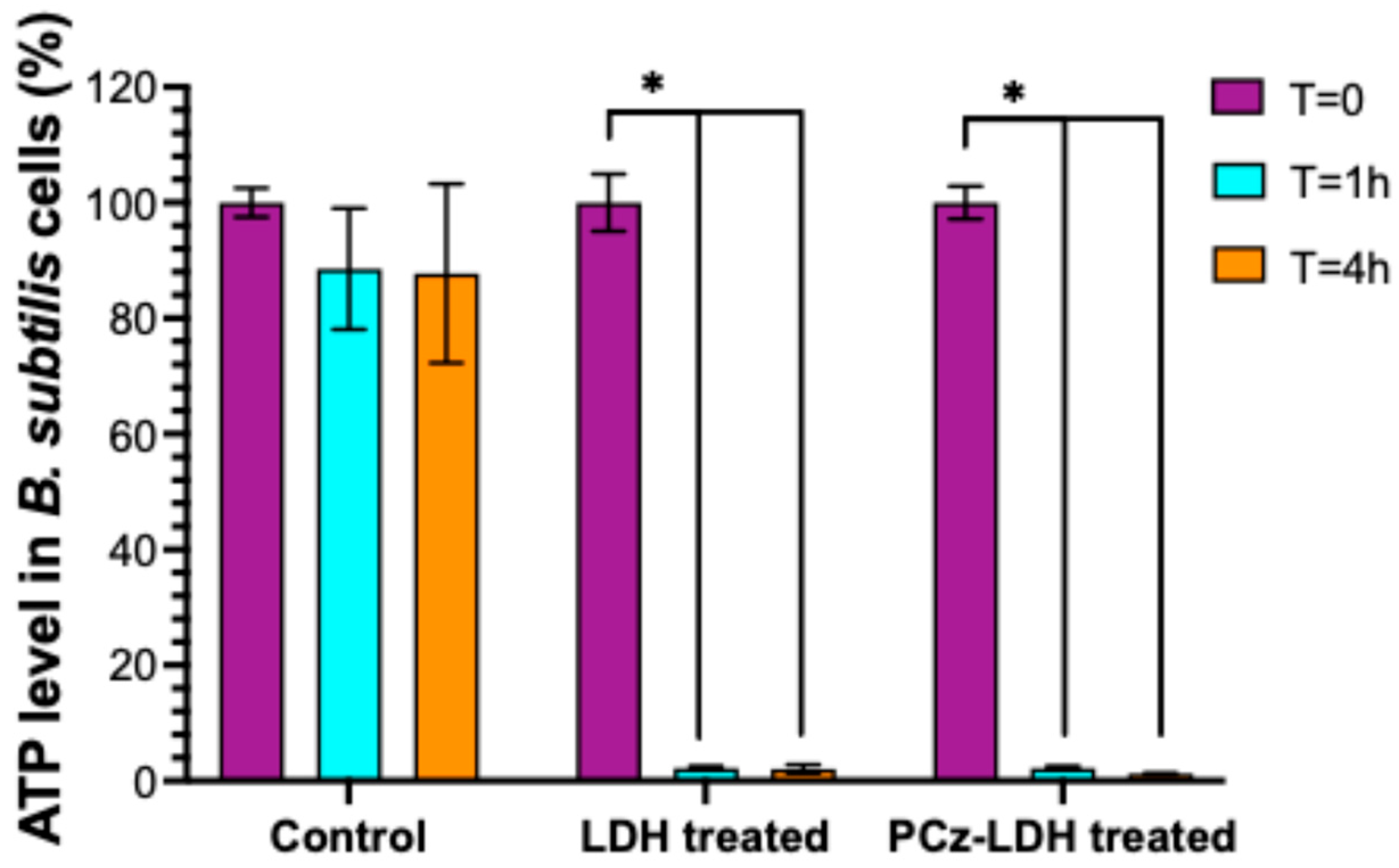
As ATP is the chemical form of energy in all living cells and is present in a constant amount within a cell, the quantification of ATP can be used to estimate the metabolically active microbial population in a sample. Figure 5 shows the ATP levels in B. subtilis cells treated with 1 mg/mL of LDH and PCz-LDH for t = 1 h and t = 4 h relative to t = 0, along with that of the untreated control cells. After the 1 h and 4 h treatment with LDH and PCz-LDH, the ATP levels in the treated cells decreased significantly to approximately 2% or less compared to the level at t = 0, whereas the ATP levels of the untreated cells did not change significantly from t = 0 to t = 1 h or t = 4 h of treatment. The significantly decreased ATP levels in treated cells confirmed the loss of metabolic activity of the majority of cells treated with LDH or PCz-LDH (~98% or more), which agreed well with the observations in viable cell reduction (>1 log and more) in the time- and concentration-dependent tests.

3.6. Live/Dead Staining and SEM Imaging of LDH- and PCz-LDH-Treated B. subtilis Cells

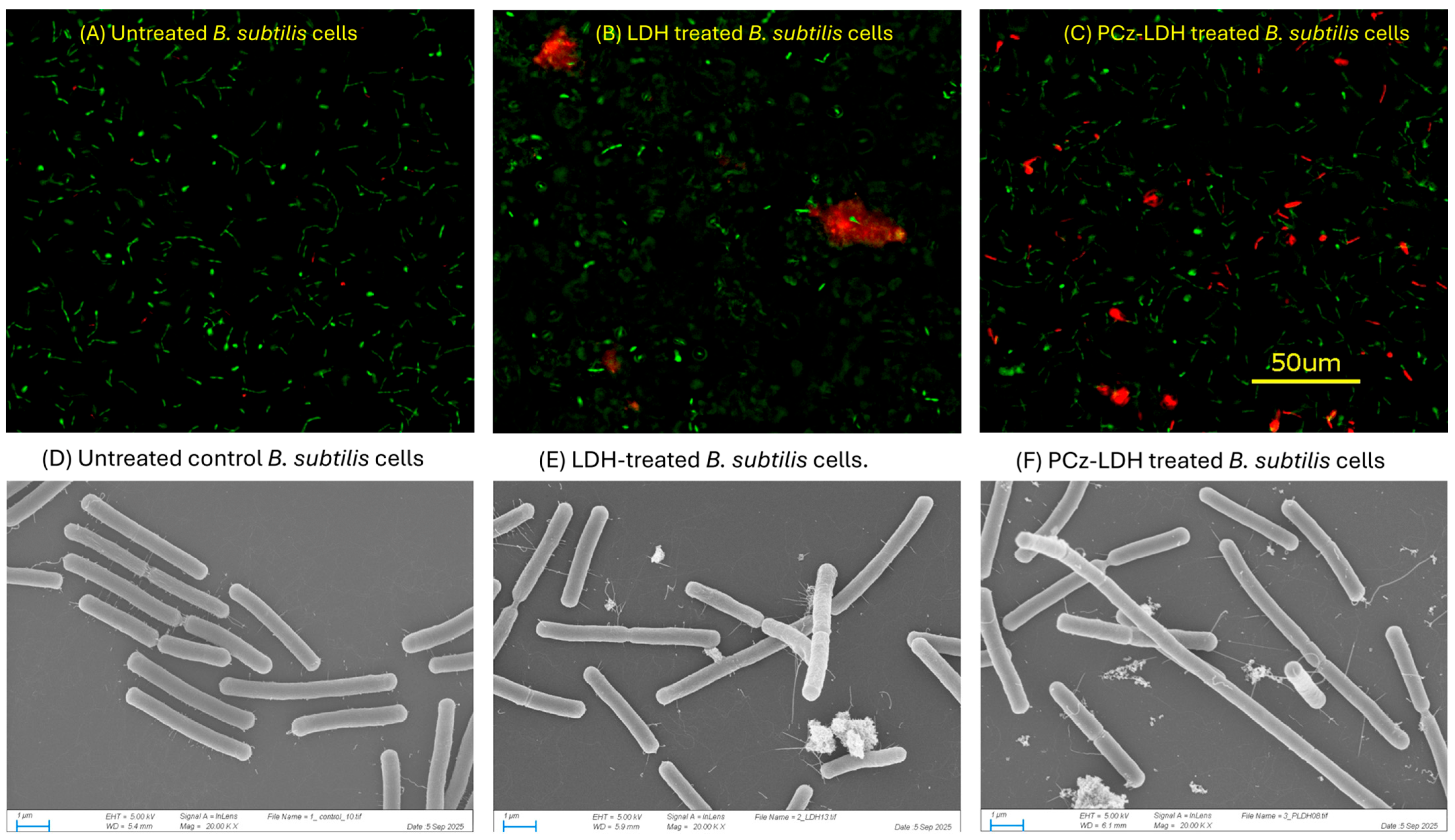
We further examined cell membrane permeability after treatment with LDH and PCz-LDH under a fluorescent microscope. After the treatment with LDH and PCz-LDH, the cells were stained with a LIVE/DEAD BaclightTM bacterial viability kit to visualize live and dead cells. The two fluorescent nucleic acid dyes, the green SYTO 9 and the red propidium iodide (PI) in the live/dead staining kit, stain bacterial cells such that live with intact membranes are green, and dead cells with damaged membranes are stained red. Figure 6A–C shows the representative fluorescent images of B. subtilis cells after they were treated with 1 mg/mL LDH and PCz-LDH for 1 h, along with the control sample without treatment.
Based on the images, first, both treated and untreated cells are evenly distributed with no obvious aggregation, indicating that neither the LDH nor the PCz-LDH treatment caused cell aggregation. Second, in the untreated control sample, almost all the cells with their intact membranes were stained green, as expected; however, surprisingly, in the LDH-treated samples, almost all cells were still stained green (average 98%) (with the large red clusters corresponding to LDH particles), and similarly, in the PCz-LDH-treated sample, the majority of the cells also appeared green (average 96%), with only a small population of cells stained red (average 4%) (some of the large-sized red clusters were particles of PCz-LDH). Obviously, the ratio of red to green cells in the live/dead-stained fluorescent images contrasts sharply with the results of the viable cell number reduction (>2 log reduction) or the ATP level reduction (>98%) presented above. This discrepancy suggests that most of the cells rendered non-viable or metabolically inactive by LDH or PCz-LDH treatment retained intact cell membranes at the time of staining. As a result, the red PI dye—which only penetrates cells with compromised membranes—was unable to enter the cells, so they remained green. Only a very small portion of cells experienced membrane damage, exhibited sufficient membrane permeability for PI uptake, and appeared red.
It is not uncommon to observe cells with loss of metabolic activity but retained membrane integrity, as reported in bacteria exposed to some chemical and physical stressors that may induce severe metabolic arrest, early-stage non-lytic cell death, or a viable-but-non-culturable (VBNC) state. In these states, cells maintain intact membranes yet lose ATP production, exhibit diminished metabolic activity, and fail to form colonies. This provides a plausible explanation for the strong bactericidal activity detected by CFU and ATP assays despite the predominance of intact, green-stained cells in microscopy. However, to examine the details of what happened in these cells, additional microbiological assays—such as measurements of membrane potential, intracellular ROS level, and molecular analyses of genes and markers associated with VBNC—would be required to fully resolve the mechanisms underlying this phenomenon.
The morphology of LDH- and PCz-LDH-treated B. subtilis cells was further examined using SEM imaging. Figure 6D–F show representative SEM images of untreated B. subtilis cells (D) and cells treated with 1 mg/mL LDH (E) and PCz-LDH (F). As shown in the SEM images, both untreated and treated cells were evenly distributed and no excessive aggregates were noticed, consistent with the observation in fluorescent imaging. In terms of morphology, the treated cells show no obvious differences compared to the untreated cells. They all showed typical rod shapes with intact cell membranes; no obvious broken/damaged membranes were observed, which supported and could explain the observation of almost all or the majority of cells in the LDH- or PCz-LDH-treated samples still stained green in the live/dead fluorescent staining. However, it was noticed that there were a few cells with rougher membranes and a few elongated or irregular cell divisions in the LDH- and PCz-LDH-treated samples, which may be partial signs of some of the non-viable or metabolically inactive cells and might be the few cells that were stained red in the live/dead staining.
Collective results from zone inhibition, viable cell counts, and ATP level tests confirmed the inhibitory and bactericidal effects of both LDH and PCz-LDH against B. subtilis and E. coli, with stronger effects on B. subtilis. Examinations on the permeability of cell membranes through live/dead staining and cell morphology change through SEM imaging indicated that LDH and PCz-LDH treatment did not directly result in obvious damage to cell membranes but rather caused the loss of metabolic activity, resulting in non-viable or non-culturable cells that accounted for the observed viable cell reduction.

3.7. Discussion

Based on the literature, several mechanisms of action of pristine LDHs and their composite antibacterial activities have been proposed. A recent review by Awassa et al. [16] summarized the current hypothesized framework of possible mechanisms, which mainly include the following three modes: direct surface contacts between LDHs and bacterial cells, dissolution and release of constituent metallic ions or other pre-loaded antibacterial molecules from LDHs, and generation of reactive oxygen species (ROS). The direct surface contact mode is driven by electrostatic interactions between positively charged LDHs/composites and negatively charged bacterial cell surfaces, which may cause cell membrane damage/disruption and result in cell death or inhibition of cell growth. Released metal ions or antimicrobial agents may interact with or penetrate bacterial cells via various selective or non-selective ion-transport systems and exert toxic effects, impairing bacterial membranes, interfering with metabolic pathways, or causing dysfunction of cell components. ROS and/or free radicals generated by LDHs or their composites are strong oxidative species that are harmful to the bacterial cell wall and interfere with the activity of cellular enzymes, commonly causing oxidative stress to cells. However, the actual antibacterial mechanisms of LDHs and their composites remain poorly understood, and there is little experimental evidence to support these hypotheses. In reality, different types of LDHs may employ different antibacterial modes of action, and in many cases, combinations of multiple mechanisms are more common. In some more complicated cases, the modes of action also depend on the application conditions. A further study from the same group [22] reported that the antimicrobial effect of LDHs was linked first to the nature of the divalent metal and second to the amount of M2+ ions released into the culture media. By systematically testing a series of Zn2+-Al3+ LDHs of different composites, their results supported and validated the antimicrobial mechanism of pristine LDHs by metallic ion release, e.g., Zn2+ in the tested LDHs, and found that the antibacterial activity is positively associated with the higher concentration of released Zn2+ [22].
In this study, the antibacterial activity observed for Se-Zn/Al LDH and PCz-Se-Zn/Al LDH in zone of inhibition tests and in time- and concentration-dependent assays may be partially attributable to the release of Zn2+ leached from LDH or PCz-LDH. The dispersion of LDH or PCz-LDH powders to aqueous solutions (e.g., LB medium, or PBS with 10% LB medium in this case) can allow the dissolution of Zn2+ or other constituent ions or components. Previous studies have reported that Zn2+ can contribute to antimicrobial effects by interfering with essential cellular functions, including the inactivation of functional proteins through interactions with active-site thiols and the potential induction of elevated intracellular reactive oxygen species (ROS) [35,36,37,38], which, in turn, may lead to oxidative damage to lipids, proteins, and DNA, leading to bacterial death [37,39]. However, in the context of the present work, these mechanisms should be regarded as possible but unconfirmed. The antimicrobial activity of Se-Al/Zn LDH and PCz-Se-Al/Zn LDH may arise from one or a combination of the above-mentioned factors. Future studies involving direct quantification of Zn2+ dissolution, detection of intracellular ROS, and other applicable analyses will be necessary to establish a more conclusive mechanistic understanding.
In the PCz-LDH hybrids/composites here, as in PCz–metal oxide (e.g., TiO2, CuO, and ZnO) nanocomposites, there could be interfacial interactions between the PCz and LDH nanoparticles, which would influence the rate or extent of M2+ dissolution/release from the hybrids/composites. There have been studies that investigated the factors affecting the dissolution/release of metal ions from various LDHs in different composites using both experimental and computational approaches. Several factors, including crystallinity, the nature of the constituent metallic cations, the M2+:M3+ molar ratio, and the type of intercalated anions within the layers, contribute to LDH dissolution [40,41,42]. In addition to the above factors, in the case of the PCz-LDH used in this study, the surrounding PCz could possibly alter the agglomeration of the LDH particles in the hybrids and their surface activity, which may directly influence their interactions with bacterial cell surfaces. War et al. [32] reported that PCz-CuO nanocomposites exhibited a distinct binding mode for an enzyme compared with PCz itself, as determined by molecular docking analysis. Rationally, PCz-LDH in this study could act similarly, whereby the composites/hybrids interact with bacterial cell surfaces in binding modes different from those of PCz and LDH itself, resulting in enhanced antibacterial activity.
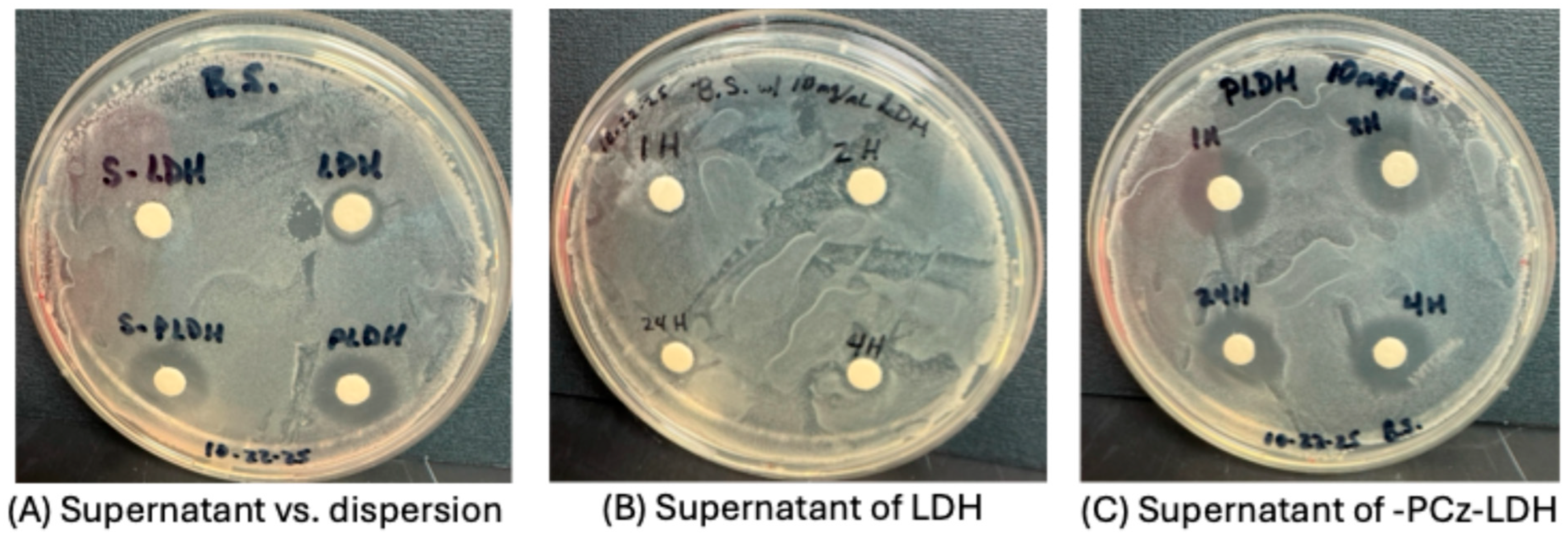
It is also possible that the presence of PCz and its interfacial interactions with the LDH particles may influence the rate and extent of Zn2+ or other component release from PCz-LDH hybrids compared with the non-modified LDH, thereby affecting the antibacterial outcomes. To explore this possibility, we conducted a simple zone-of-inhibition assay using the supernatants of LDH and PCz-LDH compared with their dispersions. As shown in Figure 7, the supernatant obtained from LDH after 48 h of dispersion showed no inhibition zone, whereas the LDH dispersion itself did. In contrast, for PCz-LDH, both the supernatant and the dispersion showed comparable inhibition zones. These observations suggest that the PCz-LDH supernatant contains sufficient Zn2+ (or other active antibacterial constituent components) released during dispersion, whereas the LDH supernatant contains insufficient amounts of such components.
A time-course comparison of the two supernatants further supported this trend. The PCz-LDH supernatants exhibited measurable inhibition zones as early as 1 h after dispersion and maintained the same effect through 24 h after dispersion. In contrast, the LDH supernatants collected at all time points (from 1 to 24 h) did not produce visible inhibition zones, indicating negligible antibacterial activity. These results suggest that the release of active antibacterial species from PCz-LDH occurs much more rapidly and to a greater extent than from LDH, which may be attributed to interactions between PCz and LDH in PCz-LDH that affect the dissolution behavior of Zn2+ and other active antibacterial components. A highly crystalline, crusty surface of PCz-LDH compared with that of LDH observed in the previous study [26] may be relevant to the altered ion dissolution behavior.
However, the above explanations and discussion are tentative; future experimental results/evidence are necessary to elucidate the detailed mechanisms of action of LDH and PCz-LDH. Nevertheless, the enhanced antimicrobial activity of PCz-LDHs observed in this study highlights a promising avenue for further designing and developing LDH nanocomposites/hybrids for antimicrobial applications.

4. Conclusions

In this study, various tests, including the zone of inhibition test, viable cell counting, and measurement of metabolic activity (ATP levels), were employed to investigate the antibacterial activities of Se-Al/Zn LDH and PCz-Se-Al/Zn LDH hybrids against Gram-positive Bacillus subtilis and Gram-negative E. coli K12 cells. The results from all these tests consistently demonstrated antibacterial activity for both sample types, with PCz-Se-Al/Zn LDH showing stronger activity than Se-Al/Zn LDH. However, fluorescence and scanning electron microscopy did not reveal visible membrane damage or morphological changes in bacterial cells treated with Se-Al/Zn LDH or PCz-Se-Al/Zn LDH samples. The antibacterial activities of the Se-Al/Zn LDH and PCz-Se-Al/Zn LDH samples are likely due to the release of divalent metal ions (likely Zn2+) and constituent species from the samples. The enhanced antibacterial activity of PCz-Se-Al/Zn LDH is likely due to interfacial interactions between PCz and Se-Al/Zn LDH, which may influence the surface activity and the rate or concentration of metal ion release. Although the promising results of PCz-Se-Al/Zn LDH highlight the great potential of hybrid LDH materials for enhanced antibacterial activity, future studies with more comprehensive experimental evidence are necessary to elucidate the detailed antimicrobial mechanisms of action for both LDH and their hybrid materials, paving the way to design highly effective LDH-based antimicrobial materials.

Author Contributions

Conceptualization, L.Y. and U.R.; methodology, A.F.A., C.E.R., K.T., R.C., L.Y. and U.R.; investigation, A.F.A., C.E.R., K.T., R.C., U.R. and L.Y.; resources, L.Y. and U.R.; data curation, A.F.A., C.E.R., K.T., R.C., L.Y. and U.R.; writing—original draft preparation, L.Y., A.F.A. and C.E.R.; writing—review and editing, L.Y., A.F.A., C.E.R. U.R., K.T. and R.C.; supervision, L.Y. and U.R.; funding acquisition, L.Y. All authors have read and agreed to the published version of the manuscript.

Funding

The research is partially supported by NSF grant 2122044.

Data Availability Statement

All data are contained within the article.

Acknowledgments

The SEM images were done at the Microscopy Services Laboratory in the Department of Pathology and Laboratory Medicine, which is supported in part by the P30 CA016086 Cancer Center Core Support Grant to the UNC Lineberger Comprehensive Cancer Center. K.T. acknowledges the support of the Science & Research Summer Program (SRSP) at NCCU.

Conflicts of Interest

The authors declare no conflicts of interest.

References

  1. Evans, D.G.; Slade, R.C.T. Structural Aspects of Layered Double Hydroxides. In Layered Double Hydroxides. Structure and Bonding; Duan, X., Evans, D.G., Eds.; Springer: Berlin/Heidelberg, Germany, 2005; Volume 119, pp. 1–87. [Google Scholar] [CrossRef]
  2. Forano, C.; Hibino, T.; Leroux, F.; Taviot-Guého, C. Chapter 13.1 Layered Double Hydroxides. Dev. Clay Sci. 2006, 1, 1021–1095. [Google Scholar] [CrossRef]
  3. Zubair, M.; Daud, M.; McKay, G.; Shehzad, F.; Al-Harthi, M.A. Recent progress in layered double hydroxides as adsorbents for water remediation. Appl. Clay Sci. 2017, 143, 279–292. [Google Scholar] [CrossRef]
  4. Karim, V.; Hassani, A.; Eghbali, P.; Nidheesh, P.V. Nanostructured modified layered double hydroxides (LDHs)-based catalysts: A review on synthesis, characterization, and applications in water remediation by advanced oxidation processes. Curr. Opin. Solid State Mater. Sci. 2022, 26, 100965. [Google Scholar] [CrossRef]
  5. Taoufik, N.; Sadiq, M.; Abdennouri, M.; Qourzal, S.; Khataee, A.; Sillanpää, M.; Barka, N. Recent advances in the synthesis and environmental catalytic applications of layered double hydroxides-based materials for degradation of emerging pollutants through advanced oxidation processes. Mater. Res. Bull. 2022, 154, 111924. [Google Scholar] [CrossRef]
  6. Yan, L.; Gonca, S.; Zhu, G.; Zhang, W.; Chen, X. Layered double hydroxide nanostructures and nanocomposites for biomedical applications. J. Mater. Chem. B 2019, 7, 5583–5601. [Google Scholar] [CrossRef]
  7. Li, L.; Soyhan, I.; Warszawik, E.; Van Rijn, P. Layered double hydroxides: Recent progress and promising perspectives toward biomedical applications. Adv. Sci. 2024, 11, e2306035. [Google Scholar] [CrossRef]
  8. León-Vallejo, A.M.; Velázquez-Herrera, F.D.; Sampieri, A.; Landeta-Cortés, G.; Fetter, G. Study of layered double hydroxides as bactericidal materials against Corynebacterium ammoniagenes, a bacterium responsible for producing bad odors from human urine and skin infections. Appl. Clay Sci. 2019, 180, 105194. [Google Scholar] [CrossRef]
  9. Da Gama, B.M.V.; Selvasembian, R.; Giannakoudakis, D.A.; Triantafyllidis, K.S.; McKay, G.; Meili, L. Layered Double Hydroxides as Rising-Star Adsorbents for Water Purification: A Brief Discussion. Molecules 2022, 27, 4900. [Google Scholar] [CrossRef] [PubMed]
  10. Jin, W.; Lee, D.; Jeon, Y.; Park, D.-H. Biocompatible Hydrotalcite Nanohybrids for Medical Functions. Minerals 2020, 10, 172. [Google Scholar] [CrossRef]
  11. Kumari, S.; Soni, S.; Sharma, A.; Kumar, S.; Sharma, V.; Jaswal, V.S.; Bhatia, S.K.; Sharma, A.K. Layered double hydroxides based composite materials and their applications in food packaging. Appl. Clay Sci. 2024, 247, 107216. [Google Scholar] [CrossRef]
  12. Moaty, S.A.A.; Farghali, A.A.; Khaled, R. Preparation, characterization and antimicrobial applications of Zn-Fe LDH against MRSA. Mater. Sci. Eng. C 2016, 68, 184–193. [Google Scholar] [CrossRef]
  13. Peng, F.; Wang, D.; Zhang, D.; Cao, H.; Liu, X. The prospect of layered double hydroxide as bone implants: A study of mechanical properties, cytocompatibility and antibacterial activity. Appl. Clay Sci. 2018, 165, 179–187. [Google Scholar] [CrossRef]
  14. Lobo-Sánchez, M.; Nájera-Meléndez, G.; Luna, G.; Segura-Pérez, V.; Rivera, J.A.; Fetter, G. ZnAl layered double hydroxides impregnated with eucalyptus oil as efficient hybrid materials against multi-resistant bacteria. Appl. Clay Sci. 2018, 153, 61–69. [Google Scholar] [CrossRef]
  15. Dutta, S.; Jana, T.K.; Halder, S.K.; Maiti, R.; Dutta, A.; Kumar, A.; Chatterjee, K. Zn2Al-CO3 layered double hydroxide: Adsorption, cytotoxicity and antibacterial performances. ChemistrySelect 2020, 5, 6162–6171. [Google Scholar] [CrossRef]
  16. Awassa, J.; Cornu, D.; Ruby, C.; El-Kirat-Chatel, S. Direct contact, dissolution and generation of reactive oxygen species: How to optimize the antibacterial effects of layered double hydroxides. Colloids Surf. B Biointerfaces 2022, 217, 112623. [Google Scholar] [CrossRef]
  17. Mishra, G.; Dash, B.; Pandey, S. Layered double hydroxides: A brief review from fundamentals to application as evolving biomaterials. Appl. Clay Sci. 2018, 153, 172–186. [Google Scholar] [CrossRef]
  18. Tabti, H.A.; Adjdir, M.; Ammam, A.; Mdjahed, B.; Guezzen, B.; Ramdani, A.; Benddedouche, C.K.; Bouchikhi, N.; Chami, N. Facile synthesis of Cu-LDH with different Cu/Al molar ratios: Application as antibacterial inhibitors. Res. Chem. Intermed. 2020, 46, 5377–5390. [Google Scholar] [CrossRef]
  19. Peng, C.; Yu, Z.; Wu, W.; Li, J.; Wang, E. CuFe Layered Double Hydroxide as Self-Cascade Nanoreactor for Efficient Antibacterial Therapy. ACS Appl. Mater. Interfaces 2023, 15, 56678–56688. [Google Scholar] [CrossRef]
  20. Aziz, S.A.A.A.; GadelHak, Y.; Mohamed, M.B.E.D.; Mahmoud, R. Antimicrobial properties of promising Zn–Fe based layered double hydroxides for the disinfection of real dairy wastewater effluents. Sci. Rep. 2023, 13, 7601. [Google Scholar] [CrossRef]
  21. Chamanmalik, M.I.; Antony, A.M.; Yelamaggad, C.V.; Patil, S.A.; Patil, S.A. Biogenic Silver Nanoparticles/Mg-Al Layered Double Hydroxides with Peroxidase-like Activity for Mercury Detection and Antibacterial Activity. Molecules 2023, 28, 5754. [Google Scholar] [CrossRef]
  22. Mahmoud, R.; Eldin, Z.E.; Khalifa, A.; Anwar, A.a.A.; GadelHak, Y.; Othman, S.I.; Allam, A.A.; Essam, D.; El-Ela, F.I.A.; Aziz, S.a.a.A.; et al. Antifungal and antibacterial investigation of quinary Zr Al Fe Co Ni layered double hydroxide and its Al Fe Co Ni quaternary and Fe Co Ni tertiary roots. RSC Adv. 2024, 14, 14815–14834. [Google Scholar] [CrossRef]
  23. Awassa, J.; Cornu, D.; Soulé, S.; Carteret, C.; Ruby, C.; El-Kirat-Chatel, S. Divalent metal release and antimicrobial effects of layered double hydroxides. Appl. Clay Sci. 2022, 216, 106369. [Google Scholar] [CrossRef]
  24. Cardinale, A.M.; Alberti, S.; Reverberi, A.P.; Catauro, M.; Ghibaudo, N.; Fortunato, M. Antibacterial and Photocatalytic Activities of LDH-Based Sorbents of Different Compositions. Microorganisms 2023, 11, 1045. [Google Scholar] [CrossRef]
  25. Mishra, G.; Dash, B.; Pandey, S. Effect of molecular dimension on gallery height, release kinetics and antibacterial activity of ZnAl layered double hydroxide (LDH) encapsulated with benzoate and its derivatives. Appl. Clay Sci. 2019, 181, 105230. [Google Scholar] [CrossRef]
  26. Taylor, M.; McGowan, N.; Callahan, M.M.; Rodriguez, C.; Adcock, A.F.; Kumar, R.; Jenkins, J.; Yang, L.; Riaz, U. Selenium-Polycarbazole Modified LDHs: Dual-Mode Antibacterial Catalysts with Tunable Reactive Oxygen Species Generation. Discov. Mater. 2025; in press. [Google Scholar] [CrossRef]
  27. Nemček, L.; Hagarová, I.; Matúš, P. Layered Double Hydroxides as Next-Generation Adsorbents for the Removal of Selenium from Water. Appl. Sci. 2024, 14, 8513. [Google Scholar] [CrossRef]
  28. Constantino, L.V.; Quirino, J.N.; Monteiro, A.M.; Abrao, T.; Parreira, P.S.; Urbano, A.; Santos, M.J. Sorption-desorption of selenite and selenate on Mg-Al layered double hydroxide in competition with nitrate, sulfate and phosphate. Chemosphere 2017, 181, 627–634. [Google Scholar] [CrossRef]
  29. Kamel, M.; Abd El-Fatah, G.; Zaher, A.; Farghali, A.A.; Othman, S.I.; Allam, A.A.; Rudayni, H.A.; Salah, A.M.; Hassouna, M.E.M.; Mahmoud, R. Cost-effective layered double hydroxides/conductive polymer nanocomposites for electrochemical detection of wastewater pollutants. Chin. J. Anal. Chem. 2024, 52, 100368. [Google Scholar] [CrossRef]
  30. Jadhav, S.A.; Kulkarni, V.V.; Patil, P.H.; Patil, P.R.; Pawar, S.J. Layered double hydroxides (LDHs)-conducting polymers (CPs)-based electroactive materials for supercapacitor application. J. Appl. Electrochem 2023, 53, 1911–1926. [Google Scholar] [CrossRef]
  31. e Iram, N.; Khan, M.S.; Jolly, R.; Arshad, M.; Alam, M.; Alam, P.; Khan, R.H.; Firdaus, F. Interaction mode of polycarbazole–titanium dioxide nanocomposite with DNA: Molecular docking simulation and in-vitro antimicrobial study. Photochem. Photobiol. B Biol. 2015, 153, 20–32. [Google Scholar] [CrossRef]
  32. War, J.A.; Ul AIn, Q.; Zargar, M.I.; Chisti, H.T. In situ synthesis and characterization of polycarbazole-copper oxide (PCz-CuO) nanocomposite: Investigating superior antibacterial performance and FabI/FabH docking interactions. RSC Adv. 2025, 15, 28754–28769. [Google Scholar] [CrossRef]
  33. War, J.A.; Chisti, H.T.N. In-situ polymerization of polycarbazole-zinc oxide nanocomposite: An in silico docking model and in vitro antibacterial biomaterial. Eur. Polym. J. 2022, 181, 111701. [Google Scholar] [CrossRef]
  34. CLSI. Methods for Dilution Antimicrobial Susceptibility Tests for Bacteria That Grow Aerobically, Approved Standard, 8th ed.; CLSI document M07-A8; Clinical and Laboratory Standards Institute: Wayne, PA, USA, 2009. [Google Scholar]
  35. Xu, F.F.; Imlay, J.A. Silver(I), Mercury(II), Cadmium(II), and Zinc(II) Target Exposed Enzymic Iron-Sulfur Clusters When They Toxify Escherichia Coli. Appl. Environ. Microbiol. 2012, 78, 3614–3621. [Google Scholar] [CrossRef]
  36. Beard, S.J.; Hughes, M.N.; Poole, R.K. Inhibition of the cytochrome bd-terminated NADH oxidase system in Escherichia coli K-12 by divalent metal cations. FEMS Microbiol. Lett. 1995, 131, 205–210. [Google Scholar] [CrossRef]
  37. Mishra, P.K.; Mishra, H.; Ekielski, A.; Talegaonkar, S.; Vaidya, B. Zinc oxide nanoparticles: A promising nanomaterial for biomedical applications. Drug Discov. Today 2017, 22, 1825–1834. [Google Scholar] [CrossRef]
  38. Dwivedi, S.; Wahab, R.; Khan, F.; Mishra, Y.K.; Musarrat, J.; Al-Khedhairy, A.A. Reactive Oxygen Species Mediated Bacterial Biofilm Inhibition via Zinc Oxide Nanoparticles and Their Statistical Determination. PLoS ONE 2014, 9, e111289. [Google Scholar] [CrossRef]
  39. Ezraty, B.; Gennaris, A.; Barras, F.; Collet, J.F. Oxidative stress, protein damage and repair in bacteria. Nat. Rev. Microbiol. 2017, 15, 385–396. [Google Scholar] [CrossRef]
  40. Jobbágy, M.; Regazzoni, A.E. Delamination and restacking of hybrid layered double hydroxides assessed by in situ XRD. J. Colloid Interface Sci. 2004, 275, 345–348. [Google Scholar] [CrossRef]
  41. Baek, M.; Kim, I.-S.; Yu, J.; Chung, H.E.; Choy, J.-H.; Choi, S.-J. Effect of different forms of anionic nanoclays on cytotoxicity. J. Nanosci. Nanotechnol. 2011, 11, 1803–1806. [Google Scholar] [CrossRef]
  42. Hibino, T. Acid treatment of layered double hydroxides containing carbonate. Eur. J. Inorg. Chem. 2014, 31, 5311–5321. [Google Scholar] [CrossRef]
Figure 1. (A) A picture of 0.2-Se-Al/Zn LDH and 0.2-PCz-Se-Al/Zn LDH samples as received; (B,C) show optical microscopic images of 0.2-Se-Al/Zn LDH and 0.2-PCz-Se-Al/Zn LDH clusters/particles after being dispersed in the aqueous solution.
Applsci 16 01989 g001
Figure 2. Representative images of (A) B. subtilis plate and (B) E. coli plate showing disc inhibition zones of LDH, PCz-LDH, and PCz, along with LB medium as a control and (C) averaged diameters of inhibition zones formed by 20 μL of 10 mg/mL LDH vs. PCz-LDH on B. subtilis and E. coli plates. Arrows indicate the inhibition zones around the discs. Data are presented as mean values with standard deviations from 4 to 6 replicate tests shown as error bars. * p < 0.05 in the t-test is considered significantly different.
Applsci 16 01989 g002
Figure 3. The inhibitory effects of different concentrations of PCz-LDH ranging from 0.1 to 1 mg/mL on the growth of (A) B. subtilis and (B) E. coli cells in LB medium.
Applsci 16 01989 g003
Figure 4. (A) The plate of B. subtilis showing the MBC of LDH at 8 mg/mL. (B) The plate of B. subtilis showing the MBC of PCz-LDH at 2 mg/mL. (C) The time-dependent inactivation curves of B. subtilis when treated with 1 mg/mL LDH and PCz-LDH in PBS with 10% LB. (D) The concentration-dependent inactivation curves of B. subtilis when treated with LDH and PCz-LDH for 1 h.
Applsci 16 01989 g004
Figure 5. ATP levels in B. subtilis cells after 1 h and 4 h treatment with 1 mg/mL LDH and PCz-LDH in comparison to t = 0, along with the ATP levels at t = 0, 1 h, and 4 h in untreated B. subtilis cells as the control. Data are presented as mean ± standard deviation based on 6 to 8 measurements in replicated tests. *: significant difference, p < 0.05, by t test.
Applsci 16 01989 g005
Figure 6. Fluorescent images of B. subtilis cells stained with the BacLight live/dead staining kit: (A) untreated control B. subtilis cells, (B) cells treated with 1 mg/mL LDH for 1 h, and (C) cells treated with 1 mg/mL PCz-LDH for 1 h. SEM images of B. subtilis cells: (D) untreated control cells, (E) cells treated with 1 mg/mL LDH for 1 h, and (F) cells treated with 1 mg/mL PCz-LDH for 1 h.
Applsci 16 01989 g006
Figure 7. (A) Zone inhibition effects B. subtilis cells by the supernatants of 10 mg/mL LDH and PCz-LDH dispersion vs. their dispersion in PBS with 10% LB. The test was performed after LDH or PCz-LDH was dispersed for 48 h, and the supernatants were collected by centrifuging at 10,000× g for 5 min. (B,C) The zone inhibition effects on B. subtilis cells by the supernatants of 10 mg/mL LDH and PCz-LDH dispersions collected at various time points (1, 2, 4, and 24 h) after samples were dispersed. Notes: S-LDH and S-PLDH stand for supernatants of LDH and PCz-LDH, respectively.
Applsci 16 01989 g007
Disclaimer/Publisher’s Note: The statements, opinions and data contained in all publications are solely those of the individual author(s) and contributor(s) and not of MDPI and/or the editor(s). MDPI and/or the editor(s) disclaim responsibility for any injury to people or property resulting from any ideas, methods, instructions or products referred to in the content.