Article

The Example of the Use of Remote Sensing and GIS Tools for Modeling Selected Geospatial Issues

by
Cyryl Konstantinovski Puntos
1,2,
Eva Savina Malinverni
3 and
Sławomir Mikrut
4,*
1
Doctoral School in the Social Sciences, Jagiellonian University, 31-010 Kraków, Poland
2
Institute of Geography and Spatial Management, Faculty of Geography and Geology, Jagiellonian University, 30-387 Kraków, Poland
3
Engineering Faculty, DICEA (Department of Construction, Civil Engineering, and Architecture), Marche Polytechnic University, 60121 Ancona, Italy
4
Faculty of Geo-Data Science, Geodesy and Environmental Engineering, Department of Photogrammetry, Remote Sensing of Environment and Spatial Engineering, AGH University of Krakow, 30-059 Kraków, Poland
*
Author to whom correspondence should be addressed.
Appl. Sci. 2026, 16(4), 1901; https://doi.org/10.3390/app16041901
Submission received: 31 December 2025 / Revised: 31 January 2026 / Accepted: 3 February 2026 / Published: 13 February 2026

Abstract

The issue of land use is currently commonly taken up by researchers in many aspects, e.g., geography, GIS or related sciences. However, the research gap occurs in the historical, partial reconstruction of the old agricultural and natural realities. The main objective of this article is to determine potential and actual places that were most useful for agriculture in the Early Middle Ages and to present human pressure on the natural environment. The results were developed in the form of colorful models that were generated on the basis of the following parameters: slope, river network, settlement, landscape and climate-vegetation belts. As a result, after summing up the above-mentioned maps, a new model was created, which was properly analyzed in terms of geoarchaeology in relation to early-medieval hillforts and the soil map in southern Małopolska. This article illustrates methods that can support broader interdisciplinary research in other regions of Europe (e.g., Italy) and the delimitation of medieval administrative borders.

1. Introduction

The main research objective is to test several geoinformatics methods in order to determine and characterize the relationship between man and the natural environment, mostly in the medieval area—using the example of a selected case study inside the Małopolska region, Poland. Then, based on the developed results, it is possible to obtain concise conclusions defining this region against the background of the once-emerging Poland. On the basis of completely innovative applied GIS procedures, a method of delimiting the boundaries of influence (early administration) in the early Middle Ages (8th–13th c.) was obtained. Using classical methods based on the intersection of raster and vector layers, a significant research gap was found in obtaining the best possible generalized and universal model showing the directions of possible settlements, agriculture and geopolitics of the population living in the northern part of the Western Carpathians at that time. It should be remembered that this is an estimate and a potential model based on the available current data (where, for example, soils may have been depleted or enriched over a period of many hundreds of years). Boundary generation can also be improved by using raster–vector swapping and complex geostatistical analyses. In the literature on the subject, there is quite a lack of exact boundaries of castellanies in the Polish Carpathians, apart from publications by Tomaka [1], Poleski [2] and Żaki [3].
Geographic Information Systems (including photogrammetry and remote sensing) are currently easily used in landscape studies and attempts to reconstruct the environment, with analyses concerning the borderline of many sciences [4,5,6]. Such an interdisciplinary scientific approach includes the combination of geography and geoarchaeology [7], resulting in a model illustrating a section of space in the south of Małopolska. Geoarchaeology can be also known as the connection between archaeology and geology [8]. In this publication, geoarchaeology is the connection between archaeology and geography. Anthropopressure on the natural environment is related to geomorphology [9]. The topic of the medieval period has got many research gaps, especially in geoinformatical analysis about the Carpathians [10]. Many global articles about hillforts [11,12] correspond with topics in a geoarchaeological and geoinformatical context; however, there is no full interpretation of the environment regarding the relationship between the hillfort and the geographical hinterland and the automatic or semi-automatic generation of the boundary lines of these hinterlands around these gords. Similar studies in terms of combining different modeling and prediction techniques have been used in [13], but they are also not focused on the geographical and archaeological aspects. According to study [14], it is possible to separate several maps needed to characterize the natural environment around settlements and hillforts. This kind of publication compiles data related to the ancient city of Venusia. Despite the different age range, the above analyses could be applied to research on the Middle Ages in the Carpathians. GIS technologies can be easily applied to agricultural analyses in the context of the distant past [15]. These tools are also related to research that can predict or relatively recreate past landscapes [16]. This issue is also part of the creation of a HYDE-type model. In connection with this, a whole series of publications and models have been created [17,18,19]. These papers also use a retrospection of the vegetation present in the studied area. The above-mentioned activities are related to the so-called Environmental Archaeology [20]. Currently, analyses related to archaeology also include remote sensing studies [21] or heritage [22]. A stronghold has always been connected with its hinterland, i.e., the area around a given defensive structure [23]. For example, strongholds in the British Isles are perfectly recognized [24]. In Poland, there are fewer, but still quite good, comprehensive characteristics [25]. Reference [26] describes similar issues, but more based on chronology and the central place in the socio-economic geography of the Kuyavian-Pomeranian Voivodeship. There are also articles related to the so-called New Technologies [27] that have recently experienced a renaissance in Polish Archaeology. However, it is unclear whether we are able to fully recreate the natural environment of the past [28]. There are maps that provide a certain approximation of what the mountains might have looked like if there had been no human settlements [29]. Today’s technology will not help to generate the areas of individual plants in the Middle Ages, even using new tools [30]. It is only possible to introduce its outline, often based on bio-geographic models [31].
The general outlines are visible in the publications listed previously. To fill this significant research gap, a new method has been found for semi-automatically determining such linear boundaries that is at least universal for mountainous areas. How universal this method is will be shown by further research (including field research). The main hypotheses are:
-
There exists an appropriate algorithm for describing the natural conditions and, consequently, the socio-economic situation in the early Middle Ages in the area of Polish Carpathians.
-
It is possible to generate the administrative borders of early-medieval castellanies in the mountainous area in a “universal” way with the use of complex GIS procedures (after calculation of the input maps).

2. Materials and Methods

2.1. Methods

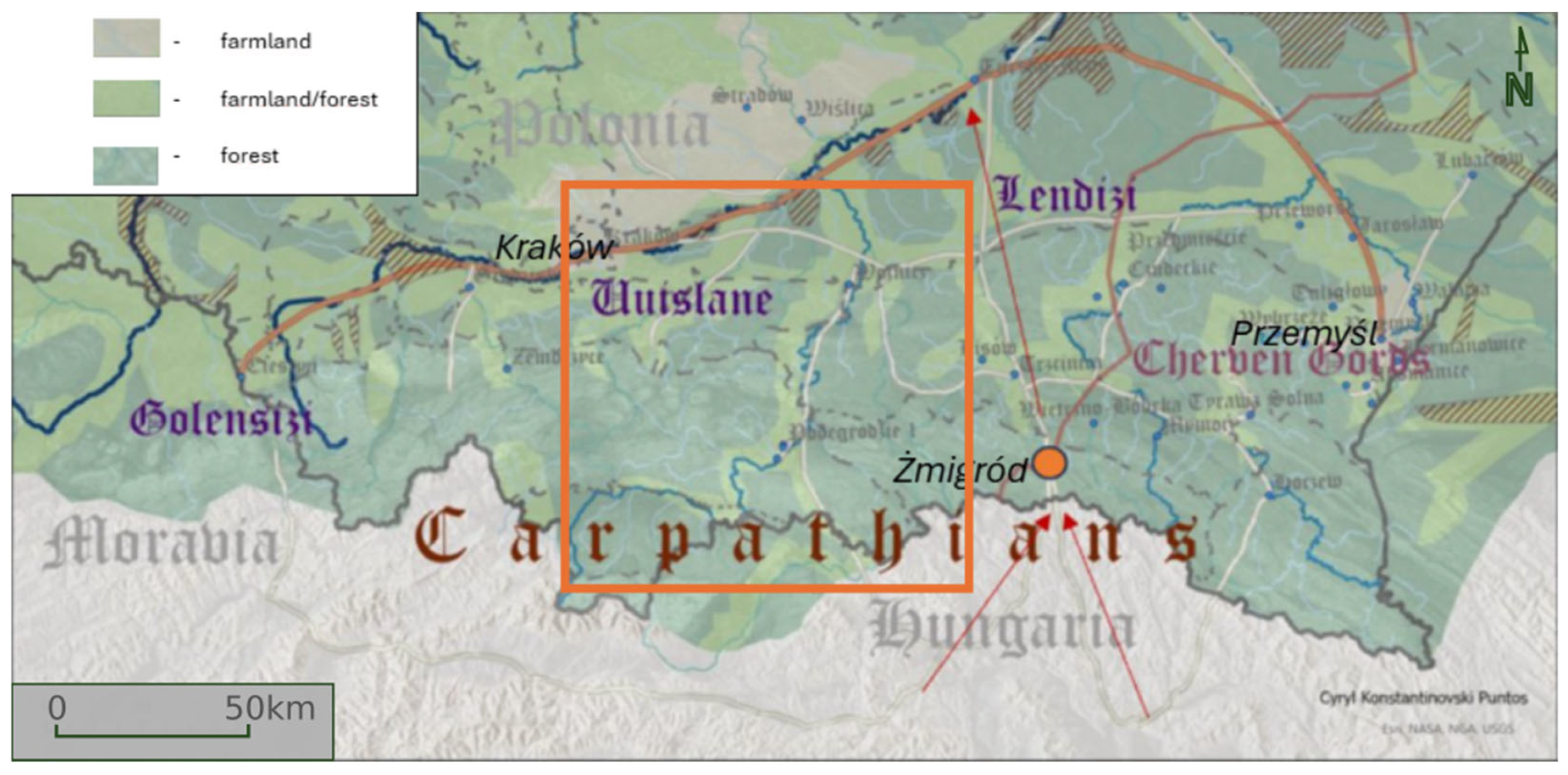
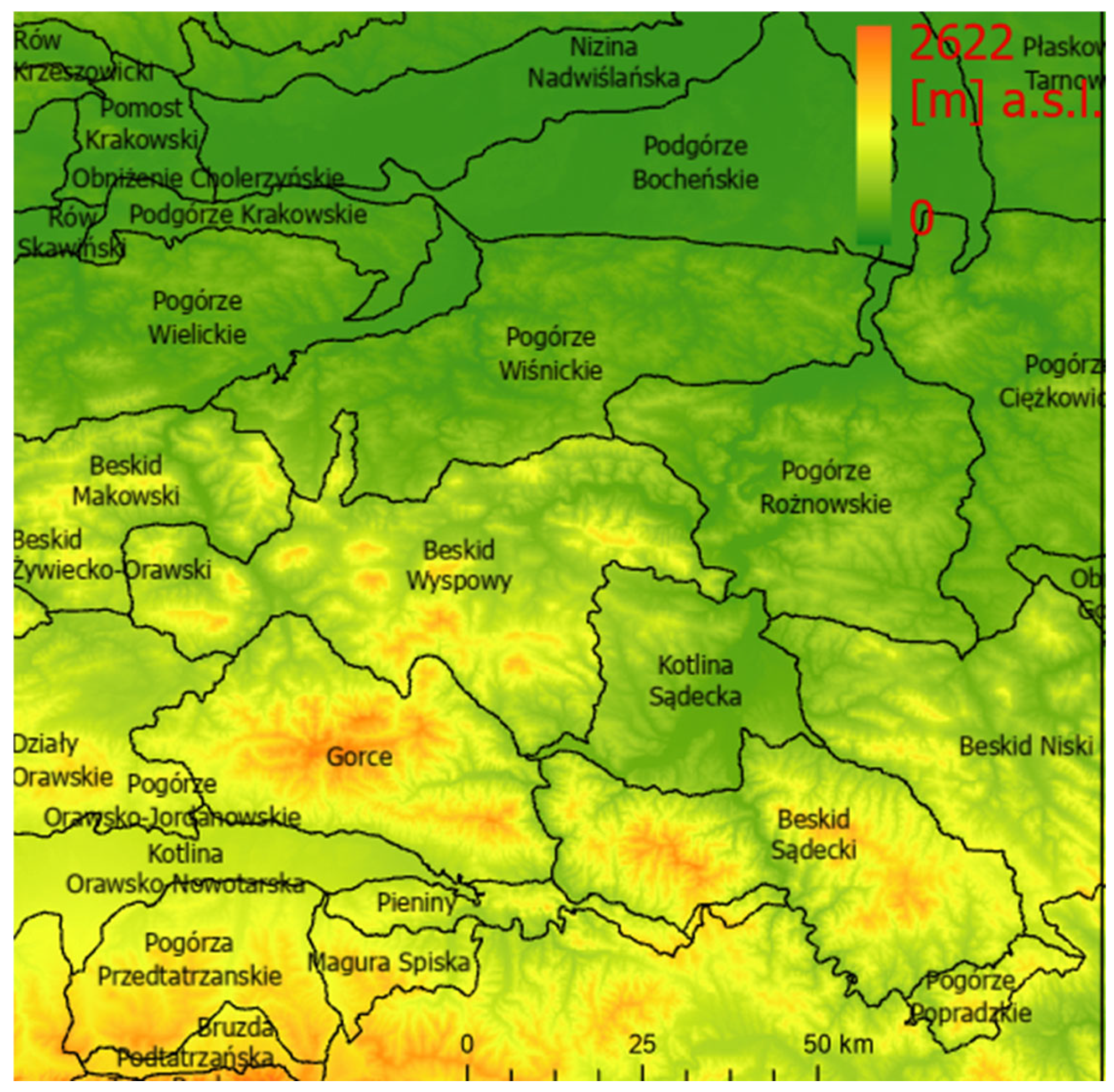
The study area covers almost 1/3 of the Polish Carpathians, or more precisely the southern region of Małopolska in Southern Poland (Figure 1). This area (Figure 2) is extremely diversified, from relatively flat landscapes through slightly hilly to typically mountainous. This area also has a significant number of hillforts. These include: Chełm, Chełmiec, Jadowniki Podgórne, Kraków (outside the Carpathians region), Łapczyca, Marcinkowice, Naszacowice, Podegrodzie (2 hillforts), Wojnicz, Zawada and Zawada Lanckorońska. Hillforts are most abundant in the Wiśnicz Foothills and Sącz Basin. Additionally, there is a shortage of them, for example, in Podhale, where colonization occurred a little later.
First step is to define the regular squares. The (Create Grid) tool was used for this purpose. On this basis, appropriate analyses (Zonal Statistics) were performed in ArcGIS Pro software 3.2.0, which were used to generate subsequent raster maps. Raster layers are usually used for calculations because each cell (pixel) has an assigned number. Thanks to this, map algebra can be further performed on their basis. The size of the raster cell is 2 km × 2 km for practical reasons: it is neither too large (the size is not that generalized) nor too small (the models are of good quality). Similar to other rasters—it was necessary to reduce them to the same arrangement of cells in each map for further geoinformatics operations. The research area was limited to the scope of all data used for the study. An effort was made to use data related to the southern part of historical Małopolska to the maximum extent.
Zonal statistics formula uses mean formula [36]:
x = 1 N i = 1 N x i
where: x—mean, N—number of values, xi—observed values.
The paper contains hydrology calculations according to the rasters (2). In the function D (flow direction), and after that flow accumulation, the maximum drop formula is used [37]:
D m a x = Δ h d
where: Dmax—maximum drop, Δh—difference of the heights, d—distance between the neighboring points.
Rasterization scheme [38]:
R a ( x , y ) = 0 o r N O D A T A , i f t h e p i x e l ( x , y ) i s n o t o v e r l a p i n g o b j e c t i a i , i f t h e p i x e l ( x , y ) i s o v e r l a p i n g o b j e c t i
where: R(x,y)—value of the pixel of the new raster from vector layer, ai—value i of the analyzed vector layer
Reclassification application (4):
f ( z ) = { 1 , if   z   > = 1400 2 , if   1150 < = z < 1400 3 , if   550 < = z < 1150 4 , if   300 < = z < 550 5 , if   0 < = z < 300 }
where:
1,2, ...—classes in reclassification of the raster
In the analysis of the hypothetical borders, the IDW (5) formula described below is used [39]:
z p = i = 1 n ( z i d i p ) i = 1 n ( 1 d i p )
where: zp—predicted value of IDW interpolation, n—number of points, di—distance to the prediction location for neighbor i, p—power (f.ex. 2, which is default), zi—measured value of neighbor i.

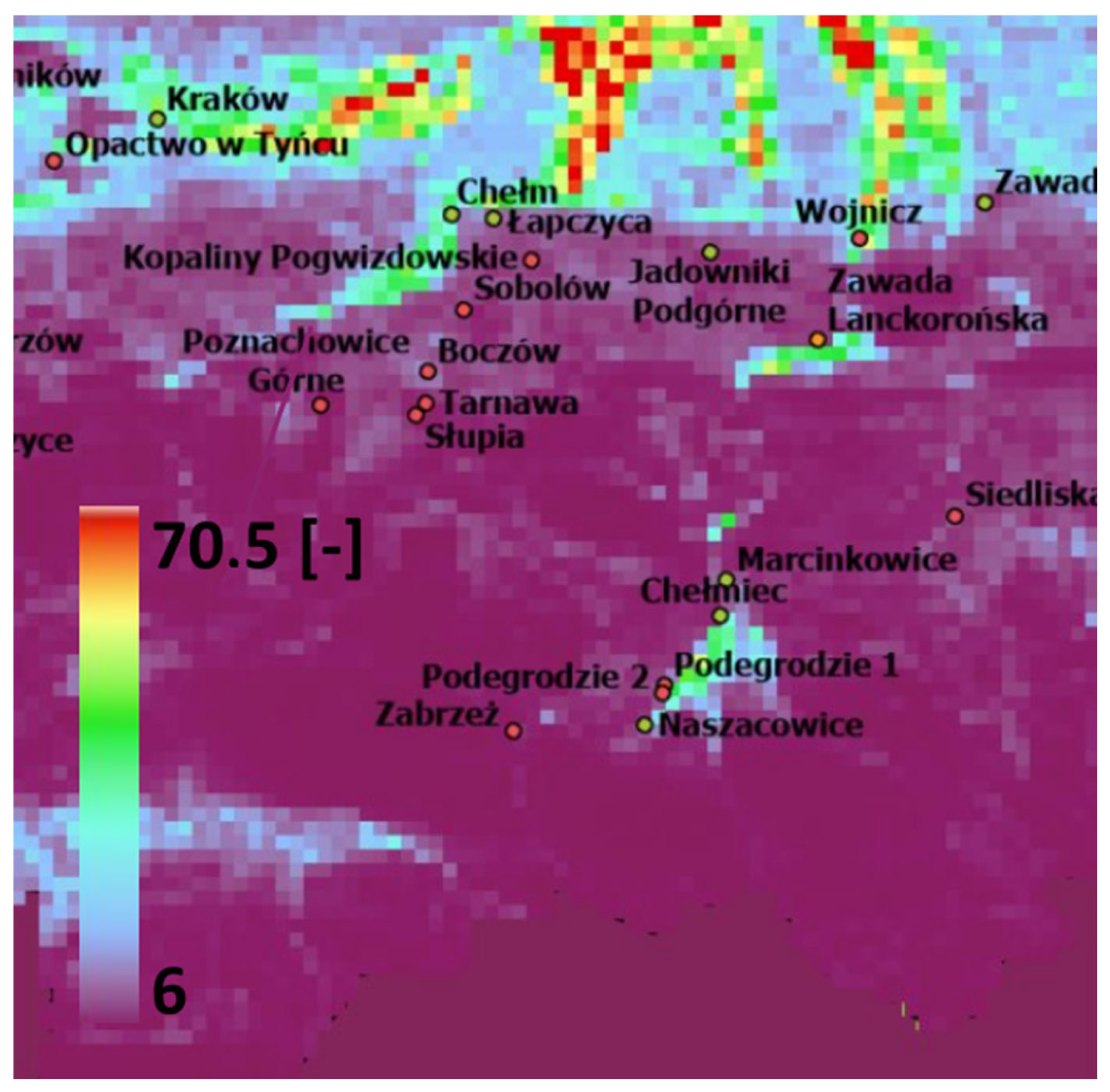
2.2. Materials

In calculations, the following input data have been used (Table 1).

2.3. Analysis

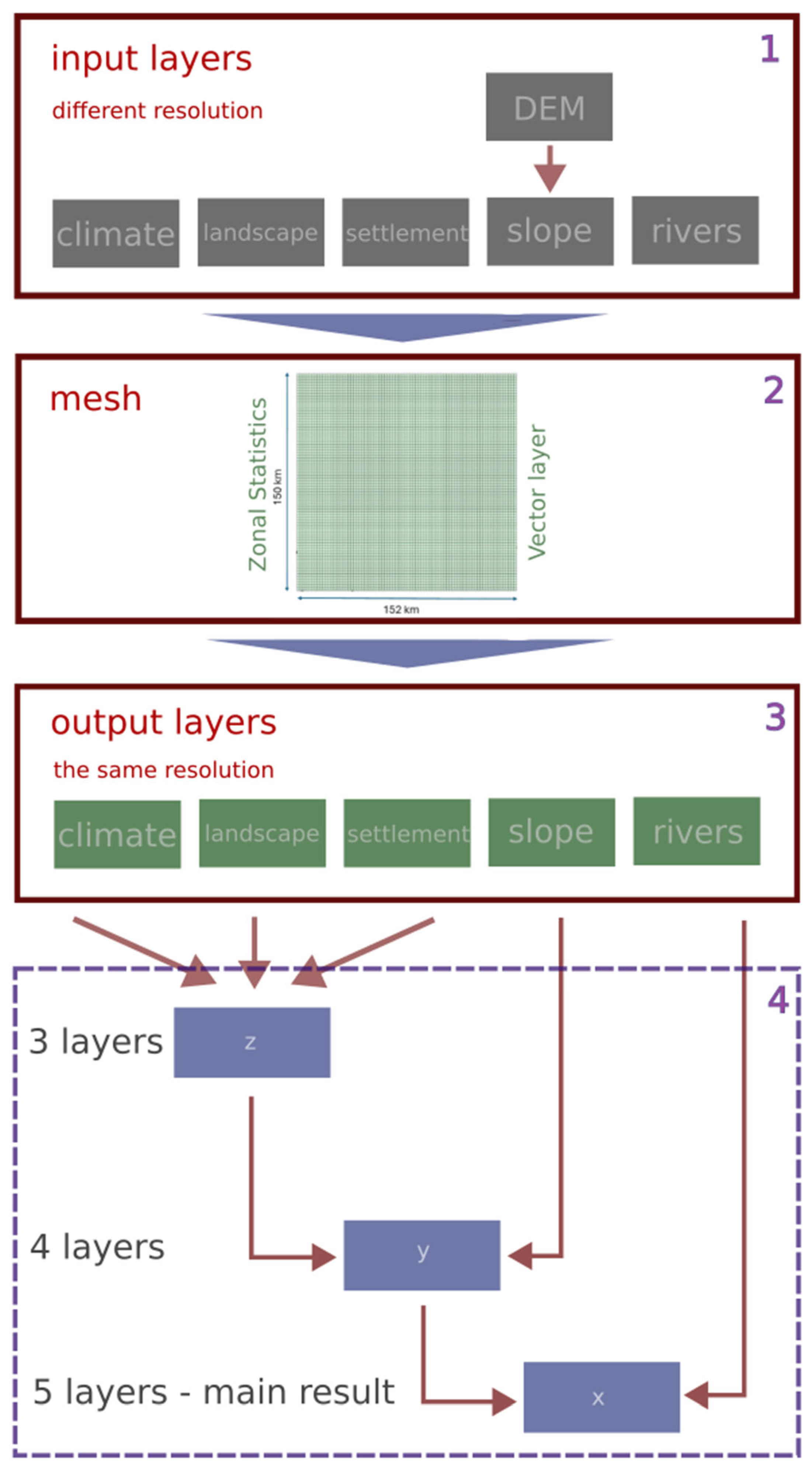
The entire procedure can be presented in a simplified scheme and diagram (Figure 3). It can be divided into four steps. The first (1) is to select 5 maps as input layers. After this (2) a vector mesh is done. In the third step, 5 output layers are done with relation to lower or similar resolutions. One pixel has got 2 km × 2 km. This is an optimal estimate, because if it had less it would be impossible to properly overlap and intersection the layers for wider spatial analyses. If it had more it would be too general, which would affect the final result. Output layers are at the same resolution too, to compare them in the next step (3). Geoprocessing of these raster layers was important to calculate result maps (“z”, “y”, “x”) in the end step (4).
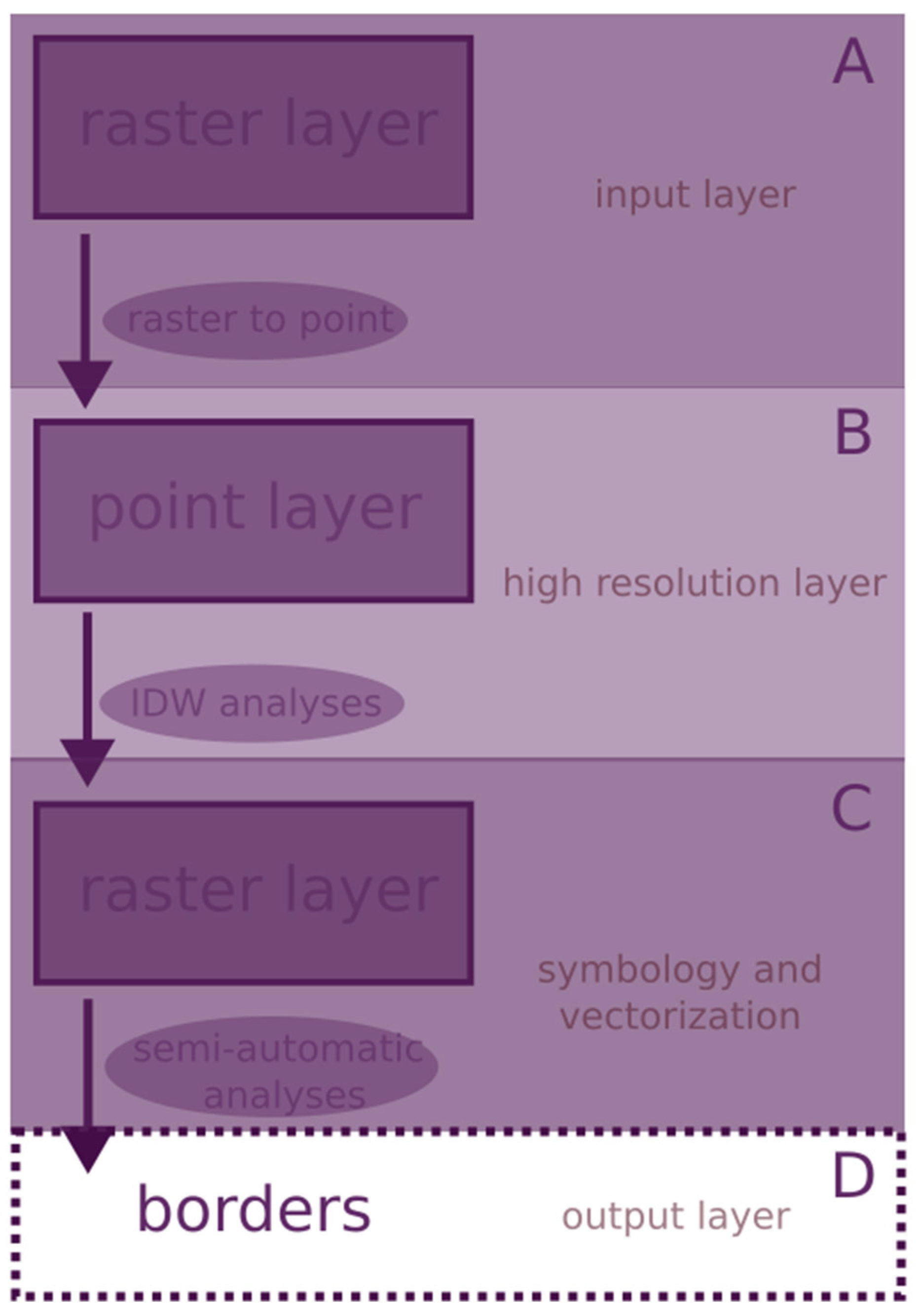
In order to check and improve the method of generating boundary lines between castellans, an appropriate test procedure was used (Figure 4). On the basis of the previously generated map, the raster layer was replaced with points with the specific values of individual cells (A and B). A raster based on the IDW (Inverse Distance Weighting) (C) estimation was then developed. Proper estimation and setting of parameters in the symbology of the obtained model resulted in the identification of the best possible method of generating administrative boundaries based on the example of Carpathian castellanies from early-medieval Poland (D). This example also defines the possibility of converting more general data into high-resolution data, which can be successfully observed in this example.
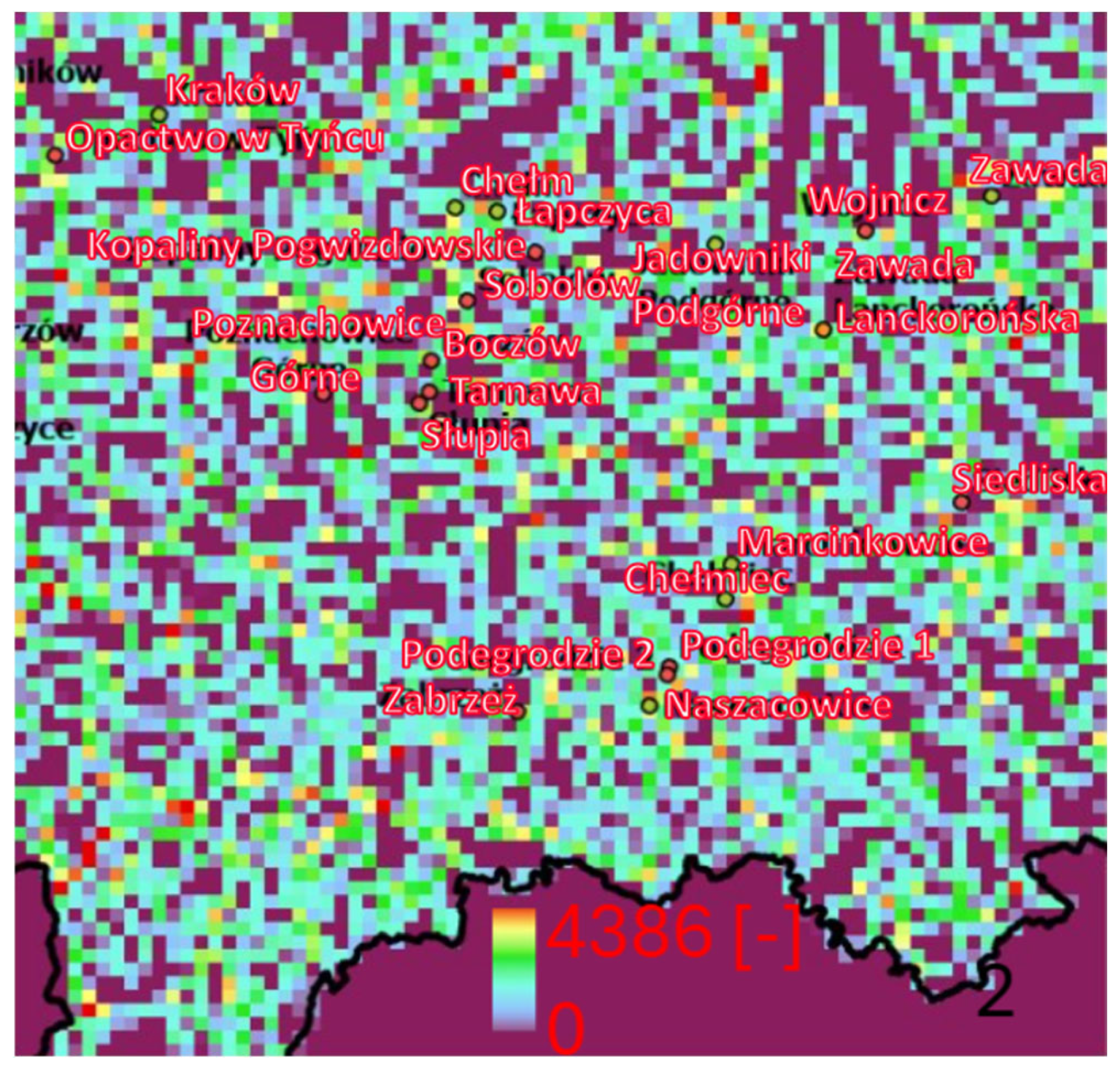
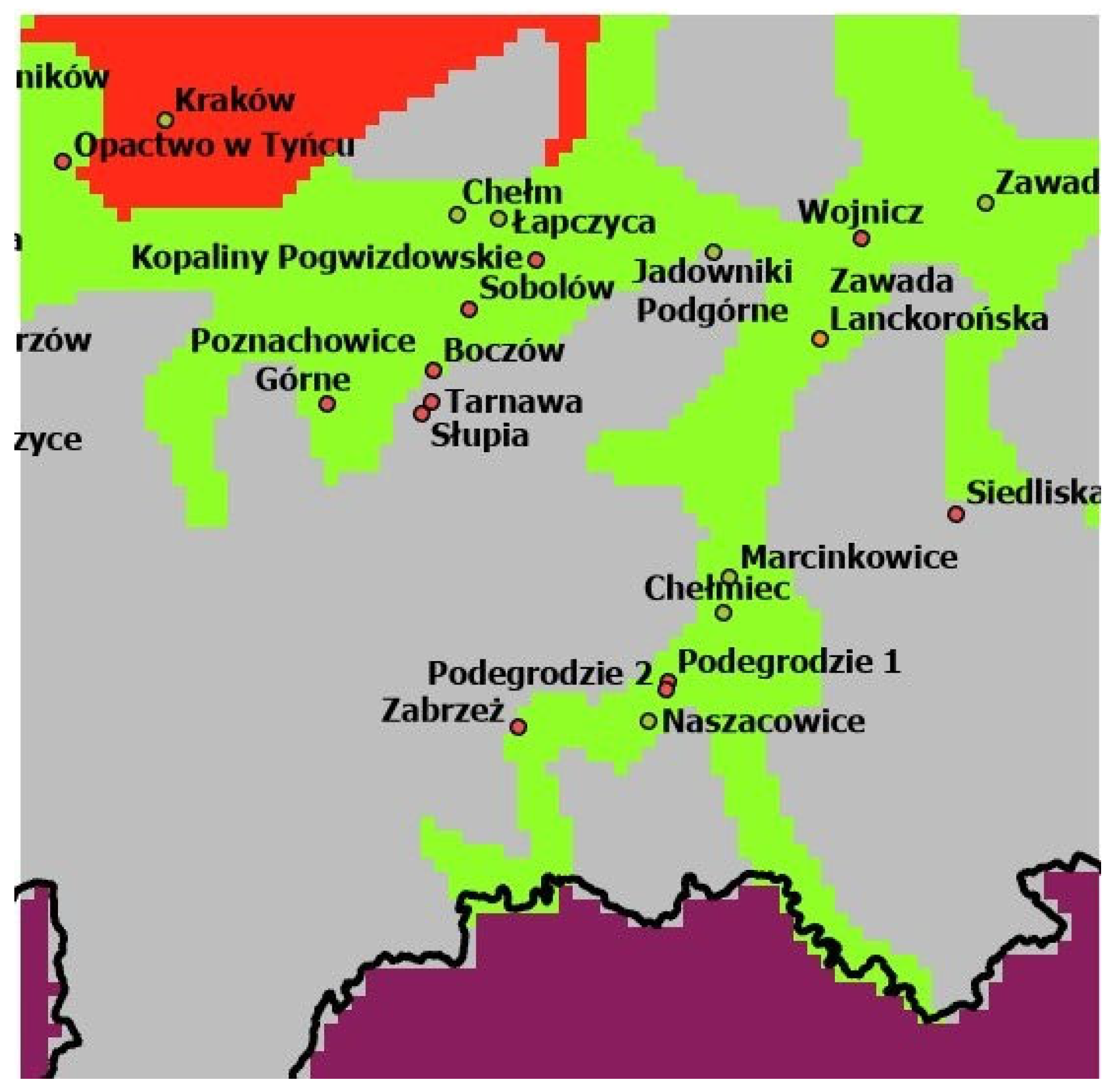
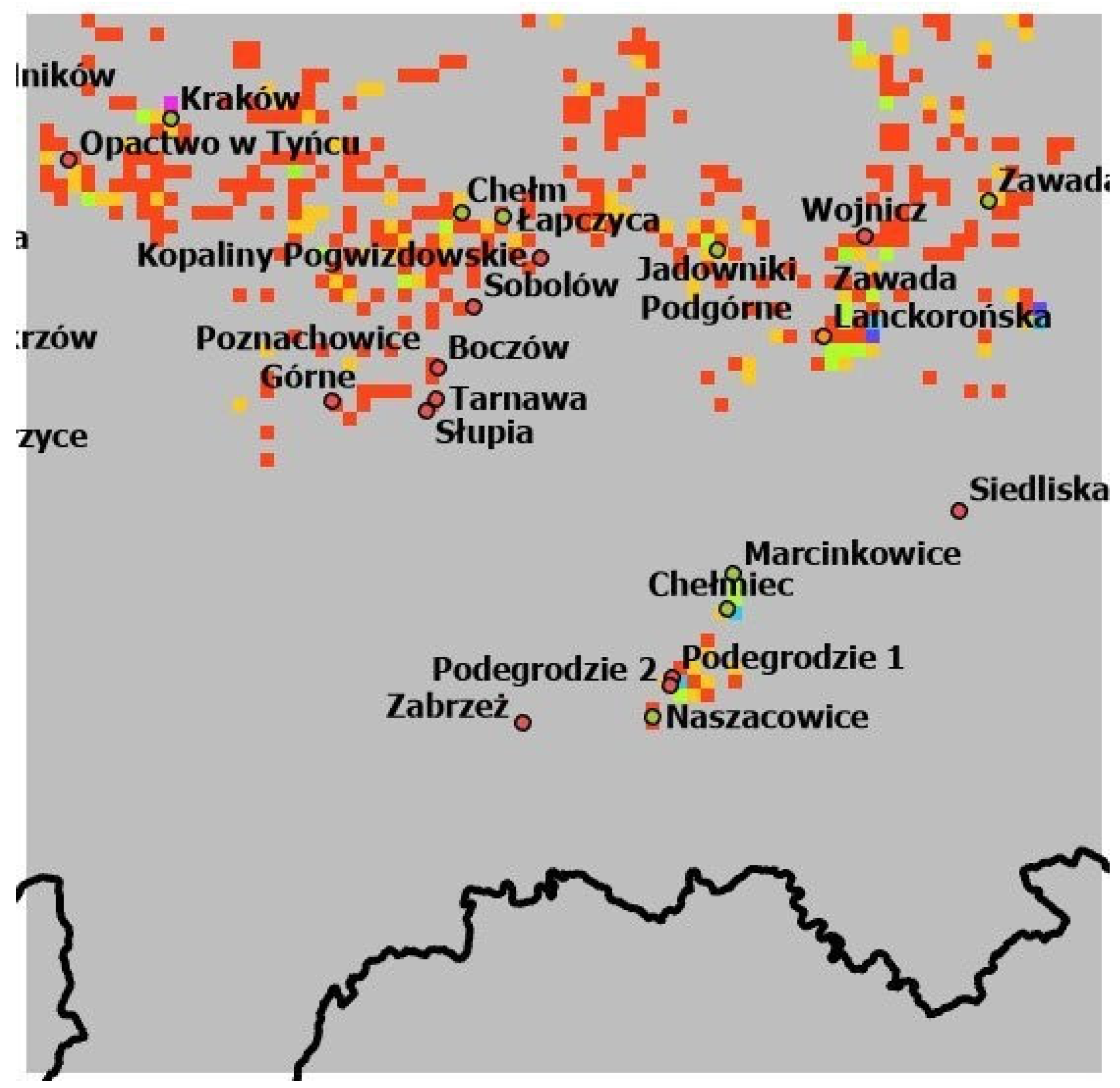
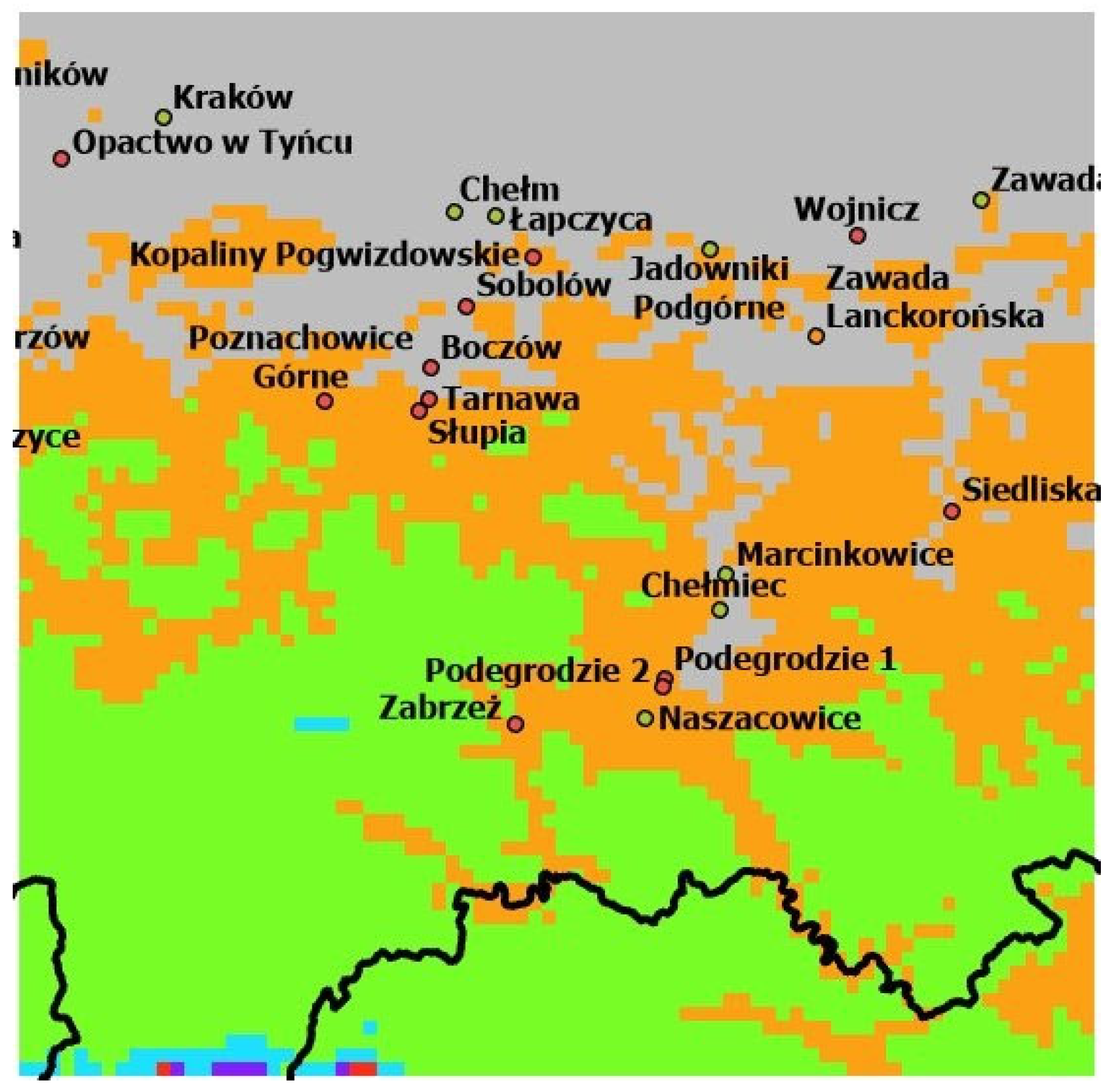
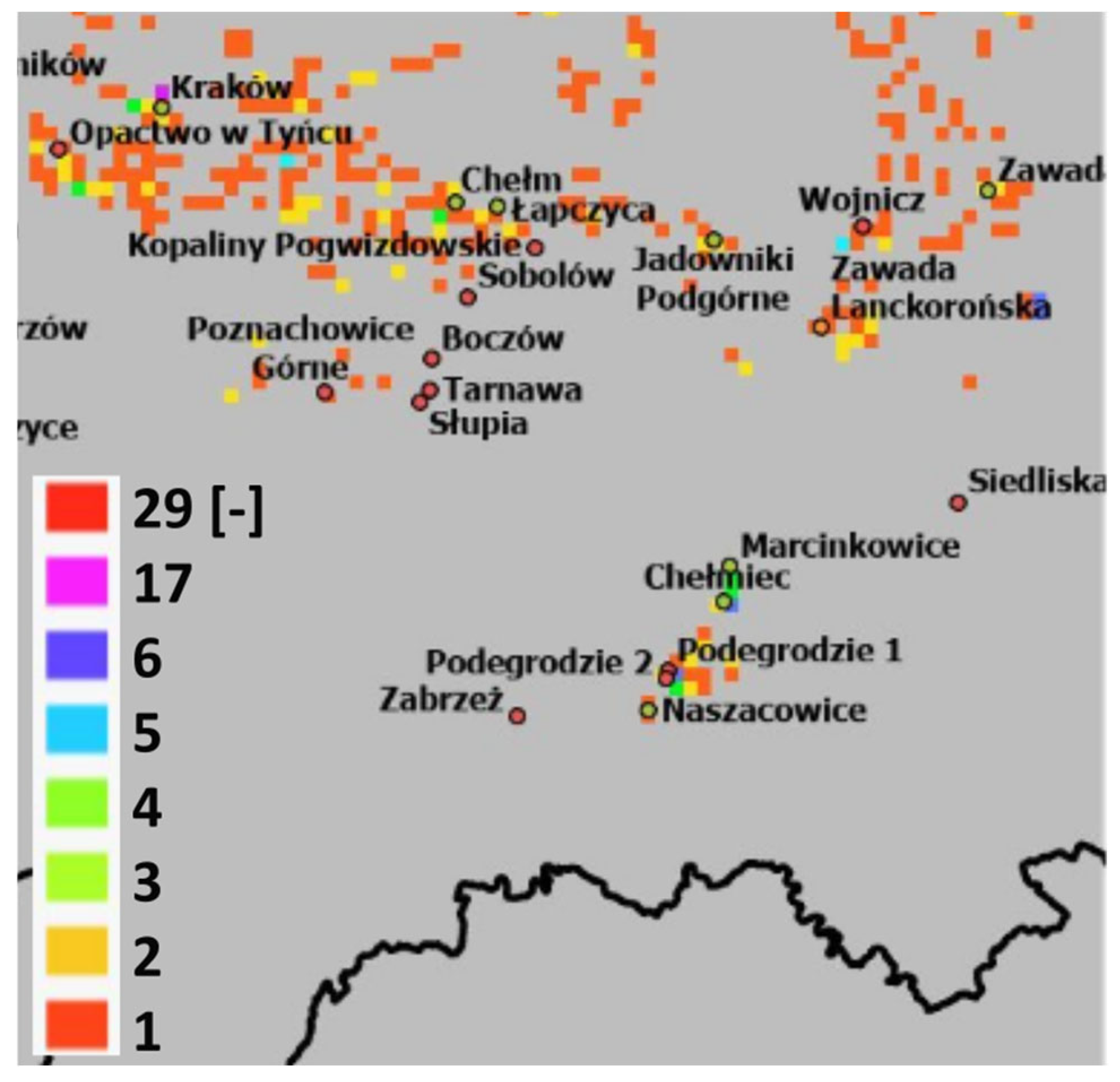
After rasterization of vector layers—Equation (3)—visualizations (settlement, landscapes and climate-vegetation belts) were selected for their later summation (Figure 5, Figure 6, Figure 7 and Figure 8).
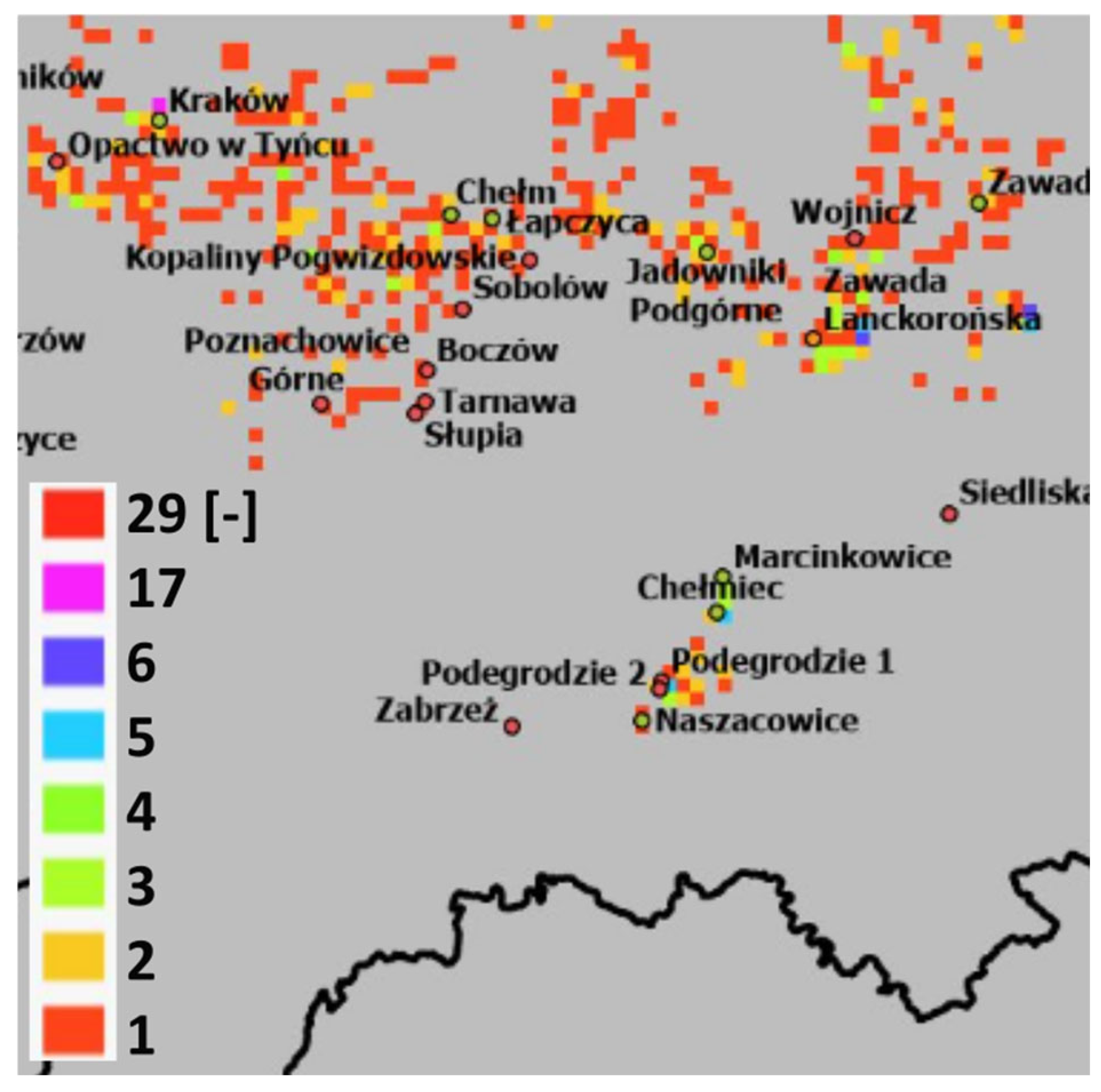
As a result, a map was obtained that includes settlement (Figure 9 and Figure 10) pressures on the natural environment. Next, the slope and river network were added as a multiplication operation. Thanks to this, river valleys and areas with a favorable slope (slightly inclined or flat slopes) will also be analyzed. They were not added up due to having a slightly different scale (more precisely, a continuous scale). The soil map was classified in terms of soil quality (1–7), based on the assignment of individual types as a given number differentiating good soils from their worse varieties.
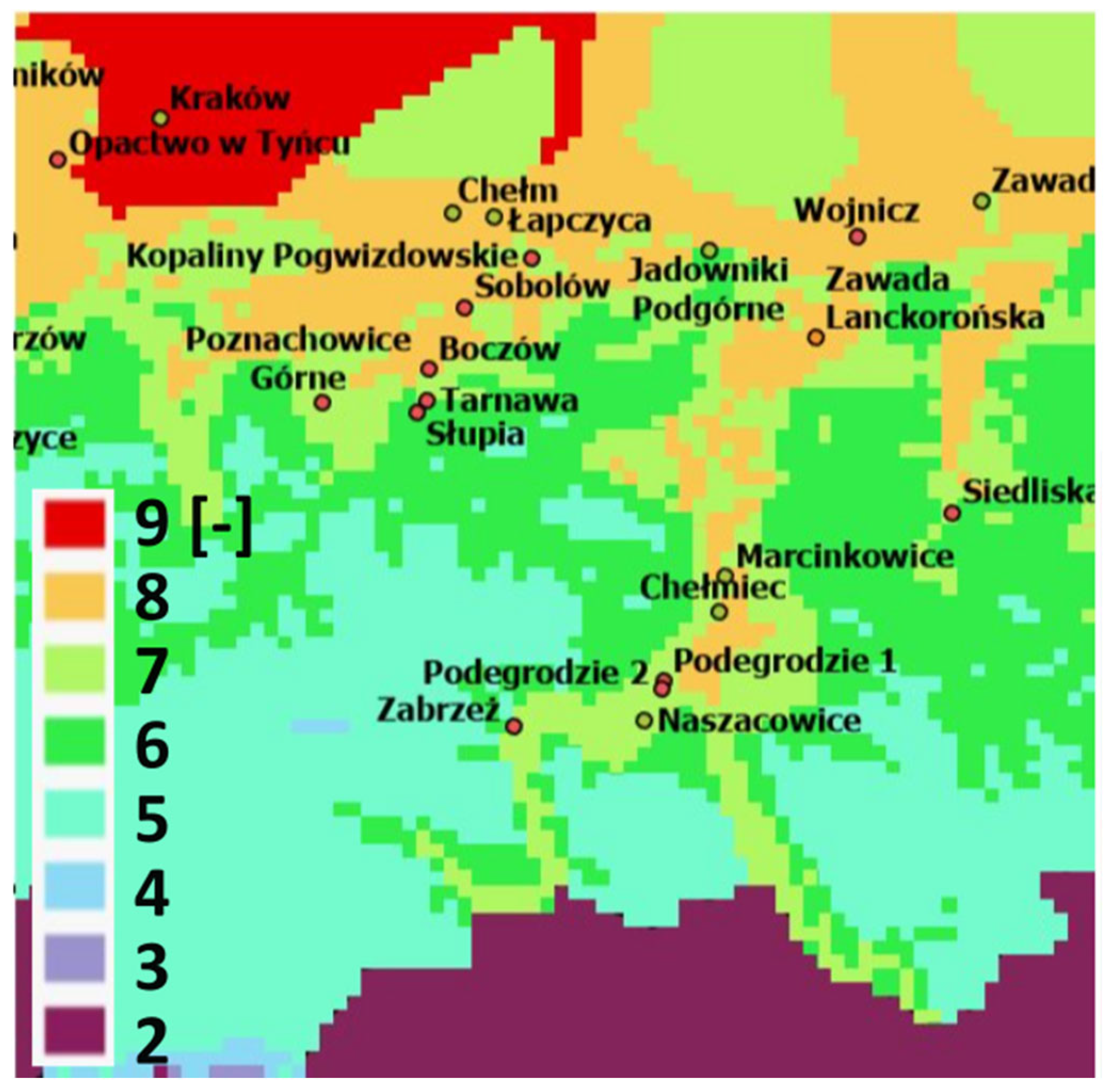
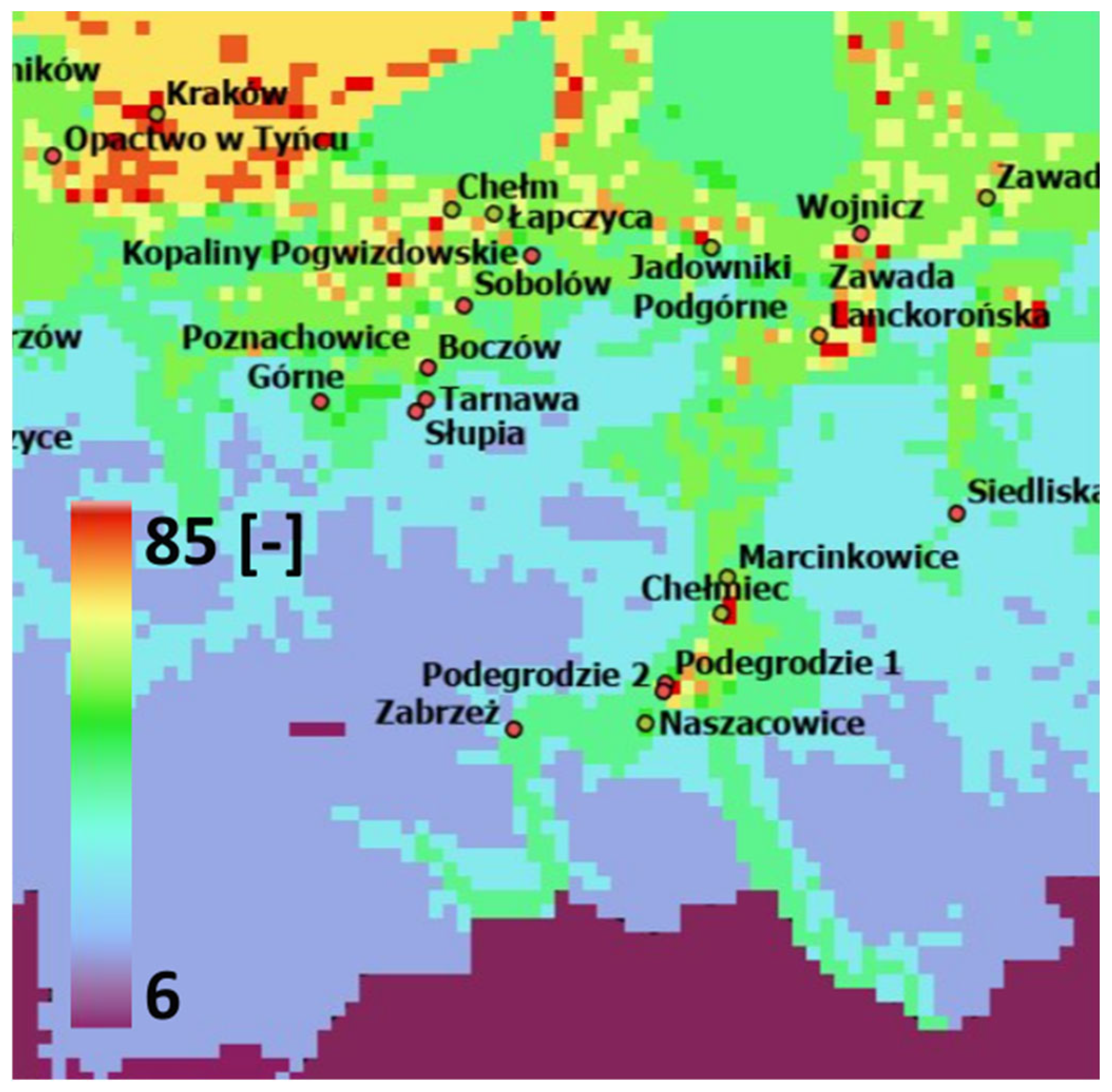
The map (Figure 11) shows a combination of layers that describe the natural environment in the Middle Ages. This connection illustrates both the areas less favorable for building human settlements at that time (the entire southwest, i.e., a large part of the Beskid Wyspowy, Gorce, Spiska Magura, the Orava-Nowy Targ Basin, Podhale, the western Pieniny Mountains, the Tatra Mountains, the southern Orava-Jordanowski Pogórze, the Beskid Makowski) and the south-eastern part of the Beskid Mały. In the Middle Ages, this area was only later colonized, which proves how important environmental conditions are for the construction of human settlements and the designation of agricultural fields. In the mountain part there are the Poprad and Dunajec valleys. They constitute the most important beneficial part for the construction of human settlements. By adding further maps, it is also possible to compare how this area has changed over time (whether people actually settled here and what anthropogenic pressure was on natural environmental conditions). In terms of cultivation, there are two best zones—the Dunajec Valley in the lower reaches and the outskirts of the Western Carpathians. The areas near Krakow are also the most favorable for cultivation, as evidenced by the best class value.
The next map supplements the previous one with the occurrence of settlements within the studied area. There is a relationship between climate-vegetation, landscape and settlement (Figure 12) in a given area. They settled in the territory occupied by the lowest floors. The forest areas (wilderness) were still uninhabited. For example, settlements did not enter the area of the northern part of the Chełm stronghold, or north of Jadowniki Podgórne and north of Zawada. Most often, quite flat areas were occupied (which will be better proven using a map of slopes), i.e., among others river valleys. The largest settlements are in the north-west.
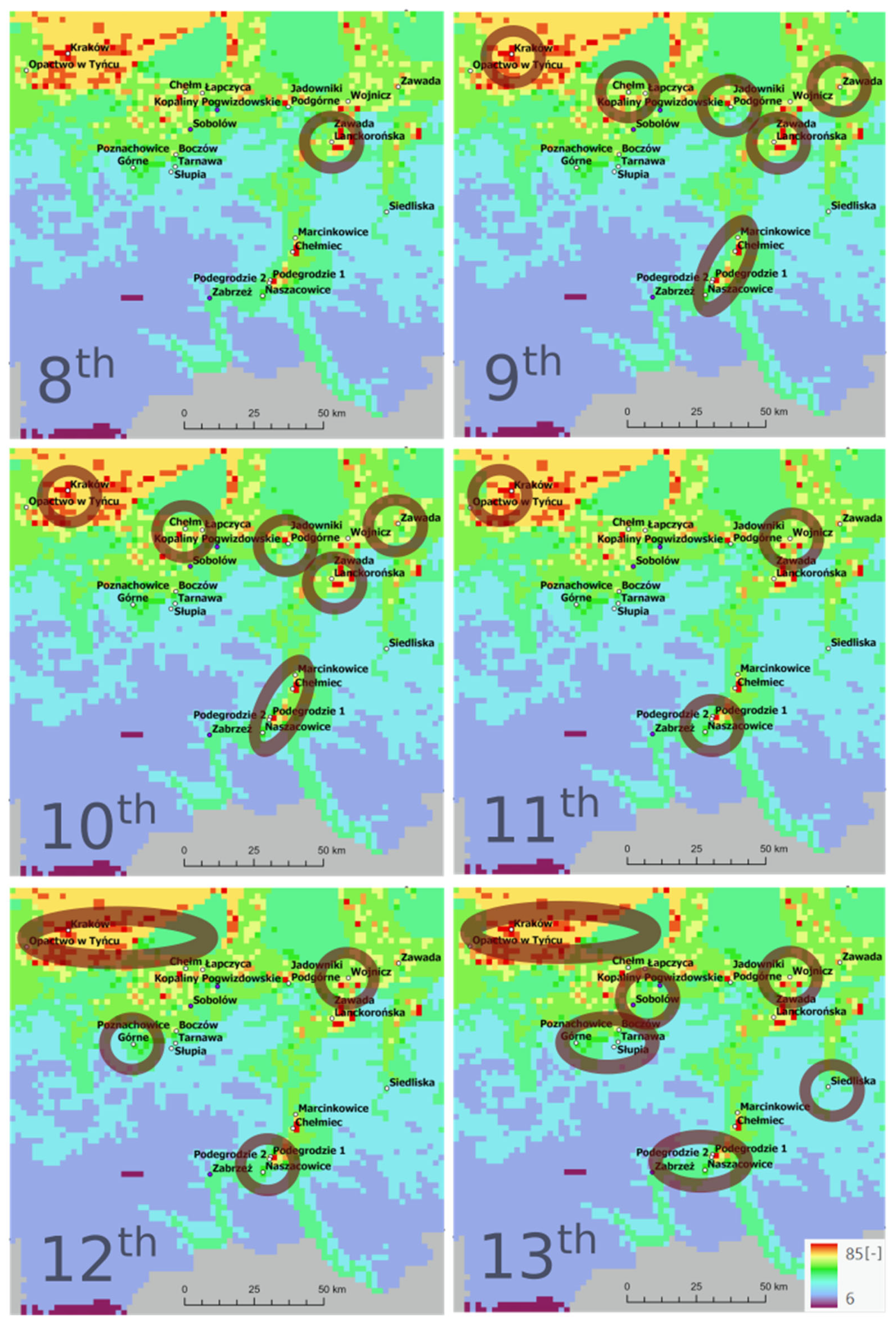
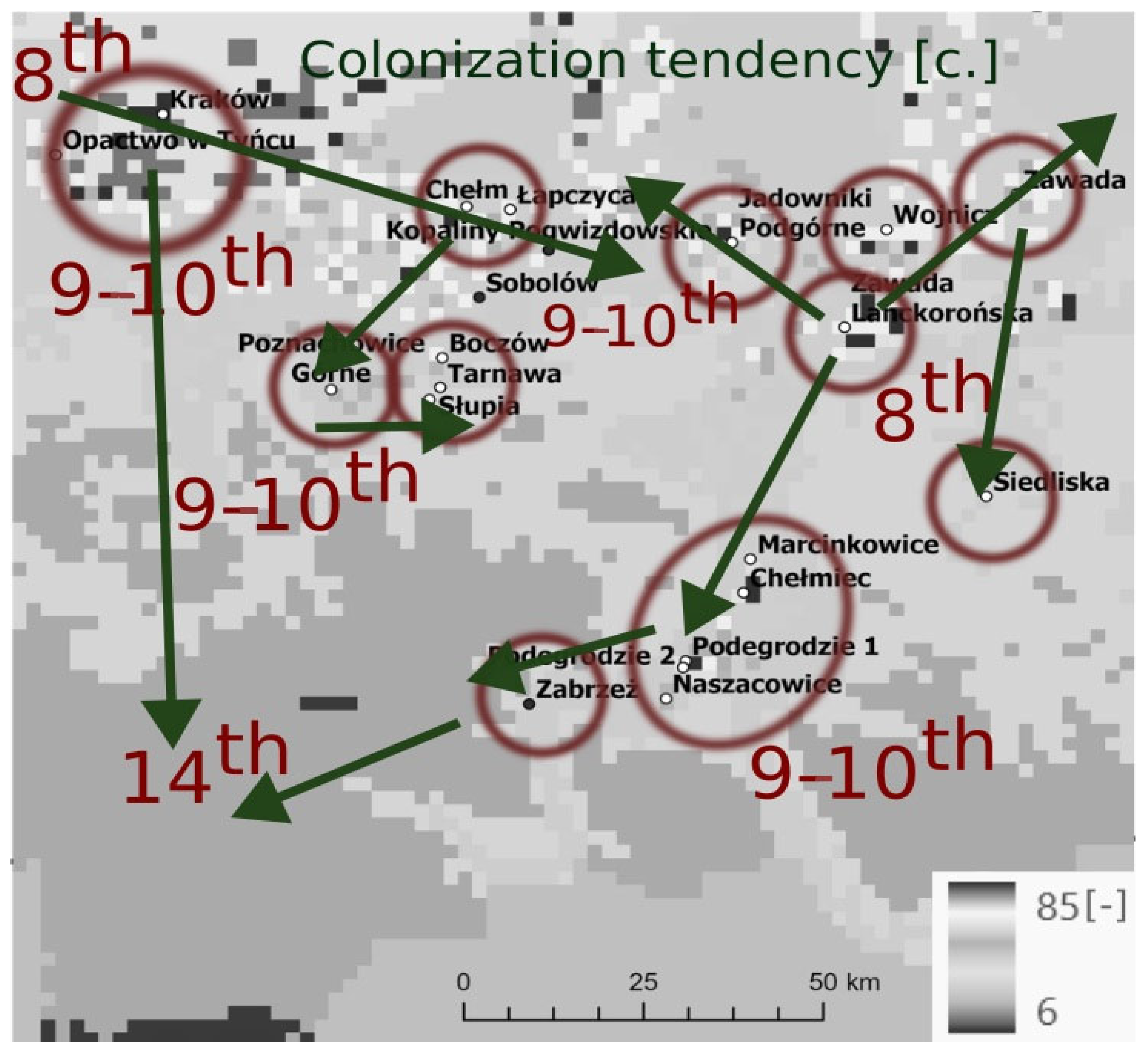
Colonization (Figure 13 and Figure 14) increasingly penetrated towards the higher parts of the hills south of Kraków. Settlements were established around strongholds. Therefore, it is possible to assess in which regions migrations and/or expansion of agricultural hinterlands were taking place. By comparing the location of strongholds in relation to open settlements, it was possible to assess where people first appeared and where they appeared later. Knowing approximately when a given stronghold existed (often it can be assessed only on the basis of pottery), it is possible to draw a map of the settlement of the Carpathian areas at the beginning of the Middle Ages (8th–13th centuries). First, a stronghold was constructed around Zawada Lanckorońska. Similarly, later in Krakow, around Naszacowice and along the border of the Carpathians with Sandomierz Basin. In the 11th century, colonization could have continued in the vicinity of Krakow, Wojnicz and Podegrodzie. In the 12th century, settlements moved further, around Poznachowice Górne, and expanded in the vicinity of Krakow on a very large scale. In the 13th century, colonization took place around Siedliska and Wojnicz. Along the river valleys, it spread further up the watercourses (for example, this applies to the Dunajec).
Map of connected maps (Figure 15): slopes, vegetation levels, landscape types and settlements. It can be seen that settlements occurred in the north, north of the border of the Carpathians with the Zapadlisko Przedkarpackie. The exception is the area around Naszacowice and the Orawa-Nowotarska Valley, where it fits perfectly into the boundaries of this physical and geographical unit. This means that the rest of the areas are not adapted to intensified agriculture.

3. Results

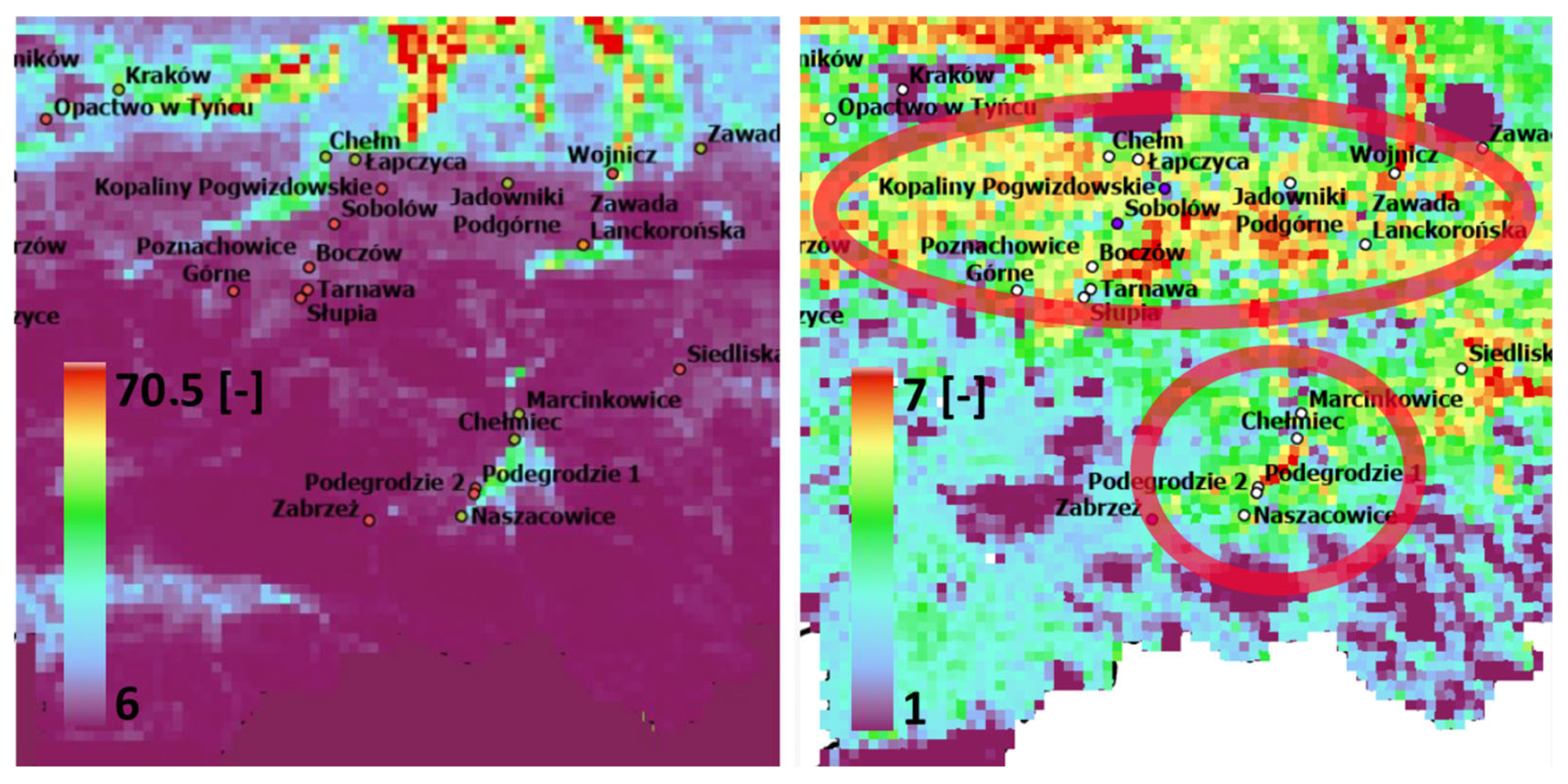
A result map combining all result maps is shown in Figure 15. The highest values of the indicator are located north of the town of Łapczyca, north of Wojnicz and east of Kraków. Smaller but still significant values are located around Naszacowice along the Dunajec River and near Zawada Lanckorońska and south-west of Chełm. Significant values also occur in Podhale, where there are no important strongholds. The occurrence of such high values (factor about 18 [-]) in Podhale proves good agricultural conditions that were not yet used in the early Middle Ages ([-] is “no unit”). Colonization of these areas occurred in later centuries (14th century). The river network that was implemented into the model determines possible settlement directions. The model shows the refugial function of the stronghold in Naszacowice, but also with a similar function are the stronghold in Zawada Lanckorońska, Wojnicz and the stronghold of Chełm. Maps can be connected to the soil map (Figure 16).
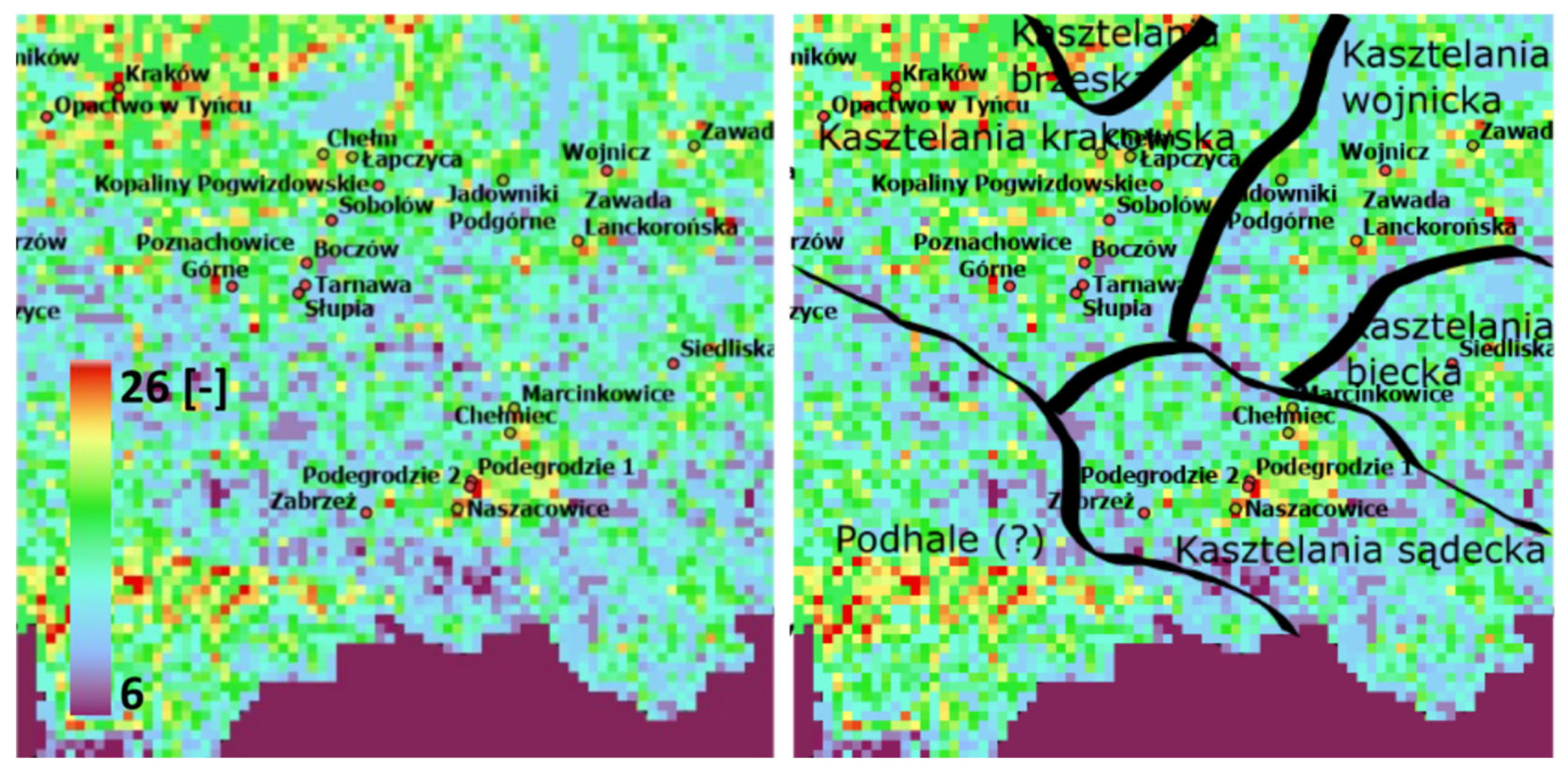
According to the visualization (Figure 17), empty spaces (stripes) between areas with higher raster point values can be precisely interpreted. These lines can be compared with the boundaries between early-medieval castellanies. As a result, images are obtained that overlap one another. In particular, the lines of the Sądecki castellany, Biecz castellany, Wojnicz castellany, Kraków castellany, Brzesko castellany and the Podhale area are visible. The last-mentioned place was not inhabited on such a scale as in the other administrative regions.
However, attempts were also made to develop these areas. In the later centuries of the Middle Ages, the mentioned region is even referred to as the “Szaflary castellany” or “Podhale castellany” (https://sercepodhala.pl/o-gminie/historia-gminy/, accessed on 15 December 2025). The most noticeable are the boundaries of the Sądecki castellany, where there are settlements in the very center and areas that are difficult to access.
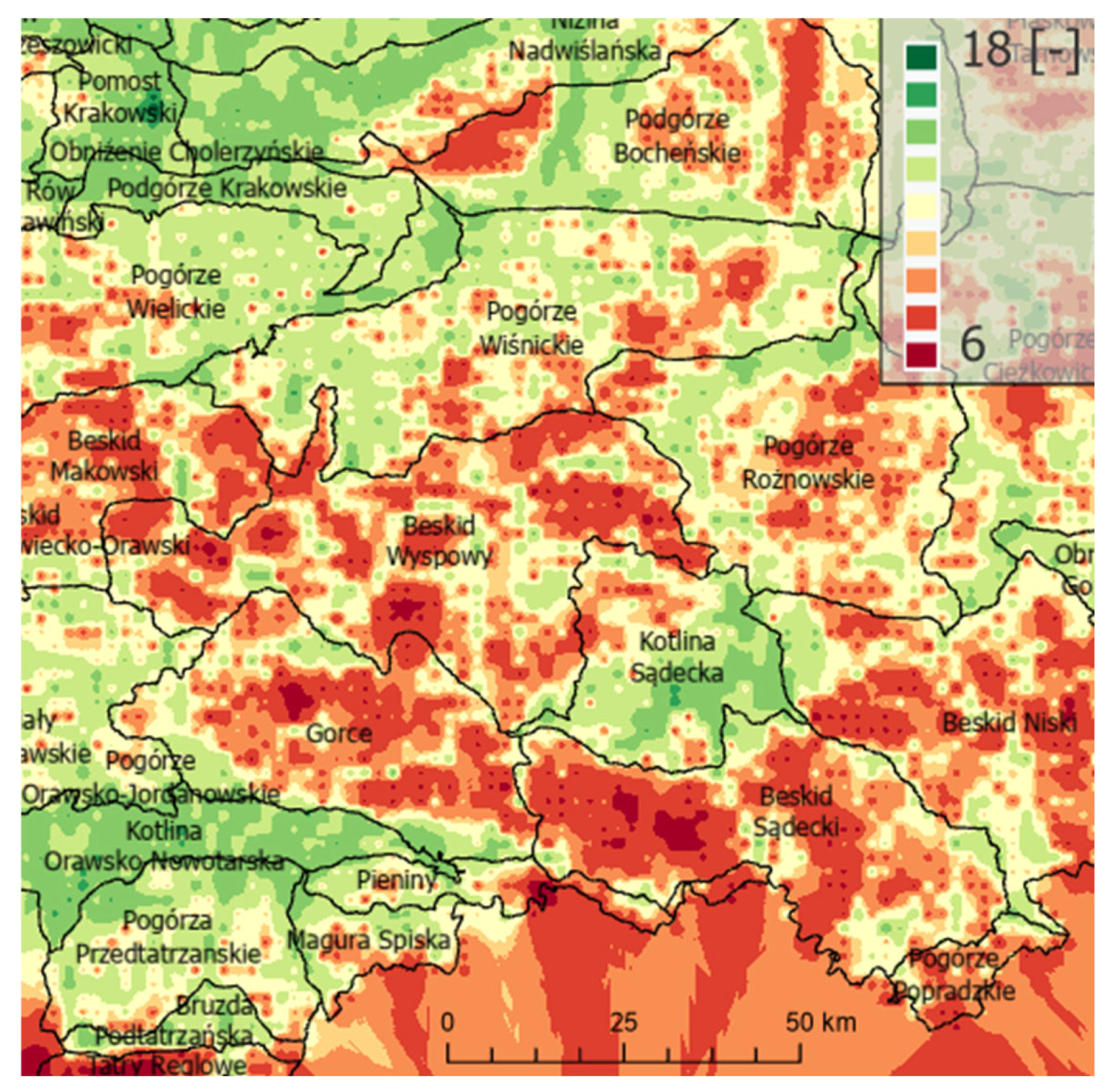
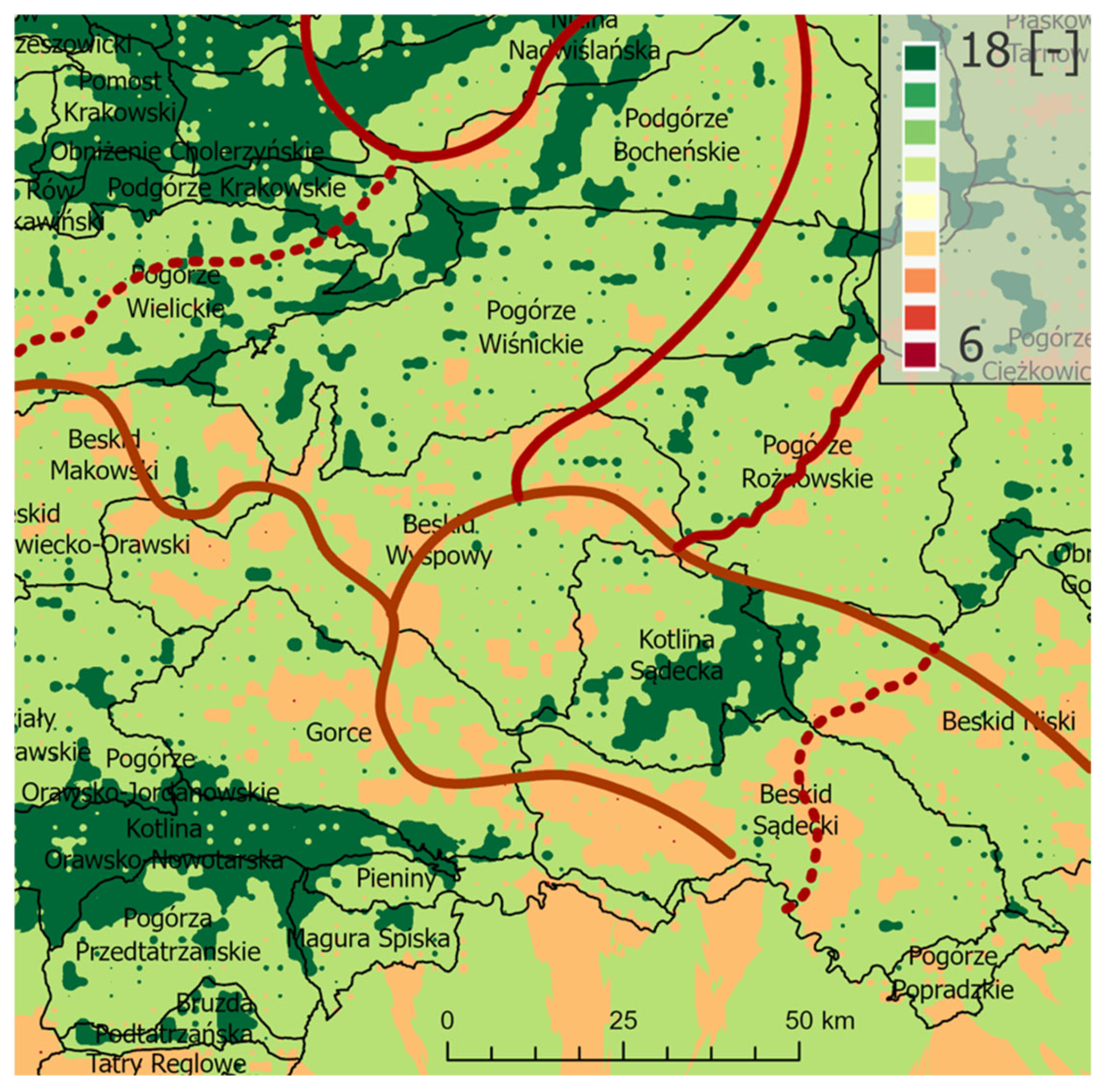
The color scale is extremely important in this example (Figure 18 and Figure 19). The separation between the low values of the indicator (6) and the high values (18) shows where settlements would be inefficient (in red) and more effective (in green). This demarcation could have helped to obtain information about where there were areas where there could be potential boundaries (in the central part, along regionally distinguished low-value pixels). This method is quite accurate; in particular, it correlates with the Numerical Terrain Model. In order for this method to be more widely used, for example by extending it to the neighboring Sudetes, it is necessary to trace the occurrence of known confirmed early-medieval hillforts. These studies can also indicate missing hillforts that would fit in a given place. The borders of the castellanies have a rather uncomplicated course. In a way, the places where the borders within a given castellany could run are geographically interesting. What was the reason for this? It is possible that there were not strictly geographical factors, but social or communicative factors and the wider impact of the given large castles. In the case study, there are two such examples: in the castellany of Cracow and the castellany of Sącz, dividing them in half. Therefore, it is necessary to trace historical literature (maps) and archaeological literature (hillforts) each time so that the validation is as consistent as possible with reality.

4. Discussion

This publication presents a number of basic and resulting maps related to subsequent transitions in the algorithm (Figure 3). Each of the subsequent visualizations had specific weights, thanks to which it was possible to compare and equate individual rasters. The weights were determined on the basis of thorough empirical research and determined in such a way that they were as proportional to each other as possible. In general, it is rare for the weights to have a larger range than the 8-point scale—for practical reasons (clarity of calculations), generalization of data (the possibility of later summation and interpretation of spatial information) and the perception of the potential recipient (the more extensive the classification, the worse it would be with the evaluation of the data obtained). Vector layers were transformed into raster layers, which facilitated further geoinformatics procedures using appropriate indicators (without specifying units, i.e., [-]). Therefore, the given maps were easily calculated with each other. In order to obtain a satisfactory result, it was necessary not only to generate maps but in many cases to assign a value to the indicator in the classification (manually). In some cases, it was simple (settlements), based on the number of points on the map. In some of them, it was more difficult, such as (landscape), where it was necessary to give a value. Sometimes the scale was continuous, sometimes in leaps and bounds. This consisted of defining the clear boundaries of polygons or a smooth transition of a given phenomenon or a very large stratification of data (river network). The effectiveness of the results obtained lies in the appropriate selection of resolution in relation to the amount and type of information presented on the map. The balance between the length of the pixel cell and the classes should be optimal and simplified. If the balance is disturbed, the maps may incorrectly determine the ranges of a particular parameter and have no comparative values. The versatility of the method lies in the placement of various spatial information for later analysis. However, their selection and appropriate classification should be at least semi-automatic for the result to be satisfactory.
The results obtained correspond with the analyses developed by other scientists in Poland and around the world. The previously cited publications of Żaki [3], Tomaka [1] and Poleski [2] show maps where the boundaries of individual castellans are demarcated. Tomaka’s publication [1] has a visualization of three castellanies: Sącz, Wojnicz and Biecz. The castellanies of this country are presented in a similar way in the book by Poleski [2]. It can be noticed that often these boundaries do not harmonize with the actual terrain, where the boundaries should rather be drawn on the tops of hills or other elevations of the terrain or inaccessible areas (forests, swamps), with appropriate demarcation of the distribution of the local population (settlements in relation to rivers). This has to do with defense and the socio-economic conditions. This is why the topographic characterization of the area is so important in the context of predicting the boundaries of the castellany, if only because it determines the range of raw materials and settlements open to the needs of the main stronghold of the administrative unit. You cannot just rely on hypsometry alone to draw a line. Therefore, other factors (as proposed in this article) are extremely important. The publication from Żaki [3] shows the equivalents of castellanies in the area occupied by the former so-called Cherven Gords (assuming that this area reached as far as the Carpathians). Precise analyses of the castellany boundaries for southern Poland (or even the whole country) can be facilitated thanks to the geoinformatics methods used. Of course, this requires the right data; however soil data is only available a few regions of Poland. It is possible that replacing the soil map with potential vegetation [47] may give an appropriate result. However, the soil map is more accurate. It is worth mentioning that the estimation based on the current data is only hypothetical, because the near-surface quality of the soil layer may have changed (which is why further research is so important). The results obtained could be verified by complex geomorphological analyses in the field, soil sciences and geoarchaeology. Other parameters (for example, slope) should be less variable.
Research has a wide range of applications for the development of agriculture, especially historical agriculture. Thanks to this, it is possible (at least partially) to reconstruct the impact and trend of progressive economic intensification in the selected area. The above analyses can be successfully complemented by remote sensing research, in particular land use changes [48]. Currently, the field of HGIS (Historical GIS) is developing significantly in the context of planning and possible changes in the landscape [16]. The use of old maps, based on the example of an Italian case study, is well illustrated in [49]. However, the analysis does not only cover agriculture. Any changes over time in terms of settlement (applied not only in medieval era analysis), hydrological adaptation and the use of new technologies using algorithms can be used both in the natural sciences (for example, soil science) and in the social sciences (for example, geography, especially socio-economic) and humanities (for example, archaeology). Intensified agriculture occurs in many places in the world. Therefore, this research may contribute to methodical and completely new solutions at the junction between geoinformatics and more classical science.

5. Conclusions

According to two hypotheses, a model of the delimitation of the boundaries of early-medieval castellanies based on GIS modeling was developed. In a way, this is a derivative of the earlier analyses contained in the text. In addition, the natural situation prevailing in the central Polish Western Carpathians was characterized and was attempted to be reconstructed.
The maps are limited only to the central part of the Polish Carpathians. If there were vector maps from Podkarpacie and Silesia, it would be possible to model the entire mountainous area in Poland. The soil map explains why some strongholds are located so far up in the mountains. However, they are not in the south-west of the study area. The administration of Podhale was perhaps slightly different, due to the small number of people in this area. The resulting map shows the pressure on the natural environment and the opportunities provided by the river network for the early-medieval population. It is possible that other maps can be used, not necessarily those listed in the study. However, this depends on the research problem. Geoinformatics research can be extended to operations on maps other than just the product and sum. This study has shown that they are sufficient for this problem. New research related to the inversion of one (climatic) map resulted in generating border places between castellanies. It is possible that a reversal in the scoring assignment would have resulted in different results. Only such studies can complement classical calculations related to spatial analysis. The size of a single pixel cell can also be more or less accurate. The accuracy for such a large area and the data used are sufficient. At this level of precision, it is possible to determine with a good approximation the most important trends in the medieval development of the population in the area south-east of the capital city of Krakow. Other types of analyses (remote sensing) could also only complement the results, because it is difficult to predict land use from such a distant time using remote sensing. The interdisciplinary combination of many sciences will certainly support this type of geoinformatics research.
The analysis demonstrates the role of geoinformatics research in creating a scientific model regarding anthropogenic pressure on the natural environment. The best places to build human settlements were: Naszacowice, Zawada Lanckorońska, Chełm and the area east of Kraków up to Zawada. Confirmation of the geohistorical boundaries of the castellany was included. The individual component models also illustrate complex research issues. Zabrzeż and Siedliska are outside the ecumene, which means they are more watchtowers than residential centers. The soil map confirms why people chose to build forts deep in the Carpathian Mountains. Good-quality soils attracted potential incoming populations. Visualizations based on a vector layer, which is then rasterized in an accessible way, show the studied phenomenon. In further research, it is possible to select a smaller “case study” confirming the model. However, at this level of generality and raster cell, one is able to read a lot of information related to the relationship between man and the natural environment in the Middle Ages.

Author Contributions

Conceptualization, C.K.P., E.S.M. and S.M.; methodology, C.K.P. and S.M.; validation E.S.M., investigation, C.K.P.; writing—original draft preparation, C.K.P. ands S.M.; writing—review and editing, E.S.M. and S.M.; visualization, C.K.P.; supervision, E.S.M. and S.M.; project administration, C.K.P. and S.M.; funding acquisition, S.M. All authors have read and agreed to the published version of the manuscript.

Funding

Research project partly supported by program “Excellence initiative—research university” for the AGH University of Krakow.

Institutional Review Board Statement

Not acceptable.

Informed Consent Statement

Not acceptable.

Data Availability Statement

The raw data supporting the conclusions of this article will be made available by the authors upon request.

Acknowledgments

We would like to thank the “Cartographical Collection” Institution at the Jagiellonian University in Kraków for providing an interactive soil map of Małopolska for analysis.

Conflicts of Interest

The authors declare no conflicts of interest.

References

  1. Tomaka, S. Sieć grodów i kasztelanii w południowej Małopolsce w XI-XIII wieku, XXXVII. Acta Archaeol. Carpathica 2002, 37, 149–170. [Google Scholar]
  2. Poleski, J. Wczesnośredniowieczne Grody w Dorzeczu Dunajca; Instytut Archeologii Uniwersytetu Jagiellońskiego: Kraków, Poland, 2004. [Google Scholar]
  3. Żaki, A. Archeologia Małopolski Wcześniośredniowiecznej; Zakład Narodowy im. Ossolińskich: Wrocław, Poland, 1974. [Google Scholar]
  4. Hejmanowska, B.; Glowienka, E.; Michalowska, K. Free Satellite Imagery for Monitoring Reclaimed Sulphur Mining Region Tarnobrzeg, Poland. In 2016 Baltic Geodetic Congress (Geomatics), Gdańsk, Poland, 2–4 June 2016; IEEE: Piscataway, NJ, USA, 2016; pp. 134–139. [Google Scholar] [CrossRef]
  5. Mikrut, S.; Papuci-Wladyka, E.; Struś, A.; Puntos, J.K.; Glowienka, E. The Use of Photogrammetry in Archaeology and Multimedia Open-Air Performance in the Castle Square of Kato Paphos. In 2018 Baltic Geodetic Congress (BGC-Geomatics), Olsztyn, Poland, 21–23 June 2018; IEEE: Piscataway, NJ, USA, 2018; pp. 353–358. [Google Scholar] [CrossRef]
  6. Głowienka, E.; Malinverni, E.S.; Kucza, M.; Michałowska, K.; Sanità, M. Satellite and ground-based data to monitor urban heat islands. Cases of study: Polish and italian cities. Int. Arch. Photogramm. Remote Sens. Spat. Inf. Sci. 2025, 48, 521–527. [Google Scholar] [CrossRef]
  7. Wahba, D.; Omran, A.A.; Adly, A.; Gad, A.; Arman, H.; El-Bagoury, H. Optimizing Site Selection for Construction: Integrating GIS Modeling, Geophysical, Geotechnical, and Geomorphological Data Using the Analytic Hierarchy Process. ISPRS Int. J. Geo-Inf. 2025, 14, 3. [Google Scholar] [CrossRef]
  8. Amato, V. Geoarchaeology: A Review of Case Studies in the Mediterranean Sea. Geosciences 2021, 11, 42. [Google Scholar] [CrossRef]
  9. Starkel, L. Geomorphologic effects of anthropopression in the mountains of various climatic zones (selected examples). Versita. Stud. Geomorhologica Carpatho-Balc. 2012, 46, 71–99. [Google Scholar]
  10. Gancarski, J. Wczesne Średniowiecze w Karpatach Polskich; Wydawnictwo Ruthenus: Krosno, Poland, 2006. [Google Scholar]
  11. Tirpáková, A.; Vojteková, J.; Vojtek, M.; Vlkolinská, I. Using Fuzzy Logic to Analyze the Spatial Distribution of Pottery in Unstratified Archaeological Sites: The Case of the Pobedim Hillfort (Slovakia). Land 2021, 10, 103. [Google Scholar] [CrossRef]
  12. Oltean, I.A.; Fonte, J. GIS Analysis and Spatial Networking Patterns in Upland Ancient Warfare: The Roman Conquest of Dacia. Geosciences 2021, 11, 17. [Google Scholar] [CrossRef]
  13. Hdz-Gil, L.; Gil-Martín, L.M.; Fernández, P.; Hernández-Montes, E. Predicting the Influence of Climate Change on the Deterioration of Heritage Building Materials Using Photogrammetric Observations. Appl. Sci. 2025, 15, 6232. [Google Scholar] [CrossRef]
  14. Casarotto, A.; Pelgrom, J.; Stek, T. A systematic GIS-based analysis of settlement developments in the landscape of Venusia in the Hellenistic-Roman period. Archaeol. Anthropol. Sci. 2019, 11, 735–753. [Google Scholar] [CrossRef]
  15. Cillis, G.; Statuto, D.; Picuno, P. Historical GIS as a Tool for Monitoring, Preserving and Planning Forest Landscape: A Case Study in a Mediterranean Region. Land 2021, 10, 851. [Google Scholar] [CrossRef]
  16. Goodchild, H. 3 GIS Models of Roman Agricultural Production. In The Roman Agricultural Economy: Organisation, Investment, and Production; Bowman, A., Wilson, A., Eds.; Oxford Studies on the Roman Economy; Oxford Academic: Oxford, UK, 2013. [Google Scholar]
  17. Goldewijk, K.K.; Beusen, A.; Doelman, J.; Stehfest, E. Anthropogenic land use estimates for the Holocene HYDE 3.2. Earth Syst. Sci. Data 2017, 9, 927–953. [Google Scholar] [CrossRef]
  18. Goldewijk, K.K.; Beusen, A.; Drecht, G.; Vos, M. The HYDE 3.1 spatially explicit database of human-induced global land-use change over the past 12,000 years. Glob. Ecol. Biogeogr. 2011, 20, 73–86. [Google Scholar] [CrossRef]
  19. Goldewijk, K.K.; Drecht, G.V. HYDE 3: Current and historical population and land cover. In Integrated Modelling of Global Environmental Change. An Overview of IMAGE 2.4; Bouwman, A.F., Kram, T., Klein Goldewijk, K., Eds.; Netherlands Environmental Assessment Agency (MNP): Bilthoven, The Netherlands, 2006; pp. 93–112. [Google Scholar]
  20. Reitz, E.J.; Newsom, L.A.; Scudder, S.J.; Scarry, C.M. Introduction to Environmental Archaeology. In Case Studies in Environmental Archaeology; Reitz, E.J., Scudder, S.J., Scarry, C.M., Eds.; Springer: New York, NY, USA, 2008; pp. 3–19. [Google Scholar]
  21. Magnini, L.; Del Gaudio, P.; Apa, M.I.P.; Pozzi-Escot, D.; Oshiro, J.; Angeles, R.; Ventura, G. The Architectural Layout and Degree of Preservation of the Sanctuary of Pachacamac Archaeological Complex (2nd to 16th Centuries AD, Peru) from the Morphometric Analysis of Orthophotogrammetric Data. Remote Sens. 2025, 17, 67. [Google Scholar] [CrossRef]
  22. Kindermann, K.; Bussmann, R. Environmental Archaeology and Heritage in Dakhla Oasis, Egypt. Heritage 2025, 8, 15. [Google Scholar] [CrossRef]
  23. Čisťakova, V.; Tušlová, P.; Slabina, M. The Minice Hillfort and its Hinterland. Putting the Archaeological Data Together. Stud. Hercynia 2020, XXIV/2, 9–38. [Google Scholar]
  24. Malim, T.; Nash, G. Old Oswestry Hillfort and Its Landscape: Ancient Past, Uncertain Future; Archaeopress Archaeology: Oxford, UK, 2020; Available online: https://search-1ebscohost-1com-1h9xsv2jn135e.hps.bj.uj.edu.pl/login.aspx?direct=true&db=nlebk&AN=2515783&site=eds-live (accessed on 4 January 2025).
  25. Gruszka, B.; Michalak, A. Wczesnośredniowieczne Grodzisko w Tarnawie Rzepińskiej, NID, Muzeum Archeologiczne Środkowego Nadodrza w Zielonej Górze z/s w Świdnicy; Instytut Archeologii i Etnologii Polskiej Akademii Nauk: Warsaw, Poland, 2020. [Google Scholar]
  26. Chudziak, W. Osadnictwo Grodowe na Kujawach i Ziemi Chełmińskiej w Okresie Wczesnego Średniowiecza w Świetle Tradycji Miejsca Centralnego; Archaeologia Historica Polona: Toruń, Poland, 2016; Volume 24, pp. 41–58. [Google Scholar]
  27. Bogacki, M.; Danielewski, M.; Makowski, W.; Mieszkowski, R.; Misiewicz, K.; Wrzesiński, J. Interdyscyplinarne Badania Wczesnośredniowiecznego Grodziska w Grzybowie, Pow. Wrzesiński in: Metody Archeologiczne w Archeologii Polskiej; Wydawnictwo Naukowe Uniwersytetu Mikołaja Kopernika: Toruń, Poland, 2018; pp. 19–20. [Google Scholar]
  28. Lock, G. Using Computers in Archaeology, Predicting the Past? Routledge: London, UK, 2003; pp. 184–198. [Google Scholar]
  29. Matuszkiewicz, W.; Faliński, J.B.; Kostrowicki, A.S.; Matuszkiewicz, J.M.; Olaczek, R.; Wojterski, T. Potencjalna roślinność naturalna Polski. Mapa przeglądowa 1:300,000; Arkusze 1-12; IGiPZ PAN: Warszawa, Poland, 1995. [Google Scholar]
  30. Chatterjee, S.; Murray, S.C.; Matias, F.I.; Fahlgren, N. FIELDimagePy: A tool to estimate zonal statistics from an image, bounded by one or multiple polygons. Crop Sci. 2024, 65, e21357. [Google Scholar] [CrossRef]
  31. Izdebski, A.; Koloch, G.; Słoczyński, T.; Tycner, M. Historia przyrodniczo-gospodarcza polski w świetle analizy ilościowej danych palinologicznych. Stud. Metodol. 2015, 45, 127–160. [Google Scholar]
  32. Buczek, K. Ziemie polskie przed tysiącem lat. In Państwowe Wydawnictwo Naukowe; Nauka dla Wszystkich: Kraków, Poland, 1967. [Google Scholar]
  33. Konstantinovski Puntos, C. W tyglu słowiańskich mitów wczesnośredniowiecznych—Żmij i jego grody. In Monografia Towarzystwa Doktorantów Uniwersytetu Jagiellońskiego; Płaza-Stępień, A., Ed.; Wydawnictwo Sub Lupa: Kraków, Poland, 2024; pp. 45–68. [Google Scholar]
  34. Copernicus. Available online: https://spacedata.copernicus.eu/collections/copernicus-digital-elevationmodel (accessed on 7 April 2024).
  35. Solon, J.; Borzyszkowski, J.; Bidłasik, M.; Richling, A.; Badora, K.; Balon, J.; Brzezińska-Wójcik, T.; Chabudziński, Ł.; Dobrowolski, R.; Grzegorczyk, I.; et al. Physico-geographical mesoregions of Poland: Verification and adjustment of boundaries on the basis of contemporary spatial data. Geogr. Pol. 2018, 91, 143–170. [Google Scholar] [CrossRef]
  36. Esri. Available online: https://pro.arcgis.com/en/pro-app/3.5/tool-reference/spatial-analyst/zonal-statistics.htm (accessed on 15 November 2025).
  37. Esri. Available online: https://pro.arcgis.com/en/pro-app/latest/tool-reference/spatial-analyst/how-flow-accumulation-works.htm (accessed on 15 November 2025).
  38. Esri. Available online: https://pro.arcgis.com/en/pro-app/latest/help/analysis/raster-functions/rasterize-features-function.htm (accessed on 15 November 2025).
  39. Esri. Available online: https://pro.arcgis.com/en/pro-app/3.4/tool-reference/geostatistical-analyst/idw-3d.htm (accessed on 15 November 2025).
  40. Kunysz, A. Grodziska w województwie rzeszowskim. Mater. I Spraw. Rzesz. Ośrodka Archeol. Za Rok 1966 1968, 6, 25–87. Available online: https://msroa.muzeum.rzeszow.pl/2021/04/05/materialy-i-sprawozdania-rzeszowskiego-osrodka-archeologicznego-za-rok-1966-tom-6-1968/ (accessed on 15 November 2025).
  41. Parczewski, M. Uwagi o przejawach wczesnośredniowiecznej aktywności militarnej w północnych Karpatach. Acta Mil. Mediaev. 2005, 1, 27–36. [Google Scholar]
  42. EU-DEM. Available online: https://land.copernicus.eu/imagery-in-situ/eu-dem/eu-dem-v1.1/ (accessed on 15 September 2022).
  43. GIS Support. Available online: https://gis-support.pl/dane-do-pobrania/ (accessed on 15 October 2025).
  44. Atlas Grodzisk Wczesnośredniowiecznych z Obszaru Polski. Available online: www.atlasgrodzisk.pl (accessed on 9 August 2025).
  45. Zielnik Karpacki. Available online: https://zielnik-karpacki.pl/pietra_roslinnosci (accessed on 9 August 2024).
  46. Mapy Małopolski. Available online: https://mapymalopolski.pl/strona-glowna/baza-wiedzy/opis-kompozycji-mapowych/mapa-glebowo-rolnicza/ (accessed on 7 August 2024).
  47. Matuszkiewicz, J.M.; Wolski, J. Potencjalna roślinność Naturalna Polski (Wersja Wektorowa); IGiPZ PAN: Warszawa, Poland, 2023. [Google Scholar]
  48. Gomes, A.M.N.; Sousa, A.M.d.; Carvalho, M.W.L.; Sousa, W.d.S.; Silva, M.V.d.; de Araújo Santos, G.A.; Medeiros, A.d.S.; Silva, J.L.B.d.; Oliveira-Júnior, J.F.d.; Machado, N.A.F. Assessment of Land Degradation in the State of Maranhão to Support Sustainable Development Goal 15.3.1 in the Agricultural Frontier of MATOPIBA, Brazil. ISPRS Int. J. Geo-Inf. 2025, 14, 356. [Google Scholar] [CrossRef]
  49. Statuto, D.; Cillis, G.; Picuno, P. Using Historical Maps within a GIS to Analyze Two Centuries of Rural Landscape Changes in Southern Italy. Land 2017, 6, 65. [Google Scholar] [CrossRef]
Figure 1. The study area on the background of the medieval Polish Carpathians. Purple names are the Slavic tribes, gray are early-medieval monarchies in Latin, white lines—hypothetical trade routes between hillforts and orange line—main potental trade routes W-E, (generated in GIS). Basemap source: Esri, Garmin, USGS, NPS. Arrows: potential trade direction N-S (based on the white lines). Map based on Buczek [32] and Konstantinovski Puntos [33]. Source of the second base map (hillshade map from EU-DEM) [34]. Orange box—area under study, red line—border between the Cherven Gords and the Piast state.
Applsci 16 01901 g001
Figure 2. Hypsometric map based on EU-DEM [34] with the physicogeographical unit regionalization [35] of the area under study. Black lines—borders of the physicogeographical unit regions in the vicinity of present Poland.
Applsci 16 01901 g002
Figure 3. Scheme of the conducted analyses. The letter “z” indicates the combination of 3 layers, “y”—combination of 4 layers, “x”—main result.
Applsci 16 01901 g003
Figure 4. Scheme of the border-drawing semi-automatic analyses.
Applsci 16 01901 g004
Figure 5. Landscapes within the study area. In red: field landscape, in green: field-forest landscape, in gray: forest landscape. Based on Buczek [32]. Scale: pixel cell 2 km. Dots are explaining the chronology in 10 c. (yes—green dot, or not, red) From atlas grodzisk data and from catalogues [44].
Applsci 16 01901 g005
Figure 6. Map of early-medieval settlements, based on the location of open settlements, based on Poleski [2]. Green dots—at the 10th c. there are probably used hillforts. Red dots—there aren’t (yet or already) Scale: pixel cell 2 km.
Applsci 16 01901 g006
Figure 7. Rasterized river network (length of watercourses inside each cell), based on [43]. Color scale is based on empirical calculations. Red names—names of potential and certain the hillforts. Podegrodzie 1 and Podegrodzie 2—two different hillforts. [-]—no unit. Scale: pixel cell 2 km.
Applsci 16 01901 g007
Figure 8. Climate-vegetation belts, In orange—foothill zone, in green—mountain zone, shades of blue and purple—dwarf pine zone. In gray—under the foothill zone, Color dots and number—like in other figures (ex. Figure 6). Based on [45]. Scale: pixel cell 2 km.
Applsci 16 01901 g008
Figure 9. Comparison of open settlements not confirmed and confirmed archaeologically. Value is a count of the settlements in one pixel. Scale: pixel cell 2 km.
Applsci 16 01901 g009
Figure 10. Comparison of open settlements not confirmed and confirmed archaeologically. Value is a count of the settlements in one pixel. Scale: pixel cell 2 km.
Applsci 16 01901 g010
Figure 11. Sum of maps: climate-vegetation and landscape. Scale: pixel cell 2 km.
Applsci 16 01901 g011
Figure 12. Sum of maps: climate-vegetation, landscape and settlement. Scale: pixel cell 2 km.
Applsci 16 01901 g012
Figure 13. Tendency of “colonization” in the area under study (in the centuries). The maps show the directions of this process.
Applsci 16 01901 g013
Figure 14. Tendency of “colonization”. Circles—the range of the selected hillforts. Arrows—direction of tendency. The map shows the directions of this process. Chronology from [44].
Applsci 16 01901 g014
Figure 15. Product of summed maps (climate-vegetation, landscape, settlement) and river network. Scale: pixel cell 2 km.
Applsci 16 01901 g015
Figure 16. Comparison of the main resulting map (left) and the classified soil map (right), based on [46]. Scale: 2 km pixel cell.
Applsci 16 01901 g016
Figure 17. Boundaries of the castellany determined empirically. “?”—unknown information about the Podhale. Scale: pixel cell 2 km.
Applsci 16 01901 g017
Figure 18. IDW map of hypothetical borders areas with the physicogeographical units [35] of the area under study. Method of symbology: default.
Applsci 16 01901 g018
Figure 19. Map of the natural potential borders between castellanies. Solid line is the main border. Dashed line is hypothetical sub-administrative natural borders. Method: 2 standard deviations with 4 classes in symbology of the map. This is empirically the best option for border visualization. The connection with the literature can be seen (see the Section 4).
Applsci 16 01901 g019
Table 1. Materials used for analysis.
No.The Data IncludeSources
1settlement map from the publication[2,40]
2climate-vegetation belts, generated from DEM (EU-DEM) and compared https://zielnik-karpacki.pl/pietra_roslinnosci, accessed on 12 October 2025
3map of natural landscapes in 1000 AD[32,41]
4slope map from DEM (EU-DEM)[42]
5map of the river network (lengths of watercourses). Source—website (GIS Support Downloadable data—GIS Support)[43]
6soil map of the Malopolska Voivodeship. Source—“Dane państwowego zasobu geodezyjnego i kartograficznego” available from the library at Jagiellonian University in Kraków
Disclaimer/Publisher’s Note: The statements, opinions and data contained in all publications are solely those of the individual author(s) and contributor(s) and not of MDPI and/or the editor(s). MDPI and/or the editor(s) disclaim responsibility for any injury to people or property resulting from any ideas, methods, instructions or products referred to in the content.