1. Introduction
Uranium (U) is a naturally occurring radioactive element and is widely found in the environment and exists in soils, rocks, and waters. Uranium is the main fuel of nuclear reactors and its extraction and use has often led to environmental contamination, including water systems. Uranium in waters and under environmental conditions exists predominantly in its hexavalent form (U(VI)) and hence the aqueous chemistry of U(VI), including hydrolysis, complex formation and interaction with naturally occurring colloids and mineral surfaces, determines its chemical behavior, mobility and fate in the environment [
1].
Humic acids are complex, high-molecular-weight organic substances prevalent in soils, sediments, and natural waters, known for their strong binding affinity toward metal ions [
2], including uranium [
3]. When Has are immobilized on various surfaces and particles such as Al
2O
3, humic acids introduce additional functional groups like carboxyl, hydroxyl, and phenolic groups that enhance the surface reactivity and metal-binding ability of the composite material [
4].
Aluminum oxide (Al
2O
3) and related minerals are common components of soils and determine soil structure and chemistry, affecting the mobility and bioavailability of nutrients and (radio)toxic metals. Al
2O
3 minerals act also as efficient adsorbents for various pollutants, including humic acids (HAs). Aluminum coagulants have been investigated for selective binding and removal of humic acid from aqueous solutions and the binding has been ascribed complexation reactions between the HA functional groups and aluminum [
5]. Moreover, the adsorption and the parameters affecting HA adsorption by Al
2O
3 particles have been extensively studied and the associated results indicate that the type and concentration of HA, the solution pH and ionic strength, as well as the presence of polyvalent metal ions (e.g., Ca
2+), play a significant role regarding the adsorption of HA on alumina surfaces [
6,
7,
8], which can be well described by the
Langmuir isotherm model.
In addition to their impact on the mobility and bioavailability of nutrients and (radio)toxic elements, HA-coated alumina has been investigated as a potential adsorbent for the removal of organic and inorganic pollutants, including radionuclides for the treatment of contaminated waters. Ait Akbour et al. (2018) [
9] investigated the removal of organic dye from colored effluents by HA-covered alumina and found removal efficiencies above 75% assuming that HA-coated alumina could be used as an adsorbent for cationic dyes. Investigations of the sorption of phenanthrene by nanosized alumina by HA-coated alumina particles have shown that the modified particles have shown a significantly higher sorption efficiency for the polycyclic aromatic hydrocarbon [
10].
Regarding inorganic pollutants, the sorption of Eu(III) on humic acid or fulvic acid bound to hydrous alumina has been studied using spectroscopic and microscopic techniques and the associated results indicated that the sorption and species of Eu(III) in ternary Eu-HA/FA-hydrous alumina systems are mainly dominated by both HA/FA and hydrous alumina [
11]. Moreover, the effect of HA on the sorption of technetium by alumina using
99mTc as a tracer has been studied and the studies have shown that humic acid significantly enhanced the sorption of Tc in the acidic pH region [
12]. As regards the adsorption of uranium (U(VI)) by alumina and alumina-rich minerals, the respective studies have revealed that U(VI) can adsorb on alumina by forming inner- and outer-sphere complexes. The latter shares an equatorial H
2O with the terminal surface oxygen and prevail with increasing pH [
13]. In addition, investigations of the U(VI) sequestration by Al-rich minerals in the presence of humic acids have shown that HA promoted the removal of U(VI) under acidic and inhibited U(VI) adsorption under basic conditions. The authors suggested also that the adsorption of U(VI) is mainly attributed to the electrostatic interaction and surface complexation from oxygenated functional groups present on the mineral surface [
14].
Previous studies have demonstrated that humic acids and alumina independently, as well as in combined systems, strongly influence the adsorption behavior of heavy metals, including radionuclides, such as U(VI), mainly at environmentally relevant to elevated concentrations and focusing on either macroscopic adsorption or molecular-scale speciation. However, the role of humic acid-coated alumina in controlling uranium uptake at various concentrations remains poorly constrained and understood, particularly at ultra-trace levels. In the case of extremely low concentrations, adsorption mechanisms, surface loading effects, and thermodynamic interpretations may differ significantly from those observed at higher concentrations. In particular, experimental data linking ultra-trace radionuclide behavior with high-concentration adsorption capacity and kinetic models within the same system are largely absent. The present study uniquely addresses this gap by employing a dual-scale concentration approach, combining U-232 tracer experiments with depleted uranium batch studies, allowing direct comparisons of adsorption efficiency, capacity, and mechanism over several orders of magnitude in concentration. This integrated methodology enables a comparison of the adsorption mechanisms at ultra-tracer levels and at relatively high uranium concentrations, allowing for a more comprehensive understanding of humic acid-coated alumina surfaces as adsorbents for heavy metals, including radionuclides, and providing improved insight into inorganic pollutant removal strategies under environmental conditions.
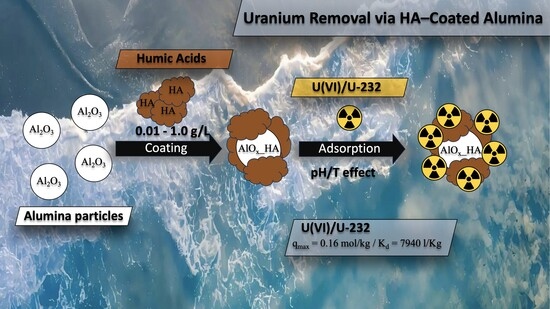
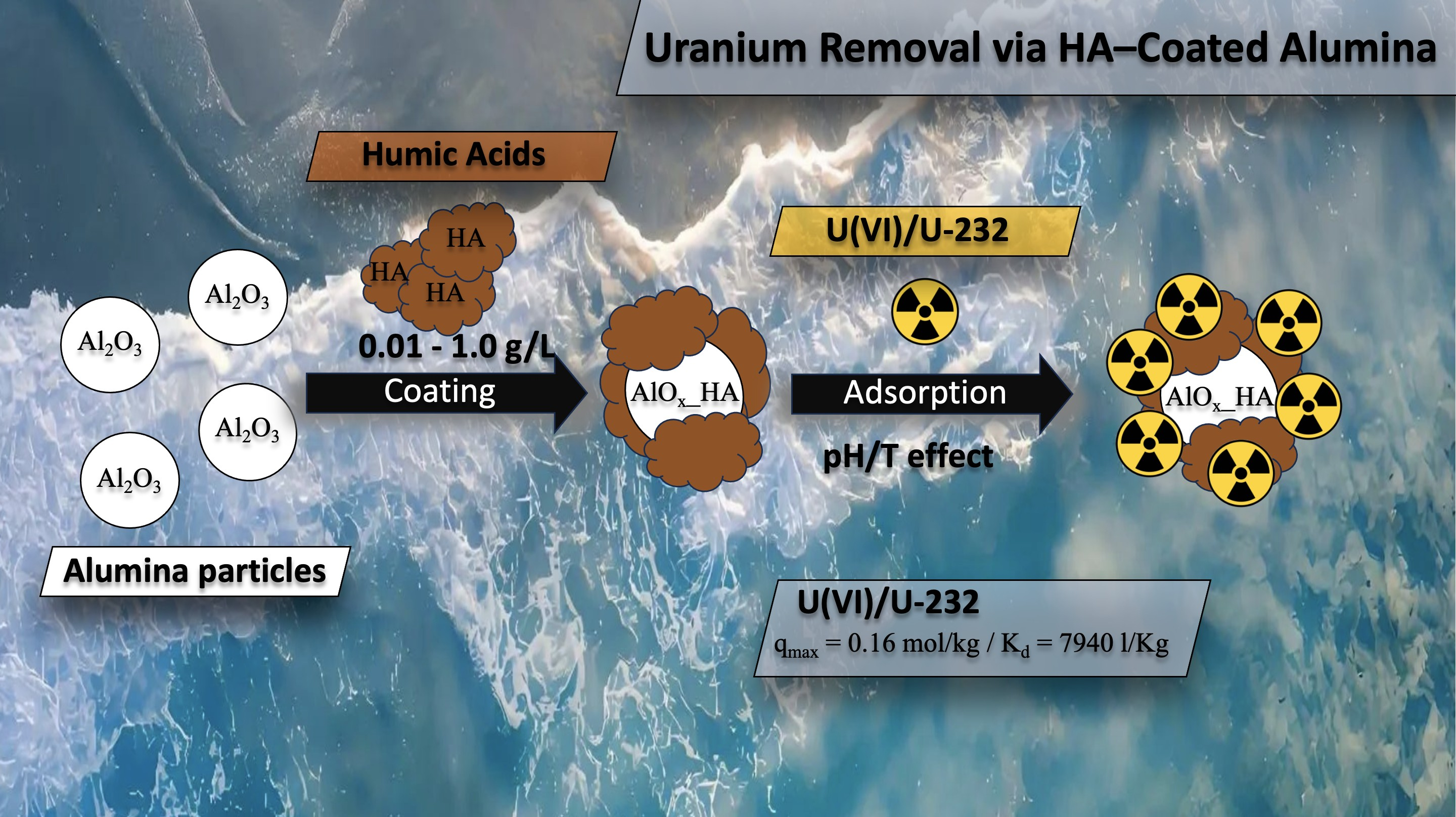
More specifically, this study focuses on the interaction of commercially available alumina (Al2O3) particles with humic acid solutions of different concentrations. The coated particles have been separated and vacuum-dried and have been employed for the adsorption studies. To investigate the influence of the HA-coated particles on the affinity of the particles towards uranium, adsorption experiments were performed using depleted uranium (DU, for increased levels) and the uranium isotope U-232 (for ultra-trace levels). The data obtained from the DU studies were used to evaluate the qmax values, the temperature impact on the adsorption efficiency and the kinetics of the adsorption process. On the other hand, the data from ultra-tracer level experiments were employed to evaluate the adsorption efficiency (e.g., %-relative removal, Kd). The DU and the U-232 concentrations in the test solutions were determined by liquid scintillation counting and alpha-spectroscopy, respectively. This kind of study is fundamental regarding the radionuclide mobility in the geosphere and the development of particles as useful adsorbents for the treatment of uranium-contaminated waters.
2. Materials and Methods
2.1. Materials
The experiments were performed in 30 mL polyethylene vials under ambient conditions and in de-ionized water. A standard U-232 tracer solution (12.05 kBq g−1 activity concentration), which was obtained from the National Physical Laboratory (Teddington, UK) was appropriately diluted to prepare reference and test solutions with a concentration of 0.5 Bq/mL, each. On the other hand, reference and test solutions of DU were prepared by dissolution of accurately weighed amounts of UO2(NO3)2 × 6H2O salt (Merck, USA) in de-ionized water to obtain uranium concentrations ranging from 1 × 10⁻⁴ to 1 × 10⁻² M. Alumina (γ-Al2O3, grain size: 0.05–0.20 mm, Sigma-Aldrich) and HA–salt (humic acid sodium salt, Sigma-Aldrich) were purchased from commercial suppliers. HA–salt solutions of three different concentrations (0.01 g/L, 0.1 g/L and 1.0 g/L) were prepared using deionized water.
2.2. HA-Coating of Al2O3
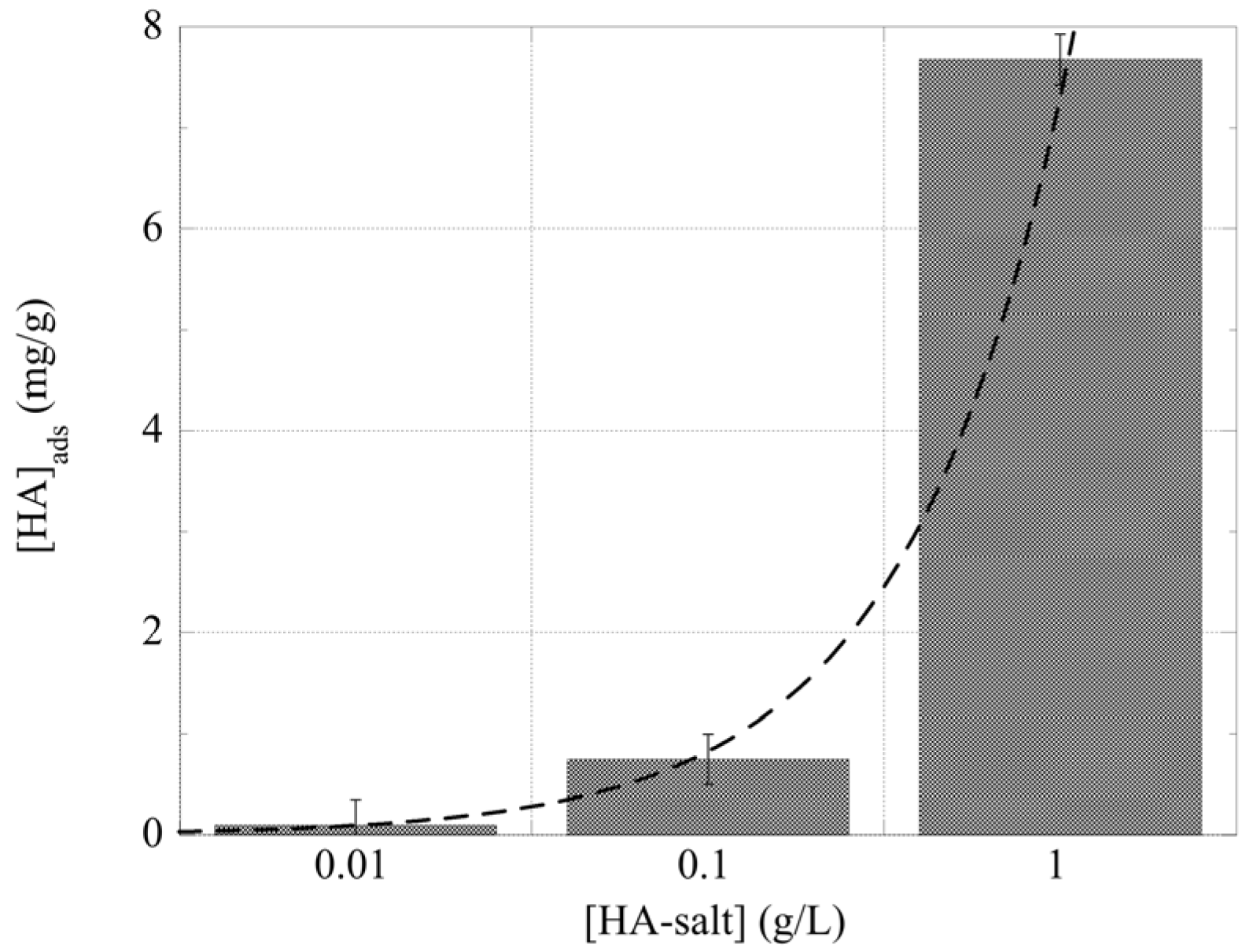
Alumina particles were functionalized by contacting 10 g of Al
2O
3 with 100 mL of humic acid solutions prepared at three initial HA–salt concentrations (0.01 g/L, 0.1 g/L, and 1 g/L). The suspensions were maintained under ambient conditions for two weeks with constant agitation (SK-R1807, DLAB, Beijing, China). After equilibration, the solid fraction was recovered and subjected to vacuum drying 70 °C for approximately 24 h. The resulting HA–salt-coating alumina materials were subsequently employed as adsorbents to assess the influence of humic acid coating on uranium uptake over concentration levels ranging from mmol to fmol. The amount of HA adsorbed on the alumina surface was determined by subtracting the HA amount remaining in solution from the total amount of HA in the initial solution. The amount of HA in solution was calculated from the solution volume and the HA concentration in solution, which was determined by UV–Vis spectrophotometry. Generally, the absorbances at 254 nm and 436 nm are used for the determination of organic carbon and particularly humic acid concentration in solution [
15]. In this study, HA reference solutions of varying concentrations have been prepared by dissolving an appropriate amount of HA–salt in de-ionized water. Following, the adsorption spectra have been obtained and the absorbances at 254 nm and 436 nm have been used to prepare a calibration curve, which was employed to determine the HA concentration in solution after HA adsorption on the alumina particles.
2.3. Adsorption Experiments with DU at Relatively High Concertation of U(VI)
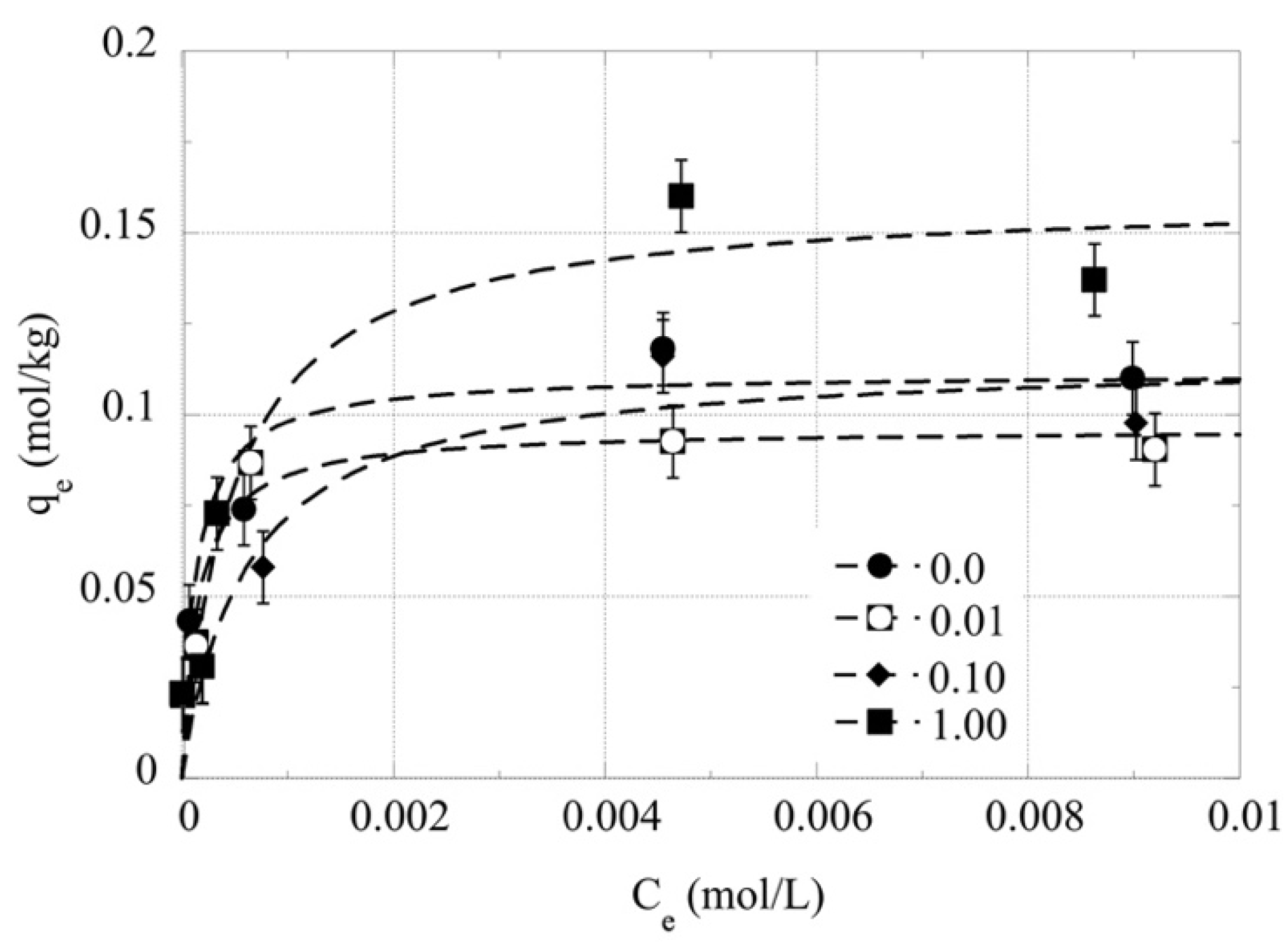
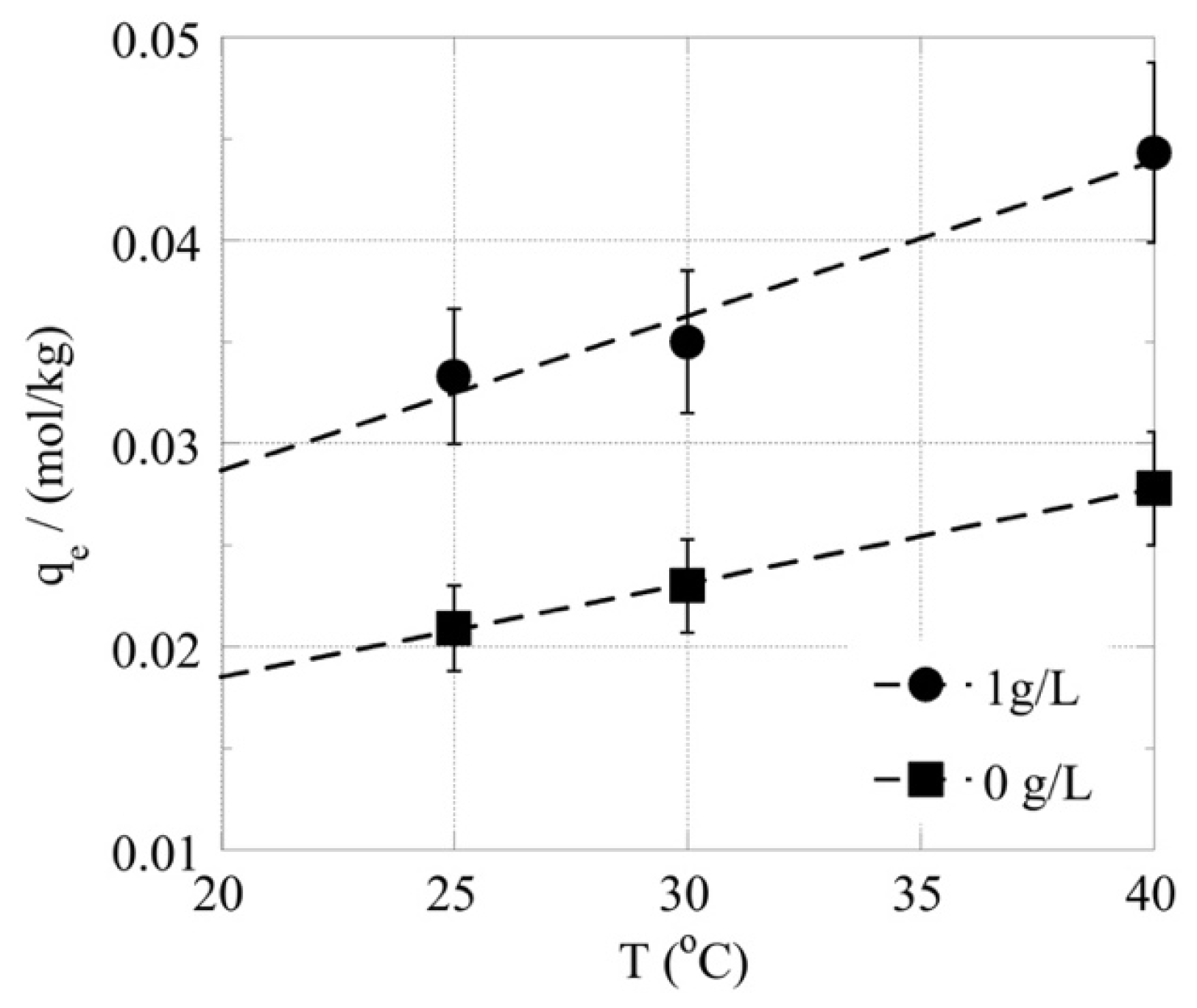
The adsorption experiments of DU were conducted at different concentrations, ranging from 1 × 10⁻⁴ to 1 × 10⁻² M. The mass of the Al2O3-coated particles used in each experiment was 0.1 g and the final solution had a total volume of 25 mL. The samples were shaken in an orbital shaker at 125 rpm for 3 days, at pH 3, under ambient conditions and following aliquots of 100 μL were obtained, and the uranium concentration in solution was determined by liquid scintillation counting (LSC). Liquid scintillation counting (LSC) was applied to determine the uranium concentration at increased uranium levels because of its simplicity, high efficiency for alpha activity measurements and rapid analysis at increased radionuclide levels. LSC is often the choice when no isotopic identification and spectral resolution is required. The radiometric analysis of DU was performed by liquid scintillation counting (LSC, supplied by Triathler, Hidex Oy, Turku, Finland) after mixing 100 μL of the test solution with 9 mL of the scintillation solution (Aqualight, supplied by Hidex). The experiments with DU were conducted at relatively high concentrations (up to 1 × 10⁻² M) and the associated data were employed to obtain the adsorption isotherms (qe—Ce), the impact of temperature on the adsorption efficiency (qe (mol/kg)—T) and the DU uptake at a given time (qt (mol/kg)—t), where qt and qe are the adsorption efficiencies, and Ce (mol/L) and Ci (mol/L) the solution concentrations of DU at a given time (t) and equilibrium, respectively. The experiments were conducted in duplicate and mean values were used for data evaluation, and the plots were generated using KaleidaGraph (version 5.0.6), a graphing software by Synergy Software (Mumbai, India).
2.4. Adsorption Experiments with U-232 at Ultra-Tracer Levels
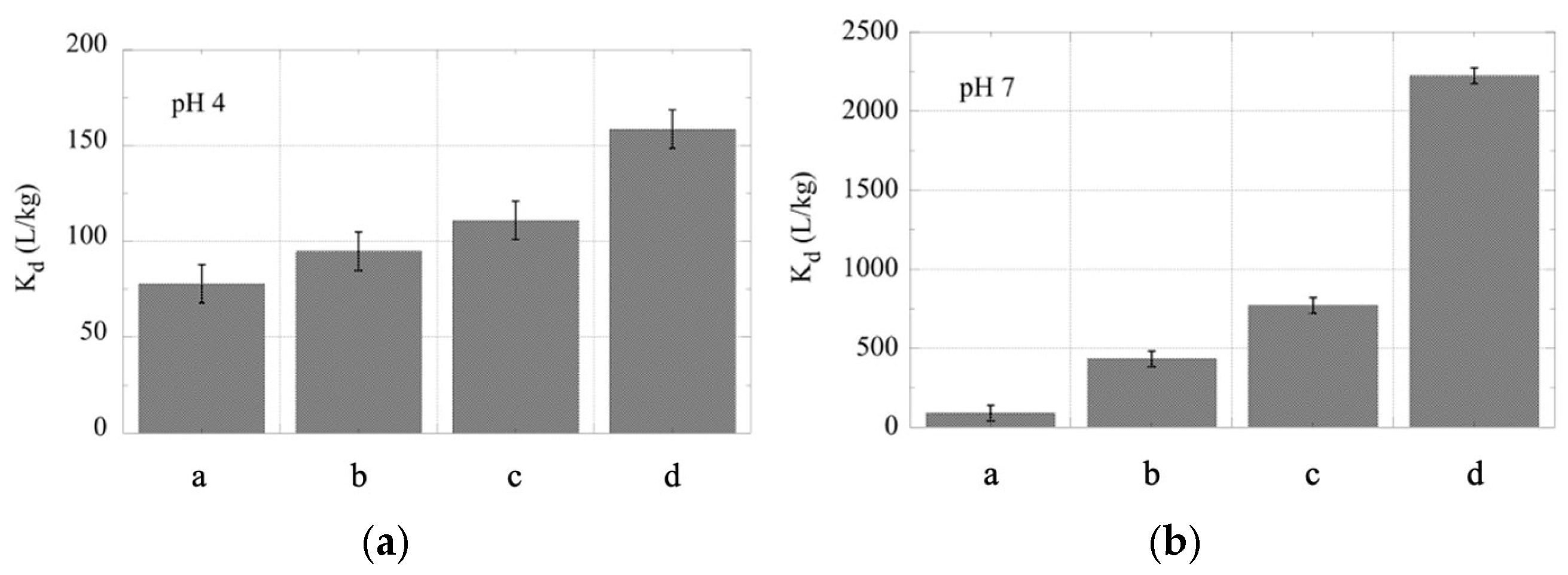
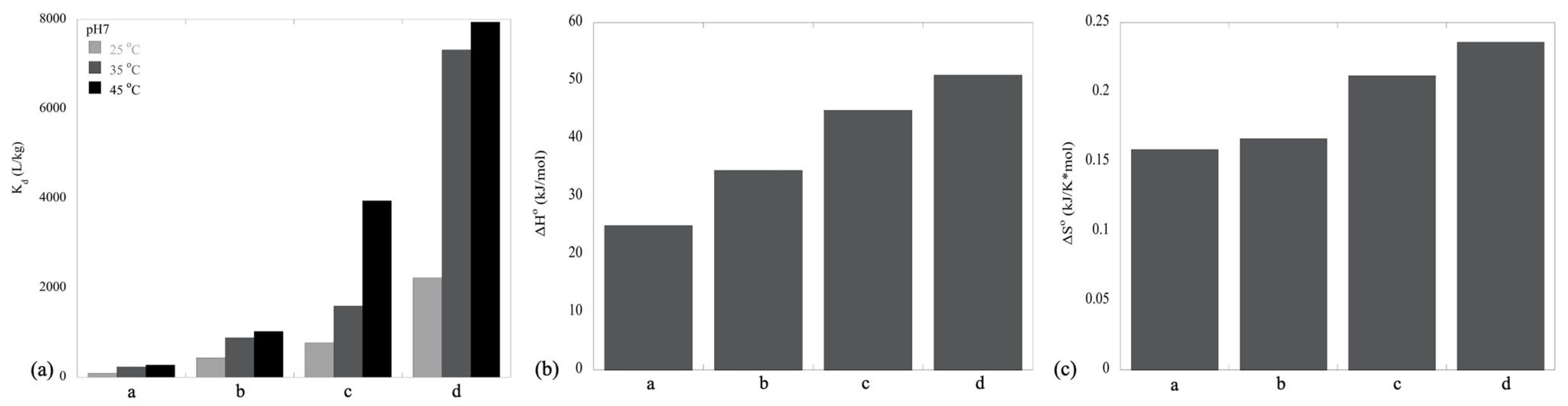
Adsorption studies with the uranium isotope U-232 were performed by contacting 0.1 g of the particles with 10 mL of U-232 solution ([U-232] = 86 fmol/L and activity concentration = 25 Bq/L) in 30 mL screw-cap polyethylene vials. The particles were contacted for 10 days (240 h) under ambient conditions, at two different pH values (pH 4 and 7) and three temperatures (25, 35, 45 °C), with continuous shaking to reach a steady-state/equilibrium condition [
9]. Following, a tiny amount of the test solution was obtained and electrodeposited onto a stainless steel planchet. The electrodeposition of uranium on stainless steel planchets is a common technique for source preparation used for alpha spectrometry of alpha particle emitting isotopes. Here, a tiny amount of the test solutions (100 μL) was dissolved in a sulfate electrolyte (0.15 M (NH
4)
2SO
4) adjusted to pH 2 to avoid the formation of any hydrolysis products. The solution was then transferred to a custom-made electrodeposition cell containing a stainless-steel plate for the deposition of positively charged ions. From this solution, uranium was directly electrodeposited on the planchets (active area diameter: 10 mm) at a voltage of 17 V and a current of 0.6 A for 2 h and constant temperature (10 °C). As the anode, an inert platinum wire was used. Generally, electrodeposition is used to provide well-defined geometry, reproducible source preparation, high chemical yield and low background. Following, the U-232 concentration was analyzed by alpha-spectroscopy (10 h), using Alpha Analyst, an integrated alpha spectrometer (Canberra, Mirion Technologies Inc., San Ramon, CA, USA) as described elsewhere [
16].
Given the disparity between the trace uranium concentration and the high density of available surface sites, the adsorption behavior of U-232 was assessed using K
d values.
In this expression, Cads (Bq/kg) refers to the activity of U-232 associated with the solid phase, whereas Caq (Bq/L) indicates the remaining activity in solution.
Because the experiments were conducted at ultra-trace radionuclide concentrations, non-negligible adsorption to the container walls was accounted for, and corrected adsorption values were used in the Kd calculations.
The following formula was used to calculate the enthalpy (ΔH°) and entropy (ΔS°) of the system:
The Kd values depend on both enthalpy and entropy, while being inversely affected by temperature. This dependence can be expressed as a linear relationship, where the slope corresponds to the enthalpy term divided by the gas constant (R) and temperature (T, in Kelvin), and the intercept reflects the entropy term normalized by the gas constant.
4. Conclusions
Our research provides interesting insights regarding the effect of natural organic matter (NOM), specifically humic acid (HA–salt), on the adsorption behavior of Al2O3 particles towards uranium in aqueous solutions in the mmol and fmol concentration range.
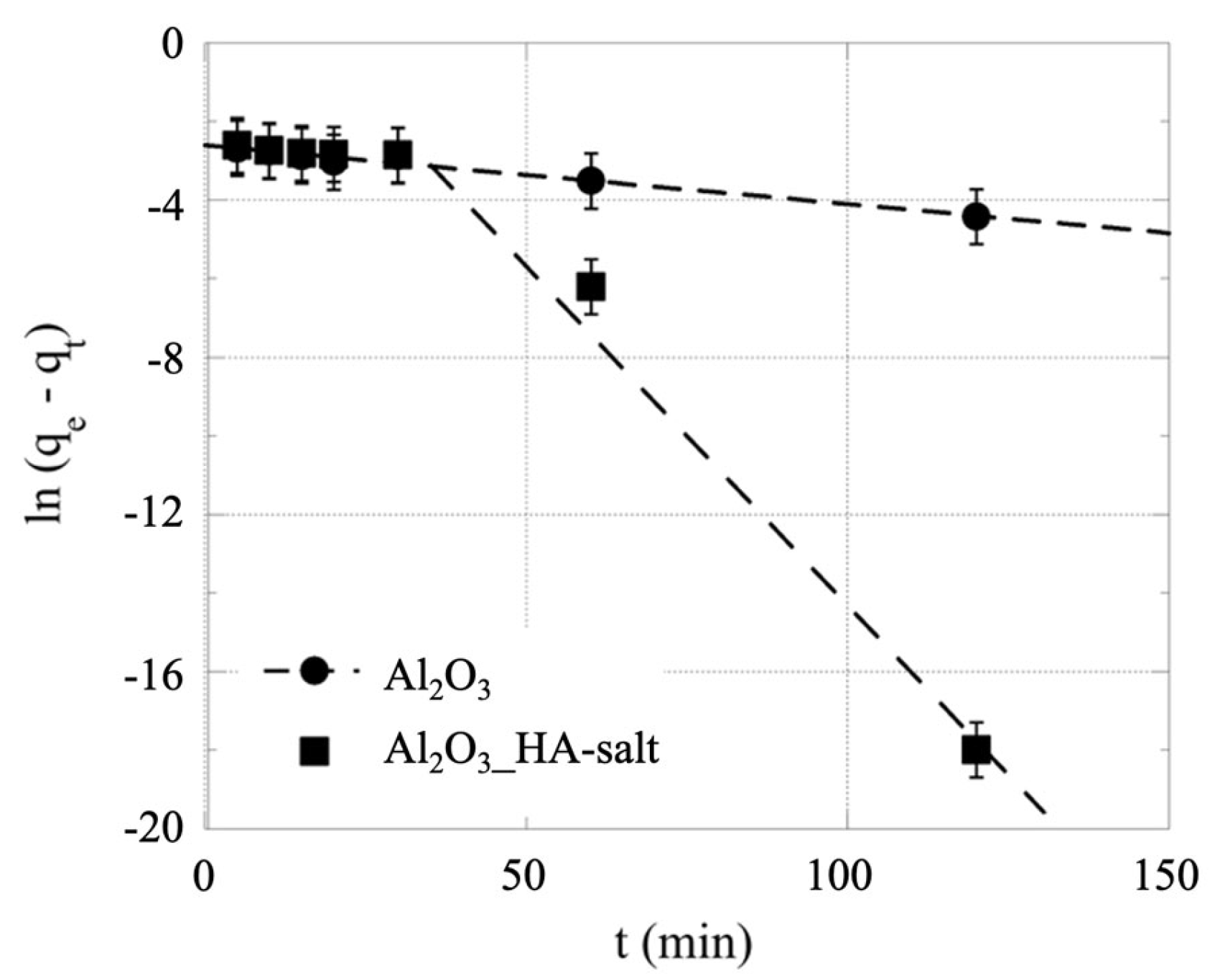
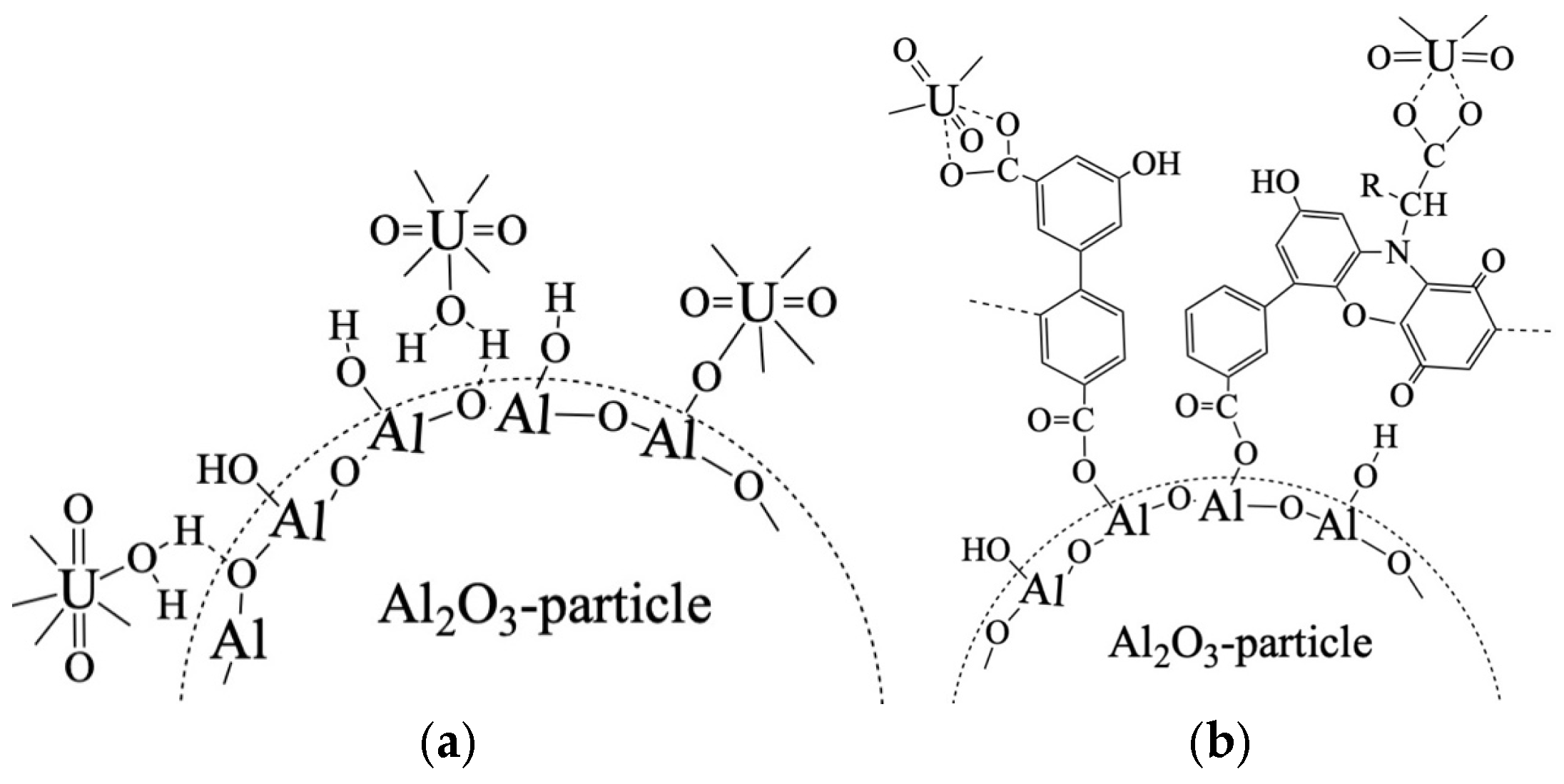
The adsorption studies in the fmol concentration range denote that the amount of HA–salt which adsorbed on the Al2O3 particles strongly affects their affinity towards uranium. The adsorption efficiency is moderate under acidic conditions (pH 4, up to 158 L/kg) and increases dramatically in neutral solutions (pH 7, up to 2225 L/kg). The latter is attributed to the extensive deprotonation of the HA carboxylic groups, which as hard Lewis bases strongly bind U(VI). The results, obtained from the experiments at increased uranium levels (mmol concentration range) and have been performed only at pH 3 to avoid interferences caused by polynucleation and surface precipitation reactions, corroborate the positive effect of HA-coating on the U(VI) adsorption. In addition, the obtained results indicate that the adsorption is an endothermic process and entropy-driven process independent of the concentration range. In contrast to ultra-trace levels where kinetics are exclusively determined by the diffusion of the radionuclide towards the surface, at increased uranium levels the data indicate that the adsorption in the case of the HA–salt-coated Al2O3 particles is a two-step process that initially involves most probably the formation of outer-sphere complexes and following the formation of inner-sphere complexes between U(VI) and the HA carboxylic groups.
The present results indicate that HA-coated Al2O3 particles present significant adsorption performance even at a low pH, which is of particular interest for the removal and recovery of uranium from processes and waste waters. This study expands our knowledge regarding the role of HA-coating on the environmental performance of inorganic particles, which is of fundamental importance with respect to radionuclide behavior and mobility in the geosphere and the development of efficient and environmentally friendly adsorbents for the treatment of radionuclide-polluted waters.