


Abstract
During the excavation of the Guadarrama railway tunnels, part of the Spanish high-speed rail network (AVE), distinct wear patterns were observed among four types of disc cutters employed in tunnel boring machines (TBMs). The central question addressed in this study is whether the differences in wear—specifically in the Abrasivity Value Steel (AVS) recorded for the four cutter types—are attributable to variations in their inherent wear resistance or to the variability of the tested lithologies and the testing procedures. If the latter hypothesis is confirmed, it would imply that substituting one cutter type for another would not result in significant changes in consumption rates, and that the observed variations would be primarily associated with lithological differences rather than cutter design. This paper presents a real case study concerning the selection of disc cutters for two TBMs used in the excavation of the Guadarrama tunnels. The rock mass encountered consisted predominantly of granite and gneiss.
1. Introduction
Tunnel excavation using tunnel boring machines (TBMs) in hard and abrasive rock masses entails significant costs, primarily associated with the replacement of disc cutters. Although most natural rock masses can currently be excavated using TBMs, the wear-related costs may reach levels that render this technique economically disadvantageous compared to conventional methods such as drilling and blasting.
The service life of disc cutters mounted on the TBM cutterhead depends on both the machine’s operational characteristics and the geological properties of the rock mass. Based on extensive experience at the Rock Mechanics Laboratory of ETSIME-UPM [1] and the analysis of laboratory tests, the most influential parameters affecting cutter wear have been identified: drillability [2,3], brittleness [4], abrasivity, equivalent quartz content [5], uniaxial compressive strength [6,7], and the Cerchar Abrasivity Index (CAI) [8].
Tool wear and the resulting downtime in rock-cutting and drilling operations are governed not only by the mechanical actions at the tool–rock interface, but also by complex interactions among thermal, material, and structural phenomena in both the cutter and the surrounding rock. While much of the existing literature has focused on tool wear mechanisms in a general sense, increasing evidence indicates that a comprehensive understanding requires explicit consideration of rock mechanical effects and their coupling with cutter geometry, temperature variations, and thermal shocks.
In excavation and drilling processes, rock mechanical properties such as strength, hardness, brittleness, and fracture behavior exert a dominant influence on wear evolution and tool service life. Experimental and numerical investigations on disc cutters have demonstrated that variations in rock strength and fracture toughness directly affect cutting forces and energy consumption, which in turn control wear rates and cutter durability. Harder and more brittle rock formations typically induce higher normal and shear stresses at the cutter–rock interface, leading to accelerated wear and shorter service life [9].
Additionally, recent studies on granite subjected to cyclic liquid nitrogen thermal shocks have shown that rapid temperature variations can significantly modify the rock’s mesoscopic damage state. Computed tomography and texture analysis reveal increased microcrack density and altered internal structure due to thermally induced stresses, which weaken the rock matrix at the mesoscale and influence its macroscopic mechanical response. These thermally driven damage mechanisms can modify cutting resistance and, consequently, the wear progression of rock-cutting tools [10]. Together, these findings underscore the importance of incorporating rock mechanical behavior and thermally induced damage effects into predictive models of cutter wear and performance.
This study examines the wear behavior of four cutter types, designated A, B, C, and D, using rock samples obtained during the construction of the Guadarrama Tunnel. This tunnel is part of the Spanish high-speed rail line (AVE) connecting Madrid and Valladolid. The infrastructure consists of two parallel tunnels, each approximately 28.4 km long, crossing the Sierra de Guadarrama with a maximum overburden of nearly 1000 m. Excavation was carried out using four double-shield TBMs with an approximate diameter of 9.5 m and 17-inch disc cutters. Two machines operated from the southern portal and two from the northern portal, achieving a total excavated length of 56 km in hard rock, predominantly granite and gneiss.
Disc cutters are classified according to their position on the cutterhead as gauge, face, and center cutters. Gauge cutters, located on the periphery and oriented obliquely to the tunnel face, maintain the correct excavation diameter and exhibit the highest wear due to their longer travel per cutterhead revolution. Face cutters, positioned between the gauge and center cutters, may also be inclined and are responsible for excavating most of the tunnel face. Center cutters operate in the most confined area of the face and, although subject to lower wear, experience vibrations and eccentric forces.
Each cutter comprises a thermally treated steel housing and the disc itself. The housing, a shrink-fitted ring, must be replaced when excessive wear occurs, requiring complete cutter disassembly and workshop intervention. Bearings are among the most critical components, as seizure prevents rotation and causes irregular wear, necessitating immediate replacement. Other failure modes include brittle fractures of the housing due to metal spalling.
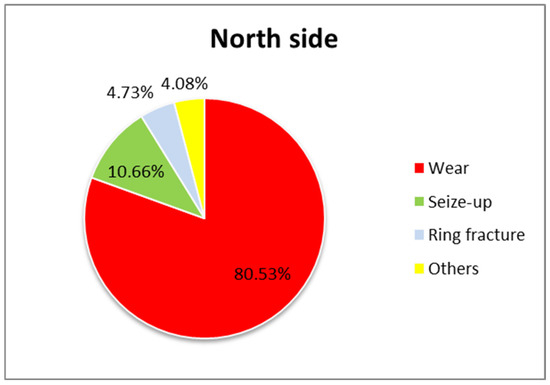
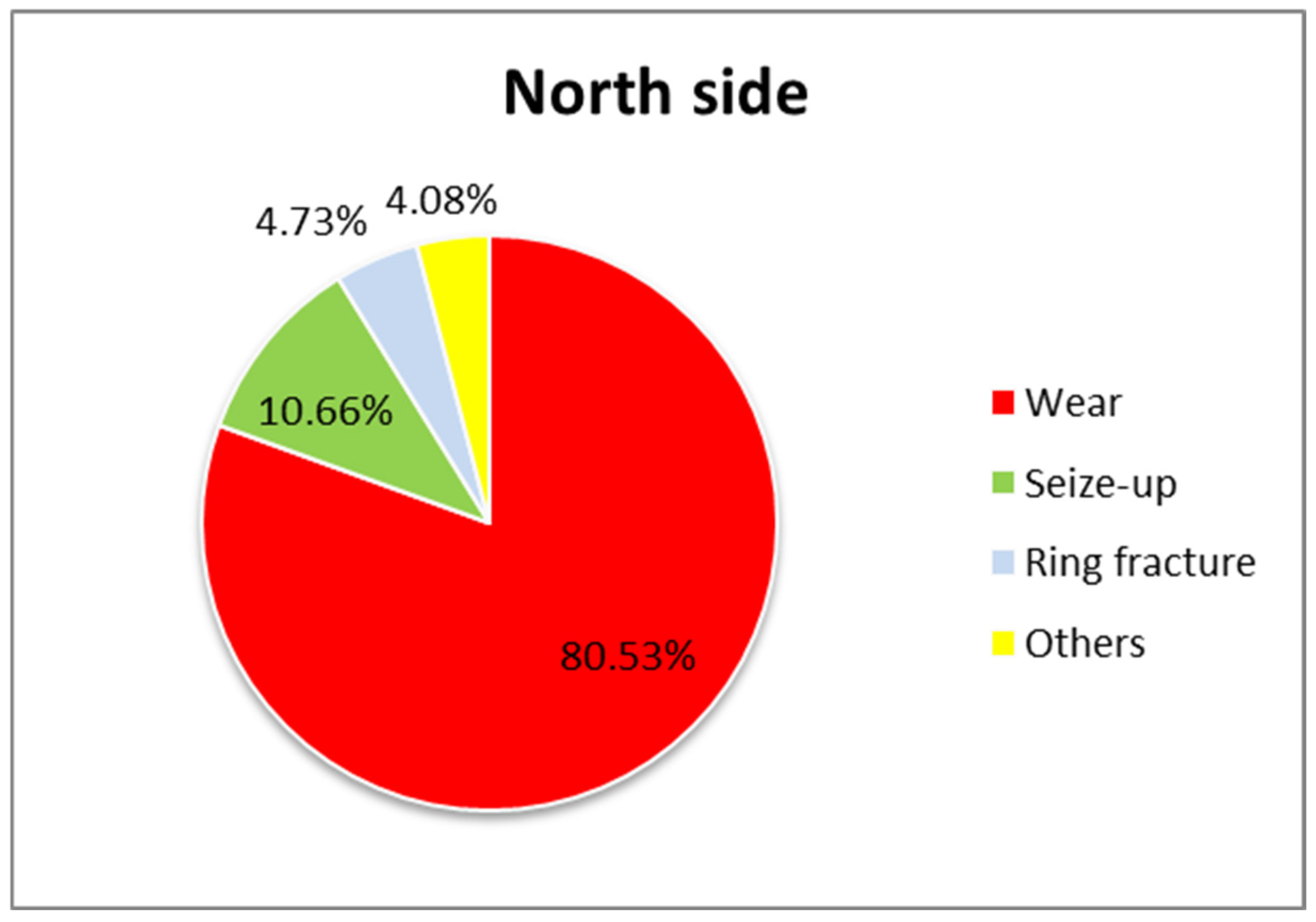
Data collected from the northern portal of the Guadarrama Tunnel (Table 1) indicate that most cutter replacements were due to wear, with an average of one cutter replaced every 2.7 m of advance. This high consumption is attributed to the pronounced abrasivity of granite and gneiss, primarily due to their quartz content.
Table 1.
Cutter consumption during excavation from the northern portal of the Guadarrama tunnels [11].
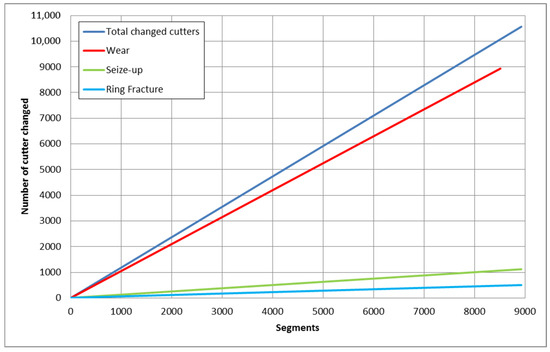
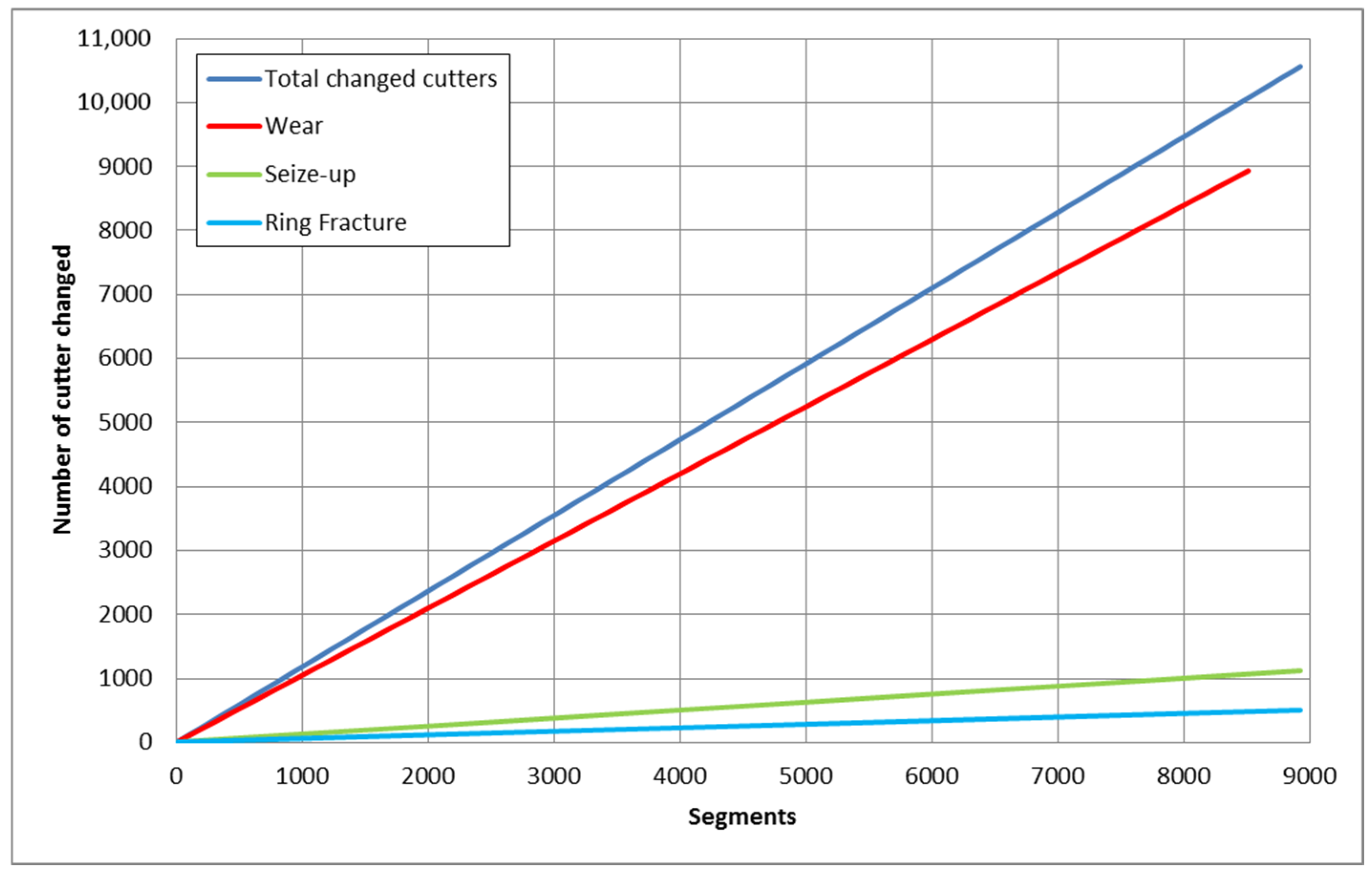
Figure 1 illustrates the cumulative cutter consumption [11], highlighting the critical role of wear in cutter life and, consequently, in TBM maintenance and planning. Preventive maintenance is therefore essential to minimize unexpected downtime [12].
Figure 1.
Cumulative cutter consumption during excavation from the northern portal of the Guadarrama tunnels.
Data collected from the northern portal of the Guadarrama Tunnel [11] (Figure 2) indicate that most cutter replacements were due to wear, with an average of one cutter replaced every 2.7 m of advance. This high consumption is attributed to the pronounced abrasivity of granite and gneiss, primarily due to their quartz content.
Figure 2.
Percentage of cutter consumption during the excavation of the northern entrances of the Guadarrama tunnels.
2. Materials and Methods
2.1. Disc Cutter Characteristics and Failure Modes
One of the most critical aspects of TBM maintenance is the management of cutting tools. Their inspection and eventual replacement require a complete machine shutdown and, in many cases, access to the tunnel face, making this operation complex and time-consuming [13]. Several models and procedures have been proposed to predict tool penetration and wear [14,15,16]. However, a significant degree of uncertainty remains regarding the quantitative predictive capability of these methods [17].
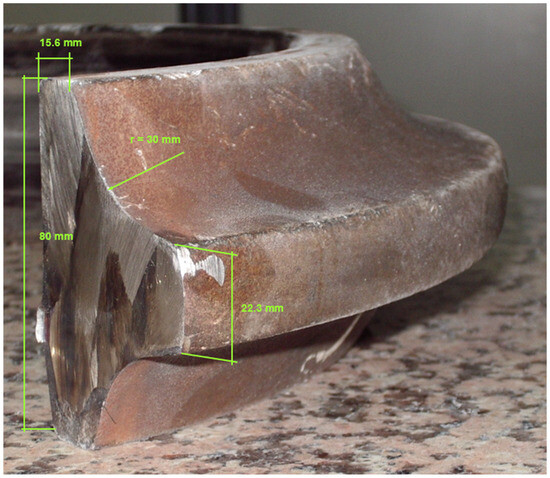
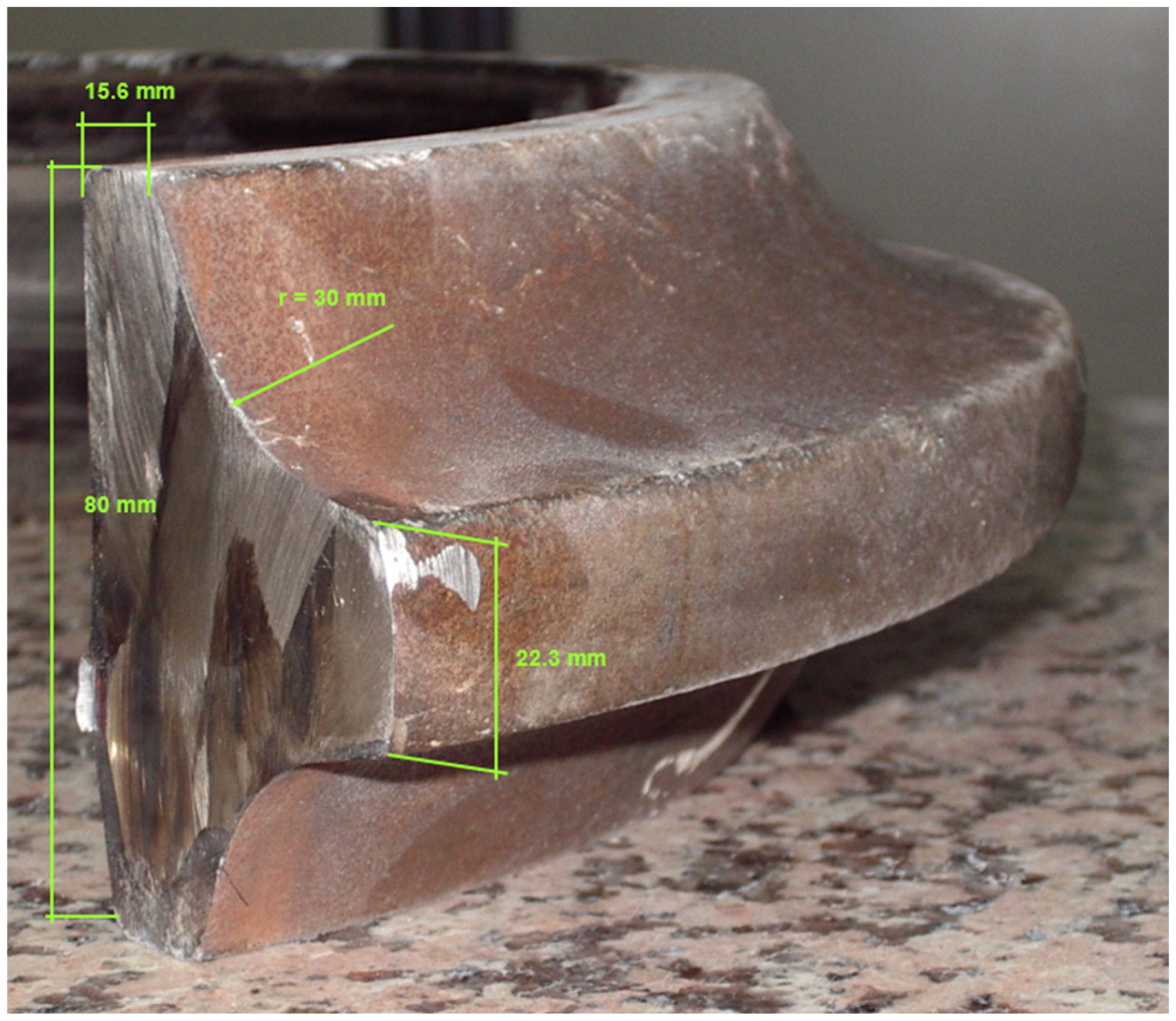
A disc cutter consists of two main components: the cutting rings, generally manufactured from heat-treated steel, and the disc body. The ring is shrink-fitted onto the disc and replaced when wear reaches a critical threshold. Figure 3 shows a sectioned ring, revealing its profile.
Figure 3.
Sectioned cutter ring showing its profile.
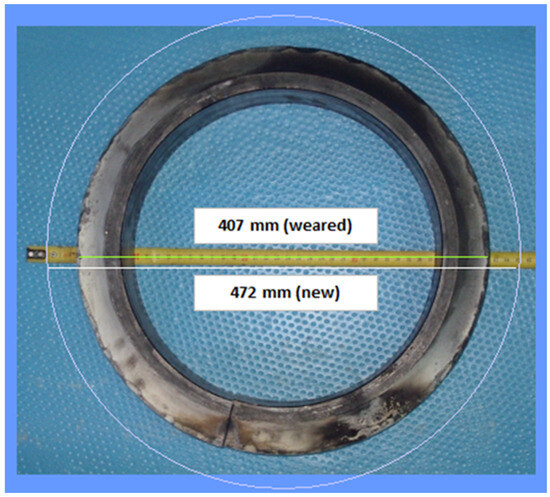
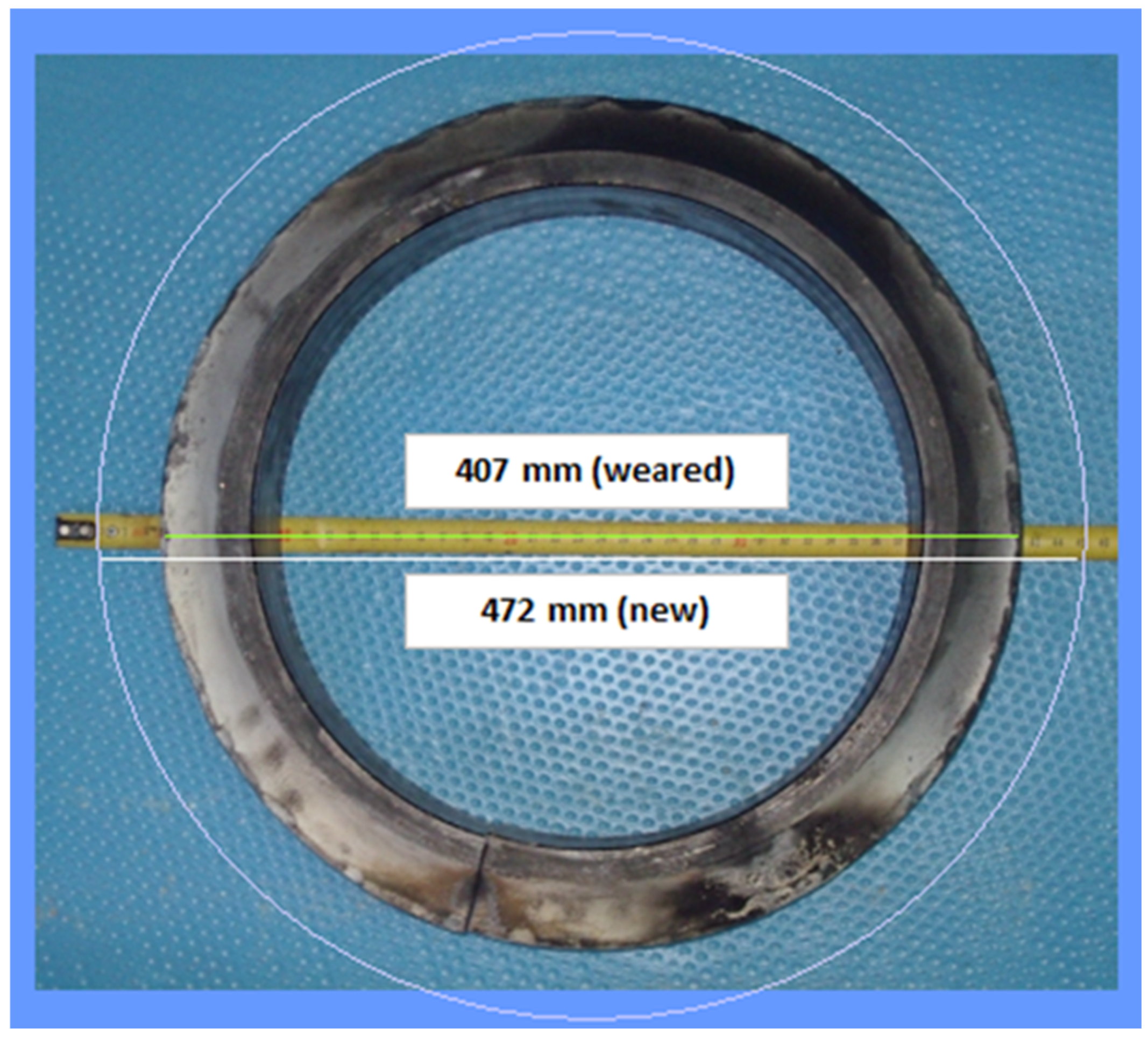
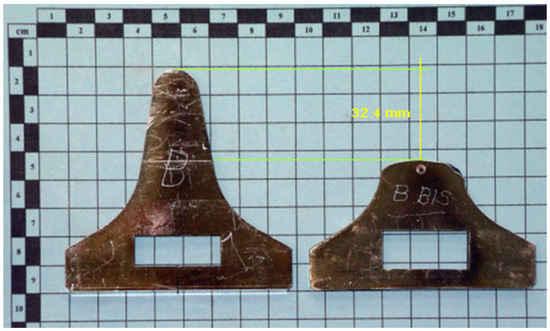
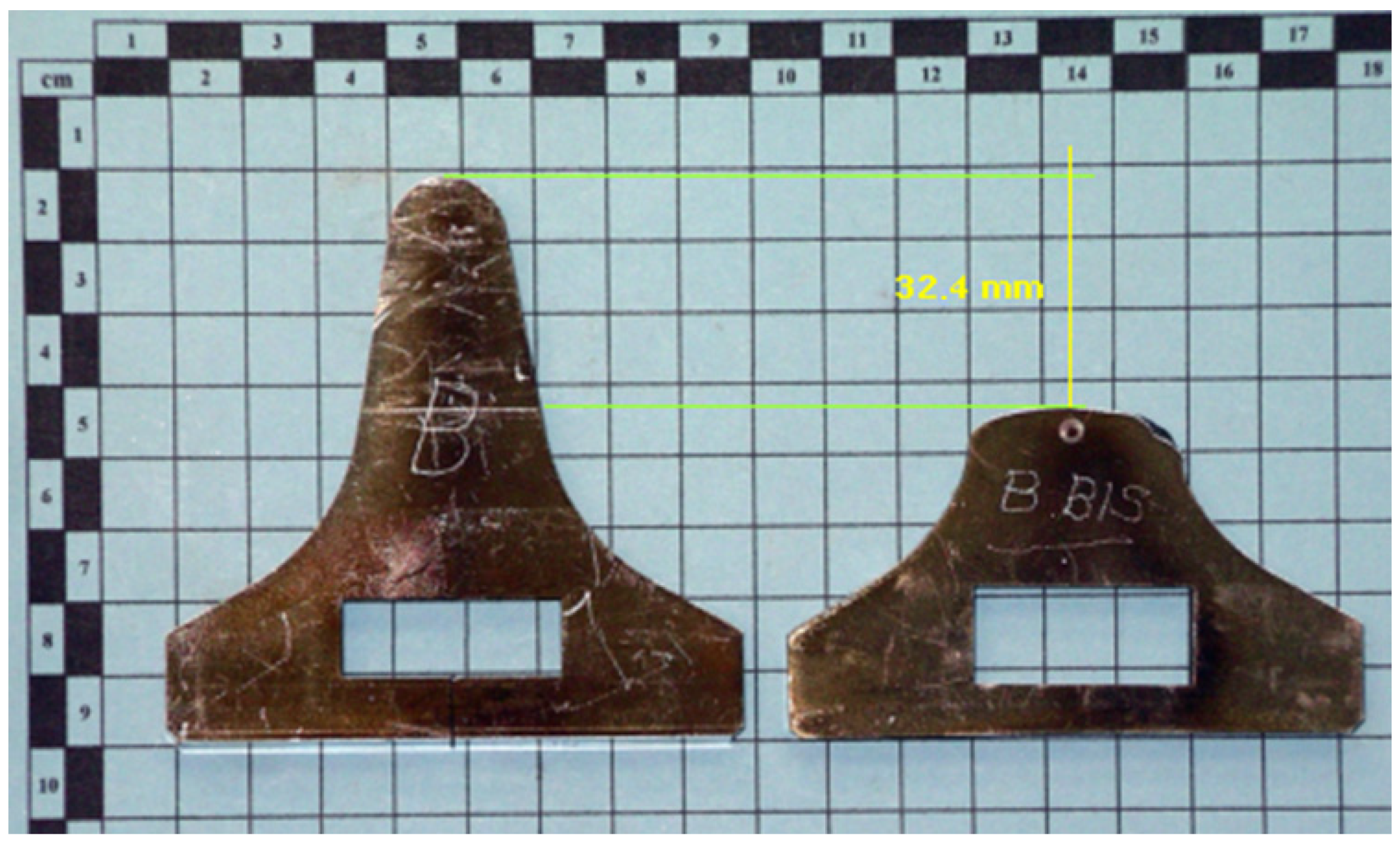
Wear on rings is generally uniform because cutter rotation ensures that the entire periphery travels a similar distance. However, when bearing seizure occurs, the ring ceases to rotate, and only one sector remains in contact with the rock. This wear process is often accompanied by metal spalling and steel heating, which may alter its mechanical properties [18]. A ring is considered fully worn when it has lost approximately 40 mm of radius. The magnitude of this loss can be observed in Figure 4, which compares a worn ring (with a radius of 407 mm) against the circumference of a new one (472 mm). Furthermore, Figure 5 shows two ring sections: one from a new ring and another from a worn ring with a radius loss of 32.4 mm.
Figure 4.
Comparison between a new cutter ring and a worn one (Ring B).
Figure 5.
Cross-sections of a new and a worn cutter ring (Ring B).
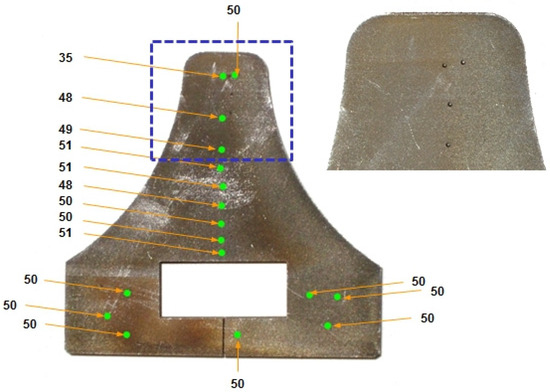
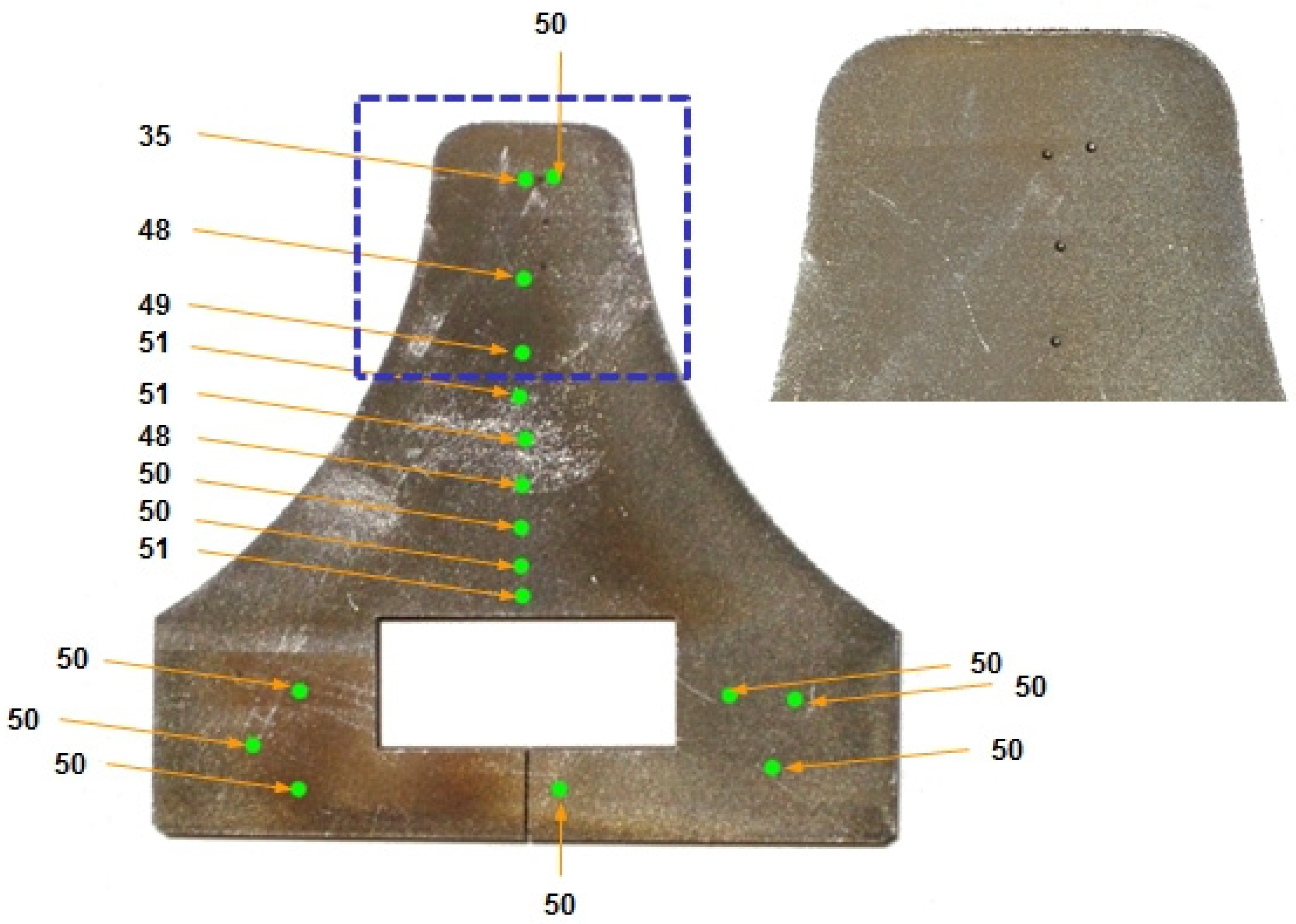
Verification of the heat treatment applied to the ring steel can be performed by measuring surface hardness at different points of the section [19]. Table 2 shows that Ring A exhibits uniform hardness (52–53 HRC), while Ring B maintains similar values (51–54 HRC). Rings C and D display lower homogeneity, with Ring D showing the lowest hardness. The dispersion in hardness values may be associated with microstructural and compositional heterogeneities within the steel, which can contribute to localized differences in mechanical response and, consequently, influence the macroscopic wear behavior. Figure 6 illustrates the section of Ring C, indicating the points where Rockwell C-150 hardness measurements were taken [20].
Table 2.
Rockwell C-150 hardness values for analyzed rings.
Figure 6.
Distribution of hardness measurement points on Ring C.
Rockwell C hardness measurements were carried out to evaluate the internal homogeneity of the cutting rings. Multiple measurements were taken on each ring to identify potential variability associated with heat treatment inhomogeneities or localized microstructural differences. This test was selected due to its simplicity, repeatability, and frequent use as a quality-control indicator for heat-treated steel components.
Most cutting rings exhibited relatively narrow hardness ranges, consistent with a uniform heat treatment. In contrast, cutting ring D showed a markedly wide hardness range (44–50 HRC), which is atypical for high-quality cutting components. This variability is interpreted as an indicator of metallurgical inconsistency rather than measurement uncertainty and is consistent with the poorer abrasion performance observed for this ring in the AVS tests.
In high-load applications such as TBM cutting, wear resistance is governed by a combination of factors beyond hardness alone, including microstructure, carbide type and distribution, and fracture toughness. Increased hardness does not necessarily imply improved wear resistance if the material lacks sufficient toughness, as brittle spalling and microfracture may accelerate material loss.
In the present study, hardness measurements are therefore interpreted as a supporting parameter within a simplified comparative framework. The absence of detailed microstructural characterization (e.g., SEM or optical microscopy) is acknowledged, and the results are not intended to provide a mechanistic description of wear processes. Instead, the combined interpretation of hardness variability and AVS results is proposed as a practical screening and classification tool for cutter disc performance under controlled testing conditions.
2.2. Main Causes of Disc Cutter Replacement
The replacement of cutter rings can only be performed in a workshop, which requires complete removal of the disc from the TBM cutterhead [21]. Ring wear may occasionally be accompanied by brittle fracture and metal spalling [22]. The most frequent causes leading to disc cutter replacement in TBMs are as follows [23,24]:
- Normal wear or “mushroom” wear and metal spalling: The combination of rock hardness and abrasivity accelerates edge wear.
- Bearing seizure: The disc stops rotating and wears in a single zone.
- Ring fracture: Impacts against blocks can generate cracks or complete breakage.
- Lubricant loss: Temperature rise can decompose the oil and cause seal failure.
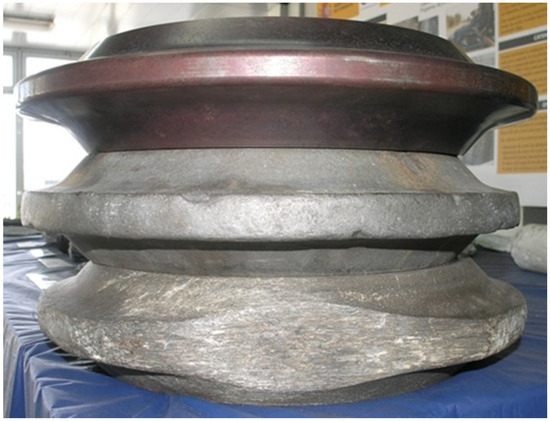
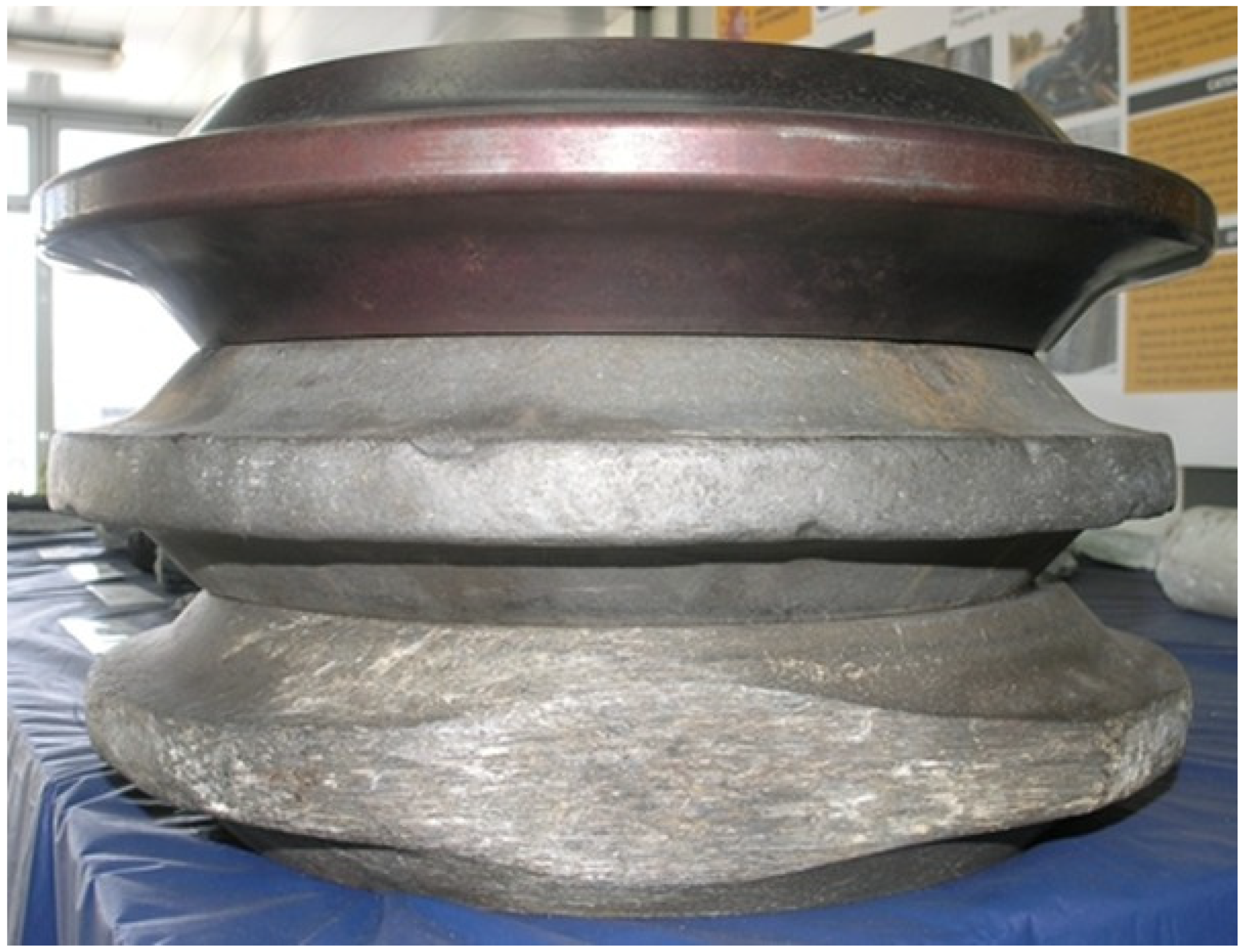
Among the various causes for cutter failure, the most prominent are abrasive wear of the cutting ring, brittle fracture, seal failure between the ring and the bearing, and bearing failure. Figure 7 illustrates a new, a worn, and a seized cutter.
Figure 7.
From top to bottom: new disc, worn disc, and seized disc.
2.3. The Abrasion Value Steel (AVS) Test
The Abrasion Value Steel (AVS) test [25] is closely related to the estimation of cutter wear. This procedure consists of measuring the abrasion produced by tunnel rock dust on a steel specimen extracted from the cutter. To obtain this specimen, a fragment is extracted cold to avoid any alteration of the steel’s heat treatment [26].
The AVS tests were conducted following the NTNU testing procedure, using rock powder prepared from excavation material. For each test series, a single, homogeneous rock powder batch was produced and consistently used for all cutter disc tests within that series. This approach ensured controlled and identical test conditions for the comparative evaluation of cutter materials.
The study does not employ a universal standardized rock powder across all test series, as the objective was not to remove geological variability at the tunnel scale, but to preserve local representativeness while controlling variability at the experimental level. Consequently, geological heterogeneity is controlled within each test batch but not across the entire tunnel alignment.
Potential sampling bias and lithological variability are therefore acknowledged as inherent limitations of field-derived materials. AVS values are interpreted as relative indicators of cutter material performance under specific local geological conditions, and not as intrinsic or transferable properties independent of geology.
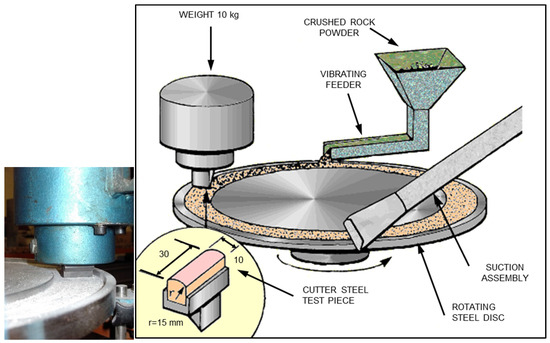
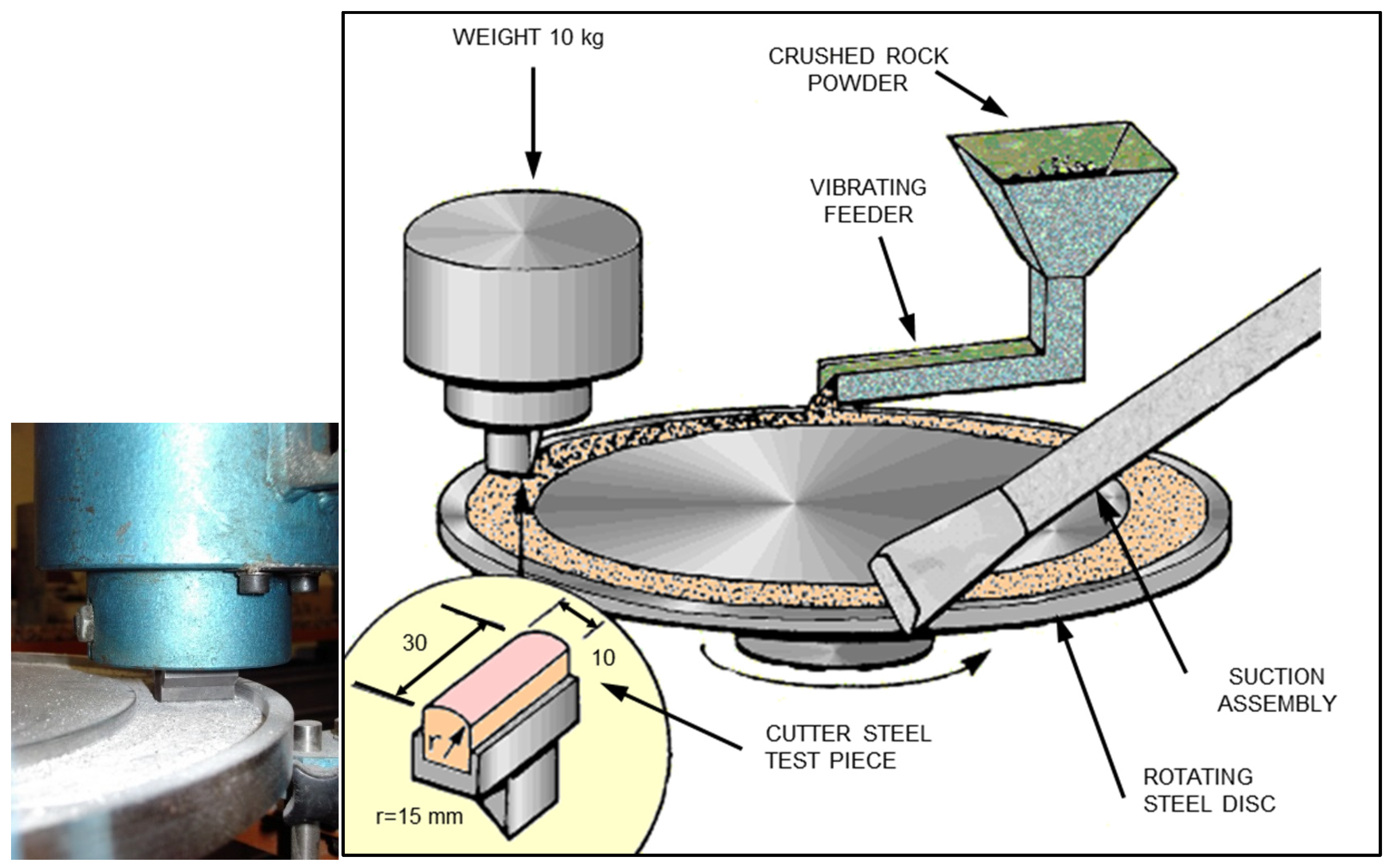
The AVS value is defined as the mass loss, expressed in milligrams, experienced by the specimen after 20 revolutions on a 40 cm diameter plate, compressed against the rock dust covering a channel on the plate under a load of 10 kg. Figure 8 shows the machine used for AVS testing at the Madrid School of Mines and Energy Engineering (ETSIME-UPM). For each tunnel portal, the rock dust used in the AVS tests was collected from a single excavation segment and homogenized to form one representative batch. This batch was used consistently for all cutter discs tested at the same portal, ensuring identical lithological conditions across cutter material comparisons. As a result, internal lithological variability did not affect the relative assessment of cutter performance within each portal.
Figure 8.
AVS testing machine at ETSIME-UPM. Left: equipment detail.
It is emphasized that AVS is not an intrinsic property of the rock mass, but rather a test-dependent parameter influenced by the specific material analyzed. Accordingly, AVS values were not compared between different tunnel sections; instead, the analysis focused on the relative differences between cutter materials tested under shared and controlled rock conditions.
2.4. Statistical Analysis Methodology
To compare the durability of the four rings selected for this study, a comprehensive statistical analysis was performed on the results obtained from the Abrasion Value Steel (AVS) test. The primary objective of this analysis was to determine whether the observed differences in AVS values were attributable to mere sampling or testing errors, or whether they reflected actual, statistically significant differences in ring wear resistance—a critical factor for selecting the component with the longest service life.
The methodology involved pairwise comparisons between all cutter types (A–B, A–C, A–D, B–C, B–D, and C–D). The formulation used to compute the values follows standard statistical procedures [26] and includes the calculation of the arithmetic mean, standard deviation, standard error, difference in means, covariance, and correlation coefficient between ring pairs.
The formulation used to compute the values presented in Table 3 and Table 4 [27] is shown below, including the arithmetic mean, standard deviation, standard error, difference in means, covariance, and correlation coefficient between ring pairs:
Table 3.
Statistical comparison of AVS values for cutter rings (Northern portal).
Table 4.
Statistical comparison of AVS values for cutter rings (Southern portal).
= Test value for sample “i” of Cutter A.
= Number of tests for Cutter A.
Arithmetic mean of AVS tests for Cutter A:
Standard deviation of AVS tests for Cutter A:
Standard error of the difference between means (Cutters A and B):
Difference between means (Cutters A and B):
Covariance between Cutters A and B:
Correlation coefficient between Cutters A and B:
SA = Sample standard deviation for Cutter A.
Differences between arithmetic means are discussed in this study using a simplified descriptive ratio defined as DMED/ERRS, where DMED denotes the difference in means and ERRS the associated standard error. In line with a common rule-of-thumb, ratios close to or exceeding ≈2 are interpreted as indicative of a noticeable separation between group averages. This heuristic does not explicitly account for degrees of freedom, does not yield exact p-values, and is not intended to replace formal hypothesis testing. It is used solely as an interpretative and exploratory aid to provide transparent, traceable, and reproducible comparisons from reported summary statistics without reliance on specialized software.
This criterion is used exclusively as an interpretative and exploratory aid and is not intended to replace formal inferential statistical tests. It does not explicitly account for degrees of freedom, nor does it provide exact p values. Consequently, statements derived from this ratio should not be understood as claims of statistical significance in the strict hypothesis-testing sense.
The adoption of this approach is motivated by its simplicity and transparency, allowing results to be interpreted without reliance on advanced statistical software and facilitating comparison with previous applied engineering studies that employ similar descriptive metrics. The statistical analysis and conclusions presented in this work are therefore based on relative comparisons rather than on formal probabilistic inference.
The cutter performance data analyzed in this study have a paired structure, as different cutter types were tested using the same rock samples. This experimental design results in correlated responses between cutter pairs, which is reflected in the high correlation coefficients reported.
For the descriptive comparison of mean values, a simplified standard error formulation based on independent samples was used as an exploratory approximation. This choice was not intended to imply statistical independence between observations. It is acknowledged that this formulation neglects the covariance term associated with paired data and therefore overestimates the standard error.
As a consequence, differences discussed using this formulation should be interpreted conservatively and within a comparative, non-inferential framework. The analysis is intended to support qualitative assessment of relative cutter performance trends rather than to provide exact probabilistic inference.
2.5. Calculation of Service Life (NTNU Method)
Disc cutter wear depends on multiple factors. Abrasivity is not an intrinsic property of the rock. Several hardness scales have been developed to characterize minerals: Mohs [28], Rosiwal [29], and Vickers [30]. Based on these scales, abrasivity indices commonly used in geotechnics include AMC (Abrasive Mineral Content), EQC (Equivalent Quartz Content), and VHNR (Vickers Hardness Number of the Rock).
Other indices used to estimate abrasivity include the Cerchar Abrasivity Index (CAI) [31], the Schimazek Index [32], and the Rock Abrasiveness Index (RAI) [33]. The prediction of TBM performance and associated costs has been widely discussed in the literature, with several methods proposed [25,34,35,36,37,38]. Among the most accepted are:
- Norwegian Method (NTNU) [39].
- CSM Method (Colorado School of Mines) [40].
- RME (Bieniawski) [41].
- QTBM (Barton) [42].
In this study, the NTNU method was applied. This method is based on the Cutter Life Index (CLI), calculated using Equation (1), which combines the AVS and the SJ parameter (drillability) [25].
where
- Hh: Corrected disc cutter life.
- H0: Basic disc cutter life.
- kD: Correction factor for TBM diameter.
- kQ: Factor depending on the abrasive mineral content of the rock.
- krpm: Factor depending on TBM cutterhead rotation speed.
- kN: Factor depending on the number of discs on the cutterhead.
3. Results and Discussion
Examples of the experimental procedures used to determine the SJ and AVS parameters, as well as the equivalent quartz content required for the calculations, are presented in [43]. These tests were conducted following standardized NTNU methodologies and form the basis for the CLI calculations reported in this study.
3.1. AVS Test Results
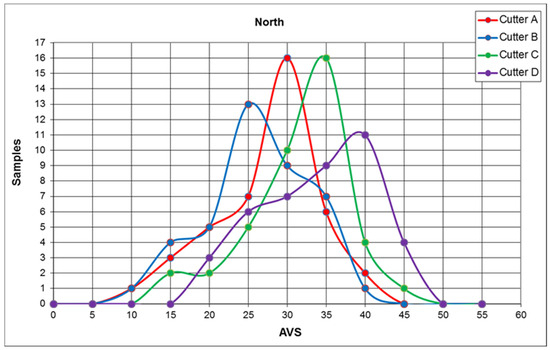
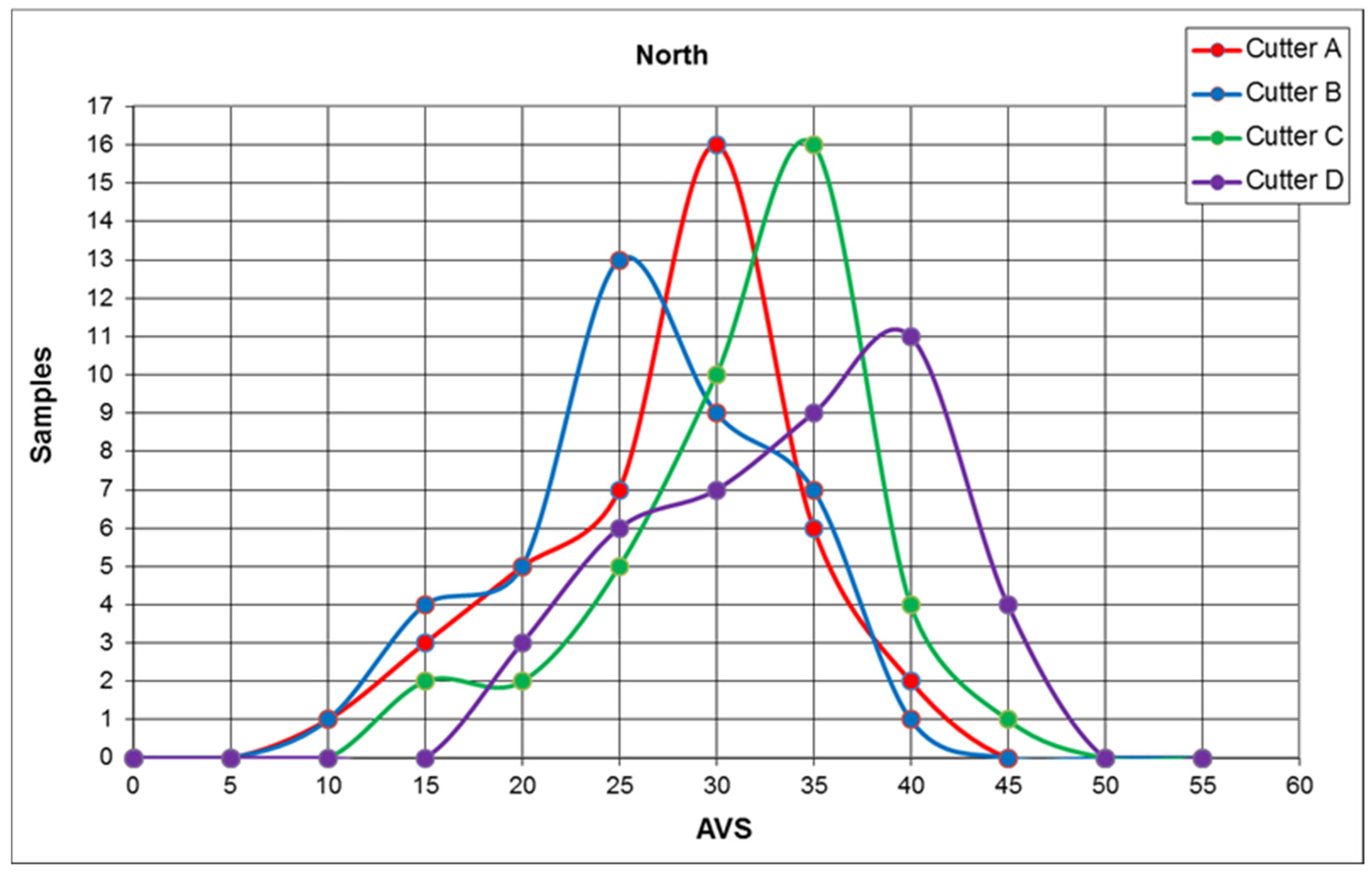
The AVS values obtained for each cutter were represented using normal distributions to visualize the dispersion and central tendency of the wear resistance. The analysis was split between the two operational fronts: the northern (40 samples) and southern portals (45 samples).
For the Northern portal, the distribution curves (Figure 9) reveal distinct performance tiers among the rings. Ring B exhibited the lowest AVS value, indicating the highest resistance to abrasion, followed by Rings A, C, and D in that order. Ring D showed the highest wear, positioning it as the least durable option for this lithology.
Figure 9.
Normal distribution of AVS values for cutters tested with rock dust from the northern portal.
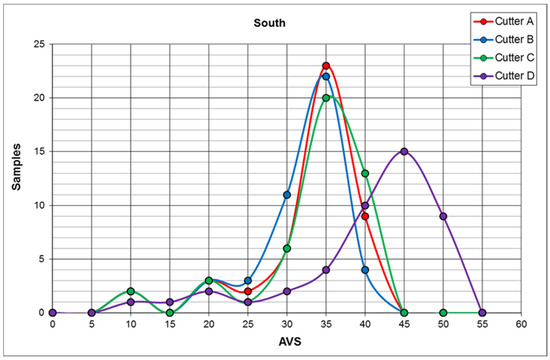
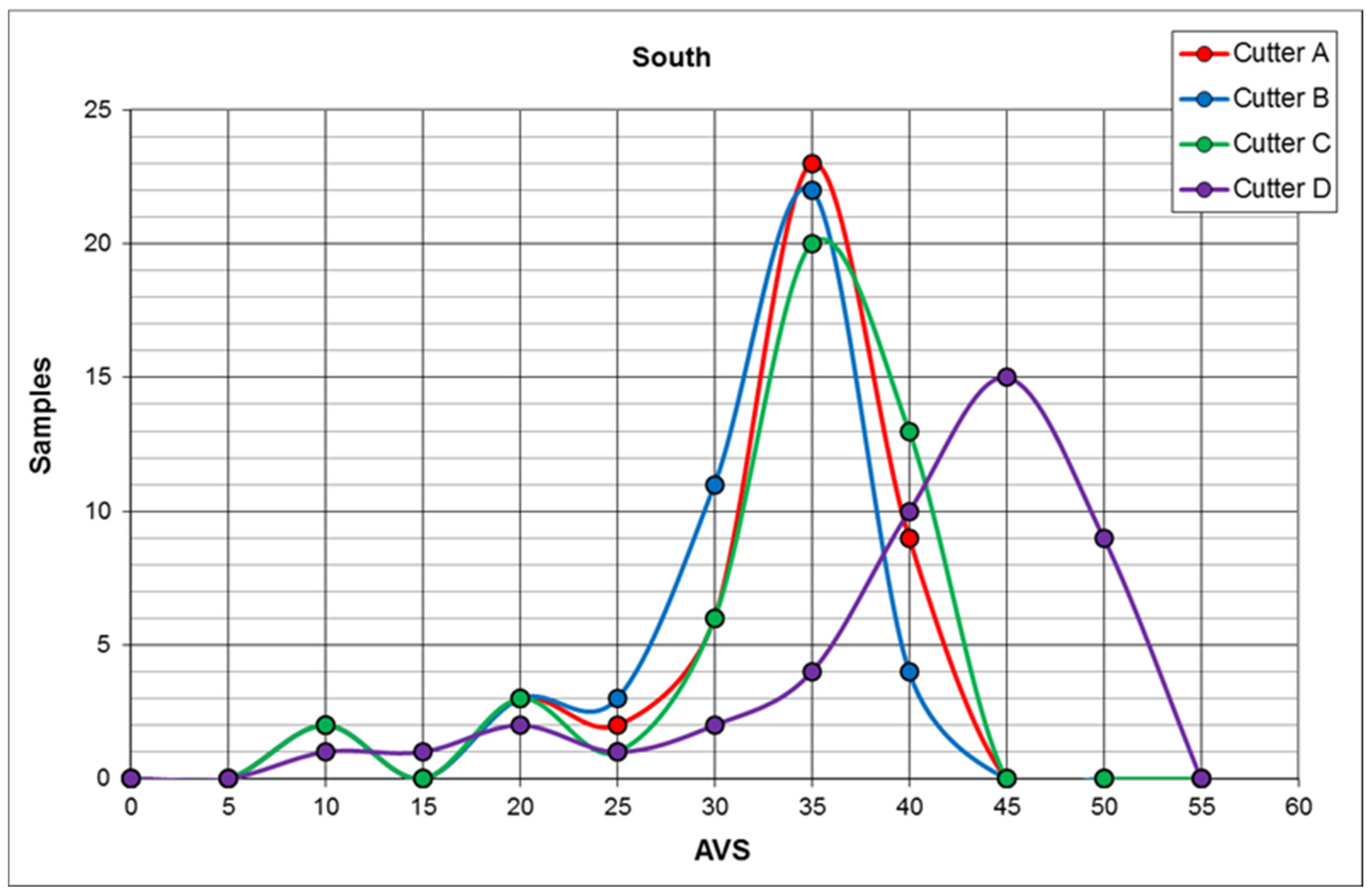
For the Southern portal (Figure 10), the differences among Rings A, B, and C were less pronounced than in the north. However, the general trend persisted, with Ring D continuing to display the greatest wear and the highest AVS values. This consistency across both portals suggests that the poor performance of Ring D is intrinsic to its material properties rather than an anomaly of local geological variations.
Figure 10.
Normal distribution of AVS values for cutters tested with rock dust from the southern portal.
3.2. Statistical Comparison of Wear Resistance
To determine if the observed differences in AVS values were statistically significant or merely due to sampling variability, a rigorous statistical analysis was performed. This aimed to validate whether the differences reflected actual variations in ring wear resistance, a critical factor for selecting the component with the longest service life.
The comparative patterns reported below are interpreted in relative terms using the DMED/ERRS ratio to highlight contrasts that are large with respect to their associated uncertainty. These statements are descriptive and exploratory; they must not be understood as strict claims of statistical significance. Where relevant, we emphasize the stability and coherence of the observed patterns across scenarios/configurations as the basis for engineering judgment, while avoiding over-interpretation that would require formal hypothesis tests with exact p-values, explicit degrees of freedom, and confidence intervals.
Pairwise comparisons were performed for all combinations (A–B, A–C, A–D, B–C, B–D, and C–D) by calculating the variance of the differences between the arithmetic means of AVS values. Subsequently, the standard error was obtained as the square root of the variance. The decision criterion established was that if the difference between means (DMED) exceeded twice the standard error (ERRS), the difference was considered statistically significant.
Table 3 presents the detailed statistics for the Northern portal.
- Descriptive Statistics: Cutter A showed an average AVS of 30.23 with a standard deviation of 6.94. Cutter B showed an average of 29.13 (std. dev. 7.24). Cutter C averaged 34.44 (std. dev. 6.49), and Cutter D averaged 38.66 (std. dev. 7.37).
- Significance Analysis: The comparison between Rings A and B yielded a mean difference of 1.11 and a standard error of 1.61. The ratio (DMED/ERRS) was 0.69, which is below the threshold of 2, indicating no significant difference between them. However, significant differences were found between A–C (Ratio 2.76), B–C (Ratio 3.41), A–D (Ratio 5.20), and B–D (Ratio 5.76).
- Correlation: High correlation coefficients were observed, such as 0.92 for pair A–B and 0.86 for pair B–D, validating the consistency of the testing method.
Table 4 details the results for the Southern portal.
- Descriptive Statistics: Cutter D again showed the highest average wear (40.71) compared to A (32.72), B (31.41), and C (33.61).
- Significance Analysis: The difference between A and B remained insignificant (Ratio 0.86). However, the comparison between B and D yielded a ratio of 5.27, and A vs. D yielded 4.51, confirming the superior wear resistance of Rings A and B compared to Ring D.
In summary, the statistical analysis confirms that Rings A and B exhibit similar resistance, although Ring B shows slightly lower wear. Rings C and D demonstrate reduced durability, with Ring D unequivocally presenting the highest wear susceptibility.
3.3. Estimation of Disc Cutter Service Life
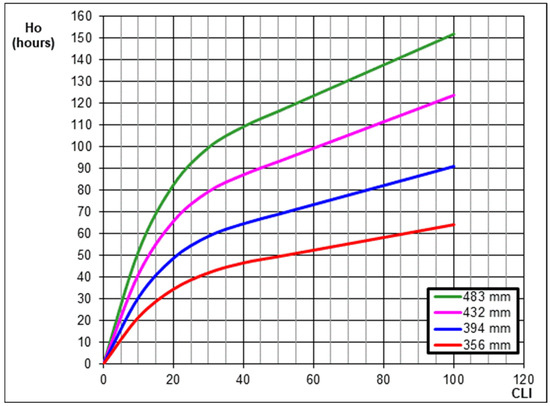
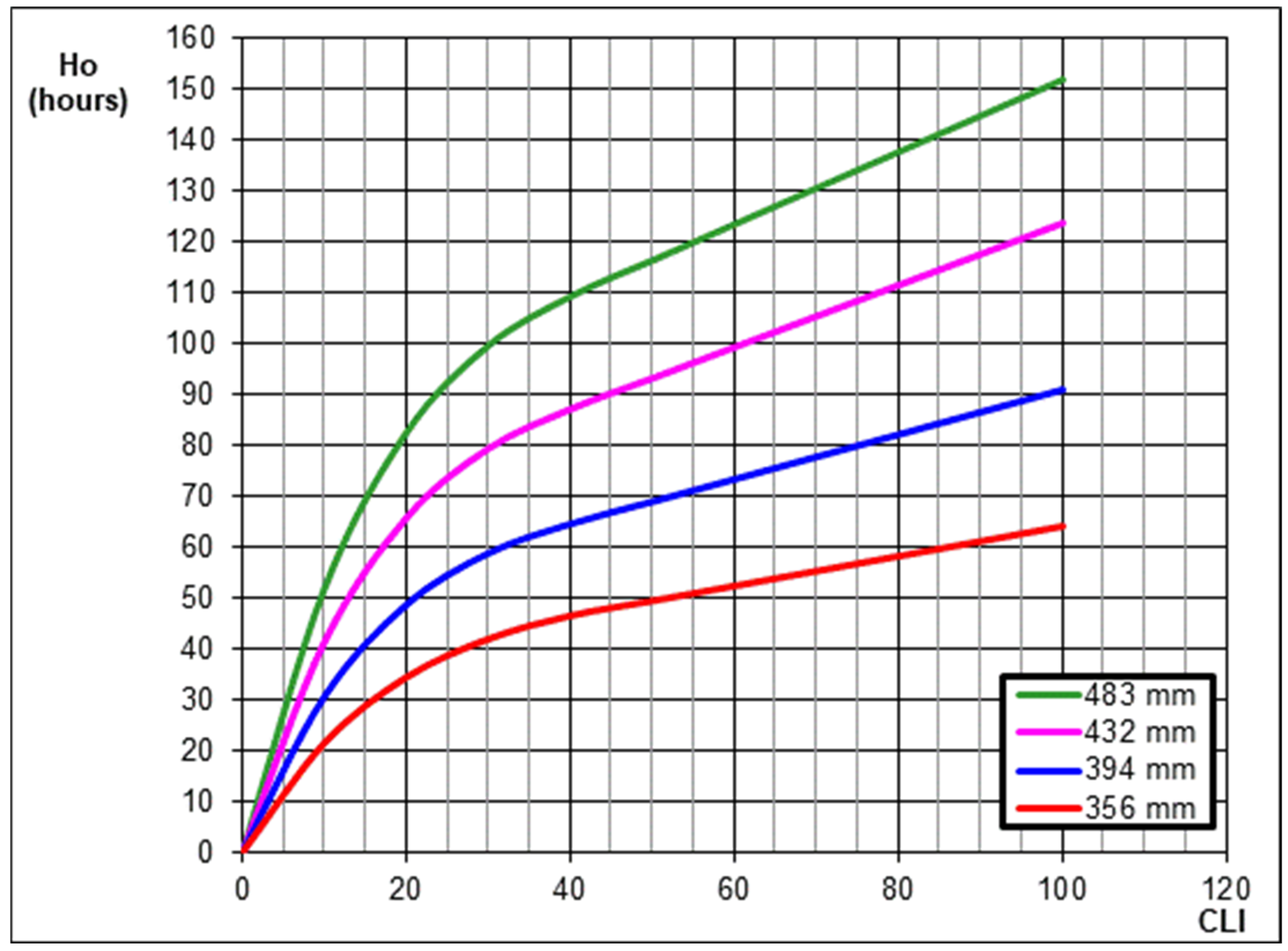
The service life was estimated using the NTNU method, which relies on the Cutter Life Index (CLI) derived from the AVS and Sj parameters. The basic disc life () was first determined using the NTNU chart relating to CLI for specific diameters.
As shown in Figure 11, the chart includes four curves for disc diameters of 356, 394, 432, and 483 mm, demonstrating that larger diameters correspond to longer service life 20.
Figure 11.
NTNU chart relating basic disc life (H0) to CLI for different cutter diameters.
To calculate the corrected disc life (), Equation (2) was applied using specific correction factors for the Guadarrama project context.
The average correction factors employed are detailed in Table 5:
- Quartz Content Factor (): 1.00 (Equivalent quart content 47%) for the North and 1.15 (Equivalent quart content 35%) for the South, reflecting mineralogical differences.
- Diameter Factor (): 1.61 for both portals.
- RPM Factor (): 1.17 (North) and 1.05 (South).
- Number of Discs Factor (): 1.00 for both 25.
Table 5.
Average correction factors for NTNU disc life calculation.
- Cutter A: values were ~51.2 h (North) and ~49.9 h (South). After correction, the expected life is 101.31 h in the North and 97.14 h in the South.
- Cutter B: Achieved the highest estimated life with 102.27 h (North) and 98.16 h (South).
- Cutter D: Showed the lowest basic life ( ~48.3 h in North) and the lowest corrected life, reaching only 95.56 h (North) and 92.08 h (South).
Table 6 summarizes the Drillability Index (SJ), AVS, CLI, and Ho values for the cutter discs tested at both tunnel portals.
Table 6.
Drillability Index (SJ), AVS, CLI, and Hardness Number (Ho) for Cutter Discs Tested at the North and South Tunnel Portals.
The final estimated values are presented in Table 7.
Table 7.
Estimated service life of disc cutters (in hours).
Where represents the average life of each disc cutter, without considering its relative position on the TBM cutterhead.
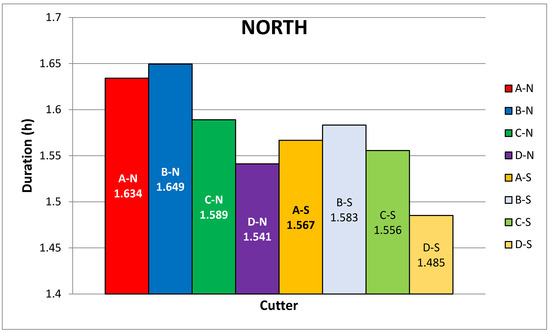
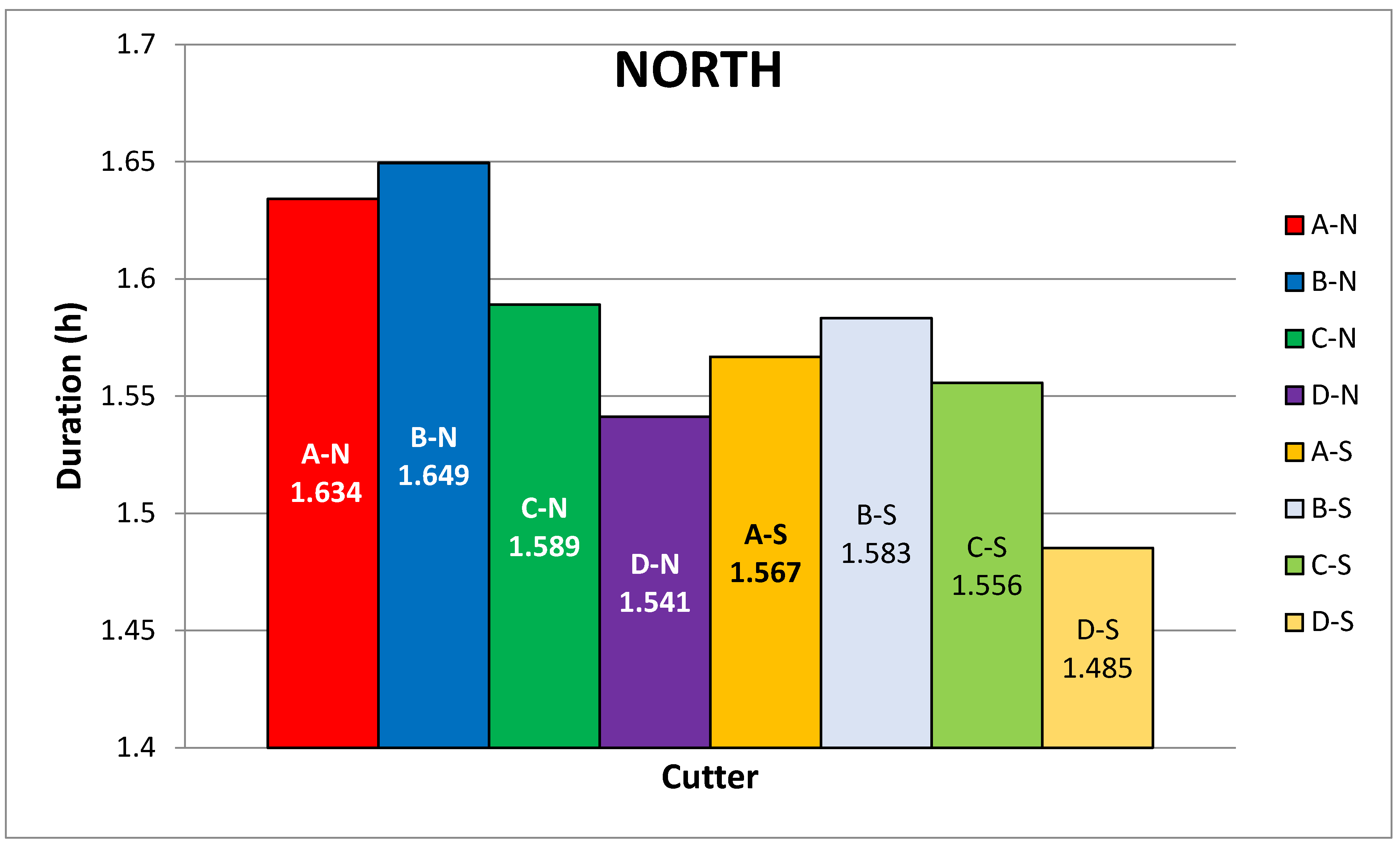
These results, visualized in Figure 12, quantify the operational advantage of selecting Cutter B or A over Cutter D, translating to fewer interventions and reduced downtime.
Figure 12.
Estimated service life of disc cutters. A–N indicates Cutter A at the northern portal.
4. Conclusions
Tunnel boring machines (TBMs) are widely employed in infrastructure projects, particularly in transportation systems such as railways and highways. These projects typically involve substantial budgets, where tunnel excavation, and consequently, the replacement of cutterhead tools, represents a significant portion of the total cost. The present study highlights the importance of proper cutter selection in TBM-driven tunnel projects, particularly in hard and abrasive rock masses like those found in the Guadarrama mountains. The following conclusions are drawn from the research:
- Wear as the Determining Factor: The findings confirm that wear is the primary factor governing disc replacement, having a direct and critical impact on project costs and construction schedules. This phenomenon directly influences operational planning and overall machine performance.
- Cutter Selection Hierarchy: Results obtained through the AVS (Abrasion Value Steel) test and comparative statistical analysis of Rings A, B, C, and D reveal significant differences in wear resistance, enabling objective criteria for selecting the most efficient cutter. Specifically, Rings A and B exhibit similar and superior performance compared to Rings C and D, with Ring D showing the lowest durability.
- Methodology Validation: The application of the NTNU method, based on the Cutter Life Index (CLI), allowed for reasonably accurate estimation of disc service life. The incorporation of correction factors related to TBM diameter (), rotation speed (), number of discs (), and rock mineralogy () proved essential for adapting theoretical models to real site conditions.
- Recommendations for Improvement: While the NTNU method provides a robust framework for predicting cutter consumption, it is recommended to consider an additional parameter linked to the uniaxial compressive strength of the rock mass, given its proven influence on wear.
- Limitations: Predicting TBM advance rates is subject to considerable uncertainty. Limitations remain due to operational variables not included in the model, such as operator expertise, cooling conditions, and machine-specific characteristics. These factors may introduce deviations from theoretical estimates.
- The comparative analysis presented in this study is based on controlled AVS testing conducted using excavation-derived rock dust at each tunnel portal. While the use of a single, homogeneous rock powder per test series minimizes lithological variability within each experimental set, it does not fully eliminate the influence of broader geological heterogeneity along the tunnel alignment. Consequently, the observed differences in wear performance among cutter discs should be interpreted as indicative trends rather than definitive evidence of intrinsic material superiority.
- The repeated poorer performance observed for certain cutter designs across different portals is suggestive of material-related effects; however, a strict decoupling between the influence of cutter material properties and local lithological characteristics cannot be conclusively established with the current experimental design. A more comprehensive assessment of this relationship would require complementary testing strategies, such as evaluating a single cutter type against rock materials from multiple geological domains or testing all cutter types against a standardized abrasive medium.
- Within these acknowledged limitations, the proposed methodology provides a practical and consistent framework for the relative comparison and classification of cutter disc performance under site-representative conditions. The results should therefore be understood as a comparative evaluation tool rather than as a definitive, geology-independent ranking of cutter material performance.
In summary, the proposed methodology contributes to optimizing cutter selection, reducing consumption, and consequently lowering costs and execution times. The availability of specialized equipment at ETSIME-UPM enabled experimental validation of the described procedures, reinforcing their applicability in large-scale projects such as the Guadarrama Tunnels. This approach represents a significant step toward improving efficiency in mechanized tunnel excavation.
It is important to note that the DMED/ERRS heuristic employed herein serves an exploratory purpose and does not replace formal probabilistic inference. Consequently, the manuscript does not report p values or confidence intervals for the descriptive comparisons presented. If confirmatory inference is required, appropriate parametric tests (e.g., Student’s t test or ANOVA, depending on the comparison structure) should be applied and reported with exact p values and confidence intervals in accordance with standard academic practice.
Author Contributions
Conceptualization, C.L.H., A.C.S.P., E.P.A. and J.S.-M.; methodology, C.L.H., E.P.A., A.C.S.P. and J.S.-M.; software, C.L.H. and J.S.-M.; validation, C.L.H., A.C.S.P., E.P.A. and J.S.-M.; formal analysis, C.L.H., A.C.S.P. and J.S.-M.; investigation, C.L.H., E.P.A. and J.S.-M.; resources, C.L.H.; data curation, A.C.S.P.; writing—original draft preparation, C.L.H. and J.S.-M.; writing—review and editing, E.P.A. and J.S.-M.; visualization, C.L.H. and A.C.S.P.; supervision, C.L.H. and J.S.-M.; project administration, E.P.A. and A.C.S.P.; funding acquisition, C.L.H., A.C.S.P., E.P.A. and J.S.-M. All authors have read and agreed to the published version of the manuscript.
Funding
This research received no external funding.
Institutional Review Board Statement
Not applicable.
Informed Consent Statement
Not applicable.
Data Availability Statement
The original contributions presented in this study are included in the article. Further inquiries can be directed to the corresponding author.
Conflicts of Interest
The authors declare no conflicts of interest.
References
- Laín, C.; Llamas, B.; Pous, J.; Laín, R. Nueva metodología empírica para la estimación del desgaste de los cortadores de una tuneladora. Inf. Constr. 2018, 70, e242. [Google Scholar] [CrossRef] [Scilit]
- Sievers, H. Die Bestimmung des Bohrwiderstandes von Gesteinen. Glückauf 1950, 86, 776–784. [Google Scholar]
- Oggeri, C.; Oreste, P. The wear of tunnel boring machine excavation tools in rock. Am. J. Appl. Sci. 2012, 9, 1606–1617. [Google Scholar] [CrossRef] [Scilit]
- Dahl, F. DRI, BWI, CLI Standards; NTNU, Anleggsdrift: Trondheim, Norway, 2003. [Google Scholar]
- UNE-EN 12407:2007; Métodos de Ensayo Para Piedra Natural. Estudio Petrográfico. AENOR: Madrid, Spain, 2007.
- UNE 22950-1:1990; Propiedades Mecánicas de las Rocas. Ensayos Para la Determinación de la Resistencia. Parte 1: Resistencia a Compresión Uniaxial. AENOR: Madrid, Spain, 1990.
- ASTM D7012; Standard Test Methods for Compressive Strength and Elastic Moduli of Intact Rock Core Specimens Under Varying States of Stress and Temperatures. ASTM International: West Conshohocken, PA, USA, 2010.
- Ghasemi, A. Study of Cerchar Abrasivity Index and Potential Modifications for More Consistent Measurement of Rock Abrasion. Ph.D. Thesis, The Pennsylvania State University, State College, PA, USA, 2010. [Google Scholar]
- Zhao, J.; Huang, D.; Zhu, D. Mechanical properties of rock cutting by disc cutters and feasibility analysis of mechanical mining in Jinchuan No. 3 Mine with hard rock. Sci. Rep. 2025, 15, 3149. [Google Scholar] [CrossRef] [Scilit]
- Xue, Y.; Li, X.; Wang, L.; Liu, Y.; Cao, X.; Zhang, Y. Mesoscopic damage enhancement in granite under cyclic liquid nitrogen shocks characterized by computed tomography and texture analysis. Int. J. Rock Mech. Min. Sci. 2025, 194, 106217. [Google Scholar] [CrossRef] [Scilit]
- Gutiérrez Manjón, J.M. Consumo de cortadores de los túneles de Guadarrama. In Túnel de Guadarrama; Entorno Gráfico: Madrid, Spain, 2006; pp. 283–300. [Google Scholar]
- Burger, W. Hard rock cutterhead design. In Proceedings of the North American Tunnelling Conference, Chicago, IL, USA, 10–15 June 2006; pp. 257–263. [Google Scholar]
- Frenzel, C.; Käsling, H.; Thuro, K. Factors influencing disc cutter wear. Geomech. Tunn. 2008, 1, 55–60. [Google Scholar] [CrossRef] [Scilit]
- Bilgin, N.; Balci, C. Performance Prediction of Mechanical Excavators in Tunnels; ITA/AITES: Istanbul, Turkey, 2005. [Google Scholar]
- Nielsen, B.; Dahl, F.; Holzhäuser, J. Abrasivity testing for rock and soils. Tunn. Tunn. Int. 2006, 38, 47–49. [Google Scholar]
- Kahraman, S.; Bilgin, N.; Feridunoglu, C. Dominant rock properties affecting the penetration rate of percusive drills. Int. J. Rock Mech. Min. Sci. 2003, 40, 711–723. [Google Scholar] [CrossRef] [Scilit]
- Plinninger, R.J.; Restner, U. Abrasiveness testing, Quo Vadis?—A commented overview of abrasiveness testing methods. Geomech. Tunn. 2008, 1, 61–70. [Google Scholar] [CrossRef] [Scilit]
- Wang, L.; Li, H.; Zhao, X.; Zhang, Q. Development of a prediction model for the wear evolution of disc cutters on rock TBM cutterhead. Tunn. Undergr. Space Technol. 2017, 67, 147–157. [Google Scholar] [CrossRef] [Scilit]
- Lemm, J.D.; Warmuth, A.R.; Pearson, S.R.; Shipway, P.H. The influence of surface hardness on the fretting wear of steel pairs—Its role in debris retention in the contact. Tribol. Int. 2015, 81, 258–266. [Google Scholar] [CrossRef] [Scilit]
- Nanesa, H.G.; Boulgakoff, J.; Jahazi, M. Influence of prior cold deformation on microstructure evolution of AISI D2 tool steel after hardening heat treatment. J. Manuf. Process. 2016, 22, 115–119. [Google Scholar] [CrossRef] [Scilit]
- Nelson, P.P. TBM performance analysis with reference to rock properties. Compr. Rock Eng. 2016, 4, 261–291. [Google Scholar]
- Lin, L.; Xia, Y.; Mao, Q.; Zhang, X. Experimental study on wear behaviors of TBM disc cutter ring in hard rock conditions. Tribol. Trans. 2018, 61, 920–929. [Google Scholar] [CrossRef] [Scilit]
- Liu, Q.; Liu, J.; Pan, Y.; Zhang, X.; Peng, X.; Gong, Q.; Du, L. A wear rule and cutter life prediction model of a 20-in. TBM cutter for granite: A case study of a water conveyance tunnel in China. Rock Mech. Rock Eng. 2017, 50, 1303–1320. [Google Scholar] [CrossRef] [Scilit]
- Rostami, J. Performance prediction of hard rock Tunnel Boring Machines (TBMs) in difficult ground. Tunn. Undergr. Space Technol. 2016, 57, 173–182. [Google Scholar] [CrossRef] [Scilit]
- Bruland, A. Hard Rock Tunnel Boring, Advance Rate and Cutter Wear; Norwegian University of Science and Technology: Trondheim, Norway, 1988; Volume 3, pp. 13–32. [Google Scholar]
- Espallargas, N.; Jakobsen, P.D.; Langmaack, L.; Macias, F.J. Influence of corrosion on the abrasion of cutter steels used in TBM tunnelling. Rock Mech. Rock Eng. 2015, 48, 261–275. [Google Scholar] [CrossRef] [Scilit]
- Walpole, R.E.; Myers, R.H.; Myers, S.L. Probabilidad y Estadística Para Ingenieros; Pearson Educación: Mexico City, Mexico, 1999; pp. 681–682. [Google Scholar]
- Broz, M.E.; Cook, R.F.; Whitney, D.L. Microhardness, toughness, and modulus of Mohs scale minerals. Am. Mineral. 2006, 91, 135–142. [Google Scholar] [CrossRef] [Scilit]
- Thomson, E. Quantitative microscopic analysis. J. Geol. 1930, 38, 193–222. [Google Scholar] [CrossRef] [Scilit]
- Mott, B.W. Micro-Indentation Hardness Testing; Butterworths Scientific Publications: London, UK, 1956. [Google Scholar]
- Centre d’Études et Recherches des Charbonnages de France (CERCHAR). The Cerchar Abrasiveness Index: Recommendations du CERCHAR; Centre d’Etudes et Recherches de Charbonnages de France (CERCHAR): Verneuil-en-Halatte, France, 1986. [Google Scholar]
- Schimazek, J.; Knatz, H. The influence of rock structure on the cutting speed and pick wear of heading machines. Glückauf 1970, 106, 274–278. [Google Scholar]
- Plinninger, R.J.; Spaun, G.; Thuro, K. Predicting tool wear in drill and blast. Tunn. Tunn. Int. 2002, 34, 1–5. [Google Scholar]
- Roxborough, F.F.; Phillips, H.R. Rock excavation by disc cutter. Int. J. Rock Mech. Min. Sci. Geomech. Abstr. 1975, 12, 361–366. [Google Scholar] [CrossRef] [Scilit]
- Ozdemir, L.; Wang, F.D. Mechanical Tunnel Boring Prediction and Machine Design; NASA STI/Recon Technical Report N, 80, 16239; NASA: Washington, DC, USA, 1979.
- Roxborough, F.F. Research in mechanical rock excavation: Progress and prospects. In Proceedings of the Rapid Excavation and Tunneling Conference, New York, NY, USA, 16–20 June 1985; Volume 1, pp. 225–244. [Google Scholar]
- Bieniawski, Z.T.; Celada, B.; Galera, J.M. Predicting TBM excavatability. Tunn. Tunn. Int. 2007, 39, 23–26. [Google Scholar]
- Barton, N.; Gammelsaeter, B. Predicting TBM advance using the Q-system and QTBM. Tunn. J. 2010, 32–36. [Google Scholar]
- Bruland, A. Hard Rock Tunnel Boring; Fakultet for Ingeniørvitenskap og Teknologi: Trondheim, Norway, 2000. [Google Scholar]
- Rostami, J.; Ozdemir, L.; Nilson, B. Comparison between CSM and NTH hard rock TBM performance prediction models. In Proceedings of the Annual Technical Meeting of the Institute of Shaft Drilling Technology, Las Vegas, NV, USA, 1–3 May 1996; pp. 1–10. [Google Scholar]
- Barton, N.R.; Lien, R.; Lunde, J. Engineering classification of rock masses for the design of tunnel support. Rock Mech. 1974, 6, 189–239. [Google Scholar] [CrossRef] [Scilit]
- Bieniawski, Z.T. Tunnel Design by Rock Mass Classifications; Department of Mineral Engineering, Pennsylvania State University: University Park, PA, USA, 1990. [Google Scholar]
- Laín Huerta, C.; Soto Pérez, A.C.; Pérez Arellano, E.; Suárez-Macías, J. A Review of the CLH Index, an Empirical Methodology for TBM Cutter Wear Estimation. Appl. Sci. 2025, 15, 11878. [Google Scholar] [CrossRef] [Scilit]

Disclaimer/Publisher’s Note: The statements, opinions and data contained in all publications are solely those of the individual author(s) and contributor(s) and not of MDPI and/or the editor(s). MDPI and/or the editor(s) disclaim responsibility for any injury to people or property resulting from any ideas, methods, instructions or products referred to in the content. |
© 2026 by the authors. Licensee MDPI, Basel, Switzerland. This article is an open access article distributed under the terms and conditions of the Creative Commons Attribution (CC BY) license.