Article

Methodology for the Causal Analysis of Rockburts in Deep High-Stress Tunnels: A Case Study of Conveyor Belt Tunnel in Andes Norte Project, El Teniente Codelco


by
Washington Rodríguez
1,
Javier A. Vallejos
2,* and
Maximiliano Jaque
3
1
Vice Presidency of Projects, CODELCO CHILE, Rancagua 4930000, Chile
2
Department of Mining Engineering, Advanced Mining Technology Center (AMTC), University of Chile, Santiago 8370448, Chile
3
GMT Engineering Services Limited, Santiago 7580258, Chile
*
Author to whom correspondence should be addressed.
Appl. Sci. 2026, 16(3), 1616; https://doi.org/10.3390/app16031616
Submission received: 17 December 2025 / Revised: 15 January 2026 / Accepted: 29 January 2026 / Published: 5 February 2026
(This article belongs to the Special Issue Advances in Rock Mechanics: Theory, Method, and Application)

Abstract

Rockbursts are one of the most critical geomechanical hazards during the construction of deep tunnels under high in situ stress conditions, as they can compromise worker safety, damage infrastructure, and disrupt excavation continuity. Despite extensive research on rockburst mechanisms and mitigation, the causal analysis of individual events remains challenging due to the complex interaction between seismicity, geological conditions, stress redistribution, and operational factors. This study proposes a structured and multidisciplinary methodology for the causal analysis of rockbursts in deep high-stress tunnels. The methodology integrates seismicity analysis, geological and geotechnical characterization, operational assessment, field damage inspection, and hypothesis-driven interpretation to systematically reconstruct the sequence of processes leading to rockburst occurrence. The proposed approach is applied to a rockburst that occurred in 2020 in the Conveyor Belt tunnel (TC) of the Andes Norte Project, El Teniente Division, Codelco (Chile). The event reached a local magnitude of Mw = 1.7 and caused significant damage to tunnel support systems. Results indicate that the rockburst was associated with excavation- and blasting-induced stress redistribution, leading to the activation of a sub-horizontal rupture plane and subsequent damage propagation toward the excavated tunnel. The methodology provides a transparent and adaptable analytical framework for integrating multidisciplinary data into a coherent causal interpretation. Although demonstrated using a competent and brittle rock mass, the framework can be adapted to other deep tunneling projects under high-stress conditions by adjusting the governing parameters according to site-specific geological, geomechanical, and operational characteristics. The proposed approach supports improved understanding of rockburst mechanisms and informed decision-making for seismic risk management in deep underground excavations.

1. Introduction

Rockburst is one of the most critical geomechanical concerns of deep tunnel construction, and can significantly jeopardize worker safety, equipment integrity, and project schedules [1]. Such phenomena are in many cases concerned with high-stress conditions and unfavorable geological conditions, such as structural discontinuities and the brittle nature of the surrounding rock mass itself. At the El Teniente Division, rockbursts are defined as sudden failure and expulsion of rock mass caused by a seismic event, which interrupts the continuity of operations. The Andes Norte NNM Project extends this definition to situations where the loss of continuity affects the mining development and preparation process. To ensure the safety and efficiency of deep mining operations, it is necessary to improve the understanding of this phenomenon and the environment that favors the occurrence of these events.
Several studies have focused on procedures for managing seismic risk to comprehend the causes of rockbursts and to control and mitigate their consequences [2,3]. For instance, in coal mines, these events are often tied to tectonic stresses caused by ongoing geological shifts. When combined with mining activities, these stresses lead to energy build-up, which can eventually result in a rockburst. A particular study suggests a framework for assessing the geological environment, categorizing rockbursts, and reducing their risks by focusing on essential conditions, secondary factors, and controllable elements [4].
Another factor is the role of heterogeneity and geological features like faults and fractures. Research has shown that these features can amplify the intensity of rockbursts [5,6,7]. This means that faults and similar structures play a significant role in localized rock failures, making it crucial to account for them when planning mining operations. These findings help improve our ability to predict and manage risks in areas under high stress [8].
Managing the risk of rockbursts in deep underground mines has significantly evolved through research and practical applications aimed at enhancing safety and operational efficiency [9,10]. On a strategic level, methods like seismic hazard assessments rely on tools such as the Excavation Vulnerability Potential (EVP) and Rockburst Damage Potential (RDP) to evaluate and reduce risks [11]. A benchmarking study by Newcrest Mining introduced a structured approach to seismic risk management, covering data collection, seismic response analysis, control measures, and risk assessment through a comprehensive flowchart [11]. On a more tactical level, measures like establishing safe timeframes for workers to return after blasting help minimize exposure to seismic aftershocks [12]. Correlations between mining activities and seismicity have been used to develop evidence-based re-entry protocols, identifying patterns in aftershock sequences following large events or blasts to determine safe re-entry times [13]. Additionally, comprehensive seismic risk management practices in metalliferous mines emphasize structured approaches that integrate monitoring, analysis, and tactical controls, including re-entry strategies as part of broader risk mitigation frameworks [14].
In addition, the OSRM MUJ project at LKAB’s Malmberget mine developed the SRMS MUJ framework, which integrates planning, monitoring, communication, and workflow optimization to address increasing seismicity in underground operations [15].
Further contributing to this field, recent research describes control and mitigation of rockburst risk in deep mining operations, analyzing their causes, the factors influencing damage, and methods for risk assessment and mitigation [16]. A broader review of global trends since 1990 has also highlighted advances in prediction methods, prevention strategies, and control measures, underscoring the growing role of intelligent management systems in mitigating rockburst risks and improving operational safety [17].
Despite the critical importance of understanding rockburst phenomena in tunnel construction, few widely recognized detailed methodologies focus on analyzing their causes [18]. Although a substantial body of literature addresses rockburst hazard assessment, prediction, and mitigation, a closer examination reveals important limitations when these approaches are evaluated from a causal analysis perspective. Many widely used methodologies are predominantly centered on a single discipline, such as geomechanical hazard indices or seismological characterization, and do not explicitly integrate multiple domains into a unified causal framework. For example, comprehensive geomechanical methods for rockburst hazard evaluation (e.g., Małkowski & Niedbalski, 2020 [2]) provide robust tools for assessing susceptibility and supporting risk-based decision-making, but they mainly emphasize geomechanical indicators and do not formally link seismic source characteristics, geological structures, operational sequencing, observed damage patterns, and support-system performance. Similarly, detailed case-based analyses of rockburst accidents (e.g., Chen et al., 2023 [18]) offer valuable insights into failure mechanisms and triggering factors for specific events; however, these approaches are often event-specific and do not translate into standardized, repeatable methodologies applicable across different tunnels and construction stages. As a result, there remains a gap in the availability of broadly recognized methodologies that provide a stepwise, multidisciplinary causal analysis integrating seismicity, geotechnical setting, operational factors, field damage assessment, and hypothesis validation within a single workflow.
Codelco’s El Teniente Division has faced significant geotechnical challenges during the excavation of deep tunnels within the Andes Norte Project, particularly related to the management of rockbursts. During the construction of the access tunnels, seven major rockburst incidents were recorded, providing a valuable empirical basis for advancing seismic risk management strategies. Building upon this experience, a comprehensive methodology is proposed for the causal analysis of rockbursts in deep tunnels affected by induced seismicity. The methodology is grounded in detailed observations from these rockburst cases, as well as from selected high-energy seismic events that did not produce severe damage and were therefore not formally classified as rockbursts, but nevertheless contributed essential information to the development of the proposed framework.
This methodology is applied to the Conveyor Belt Tunnel of the Andes Norte Project as a representative case study.
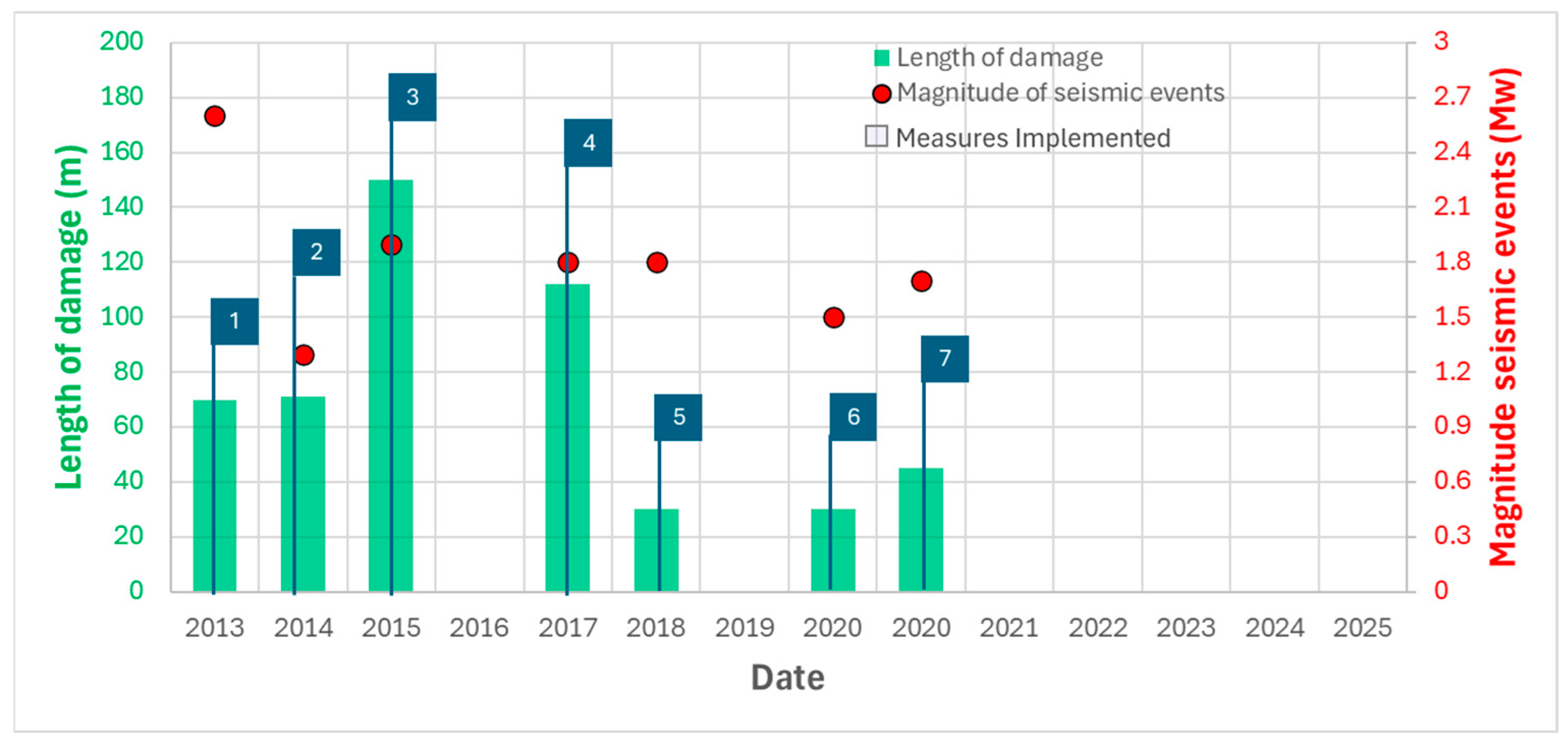
Figure 1 shows the level of damage from rockbursts and the measures implemented over time for seismic risk management, this has led us to reduce the number of rockbursts.
The measures implemented over time indicated in Figure 1 are listed below in chronological order:
  • Destress blasting, hydraulic fracturing, installation of seismic sensors;
  • Changes to the support system: implementation of a second layer of mesh and cables;
  • Incorporation of remote-controlled equipment, definition of re-entry times;
  • Geotechnical drilling at the face, stress measurements with acoustic emission;
  • Increased post-blast re-entry times, additional reinforcement in dikes areas (cables);
  • Installation of cables with remote equipment;
  • Improvement in the seismic system sensitivity.
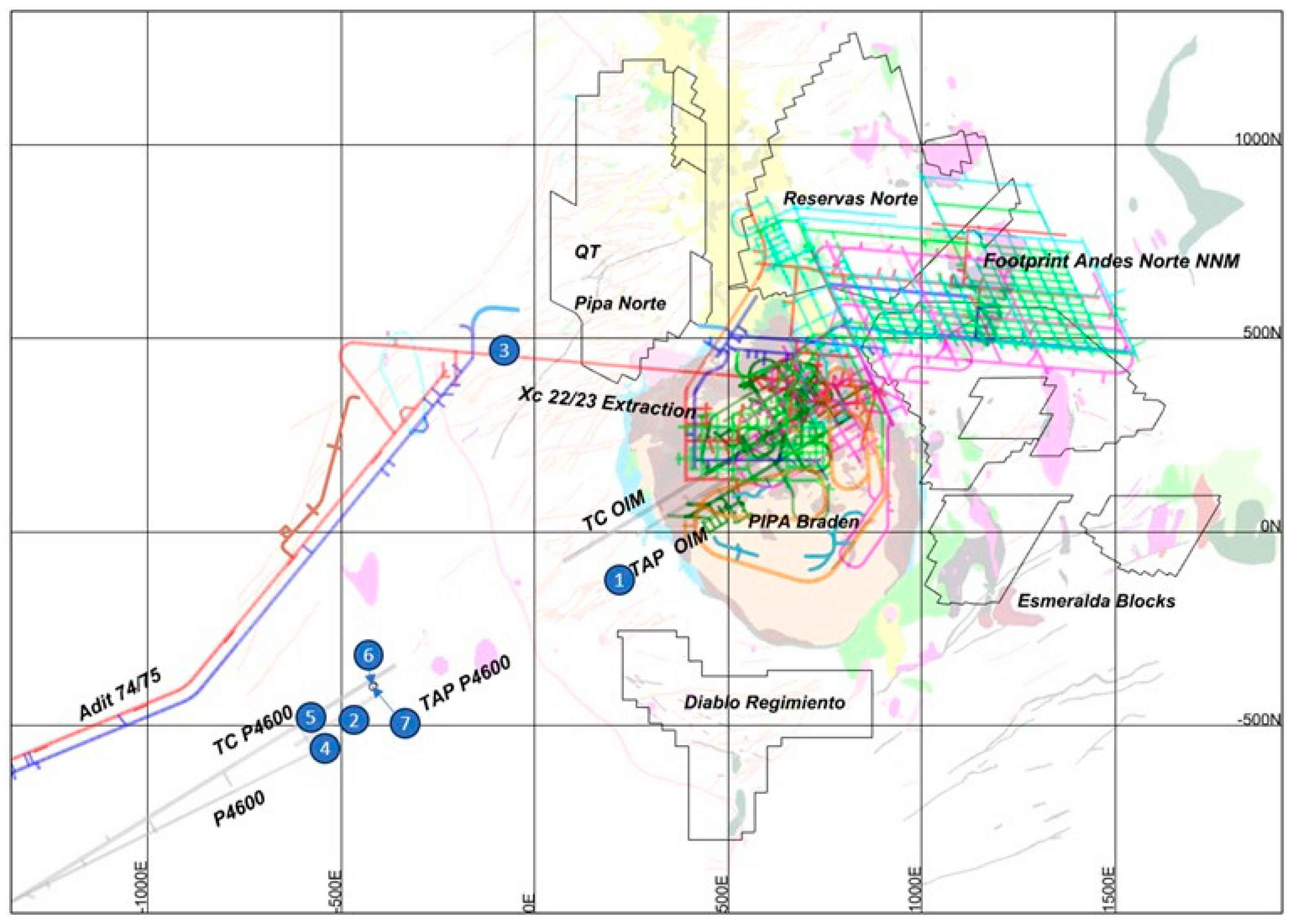
Rockbursts are a critical geomechanical risk that threatens both infrastructure and worker safety. As the tunnels have been constructed, this situation has been encountered in certain areas of the AN Project, NNM, with seven recorded rockbursts since the start of developments in 2011, as shown in Table 1 and Figure 2.

2. Methodology

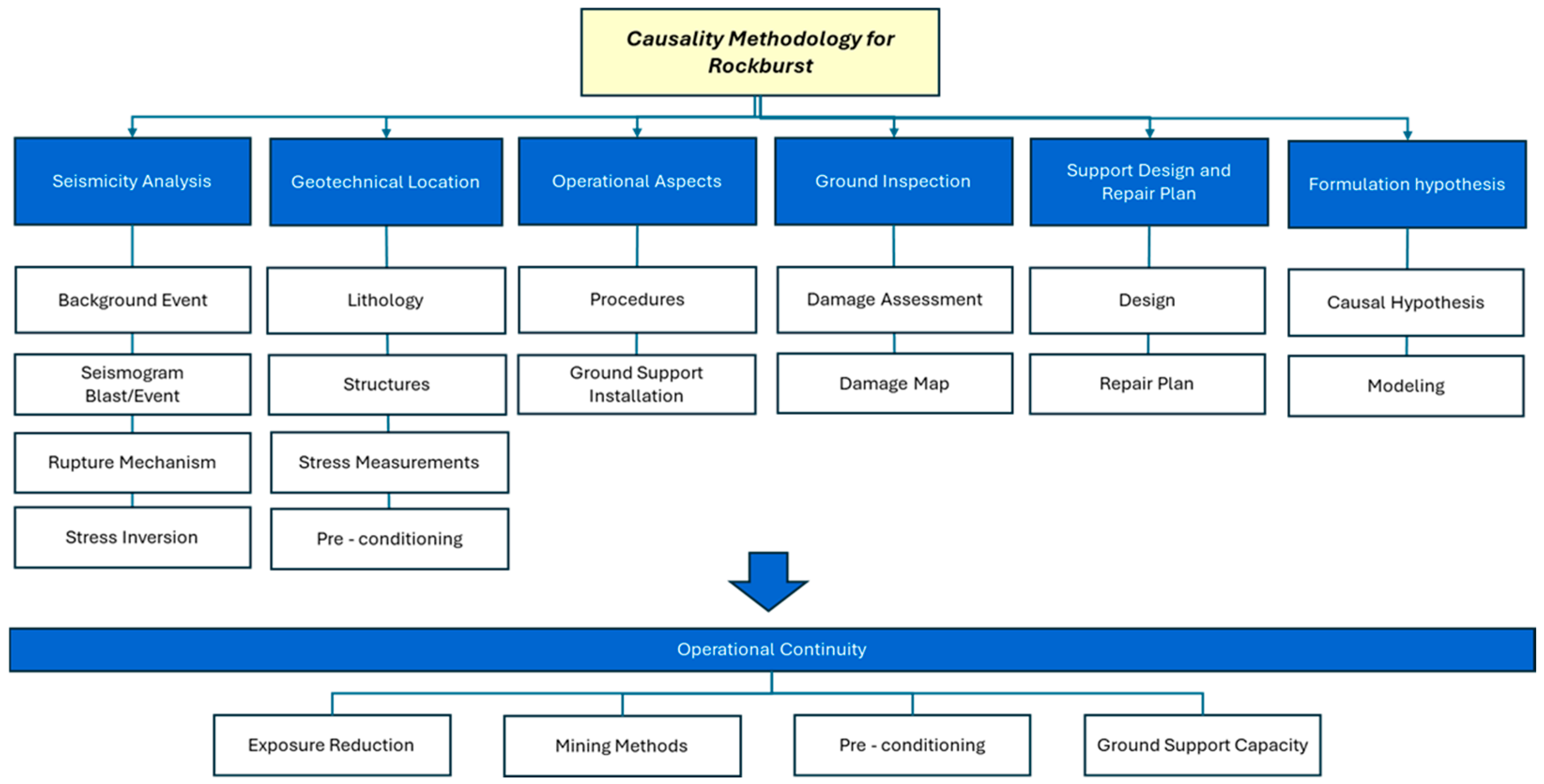
With the experience and knowledge gained from evaluating the rockbursts (RB) in the AN Project, the complex nature of these events has led the company to assemble a multidisciplinary team whenever a rockburst is declared, to determine the causes and improve understanding. Based on these studies, the following methodology for causal analysis of rockbursts in deep tunnels within complex environments is proposed, as shown in Figure 3.
This scheme represents a structured and sequential workflow for the causal analysis of rockbursts in deep tunnels. The methodology is designed to progressively narrow the range of possible causal mechanisms by integrating information from multiple domains. The process begins with seismicity analysis, which provides the initial characterization of the event, including its magnitude, spatial location, source parameters, and rupture mechanism. This step establishes the temporal and spatial framework of the rockburst and defines the initial conditions for subsequent analyses. Uncertainty at this stage, mainly related to event location and source parameter estimation, is explicitly considered by incorporating localization errors and alternative focal mechanism solutions.
The results of the seismicity analysis are then integrated with the geotechnical setting, including lithology, geological structures, stress field, and pre-conditioning measures. This stage allows the identification of structural features or stress configurations that are kinematically compatible with the observed seismic source mechanisms. Uncertainties associated with geological interpretation, stress measurements, and rock mass properties are managed by considering ranges of values, multiple structural sets, and complementary sources of information such as drilling data and in situ measurements.
Subsequently, operational aspects are evaluated to assess whether excavation sequences, blasting practices, and support installation complied with established protocols and whether operational conditions may have contributed to stress redistribution or dynamic loading. This step links the geotechnical context with the construction process, allowing the identification of potential operational triggers or amplifying factors.
The ground inspection and damage assessment stage provides direct field evidence of the rockburst impact, including the spatial extent, severity, and characteristics of the damage. Damage maps are used to validate and refine interpretations derived from seismic and geotechnical analyses, reducing uncertainty by constraining the location and mechanism of rock mass failure.
Based on the integration of seismic, geotechnical, operational, and damage information, one or more causal hypotheses are formulated. These hypotheses are then evaluated through conceptual interpretation and, where appropriate, numerical modeling, allowing the consistency between observed data and proposed failure mechanisms to be tested. Uncertainty at this final stage is addressed by comparing alternative hypotheses and assessing their ability to reproduce the observed seismic response and damage patterns.
Through this sequential and integrative process, the methodology provides a transparent and reproducible framework in which each component feeds into the next, enabling a robust causal interpretation of rockburst events while explicitly acknowledging and managing uncertainties at each stage.

2.1. Sismicity Analysis

The pertinent details related to the seismic event associated with each recorded rockburst are documented. Seismological information is crucial to understanding the conditions under which the rockburst occurred and helps clarify its underlying causes. For each seismic event, the following data are recorded: Date and time, Magnitude (Mw), Coordinates (X, Y, Z), Energy, among others. Additionally, a visual representation of the event and its relative location within the mine is provided.
It is important to highlight that for a rockburst triggered by a seismic event, two groups of parameters can be used to quantitatively describe the event’s characteristics. On one hand, there are the seismic source parameters, which primarily provide general information about the event, as discussed in the previous paragraph. On the other hand, the moment tensor represents a physical approximation of the rupture process along a plane. Through the analysis of seismic records and the determination of first motions, potential fault planes and the direction of displacement are identified. The strike, dip, and slip are determined, with the latter corresponding to the fault’s slip direction angle, measured relative to the rupture plane’s strike.
The results of the focal mechanism analysis are integrated with geological and geomechanical information to interpret the nature of the rupture and the stress orientation. The focal mechanism is graphically represented on a stereographic projection sphere or “beachball.” These diagrams facilitate the visualization and understanding of the movement along with the rupture.
Additionally, stress inversion can be performed, a process aimed at estimating the stress state based on seismic activity analysis. The results of stress inversion are presented in terms of the magnitude and orientation of the principal stress axes, as well as the relationship between them. Comparing the stress inversion results with on-site stress measurements can provide important validation of the inversion results [19].

2.2. Geotechnical Setting

Lithology provides detailed information about the type of rock present and its associated physical and mechanical characteristics, which are fundamental factors in the behavior of the rock mass. This can be examined through drilling and excavation. When examining lithology, it is important to consider various aspects such as color, texture, grain size, and mineralogy. Mechanical properties of the rock, such as uniaxial compressive strength, elasticity modulus, cohesion, and friction angle, among others, should also be considered. The variability within the lithology can significantly impact the geomechanical behavior of a tunnel. For instance, the presence of alternating layers of strong and weak rocks can lead to more complex stress conditions.
Geological structures, such as faults and structural sets, play a decisive role in the geomechanical response of the rock. The presence of faults can increase the likelihood of rockbursts due to their ability to concentrate stresses and facilitate rock slip. These structures can also act as conduits for fluid movement, altering the stress field. Joints can form systems of discontinuities that significantly affect rock stability. The orientation, persistence, spacing, roughness, and infill properties of these discontinuities are key factors for assessing their impact on rock behavior. A detailed structural analysis, including identification and characterization of structures, geological mapping, and orientation measurements, will provide a deep understanding of the area’s structural geology. For example, sub-horizontal structures are more vulnerable to sub-horizontal stresses, leading to over-excavation in the excavation crown, as seen in the Correa Tunnel of the AN Project [20].
Stress measurements allow for the identification of the directions and magnitudes of the principal stress and the assessment of conditions that could lead to instability in a working area, associated with higher stress anisotropy. Several methods exist for measuring stress: hydraulic fracturing, hollow inclusion cells, and acoustic emission measurements, among others.
Pre-conditioning is a strategy aimed at preparing the rock mass prior to excavation to improve its behavior and reduce risks associated with induced seismicity. This process may involve various techniques depending on the specific geological and geomechanical conditions of the site. Hydraulic Fracturing is a technique that uses fluid injected at high pressure into a confined section via well packers to create a fracture in the rock. The location and injection point, breakdown pressure, propagation pressure, flow rate, and the difference between breakdown and propagation pressures are recorded, providing relevant information about the area; it can also produce seismicity in the sector [21,22,23,24]. Destressing Blasting is another pre-conditioning technique that involves using explosives to induce fractures in the rock ahead of the tunnel face and modify the rock mass properties. This technique has successfully shifted induced seismicity to the initial tunnel advancement blast [25].

2.3. Operational Aspects

Specific excavation and fortification protocols and procedures are essential tools in seismic risk management, where strict compliance is necessary to minimize worker exposure. The guidelines in these documents aim to reduce personnel exposure, including isolation times, safety distances, mechanization of processes such as fortification, drilling and blasting design, instrumentation, among others. These measures may vary depending on tunnel excavation behavior and should therefore be reviewed periodically.
Fortification systems are designed to withstand the stress of the surrounding rock environment. This design considers various factors, including lithology and its mechanical properties, structures, and the geotechnical and geomechanical conditions of the site. In fortification design, decisions are made regarding the type of support to be used (e.g., rock bolts, mesh, shotcrete), its layout, and the installation sequence. It is essential that the fortification installation follows the design precisely. This involves adhering to the installation plan, ensuring supports are correctly installed in specified locations, and conducting regular inspections to confirm that the fortification performs as expected. Incorrect or inadequate installation of fortifications can result in reduced efficiency and increased impact under loading. Therefore, rigorous quality control and inspection and testing procedures are essential to ensure that fortifications are installed as designed and maintained over time.

2.4. Ground Inspection

During these inspections, various components and characteristics of the fortification are evaluated, such as:
  • Mesh condition: The condition of the meshes used in the fortification is examined to identify potential damage or wear. Tears, holes, deformations, or loss of tension are checked, as these can affect the mesh’s effectiveness in containing the rock.
  • Plates, bolts, and nuts: These elements are inspected to verify correct installation and tension. Signs of damage or corrosion are also sought, which could indicate the need for repair or replacement.
  • Bolt shear mechanism: This mechanism is reviewed to ensure it is operating efficiently and configured correctly for the specific rock conditions.
  • Scaling: Checks are made for any fallen chunks of concrete, and signs of cracking are also looked for.
  • Shotcrete thickness: The thickness of the shotcrete is measured to ensure it meets design specifications. Insufficient thickness can increase the likelihood of rock damage by not providing adequate structural support. Conversely, excessive thickness can be counterproductive, potentially leading to concrete detachment and projection. Excess material may prevent certain shotcrete areas from interacting effectively with the mesh and bolts, creating weak points.
  • Mesh overlap: The overlap of the meshes is checked to ensure complete and effective coverage. Inadequate overlap can create weak areas in the fortification.
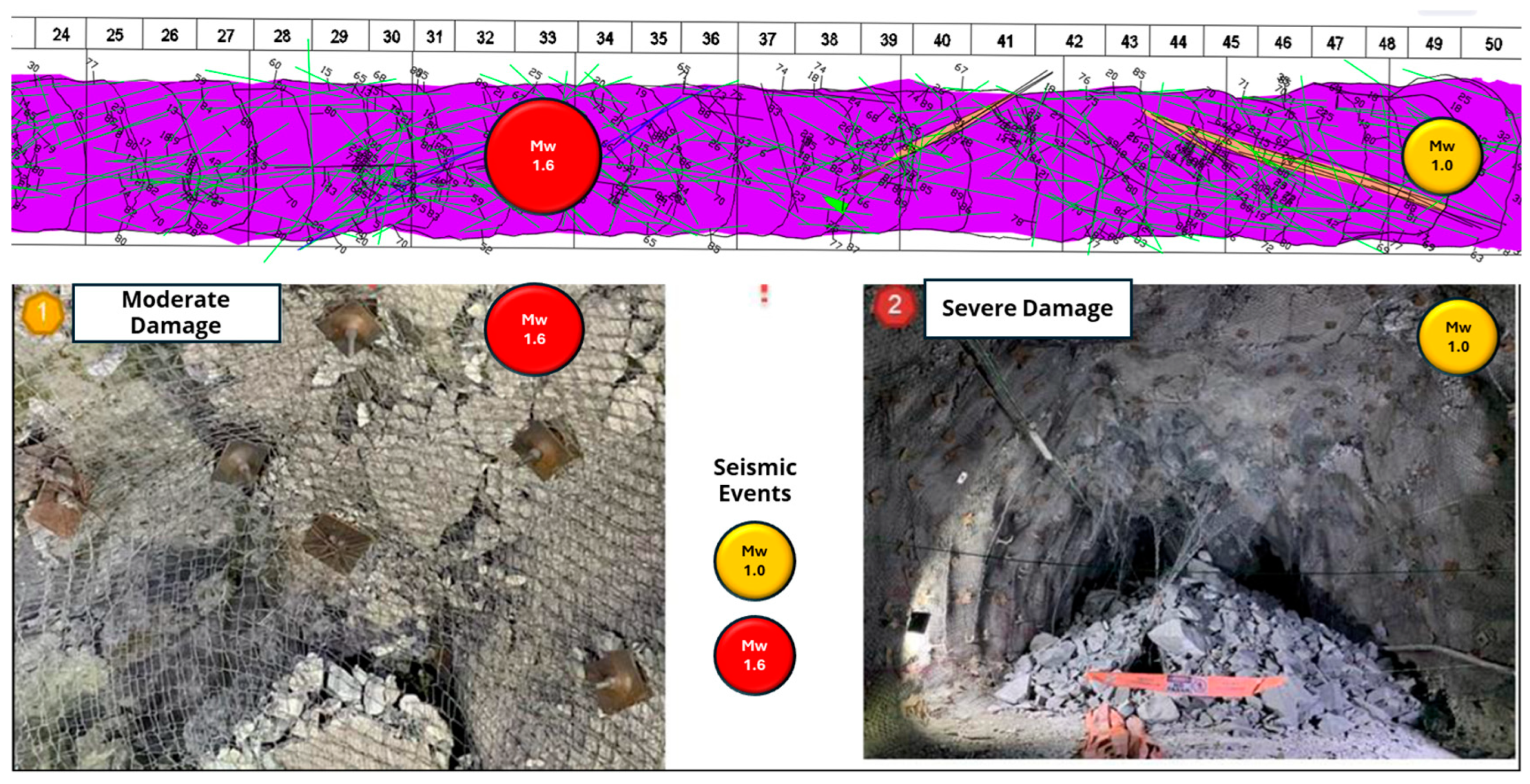
In Damage Plans, the extent and severity of damage to tunnel infrastructure are analyzed. A classification system is used to categorize the damage level into three categories: minor, moderate, and severe.
  • Minor Damage: Includes minor incidents such as the falling of small rock fragments or the appearance of cracks on the rock surface or shotcrete. While these do not pose an immediate threat to tunnel operations, they indicate potential structural weaknesses that need to be monitored and, in some cases, may require the installation of supplementary fortification.
  • Moderate Damage: Refers to situations where more extensive or deeper damage is observed in the tunnel infrastructure, such as the breakage of anchor bolts, detachment of significant sections of shotcrete, or notable deformation. Moderate damage requires immediate intervention to repair and reinforce the affected areas.
  • Severe Damage: Corresponds to extreme cases where a rockburst has caused considerable damage to the tunnel infrastructure, potentially resulting in the loss of entire sections of tunnel lining or the displacement of large volumes of rock. This level of damage often poses a significant threat to operational safety and requires a swift and effective response to mitigate risks and restore tunnel operability.
The creation of these “damage maps” provides a visual record of areas affected by rockbursts, enabling detailed tracking of the impact of these events over time and facilitating the planning of mitigation and repair strategies.

2.5. Support Design and Repair Plan

The primary objective of tunnel support design is to ensure the stability and safety of the excavation under various loading scenarios, whether static or dynamic. This requires understanding and assessing both the load that the tunnel infrastructure will be subjected to and the resistance that the proposed support design can provide.
Static Case: This is based on stress equilibrium conditions when there are no significant changes over time. Here, the load is given by pre-mining stresses and the modifications caused by tunnel excavation. The support design is based on the strength of the available materials and their interaction with the rock mass, aiming to limit deformations and prevent instability.
Dynamic Case: This includes scenarios where stresses change rapidly over time, such as in the case of a seismic event. In these cases, the load includes not only pre-mining stresses and those induced by excavation but also additional loads generated by dynamic events mainly associated with tunnel-induced seismicity. The support design must be capable of absorbing and dissipating the energy released during these events without compromising excavation stability.
In both cases, the goal of the support design is to ensure that the system’s strength exceeds the imposed load, thereby ensuring excavation stability and worker safety. The support design must also consider the total amount of energy released during a seismic event and how much of that energy can be absorbed or dissipated by the support system.
The first step in designing an adequate support system involves estimating the total amount of energy that could be released during a seismic event. This estimate is based on considering the rock mass likely to be ejected in a seismic event, as well as the altered rock mass around the excavation, primarily due to stresses, tunnel geometry, dimensions, and prior experiences with similar events. The next step is to determine how much of that energy can be absorbed by the proposed support system, which requires a detailed understanding of the mechanical properties of the support system components, including bolts, mesh, shotcrete, nuts, plates, and laboratory strength tests to evaluate the overall support mechanism. By knowing how much energy the support system can dissipate, the design can be adjusted to ensure it can handle the energy released during a seismic event, thereby minimizing risk and ensuring the safety of workers and infrastructure.
In the repair plan, following a seismic event declared as a rockburst, restoring the safety and functionality of the tunnel is of utmost importance. Cleaning and re-fortification are defined according to the level of damage incurred.
Cleaning is performed for an entire section of the tunnel following a rockburst, as it corresponds to a tunnel segment where considerable damage has occurred. In areas where the damage is severe, a more intensive re-fortification strategy may be required, such as installing steel frames for critical cases, such as in zones where multiple rockbursts have occurred, or installing bolts and cables in a specific pattern with mesh. Re-fortification can be carried out selectively, depending on the severity of the damage in different sections of the tunnel.
The implementation of such a repair plan, tailored to the degree of damage in different tunnel sections, allows for more efficient use of resources and ensures that all damaged areas are adequately addressed. At the end of this process, the safety and stability of the tunnel should be fully restored, allowing tunnel advancement to continue safely.

2.6. Hypothesis Formulation

Based on information obtained from seismicity, geological, geomechanical, operational, and field inspection analyses, certain hypotheses are formulated, which can be validated through numerical modeling to aid in understanding causality. The model should integrate relevant information, such as fault maps, hydraulic fracturing, tunnel advancement sequence, stress conditions, and rock properties.
By comparing the estimates from our numerical model with available empirical data, we can assess the validity of our hypotheses. If the model results align with empirical observations, this supports the hypothesis. On the other hand, if the model predictions do not match the observations, this may indicate the need to revise or refute the hypothesis.

3. Case Study

In this chapter, the proposed methodology is applied to Rockburst No. 7, which occurred in the access tunnels of the Andes Norte Project at El Teniente Mine. The rockburst took place on 26 September 2020, in the Correa Fw Tunnel in the area known as P4600, heading toward the mine.

3.1. Sismicity Analysis Correa Tunnel

On 26 September 2020, at 22:32:46, advance blast #50 was conducted at the face of the Correa Fw Tunnel in the P4600 sector. During the blast (5 s after initiation), a significant seismic event was recorded, causing the projection of fragmented material into the tunnel. After the 12 h post-blast isolation period, an inspection was conducted, revealing fragmented material and fortification out of service on the tunnel floor, which was declared a rockburst.

3.1.1. Blast Seismogram/Seismic Event

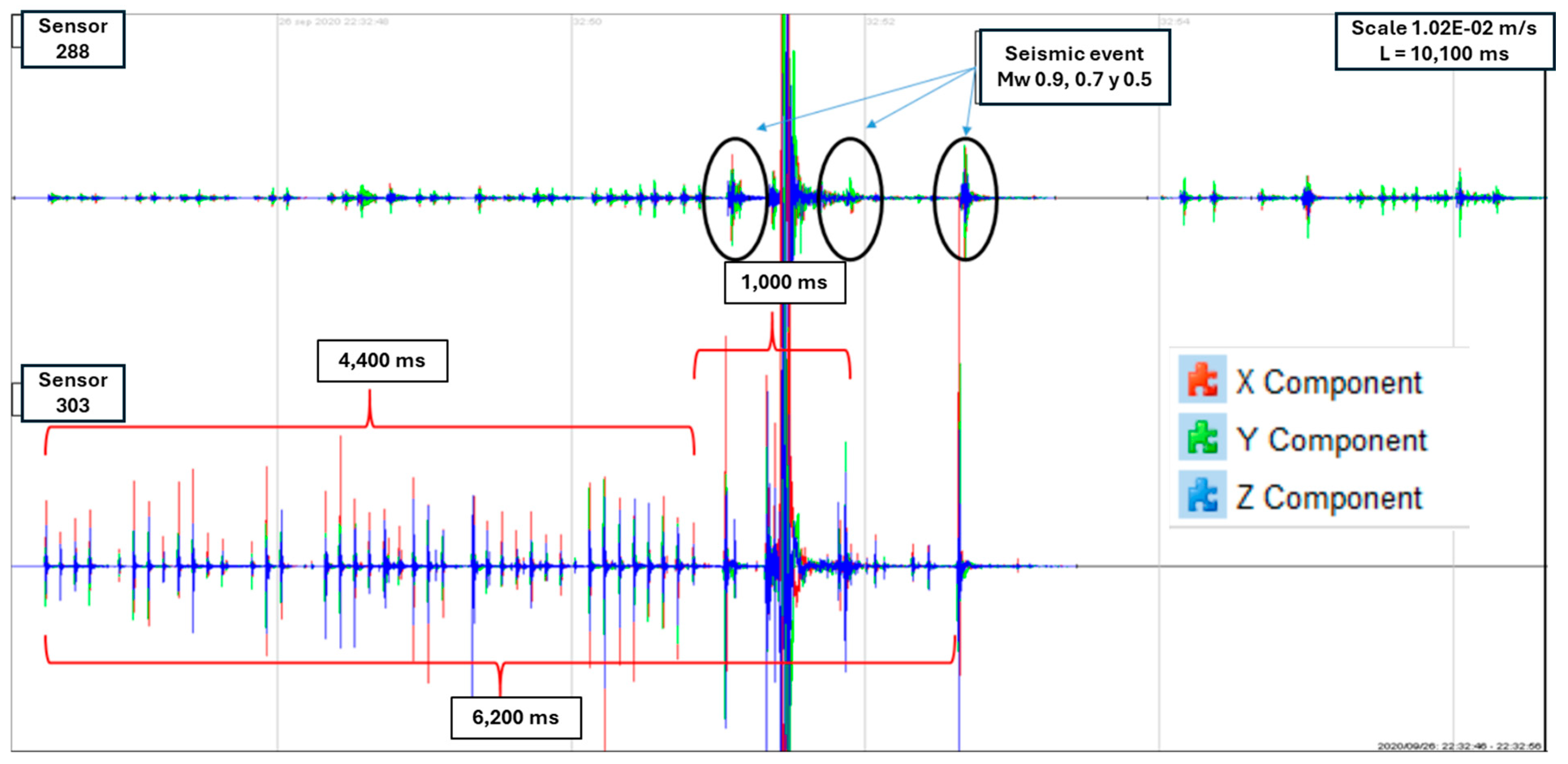
Seismic events induced by tunnel excavation can occur alongside a blast or during other stages of the mining cycle, with a higher likelihood during tunnel advancement blasting. In this case study, the blast seismogram, in addition to the main event recorded at Mw = 1.7, identified three seismic events with magnitudes of 0.9, 0.7, and 0.5 Mw. This group of events occurred within a 2 s interval during the blast. Additionally, 40 s after the main event, a seismic event of Mw = 0.8 was recorded 50 m behind the TC face, near the location of significant damage observed in the field. Figure 4 shows the blast record with the events described above.
Table 2 details the source parameters of the seismic events identified in the rockburst of this case study.
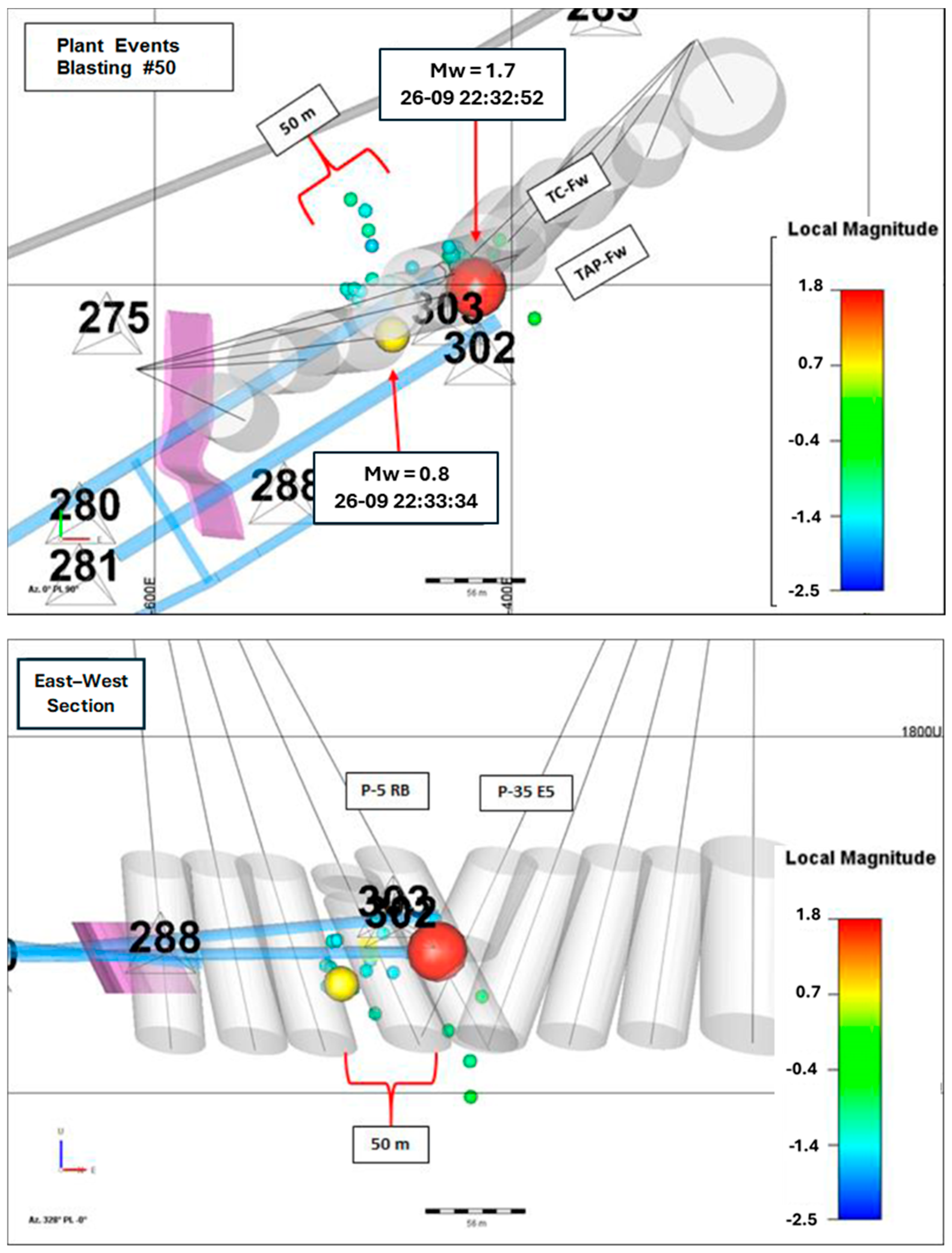
The initial location assigned to the seismic event is shown in Figure 5, where the main event Mw = 1.7 is located at tunnel level, 20 m southeast of the face. Meanwhile, the Mw = 0.8 event is located near the area of significant damage observed in the field, approximately 50 m behind the face and 20 m below tunnel level. The actual localization error of the seismic system in this sector ranges between 15 m and 20 m.
The spatial separation between the main seismic event (Mw = 1.7), located approximately 20 m southeast of the tunnel face, and the subsequent aftershock (Mw = 0.8), located about 50 m behind the face and below tunnel level, suggests the activation of distinct but mechanically related failure processes. One plausible explanation is the presence of a sub-horizontal or gently dipping structural feature, consistent with the structural sets identified in this sector, which may have acted as a preferential rupture plane for the main event. The activation of this structure, driven by stress redistribution associated with tunnel excavation and blasting, could have altered the local stress field and transferred stress toward the already excavated portion of the tunnel.
In this context, the aftershock may reflect a secondary failure mechanism occurring in a zone of reduced confinement closer to the tunnel, where variations in rock mass strength, damage accumulation, or pre-existing fracturing favored localized crushing or spalling rather than shear slip. This interpretation is supported by the differences observed in the source mechanisms of the events, where the main event exhibits a predominantly slip-type component, while the Mw = 0.8 event shows characteristics more consistent with a volumetric or crush-type response. Together, these observations indicate that the spatial separation of the events is controlled by the interaction between geological structures, stress redistribution induced by excavation, and local mechanical heterogeneity of the rock mass.

3.1.2. Moment Tensor

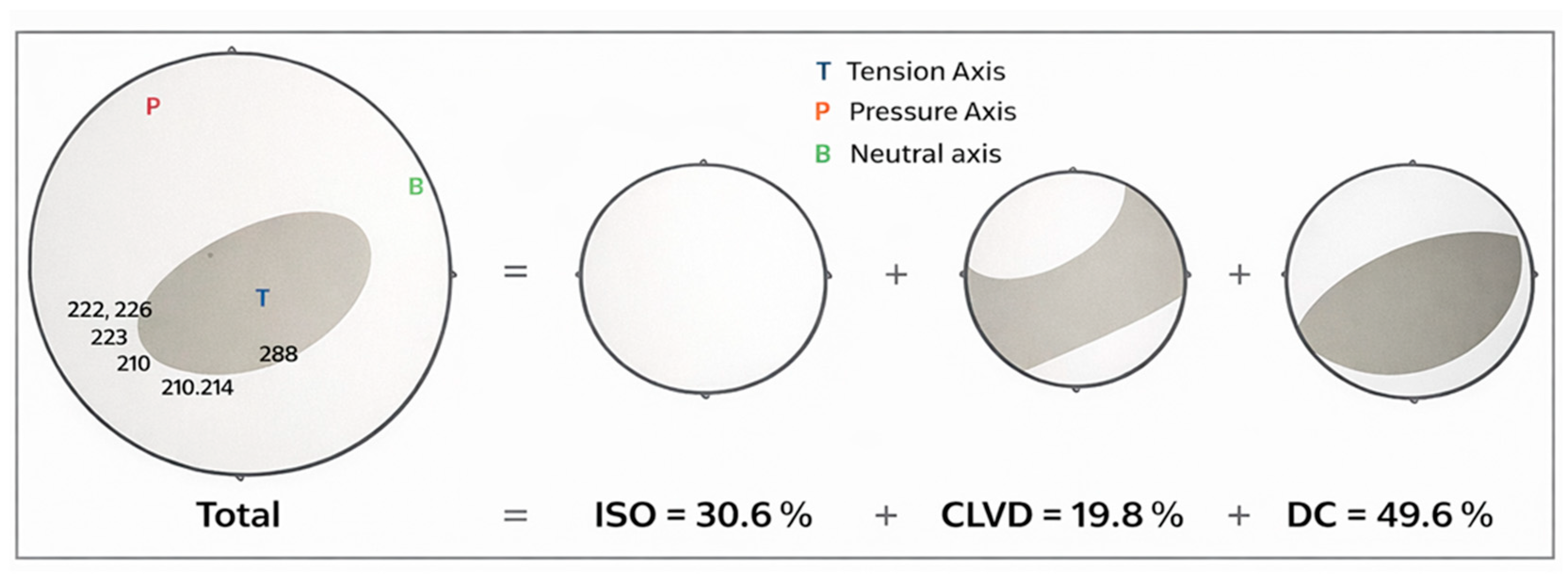
Given the complexity of the seismogram, the moment tensor estimation was performed using the Full Waveform methodology. The focal mechanism of the rockburst is of the Reverse type, featuring an ISO component of approximately 30%, indicating a significant volumetric component in the event. Additionally, a DC component of approximately 50% is also prominent. This combination of moment tensor components indicates that the rupture process involves a slip-type source combined with an implosive volumetric source around the tunnel; see Figure 6.
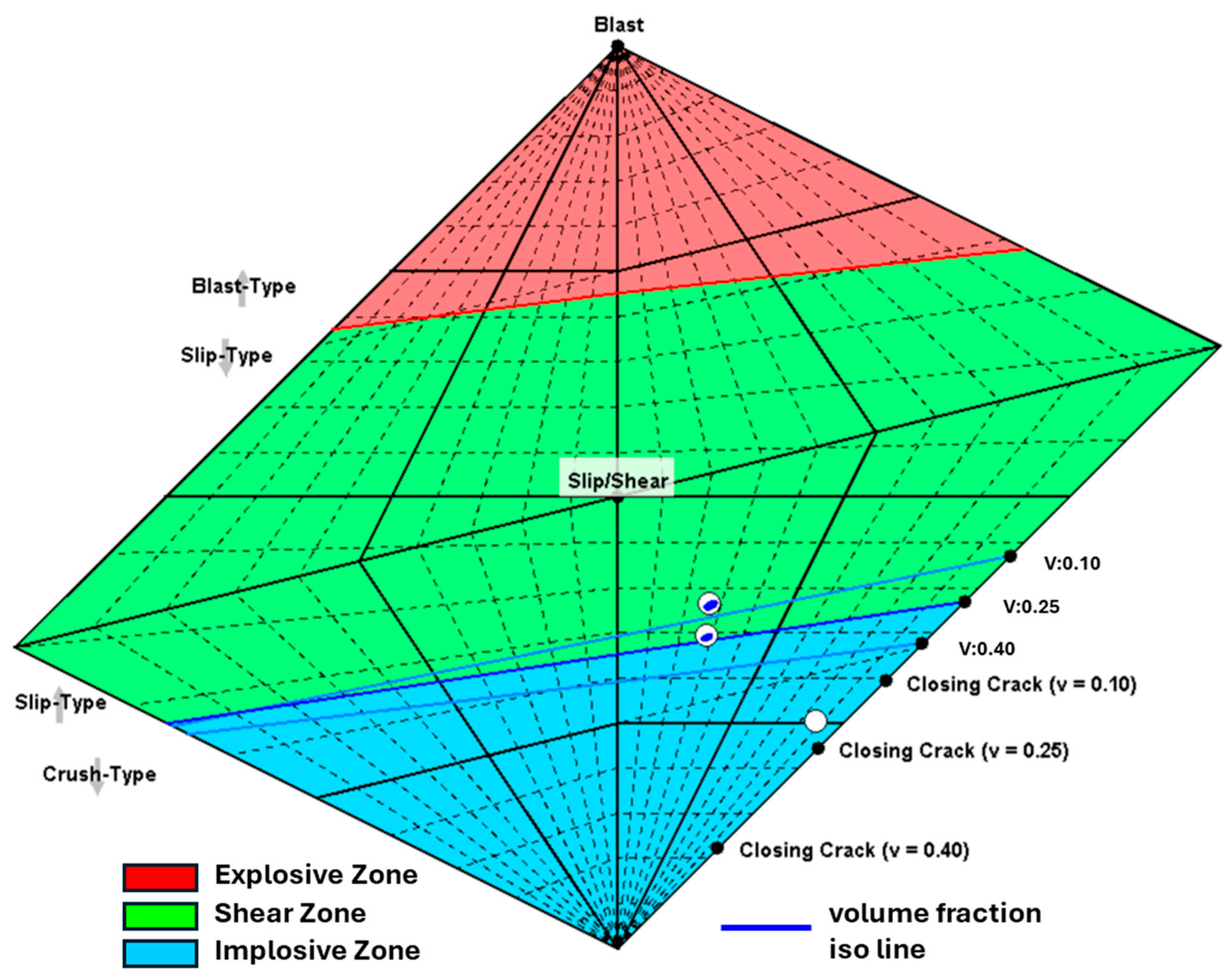
Another way to continue investigating the mechanism of seismic events is through the Hudson diagram [19], a useful tool for visualizing the decomposition of the moment tensor. It shows the relative proportions of the elemental isotropic, DC (Double Couple), and CLVD (Compensated Linear Vector Dipole) sources. The CLVD parameter approximates a uniaxial compression similar to the compression a rock pillar might experience. The vertical axis represents the isotropic component, ranging from −100% (implosion) to 100% (explosion). The horizontal axis represents the deviatoric decomposition, from +100% to −100% CLVD, with 100% DC at the center (0% isotropic, 0% CLVD). Figure 7 shows the Hudson diagram of the seismic events involved in this rockburst. It is observed that the first seismic events, Mw 1.3 and 0.9, are of the slip type, while the Mw 0.8 event is of the crush type, occurring near the tunnel.
Among the possible rupture planes provided by the focal mechanism of the seismic event (Table 3), a sub-horizontal plane with a dip toward the southeast (Strike = 58° and Dip = 27°) stands out as it is sub-parallel to the tunnel. This plane is part of the group of solutions known as Malovichko planes (Strike = 70° and Dip = 25°), identified as those that can be activated under a stress condition like the one measured in the sector.

3.1.3. Stress Inversion

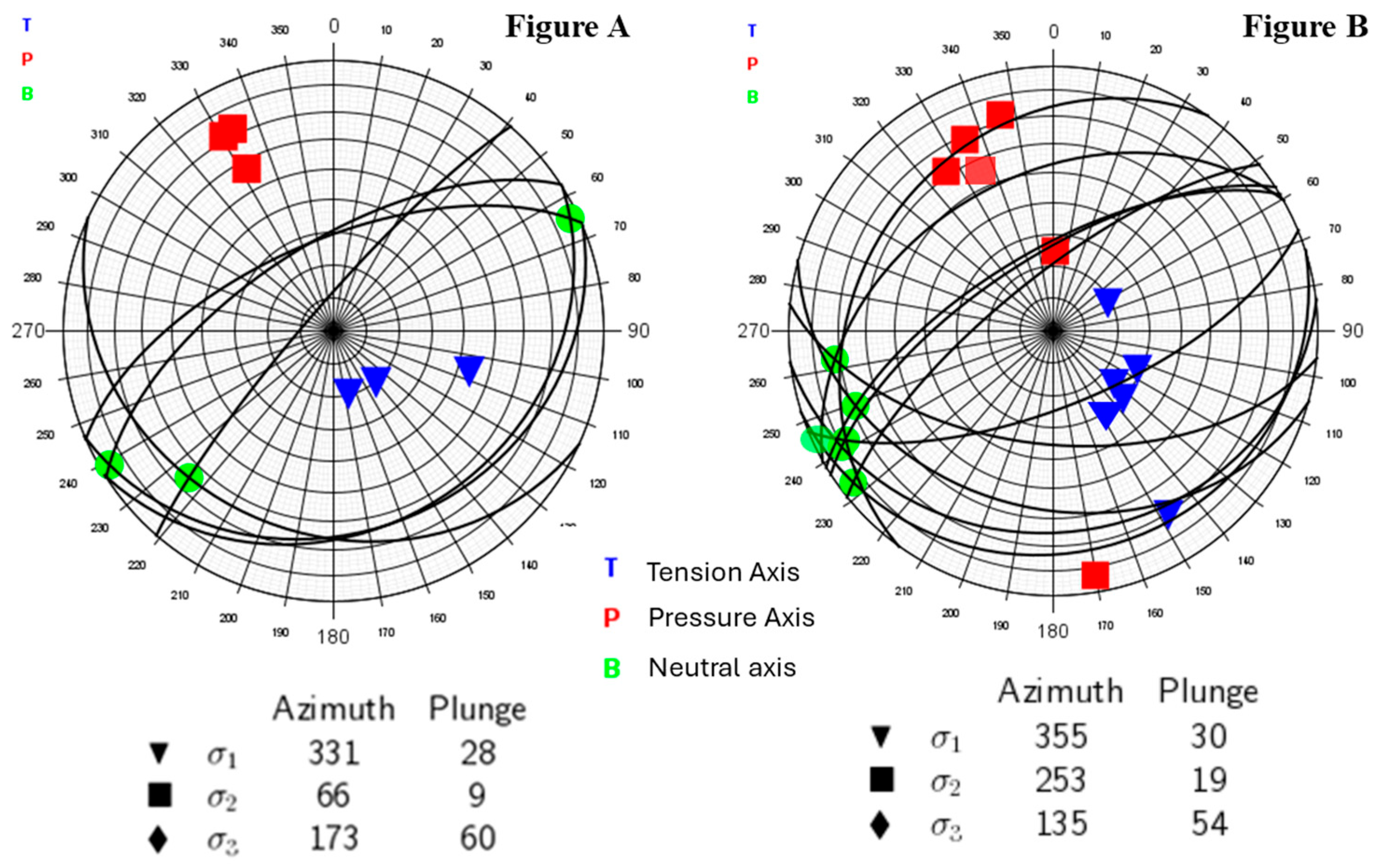
The stress inversion technique allows us to estimate the stress conditions under which rupture occurs, specifically the orientation of the principal stresses. In this case, from the seismic events with calculated focal mechanisms, there is minimal variation in stress inversion conditions during the rockburst (Figure 8). Furthermore, when comparing these results with the stress measurements conducted in the area where the Correa Tunnel is located, there is a good correlation in stress orientations between these two techniques. The major principal stress (σ1) has a north–south sub-horizontal orientation, the intermediate stress (σ2) has an east–west sub-horizontal orientation, and the minor principal stress (σ3) is sub-vertical.

3.2. Geotechnical Setting Correa Tunnel

3.2.1. Lithologies and Geological Structures

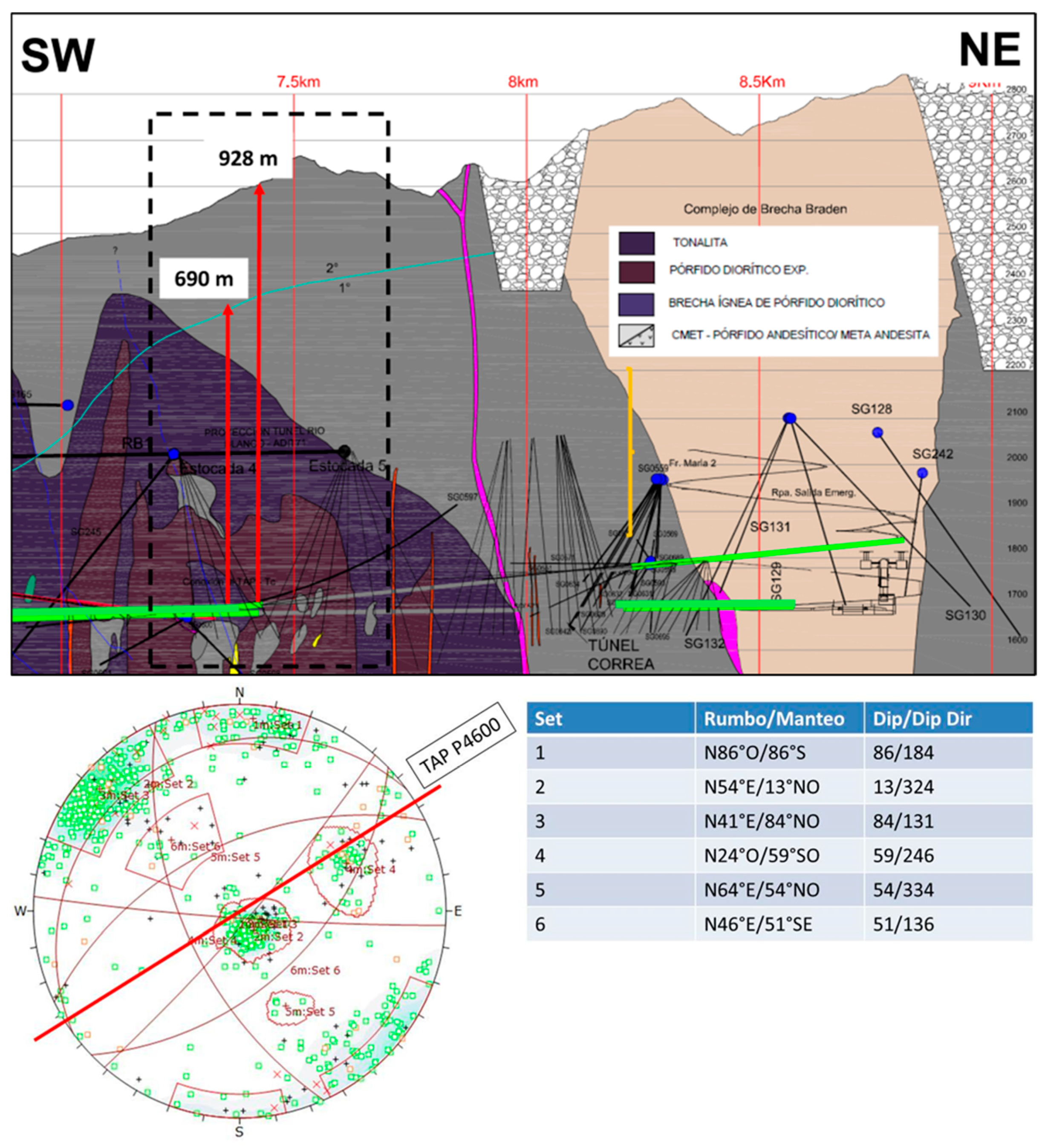
From a geological perspective, no lithologies different from those already encountered in the Correa Tunnel advancements have been found thus far. The felsic intrusive remains predominant, with compositional variations between Tonalite and Dioritic Porphyry (PDI), along with some remnant bodies of CMET and/or Andesitic Porphyry (PAN). Both at the drilling scale and the tunnel scale, the variability of lithological contacts is high (Figure 9).
In this sector of the Correa Tunnel, six structural sets have been identified through mapping and photogrammetry. The main sets are Set 3 (NE strike, subvertical) and Set 2 (sub-horizontal). The latter is less abundant than the former, with a frequency of 5–10 m. Most of the recognized structures correspond to HT veins predominantly filled with gypsum, epidote, and pyrite. A few TM veins are present, filled with biotite-chlorite without a halo (Figure 9).
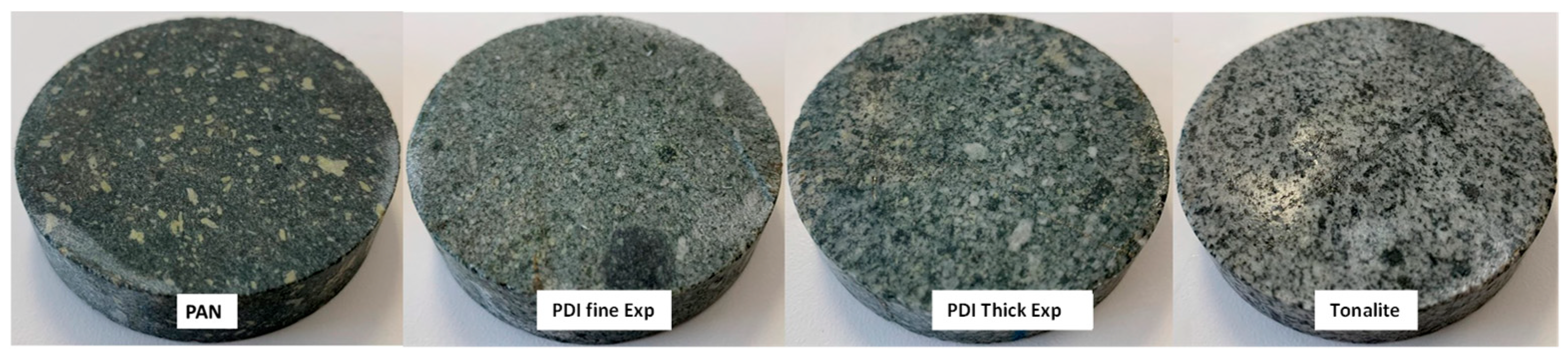
These units correspond mainly to Andesitic Porphyry (PAN), Dioritic Fine Exploration Porphyry (PDI Fine Exp) and Dioritic Coarse Exploration Porphyry (PDI Coarse Exp), Tonalite (TON) and Quartz dikes (DQQZ). The formation of different lithologies is the result of successive superimposed events of deformation, intrusion, metallization and alteration, which occurred over a period of at least 6.4 million years, with the deposits generated over a period of 1.2 million years. The intrusion of these bodies is mostly composed of felsic bodies with characteristics of rigidness and resistance that can tend to activate seismic activity (Figure 10).
The summary of intact rock properties determined from standard laboratory tests are presented in Table 4. It should be noted that the properties shown for quartz dikes may exhibit significant variability in their values depending on the type and proportion of minerals they contain. While these dikes are primarily composed of quartz, they are often accompanied by anhydrite, pyrite, tourmaline, among other minerals.

3.2.2. Stress Field

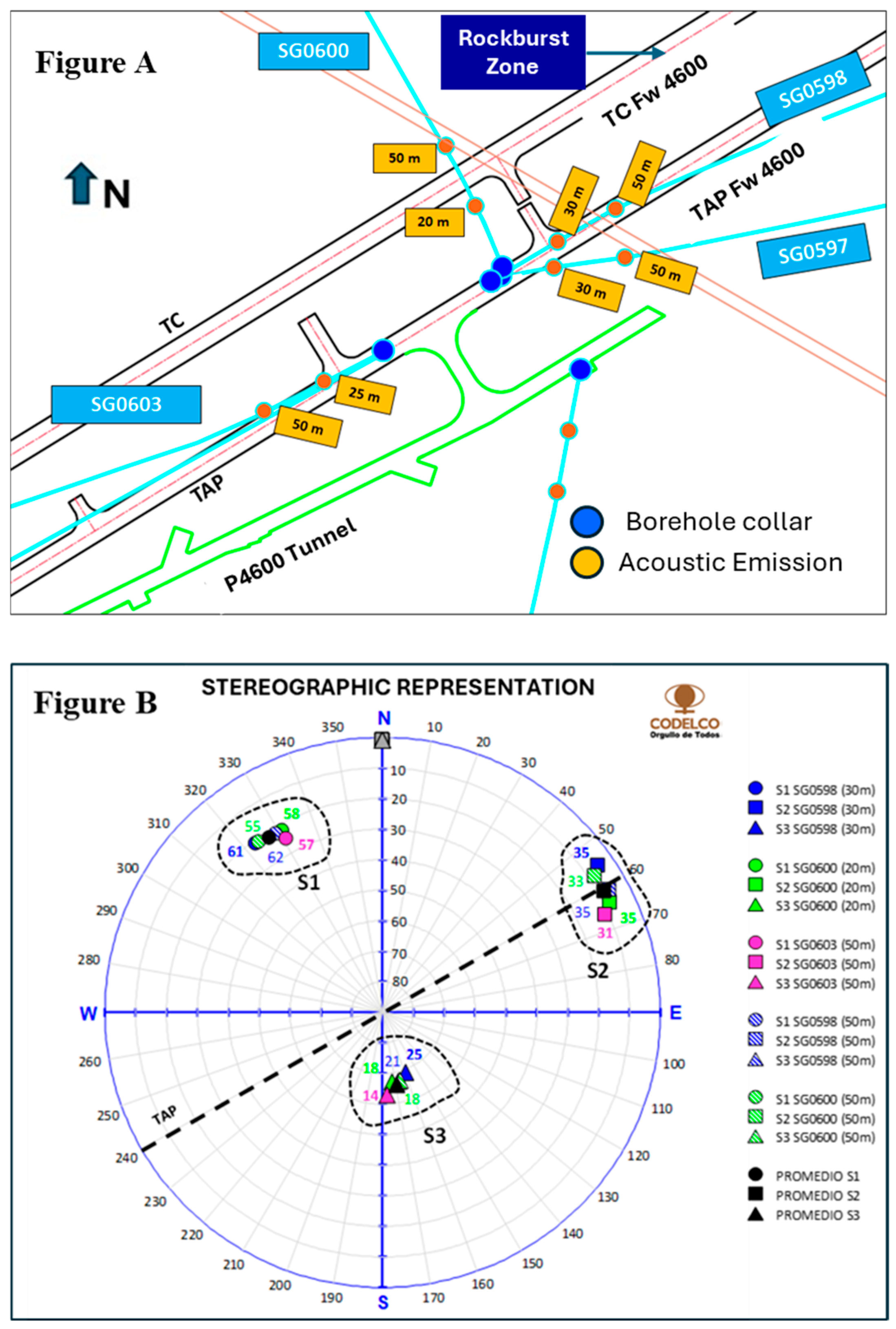
After the rockburst in January 2017, an action plan was developed to improve information on the stress state of the Personnel Access Tunnel (TAP) in the P4600 sector (west of the deposit). As a result, a stress measurement campaign was conducted using the Acoustic Emission (AE) technique. Subsequently, new measurements have been performed on core samples for hydraulic fracturing (HF) execution in the sector. Table 5 shows the average stress tensor for the TAP 4600 area, which is close to the sector of interest. Figure 11 presents a stereographic projection of the interpreted stress measurement results and the locations of the stress measurements conducted around the area of interest.

3.2.3. Pre-Conditioning

Hydraulic Fracturing
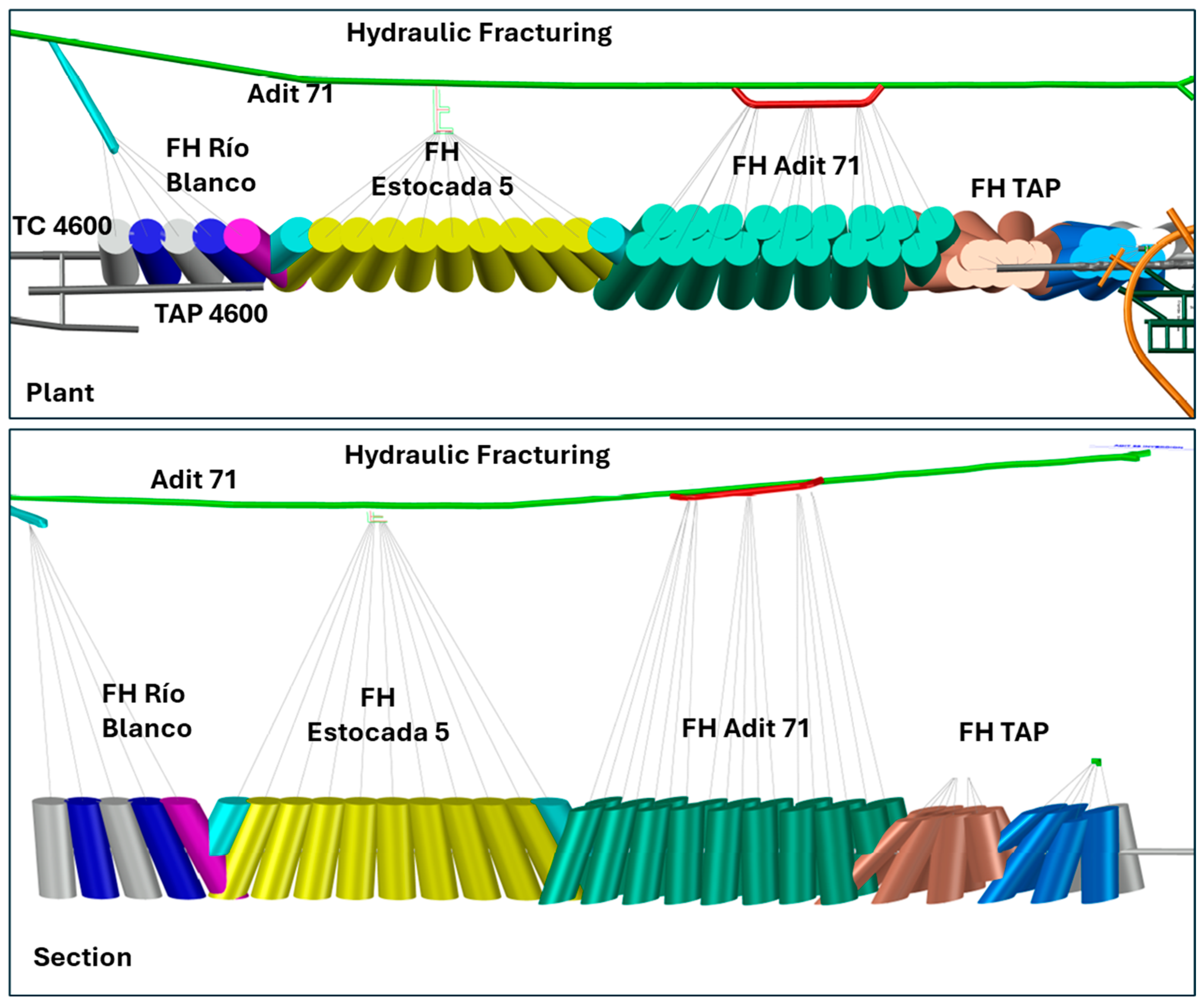
Due to the significant seismicity recorded during the development of the Correa Tunnel, including the October 2018 rockburst with 30 m of damage, the implementation of hydraulic fracturing along this tunnel’s alignment is recommended to continue with the execution of this critical infrastructure. The design characteristics of the HF wells planned from the Río Blanco Tunnel, Stope 5 of ADIT 71, and the Personnel Access Tunnel (TAP) are presented in Figure 12. One of the main design characteristics of the wells drilled from the Río Blanco Tunnel is the 20 m design radius with a fracture spacing of two meters, projected to 51 m below the TC Fw floor. Wells 35 to 38 were also designed with the same specifications as mentioned above, and from well 39 to the end of this tunnel’s alignment, a radius of 30 m was considered while maintaining the other specifications.
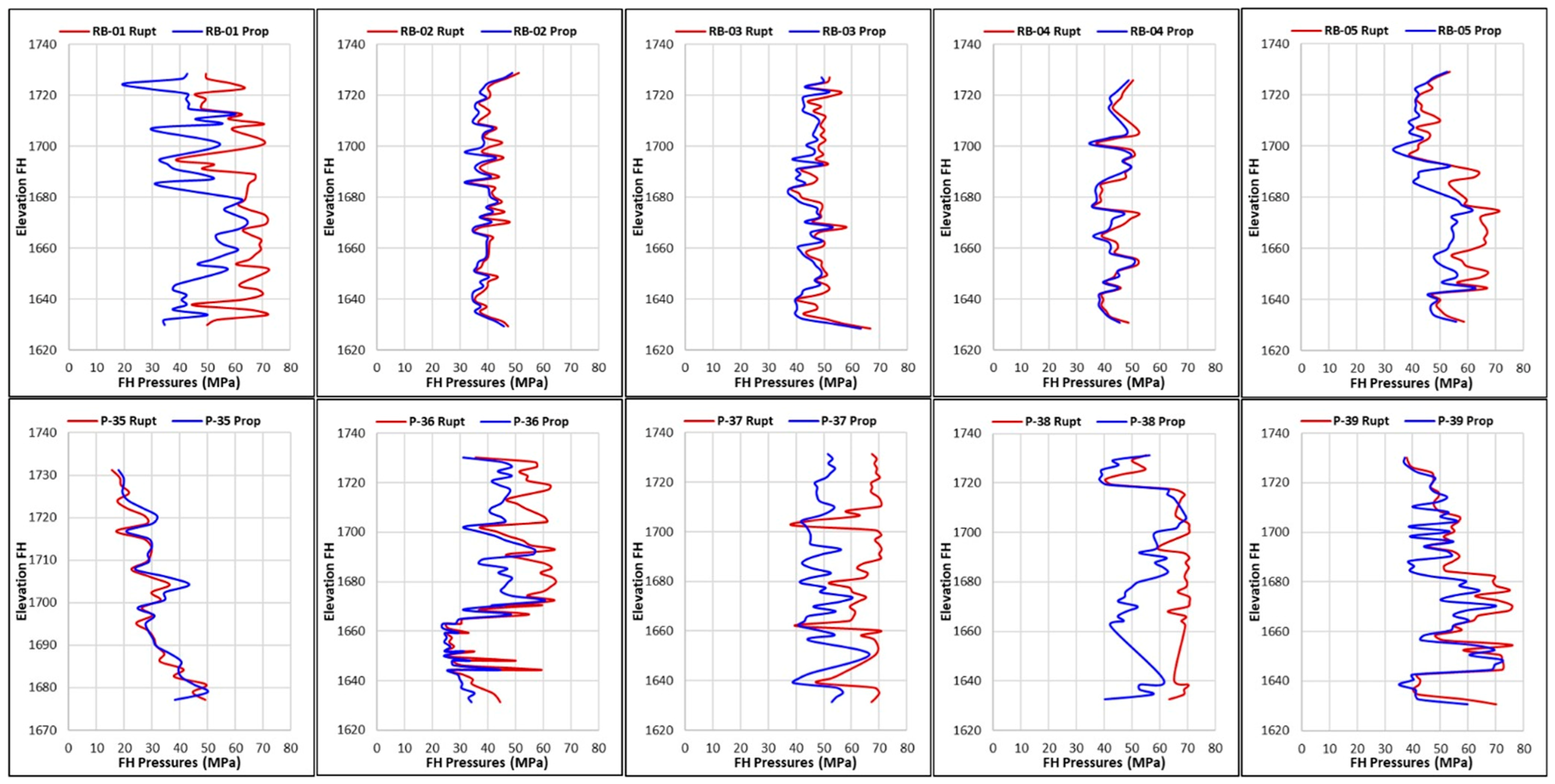
Figure 13 presents the pressure records of the wells, showing the behavior of each. It is noteworthy that for wells RB-02, RB-04, P-35, and P-39, the difference between breakdown and propagation pressures is less than 5 MPa.
In the case of wells RB-02 and RB-04, which show an average difference between breakdown and propagation pressures of less than 1 MPa, it is important to note that these wells were implemented after the hydraulic fracturing of wells RB-01, RB-03, and RB-05. Additionally, the breakdown and propagation values of wells RB-02 and RB-04 are similar to the propagation pressures of wells RB-01, RB-03, and RB-05. This suggests that wells RB-02 and RB-04 were executed in an environment influenced by the hydraulic fracturing of preceding wells and may have reopened a significant number of pre-existing hydrofractures.
During the hydraulic fracturing process of these wells, induced seismicity was recorded, which should be included in this comparative pressure analysis. The seismicity recorded during this process varies significantly among the different wells, reaching extreme values ranging from 70 to 1065 events in the HF Wells.
Destress Blasting
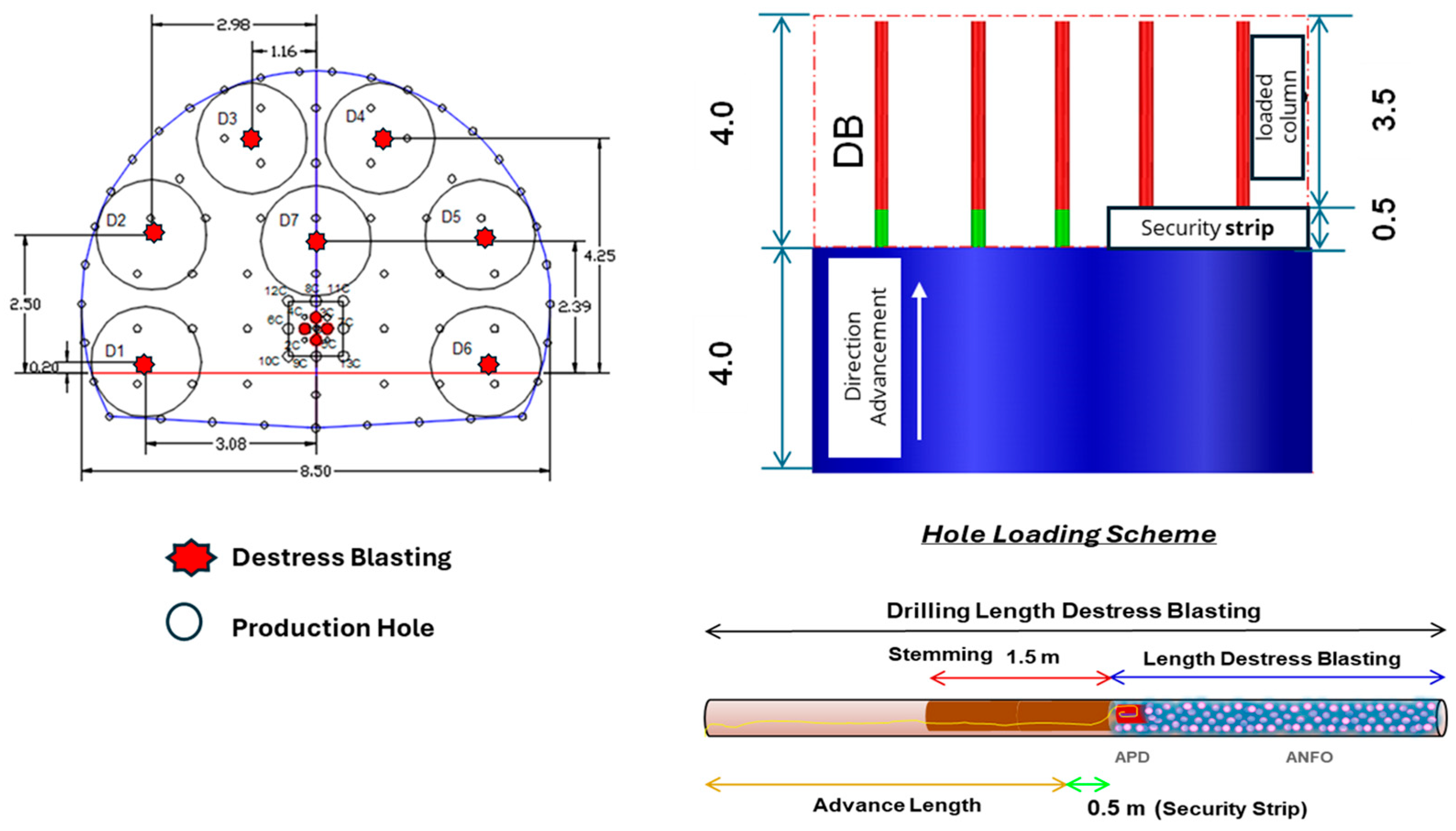
Among the pre-conditioning methods applied in the Correa Tunnel (TC) is Destress Blasting, which involves the incorporation of confined explosive charges detonated simultaneously or with a delay relative to the tunnel development blasts. This technique generates fractures in the rock mass surrounding the excavation, modifying its properties and redistributing the stress conditions.
The area for destressing is localized by nature and requires that the destressing blast advance in tandem with the progress of the excavation. In this case, ANFO is considered as explosive, with a drilling shot length of 8.0 m and a loading length of 3.5 m, using electronic delays at the output of both the production shots and the destress blasting (Figure 14). From the start of TC construction until the occurrence of the rockburst, the tunnel development utilizes this technique.
One of the most measured benefits of applying the Destress Blasting methodology is the response of seismicity following the blast. It has been demonstrated that cases with Destress Blasting exhibit a higher decay rate and an opportunity for reduced re-entry time. Additionally, seismic hazard is also reduced [25].

3.3. Operational Aspects Correa Tunnel

3.3.1. Compliance with Procedures

The rockburst occurred temporarily during the execution of the blast, in a location that had been isolated as a preventive measure according to the defined work protocols. This is consistent with the strategies implemented for managing seismic risk and controlling rockburst risk in tunnels under high-stress environments, such as those found in main infrastructure tunnels.
Based on the review of the Excavation and Fortification Protocol for the TC Fw, no gaps are evident regarding compliance with operational controls for seismic risk in the sector, including:
  • Safety distance restrictions.
  • Mechanized equipment used in this operation.
  • Preventive isolation due to seismicity. In this case, post-blast criteria definitions were applied.
From the review of the drilling and blasting process in the TC Fw P4600, no changes are evident in the operational procedures implemented for drilling, loading, and blasting at the face. The following protocols are recorded:
  • Pre-Blast Protocol (which includes the drilling diagram, type of explosive, and topography for executing the blast).
  • Post-Blast Protocol (which includes the actual loaded amounts and observations, along with the actual drilled diagram as per jumbo report).

3.3.2. Fortification Installation

In this section, compliance with the support design installed in the tunnel should be verified, ensuring that all findings raised prior to the damage caused by the rockburst have been addressed.
The quality management system defines various tools to ensure and control the quality of the product. One of these is the Inspection and Testing Plan, which outlines the activities and records associated with the requirements for controlling the designed fortification and excavation.

3.4. Ground Inspection Correa Tunnel

3.4.1. Damage Assessment

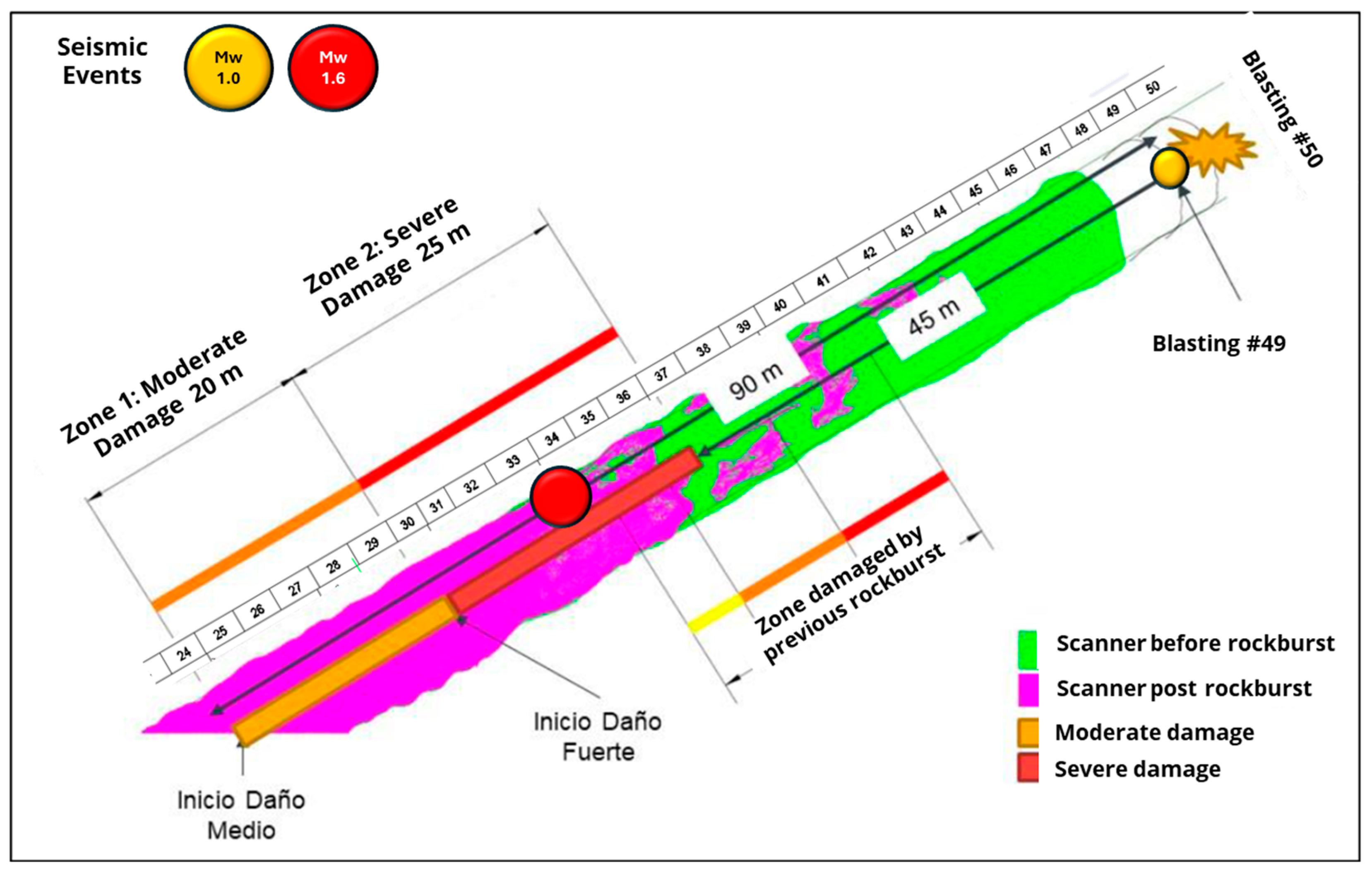
The onset of the damage caused by the seismic event is located 90 m and ends 45 m behind the tunnel face. In Zone 1, a displacement of the support system of approximately 10–20 cm is observed, with loaded cable plates and cracked shotcrete. In Zone 2, out-of-service fortification and fallen material without containment are noted. Figure 15 shows the ground condition and the areas identified with different types of damage.

3.4.2. Damage Map

Following Zone 2, it was not possible to conduct an in-person inspection due to the extent of the damage. To access the area near the tunnel face, a drone flight was conducted, and based on the recorded footage, no damage to the installed support system was observed up to the tunnel face.
A damage assessment was performed in the affected area, identifying two zones with a total of approximately 45 m of damage:
  • Zone 1: Classified as moderate damage, extending 20 m.
  • Zone 2: Severe or out-of-service damage, measuring 25 m in length.
In addition to the visual inspection of the sector, laser scanning was performed using a handheld scanner and drone equipment, which allowed for the creation of a point cloud representing the geometry following the rockburst. Figure 16 shows the damaged sections, distance to the tunnel face, and scans conducted in the tunnel.

3.5. Support Design and Rehabilitation

3.5.1. Support Design

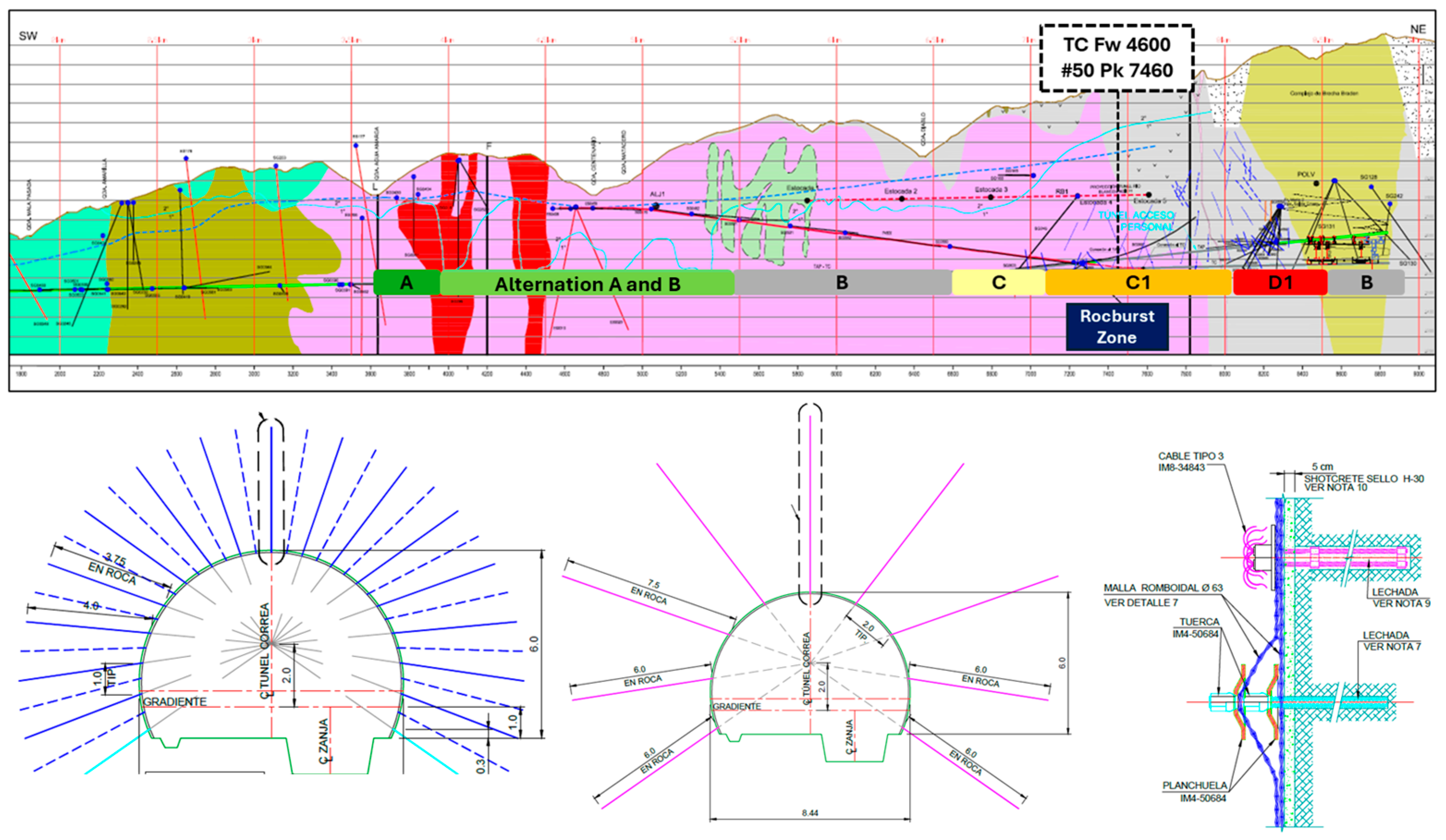
The designed fortification of the Correa Tunnel was established in sections due to the variability of the lithologies present (lithological contacts) throughout its development. The fortification installed in the section where the rockburst occurred is shown in Figure 17.
The details of the fortification are as follows:
  • 5 cm of shotcrete seal, grade H-30–90% (28-day compressive strength equal to 300 [kg/cm2]).
  • 15 or 16 helicoidal bolts, diameter 25 [mm], Steel A630-420H, grouted to full column, with plate and nut.
  • Bolt length: 4.0 m (3.75 m in rock). Spacing between bolts and stops: 1.0 [m].
  • First diamond mesh type Ø 65 (wire diameter 4 [mm], tensile breaking strength greater than or equal to 1770 [N/mm2], minimum zinc coating of 150 [g/m2]).
  • Second diamond mesh type Ø 65, secured with double plate and nut on bolts installed with the first mesh.
  • Deep anchoring using type 3 cables, variable length. In boxes 6 [m] in rock and elbows and ceiling 7.5 [m] in rock. Spacing between cables and stops: 2.0 [m].
  • Helicoidal bolts at the tunnel face, 2.2 [m] in length.

3.5.2. Repair Plan

In the repair plan following a rockburst, restoring the safety and functionality of the tunnel is of utmost importance. Cleaning and re-fortification are defined according to the level of damage incurred in a specified section.
  • Cleaning: This is performed for an entire section of the tunnel after a rockburst, as it corresponds to a tunnel segment where considerable damage occurred. In areas where the damage is severe, a more intensive re-fortification strategy may be required, such as the installation of frames.
  • Re-fortification: This can be carried out selectively, depending on the severity of the damage in different sections of the tunnel. For example, in areas where the damage is moderate, additional reinforcements may be required, such as mesh and cable patterns of 2 × 2 according to the employed fortification design.
The implementation of a repair plan of this type, tailored to the degree of damage in different sections of the tunnel, allows for more efficient use of resources and ensures that all damaged areas are adequately addressed. By the end of this process, the safety and stability of the tunnel should be fully restored, allowing for safe tunnel exploitation to continue.
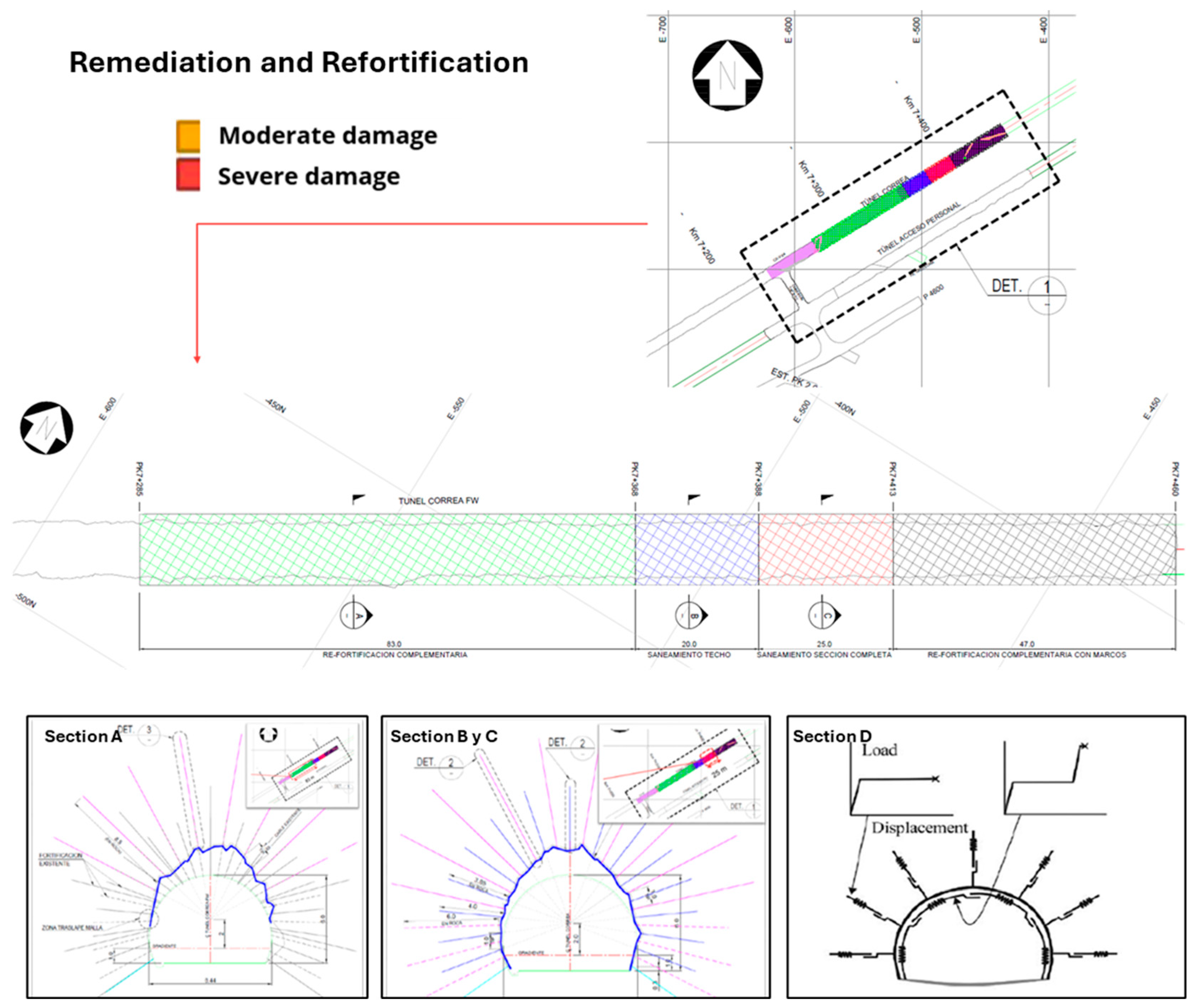
Based on the points described, the following sections and associated designs are defined:
  • Section A (Pk 7285–7368): Additional fortification with mesh and cables, length of 83 m.
  • Section B (Pk 7368–7388): Partial cleaning of the fortification system between elbows, over a length of 20 m.
  • Section C (Pk 7388–7413): Complete cleaning of the fortification system, over a length of 25 m.
  • Section D (Pk 7413–7460): Additional fortification with rigid frames, length of 47 m.
Figure 18 shows the sections for re-fortification and cleaning along the Correa Fw Tunnel in the P4600 sector.

4. Causal Hypothesis and Conceptual Model

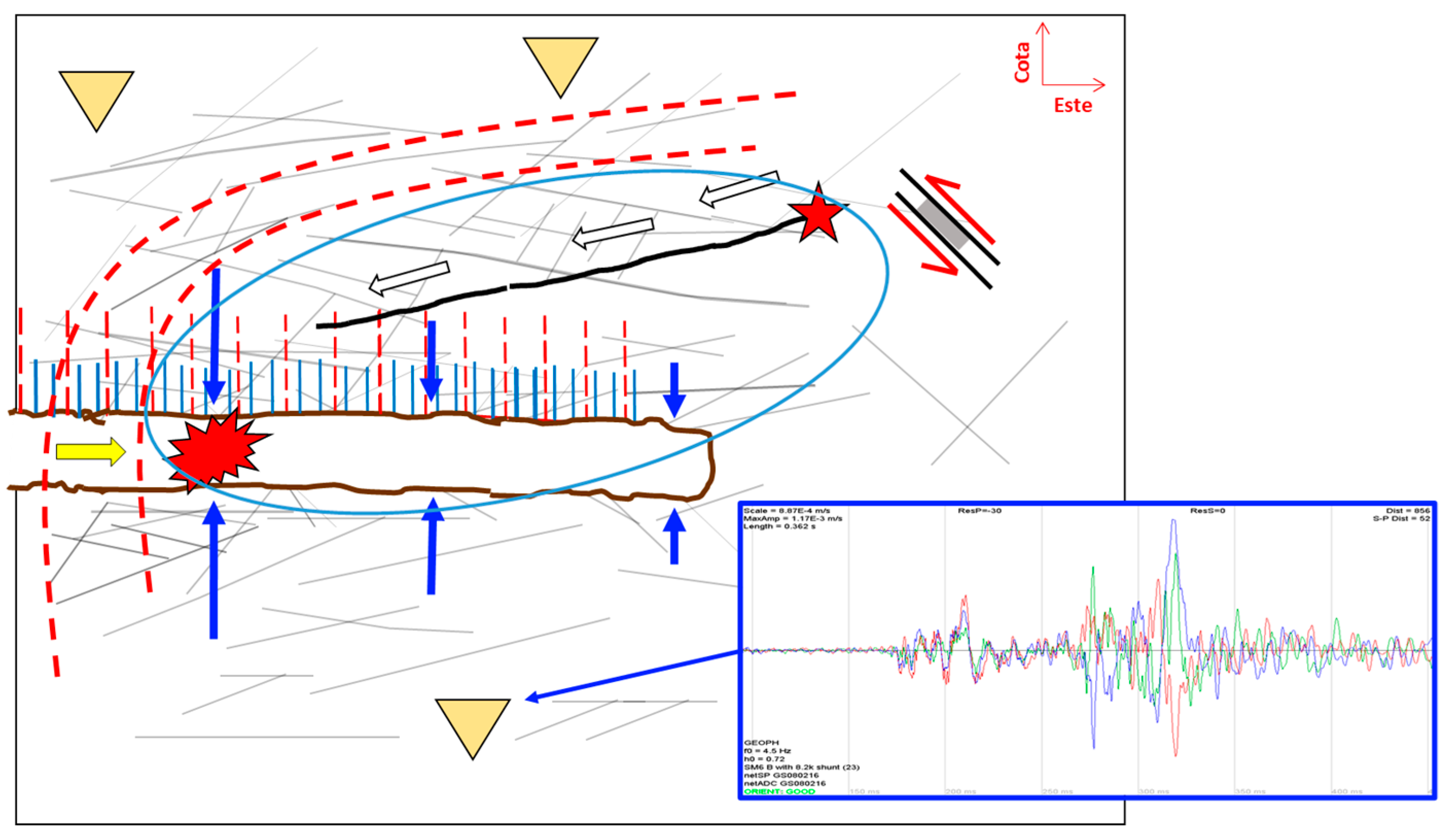
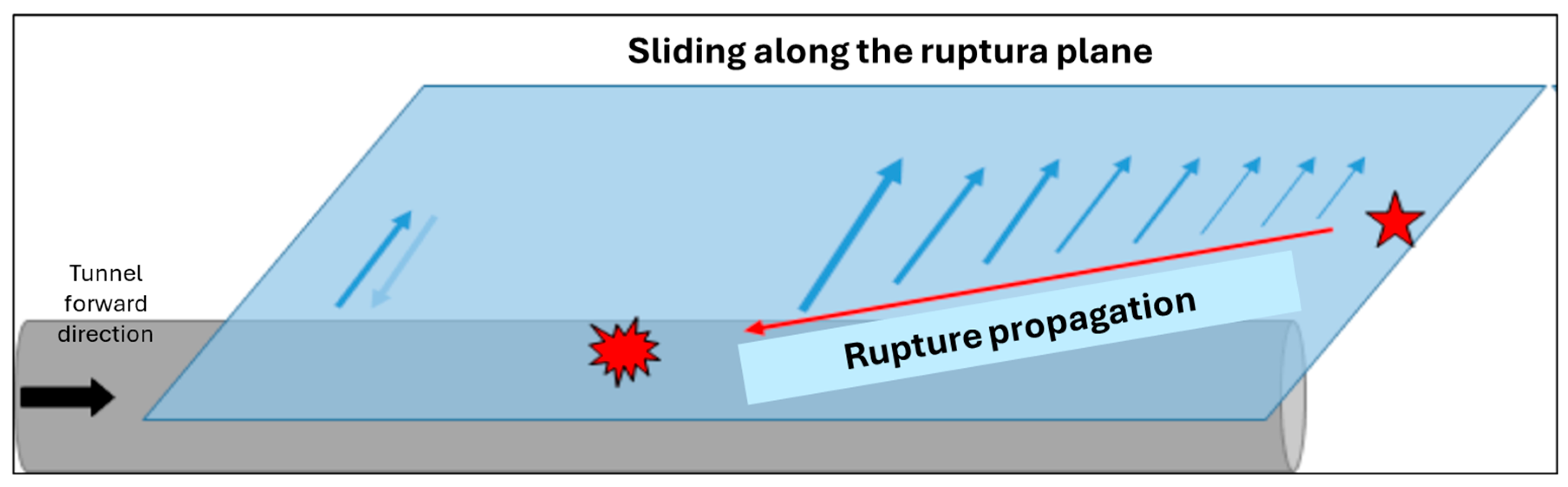
The blast #50 executed at the face of the TC-Fw P4600 generates a local redistribution of stresses at the tunnel face, triggering a reverse fault seismic event whose rupture plane has an initial dislocation close to this face that propagates toward the developed part of the tunnel, activating a volume of rock mass that projects toward the free face offered by the tunnel itself (Figure 19).
As the rupture propagates toward the tunnel, the slip along the fault plane increases, leading to greater deformation around the excavation (Figure 20).

5. Conclusions

To fully understand the causality of a rockburst, it is essential to have a methodology that guides and aids understanding, carried out by a multidisciplinary team covering the various aspects mentioned in this document.
Among the main aspects are geological factors, including lithology, lithological changes, contact zones, the presence of faults and structures, the orientation of geological structures concerning the tunnel and principal stresses, and the nature of the rock mass, including the strength and brittle behavior of the rock.
The stress field, especially high confinement stresses, can lead to rock instability and induced seismicity, conditions present in the Andes Norte project. The geometry and orientation of the excavation, interaction between excavations, and how these interact with the stress field also play an important role. Therefore, a stress measurement plan must be implemented to better characterize this condition.
Induced seismic activity can be caused by changes in the stress field due to tunnel excavation. Analyzing seismic data, such as event location, magnitude, and energy released, along with focal mechanisms, can provide valuable information about the conditions governing the failure mechanism of the rock mass.
Excavation practices and support methods can also influence the likelihood of a rockburst; established operational protocols must be followed, such as safety distance restrictions, use of mechanized equipment, and preventive isolation due to seismicity. The excavation time, sequencing of excavation, and support design, as well as the timely and effective implementation of support measures based on containing the expected released energy, are crucial.
Considering the above, a robust causal hypothesis for a rockburst must be established, based on a solid set of collected and analyzed data using an interdisciplinary approach (seismicity, geology, geomechanics, and operations). A numerical model can be constructed to validate the causal hypothesis and propose different scenarios to prevent future rockbursts where similar conditions are identified.
Although the methodology presented in this study is illustrated through a specific case study developed in a competent and brittle rock mass under high in situ stress conditions, its purpose is not to provide a site-specific or prescriptive solution, but rather a structured and adaptable framework for the causal analysis of rockbursts in deep underground excavations. The proposed framework can be transferred to other tunneling projects subjected to high-stress environments by adjusting the relative emphasis and parameters considered at each stage of the workflow to reflect site-specific geological, geomechanical, and operational conditions.
In rock masses of lower quality, where failure mechanisms may be governed by squeezing behavior, progressive damage, or time-dependent deformation rather than brittle rupture, the same methodological sequence can be applied while incorporating additional parameters related to deformability, support–ground interaction, and damage evolution. Similarly, in sedimentary formations or tectonically active environments, factors such as stratigraphic anisotropy, weak layers, active fault systems, and background seismicity may require enhanced characterization within the seismic and geotechnical analysis stages.
Therefore, the methodology should be understood as a flexible analytical structure, capable of integrating different governing mechanisms and additional sources of uncertainty depending on the geological context, rather than as a rigid procedure limited to a single rock mass condition. Under this perspective, the proposed framework provides a robust basis for causal interpretation and informed decision-making across a wide range of deep tunneling scenarios.

Author Contributions

Conceptualization, W.R.; Methodology, W.R.; Software, M.J.; Validation, M.J.; Formal analysis, W.R., J.A.V. and M.J.; Investigation, W.R.; Data curation, W.R.; Writing—original draft, W.R.; Writing—review and editing, W.R. and J.A.V.; Supervision, J.A.V.; Project administration, J.A.V.; Funding acquisition, J.A.V. All authors have read and agreed to the published version of the manuscript.

Funding

This research received no external funding.

Institutional Review Board Statement

Not applicable.

Informed Consent Statement

Not applicable.

Data Availability Statement

Data is unavailable due to privacy.

Acknowledgments

The authors wish to express their sincere gratitude to the Geotechnical Team of the Andes Norte New Mine Level Project, who have played a fundamental role in the causal analysis of the rockburst described in this document. Their expertise and collaboration have been invaluable for the development of the methodologies used and the interpretation of the results obtained. We also want to thank Codelco for granting permission to publish this work and the baseline project ANID AFB230001 and CIA250010 of the Advanced Mining Technology Center.

Conflicts of Interest

Author Washington Rodríguez was employed by the company CODELCO CHILE. Author Maximiliano Jaque was employed by the company GMT Engineering Services Limited. The remaining author declares that the research was conducted in the absence of any commercial or financial relationships that could be construed as a potential conflict of interest.

List of Abbreviations

AE Acoustic Emission
AMTC Advanced Mining Technology Center
AN Andes Norte (Project)
ANFO Ammonium Nitrate Fuel Oil (explosive)
CLVD Compensated Linear Vector Dipole
CMET “CMET” unit/lithology (El Teniente mafic complex)
CODELCO National Copper Corporation of Chile
DC Double Couple
DQQZ Quartz dikes
Ei Modulus of Elasticity. (intact rock)
Es/Ep Es/Ep ratio
Exp Exploration (appears in “PDI Fine Exp/PDI Coarse Exp”)
FH Hydraulic Fracturing (abbreviation used in the conclusions)
HT Vein type (late hydrothermal)
ISO Isotropic component
JJoule (unit of energy, appears as Energy [J])
MPa Megapascal (unit of stress/pressure)
Mw Moment magnitude
NNM New Mine Level
PAN Andesitic Porphyry
PDI Dioritic Porphyry
PNNM New Mine Level project
RB Rockburst
TAP Personnel Access Tunnel
TC Conveyor Belt tunnel
TM vein type (late magmatic)
TON Tonalite
UCS Unconfined Compressive Strength
Vp P-wave velocity
Vs S-wave velocity
Symbols (used as technical abbreviations in tables/figures)
σ1Major principal stress
σ2Intermediate principal stress
σ3Minor principal stress
σciCompressive strength at confinement
σtTensile strength at confinement
γMass density
ηPorosity
νPoisson ratio
eHoek–Brown parameter
CCohesion

References

  1. Waqar, M.F.; Guo, S.; Qi, S. A Comprehensive Review of Mechanisms, Predictive Techniques, and Control Strategies of Rockburst. Appl. Sci. 2023, 13, 3950. [Google Scholar] [CrossRef]
  2. Małkowski, P.; Niedbalski, Z. A comprehensive geomechanical method for the assessment of rockburst hazards in underground mining. Int. J. Min. Sci. Technol. 2020, 30, 345–355. [Google Scholar] [CrossRef]
  3. Zhang, Q.; Huo, J.; Yuan, L.; Li, Y.; Yang, F.; Wang, X. A review of rockburst prevention and control methods in tunnels: Graded and classified prevention and control. Bull. Eng. Geol. Environ. 2024, 83, 83. [Google Scholar] [CrossRef]
  4. Rong, H.; Li, N.; Zhang, H.; Sun, D. Insights into fundamental problems of rockburst under the modern structure stress field. Sci. Rep. 2022, 12, 20299. [Google Scholar] [CrossRef] [PubMed]
  5. Muntaqim Naji, A.; Zaka Emad, M.; Rehman, H.; Yoo, H. Geological and geomechanical heterogeneity in deep hydropower tunnels: A rock burst failure case study. Tunn. Undergr. Space Technol. 2019, 84, 507–521. [Google Scholar] [CrossRef]
  6. Chen, Z.; He, C.; Wang, B.; Yuan, Q.; Jiang, C.; Yuan, S.; Wang, X. Experimental Investigation on Failure Mechanism and Rockburst Process of Tunnels Under Different Span-Ratios and Existing Structural Planes. Rock Mech. Rock Eng. 2024, 57, 3727–3749. [Google Scholar] [CrossRef]
  7. Keneti, A.; Sainsbury, B.-A. Review of published rockburst events and their contributing factors. Eng. Geol. 2018, 246, 361–373. [Google Scholar] [CrossRef]
  8. Manouchehrian, A.; Cai, M. Analysis of rockburst in tunnels subjected to static and dynamic loads. J. Rock Mech. Geotech. Eng. 2017, 9, 1031–1040. [Google Scholar] [CrossRef]
  9. Hall, A.; Butler, A.; Simser, B. Proactive measures to evaluate geotechnical risk in development for deep mining—Onaping Depth Project case study. In Proceedings of the RASIM10, Tucson, AZ, USA, 26–28 April 2022; pp. 3–12. [Google Scholar]
  10. Hudyma, M.; Potvin, Y. Kidd Mine—Dealing with the issues of deep and high stress mining—Past, present and future. In Proceedings of the Seventh International Conference on Deep and High Stress Mining, Sudbury, ON, Canada, 16–18 September 2014; Australian Centre for Geomechanics: Crawley, Australia, 2014; pp. 6–13. [Google Scholar]
  11. Potvin, Y. Strategies and tactics to control seismic risks in mines. J. S. Afr. Inst. Min. Metall. 2009, 109, 177–186. [Google Scholar]
  12. Vallejos, J.A.; McKinnon, S.D. Omori’s Law Applied to Mining Induced Seismicity and Re-entry Protocol Development. Pure Appl. Geophys. 2010, 167, 91–106. [Google Scholar] [CrossRef]
  13. Vallejos, J.A.; McKinnon, S.D. Correlations Between Mining and Seismicity for Re-Entry Protocol Development. Int. J. Rock Mech. Min. Sci. 2011, 48, 616–625. [Google Scholar] [CrossRef]
  14. Potvin, Y.; Wesseloo, J.; Morkel, I.; Tierney, S.; Woodward, K.; Cuello, D. Seismic risk management practices in metalliferous mines. In Proceedings of the Ninth International Conference on Deep and High Stress Mining, Johannesburg, South Africa, 24–25 June 2019; The Southern African Institute of Mining and Metallurgy: Johannesburg, South Africa, 2019. [Google Scholar]
  15. Jonsson, K.; Lindewald, M.; Dineva, S. Development of a seismic risk management system for Malmberget underground mine. In Proceedings of the 9th International Conference and Exhibition on Mass Mining, Kiruna, Sweden, 17–19 September 2024; pp. 1005–1012. [Google Scholar]
  16. Cai, M. Rockburst risk control and mitigation in deep mining. Deep Resour. Eng. 2024, 1, 100019. [Google Scholar] [CrossRef]
  17. Zhou, J.; Zhang, Y.; Li, C.; He, H.; Li, X. Rockburst prediction and prevention in underground space excavation. Undergr. Space 2023, 14, 70–98. [Google Scholar] [CrossRef]
  18. Chen, Y.; Zhang, Z.; Cao, C.; Bao, S.; Wang, S.; Xu, G. Research on the causal mechanism of a rock burst accident in a longwall roadway and its prevention measures. Sci. Rep. 2023, 13, 22312. [Google Scholar] [CrossRef] [PubMed]
  19. Hudson, J.A.; Pearce, R.G.; Rogers, R.M. Source type plot for inversion of the moment tensor. J. Geophys. Res. 1989, 94, 765–774. [Google Scholar] [CrossRef]
  20. Padilla, R.; Valenzuela, R.; Pereira, J. Geology and Geotechnics Correa Tunnel; Technical note T11M408-06832-NOTGE04-6830-001; CODELCO: Santiago, Chile, 2017. [Google Scholar]
  21. Castro, D.; Troncoso, C.; Blanco, B.; Contreras, C. Consolidation of Geological and Geomechanical Information for the TAP P4600 Tunnel; Technical note T18M404-06831-NOTGE-00003; CODELCO: Santiago, Chile, 2018. [Google Scholar]
  22. CODELCO. Preliminary Report on the Investigation of the Causes of Seismicity in the TAP Area; CODELCO: Santiago, Chile, 2013. [Google Scholar]
  23. CODELCO. Geomechanical Analysis of Rock Bursts in ADITS Ventilation Systems; CODELCO: Santiago, Chile, 2015. [Google Scholar]
  24. CODELCO. Conclusions and Recommendations for Restarting the Development of the TAP PNNM; CODELCO: Santiago, Chile, 2017. [Google Scholar]
  25. Rodríguez, W.; Vallejos, J.; Landeros, P. Seismic rock mass response to tunnel development with destress blasting in high-stress conditions. Rock Mech. Rock Eng. 2023, 56, 1621–1643. [Google Scholar] [CrossRef]
Figure 1. Summary of rockbursts that occurred during the construction of the main tunnels and measures implemented over time in the Andes Norte project. Numbers indicate the measures implemented over time that are described in the text.
Applsci 16 01616 g001
Figure 2. Summary of rockbursts that occurred during the construction of the main tunnels, Andes Norte Project, El Teniente Mine. Numbers indicate the measures implemented over time that are described in the text.
Applsci 16 01616 g002
Figure 3. Scheme of methodology for the causal Analysis of rockbursts in Deep Tunnels.
Applsci 16 01616 g003
Figure 4. Seismogram of Blast #50 conducted on 26 September 2020, at the face of TC-Fw P4600.
Applsci 16 01616 g004
Figure 5. Spatial location of events with magnitudes Mw = 1.7 (red sphere) and Mw = 0.8 (yellow sphere) in relation to the developments in sector P4600 Fw. Plan and section view.
Applsci 16 01616 g005
Figure 6. Focal mechanism of the rockburst. The components of the focal mechanism indicate that the rupture process corresponds to a combination of a slip sub-source and a volumetric sub-source.
Applsci 16 01616 g006
Figure 7. Hudson Diagram of Source Mechanisms of Seismic Events with Magnitude (Mw) Greater than Zero, TC Fw P4600.
Applsci 16 01616 g007
Figure 8. Stress Inversion of the seismic events associated with the rockburst in TC Fw P4600: (A) seismic events that occurred during the rockburst of this case study; (B) slip-type seismic events that occurred between January 2019 and September 2020.
Applsci 16 01616 g008
Figure 9. Lithology and Stereogram with Structures, TAP-TC Tunnel P4600 (Padilla et al., 2017 [20]).
Applsci 16 01616 g009
Figure 10. Lithologies present in the study area of the Correa Tunnel, Andes Norte project.
Applsci 16 01616 g010
Figure 11. (A) Plan view showing the location of the selected samples for stress measurements (orange box), and the blue box indicates the selected drilling number. (B) Stereographic net with clusters and average values of the principal stresses, obtained through acoustic emission.
Applsci 16 01616 g011
Figure 12. Plan and section view of the hydraulic fracturing design implemented in the Correa Tunnel.
Applsci 16 01616 g012
Figure 13. Record of breakdown and propagation pressures by hydraulic fracturing well.
Applsci 16 01616 g013
Figure 14. Destress Blasting design implemented in the Correa Tunnel.
Applsci 16 01616 g014
Figure 15. Diagram of damage zones from rockburst TC 4600, September 2020.
Applsci 16 01616 g015
Figure 16. Plan view of the tunnel showing the location of rockburst damage, September 2020.
Applsci 16 01616 g016
Figure 17. Design of the Support System for the Correa Tunnel, Rockburst Section, September 2020.
Applsci 16 01616 g017
Figure 18. Plan view of the sections to be re-fortified and cleaned along the Correa Fw Tunnel P4600.
Applsci 16 01616 g018
Figure 19. Representation of the complex dislocation hypothesis. The red star indicates the onset of the rupture that propagates toward the tunnel, increasing the dynamic load on it (blue arrows).
Applsci 16 01616 g019
Figure 20. Three-dimensional representation of the rupture propagation approaching the tunnel. The red arrow indicates the progression of the rupture, blue arrows indicate the slip on the fault plane, and the red star marks the onset of the rupture.
Applsci 16 01616 g020
Table 1. Summary of rockbursts in main tunnels, Andes Norte—New Mine Level (PNNM).
RockburstSectorDateMagnitud MwEnergy (J)
1TAP Interior Mina14 December 20132.62.1 × 108
2Ventana P46007 November 20141.31.5 × 105
3XC 22/23 Extracción19 May 20151.99.0 × 107
4TAP Fw P460024 January 20171.85.5 × 106
5TC Fw P460014 October 20181.83.1 × 106
6TC Fw P460027 June 20201.58.0 × 105
7TC Fw P460026 September 20201.71.8 × 106
Table 2. Location data and source parameters of the events recorded in the seismogram of blast #50 and subsequent events conducted at the face of TC-Fw P4600.
ItemPrincipal EventForeshockAftershockAftershockAftershock
Date26 September 202026 September 202026 September 202026 September 202026 September 2020
Time22:32:5122:32:5122:32:5222:32:5422:33:34
Magnitude Mw1.70.90.70.50.8
East [m]−420−428−417−440−467
North [m]−401−383−380−384−428
Level [m]16801655165216761661
Energy [J]1.8 × 1064.6 × 1045.4 × 1041.2 × 1046.0 × 104
Es/Ep12.715.125.39.516.7
Table 3. Possible rupture planes for the focal mechanism solution of the rockburst recorded alongside blast #50 conducted at the face of TC-Fw.
ItemStrike [°]Dip [°]Rake [°]
Solution 1582782
Solution 22466394
Table 4. Summary of Intact Rock Properties [21].
ParametersLithology
Geotechnical PropertyUnitPANPDI (Fine)PDI (Coarse) TONDQQZ
Mass Densityγ [g/cm3]2.752.702.702.722.73
S Wave VelocityVs [m/s]30772779290028122999
P Wave VelocityVp [m/s]53974734500447945185
Porosityη [%]0.400.880.800.911.06
Unconfined Compressive StrengthUCS [MPa]17618521815870
Indirect Tensile StrengthTi [MPa]−23−18−21−18−10
Modulus of ElasticityEi [GPa]6157595355
Elastic Modulus RatioE/UCS347308271335786
Poisson Ratioν0.270.240.260.230.22
Compressive Strength [at 30 MPa]σci [MPa]228208233199-
Hoek–Brown Parameter [at 30 MPa]mi14.717.715.916.3-
Tensile Strength [at 30 MPa]σt [MPa]−15.6−11.7−14.7−12.2-
CohesionC [MPa]35303530-
Friction AnglePhi [°]54565555-
Notes: The indicated values correspond to the median of the descriptive statistics. The Hoek–Brown parameters shown correspond to those obtained under a maximum confinement of 30 MPa.
Table 5. Average Principal Stresses Determined in the P4600 Sector. Stress values are expressed in MPa, consistent with standard international practice in rock and geomechanical engineering.
StressMagnitude [MPa]Azimuth [°]Dip [°]
σ159327−22
σ23461−8
σ319169−66
Disclaimer/Publisher’s Note: The statements, opinions and data contained in all publications are solely those of the individual author(s) and contributor(s) and not of MDPI and/or the editor(s). MDPI and/or the editor(s) disclaim responsibility for any injury to people or property resulting from any ideas, methods, instructions or products referred to in the content.