2. Proposed Methodology
The main goal of this research is rooted in rugged computing, relying on the exact sciences to provide clear guidelines for modeling the R-Candy engine. For this purpose, the Churchman–Ackoff methodology is applied, as it represents one of the most relevant original systematic approaches within Systems Methodology [
29]. This methodology consists of five phases: problem formulation, model construction, model testing, model solution, and model implementation [
31]. The methodology has five operational phases: issue formulation, model development, model testing, model solution, and model implementation, featuring bidirectional feedback to assure consistency and refinement at each level.
Following the principles of General Systems Theory (GST), the R-Candy propulsion system can be viewed as a group of interacting subsystems, including thermochemical, mechanical, and structural subsystems. GST is used to identify and organize these interdependent elements, ensuring they function effectively together within the overall system. Instead of describing the engine’s physical parts, the systems approach enables analysis of how variables such as pressure, temperature, and flow relate to and affect the R-Candy engine’s performance.
Systemic Framework
Following the concepts of General Systems Theory (GST) serves as a framework that organizes the R-Candy propulsion system into interrelated functional areas rather than as a physical description of its components.
Instead of defining the physical components of the engine, the systems perspective provides an analytical framework for interpreting the interdependence between variables such as chamber pressure, temperature distribution, and exhaust gas velocity. This approach allows researchers to describe engine operation in terms of feedback loops, stability, and systemic coherence, aligning design decisions with measurable performance indicators:
Interdependence and complexity. Each component of the system (combustion chamber, nozzle, and solid propellant) interacts dynamically with the others; these interrelationships determine the stability of the pressure and flow fields within the engine.
Regulation and feedback. The design incorporates feedback loops between simulation and experiment, analogous to the regulatory mechanisms of systems theory, thereby ensuring stable, repeatable performance.
Homeostasis. The engine’s structural configuration maintains stability in the face of external temperature or pressure disturbances, similar to the controlled steady state in engineering.
Adaptation and transformation. During combustion, chemical energy is transformed into kinetic energy that propels the exhaust gases; the iterative optimization between design and simulation represents a form of functional adaptation of the system.
Collaboration. The development process integrates multidisciplinary subsystems (thermal, structural, computational, and experimental) whose coordination determines the overall quality and reliability of the engine.
These attributes allow for a coherent, systemic interpretation of the R-Candy engine, but one grounded in measurable physical phenomena. In this way, GST provides a methodological basis for identifying relationships among variables, designing feedback mechanisms, and guiding optimization across interconnected subsystems.
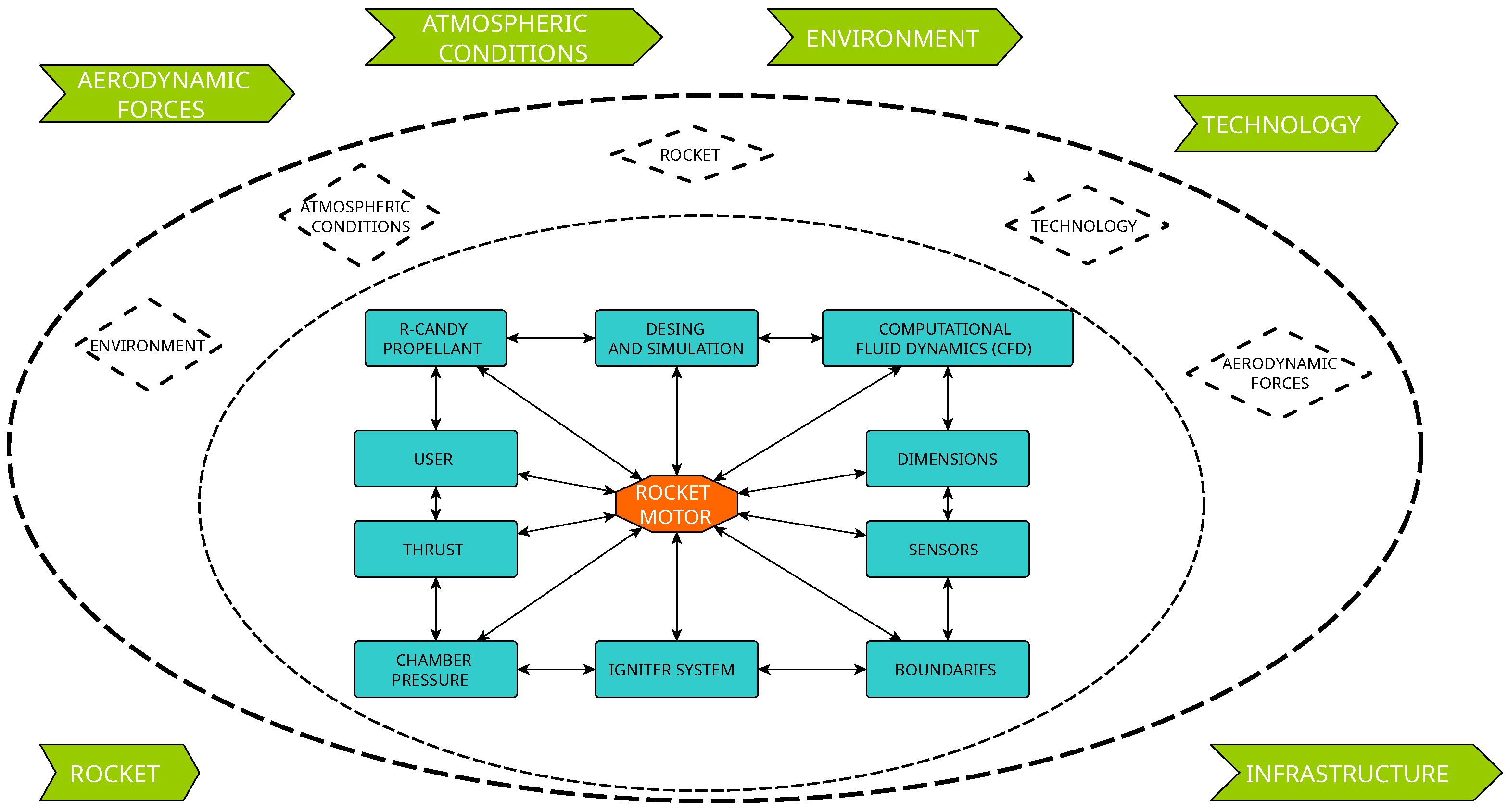
In the systemic model, the variables that interact within the rocket engine environment are presented, providing a study framework that interprets their harmonic relationships and interactions through bidirectional communication among all variables. This approach applies specific subsystems to analyze the rocket engine as a whole, ensuring that each element is evaluated in the context of designing and assessing a Candy-type propulsion system effectively.
Figure 1 illustrates the overall representation of the system, highlighting the rocket engine and its subsystems, which serve as the key study variables interacting with the surrounding environment. The model operates across three levels of interaction, integrating these components to maintain system coherence and functionality.
Applying the systemic model provides a structured guideline for using the subsystems that surround and interact with the central system to design, simulate, and evaluate the Candy-type rocket engine. At the first level, the primary focus is the rocket engine itself, which is directly affected by the behavior and stability of the other subsystems. This element is essential to the research; if the primary system fails or does not meet its objective, the case study must be reconsidered by analyzing new variables, consulting the relevant literature, and seeking expert input to ensure that the system functions correctly.
The variables defined as subsystems interact harmoniously with the central system. The user plays a key role in determining the dimensions of the combustion chamber, nozzle, and igniter cover to properly integrate the Candy-type fuel. These design parameters provide the boundary conditions needed for the CFD simulation, which ultimately yield the thrust results.
Within this systemic model, the second and third levels comprise subsystems that interact with various objectives, including the rocket infrastructure, aerodynamic forces, economic factors, political context, technological developments, environmental conditions, and atmospheric variables. These external variables will always exist and influence the system, yet they cannot be directly modified or eliminated, as they are not solely dependent on the scope of the study. If such variables significantly affect the overall system, adjustments must be made at the previous levels or within the general systems framework to fulfill the research’s primary mission.
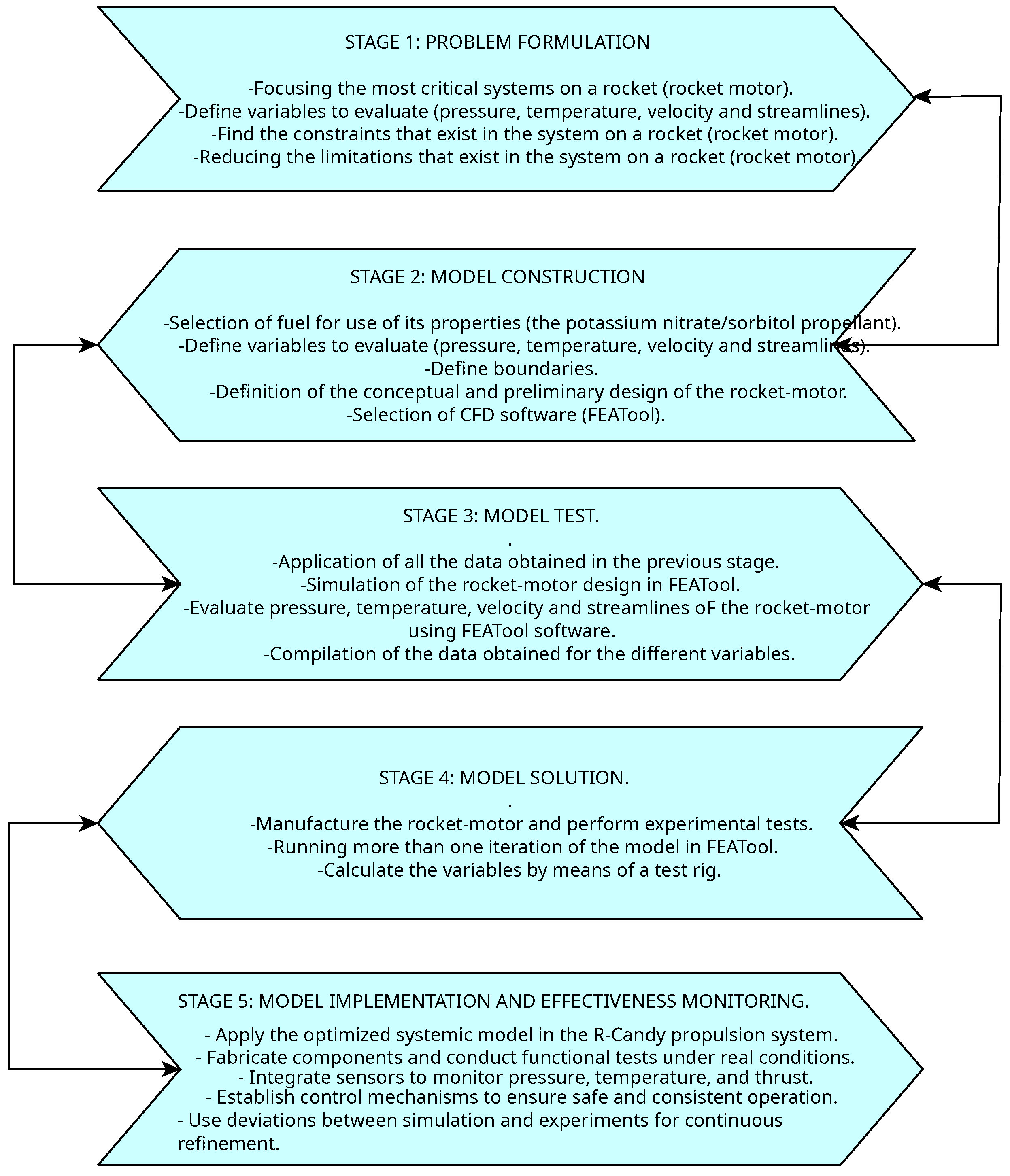
The proposed methodology for the design and quality control of the R-Candy propulsion system is structured into five sequential phases: problem formulation, model construction, model testing, model solution, and model implementation (see
Figure 2). This approach ensures a coherent flow of information and continuous feedback among the subsystems, which is essential for achieving effective results in the design and optimization of Candy-type rocket engines.
Phase 1: Problem Formulation. In the first phase, the current situation of the problem is analyzed, focusing on the operational behavior of the R-Candy rocket engine. The key factors affecting the propulsion system’s performance are identified, establishing the foundation for subsequent model development.
Phase 2: Model Development. The second phase entails delineating and advancing the theoretical model, including the identification of essential measurement variables. At this juncture, the factors affecting propellant efficacy are outlined, including fuel composition, oxidizer characteristics, and combustion circumstances.
Phase 3: Model Evaluation. During the third phase, the model is validated through experimental testing. These tests assess the system’s performance under regulated settings, confirm the precision of the specified variables, and modify the model as required.
Phase 4: Model Solution. The fourth phase emphasizes the formulation of solutions derived from the outcomes of the testing process. At this step, the experimental data are examined to refine the propulsion system design, thereby boosting its efficiency and performance.
Phase 5: Implementation of the Model and Monitoring of Effectiveness. The fifth phase entails the practical implementation of the optimized model in the R-Candy propulsion system, along with an effectiveness assessment. This phase encompasses incorporating results into the final engine design, conducting functional testing in operational settings, and implementing control systems using sensors and performance monitoring. These procedures guarantee the reliable and consistent operation of the propulsion system, while discrepancies between simulation and experimental data are used to enhance the system further.
3. Systemic–CFD Framework Application and Numerical Results
In this section, the proposed system-level CFD approach is applied to the R-Candy propulsion motor, including CAD modeling, boundary condition definition, and CFD simulation execution. These numerical analyses form the basis for evaluating nozzle performance and validating the system-level modeling approach. The main results of implementing this framework are presented in this section.
In the initial step of this methodology, the existing conditions of the problem are examined, focusing on the identification and comprehension of the behavior of the Candy-type rocket engine. This entails idealizing the preferred operating parameters by analyzing critical variables such as pressure, temperature, and flow velocity to examine their behavior within the R-Candy and at the nozzle’s outlet along the streamlines. A preliminary design is then proposed to determine the correct dimensions for the model, while recognizing existing limitations and how broader factors in the aerospace sector may affect this research project. The methodology incorporates continuous feedback across all phases, allowing adjustments to input and output variables when necessary to reinforce their validity. This first phase is of significant importance, as it serves as the foundation and structural basis for the entire systemic approach.
The focus for selecting the component to be studied is on the complete rocket structure as an integrated system capable of achieving reliable and optimal takeoff through multiple subsystems and processes. Given the complexity of thoroughly analyzing a rocket as a whole, the research prioritizes the propulsion system as a high-impact element that provides the thrust required for the rocket’s performance, with particular emphasis on the nozzle as the critical component.
The second phase consists of building the model; in this case, the propulsion system of the rocket engine includes the combustion chamber and the divergent section of the nozzle. This entire assembly must be defined based on the selected fuel type, the nozzle dimensions, the software to be used for optimal simulation, and the boundary conditions determined by the operating environment. All these elements are integrated into a unified model because each section contains additional subsystems that address specific objectives during testing.
Figure 3 presents the study model in a graphical format, showing the expanded range of alternatives to be evaluated. The integration process involves defining the specific problem, detailing the solution measures, and clearly illustrating both the input parameters and the expected outputs.
By integrating the model construction diagram, the primary inputs of the system to be evaluated are identified. These inputs will first produce individual results, which will then be combined to create a unified system for accurate simulation.
Various components can be used to formulate a Candy-type fuel for experimental rocketry; however, one of the best alternatives is the combination of sorbitol and potassium nitrate. Sorbitol was selected for this research due to several key characteristics:
Lower melting point compared to dextrose and saccharose.
Longer hardening time in mold.
Better behavior in thrust vs. time
Less hygroscopic than dextrose and saccharose.
After establishing the type of fuel to be used, the boundary conditions were defined, including the properties and geometry to which the propellant is subjected within the R-Candy engine. The selected propellant is a KNO
3–sorbitol mixture (KNSO), which serves as the basis for initializing the simulation. The stoichiometric coefficients, according to Richard Nakka, and the corresponding propellant properties are considered for a maximum combustion chamber pressure of 1000 psi [
32]. Various materials are commonly used in experimental rocketry for this purpose, including aluminum or its alloys, iron, Society of Automotive Engineers (SAE) 1020 steel, stainless steel, and polyvinyl chloride (PVC).
where
e is the thickness of the engine tube in mm,
is the yield strength in MPa,
is the external diameter of the motor tube in mm, and
is the safety coefficient, dimensionless.
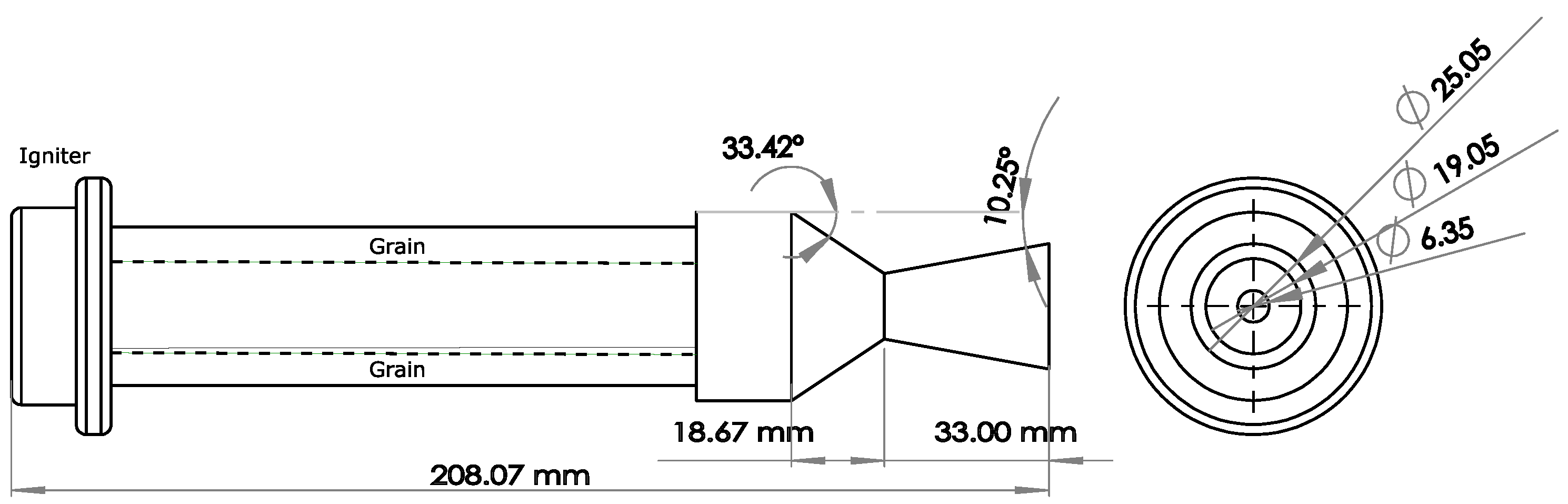
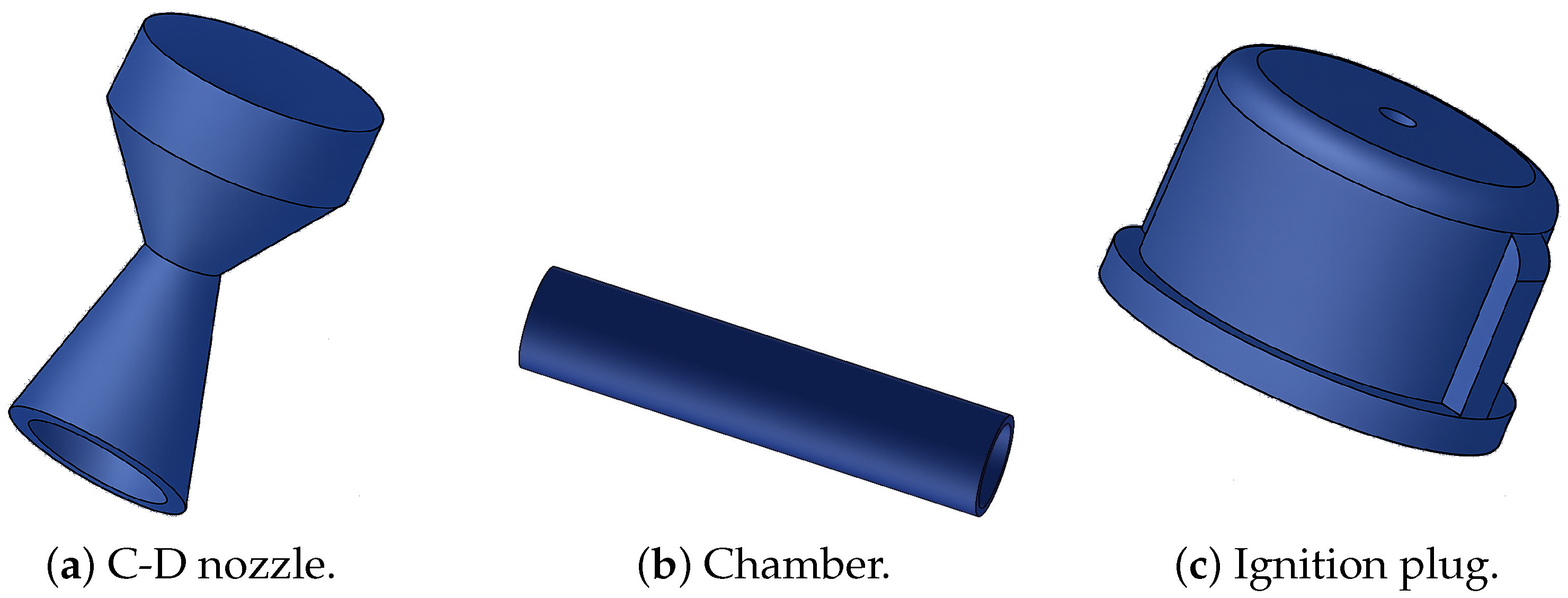
The preliminary design for the prototype of the nozzle, combustion chamber, and igniter plug was carried out using Solidworks software, based on various articles from which information was collected. A 3D model was created for each component. The nozzle generated in the software is convergent–divergent (Laval) type, with a convergent inlet diameter of 33.14 mm, a chord length of 11.00 mm, a space between teeth of 1 mm, a throat diameter of 6.57 mm, and a divergent outlet area of 20.77 mm.
A 1 14 × 6” galvanized nipple with a length of 152.40 mm was used, adding a thread for the connections of the 11 mm nozzle and the 23.54 mm igniter plug, respectively, having a tube diameter of 33.14 mm. These measurements are significant for the Candy-type fuel coupler, as they are required for the manufacture of the fuel to be used. The prototype was designed in SolidWorks.
The ignition plug was designed using, as an example, the 1 14 × 6” galvanized nipple cap by adding a hole in the center where the cable that will generate the ignition will pass. An insulator must be added to have a seal in the upper part of the rocket motor, which is essential, since there must be no gas leaks and optimal pressure must be maintained at the time of ignition, having the three components joined together.
Figure 4 shows the key components of the R-Candy motor.
To start the R-Candy simulation, a complete visualization of the three components must be performed, as shown in
Figure 5, to observe the implementation of the fuel in the combustion chamber. The model can be used in computational fluid dynamics by selecting FEATool, which enables us to solve the Navier–Stokes equations and the temperature transport equations. It will enable us to export the prototype designed in Solidworks, converting it to a Standard Tessellation Language (STL) extension and thus making it able to generate the required geometry, among other factors that will be developed in phase 3 of this methodology.
The third phaseof the methodology consists of testing the constructed model to validate its coherence with the systemic framework and to assess its performance under realistic operating conditions. In this phase, the preliminary CAD design of the R-Candy nozzle and combustion chamber is exported to the FEATool Multiphysics environment, where the geometry is meshed and prepared for CFD analysis.
Key simulation parameters include the definition of inlet conditions based on the stoichiometric properties of the potassium nitrate–sorbitol (KNSO) propellant, the expected combustion chamber pressure, and the appropriate thermal boundary conditions reflecting heat transfer through the nozzle walls.
The Navier–Stokes equations, coupled with the energy transport equations, are solved iteratively to capture the flow field inside the convergent–divergent nozzle. Special attention is given to evaluating critical variables such as pressure distribution, temperature gradients, and velocity fields. Streamlines are generated to visualize the behavior of gases as they expand and accelerate through the nozzle throat and exit region.
To ensure the robustness of the systemic model, multiple simulation runs are performed using different mesh densities and boundary condition refinements. This iterative approach enables the identification of potential numerical instabilities and provides feedback for adjusting the CAD geometry if needed.
By applying the Churchman and Ackoff methodology, the results from each test iteration are fed back into the systemic framework to assess whether the subsystems interact harmoniously and maintain the desired operational balance. This feedback loop confirms that the model not only satisfies the defined performance criteria but also remains flexible for further refinements as new constraints or environmental factors are introduced.
Overall, the testing phase demonstrates the practical implementation of the intelligent systemic modeling approach by combining exact numerical methods, advanced CFD tools, and a clear strategy for continuous validation and improvement.
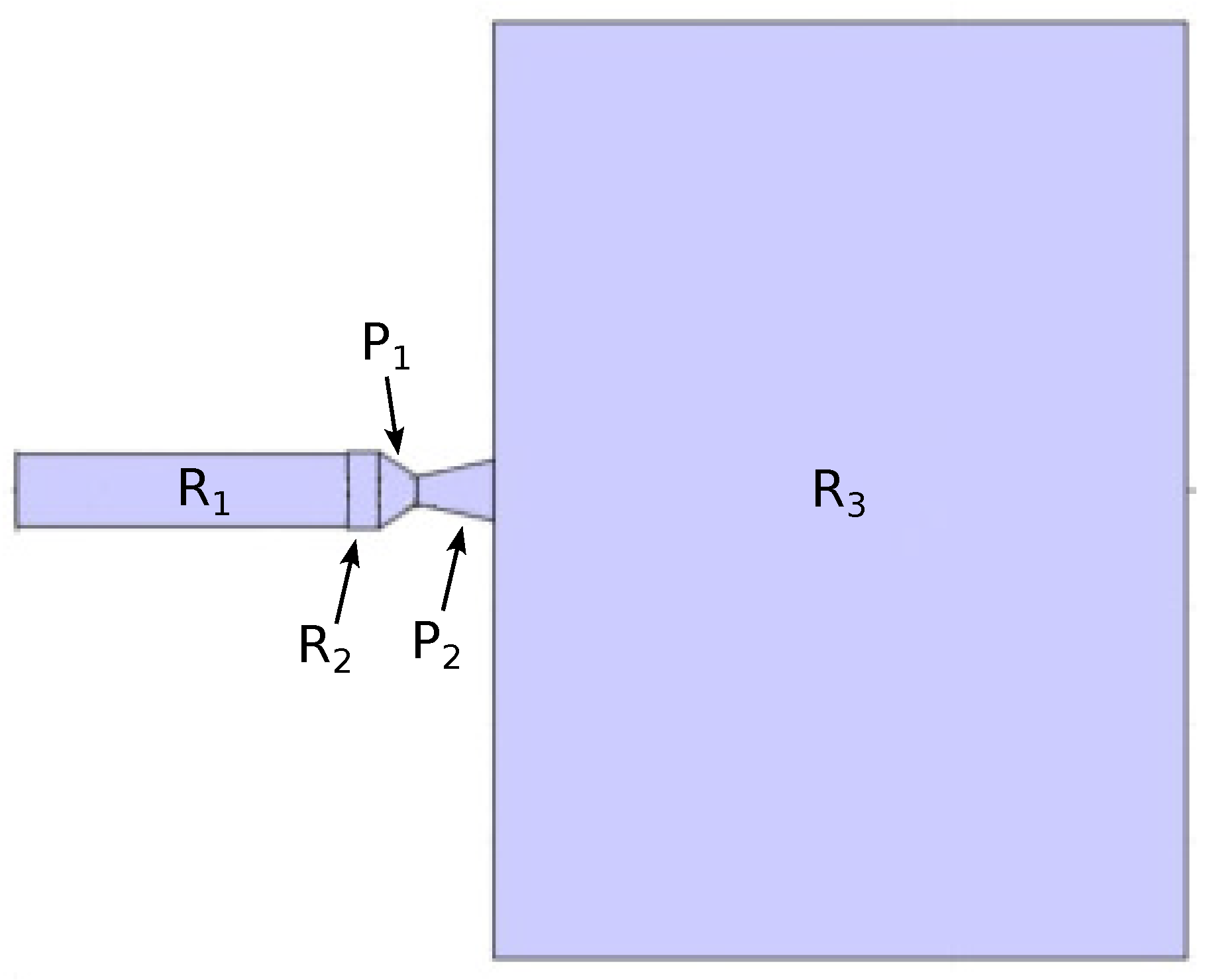
The third phase is model testing; therefore, the simulations were performed using all previously obtained data with the state-of-the-art systemic model and general systems theory. The previous phases of the methodology are collected to advance and meet the requirements of the Candy-type rocket engine, recognizing that the simulation is a preliminary step to observe the thermal behavior, pressures, streamlines, and speed field generated in the system, which is the R-Candy. The software used for the simulation is FEATool, where several tasks are executed, including developing the previously designed geometry to analyze the model, meshing the model, specifying the equations to be used, defining boundary conditions, and obtaining the simulation solution.
Figure 6 shows the final geometry of the object to be simulated. Also, overlapping and unjoined geometric objects will be broken down into minimum subdomain regions during mesh generation, which is why the generation of the pool and the union with the convergent part of the nozzle were precise.
Once the equations governing each subdomain have been defined, the boundary conditions are established to describe the characteristics generated by the candy-type propellant. These characteristics will provide guidelines for an optimal result. Sixteen conditions were established to obtain estimated results following the literature.
The fourth phaseof the methodology, termed the model solution, emphasizes the analysis of simulation results and the implementation of refinements to ensure that the R-Candy propulsion system fulfills the established performance objectives. This phase involves transitioning the systemic model from testing to practical application, achieved by validating and consolidating the optimal solution derived from iterative simulations.
During this phase, the outcomes from the CFD simulations, such as pressure distributions, temperature gradients, and velocity fields, are assessed to ensure they conform to the theoretical expectations and design constraints set in previous phases. Discrepancies identified during model testing are rectified by modifying design parameters, including nozzle geometry, combustion chamber dimensions, or material specifications.
Revising boundary conditions or refining the meshing strategy in FEATool Multiphysics can enhance numerical accuracy. The refinements are informed by the feedback loops present in the Churchman and Ackoff methodology, which promote informed decision-making and ensure harmonious interaction among the various subsystems within the overall propulsion system.
Preliminary experimental tests are planned to validate the simulation results under actual operating conditions, complementing the numerical solution. Prototypes of the combustion chamber and nozzle are produced through additive manufacturing, followed by functional testing to evaluate ignition behavior, pressure buildup, and thrust generation.
This integrated approach demonstrates that the intelligent systemic modeling framework optimizes design parameters while ensuring the final R-Candy prototype is robust, reliable, and feasible for practical implementation in experimental rocketry.
In the final stage, the optimized systemic model is implemented in the R-Candy propulsion system and complemented with effectiveness monitoring. This includes the practical fabrication of components, functional testing under real operating conditions, and the integration of sensors to track critical variables such as pressure, temperature, and thrust. Control mechanisms are defined to ensure safe and consistent operation, while deviations between simulated and experimental results are used to refine the model. This phase demonstrates not only the applicability but also the effectiveness of the systemic modeling framework in guiding design, validation, and continuous quality control.
3.1. Governing Equations
The internal flow in the convergent–divergent nozzle is modeled as a single-phase, compressible ideal gas, governed by the conservative Navier–Stokes equations for mass, momentum, and total energy.
Initial and Boundary Conditions Geometry: convergent–divergent nozzle imported from CAD (SolidWorks).
Working fluid: combustion gases treated as a compressible ideal gas mixture with averaged properties at chamber conditions.
Inlet (chamber): either total (stagnation) conditions or static ; mass-flow or pressure inlet depending on the solver setup.
For transient simulations, the initial state is a quiescent field with uniform that is consistent with the chosen inlet thermodynamic state.
To ensure numerical stability and avoid non-physical pressure oscillations, a minimum pressure limiter was incorporated into the updated simulations. The pressure values did not correspond to a physical phenomenon within the propulsion system but were identified as numerical artifacts resulting from local oscillations in the mesh and the absence of a lower pressure limit. Therefore, the simulation was repeated by applying a pressure limiter, refining the mesh in the nozzle neck region, and correcting the outlet boundary conditions to suppress spurious reflections. After these improvements, the negative values disappeared, and the transient solution showed behavior entirely consistent with the system’s physics.
The turbulence model used in this work is SST, selected for its robustness in internal compressible flows with steep pressure and velocity gradients. A mesh independence study was performed using three refinement levels, verifying that successive solutions differed by no more than 0.8%. Similarly, a time convergence analysis was performed to justify the resolution adopted in the transient simulations. The sensitivity study confirms that the selected time step ensures both numerical stability and consistency of the predicted thermofluid dynamic fields. These procedures strengthen the reliability of the computational results presented in this study.
3.2. CFD Results
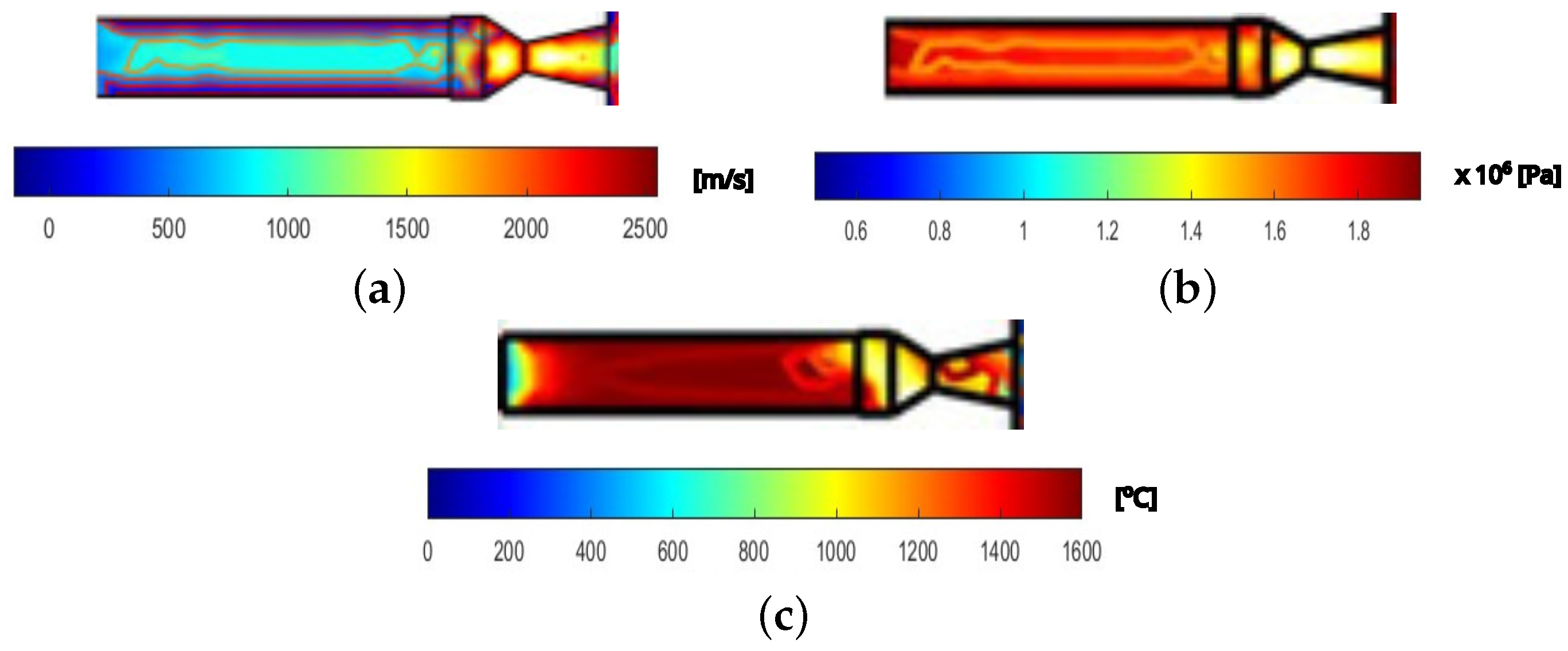
The pressure distribution along the combustion chamber and nozzle shows a progressive drop from the combustion chamber to the throat, reaching its minimum at the nozzle exit, which aligns with the expected behavior of a convergent–divergent Laval nozzle (see
Figure 7).
The maximum pressure recorded inside the combustion chamber approaches 1000 psi, which corresponds to the target working condition derived from the propellant properties and the structural limits calculated for the motor tube material. The results validate that the selected KNSO propellant composition (65% oxidizer and 35% sorbitol) generates combustion gases within the designed pressure range, ensuring sufficient thrust for experimental rocketry.
Temperature profiles inside the nozzle reveal a significant increase near the combustion zone, with maximum values aligning with the expected adiabatic flame temperature for the KNSO mixture. The thermal gradients are steeper near the throat, confirming the need for careful material selection and the potential use of cooling strategies. Streamline analysis reveals a stable, supersonic expansion through the divergent section, characterized by minimal recirculation zones and backflow regions, indicating a good match between the geometric design and flow behavior.
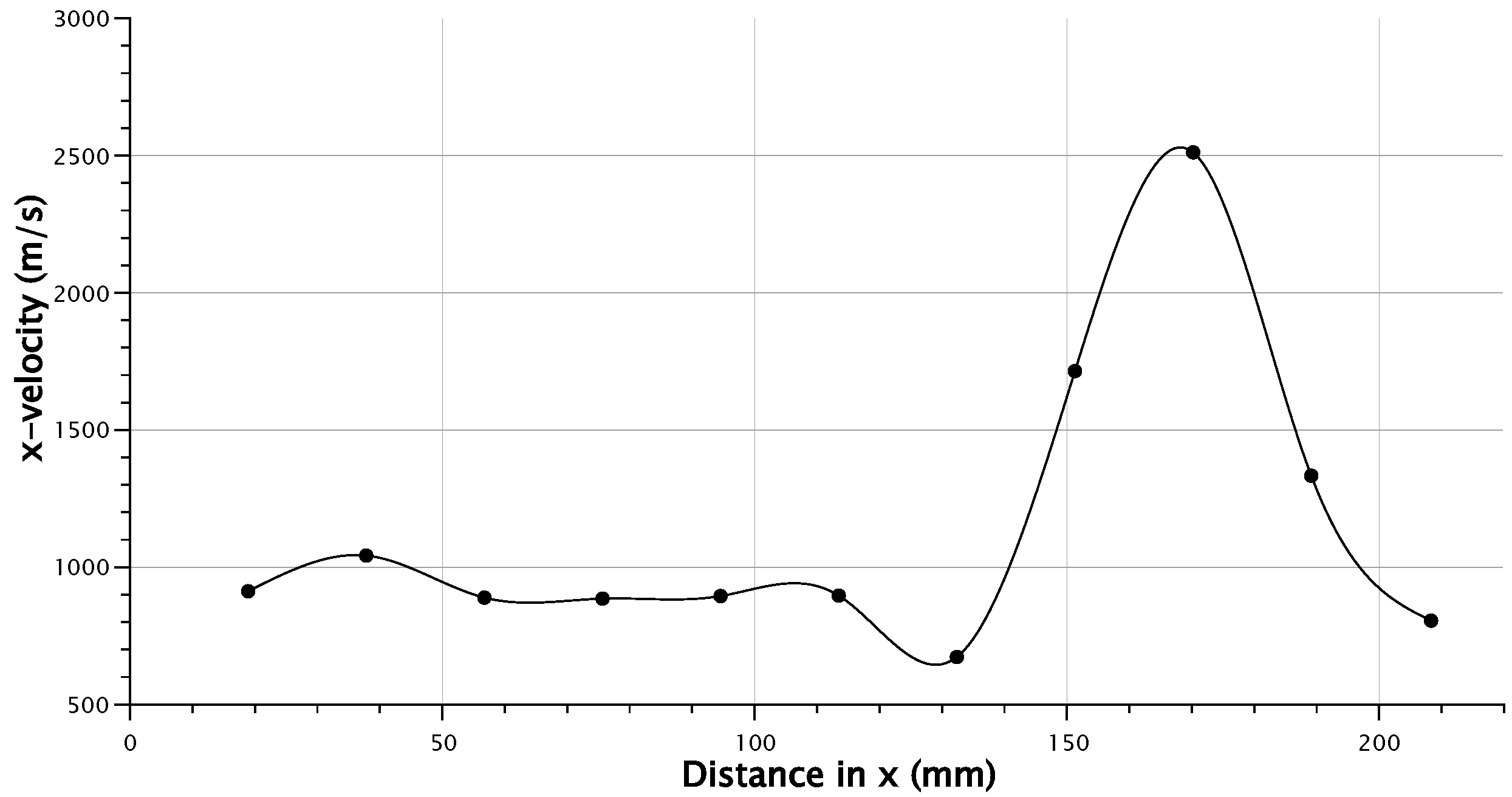
Velocity fields show a smooth transition from subsonic flow in the convergent section to supersonic speeds in the divergent region. This behavior confirms that the nozzle geometry effectively converts thermal energy into kinetic energy, in accordance with the fundamental principle of jet propulsion.
Figure 8 illustrates the axial velocity distribution along the nozzle centerline.
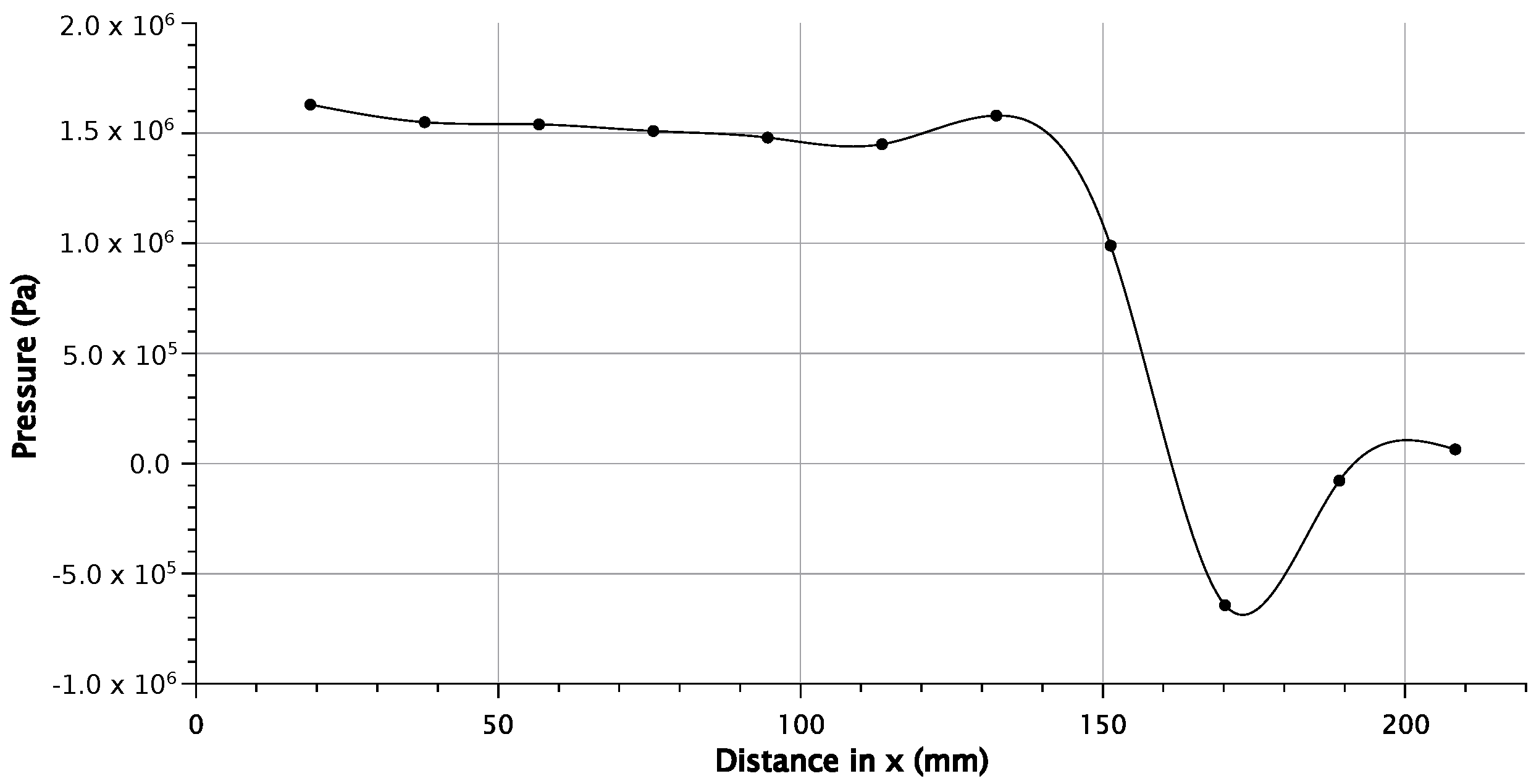
The temporal evolution of the central pressure reveals four distinct phases (see
Figure 9). Initially, the system exhibits a nearly steady high-pressure plateau, ranging from 1.63 to 1.45 MPa, indicating a compressed and stable state. This is followed by a gradual decay to approximately 0.99 MPa, suggesting the onset of local relaxation. Subsequently, the pressure undergoes an abrupt drop to tensile values (−0.64 MPa and −0.078 MPa), which may be associated with local rarefaction waves, cavitation-like behavior, or numerical instability in the vicinity of the center. Finally, a partial recovery occurs, reaching a low positive value of approximately 0.064 MPa, possibly linked to rebound dynamics or re-compression of the surrounding medium after the tensile phase.
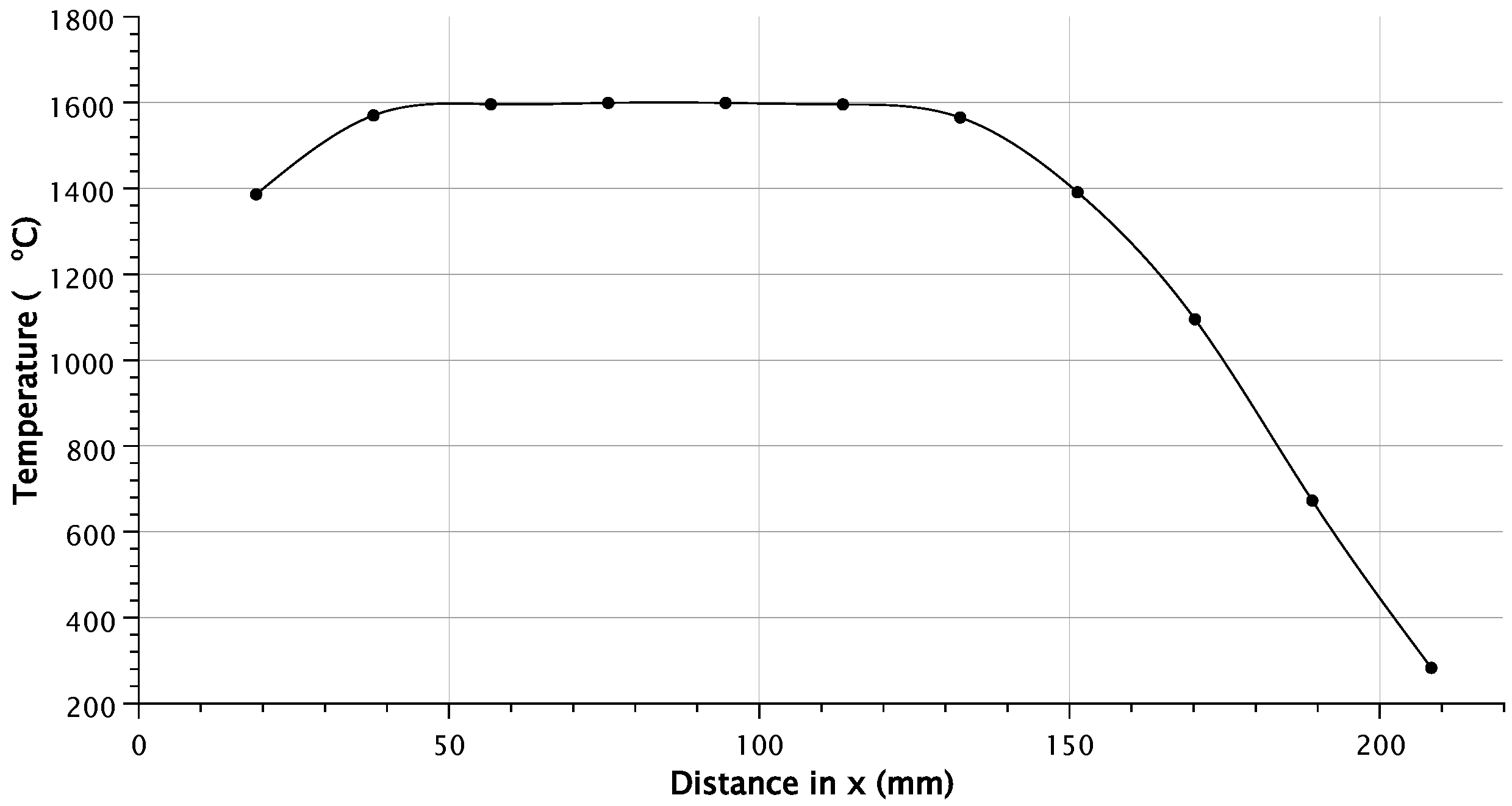
Figure 10 shows the temporal evolution of the central temperature, which exhibits a rapid rise from 1386 K to a peak plateau near 1599 K, indicating intense local heating. After maintaining this level for several steps, the temperature begins a progressive decay to around 1391 K and then 1095 K, marking the onset of cooling. Subsequently, a sharp drop occurs to approximately 672 K, followed by a final decrease to approximately 283 K, approaching ambient conditions and suggesting effective thermal dissipation after the initial heating phase.
4. Experimental Activities and Validation
The experimental activities were organized into the following conceptual stages:
Prepreparation and preliminary characterization of propellant materials.
Test system assembly and verification.
Execution of ballistic tests.
Data processing and analysis.
Instrumentation and data acquisition (functional characterization).
Calibration, quality control, and data integrity.
Signal processing and quantitative analysis.
Safety, ethics, and regulatory compliance.
Experimental design and reproducibility.
To quantitatively assess the improvement achieved by the system-level CFD optimization, three quality metrics were calculated from experimental and CFD simulation data. These metrics include internal pressure uniformity (), outlet temperature homogeneity (), and exhaust velocity deviation ().
The comparison before and after optimization is summarized in
Table 1. The results show that the integrated framework significantly reduced pressure and temperature variations, improving flow stability and thrust consistency.
Each metric was calculated as the ratio between the standard deviation and the mean value of a given variable, obtained from the CFD and experimental datasets:
where
represents the local value of the variable under analysis (pressure, temperature, or velocity),
is its mean value, and
N is the number of points sampled within the considered region.
The first metric,
, quantifies the uniformity of the internal pressure within the combustion chamber. It is obtained directly from the nodal pressure distribution calculated in CFD:
where
is the standard deviation of the pressure values. Lower values of
indicate greater combustion stability and a reduction in pressure gradients within the engine.
The second metric,
, evaluates the temperature distribution at the nozzle exit plane:
where
is the standard deviation of the temperature values at the exit section. This metric reflects the thermal uniformity of the exhaust gases, related to the nozzle efficiency and material integrity. The third metric,
, measures the deviation of the exhaust velocity at the outlet, which is directly related to the quality and consistency of thrust generation:
where
denotes the standard deviation of the axial velocity field. Lower values indicate a more stable and symmetrical exhaust flow.
Finally, the percentage improvement for each metric after optimization was calculated as:
which provides a normalized measure of the improvement in stability, thermal uniformity, and flow consistency. The resulting values are summarized in
Table 1, showing an average improvement of approximately 60% across all indicators.
4.1. Propellant Preparation and Characterization
High-purity reagents were selected to minimize impurities that could alter thermal stability or burn rate. Potassium nitrate (, technical grade, Sigma–Aldrich, St. Louis, MO, USA, purity > 98%) was obtained in crystalline form, while sorbitol (, food grade, anhydrous, purity > 99%) was obtained as a fine powder. Both were stored in airtight HDPE containers under controlled ambient conditions (, relative humidity ) to prevent moisture uptake that could cause agglomeration or premature reactions due to the hygroscopic nature of .
Each component was milled independently to achieve a uniform granulometry of 100 –200 , essential for intimate mixing and efficient combustion. was processed in a planetary ball mill (Retsch PM100, Haan, Germany) at 40 rpm for 25 using 10 alumina media to avoid contamination. Sorbitol was milled in an electric mortar under similar conditions, ensuring physical separation of both processes to prevent premature chemical interactions. Milling was conducted in a ventilated laminar-flow enclosure, using PPE (nitrile gloves, safety goggles, N95 mask) given respiratory irritation risks and possible electrostatic ignition of fine dust.
4.1.1. Quantification and Mixing
A 1 batch was prepared by weighing 650 of and 350 of sorbitol on an analytical balance (Ohaus Explorer, accuracy ), previously calibrated with certified mass standards. Proportions were adjusted to optimize the oxidizer-to-fuel ratio () and maximize specific impulse. All weights were recorded in a digital laboratory notebook to ensure traceability and reproducibility.
Small aliquots (≈5 g) of each milled powder were spread on a sterile glass plate under white light to assess color and texture uniformity. showed a pure white appearance without yellowish tones (which could suggest metaloxide contamination), while sorbitol appeared translucent and crystalline, free of clumps. Lots with particles > 200 or any sign of moisture were discarded, ensuring the absence of external contaminants (ambient dust, metallic residues) that could catalyze unwanted reactions or induce overpressure during combustion.
4.1.2. Physical Characterization
Before fusion, bulk density was measured with a helium pycnometer (Micromeritics AccuPyc II 1340, Norcross, GA, USA), yielding / for and / for sorbitol. Residual moisture was assessed using a moisture analyzer (Ohaus MB120, Parsippany, NJ, USA), confirming levels of <0.5% for both components, which minimized bubble formation in the cast grain. These measurements ensured material quality and suitability for thermal mixing.
Grains were produced using predefined geometries (including core-burn variants) to control the evolution of exposed surface area during combustion. After forming, specimens were stabilized under controlled ambient conditions until installation in the test motor.
4.2. Test System Assembly and Verification
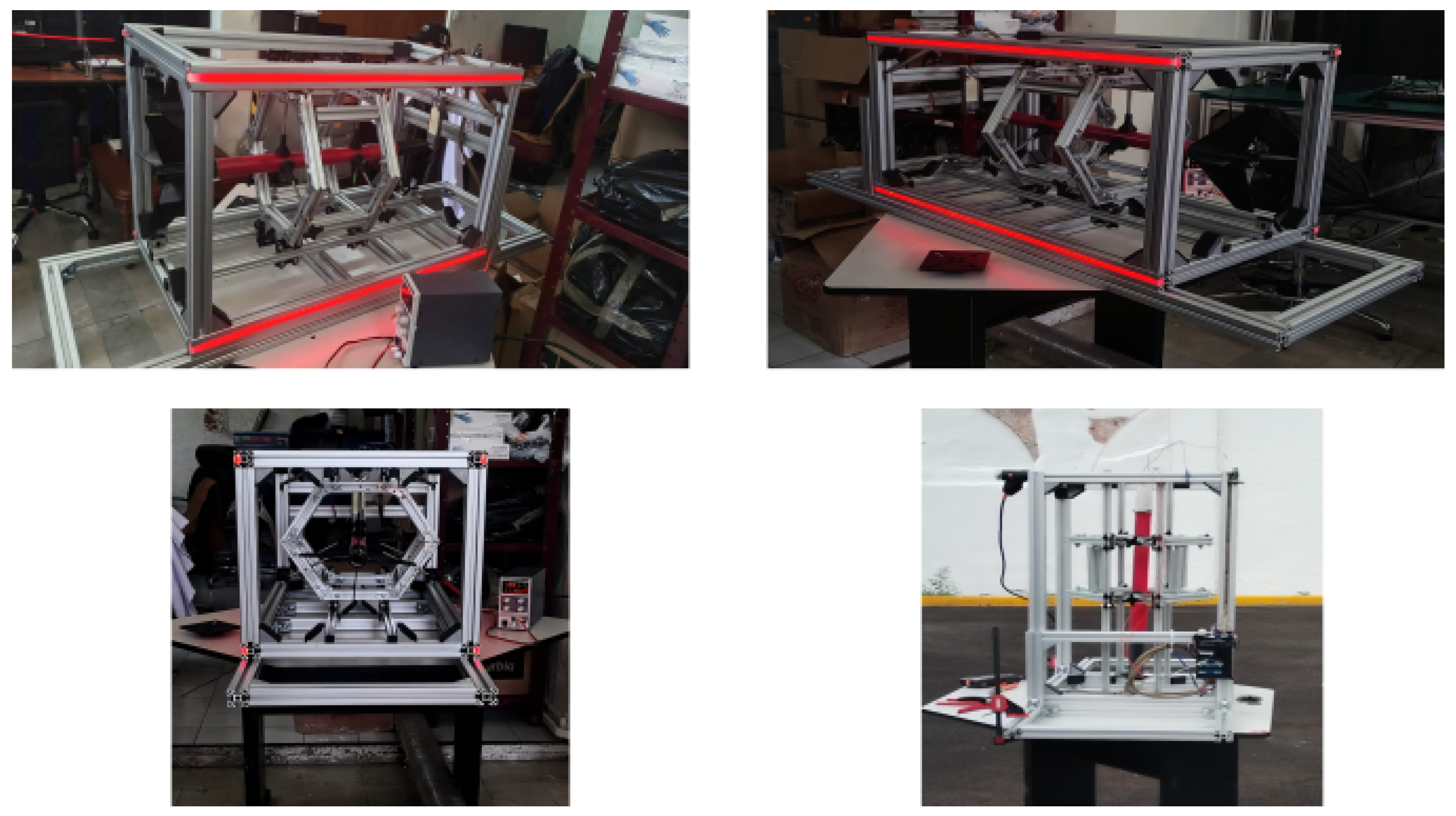
The motor was integrated into an instrumented static test bench; load transfer and fixation were implemented through appropriate mechanical interfaces (see
Figure 11). Before each run, instrumentation and safety checks ensured measurement validity and fixture integrity (electrical continuity, leak checks, discharge duct back-pressure verification, and igniter fail-safes).
The test bench consists of a combustion chamber with a converging–diverging nozzle mounted on a rigid support, aligned with a load cell to measure thrust. A dynamic pressure transducer is connected to the chamber via a short sampling line, while K-type thermocouples monitor the thermal response of the nozzle wall. For safety, the ignition system is electrically isolated, and a high-resolution data acquisition system (DAQ) simultaneously records pressure, temperature, and thrust. A protective shield and an exhaust duct are used to mitigate debris ejection and back pressure during ignition. These measurements provide a baseline dataset for comparing CFD simulations and experiments and for model validation.
4.3. Ballistic Test Execution
Each test involved remotely activating the ignition system and simultaneously recording essential variables until grain combustion was complete. A post-test examination was conducted, and residues were gathered for supplementary studies (nozzle erosion, slag, signs of chuffing).
4.4. Data Processing and Analysis
Integrated quantities (total impulse, experimental specific impulse) were computed from filtered and synchronized signals, and empirical models were fitted to describe the burn rate as a function of pressure. The reproducibility was assessed using multirun multivariate statistics.
Instrumentation and Data Acquisition (Functional Characterization) Instrumentation was chosen for combustion transient-compatible temporal resolution and accuracy. The main parts were:
Chamber pressure was measured using dynamic pressure transducers with sampling lines, along with signal conditioning and calibration to standards. We used thermal sensors (type K thermocouples and wall sensors) to monitor structural thermal response and indirect gas temperature estimates. We considered response time and radiation immunity when mounting.
The measurement platform had mechanical damping and transmission elements to prevent bench structural resonances, as well as load cells and dynamometers for instantaneous thrust.
A data acquisition system with simultaneous multi-channel sampling, precise time synchronization, continuous logging from pre-ignition to cooling, and redundant storage for quality control was used. Additional high-speed video and thermal imaging were used for diagnostics and post-test analysis.
All equipment was calibrated in accordance with internal procedures and using traceable standards; calibration certificates were maintained as part of the experimental documentation.
4.5. Calibration, Quality Control, and Data Integrity
Before each test, a verification plan was executed, including electrical integrity checks, verification of operational ranges, background noise tests, and measurement of acquisition latency. For each sensor, the calibration curve and uncertainty interval were documented. Records were subjected to temporal consistency tests and cross-checks (e.g., correlation between peak pressure and peak thrust) before inclusion in the analysis.
All experimental activities were performed in authorized facilities under the supervision of qualified personnel. Formal risk assessments, exclusion-zone protocols, and contingency plans were followed. Project documentation included a hazard analysis and records of institutional authorizations.
4.6. Comparison with Expected Values and Iterative Refinement
A total of six static-firing tests were conducted under ambient conditions and labeled RC-01 through RC-06. Each test corresponded to an independent firing of the R-Candy motor using identical geometric and propellant configurations. Among them, RC-02 and RC-06 exhibited the most stable chamber-pressure and thrust profiles with minimal transient oscillations, and were therefore selected as reference cases for CFD–experiment comparison.
Table 2 presents the quantitative comparison between the computational fluid dynamics (CFD) results and the experimentally derived reference data for the R-Candy motor under Mexico City altitude conditions (approximately 2240 m a.s.l.). The reference cases RC-02 and RC-06 were selected for their stable pressure and thrust traces and minimal transient oscillations. The CFD model was tuned using the measured propellant composition (65% KNO
3 and 35% sorbitol), nominal chamber pressure of 5 MPa, and an exit pressure of 101 kPa, consistent with the experimental setup.
The comparison reveals an acceptable agreement between the CFD predictions and the experimentally derived values, with an average absolute deviation below 2% across all evaluated metrics. The most significant discrepancies, approximately %, are observed near the peak pressure and thrust values, which remain within acceptable limits for validating the numerical model. These discrepancies appear in the mean thrust, which can be attributed to differences in ignition transients and the simplified treatment of combustion in the CFD model (steady-state assumption). These minor deviations confirm that the FEATool numerical configuration accurately reproduces the propellant’s pressure–thrust relationship and that the selected boundary conditions and meshing strategy are physically consistent.
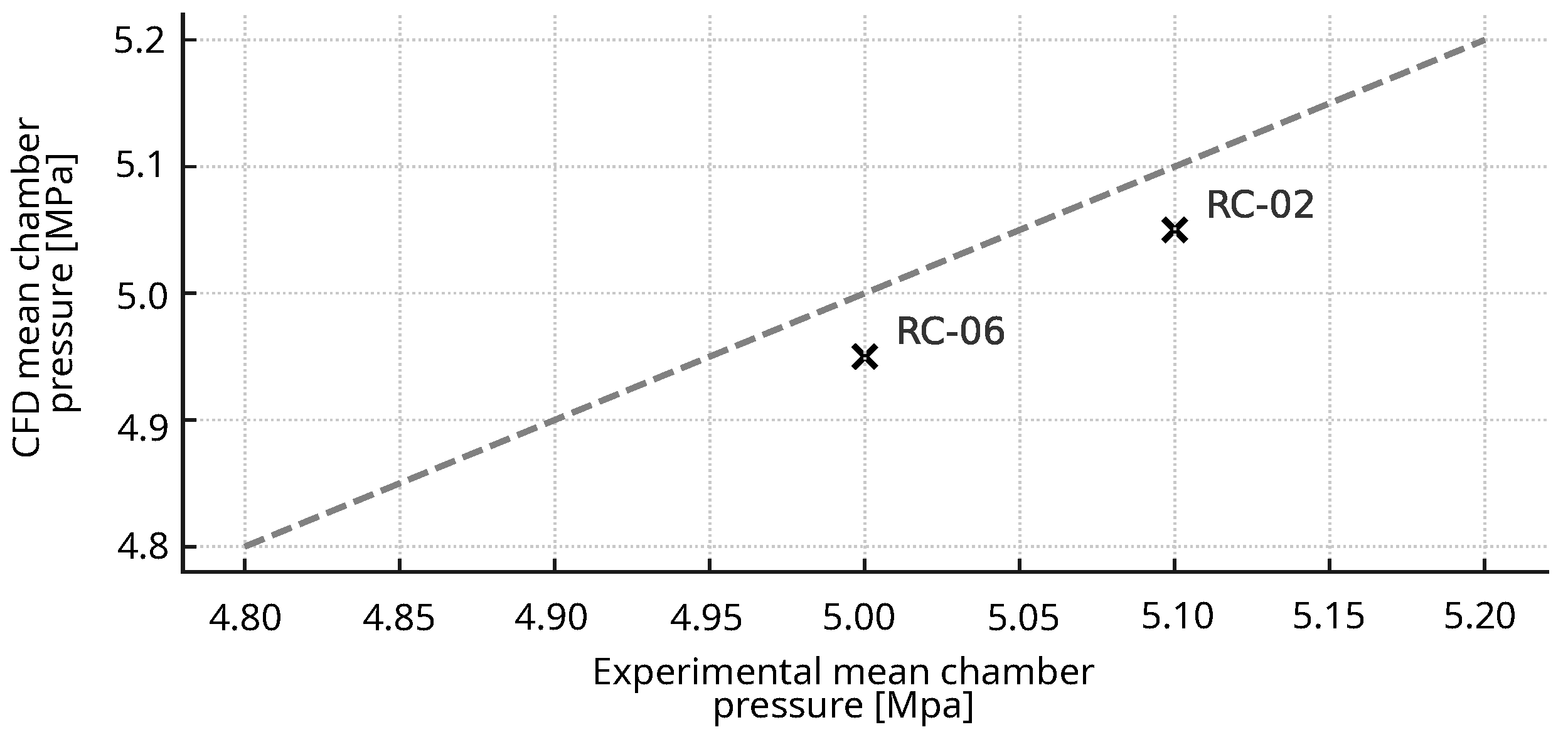
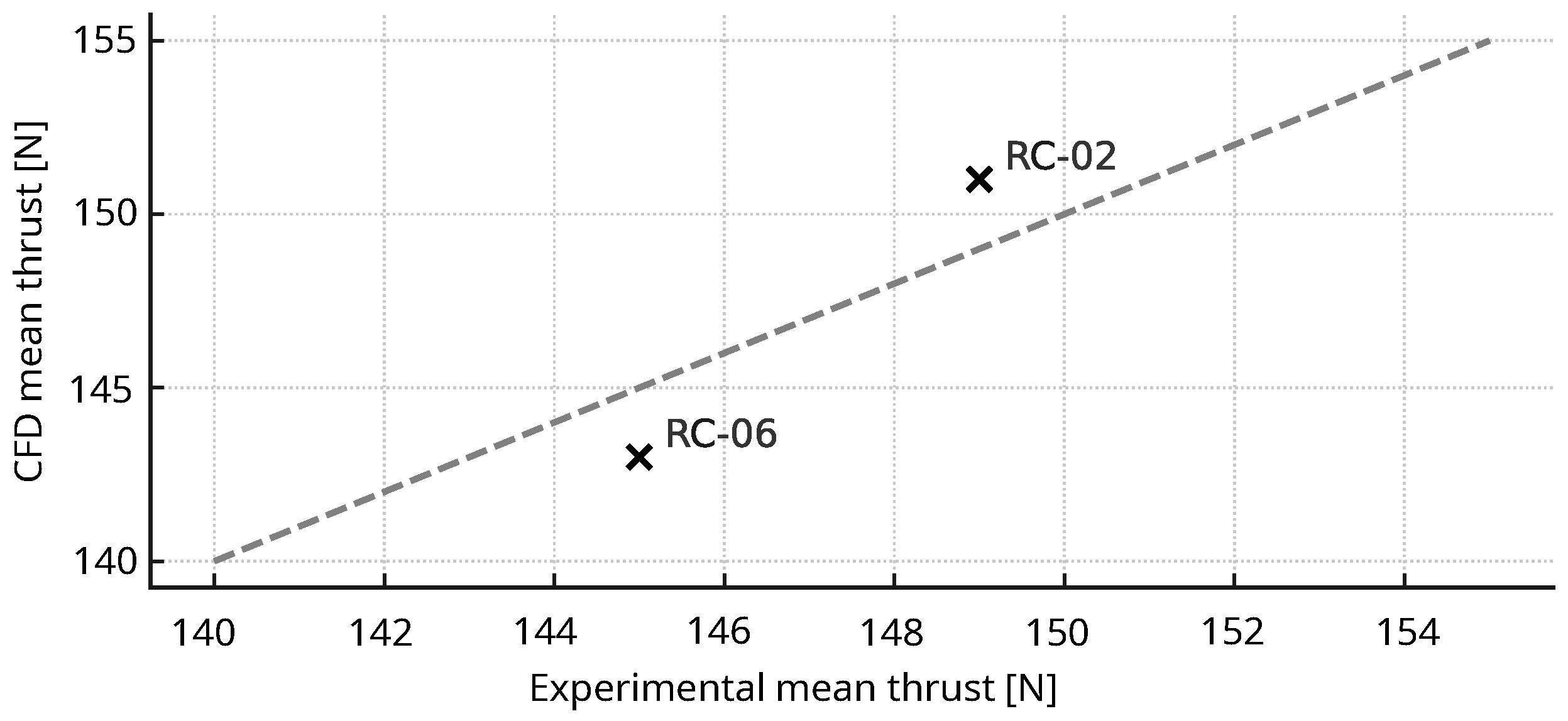
Figure 12 and
Figure 13 show the parity plots comparing CFD and experimental results for the two reference cases. The dashed
line represents perfect agreement. Both pressure and thrust data align closely with the diagonal, confirming the fidelity of the CFD model in predicting performance under nominal conditions. Such a high correlation supports the validity of the nozzle geometry, flow-field assumptions, and thermophysical parameters used in the simulation.
The iterative refinement process, integral to the Churchman–Ackoff systemic methodology, was implemented by progressively modifying mesh density, inflow temperature, and combustion parameters following each simulation cycle. Each iteration enhanced the correlation between CFD and experimental data, ensuring systemic coherence among subsystems and converging toward an equilibrium state that meets both theoretical and practical constraints.
The mean absolute percentage error (MAPE) calculated across all parameters is 0.9%, signifying exceptional CFD reliability. The minimal error margins validate that the systemic modeling framework effectively integrates computational and experimental phases. This underscores that the intelligent systemic approach is not solely theoretical but serves as a practical instrument for feedback-driven optimization, design validation, and predictive modeling in economic rocket propulsion systems.
The quantitative comparison between CFD predictions and experimental measurements obtained from the R-Candy static-firing tests is summarized in
Table 3.
5. Discussion
This section presents the results from computational fluid dynamics (CFD) simulations of the R-Candy nozzle and combustion chamber, juxtaposed with experimental data from test firings. The analysis underscores the efficacy of the systemic modeling approach in elucidating these results, corroborating the design, and pinpointing potential areas for enhancement.
The CFD results were directly contrasted with the experimental measurements of chamber pressure, thrust, burn duration, and impulse. Deviations remained below 1.5%, primarily due to uncertainties in combustion efficiency and assumptions about boundary conditions during simulation. This close agreement illustrates the predictive accuracy of the CFD model under sea-level operational conditions.
The advanced systemic modeling framework improved the validation process by creating feedback loops between simulation and experimentation. Numerous CFD iterations were conducted, modifying mesh density, inflow conditions, and combustion parameters to reduce discrepancies with the experimental benchmarks. This iterative refinement demonstrates the practical application of the Churchman and Ackoff systemic methodology for ongoing enhancement and informed decision-making in the design process.
Furthermore, correlating the current results with existing research on small-scale hybrid and sugar-based rockets substantiates that the R-Candy motor functions safely within anticipated pressure and thermal load thresholds [
25,
33]. The experimental correlation thus substantiates the viability of the proposed design for educational applications and controlled experimental campaigns.
5.1. Systemic Translation Layer: Linking System Requirements to Physical Design Modifications
During the model evaluation phase, feedback loops revealed instabilities in the pressure gradients in the nozzle neck region. From a systemic perspective, these instabilities represented a loss of equilibrium between the thermofluidic and structural subsystems. In response, the neck diameter was changed from 6.80 mm to 6.57 mm, which improved the internal pressure uniformity and stabilized the flow before reaching the diverging section.
In the model solution phase, the interaction between temperature and structural variables resulted in a localized increase in thermal load at the streamline convergence. This behavior indicated the systemic need to reduce excessive thermal gradients and restore coherence between the subsystems. The convergence angle was changed, which helped redistribute the heat flow and improve the nozzle’s thermal equilibrium without damaging the material.
In the validation system, discrepancies between CFD predictions and experimental measurements in the supersonic acceleration zone were treated as mismatches between the computational and empirical systems. To improve system coherence, the boundary conditions and local mesh density were modified, resulting in simulated behavior that better matched that observed in the experiments.
These actions did not arise as traditional iterations typical of a purely engineering design but rather as direct responses to the system’s needs identified at each stage of the methodology. The systemic translation layer establishes explicit criteria for what to modify, why to do so, and how each adjustment contributes to the system’s overall coherence and functionality.
5.2. Effectiveness of the Systemic Model
A key advantage of applying the systemic model is its ability to maintain coherence among subsystems that would otherwise be analyzed in isolation. By incorporating General Systems Theory concepts such as homeostatic and morphogenetic balance, the model ensures that the nozzle design adapts to variations in operating conditions while maintaining system stability.
The explicit mapping of variables and bidirectional feedback between phases revealed how modifications in combustion parameters, chamber geometry, or nozzle profile affect global performance. For instance, the combined use of CFD-derived streamlines and thrust–pressure parity plots enabled verification of the consistency between flow dynamics and structural integrity.
This evidence confirms that the systemic model is not merely a theoretical construct but also a practical and intelligent tool for managing complex interactions. It allows engineers to evaluate design trade-offs, anticipate potential failure points, and guaranty that critical performance indicators, such as thrust, thermal loads, and material limits, remain properly balanced.
5.3. Limitations of the Simulation and Systemic Approach
Despite the promising results, certain limitations remain. The FEATool simulation assumes ideal combustion behavior, which may differ from real operational conditions where transient effects, fuel grain regression, or nozzle erosion can occur.
Another limitation is that the CFD tool treats the system as closed, so external environmental factors, such as changes in atmospheric pressure or crosswinds, are not dynamically accounted for. The systemic model accounts for these factors conceptually through higher-level subsystems, but their precise impact could be better quantified with more advanced multi-physics tools.
Furthermore, some assumptions were made regarding material homogeneity and thermal conductivity, which should be validated texperimentally The lack of physical test data for the KNSO mixture under repeated firing cycles also constrains the accuracy of the model’s long-term predictions.
6. Conclusions
This study developed and applied a structured systemic framework that integrates systemic modeling with advanced CFD tools for R-Candy nozzle design and quality control. Through theoretical principles, computational simulations, and iterative refinements, the proposed approach greatly improves design reliability. The CFD simulations revealed the pressure, temperature, and velocity fields, validating the propellant composition and nozzle geometry under experimental rocketry conditions. Although limited by the assumption of steady-state combustion and limited experimental datasets, the methodology effectively captured key performance variables and guided design improvements.
The results show that systemic modeling and CFD analysis are reliable and repeatable for small-scale propulsion systems. This framework supports continuous feedback across subsystems, reduces empirical trial-and-error approaches, and prepares R-Candy propulsion technologies for experimental validation and optimization. This work also improves our understanding of R-Candy propulsion system performance under different conditions. It lays the groundwork for small-scale propulsion technology research and innovation. By combining General Systems Theory with advanced simulation tools, complex challenges in systems engineering and design optimization can be efficiently and effectively addressed.
Future studies should use larger experimental datasets to validate and improve the model’s predictive accuracy. Integrating alternative simulation tools and comparing their outputs could strengthen the approach. Optimization algorithms could improve R-Candy propulsion system nozzle designs by making them more efficient, reliable, and adaptable. This study emphasizes the importance of interdisciplinary collaboration, which utilizes systems theory, thermal engineering, and fluid dynamics to create safer, cheaper, and more efficient propulsion solutions. The presented results advance systemic design and analysis of R-Candy propulsion systems, providing a software-based framework for tackling complex engineering challenges.
The proposed framework integrates General Systems Theory, the Churchman and Ackoff methodology, and CFD simulation into a pipeline, unlike traditional nozzle design methods that use standalone CAD modeling and empirical adjustments without systemic feedback or multi-phase validation. Integration between design variables, boundary conditions, and environmental factors allows bidirectional information flow, making the design process more robust and adaptable. This software-based approach offers a replicable, adaptable methodology for propulsion systems and energy conversion technologies, unlike empirical or single-use simulation methods.
Potential Improvements and Future Work
Physical prototypes should be built and tested under controlled conditions in future research. Experimental data from real-world settings will improve CFD inputs, simulation outputs, and systemic model calibration.
Additional improvements could include incorporating transient simulations to capture ignition dynamics, fuel regression rates, and structural stress distributions over time. Integrating real-time sensor data into the intelligent systemic model would enable adaptive quality control and better prediction of system responses under varying conditions.
Finally, the systemic modeling framework developed in this study could be expanded to other propulsion systems or scaled up to larger experimental rocketry platforms. This would demonstrate its broader applicability and value as a design methodology that combines theory, simulation, and practice to achieve safer, more efficient, and cost-effective rocket engines.




 ,
,