1. Introduction
Nowadays, Unmanned Aerial Vehicles (UAVs) are widely used in various applications [
1,
2,
3]. Due to their wide range of uses and increasing technical sophistication and precision [
4,
5], it is possible to select a platform that efficiently meets the specific mission’s requirements in terms of payload and features [
6,
7,
8]. One of the most popular industrial missions is generating 3D models of buildings and other structures. Such models accelerate inventory processes and support the creation of digital twins. A digital twin in construction [
9,
10,
11], within the context of Building Information Modeling (BIM), is a dynamic and data-driven digital representation of a physical building, infrastructure asset, or construction process that extends a traditional BIM model by integrating real-time or near-real-time data from sensors, IoT devices, and construction management systems. Unlike static BIM models, which are primarily used for design and documentation, a digital twin continuously reflects the actual condition, performance, and behavior of the physical asset throughout its lifecycle [
12,
13]. Its usability in BIM-based construction includes supporting design optimization through simulation and scenario analysis, enabling real-time monitoring of construction progress, quality, cost, and safety, facilitating predictive analysis to identify deviations and risks, and enhancing operation and maintenance through live performance tracking and predictive maintenance. In GSM mast inspection, digital twins are particularly crucial for element identification, as they enable accurate recognition, classification, and condition assessment of mast components—such as antennas, mounts, cables, and structural members—by integrating BIM models with sensor data and reality-capture technologies, thereby improving inspection accuracy, safety, and maintenance decision-making. The process is performed by taking photographs from multiple UAV positions. From these images, discrete points can be extracted and combined into a point cloud, which serves as a basis for generating a 3D model. This method is widely used and offers many advantages. The main benefit is the ability to convert a real object into virtual, digital data, which can then be post-processed in various ways [
14].
The motivation for the study presented in this article was the need to conduct telecommunication mast inspections using digital models. The first step, therefore, was to photograph the masts and generate point clouds, which is a key component of automated inspection and quality control processes. This article describes the work undertaken to identify the optimal method for performing photogrammetric flights of telecommunication masts. Due to the significant variability in mast designs and the presence of obstacles such as metal guy wires, tall trees, buildings, and other structures, planning a flight path is a highly complex problem. Additionally, the way photographs are taken affects the quality of the generated model, increasing the number of unknown parameters.
An essential aspect of planning such missions is the influence of antennas on the UAV. As noted in [
15,
16,
17], drones can be negatively affected by electromagnetic waves from various sources. Due to these numerous factors and the overall complexity of the task, the process of developing the methodology was divided into several steps: classification of the objects of interest, experiment planning, discussion of results, and formulation of conclusions [
18]. All these steps are presented in the following sections of this article, along with an additional section that describes the application supporting UAV operators during such missions.
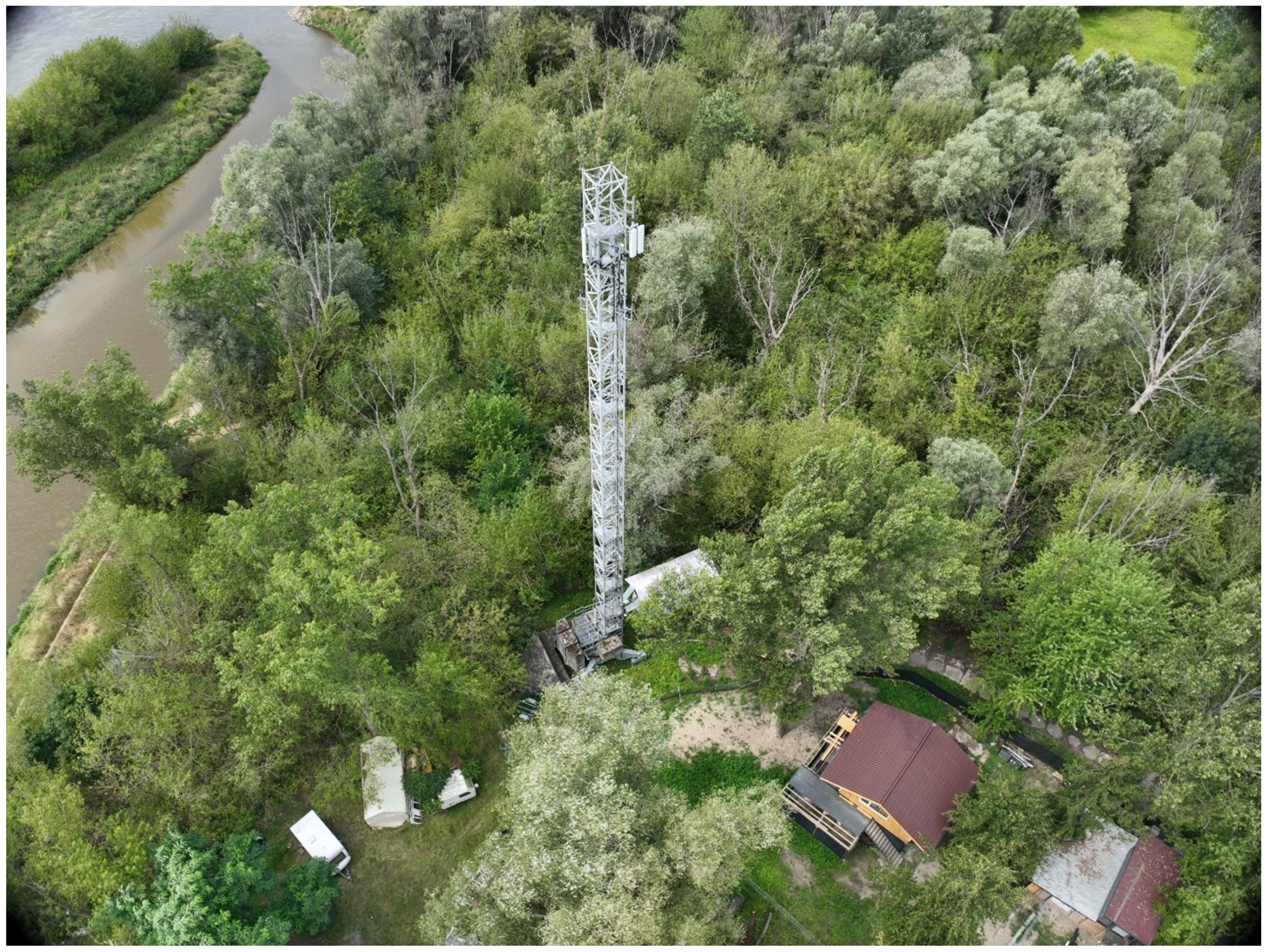
Although commercial software solutions exist that provide predefined flight-path generators for vertical structures, preliminary research showed that these tools are not sufficiently effective for the complex geometries of masts equipped with GSM (Global System for Mobile Communication) antennas. Therefore, the study described here was conducted, leading to the development of a tailored methodology and dedicated software for UAV operators [
19,
20,
21,
22,
23]. The resulting application accounts for all key factors, including mast type, antenna configuration, and the surrounding environment (see
Figure 1). The generated flight path can be easily uploaded to the UAV hardware, preparing the drone for the mission. The main advantage of the proposed system is that it enables safer and more time-efficient missions compared to commercial solutions.
2. Flight Methodology
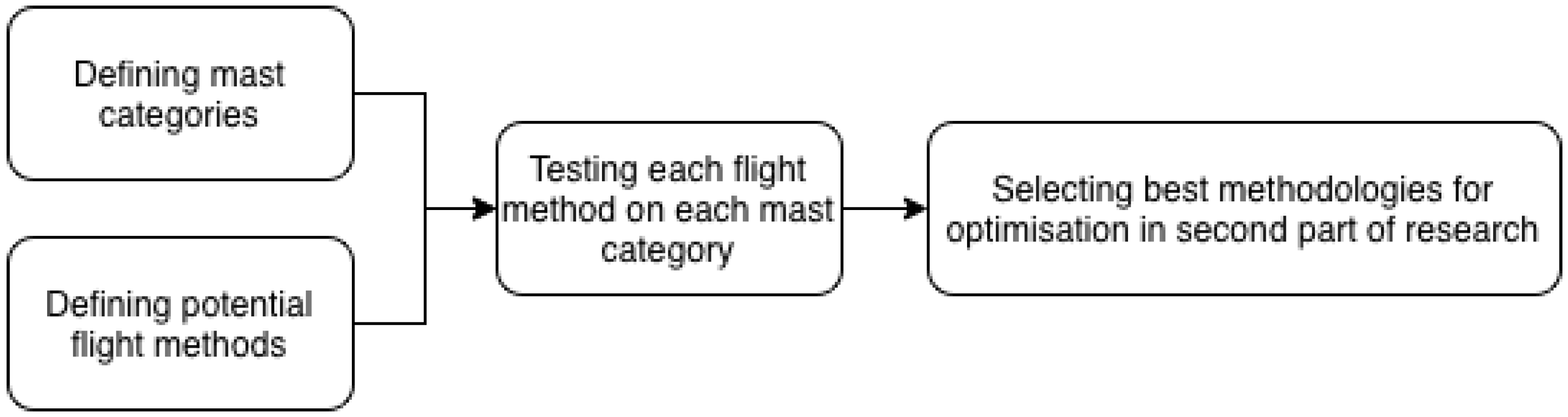
Due to the complexity of the problem, one of the most critical tasks was preparing the research plan. Research was divided into two main parts. In the first phase, for which the diagram is presented in
Figure 2, research aimed to identify potential methods, which were subsequently evaluated and applied in the second part of the experiment.
Initially, masts were divided into six groups. It was assumed that the optimal flight methodology might depend on the type of mast. The selected groups were: lattice mast, chimney, tower, church tower, mast with lashings, mast on top of a building, and forested mast—each characterized by unique features and properties. For example, masts with lashings usually have a constant mast thickness and metal lines with anchors installed in the ground. These elements may influence the way flight paths are planned, and therefore the methodology.
Another critical aspect of developing the flight methodology was selecting several initial flight-path concepts, which were later refined and tailored through multiple experiments. Three primary methods were proposed initially: vertical elevation flights, helix trajectories, and orbits. Each method allows for capturing images of the mast from various positions, though they differ subtly in ways that can influence the resulting digital twin. For example, flying along the mast elevation, in the case of masts with lashings, allows planning the route between the metal lines, enabling the UAV to fly closer to the object of interest. The advantage of the helix method is the constant interval between image captures; unlike the other two methods, it does not require dividing the trajectory into segments from which photos are taken.
Given the large number of unknown parameters and the complex dependencies between them, an iterative approach was used. This involved conducting multiple test flights around a single mast while varying specific parameters. For instance, three flights were performed around a chimney-type mast using the helix method, but with different distances from the object. The next step was to generate point clouds from the collected data and compare them for accuracy. The best solution informed the methodology for the next mast, while the worst provided insight into which settings should not be repeated. This approach is similar to an evolutionary algorithm, where only the best-performing samples advance to the next generation.
It is important to note that the number of photographs is a crucial factor in generating point clouds. More images result in more data and a better digital representation. Therefore, several constraints were imposed when deriving the optimal method. First, a flight should not last longer than 45 min, and each test flight should take approximately the same amount of time, using only one battery.
During the research process, flights were conducted around various types of masts, as mentioned in the
Section 1. Initially, multiple trajectories were tested; however, it was observed that the best results are obtained for those that are very similar. This observation simplified the specified task. The selected methodology proved to be highly universal. With correct flight parameters, it is possible to collect data from all types of masts while meeting all the stated requirements. The initial division into categories proved unnecessary, although this conclusion could only be drawn at the end of the experimental phase.
During the second phase, the goal was to optimize the selected methodology. During flights, various trajectory parameters were adjusted, including the drone’s velocity, image density, camera orientation, trajectory type (elevation, helix, or orbits), and distance from the object. Although the intention was to vary only one parameter at a time to assess its impact, this was often not possible in practice. A diagram representing the second research phase is presented in
Figure 3.
3. Isolated Experiment
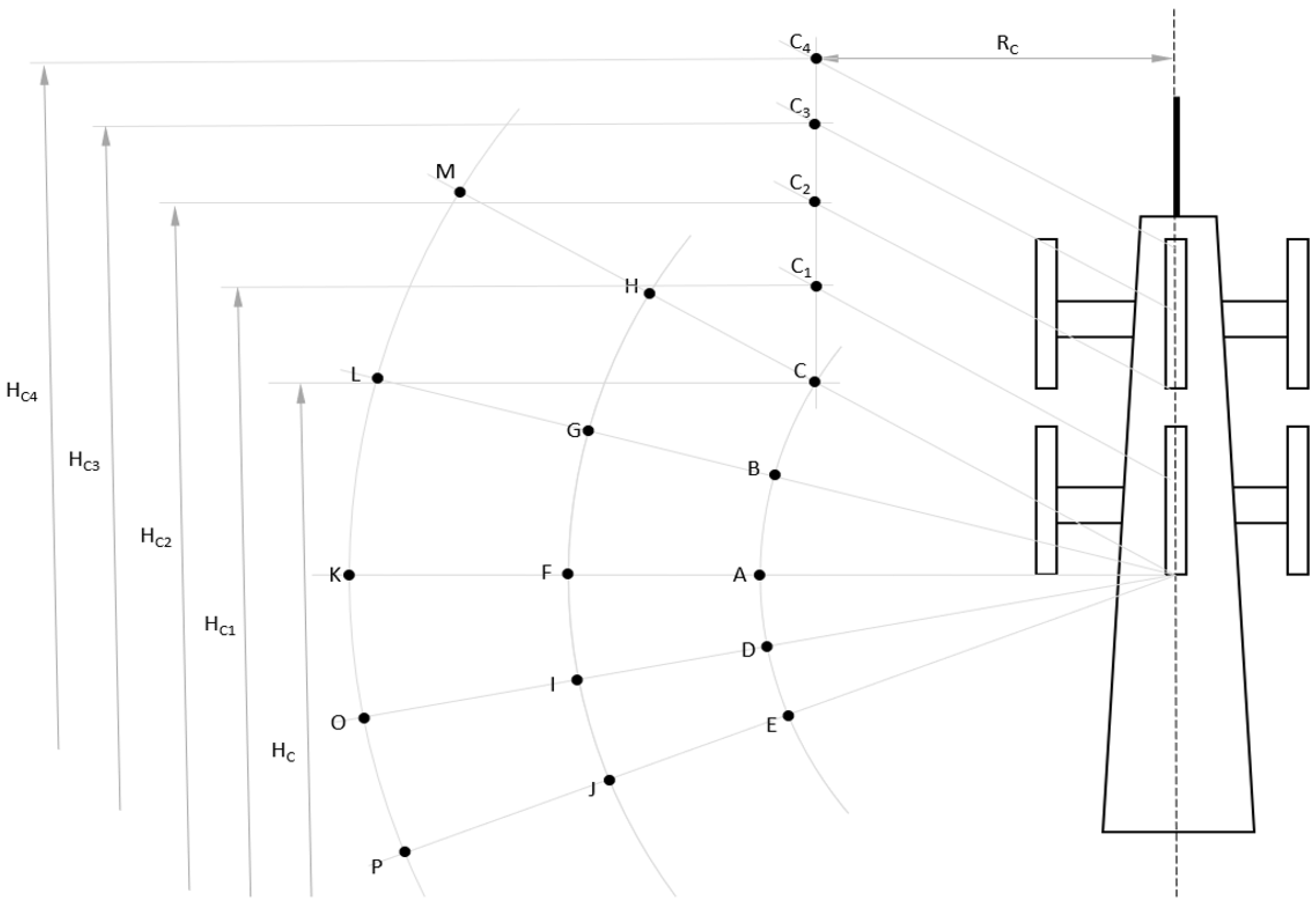
Apart from the various trajectory-related parameters, an isolated experiment was conducted. It focused on capturing crucial mast elements that can be obscured by other objects—typically antennas concealing remote radio units or cable routes. Regions where antennas are densely placed at similar heights are referred to as antenna galleries. During the isolated experiment, 54 different orbits around the mast were performed. On each orbit, the UAV captured images of the mast using predefined camera parameters. In
Figure 4, each orbit is represented by a marked point. The lines between the points and the antenna icons indicate the UAV camera’s line of sight. Each orbit had a different camera pitch angle, distance to the antenna, or was aimed at a different antenna component. After collecting data from all flights, the best combination of orbits was selected. The primary considerations were the number of orbits and the visibility of objects obscured by the antennas.
During each orbit, the image density was significantly higher than required. In the post-processing stage, the optimal image density was also determined. Additionally, this experiment examined the impact of the antennas on the UAV. When emitting signals, antennas produce a Fresnel zone—a confocal prolate ellipsoidal region of space between and around a transmitter and a receiver. In some cases, the emitted frequencies interfere with the UAV, potentially causing loss of control or even a crash. This poses a serious hazard; therefore, it was thoroughly tested and evaluated. Through multiple flights and pilots’ experience, we were unable to evaluate this part of the research more deeply on the infrastructure with antennas due to the high risk of damage or loss of control. However, the test flights and a significant drop in satellite visibility when the UAV is too long for antenna exposure proved that the velocity of the UAV needs to be increased. The primary concern was determining the minimum safe distance between the drone and an antenna at which communication between the operator and UAV remained unaffected. This phenomenon is highly unpredictable and results in different minimum distances for each antenna, including antennas of the same type. Consequently, during the standard tests described in the previous section, this distance was measured to support future flight-path planning.
The findings obtained from the isolated experiment were directly incorporated into the design and functionality of the MATLAB-based, ver. R2022b operator application presented in
Section 5. The experiment provided practical insights into how trajectory parameters, camera configuration, and UAV positioning influence the visibility of mast elements that are often obscured by antennas, particularly within antenna galleries. These observations formed the basis for implementing automated and operator-assisted trajectory generation within the application.
4. Discussion
Throughout the first phase, various types of trajectories and their parameters were tested. After several trials, the elevation method was rejected—post-processed point clouds were visibly of much lower quality compared with those generated using the other two techniques. This raised a significant question: how should the quality of the outcome be assessed? In other words, which digital-twin mast is better and which is worse? To address this, elements such as antennas, cables, ladders, beams, and power containers were identified as the essential components of mast infrastructure, and the quality of their reconstruction served as the primary criterion for grading the resulting digital twins. For example, if a mast was equipped with ten antennas and nine were correctly reconstructed in the digital model, the grade was 90%. No formal doctrine was applied to grading partially reconstructed objects; instead, researchers performed subjective assessments. This process can be refined in future studies.
In subsequent research, attention was focused on the two remaining methods, which had produced similar results so far. Different flight velocities were tested, along with various image-capture modes (continuous flight with image capture versus stopping the UAV to take images) and different distances from the mast structure. During these flights, photos were taken at a higher-than-necessary frequency to enable a post-processing trade-off study examining how the number of images (e.g., using every third image) affected the quality of the resulting point cloud.
It was observed that the overall methodology is similar for all mast types; therefore, the initial assumption was incorrect. The optimal flight speed should be between 2/ and 2.5/, with a camera pitch angle of approximately −30° (looking downward). At this speed, the quality of images captured during continuous flight was sufficient. The minimal safe distance from antennas was determined to be approximately 10 m. The first indicators of potential loss of control were the loss of RTK correction and a reduction in the number of visible satellites. After approximately 15 s, the drone began drifting in a random direction, so caution was essential.
To further improve the reconstruction quality of components of interest, three additional orbits are recommended for each trajectory: one at the lowest possible altitude, with a pitch angle of −45°, to capture elements at the base of the mast (anchors, security fences, energy supply containers). The remaining two orbits should focus on antenna galleries, which are groups of antennas mounted at similar heights on a platform. Each of these orbits is flown at a precise altitude, with the UAV camera aimed toward the gallery using pitch angles of −45° and +30°. This ensures a detailed reconstruction of these objects during post-processing. Because the number of galleries varies between masts, the number of orbits should be adjusted accordingly.
Based on this part of the research, the full trajectory for the general mast has been developed. There are two elected methods for inspecting a mast itself—orbits with defined separation and spirals with a constant augmentation of subsequent points. Both methods yield similar results; however, the spiral method is faster. The second option for the trajectory is a combination of orbits around the gallery, with the aforementioned camera angles, ensuring that all details are captured.
The key parameter derived from the isolated experiment was the ratio between the camera-to-object distance and the distance between subsequent images. For optimal results and image count, this ratio should be between 0.4 and 0.6. This directly affects both the number of photos captured during a single orbit and the vertical spacing between orbits. This methodology results in overlap around 55–70% and Ground Sample Distance (GSD) equal to 0.25 to 0.3 cm per pixel. During the flight around the mast, the object of interest remains centered in the image frame. As a result, image overlap becomes slightly less critical for successful reconstruction than GSD. In the helix method, the number of pictures can be estimated; however, some masts exhibit significant variations in diameter as a function of altitude, making it challenging to maintain a constant camera-to-object distance. Optimal trajectories can be planned on conical surfaces to account for these varying diameters. In the future, it may be beneficial to explore more complex geometries that maintain a constant distance even more effectively.
5. Architecture and Mechanism of Functioning of the Application
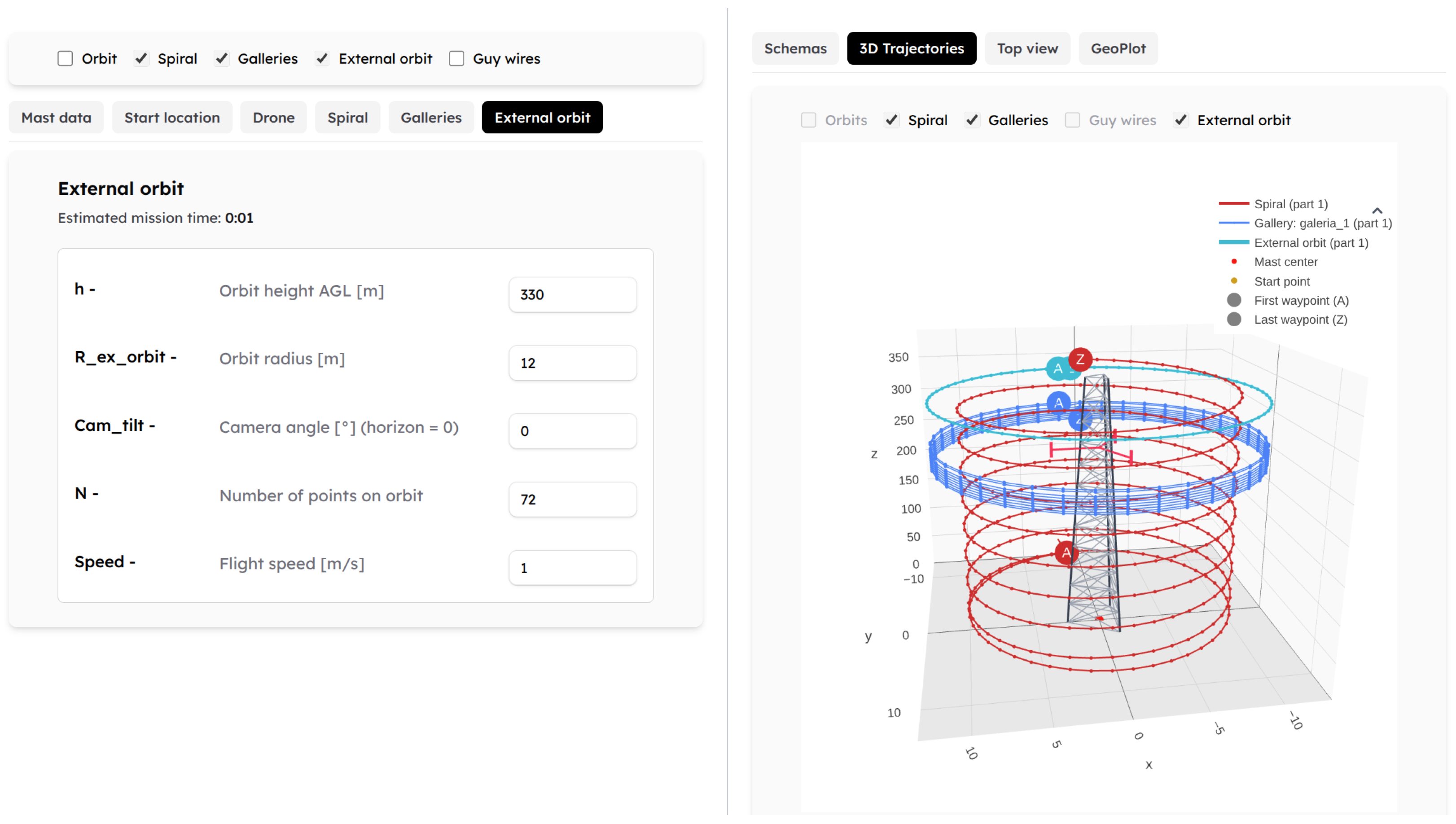
The MATLAB-based application developed to support UAV operators in telecommunications mast inspections was designed with a clear architectural framework and an emphasis on usability, automation, and precision. Its architecture integrates a graphical user interface (GUI), represented in the
Figure 5, with a computational engine responsible for generating trajectories and formatting output data. The system enables operators to move seamlessly from reconnaissance data collection to fully prepared mission files compatible with several external flight management systems.
At the highest level, the architecture consists of three interacting layers:
Input and user interface layer, responsible for data entry and configuration.
Computational and visualization layer, responsible for processing the input parameters and generating trajectories.
Export and integration layer, which saves results into multiple file formats and organizes them into appropriate directories for downstream use.
5.1. User Interface and Data Input Layer
When launched, the application presents the operator with a structured GUI organized into three primary tabs: Input Data, Charts, and Geoplot. This structure enables users to move logically through the stages of data preparation, visualization, and verification. The first tab, Input Data, is the most important. It contains all necessary fields for defining mast parameters, trajectory settings, and export preferences. The design of this interface emphasizes error reduction and workflow efficiency.
The input data are divided into three functional categories. The first category contains mast-related parameters, including the geographical coordinates of the mast’s center (latitude, longitude, altitude), characteristic points along its height, and the UAV’s takeoff location. These are expressed in LLA (Latitude, Longitude, Altitude) coordinates, providing a consistent geospatial reference frame.
The second category concerns trajectory-related parameters, covering mission-specific data for orbits, spirals, and gallery flights. Each configuration has its own dedicated sub-tab within the GUI. These parameters define how the UAV should move relative to the mast—for example, specifying the starting height, radius, angular increments, or number of loops in a spiral. These inputs directly determine the geometric computation of flight points.
The third group of parameters handles output and file management settings. Here, the user specifies the mission name and selects which flight types should be generated. The interface allows easy selection of mission variants—orbital, helical (spiral), or gallery—to be included in the export. All these elements ensure that the operator can generate a complete set of mission plans in a single step.
A key usability feature is the application’s ability to save and load input files. Input data can be stored as JSON (JavaScript Object Notation) files that contain a list of parameters and their assigned values for a given mast. JSON ensures both human readability and ease of manual editing. The GUI includes a dedicated menu section with buttons for saving and loading these files. This feature significantly improves efficiency when performing repeated flights at the exact location or creating slight modifications of previous missions. It also helps prevent data-entry errors by removing the need for repetitive manual input.
5.2. Computational and Visualization Layer
Once the input parameters are defined, the computational core of the MATLAB application takes over. The program interprets the data to generate trajectory points expressed in geographic coordinates (latitude, longitude), with altitudes referenced to Above Mean Sea Level (AMSL) (see
Figure 6). When required, conversions to Above Ground Level (AGL) can be performed by setting the Ground Reference Height (hGND) parameter. This dual-reference capability ensures flexibility for different drone control systems and data standards.
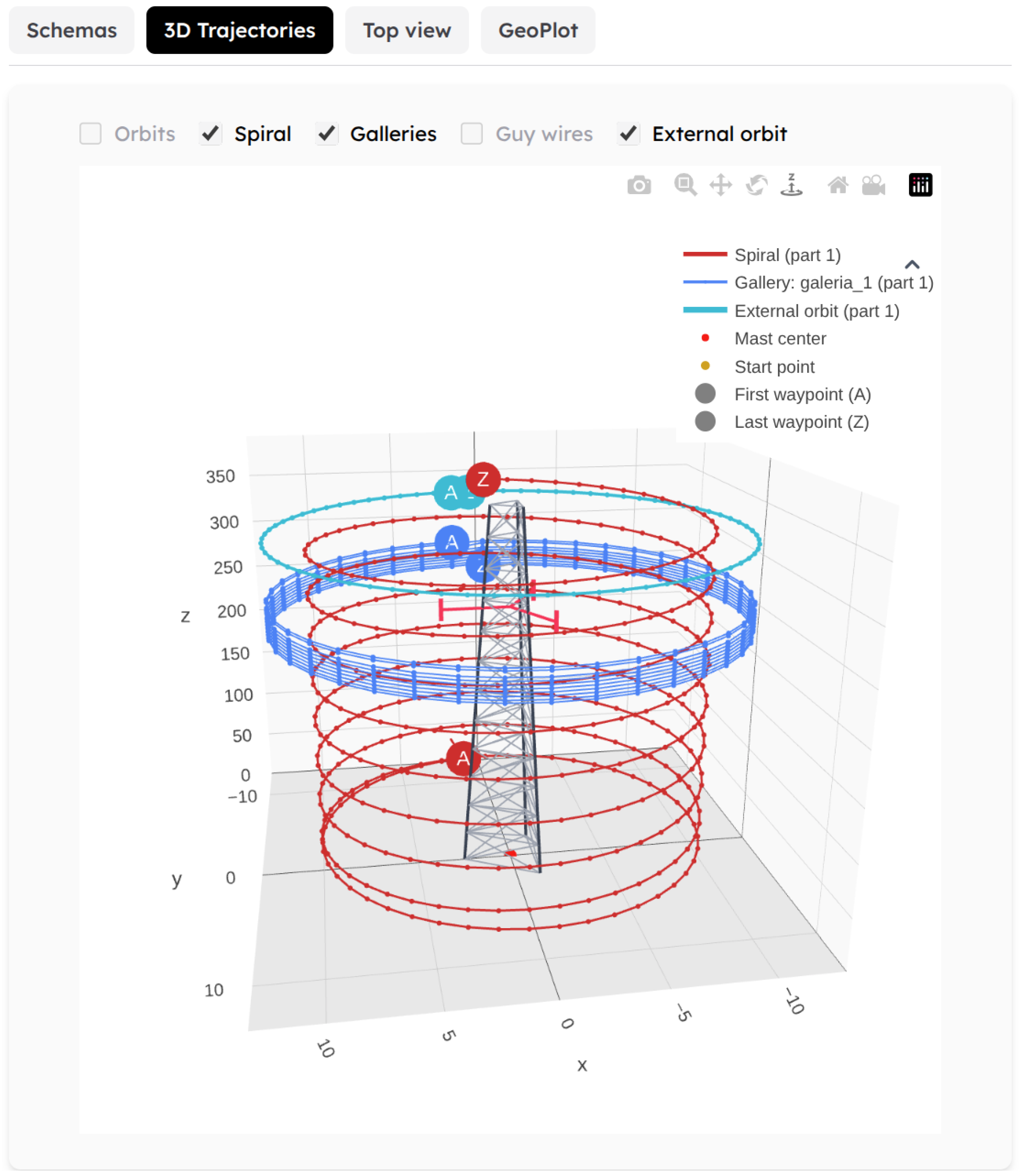
The visualization layer helps the operator verify that the parameters produce realistic and safe flight paths. The Charts tab provides three-dimensional plots of the generated trajectories. Two separate plots are displayed side by side: one for orbital missions and one for spiral missions. In both, red markers indicate specific points where additional photographs are taken for the gallery dataset. Each marker corresponds to a spatial location where the UAV will trigger its camera. This graphical preview enables the operator to verify the accuracy of the calculated mission before exporting it.
The Geoplot tab offers a complementary, top-down (“map view”) representation of the flight plan, overlaid on a geographic map sourced from Google Earth. This visualization enables the operator to assess the spatial distribution of waypoints and the overall geometry of the flight path relative to the mast’s position. It also serves as a safety validation step—for example, ensuring that the drone’s first waypoint is positioned in front of the mast relative to the takeoff location. A typical operator mistake, such as swapping latitude and longitude values, would place the trajectory incorrectly, potentially thousands of kilometers away; this view helps detect such errors immediately.
Trajectory generation is executed by pressing the Generate Points button. Once activated, all visualization plots are refreshed with updated data, and the Save Data option becomes available. This workflow ensures that only validated trajectories are recorded and exported. Operators are encouraged to maintain consistent mission naming conventions, as this significantly simplifies data management during repeated or large-scale inspection projects.
5.3. Output Generation and Integration Layer
The final layer of the application architecture handles the export of mission data. The system generates output files in multiple formats—
.kmz,
.kml,
.csv, and
.txt—ensuring compatibility with various UAV mission control software. The files are automatically sorted into dedicated subdirectories, grouped by target software environment: UgCS [
24], Litchi [
25], and KMZ for direct UAV upload. Each subfolder contains three mission files: one for the orbital flight, one for the spiral flight, and one for the gallery flight around the antennas.
Additionally, a supplementary text file is generated that summarizes key mission parameters, including altitudes, camera tilt angles, and other configuration details. This file serves as a convenient reference for quick verification or manual entry into alternative planning systems when necessary.
This modular export structure allows seamless integration with industry-standard flight-planning platforms. For example, UgCS and Litchi can directly import the generated mission data, enabling immediate execution or further refinement. The inclusion of KMZ files, readable by Google Earth and compatible with UAV controllers, supports on-site validation and direct deployment without the need for intermediary software [
26,
27,
28].
5.4. Functional Advantages and Design Philosophy
The application’s architecture demonstrates several advantages. Its GUI-centered design simplifies operation for pilots with limited programming experience, while the underlying computational algorithms ensure high numerical precision in generating geospatial coordinates. By supporting standardized input and output formats and leveraging MATLAB’s robust visualization capabilities, the tool provides both transparency and reproducibility of results.
The inclusion of JSON-based input management enhances workflow automation and traceability, while the combined use of 2D and 3D visualizations minimizes the risk of errors during mission setup. The flexible handling of AMSL and AGL altitude references further ensures compatibility with different UAV control systems. Overall, the application seamlessly integrates engineering precision with practical usability, enabling UAV operators to prepare and optimize inspection missions with minimal manual effort.
6. Results
During the research phase, multiple drone flights were carried out over telecommunication mast structures to evaluate the proposed flight methodology. A single mission is presented below as an example. Each flight was conducted in accordance with the developed procedure, and the resulting imagery was assessed to verify the visibility and accuracy of key structural elements.
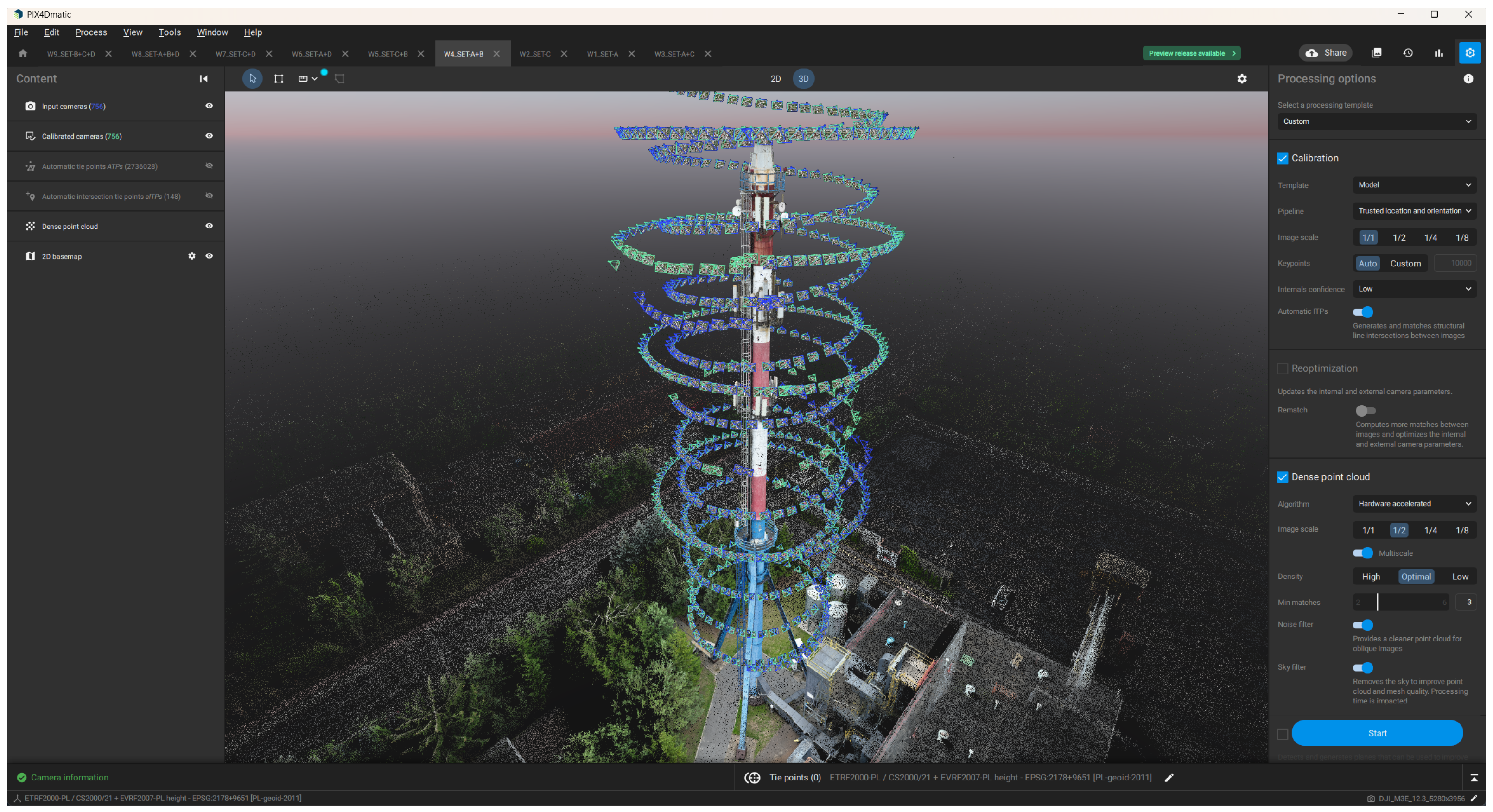
The primary criterion for evaluation—apart from expert feedback received from the Faculty of Geodesy and Cartography at the Warsaw University of Technology—was the visibility of elements of interest in the generated point clouds. The point clouds were visualized and analyzed using CloudCompare ver. 2.13.2, France [
29], an open-source software tool for processing point clouds, photographs, and 3D meshes.
Figure 7 presents a trajectory around a 61-meter-high mast, showing the helix flight path along with three additional orbits. Each point corresponds to a single captured image.
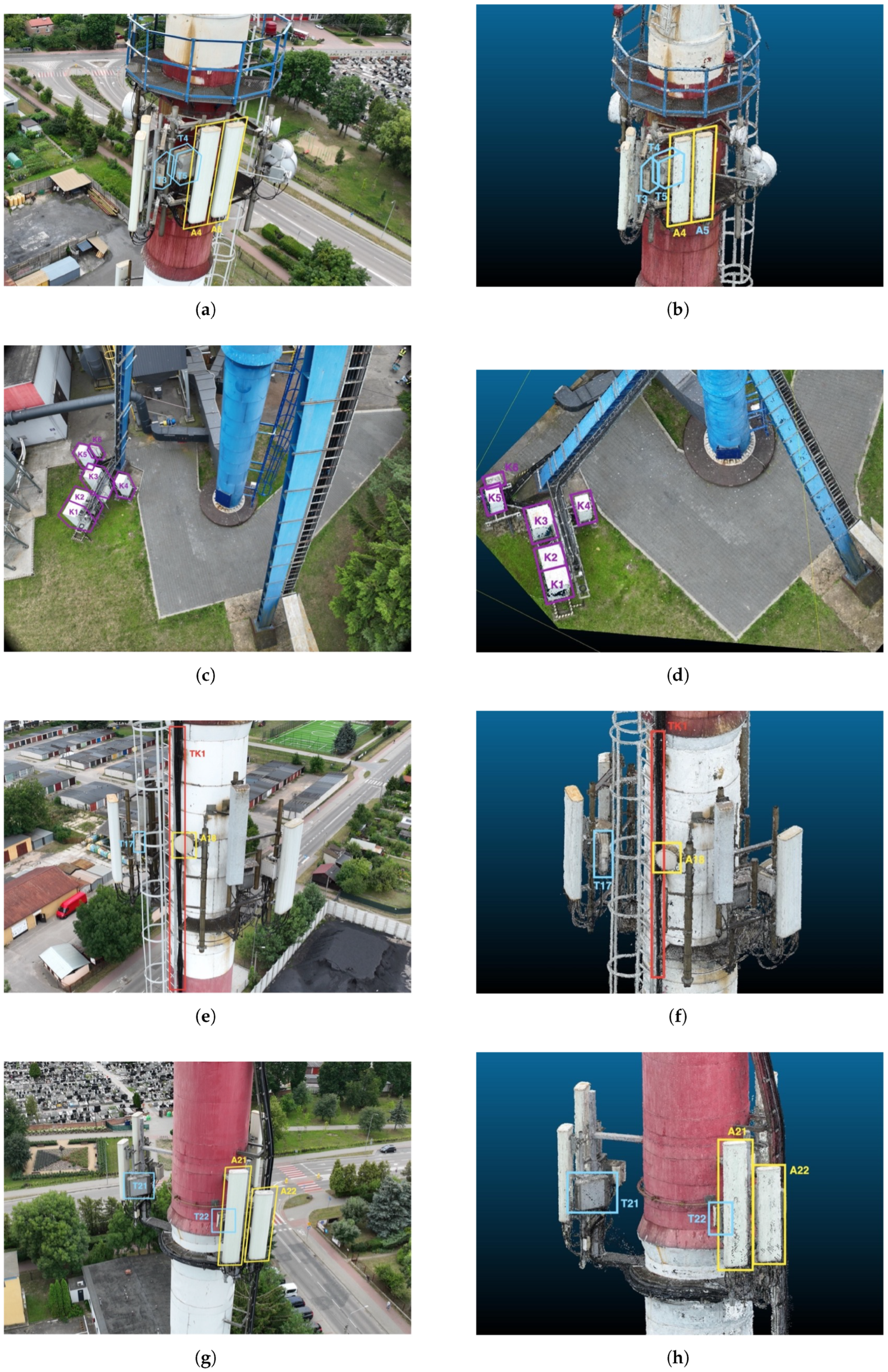
When comparing the captured images, care was taken to maintain a consistent perspective between photographs to facilitate the identification of individual components. In the figures, each structural element was assigned a distinct color code:
yellow—antennas;
red—cable routes;
blue—RRUs (Remote Radio Units), which convert control module signals into frequencies used for communication between smartphones and the base station;
violet—ground station containers;
green—ladders.
After refining and validating the methodology, an additional analysis was performed on five flights over different masts during the final stage of the research. Across all missions, a total of 130 elements of interest were identified. Of these, 129 were correctly recognized within the processed point clouds, corresponding to a reconstruction accuracy of over 99%.
Figure 8 presents the results in pairs: a real photograph alongside a mesh generated by CloudCompare. The objects of interest are clearly visible in the corresponding point clouds.
This high success rate confirms the reliability and effectiveness of the developed flight methodology. The results demonstrate that the proposed approach enables precise documentation and spatial reconstruction of telecommunication mast components using aerial imagery.
The proposed methodology offers several key benefits for future applications, particularly in terms of efficiency and quality control. The availability of a reliable and repeatable tool for generating digital twins of mast structures is of high practical value, as it enables consistent geometric and visual documentation of the inspected object. By optimizing flight patterns and adjusting parameters to mast characteristics, the methodology significantly reduces the time required to complete an inspection flight while maintaining data quality. Moreover, the high level of repeatability achieved by the proposed approach supports standardized data acquisition, which is essential for quality control and comparative analysis. The methodology also enables new operational scenarios, such as fully automatic flights at remote locations without the need for an on-site operator. As a result, inspections can be conducted more frequently, allowing for the creation of a digital history of structural changes over time. This temporal continuity opens up new possibilities for condition monitoring, early damage detection, and long-term asset management of mast infrastructure. The achieved level of data quality and repeatability is particularly relevant for potential future applications of machine learning techniques, which rely on consistent and well-structured datasets for accurate model training and inference.
7. Conclusions
To conclude, the research provided a methodology for capturing images of telecommunication masts in an optimal manner. The optimization focused on trajectory planning and refining its parameters. The initial approach to categorizing mast types proved incorrect, as the conducted experiments demonstrated that the methodology is universal and yields consistent results across all groups. During the tests, parameters such as flight velocity, image density, safe distance from antennas, trajectory shape, and camera orientation were examined. To simplify and accelerate the process of creating new trajectories, a MATLAB application was developed. Its output can generate flight-ready code that the drone can execute automatically, improving repeatability and further simplifying the operator’s task. Several simplifications and assumptions were made in the present work, and these offer opportunities for improvement in future research. One of the biggest advantages of the presented methodology and tool is that not only is the whole process completed faster, which directly impacts costs, but also the process can be easily carried out regularly at various frequencies. This feature enables working with a less qualified operator for consecutive flights. The presented research is currently under further development and is being implemented in one of Poland’s largest telecommunication companies. The use of the application and its features, mainly the reduction in the flight time and increase in the safety, and finally the repeatability of the trajectories, meet the end user requirement that resulted in the implementation process.