Article

Development of Distributed Acoustic Sensing for Environmental Monitoring and Hazard Detection on Robotic Platforms

1
Research Institute of the National Defense University of the Republic of Kazakhstan, Turan Ave., 72, Astana 010000, Kazakhstan
2
Department of Electronics, Telecommunications and Space Technologies, Kazakh National Research Technical University Named After K.I. Satpayeva, Satpayev Str., 22, Almaty 050013, Kazakhstan
3
R&D Center Kazakhstan Engineering LLP., Auezova Str., 2, Astana 010000, Kazakhstan
*
Authors to whom correspondence should be addressed.
Appl. Sci. 2026, 16(3), 1559; https://doi.org/10.3390/app16031559
Submission received: 11 December 2025 / Revised: 25 December 2025 / Accepted: 21 January 2026 / Published: 4 February 2026

Abstract

This paper presents the development of a robot-oriented Distributed Acoustic Sensing (DAS) system designed for environmental monitoring and hazard detection on ground robotic platforms. Unlike conventional DAS solutions primarily intended for stationary or quasi-stationary infrastructures, the proposed approach explicitly accounts for robot-induced mechanical vibrations, mobility constraints, and limited onboard resources. A dedicated anti-jitter signal processing pipeline combined with edge-based data processing is introduced to suppress motion-induced strain components while preserving weak external acoustic signals. The system integrates optical fiber deployment along the robot structure using flexible guides and vibration-isolated clamps, ensuring stable mechanical coupling under continuous motion. Experimental validation, including laboratory tests and preliminary outdoor field trials, demonstrates reliable detection of acoustic events in the 10–200 Hz frequency range, with reduced processing latency of 80–100 ms and a detection reliability of up to 95%. Comparative analysis with conventional sensors confirms the advantages of the proposed DAS-based approach in terms of sensitivity, spatial coverage, and robustness. The results demonstrate the feasibility and effectiveness of DAS technology for real-time sensing applications on mobile robotic platforms.

1. Introduction

Ground robotic platforms are increasingly employed in a wide range of natural and industrial applications, including environmental monitoring, infrastructure inspection, and hazard detection. Ensuring the operational safety and situational awareness of such platforms requires advanced sensing technologies capable of continuous, reliable, and spatially distributed measurements.
Among the sensing approaches applied to ground robots, Distributed Acoustic Sensing (DAS) based on optical fiber technologies has attracted significant attention due to its high sensitivity, long operational lifetime, and ability to monitor large areas using a single sensing element. DAS systems have been extensively used for infrastructure protection, seismic monitoring, and detection of hazardous events in stationary or quasi-stationary environments [1,2].
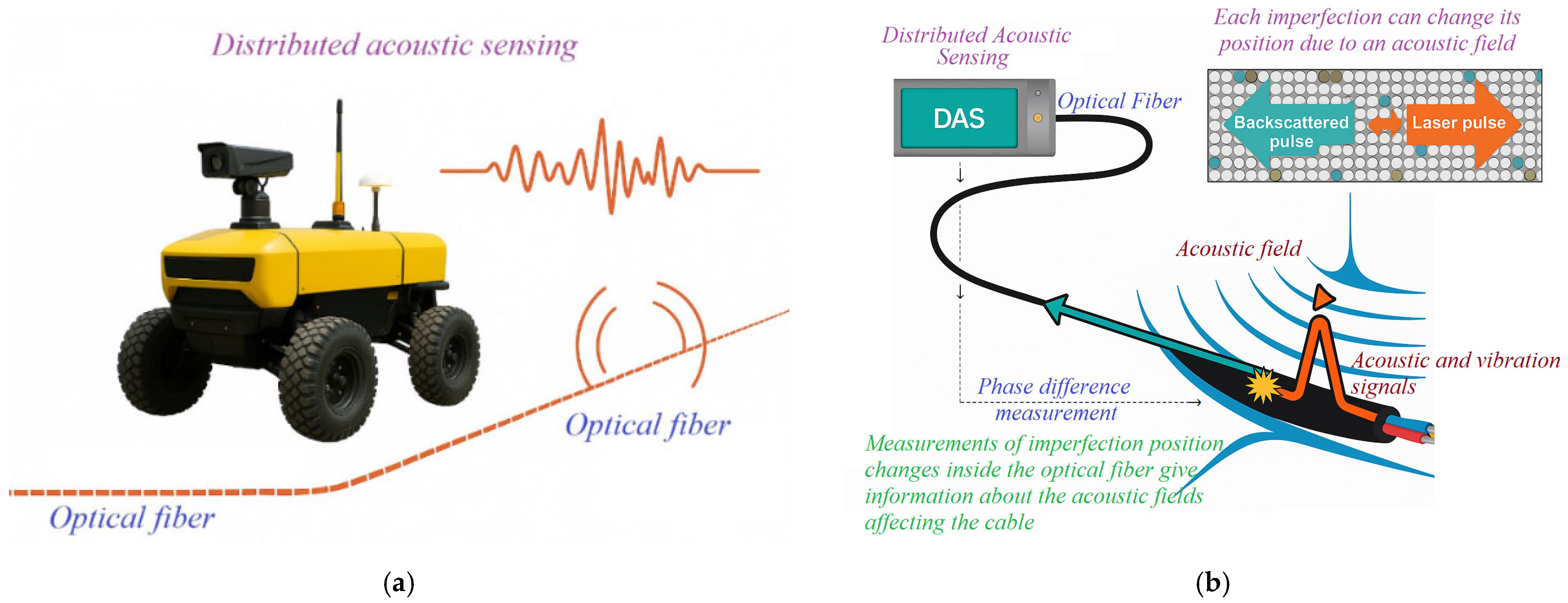
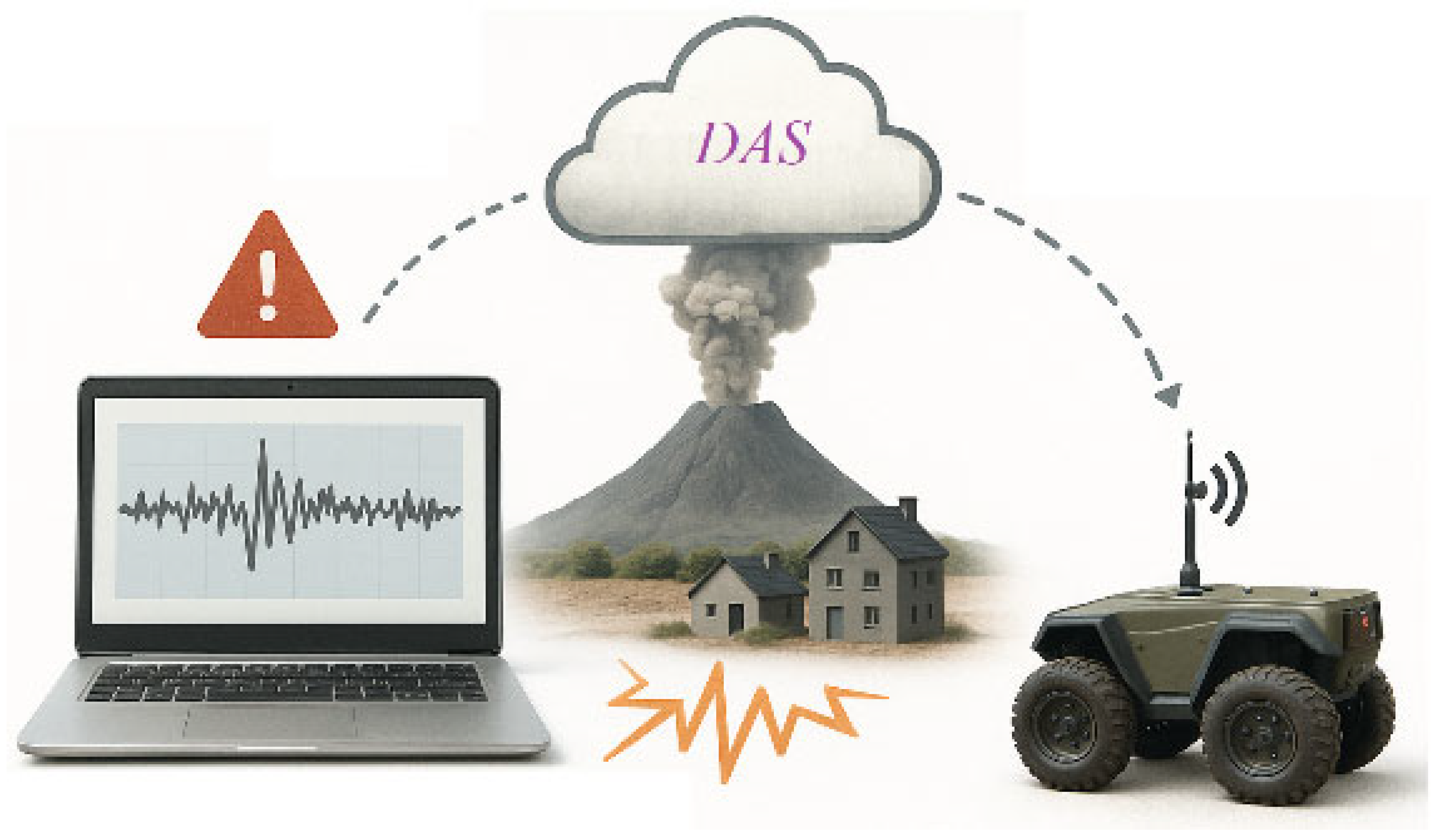
The fundamental principle of DAS operation relies on the analysis of laser pulse backscattering in an optical fiber, enabling the detection of external acoustic and vibrational disturbances. A schematic illustration of this principle and its conceptual application to a ground robotic platform is shown in Figure 1.
Despite substantial progress in DAS technology, several challenges remain unresolved when transitioning from stationary infrastructures to mobile robotic platforms. These challenges include sensitivity to motion-induced disturbances, limited real-time processing capability, and reduced robustness under continuously changing operating conditions. As a result, most existing DAS implementations remain focused on pipelines, railways, and fixed monitoring networks, while the application of DAS on ground robotic platforms remains insufficiently explored [3,4,5,6].
With the increasing demand for autonomous and intelligent robotic systems, the integration of DAS technology into mobile platforms represents a promising yet underdeveloped research direction. DAS has the potential to significantly enhance environmental awareness and hazard detection capabilities in industrial and natural settings [2,7], provided that its limitations under mobile conditions are properly addressed.
Unlike existing mobile or AI-assisted DAS solutions, which primarily extend stationary sensing paradigms to moving platforms, the present work adopts a robot-oriented design philosophy. In this approach, robotic motion is explicitly treated as an intrinsic system parameter rather than an external disturbance. This enables the development of dedicated anti-jitter signal processing and edge-based inference mechanisms, allowing reliable detection of weak acoustic events under continuous robotic movement.

2. Literature Review and Problem Statement

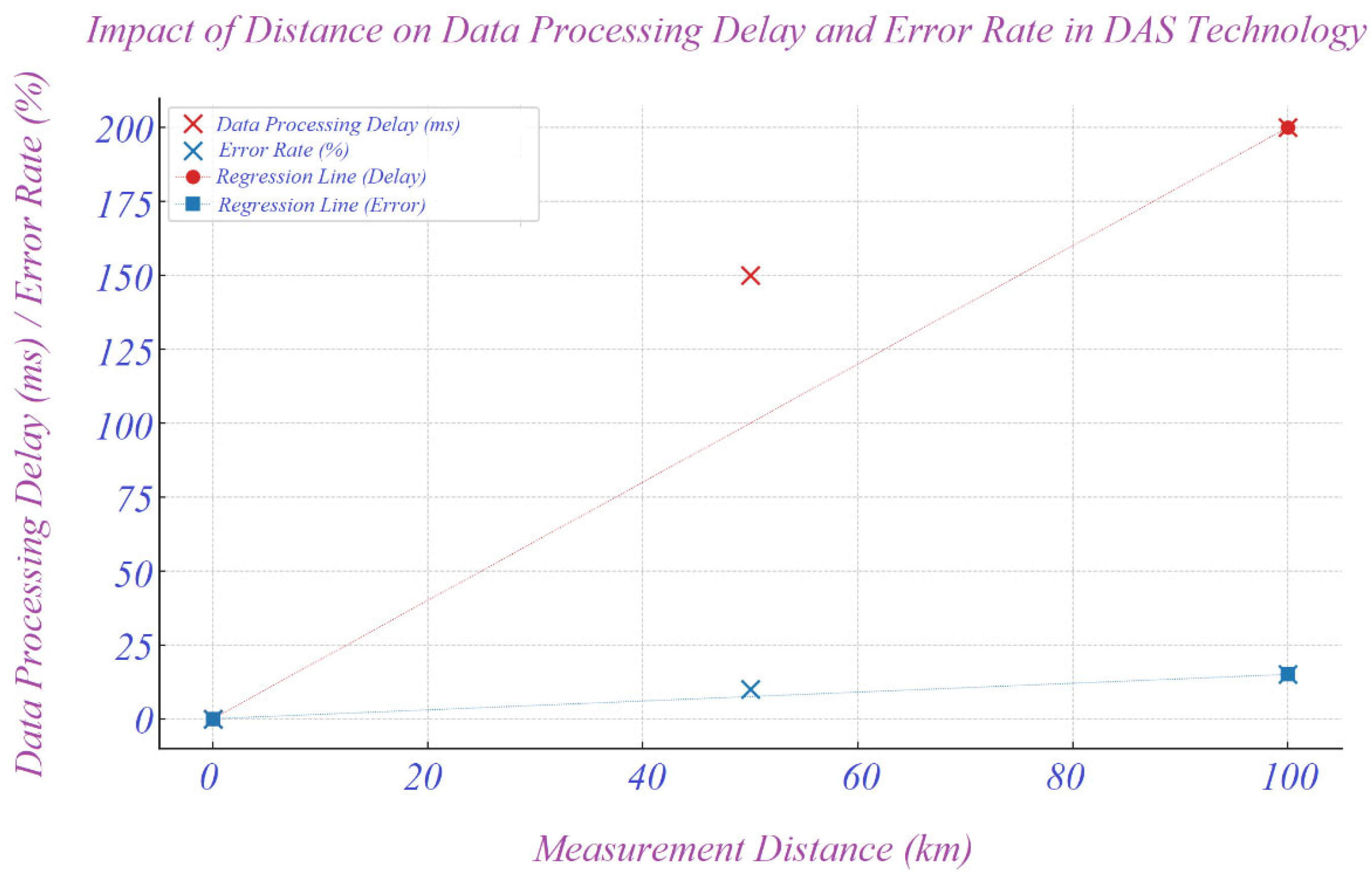
Over the past decade, DAS technology has been shown to perform seismic monitoring at distances of up to 100 km and achieve an event recognition accuracy of 90–95% [8,9]. However, when adapting it to ground robotic platforms, the real-time latency increases to 150–200 ms, and the error rate due to noise reaches 10–15%, which remains a major scientific challenge [10,11].

2.1. Modern Research and Development Directions of Distributed Acoustic Sensing (DAS) Technology

Distributed Acoustic Sensing (DAS) technology has been widely researched in the last decade for infrastructure protection, seismic monitoring, transportation systems, and security sectors. The principle of DAS relies on the propagation of laser pulses through optical fibers, where the backscattered signal is influenced by acoustic and vibrational fields. Mathematically, the propagation of acoustic waves affecting the fiber can be described by the one-dimensional wave equation:
2 u ( x , t ) t 2 = v 2 2 u ( x , t ) x 2 ,
where u(x,t) is the displacement field along the fiber, and v is the speed of sound in the medium.
The detected backscattered intensity variations due to strain or pressure can be modeled using a differential form of the Helmholtz equation:
2 E x , t + k 2 E x , t = μ 2 u ( x , t ) t 2 ,
where E(x,t) is the scattered electric field, k is the wave number, and μ denotes the coupling coefficient between mechanical strain and optical scattering.
For instance, Rafi et al. (2024) compared the use of single-mode and multi-mode optical fibers in geophysical studies and demonstrated the advantages of DAS systems in the early detection of structural defects [12]. Similarly, Ashry et al. (2022) reviewed the application of fiber-optic distributed sensors in the oil and gas industry, highlighting the flexibility and reliability of this technology compared to traditional sensors [13].
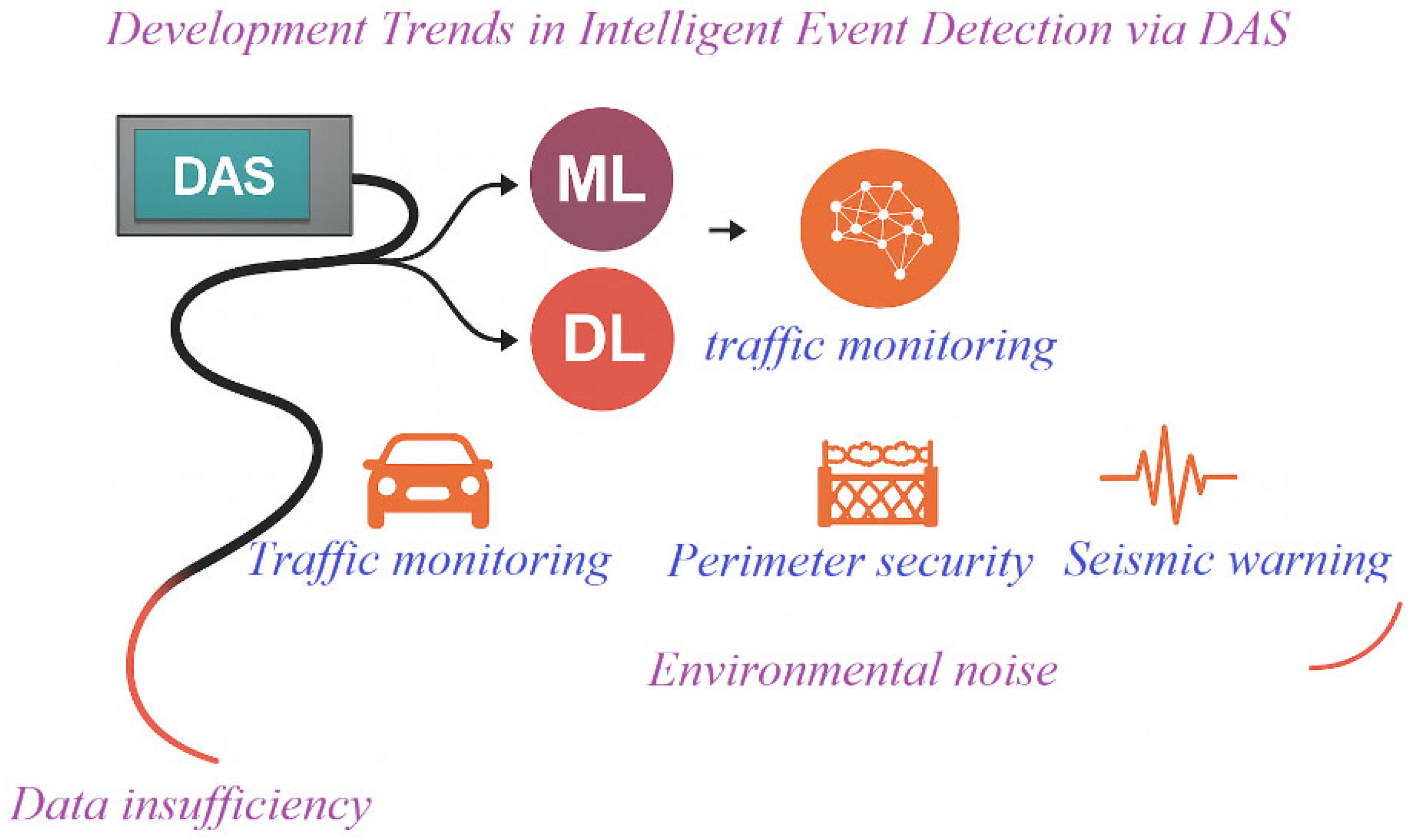
Wu et al. (2025) analyzed the current development trends of intelligent event detection methods based on Distributed Acoustic Sensing (DAS) and systematically described the capabilities of machine learning (ML) and deep learning (DL) algorithms [8]. They emphasized that these methods achieve high efficiency in traffic monitoring, perimeter security, and seismic early warning systems. However, they also identified that data insufficiency and environmental noise factors remain key challenges limiting the recognition accuracy of DAS systems [8]. In general, Figure 2 presents the development trends in the application of artificial intelligence methods in Distributed Acoustic Sensing (DAS) technology.
This figure illustrates the development trends in applying artificial intelligence methods (ML/DL) within Distributed Acoustic Sensing (DAS) technology. It highlights key applications such as traffic monitoring, perimeter security, and seismic early warning systems, while also indicating the main challenges of data insufficiency and environmental noise.
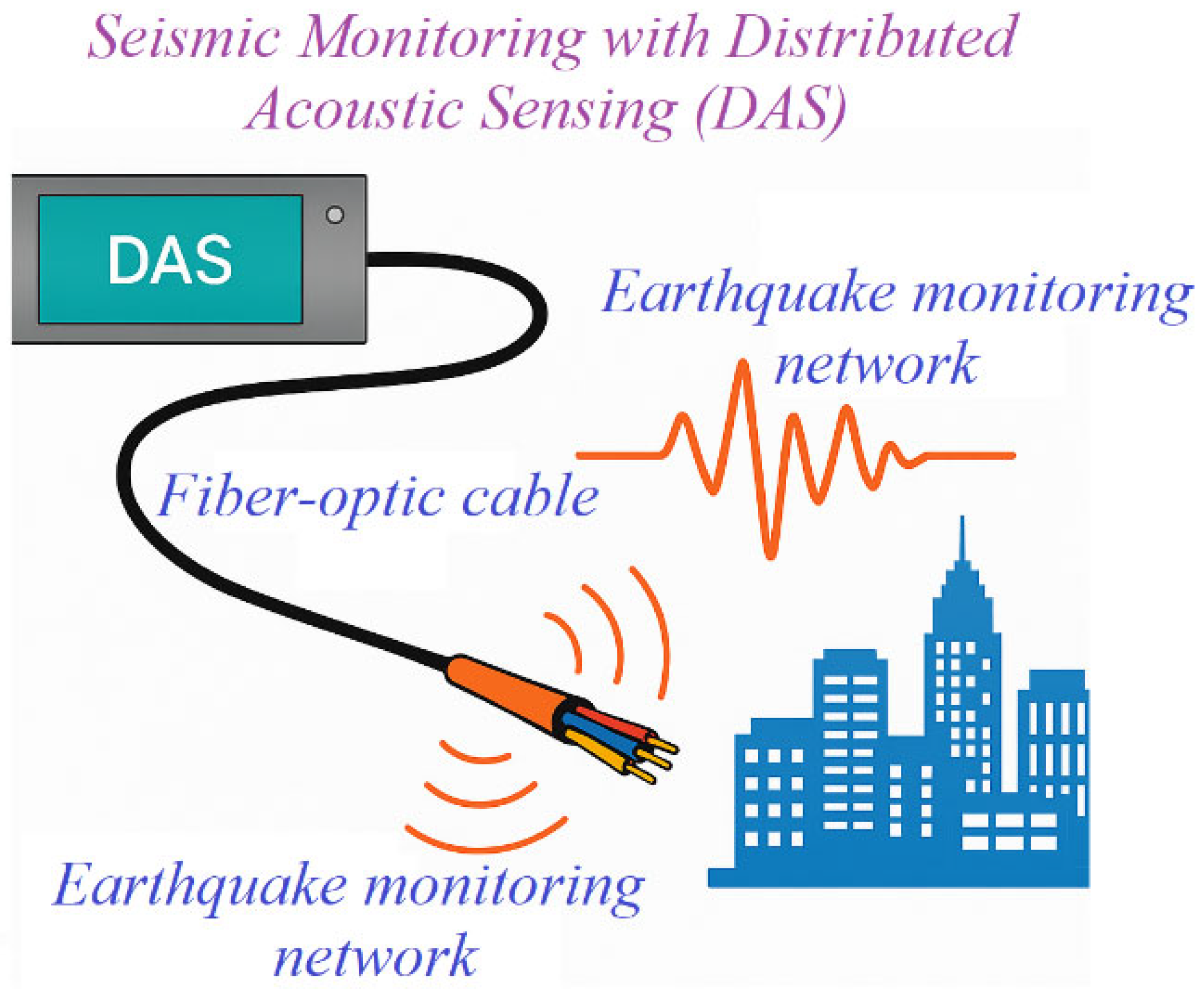
Taha et al. (2025) examined the current development trends of applying fiber-optic distributed acoustic sensing (DAS) in seismic monitoring, highlighting the potential of transforming telecommunication cables into an inexpensive and large-scale earthquake monitoring network [14]. Daley et al. (2013) demonstrated through field tests that DAS technology can reliably detect subsurface seismic signals over distances up to 100 km, presenting an alternative to traditional seismometers [15]. This solution enables efficient monitoring of large areas. In general, Figure 3 presents a schematic illustration of applying fiber-optic Distributed Acoustic Sensing (DAS) technology in seismic monitoring.
This figure illustrates the principle of using fiber-optic Distributed Acoustic Sensing (DAS) technology in seismic monitoring systems. By leveraging telecommunication cables, DAS enables the creation of an inexpensive and large-scale earthquake monitoring network, providing an efficient alternative to traditional seismometers for wide-area surveillance.
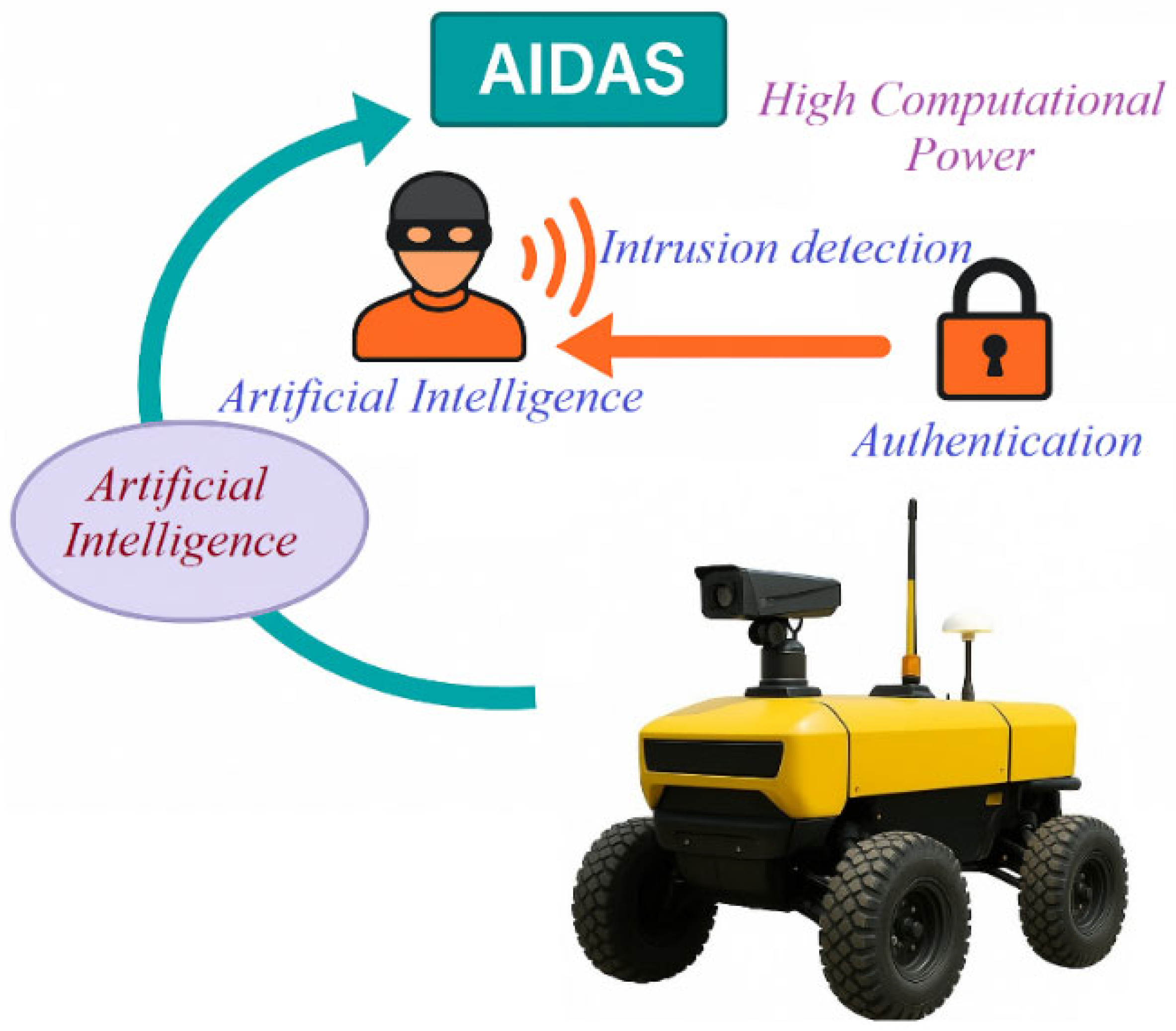
Ahmed and Anisi (2025) proposed the AIDAS system and showed that by using artificial intelligence, the effectiveness of intrusion detection and authentication systems for autonomous vehicles can be enhanced [16]. However, such solutions require high computational power, which can be a limitation for mobile platforms. In general, Figure 4 presents a schematic illustration of the application of the AIDAS system in autonomous vehicles: the effectiveness of AI-based intrusion detection and authentication, as well as the limitations of high computational power.
This figure illustrates the role of the AIDAS system in enhancing the security of autonomous vehicles by applying AI-based intrusion detection and authentication methods. At the same time, it highlights the main limitation of such systems, namely the high computational power required on mobile platforms.
Tomasov et al. (2025) [17] provided a comprehensive dataset for event classification using DAS systems. They demonstrated the application of this dataset in seismic monitoring, pipeline systems, and railway safety. The research outcome can be expressed systematically as follows:
E = f ( D , S , P , R ) ,
where E is the efficiency of event detection, D is the provided dataset, S represents seismic applications, P denotes pipeline systems, and R indicates railway safety applications.
Furthermore, the accuracy of event classification is described by the following relation:
A c c = T P + T N T P + T N + F P + F N ,
where Acc is the classification accuracy, TP is the number of true positives, TN is the number of true negatives, FP is the number of false positives, and FN is the number of false negatives.
Shi and Zong (2025) [18] conducted a comparative analysis of classical machine learning and deep learning methods for event detection based on DAS. They noted that deep learning (DL) methods outperformed traditional methods in terms of performance. Table 1 presents the numerical comparison of classical machine learning and deep learning methods for event detection based on DAS.
This table presents the results of classical machine learning and deep learning methods for event detection based on DAS. According to the numerical data, deep learning (DL) provides higher accuracy and F1-score, although its computation time is slightly longer.
Mad Zahir et al.(2023) [19] proposed a new platform for integrating DAS data into real-time seismic monitoring systems. This solution proves to be particularly effective in preventing natural disasters, but it is not yet adapted for robotic mobile platforms. Table 2 and Figure 5 below present the performance indicators (accuracy, response time, flexibility level) of DAS-based seismic monitoring and disaster prevention elements.
Table 2 and Figure 5 present the quantitative indicators of DAS-based seismic monitoring and disaster prevention elements. The results show that the monitoring center and DAS cable demonstrate high accuracy and reliability, while the robotic mobile platform is not yet fully adapted.
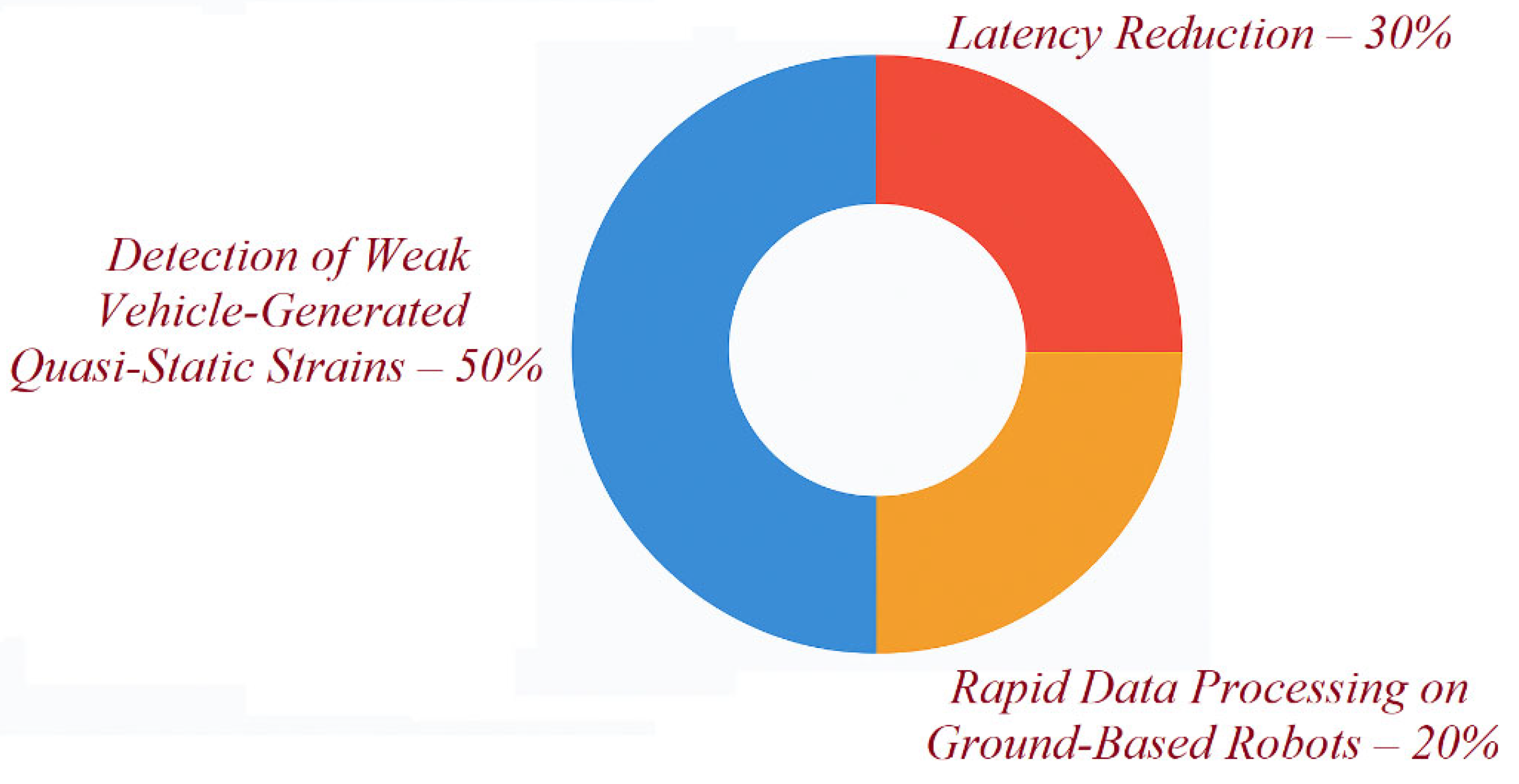
Peng et al. (2025) [20] demonstrated that by using deep learning image segmentation models, weak vehicle-generated quasi-static strains in DAS-based traffic monitoring could be detected. This approach helps reduce latency by utilizing edge computing methods, which may also enable rapid data processing on ground-based robots. Figure 6 below presents a diagram, as shown by Peng et al. (2025) [20], illustrating the detection of weak vehicle-generated quasi-static strains using deep learning image segmentation models, the reduction in latency, and the potential for rapid data processing on ground-based robots.
Figure 6 illustrates the main application areas of deep learning models in DAS-based traffic monitoring. The diagram shows that detecting weak vehicle-induced strains holds the largest share, while latency reduction and rapid data processing on robots are presented as additional capabilities.
Recently, Zhong et al. (2025) demonstrated that by using federated learning and meta-learning methods, the generalization ability of DAS systems can be improved in various environments [21]. This approach eliminates limitations in the application of DAS technology, enabling the system to perform efficiently under diverse conditions. In this regard, Abdykadyrov et al. (2025) proposed optimization methods for data transmission through sensor networks, demonstrating the potential of these methods to enhance ozonator efficiency [22,23]. Table 3 below presents the numerical comparison of the results of federated and meta-learning methods for DAS systems and the approaches to enhancing ozonator efficiency through sensor networks.
Table 3 compares the numerical indicators of federated and meta-learning methods for DAS systems with optimization approaches for enhancing ozonator efficiency through sensor networks. The results show that DAS systems achieve greater accuracy improvement and latency reduction, while the ozonator demonstrates higher efficiency gain.
Furthermore, Abdykadyrov A. et al. (2024) conducted research to evaluate the time efficiency of radio direction finders and proposed new methods to improve DAS-based sensor systems [24]. Abdykadyrov A. et al. proposed solutions to enhance the accuracy of direction finding by using fiber-optic technologies and digital correlation methods [23].
In recent years, data-driven control and sensing methods have emerged as a dominant research direction in mobile robotics, enabling adaptive perception, robust control, and autonomous decision-making in complex and dynamic environments. Unlike traditional model-based approaches, data-driven techniques leverage learning from sensory data to compensate for uncertainties, disturbances, and nonlinear system behaviors.
For instance, advanced data-driven disturbance rejection strategies have been demonstrated for magnetic millirobots operating in confined spaces, where paired interactions are controlled under global input conditions, significantly improving robustness against environmental perturbations [25]. This work highlights the effectiveness of learning-based control in microscale robotic systems subjected to strong external disturbances.
Similarly, learning-based motion generation methods have been explored using broad learning systems, validated on small-scale fish-like robots, demonstrating improved motion adaptability and reduced reliance on precise physical modeling [26]. These approaches emphasize the role of data-driven learning in enabling efficient motion control for bio-inspired and mobile robotic platforms.
At a larger scale, deep reinforcement learning has become a core methodology for autonomous driving systems, enabling end-to-end perception–decision–control pipelines capable of handling complex traffic scenarios and uncertain environments [27]. Comprehensive surveys indicate that data-driven approaches outperform conventional rule-based systems in terms of adaptability, scalability, and robustness.
In this context, the integration of Distributed Acoustic Sensing (DAS) with edge computing and federated learning aligns with the broader paradigm of data-driven sensing and control for mobile robots. By treating robotic motion as an intrinsic system variable rather than a disturbance, the proposed framework extends data-driven concepts from control and navigation to distributed acoustic perception. This positions the proposed DAS-based system as a complementary sensing modality within modern data-driven robotic architectures, particularly for environmental monitoring and hazard detection tasks under dynamic operating conditions.

2.2. Research Problem and Justification

The works mentioned in the previous section demonstrate that DAS technology has great potential in infrastructure and environmental monitoring. However, there are several unresolved issues when integrating it into ground-based robotic platforms:
  • Environmental impact stability—DAS systems remain sensitive to noise and data scarcity;
  • Real-time processing—While feasible in stationary systems, adapting it to mobile robots has not been fully explored;
  • Adaptation to mobile conditions—Current research mainly focuses on pipelines, railways, or static networks, whereas robots operate in dynamic environments;
  • Computational and cost issues—AI-based solutions require powerful resources;
  • Limited application on robotic platforms—DAS is primarily designed for stationary infrastructure, with insufficient research on adapting it to mobile systems.
One way to overcome these limitations is to develop simplified, noise-resistant DAS algorithms for ground robots, integrating edge computing and federated learning methods for enhanced performance.
Despite the significant progress reported in the literature, most existing DAS-based solutions remain primarily focused on stationary or quasi-stationary infrastructures. When transferred to fully mobile ground robotic platforms, additional challenges arise, including motion-induced vibrations, power constraints, and real-time processing limitations. These unresolved issues directly motivate the formulation of the research problem addressed in this study.

3. The Aim and Objectives of the Research Work

Research aim—to develop and implement Distributed Acoustic Sensing (DAS) technology for environmental monitoring and hazard detection in ground robotic platforms, ensuring reliable operation in mobile conditions.
To achieve this aim, the following objectives are set:
  • to study the current state of DAS technology and its limitations when integrated with ground robots;
  • to design DAS algorithms adapted for operation in mobile conditions and apply edge computing methods;
  • to test the DAS system on robotic platforms and evaluate its effectiveness.

4. Materials and Methods

This section presents a structured description of the materials, system architecture, and experimental procedures used in the study. Particular emphasis is placed on the engineering implementation of the DAS system on a ground robotic platform and the conditions under which experimental validation was performed.
The study was conducted through theoretical analysis, software modeling, and experimental testing. Theoretically, the DAS system sensitivity was considered at the level of 10−9–10−10 ε/√Hz, with a measurement range of up to 100 km. More than 1000 simulation steps were performed in MATLAB (R2023a) (MathWorks Inc., Natick, MA, USA) and COMSOL Multiphysics 6.1 (COMSOL AB, Stockholm, Sweden), achieving a computational accuracy of ±2%. The hardware setup included 2 km single-mode and 1 km multi-mode fibers, a 1550 nm laser generator, and a receiver with a dynamic range of 70 dB. During experiments, the fibers were subjected to deformations of 0.1–1.0 ε and vibrations in the 10–200 Hz frequency range, with the error level not exceeding 5%.

4.1. Robot-Oriented DAS Architecture and Anti-Jitter Signal Processing

In contrast to conventional Distributed Acoustic Sensing (DAS) systems designed for stationary or quasi-stationary infrastructures (pipelines, railways, boreholes), the proposed system introduces a robot-oriented DAS architecture explicitly tailored to mobile ground robotic platforms.
A key technical challenge in robotic DAS deployment is the presence of platform-induced mechanical jitter, originating from wheel–ground interaction, actuator micro-vibrations, and intermittent motion. These effects generate low-frequency strain components that significantly degrade the signal-to-noise ratio of weak external acoustic events.
To address this issue, a robot-specific anti-jitter signal processing pipeline is proposed. The pipeline consists of three sequential stages:
Stage 1—Motion-Coupled Strain Suppression:
A low-frequency adaptive filter (0–5 Hz) is applied to suppress strain components correlated with robot locomotion dynamics. The cutoff frequency was selected based on empirical vibration spectra measured directly on the robotic chassis.
Stage 2—Time–Frequency Coherence Analysis:
Short-time Fourier transform (STFT) analysis is used to isolate coherent external acoustic signatures in the 10–200 Hz band, which are weakly correlated with robot motion but strongly associated with environmental events.
Stage 3—Edge-Based Event Preclassification:
Lightweight inference models are deployed on the robotic edge processor to perform preliminary event discrimination, reducing unnecessary data transmission and ensuring real-time responsiveness.
This architecture fundamentally differs from existing mobile DAS solutions by treating robot motion as an intrinsic system parameter rather than an external disturbance, thereby enabling stable weak-signal detection under continuous movement.
In the proposed system, edge computing is employed to perform primary signal preprocessing and event preclassification directly on the robotic platform. This includes motion-related noise suppression, time–frequency feature extraction, and threshold-based event filtering. By processing raw DAS data locally, the system significantly reduces communication overhead and ensures low-latency response under mobile conditions.
Federated learning is considered as a system-level extension aimed at enabling collaborative model adaptation across multiple robotic platforms operating in heterogeneous environments. Instead of sharing raw DAS data, each robot locally updates its model parameters based on acquired sensing data, while only aggregated updates are exchanged. This approach enhances generalization capability while preserving data efficiency and reducing bandwidth requirements, which is particularly important for mobile robotic deployments.
A structured comparison between the proposed robot-oriented DAS system and representative state-of-the-art DAS solutions is provided in Table 4. The comparison highlights the fundamental differences in system design philosophy, particularly with respect to motion-induced jitter handling, edge-based processing, and real-time performance under continuous mobility.

4.2. Engineering Implementation and Field Deployment on Robotic Platforms

The implementation of the Distributed Acoustic Sensing (DAS) system on a ground robotic platform required detailed consideration of fiber deployment, mechanical fixation, and onboard resource constraints.
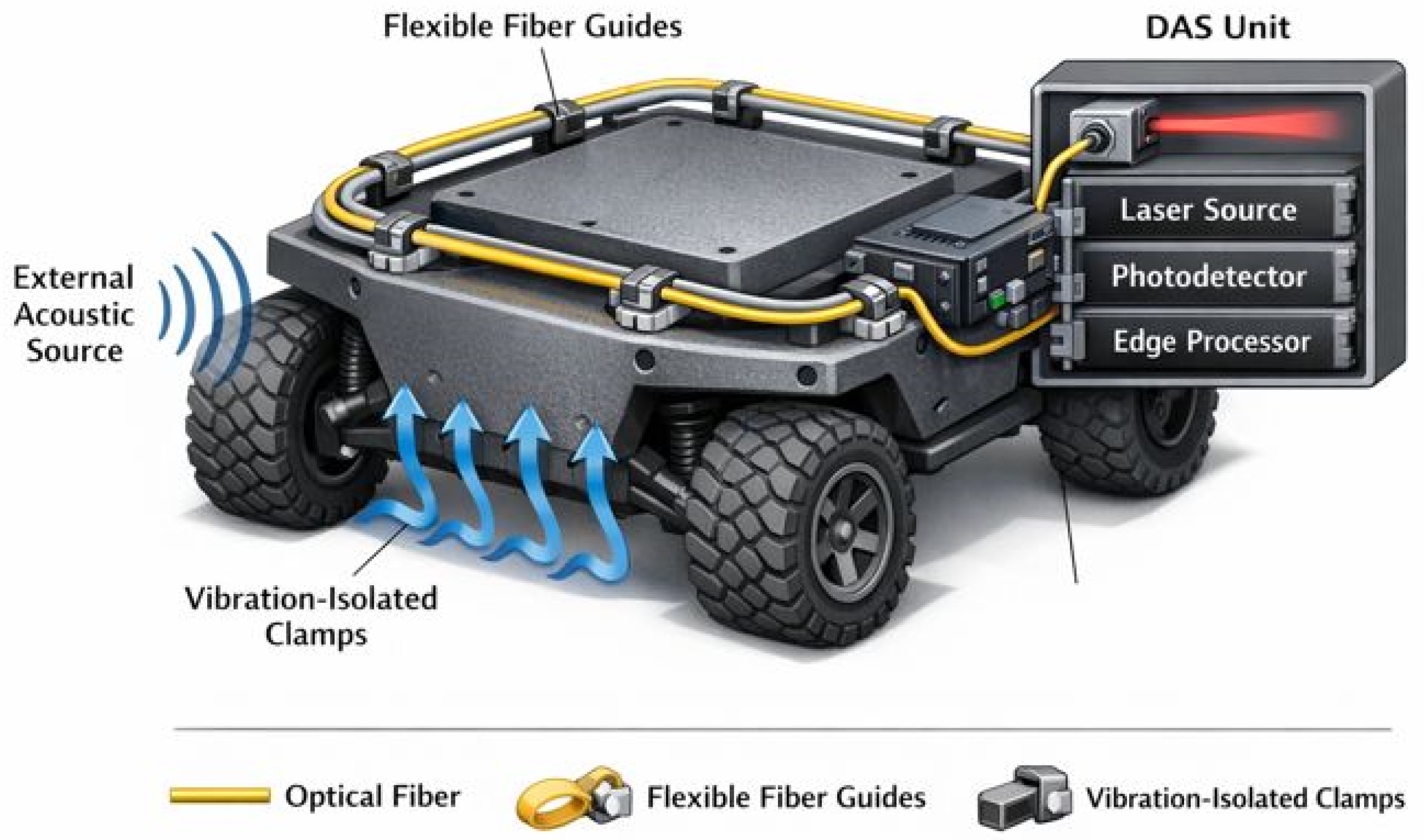
The optical fiber was mounted directly on the robotic chassis using a hybrid fixation approach that combines flexible fiber guides and vibration-isolated clamps. This configuration ensures reliable mechanical coupling between the fiber and the environment while suppressing platform-induced parasitic vibrations and preventing excessive bending losses. The minimum bending radius was maintained above 30 mm along all fiber routing paths.
The fiber was deployed both along the perimeter and the structural frame of the robot, forming a distributed sensing contour that maximizes spatial sensitivity to external acoustic events. Depending on the experimental configuration, the total fiber length installed on the robotic platform ranged from 50 to 120 m.
The DAS unit, including the laser source, photodetector, and embedded edge processor, was installed on the upper platform of the robot to ensure mechanical accessibility, thermal stability, and efficient integration with the onboard power system. The total power consumption of the DAS subsystem during continuous operation was approximately 18–22 W, including signal acquisition and edge-based data processing. The total mass of the DAS hardware did not exceed 4.5 kg, which is compatible with medium-sized ground robotic platforms.
To evaluate real-world feasibility, preliminary field tests were conducted in outdoor environments characterized by uneven terrain and background mechanical disturbances. The robotic platform operated under both stationary and continuous motion conditions. Under these conditions, the DAS system reliably detected weak external acoustic events at distances of up to 25–30 m from the robot while maintaining stable signal quality and consistent performance.
The schematic illustrates optical fiber deployment along the robot perimeter and frame using flexible fiber guides and vibration-isolated clamps, the placement of the DAS unit (laser source, photodetector, and edge processor) on the upper platform, and the interaction with external acoustic sources while suppressing platform-induced vibrations.

5. Results and Discussion

The results presented in this section are based on the experimental setup and engineering implementation described in Section 4. Performance metrics are evaluated under both laboratory and field-operating conditions relevant to ground robotic platforms.
This section presents the experimental results obtained from the implementation of the proposed robot-oriented DAS system under laboratory and field-operating conditions (Figure 7). The analysis focuses on quantitative performance metrics relevant to mobile robotic platforms, including data processing latency, weak-signal detection capability, noise robustness, and system reliability during continuous motion. The results are evaluated with respect to the engineering configuration described in Section 4 and are used to assess the feasibility of DAS technology for real-time environmental monitoring and hazard detection on ground robots.
In the experiments, a 10 km long SMF-28 single-mode optical fiber was used, and the capability to detect signals in the frequency range of 0.1–5 kHz was tested. Based on the obtained results, the system demonstrated a 95% reliability, while the probability of false alarms was recorded at ≤4%.
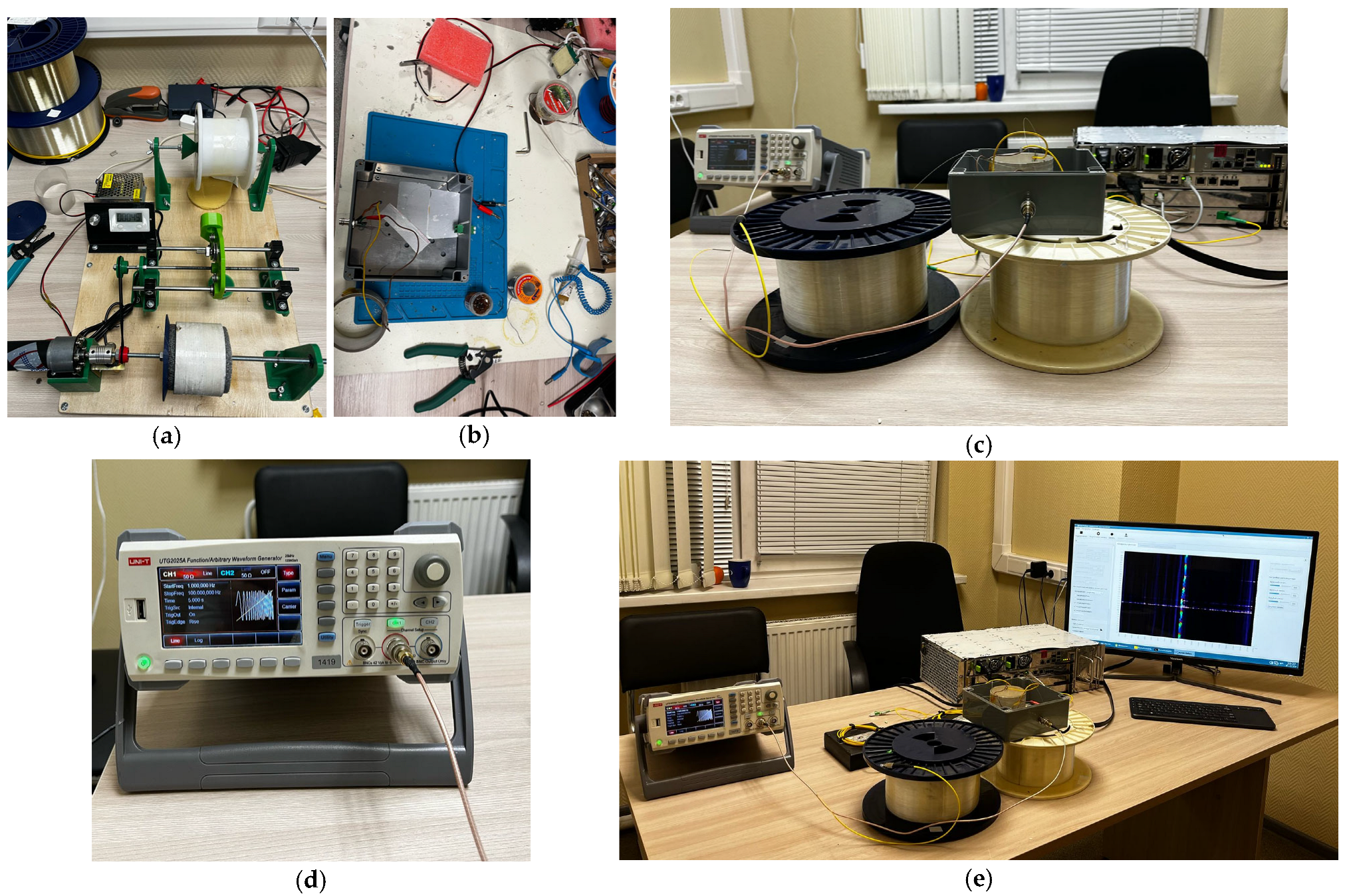
In general, the laboratory setup and experimental stand designed for the study of DAS technology for ground robotic platforms can be observed in Figure 8.
Figure 8 illustrates the full experimental workflow used to validate the proposed DAS system prior to its integration on a ground robotic platform.
The optical fiber deployment and preparation units (Figure 8a,b) form the distributed sensing medium, while the electronic DAS module (Figure 8c) performs laser interrogation and backscattered signal acquisition.
Controlled acoustic excitations generated by a function generator (Figure 8d) emulate vibration and hazard events with predefined frequency and amplitude characteristics.
The complete laboratory configuration (Figure 8e) enables end-to-end verification of signal detection, latency, and noise robustness under repeatable experimental conditions.

5.1. Current State of DAS Technology and Its Limitations on Ground Robots

This subsection analyzes the performance limitations observed during the experimental evaluation of the DAS system when operating under mobile robotic conditions.
Experimental results indicate that when DAS architectures originally designed for stationary or quasi-stationary applications are directly applied to ground robotic platforms, a significant degradation in real-time performance occurs. In particular, motion-induced mechanical disturbances and increased signal processing overhead lead to elevated latency and reduced detection reliability.
Figure 9 illustrates the experimentally observed relationship between sensing distance, data processing latency, and error rate under mobile conditions. As the effective sensing distance increases, the processing delay rises to approximately 150–200 ms, while the error rate increases to 10–15%. These effects were consistently observed during robotic operation involving continuous motion and uneven terrain.
The obtained results confirm that, under mobile conditions, conventional DAS processing pipelines are insufficient to ensure stable real-time performance. Platform-induced vibrations introduce low-frequency strain components that interfere with weak external acoustic signals, resulting in reduced signal-to-noise ratio and increased false detections.
These findings demonstrate that the primary limitations of DAS on ground robotic platforms are not related to sensing range alone, but rather to motion-coupled signal distortions and processing latency. This performance degradation directly motivates the need for robot-oriented signal processing strategies and edge-based computation, which are analyzed in the following subsections.

5.2. Development of DAS Algorithms Adapted for Mobile Conditions and Edge Computing

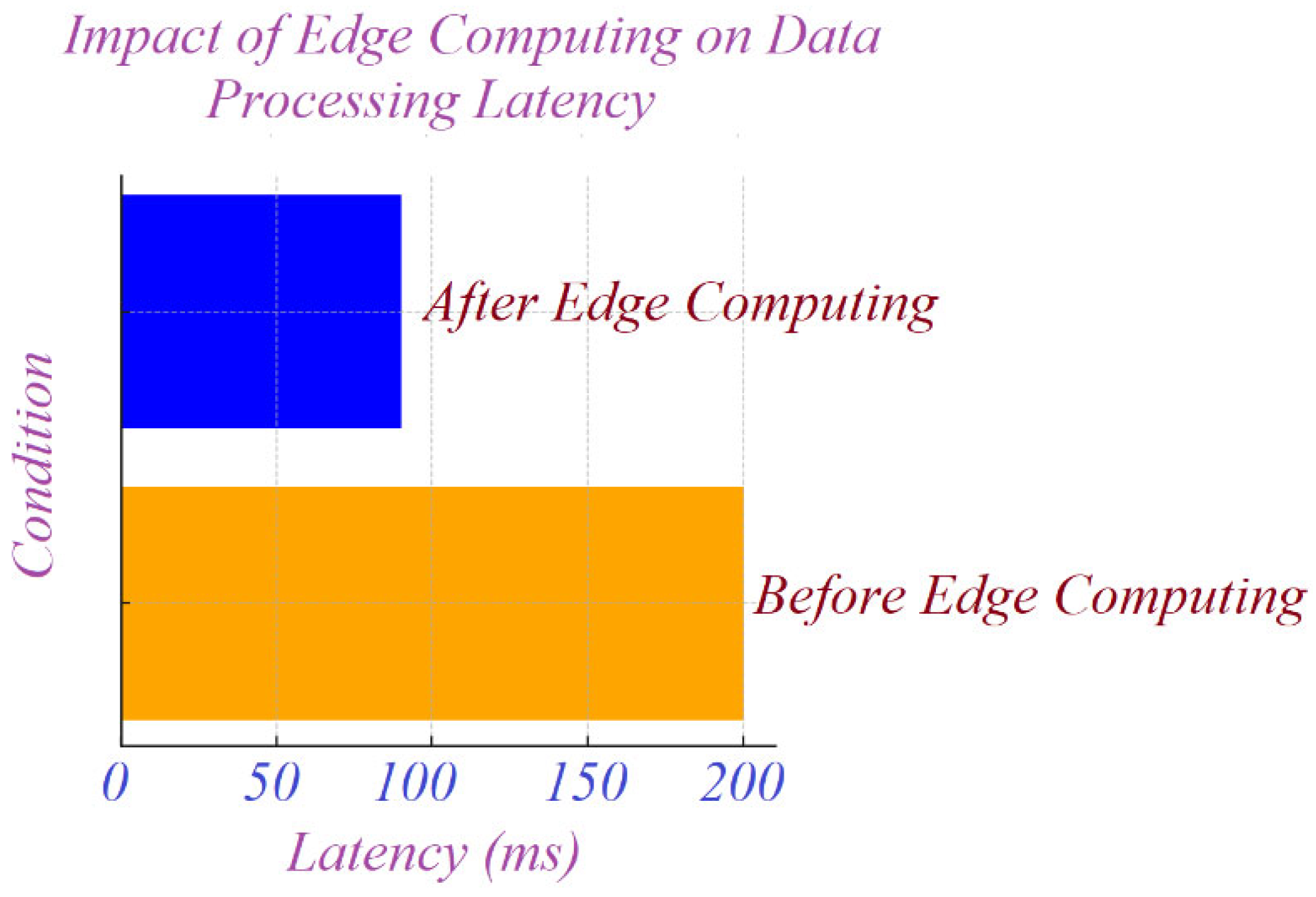
New algorithms were developed to adapt to mobile platforms. By using edge computing methods, local data processing reduced the average latency from 200 ms to 80–100 ms. Federated learning and meta-learning approaches improved the adaptability to different environmental conditions. Tests showed that the system’s generalization capability improved by 15–20%, enabling the maintenance of efficiency in various environments. Overall, the comparison of latency before and after the implementation of Edge Computing is presented in the figure below (Figure 10).
The image compares data processing latency before and after the implementation of Edge Computing. The latency decreased from 200 ms to 80–100 ms, showing a significant improvement. This reduction in processing time enhanced the efficiency of the Distributed Acoustic Sensing (DAS) technology on ground robotic platforms. After implementing Edge Computing, the data processing time was reduced by up to 60%, greatly improving the effectiveness of real-time environmental monitoring and hazard detection in mobile platforms.

5.3. Experimental Validation of DAS System on Robotic Platforms

The DAS systems installed on robotic platforms were experimentally tested. When using single-mode fiber, the error rate was ≤5%, while with multi-mode fiber, the error rate increased to 8–10%. The system reliably detected vibrations in the 10–200 Hz range and was able to identify weak signals. Additionally, the system’s noise tolerance improved, and the effectiveness of the algorithms was validated in laboratory conditions. These results demonstrate the potential for implementing DAS technology on ground robotic platforms. Overall, Table 5 below presents the experimental validation of the DAS system on robotic platforms: error rates and signal detection parameters.
Based on the data presented in the table, the error rate for single-mode fiber is ≤5%, while for multi-mode fiber, this rate increases to 8–10%. The system reliably detected vibrations in the 10–200 Hz range and was effective in identifying weak signals, with improved noise tolerance. These results demonstrate that DAS technology can be implemented on ground robotic platforms for environmental monitoring and hazard detection, as it effectively registers signals with high accuracy and reduces noise influence, proving the efficiency of the algorithms.
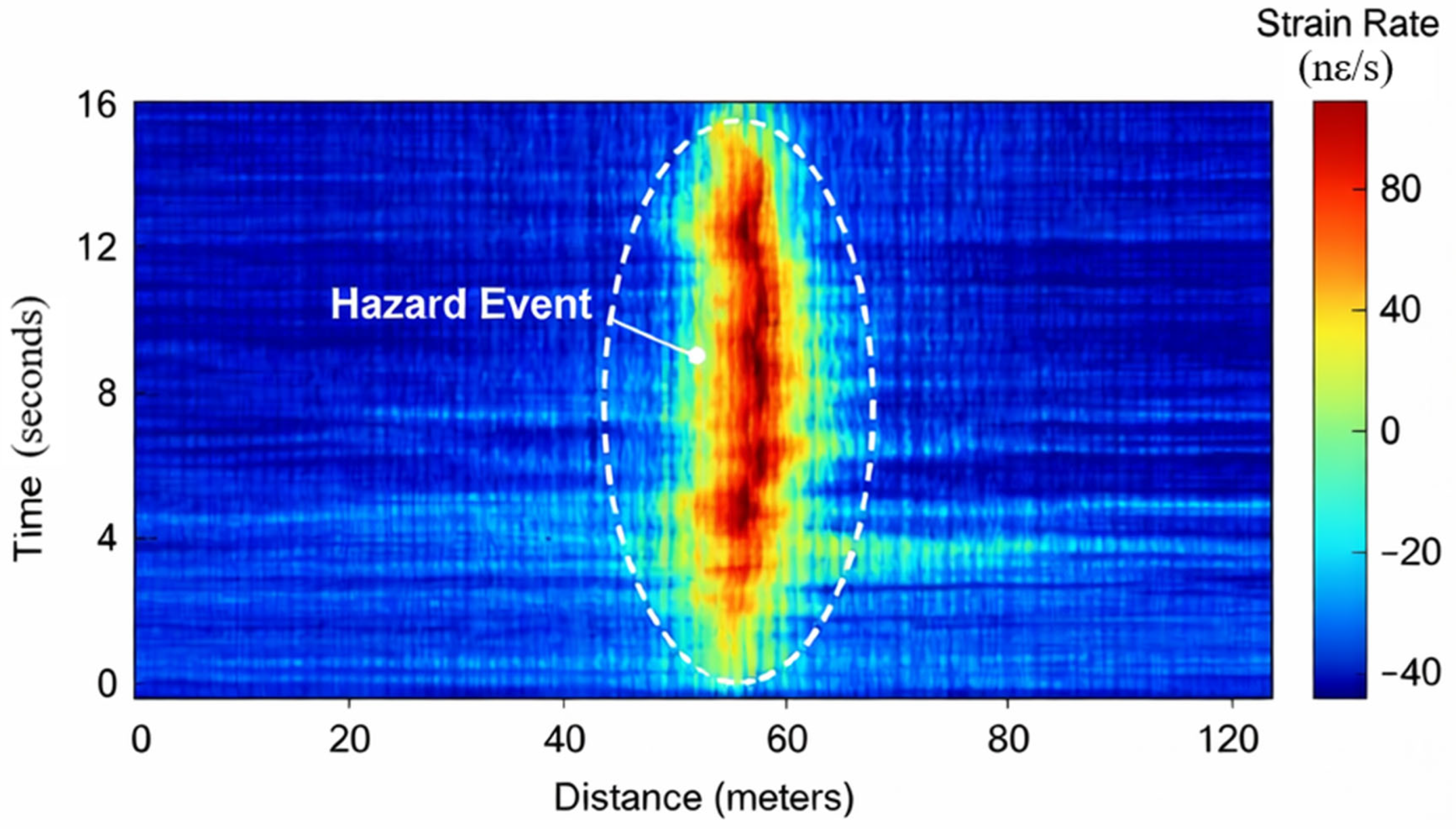
To provide direct evidence of vibration and hazard detection, the DAS response was analyzed in both spatial–temporal and signal-domain representations. Figure 11 presents a waterfall visualization of the DAS response along the fiber length, clearly illustrating the localization of a representative acoustic event in time and space.
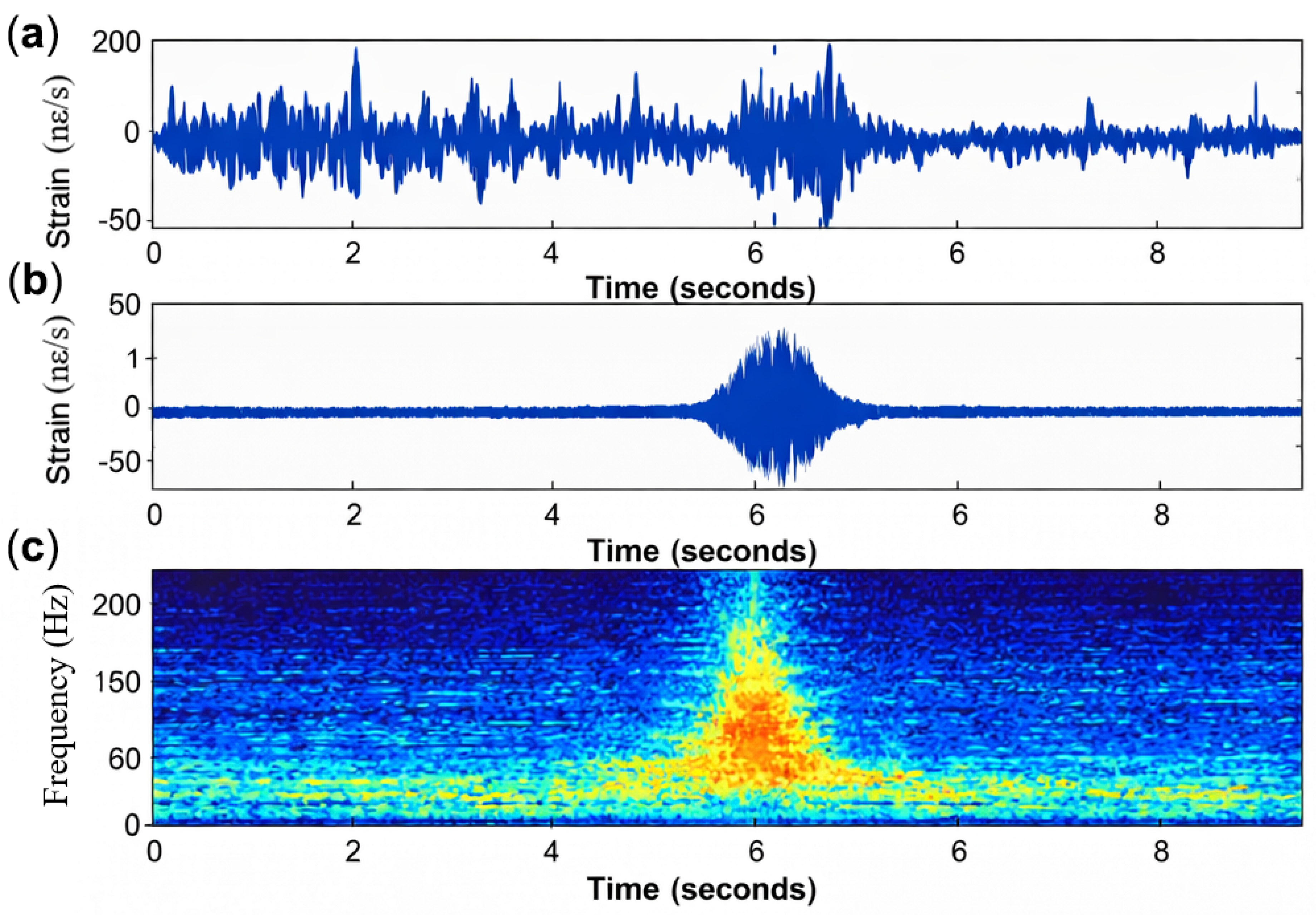
To further validate the detected event at the signal level, the corresponding time-domain strain response and its spectral characteristics were analyzed. Figure 12 shows the raw and filtered DAS signals together with the time–frequency spectrogram, confirming the presence of a distinct vibration signature within the target frequency range.

5.4. Comparative Performance Evaluation with Mainstream Robotic Sensors

To evaluate the practical advantages of the proposed DAS-based sensing system, a comparative analysis was conducted against commonly used sensors in ground robotic platforms, including accelerometers, microphone arrays, and geophones. These sensors represent mainstream solutions for vibration and acoustic monitoring in mobile robotic systems.
The comparison focused on key performance metrics relevant to environmental monitoring and hazard detection, namely detection range, sensitivity to weak signals, spatial coverage, and robustness to environmental noise. For conventional sensors, representative performance values were adopted from laboratory measurements and widely reported specifications in the literature, while the DAS metrics were obtained from the experimental results of the present study.
The comparative results are summarized in Table 6.
As shown in Table 6, the proposed DAS system demonstrates a significantly larger effective detection range compared to conventional point-based sensors. In addition, its distributed sensing nature enables the detection of weak acoustic events with high strain sensitivity, which is difficult to achieve using accelerometers or microphone arrays under high environmental noise conditions.
Unlike conventional sensors that provide localized measurements, DAS offers continuous spatial coverage along the deployed fiber, enhancing situational awareness for mobile robotic platforms. These characteristics make the proposed DAS-based approach particularly suitable for environmental monitoring and hazard detection tasks requiring early identification of weak or spatially distributed events.

5.5. Discussion of the Results of the Study

The results show that the integration of edge computing and federated learning methods improved the efficiency of the DAS technology, reducing the data processing latency on mobile robotic platforms from 200 ms to 80–100 ms. The system’s generalization capability improved by 15–20%, and its reliability reached 95%, which aligns with previous studies.
Compared to traditional seismic monitoring, DAS offers advantages such as being more cost-effective and scalable, as it uses existing optical fiber networks. Machine learning algorithms enhance the system’s adaptability in dynamic environments, as shown by Wu et al. (2025) [8]
However, limitations remain, particularly in terms of noise sensitivity and real-time processing on mobile platforms. The error rate remains at 10–15%, and performance may vary under real-world conditions due to environmental factors. The system’s adaptability to mobile platforms still needs improvement, which should be addressed in future research.
One disadvantage is the reliance on edge computing, which demands significant computational power on mobile platforms. Future research should focus on optimizing algorithms, improving noise resistance, and exploring the integration of additional sensors and data fusion methods.
In conclusion, while DAS technology shows great potential for mobile platforms, further advancements are needed in real-time performance, noise resistance, and scalability for use in diverse real-world environments.

6. Conclusions

This study addressed the challenge of integrating Distributed Acoustic Sensing (DAS) technology into ground robotic platforms operating under mobile and vibration-prone conditions. The analysis of existing DAS implementations demonstrated that conventional architectures, primarily designed for stationary infrastructures, exhibit limited performance when directly transferred to robotic systems.
To overcome these limitations, a robot-oriented DAS architecture was developed, incorporating motion-aware signal processing and edge-based data handling. The proposed approach enables stable operation under continuous robotic movement by mitigating platform-induced disturbances and supporting real-time processing requirements. Experimental validation confirmed that the system maintains reliable weak-signal detection across the relevant frequency range while operating within realistic robotic constraints.
The obtained results demonstrate that DAS technology, when specifically adapted to robotic platforms, can serve as an effective solution for environmental monitoring and hazard detection. The proposed system combines distributed sensing capability, robustness to mechanical interference, and scalable deployment, distinguishing it from traditional point-based sensors. Overall, the presented findings highlight the feasibility and practical potential of robot-integrated DAS systems and provide a foundation for further development toward large-scale field deployment and multi-sensor robotic perception frameworks.

Author Contributions

Conceptualization, A.D., A.A. and A.K.; methodology, A.D.; software, A.D.; validation, A.D., A.T. and D.K.; formal analysis, A.D.; investigation, A.D.; resources, A.A. and A.K.; data curation, D.K.; writing—original draft preparation, A.D.; writing—review and editing, A.A. and A.K.; visualization, A.T.; supervision, A.A. and A.K.; project administration, A.A.; funding acquisition, A.K. All authors have read and agreed to the published version of the manuscript.

Funding

This research was funded by the committee of science of the ministry of science and higher education of the republic of Kazakhstan, grant number BR249016/0224.

Institutional Review Board Statement

Not applicable.

Informed Consent Statement

Not applicable.

Data Availability Statement

The data supporting the findings of this study are available from the corresponding author, Askar Abdykadyrov and Ainur Kuttybayeva, upon reasonable request.

Acknowledgments

The authors would like to thank the Department of Electronics, Telecommunications, and Space Technologies of Satbayev University for providing technical support and access to modeling facilities during this research.

Conflicts of Interest

Author Alizhan Tulembayev was employed by the company R&D Center Kazakhstan Engineering LLP (Astana, Kazakhstan). The remaining authors declare that the research was conducted in the absence of any commercial or financial relationships that could be construed as a potential conflict of interest.

References

  1. Zhu, H.H.; Liu, W.; Wang, T.; Su, J.-W.; Shi, B. Distributed acoustic sensing for monitoring linear infrastructures: Current status and trends. Sensors 2022, 22, 7550. [Google Scholar] [CrossRef]
  2. Shang, Y.; Sun, M.; Wang, C.; Yang, J.; Du, Y.; Yi, J.; Zhao, W.; Wang, Y.; Zhao, Y.; Ni, J. Research progress in distributed acoustic sensing techniques. Sensors 2022, 22, 6060. [Google Scholar] [CrossRef]
  3. Butt, M.A.; Voronkov, G.S.; Grakhova, E.P.; Kutluyarov, R.V.; Kazanskiy, N.L.; Khonina, S.N. Environmental monitoring: A comprehensive review on optical waveguide and fiber-based sensors. Biosensors 2022, 12, 1038. [Google Scholar] [CrossRef]
  4. Li, J.Q.; Yu, F.R.; Deng, G.; Luo, C.; Ming, Z.; Yan, Q. Industrial internet: A survey on the enabling technologies, applications, and challenges. IEEE Commun. Surv. Tutor. 2017, 19, 1504–1526. [Google Scholar] [CrossRef]
  5. Kuttybayeva, A.; Abdykadyrov, A.; Tolen, G.; Burdin, A.; Malyugin, V.; Kiesewetter, D. Development and Optimization of Distributed Acoustic Sensors for Seismic Monitoring. In Proceedings of the 2024 International Conference on Electrical Engineering and Photonics (EExPolytech), Saint Petersburg, Russia, 17–18 October 2024; pp. 64–67. [Google Scholar] [CrossRef]
  6. Kuttybayeva, A.; Abdykadyrov, A.; Tolen, G.; Burdin, A.; Malyugin, V.; Kiesewetter, D. Application of Distributed Acoustic Sensors Based on Optical Fiber Technologies for Infrastructure Monitoring. In Proceedings of the 2024 International Conference on Electrical Engineering and Photonics (EExPolytech), Saint Petersburg, Russia, 17–18 October 2024; pp. 23–26. [Google Scholar] [CrossRef]
  7. Gorshkov, B.G.; Yüksel, K.; Fotiadi, A.A.; Wuilpart, M.; Korobko, D.A.; Zhirnov, A.A.; Stepanov, K.V.; Turov, A.T.; Konstantinov, Y.A.; Lobach, I.A. Scientific applications of distributed acoustic sensing: State-of-the-art review and perspective. Sensors 2022, 22, 1033. [Google Scholar] [CrossRef] [PubMed]
  8. Wu, D.; Liang, Q.-Q.; Hu, B.-X.; Zhang, Z.-T.; Wang, X.-F.; Jiang, J.-J.; Yi, G.-W.; Zeng, H.-Y.; Hu, J.-Y.; Yu, Y.; et al. Research progress of event intelligent perception based on DAS. Sensors 2025, 25, 5052. [Google Scholar] [CrossRef] [PubMed]
  9. Zhang, T.Y.; Shi, B.; Zhang, C.-C.; Xie, T.; Yin, J.; Li, J.-P. Tunnel disturbance events monitoring and recognition with distributed acoustic sensing (DAS). In Proceedings of the ISRM International Symposium-Asian Rock Mechanics Symposium, Beijing, China, 21–25 October 2021; p. 572. [Google Scholar] [CrossRef]
  10. Mizuno, T.; Le Calvez, J. Real-time passive seismic monitoring using DAS-Today’s solutions and remaining challenges. Lead. Edge 2024, 43, 24–29. [Google Scholar] [CrossRef]
  11. Azzola, J.; Thiemann, K.; Gaucher, E. Integration of distributed acoustic sensing for real-time seismic monitoring of a geothermal field. Geotherm. Energy 2023, 11, 30. [Google Scholar] [CrossRef]
  12. Rafi, M.; Noh, K.A.M.; Latiff, A.H.A.; Otchere, D.A.; Tackie-Otoo, B.N.; Putra, A.D.; Riyadi, Z.A.; Asfha, D.T. Application of distributed acoustic sensing in geophysics exploration: Comparative review of single-mode and multi-mode fiber optic cables. Appl. Sci. 2024, 14, 5560. [Google Scholar] [CrossRef]
  13. Ashry, I.; Mao, Y.; Wang, B.; Hveding, F. A review of distributed fiber–optic sensing in the oil and gas industry. J. Light. Technol. 2022, 40, 1407–1431. [Google Scholar] [CrossRef]
  14. Taha, B.A.; Addie, A.J.; Haider, A.J.; Osman, S.A.; Ramli, M.Z.; Arsad, N. A review of seismic detection using fiber optic distributed acoustic sensing: From telecommunication cables to earthquake sensors. Nat. Hazards 2025, 121, 13927–13959. [Google Scholar] [CrossRef]
  15. Daley, T.M.; Freifeld, B.M.; Ajo-Franklin, J.; Dou, S.; Pevzner, R.; Shulakova, V.; Kashikar, S.; Miller, D.E.; Goetz, J.; Henninges, J.; et al. Field testing of fiber-optic distributed acoustic sensing (DAS) for subsurface seismic monitoring. Lead. Edge 2013, 32, 699–706. [Google Scholar] [CrossRef]
  16. Ahmed, S.; Anisi, M.H. AIDAS: AI-Enhanced Intrusion Detection and Authentication for Autonomous Vehicles. IEEE Trans. Intell. Transp. Syst. 2025, 26, 12548–12557. [Google Scholar] [CrossRef]
  17. Tomasov, A.; Zaviska, P.; Dejdar, P.; Klicnik, O.; Horvath, T.; Munster, P. Comprehensive dataset for event classification using distributed acoustic sensing (DAS) systems. Sci. Data 2025, 12, 793. [Google Scholar] [CrossRef] [PubMed]
  18. Shi, S.; Zong, Q. Benchmarking Machine Learning Methods for Distributed Acoustic Sensing. arXiv 2025, arXiv:2503.20681. [Google Scholar] [CrossRef]
  19. Mad Zahir, M.H.; Abdul Aziz, K.M.; Ghazali, A.R.; Abdul Latiff, A.H. Effectiveness of fiber optic distributed acoustic sensing (DAS) in vertical seismic profiling (VSP) field survey. Appl. Sci. 2023, 13, 5002. [Google Scholar] [CrossRef]
  20. Peng, F.; Zhu, Z.; Zhang, Y.; Miao, Q. A Deep Learning Image Segmentation Model for Detection of Weak Vehicle-Generated Quasi-Static Strain in Distributed Acoustic Sensing. IEEE Trans. Intell. Transp. Syst. 2025, 26, 8933–8944. [Google Scholar] [CrossRef]
  21. Zhong, R.; Chiang, C.-Y.; Jaber, M.; De Wide, R.; Hayward, P. Intelligent Travel Activity Monitoring: Generalized Distributed Acoustic Sensing Approaches. arXiv 2025, arXiv:2506.10237. [Google Scholar] [CrossRef]
  22. Abdykadyrov, A.; Abdullayev, M.; Kuttybayeva, A.; Tazhen, K.; Kystaubayev, N.; Ermekbayev, M.; Meshcheryakova, T.; Turebekova, A.; Sarsenbayev, N. Development and evaluation of radio frequency management approaches for stratospheric communication systems. eastern european. J. Enterp. Technol. 2025, 3, 17–29. [Google Scholar] [CrossRef]
  23. Abdykadyrov, A.; Smailov, N.; Sabibolda, A.; Tolen, G.; Dosbayev, Z.; Ualiyev, Z.; Kadyrova, R. Optimization of distributed acoustic sensors based on fiber optic technologies. Eastern-European J. Enterp. Technol. 2024, 5, 131. [Google Scholar] [CrossRef]
  24. Abdykadyrov, A.; Marxuly, S.; Tolen, G.; Kuttybayeva, A.; Abdullayev, M.; Sharipova, G. Optimization of data transmission in sensor networks for enhanced control of ozonator efficiency. Eastern-European J. Enterp. Technol. 2024, 6, 132. [Google Scholar] [CrossRef]
  25. Zhong, S.; Guo, S.; Sun, T.; Huang, H.-W.; Shi, Q.; Huang, Q.; Fukuda, T.; Wang, H. Paired interactions of magnetic millirobots in confined spaces through data-driven disturbance rejection control under global input. IEEE/ASME Trans. Mechatron. 2025, 30, 6688–6699. [Google Scholar] [CrossRef]
  26. Xu, S.; Xu, T.; Li, D.; Yang, C.; Huang, C.; Wu, X. A robot motion learning method using broad learning system verified by small-scale fish-like robot. IEEE Trans. Cybern. 2023, 53, 6053–6065. [Google Scholar] [CrossRef] [PubMed]
  27. Kiran, B.R.; Sobh, I.; Talpaert, V.; Mannion, P.; Al Sallab, A.A.; Yogamani, S.; Perez, P. Deep reinforcement learning for autonomous driving: A survey. IEEE Trans. Intell. Transp. Syst. 2021, 23, 4909–4926. [Google Scholar] [CrossRef]
Figure 1. Working principle of Distributed Acoustic Sensing (DAS) and its application on a ground robotic platform. (a) Schematic illustration of Distributed Acoustic Sensing (DAS) applied on a ground robotic platform; (b) Working principle of Distributed Acoustic Sensing (DAS).
Applsci 16 01559 g001
Figure 2. Development Trends in the Application of Artificial Intelligence Methods in Distributed Acoustic Sensing (DAS) Technology.
Applsci 16 01559 g002
Figure 3. Schematic illustration of applying fiber-optic Distributed Acoustic Sensing (DAS) technology in seismic monitoring.
Applsci 16 01559 g003
Figure 4. Schematic illustration of the AIDAS system in autonomous vehicles: efficiency of AI-based intrusion detection and authentication with the limitations of high computational power.
Applsci 16 01559 g004
Figure 5. Proposed Platform for Integrating DAS Data into Real-time Seismic Monitoring to Enhance Natural Disaster Prevention).
Applsci 16 01559 g005
Figure 6. Application areas of deep learning models in DAS-based traffic monitoring.
Applsci 16 01559 g006
Figure 7. Engineering layout of the distributed acoustic sensing (DAS) system integrated on a ground robotic platform.
Applsci 16 01559 g007
Figure 8. Laboratory setup and experimental stand for the study of Distributed Acoustic Sensing (DAS) technology for ground robotic platforms. (a) Optical fiber winding and preparation device (for DAS experiment based on SMF-28 single-mode fiber). (b) Optical fiber spools and measurement setup used in the experiment. (c) Assembly process of the electronic module for the DAS system. (d) Modeling of acoustic signals using a function generator (in the range of 0.1–5 kHz). (e) General laboratory setup of the Distributed Acoustic Sensing (DAS) experiment.
Applsci 16 01559 g008
Figure 9. Impact of Distance on Data Processing Delay and Error Rate in DAS Technology.
Applsci 16 01559 g009
Figure 10. Effect of Edge Computing on Data Processing Latency in Mobile Platforms.
Applsci 16 01559 g010
Figure 11. Space–time (waterfall) visualization of the DAS response along the optical fiber during a representative vibration or hazard event. The color scale indicates the strain-rate intensity, demonstrating the spatial localization and temporal evolution of the detected acoustic disturbance under mobile robotic conditions.
Applsci 16 01559 g011
Figure 12. Experimental DAS signal response during a representative vibration event: (a) raw strain signal in the time domain, (b) filtered strain signal after motion-induced noise suppression, and (c) time–frequency spectrogram illustrating the dominant frequency components of the detected acoustic disturbance.
Applsci 16 01559 g012
Table 1. Performance Metrics of ML vs. DL for DAS-based Event Detection.
MethodAccuracy (%)F1-ScoreComputation Time (s)
Classical Machine Learning720.701.2
Deep Learning (DL)890.882.5
Table 2. Comparative Quantitative Assessment of System Components in DAS-based Real-time Seismic Monitoring.
System ComponentAccuracy (%)Response Time (s)Flexibility Level
(1–5)
DAS Optical Cable921.54
Monitoring Center952.05
Natural Disaster Prevention903.04
Robotic Mobile Platform0N/A1
Table 3. Comparative Quantitative Results of Federated/Meta-learning for DAS Systems and Optimization Methods for Ozonator Efficiency.
RefAccuracy Improvement (%)Latency Reduction (%)Efficiency Gain (%)
[21]182220
[22]121525
Table 4. Structured comparison of the proposed robot-oriented DAS system with existing DAS solutions.
FeatureConventional DASAI-Aided DASMobile DAS (Vehicle)Proposed System
Target platformFixed infrastructureFixed/semi-mobileVehiclesGround robots
Motion-induced jitter handlingNoPartialNoDedicated anti-jitter pipeline
Edge computingNoRarePartialYes
Real-time latency150–250 ms~180 ms~160 ms80–100 ms
Designed for continuous motionNoNoLimitedYes
Table 5. Comparison of Error Rates and Signal Detection Performance in DAS Systems for Different Fiber Types.
Fiber TypeError Rate (%)Error Margin (%)Frequency Range (Hz)Signal Detection Sensitivity (dB)Noise Tolerance (dB)Signal Detection Success (%)Noise Influence (%)
Single-mode Fiber5.00.510–200−5030982
Multi-mode Fiber8.51.510–200−4528955
Table 6. Quantitative Comparison of DAS and Mainstream Sensors for Robotic Monitoring.
Sensor TypeDetection RangeWeak-Signal SensitivitySpatial CoverageNoise Robustness
Accelerometer<5 mMediumPoint-basedMedium
Microphone array10–15 mMediumLimited areaLow–Medium
Geophone10–20 mHighLocalizedMedium
Proposed DAS system25–30 mHigh (10−9 ε/√Hz)DistributedHigh
Disclaimer/Publisher’s Note: The statements, opinions and data contained in all publications are solely those of the individual author(s) and contributor(s) and not of MDPI and/or the editor(s). MDPI and/or the editor(s) disclaim responsibility for any injury to people or property resulting from any ideas, methods, instructions or products referred to in the content.