Wind-Induced Response and Fatigue Analysis of Corona Ring in Power Equipment


Abstract
1. Introduction
2. Wind Tunnel Experiments
2.1. Test Equipment and Models
2.2. Test Methods
2.3. Operating Conditions
3. Results and Discussion
3.1. Acceleration Response
3.2. Displacement Response
3.3. Discussion on Wind-Induced Response of Corona Ring
4. Fatigue Numerical Simulation Analysis
4.1. Finite Element Model and Validation
4.2. Fatigue Analysis Results
4.3. Fatigue Analysis Discussion
5. Conclusions
- (1)
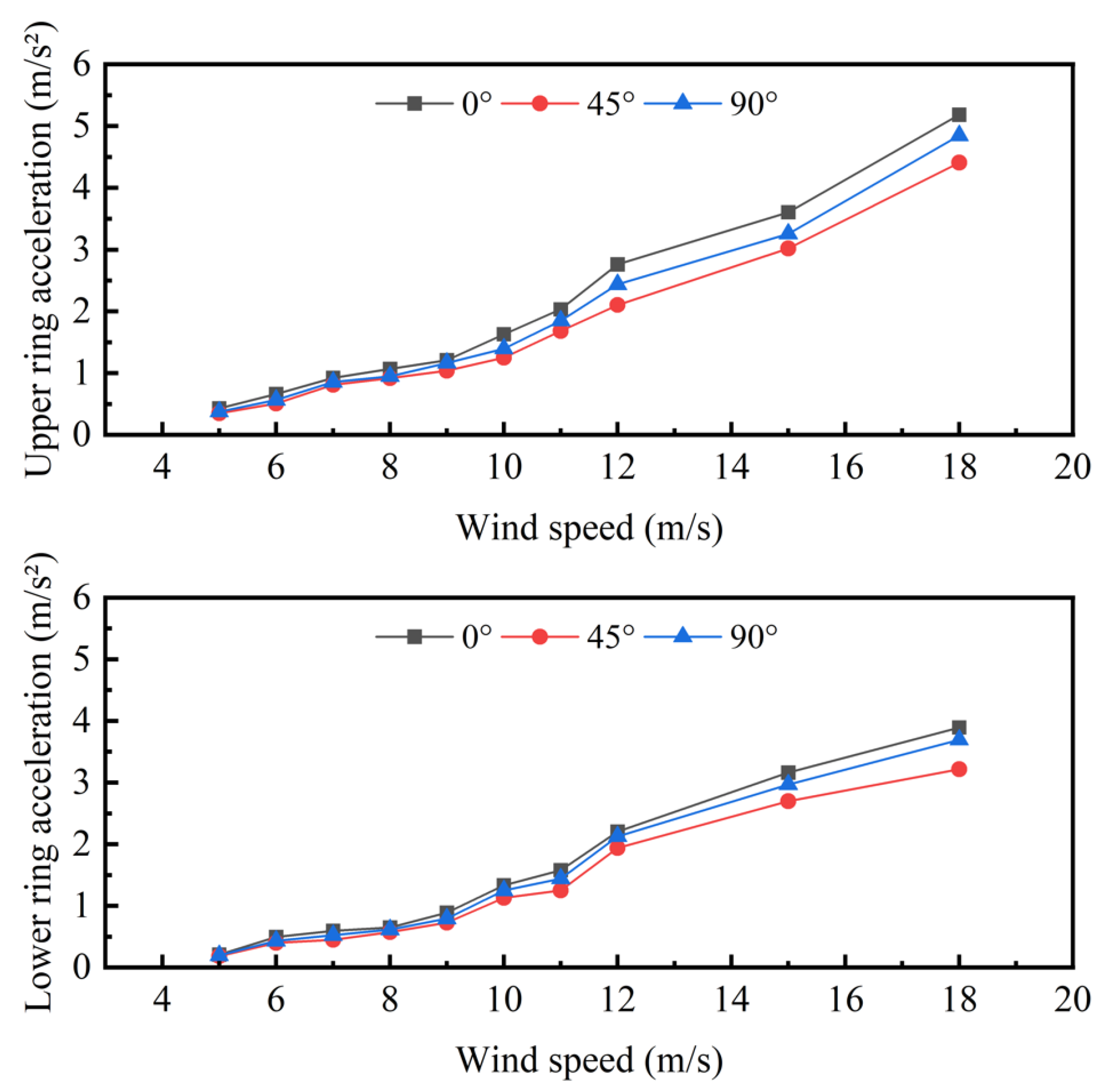
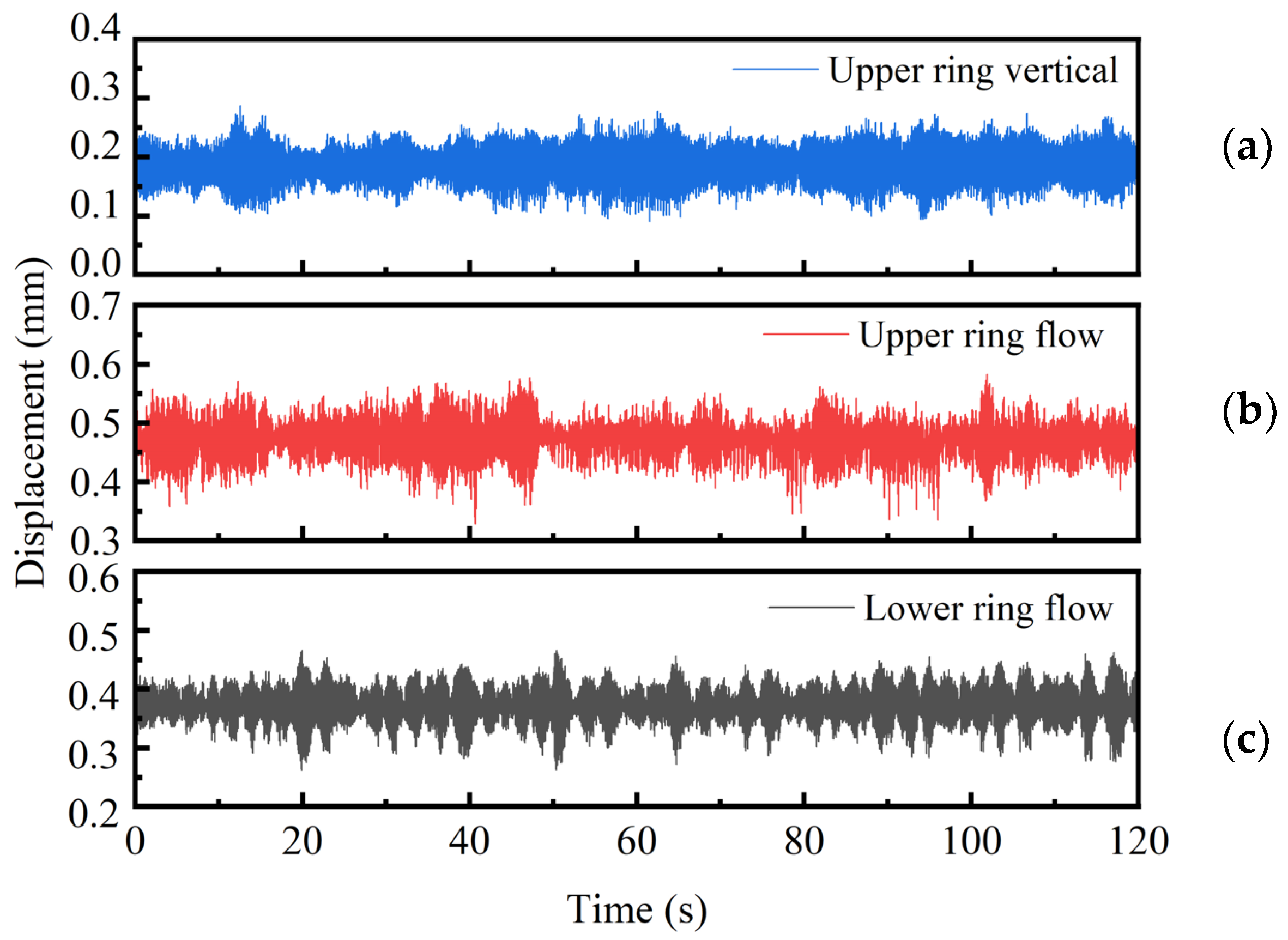
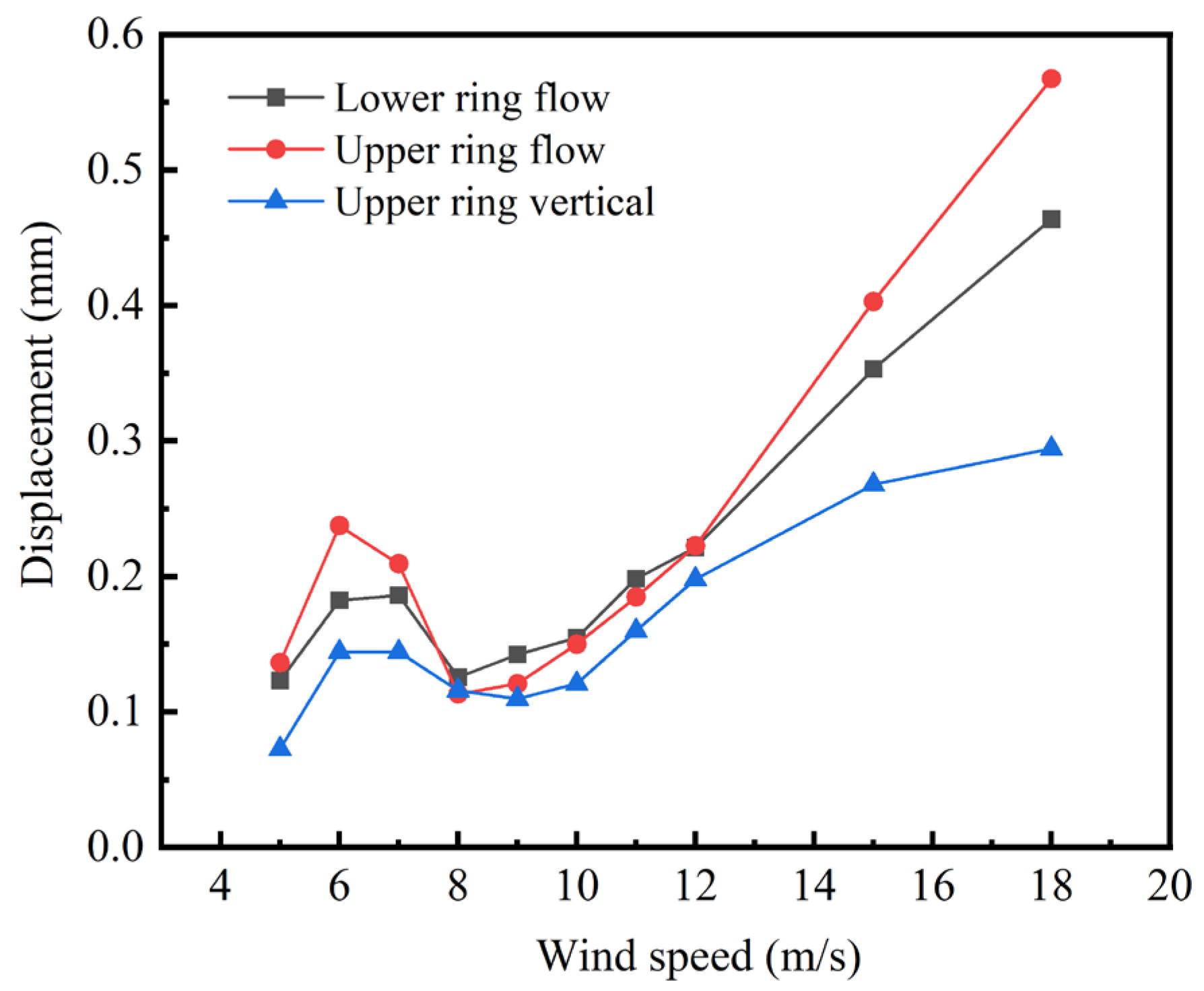
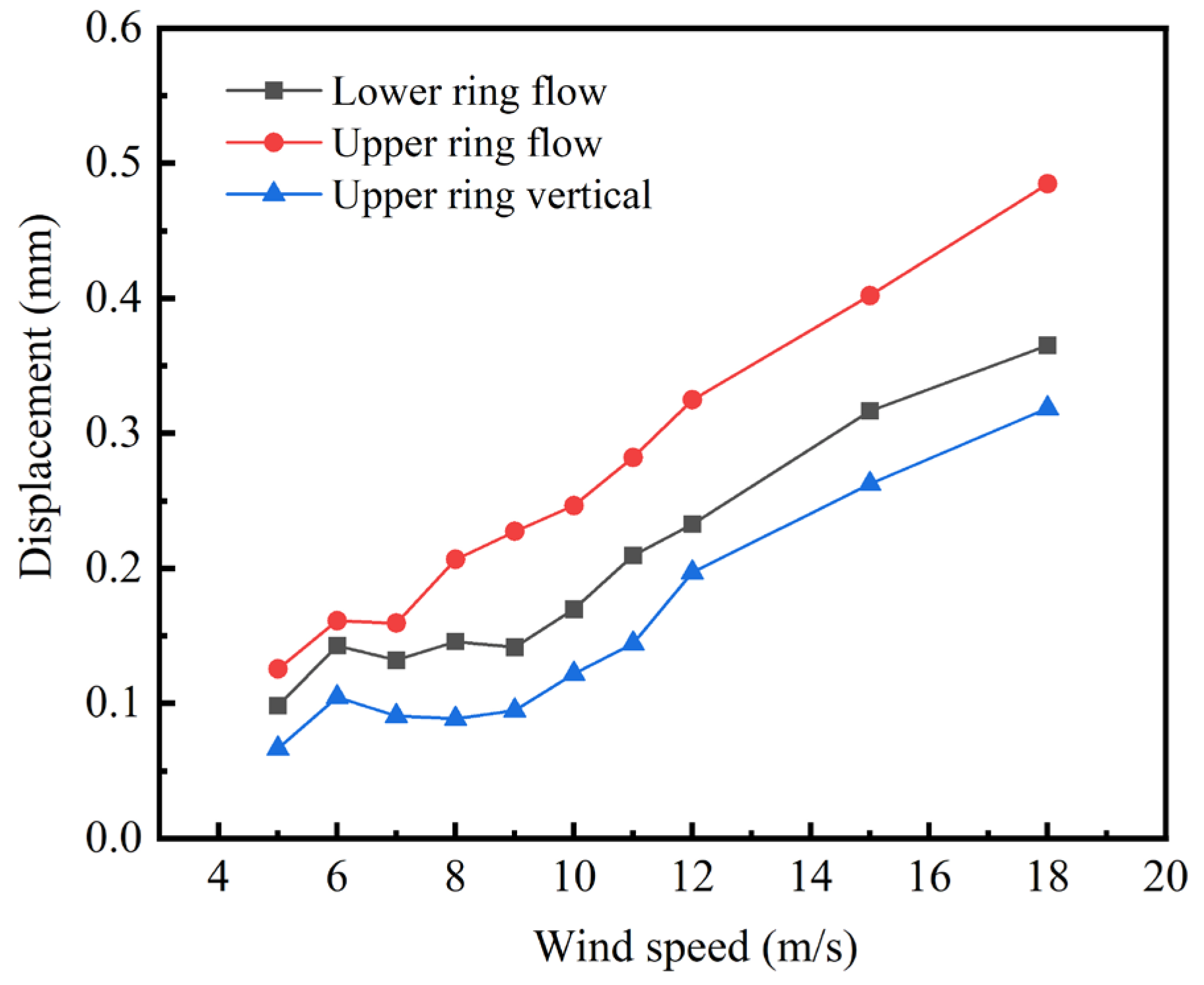
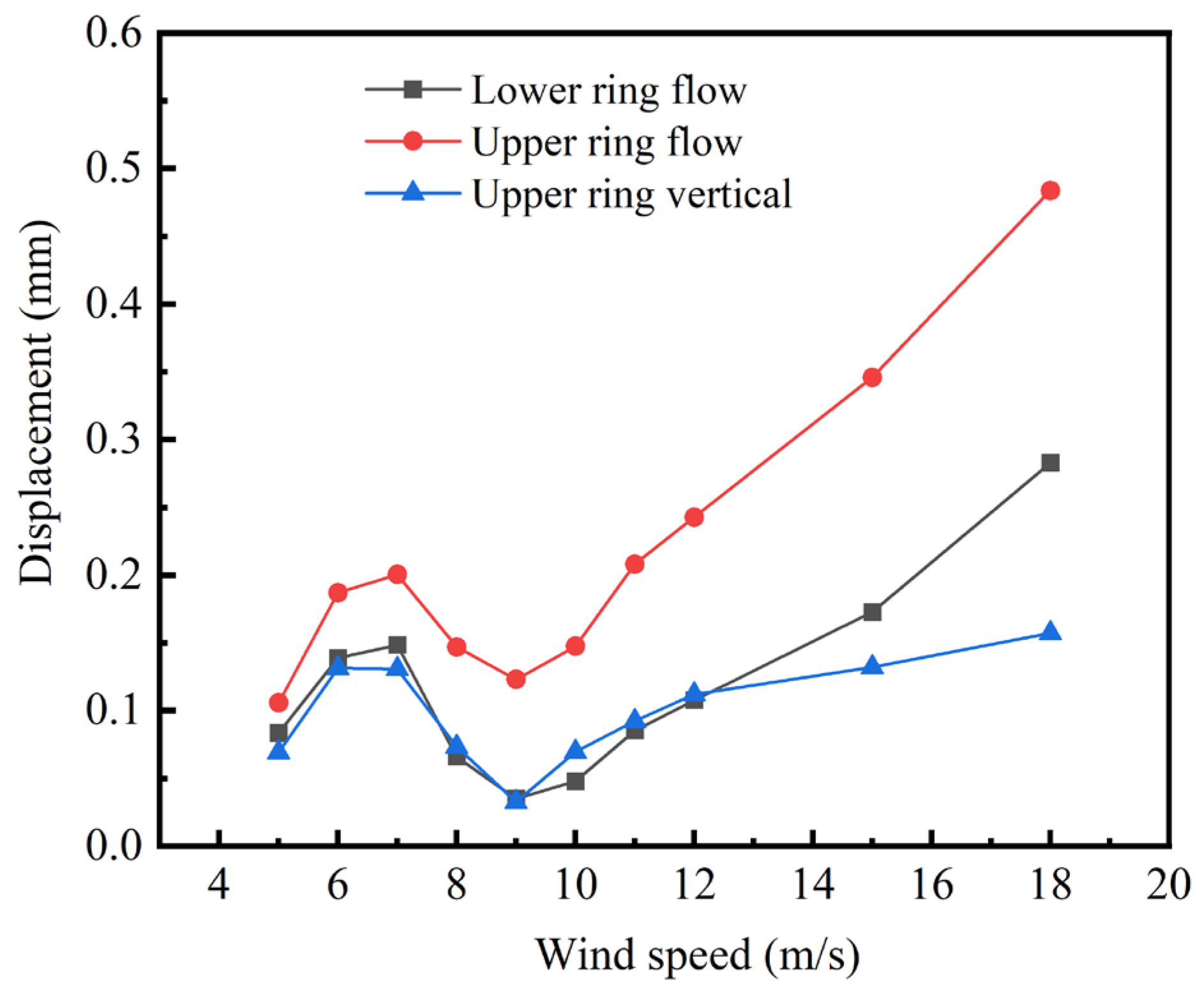
- Wind tunnel tests indicate that the peak acceleration of the corona ring is positively correlated with wind speed, with the magnitude ranking as 0° > 90° > 45° across wind angles. Peak displacement follows an increase–decrease–increase trend, and vortex-induced vibration is prone to occur within the 5–8 m/s range.
- (2)
- Peak acceleration and displacement of the corona ring are positively correlated with the wind attack angle. Both values increase gradually as the attack angle rises from −5° to +5°. Specifically, at a 0° yaw angle and 18 m/s wind speed, compared to the −5° case, the peak acceleration at 0° and +5° attack angles increased by 20.5% and 44.5%, respectively, while the peak displacement increased by 15.0% and 31.3%, respectively.
- (3)
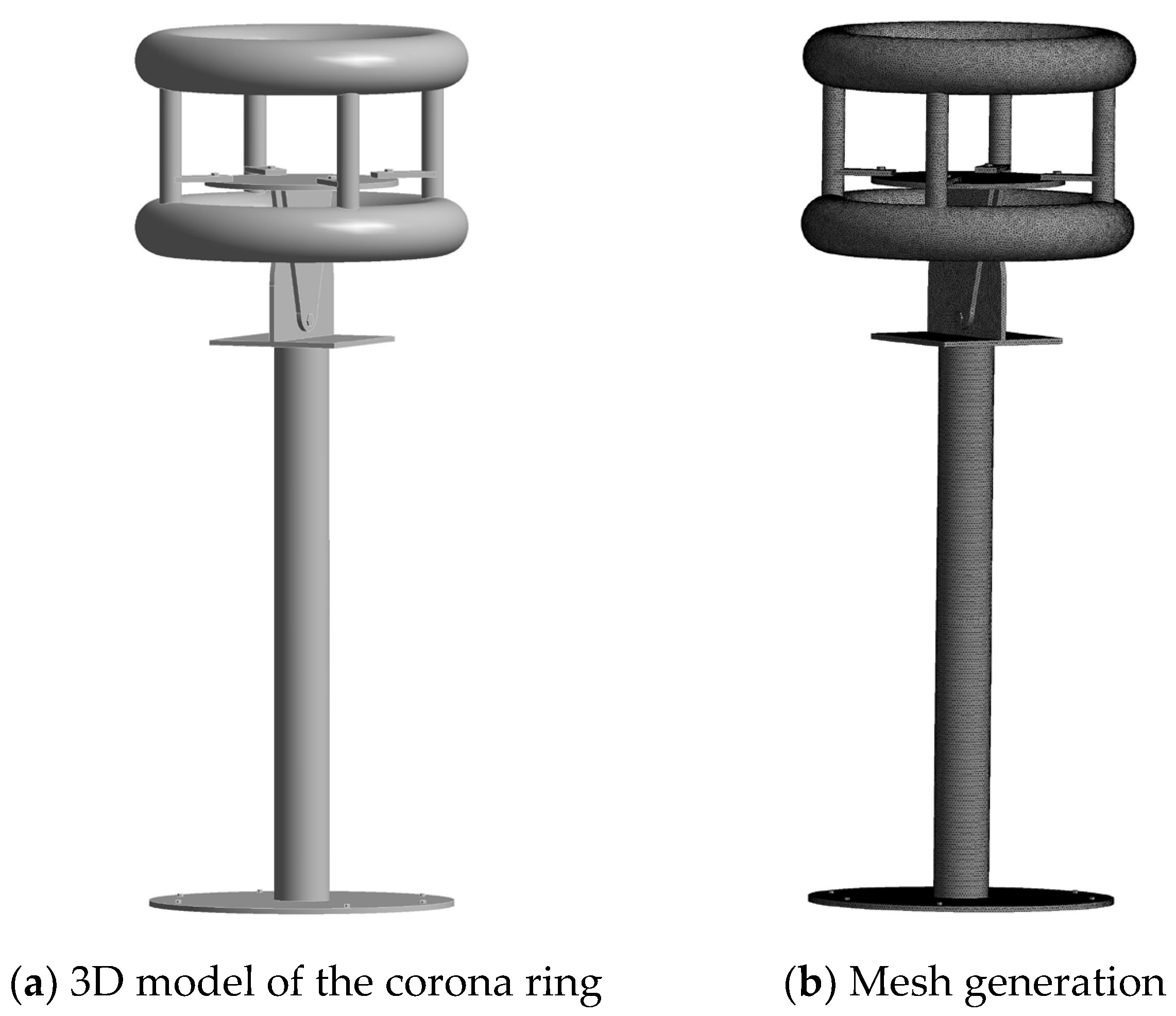
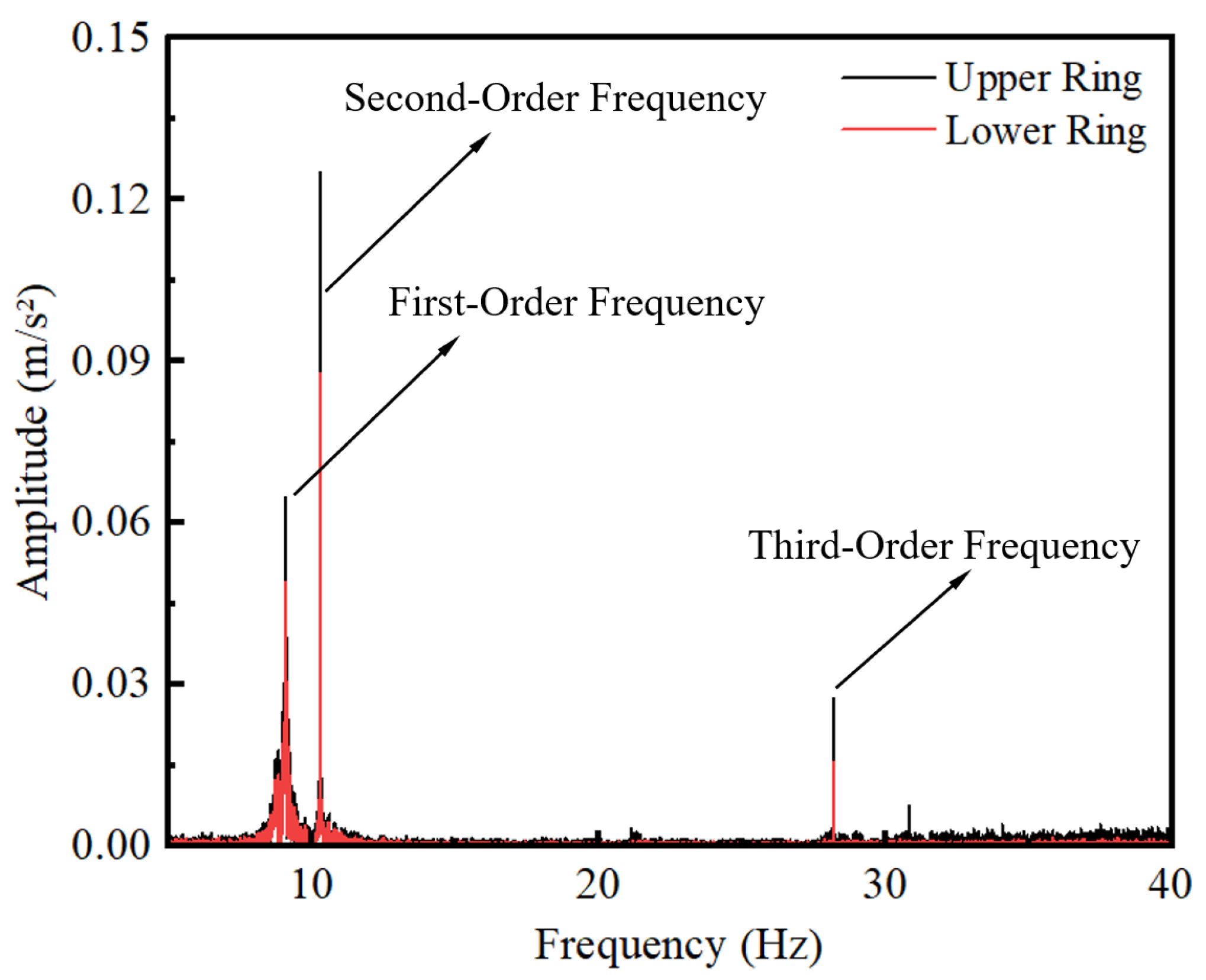
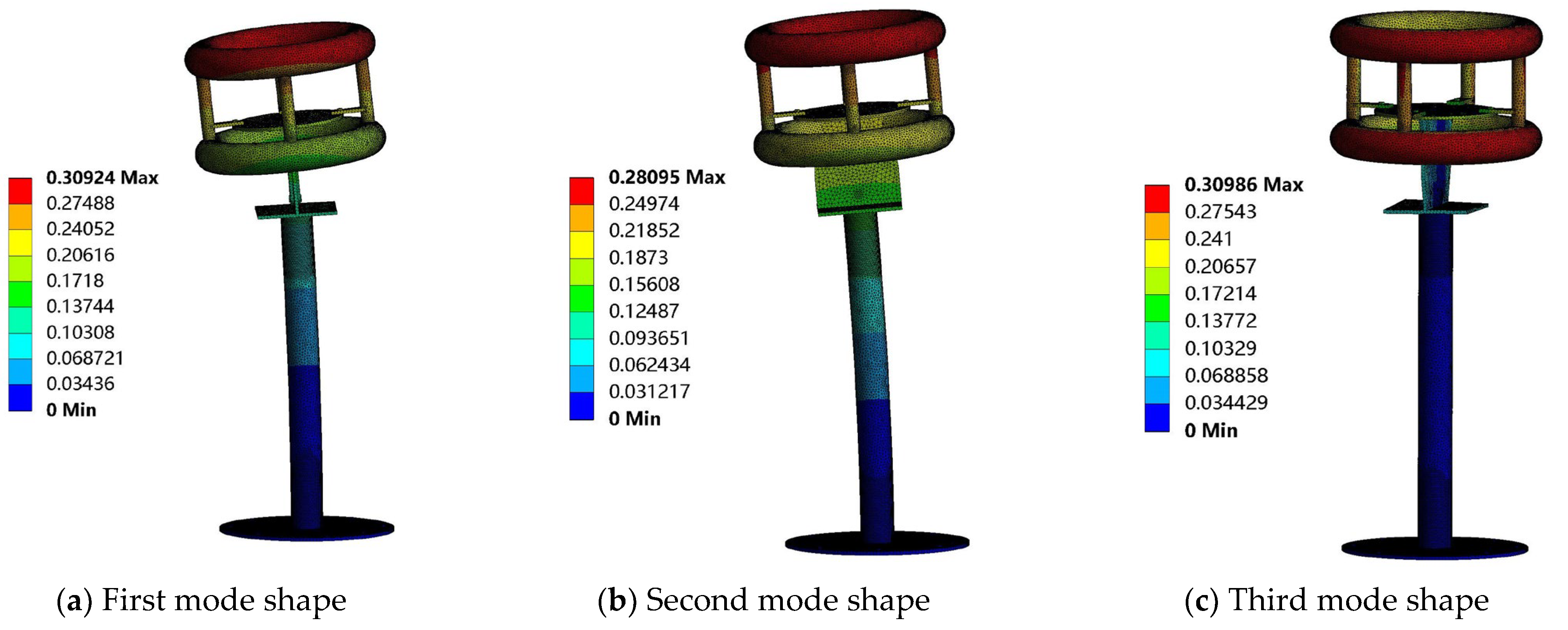
- Numerical verification using modal analysis demonstrates good agreement between the experimental and simulated natural frequencies, with relative errors below 5%. This confirms that the finite element model accurately captures the dynamic characteristics of the corona ring and can be reliably used for fatigue simulation.
- (4)
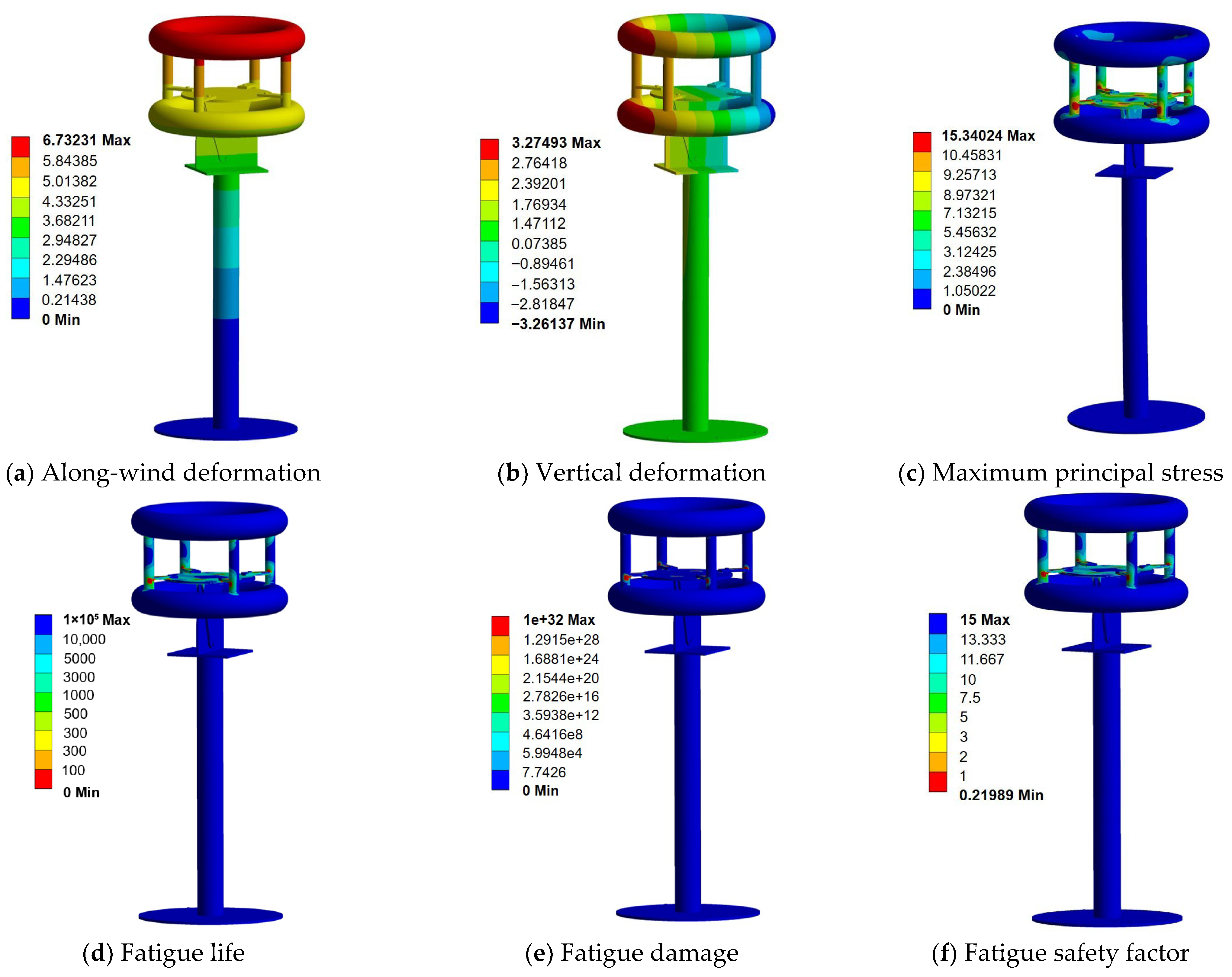
- Fatigue analysis and life evaluation reveal that stress is primarily concentrated at the bolted joints and the connections of vertical support rods, particularly at the welded joints and flattened regions. The maximum principal stress reaches 15.34 MPa, approaching the allowable limit of the aluminum alloy. Consequently, the windward-side rods, which are directly subjected to cyclic aerodynamic loading, exhibit lower safety factors and shorter fatigue lives, identifying them as the most critical regions prone to local fatigue failure.
Author Contributions
Funding
Institutional Review Board Statement
Informed Consent Statement
Data Availability Statement
Conflicts of Interest
References
- Díaz-Acevedo, J.A.; Escobar, A.; Grisales-Norena, L.F. Optimization of corona ring for 230 kV polymeric insulator based on finite element method and PSO algorithm. Electr. Power Syst. Res. 2021, 201, 107521. [Google Scholar] [CrossRef]
- Khajavi, M.; Bagheri, S.; Shemshadi, A. Optimal design of corona ring in composite insulator considering the effects of tower structure, conductor, hardware and mutual phases. Electr. Power Syst. Res. 2023, 223, 109686. [Google Scholar] [CrossRef]
- Hussain, M.K.; Alshadeedi, B.M. Optimal design of high voltage composite insulators with grading rings in different configurations. Electr. Power Syst. Res. 2023, 221, 109493. [Google Scholar] [CrossRef]
- Zhang, Y.; Liu, L.; Chen, Y.; Ouyang, J. Characteristics of ionic wind in needle-to-ring corona discharge. J. Electrost. 2015, 74, 15–20. [Google Scholar] [CrossRef]
- Li, X.; Cui, X.; Lu, T.; Wang, D.; Peng, R.; Bian, X. Experimental investigation on correlation of corona-induced vibration and audible noise from DC conductor. High Volt. 2016, 1, 115–121. [Google Scholar] [CrossRef]
- Zanelli, F.; Mauri, M.; Castelli-Dezza, F.; Tarsitano, D.; Manenti, A.; Diana, G. Analysis of wind-induced vibrations on HVTL conductors using wireless sensors. Sensors 2022, 22, 8165. [Google Scholar] [CrossRef] [PubMed]
- Terrab, H.; Kara, A. Parameters design optimization of 230 kV corona ring based on electric field analysis and response surface methodology. Electr. Power Syst. Res. 2018, 163, 782–788. [Google Scholar] [CrossRef]
- Salhi, R.; Mekhaldi, A.; Teguar, M.; Kherif, O. Corona ring improvement to surface electric field stress mitigation of 400 kV composite insulator. IEEE Trans. Dielectr. Electr. Insul. 2023, 31, 1509–1516. [Google Scholar] [CrossRef]
- Uzar, M.; Demirol, Y.B.; Çınar, M.A.; Alboyacı, B. Investigation of the effect of corona ring design parameters on electric field distribution by finite element method. Turk. J. Electr. Power Energy Syst. 2023, 3, 20–27. [Google Scholar] [CrossRef]
- Aziz, E.; Aouabed, F.; Abdellah, H.; Dineva, A. Case study: Optimizing grading ring design for high voltage polymeric insulators in power transmission systems for enhanced electric field and voltage distribution by using a finite element method. Energies 2023, 16, 5235. [Google Scholar] [CrossRef]
- Abd-Elaal, E.S.; Mills, J.E.; Ma, X. A review of transmission line systems under downburst wind loads. J. Wind Eng. Ind. Aerodyn. 2018, 179, 503–513. [Google Scholar] [CrossRef]
- Zhang, G.; Lan, L.; Wang, Y.; Nan, J.; Wan, X.; Wen, X.; Fu, Z.; Liu, Y.; Teng, Y. Wind tunnel experiments on the pollution characteristics of suspension insulators in an ion flow field. J. Electrost. 2022, 115, 103659. [Google Scholar] [CrossRef]
- Wang, X.; Yang, C.; Zhang, J.; Zhou, J.; Liang, H.; Jiang, J.; Cai, Y.; Huang, M.; Lan, Z. Study on the wind deviation characteristics of Y-type insulator string under the action of strong wind. Adv. Civ. Eng. 2024, 2024, 5542173. [Google Scholar] [CrossRef]
- Holmes, J.D. Wind Loading of Structures; CRC Press: Boca Raton, FL, USA, 2007. [Google Scholar]
- Gupta, S.K.; Malla, A.L.; Barry, O.R. Nonlinear vibration analysis of vortex-induced vibrations in overhead power lines with nonlinear vibration absorbers. Nonlinear Dyn. 2021, 103, 27–47. [Google Scholar] [CrossRef]
- Venugopal, A.; Agrawal, A.; Prabhu, S.V. Investigations on bluff bodies as improved vortex shedders placed inside a circular pipe. J. Fluids Eng. 2017, 139, 041204. [Google Scholar] [CrossRef]
- Venugopal, A.; Agrawal, A.; Prabhu, S.V. On the linearity, turndown ratio and shape of the bluff body for vortex flowmeter. Measurement 2019, 137, 477–483. [Google Scholar] [CrossRef]
- Teimourian, A.; Teimourian, H. Vortex shedding suppression: A review on modified bluff bodies. Eng 2021, 2, 325–339. [Google Scholar] [CrossRef]
- Ogbonna, V.E.; Popoola, P.I.; Popoola, O.M.; Adeosun, S.O. A comparative study on the failure analysis of field failed high voltage composite insulator core rods and recommendation of composite insulators: A review. Eng. Fail. Anal. 2022, 138, 106369. [Google Scholar] [CrossRef]
- Ren, R.; Liu, Q.; Li, Z.; Sun, Y.; Jing, H. Vortex-induced vibration and aerodynamic characteristics of flat streamline box girder. J. Vib. Meas. Diagn. 2023, 43, 572–577+624. [Google Scholar]
- Wang, B.; Sun, Y.; Hu, B.; Han, Y.; Liu, Q. Experimental study on the influence of wind attack angle on vortex-induced vibration characteristics of streamlined beam girders. Eng. Mech. 2024, 41, 222–227. [Google Scholar]



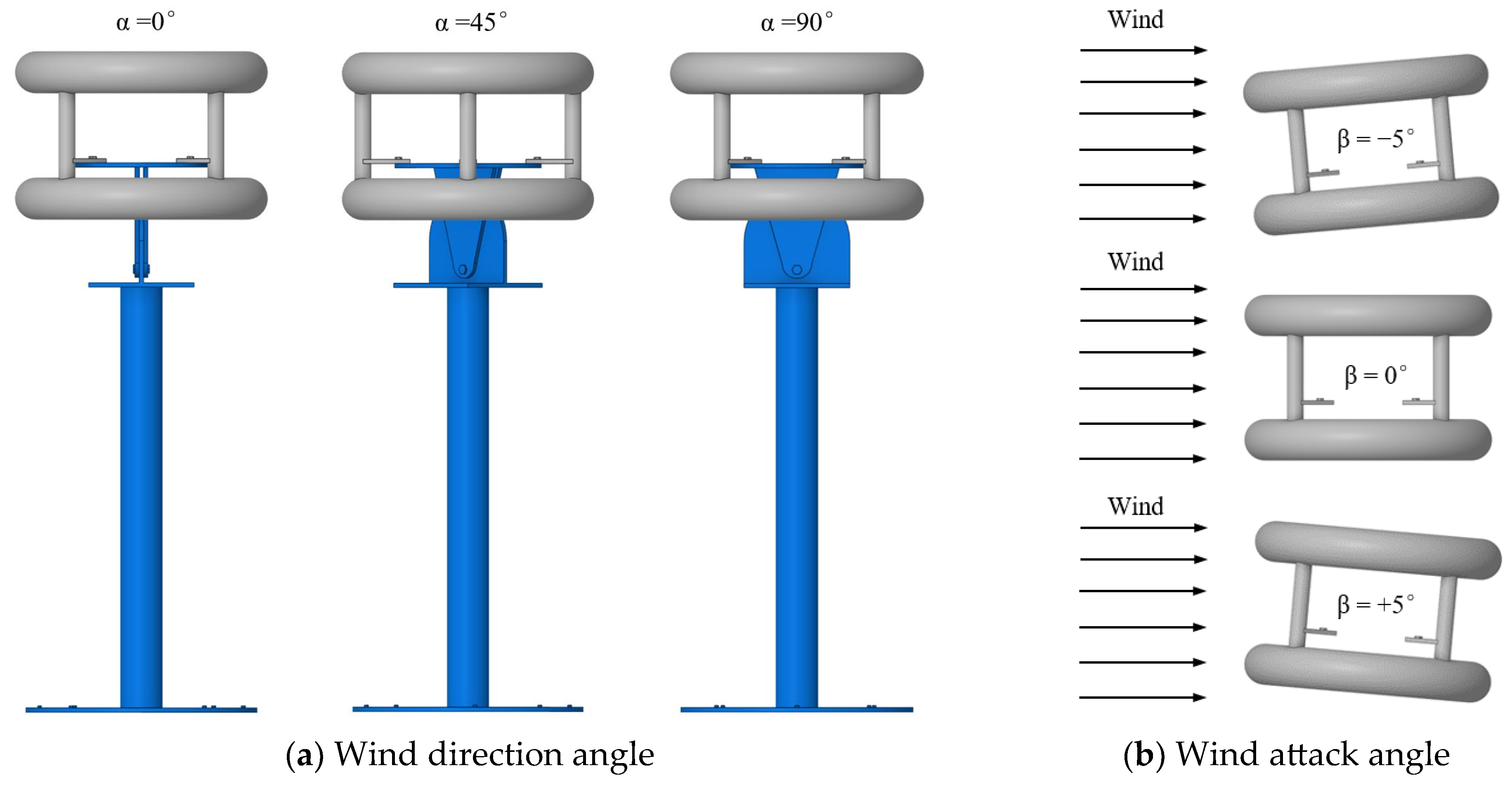
| Wind Direction Angle/α | Wind Attack Angle/β | Test Wind Speed |
|---|---|---|
| 0° | −5° | 5 m/s–18 m/s |
| 45° | 0° | |
| 90° | 5° |
| Structural Component | Attack Angle (°) | 0° Wind Dir. (m/s2) | 45° Wind Dir. (m/s2) | 90° Wind Dir. (m/s2) |
|---|---|---|---|---|
| Upper ring | −5 | 4.3019 | 3.8035 | 4.1615 |
| 0 | 5.1825 | 4.4083 | 4.8472 | |
| +5 | 6.2178 | 5.2973 | 5.6474 | |
| Lower ring | −5 | 3.1398 | 2.4892 | 2.8351 |
| 0 | 3.8926 | 3.2172 | 3.6945 | |
| +5 | 4.5184 | 3.6875 | 4.0301 |
| Structural Component | Displacement Direction | Attack Angle (°) | 0° Wind Dir. (mm) | 45° Wind Dir. (mm) | 90° Wind Dir. (mm) |
|---|---|---|---|---|---|
| Upper ring | Along-wind | −5 | 0.4935 | 0.4328 | 0.4652 |
| 0 | 0.5673 | 0.4453 | 0.4837 | ||
| +5 | 0.6481 | 0.5214 | 0.5944 | ||
| Upper ring | Vertical | −5 | 0.2277 | 0.1862 | 0.2053 |
| 0 | 0.2944 | 0.2371 | 0.2718 | ||
| +5 | 0.3843 | 0.3318 | 0.3572 | ||
| Lower ring | Along-wind | −5 | 0.3941 | 0.2372 | 0.3195 |
| 0 | 0.4636 | 0.3049 | 0.3626 | ||
| +5 | 0.5832 | 0.4591 | 0.5102 |
| Mode | Upper-Ring Test (Hz) | Lower-Ring Test (Hz) | Numerical Simulation (Hz) | Relative Error RE1 (%) | Relative Error RE2 (%) |
|---|---|---|---|---|---|
| 1st | 9.06 | 9.02 | 8.81 | 2.83 | 2.38 |
| 2nd | 10.28 | 10.25 | 9.87 | 4.15 | 3.85 |
| 3rd | 27.59 | 27.52 | 26.92 | 2.48 | 2.23 |
Disclaimer/Publisher’s Note: The statements, opinions and data contained in all publications are solely those of the individual author(s) and contributor(s) and not of MDPI and/or the editor(s). MDPI and/or the editor(s) disclaim responsibility for any injury to people or property resulting from any ideas, methods, instructions or products referred to in the content. |
© 2026 by the authors. Licensee MDPI, Basel, Switzerland. This article is an open access article distributed under the terms and conditions of the Creative Commons Attribution (CC BY) license.
Share and Cite
Wang, Z.; Liang, Q.; Jia, H.; Liu, G.; Tian, B.; Cai, C.; Zhou, Z.; Xu, S. Wind-Induced Response and Fatigue Analysis of Corona Ring in Power Equipment. Appl. Sci. 2026, 16, 1550. https://doi.org/10.3390/app16031550
Wang Z, Liang Q, Jia H, Liu G, Tian B, Cai C, Zhou Z, Xu S. Wind-Induced Response and Fatigue Analysis of Corona Ring in Power Equipment. Applied Sciences. 2026; 16(3):1550. https://doi.org/10.3390/app16031550
Chicago/Turabian StyleWang, Zhihui, Qijun Liang, Hailong Jia, Gaofei Liu, Bohai Tian, Chenzhi Cai, Zixun Zhou, and Shaopeng Xu. 2026. "Wind-Induced Response and Fatigue Analysis of Corona Ring in Power Equipment" Applied Sciences 16, no. 3: 1550. https://doi.org/10.3390/app16031550
APA StyleWang, Z., Liang, Q., Jia, H., Liu, G., Tian, B., Cai, C., Zhou, Z., & Xu, S. (2026). Wind-Induced Response and Fatigue Analysis of Corona Ring in Power Equipment. Applied Sciences, 16(3), 1550. https://doi.org/10.3390/app16031550