Collinear Pulse Train PLD: Fabrication of High-Refractive-Index-Difference TiO2/ZnO Multilayers with Multifunctional Applications


Abstract
1. Introduction
2. Experimental Section
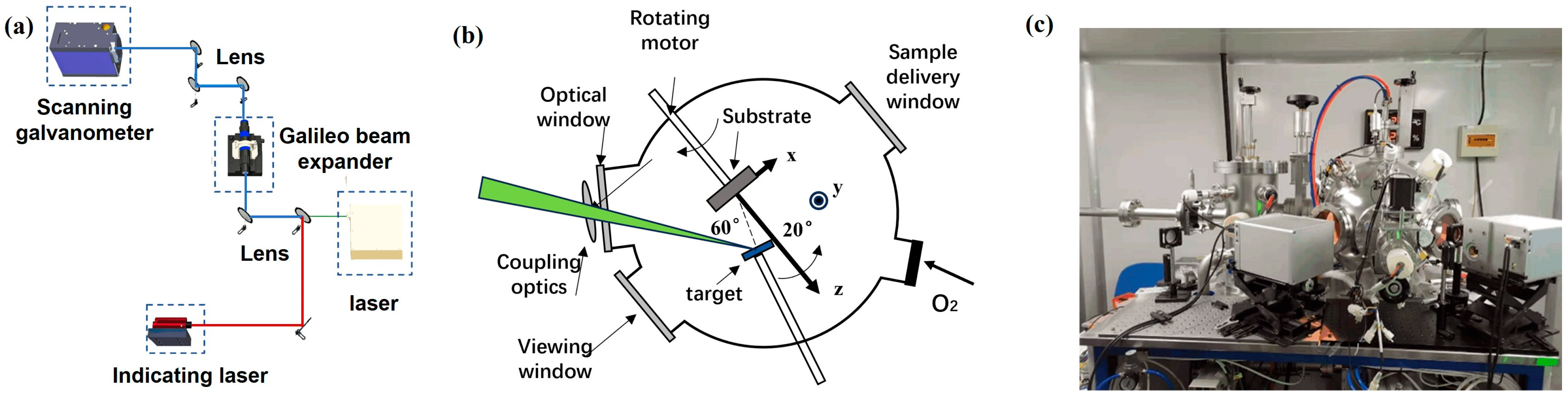
2.1. PLD Experimental System
2.2. Deposition Process
- (1)
- Substrate and target preparation: The substrates were subjected to a rigorous cleaning process to remove surface contaminants. They were sequentially ultrasonicated in acetone, ethanol, and deionized water for 15 min each and then dried with high-purity nitrogen gas to avoid water stains. The targets were polished using fine abrasive paper to achieve a smooth surface with low roughness, ensuring uniform laser ablation and consistent film growth.
- (2)
- Laser adjustment: Prior to operation, the laser water chiller was activated and set to a constant temperature of 18.5 °C to maintain the stability of the laser output. The laser power supply was turned on, and the control software was launched on a connected computer to adjust parameters such as pulse energy, frequency, and pulse number. A laser power meter was used to calibrate the output power to ensure it matched the experimental requirements. The high-speed scanning galvanometer and its control card software were initialized, and a scanning mode was programmed (1200 mm/s for TiO2, 500 mm/s for ZnO) to guarantee that the laser spot irradiated the target center precisely and scanned uniformly across the target surface.
- (3)
- Vacuum evacuation: All windows and valves of the deposition chamber were sealed tightly. The mechanical pump and bypass valve were opened first, and the chamber was evacuated until the pressure dropped below 10 Pa. Subsequently, the bypass valve was closed, and the foreline valve and turbomolecular pump were activated. After the turbomolecular pump reached its maximum rotation speed of 27,000 rpm, the gate valve was opened and set to full open. The ionization vacuum gauge (ZJ-12/CF35, Ruibao Elec. Tech. Co., Ltd., Shanghai, China) of the coating chamber was turned on, and the evacuation process continued until the chamber pressure fell below 10−4 Pa.
- (4)
- Film deposition: A 5 min pre-deposition step was performed to stabilize the plasma plume and remove any residual contaminants on the target surface. During formal deposition, the laser parameters (energy, frequency, pulse number) were precisely controlled to achieve the desired film thickness. The substrate rotation speed was maintained at 20 rpm to ensure uniform film growth, and the deposition time was adjusted according to the target thickness requirements. For multi-pulse deposition experiments, the number of sub-pulses was adjusted while synchronously optimizing the pulse energy and frequency to maintain a stable deposition rate.
- (5)
- Post-deposition treatment: After the deposition was completed, the ionization vacuum gauge and turbomolecular pump were turned off, and the system was allowed to cool down until the turbomolecular pump stopped rotating. The gate valve, foreline valve, and bypass valve were closed in sequence, and the air release valve was opened to return the chamber pressure to atmospheric pressure. Finally, the samples were carefully collected. For annealing treatment, the films were placed in a tube furnace with an oxygen atmosphere, heated at a rate of 5 °C/min to 500 °C, and annealed for 60–150 min to improve film crystallinity, repair oxygen vacancies, and enhance optical properties.
2.3. Characterization and Performance Testing
3. Results and Discussion
3.1. Optimization of Single-Layer Deposition Process
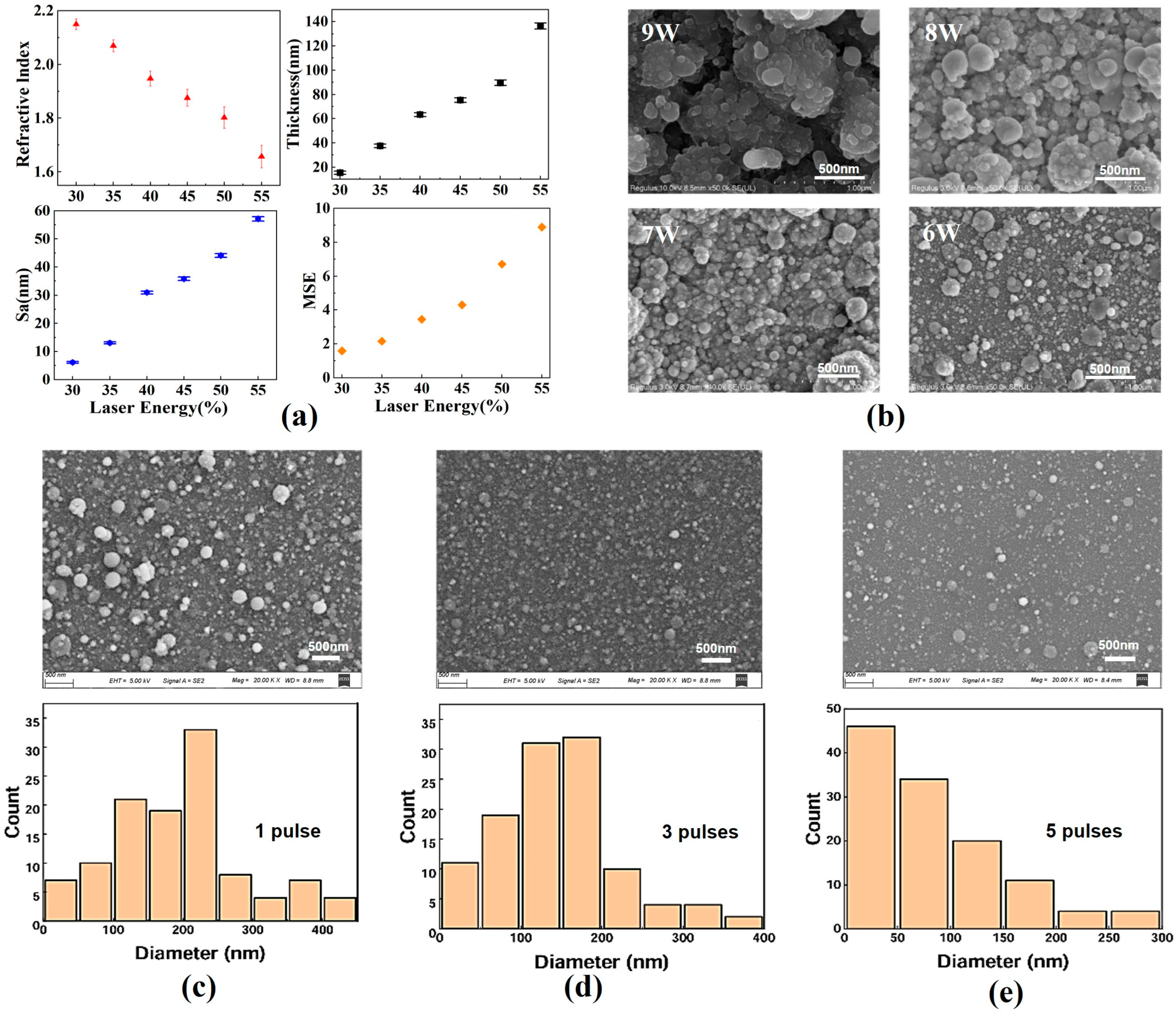
3.1.1. TiO2 Single Layers
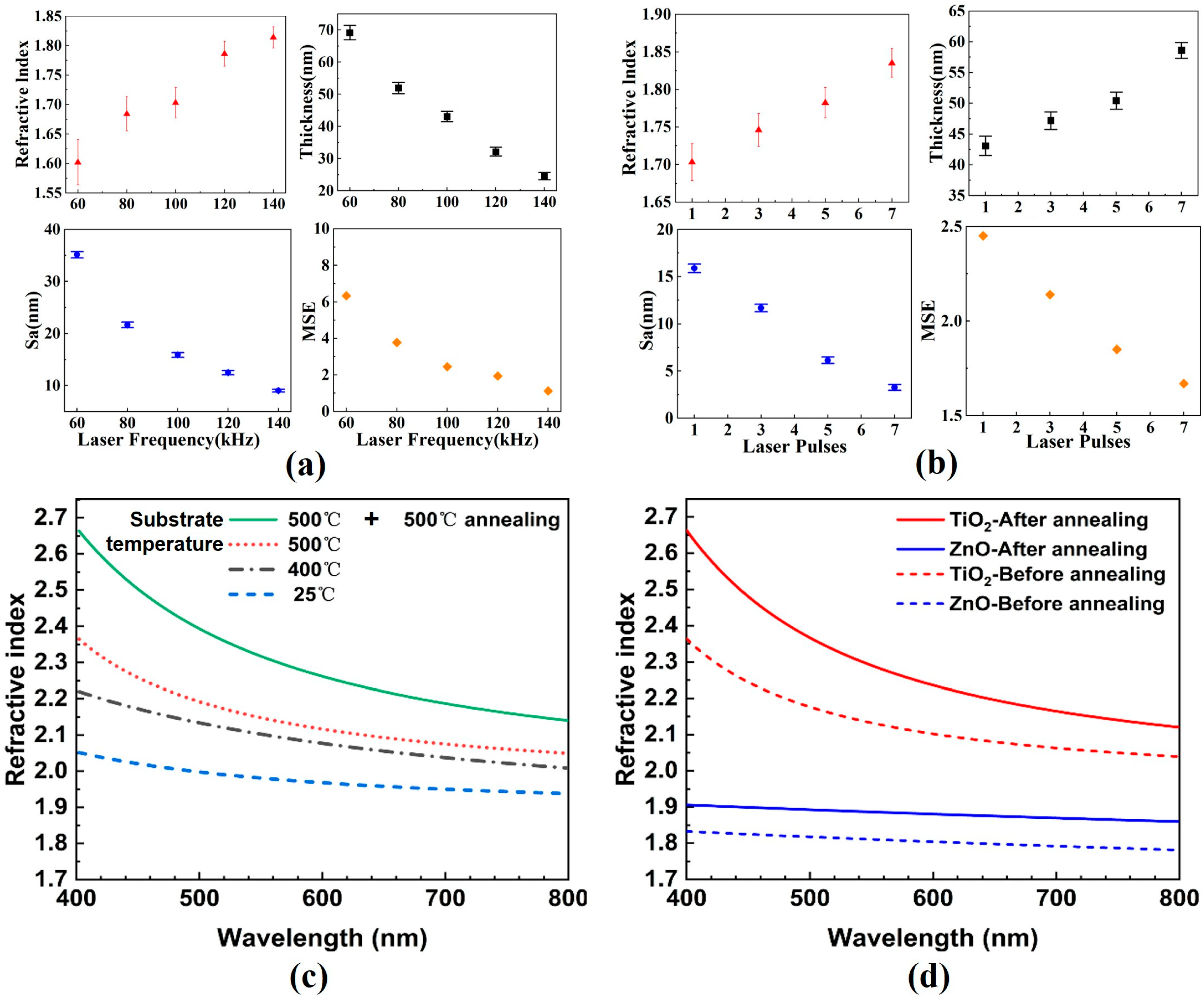
3.1.2. ZnO Single Layers
3.2. Effect of Temperature and Annealing on Film Properties
3.3. Preparation and Optimization of TiO2/ZnO Multilayers
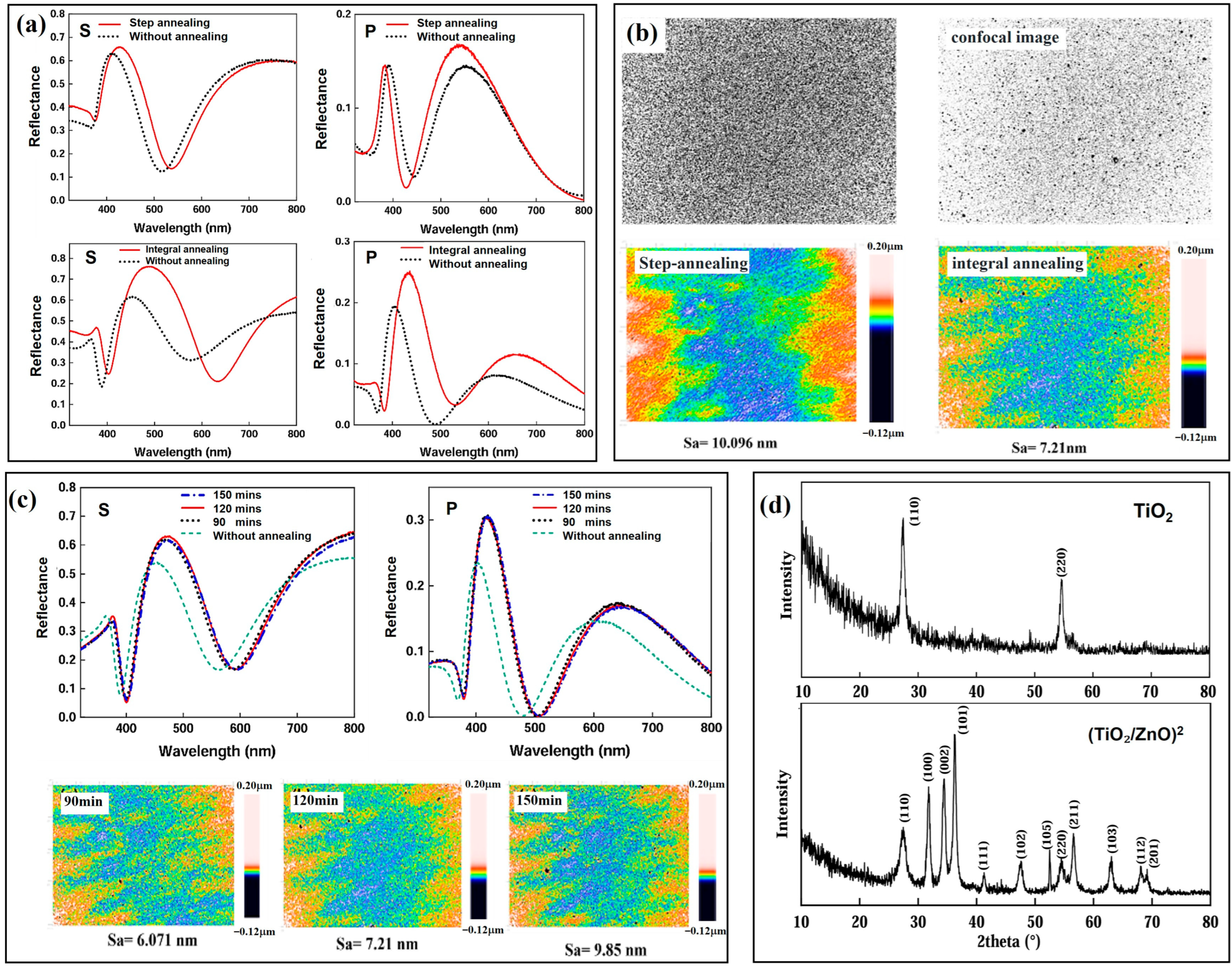
3.3.1. Annealing Strategy Optimization
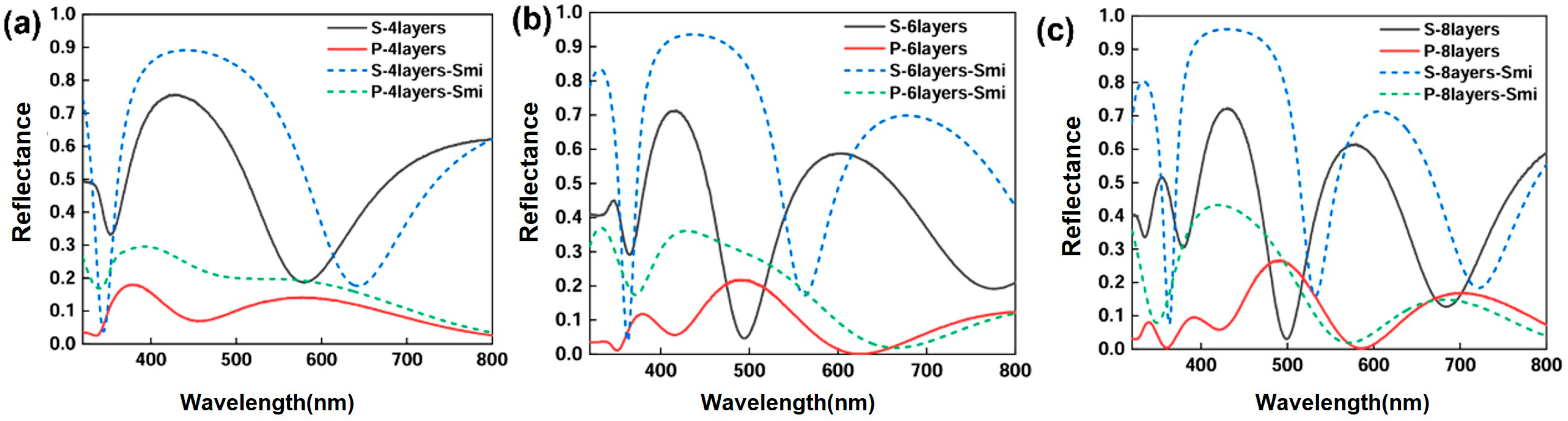
3.3.2. Effect of Layer Number on Reflectance
3.4. Multifunctional Applications of TiO2/ZnO Multilayers
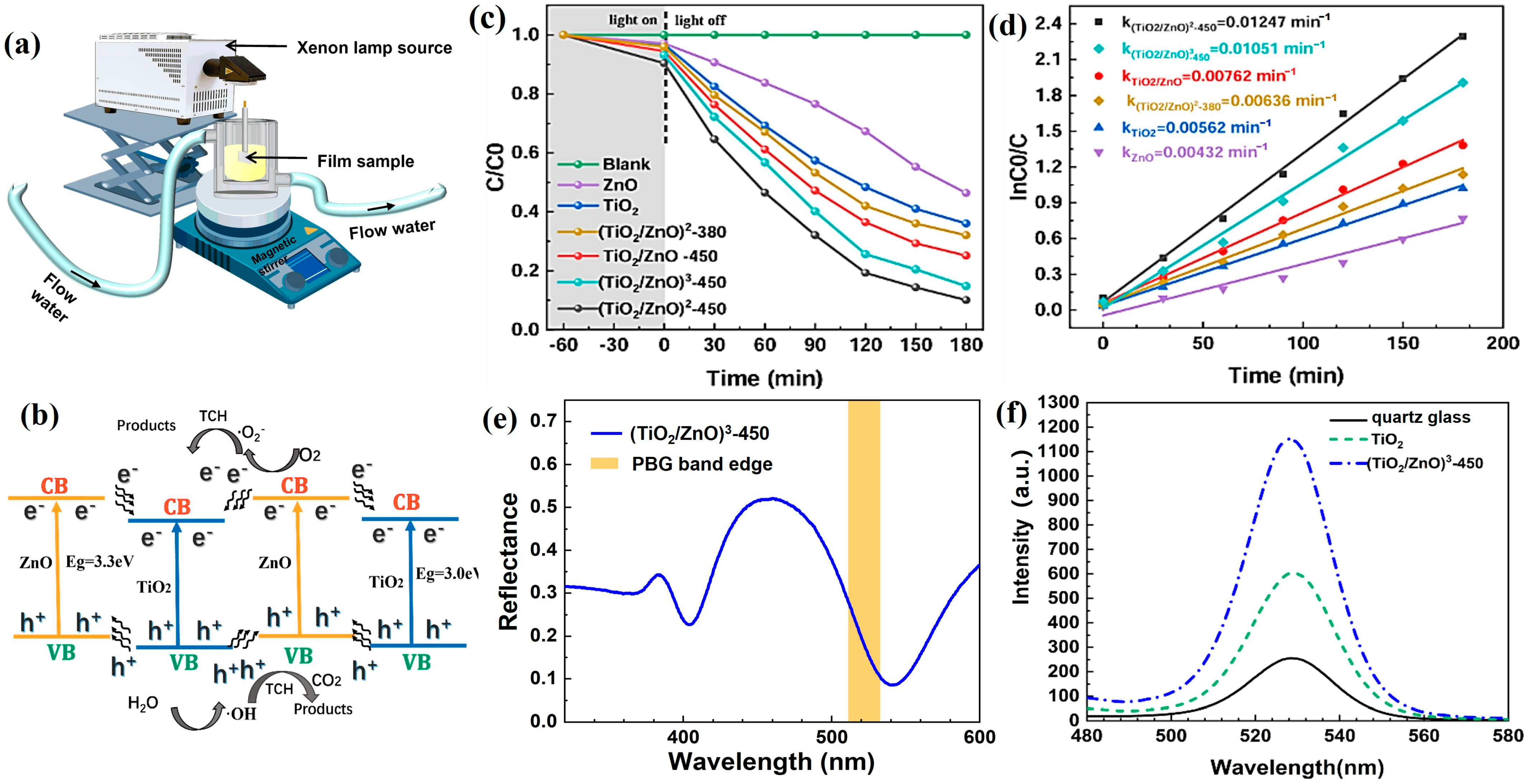
3.4.1. Photocatalytic Degradation of TCH
3.4.2. Fluorescence Enhancement of CdSe QDs
4. Conclusions
Author Contributions
Funding
Institutional Review Board Statement
Informed Consent Statement
Data Availability Statement
Conflicts of Interest
Abbreviations
| PLD | Pulsed laser deposition |
| PBG | Photonic band gap |
| QDs | Quantum dots |
| TCH | Tetracycline hydrochloride |
| Sa | Surface arithmetical deviation |
| MSE | Mean squared error |
| SD | Standard deviation |
References
- Wang, W.; Qi, L. Light management with patterned micro-and nanostructure arrays for photocatalysis, photovoltaics, and optoelectronic and optical devices. Adv. Funct. Mater. 2019, 29, 1807275. [Google Scholar] [CrossRef]
- Syed, W.A.; Rafiq, N.; Ali, A.; Din, R.-U.; Shah, W.H. Multilayer AR coatings of TiO2/MgF2 for application in optoelectronic devices. Optik 2017, 136, 564–572. [Google Scholar] [CrossRef]
- Wu, Y.; Shen, H.; Ye, S.; Zhao, X.; Zhang, K.; Zhang, J.; Yang, B. Fluorescence manipulation of carbon dots by 1D photonic crystals. Adv. Opt. Mater. 2018, 6, 1701262. [Google Scholar] [CrossRef]
- Schou, J. Physical aspects of the pulsed laser deposition technique: The stoichiometric transfer of material from target to film. Appl. Surf. Sci. 2009, 255, 5191–5198. [Google Scholar] [CrossRef]
- Melaibari, A.; Eltaher, M.A. High repetition rate deposition of boron nitride films using femtosecond pulsed laser. Mater. Res. Express 2020, 7, 096401. [Google Scholar] [CrossRef]
- Wang, Y.; Cheng, X.; Shao, J.; Zheng, C.; Chen, A.; Zhang, L. The damage threshold of multilayer film induced by femtosecond and picosecond laser pulses. Coatings 2022, 12, 251. [Google Scholar] [CrossRef]
- Hamad, A.H. Effects of Different Laser Pulse Regimes (Nanosecond, Picosecond and Femtosecond) on the Ablation of Materials for Production of Nanoparticles in Liquid Solution. In High Energy Short Pulse Lasers; IntechOpen: London, UK, 2016; p. 303. [Google Scholar] [CrossRef]
- Arooj, F.; Mukarram, A.; Abdul, S.; Maria, U.; Muhammad Hisham Al, N.; Asad, R.; Mati, U.; Maneeb Ur, R.; Mansoor Inayat, K.; Muhammad Asad, A. Photovoltaic Performance of Solar Cells Enhanced by TIO2 and ZnO Nanoparticle Layers. Spectr. Eng. Sci. 2025, 3, 1023–1031. [Google Scholar]
- AL-Rubaiawi, H.; Faisal Alwan, A.; Ayad Husain, A.; Muhamed Ibrahim, N.; Abdul Kareem Ali, D.; Tariq Mahmood, A. Structural and Optical Properties of Doped Polystyrene Thin Films by (NiO, TiO2, ZnO, MgO) Nanoparticles. Color. Coat. 2025, 18, 323–341. [Google Scholar]
- Haider, A.J.; Alawsi, T.; Haider, M.J.; Taha, B.A.; Marhoon, H.A. A comprehensive review on pulsed laser deposition technique to effective nanostructure production: Trends and challenges. Opt. Quantum Electron. 2022, 54, 488. [Google Scholar] [CrossRef]
- Kim, H.S.; Jung, S.-W.; Ahn, K.-S.; Kang, S.H. Enhanced light harvesting of CdSe quantum dot sensitized bilayered ZnO nanostar/TiO2 nanotubes. Curr. Appl. Phys. 2013, 13, S162–S167. [Google Scholar] [CrossRef]
- Kammoun, J.; Dhiflaoui, H.; Chayoukhi, S.; Gassoumi, B.; Benhayoune, H.; Hajjaji, A.; Ben Moussa, N. Elaboration of TiO2–ZnO Coatings Through Spray-Pyrolysis Technology and the Study of Their Microstructural, Nanoindentation and Optic Properties. Trans. Indian Inst. Met. 2025, 78, 164. [Google Scholar] [CrossRef]
- Duraisamy, M.; Sreekantan, S.; Govindasamy, G.A.; Murthe, S.S.; Appaturi, J.N.; Md Noor, S.S. An in-vitro study of antibacterial, cytocompatibility and physicochemical properties of TiO2-ZnO nanocomposite. J. Sol-Gel Sci. Technol. 2025, 115, 1156–1168. [Google Scholar] [CrossRef]
- Doyle, S.; Ryan, L.; McCarthy, M.M.; Modreanu, M.; Schmidt, M.; Laffir, F.; Povey, I.M.; Pemble, M.E. Combinatorial ALD for the growth of ZnO/TiO2 nanolaminates and mixed ZnO/TiO2 nanostructured films. Mater. Adv. 2022, 3, 2896–2907. [Google Scholar] [CrossRef]
- Dizaj, M.H. Comparison and Review of ALD Target Materials for Quantum Dot Solar Cells: Al2O3, TiO2, ZnO, HFO2, WN, and NiO. Third International Conference for Students and Engineers of Electrical and Clean Energy (mee.cdsts.ir), Tehran, Iran. 2024. Available online: https://zenodo.org/records/14607545 (accessed on 10 November 2025).
- Sawunyama, L.; Oyewo, O.; Onwudiwe, D.C.; Makgato, S.S. Photocatalytic degradation of tetracycline using surface defective black TiO2-ZnO heterojunction photocatalyst under visible light. Heliyon 2023, 9, e21423. [Google Scholar] [CrossRef]
- Hussin, R.; Zulkiflee, N.S.; Zakiah, K.; Ainun Rahmahwati, A.; Harun, Z.; Mohamed Hatta, M.N. Photocatalytic Activity of Bilayer TiO2/ZnO and ZnO TiO2 Thin Films. Mater. Sci. Forum 2020, 1010, 411–417. [Google Scholar] [CrossRef]
- Hu, L.; Xing, M.; He, X.; Yang, K.; Zhu, J.; Wang, J.; He, J.; Shi, J. Photocatalytic degradation of tetracycline hydrochloride by ZnO/TiO2 composite photocatalyst. J. Mater. Sci. Mater. Electron. 2023, 34, 2273. [Google Scholar] [CrossRef]
- Monika, S.; Mahalakshmi, M.; Pandian, M.S. TiO2/CdS/CdSe quantum dots co-sensitized solar cell with the staggered-gap (type-II) heterojunctions for the enhanced photovoltaic performance. Ceram. Int. 2023, 49, 8820–8826. [Google Scholar] [CrossRef]
- Devloo-Casier, K.; Geiregat, P.; Ludwig, K.F.; van Stiphout, K.; Vantomme, A.; Hens, Z.; Detavernier, C.; Dendooven, J. A Case Study of ALD Encapsulation of Quantum Dots: Embedding Supported CdSe/CdS/ZnS Quantum Dots in a ZnO Matrix. J. Phys. Chem. C 2016, 120, 18039–18045. [Google Scholar] [CrossRef]
- Iqbal, A.; Saidu, U.; Adam, F.; Sreekantan, S.; Jasni, N.; Ahmad, M.N. The effects of zinc oxide (ZnO) quantum dots (QDs) embedment on the physicochemical properties and photocatalytic activity of titanium dioxide (TiO2) nanoparticles. J. Phys. Sci. 2021, 32, 71–85. [Google Scholar]
- Theerthagiri, J.; Karuppasamy, K.; Lee, S.J.; Shwetharani, R.; Kim, H.-S.; Pasha, S.K.K.; Ashokkumar, M.; Choi, M.Y. Fundamentals and comprehensive insights on pulsed laser synthesis of advanced materials for diverse photo- and electrocatalytic applications. Light Sci. Appl. 2022, 11, 250. [Google Scholar] [CrossRef]
- Lau, M.; Reichenberger, S.; Haxhiaj, I.; Barcikowski, S.; Müller, A.M. Mechanism of Laser-Induced Bulk and Surface Defect Generation in ZnO and TiO2 Nanoparticles: Effect on Photoelectrochemical Performance. ACS Appl. Energy Mater. 2018, 1, 5366–5385. [Google Scholar] [CrossRef]
- Theerthagiri, J.; Karuppasamy, K.; Min, A.; Govindarajan, D.; Kumari, M.L.A.; Muthusamy, G.; Kheawhom, S.; Kim, H.-S.; Choi, M.Y. Unraveling the fundamentals of pulsed laser-assisted synthesis of nanomaterials in liquids: Applications in energy and the environment. Appl. Phys. Rev. 2022, 9, 041314. [Google Scholar] [CrossRef]
- ISO 25178-2:2021; Geometrical Product Specifications (GPS)—Surface Texture: Areal—Part 2: Terms, Definitions and Surface Texture Parameters. International Organization for Standardization: Geneva, Switzerland, 2021.
- Ghazaryan, L.; Handa, S.; Schmitt, P.; Beladiya, V.; Roddatis, V.; Tünnermann, A.; Szeghalmi, A. Structural, optical, and mechanical properties of TiO2 nanolaminates. Nanotechnology 2020, 32, 095709. [Google Scholar] [CrossRef] [PubMed]
- Jena, S.; Tokas, R.B.; Thakur, S.; Sahoo, N.K. Influence of annealing on optical, microstructural and laser induced damage properties of TiO2/SiO2 multilayer high reflection mirror. AIP Conf. Proc. 2017, 1832, 060005. [Google Scholar]
- Kumar, A.; Nayak, D.; Sahoo, P.; Kumar Nandi, B.; Thangavel, R. Synthesis of type-II TiO2 nanoparticle/ZnO nanorods heterostructure for enhanced photocatalytic activity. Mater. Lett. 2024, 367, 136672. [Google Scholar] [CrossRef]
- Behara, D.K.; Tammineni, J.; Maheswari, M.S. TiO2/ZnO: Type-II Heterostructures for electrochemical crystal violet dye degradation studies. Maced. J. Chem. Chem. Eng. 2020, 39, 217–226. [Google Scholar] [CrossRef]
- Shi, Y.; Li, J.; Wan, D.; Huang, J.; Liu, Y. Peroxymonosulfate-enhanced photocatalysis by carbonyl-modified g-C3N4 for effective degradation of the tetracycline hydrochloride. Sci. Total Environ. 2020, 749, 142313. [Google Scholar] [CrossRef]
- Malakootian, M.; Asadzadeh, S.N.; Mehdipoor, M.; Kalantar-Neyestanaki, D. A new approach in photocatalytic degradation of tetracycline using biogenic zinc oxide nanoparticles and peroxymonosulfate under UVC irradiation. Desalination Water Treat. 2021, 222, 302–312. [Google Scholar] [CrossRef]
- Akimoto, T.; Yasuda, M. Fluorescence enhancement and reflection of the excitation light observed with a multilayered substrate. Appl. Opt. 2010, 49, 80–85. [Google Scholar] [CrossRef]



| Laser Frequency (kHz) | Sa (nm) ± SD | Thickness (nm) ± SD | Refractive Index ± SD | MSE |
|---|---|---|---|---|
| 60 | 43.2 ± 0.8 | 107.4 ± 2.5 | 1.83 ± 0.04 | 7.913 |
| 80 | 35.0 ± 0.5 | 83.2 ± 1.8 | 1.88 ± 0.03 | 5.351 |
| 100 | 31.0 ± 0.5 | 63.4 ± 1.2 | 1.95 ± 0.03 | 3.449 |
| 120 | 21.2 ± 0.4 | 50.1 ± 1.0 | 2.00 ± 0.02 | 2.867 |
| 140 | 11.2 ± 0.3 | 30.3 ± 0.7 | 2.00 ± 0.02 | 2.190 |
| Sub-Pulses | Sa (nm) ± SD | Thickness (nm) ± SD | Refractive Index ± SD | MSE |
|---|---|---|---|---|
| 1 | 31.0 ± 0.5 | 63.4 ± 1.2 | 1.95 ± 0.02 | 3.449 |
| 3 | 22.1 ± 0.4 | 65.9 ± 1.3 | 2.04 ± 0.02 | 3.291 |
| 5 | 10.2 ± 0.3 | 68.1 ± 1.4 | 2.10 ± 0.02 | 2.876 |
| 7 | 4.4 ± 0.2 | 71.2 ± 1.5 | 2.16 ± 0.02 | 1.945 |
| Laser Energy (%) | Sa (nm) ± SD | Thickness (nm) ± SD | Refractive Index ± SD | MSE |
|---|---|---|---|---|
| 40 | 6.5 ± 0.2 | 16.1 ± 0.5 | 1.81 ± 0.02 | 1.45 |
| 45 | 8.1 ± 0.3 | 22.9 ± 0.8 | 1.79 ± 0.02 | 1.88 |
| 50 | 11.1 ± 0.4 | 33.7 ± 1.0 | 1.77 ± 0.02 | 2.17 |
| 55 | 15.9 ± 0.5 | 43.1 ± 1.0 | 1.70 ± 0.02 | 3.45 |
| 60 | 28.0 ± 0.6 | 58.0 ± 1.5 | 1.69 ± 0.03 | 5.68 |
| 65 | 44.7 ± 0.8 | 78.5 ± 2.0 | 1.65 ± 0.05 | 7.35 |
Disclaimer/Publisher’s Note: The statements, opinions and data contained in all publications are solely those of the individual author(s) and contributor(s) and not of MDPI and/or the editor(s). MDPI and/or the editor(s) disclaim responsibility for any injury to people or property resulting from any ideas, methods, instructions or products referred to in the content. |
© 2026 by the authors. Licensee MDPI, Basel, Switzerland. This article is an open access article distributed under the terms and conditions of the Creative Commons Attribution (CC BY) license.
Share and Cite
Zhao, X.; Dong, G.; Zhu, Z.; Qin, Y.; He, J.; Yu, J. Collinear Pulse Train PLD: Fabrication of High-Refractive-Index-Difference TiO2/ZnO Multilayers with Multifunctional Applications. Appl. Sci. 2026, 16, 1354. https://doi.org/10.3390/app16031354
Zhao X, Dong G, Zhu Z, Qin Y, He J, Yu J. Collinear Pulse Train PLD: Fabrication of High-Refractive-Index-Difference TiO2/ZnO Multilayers with Multifunctional Applications. Applied Sciences. 2026; 16(3):1354. https://doi.org/10.3390/app16031354
Chicago/Turabian StyleZhao, Xiang, Guoyan Dong, Zheng Zhu, Yutao Qin, Jiaxiang He, and Jin Yu. 2026. "Collinear Pulse Train PLD: Fabrication of High-Refractive-Index-Difference TiO2/ZnO Multilayers with Multifunctional Applications" Applied Sciences 16, no. 3: 1354. https://doi.org/10.3390/app16031354
APA StyleZhao, X., Dong, G., Zhu, Z., Qin, Y., He, J., & Yu, J. (2026). Collinear Pulse Train PLD: Fabrication of High-Refractive-Index-Difference TiO2/ZnO Multilayers with Multifunctional Applications. Applied Sciences, 16(3), 1354. https://doi.org/10.3390/app16031354