


Abstract
Community-based collection of household plastic waste (HPW) is expanding in Japan as a way to produce high-value post-consumer recycled (PCR) materials. These systems set up collection points where residents bring recyclable items and sort them into designated bins. However, the environmental impacts of such systems and their advantages over municipal collection remain insufficiently understood, and discussion on the burden placed on residents is limited. This study empirically analyses HPW collection and recycling in community-based systems and examines approaches to producing high-value PCR from environmental and resident-burden perspectives. Environmental impact assessments were conducted for municipal and community-based collection. The time required for residents to wash items before segregation was also evaluated as a burden using questionnaire surveys. A scenario for collecting and recycling five HPW types in Kobe City, Japan, was developed, and environmental impacts and resident burdens were quantified. Results show that community-based collection achieves 3.75 kg-CO2eq of avoided annual greenhouse gas emissions per household compared with incineration but requires 1.72 h of annual washing time. High-value PCR production depends on resident cooperation during segregation. Clear communication is essential to achieve environmental and economic benefits while minimising additional burdens on residents.
1. Introduction
There is increasing international pressure to reduce plastic resource usage and enhance resource productivity through recycling, driven by concerns regarding climate change, resource conservation, etc. A circular economy (CE) refers to a strategy that creates loops to circulate plastic resources while maintaining their high value, aiming to sustain and preserve long-term value while minimising waste generation. In order to optimise the value of original resources, it is essential that recycling produces remanufactured products which are of a quality that is equal to, or superior to, that of the original products, rather than manufacturing remanufactured products which have a reduced quality. Manufacturing plastic bottles from waste plastic bottles is an example of quality-preserving recycling. Furthermore, the proposed end-of-life vehicle (ELV) regulation currently under discussion in the EU mandates a certain amount of usage of post-industrial recycled (PIR), post-consumer recycled (PCR), and bioplastic materials for automotive plastic parts [1]. Although the target values for recycled plastic usage may change in the future, meeting the proposed regulation will require upgrading PCR. Automotive parts require high-quality materials due to durability and safety requirements.
PIR is made from plastic scrap generated in factories. Industrial waste is easier to recycle horizontally or upgrade because it consists of a single material, its composition is easier to identify comparing with post-consumer materials, and it has low contamination levels [2]. PCR is made from waste plastics that were used as final products in households and commercial facilities. Consumer-derived waste plastics are collected in a mixed state and contain various waste types that differ in resin type, colour, and whether composite materials are used [2]. These materials are often non-recyclable, necessitating downgraded recycling. Producing high-value PCR requires not only improved recycling technology but also advanced sorting techniques. Regarding sorting technology, PCR quality is significantly affected by contamination from foreign objects, discoloration, the presence of multilayer plastic films or composite materials, and residual dirt from inadequate washing [3]. High-quality waste plastic can be recovered if, after collection, factories wash the waste and then use sorting machines to separate waste plastics by resin type or colour; this is a useful method if increased processing costs are not a concern. While consumer cooperation is necessary, if consumers wash and sort waste plastics at disposal, this enables the recovery of high-quality waste plastic with less contamination, thereby increasing the value of recycled material [4]. In Japan, a common method is for households to separate resource waste, such as containers and packaging plastics from combustible and non-combustible waste for collection by municipalities (i.e., so-called municipal waste collection). However, even with this system, plastics are collected in a mixed state, leading to a high volume of non-recyclable materials and unavoidable recycling downgrades.
In recent years, a system known as community-based waste collection has become widespread in Japan. This involves establishing collection points for household plastic waste (HPW) at the community level, whereby nearby residents bring recyclable waste and deposit it into designated boxes sorted by item type. This method allows for bulk collection of the same type of waste plastic, such as plastic bottles and trays. Because the collected waste contains few contaminants and is sufficiently clean, it facilitates horizontal and upgraded recycling. As an example of this approach, Kobe City, Japan, is implementing an initiative under the “Kobe Plastic Next” project to collect waste plastic bottles and recycle them into new plastic bottles [5]. Kobe City also has established resource collection stations, known as “Eco-no-ba,” in each ward of the city, with the intention of promoting plastic recycling while also creating community hubs that will generate local interaction through the act of removing waste [6]. In January 2024, a project was initiated to collect five types of plastic containers and packaging made of polypropylene (5PPs), such as caps other than those from plastic bottles, frozen food trays, used food storage containers, tofu containers, and jelly containers, and recycle them into automobile parts [6].
Community-based waste collection can recover high-quality HPW, contributing to the production of high-value PCR. Furthermore, compared with municipal waste collection, municipal involvement is reduced, potentially lowering the waste disposal costs for local governments. However, knowledge regarding the environmental impacts associated with implementing community-based waste collection is limited, and its environmental advantages over municipal waste collection remain unclear. In addition, there has been insufficient discussion regarding the burden on residents associated with the implementation of community-based waste collections. This study aimed to conduct an empirical analysis of HPW collection and recycling through community-based waste collection and to discuss approaches for manufacturing high-value-added PCR from environmental and resident burden perspectives.
2. Literature Review
With advancement of the CE, recycling plastic waste has become a critical challenge. Many countries, including Europe and Japan, have implemented policies aimed at improving HPW collection rates. However, recycling in the CE era demands results not only in terms of quantity (collection rate), but also quality (quality of recycled materials). The quality of recycled materials directly affects product applications (e.g., food contact, pharmaceuticals, and building materials). High-quality materials enable horizontal and upgraded recycling, thereby promoting resource circulation. Conversely, low-quality materials are often downcycled or incinerated, which hinders the circulation of plastic resources. This chapter reviews the findings on HPW collection and recycling from a quality perspective and highlights research topics that need to be clarified.
2.1. Safety
The quality of recycled plastic is generally determined by the homogeneity of the collected household waste plastics [7,8]. Measures to minimise waste heterogeneity include improving product design and controlling material contamination through advanced sorting [7]. Chemicals such as phthalate plasticisers and bisphenol A are used as additives in plastics, and it is necessary to consider the possibility of migration and release of additives from the polymer structure when recycling household waste plastics [7]. Hansen et al. [9] evaluated the fate of chemicals in the mechanical recycling of plastics, and concluded that a dominant proportion of additives remained in the recycled materials. These authors also clarified that easily evaporating solvents, monomers that react further during the recycling process, and stabilisers (heat stabilisers) that are forced to react during the recycling process, do not remain in the recycled material [9]. Eriksen et al. [3] pointed out that the metal concentration used in additives and colourants in HPW is higher than that in virgin plastics, and that recycling may lead to metal accumulation. Contamination by paper, metal, food residues, additives, and foreign polymers leads to reduced mechanical properties (tensile strength, impact strength, and elongation) and chemical safety concerns (leaching, odour, and heavy metals) [10,11,12,13]. Raw material homogeneity and contamination levels significantly influence quality, making sorting accuracy the most upstream determining factor. Recycling design enhances the recyclability of plastic packaging and improves the quality of recycled products without compromising safety or the original requirements [14,15]. Bottle-to-bottle loops based on strict source separation and high-efficiency sorting/washing have led to substantial reductions in fossil-fuel consumption and CO2 emissions [8,16]. Conversely, mixed collection that results in low-quality recycling or co-incineration diminishes the potential for circularity [3,17]. For polypropylene (PP), recycling design and additive management are key to environmental benefits [18].
2.2. Mechanical Properties
Sorting and/or segregation is among the methods used to ensure the quality of HPW. Sorting methods include collecting mixed waste, separating HPW at a material recovery facility (MRF) using a sorting machinery, and segregating HPW at home before collection (i.e., source segregation). Since MRFs recover HPW from mixed collected waste, it places less burden on residents. MRFs can efficiently sort and recover large volumes of mixed waste according to the material type [19]. However, HPW is prone to contamination, and only approximately 55% of plastic waste sent to MRFs is suitable for recycling [3]. Eriksen et al. [3] further argued that, even with source segregation and the technologies used in MRFs, the circularity rate for household waste plastics in Europe remains at only 42%. Patel et al. [20] evaluated the degradation of high-density polyethylene during mechanical recycling using rheology, and proposed an indicator of raw material degradation. Using this indicator to assess the degree of raw material degradation before the manufacturing process allows the determination of suitability for end-consumer use, serving as an effective quality assurance measure for PCR.
2.3. Suitability
As a technological development in MRFs, an initiative was launched in the EU (HolyGrail 2.0) aimed at enabling product-level identification and sorting within MRFs by applying invisible digital watermarks to products and packaging [21]. This technology is expected to reduce the burden of sorting on households and reinforce high-precision downstream sorting. Digital product passports (DPP) are also digital technologies intended to enhance circularity by attaching information such as the types of raw materials used in products [6]. Extracting polymer type, shape, and brand information through artificial intelligence (AI) deep-learning image recognition, followed by sorting via robotic arms, has proven effective for rapid correction of misplaced items [22]. Enhancing cleaning, deodorisation, and decontamination processes can broaden the application range and increase the value of recycled materials [23].
2.4. Source Segregation
Regarding source segregation, the Alliance to End Plastic Waste [24] asserts through projects in multiple countries that household waste sorting significantly improves the quantity and quality of materials collected for recycling, contributing to reduced sorting costs and landfill volumes. Economic benefits (increased recycling revenue and reduced landfill costs) and carbon footprint reduction can serve as incentives for implementing source segregation [25,26]. Conversely, segregating HPW at home has been noted to impose a psychological burden [27,28]. Relaxing segregation standards can effectively reduce the burden on residents. Although this approach is expected to increase collection volumes, it has also been reported to increase the proportion of contaminated HPW [29].
2.5. Summary and Research Topics
The higher the sorting accuracy, the better are the mechanical and chemical properties of the recycled materials, thus expanding their range of applications. However, the increased household burden and operational costs may lead to lower collection rates, making the trade-off between quantity and quality a central challenge in policy design. Future priorities include ensuring traceability through digital watermarks and DPP, producing high-value PCR through the social implementation of AI sorting, strict segregation based on item selection, standardisation of PCR quality assurance, and supporting consumer behaviour through a simple and clear segregation design. Advancing these simultaneously through policy, the market, and technology can push the upper limit of circularity potential and enable realisation of a shift of recycled materials to high-value applications. Community-based waste collection, an evolved form of source segregation, has strict segregation standards and cannot be expected to significantly increase its collection volume. However, community-based waste collection is advantageous for the precise collection of high-quality HPW, which is less contaminated and meets the requirements for upgraded recycling. Thus, community-based waste collection can be used to build a CE. Nevertheless, community-based waste collection is a relatively new approach, and knowledge of its environmental and economic aspects remains insufficient. Furthermore, discussions concerning resident burden have not yet been fully explored. Recognising these issues, this study conducted an empirical analysis of community-based waste collections, as described in the following chapters.
3. Methodology
3.1. Target Area and Objects
This study focused on Kobe City, Japan. With an estimated population of 1.53 million in 2020 [30], Kobe is part of the Greater Osaka region, Japan’s second-largest metropolitan area. In FY2023 (FY refers to the Japanese fiscal year. For example, FY2023 starts April 2023, and ends March 2024), Kobe City’s total waste generation was approximately 484,000 tons, of which containers and packaging plastics accounted for approximately 21,000 tons [31].
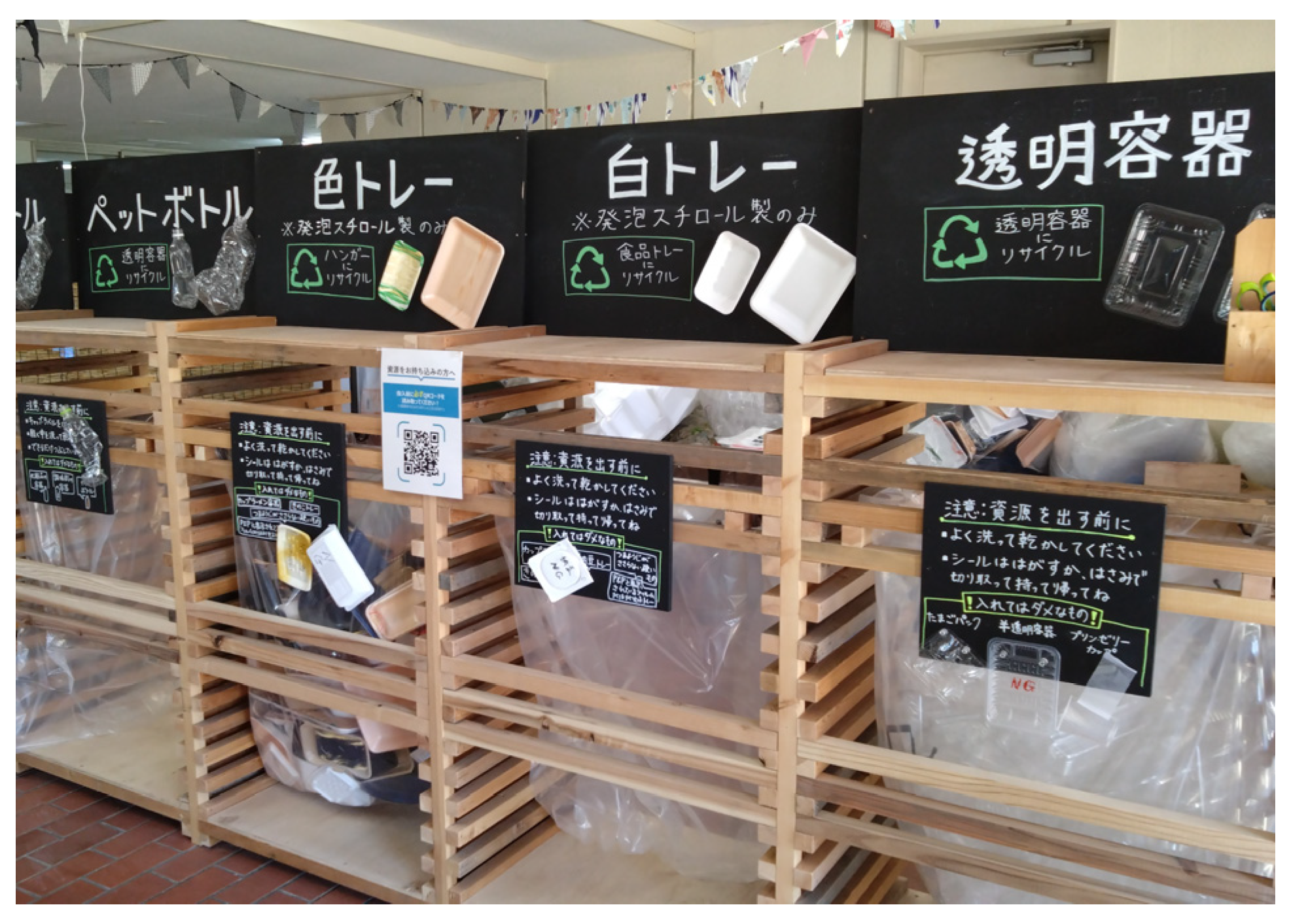
The HPW used in this study consisted of plastic containers and packaging. In addition to the municipal waste collection of containers and packaging plastics, Kobe has implemented community-based waste collection points called Eco-no-ba (Figure 1). Residents bring recyclable resources such as HPW to an Eco-no-ba and drop them into designated collection boxes sorted by item. Eco-no-ba stations are installed within facilities such as community centres throughout Kobe City, with 66 locations as of 13 December 2025 [32]. The types of HPW collected varied according to the location of the Eco-no-ba. As of 13 December 2025, 10 locations collected 5PPs [32].
Figure 1.
An Eco-no-ba. Photographed by the author. The collection boxes shown in the photo, from left to right, are for plastic bottles (ペットボトル), coloured plastic food trays (except white) (色トレー), white plastic food trays (白トレー), and transparent plastic food containers (透明容器).
The municipal waste collection collects all household-sorted containers and packaging plastics. Collection is conducted by municipalities. The collected containers and packaging plastics are then transferred to recyclers. In the recyclers, PP is sorted, and PCR is manufactured from PP and used to produce industrial pallets. After PP sorting, the residue is utilised as refuse paper and plastic fuel. Community-based waste collection involves residents bringing sorted containers and packaging plastics according to item type to resource recovery stations. In Kobe City, community-based waste collections include plastic bottles, food-grade polystyrene foam trays, and the 5PPs introduced earlier; i.e., caps other than those from plastic bottles, frozen food trays, used food storage containers, tofu containers, and jelly containers. When limited to 5PPs, post-collection processes such as foreign object removal and PCR were performed. Prototype automotive parts have also been developed using PCR [33]. It should be noted that the manufacturing of automotive parts from 5PPs is currently in the demonstration stage, and the collection of these 5PPs within Kobe City remains at a small scale.
3.2. Evaluation Items
This study evaluated the environmental impact of plastic collection and recycling, the degree of resident cooperation in HPW washing as a burden on residents, and the economic value of PCR.
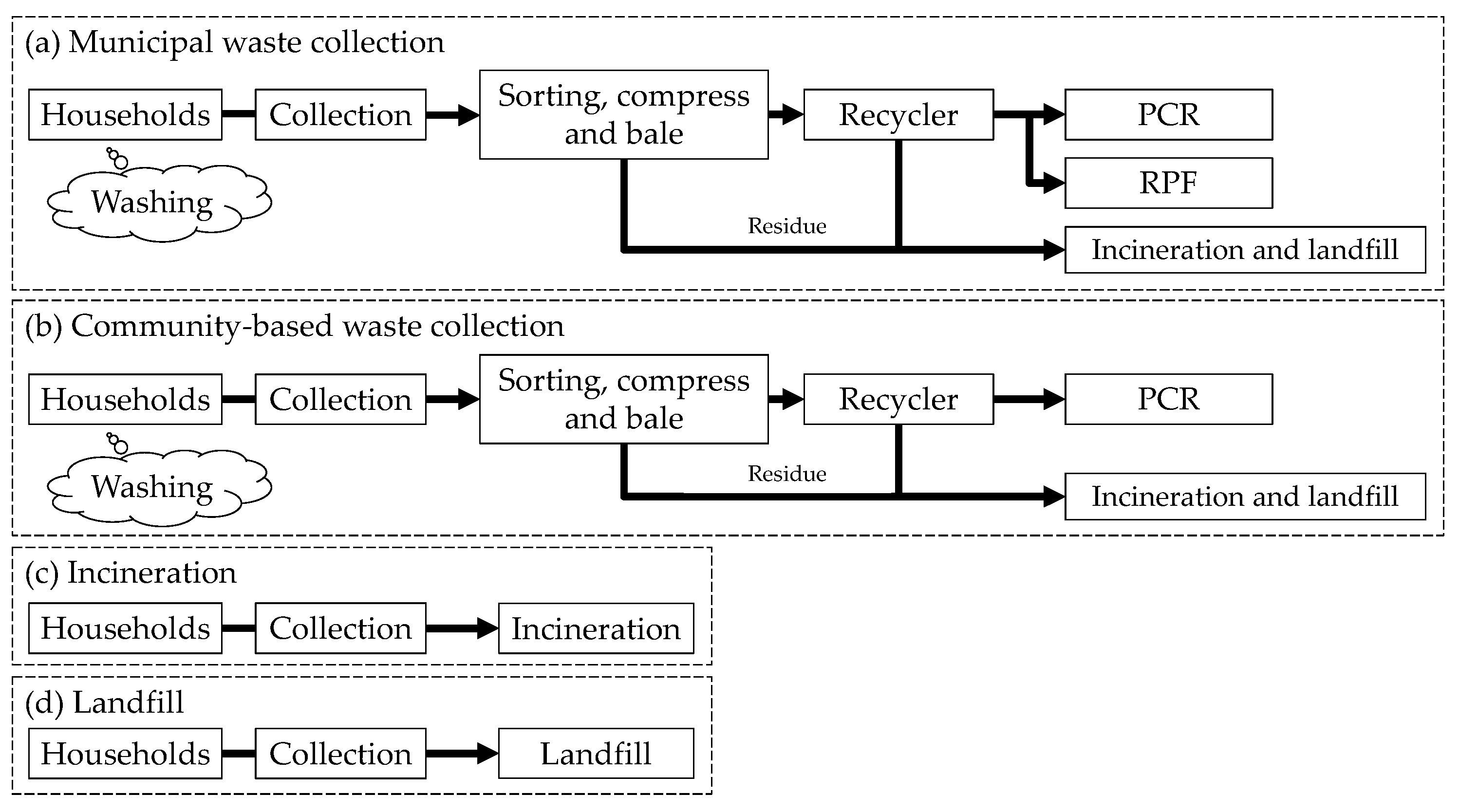
The environmental impacts were calculated using life-cycle assessments (LCAs), which were conducted in accordance with the ISO 14000 and ISO 14040 standards. The environmental impacts considered included climate change, ozone layer destruction, acidification, urban area air pollution, photochemical ozone, toxic chemicals (cancer), toxic chemicals (chronic disease), aquatic toxicity, eutrophication, land use (transformation), resource consumption, and water resource consumption [34]. The functional unit was defined as 1 kg PP-based HPW. Figure 2 shows the system boundaries. Four cases were compared: municipal waste collection, community-based waste collection, incineration (representing the non-recycling of PP-based HPW), and landfilling. Municipal and community-based waste collection cases accounted for household washing and segregation. Here, “washing” refers to residents cleaning HPW to remove dirt before segregation. Detergents or hot water may be used to wash the HPW. In incineration and landfilling cases, HPW is disposed of unwashed, and mixed with combustible or non-combustible waste. The municipal waste collection boundaries reflect the actual system in Kobe City. The community-based waste collection boundary reflects the system used in the demonstration experiment in Kobe City for manufacturing automotive parts using 5PPs.
Figure 2.
System boundary. Processes with a white background were excluded from evaluation. PCR—post-consumer recycled; RPF—refuse paper and plastic fuel.
The resident burden was measured by the degree of resident cooperation in HPW washing. The time required for washing HPW and detergent and hot water use were determined. Resident cooperatives engaged in washing were assumed to spend more time washing and to use detergent and hot water. However, because it is difficult to observe the actual washing practices of multiple residents directly, the variables mentioned above were identified using the questionnaire survey described in the next section. The economic value of the PCR was determined by the selling price of recycled pellets produced through municipal and community-based waste collection.
3.3. Data Acquisition
3.3.1. Impact Assessment
Inventory data were obtained based on results regarding home washing of HPWs obtained from a web-based questionnaire survey. The survey respondents included 1652 men and women aged ≥20 years residing in Kobe City. The survey period was 26–28 September 2024. Table 1 lists the key questions. The objective of this survey is to generate inventory data pertaining to washing operations. Furthermore, the questionnaire encompasses inquiries pertaining to the purchase volume and segregation methodologies employed by 5PPs, with the objective of estimating the material flows necessary for the case studies. Among these, washing-related questions asked about the washing time per HPW sheet (related to 5PPs) and whether hot water and detergent were used during washing. Then, HPW sheets serve to protect and preserve food. Water usage was estimated based on the washing time obtained from the survey. Furthermore, based on the water usage, the associated city gas consumption for hot water and detergent usage was estimated. Regarding water usage, leaving a faucet running for 1 min consumes approximately 12 L of water [35]. Hot water usage was calculated using the method specified by the Japan Agency for Natural Resources and Energy [36]. Detergent usage was calculated as 1.5 mL per 1 L of water [37]. Water, city gas, and detergent usages were multiplied by the specific impact factors for each impact category listed in the LCI database, i.e., the Inventory Database for Environmental Analysis (IDEA) (Ver. 3.4.1) [38], to calculate the emissions per impact category per HPW sheet. These values were then divided by the weight per sheet of 5PPs to convert them into emissions per 1 kg of PP for each impact category. Note that responses to questions regarding washing were based on the subjective perception of the respondent; therefore, differences from the actual measured data are possible. Comparison of the actual measured results with these results will be a task for future research.
Table 1.
Main questions in questionnaire surveys.
The inventory data for each collection route and process after home washing were compiled based on interviews with the organisations involved in each process. Here, operational data for each process in FY2023 (electricity, gas, water, chemical usage, residue disposal volume, etc.) were obtained. For data or processes that were difficult to obtain through interviews, the unit emissions listed in IDEA (Ver. 3.4.1) were substituted [38]. The process-specific operational data were multiplied by the specific emission factors for each impact category listed in IDEA (Ver. 3.4.1) [38], and the resulting sums were used to calculate the emissions per impact category per 1 kg of PPs for each process. The emissions per impact category for each operational route were calculated by aggregating the emissions per impact category per process for each respective operational route. However, community-based waste collection is currently in the demonstration stage; therefore, the number of 5PPs collected is low. Therefore, the emissions for each impact category per process were calculated assuming that collection of 5PPs becomes commonplace and that these collection volumes will increase.
Furthermore, a sensitivity analysis was conducted to evaluate the impact of changes in the operating rate, assuming fluctuations in the PP processing volume for each process, on emissions per impact category. In conducting this analysis, it is assumed that the operating rate for each process fluctuates by ±25%. In order to ascertain the impact of fluctuating PP processing volumes on operational data, the six-tenths factor rule—a fundamental component of plant cost calculations—was meticulously employed to determine the resulting fluctuations. This approach was undertaken in light of the widely acknowledged economies of scale, which underscore the significance of such cost–benefit analyses in industrial contexts. Subsequently, the emissions for each impact category were calculated per 1 kg of PPs, utilising the aforementioned method.
Based on the above results, emissions for each impact category throughout the life cycle were calculated and compared for the municipal waste collection, community-based waste collection, incineration, and landfilling cases.
3.3.2. Burden on Residents
This study utilised data on the required washing time and hot water and detergent use during washing obtained from questionnaire surveys. The analysis examined how these variables differed between the municipal waste collection and community-based waste collection systems.
3.3.3. Economic Value
This study assumed that industrial pallets and automotive parts were manufactured from PCR products through municipal and community-based waste collections, respectively. The economic value obtained through each collection route was calculated by multiplying the production volume of PCR used for industrial pallets and automotive parts by the selling price of the recycled pellets for industrial pallets and automotive part applications. Based on literature reviews, the selling prices of recycled pellets for industrial pallets and automotive component applications were set at 78 and 120 JPY/kg, respectively [39,40]. In the present study, the PCR production volumes from plastics collected via municipal and community-based waste collection were 48.3 and 20.2%, respectively, based on interview surveys.
3.4. Case Study
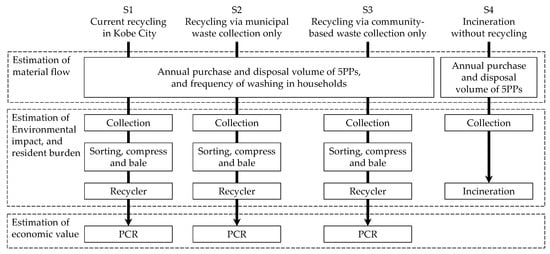
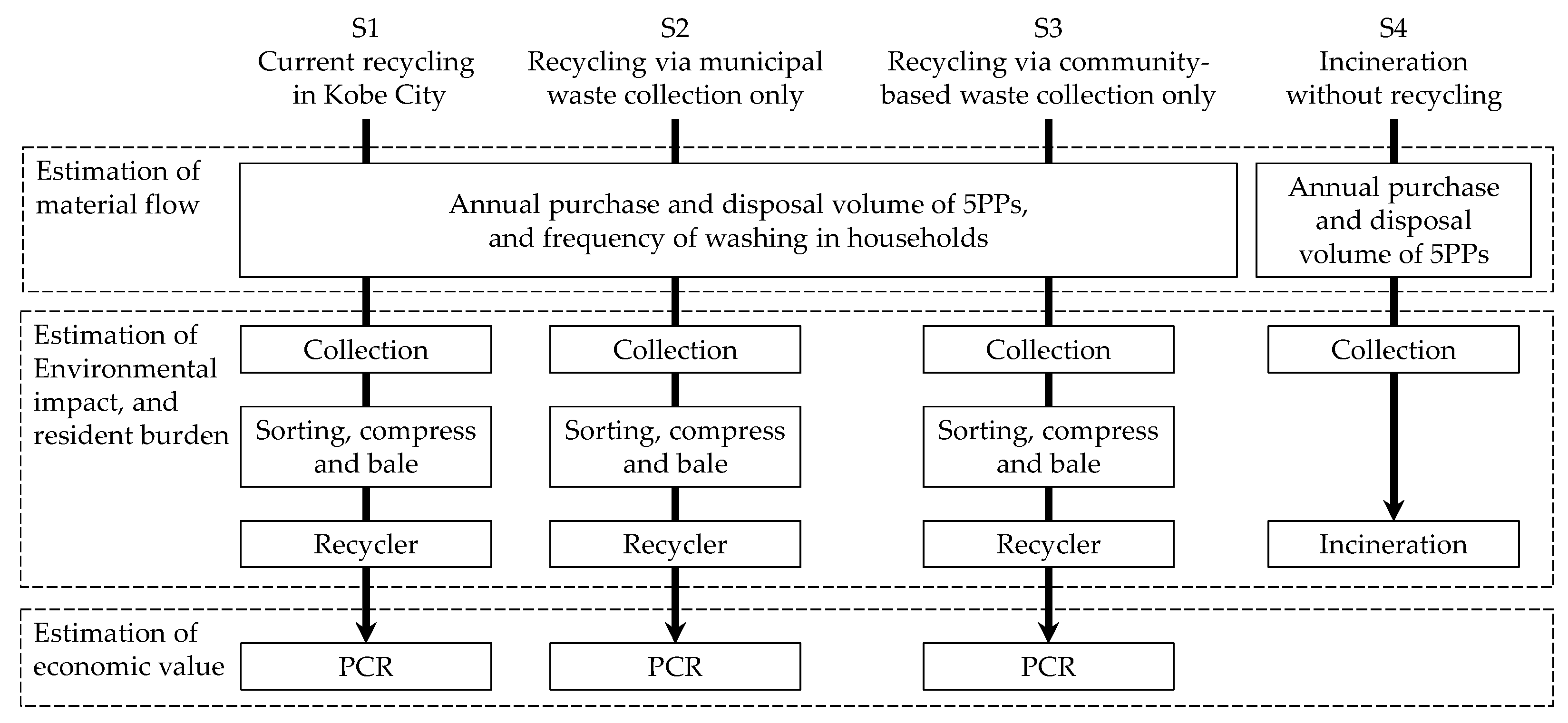
This study estimated the environmental impact, resident burden, and economic value of the collection and recycling process, assuming separate collection of 5PPs throughout Kobe City. Figure 3 shows the system diagram for the case study. Because the number of 5PPs generated and recycled within Kobe City was unknown, the data necessary for estimating material flows was created through a web-based questionnaire survey targeting Kobe citizens. Here, using questions from Table 1 regarding material flows, the frequency of purchasing products related to 5PPs (i.e., approximately how many times per week) was investigated to estimate the annual purchase volume. Respondents were also asked whether products related to the 5PPs were mixed with incinerated or landfilled waste when disposed of, or whether they were sent to resource collection routes via municipal or community-based waste collection. It was assumed that products related to the 5PPs, except for Tupperware containers, were consumed immediately and disposed of as HPW. Because Tupperware containers are reusable, their usage period was set to 3 years based on a literature review [41]. Estimates of the material flow from purchasing 5PPs-related products to disposal and recycling in households were calculated by multiplying these results by the weight-based units of the 5PPs. Table 2 presents the weight-based units of 5PPs.
Figure 3.
System diagram for case study. PCR—post-consumer recycled.
Table 2.
Weight-based units of 5PPs.
Next, the estimated material flows were combined with inventory data for each process in each collection route to estimate the environmental impact, resident burden, and economic value for Kobe City as a whole. To examine the advantages and challenges of community-based waste collection, the results were compared across four scenarios: current recycling combining municipal and community-based waste collections in Kobe City (S1), recycling via municipal waste collection only (S2), recycling via community-based waste collection only (S3), and incineration without recycling (S4).
4. Results and Discussion
4.1. Resident Cooperation with HPW Washing
Household segregation practices for recycling were examined to determine whether items had been washed in advance. The results showed that 87.3% of respondents washed their HPW before segregation. While many Japanese municipalities provide washing instructions when segregating containers and packaging plastics, most respondents followed these instructions. Of the respondents who did not wash, 12.7% likely produced HPW with residual dirt, which is potentially unsuitable for high-quality recycling.
Table 3 shows the results of classifying water, detergent, and city gas usage based on whether detergent and hot water were used. The washing time per sheet was 9.62 s for the group not using detergent or hot water and 20.72 s for the group using both. Groups that used hot water and detergent during washing tended to have longer washing times. Consequently, the use of water, detergents, and city gases increased. An analysis of the relationship between basic attributes and water-usage time was conducted. Women tended to wash longer than men, and households without children tended to wash longer than those with children. However, no characteristics that were sufficiently significant for differentiation were observed. An examination of the relationship between collection routes and washing time revealed that the washing time per sheet was 13.59 s for municipal waste collection and 16.88 s for community-based waste collection. This suggested that the HPW segregated through community-based waste collection tended to undergo thorough washing. While thorough washing is the result of resident cooperation, residents bear the burden of this additional household chore.
Table 3.
Utility usage based on whether detergent and hot water were used.
4.2. Environmental Impact by Collection Route
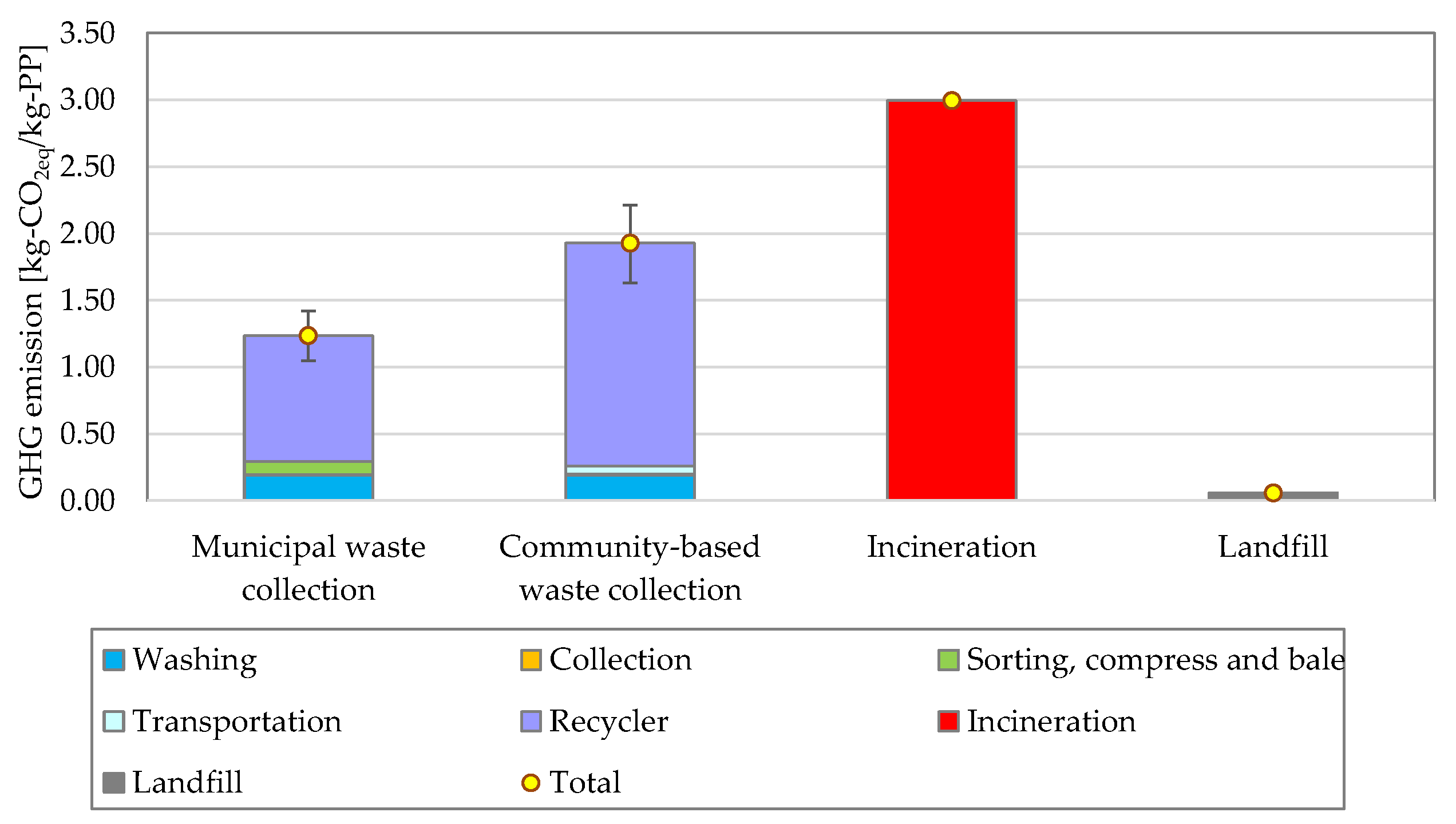
Figure 4 shows the greenhouse gas (GHG) emissions by collection route. As a sensitivity analysis, the results for a ±25% change in the operating rate for each process are represented by error bars. GHG emissions per 1 kg of PP were 1.24 (1.05–1.42) kg-CO2eq for municipal waste collection and 1.93 (1.63–2.21) kg-CO2eq for community-based waste collection. The contribution of the recycler was the largest for both collection routes, but the proportion was higher for community-based waste collection. The pellet-forming process contributed the most significantly to GHG emissions among the recycler’s operations. This difference was likely due to the fact that municipal waste collections produce PCR without pellet formation, whereas community-based waste collections produce PCR using recycled pellets. Although community-based waste collection remains in the demonstration phase and requires further data accumulation, the results suggested that manufacturing high-value PCR may involve significant GHG emissions. Home washing accounted for 10–15.6% of GHG emissions in both municipal and community-based waste collections. While recycler emissions were overwhelmingly dominant, home washing also contributed a non-negligible proportion of emissions. Although community-based waste collection emitted more GHG than municipal waste collection, this level remained lower than incineration emissions (3.00 kg-CO2eq), ensuring that recycling maintains its advantage even in community-based waste collection. Landfill emissions were the lowest at 0.057 kg-CO2eq. However, because almost no HPW is landfilled in Japan, this figure is only a reference value.
Figure 4.
Greenhouse gas (GHG) emissions by collection route.
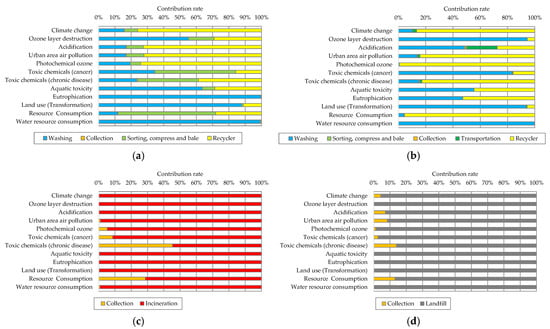
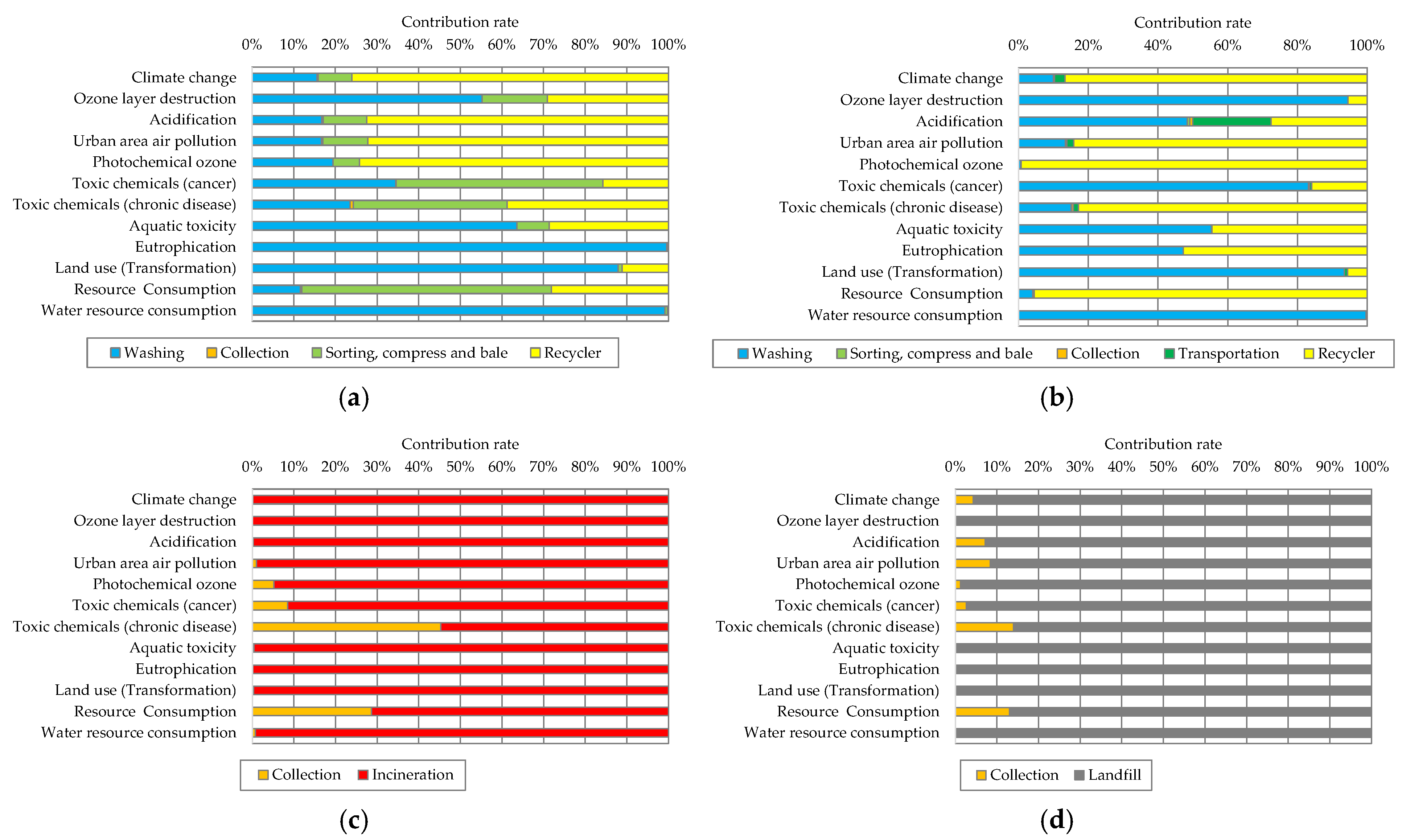
Figure 5 shows the contribution rates of the impact categories according to the collection route. For municipal and community-based waste collection, as seen in the GHG emissions results, certain impact items showed a high contribution rate from recyclers. Conversely, some impact items were predominantly influenced by household washing. This further indicated that household washing cannot be ignored, not only from the perspective of resident burden, but also from that of environmental impact. For incineration and landfill, the contribution of collection was generally small, except in some cases in which the majority of the contribution stemmed from the incineration and landfill processes themselves.
Figure 5.
Contribution rates of impact categories by collection route. (a) Municipal-based collections; (b) community-based waste collections; (c) incineration; (d) landfill.
4.3. Case Study Results
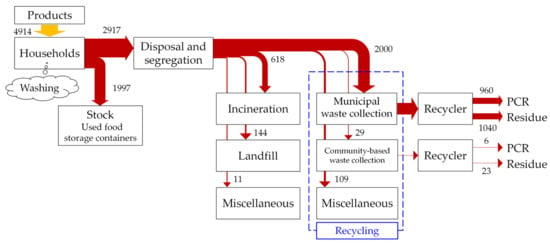
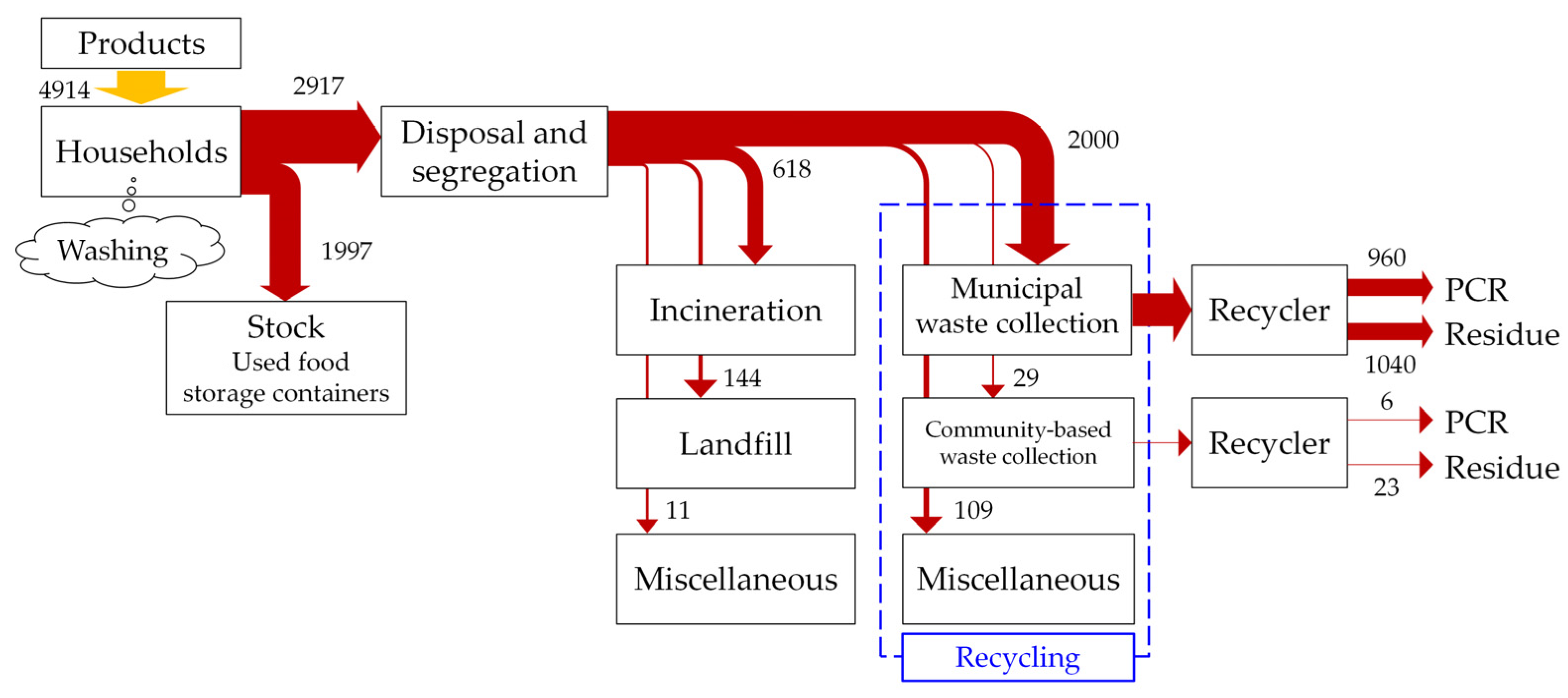
Figure 6 shows the estimated material flow for the 5PPs in Kobe. The annual purchase volume of products related to the 5PPs purchased by households was 4914 tons (3384–6078 tons. Indicates the range of estimated values when considering the standard error of the weight per unit of disposal 5PPs in Table 2). Excluding Tupperware containers, 2917 tons (1567–2478 tons) of 5PPs were discarded annually. Approximately 69% of discarded 5PPs were sent for municipal waste collection, and community-based waste collections accounted for only approximately 1%. This was because there were few community-based waste collection points in Kobe. Conversely, this indicated significant potential for community-based waste collection to recover the 5PPs currently sent for municipal waste collection. Approximately 21% and 5% of the disposed 5PPs were processed as combustible and non-combustible waste, respectively. Increasing the segregation of these items could also increase the collection volume of 5PPs.
Figure 6.
Material flow for 5PPs (tons).
The estimated material flow results were validated. Kobe City’s FY2023 collection volume for containers and packaging plastics was 9252 tons [42]. The estimated municipal waste collection volume for 5PPs corresponded to approximately 14.7% (2000 tons) of the volume of container and packaging plastic collection in Kobe City. (This was excluding Tupperware containers. In Japan’s classification, Tupperware containers are not considered container and packaging plastics. Therefore, they were not considered in this validity verification.) Because the breakdown of containers and packaging plastics collected in Kobe City is unknown, referring to the Ministry of the Environment’s [43] composition survey for container and packaging plastics, 5PPs (excluding Tupperware containers) were assumed to account for approximately 20.0% of the total volume of container and packaging plastics. Based on this, the volume of 5PPs within plastic container and packaging collection in Kobe City amounted to 1803 tons.
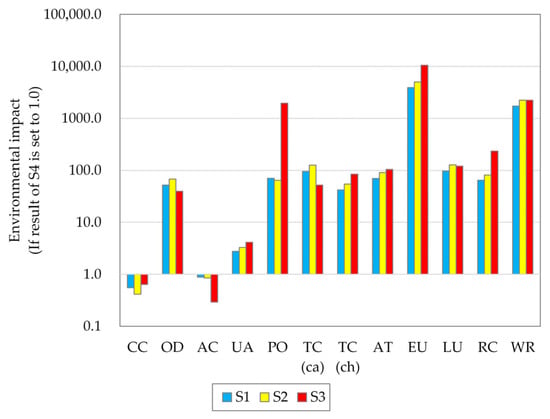
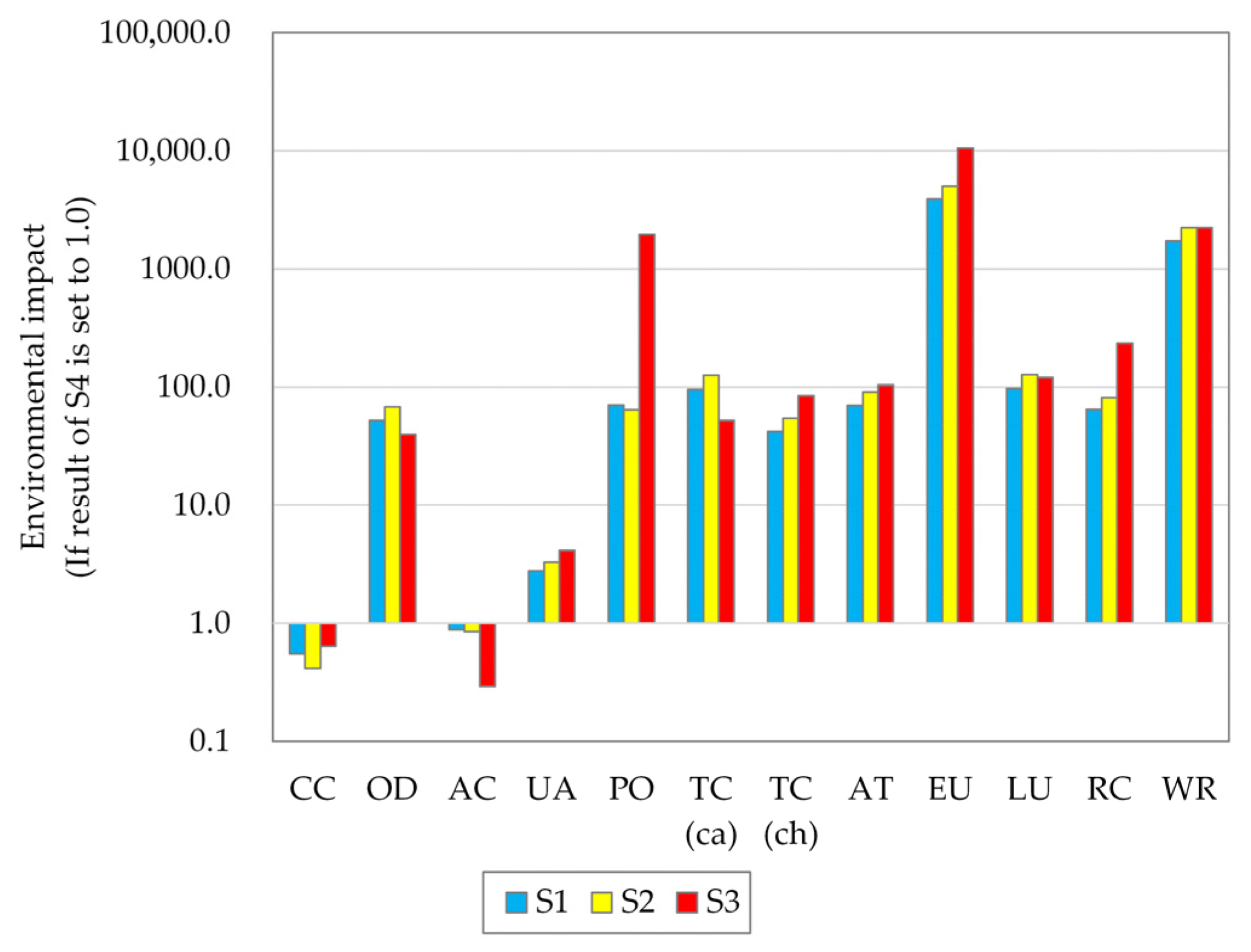
Figure 7 shows the emissions for each impact category under the different scenarios. Here, the emissions from the incineration scenario (S4) served as the baseline to indicate the magnitude of emissions for the other scenarios. The results revealed that for climate change and acidification, emissions from S1–S3 were lower than those from S4. Scenario S2 proved optimal for climate change, and S3 was optimal for acidification. This demonstrates the effectiveness of avoiding incineration when recycling is implemented. Conversely, for the other impact categories, emissions from S1–S3 exceeded those from S4. As shown in Figure 4, this was largely due to the significant contributions of household washing and recyclers. Focusing specifically on household washing, while the high-quality recycling enabled by washing could be expected to positively affect climate change, washing itself was shown to potentially have other environmental impacts.
Figure 7.
Impact categories emissions under different scenario. S1: current recycling combining municipal and community-based waste collections in Kobe City; S2: recycling via municipal waste collection only; S3: recycling via community-based waste collection only; S4: incineration without recycling. CC: climate change; OD: ozone layer destruction; AC: acidification; UA: urban area air pollution; PO: photochemical ozone; TC (ca): toxic chemicals (cancer); TC (ch): toxic chemicals (chronic disease); AT: aquatic toxicity; EU: eutrophication; LU: land use (transformation); RC: resource consumption; WR: water resource consumption. The results show the degree of impact for each scenario relative to that of S4, whereby S4 emissions were set as 1.
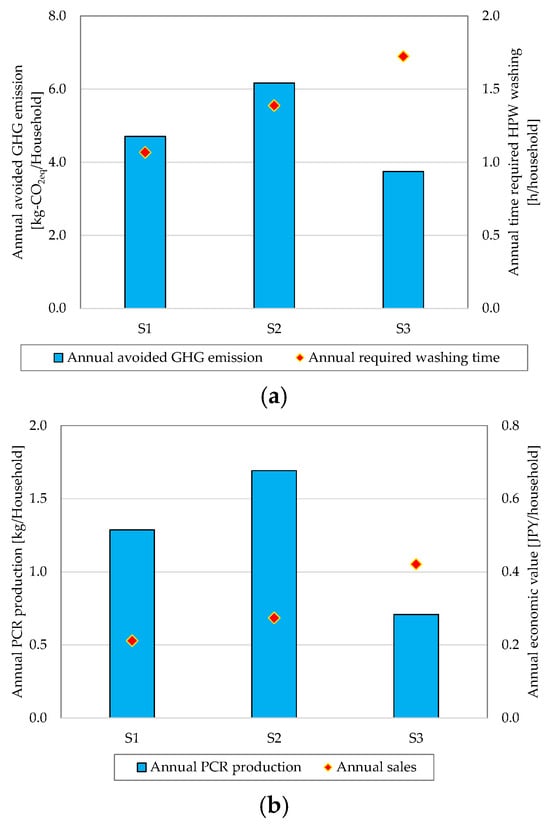
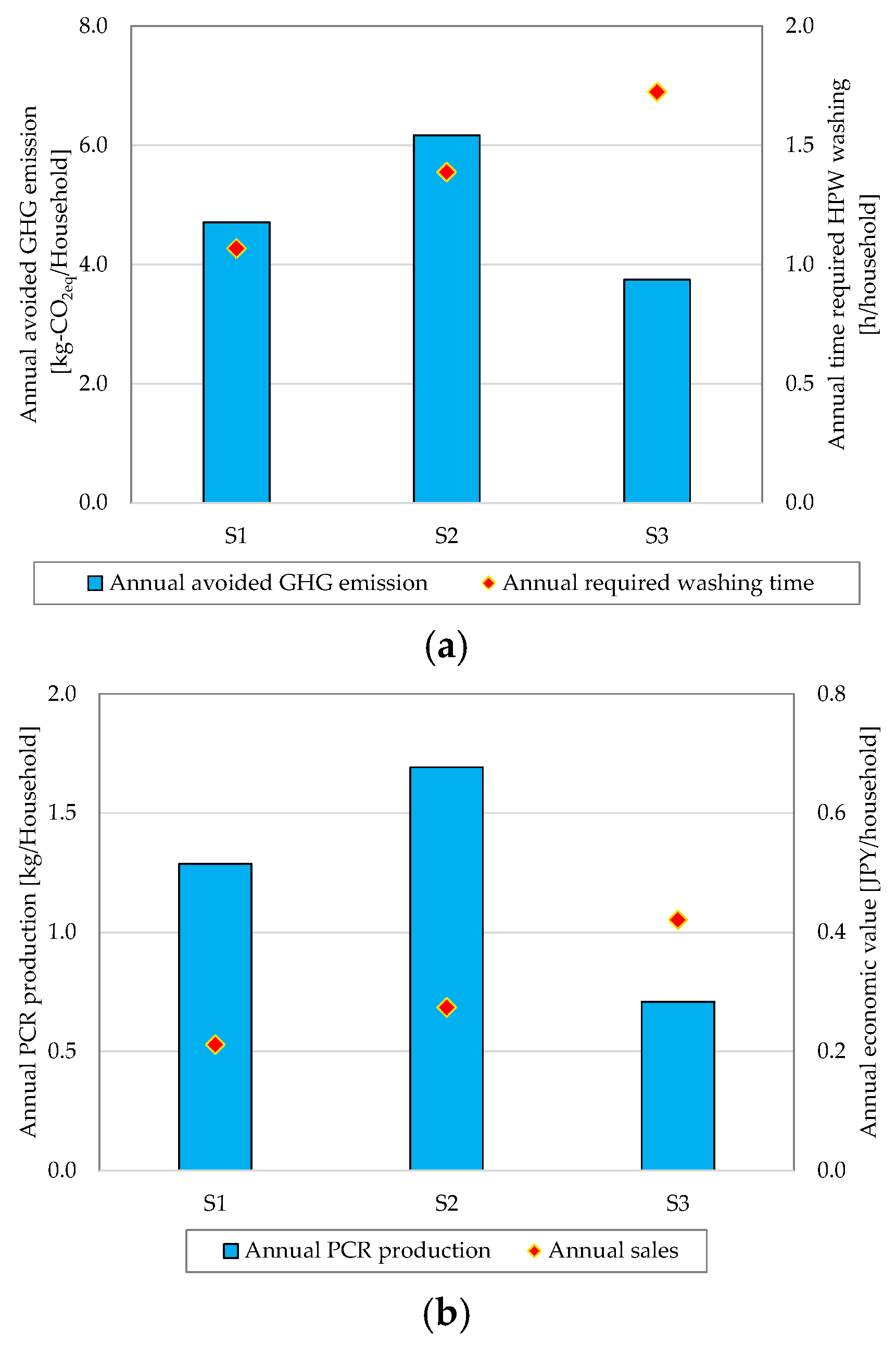
Figure 8 shows the effects of resident cooperation in segregation for recycling 5PPs via municipal or community-based waste collections. These results were converted to per-household figures for Kobe City [30]. The avoided GHG emissions were calculated by taking the difference between the GHG emissions for S4 and S2–S3, representing the GHG emission reduction achieved by recycling instead of incineration. The results indicated that the annual avoided GHG emissions per household for S1, S2, and S3 were 4.71, 6.17, and 3.75 kg-CO2eq, respectively. The annual time required for HPW washing per household for S1, S2, and S3 was 1.07, 1.39, and 1.72 h, respectively. The annual PCR production per household for S1, S2, and S3 was 1.29, 1.69, and 0.71 kg, respectively. The annual economic value per household from selling the manufactured PCR was 0.21, 0.27, and 0.42 JPY for S1, S2, and S3, respectively. S2 showed the highest annual avoided GHG emissions and annual PCR production, whereas S3 exhibited the highest annual required washing time and annual economic value. Promoting community-based waste collection offers expected reductions in annually avoided GHG emissions and increases in annual sales. However, an increase in the required annual washing time may be a drawback. For S3, the required washing time per day was 0.0047 h (16.92 s), which is extremely short. However, many residents are likely to consider even a slight increase in burden undesirable.
Figure 8.
Effects of resident cooperation with segregation of 5PPs. (a) Annual avoided GHG emissions and time required for washing household plastic waste (HPW); (b) annual production and sales. S1: current recycling combining municipal and community-based waste collections in Kobe City; S2: recycling via municipal waste collection only; S3: recycling via community-based waste collection only.
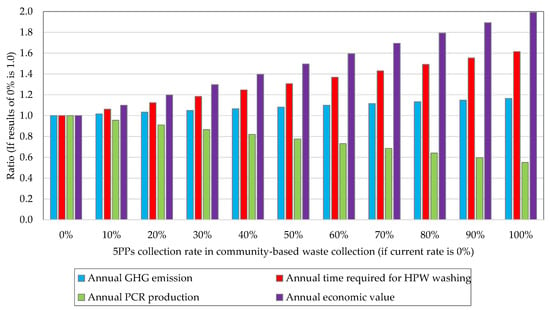
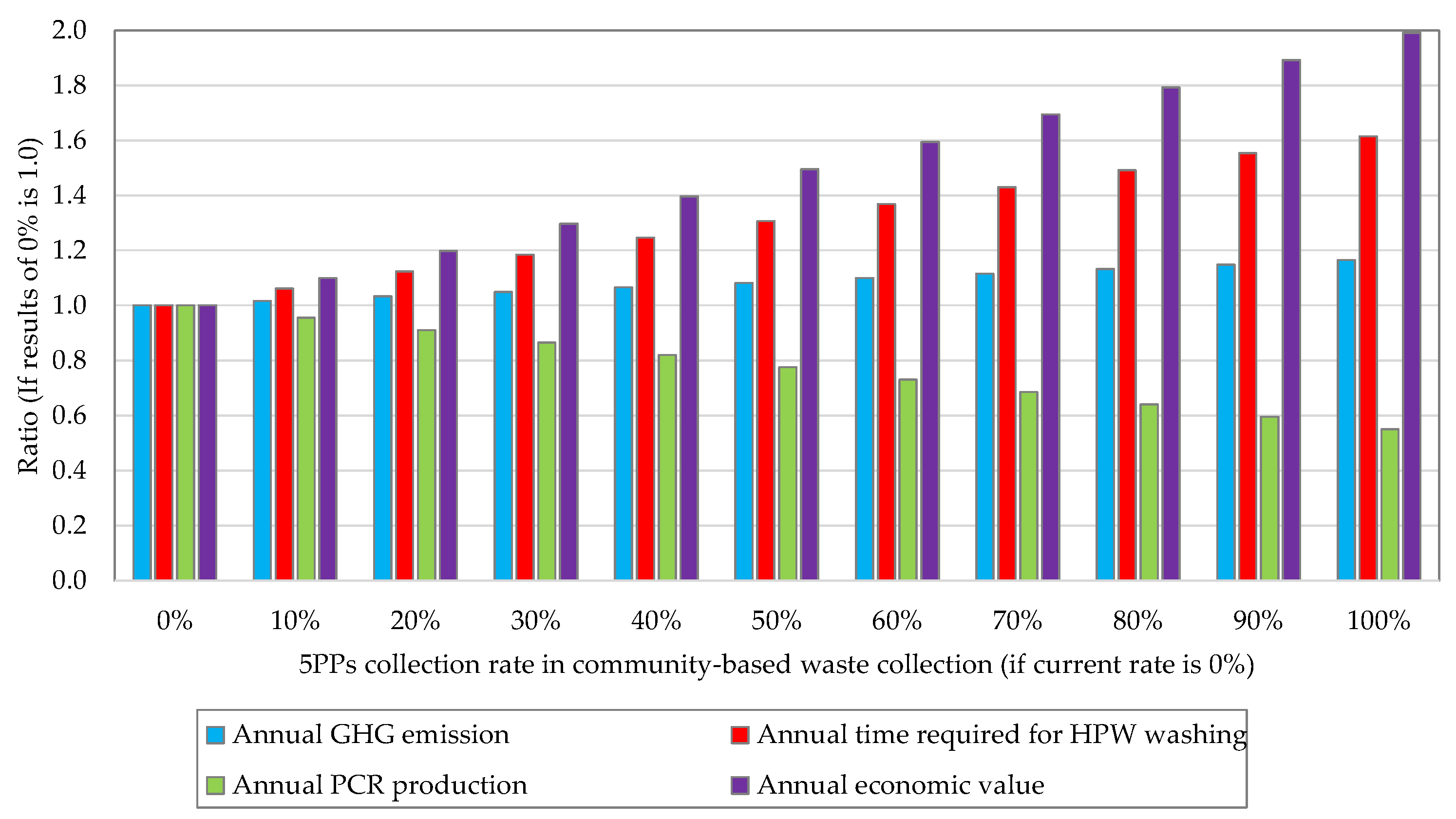
Figure 9 shows the changes in each parameter when the collection volume of 5PPs in the community-based waste collection increased. Assuming that the 5PPs currently collected by municipalities and sent for incineration were directed to community-based waste collection, a sensitivity analysis was conducted for collection rates varying from 0–100%. The results showed that increasing the collection rate of 5PPs through community-based waste collection increased GHG emissions. However, the magnitude of the increase was not significant. In contrast, the time required for household washing increased significantly as the collection rate increased. PCR production decreased with increasing collection rates, whereas the economic value increased. This indicated that the higher sales of high-value PCR for automotive parts were offset by the reduced sales of relatively low-value PCR for industrial pallets. From the perspective of promoting upgraded recycling, increasing economic benefits is desirable. However, a decrease in the PCR for industrial pallets could disrupt the supply–demand balance for recycled materials, making it an undesirable state.
Figure 9.
Sensitivity analysis, showing changes in each parameter when the recovery amount of 5PPs in community-based waste collection increased. Assuming the current recovery amount in community-based waste collection was 0%, the results of each parameter at the 0% point were set as 1.0.
5. Conclusions
This study examined community-based waste collection as a means of recovering high-quality HPW, clarifying its effectiveness and challenges from environmental and resident burden perspectives. The main findings are as follows:
- (1)
- Survey results on whether HPW was washed before sorting for recycling revealed that 87.3% of respondents washed HPW before segregating it. By collection route, the washing time per HPW sheet was 13.59 s for municipal waste collection and 16.88 s for community-based waste collection. This suggested that the HPW separated via community-based waste collection tended to undergo more thorough washing.
- (2)
- The GHG emissions associated with the segregation and recycling of HPW by collection route were calculated using Kobe City, Japan, as a case study. The results revealed that GHG emissions per 1 kg of PP were 1.24 (1.05–1.42) kg-CO2eq for municipal waste collection and 1.93 (1.63–2.21) kg-CO2eq for community-based waste collection. Calculating the contribution of the impact categories by collection route revealed that household washing significantly contributed to certain impact items.
- (3)
- Four scenarios were then created for the 5PP collection methods in order to calculate emissions across impact categories in Kobe City. These scenarios were based on the material flow of 5PPs. Regarding climate change and acidification, the municipal and community-based waste collection scenarios resulted in lower emissions than the incineration scenarios. However, the incineration scenario was more favourable for other impact categories. Regarding household washing, while washing could potentially improve recycling quality and thus benefit climate change mitigation, the act of washing itself may have other environmental impacts.
- (4)
- Community-based waste collection was examined to determine its impact on the environment and resident burdens. When collecting 5PPs solely through community-based waste collection, the annual avoided GHG emissions per household were 3.75 kg-CO2eq compared to those of the incineration scenario. This resulted in an annual required washing time of 1.72 h, annual PCR production per household of 0.71 kg, and annual economic value from PCR sales of 0.42 JPY per household.
Based on these results, promoting community-based waste collection offers the benefits of expected reductions in annual avoided GHG emissions and increases in annual economic value. Conversely, these results indicate that an increase in the annual time required for washing HPW may be a drawback. The findings of this study suggest that attaining a high-value recycling outcome necessitates the active engagement and participation of residents in sorting and washing activities. Nevertheless, an inevitable consequence of the increased burden on residents for sorting and washing HPW is unavoidable. Quantifying the environmental and economic benefits that residents gain from cooperating with HPW segregation, alongside the corresponding burden required from residents, can serve as a basis for building consensus when promoting segregation measures oriented toward a CE. As community-based collection rates increase, more residents must cooperate with segregation and washing of 5PPs. This means that gaining the understanding of residents through public awareness campaigns by municipal governments is necessary to boost collection rates. These results also indicate that it is necessary to implement a system design that collects HPW at the community level, as opposed to through municipal collection in order to establish collection targets for HPW. The system design calls for the introduction of new facilities and measures that are not included in conventional municipal waste management policies. Moreover, collaboration is imperative not solely from residents but also from a diverse range of stakeholders, encompassing business entities. Municipal governments are obliged to make decisions whilst ensuring the cooperation of these stakeholders. However, municipal governments are obliged to undertake a thorough analysis of the supply–demand balance of high-purity water within their respective jurisdictions. It is imperative that this analysis takes into consideration the demand for PCR for conventional products, whilst ensuring that PCR for high-value products can be secured.
Several limitations existed in this study. For example, a paucity of research has yet been conducted on the accumulation of chemicals, such as additives, in recycled materials, and their potential effects on the safety of recycled plastic products. The incorporation of these impacts into LCA would facilitate a more comprehensive quality assessment; however, this remains a challenge for future research. Another perspective is that community-based waste collection for recycling automotive parts in Kobe City remained at the demonstration stage at the time of this study. Therefore, data that reflect practical implementation are required. Regarding household washing, data reflecting actual washing practices, obtained through surveys of household washing habits, are also needed. This study successfully established a framework for evaluating the environmental impact of collection routes. Obtaining these data will enable more realistic calculations to be made. Segregation that incorporates household washing is indispensable for building a system that embodies the resource circulation that a CE aims for. Conversely, promoting community-based waste collection inevitably places a significant burden on residents, making its realisation impossible without cooperation. Our results demonstrate not only the environmental impact reduction and economic benefits associated with high-quality PCR production but also the burden on residents as a disadvantage of using the indicator of washing time. From the perspective of consensus building, it is crucial to disclose this information—both benefits and disadvantages—to residents, thereby encouraging their cooperation with community-based waste collection.
Funding
This work was supported by the Council for Science, Technology, and Innovation (CSTI), Cross-ministerial Strategic Innovation Promotion Program (SIP), “Development of environ-mental assessment method for plastic resource recycling system” (funding agency: ERCA, No. S323A302), and the Japan Society for the Promotion of Science (JSPS), KAKENHI Grant Number JP23K11546.
Informed Consent Statement
Informed consent was obtained from all participants involved in the study.
Data Availability Statement
Data are provided within the manuscript.
Acknowledgments
The authors gratefully acknowledge the financial support from the CSTI, and the JSPS.
Conflicts of Interest
The authors declare no conflicts of interest regarding the publication of this paper. The sponsors had no role in the design, execution, interpretation, or writing of the study.
Abbreviations
| 5PPs | Five types of plastic containers and packaging made of polypropylene, such as caps other than that from plastic bottles, frozen food trays, used food storage containers, tofu containers, and jelly containers |
| CE | Circular economy |
| DPP | Digital product passport |
| ELV | End-of-life vehicle |
| EU | European Union |
| FY | Japanese fiscal year |
| GHG | greenhouse gas |
| HPW | Household plastic waste |
| IDEA | Inventory database for environmental analysis |
| LCA | Life-cycle assessment |
| LIME | Life-cycle impact assessment method based on endpoint modelling |
| MRF | Material recovery facility |
| PCR | Post-consumer recycled |
| PIR | Post-industrial recycled |
| PP | Polypropylene |
References
- End-of-Life Vehicles. Available online: https://environment.ec.europa.eu/topics/waste-and-recycling/end-life-vehicles_en (accessed on 2 December 2025).
- Schulte, A.; Kampmann, B.; Galafton, C. Measuring the Circularity and Impact Reduction Potential of Post-Industrial and Post-Consumer Recycled Plastics. Sustainability 2023, 15, 12242. [Google Scholar] [CrossRef] [Scilit]
- Eriksen, M.K.; Damgaard, A.; Boldrin, A.; Astrup, T.F. Quality assessment and circularity potential of recovery systems for household plastic waste. J. Ind. Ecol. 2018, 23, 156–168. [Google Scholar] [CrossRef] [Scilit]
- Contracting Best Practices: Source Separation Requirement or Preference. Available online: https://www.epa.gov/transforming-waste-tool/source-separation (accessed on 2 December 2025).
- Kobe Plastic Next. Available online: https://kobeplasticnext.jp (accessed on 2 December 2025).
- Tabata, T.; Tsai, P. The role of life cycle assessments in digital product passport implementation for building a plastic circular economy. Circ. Econ. Sustain. 2025, 5, 3145–3157. [Google Scholar] [CrossRef] [Scilit]
- Alassali, A.; Picuno, C.; Chong, Z.K.; Guo, J.; Maletz, R.; Kuchta, K. Towards higher quality of recycled plastics: Limitations from the material’s perspective. Sustainability 2021, 13, 13266. [Google Scholar] [CrossRef] [Scilit]
- Eriksen, M.K.; Christiansen, J.D.; Daugaard, A.E.; Astrup, T.F. Closing the loop for PET, PE and PP waste from households: Influence of material properties and product design for plastic recycling. Waste Manag. 2019, 96, 75–85. [Google Scholar] [CrossRef] [Scilit]
- Hansen, E.; Nilsson, N.; Vinum, K.S.R. Hazardous Substances in Plastics: Survey of Chemical Substances in Consumer Products No. 132, 2014; The Danish Environmental Protection Agency: Odense, Denmark, 2014; Available online: https://www2.mst.dk/Udgiv/publications/2014/12/978-87-93283-31-2.pdf (accessed on 2 December 2025).
- Dawoud, M.; Taha, I. Effects of contamination with selected polymers on the mechanical properties of post-industrial recycled polypropylene. Polymers 2024, 16, 2301. [Google Scholar] [CrossRef] [Scilit]
- Louzao, V.V.; Murias, D.G.; Álvarez, M.Á.D.D.; Domínguez, P.A.A.; Barros, O.E.P.; Bañobre, R.L. Impact of recyclability on the tensile and Impact properties of coated plastic materials for the automotive and electronic sectors. Open Res. Eur. 2025, 4, 51. [Google Scholar] [CrossRef] [Scilit]
- Chibwe, L.; Silva, A.O.D.; Spencer, C.; Teixera, C.F.; Williamson, M.; Wang, X.; Muir, D.C.G. Target and nontarget screening of organic chemicals and metals in recycled plastic materials. Environ. Sci. Technol. 2023, 57, 3380–3390. [Google Scholar] [CrossRef] [Scilit] [PubMed]
- Paiva, R.; Veroneze, I.B.; Wrona, M.; Nerín, C.; Cruz, S.A. The role of residual contaminants and recycling steps on rheological properties of recycled polypropylene. J. Polym. Environ. 2022, 30, 494–503. [Google Scholar] [CrossRef] [Scilit]
- Rumetshofer, T.; Fischer, J. Enhancement in post-consumer mechanical recycling of plastics: Role of design for recycling, specifications, and efficient sorting of packaging material. Polymers 2025, 17, 1177. [Google Scholar] [CrossRef] [Scilit] [PubMed]
- Eriksen, M.K.; Astrup, T.F. Characterisation of source-separated, rigid plastic waste and evaluation of recycling initiatives: Effects of product design and source-separation system. Waste Manag. 2019, 87, 161–172. [Google Scholar] [CrossRef] [Scilit]
- Ragab, A.; Ramzy, A. Cradle-to-gate life cycle assessment of bottle-to-bottle recycling plant: Case study. In Advances and New Trends in Environmental Informatics; Wohlgemuth, V., Naumann, S., Behrens, G., Arndt, H.K., Höb, M., Eds.; Springer: Cham, Switzerland, 2023; pp. 3–15. [Google Scholar] [CrossRef] [Scilit]
- A Comparison of the Mass, Carbon and Energy Balance of Three Plastic Waste Treatment Pathways. Available online: https://cirkulaer.dk/files/media/document/Mass%20balance%20of%20three%20plastic%20waste%20treatment%20scenarios.pdf (accessed on 2 December 2025).
- Lipp, A.-M.; Schlossnikl, J.; Gentgen, I.; Koch, T.; Archodoulaki, V.; Lederer, J. Recycling rigid polypropylene from mixed waste: Does the origin affect mechanical recyclate quality? Waste Manag. Res. 2025, 44, 88–100. [Google Scholar] [CrossRef] [Scilit]
- Vanham, M. Material Recovery Facilities (MRFs): Enhancing recycling efficiency. Environ. Waste Manag. Recycl. 2024, 7, 235. [Google Scholar]
- Patel, A.D.; Schyns, Z.O.G.; Franklin, T.W.; Shaver, M.P. Defining quality by quantifying degradation in the mechanical recycling of polyethylene. Nat. Commun. 2024, 15, 8733. [Google Scholar] [CrossRef] [Scilit]
- Digital Watermarks Initiative HolyGrail 2.0. Available online: https://www.digitalwatermarks.eu (accessed on 2 December 2025).
- Lubongo, C.; Bin Daej, M.A.A.; Alexandridis, P. Recent developments in technology for sorting plastic for recycling: The emergence of artificial intelligence and the rise of the robots. Recycling 2024, 9, 59. [Google Scholar] [CrossRef] [Scilit]
- Bichler, L.P.; Pinter, E.; Jones, M.P.; Koch, T.; Krempl, N.; Archodoulaki, V.-M. Impacts of washing and deodorization treatment on packaging-sourced post-consumer polypropylene. J. Mater. Cycles Waste Manag. 2024, 26, 3824–3837. [Google Scholar] [CrossRef] [Scilit]
- Alliance to End Plastic Waste Urges Source Separation. Available online: https://www.recyclingtoday.com/news/alliance-end-plastic-waste-singapore-recycling-recommendations-household-sorting/ (accessed on 2 December 2025).
- Nejadsadeghi, E.; Yousefi, M.; Ghasemi, A.; Heravi, M.D. Assessment of linking perceived benefits to source separation behavior and waste management economics by Monte Carlo simulation. Discov. Sustain. 2025, 6, 1052. [Google Scholar] [CrossRef] [Scilit]
- Li, M.; Huang, S.; Wang, J.; Gu, D.; Hu, T.; Liu, R.; Li, G.; Lu, J. Carbon footprint analysis of MSW management in major economies and future mitigation potential via enhanced recycling. J. Mater. Cycles Waste Manag. 2025, 27, 4588–4602. [Google Scholar] [CrossRef] [Scilit]
- Fujita, T. Rethinking evaluation of the burden of housework: Focusing on women with children in double income families. J. Fem. Econ. 2018, 3, 107–120. [Google Scholar]
- Hu, J.; Longfor, N.R.; Dong, L.; Qian, X. Beyond theory of planned behavior: A meta-analysis of psychological and contextual determinants of household waste separation. Environ. Impact Assess. Rev. 2026, 116, 108087. [Google Scholar] [CrossRef] [Scilit]
- Ishimura, Y.; Nomura, K.; Ichinose, D. Does simplification of plastic waste separation promote plastic recycling? J. Mater. Cycles Waste Manag. 2025, 27, 316–329. [Google Scholar] [CrossRef] [Scilit]
- 2020 National Census. Available online: https://www.city.kobe.lg.jp/a47946/shise/toke/toukei/kokutyou/tyoubetsujinkou.html (accessed on 2 December 2025).
- Survey on the Actual Conditions of General Waste Disposal. Available online: https://www.env.go.jp/recycle/waste_tech/ippan/stats.html (accessed on 2 December 2025).
- Eco-No-Ba (Resource Collection Stations). Available online: https://www.city.kobe.lg.jp/a25748/kurashi/recycle/recovery-of-plastic-resources.html (accessed on 2 December 2025).
- C1-04 Automotive Parts Evaluation and Development for the Recycled Material Use. Available online: https://www.erca.go.jp/sip/english/overview/c104-2024.html (accessed on 2 December 2025).
- Inaba, A.; Itsubo, N. Preface. Int. J. Life Cycle Assess. 2018, 23, 2271–2275. [Google Scholar] [CrossRef] [Scilit]
- Effective Water Management. Available online: https://www.waterworks.metro.tokyo.lg.jp/kurashi/shiyou/jouzu.html (accessed on 2 December 2025).
- Home Energy Conservation Information. Available online: https://www.enecho.meti.go.jp/category/saving_and_new/saving/general/howto/kitchen/index.html (accessed on 2 December 2025).
- Precautions for Using Dishwashing Detergent. Available online: https://pro.kao.com/jp/product-support/faq_dilution/01/ (accessed on 2 December 2025).
- Service Guidance for AIST-IDEA. Available online: https://www.aist-solutions.co.jp/english/service/aist_idea/aist_idea_en.html (accessed on 2 December 2025).
- Sales Price for Recycled PP Resin Pellets for Industrial Pallets. Available online: https://www.fareastnetwork.co.jp/theme54/theme570/theme51/theme533/theme82/ (accessed on 2 December 2025).
- FY2019 Subsidy Program for Research, Studies, and Demonstrations Contributing to the Advancement of Automobile Recycling, etc. “Demonstration of the Recyclability of Resins Derived from Automobiles”. Available online: https://j-far.or.jp/wp-content/uploads/2019report_YRI.pdf (accessed on 2 December 2025).
- Plastic Material Lifespan. Available online: https://plastic-sheetforming.com/faq/faq-17/1201/ (accessed on 2 December 2025).
- Municipal Solid Waste Collection Volume Trends in Kobe City. Available online: https://www.city.kobe.lg.jp/a36643/kurashi/recycle/gomi/shisaku/gomidata/gomiryou.html (accessed on 2 December 2025).
- FY2021 Composition Survey and Residue Factor Analysis of Plastic Container and Packaging Waste Report (Japan Ministry of the Environment). Available online: https://www.env.go.jp/content/000179287.pdf (accessed on 2 December 2025).

Disclaimer/Publisher’s Note: The statements, opinions and data contained in all publications are solely those of the individual author(s) and contributor(s) and not of MDPI and/or the editor(s). MDPI and/or the editor(s) disclaim responsibility for any injury to people or property resulting from any ideas, methods, instructions or products referred to in the content. |
© 2026 by the author. Licensee MDPI, Basel, Switzerland. This article is an open access article distributed under the terms and conditions of the Creative Commons Attribution (CC BY) license.