Systematic Review

The Pilates Method as a Therapeutic Intervention in Patients with Fibromyalgia: A Systematic Review and Meta-Analysis


by
Gustavo Rodríguez-Fuentes
1,2,
Alejandro Bermúdez-Rodas
3,
Hugo Rodríguez-Otero
4,* and
Pablo Campo-Prieto
1,2
1
Departamento de Bioloxía Funcional e Ciencias da Saúde, Facultade de Fisioterapia, Universidade de Vigo, E-36005 Pontevedra, Spain
2
HealthyFit Research Group, Galicia Sur Health Research Institute (IIS Galicia Sur), Servizo Galego de Saúde-Universidade de Vigo (SERGAS-UVIGO), E-36213 Pontevedra, Spain
3
Independent Researcher, Cangas, E-36940 Pontevedra, Spain
4
Independent Researcher, Studio Pilates Physiotherapy Center, E-36002 Pontevedra, Spain
*
Author to whom correspondence should be addressed.
Appl. Sci. 2026, 16(3), 1324; https://doi.org/10.3390/app16031324
Submission received: 29 October 2025 / Revised: 22 December 2025 / Accepted: 23 January 2026 / Published: 28 January 2026
(This article belongs to the Special Issue Advances in Neurological Physical Therapy)

Featured Application

Pilates did not demonstrate superiority over active comparators for fibromyalgia outcomes; with low certainty evidence, its role as an alternative exercise option awaits confirmation from adequately powered non-inferiority trials.

Abstract

Fibromyalgia is a chronic condition characterized by widespread pain, fatigue, and reduced quality of life. Exercise therapy, including Pilates, is commonly recommended; however, current reviews report inconsistent findings across specific modalities. This PRISMA 2020 systematic review and meta-analysis with a PROSPERO-registered protocol, designed as a focused update of post-2020 RCTs complementing prior comprehensive syntheses, evaluated Pilates-based interventions for pain and fibromyalgia impact (FIQ). HRQoL outcomes were synthesized narratively due to heterogeneity in measurement instruments, and all outcomes were extracted at the first post-intervention assessment (no pooled long-term data were available). Seven RCTs (6–12 weeks; 2–3 sessions/week) met eligibility criteria. Methodological quality was generally moderate (PEDro), and risk of bias was assessed using RoB 2. Certainty of evidence (GRADE) was rated very low for pain and low for FIQ. Among trials reporting adherence (4/7), values ranged from 68% to 92%; adverse event monitoring was inconsistent (systematically reported in 2/7), limiting tolerability conclusions. Between-group effects versus active comparators were small and non-significant for pain (pooled Hedges’ g = −0.10, 95% CI [−0.83, 0.63], p = 0.79; I2 = 73%); this wide interval, spanning potential benefit to harm, precludes definitive conclusions. For FIQ, the primary (unadjusted) analysis was non-significant: pooled MD = −5.53 (95% CI [−11.96, 0.89], p = 0.09); sensitivity analysis using ANCOVA-adjusted estimates yielded MD = −6.71 (95% CI [−13.11, −0.30], p = 0.04). Both estimates remained below MCID thresholds and were sensitive to estimator choice. Absence of statistical significance does not demonstrate equivalence; non-inferiority designs with predefined margins would be required. Given very low (pain) to low (FIQ) certainty of evidence, adequately powered trials with standardized protocols and longer follow-up are needed to resolve uncertainty regarding Pilates’ comparative effectiveness within multimodal fibromyalgia management.

1. Introduction

Fibromyalgia (FM) is a chronic, widespread musculoskeletal pain syndrome frequently accompanied by fatigue, sleep disturbance, gastrointestinal complaints, and mood alterations [1]. Its global prevalence ranges from 2% to 8%, with regional estimates of 2.7% in Europe [2], 2.1% in the United States [3], and 2.4% in Spain [4]. The condition predominantly affects middle-aged women, with peak prevalence typically reported between ages 40 and 60 [5,6].
Regular physical activity is a cornerstone in the management of chronic conditions [7]. In FM, disease burden is often associated with reduced activity and functional capacity; increasing exercise can therefore be leveraged both preventively and therapeutically when appropriately prescribed and monitored [8].
The Pilates method (PM), originally termed “Contrology,” was conceived to promote postural correction and balanced physical development [9]. Its core principles include centering, breathing, control, precision, concentration, and flow, and it has gained traction as a rehabilitation modality across musculoskeletal conditions [9,10], re-entering the ACSM top-20 fitness trends in 2024, which supports its accessibility as a rehabilitation option [11].
Exercise induces monoaminergic (e.g., serotonin, dopamine, noradrenaline) and endorphinergic responses that can modulate pain, anxiety, and depression, supporting its role as “exercise as medicine” in chronic pain populations. While these neurobiological mechanisms have been established for exercise in general, they have not been specifically investigated for Pilates; however, the method shares common exercise components that may engage similar pathways. Despite growing interest in applying PM to FM, the Pilates-specific evidence for fibromyalgia remains limited and heterogeneous, with no recent systematic review synthesizing RCT evidence exclusively on Pilates for fibromyalgia [12].
Previous reviews have comprehensively synthesized the Pilates-fibromyalgia evidence base through 2020 [12]. However, recent meta-analyses have reported divergent conclusions: Nithuthorn et al. [13] found significant improvements in pain and fibromyalgia impact, whereas Abu Shady et al. [14] concluded that benefits were not superior to traditional rehabilitation. This inconsistency motivated a focused reappraisal of contemporary evidence.
Following the international consensus framework for updating systematic reviews [15], which validates searching from the endpoint of a prior comprehensive review, the present work was designed as a focused update synthesis of RCTs published from 2020 onwards. Shojania et al. [16] demonstrated that only 4–11% of reviews require updating within 1–2 years (median survival: 5.5 years), with smaller evidence bases showing faster obsolescence—supporting timely reassessment of this limited literature. Temporal restrictions for updates are common practice, applied in 27.9% of systematic reviews [17]. Our findings should be interpreted as complementing, not replacing, the pre-2020 evidence synthesized.
This systematic review aims to identify, classify, and synthesize the available randomized controlled trial evidence focused on the Pilates method in individuals with fibromyalgia. Our objective is to quantify between-group effects of Pilates compared with other active exercise interventions on key clinical and functional outcomes, to inform clinical practice and priorities for future research.

2. Materials and Methods

2.1. Study Design

Based on the stated objective, the following research question is formulated according to the PICO framework [18]: In patients with fibromyalgia, does the practice of the PM improve various clinical and functional parameters compared with other active interventions or no intervention?

2.2. Search Strategy

This systematic review adhered to the PRISMA recommendations [19] (see PRISMA checklist in Supplementary Materials Table S1). The protocol was registered in the PROSPERO database (registration number: CRD420251143864). An initial search was conducted in June 2025 and updated on 15 September 2025 to capture any additional publications prior to submission. The following databases were searched: PubMed, CINAHL, MEDLINE, Web of Science, SPORTDiscus, and Scopus. Complete search strategies for each database are provided in Supplementary Materials Table S2.

2.3. Selection Criteria

Only articles meeting the following inclusion criteria were considered for analysis: (I) at least one study arm that included Pilates-based exercises; (II) randomized controlled trial design; (III) articles written in English or Spanish; and (IV) publication year 2020 or later (inclusive). This temporal restriction follows updated systematic review methodology per Garner et al. [15] and the Cochrane Handbook Chapter IV [20], justified by the availability of a comprehensive pre-2020 synthesis and the emergence of new RCTs employing active comparators that may alter prior conclusions.
Two reviewers (A.B.-R. and H.R.-O.) independently screened titles and abstracts, reviewed full-text articles for eligibility, and extracted data using a standardized form piloted on two studies prior to full extraction. Disagreements were resolved through discussion or, when necessary, by consultation with a third reviewer (G.R.-F.). Extracted data included study characteristics, participant demographics, intervention details, comparators, outcome measures, and results.

2.4. Methodological Quality Assessment

Study quality was evaluated using the PEDro scale (Physiotherapy Evidence Database) [21]. The scale comprises 11 items; the first pertains to external validity and is not counted toward the total score. The remaining 10 items are scored 1 or 0 depending on whether the criterion is met, yielding a maximum possible score of 10. A score of ≤3 indicates poor methodological quality, 4–5 fair, 6–8 good, and 9–10 excellent [22].
In addition, risk of bias was appraised using the Cochrane risk-of-bias tool for randomized trials, RoB 2 [23]. This tool assesses five domains (randomization, deviations from intended interventions, missing outcome data, measurement of outcomes, and selection of the reported result) and provides an overall judgment (low risk, some concerns, or high risk), typically driven by the highest risk observed across domains. Each domain was evaluated using the signaling questions specified in the RoB 2 guidance document, with responses informing domain-level judgments. The overall risk-of-bias judgment for each study was determined algorithmically: a study was rated “low risk” only if all domains were judged as low risk; “high risk” if any domain was rated high risk or if multiple domains raised some concerns that substantially lowered confidence in the result; and “some concerns” otherwise.
Methodological quality and risk of bias were assessed independently by two reviewers (H.R.-O. and G.R.-F.). Disagreements were resolved through consensus or adjudication by a third reviewer (P.C.-P.).
In addition, the certainty of the evidence for each pooled outcome was evaluated using the Grading of Recommendations, Assessment, Development and Evaluation (GRADE) approach [24]. These assessments were conducted independently by two reviewers (H.R.-O. and G.R.-F.), with disagreements resolved through discussion or adjudication by a third reviewer (P.C.-P.). To avoid conflating different constructs, we use the following terminology throughout the manuscript: methodological quality refers to PEDro total scores (descriptive appraisal of trial design and reporting), risk of bias refers to RoB 2 domain and overall judgments, and certainty of evidence refers exclusively to GRADE ratings for each pooled outcome. GRADE ratings started at high certainty for randomized trials and were downgraded when concerns were identified across the five domains (risk of bias, inconsistency, indirectness, imprecision, and publication bias). Specifically, RoB 2 judgments informed the GRADE risk-of-bias domain, heterogeneity statistics informed inconsistency, confidence-interval width and sample size informed imprecision, and publication bias was considered not assessable with fewer than ten studies per outcome. PEDro scores were not used as a direct input to GRADE but as complementary descriptive information.

2.5. Data Synthesis and Statistical Analysis

Continuous outcomes eligible for quantitative synthesis were analyzed using standardized mean differences (SMD; Hedges’ g) or mean differences (MD). Health-related quality of life (HRQoL) outcomes were synthesized narratively due to fundamental differences in scaling and clinical interpretation: EQ-5D provides a single utility index anchored at death/full health, whereas SF-36 yields eight domain scores with different units. Pooling via SMD would produce a metric without clear clinical interpretability; therefore, narrative synthesis was preferred.
For quantitative analyses, effect sizes were calculated as Pilates minus comparator. Therefore, for outcomes where lower scores indicate improvement (pain, FIQ), negative effect sizes favor Pilates. When studies reported between-group estimates in the opposite direction (e.g., comparator minus Pilates), estimates and corresponding confidence intervals were multiplied by −1 to align with this convention. When required, missing SDs were derived from confidence intervals, standard errors, or p-values. Specifically, when SDs were not reported, they were derived from the standard error as SD = SE × √n, or from a 95% CI around a mean as SD = √n × (upper − lower)/3.92. When only a p-value for a between-group difference was available, the corresponding t statistic was obtained and SE was derived as SE = |effect|/t. SD_pooled was then reconstructed using SE = SD_pooled × √(1/n1 + 1/n2).
For adjusted between-group estimates reported with 95% CIs, standard errors were derived as SE = (upper − lower)/3.92 after harmonizing the effect direction. Post-intervention outcomes were extracted at the first assessment immediately after the intervention period.
We used unadjusted post-intervention means as the primary effect estimates to maximize cross-trial comparability, given that adjusted estimates (e.g., ANCOVA) often vary in covariate inclusion and can introduce methodological heterogeneity. However, adjusted estimates are generally preferred in clinical trials to control for baseline imbalances and improve precision. Therefore, when available, we conducted sensitivity analyses using adjusted estimates to assess the robustness of conclusions.
A random-effects model (DerSimonian–Laird) was specified a priori to account for expected clinical and methodological heterogeneity (e.g., diverse comparators, dose variations, delivery formats). With only k = 2 studies per outcome, we acknowledge that DerSimonian–Laird may underestimate between-study variance; alternative estimators (e.g., Hartung–Knapp) would yield wider confidence intervals, further underscoring imprecision.
Pooled effects were obtained using inverse-variance weighting. Heterogeneity was quantified using I2 (0–40% might not be important; 30–60% may represent moderate heterogeneity; 50–90% substantial heterogeneity; 75–100% considerable heterogeneity), following Higgins et al. [25]; these thresholds were used only as interpretive labels and not to select the meta-analytic model. Statistical significance was set at p < 0.05; analyses were conducted in R (version 4.5.1 with metafor package 4.8-0). Small-study effects/publication bias could not be assessed because fewer than 10 studies were available per outcome [20]; therefore, publication bias cannot be ruled out.

3. Results

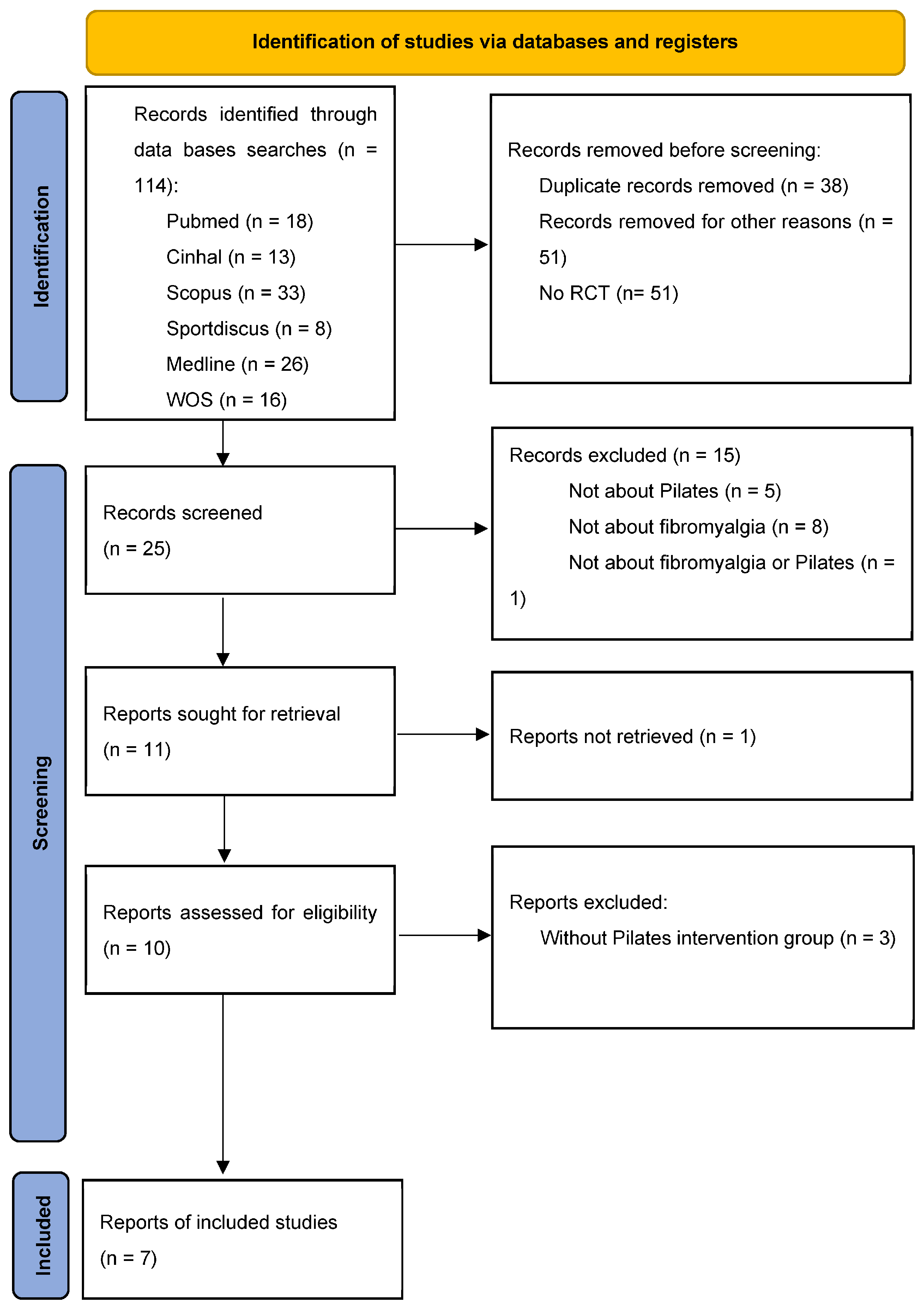
The process of searching and selecting studies for this review was conducted in accordance with the PRISMA guidelines [26]. This search process is summarized in the flow diagram presented in Figure 1.
A total of 114 records were initially identified through the database searches. After removing duplicates, 76 publications remained. Of these, 51 were excluded because they were not randomized controlled trials (RCTs). Following the screening of titles and abstracts of the 25 remaining records, and after applying the exclusion criteria, 11 full-text articles were retrieved, although one could not be accessed despite attempts to retrieve it via interlibrary loan and author contact. Ultimately, 7 studies met the eligibility criteria and were included in this systematic review [27,28,29,30,31,32,33].

3.1. Methodological Quality

Methodological quality scores ranged from 4 to 8 out of 10 (Table 1). Four studies [27,28,29,32] scored between 4 and 5 points, reflecting fair quality. This predominance of fair-quality trials (4/7, 57%) reflects systematic methodological limitations, particularly the absence of participant/therapist blinding and incomplete follow-up, which constrain confidence in pooled estimates. One study achieved a moderate score of 7/10 [31], while two studies [30,33] reached 8/10, which indicates good quality. Random allocation, baseline comparability, and reporting of between-group differences (and point estimates with variability) were the most consistently satisfied criteria. Concealed allocation was fulfilled in three studies [30,31,33]. Participant and therapist blinding was absent across trials, whereas assessor blinding was present in five studies [29,30,31,32,33]. Outcome measures were obtained from more than 85% of participants in fewer than half of the studies [28,30,33].
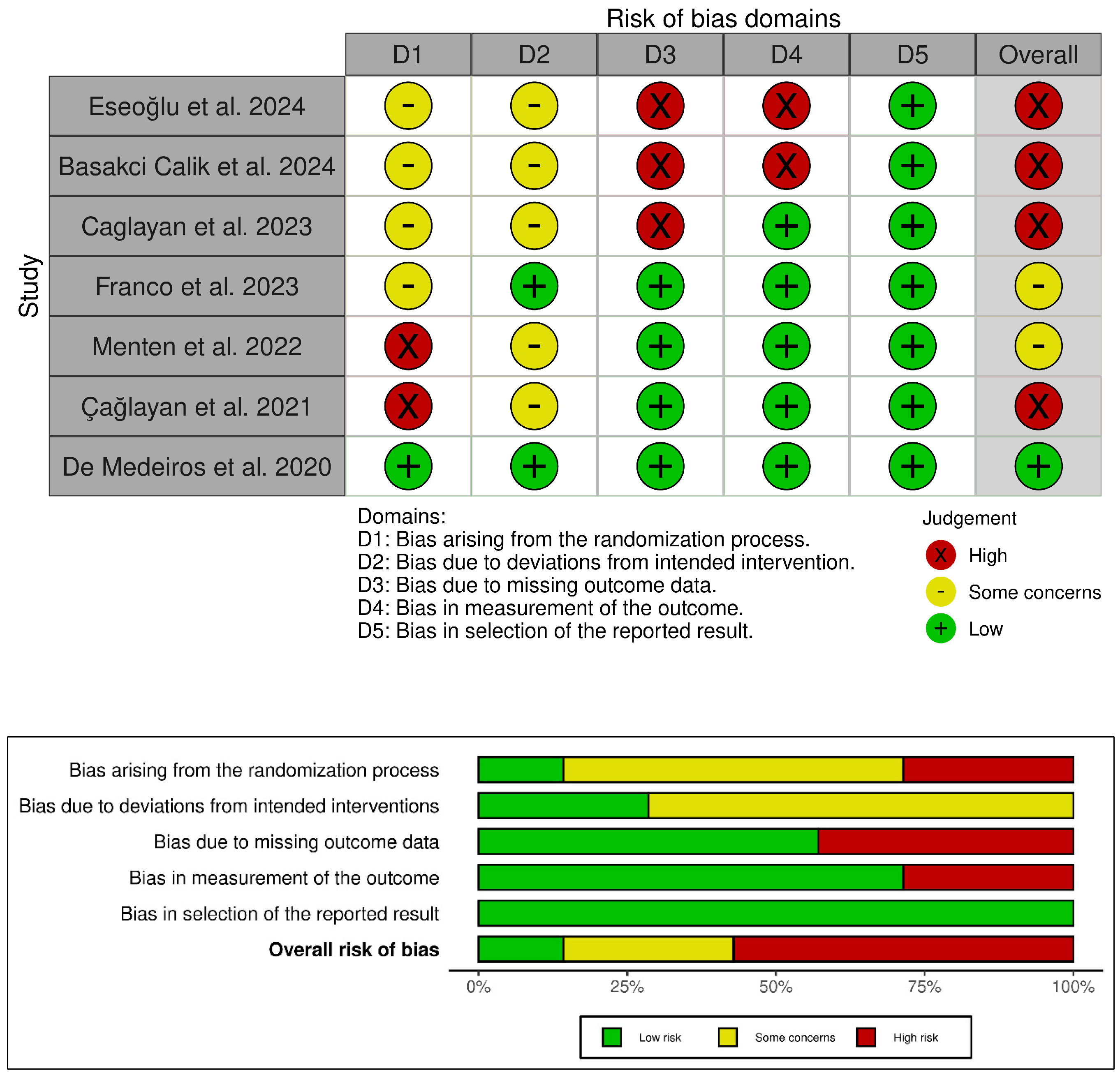
Across the seven RCTs, overall risk of bias per RoB 2 (Figure 2) was high in four [27,28,29,32], presented some concerns in two [30,31], and was low in one [33]. High risk in Domain 3 (missing outcome data) was primarily driven by incomplete outcome data without intention-to-treat analyses in the affected trials. It was rated high in four trials [27,28,29,32]. Domain 4 (measurement of outcomes) was high in two trials [27,28]. Domain 2 (deviation from intended intervention) was low in two studies [30,33], and Domain 5 (selective reporting) was low across all studies [27,28,29,30,31,32,33].
The certainty of evidence for pooled outcomes was assessed using the GRADE approach (Supplementary Materials Table S3). Certainty was rated very low for pain intensity and low for fibromyalgia impact (FIQ). The main factors driving downgrading were risk of bias (high or unclear RoB 2 judgments in several trials) and imprecision (few trials contributing to each pooled estimate and wide confidence intervals). For pain intensity, inconsistency also contributed to downgrading due to substantial between-study heterogeneity (I2 = 73%), whereas indirectness was not considered a major concern.

3.2. Study Characteristics

The main characteristics of the included trials are summarized in Table 2 and Table 3. Interventions lasted 6–12 weeks, with 2–3 sessions/week of 45–60 min. Most programs used mat-based Pilates, delivered individually or in small groups [27,28,29,32,33]; two trials incorporated equipment-based Pilates [30,31] and one compared reformer-based Pilates with home mat modality [29]. Sessions were mainly supervised by physiotherapists or certified Pilates professionals [28,29,30,31,32,33], while supervision was not specified in one study [27]. Among studies reporting adherence, values ranged from 68% to 92% [28,30,32,33].

3.3. Effects of Pilates-Based Intervention

While between-group comparisons provide the primary evidence for efficacy, across studies, Pilates yielded clinically relevant within-group (pre-post) improvements in pain [30,33], number of painful regions (PLI) [28,29], fibromyalgia impact (FIQ) [27,28,29,30,32,33], physical function/strength (Chair-Stand, TUG; trunk and upper-limb tests) [27,29], emotional status (BAI/BDI or BETY-BQ) [27,28,29], quality of life (QoL) measured with SF-36/EQ-5D [28,29,30,32,33] and tactile acuity at the cervical region [31]. Head-to-head comparisons showed selective advantages: Pilates vs. aerobic exercise favored Pilates for post-treatment pain, sleep at 6 months, and EQ-5D at 12 months [30]; connective tissue massage and Pilates reduced (CTM + PM) PLI more than Pilates alone [28]; and Pilates and electro-muscle stimulation (PM + EMS) improved BAI, FIQ, and V-Sit Flexor versus Pilates alone, while Pilates alone produced larger BDI gains [27]. From an economic standpoint, Pilates was not cost-effective versus aerobic exercise regarding fibromyalgia impact (FIQ) scores, though it was considered cost-effective for quality-adjusted life-years (QALYs) at a standard willingness-to-pay threshold [30]. Adverse events were uncommon. One trial reported mild, non-serious events: vaginismus after the first Pilates session and foot blisters in the aerobic comparator [30]. The remaining studies reported no events or did not state them explicitly [27,28,29,31,32,33].

3.4. Meta-Analysis

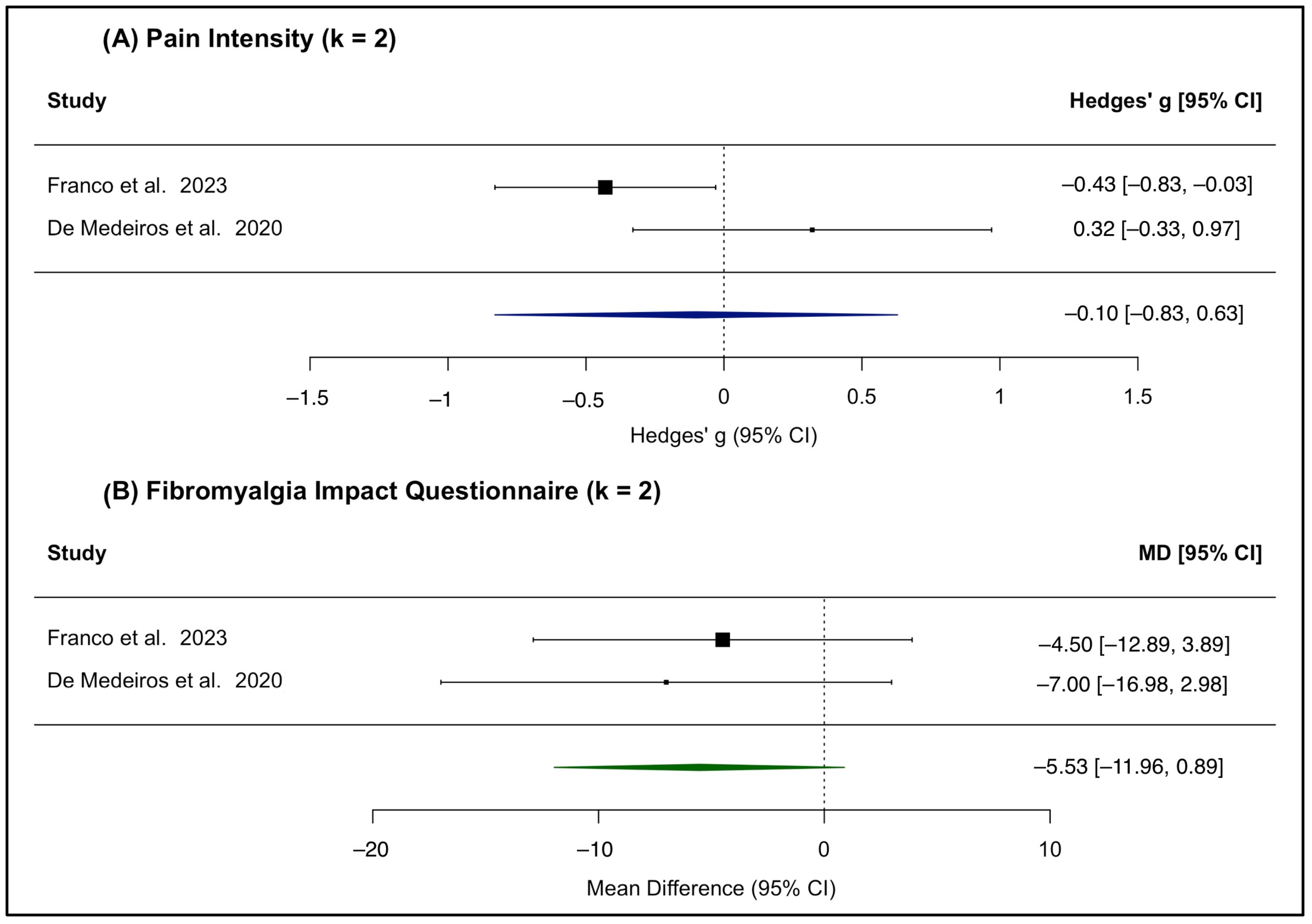
Two independent RCTs [30,33] contributed to the pain synthesis after excluding an overlapping report [31] (Figure 3). Study effects were Franco et al. [30] g = −0.43 (95% CI [−0.83 to −0.03]) and De Medeiros et al. [33] g = +0.32 (95% CI [−0.33 to 0.97]). The random-effects model showed no statistically significant between-group difference (pooled g = −0.10, 95% CI [−0.83 to 0.63], p = 0.79), with substantial heterogeneity (I2 = 73%). Subgroup analysis by Pilates modality (mat vs. equipment) was not performed because, after excluding overlapping data, no independent trial using exclusively equipment-based Pilates remained eligible for the primary synthesis (Figure 3).
Two RCTs reported FIQ at post-intervention [30,33] (Figure 3). Primary analysis (unadjusted post-intervention means): Franco et al. [30] MD = −4.50 (95% CI [−12.89, 3.89]), De Medeiros et al. [33] MD = −7.00 (95% CI [−16.98, 2.98]); pooled MD = −5.53, 95% CI [−11.96, 0.89], p = 0.09, I2 = 0%. Analysis using ANCOVA-adjusted estimates: Replacing Franco et al.’s unadjusted comparison with the adjusted between-group estimate (direction-harmonized) yielded pooled MD = −6.71, 95% CI [−13.11, −0.30], p = 0.04, I2 = 0%. Conclusions were sensitive to estimator choice (Figure 3).

4. Discussion

4.1. Main Findings

This systematic review and meta-analysis of seven RCTs [27,28,29,30,31,32,33] found no statistically significant between-group differences between Pilates and active exercise comparators for pain (g = −0.10, p = 0.79) and fibromyalgia impact (MD = −5.53, p = 0.09). However, this conclusion for FIQ was sensitive to the choice of estimator, as the sensitivity analysis using the ANCOVA-adjusted estimate from Franco et al. yielded a statistically significant pooled effect. These findings indicate that Pilates was not demonstrably different from other active exercise modalities in our analyses; however, absence of statistical significance does not establish equivalence; non-inferiority designs with pre-specified margins would be required.
Non-significant between-group results should be interpreted in light of limited statistical power (few trials per outcome) and clinical heterogeneity (dose, delivery format, and active comparators). Such variability can mask meaningful effects in specific subgroups, but the current evidence base is insufficient to support reliable subgroup analyses. Results may also reflect that fibromyalgia management is often multicomponent; Pilates alone may be comparable to other single-modality exercise programs, whereas combined approaches (exercise plus education/CBT components) may be needed to achieve broader gains.
For clinical interpretation, the minimal clinically important difference (MCID) for pain in fibromyalgia is approximately 2 points on a 0–10 scale or a 30% improvement [34]. Our pooled effect for pain (g = −0.10) corresponds to approximately 0.2 points on a 10-point scale, substantially below the MCID threshold. For the FIQ, a 14% reduction represents clinical importance [35]. This supports our conclusion that current evidence does not demonstrate a clinically meaningful between-group advantage of Pilates over active exercise comparators.
A key interpretability limitation is the heterogeneity of active comparators (e.g., aerobic exercise, aquatic therapy, EMS). Therefore, the pooled estimate should be interpreted as Pilates versus heterogeneous active exercise modalities rather than Pilates versus a single, well-defined comparator. This limits conclusions about superiority over any specific intervention and does not support equivalence; instead, it highlights the imprecision of current comparative evidence. We retained meta-analysis because it provides transparent summary estimates with confidence intervals that quantify uncertainty, but readers should consult individual trial results for comparator-specific effects.

4.2. Effects on Pain

Regarding the primary comparison, our pooled meta-analysis showed no statistically significant between-group difference for pain (g = −0.10). This cardinal symptom in fibromyalgia [1,36] and major clinical challenge [37] was assessed using VAS, an 11-point NRS [38], and the Pain Location Inventory (PLI) [28,29]. The included trials demonstrated that PM produces within-group pain reductions comparable to active control interventions [28,29,30], with benefits emerging as early as four weeks [39,40], although sustained practice is recommended. De Medeiros et al. [33] found that 12 weeks of mat Pilates reduced VAS pain to a magnitude comparable to aquatic aerobic exercise, with no between-group differences.
Çağlayan et al. [29] reported that 6 weeks of home-based mat Pilates reduced painful regions (PLI), suggesting contraction in widespread pain distribution. Franco et al. [30] found greater short-term NRS relief with Pilates versus aerobic exercise, though not clinically relevant, contrasting with broader meta-analytic support for aerobic exercise [41].
Basakci Calik et al. [28] reported that adding connective-tissue massage to Pilates significantly reduced painful regions (PLI) versus Pilates alone, suggesting adjuvant effects. Eseoğlu et al. [27] combined EMS with mat Pilates and observed improvements in anxiety, FIQ, and trunk-flexor performance, though pain intensity was not reported. Across trials, within-group pain improvements were commonly observed; however, pooled between-group effects versus active comparators were small, non-significant, and below MCID thresholds, supporting comparability rather than superiority—comparable to aerobic [30] or aquatic exercise [33]. Combinations with EMS [27] or connective-tissue massage [28] may enhance responses, but adequately powered trials are needed to confirm magnitude and guide clinical integration.

4.3. Effects on Quality of Life and Fibromyalgia Impact

Quality of life (QoL), often impaired in fibromyalgia and critical for treatment adherence [42], improved significantly after PM in Çağlayan et al. [32]: one-to-one sessions enhanced the physical component (SF-36), while group-based sessions improved both physical and mental components. However, QoL outcomes could not be pooled in a clinically interpretable way due to the heterogeneity of instruments (EQ-5D utility index versus SF-36 domain scores). Across trials, QoL improvements were generally observed within groups, while between-group differences versus active comparators were inconsistent, supporting comparability rather than superiority. Loftus et al. [42] reported similar gains in functional status, symptoms, and self-efficacy with combined group exercise and education, though additional trials are needed to disentangle exercise versus educational contributions.
De Medeiros et al. [33] found no between-group differences, though both arms improved within the groups. Mat Pilates enhanced VAS pain, FIQ, SF-36 domains (vitality, physical functioning, pain), and fear-avoidance (FABQ-PA); aquatic aerobic improved VAS pain, FIQ, sleep quality (PSQI), and pain catastrophizing (PRCTS). Different modalities may differentially target well-being domains: Pilates may more strongly impact functioning and participation, while aquatic exercise may benefit sleep and cognitive-affective processing, aligning with previous systematic reviews indicating that aquatic interventions may specifically favor symptom management and wellness [43].
Franco et al. [30] found no post-treatment between-group QoL difference (Pilates vs. aerobic exercise), though EQ-5D at 12 months and PSQI at 6 months favored Pilates, with cost-effectiveness demonstrated in quality-adjusted life-years. Jesus et al. [44] observed QoL improvements with PM versus stretching/relaxation approaches.
At the synthesis level, secondary research is inconsistent: Nithuthorn et al. [13] reported significant FIQ improvements with Pilates, whereas Abu Shady et al. [14] concluded that benefits are not superior to traditional rehabilitation. Evidence suggests modest QoL gains aligning with broader exercise literature [41], though heterogeneity in instruments (FIQ, SF-36, EQ-5D), comparators, and delivery formats tempers certainty. Future trials should compare well-dosed interventions head-to-head and examine mediators (sleep, self-efficacy, kinesiophobia) to clarify magnitude, durability, and mechanisms.

4.4. Effects on Physical Function and Other Outcomes

Physical function was assessed heterogeneously across studies. Eseoğlu et al. [27] employed Single-Leg Hop, Modified Push-Up, Handgrip Strength, and trunk flexor (V-Sit) tests. Regarding anthropometric parameters, the authors explicitly assessed body composition; this was not a pre-specified outcome in our protocol but was reported by Eseoğlu et al. [27]. They reported changes (body weight and circumference measurements) and significant reductions in both the Pilates and Pilates + EMS groups. However, evidence on body composition remains unclear: a prior systematic review concluded that, although Pilates can increase strength (especially of the trunk/core), its effects on composition per se are limited [45]. Both Pilates arms improved strength and anthropometrics; PM + EMS showed selective V-Sit advantage and larger anxiety/FIQ gains, with no handgrip or push-up differences.
Çağlayan et al. [32] reported that functional status (HAQ) improved particularly in the group-based format, while the individual format yielded a greater reduction in FIQ; the SF-36 physical component increased after Pilates in both formats, with a slight advantage for group classes, findings plausibly linked to motivational and social-facilitation effects [42].
Equipment-based Pilates may also convey incremental benefits: in a head-to-head comparison, the Reformer group achieved a significant gain in lower-limb strength (Chair-Stand Test) that was not observed with mat Pilates [29]. Reformer-based Pilates may offer enhanced effectiveness in contexts of chronic pain and musculoskeletal dysfunction compared to the mat-based modality. For instance, in patients with ankylosing spondylitis, reformer Pilates led to superior improvements in spinal mobility and pain reduction [46], while in pregnant women, another clinical group with high pain sensitivity, greater benefits were reported in reducing stress and depressive symptoms when using this method [47].
Beyond conventional performance tests, Menten et al. [31] found improved tactile acuity (two-point discrimination at the cervical region) after 8 weeks of individual Pilates, a clinically relevant signal given the sensory–perceptual alterations described in fibromyalgia. In a direct comparison with aerobic exercise, Franco et al. [30] observed similar post-treatment improvements in functional capacity (including the FIQ physical-function subscale), supporting the view that Pilates achieves functional gains comparable to other active modalities; an umbrella review likewise reports effects similar to alternative therapies [48].
Longer-term and non-equivalent designs reinforce functional response heterogeneity. Altan et al. [49] reported QoL improvements (Nottingham Health Profile) but no Chair-Stand gains after 12 or 24 weeks. Conversely, Latorre Román et al. [50] observed strength increases (Chair-Stand, Handgrip) after 18 weeks, and Wood et al. [51] found functional improvements (Roland-Morris) after 6 weeks. These discrepant findings—spanning instruments (Chair-Stand, Handgrip, HAQ, RMDQ), formats (individual/group; mat/Reformer; adjunct EMS), and dosages (6–18 weeks)—underscore genuine variability. Future trials should standardize endpoints, ensure adequate supervision, and compare well-matched comparators to clarify magnitude, durability, and specificity.
Mental health dimensions (anxiety, depression, stress, kinesiophobia) are common in fibromyalgia, undermining QoL and posing clinical challenges. Roitenberg et al. [52] found that specialist physiotherapists described caring for fibromyalgia patients as particularly demanding due to emotional and behavioral complexity, underscoring the need for integrated approaches addressing physical, functional, and emotional components.
PM may confer psychological benefits, though findings are not uniform. Çağlayan et al. [32] found that anxiety (Beck Anxiety Inventory) decreased significantly with group-based Pilates but not with one-to-one delivery. The anxiolytic effect may relate to social interaction and support [53], consistent with evidence that group activity protects against depression [54]. Notably, the group arm had higher baseline anxiety [32], underscoring the need to tailor delivery format to psychological profiles.
Regarding depressive symptoms, the broader exercise literature in fibromyalgia indicates that regular physical activity is associated with reductions in depression [41]. In the RCT by Eseoğlu et al. [27], mood was assessed with the Beck Depression Inventory (BDI) and Beck Anxiety Inventory (BAI). After 8 weeks, both the Pilates-only and the PM + EMS arms improved significantly on the BDI and BAI. The anxiolytic effect was greater with PM + EMS (larger BAI reduction), whereas between-group differences for depression were small; in the original trial, BDI improvement was slightly greater with Pilates alone.
Beyond anxiety and depression, De Medeiros et al. [33] evaluated cognitive-affective correlates, showing that aquatic aerobic exercise yielded greater improvements in pain catastrophizing (PRCTS), whereas Pilates reduced fear-avoidance related to physical activity (FABQ-PA). Clinically, this is relevant because kinesiophobia/fear-avoidance can hinder treatment delivery and adherence in musculoskeletal practice [55].
When Pilates is contrasted with other mind-body approaches, the psychological signals are concordant: Yoga of Awareness improved mental well-being and pain coping [56], and tai chi outperformed aerobic exercise for mood symptoms and global fibromyalgia impact [57]. In practice, combining Pilates with educational or psychological components, for example, pain neuroscience education or stress-management strategies, may potentiate these mental health benefits and acceptability [58].

4.5. Clinical Implications

Pilates-based programs appear feasible and generally well tolerated although the overall certainty of evidence for efficacy outcomes (very low to low per GRADE) warrants cautious interpretation of any clinical recommendations in fibromyalgia. Based on adherence data where reported (4/7 trials), adverse events were not systematically monitored, limiting confidence in tolerability conclusions. Head-to-head comparisons and pooled estimates indicate small and non-significant between-group differences versus other active exercise interventions, suggesting Pilates performs similarly to other active modalities. Accordingly, Pilates may be considered an alternative active exercise option within multidisciplinary care, with selection guided by patient preference, accessibility, and opportunities for supervised and individualized progression. Notably, Franco et al. [30] reported participant preference for Pilates despite equivalent efficacy, which may reflect delivery-related factors such as social engagement.
When tailoring Pilates to the individual, both patient and environmental factors should be considered. Notably, individualization recommendations below are informed by clinical reasoning and individual trial findings, as formal subgroup analyses were not feasible in this review due to limited study numbers. Çağlayan et al. [32] found that one-to-one Pilates was associated with greater improvement in disease impact than the group format. Patients with high disease burden, marked functional limitations, and poorer QoL may benefit from individualized sessions, allowing the physiotherapist to fine-tune progressions and pacing. By contrast, individuals with less severe impairment who tolerate and value social interaction may derive additional benefit from group classes, leveraging group support and shared motivation [32,42].
Availability of equipment should guide local implementation. In centers with Reformers, this variant can diversify rehabilitation or emphasize strength work; in fact, Çağlayan et al. [29] reported greater lower-limb strength gains with Reformer-based Pilates than with mat work. When combining physiotherapy techniques with Pilates, choices should be individualized. For example, Basakci Calik et al. [28] found that adding connective-tissue massage to Pilates reduced the number of painful regions more than Pilates alone, which may be useful in patients with prominent central pain components. In individuals with marked muscle weakness or sedentary lifestyles, the addition of EMS during Pilates sessions may help address deconditioning consistent with the performance and mood benefits observed by Eseoğlu et al. [27].
In all cases, clinicians should prioritize patient-centered care and tailored prescription [59]. Responses to Pilates vary with baseline characteristics such as age, initial physical capacity, comorbidities, and psychological status. Small baseline differences may also influence observed effects. For instance, in De Medeiros et al. [33] the Pilates group started with poorer quality of life yet improved more over the intervention, a pattern compatible with greater room for improvement.

4.6. Methodological Quality and Risk of Bias

Methodological quality (PEDro) ranged from 4/10 to 8/10, indicating fair-to-good trials overall [27,28,29,30,31,32,33], with no study achieving “excellent.” Consistent strengths were random allocation and baseline comparability (both reported in all trials), whereas participant/therapist blinding was absent across the board, a structural limitation in exercise studies that raises potential performance bias. Assessor blinding was mixed (not reported or absent) in Eseoğlu et al. [27] and Başakcı Çalık et al. [28], but present in five trials [29,30,31,32,33]. Allocation concealment was reported by Menten et al. [31], Franco et al. [30], and De Medeiros et al. [33]. Only Franco et al. [30] and De Medeiros et al. [33] performed intention-to-treat (ITT) analyses and achieved ≥85% follow-up, whereas other trials had lower retention; notably, Çağlayan et al. [32] reported substantial attrition in the one-to-one arm, which may introduce attrition bias and limit interpretability (cf. risk-of-bias guidance [60]). All seven trials reported a sample-size calculation (Table 1), but total sample sizes (≈28–98) and short intervention windows (6–12 weeks) suggest several studies were underpowered for some endpoints, constraining precision and external validity. Demographically, samples reflected FM epidemiology, predominantly middle-aged women, with one male in Franco et al. [30]—supporting population relevance.
The high proportion of studies with elevated risk of bias (4/7, 57%) substantially limits confidence in the pooled estimates. The meta-analytic findings indicate that Pilates achieves outcomes comparable to active comparators, but precision and risk-of-bias constraints temper confidence, especially the prevalent D3 issues and the two instances of high D4 (participant-reported outcomes without blinding), alongside frequent “some concerns” in D1/D2 [27,28,29,30,31,32,33]. The predominant sources, missing outcome data without intention-to-treat analysis (D3) and unblinded participant-reported outcomes (D4), may inflate or obscure true intervention effects. These methodological weaknesses mean that findings should be interpreted cautiously pending higher-quality trials.

4.7. Limitations

Several limitations should be acknowledged. Two included publications [30,31] derive from the same registered trial (NCT03050606), with complete participant overlap (Menten et al. n = 24 participants are included within Franco et al. n = 98). To preserve statistical independence, Menten et al. was excluded from the primary pain meta-analysis. Menten et al. is retained only for outcomes not reported in Franco et al. (e.g., tactile acuity), which are reported narratively.
Our quantitative synthesis was constrained by few RCTs per outcome (pain: k = 2; FIQ: k = 2), limiting statistical power to detect small-to-moderate between-group differences and precluding publication-bias assessment. The temporal restriction to 2020–2025 follows updated systematic review methodology [15,20] and reflects common practice; 27.9% of systematic reviews apply temporal restrictions, with “updating a previous review” representing 21.2% of justifications [17]. However, this approach inherently limits the number of included trials (k = 7) and reduces statistical power for pooled analyses (k = 2 per outcome). Turner et al. [61] demonstrated that 83% of meta-analytic confidence intervals contain the final estimate after approximately five studies, but our wide CIs reflect genuine imprecision that we incorporated into GRADE assessments. Formal publication bias assessment was precluded, and we cannot exclude the possibility that relevant trials may have been missed. This trade-off was accepted to provide a timely, focused synthesis of contemporary RCTs employing active comparators, which differ methodologically from earlier trials predominantly using inactive controls. Readers should interpret our findings as complementing the pre-2020 evidence synthesized [12]. Additionally, eligibility was restricted to studies published in English or Spanish, and the search was limited to the databases queried (PubMed, CINAHL, MEDLINE, Web of Science, SPORTDiscus, and Scopus). Although comprehensive, relevant trials indexed in other sources or published in other languages may have been missed. The absence of individual participant data precluded exploration of potential effect modifiers such as baseline disease severity, symptom duration, or concurrent pharmacotherapy. Although we extracted data from the first post-intervention assessment to maximize comparability, the timing of outcome measurement varied across trials (6–12 weeks), potentially introducing assessment-timing heterogeneity. Health-related quality of life outcomes could not be pooled quantitatively due to incompatible instruments (EQ-5D utility index versus SF-36 domain scores), necessitating narrative synthesis. Substantial clinical and methodological heterogeneity may have masked true effects in specific subgroups. Sources of heterogeneity included variability in Pilates application (mat-based versus apparatus-based, individual versus group delivery), comparator type (aerobic, aquatic, EMS), dose, and measurement instruments (VAS versus NRS for pain). While this variability limits comparability, it also reflects the method’s clinical adaptability. Formal subgroup analyses were not feasible with k < 10 per subgroup. Imprecision (wide confidence intervals) and elevated risk of bias (limited blinding, incomplete intention-to-treat analyses in 4/7 studies) may have biased pooled estimates in either direction. Additionally, we could only pool immediate post-treatment data; long-term effects (e.g., 6–12 months in Franco et al. [30]) were too sparsely reported for meta-analysis.
Finally, and consistent with the limitations outlined above, GRADE ratings indicated very low certainty for pain intensity and low certainty for fibromyalgia impact (FIQ).

4.8. Recommendations for Future Research

This review identifies key priorities to strengthen the evidence base. First, larger, adequately powered RCTs with clearly defined, standardized Pilates dosing parameters (frequency, session duration, program length, intensity/progression) and longer follow-up periods (e.g., 6–12 months) are needed to assess the durability of effects and improve comparability across trials. Second, trials should be designed to capture clinically meaningful change, including MCID-based outcomes and responder analyses, and should prospectively monitor and report adverse events using predefined safety procedures and transparent reporting. Third, multi-arm RCTs could help disentangle Pilates-only, adjunct-only (e.g., EMS, connective tissue massage), combined, and control effects, while dose-optimization studies should compare pragmatic frequency/duration trade-offs. Methodologically, trials should prioritize assessor blinding, intention-to-treat analyses, transparent randomization/allocation concealment, and CONSORT-compliant reporting [62]. As the body of trials grows, future evidence syntheses should consider meta-regression and/or subgroup analyses to explore whether intervention duration, standardized dose, and comparator type (active vs. passive) explain between-study variability in treatment effects.
Beyond trial design improvements, mechanistic studies should investigate whether Pilates exerts effects through neurophysiological pathways distinct from conventional aerobic exercise. Pragmatic trials embedded in real-world clinical settings should evaluate implementation factors, including cost-effectiveness and long-term adherence. Future studies should also explore objective biomarkers alongside patient-reported outcomes, and qualitative research may identify barriers and facilitators to Pilates engagement.
Finally, most included trials used short programs (6–12 weeks) and modest sample sizes, which warrants caution when generalizing. Overall, Pilates may be considered one option within multidisciplinary fibromyalgia management pending confirmation of comparable outcomes in larger, standardized trials.

5. Conclusions

This systematic review and meta-analysis of contemporary RCTs indicate that Pilates-based interventions do not demonstrate superior efficacy compared to other active exercise modalities for reducing pain or fibromyalgia impact. While Pilates appears to be a feasible option with moderate to high adherence, conclusions regarding comparative effectiveness are constrained by very low to low certainty and substantial imprecision in pooled estimates. Importantly, the absence of statistically significant differences does not confirm therapeutic equivalence. Therefore, Pilates should currently be viewed as an accessible, patient-centered option for individuals who prefer mind-body interventions, rather than a proven superior alternative. Future research should prioritize adequately powered trials with standardized protocols, longer follow-up periods, and rigorous adverse event monitoring to clarify its clinical role relative to standard care.

Supplementary Materials

The following supporting information can be downloaded at: https://www.mdpi.com/article/10.3390/app16031324/s1, Table S1: PRISMA 2020 Checklist; Table S2: Database Search Strategies; Table S3: GRADE Evidence Profile.

Author Contributions

Conceptualization, methodology, and formal analysis: G.R.-F., A.B.-R., H.R.-O. and P.C.-P.; database searches, G.R.-F., A.B.-R. and H.R.-O.; data extraction, G.R.-F., A.B.-R. and H.R.-O.; data extraction supervision, G.R.-F., A.B.-R., H.R.-O. and P.C.-P.; methodological quality assessment, H.R.-O., G.R.-F. and P.C.-P.; writing—original draft preparation, G.R.-F., A.B.-R., H.R.-O. and P.C.-P.; all authors contributed to the critical revision of manuscript. All authors have read and agreed to the published version of the manuscript.

Funding

This research received no external funding.

Institutional Review Board Statement

Not applicable.

Informed Consent Statement

Not applicable.

Data Availability Statement

The data presented in this study are available upon request from the corresponding author.

Conflicts of Interest

The authors declare no conflict of interest.

References

  1. Siracusa, R.; Paola, R.D.; Cuzzocrea, S.; Impellizzeri, D. Fibromyalgia: Pathogenesis, Mechanisms, Diagnosis and Treatment Options Update. Int. J. Mol. Sci. 2021, 22, 3891. [Google Scholar] [CrossRef] [PubMed]
  2. Branco, J.C.; Bannwarth, B.; Failde, I.; Abello Carbonell, J.; Blotman, F.; Spaeth, M.; Saraiva, F.; Nacci, F.; Thomas, E.; Caubère, J.-P.; et al. Prevalence of Fibromyalgia: A Survey in Five European Countries. Semin. Arthritis Rheum. 2010, 39, 448–453. [Google Scholar] [CrossRef] [PubMed]
  3. Wolfe, F.; Brähler, E.; Hinz, A.; Häuser, W. Fibromyalgia Prevalence, Somatic Symptom Reporting, and the Dimensionality of Polysymptomatic Distress: Results from a Survey of the General Population. Arthritis Care Res. 2013, 65, 777–785. [Google Scholar] [CrossRef] [PubMed]
  4. Cabo-Meseguer, A.; Cerdá-Olmedo, G.; Trillo-Mata, J.L. Fibromyalgia: Prevalence, Epidemiologic Profiles and Economic Costs. Med. Clin. 2017, 149, 441–448. [Google Scholar] [CrossRef]
  5. Soroosh, S. Epidemiology of Fibromyalgia: East Versus West. Int. J. Rheum. Dis. 2024, 27, e15428. [Google Scholar] [CrossRef]
  6. Queiroz, L.P. Worldwide Epidemiology of Fibromyalgia. Curr. Pain Headache Rep. 2013, 17, 356. [Google Scholar] [CrossRef]
  7. Pedersen, B.K.; Saltin, B. Evidence for Prescribing Exercise as Therapy in Chronic Disease. Scand. J. Med. Sci. Sports 2006, 16, 3–63. [Google Scholar] [CrossRef]
  8. González-Chávez, A.; Becerra-Pérez, A.R.; Carmona-Solís, F.K.; Cerezo-Goiz, M.I.A.; Hernández-y-Hernández, H.; Lara-Esqueda, A. Ejercicio físico para la salud. Rev. Mex. Cardiol. 2001, 12, 168–180. [Google Scholar]
  9. Wood, S. Pilates for Rehabilitation; Human Kinetics: Champaign, IL, USA, 2019; ISBN 978-1-4925-5649-7. [Google Scholar]
  10. Cruz, J.C.; Liberali, R.; Cruz, T.M.F.d; Netto, M.I.A. The Pilates Method in the Rehabilitation of Musculoskeletal Disorders: A Systematic Review. Fisioter. Mov. 2016, 29, 609–622. [Google Scholar] [CrossRef]
  11. Newsome, A.M.; Reed, R.; Sansone, J.; Batrakoulis, A.; McAvoy, C.; Parrott, M.W. 2024 ACSM Worldwide Fitness Trends: Future Directions of the Health and Fitness Industry. ACSM’s Health Fit. J. 2024, 28, 14. [Google Scholar] [CrossRef]
  12. Cordeiro, B.L.B.; Fortunato, I.H.; Lima, F.F.; Santos, R.S.; Costa, M.d.C.; Brito, A.F. Influence of the Pilates Method on Quality of Life and Pain of Individuals with Fibromyalgia: Integrative Review. BrJP 2020, 3, 258–262. [Google Scholar] [CrossRef]
  13. Nithuthorn, C.; Chaipichit, N.; Jeeraaumponwat, T.; Maiprasert, M.; Dilokthornsakul, P. Effect of Pilates on Pain and Health-Related Quality of Life in Fibromyalgia Patients: A Systematic Review and Meta-Analysis. J. Clin. Med. 2024, 13, 7447. [Google Scholar] [CrossRef] [PubMed]
  14. Abu Shady, N.A.; Amin, N.F.; Sayed, A.A. Effect of Pilates Based Exercise Training on Pain and Quality of Life in Patients with Fibromyalgia: A Systematic Review. Med. J. Cairo Univ. 2024, 92, 153–161. [Google Scholar] [CrossRef]
  15. Garner, P.; Hopewell, S.; Chandler, J.; MacLehose, H.; Schünemann, H.J.; Akl, E.A.; Beyene, J.; Chang, S.; Churchill, R.; Dearness, K.; et al. When and How to Update Systematic Reviews: Consensus and Checklist. BMJ 2016, 354, i3507. [Google Scholar] [CrossRef] [PubMed]
  16. Shojania, K.G.; Sampson, M.; Ansari, M.T.; Ji, J.; Doucette, S.; Moher, D. How Quickly Do Systematic Reviews Go Out of Date? A Survival Analysis. Ann. Intern. Med. 2007, 147, 224–233. [Google Scholar] [CrossRef]
  17. Helbach, J.; Pieper, D.; Mathes, T.; Rombey, T.; Zeeb, H.; Allers, K.; Hoffmann, F. Restrictions and Their Reporting in Systematic Reviews of Effectiveness: An Observational Study. BMC Med. Res. Methodol. 2022, 22, 230. [Google Scholar] [CrossRef]
  18. Huang, X.; Lin, J.; Demner-Fushman, D. Evaluation of PICO as a Knowledge Representation for Clinical Questions. AMIA Annu. Symp. Proc. 2006, 2006, 359–363. [Google Scholar]
  19. Shamseer, L.; Moher, D.; Clarke, M.; Ghersi, D.; Liberati, A.; Petticrew, M.; Shekelle, P.; Stewart, L.A. Preferred Reporting Items for Systematic Review and Meta-Analysis Protocols (PRISMA-P) 2015: Elaboration and Explanation. BMJ 2015, 350, g7647. [Google Scholar] [CrossRef]
  20. Higgins, J.P.T.; Thomas, J.; Chandler, J.; Cumpston, M.; Li, T.; Page, M.J.; Welch, V.A. (Eds.) Cochrane Handbook for Systematic Reviews of Interventions; Version 6.4; Cochrane: London, UK, 2023; Available online: https://www.cochrane.org/handbook (accessed on 29 October 2025).
  21. Maher, C.G.; Sherrington, C.; Herbert, R.D.; Moseley, A.M.; Elkins, M. Reliability of the PEDro Scale for Rating Quality of Randomized Controlled Trials. Phys. Ther. 2003, 83, 713–721. [Google Scholar] [CrossRef]
  22. Moseley, A.M.; Herbert, R.D.; Sherrington, C.; Maher, C.G. Evidence for Physiotherapy Practice: A Survey of the Physiotherapy Evidence Database (PEDro). Aust. J. Physiother. 2002, 48, 43–49. [Google Scholar] [CrossRef]
  23. Sterne, J.A.C.; Savović, J.; Page, M.J.; Elbers, R.G.; Blencowe, N.S.; Boutron, I.; Cates, C.J.; Cheng, H.-Y.; Corbett, M.S.; Eldridge, S.M.; et al. RoB 2: A Revised Tool for Assessing Risk of Bias in Randomised Trials. BMJ 2019, 366, l4898. [Google Scholar] [CrossRef]
  24. Balshem, H.; Helfand, M.; Schünemann, H.J.; Oxman, A.D.; Kunz, R.; Brozek, J.; Vist, G.E.; Falck-Ytter, Y.; Meerpohl, J.; Norris, S.; et al. GRADE Guidelines: 3. Rating the Quality of Evidence. J. Clin. Epidemiol. 2011, 64, 401–406. [Google Scholar] [CrossRef]
  25. Higgins, J.P.T.; Thompson, S.G.; Deeks, J.J.; Altman, D.G. Measuring Inconsistency in Meta-Analyses. BMJ 2003, 327, 557–560. [Google Scholar] [CrossRef] [PubMed]
  26. Moher, D.; Shamseer, L.; Clarke, M.; Ghersi, D.; Liberati, A.; Petticrew, M.; Shekelle, P.; Stewart, L.A. PRISMA-P Group Preferred Reporting Items for Systematic Review and Meta-Analysis Protocols (PRISMA-P) 2015 Statement. Syst. Rev. 2015, 4, 1. [Google Scholar] [CrossRef] [PubMed]
  27. Eseoğlu, İ.; Yılmaz, A.K.; Anıl, B.; Korkmaz, E.; Akdemir, E.; Yılmaz, C.; Kehribar, L.; Aydın, N.G.; Ermiş, E.; Yoldaş, B.; et al. Effects of Electro-Muscle Stimulation Exercise Combined with Mat Pilates on Pain, Anxiety, and Strength in Sedentary Females with Fibromyalgia: A Single-Blind Randomized Controlled Trial. J. Pers. Med. 2024, 14, 697. [Google Scholar] [CrossRef] [PubMed]
  28. Basakci Calik, B.; Gur Kabul, E.; Keskin, A.; Tayfun Ozcan, N.; Cobankara, V. Is Connective Tissue Massage Effective in Individuals with Fibromyalgia? J. Bodyw. Mov. Ther. 2024, 38, 162–167. [Google Scholar] [CrossRef]
  29. Caglayan, B.C.; Basakci Calik, B.; Gur Kabul, E.; Karasu, U. Investigation of Effectiveness of Reformer Pilates in Individuals with Fibromyalgia: A Randomized Controlled Trial. Reumatol. Clin. 2023, 19, 18–25. [Google Scholar] [CrossRef]
  30. Franco, K.F.M.; Miyamoto, G.C.; Franco, Y.R.D.S.; Salvador, E.M.E.S.; do Nascimento, B.C.B.; Menten, L.A.; Cabral, C.M.N. Is Pilates More Effective and Cost-Effective than Aerobic Exercise in the Treatment of Patients with Fibromyalgia Syndrome? A Randomized Controlled Trial with Economic Evaluation. Eur. J. Pain 2023, 27, 54–71. [Google Scholar] [CrossRef]
  31. Menten, L.A.; Franco, K.F.M.; Franco, Y.R.S.; Miyamoto, G.C.; Reis, F.J.J.; Cabral, C.M.N. Do Patients with Fibromyalgia Have Body Image and Tactile Acuity Distortion? Pain Pract. 2022, 22, 678–687. [Google Scholar] [CrossRef]
  32. Çağlayan, B.Ç.; Keskin, A.; Gür Kabul, E.; Başakcı Çalık, B.; Baş Aslan, U.; Karasu, U. Effects of Clinical Pilates Exercises in Individuals with Fibromyalgia: A Randomized Controlled Trial. Eur. J. Rheumatol. 2021, 8, 150–155. [Google Scholar] [CrossRef]
  33. De Medeiros, S.A.; De Almeida Silva, H.J.; Do Nascimento, R.M.; Da Silva Maia, J.B.; De Almeida Lins, C.A.; De Souza, M.C. Mat Pilates Is as Effective as Aquatic Aerobic Exercise in Treating Women with Fibromyalgia: A Clinical, Randomized and Blind Trial. Adv. Rheumatol. 2020, 60, 21. [Google Scholar] [CrossRef] [PubMed]
  34. Mease, P.J.; Spaeth, M.; Clauw, D.J.; Arnold, L.M.; Bradley, L.A.; Russell, I.J.; Kajdasz, D.K.; Walker, D.J.; Chappell, A.S. Estimation of Minimum Clinically Important Difference for Pain in Fibromyalgia. Arthritis Care Res. 2011, 63, 821–826. [Google Scholar] [CrossRef] [PubMed]
  35. Bennett, R.M.; Friend, R.; Jones, K.D.; Ward, R.; Han, B.K.; Ross, R.L. The Revised Fibromyalgia Impact Questionnaire (FIQR): Validation and Psychometric Properties. Arthritis Res. Ther. 2009, 11, R120. [Google Scholar] [CrossRef] [PubMed]
  36. Choez-Chiquito, V.E.; Menoscal-Mantuano, M.G.; Quimiz-Cantos, Y.Y. Fibromialgia: Desde la epidemiologia hasta el laboratorio (Fibromyalgia: From epidemiology to the laboratory). Dom. Cien. 2021, 7, 249–272. [Google Scholar] [CrossRef]
  37. Díaz-Fernández, Á.; Obrero-Gaitán, E.; Cortés-Pérez, I.; Ortega-Martínez, A.R.; Osuna-Pérez, M.C.; Zagalaz-Anula, N.; Ibancos-Losada, M.d.R.; Lomas-Vega, R. Chronic Pain in Spanish Physiotherapy Practice: Treatment Challenges and Opportunities in Diverse Healthcare Settings—A Qualitative Study. Clin. Pract. 2024, 14, 2089–2104. [Google Scholar] [CrossRef]
  38. Farrar, J.T.; Young, J.P.; LaMoreaux, L.; Werth, J.L.; Poole, R.M. Clinical Importance of Changes in Chronic Pain Intensity Measured on an 11-Point Numerical Pain Rating Scale. Pain 2001, 94, 149–158. [Google Scholar] [CrossRef]
  39. Assumpção, A.; Matsutani, L.A.; Yuan, S.L.; Santo, A.S.; Sauer, J.; Mango, P.; Marques, A.P. Muscle Stretching Exercises and Resistance Training in Fibromyalgia: Which Is Better? A Three-Arm Randomized Controlled Trial. Eur. J. Phys. Rehabil. Med. 2018, 54, 663–670. [Google Scholar] [CrossRef]
  40. Komatsu, M.; Avila, M.A.; Colombo, M.M.; Gramani-Say, K.; Driusso, P. Pilates Training Improves Pain and Quality of Life of Women with Fibromyalgia Syndrome. Rev. Dor 2016, 17, 274–278. [Google Scholar] [CrossRef]
  41. Couto, N.; Monteiro, D.; Cid, L.; Bento, T. Effect of Different Types of Exercise in Adult Subjects with Fibromyalgia: A Systematic Review and Meta-Analysis of Randomised Clinical Trials. Sci. Rep. 2022, 12, 10391. [Google Scholar] [CrossRef]
  42. Loftus, N.; Dobbin, N.; Crampton, J.S. The Effects of a Group Exercise and Education Programme on Symptoms and Physical Fitness in Patients with Fibromyalgia: A Prospective Observational Cohort Study. Disabil. Rehabil. 2022, 44, 3860–3867. [Google Scholar] [CrossRef]
  43. Bidonde, J.; Busch, A.J.; Webber, S.C.; Schachter, C.L.; Danyliw, A.; Overend, T.J.; Richards, R.S.; Rader, T. Aquatic Exercise Training for Fibromyalgia. Cochrane Database Syst. Rev. 2014, 2014, CD011336. [Google Scholar] [CrossRef] [PubMed]
  44. Jesus, D.X.G.D.; Pacheco, C.D.R.; Rezende, R.M. The Use of Pilates for Pain Control in Patients with Fibromyalgia. Fisioter. Mov. 2022, 35, e35204. [Google Scholar] [CrossRef]
  45. Cavina, A.P.D.S.; Pizzo Junior, E.; Machado, A.F.; Biral, T.M.; Lemos, L.K.; Rodrigues, C.R.D.; Pastre, C.M.; Vanderlei, F.M. Effects of the Mat Pilates Method on Body Composition: Systematic Review With Meta-Analysis. J. Phys. Act. Health 2020, 17, 673–681. [Google Scholar] [CrossRef] [PubMed]
  46. Kabul, E.G.; Calik, B.B.; Kuru, S.; Yigit, M. Comparison of Two Different Pilates Exercise Methods in Individuals with Ankylosing Spondylitis: A Randomized Controlled Study. J. Bodyw. Mov. Ther. 2025, 44, 170–178. [Google Scholar] [CrossRef]
  47. Koo, J.-E.; Min, K.-B. Effects of Mat and Reformer Pilates Exercise Program on Lower Extremity Edema and Stress, Depression in Pregnant Women in the Second Trimester. Asian J. Kinesiol. 2025, 27, 44–54. [Google Scholar] [CrossRef]
  48. Carrasco-Vega, E.; Guiducci, S.; Nacci, F.; Randone, S.B.; Bevilacqua, C.; Gonzalez-Sanchez, M.; Barni, L. Efficacy of Physiotherapy Treatment in the Medium and Long Term in Adults with Fibromyalgia: An Umbrella of Systematic Reviews. Clin. Exp. Rheumatol. 2024, 42, 1248–1261. [Google Scholar] [CrossRef]
  49. Altan, L.; Korkmaz, N.; Bingol, Ü.; Gunay, B. Effect of Pilates Training on People With Fibromyalgia Syndrome: A Pilot Study. Arch. Phys. Med. Rehabil. 2009, 90, 1983–1988. [Google Scholar] [CrossRef]
  50. Latorre Román, P.Á.; Santos e Campos, M.A.; García-Pinillos, F. Effects of Functional Training on Pain, Leg Strength, and Balance in Women with Fibromyalgia. Mod. Rheumatol. 2015, 25, 943–947. [Google Scholar] [CrossRef]
  51. Wood, L.; Bejarano, G.; Csiernik, B.; Miyamoto, G.C.; Mansell, G.; Hayden, J.A.; Lewis, M.; Cashin, A.G. Pain Catastrophising and Kinesiophobia Mediate Pain and Physical Function Improvements with Pilates Exercise in Chronic Low Back Pain: A Mediation Analysis of a Randomised Controlled Trial. J. Physiother. 2023, 69, 168–174. [Google Scholar] [CrossRef]
  52. Roitenberg, N.; Shoshana, A. Physiotherapists’ Accounts of Fibromyalgia: Role-Uncertainty and Professional Shortcomings. Disabil. Rehabil. 2021, 43, 545–552. [Google Scholar] [CrossRef]
  53. Burgos Varo, M.L.; Ortiz Fernández, M.D.; Muñoz Cobos, F.; Vega Gutiérrez, P.; Bordallo Aragón, R. Intervención grupal en los trastornos de ansiedad en Atención Primaria: Técnicas de relajación y cognitivo-conductuales. Semer. Med Fam. 2006, 32, 205–210. [Google Scholar] [CrossRef]
  54. Stevens, M.; Lieschke, J.; Cruwys, T.; Cárdenas, D.; Platow, M.J.; Reynolds, K.J. Better Together: How Group-Based Physical Activity Protects against Depression. Soc. Sci. Med. 2021, 286, 114337. [Google Scholar] [CrossRef] [PubMed]
  55. Castanho, B. The Influence of Kinesiophobia on Clinical Practice in Physical Therapy: An Integrative Literature Review. Int. J. Med. Res. Health Sci. 2021, 10, 78–94. [Google Scholar]
  56. Carson, J.W.; Carson, K.M.; Jones, K.D.; Bennett, R.M.; Wright, C.L.; Mist, S.D. A Pilot Randomized Controlled Trial of the Yoga of Awareness Program in the Management of Fibromyalgia. Pain 2010, 151, 530–539. [Google Scholar] [CrossRef]
  57. Wang, C.; Schmid, C.H.; Fielding, R.A.; Harvey, W.F.; Reid, K.F.; Price, L.L.; Driban, J.B.; Kalish, R.; Rones, R.; McAlindon, T. Effect of Tai Chi versus Aerobic Exercise for Fibromyalgia: Comparative Effectiveness Randomized Controlled Trial. BMJ 2018, 360, k851. [Google Scholar] [CrossRef]
  58. McIlroy, S.; Vaughan, B.; Crowe, H.; Bearne, L. The Experiences and Acceptability of a Novel Multimodal Programme for the Management of Fibromyalgia: A Qualitative Service Evaluation. Musculoskelet. Care 2022, 20, 686–696. [Google Scholar] [CrossRef]
  59. Hutting, N.; Caneiro, J.P.; Ong’wen, O.M.; Miciak, M.; Roberts, L. Patient-Centered Care in Musculoskeletal Practice: Key Elements to Support Clinicians to Focus on the Person. Musculoskelet. Sci. Pract. 2022, 57, 102434. [Google Scholar] [CrossRef]
  60. Alarcón Palacios, M.; Ojeda Gómez, R.C.; Ticse Huaricancha, I.L.; Cajachagua Hilario, K. Análisis crítico de ensayos clínicos aleatorizados: Riesgo de sesgo. Rev. Estomatológica Hered. 2015, 25, 304–308. [Google Scholar] [CrossRef]
  61. Turner, R.M.; Bird, S.M.; Higgins, J.P.T. The Impact of Study Size on Meta-Analyses: Examination of Underpowered Studies in Cochrane Reviews. PLoS ONE 2013, 8, e59202. [Google Scholar] [CrossRef]
  62. Cobos-Carbó, A.; Augustovski, F. Declaración CONSORT 2010: Actualización de la lista de comprobación para informar ensayos clínicos aleatorizados de grupos paralelos. Med. Clin. 2011, 137, 213–215. [Google Scholar] [CrossRef]
Figure 1. PRISMA flow diagram.
Applsci 16 01324 g001
Figure 2. Risk of bias of the studies including in the systematic review: (up) for each domain, (down) overall judgment [27,28,29,30,31,32,33].
Applsci 16 01324 g002
Figure 3. Forest plots for the meta-analysis of the effect of Pilates compared with other active intervention in pain (A) and fibromyalgia impact (B) [30,33].
Applsci 16 01324 g003
Table 1. Methodological quality of the reviewed studies using the 11-item Physiotherapy Evidence Database (PEDro) scale. In addition, if there was a sample size calculation.
Study and YearSample Size Calculation#1#2#3#4#5#6#7#8#9#10#11Total
Eseoğlu et al. [27] 2024Yes110100000114/10
Basakci Calik et al. [28] 2024Yes110100010115/10
Caglayan et al. [29] 2023Yes110100100115/10
Franco et al. [30] 2023Yes111100111118/10
Menten et al. [31] 2022Yes111100101117/10
Çağlayan et al. [32] 2021Yes110100100115/10
De Medeiros et al. [33] 2020Yes111100111118/10
#1, eligibility criteria (not included in the total score); #2, random allocation; #3, Concealed allocation; #4, Baseline comparability; #5, Participant blinding; #6, Therapist blinding; #7, Assessor blinding; #8, outcomes were obtained from more than 85%; #9, intention to treat analysis; #10, Between-group difference; #11, point estimates and variability.
Table 2. Main results of the reviewed studies including in the systematic review.
Study
Year
Subjects
Mean Age ± SD (Range)
Type of
Intervention (EG/CG)
Dropouts
During
Intervention
Adherence/Attendance (Range)Study Variables
(Measurement Tools)
Assessments (Weeks)Findings
Eseoğlu et al. [27] 2024EG1 = 15♀
EG2 = 15♀
(18–35)
EG1:
Pilates + EMS
EG2:
Pilates
NANAAnxiety (BAI), depression (BDI), anthropometric measurements (body weight—digital scale-; body height—meter stick; circumference measurements—wide flexible tape measure), impact of fibromyalgia (FIQ); strength test (lower extremity—SLHTs, DSQ; upper extremity—MPU, HGS, BA; core area—V-Sit Flexor, sit-up test, Biering–Sorensen test)0, 8
  • EG1 and EG2: ↓ in BAI, BDI, and FIQ scores, and in anthropometric measurements, and ↑ in strength tests (p < 0.05)
  • EG1 better than EG2 in BAI, and FIQ scores, and V-Sit Flexor test (p < 0.05)
  • EG2 better than EG1 in BDI scores (p < 0.05)
Basakci Calik et al. [28] 2024EG1 = (18 initially) 15♀
48.80 ± 7.48 y
EG2 = (18 initially) 17♀
55.64 ± 7.87 y
EG1:
CTM + Pilates
EG2:
Pilates
EG1: 3 (1, surgery; 1, new job; 1, problems with husband)
EG2: 1 (accident)
EG1: 92%
EG2: 90%
Number of painful regions (PLI), fibromyalgia impact (FIQ), functional status (HAQ), anxiety (BAI), quality of life (SF-36), biopsychosocial status (BETY-BQ),0, 6
  • EG1: improvement in FIQ, SF-36 and PLI (p < 0.05)
  • EG2: improvement in FIQ, BAI and SF-36 (p < 0.05)
  • EG1 better than EG2: PLI (p < 0.05)
Çaglayan et al. [29] 2023EG1 = (19 initially) 14♀
40.71 ± 10.81 y
EG2 = (19 initially) 14♀
50.50 ± 7.25 y
EG1:
Reformer Pilates
EG2:
Home Pilates
EG1: 5 (2, health problems; 2, personal reasons; 1, discontinued intervention)
EG2: 5 (3, discontinued intervention; 2, did not attend the post-treatment assessment)
NANumber of painful regions (PLI), fibromyalgia impact (FIQ), lower extremity strength (Chair Stand Test) and functional mobility (TUG) quality of life (SF-36), biopsychosocial status (BETY-BQ)0, 6
  • EG1: improvement in FIQ and strength (p < 0.05)
  • EG2: improvement in PLI, FIQ, BETY-BQ and SF-36 Physical Component (p < 0.05)
  • No differences between groups (p > 0.05)
Franco et al. [30] 2023EG1 = 48♀ 1♂
51.4 ± 10.1 y
EG2 = 49♀
48.5 ± 10.0 y
(20–75)
EG1:
Modified Pilates
EG2:
Aerobic exercise (treadmill or stationary bicycle)
EG1: 1 (pregnancy)EG1: 73.9%
EG2: 68%
Fibromyalgia impact (FIQ), quality of life (EQ-5D), pain intensity (NRS), functional capacity (6MWK), perceived exertion (MBS), sleep quality (PSQI), kinesiophobia (TSK), cost-utility (QALYs)0, 8, and 6 and 12 months
  • EG1 better than EG2 in NRS after treatment, PSQI after 6 months and EQ-5D after 12 months (p < 0.05)
  • Pilates is not cost-effective compared to aerobic exercises, but is cost-effective intervention for QALYs
Menten et al. [31] 2022EG1 = 11♀
44.8 ± 9.5 y
EG2 = 13♀
51.3 ± 6.3 y
EG1:
Group Pilates
EG2:
Aerobic exercise
NANAPain (NRS), tactile acuity (Two-Point Discrimination Test—mechanical caliper-), circumference of the limbs (cirtometry with a metric tape measure)0, 8
  • EG1: improvement in tactile acuity at the cervical region (p < 0.05)
Çağlayan et al. [32] 2021EG1 = (28 initially)
16♀
55.93 ± 8.03 y
EG2 = (28 initially)
26♀
47.80 ± 5.87 y
EG1:
Individual Pilates
EG2:
Group Pilates
EG1: 12 (6, discontinued intervention; 1, began working; 5 did not attend the post-treatment assessment)
EG2: 2 (discontinued intervention)
90% (all)Fibromyalgia impact (FIQ), Functional status (HAQ), anxiety (BAI), quality of life (SF-36), biopsychosocial status (BETY-BQ)0, 6
  • EG1: improvement in FIQ, SF-36 and BETY-BQ scores (p < 0.05)
  • EG2: improvement in all measures (p < 0.05)
  • EG1 better than EG2: ↓ FIQ (p < 0.05)
De Medeiros et al. [33] 2020EG1 = 21♀
45.5 ± 10.6 y
EG2 = 21♀
50.7 ± 9.7 y
EG1:
Group Pilates
EG2:
Aquatic aerobic exercise
EG1: 3 (1, not justified; 1, travelled; 1, worsening of symptoms)
EG2: 2 (not justified)
EG1: 85.7%
EG2: 90.5%
Fibromyalgia impact (FIQ), pain (VAS), sleep quality (PSQI), quality of life (SF-36), fear avoidance (FABQ), catastrophic thoughts on pain (PRCTS)0, 12
  • EG1: improvement in VAS, FIQ, SF-36 (vitality, functional capacity and pain domains), and FABQ related to their physical activities (p < 0.05)
  • EG2: improvement in VAS, FIQ, PSQI and PRCTS scores (p < 0.05)
: significant decrease; : significant increase; : woman; : man; 6MWK: 6-min Walk Test; BA: Bent-Arm Hang Test; BAI: Beck Anxiety Inventory; BDI: Beck Depression Inventory; BETY-BQ: BETY-Biopsychosocial Questionnaire; CTM: Connective Tissue Massage; DSQ: Deep Squat; EG: experimental group; EMS: electro-muscle stimulation; EQ-5D: EuroQol 5 dimensions Scale; FABQ: Fear-Avoidance Beliefs Questionnaire; FIQ: Fibromyalgia Impact Questionnaire; HAQ: Health Assessment Questionnaire; HGS: Handgrip Strength Test; MBS: Modified Borg Scale; MPU: Modified Push-Up Test; NA: not reported in the original publication; NRS: Pain Numerical Rating Scale; PLI: Pain Location Inventory; PRCTS: Patient-Related Catastrophizing Thoughts Scale; PSQI: Pittsburgh Sleep Quality Index; QALYs: Quality-adjusted life-years; SF-36: 36-Item Short-Form Health Survey; SLHTs: Single-Leg Hop Tests; TSK: Tampa Scale of Kinesiophobia; TUG: Timed Up and Go Test; VAS: Visual Analogue Scale; y: year.
Table 3. Characteristics of the Pilates intervention of the studies including in the systematic review.
Study and YearWeeksSession per WeekSession Duration (min)Type of PilatesPilates Session (Number When Conducted in Group)ProfessionalAdverse Events
(Case)
Pilates Training Program
Eseoğlu et al. [27] 20248245–60Mat workGroup (7–8)NANAYes
Basakci Calik et al. [28] 20246360Mat workGroup (6–8)PhysiotherapistNoYes
Caglayan et al. [29] 20236260Home mat work or reformer workIndividual (mat) and NA (reformer)Certified Pilates physiotherapistNoYes
Franco et al. [30] 20238260Mat and equipment-based workIndividualPhysiotherapistYesYes (and in a previous study)
Menten et al. [31] 20228260Mat and equipment-based workIndividualPhysiotherapistNANo
Çağlayan et al. [32] 20216260Mat workIndividual and group (6–8)Certified Pilates physiotherapistNoNo
De Medeiros et al. [33] 202012250Mat workGroup (up to 4)PhysiotherapistNAYes (and in a previous study)
min: minute; NA: not reported in the original publication.
Disclaimer/Publisher’s Note: The statements, opinions and data contained in all publications are solely those of the individual author(s) and contributor(s) and not of MDPI and/or the editor(s). MDPI and/or the editor(s) disclaim responsibility for any injury to people or property resulting from any ideas, methods, instructions or products referred to in the content.