Study Protocol

Research and Application of Damage Zoning Characteristics and Damage Reduction Techniques in High-Intensity Mining Strata of the Shendong Mining Area


1
Shendong Coal Group Co., Ltd., Shenmu 719315, China
2
State Key Laboratory of Water Resource Protection and Utilization in Coal Mining, National Institute of Clean and Low Carbon Energy, Beijing 102209, China
*
Authors to whom correspondence should be addressed.
Appl. Sci. 2026, 16(3), 1315; https://doi.org/10.3390/app16031315
Submission received: 27 October 2025 / Revised: 28 November 2025 / Accepted: 2 December 2025 / Published: 28 January 2026
(This article belongs to the Special Issue Mining-Induced Rock Strata Damage and Mine Disaster Control)

Abstract

With the increase in mining intensity and scale, the damage to groundwater resources and surface ecology caused by coal mining has become the main problem facing coal development. Coal mining can cause a redistribution of stress field and stress concentration in local areas of overlying rock, resulting in varying degrees of movement and damage to the overlying rock. Quantitative analysis of the degree of migration and damage in different areas of overlying rock and zoning control is crucial for achieving loss reduction and green mining. In this paper, the overburden damage is divided into regions according to the different causes of formation, regional characteristics of severity, and other factors, and the specific calculation method is given. UDEC7.0 numerical simulation software is used to simulate the overlying rock damage, and the best mining parameters are provided through the area changes in different zones. The research conclusions are as follows: according to the different damage states of overburden rock, the damage of overburden rock can be divided into four parts: I, caving fracture zone, II, fracture development zone, III, sliding failure zone, and IV, slight failure zone. In the four zones, the damage in zones II and IV is relatively light. During the mining process, attention should be given to controlling the development of Zone I to prevent it from abnormally enlarging; for Zone II, hydraulic fracturing can be used when there is a thick, hard key layer that poses a water inrush risk; for Zone III, the focus should be on preventing surface step fractures caused by it. For example, when a thick, hard key layer is present in Zone II, hydraulic fracturing can be applied to avoid large area hanging roofs and severe rock pressure. When the mining height is low, it mainly affects the proportion of regions I and III. With the increase in mining height, the main affected region becomes the II region. The larger the mining height is, the larger the proportion of the II region. With the increase in propulsion speed, the impact range on the surface increases, but the area with severe damage is relatively reduced. With the increase in mining width, the proportion of relatively seriously damaged areas increased. On-site measurements have shown that when the speeds of 120,401 and 22,207 working faces are slow, the rock layer pressure shows a dense state, the overburden fracture is more fully developed, and the area proportion of I and II zones is increased, which reflects the phenomenon of dense surface fracture development on the surface. When the advancing speed is large, the area proportions of zones III and IV increase, and the damage scope decreases. The on-site testing verified the conclusions drawn from theoretical analysis and numerical simulation, which can guide other mines under similar conditions to achieve safe and green production.

1. Introduction

Coal occupies a dominant position in China’s energy structure, and it is expected that the proportion of coal will remain above 45% by 2030, which is still an important part of China’s future energy strategic security [1]. The Shendong mining area is a typical representative of high-intensity mining in the western mining area of China. The working face is characterized by shallow burial depth, large mining height and size, fast advancing speed, etc., and the overburden damage and surface damage are relatively serious [2]. High-intensity mining is very likely to cause overburden damage, surface cracks, ecological damage, and many other problems, and the direct contradiction between coal mining and geological damage and environmental protection has become increasingly prominent [3]. Therefore, the quantification of overlying rock damage is of great significance for guiding high-intensity mining in coal mines.
Mining damage refers to the process of changing the stress state in surrounding rock after mining of a coal seam, forming a region of high ground stress, resulting in deformation, damage, and migration of overlying rock, and finally conducting to the surface, resulting in mining subsidence and ecological damage [4]. Many scholars have studied the causes of overburden damage and the description and quantification of damage. Ref. [5] established a principal component analysis (PCA) distance discriminant analysis (DDA) mathematical evaluation model by selecting nine evaluation indexes, including mining parameters of working face, hardness coefficient of overburden rock, and thickness of surface loose layer. Built a constitutive model of mining rock mass damage based on damage mechanics and defined the overburden damage index to quantitatively characterize the three-dimensional spatial damage degree of mining disturbed overburden [6]. Analyzed the characteristics of intensive mining and existing loss reduction technologies and based on the field measurement and simulation of intensive mining in Shendong mining area, studied the damage law of intensive mining in the west and revealed the damage conduction mechanism of compound rock [7]. Analyzed the evolution law of overburden structure by taking the peak stress of the goaf as the index [8]. Summarized and proposed a composite water loss model of “lateral direct and vertical leakage” of the aquifer under the influence of damage and deformation of the overlying rock in mid-deep coal seam mining, according to the geological and hydrogeological structure characteristics of the overlying rock in the mining area [9]. Proposed that the main reason for the formation of the fracture development zone in front of the working face was strength failure, and it was divided into the primary rock fracture zone, the stress concentration fracture pregnancy zone, and the pressure relief shear fracture development zone [10]. Proposed a method for predicting the “guiding height” of overburden in different zones through the typical zoning of coal-endowed conditions in the Dongsheng coalfield [11]. Revealed the structural zoning and characteristics of overlying rock dip in shallow thin-bedrock coal seam under thick soil layer, established a mechanical model of subzone subsidence, and proposed a method for predicting overlying rock and surface subsidence [12]. Proposed the mining damage energy index and the mining damage field to quantify the mining damage degree and range, and proposed the calculation model of the critical energy value of the mining damage field [13]. Setting up a strain rate damage constitutive model from the microscopic perspective of rock, considering the strain rate effect of rock and the impact of damage on the mechanical properties of rock [14]. Revealed the law of fracture activation and development between a single coal seam and repeated mining overlying rock and proposed the evolution stage of fracture fractal dimension under the influence of repeated mining [15]. Systematically studied the distribution characteristics of mining horizontal fractures in four study areas through field verification and theoretical analysis [16]. Realized a quantitative characterization of complex and disordered mining fracture networks and mastered the fractal characteristics of rock movement [17].
The research on mining-induced overburden failure mechanisms has evolved through several sophisticated theoretical models that provide complementary perspectives. In their Ansys Mechanical 17.2 based numerical simulation study, applied the classical “Three-Zone Model”—dividing the overburden into caving zone, fracture zone, and curved subsidence zone—to analyze the stress–strain state of rock mass near aquifers, demonstrating its utility in predicting water inrush risks [18]. Building on this foundation, ref. [19] systematically examined the “Four-Zone Model” in their investigation of water inrush from separated layers, particularly emphasizing the separation layer zone between the fracture zone and curved subsidence zone, which provides crucial insights into bed separation development above the water-flowing fractured zone. The “Hyperbolic Model” finds its application in understanding key stratum behavior, as referenced in the theoretical frameworks employed by multiple studies to explain rock layer movement patterns. Within this theoretical context, ref. [20] conducted a borehole investigation of grout injection technology, validating the effectiveness of this approach in controlling coal mine subsidence. Complementing these approaches, ref. [21] developed a comprehensive evaluation model that integrates the Attribute Hierarchical Model and improved Catastrophe Progression Method, creating a sophisticated zoning prediction system for water inrush risk assessment. Furthermore, the Case Study on [22] Underground Iron Mine provided valuable insights into strata movement mechanisms and surface deformation patterns in metal mine conditions, expanding the application scope of these theoretical models. Together, these five studies demonstrate a progressive evolution from fundamental zonal theories to advanced application-oriented methodologies, forming a robust theoretical framework for understanding and predicting mining-induced overburden failure and associated water inrush mechanisms.

2. Overburden Damage Zone

Under the influence of excavation, the stress distribution inside the mining overlying rock will produce obvious zoning characteristics, and the stress redistribution inside the mining overlying rock will form different failure areas. By planning the damage zone of the overlying rock, the damage range and damage degree of the overlying rock can be measured more directly.

2.1. Overburden Damage Zoning Standard

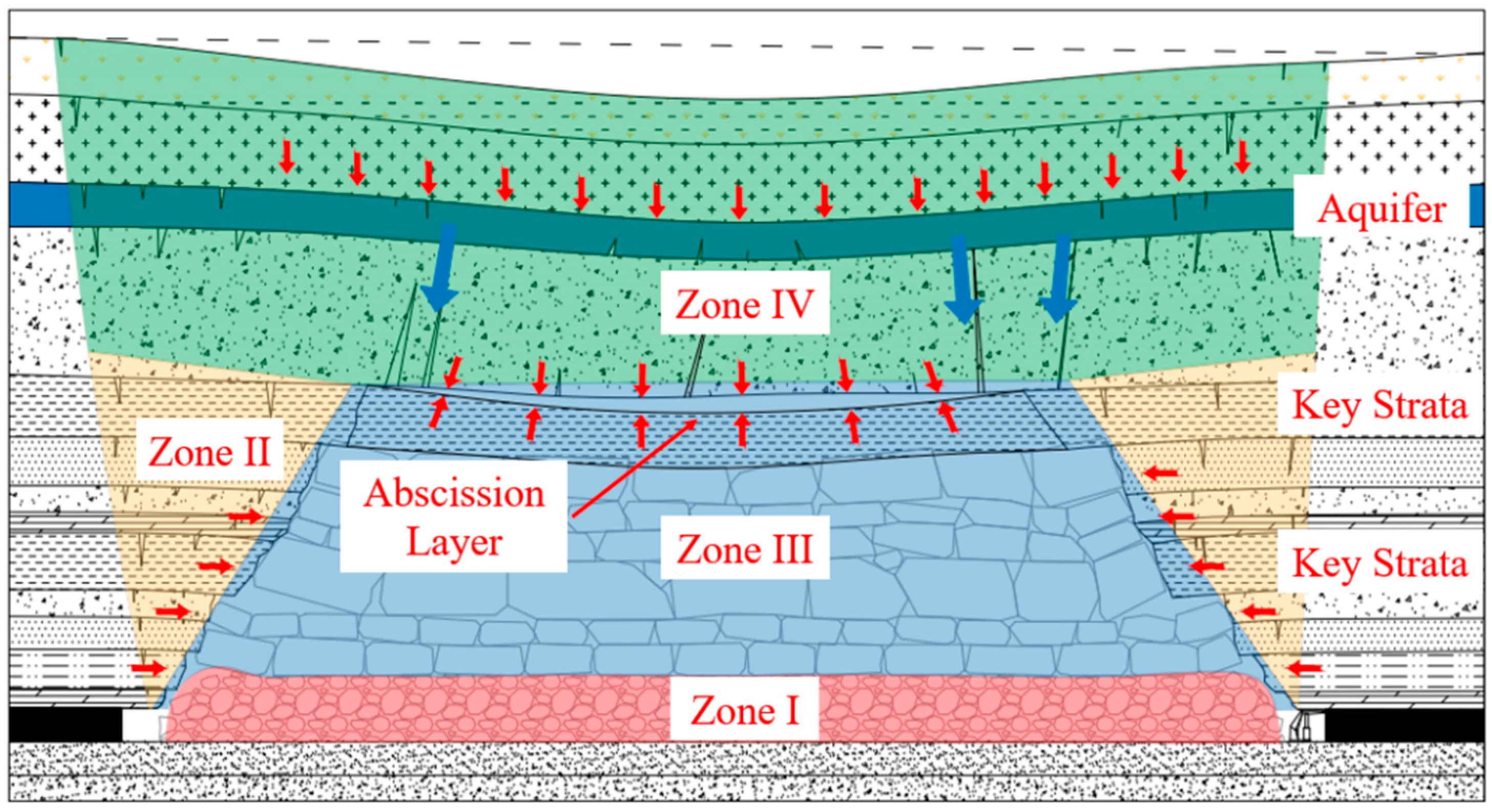
According to the different developmental conditions and states of overburden damage, the damage of overburden rock can be divided into four parts: I, caving fracture zone, II, fracture development zone, III, sliding failure zone, and IV, slight failure zone. The specific distribution is shown in Figure 1.
The red area in Figure 1 is zone I, which corresponds to the traditional caving zone area. The rocks in Zone I have a high degree of fracture, and the rock collapse is chaotic, which is characterized by a high degree of fracture development, wide fractures, mutual connectivity, and mixing of large and small blocks. The rock mass in Zone I is seriously broken, so the mining parameters should be adjusted to reduce the area proportion of Zone I in actual mining.
The yellow area corresponds to Zone II, which is the extension area of the caving zone and fracture zone. Due to the existence of arch shell structure and interconnecting rock beams and other structures, this part of the area is subject to the supporting reaction of Zone I and Zone II, so it is relatively difficult for the rock mass in Zone III to have gyratory instability and tensile failure. However, under the superimposed influence of the gravity stress and disturbance stress of the overlying strata, this part of the region is prone to form tensile failure or even slip at the far end of I and II regions. Such damage may affect the surface and may even form through fissures. Zone II is a seriously damaged area, second only to Zone I, which is prone to instability because it is often in a suspended state. In the actual mining process, filling should be adopted to transfer stress to the lower area or fracturing and other means should be used to destroy the suspended area.
The blue area corresponds to Zone III, which corresponds to the traditional fracture zone region. Zone II shows that the rock mass is broken neatly, the broken blocks are relatively large, and there are large cracks. Most of the rock mass in this part of the region is formed by rotary instability and shear failure. Because the rock mass in this area is relatively intact, the possible stability of fracture closure is high, and the proportion of this area should be increased in the mining process.
The green area corresponds to Zone IV, which is the extension area of the flexural subsidence zone and Zone II. This area is affected not only by the development of the caving zone and fracture zone below, but also by the sliding zone below, which results in the formation of stretching fractures and even the formation of tensile fractures on the surface. However, because this area is far away, it is relatively small to be affected, and it is not easy to produce large cracks or through cracks. This area is the least damaged area and does not exist if Zone III develops to the surface. Due to the effect of key layers and other factors, it is easy for Zone III and this region to directly form a separate layer phenomenon. The use of grouting and other means can effectively reduce the damage in this region and help the rock mass compaction in Zone III.

2.2. Partition Calculation Method

2.2.1. Calculation of Caving Crushing Zone Range

The range of the caving and crushing zones in Zone I is consistent with the range of the traditional caving zone, and the failure of roof strata on the working surface generally follows the law of bottom-up layered caving, forming a trapezoidal failure zone. When the mining width of the coal seam is l, the overhanging span of each hard rock layer is generally not equal to but less than l, and the line of the overhanging span boundary of each hard rock layer is approximately an inward incline angle T—the mean fracture angle of the rock layer. Therefore, the difference in suspended span between upper and lower hard rock strata should be considered in the identification of rock fracture, then the suspended span of rock strata should be:
L z = l 2 H z cot T
where Lz is the effective span of the hard rock layer; Hz is the vertical distance between the hard rock of the k layer and the mined coal seam.
The mechanical condition for the development of rock stratum movement from bending settlement to failure is that the maximum bending tensile stress in the rock stratum reaches its tensile strength. According to the calculation of the fixed beam, the breaking distance Lz of the hard rock stratum i can be calculated by the following formula:
L z = h z 2 R T q z
If the maximum shear stress is taken as the basis of rock fracture, the breaking distance Lzs of the hard rock layer i can be calculated by the following formula:
L z s = 4 h z R s 3 q z
where hz is the thickness of layer i, m; RT is the tensile strength of layer i, MPa; qz is the load borne by layer i, MPa; Rs is the ultimate shear strength of strata i. According to Formulas (1)–(3), the identification formula for tensile or shear failure of a certain rock layer (k) is as follows:
l 2 H z cot T min h z 2 R T q z , 4 h z R s 3 q z 0 < M 1 k 1 h j K A 1 < h z
According to Formula (4), the breaking condition of overlying strata is judged and analyzed layer by layer from bottom to top to determine the height of the caving and breaking zone, and the two sides are developed to the range of the breaking angle of the strata.

2.2.2. Calculation of the Range of the Fracture Development Zone

With the advance of the stope, after the overlying overhanging rock stratum develops to a certain limit under the action of gravity, it cracks at the end of the coal wall. According to the calculation of the fixed beam, the breaking distance Li of the hard rock stratum i can be calculated by the following formula:
L i = h i 2 R i q i
where hi is the thickness of layer i, m; Ri is the tensile strength of layer i, MPa; qi is the load borne by layer i, MPa.
q i = E 1 h 1 3 γ 1 h 1 + γ 2 h 2 + + γ n h n E 1 h 1 3 + E 2 h 2 3 + + E n h n 3
After the central part of the overhanging rock is pulled apart, whether it develops into caving or not is determined by the height of the space allowing movement under it. Only when the height of the space allowed to move under it exceeds the allowable settlement value of the moving rock layer will the rock layer movement develop from bending settlement to caving. Otherwise, the “pseudoplastic rock beam” state will remain. Therefore, the conditions for the development of bending failure of the NTH rock layer above the coal seam to caving can be expressed by Equation (7):
S A = M h K A 1 > S 0
where SA is the allowable movement space height of overhanging rock; S0 is the allowable settlement value when the overhanging rock develops into “pseudoplastic rock beam”. M is the mining height of the coal seam; ∑h is the total thickness of the caved rock; KA is the crushing coefficient of the caved rock, 1.25~1.35.
S 0 = m cos arctan m C 0
where S0 is the allowable settlement value of the rock beam; m is the thickness of the rock beam; C0 is the moving step of the rock beam. When m is much smaller than C0, arctan m C 0 0 , then S 0 = m .
According to Formulas (5) and (7), it can be seen that the identification formula of a certain rock layer (i) breaking and caving is as follows:
l i h i 2 R i q i h i M 1 i 1 h j K A 1
where li is the span of layer i; hi is the thickness of layer i, m; Ri is the tensile strength of layer i, MPa; qi is the load borne by layer i, MPa.
According to Formula (9), the breaking condition of overlying strata is judged and analyzed layer by layer from bottom to top to determine the height of the collapse zone.
h = 1 n h j
h n > M 1 n 1 h j ( K A 1 )

2.2.3. Calculation of the Range of Slip Failure Zone and Minor Failure Zone

The height of the slip failure zone is consistent with the height of the fracture development zone, and the development range extends from the goaf boundary to both sides, and the boundary is the limit of the rock mass slip stress subjected to the overlying load. The formula for calculating the slip angle is based on the Coulomb criterion, that is, when the shear force on the rock reaches a certain value, the rock will slide. The formula for the criterion is:
τ = c + σ tan φ
where τ is the shear force on the rock, c is the cohesion force of the rock, σ is the normal stress of the rock, and φ is the internal friction angle of the rock.
When τ reaches the shear strength of the rock, the rock will slide. At this time, the angle θ between the sliding plane and the horizontal plane is the rock slip angle. According to the definition of trigonometric functions, we can obtain:
tan θ = τ / σ
By substituting the formula of the Coulomb criterion into the above formula, the calculation formula of the rock stratum movement angle can be obtained:
tan θ = c + σ tan φ / σ
The range of the slight failure zone is the upper boundary of the fracture zone to the surface, and the development range on both sides is the extension of the slip angle of the slip failure zone.

3. Numerical Simulation and Impairment Effect Evaluation

3.1. Model Establishment

The Buertai Well field is located in the southeast of Yijin Horuo Banner (referred to as “Yi Banner”), Ordos City, Inner Mongolia Autonomous Region, under the jurisdiction of Buertai Township, mining area 192.86 km2. The strike length of the 22,205 working face is 4538 m, and the dip length is 302 m. Information regarding the E82, BS9, and E54 geological boreholes above the working face shows that the thickness of the coal seam (buried depth) from near the cutting a hole of the working face to the front of the stop-mining line is 3.7 m (305 m), 4.43 m (319 m), and 3.32 m (346 m), respectively, and the thickness of coal seam increases first and then decreases along the working face. The depth of the coal seam is shallowest near the cutting hole and deepest near the stop-mining line. The overall geological structure of the 22,207 working face is simple, and there is only a small fault (0–7 m drop) across the 22,207 transport trough at about 1600 m from the stoppage line.
The overlying loose layer of the coal seam on the working face is 1.2–30.3 m thick, and the overlying bedrock is 227.9–337 m thick. At borehole E96, where the cutting hole is located, the thickest loose layer is 30.3 m, and the thinnest bedrock is 227.9 m. At borehole E79, where the cutting hole is located, the thinnest loose layer is 0.8 m, and the thickest bedrock is 337 m.
In order to explore the influence of different mining parameters (mining height, advancing speed, mining width, etc.) on the overburden fracture, UDEC numerical simulation software will be used in this chapter to carry out a numerical simulation of the 22,207 working face of Buertai Mine. the strike length of the model working face is 700 m, the height is 370 m, the thickness of the coal seam is 2 m, 4 m, 6 m, and 8 m, the buried depth is 310 m, and the thickness of the bottom plate is 50 m. The bottom, left, and right sides of the model are set with fixed boundaries, and the top is a free surface to simulate the surface. In order to exclude the influence of boundary conditions, coal pillars with a width of 200 m are reserved on both sides.
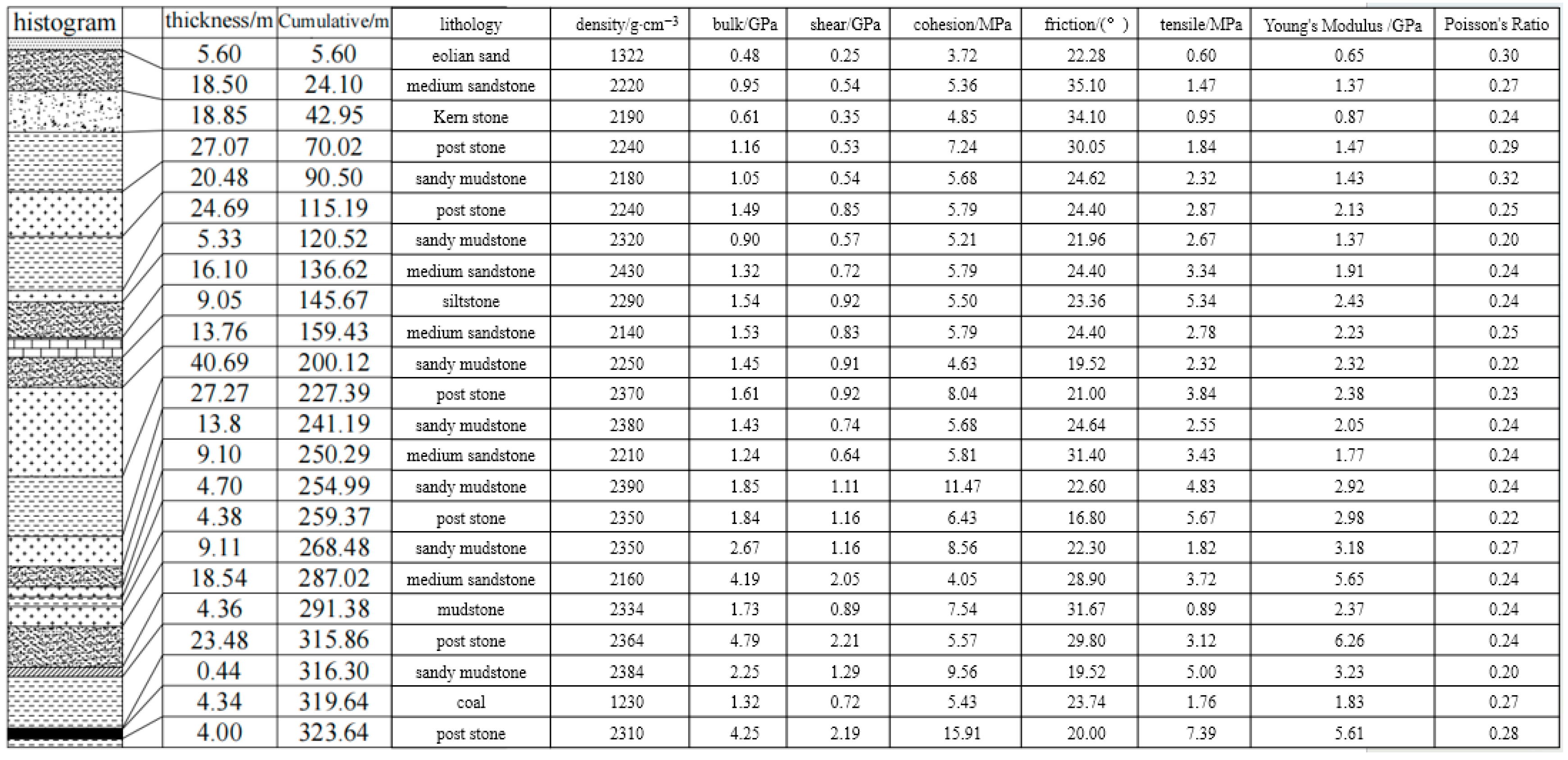
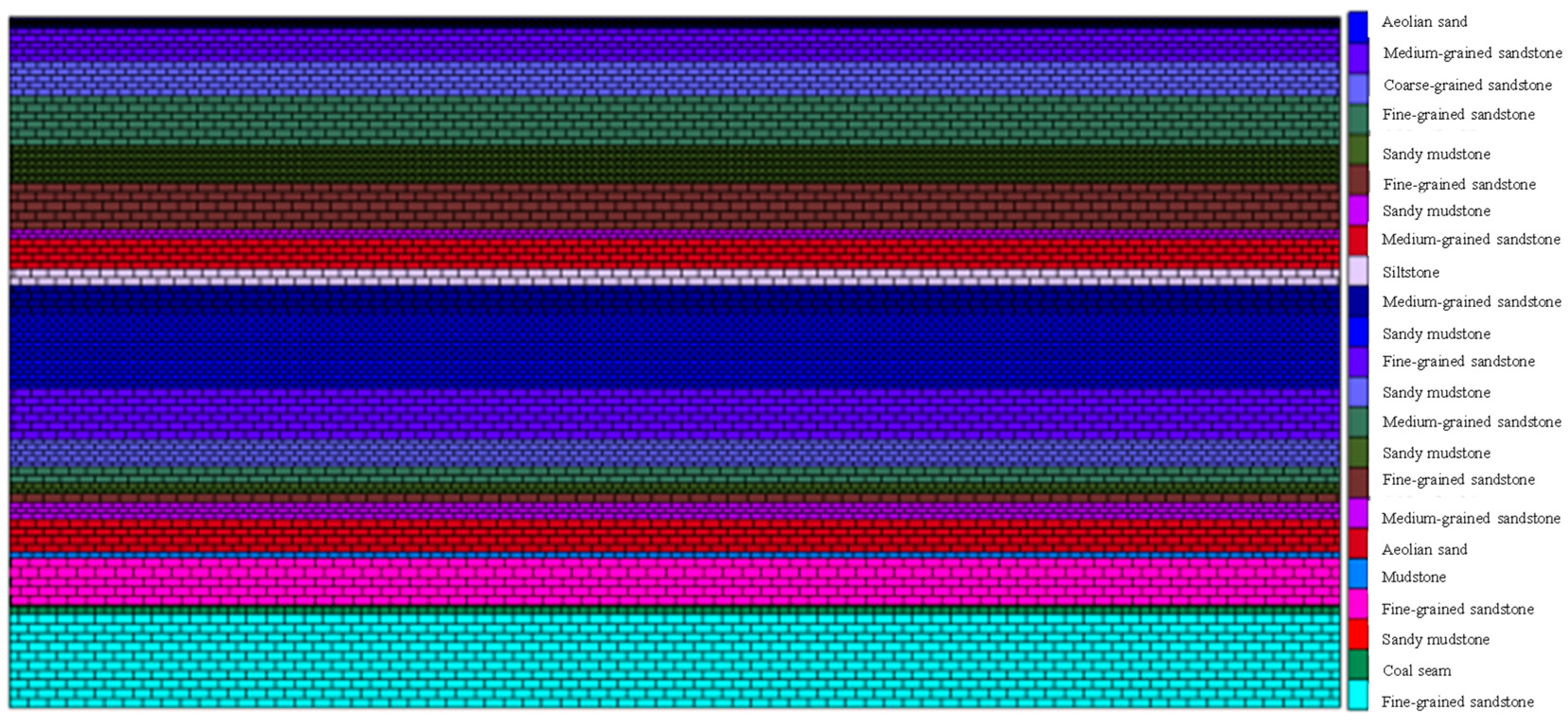
The simulated rock layer adopts the Moore–Coulomb constitutive model, and the specific mechanical parameters are shown in Figure 2 and Figure 3.
The area proportions of the four damage zones discussed subsequently were determined quantitatively by statistically analyzing the simulation units that met the predefined strength–stress ratio and failure mechanism criteria for each zone.

3.2. Influence of Different Mining Parameters

According to the influence of different mining parameters on the damage zone of overburden rock, a lateral comparison is made by means of the strength–pressure ratio and fracture development. The strength–stress ratio is the ratio between the strength of a rock mass and the disturbance stress, which can represent the state of the rock mass and the possibility of damage. According to experience, the difference between compressive strength and tensile strength of a rock mass is about ten times, so the value range of the strength–stress ratio is calibrated to 0–10. The region where the strength–stress ratio is less than 1 is considered where the stress is greater than the strength of the rock mass itself, and the damage is more serious, which can correspond to the range of the caving zone. If the intensity of the stress ratio is greater than 1 but less than 10, it is considered that the rock mass is prone to damage or slightly damaged.
Based on the above theory, the stope overburden can be divided into four regions by strength–stress ratio: (1) Caving and crushing area, the area where the strength–stress ratio is less than 1, is mainly the boundary from the floor of the working face to the upper part of the goaf (caving rock mass occupies the space); (2) Fracture development area, where the strength–stress ratio is mostly between 1 and 10, and is located on both sides of the cutting hole and the stop-mining line as the boundary, resulting in the overall overburden slip formation due to mining disturbance; (3) Slip failure area, where the intensity stress ratio is mostly between 1 and 10, and is mainly located in the area composed of the upper boundary of the goaf, the fracture line of the rock layer and the lower boundary of the bending subsidence zone, which is the damage area directly caused by mining disturbance; (4) In the slightly damaged area, the strength–stress ratio in this area is greater than 10 than that in most parts, corresponding to the bending subsidence zone above the fracture zone.

3.2.1. Influence of Different Mining Heights on Overlying Rocks

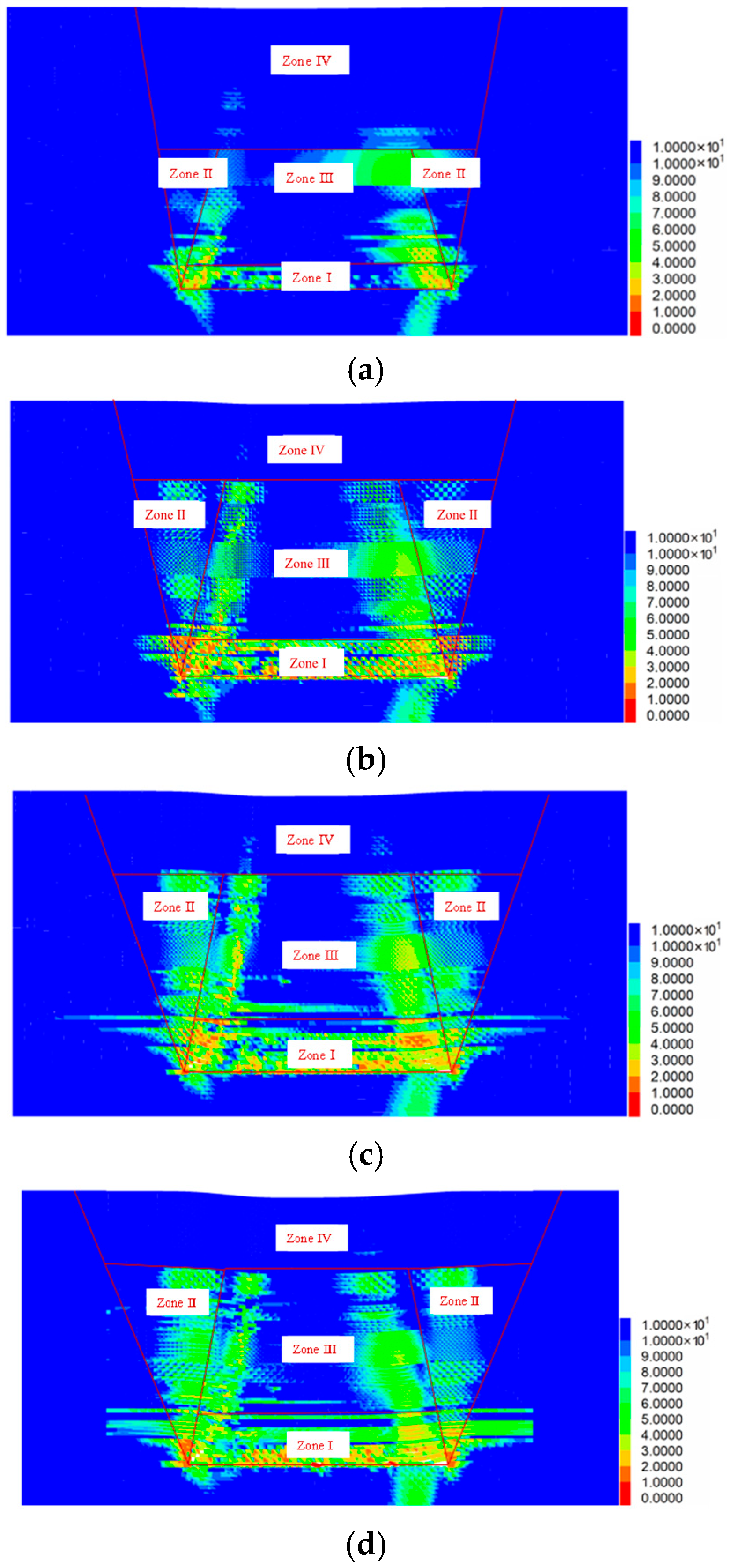
The damage patterns of overburden fractures under different mining heights (2 m, 4 m, 6 m, and 8 m) are shown in Figure 4. According to the strength and stress ratio, it can be divided into four regions: I, caving fracture zone, II, sliding failure zone, III, fracture development zone, and IV, slight failure zone.
Through the lateral comparison of the zoning changes in Figure 4, it can be found that the area of Zone I continues to increase with the continuous increase in mining height. It shows that the increase in mining height makes the overburden damage more serious, increases the proportions of caving and crushing areas, and the rock layer breaking tends to be chaotic. At the same time, the statistical results show a clear trend of increasing area in Zone II; not only is the height constantly developing, but the width is also expanding, making the area of Zone II experience the most significant change. The authors propose that this signifies an intensification of the damage degree in the overlying rock, primarily manifested as an expansion of the sliding failure zone, and with the increase in the area of Zone II, the rock displacement angle continues to decrease, and the influence range on the surface continues to expand.
The area growth of Zone III is slightly slower than that of Zone II. When the height grows to a certain height, the height development of Zone II is affected by the arch shell at the same time, which leads to the slowdown of height development. However, with the increase in mining height, the angle of the broken line also increases slowly, which is the main factor for the increase in area III after mining height reaches a certain height. However, the change in region IV showed a phenomenon of first decreasing and then increasing. This is because when the mining height is relatively small, the development of zones II and III is not complete, and the influence height of the arch shell is not reached. Therefore, the area of zones II and III increases rapidly, leading to a rapid reduction in the proportion of Zone IV. However, when the mining height increases to a certain height, the development height of zones II and III is affected by the arch shell and then changes into a horizontal expansion trend. In this case, the proportion of region IV gradually increases.
The main areas affected by different mining height values are different. When the mining height is low, it mainly affects the proportion of regions I and III, and the proportion increases with the increase in mining height. After the mining height increases to a certain value, the main affected area becomes Zone II, and the larger the mining height, the larger the proportion of Zone II.
Zone IV is considered a slightly damaged area. Theoretically, the greater the proportion, the smaller the overburden damage degree. The rapid expansion of zones II and III in height compresses the depth of the impact of the minor damage zones. Therefore, only IV stays in the shallow area and even reaches the loose layer. This makes the area of Zone IV grow, but the effect of the impact is limited. Therefore, it is necessary to find a suitable mining height and limit the height growth of Zone II and Zone III through technical means such as grouting or changing other mining factors, while expanding the lateral influence range of Zone III to minimize the overlying rock damage.
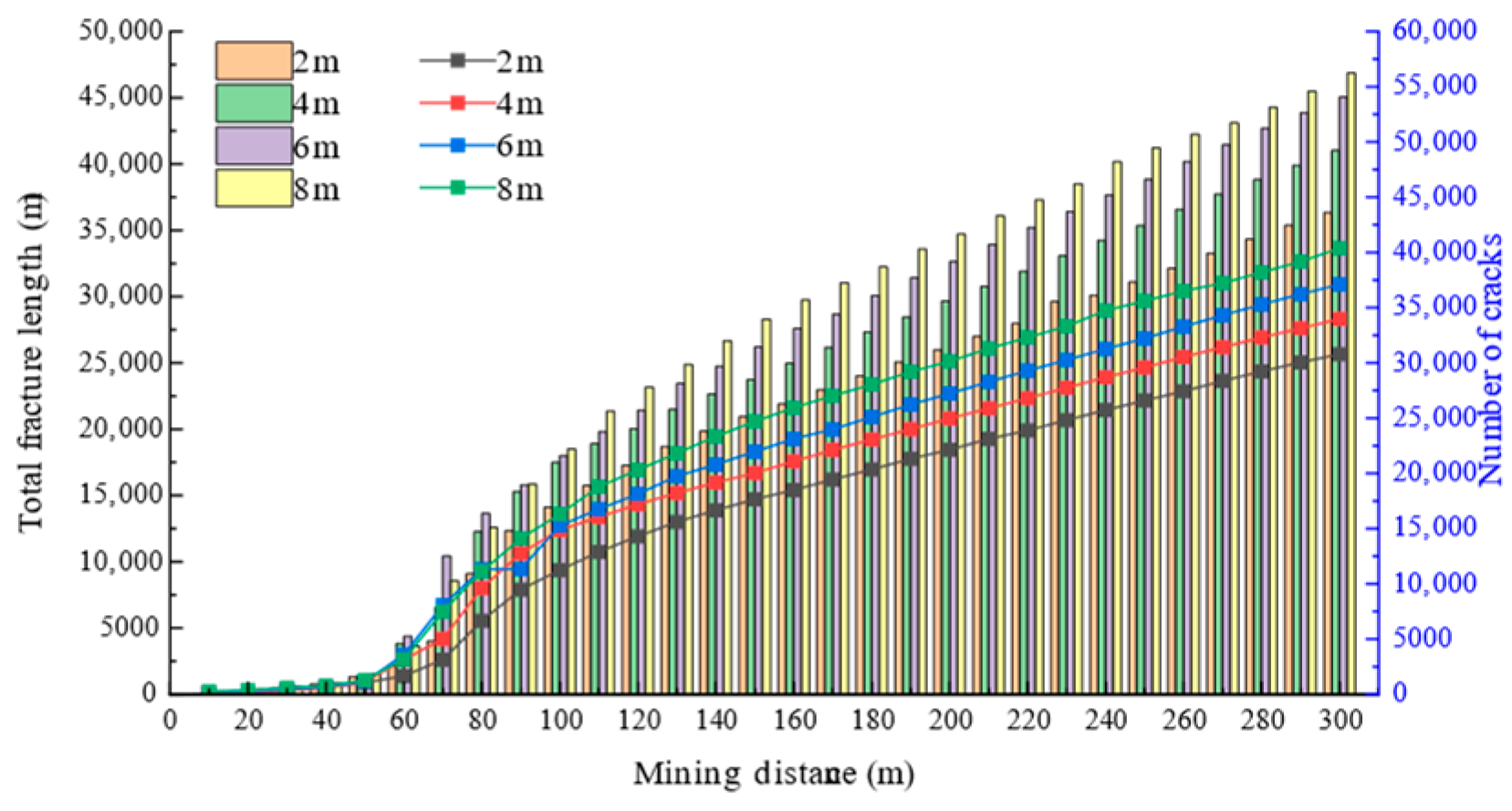
The influence of mining height on fracture development is shown in Figure 5. From the analysis of the total length of cracks and the number of cracks, the length of cracks can reflect the damage degree of the overlying rock, while the number of cracks can reflect the fracture of the rock in a disguised phase.
According to Figure 5, it can be found that the development of overburden fractures can be roughly divided into three stages: slow development, rapid development, and stable development. In the early stages of mining, the advancing distance is short, and the formation damage develops slowly. With the continuous progress of the advance, the cracks begin to enter a rapid development period, and the cracks develop rapidly, accompanied by intense rock layer pressure. After a period of development, the development of cracks gradually tends to be stable, and the development of cracks is approximately proportional to the advancing distance. At this stage, the rock layer pressure will tend to be more stable periodic pressure.
At the same time, it can be found that with the increase in mining height, the development of fractures in the three stages is different. In the slow growth stage, the change in the mining height has little influence on the fracture development. In the rapid growth stage, the fracture development under different mining height conditions is chaotic, and no obvious regularity can be obtained. However, generally speaking, a small mining height will slow down the fracture development in the rapid growth stage to a certain extent. However, the condition of large mining height is relatively chaotic, and there is the possibility of irregular strong rock layer pressure. When entering the stable development stage, the fracture development of different mining heights gradually tends to be stable, and the fracture growth is proportional to the advancing distance. The development of fractures increased with the increase in mining height, and the trend decreased to a lower level gradually.

3.2.2. Influence of Different Advancing Speeds on Overlying Rock

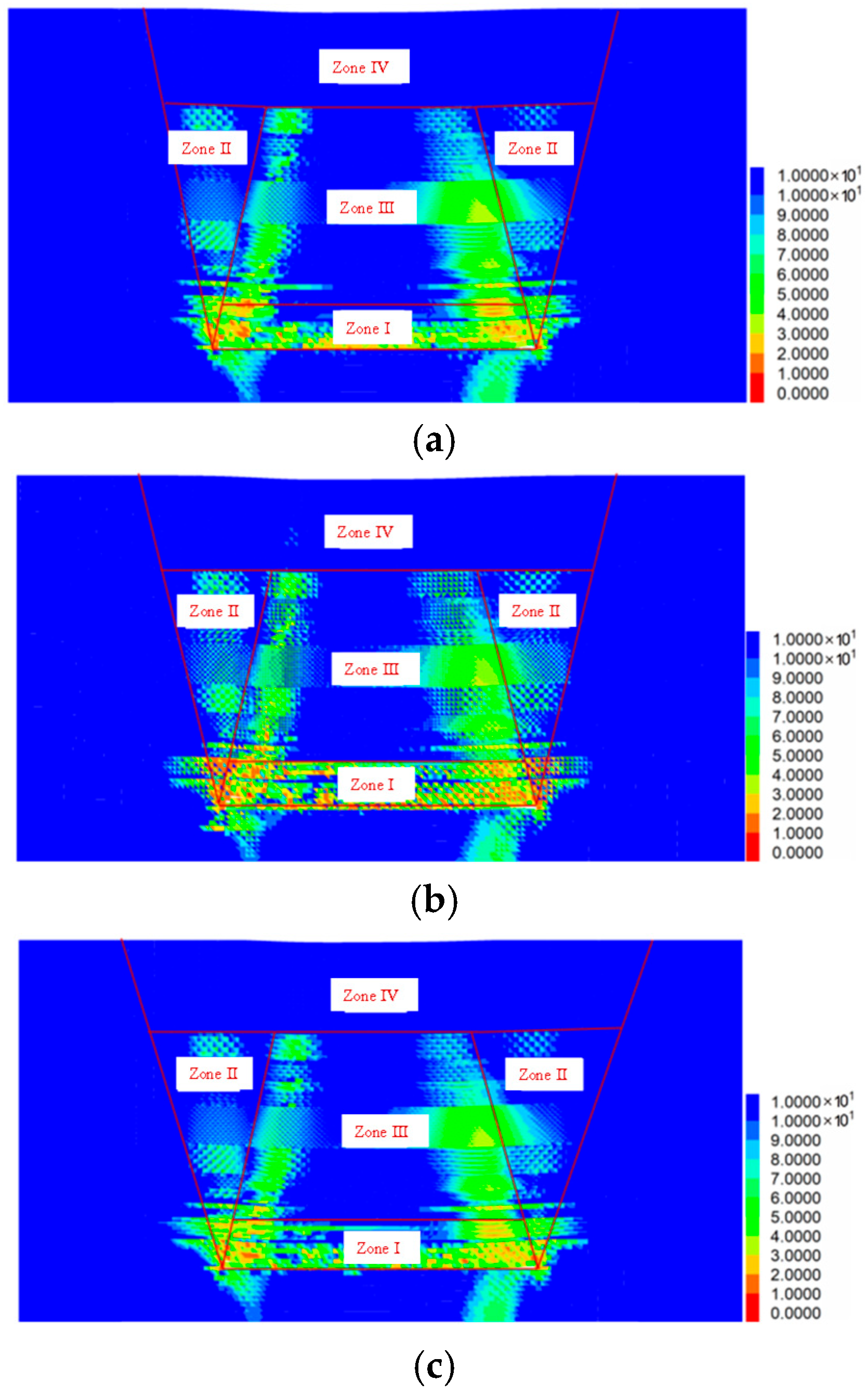
The damage morphology of overburden cracks under different advancing speeds (5 m, 10 m, and 15 m) is shown in Figure 6, which is also divided into four regions by the strength–stress ratio.
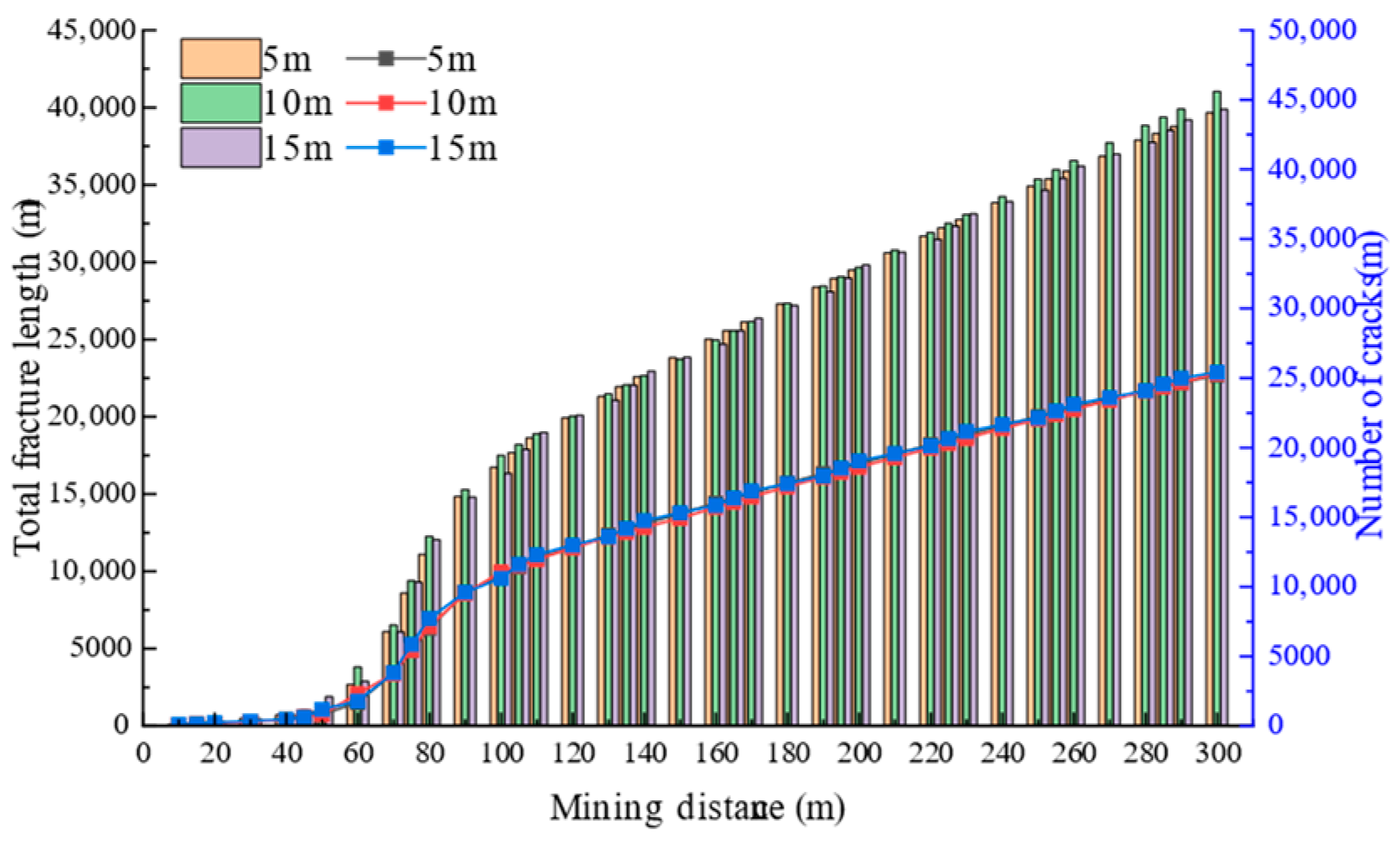
According to Figure 6, it can be analyzed that with the acceleration of the advancing speed, the area of Zone I (caving crushing zone) increases slightly, that is, the damage in the caving zone increases with an increase in the advancing speed, but the increase is small. The height changes of Zone II (slip failure zone) and Zone III (fracture development zone) are not obvious, so it can be considered that the main factor affecting the height development of Zone II and Zone III is still mining height. However, the lateral area of Zone II increases, and the rock displacement angle decreases with the increase in the advancing speed. It is proven that with an increase in propulsion speed, the impact range on the surface is constantly increasing, but the area with serious damage is relatively reduced. Therefore, it is necessary to preserve a suitable propulsion speed to coordinate production efficiency and the surface impact range.
The effect of advancing speed on fracture development is shown in Figure 7. The effect of advancing speed on fracture development is different in the three stages. In the slow development stage of the early mining period, the mining factors have relatively little influence on the overburden fracture, and the fracture development status is basically the same. After entering the rapid growth stage, the fracture length of 10 m advancing speed is slightly higher than that of 5 m and 15 m advancing speed. The rapid growth stage is usually accompanied by a continuous rise in crack height. A slow advance speed will slow down the crack development speed, while a fast advance speed will lead to insufficient crack development in overburden rock, and further make the crack development more adequate at a 10 m advance speed. After entering the stable growth stage, fracture development was similar to that in the rapid growth stage, and the fractured development was more adequate when the advancing speed was still 10 m. The number of cracks was observed, and the development of the number of cracks was basically consistent under different advancing speeds. When the fracture length is also consistent, the blocks formed by overlying rock disturbance are basically the same. On the other hand, the development of crack length combined with the simulation results in Figure 7 shows that the crack length under the condition of 10 m advancing speed is slightly higher, that is, the average length of a single crack with 10 m advancing speed is longer.

3.2.3. Influence of Different Mining Widths on Overlying Rock

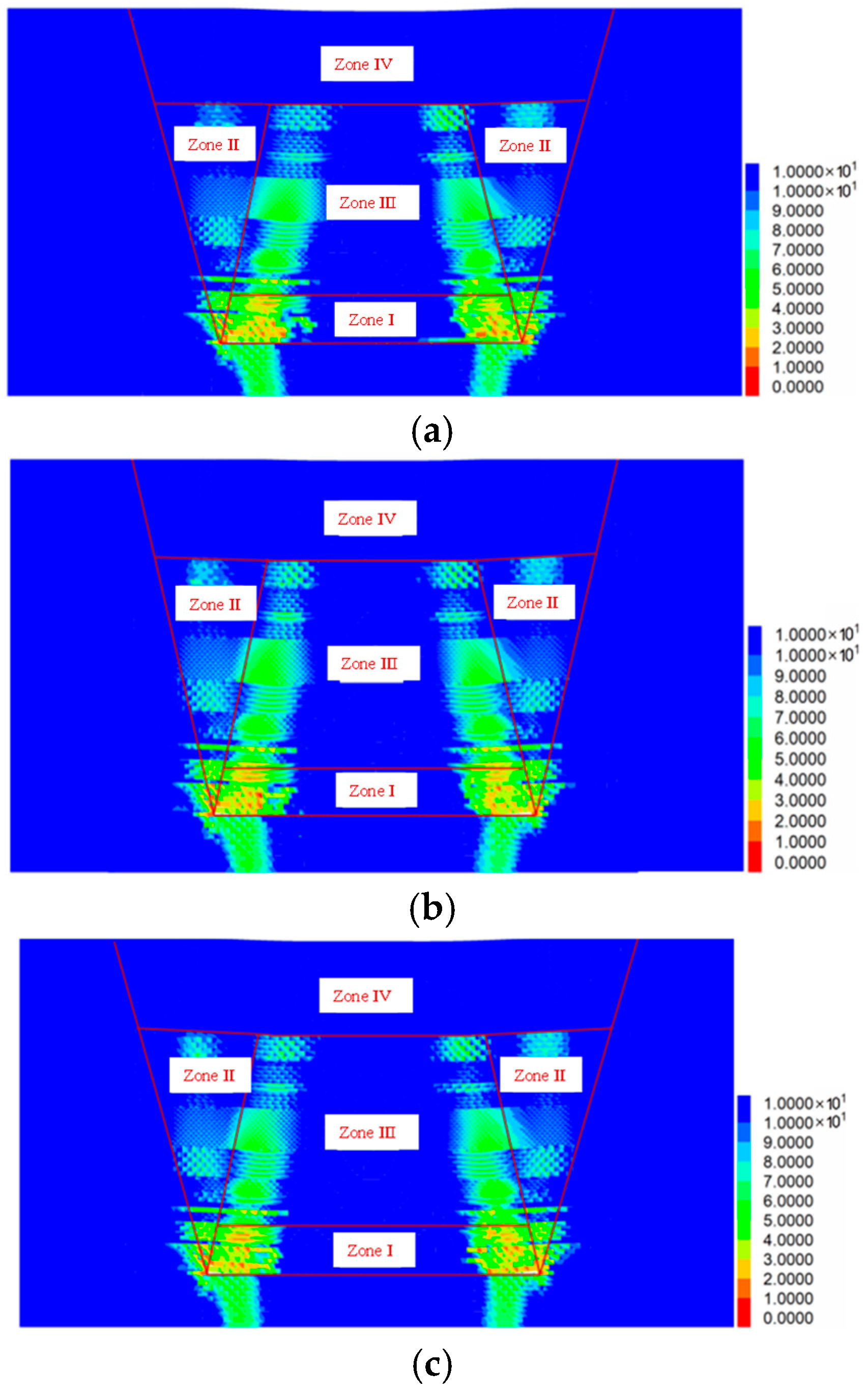
The damage patterns of overburden fractures under different mining widths (280 m, 300 m, and 320 m) are shown in Figure 8.
By comparing the influence of different mining widths, it can be found that the influence of mining widths on the zoning of overlying rocks is mainly reflected in the transformation of lateral area, and the height change in each zone is not obvious. Considering the small variation in mining width, the height of the zone may be restricted by rock strata and arch crust. Compared with the change in height, the change in lateral area is more obvious. The area of Zones I, III, and IV increases significantly, while the change in Zone II is not obvious, and Zones III and IV are the regions with the least damage. With the increase in mining width, the areas of I, III, and IV continue to increase, while the proportion of areas with a small damage degree continues to increase. It can be concluded that the larger the mining width is, the wider the area with less damage is. That is, with the increase in mining width, the proportion of relatively serious damage areas increased.
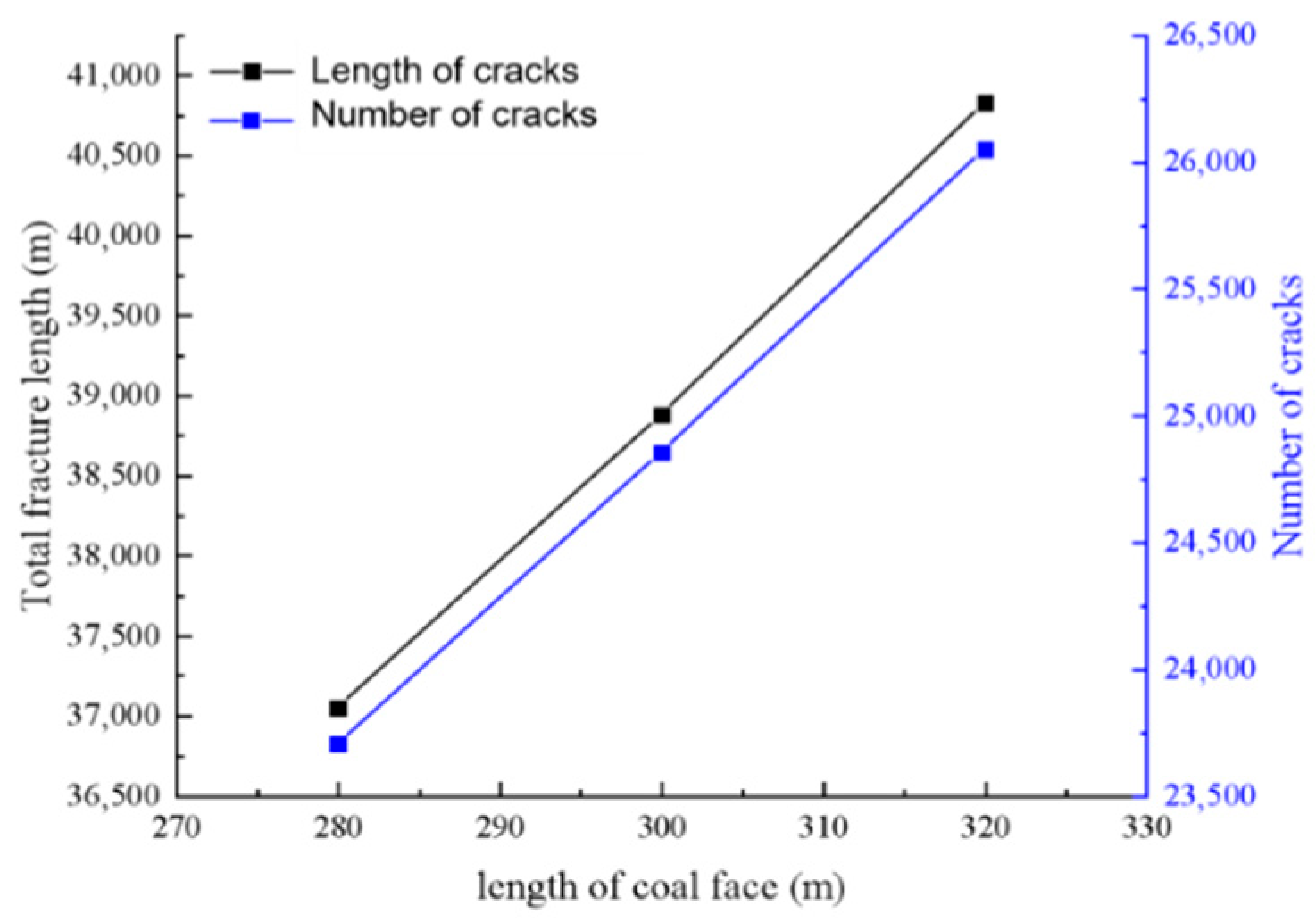
Figure 9 shows the influence of different mining widths on crack development. It can be found that with an increase in mining width, the length of cracks and the number of cracks show an approximately proportional growth trend. When the variation in mining width is small and does not affect the fracture height development, and the arch shell does not develop to the surface, the influence of mining width will be proportional to the fracture development of the overburden rock.

4. Application Case Analysis

4.1. On-Site Practice Case 1

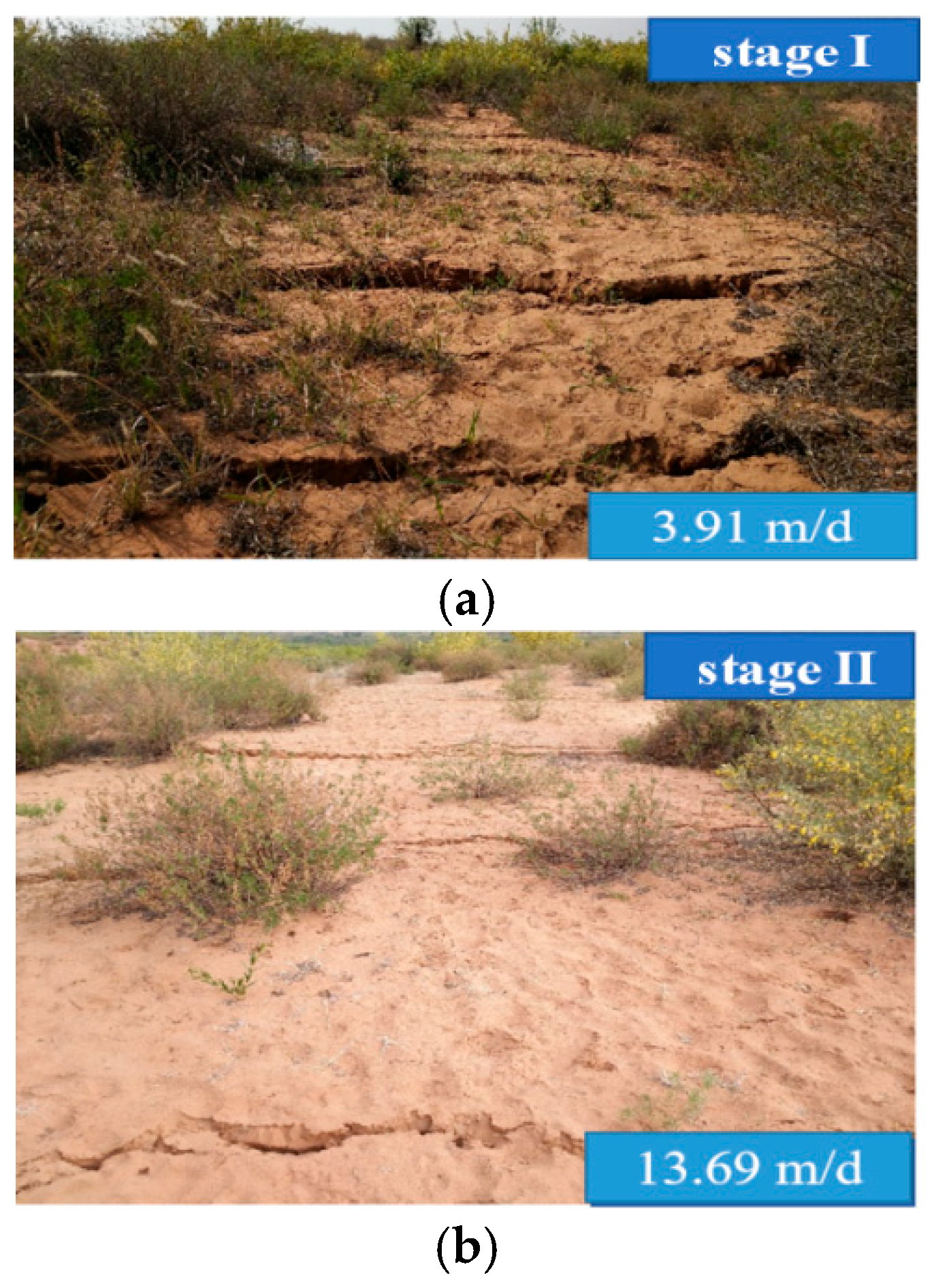
The mining situation of the 12,401 working face in the Shangwan Mine was selected. From 25 March 2018 to 27 May 2018 (State I), the continuity of coal seam mining was poor, with a mining length of 246.35 m and an average advance speed of only 3.91 m/d. From 28 May 2018 to 5 June 2018 (State II), the propulsion distance reached 369.6 m, with an average propulsion speed of 13.69 m/d.
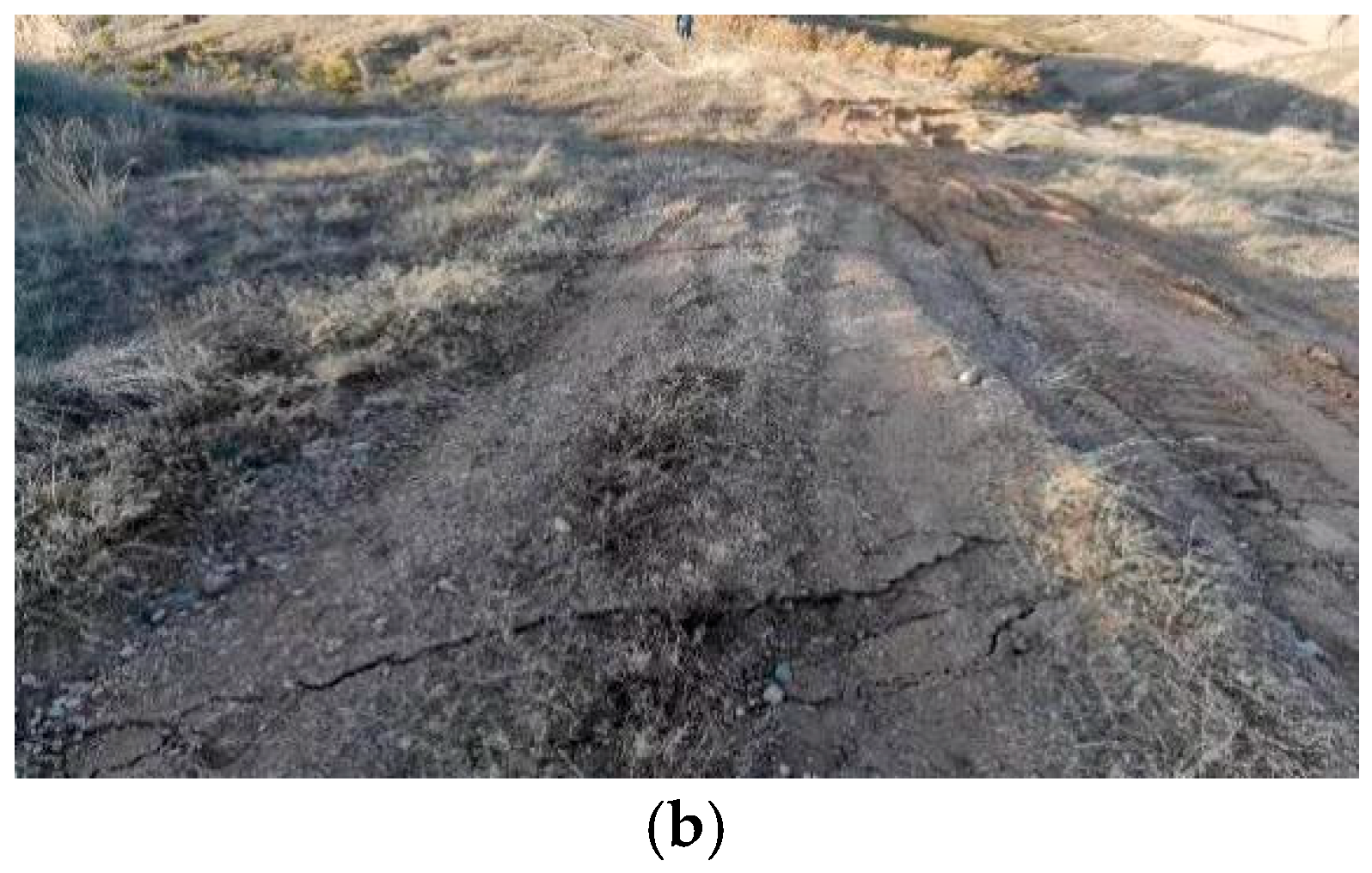
The initial step distance for the 12,401 working face is 38 m. During Stage I, there were 14 cycles of compression, with an average compression step distance of 15.12 m. During Stage II, there were six cycles of compression, with an average compression step distance of 18.33 m. In the early stages of mining, the progress speed is slow, and the mining pressure shows a dense state. At this time, the statistical analysis of the model indicates a larger proportion of areas I and II under these conditions. It is hypothesized that this corresponds to a stage where overlying rock fracture development is more thorough, which might be reflected as denser development of surface fractures. In the later stage of mining, the advancing speed remains stable at 13.69 m/d, and at this time, the advancing speed is relatively high. The proportion of areas III and IV increases, and the damage range decreases. At this time, the surface damage should be relatively reduced. As shown in Figure 10.

4.2. On-Site Practice Case 2

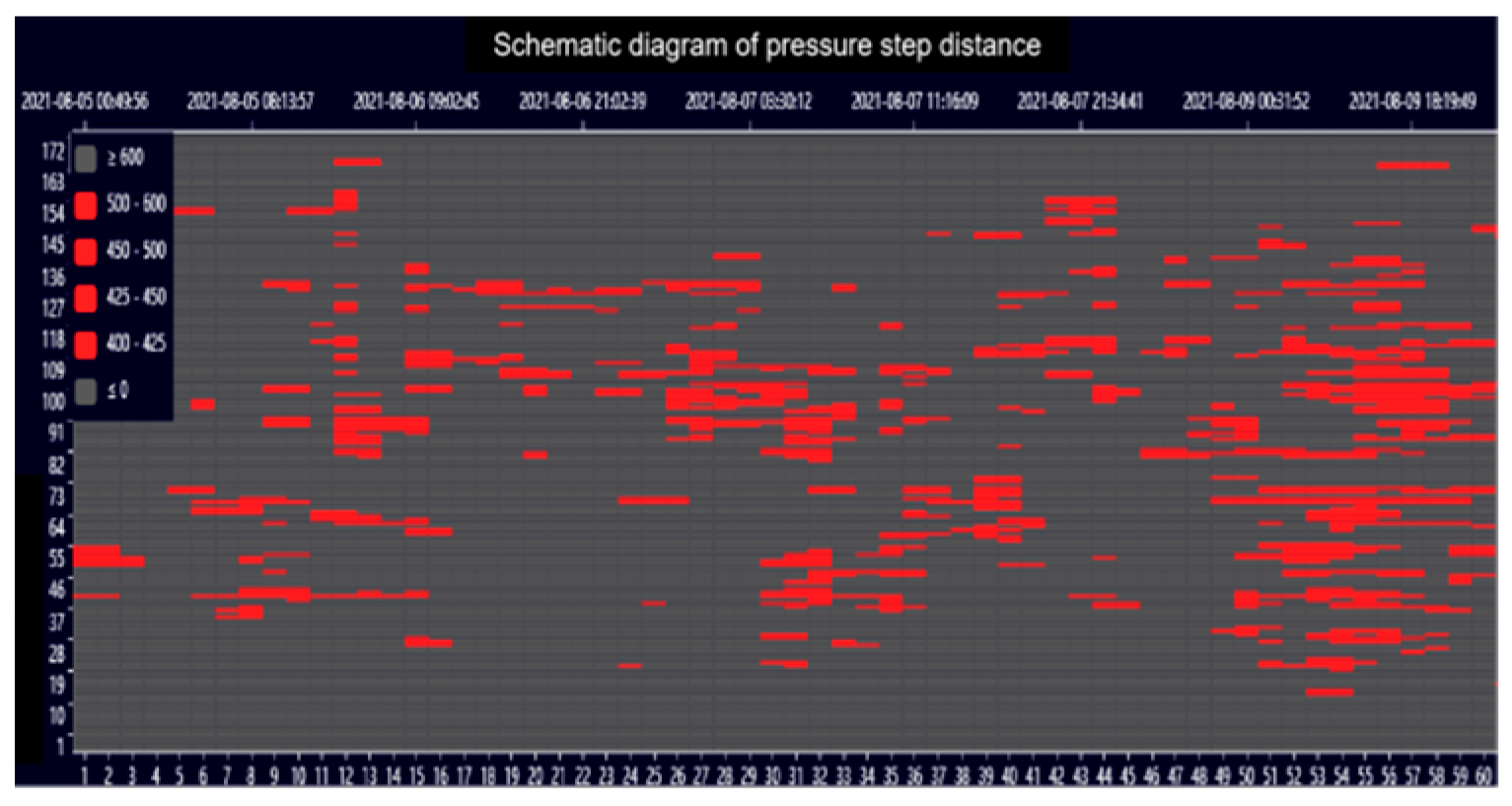
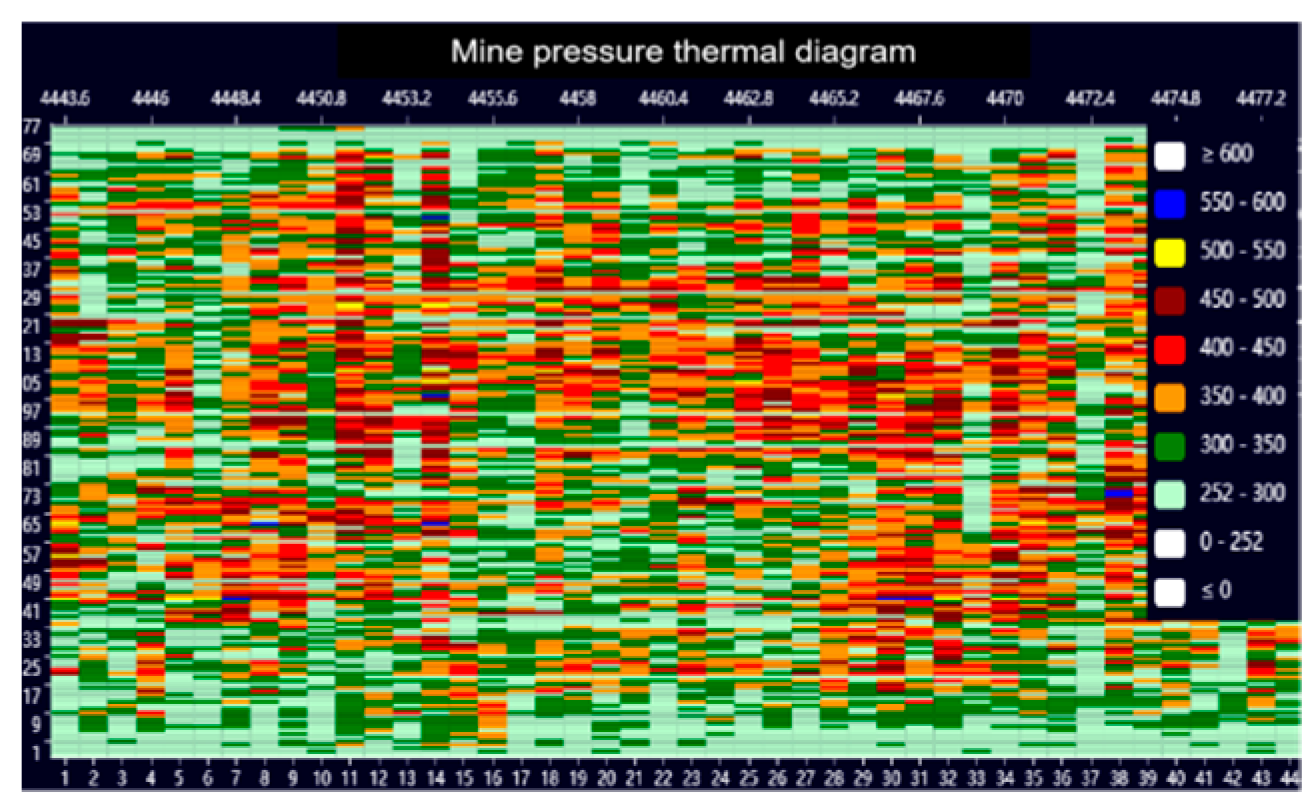
As shown in Figure 11, the mining situation of the 22,207 working face of the Buertai Mine was selected. By 5 August 2021, it had been mined to 4444 m, 100 m away from the withdrawal channel, and on 9 August, it had been mined to 4449 m, 50 m away from the withdrawal channel. The obtained working face press step rule is shown in Figure 12.
According to the support pressure distribution contour map of the working face, it can be seen that when the working face is 90 m, 78 m, 65 m, and 57 m away from the withdrawal channel, the working face pressure increases, and the rock layer pressure is obvious, mainly manifested as the greater pressure of 25#–165# support. The mine pressure phenomenon of hydraulic support on both sides of the working face is not obvious, and it is considered that this part is in the state of hanging roof, corresponding to the sliding failure zone of Zone II of the overlying rock damage zone.
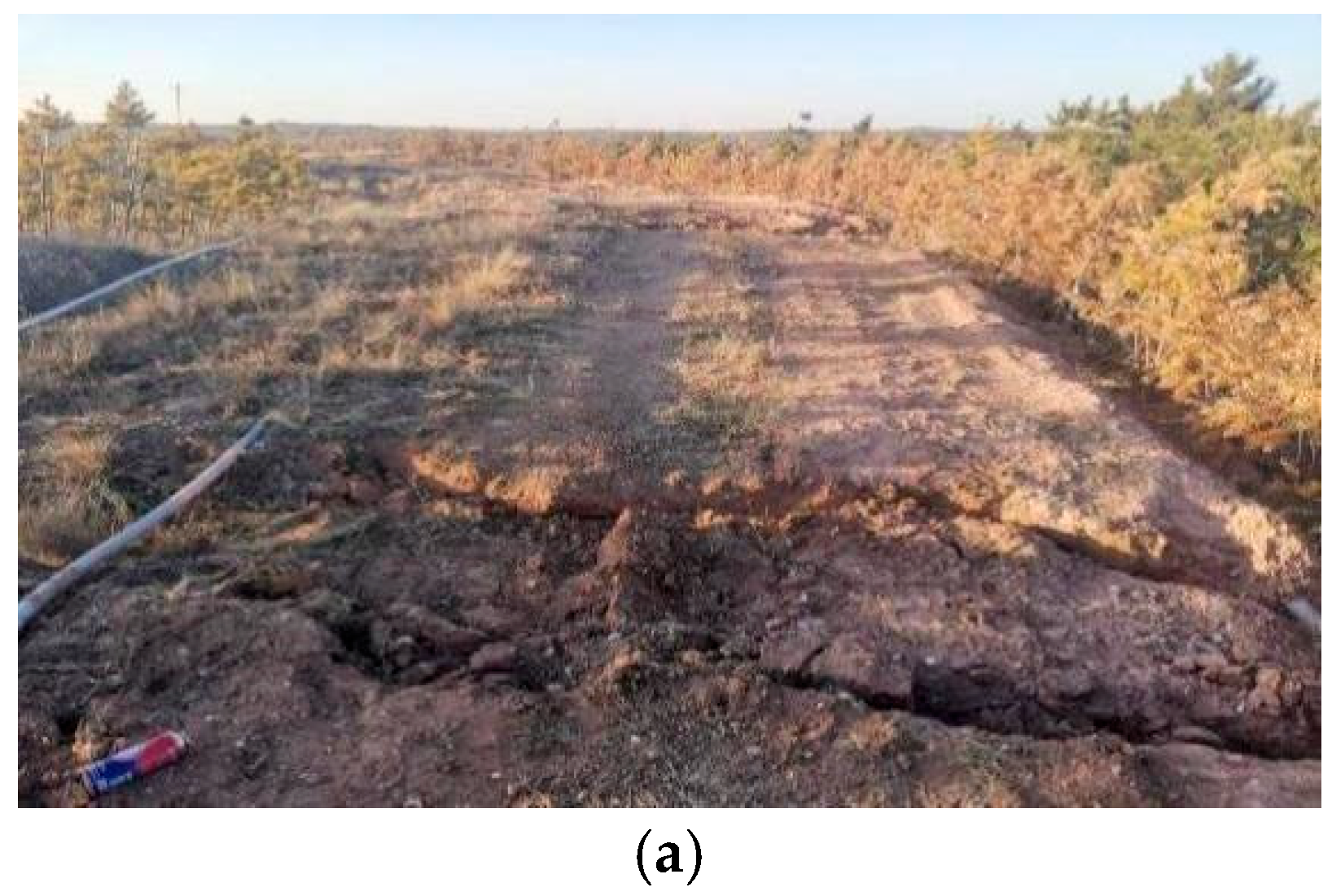
As shown in Figure 13a, the surface damage under the condition of slow advancing speed and the rock layer pressure appears in a dense state. At this time, the overburden fracture development is more complete, and the statistical results of the numerical simulation show an increase in the area proportion of Zones I and II. The authors propose that this reflects the phenomenon of dense surface fracture development. As shown in Figure 13b, when the advancing speed is high, the simulation results indicate that the area proportions of Zones III and IV increase and the damage scope decreases. It can be inferred that the surface damage is relatively reduced.

5. Conclusions

  • The four-zone model provides a mechanistic basis for targeted control: Zone II (Fracture Development Zone) is critical for water inrush prevention, while Zone III (Sliding Failure Zone) governs strong strata behavior and surface step cracking.
  • A critical mining height (≈6 m) was identified. Below it, Zones I and III expand predominantly; above it, Zone II expansion becomes most significant. Faster advancing speeds, while increasing surface influence range, promote a larger proportion of less-damaged zones (III and IV).
  • The model was validated against field data, including periodic weighting intervals, confirming its reliability for analyzing strata behavior under the specific geological conditions of the Buertai Mine.

Author Contributions

Y.Z. proposed the research idea and framework, was responsible for the overall design and coordination of the project, and led the drafting of the manuscript and funding acquisition. X.W. was responsible for the design and analysis of numerical simulations (UDEC7.0) and participated in manuscript revision and refinement. J.F. was responsible for the theoretical derivation of the zoning calculation method and model validation, and assisted in visualization. J.M. was responsible for software simulation operations, data curation, and partial results analysis, and oversaw the overall research process. M.L. was responsible for formal analysis and statistical processing of field data, and assisted in project management and coordination. X.L. was responsible for the collection of field geological data, borehole data analysis, and case studies. J.Y. was responsible for providing research resources and coordinating field engineering support. All authors have read and agreed to the published version of the manuscript.

Funding

This research received no external funding.

Institutional Review Board Statement

Not applicable.

Informed Consent Statement

Not applicable.

Data Availability Statement

The raw data supporting the conclusions of this article will be made available by the authors on request.

Conflicts of Interest

Authors Yongqiang Zhao, Xiaolong Wang, Jie Fang, Xinjie Liu and Jiangping Yan were employed by the company Shendong Coal Group Co., Ltd. The remaining authors declare that the research was conducted in the absence of any commercial or financial relationships that could be construed as a potential conflict of interest.

References

  1. Statistical Bulletin of the People’s Republic of China on National Economic and Social Development in 2022. Chin. Stat. 2023, 3, 18.
  2. Guo, J.T.; Li, Q.S. Surface failure characteristics of Shallow-buried high-intensity mining: A case study of Shendong Mining area. China Min. 2018, 27, 106–112. [Google Scholar]
  3. Fan, L.M.; Zhang, X.T.; Xiang, M.X.; Zhang, H.Q.; Shen, T.; Lin, P.X. Development characteristics of ground fractures in high-intensity mining area of shallow coal seam: A case study of Yushenfu Mining area in Shaanxi Province. J. China Coal Soc. 2015, 40, 1442–1447. [Google Scholar]
  4. Qian, M.G.; Xu, J.L. Coal mining and rock strata movement. J. China Coal Soc. 2019, 44, 973–984. [Google Scholar]
  5. Li, X.B.; Li, Q.S.; Han, P.H.; Xu, X.H.; Huang, F.L. Research classification, discrimination and control of surface damage degree in high intensity mining. J. Min. Rock Form. Control Eng. 2022, 4, 90–99. [Google Scholar]
  6. He, X.; Zhang, C.; Zhao, Y.X.; Li, Q.S.; Han, P.H.; Chen, J.X. Determination of high-intensity mining parameters and evaluation of loss reduction effect based on overburden damage constitutive model. J. Min. Saf. Eng. 2021, 38, 439–448. [Google Scholar]
  7. Li, Q.S.; Guo, J.T.; Zhang, K.; Yan, Y.G.; Zhang, C.; Xu, Z.H. Damage conduction mechanism and key technologies of source loss reduction in intensive coal mining in western China. J. China Coal Soc. 2021, 46, 3636–3644. [Google Scholar]
  8. Xu, Z.H.; Li, Q.S.; Li, X.B.; Zhang, G.J.; Yang, Y.L.; He, W.R.; Wu, X.Y. Study on overburden structure evolution and surface damage in shallow buried high-intensity mining. J. China Coal Soc. 2020, 45, 2728–2739. [Google Scholar]
  9. Zhao, C.H.; Jin, D.W.; Wang, H.; Wang, Q.M.; Wang, S.D.; Liu, Y. Model construction of overburden damage deformation and aquifer water loss in middle-deep coal seam mining in Yushen Mining area. J. China Coal Soc. 2019, 44, 2227–2235. [Google Scholar]
  10. Xu, X.L.; Zhang, N.; Tian, S.C. Study on fracture evolution zoning and permeability of overburden rock in stope. J. Min. Saf. Eng. 2014, 31, 564–568. [Google Scholar]
  11. Ju, J.F.; Ma, X.; Zhao, F.Q.; Liu, Y.J.; Wang, Y.Z.; Liu, L.; Xu, J.L. Study on the development and zoning characteristics of water-conducting fractures in Dongsheng Coalfield. Coal Sci. Technol. 2022, 50, 202–212. [Google Scholar]
  12. Cao, J.; Huang, Q.X. Overburden dip structure zoning and subsidence prediction model in shallow coal seam mining under thick soil. J. Min. Saf. Eng. 2022, 39, 264–272. [Google Scholar]
  13. Li, Q.S.; Zhang, C. Damage conduction model of high-intensity mining in western mining area based on conservation of mining space and its application. J. Min. Saf. Eng. 2021, 38, 1–8. [Google Scholar]
  14. Tang, L.Z.; Chen, Y.Y.; Liu, C.; Shen, F. Numerical simulation of zone fracture of surrounding rock based on strain rate damage constitutive model. J. Yangtze River Sci. Res. Inst. 2020, 37, 82–87. [Google Scholar]
  15. Cao, J.; Shi, S. Evolution Law of Mining-induced Fractures in Shallow Buried Close Coal Seams Mining. Geotech. Geol. Eng. 2023, 41, 2665–2676. [Google Scholar] [CrossRef]
  16. Fan, K.; Li, W.; Wang, Q.; Chen, W.; Yang, Y. Distribution characteristic of mining-induced horizontal fracture in longwall panel: Field investigation and prediction model. Eng. Fail. Anal. 2022, 142, 106778. [Google Scholar] [CrossRef]
  17. Miao, K.; Tu, S.; Tu, H.; Liu, X.; Li, W.; Zhao, H.; Tang, L.; Ma, J.; Li, Y. Research on Fractal Evolution Characteristics and Safe Mining Technology of Overburden Fissures under Gully Water Body. Fractal Fract. 2022, 6, 486. [Google Scholar] [CrossRef]
  18. Sakhno, I.; Zuievska, N.; Xiao, L.; Zuievskyi, Y.; Sakhno, S.; Semchuk, R. Prediction of Water Inrush Hazard in Fully Mechanized Coal Seams’ Mining Under Aquifers by Numerical Simulation in ANSYS Software. Appl. Sci. 2025, 15, 4302. [Google Scholar] [CrossRef]
  19. Fan, K.; Li, W.; Wang, Q.; Liu, S.; Xue, S.; Xie, C.; Wang, Z. Formation mechanism and prediction method of water inrush from separated layers within coal seam mining: A case study in the Shilawusu mining area, China. Eng. Fail. Anal. 2019, 103, 158–172. [Google Scholar] [CrossRef]
  20. Xuan, D.; Xu, J.; Wang, B.; Teng, H. Borehole Investigation of the Effectiveness of Grout Injection Technology on Coal Mine Subsidence Control. Rock Mech. Rock Eng. 2015, 48, 2435–2445. [Google Scholar] [CrossRef]
  21. Xie, D.; Du, Z.; Han, C.; Han, J.; Wei, J.; Yan, J. Prediction of the Water Inrush Risk from an Overlying Separation Layer in the Thick Overburden of a Thick Coal Seam. Sustainability 2023, 15, 13988. [Google Scholar] [CrossRef]
  22. Cheng, G.; Chen, C.; Ma, T.; Liu, H.; Tang, C. A Case Study on the Strata Movement Mechanism and Surface Deformation Regulation in Chengchao Underground Iron Mine. Rock Mech. Rock Eng. 2017, 50, 1011–1032. [Google Scholar] [CrossRef]
Figure 1. Schematic diagram of overburden zoning.
Applsci 16 01315 g001
Figure 2. Rock column diagram.
Applsci 16 01315 g002
Figure 3. Schematic diagram of the model.
Applsci 16 01315 g003
Figure 4. Influence of different mining heights on self-repairing zones of overburden. (a) 2 m. (b) 4 m. (c) 6 m. (d) 8 m.
Applsci 16 01315 g004
Figure 5. Influence of different mining heights on fracture development.
Applsci 16 01315 g005
Figure 6. Influence of different advancing speeds on self-healing zones of overburden. (a) 5 m. (b) 10 m. (c) 15 m.
Applsci 16 01315 g006
Figure 7. Influence of different advancing speeds on fracture development.
Applsci 16 01315 g007
Figure 8. Influence of different mining widths on self-repairing zoning of overburden. (a) 280 m. (b) 300 m. (c) 320 m.
Applsci 16 01315 g008
Figure 9. Influence of different mining widths on fracture development.
Applsci 16 01315 g009
Figure 10. Development characteristics of dynamic fractures in the middle of the surface at different advancing speeds. (a) Slow progress. (b) Fast progress.
Applsci 16 01315 g010
Figure 11. Pressure diagram of the 22,207 working face, 50–100 m away from the pullback channel.
Applsci 16 01315 g011
Figure 12. Schematic diagram of the pressure step distance of 22,207 working face, 50–100 m away from the withdrawal channel.
Applsci 16 01315 g012
Figure 13. Development characteristics of dynamic fractures in the middle of the surface at different advancing speeds. (a) Slow progress. (b) Fast progress.
Applsci 16 01315 g013aApplsci 16 01315 g013b
Disclaimer/Publisher’s Note: The statements, opinions and data contained in all publications are solely those of the individual author(s) and contributor(s) and not of MDPI and/or the editor(s). MDPI and/or the editor(s) disclaim responsibility for any injury to people or property resulting from any ideas, methods, instructions or products referred to in the content.