Article

Mechanical Performance and Failure Characteristics of Variable-Section Deep Cement Mixing Columns in Improved Composite Foundation


1
Qilu Expressway Company Limited, Jinan 250102, China
2
School of Qilu Transportation, Shandong University, Jinan 250002, China
3
Shenzhen Research Institute of Shandong University, Shenzhen 518057, China
*
Authors to whom correspondence should be addressed.
Appl. Sci. 2026, 16(3), 1308; https://doi.org/10.3390/app16031308
Submission received: 24 December 2025 / Revised: 23 January 2026 / Accepted: 24 January 2026 / Published: 28 January 2026
(This article belongs to the Special Issue Recent Advances in Pile Foundation Engineering)

Abstract

Conventional deep cement mixing (DCM) columns commonly experience performance constraints and site-specific challenges arising from heterogeneous geological and loading conditions. This study investigates the vertical stress distribution, settlement behavior, and failure mechanisms of Variable-Section Deep Cement Mixing (VSDCM) columns through a series of finite element modeling. A comparative assessment is also conducted with two uniform-diameter columns of 0.5 m and 0.8 m. It is evident that the VSDCM columns possess 90% of the bearing capacity of the corresponding large-diameter columns. It exhibits a relative settlement 4–5 times smaller than that of the small-diameter column composite foundation, indicating a dominant role of enlarged head in stress redistribution and load sharing within the composite foundation. The stress arch exhibits a vertical influence range of approximately 0–0.4 m, within which load redistribution is significant. The VSDCM column encounter two stress peaks due to its variable cross-section, triggering failure at both, with the small-diameter section beneath the enlarged head being the most critical zone. The reduced material demands of the VSDCM column results in higher engineering economy, supporting its applicability as a sustainable and cost-effective ground improvement technique.

1. Introduction

In the era of rapid urbanization and large-scale infrastructure development, deep cement mixing (DCM) columns have emerged as one of the effective ground improvement techniques that underpins sustainable and resilient construction. The stabilization/solidification (S/S) approach of DCM enables a wide application to address several geotechnical and geo-environmental challenges. It includes the improvement of mechanical properties (increasing bearing capacity, slope stability, settlement/deformation preventions), hydrological challenges (cut-off effects, liquefaction mitigation, erosion prevention) and geo-environmental problems (containment of waste, remediation) [1]. Enhancing the mechanical strength of the weak or problematic soil, this approach enables the construction of high-rise building, connectivity, and utility corridors that are essential for urban connectivity and national development which contributes to the economy of a country. China and other developing countries widely adopt this approach. Taking Shandong Province of China as an example, the scales of several highway DCM pile reinforcement projects are as follows: Jinan West Ring Expressway, 1.35 million linear m of mixing piles; Jigao Expressway, 3.5 million linear m; Zhanlin Expressway, 1.2 million linear m; Jihe Expressway expansion, 2.0 million linear m; Linwu Expressway, 2.0 million linear m; Dongying-Qingzhou Expressway reconstruction and expansion, 3.8 million linear m in total [2].
In recent years, different researchers explored the soil—cement column and proposed innovative approaches to improve the load-bearing characteristics of the improved ground. Researchers introduced a column–slab system into the conventional DCM column-improved composite ground to improve load distribution. It acts as a load transfer platform especially in the dumping sites [3]. Usually, the thickness of the column–slab system is almost 1 m using the shallow mixing method [4]. However, this approach needs to cover the whole portion of the soft soil region, resulting in the wastage of cementitious compounds. Further, stiffened DCM columns have been introduced with different names. Here, stiffened materials such as wood, steel, or concrete are inserted immediately after finishing the DCM column construction [5]. Usually, the ratio of the stiffened material to the column is maintained at 0.85, which enhances the load-bearing capacity [6] by nearly 15 times compared with the conventional column [7]. However, similar research highlights that the core length, the alignment, and assembly accuracy influence the load-bearing capacity and inadequacies may trigger punching failure or the column ruptured at the section below the core [8]. Further, researchers have adopted T-shaped DCM columns to minimize the cement/binder use in the column construction while maintaining the performance of the composite ground under embankment fill [9,10,11]. In T-shaped DCM columns, the size of the geometry varies: possessing a larger-diameter head portion, with a length of almost 3 m, is recommended to avoid punching failure [12], while the body portion possesses lower diameter with greater length. This column also performs efficiently in mucky, silty, soft soil overlying a karst-bearing layer, as the applied stress is transferred not only through the lateral shaft resistance but also through the soil beneath the enlarged head [3]. Due to the variable cross-section of the T-shaped DCM column, the bearing capacity is composed of four different portions: the extension/head section (lateral frictional resistance and supporting force beneath the head), the lateral friction resistance of the body portion, and the end-bearing force [1]. The lower portion has minimal contribution on the overall bearing capacity of the column [2,3]. The bearing capacity of the single column is dependent on the diameter ratio and the extension section height. Furthermore, different researchers have investigated other site-specific innovative approaches and reported that the reduction in the strength of the bottom column can minimize the constructional cost while maintaining the load-bearing performance [13,14]. However, they fail to address the load transfer characteristics within composite foundations, which are the key factors influencing their bearing capacity and stability. Additionally, Yi et al. [15] proposed a novel Variable-Section Deep Cement Mixing (VSDCM) approach by employing two 2 mm high-pressure nozzles at the blade tips. It can deliver an injection pressure of 20 MPa, resulting in the formation of an 80 cm diameter column. This approach enables the development of a high-strength outer section and a low-strength inner section. Furthermore, this process modifies the effective pile diameter and the pile cross-section by regulating the nozzle opening and closing.
However, the existing literature has not yet sufficiently elucidated how the variable-section geometry of VSDCM columns governs the evolution of vertical stress transfer, stress redistribution, settlement response, and failure progression under embankment surcharge loading, particularly with respect to the effective stress-arching range and the critical failure-prone zones associated with the section transition. Therefore, this study performs a series of finite element simulations to systematically investigate the vertical stress distribution, settlement behavior, and failure mechanisms of VSDCM columns, with direct comparisons against two conventional uniform-diameter DCM columns (0.5 m and 0.8 m). In doing so, the study clarifies the governing load-transfer mechanism and load-sharing between the embankment region and the column-improved region, quantifies the stress-arching influence zone and settlement development, and identifies the key vulnerable locations controlling failure relative to conventional designs, thereby providing a clearer mechanistic basis for performance-based design and practical application of VSDCM columns in embankment engineering.

2. Model Development and Validation

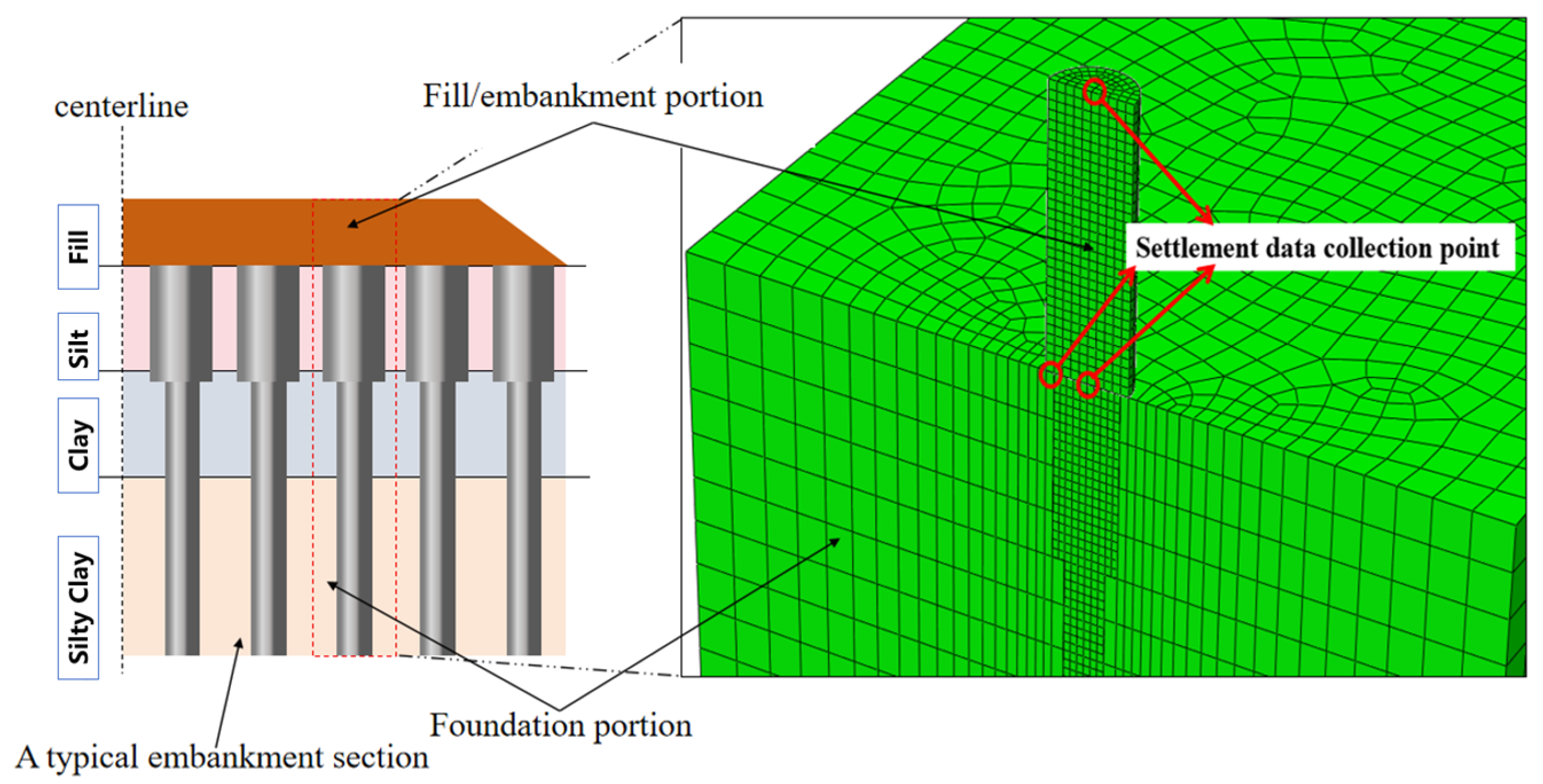
In this study, a section of the horizontal embankment portion installing the T-shaped DCM column is modeled using finite element ABAQUS 2025 software. The model is divided into two parts: the fill or the embankment portion and the foundation portion [16]. The fill/embankment portion is represented by a cylindrical portion of the column. It considers the overlying soil above the foundation, with the load directly applied to the top surface of the fill to represent the overburden pressure acting on the ground, as illustrated in Figure 1. To investigate the influence of pile arrangement on the bearing characteristics of the composite foundation, the diameter of the fill is set between 0.8 m and 1.8 m, while its height is uniformly fixed at 3 m. The foundation is modeled as a rectangular block with a length and width of 10 m and a height of 20 m. This design is adopted to prevent numerical divergence and minimize boundary effects during simulation [17]. Generally, the soil domain’s diameter is set to be more than 20 times the pile diameter, and the distance between the pile tip and the bottom boundary of the soil domain exceeds 10 times the pile diameter. In this embankment modeled section, the diameter of the head portion of the T-shaped DCM column has a diameter and length of 0.8 m and 2 m, respectively. However, the length and diameter of the column body are assigned 0.5 m and 8 m, respectively.
The Mohr–Coulomb (MC) model was employed in this study. The Mohr–Coulomb (MC) model employs a linear elastic–ideal elastoplastic framework, describing soil strength through cohesion and internal friction angle. It reliably characterizes shear yielding and plastic zone development under monotonic static loading conditions. Consequently, it aligns well with this study’s focus on vertical stress transfer, stress redistribution, settlement response, and failure mechanism identification within composite foundations during embankment loading. Simultaneously, the MC model’s parameter system is relatively concise and readily obtainable in engineering practice, facilitating comparisons between different pile types (uniform-diameter piles and VSDCM) under unified constitutive and boundary conditions. Corresponding model parameters employed in this study is illustrated in Table 1.
Here, the lateral surface of the column is defined as the master surface, while the soil surface in contact with the column is regarded as the slave surface. In the tangential direction, the penalty function method is employed to calculate frictional resistance, with a soil–column friction coefficient of 0.7 [18,19]. The penalty technique maintains computational robustness while allowing for a smooth transition between sticking and sliding states due to minimized micro-slippage. An interface was introduced between the cement-treated zone and the surrounding natural soil. The tangential response of this interface was described using a Coulomb friction formulation, enabling shear (frictional) stress transfer under compressive normal contact pressure. The normal interaction was specified as hard contact, which effectively prevents surface interpenetration during the analysis. In the contact-pair definition, the stiffer body is designated as the master surface and the more compliant body as the slave surface. Accordingly, the pile was assigned as the master surface, while the surrounding natural soil was defined as the slave surface. The base of the model is fixed by assigning zero displacement in the X-, Y-, and Z-axes, while the uppermost or the outer edge of the soil surrounding the column is restrained in the X and Y directions, allowing displacement only along the Z-axis [20]. Due to the symmetrical condition of the model, only half of the model is developed, with the pile axis plane YSYMM set to zero. This reduces the possible computational time and improves numerical efficiency without compromising accuracy. This study adopts six-faced, eight-node linear brick elements with reduced integration (C3D8R), which are widely recognized for their computational efficiency and accuracy in modeling complex soil–structure interactions [21]. Reduced integration is employed to suppress volumetric locking in nearly incompressible media, including saturated soft clays, while ensuring reliable accuracy in stress and strain field calculations. Furthermore, hourglass control is incorporated to preserve numerical stability and to achieve physically realistic deformation of the composite foundation. Here, the default full Newton–Raphson iterative algorithm embedded in ABAQUS is employed to solve nonlinear equilibrium equations. In the case of solving strongly nonlinear problems involving contact, plasticity, and large deformation, it provides quadratic convergence characteristics by updating the global stiffness matrix and internal force vector at each iteration step continuously. Similar approaches were also adopted by previous studies [15,22].
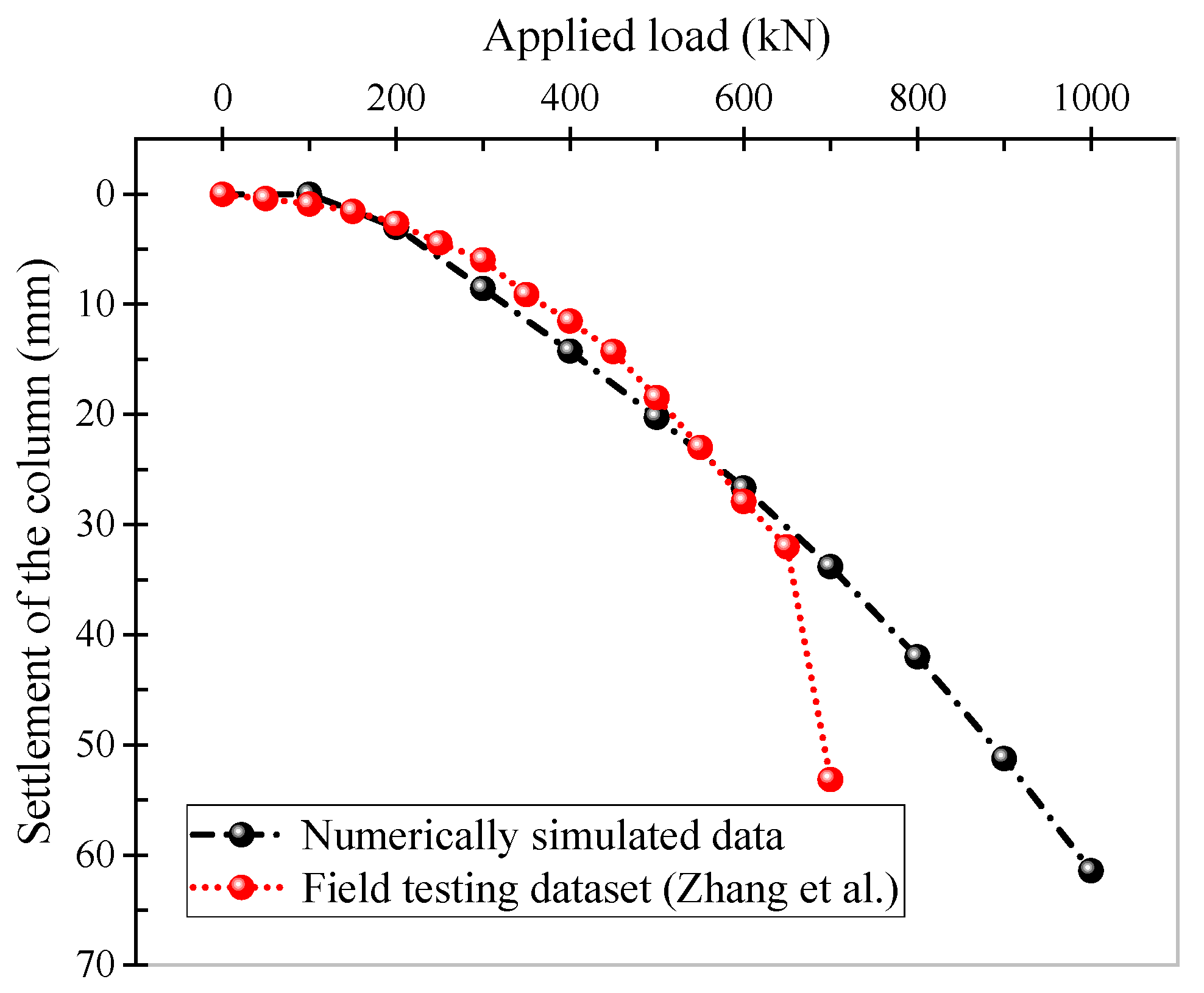
A comparative analysis of the field-testing data and simulated data as a function of increasing the externally applied load is presented in Figure 2. It is observed that the installation of the T-shaped DCM column [15] exhibits total settlement of 27.90 mm and 26.67 mm during the application of 600 kPa from the field testing and numerically simulated data, respectively. The comparative study demonstrates a minimal variation and a strong alignment between the field data and the settlements obtained from the proposed model. Given that numerical simulation modeling employs relatively homogeneous model parameters, whereas the complex distribution of in situ soil layers prevents the formation of entirely homogeneous piles, field test data exhibit greater vertical settlement and lower bearing capacity under identical external load conditions compared to numerical simulation data. Nevertheless, the overall settlement trends align between the two, thereby validating the reliability of the model employed in this study. Therefore, the proposed model developed along with the corresponding parameters is reasonable to adopt for further investigations.
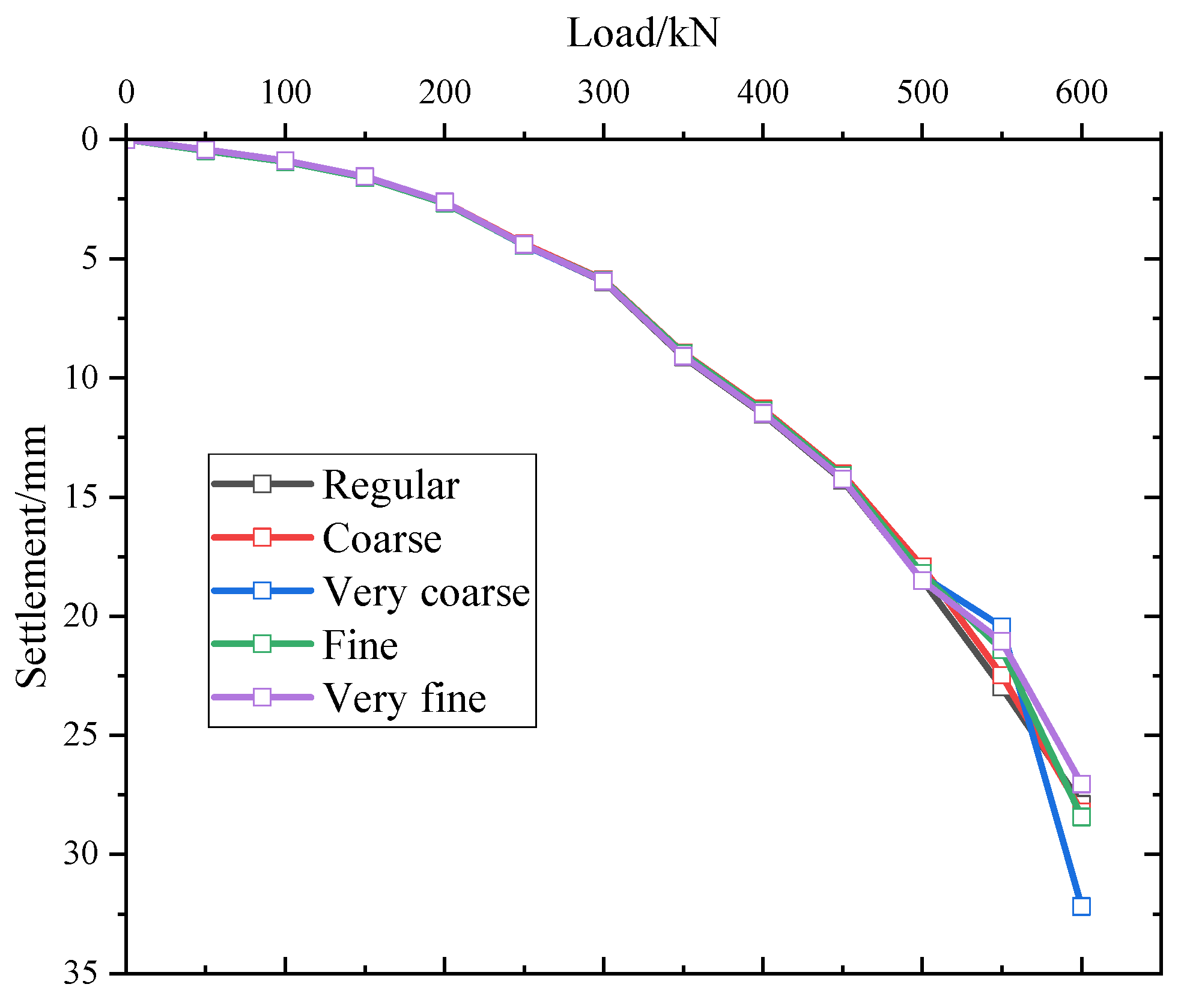
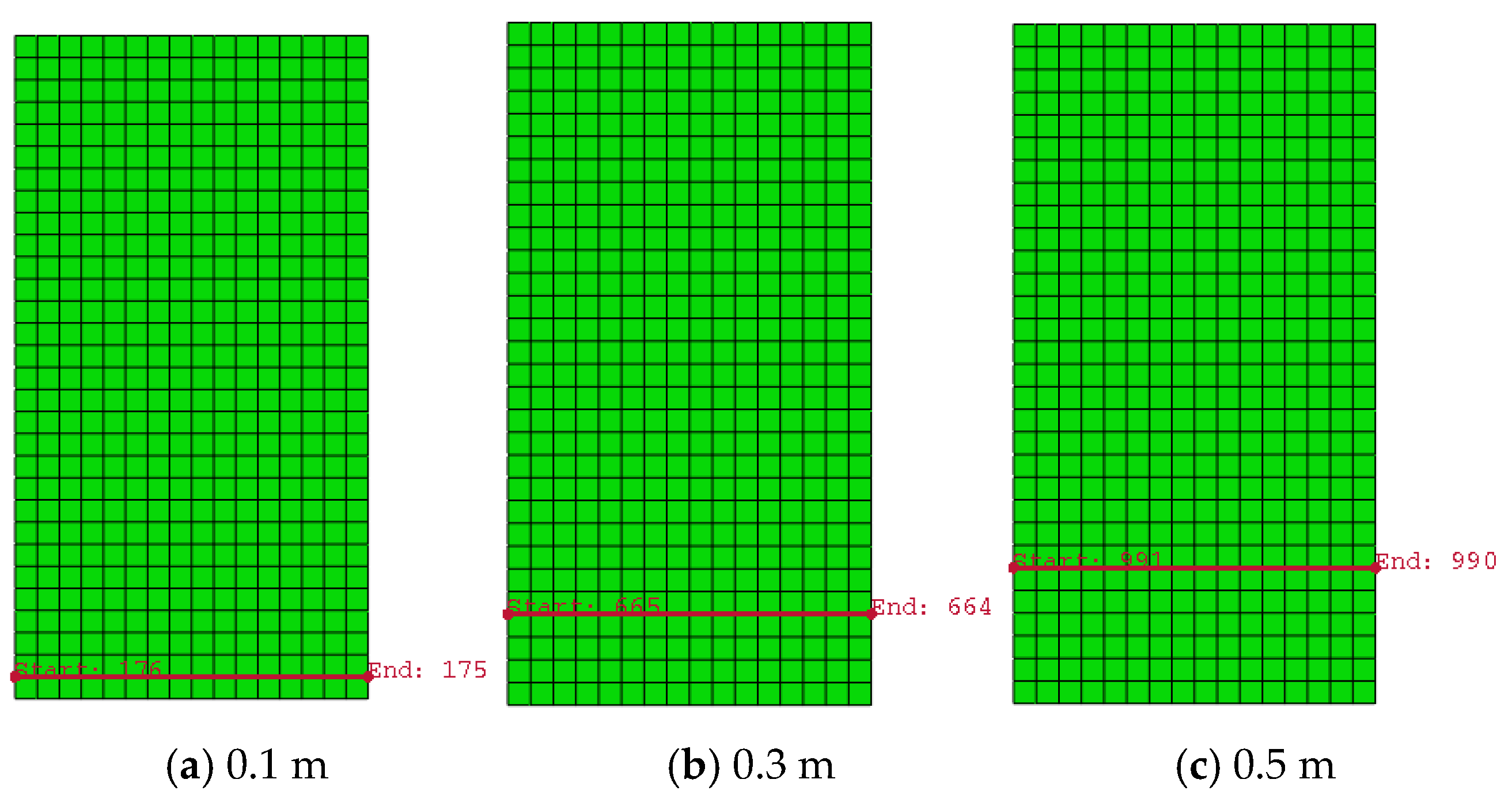
To examine mesh sensitivity, a series of models with different mesh densities were developed. In the baseline model, the pile and soil were meshed with densities of 0.1 and 0.5, respectively. For the sensitivity study, additional models were generated by scaling the baseline mesh density by factors of 0.6, 0.8, 1.2, and 1.4, as summarized in Table 2.
The response curves obtained under the five mesh configurations are nearly coincident, indicating that the adopted mesh density is appropriate and exerts a negligible influence on the numerical outcomes (Figure 3). Accordingly, mesh sizes of 0.1 m and 0.5 m are employed in this study, which preserve computational accuracy while reducing runtime and improving overall computational efficiency.

3. Result and Discussion

Based on the aforementioned validated data, a series of different configurations of the column were investigated in this study. Two primary column types were considered: the conventional DCM column and the Variable-Section DCM (VSDCM) column, denoted as W3. The VSDCM column consists of a head section with a diameter of 0.8 m and a length of 2 m, followed by a smaller body section with a diameter of 0.5 m and a length of 8 m. For the conventional column, two diameters were considered: a smaller 0.5 m column (designated W1) and a larger 0.8 m column matching the VSDCM head diameter (designated W2). The total length of each column was kept constant at 10 m, irrespective of the column configuration. The detailed geometrical specifications of each column type are presented in Table 3.

3.1. Settlement Characteristics

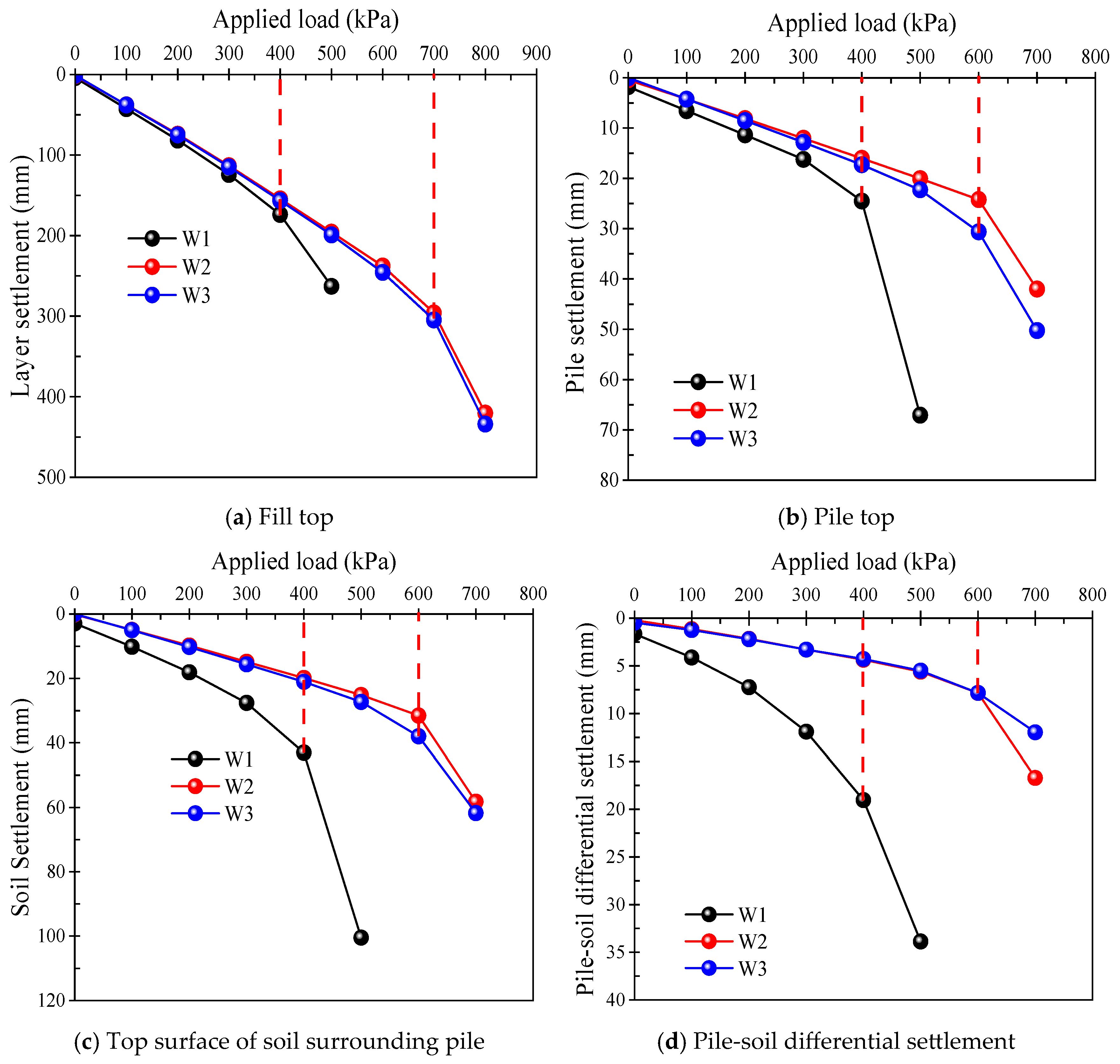
The settlement characteristics of the column-improved composite soil is monitored continuously as part of the ground improvement work to ensure compliance with design criteria and to allow early detection of excessive settlement or uneven settlement. It enables assessment of performance, bearing capability, and construction quality. Here, a comparative assessment of the settlement characteristics of three different columns (W1, W2, and W3) are investigated at different locations, i.e., at the top surface of the fill, the top surface of the pile body, and the top surface of the surrounding soil.
From Figure 4a, it can be observed that the W1 column possesses a higher settlement behavior. Consequently, the higher settlement of the column leads to increased settlement in the overlying soil. The conventional column having a consistent diameter possesses lower bearing capacity and higher settlement [14]. This can be influenced by several factors including the limited lateral resistance, smaller effective load transfer area or lower stiffness, and many others. Therefore, researchers adopted a load transfer platform [23].
From Figure 4, it can be observed that the load–settlement curve of W2 and W3 almost overlap, irrespective of the location of the assessment. The possible reason might be the similar head diameter of both W2 and W3. Furthermore, it can be inferred that the W3 column possesses a 0.8 m diameter for only 2 m length in the uppermost section, while W2 possesses a 0.8 m column diameter throughout 10 m length of the column. Although the VSDCM column increases the diameter at the upper 2 m of the pile body, its bearing capacity is approximately 90% of that of a full-section diameter-enhanced pile. Furthermore, the settlement characteristics of the surrounding soil around the VSDCM column are lesser as compared to other columns. Furthermore, the differential settlement behavior of the column and the surrounding soil under different conditions were also assessed [24]. It can be evident that the differential settlement of the W1 column having a constant diameter of 0.5 m possesses relatively higher differential settlement, which is approximately 4 to 5 times greater than the other two configurations. However, the differential settlement behavior in the W2 and W3 columns are almost identical.
Specifically, for W1, a sudden increase in pile-head settlement occurs beyond the 400 kN load level (Figure 4), indicating settlement behavior; hence, the ultimate load is interpreted as 400 kN. W2 and W3 exhibited relatively stable responses prior to 600 kN but demonstrated marked nonlinear intensification/significantly increased settlement increments at higher load levels. Consequently, their bearing capacity values are determined as 600 kN. It can be inferred that both the W2 and W3 columns possess nearly identical bearing capacities, which are approximately 1.5 to 2 times greater than that of the W1 column.

3.2. Load Transfer Mechanism

This section investigates the load transfer mechanism between the column and composite ground under the application of the external load. Here, the variation in vertical stress distribution behavior along the traverse path is assessed at different depths, with a vertical spacing of 0.1 m. The extracted path of the vertical stress is illustrated in Figure 5.
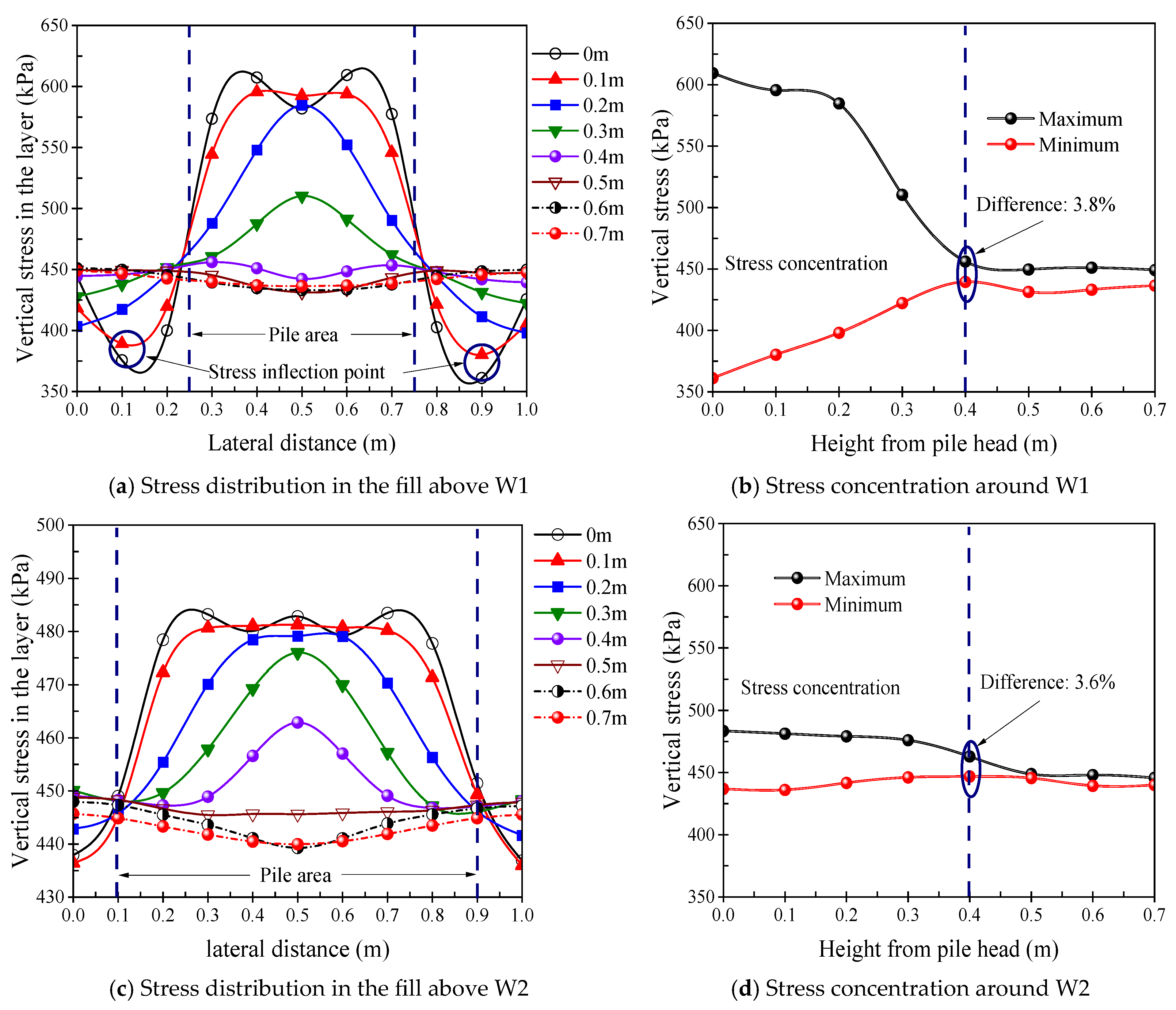
For the composite foundation with a constant cross-section of 0.5 m diameter piles (W1), a significant stress concentration phenomenon occurs near the top surface of the fill, resulting in a vertical stress curve that displays a distinct arching shape, as illustrated in Figure 6. The further from the top of the composite foundation, the less pronounced the stress concentration becomes. When the distance from the top of the composite foundation reaches approximately 0.4 m, the stress concentration phenomenon almost disappears, and the fill shows a uniform stress distribution. Furthermore, it can be observed that the stress inflection points appear at lateral positions 0.1 m and 0.9 m. Outside these inflection points, the vertical stress on the soil surface gradually increases and tends toward normal, indicating that the influence range of the stress arch on load distribution is approximately 0.1 m to 0.9 m. In other words, the load redistribution phenomenon of the composite foundation occurs within a range of about 0.15 m from the pile body. The range from 0 to 0.15 m corresponds to the horizontal influence range of the stress arch. Beyond this distance, the soil does not directly contact the pile body and is essentially unaffected by the stress arch.
A similar phenomenon of stress concentration behavior is observed in the case of W2-installed composite soil, as illustrated in Figure 6. Within the stress arch, the fill above the pile head experiences higher vertical stress than the fill at the same lateral position without a stress arch, while the fill above the soil shows lower vertical stress. This might be due to the relative difference in the strength and modulus of the column and surrounding soil. The column exhibits minimal deformation/settlement, while the surrounding soil exhibits higher settlement under the influence of the same loading [25]. Thus, the presence of the stress arch results in higher load-bearing column than the surrounding soil.
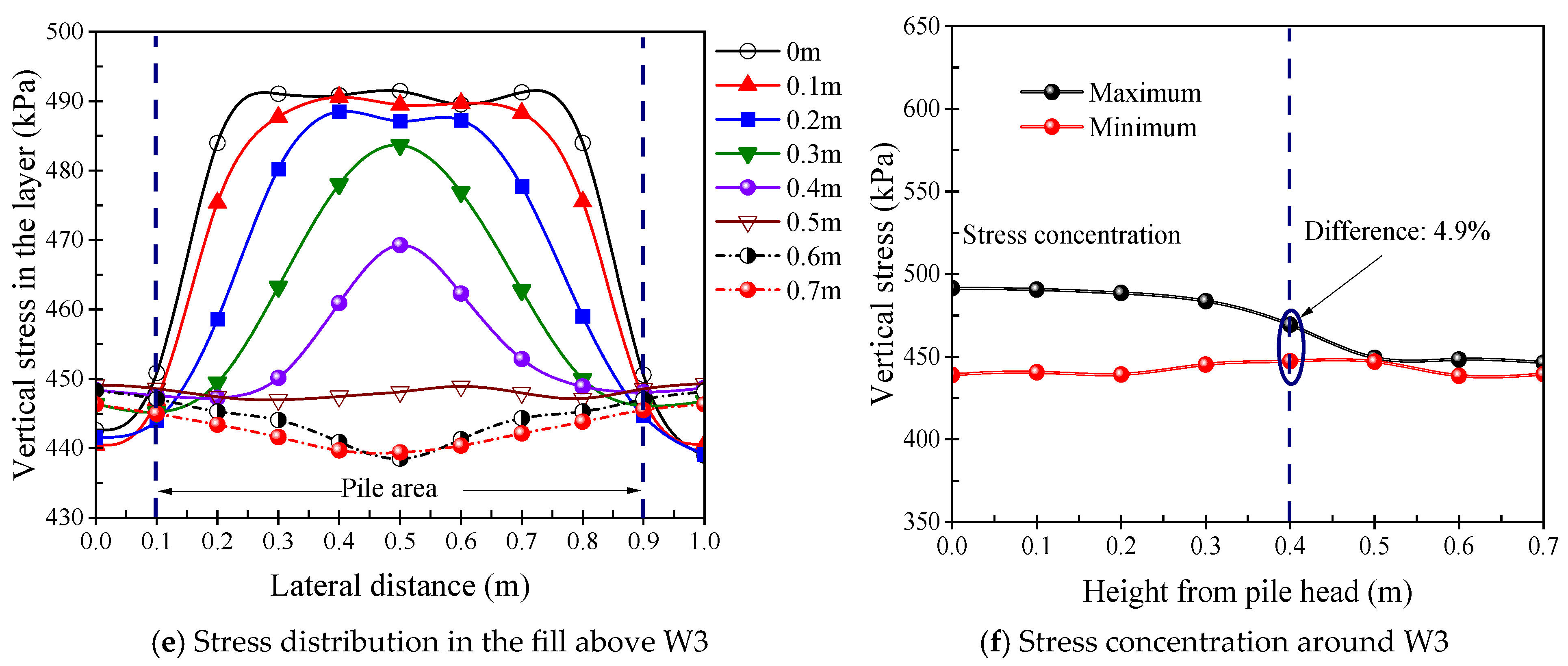
The stress distribution curves for the fill of the W3 and W2 models show similar trends, but the maximum height of the stress arch in the W3 column installed composite ground is about 10 kPa higher than that in W2. This is due to the higher bearing capacity of W2, with a larger pile-soil contact area and pile body diameter compared to W3. During load transfer and redistribution, the larger pile body diameter of W2 helps to gradually diffuse the stress from the pile body into the surrounding soil with increasing depth. However, since the pile heads of W2 and W3 are the same [15,26], the differences in the lower parts of the pile bodies only affect the load transfer process at deeper layers of the composite foundation. As a result, the maximum stress concentration between the two models differs by only about 3%.
By comparing the maximum and minimum stress values at different depths in the fill, the stress concentration phenomenon can be visually analyzed. The maximum height of the stress arch in the fill of the W1 model is the highest, approximately 600 kPa, which is about 50% higher than that in the W2 and W3 models. This is because the pile head diameter in W1 is the smallest, and the area that can bear the load at the pile head is relatively smaller. Under the same pile-to-soil stiffness ratio, the vertical stress generated at the pile head is higher.
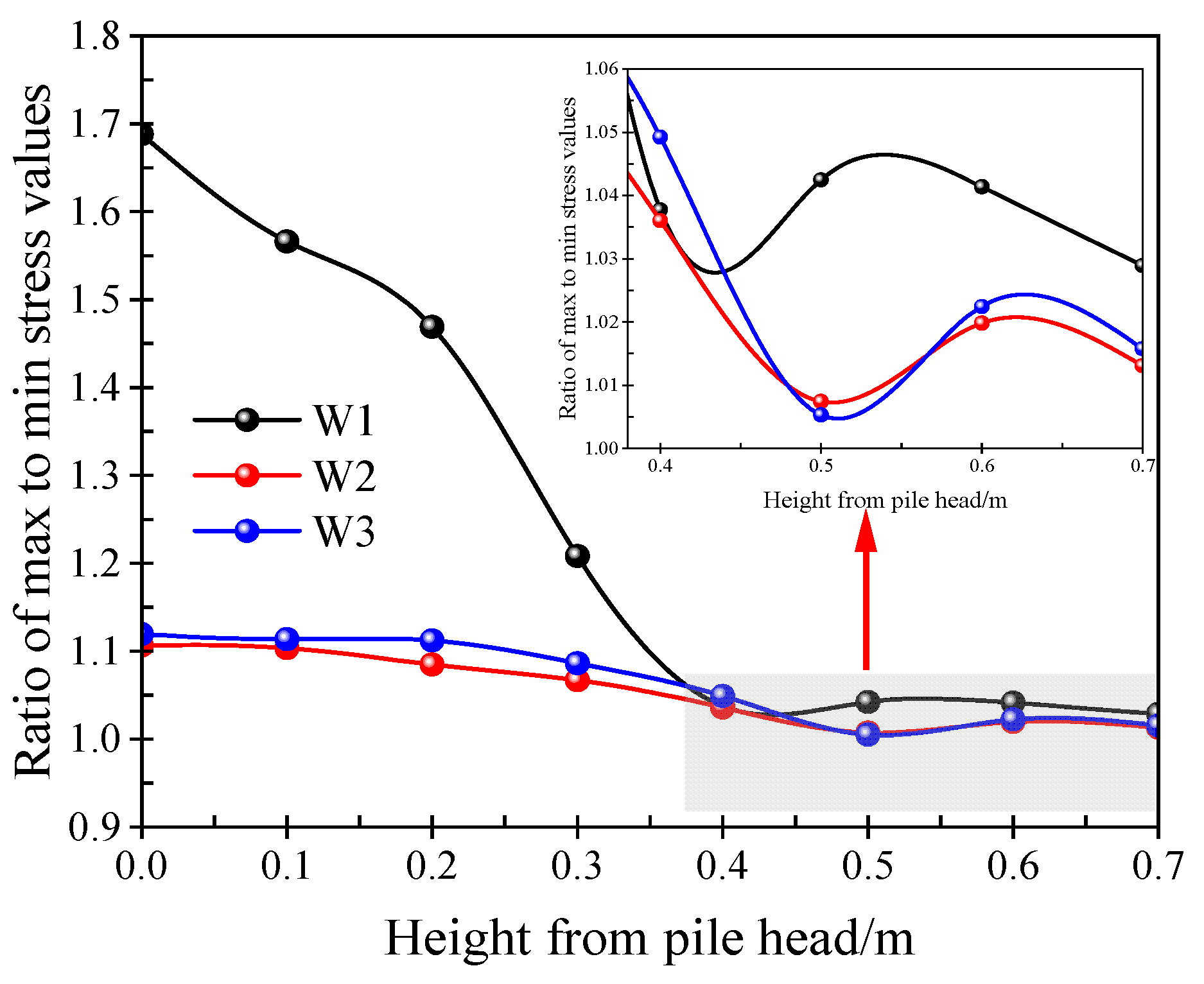
In the W1 model, the difference between the maximum and minimum stress values in the fill is about 250 kPa, gradually decreasing with depth. When the distance from the top of the composite foundation exceeds 0.4 m, the stress becomes uniformly distributed, and the difference between the maximum and minimum stress values is only about 5%. Based on the vertical stress difference, the region can be divided into a stress concentration zone (0 to 0.4 m) and a uniform distribution zone (Height > 0.4 m). The range from 0 to 0.4 m corresponds to the vertical influence range of the stress arch. A similar pattern is also observed for the case of the W2 and W3 column-installed composite soil. Here, the difference between the maximum and minimum stress for the W2 and W3 columns are, respectively, 46.66 kPa and 52.46 kPa, which is almost four times lesser than the W1 column. However, the vertical influence range of the stress arch is similarly 0 to 0.4 m, based on the standard of a 5% difference between the maximum and minimum vertical stress values, as highlighted in Figure 6f.
By comparing the differences between the maximum and minimum vertical stress values at different depths in the fill for the three composite foundation groups, it is found that increasing the area at the pile head can effectively reduce the stress concentration phenomenon in the composite foundation, as illustrated in Figure 7. Here, W3 column-improved composite soil possesses almost identical stress concentration ratio to that of the constant cross-section 0.8 m large-diameter pile.

3.3. Stress Distribution

In this section, the variation in the stress distribution under the application of 200 kPa external load is investigated for each column. Here, the stress distribution is considered in three different positions of the column, i.e., the fill/embankment portion, the head or uppermost section of the column (in the case of W1 and W2, the uppermost position corresponds to a depth range between 0 and 2 m, while in W3, it correspond to the head portion of the column which is 2 m depth), and the lower portion of the column (in W3, it corresponds to the body portion of the column with diameter 0.5 m).
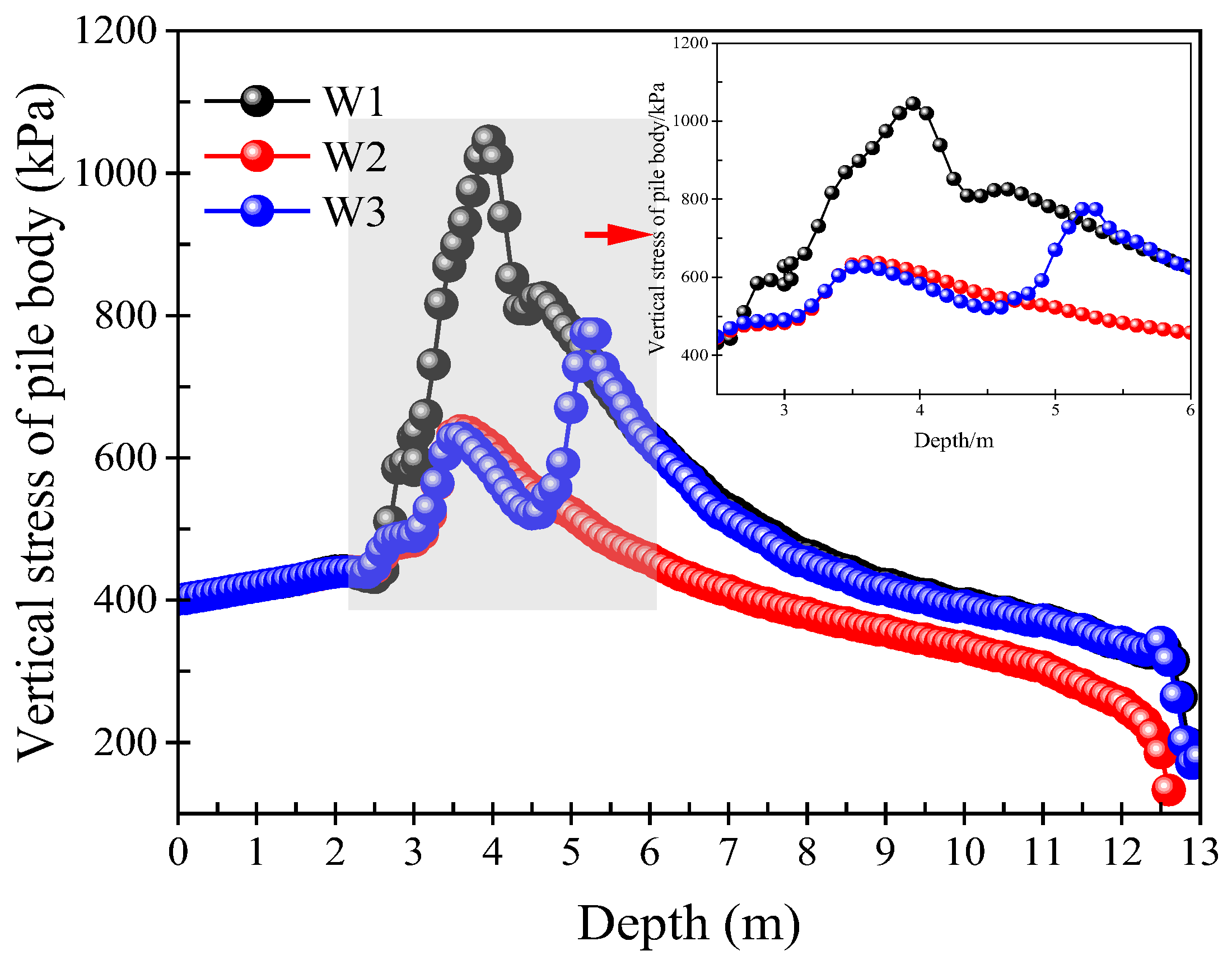
The stress variation in the embankment/fill region is observed to increase gradually with depth, and a similar phenomenon is observed irrespective of the column types, as illustrated in Figure 8. Thus, the stress at 0 m depth is found to be 400.95 kPa, which increases by 180.96 kPa as the depth increases by 3 m in the case of W1 column. However, during the installation of the W2 and W3 columns, the stress at 0 m depth is 400.95 kPa and increases by 87.98 kPa and 90.46 kPa, respectively, as the depth increases by 3 m. This demonstrates that the installation of the W1 column results in a marginally higher stress variation compared with the other column. This is because the path selected is located at the center of the fill and is influenced by the stress arch [27].
In the column head region, the vertical stress in the W1 column increases sharply, nearly doubling over a depth range of 1 m. This is because the load is transferred from the 1 m diameter fill to the composite foundation, and the column body acts as the main bearing component, leading to stress concentration at the interface between the fill and the column body. However, during the installation of both columns W2 and W3, the variations in the vertical stress curves in the column head stage nearly overlap, with a 20% increase in vertical stress over the 1 m depth range. It can be observed that stress gradually increases in the first half of this stage, while it gradually decreases in the latter half. Stress concentration is primarily distributed within approximately 0–1 m in the column head region, with the gradual reduction in stress attributed to the dissipation of vertical stress from the column body through the interface.
At the end of the column head region, the vertical stress in the column body of the W3 model shows a stress distribution migration phenomenon. Within a depth range of approximately 0.5 m, the distance increases by about 50%. This is due to the sudden reduction in cross-sectional area at the transition of the VSDCM column, leading to stress concentration.
Furthermore, it can be observed from Figure 8 that the stress in the column decreases gradually with the depth for all column types, irrespective of their configurations, which might be due to the influence of the stress dissipation and the soil–column interaction effect. Since W1 and W3 have the same column-soil contact area in this stage, their stress dissipation curves are identical. However, the vertical stress in the pile body of the W2 model is consistently lower, and the vertical stress transferred from the column body to the soil is also lower, so the dissipation curve for W2 decreases more gradually. It is noteworthy that the stress migration curve of the W3 column overlaps with the W2 curve in the beginning and with the W1 curve at the end. This observation is consistent with the structural characteristics of the VSDCM column, where the upper column head behaves as a large-diameter column (W2), while the lower column body exhibits the bearing behavior of a small-diameter column (W1). The stress concentration phenomenon caused by the change in cross-section does not cause the vertical stress in the VSDCM pile to exceed the bearing capacity of the lower small-diameter pile.
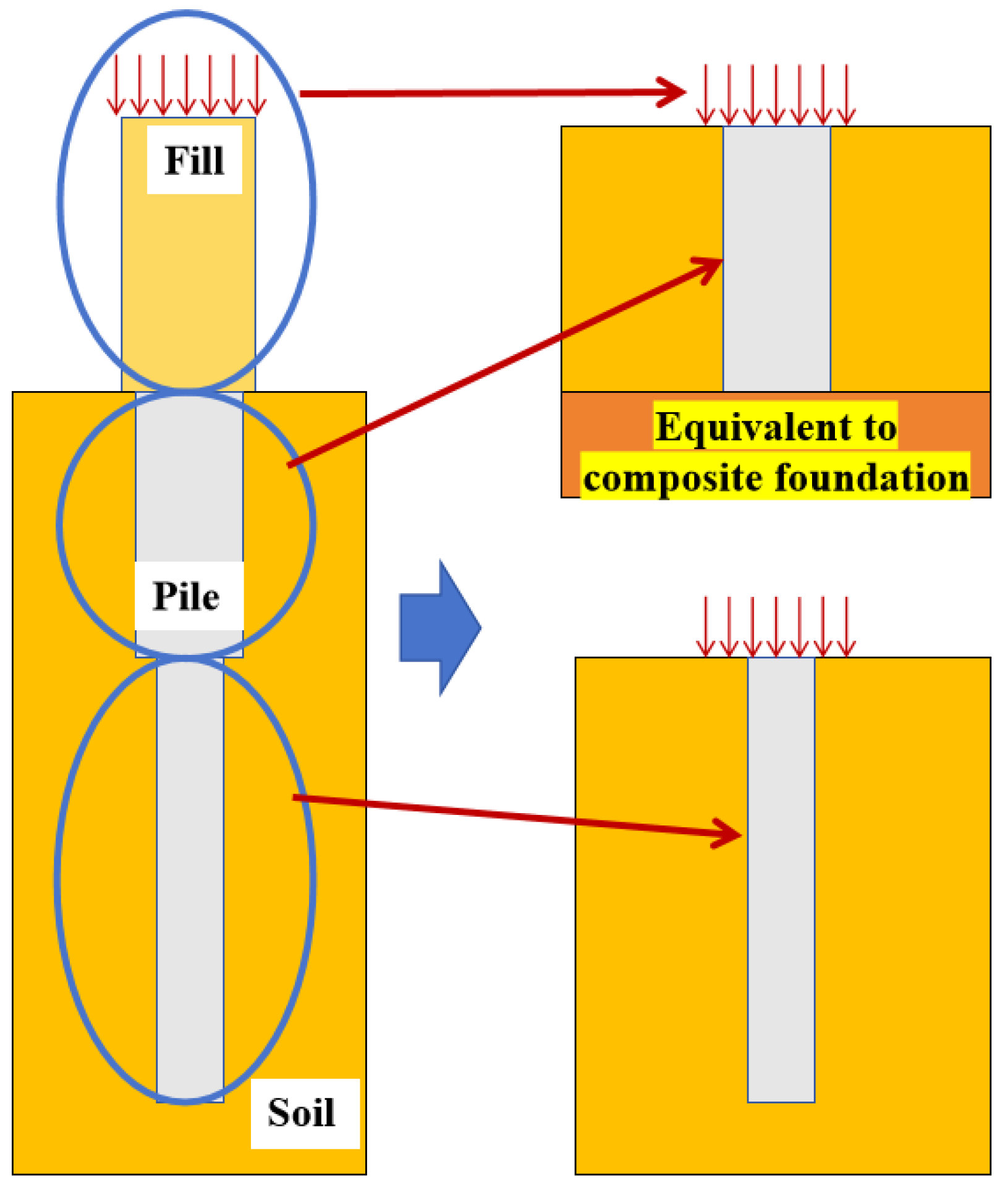
The VSDCM column can be considered a combined structure of two DCM column with different diameters. The upper large-diameter DCM column bears the external load and transfers it to the deep composite foundation formed by the small-diameter DCM column and the soil below the enlarged head. The lower small-diameter DCM column bears the external load transferred from the upper part and transmits it to the soil foundation beneath the VSDCM column, as shown in Figure 9.
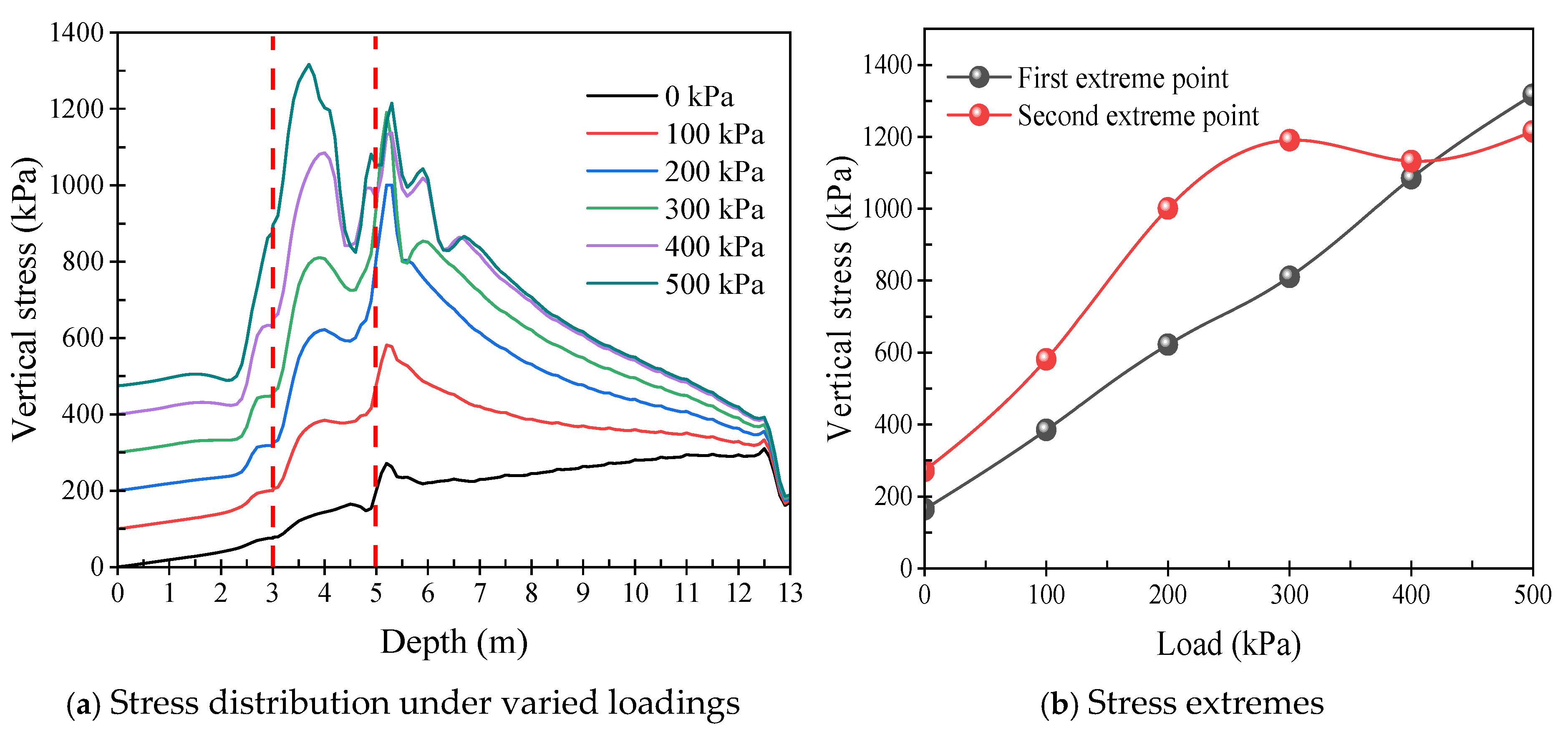
Furthermore, the variation in stress distribution along the length of the column and the overlying embankment portion is investigated under the application of varied loadings, as illustrated in Figure 10. During the application of zero loading, the vertical stress at the top of the embankment remains zero. Even under the consistent load, the variation in the stress is observed along the depth of the column due to the self-weight of the fill and composite foundation. Since the load is directly applied to the top surface of the fill, the vertical stress value at the left end of the curve matches the applied external load. When the load is small, the curve roughly shows a trend of increasing first and then decreasing, with only one extremum point located below the expanded head [28]. As the load gradually increases, another extremum point beneath the pile top becomes gradually more significant, while the vertical stress extremum below the expanded head gradually increases.
When the load is large (Load = 400 kPa, 500 kPa), the vertical stress extremum beneath the pile top exceeds the extremum beneath the expanded head. Based on the vertical distance, the vertical stress extremum points beneath the pile top and expanded head are designated as the first and second extremum points, respectively. The variation curves of the two stress extremum points with load are shown in the figure. The first extremum increases approximately linearly with the load, while the second extremum gradually increases with the load, but at a slowing rate. Overall, as the load increases, the vertical stress extremum at these two stress concentration points, caused by the abrupt change in cross-sectional area, increases. Since the second extremum point is influenced by the gravity of the fill and the composite foundation above the expanded head, and the first extremum point is only influenced by the gravity of the fill, the actual load at the second extremum point under the same external load is higher than that at the first extremum point.
The load at each extremum point can be viewed as the sum of the self-weight of the superstructure and the external load, with the self-weight of the superstructure being a constant value. When the external load is small, the vertical stress at the extremum point is mainly influenced by the self-weight of the superstructure. As the external load gradually increases, the proportion of the external load in the total load at the extremum point gradually increases, and the primary influencing factor of the vertical stress at the extremum point becomes the external load. When the load is large, the vertical stress at the first extremum point exceeds that at the second extremum point.

3.4. Failure Behavior

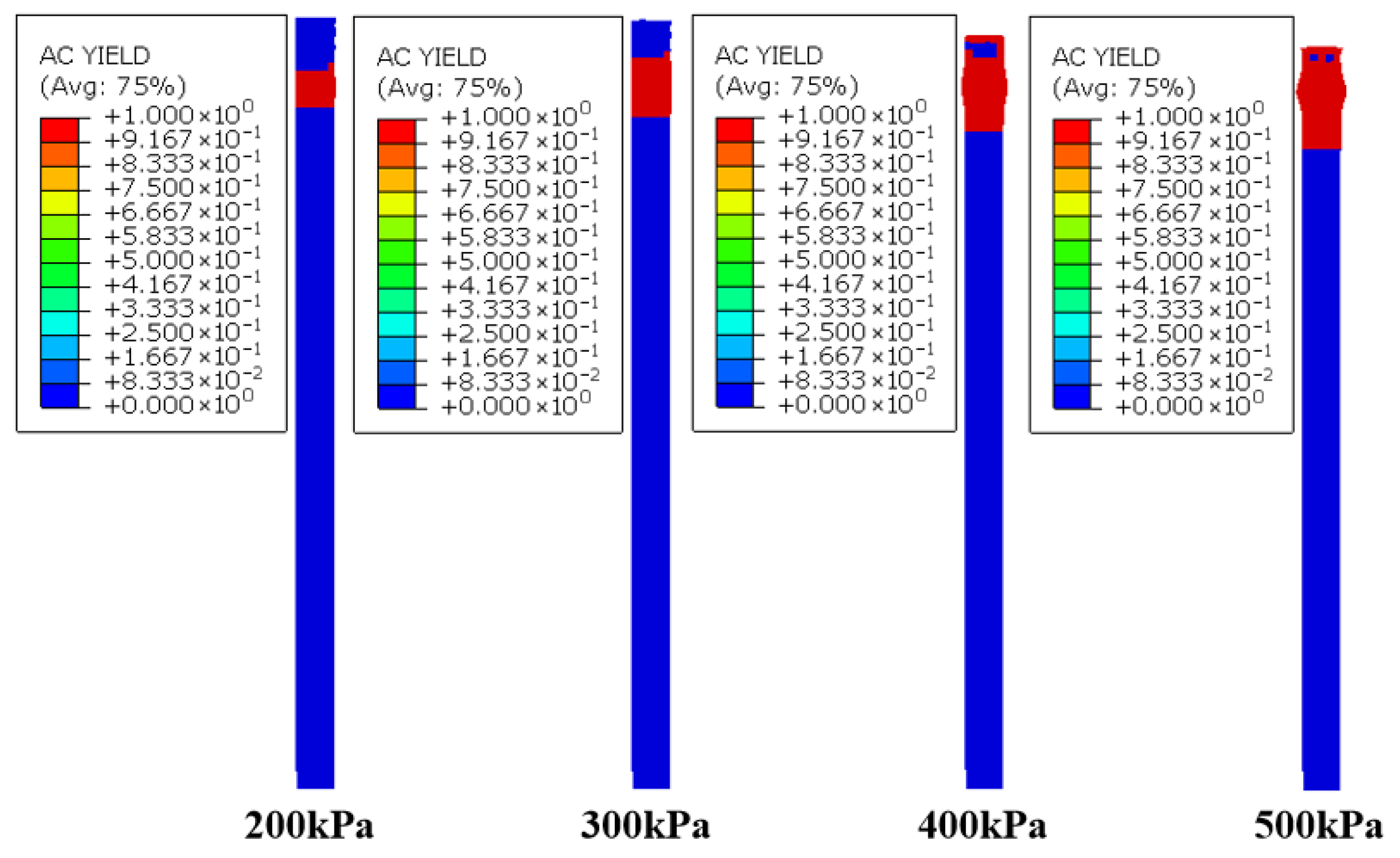
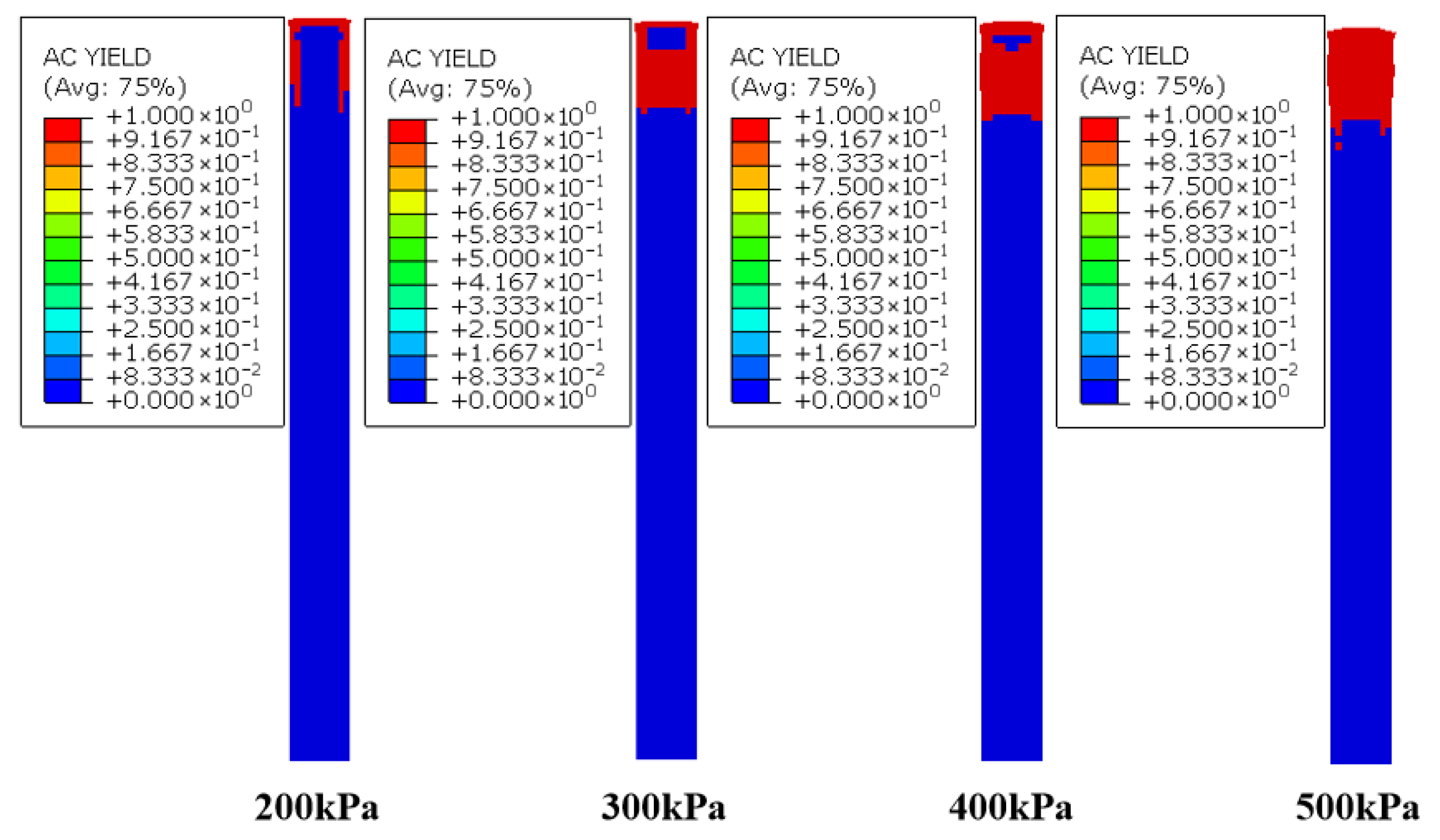
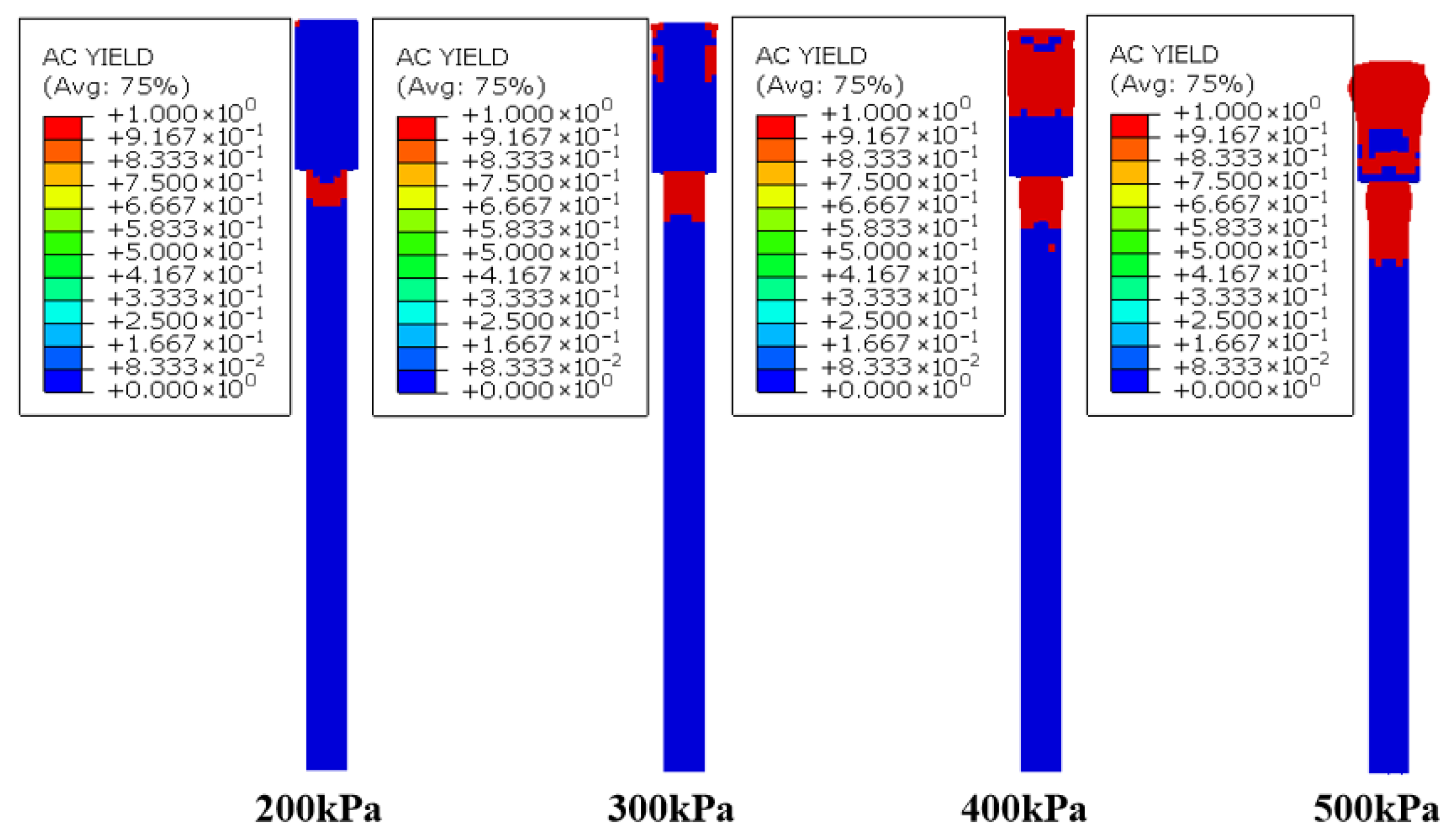
This section investigates the failure behavior of each column through the AC-YIELD region, as illustrated in Figure 11, Figure 12 and Figure 13. Each diagram depicts the plastic deformation zones for four load levels, represented from left to right as 200 kPa, 300 kPa, 400 kPa, and 500 kPa, respectively. From the above discussion, it can be highlighted that the W1 column and the W2 column possess a peak stress near the pile head. In alignment with that finding, in the W1 column, the plastic deformation is developed in the uppermost portion of the column. Externally applied load is transferred to the uppermost portion of the column, which is further transferred to the composite foundation before forming stress concentration. This is confirmed by the vertical stress curves extracted in previous sections. Once stress concentration occurs, the failure at the pile head gradually spreads upward, eventually causing failure across the entire pile head. Here, plastic deformation occurs simultaneously along the lateral range of the pile body, while the lower part of the pile body remains intact. A similar deformation pattern is also reported by previous studies [14]. Although the W2 column exhibits a failure location similar to that of W1, a notable difference is observed in the mechanism and origin of the deformation pattern. The W2 column, characterized by a diameter of 0.8 m and formed through internal jet grouting and external jetting, shows a pronounced strength concentration in the central core, accompanied by a reduction in strength toward the column periphery. Therefore, the failure mechanism initiates in the outer section having lower strength and then spreads continuously in the inner core section having higher columnar strength.
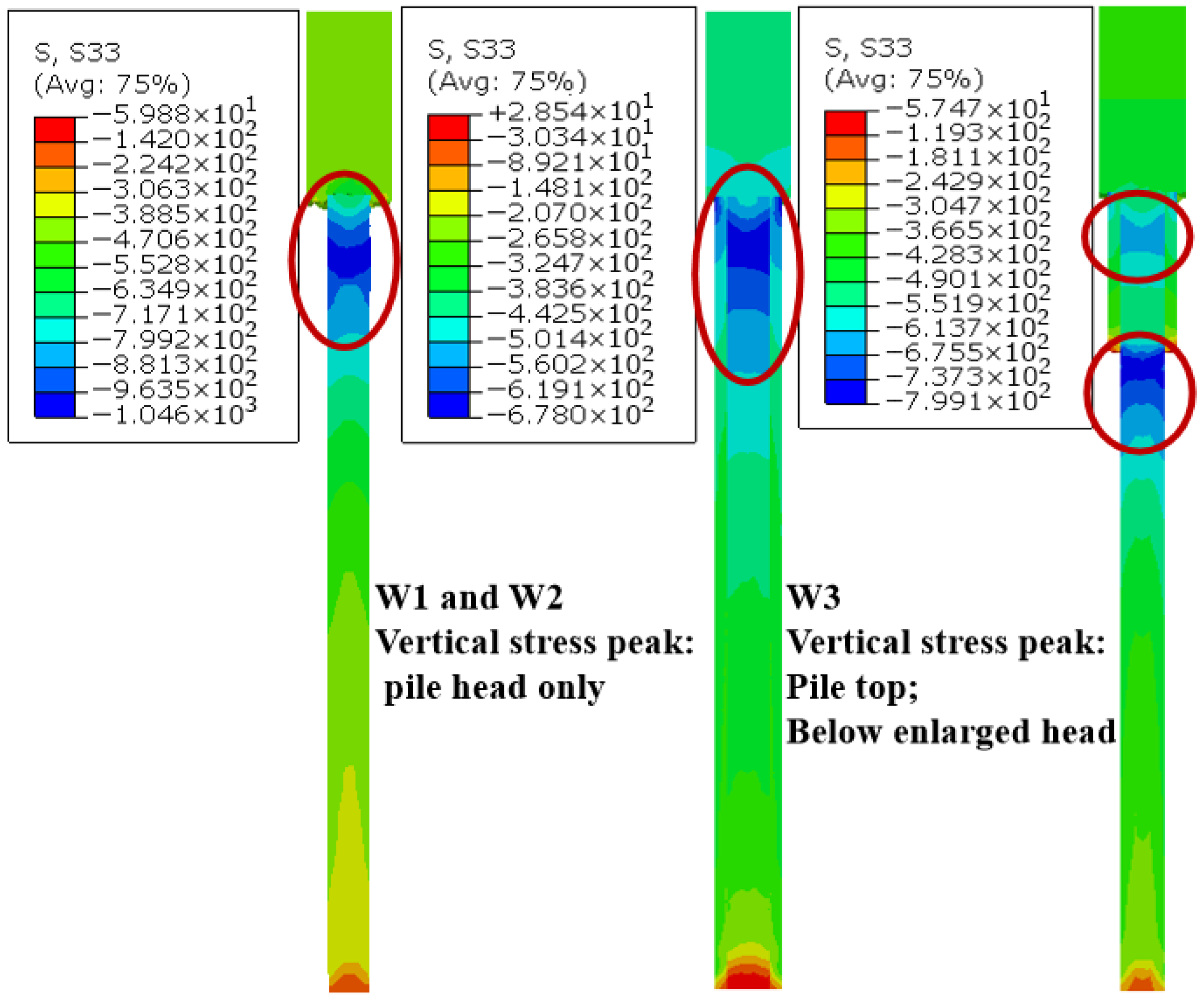
However, in the case of the W3 column, the peak stress is localized in two different positions, namely, within the column head region and just beneath the enlarged column head portion, as evident in Figure 14. This is due to stress concentration caused by the change in the bearing cross-section, with the failure of the pile occurring at the points of maximum stress. The cross-sectional area ratio between the enlarged head and the pile body below it is 2.56, which is significantly higher than the ratio between the overburden fill and the pile body (1.56). Additionally, the stress concentration beneath the enlarged head is much higher than the stress peak at the pile top as observed in the earlier sections. As a result, in the W3 model, failure first occurs at the small-diameter pile body beneath the enlarged head, followed by failure at the pile top.

4. Conclusions

This study conducted a series of numerical analysis to investigate vertical stress distribution, settlement behavior, and failure mechanisms of composite foundations considering three different column types. From the results and discussion presented above, the following conclusions can be drawn:
(1) The VSDCM column is found to be an effective alternative of the conventional column and possesses almost 90% of the bearing capacity of the corresponding full-section large-diameter columns. Furthermore, the reduced material demand of the VSDCM column results in higher engineering economy, supporting its applicability as a sustainable and cost-effective ground improvement technique.
(2) In comparison to the conventional column, the VSDCM column exhibits a minimal differential settlement, which is almost 4–5 times smaller than that of the small-diameter column composite foundation. This indicates that pile head enlargement plays a dominant role in stress redistribution and load sharing within the composite foundation.
(3) The vertical influence range of the stress arch is approximately 0–0.4 m, within which load redistribution is significant. Stress concentration in the embankment region is successfully reduced by increasing the column head diameter, resulting in a more equal distribution of stress.
(4) Due to its variable cross-section, two distinct vertical stress peaks are observed in the VSDCM column, occurring at the pile head and just below the enlarged head. Correspondingly, failure initiates at these two locations, with the small-diameter section beneath the enlarged head being the most critical zone.

Author Contributions

Conceptualization, K.Y. and Z.Y.; methodology, Y.Z.; software, Y.Z.; validation, T.L., D.J., and L.L.; formal analysis, L.L.; investigation, Y.Z.; resources, K.Y.; data curation, Y.Z.; writing—original draft preparation, Y.Z.; writing—review and editing, D.J.; visualization, Y.Z.; supervision, Z.Y.; project administration, D.J.; funding acquisition, Y.Z. All authors have read and agreed to the published version of the manuscript.

Funding

This research was funded by the Shenzhen Science and Technology Program (JCYJ20250604124219025), the Shandong Provincial Natural Science Foundation (ZR2024LZN002), and the Jinan Science and Technology Bureau Project (202333051).

Institutional Review Board Statement

Not applicable.

Informed Consent Statement

Not applicable.

Data Availability Statement

The original contributions presented in this study are included in the article. Further inquiries can be directed to the corresponding authors.

Conflicts of Interest

Authors Dahai Jiang and Tao Lei were employed by Qilu Expressway Company Limited. The remaining authors declare that the research was conducted in the absence of any commercial or financial relationships that could be construed as a potential conflict of interest.

References

  1. Liu, S.-Y.; Du, Y.-J.; Yi, Y.-L.; Puppala, A.J. Field Investigations on Performance of T-Shaped Deep Mixed Soil Cement Column Supported Embankments over Soft Ground. J. Geotech. Geoenviron. Eng. 2012, 138, 718–727. [Google Scholar] [CrossRef]
  2. Wang, Y.; Zhang, Y.; Zhang, K.; Rong, Y.; Xu, R.; Li, J.; Feng, W.; Sang, Z.; Yao, Z.; Yao, K. Bearing Characteristics of Deep Cement Mixing Integrated Drilling, Mixing and Jetting Piles Based on Numerical Simulation. Sustainability 2024, 16, 9198. [Google Scholar] [CrossRef]
  3. Hu, H.; Fan, J.H.; Luo, D.S.; Hu, F. Study on bearing mechanism of T-shaped bidirectional soil-cement deep mixing pile under embankment loads. J. Water Resour. Water Eng. 2012, 3, 101–104. [Google Scholar]
  4. Shang, Z.; Zhang, G.; Du, G.; Song, T.; Qiao, X.; Yang, Y.; Sun, Z.; Xu, X.; Gao, C.; Zhai, S.; et al. Bearing characteristics of long enlarged head ultra-deep T-shaped bidirectional mixing column. Jpn. Geotech. Soc. Spec. Publ. 2024, 11, 283–288. [Google Scholar] [CrossRef]
  5. Kamon, M. Remediation techniques by use of ground improvement. In Soft Ground Technology; Amer Society of Civil Engineers: Reston, VA, USA, 2001; pp. 374–387. [Google Scholar]
  6. Zucca, M.; Franchi, A.; Crespi, P.; Longarini, N.; Ronca, P. The new foundation system for the transept reconstruction of the basilica di collemaggio. In Proceedings of the International Masonry Society Conferences, 10th International Masonry Conference, IMC 2018, Milan, Italy, 9–11 July 2018; pp. 2441–2450. [Google Scholar]
  7. Shen, S.L.; Chai, J.C.; Miura, N. Stress distribution in composite ground of column-slab system under road pavement. In Computational Mechanics–New Frontiers for the New Millennium; Elsevier: Amsterdam, The Netherlands, 2001; pp. 485–490. [Google Scholar] [CrossRef]
  8. Ni, P.; Yi, Y.; Liu, S. Bearing capacity optimization of T-shaped soil-cement column-improved soft ground under soft fill. Soils Found. 2021, 61, 416–428. [Google Scholar] [CrossRef]
  9. Wonglert, A.; Jongpradist, P. Impact of reinforced core on performance and failure behavior of stiffened deep cement mixing piles. Comput. Geotech. 2015, 69, 93–104. [Google Scholar] [CrossRef]
  10. Jamsawang, P.; Bergado, D.T.; Voottipruex, P. Field behaviour of stiffened deep cement mixing piles. Proc. Inst. Civ. Eng.-Ground Improv. 2011, 164, 33–49. [Google Scholar] [CrossRef]
  11. Chen, X.; Chen, Z.; Li, D. Misalignment effect on the ultimate strength of welded stiffened panels under uniaxial compression. Ocean Eng. 2023, 284, 115190. [Google Scholar] [CrossRef]
  12. Wonglert, A.; Jongpradist, P.; Jamsawang, P.; Larsson, S. Bearing capacity and failure behaviors of floating stiffened deep cement mixing columns under axial load. Soils Found. 2018, 58, 446–461. [Google Scholar] [CrossRef]
  13. Phutthananon, C.; Jongpradist, P.; Jamsawang, P. Influence of cap size and strength on settlements of TDM-piled embankments over soft ground. Mar. Georesources Geotechnol. 2020, 38, 686–705. [Google Scholar] [CrossRef]
  14. Zeng, B.; Zhang, D.W.; Yang, S.S.; Hou, J.; Zhang, A.J.; Cheng, C.H.; He, L. Performance enhancement of large diameter bored pile reinforced by cement-soil in clay under static and cyclic loadings. In Structures; Elsevier: Amsterdam, The Netherlands, 2024; Volume 60, p. 105923. [Google Scholar]
  15. Yi, Y.; Liu, S.; Puppala, J.A. Bearing capacity of composite foundation consisting of T-shaped soil-cement column and soft clay. Transp. Geotech. 2018, 15, 47–56. [Google Scholar] [CrossRef]
  16. Zhang, Y.; Shang, H.; Dong, X.; Chen, S.; Zhang, F.; Yu, Y.; Yao, Z.; Yao, K. Bearing characteristics of variable-section deep cement mixing piles. Structures 2026, 83, 110773. [Google Scholar] [CrossRef]
  17. Zhou, H.; Liu, H.; Li, X.; Ding, X. Plasticity solution for the limit vertical pressure of a single rigid pile with a pile cap in soft soil. Comput. Geotech. 2020, 117, 103260. [Google Scholar] [CrossRef]
  18. Ni, J.; Chai, J. PVD and DCM columns combined ground improvement for embankment construction. Acta Geotech. 2022, 17, 3087–3098. [Google Scholar] [CrossRef]
  19. Singh, M.J.; Yao, K.; Lei, T.; Liu, S.; Zhang, Y.; Yao, Z.; Beer, M. Load-bearing performance and failure behavior of multi-flange deep cement mixing columns. Mar. Georesour. Geotechnol. 2025, 1–15. [Google Scholar] [CrossRef]
  20. Shang, Z.; Du, G.; Song, T.; Qiao, X.; Zhang, D.; Zhong, S.; Gao, C.; Zhai, S. Bearing characteristics of long enlarged head ultra-deep T-shaped bidirectional dry jet mixing column (TDM) improved ground. KSCE J. Civ. Eng. 2025, 29, 100174. [Google Scholar] [CrossRef]
  21. Min, Z.; Zitian, L.; Yunshan, H.; Pengpeng, N.; Yuanlong, W. Experimental Study on the Vertical Bearing Capacity of Stiffened Deep Cement Mixing Piles. Int. J. Geomech. 2022, 22, 4022043. [Google Scholar]
  22. Yi, Y.; Liu, S.; Puppala, A.J.; Jing, F. Variable-diameter deep mixing column for multi-layered soft ground improvement: Laboratory modeling and field application. Soils Found. 2019, 59, 633–643. [Google Scholar] [CrossRef]
  23. Sun, Z.-J.; Wang, Q.; Min, R.; Duan, Q.-W. Sensitivity analysis of influencing factors of pile foundation stability based on field experiment. Structures 2023, 54, 14–22. [Google Scholar] [CrossRef]
  24. Deng, Y.; Zhang, K.; Feng, Z.; Zhang, W.; Zou, X.; Zhao, H. Machine learning based prediction model for the pile bearing capacity of saline soils in cold regions. Structures 2024, 59, 105735. [Google Scholar]
  25. Zhuang, Y.; Wang, K.Y. Three-dimensional behavior of biaxial geogrid in a piled embankment: Numerical investigation. Can. Geotech. J. 2014, 52, 1629–1635. [Google Scholar] [CrossRef]
  26. Li, L.; Huang, J.; Fu, Q.; Cheng, X.; Hu, F. Centrifuge experimental study of mechanical properties of composite foundation with different replacement rates under additional load. Rock Soil Mech. 2017, 38, 131–139. [Google Scholar]
  27. El Sawwaf, M.; Azzam, W.; Aamer, F.; Abd El Ghaffar, A. Laboratory modelling of stiffened deep mixing columns with variable diameter under vertical load in loose sand. Int. J. Geotech. Eng. 2024, 18, 554–567. [Google Scholar] [CrossRef]
  28. Wang, Z.; Cai, J.; Wei, P.; Yang, X.; Xu, Y. Optimization of Pile Reinforcement in Soft Soils: A Numerical Analysis. Appl. Sci. 2025, 15, 12443. [Google Scholar] [CrossRef]
Figure 1. Illustration of the model typical embankment section.
Applsci 16 01308 g001
Figure 2. Validation of the model and corresponding parameters [16].
Applsci 16 01308 g002
Figure 3. Settlement curves for different grid sizes.
Applsci 16 01308 g003
Figure 4. Comparative analysis of load–settlement curve for all columns at different locations.
Applsci 16 01308 g004
Figure 5. Schematic diagram of the path used to extract vertical stress.
Applsci 16 01308 g005
Figure 6. Vertical stress distribution in fill/embankment for different column types.
Applsci 16 01308 g006aApplsci 16 01308 g006b
Figure 7. Ratio of maximum vertical stress in fill/embankment for different column types.
Applsci 16 01308 g007
Figure 8. Stress distribution behavior along the column for each case.
Applsci 16 01308 g008
Figure 9. Equivalent conversion of bearing capacity of VSDCM column composite foundation.
Applsci 16 01308 g009
Figure 10. Stress distribution along the column subjected to incremental external loads and stress extremes.
Applsci 16 01308 g010
Figure 11. AC-YIELD cloud map of the W1 model column.
Applsci 16 01308 g011
Figure 12. AC-YIELD cloud map of the W2 model column.
Applsci 16 01308 g012
Figure 13. AC-YIELD cloud map of the W3 model column.
Applsci 16 01308 g013
Figure 14. Location and failure mechanism for all columns.
Applsci 16 01308 g014
Table 1. Properties and model parameters used in this study.
Materials TypeDepth (m)Density (kN/m3)Yield Stress (kPa)Internal Friction Angle (°)Young’s Modulus (MPa)Poisson Ratio
Fill/1812245.20.3
Silty0–2.418.515.520.55.40.3
Clay2.4–9.618.828307.00.3
Silty Clay9.6–2019.126.214.35.20.3
Outside of the expansion head/20200201500.3
Inside of the expansion head/21250252000.35
Small-diameter pile/21250252000.35
Constant section pile/21250252000.35
Table 2. Mesh size for mesh sensitivity validation.
ModelsPile Mesh Size/mSoil Mesh Size/m
Regular0.10.5
Coarse0.120.6
Very Coarse0.140.7
Fine0.080.4
Very Fine0.060.3
Table 3. Different columns along with corresponding parameters for comparative assessment.
NumberPile TypePile Length (m)Pile Diameter (m)Fill Thickness (m)Fill Diameter (m)
W1Constant section100.531
W2Constant section100.831
W3VSDCM2 + 80.8 + 0.531
Disclaimer/Publisher’s Note: The statements, opinions and data contained in all publications are solely those of the individual author(s) and contributor(s) and not of MDPI and/or the editor(s). MDPI and/or the editor(s) disclaim responsibility for any injury to people or property resulting from any ideas, methods, instructions or products referred to in the content.