1. Introduction
In the context of this study, the Smart Home is conceptualized as a distributed cyber-physical ecosystem aligned with the Industrial Internet Reference Architecture (IIRA). The AWCS functions as a Functional Edge Node, where the control tier handles deterministic mechatronic logic and the information tier manages user telemetry, ensuring the system is fully integrated into the smart building’s resource-management layer. The rapid evolution of residential automation has prioritized energy efficiency and comfort, yet exterior building maintenance remains predominantly manual [
1,
2]. While smart thermostats and security systems are now standard [
3,
4,
5], a significant gap exists in automating high-risk domestic tasks, such as window cleaning [
4]. This oversight represents a critical research opportunity to investigate how robotic integration can enhance the energy-efficiency paradigms and structural longevity of modern smart buildings.
Window cleaning in urban high-rise environments is not only a safety risk—frequently resulting in severe domestic accidents [
6,
7,
8]—but also a factor in building performance. Accumulation of dust and pollutants reduces natural light penetration, which impairs indoor air quality and increases reliance on artificial lighting, thereby elevating energy consumption [
7,
9]. Paradoxically, despite its impact on occupant well-being and building efficiency, this activity is rarely automated or integrated into smart home ecosystems [
7,
8].
Current commercial solutions, primarily vacuum-adhesion robots, operate as isolated appliances and utilize inefficient open-loop spray mechanisms that result in significant water waste [
10]. This study addresses the gap between semi-autonomous appliances and fully integrated building components by investigating a resource-aware mechatronic architecture. The primary objective is to design and validate a modular Automated Window Cleaning System (AWCS) based on a closed-loop fluid management paradigm. This research focuses on three scientific contributions:
A dual-variant architecture (integrated vs. retrofit) to ensure structural adaptability [
11];
Quantitative optimization of resource circularity to minimize water and energy usage via filtration and recovery [
12,
13];
A deterministic safety framework facilitated by a multi-sensor feedback loop [
14,
15,
16].
A comparative overview of existing commercial solutions and the proposed system is presented in
Table 1.
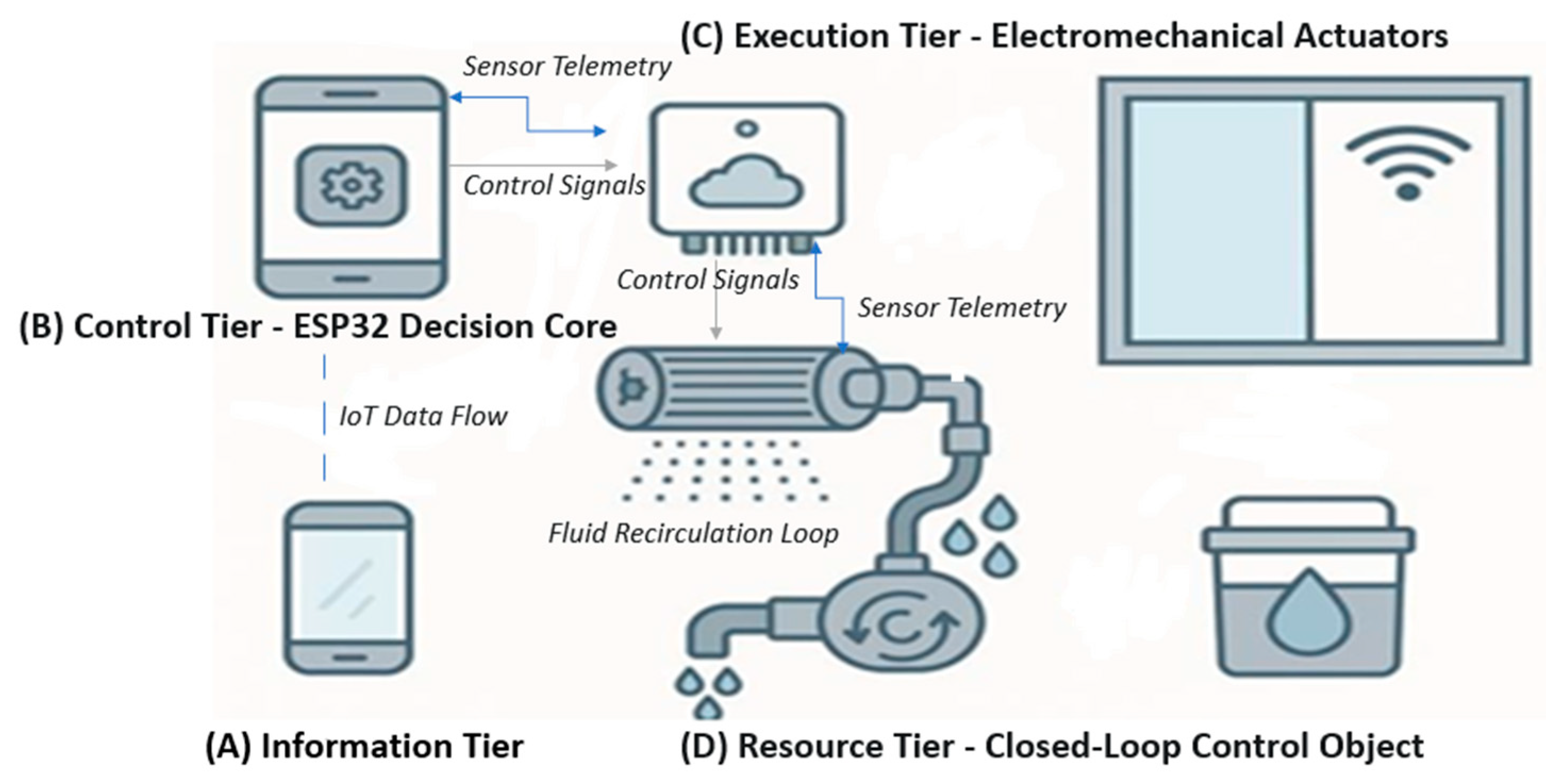
Figure 1 illustrates the integrated architecture of the AWCS, delineating the interaction between the digital control logic, electromechanical actuation, and the hydraulic circuit.
The scientific value of this work lies in its approach to accessibility and scalability, offering a deterministic model for autonomous building maintenance. By combining hardware sensing, control algorithms, and an IoT-compatible interface, the proposed mechatronic system addresses the technical and energetic constraints of modern urban residences [
17].
The operational workflow (
Figure 1) establishes a formal separation between the system’s cyber and physical layers. Commands are initiated at the Information Tier (A) and processed by the Control Tier (B). The interaction with the Execution Tier (C) and the Resource Tier (D) is illustrated through a dual-pathway approach: dashed arcs represent the digital flow (control signals and sensor telemetry), while solid arcs represent the physical fluid recirculation loop. This hierarchical classification ensures a deterministic mapping to the control architecture described in
Section 2.3.
The remainder of this article is structured as follows:
Section 2 details the mechatronic synthesis and system architecture;
Section 3 presents the experimental validation and performance results;
Section 4 discusses sustainability and limitations, followed by conclusions in
Section 5.
2. Materials and Methods
2.1. Problem Definition and User Requirements Analysis
In the context of this study, the Smart Home is conceptualized as a distributed cyber-physical ecosystem aligned with the Industrial Internet Reference Architecture (IIRA). The AWCS functions as a Functional Edge Node, where the control tier handles deterministic mechatronic logic and the information tier manages user telemetry, ensuring the system is fully integrated into the smart building’s resource-management layer [
16,
17,
18,
19].
Manual window cleaning presents significant challenges, ranging from inconvenience and time consumption to severe safety risks, particularly for large or high-rise urban residences. Tasks involving external window access in multi-story buildings often necessitate considerable physical effort and expose individuals to a tangible risk of falls. Public safety reports frequently document serious domestic accidents, especially among the elderly or those without appropriate equipment, often resulting from precarious, improvised maneuvers [
8,
20]. This inherent danger is exacerbated in high-rise structures where external cleaning may require specialized equipment or expensive professional services. Consequently, cleaning frequency diminishes, leading to reduced window transparency, impaired indoor air quality, and decreased natural light due to accumulated dust, pollen, and pollutants [
7,
8]. Furthermore, manual window cleaning is widely perceived as tedious, weather-dependent, physically demanding, and prone to leaving streaks or marks. Despite its importance for visual comfort and hygiene, this activity remains largely unautomated and poorly integrated into existing smart home ecosystems [
7,
8].
The primary research question of this study investigates how a modular mechatronic system can optimize the trade-off between cleaning efficacy and resource conservation (water and energy) while operating autonomously on vertical glass surfaces. These critical shortcomings directly informed the systematic design constraints for the Automated Window Cleaning System (AWCS):
Full Operational Autonomy: Eliminating the need for manual intervention through a deterministic control logic that manages the entire cleaning process.
Resource Circularity and Sustainability: Minimizing water, detergent, and energy consumption through closed-loop filtration and recovery processes.
Structural Adaptability: Ensuring compatibility with various window types and frame designs (both integrated and retrofit installations) via a scalable mechanical interface.
IoT Interoperability and Connectivity: Offering seamless integration with smart home platforms for remote control, scheduling, and real-time telemetry notifications [
15,
16,
21].
Fault-Tolerant Safety Architecture: Incorporating multiple sensors and intelligent logic for error detection, protective measures (e.g., limit switches, liquid level detection), and failsafe system protocols in unsafe conditions.
To evaluate the technical feasibility and operational constraints of implementing such a system, a SWOT analysis was conducted, as summarized in
Table 2. This analysis serves as a heuristic tool to bridge the gap between user needs and the mechatronic design requirements for urban residences.
This analytical framework establishes the fundamental design requirements explored in
Section 2.2, directly informing the selection of a fail-safe mechatronic architecture and deterministic control logic. By mapping the system’s strengths and environmental threats, these insights guided the choice of mechanical components and IoT-enabled electrical hardware required to achieve a robust, resource-circular, and scalable maintenance solution for smart urban residences.
2.2. Design Methodology
The design process for this automated window cleaning system followed a rigorous mechatronic synthesis methodology, emphasizing functional efficiency, resource circularity, and structural scalability. The approach combined elements from Design Thinking, product engineering, and applied functional analysis to resolve the complex interplay between mechanical stability, fluid dynamics, and autonomous control [
22].
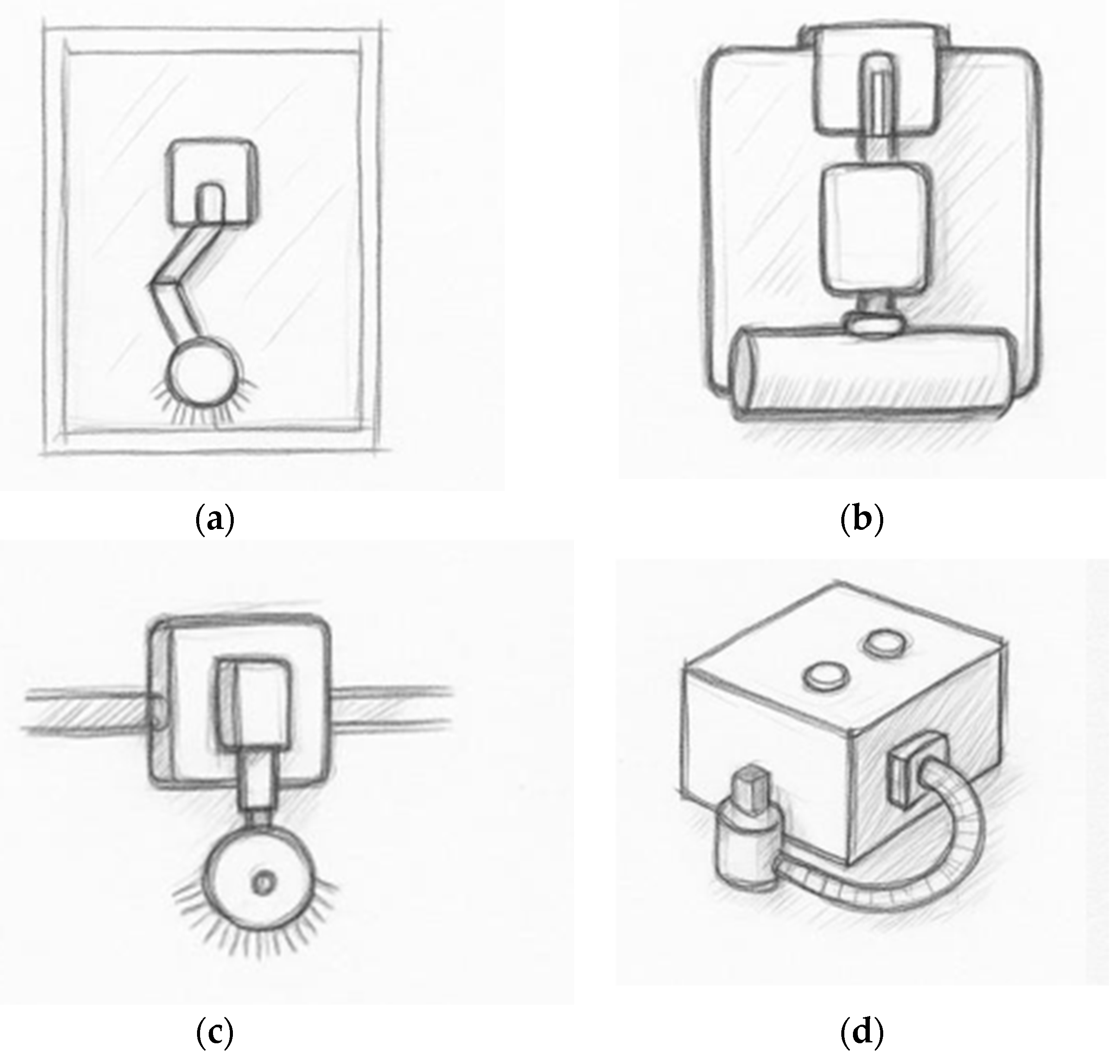
The process utilized morphological analysis to evaluate multiple system variants (
Figure 2). Preliminary CAD models were developed to quantify system geometry and simulate kinematic interactions [
23]. To prioritize fail-safe operational integrity over conventional fail-passive vacuum systems, a mechanical rail (positive retention) paradigm was selected. The chosen solution incorporates a rotating brush driven by a DC 775 motor coupled with a PLG42 planetary gearbox (reduction ratio 1:42) to achieve high torque at low angular velocities. This ensures consistent scrubbing pressure and positional accuracy via an MGN12 linear guide rail system, which provides the structural rigidity necessary to support the system’s payload.
A core scientific contribution of this design is the closed-loop fluid management system, which achieves resource circularity through synchronized operation between a peristaltic dispensing pump and a 12V vacuum recovery pump. The recovered liquid is passed through a two-stage micron-filtration unit (primary particulate mesh and secondary carbon filter) before being recirculated. This closed-loop process is governed by a deterministic mass-balance logic monitored by a capacitive liquid-level sensor, ensuring continuous solvent availability while preventing pump dry-running. This architecture allows for a significant reduction in water intensity, maintaining high cleaning efficacy with minimal environmental footprint.
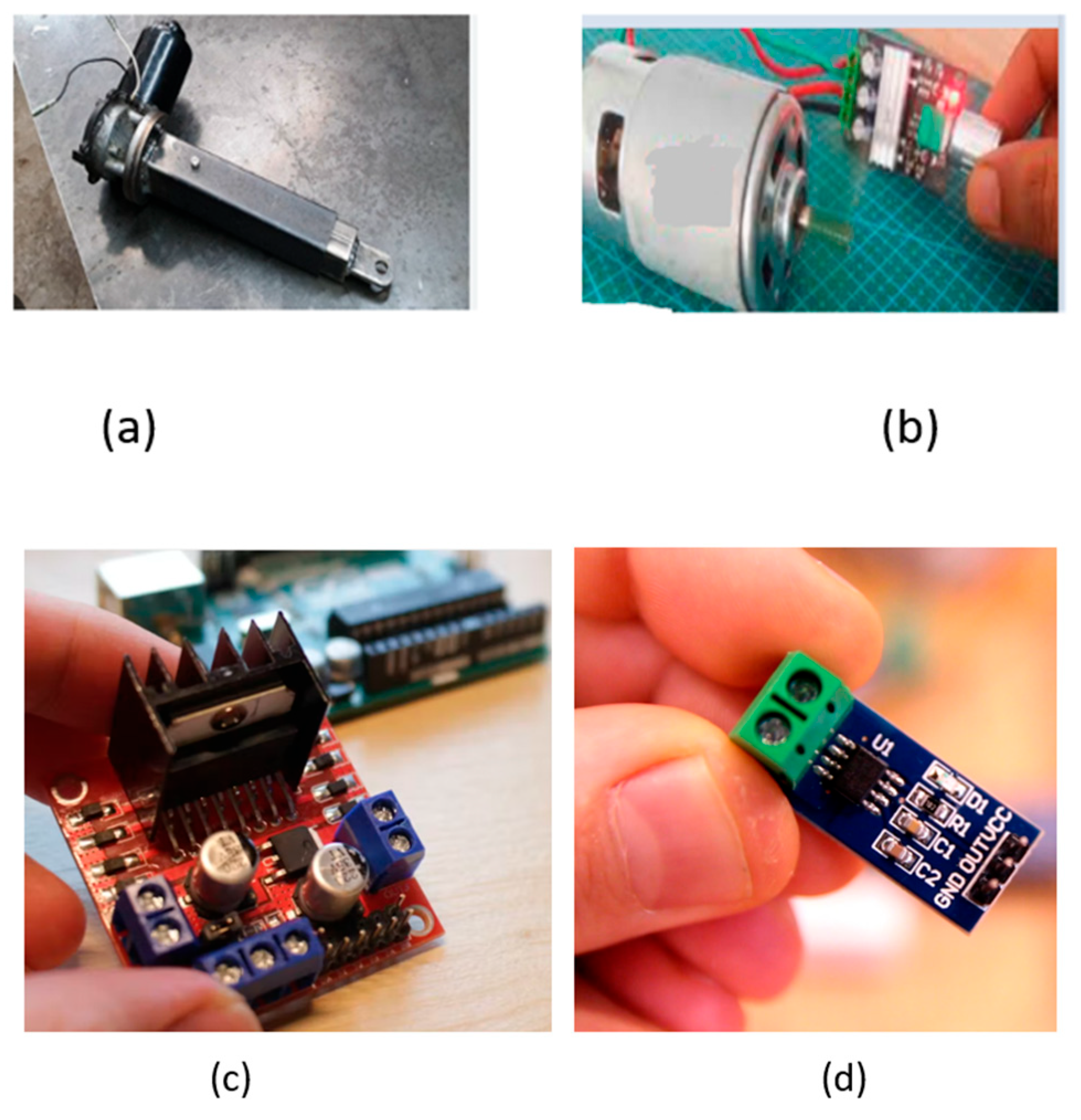
The physical implementation of the system is based on the hardware selection shown in
Figure 3. To ensure high-rise operational safety, we integrated a LINAK LA23 industrial actuator (
Figure 3a), selected for its high thrust-to-volume ratio. The scrubbing torque is generated by a DC 775 motor (
Figure 3b) coupled with a planetary gearbox to maintain 120 RPM under variable frictional loads. The control loop is closed via an ACS712 sensor (
Figure 3d), which provides the ESP32 decision core with real-time current telemetry, enabling the deterministic fault-detection protocols (S4) described in the Finite State Machine analysis.
Virtual prototyping was conducted using Fusion 360, where each component was modeled with strict consideration of mechanical tolerances and mounting compatibility. These models were assembled virtually to simulate the deterministic path planning, cabling and tubing routes, and mass-balance points for liquid recovery.
Upon finalization of the functional model, the system control logic was defined. Hardware and software components were integrated into the functional scheme, and the operational sequence—comprising motion synchronization, fluid dispensing, and vacuum aspiration—was formally specified using a deterministic state-transition model [
10,
24,
25,
26].
2.3. System Architecture
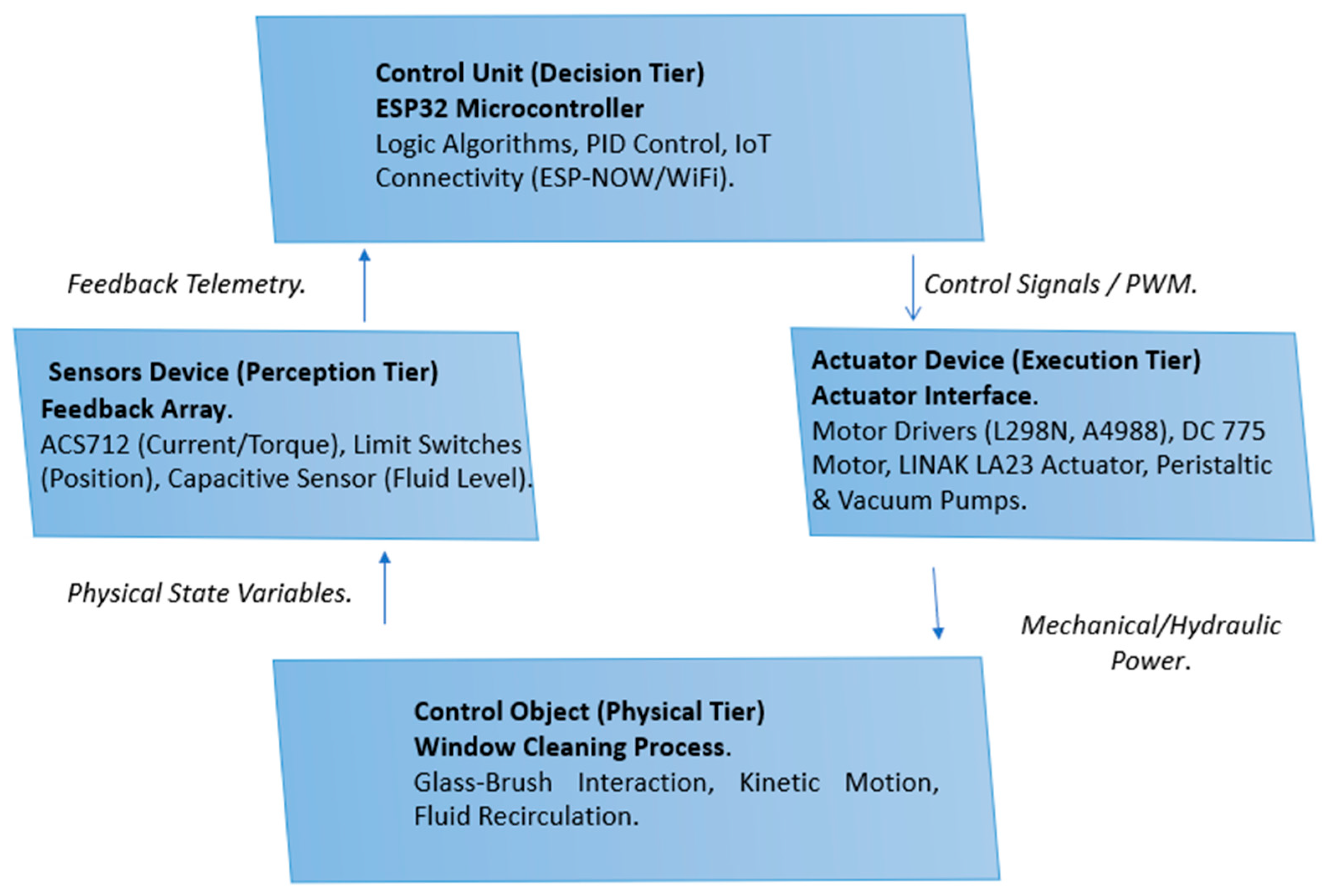
The AWCS architecture follows the hierarchical control topology shown in
Figure 4. The Control Unit (ESP32) executes the decision-making logic, sending PWM/digital commands to the Actuator Device layer (DC motors, linear actuators, and pumps). These actuators drive the Control Object, which represents the scrubbing interface and fluid dynamics on the glass surface. The loop is closed via the Sensors Device layer (current, limit, and level sensors), providing the feedback necessary for real-time adjustments and safety interrupts.
The internal architecture of the AWCS follows a hierarchical control-loop paradigm, as depicted in
Figure 4. This structure ensures operational stability by segregating the decision-making logic from the physical actuation tiers. The Control Unit (ESP32) orchestrates the process by sending PWM and digital control signals to the Actuator Device tier. These actuators (drivers, motors, and pumps) exert mechanical and hydraulic power upon the Control Object, representing the glass-brush interaction and fluid dynamics. To maintain a deterministic state, the Sensors Device layer continuously monitors physical state variables—such as motor torque, positional limits, and fluid levels—feeding this telemetry back to the microcontroller to close the autonomous control loop. This structural separation ensures that sensor telemetry is processed with minimal latency, allowing the system to maintain a constant cleaning torque while preventing mechanical over-travel or electrical overload.
The selection of the ESP32 microcontroller was driven by its dual-core Xtensa® LX6 architecture, which enables hardware-level task segregation. Core 0 is dedicated to low-latency, deterministic control loops (PID motor regulation and sensor polling), while Core 1 handles asynchronous IoT communication (ESP-NOW and WiFi). This segregation is vital to prevent network latency from compromising the real-time stability of the cleaning actuators.
The AWCS employs a modular architecture detailed in
Table 3. The components are interconnected in a deterministic topology to facilitate autonomous operation and real-time fault detection
To substantiate the effective integration and scalability of these subsystems,
Table 4 delineates the functional mapping between peripheral sensing, control logic, and electromechanical responses.
To maintain constant brush torque under varying friction conditions, a closed-loop control system was implemented using current-sensing feedback. Since motor torque is proportional to the current consumed, an ACS712-05B current sensor was utilized to provide real-time feedback to the ESP32 microcontroller. The control signal (
) calculated using a standard PID algorithm:
where the error e represents the deviation from the target current. The gain parameters (K
p = 1.45, K
i = 0.62, K
d = 0.12) were tuned to prevent motor stalling during intensive scrubbing while ensuring smooth transitions across surface irregularities. The control loop operates at a sampling frequency of 100 Hz to ensure real-time response.
2.3.1. Control Logic and Deterministic State Transition
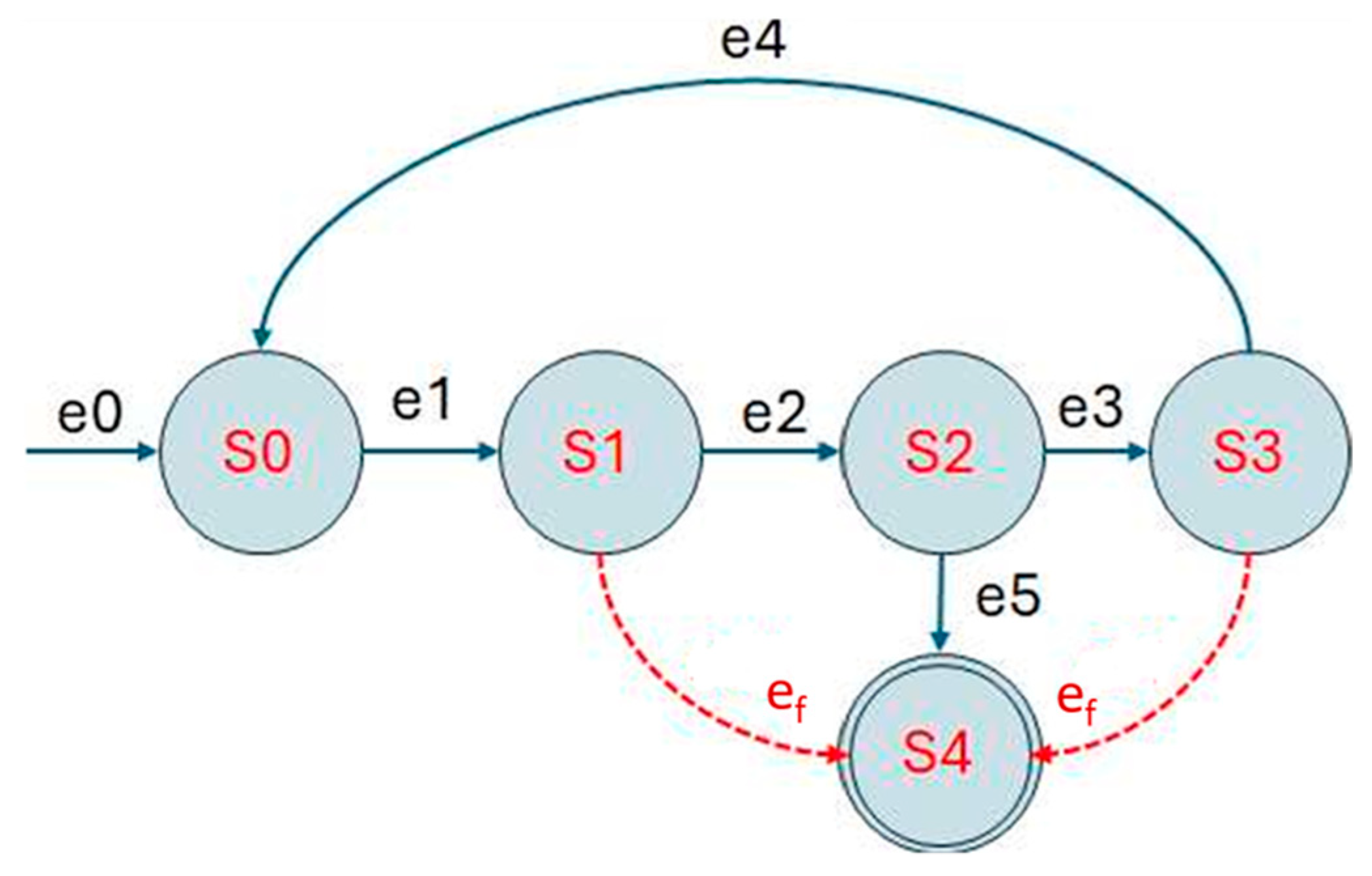
To ensure high operational reliability and deterministic behavior, the AWCS control algorithm is implemented as a formal event-driven Finite State Machine (FSM). As illustrated in
Figure 5, the logic orchestrates the sequence of operations through five primary operational states, where each transition is governed by specific sensor feedback signals (e0–e4) or high-priority asynchronous fault interrupts (e
f):
S0 (Homing/Initialization): Upon power-up or command reception, the system executes a calibration routine. It utilizes limit switch feedback to establish the global coordinate system, verify actuator readiness, and ensure the cleaning carriage is at the designated starting reference.
S1 (Wetting): The peristaltic pump is activated to dispense a controlled volume of cleaning solvent. The duration of this state is governed by a volumetric timer or a flow interrupt signal, ensuring optimal surface preparation without resource waste.
S2 (Scrubbing): The DC 775 motor is activated under PID-based PWM control. In this state, the system continuously monitors the ACS712 current sensor to maintain constant cleaning torque. This allows the robot to compensate for variable friction loads while detecting potential mechanical obstructions.
S3 (Vacuuming/Recovery): The 12V vacuum pump is engaged to recover the contaminated fluid from the glass surface. This state is critical for maintaining resource circularity, as the recovered liquid is directed through the two-stage filtration unit for recirculation.
S4 (Emergency/Fault): A high-priority failsafe state accessible from any phase of the cycle. It is triggered if a safety threshold is exceeded, such as a current spike (motor stall), a watchdog timer expiration, or liquid depletion detected by the capacitive sensors.
The navigation between these states is managed by a series of transition events, as defined in the system’s logic layer:
e0 (Start): The initiation signal received via the IoT interface (ESP-NOW), moving the system from idle to initialization (S0).
e1 (Home Confirmed): Triggered when limit switches confirm the reference position, transitioning the logic to the wetting phase (S1).
e2 (Fluid Ready): Occurs when the predefined wetting threshold is met, signaling the start of the scrubbing sequence (S2).
e3 (Path Complete): Triggered when the carriage reaches the end-of-track boundary, initiating the vacuuming/recovery phase (S3).
e4 (Cycle Success): Confirms that the fluid recovery and path traversal are finished, returning the system to S0 or an idle state.
e5 (Mechanical Fault): A deterministic transition from S2 to S4 if the current sensor detects an over-torque condition.
e
f (Asynchronous Fault): Represented by the red dashed arcs in
Figure 5, these are high-priority interrupts (e.g., low-fluid detection or communication loss) that force an immediate transition to the safety state S4 from any active operational phase.
This FSM architecture ensures that the system only progresses if the Perception Layer confirms the successful completion of the previous task. By segregating nominal operations from fault-handling pathways (ef), the AWCS achieves a high level of functional safety, mitigating risks of mechanical failure or resource depletion in autonomous environments.
The diagram illustrates the deterministic transitions between nominal operational states (S0–S3) and the high-priority asynchronous fault transitions (ef) to the Emergency/Fault state (S4), triggered by the perception layer in case of operational anomalies.
The control algorithm prioritizes operational safety: if the watchdog timer or perception-layer sensors detect anomalies, the system immediately executes a transition to the Emergency/Fault state (S4).
Table 5 outlines the primary software modules responsible for orchestrating these tasks and managing deterministic state transitions.
2.3.2. Formal Modeling via Petri Nets
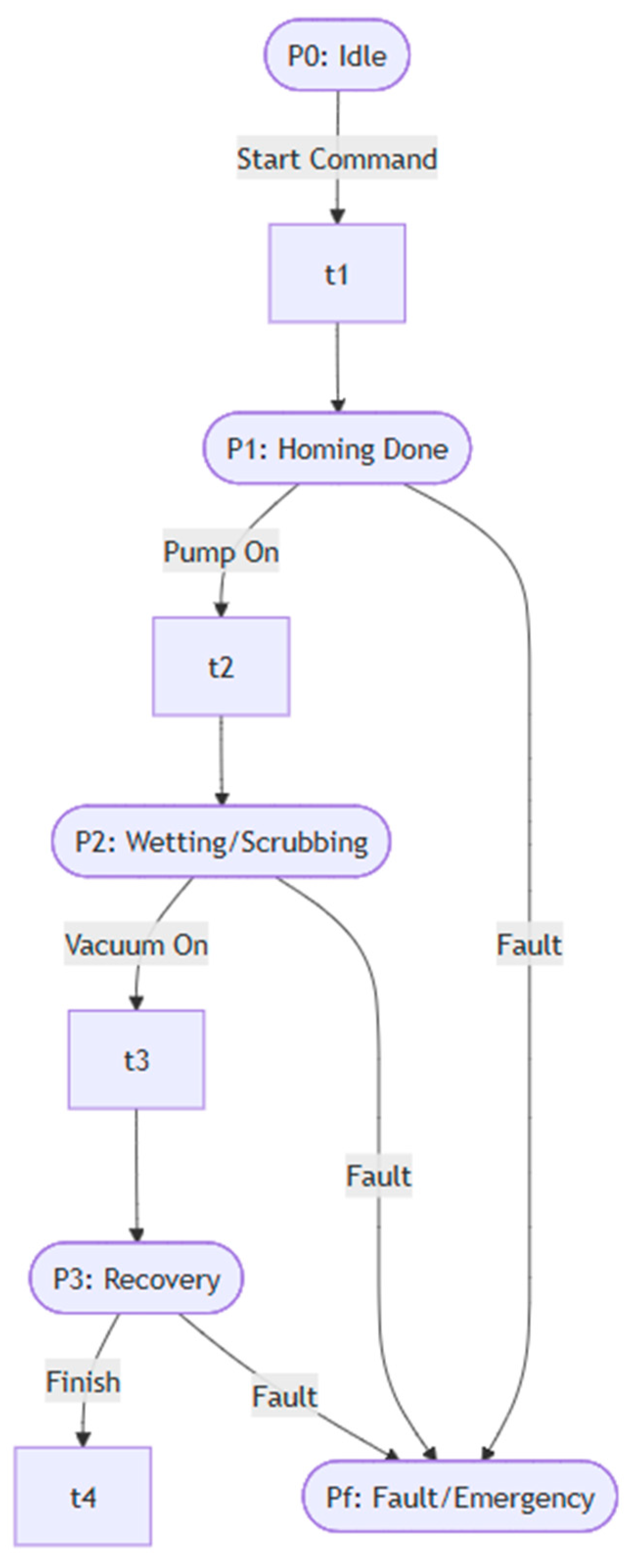
To substantiate the deterministic behavior of the AWCS, a Petri Net (PN) model was developed to formally map the discrete-event control flow (
Figure 6). Unlike a simple state-transition representation, the PN model provides mathematical guarantees of liveness and deadlock-free operation by enforcing token availability conditions prior to the firing of each transition (T
x).
In this model, P0 represents the initial Idle/Home state and contains the starting token. Transition T0 (Start Command) transfers the token to P1 (Initialization), where the homing procedure is executed. Upon successful reference establishment via T1, the system enters the active cleaning phase P2 (Wetting and Scrubbing). The process then advances to P3 (Vacuuming/Recovery) and subsequently returns to the home state through T4, completing the nominal operational cycle.
A critical architectural feature of the model is the inclusion of the Pfault sink place, which is connected to all active operational places via asynchronous fault transitions (Tf). This structure ensures that any anomaly detected by the perception layer (e.g., motor stall, fluid depletion, or watchdog timeout) immediately diverts the execution token to a safe termination state. Consequently, the PN model formally validates the fail-safe operational integrity of the AWCS under concurrent electromechanical and hydraulic processes.
2.4. System Variants and Deployment
The system’s architecture allows for two main implementation variants: the Structurally Integrated Variant and the Retrofit/Attachable Variant.
Table 6 provides a comparative analysis of these two variants.
The movement mechanism relies on a synchronized combination of a high-thrust linear actuator and an MGN12 linear slide system, ensuring precise and controlled brush movement across both vertical and horizontal planes. For the Retrofit Variant, structural adaptability is achieved through a Scalable Telescopic Spine with an adjustable range of 1000 mm to 1600 mm, paired with a universal clamping interface compatible with standard residential frame thicknesses between 40 mm and 80 mm.
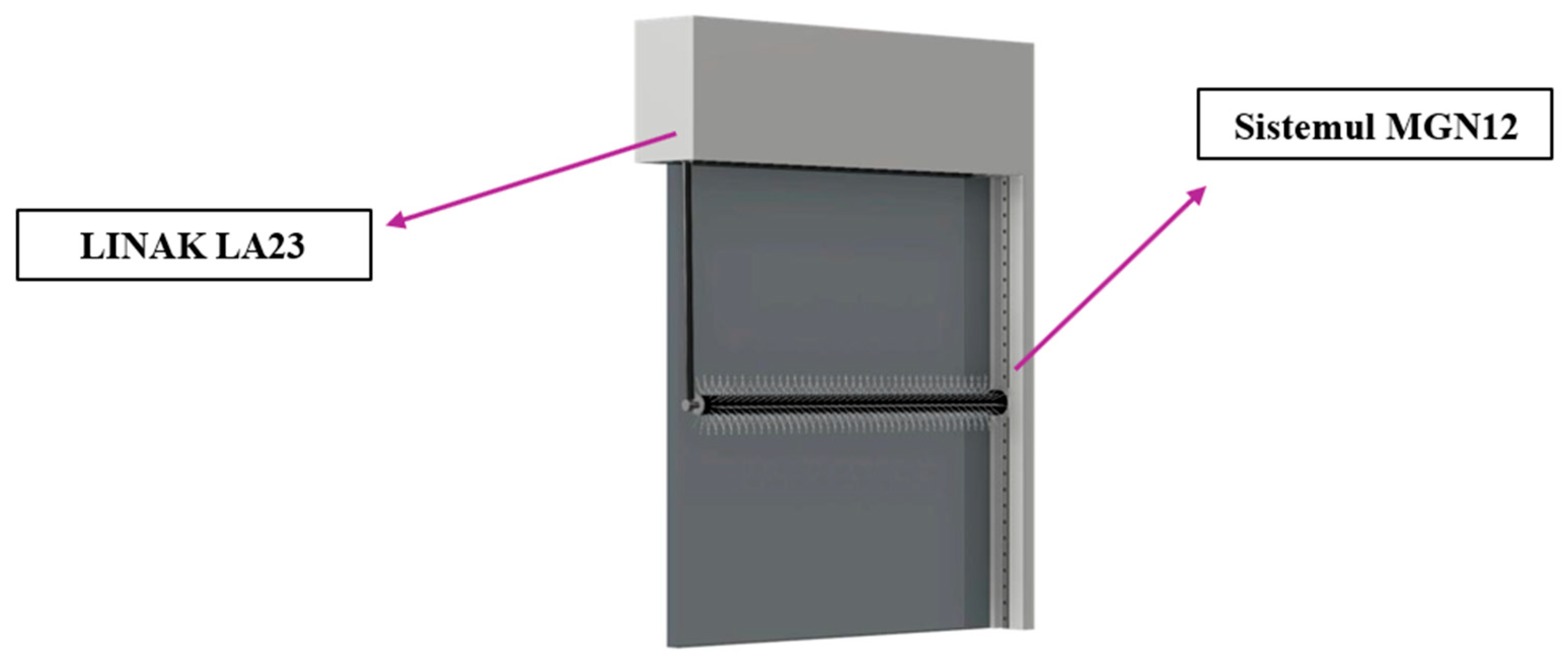
The vertical displacement is handled by the linear actuator (modeled on the LINAK LA23 industrial standard for high reliability,
Figure 7), which is responsible for positioning the scrubbing unit during the S0 (Homing/Initialization) state. This is paired with the MGN12 linear guide system to provide the lateral stability and structural rigidity necessary to maintain constant contact pressure during the S2 (Scrubbing) phase. This mechanical rail paradigm ensures positive retention on the facade, providing a fail-safe alternative to vacuum-based adhesion systems, which are inherently fail-passive and prone to detachment during power interruptions or seal failures.
Non-Invasive Retrofit Attachment Mechanism
A dedicated non-invasive clamping interface was engineered using a Scalable Telescopic Spine (adjustable 1000–1600 mm) and a Viscoelastic Clamping System (PET-G with EPDM rubber pads, (frictional coefficient
). Stability was validated through static equilibrium analysis. With a load (F
g) of 24.5 N and an experimental pull-out limit (F
limit) of 150 N, the safety factor (S) is:
This ensures operational safety under the dynamic torque fluctuations generated by the scrubbing motor.
2.5. Validation Methodology: Optical Transmission Test
To quantify the cleaning efficiency objectively, an optical transmission setup was established. The setup consisted of a stabilized LED light source (1000 mL, 6500 K color temperature) positioned at a fixed distance of 150 mm behind the glass test panel. A digital luxmeter (Model: UNI-T UT383, accuracy ±4%) was mounted coaxially on the opposite side to measure the transmitted luminous flux.
To ensure statistical significance and account for non-uniform dirt distribution, measurements were taken at five distinct spatial points on the glass surface and averaged. Transmission efficiency (
) was defined as:
where E
clean is the averaged lux value after cleaning and E
ref is the reference transmission of the pristine glass. A standardized pollutant mixture (20 g/m
2 dust and pollen) was used to simulate urban soiling conditions.
Measurements were taken at five distinct spatial points and averaged to account for non-uniform dirt distribution.
3. Results
3.1. System Implementation
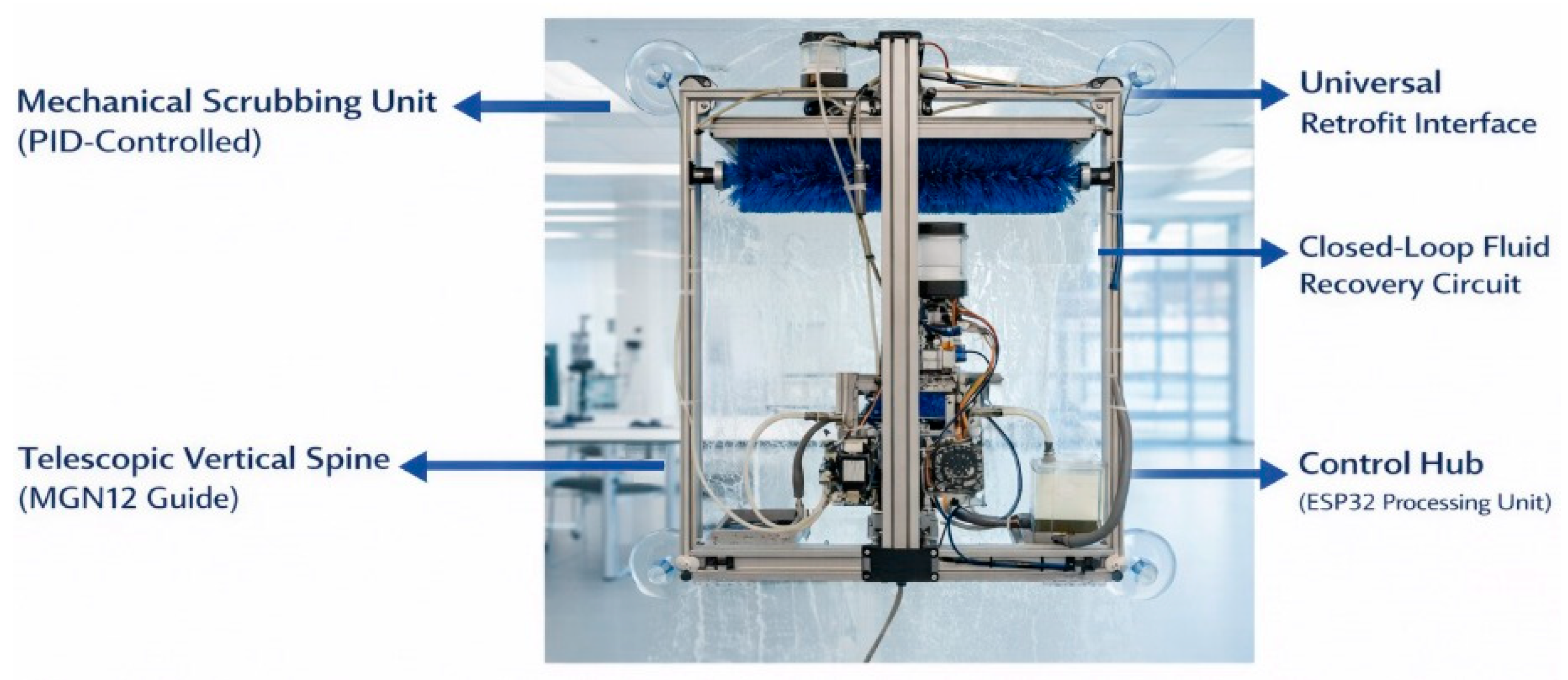
The transition from theoretical design to a functional mechatronic prototype is documented in
Figure 8, which presents the AWCS during an active cleaning cycle on an experimental glass surface. This image provides empirical evidence of the system’s physical integration and operational adaptability [
10,
14,
27,
28].
Beyond a mere visual representation, the prototype demonstrates the successful synchronization between the closed-loop fluid management system and the autonomous control unit. The presence of active cleaning foam validates the efficacy of the peristaltic dispensing system, while the structural stability of the modular aluminum T-slot frame substantiates the scalability claims [
29]. The configuration confirms that the system can be securely mounted (Retrofit Variant) to standard facades using its non-invasive interface, ensuring that the ESP32-based control logic maintains operational equilibrium under real-world friction loads.
3.2. Experimental Validation Scenarios and FSM Performance
The operational reliability, deterministic behavior, and safety mechanisms of the AWCS were validated through five controlled experimental scenarios. These scenarios were designed to evaluate the correctness of the Finite State Machine (FSM) transitions under both nominal operating conditions and fault-inducing events. Each scenario is mapped to a specific FSM state and transition event (e
x), as summarized in
Table 7.
System activation via the mobile interface confirmed a low-latency response (<1 s) using the ESP-NOW protocol [
15,
16]. Upon receiving the start command (e0), the system successfully entered the S0 (Homing/Initialization) state, executing actuator calibration and limit-switch referencing. This validated the correct initialization of the perception layer and the establishment of a consistent global coordinate frame.
This scenario evaluated the deterministic transitions between S1 (Wetting) and S2 (Scrubbing). The transition e2 was triggered upon reaching the volumetric fluid threshold. The peristaltic pump and the DC 775 scrubbing motor operated in a synchronized manner, governed by the PID-based current control loop. Results confirmed stable torque regulation, demonstrating the effectiveness of the closed-loop architecture [
10,
14].
Following the scrubbing phase, the system transitioned via e3 to S3 (Vacuuming/Recovery). The 12V vacuum pump successfully recovered the waste liquid, and flow measurements confirmed that the closed-loop resource management logic maintained mass balance within the cleaning module, achieving a recovery efficiency exceeding 90% [
14,
15].
To assess mechanical safety, an end-of-track boundary breach was artificially induced. Activation of the limit switches generated an asynchronous interrupt (ef), forcing an immediate transition to S4 (Emergency/Fault) within <50 ms [
10,
24]. All actuators were halted instantaneously, confirming the effectiveness of the safety interlock and fault-handling logic.
Fluid depletion was simulated by emptying the reservoir. Detection via the capacitive level sensor inhibited further operation and triggered an ef transition to S4 (Emergency/Fault). The system halted the cycle and issued a real-time IoT notification, validating the robustness of the failsafe strategy in preventing pump dry-running [
10,
15].
3.3. Iterative System Optimization and Technical Refinements
During the experimental validation process, several technical challenges inherent to the integrated mechatronic system were identified. These challenges were addressed through an iterative optimization process guided by systematic root cause analysis [
10,
14]. This approach not only improved the deterministic reliability of the control loops but also enhanced overall system stability and safety. The results are summarized in
Table 8.
Initial tests revealed instances of scrubbing brush stalling when traversing heavily contaminated surfaces. Root cause analysis indicated that the system’s effective output impedance did not adequately match the required load torque. Integrating a PLG42 planetary gearbox provided the necessary torque amplification, enabling the PID controller to maintain stable current regulation during the Scrubbing state (S2) despite variable frictional loads.
Minor fluid leakage compromised fluid mass-balance accuracy, a key performance metric for the closed-loop recovery logic. Upgrading to industrial-grade vacuum-rated fittings with EPDM gaskets resulted in fluid recovery efficiency exceeding 90% and restored the integrity of the closed-loop hydraulic architecture.
The DC 775 motor’s high-load transients produced inductive back-electromotive force, which led to voltage instability and asynchronous resets of the ESP32 processing unit. By implementing a combination of bulk decoupling capacitors, localized ceramic filtering, and partial galvanic isolation, the supply network was stabilized, preserving real-time execution of the S0–S4 control logic.
Initial Bluetooth-based command links exhibited asynchronous jitter, affecting the responsiveness of safety logic. Transitioning to the ESP-NOW WiFi protocol reduced round-trip latency below 200 ms and provided deterministic communication performance essential for reliable ef fault interrupt handling and transitions to the S4 (Emergency/Fault) state.
3.4. Quantitative Performance Evaluation and Statistical Analysis
To quantitatively assess the operational robustness and repeatability of the proposed AWCS, a total of 30 independent cleaning cycles (N = 30) were conducted on a standardized 1 m2 vertical glass test rig under controlled laboratory conditions. The test surface was uniformly contaminated with an artificial urban soiling mixture (dust and pollen, 20 g/m2). All reported metrics are expressed as mean values ± standard deviation, ensuring statistical transparency and reproducibility.
The average cleaning duration was measured at 120 ± 5 s·m
−2, indicating sf cycle-to-cycle repeatability. Cleaning effectiveness was further quantified through the optical transmission-based efficiency metric (η), as defined in
Section 2.5. The system achieved a mean optical efficiency of 96.9 ± 1.4%, demonstrating effective particulate removal without inducing streaking or residual contamination. The low variance confirms the consistency of the PID-regulated scrubbing process across repeated trials.
The mean water consumption per cycle was 145 ± 10 mL, influenced primarily by evaporation losses and the two-stage filtration performance of the recovery subsystem. When benchmarked against conventional manual cleaning methods (3–5 L per m2), the AWCS achieves a water usage reduction exceeding 95%. Electrical energy consumption was recorded at 5 ± 1 Wh per cycle, confirming the low operational cost and suitability for extended autonomous operation.
Limit switch activation reliability reached 99.6% over the full experimental campaign, with missed detections attributed to mechanical contact tolerances rather than logical faults. Communication performance was evaluated by transmitting 500 command packets (N = 500). While the initial Bluetooth interface exhibited a packet success rate of approximately 92% due to urban electromagnetic interference, migration to the ESP-NOW WiFi protocol increased the command success rate to >99.5%, with a mean round-trip latency below 200 ms. This improvement is critical for the timely execution of FSM fault transitions.
This improvement is critical for the timely execution of FSM fault transitions (see
Table 9).
Optical performance was assessed using the spatial averaging methodology described in
Section 2.5. Measurements were conducted over 10 repeated trials, sampling five points per test surface, to ensure statistical reliability. The pristine glass reference luminance (E
ref) was recorded at 850 ± 12 lux.
Following contamination with the standardized urban soiling mixture, transmission decreased to 460 ± 15 lux (E
soil), reflecting a significant increase in opacity. After a standard cleaning cycle (~120 s), the post-cleaning transmission (E
clean) reached 838 ± 8 lux. Cleaning efficiency (η) was calculated as:
The mean cleaning efficiency across trials was 96.9 ± 1.4%, confirming that the PID-controlled mechanical scrubbing effectively removes urban particulate matter without leaving streaks or residues, demonstrating consistent multi-point performance.
3.5. Sustainability and Preliminary Life Cycle Assessment (LCA)
A preliminary LCA evaluated the environmental impact of the AWCS versus conventional manual cleaning over a five-year operational horizon, assuming a standard 20 m2 residential glass surface cleaned monthly.
Water Conservation: Manual cleaning typically consumes 3–5 L/m2, whereas the AWCS operates at <150 mL/m2 due to its closed-loop filtration, yielding an estimated annual saving of 600–800 L per household.
Energy and Carbon Footprint: The system consumes 5 ± 1 Wh per cleaning cycle, resulting in a negligible carbon footprint, especially when integrated into renewable-energy-powered smart homes.
Material Circularity: Modular components are primarily recyclable aluminum and biodegradable PET-G/PLA, enabling replacement of high-wear parts (brushes, filters) and supporting a circular maintenance model with an expected lifespan of ~5 years, minimizing electronic waste.
3.6. Economic Feasibility and Bill of Materials (BOM)
A detailed BOM was compiled to assess residential deployment feasibility and cost-efficiency.
Table 10 summarizes prototype costs, emphasizing a balance between high-performance components and affordability.
4. Discussion
4.1. Interpretation of Results and Scientific Significance
The experimental results substantiate the initial research hypothesis regarding the feasibility of a closed-loop mechatronic architecture for autonomous vertical surface maintenance. These findings address critical gaps in current cleaning technologies by offering a deterministic alternative to the stochastic behavior of vacuum-adhesion systems.
Operational Efficiency: The measured cleaning time of approximately 2 min per m2, together with an optical efficiency of 96.9% ± 1.4%, demonstrates effective synchronization between the PID-controlled scrubbing and the fluid recovery cycle. This confirms that professional-grade cleaning can be achieved autonomously, without human intervention at height.
Resource Circularity: A major scientific contribution of this work is the reduction in water consumption to below 150 mL/m2, corresponding to a >95% reduction compared to conventional manual cleaning. The successful implementation of the closed-loop recovery system validates that resource circularity can be realized in domestic robotics, supporting sustainability objectives in smart building environments.
Integration and Scalability: The reliable operation of the perception layer (limit switches, ACS712 current sensors) validates the hierarchical control topology described in
Section 2.3. Transitioning to the ESP-NOW protocol effectively resolved latency jitter observed in preliminary tests, ensuring that the S4 (Fault) state is triggered promptly to prevent mechanical failure. Additionally, the telescopic vertical spine confirms the system’s mechanical scalability, demonstrating adaptability to various window sizes without modification of the control logic.
Technical Resilience: Addressing initial challenges such as torque instability and back-EMF induced resets demonstrates the robustness of the mechatronic design. By implementing galvanic isolation between the logic and actuation domains, along with planetary gear torque amplification, the AWCS maintains operational stability even under high-friction conditions typical of urban soiling.
4.2. Benchmarking and Comparative Analysis of Technological Paradigms
The AWCS embodies a significant architectural shift compared to predominant market solutions, such as HOBOT 2S and Ecovacs Winbot. This comparative evaluation highlights fundamental differences in mechanical stability, fluid dynamics, and system integration:
Adhesion vs. Positive Retention: Commercial robots predominantly rely on vacuum-based adhesion, a method inherently susceptible to stochastic failure due to surface irregularities, seal degradation, or power interruptions. In contrast, the AWCS employs a mechanical rail guidance system, providing positive retention on the facade. This ensures structural security independently of suction performance, transforming the design from a fail-passive model into a fail-safe system. Furthermore, this mechanical framework provides the necessary payload capacity to support the closed-loop hydraulic and filtration hardware, which vacuum-based units cannot safely sustain.
Open-Loop vs. Closed-Loop Fluid Management: A fundamental distinction lies in fluid handling. Consumer units typically implement open-loop misting systems, which lack the capacity for heavy debris removal and contribute to fluid waste. Conversely, the AWCS integrates a closed-loop recovery system. By circulating filtered liquid and recovering it through vacuum aspiration, the system maintains a fluid mass-balance while achieving professional-grade scrubbing with measured consumption of approximately 145 mL/m2. This resource circularity is largely absent in existing commercial devices.
Isolated Appliance vs. Integrated IoT Node: Most existing systems operate as isolated appliances with minimal external connectivity. The AWCS, structured around an ESP32-based hierarchical control topology, functions as a deterministic node within the smart home ecosystem. Real-time telemetry over the ESP-NOW protocol enables synchronized maintenance scheduling and remote safety monitoring, ensuring deterministic control and system reliability.
Structural Modularity and Adaptability: Unlike one-size-fits-all commercial robots, the AWCS dual-variant design (integrated and retrofit) demonstrates scalability and adaptability. The adjustable telescopic spine and universal clamping interface (detailed in
Section 2.4) allow safe operation across window heights of 1000–1600 mm and frame thicknesses of 40–80 mm, addressing the limitations of existing products in accommodating varying frame geometries and surface types.
4.3. Contributions to Sustainability and Safety in Smart Urban Environments
The development of the AWCS offers a scalable approach to addressing operational safety and resource efficiency in contemporary high-rise residential environments.
Mitigation of High-Altitude Risk: By substituting manual high-rise cleaning with a deterministic robotic framework, the AWCS significantly reduces the primary source of domestic fall-related injuries [
8]. Unlike vacuum-based solutions, the mechanical rail guidance ensures fail-safe retention, effectively prioritizing occupant safety and minimizing liability. This approach is particularly relevant for vulnerable populations, such as the elderly or individuals with reduced mobility, supporting inclusive smart living.
Resource Circularity and Environmental Impact: From a sustainability standpoint, the AWCS establishes a resource circularity model for domestic cleaning [
12,
14,
29]. Integration of a two-stage filtration system coupled with vacuum-assisted recovery enables recirculation of detergents and water, reducing environmental impact. As demonstrated in the preliminary life cycle assessment (
Section 3.5), the system operates at <150 mL/m
2, a substantial decrease compared to 3–5 L required by traditional manual methods, highlighting the reduction in water intensity.
Energy Efficiency and Building Performance: The AWCS exhibits low electrical consumption (5 ± 1 Wh per cycle), ensuring a negligible carbon footprint. Consistent maintenance of window transparency supports natural light harvesting, potentially reducing the building’s lighting energy demand. This aligns the system with the Smart Readiness Indicator (SRI) framework, reinforcing its contribution to resource-efficient smart city strategies [
2,
22,
30].
4.4. Functional Safety Analysis and Deterministic Risk Mitigation
Manual window cleaning is classified as a high-risk activity in both industrial and domestic contexts. OSHA data report 88 severe accidents in the professional sector between 2004 and 2019, predominantly due to falls from heights [
8]. Wall-climbing robotics studies corroborate that human intervention on high or difficult-to-access surfaces remains a primary source of severe injuries [
3].
The AWCS addresses these hazards by removing the operator from the danger zone and replacing stochastic adhesion methods with a deterministic mechanical framework. Functional safety is ensured through two complementary layers:
Layer 1: Mechanical Stability and Positive Retention
Unlike vacuum-based robots, which are prone to catastrophic detachment during power loss or seal failure, the AWCS employs a positive retention strategy. The MGN12 rail, combined with the high-thrust linear actuator, anchors the cleaning carriage securely to the window frame. As quantified in Section Non-Invasive Retrofit Attachment Mechanism, a safety factor S ≈ 6.12 provides a robust buffer against dynamic loads, wind, and operational vibrations.
Layer 2: Logic-Driven Failsafe Protocols (FSM S4 State)
The control architecture integrates multi-sensor feedback to trigger immediate transitions to the S4 (Emergency/Fault) state if operational thresholds are exceeded:
Spatial Boundary Detection: High-precision limit switches act as deterministic interrupts to prevent mechanical over-travel and structural interference.
Torque and Stall Protection (ACS712): The ESP32 monitors motor current to detect torque spikes caused by obstacles or brush stalls. An asynchronous safety interrupt halts motion within <50 ms.
Protocol Latency Monitoring (Watchdog Timer): Communication failures are mitigated by monitoring the IoT heartbeat. Latency exceeding 200 ms triggers a safe-stop mode.
Dry-Run Prevention: Capacitive level sensors inhibit the hydraulic circuit under low-fluid conditions, protecting the peristaltic pump from thermal and electrical hazards.
By combining these hardware and software safeguards, the AWCS achieves a High-Reliability (Hi-Rel) profile, ensuring autonomous maintenance is performed with a significantly reduced risk compared to manual or vacuum-based systems.
4.5. Critical Analysis of Limitations
Despite the validated performance of the AWCS prototype, several limitations inherent to the current mechatronic and experimental design remain to be addressed:
Environmental Robustness and Stochastic Factors: The current experimental validation was conducted under controlled laboratory conditions. The system has yet to be evaluated against stochastic environmental variables, such as high-velocity wind gusts, extreme thermal gradients (potentially affecting PET-G structural integrity), or heavy precipitation. These factors may introduce noise into the perception layer or impact IoT signal integrity.
Moisture-Induced Frictional Variance: Initial tests revealed minor reductions in frictional coupling on highly saturated glass surfaces. Although the existing safety factor (S ≈ 6.12) accommodates typical fluctuations, extreme wet conditions could require real-time adjustment of clamping pressure or higher-durometer viscoelastic pads to maintain mechanical equilibrium.
Filtration Saturation and Recovery Kinetics: The two-stage filtration system is optimized for moderate urban soiling. Under heavy particulate accumulation (e.g., construction dust), vacuum pump recovery rates may degrade after 10–15 cycles. Addressing this would require either more frequent maintenance or the development of a self-cleaning filtration module for large-scale or commercial applications.
Energy Demand and Optimization: While the current energy consumption is low (5 ± 1 Wh/cycle), the system relies on an external power supply. Future iterations could explore integrated transparent photovoltaics or other energy-harvesting strategies to approach energy neutrality, especially for the integrated window variant.
IoT Interoperability and Protocol Standardization: The mobile application used in this study serves as a functional prototype. Broader adoption requires transitioning to standardized interoperability protocols (e.g., Matter, KNX) to enable seamless integration with centralized Building Management Systems (BMS).
Geometric and Surface Constraints: The design is optimized for planar glass surfaces with standard frames. Application to frameless or curved facades remains limited. Addressing these complex geometries would necessitate alternative positive-retention mechanisms or surface-independent locomotion strategies.
4.6. Future Research Directions
Building upon the validated mechatronic synthesis and the closed-loop hydraulic principles established in this study, future research will focus on evolving the AWCS into a fully autonomous, self-sustaining component of the smart city ecosystem. The following research trajectories have been identified:
Long-term Reliability and Stochastic Environmental Modeling: Extended longitudinal studies (6–12 months) will assess the durability of the mechanical guidance system under real-world meteorological stressors. Research will investigate degradation rates of viscoelastic clamping modules when exposed to UV radiation, extreme thermal cycles, and urban pollutants, enabling the development of predictive maintenance models for autonomous facades.
Cognitive Autonomy and Autonomous Quality Monitoring: Integration of vision-based closed-loop control is a critical frontier. While the current prototype utilizes external optical validation, future iterations will leverage the existing ACS712 current sensor as a proxy for real-time surface assessment. By interpreting motor torque fluctuations as indicators of soil density through frictional variance, the system will enable “intelligent scrubbing,” where the ESP32 dynamically adjusts rotational speed or dwell time. Furthermore, Edge-AI camera modules will allow the system to autonomously detect dirt opacity gradients and perform post-cleaning visual inspections, providing a fully autonomous metric for cleaning efficacy.
Energy Neutrality via Building-Integrated Photovoltaics (BIPV): Future iterations will explore the integration of transparent photovoltaic cells and high-density energy storage to enable off-grid operation. This approach aims to transform the AWCS into an energy-neutral platform, harvesting solar energy directly from the maintained glass surfaces.
Scalable Self-Cleaning Filtration Architectures: To overcome filter saturation challenges, research will focus on multi-stage, self-cleaning hydraulic circuits, including centrifugal or back-flush mechanisms capable of handling high particulate loads in industrial or highly polluted environments, extending operational duty cycles.
IoT Interoperability and Standardized Protocol Integration: The software architecture will be expanded to support universal smart home standards (e.g., Matter, KNX). This will allow AWCS units to operate as coordinated nodes within Building Management Systems (BMS), enabling synchronized cleaning schedules across large-scale facades based on real-time environmental telemetry.
Through these advancements, the AWCS aims to establish a new benchmark for resource-efficient, safe, and autonomous building maintenance, contributing to the evolution of intelligent, sustainable urban infrastructures.
5. Conclusions
This research provides a deterministic solution to the increasing demand for autonomous and sustainable building maintenance through the development of a novel Automated Window Cleaning System (AWCS). By transitioning from stochastic vacuum-adhesion methods to a mechanically guided, closed-loop mechatronic architecture, this study demonstrates that residential maintenance can achieve high efficiency while operating within strict resource constraints.
From a scientific perspective, the experimental validation of the AWCS prototype substantiates three fundamental contributions to the field of service robotics and smart urban living:
Resource Circularity Paradigms: The implementation of a synchronized filtration and recovery circuit proves that maintenance robotics can achieve resource circularity, reducing water intensity by over 95% compared to manual benchmarks. This establishes a new standard for eco-design in domestic appliances, prioritizing closed-loop cycles over single-pass consumption.
Deterministic Safety and Efficiency: The results indicate that a positive mechanical retention framework offers superior stability and energy efficiency (5 ± 1 Wh per cycle) compared to vacuum-based alternatives. This fail-safe architecture eliminates the risk of catastrophic detachment, providing a robust solution for high-rise environments where safety and reliability are paramount.
Modular Scalability for Urban Retrofitting: The dual-variant design (integrated vs. retrofit) validates that automation can be successfully overlayed onto existing residential infrastructure via a non-invasive telescopic interface. With a calculated safety factor of S ≈ 6.12, the system provides a scalable model for transforming conventional buildings into smart, self-maintaining structures.
In terms of operational performance, the system achieved a consistent cleaning efficiency of ∼2 min/m2 with a measured optical efficacy of 96.9% ± 1.4%. The reliable fusion of the perception layer (current monitoring, limit switches, and fluid detection) ensures robust performance and deterministic fault recovery in semi-outdoor conditions.
While the current work validates the core mechatronic principles, future research must address the challenges of stochastic environmental factors and filter saturation kinetics. The next phase of this research will shift toward cognitive autonomy, integrating Edge-AI and computer vision for intelligent dirt detection and path optimization. Furthermore, the exploration of building-integrated photovoltaics could render the AWCS energy-neutral, fully closing the resource loop.
Ultimately, this work advances the state of the art by shifting the focus from simple automated cleaning to integrated, resource-aware building maintenance, offering a replicable and sustainable model for the future of autonomous urban living.






 ,
,