Article

Analysis of the Influence of the Tooth Root Fillet Manufacturing Method on the Bending Strength of Spur Gears


Faculty of Mechanical Engineering and Aeronautics, Rzeszow University of Technology, Ave. Powstanców Warszawy 12, 35-959 Rzeszów, Poland
*
Author to whom correspondence should be addressed.
Appl. Sci. 2026, 16(2), 944; https://doi.org/10.3390/app16020944
Submission received: 31 October 2025 / Revised: 12 January 2026 / Accepted: 14 January 2026 / Published: 16 January 2026
(This article belongs to the Section Mechanical Engineering)

Abstract

This paper presents the results of a numerical study on the influence of the tooth root fillet manufacturing method on the bending strength of spur gears with straight teeth. A mathematical model describing the gear tooth geometry was developed, in which the transition curve at the tooth root was directly related to the applied machining process—either rack-type gear shaping or pinion-type gear shaping. Based on this model, a numerical procedure for calculating the bending stresses at the tooth root was formulated and verified using the finite element method (FEM). The results demonstrated high consistency between the proposed approach and FEM analysis, confirming the accuracy of the developed mathematical model and numerical methodology. The study also examined the effect of the tool fillet radius on the stress distribution in the root region. It was found that increasing the tool radius leads to a reduction in bending stresses, while the differences between the two machining methods gradually diminish. The proposed methodology offers a reliable numerical framework for assessing the strength of spur gears and can be effectively used in the design of lightweight, high-performance gear transmissions for aerospace and automotive applications.

1. Introduction

This article presents a methodology for the numerical analysis of the influence of the root fillet machining method on the strength of cylindrical gears with straight teeth. A mathematical model of the tooth flank was developed, in which the geometry of the root transition curve was directly linked to the manufacturing process—rack-type gear shaping or pinion-type gear shaping. A novel approach to calculating bending stresses at the tooth root was proposed, based on a numerical method utilizing discrete integration, which allowed for high accuracy compared to classical analytical methods. The results obtained using the proposed method were validated with the finite element method (FEM), and the differences between both approaches were compared and discussed.
Bending stresses at the tooth root are one of the key factors determining gear strength [1]. Their values directly depend on the shape of the root transition curve, the radius of the cutting tool, and the gear manufacturing method. Moreover, the effect of the gear manufacturing process on the gear’s resulting mechanical properties is a distinct and important research topic. The analysis of how manufacturing methods influence gear mechanical properties is widely presented in existing works. In [2], special attention is paid to the possible affectations of the metal surfaces, as the durability of the gear is very sensitive to thermo-mechanical damage, affected layers, and the state of the flank gear surface. In this paper, a five-axis machining process is analyzed for large spiral bevel gears, an interesting process for one-of-a-kind manufacturing. The findings reported in [3] demonstrate that the machining process, particularly the contrast between conventional gear grinding and alternative finishing operations such as barrel finishing, plays a decisive role in determining surface quality and, consequently, the pitting resistance of gears. The study emphasizes that even small variations in surface morphology can lead to substantial differences in service life, highlighting the need for a more systematic comparison of finishing technologies under controlled conditions. This perspective is supported and broadened by the insights presented in study [4], which offers a comprehensive review of the technological factors influencing gear performance throughout the manufacturing chain. The review underscores that the finishing process and other aspects, such as heat treatment, material selection, and specific gear-cutting technology, jointly define the final mechanical properties of gears.
An important research problem is the analysis of how contact stresses and bending stresses influence the load-carrying capacity of gear teeth [5,6,7,8,9]. Studies of analytical and FEM comparisons of bending and contact stresses [5] and MATLAB R-2025A-based evaluations [6] show that a smaller number of teeth significantly increases bending stress. Together, works [5,6,7] indicate that while contact stress often governs surface-fatigue failure, bending stress can reach critical levels more rapidly in gears with a reduced tooth count, making it the decisive factor for structural failure. Therefore, in gears with a small number of teeth, the bending stresses reach critical values faster than the contact stresses, which may determine the selection of gear design parameters. For pinions with a number of teeth close to the minimum limit, the bending stress becomes the deciding factor for selecting the module, face width, and overall gear dimensions.
As noted in the literature [8,9], an accurate representation of the geometry of the teeth and the contact pattern between the teeth is crucial for correct estimation of root stress. In [8], an analytical model of load distribution in gears with a high contact ratio is presented, while in [9], a combined multibody model and a full FEM contact model are proposed, which allowed the assessment of the stress distribution under dynamic operating conditions.
Equally important are studies on the material and geometric aspects of the tooth root. In [10], a strength model based on material defect analysis is developed, taking into account the influence of micro-inclusions on the bending strength of the tooth base. The actual gear cutting process is simulated in [11], to evaluate the impact of the manufacturing method on the actual fillet geometry. The results of study [12] confirm the necessity of verifying analytical models using numerical methods, as discrepancies between them can be significant, especially for gears with a small number of teeth.
In works [13,14,15,16], various approaches to gear strength analysis are presented. In [13], a multiaxial fatigue assessment method is proposed. In [14], a modified approach to the calculation of root stress is developed for gears with high contact ratios, and in [15], a fast semi-analytical algorithm is presented to reduce the computation time in contact analyses. Study [16] introduces a methodology for the statistical evaluation of the gear strength based on experimental data, allowing calibration of numerical results against physical tests.
In the area of root transition geometry, studies [17,18] demonstrate that modifying the shape of the transition curve leads to significant changes in the stress distribution. In [17], a strength analysis method is developed based on a fractal contact model. In [18], standard and non-standard root profiles are compared, showing that elliptical or cycloidal curves can reduce maximum stresses compared to the classical trochoidal geometry. In studies [18,19], the impact of the thickness of the rim and the web on the distribution of root stress is analyzed and the consistency of numerical results with experimental measurements is confirmed.
Particularly noteworthy are studies focusing on local geometry modifications in the root zone. In [20], the use of stress relief holes at the tooth root is investigated, demonstrating their effectiveness in reducing stress concentrations. In [21], an example of tooth root optimization using the FEM is presented, achieving a stress reduction of approximately 13%. In [22], it is demonstrated that accurate representation of the root geometry affects not only stress levels but also the dynamic behaviour of the gear, e.g., its natural vibration frequencies.
Further studies [23,24,25] indicate that tooth profile modifications and the shape of the transition can significantly affect bending stress amplitude and gear durability. In [26], it is presented that tooth deformation results from both the fillet geometry and gear body elasticity, while in [4,27], it is shown that material selection and elastic properties directly influence maximum root stress values.
The review of the above literature leads to the conclusion that while gear modelling, contact analysis, and fatigue strength are broadly discussed in the literature, the influence of the actual machining method, specifically in the topic of how the root transition curve is formed, is still an underexplored topic. This study addresses the issue comprehensively by developing a mathematical model of the tooth flank, in which the transition curve geometry is determined by the cutting tool radius (ρ) and the type of process (rack-type gear shaping or pinion-type gear shaping).
The research covers three main objectives:
  • Analysis of the influence of the cutting tool radius ρ on tooth root strength;
  • Comparison of the impact of rack-type gear shaping or pinion-type gear shaping on bending stress values;
  • Evaluation of how a low number of teeth (close to the limiting value) affects root stress levels.
In each case, the developed mathematical model was used to generate the transition curve, and a numerical method was applied to determine stress values along the tooth root. Additionally, a formula was derived to determine the maximum applicable fillet radius for the cutting tool.
From a practical standpoint, the research findings can be applied wherever minimizing gear mass while maintaining high strength is crucial: in lightweight aerospace structures, drone drive systems, and high-performance vehicle transmissions. In such applications, even a small reduction in root stress can allow for a smaller gear module or narrower face width, leading to noticeable weight savings [28].
It is also worth noting that shaping tools are simpler than broaching tools, which makes shaping an attractive option for single-piece or precision micro-transmissions [29]. Although broaching tools are more complex, they allow for more accurate geometry reproduction, which translates to lower stress concentrations [4].
This article presents numerical simulations and serves as a basis for future experimental studies, which will be detailed in subsequent publications. Their aim will be to validate the presented numerical approach and assess its industrial applicability in the production of precise, lightweight, and durable gear systems.

2. Mathematical Model of the Root Fillet

2.1. The Side Surface of a Gear Tooth

The parametric equation of the involute describing the working flank of the tooth is shown in Figure 1:
x t = R b   sin t t cos t   y t = R b   cos t + t sin t ,
where: Rb—base radius, t—roll angle.
To ensure correct orientation of the tooth flank relative to the coordinate system, the involute (1) must be rotated by an angle ξ, which is the sum of angles η, and ε (Figure 1).
The angle η is defined by the relation:
η =   s 2   R
where: s—tooth pitch, equal to the gear module divided by π/2, R—pitch radius (see Figure 1).
To determine the angle ε, it is necessary to find point A (Figure 1), which represents the intersection of the involute (1) with the pitch diameter R (3):
t =   R 2 R b 2 1
Thus, the coordinates of point A and angle ε are given by:
x A t = R b sin t t cos t   y A t = R b c o s t + t   s i n t
ε = a t a n x A y A
Finally, using the rotation matrix (6), we obtain the final equation for the tooth flank (7):
x A ( t ) y A ( t ) = c o s ( ζ ) s i n ( ζ ) s i n ( ζ ) c o s ( ζ ) x A ( t ) y A ( t )
x A ( t ) = ( R b   ( s i n ( t ) t   c o s ( t ) ) )   c o s ( ζ ) ( R b ( c o s ( t ) + t   s i n ( t ) ) ) s i n ( ζ ) y A ( t ) = R b ( sin ( t ) t cos ( t ) ) sin ( ζ ) + R b ( cos ( t ) + t sin ( t ) ) cos ( ζ )

2.2. Transition Curve Based on the Rack-Type Gear Shaping

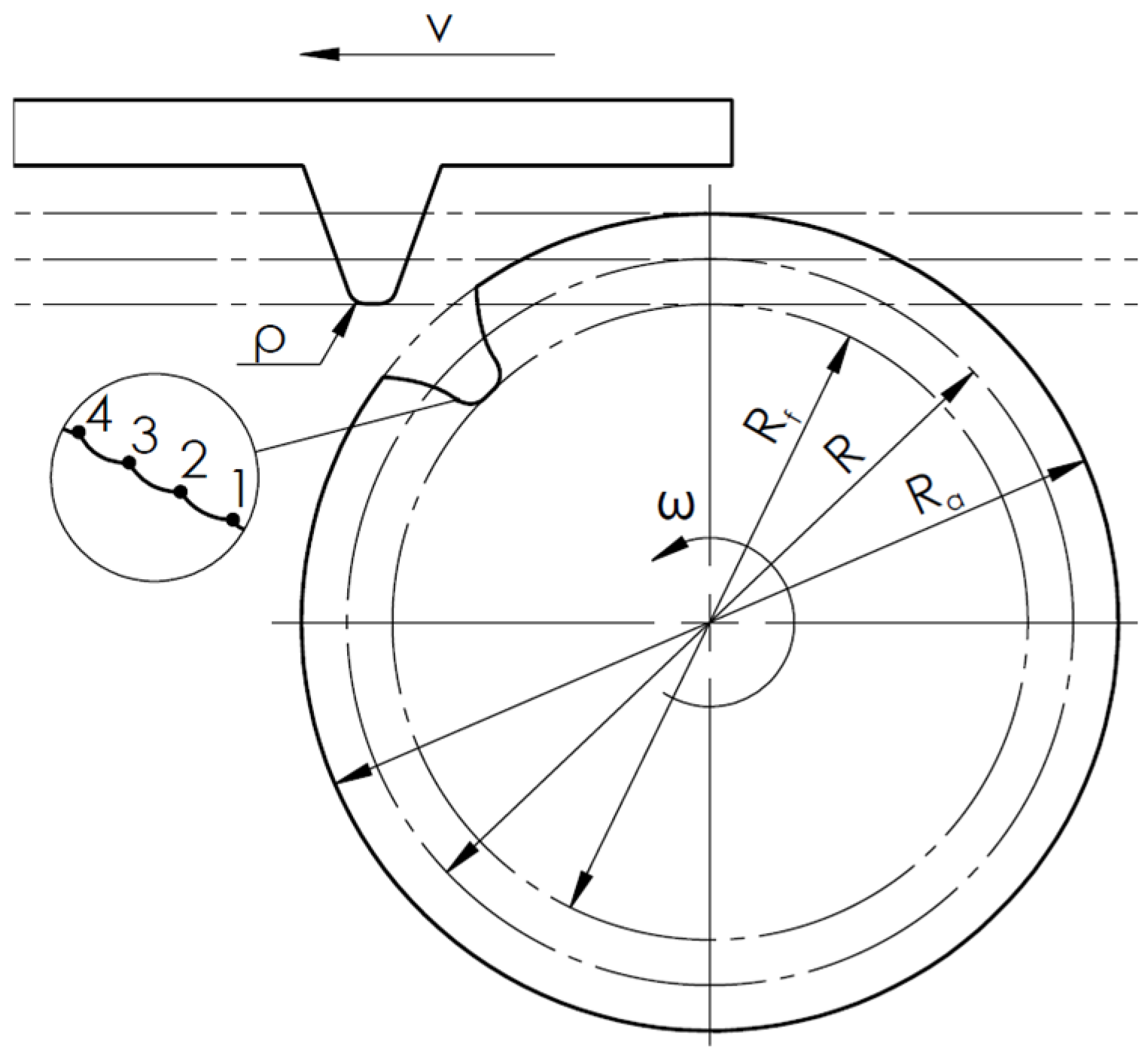
Figure 2 presents a schematic of the simulation generation process using a rack tool for the shaping method.
The parametric equation of the extended involute describing the transition curve at the tooth root is
x w t = R sin t t c o s t h r sin t y w t = R c o s t + t   s i n t h r cos ( t )
where hr—segment equal to the distance RRf and Rf—root radius of the tooth algorithm; the rounding radius ρ of the cutting tool was taken into account (Figure 2). Consequently, Equation (8) must be offset along the normal to the curve by a value determined through derivatives of the parametric equation components, generally expressed as (9):
x w t = R   ( s i n ( t ) t   c o s ( t ) ) h r   s i n ( t ) + ( R   ( c o s ( t ) t   s i n ( t ) ) h r c o s ( t ) ) 2 + + ρ   ( R   ( s i n ( t ) t   c o s ( t ) ) + h r   s i n ( t ) ) + ( R   ( s i n ( t ) t   c o s ( t ) ) + h r   s i n ( t ) ) 2 y w t = R   ( c o s ( t ) + t   s i n ( t ) ) h r   c o s ( t ) + ( R   ( c o s ( t ) t   s i n ( t ) ) h r c o s ( t ) ) 2 + + ρ ( R   ( s i n ( t ) t   c o s ( t ) ) + h r   s i n ( t ) ) + ( R   ( c o s ( t ) t   s i n ( t ) ) + h r   c o s ( t ) ) 2
Note that curve (8) in its basic form is oriented with bulges facing the negative X-axis. To correctly align curve (8) and thus also curve (9), it is necessary to apply a mirror transformation relative to the Y-axis, i.e., xw = −xw and xw’ = −xw’.
To correctly generate the lateral surface of the tooth, curve (9) must be rotated by the sum of angles ξ and δ. The angle ξ, defined as the sum of angles η (2) and ε (5), was previously determined during the rotation of curve (1), resulting in curve (7). However, due to the mathematical complexity of curve (9), an analytical determination of angle δ is extremely difficult. Therefore, a numerical method was used. This method is based on numerically locating point B (see Figure 1), which represents the intersection of the transition curve (9) with the base circle Rb.
Once the coordinates of point B are known, angle δ can be calculated as (10):
δ =   a t a n x B y B
With the value of angle δ and by applying the rotation matrix, the final equation of the transition curve becomes (11):
x w ( t ) y w ( t ) = c o s ( ζ   + δ ) s i n ( ζ   + δ ) s i n ( ζ   + δ ) c o s ( ζ   + δ ) x w ( t ) y w ( t )
Using an analogous numerical method, the final length of curve (7) can be determined by its intersection with the addendum circle Ra (point C, Figure 1), and the length of curve (11) by its intersection with the base circle Rb (point D, Figure 1).
The numerical procedure for determining point B, as well as the lengths of curves (7) and (11), was implemented in MATLAB using the “find” function to identify intersections between the curves and the corresponding gear circles.
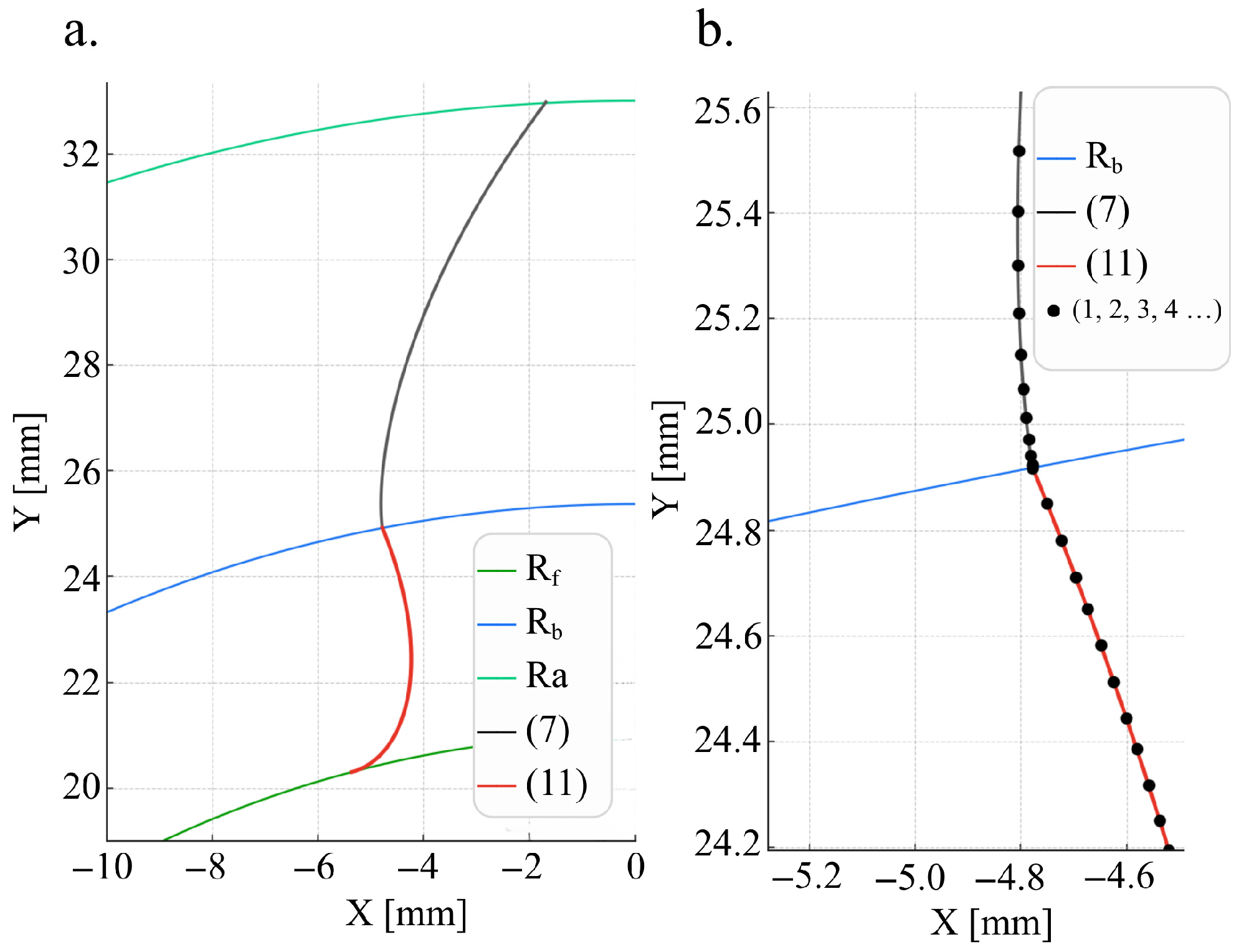
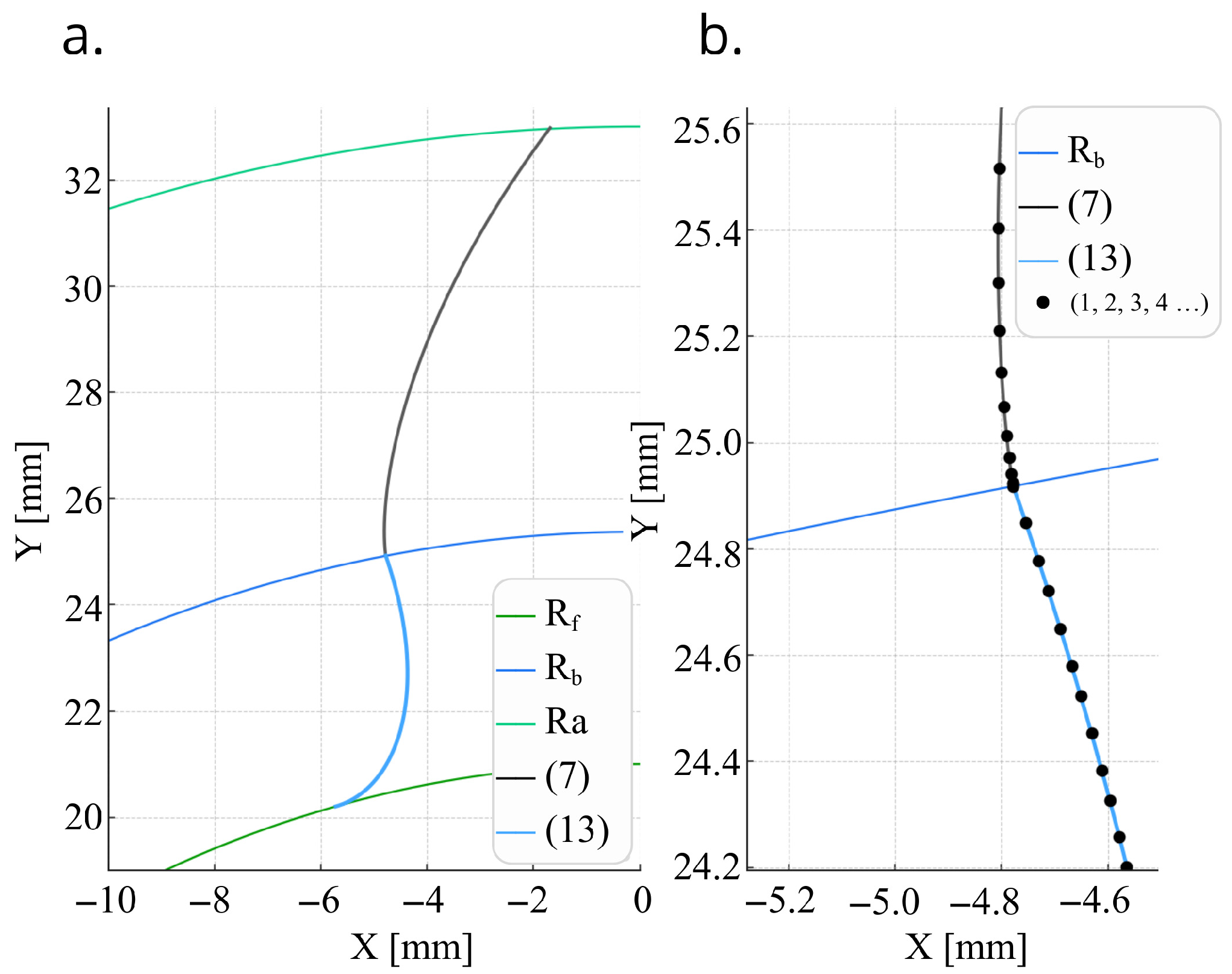
To verify the correctness of the above equations, a plot was generated based on them (Figure 3) for sample data (Table 1) and compared with the geometry obtained from the envelope simulation of the shaping process (Figure 2). The simulation involves iterative subtraction of the tool body from the blank body, resulting in a faceted tooth structure (Figure 2). To generate a digital model of such a root fillet, CAD or CAM software can be used (SolidWorks Professional 2025 was used). Once the root fillet is obtained, the coordinates of the tool’s successive passes (1, 2, 3, 4 … see Figure 2, enlarged view) can be read and plotted as in Figure 3b.

2.3. Transition Curve Based on the Pinion-Type Gear Shaping

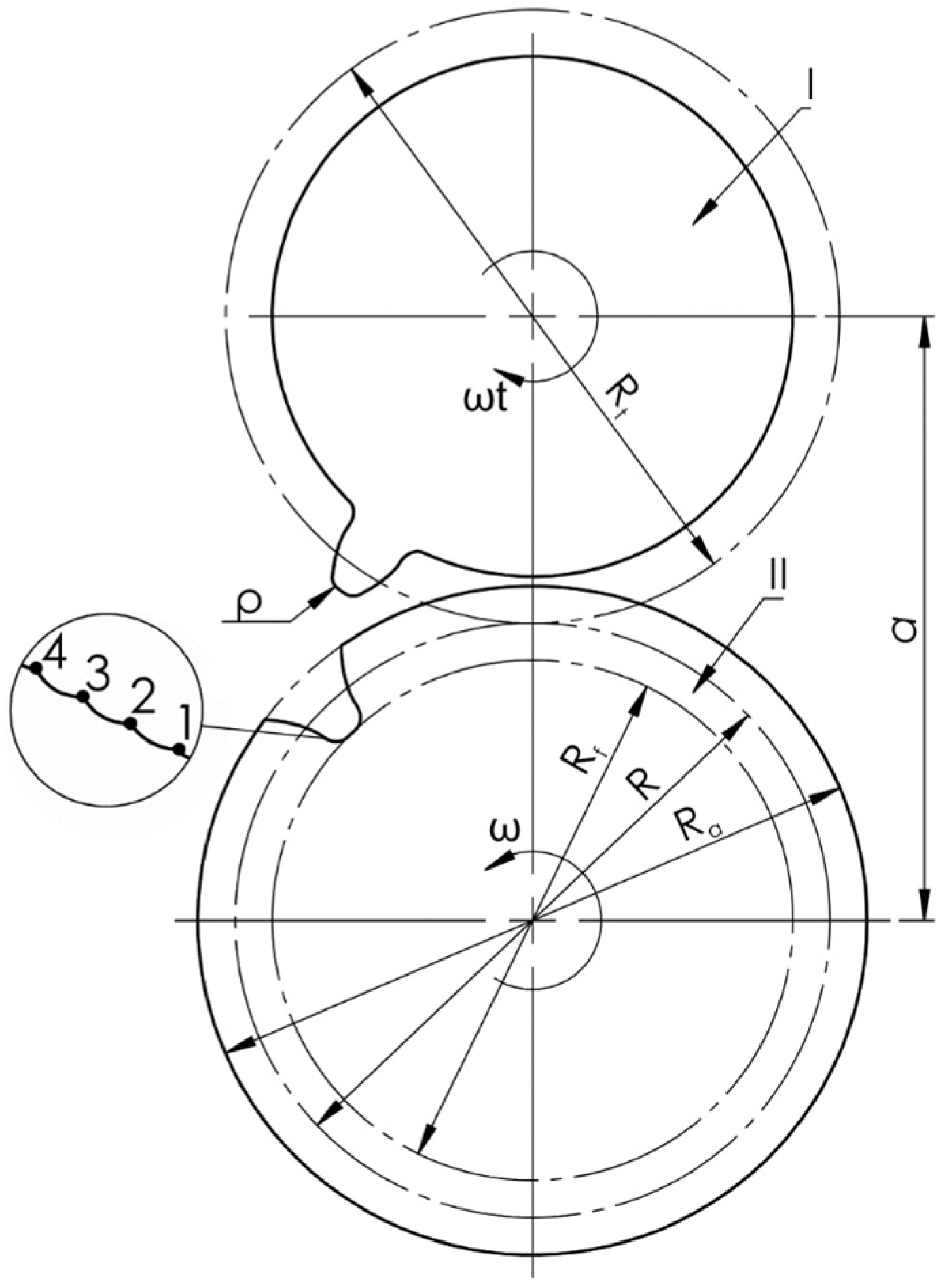
The parametric equation of the epicycloid describing the transition curve at the process using pinion-type gear shaping (Figure 3) is as follows:
x e t = a sin t R a 2 sin 1 + R t R 2 t y e t = a cos t R a 2 cos 1 + R t R 2 t
where a—distance between the centres of the cutting tool (I) and the gear blank (II), Ra2—root depth in the machined gear, Rt—pitch diameter of the tool, and R2—pitch diameter of the gear (see Figure 4).
Schematic of the envelope-based simulation of the pinion-type gear shaping process.
Equation (13) is then transformed analogously to Equation (8), resulting in the formation of an epicycloidal root transition curve in the gear.
As in the case of the extended involute, a plot was generated based on these equations (Figure 5), using the sample parameters from Table 1, and compared with the geometry obtained from the envelope-based simulation of the pinion-type gear shaping process (Figure 4). Points (14) were obtained from the geometric simulation using the pinion-type gear shaping method.
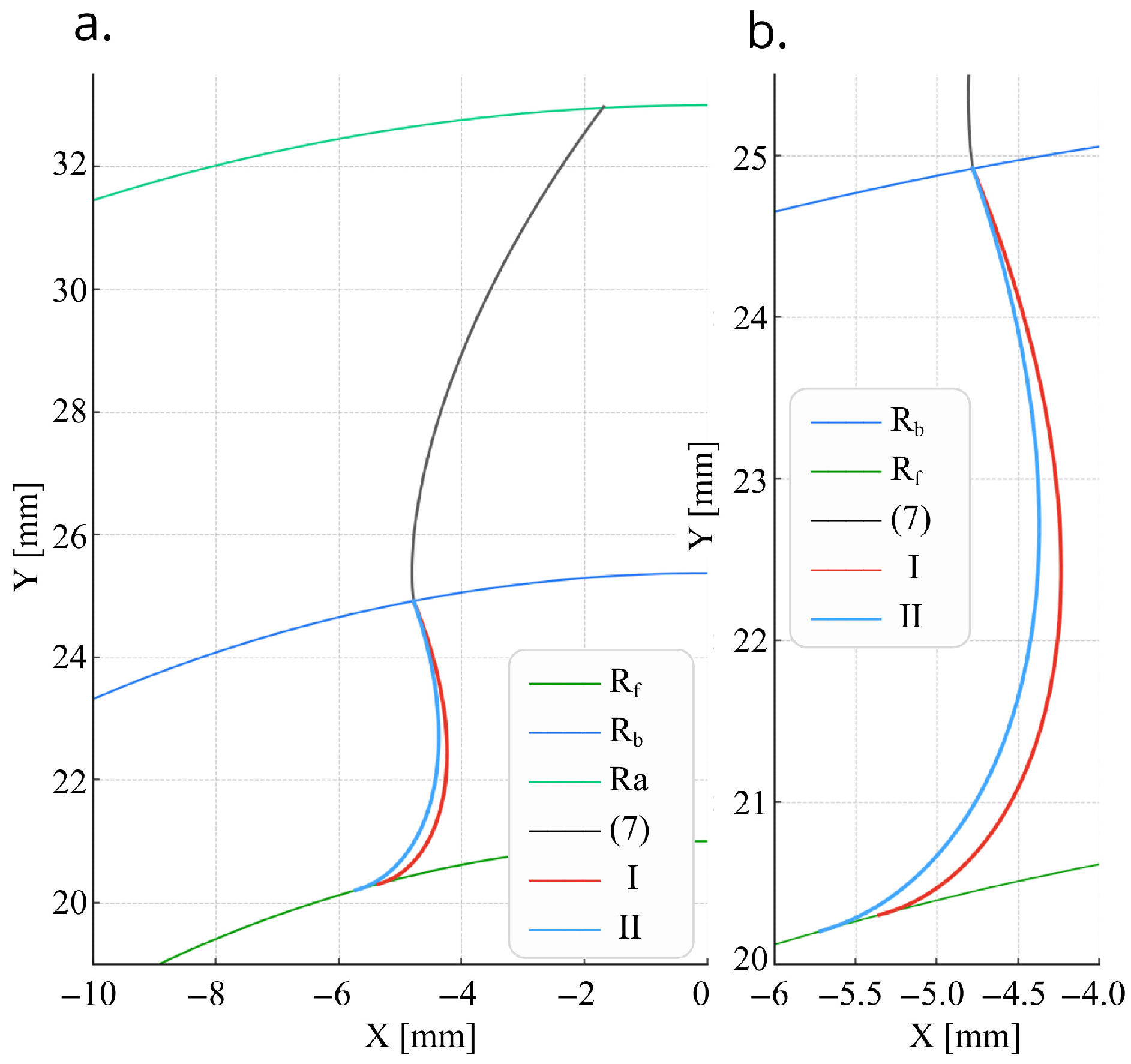
Differences in tooth geometry resulting from the rack-type gear shaping and pinion-type gear shaping methods for the parameters listed in Table 1 are presented in Figure 6.

3. Numerical Stress Analysis

In this study, the finite element method (FEM) was applied to verify the analytical results of strength parameter calculations for a modified spur gear tooth. The main purpose of the analysis was to confirm the analytical predictions and to determine the detailed stress distribution within the tooth, with particular emphasis on bending stresses at the tooth root. Due to the significant tooth undercut, it was assumed that high stresses would occur in the root fillet region, which required a precise numerical representation of this area. Similar FEM-based approaches have been successfully employed in previous research to validate analytical calculations and to investigate bending stress distributions in gear teeth [13,28,29,30].
The developed numerical model enables the identification of critical stress concentrations and provides a quantitative assessment of the maximum bending stress in the modified geometry. The obtained results allow comparison of the bending strength of the modified and unmodified teeth, thus serving as a basis for evaluating the influence of geometric alterations on gear durability and performance [29,30].

3.1. Numerical Integration Method

To accurately determine bending stresses, a numerical integration method was applied.
The method is based on
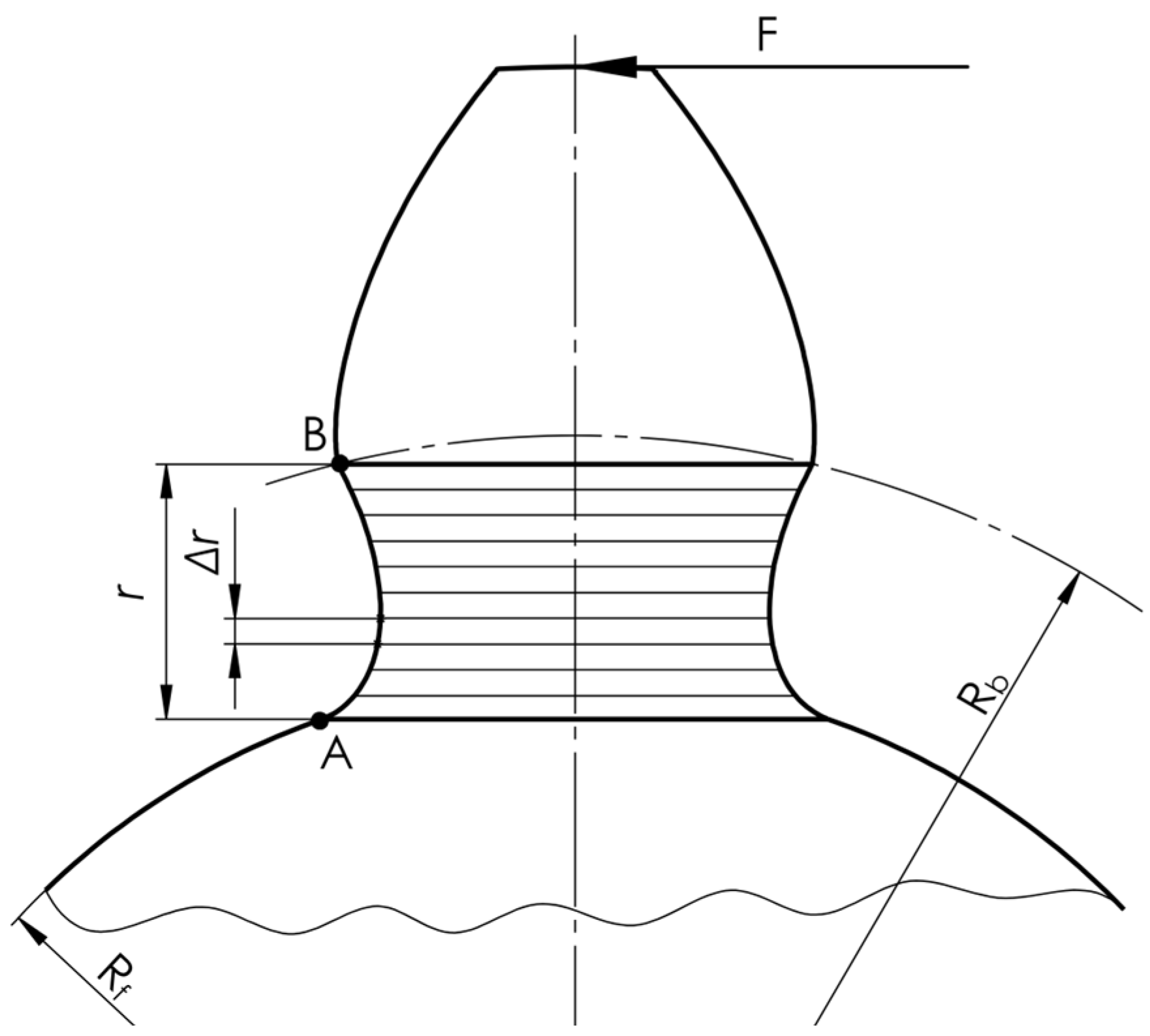
  • Numerically dividing the non-working part of the tooth (regions A and B in Figure 7) into cuboids with height Δr and longitudinal dimensions b and dividing the x-component of Equations (11) and (12);
  • Calculating the moment arm radius as the y-component of Equations (11) and (12) minus Ra;
  • Using relationship (13) to compute bending stresses at the tooth root;
  • Numerically determining the maximum value of the stress and its location.
σ = 6   F   r y ( h b ) b   h ( h b ) 2
where σ—bending stress, F = M/R—circumferential force, b—tooth width, ry(hb)—moment arm radius as a function of the height along the root curve, and h(hb)—tooth width as a function of the height along the root curve.

3.2. Finite Element Method (FEM)

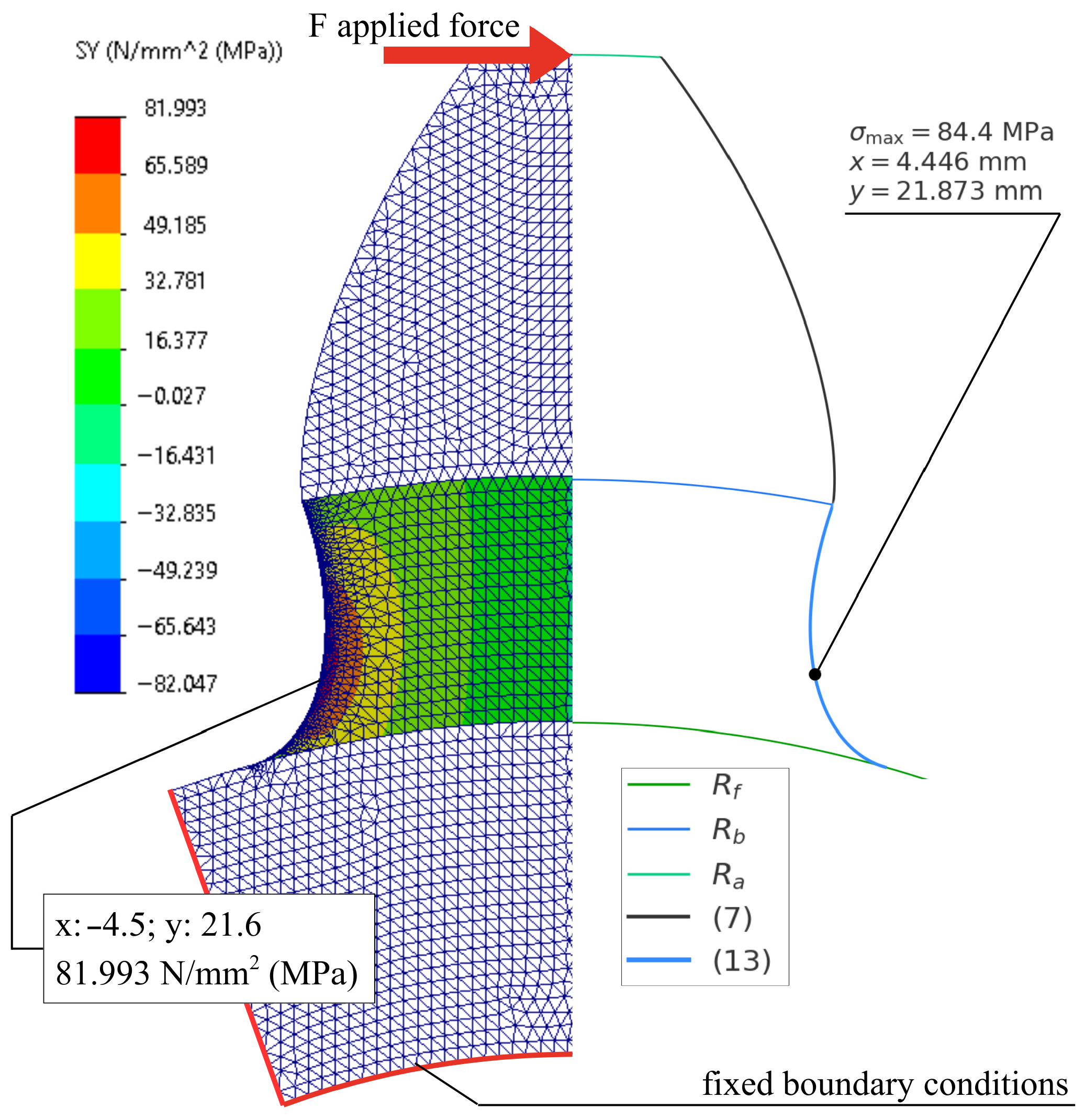
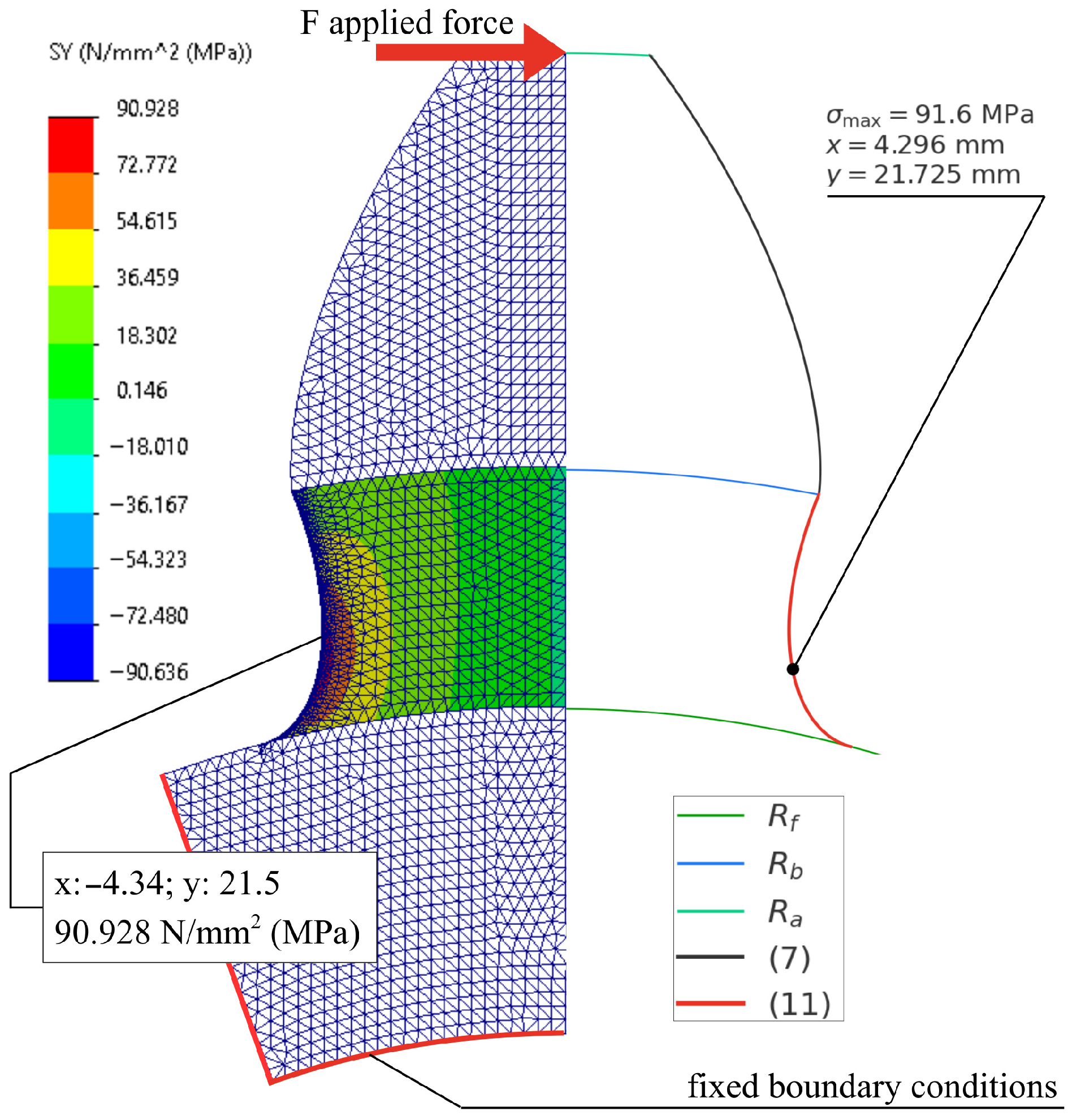
To verify the accuracy of the obtained results, FEM analysis was conducted (Figure 8 and Figure 9) using the parameters from Table 1. FEM model parameters are presented in Table 2.
For the FEM, the influence of mesh density on both the value and the location of the maximum tooth root stresses was additionally verified. The analyses showed that a twofold reduction in element size resulted in only a minor change in the maximum stress value, below 0.5%.
A more detailed comparison of the results from both analyses is presented in Section 4.

4. Discussion of Results

To validate the results of the analyses, they were compared with analytical calculation results based on the DIN 3990 standard (15). The obtained results are presented in Table 3.
σ = F   q b   m
where q—tooth form factor equal to 4.94 (for the parameters listed in Table 1).
As shown in Table 3, the maximum differences between the obtained results do not exceed 10%. In addition, for the rack-type gear shaping tooth geometry, the results obtained using the three analyzed methods show a maximum difference below 2.5%. Analyses for various gear parameters (such as m, z, b, etc.) will be addressed in subsequent publications.
The conducted analyses demonstrated almost complete agreement between the tooth geometry generated using the developed mathematical model and the geometry obtained from the envelope-based simulation of the material removal process (see Figure 5 and Figure 6). The nearly 100% overlap of profiles confirms the high accuracy in reproducing the actual tooth shape and provides strong evidence that the proposed mathematical model correctly describes both the working flank and the root transition curve in the fillet region. This high level of agreement proves that the adopted parametric equations and the approach to defining the position of curves within the reference system are valid and can serve as a foundation for further numerical computations.
The developed method for calculating root stresses, based on numerical integration, showed very good agreement with the results obtained using the finite element method (FEM). For the rack-type gear shaping method, the difference in maximum stress values was 2.85%, while for the pinion-type gear shaping method, it was only 0.73%. These small discrepancies confirm the high reliability of the proposed algorithm and indicate that the numerical method can serve as an effective alternative to classical FEM calculations, especially in applications where computational speed and ease of implementation in engineering environments are crucial.
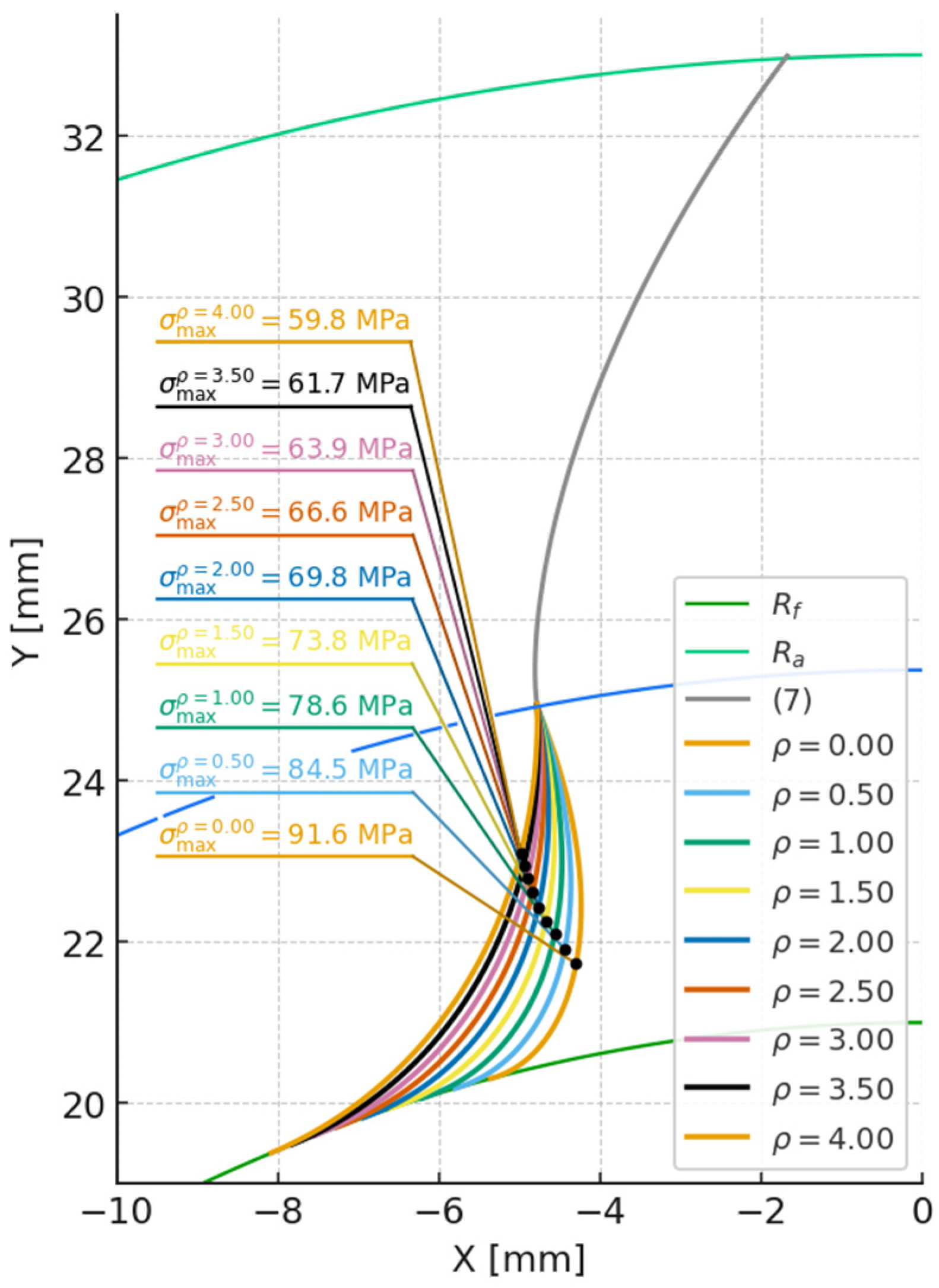
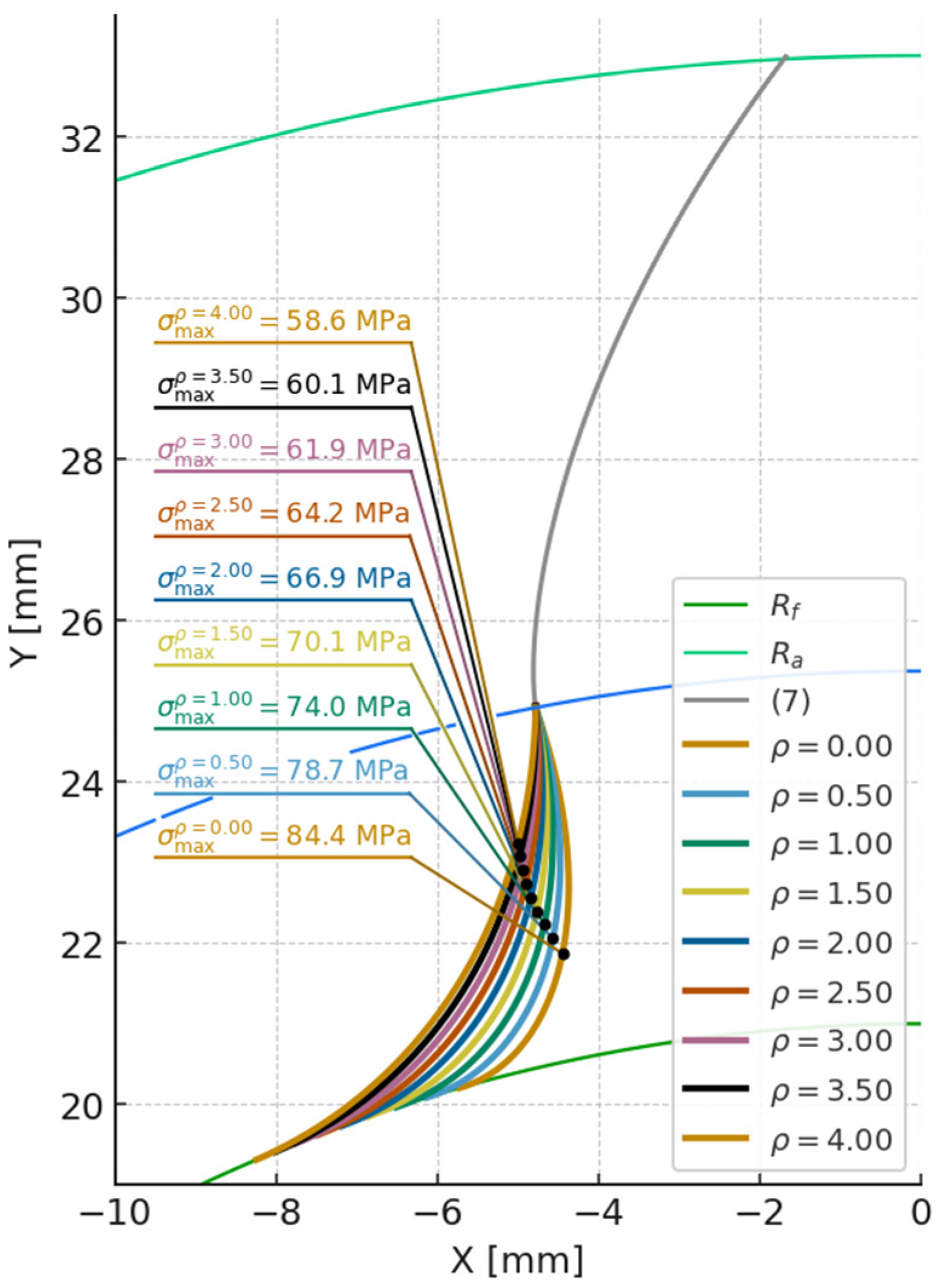
The effect of the cutting tool’s fillet radius ρ on bending stress values at the tooth root was also analyzed. The derived relation (15) enables determination of the maximum allowable radius ρ that preserves correct tooth geometry and avoids overlap of adjacent profiles. The results shown in Figure 10 and Figure 11 and Table 4 clearly confirm that as ρ increases, root stress values decrease. This is due to the thickening of the tooth at the root, which increases its resistance to bending.
ρ m a x = m   π 4 R R f   t a n ( α )   1 + sin ( α ) c o s ( α )
where m—gear module.
The differences between the rack-type gear shaping and pinion-type gear shaping methods diminish as the radius ρ increases. For the maximum radius ρ = 3.2 mm, the difference in maximum stress values between the methods is less than 1.5%, indicating that with appropriate geometric parameters, the influence of the machining method becomes secondary. However, in the lower radius range, these differences are more pronounced— pinion-type gear shaping (epicycloidal profile) provides slightly more favourable stress distribution compared to rack-type gear shaping (extended involute profile).
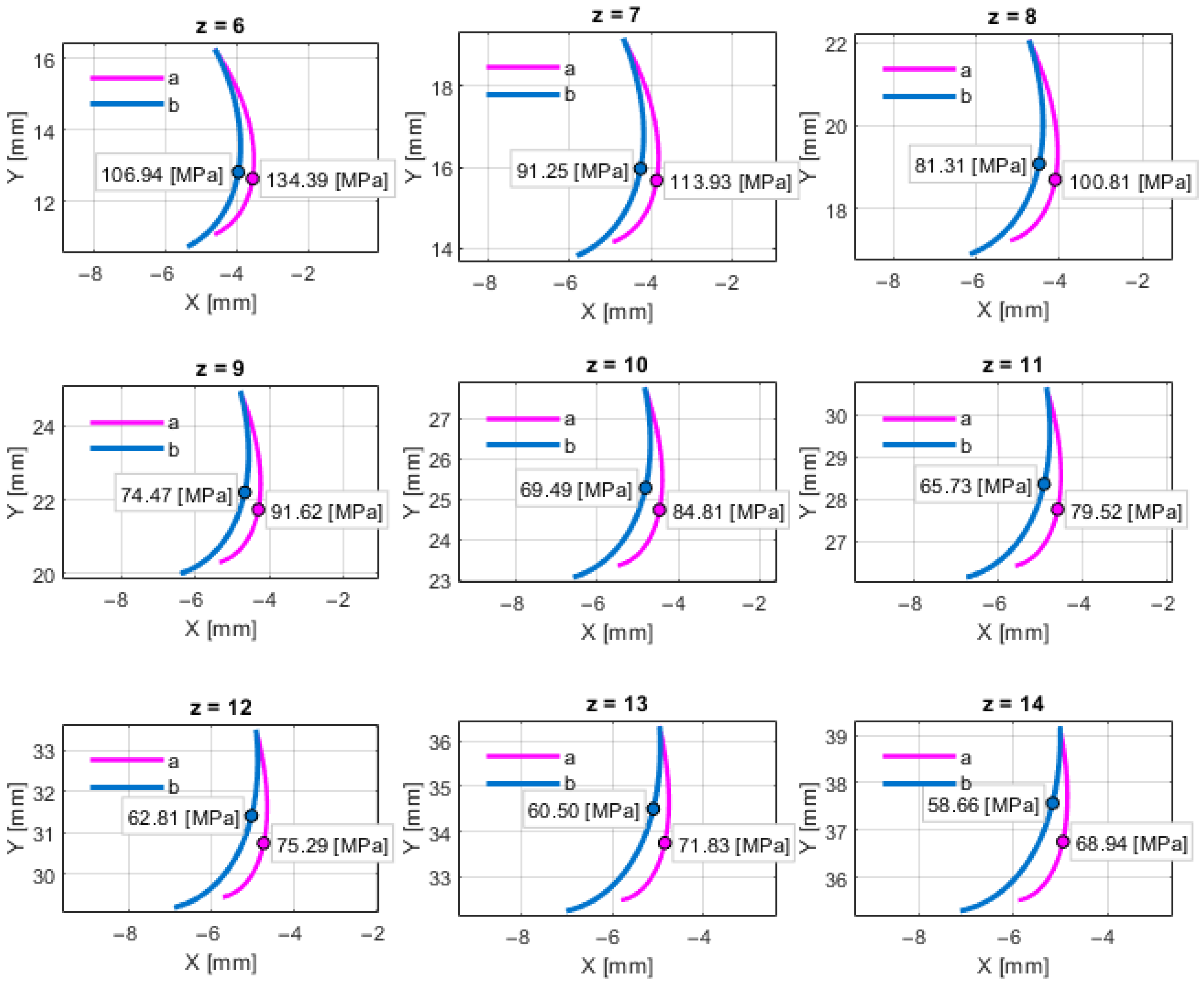
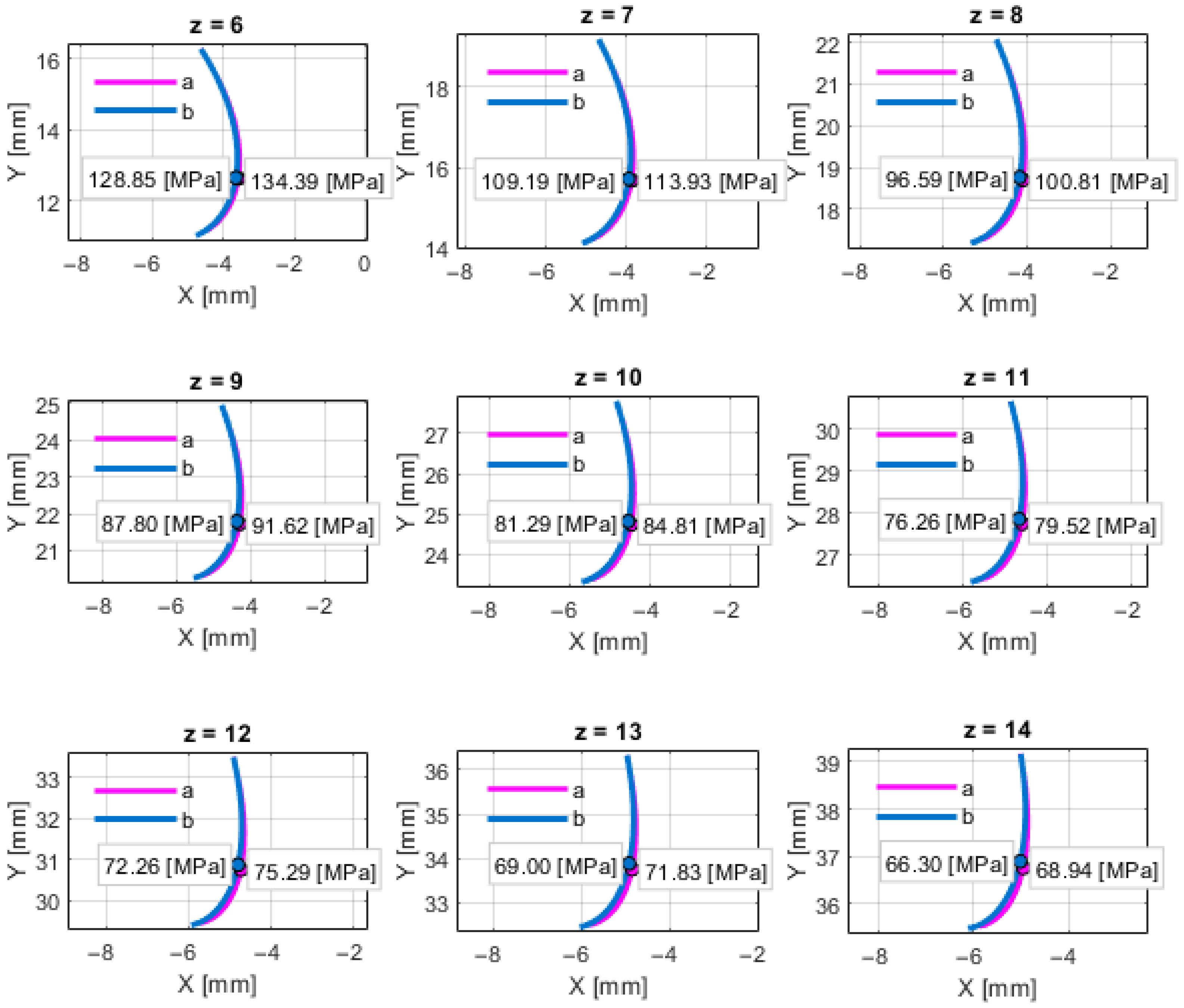
To broaden the comparison, an analysis was performed for two cases: z2 = 6 (u = 1) and z2 = 54 (u = 9).
In the first variant (Figure 12, Table 5), the pinion-type gear shaping method results in over 20% lower root stress values compared to the rack-type gear shaping method. As the number of teeth increases, these differences gradually decrease, reaching approximately 15% for z = 14. However, in low gear ratios (u = 1), broached pinions have limited compatibility with gears having more teeth, which restricts their practical applicability.
In the second case (z2 = 54, u = 9, Figure 13, Table 6), the differences between the two methods do not exceed 4%. A high gear ratio increases the universality of shaping gears, which can cooperate with gears having up to nine times more teeth. This indicates that for high gear ratios, the influence of the machining method on strength is marginal, and the choice of technology is dictated more by production factors such as cost, precision, or tool availability.
To summarize, the results of the numerical analyses demonstrated that
  • Increasing the tool’s fillet radius (ρ) significantly reduces bending stress at the tooth root;
  • Differences between machining methods decrease as ρ increases;
  • The rack-type gear method provides higher strength for gears with a small number of teeth and low gear ratios;
  • For high gear ratios, the influence of the machining method becomes marginal.
The obtained results provide a solid foundation for further optimization and experimental studies that will allow for validation of the numerical model under real-world gear operating conditions.

5. Summary

The developed tooth geometry model accurately reflects the actual shape of the gear tooth, as confirmed by the nearly complete overlap with the geometry of the simulation model. It correctly describes both the tooth flank and the root transition curve in the fillet region between the teeth, providing a reliable basis for numerical analysis.
The applied numerical integration method yielded results consistent with the finite element method (FEM). The differences—2.85% for the rack-type gear shaping method and 0.73% for the pinion-type gear shaping method—confirm its high accuracy and support its use as a faster alternative to FEM in engineering analysis.
An increase in radius ρ leads to a systematic reduction in bending stress at the tooth root. For ρ = 3.2 mm, the difference between the two machining methods drops below 1.5%, indicating that the shape of the transition curve has a greater impact on strength than the machining process itself.
For gears with a small number of teeth (z2 = 6, u = 1), the rack-type gear shaping method provided more than 20% higher strength compared to the pinion-type gear shaping method. As the number of teeth increases, these differences decrease, reaching approximately 4% for a gear ratio of u = 9.
For gears with a small number of teeth, the pinion-type gear shaping method is recommended. For gears with higher gear ratios, the impact of the machining method becomes negligible, and the choice of manufacturing technology should be guided by economic factors and the required precision.
The developed methodology can be applied in the design of gear systems where low weight and high durability are critical, including aerospace applications, drone drives, high-performance vehicles, and lightweight transmission systems. Reducing root stresses allows for a reduction in module and gear face width and thus the overall weight of the gearbox.
In the present study, the influence of real manufacturing factors such as tolerances for machining, tool setting errors, tool wear, surface roughness at the root of the tooth, and microscopic material defects was not considered. These effects may locally modify the root fillet geometry and, particularly for gears with a small number of teeth, may increase stress concentration and amplify the differences between the rack-type gear shaping method and the pinion-type gear shaping method. For gears with a higher number of teeth, this influence is expected to be less significant.
The investigation of these production-related effects and their quantitative impact under real manufacturing and operating conditions will be the subject of future research and subsequent publications.
Experimental research is planned to validate the numerical model under real load conditions. Expanding the model to account for manufacturing errors, tool wear, and material properties will enable the development of universal design guidelines and optimization algorithms for gears with improved fatigue life and reduced mass.

Author Contributions

Conceptualization, P.S.; Methodology, P.S.; Software, P.S. and R.J.; Validation, P.S.; Formal analysis, P.S.; Investigation, P.S.; Resources, P.S.; Data curation, P.S. and R.J.; Writing—original draft, P.S.; Writing—review & editing, P.S. and R.J.; Visualization, P.S.; Supervision, P.S. and R.J.; Project administration, P.S.; Funding acquisition, P.S. and R.J. All authors have read and agreed to the published version of the manuscript.

Funding

This research received no external funding.

Institutional Review Board Statement

Not applicable.

Informed Consent Statement

Not applicable.

Data Availability Statement

The original contributions presented in this study are included in the article.

Conflicts of Interest

The authors declare no conflict of interest.

References

  1. Kim, M.; Lee, S.; Yoon, K.; Lee, Y.; Chung, Y. Design 2-Speed Transmission for Compact Electric Vehicle Using Dual Brake System. Appl. Sci. 2019, 9, 1793. [Google Scholar] [CrossRef]
  2. Álvarez, Á.; Calleja, A.; Ortega, N.; De Lacalle, L.N.L. Five-Axis Milling of Large Spiral Bevel Gears: Toolpath Definition, Finishing, and Shape Errors. Metals 2018, 8, 353. [Google Scholar] [CrossRef]
  3. Xu, W.; Huang, H.; Gao, Y.; Qin, X.; Wen, T.; Yang, S.; Zhang, P.; Wang, L.; Guo, C. Influence of the Machining Process on the Service Life and Pitting Morphology of Gear-Tooth Surfaces. Metals 2022, 12, 1382. [Google Scholar] [CrossRef]
  4. Boral, P.; Gołębski, R.; Kralikova, R. Technological Aspects of Manufacturing and Control of Gears—Review. Materials 2023, 16, 7453. [Google Scholar] [CrossRef]
  5. Boonmag, S.; Phukaoluan, W.; Wisesook, K.; Pluphrach, P. Comparison of Bending Stress and Contact Stress of Helical Gear Transmission Using Finite Element Method. Int. J. Mech. Eng. Robot. Res. 2019, 8, 387–392. [Google Scholar] [CrossRef]
  6. Ketan, K.; Rajkumar, J. Bending Stress & Contact Stress Analysis of Spur Gear Tooth Using MATLAB. Int. J. Eng. Res. Technol. (IJERT) 2018, 7, 1–6. [Google Scholar]
  7. Pedrero, J.I.; Sanchez, M.B.; Plaguezuelos, M.; Fuentez-Aznar, A. Analysis of the Tooth-Root Stress of External Spur Gears with High Contact Ratio. Mech. Mach. Theory 2024, 203, 105813. [Google Scholar] [CrossRef]
  8. Mouton, V.; Rigaud, E.; Chevrel-Fraux, C.; Casanova, P.; Perret-Liaudet, J. Spur Gear Tooth Root Stress Analysis by a 3D Flexible Multibody Approach and a Full-FE contact-based formulation. Mech. Mach. Theory 2024, 242, 104264. [Google Scholar] [CrossRef]
  9. Eggert, C.; Kolouch, M.; Lohner, T.; Stahl, K. Inclusion-Based Model: Calculating Tooth Root Bending Strength. Metals 2024, 14, 1349. [Google Scholar] [CrossRef]
  10. Fudali, P.; Budzik, G.; Oleksy, M.; Sanocki, T. Machining Simulation of Novikov Profile Gear Models for Finite Element Analysis. Materials 2025, 18, 1155. [Google Scholar] [CrossRef] [PubMed]
  11. Buzauova, T. What Do Stress Calculations Reveal About Spur Gears? Eng. Sci. Technol. 2025, 3, 57–66. Available online: https://engineeringscience.rs/storage/articles/pdf/2025-08-25/57315OF.pdf (accessed on 1 October 2025).
  12. Concli, F.; Fraccaroli, L.; Maccioni, L. Gear Root Bending Strength: A New Multiaxial Approach for Life Estimation. Metals 2021, 11, 863. [Google Scholar] [CrossRef]
  13. Zhang, J.; Wang, H.; Liu, Y.; Hou, S.; Liu, Z.; Wang, H. Research on the Strength Calculation Method and Effects of Gear Parameters on Tooth Root Bending Stress. Processes 2023, 11, 1807. [Google Scholar] [CrossRef]
  14. Cazan, S.; Ionescu, F.; Simion, I.; Voicu, A. Developing a Fast-Processing Novel Algorithm for Contact Pressure and von Mises Stress of Spur Gears. Symmetry 2023, 15, 554. [Google Scholar] [CrossRef]
  15. Bonaiti, L.; Geitner, M.; Tobie, T.; Gorla, C.; Stahl, K. A Comparison between Two Statistical Methods for Gear Tooth Root Bending Strength Estimation Starting from Pulsator Data. Appl. Sci. 2023, 13, 1546. [Google Scholar] [CrossRef]
  16. Guo, J.; Li, Y.; Xu, W. New Method for Strength Analysis of Involute Beveloid Gears Based on Fractal Contact Model. J. Mech. Sci. Technol. 2024, 38, 157–169. [Google Scholar] [CrossRef]
  17. Klapetek, L.; Dobias, J.; Struz, J.; Folta, Z. Comparison of Standard and Non-Standard Gear Root Fillet Considering Root Stress and Manufacturing Possibilities. MM Sci. J. 2023, 2023, 5663–5669. [Google Scholar] [CrossRef]
  18. Park, J.-H.; Chung, W.-J.; Park, Y.-J.; Kim, H.-S.; Seo, J.B.; Park, J.S. Effect of Rim and Web Thickness on Tooth Root Stress of Spur Gear. Int. J. Automot. Technol. 2024, 25, 279–293. [Google Scholar] [CrossRef]
  19. Demir, K.; Yildirim, E. Tooth Root Stress Relief Hole Optimization on the Spur and Helical Gears. Int. J. Adv. Nat. Sci. Eng. Res. 2022, 6, 2157. Available online: https://as-proceeding.com/index.php/ijanser/article/view/2157 (accessed on 30 September 2025).
  20. Yılmaz, E.; Akyıldız, M. Finite Element Stress Analysis for Shape Optimization of Spur Gear Using ANSYS. Eng. Sci. Proc. 2021, 12, 45–51. [Google Scholar] [CrossRef]
  21. Saini, A.; Kumar, N.; Verma, P. Modal Analysis of Spur Gears for Varied Teeth Root Crack Characteristics: Finite Element Analysis. Vibroeng. Procedia 2022, 41, 75–80. [Google Scholar] [CrossRef]
  22. Concli, F. Effect of Gear Design Parameters on Stress Histories of Gear Tooth Roots. Appl. Sci. 2022, 12, 3950. [Google Scholar] [CrossRef]
  23. Krishnamurthy, S.H.; Kurkal, R. Bending Stresses in Profile Corrected Gears. Eng. Proc. 2023, 59, 109. [Google Scholar] [CrossRef]
  24. Concli, F. Dimensional Effect for Small Gears Having a Module below 5 mm. Appl. Sci. 2021, 11, 2416. [Google Scholar] [CrossRef]
  25. Zhang, H.; Liu, Y. A Detailed Investigation of Gear Body-Induced Tooth Deflections. Appl. Sci. 2020, 10, 2292. [Google Scholar] [CrossRef]
  26. Yılmaz, T.G.; Acar, M. A Numerical Analysis of Hybrid Spur Gears with Various Materials. Machines 2022, 10, 1056. [Google Scholar] [CrossRef]
  27. Ilincă, C.N.; Ramadan, I.N.; Neacșa, A.; Petrescu, M.G.; Laudacescu, E.V. Finite Element Analysis of 3D-Printed Gears: Evaluating Mechanical Behaviour Through Numerical Modelling. Materials 2025, 18, 4530. [Google Scholar] [CrossRef]
  28. Kabalyk, K.; Bednarz, A.; Kantyka, K. Fatigue safety factor of a transonic centrifugal compressor impeller subject to blade thickness. Sci. Rep. 2025, 15, 18693. [Google Scholar] [CrossRef]
  29. Gabos, Z.; Plakhotnik, D.; Dombovari, Z. Digital geometry generation of high-precision broaching tool cutting edges through image-processing algorithm. MM Sci. J. 2023, 2023, 7011–7017. [Google Scholar] [CrossRef]
  30. Gong, Z.; Chen, B.; Cheng, X. Assessment of the Uniform Wear Bending Strength of Large Modulus Rack and Pinion Pair: Theoretical vs. Experimental Results. Machines 2024, 12, 570. [Google Scholar] [CrossRef]
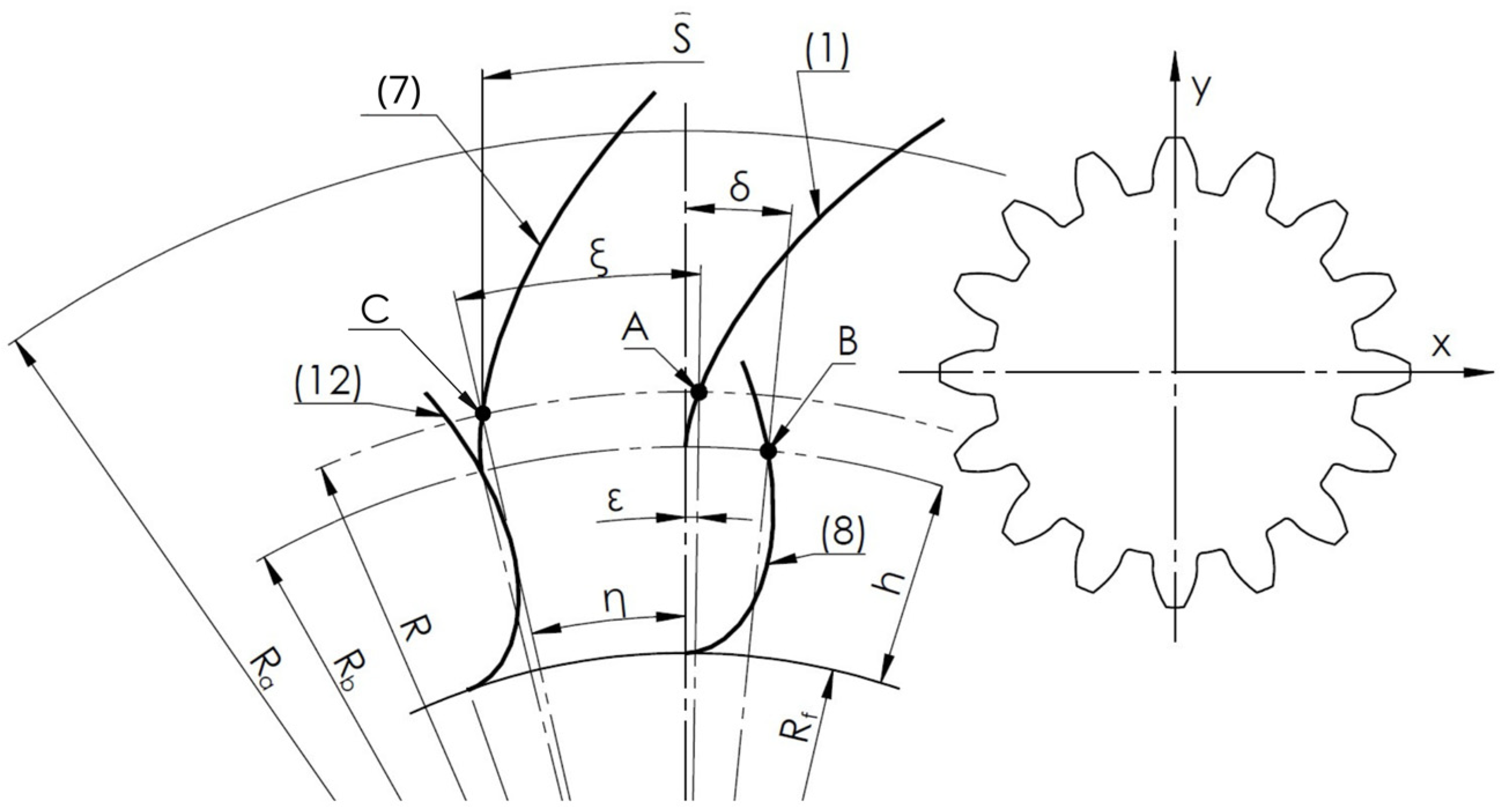
Figure 1. Graphical interpretation of the arrangement of the individual curves with respect to the rack’s coordinate system.
Applsci 16 00944 g001
Figure 2. Schematic of the envelope-based simulation of the shaping process using a rack tool, where Rf—root diameter, Ra—tip diameter, R—pitch diameter, ω—angular velocity of the gear, v—linear speed of the cutting tool, ρ—radius of the cutting tool rounding, and 1, 2, 3, 4—successive profiles generated by the tool (magnified).
Applsci 16 00944 g002
Figure 3. Comparison of the tooth flank geometry obtained by two methods: (a) full view of the tooth flank; (b) magnified region showing the transition between the working flank and the root, illustrating convergence of the two modelling methods. (1, 2, 3, 4 …)—points sampled from the peaks of surface irregularities generated by successive tool passes in the iterative simulation of the cutting process for the rack-type gear shaping method.
Applsci 16 00944 g003
Figure 4. Schematic of the envelope-based simulation of the shaping process using a pinion-type tool, where Rt—pitch diameter of the tool, Ra—root diameter of the tooth, R—pitch diameter of the machined gear, ω—angular velocity of the gear, ωt—angular velocity of the tool, ρ—tool tip rounding radius, and (1, 2, 3, 4 …)—points sampled from the peaks of surface irregularities generated by successive tool passes in the iterative simulation of the cutting process for the pinion-type gear shaping method.
Applsci 16 00944 g004
Figure 5. Comparison of the tooth flank geometry obtained using two methods: (a)—full view of the tooth flank; (b)—magnified section at the junction of the working flank and root transition curve showing agreement between the two methods.
Applsci 16 00944 g005
Figure 6. Geometry difference in the tooth flank: I—rack-type gear shaping, II—pinion-type gear shaping for the parameters from Table 1, (a)—full view of the tooth flank, (b)—enlarged view of the tooth flank segment between Rf and Rb.
Applsci 16 00944 g006
Figure 7. Schematic for the numerical determination of tooth root stresses.
Applsci 16 00944 g007
Figure 8. Comparison of results from FEM and numerical integration method for rack-type gear shaping (extended involute).
Applsci 16 00944 g008
Figure 9. Comparison of results from FEM and numerical integration method for pinion-type gear shaping (epicycloid).
Applsci 16 00944 g009
Figure 10. Plot of the change in root stress values as a function of radius ρ for the rack-type gear shaping method (extended involute).
Applsci 16 00944 g010
Figure 11. Plot of the change in root stress values as a function of radius ρ for the pinion-type gear shaping method (epicycloid).
Applsci 16 00944 g011
Figure 12. Maximum stress values for the two machining methods at ρ = 0 mm, z2 = 6: a—extended involute equation; b—epicycloid equation.
Applsci 16 00944 g012
Figure 13. Maximum stress values for the two machining methods at ρ = 0 mm, z2 = 54: a—extended involute equation; b—epicycloid equation.
Applsci 16 00944 g013
Table 1. Gear parameters.
ParameterDesignationValue
Module [mm]m6
Number of teeth [-]z9
Tool rounding radius [mm]ρ0
Gear ratio [-]u1
Torque of the gear transmission [N m]M54
Table 2. FEM parameters for the analyzed models.
ParameterExtended InvoluteEpicycloid
Element size [mm]0.25
Tolerance [mm]0.0075
Total number of nodes [-]16,44316,635
Total number of elements [-]79168008
Jacobian points [-]16
Minimum number of elements per circle [-]8
Element growth rate [-]1.4
Table 3. Comparison of tooth root bending stress values obtained using different methods for the gear parameters.
Rack-Type Gear Shaping Method [MPa]Pinion-Type Gear Shaping Method [MPa]
Relation (13)84.491.6
FEM81.9990.93
Relation (14)82.33
Table 4. Differences in tooth root stress values for various ρ values and the two analyzed methods.
ρ [mm]σmax [MPa]
Pinion-Type Gear Shaping
σmax [MPa]
Rack-Type Gear Shaping
Δσ [MPa]Δσ [%]
087.79791.6253.8274.18
0.482.61785.8023.1853.71
0.878.17880.8322.6543.28
1.274.3776.5852.2152.89
1.671.10172.9531.8522.54
2.068.29369.8431.552.22
2.465.8867.181.2991.93
2.863.80764.8981.0911.68
3.262.02662.9420.9171.46
Table 5. Percent differences in root stress values between the machining methods (ρ = 0 mm, z2 = 6).
z [-]Δσ [%]z [-]Δσ [%]
620.431117.35
719.911216.59
819.341315.77
918.721414.91
1018.06
Table 6. Percent differences in root stress values between the machining methods (ρ = 0 mm, z2 = 54).
z [-]Δσ [%]z [-]Δσ [%]
64.13114.1
74.17124.03
84.18133.94
94.18143.83
104.15
Disclaimer/Publisher’s Note: The statements, opinions and data contained in all publications are solely those of the individual author(s) and contributor(s) and not of MDPI and/or the editor(s). MDPI and/or the editor(s) disclaim responsibility for any injury to people or property resulting from any ideas, methods, instructions or products referred to in the content.