AI-Based Health Monitoring for Class I Induction Motors in Data-Scarce Environments: From Synthetic Baseline Generation to Industrial Implementation


Abstract
1. Introduction
2. Literature Review
2.1. Health Index Construction Methods
2.2. The Data Scarcity Challenge in Industrial Settings
2.3. The Cold-Start Problem
2.4. Induction Motor Health Monitoring
2.5. The JPCCED-HI Model: Advances and Remaining Gaps
2.5.1. Component-Level vs. System-Level Validation
2.5.2. Absence of Motor-Machine Coupling Effects
2.5.3. Absence of Size to Vibration Amplitude Correlation
2.5.4. Laboratory vs. Industrial Operating Conditions
2.5.5. Detection Without Diagnosis
2.6. Research Gap and Contribution
- No power–vibration correlation. ISO Standards [3] provide zone boundaries, but not predictive equations that relate motor specifications to expected vibration characteristics.
- No system-level validation. Previous research focused only on isolated components, not motors coupled to driven equipment.
- No synthetic baseline capability. Predictive models require extensive operational data for each motor, perpetuating data scarcity.
- No industrial validation. Laboratory studies do not address the cold-start problem in facilities with no monitoring history.
3. Methodology
3.1. Experimental Setup
3.1.1. Layout of Test Bench
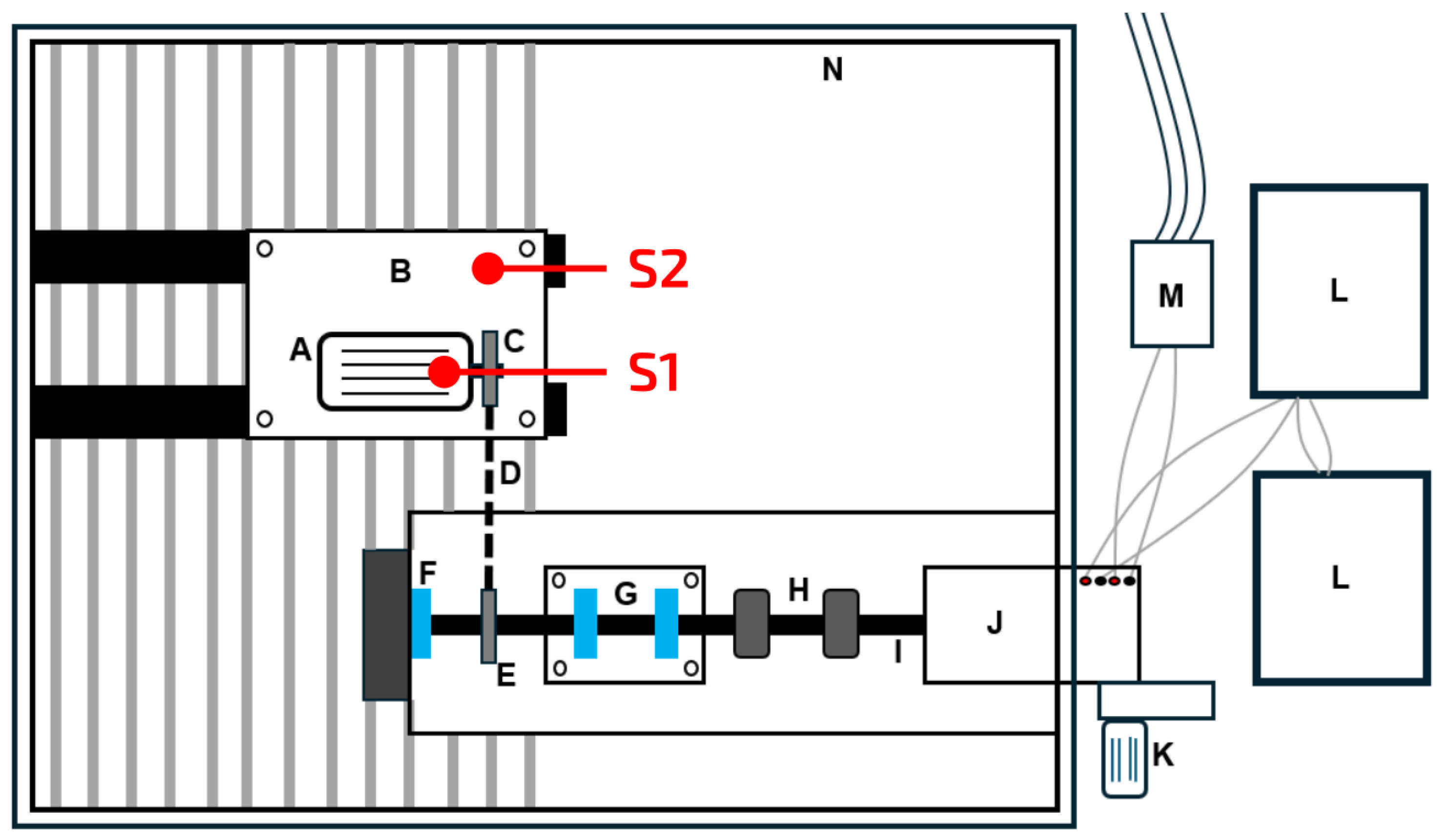
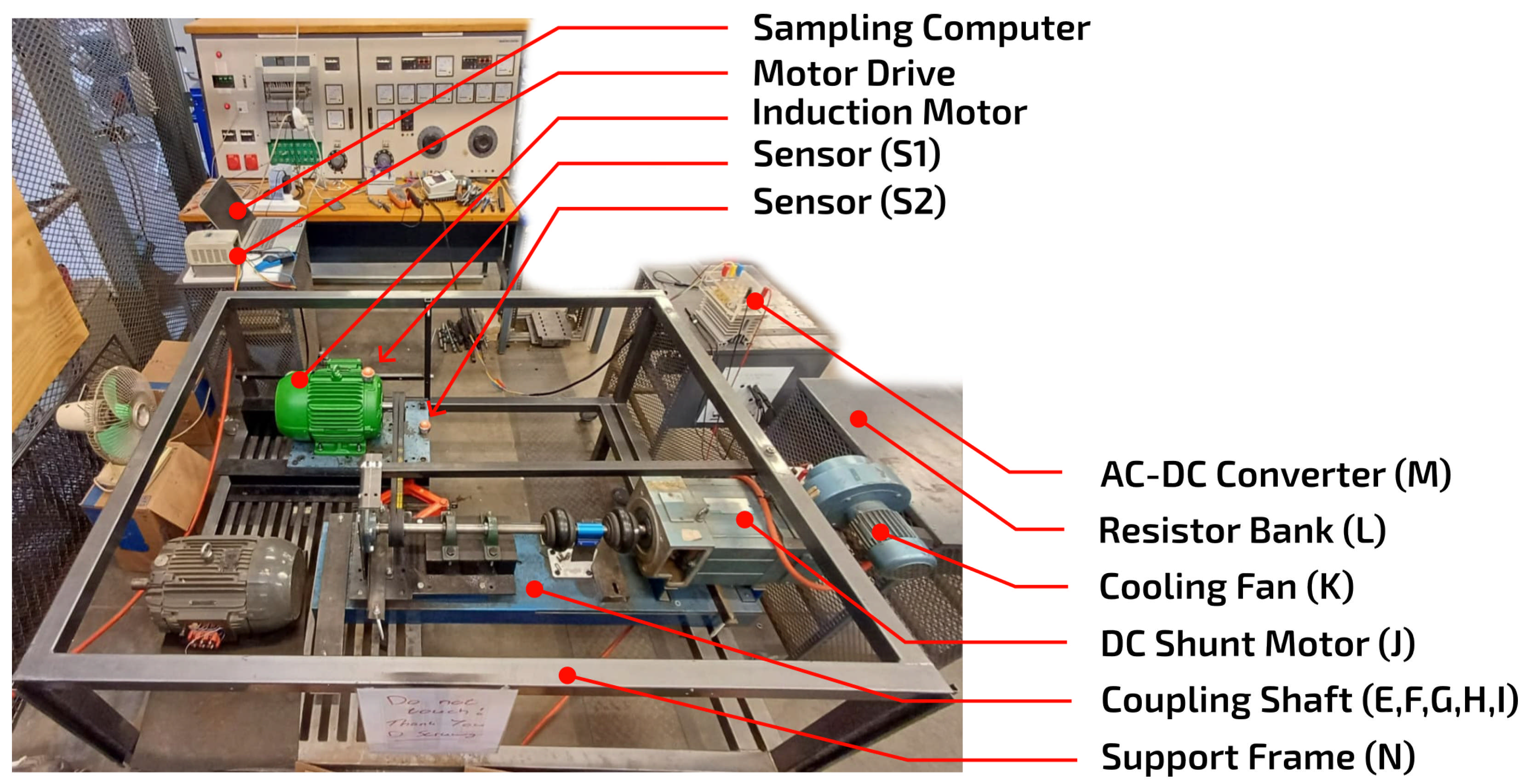
- Induction motor (A): The mounting position for all induction motors used during data collection.
- Mounting plate (B): The mounting plate, which serves as the base onto which the different induction motors are mounted, ensuring rigid mounting.
- Driving end (C): The sprocket/pulley mounted on the driving end (DE) of the induction motor, transferring torque to the chain/V-belt.
- Power transmission element—chain/V-belt (D): The connection between the driving and driven side of the setup; used to transfer torque from the induction motor shaft to the loaded shaft.
- Driven end (E): The sprocket/pulley mounted on the shaft connected to the load, transferring the torque from the sprocket/pulley onto the loaded shaft.
- End bearing and support structure (F): An end bearing mounted onto the end of the loaded shaft, supporting the shaft to reduce the moment at the point of load, thus preventing bending due to the load point on the shaft.
- Support bearing blocks (G): Two support bearing blocks through which the shaft is fitted, providing support between the driven side and the load.
- Flexible couplings (H): Two flexible couplings with a torque transducer mounted between them (the transducer was not used in the current study).
- Shaft (I): The final shaft connected to the load.
- Direct current (DC) shunt motor (J): The DC shunt motor that acts as a generator is used to convert the mechanical energy created by the induction motors into electrical energy, which then is “dumped” in the resistor banks. This results in a mechanical load on the shaft, providing a means to operate the induction motors at full load condition (FLC). The shunt motor is excited with a voltage from the high-current bench.
- Three-phase fan (K): A three-phase fan that is powered during the loaded experimental runs to ensure adequate cooling of the DC shunt motor.
- Resistor banks (L): Two resistor banks are used to “dump” the electrical energy generated by the DC shunt motor during the loaded experimental tests.
- AC-DC converter (M): This component takes the alternating current (AC) input from the high-current bench and converts it to a direct current (DC), which is then connected to the DC shunt motor, inducing a load onto the shaft.
- Steel frame (N): Serves as the support structure, ensuring rigid mounting for all components mounted onto the structure.
3.1.2. Experimental Operating Conditions
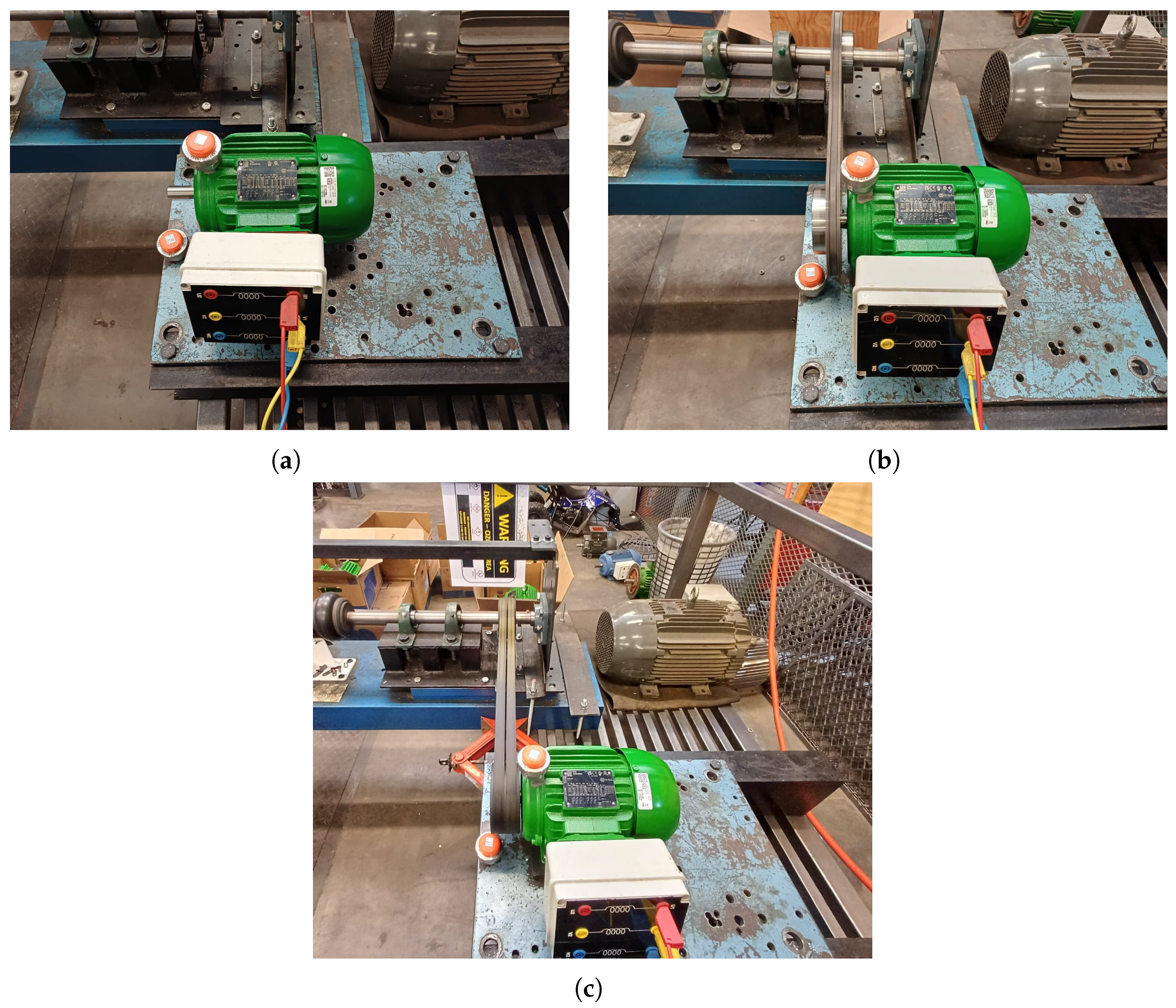
- Stand-alone. The induction motor is mounted onto the baseplate, but no other coupling connections are made; this configuration was used primarily for preliminary analysis purposes, see Figure 3a.
- Chain-sprocket condition (Unloaded). The induction motor is coupled with the shaft connected to the load using a chain-sprocket coupling, but the load is not excited with a voltage, and thus the motor only spins the shaft with no additional load, except for the friction of the components, see Figure 3b.
- Chain-sprocket condition (Loaded). The induction motor is coupled with the shaft connected to the load using a chain-sprocket coupling, and the load is excited to a voltage, which results in the induction motor operating at or close to the specified FLC as stated on its nameplate.
- V-belt pulley condition (Unloaded). The induction motor is coupled to the shaft connected to the load using a V-belt pulley coupling, but the load is not excited with a voltage, and therefore the motor only spins the shaft with no additional load, except for the friction of the components; see Figure 3c.
- V-belt pulley condition (Loaded). The induction motor is coupled with the shaft connected to the load using a V-belt pulley coupling, and the load is excited to a voltage, which results in the induction motor operating at or close to the specified FLC as stated on its nameplate.
3.2. Power–Vibration Correlation Procedure
3.3. Synthetic Signal Generation
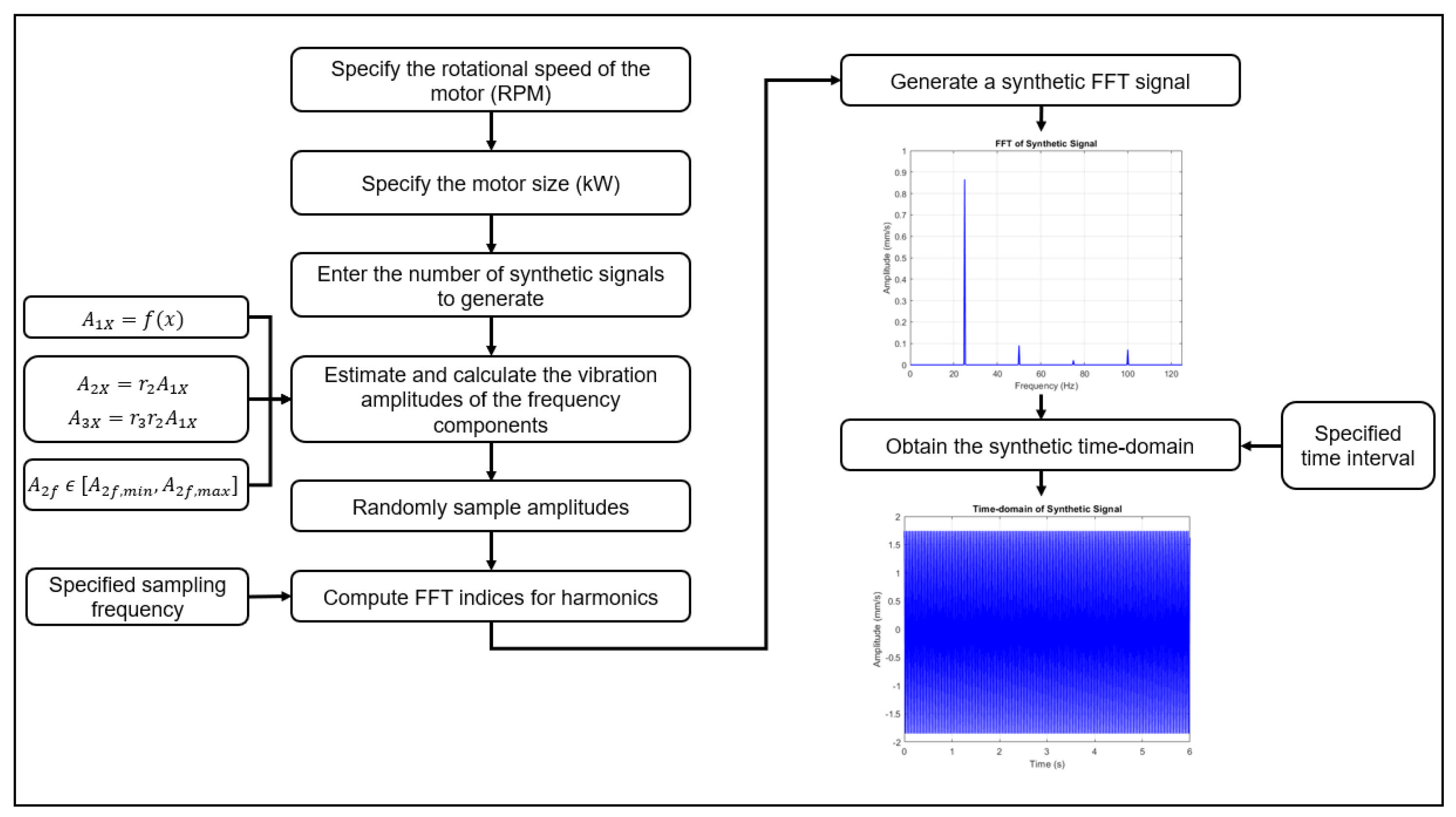
- Step 1: Input specification: The motor rotational speed (RPM) and power rating (kW) are specified as input parameters, corresponding to the target motor for which baseline signals are required.
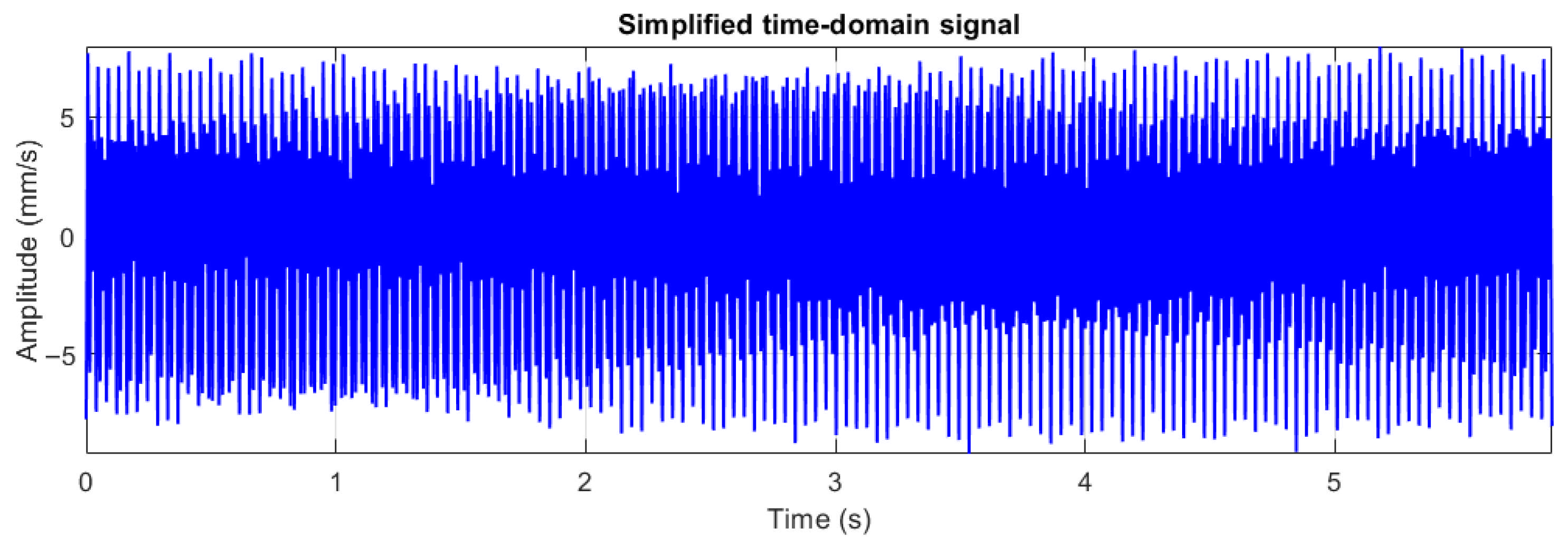
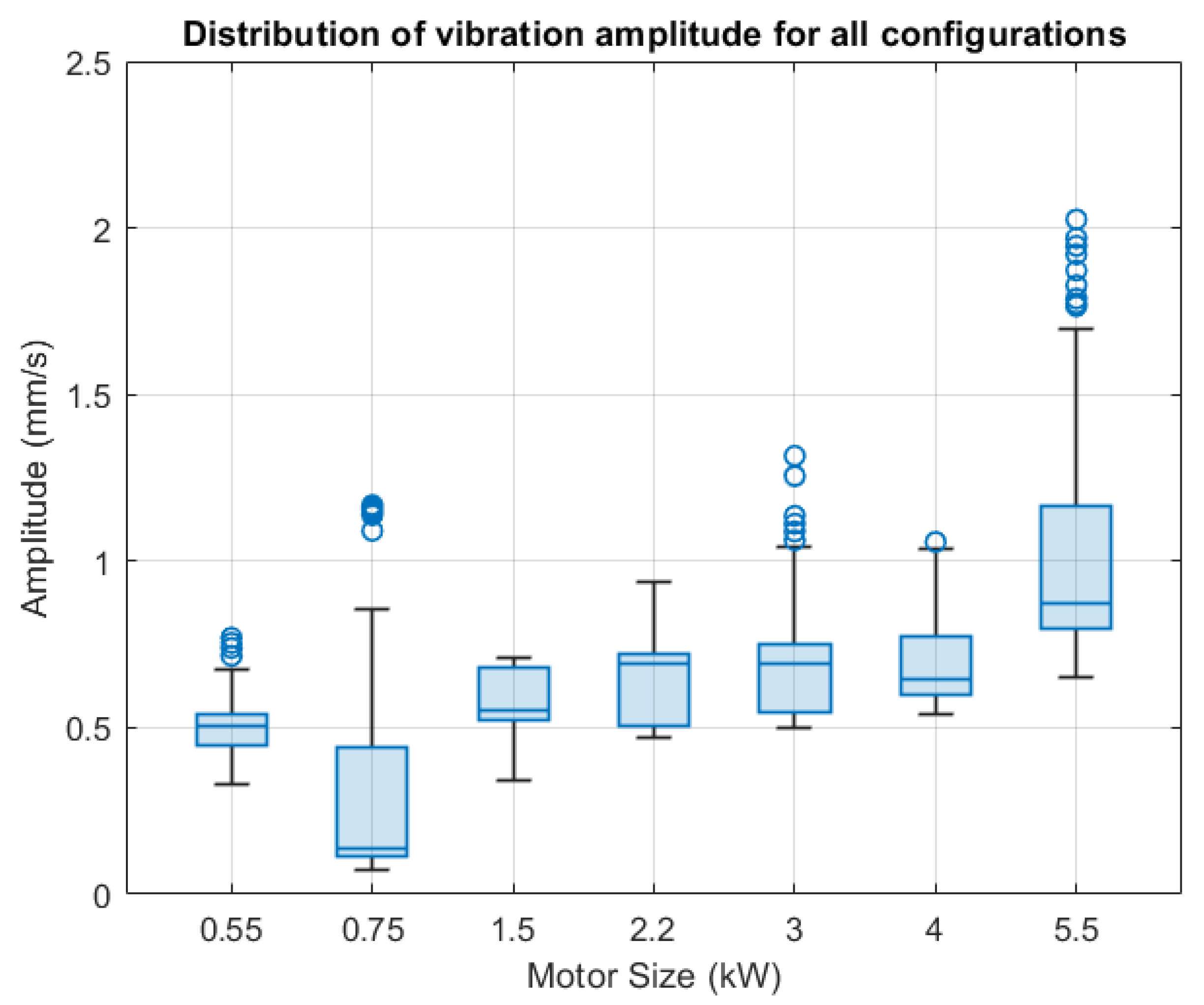
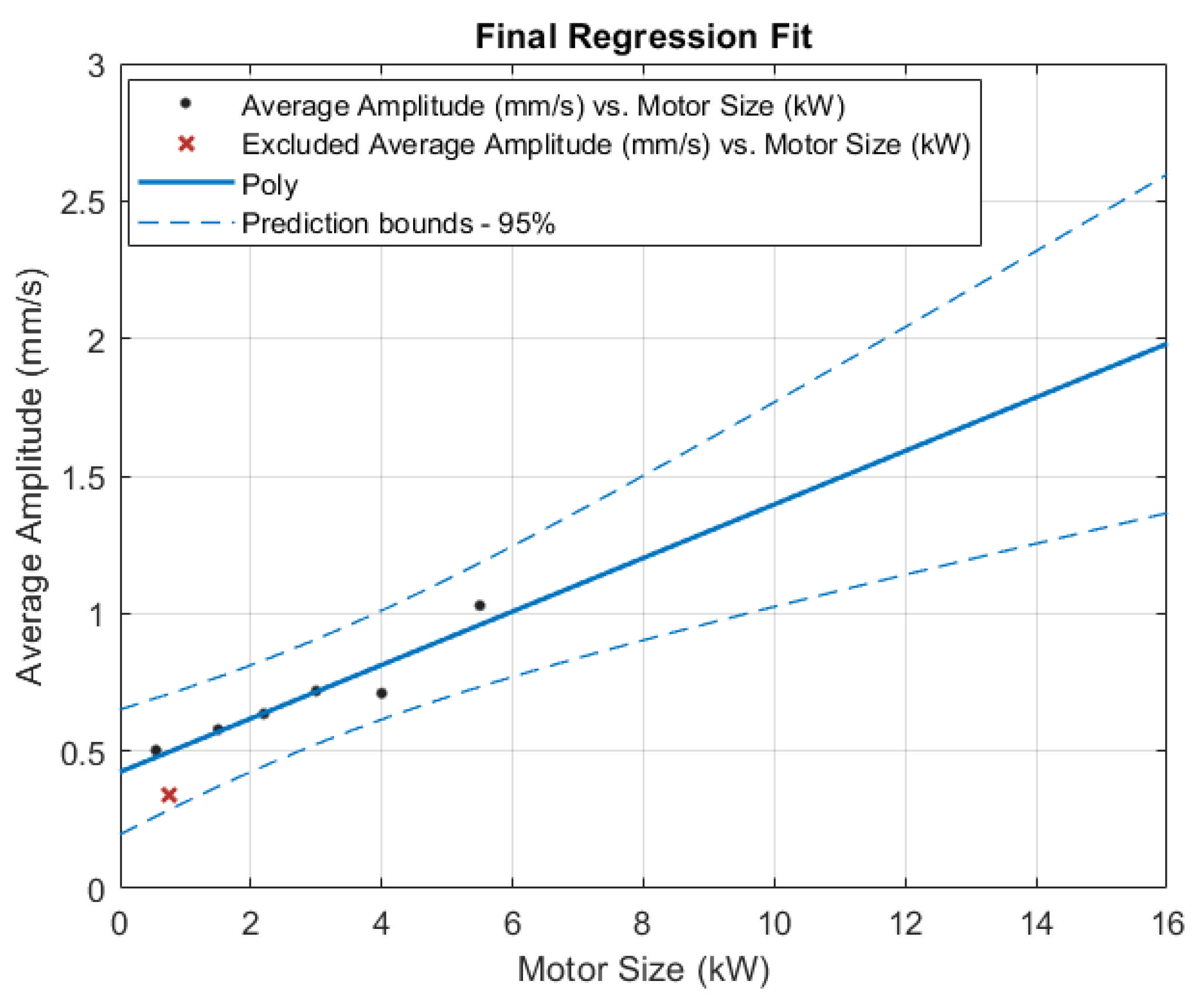
- Step 2: Fundamental amplitude estimation: The expected healthy vibration amplitude at the rotational frequency (1×) is calculated using the regression Equation (13). The 95% confidence bounds, derived from 2660 measurements across 98 configurations encompassing multiple coupling types and loading conditions, define the permissible amplitude range that captures real-world operational variability.
- Step 3: Harmonic amplitude calculation: Amplitudes for the 2× and 3× harmonics are computed as proportions of the fundamental amplitude, constrained by established vibration analysis practice [30]: where , and where . Supply frequency components (50 Hz and 100 Hz) are included at amplitudes consistent with healthy motor electromagnetic behaviour.
- Step 4: Stochastic sampling: For each synthetic signal, amplitude values are randomly sampled within the established bounds using uniform distributions. This stochastic process ensures that each generated signal exhibits unique characteristics while remaining statistically consistent with the experimentally observed healthy motor population.
- Step 5: Frequency-domain construction: FFT indices corresponding to each frequency component are computed based on the specified sampling frequency. The frequency-domain representation is populated with the sampled amplitudes at the appropriate indices.
- Step 6: Time-domain transformation: The synthetic frequency-domain signal is transformed via inverse FFT to obtain the time-domain signal of specified duration.
- Dominant frequency: For a healthy induction motor operating under direct-on-line conditions at or near synchronous speed, the dominant frequency in the frequency domain will be that of the rotational frequency of the motor, known as the fundamental frequency. This frequency peak is due to the normal mechanical unbalance in the motor and the rotation-related forces, as well as the magnetic field interactions. Thus, a dominant, stable, and relatively low amplitude peak will be observed at the rotational frequency of all healthy induction motors. The exact amplitude at this frequency for each motor size is to be established during the experimental data analysis.
- Harmonics: For a healthy induction motor, some harmonics of the rotational frequency will be present in the spectrum, which will most often only be the 2× harmonic, but the 3× harmonic might also appear under certain conditions. These are also due to mechanical rotation of motor components and should be lower than the fundamental frequency, with [30] specifying that the healthy amplitude of the 2× harmonic should typically not be greater than 50% of the amplitude at the fundamental frequency. The specification of the 3× harmonic follows the same logic as the 2× harmonic, with the assumption that the amplitude should be restricted to less than 50% of the 2× harmonic amplitude. Specifying 2× and 3× as functions of the 1× amplitude ensures that the amplitudes are not scaled unrealistically and also ensures that a wide enough range of amplitudes is included.
- Supply frequency: The frequency of the electrical supply (50 Hz) and its harmonic will always be present in the vibration spectrum of a healthy induction motor, irrespective of the type of loading and coupling. The reason why these components will be present in the healthy spectrum is because of the alternating magnetic forces in the stator field and the magnetic pull forces in the motor.
3.4. Health Index Model Training
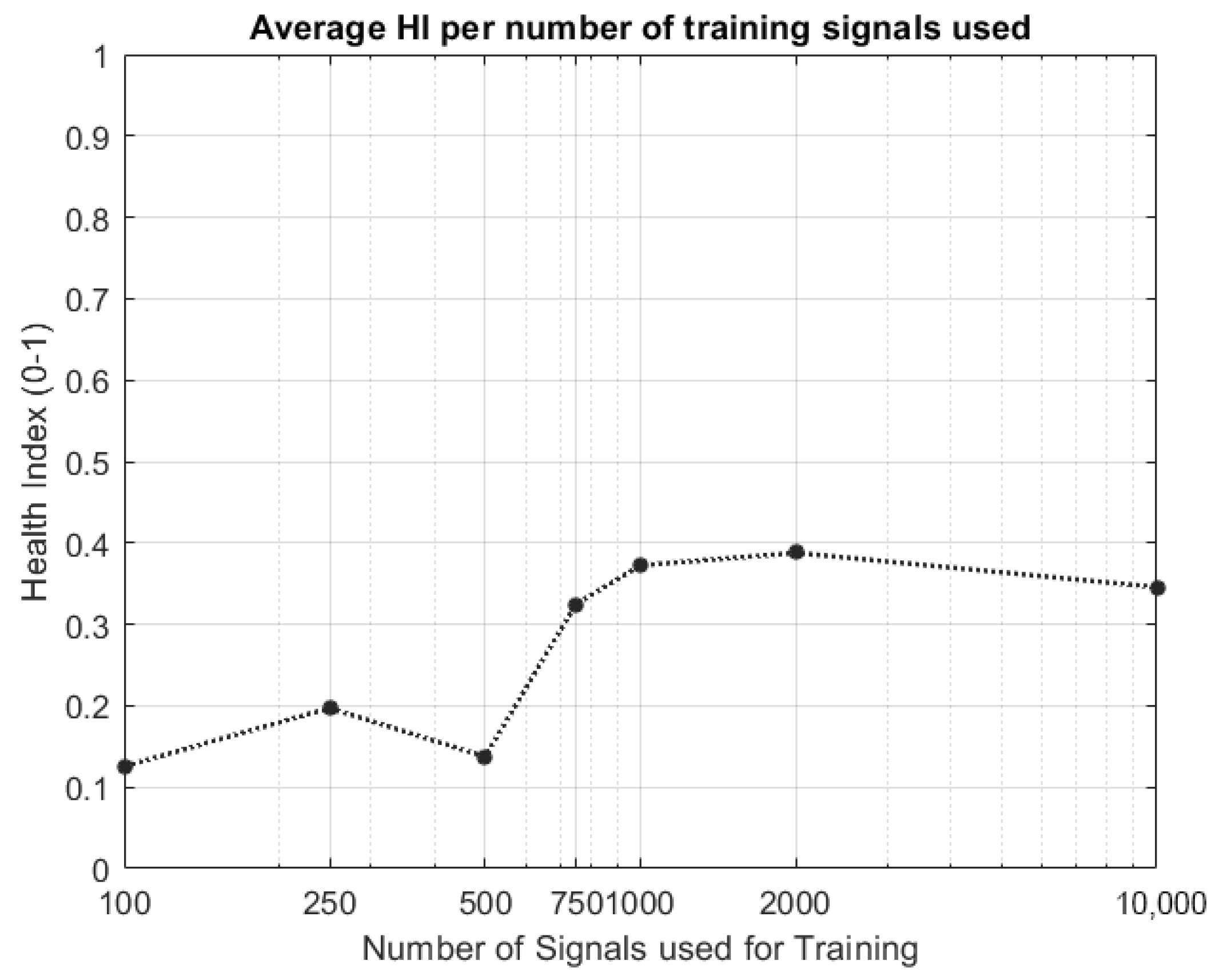
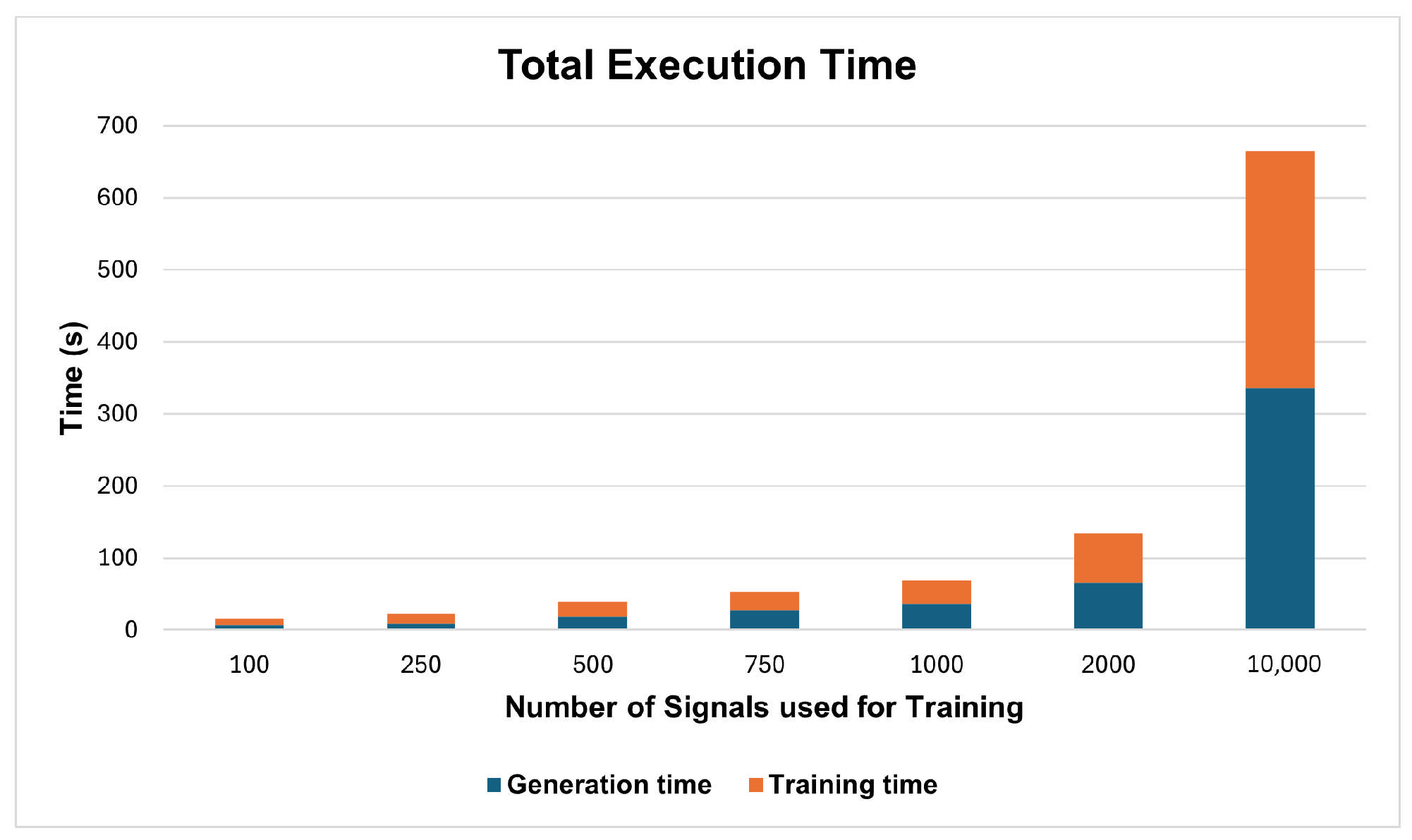
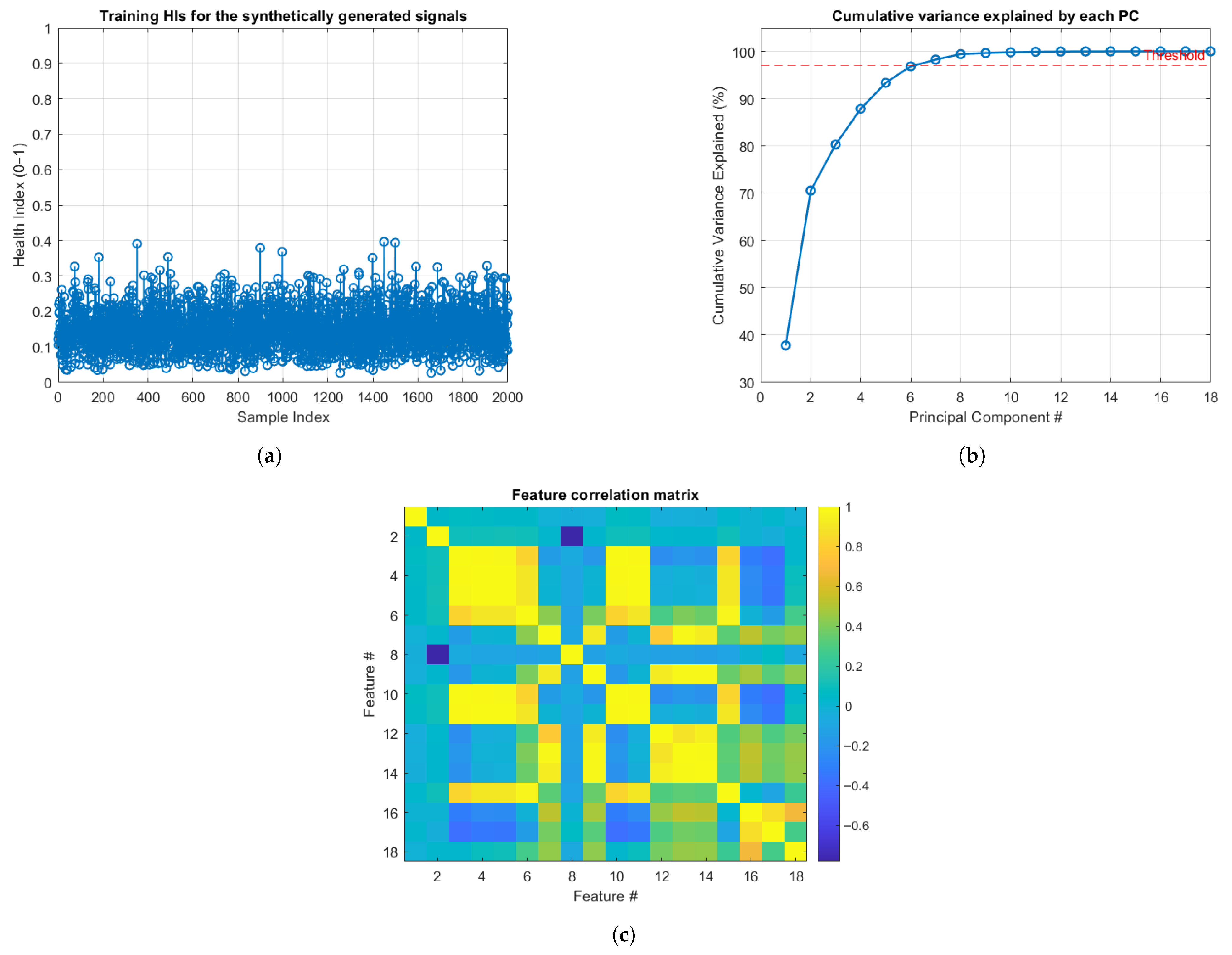
- QBS—The number of healthy baseline samples to be used for training, selected as 30% of the number of healthy synthetic signals supplied to the training algorithm.
- —The log-scaling floor of the ECDF, to avoid when scoring, and also to provide the lower limit for health degradation. Kept at the default of 0.01.
- Variance threshold—The percentage of variance the PCA should retain, selected as 97% for this study.
3.5. Fault Detection
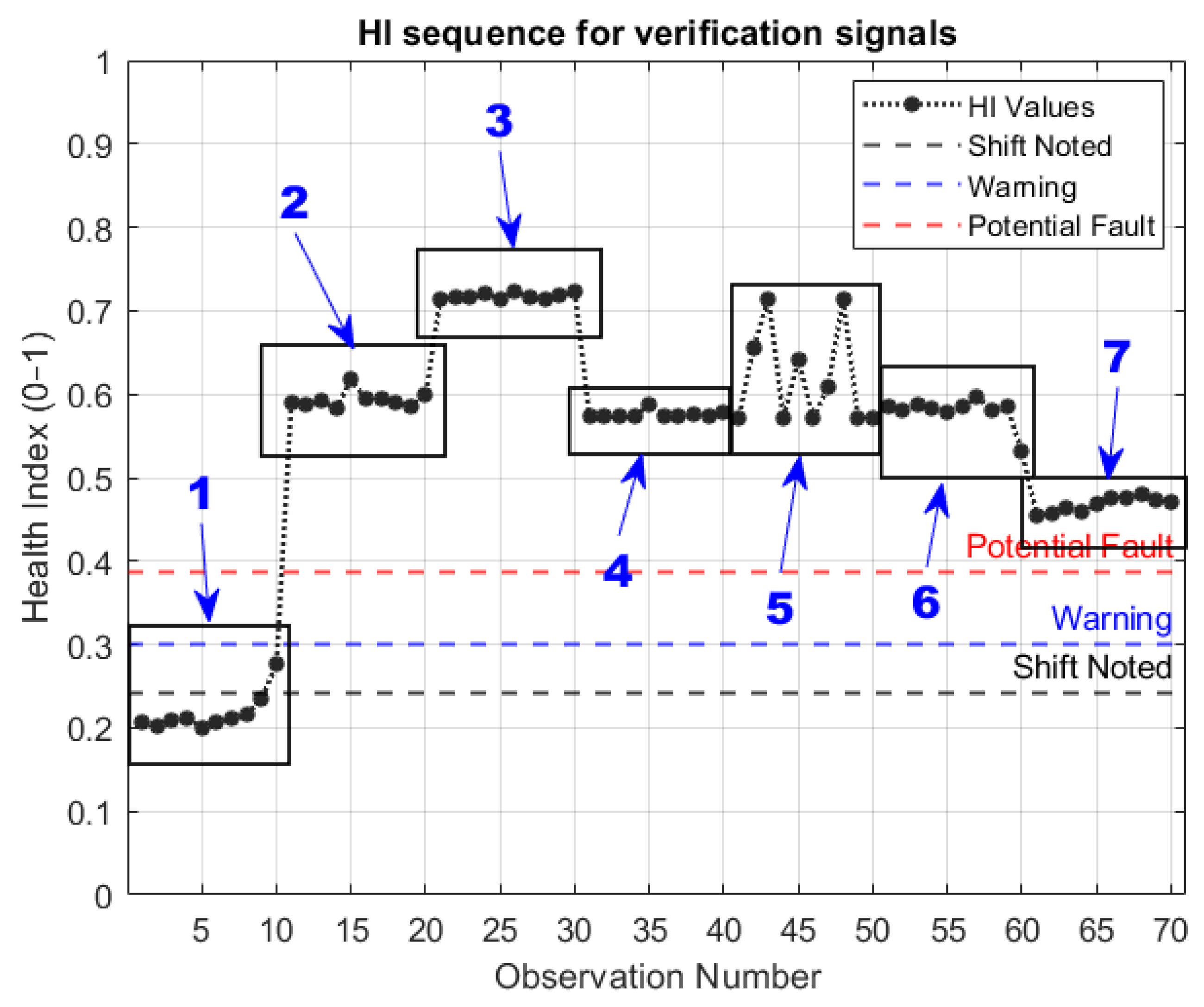
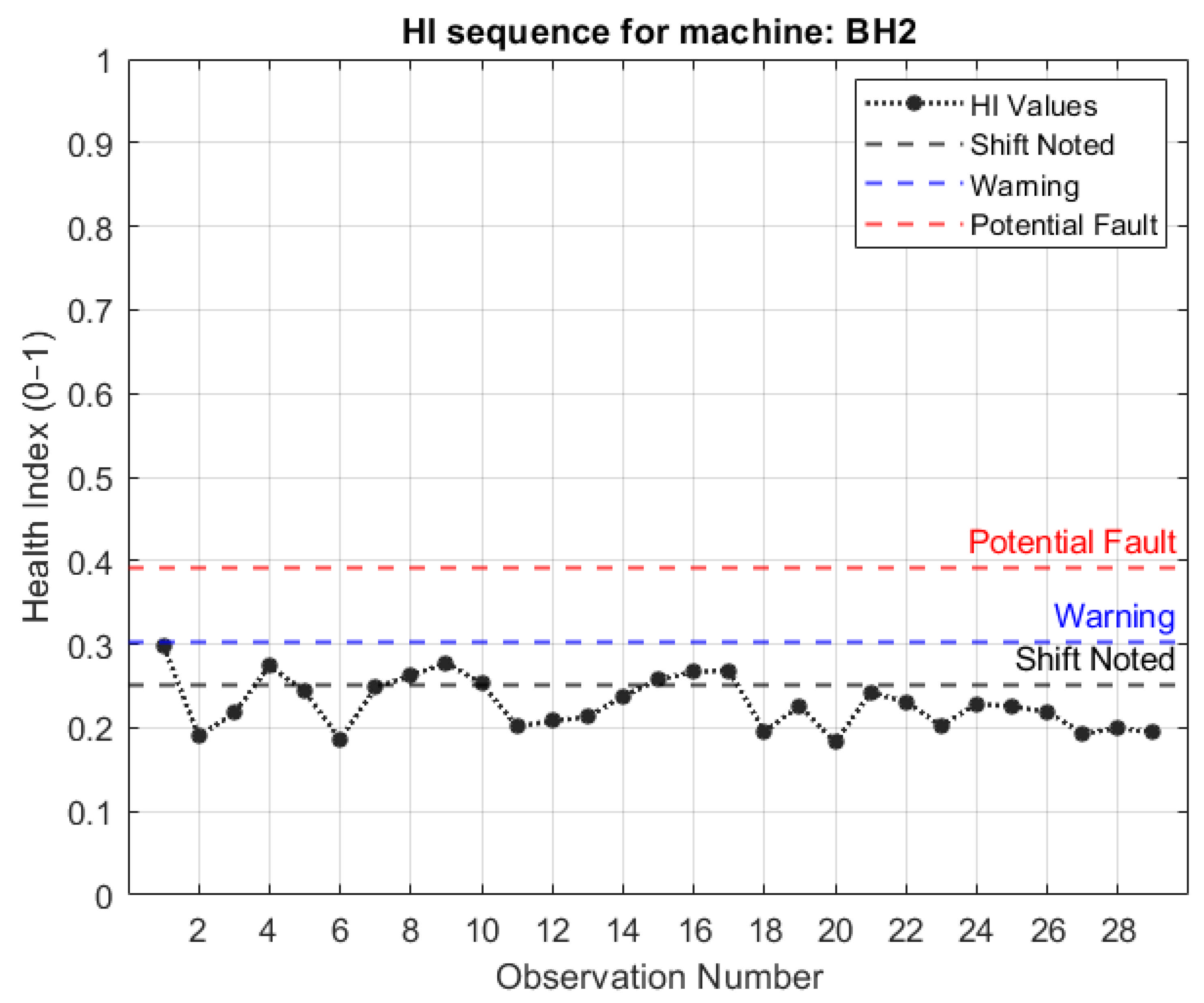
- Shift noted—A shift is noted when the HI of the new signal lies outside of the 95th percentile of the computed HIs of the healthy baseline data;
- Warning—A warning is issued when the HI of the new signal lies outside of the 99th percentile of the computed HIs of the healthy baseline data;
- Potential fault detected—When the HI of the new signal is an outlier, thus, the computed HI lies outside of the 99.9th percentile of the computed HIs of the healthy baseline data, it is classified as a deviation in the signal and thus a potential fault in the induction motor.
3.6. Fault Isolation
- Elevated: Requires that the amplitude be elevated compared to the average frequency amplitude for a the healthy component;
- Ratio: The specified ratio of the fault-frequency component to the healthy amplitude;
- Dominance: The amplitude of the specified component must be dominant (more than 2 times the amplitude of the average of the frequency components , , and ).
3.7. Fault Classification
3.8. Classification Rule Engine
- is the dominance ratio for harmonic h;
- for the first four harmonics;
- is a small constant (approaching zero) to prevent division by zero.
3.8.1. Exclusivity Penalisation
- is the penalty strength;
- is the number of true conditions not required by the mode;
- is the number of true conditions;
- is a floor to prevent the score from completely being eliminated.
3.8.2. Specificity Boost
- is the boost strength and can be tuned;
- is the count of conditions met that are unique to that mode;
- is the total number of conditions required by the mode.
3.8.3. Superset Suppression
4. Results
4.1. Power–Vibration Correlation
4.2. HI Model Training
4.3. Detection and Diagnostic Accuracy
4.4. Industrial Validation
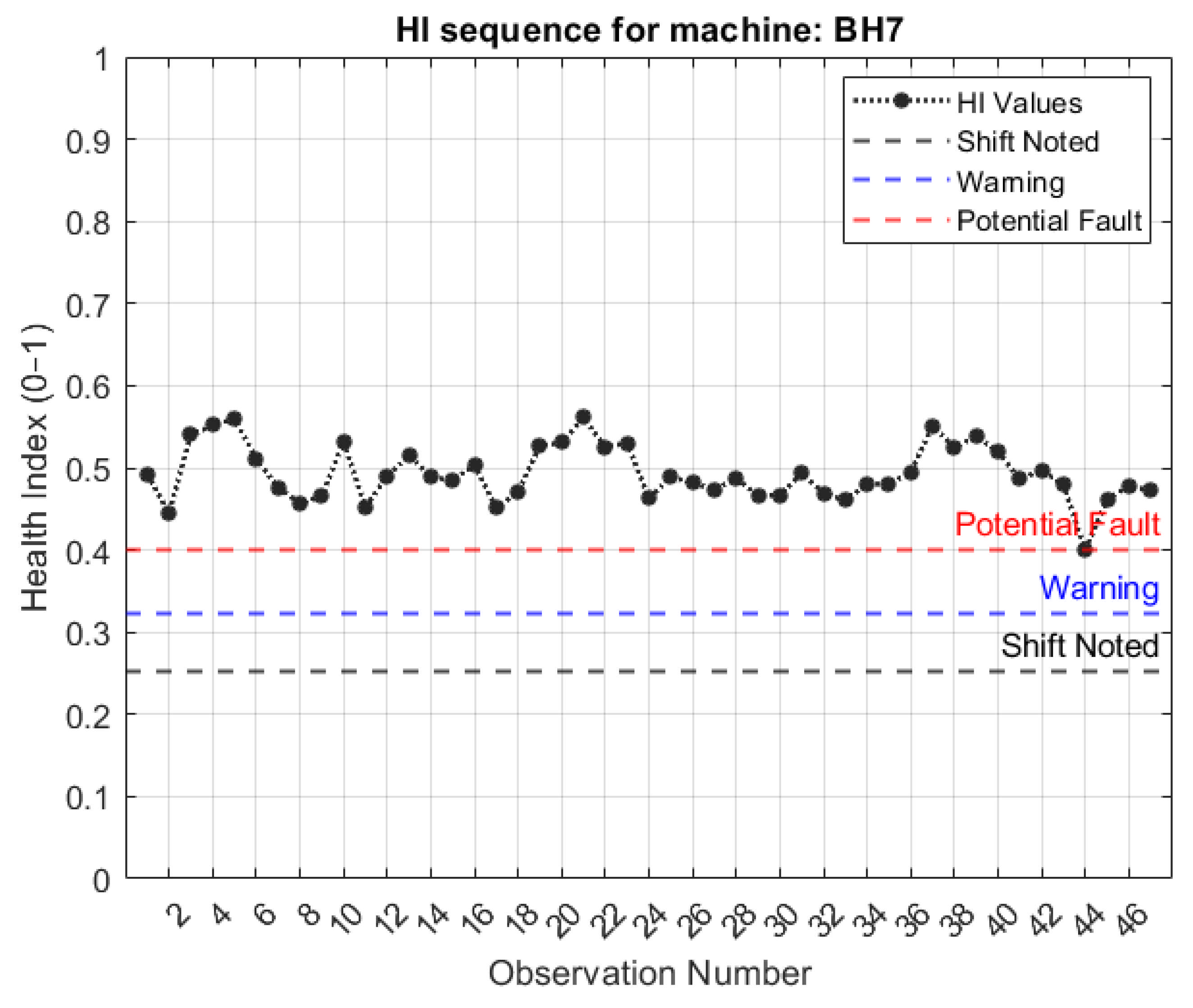
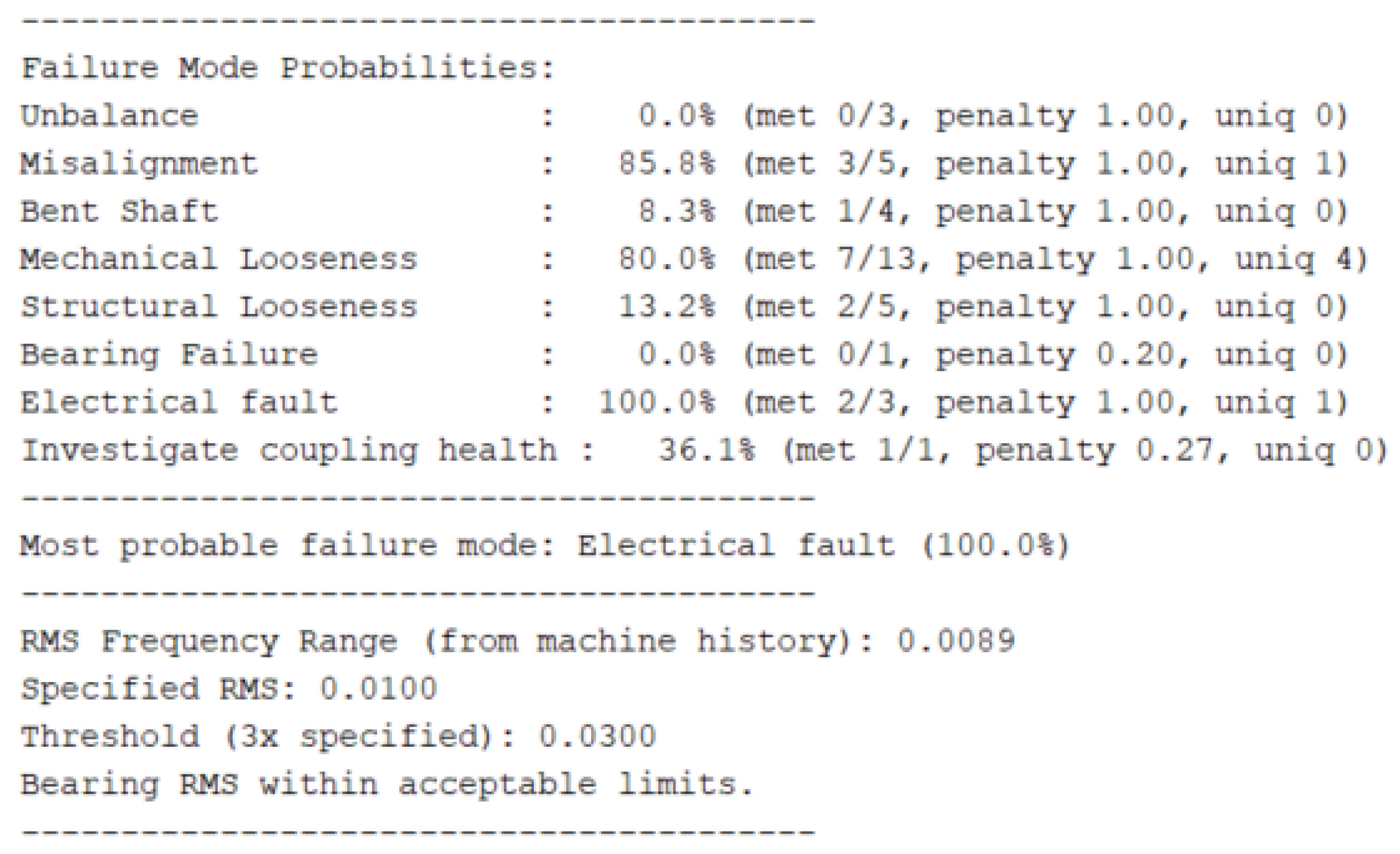
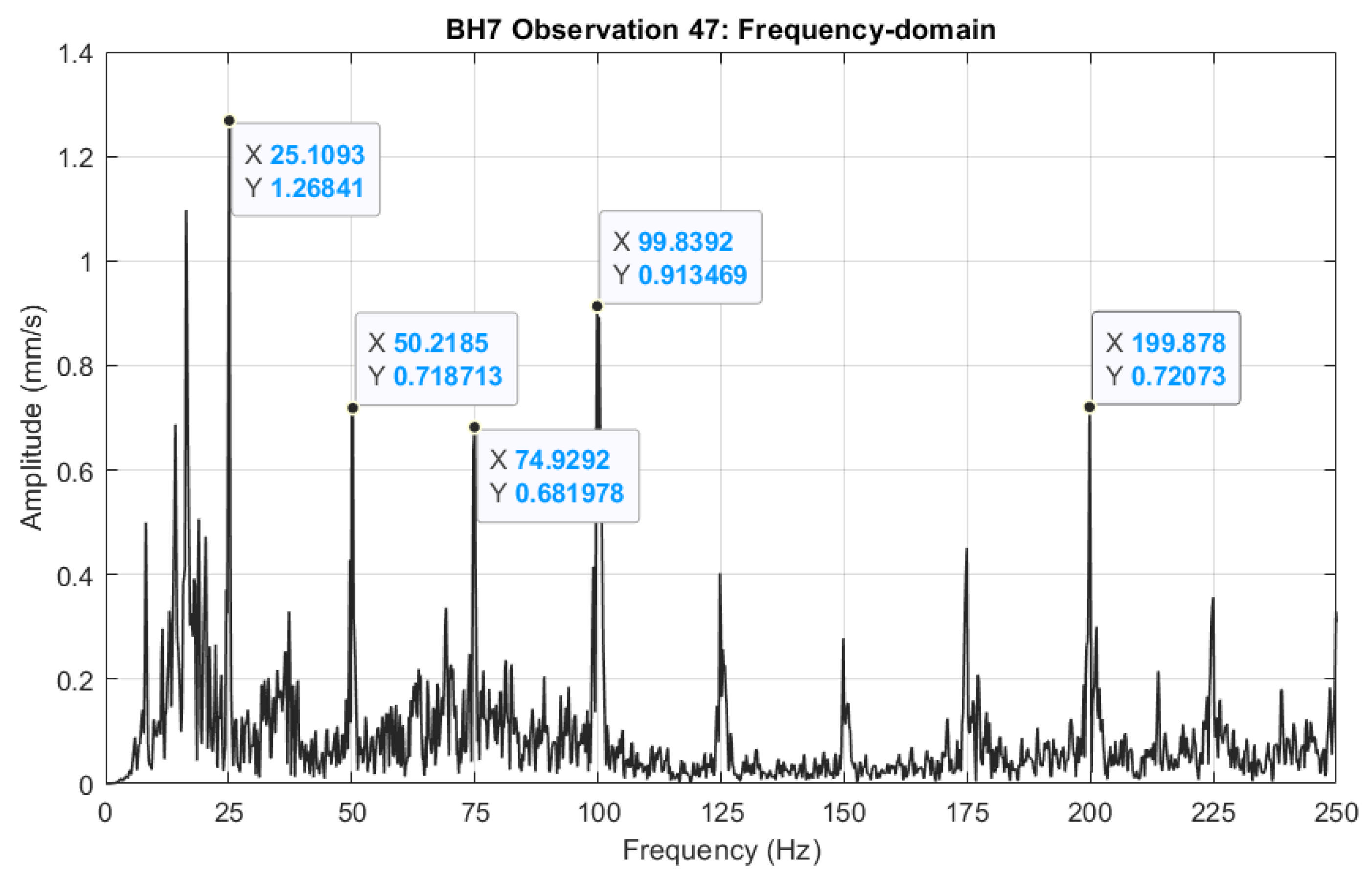
Bucket Elevators (BH2, BH7)
4.5. Conveyor Belts (VB1, VB2, VB9)
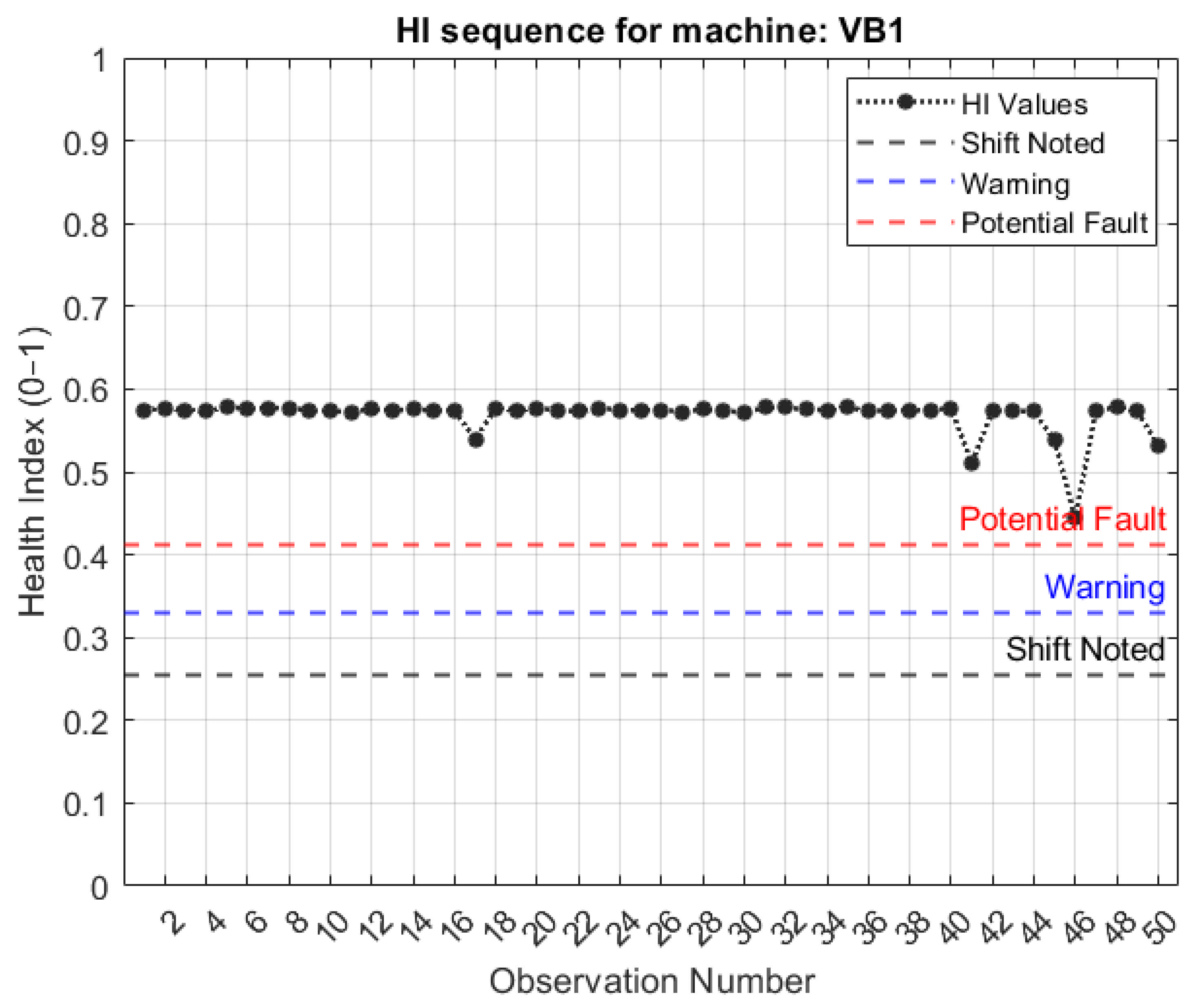
4.5.1. Conveyor VB1
4.5.2. Conveyor VB2
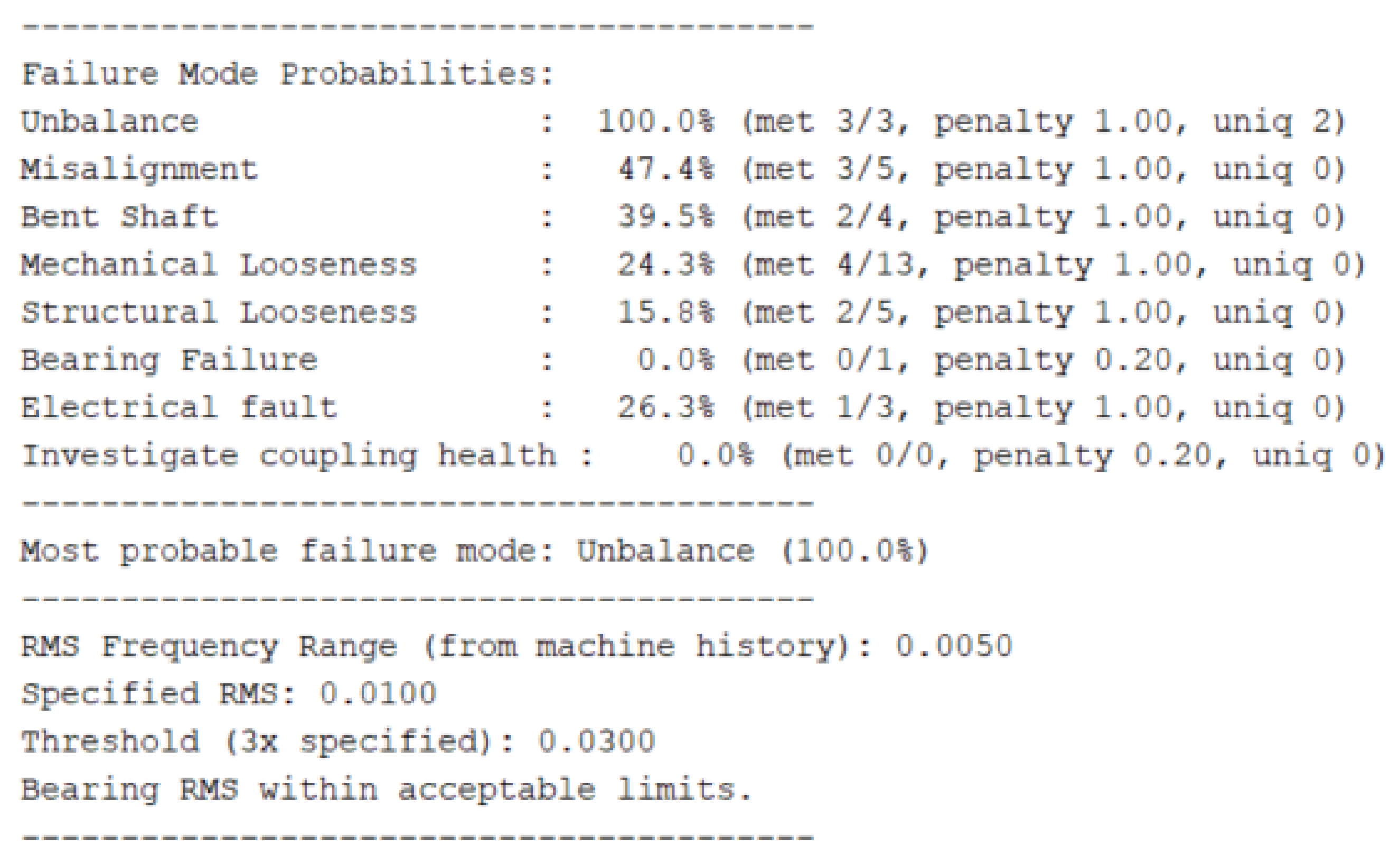
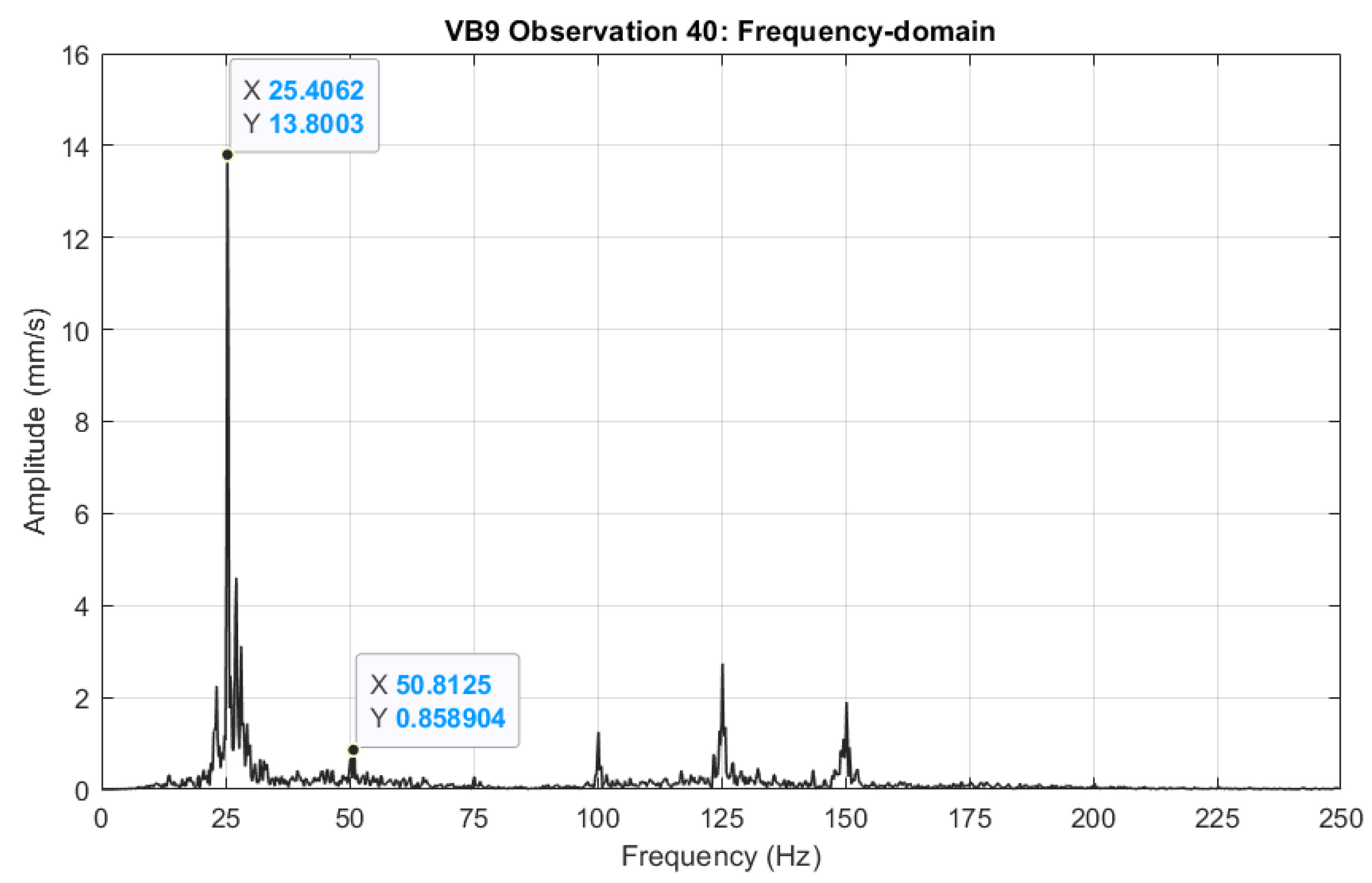
4.5.3. Conveyor VB9
5. Conclusions
- An empirical correlation between motor power rating and healthy vibration amplitude at rotational frequency for Class I induction motors was developed, expressed as , based on 2660 measurements across 98 configurations, establishing predictive relationships absent in existing standards [3];
- Validation of the JPCCED-HI framework [20] was achieved for complete motor-machine systems with industrial coupling configurations, extending beyond previously published validation cases using isolated components, to confirm its applicability under operational industrial conditions;
- A rule-based diagnostic algorithm was created that incorporates amplitude ratios, dominance weighting, and probabilistic scoring, achieving a verification accuracy of 97.1% and a successful identification of industrial faults, validated through spectrum analysis and physical inspection.
5.1. Practical Implications
5.2. Limitations
5.3. Future Work
Author Contributions
Funding
Data Availability Statement
Conflicts of Interest
Nomenclature
| Roman Symbols | |
| A | Amplitude vector of harmonic components |
| Vibration amplitude at harmonic frequency (mm/s) | |
| Training amplitudes at harmonic h | |
| B | Specificity boost factor |
| Dominance ratio for harmonic h | |
| Elevation indicator (binary) | |
| Regression function for power–vibration correlation | |
| h | Harmonic index |
| n | Number of harmonics considered |
| Number of true conditions not required by fault mode | |
| Total conditions required by fault mode | |
| Total number of true conditions | |
| Count of uniquely satisfied conditions | |
| Linear regression coefficients | |
| Percentile level for harmonic h | |
| Exclusivity penalty factor | |
| Minimum penalty floor (0.2) | |
| Inter-harmonic amplitude ratio () | |
| Coefficient of determination | |
| Relaxation factor for harmonic h | |
| Threshold at harmonic h | |
| Health Index percentile thresholds | |
| x | Motor power rating (kW) |
| Greek Symbols | |
| Specificity boost strength (0.4) | |
| Exclusivity penalty strength (0.8) | |
| Log-scaling floor for ECDF (0.01) | |
| Small constant for numerical stability | |
| Standard deviation | |
Abbreviations
| CBM | Condition-based maintenance |
| DE | Drive end |
| ECDF | Empirical cumulative distribution function |
| FFT | Fast Fourier transform |
| HI | Health Index |
| PCA | Principal component analysis |
| QBS | Quantile-based sample size |
| RMS | Root mean square |
| RUL | Remaining useful life |
| SSE | Sum of squared errors |
References
- Bengtsson, M. On Condition Based Maintenance and Its Implementation in Industrial Settings. Ph.D. Thesis, Mälardalen University, Västerås, Sweden, 2007. [Google Scholar] [CrossRef]
- Molęda, M.; Małysiak-Mrozek, B.; Ding, W.; Sunderam, V.; Mrozek, D. From Corrective to Predictive Maintenance—A Review of Maintenance Approaches for the Power Industry. Sensors 2023, 23, 5970. [Google Scholar] [CrossRef] [PubMed]
- ISO 20816-1:2016; Mechanical Vibration—Measurement and Evaluation of Machine Vibration—Part 1: General Guidelines. ISO: Geneva, Switzerland, 2016.
- Mobley, R.K. Maintenance Fundamentals, 2nd ed.; Elsevier: Burlington, MA, USA, 2004. [Google Scholar]
- Poór, P.; Ženíšek, D.; Basl, J. Historical Overview of Maintenance Management Strategies: Development from Breakdown Maintenance to Predictive Maintenance in Accordance with Four Industrial Revolutions. In Proceedings of the International Conference on Industrial Engineering and Operations Management, Pilsen, Czech Republic, 23–26 July 2019. [Google Scholar]
- Mobley, R.K. An Introduction to Predictive Maintenance; Elsevier: Amsterdam, The Netherlands, 2002. [Google Scholar]
- Anomuoghanran, O.G. Condition-Based Monitoring and Predictive Maintenance for Plant Equipment. Master’s Thesis, Engineering Institute of Technology, Lagos, Nigeria, 2018. [Google Scholar]
- Teixeira, H.N.; Lopes, I.; Braga, A.C. Condition-based maintenance implementation: A literature review. Procedia Manuf. 2020, 51, 228–235. [Google Scholar] [CrossRef]
- Zhou, J.; Yang, J.; Qin, Y. A systematic overview of health indicator construction methods for rotating machinery. Eng. Appl. Artif. Intell. 2024, 138, 109356. [Google Scholar] [CrossRef]
- Widodo, A.; Yang, B.-S.; Han, T. Combination of Independent Component Analysis and Support Vector Machines for Intelligent Faults Diagnosis of Induction Motors. Expert Syst. Appl. 2007, 32, 299–312. [Google Scholar] [CrossRef]
- Bousdekis, A.; Magoutas, B.; Apostolou, D.; Mentzas, G. A proactive decision making framework for condition-based maintenance. Ind. Manag. Data Syst. 2015, 115, 1225–1250. [Google Scholar] [CrossRef]
- Hong, S.; Zhou, Z.; Zio, E.; Wang, W. An adaptive method for health trend prediction of rotating bearings. Digit. Signal Process. 2014, 35, 117–123. [Google Scholar] [CrossRef]
- Rastegari, A.; Bengtsson, M. Implementation of Condition Based Maintenance in Manufacturing Industry—A Pilot Case Study. In Proceedings of the 2014 International Conference on Prognostics and Health Management, Cheney, WA, USA, 22–25 June 2014. [Google Scholar] [CrossRef]
- Irfan, M.; Saad, N.M.; Ibrahim, R.; Chai, M.; Asirvadam, V.S. Analysis of distributed faults in inner and outer race of bearing via Park vector analysis method. Neural Comput. Appl. 2019, 31, 683–691. [Google Scholar] [CrossRef]
- Touret, T.; Changenet, C.; Ville, F.; Lalmi, M.; Becquerelle, S. On the use of temperature for online condition monitoring of geared systems—A review. Mech. Syst. Signal Process. 2018, 101, 197–210. [Google Scholar] [CrossRef]
- WEG. Basic Parts of a Three Phase (3−Φ) Squirrel Cage Induction Motor; WEG: Jaraguá do Sul, Brazil, 2025. [Google Scholar]
- Sarma, N.; Tuohy, P.; Djurovic, S. Condition monitoring of rotating electrical machines. In Encyclopedia of Electrical and Electronic Power Engineering; Elsevier: Amsterdam, The Netherlands, 2022; pp. 143–154. [Google Scholar] [CrossRef]
- PRÜFTECHNIK. Vibration Handbook: Fundamentals, Transducers, Measurement Methods; PRÜFTECHNIK: Singapore, 1992. [Google Scholar]
- Rao, S. Mechanical Vibrations, 6th ed.; Pearson Education: London, UK, 2018. [Google Scholar]
- Song, H.; Sun, Y.; Gao, H.; Guo, L.; Wu, T. A novel HI construction method based on healthy-state data training for rotating machinery components. Struct. Health Monit. 2024, 24, 3849–3867. [Google Scholar] [CrossRef]
- Qiu, H.; Lee, J.; Lin, J.; Yu, G. Wavelet filter-based weak signature detection method and its application on rolling element bearing prognostics. J. Sound Vib. 2006, 289, 1066–1090. [Google Scholar] [CrossRef]
- Huang, Y.; Yu, J.; Qiu, M.; Chen, Z. Bearing Condition Recognition and Degradation Assessment Based on Neighborhood Preserving Embedding. Shock Vib. 2014, 2014, 781583. [Google Scholar] [CrossRef]
- Yan, X.; Liu, Y.; Jia, M. Health condition identification for rolling bearing using a multi-domain indicator-based optimized stacked denoising autoencoder. Struct. Health Monit. 2019, 19, 1602–1626. [Google Scholar] [CrossRef]
- Guo, L.; Li, N.; Jia, F.; Lei, Y.; Lin, J. A recurrent neural network based health indicator for remaining useful life prediction of bearings. Neurocomputing 2017, 240, 98–109. [Google Scholar] [CrossRef]
- Li, Q.; Yan, C.; Chen, G.; Wang, H.; Li, H.; Wu, L. Remaining Useful Life prediction of rolling bearings based on risk assessment and degradation state coefficient. ISA Trans. 2022, 129, 413–428. [Google Scholar] [CrossRef]
- Li, Q.; Yan, C.; Wang, W.; Babiker, A.; Wu, L. Health indicator construction based on MD-CUMSUM with multi-domain features selection for rolling element bearing fault diagnosis. IEEE Access 2019, 7, 138528–138540. [Google Scholar]
- Schwartz, S.; Montero Jiménez, J.J.; Vingerhoeds, R.; Salaün, M. An unsupervised approach for health index building and for similarity-based remaining useful life estimation. Measurement 2022, 199, 111510. [Google Scholar] [CrossRef]
- Jardine, A.K.S.; Lin, D.; Banjevic, D. A review on machinery diagnostics and prognostics implementing condition-based maintenance. Mech. Syst. Signal Process. 2006, 20, 1483–1510. [Google Scholar] [CrossRef]
- van Blerk, W. A Web-Based Multilevel Framework for Condition Monitoring of Industrial Equipment. Master’s Thesis, North-West University, Potchefstroom, South Africa, 2019. [Google Scholar]
- Mais, J. Spectrum Analysis: The Key Features of Analyzing Spectra; SKF USA Inc.: Philadelphia, PA, USA, 2002. [Google Scholar]
- Dadfarnia, M.; Sharp, M.E.; Herrmann, J.W. Comprehensive evaluations of condition monitoring-based technologies in industrial maintenance: A systematic review. J. Manuf. Syst. 2025, 82, 449–477. [Google Scholar] [CrossRef]
- Sharma, R.; Parey, A.; Tandon, N. Review of rotating machinery elements condition monitoring using acoustic emission signal. Expert Syst. Appl. 2024, 255, 124536. [Google Scholar] [CrossRef]
- Qi, R.; Zhang, J.; Spencer, K. A Review on Data-Driven Condition Monitoring of Industrial Equipment. Algorithms 2023, 16, 9. [Google Scholar] [CrossRef]
- Bengtsson, M. Condition Based Maintenance Systems—An Investigation of Technical Constituents and Organizational Aspects. Master’s Thesis, Mälardalen University, Västerås, Sweden, 2004. [Google Scholar]
- Hu, X.; Tang, T.; Tan, L.; Zhang, H. Fault Detection for Point Machines: A Review, Challenges, and Perspectives. Actuators 2023, 12, 391. [Google Scholar] [CrossRef]
- Covary, T.; Reddy, L.; Meintjes, S. Cost Benefit Analysis to Introduce Minimum Energy Performance Standards (MEPS) for Electric Motors in South Africa; Report prepared for CLASP for submission to the Department of Mineral Resources and Energy (DMRE) and the South African National Energy Development Institute (SANEDI) 1; South African National Energy Development Institute (SANEDI): Johannesburg, South Africa, 2021. [Google Scholar]
- Singh, G.K.; Al Kazzaz, S.A.S. Induction machine drive condition monitoring and diagnostic research—A survey. Electr. Power Syst. Res. 2003, 64, 145–158. [Google Scholar] [CrossRef]
- Collacott, R. Mechanical Fault Diagnosis and Condition Monitoring; Springer Science & Business Media: Berlin/Heidelberg, Germany, 2012. [Google Scholar]
- Mehala, N. Condition Monitoring and Fault Diagnosis of Induction Motor Using Motor Current Signature Analysis. Ph.D. Thesis, National Institute of Technology, Kurukshetra, India, 2010. [Google Scholar]
- Mehala, N. Current signature analysis for condition monitoring of motors. Int. J. Electron. Comput. Sci. Eng. 2012, 1, 1629–1633. [Google Scholar]
- Stols, A. Implementing a Remote Condition Monitoring System for South African Gold Mines. Ph.D. Thesis, North-West University, Potchefstroom, South Africa, 2019. [Google Scholar]
- Ayankoso, S.; Dutta, A.; He, Y.; Gu, F.; Ball, A.; Pal, S.K. Performance of vibration and current signals in the fault diagnosis of induction motors using deep learning and machine learning techniques. Struct. Health Monit. 2024, 25, 196–212. [Google Scholar] [CrossRef]



| Power Rating (kW) | Frame Size (IEC) |
|---|---|
| 0.55 | 80 |
| 0.75 | 80 |
| 1.5 | 90 L |
| 2.2 | 100 L |
| 3 | 100 L |
| 4 | 112 M |
| 5.5 | 132 S |
| Configuration | Sub Configurations | Number of Measurements | Total Signals |
|---|---|---|---|
| Stand-alone | 28 | 30 | 840 |
| Chain-sprocket (unloaded) | 28 | 30 | 840 |
| Chain-sprocket (loaded) | 28 | 30 | 840 |
| V-belt pulley (unloaded) | 7 | 10 | 70 |
| V-belt pulley (loaded) | 7 | 10 | 70 |
| Time-Domain Signal Features | ||||
|---|---|---|---|---|
| (1) Mean | (2) Median | (3) Standard Deviation | (4) Variance | (5) Peak-to-Peak |
| (6) Mean Absolute Difference | (7) RMS | (8) Mean Absolute Value | (9) Kurtosis | (10) Skewness |
| (11) Crest Factor | (12) Shape Factor | (13) Impulse Factor | (14) Clearance Factor | (15) Peak Value |
| Frequency-Domain Signal Features | ||
|---|---|---|
| (16) Spectral Centroid | (17) Spectral Spread | (18) Spectral Entropy |
| Failure Mode | Elevated Components | Ratios | Dominant Components |
|---|---|---|---|
| Unbalance | |||
| Misalignment | , , | ||
| Bent shaft | , | ||
| Mechanical looseness | , , , | , | |
| Structural looseness | , | ||
| Electrical fault |
| Regression Fit | 0.55 kW | 0.75 kW | 1.5 kW | 2.2 kW | 3 kW | 4 kW | 5.5 kW | Average |
|---|---|---|---|---|---|---|---|---|
| Linear polynomial | 84.87% | 67.16% | 96.93% | 88.24% | 98.80% | 74.63% | 87.93% | 85.51% |
| Exponential | 89.83% | 61.97% | 95.91% | 85.33% | 97.23% | 77.76% | 84.39% | 84.63% |
| 1-term power | 75.35% | 73.54% | 98.13% | 93.89% | 94.00% | 73.30% | 93.72% | 85.99% |
| 2-term power | 87.35% | 65.04% | 95.87% | 86.63% | 99.50% | 75.53% | 86.39% | 85.19% |
| Logarithmic | 73.60% | 70.24% | 92.31% | 97.73% | 92.30% | 75.10% | 99.38% | 85.81% |
| p1 | p2 | |
|---|---|---|
| Upper confidence bound | 0.1416 | 0.5668 |
| Coefficient | 0.0973 | 0.4236 |
| Lower confidence bound | 0.0530 | 0.2804 |
| 0.5× | 1× | 2× | 3× | 4× | 5× | 6× | 7× | 8× | |
|---|---|---|---|---|---|---|---|---|---|
| 1—Healthy | 0 | 0.60 | 0.15 | 0.05 | 0.25 | 0 | 0 | 0 | 0 |
| 2—Unbalance | 0 | 5.00 | 0.15 | 0.05 | 0.25 | 0 | 0 | 0 | 0 |
| 3—Misalignment | 0 | 5.00 | 3.50 | 1.75 | 0.25 | 0 | 0 | 0 | 0 |
| 4—Bent shaft | 0 | 5.00 | 7.50 | 0.10 | 0.25 | 0 | 0 | 0 | 0 |
| 5—Mechanical looseness | 1.25 | 5.00 | 2.00 | 1.50 | 1.25 | 1.25 | 1.20 | 1.15 | 1.05 |
| 6—Structural looseness | 0 | 0.60 | 2.40 | 3.00 | 0.25 | 0 | 0 | 0 | 0 |
| 7—Electrical fault | 0 | 0.60 | 0.15 | 0.05 | 2.50 | 0 | 0 | 0 | 0 |
| 1 | 2 | 3 | 4 | 5 | 6 | 7 | Accuracy | |
|---|---|---|---|---|---|---|---|---|
| 1—Healthy | 10 | 100% | ||||||
| 2—Unbalance | 10 | 100% | ||||||
| 3—Misalignment | 10 | 100% | ||||||
| 4—Bent shaft | 8 | 2 | 80% | |||||
| 5—Mechanical looseness | 10 | 100% | ||||||
| 6—Structural looseness | 10 | 100% | ||||||
| 7—Electrical fault | 10 | 100% |
| Equipment ID | Within Healthy Range | Shift Noted | Warning | Potential Fault | Diagnostic Result |
|---|---|---|---|---|---|
| BH2 | 21 | 8 | 0 | 0 | Healthy |
| BH7 | 0 | 0 | 1 | 46 | Electrical fault |
| KLL5 | 22 | 17 | 1 | 0 | Healthy |
| KLL6 | 34 | 6 | 0 | 0 | Healthy |
| KT1 | 0 | 0 | 30 | 5 | Healthy |
| KT2 | 0 | 0 | 22 | 15 | Healthy |
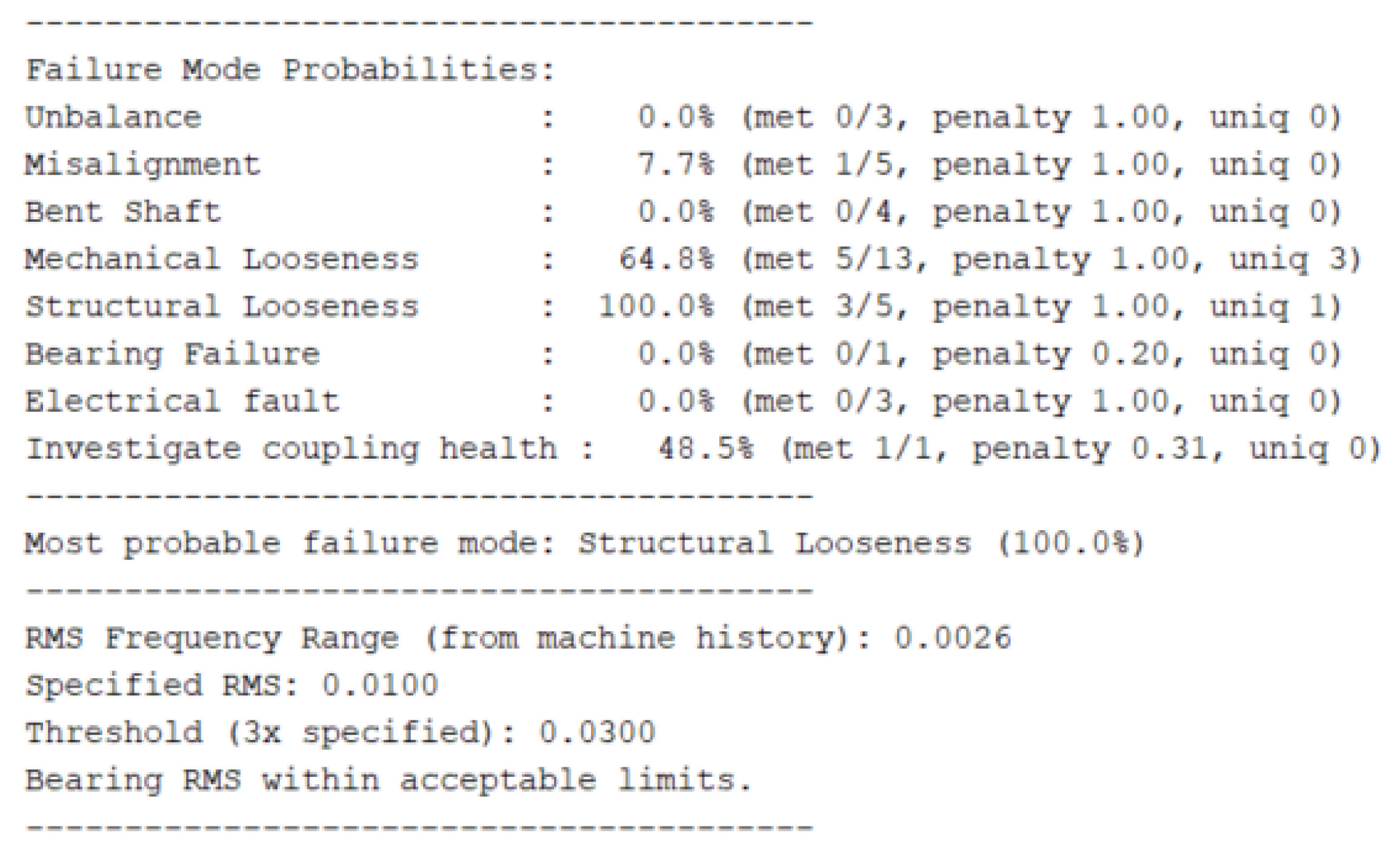
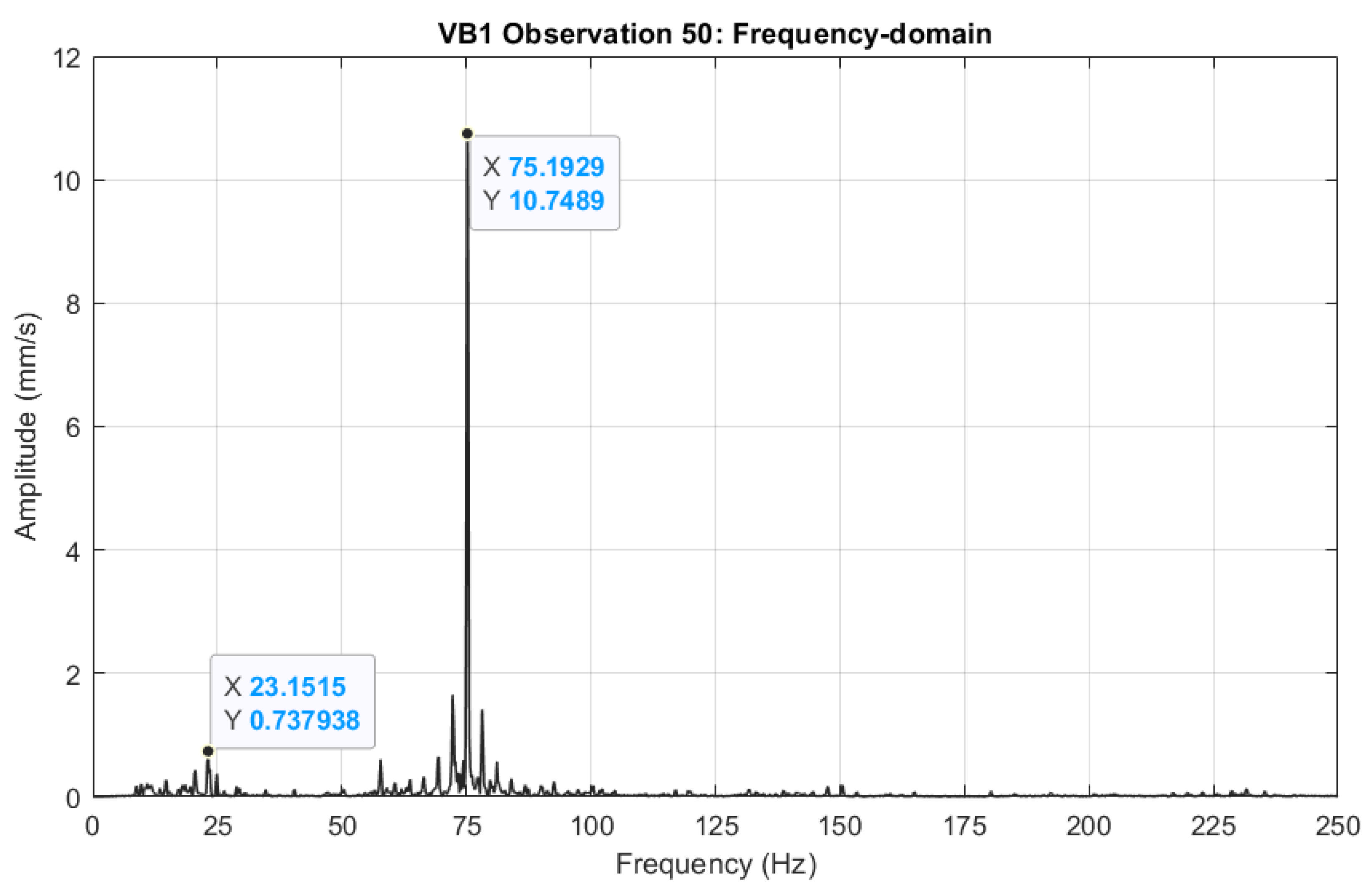
| VB1 | 0 | 0 | 0 | 50 | Structural looseness |
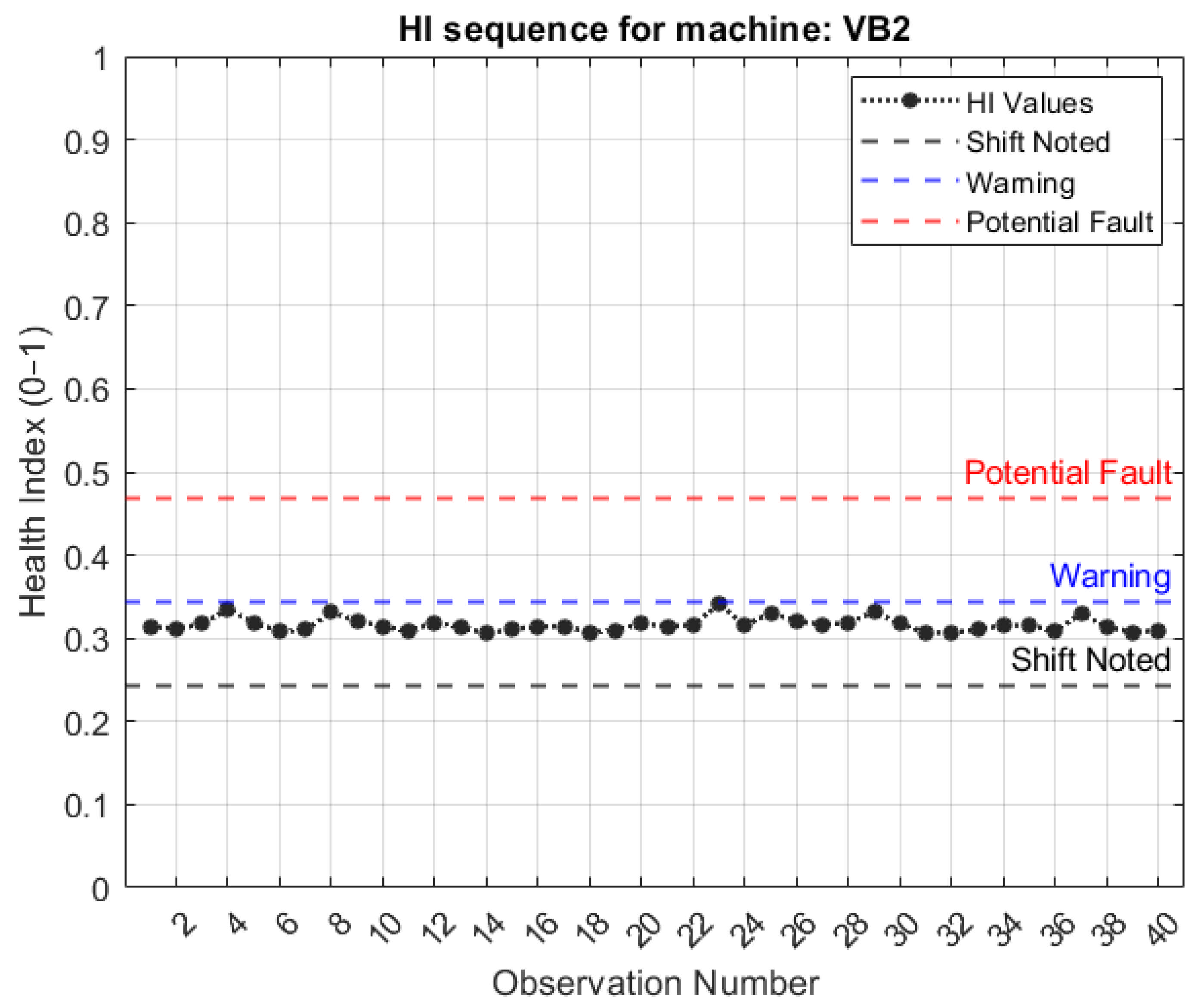
| VB2 | 0 | 40 | 0 | 0 | Healthy |
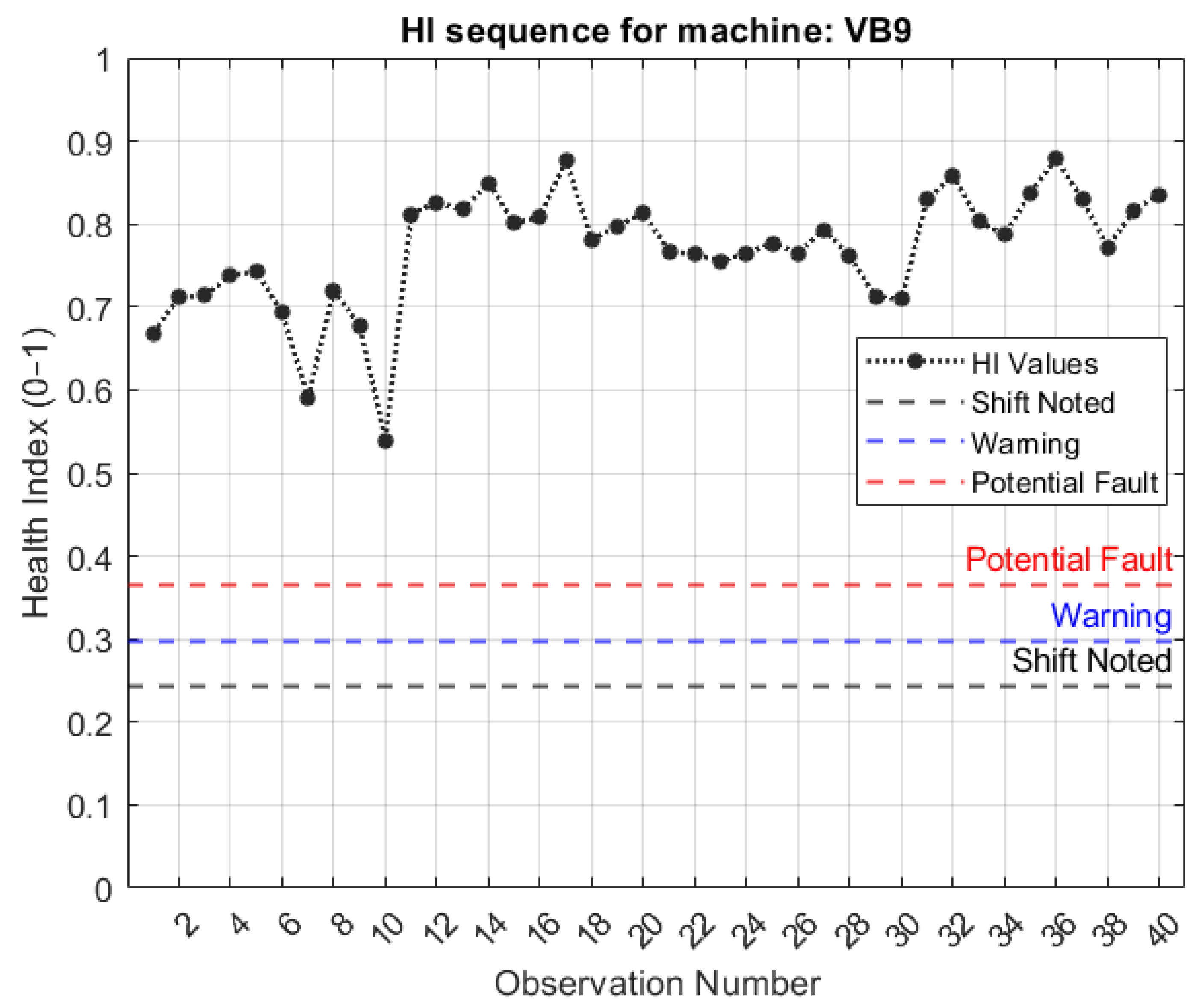
| VB9 | 0 | 0 | 0 | 40 | Unbalance |
| SW2 | 0 | 0 | 28 | 5 | Healthy |
Disclaimer/Publisher’s Note: The statements, opinions and data contained in all publications are solely those of the individual author(s) and contributor(s) and not of MDPI and/or the editor(s). MDPI and/or the editor(s) disclaim responsibility for any injury to people or property resulting from any ideas, methods, instructions or products referred to in the content. |
© 2026 by the authors. Licensee MDPI, Basel, Switzerland. This article is an open access article distributed under the terms and conditions of the Creative Commons Attribution (CC BY) license.
Share and Cite
Struwig, D.; Kruger, J.-H.; Marais, H.; Steyn, A. AI-Based Health Monitoring for Class I Induction Motors in Data-Scarce Environments: From Synthetic Baseline Generation to Industrial Implementation. Appl. Sci. 2026, 16, 940. https://doi.org/10.3390/app16020940
Struwig D, Kruger J-H, Marais H, Steyn A. AI-Based Health Monitoring for Class I Induction Motors in Data-Scarce Environments: From Synthetic Baseline Generation to Industrial Implementation. Applied Sciences. 2026; 16(2):940. https://doi.org/10.3390/app16020940
Chicago/Turabian StyleStruwig, Duter, Jan-Hendrik Kruger, Henri Marais, and Abrie Steyn. 2026. "AI-Based Health Monitoring for Class I Induction Motors in Data-Scarce Environments: From Synthetic Baseline Generation to Industrial Implementation" Applied Sciences 16, no. 2: 940. https://doi.org/10.3390/app16020940
APA StyleStruwig, D., Kruger, J.-H., Marais, H., & Steyn, A. (2026). AI-Based Health Monitoring for Class I Induction Motors in Data-Scarce Environments: From Synthetic Baseline Generation to Industrial Implementation. Applied Sciences, 16(2), 940. https://doi.org/10.3390/app16020940