1. Introduction
Process planning plays a critical role in linking product design and manufacturing. For shaft parts, which are widely used in aerospace, automotive, and machine tool industries, the rationality of their machining process routes directly impacts product quality, manufacturing cost, and production efficiency. Despite continuous advancements in smart manufacturing technologies, process planning in manufacturing enterprises still relies heavily on manual experience, leading to issues such as low efficiency, weak reusability, and insufficient adaptability to complex manufacturing tasks [
1]. Concurrently, the vast amounts of historical process data and standardized knowledge accumulated by enterprises have not yet been fully exploited.
With recent advances in artificial intelligence, research in process planning has gradually shifted from rule- and expert knowledge-based approaches towards data-driven methods. Technologies such as deep learning and graph neural networks have demonstrated promising performance in manufacturing feature recognition, process scheme recommendation, and process route optimization. However, current research still faces two major limitations. First, studies predominantly focus on isolated stages such as feature recognition, scheme decision-making, or operation generation, lacking an integrated modeling framework that spans the entire workflow. Moreover, the expression and utilization of manufacturing semantics (e.g., process attributes, tooling equipment, machining elements) are insufficient, making it difficult for planning outcomes to reflect knowledge associations within the engineering context.
To address the aforementioned issues, a multi-stage integrated process planning method for shaft parts is proposed in this study, which takes a 3D model as input and outputs a complete process route. The method encompasses three core steps: machining feature recognition, machining scheme decision-making, and process route generation, along with the construction of corresponding datasets and a model system.
The structure of this paper is as follows:
Section 2 reviews related research.
Section 3 introduces the fundamental concepts used in this study and details the dataset construction.
Section 4 elaborates on the proposed methodology.
Section 5 presents the experimental results and analysis.
Section 6 provides the conclusions and future prospects.
2. Related Work
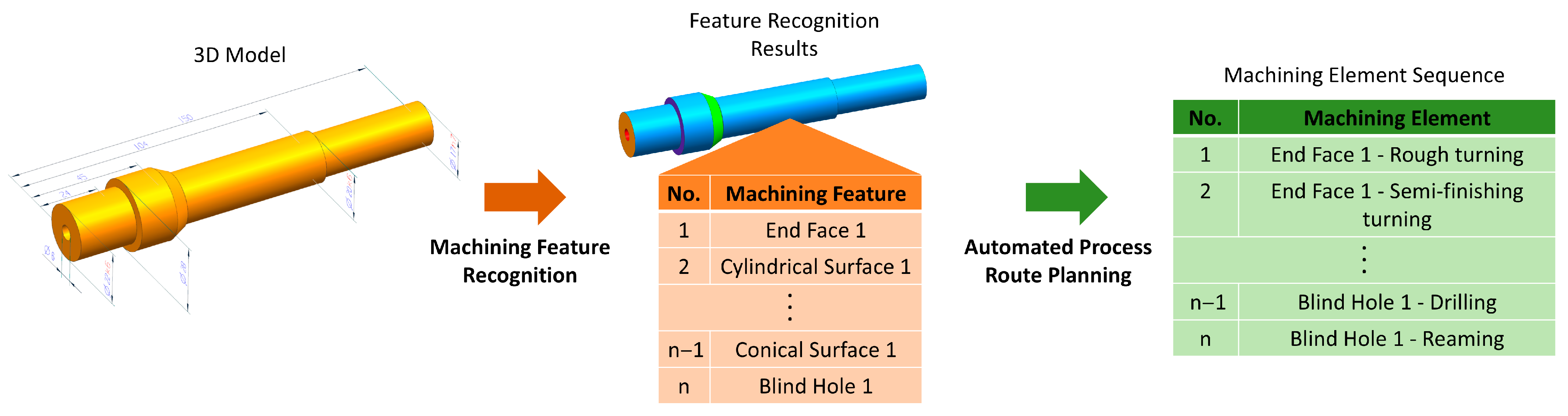
Intelligent process planning serves as a core link between product design (CAD) and manufacturing execution (CAM). As illustrated in
Figure 1, it generally consists of two key stages: machining feature recognition (MFR) and process route planning. Machining feature recognition aims to extract geometrically meaningful features with manufacturing semantics from three-dimensional CAD models, thereby converting design information into an intermediate representation that can be interpreted by manufacturing knowledge. Based on the recognized features, process route planning determines machining sequences, methods, and parameters by considering process knowledge and resource constraints. Following this logical framework, this section reviews representative research on machining feature recognition and automated process route planning.
2.1. Machining Feature Recognition Methods
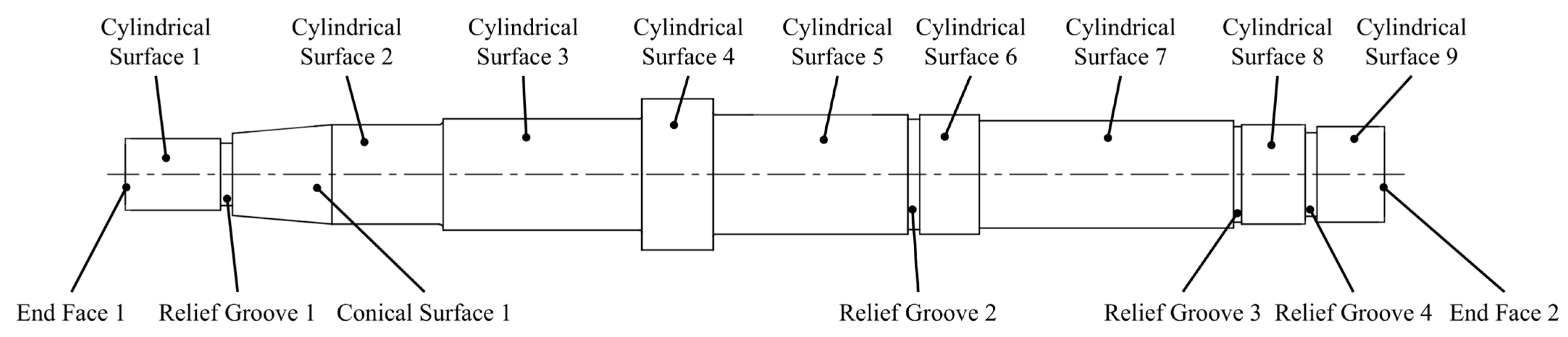
As illustrated in
Figure 1, machining feature recognition represents the initial stage of intelligent process planning. Its core task is to automatically extract structural features with manufacturing semantics from three-dimensional models, thereby providing essential input for subsequent process planning. In recent years, with the rapid development of artificial intelligence technologies such as deep learning and graph neural networks (GNNs), research on MFR has shown a clear shift from traditional rule-driven approaches to data-driven methods, and from single-feature recognition to complex and interacting feature identification.
In terms of model representation, traditional point cloud and voxel structures are convenient for neural network processing but inherently suffer from the loss of boundary geometry and topological relationships. To preserve the integrity of manufacturing semantics, recent research has shifted toward constructing graph structures based on boundary representation (B-Rep). Lambourne et al. [
2] proposed BRepNet, which directly takes the topological structure of B-Rep as input and employs coedge-based convolution kernels to achieve face-level semantic segmentation across 35,000 models, reaching an accuracy of 92.52%, significantly outperforming point cloud and mesh-based approaches under the same conditions. Ma et al. [
3] introduced a multi-attribute face–edge graph (maFEG), encoding the full B-Rep as a graph structure and developing Sheet-metalNet to enable graph-level incremental learning. Similarly, Park et al. [
4]’s DFGAT, Zhang et al. [
5]’s BrepMFR, and Colligan et al. [
6]’s Hierarchical CADNet are all based on B-Rep graph representations, further confirming its advantages in retaining geometric details and improving recognition accuracy.
In terms of recognition network architectures, GNNs have gradually replaced early convolutional networks and become the mainstream choice. Wang et al. [
7] proposed the DeepFeature framework, which integrates rule-based methods with GNNs and employs graph convolution operations to learn local features of variable topological structures. Zheng et al. [
8] combined Transformer self-attention mechanisms with GNNs to construct SFRGNN-DA, thereby improving recognition performance for complex geometries. Notably, Wu et al. [
9] were the first to introduce a multi-task GNN, AAGNet, which takes geometric attributed adjacency graphs (gAAGs) as input and simultaneously performs semantic segmentation, instance segmentation, and base-face segmentation. On the MFInstSeg dataset containing more than ten thousand STEP files, AAGNet achieved state-of-the-art accuracy and effectively addressed the lack of instance-level segmentation capability in methods such as Hierarchical CADNet [
6]. Building upon this, MFTReNet [
10] further coupled semantic segmentation, instance grouping, and topological relationship prediction, significantly enhancing the modeling of complex topological associations among features. It should be noted that most existing machining feature recognition methods rely on ordinary graph structures to model pairwise relationships, which limits their ability to represent multi-feature co-occurrence and higher-order associations. Li et al. [
11] proposed an adaptive multi-view hypergraph learning (AMH) framework, which effectively captures higher-order correlations through dynamic hyperedge construction and an attention-based fusion mechanism, thereby enhancing generalization performance across varying operating conditions. Although this method was originally developed for bearing fault diagnosis, its higher-order relationship modeling paradigm provides valuable insights for complex machining feature recognition.
Beyond model architecture, dataset quality and annotation richness also have a decisive impact on the performance of MFR systems. The MFTRCAD dataset released by Xia et al. [
10] comprises over 20,000 STEP models and provides dual annotations at the instance level, including both feature segmentation and topological relationships. Yang et al. [
12] constructed a volumetric feature dataset by converting feature recognition into a subgraph detection problem using Zone Graphs, thereby avoiding manually designed combinatorial rules. In addition, synthetic data generation techniques—such as the 24-class representative feature dataset in BrepMFR [
5]—effectively alleviate the high cost associated with real data annotation.
Despite significant progress in geometric representation, network architecture, and task modeling for machining feature recognition in recent years, the overall research still faces several shortcomings. First, existing models predominantly rely on ordinary graph structures, which offer limited capability in characterizing complex geometric-topological relationships, making it difficult to fully capture multi-feature interactions and higher-order association constraints. Second, there is a deficiency in cross-domain generalization ability, as the substantial distributional discrepancy between synthetic data and real-world parts significantly hinders the practical application of these models. Third, public datasets still exhibit limitations in terms of category coverage, topological annotation accuracy, and the scale of authentic data. To address the limitations of existing public datasets, this study constructs an extended dataset covering typical machining features of shaft-type parts. Each sample in this dataset is provided with both semantic segmentation labels and instance segmentation labels, thereby offering robust data support for model training and validation.
2.2. Automated Process Route Planning
After obtaining the machining feature recognition results, the process route planning stage (as shown in
Figure 1) aims to generate the optimal machining sequence. This process requires balancing efficiency, quality, and cost under multiple constraints, including geometric, process, and resource limitations. With the development of intelligent manufacturing and industrial big data, traditional planning methods that rely on human expertise are gradually being replaced by data-driven and intelligent reasoning approaches.
Knowledge graphs explicitly represent manufacturing knowledge in a semantic form, serving as a core medium for reusable and interpretable process expertise. Liang et al. [
13] proposed a knowledge-graph-based approach for modeling process design intent, capturing tacit experience through a “process design intent annotator” and supporting subsequent reuse. Xiao et al. [
14] provided a systematic review of knowledge graph construction, refinement, validation, and generation techniques in CAPP, highlighting the emerging trend of integrating knowledge graphs with large language models. Zhang et al. [
15] further combined knowledge graphs with reinforcement learning, transforming process decision-making into a sequence recommendation task on the graph, thereby improving the utilization efficiency of multi-source heterogeneous knowledge. Duan et al. [
16] leveraged representation learning to extract typical machining process routines (TMPRs) from massive historical process routes, overcoming the limitations of traditional single-class classification based solely on part geometry and significantly enhancing process reuse.
GNNs have been widely applied to process planning due to their ability to simultaneously encode part topology, geometry, and Product Manufacturing Information (PMI). Zhang et al. [
17] integrated stacked autoencoders with knowledge graphs to achieve end-to-end inference for macro-level process routes. Hussong et al. [
18] proposed MaProNet, which employs a graph attention mechanism to directly learn from the attributed adjacency graph (AAG) of CAD models, thereby avoiding the information loss typically caused by voxelization. Wang et al. [
19] constructed an attribute graph oriented toward machining features and used a graph convolutional network (GCN) to predict multiple feature-specific process routes in a single step, achieving an accuracy of 93.31% on an aerospace structural component dataset. Building on this, Zhang et al. [
20] further combined convolutional graph neural networks with a deep reinforcement learning framework to enable efficient automatic process route generation for complex structural parts.
Reinforcement Learning (RL) has demonstrated notable advantages in rapid decision-making under dynamic resources and uncertain environments. Wu et al. [
21] integrated operation sequencing and resource allocation into a unified decision matrix and employed an Actor–Critic framework to achieve fast responses to resource fluctuations in process planning. Guo et al. [
22] proposed a multi-start exploration strategy that effectively alleviates the local optimum dilemma in large-scale problems. Xiao et al. [
23] applied Proximal Policy Optimization (PPO) to learn sequencing patterns from historical process cases, and validated the generalization performance of the algorithm through experiments on 50 complex structural components. Furthermore, Zhang et al. [
24] introduced Monte Carlo Tree Search for aerospace aluminum parts, enhancing state–action–reward modeling and thereby improving the exploration efficiency and solution quality of Deep Reinforcement Learning (DRL).
With the growing global emphasis on carbon emission reduction, machining time and energy consumption have emerged as critical objectives in process route optimization. Feng et al. [
25] developed both cutting and non-cutting energy consumption models and proposed a staged integrated optimization strategy: first, Non-dominated Sorting Genetic Algorithm II (NSGA-II) was employed to simultaneously optimize cutting parameters to reduce energy consumption, shorten machining time, and ensure surface quality; subsequently, a genetic algorithm was applied to optimize operation sequencing, further decreasing non-cutting energy consumption. Chu et al. [
26] introduced a prediction model based on radial basis function (RBF) networks and addressed the energy–time trade-off problem under multiple alternative process routes by combining Strength Pareto Evolutionary Algorithm 2 (SPEA2) with NSGA-II. Wang et al. [
27], focusing on remanufacturing scenarios, proposed a machine spindle speed switching strategy and employed a reinforcement-learning-enhanced particle swarm optimization algorithm to simultaneously optimize process planning and scheduling, thereby achieving coordinated improvements in energy efficiency, economic benefits, and environmental performance.
Despite significant advancements in process route planning through knowledge graphs, graph neural networks, and reinforcement learning in recent years, several shortcomings persist. First, while existing knowledge graphs can explicitly represent process semantics, they remain inadequate in supporting dynamic evolution, cross-domain knowledge transfer, and deep integration with intelligent reasoning, thereby limiting their ability to fully facilitate complex process decision-making. Second, although research based on graph neural networks has enhanced the modeling of part geometry-process couplings, challenges remain in achieving a unified representation of multi-source heterogeneous information and efficient inference for large-scale parts. Third, while deep reinforcement learning demonstrates advantages in handling dynamic resources and uncertain environments, its convergence speed, global optimality, and interpretability still fall short of the requirements for industrial-level applications.
To address these gaps, the present study constructs a dedicated dataset incorporating process semantics and constraint information, thereby filling the void in existing research datasets. Methodologically, we design a decision-making model based on message-passing neural networks and a process route planning model that embeds process rules. This design enables unified representation of diverse process information while ensuring that process constraints are automatically satisfied during planning.
2.3. Process Planning Research for Shaft-Type Parts
Although significant progress has been made in general machining feature recognition and process planning methods, their performance remains highly dependent on specific application scenarios and part geometric characteristics. As typical rotational parts, shaft-type components have relatively standardized feature types. However, their machining sequences are subject to strict constraints and heavily rely on established process specifications and expert experience. Therefore, the core challenge for shaft-type parts lies not in feature diversity but in how to effectively embed domain knowledge to generate feasible and optimized machining sequences.
In recent years, research on process planning for shaft-type and rotational parts has developed several distinctive approaches. In terms of feature recognition, Zubair and Abu Mansor [
28,
29] employed a volumetric decomposition method, which decomposes the volume difference between the blank and the finished part into rough/finishing sub-volumes, achieving systematic identification of internal and external features in both symmetrical and asymmetrical rotational parts. Elmesbahi et al. [
30] proposed a hybrid graph-rule method based on the STEP-NC standard, enabling efficient recognition of complex interactive features such as axial and end-face features, thereby supporting seamless CAD/CAM integration.
Regarding process decision-making and knowledge representation, existing studies predominantly rely on knowledge bases and ontology modeling. Ma et al. [
31] constructed an ontology-based knowledge base that explicitly defines causal relationships among features, operations, tools, and machine tools, and uses rule-based reasoning to automatically match manufacturing resources, enhancing system scalability. Li et al. [
32] further integrated data-driven and knowledge-based reasoning by introducing a generative adversarial network to learn the distribution of process parameters, addressing the limitations of traditional case-based reasoning in adapting to new parts.
In terms of machining strategy innovation, Takamori et al. [
33] proposed an automatic planning scheme combining turning and milling for organic-shaped parts. This approach prioritizes efficient rough machining via an optimal turning axis, supplemented by milling for finishing, offering an efficient machining paradigm for complex-profile shaft-type parts such as crankshafts.
In summary, while existing research has made progress in feature recognition, knowledge modeling, and specific strategies, it still faces two major limitations. First, there is an over-reliance on predefined rules, with insufficient capability for autonomously learning process sequences from data, resulting in limited flexibility. Second, most solutions remain isolated and have yet to form an end-to-end intelligent planning framework that integrates feature recognition, parameter optimization, and sequence generation. To address these limitations, the present study constructs a dedicated dataset for shaft-type parts and designs an intelligent planning model that uniformly represents multidimensional process information and automatically satisfies process constraints, thereby advancing the field toward a higher degree of automation.
3. Data Acquisition
Constructing large-scale and diverse datasets is essential for training and evaluating deep learning models. To meet the requirements of the proposed process route planning approach for shaft-type parts, three dedicated datasets were developed in this study: a machining feature recognition dataset, a feature–process decision dataset, and a process route planning dataset.
3.1. Construction of the Machining Feature Recognition Dataset
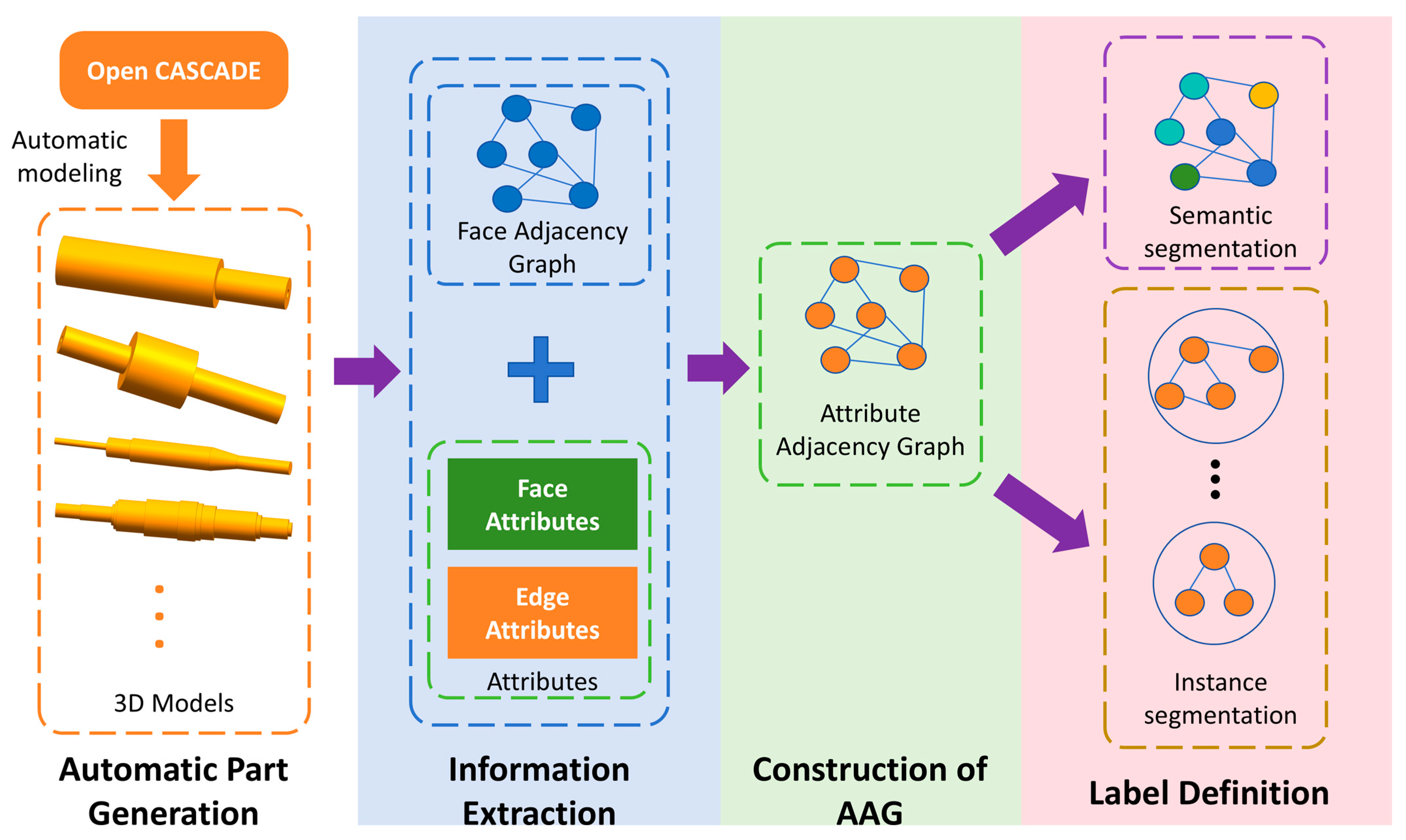
The creation of the machining feature recognition dataset primarily involves three stages: automatic generation of shaft-type parts, construction of the AAG, and definition of feature labels. The overall creation process is illustrated in
Figure 2.
This feature recognition dataset is generated using parametric modeling technology. By programmatically constructing over 2000 three-dimensional models, it simulates the distribution patterns of machining features in real shaft-type parts. The models cover typical feature combinations, with both their geometric and topological structures validated for process rationality, thereby providing effective data support for deep model training. Although the sample size is approximately 2000, each part contains multiple feature nodes and topological relationships, such that the number of effective data units available for supervised learning far exceeds the nominal sample count. Combined with the advantages of graph neural networks in small-sample scenarios and the recognition accuracy exceeding 98% achieved in experiments, the scale of this dataset is sufficient to support adequate model convergence and generalization.
The automatic generation of parts is designed to reflect actual turning machining logic while ensuring coverage of typical features across diverse geometric scales. Based on the practical sequence of turning operations, a cylindrical blank with an arbitrary length and diameter is first constructed. Subsequently, different diameters of external cylindrical features are generated by random segmentation. Following this, in accordance with the typical order of feature generation in turning operations, external conical features and relief groove features are randomly generated sequentially, and finally, through-holes or blind holes are generated. To ensure the rationality of the dataset, the generated shaft-type parts generally exhibit a spindle shape. At the same time, to guarantee full coverage of feature types and diversity in shape, structure, and scale, each three-dimensional model contains 4 to 20 machining features. Furthermore, the parameters of each feature (such as the diameter range of external cylinders, the taper range of external cones, and the size range of relief grooves) are randomly selected within reasonable intervals for actual shaft-type part machining, thus covering typical geometric feature combinations and diverse actual machining scales of shaft-type parts.
After generating the 3D models of the parts, this study adopts the method of AAGNet [
9] to structurally represent the 3D models using Attribute Adjacency Graphs (AAG). AAG integrates topological structure with face and edge attributes, enabling a complete description of machining features within the model. Specifically, an undirected graph (FAG) is first constructed based on face adjacency relationships. Then, attribute information of faces and edges is extended to form a complete AAG, with its attribute definitions provided in
Table 1.
To support supervised training, the dataset provides two types of labels for each model: semantic segmentation labels and instance segmentation labels. The semantic segmentation labels assign each face to a specific feature category (e.g., plane, cylindrical surface, etc.). The instance segmentation labels, in the form of an adjacency matrix, identify the face connectivity relationships within the same feature instance and distinguish face nodes belonging to different feature instances.
3.2. Construction of the Feature–Process Decision Dataset
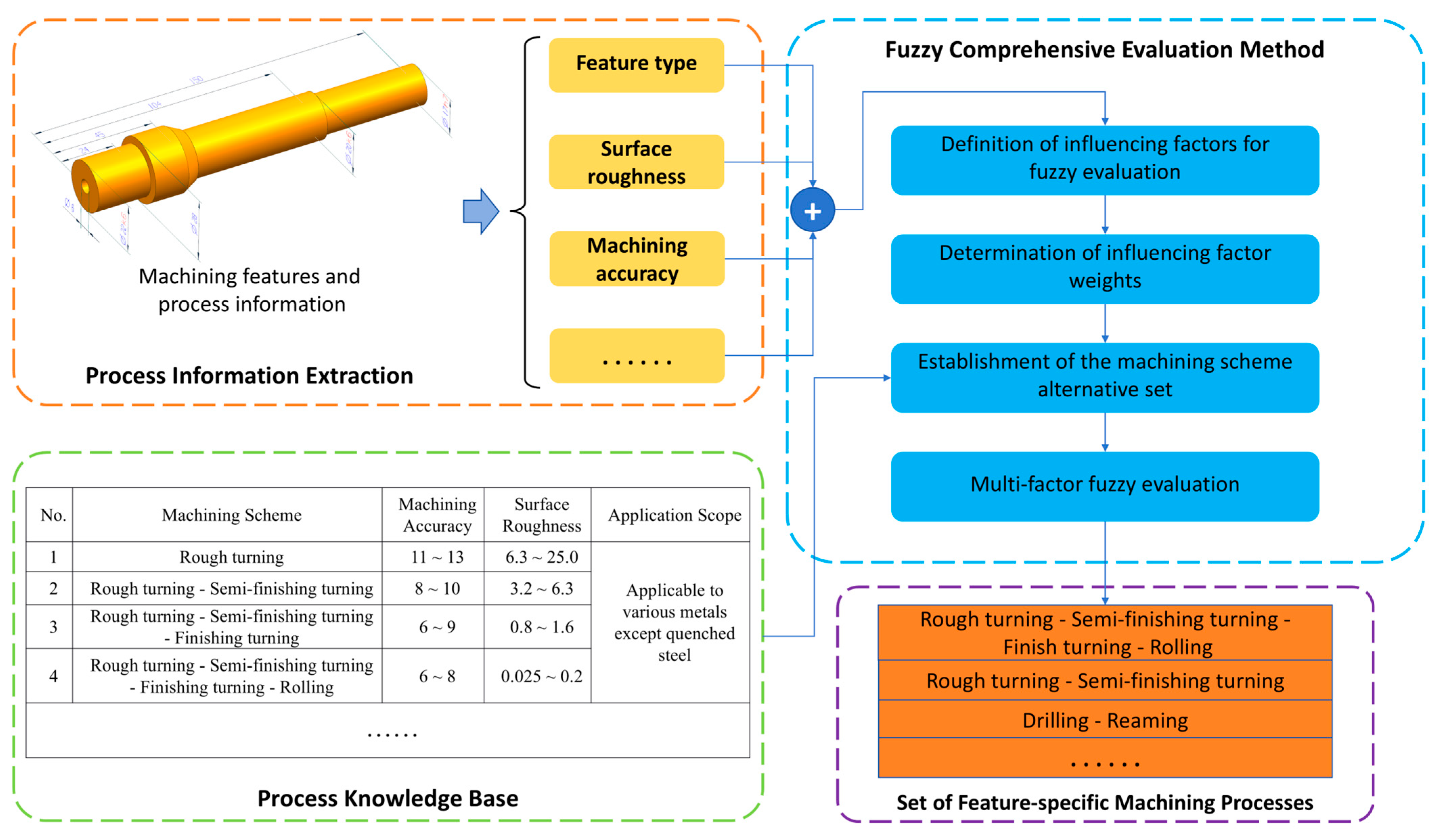
To train and validate the feature–process decision model, a new dataset was further constructed on the basis of the feature recognition dataset. This dataset incorporates enriched process information and machining schemes, forming the feature–process decision dataset. The overall construction workflow is illustrated in
Figure 3.
During the construction of the feature machining scheme decision dataset, a systematic feature machining scheme library was first established. This involved organizing common machining process paths and equipment parameters, clarifying the machining steps, applicable scopes, and typical process constraints for each scheme, thereby providing a knowledge base for subsequent scheme generation.
Table 2 presents partial examples of external cylindrical surface machining schemes from this library. Subsequently, the existing machining feature recognition dataset was expanded. This expansion specifically included supplementing material information and related process parameters for the shaft-type parts. By integrating the process knowledge contained in the feature machining scheme library and applying a fuzzy comprehensive evaluation method, the optimal machining scheme was determined for each machining feature.
This study established an evaluation index system composed of material properties, feature types, machining accuracy, and surface roughness, which was applied to the fuzzy comprehensive evaluation of machining schemes. The weights assigned to each index are as follows: part material 0.444, feature type 0.312, machining accuracy 0.122, and surface roughness 0.122. Based on the determined indices and weights, a single-factor fuzzy evaluation was conducted to establish the fuzzy relationship matrix between machining schemes and feature requirements under each index. The weight vector and the fuzzy relationship matrix were then synthesized through computational operations to obtain the comprehensive evaluation results for each scheme. The optimal machining scheme was subsequently selected based on the ranking of these scores. Through the above process, the constructed dataset primarily consists of two parts: one is the extended attribute adjacency graph of the part and its feature attributes (including workpiece material, feature type, machining accuracy, surface roughness, etc.); the other is the labels, which represent the optimal machining scheme for each corresponding machining feature.
3.3. Construction of the Process Route Planning Dataset
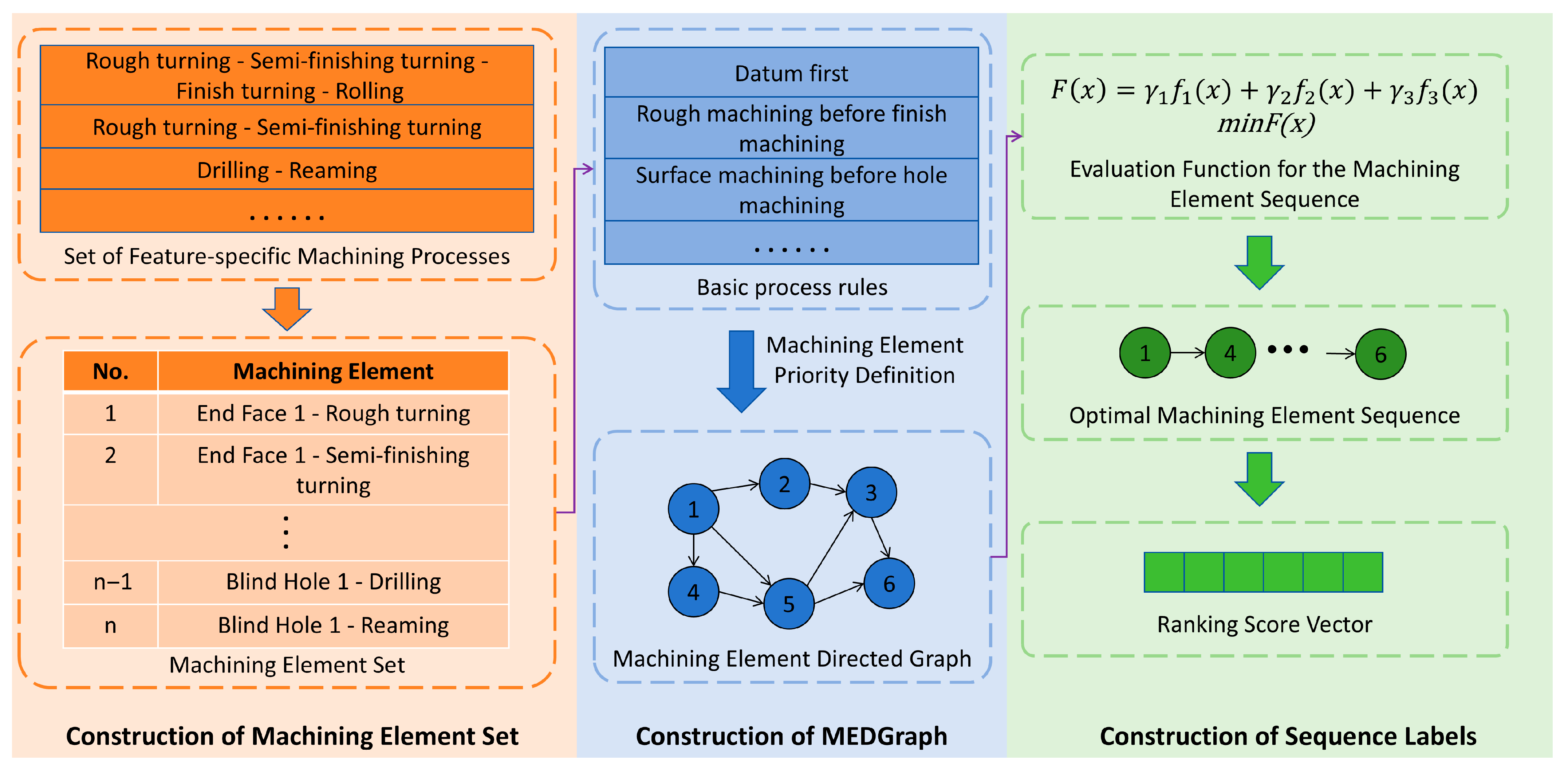
To provide the data foundation required for building the process route planning model, a dataset was constructed that incorporates machining elements and their sequential dependencies. Based on feature–process schemes, the dataset was systematically decomposed into a collection of machining elements, with machining attributes and process constraints explicitly defined. Furthermore, machining workflows were represented in the form of graph structures, thereby supporting subsequent path generation and optimization. The overall workflow for constructing the process route planning dataset is illustrated in
Figure 4.
Based on the previously determined feature–process schemes, each scheme was refined into multiple machining elements, thereby constructing a machining unit set that contains complete operation information. Each machining unit corresponds to a specific machining step and is associated with key attributes such as machining type, equipment and tool requirements, and machining stage. On this basis, typical process rules commonly applied in modern manufacturing practices—such as datum priority, roughing priority, surface finishing priority, and major-surface priority—were incorporated to further clarify the sequential dependencies among machining elements, thereby forming a structured set of process constraints.
To formally represent machining elements and their dependencies, a machining-element directed graph (MEDGraph) was constructed. In this graph, each node represents a machining unit, while each directed edge indicates the precedence constraint between two machining elements. Each machining unit can be expressed as a quadruple:
In this framework, ID denotes the unique identifier of a machining unit, fi represents the machining feature, S denotes the machining stage (e.g., roughing, semi-finishing, and finishing), and T refers to the cutting tool. The construction of the MEDGraph involves initializing the graph, traversing machining elements, identifying constraint relationships, and creating the corresponding nodes and edges, thereby forming a complete directed graph structure.
To extract machining unit sequences from the MEDGraph, an improved topological sorting algorithm is employed, combined with a backtracking strategy to generate multiple candidate sequences. Subsequently, an evaluation function is constructed to select the optimal machining unit sequence from these candidates. The evaluation function considers machining cost (equipment, tools, time, etc.), machining efficiency (processing time, equipment utilization), and machining quality (accuracy, surface roughness) to compute an overall score for each sequence. The sequence with the highest score is selected as the optimal process route.
The dataset constructed based on the aforementioned method consists of two parts: first, the machining unit directed graph and its node features; second, the labels, which are the corresponding optimal machining unit sequences.
4. Methods
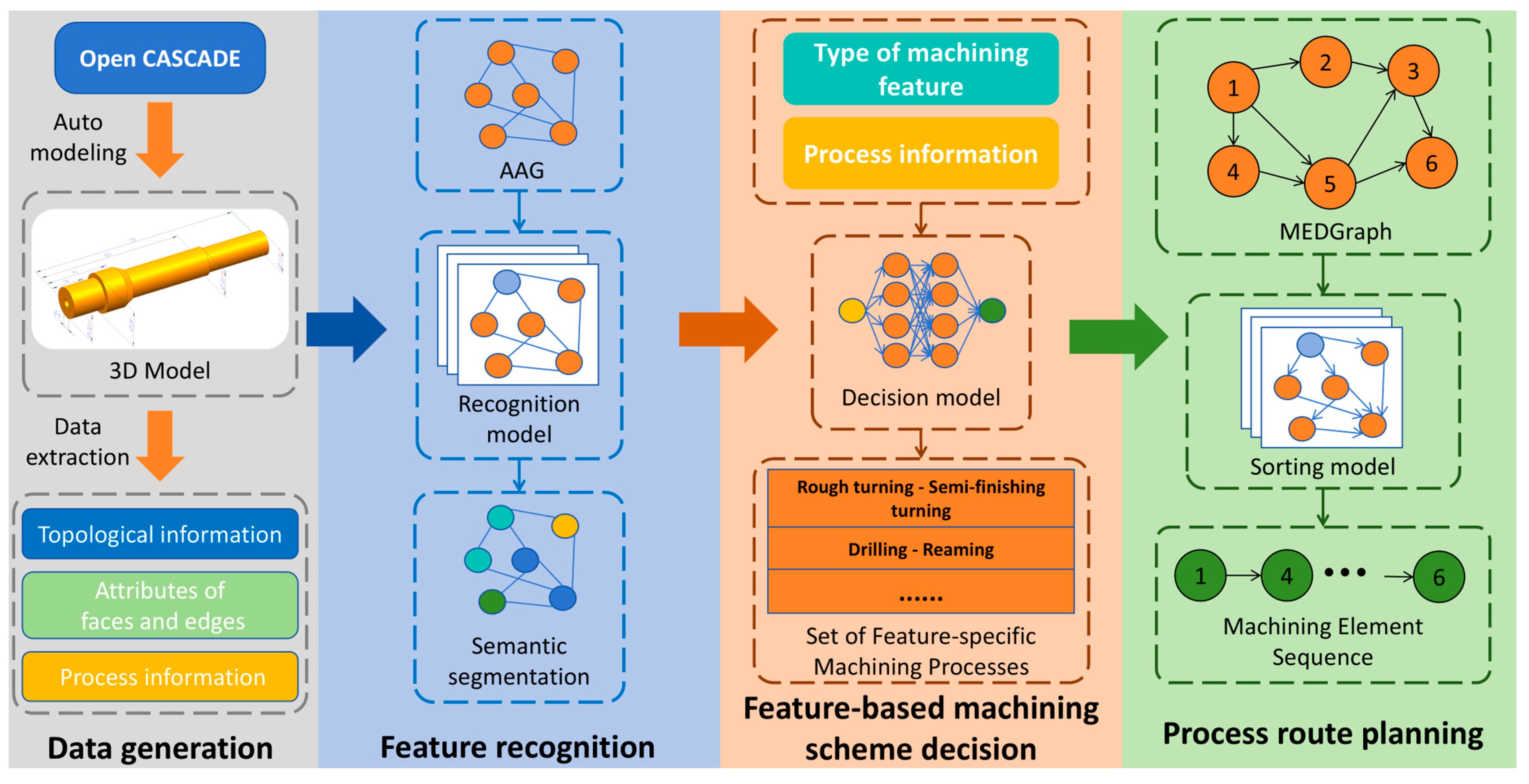
To address the issues of heavy reliance on manual intervention and insufficient flexibility in traditional machining process route planning, this paper proposes an intelligent process planning method for shaft parts based on multi-graph fusion. The overall framework, as illustrated in
Figure 5, comprises three core components: feature recognition, feature machining scheme decision-making, and machining process route planning.
In the feature recognition stage, the system analyzes the 3D model of the shaft part to extract its topological and attribute information, constructing an AAG. With the aid of a graph neural network, machining features are classified and identified, thereby obtaining structured feature information.
In the process scheme decision-making stage, the method integrates the feature recognition results with the part’s process requirements. It analyzes the machining constraints (such as material, accuracy, surface quality, etc.) for each feature and, based on the existing process scheme library, employs a decision-making model to match each feature with its optimal machining scheme. This results in a process scheme set covering all features.
In the process route planning stage, the system further decomposes the machining schemes into machining elements, constructing a dependency graph to clarify sequential constraints. A process planning model based on directed graphs is then utilized for learning and optimization, ultimately generating a machining unit sequence that satisfies the process requirements and is globally optimal, thereby completing the part’s process route planning.
The proposed method achieves intelligent generation of a complete process route directly from a 3D model. It organically combines feature recognition, scheme decision-making, and route planning across three levels, providing a new approach for the efficient machining of shaft parts. The following sections will elaborate on these three aspects in detail.
4.1. Machining Feature Recognition
The machining feature recognition task involves understanding the structure of complex 3D geometric models, where different neighboring patches and topological relationships contribute unequally to feature semantics. For instance, critical datum planes or key connecting edges have a significantly greater impact on determining feature types than other auxiliary faces. Therefore, the model must be capable of automatically distinguishing the importance of different neighbors to more accurately extract local geometric patterns relevant to feature semantics. Based on these task characteristics, this paper selects the graph attention network (GAT). The attention mechanism of GAT can adaptively learn the influence of different neighbors on the target node, thereby highlighting key geometric elements when aggregating neighborhood information. Compared to traditional GCNs that use uniform neighborhood weights, GAT can effectively handle industrial CAD graph data with heterogeneous geometric structures and strong topological differences through learnable attention weights, and demonstrates improved expressive power and generalization performance even in scenarios with limited data.
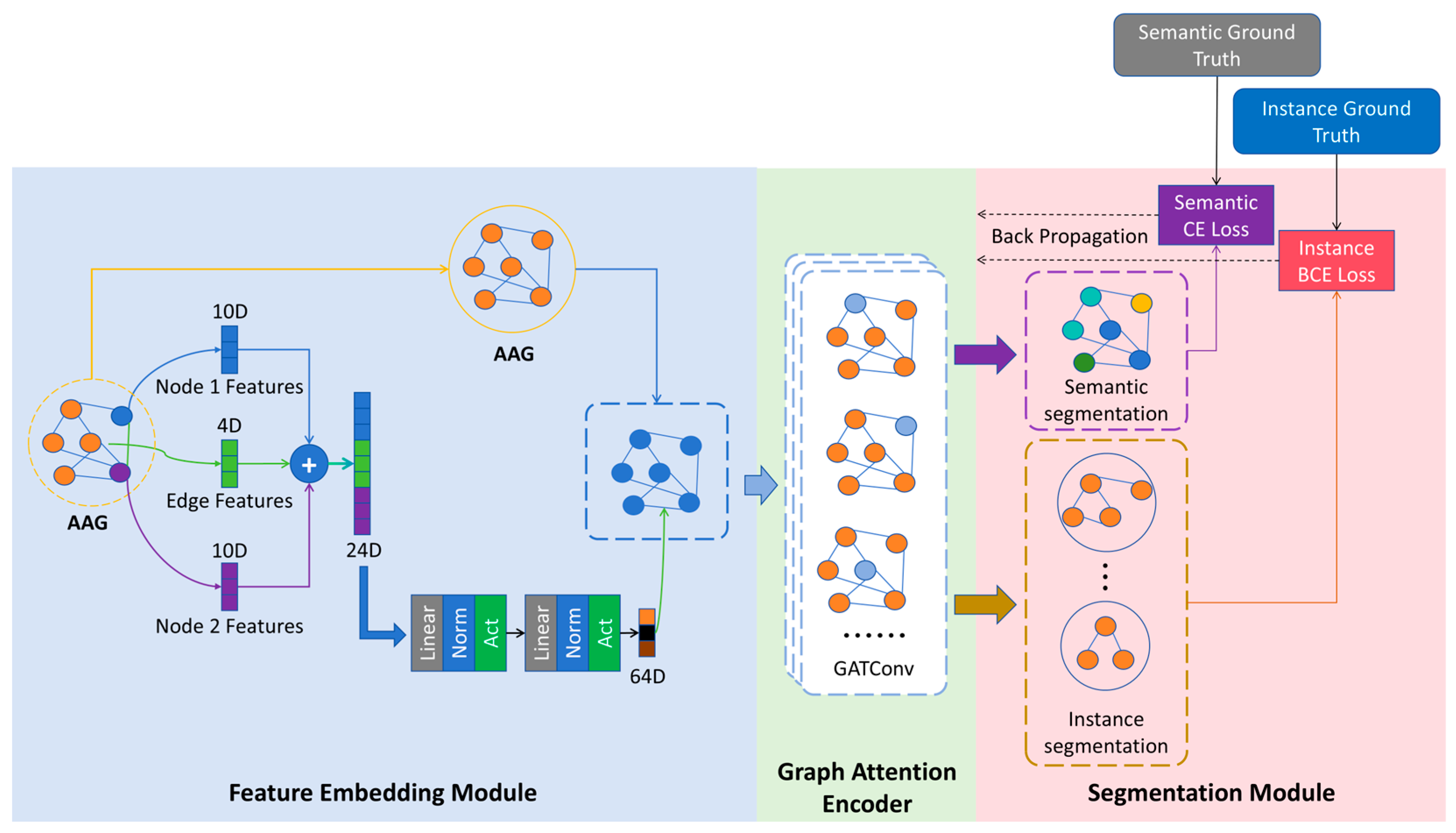
Building on this, this paper proposes a GAT-based machining feature recognition model capable of processing nodes, edges, and their attributes in graph-structured data. Through two branches—semantic segmentation and instance segmentation—the model simultaneously achieves classification and localization identification of machining features.
Figure 6 illustrates the overall architecture of the model, which consists of three core modules: the feature encoder, the graph encoder, and the feature classifier.
The feature encoder integrates local topological information of edges with their original attributes to generate enhanced edge representations. Specifically, for each edge, the source node features (10D), target node features (10D), and original edge features (4D) are concatenated to form a 24D composite vector. This vector is then transformed through a multilayer perceptron (MLP) to produce enhanced edge features in a latent feature space. By replacing the original edge features in the graph with these enhanced features, an enriched graph representation that captures local structural information is constructed. The enhanced edge features, together with the node features, serve as the input to the graph encoder, supporting subsequent message passing and feature aggregation.
The graph encoder employs a GAT architecture, which models dependencies within the graph by dynamically computing attention weights among nodes. In this architecture, each node adaptively attends to the importance of its neighbors, thereby effectively exploiting contextual information during feature updating. The attention mechanism in GAT mainly involves two steps: attention coefficient computation and feature aggregation. First, the attention module evaluates the relevance between a target node and its neighboring nodes, assigning an importance weight to each neighbor. Then, the aggregation module performs a weighted summation of the neighbors’ features according to these weights, yielding a summary vector that captures local context. This summary vector is typically combined with the node’s original features (e.g., via concatenation or addition) and passed through a nonlinear activation function to complete the feature update. By stacking multiple graph attention layers, the encoder progressively captures more complex relational patterns among nodes, thereby achieving deep modeling of graph-structured features.
The feature classifier consists of two components: semantic segmentation and instance segmentation. For semantic segmentation, a Softmax classifier is employed to assign each node to its corresponding machining feature category (e.g., hole, slot, or cone). For instance, segmentation, an MLP is used to generate linkage scores between pairs of nodes, indicating whether two nodes belong to the same feature instance. The outputs of these two tasks are optimized using different loss functions and are jointly used to produce the final predictions of the model.
Regarding the loss functions, cross-entropy (CE) loss is adopted for semantic segmentation to quantify the discrepancy between predicted probabilities and ground-truth labels. The total semantic segmentation loss is computed as the average of the losses across all nodes and is denoted as
Ls.
Here, K denotes the number of classes, which is 5 in the machining feature recognition dataset. pi represents the predicted probability vector for a node belonging to class i, while ti is the one-hot label vector, where if the label corresponds to class i, and otherwise. N denotes the total number of nodes.
For instance, segmentation, the loss function is the binary cross-entropy (BCE) loss, which measures the discrepancy between the predicted linkage scores
S and the ground-truth adjacency matrix
A. The ground-truth adjacency matrix is a binary matrix, where each element explicitly indicates whether a connection exists between two nodes. The total instance segmentation loss,
Li, is obtained by averaging the BCE losses across all node pairs.
Here, Aij denotes the ground-truth adjacency value between nodes i and j, while Sij represents the predicted linkage score between nodes i and j. N is the total number of nodes.
4.2. Feature–Process Decision
After completing machining feature recognition, this study further selects the most suitable machining scheme for each feature. Since the determination of machining schemes depends on process constraint relationships between a feature and its local neighborhood—such as relative dimensions, structural connectivity, and machining compatibility—a model capable of effectively modeling the local structural dependencies of “node-edge-node” is required. Based on these task characteristics, this paper selects the Message Passing Neural Network (MPNN) as the core framework. MPNN integrates node and edge attributes through an explicit message-passing mechanism, allowing it to directly represent local dependencies related to process semantics. Moreover, compared to models relying on attention mechanisms, MPNN offers more stable computation and lower memory overhead, making it more suitable for the industrial data in this study, which involves a large number of nodes and relatively regular graph structures.
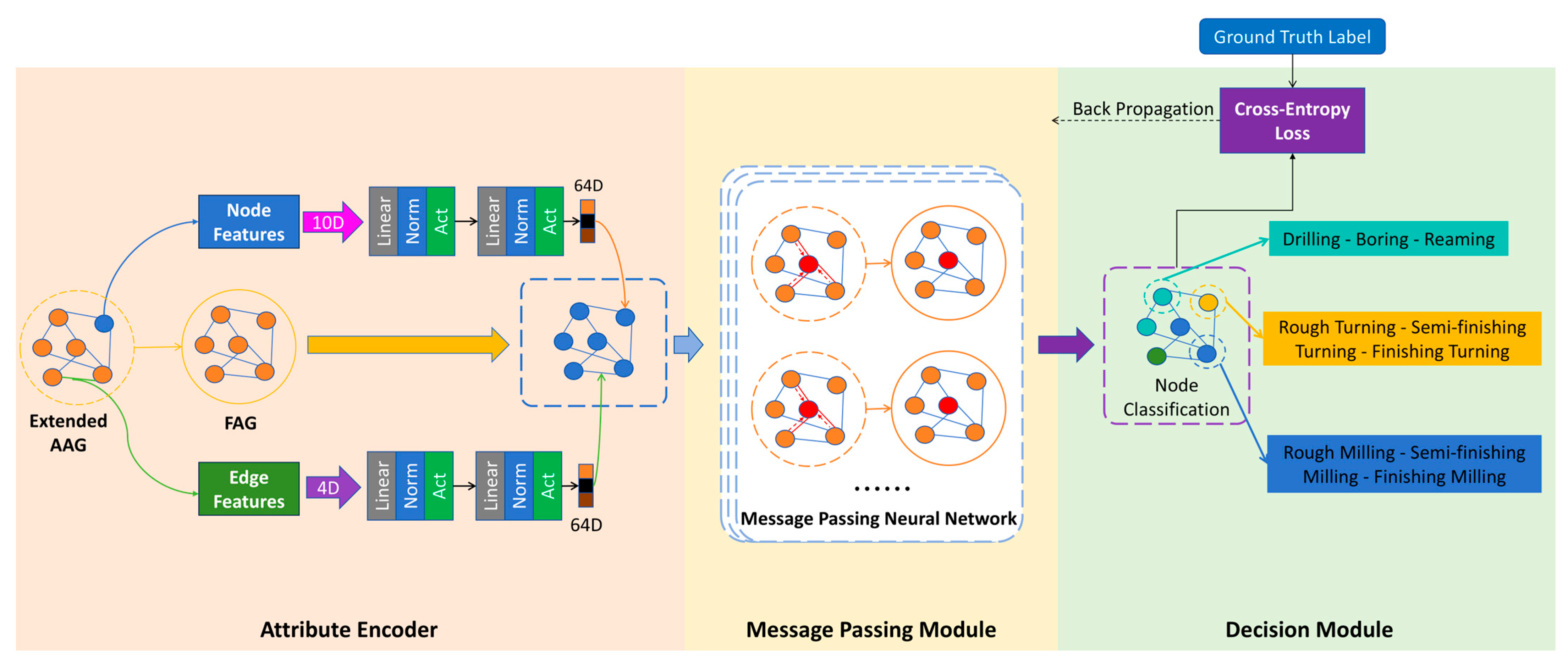
Building on this, the study constructs the feature machining decision model shown in
Figure 7, which automatically selects the optimal machining scheme for each feature from the extended attribute adjacency graph. The model consists of three key components: a feature encoder, a graph encoder, and a machining scheme decision module. The input to the model is an extended attribute adjacency graph containing node and edge attributes, and the output is the corresponding machining scheme category for each feature.
Table 3 lists the face and edge attributes included in this extended attribute adjacency graph.
The attribute encoder employs an MLP to encode the node and edge attributes of the extended AAG, generating corresponding feature vectors. These encoded vectors are then assigned to the respective nodes and edges in the graph, forming an enhanced graph representation that serves as the input to the graph encoder.
The message passing module is built upon an MPNN architecture, which captures the dependencies among nodes and edges through iterative message passing. Each node updates its representation by aggregating information from its neighboring nodes. The message passing process involves three steps: message computation, aggregation, and update. Specifically, the message computation function generates messages based on node and edge features; the aggregation function collects messages from neighbors; and the update function refines the node representation using the aggregated messages. The graph encoder consists of multiple stacked message-passing layers, each employing different aggregation functions (e.g., sum, mean, or max) to capture diverse structural features of the graph.
In this study, the process scheme decision is formulated as a node classification task. The decision module applies a Softmax classifier to assign each node to one of the predefined machining scheme categories. The primary objective is to accurately classify all nodes into 15 machining scheme classes, thereby learning the complex mapping between graph-structured data and process schemes, and predicting the most suitable scheme for each machining feature.
Regarding the loss function, cross-entropy (CE) loss, denoted as
LCE, is also adopted for the process scheme decision.
Here, K denotes the number of machining scheme categories, which is 15 in the feature–process decision task. N is the number of training samples. represents the ground-truth label of the n-th sample, where if the sample belongs to class i, and otherwise. denotes the predicted probability that the n-th sample belongs to class i.
4.3. Process Route Planning
In the process route planning task, machining elements inherently form a directed graph structure with sequential dependencies. Therefore, a GCN that can directly process graph topology is selected as the core model. Compared to models such as GAT or MPNN, which rely on attention mechanisms or more complex message-passing methods, GCN demonstrates greater robustness in scenarios with limited industrial process data, clear machining logic, and stable structural relationships. It also incurs lower computational costs and can effectively capture local and global process dependency patterns through convolutional operations. Furthermore, the process constraint-aware convolutional mechanism proposed in this paper can naturally embed process semantics such as datum precedence and rough-finish sequencing within the GCN framework. This enables the model to simultaneously learn process rules while aggregating graph structural information, making it better aligned with the engineering characteristics of process route planning.
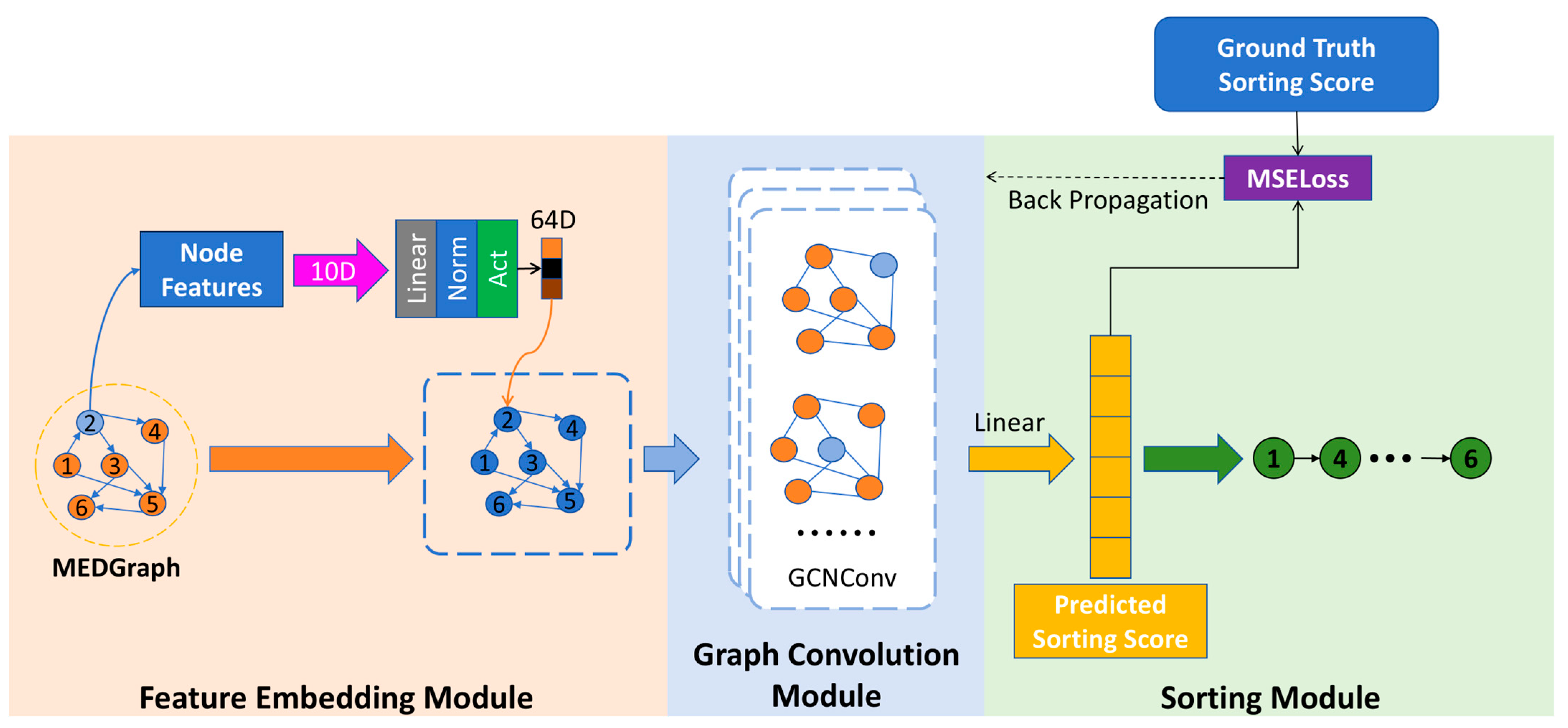
Consequently, this paper designs a process route planning model based on GCN, allowing it to accurately learn the mapping from “machining unit dependencies–process rules–optimal route” from historical process data. This enables the generation of machining routes that satisfy process logic constraints for new parts. The model takes the machining unit directed graph of the part as input and outputs the globally optimal machining unit sequence. The model architecture includes a feature encoding module, a graph convolutional module, and a ranking module, as illustrated in
Figure 8.
The feature embedding module employs an MLP to encode the node attributes of the MEDGraph, generating corresponding feature vectors. These encoded vectors are then assigned to their respective nodes, resulting in an enhanced MEDGraph that serves as the input to the graph convolution module.
The graph convolution module takes the enhanced MEDGraph as input and outputs updated node representations as well as their coordinate representations after convolutional operations. This module is composed of three primary convolutional layers. Batch normalization is applied to all convolutional layers, and a ReLU activation function is employed after each primary convolution layer. These layers are responsible for extracting shared feature representations from the input graph by propagating and aggregating information through node features and adjacency relationships, thereby updating the node representations.
In the graph convolution module, each convolutional layer enables nodes to aggregate information from neighboring nodes and connecting edges. As the network deepens, higher-level and more global structural features are progressively abstracted, enhancing the model’s capacity to perceive the entire graph. This process allows each node to capture not only larger-scale local information but also global context, enriching the network’s representational power. Typically, each convolutional layer is followed by a ReLU activation function to strengthen the non-linear expressive capability of the model. In addition, batch normalization is applied to all graph convolution layers to accelerate training and improve model stability.
The main responsibility of the sequencing module is to map the node feature vectors output from the graph convolution module into a ranking score vector. This ranking score vector represents the ranking scores of all nodes in the graph, with each node corresponding to a unique score. By sorting the nodes in ascending order of these scores, a reasonable machining sequence can be generated.
Specifically, the sequencing module uses a linear layer to transform the node feature vectors—obtained after multiple graph convolution operations—into ranking score vectors. During training, the model learns to accurately predict node sequences by minimizing the mean squared error (MSE) loss between the predicted ranking score vector and the ground-truth ranking score vector. The loss function is defined as follows:
Here, denotes the ground-truth ranking score vector, denotes the predicted ranking score vector, and N is the number of nodes in the machining unit directed graph. Based on the ranking score vector, the module can output the optimal sequence of machining elements, ultimately achieving the goal of process route planning.
5. Experiments and Results Analysis
5.1. Experimental Setup
To comprehensively validate the effectiveness of the proposed method, this study automatically constructs a dataset containing 3D models and complete process flows based on typical manufacturing process rules and historical machining documents. This comprehensive dataset consists of three sub-datasets designed to support the three tasks of feature recognition, machining scheme decision-making, and process route planning. These sub-datasets provide the necessary inputs and labels for training, validation, and testing at each stage of the model.
All datasets are randomly divided into a training set (80%, totaling 1600 samples), a validation set (15%, totaling 300 samples), and a test set (5%, totaling 100 samples). The training set is used for learning model parameters, the validation set for performance evaluation during training, and the test set for final generalization ability assessment. Furthermore, to enhance evaluation reliability, a ten-fold cross-validation method is applied to the training set. The training set is equally divided into 10 subsets, with 9 subsets used for training and 1 subset for validation in each iteration. This process is repeated 10 times, and the average performance is taken as the evaluation result of the model during the training phase. The experiments are conducted on a high-performance workstation equipped with an AMD Ryzen 7 7840HS processor, 1 TB of memory, and an NVIDIA RTX 4050 GPU. The deep learning platform used is PyTorch 2.1.0, the graph neural network tool is DGL 2.2.1, and the optimizer is ADAM.
5.2. Experimental Results
To verify the effectiveness of the sub-models in the tasks of feature recognition, process scheme decision, and process route planning, a comprehensive evaluation was conducted on the loss convergence, prediction accuracy, and generalization ability during training.
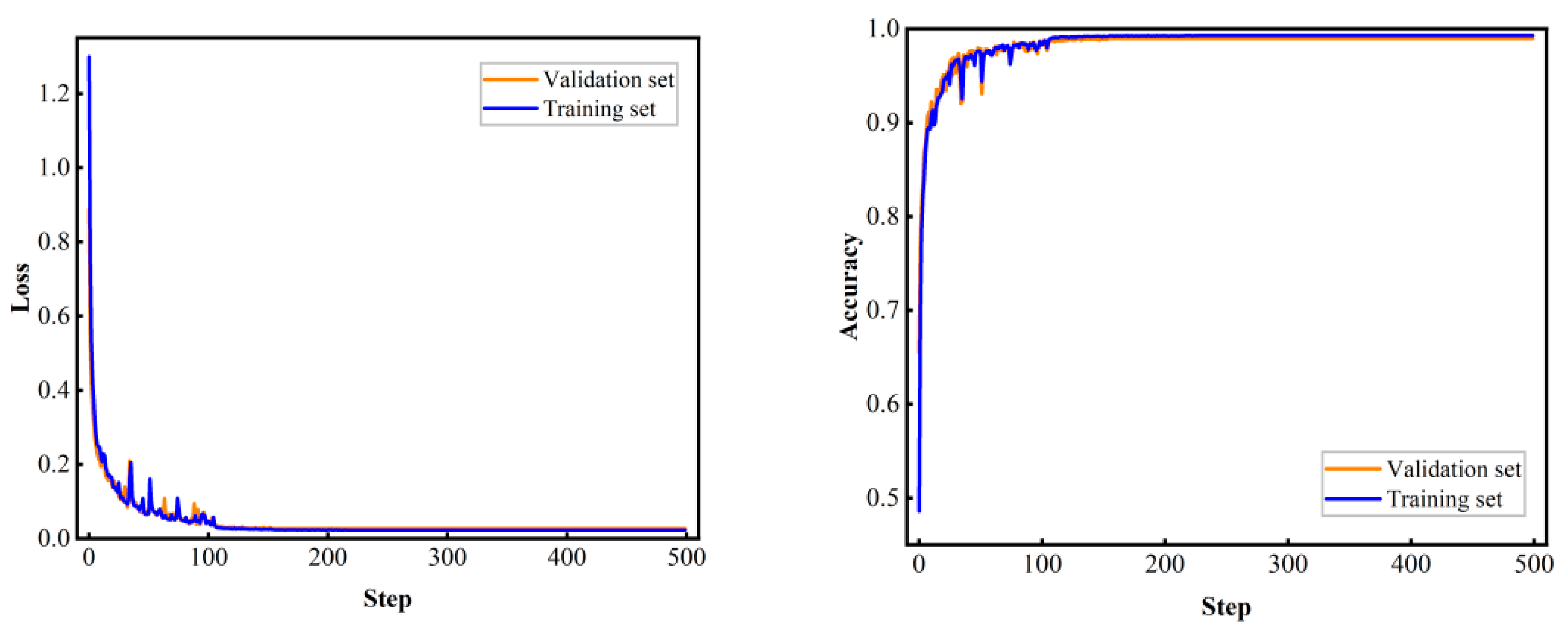
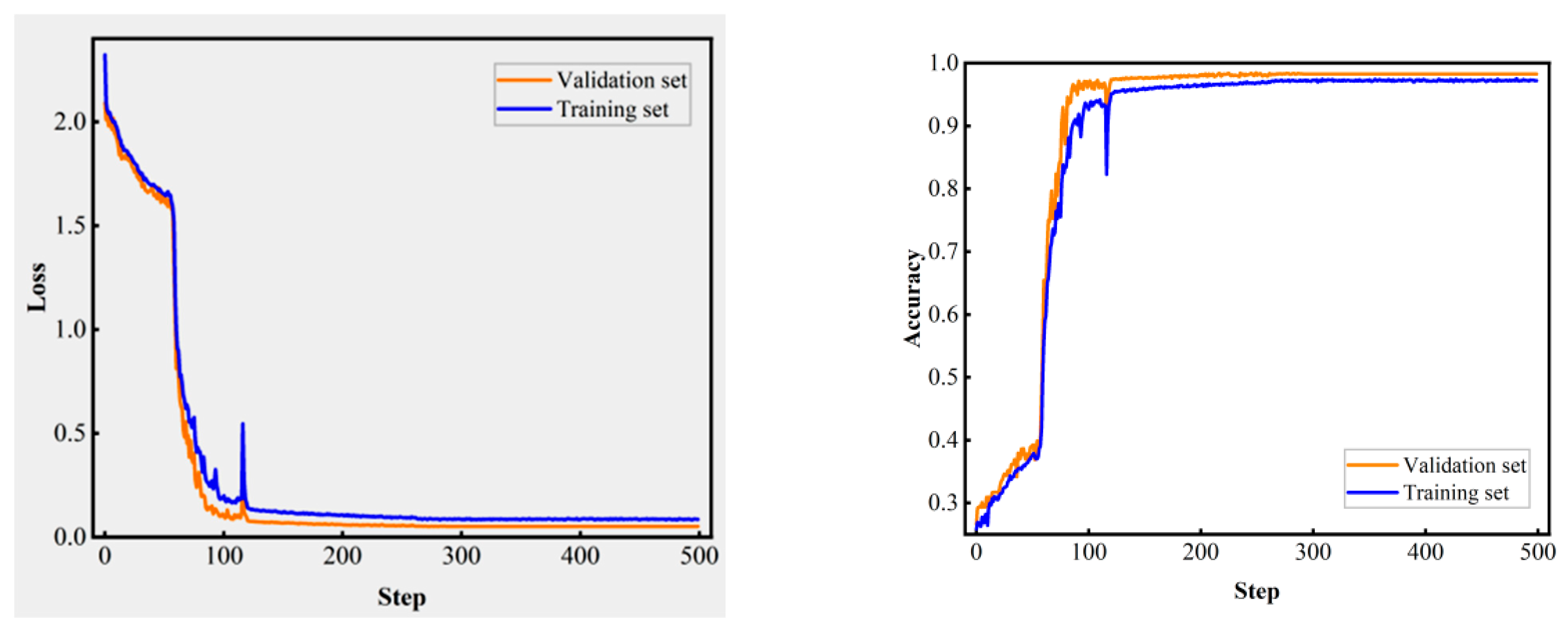
The loss and accuracy curves of the feature recognition model for semantic segmentation during training and validation are shown in
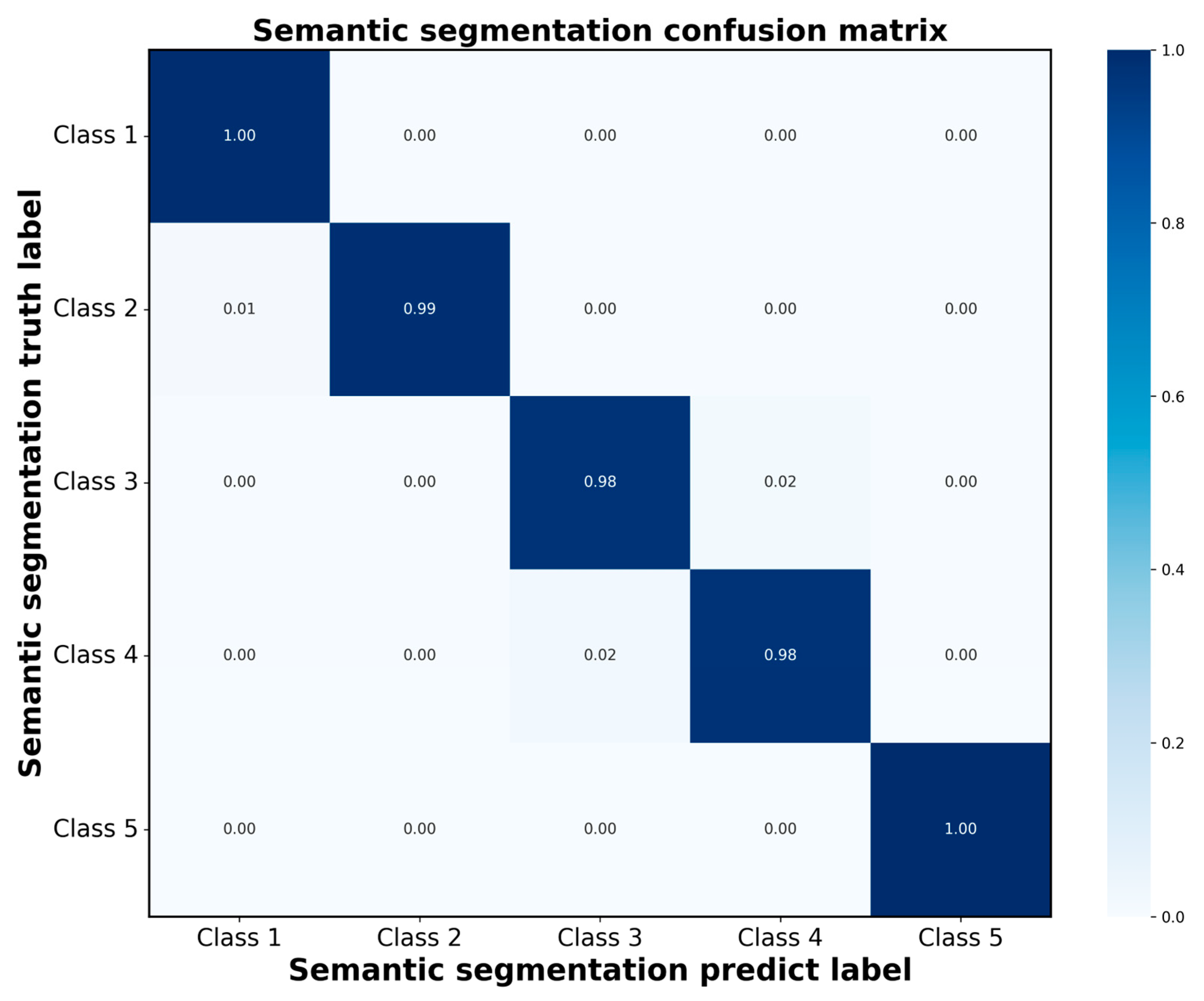
Figure 9, while the corresponding confusion matrix on the test dataset is presented in
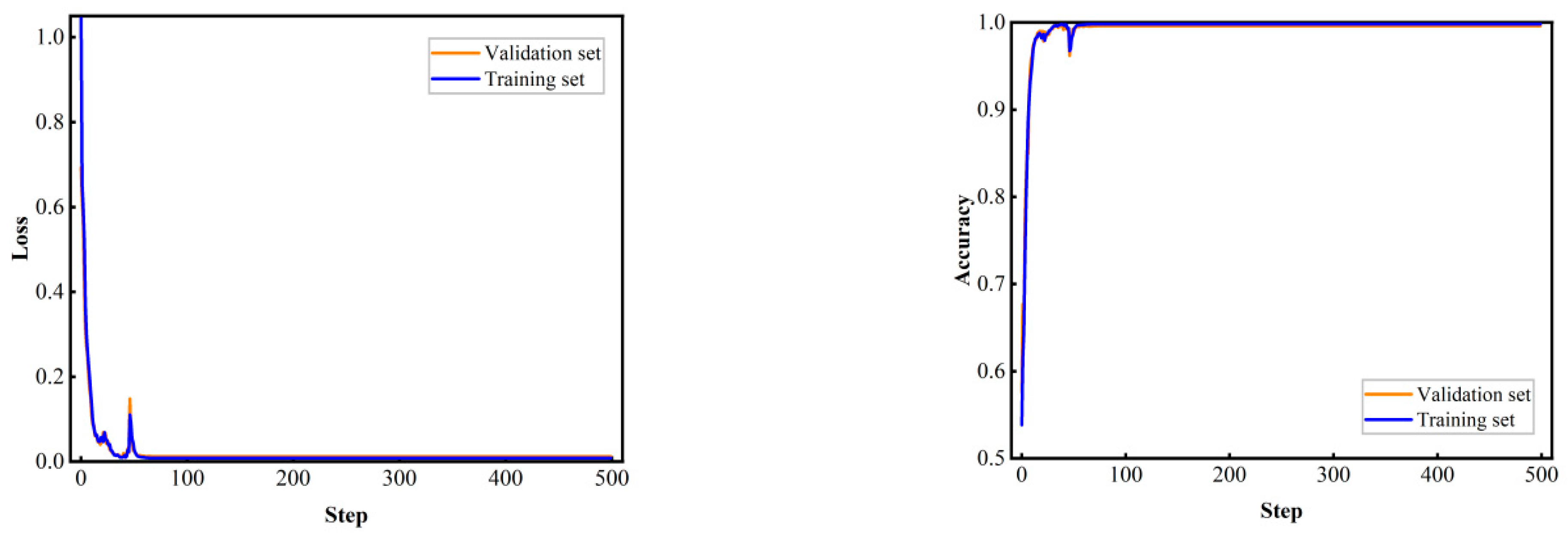
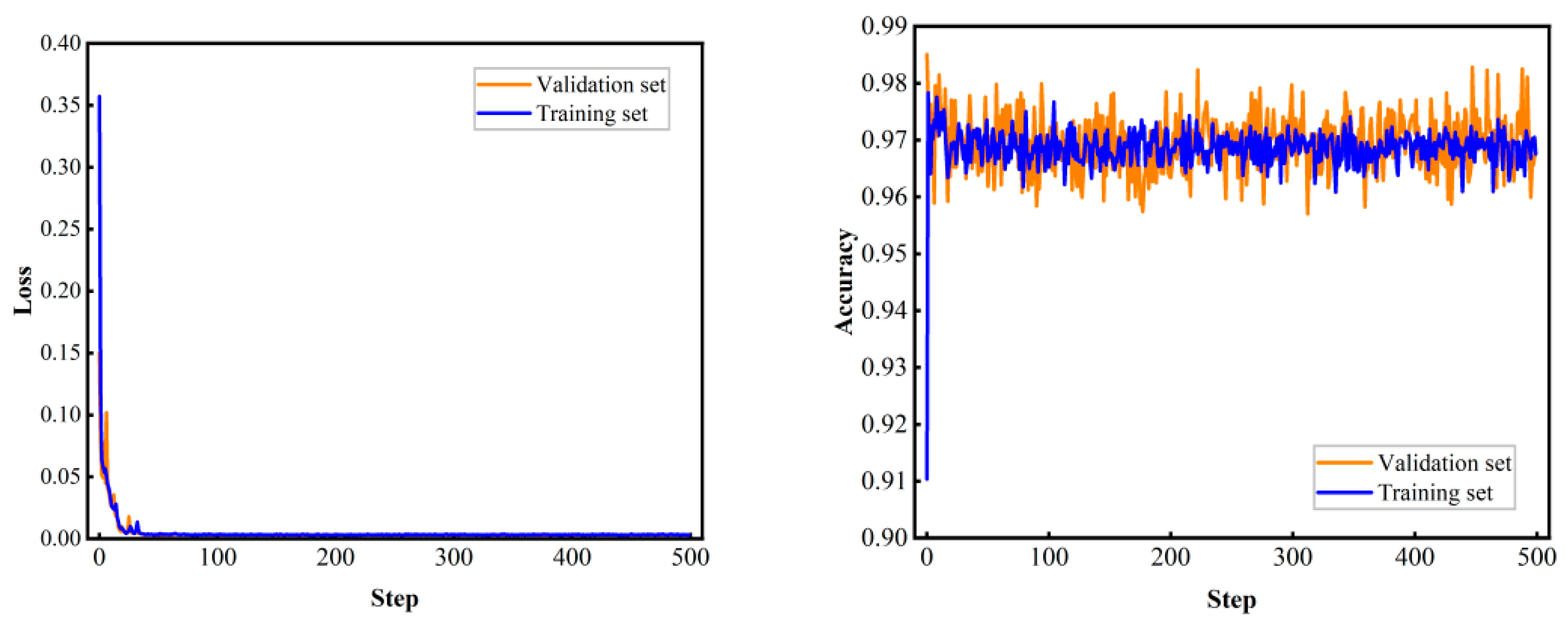
Figure 10. The accuracy of all models was obtained through ten-fold cross-validation. In the feature recognition model, the semantic segmentation task achieved a training accuracy of 99.21% and a test accuracy of 98.97%. The instance segmentation task attained a training accuracy of 99.95% and a test accuracy of 99.71%. The training and validation performance of the instance segmentation task is illustrated in
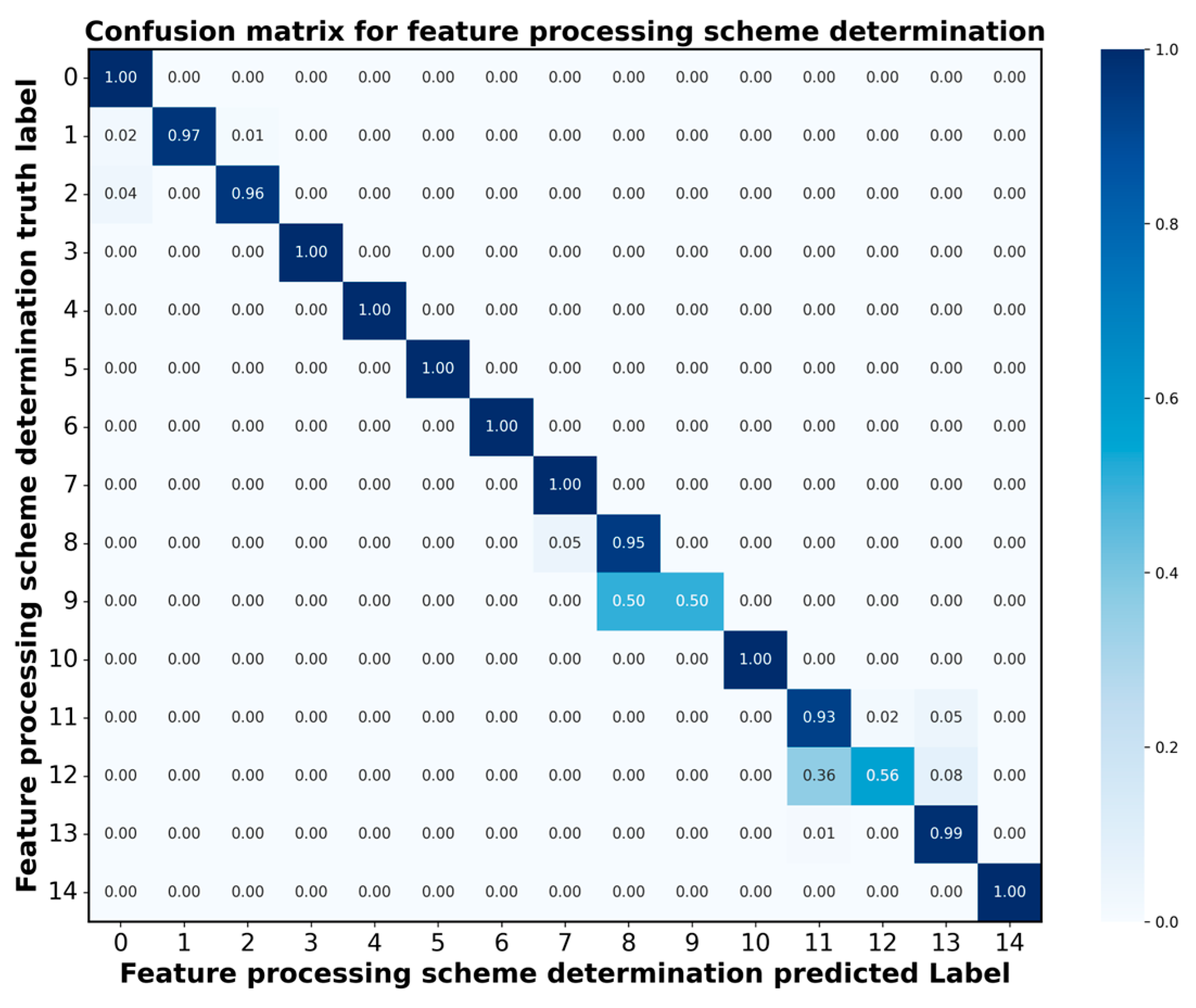
Figure 11. For the machining scheme decision-making task, the training and test accuracies were 98.58% and 98.14%, respectively. The corresponding loss and accuracy curves are shown in
Figure 12, and the confusion matrix on the test dataset is given in
Figure 13. The process route planning task achieved training and test accuracies of 96.87% and 96.14%, respectively. The loss and accuracy curves of the process route planning model during training and validation are presented in
Figure 14. The accuracy for each task was calculated as follows: feature recognition was based on the proportion of correctly classified samples for semantic segmentation and the proportion of correctly segmented samples for instance segmentation; machining scheme decision-making was determined by comparing the consistency between predicted and actual schemes; and process route planning was evaluated based on the proportion of samples with exact matches.
The training process demonstrated that all sub-models converged well, with loss curves rapidly declining and then stabilizing. The training and validation accuracy curves remained closely aligned, showing no significant signs of overfitting. Furthermore, confusion matrices indicated that both the feature recognition and machining scheme decision-making models exhibited high classification precision and reliability on the test set.
In summary, all three sub-models achieved high accuracy and stable generalization performance, primarily attributed to their reasonable structural design and process semantic modeling. Feature recognition integrates geometric and topological information through attribute adjacency graphs and graph attention networks, enhancing the ability to identify complex structures. Machining scheme decision-making employs attribute encoding and nonlinear mapping to achieve precise matching under multiple constraints. Process route planning models operation dependencies based on the machining unit directed graph, balancing process rules with overall rationality. These designs collectively validate the effectiveness and feasibility of graph neural networks in integrated process planning.
When designing this process planning framework, we fully considered the requirements for computational efficiency and resource consumption in industrial applications. The relevant performance metrics are provided in
Table 4. Based on the results in the table, it can be observed that the feature recognition module, built on the GAT architecture, maintains high inference efficiency despite involving attention weight calculations, particularly under the scale of attribute adjacency graphs typical for shaft parts. The machining scheme decision-making module effectively controls model size and memory usage by adopting the lightweight MPNN, making it more suitable for deployment in embedded process systems. The process route planning module utilizes the structurally concise GCN, whose local aggregation mechanism results in linear complexity, enabling stable inference times even on samples containing multiple machining elements. The entire framework, from 3D model input to process route generation, can be completed within the order of hundreds of milliseconds, meeting the real-time requirements of actual production. Furthermore, all three modules are constructed based on graph-structured data, endowing them with strong structural generalization and scalability. When new types of shaft parts are introduced, only the corresponding samples need to be supplemented, without requiring significant modifications to the overall architecture.
To further validate the effectiveness of our approach, this study conducted comparative experiments on machining feature recognition using the publicly available MFCAD and MFCAD++ datasets, comparing the results with our self-constructed shaft part dataset. All experiments were based on the same model architecture and training configuration to ensure comparability of the results.
Table 5 presents the recognition performance on the three datasets.
The above results show that our method achieved the highest recognition accuracy of nearly 99% on the shaft part dataset. However, on public datasets such as MFCAD and MFCAD++, which feature more complex characteristics and are primarily focused on milling parts, the accuracy decreased compared to existing methods. This is mainly because the public datasets contain a wider variety of part types, with more complex feature morphologies and spatial relationships. In contrast, the design of our model is more tailored to shaft parts, utilizing lower input feature dimensions and a lighter network architecture. Consequently, it struggles to maintain the same level of performance in more complex scenarios. Overall, the comparative experiments validate the high reliability and accuracy of our method in the context of shaft parts, while also indicating that there is still room for improvement in the recognition of complex milling-type parts.
We also conducted various ablation studies to evaluate the impact of node attributes, edge attributes, and certain important attribute features on network performance. The ablation experimental results for each model are presented in
Table 6.
For the feature recognition model, the removal of node attributes led to a significant performance drop, indicating their critical role in distinguishing the geometric forms of shaft-type features. In contrast, the impact of edge attributes was relatively weaker. For the feature machining decision model, the absence of attributes such as machining accuracy, material type, and related process properties noticeably degraded model performance. This demonstrates that these attributes are directly linked to the logic of machining scheme selection and are core factors for the model’s decision-making accuracy. For the process route planning model, node attributes also had a significant influence, as their removal led to a substantial decline in planning accuracy. Comparatively, removing individual node attributes like the machining stage or machining feature had a lesser effect on performance. This is primarily because the results of process route planning are determined by a combination of multiple feature attributes and process constraint relationships, exhibiting stronger multi-factor coupling characteristics. Overall, the ablation experiments validate the importance of various input attributes in different models. They also highlight that model design must adequately consider the contribution of each attribute to its specific task.
5.3. Case Study
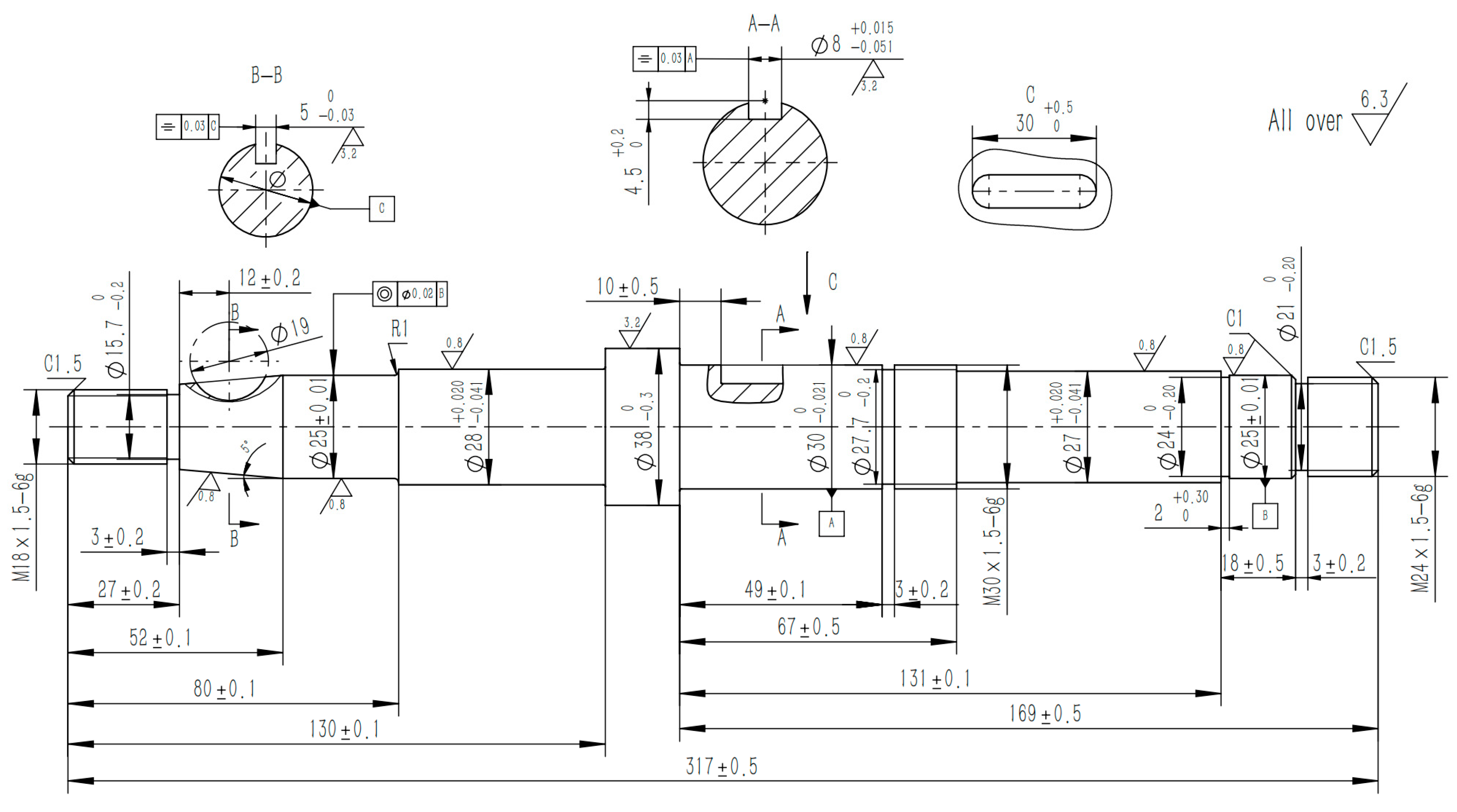
To verify the effectiveness of the proposed intelligent process planning method for shaft parts based on multi-graph fusion, the typical shaft part shown in
Figure 15 was selected as a case study for full-process analysis and experimental validation.
First, a 3D model is created based on the part engineering drawing, and corresponding process information is assigned to each feature. During the creation of the 3D model, features such as keyways, threads, chamfers, and fillets are removed. Subsequently, feature recognition is performed to identify all features within the part. The recognition results are shown in
Figure 16. The model’s recognition results are consistent with the actual features, indicating that the feature recognition model possesses strong capability in identifying machining features.
Next, by inputting the feature recognition results and machining process information into the feature machining decision model, the machining scheme for each machining feature can be obtained. The machining scheme set for the features of this part is presented in
Table 7.
Based on the machining scheme set, a machining unit set is constructed and input into the process route planning model, thereby obtaining the predicted sequence of machining steps. Additionally, to meet the validation requirements of this study, the process documentation for this example part was organized and structured, resulting in an actual machining sequence derived from the experience of human process experts. A comparison between the model-predicted sequence and the actual machining sequence is presented in
Table 8, from which it can be observed that differences occur mainly between the 14th and 27th machining steps, while the remaining steps are identical.
From the discrepancy analysis, it can be observed that after the “Cylindrical Surface 9—Rough turning” step, the model tends to continue the rough machining phase, thus sequentially scheduling steps such as rough turning of circular grooves and rough turning of cones. In contrast, in the actual process, operators prefer to first complete the semi-finishing of the external cylindrical surfaces by changing tools while maintaining the original clamping setup, before proceeding with operations like rough turning of grooves and cones.
The case study demonstrates that the model-predicted machining sequence is highly consistent with the actual machining sequence in terms of overall order. Both encompass typical processes such as rough and semi-finishing machining and strictly adhere to the fundamental process principle of “roughing before finishing.” This indicates that the proposed process route planning model can not only effectively learn the topological dependencies between machining steps but also maintain process rationality and execution norms during sequence generation, thereby providing preliminary validation of the effectiveness of the proposed method.
6. Conclusions
This study proposes an intelligent process planning method for shaft parts based on multi-graph fusion, establishing a three-stage integrated technical system that progresses from machining feature recognition to feature machining scheme decision-making, and finally to process route planning. To support model training, a multi-source dataset covering feature recognition, scheme decision-making, and route planning was autonomously constructed, addressing the gaps in process semantic annotation and missing process parameters. Methodologically, a feature recognition model based on a GAT, a scheme decision-making model based on an MPNN, and a process-constraint-aware GCN embedding process rules were designed, achieving a unified representation of diverse process information and the integration of process constraints. Experimental results show that the proposed method can achieve fully automated conversion from a 3D model to a complete process route without manual intervention. It attains a high level of feature recognition accuracy, scheme decision-making rationality, and route planning consistency. The generated machining sequences show strong alignment with real process sequences, significantly enhancing the intelligence and industrial adaptability of process planning for shaft parts and providing effective technical support for the development of intelligent manufacturing.
Although the method proposed in this paper has achieved significant results in experimental validation, several issues remain for further research and refinement. First, it is necessary to further enhance the model’s generalization ability for different types of parts and more complex, diverse machining scenarios, thereby improving its applicability in real industrial environments. Second, the interpretability and trustworthiness of the model require further strengthening to meet the practical demands for decision transparency and stability in industrial applications. Additionally, although the method has been validated on public datasets and real part case studies, comprehensive industrial-level manufacturing validation—such as systematic testing on actual machining equipment or within real production line environments—still poses certain challenges. This research is largely constrained by the accessibility of real process data and manufacturing resources. Future work will strengthen collaboration with industry to gradually introduce more real parts, actual process plans, and manufacturing process data, enabling a more comprehensive evaluation of the proposed method’s performance in real production environments.
At the same time, for the tasks of machining scheme decision-making and process route planning, there is still a lack of structured, standardized, and publicly accessible benchmark datasets. This limitation hinders systematic comparison and reproducibility across different methods to some extent. Follow-up research will actively explore shareable data organization formats, progressively improve the transparency of synthetic data generation rules, and further validate and compare the proposed method based on available standard data. Ultimately, by integrating more efficient deep learning architectures, richer representations of geometric and process knowledge, and continuous industrial validation, we aim to build a more intelligent, reliable, and scalable automated process planning system.