1. Introduction
With the increasing intensity of industrial and logistics work, work-related musculoskeletal disorders (WMSDs) have become a major threat to workers’ health and productivity. Among these conditions, low back pain (LBP) is particularly prevalent and imposes a substantial socioeconomic burden [
1,
2,
3,
4]. To mitigate lumbar loading during manual handling, occupational back-support exoskeletons have attracted considerable attention as wearable assistive devices. By providing external mechanical support, these systems can redistribute trunk loads, reduce muscle activation, and improve work efficiency [
5,
6,
7].
Back-support exoskeletons can be broadly classified into two categories based on material and structural design: rigid and soft. Rigid exoskeletons rely on backplates/frames to provide higher mechanical stiffness and postural constraint, whereas soft exoskeletons are primarily composed of textiles and compliant elastic elements, placing greater emphasis on wearing comfort and kinematic compliance [
8,
9,
10,
11]. Although existing studies have extensively reported the potential benefits of exoskeletons in reducing muscle activity and energy expenditure [
12,
13,
14], systematic comparisons of thermophysiological responses and subjective thermal experience between different structural types under equivalent assistance levels remain limited.
In work scenarios involving highly repetitive manual handling, thermal experience is jointly shaped by individual heat production and local heat dissipation conditions. Previous research has indicated that under high metabolic-rate conditions (e.g., during physically demanding tasks), the influence of metabolic rate on thermal comfort is often stronger than that of ambient temperature itself [
15]. In addition, wearable equipment may alter heat-transfer pathways around the skin through coverage and contact, and can affect sweat evaporation and water-vapor diffusion, thereby influencing cutaneous thermal status and subjective thermal perceptions [
16,
17,
18,
19]. Accordingly, in exoskeleton research, metabolic rate is commonly measured to characterize changes in endogenous heat load, while mean skin temperature (MST) and subjective questionnaires are used to reflect cutaneous thermal responses and subjective thermal experience during work tasks.
Building on the existing body of research, it can be observed that discussions of thermal responses during the use of back-support exoskeletons have been increasing. For example, Liu et al. [
20], using a passive back-support exoskeleton, compared changes in skin temperature, thermal comfort, and workload with and without the exoskeleton across different ambient temperatures. Their findings suggest that a “microclimate layer” formed jointly by the exoskeleton and clothing may elevate local back temperature and exacerbate thermal discomfort. However, most existing studies treat “wearing an exoskeleton or not” as the primary independent variable, or manipulate ambient temperature as the main experimental factor. Evidence remains limited for controlled comparisons between rigid and soft spinal exoskeletons within the same work scenario while holding assistance level constant (e.g., by matching assistive torque). As a result, the trade-off between assistance effectiveness and subjective thermal perception across different structural types remains unclear.
Addressing the above research gap, and building on Liu et al. [
20] and related work, this study selected a rigid spinal exoskeleton (REXO) and a soft spinal exoskeleton (SEXO). Under a unified assistive-torque setting (38 N·m) and constant environmental conditions, comparative experiments were conducted with three representative lifting loads (5, 10, and 15 kg). Differences in metabolic rate, mean skin temperature, and subjective thermal sensation and thermal comfort were examined across three conditions: without the exoskeleton (WEXO), REXO, and SEXO. The aims of this study were to: (1) evaluate differences between the two exoskeleton types in reducing task-related metabolic load; (2) characterize load-dependent patterns of cutaneous thermal responses and subjective thermal experience; and (3) provide evidence and design guidance for material and structural optimization of industrial exoskeletons that balance assistive performance with thermal experience.
2. Materials and Methods
2.1. Participant
A total of 20 healthy young adult males engaged in parcel handling and related manual material-handling work were recruited for this study. Inclusion criteria were: age 20–35 years, right-handedness, at least one year of continuous employment in predominantly manual handling jobs (e.g., warehouse stocking, logistics sorting, and assembly-related carrying), and no history of cardiovascular, respiratory, metabolic, or neuromusculoskeletal disorders. All participants were full-time active workers whose routine job tasks involved high-frequency manual handling and sorting activities, representing an overall moderate-to-high level of physical workload intensity. Exclusion criteria included: a history of severe low back pain or lower-limb injury within the past 6 months; long-term use of medications that might affect metabolism or thermoregulation; and, within 24 h prior to testing, strenuous exercise, alcohol consumption, smoking, or excessive caffeine intake. Before enrollment, all participants completed a health questionnaire and underwent basic physical measurements (e.g., height, weight, and blood pressure) to ensure that they met the safety requirements for the experiment.
We restricted the sample to male participants with at least one year of handling experience for two main reasons. First, this population typically demonstrates relatively stable lifting and carrying movement patterns, making it more representative of typical users in real industrial settings. Second, this criterion helps minimize learning effects caused by unstable movement strategies among novices, allowing differences in exoskeleton assistance to be reflected more clearly in metabolic and thermal-response outcomes. Participants’ job types and work experience were verified by team leaders or safety officers from the collaborating companies and cross-checked against self-reported information from the participants.
Participants were reminded before each session to refrain from alcohol consumption, smoking, caffeine intake, and strenuous physical activity for at least 24 h. The mean (SD) values for age, height, body mass, and BMI were 24.4 (2.7) years, 172.0 (5.14) cm, 66.0 (11.3) kg, and 22.3 (2.8), respectively. All participants completed basic task training to ensure familiarity with the procedures. Written informed consent was obtained from each participant prior to testing, and compensation was provided for participation. This study was approved by the Ethics Committee of Xi’an University of Technology (No. 20250713), and all procedures were conducted in strict accordance with the approved protocol.
2.2. Exoskeleton
This study compared a rigid back-support exoskeleton with a soft back-support exoskeleton. Both devices weighed 3 kg and provided an assistive torque of 38 N·m. Details are provided below.
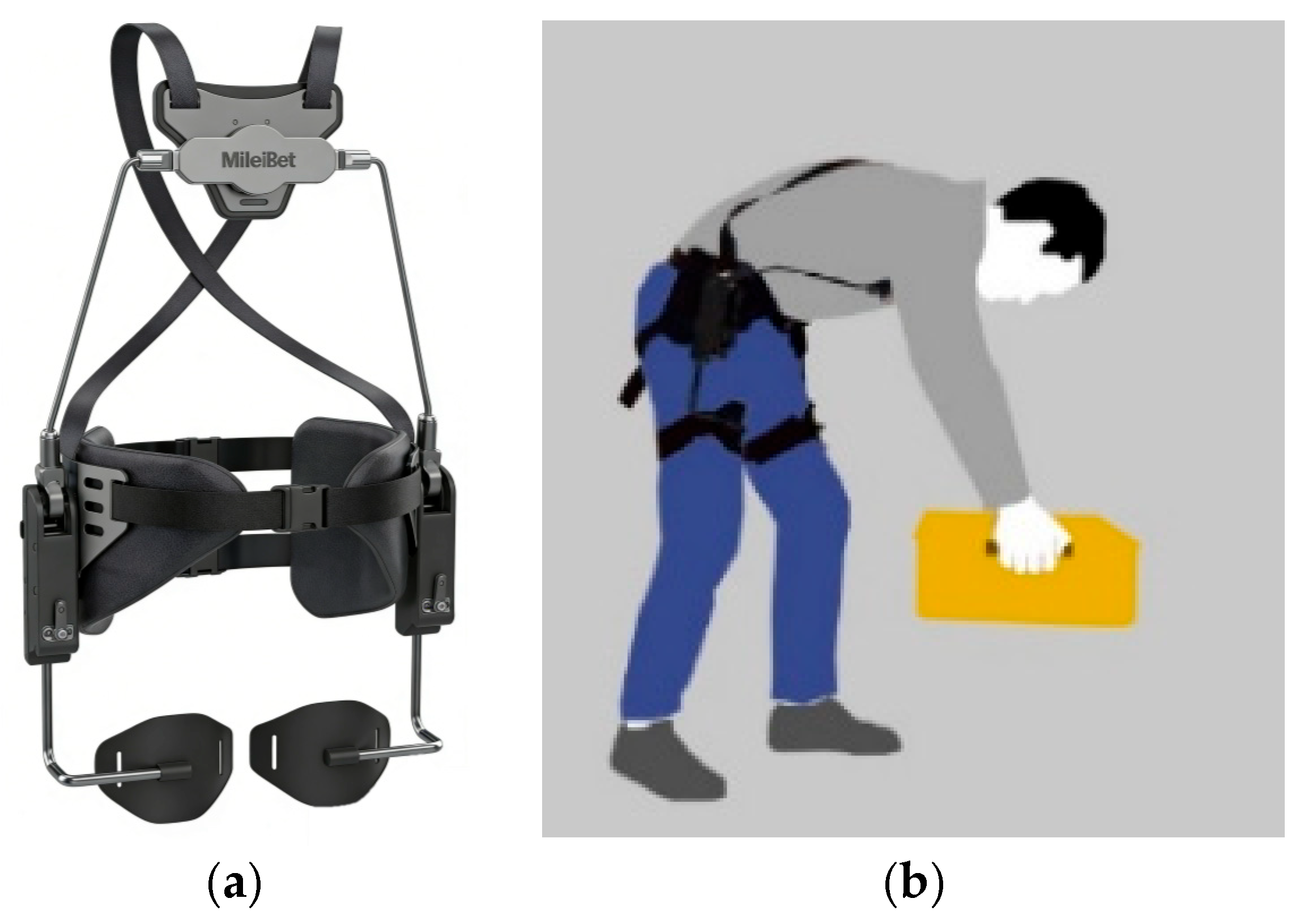
The rigid back-support exoskeleton (Mile Bot, Shenzhen, China) is shown in
Figure 1a. It consists of a chest pad and two thigh pads. These components are connected by a supporting structure that incorporates a damping mechanism, which provides support at the hip joint. The exoskeleton is adjusted and secured to the body using straps around the back and pelvis. During operation, the upper body is supported by the chest and thigh pads, while the central damping mechanism generates supportive torque, thereby reducing muscular activity in the lower back (
Figure 1b).
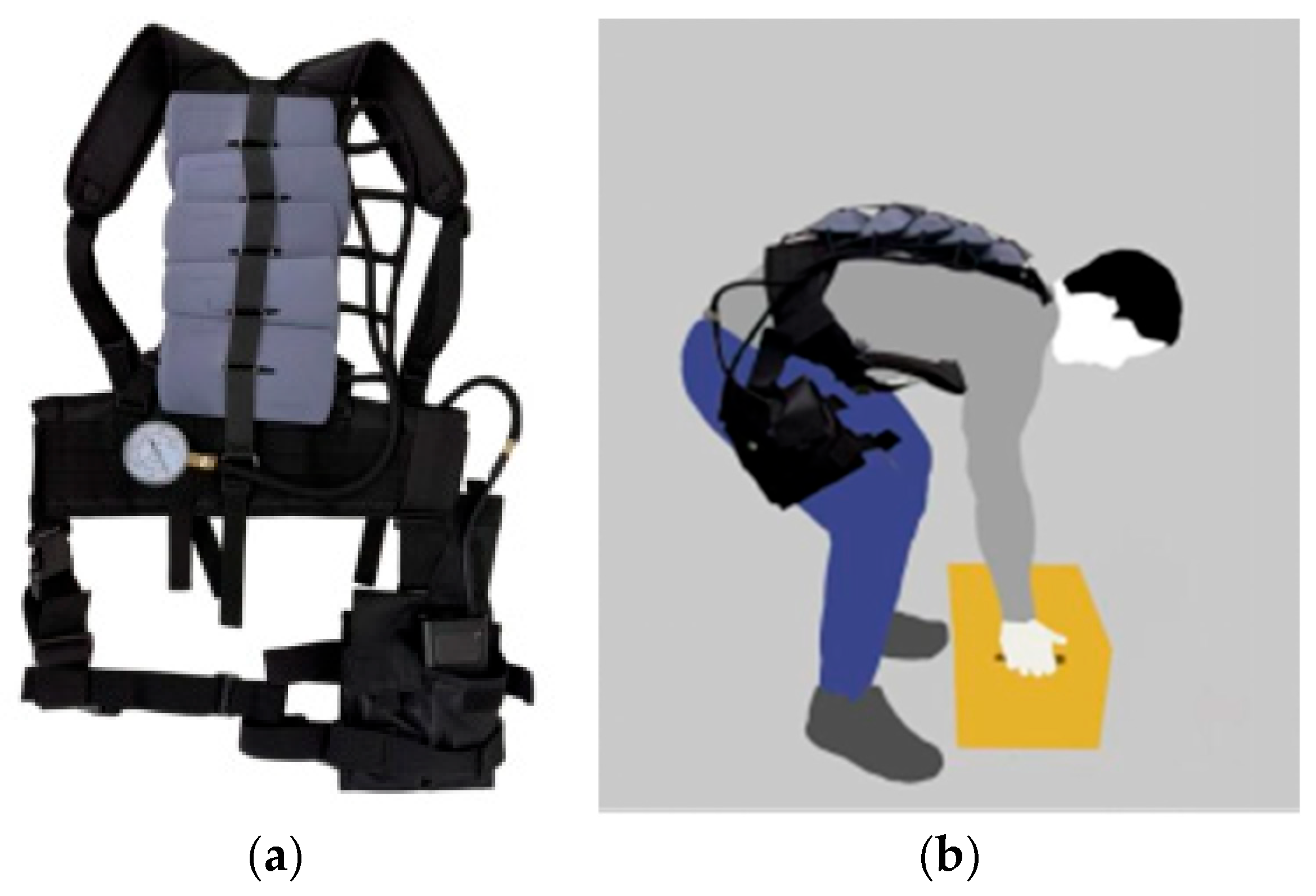
The soft back-support exoskeleton (Airtouch, Xi’an, China) is shown in
Figure 2a. It comprises a shoulder–chest harness and two thigh straps. These components are connected via a supporting structure that integrates multiple pneumatic-wrapping modules, which provide support along the back. The exoskeleton is adjusted and secured to the body using straps around the chest and waist. The pneumatic-wrapping modules allow the damping/stiffness to be preset through pre-inflation; the elastic deformation of the air bladders is converted into tensile force in the wrapping straps, thereby reducing muscular activity in the lower back (
Figure 2b).
Overall, both devices used in this study were passive (unpowered) back-support exoskeletons (
Table 1). The rigid exoskeleton provides an extension-assist torque concentrated around the hip through a damping structure during trunk flexion–extension, with supportive forces primarily transmitted via localized contact interfaces such as the chest pad and thigh pads. In contrast, the soft exoskeleton relies on a pneumatic wrapping-strap system and conformal textiles: it is passively tensioned during trunk flexion and releases stored elastic deformation during the return to upright posture, producing distributed traction assistance along the back and pelvic regions.
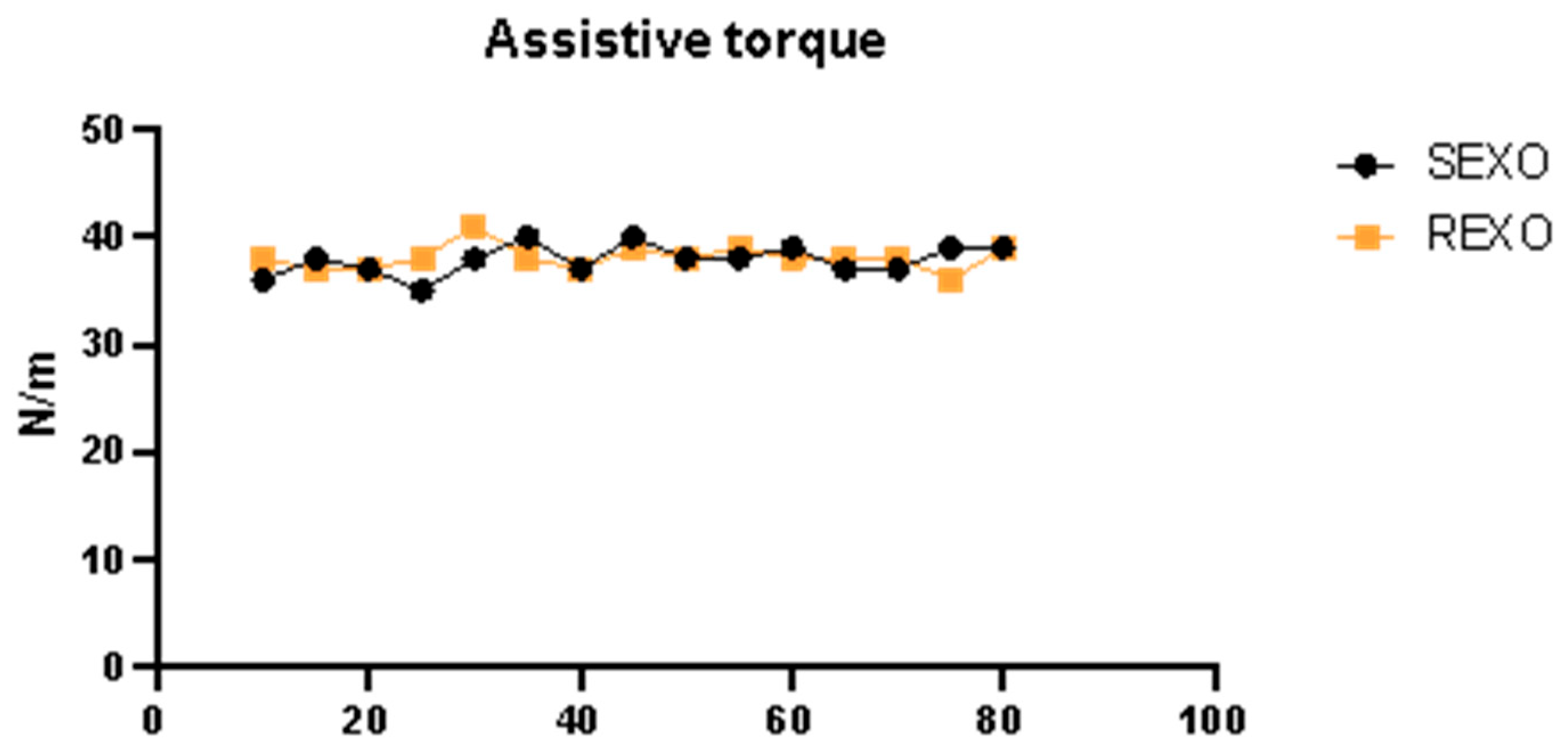
Before the formal human-subject experiment, a pilot test was conducted to characterize and match the assistive torque of the two exoskeletons. Each exoskeleton was mounted on a mannequin rig with an adjustable trunk flexion angle. By varying the trunk flexion angle, a force sensor installed in series at the thigh wrapping-strap location was used to record the terminal interaction force F generated by the exoskeleton. The moment arm d from the point of force application to the hip joint axis was also measured. The assistive torque at each angle was then calculated as T = F × d.
To ensure comparable assistance levels, the preload of the damping mechanism in the REXO and the pre-tension/pre-inflation state of the air bladders and wrapping straps in the SEXO were adjusted until the two devices provided similar assistive torque. The assistive torque–angle profiles during trunk flexion for both exoskeletons are shown in
Figure 3.
2.3. Experimental Design
A repeated-measures design was adopted to examine the effects of a soft and a rigid back-support exoskeleton on human comfort under the same assistive torque. The experiment followed a within-subject 3 (device condition) × 3 (load level) design, including three conditions: soft exoskeleton (SEXO), rigid exoskeleton (REXO), and without the exoskeleton (WEXO). During the experiment, metabolic rate, mean skin temperature, thermal comfort, and thermal sensation were measured. The average session duration per participant was approximately 110 min. Each session consisted of three stages: pre-test preparation, the manual handling task, and questionnaire completion.
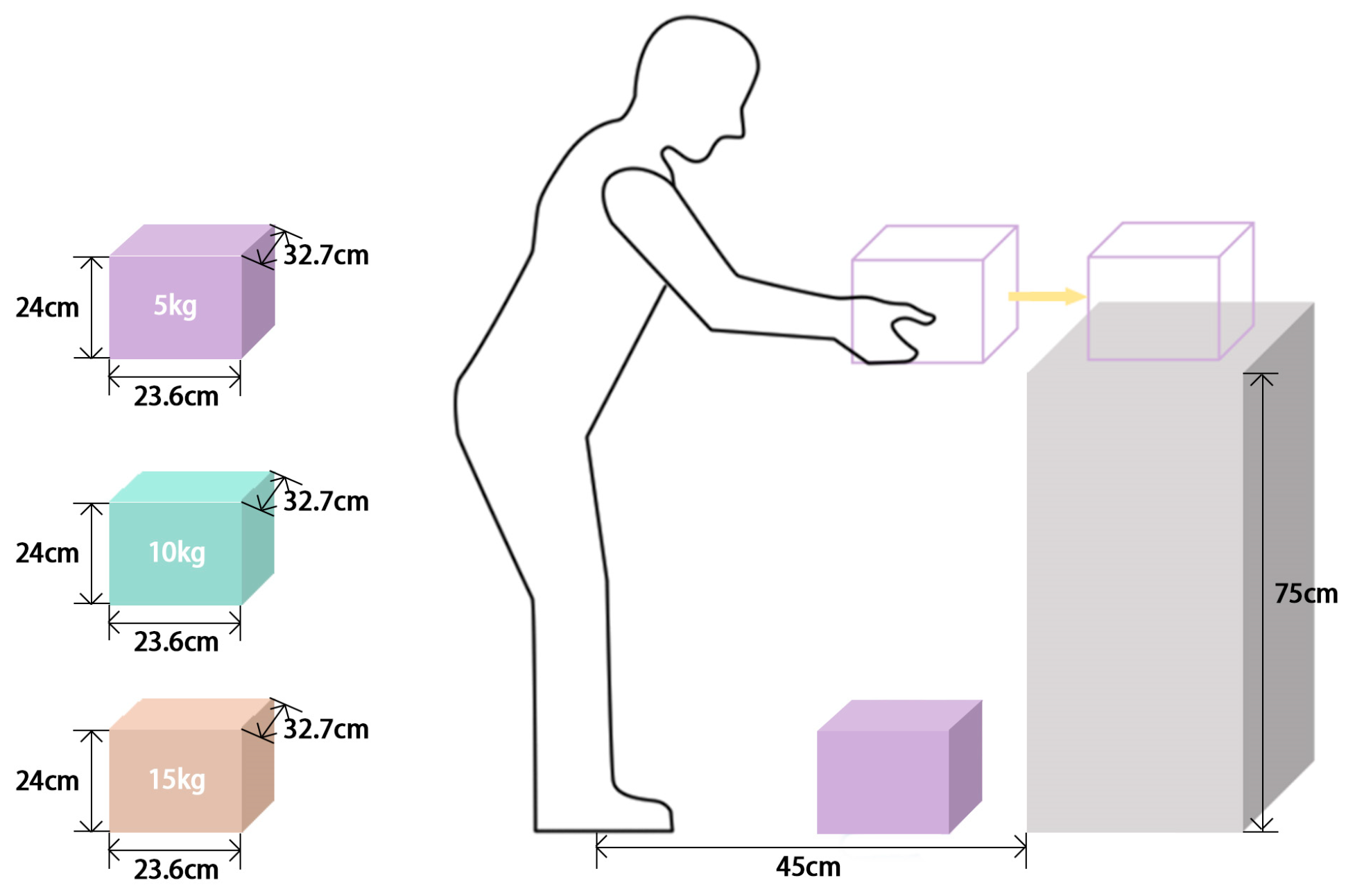
To ensure participant safety and task representativeness, the lifting loads and lifting height were designed with reference to the National Institute for Occupational Safety and Health (NIOSH) manual lifting task guidelines [
8] (
Figure 4). A preliminary field survey of local logistics warehousing, parcel-sorting, and workshop material-handling jobs showed that the mass of individual manually handled items is typically concentrated in the ~5–20 kg range. In particular, small parcels of ~5 kg and medium cartons or parts weighing ~10–15 kg are common. Based on these observations and the moderate load levels frequently used in prior manual handling research, we selected 5, 10, and 15 kg as three representative load conditions. These loads were expected to elicit measurable changes in metabolic rate and skin temperature under moderate environmental conditions. In addition, given the repeated-measures design, limiting the maximum load to 15 kg helped control cumulative fatigue and reduce the risk of low-back injury, thereby meeting requirements for experimental safety and participant acceptability.
In the formal experiment, participants were instructed to lift a box weighing 5, 10, or 15 kg from the floor to a platform at a height of 74 cm and place it down. The platform was positioned 45 cm in front of the participant’s designated standing location. Each participant completed all load conditions under each of the three device conditions: without the exoskeleton (WEXO), the rigid exoskeleton (REXO), and the soft exoskeleton (SEXO).
To control for order effects, a counterbalanced crossover design was employed. The presentation order of the three exoskeleton conditions across the three experimental days was assigned using a computer-generated random sequence from the 3! = 6 possible permutations, so that each condition appeared as evenly as possible on Day 1, Day 2, and Day 3. A washout interval of at least 5 days was scheduled between adjacent sessions to reduce potential confounding from cumulative fatigue and thermal acclimation. Within each experimental day, the order of the three load conditions (5, 10, and 15 kg) was independently randomized by computer to avoid systematic effects on metabolic rate and thermal responses caused by a fixed increasing or decreasing load pattern.
All experiments were conducted in a climate-controlled chamber. The air temperature was set to 26 °C, which lies at the warm end of the range commonly used in indoor thermal comfort research and is comparable to warm indoor/semi-indoor environments in logistics warehousing and related handling settings. This setting enabled clearer observation of how different exoskeleton structures affect thermal load and thermal experience, without introducing a substantial risk of heat stress.
During testing, temperature was maintained at 26.0 ± 0.5 °C (mean ± SD), relative humidity at 50.0 ± 0.3% (mean ± SD), and air velocity near still-air conditions (target ≈ 0.02 m/s, fluctuations < 0.1 m/s). Throughout the experiment, all participants wore a standardized outfit consisting of a long-sleeved cotton T-shirt, long work pants, cotton socks, and athletic shoes; additional outerwear or extra clothing layers were not permitted. Based on typical clothing insulation values reported in ISO 9920 [
21], the total insulation of this ensemble was estimated to be ~0.6–0.7 clo.
2.4. Procedure
Before each session, all devices used to measure metabolic rate and mean skin temperature were calibrated. To minimize potential effects of digestion on metabolism, participants were required to wait at least 2 h after eating before taking part in the experiment. To minimize between-session differences in hydration status, participants were instructed to avoid strenuous exercise and alcohol consumption on the day before testing, and to refrain from excessive water intake or caffeinated beverages on the test day. During the experiment, no additional drinking or eating was permitted.
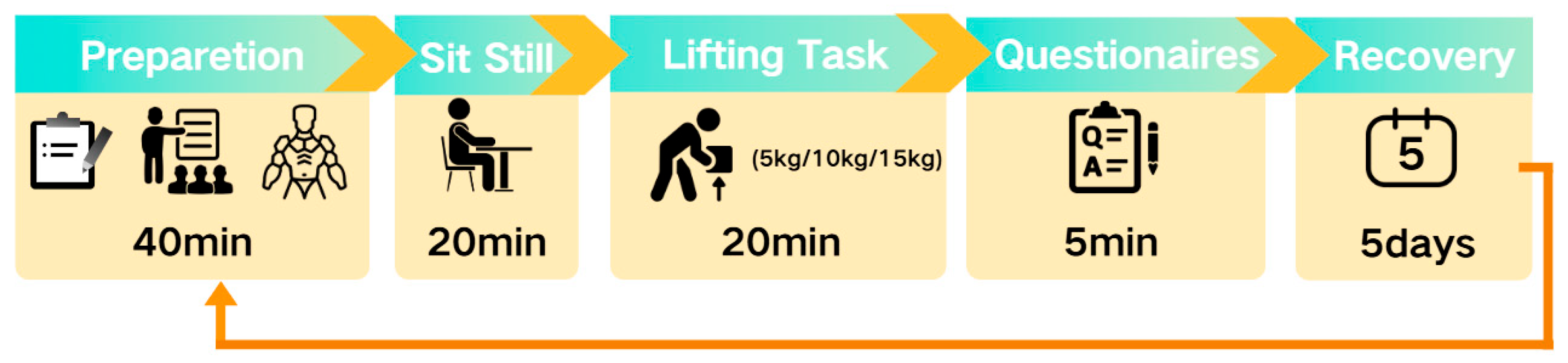
The experiment was conducted in a climate-controlled chamber, and the preparation room, waiting room, and testing room were all maintained under the same conditions (26 °C, 50% relative humidity, and air velocity < 0.1 m/s). Participants arrived at the preparation room 40 min before testing. The researchers recorded anthropometric data, provided a detailed briefing on the protocol and instruments, and assisted participants in correctly donning the exoskeleton. To minimize interference from the exoskeleton during data collection, all sensors were placed on body locations that did not restrict exoskeleton movement.
After donning the device, participants moved to the waiting room and sat quietly for 20 min to establish a baseline state of metabolic and thermal equilibrium. Following this seated period, the assistive setting of the exoskeleton was configured according to the protocol, and participants were guided to the designated test area to perform the lifting task. To standardize movement frequency, a metronome paced the task at 5 cycles per minute: participants lifted the box from the floor to the tabletop and then returned it to the floor in a continuous cycle. No strict lifting posture was imposed; instead, participants performed the movements in a natural yet controlled manner.
After completing the lifting task under each exoskeleton condition, participants were required to complete the subjective questionnaire immediately. The questionnaire was administered and finished within approximately 5 min after task completion, and no additional recovery or cooling period was provided during this interval. After all sessions were completed, participants’ feedback and overall impressions were collected by the research team.
In crossover studies, a washout interval of ≥5 days is commonly adopted to minimize fatigue-related confounding and potential carryover effects (e.g., residual effects of the prior condition) [
12,
13]. Accordingly, we scheduled subsequent testing sessions five days apart for the other exoskeleton conditions, aiming to reduce the influence of residual fatigue, thermal acclimation, and learning effects on later conditions. To mitigate the influence of within-day and day-to-day physiological fluctuations on metabolic and thermal responses, in addition to the 5-day washout period, all sessions for each participant were scheduled within the same fixed afternoon time window. Pre-session behavioral restrictions, environmental conditions, and the task protocol were also standardized across sessions. Participants were provided with the corresponding compensation upon completion. The overall experimental procedure is illustrated in
Figure 5.
2.5. Physiological and Subjective Measurements
2.5.1. Metabolic Rate
Participants wore a portable metabolic analyzer (Cosmed K5) to accurately measure metabolic rate (precision: VCO
2 ± 0.01%, VO
2 ± 0.02%). The metabolic rate was then calculated using the following equation [
22]:
where M denotes metabolic rate (W/m
2), RQ denotes the respiratory quotient, A denotes the total body surface area, and VCO
2 and VO
2 denote the volumes of CO
2 production and O
2 consumption, respectively, under standard conditions. In this study, metabolic rate was calculated using indirect calorimetry, following the approach for repetitive lifting tasks reported by Miyachi et al. [
23]. To ensure consistency with prior research and to minimize the influence of end-stage fatigue on metabolic outcomes, minutes 8–10 after task onset were defined as the steady-state analysis window, within which VO
2 and VCO
2 data were time-averaged. The metabolic rate used for statistical analysis was the mean value within this steady-state window rather than an instantaneous value.
2.5.2. Mean Skin Temperature (MST)
Regional skin temperature was recorded using iButton sensors (Maxim Integrated, San Jose, CA, USA). All sensors were attached to the skin on the right side of the body and placed beneath the base clothing layer. Measurement sites were located at the forehead (central forehead), chest (right anterior chest, below the clavicle over the pectoralis major region), upper arm (lateral aspect of the right upper arm, around the midpoint between the acromion and the antecubital fossa over the mid-belly region of the biceps/triceps), forearm (anterior/volar mid-belly region of the right forearm), hand (center of the right dorsal hand), thigh (anterior aspect of the right thigh, around the midpoint between the anterior superior iliac spine and the superior border of the patella over the mid-belly region of the quadriceps), lower leg (anterolateral aspect of the right lower leg over the mid-belly region of the tibialis anterior), and foot (center of the right dorsal foot).
A unilateral (right-side) sensor placement strategy was adopted primarily due to practical constraints in deploying wearable devices and sensors (i.e., reducing the number of sensors and the associated wiring/dislodgement risk, and minimizing interference with the exoskeleton structure and straps). In addition, both the lifting task and the exoskeleton configurations were designed to be bilaterally symmetrical, and no lateral asymmetry was intentionally introduced. It should be noted that unilateral measurement implicitly assumes an approximately symmetrical distribution of skin temperature between the left and right sides; therefore, this study could not directly evaluate potential bilateral temperature differences. This representativeness issue is further discussed in the limitations section.
During the experiment, skin temperature at each site was recorded once per minute, and mean skin temperature (MST) was calculated using the Gagge/Nishi weighted equation [
24]:
2.5.3. Questionnaires Survery
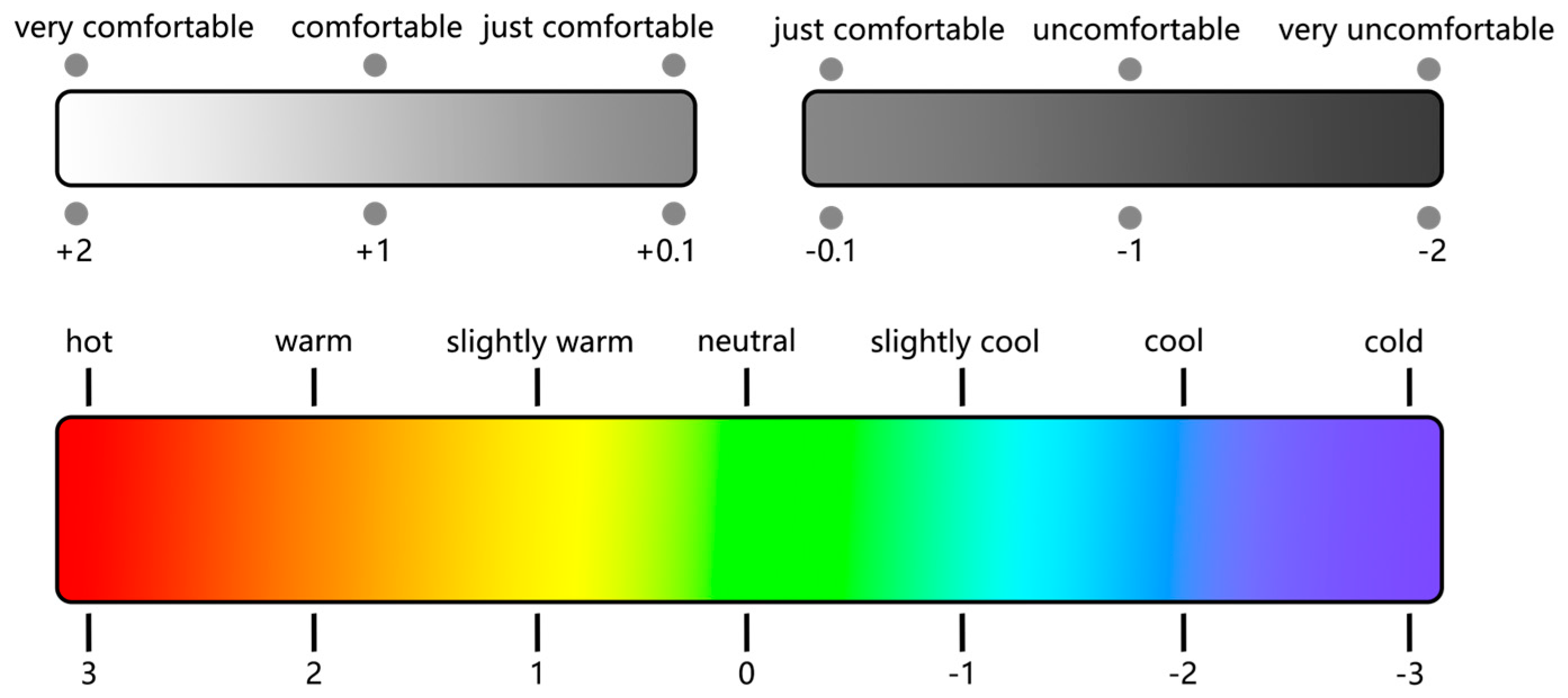
As shown in
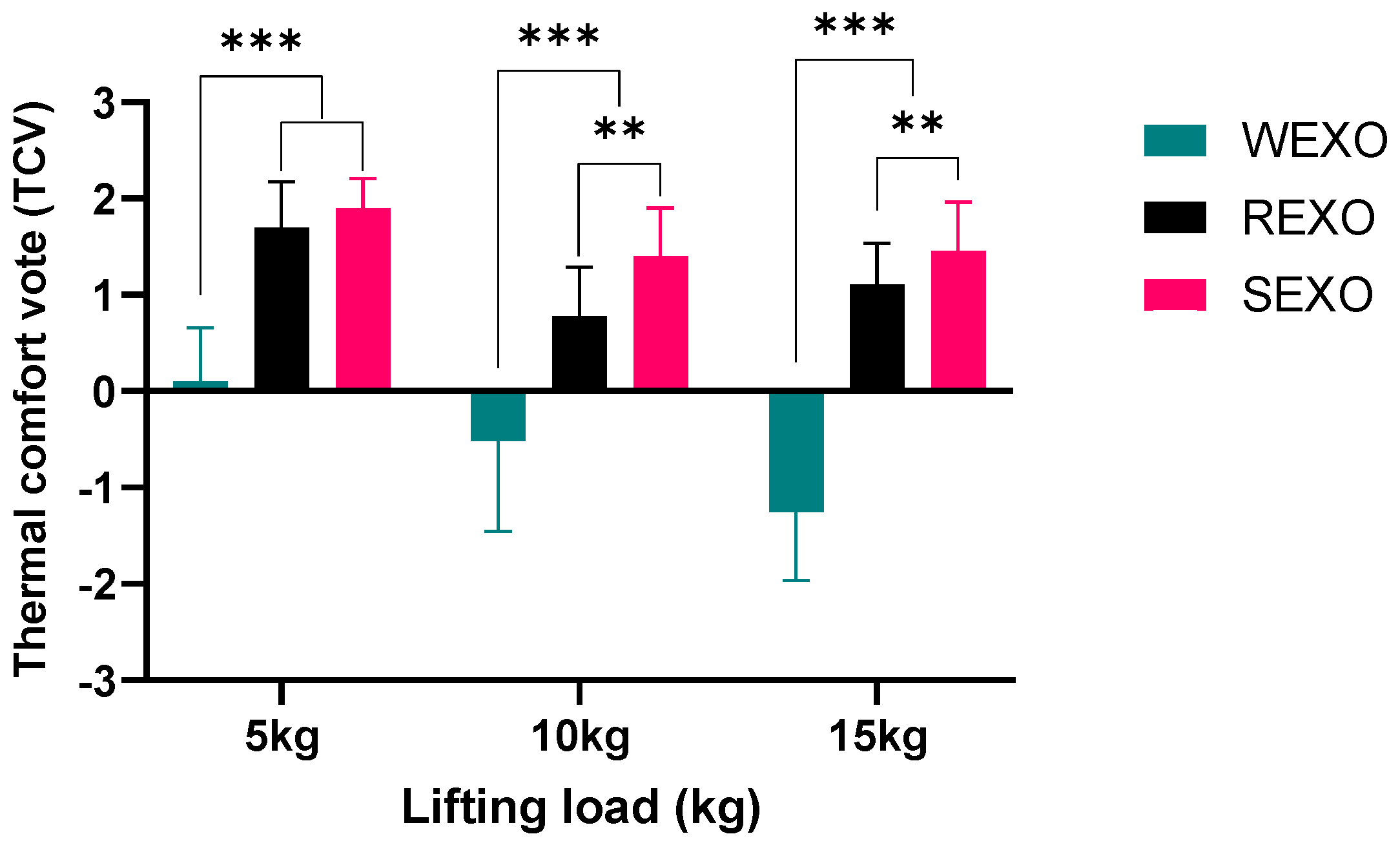
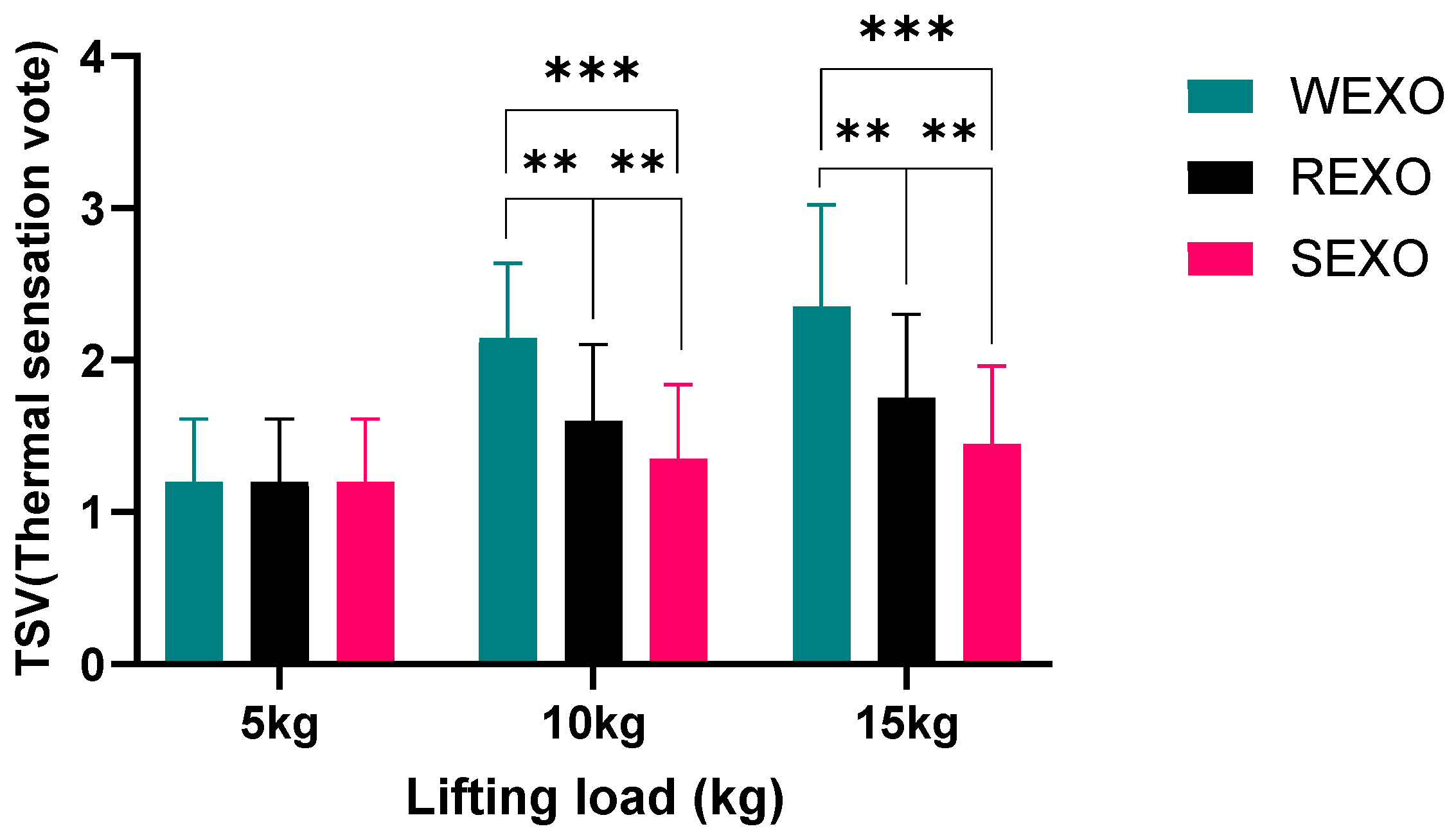
Figure 6, Thermal sensation votes (TSV) were rated on the ASHRAE seven-point scale: hot (+3), warm (+2), slightly warm (+1), neutral (0), slightly cool (−1), cool (−2), and cold (−3). Thermal comfort votes (TCV) were rated on a six-point scale: very comfortable (+2), comfortable (+1), slightly comfortable (+0.1), slightly uncomfortable (−0.1), uncomfortable (−1), and very uncomfortable (−2) [
25].
2.5.4. Statistical Method
The sample size in this study was n = 20. The four dependent variables were metabolic rate, mean skin temperature (MST), thermal sensation vote (TSV), and thermal comfort vote (TCV). For each outcome, a two-way repeated-measures ANOVA was conducted. Within-subject factor 1 was exoskeleton condition (Exoskeleton: WEXO, REXO, SEXO), and within-subject factor 2 was load level (Load: 5 kg, 10 kg, 15 kg). The main effects of Exoskeleton and Load, as well as the Exoskeleton × Load interaction, were tested. In terms of interpretation, we prioritized the interaction effect: a significant interaction indicates that the exoskeleton effect varies across load levels (or that the load effect varies across exoskeleton conditions). In this case, we did not draw overall conclusions based solely on main effects, but performed post hoc/simple-effects analyses to identify the source of the differences. If the interaction was not significant, main effects were interpreted under the assumption of no interaction, and significant main effects were followed by pairwise comparisons.
When the Exoskeleton × Load interaction was significant, simple-effects analyses were conducted for follow-up: (1) comparing the three exoskeleton conditions within each load level (WEXO vs. REXO vs. SEXO); and (2) comparing the three load levels within each exoskeleton condition (5 vs. 10 vs. 15 kg). When the interaction was not significant but a main effect was significant, post hoc pairwise comparisons were performed for the corresponding main effect. All multiple comparisons were adjusted using the Bonferroni correction to control the family-wise error rate.
Assumption checks included assessing the normality of residuals using the Shapiro–Wilk test and evaluating the sphericity assumption using Mauchly’s test. When sphericity was violated, degrees of freedom were adjusted using the Greenhouse–Geisser correction. For all effects, partial eta squared (partial η2) was reported as the effect size, along with mean ± standard deviation (Mean ± SD) and 95% confidence intervals (95% CI) for the mean. In addition, to explore associations between objective thermophysiological indicators and subjective thermal experience, Pearson correlation analyses were conducted to examine the linear relationships among metabolic rate, MST, TSV, and TCV, with correlation coefficients and significance levels reported. All statistical analyses were performed in SPSS (Version 22, IBM Corp., Chicago, IL, USA), and the significance level was set at α = 0.05.
4. Discussion
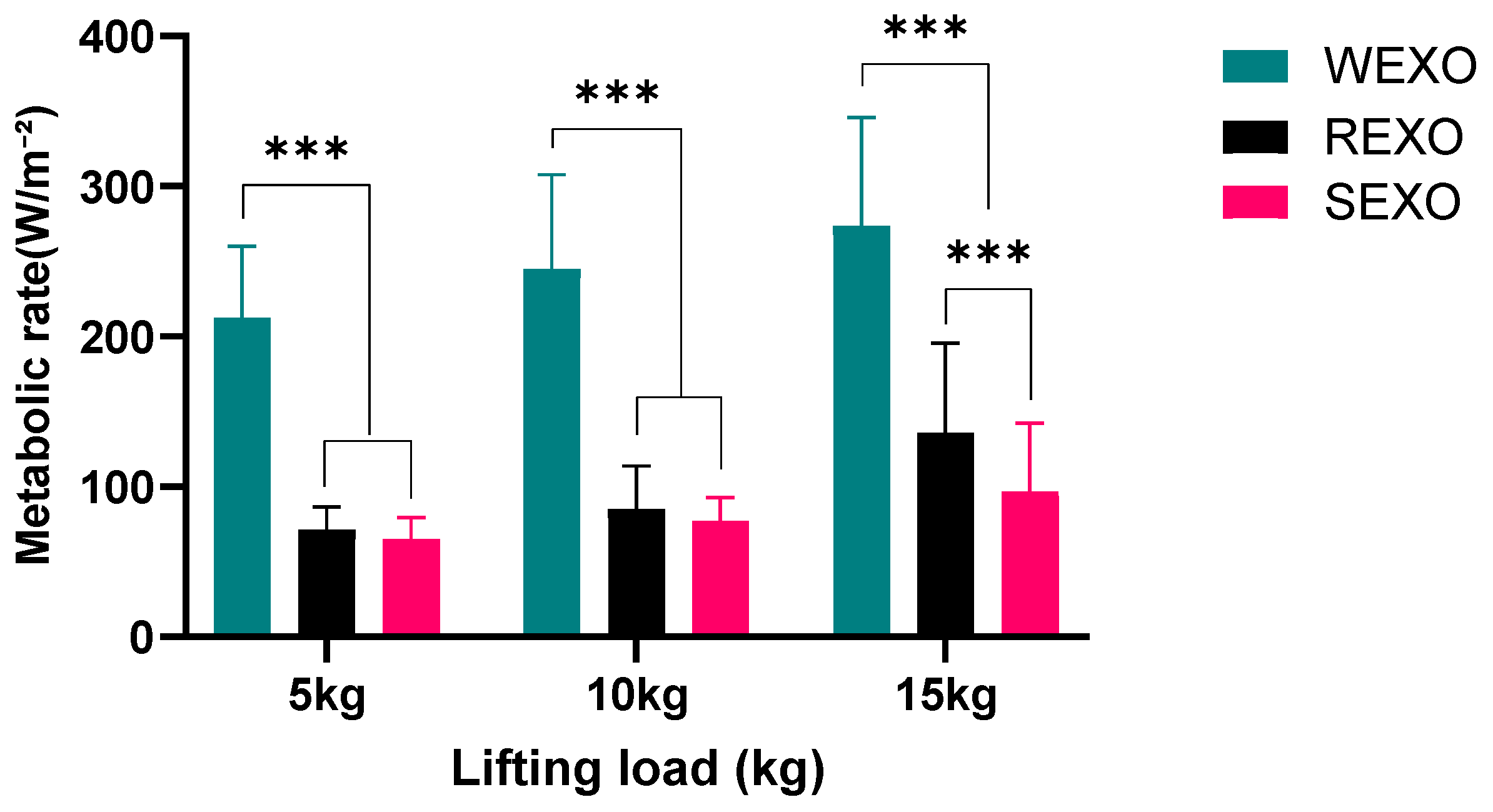
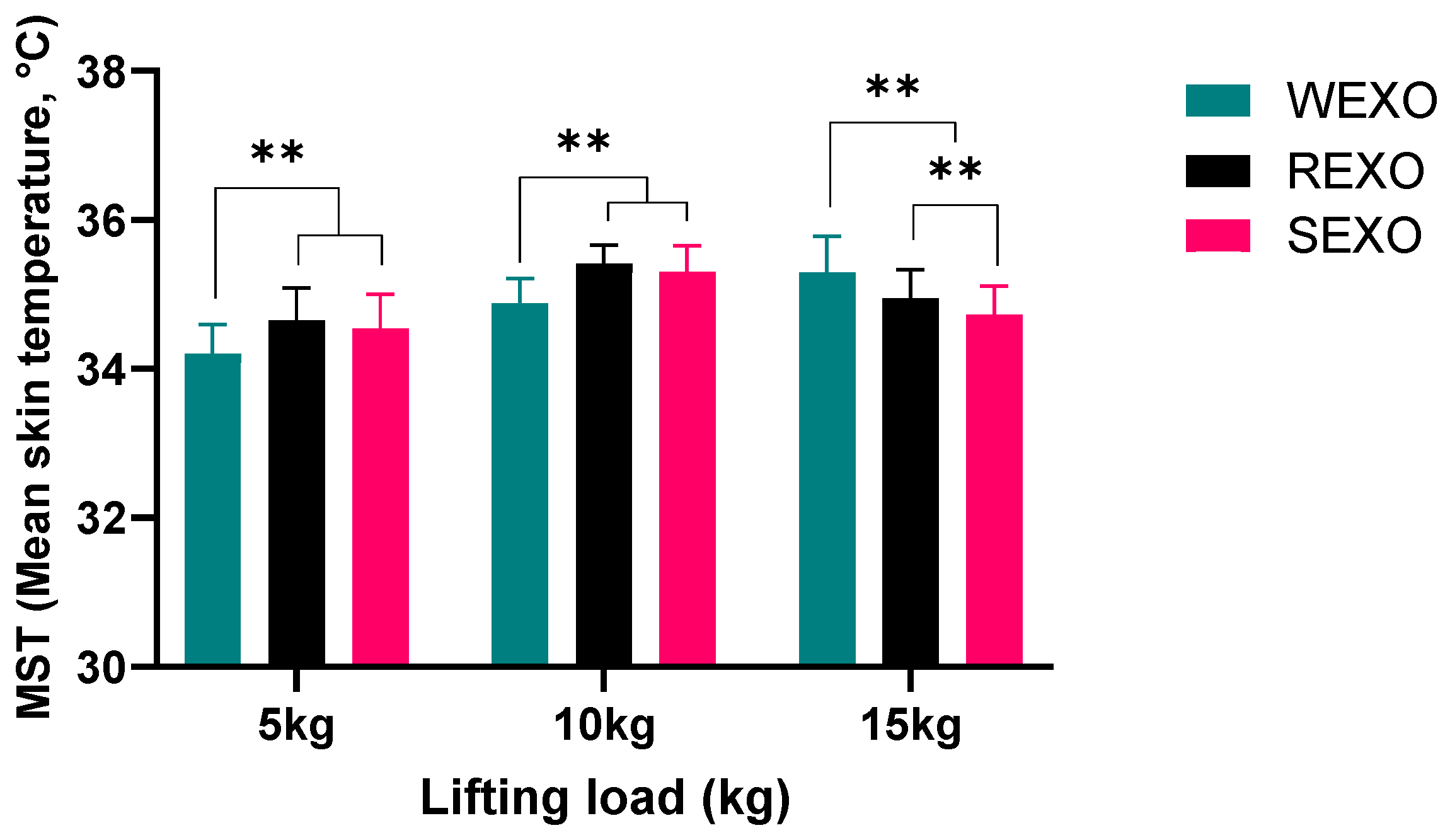
Under three conditions—without the exoskeleton (WEXO), a rigid back-support exoskeleton (REXO), and a soft back-support exoskeleton (SEXO)—this study compared metabolic rate, mean skin temperature (MST), and subjective thermal sensation (TSV) and thermal comfort (TCV) during a controlled, paced indoor lifting task at 5, 10, and 15 kg. The results showed that both exoskeletons reduced metabolic rate; however, SEXO exhibited a more gradual increase in metabolic rate as load increased, whereas REXO demonstrated a more pronounced rise at 15 kg. Regarding temperature, MST increased with load under WEXO, whereas under both exoskeleton conditions MST declined at 15 kg, indicating a load-dependent “reversal” pattern. Overall, MST tended to be slightly higher with REXO than with SEXO, although the magnitude of this difference was limited. For subjective ratings, SEXO generally outperformed REXO in TSV and TCV under the 10–15 kg conditions.
It should be emphasized that core temperature was not measured, nor were airflow, humidity, or heat flux at the exoskeleton–skin interface directly assessed. Therefore, the temperature-related findings should be interpreted primarily as cutaneous thermal responses and associated subjective experiences. In the absence of core temperature data, it is not possible to determine whether the observed MST changes primarily reflect variations in whole-body heat load, or whether they are mainly attributable to interface effects arising from exoskeleton-induced changes in the skin–environment thermal gradient and local microclimate conditions.
In addition, the sample size was determined based on experimental feasibility and common practice in comparable repeated-measures studies, rather than an a priori power analysis. As a result, statistical power to detect smaller effects—particularly interaction effects and effects arising from multiple pairwise comparisons—may have been limited. Accordingly, differences with small effect sizes and marginal significance were interpreted cautiously, and future studies with larger samples and pre-specified comparison strategies are recommended to replicate and further validate these findings.
4.1. Metabolic Rate
The experimental results showed that wearing an exoskeleton significantly reduced energy expenditure during the lifting task, which is consistent with previous findings that back-support exoskeletons can decrease muscle activation and metabolic cost [
26,
27]. One plausible mechanism is that the exoskeleton shares part of the lumbosacral load, thereby reducing the required compressive and shear forces at the L5/S1 joint, lowering low-back muscle activity and, consequently, metabolic demand [
22,
28]. In addition, ASHRAE Standard 55 [
29] considers metabolic rate an important indicator of activity level and work intensity; the present results further corroborate the fundamental role of back-support exoskeletons in reducing physical workload and energy expenditure.
Notably, the two exoskeleton types differed in how metabolic rate changed with increasing load. The soft exoskeleton exhibited a relatively smooth, near-linear increase across the 5–15 kg loads, whereas the rigid exoskeleton showed a steeper rise under the 15 kg high-load condition, in some cases approaching or even exceeding the without the exoskeleton condition. This divergence suggests that mechanical design and the nature of kinematic constraints can substantially influence an exoskeleton’s “energy-saving efficiency”.
In the present study, although the rigid exoskeleton could provide more explicit back support and postural constraint, its higher structural stiffness and limited degrees of freedom may have restricted natural trunk and hip movement patterns. This could prompt users to adopt compensatory strategies to complete the task—such as increased arm swing or altered trunk-rotation strategies—thereby introducing additional muscular work and offsetting part of the energy-saving benefits of assistance [
30]. In contrast, the textile-based and compliant structure of the soft exoskeleton can provide support while allowing a more natural range of trunk and hip flexion–extension and rotation, reducing unnecessary co-contraction and postural rigidity. As a result, it may help maintain higher movement efficiency as load increases, keeping the rise in metabolic rate relatively gradual and predictable.
4.2. MST
Building on the earlier finding that all exoskeleton conditions reduced metabolic rate, this section focuses on the exoskeleton as a thermal interface layer and discusses how it influences skin temperature distribution.
The results showed that under the 5 kg and 10 kg conditions, mean skin temperature was higher when wearing an exoskeleton than in without the exoskeleton condition. However, when the load increased to 15 kg, the pattern reversed: the without the exoskeleton condition exhibited the highest temperature, whereas mean skin temperature was slightly lower with either exoskeleton. In addition, at the same load, the difference in mean skin temperature between the rigid and soft exoskeletons was not significant, and the magnitude of temperature change for both devices was relatively small under the 10 kg and 15 kg conditions.
In addition, at the same load level, the temperature differences between the rigid and soft exoskeletons were not significant, and the magnitude of temperature change was relatively small for both exoskeletons under the 10 and 15 kg conditions. This pattern suggests that the influence of exoskeleton use on thermal responses may be stage-dependent across load levels. During the low-load phase (5–10 kg), although overall metabolic demand increased with load, it likely remained within a low-to-moderate range, such that the “assist-and-save” effect of the exoskeleton on metabolic heat production was relatively limited. Under this circumstance, the exoskeleton may primarily function as an additional “thermal interface”: textiles, padding, and support structures form a local microclimate layer between the skin and the environment, increasing air-gap thickness and thermal resistance and thereby attenuating natural convection and evaporative heat loss. In contrast, without an exoskeleton, the skin is more directly exposed to ambient airflow, resulting in a shorter heat-dissipation pathway and more effective air exchange. Accordingly, MST was lower in WEXO than in the exoskeleton conditions under the 5–10 kg loads, which is consistent with previous findings that protective clothing and passive exoskeletons can increase local thermal burden [
20]. Overall, these findings indicate a clear load-dependent pattern in exoskeleton-related cutaneous thermal responses. At lower loads (5–10 kg), the additional coverage and contact introduced by the exoskeleton are more likely to act as a “thermal interface layer”, increasing local thermal resistance and elevating MST. In contrast, at the higher load (15 kg), the energy-saving effect of the exoskeleton becomes more pronounced, and MST shows a reversal trend, suggesting that mechanical assistance may, to some extent, offset the adverse thermal effects associated with added insulation.
When the load increased to 15 kg, the pattern changed. Under the same metronome-controlled pace, the without the exoskeleton condition relied primarily on the trunk and upper-limb muscles to complete the handling task. Consequently, muscle recruitment and metabolic heat production increased markedly with load, making it more likely that heat production exceeded heat dissipation and thereby elevating MST. In contrast, at higher loads, the assistive effect of the exoskeleton becomes more pronounced: part of the mechanical demand on the spinal extensors and trunk musculature is borne by the device, which reduces metabolic heat generation and, to some extent, offsets the restricted heat loss caused by the exoskeleton acting as an insulating layer. Together, these competing mechanisms help explain why, at 15 kg, MST while wearing an exoskeleton was no longer higher than in WEXO and even showed a slight decrease.
From the standpoint of physical characteristics, REXO and SEXO differ in materials, structural stiffness, coverage area, and fit, and these factors may influence local heat-exchange conditions between the skin and the environment. REXO employs an ABS backplate combined with thicker padding, creating a larger and more tightly fitted support contact area on the back. Given the relatively low air permeability of the material and padding, this configuration may reduce local air renewal and constrain evaporative heat loss from sweating. Consequently, under the same load, REXO is more likely to produce mild heat accumulation, resulting in a slightly higher overall MST than the soft configuration.
In contrast, SEXO is primarily composed of textiles and compliant straps, with a relatively smaller coverage area. The fabric also provides some breathability and moisture-wicking capacity, and during lifting movements, it may be less likely to completely block airflow exchange between the back and the environment, thereby preserving more convective and evaporative heat dissipation. This interpretation is consistent with the trend observed in this study, where MST under SEXO was slightly lower than under REXO across all three loads. Nevertheless, these mechanisms should be further verified in future work through direct measurements of interface microclimate variables (e.g., airflow and humidity) and heat flux.
4.3. TCV
In the without the exoskeleton condition, thermal comfort (TCV) decreased significantly as the load increased. This trend is consistent with previous findings. Schlader [
31] and Yang [
17] both reported that thermal comfort can be maintained more easily at lower activity levels, whereas higher activity intensity requires greater environmental adjustment to sustain thermal comfort. This indicates that under the WEXO condition, as the load increased from 5 to 15 kg, both activity intensity and metabolic heat burden rose in parallel, leading to a progressive decline in participants’ perceived thermal comfort.
In contrast, with exoskeleton assistance, TCV was consistently higher than in the without the exoskeleton condition across all three load levels. This suggests that the exoskeleton reduced the muscular work and perceived exertion required to perform the same handling task, thereby attenuating the increase in thermal discomfort as load rose. In other words, participants not only experienced a lower metabolic burden physiologically, but also subjectively perceived the task as “less effortful” and “less demanding”, which in turn improved overall acceptability of the thermal environment.
Between the two exoskeleton types, the soft exoskeleton showed consistently higher thermal comfort ratings than the rigid exoskeleton across all load conditions. This difference may be related to their interface-related physical characteristics. SEXO is primarily composed of textiles and compliant straps, with a relatively smaller coverage area and an adjustable fit, which may help reduce local pressure and limit the formation of a “sealed” contact interface, thereby preserving greater airflow exchange and facilitating sweat diffusion. In contrast, the backplate and thicker padding in REXO create a larger and tighter support contact area, and the relatively low air permeability of these materials may more readily induce local stuffiness and reduce perceived comfort.
Notably, we observed that TCV decreased across the three device conditions at 5 kg and 10 kg. However, at 15 kg, TCV in both the rigid and soft exoskeleton conditions was higher than that observed at 10 kg. This change may be attributable to the greater relative benefit of exoskeleton assistance under high-load conditions. As the load increased, participants likely relied more on the exoskeleton for support under higher loads, which may have enhanced their perceived “relief” from the device and contributed to the increase in thermal comfort ratings.
4.4. TSV
Our results showed that under the 5 kg condition, TSV did not differ significantly among the three device conditions. Because the overall workload was relatively light, most participants remained close to thermal neutrality, and differences in metabolic demand and the local microclimate were limited; consequently, thermoregulatory mechanisms could effectively buffer these minor thermal changes. In addition, the TSV scale may exhibit a degree of score compression around the neutral range, making it difficult to clearly distinguish subjective thermal sensation across conditions.
As the load increased to 10 and 15 kg, TSV under both exoskeleton conditions was significantly lower than in the without the exoskeleton condition. This finding suggests that, at moderate-to-high loads, exoskeleton assistance can improve perceived thermal sensation by reducing muscular work and metabolic burden. This pattern is broadly consistent with the observed reductions in metabolic rate and the changes in MST, indicating that under higher loads, the energy-saving effect provided by mechanical support is a key basis for improving thermal sensation.
Between the two exoskeleton types, TSV was further reduced in the soft-exoskeleton condition compared with the rigid-exoskeleton condition, indicating that, under the same load and work pace, SEXO is more favorable in terms of perceived thermal sensation. This difference is related not only to their distinct energy-saving efficiencies, but also to their structural characteristics as a “thermal interface layer”. The soft exoskeleton is primarily composed of textiles and compliant components, which can deform dynamically with trunk flexion–extension and arm swing. In contrast, the rigid exoskeleton relies on a large backplate with thicker padding, exhibits limited deformation during movement, and therefore provides a more “static” form of coverage.
Previous research in clothing physiology has suggested that textile systems during movement may generate “motion-induced ventilation” (often described as a pumping effect), which can facilitate air exchange at the skin–clothing interface and enhance convective and evaporative heat dissipation. Considering the structural features of the devices in this study, we speculate that the textile-based and compliant structure of SEXO is more likely to deform with trunk flexion–extension during lifting, leading to dynamic changes in local gaps and thereby better maintaining air renewal. By contrast, the backplate and thicker padding of REXO exhibit limited deformation under dynamic conditions and may be more prone to forming a relatively static, enclosed interface. It should be emphasized that airflow, humidity gradients, or heat flux at the interface were not directly measured in this study; therefore, the above mechanistic explanation remains inferential and should be validated in future work through direct measurements of interface microclimate and heat transfer.
4.5. Correlation Analys
The correlation results suggest a clear, yet asymmetric, relationship between subjective thermal experience and physiological burden under the present manual handling task and controlled thermal environment. First, metabolic rate showed a significant moderate negative correlation with thermal comfort (TCV; r = −0.427) and a significant positive correlation with thermal sensation (TSV; r = 0.281). This indicates that as metabolic rate increases and heat production rises, individuals are more likely to feel “hotter” and to report poorer thermal comfort. These findings support the use of metabolic rate as a key physiological indicator for explaining variations in subjective thermal experience, particularly when comparing overall workload across conditions.
In contrast, mean skin temperature (MST) showed only a weak association with TSV (r = 0.163), and its correlation with TCV was not significant (p = 0.064), suggesting that MST had limited explanatory power for perceived thermal comfort under the present experimental setup. Several factors may account for this. First, as a whole-body averaged metric, MST may dilute the effects of stuffiness and restricted heat dissipation in local exoskeleton contact areas, which are more likely to directly influence TCV. Second, under a constant-temperature environment and a relatively short task duration, changes in skin temperature may be small and/or temporally lag behind subjective perceptions, making it difficult to establish a stable correspondence with TCV collected immediately after task completion. Third, thermal comfort is an integrative evaluation that is shaped not only by temperature, but also by non-thermal factors such as perceived humidity/stickiness, local pressure and ventilation, sweat accumulation, and fatigue.
4.6. Limitation and Future Works
Several limitations should be noted. First, this study was conducted under constant conditions in a climate chamber. Although this approach helps control environmental variables and improves internal validity, it simplifies or constrains factors present in real workplaces—such as airflow patterns, radiant heat load, clothing/PPE combinations, and fluctuations in work pace—thereby limiting ecological validity. In addition, this study focused only on back-support exoskeletons, and the sample was restricted to healthy young men. Accordingly, the findings primarily provide preliminary evidence for “young male manual handlers” with characteristics similar to those of our participants and cannot be directly generalized to female workers or middle-aged and older populations. The study also did not include other exoskeleton types (e.g., upper- or lower-limb systems) that may involve different heat-dissipation mechanisms.
In addition, the sample size (n = 20) was determined primarily based on experimental feasibility and common practice in comparable repeated-measures studies, and no formal a priori power analysis was conducted. Therefore, within an analytical framework that simultaneously tests the main effects of Exoskeleton and Load, their interaction, and multiple post hoc/simple-effects comparisons, statistical power to detect small effects—particularly interaction effects and pairwise differences—may have been insufficient. Accordingly, statistically significant findings with small effect sizes should be interpreted cautiously, and non-significant results may also reflect limited power rather than a true absence of differences and thus should not be equated with “no effect”. On this basis, the conclusions should be regarded as preliminary evidence under the current sample and experimental conditions, and further replication is needed in studies with larger samples, pre-specified primary outcomes and comparison strategies, and appropriate control of multiple testing to improve the stability of effect-size estimates and the generalizability of the findings.
Although this study systematically evaluated the effects of exoskeleton use on metabolic rate, mean skin temperature, and subjective thermal experience, it did not quantitatively characterize the additional thermal resistance introduced by the exoskeleton or the associated changes in clothing insulation properties. Because material and structural differences between REXO and SEXO may alter local heat-transfer and ventilation pathways, conventional clothing insulation models may not be fully applicable. Moreover, this study did not directly measure local airflow, humidity gradients, or heat flux at the exoskeleton–skin interface. Therefore, mechanistic explanations related to a “microclimate layer” or “restricted ventilation” are primarily based on reasonable inferences from device structural features and should be validated in future work through direct measurements of interface microclimate and heat transfer.
Skin-temperature sensors were placed only on the right side of the body, and potential left–right asymmetry in skin temperature was not verified. Consequently, the calculated MST may not fully capture bilateral differences in thermal distribution under specific postures or movement patterns.
Core temperature was not measured in this study; therefore, no definitive conclusions can be drawn regarding whole-body thermoregulatory strain. Given that MST is influenced by both overall heat production and the exoskeleton-related interface microclimate, MST alone cannot distinguish changes in whole-body heat load from local interface effects. Accordingly, the findings should be interpreted primarily as changes in cutaneous thermal responses and associated subjective thermal experiences.
Future research will advance in four directions. First, we will integrate infrared thermography, heat-flux and local air-velocity measurements, and employ computational fluid dynamics (CFD) and heat-transfer simulations to develop a local heat-transfer model for the exoskeleton–clothing–human interface. Second, we will conduct field trials in real-world settings (e.g., workshops, warehouses, and outdoor environments) and expand the participant pool to include female as well as middle-aged and older populations, thereby improving ecological validity and generalizability. In addition, sample size planning will incorporate a priori power analysis or sensitivity analysis to ensure adequate statistical power to detect small effects and interaction effects. Third, we will further model the coupling between physiological responses and subjective experience in a systematic manner, and account for learning and short-term adaptation effects in repeated testing. Through longer follow-up periods or phased testing protocols, we aim to clarify the trade-offs between assistive benefits and thermal comfort during long-term use. Fourth, we will add bilateral sensor placement at key body sites, or, at minimum, include one set of bilateral reference sites on both the upper and lower limbs, to verify the left–right symmetry assumption and improve the robustness of whole-body thermal-state characterization.




 ,
,