1. Introduction
Steel wire ropes serve as critical load-bearing and transmission components in modern industry, widely used in various engineering equipment, serving both load support and power transmission functions. Especially in elevator systems, steel wire ropes are responsible for traction transmission between the car and the counterweight, and their mechanics performance and state detection is directly related to the safety of elevator operation [
1,
2,
3]. The overall performance and reliability of steel wire ropes not only affect the operational efficiency and service life of the equipment itself but also directly impact passenger safety and property security. High-quality steel wire ropes can reduce elevator system failure rates and downtime, thereby lowering maintenance costs. Simultaneously, an accurate understanding of their mechanical behavior is crucial for tension calibration during installation and early diagnosis of slack rope faults. However, elevator steel wire ropes are subjected to frequent start-stop cycles, bending, stretching, and other alternating stresses over long periods, operating in harsh environments, making them typical wear-prone and safety-critical components [
4,
5,
6]. Existing research mostly focuses on the tensioned operating state, often overlooking the slack rope condition. For instance, Studničková investigated induced vibrations in leeward ropes [
7], and Wu et al. analyzed transverse vibrations in deep mining hoisting systems [
8]. However, the dynamic behavior dominated by geometric topology remains less understood. Gladkov also highlighted the complexity of nonlinear fluctuations in heavy ropes [
9], emphasizing the need for advanced modeling. Therefore, in-depth study of the geometric wave impedance effects and parameter sensitivity characteristics of relaxed steel wire ropes under slowly varying pulse loads holds significant theoretical research value and practical engineering significance.
As a typical flexible composite component, steel wire rope is made by twisting multiple strands of high-strength steel wires along a helical path. Its unique geometric structure endows it with excellent flexibility and load-bearing capacity, while also resulting in extremely complex mechanical characteristics [
10,
11]. Accurate mechanical modeling and response analysis of steel wire ropes remain classic challenges and cutting-edge problems in the field of engineering mechanics due to significant structural redundancy and the intertwined nonlinearities of geometry, material properties, and contact conditions. During elevator operation, steel wire ropes are subjected simultaneously to axial tension, repeated bending, and torsion, placing them under complex and time-varying stress states. For instance, the working conditions are highly representative and exceptionally demanding. In the lifting process, the steel wire rope not only endures steady-state axial tension from the car and counterweight loads but also experiences high-frequency repeated bending when passing over the traction sheave and guide sheaves. Additionally, the groove structure and multilayer twisted construction can induce complex torsional effects. These loads do not act independently but rather in a combined, dynamic manner, causing the rope’s stress field to continuously change and form a complex, time-varying stress state [
12]. Local stress concentrations, micro-slip friction and wear between the steel wires, and the initiation and propagation of fatigue cracks interact with each other, collectively determining the service life and reliability of the steel wire rope. Therefore, developing a mechanical model that can accurately characterize the internal stress wave propagation patterns, dynamic contact topology evolution, and local stress concentration mechanisms is of crucial theoretical significance and engineering value for achieving optimized design, intelligent condition monitoring, and safety life prediction of steel wire ropes.
A large number of studies have conducted systematic analyses of the dynamic behavior of steel wire ropes under complex working conditions using finite element and experimental methods. However, due to the complex helical geometry of steel wire ropes, they exhibit significant material nonlinearity and state nonlinearity. Additionally, because the overall components often experience large deformations with small strains, geometric nonlinearity is also introduced. These factors collectively pose considerable challenges to their mechanical analysis. Traditional computational methods often encounter challenges in effectively handling such complex coupled nonlinear problems, commonly suffering from limitations such as heavy computational burdens, complicated solution processes, and difficulties in constructing mathematical models [
13,
14]. Over the past few decades, finite element theory has made significant progress due to its accurate simulation results and broad applicability. Its solution accuracy has continuously improved, and its application scope has steadily expanded, evolving from purely structural analysis to optimization design stages, gradually becoming the mainstream numerical analysis method in this field. Zhang et al. [
15] analyzed the vibration characteristics of traction steel wire ropes in large wind turbine blades, pointing out that resonance can occur and significantly increase amplitude when specific parameter combinations, such as rope span and pulley positions, cause the system’s main vibration frequency to approach its natural frequency. Li et al. [
16] developed an advanced finite element modeling method to analyze the tensile and bending behavior of stopper device cables, demonstrating the model’s effectiveness in studying highly localized nonlinear phenomena such as contact stress, residual stress, and plastic deformation. Xia et al. [
17] proposed a multi-scale finite element analysis method for dynamic simulation of wire ropes, establishing an analysis framework that efficiently couples global dynamic response with local stress distribution. Wang et al. [
18] investigated the influence mechanism of torsion angle on the multiaxial fretting fatigue behavior of wire-to-wire tension and torsion, with results showing that an increase in torsion angle leads to higher tangential forces and torque, thereby exacerbating plastic deformation and material wear. Chang et al. [
19] studied the wear failure of spiral hoisting wire ropes through fracture failure analysis and finite element simulation, revealing the intrinsic relationship between the mechanical properties of worn strands under tensile load and their fracture failure characteristics. Wang et al. [
20] analyzed the dynamic contact characteristics between hoisting wire ropes and friction pads in deep coal mines, finding that contact stress and relative slip are key factors in understanding wear evolution and fretting fatigue. OGATA et al. [
21] developed a finite element model of wire rope strands, which was experimentally validated to accurately reproduce stiffness and strain, and effectively predict fatigue life; the study showed that the center wire experiences the highest stress. Gai et al. [
22] constructed an accurate finite element model of wire ropes to quantitatively analyze the impact of broken wires on mechanical properties, indicating that this framework can effectively guide reliability assessment and structural optimization of wire ropes. HRONCEK et al. [
23] proposed a simplified finite element model using beam elements to replace solid elements, achieving rapid and accurate evaluation of the static load capacity of 7x single-strand and multi-strand wire ropes. Liu et al. [
24] conducted a comparative study on the wear fatigue fracture characteristics of steel wire ropes with different structures, providing an in-depth analysis of their failure mechanisms and revealing the interaction between wear and fatigue as well as the significant impact of rope structure on performance. Additionally, Ahmad et al. [
25] performed finite element modeling of the bending fatigue life of single steel wires, finding that using smaller bending diameters results in higher equivalent stress and significantly reduces fatigue life.
In the field of numerical modeling research on steel wire ropes, existing achievements have mainly focused on the geometric modeling and mechanical analysis of round-strand steel wire ropes in a straight state. Discussions on structural parameters such as strand twisting methods, wire diameter, and twist direction have become relatively systematic and mature. However, research on the geometric modeling and mechanical behavior of multi-strand steel wire ropes under non-linear conditions such as bending and coiling remains relatively limited and fragmented. Although some scholars have attempted related numerical simulations in recent years, a systematic modeling theory has yet to be matured, especially when addressing geometric nonlinearity caused by large deformations and multi-scale coupling problems, which still pose challenges. In these complex systems, stress concentrations typically occur at the contact areas between wires and often become critical sites for crack initiation. However, traditional methods often face challenges in distinguishing the coupled effects of geometric structural influences and contact frictional dissipation when analyzing these issues, leading to an unclear understanding of the dynamic transmission mechanisms inherent to the structure itself.
In summary, existing research has mostly focused on the mechanical behavior under tension or static loads, with insufficient attention paid to the stress wave propagation mechanisms dominated by the helical geometric topology in a relaxed state. Specifically, how changes in geometric configuration alter the contact topology within the strands, thereby causing abrupt changes and discontinuities in wave impedance, ultimately leading to non-monotonic macroscopic dynamic responses, remains unclear as a cross-scale “geometry-mechanics” coupling mechanism. Given that internal frictional dissipation and geometric scattering within steel wire ropes are often coupled and difficult to distinguish, this study constructs a baseline model without pretension and friction, aiming to physically isolate the interference caused by friction—a highly time-varying variable. Although this setup simplifies actual working conditions, it can precisely isolate the “geometric wave impedance” characteristics caused solely by the helical topology itself, thereby establishing the “geometric baseline lower bound” for the dynamic response of steel wire ropes. By analyzing energy attenuation caused purely by geometric scattering, this work provides a clear theoretical reference for subsequent studies incorporating friction effects, offering a novel theoretical paradigm from the perspective of “geometric design” to optimize impact resistance performance.
4. Analysis of the Microscopic Failure Mechanisms and Dynamic Response Characteristics of Steel Wire Ropes
4.1. Overall Dynamic Response of the Steel Wire Rope
Before delving into the local contact conditions and microscopic response characteristics,
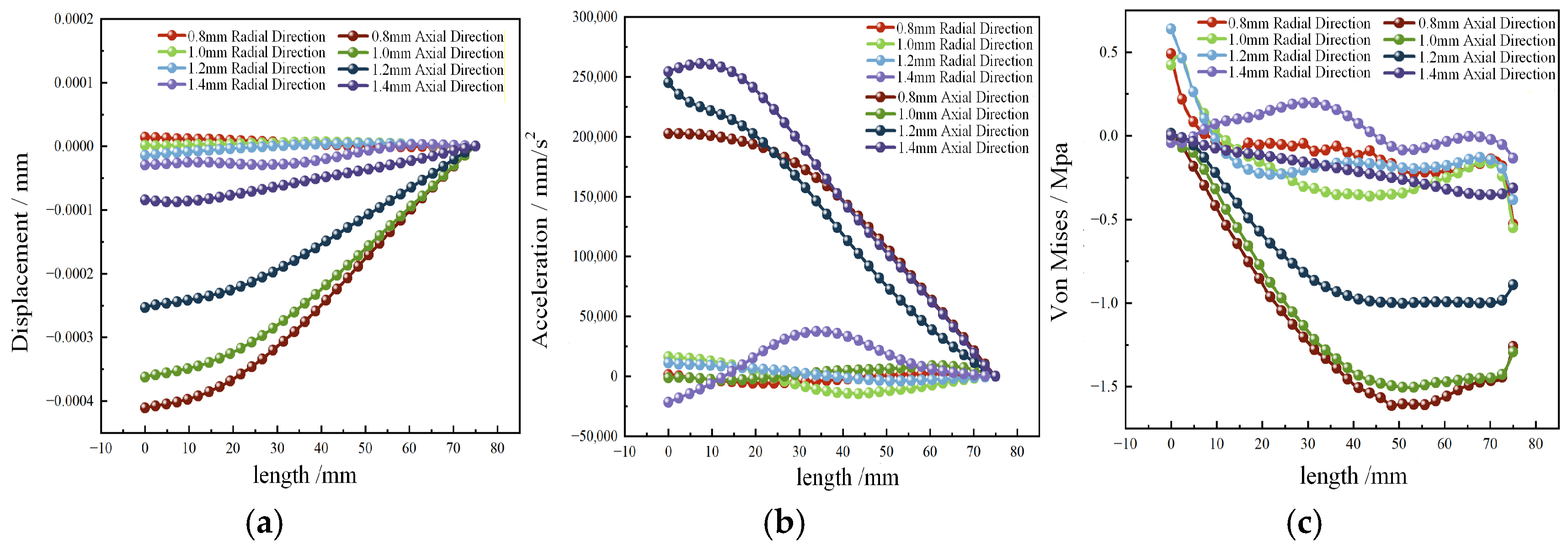
Figure 4 systematically illustrates the significant regulatory effect of structural parameters on the overall macroscopic dynamic behavior of the wire rope. This is based on a sinusoidal, slowly varying pulse load with an amplitude of 10,000 N and a period of 0.002 s. The figure compares the axial displacement, acceleration, and stress responses of four models with different core wire diameters. The analysis indicates that the system response is governed by stiffness. As the core wire diameter gradually increases from 0.8 mm to 1.4 mm, the maximum axial displacement decreases markedly and monotonically from 4.11 × 10
−4 mm to 8.43 × 10
−5 mm. At the same time, the axial stress amplitude also reduces significantly, with the 1.4 mm model demonstrating the lowest stress level. This trend confirms that a larger core wire diameter improves the filling density and geometric compactness of the strand structure, thereby significantly enhancing the wire rope’s resistance to deformation under low-frequency loading conditions by augmenting its macroscopic axial stiffness.
The acceleration response exhibits a complex, non-monotonic dynamic evolution, which serves as a key impetus for subsequent analysis of microscopic mechanisms. Although the radial acceleration is generally lower than the axial acceleration—consistent with mechanical expectations under axial loading—the amplitude of the axial acceleration does not decrease linearly with changes in diameter. Instead, it displays a ’high–low–high’ non-monotonic fluctuation, with the 1.0 mm model representing a minimum. Physically, the small-diameter (0.8 mm) model is primarily constrained by severe inertial vibrations caused by insufficient stiffness. When the diameter exceeds 1.2 mm, although the overall stiffness improves, the large core wire size leads to an expansion of the geometric gap between the outer strands and the rope core, as well as a reduction in the normal compressive force between layers. This, in turn, triggers a ‘dynamic decoupling’ effect. This local resonance phenomenon, caused by reduced interlayer energy transfer efficiency, directly results in a rebound in the acceleration response. Since the macroscopic response suggests that increasing the core wire diameter alone cannot guarantee improved dynamic stability, the following section examines local monitoring points (P1–P4) to further elucidate the microscopic mechanisms of internal contact topology evolution and stress wave propagation, thereby revealing the nature of this non-monotonic response dominated by the competing mechanisms of ‘stiffness enhancement’ and ‘dynamic decoupling.’
4.2. Setting Monitoring Data Points for Steel Wire Ropes
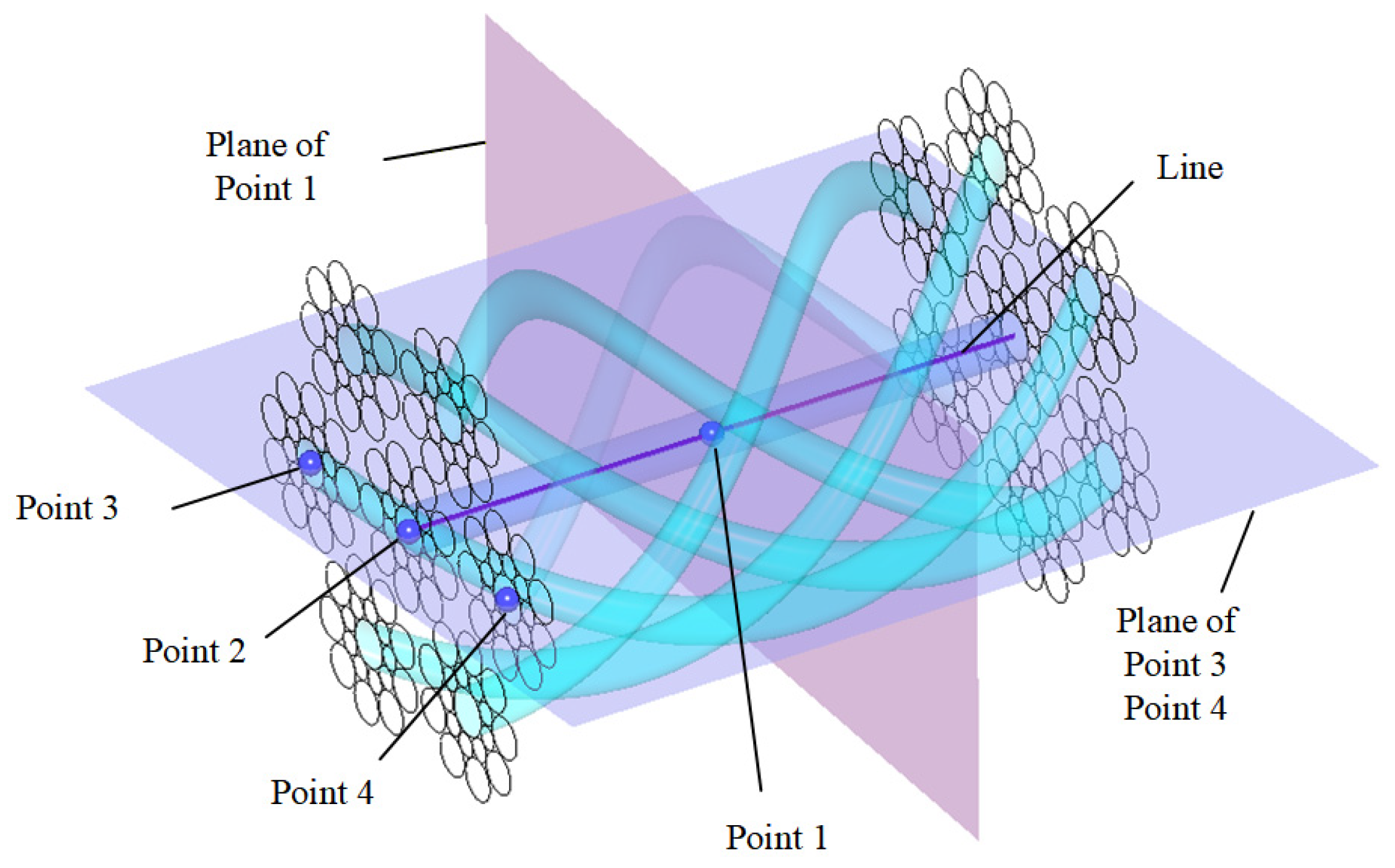
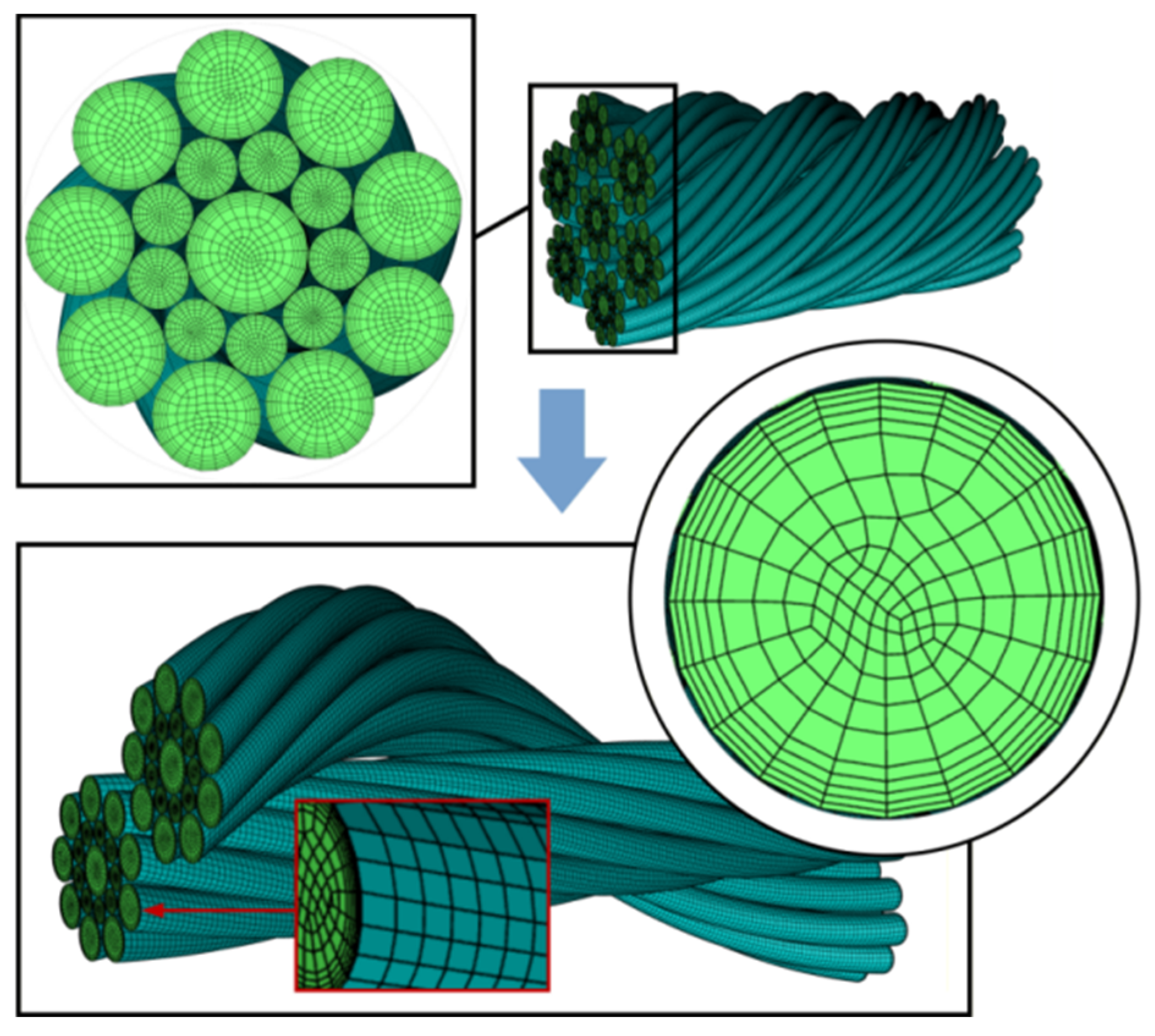
The monitoring line is positioned along the geometric central axis of the steel wire rope, encompassing the midpoint Point 1 and the far end Point 2, as shown in
Figure 5. Monitoring points Point 3 and Point 4 are located on the central twisting axis of the outer layer’s six-strand steel wire rope and are used to capture local response characteristics. In service, the steel wire rope is subjected to slowly varying, multiaxial coupled loads. Its multilayer helical structure results in dynamic responses that exhibit significant nonlinear characteristics.
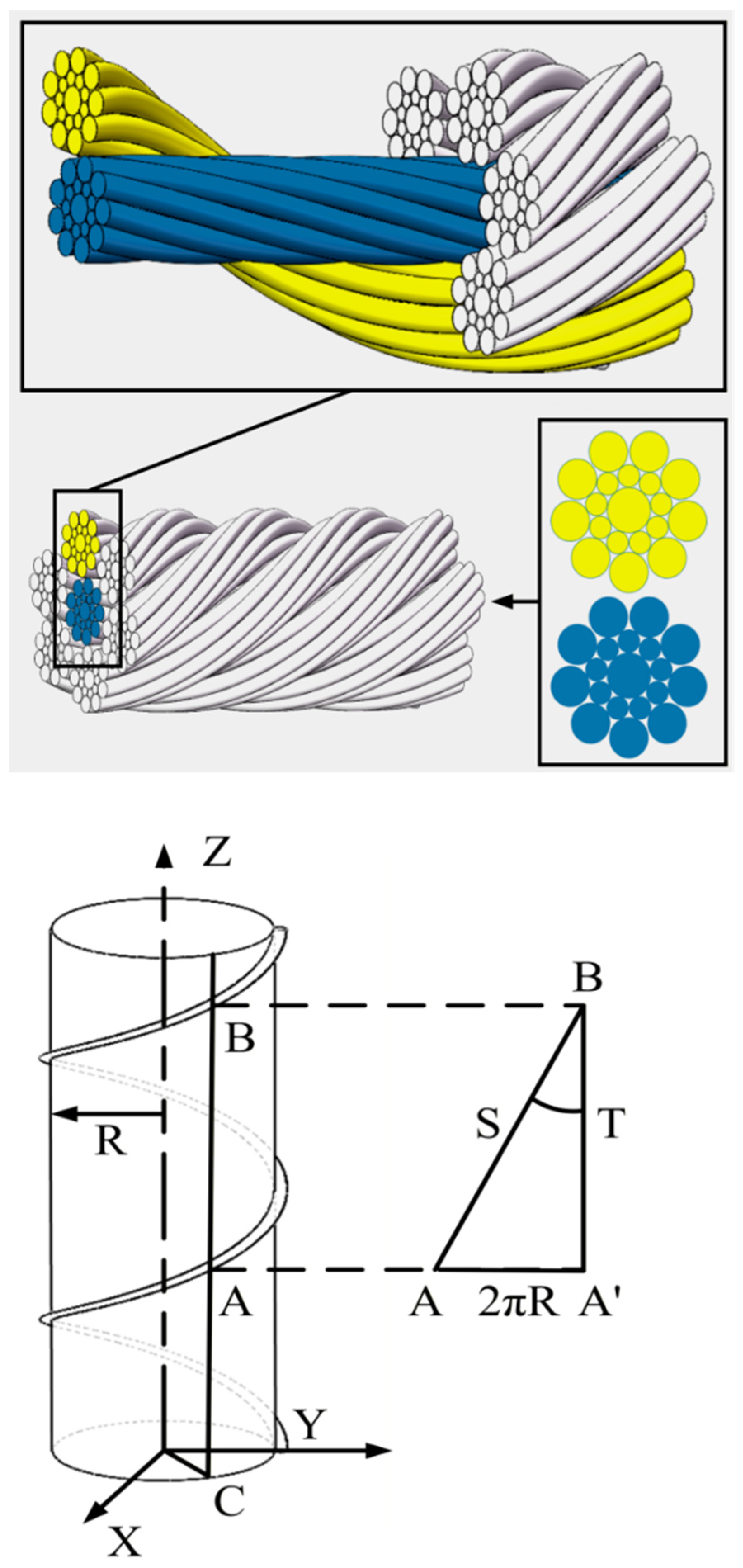
The steel wire rope selected for this study consists of a three-layer helical single strand arranged in a 1 + 9 + 9 configuration, twisted together with 1 + 6 strands. Its characteristic multilayer helical winding structure results in dense point and line contacts between the wires, which readily induce local stress concentrations. Under frictionless conditions, the time-varying characteristics of inter-strand contact locations and local stiffness during dynamic loading govern the coupled propagation of stress waves.
To accurately capture this transient mechanical response, the total analysis duration is set to 0.002 s, with four key time points selected to illustrate the evolution pattern: 0.0005 s corresponds to the initial response during the load rise phase; 0.001 s marks the load peak, reflecting maximum stress and significant contact compaction; 0.0015 s represents the unloading phase, showing stress wave attenuation and reflection; and 0.002 s characterizes residual stress and local compaction features following the completion of loading.
A comparison of these nodes enables an in-depth analysis of the stress transmission mechanisms as contact compaction, relaxation, and local geometric coupling develop with increasing load.
4.3. Local Contact State Analysis
The complex contact topology within the steel wire rope evolves under load into non-uniform zones of normal compression and regions of tangential slip. These local contact behaviors are not only the origin of fretting damage and the initiation of contact fatigue cracks but also form the microscopic basis that determines the overall structural stiffness and energy dissipation characteristics. The diameter of the core wire, a key parameter regulating the geometric packing density and contact tightness within the strand, directly influences the distribution pattern of contact stresses [
44]. Models with four different core wire diameters (
dcenter = 0.8, 1.0, 1.2, and 1.4 mm) were selected for analysis, which reveals the regulatory mechanism of geometric parameters on microscopic mechanical behaviour.
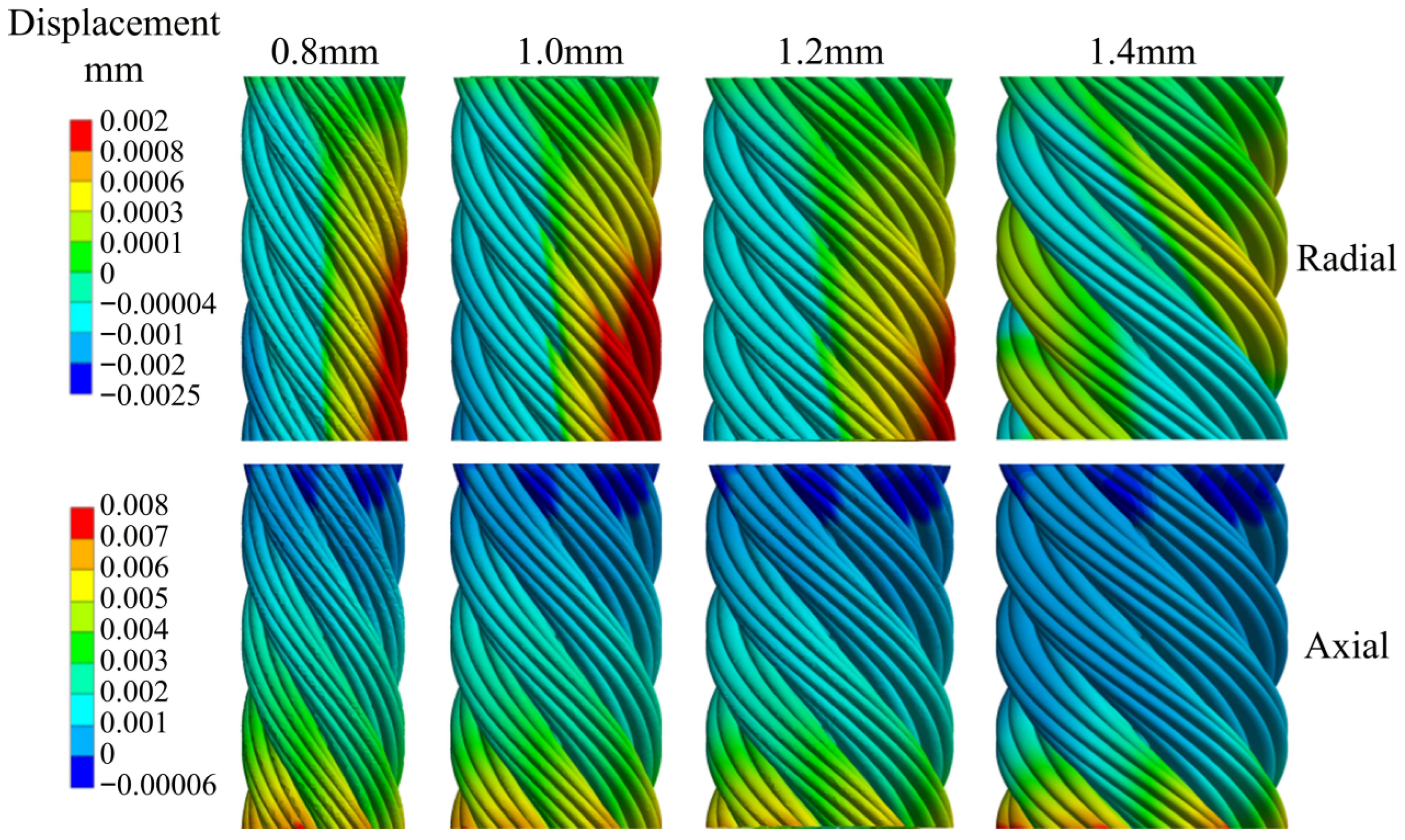
Under slowly varying pulse loads, both the radial and axial deformation behaviors of steel wire ropes exhibit a marked dependence on the wire cross-sectional size. As illustrated in
Figure 6, when the diameter of a single wire is 0.8 mm, the radial deformation reveals a distinct zone of high deformation concentration at the inter-strand contact area, while the axial deformation along the rope body displays a gradient distribution, with deformation amplitudes in the upper-middle section significantly exceeding those at the bottom. As the wire cross-sectional size gradually increases to 1.0, 1.2, and 1.4 mm, the extent of the radial high-deformation zone progressively diminishes, and the surface deformation tends to become more uniform; the overall magnitude of axial deformation decreases, and the distribution gradient is also noticeably reduced. This phenomenon results from the lower radial stiffness of wires with smaller cross-sections. Their inadequate stiffness weakens the inter-strand contact constraints and makes local deformation more likely under load. Conversely, as the wire cross-sectional size increases, the radial and axial stiffness of the individual wires improve simultaneously, promoting a more uniform transmission of forces at the inter-strand contact interfaces, effectively alleviating local deformation concentration and enhancing the uniformity of overall deformation. Therefore, increasing the wire cross-sectional size not only significantly mitigates radial deformation concentration but also reduces the axial deformation gradient, demonstrating its important regulatory role in the structural stiffness and deformation distribution of steel wire ropes.
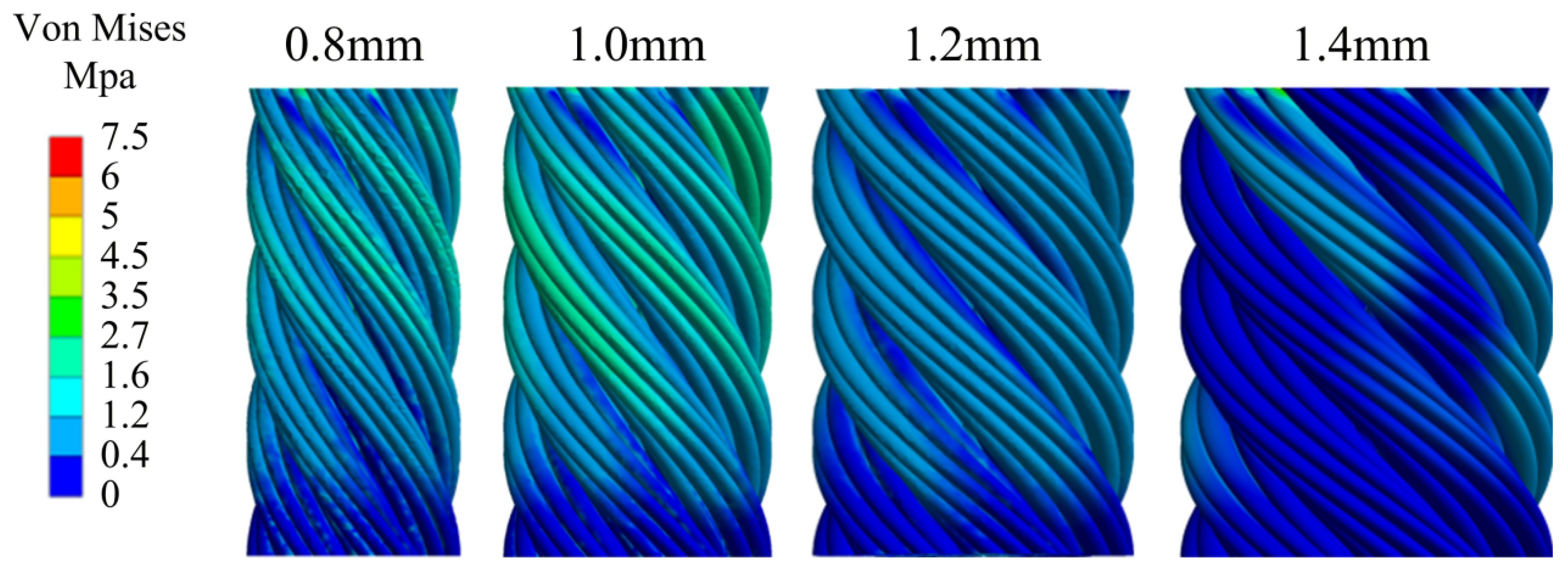
The stress distribution in steel wire ropes under slowly varying pulse loads is significantly influenced by different wire cross-sectional sizes. As shown in
Figure 7, when the single wire diameter is 0.8 mm, a pronounced high-stress concentration is observed in the inter-strand contact area, with an equivalent stress peak of approximately 7.5 MPa and a relatively wide distribution of the high-stress region. As the wire diameter increases to 1.0 mm, the extent of the high-stress area contracts, and the stress magnitude correspondingly decreases. Further increasing the diameter to 1.2 mm and 1.4 mm results in a continued overall reduction in stress levels. Under the 1.4 mm condition, the equivalent stress generally remains below 4.5 MPa, with only minor local fluctuations, and the phenomenon of high-stress concentration is essentially eliminated. This occurs because wires with smaller cross-sections have a limited load-bearing area, leading to higher unit area pressure at the inter-strand contact interface. Coupled with insufficient overall stiffness, this causes deformation to concentrate and further exacerbates stress concentration. Conversely, as the wire cross-sectional size increases, the expanded load-bearing area of the individual wires allows for a more dispersed load distribution, and the enhanced overall stiffness effectively suppresses deformation concentration, thereby promoting a more uniform stress distribution. Therefore, under slowly varying pulse load conditions, appropriately increasing the cross-sectional size of the second-layer wires can simultaneously reduce the overall stress level of the steel wire rope and alleviate the degree of inter-strand stress concentration. This optimizes the contact stress distribution pattern, helps reduce damage caused by high stress at the contact interface, and inhibits the initiation of local failure mechanisms such as contact fatigue and fretting damage. This has positive implications for improving the service performance of the structure under slowly varying pulse loads.
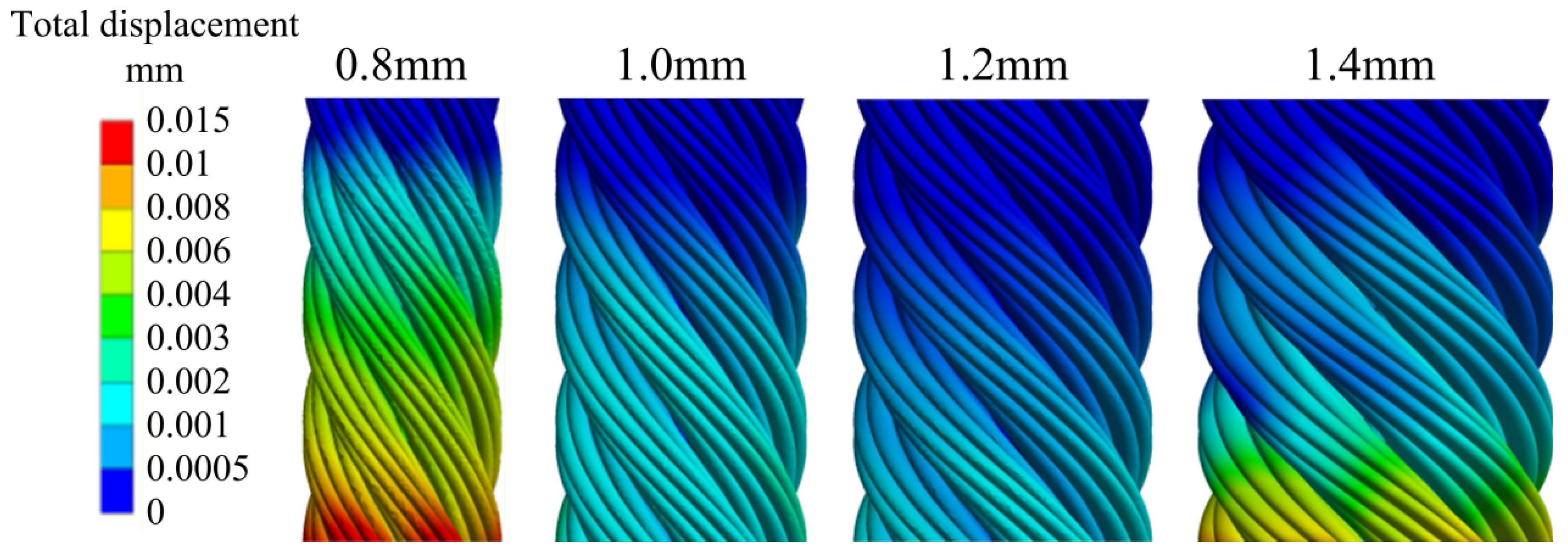
The overall deformation behavior of the wire rope under slowly varying pulse loads exhibits a non-monotonic, size-dependent characteristic.
Figure 8 illustrates the deformation of the entire wire rope under a slowly varying pulse load at the 0.002 s time point. Under such loading, the overall deformation of the wire rope demonstrates a pronounced size dependence. When the diameter of the second layer of individual wires is 0.8 mm, a distinct high-deformation concentration zone appears at the base of the rope, accompanied by a steep overall deformation gradient. As the wire diameter gradually increases to 1.0 mm and 1.2 mm, the extent of the high-deformation zone contracts, the magnitude of deformation decreases, and the distribution becomes more uniform. At 1.4 mm, although local deformation zones persist in the middle and lower sections, their magnitude is significantly reduced, and overall deformation fluctuations are further diminished. This change is attributed to the lower overall stiffness of wire ropes composed of smaller cross-sectional wires, which tend to accumulate local deformation during load transmission. Increasing the wire cross-sectional size enhances the effective stiffness and geometric coupling stability of the contact regions between strands, allowing deformation to be more evenly distributed throughout the structure. This effectively alleviates local strain concentration and improves the system’s response stability under dynamic loads, which is highly beneficial for enhancing service performance.
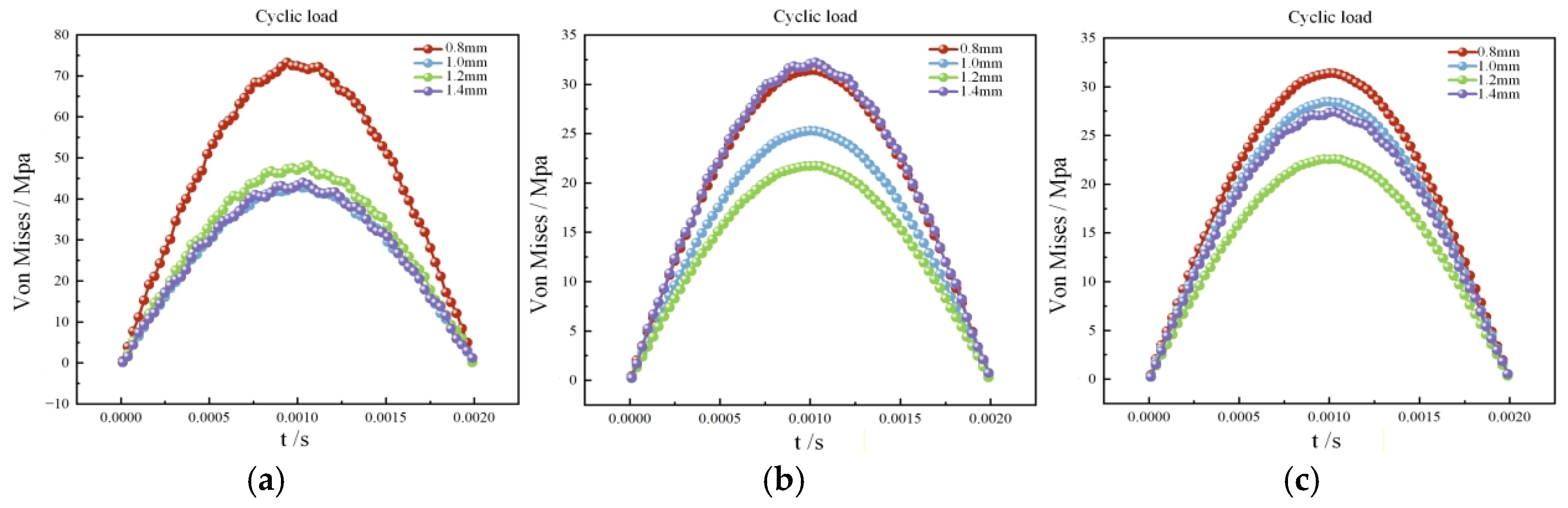
The stress responses at points P2, P3, and P4 under the slow-varying pulse load appear in
Figure 9. All three points exhibit a “rise–then–fall” trend in equivalent stress, and this trend follows the temporal pattern of the pulse load. Although the stress evolution remains consistent in shape, the magnitudes differ significantly. Point P2 lies at the center of the loaded end face and directly on the primary load-transfer path, so its stress peak is much higher than those at P3 and P4. In the 0.8 mm case, the peak stress at P2 approaches 80 MPa, while both P3 and P4 remain below 35 MPa. When the wire diameter in the second layer increases from 0.8 mm to 1.4 mm, the peak stress at each characteristic point shows a gradual decrease. The load-application position and the stiffness associated with the cross-sectional size together cause this pattern. A smaller diameter provides insufficient stiffness and fails to disperse the applied load effectively, resulting in a strong local stress concentration. A larger diameter introduces higher stiffness and facilitates more uniform load transmission. As a result, stress peaks at all positions decline, local damage is reduced, and the structural fatigue resistance of the rope is improved.
4.4. Analysis of Stress-Field Evolution
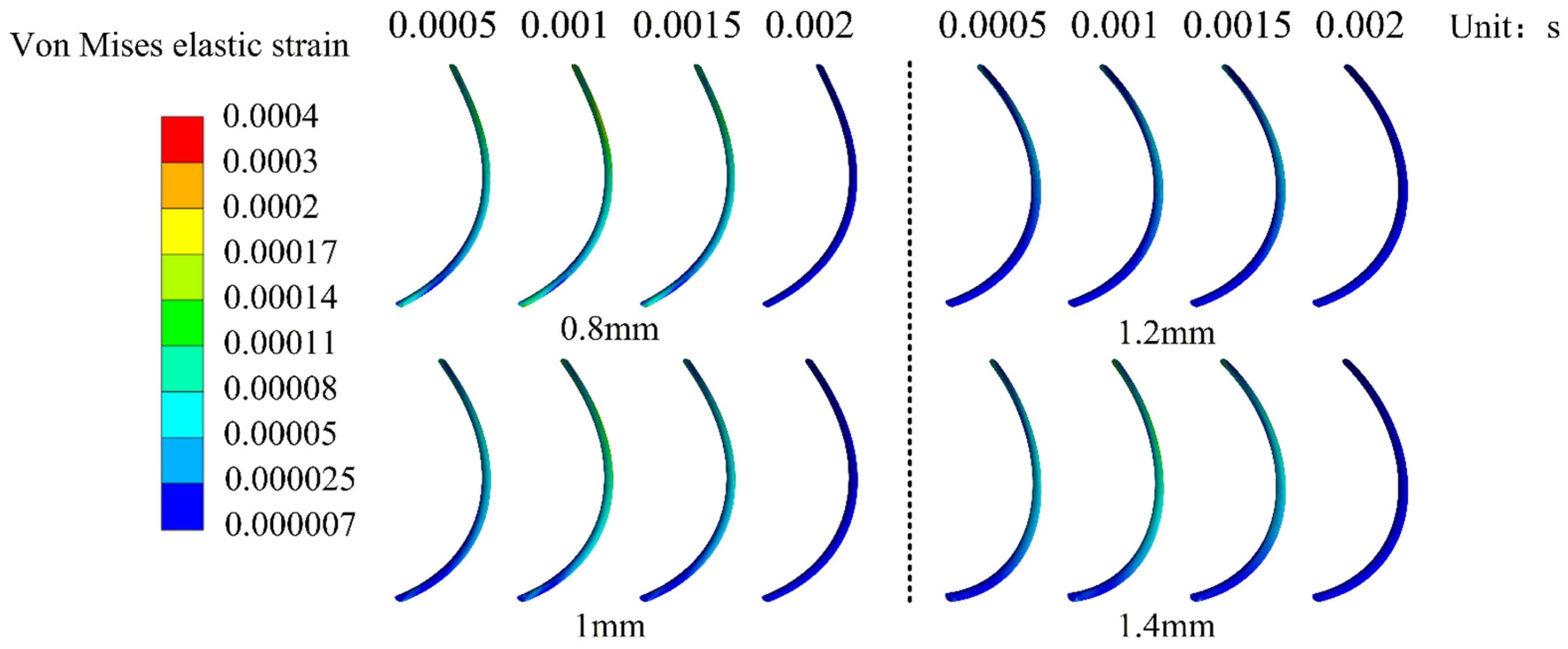
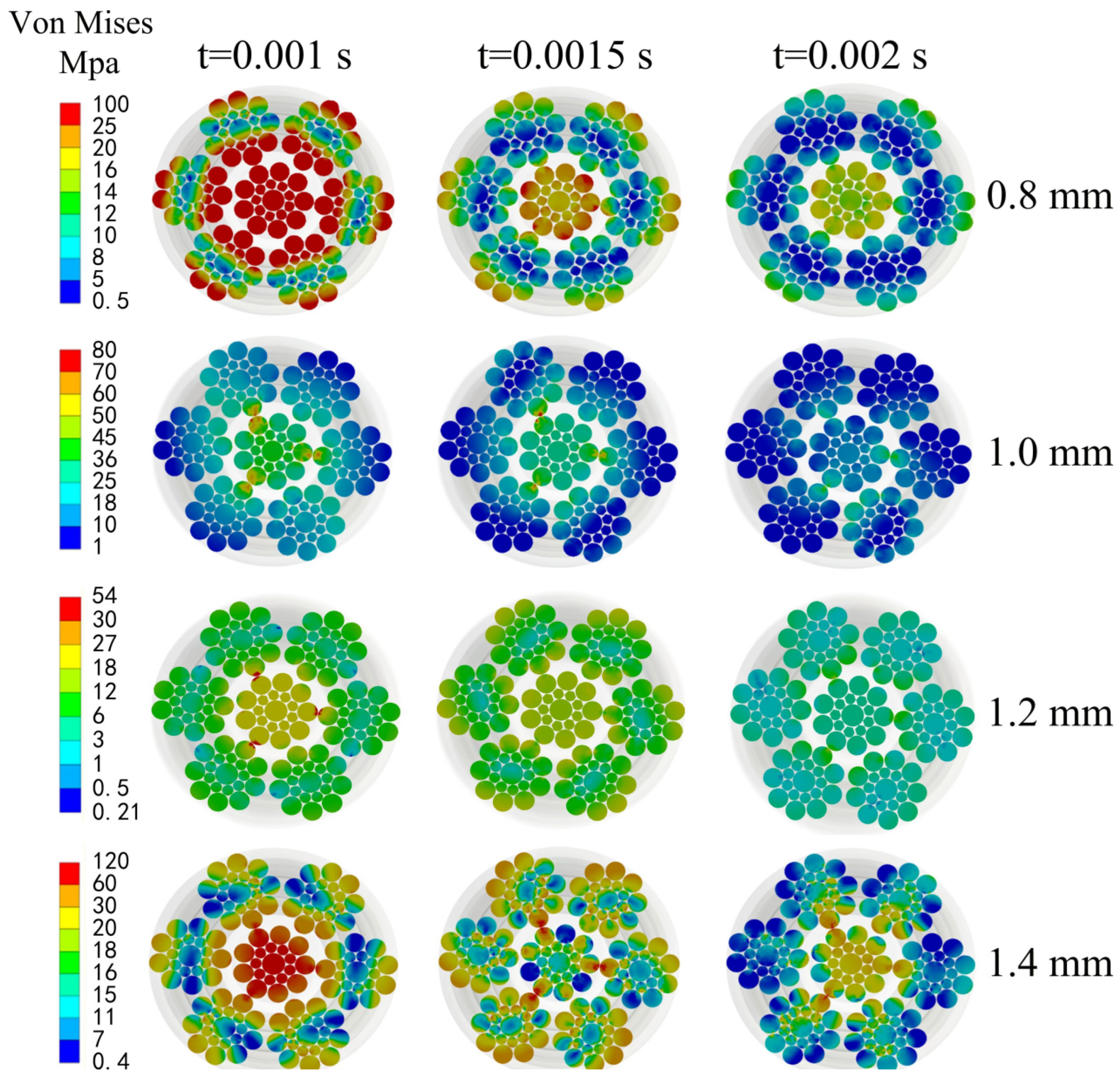
Figure 10 presents Von Mises stress contours of a single wire at several time instants under the slow-varying pulse load. Von Mises stress shows clear dependence on time and wire size. For every diameter, the strain increases as the load rises and decreases as the load weakens, and this evolution remains consistent with the waveform of the pulse. The cross-sectional size strongly influences the strain amplitude. A smaller diameter provides lower stiffness, consequently the strain amplitude becomes noticeably larger. When the diameter reaches 1.0 mm, 1.2 mm, or a larger value, the stiffness increases and the strain amplitude is effectively restrained. A larger wire cross section therefore leads to a lower cyclic strain amplitude in each wire. This reduction in strain alleviates fatigue damage and offers structural support for improving the rope’s resistance to cyclic loading.
Figure 11 illustrates the equivalent stress contours on the axial mid-section of the wire rope at several time instants and for different wire sizes under the slow-varying pulse load. The equivalent stress on this mid-section shows a combined dependence on time and wire diameter. In the temporal dimension, the stress evolution at each size follows the waveform of the applied load. At 0.001 s, a region of high stress concentration appears near the section center, and the stress level decreases after the load peak. In the size dimension, the 0.8 mm wires exhibit significantly higher stress peaks at all time instants, and the central concentration is particularly evident. When the diameter increases to 1.0 mm and 1.2 mm, the stress peaks decrease and the distribution becomes more uniform. At 1.4 mm, the global stress level is further controlled, although the center still shows noticeable concentration at the 0.001 s load peak.
This response pattern results partly from the direct effect of the load history and partly from the influence of wire diameter on structural stiffness and load-distribution capacity. A suitable choice of wire diameter helps optimize the mid-section stress distribution and reduce the degree of central concentration, which lowers the risk of contact-fatigue failure.
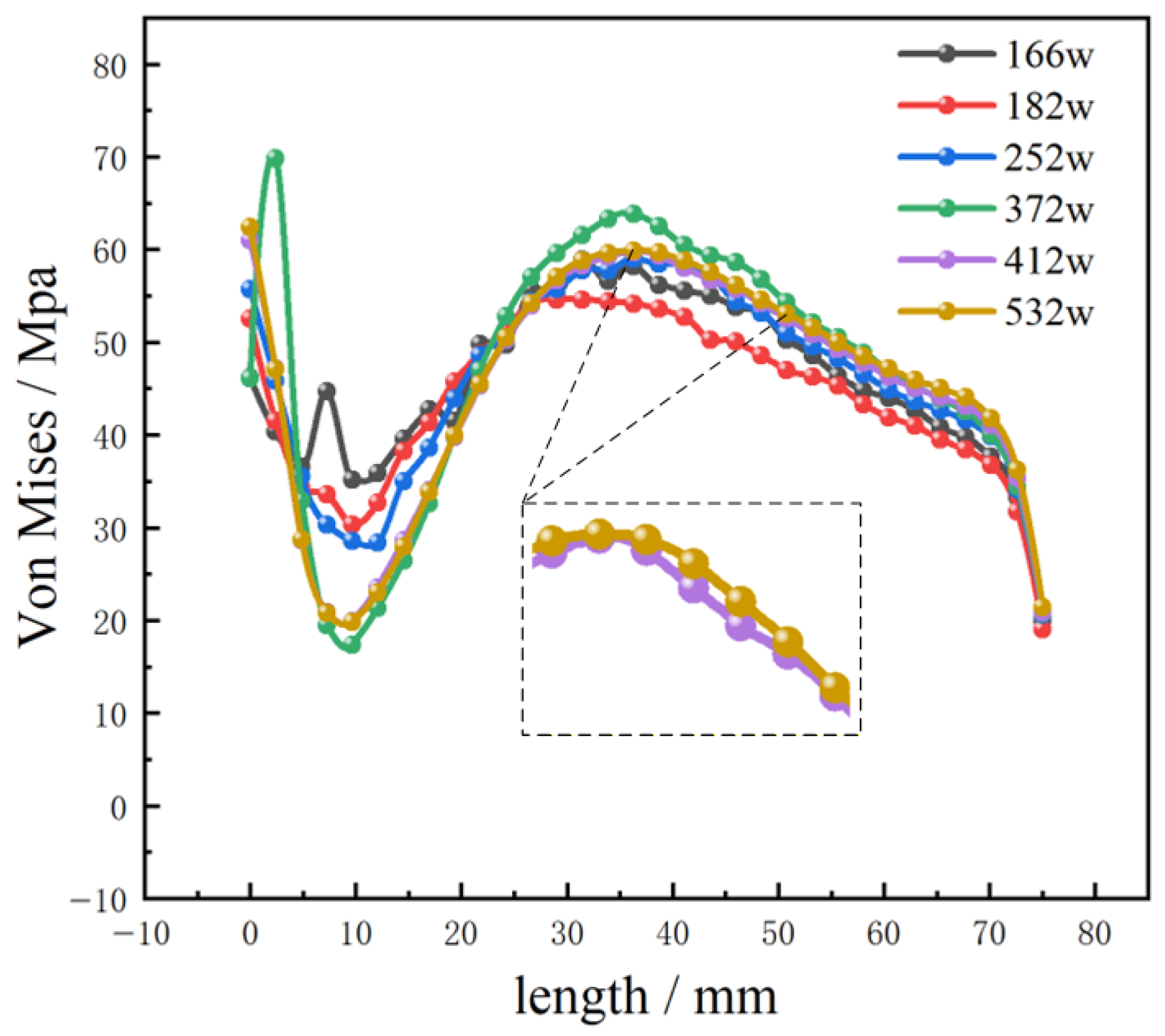
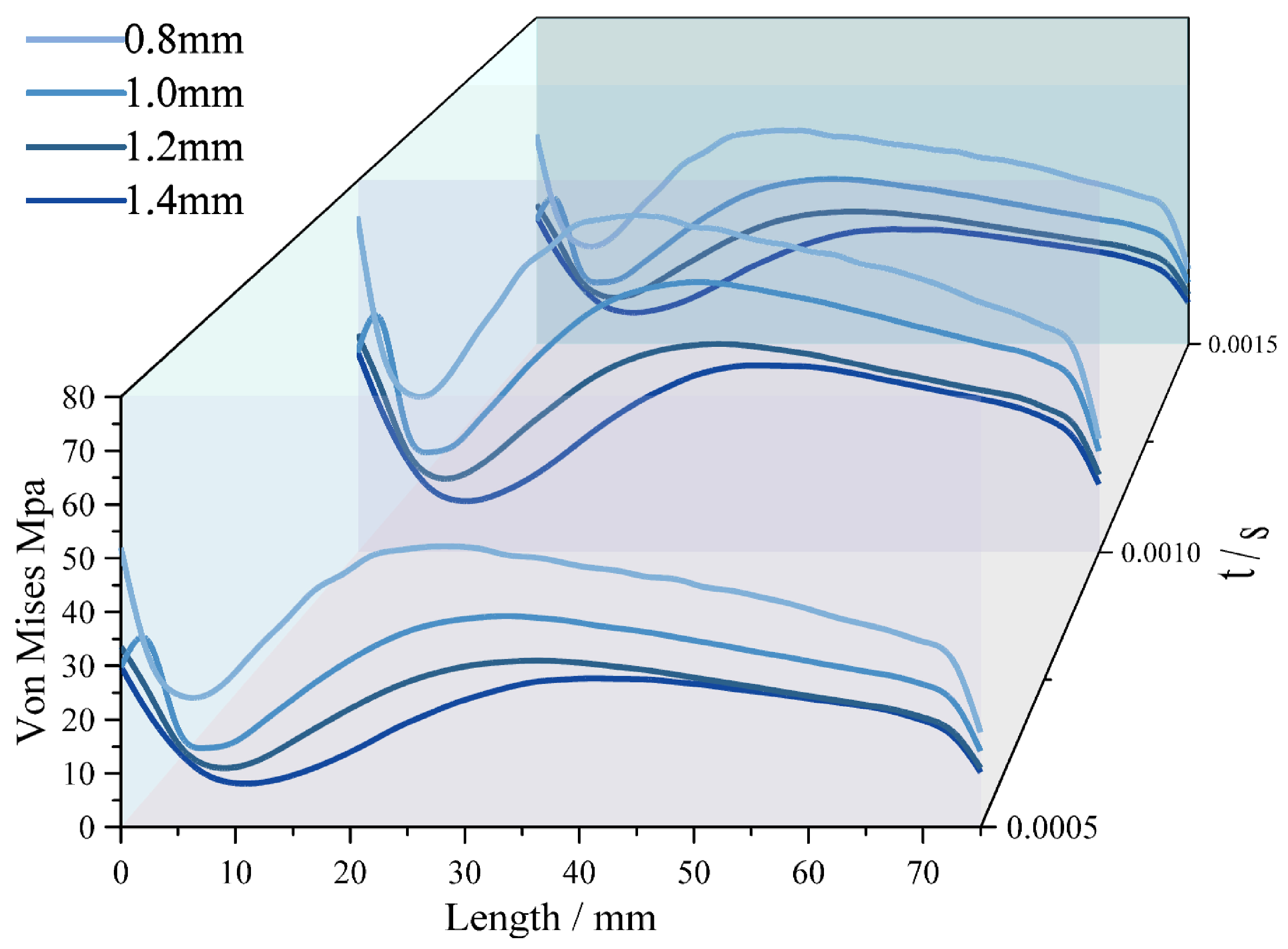
Figure 12 presents the axial equivalent stress of wire ropes with different wire sizes at several time instants under the slow-varying pulse load. The axial stress shows clear dependence on both time and wire diameter. When the time increases from 0.0005 s to 0.0015 s, the axial stress of every wire-size configuration rises as a whole. The region between 20 mm and 40 mm displays the most pronounced fluctuations because the inter-strand contact is dense in this segment.
In the size dimension, the 0.8 mm wires exhibit the highest stress peaks and the strongest fluctuations. When the diameter reaches 1.0 mm, 1.2 mm, and 1.4 mm, the peak stress decreases progressively, and the fluctuations become smoother. This behavior results partly from the applied load history and partly from the effect of wire diameter on structural stiffness. A smaller diameter provides insufficient stiffness and leads to uneven load transfer, which easily produces stress concentration. A larger diameter increases the global stiffness and promotes more uniform load transmission, so the peak stress and the fluctuation amplitude decline.
The axial stress also shows a regular saw-tooth pattern with a large amplitude in the 20–40 mm region. The helical lay of the wire rope introduces periodic geometric modulation, and this structural periodicity causes corresponding modulation of the stress wave. During propagation, the stress wave encounters periodic variations in the equivalent cross-section and wave impedance. Minor reflections and amplitude adjustments occur in each cycle, and these interactions form the regular saw-tooth distribution. The slow-varying pulse load acts as a narrow-band excitation. Its dominant frequency couples with the spatial periodicity of the structure, and the pulse wavelength exceeds the rope length. Under these conditions, the incident and reflected waves superimpose in the near-field region, and this superposition enhances the interference pattern.
A suitable choice of wire diameter can therefore reduce the global stress level and suppress stress fluctuations that arise from geometric periodicity and wave-propagation effects. This improvement enhances the fatigue resistance of the wire-rope structure.
4.5. Time-Domain Deformation Wave Analysis
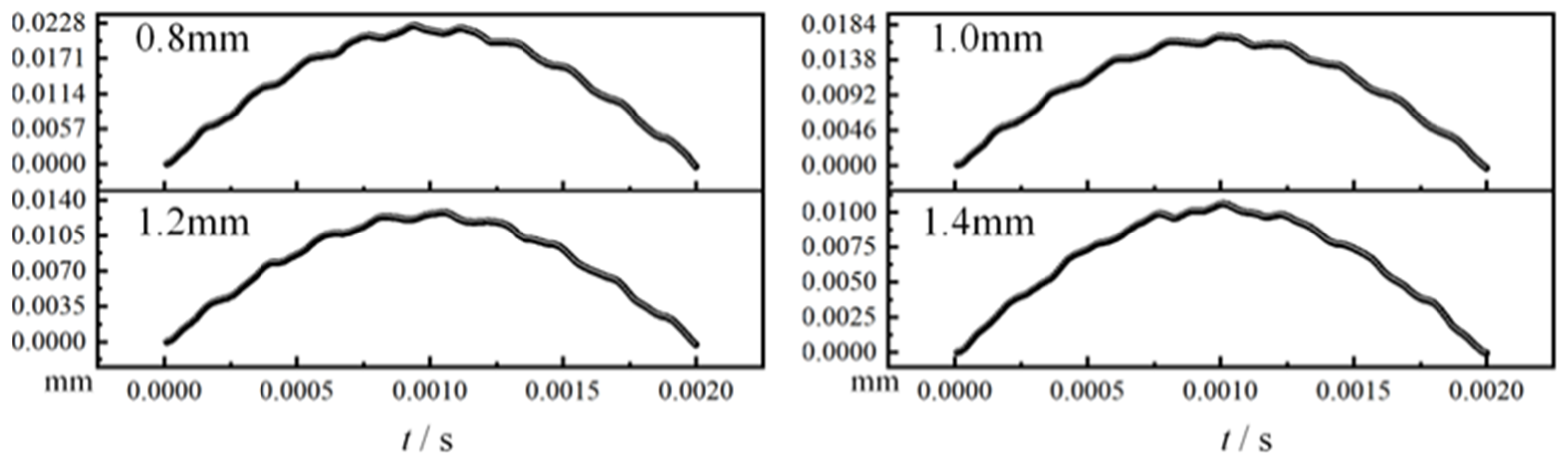
Based on the implicit dynamic simulation results, the axial and radial displacement-time curves at the force-bearing end face and monitoring points P1 and P2 were extracted. A systematic analysis was conducted on the propagation, attenuation, and reflection behavior of internal stress waves in the steel wire rope under slowly varying pulse loads. The deformation results at points P1 and P2 under these loads are shown in
Figure 13 and
Figure 14. The results indicate that the displacement response exhibits clear periodic fluctuations consistent with the load frequency. For instance, the axial deformation peak values at point P2 at t = 0.0005 s, 0.001 s, 0.0015 s, and 0.002 s are 0.0004 mm, 0.0008 mm, 0.0008 mm, and 0.0004 mm, respectively, demonstrating a symmetrical distribution. Due to the delay in stress wave propagation, point P1 exhibits a phase lag of approximately 0.00012 s, with an amplitude about 50% to 60% of that at P2, indicating steady-state propagation characteristics.
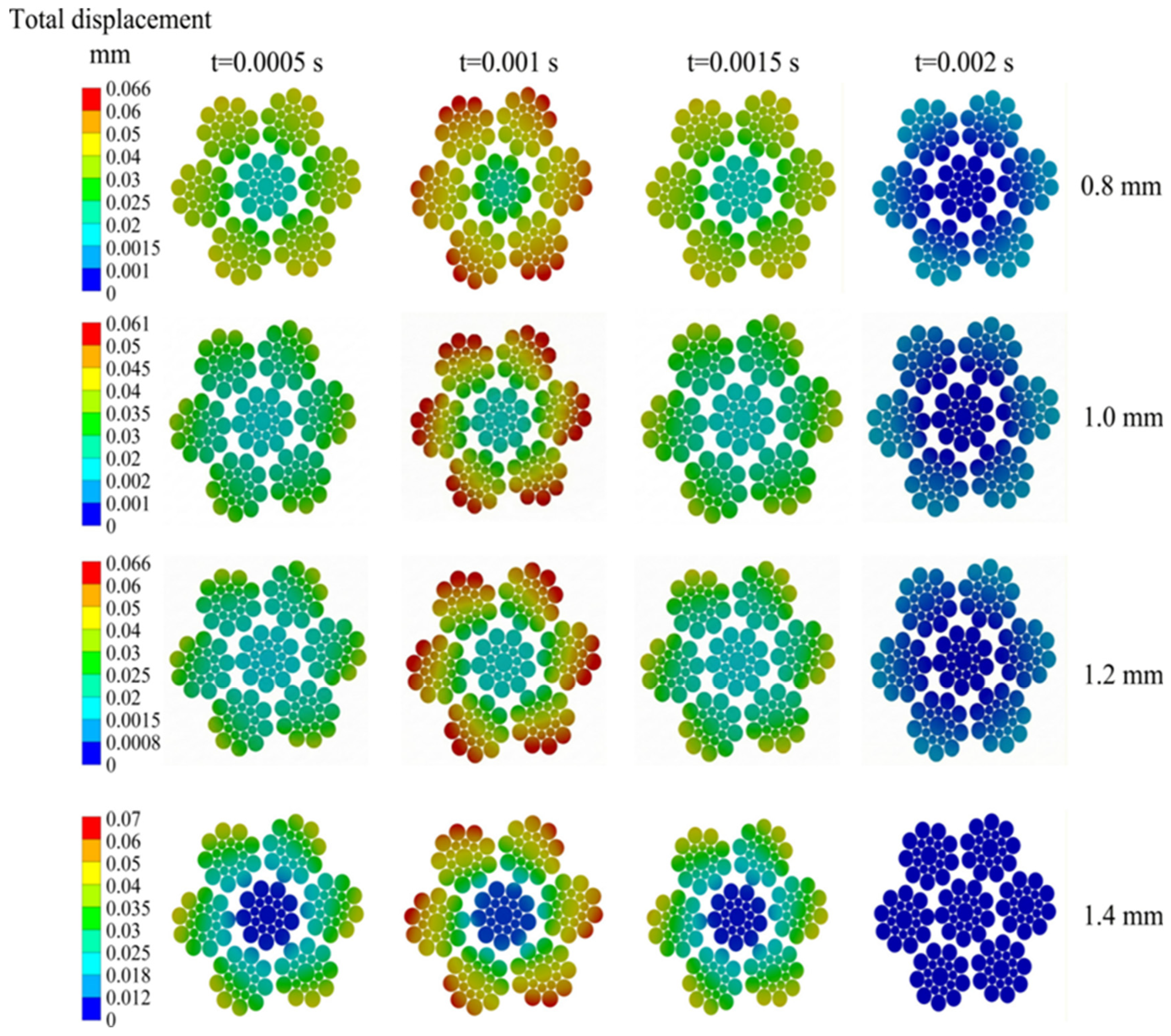
The total deformation results at the loaded end surface (
Figure 15) illustrate the influence of the gradually varying pulse load. After reaching its maximum value at t = 0.001 s, the deformation significantly retracts to a very low level (0.0007 mm) by t = 0.002 s, demonstrating excellent deformation recovery. This behavior primarily occurs because the gradually varying pulse load acts as a low-frequency continuous excitation, effectively preventing inertial overshoot and plastic accumulation caused by high-frequency impacts, thereby ensuring that the system’s response remains dominated by elastic behavior throughout. Meanwhile, under the baseline model settings without preload and friction, the contact state between the steel wires undergoes controlled compaction and separation under the load. Its dynamic response is regulated by the helical geometric topology itself and the normal contact stiffness. Upon unloading, the system restores to its original state through material elasticity and geometric rebound, with minimal plastic accumulation. In summary, these results indicate that under the specified loading conditions, the steel wire rope exhibits an elastic dynamic response primarily governed by geometric stiffness. The established model reveals the stress wave propagation and elastic recovery mechanisms dominated by the helical structure, providing a reliable theoretical reference for subsequent research.
By comparing the arrival times of the peak displacements at P1 and P2 and considering the inter-point distance of
= 37.5 mm, the apparent wave speed in the steel wire rope under transient impact was calculated (
Table 2). This wave speed characterizes the axial stiffness and energy transmission capability of the structure. It should be noted that this is not the material wave speed of steel but a composite structural wave speed, resulting from the combined effects of inter-wire contact, bending, and geometric flexibility within the multi-strand helical architecture. Under the slowly varying pulse load, a steady-state wave propagation was established inside the rope. Based on the time difference between displacement peaks at P2 and P1, the axial wave speed was approximately 305.8 m/s, and the radial wave speed was about 281.2 m/s. These results showed little variation under different load levels, indicating that the wave speed is governed primarily by the structural geometry and equivalent stiffness rather than by the transient characteristics of the load. Of particular note is that the measured axial wave speed is only about 6% of the longitudinal wave speed in solid steel. This significant reduction is not attributed to frictional dissipation but is primarily caused by the decreased equivalent stiffness due to the helical winding structure, the discontinuous force-transmission mechanism through contacts, and the absence of pretension boundary conditions.
The wave propagation characteristics of the steel wire rope, as a heterogeneous multi-body system, are governed jointly by its geometric topology and contact conditions. External axial displacements must be transmitted through additional torsional and bending motions of individual wire layers, which substantially reduces the effective tensile stiffness. Furthermore, the normal contact stiffness between wires and between strands is considerably lower than the intrinsic stiffness of the steel material, creating discontinuous contact chains that further diminish wave speeds. Although the absence of pretension in the model results in lower overall stiffness compared to actual service conditions, the relative performance variations across different geometric configurations exhibit consistent qualitative trends. In practical steel wire ropes, stress wave attenuation predominantly results from energy dissipation due to friction at contact interfaces. However, the frictionless baseline model developed in this study is designed to isolate frictional effects, thereby highlighting the intrinsic geometric wave impedance characteristics of the helical topology. Consequently, the amplitude attenuation observed under cyclic loading is attributed primarily to geometric scattering and mode conversion: as axial waves propagate through the helical structure, a portion of the energy is converted into radial vibrations and torsional modes or undergoes micro-reflections at contact interfaces, leading to attenuation of the wavefront amplitude along the primary propagation direction. Additionally, numerical damping introduced by the implicit time integration algorithm contributes to the smoothing of high-frequency components. Accordingly, the coefficient defined in this study should be interpreted as an “effective geometric attenuation coefficient.” This coefficient does not represent material damping but quantifies the inherent capability of the helical topology to disperse input energy into different modes and pathways—that is, the intrinsic “geometric filtering” effect of the steel wire rope. This effect, often obscured by friction and plastic contact behavior in real ropes, is clearly demonstrated in the frictionless model.
Although the propagation distance of the shock wave within 0.4 ms exceeds the effective length of the model, the attenuation coefficient defined in this study is used to measure the effective attenuation of the incident wave over a one-way propagation distance of 37.5 mm. Since the first peaks of P2 and P1 occur at approximately t ≈ 0.00072 s and 0.00084 s, respectively, while the first reflected wave arrives around 0.0011 s—significantly later than the initial peak—the amplitude attenuation from A
0 to A
x occurs entirely before any reflection and is unaffected by boundary reflections. This approach allows for a quantitative characterization of the initial dissipation mechanisms resulting from the combined effects of geometric scattering, numerical damping, and material properties, while ensuring the uniqueness of the wave propagation path. According to the comparative analysis of displacement peak values at two measurement points under slowly varying pulse loads (as shown in
Table 3), clear wave propagation attenuation characteristics can be observed. Across all load levels, the axial displacement attenuation ratio from P2 to P1 remains stable within the 46–48% range. Although the displacement amplitude slightly decreases with increasing load level, the attenuation ratio shows a slight upward trend, indicating that the structure may exhibit nonlinear responses or enhanced modal coupling under high loads. The radial displacement amplitude ranges between 0.012 mm and 0.025 mm, with an attenuation ratio of approximately 52%, which is significantly higher than that along the axial path.
This disparity primarily stems from the radial propagation path, which encompasses more intricate contact interfaces and bending deformation mechanisms. It underscores the varied modulation impact of the steel wire rope’s helical structure on wave propagation in diverse directions. This finding further validates the crucial role of geometric topology in wave energy attenuation and furnishes a quantitative foundation for comprehending the geometric filtering effect within steel wire ropes.
A fully constrained boundary condition was applied at the fixed end (Z = 0) of the steel wire rope to create a rigid reflective boundary. When stress waves incident upon this boundary, they undergo phase reversal and amplitude attenuation upon reflection. The reflection process can be clearly identified based on the wave speed calculations and the secondary peak characteristics in the displacement curves. The continuity of the slowly varying pulse load causes the incident and reflected waves to superimpose, forming standing waves. The displacement curves exhibit periodic superposition, with peak intervals matching the load period and stable amplitudes, indicating a state of equilibrium between energy dissipation and load replenishment. Given that the ratio of the effective length of the rope to the axial wavelength is 0.123, the excitation corresponds to a short-wavelength scenario. Standing wave nodes are distributed near the fixed end and point P1, while an anti-node forms at point P2. The deformation amplitude at P2 is significantly higher than at P1 and shows no obvious attenuation, demonstrating a steady-state energy distribution under the standing wave effect. This phenomenon is significant for dynamic performance evaluation. If defects such as wire breaks or wear exist in the rope, the reflective boundary conditions would alter, causing shifts in the positions of the standing wave nodes or anti-nodes. Therefore, monitoring wave speed and standing wave characteristics could enable indirect defect detection, providing a theoretical basis for the health monitoring of in-service steel wire ropes.
4.6. Frequency Domain Feature Analysis
To investigate the influence of slowly varying pulse load intensity on the frequency-domain characteristics of the dynamic response of the wire rope structure, this study systematically extracted frequency-domain features under four central wire diameter configurations (0.8 mm, 1.0 mm, 1.2 mm, and 1.4 mm). The analysis was based on the time-domain displacement data at monitoring point P2 under impact loading, using Fast Fourier Transform (FFT) combined with Power Spectral Density (PSD) analysis methods [
45]. Given that the implicit time integration algorithm and the penalty-based contact method may introduce numerical artifacts in the ultra-high frequency range, the analysis primarily focuses on the low-to-medium frequency band of 0–10 kHz. Within this frequency range, the signal period is significantly longer than the integration time step, which effectively characterizes the energy modulation and harmonic generation mechanisms dominated by structural geometric nonlinearity.
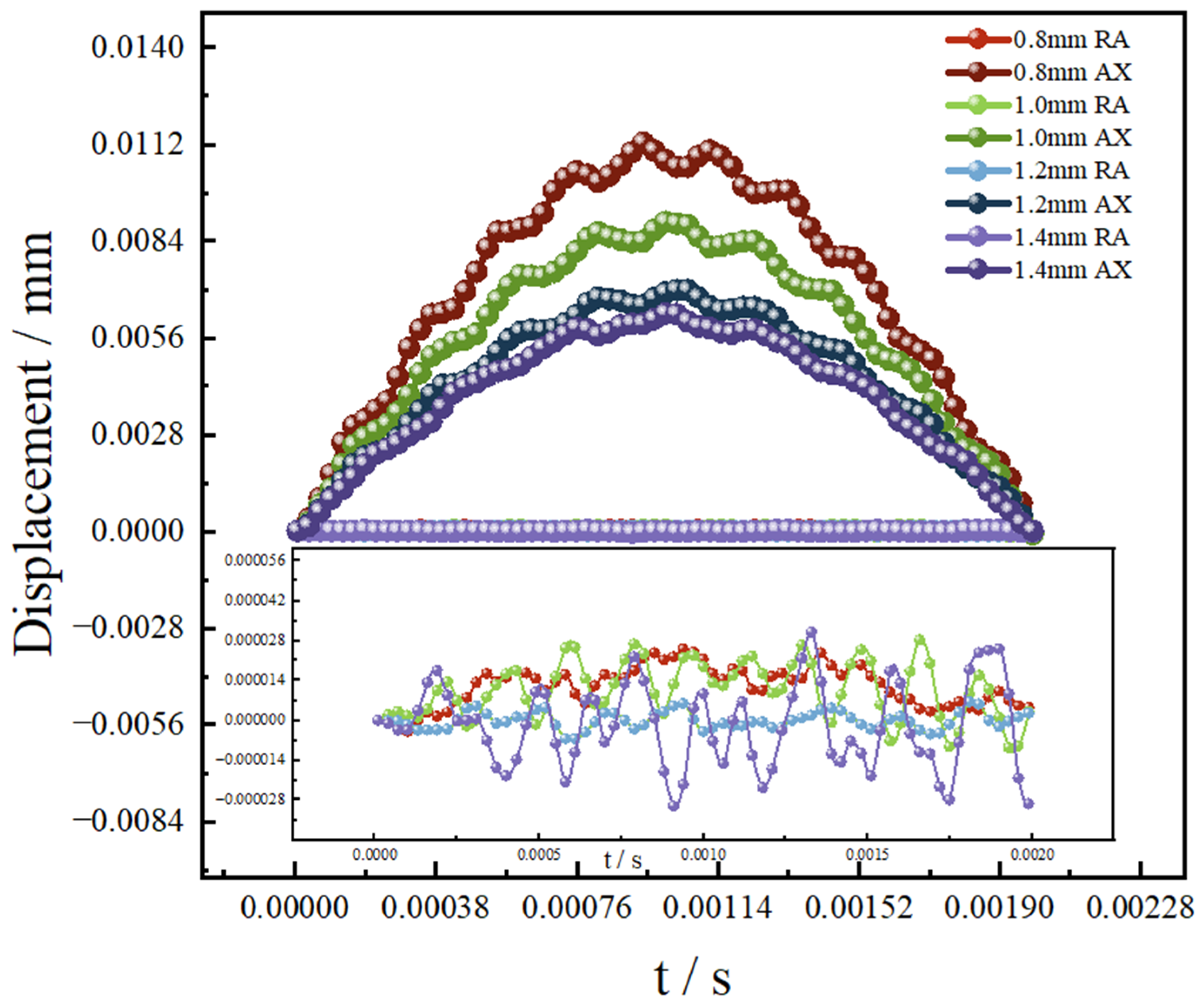
As shown in
Figure 16 and
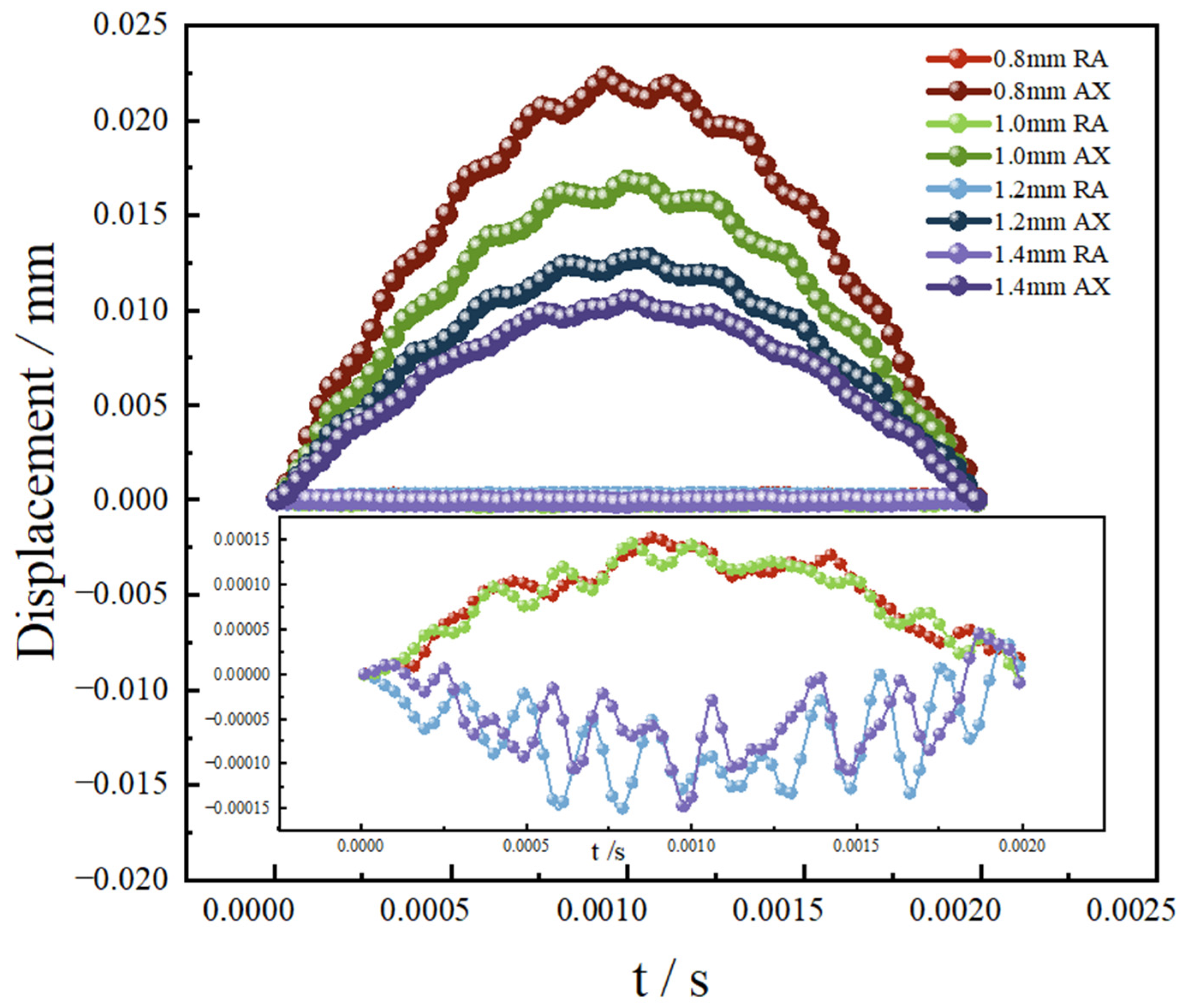
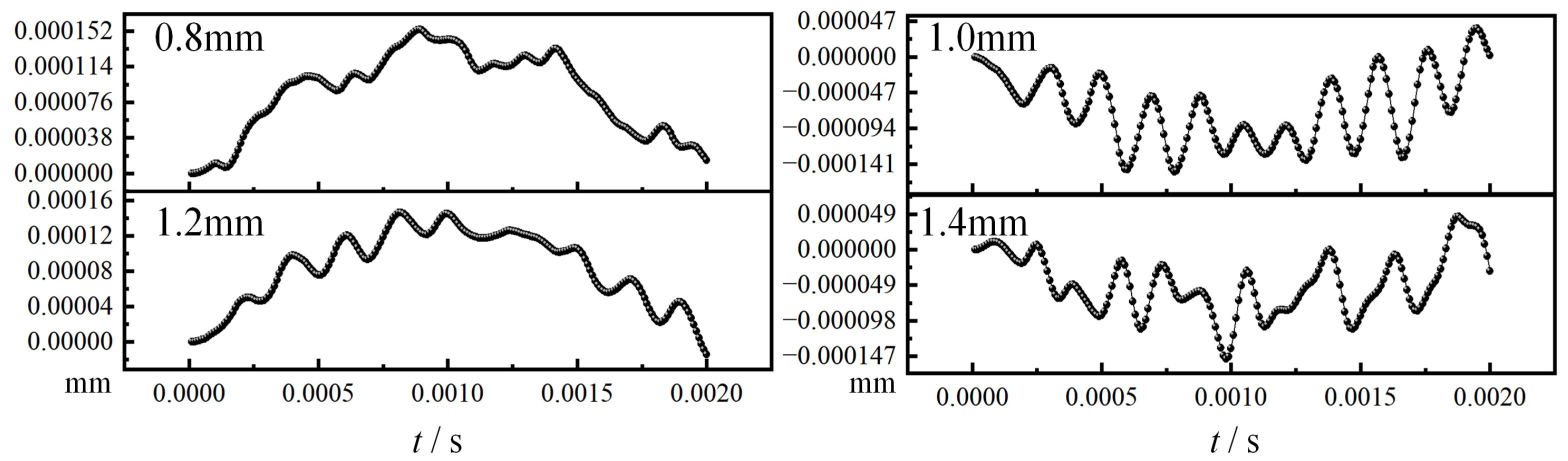
Figure 17, the axial displacement curve exhibits an approximately sinusoidal fluctuation at the same frequency as the load, superimposed with significant high-frequency “spikes”. As the central wire diameter increases from 0.8 mm to 1.4 mm, the axial displacement amplitude decreases monotonically. This indicates that a larger central wire effectively enhances the overall tensile stiffness of the structure, thereby suppressing axial elongation. In contrast, the radial displacement shows a non-monotonic variation: it is positive at diameters of 0.8 mm and 1.2 mm but negative at 1.0 mm and 1.4 mm. This alternating positive-negative phenomenon results from the coupled effects of the Poisson effect and the reconfiguration of inter-wire contact. Variations in the central wire diameter alter the initial contact angles, gap distributions, and preload states among the wire layers. At 0.8 mm, the outer-layer wires tend to slip outward. When the diameter increases to 1.0 mm, reduced internal gaps allow Poisson contraction to dominate. At 1.2 mm, changes in contact angles again induce an outward expansion trend. Finally, at 1.4 mm, the structure is most compact, and synchronous contraction of all layers leads to significant inward shrinkage. This radial deformation reversal mechanism, validated in both numerical simulations and experiments of multi-layer helical structures, demonstrates the systematic regulatory effect of the central wire diameter on contact conditions and deformation patterns.
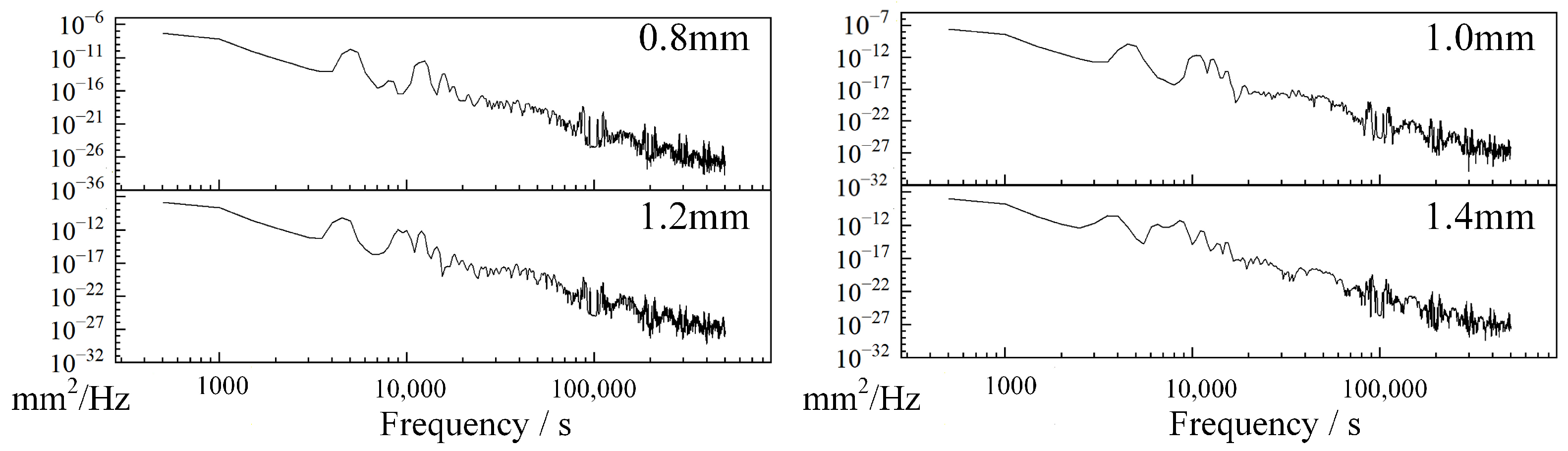
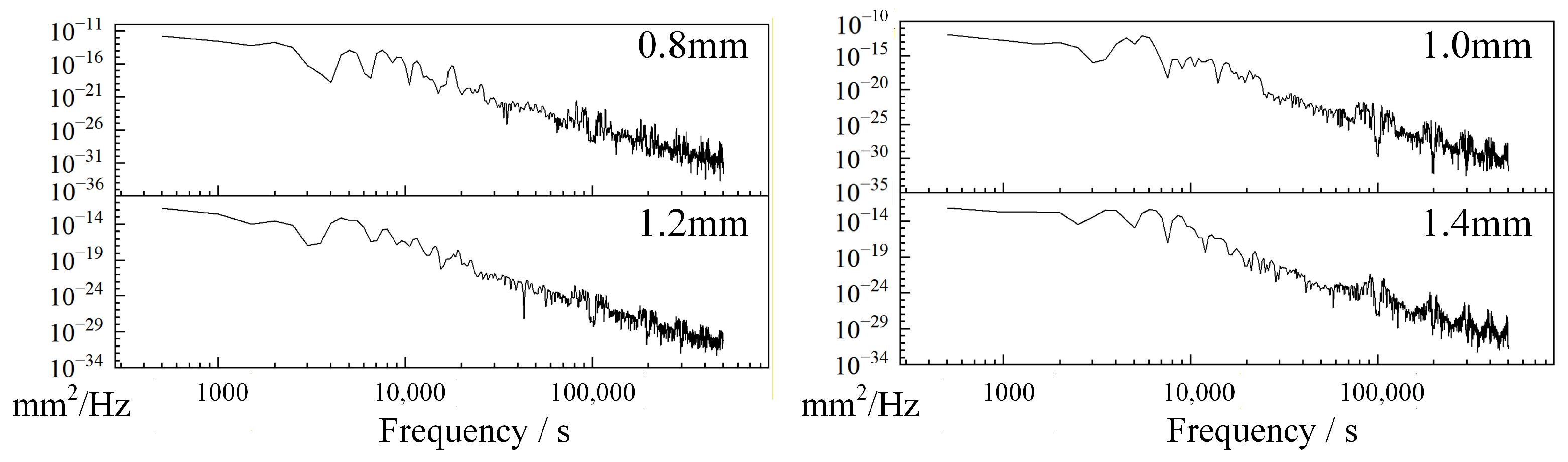
The time-domain radial deformation diagrams were converted into the corresponding PSD plots, as shown in
Figure 18 and
Figure 19. Under the action of slowly varying pulse loads, the PSD values begin to significantly attenuate when the frequency exceeds 30 kHz. Notably, the PSD curves for different center wire diameter configurations maintain similar shapes and peak positions in both the axial and radial directions, indicating that diameter variations have a limited effect on the structural vibration characteristics. The analysis also reveals that the PSD response contains rich harmonic components, which are not caused by external excitation but are induced by dynamic changes in the contact state between the steel wires. During the tension-release process, the contact area and contact stiffness continuously adjust over time, creating a parametric excitation effect. This time-varying nonlinear characteristic causes the system to transfer fundamental frequency energy to higher-frequency harmonics, resulting in pronounced harmonic distortion. In particular, the 1.4 mm model exhibits a more significant nonlinear modulation effect due to higher contact pressure, which may be the primary reason for the unique high-frequency response observed in this configuration. The results indicate that when analyzing the high-frequency dynamic characteristics of steel wire ropes, contact nonlinearity plays a more dominant role than geometric parameter variations.