An Observational Study of Age-Related Changes in Bite Force During Stabilization Splint Therapy in Patients with Unilateral Temporomandibular Joint Osteoarthritis


Featured Application
Abstract
1. Introduction
2. Materials and Methods
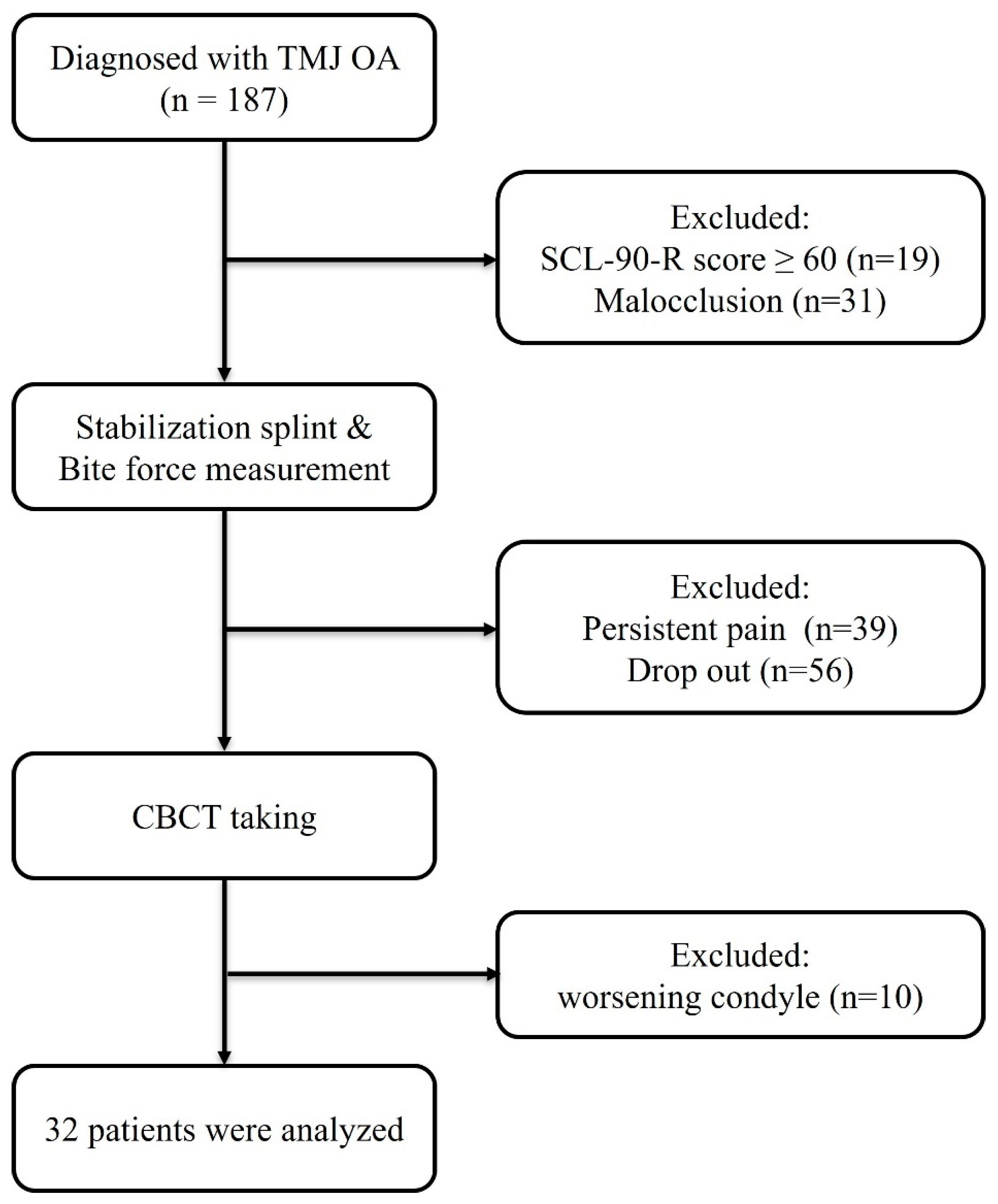
2.1. Subjects
2.2. Clinical Assessment
2.3. Radiological Assessment
2.4. Treatment with Stabilization Splint
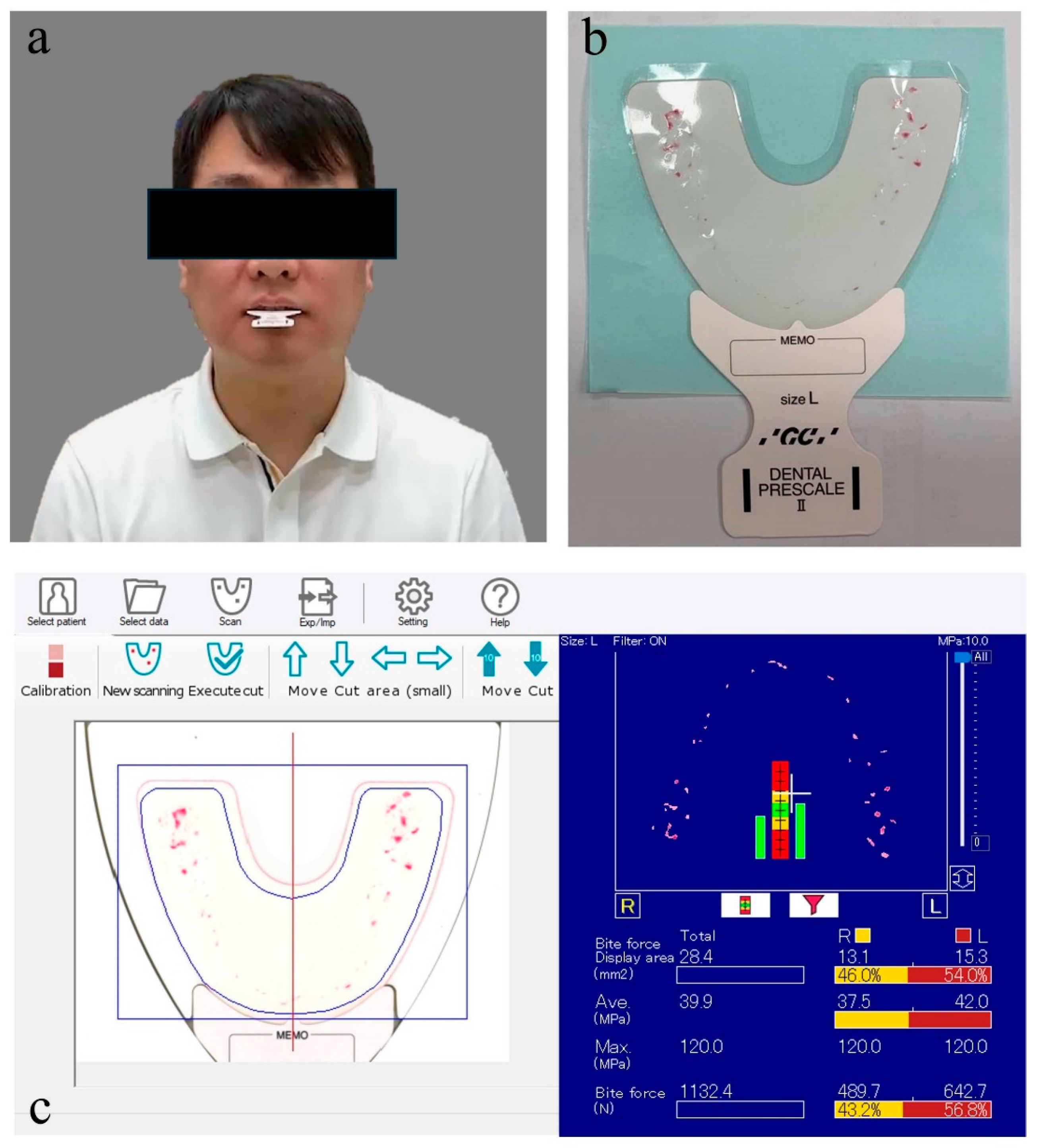
2.5. Measurement of Maximum Bite Force
2.6. Statistical Analysis
3. Results
3.1. Demographic and Clinical Characteristics
3.2. Comparison of Each Parameter and Asymmetry Index Before Stabilization Splint Therapy
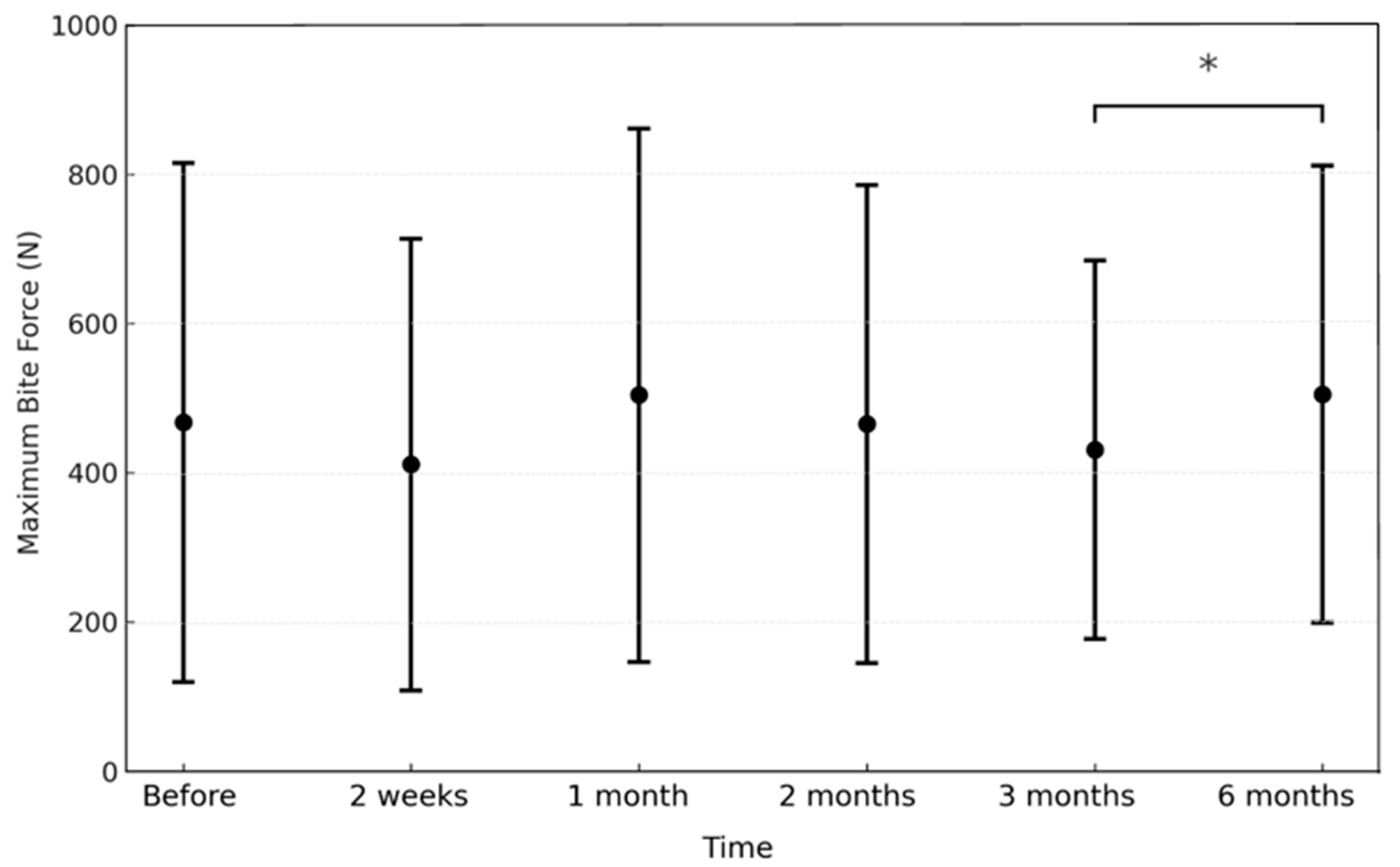
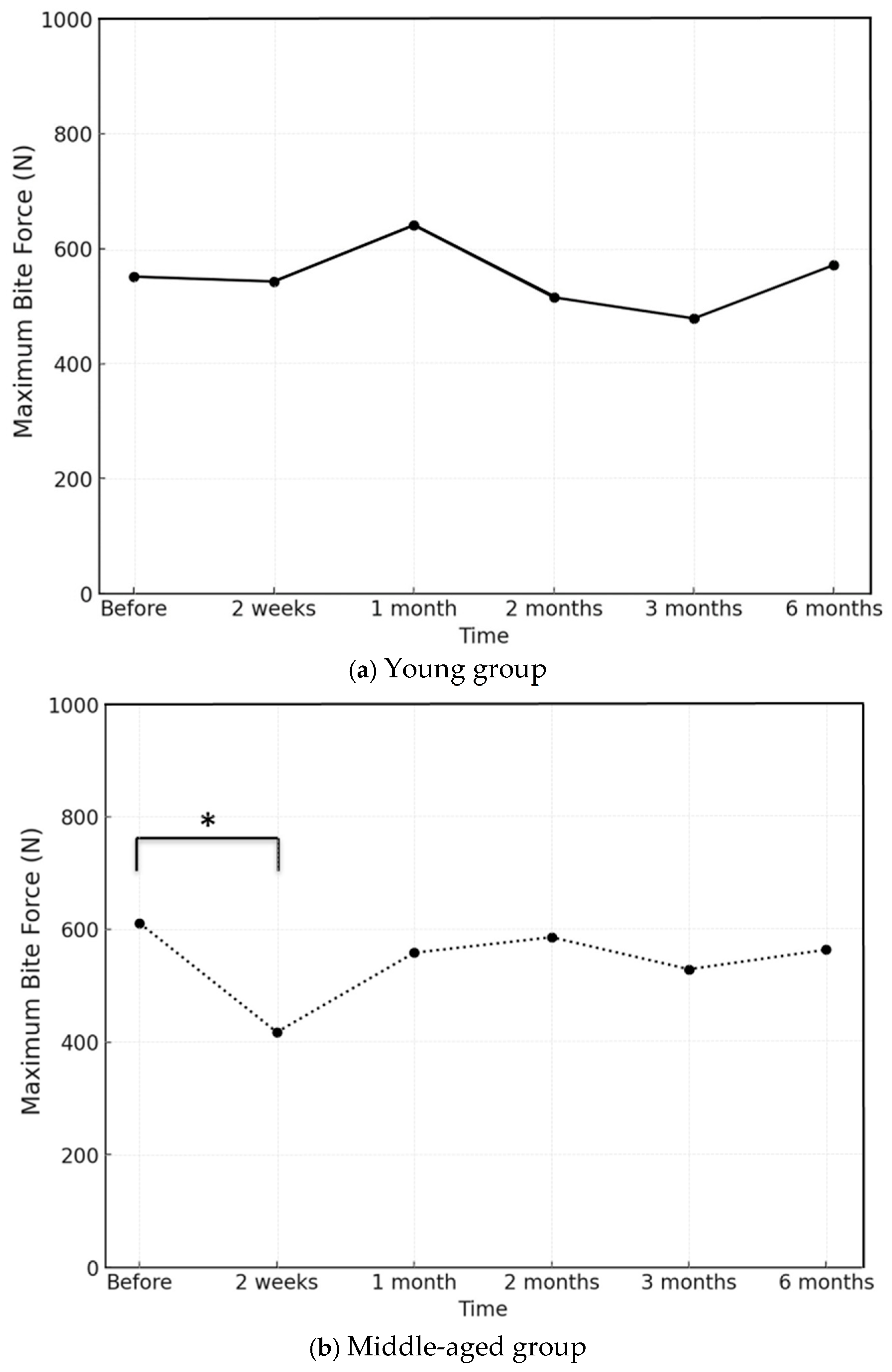
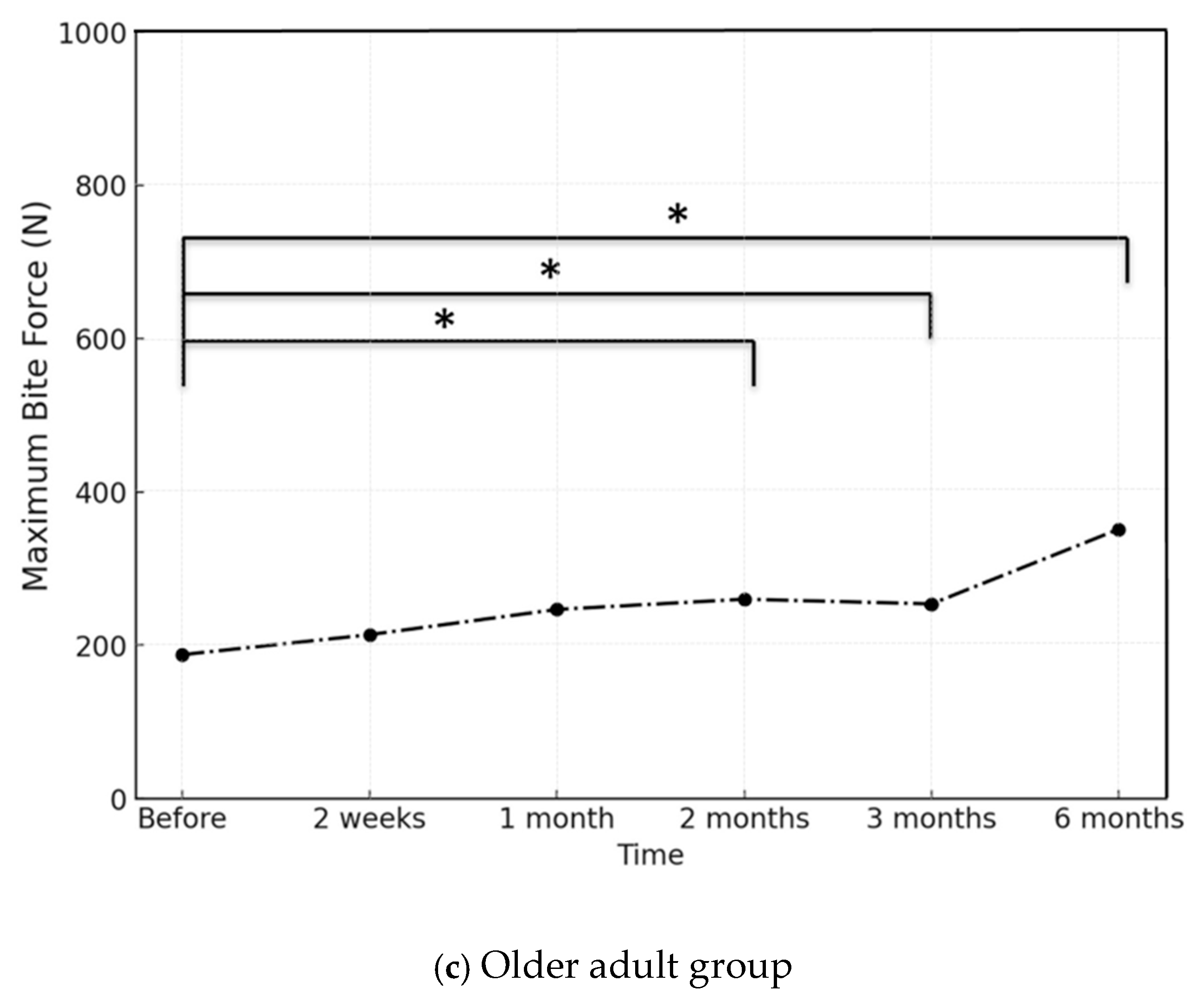
3.3. Maximum Bite Force
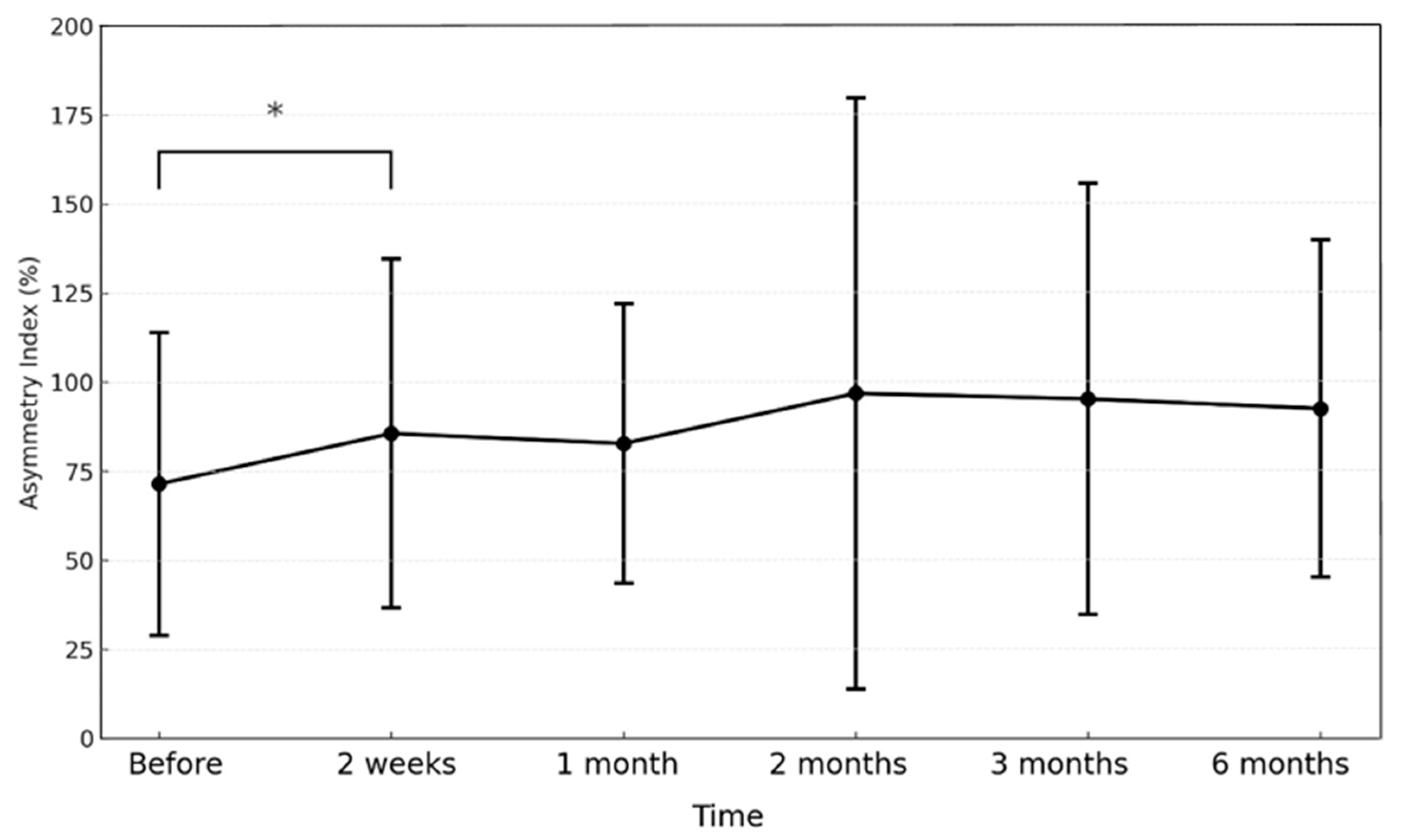
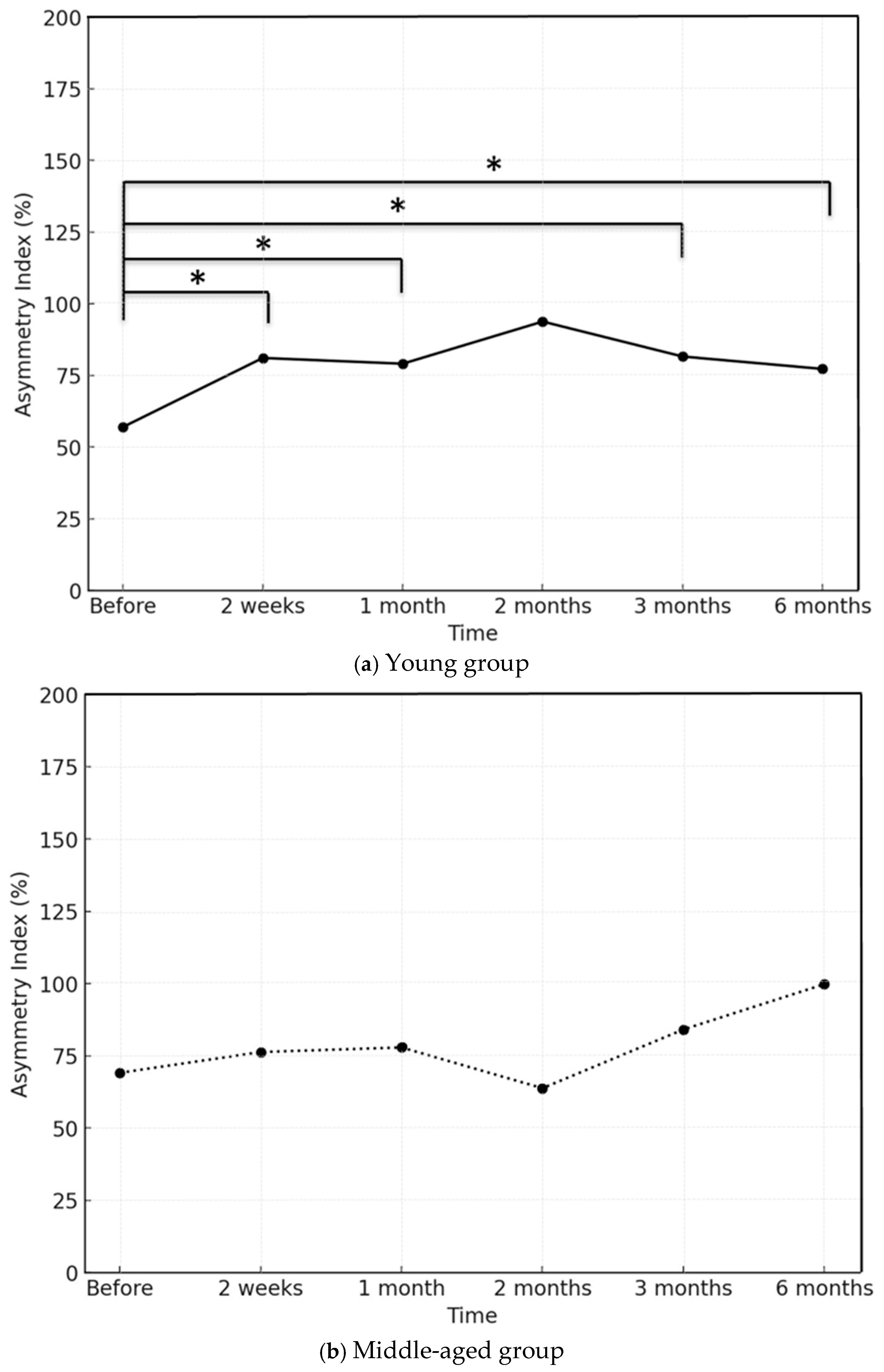
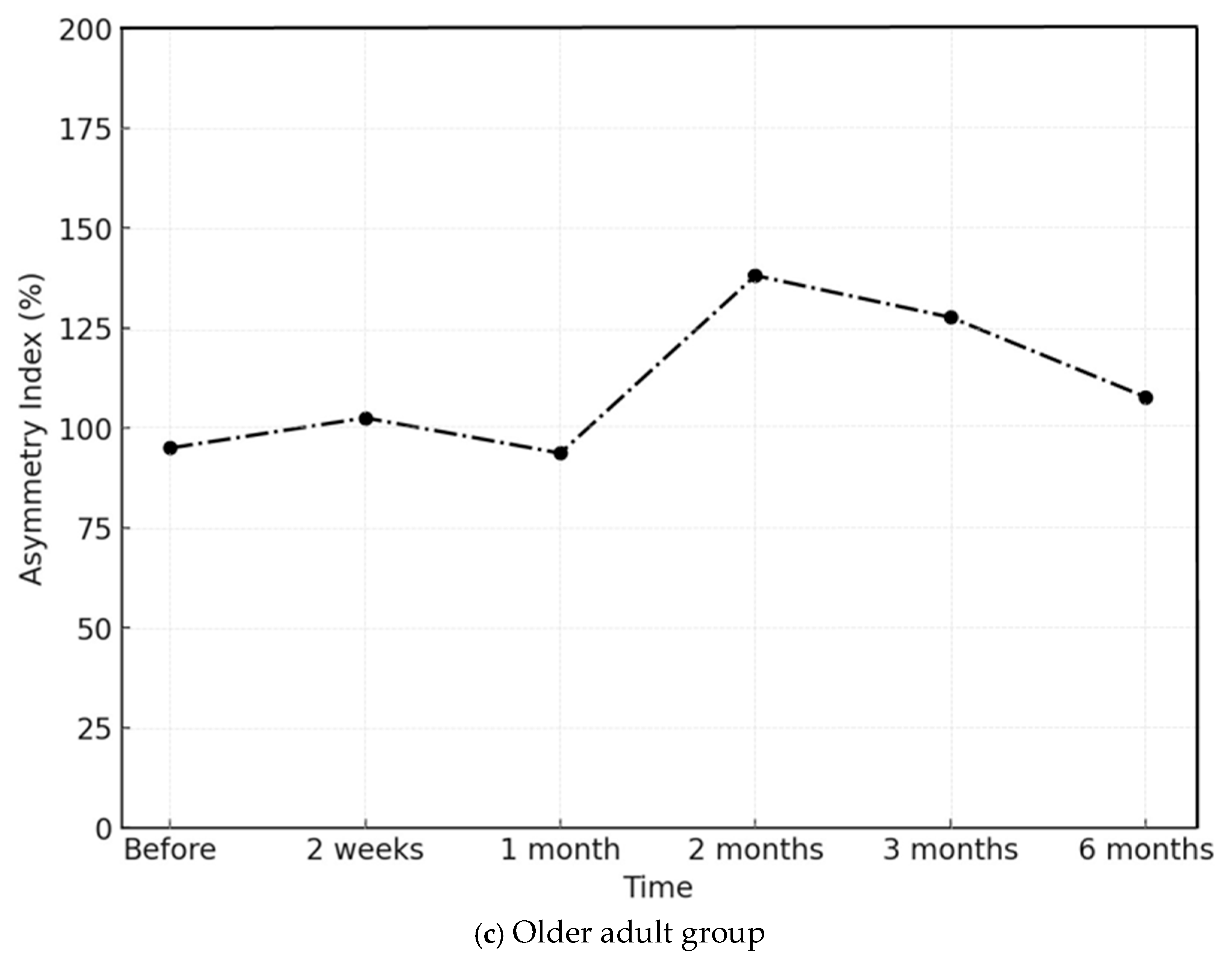
3.4. Maximum Bite Force Ratio
3.5. Comparison of Each Parameter and Asymmetry Index After Stabilization Splint Therapy
4. Discussion
5. Conclusions
Author Contributions
Funding
Institutional Review Board Statement
Informed Consent Statement
Data Availability Statement
Conflicts of Interest
Abbreviations
| TMD | Temporomandibular disorders |
| TMJ | Temporomandibular joint |
| OA | Osteoarthritis |
| OHRQoL | Oral Health-Related Quality of Life |
| SCL-90-R | Symptom Checklist-90-Revised |
| CBCT | Cone-beam computed tomography |
| EMG | Electromyography |
| CMO | Comfortable mouth opening |
| MMO | Maximum mouth opening |
| NRS | Numeric rating scale |
| SOM | Somatization |
| O-C | Obsessive-compulsive |
| I-S | Interpersonal sensitivity |
| DEP | Depression |
| ANX | Anxiety |
| HOS | Hostility |
| PHOB | Phobic anxiety |
| PAR | Paranoid ideation |
| PSY | Psychoticism |
| GSI | Global severity index |
| PSDI | Positive symptom distress index |
| PST | Positive symptom total |
References
- Leeuw, R.; Klasser, G.D. Orofacial Pain: Guidelines for Assessment, Diagnosis, and Management; Quintessence: New York, NY, USA, 2013. [Google Scholar]
- List, T.; Leijon, G.; Svensson, P. Somatosensory abnormalities in atypical odontalgia: A case-control study. Pain 2008, 139, 333–341. [Google Scholar] [CrossRef] [Scilit]
- Sharma, S.; Gupta, D.S.; Pal, U.S.; Jurel, S.K. Etiological factors of temporomandibular joint disorders. Natl. J. Maxillofac. Surg. 2011, 2, 116–119. [Google Scholar] [CrossRef] [Scilit]
- LeResche, L. Epidemiology of temporomandibular disorders: Implications for the investigation of etiologic factors. Crit. Rev. Oral Biol. Med. 1997, 8, 291–305. [Google Scholar] [CrossRef] [Scilit]
- Warren, M.P.; Fried, J.L. Temporomandibular disorders and hormones in women. Cells Tissues Organs 2001, 169, 187–192. [Google Scholar] [CrossRef] [Scilit]
- Maixner, W.; Fillingim, R.B.; Williams, D.A.; Smith, S.B.; Slade, G.D. Overlapping chronic pain conditions: Implications for diagnosis and classification. J. Pain 2016, 17, T93–T107. [Google Scholar] [CrossRef] [Scilit]
- Yadav, S.; Yang, Y.; Dutra, E.H.; Robinson, J.L.; Wadhwa, S. Temporomandibular joint disorders in older adults. J. Am. Geriatr. Soc. 2018, 66, 1213–1217. [Google Scholar] [CrossRef] [Scilit] [PubMed]
- Slade, G.D.; Bair, E.; Mulkey, F.; Baraian, C.; Rothwell, R.; Reynolds, M.; Miller, V.; Gonzalez, Y.; Gordon, S.; Ribeiro-Dasilva, M. Study methods, recruitment, sociodemographic findings, and demographic representativeness in the OPPERA study. J. Pain 2011, 12, T12–T26. [Google Scholar] [CrossRef] [Scilit]
- Lövgren, A.; Häggman-Henrikson, B.; Visscher, C.; Lobbezoo, F.; Marklund, S.; Wänman, A. Temporomandibular pain and jaw dysfunction at different ages covering the lifespan–a population based study. Eur. J. Pain 2016, 20, 532–540. [Google Scholar] [CrossRef] [Scilit] [PubMed]
- Bäck, K.; Ahlqwist, M.; Hakeberg, M.; Dahlström, L. Occurrence of signs of osteoarthritis/arthrosis in the temporomandibular joint on panoramic radiographs in Swedish women. Community Dent. Oral Epidemiol. 2017, 45, 478–484. [Google Scholar] [CrossRef] [Scilit] [PubMed]
- Alexiou, K.; Stamatakis, H.; Tsiklakis, K. Evaluation of the severity of temporomandibular joint osteoarthritic changes related to age using cone beam computed tomography. Dentomaxillofac. Radiol. 2009, 38, 141–147. [Google Scholar] [CrossRef] [Scilit]
- Manfredini, D.; Piccotti, F.; Ferronato, G.; Guarda-Nardini, L. Age peaks of different RDC/TMD diagnoses in a patient population. J. Dent. 2010, 38, 392–399. [Google Scholar] [CrossRef] [Scilit]
- Guarda-Nardini, L.; Piccotti, F.; Mogno, G.; Favero, L.; Manfredini, D. Age-related differences in temporomandibular disorder diagnoses. Cranio 2012, 30, 103–109. [Google Scholar] [CrossRef] [Scilit]
- Schmitter, M.; Essig, M.; Seneadza, V.; Balke, Z.; Schröder, J.; Rammelsberg, P. Prevalence of clinical and radiographic signs of osteoarthrosis of the temporomandibular joint in an older persons community. Dentomaxillofac. Radiol. 2010, 39, 231–234. [Google Scholar] [CrossRef] [Scilit]
- Lee, S.I.; Kim, K.S. Comparison of bite forces between pre-and post-treatment in patients with temporomandibular disorders. J. Oral Med. Pain 2007, 32, 211–218. [Google Scholar]
- Park, I.H.; McCall, W.; Chung, J.W. Electromyographic power spectrum of jaw muscles during clenching in unilateral temporomandibular joint osteoarthritis patients. J. Oral Rehabil. 2012, 39, 659–667. [Google Scholar] [CrossRef] [Scilit] [PubMed]
- Peyron, M.-A.; Woda, A.; Bourdiol, P.; Hennequin, M. Age-related changes in mastication. J. Oral Rehabil. 2017, 44, 299–312. [Google Scholar] [CrossRef] [Scilit] [PubMed]
- Noh, D.K.; Choi, S.H.; Choi, C.-H.; Lee, K.; Kwak, S.H. Validity & reliability of a Korean-version of Eating Assessment Tool (K-EAT-10): Predicting the risk of aspiration in stroke patients. Commun. Sci. Disord. 2022, 27, 830–843. [Google Scholar] [CrossRef] [Scilit]
- Schiffman, E.; Ohrbach, R.; Truelove, E.; Look, J.; Anderson, G.; Goulet, J.-P.; List, T.; Svensson, P.; Gonzalez, Y.; Lobbezoo, F. Diagnostic criteria for temporomandibular disorders (DC/TMD) for clinical and research applications: Recommendations of the International RDC/TMD Consortium Network and Orofacial Pain Special Interest Group. J. Oral Facial Pain Headache 2014, 28, 6–27. [Google Scholar] [CrossRef] [Scilit]
- Pontual, M.L.A.; Freire, J.S.; Barbosa, J.M.; Frazão, M.A.; Fonseca da Silveira, M.M. Evaluation of bone changes in the temporomandibular joint using cone beam CT. Dentomaxillofac. Radiol. 2012, 41, 24–29. [Google Scholar] [CrossRef] [Scilit]
- Horibe, Y.; Matsuo, K.; Ikebe, K.; Minakuchi, S.; Sato, Y.; Sakurai, K.; Ueda, T. Relationship between two pressure-sensitive films for testing reduced occlusal force in diagnostic criteria for oral hypofunction. Gerodontology 2022, 39, 3–9. [Google Scholar] [CrossRef] [Scilit]
- Adachi, K.; Yamamoto, H.; Watanabe, R.; Iwahori, M.; Miyao, M.; Yamauchi, M. Reproducibility of the newly developed dental prescale II system and bite force analyzer for occlusal measurements. J. Gifu Dent. Soc. 2020, 46, 123–126. [Google Scholar]
- Bouvier, M. Effects of age on the ability of the rat temporomandibular joint to respond to changing functional demands. J. Dent. Res. 1988, 67, 1206–1212. [Google Scholar] [CrossRef] [Scilit]
- Krisjane, Z.; Urtane, I.; Krumina, G.; Neimane, L.; Ragovska, I. The prevalence of TMJ osteoarthritis in asymptomatic patients with dentofacial deformities: A cone-beam CT study. Int. J. Oral Maxillofac. Surg. 2012, 41, 690–695. [Google Scholar] [CrossRef] [Scilit] [PubMed]
- Matsumoto, R.; Ioi, H.; Goto, T.; Hara, A.; Nakata, S.; Nakasima, A.; Counts, A. Relationship between the unilateral TMJ osteoarthritis/osteoarthrosis, mandibular asymmetry and the EMG activity of the masticatory muscles: A retrospective study. J. Oral Rehabil. 2010, 37, 85–92. [Google Scholar] [CrossRef] [Scilit]
- Tanaka, T.; Takahashi, K.; Hirano, H.; Kikutani, T.; Watanabe, Y.; Ohara, Y.; Furuya, H.; Tetsuo, T.; Akishita, M.; Iijima, K. Oral frailty as a risk factor for physical frailty and mortality in community-dwelling elderly. J. Gerontol. A Biol. Sci. 2018, 73, 1661–1667. [Google Scholar] [CrossRef] [Scilit]
- Zhang, J.; Zhang, S.; Qi, W.J.; Xu, C.L.; Zhou, J.; Wang, J.H.; Wang, B.L. Mechanism and potential contributing factors to temporomandibular joint osteoarthritis. Oral Dis. 2023, 29, 1060–1069. [Google Scholar] [CrossRef] [Scilit]
- Woodford, S.C.; Robinson, D.L.; Abduo, J.; Lee, P.V.; Ackland, D.C. Muscle and joint mechanics during maximum force biting following total temporomandibular joint replacement surgery. Biomech. Model. Mechanobiol. 2024, 23, 809–823. [Google Scholar] [CrossRef] [Scilit] [PubMed]
- Santana-Mora, U.; Cudeiro, J.; Mora-Bermúdez, M.; Rilo-Pousa, B.; Ferreira-Pinho, J.; Otero-Cepeda, J.; Santana-Penín, U. Changes in EMG activity during clenching in chronic pain patients with unilateral temporomandibular disorders. J. Electromyogr. Kinesiol. 2009, 19, e543–e549. [Google Scholar] [CrossRef] [Scilit] [PubMed]
- Peck, C.C. Biomechanics of occlusion–implications for oral rehabilitation. J. Oral Rehabil. 2016, 43, 205–214. [Google Scholar] [CrossRef] [Scilit]
- Robinson, J.L.; Soria, P.; Lu, H.H.; Chen, J.; Wadhwa, S. Structure-function relationships of the Temporomandibular Joint in response to altered loading. J. Oral Facial Pain Headache 2019, 33, 451–458. [Google Scholar] [CrossRef] [Scilit]
- Park, H.J.; Ryu, J.W. Use of intermaxillary traction appliances and exercises to strengthen the masticatory muscles of patients with anterior open bite caused by temporomandibular joint osteoarthritis. J. Oral Med. Pain 2022, 47, 95–101. [Google Scholar] [CrossRef] [Scilit]
- Bagis, B.; Ayaz, E.A.; Turgut, S.; Durkan, R.; Özcan, M. Gender difference in prevalence of signs and symptoms of temporomandibular joint disorders: A retrospective study on 243 consecutive patients. Int. J. Med. Sci. 2012, 9, 539–544. [Google Scholar] [CrossRef] [Scilit]
- Bueno, C.H.; Pereira, D.D.; Pattussi, M.P.; Grossi, P.K.; Grossi, M.L. Gender differences in temporomandibular disorders in adult populational studies: A systematic review and meta-analysis. J. Oral Rehabil. 2018, 45, 720–729. [Google Scholar] [CrossRef] [Scilit]
- Johansson, A.; Unell, L.; Carlsson, G.E.; Söderfeldt, B.; Halling, A. Gender difference in symptoms related to temporomandibular disorders in a population of 50-year-old subjects. J. Orofac. Pain 2003, 17, 29–35. [Google Scholar]
- Mądra-Gackowska, K.; Szewczyk-Golec, K.; Gackowski, M.; Woźniak, A.; Kędziora-Kornatowska, K. Evaluation of Selected Parameters of Oxidative Stress and Adipokine Levels in Hospitalized Older Patients with Diverse Nutritional Status. Antioxidants 2023, 12, 569. [Google Scholar] [CrossRef] [Scilit] [PubMed]
- Derw, B.; Mądra-Gackowska, K.; Szewczyk-Golec, K.; Gackowski, M.; Hołyńska-Iwan, I.; Parzych, D.; Czuczejko, J.; Graczyk, M.; Husejko, J.; Jabłoński, T.; et al. Selected Biochemical, Hematological, and Immunological Blood Parameters for the Identification of Malnutrition in Polish Senile Inpatients: A Cross-Sectional Study. J. Clin. Med. 2025, 14, 1494. [Google Scholar] [CrossRef] [Scilit] [PubMed]
- Derwich, M.; Mitus-Kenig, M.; Pawlowska, E. Interdisciplinary approach to the temporomandibular joint osteoarthritis—Review of the literature. Medicina 2020, 56, 225. [Google Scholar] [CrossRef] [Scilit]
- Kalladka, M.; Young, A.; Thomas, D.; Heir, G.M.; Quek, S.Y.P.; Khan, J. The relation of temporomandibular disorders and dental occlusion: A narrative review. Quintessence Int. 2022, 53, 450–459. [Google Scholar] [CrossRef] [Scilit] [PubMed]



| Variables | Young (n = 13) | Middle-Aged (n = 10) | Older Adult (n = 9) | p-Value |
|---|---|---|---|---|
| Age (years) | 29.3 ± 6.0 | 49.0 ± 5.6 | 66.2 ± 4.6 | <0.001 a |
| Gender (% of female) | 76.9 | 60 | 88.9 | 0.148 b |
| CMO (mm) | 30.3 ± 10.1 | 37.0 ± 11.0 | 35.9 ± 8.0 | 0.117 c |
| MMO (mm) | 43.9 ± 9.6 | 44.4 ± 8.6 | 42.4 ± 8.0 | 0.883 a |
| Pain intensity (NRS) | 4.1 ± 3.0 | 5.0 ± 2.7 | 4.2 ± 2.1 | 0.717 a |
| Pain duration (days) | 43.5 ± 57.1 | 69.7 ± 65.1 | 79.5 ± 53.9 | 0.256 c |
| Variables | Young (n = 13) | Middle-Aged (n = 10) | Older Adult (n = 9) | p-Value |
|---|---|---|---|---|
| SOM | 45.6 ± 6.5 | 45.5 ± 6.5 | 47.2 ± 5.3 | 0.957 a |
| O-C | 40.6 ± 7.5 | 44.7 ± 4.0 | 42.8 ± 7.0 | 0.458 a |
| I-S | 42.5 ± 7.9 | 44.4 ± 5.6 | 42.0 ± 6.0 | 0.608 a |
| DEP | 42.0 ± 8.3 | 44.1 ± 4.7 | 42.6 ± 5.7 | 0.908 a |
| ANX | 42.6 ± 6.6 | 43.9 ± 4.3 | 42.1 ± 6.5 | 0.767 b |
| HOS | 42.7 ± 6.1 | 44.8 ± 4.8 | 43.0 ± 5.8 | 0.723 b |
| PHOB | 44.2 ± 6.0 | 43.8 ± 3.0 | 43.8 ± 3.8 | 0.964 b |
| PAR | 14.3 ± 5.6 | 41.8 ± 4.1 | 43.8 ± 4.9 | 0.333 b |
| PSY | 43.2 ± 5.4 | 44.5 ± 4.5 | 43.3 ± 5.3 | 0.802 b |
| GSI | 39.6 ± 13.7 | 45.1 ± 4.9 | 43.6 ± 6.8 | 0.851 a |
| PSDI | 44.5 ± 6.1 | 48.0 ± 10.7 | 45.9 ± 6.8 | 0.978 b |
| PST | 40.6 ± 13.0 | 44.7 ± 5.0 | 45.2 ± 13.2 | 0.787 b |
| Variables | Young (n = 13) | Middle-Aged (n = 10) | Older Adult (n = 9) | p-Value |
|---|---|---|---|---|
| Each parameter | ||||
| Occlusal contact area (mm2) | 14.8 ± 6.6 | 15.8 ± 10.5 | 6.0 ± 2.0 | 0.012 a |
| Occlusal pressure (MPa) | 36.2 ± 4.7 | 37.7 ± 7.0 | 30.7 ± 5.3 | 0.017 b |
| Maximum bite force (N) | 551.4 ± 305.9 | 611.0 ± 419.6 | 187.5 ± 73.0 | 0.011 a |
| Asymmetry index (OA side/normal side) | ||||
| Occlusal contact area ratio (%) | 62.0 ± 27.9 | 67.2 ± 29.3 | 97.9 ± 70.1 | 0.165 a |
| Occlusal pressure ratio (%) | 94.1 ± 19.6 | 94.9 ± 36.7 | 99.7 ± 10.8 | 0.858 a |
| Maximum bite force ratio (%) | 57.0 ± 23.3 | 69.1 ± 28.5 | 95.0 ± 65.7 | 0.116 a |
| Before | 2 W | 1 M | 2 M | 3 M | 6 M | p-Value * | p-Value † | |
|---|---|---|---|---|---|---|---|---|
| Young (n = 13) | 551.4 ± 305.9 | 542.9 ± 350.2 | 640.9 ± 395.9 | 515.3 ± 297.8 | 478.6 ± 233.7 | 571.6 ± 332.9 | 0.466 a | 0.187 b |
| Middle-aged (n = 10) | 611.0 ± 419.6 | 417.0 ± 284.0 | 558.2 ± 331.8 | 585.9 ± 399.3 | 528.9 ± 309.7 | 563.7 ± 354.1 | 0.219 b | |
| Older adult (n = 9) | 187.5 ± 73.0 | 213.6 ± 90.7 | 246.5 ± 165.0 | 259.9 ± 124.4 | 253.8 ± 92.9 | 351.3 ± 151.8 | 0.011 a |
| Before | 2 W | 1 M | 2 M | 3 M | 6 M | p-Value | |
|---|---|---|---|---|---|---|---|
| Young (n = 13) | 57.0 ± 23.3 | 81.1 ± 42.4 | 79.1 ± 33.8 | 93.8 ± 73.9 | 81.6 ± 38.0 | 77.2 ± 30.9 | 0.114 |
| Middle-aged (n = 10) | 69.1 ± 28.5 | 76.3 ± 35.8 | 77.9 ± 36.9 | 63.8 ± 29.5 | 84.1 ± 34.2 | 99.8 ± 32.8 | 0.289 |
| Older adult (n = 9) | 95.0 ± 65.7 | 102.5 ± 68.6 | 93.7 ± 50.3 | 138.1 ± 119.1 | 127.6 ± 95.1 | 107.7 ± 72.1 | 0.734 |
| Variables | Young (n = 13) | Middle-Aged (n = 10) | Older Adult (n = 9) | p-Value |
|---|---|---|---|---|
| Each parameter | ||||
| Occlusal contact area (mm2) | 14.3 ± 6.8 | 14.7 ± 8.7 | 10.3 ± 4.2 | 0.305 a |
| Occlusal pressure (MPa) | 38.6 ± 6.1 | 37.5 ± 5.6 | 34.2 ± 3.5 | 0.179 a |
| Maximum bite force (N) | 571.6 ± 332.9 | 563.7 ± 354.1 | 351.3 ± 151.8 | 0.205 a |
| Asymmetry index (OA side/normal side) | ||||
| Occlusal contact area ratio (%) | 75.7 ± 32.7 | 93.5 ± 29.0 | 104.8 ± 66.3 | 0.530 b |
| Occlusal pressure ratio (%) | 105.4 ± 17.3 | 106.7 ± 15.2 | 98.9 ± 16.7 | 0.556 a |
| Maximum bite force ratio (%) | 77.2 ± 30.9 | 99.8 ± 32.8 | 107.7 ± 72.1 | 0.372 b |
Disclaimer/Publisher’s Note: The statements, opinions and data contained in all publications are solely those of the individual author(s) and contributor(s) and not of MDPI and/or the editor(s). MDPI and/or the editor(s) disclaim responsibility for any injury to people or property resulting from any ideas, methods, instructions or products referred to in the content. |
© 2026 by the authors. Licensee MDPI, Basel, Switzerland. This article is an open access article distributed under the terms and conditions of the Creative Commons Attribution (CC BY) license.
Share and Cite
Kang, K.-H.; Jung, J.-K.; Byun, J.-S.; Kim, J.R. An Observational Study of Age-Related Changes in Bite Force During Stabilization Splint Therapy in Patients with Unilateral Temporomandibular Joint Osteoarthritis. Appl. Sci. 2026, 16, 636. https://doi.org/10.3390/app16020636
Kang K-H, Jung J-K, Byun J-S, Kim JR. An Observational Study of Age-Related Changes in Bite Force During Stabilization Splint Therapy in Patients with Unilateral Temporomandibular Joint Osteoarthritis. Applied Sciences. 2026; 16(2):636. https://doi.org/10.3390/app16020636
Chicago/Turabian StyleKang, Kun-Hwa, Jae-Kwang Jung, Jin-Seok Byun, and Ji Rak Kim. 2026. "An Observational Study of Age-Related Changes in Bite Force During Stabilization Splint Therapy in Patients with Unilateral Temporomandibular Joint Osteoarthritis" Applied Sciences 16, no. 2: 636. https://doi.org/10.3390/app16020636
APA StyleKang, K.-H., Jung, J.-K., Byun, J.-S., & Kim, J. R. (2026). An Observational Study of Age-Related Changes in Bite Force During Stabilization Splint Therapy in Patients with Unilateral Temporomandibular Joint Osteoarthritis. Applied Sciences, 16(2), 636. https://doi.org/10.3390/app16020636