
Next Article in Journal
Segmentation and Classification of Lung Cancer Images Using Deep Learning
Previous Article in Journal
DOA Estimation Based on Circular-Attention Residual Network
Previous Article in Special Issue
Priority Based Channel Searching Sequence Allocation for Rendezvous of Cognitive Radio
error_outline You can access the new MDPI.com website here. Explore and share your feedback with us.
 
 
Article

Wideband Circularly Polarized Slot Antenna Using a Square-Ring Notch and a Nonuniform Metasurface


Department of Electronic Engineering, Hanyang University, Seoul 04763, Republic of Korea
*
Author to whom correspondence should be addressed.
Appl. Sci. 2026, 16(2), 634; https://doi.org/10.3390/app16020634
Submission received: 3 December 2025 / Revised: 28 December 2025 / Accepted: 6 January 2026 / Published: 7 January 2026
(This article belongs to the Special Issue Advances in Wireless Sensor Networks and Communication Technology)

Abstract

Wearable antennas for wireless sensor network (WSN) applications require circularly polarized (CP) radiation to maintain stable communication link under human body movement and complex environments. However, many existing wearable CP antennas rely on either linearly polarized (LP) or CP radiator with a single axial ratio (AR) mode combined with external polarization conversion structures, which limit the achievable axial ratio bandwidth (ARBW). In this work, an all-textile wideband CP antenna with a square-ring notched slot radiator, a 50 Ω microstrip line, and a 3 × 3 nonuniform metasurface (MTS) is proposed for 5.85 GHz WSN applications. Unlike conventional CP generation approaches, the square-ring notched slot, analyzed using characteristic mode analysis (CMA), directly excites three distinct AR modes, enabling potential wideband CP radiation. The nonuniform MTS further improves IBW performance by exciting additional surface wave resonances. Moreover, the nonuniform MTS further enhances ARBW by redirecting the incident wave into an orthogonal direction with equivalent amplitude and a 90° phase difference at higher frequency region. The proposed antenna is composed of conductive textile and felt substrates, offering flexibility for wearable applications. The proposed antenna is measured in free space, on human bodies, and fresh pork in an anechoic chamber. The measured results show a broad IBW and ARBW of 84.52% and 43.56%, respectively. The measured gain and radiation efficiency are 4.47 dBic and 68%, respectively. The simulated specific absorption rates (SARs) satisfy both US and EU standards.

1. Introduction

Wearable antennas have attracted increasing attention in recent years due to their wide applicability in smart communication systems, medical diagnostics, and military operations for wireless sensor network (WSN) applications. Wearable antennas are required to meet several critical criteria, such as being planar, compact, lightweight, flexible, and easily integrated with an electronic device to maintain reliable communications. They must also meet specific absorption rate (SAR) safety regulations. To be specific, when multiple sensor devices are deployed on or around the human body, the antenna performance directly affects the link reliability, coverage, and energy efficiency of the entire system. In such WSN scenarios, the antenna must maintain stable operation under human body movement, polarization misalignment, and multipath distortion to prevent polarization mismatch.
Several linearly polarized (LP) wearable antennas have been presented [1,2]. Compared with LP antennas, circularly polarized (CP) antennas are considered superior candidates because of their ability to mitigate polarization mismatch and multipath interference. Therefore, CP antennas maintain stable communication links even with human body movements and in unintended environments. These advantages are particularly beneficial in WSN applications. Numerous CP antenna configurations, including button-type antennas [3,4,5], array antennas [6,7], multiple-input and multiple-output (MIMO) antennas [8,9], and coplanar waveguide (CPW) feed antennas [10,11], have been proposed for wearable applications. However, these antennas suffer from either a bulky structure or narrow bandwidth.
To mitigate these issues and enhance antenna performance, the use of a metamaterial structure is a comparatively promising approach. A conventional metamaterial structure comprising an artificial magnetic conductor (AMC) has been introduced [12,13,14] to excite CP radiation. While effective in suppressing backward radiation to satisfy SAR for the safety regulations, AMC antennas often require space between the radiator and AMC layer, resulting in a high profile, which is unsuitable for wearable applications. In addition, AMC-based antennas often suffer from a narrow axial ratio bandwidth (ARBW). Recently, metasurface (MTS) structures have been proposed as an alternative solution [15,16,17]. By placing the MTS layer directly above the radiator without any spacing, antennas can maintain a low-profile configuration while simultaneously enhancing antenna performance by exciting additional surface wave resonance. Moreover, the MTS reflects an incident wave into an orthogonal direction with a 90° phase difference and an equal amplitude, thereby exciting CP radiation. However, the impedance bandwidth (IBW) and ARBW in [15] are narrow, and the measured IBW does not fully cover the ARBW of the antenna in [16].
In this paper, an all-textile wideband CP antenna that uses a square-ring notch and nonuniform MTS is proposed for wireless sensor network (WSN) applications. This research focuses on an effective approach to enhance the ARBW using a square-ring notched slot radiator analyzed using characteristic mode analysis (CMA) with a nonuniform MTS structure. Compared to the authors’ previous study [17], where CP is only produced using an MTS structure, the fundamental slot radiator excites CP waves and radiates multi-AR modes. Moreover, the nonuniform MTS plays a complementary role, enhancing both IBW and ARBW at high frequencies. Initially, a square-ring notched slot antenna is used as a fundamental radiator and optimized through characteristic mode analysis (CMA). By notching two square rings at opposite corners of the slot antenna, three AR modes can be generated, providing higher potential for broad CP radiation. For each AR mode, two characteristic modes overlap at the AR mode frequency with an approximately 90° difference in the characteristic angle (CA), resulting in multi-band AR. The 3 × 3 nonuniform MTS enhances the IBW by exciting adjacent resonance modes combined with fundamental modes of the slot antenna. In addition, the MTS redirects the incident wave to an orthogonal direction with a 90° phase difference in a high-frequency region, which further enhances the ARBW. As a result, the proposed antenna radiates a broadband CP. A prototype antenna was fabricated via laser cutting using textiles for bending, which is one of the important aspects in wearable applications. The proposed antenna was measured using a vector network analyzer (VNA) in free space, on the human body, and on fresh pork in an anechoic chamber, resulting in good agreement with simulated results.
This article is organized as follows. Section 2 describes the design, working mechanism, and simulated results of the antenna; Section 3 presents the performances of the fabricated antenna; and this article concludes in Section 4.

2. Antenna Design

2.1. Antenna Geometry

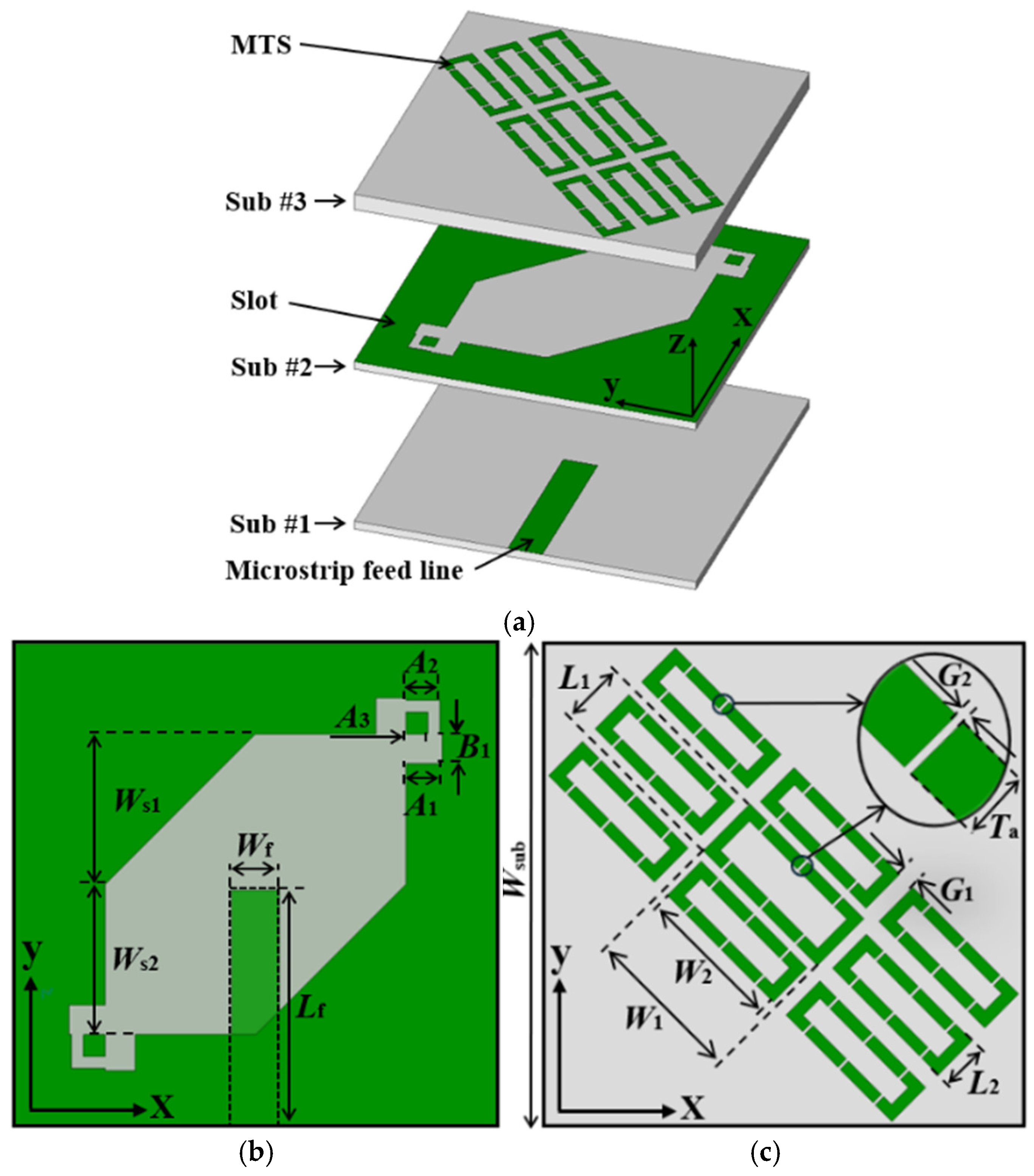
All simulations in this work were carried out using a full-wave electromagnetic solver, ANSYS HFSS 2022 R2. Figure 1 presents the structural configuration of the proposed antenna. It consists of a square-ring notched slot radiator serving as a fundamental radiator, a nonuniform 3 × 3 MTS layer, and a 50 Ω microstrip feed line, all designed on three felt substrates with a dielectric constant of 1.4 and a loss tangent of 0.044. All conductive parts were fabricated using a Shieldit super conductive textile, a highly conductive material with a conductivity of 118,000 S/m. Sub #1 with a thickness of 1 mm served as an isolation layer to mitigate the proximity effects caused by human bodies. The slot antenna was fabricated by etching two square-rings at the opposite corners of a hexagonal slot antenna, as shown in Figure 1b. The slot antenna was excited with a 50 Ω microstrip feed line placed on the bottom side of a 1 mm felt substrate (Sub #2). The MTS, which consists of 3 × 3 nonuniform rectangular unit cells with periodic silts, was directly placed on a 2 mm felt substrate (Sub #3) to reduce the antenna profile without spacing. Because the surrounding cells are smaller than the central cell, this creates a nonuniform configuration for ARBW enhancement at higher frequencies, as shown in Figure 1c. The optimized physical parameters of the antenna were W1 = 13, W2 = 12.5, L1 = 4.5, L2 = 4, G1 = 1.55, G2 = 0.13, Wsub = 40, ta = 1, Wf = 4, Lf = 19.5, Ws1 = 12.5, Ws2 = 12.5, A1 = 3, A2 = 2.8, A3 = 1.8, and B1 = 2.5 (unit: mm).

2.2. Antenna Working Mechanism

2.2.1. Slot Radiator

The CMA exhibits the properties of the antenna structure independently of the feeding method, which allows for a more fundamental analysis of the antenna structure [18]. The modal significance (MS) and characteristic angle (CA), both as a function of eigenvalue λn, are crucial parameters that determine the electromagnetic properties of the structure:
MS = 1/|1 + n|
CA = 180° − tan−1λn
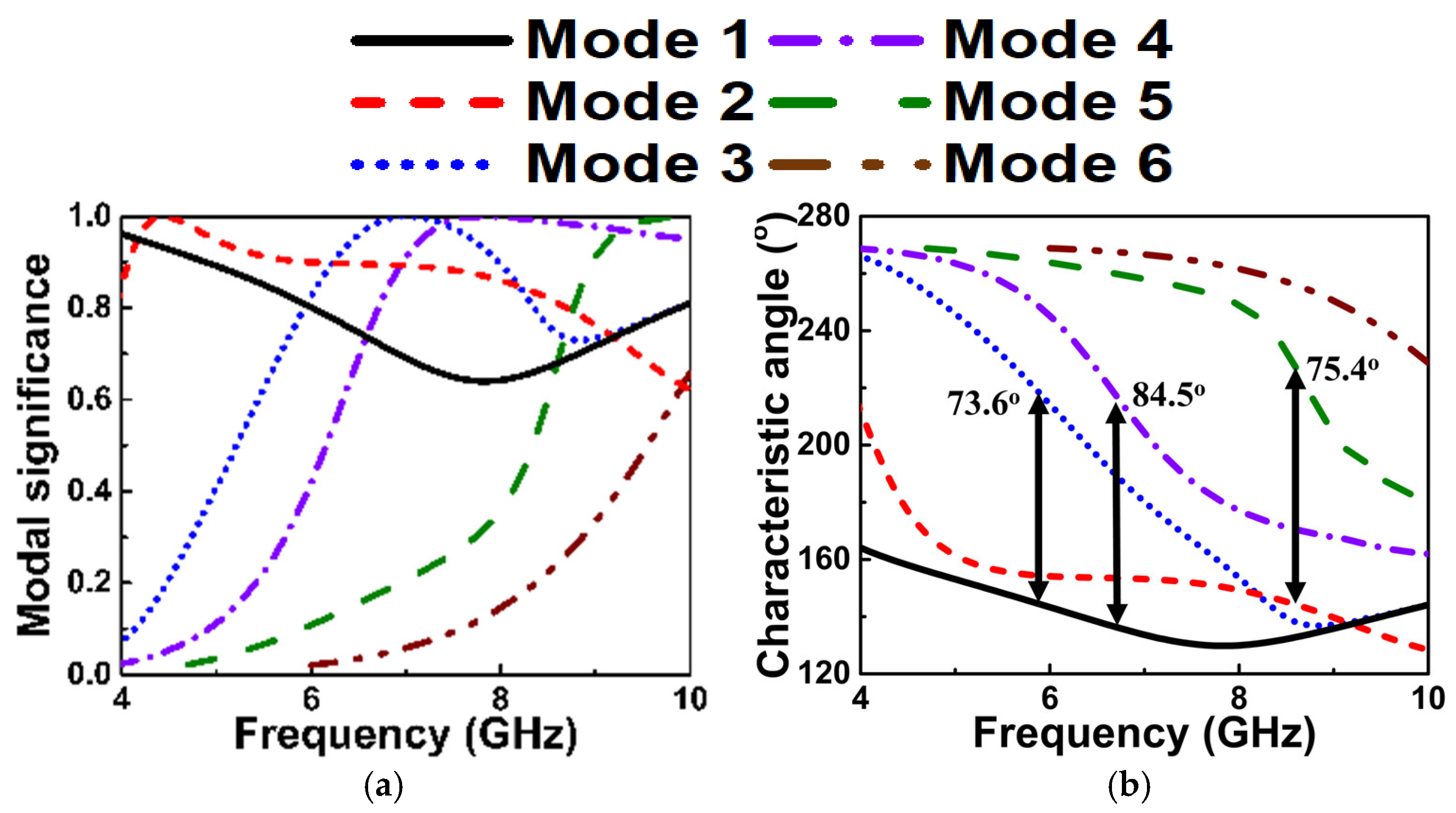
Generally, when MSn > 0.707, this frequency band is the resonance bandwidth. For the excitation in AR mode, a 90° CA difference should result when two MS modes overlap. When this condition is strictly satisfied, the AR is equal to 0 dB [19].
Figure 2 presents the MS and CA of the slot antenna from 4 to 10 GHz. A square-ring notched slot radiator has six modes of MS, but only three frequency points satisfied the CP condition. As shown in Figure 2a, MS1 and MS3 overlapped at 5.9 GHz with 73.6° of the CA difference, exciting an AR mode with 4 dB, as shown in Figure 2b. Moreover, MS1 and MS4 overlapped at a frequency of 6.6 GHz with an 84.5° difference in CA, resulting in another AR mode near 6.8 GHz with 2.6 dB. Lastly, MS2 and MS5 overlapped at 8.75 GHz with 75.6° of the CA difference, leading to the excitation of an additional AR mode with 3.7 dB of AR at 8.6 GHz. As a result, the square-ring notched slot radiator excited three AR modes, providing potential for a wide ARBW.
While conventional CP generation techniques, such as orthogonal slot coupling, perturbation stub, and corner truncation, typically excite only a single dominant AR mode [6,7,9], the proposed square-ring notches provide a fundamentally different mechanism, simultaneously perturbing multiple current paths of the slot radiator and exciting multiple orthogonal characteristic mode pairs across the operating band. Consequently, the square-ring notch technique offers a higher potential for wide ARBW without relying on complex feeding structures.
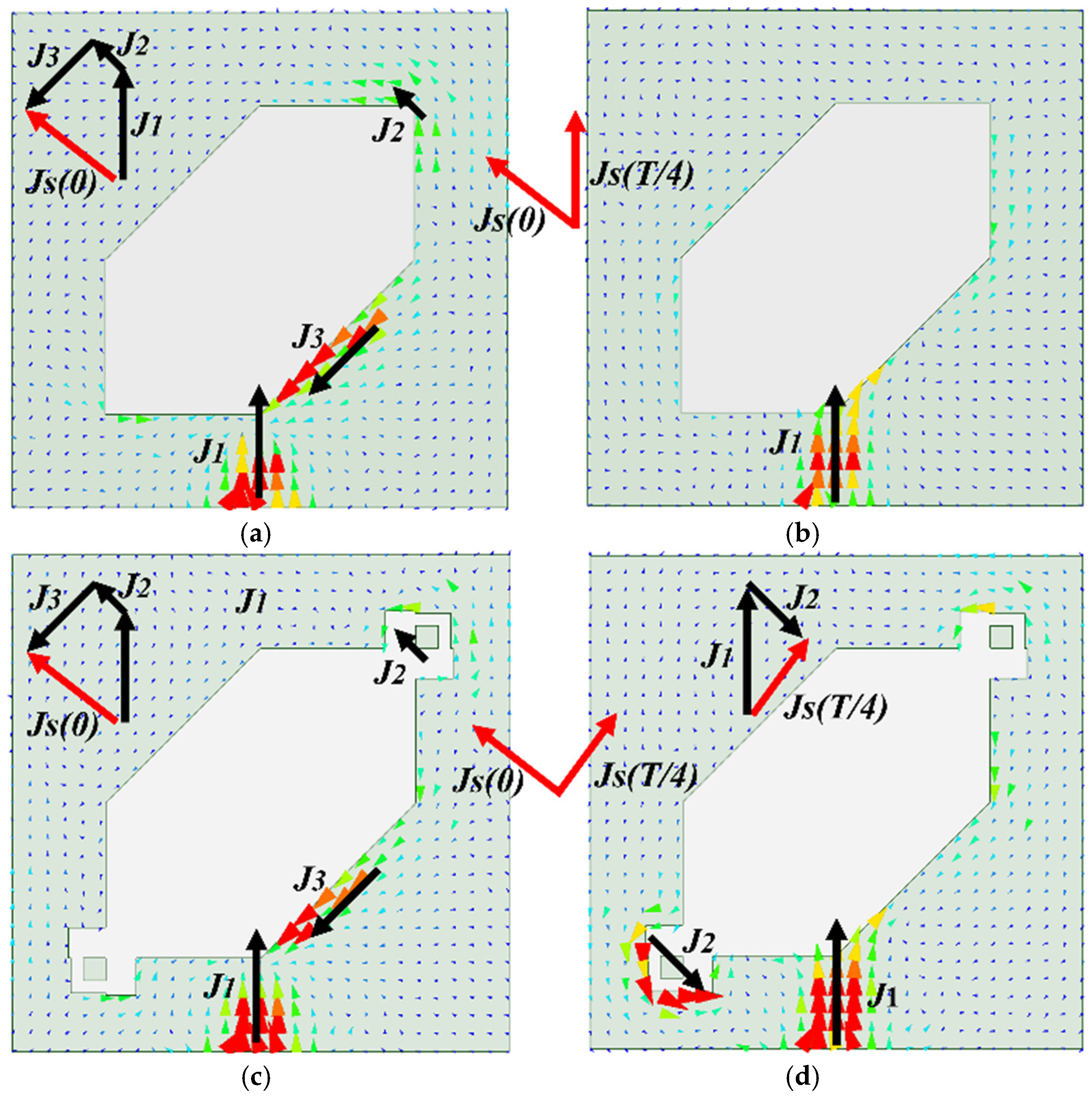
To verify the effect of the square ring, current distributions of the slot antennas with and without square rings are compared in Figure 3. The dimensions of the slot antenna were obtained using equations from [20]. As shown in Figure 3a,b, the slot antenna without square rings does not fulfill the condition required for CP. The square rings are therefore notched to disturb the current distribution, which creates orthogonal components for CP excitation [21]. As a result, the vector summations at a frequency of 6.8 GHz at t = 0 and t = T/4, where T is the period of time, are orthogonal and similar in amplitude, as shown in Figure 3c,d. Hence, this confirms that notching the square rings improves the orthogonal field components, thereby generating CP waves more effectively than the conventional slot radiator.

2.2.2. Metasurface Design

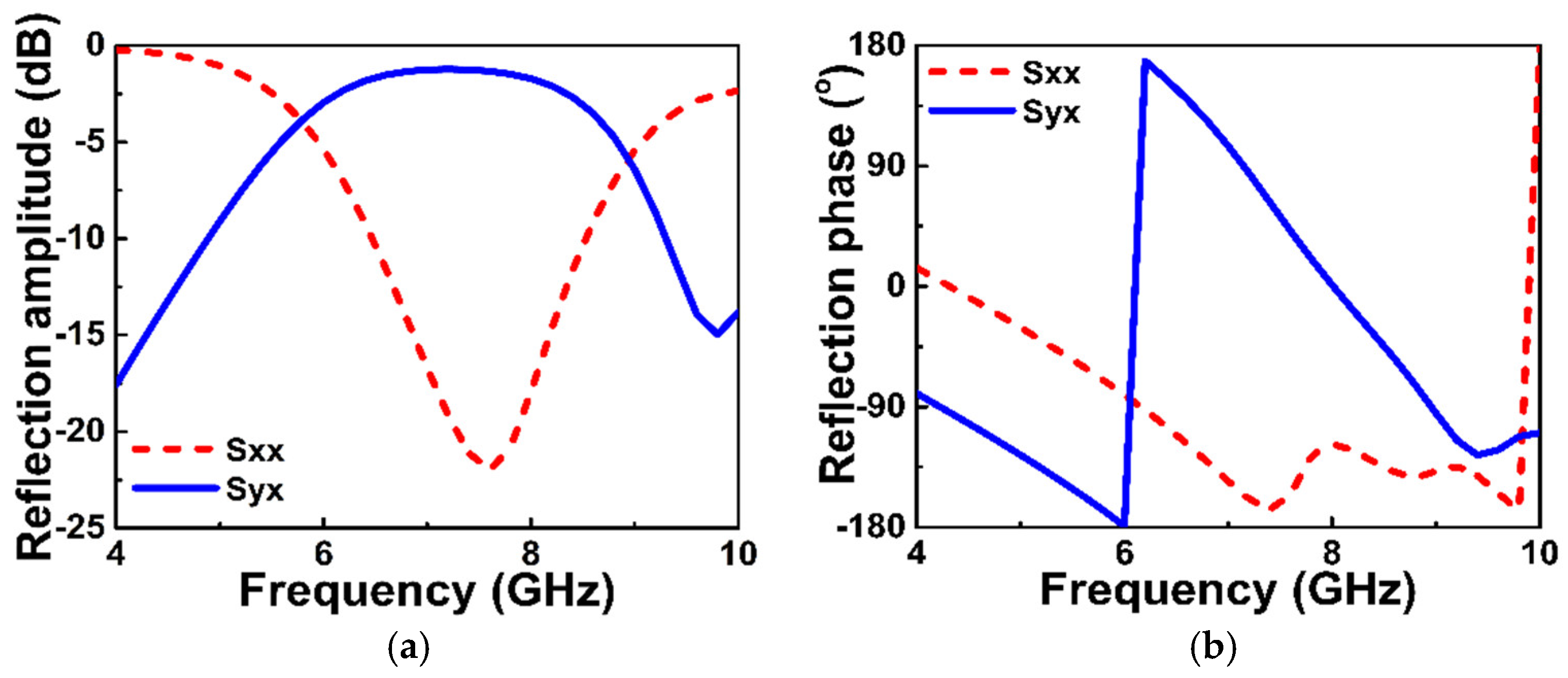
The MTS is well known as an anisotropic homogeneous structure that can reflect an incident wave into a reflected wave with a desired phase difference at a specific frequency. To investigate the polarization conversion of the MTS, the reflection coefficients of a unit-cell were evaluated using a Floquet port setup [22]. Figure 4 illustrates the reflection coefficients of the unit cell under x-polarized incident wave excitation. Sxx and Syx represent the reflection coefficients in the x- and y-polarized directions, respectively. To obtain CP radiation, the phase difference between co- and cross-polarized reflected fields should satisfy ∠Eyx − ∠Exx ≈ ±90°, while maintaining nearly equal magnitudes (|Eyx| ≈ |Exx|). In Figure 4a, the x-polarized component of the reflected wave is significantly suppressed at 6.2~8.4 GHz, while a strong y-polarized component is observed over a wide frequency range. At 7.6 GHz, Syx reaches approximately 0.9 on a linear scale with a 90° phase shift relative to the incident wave, indicating that the reflected y-polarized wave differs from the x-polarized incident wave by 90°. This indicates an ability to generate LP-to-CP conversion around 7.6 GHz of the unit cell.
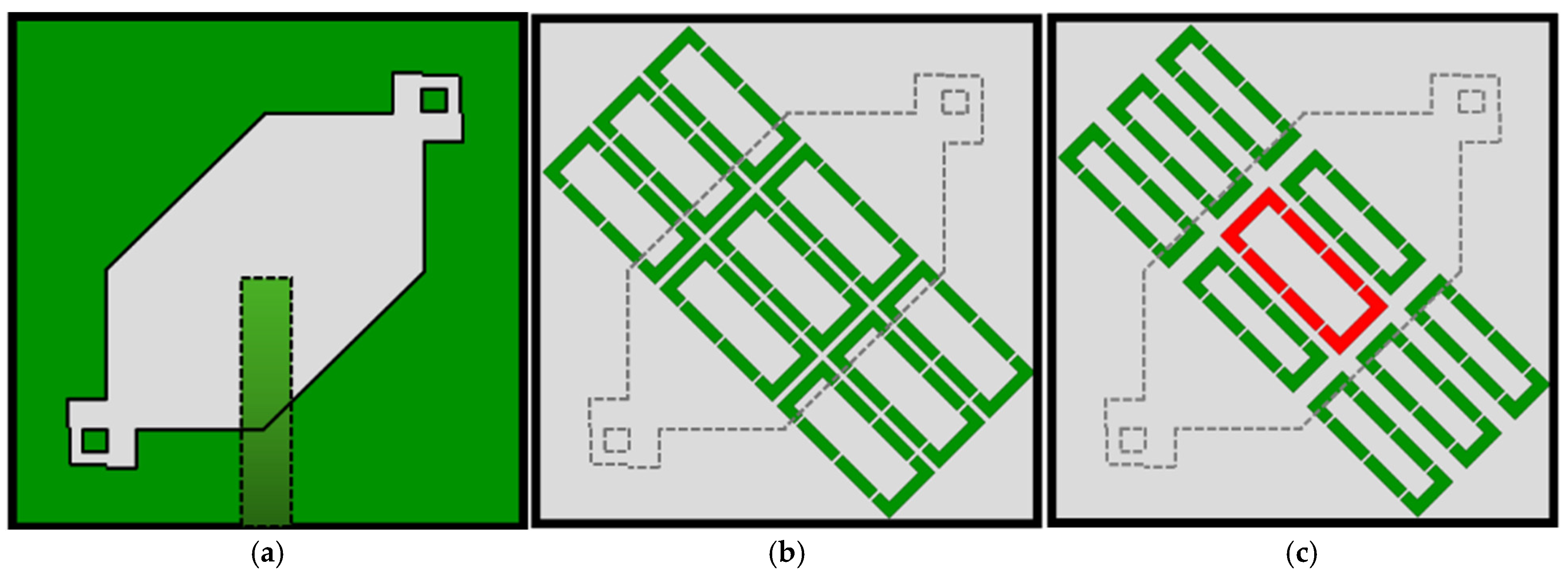
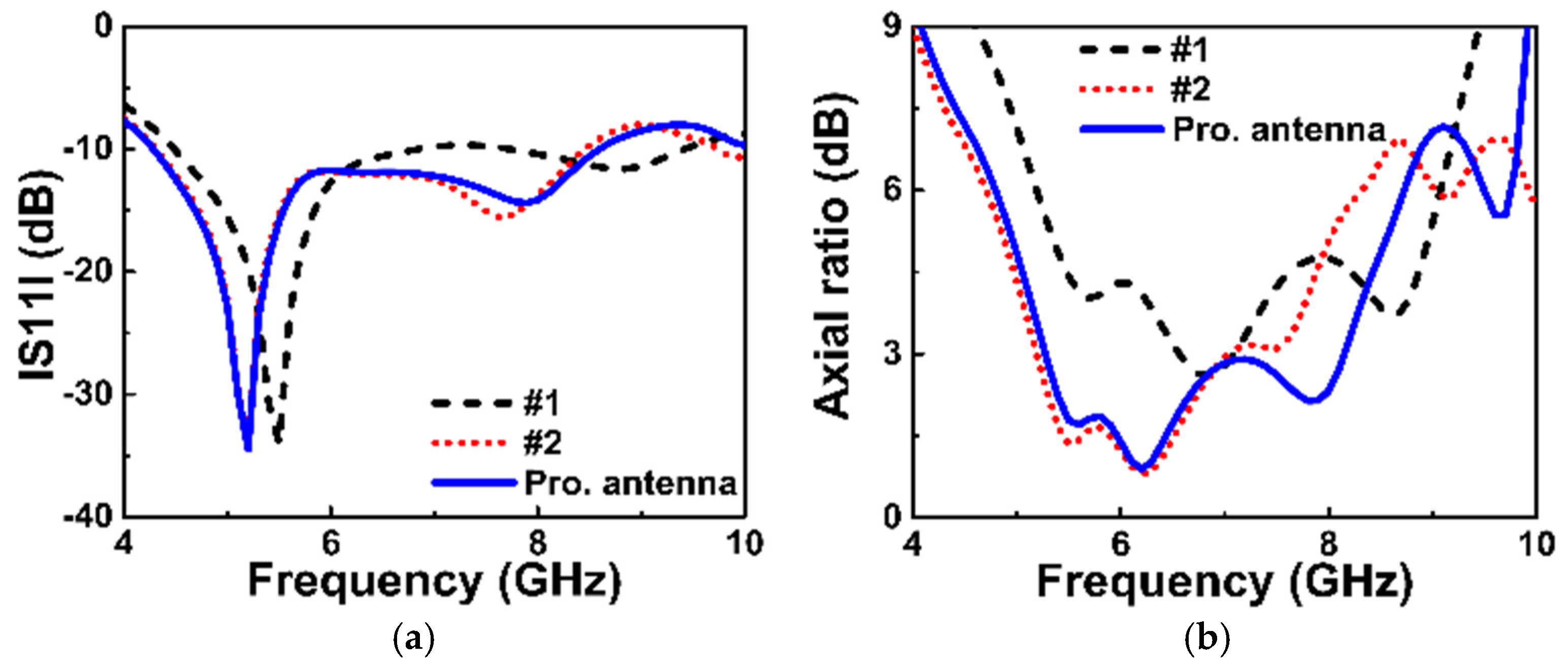
To verify the effect of the MTS, an evolutionary process is illustrated in Figure 5, where each antenna is fed by a 50-Ω microstrip line. The three different antenna structures are slot antenna only (Ant #1), Ant #1 with a 3 × 3 uniform MTS (Ant #2), and the proposed antenna, which is Ant #1 with a 3 × 3 nonuniform MTS. The simulated results, including the S11 and the AR of each antenna, are shown in Figure 6. Ant #1 excites an IBW-resonant mode at 5.65 GHz and three AR modes at 5.8, 6.8, and 8.6 GHz, which were analyzed with the CMA, revealing a relatively narrow-band CP. A 3 × 3 uniform MTS was placed on top of the slot antenna to produce Ant #2. The periodic slits were embedded in the unit cells to increase the effective current path, which miniaturizes the unit cells [23].
As shown in Figure 6a, the MTS enhances the IBW at middle frequency, due to the additional surface wave resonances. Moreover, the uniform MTS lowers the AR over a broader frequency band, resulting in an IBW of 65.83% (4.30–8.52 GHz) and an ARBW of 38.46% (5.25–7.75 GHz). The proposed antenna was produced by making the surrounding MTS cells smaller than the central MTS cell, producing nonuniform characteristics that enhance the AR performance at higher frequencies, as shown in Figure 6b. As a result, miniaturizing the surrounding unit cells shifts the AR mode to higher frequency, thus widening ARBW. Finally, the proposed antenna achieves an IBW of 66.98% (4.28–8.59 GHz) and an ARBW of 42.92% (5.27–8.15 GHz). Thus, the integration of the nonuniform MTS with the square-ring notched radiator significantly enhances the IBW and ARBW.
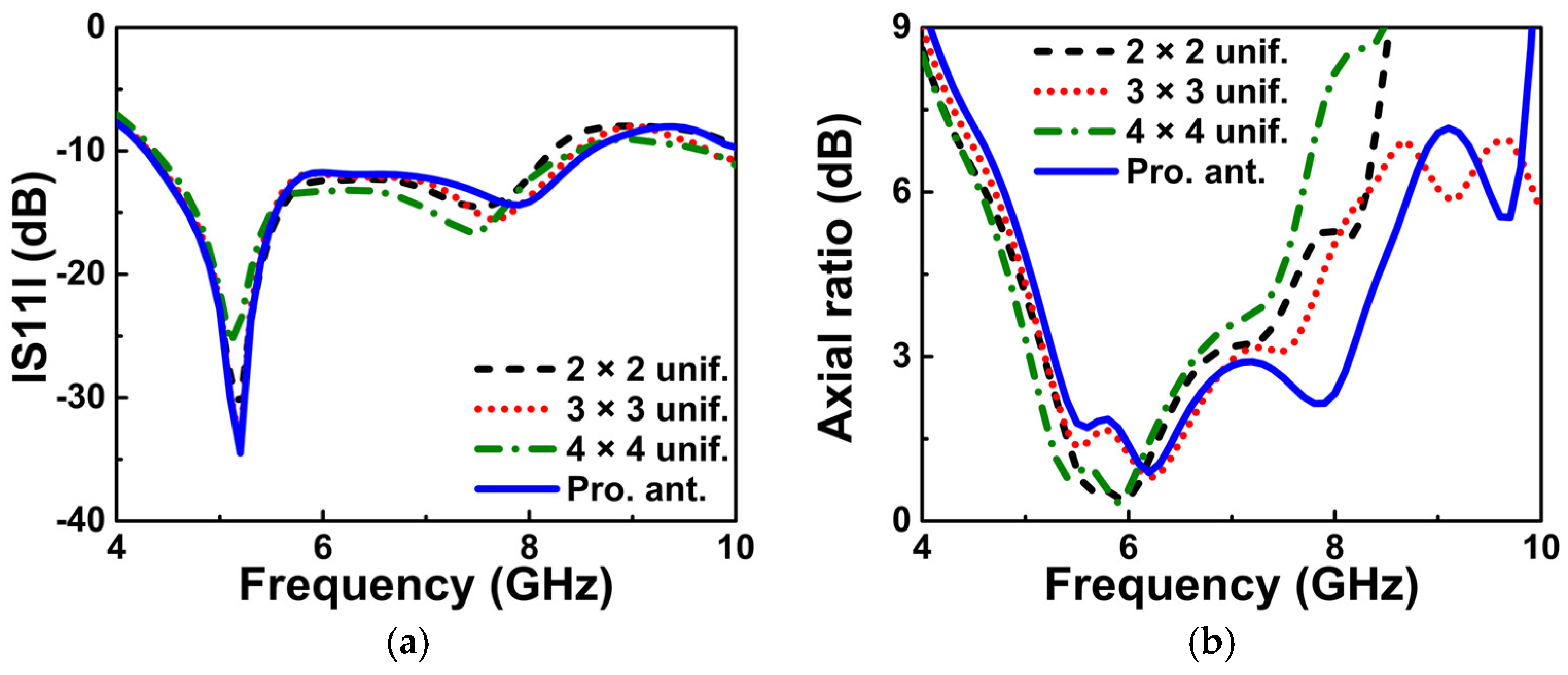
To further investigate the effect of the MTS, S11 and AR of the proposed antenna were simulated with different MTS sizes, including 2 × 2, 3 × 3, and 4 × 4 with uniform characteristic for a fair comparison, as shown in Figure 7. Increasing the number of unit cells negligibly affects IBW. However, the 2 × 2 and 4 × 4 configurations show an ARBW that is narrower than the 3 × 3 uniform MTS, indicating insufficient interaction between the slot radiator and the MTS. In contrast, the 3 × 3 configuration provides the widest ARBW, demonstrating an appropriate balance between the CP modes generated by the square-ring notched slot radiator and the MTS. These results indicate that ARBW enhancement is not determined by the number of unit cells, but rather by an optimal coupling condition between the fundamental radiator and the MTS. Based on this analysis, the 3 × 3 MTS was selected as the optimized design, achieving wide ARBW while maintaining a compact antenna size.

2.3. Deformation Study

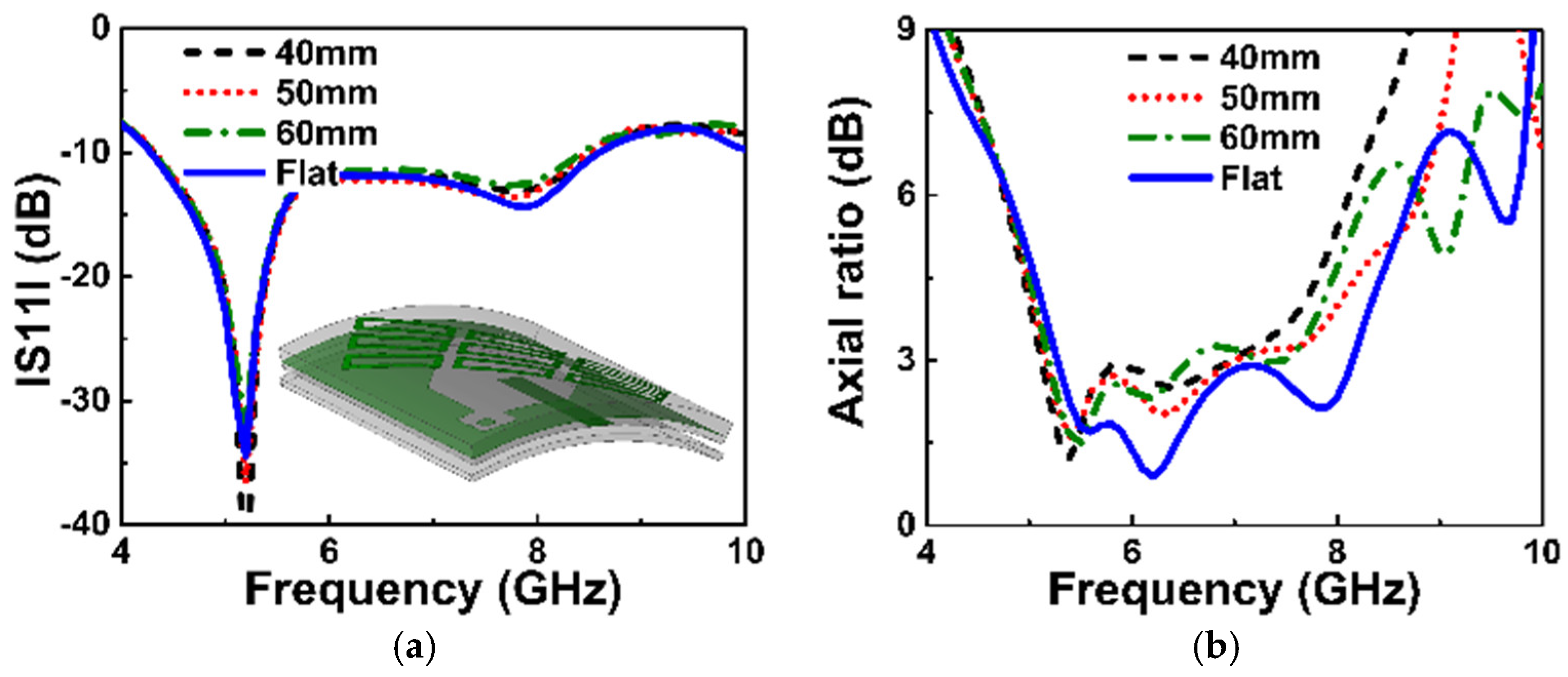
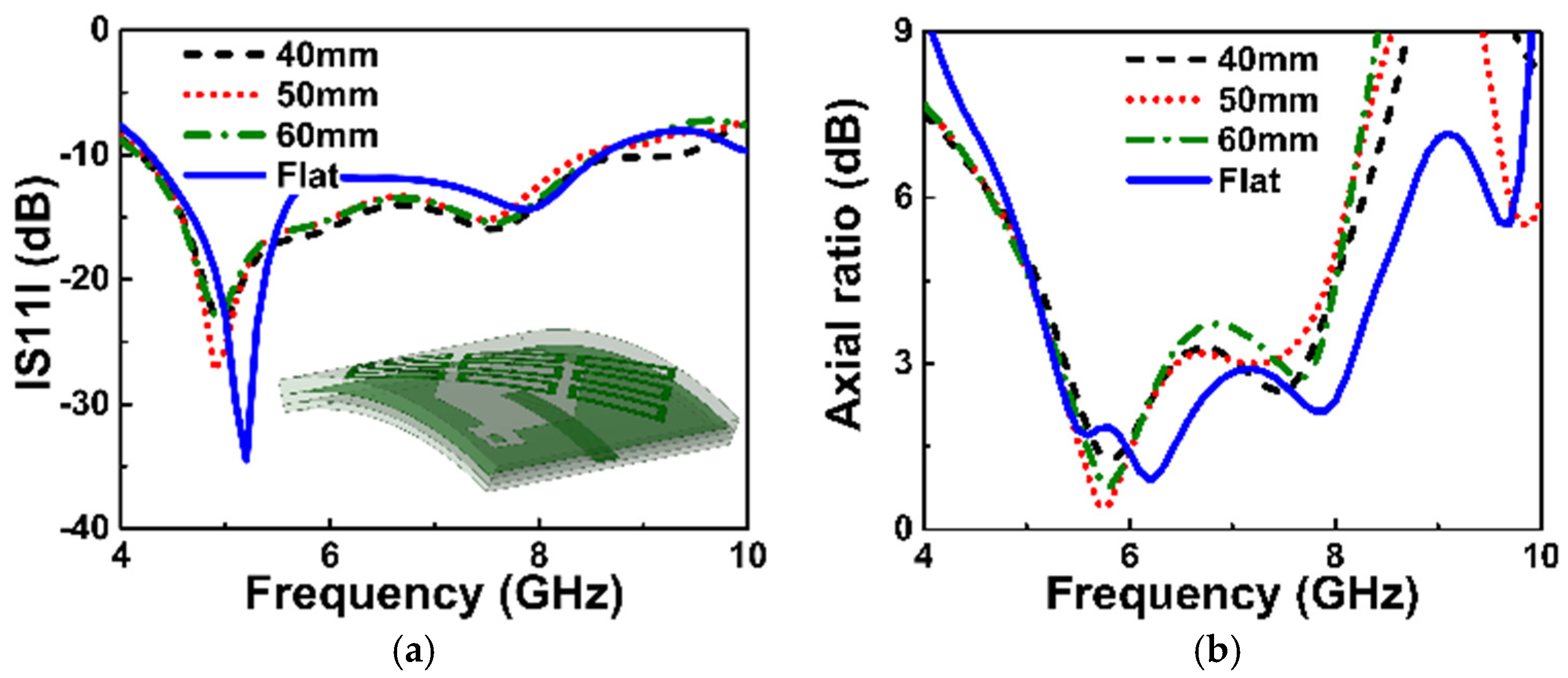
In practical situations, the all-textile antenna may deform under different bending conditions on the human body and due to human activity. Therefore, this section presents the antenna performance under bending conditions with bending radii of 40, 50, and 60 mm to mimic practical use on the human body and human activity. This allows for comparisons of flat and different bending conditions along the x- and y-directions, as shown in Figure 8 and Figure 9, respectively. While bending in the x-direction negligibly affects the IBW performance, bending in the y-direction strongly affects the IBW performance. This is because the antenna is fed along the y-direction, where the surface intensity is more concentrated than along the x-direction. In both cases, ARBW performance degrades noticeably at higher frequencies, primarily due to surface wave resonance generated by the MTS, which has a strong influence on CP radiation. Despite these effects, the proposed antenna maintains satisfactory performance under bending conditions at 5.85 GHz for WSN applications.

2.4. Parametric Study

To investigate the influence of key design parameters on the antenna performance, parametric studies were conducted. During each study, only one parameter was varied, while all other parameters were fixed at their optimized values.
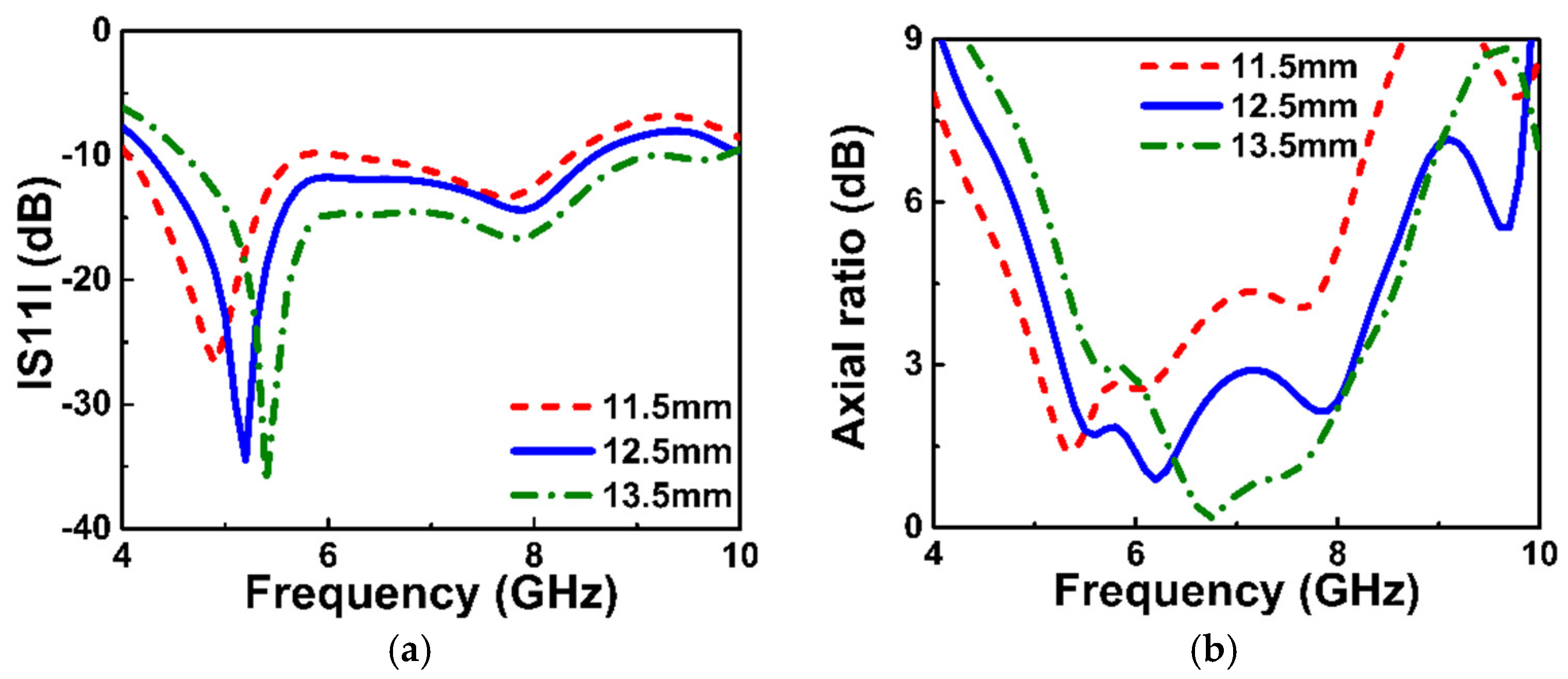
Figure 10 illustrates the antenna performance with respect to variations in the length of the truncated corner of the slot radiator, Ws1. As Ws1 increases, both S11 and AR curves shift to a higher frequency. This behavior is attributed to a reduction in the effective dimension of the square-ring notched slot antenna, which shortens the current path. The optimal antenna performance was obtained at Ws1 of 12.5 mm.
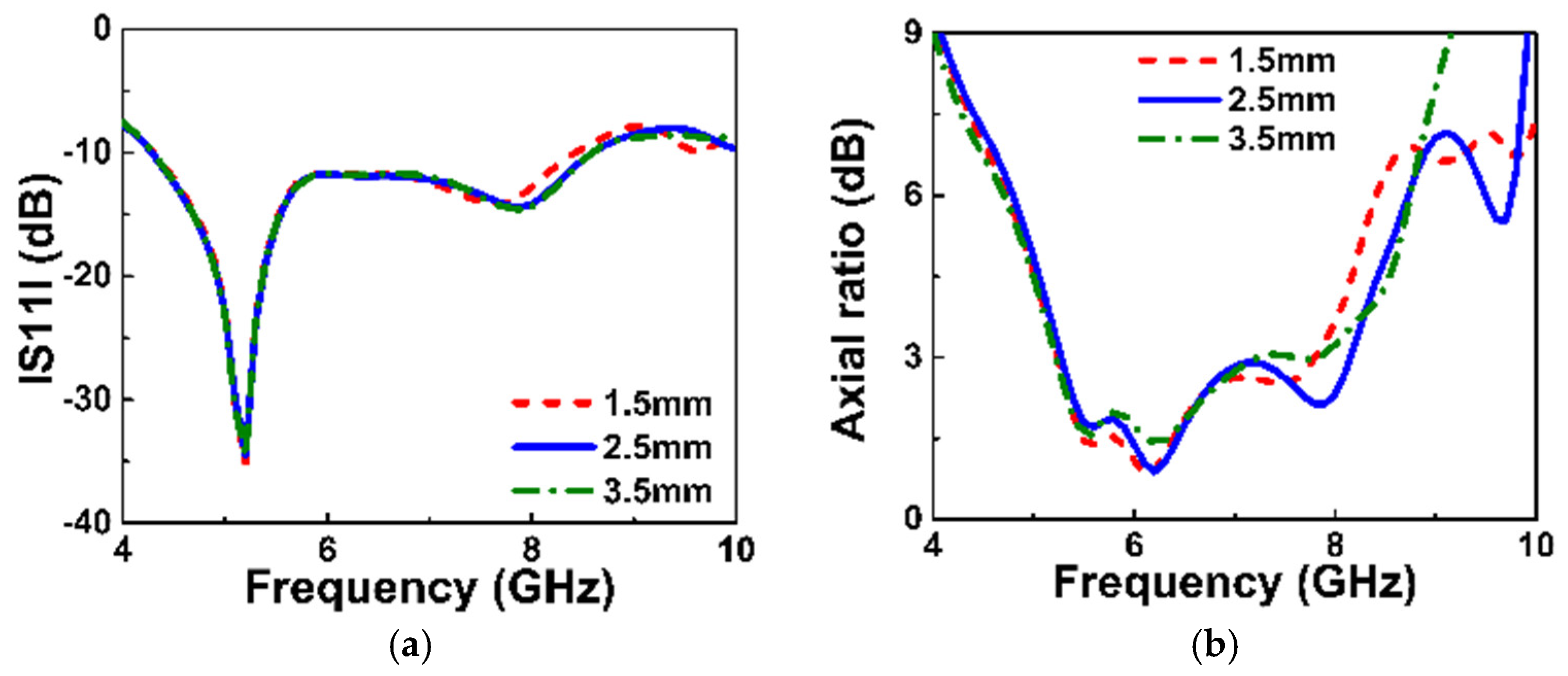
Figure 11 shows the influence of B1, the width of the square-ring notches, on the antenna performance. Increasing B1 enlarges the square-ring notches, which has little impact on impedance matching. However, the third AR mode at high frequencies is strongly affected due to the altered current distribution at the notched corners. Since these regions are primarily related with CP radiation at high frequencies, the AR performance is sensitive to B1. The optimal performance was obtained at B1 of 2.5 mm.
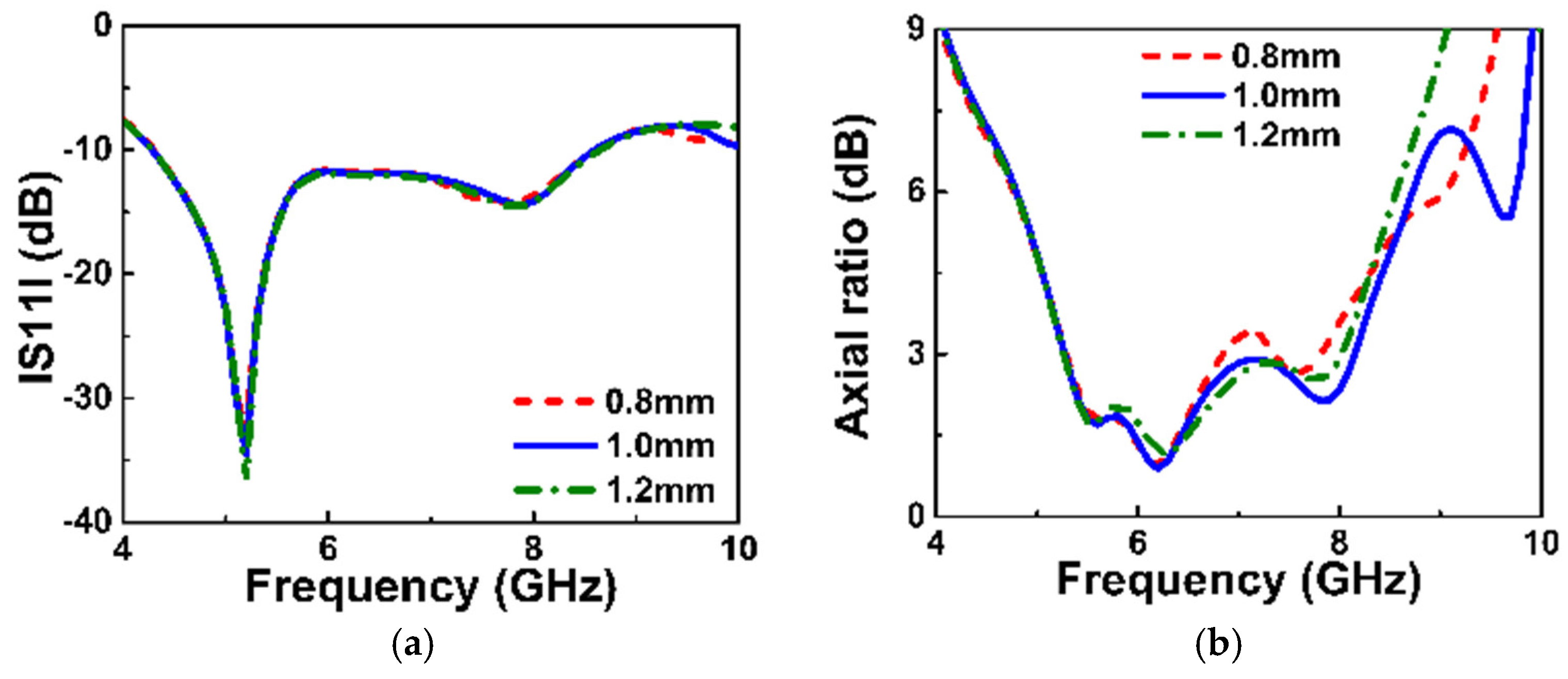
Similarly to B1, changing the thickness of MTS unit cell, ta, has little effect on the S11 characteristic but a minor effect on AR at a high-frequency region, as shown in Figure 12. This is because when the value of ta becomes smaller, it strongly affects the reflection coefficients of the unit cells due to small reflective dimensions. Among the simulated values, the best performance was achieved at ta of 1.0 mm.
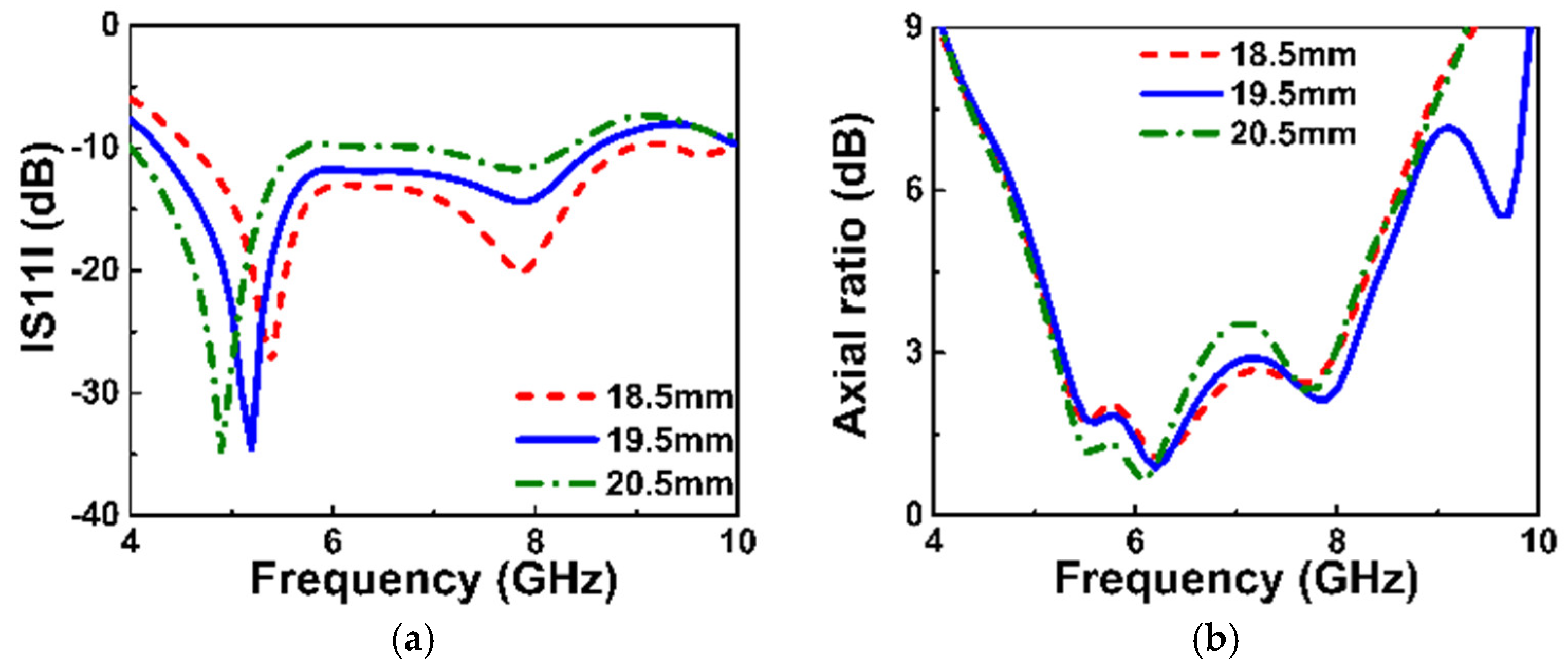
The effect of Lf, the length of the microstrip line, is shown in Figure 13. As Lf increases, the IBW curve shifts to a lower frequency because the electrical length of the microstrip line increases. This results in additional phase delay and impedance transformation, which moves the resonance frequency of the slot radiator. Thus, the variation alters the impedance matching and causes a minor effect on AR. The optimal Lf was achieved at 1.0 mm.

2.5. SAR Evaluation

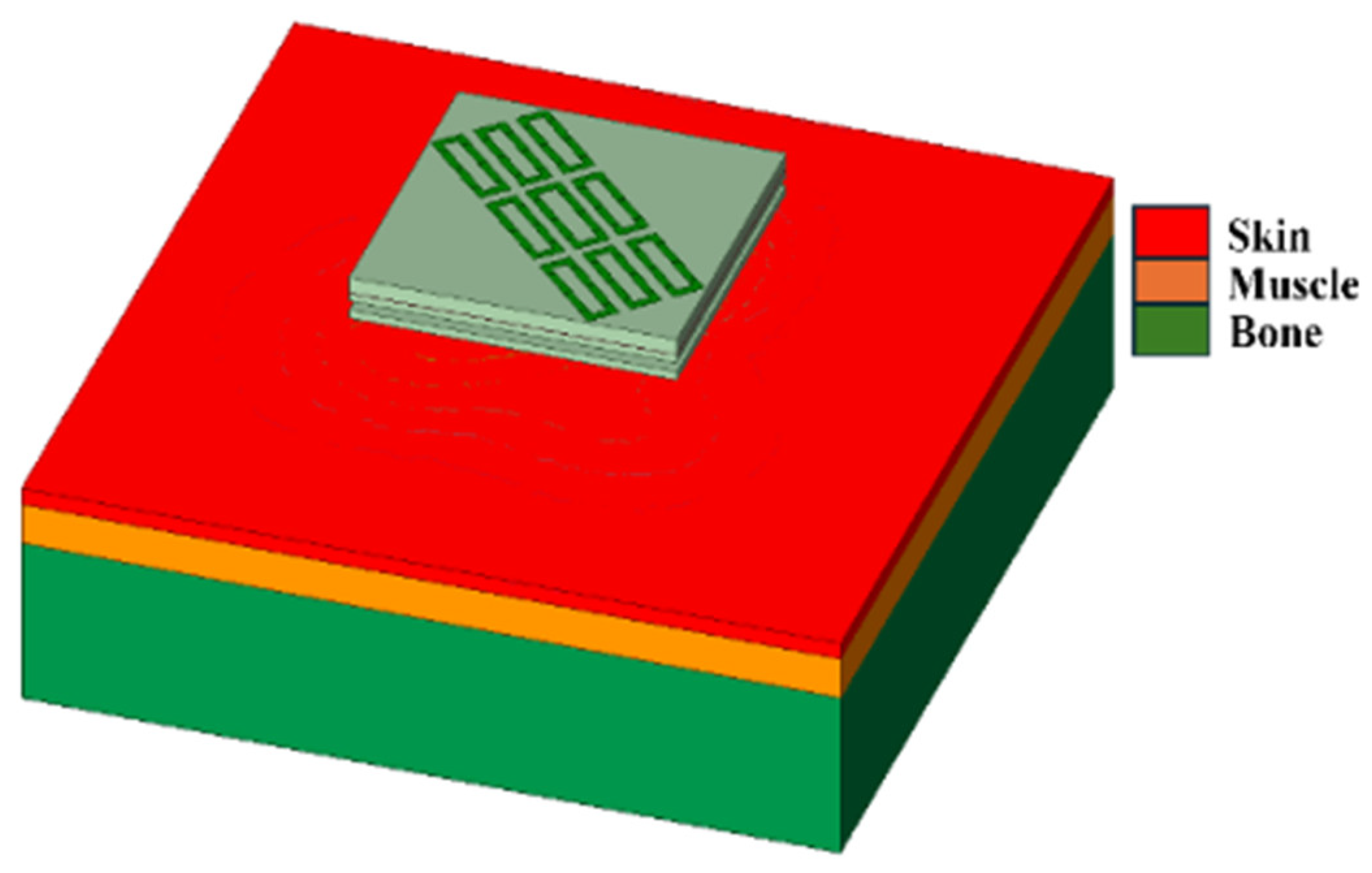
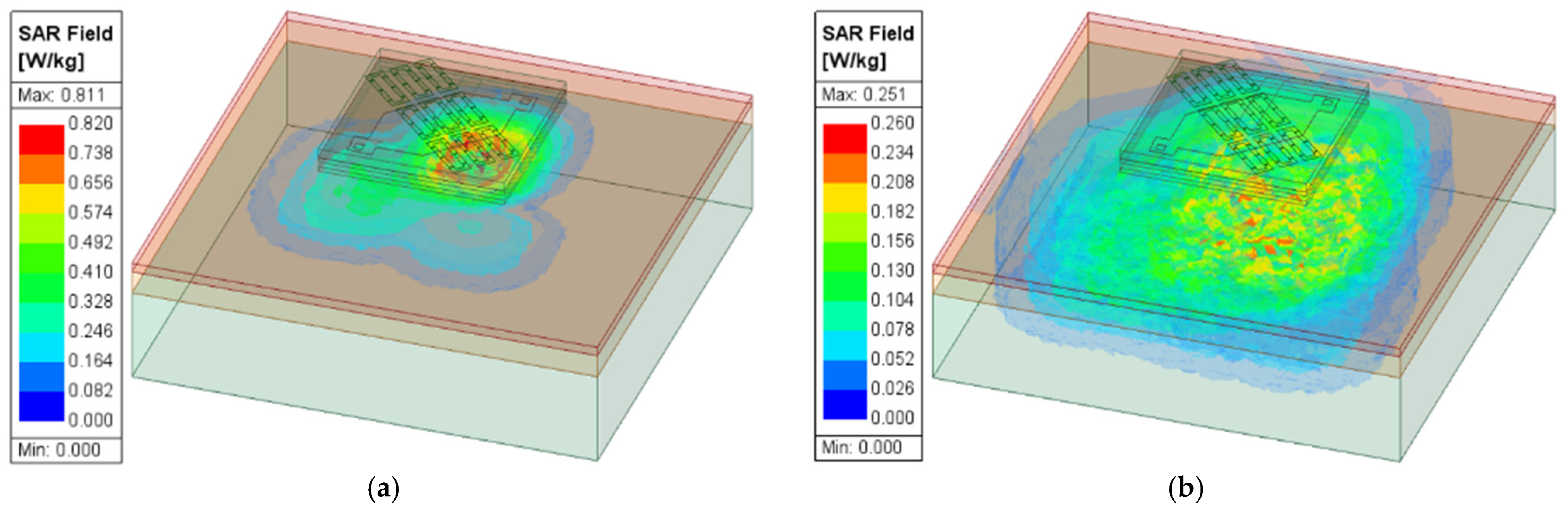
SAR is a critical parameter for WSN applications. To ensure electromagnetic safety regulations, SAR should be less than the US standard of 1.6 W/kg for a 1 g average mass and the European standard of 2 W/kg for a 10 g average mass. An input power of 100 mW was chosen for the SAR evaluation. A three-layer human tissue model with dimensions of 100 × 100 × 27 mm3 was placed 10 mm below the proposed antenna in a simulation, as shown in Figure 14. The model consisted of skin, fat, and muscle layers with thicknesses of 2, 5, and 20 mm, respectively. The dielectric properties, permittivity and conductivity, of each tissue type at 5.85 GHz were referenced from [24]. As shown in Figure 15, the resulting maximum SAR values were 0.81 W/kg and 0.25 W/kg under the US and EU standards, which are below the limits of 1.6 W/kg and 2.0 W/kg, respectively. These results show that the proposed antenna can be used safely in the human body environment.

3. Performance and Discussion

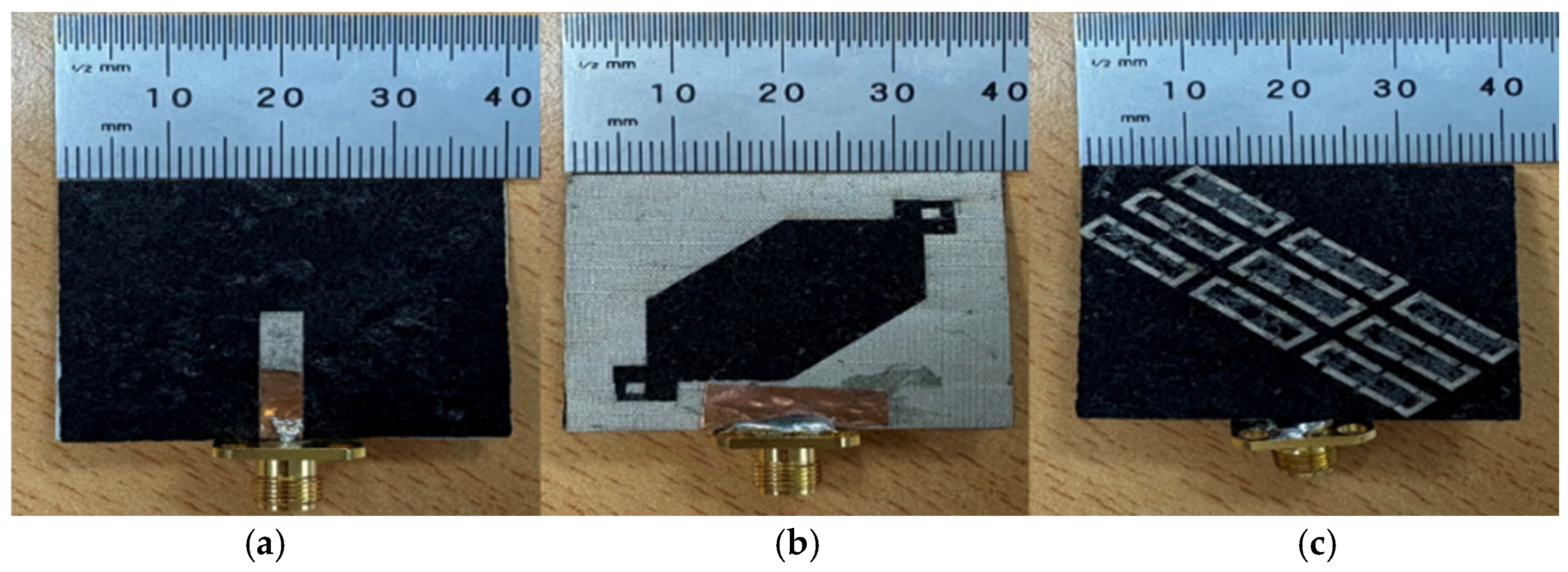
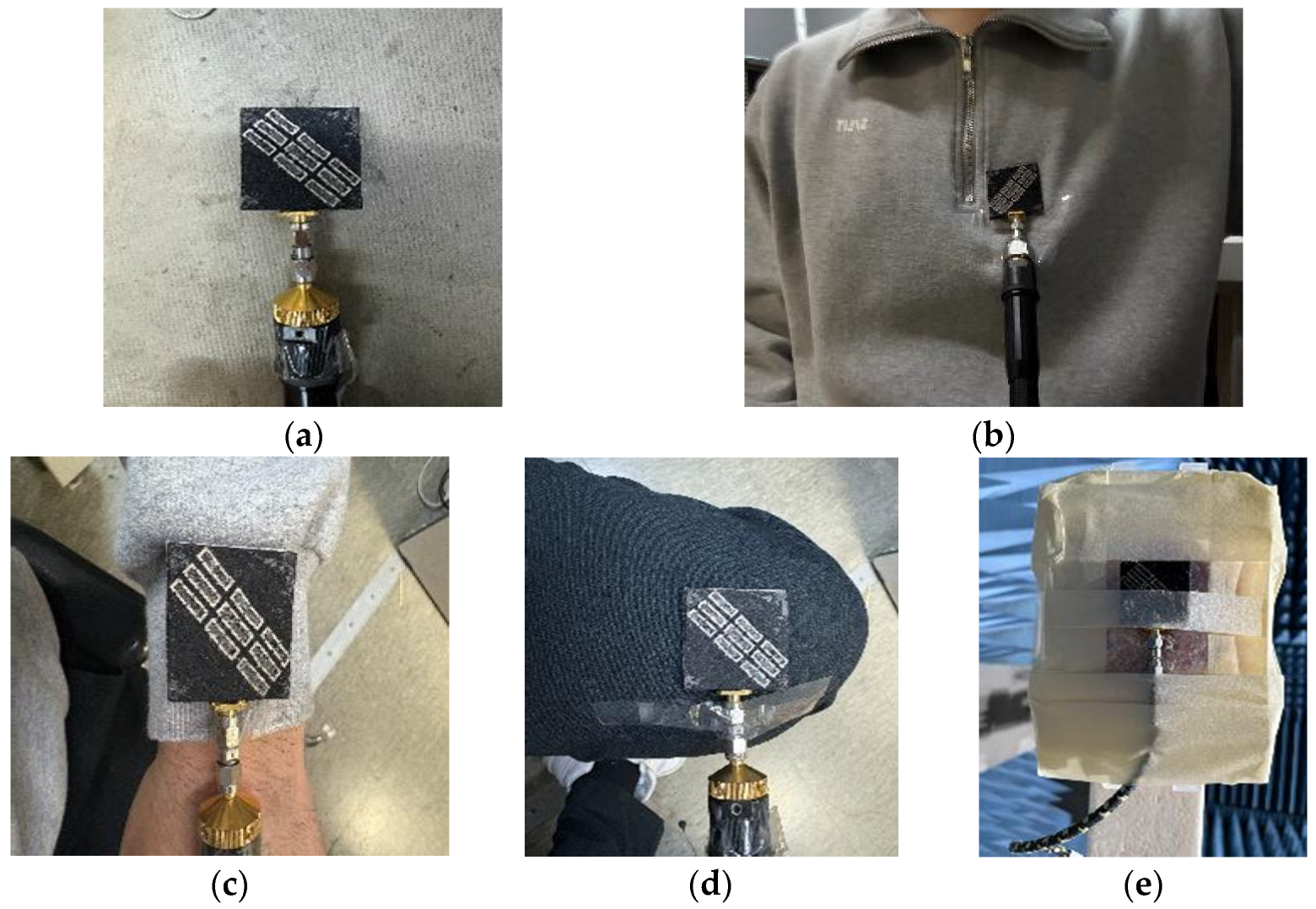
To validate the proposed working principle and design method, a prototype of the antenna was fabricated via laser cutting for accurate fabrication, as shown in Figure 16. Figure 16a–c show the 50 Ω microstrip feed line, square-ring notched slot radiator, and nonuniform MTS, respectively. A copper tape was placed over the material at the soldering joint because the conductive textile is flammable. For measurements, the fabricated antenna prototype was characterized using a VNA to obtain S11. The radiation characteristics, including AR, gain, and radiation were measured in a far-field anechoic chamber where antenna rotation was required, but a human phantom is bulky and cannot be rotated during measurements. Although fresh pork, muscle-dominant tissue, does not fully represent the complexity and multilayer tissue structure of the human body, it allows direct-contact measurements in a rotating environment and is therefore used as a practical alternative. As shown in Figure 17, the fabricated antenna was measured in free space, in human body environments, and in fresh pork in an anechoic chamber.

3.1. Impedance Bandwidth and ARBW Analysis

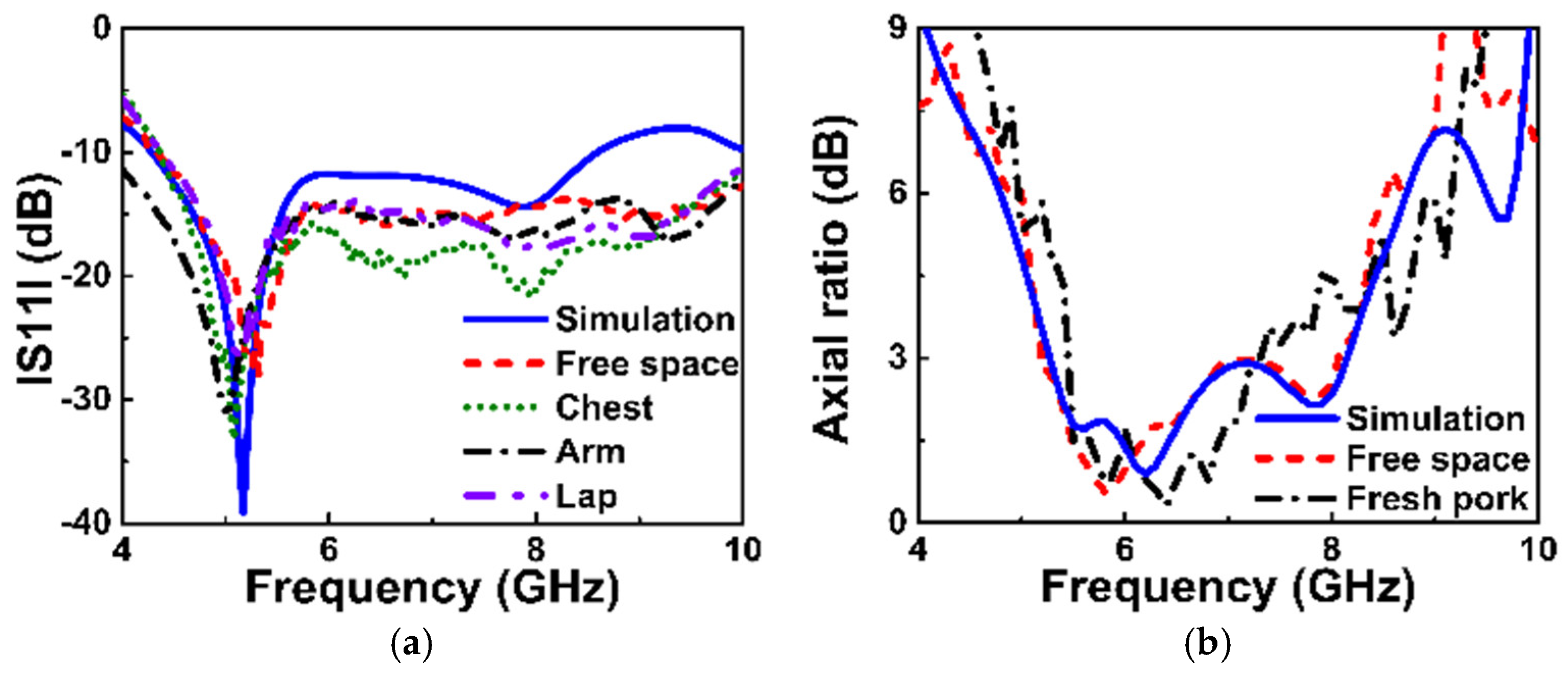
A comparison of the simulated IBW in free space and measured IBW of the fabricated antenna in free space and on the human body, including the chest, arm, and leg, is shown in Figure 18a. The measured IBW in free space was 84.52% (4.31–10.62 GHz). The measured IBWs on the human body and in free space were identical because of the presence of the isolation layer (Sub #1), mitigating the proximity effect of the human body. The measured ARBW in free space was 43.56% (5.19–8.08 GHz), compared with the fresh pork ARBW of 30.05% (5.43–7.35 GHz), as shown in Figure 18b. Due to the proximity effect of lossy tissue, the results are somewhat affected at high frequencies. These results indicate that the proposed antenna can provide CP radiation over most of the operating IBW, which is highly desirable for WSN applications requiring reliable communication links under varying environments. Moreover, the wide overlap between the IBW and ARBW confirms the combined effect of the square-ring notched slot radiator and the nonuniform MTS to achieve wideband CP radiation.

3.2. Antenna Gain and Radiation Efficiency Analysis

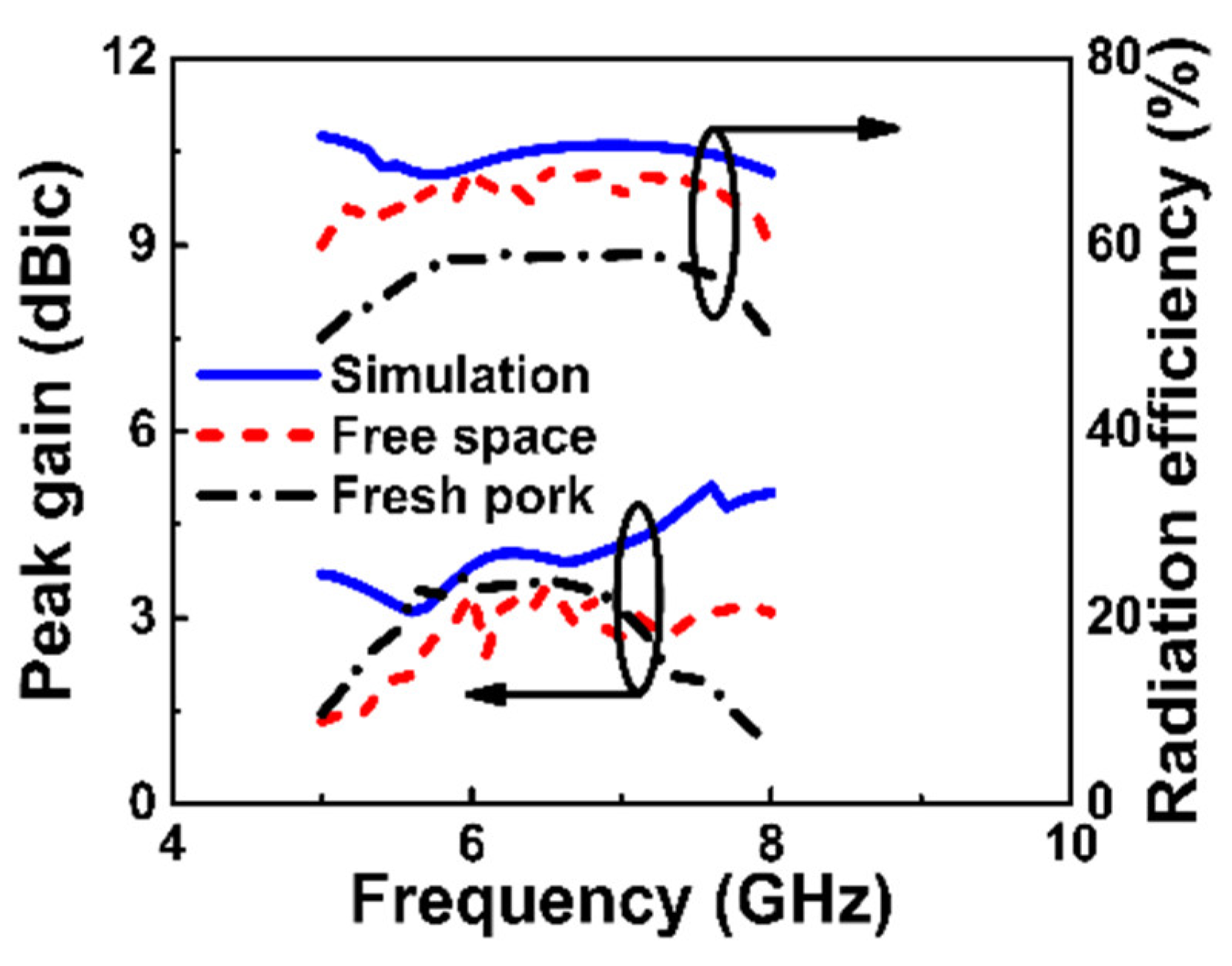
The simulated peak gain and radiation efficiency in free space, along with the measured peak gain and radiation efficiency within the ARBW in free space and on fresh pork are depicted in Figure 19. The maximum peak gain is 4.47 dBic at 6 GHz in free space. On fresh pork, the maximum peak gain increased to 4.75 dBic at 6.2 GHz, which is attributed to the reflective property of the pork tissue. The simulated and measured results in free space exhibit relatively similar gain curves, but the measured gain on fresh pork shows some degradation at higher frequencies. This discrepancy is mainly attributed to the frequency-dependent lossy nature of pork tissue. As frequency increases, the dielectric loss and conductivity of fresh pork significantly increase. Thus, the antenna gain on fresh pork is reduced at higher frequencies, which will occur on the human body. Moreover, the maximum radiation efficiencies on fresh pork of 59% is slightly lower than that in free space (68%) due to the lossy tissue and relatively high loss tangent of the felt substrate. These results indicate that the presence of the lossy tissue enhances forward radiation in the broadside direction while increasing absorption losses, leading to a trade-off between gain and radiation efficiency. Despite these effects, the proposed antenna measured on fresh pork still maintains stable performance at 5.85 GHz.

3.3. Radiation Pattern

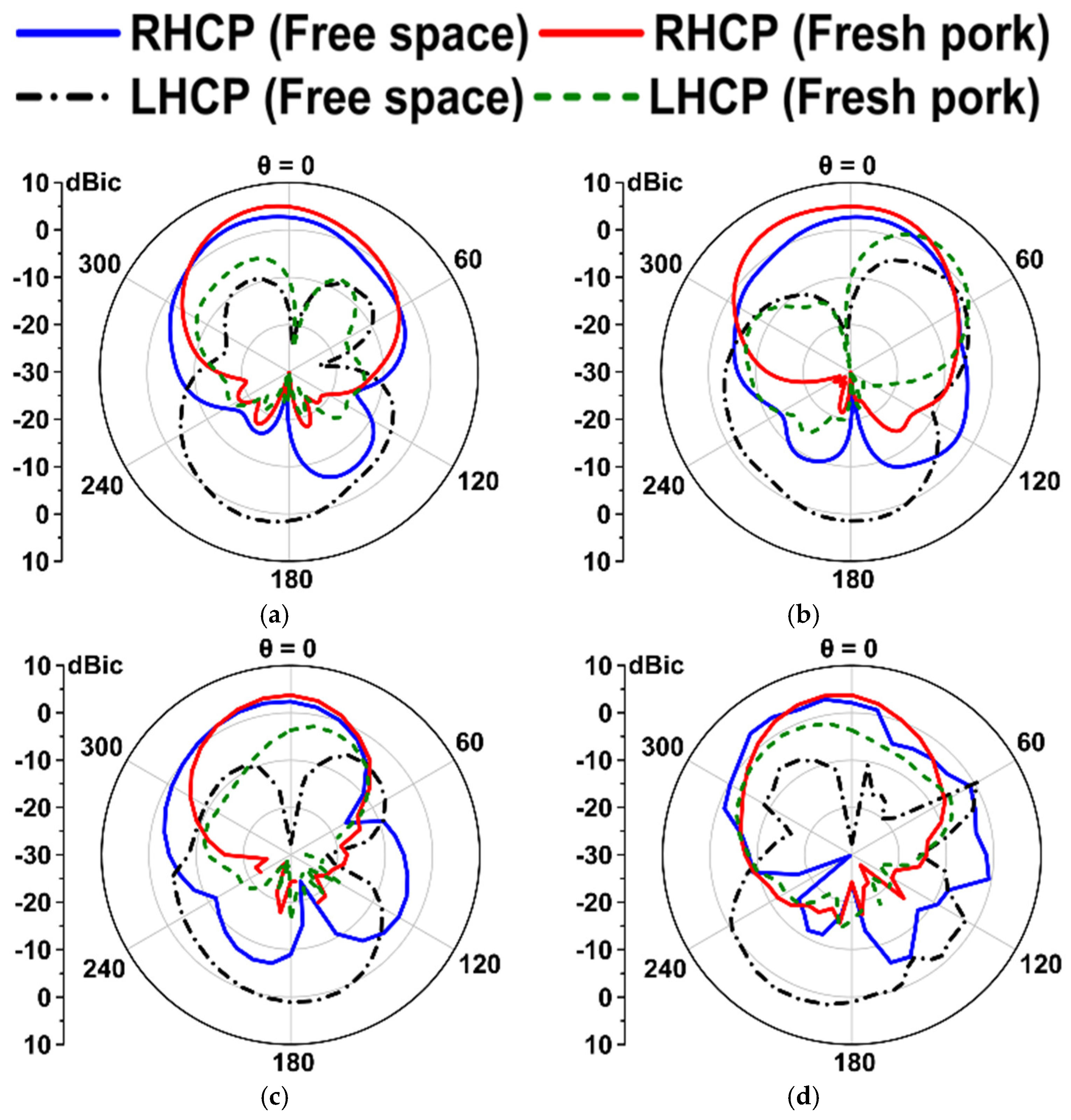
The simulated and measured radiation patterns in free space and on fresh pork environments of the proposed antenna at 5.85 GHz are presented in Figure 20. The radiation patterns are bi-directional in free space but directional on fresh pork, which is considered a reflector. Right-hand circular polarization (RHCP) is the principal polarization in the boresight direction with a cross-polarization discrimination of 29.83 and 10.13 dB in free space and on fresh pork, respectively. The front-to-back ratio at 5.85 GHz in free space is 3.4 dB, but it increases to 30.61 dB on fresh pork due to the reflective property of the tissue. These results confirm that the proposed antenna can maintain stable RHCP radiation and provide enhanced front radiation when mounted on a human body and fresh pork.
A performance comparison with other flexible metamaterial-based wearable antennas is summarized in Table 1. The proposed antenna achieved a broad IBW and ARBW with a compact design enabled by the square-ring notched slot integrated with the nonuniform MTS structure for wearable applications. Compared to the antennas in [8] and [15,16], the gain of the proposed antenna remains moderate. They achieve higher gain using reflective or full ground structures, but this comes at the expense of increased size or reduced bandwidth. In contrast, the proposed design mainly focuses on wideband CP performance in a compact textile configuration, resulting in a moderate gain that is still sufficient for wearable WSN applications.

4. Conclusions

This paper introduced an all-textile wideband CP antenna based on a square-ring notched slot with a nonuniform MTS for WSN applications to achieve wide IBW and ARBW in an all-textile configuration. A square-ring notched slot radiator was designed using CMA. Compared to conventional CP generation techniques, it generates three AR modes using a simple feeding method, offering the potential for a wide ARBW. A nonuniform MTS with periodic slits is placed above the slot antenna for enhancement. The MTS excites adjacent modes and combines with the fundamental modes, resulting in a broad IBW. Moreover, the MTS further enhances the ARBW by redirecting incident waves in an orthogonal direction with a 90° phase difference in high-frequency regions. As a result, the proposed antenna yields a broad CP, which is suitable for wearable application. Moreover, the simulated SAR results satisfy the SAR limits for both US and EU standards. The antenna performance has been validated through measurements conducted in an anechoic chamber, resulting in close agreement with simulated results.

Author Contributions

Conceptualization, S.-H.K. and T.T.L.; validation, S.-H.K. and Y.-D.K.; data curation, S.-H.K. and Y.-D.K.; writing—original draft preparation, S.-H.K. and T.T.L.; writing—review and editing, S.-H.K. and T.-Y.Y.; supervision, T.-Y.Y.; project administration, T.-Y.Y.; funding acquisition, T.-Y.Y. All authors have read and agreed to the published version of the manuscript.

Funding

This research was funded by SEMES, a subsidiary of Samsung Electronics.

Institutional Review Board Statement

Ethical review and approval were waived for this study due to its classification as human subject research exempt from institutional review, in accordance with Article 13, Paragraph 1(b) of the Enforcement Decree of the Bioethics and Safety Act of the Republic of Korea, as the study involved only non-invasive simple contact measurements without physical intervention or the collection of personally identifiable information.

Informed Consent Statement

Informed consent for participation was obtained from all subjects involved in the study.

Data Availability Statement

The original contributions presented in this study are included in the article. Further inquiries can be directed to the corresponding author.

Conflicts of Interest

This research was funded by SEMES, a subsidiary of Samsung Electronics. The funder had no role in the design of the study; in the collection, analyses, or interpretation of data; in the writing of the manuscript; or in the decision to publish the results.

References

  1. Klemm, M.; Troester, G. Textile UWB antennas for wireless body area networks. IEEE Trans. Antennas Propag. 2006, 54, 3192–3197. [Google Scholar] [CrossRef]
  2. Gao, G.-P.; Yang, C.; Hu, B.; Zhang, R.-F.; Wang, S.-F. A wearable PIFA with an all-textile metasurface for 5 GHz WBAN applications. IEEE Antennas Wirel. Propag. Lett. 2019, 18, 288–292. [Google Scholar] [CrossRef]
  3. Yan, S.; Vandenbosch, G.A.E. Design of wideband button antenna based on characteristic mode theory. IEEE Trans. Biomed. Circuits Syst. 2018, 12, 1381–1391. [Google Scholar] [CrossRef] [PubMed]
  4. Yin, X.; Chen, S.J.; Fumeaux, C. Wearable dual-band dual-polarization button antenna for WBAN applications. IEEE Antennas Wirel. Propag. Lett. 2020, 19, 2240–2244. [Google Scholar] [CrossRef]
  5. Zhang, L.; Li, J.; Wang, Y.; Yan, S.; Xu, K.-D.; Luyen, H. A compact dual-band wearable button antenna design for WBAN applications. IEEE Trans. Antennas Propag. 2023, 71, 8284–8289. [Google Scholar] [CrossRef]
  6. Chen, Y.; Liu, X.; Fan, Y.; Yang, H. Wearable wideband circularly polarized array antenna for off-body applications. IEEE Antennas Wirel. Propag. Lett. 2022, 21, 1051–1055. [Google Scholar] [CrossRef]
  7. Yang, H.; Liu, X.; Fan, Y. Design of broadband circularly polarized all-textile antenna and its conformal array for wearable devices. IEEE Trans. Antennas Propag. 2022, 70, 209–220. [Google Scholar] [CrossRef]
  8. Shariff, B.G.P.; Ali, T.; Mane, P.R.; Alsath, M.G.N.; Kumar, P.; Pathan, S.; Kishk, A.A.; Khan, T. Design and measurement of a compact millimeter wave highly flexible MIMO antenna loaded with metamaterial reflective surface for wearable applications. IEEE Access 2024, 12, 30066–30084. [Google Scholar] [CrossRef]
  9. Iqbal, A.; Smida, A.; Alazemi, A.J.; Waly, M.I.; Mallat, N.K.; Kim, S. Wideband circularly polarized MIMO antenna for high data wearable biotelemetric devices. IEEE Access 2020, 8, 17935–17944. [Google Scholar] [CrossRef]
  10. Ullah, U.; Mabrouk, I.B.; Koziel, S. A compact circularly polarized antenna with directional pattern for wearable off-body communications. IEEE Antennas Wirel. Propag. Lett. 2019, 18, 2523–2527. [Google Scholar] [CrossRef]
  11. Ashyap, A.Y.I.; Abidin, Z.Z.; Dahlan, S.H.; Majid, H.A.; Kamarudin, M.R.; Alomainy, A.; Abd-Alhameed, R.A.; Kosha, J.S.; Noras, J.M. Highly efficient wearable CPW antenna enabled by EBG-FSS structure for medical body area network applications. IEEE Access 2018, 6, 77529–77541. [Google Scholar] [CrossRef]
  12. Qin, Y.; Jiang, D.; Yang, Y.; Wang, C.; Fu, Y.; Ding, F. A high-gain low-SAR wearable antenna based on AMC in wireless body area network. IEEE Antennas Wirel. Propag. Lett. 2025, 24, 1362–1366. [Google Scholar] [CrossRef]
  13. Alemaryeen, A.; Noghanian, S. On-body low-profile textile antenna with artificial magnetic conductor. IEEE Trans. Antennas Propag. 2019, 67, 3649–3656. [Google Scholar] [CrossRef]
  14. El Atrash, M.; Abdalla, M.A.; Elhennawy, H.M. A wearable dual-band low-profile high-gain low SAR antenna AMC-backed for WBAN applications. IEEE Trans. Antennas Propag. 2019, 67, 6378–6388. [Google Scholar] [CrossRef]
  15. Kim, Y.-D.; Le, T.T.; Yun, T.-Y. An enhanced circularly polarized textile antenna using a metasurface and slot-patterned ground for off-body communications. Micromachines 2025, 16, 799. [Google Scholar] [CrossRef]
  16. Wang, Z.; Luo, H.; Dong, J.; Wang, M.; Tong, J.; Xiao, C.; Zheng, J.; Wu, R. Wearable broadband circularly polarized antenna with characteristic mode analysis for wireless body area network applications. IEEE Antennas Wirel. Propag. Lett. 2025, 24, 1312–1316. [Google Scholar] [CrossRef]
  17. Le, T.T.; Kim, Y.-D.; Yun, T.-Y. All-textile enhanced bandwidth polarization-conversion antenna using a nonuniform metasurface. IEEE Antennas Wirel. Propag. Lett. 2023, 22, 2432–2436. [Google Scholar] [CrossRef]
  18. Lin, F.H.; Chen, Z.N. Low-profile wideband metasurface antennas using characteristic mode analysis. IEEE Trans. Antennas Propag. 2017, 65, 1706–1713. [Google Scholar] [CrossRef]
  19. Wang, J.; Zhang, X.; Ding, J.; Zhang, H.; Chen, W.; Chen, C. Characteristic mode inspired broadband circularly polarized folded transmit array antenna. IEEE Trans. Antennas Propag. 2023, 71, 7632–7637. [Google Scholar] [CrossRef]
  20. Wong, K. Compact and Broadband Microstrip Antennas, 1st ed.; Wiley: Hoboken, NJ, USA, 2002; pp. 1–300. [Google Scholar]
  21. Le, T.T.; Kim, Y.-D.; Yun, T.-Y. Bandwidth-enhanced circularly polarized all-textile wearable antenna using an LP-to-CP metasurface. IEEE Access 2024, 12, 173749–173757. [Google Scholar] [CrossRef]
  22. Remski, R. Analysis of PBG surface using Ansoft HFSS. Microw. J. 2000, 43, 190–198. [Google Scholar]
  23. Ghosh, B.; Haque, S.M.; Mitra, D. Miniaturization of slot antennas using slit and strip loading. IEEE Trans. Antennas Propag. 2011, 59, 3922–3927. [Google Scholar] [CrossRef]
  24. Italian National Research Council, Institute of Applied Physics. Calculation of the Dielectric Properties of Body Tissues in the Frequency Range 10 Hz–100 GHz. Available online: http://niremf.ifac.cnr.it/docs/DIELECTRIC/Report.html (accessed on 7 November 2025).
Figure 1. Structural configuration of the proposed antenna: (a) perspective view, (b) top view of Sub #2, and (c) top view of Sub #3.
Applsci 16 00634 g001
Figure 2. CMA of the slot radiator: (a) modal significance and (b) characteristic angle.
Applsci 16 00634 g002
Figure 3. Current distributions of the slot radiator without and with square rings after excitation at 6.8 GHz: (a) t = 0, (b) t = T/4, (c) t = 0, and (d) t = T/4. The arrow indicates the surface current vector. The red arrow indicates the vector summation.
Applsci 16 00634 g003
Figure 4. Reflection coefficients of the unit cell with an x-polarized incident wave: (a) amplitude and (b) phase.
Applsci 16 00634 g004
Figure 5. Schematics of different antenna structures: (a) Ant #1, (b) Ant #2, and (c) the proposed antenna. The red color is just to show a larger rectangular ring.
Applsci 16 00634 g005
Figure 6. Simulated results of different antenna structures: (a) S11 and (b) AR.
Applsci 16 00634 g006
Figure 7. Comparison of the proposed antenna with different unit cell numbers: (a) S11 and (b) AR.
Applsci 16 00634 g007
Figure 8. Bending effect simulation of the proposed antenna in the x-direction: (a) S11 and (b) AR.
Applsci 16 00634 g008
Figure 9. Bending effect simulation of the proposed antenna in the y-direction: (a) S11 and (b) AR.
Applsci 16 00634 g009
Figure 10. Simulated results with variations in Ws1: (a) S11 and (b) AR.
Applsci 16 00634 g010
Figure 11. Simulated results with variations in B1: (a) S11 and (b) AR.
Applsci 16 00634 g011
Figure 12. Simulated results with variations in ta: (a) S11 and (b) AR.
Applsci 16 00634 g012
Figure 13. Simulated results with variations in Lf: (a) S11 and (b) AR.
Applsci 16 00634 g013
Figure 14. Perspective view of four-layered tissue model.
Applsci 16 00634 g014
Figure 15. Simulated SARs at 5.8 GHz for (a) the US standard and (b) the EU standard.
Applsci 16 00634 g015
Figure 16. Fabricated proposed antenna: (a) microstrip feed line, (b) slot radiator, and (c) proposed antenna.
Applsci 16 00634 g016
Figure 17. Measurement of the fabricated antenna: (a) in free space, (b) on chest, (c) on arm, (d) on lap, and (e) on fresh pork in an anechoic chamber.
Applsci 16 00634 g017
Figure 18. Measured results of the proposed antenna in free space, on the human body, and on fresh pork: (a) S11 and (b) AR.
Applsci 16 00634 g018
Figure 19. Measured peak gain and radiation efficiency of the proposed antenna in free space and on fresh pork.
Applsci 16 00634 g019
Figure 20. Simulated and measured radiation patterns in free space and on fresh pork at 5.85 GHz: (a) x-z plane, (b) y-z plane, (c) x-z plane, and (d) y-z plane.
Applsci 16 00634 g020
Table 1. Comparison with other flexible wearable antennas.
Ref.Antenna Size
03)
IBW
(%)
ARBW
(%)
SAR
(W/kg)
Gain
(dBic)
[7]0.81 × 0.81 × 0.0645.621.10.092.6
[8]2.25 × 2.25 × 0.3526.8LP0.868.9
[15]0.56 × 0.56 × 0.0936.3180.446.39
[16]0.91 × 0.86 × 0.1160.230.90.38 *7.6
[17]0.90 × 0.90 × 0.0758.041.00.044.37
This work0.57 × 0.57 × 0.0684.543.50.814.47
λ0 is the wavelength at the lowest over the IBW. SAR is normalized with an input power of 100 mW for an average mass of 1 g. * This SAR is normalized for an average mass of 10 g.
Disclaimer/Publisher’s Note: The statements, opinions and data contained in all publications are solely those of the individual author(s) and contributor(s) and not of MDPI and/or the editor(s). MDPI and/or the editor(s) disclaim responsibility for any injury to people or property resulting from any ideas, methods, instructions or products referred to in the content.