1. Introduction
Cyperus esculentus L. is a perennial herbaceous plant belonging to the Cyperaceae family. Native to Africa and the Mediterranean coastal regions, it is listed as one of the key specialty oil crops recommended in the “14th Five-Year Plan for National Crop Farming Development” [
1]. As the only known economic crop whose tubers are rich in high oil content,
C. esculentus contains a balanced and abundant nutritional profile, including unsaturated fatty acids, high-quality protein, starch, and dietary fiber. It exhibits various physiological functions, such as antioxidant, antibacterial, and blood glucose-lowering effects, making it a high-quality, high-yield, and multi-purpose crop for oil, food, feed, and medicinal uses. Its starch is slowly digested and absorbed in the human body, classifying it as a natural slow-digestible starch.
C. esculentus is also rich in minerals such as calcium, phosphorus, and iron, along with lecithin, various amino acids, vitamin E, and considerable dietary fiber. These components contribute to enhancing memory, delaying aging, promoting intestinal peristalsis, increasing satiety, reducing blood cholesterol levels, and protecting cardiovascular health [
2,
3,
4].
C. esculentus thrives in warm, humid, and sunny climates, with strong tolerance to temperature fluctuations, salinity, drought, and poor soil conditions. It is well-suited for cultivation in loose or sandy soils. Currently, it is widely cultivated in northwestern, northern, and northeastern regions of China. As of 2024, the national cultivation area of
C. esculentus has reached approximately 20 khm
2, with a yield ranging from 10,500 to 12,000 kg/hm
2 and a net profit of about 31,500 CNY/hm
2 [
5,
6].
Precision seeding is used for hill-drop or single-grain precision sowing of crops. Seeds are placed into the soil at specified row spacing, hill spacing, and seed count per hill according to agronomic requirements. It is a mainstream sowing method both domestically and internationally. Based on the working principles of agricultural precision seeding technology, seed metering devices can be classified into two major categories: mechanical seed metering devices and pneumatic seed metering devices [
7,
8]. Mechanical seed metering devices can be further divided into finger-pick type, spoon-wheel type, duck-bill drum type, and cell wheel type, among others, based on their structural designs. Currently, commonly used pneumatic seed metering devices in China include suction type, air-blow type, and air-pressure type. In practice, pneumatic devices offer stronger adaptability, enable high-speed precision seeding, and cause minimal seed damage, making them more popular in agricultural sowing applications [
9,
10].
In recent years, Chinese researchers have made significant breakthroughs in the development of air-suction seed metering devices, proposing multiple innovative solutions tailored to the needs of different crops. In the field of precision maize sowing, the team led by Song Shidong [
11] developed an air-suction precision seeding system with autonomous seed-cleaning capabilities. By optimizing the structure of the seed metering disc holes and the self-cleaning mechanism, they significantly improved sowing accuracy and effectively addressed clogging issues. The team led by Song Qingbin [
12] focused on resolving the misalignment of pathways in maize plot sowing by developing a blocking-type air-suction seed metering device. Field tests demonstrated a 100% success rate in blocking, providing technical support for standardized breeding experiments. For other crops, the team led by Zhao Xiaoshun [
13] designed a dual-seed-hole precision sowing device for peanuts suitable for secondary seeding, effectively addressing issues of seed skipping and uneven distribution under high seeding loads. Through analysis of seed motion and ANSYS (2025 version) simulations, the team led by Feng Dinghao [
14] optimized a conical hole-type sowing plate to enhance the seed-filling performance for carrots. The team led by Gao Xiaojun [
15] developed a high-speed seed metering device based on the synergistic effect of centrifugal force and airflow, supplemented with an external seed replenishment system, achieving stable and precise seeding under high-speed operation.
In the field of precision seeding technology for
C. esculentus, domestic scholars have conducted multiple innovative studies. Chen Yong’s team [
16] proposed a design for a double-hole parallel air-suction precision hill-drop planter for
C. esculentus. This study conducted parametric design of key functional components of the hill-drop device and established a seed dynamics model to systematically analyze the mechanical characteristics during the seed-filling and seed-carrying processes. Furthermore, using computational fluid dynamics methods and the Fluent software (2025 version), numerical simulations of flow fields under different hole distribution combinations were performed. By analyzing the distribution patterns of pressure and velocity fields, the optimal combination of hole forms was determined. Jingtao Jiang’s team [
17] started from the material properties of
C. esculentus to compare and improve four traditional seed metering devices. Through systematic material property testing and seeding performance experiments, the structural parameters of the seed metering disc were optimized, effectively enhancing seeding accuracy and operational efficiency. This study not only provided a theoretical basis for selecting air-suction disc-type seed metering devices for
C. esculentus but also offered technical support for improving planting economic benefits. Peng Fei’s team [
18] utilized an air-suction disc-type seed metering device, modified the seed metering disc by adding tapered holes to cylindrical apertures, and designed and constructed a test bench. Through single-factor and orthogonal experiments, the optimal working parameters of the seed metering disc were validated, providing a basis for selecting air-suction discs for
C. esculentus planters. Ding Li’s team [
19] designed a low-position hill-collecting seed metering device for
C. esculentus with a V-groove cell wheel. By designing the cell wheel diameter, hole forms, and V-grooves, and installing a low-position seed-collecting and hill-forming device below, the hill-forming effect was improved. Finally, bench tests verified the simulation results, showing that the low-position hill-collecting seed metering device for
C. esculentus exhibited good seed-filling and hill-collecting performance, meeting precision seeding requirements. Lu Yulun’s team [
20] conducted parametric design of key components of the cell wheel seed metering device (cell wheel dimensions and hole forms). Using hole angle, cell wheel speed, and number of holes as experimental factors, a three-factor three-level orthogonal experiment was performed to analyze the optimal performance of the seed metering device and determine the primary and secondary order of influencing factors. Zhao Qinglai’s team [
21,
22] focused on the geometric shape of
C. esculentus to design the adsorption force of seed-suction holes and the structure of the seed metering disc, determining the critical conditions for adsorption force. The influencing factors of hole size, disc diameter, adsorption force, and fan power were discussed, and bench and field tests were conducted. They also studied a finger-clamp seed metering device, analyzed the true causes of seed jamming and seed skipping, clarified the motion mechanism, determined key component structural parameters, and conducted experiments with factors such as operating speed, finger-clamp opening height, and tilt angle. Field tests were carried out to determine the optimal combination.
In summary, with the rapid development of air-suction precision seed metering technology, existing seed metering devices have been able to meet the precision requirements of modern agricultural production for crops such as soybeans, corn, and sorghum, which exhibit regular geometric shapes and high sphericity. However, for crop seeds with special morphological characteristics, such as C. esculentus, which has an uneven surface and irregular geometric shape, there remains room for further improvement in the operational performance of existing seed metering devices. The aforementioned research teams have all conducted studies on precision seeding using dry seeds. Yet, soaking C. esculentus seeds reduces seed coat density, promotes seed germination, and fundamentally alters their physical properties as sowing material. After water absorption, the surface tissue structure of the seeds softens, effectively blunting their originally sharp edges and concave features, significantly reducing shape irregularity. This morphological optimization not only directly enhances the adsorbability of the seeds but, more critically, transforms the contact interface between the seeds and the suction holes from originally unstable point contact to continuous and stable surface contact, thereby improving the air tightness and reliability of the adsorption interface. This study takes C. esculentus seeds as the research object and, by comparing changes in their material properties before and after soaking, finds significant differences in parameters such as triaxial dimensions, hundred-grain weight, and mechanical properties. These changes make it difficult to ensure good seed metering performance using traditional air-suction seed metering devices alone. Currently, there has been no reported method for seeding soaked C. esculentus seeds by combining a scoop-type seed pickup mechanism with the air-suction principle in existing seed metering technologies and equipment. Therefore, this study innovatively proposes a scoop-assisted air-suction seed metering device, focusing on the design of the scoop-type seed pickup mechanism. Two different structural forms of scoops were constructed, and their performance was compared and validated through mechanistic analysis, simulation, and bench tests, ultimately determining the optimal scoop design.
2. Materials and Methods
2.1. Comparison of Material Properties of C. esculentus Before and After Soaking
The test material selected was “Zhōng Shā Èr Hào” (Zhongsha No. 2)
C. esculentus, produced in Shangqiu, Henan Province. For the soaking treatment, the method referenced previously published research by the group, using
C. esculentus soaked for 48 h as the test material. Detailed reports on the germination characteristics in response to different soaking durations are available in the literature [
23,
24,
25]. To systematically evaluate the impact of soaking on material properties, this study applied the same testing methods to measure the material properties of untreated, original
C. esculentus samples, ensuring an accurate comparative analysis. The following section analyzes the material characteristics that influence seed-metering performance.
2.1.1. Analysis of Triaxial Dimensions of C. esculentus
The triaxial dimensions (length, width, and thickness) of seeds and their uniformity are key physical parameters determining the seed pickup performance of air-suction seed metering devices, directly affecting the matching relationship between seeds and the suction holes on the metering disc. According to the measurement results in
Table 1, the equivalent diameter of
C. esculentus increased from 11.48 mm to 12.92 mm after soaking, while the sphericity improved from 88% to 92%. This morphological change significantly impacts seeding performance: the increase in sphericity indicates that the seed shape becomes more regular, facilitating more stable airtight contact with the suction holes during adsorption and thereby reducing the risk of detachment during seed transport. The enlargement of the equivalent diameter helps improve the single-seed filling effect during scoop-based seed pickup, particularly for smaller seeds, effectively reducing the occurrence of multiple seeds being captured by the scoop mechanism. In conclusion, both morphological changes induced by soaking have a positive impact on the seeding process.
To evaluate the adaptability of the seed-metering scoop to
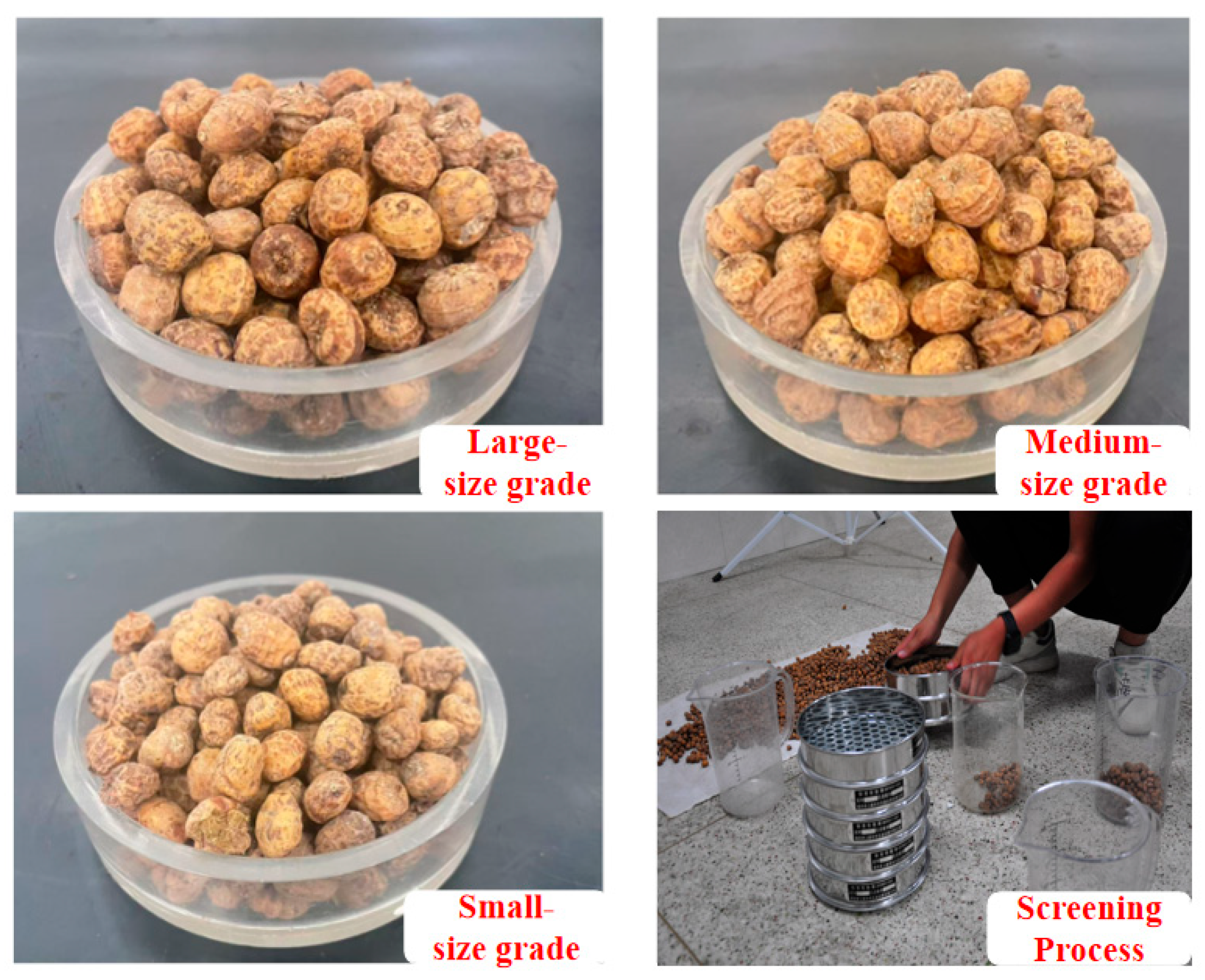
C. esculentus seeds in subsequent experiments, a comprehensive seed size classification and screening protocol was established (as shown in
Figure 1).
C. esculentus seeds soaked for 48 h under standard environmental conditions were used and classified into three size grades using a three-tier sieve system:
Large-size grade: >13 mm (unable to pass through the Φ13 mm sieve);
Medium-size grade: 11–13 mm (passing through the Φ13 mm sieve but retained on the Φ11 mm sieve);
Small-size grade: <11 mm (passing through the Φ11 mm sieve).
2.1.2. Analysis of 100-Seed Weight of C. esculentus
The 100-seed weight of
C. esculentus serves as an important indicator of grain plumpness and size grading and also provides a key basis for determining the required negative pressure in air-suction seed metering devices. According to the data in
Table 2, the average 100-seed weight of
C. esculentus significantly increased from 74.04 g to 111.52 g after soaking. This change poses a serious challenge to traditional air-suction seed metering devices: the increased seed mass requires a corresponding enhancement in adsorption force to effectively separate seeds from the population and ensure stable transport. Relying solely on air suction to detach seeds from the population not only demands higher power from the negative pressure system but also increases the risk of missed seeding due to unstable adsorption in practical operations. Particularly under field conditions, where a single negative pressure source often supplies multiple metering units simultaneously, system pressure fluctuations intensify. Coupled with increased operating speeds, this further amplifies the risk of missed seeding, severely affecting seeding performance and operational efficiency.
2.1.3. Analysis of Cyperus esculentus Density
Density is a key physical parameter that reflects the internal structure and moisture status of seeds. According to the measurement results in
Table 3, the average density of
C. esculentus decreased from 1.185 g/cm
3 to 1.125 g/cm
3 after soaking. Measuring seed density can indicate the degree of seed saturation and also serve as an important parameter for modeling.
2.1.4. Analysis of Moisture Content of C. esculentus
According to the national standard GB/T 3543.6-1995 [
26] “Rules for Agricultural Seed Testing—Determination of Moisture Content,” the moisture content of
C. esculentus seeds was measured, which serves as one of the important indicators for assessing seed plumpness. Based on the measurement results in
Table 4, the moisture content of
C. esculentus increased sharply from an average of 5.96% to 46.02% after soaking.
2.1.5. Analysis of Mechanical and Material Properties of C. esculentus
Regarding the coefficient of friction, the rolling friction coefficient between soaked
C. esculentus seeds increased significantly from 0.17 to 0.31, indicating enhanced surface adhesion and reduced flowability. The static friction coefficient rose from 0.49 to 0.56, further confirming the increase in inter-seed cohesion. In terms of collision characteristics, the average restitution coefficient of soaked
C. esculentus seeds decreased from 0.49 to 0.46, reflecting a reduction in overall elasticity and a decline in population consistency. While this change helps suppress seed bouncing during seeding, it also indicates weaker mechanical resilience. Regarding material constitutive properties, Poisson’s ratio increased from 0.35 to 0.41, suggesting that seeds are more prone to lateral deformation under compression. Meanwhile, the shear modulus decreased from 46 MPa to 33 MPa, directly reflecting a significant reduction in overall seed stiffness. These changes in both parameters collectively indicate a decline in the mechanical strength of soaked
C. esculentus seeds [
23,
24].
2.2. Design of the Seed-Scooping Device
By comparing the seed material properties before and after soaking, fundamental characteristics of C. esculentus—including physical, mechanical, and material properties—underwent significant changes. These coordinated variations in mechanical parameters collectively reveal the comprehensive mechanical behavior of soaked C. esculentus, characterized by enhanced adhesion and reduced elasticity. This behavioral shift not only exacerbates instability during seed filling and transport in traditional air-suction seed metering devices but also imposes stricter requirements for the mechanical interaction methods of seeding components. To improve seeding performance metrics, an air-suction and scoop-assisted cooperative operation mode is adopted: the scoop first performs preliminary seed pickup and positioning, after which negative-pressure adsorption ensures reliable seed transport, ultimately working in coordination to accomplish precision seeding.
The diameter of the scooping device and the number of scoops must correspond to the diameter of the seed metering disc and the number of suction holes. Therefore, it is essential to define the disc diameter and the quantity of suction holes. Both domestically and internationally, the disc diameters of air-suction seed metering devices typically range from 140 mm to 260 mm, with the number of suction holes positively correlated to the disc size. A larger disc diameter helps reduce rotational speed and extend seed-filling time, thereby improving seeding qualification rate and precision. Conversely, a smaller disc diameter restricts the number of suction holes, leading to insufficient seed filling and increased missed seeding. Considering both agronomic requirements for seeding and structural size constraints, this study adopts a seed metering disc with a diameter of 200 mm. The forward speed of the seeder designed in this study is
Vm ≤ 6 km/h. Referring to the Agricultural Machinery Design Handbook, the linear velocity of the suction holes on the seed metering disc should satisfy
V1 < 0.35 m/s [
27].
According to seeder operation standards and theoretical analysis, under the conditions of a fixed seeder forward speed
Vm and theoretical seed spacing
Vr, the number of suction holes is inversely proportional to the rotational speed of the seed metering disc. When the number of suction holes decreases, the rotational speed of the disc increases accordingly, leading to a shortened seed-filling time and subsequently reduced seeding performance. Conversely, an increase in the number of suction holes lowers the disc rotational speed, extends seed-filling time, and contributes to improved seeding performance [
28]. However, having an excessive number of suction holes is not necessarily beneficial. If the number of suction holes is too high, the spacing between adjacent holes becomes too narrow, increasing the risk of airflow interference or mechanical collision when seeds are being adsorbed by neighboring holes. Additionally, this may place a greater load on the blower, potentially leading to issues such as missed seeding or multiple seeding, thereby compromising seeding quality. Therefore, achieving a rational coordination between the number of suction holes and the rotational speed of the seed metering disc is a critical design consideration for ensuring efficient and stable operation of the seed metering device. This relationship can be expressed by Equation (1) [
29]:
where
M—number of suction holes;
Vm—forward speed of the seeder (6 km/h);
Xr—planting spacing of
C. esculentus (mm);
n—rotational speed of the seed metering disc (r/min).
Based on the requirements of precision seeders and the agronomic specifications for
C. esculentus, the number of hole groups is selected to suit the structural layout of the seed metering disc without affecting their distribution on the disc. According to relevant literature and the preliminary field trials conducted by the research group, a planting spacing of 15 cm for
C. esculentus meets agronomic requirements [
30]. Accordingly, 18 groups of suction holes are designed on the seed metering disc, and correspondingly, 18 scoop units are configured, ensuring numerical alignment between the two.
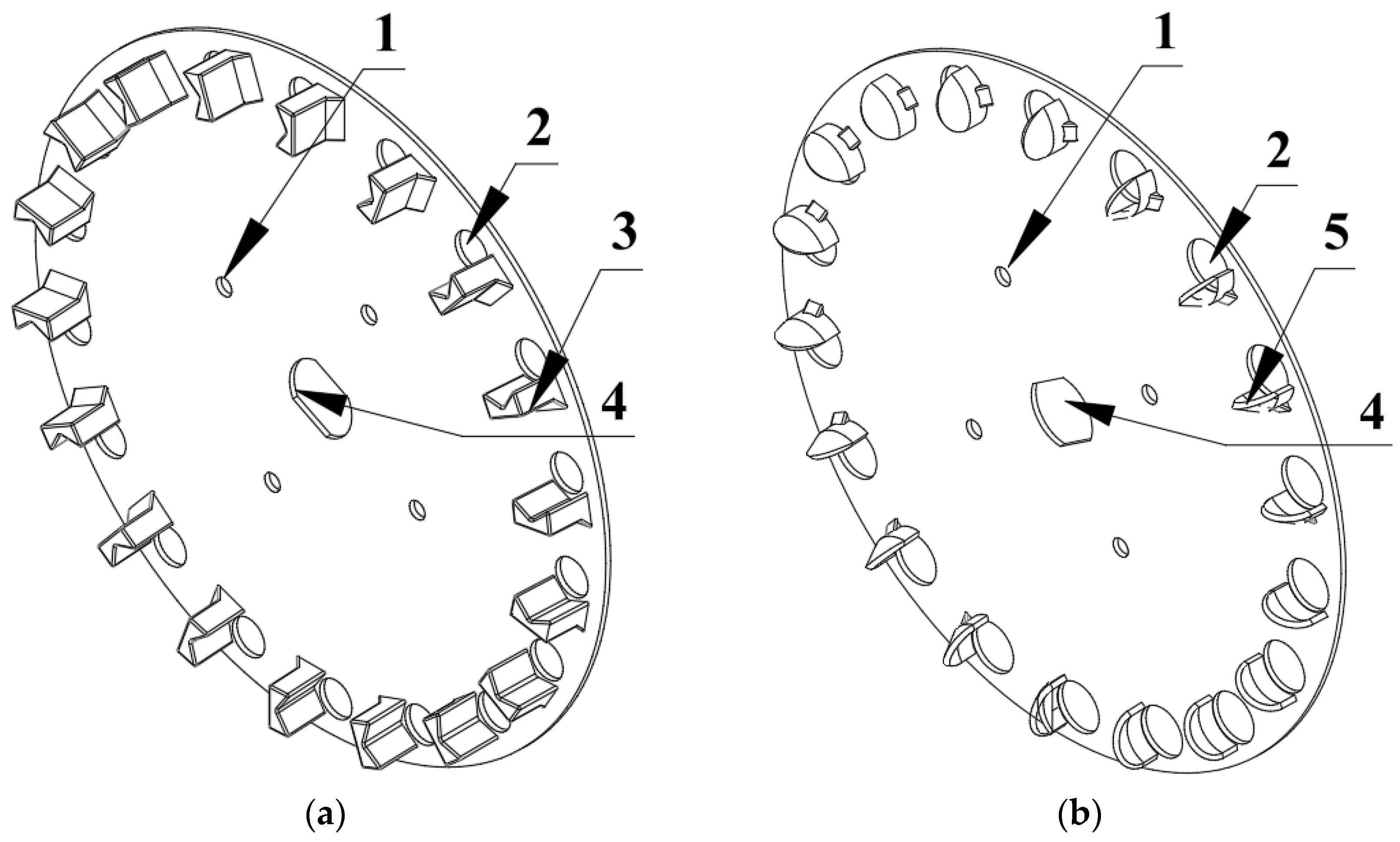
The seed-scooping device is one of the key components of the seed metering device, whose structural parameters and placement directly affect the performance of seed filling, seed carrying, and seed dropping. Due to the significant variability in the physical properties of
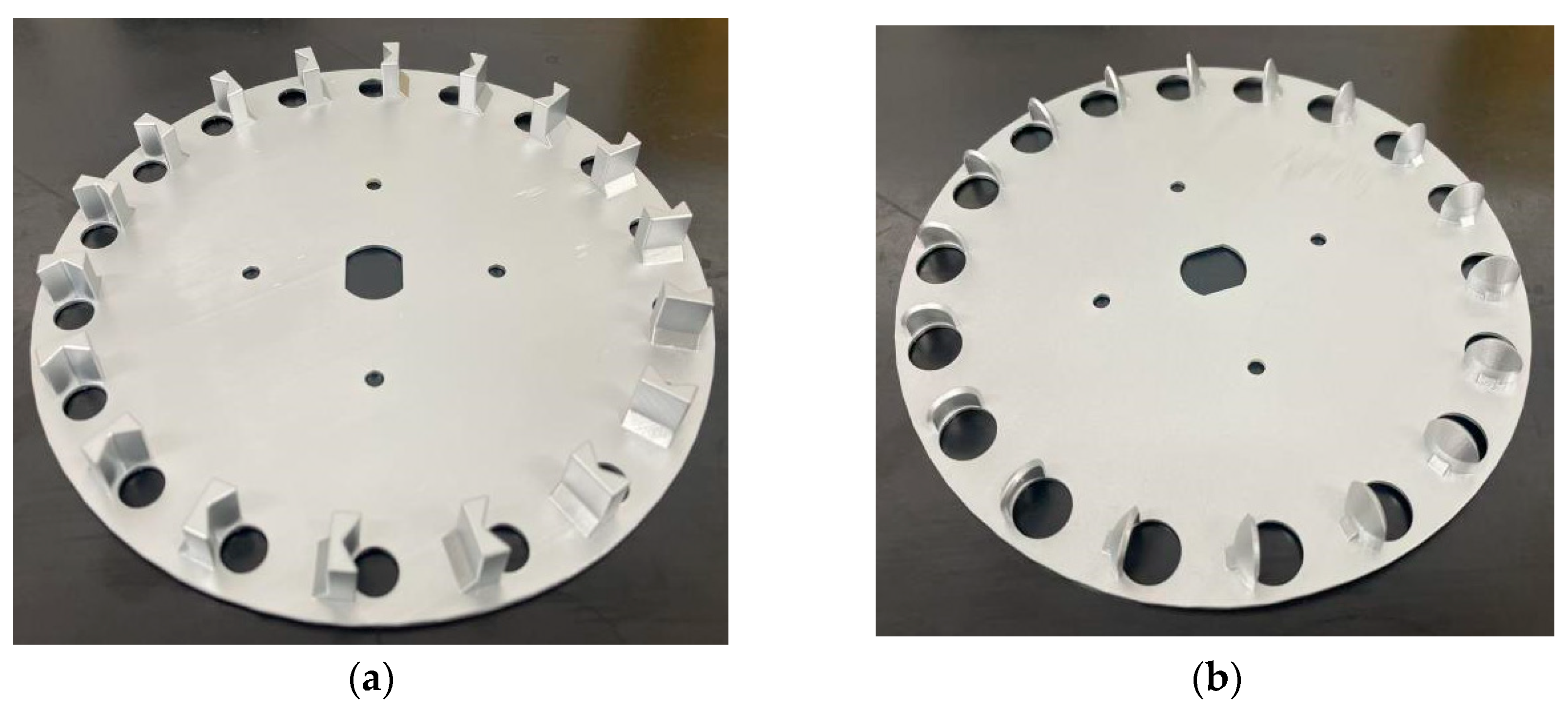
C. esculentus, two scoop shapes—V-shaped and arc-shaped working surfaces—were designed to improve the operational performance of the seed metering device, as shown in
Figure 2.
The seed-scooping device adopts a combined structure of a flange and scoops. Eighteen scoops are evenly distributed along the circumference of the seed metering disc and rotate synchronously with it. The structural parameters of the scoops are designed based on the characteristic dimensions of
C. esculentus seeds to ensure precise seed pickup. A seed-guiding flow channel is incorporated inside the scoop body to smoothly direct the scooped seeds to the suction hole, enabling the transition from mechanical scooping to air-suction transfer, specific parameters are listed in
Table 5.
2.2.1. Design of Structural Parameters for the V-Shaped Scoop
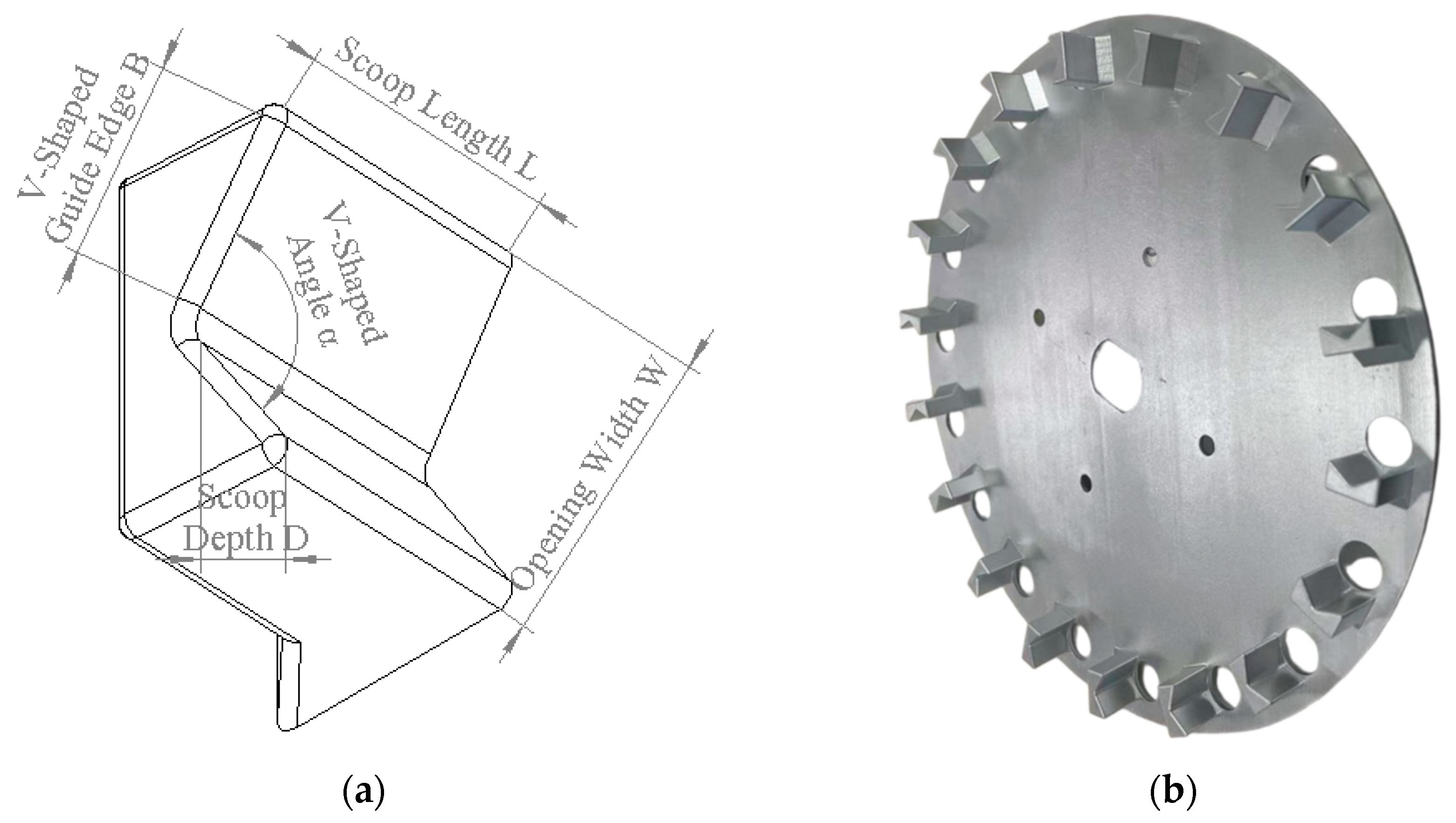
Based on the exploration results of the effective range of key scoop dimensions in preliminary tests, this study, when determining the final design parameters, has set the geometric dimensions within a performance-stable region that is insensitive to variations in seed physical properties. Preliminary evaluation indicates that within the natural variation range of seed particle size after soaking, the scoop structure can still maintain a single-seed pickup rate stable above 85%. It is on this basis that subsequent systematic bench tests have been conducted. This design addresses the size and shape characteristics of C. esculentus seeds after soaking, which tend to become nearly spherical. The V-shaped cross-section forms a tapered guiding channel through its two inclined sidewalls, allowing seeds of varying sizes to gradually align and achieve single-layer arrangement during the scooping process, thereby reducing the possibility of multiple seeds entering side by side. The edge structure generates stronger shear forces when rotating into the seed population. The pointed top design of the V-shape facilitates the rapid detachment of seeds from the scoop under gravity, shortening the migration time from the scoop to the seed drop outlet, making it suitable for high-speed operation.
The main structural parameters include the opening width (
VW), scoop depth (
VD), scoop length (
VL), V-shaped angle (
Va), and scoop inclination angle (
Vβ). The design of the V-shaped scoop is shown in
Figure 3. The opening width should be slightly greater than the width of
C. esculentus seeds—if too narrow, seeds will have difficulty entering, while if too wide, multiple seeds may overlap. The scoop depth should be moderate; if too shallow, seeds cannot be stably held, and if too deep, seed clearing becomes difficult. The scoop length should ensure that seeds remain stably positioned during motion—if too long or too short, it will affect seed alignment. The V-shaped angle should be appropriate; if too small, seeds may become stuck, and if too large, directional control of the seeds is weakened. The scoop inclination angle is the backward tilt angle formed between the central symmetric axis of the scoop and the axial perpendicular line of the seed metering disc. If this angle is too large, seeds may be retained, increasing the difficulty of seed clearing; if no inclination is set, seed flow may be hindered, affecting the efficiency of transfer to the suction hole. Based on the triaxial dimensions of
C. esculentus, the structural dimensions should satisfy the following conditions, as expressed in Equation (2):
After comprehensive consideration of the structural parameters of the V-shaped scoop, the final design values are determined as follows: opening width (
VW) = 12 mm, scoop depth (
VD) = 4 mm, scoop length (
VL) = 11.5 mm, V-shaped angle (
Va) = 112.5°, and scoop inclination angle (
Vβ) = 3°, specific parameters are listed in
Table 5.
2.2.2. Design of Structural Parameters for the Arc-Shaped Scoop
The design of the arc-shaped scoop is primarily based on the principles of encompassing the seed as a whole and minimizing damage during pickup. The arc-shaped cross-section features a continuous smooth concave surface, which can fully encompass the overall contour of a single seed, making it particularly suitable for nearly spherical C. esculentus seeds. This curved surface provides stable contact support for the seed, restricting its rolling and deflection during the scooping process, which helps maintain a stable seed orientation. The smooth and continuous arc surface avoids concentrated stress on the seed surface caused by sharp edges, making it especially suitable for seeds with softened shells and reduced mechanical strength after soaking.
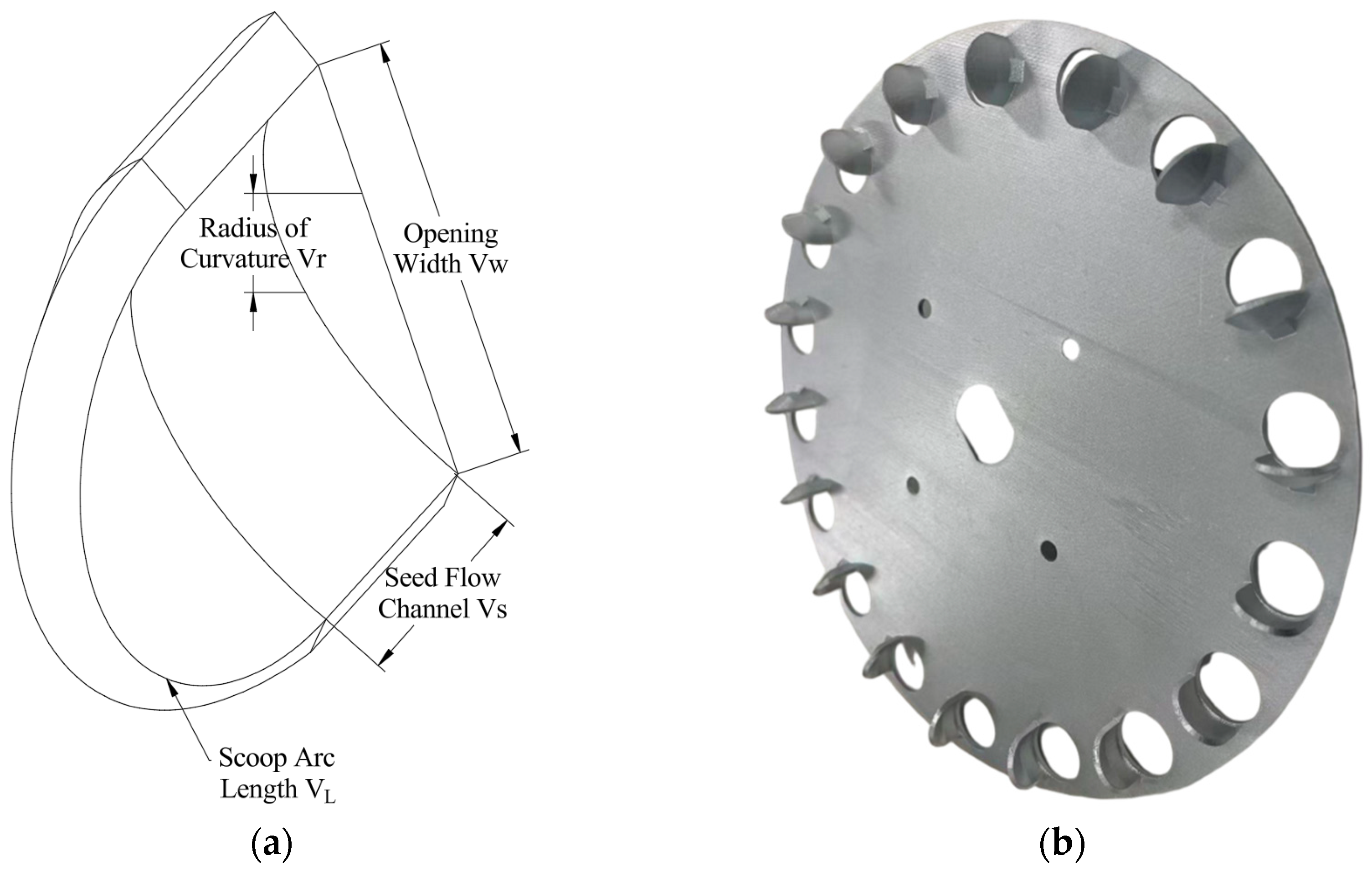
Its main structural parameters include the opening width (
VW), scoop arc length (
VL), scoop curvature radius (
Vr), seed flow channel (
Vs), and scoop inclination angle (
Vβ). The design of the arc-shaped scoop is shown in
Figure 4. An excessively wide opening width leads to multiple seed pickup, while an overly narrow width reduces filling efficiency. A scoop curvature radius that is too large weakens adsorption effectiveness, whereas one that is too small may cause seed damage. Based on the triaxial dimensions of
C. esculentus, the structural dimensions should satisfy the following conditions, as expressed in Equation (3):
After comprehensive consideration of the structural parameters of the arc-shaped scoop, this study sets the final design values as follows: opening width (
VW) = 12 mm, scoop arc length (
VL) = 18.85 mm, scoop curvature radius (
Vr) = 4.5 mm, seed flow channel width (
Vs) = 6 mm, and scoop inclination angle (
Vβ) = 3°, specific parameters are listed in
Table 5.
2.3. Analysis of the Working Process of the Seed-Scooping Device
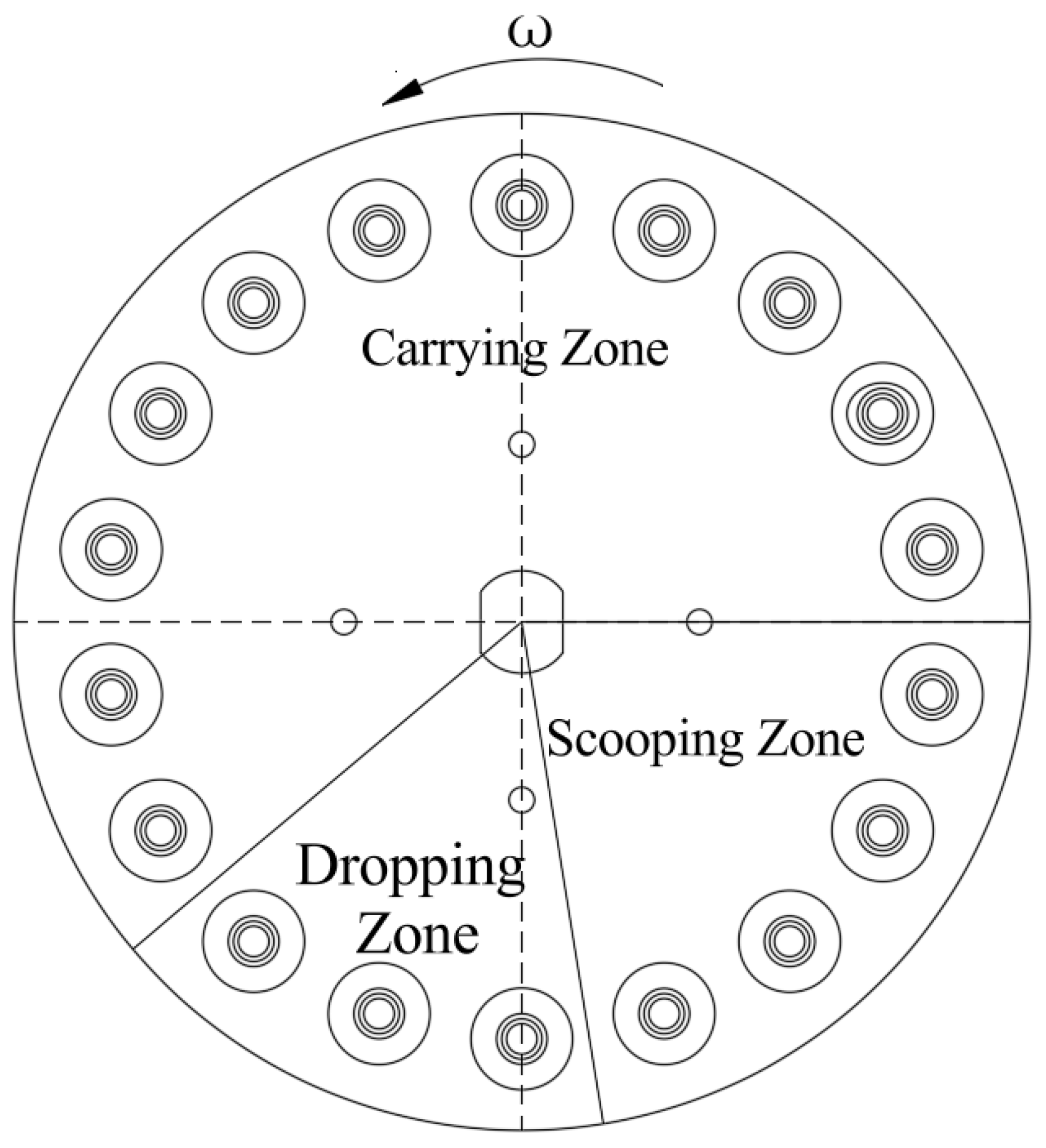
The working process of the scoop can be divided into three key zones: the scooping zone, the carrying zone, and the dropping zone. Among these, the synergistic interaction between the scooping zone and the carrying zone is most critical, as their operational efficiency directly determines the overall performance of the seed metering device. The working zones of the scoop are shown in
Figure 5.
During the scooping zone phase, the seed-scooping device rotates synchronously with the seed-metering disc. When the scoop enters the scooping zone, C. esculentus seeds are effectively separated from the seed population under the combined action of the mechanical scooping force and the negative-pressure adsorption from the suction hole. At this stage, the composite force acting on the seeds reaches its maximum value, making it a critical step for achieving single-seed precision pickup. The carrying zone, which occupies the largest portion of the working cycle, is characterized by the coordinated action of the mechanical scooping force and negative-pressure adsorption. This cooperation, together with the dynamic balance provided by centrifugal force, maintains stable motion of the seed. Such a balance ensures precise positioning and stable movement of the seed during transportation.
2.4. Mechanical Analysis of the Seed-Picking Process in the Scooping Device
During the seed-filling process of C. esculentus, as the seed-metering disc rotates, the scoops attached to it agitate the seed population. The seeds are then rapidly drawn from the population into the scoop grooves. A dedicated study on the scooping process aims to reveal how the scoop structure actively guides and regulates the flow of the C. esculentus seed population, clarify the mechanical mechanism for achieving efficient single-seed pickup, provide theoretical support for optimizing the key structural parameters of the scoop, thereby enhancing the reliability of seed filling, and lay a technical foundation for the precision picking of irregularly shaped seeds.
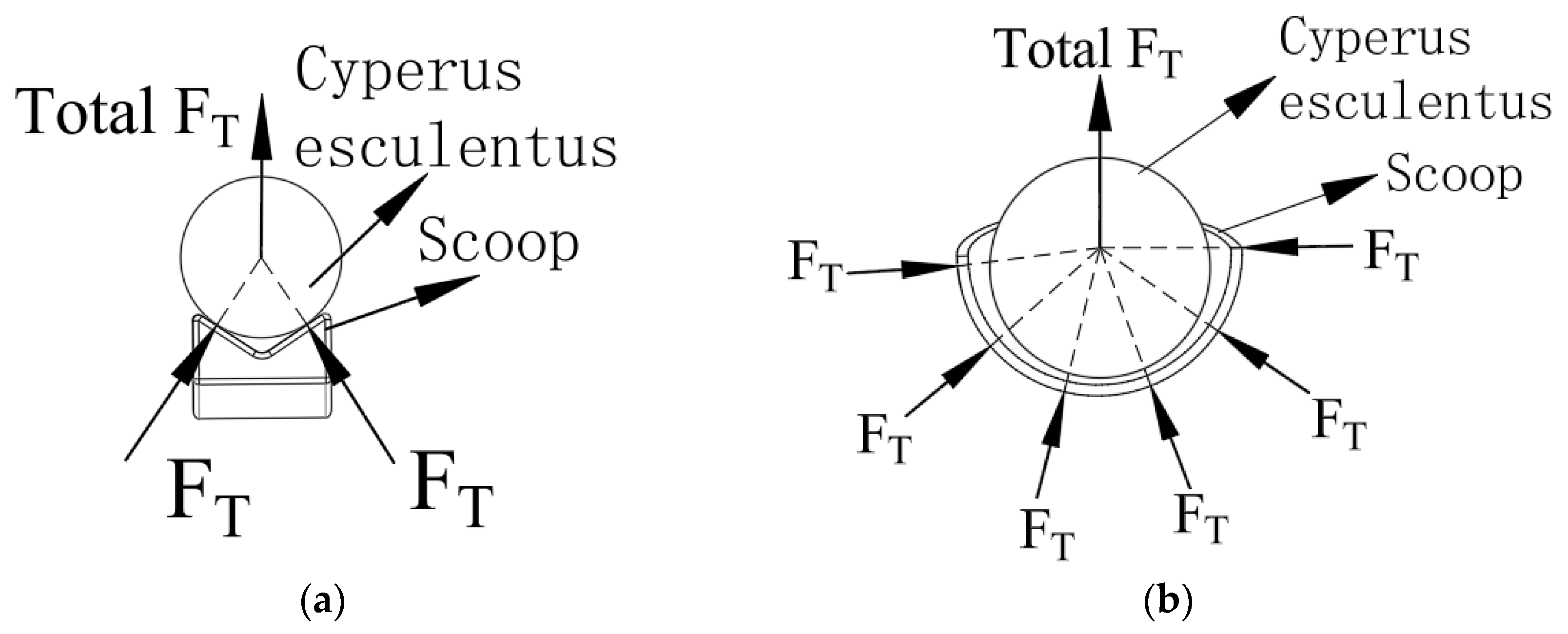
The stress states of the two scoop designs developed in this study during the scooping process are critical factors affecting their operational performance and subsequent seed-metering performance. The V-shaped scoop forms point or line contact support through its angular structure, while the arc-shaped scoop provides surface contact support via a continuous smooth curved surface. The specific seed-supporting configurations of both scoops are illustrated in
Figure 6. During subsequent motion, seeds supported by the scoop (F
T) ultimately converge into the total F
T zone, while seeds in other stages (scooping, carrying, and dropping) are subjected to essentially the same external forces. Therefore, the focus of the mechanical analysis is placed on the V-shaped scoop to clarify its key influencing factors.
The scooping process combines traditional negative-pressure adsorption with mechanical scooping to separate seeds from the seed population. This process consists of two main stages: first, the scoop completes the single-seed filling under the combined action of composite force fields; then, as the scoop rotates out of the seed population zone, the seed moves toward the suction hole under inertia and the effect of the scoop inclination angle, where it is finally adsorbed by negative pressure.
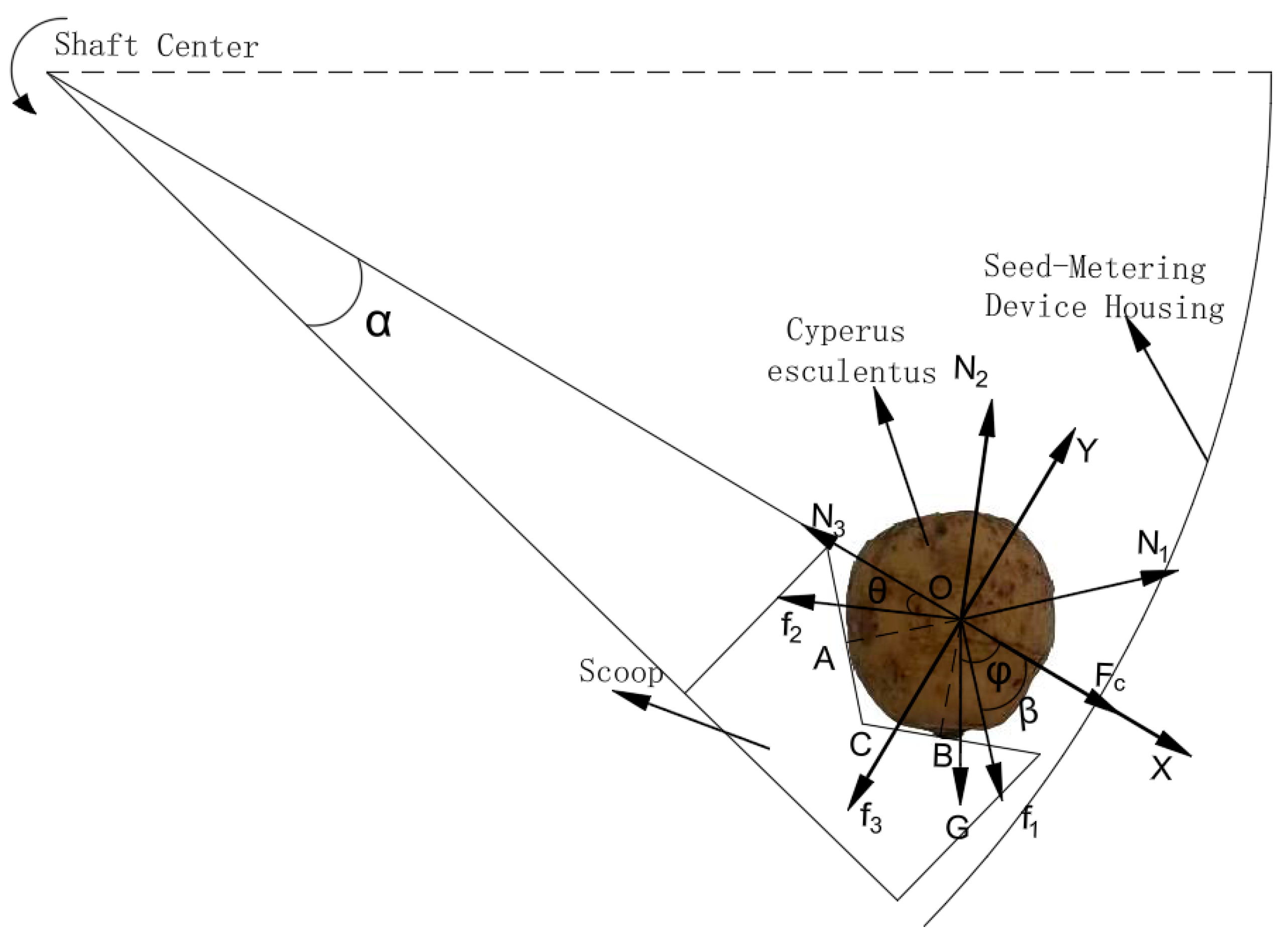
During the operation of the seed metering device, the scoops actively pick up seeds from the seed chamber under the drive of the flange. As the scoops continue to rotate, seeds that enter earlier naturally block subsequent seeds, achieving single-seed scooping. At this stage, seeds located within the working cross-section of the scoop begin to move toward the suction hole under the component force generated by the scoop’s inclination angle. When the scoop rotates through a certain angle and exits the horizontal plane of the seed population, the seed scooping and conveying process is completed [
31]. A force analysis of the scooping process is shown in
Figure 7.
The geometric angular relationship is given by Equation (4):
From this, Equation (5) can be derived as follows:
In this force analysis, since ∠ACB remains constant, the values of angles
θ and
β are determined solely by
α. The force analysis along the
X and
Y directions is established as shown in Equation (6):
N1,
N2—thrust force exerted by the scoop on the seed,
N;
N3—reaction force exerted by the seed-metering device housing on the seed,
N; f
1, f
2—friction force between the scoop and the seed,
N; f
3—friction force between the housing and the seed,
N;
Fc—centrifugal force acting on the seed,
N; and
G—gravitational force,
N.
With the seed metering disc rotating at a constant speed, the force acting on the seed in the normal direction is as follows:
As shown in Equation (7), the working performance of the scoop is jointly determined by its rotational speed, the angle α, and the coefficient of friction between the seed and both the scoop and the housing.
2.5. Discrete Element Analysis of Seed Population Motion for C. esculentus
From the perspective of seed-pickup mechanics analysis, the structural parameters of the scoop are theoretically derived based on the physical properties of the seeds. To validate this design and visually illustrate the dynamic response of the seed population under the action of the scoop, this section employs EDEM discrete element simulation software (EDEM 2022 version) to conduct numerical simulations of the scooping process and observe the motion characteristics of C. esculentus seeds.
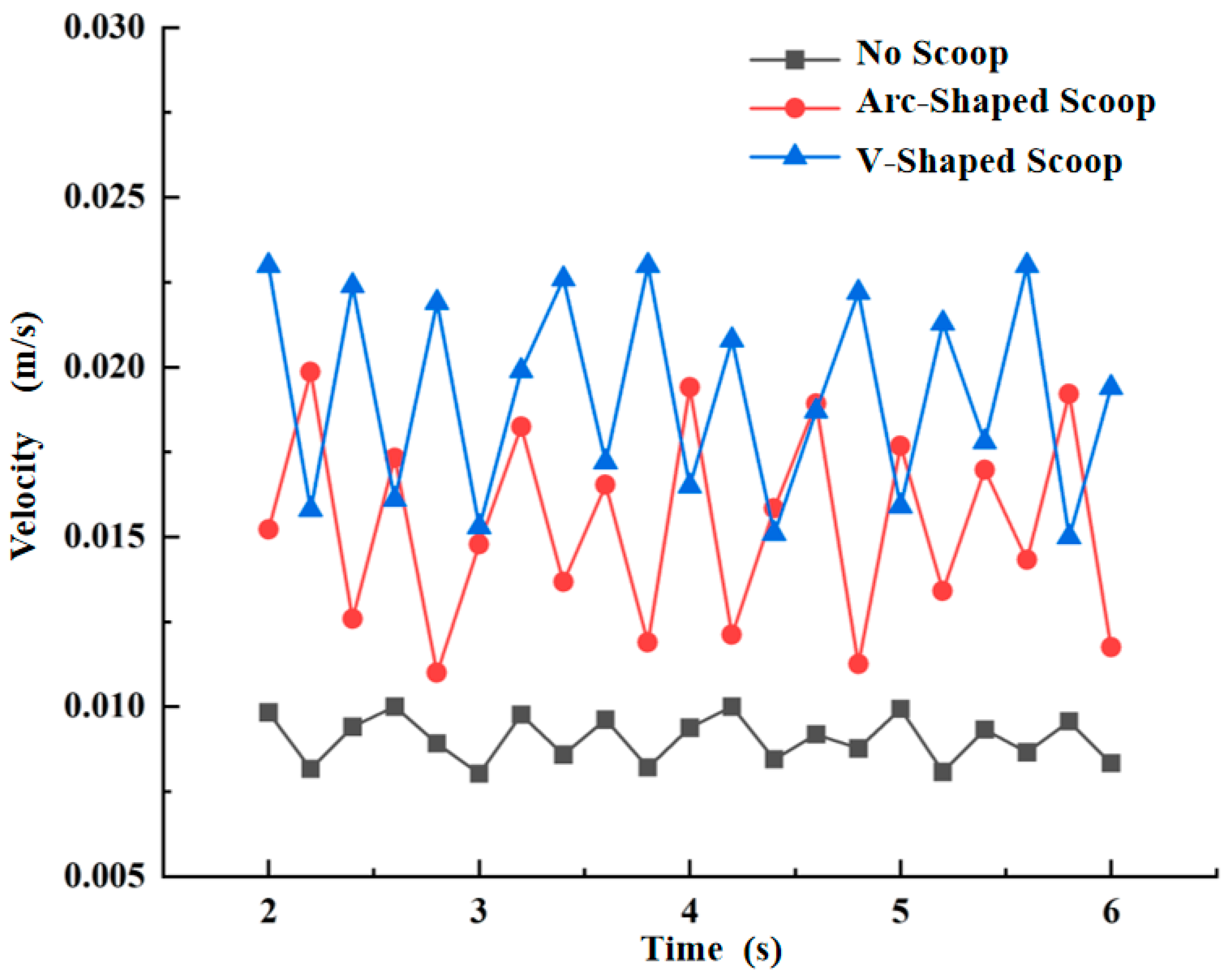
Taking the motion velocity of the seed population as the primary proxy indicator for simulation evaluation, these metrics effectively reflect: the guiding capability of the scoop structure on seed flow; the influence of mechanical forces on the stratification and orientation of the seed population. During the seed pickup process by the suction disc, it is a continuous sequence where seeds, under gravity and mechanical forces, move and fill the area near the suction holes, enabling sufficient single seeds to reach the pickup point with favorable orientation. Adsorption relies on airflow to create a pressure difference, securing the target seeds. “Agitation” directly affects the quality of seed filling—it disrupts static friction and bridging among seeds, prevents arching and clogging, and ensures continuity of seed flow. Therefore, optimized agitation is a prerequisite for reducing missed seeding (insufficient filling) and multiple pickups (adsorption of multiple seeds). The simulation directly models this fundamental physical process, capturing the key factors that influence seeding performance [
32].
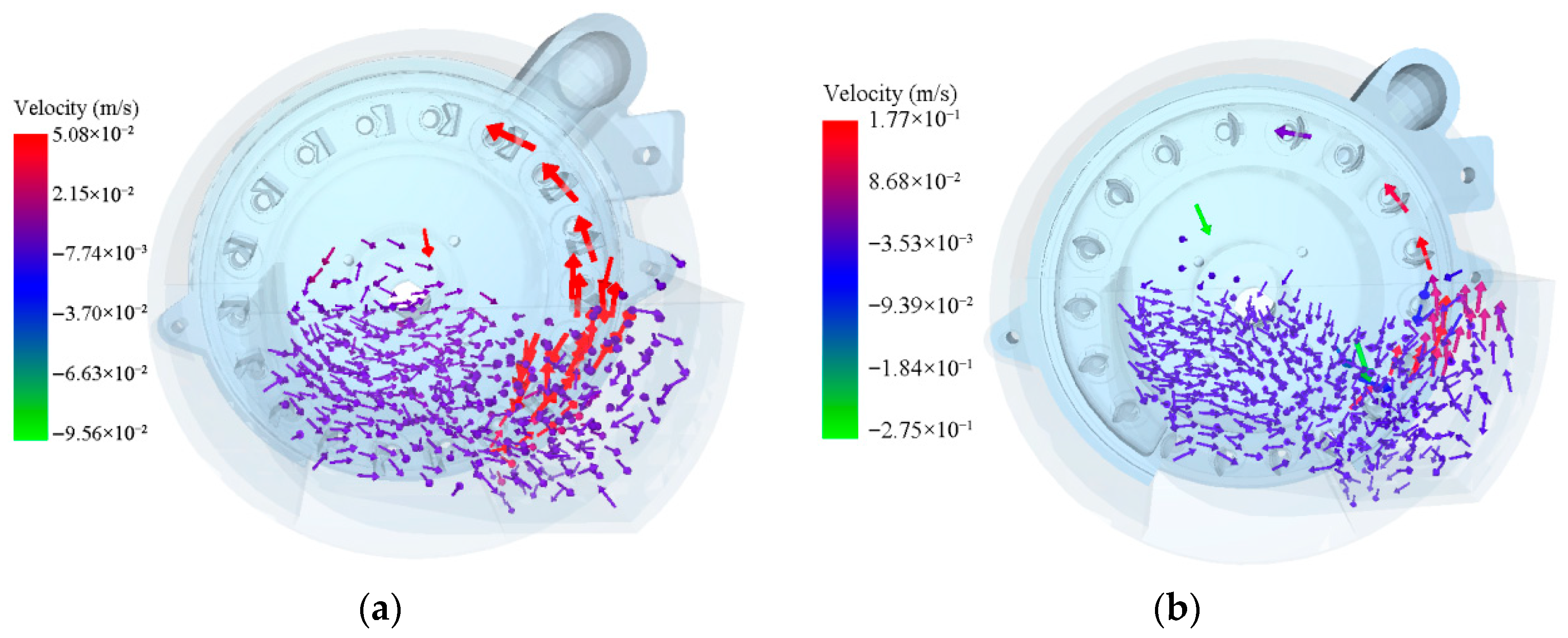
The seeding performance of the seed metering device is partly determined by the seed population flow within the scooping zone. Simulations were conducted using three configurations: no scoop, an arc-shaped scoop, and a V-shaped scoop, to investigate the population disturbance characteristics of different scoop geometries in the scooping region. By comparing the dynamic behaviors of the seed populations, the scoop design that significantly enhances the average motion velocity of seeds within the seed chamber was identified.
Establishment of Seed-Metering Device Simulation Model and Parameter Settings
After importing the 3D model of the seed metering device built in SolidWorks (2018 version) into the EDEM (2022 version) software in STL format, the material properties of key components—such as the negative-pressure chamber, scooping device, seed metering disc, and seed chamber—were all set to steel plate. Detailed parameters are provided in
Table 6. The contact parameters between the seeds and the steel plate were calibrated based on prior research by the group and have been reported in the related literature [
24]. The simulation settings were configured as follows: a fixed time step of 20%, a total simulation duration of 6 s, a grid size of 2.5 times the minimum particle radius (2.5Rmin), and the use of dynamic particle generation.
2.6. Experimental Design
Simulation Experiment on Seed Population Motion
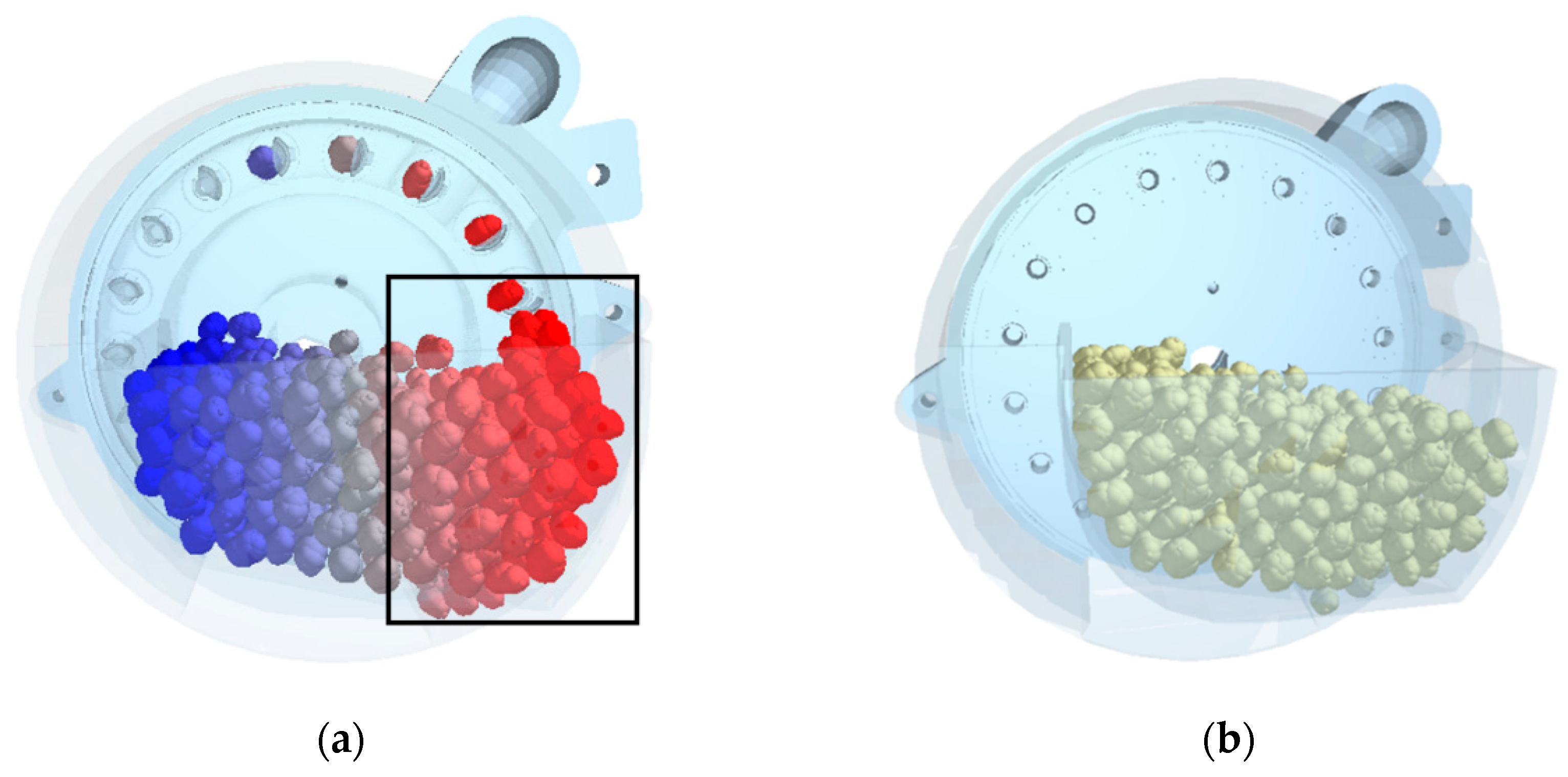
The seed metering device features a unique structural design that does not incorporate a dedicated seed-agitating mechanism; instead, the scooping device also serves the function of seed agitation. During actual operation, the flow characteristics of the seed population within the seed chamber, particularly the motion state of particles near the suction holes, critically determine the performance of the seed metering device. This experiment focuses on an in-depth analysis of the population flow behavior within the scooping zone. The analysis region is illustrated in
Figure 8a, and a simplified model of the simulation process is shown in
Figure 8b.
2.7. Single-Factor Experiment on the Influence of Scoop Shape on Scooping Performance
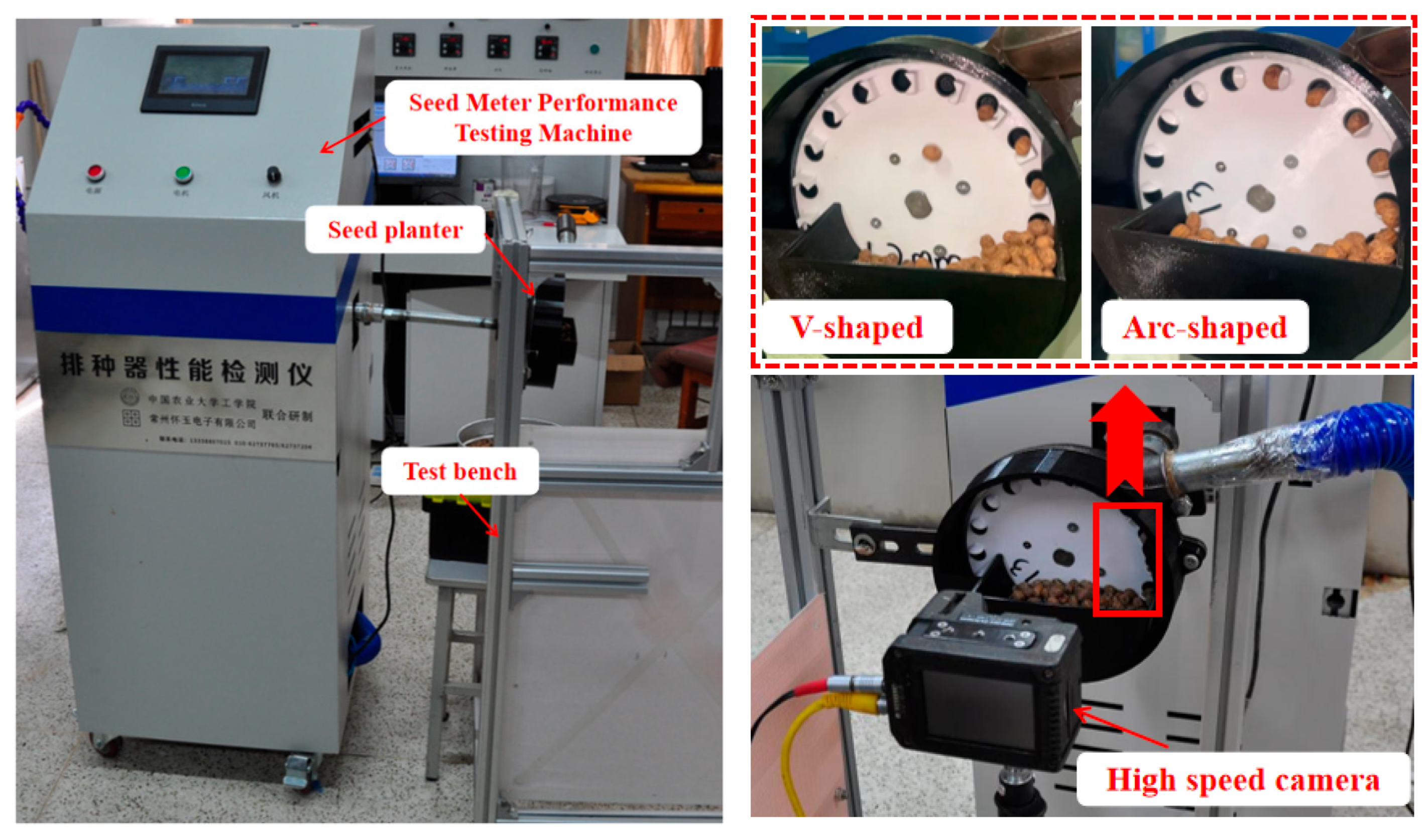
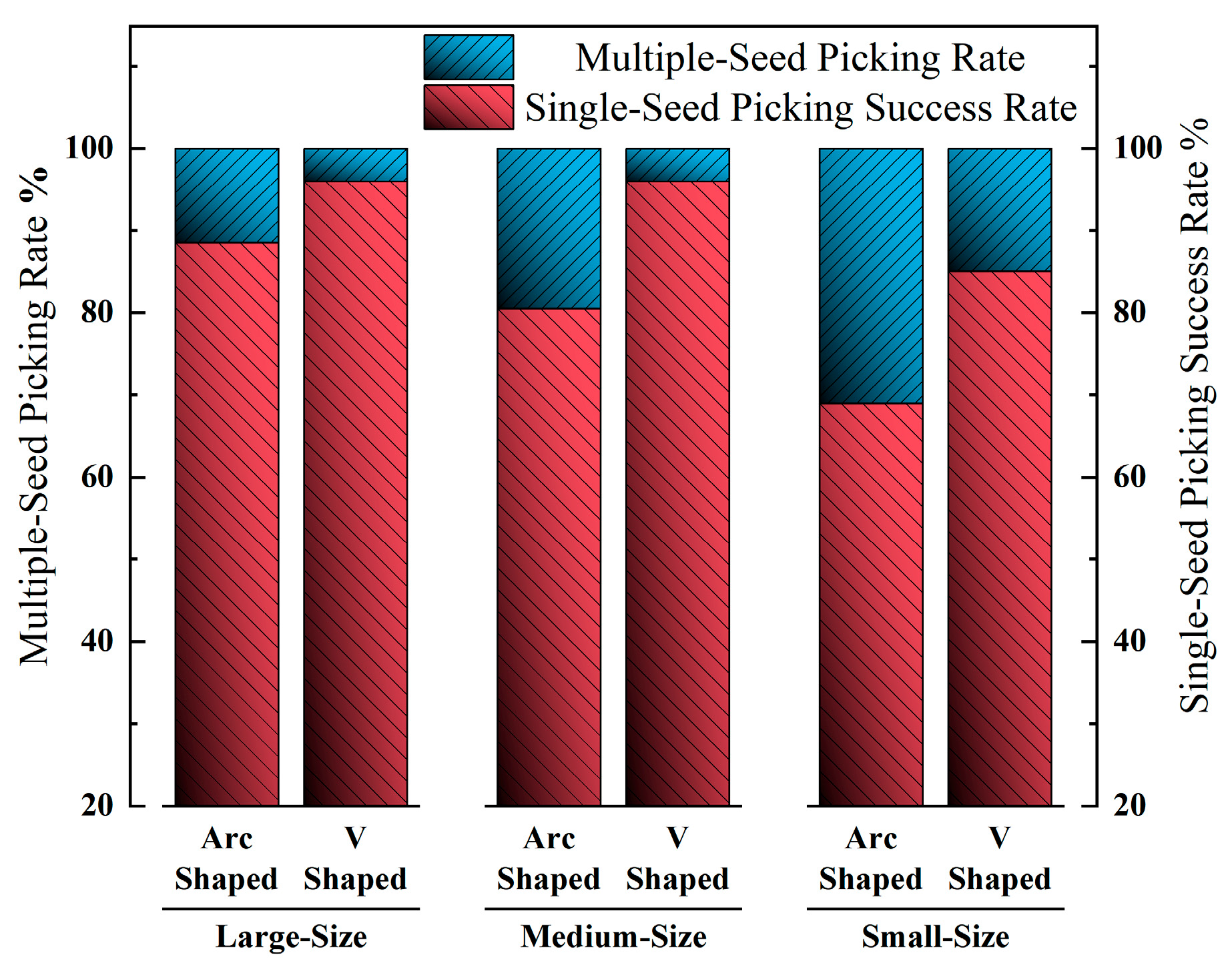
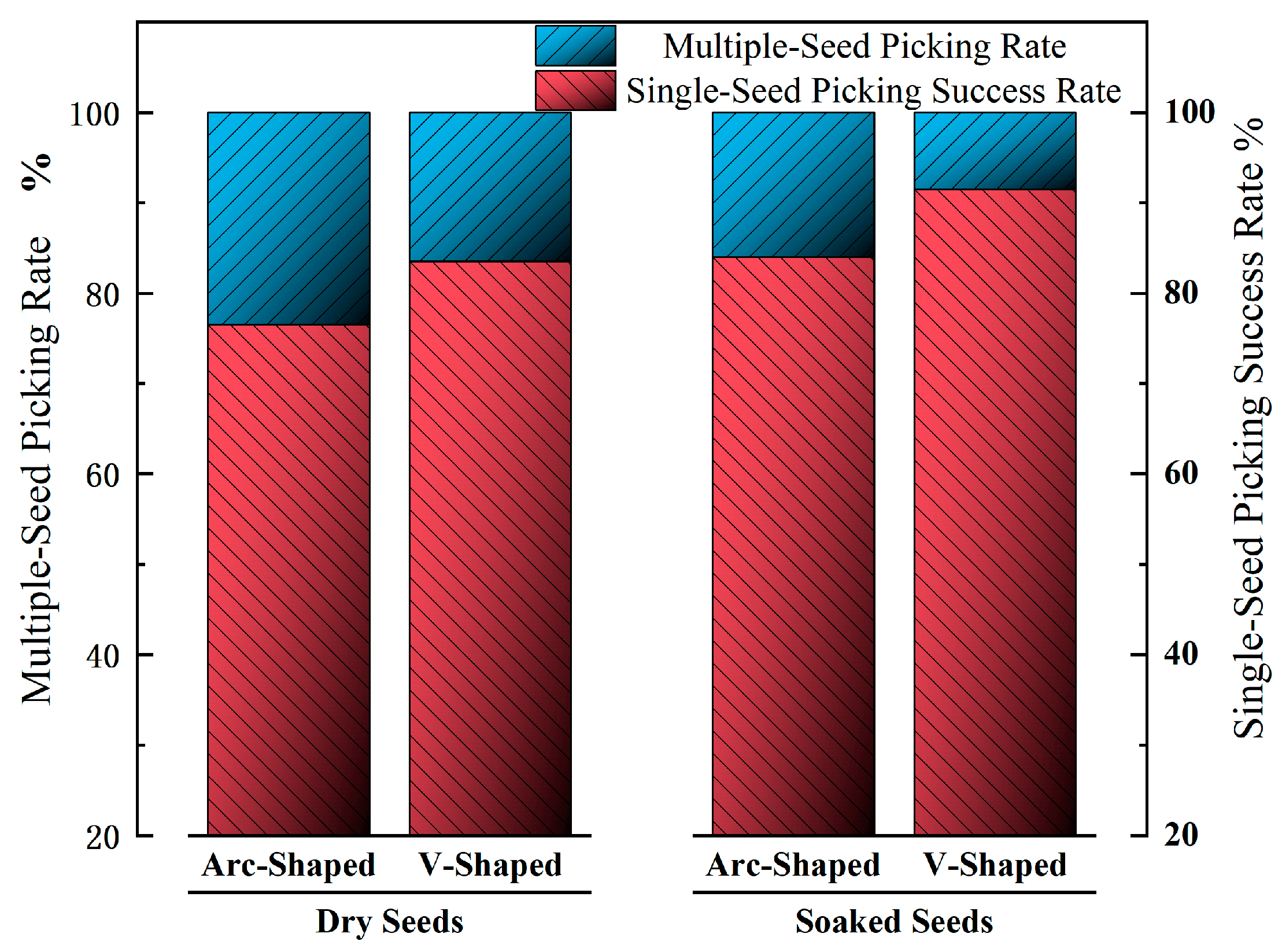
Based on the scoop configuration design and working mechanism analysis, this study conducted single-factor comparative experiments on scoop types (arc-shaped scoop and V-shaped scoop) using the rotational speed of the seed metering plate, the particle size grade of Cyperus esculentus seeds (large, medium, and small), and the dry/wet state of the seeds as experimental factors. The tests were driven by a PZQCSY-2 seed metering performance tester, with the seed metering plate rigidly connected to the scoop via a flange. No negative pressure was applied during this stage; only the mechanical scooping process was examined. The output speed of the tester was calibrated in real-time using a digital laser tachometer to ensure consistency between the set value and the measured value. The scooping process was recorded with a Phantom T1340 high-speed camera (1000 fps), and 100 consecutive scooping actions were collected after system stabilization. Each test group was repeated three times, and the results were averaged, with the single-seed pickup success rate (%) and the multiple pickup rate (%) used as evaluation metrics. The experimental data were organized using Microsoft Excel 2021, and independent samples t-tests (α = 0.05) were performed with SPSS 27.0 to analyze the significance of differences between groups. Double Y-axis bar charts were generated using Origin 2024 for visualization, with error bars representing the standard deviation of the three replicates.
Except for the particle size grading tests, all experiments used batch seeds without additional screening to simulate actual seeding conditions. Each repeated test employed a fresh seed sample to avoid errors introduced by seed wear or changes in surface characteristics. Dry and wet state tests utilized seed batches with uniformly controlled moisture content to ensure consistency in seed properties within the same state. The rotational speed of the seed metering disc was monitored and regulated in real-time using a high-precision photoelectric encoder, ensuring that the deviation between the actual speed and the set value was less than ±1%. The system was calibrated before each test, and speed stability was maintained during operation. The test bench and the two tested scoop types are shown in
Figure 9 and
Figure 10, respectively.
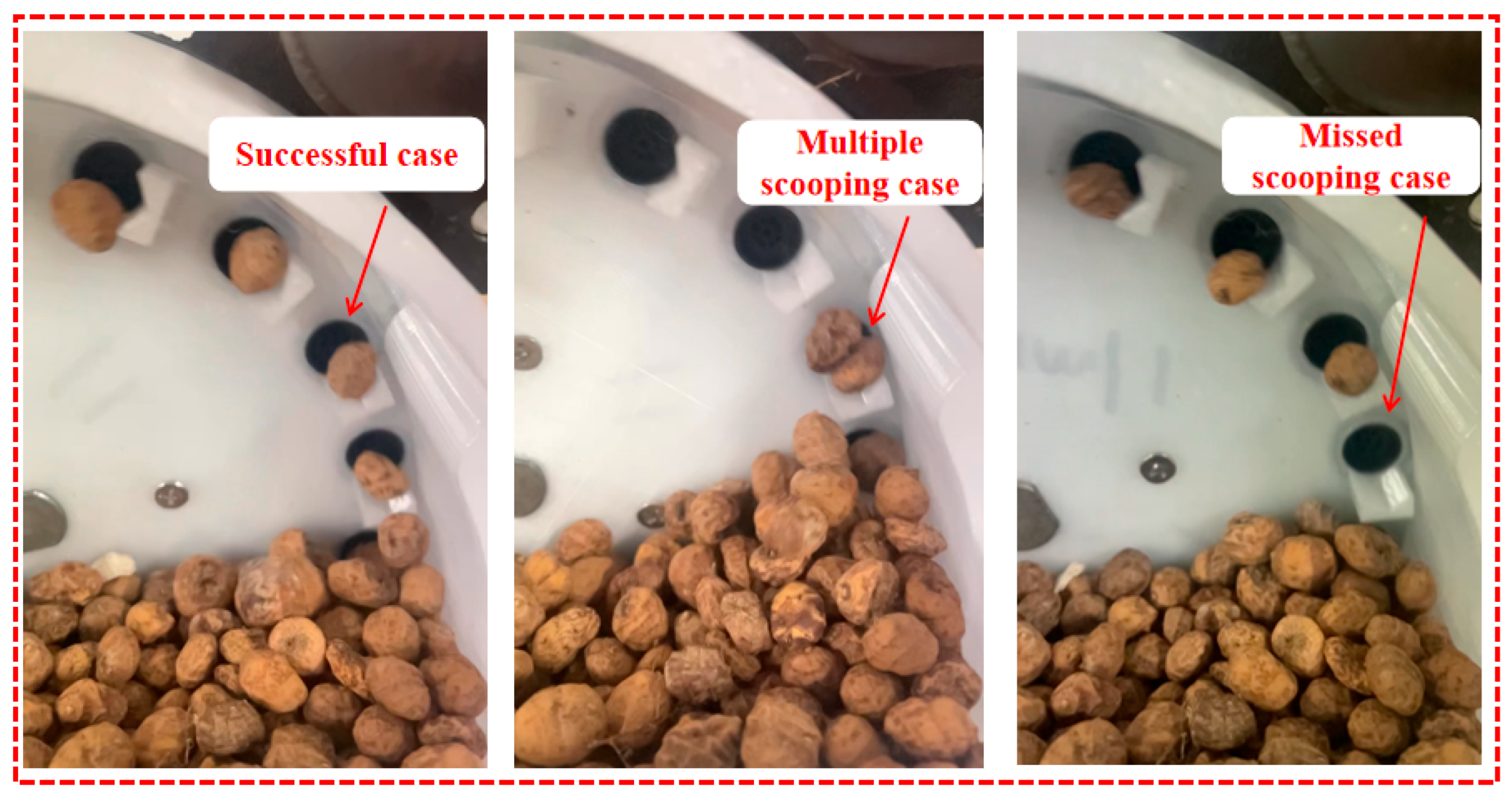
Evaluation criterion: High-speed cameras were used in the experiments to clearly review the scoop seed-pickup process during operation. In this study, the successful pickup of a single seed is defined as the scoop separating one seed from the seed population with a detachment distance of at least 1 cm. This criterion is based on the core objective of the design: achieving reliable separation between the seed and the population—this process is the main cause of missed seeding and a key bottleneck in achieving high-speed precision seeding. Once a seed is successfully separated, it can be effectively adsorbed by the suction hole at the subsequent stage. Similarly, if the scoop separates two or more seeds at once from the population, it is recorded as multiple pickups, as illustrated in the schematic diagram of typical scoop seed-pickup conditions shown in
Figure 11.
4. Discussion
4.1. Differences in Seed Material Properties Before and After Soaking
The findings of this study reveal that soaking treatment does not induce isolated changes in individual parameters but rather drives a holistic shift involving fundamental physical properties, mechanical behavior, and material relationships. This significant transition in material state poses a fundamental challenge at the principle level to traditional air-suction seed-metering devices, which rely on assumptions such as seed population uniformity and adsorbability. Experiments confirm that conventional air-suction seed-metering devices struggle to adapt to the complex integrated properties exhibited by soaked C. esculentus. Therefore, exploring a novel seeding approach that goes beyond the single principle of air suction is not only necessary to meet the specific agronomic requirements of soaked C. esculentus but also represents an active step toward advancing modern agricultural equipment to proactively adapt to the complex characteristics of biological materials.
4.2. Application Value for Seeding Other Crops
While this study primarily focuses on soaked C. esculentus, the proposed scoop-type seed-picking mechanism exhibits a degree of universality in form and principle. However, the adaptability of its specific structural parameters (such as scoop profile, opening angle, etc.) to other seed types (e.g., peanuts, fava beans) still requires validation through systematic experiments. Notably, this study finds that for soaked C. esculentus, the underlying mechanism lies in water penetration softening the seed coat and increasing moisture content, leading to a more rounded surface morphology, reduced geometric irregularity, and increased weight—all of which diminish the suitability of traditional negative-pressure adsorption. Combining scooping with negative-pressure adsorption may thus emerge as a new pathway to enhance seeding stability.
4.3. Limitations of Current Research and Avenues for Breakthrough
In the current research field of C. esculentus seeding, there is a prevalent tendency toward structural optimization: most studies focus on improving the mechanical design of seed-metering device components while relatively neglecting the fundamental influencing factor of seed material properties. In fact, declines in seeding performance are not solely related to equipment structure; the physical attributes of the seeds themselves are an intrinsic cause that cannot be overlooked. Through systematic analysis, this study demonstrates that soaking treatment triggers a series of complex changes in the material properties of C. esculentus—including increased size, enhanced surface adhesion, and reduced stiffness. This conceptual breakthrough suggests that the optimized design of seed-metering devices must be grounded in a deep understanding of seed material properties.
4.4. Statement on Future Work
The core objective of this study is to propose and validate the geometric configurations of two scoop types (V-shaped and arc-shaped) and their impact on seed-picking performance, representing preliminary design research on a key component of the seed-metering device. Therefore, this work focuses primarily on the performance screening and operational mechanism analysis of the scoop itself, specifically investigating its working behavior under various rotational speeds, seed-size grades, and dry/wet conditions. In addition, discrete element simulation was employed to reveal the influence of the scoop structure on seed-group agitation behavior and movement velocity—these are fundamental factors affecting seeding quality. As for the comprehensive performance comparison with existing complete seeding devices, this has been incorporated into the team’s subsequent systematic research plan. In the next phase, the optimized scoop design will be integrated into a full prototype, and comparative experiments will be conducted under identical operating conditions with traditional air-suction seed-metering devices, thereby systematically evaluating the overall performance advantages of the “air-suction-scoop-assisted” design. Relevant findings are intended for publication in follow-up papers.
4.5. Analysis of the Limitations of EDEM Simulation
This study employed the Discrete Element Method (DEM) to investigate the influence of different scoop structures on the mechanical agitation behavior of C. esculentus seed populations, providing a significant theoretical basis for the optimization of scoop design. However, it should be noted that the DEM simulation used in this research has certain limitations: firstly, the adsorption effect of air suction on seeds was not considered, making it difficult to directly simulate phenomena such as missed seeding or seed detachment due to insufficient suction; secondly, seed motion in the simulation was primarily driven by mechanical collisions and gravity, without accounting for the influence of the actual airflow field, which may lead to an underestimation of centrifugal seed loss under high-speed operating conditions. Additionally, from the perspective of research methodology in terms of cost-effectiveness and applicability, the current simulation model focuses on key mechanical processes, thereby reducing modeling and computational costs while ensuring engineering guidance.