1. Introduction
Bisphenol A-based polycarbonates (BPA-PC) are an important class of engineering plastics widely used in outdoor applications due to their exceptional combination of properties such as transparency, impact strength, heat resistance and inherent flame retardancy. These materials are synthesized through different polycondensation routes, including liquid-phase, melt-phase, or solid-state polycondensation. After polycondensation, only trace amounts (low ppm range) of unreacted BPA molecules remain in the polymer, which are largely immobilized within the rigid polymer network, resulting in minimal diffusion or leaching under typical use conditions.
Although biodegradable, BPA is widely detected in European surface waters, typically at ng L
−1 concentrations, with a decreasing trend [
1]. Its ubiquitous occurrence has raised environmental concerns and triggered regulatory scrutiny. In particular, BPA has recently been identified as a substance of very high concern (SVHC) due to its alleged endocrine-disrupting properties for both human health and the environment, although the estrogenic potency of BPA is roughly three orders of magnitude lower than that of 17β-estradiol [
2]. This study aims to investigate the release of BPA from major outdoor applications of PC under environmental conditions.
The key to understanding both the environmental behavior and the exceptional properties of PC lies in its molecular structure as displayed in
Figure 1. The polymer backbone consists of BPA units chemically linked by carbonate groups (-O-(C=O)-O-).
While these structural elements provide the desired mechanical strength, thermal stability, and optical clarity for outdoor applications, they also represent potential sites for environmental degradation. Under prolonged exposure to outdoor weathering conditions, such as UVA radiation, humidity and oxygen, PC undergoes characteristic photo-degradation processes at its surface. These are known to cause aesthetic changes in unprotected PC, including yellowing, gloss loss and erosion, but also to influence mechanical properties after extensive weathering.
Therefore, various protection technologies have been established for outdoor applications of PC. These comprise the use of UV absorbers (e.g., benzotriazole derivatives or hydroxyphenyl triazines) in PC, which effectively convert UV energy to heat, preventing the excitation of polymer chains that could lead to degradation. PC used in outdoor applications is usually equipped with such UV absorbers, which are homogenously dissolved in the PC base resin as a basic protection. In the case of extruded PC sheets, widely used in construction applications, additional protection is achieved by a thin, coextruded outer PC layer comprising UV absorbers in much higher concentrations. Alternatively, PC surfaces can be protected via coatings (e.g., polysiloxane-based, thermally cured hard coatings or UV-cured acrylate coatings). Such coatings provide the required UV protection and additionally act as a barrier against water and other media and enhance abrasion resistance [
3]. Especially for non-transparent, often colored applications (e.g., in electrical, electronics, and consumer goods), the basic protection by UV absorbers in the base material is generally sufficient.
Over the past decades, the mechanisms of photo-degradation of PC have been intensively studied both under artificial weathering and when exposed to outdoor conditions. Two mechanisms are involved in photo-ageing of PC, namely photo-Fries rearrangement and photo-oxidation [
4,
5,
6] (side chain and ring oxidations). The relative importance of both mechanisms depends on the wavelength of applied UV radiation. Under outdoor conditions, thus at wavelengths above 300 nm and in the presence of oxygen, photo-oxidation, a radical chain mechanism, has been described as the dominant mechanism. The role of photo-Fries rearrangement in outdoor weathering remains under debate. In artificial weathering, at short-wavelength irradiation, which does not occur in terrestrial sunlight (<300 nm), however, photo-Fries rearrangement plays a major role. As this mechanism is a photolytic reaction, direct absorption of UV radiation by the polymer chain is required, whereas undegraded PC hardly absorbs above 300 nm [
7]. With progressing photo-degradation, however, absorbance of PC between 300 and 400 nm increases in a structureless manner [
4,
5]. Upon extended weathering, the photo-degradation processes lead to the formation of a superficial layer in which the chemical structure of PC and its building blocks are largely transformed. According to Factor and Chu, 1980 [
6], this layer of mainly photo-oxidized products is about 25 µm thick. This was confirmed by Rivaton, 1995 [
5], who found that photoproducts are formed only in the superficial front layer reaching up to 40 µm, with a very steep increase of absorbance, especially in the outermost 20 µm. The UV- and visible light-absorbing photo-degradation products are described to decrease the penetration depth of UV radiation into the PC material, limiting photo-degradation only to the superficial layer up to 40 µm. Nagai et al. 2003 observed that the most drastic changes in chemical composition upon exposure to UV radiation occur in the topmost layer below 0.5 µm [
8].
Factor [
9,
10] investigated the chemical composition of the photo-degraded surface layer of PC samples which were extensively aged for four years outdoors in Florida, USA. By reductive cleavage of the degraded topmost layer, they could characterize nearly 40 degradation products by GC/GC-MS. Further, some higher molecular weight products were also identified by direct-probe MS experiments. The number and nature of identified products indicate that the outdoor weathering of PC involves side chain oxidation, ring oxidation, photo-Fries rearrangement, fragmentation and coupling reactions as well as ring attack reactions. The investigation by Factor et al. 1987 [
10] indicates that side chain oxidation, thus oxidation of the isopropylidene group of the BPA units, accounts for most degradation products.
The effects of the described photo-degradation processes upon extended outdoor and artificial weathering on aesthetics and other properties have been systematically investigated as well. The UV radiation-induced degradation processes lead to an initially increasing yellowing of PC at its exposed surface, following a sigmoidal curve. Yellowing correlates quite well with the UV-radiation dose, as demonstrated by Pickett et al. 2005 [
11] for unprotected, UV-absorber-containing, and TiO
2 (2%) pigmented PC samples after outdoor yellowing; gloss loss was consistently found to start only after a lag period corresponding to a radiation dose of around 200 MJ m
−2 (295–385 nm). Pickett concluded that it is mainly the UV radiation dose which accounts for the observed rates for yellowing and gloss loss [
11]. Other parameters such as temperature, humidity, rain and acid rain were found to play only a minor role.
Tjandraatmadja et al. 1999 [
12] found similar effects after exposure to artificial UV-light. Upon prolonged exposure to UV radiation, the study detected molecular weight reduction via chain scission at the surface of unprotected PC sheet samples. This is ascribed to cause embrittlement of the surface, causing cracks and reducing gloss. The embrittlement makes the surface susceptible to erosion. Frank 1990 [
13] found annual erosion of a few µm of the PC sample surface upon outdoor weathering but also under artificial weathering. It started only after a lag period of around 1.8 years of outdoor exposure in Germany. In contrast, no erosion at all had been observed for PMMA sheets, even after prolonged outdoor weathering.
Also, Kuvshinnikova et al. 2019 [
14] found yellowing, gloss loss and erosion of transparent PC with UV absorber upon artificial and outdoor weathering at various locations. The rates of these effects revealed a good correlation with the applied UV-radiation doses. Similarly to Frank [
13], they also observed a lag phase before erosion starts, namely around nine months in Florida or Arizona, USA, followed by an ongoing loss of a few µm per year of outdoor weathering. Also, in artificial weathering, the onset of erosion was observed after a lag period corresponding to a UV-radiation dose between two and three MJ m
−2 nm
−1 at 340 nm, which is similar to the dose upon which erosion started in outdoor weathering. Remarkably, the onset of erosion coincided with the beginning of gloss loss. Kuvshinnikova et al. [
14] ascribed both gloss loss and erosion to be the result of extensive photo-oxidization processes in the topmost few µm of PC, which leads to a perpetual formation of small, highly oxidized fragments which either are washed away or even sublime.
Previous assessments, including the EU Risk Assessment [
15], indicated very low BPA emissions from outdoor applications of PC. In that context, systematic investigations have examined BPA sources and pathways in environmental systems, particularly in German surface waters [
16,
17]. These investigations, combining modeling and monitoring approaches, revealed that paper recycling and the use of recycled paper products were found to account for the majority (approximately 85%) of environmental releases. The contribution of PC products during service life has been calculated to account for only around 0.2% of BPA emissions into surface waters, based on the situation of 2020. This calculation assumed an annually recurring release rate of 0.15 mg m
−2 for all outdoor applications of PC in use, derived from one weathering study performed in 1999 with unprotected PC samples (industry study from 1999, used in the EU-RAR [
15]).
While this previous study provided a first estimate of BPA releases from outdoor uses of PC, quantitative data generated under realistic environmental conditions and investigating PC samples representative for major outdoor applications remained limited.
This knowledge gap is addressed by the new study at hand, which applies a recently developed artificial weathering protocol combined with ultra-trace analytics of BPA [
18] to a variety of PC samples representative for the main outdoor applications, equipped with different established protection technologies. This protocol simulates accelerated weathering under typical environmental stressors, including temperature variations and the UV part of global radiation. With an acceleration factor of 13 based on UV radiation dose comparison at 340 nm between the weathering chamber (75 kJ∙m
−2 per day) and Central European conditions (5.48 kJ∙m
−2 daily average), it enables efficient assessment of long-term BPA release behavior from PC materials. The limitations of this dose-based approach are discussed in
Section 3.5.
The methodology used in the study specifically addresses the need for quantitative data on BPA releases from PC materials under realistic environmental but accelerated conditions, while considering the effectiveness of various protection technologies commonly employed in outdoor applications.
3. Results and Discussion
3.1. BPA Release Patterns and Surface Protection Effects
The artificial weathering experiments revealed distinct BPA release patterns across different PC test items.
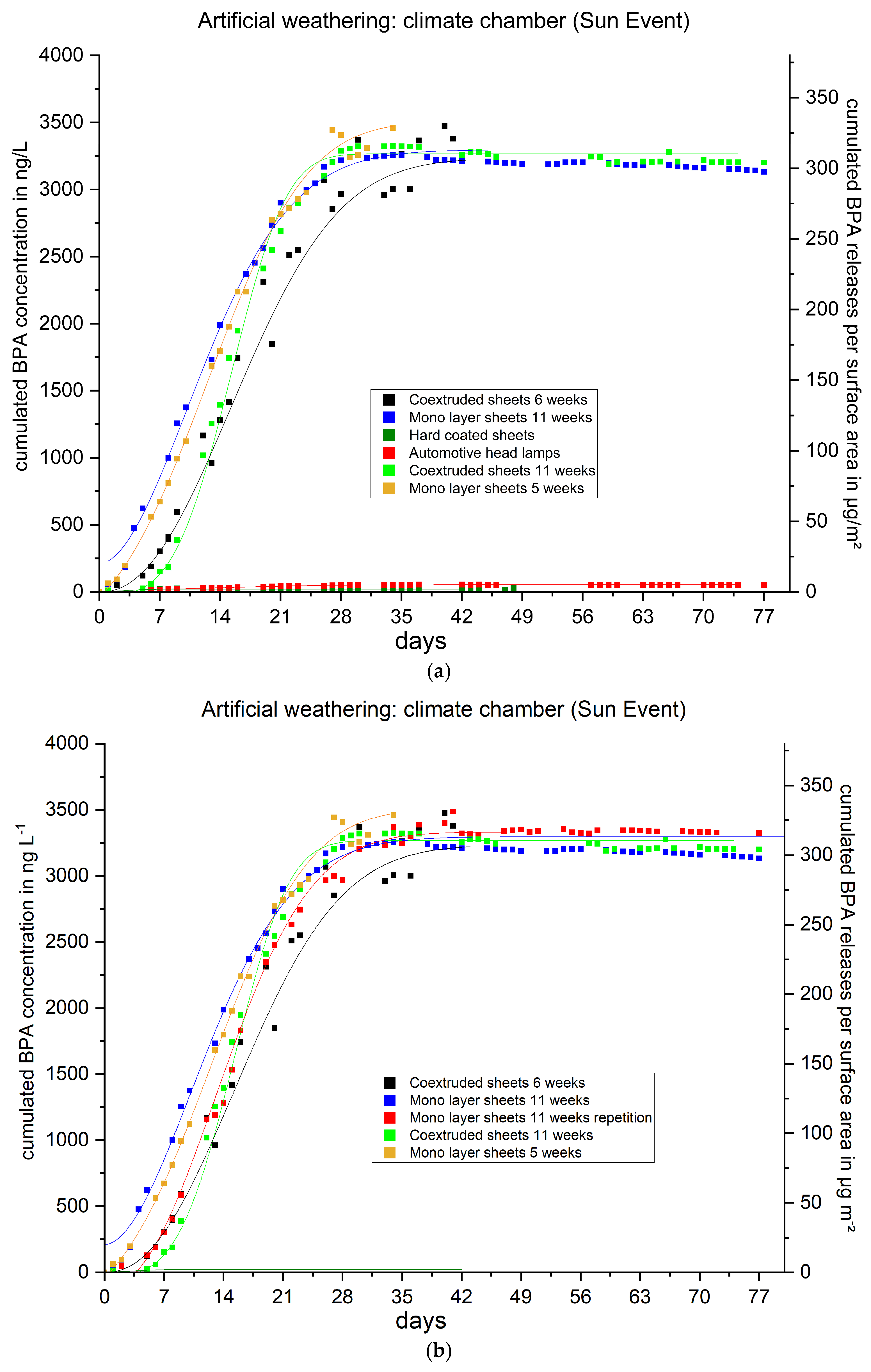
Figure 2 presents the accumulated BPA releases over time for all tested sample types.
PC test items with low UV protection and coextruded sheet samples, both featuring a PC surface exposed to weathering, exhibited a very similar release behavior: during the first days the sigmoidal curve shape indicates an initially increasing release rate before transitioning to a nearly linear regime indicative of a roughly constant release rate. After three to four weeks, the curves start to flatten, which indicates decreasing release rates followed by a complete cessation of releases after around six weeks. The accumulated BPA releases for these samples reached approximately 0.34 mg m
−2 as displayed in
Table 1. This pattern was consistently observed in multiple test series. Extended artificial weathering runs of 11 weeks verified that no further BPA release could be detected after the observed cessation.
Coated samples, which have no PC at the outermost layer, released BPA at significantly lower levels. The samples with UV-cured coating representing automotive headlights showed accumulated releases of only 0.005 mg m−2, while polysiloxane hard-coated PC sheets exhibited even lower releases of 0.003 mg m−2. Thus, BPA releases of coated samples are approximately two orders of magnitude lower compared to samples with an outer PC surface. BPA releases from the coated samples also revealed a total cessation, but earlier. After approximately 1–2 weeks for the polysiloxane hard-coated sheet and after 4–5 weeks for UV-curing coated samples.
3.2. Impact of Irradiance on the BPA Release
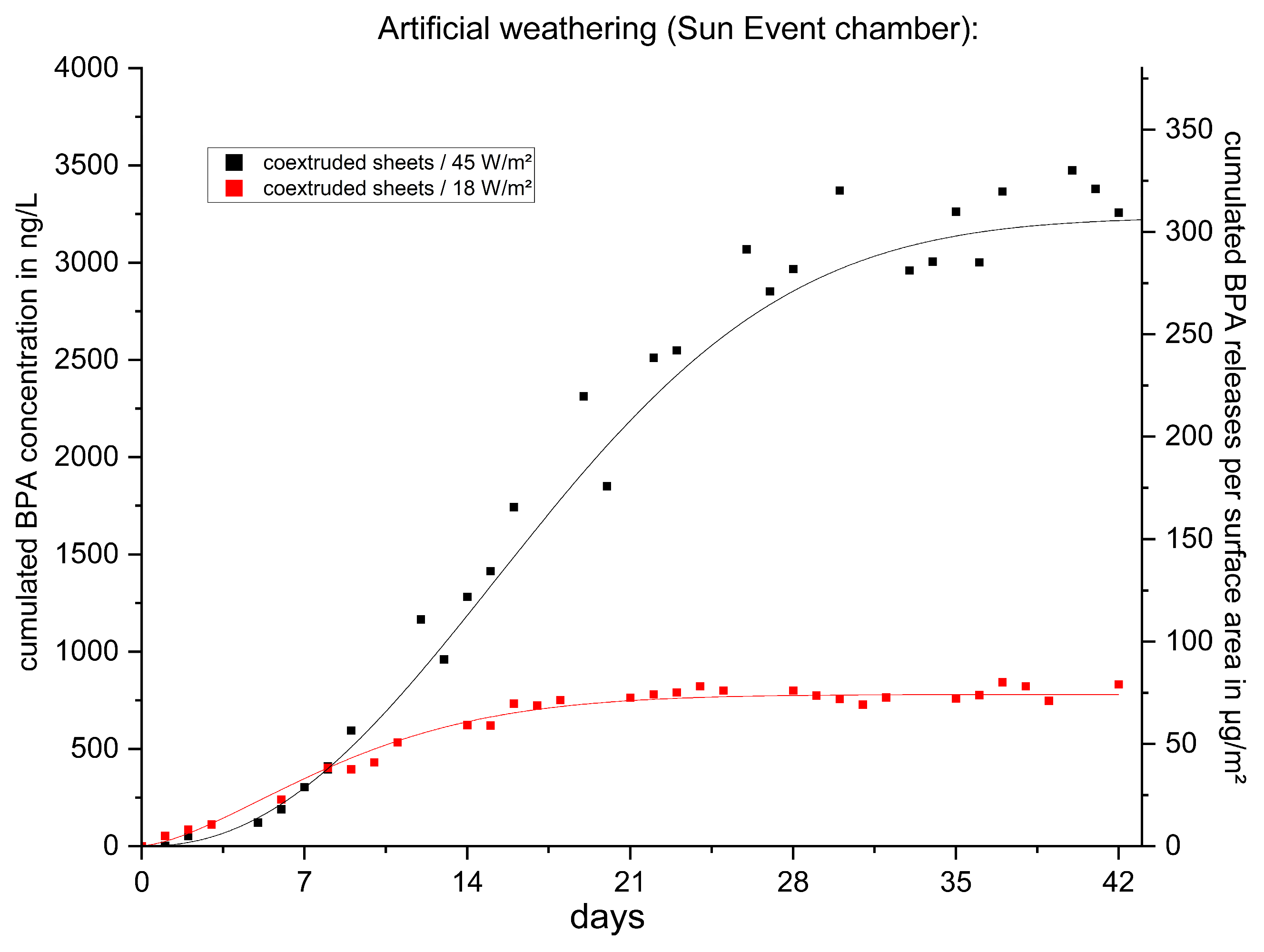
An additional experiment was conducted at reduced irradiance (
Figure 3).
UV irradiance was reduced from 45.0 W m
−2 to 18.0 W m
−2 (300–400 nm), corresponding to spectral irradiances at 340 nm of 0.864 W m
−2 nm
−1 and 0.346 W m
−2 nm
−1, respectively. The higher spectral irradiance slightly exceeds the terrestrial maximum noon summer irradiance (0.72 W m
−2 nm
−1 at 340 nm; in Miami, USA), whereas the lower irradiance is close to the average daylight irradiance (0.35 W m
−2 nm
−1 at 340 nm in Miami) [
21].
The lowering of the UV irradiance from a permanent “above high noon” UV irradiance to an average one, thus a reduction by 60%, decreased the accumulated BPA release from ~0.34 mg m−2 to ~0.08 mg m−2 after six weeks. As in the other weathering experiments, BPA releases ceased, but already after 3–4 weeks. No further increase in accumulated BPA has been detected afterwards.
3.3. Optical Properties and Surface Characteristics
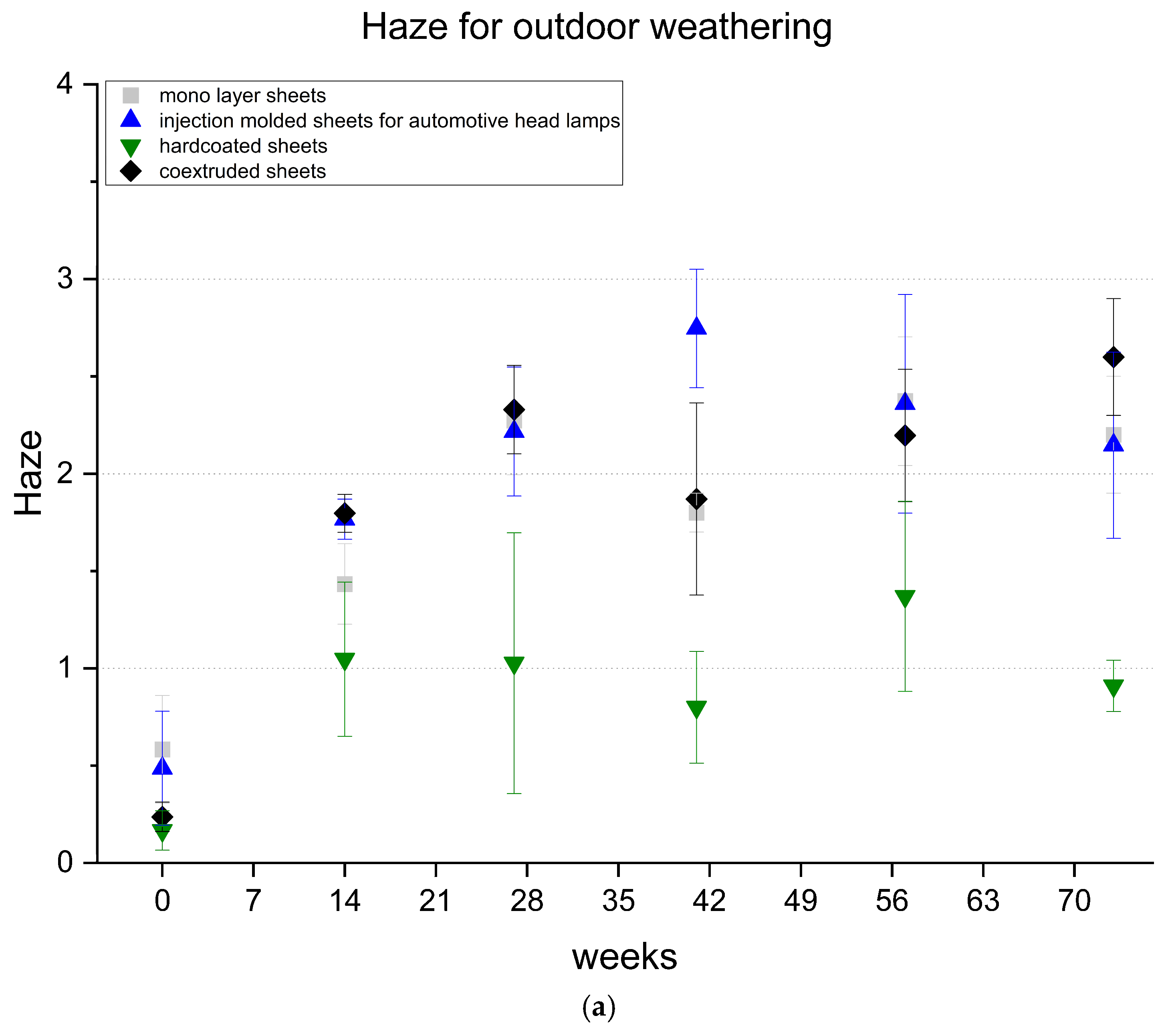
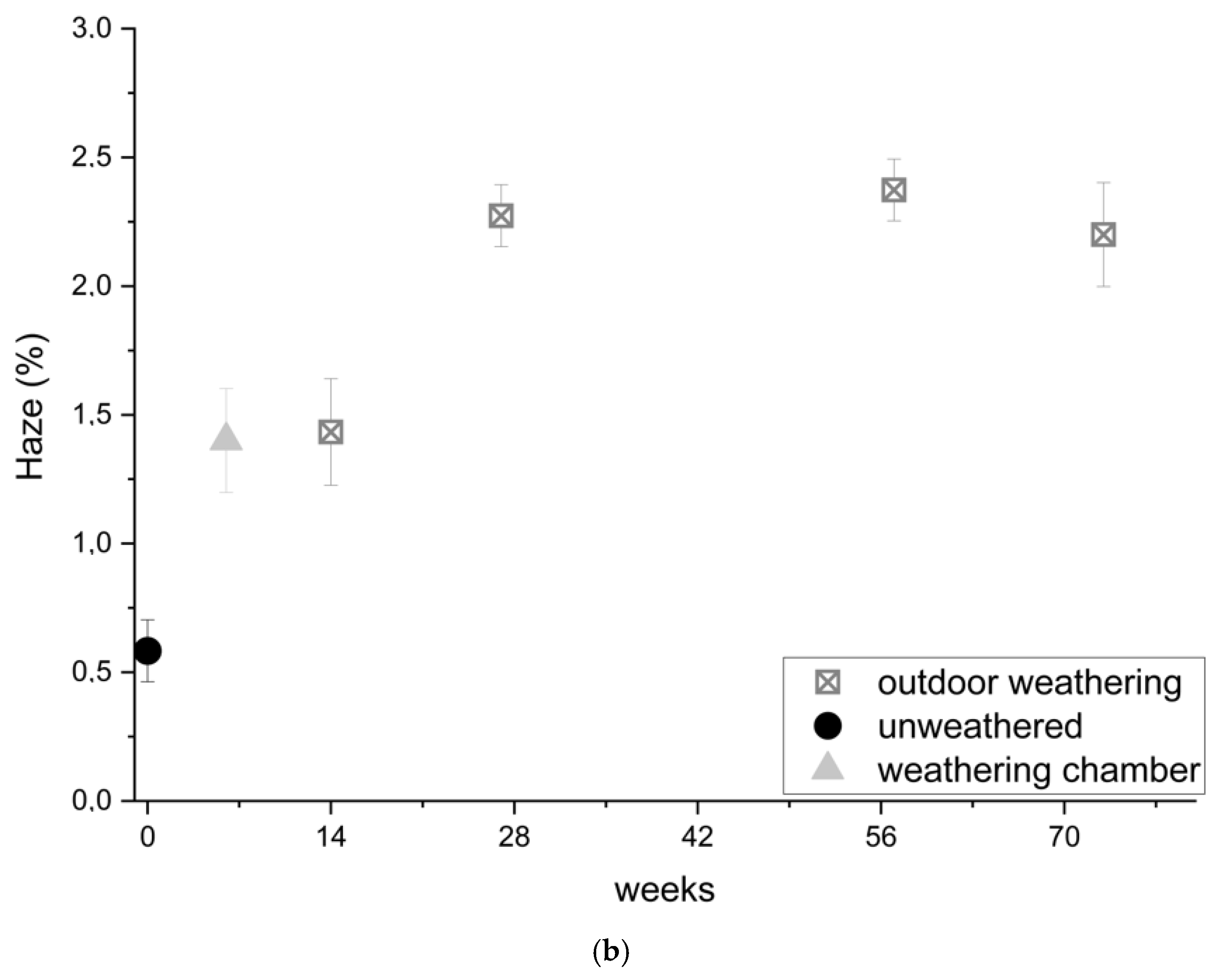
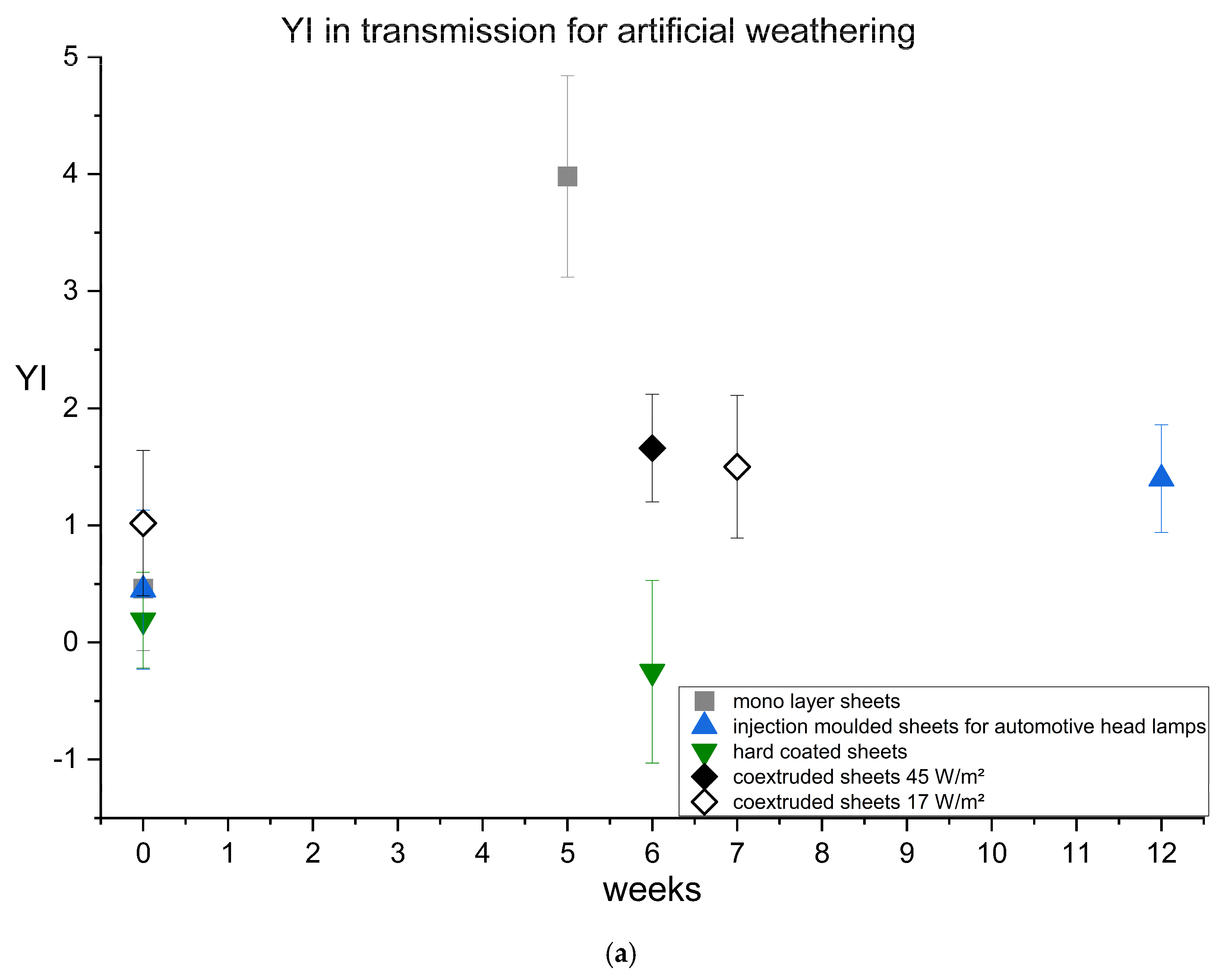
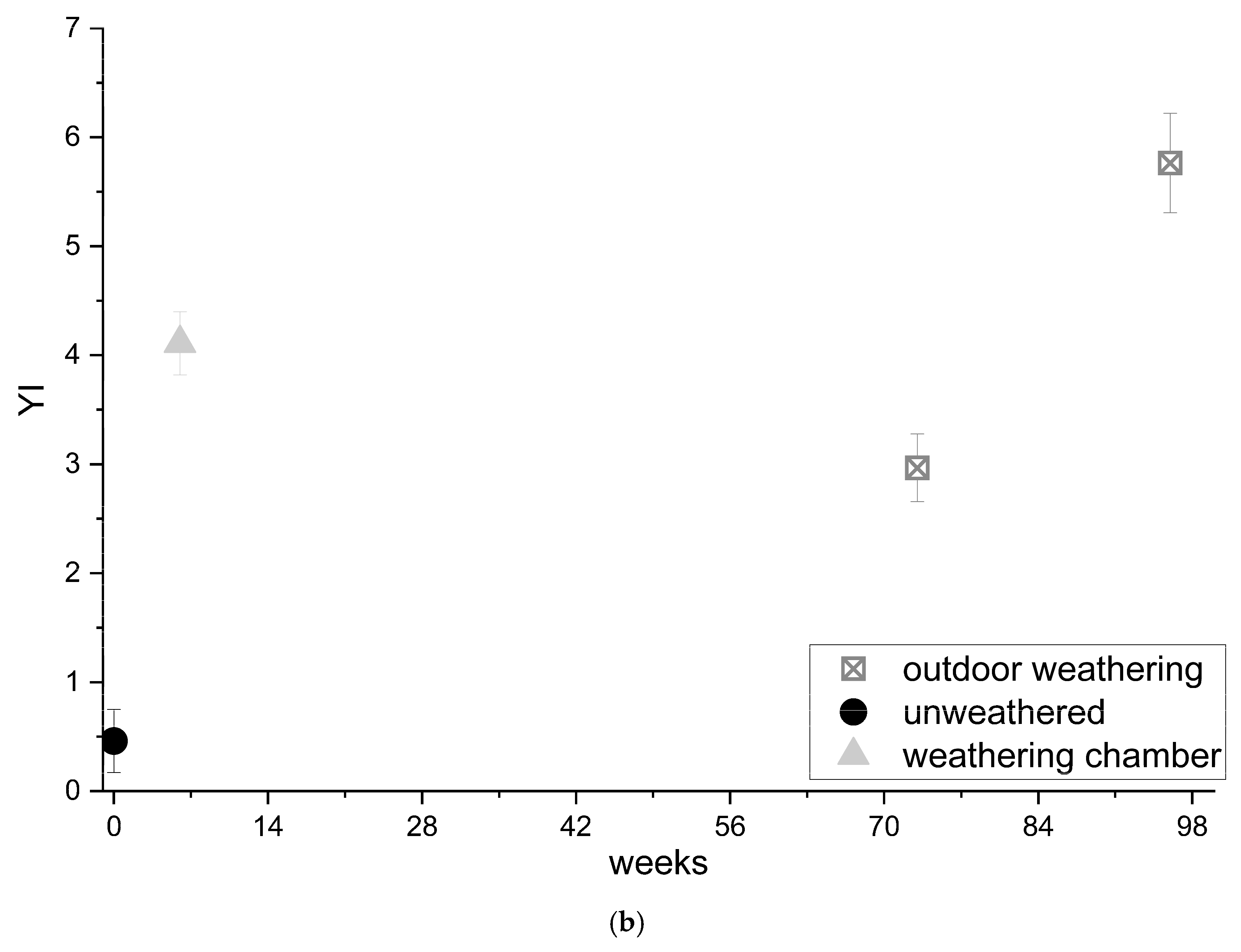
Figure 4 and
Figure 5 show the development of yellowness index and haze during the weathering period.
The yellowness index of unweathered reference samples was 0.5, increasing to 4.1 after six weeks in the weathering chamber. For comparison, PC samples with low UV absorber content exposed to outdoor weathering in Horstwalde, Germany (52°05′44.6″ N, 13°24′34.1″ E) for 73 and 96 weeks showed yellowness indices of 3.0 and 5.8, respectively. These outdoor samples were positioned on a weathering rack at a 45° angle to the south according to ASTM D1435 [
22]. This correlation further validates the previously established acceleration factor of approximately 13 based on UV-radiation dose for the artificial weathering process compared to Central European outdoor radiation conditions.
Haze measurements of these PC samples with low UV absorber content indicated progressive surface degradation. Haze increased from 0.6 to 1.4 after 6 weeks of artificial weathering and from 0.9 to 3.7 after 70 weeks outdoors.
3.4. Comparison with Previous BPA Release Study Results
The current findings significantly advance the understanding of BPA release from PC materials compared to the weathering study performed in 1999, which served as the basis for the annual recurring release rate of 0.15 mg m−2 for outdoor PC applications in the EU Risk Assessment of BPA (EU-RAR 2003/2008). Both studies investigated PC samples with low UV absorber content, but several methodological differences limit the comparability of the results.
The main methodical differences are displayed in
Table 2.
The spectral difference is the most critical: radiation below 300 nm can induce degradation pathways largely absent under terrestrial sunlight, such as direct polymer chain scission. It could also explain the disproportionate correlation to outdoor weathering (2000 h artificial weathering ≈9 years outdoor correlated via yellowness index). By excluding sub 300 nm radiation, the present methodology more closely simulates natural radiation especially in the UV-range, which is most relevant for photo-degradation of PC. Although the previous study also observed cessation of BPA release after a comparable weathering period, it detected higher cumulative releases of 1.35 mg m−2, whereas the present study repeatedly found 0.34 mg m−2 for similar PC samples.
Given the non-natural UV spectrum and the additional confounding factors of the earlier study, its higher accumulated BPA releases should not be used to predict environmental BPA releases from PC outdoor applications. Likewise, the previous approach—dividing the cumulative releases of 1.35 mg m−2 by a correlated outdoor weathering time of 9 years to derive an annually recurring release rate—is no longer supported by the present results. In contrast, the repeatedly observed cessation of releases after a distinct weathering period supports the assumption of one-time releases occurring only during the initial phase of PC outdoor applications’ service life.
3.5. Discussion
3.5.1. Justification and Limitations of the Derived Acceleration Factor
The acceleration factor used in this study was derived solely from the ratio of the UV radiation dose at 340 nm delivered by the weathering chamber (75 kJ m
−2 per day) and the average daily UV dose under typical Central European conditions (5.48 kJ m
−2 per day). The use of a UV dose-based acceleration factor rests on the well-documented correlation between applied UV radiation dose and the characteristic degradation phenomena of yellowing, gloss loss and erosion as described in
Section 1 [
11,
14,
23]. Furthermore, it has been shown that higher UV irradiance accelerates photo-degradation without changing the underlying mechanism, if the wavelength distribution of the applied radiation remains constant [
24] and corresponds to natural radiation [
21]. The spectrum of the used UVA lamps is very similar to terrestrial radiation between 300 and 360 nm, with a lower irradiance above 360 nm. Upon progressing weathering, UV-absorbance of PC increased predominantly in this lower wavelength range, confirming that the lower wavelengths are most relevant for photo-degradation processes of PC, as demonstrated by Diepens et al. 2009 [
24] and Rivaton 1995 [
5].
The irradiance at 340 nm applied in the present study (0.864 W m
−2 nm
−1) exceeds terrestrial maximum summer noon irradiance (as described in
Section 3.2). However, Pickett et al. 2019 demonstrated good reciprocity for typical degradation parameters in artificial weathering using a SPHERE light source at similarly elevated irradiances [
11,
14,
23].
The validity of the acceleration factor was additionally corroborated within the present study by the yellowness index measurements (
Section 3.3).
Nevertheless, outdoor weathering involves multiple interacting factors, and UV-dose alone cannot fully reproduce the kinetics of all processes involved in natural weathering. Several limitations of the applied protocol must be acknowledged: First, the weathering chamber simulated only the more energetic part of the solar spectrum (300–400 nm); the less energy-rich part of sunlight (visible and infrared) was not applied. Second, even within the simulated range, the spectral distribution of the UVA-340 lamps differs partly from that of natural sunlight, although, most importantly, a quartz glass filter eliminated wavelengths below 300 nm, which do not occur in terrestrial sunlight. Third, the accelerated protocol applies permanently high irradiance as well as more intense temperature cycling and wet–dry alternation than typical Central European outdoor conditions, which may affect the kinetics of hydrolysis and photo-degradation [
11,
14,
23] differently than under natural exposure. Hence, the acceleration factor should be understood as a dose-based approximation that primarily captures the UV-driven photo-oxidative processes, whereas processes governed by other parameters, such as temperature-dependent hydrolysis, may not scale exactly with the same factor.
3.5.2. Cessation of BPA Releases
For samples with PC at the outer surface, the repeatedly observed release patterns indicate decreasing release rates after around 4 weeks and total cessation after around 6 weeks of artificial weathering. Due to the experimental setup of measuring accumulated BPA releases in a closed-loop water cycle, at cessation, accumulated BPA concentrations above 3000 ng L
−1 were measured, thus two orders of magnitude above the LOQ of 30 ng L
−1. Furthermore, stable concentrations have been measured repeatedly after the observed cessation for at least five further weeks in the prolonged weathering test runs. Stable concentrations of accumulated BPA were measured 25 to 30 times after the observed cessation. Further, during the validation procedure as described in [
18], the stability of BPA under the test conditions was confirmed. Limited solubility could not cause cessation, as the measured maximum concentrations (~3000 ng L
−1) were far below the solubility of BPA at room temperature (~300 mg L
−1). Further, diffusion of BPA from and into PC is extremely slow as investigated by Mercea 2009 [
25], which makes it very unlikely that diffusion is a relevant factor for the observed release pattern. Thus, the repeatedly observed complete cessation of BPA releases is regarded as a robust finding.
3.5.3. Role of Hydrolysis in the Initial Phase
Earlier investigations showed that BPA release from PC in the absence of UV radiation is dominated by surface hydrolysis, which occurs under harsh conditions such as direct water contact at elevated temperatures and/or higher pH values; the contribution of diffusion of residual, unreacted BPA is negligible [
25]. The BPA releases observed during the initial phase of artificial weathering can therefore be largely explained by hydrolysis: Direct water contact [
25] and elevated relative humidity [
26], especially at raised temperatures, trigger hydrolytic chain scission at carbonate bonds. Cleavage of carbonate bonds in the PC chain could only lead to BPA release at terminal BPA groups; elsewhere, it shortens the PC chains and increases the number of phenolic end groups, which in turn accelerates further hydrolysis [
27]. This autocatalytic behavior could explain the increasing BPA release rate, e.g., the sigmoidal curve shape, during the first days of weathering. The accelerated weathering cycle—water spray at room temperature followed by heating up to 70 °C, followed again by a water spray period—is considered suitable to trigger hydrolysis: during the high-temperature phases, residual moisture from the preceding rain period is still present on the sample surface, and the continuous high-intensity UV radiation may raise the sample surface temperature above the chamber temperature. This effect can be expected to increase with progressing weathering time, as UV absorbance rises with radiation dose due to photo-degradation [
4]. It remains unclear if or in how far the applied UV radiation also influences the detected BPA releases directly, thus beyond a potential surface temperature effect.
3.5.4. UV Dose at Cessation and Comparison with Literature
BPA releases ceased after an applied UV dose between 2.1 MJ m
−2 nm
−1 at 340 nm after 28 days and 3.1 MJ m
−2 nm
−1 at 340 nm (≈160 MJ m
−2, 300–400 nm) after 42 days. These doses are similar to those at which the onset of gloss loss has been reported: ~150 MJ m
−2 (300–400 nm) for outdoor weathering of white pigmented PC (2% TiO
2) [
11], ~100 MJ m
−2 (295–400 nm) for artificial weathering of white pigmented PC (3% TiO
2) under SPHERE radiation [
23], and 1–2 MJ m
−2 nm
−1 at 340 nm for outdoor and artificial xenon arc weathering of pigmented PC (2% TiO
2) [
14]. For transparent PC with some UV absorber, the same study revealed a scattered picture for gloss loss in outdoor weathering, whereas the artificial xenon arc weathering indicated gloss loss starting after almost 4 MJ m
−2 nm
−1 at 340 nm [
14].
3.5.5. UV-Dose at Onset of Erosion Described in Literature
Kuvshinnikova et al. 2019 [
14] observed a lag period of 9 months for the onset of erosion under outdoor weathering in Florida and Arizona, equivalent to ~3 MJ m
−2 nm
−1 at 340 nm, followed by erosion of ~5 µm per year (corresponding to 4 MJ m
−2 nm
−1 annually). The same erosion rate was found under artificial xenon arc weathering after the corresponding dose, and erosion was even observed in the absence of rain under extremely dry conditions. The onset of erosion coincided with the beginning of gloss loss; both effects were ascribed to extensive photo-oxidation of the topmost few µm, which produces small, highly oxidized fragments that are washed away or even sublime [
14].
Frank 1990 [
13], weathering unprotected PC outdoors in Darmstadt, Germany, measured the onset of erosion after 1.8 years and subsequently an annual surface wear of 2.2 µm outdoors. The annual Central European radiation dose of ~2 MJ m
−2 nm
−1 at 340 nm is roughly half of that in Florida/Arizona, indicating that the erosion rate correlates with the radiation dose. Artificial weathering in a Xenotest 1200 (Atlas, Linsengericht-Altenhasslau, Germany)(cutoff below 300 nm) triggered a wear of 3.5 µm per 1000 h, again only after a lag (“incubation”) period of ~1300 h, corresponding to ~1.8 years and ~3.6 MJ m
−2 nm
−1 at 340 nm found outdoors—in good agreement with Kuvshinnikova et al. [
12]. (The radiation dose of the Xenotest 1200 was not reported; the author’s correlation indicated that 2000 h Xenotest 1200 corresponds to ~3 years outdoors). For coextruded PC films with a high-UV-absorber “weather skin” layer, Frank [
13] observed a similar lag period (~1.8 years outdoors/1300 h Xenotest), but a roughly threefold lower surface wear: 0.7 µm per year outdoors and 1.2 µm per 1000 h artificial weathering. We also found indications of erosion on selected coextruded samples after 6 and 11 weeks of weathering, from surface roughness measurements at the boundary between PC masked by the sample holder/PTFE and unmasked, weathered PC. Quantification was not possible, however, because the masked edges were not sharp enough to provide a clearly resolved step; similar challenges have been reported by Pickett et al. 2005 [
11].
3.5.6. Possible Explanation for the Observed Cessation of BPA Releases
Cessation of BPA releases was observed at ~42 days of artificial weathering, corresponding to ~3 MJ m
−2 nm
−1 at 340 nm or 160 MJ m
−2 (300–400 nm), respectively. The coincidence of the UV dose at cessation with the reported onset doses of gloss loss and erosion provides a plausible explanation for the cessation of BPA release: with advancing photo-degradation, the chemical composition of the topmost layer is progressively transformed into highly oxidized, rearranged and increasingly fragmented building blocks [
9,
10]. The onset of gloss loss and erosion has been ascribed to superficial photo-oxidation, which has progressed that far that small, highly oxidized fragments are starting to be washed away by water or even sublime from the surface [
13,
14]. It is reasonable to assume that the photo-degradation and fragmentation of the outermost layer have progressed that far, so that ultimately no more BPA could be released. Under the presumption that BPA releases are largely caused by hydrolysis, almost complete photo-degradation of superficial terminal BPA groups would suffice to explain cessation.
3.5.7. Self-Limiting Mechanism and Erosion
Degradation leads to the formation of a fully photo-oxidized topmost layer of ~20–40 µm thickness for unprotected PC [
5,
6], from which highly oxidized fragments are progressively washed away, causing erosion [
13,
14]. Annual erosion removes only a few µm per year—far less than the ~20–40 µm thick photo-oxidized layer—and, as UV penetration depth and oxygen diffusion remain essentially unchanged, ongoing erosion is accompanied by perpetual re-establishment of this layer. Therefore, it is deemed plausible that erosion does not regenerate surface compositions capable of releasing BPA by hydrolysis; it rather constitutes a continuous self-limiting mechanism that prevents any further BPA release after the initial weathering phase. The present results strongly support this hypothesis: in several replications, prolonged weathering (up to 11 weeks, ≈5.8 MJ m
−2 nm
−1 at 340 nm) produced no further BPA release from any sample with a PC surface after cessation at 4–6 weeks. Further investigations—such as surface-sensitive analytics on PC samples weathered according to the protocol of this study or analysis of degradation products in the circulating water—would be required to provide further proof for the hypothesized, yet plausible explanation. However, such investigations were not in the scope of the present study.
3.5.8. Independence of UV Absorber Content
BPA release was almost independent of the UV absorber concentration: coextruded sheets with high UV absorber content in the outer PC layer and PC with only basic UV protection showed almost identical release patterns and amounts. This further supports hydrolysis, rather than photochemical processes, as the main driver for the releases during the initial phase: Hydrolysis occurs at the very surface, whereas UV absorbers require a certain absorption depth and primarily protect the bulk material, not the topmost thin layer in which photo-oxidation still leads to transformation of BPA building blocks.
3.5.9. Coated Samples
For coated samples, accumulated releases were almost two orders of magnitude lower than the samples with a PC outer surface, and the release ceased earlier: after ~1–2 weeks for the polysiloxane hard-coated sheet samples and after ~4–5 weeks for the samples with UV-cured coating. Hydrolysis of PC can be excluded as a source of these minimal releases (0.003–0.005 mg m
−2), since such commercial coatings act as an effective barrier for water [
3]; Hydrolysis beneath the coating would cause delamination of the coating from the substrate, which was not observed. A more plausible explanation is that BPA present in the outer sphere of the coating itself—e.g., superficial BPA on the PC surface dissolved by the coating solvents during spray application—diffuses into the sprinkling water. According to technical information received from the coating supplier, BPA is not part of its composition. Thus, the original coating as a potential source is deemed less likely, even though cross-contamination could not be excluded.
3.5.10. Reduced Irradiance Experiment
The experiment at reduced irradiance (18 vs. 45 W m
−2, 300–400 nm), apparently resulted in almost proportionally reduced BPA releases. Although this observation appears to follow the reciprocity principle, as do other degradation parameters such as yellowing and erosion, this conclusion is not straightforward. Release is governed by surface hydrolysis of the carbonate bond of terminal BPA units, which should not obey reciprocity. A plausible explanation could be an indirect temperature effect: PC’s low thermal conductivity together with dose-dependent UV absorbance [
4] could raise surface temperatures, more so at the higher irradiance. Since hydrolytic BPA release is temperature-dependent [
25], higher irradiance could increase release. Hence, this might constitute a “pseudo” reciprocity as only indirectly linked to radiation dose. However, this hypothesis could not be proven, as surface temperatures were not measured. Furthermore, there is no straightforward explanation for the earlier cessation at lower irradiance. Further experiments at various irradiances would be required to establish the correlation between irradiance, releases, and cessation.
Nevertheless, the results of the lower irradiance experiment corresponding to average terrestrial UV irradiance confirm cessation of BPA and demonstrate that the release data obtained at high irradiance represent a conservative, upper-bound estimate rather than an underestimation of environmental BPA release from PC.
3.6. Implications of the Results for Predicting the Long-Term Behavior of BPA Release from PC Materials
The current study demonstrated that BPA releases only occur during an initial period of exposure to weathering. After a UV radiation dose of ~2–3 MJ m−2·nm−1 (340 nm) corresponding to approximately 1–1.5 years outdoors in Central Europe, releases cease to virtually zero, plausibly explained by the formation of a photo-oxidized layer which prevents any further BPA releases, creating a self-limiting system. Hence, one-time releases rather than recurring annual release rates are deemed to be the most appropriate approach to assess BPA releases from PC outdoor applications. For a conservative assessment, we propose using the maximum values of the detected accumulated BPA releases measured in this study at high spectral irradiance: Unprotected PC and coextruded PC sheet: 0.34 mg m−2; automotive headlamp: 0.005 mg m−2; hard-coated PC sheet: 0.003 mg m−2.
This approach is conservative for two reasons: It uses the maximum measured value per product category, and it uses values obtained at a spectral irradiance slightly exceeding terrestrial maximum summer noon irradiance (Miami) [
11], which is in the range of maximum irradiance occurring outdoors globally. The experiment at lower spectral irradiance corresponding to the average terrestrial UV radiation intensity resulted in significantly lower accumulated BPA releases, which clearly supports that the chosen approach is reasonably conservative, if not worst-case.
Given the good reproducibility of the observed BPA release pattern and amounts, the testing of different samples representative for main PC outdoor applications and the implemented rigorous quality-ensuring measures, the present results provide a robust scientific basis for environmental risk assessments and service life predictions.
This study results suggest that:
BPA release from outdoor PC applications is limited to the initial environmental exposure period only, with no continuous release throughout the product lifecycle.
Erosion of PC does not trigger BPA releases, as the onset of erosion and cessation of BPA releases coincide after exposure to a similar UV-radiation dose.
Surface coatings effectively control BPA emissions.