Article

Freeze–Thaw-Induced Surface Crack and Pore Structure Evolution in Compacted Expansive Soil

1
Faculty of Engineering, China University of Geosciences (Wuhan), 388 Lumo Avenue, Wuhan 430074, China
2
Qinghai Provincial Center for Land Consolidation and Ecological Restoration, Xining 810016, China
*
Author to whom correspondence should be addressed.
Appl. Sci. 2026, 16(18), 9281; https://doi.org/10.3390/app16189281 (registering DOI)
Submission received: 6 August 2026 / Revised: 6 September 2026 / Accepted: 7 September 2026 / Published: 18 September 2026

Abstract

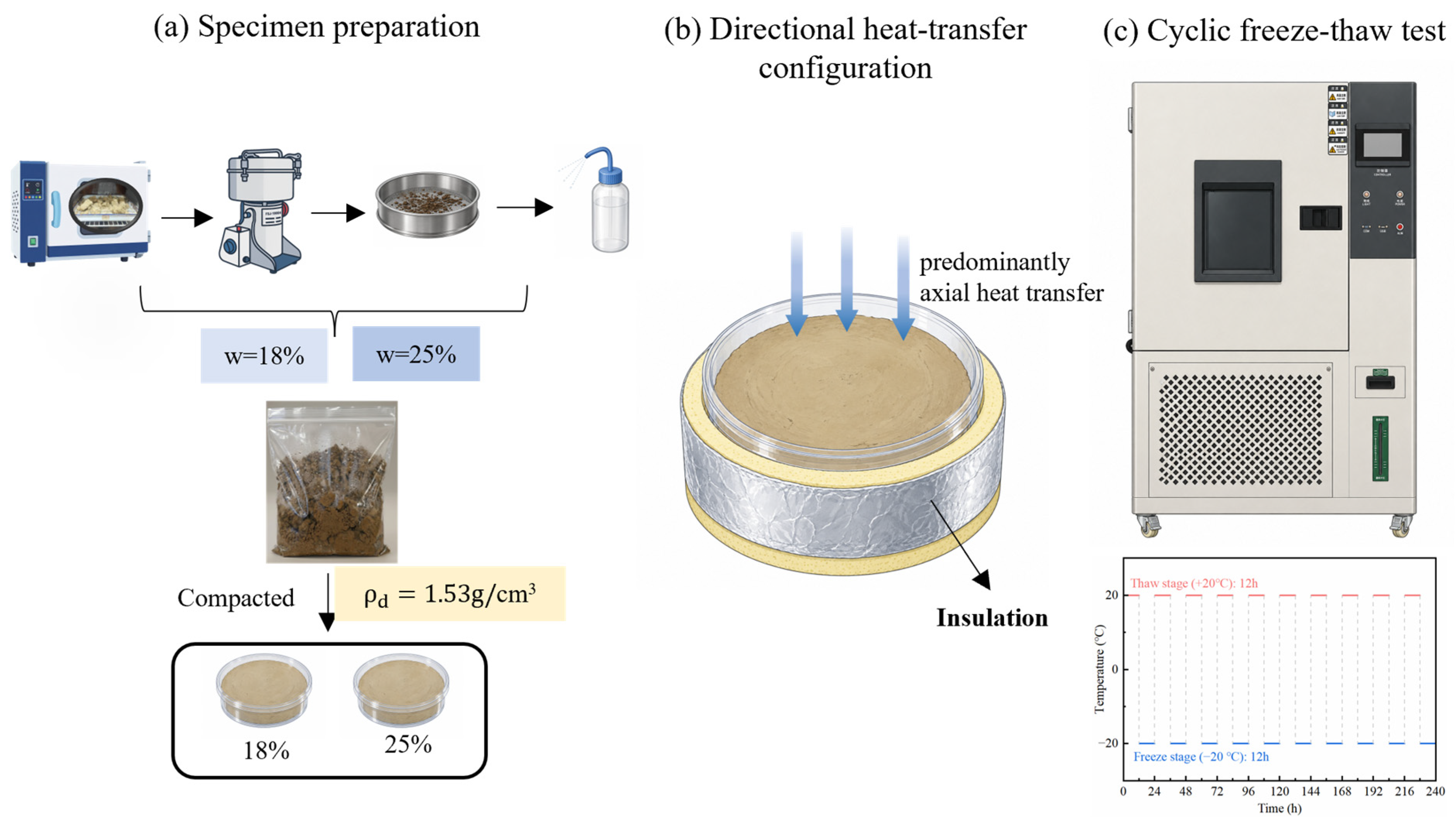
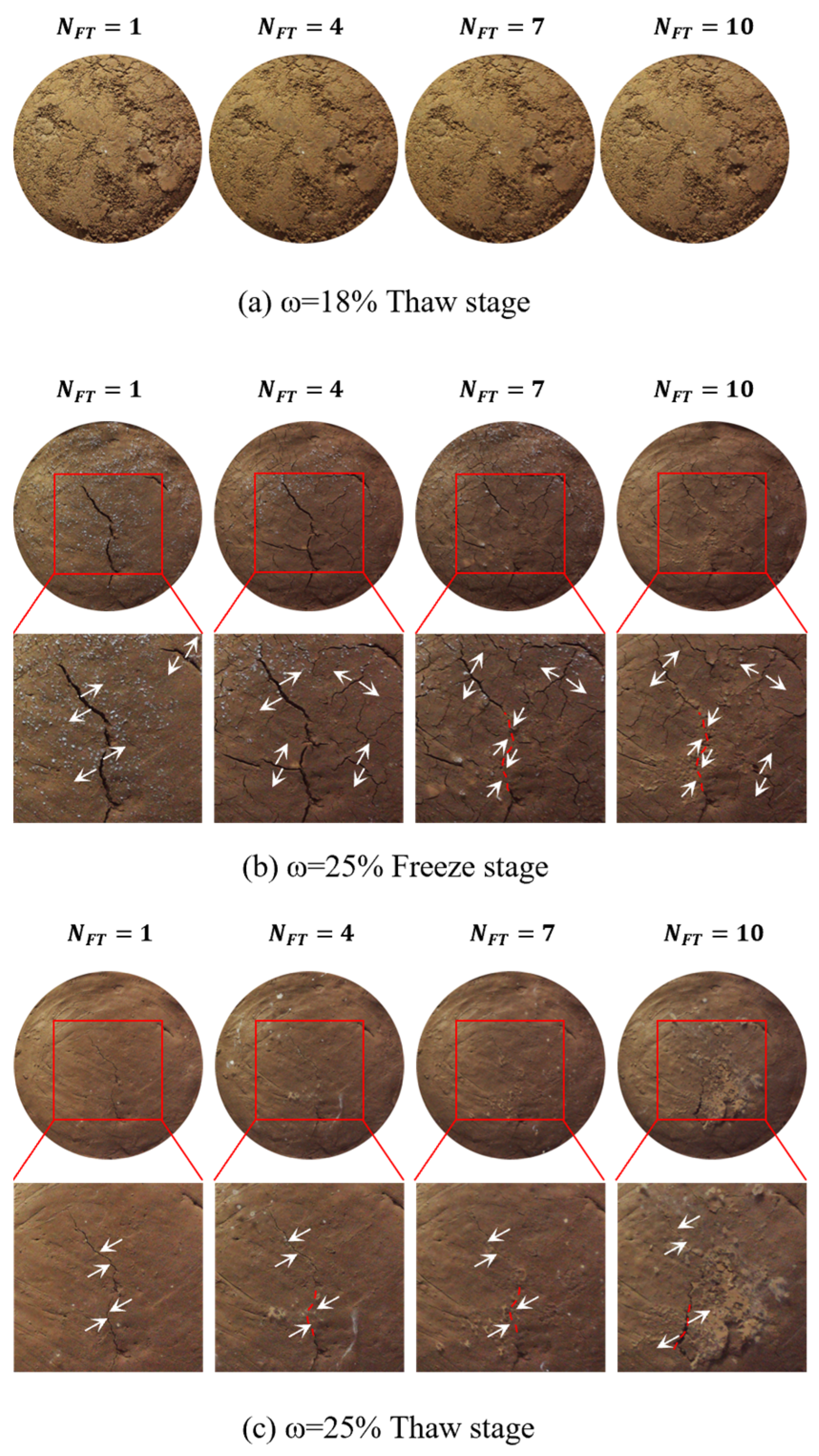
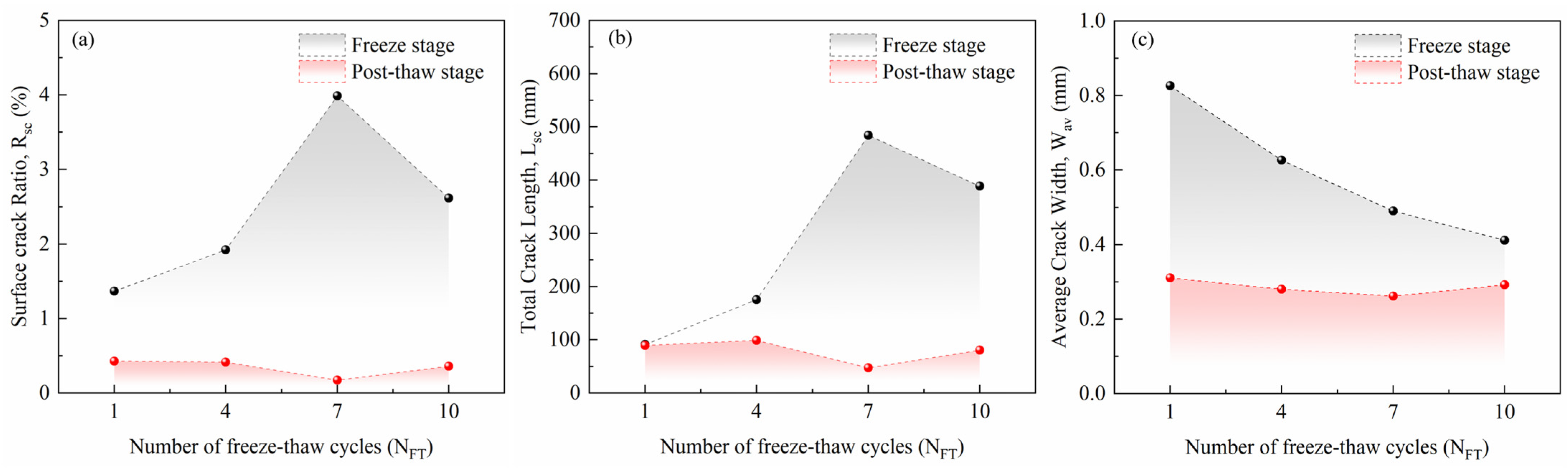
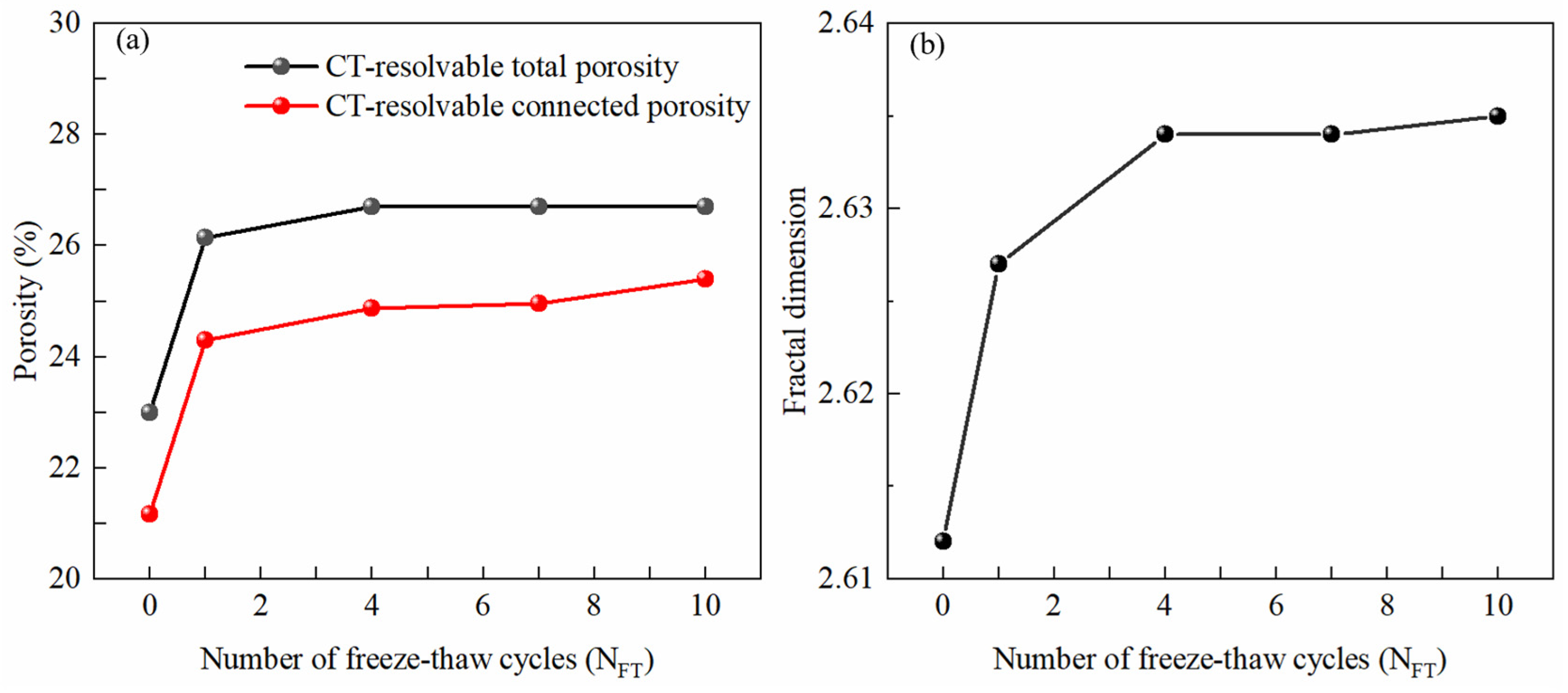
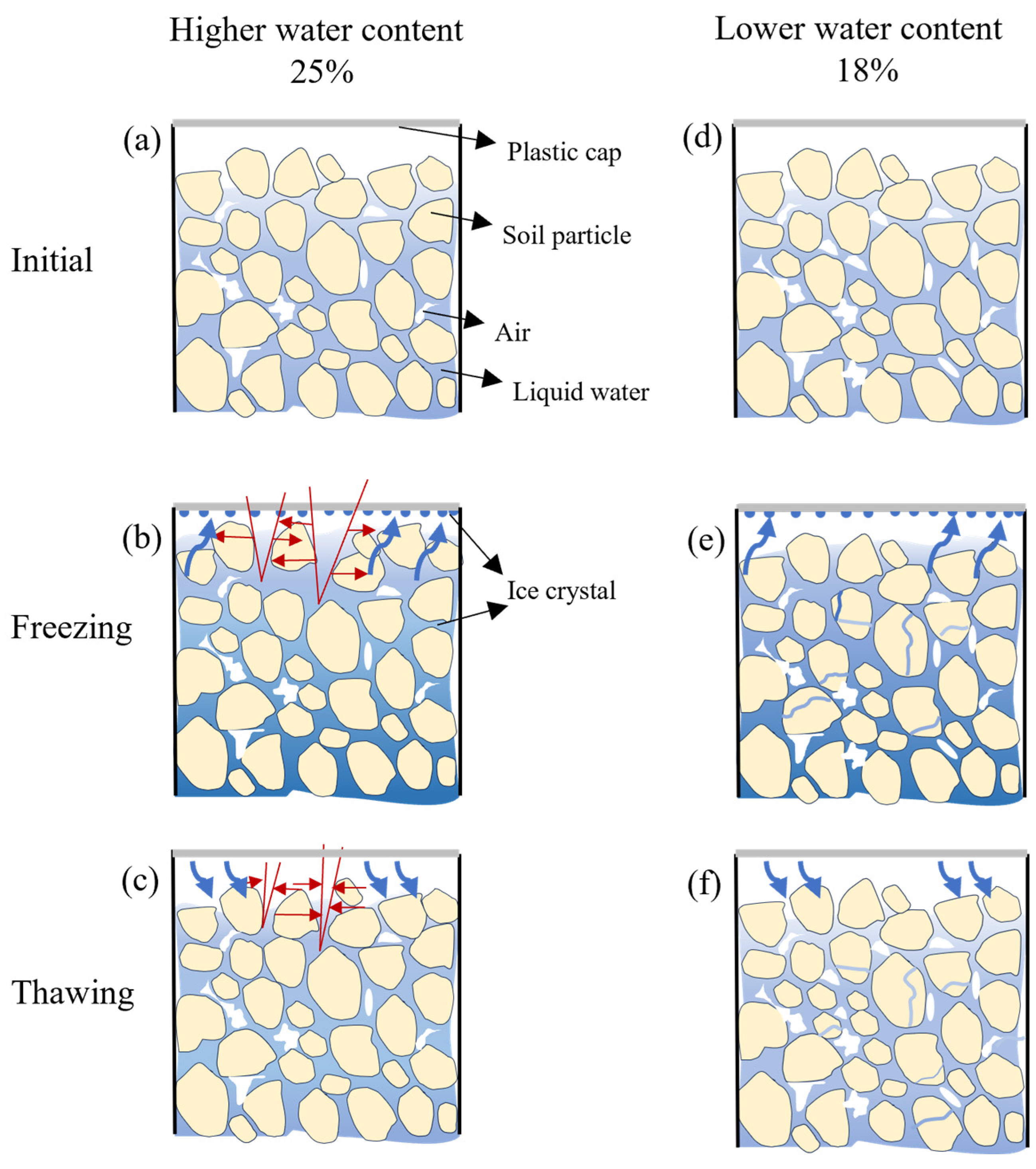
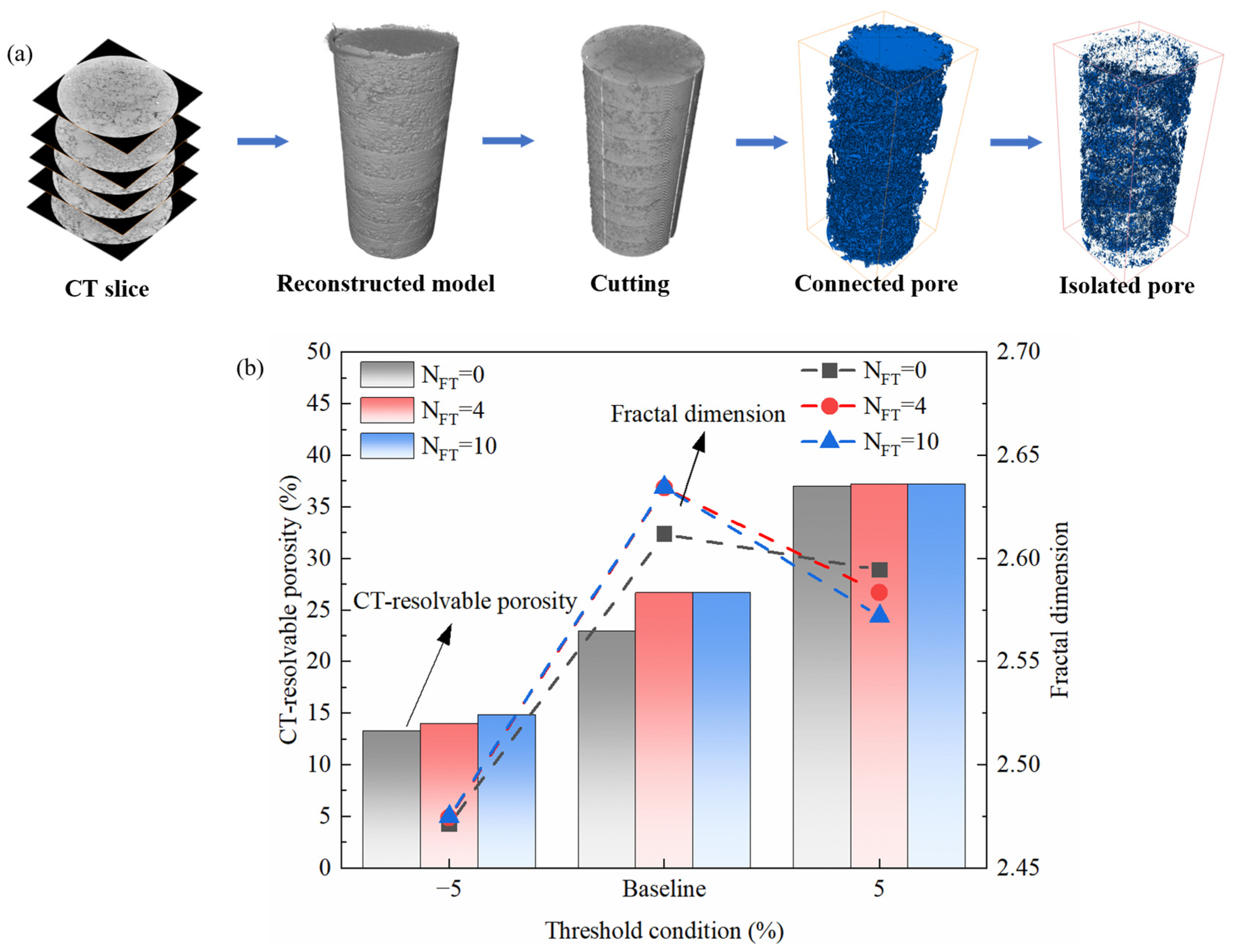
Reliable characterization of freeze–thaw-induced structural change is essential for evaluating compacted soils used in cold-region engineering, where repeated freezing and thawing can alter both surface integrity and internal pore structure. This study combines digital imaging, quantitative crack analysis, and X-ray computed tomography to characterize structural changes in compacted expansive soil subjected to 0, 1, 4, 7, and 10 freeze–thaw cycles. Specimens with initial water contents of 18% and 25% were observed during freezing and after thawing, while the post-thaw three-dimensional pore structure of the 18% specimen was reconstructed from CT images. The 18% surface specimen exhibited no continuous crack network despite evident internal pore restructuring, whereas the 25% specimen showed pronounced crack opening during freezing and partial closure after thawing. With increasing cycles, the crack pattern evolved from a dominant wide crack to a branched network of narrower cracks and then became less continuous. CT-resolvable porosity increased from 23.0% initially to 26.7% after four cycles and then remained nearly stable, whereas connected porosity increased to 25.4% after ten cycles. These complementary observations indicate that post-thaw surface appearance alone may underestimate freeze–thaw-induced structural disturbance and highlight the importance of moisture condition and early-cycle evolution in cold-region engineering.
Keywords: digital image analysis; X-ray computed tomography; freeze–thaw cycling; compacted expansive soil; three-dimensional reconstruction digital image analysis; X-ray computed tomography; freeze–thaw cycling; compacted expansive soil; three-dimensional reconstruction