1. Introduction
In the construction of high-speed railways through red-bed mudstone regions, excavated mudstone is frequently reused as subgrade fill to minimize land consumption and reduce construction costs. This practice has been adopted for selected sections of the Lanzhou–Urumqi, Chengdu–Chongqing, and Sichuan–Tibet High-Speed Railways. However, significant heave deformation has been observed in sections where red-bed mudstone filler was adopted [
1,
2], which jeopardizes the safe operation of China’s high-speed railway infrastructure. The red-bed mudstone filler commonly hosts water-absorbing clay minerals, notably montmorillonite and illite, which provide the material foundation for swelling deformation upon water uptake [
3]. These mineralogical characteristics result in poor engineering properties and low strength, classifying the fill as Class C material [
4]. Ballastless track systems impose stringent specifications on subgrade replacement materials; red-bed mudstone filler in its natural state cannot satisfy these requirements and must therefore be improved before use [
2,
5]. Cement, lime, fly ash, and chemical additives are among the most widely used treatments for problematic soils [
5,
6,
7]. Of these options, cement stands out as the most widely adopted chemical stabilizer, thanks to its stable structure, pronounced cementitious behavior, and reliable performance on a wide variety of soils [
7]. The manufacture of cement is responsible for roughly 8% of global anthropogenic CO
2 emissions [
8], and cement-improved soil may alkalize the environment and affect nearby ecosystems during service [
9]. These drawbacks of high energy consumption and environmental pollution conflict with sustainability objectives. In response to China’s “3060” dual-carbon targets, it is urgently necessary to develop green, ecologically compatible improvement materials that meet engineering requirements while achieving energy conservation, emission reduction, and environmental protection.
In recent years, microbially induced carbonate precipitation (MICP) has drawn growing interest for soil and rock reinforcement [
10]. MICP has proven effective in enhancing soil strength, impermeability, and durability while consuming little energy and causing negligible pollution, which makes it a green and sustainable soil improvement technology [
11]. Several studies have explored the integration of MICP with cement stabilization. Li et al. [
12] used MICP to cut the curing period and cement dosage, boosting the unconfined compressive strength (UCS) of cement-stabilized granite residual soil by as much as 87.5%. Zhang et al. [
13] reported that combining MICP with cement yielded extra calcite and calcium silicate hydrate (C–S–H) inside the silt matrix, thereby improving the UCS, internal friction angle, and cohesive force compared with cement treatment alone. Taken together, these studies show that the joint use of MICP and cement is capable of improving the mechanical properties of soils. However, the improved specimens typically transition from ductile to brittle behavior, with much lower deformation capacity. The means by which the ductility of cement–MICP-treated soil can be enhanced therefore warrant systematic investigation. More importantly, previous studies by the research group systematically investigated the mechanical and impermeability performance of cement–MICP-improved red-bed mudstone filler and determined 3% as the optimum cement content [
14], and these studies revealed a key bottleneck: although the strength of cement–MICP-improved specimens was significantly enhanced, their stress–strain curves dropped rapidly after the peak, exhibiting typical brittle failure characteristics without synchronized improvement in failure strain. For high-speed railway subgrades, this conflict between high strength and low ductility is problematic: earlier studies have demonstrated that the cumulative deformation of red-bed mudstone filler under cyclic train loading depends strongly on the dynamic stress level, and once the dynamic stress surpasses a critical threshold, the deformation accelerates rapidly and approaches dynamic instability [
15,
16]. Under such conditions, brittle failure of the fill means that the bearing capacity may be lost rapidly after local damage, triggering uneven settlement or even progressive instability of the subgrade. Therefore, improving the ductility of the improved fill while ensuring strength is the core problem that must be solved to promote the engineering application of this technology.
Fiber reinforcement is now a common approach to enhancing the ductility and post-cracking behavior of cement-stabilized soils. Kaniraj and Havanagi [
17] reported that randomly dispersed polyester fibers raised the strength of cement-stabilized fly ash–soil blends and shifted their failure mode from brittle to ductile. Estabragh et al. [
18] found that nylon fibers dispersed in cement-stabilized clay raised both the UCS and the axial strain at failure, converting the brittle response into a more ductile one. Bekhiti et al. [
19] further showed that waste tire rubber fibers increased the UCS and ductility of cement-stabilized bentonite clay while reducing swelling behavior. When uniformly mixed with the soil matrix, randomly distributed fibers form an interlocking three-dimensional network that mobilizes reinforcement in all directions, thereby suppressing crack propagation and enhancing toughness. Zhao et al. [
20] examined the mechanical performance of fiber-reinforced cement-stabilized kaolin containing polypropylene, polyvinyl alcohol, or glass fibers and observed that the UCS peaked at a fiber dosage of 0.5% for all three fiber types, reaching 26.72–27.67 MPa. Mirza and Mir [
21] reported that adding 8% cement together with 0.8% glass fiber raised the UCS of Karewa soil from 145 kPa to 2542 kPa and improved the strength retention index from 0.45 to 0.91 after 12 freeze–thaw cycles. Gul and Mir [
22] reported that 0.6% glass fiber combined with 14% cement kiln dust to reinforce silty soil enabled a 44% reduction in pavement design thickness. Xiao et al. [
23] reported that rice husk fiber at dosages of 0.3–0.5% was more effective than polypropylene fiber in enhancing the splitting tensile strength of cement-stabilized soil.
Of the fiber types examined to date, basalt fiber stands out because of its high tensile strength, high elastic modulus, excellent chemical durability, thermal resistance, and eco-friendly production process [
24]. Cao et al. [
25] reported that basalt fiber markedly improved the static and dynamic compressive strength of cement–fly ash-stabilized soil, with 0.6% as the optimal content delivering the highest UCS and energy absorption capacity, and that it altered the failure pattern from brittle to more ductile. Niu et al. [
26] showed that basalt fiber strengthened cemented subgrade soil and markedly boosted its frost resistance: after 15 freeze–thaw cycles, cemented soil reinforced with 0.5% basalt fiber displayed a much smaller loss in mechanical properties than cemented soil without fiber. Mehmood et al. [
27] found that combining basalt fiber (1.5%, 12 mm length) with enzyme-induced carbonate precipitation (EICP) reduced the permeability coefficient by up to 72% and the swelling pressure by up to 95%. Chen et al. [
28] reported that adding 0.4% basalt fiber to cement-stabilized expansive soil raised the UCS by 24.8% and the shear strength by 24.6–40%, while cutting expansion by 36.17% and contraction by 28.4%.
Despite these advances, most prior work has examined the effects of basalt fiber in cement-stabilized or MICP-improved soils separately. Fiber reinforcement, as a classic soil improvement technique with decades of research history, can effectively improve the post-peak ductility of soil by constructing a three-dimensional network skeleton in the soil that bridges cracks and transfers stress [
17,
18,
19]. However, previous fiber reinforcement studies have mostly focused on conventional cement-treated soil systems, and explorations of combined fiber–MICP reinforcement have mainly targeted sands and loess [
29]. The introduction of fiber into a cement–MICP synergistic improvement system—to simultaneously solve the two problems of brittle failure of the improved fill and excessive cement dosage, thereby establishing a red-bed mudstone filler improvement method with coordinated optimization of strength, ductility, and low-carbon performance—has not yet been systematically reported. Furthermore, the underlying microstructural mechanism governing fiber–cement–microorganism interactions has not been systematically elucidated. Based on the foregoing findings, the present study introduces fiber as an external additive to mitigate the brittleness of cement–MICP-improved red-bed mudstone filler, building upon a predetermined optimum cement content. The influence of fiber content on the compressive strength, shear resistance, and impermeability of the treated fill is systematically evaluated, and the optimal fiber content is identified. Scanning electron microscopy (SEM) is then used to observe the microstructural features of the improved specimens and to clarify how fiber inclusions improve the ductility of the fill.
3. Results and Discussion
3.1. UCS of Improved Red-Bed Mudstone Filler
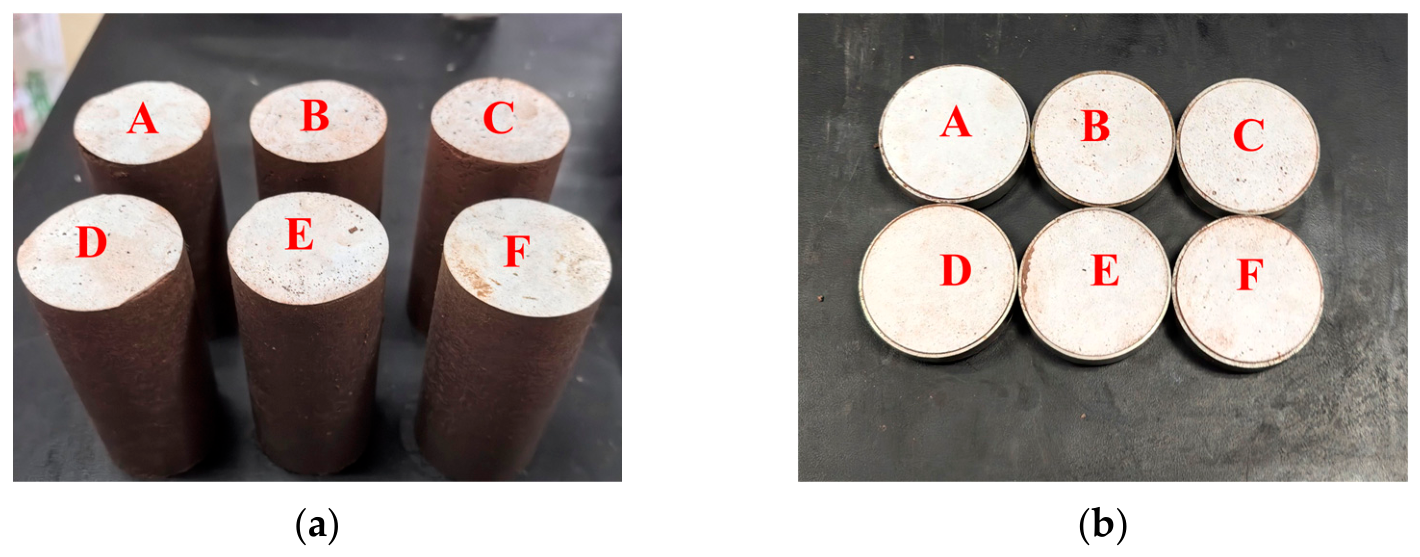
The UCS of the improved specimens was measured on cylindrical samples from different groups using the RMT-150C rock mechanics testing system. Each specimen was 50 mm in diameter and 100 mm in height.
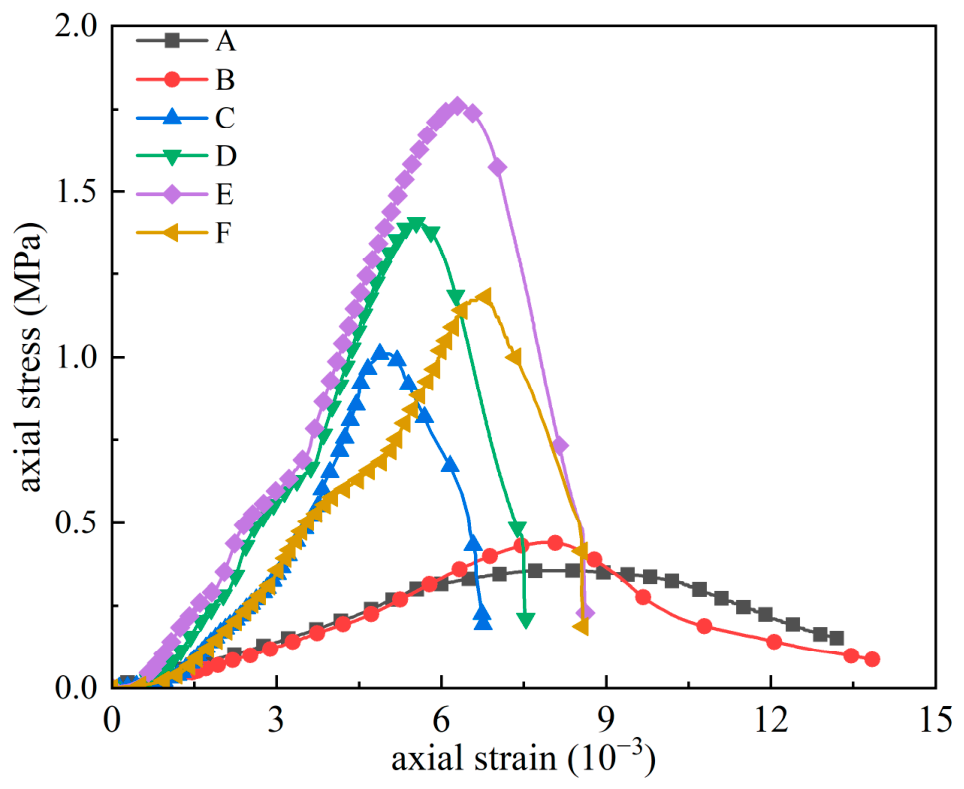
Figure 6 shows typical stress–strain curves of the improved specimens from different groups.
Taking Group A (raw soil) as the control, the compressive strengths of the specimens in Groups B through F all increased, though to different extents, confirming that the addition of microorganisms, cement, and fiber strengthens red-bed mudstone filler. The stress–strain behavior of the improved specimens can be roughly separated into four phases: densification, elastic deformation, yielding, and failure. Beyond the peak compressive strength, the stress dropped more rapidly for Groups C, D, E, and F than for Groups A and B, which indicates that cement addition aggravated the brittleness of the specimens. Relative to Group C (no basalt fiber), the curves of the fiber-bearing Groups D, E, and F shifted upward overall, and their peak points shifted rightward, with the largest shift observed at the optimum fiber content of 0.2%. Fiber inclusion therefore extended the strain at peak strength, effectively mitigating the brittleness of the specimens.
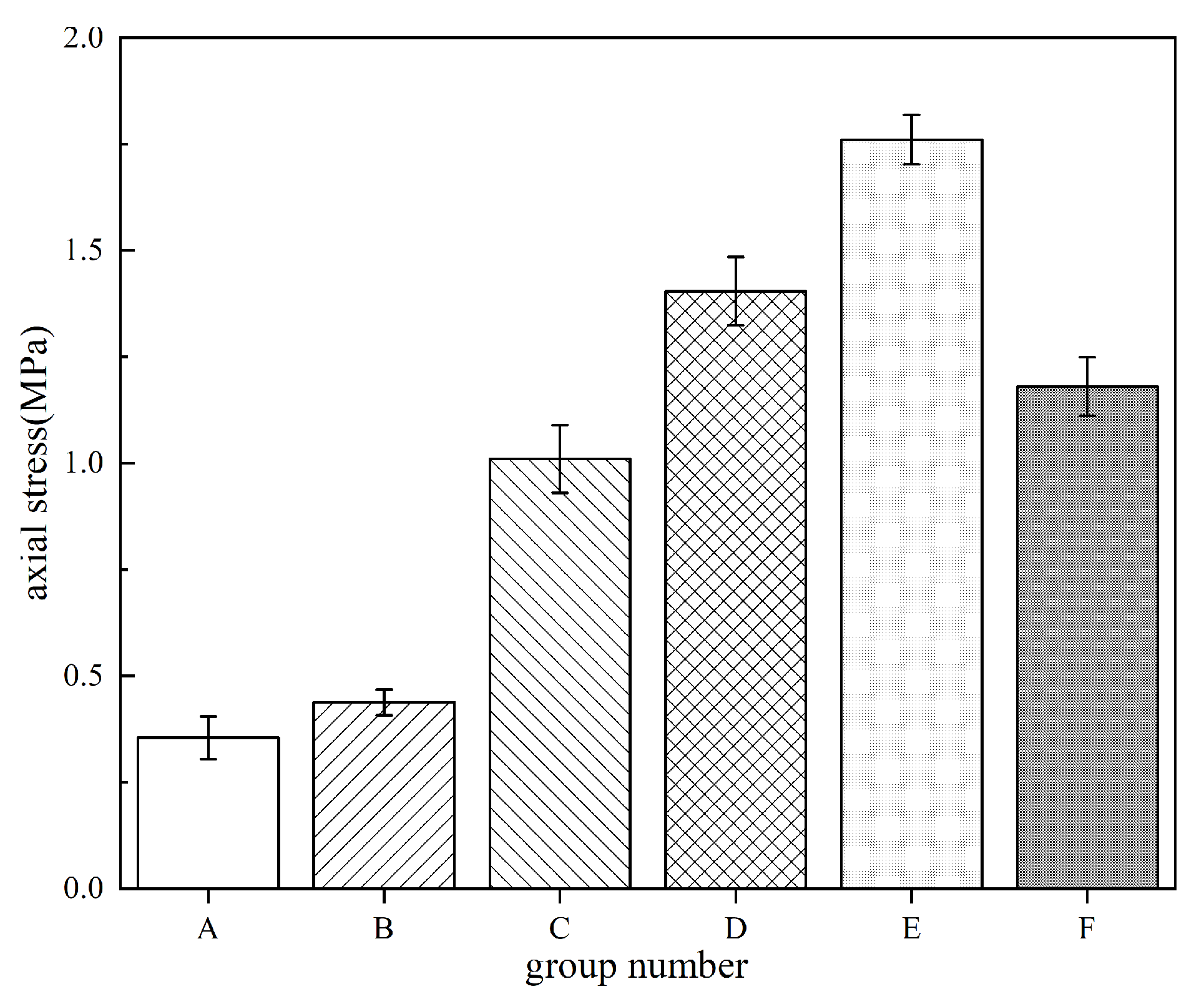
With rising basalt fiber content, the unconfined compressive strength of the improved specimens first increased and then decreased. Relative to Group A, the compressive strength of Groups C, D, E, and F rose by 184.51%, 296.05%, 396.21%, and 232.39%, respectively. It is evident that the combination of basalt fiber with cement–MICP markedly boosts the compressive strength of red-bed mudstone filler. A fiber content of 0.2% yielded the highest compressive strength of 1.76 MPa for the improved specimens. The 396.21% gain achieved here is considerably larger than the 24.8% improvement reported for basalt fiber combined with cement on expansive soil [
28] and the strength gains reported for fiber–cement stabilization of other fine-grained soils [
17,
22]. This larger improvement reflects the additional pore filling and particle bonding contributed by the MICP-induced calcium carbonate, which plain fiber–cement systems cannot provide. Moreover, the peak strain of Groups D, E, and F increased by 39.20%, 74.41%, and 16.83%, respectively, relative to fiber-free Group C. These results confirm that basalt fiber effectively improves the deformation resistance of the improved specimens.
Figure 7 shows the mean peak axial stress and standard deviation of the specimens in each group, confirming the reproducibility of the three replicate specimens.
3.2. Shear Strength of Improved Red-Bed Mudstone Filler
Ring cutter specimens were subjected to direct shear tests with the ZJ-4A quadruple strain-controlled direct shear apparatus. The tests were carried out per ASTM D3080 [
32]. For each test group, the normal stress was set to 100 kPa, 200 kPa, 300 kPa, and 400 kPa, respectively.
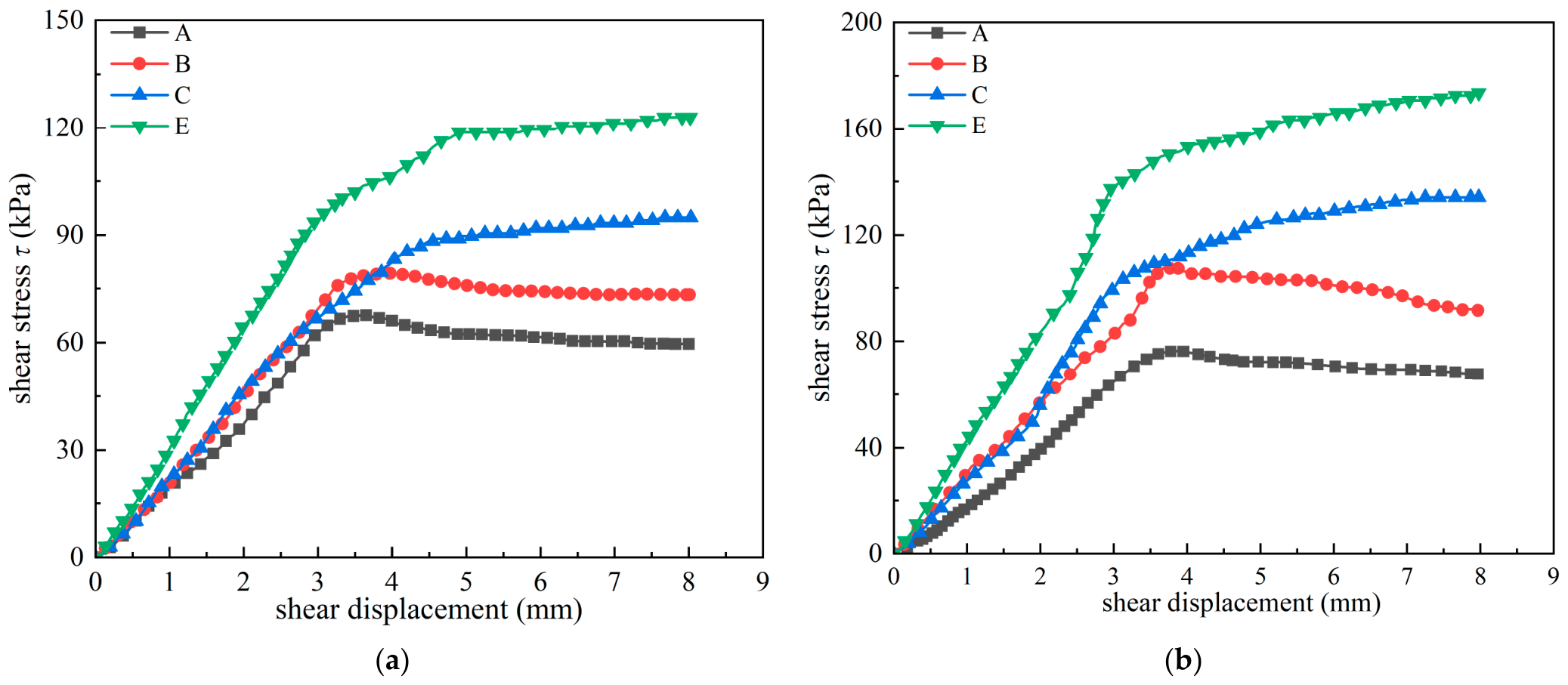
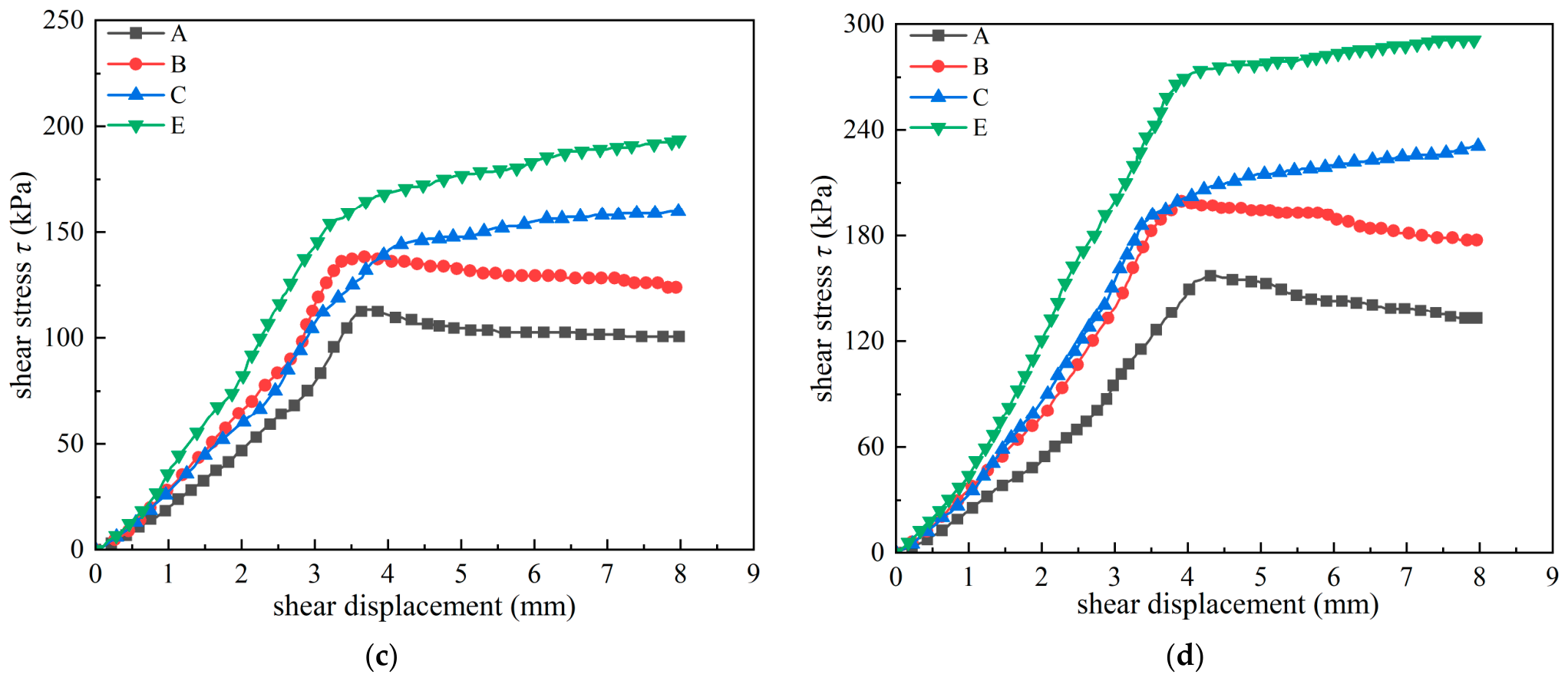
Figure 8 presents the shear stress–shear displacement curves of typical specimens from different groups under various normal stresses. The shear tests were carried out on Groups A, B, C, and E, representing the raw soil, the MICP treatment, the cement–MICP treatment, and the fiber-reinforced cement–MICP treatment at the optimum fiber content, respectively.
Following ASTM D3080 [
32], the shear strength is defined as the peak value of the shear stress–shear displacement curve when such a peak exists; otherwise, the shear stress corresponding to a shear displacement equal to 1/10 of the specimen diameter is adopted as the shear strength.
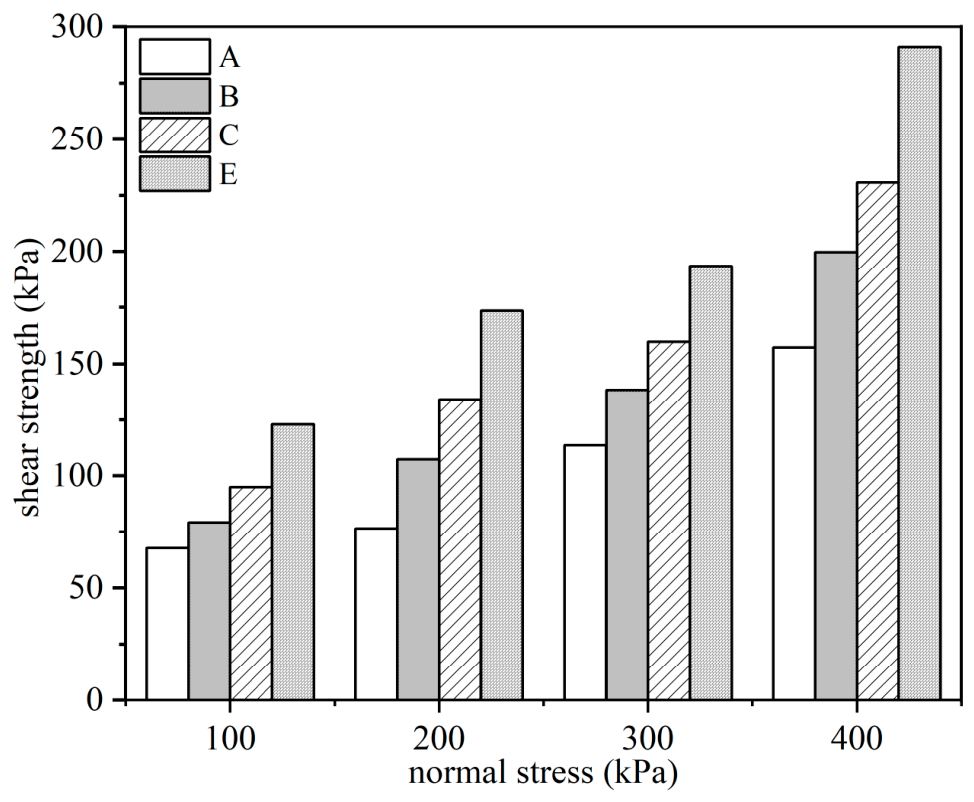
Figure 9 summarizes the statistical results of shear strength for typical specimens under different normal stresses.
As shown in
Figure 9, the shear strength of the improved specimens was substantially increased. Compared with the control group (Group A), the shear strength of Groups B, C, and E increased by 17.16–81.80% at a normal stress of 100 kPa, by 40.45–127.09% at 200 kPa, by 21.83–70.25% at 300 kPa, and by 26.89–84.93% at 400 kPa. The MICP, cement–MICP, and fiber-reinforced cement–MICP schemes all proved effective in enhancing the shear strength of red-bed mudstone filler. Among them, the fiber-reinforced cement–MICP group (Group E) delivered the best performance, with shear strengths of 122.91, 173.52, 193.43, and 290.92 kPa at normal stresses of 100, 200, 300, and 400 kPa, corresponding to increases of 81.80%, 127.09%, 70.25%, and 84.93% relative to the control group (Group A).
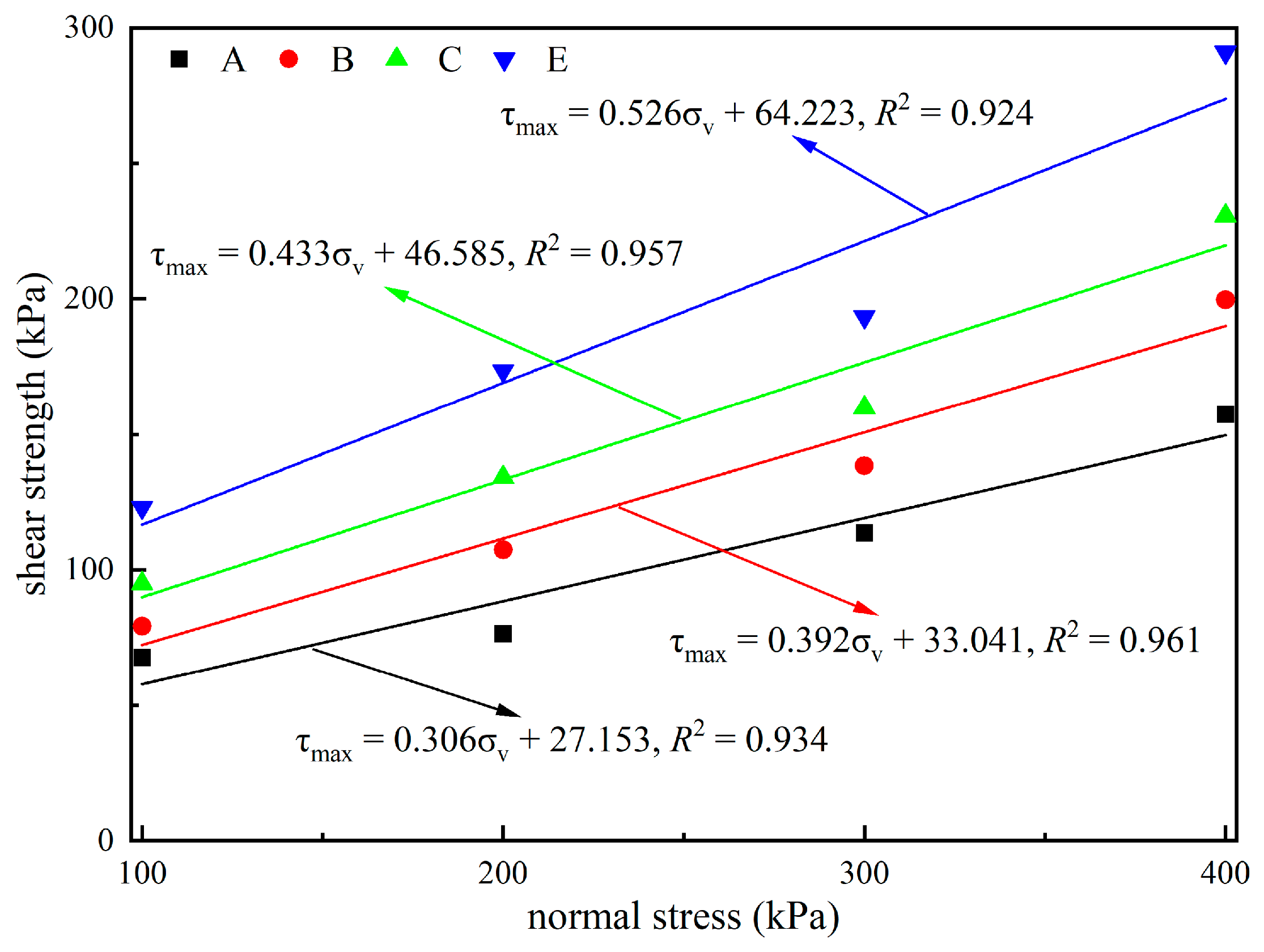
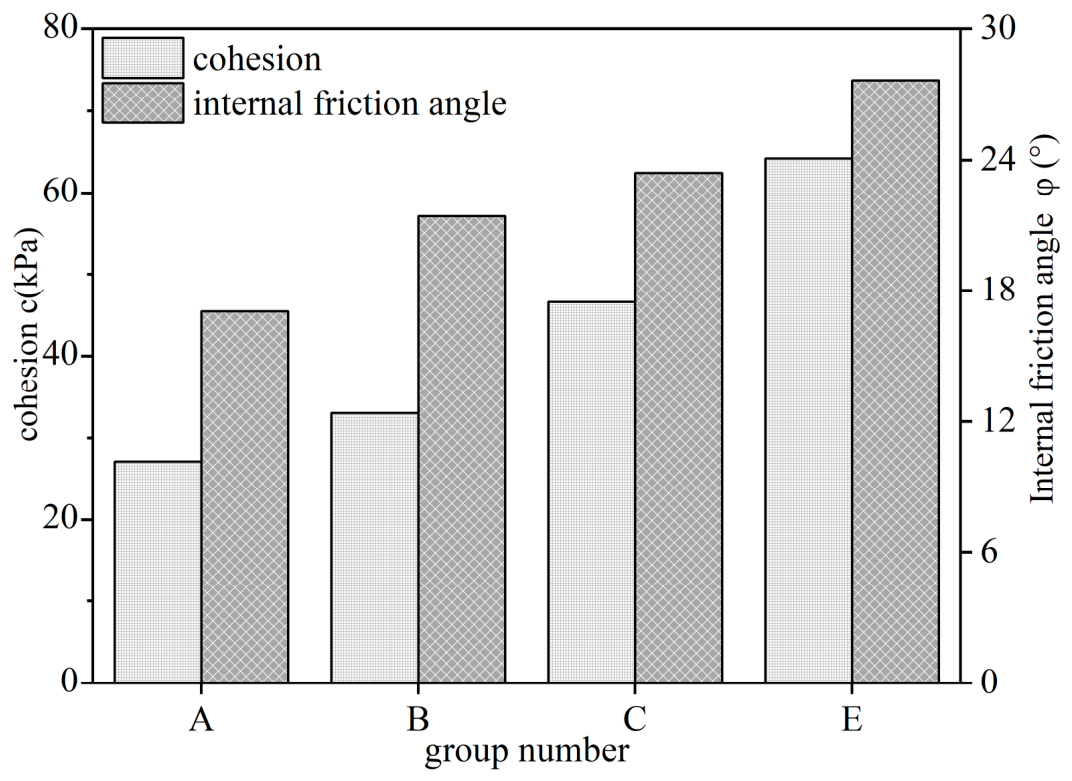
The cohesion and internal friction angle of each specimen group were derived from the shear strengths measured under different normal stresses.
Figure 10 shows the linear fitting of the shear strength against the normal stress for each group, which forms the basis of the shear strength parameters presented in
Figure 11.
The comparative analysis of the shear strength parameters displayed in
Figure 11 reveals that the cohesion of Groups B, C, and E increased by 21.69%, 71.60%, and 136.54%, respectively, relative to the control group (Group A), while their internal friction angles rose by 25.78%, 37.52%, and 62.36%, respectively. Comparison of the improvement levels of the different treatment schemes shows that cement–MICP markedly upgraded the properties of the red-bed mudstone filler and that the addition of fiber further strengthened its mechanical performance.
3.3. Impermeability of Improved Red-Bed Mudstone Filler
To investigate the permeability characteristics of the improved red-bed mudstone filler under different experimental programs, seepage tests were conducted using the HYS-4 permeameter developed in-house by the research group. Throughout the tests, the lateral confining pressure was maintained at 0.5, 1.0, 1.5, and 2.0 MPa, while the axial seepage pressure was set at 0.2, 0.5, 1.0, 1.5, and 2.0 MPa. As in the direct shear tests, the seepage tests covered only Groups A, B, C, and E.
Darcy’s law was used to compute the permeability coefficient K:
where
K = permeability coefficient (cm/s);
Q = volume of water passing through the specimen per unit time (m
3/s);
L = length of the specimen (m);
γw = unit weight of water (kN/m
3); Δ
P = pressure difference across the specimen (kPa); and
A = cross-sectional area of the specimen (m
2).
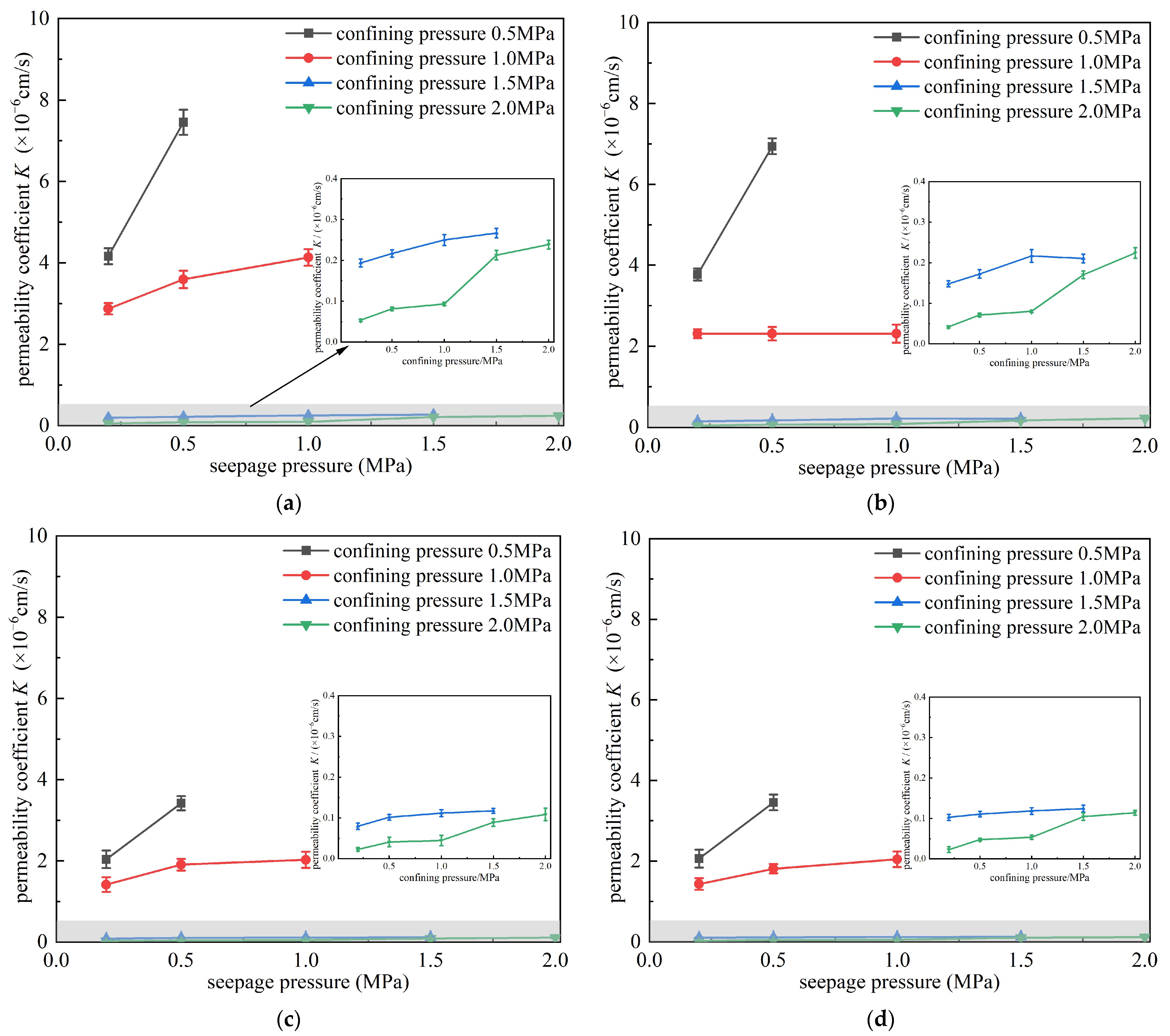
Figure 12 plots the permeability coefficient against the seepage pressure for the treated red-bed mudstone filler.
At a constant confining pressure, the permeability coefficient grew as the seepage pressure rose, because the rising pore pressure reduced the effective confining stress [
33]. Based on the effective particle diameter d
10 of the filler, the Reynolds number at the highest measured permeability was no more than approximately 0.03. This is far below the critical value of 1–10 for the onset of non-Darcian flow, confirming that the seepage remained in the Darcian regime. Specifically, as the seepage pressure rose from 0.2 to 2.0 MPa, the permeability coefficient of Group A specimens varied from 0.05 × 10
−6 to 9.96 × 10
−6 cm/s, while the coefficients of Groups B, C, and E ranged from 0.04 × 10
−6 to 9.02 × 10
−6, from 0.03 × 10
−6 to 4.88 × 10
−6, and from 0.03 × 10
−6 to 4.93 × 10
−6 cm/s, respectively. Compared with Group A, the permeability coefficient of Group B decreased by 9.46–23.53%, that of Group C by 41.75–55.13%, and that of Group E by 46.93–57.14%. This reduction is of the same order as the up to 72% decrease reported for basalt fiber combined with enzyme-induced carbonate precipitation on expansive soil [
27], indicating that the present system achieves a substantial impermeability improvement while maintaining high strength. The impermeability ranking, from best to worst, was Group E, followed by Group C and Group B. In other words, microorganisms lower the permeability coefficient, cement markedly amplifies this reduction when combined with them, and fiber further enhances the impermeability of the specimens on the basis of cement–MICP.
4. Mechanism of Fiber-Reinforced Cement–MICP-Improved Red-Bed Mudstone Filler
SEM of Improved Red-Bed Mudstone Filler
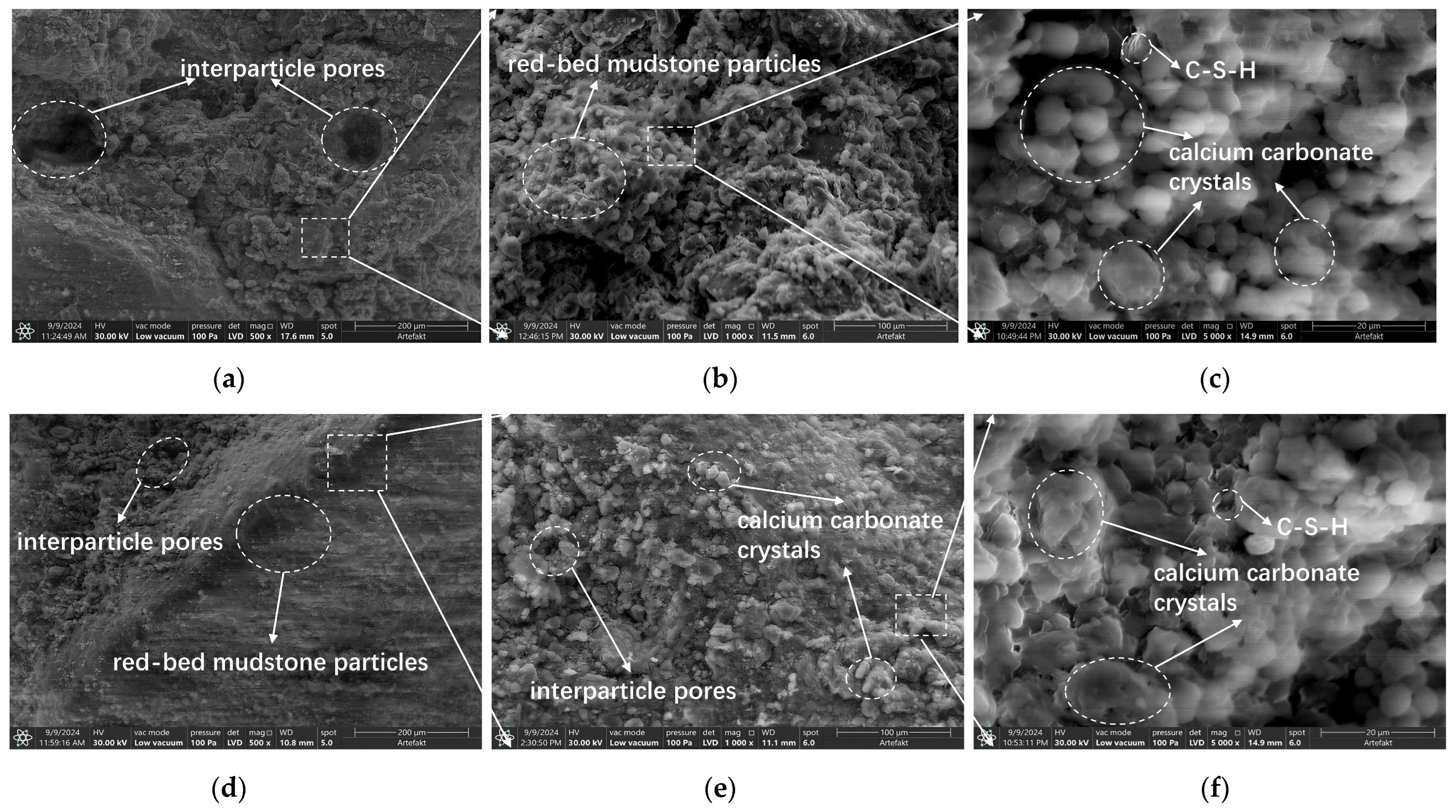
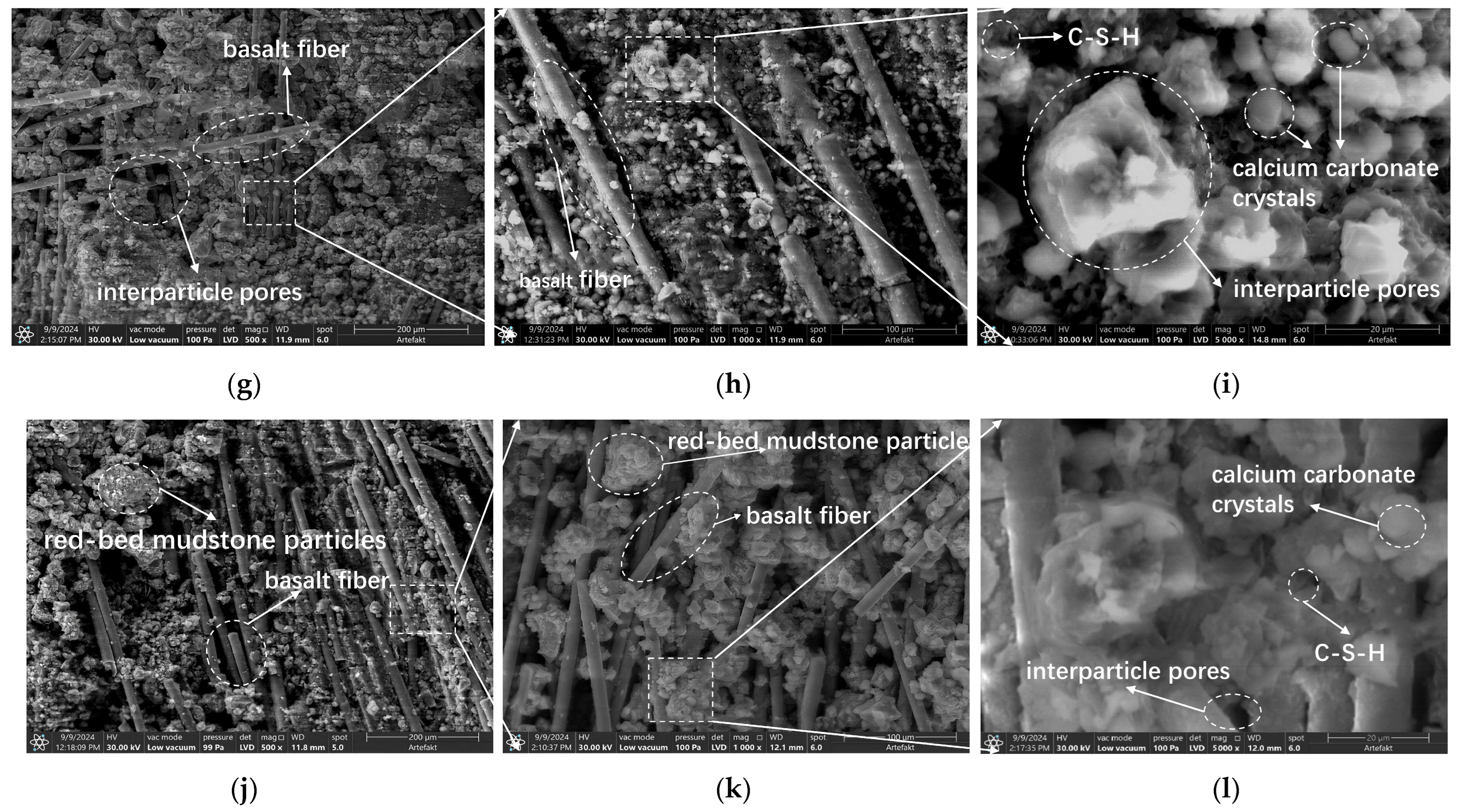
Taken together, the above analyses demonstrate that basalt fiber effectively enhances the physical and mechanical properties of the cement–MICP-improved red-bed mudstone filler. To clarify how each component contributes to the improvement of the fill properties, SEM was used to observe the microstructures of four groups of typical improved specimens, and the results are shown in
Figure 13.
For the Group B specimens treated with the MICP scheme, numerous spherical calcium carbonate crystals, characteristic of vaterite, formed on the particle surfaces. These crystals effectively filled the interparticle pores; however, unfilled pores were still visible in the specimens. This is because the bacterial solution and the cementation solution reacted at the pore throats to form calcium carbonate, and the resulting precipitation created blockages, leading to an insufficient concentration of reactants within the pores, which in turn limited the degree of mineralization.
In the cement–MICP-treated Group C specimens, cement hydration generated gel-like hydration products, mainly calcium silicate hydrate (C–S–H), that adhered to the contact points between soil particles and bound them together. At the same time, the C–S–H gel and the calcium carbonate crystals worked jointly to fill the pores. By both bonding the soil particles and filling the pores, the cement–MICP system markedly enhanced the compactness and stability of the soil. It should be noted that C–S–H is a gel-like, poorly crystalline hydration product and does not appear as well-defined crystals in the SEM images.
In the Group E specimens with fiber reinforcement, the fibers were interspersed among the red-bed mudstone filler particles, forming a network skeleton. This skeleton effectively restrained the movement of soil particles and exerted an anchorage effect. Meanwhile, the surfaces of the fibers were tightly coated with cement hydration products and calcium carbonate crystals, which reinforced the anchorage of the fibers and thereby improved the compactness and stability of the soil.
When the fiber content was excessive, the fibers in Group F tended to become entangled with one another within the limited space, generating new pores and disrupting the originally dense structure. In addition, the excessive fiber content prevented the calcium carbonate and C–S–H gel from effectively filling the interparticle voids and bonding the soil particles. Compared with Group E, the compactness and overall stability of the Group F specimens decreased significantly.
5. Improvement Mechanism of Red-Bed Mudstone Filler
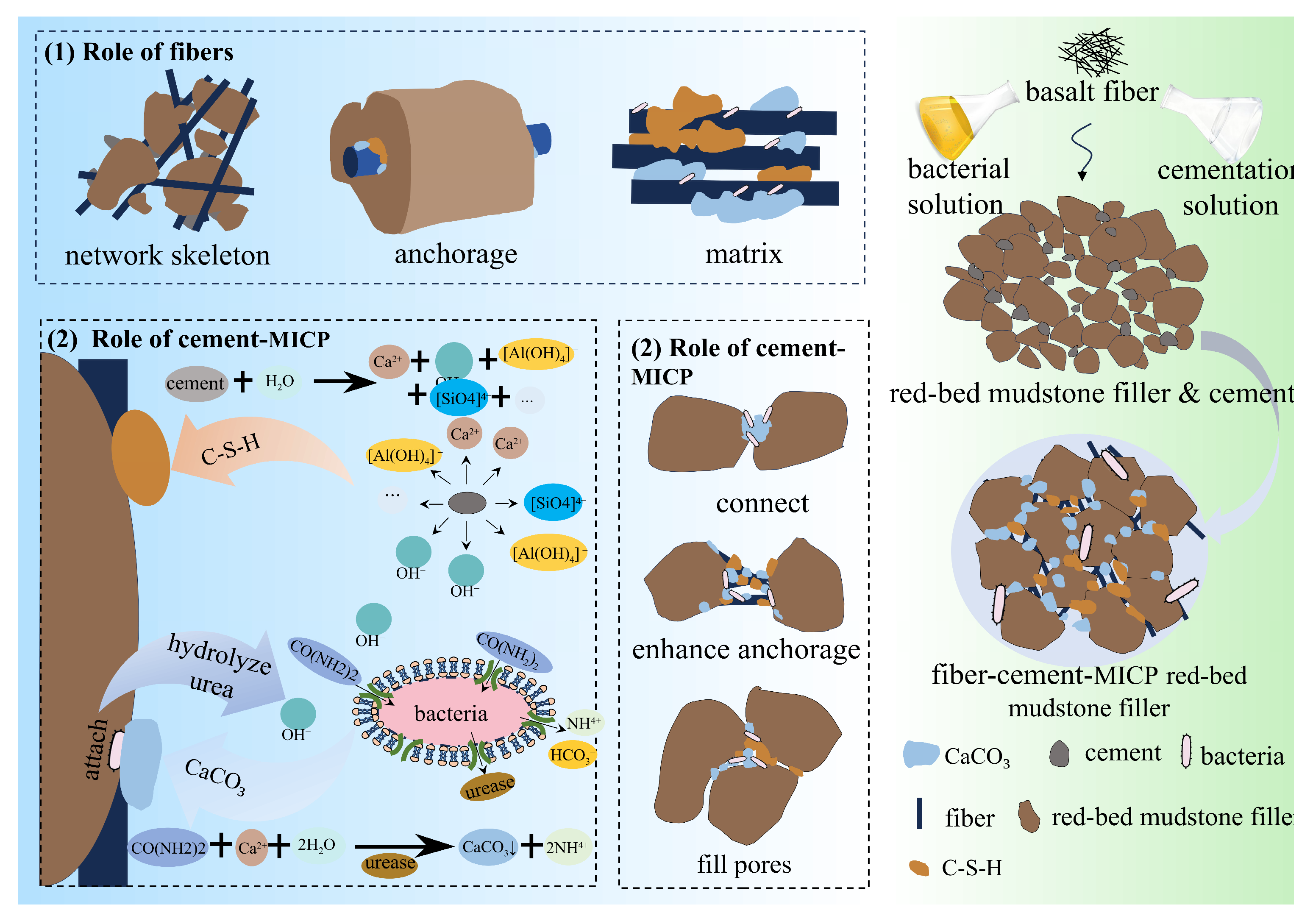
Based on the preceding analysis, the mechanism of fiber-reinforced cement–MICP-improved red-bed mudstone filler is illustrated in
Figure 14.
Role of fibers: First, the fibers are randomly oriented within the soil and interweave to connect soil particles, forming a stable network skeleton. The fibers exert a reinforcement effect, improving the integrity of the improved soil. Second, the fibers interlock with the surrounding mudstone particles, forming an anchorage structure that can transmit stress and enhance ductility. Third, the fiber surfaces provide numerous attachment sites for microorganisms and cement hydration products. These attachments roughen the interface between the fibers and the mudstone particles, increasing the friction and thereby strengthening the anchorage effect.
Role of cement–MICP: Cement hydration produces C–S–H gel and Ca(OH)2, creating an alkaline environment and releasing Ca2+, which serves as an additional calcium source for microbial carbonate precipitation. Specifically, the hydrolysis of the cement clinker phases releases Ca2+, OH−, [Al(OH)4]−, and [SiO4]4− ions, and the Ca2+, OH−, and [SiO4]4− combine to form the C–S–H gel. The resulting calcium carbonate fills the pores and bonds the particles, while the C–S–H gel attaches to the fiber surfaces and interlocks with the fibers. Together, the hydration products and the calcium carbonate reduce the porosity and improve the compactness and integrity of the improved soil.
Under the above mechanisms, the three components act synergistically to improve the fill. The fiber network skeleton provides attachment sites for bacteria and cement hydration products, promoting their deposition along the fiber surfaces and increasing the interfacial roughness to enhance anchorage. The microorganisms generate calcium carbonate to fill the pores and bond the particles. The cement hydration creates an alkaline environment and supplements the calcium source, promoting the continuous precipitation of calcium carbonate. Ultimately, the fibers weave the calcium carbonate, cement hydration products, and mudstone particles into high-strength composite aggregates, markedly enhancing the mechanical properties and integrity of the improved body. It should be noted that a control group combining cement and basalt fiber without bacteria was not included in this study; the synergistic contribution of MICP was therefore supported indirectly by the calcium carbonate content (
Table 2) and the SEM observations.
6. Conclusions
In this study, cement–MICP-improved red-bed mudstone filler containing different basalt fiber contents was investigated experimentally. The effects of fiber content on the physical and mechanical properties and on the microstructural characteristics of the fill were examined, and the fiber reinforcement mechanism was clarified. The principal conclusions are summarized below.
Basalt fiber inclusion substantially enhanced the UCS of the cement–MICP-improved red-bed mudstone filler. With the optimum fiber content of 0.2%, the UCS of the improved fill reached 1.76 MPa, an increase of 396.21% relative to the control group. This marked improvement stems from the formation of a three-dimensional fiber network that restricts crack propagation and mobilizes tensile resistance within the improved matrix.
The shear strength and deformation resistance of the improved fill were also markedly enhanced by basalt fiber inclusion. At the optimum fiber content of 0.2%, the cohesion and internal friction angle rose by 136.54% and 62.36%, respectively, compared with the control group. The improved specimens shifted from brittle to more ductile behavior, accompanied by a larger axial strain at failure and reduced post-peak strength degradation.
Adding basalt fibers further lowered the permeability of the cement–MICP-treated specimens. The fiber-reinforced group had a lower permeability coefficient than the untreated fill, comparable to that of the cement–MICP group without fibers, and fell within the acceptable range for subgrade fill. This reduction comes down to two physical effects: the fibers block pore channels, while the MICP-induced calcium carbonate and the cement hydration products fill the remaining voids.
The reinforcement mechanism of basalt fiber in cement–MICP-improved red-bed mudstone filler is primarily attributed to the synergistic interaction among three components: the basalt fiber, which forms a network-like skeleton providing attachment sites and restraining crack propagation; the MICP process, which precipitates calcium carbonate to fill pores, bridge particles, and enhance interparticle bonding; and the cement hydration, which creates an alkaline environment conducive to microbial activity and generates hydration products that, together with the calcium carbonate, fill pores and strengthen anchoring effects. This tripartite synergy significantly improves the structural integrity, ductility, and mechanical performance of the improved fill.