Article

Topic Modeling of Occupational Accident Narratives in the Manufacturing Sector Using BERTopic: Sector-Specific Accident Pattern Analysis

1
Department of Occupational Health and Safety, Gümüşhane University, Gümüşhane 29100, Türkiye
2
Graduate School of Natural and Applied Sciences, Gazi University, Ankara 06560, Türkiye
3
Department of Industrial Engineering, Gazi University, Ankara 06570, Türkiye
*
Author to whom correspondence should be addressed.
Appl. Sci. 2026, 16(18), 9170; https://doi.org/10.3390/app16189170
Submission received: 23 July 2026 / Revised: 25 August 2026 / Accepted: 28 August 2026 / Published: 16 September 2026

Abstract

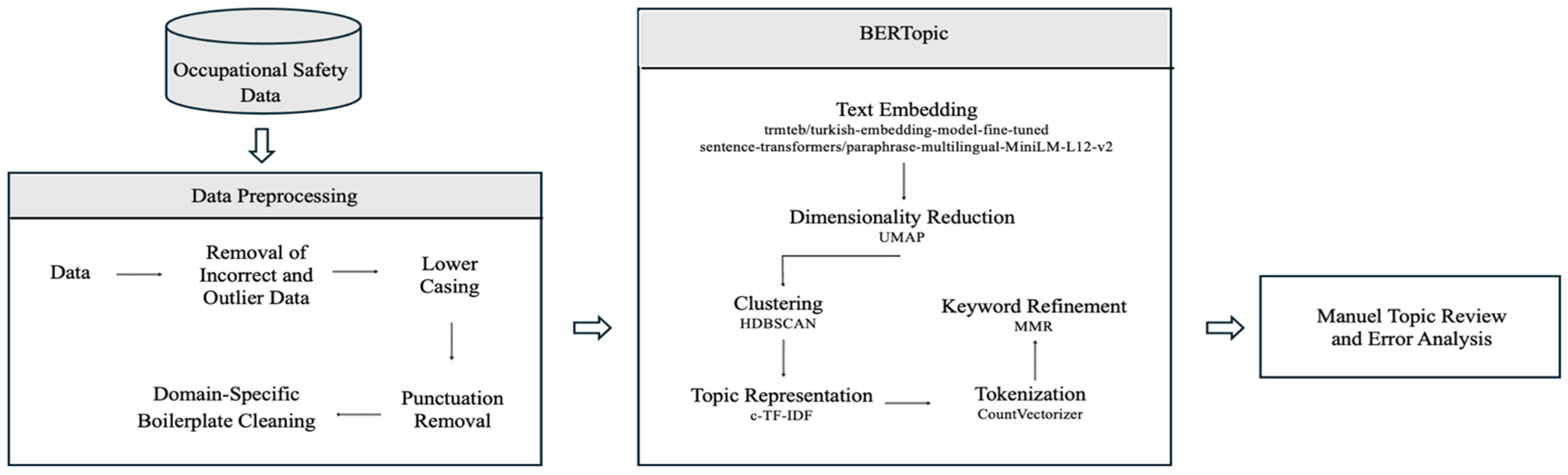
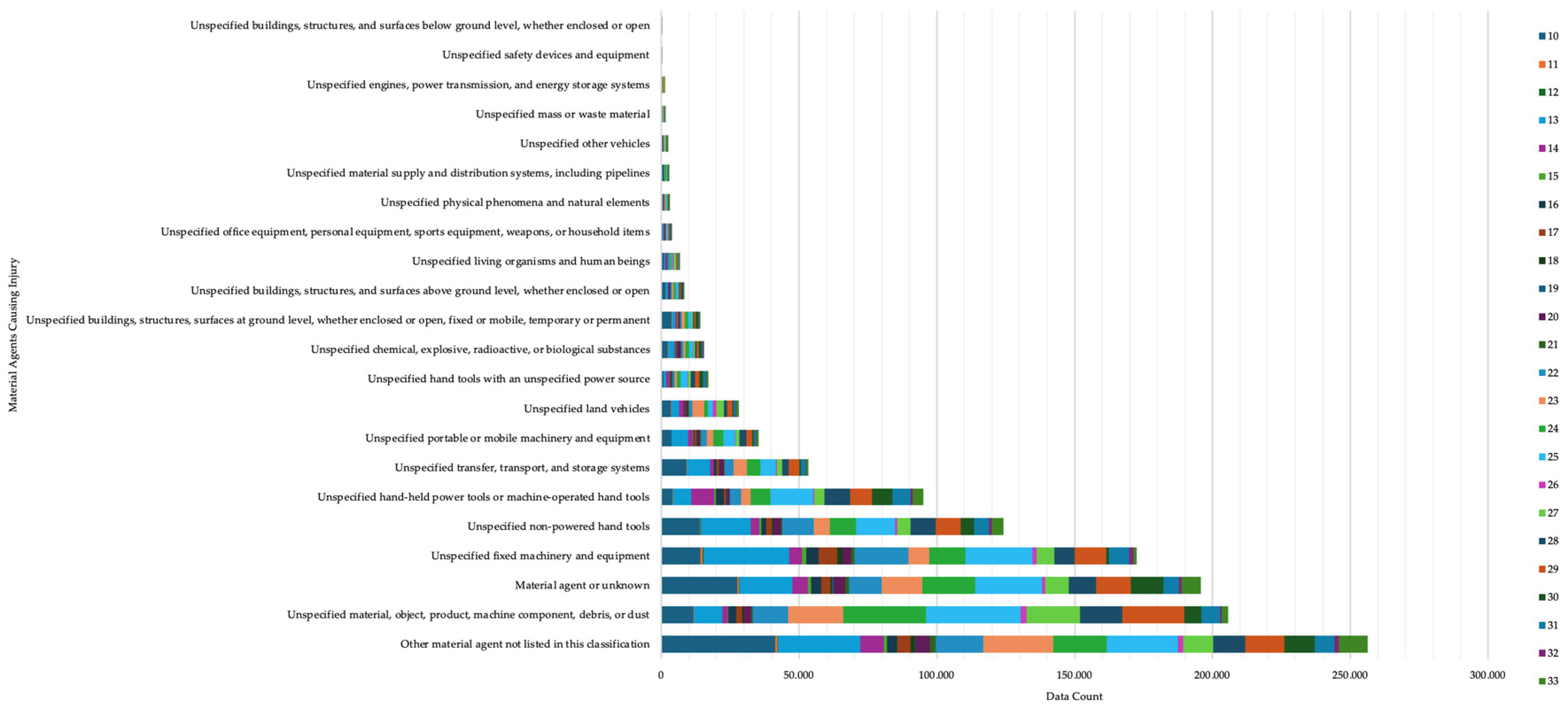
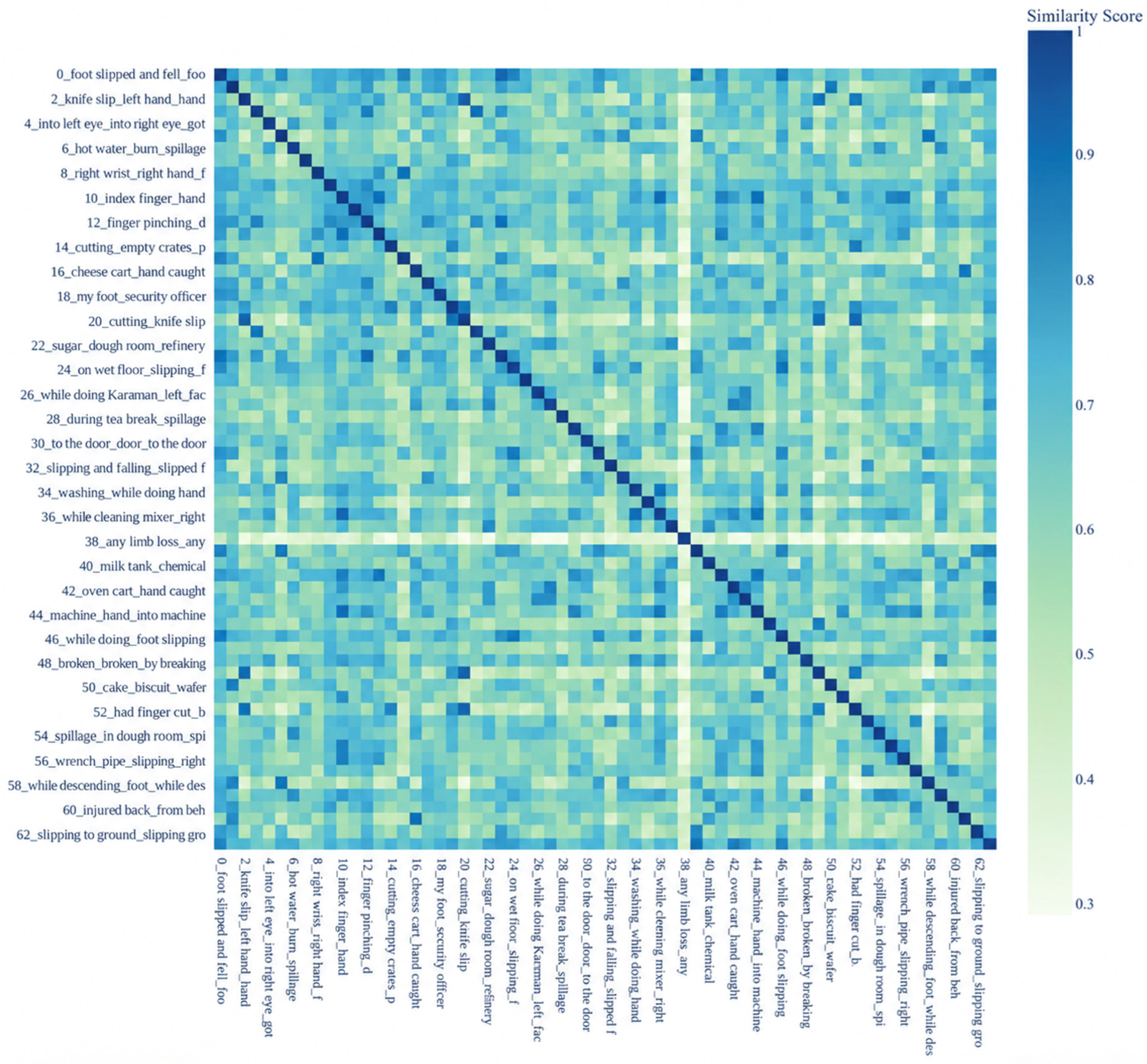
Despite technological developments and increasing awareness in the field of occupational health and safety, occupational accidents remain one of the fundamental problems that continue to have significant economic and social consequences. Particularly in the manufacturing sector, the diversity of production processes, differences in the machinery and equipment used, and the complexity of working environments cause occupational accidents to exhibit risk patterns that are both shared across sectors and specific to individual sectors. In this context, this study conducted a topic modeling analysis using the BERTopic algorithm on 1,600,000 occupational accident narratives to identify sector-specific risk patterns and error types associated with 24 different economic activities within the manufacturing sector. To improve topic modeling performance, a multilingual SentenceBERT-based embedding model and a Turkish-specific tr-MTEB embedding model were compared, and the analysis was carried out using the model that provided higher representational capacity and better topic separation performance for the occupational accident narratives. The findings show that, although the sectors differ in terms of production structure, types of machinery and equipment used, material characteristics, and working environments, occupational accidents largely cluster around similar risk mechanisms. As a result, it was determined that the BERTopic method makes the sectoral risk patterns embedded in occupational accident narratives more visible and provides an analytical basis for developing sector-specific prevention strategies in occupational safety practices.
Keywords: BERTopic; manufacturing; occupational accident; topic modeling BERTopic; manufacturing; occupational accident; topic modeling